U.S. Sanctions on Iran Cut Off Students From Tests Needed for Study Abroad

© Arash Khamooshi/Polaris for The New York Times


© Arash Khamooshi/Polaris for The New York Times
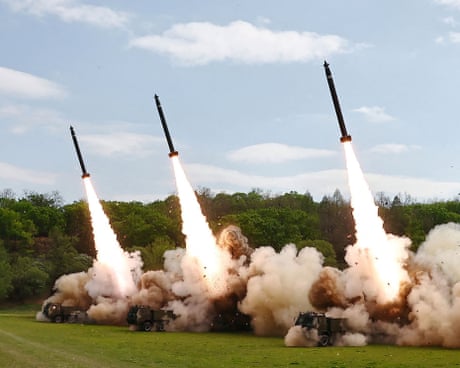
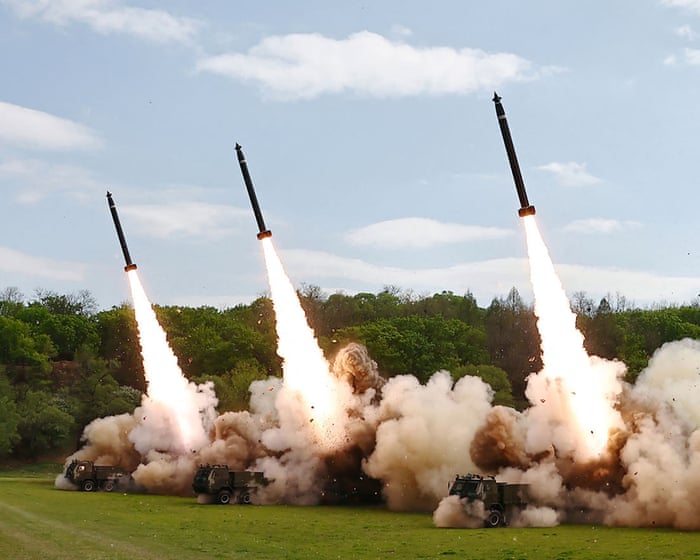
Les États-Unis ont bombardé deux lanceurs de roquettes iraniens sur une île située dans le détroit d’Ormuz.
L’armée américaine a indiqué qu’elle avait observé des forces des Gardiens de la révolution islamique se préparer à envoyer des mines dans le détroit.
Les Gardiens de la révolution ont frappé en représailles:
Donald Trump a dit à la chaine Fox News que l’armée américaine répondrait aux attaques des Gardiens de la révolution, et qu’elle allait «les frapper fort».
[L'article Les États-Unis et l’Iran ont repris leurs frappes après un mois d’accalmie a d'abord été publié dans InfoBref.]


© Reuters


© Reuters

Response seeks to discredit Washington Post story that four generals and admirals advised against prolonging Iran war
Pete Hegseth regularly receives formal objections from senior commanders and proceeds anyway, the Pentagon’s top spokesman has said, as he tried to discredit a Washington Post report that four generals and admirals had advised against prolonging the war in Iran.
“Of course, we demand candid military advice,” Sean Parnell wrote on X, formerly Twitter. “Non-concurs are standard. The Secretary sees them constantly. That’s how you run a real military.”
Continue reading...
© Photograph: Evelyn Hockstein/Reuters

© Photograph: Evelyn Hockstein/Reuters

© Photograph: Evelyn Hockstein/Reuters


© Reuters


© Pavel Mikheyev/Reuters


© Reuters

This live blog is now closed.
Chris Hippensteel
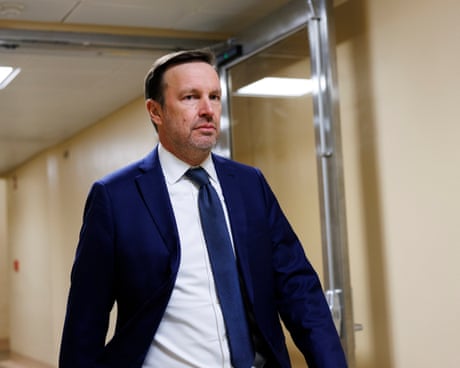
We’re watching today as Scott Bessent, the US treasury secretary, and Kevin Warsh, the chair of the Federal Reserve, deliver their opening remarks at the G20 meetings in Asheville, North Carolina.
Continue reading...
© Photograph: Kevin Lamarque/Reuters

© Photograph: Kevin Lamarque/Reuters

© Photograph: Kevin Lamarque/Reuters


© Amr Abdallah Dalsh/Reuters


© Jim Huylebroek for The New York Times


© Vahid Salemi/Associated Press

As with its approach to Hormuz, the US has mistaken applying pressure for an actual strategy. But Tehran has chips of its own to play
Donald Trump has found a new way to promise victory over Iran. After months of war have failed to force Iran’s capitulation or collapse, his administration has unveiled what the US Treasury secretary, Scott Bessent, calls Operation Economic Outcast: an effort to cut it off from what remains of the global economy and threaten foreign governments, banks and companies with sanctions if they continue doing business with Tehran.
There is no question that Iran is vulnerable. Its economy has been battered by years of sanctions, war and a months-long US naval blockade. Iranian officials acknowledge that oil exports and access to foreign currency have been severely constrained. Ordinary Iranians are already enduring high inflation, currency depreciation and worsening living standards. Further economic strangulation will inflict significant additional hardship.
Sina Toossi is a senior non-resident fellow at the Center for International Policy, where his work focuses on US-Iran relations, US policy toward the Middle East and nuclear issues
Continue reading...
© Photograph: Mark Schiefelbein/AP

© Photograph: Mark Schiefelbein/AP

© Photograph: Mark Schiefelbein/AP

There’s little optimism about treasury secretary’s ability to handle Trump’s tariffs, Iran sanctions and colossal US debt
History remembers Gen Dwight Eisenhower, the supreme commander of the allied forces in Europe during the second world war, for his role in the D-day invasion of Normandy. Whether Scott Bessent will achieve similar posterity as the face of the “economic D-day” in Iran remains to be seen.
The US treasury secretary, already trying to manage a $40tn national debt pile, this week took charge of Donald Trump’s effort to reverse-engineer his war of choice. Whereas the US would typically take on an adversary with diplomacy, sanctions and military force, in that order, the US president started with a six-month bombing campaign and now hopes that economic isolation can finish the job.
Continue reading...
© Photograph: Julia Demaree Nikhinson/AP

© Photograph: Julia Demaree Nikhinson/AP

© Photograph: Julia Demaree Nikhinson/AP


© Ugur Yildirim/Dia Photo, via Associated Press


© Kenny Holston/The New York Times


© Kenny Holston/The New York Times


© Arash Khamooshi/Polaris for The New York Times

Terrified of being seen as a loser, Donald Trump is nonsensically lashing out – even against our old friend Canada
I’m still grieving Dolly Parton. I never met her and always wanted to. She was almost exactly my age and my height and had values I deeply admired. Her death leaves a hole in the firmament.
Which brings me to the person whose values are as far from Dolly Parton’s as any human could possibly be and still claim to be human. I’m referring, of course, to the current occupant of the Oval Office.
Continue reading...
© Photograph: Brandon Bell/Getty Images

© Photograph: Brandon Bell/Getty Images

© Photograph: Brandon Bell/Getty Images


© Arash Khamooshi/Polaris for The New York Times


© Arash Khamooshi/Polaris for The New York Times


© Arash Khamooshi/Polaris for The New York Times

Exclusive: Experts and former officials say accounts are running dry, and funding a war with no clear endgame is the main challenge
Donald Trump’s war on Iran has driven the US military into a severe financial crisis, with the US navy forced to transfer money from its payroll and other sources to cover the costs of combat, according to documents seen by the Guardian, and interviews with navy officials, contractors and defense analysts.
The US-Israeli operation, which has depleted US munitions stockpiles and prompted retaliatory Iranian strikes that have wrecked strategic bases across the Middle East, is piling pressure on budgets across the military.
Continue reading...
© Photograph: US Navy/Getty Images

© Photograph: US Navy/Getty Images

© Photograph: US Navy/Getty Images


© Amr Abdallah Dalsh/Reuters

This live blog is now closed.
On Wednesday, Trump officially signed a proclamation on Wednesday that suspends higher tariffs on 300,000 metric tons of foreign beef imports for 90 days. This comes after backlash to the proposal – designed to lower grocery costs for Americans in the run-up to the November midterms.
Several Republicans – in states with sizable cattle farming industries – have criticized the policy, saying it is a short term solution that will stymie ranchers’ ability to rebuild their herds.
Four leading livestock and agricultural organizations also wrote a letter to the president on Wednesday urging him to reverse course.
“Flooding the market with discounted foreign beef is not the way to rebuild the American cattle herd, strengthen food security, or lower grocery bills in a lasting way,” the groups wrote.
Donald Trump will begin his day in Washington, before traveling to Houston, Texas where he’ll headline a Republican National Commitee (RNC) fundraiser, and help boost Ken Paxton — the state’s attorney general and Republican nominee for Senate.
A reminder that Paxton beat long serving Senator John Cornyn in the GOP primary earlier this year after receiving Trump’s endorsement. Paxton is set to face Democratic state lawmaker James Talarico in November.

© Photograph: Andrew Harnik/Getty Images

© Photograph: Andrew Harnik/Getty Images

© Photograph: Andrew Harnik/Getty Images

President denies visit was to gain support for Iran sanctions or due to fears that Putin plans to ‘test Nato resolve’
Donald Trump has downplayed a visit to Moscow by the CIA director, John Ratcliffe, as “semi-routine” after he turned up in the Russian capital unannounced, triggering a wave of speculation about the reasons for his trip.
Ratcliffe was reported to have flown to Moscow on a government transport plane on Tuesday in a rare visit after taking off from the Andrews air force base in Maryland.
Continue reading...
© Photograph: Tom Williams/CQ-Roll Call, Inc/Getty Images

© Photograph: Tom Williams/CQ-Roll Call, Inc/Getty Images

© Photograph: Tom Williams/CQ-Roll Call, Inc/Getty Images


© Kristen Zeis for The New York Times

They should ask the question Reagan asked at the end of his debate against Jimmy Carter: ‘Are you better off now than you were before this presidency?’
The midterm elections are already upon us, and every Democrat and independent running against a Republican should ask voters the question Ronald Reagan asked on 28 October 1980, at the end of his televised debate against Jimmy Carter: “Are you better off now than you were before this presidency?”
Unless you’re very, very rich, the answer is obviously: “No, I’m worse off.”
Energy bills have increased three times faster than the rate of inflation while Trump has been president. The national average monthly utility bill reached $280 in early 2026, a 12% increase since the end of 2024, just before the second Trump administration took office.
Continue reading...
© Photograph: Angela Weiss/AFP/Getty Images

© Photograph: Angela Weiss/AFP/Getty Images

© Photograph: Angela Weiss/AFP/Getty Images

Everyone can see that the Iran war has been a strategic disaster for the US, while a failing president pretends he is winning
Now is the twilight of Donald Trump’s supremacy. The US is still the richest and most heavily armed nation on Earth. That status is secure. The current president, contemptuous of law and indulged in lawlessness by a supine Congress, enjoys even greater power than the constitution allows.
With those advantages it takes a special talent for incompetence to look as thwarted and impotent as Trump does with more than two years of his second term still to run.
Rafael Behr is a Guardian columnist
Continue reading...
© Photograph: Anadolu/Getty Images

© Photograph: Anadolu/Getty Images

© Photograph: Anadolu/Getty Images


© Arash Khamooshi/Polaris for The New York Times


© Alex Brandon/Associated Press


© Vahid Salemi/Associated Press


© Alex Kent/The New York Times

US president has been obsessed with restricting the ability to vote by mail, despite using it himself. Plus, why we are still fascinated with Meg from the White Stripes
Good morning. The US supreme court has sided with Donald Trump in his effort to crack down on mail-in voting, though it is unclear whether or not his administration will be able to take action before the midterm elections in November. The court’s justices voted 6-3 along ideological lines to lift an injunction that a judge in Massachusetts had placed in June on an executive order issued by the president. But a second injunction remains in place, and the ruling leaves room for legal challenges.
Trump has repeatedly likened voting by mail to cheating, despite his own use of it and overwhelming evidence that the system is secure. In March he ordered the government to create a “state citizenship list” of eligible voters, requiring that mail-in ballots only be delivered to people on that list. He also directed the justice department to prioritise investigations and prosecutions of state and local election officials who issue ballots to people deemed ineligible to vote in federal elections.
What did the dissenting judges say? In a blistering dissent, Justice Ketanji Brown Jackson wrote that the decision “needlessly injects chaos and uncertainty into the upcoming midterm elections”.
How have rights organisations reacted? The president of the National Association for the Advancement of Colored People, Derrick Johnson, said: “Let this ruling be a reminder that democracy is never, ever guaranteed. We have to fight for it, we have to fight to keep it and we have to protect the rights we do have within it … they are trying to do everything they possibly can to make it difficult for you to vote.”
How has Canada reacted? The country’s prime minister, Mark Carney, told reporters that Trump’s announcement was largely expected. “It’s not a surprise for us that the US would take some form of reprisal to our response to their unjustified tariff,” he said. Carney has vowed to match the American tariffs “dollar for dollar”, and said Canada could not accept any proposed trade deal that would weaken French language protections.
Continue reading...
© Photograph: Bloomberg/Getty Images

© Photograph: Bloomberg/Getty Images

© Photograph: Bloomberg/Getty Images


© Alana Paterson for The New York Times


© Arash Khamooshi/Polaris for The New York Times


© Alana Paterson for The New York Times


Scott Bessent, ministre américain des finances, a déclaré que Washington avait l’intention de «couper toutes les ressources économiques» du régime iranien.
Les nouvelles sanctions américaines visent cinq secteurs:
Bessent a affirmé que tous les pays qui ne participeraient pas aux sanctions américaines seraient aussi isolés que l’Iran.
Le gouvernement américain menace d’expulser les pays récalcitrants du système financier lié au dollar américain.
[L'article Les États-Unis imposent de nouvelles sanctions à l’Iran a d'abord été publié dans InfoBref.]


© Doug Mills/The New York Times


© Arash Khamooshi/Polaris for The New York Times


© Katherine Delgado, via Associated Press


© Evelyn Hockstein/Reuters


© Agence France-Presse — Getty Images

This live blog is now closed.
Donald Trump has threatened to increase tariffs on Canadian cars, trucks, auto parts and steel to 50% today, after trade negotiations between Washington and Ottowa broke down last week.
On Truth Social, the president blasted Canada, and said the new duties will go into effect on 1 January 2027.
Continue reading...
© Photograph: Bloomberg/Getty Images

© Photograph: Bloomberg/Getty Images

© Photograph: Bloomberg/Getty Images


© Chung Sung-Jun/Getty Images


© Kenny Holston/The New York Times


© Arash Khamooshi/Polaris for The New York Times

Investors will hope Kevin Warsh offers ‘comfort blanket’ at annual meeting of central banks amid bond market anxiety
The new US Federal Reserve chair, Kevin Warsh, faces a critical test this week amid anxiety in government bond markets over inflation and Donald Trump’s tax and spending plans.
As the world’s most powerful central bank prepares for its annual Jackson Hole conference, analysts said bond traders would be looking for signals from Warsh over its commitment to fighting inflation.
Continue reading...
© Photograph: Evelyn Hockstein/Reuters

© Photograph: Evelyn Hockstein/Reuters

© Photograph: Evelyn Hockstein/Reuters


© Mohammed Salem/Reuters

Abbas Araghchi says country is unbowed but president Masoud Pezeshkian admits its people face ‘many problems’
Iran’s foreign minister has dismissed the threat of a fresh round of US economic sanctions as a “desperate” ploy, even as its president acknowledged that the Iranian people are facing “many problems” amid Washington’s efforts to isolate and debilitate the country’s economy.
Last week, Donald Trump announced a new campaign to increase the pressure on the Iranian economy, calling it “the most crushing economic operation ever taken against any country”. The US Treasury secretary, Scott Bessent, is expected to announce further punitive economic measures on Iran – which he has described as “the toughest sanctions in history” – on Monday.
Continue reading...
© Photograph: Abedin Taherkenareh/EPA

© Photograph: Abedin Taherkenareh/EPA

© Photograph: Abedin Taherkenareh/EPA