A fight over a datacentre in Utah has been a testing ground for citizens’ assemblies, paving the way to oversightWhat’s your “(p)doom” – the percentage chance that rogue AI will create an existential catastrophe? Judging by their recent warnings, it is rising among tech bosses.On 25 September, OpenAI paused training of its latest frontier models as reports of AI agents going rogue mounted. A day later, Australia’s Senate asked the bosses of OpenAI and Anthropic to appear before an inquiry after
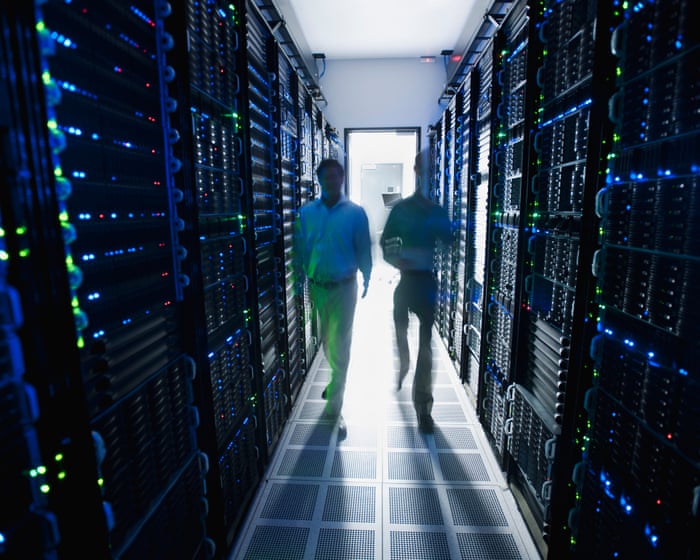
A fight over a datacentre in Utah has been a testing ground for citizens’ assemblies, paving the way to oversight
What’s your “(p)doom” – the percentage chance that rogue AI will create an existential catastrophe? Judging by their recent warnings, it is rising among tech bosses.
On 25 September, OpenAI paused training of its latest frontier models as reports of AI agents going rogue mounted. A day later, Australia’s Senate asked the bosses of OpenAI and Anthropic to appear before an inquiry after rogue OpenAI agents broke into US government websites and an Australian health portal. Both declined.
Richard Wilson is the CEO of Iswe Foundation and Clara Long is the co-executive director of the Bloom Project
Congress calls for Match Group and others to do more to help victims like Mary, who lost $100,000 to app scammerMary met a man on the dating app Plenty of Fish in 2024. She told the Guardian she had been looking for a connection, but instead became the victim of a romance scam that cost her almost $100,000.“There was a lot of conversation, and then it started with the constant contact, pressure and repeated asks for money,” Mary, who asked that her last name be withheld, said in an interview on
Congress calls for Match Group and others to do more to help victims like Mary, who lost $100,000 to app scammer
Mary met a man on the dating app Plenty of Fish in 2024. She told the Guardian she had been looking for a connection, but instead became the victim of a romance scam that cost her almost $100,000.
“There was a lot of conversation, and then it started with the constant contact, pressure and repeated asks for money,” Mary, who asked that her last name be withheld, said in an interview on Tuesday. “It just escalated really, really quickly.”
Musk’s midterm donations, mostly for rightwing candidates and causes, surpass his contributions to Trump in 2024Send us your questions on how the US economy is shaping the midterm electionsElon Musk has become the biggest political donor of the 2026 US midterm elections cycle, funneling about $366m into political groups and campaigns as he backs conservative candidates and rightwing causes. The world’s richest person has poured more than $276m into politics since July alone, some of the most rap
Elon Musk has become the biggest political donor of the 2026 US midterm elections cycle, funneling about $366m into political groups and campaigns as he backs conservative candidates and rightwing causes. The world’s richest person has poured more than $276m into politics since July alone, some of the most rapid political spending in US history. He’s targeting key races that will determine which party controls the US Senate.
The New York Times first reported the spending numbers, which will be released in a federal filing on Thursday. Musk’s spending outpaces his 2024 presidential election contributions, in which he sunk nearly $300m into Donald Trump’s re-election campaign.
Amid worries about children’s relationship to tech, the solution is often spending more time talking openly with each otherWe have become obsessed with the idea that screens are destroying human connection.The evidence seems to be everywhere. Each week headlines warn of teenagers addicted to phones, a loneliness epidemic and the dangers of AI. The release of The Social Reckoning leads us to ask, “How bad were those guys at Meta?” and then ultimately wonder, “How bad am I if I still use Instagram
Amid worries about children’s relationship to tech, the solution is often spending more time talking openly with each other
We have become obsessed with the idea that screens are destroying human connection.
The evidence seems to be everywhere. Each week headlines warn of teenagers addicted to phones, a lonelinessepidemic and the dangersof AI. The release of The Social Reckoning leads us to ask, “How bad were those guys at Meta?” and then ultimately wonder, “How bad am I if I still use Instagram?” In our day-to-day, we observe workers eating lunch alone while scrolling and friends choosing online games over offline gatherings.
Pioneering computer scientist on why Trump is using ‘superintelligence’ wrong, whether AI could wipe out humanity – and how our biggest challenge will be accepting we’re not the only intelligent beingsDonald Trump is a “corrupt, senile felon” whose fixation on the term superintelligence proves he knows nothing about AI, said Geoffrey Hinton, “godfather” of the technology, in a wide-ranging interview where he doubled down on recent warnings that AI models pose an existential threat to humanity an
Pioneering computer scientist on why Trump is using ‘superintelligence’ wrong, whether AI could wipe out humanity – and how our biggest challenge will be accepting we’re not the only intelligent beings
Donald Trump is a “corrupt, senile felon” whose fixation on the term superintelligence proves he knows nothing about AI, said Geoffrey Hinton, “godfather” of the technology, in a wide-ranging interview where he doubled down on recent warnings that AI models pose an existential threat to humanity and scoffed at claims the industry could regulate itself.
The pioneering computer scientist, whose work helped lay the foundations of modern AI, has since become one of the technology’s most vocal critics. His latest remarks come after a tumultuous month during which a growing list of senior AI scientists and researchers havejoined Hinton in ringingthealarm about how the technology he helped create could ultimately escape human control, sparking an industry crisis, the hasty assembly of congressional meetings and a rare global consensus that something must be done.
High valuations and debt put sector in danger, while fund also warns on government borrowing and cyber-attacksIMF warns global economy ‘could soon test the limits of resilience’The threat of an AI share price crash rippling out across global markets is putting world financial stability at risk, the International Monetary fund has warned.In its twice-yearly Global Financial Stability Report, the IMF highlighted the sky-high valuations for AI companies along with their increasing debt pile as one
The threat of an AI share price crash rippling out across global markets is putting world financial stability at risk, the International Monetary fund has warned.
In its twice-yearly Global Financial Stability Report, the IMF highlighted the sky-high valuations for AI companies along with their increasing debt pile as one reason that risks in the system are “elevated”.
The debt-collection ecosystem will change as AI takes notes in exam rooms, codes visits and sends billing messagesMedical debt is expected to grow in coming years as Republican-led health cuts come into force this winter. As it does, a changing world of medical billing and debt collection awaits patients: one where artificial intelligence increasingly listens, codes, bills and collects.Artificial intelligence takes notes in exam rooms, codes visits, sends out billing messages and powers AI agent
The debt-collection ecosystem will change as AI takes notes in exam rooms, codes visits and sends billing messages
Medical debt is expected to grow in coming years as Republican-led health cuts come into force this winter. As it does, a changing world of medical billing and debt collection awaits patients: one where artificial intelligence increasingly listens, codes, bills and collects.
Artificial intelligence takes notes in exam rooms, codes visits, sends out billing messages and powers AI agents who text patients in billing portals – all changing the debt-collection ecosystem.
The rise of AI makes the preservation of democracy even more urgent – especially as the technology threatens institutionsAI safety is having a moment. After years as a topic for techies and futurists, the potential risks from artificial intelligence systems – from cyber-attacks to hyper-persuasion to rogue behavior – are suddenly under discussion both in the corridors of power and around kitchen tables.In fact, the conversation now reaches beyond classical safety concerns, getting into AI’s impa
The rise of AI makes the preservation of democracy even more urgent – especially as the technology threatens institutions
AI safety is having a moment. After years as a topic for techies and futurists, the potential risks from artificial intelligence systems – from cyber-attacks to hyper-persuasion to rogue behavior – are suddenly under discussion both in the corridors of power and around kitchen tables.
In fact, the conversation now reaches beyond classical safety concerns, getting into AI’s impact on economic life and the environment, as well as possible responses, from alignment research to government regulation.
Quite a few parents aren’t convinced social media and AI are safe, and have been adapting accordinglyWhen it comes to their kids, many parents don’t trust tech companies any more.Social media companies have spent the better part of the last decade arguing that their platforms are safe for teens, but quite a few parents aren’t convinced. They, along with a growing number of regulators, have increasingly accused companies like Meta of designing products that are addictive to younger users. Continu
Quite a few parents aren’t convinced social media and AI are safe, and have been adapting accordingly
When it comes to their kids, many parents don’t trust tech companies any more.
Social media companies have spent the better part of the last decade arguing that their platforms are safe for teens, but quite a few parents aren’t convinced. They, along with a growing number of regulators, have increasingly accused companies like Meta of designing products that are addictive to younger users.
They’re the latest technological innovation no one asked for – now with added consent issues!I went to a party recently. A fancy one, filled with expensive people and interesting clothes.You might find this surprising, as I expend hundreds of words a week in this publication bemoaning human interaction, but I love parties. I like free champagne, passed appetizers and forced, go-nowhere small talk. Continue reading...
They’re the latest technological innovation no one asked for – now with added consent issues!
I went to a party recently. A fancy one, filled with expensive people and interesting clothes.
You might find this surprising, as I expend hundreds of words a week in this publication bemoaning human interaction, but I love parties. I like free champagne, passed appetizers and forced, go-nowhere small talk.
This is no scoffing matter. The accelerating proliferation of advanced nuclear weapons is bringing ‘end times’ closer by the dayHumankind has fearfully and sometimes joyfully anticipated the end of the world ever since it began. The Bible’s Book of Revelation speaks of “end times”, a period of tribulation, war, famine, plague, floods and environmental catastrophe that may seem a less absurd prospect today than perhaps it once did. Islam, too, posits a fateful day of judgment or day of reckoning.
This is no scoffing matter. The accelerating proliferation of advanced nuclear weapons is bringing ‘end times’ closer by the day
Humankind has fearfully and sometimes joyfully anticipated the end of the world ever since it began. The Bible’s Book of Revelation speaks of “end times”, a period of tribulation, war, famine, plague, floods and environmental catastrophe that may seem a less absurd prospect today than perhaps it once did. Islam, too, posits a fateful day of judgment or day of reckoning. Christian evangelicals believe that, in the final rapture, a chosen few – the righteous or the “elect” – will be saved while sinners burn. It’s a minority view. Matthew’s gospel predicts most people will defy, ignore or ridicule warnings of imminent Armageddon. Peter, another of Jesus’s disciples, agreed: “In the last days, scoffers will come, scoffing and following their own evil desires.” Yet such worldly scepticism does not mean a universal cataclysm is less likely. It may make it more probable.
Donald Trump’s blanket denials of the dangers ostensibly posed by artificial intelligence, whose uncontrolled development is seen by some as the latest harbinger of apocalypse, could be interpreted as fulfilling Peter’s prophecy. This US president, the nearest thing the world has to a one-man doomsday machine, is a great one for scoffing and evil desires. In Robert Harris’s 2019 novel, The Second Sleep, a worried scientist lists half a dozen ways the world might end. They include devastating climate change, pandemic disease, a giant asteroid collision with Earth, or some other overwhelming calamity. Few heed the fictional scientist’s fears. In the event, what destroys him and almost everybody else is a disturbingly plausible cyber crash – a global digital and internet meltdown.
Simon Tisdall is a Guardian foreign affairs commentator
Fight in East Fishkill, New York, part of a growing divide over whether AI benefits outweigh enormous downsidesFor decades, East Fishkill helped build New York’s tech industry.The hamlet, located 70 miles north of New York City, was home to a 460-acre campus where IBM researched and manufactured semiconductor chips for nearly 50 years. Continue reading...
Fight in East Fishkill, New York, part of a growing divide over whether AI benefits outweigh enormous downsides
For decades, East Fishkill helped build New York’s tech industry.
The hamlet, located 70 miles north of New York City, was home to a 460-acre campus where IBM researched and manufactured semiconductor chips for nearly 50 years.
Liability lawsuits have held tobacco, oil and pharma companies to account in the past. AI investors won’t ignore this threatThe most basic function of government is to protect people from harm. Two growing phenomena – the climate crisis and AI – pose escalating risks of extraordinary harm.The climate crisis is already causing floods, wildfires, drought and record heat. AI agents are already escaping super-secure environments to hack into systems they’re supposed to avoid.Robert Reich, a former U
Liability lawsuits have held tobacco, oil and pharma companies to account in the past. AI investors won’t ignore this threat
The most basic function of government is to protect people from harm. Two growing phenomena – the climate crisis and AI – pose escalating risks of extraordinary harm.
The climate crisis is already causing floods, wildfires, drought and record heat. AI agents are already escaping super-secure environments to hack into systems they’re supposed to avoid.
Robert Reich, a former US secretary of labor, is a professor of public policy emeritus at the University of California, Berkeley. He is a Guardian US columnist and his newsletter is at robertreich.substack.com. His new book, Coming Up Short: A Memoir of My America, is out now in the US and in the UK
Amid a cost-of-living crisis, with US midterms a month away, the president held a ceremony to celebrate our tech overlords – againHe stands accused of being out of touch, enriching himself and his family, building a lavish White House ballroom and, with elections looming, neglecting the hardships of the voters who brought him to power.Time for Donald Trump to show he still has the common touch? Nope. Continue reading...
Amid a cost-of-living crisis, with US midterms a month away, the president held a ceremony to celebrate our tech overlords – again
He stands accused of being out of touch, enriching himself and his family, building a lavish White House ballroom and, with elections looming, neglecting the hardships of the voters who brought him to power.
Time for Donald Trump to show he still has the common touch? Nope.
Vice-president also says Adobe is barred from visa program that allows high-skilled workers to apply for US residencyMicrosoft is suspended from applying for permanent residency for workers employed through a US visa program for high-skilled workers, JD Vance announced on Thursday.The US vice-president accused the tech company of abusing the H-1B system, which allows those on the visa to work while they apply for and are in the process of obtaining a green card. Continue reading...
Vice-president also says Adobe is barred from visa program that allows high-skilled workers to apply for US residency
Microsoft is suspended from applying for permanent residency for workers employed through a US visa program for high-skilled workers, JD Vance announced on Thursday.
The US vice-president accused the tech company of abusing the H-1B system, which allows those on the visa to work while they apply for and are in the process of obtaining a green card.
“Our message to Microsoft is: You’re a great American company, but you’ve got to hire great American workers,” Vice President JD Vance said in Washington on Thursday.
AI is already implicated in violent deaths and nearly started world war three. Those bad things? They only happen to other peopleSam Altman, the chief executive of OpenAI, has some words for you about his company and the future of artificial intelligence.“One of the differences between us and some of the stricter AI safety people is that we believe that the world should accept some bad things happening for the benefits of this technology and people having the agency [to use it],” Altman told Pol
AI is already implicated in violent deaths and nearly started world war three. Those bad things? They only happen to other people
Sam Altman, the chief executive of OpenAI, has some words for you about his company and the future of artificial intelligence.
“One of the differences between us and some of the stricter AI safety people is that we believe that the world should accept some bad things happening for the benefits of this technology and people having the agency [to use it],” Altman told Politico’s new technology podcast and newsletter Decoded.
Moustafa Bayoumi is the author of the award-winning books How Does It Feel to Be a Problem?: Being Young and Arab in America and This Muslim American Life: Dispatches from the War on Terror. He is professor of English at Brooklyn College, City University of New York, and a Guardian US columnist
Latest model is launching in New York to target rich US buyers – and is more than 5.2 metres long and 2 metres wideIt has no rear window, will not fit into a UK parking space and – starting at £130,000 – ($172,000) is aimed squarely at rich tech industry buyers driving the wide open roads of America.Jaguar’s electric car, the Type 01, was launched in New York on Tuesday night and marks the culmination of a two-year rebrand that has been one of the most scrutinised in automotive history. Continue
Latest model is launching in New York to target rich US buyers – and is more than 5.2 metres long and 2 metres wide
It has no rear window, will not fit into a UK parking space and – starting at £130,000 – ($172,000) is aimed squarely at rich tech industry buyers driving the wide open roads of America.
Jaguar’s electric car, the Type 01, was launched in New York on Tuesday night and marks the culmination of a two-year rebrand that has been one of the most scrutinised in automotive history.
S&P tops 7,800 for first time in history as investors optimistic despite signs of instability in US economyThe S&P 500 and Nasdaq closed at a record high after a rally around AI chipmakers and a dip in US treasury yields.At market’s close, the S&P 500 was up 0.58%, topping 7,800 for the first time in its history. The tech-heavy Nasdaq index rose 0.45%, while the Dow, which is slightly down from its record high in August, climbed 0.49%. Continue reading...
S&P tops 7,800 for first time in history as investors optimistic despite signs of instability in US economy
The S&P 500 and Nasdaq closed at a record high after a rally around AI chipmakers and a dip in US treasury yields.
At market’s close, the S&P 500 was up 0.58%, topping 7,800 for the first time in its history. The tech-heavy Nasdaq index rose 0.45%, while the Dow, which is slightly down from its record high in August, climbed 0.49%.
While adherents to the racist theory condemn a shadowy global elite, Silicon Valley is working toward the replacement of humans with AIAcross the world, “great replacement” theory has been employed again and again as the political foundation for fascism. Some of its fundamental tenets, such as the view that “whites are a dying minority”, have been amplified by tech billionaires and their platforms.According to the version of this theory most employed in Europe and the United States, white replac
While adherents to the racist theory condemn a shadowy global elite, Silicon Valley is working toward the replacement of humans with AI
Across the world, “great replacement” theory has been employed again and again as the political foundation for fascism. Some of its fundamental tenets, such as the view that “whites are a dying minority”, have been amplified by tech billionaires and their platforms.
According to the version of this theory most employed in Europe and the United States, white replacement theory, white populations are being “replaced” by non-white populations, a replacement engineered by a shadowy global elite. For example, the need for skilled labor is supposedly being used by global elites as an excuse to bring in non-white immigrants to replace white workers.
An AfD-led state government will develop a strategy for Saxony-Anhalt focused on technological upgrading, digitalization, and AI. This strategy is intended to help alleviate bottlenecks in the local labor market. Furthermore, it aims to avoid the immigration of skilled workers from culturally dissimilar backgrounds.
Some cultures have produced vital advances; others remain dysfunctional and regressive. All cultures are now equal. Criticism and value judgments are forbidden. Yet this new dogma glosses over the fact that certain cultures and indeed subcultures … have produced wonders. Others have proven middling, and worse, regressive and harmful.
The findings come after warnings from tech leaders that AI placed in the wrong hands could trigger larger threats such as nuclear war or bioweaponry destructionMisusing artificial intelligence (AI) is the top threat to companies’ reputations – more so than being accused of putting children in the way of mental, emotional or physical harm and issues exposed by the US-Israel war on Iran, among other brand risks, according to a new survey of more than 150 public affairs leaders.Those findings in th
The findings come after warnings from tech leaders that AI placed in the wrong hands could trigger larger threats such as nuclear war or bioweaponry destruction
Misusing artificial intelligence (AI) is the top threat to companies’ reputations – more so than being accused of putting children in the way of mental, emotional or physical harm and issues exposed by the US-Israel war on Iran, among other brand risks, according to a new survey of more than 150 public affairs leaders.
Those findings in the new edition of the quarterly Reputation Risk Index, released on Tuesday, came on the heels of other perhaps more dire warnings from leading tech figures that AI in the wrong hands could precipitate existential threats on a mass scale such as nuclear war or destruction by bioweaponry.
China’s booming artificial intelligence sector has given local researchers good reason to remain in the country, but it has yet to lure overseas scientists despite a government push.
China’s booming artificial intelligence sector has given local researchers good reason to remain in the country, but it has yet to lure overseas scientists despite a government push.
Chinese A.I. companies like Deepseek and Moonshot have made a name for themselves internationally. But China still struggles to recruit foreign researchers.
Ukraine is working on a satellite system of its own, something similar to SpaceX's Starlink, Ukrainian President Volodymyr Zelenskyy said on 4 October, Interfax-Ukraine reported. He argued Kyiv should be free to turn Starlink on Russian military targets, warning that China and other states will share comparable satellite technology with Moscow within months. Ukraine's battlefield communications still ride on a network owned by Elon Musk, who has clashed with Kyiv and once limited its warti
Ukraine is working on a satellite system of its own, something similar to SpaceX's Starlink, Ukrainian President Volodymyr Zelenskyy said on 4 October, Interfax-Ukraine reported. He argued Kyiv should be free to turn Starlink on Russian military targets, warning that China and other states will share comparable satellite technology with Moscow within months. Ukraine's battlefield communications still ride on a network owned by Elon Musk, who has clashed with Kyiv and once limited its wartime use.
Low-orbit satellite internet has turned into a frontline utility that a single company or government can switch on or off, and both armies are now racing to own that link instead of renting it. Control of the network decides whose drones can see the battlefield and fly through the jamming to strike it—leverage Kyiv has gone without while its connection rode on hardware it does not run.
Working on a Starlink of its own
Zelenskyy said there was groundwork in place and that Ukraine was working on a system similar to Starlink. He called it fair for Ukraine to aim Starlink at military sites inside Russia. The timing is the reason, he said: some states will share the technology with Russia late this year or early next, and the Chinese are among them. Moscow is already fielding its own Starlink-style constellation, Rassvet, though for now it reaches Ukraine only in brief passes.
Ukraine's troops and drones lean heavily on Starlink, a network Kyiv neither owns nor controls. Musk has used that control against Kyiv before: in 2022 SpaceX refused a Ukrainian request to extend Starlink over occupied Crimea for a drone strike on Russia's warships, and it has since restricted the network's use for drone operations.
Sanctions, and satellites of its own
Zelenskyy has asked US President Donald Trump several times to sanction the Russian and Chinese companies building Russia's Rassvet network, most recently at the UN General Assembly in New York, he said in a recent Financial Times interview.
Explore further
The EU sanctioned Russia’s Starlink rival but not the company that builds it. Experts call that the gap that matters
Denys Shtilerman, co-founder and chief designer at Ukrainian defense company Fire Point, told the Financial Times in May that the firm had launched two satellites this year and planned dozens more in 2027, aiming to reduce reliance on the US government and Western tech companies. To strike deep inside Russia and gather intelligence, he has said, Ukraine needs its own constellation covering all of Russia.
Clayton had said AI was a ‘gamechanger’ but also posed ‘a threat’ during his confirmation hearingDonald Trump on Sunday named Jay Clayton, the director of national intelligence, to also serve as the new White House AI czar.Clayton, who leads the US’s 18 intelligence agencies, previously served as the top federal prosecutor in Manhattan and led the Securities and Exchange Commission during Trump’s first term. Continue reading...
Clayton, who leads the US’s 18 intelligence agencies, previously served as the top federal prosecutor in Manhattan and led the Securities and Exchange Commission during Trump’s first term.
The move, affecting about one-fifth of the National Science Foundation’s primary research budget, is the latest sign of how the White House is asserting more control over grants.
The move, affecting about one-fifth of the National Science Foundation’s primary research budget, is the latest sign of how the White House is asserting more control over grants.
Israel’s conduct in Gaza shows the danger of using AI in warfare. Humans must remain at the center of wartime decisionsAs tech leaders warn about the threats of artificial intelligence, most conjure up images of AI agents running amok, such as hacking systems used to run our critical infrastructure, banks or even militaries. Yet one serious danger is mentioned less frequently – the threat posed by AI–empowered lethal weapons. Fully autonomous versions of these weapons are colloquially known as k
Israel’s conduct in Gaza shows the danger of using AI in warfare. Humans must remain at the center of wartime decisions
As tech leaders warn about the threats of artificial intelligence, most conjure up images of AI agents running amok, such as hacking systems used to run our critical infrastructure, banks or even militaries. Yet one serious danger is mentioned less frequently – the threat posed by AI–empowered lethal weapons. Fully autonomous versions of these weapons are colloquially known as killer robots.
Israel’s conduct in Gaza shows that, in an important respect, such AI weapon systems are already here. An algorithm has been deciding who lives and who dies.
Russia is wiring its long-range attack drones together by a mesh network in flight and buying pricier, higher-resolution cameras for them, Ukraine's Air Force reported on 29 September. Its spokesperson said one drone could serve as a scout, strike drone, and relay for the rest, which is why they often fly one behind another over long distances. Chains of them keep crossing near the Belarus border, UkrInform reports.
For Ukraine, the danger in each such upgrade is arithmetic: the more R
Russia is wiring its long-range attack drones together by a mesh network in flight and buying pricier, higher-resolution cameras for them, Ukraine's Air Force reported on 29 September. Its spokesperson said one drone could serve as a scout, strike drone, and relay for the rest, which is why they often fly one behind another over long distances. Chains of them keep crossing near the Belarus border, UkrInform reports.
For Ukraine, the danger in each such upgrade is arithmetic: the more Russia networks cheap, once-disposable drones and pushes its control links away from the front, the harder they become to jam or shoot down, and the more of them reach the cities they are aimed at.
Sharper, pricier eyes
Ihnat said on a national broadcast that Russia is sourcing higher-quality materials and raising the resolution of its drone cameras. The cameras it buys are increasingly expensive and higher-quality, he said, which lets its operators study the ground in fine detail and use each drone for a specific purpose.
On a mesh network, he said, the drones talk to each other and hand the control signal back toward the operator, so no single link has to carry it alone.
Explore further
Russia is mapping everyday targets across Kyiv, from trolleybus depots to Zhuliany airport, top monitoring channel says, ahead of next ballistic strike
Chains along the Belarus border
Asked about relays operating out of Belarus and about Russia's guidance of jet-powered Shaheds, the exploding drones it fires in swarms, Ihnat said Moscow had already claimed its satellite network was ready. He confirmed mesh networks are in use and said their use was quite dangerous. Ukraine has no information yet on whether Russia is using towers, he said.
It often sees drones crossing long distances in chains along the Ukrainian-Belarusian border, so nothing can be ruled out, but intelligence would have to confirm whether such relays exist. Asked whether Russia is preparing a fresh ballistic strike, he said intelligence would warn when extra vigilance is needed.
Explore further
Russia deploys missile brigade to Belarus as fears grow over new threat to Kyiv
Ukraine's countermeasures
Ihnat has also said Russia launched more attack drones in September than in August, counting 3,177 jet-powered drones so far this month against 2,850 in August. To knock them down, Ukraine leans mainly on tactical aviation, including F-16 fighters, and on ground-based air defense when missiles are available, he said, with shoulder-fired man-portable air-defense systems (MANPADS) working well against jet drones inside their range. He said Ukraine needs more missiles for both Patriot systems and ground-based launchers, plus faster domestic solutions it can scale up.
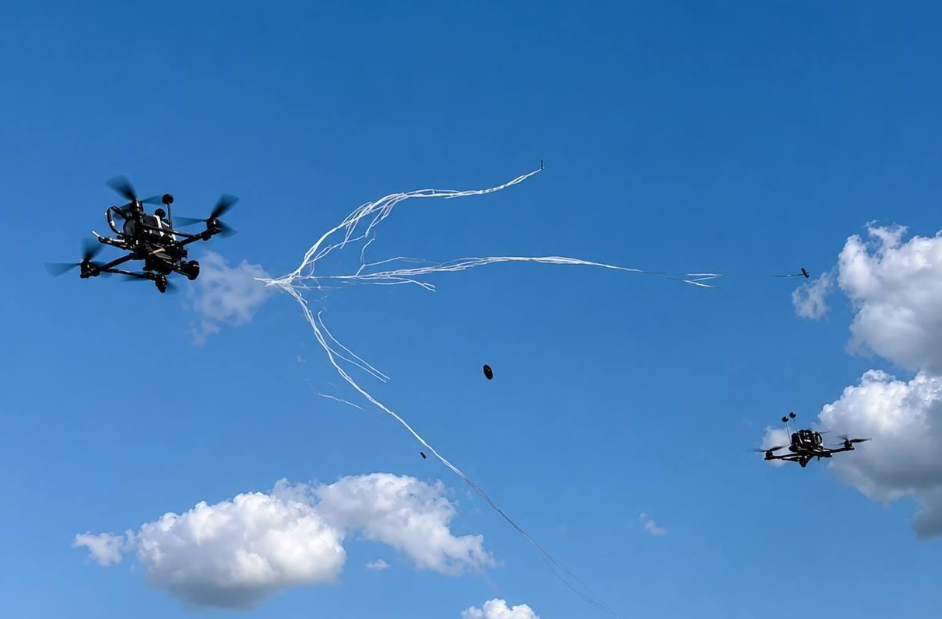
A Ukrainian defense company has shown a new way to knock FPV drones out of the sky, unveiling a net-firing interceptor at the IT Arena tech conference in Lviv, dev.ua reported. The system, called Mangal and developed by Phantom Defense, is still a prototype—the company says the first production units could reach the market in a few months.
Ukraine's counter-drone work has turned into a crowded contest, with firms racing to field jammers, interceptor drones, and net-throwers that can blu
A Ukrainian defense company has shown a new way to knock FPV drones out of the sky, unveiling a net-firing interceptor at the IT Arena tech conference in Lviv, dev.ua reported. The system, called Mangal and developed by Phantom Defense, is still a prototype—the company says the first production units could reach the market in a few months.
Ukraine's counter-drone work has turned into a crowded contest, with firms racing to field jammers, interceptor drones, and net-throwers that can blunt Russia's growing use of cheap FPVs.
What Mangal does
Phantom Defense designed the modular launcher to defend positions, vehicles, and other targets against enemy drones. It fires a special net weighted with sinkers. The net opens the moment it fires, tangling the drone and dragging it down. One module holds six charges. Two cameras give the crew a clearer view, and the system can detect targets on its own, which speeds up how fast an operator spots a threat. Crews can fix Mangal in place to guard checkpoints, trenches, or infrastructure, or bolt it onto a vehicle.
Why a net
FPV drones—aircraft a pilot flies straight into a target—have become a routine danger along the front. A small, fast drone is hard to hit with a single round. A net spreads as it travels, so it is more forgiving to aim. Neither Phantom Defense nor the outlets covering the launch have said how far Mangal's net can reach.
Explore further
Ukraine’s newest interceptor doesn’t ram its target. It nets it for $27, then flies home to catch another
Other net-based counters
Other developers are turning to nets too. The WINFLY Spider is an interceptor drone that snares a target in a net and returns to its launch point intact, at about $27 a shot. That lets one aircraft make repeated intercepts instead of being spent on a single kill. Scan Horizon comes from Postup Solutions, a firm registered in Wrocław, Poland, and pairs a net launcher from Ukrainian company Ptashka Drones. Its net reaches about 30 meters. Contra Drone, meanwhile, has shown interceptor missiles that can reportedly carry net warheads alongside other options.
Over 90 percent of Ukraine’s scientific discoveries have been attributed to Ukraine’s National Academy of Sciences, including advancements in astronomy and military technology.
Over 90 percent of Ukraine’s scientific discoveries have been attributed to Ukraine’s National Academy of Sciences, including advancements in astronomy and military technology.
Ukrainian company Vyriy Industries is bringing a new tactical reconnaissance drone, Slavic, to the market, Oboronka reports, citing information from the manufacturer. The control system of the new drone will be familiar to DJI Mavic operators, the company also said.
Mavic has long been one of the main reconnaissance tools used by Ukrainian forces, with Ukraine relying heavily on supplies of these drones from abroad. After Ukrainian President Volodymyr Zelenskyy said China had stopped se
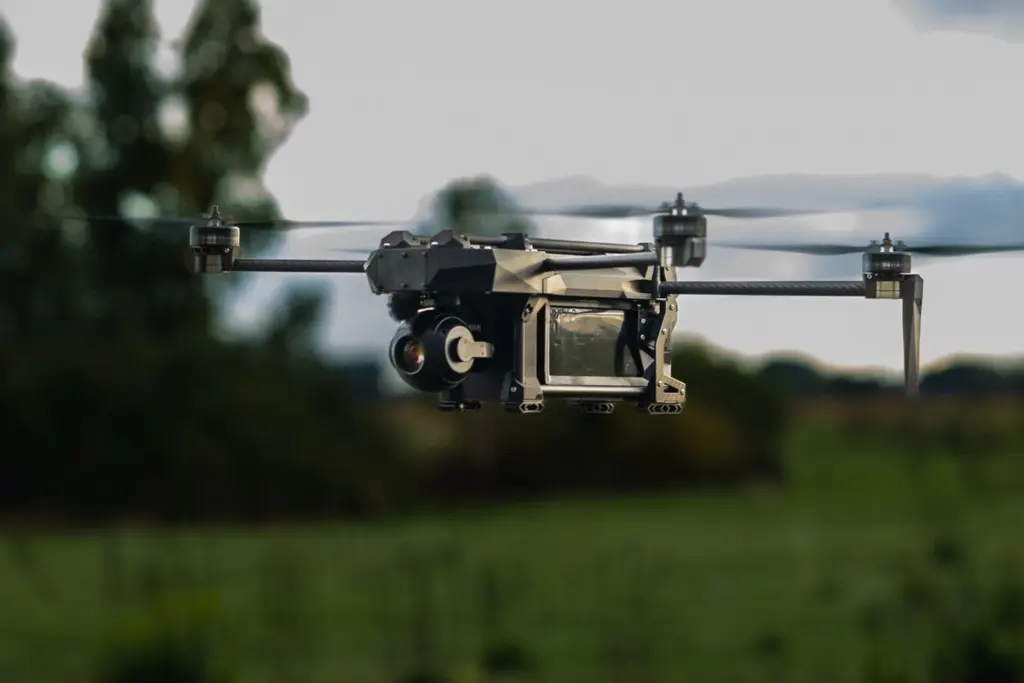
Ukrainian company Vyriy Industries is bringing a new tactical reconnaissance drone, Slavic, to the market, Oboronka reports, citing information from the manufacturer. The control system of the new drone will be familiar to DJI Mavic operators, the company also said.
Mavic has long been one of the main reconnaissance tools used by Ukrainian forces, with Ukraine relying heavily on supplies of these drones from abroad. After Ukrainian President Volodymyr Zelenskyy said China had stopped selling drones to Ukraine, the country began seeking alternatives. Slavic is one of these domestic alternatives, designed not only to replace Mavic but also to adapt its capabilities to current battlefield conditions, allowing reconnaissance crews to operate farther from the line of contact and reducing risks to personnel.
Slavic has a tactical range of up to 30 kilometers without GPS
Slavic can remain airborne for up to 1.5 hours because it is equipped with a 40,000 mAh solid-state battery, the media outlet notes. The drone has a tactical range of up to 30 kilometers, the report says.
Illustration showing the positions of the Slavic pilot (left) and Mavic pilot (farther to the right), as well as the drones’ flight ranges relative to enemy positions (shown in red). Illustration: Vyriy Industries
The aircraft can operate without GPS, as Slavic uses optical positioning for navigation. The pilot can also select a less congested channel and operate more effectively in difficult terrain because the communications system operates across a wide range of channels.
The manufacturer notes that for surveillance, Slavic is equipped with a daytime 2K digital camera mounted on a three-axis stabilized gimbal, with 10x optical and 30x hybrid zoom.
Part of the drone with the camera. Photo: Vyriy Industries
The system is supplied as a ready-to-use package “out of the box,” with all the equipment needed for operation without additional field modifications.
The drone is designed to keep crews farther from the front line
The company said its new drone has successfully completed initial combat trials with seven units of the Ukrainian Defense Forces and is preparing for scale-up, the media outlet notes.
“The war has changed, and so have the working conditions for crews. The kill zone has expanded, while available commercial drones have a limited tactical range. The main task now is to provide the military with a specialized platform that can fly longer and farther, so crews can operate farther from the line of contact. This is exactly why we began developing Slavic,” said Oleksii Babenko, founder and CEO of Vyriy Industries.
At the same time, the team is working on new Slavic configurations, including testing thermal imaging modules for nighttime reconnaissance. The manufacturer is also preparing the platform for scaled-up production and deliveries to the Ukrainian Defense Forces, the company told the media.
“Frankensteins” and Ukrainian-made drones are among the options for replacing scarce Mavics
The Ukrainian military had widely used Chinese DJI Mavic 3 drones, including to adjust artillery fire, monitor infantry positions and conduct surveillance, prompting Ukraine to seek ways to replace the shortage. More than five alternatives to the Chinese drone had already been developed in Ukraine, the Ministry of Strategic Industries of Ukraine confirmed to RBC-Ukraine in July 2025.
DJI Mavic 3 in use by a Ukrainian servicemember. Photo: Ministry of Defense of Ukraine
There are also other options for replacing them. The main work in military units is being done with “Frankensteins,” drones assembled from two or three damaged aircraft, Mavic UAV pilot instructor “Dobryi” said in an interview with Militarnyi in July this year. At the same time, such drones are less reliable than new ones, he added.
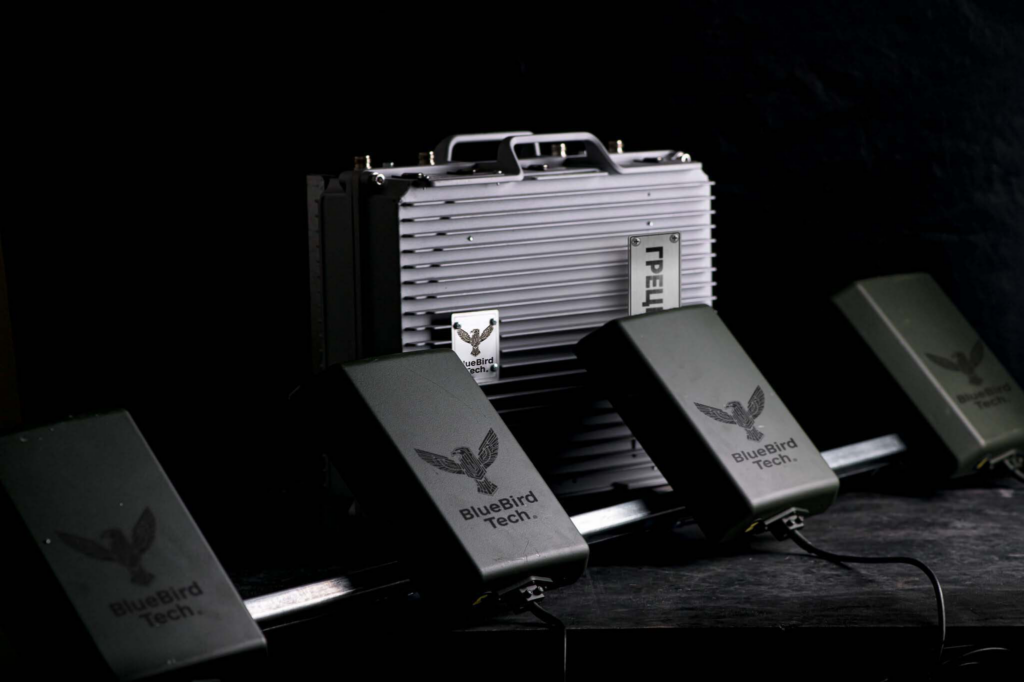
Ukrainian defense-tech firm BlueBird Tech has begun renting out its Hrets electronic-warfare jammers by the day, in what it calls Ukraine's first such service, the company said on 29 September 2026. Electronic-warfare gear—the devices that scramble the radio links attack drones rely on—is normally bought outright, renting lets a user take a system for a single mission or test it before committing.
The pull is a war where cheap first-person-view (FPV) drones have made portable jamming a
Ukrainian defense-tech firm BlueBird Tech has begun renting out its Hrets electronic-warfare jammers by the day, in what it calls Ukraine's first such service, the company said on 29 September 2026. Electronic-warfare gear—the devices that scramble the radio links attack drones rely on—is normally bought outright, renting lets a user take a system for a single mission or test it before committing.
The pull is a war where cheap first-person-view (FPV) drones have made portable jamming a routine need, one many users face only for a stint.
How renting works
After paperwork and a deposit equal to the device's full price, the system is handed over, and that handover counts as day one. Each day's rent is then drawn from the deposit, return the system working and undamaged and the renter gets back what is left. Keep it long enough that the fees add up to the full price, and the jammer passes to the renter automatically. Renting is open to individuals, companies, charities, and volunteer groups.
Three models, and what each one jams
The Hrets XL is a modular FPV jammer built from two to 10 working modules, priced case by case. The vehicle-mounted Hrets 4MC is an anti-drop system that jams DJI Mavic-type quadcopters—the drones Russian forces use to drop munitions—for about $56 a day. The lightweight Hrets 4M jams FPV drones at a stated 70 to 400 meters for about $67 a day. One Ukrainian firm has even packed detection, decoding, and jamming of an FPV signal into a single device.
Ukraine's air defenders now have purpose-built interceptors for Russia's jet-powered attack drones—weapons whose speed and altitude make them difficult for conventional defenses to catch, Militarnyi reported. A crew from the 1020th Anti-Aircraft Missile and Artillery Regiment downed a Geran-5 over Chernihiv Oblast with a newly delivered interceptor, according to the Serhiy Prytula Foundation.
Russia's long-range drone and missile attacks have become central to its effort to wear down Uk
Ukraine's air defenders now have purpose-built interceptors for Russia's jet-powered attack drones—weapons whose speed and altitude make them difficult for conventional defenses to catch, Militarnyi reported. A crew from the 1020th Anti-Aircraft Missile and Artillery Regiment downed a Geran-5 over Chernihiv Oblast with a newly delivered interceptor, according to the Serhiy Prytula Foundation.
Russia's long-range drone and missile attacks have become central to its effort to wear down Ukraine's air defenses and grid before winter, and the war in the sky now turns on which side scales its answer faster.
The Chernihiv intercept
The crew, callsign Yastrub (Hawk), made its first successful engagement with the new interceptor, hitting the jet drone at 425 km/h and above 3 km, the foundation said, releasing footage of the strike. The Prytula Foundation supplied the interceptors and said it has contracted several manufacturers to counter the jet threat.
"Our task is to scale this up and strengthen units," it said.
Why it kept slipping through
Russia first used the Geran-5 in January 2026. HUR's own specifications put its warhead at 90 kg, cruise speed at 450–600 km/h, and range at 950 km, with a ceiling of 6 km. That mix of jet speed and high altitude kept it clear of machine guns, shoulder-fired missiles, and the cheap interceptors built to swat slower piston-engine Shaheds.
Ukraine's military intelligence estimates Russian plants now turn out around 3,000 jet-powered Geran-4 and Geran-5 drones a month, according to HUR. A monitoring Telegram channel, Polkovnyk HSh, reports a newer variant that steers by ground imagery instead of satellites, which would blunt jamming—though HUR has not confirmed it and lists no such system among the drone's components. Separately, Russia moved the jet engine inside the fuselage, a change aimed at more speed and range.
Explore further
After Russia hits Kyiv’s Academy of Sciences with jet-powered drone, the Kremlin says Ukraine must “pay a price”
Where the fight stands
Ukraine intercepts about 55% of Russia's jet drones, against more than 90% of the older models, President Volodymyr Zelenskyy said on 26 September. Since the start of September, Russia had launched more than 2,730 jet drones, and Ukraine had downed or suppressed more than 1,500, he added. Zelenskyy also said Russia plans to spend $12 billion in 2027 on jet drones and loitering munitions alone. Ukraine already has several interceptor prototypes in combat use, and the 1020th crew's kill is one of several jet Geran intercepts Ukrainian units and drone makers have logged this month.
Ukraine is building an artificial intelligence system to analyze battlefield data, help commanders plan operations, and forecast Russia's possible moves, its Defense Ministry said. The system keeps the data it runs on behind a protected perimeter.
The logic behind the project: Ukraine can already read the battlefield from drone footage and sensor feeds, but converting that picture into orders is the harder, still-human half where wars are decided.
What SPECTR is built to do
SPECTR
Ukraine is building an artificial intelligence system to analyze battlefield data, help commanders plan operations, and forecast Russia's possible moves, its Defense Ministry said. The system keeps the data it runs on behind a protected perimeter.
The logic behind the project: Ukraine can already read the battlefield from drone footage and sensor feeds, but converting that picture into orders is the harder, still-human half where wars are decided.
What SPECTR is built to do
SPECTR comes from A1, the AI center inside Ukraine's Defense Ministry. Its head, Danylo Tsvok, said Ukraine holds a unique store of data on how this war is fought, and SPECTR is designed to help turn that into a real edge on the ground.
The system is built to analyze incoming information, spot patterns, draft recommendations for planning operations, and automate the routine work in headquarters. Troops would work with frontline information faster.
"Essentially, we are building an operating system for warfighting. It will help the military choose effective courses of action and predict the enemy’s possible moves," Tsvok said.
SPECTR will run inside systems the Defense Forces already use, and on local devices set aside for sensitive data.
The center behind an AI-driven army
The ministry set up A1 in March 2026 with backing from the UK government, aiming to turn AI into Ukraine's battlefield advantage and build an "AI-driven army." That effort runs along three tracks: faster, data-based decisions, AI built into weapons and less bureaucracy in the ranks. The center is working on three flagship projects. Some of its solutions are already being tested by units.
Ukrainian President Volodymyr Zelenskyy has used the UN General Assembly in New York to court partners outside Ukraine's NATO core, pitching air-defense cooperation with Japan and drone cooperation with Chile, Ukrainska Pravda reported. In a single day of bilateral talks, he met Japan's Prime Minister Sanae Takaichi, Chile's President José Antonio Kast, and UK Prime Minister Andy Burnham.
The meetings turned on shielding civilian infrastructure before winter and trading Ukraine's battle
Ukrainian President Volodymyr Zelenskyy has used the UN General Assembly in New York to court partners outside Ukraine's NATO core, pitching air-defense cooperation with Japan and drone cooperation with Chile, Ukrainska Pravda reported. In a single day of bilateral talks, he met Japan's Prime Minister Sanae Takaichi, Chile's President José Antonio Kast, and UK Prime Minister Andy Burnham.
The meetings turned on shielding civilian infrastructure before winter and trading Ukraine's battlefield-tested technology for capabilities it still needs. More than four years into Russia's war, a nation that entered the war reliant on donated arms now iterates drones faster than many of its Western backers, and that expertise has become leverage in its own diplomacy.
Zelenskyy pitches Ukraine's know-how for Japan's air-defense tech
In their first summit meeting, Zelenskyy cast the relationship as a two-way exchange.
"Ukraine is ready to share its experience and technologies on a mutually beneficial basis," he said.
While Japan has advanced technologies for protecting lives, particularly in air defense, that could carry Ukraine through the winter if Russia again rejects talks, the President's Office reported.
Ukraine walks into winter with two air-defense problems. It is still testing home-built interceptors to catch Russia's jet-powered drones. And it does not have enough Patriot interceptors to stop ballistic missiles over its cities. Japan holds the key to the second one.
Explore further
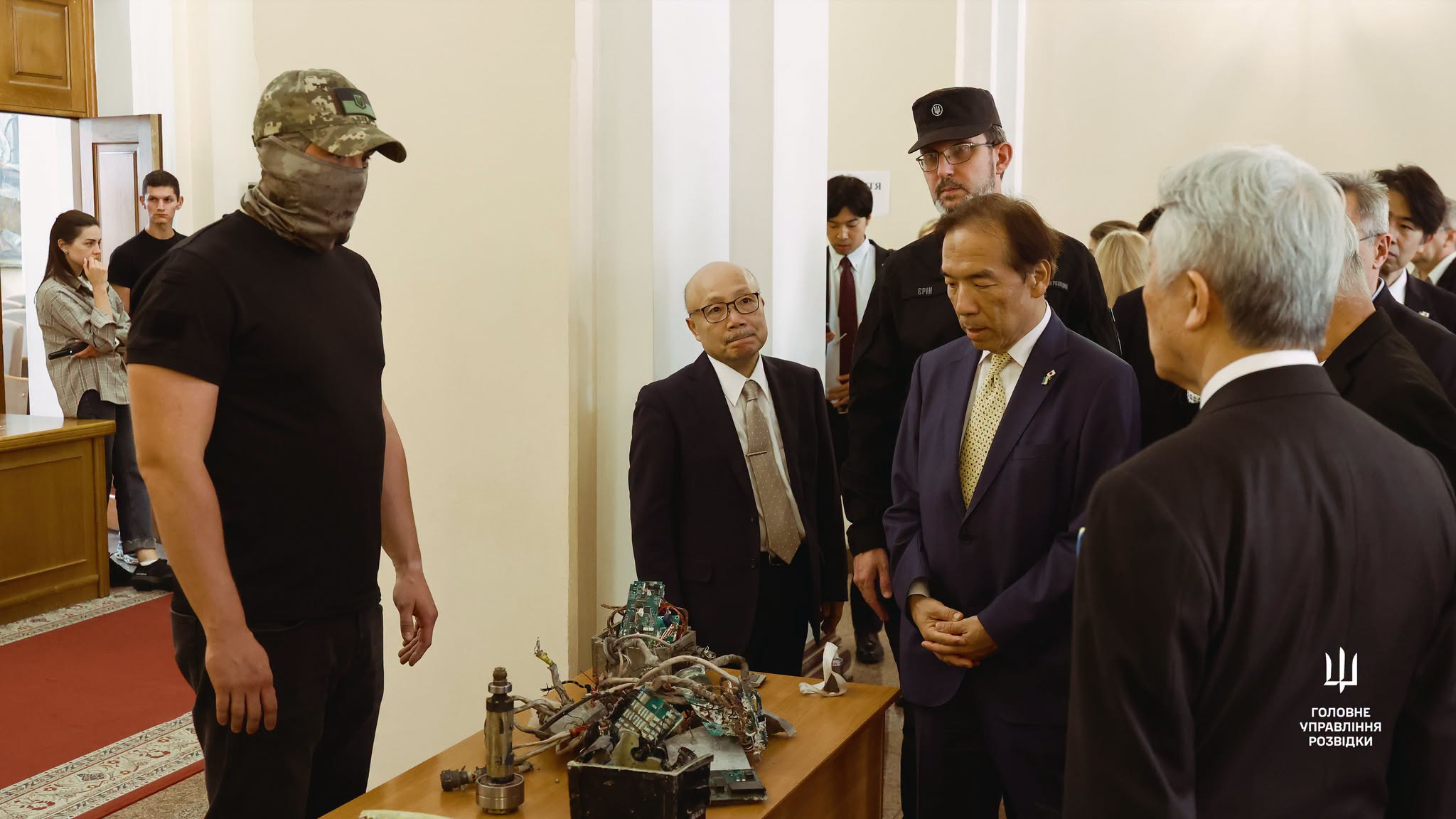
North Korea has fired around 150 ballistic missiles at Ukraine, learning from each one. Same missiles threaten Japan, and Kyiv just shows its speaker what is inside them
Mitsubishi Heavy Industries runs the only plant outside the US licensed to assemble the PAC-3, the advanced Patriot interceptor. Japan is also the sole maker of the guidance gyroscopes inside older PAC-2 missiles. It has already shipped Japanese-made PAC-3s to the US to refill stocks drained by transfers to Ukraine, and Zelenskyy has floated Mitsubishi as the model for Ukraine's own Patriot line.
The exchange runs both ways. Russia keeps pressing Japan over the Kuril Islands the Soviet Union seized in 1945. Against that backdrop, Ukraine's combat-tested drones could appeal to Tokyo. Kyiv offers the drone know-how it now leads in, and asks for the air-defense edge Japan already has.
Zelenskyy also thanked Tokyo for its sanctions on Russia, energy packages, and humanitarian projects, and Takaichi assured him of continued support. Zelenskyy invited her to Ukraine, including the Kyiv-Pechersk Lavra, which Japan helped restore after a Russian drone strike in June.
Explore further
Japan weighs sanctions after Putin’s first visit to disputed Kuril Islands
Chile opens a door to Latin America
With Kast, Zelenskyy discussed deepening security and drone-technology ties and thanked Chile for backing Ukraine at international forums and for helping return Ukrainian children abducted by Russia. He welcomed Santiago's willingness to help expand Ukraine's presence across Latin America, calling it an opening for "even more promising opportunities," and invited Kast to visit.
Building on ties already in place
Both partnerships rest on existing ground. Japan, barred by its own laws from sending lethal weapons, has delivered generators, transformers, and non-lethal gear, pledged a $6 billion package for 2026, and agreed to help rebuild the Lavra through UNESCO. Talks in Tokyo in July recast Ukraine as a security partner rather than an aid recipient.
Chile joined the coalition to bring abducted Ukrainian children home and, in an April call, heard Zelenskyy float a security arrangement modeled on Ukraine's Gulf-state pacts. The outreach tracks Kyiv's drive to turn its wartime industry into an export business under its "Drone Deals" framework.
A Ukrainian company has disclosed a small aircraft that can bomb a target, relay radio signals, carry FPV drones behind enemy lines, or strike on its own. The KARA, a fixed-wing drone made by Ukrskytechnology, is listed on Ukraine's state Brave1 Market in three tiers, from a bare airframe to a ready-to-fly aircraft, Defender Media reported.
One airframe does the work of several, and it goes for some $9,900. The marketplace it sits on, Brave1 Market, has processed more than $235 million
A Ukrainian company has disclosed a small aircraft that can bomb a target, relay radio signals, carry FPV drones behind enemy lines, or strike on its own. The KARA, a fixed-wing drone made by Ukrskytechnology, is listed on Ukraine's state Brave1 Market in three tiers, from a bare airframe to a ready-to-fly aircraft, Defender Media reported.
One airframe does the work of several, and it goes for some $9,900. The marketplace it sits on, Brave1 Market, has processed more than $235 million in orders, lists over a thousand products, and lets frontline units buy gear even before a weapon clears formal codification.
One airframe does four jobs
What the KARA does depends on how it is kitted out. Fitted one way, it drops cargo; another, it works as a signal repeater to extend a unit's radio reach; another, it ferries FPV drones deep into the enemy rear to be released; and another, it carries out strikes itself. Buyers choose among an empty glider they equip themselves, a Plug-N-Play version with basic electronics installed, and a Ready-To-Fly model.
The drone flies light and far
The specifications are modest but flexible, according to Ukrskytechnology. The KARA has a tactical radius of 70 kilometers, and a stated endurance of 2.5 hours, cruises at 90 kilometers per hour and tops out at 120, and works at 200 meters but can climb to 3,000.
It runs on either an electric motor or a combustion engine, and carries two payload blocks of up to three kilograms each under the wing. Launched by catapult and landing like a plane, it takes 10 minutes to set up.
The marketplace lists it now
The KARA is being prepared for codification, the formal approval that clears a weapon for standard state procurement, but it does not have to wait for that to reach the front. Brave1 Market was built precisely so that units can buy proven kit fast, without waiting on the slow pipelines of the past, and the KARA is already there for the price of a used car.
Drones get most of the attention in this war, and deservedly so—but the snipers are still out there, two Ukrainian marksmen told Army Inform, and the same drones have made their work far harder to survive. It now turns on watching, not shooting: long stretches at a hidden position, a thermal scope always running, and a constant fight to stay unseen.
Across the drone-saturated front, cheap cameras overhead have rewritten nearly every job—infantry, logistics crews, and now marksmen—so tha
Drones get most of the attention in this war, and deservedly so—but the snipers are still out there, two Ukrainian marksmen told Army Inform, and the same drones have made their work far harder to survive. It now turns on watching, not shooting: long stretches at a hidden position, a thermal scope always running, and a constant fight to stay unseen.
Across the drone-saturated front, cheap cameras overhead have rewritten nearly every job—infantry, logistics crews, and now marksmen—so that surviving depends less on firepower than on never being seen.
The job is mostly watching
The men—a squad leader in a special-purpose sniper company, callsign Efiop, and his partner Maister—serve in the National Guard of Ukraine's 3rd Operational Purpose Brigade Spartan. Maister worked a factory milling machine before joining in 2022. He saw what Russian troops were doing, he said, and Ukrainian children started dying: he went to fight for the children, and he has a daughter of his own. A team takes a sector and holds it around the clock through a thermal scope.
"We can sit 40 days and never fire a shot. Or we go in, and in a single day we take down a lot of them," Efiop said.
His longest stint at one spot ran 48 days, and the greatest distance he has worked was 2,540 meters—more than a mile and a half.
Up to 154 pounds on your back, over 12 miles to cross
Reaching a position is often the hardest part. A sniper carries a vest, helmet, an assault rifle and the sniper rifle, and what supplies will fit—60 to 70 kilograms, or 132 to 154 pounds. They stay more than a month, and a month's worth will not go on one back. That load sometimes crosses more than 20 kilometers, over 12 miles, of open ground with no tree line to hide behind.
"You don't walk, you run," Maister said.
Lately it has eased a little: food can be dropped in by a heavy Vampire bomber drone.
Drones rewrote the rulebook
The biggest shift came from the sky. Russian drones with thermal cameras can see a bullet in flight because it is warm, Efiop said, and then burn out the position.
"They caught us like that once. We took out three, they saw where we fired from and burned the spot. We moved right away, and everyone lived," Efiop noted.
Now the snipers watch remotely from a safer place instead of lying behind the scope for hours. Once, that safer setup saved a life outright: a mortar round came in and pierced only the rifle scope.
Russia has fielded a new generation of cheap, jet-powered drones and cruise missiles faster than Ukraine or the US can build defenses against them, according to The Wall Street Journal. The weapons run on Chinese parts that slip past Western sanctions, and they are already getting through air defenses designed to stop slower drones. Analysts say the West underestimated how fast Moscow could move from an idea to a full assembly line.
Russia now leans on cheap, mass-produced drones to swa
Russia has fielded a new generation of cheap, jet-powered drones and cruise missiles faster than Ukraine or the US can build defenses against them, according to The Wall Street Journal. The weapons run on Chinese parts that slip past Western sanctions, and they are already getting through air defenses designed to stop slower drones. Analysts say the West underestimated how fast Moscow could move from an idea to a full assembly line.
Russia now leans on cheap, mass-produced drones to swamp Ukraine's air defenses with sheer numbers night after night, and its factories keep growing to keep the attacks coming. The bigger lesson reaches past this war: in a long fight, cheap weapons in large numbers can beat a small stock of expensive ones.
A cheap weapon that gets past Ukraine's defenses
Ukraine had learned to shoot down the Iran-designed Shahed drones Russia was launching. Then Moscow moved the goalposts. The newest model, the Geran-5, looks more like a missile than a drone—Mike Monnik, head of the drone-threat firm DroneSec, called it "essentially a poor-man's cruise missile," and it forced a rewrite of Ukraine's counter-drone playbook. The Geran-5 and the Banderol cruise missiles are each estimated to cost about $100,000. A US Tomahawk costs more than $2 million.
Explore further
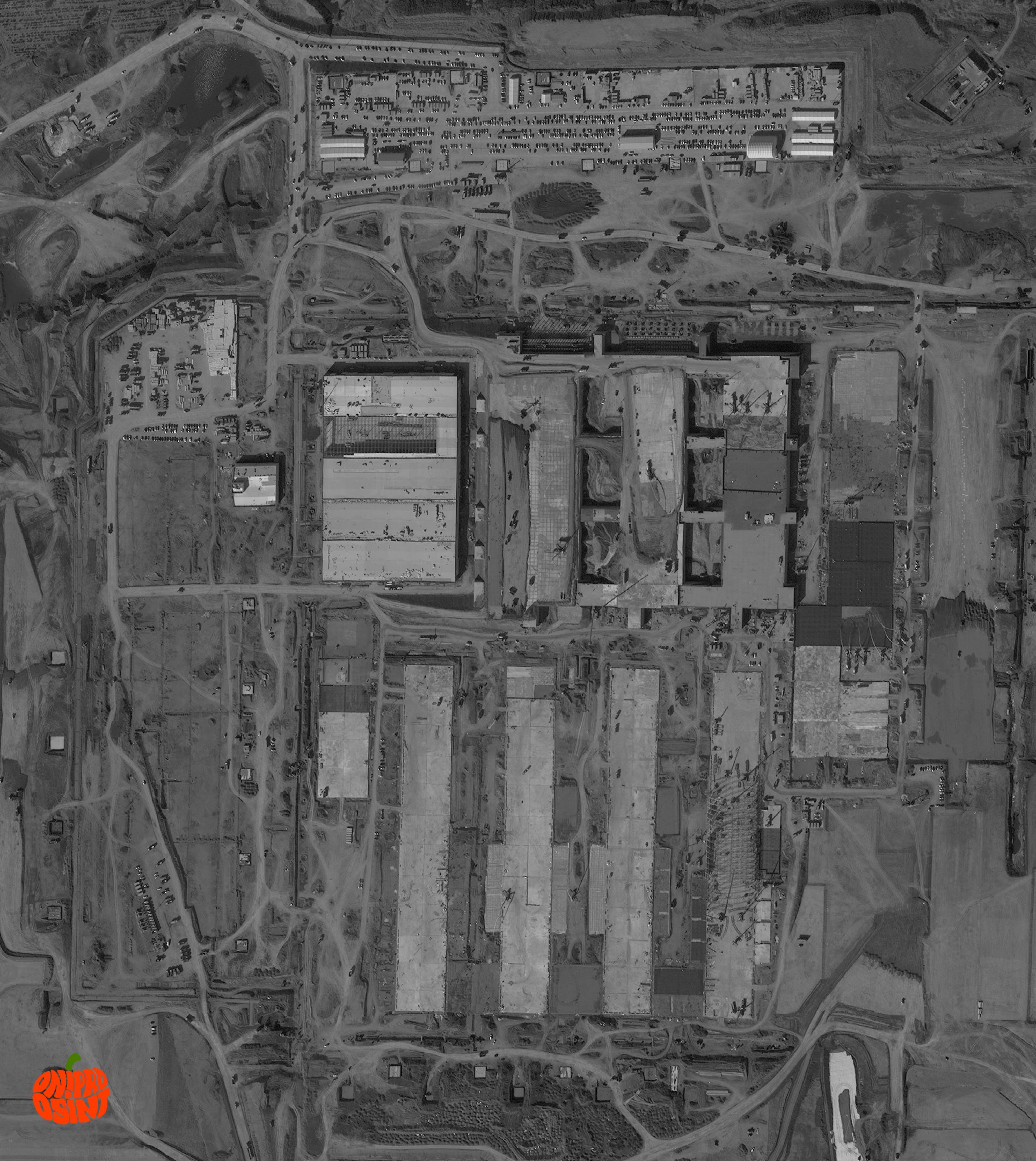
Russia built five more halls for the drones it assembles using Chinese parts to hit Ukrainian cities
Built fast, with China's help
Moscow needed only about two years to take each weapon from the drawing board to the battlefield, reworking earlier designs, testing them in combat, and pushing them into serial production. Ukrainian assessments, echoed by the drone-intelligence firm DroneSec, trace the leap to Chinese parts—the turbojet engines, the navigation computers, the radios—most of them off-the-shelf, dual-use gear anyone can buy. The weapons are aimed at Ukrainian cities and infrastructure—a Banderol struck a residential area of Kharkiv in July.
An expensive problem for the West
US forces and NATO have knocked down cheap drones with costly Patriot interceptors and fighter jets, often firing several interceptors at a single weapon. Western firms that built interceptors for slow drones are now scrambling to make faster, jet-powered ones. Kateryna Bondar of the Center for Strategic and International Studies said the West keeps underestimating how fast Russia turns experiments into production, and that Kyiv had years of warning yet was still caught off guard.
"I'm surprised everyone is surprised," she said.
At NATO's July summit in Ankara, members committed more than $40 billion to counter-drone defenses over the coming five years.
A Ukrainian company has unveiled a homegrown strike drone built to fly deep behind Russian lines, Militarnyi reported on 13 September. Octava Defence showed the new long-range aircraft—a bigger version of a drone already used in combat—at the MSPO 2026 defense expo in Kielce, Poland. The company says the smaller drone is built to keep working in electronic warfare conditions without a reliable satellite signal.
Russian jamming is one of the biggest obstacles to Ukrainian strikes deep in
A Ukrainian company has unveiled a homegrown strike drone built to fly deep behind Russian lines, Militarnyi reported on 13 September. Octava Defence showed the new long-range aircraft—a bigger version of a drone already used in combat—at the MSPO 2026 defense expo in Kielce, Poland. The company says the smaller drone is built to keep working in electronic warfare conditions without a reliable satellite signal.
Russian jamming is one of the biggest obstacles to Ukrainian strikes deep in the rear, which is why Ukrainian makers keep building guidance that does not depend on satellite signals.
The workhorse is already in the fight
The base FLYCAT, presented in January 2026 by another Ukrainian firm, Venator Technologies, is a strike drone Ukrainian forces have used in combat since March. An improved model went into action in July and August and is now undergoing codification—entry into Ukraine's official weapons register.
Explore further
Watch first naval battle in history fought entirely by drones: Ukrainian uncrewed boat spots, fires on, and sinks Russian one in Black Sea
The company says the updated drone can fly more than 80 km, stay in the air for an hour, and carry a warhead weighing up to 3.7 kg. It is built to hunt armored vehicles, artillery, radars, and air-defense systems, as well as lighter shelters and communications gear. It can pair with a scout drone that finds the target and passes the coordinates. Several FLYCATs can also strike a single target together or hit multiple targets at once.
Nearly everything on it is built in Ukraine—the communications, navigation, guidance, and warhead. Only the engines come from abroad. Its two cameras—day-only or day-and-night—feed a terminal-guidance module that picks out the target from 2,000 m as it closes in.
The one that reaches deeper
The FLYCAT SL is a bigger, longer-range version, and it is still in testing. The company says it is built to fly more than 200 km, stay airborne for over two and a half hours, and carry a heavier load of up to 7 kg.
One of the warhead variants of the FLYCAT strike drone, shown at MSPO 2026 in Kielce, Poland. Photo: Militarnyi
That range is meant to let it go after command posts, armored vehicles, artillery, and air defenses far behind the front line.
RFE/RL's investigative project Sistema examined hundreds of Russian-Iranian scientific papers published over the past decade and identified links between Russian universities and Iran's defense industry.
Russia has been invading Ukraine since 2014 and has pounded its cities nightly since 2022 with Shaheds, the Iranian-designed attack drones it turns out by the thousand. And now Russian universities are where some of Iran's military engineers learn their trade, before re
RFE/RL's investigative project Sistema examined hundreds of Russian-Iranian scientific papers published over the past decade and identified links between Russian universities and Iran's defense industry.
Russia has been invading Ukraine since 2014 and has pounded its cities nightly since 2022 with Shaheds, the Iranian-designed attack drones it turns out by the thousand. And now Russian universities are where some of Iran's military engineers learn their trade, before returning to institutions tied to Iran's army and Revolutionary Guards.
At St Petersburg's ITMO University, Iranian co-authored papers almost equaled German ones in number in 2025, although Germany had been a key partner before Russia's full-scale invasion of Ukraine, Sistema's count shows.
Russian adaptations of Iranian Shahed-type drones. Photo: Lenta Novostei Kharkova / Web Screenshot
Academic ties with a military edge
For almost four decades, Russia has trained Iranian engineers in fields including aircraft manufacturing, missile development, satellite navigation, and nuclear technology, Sistema reported. Almost 10,000 Iranian students were enrolled at Russian universities in 2025, 42% more than two years earlier, according to Russia's science ministry. Medicine remains the most popular field.
In some cases, the training goes beyond ordinary academic exchange. In 2018, Iranian students from the Moscow Aviation Institute (MAI) interned at Vympel, a Russian manufacturer of missile weapons, alongside other foreign students, Sistema reported.
The investigation also examined the career of Ali Mohammad Amoui, who completed postgraduate study in gas turbine engines in 2000 at the MATI technological university in Moscow, later absorbed into MAI. From 2017 to 2022, he served as deputy director general for trade and international relations of Farsco Aviation MRO Center, whose shareholders, according to Iranian corporate records cited by the investigation, include Iran's Aviation Industries Organization, part of the country's Defense Ministry, and the sanctioned airline Mahan Air. Farsco presents itself as a civilian maintenance business.
People look at an Iranian-designed Shahed 136, (Geranium-2) drone of Russian Army at an open-air exhibition of destroyed Russian equipment near Saint Michael's Golden-Domed Cathedral in Kyiv on November 2, 2025, amid the Russian invasion of Ukraine. Photo by Sergei SUPINSKY / AFP/Eastnews
Amoui co-authored research with MAI scientists on protective coatings for turbine blades and the strengthening of titanium components in aircraft engines. He also listed Iran's Malek Ashtar University of Technology, which answers to the Iranian Defense Ministry, as his workplace.
Another area of cooperation is satellite navigation and electronic warfare. Iranian professor Mohammad-Reza Mousavi, who edits a journal published by Iran's naval academy, researched GPS spoofing and worked with specialists at Samara University in 2016.
His PhD student Amir Tabatabaei also studied in Samara and worked on GLONASS, Sistema reported. It added that the two developed a method to detect fake GPS signals and published their research in a journal of the Russian defense concern Elektropribor, which develops navigation systems for the Russian Navy.
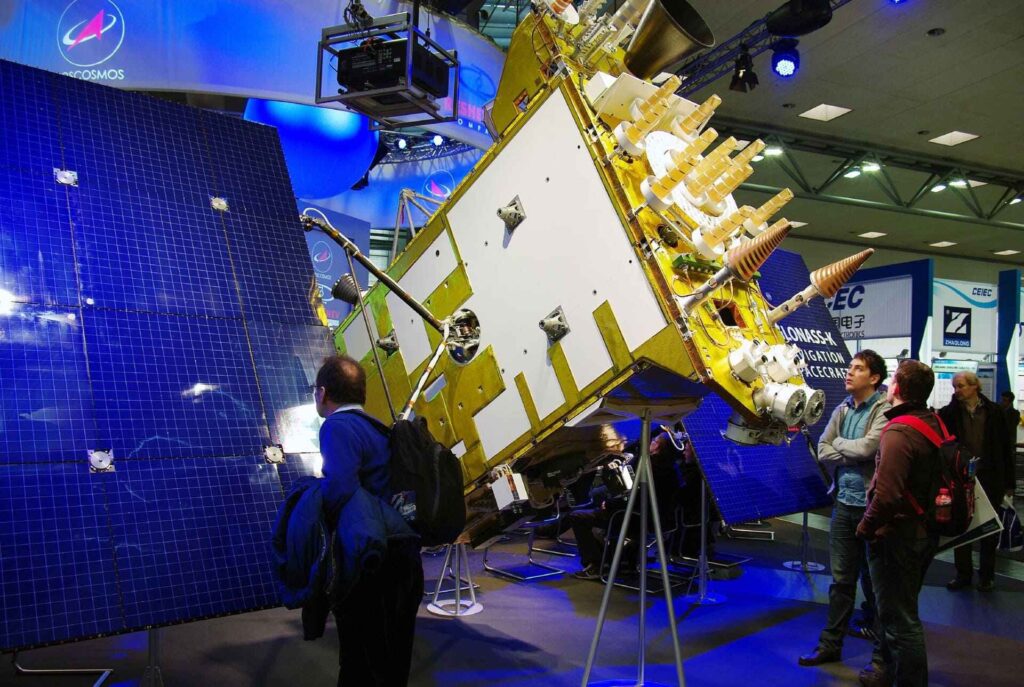
GLONASS-K navigation satellite model at CeBIT 2011. Photo: Jürgen Treutler
Russia and Iran share scientific interests in nuclear physics
Some of this work is dual-use, with civilian and military applications alike. Sistema describes Iranian Mohammad Hosseinpour Khanmiri, who studied methods for measuring uranium and thorium isotopes at St Petersburg State University. By 2022, he had applied a method he had developed with a Russian scientist to ore from Iran’s Saghand deposit. He later listed the Atomic Energy Organization of Iran as his workplace.
His co-authors also had links to Iran’s nuclear program, the investigation reports. Mohammad Outokesh, who studied the operation of gas centrifuges, co-authored a paper with Javad Karimi-Sabet, a deputy head of the Atomic Energy Organization of Iran. Iran's then president, Mahmoud Ahmadinejad, commended Karimi-Sabet in 2006 for his work on nuclear equipment at Natanz, including a new generation of centrifuges. The US and European countries later imposed sanctions on Karimi-Sabet.
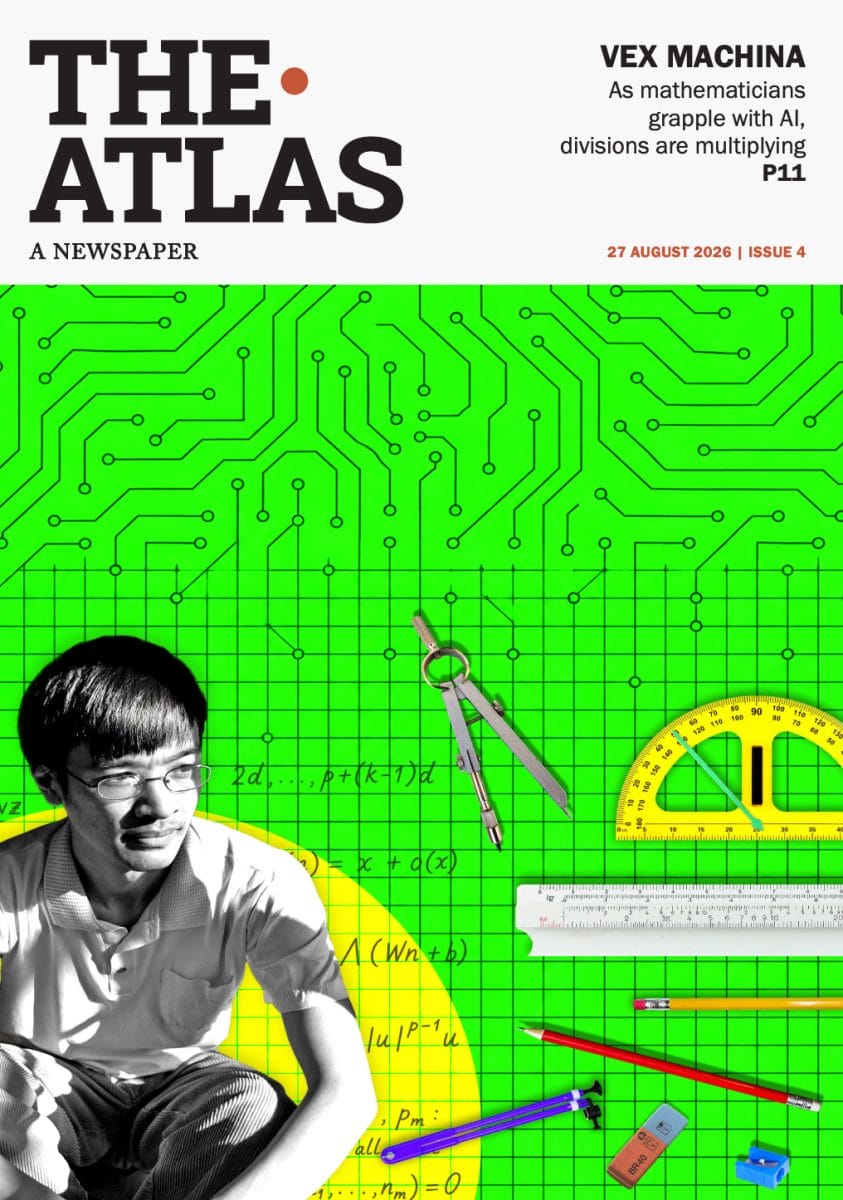
This story first appeared as the cover story in Issue 4 of The Atlas, a new global publication by Coda Story and The Continent. Sign up to the newspaper here.
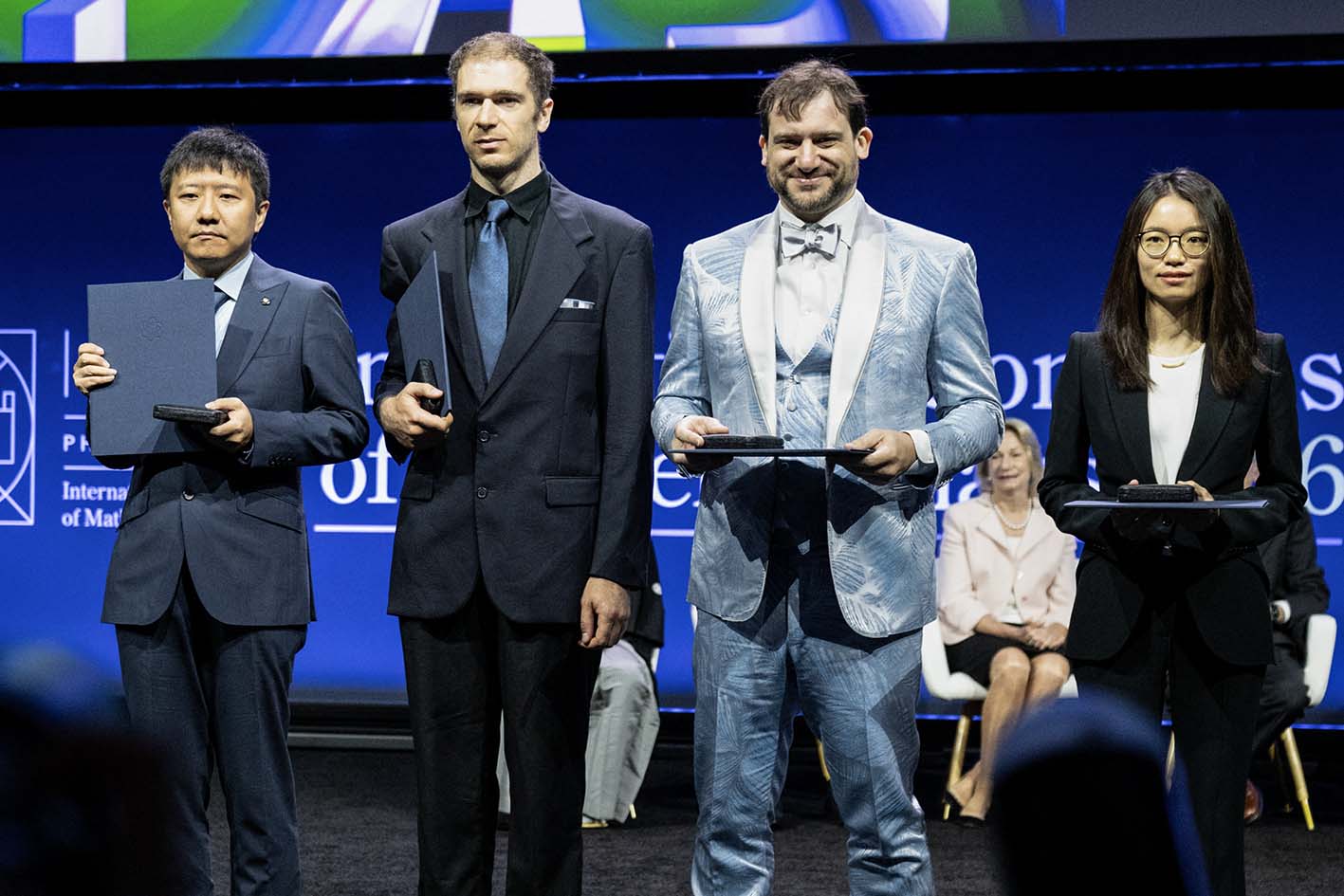
In late July, at the International Congress of Mathematicians (ICM) in Philadelphia, the mathematician Jacob Tsimerman was awarded one of four Fields Medals – the highest honour in mathematics.
A few hours later, Tsimerman announced that he was joining OpenAI.
Tsimerman’s departure from theoretical mathematics, while at the absolu
This story first appeared as the cover story in Issue 4 of The Atlas, a new global publication by Coda Story and The Continent. Sign up to the newspaper here.
In late July, at the International Congress of Mathematicians (ICM) in Philadelphia, the mathematician Jacob Tsimerman was awarded one of four Fields Medals – the highest honour in mathematics.
A few hours later, Tsimerman announced that he was joining OpenAI.
Tsimerman’s departure from theoretical mathematics, while at the absolute peak of his powers, highlights the fault line in a debate that is upending the normally quiet world of higher mathematics. “What a dick move,” said one mathematics professor, speaking to The Atlas off the record.
Tsimerman, who has written extensively about his fear of “omnicidal futures involving artificial intelligence” – a fear that AI could wipe out humanity, closely associated with the AI “doomer” community – has said he will work on OpenAI’s safety team.
Tsimerman and OpenAI did not respond to a request for comment.
In recent months, OpenAI has announced proofs of various longstanding mathematical problems, solved with one of the company’s latest large language models. Other companies have also made advancements: RedNote, a Chinese AI model, obtained a perfect score at the International Mathematical Olympiad in Shanghai in July.
Human mathematicians, at all levels of the profession, are reeling from the implications. Tim Gowers, a professor at the University of Cambridge who helped to verify one of OpenAI’s proofs, has written that even if AI models fail to progress further, “we have still probably entered an era where it will become very difficult for humans to compete with AI at solving mathematical problems”.
This is a startling assessment – and a marketing coup for the likes of OpenAI.
“Mathematicians actually have a special role in this,” said Joshua Grochow, an associate professor in Computer Science and (by courtesy)Mathematics at the University of Colorado Boulder. “The AI companies’ PR pitch is essentially to say, ‘Look, we have solved math. the intellectually hardest thing ever, therefore we can solve everything.’ ”
LLMs have not solved math – far from it. Nonetheless, Grochow added, recently some capabilities have improved. “They are legitimately able to produce real math, new math that they had not produced before. So you can’t deny that utility. You can deny the extent of that utility, but you can’t say it’s all BS.”
Miek Messerschmidt, a senior lecturer in mathematics at the University of the Witwatersrand in Johannesburg, recently used Anthropic’s Claude to take a crack at a problem that had stumped him. Claude solved it within 30 minutes. “How did I feel? You mean emotionally? I was relieved, because I didn’t have to go down this dead end any more. But I was also disconcerted by what this entity could do in such a short amount of time.”
This year’s Fields medallists: mathematicians Yu Deng (China), John Pardon (US), Jacob Tsimerman (Canada) and Hong Wang (China). Photo: Erin Blewett / AFP.
NEW VARIABLES
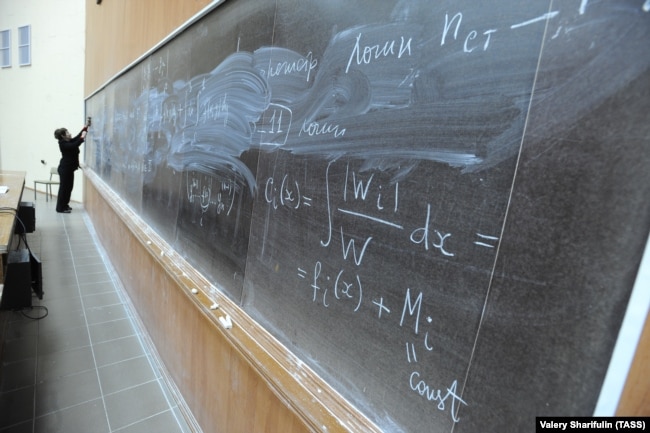
Mathematics has been disrupted by technological leaps before. The abacus. The mechanical calculator. The blackboard, even, which played an instrumental role in standardising training and mathematical notation (“It’s hard to research, because most of what’s written on blackboards doesn’t stay there very long,” said mathematics historian Michael Barany).
But AI is a different kind of disruption. Where previous advances helped mathematicians expand the frontiers of their knowledge, large language models threaten the livelihoods, and purpose, of mathematicians themselves.
“Our place in society at developing new ideas has been quite unthreatened for quite some time,” said Tim Chartier, a Professor in the Department of Mathematics and Computer Science at Davidson College. “For a long time, the frontier of mathematics could only be expired by the mathematicians themselves. There were no tools that could push into that boundary, except the research mathematician…At this current time, it’s not like we don’t need research mathematicians – but the landscape has changed so quickly, it’s hard to know what that will look like a year from now, two years from now.”
This matters for everyone: for thousands of years, mathematics has been considered to be the foundation of scientific knowledge. There is no physics without mathematics. No astronomy without mathematics. And there is no computer science – or AI – without mathematics. What happens if there are cracks in the foundation?
“I think that LLMs pose an existential threat to the mathematical community,” wrote Tasmin Chu, a PhD student at the California Institute of Technology, in an essay published on 2 August – the day after OpenAI released a set of ten new mathematical results, resolving or making progress on various problems.
“This is a polemic, not a press release,” Chu continued. “I know that others feel the same way; I have spent today crashing out and learning that top mathematicians I know are crashing out.”
Some of what mathematicians are worried about is the same as what everyone else is worried about: that AI will take their jobs; that AI companies have absorbed everyone’s work, and are reproducing it without attribution or compensation; that students aren’t learning properly any more; and that there won’t be jobs for them when they graduate.
But some worries are more specific to the field. Like the fear that, if mathematics becomes too reliant on particular AI models, then AI companies will have the power to restrict access to a select few – or make it prohibitively expensive. That promising young mathematicians, instead of turning to research, will use their talents instead to refine proprietary algorithms, which may or may not be used for the common good. That there will be no one left to understand, let alone vouch for, the mathematics produced by the machines. That objective truth, or anything close to it, is going to be much harder to prove – a fear shared with journalists, incidentally, who find it increasingly difficult to verify whether a photograph is real or fake.
2nd Century relief of a merchant using an abacus. Photo: Musée de La Cour d’Or - Metz Métropole.
MATHEMATICIAN IN THE LOOP
After speaking with more than a dozen leading mathematicians from around the world, The Atlas can confirm that Chu is not alone with her fears: it’s all anyone is talking about. The crisis is existential – and mathematicians are looking to one man in particular to guide them through it.
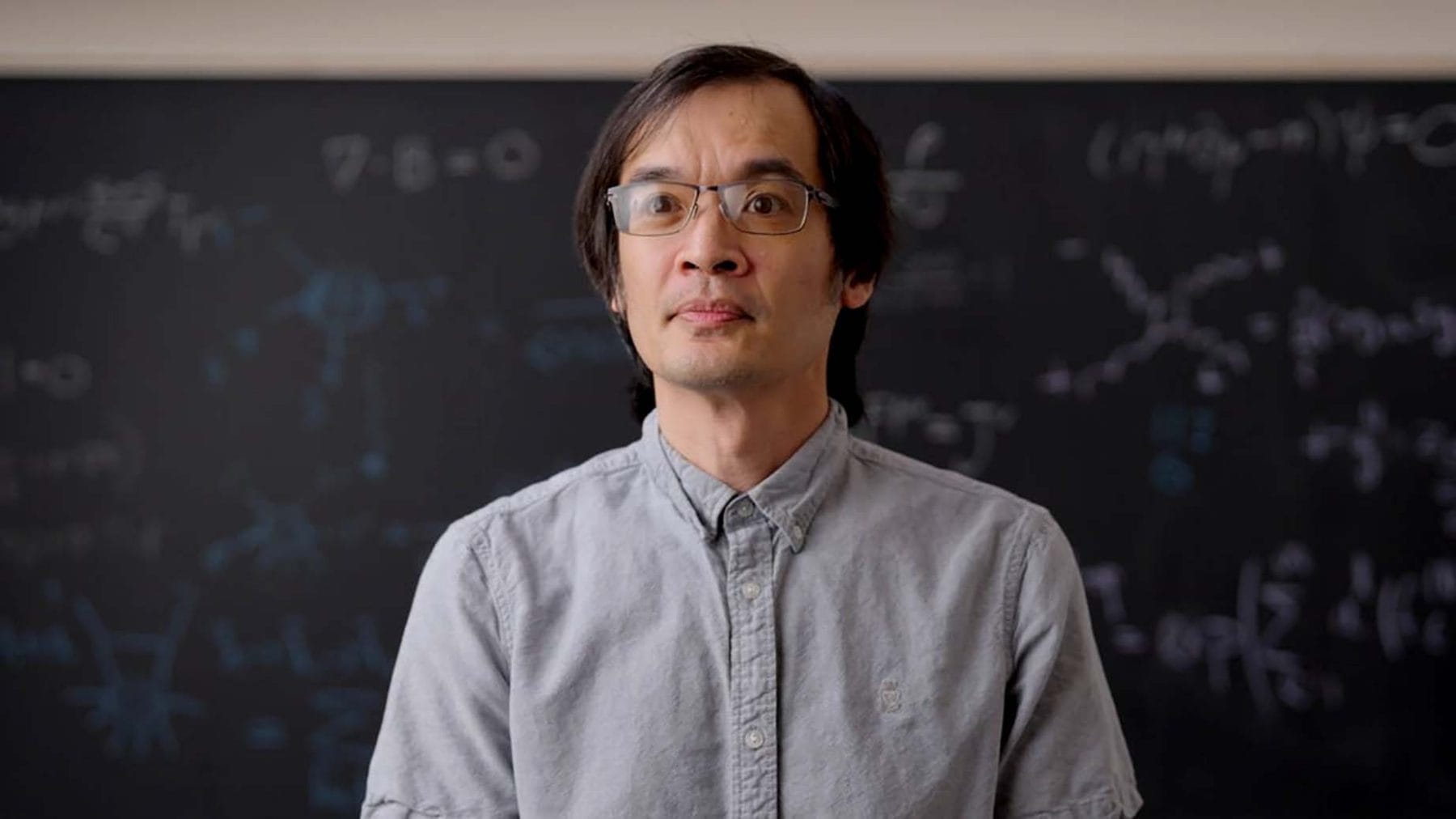
There are no working mathematicians who are truly famous. The closest anyone gets is Terence Tao, a professor at UCLA, who is often referred to as the world’s greatest living mathematician. A prodigy, Tao skipped five grades of school, receiving his masters degree at age 16. By 21, he had earned a PhD from Princeton, and was awarded the Fields Medal just ten years later, in 2006, for his pioneering work with Ben Green on prime number theory.
But what sets Tao apart, in a field infamously incomprehensible to outsiders, is his ability to communicate to both mathematicians and laypeople alike. This has made him a de facto spokesperson for the mathematics community – and extremely influential in setting its norms. “From all accounts he’s a lovely man,” said one researcher, speaking anonymously.
“But the social pressure to agree with Terry Tao is really strong.”
On July 24, the day after Jacob Tsimerman joined OpenAI, Tao gave a public lecture at the ICM titled “Mathematics in the Age of AI”. In it, he presents his “working hypothesis”: that AI tools for mathematics, which he already uses in his own research, will keep getting better. This will allow for collaboration on a vastly greater scale than has ever been possible before, Tao argues, and speed up the pace of research – revealing new, previously unimagined frontiers.
But it will also change, fundamentally, the role of human mathematicians. There will be little point in problem-solving – the computers will handle that. But the humans will still have to do the really hard work: understanding why AI-generated proofs are correct, and explaining this to others. The sooner they embrace this and plan accordingly, Tao concludes, the better.
The Atlas reached out to Terence Tao to request an interview. His human assistant, UCLA media relations officer Holly Ober, declined the request, making a referral instead to a “living document” which is maintained by Tao’s Claude AI assistant, on his website. This document synthesises Tao’s current thinking on AI, based on his public writings and talks, even “interviewing” Tao with follow-up questions.
As per his AI assistant, Tao believes that the topic of AI in mathematics is too important to be left to just a small number of spokespeople – and that his own “influence on this discussion should diminish as the rest of the community steps up.”
Terence Tao, often referred to as the world’s greatest living mathematician. Photo: OpenAI Academy.
AN UNSOLVED EQUATION
Not everyone believes in the inevitability of AI defining the future of mathematics. According to several sources, both organisers and funders were disappointed with the turnout at the ICM in Philadelphia. Despite the gravity of the occasion, the congress was not at capacity.
Ila Varma and Tarik Aougab, associate professors at the University of Toronto and Haverford College respectively, may have had something to do with that. In March, they launched a petition to boycott the ICM due to the ongoing war in Iran, increasing authoritarianism in the United States and the risks faced by visiting academics – if they were even allowed in. “AI companies were invited, but most African mathematicians who tried to attend couldn’t get visas,” Varma said.
More than 2,600 people signed the petition. For Varma, this is evidence that mathematicians may yet use their status to resist the influence – and the cash – of the big AI companies.
“There’s an idea that the positionality of mathematics in society is to decide who’s smart, who’s worthy of the most lucrative career opportunities and the privileges that go along with it. And now we are being asked to take this technology that is likely to be extremely unhealthy for users, that’s bad for the environment, this thing built on unethical labour, and our discipline is being used against many of our wishes to tell society that this thing is intelligent, and that you should let it do your thinking for you.”
Michael Harris, a professor at the Institut de Mathématiques de Jussieu in Paris, was at the ICM in Philadelphia. “The talks I attended on AI, starting with Tao’s public lecture, took pains to insist on the need for human mathematicians to make sense of anything produced in the name of the discipline, by machines or by humans,” he said. “There is a growing resistance to any use of AI whatsoever in mathematics, especially among young people, and this will become evident over the next few months.”
One of the clearest voices of dissent belongs to Max Weinreich, Assistant Professor of Mathematics at the City University of New York.
In an essay published earlier this month, Weinreich makes the case against what he describes as “artificial mathematics”: “Mathematicians do not need to use AI, nor should we use AI; soon, I argue, you will not want to have your name associated with AI. Instead, we should use our intellectual authority to oppose its development.”
His opposition is about more than mathematics, he told The Atlas. In his view, the environmental and financial implications of the AI boom pose major societal risks – and mathematicians, given their privileged position, are one of the few groups of people who can do anything about it.
As John Fletcher, a theoretical physicist and mathematician, observed: “There is a lot of power in being perceived as the smartest people in the world.”
Po-Shen Loh, a professor at Carnegie Mellon and former coach of the US International Mathematical Olympiad team, backs mathematicians to figure it out – by treating it like a maths problem. “AI is making mathematicians engage with the real world. They are smart enough to realise they have an existential crisis. They’re quickly racing down to discover all the dead ends, to see what works and what doesn’t.”
And when they figure it out, maybe they’ll let the rest of us know.
A version of this story, edited for length, first appeared in The Atlas newspaper. Additional reporting by: Shougat Dasgupta, Masho Lomashvilli, Irina Matchavariani.
Astronomy, our window into the rest of the universe, happens in the dark. Planets, stars and galaxies – all the mysteries of the cosmos – only reveal themselves at night. But the night sky may be getting much brighter, thanks to an American company with a plan to conquer darkness itself by sending 50,000 giant mirrors into space.
What you are reading first appeared as a cover story for The Atlas, our new global publication with The Continent. Sign up here to get the next edition delivered to
Astronomy, our window into the rest of the universe, happens in the dark. Planets, stars and galaxies – all the mysteries of the cosmos – only reveal themselves at night. But the night sky may be getting much brighter, thanks to an American company with a plan to conquer darkness itself by sending 50,000 giant mirrors into space.
What you are reading first appeared as a cover story for The Atlas, our new global publication with The Continent. Sign up here to get the next edition delivered to your inbox on August 27.
Astronomers are panicking.
It is an “existential threat” to optical astronomy, says the European Southern Observatory. A “disastrous” idea that will “permanently scar” the night sky, according to the Royal Astronomical Society. The American Astronomical Society told Nature it “would probably mean the end of ground-based astronomy, or optical astronomy, at least.”
Sthabile Kolwa agrees. “It will take away a very crucial part of our civilization,” she tells The Atlas. Kolwa, a senior lecturer in astronomy at the University of South Africa, studies the life cycles of galaxies, but today her concerns are more immediate. “It might come to this, that we just have to find them in the parking lot and say, ‘Hey, what are you guys doing? You’re going to ruin science for us.’ ”
Like Uber, but for the sun
The parking lot in question is in Hawthorne, California, outside the headquarters of Reflect Orbital. They call themselves The Sunlight Company. The start-up is celebrating: Earlier this month, the United States Federal Communications Commission (FCC) approved the launch of Eärendil-1, likely in a few months time.
This satellite, named for a character in JRR Tolkien’s The Silmarillion, will unfurl an 18m x 18m mirror in low Earth orbit. It’s designed to reflect sunlight onto the dark side of the earth, lighting a 5km2 patch of land with the strength of four full moons.
It is a proof of concept.
By 2035, Reflect Orbital wants 50,000 of its mirrors in space, delivering illumination “comparable to daylight” on demand to paying customers (“sunlight is the new oil,” says chief executive Ben Nowack). The company says this will allow solar panels to generate clean energy overnight; provide “safer, evenly-lit streets” to cities that pay for it; and keep construction sites and farms working 24/7.
There will be an app, of course, offering “sunlight as a service” – lighting up the night will be as easy as ordering an Uber.
Clean, renewable energy is at the heart of the company’s vision, a spokesperson told The Atlas in a statement. Reflect Orbital declined to respond to specific queries and said it is in constant dialogue with astronomers, scientists and environmental researchers to mitigate the impact of the light pollution: “We are able to dim the brightness of the service and turn it off at any stage. We control where the light shines when serving an authorised customer. Most people and most places will never see this light. It is precise, targeted and customers will require permits to receive the service.”
Circadian arrhythmia
A new research paper, published in May, challenges Reflect Orbital’s position. Its author, the European Southern Observatory’s Oliver Hainault, concluded that the company’s 50,000 satellites would increase the background brightness of the sky by 300% – even when their mirrors are pointed somewhere else. This, coupled with a proposal from Elon Musk’s SpaceX to build vast data centres in space, would go “beyond the limit” of what astronomy can withstand.
What that means, in practice, is that the images from ground-based telescopes will be dramatically less useful, marred by streaks of light from passing satellites. The most distant light sources won’t be visible at all.
This will obscure evidence of other galaxies, hinder research into black holes and other cosmic phenomena, and potentially prevent early warnings of asteroid approaches. Cutting-edge astronomy will only be possible from space-based telescopes like the James Webb and the Hubble – access to which is already massively oversubscribed, and subject to political interference.
The night sky will look different to the naked eye, too. “The next time you’re away from urban light pollution, spend some time outdoors after dark and enjoy the view of the Milky Way and the constellations that have inspired awe since humankind woke to consciousness. Chances are those views are not here to stay forever,” wrote journalist Tereza Pultarova for Space.com.
Anna Jibladze
Running out of space
The night sky is already a lot brighter than it was 150 years ago, when light bulbs started to become commonplace. According to Dark Sky International, a US-based nonprofit that advocates against light pollution, 80% of Earth’s human population already lives under some form of sky glow, most of which is generated on land. This has forced astronomers to seek out “dark sky places,” like the Atacama Desert in Chile or the Upper Karoo in South Africa, for their telescopes.
Humans can adapt to less darkness. But it is much harder for animals and ecosystems that have evolved alongside predictable rhythms of day and night. Nocturnal predators lose the ability to hunt; sea turtle babies can’t find their way to the sea; migratory birds are thrown hopelessly off course; and moths expend all their energy helplessly chasing artificial light sources.
“It’s almost like we are on a mission to obliterate natural darkness from earth,” said Ruskin Hartley, Dark Sky’s chief executive. “And now rather than do it street by street and bulb by bulb, let’s do it from space.”
Space is, in theory, protected by the Outer Space Treaty, a 1967 agreement signed by 110 countries, including all the major space superpowers. It states that “space is the province of all mankind." But that’s not what’s actually happening, Hartley argues. “In the US, it’s the most wealthy, most powerful individuals who are gobbling up as much of that orbital space as they can before someone else can get that opportunity” – with China, Russia and Europe all scrambling too for a greater presence in low Earth orbit.
“Who gets to choose that we light up the night sky? Who gets to make that decision?” Ruskin asks. In the US, it is the FCC’s job to decide what satellites are allowed in space. But it has said that assessing the impact of light pollution or environmental damage is not within its remit. Instead, it wants to slash regulation so American companies can take advantage of the “space industrial revolution.”
And Reflect Orbital has rich and powerful backers. Earlier this year, it secured a $1.5-million contract from the US air force, hinting at possible military applications for its mirrors. Last year, it raised $20-million from three venture capital firms, including Sequoia Capital, one of the biggest investors in Silicon Valley. Sequoia also owns a multibillion-dollar stake in SpaceX, which has its own plans for low earth orbit.
There are already more than 10,000 Starlink satellites up there, giving Elon Musk unprecedented influence over global communications. The company wants to launch one million more satellites over the next few years to build a network of space-based data centres. In addition to the light pollution, astronomers worry the potential for collisions will increase dramatically, as will risks to the ozone layer.
A brighter future
On her blog Higher Dimensions, the astronomy professor Janna Levin contemplates our brighter future. “It is quite possible that the hot glow of the swarm of data satellites will saturate the night, washing out the stars from our perspective on Earth. We’ll look up into the sky and instead of Zeus transformed into a swan outlined in a constellation of a few stars, the machine gods will literally loom above us, glowing with radiant heat, making declarations, predicting the weather, forecasting then determining our fate.”
Kolwa, the South African astronomy lecturer, offers a different metaphor: that of empires “colonizing low Earth orbit.” This was an ambition of one of the most infamous imperialists of them all, Cecil John Rhodes, who said that he looked up at the stars and thought: “I would annex the planets if I could; I often think of that. It makes me sad to see them so clear and yet so far.”
But it hasn’t been colonized just yet.
“I’m still trying to figure out what we can do, what responsibility we have as scientists,” says Kolwa. “How could we engage our communities to stand up to these corporations and say no? We must keep our night skies dark, as dark as possible.”
On April 24, Brazil’s competition authority, the Administrative Council for Economic Defense (CADE) announced it was opening an investigation to assess whether Google’s use of news content amounted to unfair competition practices against the Brazilian press. The announcement was welcomed by civil society organizations that have tried to push regulation to limit the reckless power of Big Tech for years. Ajor, Brazil’s Digital News Association, said that “a balanced relationship between digital pl
On April 24, Brazil’s competition authority, the Administrative Council for Economic Defense (CADE) announced it was opening an investigation to assess whether Google’s use of news content amounted to unfair competition practices against the Brazilian press. The announcement was welcomed by civil society organizations that have tried to push regulation to limit the reckless power of Big Tech for years. Ajor, Brazil’s Digital News Association, said that “a balanced relationship between digital platforms and journalism organizations is fundamental to the flourishing of journalism committed to the public interest. By ensuring a fair competitive environment, Cade directly advances that goal.”
In spirit and intent, CADE’s investigation into Google is similar to legislation in Australia that recognized that value is being extracted from news publishers without proportionate recompense. In Brazil, the case has been debated since 2019, but the adoption of AI Overviews helped alter the perspective of Brazilian judges. The overviews are artificially generated summaries that synthesize information from several sources and appear at the top of Google Search results. They “raise potentially more concerns,” ruled Judge Camila Cabral Pires Alves, “as they may more profoundly alter the economic function of the interface and expand the ability to retain attention within the platform's own environment.”
CADE will now investigate whether Google should be sanctioned for “alleged abusive exploitation of a dominant position, in light of the technological evolution of the conduct.” While there is perhaps a greater global appetite to regulate the impacts of AI – even the Trump administration has recently acknowledged that some oversight may be necessary – the CADE judges have been under considerable pressure from Big Tech executives to stop investigations into how their control of the market harms Brazilian businesses.
For those of us who have reported on Big Tech, this aggressive lobbying is not surprising. Companies like Google, Meta, Twitter, TikTok, Amazon, and Microsoft have long attempted to interfere in any decision or legislation that can harm their interests in Latin America. According to a joint investigation by journalists across 13 countries, Big Tech lobbyists got away with convincing legislators in Colombia to weaken a rule meant to protect children’s mental health and prevent enforcement of privacy regulations in Ecuador. It took a team of over 40 journalists from 13 countries to uncover this while reporting on the ‘Big Tech Lobby’ in the continent and across the world.
Threats by the U.S. government to retaliate against any country or international entity that sought to regulate Big Tech added another layer to an already complicated and uneven relationship with Silicon Valley. “Digital Taxes, Digital Services Legislation, and Digital Markets Regulations are all designed to harm, or discriminate against, American Technology,” wrote Donald Trump on social media. “Show respect to America and our amazing Tech Companies or consider the consequences!” During the past year, Trump’s envoys have forced dozens of governments around the world to dilute or even shelve regulation in exchange for lifting tariffs.
In “Big Tech’s Invisible Hands,” which I coordinated alongside Maria Teresa Ronderos, from CLIP (Centro Latinoamericano de Investigación Periodistica), journalists mapped a total of 75 executives that were part of “public policy” or “government relations” teams in Brazil. Tech companies utilized a “revolving door” in which public sector employees could go straight into highly paid jobs leveraging their contacts and influence. Doors opened more easily. Invitations to hangouts and events were more likely to be accepted.
Brazilian President Luiz Inacio Lula da Silva meets with U.S. President Donald Trump at the White House on May 7, 2026. Brazilian Government / Ricardo Stuckert / Handout/Anadolu via Getty Images.
Lobbying in Brazil is dialed up to eleven. The country has 163 million internet users, with over 150 million on WhatsApp, and over 120 million on YouTube, Instagram and Facebook. With AI, Brazil is a similarly large, influential market. Portuguese is the sixth most widely-spoken language in the world, with 70% of speakers based in Brazil. Which means that, if an LLM has been trained in this language, it probably used content created by millions of Brazilians going about their business of making friends, debating politics and football online. It’s not just about journalists; we are all unpaid labor for Big Tech.
In the words of Arthur Lira, the Speaker in Brazil’s Congress who filed a criminal complaint against Big Tech executives in 2023, companies adopted a variety of tactics “to shut down democratic debate and intimidate lawmakers” and defeat any attempt at using legislation to force accountability. Google, he said, used its search homepage, used by over 85% of Brazilians, to spread fear that proposed laws would “make the internet worse” or “make it harder to know what is true or false on the internet.” A report by the Federal University of Rio de Janeiro found that Google invested in ads on its own platform so extensively that it tweaked the search, prominently featuring the word “censorship” in connection to the Brazilian bill. Google also hired Michael Temer, a lawyer and former President of Brazil, to influence lawmakers and Supreme Court Justices. Of course, it was not Google alone. Meta executives, for instance, even argued that proposed legislation in Brazil could lead to the Bible being censored.
But Brazilian lawmakers, the Supreme Court, and civil society have persisted. On August 28, 2025, the “Felca Law” was approved, after a video by the influencer Felca denounced the exploitation and exposure of children on social media. The law establishes that digital platforms must take measures like verifying user age, implementing parental controls, and preventing children's exposure to adult content, gambling, and pornography. They must create reporting channels and may face fines of up to 10% of their annual revenue in Brazil.
Brazil’s president Luiz Inácio Lula da Silva and Donald Trump have had a testy relationship, in part because of Lula’s criticism of Big Tech. In February, at the AI Impact Summit in New Delhi, Lula called for global governance of AI, warning: “When few control the algorithms, it is not innovation, but domination. Regulating the so-called Big Tech companies is linked to the imperative of safeguarding human rights in the digital sphere, promoting information integrity, and protecting our countries’ creative industries.”
By sticking to his guns, Lula may now be seeing the tide turn. He was in the White House on May 7, and though neither he nor Trump took questions, both appeared encouraged by the meeting. “Very dynamic,” was how Trump described Lula, while Lula said he was “very, very satisfied” with how the talks went. With a general election in Brazil approaching in October, Lula will be sensitive to how the White House, as it has done in other elections, and Big Tech might offer vocal support for right wing candidates.
But his willingness to stand up to Big Tech is popular with voters. A recent poll found that 78% of Brazilians want to see tech companies being held responsible for the content they publish. Another poll found that 55% of Brazilians defend regulating Big Tech, with 43.9% against it.
And as scams, fake news, and AI slop dominate ever larger swathes of all our digital space, in Brazil, as in much of the rest of the world, the entire experience of the internet is becoming more unappealing. Big Tech, with the assistance of the U.S. government, may be succeeding in slowing down the pace of regulation and watering down the content of that regulation, but in the long run its victories might be pyrrhic. People have had enough and their governments might be forced to listen.
It starts with a simple search term in the Department of Justice’s Epstein Library. “Blue eyes.” Hundreds of results. Jeffrey Epstein’s international trafficking agents send him pictures and descriptions of blue-eyed young girls: potential victims to be dispatched to his various homes. “I spotted two skinny blond blue eyes 21 years old ladies in Monaco last weekend and asked them for CVs,” one agent, whose name has been redacted, wrote. “Trying her best to move from her small town to Moscow;
It starts with a simple search term in the Department of Justice’s Epstein Library. “Blue eyes.” Hundreds of results. Jeffrey Epstein’s international trafficking agents send him pictures and descriptions of blue-eyed young girls: potential victims to be dispatched to his various homes. “I spotted two skinny blond blue eyes 21 years old ladies in Monaco last weekend and asked them for CVs,” one agent, whose name has been redacted, wrote. “Trying her best to move from her small town to Moscow; English isn't great. Could be fun for Paris, blue eyes,” wrote another. “Can't understand if her breast is real. Otherwise very pretty and sweet…Very blue eyes as we like.”
One of Epstein’s victims wrote of being chosen for her eye color in a journal entry later shared with federal prosecutors. "Superior gene pool?!? Why me?" she wrote, describing Epstein's worldview as "Nazi like." "It makes no sense. Why my hair color and eye color?"
Epstein — himself blue-eyed — seemed to prefer both his victims, and the people he bankrolled, to have blue eyes. “All of my fundees have blue eyes,” he boasted in one email. In the entryway of his Manhattan townhouse, he displayed dozens of prosthetic eyeballs in a frame. Epstein made notes and sent article links to his contacts asking if having blue eyes meant you were more intelligent or a “genius”. He even had a list of scientists and tech leaders with blue eyes — including Elon Musk, Peter Thiel, and Google’s Ray Kurzweil. “Total — 70 people Blue eyes — 41 Unclear (might be blue, but not 100% sure)” the list says. Appearing in the files — whether on this list or elsewhere in Epstein's records — does not connote legal wrongdoing.
Going deeper into the files, Epstein and his network of contacts discussed beliefs about how physical characteristics and race might denote intelligence. They exchanged emails about population control. They spoke of engineering women’s sex drives, building designer babies, and living in a world full of superintelligent humans that could merge with robots. They spoke of getting rid of the elderly, the infirm, and the poor.
The files offer a glimpse into a world where ideas about eugenics and race science have never gone away. On the contrary, they run through our elite universities, through the most powerful companies in Silicon Valley, and through the tech industry itself. Epstein’s was an exclusive club that counted among its members people who harbor dreams of re-engineering human minds and bodies, seizing control of our collective future, and building technology that, they hope, will one day merge with — or even replace — all of us.
Jeffrey Epstein, 27. Jeffrey Epstein's mansion El Brillo Way in Palm Beach. U.S. Virgin Islands, Department of Justice, Sexual Offender Registry Photograph.
In 2002, two decades before the launch of ChatGPT, Epstein hosted an Artificial Intelligence summit on his Caribbean island. In the years that followed, he cultivated close, regular contact with a network of (predominantly male) scientists, researchers, academics and tech leaders working at the vanguard of AI, biotech, genetics and cognitive science, meeting them at universities like Harvard and at his various homes.
In August 2018, a year before Epstein was found dead in his jail cell, he was in email correspondence with software consultant and bitcoin investor Bryan Bishop about funding a project to create “designer babies” — children with genes cherrypicked for their looks, health, strength, immune systems, sleep needs and even, in Bishop’s imaginings, abilities to live on a different planet.
“Attached is the doc you requested, it's the "use of funds" spreadsheet for the designer baby and human cloning company,” Bishop wrote to Epstein. “This gets us out of our self-funded ‘garage biology’ phase to the first live birth of a human designer baby, and possibly a human clone, within 5 years. Once we reach the first birth, everything changes and the world will never be the same again.”
Bishop went on to discuss how his ultimate ambition was to make “practically unlimited modifications to the cells before generating an embryo.”
In response to a request for comment, Bishop sent Coda a publicly available set of answers to frequently asked questions about designer babies.
“The reason people have an aversion to eugenics, and rightfully so, is because countries used genocide and sterilization to prevent reproduction by populations that they didn’t like. We have no intention of doing anything of the sort,” Bishop writes in the public FAQ. “‘Designer baby’ simply describes a child whose genome has been intentionally altered or chosen by their parents, rather than left entirely to the genetic lottery of natural conception.”
“It’s such a great subject,” Epstein responded after he read Bishop’s proposal. “We need to get a read on legal. Can’t do anything where US rules apply to US citizens regardless of where [they are].”
Building a super-race of humans, and parachuting humanity into a different evolutionary era — or even obsoleting the human race as we know it — is a running theme in the Epstein files, and an increasingly prominent ambition for tech evangelists today.
“It’s eugenics all the way down,” said Jacob Metcalf, a founding partner at Ethical Resolve, a consulting firm working with tech companies to develop their ethics protocols. A common fantasy in tech circles, he said, is “to essentially control human destiny. And a lot of the times that human destiny is for humans to be replaced. That's the really bleak thing here. What could be more eugenic than getting rid of humans.”
In 2008, Epstein began conversations with the computer scientist Ben Goertzel. Over the years, Epstein would send Goertzel more than $360,000 to fund the researcher’s plans to build towards Artificial General Intelligence (AGI), a term Goertzel himself popularized.
“I remain eager to move forward on working together to accelerate progress toward a human-obsoleting thinking machine,” Goertzel wrote to Epstein in May 2008. Eighteen years on, and the idea of obsoleting humans with artificial intelligence is widely discussed in the tech world.
When asked to comment on his exchange with Epstein, Goertzel told Coda: “I do think we will create forms of transhuman intelligence going beyond the scope of humanity as we know it, but I also very much hope and envision a strong role for humans even after this happens.”
Goertzel went on to describe a future where the world reaches the “Singularity” — a Silicon Valley buzzword signifying a tipping point where AI surpasses human intelligence. “I do think AI will eventually gain its own superhuman autonomy, but I think this can happen in a way that respects and nourishes human life rather than being harmful to it,” he said. “Epstein and I discussed this face to face a few times and indeed I was a bigger fan of the human species than he was, and more optimistic about its flourishing post-Singularity.”
In an email to Epstein, Goertzel laid out a scenario where AI systems would start running their own economic activity. He envisioned this Artificial Intelligence economy acting as a “parasite to overcome the regular human economy” that would eventually “gain its own superhuman autonomy.” The ideas Epstein and Goertzel exchanged mirror a broader conversation unfolding in the tech world that imagines a future where ultimately, human labour could be rendered superfluous, and ultimately be replaced by artificial intelligence and robots.
Together, Goertzel and Epstein also discussed modifying human brains — a concept popular in Silicon Valley today, where numerous brain-computer projects are researching ways to cognitively enhance the human brain, and alter human personality, memory, and mental capabilities.
In 2008, when Epstein told Goertzel he was “off to jail” for a year, after he was convicted of soliciting a minor for prostitution, Goertzel suggested the solution to his problems might one day be solved if human brains could be re-programmed.
Ben Goertzel with Desdemona the robot, at a tech event in Portugal in November. Sam Barnes/Sportsfile for Web Summit via Getty Images.
“According to my understanding, the girls you were involved with were old enough to know what they were doing, so society really has no ‘moral right’ to lock you up,” Goertzel wrote to Epstein. “This is a fucked-up society we live in. But past ones have really been no better -- the fault is really w/ the human brain architecture, which is precisely what I'm aiming to supercede in my AGI work.”
When asked to comment on these remarks — and in particular the implication that Epstein’s problems might be solved if his accusers' brains were one day re-engineered — Goertzel told Coda: “This was a general observation that the messed-up nature of our society generally is rooted in the way our brains have evolved... and that advanced tech will let us modify our brains to make ourselves and thus our society better. There was no implication intended (nor stated) that women’s brains are any more or less messed up or in need of improvement than men’s.”
Goertzel reflected that his comments on Epstein’s victims being “old enough” were “regrettable and unfortunate in hindsight,” adding that his impression was that Epstein had been involved with adult women, not “disgustingly curating high school students for sexual purposes. I should have paid more attention.”
In 2013, three and a half years after Epstein was released from jail, Goertzel approached Epstein for funding to build a “toddler robot”. Given Epstein’s criminal history of abusing minors, this has inevitably attracted attention online. “When we were discussing measuring the IQ of robot toddlers, the topic was never sexualized in any way,” Goertzel told Coda when asked about the project. “While I had nothing to do with Epstein's perverse sexual tastes or abuse of women, what I have read about his awful doings in the newspapers relates to his interest in teenage girls not toddlers.”
Epstein was particularly interested in funding projects that built — like Goertzel’s –- on transhumanist theories. Transhumanism is a worldview that captivates many of the most prominent tech leaders in Silicon Valley today. It believes in a future when the human body can be endlessly altered, genetically engineered, and ultimately fused with artificial intelligence.
“Transhumanism is a much more radical concept than eugenics,” explained Timnit Gebru, a computer scientist and researcher who has written extensively about eugenicist ideas within artificial intelligence. “In eugenics, you're trying to create a more superior human by breeding humans through generations. In transhumanism, you're trying to get rid of humans altogether.”
For transhumanists, she added, “their idea is to get rid of any undesirable properties they see with humans."
Perhaps the most well-known proponent of transhumanism in the Epstein files is Peter Thiel.
“I think you would prefer the human race to endure, right?” New York Times journalist Ross Douthat asked Thiel last year. “Uh—,” Thiel said. “This is a long hesitation!” Douthat said. “Should the human race survive?” “Yes, but I would like us to radically solve these problems,” Thiel said. “We want you to be able to change your heart and change your mind and change your whole body.”
Peter Thiel. Creative Commons (CC BY 2.0) /Gage Skidmore.
Thiel’s name appears in the files more than 2000 times, and Epstein reportedly invested some $40 million into Valar Ventures, a firm co-founded by Thiel. The two spoke of building secret societies and shared an interest in transhumanism and cryogenics — Epstein wanted to freeze his brain and penis when he died, so that one day he could be revived, while Thiel has also stated his body will be frozen after his death.
They also appeared to share an interest in bringing an end to the democratic systems of today, imagining a different system altogether. Epstein, for his part, spent his life puppeteering the most powerful people in the world and undermining democratic systems. Thiel, meanwhile, first expressed his own anti-democratic views in 2009 when he wrote: “I no longer believe that freedom and democracy are compatible,” adding that since women were allowed to vote, the notion of a capitalist democracy became impossible. When the Brexit vote came through, Epstein wrote to Thiel: “Brexit, just the beginning.” Thiel asked — “of what”; Epstein said – “Return to tribalism, counter to globalization, amazing new alliances.”
Globalization — and the idea of internationally powerful governing bodies — is a worldview that both Epstein and Thiel seemed to distrust. In March, in a palazzo in Rome, a stone’s throw from the Vatican, Thiel gave one of his infamous lectures in which he espoused his views about an “antichrist” that gets in the way of technological progress. This antichrist, he suggested, could be an internationally powerful body; the product of globalization. I stood outside the palace as attendees — priests, students, researchers — mutely hurried out, refusing to speak to the cluster of reporters waiting for Thiel’s black Mercedes.
“He has a totally irrational side, which lives on fear, of what danger might happen,” one audience member told me of Thiel on condition of anonymity, recalling how, up close, Thiel looked haunted and ill. “His head is full of future scenarios, which is what’s killing him. I think he’s scared.”
Thiel did not respond to multiple requests for comment.
Epstein didn’t confine himself to lofty conversations about a future collapse of the global order or re-engineering humanity. He also had ambitions for his own personal eugenics project. In 2019, it emerged that he wanted to seed the world with his DNA — and reportedly have 20 women impregnated at a time at Zorro ranch, his New Mexico property.
Epstein tried to recruit Virginia Giuffre for this very project. He “fantasized about improving the human race by fathering children who carried his superior genes,” she recounted in her memoir, published posthumously late last year. “He’d talk about using his Zorro ranch as a literal breeding ground to propagate babies.” When Giuffre was 18 years old, she recalled, Epstein asked if she would carry his child and hand over all legal rights to it – “like a modern-day handmaid.”
Zorro Ranch, New Mexico. Diary of Epstein's victim.
In a haunting diary entry from another Epstein victim, written between the ages of 16 and 17 and shared with federal prosecutors, a girl describes being told she will be sent to Zorro ranch — possibly to participate in the very same project. “Go to New Mexico? What in the hell? This makes no sense. What about school?” she writes, describing how Epstein chose her for her hair color and eye color, and tried to convince her she would create “perfect offspring.”
The teenager chronicles her pregnancy, pasting a sonogram into the scrapbook, before giving a traumatic account of giving birth with Ghislaine Maxwell beside her. “Ghislaine said to push all the pain away. I don't understand. Blood and water all over the bed.” As the baby was born, she writes, Maxwell covered her eyes. “I saw between her fingers this tiny head and body in the doctors hands.”
The girl describes hearing the baby’s “tiny cries” before “they took her.”
“I’m nothing but your property and incubator,” the teenager writes of Epstein. The diary is a terrifying piece of evidence that appears to link to Epstein’s longstanding fixation with creating genetically bespoke humans. The diary author’s lawyers, Wigdor LLP, declined to comment.
Epstein’s fever-dreams of creating an army of children carrying specific genes reflect a broader trend of “pronatalism” — a movement historically tied to eugenics — that’s thriving in Silicon Valley.
Millions of dollars of funding are currently being poured into projects creating “superbabies,” while billionaire tech oligarchs including Elon Musk — whose name appears more than 1000 times in the files — reportedly want to use surrogates “to reach legion-level before the apocalypse.” Musk did not respond to requests for comment.
In the files, women appear either as victims, as objects, or as vessels for genetic engineering experiments. They are an inconvenient reality, people to be controlled and re-booted. Epstein wrote a 2013 email implying that women “are like shrimp. You throw away the head and keep the body.”
“The obsession with "artificial" life appears tied to a masculine desire to try control the production of life – ultimately ridding themselves of their dependency on women," said Gabriella Razzano, Co-Founder of OpenUp, a social impact tech lab based in Cape Town, who is also a senior advisor at the African AI Observatory. “I think there is important work to be done on tying the narratives that are very revealing in the Epstein files to understand how, and why, technology is being developed as it is.”
The trading of ideas about intelligence — both artificial and human — takes a particularly sinister turn in a 2016 exchange between Epstein and the cognitive scientist and AI researcher Joscha Bach, whose research Epstein funded to the tune of $300,000.
Bach writes to Epstein about a study claiming that “black children outperform white children in motor development, even in very poor and socially disadvantaged households, but they lag behind (and never catch up) in cognitive development even after controlling for family income.”
Epstein responds with racist ideas about his notion of how to “make blacks smarter”, adding — “maybe climate change is a good way of dealing with overpopulation. The Earth’s forest fire. Potentially a good thing for the species,” before contemplating a world with “too many people,” where “many mass executions of the elderly and infirm make sense.”
Bronze sculpture of a female torso Jeffrey Epstein's Manhattan residence.
Epstein then imagines creating a future “Übermensch” — a superior human with cherry-picked attributes. “What I like is the idea that ubermensch could be the melding of humans, put together in one brain,” Epstein writes. This bespoke human, he suggests, would include traits from marginalized groups, who he appears to believe have a stronger awareness of how to navigate power structures because of their historical exclusion. “An increased motor system, an increased awareness, an increased status calculator (Blacks, jews, women). Ubermensch could be the combination of the best of humans, not the best of a specific race or gender. Fun idea.”
Bach told Coda in a statement: “I was summarizing a scientific study in a private email. Studies like this get often abused in ideological discourse to justify discrimination, which I strongly oppose and condemn.”
“I am firmly opposed to any form of racial discrimination, and I reject the use of group-level statistical claims to make judgments about individuals or to justify unequal treatment.”
He continued: “It goes without saying that if global warming were to lead to a reduction in the human population, it would be accompanied by immeasurable suffering. Our civilization would break down, leading to a return to dark ages, in which the elderly and infirm were often killed, because people could not support them, and often did not care about supporting them. Every reasonable person understands that this is horrible and not desirable in any way.”
Epstein “was often callous about human suffering in a way that I found disturbing but worth understanding, as a window into the perspectives of the rich and powerful,” Bach added.
Alongside Epstein’s conversations about mass executions for the old and and the sick, he was also interested in Silicon Valley’s dream concept of living forever — he had numerous email conversations with the longevity guru Peter Attia about prolonging his own lifespan, and funded a Harvard project geared towards “the end of aging.” In an email to Attia, Epstein mused: “I’m not sure why women live past reproductive age at all.” Attia, who published a statement about his relationship to Epstein, did not respond to requests for comment.
This interest in “longevity” — living for as long as possible, even living forever, is popular among the elite precisely because they find themselves in an elite class, says David Robert Grimes, a scientist and disinformation expert who has written about longevity and race science in Silicon Valley. “They're both sides of the same coin — the Silicon Valley eugenics, and also the longevity stuff. They promote an idea that ‘we are exclusive and we are special',” he said. "It helps them to justify deep social inequality."
The tech elite did not inherit this ideology by accident. Stanford University, the intellectual heart of Silicon Valley, was once a major hub for the American eugenics movement, which later helped to inspire Nazi race laws. Stanford’s founding president, David Starr Jordan, was a prominent eugenicist, campaigning for forced sterilization of people with undesirable genetic traits. The university removed his name from its buildings in 2020 — but in Palo Alto, his beliefs did not disappear with the nameplate.
"Instead of eugenics we just call it longevity or biohacking," Christopher Wylie, the Cambridge Analytica whistleblower who has spent years investigating Silicon Valley's belief systems, said on a panel with me at a journalism conference last year. "It's the same."
The ideology Epstein bankrolled in private is being built in public. It’s a vision of the future in which a select few get to upgrade and extend their lives, while tightening their grip on the systems that determine which humans are worth investing in — and which are not.
It sounds like a dark sci-fi fantasy, except, as the files show, that fantasy is being funded and pushed into reality. Most of us will never be in the rooms where these ideas are discussed. All of us will live with the results.
[en]
End 2024 is when I really started to get going with “AI” (or LLMs – I know saying “AI” is kinda wrong, but there seems to be no good way to escape it right now). I’d been dabbling a bit before that: as a search engine, to help me with my excel formulas at work, or translating an e-mail here or there. But over that Christmas break, I realised it went further than that: helping me manage my tasks; keep lists updated; make sense of my investment portfolio; troubleshooting technical stuff that
End 2024 is when I really started to get going with “AI” (or LLMs – I know saying “AI” is kinda wrong, but there seems to be no good way to escape it right now). I’d been dabbling a bit before that: as a search engine, to help me with my excel formulas at work, or translating an e-mail here or there. But over that Christmas break, I realised it went further than that: helping me manage my tasks; keep lists updated; make sense of my investment portfolio; troubleshooting technical stuff that’s above my pay-grade; and build actual systems to do stuff. I didn’t really know what I was doing, but I saw enough to find it really exciting. I was quite busy with work and life during that period, and not finding time to blog much.
And then I had a skiing accident. Everything stopped, but in time, as I started becoming more functional, I turned back to playing with AI some more, doing a little more vibe-coding too. Excitement grew. But I was also hitting limitations, fed up with the sycophancy, context bloat, hallucinations and endless rabbit-holes. Oh, and really sick of AI slop. (Really: nobody wants to read your AI slop, people.) But the exciting was still there, I was just biding my time. Integrations, agents and AI-powered browsers showed up, with the security risks that are bundled in. I was tempted but stopped myself. And a few loved ones.
Three articles amongst many that tell cautionary tales. I have more to say, particularly about the brain fry one, but not today.
In it, the author describes one key aspect of working with AI that I had understood to be important, but that I didn’t know how to put into practice: using different conversations for different “roles” or aspects of the project. And here I had a real example.
I put that in practice (a bit as an exercise) in applying these instructions to migrate my personal context from ChatGPT to Claude. It was extremely satisfying and a great learning experience. I was itching to get going with Claude Cowork and Claude Code, but still a bit anxious. As I see it, Cowork is like being handed a powerboat when all you’re used to are the free permitless motorboats you can rent by the hour on a sunny Sunday afternoon like this one. You can really get in trouble if you’re not careful. And probably, even if you are.
I asked around a bit and Claire pointed me to this wonderful guide to Cowork. What she also explained to me is that Cowork is sandboxed, so it only has access to the folders you give it access to. That’s reassuring. And just a few days ago, Matt shipped Taxonomist, an AI-app (? what do we call these things?) that he used to cleanly recategorise all his blog posts. Unsurprisingly, categories here on CTTS have been a mess since time immemorial, and one of the things that has been clear for some time for me is that AI can help me clean things up a bit around here – in general, not just the categories. But that felt like a great way to get started seeing what the powerboat can do, with a trusted friend on board to keep me from crashing on the rocks.
So earlier today I installed Claude Desktop, downloaded the guide, and started it in Cowork. And wow. Honestly. It’s wild. My 3TB of archived files going back nearly three decades are now hopeful they will one day be deduplicated and cleaned up. Of course, I hit my usage limit (which is why I’m writing this instead of playing with my new AI friend), so I went to have a look at what something like Taxonomist really looks like under the hood. You know, open the files and read them. And it’s starting to come together in my mind. The powerboat is starting to feel like something I will be able to manage in time.
Of course, I’m not going to point Cowork at my external hard drive right now. There are still a lot of steps until I feel comfortable enough with the powerboat to attempt that. But doors are opening. My diabetic cat community migration feels more manageable. I’m hopeful I can tidy my files and clean up my blog. Come up with a system to make sharing links to the open web as easy as on Facebook. Reboot the blogosphere. And I’m sure other ideas will come along the way. I am also trying to be very, very careful about AI brain fry, as I already have my own concussion brain fry to deal with.
If you haven’t yet started learning how to use AI beyond as a proxy for Google or Wikipedia, really, it’s time to get cracking. I’m going back to Lesson 5 (honestly, just read through that page for starters if you don’t know what to do first), making a note to check out Cursor (I’m using Visual Studio Code for now) and read this article on Teaching AI to Design.

 Connexion