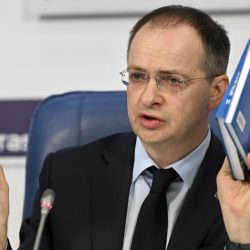
Russian President Vladimir Putin has again told US officials that Russia can capture Ukraine’s Donetsk Oblast within several months, according to Ukrainian President Volodymyr Zelenskyy.
Speaking to the UN General Assembly on 24 September, Zelenskyy said this was the latest in a long series of similar promises as Russia has spent nearly five years trying to seize the region. He said Putin has made such promises 17 or 18 times, repeatedly pushing the deadline further back.
He contrast
Russian President Vladimir Putin has again told US officials that Russia can capture Ukraine’s Donetsk Oblast within several months, according to Ukrainian President Volodymyr Zelenskyy.
Speaking to the UN General Assembly on 24 September, Zelenskyy said this was the latest in a long series of similar promises as Russia has spent nearly five years trying to seize the region. He said Putin has made such promises 17 or 18 times, repeatedly pushing the deadline further back.
He contrasted those promises with Russia’s heavy battlefield losses and relatively limited territorial gains.
Russia has paid a huge price for its Donetsk offensive
Zelenskyy said Russian forces suffered 248,964 troops killed or severely wounded between January and August 2026.
He said Russia had captured only slightly more than 1,000 square kilometers of Ukrainian territory this year, while Ukraine had already liberated a significant portion of those gains.
Zelenskyy presented the figures as the human cost of Putin’s continued attempt to seize Donetsk, arguing that Russia is paying an enormous price for relatively limited territorial gains.
“Always the same: ‘Just a few more months,’” Zelenskyy said, adding that Putin would again fail to meet his latest deadline.
The Russian offensive is also facing a recent setback in northern Donetsk. Ukraine launched Operation Vivaldi in September to clear Russian infiltrators and retake ground near Lyman, disrupting Russia’s plan to encircle the fortified cities of the Donetsk “Fortress Belt.”
Ukrainian forces have reported retaking several settlements and clearing up to 125 square kilometers in the operation, although the full scope of the offensive remains undisclosed.
Explore further
Ukraine retakes ground in a region Russia has fought for years to capture. “Vivaldi” is only getting started but is already “one of the most important victories for Ukraine in 2026”
Zelenskyy also warned that Russia’s ambitions extend beyond Donetsk. After saying Putin would again fail to capture the region, he said Russia would continue seeking other Ukrainian cities, naming Odesa, Kharkiv and Dnipro, while also pointing to Russian pressure on Moldova and threats toward Poland and the Baltic states.
Russia continues to pour missiles and drones into Ukraine
The battlefield campaign has been accompanied by a sustained Russian long-range attack campaign against Ukrainian cities and infrastructure.
Since the beginning of 2026, Russia has launched more than 2,100 missiles against Ukraine, including more than 950 ballistic missiles, according to Zelenskyy.
Ballistic missiles are particularly difficult for Ukraine to counter because it has a limited supply of interceptors capable of engaging them. Russia’s heavy use of ballistic weapons is therefore contributing directly to civilian deaths and infrastructure destruction.
Over the first eight months of the year, Russia also used 63,000 attack drones of various types, Zelenskyy said. More than 7,700 were jet-powered Geran drones, which he described as particularly destructive and dangerous.
The newer jet-powered drones are faster and more advanced than earlier Shahed-type models, making them harder to intercept and adding to the pressure on Ukraine’s air defenses as Russia attacks cities and infrastructure.
Zelenskyy said Russia was using the drones continuously to disrupt economic activity and normal life in Ukrainian cities, including by making it harder for children to attend school.
The figures show the scale of the Russian campaign beyond the front line. Alongside its ground offensive, Russia is using sustained missile and drone strikes to kill civilians, destroy infrastructure, and exhaust Ukraine’s air-defense resources.
North Korean troops add to Russia’s war effort
Zelenskyy also highlighted North Korea’s direct involvement in Russia’s war, saying its troops have suffered heavy losses while gaining battlefield experience alongside Russian forces.
He said North Korea’s military capabilities were also benefiting from its cooperation with Russia, pointing to improvements in its ballistic missiles and drone capabilities.
Ukraine recently transferred two North Korean prisoners of war to South Korea. Zelenskyy said capturing the soldiers alive had been difficult and described one prisoner’s attempt to take his own life after realizing he was about to be captured.
He said the soldiers had been conditioned to believe they had to die rather than surrender.
“Do you really want to give such a force more time to learn how to fight?” Zelenskyy asked.
Zelenskyy calls for de-escalation before winter
Zelenskyy separately warned that Russia could again target Ukraine’s energy and heating infrastructure this winter.
Russia has already intensified attacks on Ukraine’s energy system ahead of the cold season.
Russia has also explicitly threatened to “freeze” Ukraine this winter, with its Defense Ministry linking the threat to attacks on Ukrainian infrastructure. The country spent much of the previous winter dealing with the consequences of Russian strikes on power and heating infrastructure, including blackouts and disruptions to heat supplies.
Zelenskyy said Ukraine expects the coming winter to be difficult but warned that if Russia continues attacking Ukraine’s energy and heating systems, Ukraine will make the winter painful for Russia as well.
He called for steps toward de-escalation before winter, saying that diplomacy and military strength were both needed to end the war.
Within 24 hours of claiming Ukrainian troops were surrounded near Dobropillia, Russia’s Defense Ministry and pro-war channels expanded the narrative to several supposed encirclements in northern Kharkiv Oblast. Evidence supports none of that, the Institute for the Study of War (ISW) has said.
The claims come as Ukrainian forces make gains in several frontline sectors, according to ISW. Near Dobropillia, Russian bloggers described the ability to fire on supply roads rather than troops su
Within 24 hours of claiming Ukrainian troops were surrounded near Dobropillia, Russia’s Defense Ministry and pro-war channels expanded the narrative to several supposed encirclements in northern Kharkiv Oblast. Evidence supports none of that, the Institute for the Study of War (ISW) has said.
The claims come as Ukrainian forces make gains in several frontline sectors, according to ISW. Near Dobropillia, Russian bloggers described the ability to fire on supply roads rather than troops surrounding the town. At the same time, Ukrainian forces said they had prevented Russia from physically cutting the routes.
Russia’s Defense Ministry claimed its forces had captured Krasnyi Yar and Potykhonove northeast of Kharkiv. Pro-war bloggers then claimed Russian troops threatened to trap Ukrainian units near Riznykove and had already surrounded others near Rublene. One asserted that roughly 1,500 Ukrainian soldiers were encircled across 460 square kilometers.
ISW found no evidence for those claims. A Ukrainian brigade spokesperson said Russian forces were still shelling settlements they claimed to hold and described positions in the area as heavily intermingled, with no clear front line.
Around Dobropillia, the Kremlin-linked Rybar channel claimed Russian troops were infiltrating toward nearby settlements and making tactical gains south of the town. It did not claim Russian forces had secured those settlements or show an encirclement on its map, ISW noted.
Another Russian blogger said neither side currently had the forces needed to establish and sustain a genuine encirclement.
Russia’s push toward Dobropillia continues
Russia’s Defense Ministry had claimed on 22 September that its troops surrounded Dobropillia, a transport hub on the approach to Ukraine’s fortified cities in Donetsk Oblast.
ISW found no evidence for that claim and linked its timing to the UN General Assembly and Ukraine’s recent battlefield gains. A Ukrainian officer said Russian troops had made no major advances near the town.
Russian assaults continue despite that setback. A Ukrainian staff sergeant reported a sharp increase in the number of small groups trying to reach Dobropillia. On 23 September, Ukraine’s 1st Azov Corps said its forces had prevented Russian troops from physically cutting supply routes toward Dobropillia and Druzhkivka.
The US has arrested the CEO of Virginia-based digital forensics company Oxygen Forensics and a Russian national over allegations that they concealed the company’s Russian ownership and the fact that its software was developed in Russia while selling it to US government agencies, according to the US Justice Department.
The case highlights a potential route through which Russian-linked networks could seek access to sensitive US institutions: concealing Russian ownership and influence behi
The US has arrested the CEO of Virginia-based digital forensics company Oxygen Forensics and a Russian national over allegations that they concealed the company’s Russian ownership and the fact that its software was developed in Russia while selling it to US government agencies, according to the US Justice Department.
The case highlights a potential route through which Russian-linked networks could seek access to sensitive US institutions: concealing Russian ownership and influence behind seemingly legitimate American companies.
Lee Reiber, 55, and Oleg Sergeyevich Davydov, 52, are charged with conspiracy to commit wire fraud. The US Justice Department alleges that five Russian nationals, including Davydov, owned and controlled Oxygen Forensics through a Cyprus-based holding company, while its software was developed by a team in Russia.
Software sold to US government agencies
According to the criminal complaint, Oxygen Forensics presented itself to US agencies as an independent American company with no foreign ownership or control.
The company sold digital forensic software used to recover and analyze data from electronic devices to the US Department of War and three Department of Homeland Security components: the Secret Service’s National Computer Forensics Institute, Homeland Security Investigations, and the DHS Office of Inspector General.
The National Computer Forensics Institute awarded Oxygen Forensics a five-year contract in September 2024. The award file included a certification from Reiber stating that the company had no immediate or highest-level owner, according to the affidavit.
The Justice Department alleges that this was false. The Russian owners allegedly continued to make significant company decisions, set Reiber’s compensation, control payments and retain signatory authority over bank accounts after their names were removed from public corporate filings.
Russian software development allegedly concealed
The complaint says the same five Russian nationals also owned a Russian company founded by Davydov in 2000, previously known as Oxygen Software and now called MKO Systems.
According to the affidavit, the Russian company developed the software used by Oxygen Forensics, with developers working in Russia under Davydov’s direction. MKO Systems also sold its software in Russia under different product names to customers that reportedly included the Federal Security Service (FSB), the Russian Investigative Committee and the Russian Ministry of Internal Affairs.
After the US expanded sanctions against Russia in 2022 following Russia’s full-scale invasion of Ukraine, the Russian owners allegedly agreed with Reiber to conceal both the company’s ownership and its Russian development operations.
Reiber was installed as CEO, president and chairman in March 2022, while the Russian owners were removed from the company’s public filings, according to the Justice Department.
The complaint alleges that the arrangement did not end the Russian owners’ control. One of them was later appointed to the company’s board using a Turkish identity, according to the affidavit.
OSINT investigators had traced Russian software links
Militarnyi separately reported that OSINT investigators from InformNapalm had previously traced corporate and technological links between Oxygen Forensics and Russia’s Oxygen Software, now known as MKO Systems.
According to Militarnyi, the Russian company’s products were supplied to Russian security and law-enforcement agencies, including the FSB and Ministry of Internal Affairs. The investigation traced a common corporate and technological origin between the Russian and US software ecosystems.
CEO allegedly denied Russian involvement
The Justice Department says Reiber repeatedly certified to US authorities that the company had no foreign ownership or control.
In March 2026, he allegedly told DHS personnel that no Russian was involved in developing Oxygen Forensics’ software and that no one in Russia had access to its development environment. Days later, he published a statement saying the company had no development presence in any restricted jurisdiction.
The complaint alleges that the software was in fact written and managed by a team in Russia, using a cloud environment administered by one of the Russian owners.
The affidavit also describes a November 2023 exchange in which Reiber allegedly told the Russian owners that public reporting about the company’s Russian connections could jeopardize a pending US government contract.
Arrests and seizures
Reiber was arrested in Idaho on 20 September and released on bond after appearing in federal court. Davydov was arrested the same day at London Heathrow Airport before boarding a flight to Istanbul. The US says it will seek his extradition.
Separately, a federal judge authorized the seizure of Oxygen Forensics’ corporate bank accounts, around 57 domains and other cyber infrastructure allegedly used in the scheme. The domains and related infrastructure were seized on 20 September.
The case is being investigated by the US Department of Commerce’s Bureau of Industry and Security, with assistance from the Department of War Office of Inspector General’s Defense Criminal Investigative Service.
Each could face up to 20 years in federal prison if convicted.
Moldova’s Defense Ministry reported four drone incursions, Romania’s Defense Ministry confirmed a drone crash, and Poland’s Operational Command scrambled fighters twice during Russia’s 24 September attack on Ukraine.
The strike wave forced Moldova to close part of its airspace, Romania to warn residents and launch F-16 fighter jets, and Poland to activate aircraft, air defenses, and radar. No casualties were reported in the two confirmed crashes, and Poland detected no incursion during
Moldova’s Defense Ministry reported four drone incursions, Romania’s Defense Ministry confirmed a drone crash, and Poland’s Operational Command scrambled fighters twice during Russia’s 24 September attack on Ukraine.
The strike wave forced Moldova to close part of its airspace, Romania to warn residents and launch F-16 fighter jets, and Poland to activate aircraft, air defenses, and radar. No casualties were reported in the two confirmed crashes, and Poland detected no incursion during its first deployment. Moldova has recorded dozens of Russian drone incursions this year.
The drones approached from Ukraine’s Vinnytsia, Odesa, and Chernivtsi oblasts, according to Moldova’s Defense Ministry. Authorities temporarily closed part of the country’s northern airspace.
Near Cernița in northern Moldova, one drone struck a tree, fell into a field beside a farm, and exploded, police said. No casualties were reported.
Investigators preliminarily identified the camera-equipped wreckage as a Gerbera, a low-cost Russian drone often used during attacks on Ukraine. Police said it was the first device of that type found in Moldova.
Police also reported a resident’s account of another explosion near Vadul Rașcov, but said they were still investigating the location.
Romanian radar first tracked an aerial target over Ukraine near the border before it entered northern Romania, the Defense Ministry said. Romania launched two F-16s and sent emergency alerts to residents’ phones in the area. The drone remained in Romanian airspace for about four minutes before crashing near Solca, the ministry said. Officials reported no casualties or damage and had not identified the drone’s origin.
Poland’s Operational Command launched fighters twice in response to Russian strikes on western Ukraine. The first Polish deployment ended around 08:00 with no airspace violation detected; the command announced a second at 09:07. It also activated ground-based air defenses and radar.
The incursions came amid a wider assault. Ukraine’s Air Force said Russia launched 282 drones of various types, along with ballistic and other missiles, overnight into 24 September. Ukrainian officials reported detecting four drones over Chernivtsi Oblast, the Ukrainian region bordering Moldova and Romania, and shooting down three.
Moldova’s repeated airspace breaches
The latest incident followed several breaches in August. An unidentified drone exploded near Crocmaz on 9 August. Another object exploded near Talmaza on 17 August after Moldova briefly closed part of its airspace.
President Maia Sandu said Russian drones had entered Moldovan airspace 39 times in 2026, compared with 17 times throughout 2025. Moldova has portable air-defense weapons and electronic warfare equipment, but Sandu said these chiefly protect individual sites. Her government is working with partners to expand air-defense coverage and speed up threat warnings.
A court in Pula ruled that Ukrainian diving instructor Volodymyr Zhuravliov may be extradited to Germany over the September 2022 blasts that damaged the Nord Stream gas pipelines between Russia and Germany and caused major leaks in the Baltic Sea, RBC-Ukraine reported, citing his lawyers.
A Polish court refused to extradite Zhuravliov last year, but its ruling did not cancel Germany’s EU-wide arrest warrant. Croatia could therefore arrest him and decide Germany’s request for itself. The
A court in Pula ruled that Ukrainian diving instructor Volodymyr Zhuravliov may be extradited to Germany over the September 2022 blasts that damaged the Nord Stream gas pipelines between Russia and Germany and caused major leaks in the Baltic Sea, RBC-Ukraine reported, citing his lawyers.
A Polish court refused to extradite Zhuravliov last year, but its ruling did not cancel Germany’s EU-wide arrest warrant. Croatia could therefore arrest him and decide Germany’s request for itself. The pipelines at the center of the case were built to carry Russian gas to Germany while bypassing Ukraine.
The firm Katerynchuk, Moor & Partners said it expected to receive the written ruling shortly and was preparing to challenge it in Croatia’s appellate court and before international judicial bodies. Zhuravliov also plans to announce an indefinite hunger strike. His lawyers said the Croatian court had disregarded the earlier Polish decision.
The Warsaw court refused to surrender Zhuravliov in October 2025, finding that the pipelines could be treated as a legitimate military target during an armed conflict. It released him from custody.
His Polish lawyer, Tymoteusz Paprocki, said Zhuravliov understood that the ruling applied only within Poland: under a European arrest warrant, the country where a suspect is arrested decides whether to send them to the country seeking them.
Germany amended the warrant in early September to add a war-crime classification, according to Zhuravliov’s lawyers. The change prompted the Croatian court to postpone an earlier hearing. The lawyers’ account of the amendment has not been independently confirmed.
How the Nord Stream case reached Croatia
Nord Stream 1 and 2 were built to carry Russian gas directly to Germany while bypassing Ukraine. Explosions on 26 September 2022 damaged three of their four lines; Nord Stream 2 had never entered service.
Germany issued a warrant for Zhuravliov in 2024. German prosecutors say he helped place explosives on the pipelines near Denmark’s Bornholm island. He denies involvement. Croatian police arrested him in Pula on 19 August 2026 under the European warrant.
Another Ukrainian suspect, Serhii Kuznietsov, was arrested in Italy in 2025 and later sent to Germany, where prosecutors have charged him over the explosions. He denies involvement. No court has established who ordered the attack.
US intelligence has warned Spain, France, and Italy that Russia may be preparing to launch drones at one of them from merchant ships in the Mediterranean, El Mundo reported on 23 September, citing sources familiar with the alert. Neither the CIA nor the three governments have confirmed it.
Russia has intensified a campaign of sabotage, airspace incursions, and other provocations against European states supporting Ukraine while keeping its actions below the threshold of open conflict wit
US intelligence has warned Spain, France, and Italy that Russia may be preparing to launch drones at one of them from merchant ships in the Mediterranean, El Mundo reported on 23 September, citing sources familiar with the alert. Neither the CIA nor the three governments have confirmed it.
Russia has intensified a campaign of sabotage, airspace incursions, and other provocations against European states supporting Ukraine while keeping its actions below the threshold of open conflict with NATO. A maritime drone attack would extend that campaign into southern Europe, turning the Mediterranean into a launch zone for deniable strikes on civilian or military infrastructure.
El Mundo based its account on a source close to Lithuania's Defense Ministry and analysts familiar with a CIA report circulated among European foreign ministries. The reported plan would hide small Russian Gerbera drones inside shipping containers aboard merchant ships and launch them from the Mediterranean.
According to El Mundo, a Gerbera drone can travel up to 600 kilometers depending on payload and wind, potentially putting targets along NATO's southern coast within reach of a ship offshore.
The Gerbera drone's reported 4–5 kilogram explosive payload would be unlikely to destroy a large facility, the newspaper said, but could start a fire, damage exposed equipment, or temporarily close an airport or port.
All three countries hold elections in 2027 and have political forces capable of exploiting fear and fatigue with Ukraine, with connections to Kremlin interests especially visible in France and Italy, El Mundo reported. Keir Giles, a British defense analyst, said frontline states are not necessarily the targets—the target will be wherever Europe's weakest point is, naming the UK and Spain as countries that have not invested in air and missile defense adequate to the Russian threat.
El Mundo placed the warning alongside earlier Russian drone incidents on NATO territory. In September 2025, 19 unarmed drones strayed into Polish airspace. German authorities later attributed an explosive-carrying drone incident at Leipzig airport to Russia.
The war has reached Mediterranean shipping
Russia's oil shipments and naval presence, alongside reported Ukrainian operations, have brought the conflict into the region in several ways.
A source cited by Ukrainian media said Ukraine's Security Service struck a Russian shadow-fleet tanker there in December 2025. Such vessels carry Russian oil outside Western sanctions, making the sea a route for Moscow's war revenue and a target for Kyiv.
The French outlet RFI later reported that Ukraine may have established a drone launch site in Libya for strikes on Russian shipping. Kyiv has not confirmed the reported site.
Russia's military position in the region has also shifted. British intelligence assessed in January 2025 that its Mediterranean naval force lacked access to its Syrian base at Tartus after Bashar al-Assad's fall.
NewsGuard veut proposer une autre façon d’utiliser l’intelligence artificielle pour suivre l’actualité. L’entreprise américaine vient de lancer dans plusieurs pays européens NewsGuard AI, un robot conversationnel spécialisé dans l’information qui limite ses réponses à un corpus de sources préalablement évaluées par ses journalistes. Le service avait été lancé une première fois aux États-Unis en juin […]
NewsGuard veut proposer une autre façon d’utiliser l’intelligence artificielle pour suivre l’actualité. L’entreprise américaine vient de lancer dans plusieurs pays européens NewsGuard AI, un robot conversationnel spécialisé dans l’information qui limite ses réponses à un corpus de sources préalablement évaluées par ses journalistes. Le service avait été lancé une première fois aux États-Unis en juin […]
A new bilateral security agreement puts Australia's support for Ukraine on a long-term footing, the Australian government said. The pact bundles fresh money for Kyiv, wider sanctions on Russia, and a new role for Australia in a multinational effort to rebuild Ukraine's Navy.
Australia sits half a world from the front, yet it wants what Ukraine has learned. The deal runs both ways—Australia sends money and equipment, and treats more than four years of Ukrainian war-fighting as a lesson f
A new bilateral security agreement puts Australia's support for Ukraine on a long-term footing, the Australian government said. The pact bundles fresh money for Kyiv, wider sanctions on Russia, and a new role for Australia in a multinational effort to rebuild Ukraine's Navy.
Australia sits half a world from the front, yet it wants what Ukraine has learned. The deal runs both ways—Australia sends money and equipment, and treats more than four years of Ukrainian war-fighting as a lesson for its own forces. One-off aid packages are giving way to long-term security pacts as Ukraine's partners lock in support—and, more and more, ask to learn from the force that has spent years fighting Russia.
A bigger package and new sanctions
Prime Minister Anthony Albanese and President Volodymyr Zelenskyy signed the agreement on 24 September. Albanese pledged an additional A$60 million ($42 million) in support. It splits into A$45 million ($32 million) of Australian Defence Force equipment, A$10 million for Ukraine's Energy Support Fund, and A$5 million in humanitarian aid. That lifts Australia's total contribution to almost A$1.9 billion ($1.3 billion). Australia also widened its sanctions on Russia to almost 1,900 measures and listed nearly 300 shadow-fleet vessels—the aging tankers Moscow uses to move oil around Western price caps.
Explore further
“What happens in Ukraine matters in Indo-Pacific”: Australia pledged Ukraine another $70 million
Australia will also join the Maritime Capability Coalition for Ukraine, a UK- and Norway-led group building up Ukraine's Navy. The government cast the move as another two-way exchange: it helps Ukraine at sea while giving Australian planners insights into advanced maritime capabilities and their operational use.
Lessons that run both ways
The agreement frames the partnership as a trade in know-how, not just aid. Deputy Prime Minister Richard Marles said that through deeper cooperation Australia could "lend our strengths and insights to help grow Ukraine's defence industrial base, and likewise learn from the hard-fought lessons of Ukraine's resistance in developing our future capabilities." Ukraine has shown what an innovative, agile force can do in a drone-heavy war, and Canberra wants the lessons. Australia has already supplied 49 retired M1A1 Abrams tanks and 120 Bushmaster protected vehicles, hardware Ukrainian crews took straight into frontline use. Two Australian companies are also developing Arrow interceptor drones for delivery to Ukraine.
Russia's propaganda center Rybar ran a covert filming operation across multiple European countries, Ukraine's Center for Countering Disinformation (CCD) reported, citing a Czech investigation by Seznam Zprávy. The founder of the project, Mykhailo Zvinchuk, has been under sanctions by the European Union and the UK.
The EU's sanctions justification states that Rybar is a member of a working group established by Vladimir Putin in December 2022 to coordinate Russia's mobilization effort
Russia's propaganda center Rybar ran a covert filming operation across multiple European countries, Ukraine's Center for Countering Disinformation (CCD) reported, citing a Czech investigation by Seznam Zprávy. The founder of the project, Mykhailo Zvinchuk, has been under sanctions by the European Union and the UK.
The EU's sanctions justification states that Rybar is a member of a working group established by Vladimir Putin in December 2022 to coordinate Russia's mobilization efforts in connection with the war against Ukraine.
Moscow has recently escalated covert influence operations and disinformation across Europe, yet years of sanctions have not stopped its operatives from working inside the EU. The Rybar case shows how thin the enforcement of those measures remains.
Rybar crew posed as documentarians in Prague
Russians moved freely within the Schengen Area, holding residence permits for EU countries, particularly Germany. They traveled to Prague posing as documentary filmmakers and attempted to record interviews with local experts and politicians. The stated pretext was a documentary series on Europe's sociopolitical situation.
When Seznam Zprávy journalists confronted the film crew at the meeting location, the propagandists fled. The investigation identified Boris Dvorkin as the Moscow-based producer of the operation. One of his projects received funding from the History of the Fatherland Foundation, established by Putin's decree and headed by Sergei Naryshkin, chief of Russia's Foreign Intelligence Service (SVR).
Operations planned across multiple countries
Similar filming operations were allegedly planned or already carried out in Czechia, Slovakia, Austria, Hungary, Serbia, France, and other countries, the CCD said.
The UK sanctioned Rybar and Zvinchuk in December 2025, citing the network's interference in elections in Moldova and Armenia. It added ten more Rybar staff members in July 2026 for their role in destabilizing Ukraine. In 2024, the US State Department offered a $10 million reward for information on Zvinchuk and eight others tied to the project.
Russia’s Defense Ministry claimed on 22 September 2026 that it had surrounded Dobropillia, but the Institute for the Study of War (ISW) found no evidence to support the announcement. Dobropillia is a small town in Donetsk Oblast, known as the "pearl of the Donbas" for its coal industry, which has helped make Ukraine's Fortress Belt cities, holding the region from Russians since 2014, per RBC Ukraine.
Ukraine’s Vivaldi counteroffensive in Donetsk Oblast broke the northern arm of Russia’s
Russia’s Defense Ministry claimed on 22 September 2026 that it had surrounded Dobropillia, but the Institute for the Study of War (ISW) found no evidence to support the announcement. Dobropillia is a small town in Donetsk Oblast, known as the "pearl of the Donbas" for its coal industry, which has helped make Ukraine's Fortress Belt cities, holding the region from Russians since 2014, per RBC Ukraine.
Ukraine’s Vivaldi counteroffensive in Donetsk Oblast broke the northern arm of Russia’s plan to surround the fortified cities. ISW says Moscow’s Dobropillia claim diverts attention from that setback and portrays Ukrainian defenses as collapsing during the 81st session of the UN General Assembly, held on 21-28 September. The institute says Russia is likely spreading such claims to support its push for Ukraine’s capitulation.
Meanwhile, Ukrainian officers say Russian assault groups are still trying to break through toward Dobropillia, but have made no major gains.
Russia’s encirclement claim clashes with Ukrainian battlefield reports
Russia’s Ministry of Defense has claimed its troops were advancing toward Oleksandrivka, a village northwest of Dobropillia, but published no map to support its account.
At the same time, Ukrainian military observer Kostyantyn Mashovets said Ukrainian troops still held positions south and northeast of the city, which the experts said was inconsistent with the claimed encirclement.
ISW reported that a Ukrainian artillery reconnaissance battalion chief of staff said on 22 September that Russia had made no major advances near Dobropillia. He said Russian commanders kept postponing deadlines because of heavy losses and a gap between their plans and battlefield conditions.
A Ukrainian battalion officer said Russian troops were still trying to slip through Ukrainian lines in small groups.
How Dobropillia fits Russia’s plan to surround the fortress belt
Dobropillia is a transport hub on the southwestern approach to Ukraine’s “fortress belt,” which includes Kostiantynivka, Druzhkivka, Kramatorsk, and Sloviansk. These cities have anchored Ukraine’s defense in Donetsk Oblast since 2022.
Ukraine’s Third Army Corps commander, Andrii Biletskyi, whose corps is conducting the Vivaldi counteroffensive north of Lyman, explained that Russian forces advancing through Dobropillia were meant to join another force coming from north of Lyman, behind the fortified cities, encircling them rather than attacking them head-on.
Ukraine’s Third Army Corps commander, Brigadier General Andrii Biletskyi, announced “Operation Vivaldi” on 15 September 2026. Source: screenshot from Ukraine’s Third Army Corps announcement of Vivaldi
ISW had already assessed on 16 September that Vivaldi had made the two-sided plan infeasible. In its 22 September report, ISW said Russia’s false claim about Dobropillia partly aims to divert attention from those Ukrainian gains.
Russian assaults toward Dobropillia continue
The setback north of Lyman has not stopped Russia’s push toward Dobropillia. Ukrainian staff sergeant Dmytro Davydenko reported on 14 September a sharp increase in assault groups moving toward the city, sometimes more than his unit could engage. He said Ukrainian troops had mined, blocked, or destroyed the main approaches.
ISW reported that Russia was preparing armor and drone support for possible assaults using armored vehicles this fall. A Ukrainian battalion officer said fog might help Russia move that equipment, although Ukrainian reconnaissance and drones would make it difficult. He said Russian glide bombs continued to strike infrastructure in the area.
Ukraine's Vivaldi counteroffensive rolled back a Russian advance north of Lyman in Donetsk Oblast. However, Moscow shifted part of its forces south, Roman Pohorilyi, co-founder of the Ukrainian battlefield mapping project DeepState, told Radio NV. Russian troops are now infiltrating Mykolaivka, a key strongpoint on the approach to the fortress city of Sloviansk, Pohorilyi said.
The halted advance was one arm of Russia's plan to encircle Ukraine's Donetsk fortress belt—the fortified citi
Ukraine's Vivaldi counteroffensive rolled back a Russian advance north of Lyman in Donetsk Oblast. However, Moscow shifted part of its forces south, Roman Pohorilyi, co-founder of the Ukrainian battlefield mapping project DeepState, told Radio NV. Russian troops are now infiltrating Mykolaivka, a key strongpoint on the approach to the fortress city of Sloviansk, Pohorilyi said.
The halted advance was one arm of Russia's plan to encircle Ukraine's Donetsk fortress belt—the fortified cities of Sloviansk, Kramatorsk, Druzhkivka, and Kostiantynivka. Pohorilyi warned that losing Mykolaivka would create serious problems for Sloviansk's defenders. Russia is still pressing toward Dobropillia on the belt's southwestern flank.
Pohorilyi said Russia formed a "claw" north of Lyman by exploiting Ukrainian brigades short of personnel and pushing small groups into their lines. Ukraine's Third Army Corps stabilized the area, built up forces, and counterattacked. The push "multiplied all [Russia's] previous efforts by zero," he said.
Russian forces had repeatedly tried to capture or bypass Lyman, Pohorilyi said. Russian groups still infiltrate the approaches to the city, although Ukrainian forces have stabilized the situation there.
The corps says Vivaldi's first two phases regained control of 125 square kilometers, including 50 that had been under Russian occupation. It reported liberating Shandryholove and Derylove, securing Drobysheve, and inflicting more than 3,000 Russian personnel losses. Those battlefield figures have not been independently verified.
Explore further
Vivaldi’s secret weapon was the targeting, not the robots: Third Corps reconnaissance mapped Russian command nodes, then hit them to cause panic
Pohorilyi noted that the area around Mykolaivka had, until recently, been under the responsibility of Ukraine's 11th Army Corps and is now under the Third Army Corps.
Ukrainian troops must now find and stop infiltrating Russian groups before they establish control, he said. Personnel shortages on the Lyman axis persist, although he said reinforcements are being distributed more evenly.
Map: ISW
Operation Vivaldi and the wider fight for Donetsk's fortress belt
The Third Army Corps first disclosed Operation Vivaldi on 15 September after conducting the counteroffensive north of Lyman under information silence. Commander Andrii Biletskyi said the announced gains were only the first phase; the corps said its attacks had disrupted Russian supply routes.
A 60th Mechanized Brigade captain said Ukrainian units quietly assembled near Derylove and Drobysheve, then struck Russian drone launch sites at planned times so infantry could advance. The corps disclosed a second phase on 20 September.
Farther southwest, Dobropillia faces even heavier pressure, Pohorilyi said. Russia has concentrated large forces there and is pushing with relentless infantry across a wide front, backed by thousands of drones each month—reconnaissance, strike, FPV, and Lancets—with numbers still rising. Russian troops are moving on settlements south of Dobropillia to establish a strongpoint and push deeper into Donetsk Oblast.
The pressure is not new: Biletskyi said Ukrainian troops halted a Russian incursion there last year. After Moscow claimed on 22 September to have encircled the town, the Institute for the Study of War found no evidence to support the claim.
Russian missile strikes shut down or damaged four of Ukraine's largest steel plants in August and September, halving steel output and prompting the operator of the country's largest plant to call on the government to pass a dedicated rescue plan, RBC-Ukraine reported.
Russia's full-scale war has already cost Ukraine the Azovstal plant in Mariupol, one of its largest steel mills, and more than two years of disrupted production across the sector. The latest strikes hit plants that produce
Russian missile strikes shut down or damaged four of Ukraine's largest steel plants in August and September, halving steel output and prompting the operator of the country's largest plant to call on the government to pass a dedicated rescue plan, RBC-Ukraine reported.
Russia's full-scale war has already cost Ukraine the Azovstal plant in Mariupol, one of its largest steel mills, and more than two years of disrupted production across the sector. The latest strikes hit plants that produce the bulk of remaining capacity, concentrated in a single month, in what the industry describes as a deep crisis for a sector that supplies 6% of the country's GDP.
Steel output halved as missiles hit plants producing 70% of Ukraine's steel
The 11 August strike on Zaporizhstal killed seven workers and injured 21 as they headed for a shelter, Metinvest said; a second ballistic strike on the plant followed on 27 August. Two died and 13 were injured at ArcelorMittal Kryvyi Rih, and five were killed at Kametstal. Russia also hit the Dnipro Metallurgical Plant. On 12 September, Russia struck both Zaporizhstal and ArcelorMittal Kryvyi Rih again with ballistic missiles.
Zaporizhstal and Kametstal, both part of the Metinvest group, stopped entirely. ArcelorMittal Kryvyi Rih—Ukraine's largest steel plant—partially shut down. Zaporizhstal and ArcelorMittal alone produce more than 70% of Ukraine's steel.
August steel production fell to 277,000 tons, down 57.3% year on year and 39.4% from July, according to Ukrmetalurhprom data cited by GMK Center. Rolled-metal output dropped to 270,000 tons.
Strikes, a port blockade, and rising costs hit at once
The strikes came on top of a Black Sea port blockade that has shut down maritime exports of iron ore and steel since late July. A 30% increase in rail tariffs took effect on 1 August. Alternative routes—rail through western border crossings, Danube ports, and roads—can carry at most 50% of what the Black Sea ports handled, GMK Center analyst Andrii Hlushchenko said. Steelmakers also have to compete with farmers for that limited rail capacity.
Rail exports of iron ore and metals dropped 2.5 times in the first 15 days of September compared with the same period last year, Ukrzaliznytsia said. Shipping iron-ore pellets through European ports costs $50–60 per ton, making many deliveries unprofitable.
Ukraine's mining and metallurgical complex exports by destination. Infographic: RBC Ukraine
The steel sector generated 6% of Ukraine's GDP last year, brought in 13% of all foreign-currency earnings, and paid UAH 27 billion (about $606 million) into budgets between January and July. Deputy chair of the parliamentary economic committee Dmytro Kysylevskyi called the situation "a perfect storm."
Meanwhile, Türkiye re-rolls Russian slabs and sells the resulting steel on Ukraine's domestic market. China uses cheap Russian energy to undercut Ukrainian prices.
"We are effectively importing Russian metal in the form of finished products," Ukrmetalurhprom President Oleksandr Kalenkov said.
ArcelorMittal calls for a Cabinet rescue resolution
ArcelorMittal Kryvyi Rih CEO Mauro Longobardo said the government should pass a dedicated Cabinet resolution assigning specific tasks and deadlines to multiple agencies at once.
"No single agency can solve the full set of problems. Without a single document with assigned responsibilities and deadlines, each issue is dealt with in isolation and stalls," ArcelorMittal Kryvyi Rih representatives said.
The resolution should cover EU negotiations on deferring the carbon border tax (CBAM) until at least the end of martial law plus one year, restoring steel quotas to last year's level, stabilizing rail tariffs, securing long-term electricity contracts for industry, and launching anti-dumping investigations against Turkish and Chinese imports, Longobardo said.
Ukraine's Economy and Environment Ministry said it is in talks with the European Commission on easing CBAM and expanding quotas. A Cabinet source told the outlet that Black Sea trade negotiations with Russia are possible in October, after the Duma elections that ended on 20 September.
We have come to know the Kremlin's energy playbook well: "Europe will freeze without Russian gas," "sanctions hurt Europe more than Russia," "a managed, indefinite return to Russian supply is simply pragmatic." The respected European project EUvsDisinfo has repeatedly exposed these false narratives, carried by Russian state media, proxy outlets, and paid commentators. But Kremlin-friendly energy narratives do not travel only through obvious propaganda channels. They also enter policy debat
We have come to know the Kremlin's energy playbook well: "Europe will freeze without Russian gas," "sanctions hurt Europe more than Russia," "a managed, indefinite return to Russian supply is simply pragmatic." The respected European project EUvsDisinfo has repeatedly exposed these false narratives, carried by Russian state media, proxy outlets, and paid commentators. But Kremlin-friendly energy narratives do not travel only through obvious propaganda channels. They also enter policy debate through expert commentary, think tanks, media quotes, and institutional platforms, where they are far harder to see.
None of the apocalyptic forecasts came true. Europe cut Russian gas imports from 45% in 2021 to 13% by 2025 without blackouts or economic collapse. Yet the narratives predicting ruin kept circulating, sometimes from unexpected addresses. One of them, in my view, is worth a closer look: the work of Katja Yafimava, of the Oxford Institute for Energy Studies.
Across nearly two decades, in my reading, her analysis has landed with remarkable consistency where Gazprom would want it. Gazprom's trading arm was once among the sponsors of her program. The record is public, and it is worth reading in full.
The narrative you don't notice
The most effective version of Kremlin-friendly energy messaging does not shout. It hedges, reframes, and omits. It raises "legitimate concerns" about sanctions costs, stresses the "legal complexities" of an LNG ban, and warns of "supply disruption risks" from moving too fast, without weighing Ukrainian lives or the cheaper, homegrown clean-energy alternative. Real concerns about European energy security did exist. What is worth noting is how reliably certain voices amplified concerns and how rarely they weighed counter-evidence.
This is not abstract. Surging oil and gas prices since the Iran war have handed Russia windfall revenues averaging, according to the Centre for Research on Energy and Clean Air, €604 million a day, money that funds the missiles falling on Ukrainian cities. Every argument for delay has a price, and Ukrainians pay part of it.
The Oxford label, and the money behind it
Katja Yafimava is a Senior Research Fellow at the OIES, which she joined in 2006. The institute is an independent charity rather than a department of the University of Oxford, which recognizes it as a separate independent research center. It carries the Oxford name, and its researchers appear regularly as authoritative, independent voices in UK and European media.
That independence has been questioned. Democracy for Sale, an investigative outlet, has documented the proximity between Russian oil and gas industry money and OIES, which previously received funding from Gazprom and its subsidiaries. OIES's own website and annual reports up to 2020 list Gazprom Marketing and Trading among over 20 organizations that sponsored equally its Natural Gas Research Programme, where Yafimava works, alongside Nord Stream 2 financiers Shell, OMV, Uniper, and Wintershall.
None of that, on its own, tells you what any individual researcher believes. What makes it worth raising is the alignment between that funding context and a published record that, across nearly two decades, has been remarkably convenient for Gazprom's positions.
Energy Ireland 2022
Croke Park, Dublin 29-30 June
Meet the speakers Dr Katja Yafimava Senior Research Fellow@OxfordEnergy
Consider the pattern. In 2017, Yafimava argued that Poland's legal challenge to the European Commission decision widening Gazprom's access to the OPAL pipeline risked letting political objectives override regulatory rules, a framing that would sit comfortably in Gazprom's own filings. She framed the EU's Gas Directive amendment as an instrument "aimed primarily at Nord Stream 2" in a 2019 paper. Russian state media have quoted her approvingly in pieces casting Brussels or Washington as acting in bad faith.
In September 2021, as suspicion grew that Gazprom was deliberately holding back gas to squeeze Europe before winter, she told Bloomberg she did not subscribe to that view, insisting the company "has not abused" the tight market and "has not manipulated it," and had "honored all of its contractual supply obligations to Europe." Within months, Russia's supply cuts had become the opening move of an energy war. In January 2022, the head of the IEA said Russia's cuts were creating "artificial tightness" in European markets.
Each judgment is defensible in isolation. It is the direction of the whole series that is striking: over years and across cases, the analysis lands where Gazprom would want it to land.
The pattern holds as the war grinds on
Through 2022 and 2023, Yafimava warned that cutting Russian gas too fast risked "unavoidable" blackouts in Central and Eastern Europe. The blackouts never came. In a 2025 paper, she and two OIES colleagues accepted that the phase-out would be manageable for markets, but argued that the EU's proposed ban risked undermining the commercial and legal positions of European importers, and that it was "not obvious" the risk was worth taking to end modest volumes of Russian gas after 2027. A competing Forum Energii report concluded that full EU independence from Russian fuel by 2027 is feasible, and that Russia needs EU markets more than the EU needs Russian supply. In early 2026, she wrote that no complete phase-out "will happen either by 2027 or by 2028."
A forecast is not a crime. But the forecasts, like the analyses, keep pointing one way.
She has also stepped beyond technical commentary. On 27 January 2026, responding to a Financial Times report on US security guarantees for Ukraine, she posted on X that "reliable security guarantees could only be achieved via common European security architecture that would have to include Russia," a framing that mirrors a longstanding Kremlin strategic goal.
The US won't provide *any* security guarantees before peace is reached not to risk its forces to be drawn in combat. Moreover, reliable security guarantees could only be achieved via common European security architecture that would have to include Russia https://t.co/LrY6713dqF
Katja Yafimava's current position as Vice-Chair of the UNECE Group of Experts on Gas gives her a visible role in a UN forum that helps shape discussion on European gas policy, security of supply, and the energy transition. In January 2026 she co-opened and concluded the Group's workshop on implementation of the EU Methane Regulation. The arguments she repeatedly advances can have policy effects closely aligned with Russian commercial and strategic interests. At a UNECE/OIES workshop in 2025, for example, she explicitly examined the possibility of a "limited return" of Russian gas to Europe via Ukraine, while her subsequent OIES paper argued that the EU ban on Russian gas could undermine European importers and security of supply and questioned whether ending the remaining Russian imports after 2027 was worth the associated risks.
The alignment is a matter of record. Why independent analysis, over nearly twenty years, has tracked so reliably the interests of a company that once helped fund her program is a question that deserves an answer.
Here is what the arguments for delay leave out: the alternative to Russian energy is not economic ruin. It is cheaper renewable power. The International Renewable Energy Agency found that in 2024, 91% of new renewable projects were cheaper than any fossil-fuel alternative; solar came in 41% below fossil power, and onshore wind 53% below. Renewables saved $467 billion in fossil-fuel costs in 2024 alone, and battery storage has fallen more than 93% in price since 2010.
This is the point that "supply disruption" warnings tend to bury, and it is why the warnings matter. Every year of delay, justified by the risks of moving too fast, is a year of continued payments to Moscow when a cheaper, domestic, un-weaponizable alternative already exists. Renewables reached 47% of the EU electricity mix in 2025; EU gas demand fell more than 17% between 2022 and early 2025; and the gas import ban agreed in December 2025 phases out Russian pipeline gas and LNG by the end of 2027, precisely the direction the delay arguments have worked against. The transition is not the risk. The delay is.
What should change
Editors, producers, and conference organizers could apply to energy analysts the conflict-of-interest standards already routine for pharmaceutical research: prior employment or program funding from Gazprom, Sberbank, or Russia-linked entities disclosed clearly every time such an analyst is presented as independent. UNECE could ask whether agenda-setting roles over European energy policy are well placed with analysts whose published record aligns so consistently with Kremlin positions. And Europe could close the transparency gaps that let think tanks with Russian-adjacent funding operate without disclosure requirements.
Every euro Russia earns from energy funds the war against Ukraine. The least we can do is know who is arguing for delay, and who once funded the programs they work in.
Disclosure: the author was involved in a March 2026 Razom We Stand research concerning the Oxford Institute for Energy Studies and Katja Yafimava, and works as a strategic advisor to the organization. Euromaidan Press reached out to Dr. Yafimava for a comment, but received no answer at publication date.
Oleh Savytskyi is a world-class climate and energy policy expert. Oleh has ten years of experience in the field – from youth climate activism to consulting the Ministry of Environment of Ukraine to managing international advocacy campaigns at Razom We Stand. Oleh is a fellow of the Michael Succow Nature Conservation Fund and an alumnus of the Agora Energiewende EnerTracks training program for energy transition professionals.
Editor's note. The opinions expressed in our Opinion section belong to their authors. Euromaidan Press' editorial team may or may not share them.
Russia is trying to "scare Europe" through hybrid attacks so that it provides less support to Ukraine, but Moscow has neither an interest in nor the capability to escalate to a full-scale military confrontation with NATO, Finnish President Alexander Stubb told Politico on 21 September during an interview on the sidelines of the UN General Assembly—even as other European leaders warn that Russian strikes on NATO territory could come within months.
Ukraine critically needs Western support
Russia is trying to "scare Europe" through hybrid attacks so that it provides less support to Ukraine, but Moscow has neither an interest in nor the capability to escalate to a full-scale military confrontation with NATO, Finnish President Alexander Stubb told Politico on 21 September during an interview on the sidelines of the UN General Assembly—even as other European leaders warn that Russian strikes on NATO territory could come within months.
Ukraine critically needs Western support as Russia's full-scale invasion continues. NATO's PURL program has provided about 75% of all Patriot battery missiles and 90% of the missiles used in other air defense systems since its launch last summer, according to NATO Secretary General Mark Rutte on 3 February. Some countries are also hubs for defense companies that produce weapons for Ukraine. Russia is trying to pressure such countries, including through hybrid attacks. Polish Prime Minister Donald Tusk and the head of the Czech security service have warned that Russia could strike NATO territory within months. The Finnish president says his own intelligence sees activity but no imminent military threat, and calls it an "overreaction" when intelligence services tell their neighbors they are next for a Russian invasion.
Finnish intelligence sees Russian activity but no imminent military threat, Stubb says
Stubb calls claims by some intelligence services that Europe is next for a Russian invasion an "overreaction" and says he sees no evidence of this.
"We think we have to be vigilant and awake. But, you know, we have the longest border in NATO with Russia, it's half the border. In our intelligence we see that there is activity but no imminent military threat right now," Stubb added.
He says Russia will continue hybrid attacks, so Europe must be prepared and support Ukraine
Europe should prepare for Russia's "continued hybrid and sabotage attacks," but should not "overreact" to them, as Russia wants to scare its allies so that they slow down their support for Ukraine, the Finnish president said.
"And any time we overreact to a hybrid attack, they have actually won the battle in that particular way," Stubb told Politico.
Europe should remain "cool, calm and collected" during such Russian intimidation, the Finnish president said.
Germany's recent decision to officially hold Russia responsible for an attempted drone attack in Leipzig is "exactly what you need to do," Stubb said.
"You need to point the finger and say, we know what you're doing, and these are the consequences," he added.
Drone found near a Ukrainian An-124 aircraft in Leipzig, Germany, on 5 August, 2026. Photo: screenshot from Bild video
A pro-Kremlin group, Global Citizens Against War 1984, issued an ultimatum to Latvia, Poland, and Portugal to stop supplying weapons to Ukraine by 7 October, threatening to disrupt defense companies in those countries.
Warnings from Warsaw and Prague paint a different picture
Russia could carry out "accidental" drone or missile strikes against NATO countries supporting Ukraine in an attempt to weaken the Alliance's integrity and persuade members that Article 5 is more theoretical than practical, Polish Prime Minister Donald Tusk said in parliament on 17 September, citing NATO, Ukrainian, and Polish intelligence assessments.
"There is a real risk that drones or other types of missiles could enter the territory of one or several NATO countries on the eastern flank," Tusk said.
The head of the Czech security service warned separately that Russia could undertake a limited incursion, false-flag provocations, and a massive influence campaign in a matter of months rather than years.
The EU locked in its sanctions on Russia for an unprecedented three years this week, and paid for it by letting two of the country's richest men off the list. Alisher Usmanov and Mikhail Fridman were delisted at the insistence of Slovakia, France, and Luxembourg, DW reported.
France pushed to remove Usmanov, a Kremlin-linked metals and telecoms magnate, as part of a secret deal to free prisoners held in Azerbaijan, and Luxembourg pushed to remove Fridman, who is pursuing the country
The EU locked in its sanctions on Russia for an unprecedented three years this week, and paid for it by letting two of the country's richest men off the list. Alisher Usmanov and Mikhail Fridman were delisted at the insistence of Slovakia, France, and Luxembourg, DW reported.
France pushed to remove Usmanov, a Kremlin-linked metals and telecoms magnate, as part of a secret deal to free prisoners held in Azerbaijan, and Luxembourg pushed to remove Fridman, who is pursuing the country for about $16 billion in arbitration over the losses his sanctions caused, the Financial Times reported.
Kyiv's reaction was immediate and furious
Foreign Minister Andrii Sybiha called the decision shameful and unjustified and urged EU states to impose their own national sanctions on the pair.
"In Moscow, they celebrate, because they got what they wanted: a sense of impunity, humiliation of the European Union, and division among Europeans," he wrote on X.
President Volodymyr Zelenskyy, who raised the issue with European Commission chief Ursula von der Leyen in New York, called the delisting "suicidal and counterproductive."
"Wars end with resolve and strength, not concessions to the aggressor's cronies," he said, thanking von der Leyen for agreeing to work on adding more Russian names to the lists.
At the same time, he stated that he "is grateful to Ursula for her willingness to work on adding more Russian individuals to the EU sanctions lists."
The step was a bargain of durability for names. Rather than roll the sanctions over for the usual six months, the EU previously extended them to 22 September 2029, keeping some 2,600 Russians and companies, including President Vladimir Putin, frozen out for three years, after weeks of deadlock that at one point nearly let the whole regime lapse.
The deal came only after the bloc pushed its deadline back a week to buy time, and its Irish presidency called the result a difficult compromise.
More than two-thirds of the Russian soldiers holding the Zaporizhzhia front carry criminal records. Ukraine's "South" grouping says a third of them enlisted to escape prosecution, most are over 30, and no fresh reinforcements are arriving, spokesperson Anastasia Shevchenko told Ukrinform.
The reasons they signed up track with that: 31 percent enlisted to dodge criminal liability, 24 percent for money, 26 percent on ordinary contracts, and 13 percent through mobilization. It is Russia's
More than two-thirds of the Russian soldiers holding the Zaporizhzhia front carry criminal records. Ukraine's "South" grouping says a third of them enlisted to escape prosecution, most are over 30, and no fresh reinforcements are arriving, spokesperson Anastasia Shevchenko told Ukrinform.
The reasons they signed up track with that: 31 percent enlisted to dodge criminal liability, 24 percent for money, 26 percent on ordinary contracts, and 13 percent through mobilization. It is Russia's prison pipeline in a single snapshot, a model that has pulled well over 100,000 inmates into the war with pardons and suspended sentences and thrown many of them at Ukrainian lines in disposable assault waves.
"It is worth noting that 69 percent of the Russian personnel have a criminal record," Shevchenko said.
The model dates to Wagner's prison recruiting in 2022 and has run under the Defense Ministry since.
A middle-aged force holds the line
The men are not young. More than a third, 36 percent, are between 31 and 40; another 24 percent are 41 to 50; 31 percent are 21 to 30; and just 9 percent are 20 or under.
This is a force of grown men with records, not fresh conscripts, and it points to who Russia can still find willing to fight in the south: people with little to lose and a sentence to escape among Ukrainian civilians, women and children.
The prison pipeline runs dry
What Shevchenko did not report is any sign of that force being rebuilt. Russia has enough men and equipment to keep fighting on the Zaporizhzhia front, she says, but no substantial replenishment is coming.
That fits a wider problem for Russia: its supply of convict recruits is thinning as word of the front's lethality spreads through the prisons, with some inmates now signing military contracts only to bolt on the way to the front, in one case killing their escort to get away.
Russia's practice of replenishing its ranks from prisons is breaking down, and officials are resorting to ever more coercive measures to keep the flow going.
Ukrainian drones struck Rosneft's Kuibyshev refinery in Samara overnight on 22 September, hitting two primary crude-processing units and triggering a large fire, Ukrainian drone and missile maker Fire Point confirmed. The strike is part of Ukraine's ongoing campaign against the fuel infrastructure that sustains Russia's war—the same plant had to halt crude processing after a drone attack in June. The attack came one day after US President Donald Trump for the second time in a week urged
Ukrainian drones struck Rosneft's Kuibyshev refinery in Samara overnight on 22 September, hitting two primary crude-processing units and triggering a large fire, Ukrainian drone and missile maker Fire Point confirmed. The strike is part of Ukraine's ongoing campaign against the fuel infrastructure that sustains Russia's war—the same plant had to halt crude processing after a drone attack in June. The attack came one day after US President Donald Trump for the second time in a week urged Ukraine's leader, Volodymyr Zelenskyy, to stop the refinery campaign.
Ukraine strikes Russian refineries to degrade the fuel supply that funds and sustains Russia's invasion—every barrel of diesel or aviation fuel that never leaves a wrecked distillation column is a barrel that cannot power Russian tanks, aircraft, or export revenue. With nearly half of Russia's refining capacity now offline, the campaign has become one of Ukraine's most effective tools for raising the economic cost of the war.
FP-1 drones hit both primary processing units
Fire Point said its FP-1 drones struck the Kuibyshev refinery, hitting the AVT-4 and AVT-5 atmospheric-vacuum distillation units—the plant's primary crude-processing installations. A large fire broke out on the refinery grounds. The Kuibyshev refinery is part of Rosneft and has a designed processing capacity of about 7 million tons of crude oil per year. It is located more than 900 km from the war zone in Ukraine.
Smoke from the Kuibyshev refinery fire seen from a residential neighborhood in Samara, 22 September 2026. Photo: Exilenova+
In 2024, the plant processed 4.7 million tons of crude and produced about 800,000 tons of gasoline, 1.4 million tons of diesel, and 1.3 million tons of fuel oil.
Ukrainian Telegram channel Exilenova+ began reporting explosions and air defense activity in Samara Oblast at 3:50 a.m. By 4:24 a.m., the channel posted videos showing a night fire at the refinery. OSINT channel World Militaries identified the AVT-5 unit as the initial fire site.
Geolocation of the Samara fire. Source: world.militares / Telegram
Russian news Telegram channel Astra separately confirmed the fire at the Kuibyshev refinery.
By morning, the fire was still burning. The smoke plume stretched about 100 km across Samara Oblast, Exilenova+ reported.
Smoke from the Kuibyshev Oil Refinery in Samara has already stretched for 100 km across Russian territory. pic.twitter.com/U5KQ0v1eTW
The Kuibyshev refinery stopped processing crude in June 2026 after Ukrainian drones hit its AVT-4 and AVT-5 units—the same pair now struck again. Each unit processes about 10,000 tons of crude per day, or roughly 73,000 barrels. The refinery had also suspended operations after a drone attack in August 2025.
Other targets in the overnight wave
Exilenova+ also reported that Ukrainian forces struck a military base in the city of Pochep in Bryansk Oblast overnight, with fire observed at the site. Residents of Tolyatti in Samara Oblast reported explosions, and witnesses suggested the Tolyattikauchuk synthetic rubber plant had been hit, Suspilne reported.
Samara Oblast Governor Vyacheslav Fedorishchev confirmed the attack, claiming Russian air defenses intercepted "dozens of drones." He said drones "targeted industrial enterprises" but did not name which ones. Russia's Defense Ministry claimed 297 Ukrainian drones were intercepted over 14 oblasts and occupied Crimea.
Black smoke from the Kuibyshev refinery fire seen from a highway near Samara, 22 September 2026. Photo: Exilenova+
Part of an ongoing campaign against Russian fuel infrastructure
Ukraine's General Staff confirmed strikes on both the Bashneft-UNPZ refinery in Ufa and the Kuibyshev refinery in Samara, with fire observed at both sites. Ukraine has been striking Russian refineries continuously for months—hitting targets in Saratov and Volgograd on 11 September, Slavyansk-na-Kubani on 14 September, Syzran on 15 September, Yaroslavl on 17 September, and Ufa on 21 September, the night before the Kuibyshev strike. Earlier, the General Staff said the campaign has disabled 45% of Russia's oil-refining capacity. The strikes have also pushed Russia's fuel crisis into Central Asia, where shortages forced Kazakhstan to seek emergency supplies.
Smoke plume from the Kuibyshev refinery fire seen from a high-rise in Samara, 22 September 2026. Photo: Exilenova+
Trump urged Zelenskyy to stop the campaign for the second time in a week during their 21 September call, telling him "don't hit diesel fuel" and blaming Ukrainian strikes—not the Iran conflict—for rising US diesel prices.
Each plant hit again after a previous shutdown means Russia's repair cycle cannot keep up—the forced downtime compounds, diesel exports are already banned, and gasoline production is falling faster than alternative supply from Kazakhstan or anywhere else can replace it.
A Kremlin-backed program aimed at primary-school children claims 10,154 participants in occupied Zaporizhzhia, nearly 30 times Yunarmia's 355 members—Russia's uniformed military youth organization—Petro Andryushchenko, head of the Center for the Study of Occupation, said. Cadet classes in the same region account for another 387, according to Andryushchenko.
Yunarmia may represent only a fraction of Moscow’s system for militarizing Ukrainian children under occupation. Movement of the Fir
A Kremlin-backed program aimed at primary-school children claims 10,154 participants in occupied Zaporizhzhia, nearly 30 times Yunarmia's 355 members—Russia's uniformed military youth organization—Petro Andryushchenko, head of the Center for the Study of Occupation, said. Cadet classes in the same region account for another 387, according to Andryushchenko.
Yunarmia may represent only a fraction of Moscow’s system for militarizing Ukrainian children under occupation. Movement of the First, a Kremlin-backed mass youth group covering ages 6 to 18, claims about 65 times Yunarmia's membership in occupied Zaporizhzhia—over 23,000 by the end of 2025, up from about 14,000 a year earlier, according to Andryushchenko's breakdown of the series. A separate infographic in the same series puts the figure at over 19,000. Moscow has sustained the broader campaign throughout the full-scale invasion, combining classroom indoctrination, Kremlin youth movements, military games, and weapons training.
Andryushchenko explains why: Movement of the First is not a military organization, and that is precisely its function—a mass base that enrolls children without their joining any military-patriotic structure, then moves some into specialized programs. Through it, Zarnitsa stopped being a school game and became part of Russia's military-patriotic system. The movement functions as a gateway, not an endpoint.
In Kherson Oblast, the pattern repeated: over 2,700 children and young people passed through Movement of the First events in 2024, and by spring 2025, the registered count had reached 6,200, with primary cells growing from about 70 to 114–115.
From Eaglets to Zarnitsa: programs across occupied Zaporizhzhia
Andryushchenko said Eaglets of Russia, a program aimed at primary-school children aged 6 to 10, claims 10,154 participants across 97 schools and 626 class-teams in occupied Zaporizhzhia, while more than 2,000 children aged 11 to 17 have passed through the Zarnitsa 2.0 military game. In May 2026, children from all four occupied oblasts appeared at a federal Eaglets session alongside children from Russian regions—a sign the occupied territories are already integrated into the system.
He said military-applied instruction now fills about half of the OBZR course, Russia’s “Fundamentals of Security and Defense of the Motherland” subject, in occupation schools. He described a broader system stretching from kindergarten and mass children's organizations through military games and cadet structures to practical training in drones, tactics, weapons, and military medicine.
So-called "dedication ceremony for students of Milove secondary school to become members" of Russia's paramilitary organization Yunarmia. Occupied Sorokyne (ex-Krasnodon), Luhansk Oblast, April 2023. Image: lug-info.ru.
Military training center claims thousands across four occupied territories
Beyond Zaporizhzhia, Andryushchenko said the Russian military-sports training center VOIN claims 14,450 trained cadets across four occupied Ukrainian territories in his overview post. A later infographic in the series gives 10,381 for the same four territories, suggesting the figures may count differently.
That cannot be read as a count of children because VOIN programs accept participants aged 14 to 35, according to the Center's own website, and no age breakdown was provided. VOIN says it has trained more than 100,000 cadets across 21 Russian regions overall.
Andryushchenko's post opened a six-part series tracing the system "from first grade to cadet"—though the series itself showed the pipeline actually begins in kindergarten, with "Conversations about Important Things" starting at age 5. Part two, published on 22 September, broke down Movement of the First's role as a gateway, with Zarnitsa 2.0 next. The participation totals cited in his post are claims by Russian-run organizations relayed by the Center. They may overlap, have not been independently verified, and do not show how many individual children participated or whether children move from one program to another.
Luhansk school students wearing the uniform of the so-called "Young Army." 2022. Photo: lug-info
Militarization has continued throughout the full-scale invasion
These latest participation claims are the newest snapshot of a campaign that has expanded steadily throughout Russia’s full-scale invasion. In 2023, occupation schools were already teaching children to use assault rifles and provide battlefield first aid.
By late 2024, Putin had ordered the expansion of military-sports camps and youth indoctrination programs.
Reports published in 2025 and 2026 described mandatory “patriotism” lessons from first grade and documented Ukrainian orphans who entered cadet schools and later appeared in Russian military uniforms.
Russian drones have entered Moldovan airspace 39 times since the start of 2026, against 17 in all of last year, President Maia Sandu said after a meeting of the country's National Security Council, Liga reported. Moldova's military can defend individual sites and little more, and Sandu said the country has to speed up building air defenses it spent three decades without. The council also ordered better protection for the energy facilities the country runs on, drones included.
Russia's d
Russian drones have entered Moldovan airspace 39 times since the start of 2026, against 17 in all of last year, President Maia Sandu said after a meeting of the country's National Security Council, Liga reported. Moldova's military can defend individual sites and little more, and Sandu said the country has to speed up building air defenses it spent three decades without. The council also ordered better protection for the energy facilities the country runs on, drones included.
Russia's drone war has outgrown Ukraine's borders, and the countries around it answer with what they have: Poland scrambles jets and extends sirens along its eastern edge, Italian fighters under NATO command downed a Geran over Lithuania, Romanian F-16s shot down three drones over the Danube delta in a single 72 hours. Moldova is the one state in that arc with no alliance behind it and no interceptors of its own, so nothing over its territory stops a drone or costs Russia anything for sending it, which is how a violation hardens into a routine.
What Moldova has to shoot with
Moldovan forces hold portable anti-aircraft missiles, anti-aircraft machine guns, and electronic warfare equipment, Sandu said. Their capabilities are mostly limited to protecting individual pieces of critical infrastructure. Three decades of ignoring air defense will not be paid off in five, she said, and Moldova is working with partners to speed the process up.
The military is now working to extend the range its air defenses cover. Moldova received €120 million from the EU to buy a medium-range system, and it is looking with international partners for more modern and cheaper ways to bring drones down.
Chișinău is also deepening cooperation with countries in the region to receive and pass on threat data faster. Interception is the part Moldova cannot yet do: Romania has shot down drones that reached it after crossing Moldovan territory, while Moldova mostly records them.
Explore further
Moldova is investing in air defense against the Russian drones crossing from Ukraine—Romania shoots down the ones that reach it
A month of incidents
The pace has picked up this month. A drone tracked over Moldova on 8 September held up seven flights, among them Volodymyr Zelenskyy's plane as it took off for King Harald V's funeral in Norway.
Three days later, Moldova temporarily withdrew its staff from three border crossings on Ukrainian territory because of the threat of Russian strikes, after Russia hit at least five of Ukraine's western crossings since late August.
On the morning of 18 September, a loud explosion went off near Chișinău and police found drone wreckage at the site. In August, a blast near the village of Talmaza marked the country's third airspace breach in nine days.
Warning the public is the other gap
Moldova is still building the system that would tell people a drone is overhead. MD-Alert needs more time to implement and is costed at €5 million, Sandu said, and until it works the government will use whatever notification mechanisms it already has.
The council that produced the drone count was convened on energy, and its decisions ran from gas reserves and fuel stocks to cyber vulnerabilities. Among them, Sandu wrote, were measures to better protect the facilities the country's energy supply depends on from hostile action, including the danger of drones.
Russia wants to build 14,000 of a new cruise missile next year, enough to fire them at Ukrainian cities by the thousand. The weapon, the Dan-T, is a cheap air-launched jet missile that flies hundreds of kilometers on its own, RBC-Ukraine reported.
The danger is volume, not finesse. Russia aims to produce up to 2,000 Dan-T missiles by the end of this year and scale it drastically, RBC-Ukraine's sources say. Fired in large numbers, it would add a fresh layer to the Gerans and the cruise a
Russia wants to build 14,000 of a new cruise missile next year, enough to fire them at Ukrainian cities by the thousand. The weapon, the Dan-T, is a cheap air-launched jet missile that flies hundreds of kilometers on its own, RBC-Ukraine reported.
The danger is volume, not finesse. Russia aims to produce up to 2,000 Dan-T missiles by the end of this year and scale it drastically, RBC-Ukraine's sources say. Fired in large numbers, it would add a fresh layer to the Gerans and the cruise and ballistic missiles that already saturate Ukraine's skies on the worst nights.
Numbers make the threat
The experts are less worried about any single Dan-T than about the swarm. High speed, long range, and the ability to launch the missiles by the thousand would stretch Ukraine's air defense further with every strike, forcing crews to spend scarce interceptors on yet another cheap target.
The missile flies to its objective autonomously, and Russia claims a special flight profile designed to make it harder for air defense to spot and shoot down.
A target drone becomes a weapon
The Dan-T has an unusual pedigree. It began as the Dan-M, a jet-powered target drone Russia's Sokol bureau built in the early 1990s and imitated US Tomahawk cruise missiles for air-defense practice, now planned to be stripped of its recovery parachute, fitted with a warhead, and fired at Ukrainian cities. Like Russia's other new cruise weapons, it carries no operator link, steering itself by satellite and inertial navigation.
The Banderol joins the list
The Dan-T is not the only new weapon unsettling Ukraine's military. The experts named it alongside the S8000 Banderol, a separate cheap cruise missile that Russia already builds at up to 80 a month and has used in some of its heaviest strikes on Kyiv. The Dan-T closely resembles the Banderol and, being cheaper, may end up replacing it.
Russian authorities left residents in and around Moscow without air raid sirens or phone alerts during Ukraine's largest combined strike on Moscow Oblast, apparently to guard turnout at Russia's parliamentary elections, the Institute for the Study of War (ISW) said. The silence angered residents and even pro-war commentators as a major oil refinery burned.
For most of this war, Russia has handled strikes on its cities as a routine to be announced, warned about, and waited out. Withhold
Russian authorities left residents in and around Moscow without air raid sirens or phone alerts during Ukraine's largest combined strike on Moscow Oblast, apparently to guard turnout at Russia's parliamentary elections, the Institute for the Study of War (ISW) said. The silence angered residents and even pro-war commentators as a major oil refinery burned.
For most of this war, Russia has handled strikes on its cities as a routine to be announced, warned about, and waited out. Withholding warnings during the heaviest raid yet, in the middle of a national vote, suggests authorities will trade residents' safety for the look of a calm election when a political milestone is on the line.
Sirens stayed off during the biggest raid
Ukraine hit strategic sites across the Moscow area overnight on 19-20 September, the last day of Russia's State Duma vote. Moscow Oblast officials did not switch on air alert sirens or send the SMS warnings they had used during far smaller attacks. They quietly restricted mobile service without major public notice. Ukraine struck oil and logistics targets, not polling stations, according to the experts, and authorities appeared to place high turnout above protecting civilians.
Moscow Oblast residents complained that no alert reached them, some posting on the Telegram channel of regional Governor Andrei Vorobyov before it closed comments. A prominent Kremlin-linked military blogger attacked the official response, saying it erodes public trust and that cutting mobile service does "not really help."
What the drones hit
Ukraine's General Staff reported striking the Gazpromneft-Moscow Oil Refinery in the city's Kapotnya district, one of Russia's largest plants, causing a large fire. Ukrainian manufacturer Fire Point said its FP-1 drones completely shut down the refinery, with all primary processing units damaged.
Governor Andrei Vorobyov claimed air defenses countered 249 drones across 17 municipal districts. The strike was part of Ukraine's widening campaign against the fuel sector funding Russia's war, with about a fifth of Russian refining capacity offline.
Russia is quietly moving to expand the capacity of the plant behind its long-range attack drones, a step that could sharply raise how many it launches at Ukraine, according to Politico. The plan turns on a single carbon fiber factory in Russia's Tatarstan region and runs to the end of the decade.
These files add something narrower than Russia's known intent to fight on: they identify carbon fiber as a critical material capping how many drones it can build. To break that cap, the Kremli
Russia is quietly moving to expand the capacity of the plant behind its long-range attack drones, a step that could sharply raise how many it launches at Ukraine, according to Politico. The plan turns on a single carbon fiber factory in Russia's Tatarstan region and runs to the end of the decade.
These files add something narrower than Russia's known intent to fight on: they identify carbon fiber as a critical material capping how many drones it can build. To break that cap, the Kremlin is funding production lines that will not run until the decade's end—a bet on winning by out-building Ukraine, even as the strikes grind on.
The bottleneck Russia wants to break
Politico obtained internal documents from Russian state nuclear corporation Rosatom showing its Alabuga-Volokno plant would add 500 tons of military-grade aerospace carbon fiber a year by 2029. Rosatom declined to comment. Weapons expert David Albright, who heads the Institute for Science and International Security, estimated that volume could yield airframes for about 28,000 more attack drones a year—a 78% jump.
Ukraine already estimates Russia can build more than 36,000 Shahed/Geran kamikaze drones a year. Carbon fiber is the choke point: it keeps the airframes light and strong, and Russia has no cheap substitute.
"Without the carbon fiber, they can't make the drone. Can't substitute for the carbon fiber in the drone and keep its weight down," Albright said.
Moscow is investing in the raw material, not just more assembly halls—the fiber, not floor space, is what caps output.
Ground already cleared in Tatarstan
Documents gathered by the Ukrainian Security and Cooperation Center describe a new factory on the site designed to produce UMT42S-3K aerospace-grade fiber. Satellite images from May to July show land cleared for construction. Albright's own August imagery shows foundations going in. He said the stated 2027 completion date "requires rapid construction." Russia has spent the past year adding new assembly halls at the same site.
The plant and its parent, Rosatom's Umatex Group, already sit under US, UK, and other Western sanctions. The US House Select Committee on China and the Ukrainian government both verified the documents, officials told Politico.
The push comes as Russia leans harder on jet-powered Shaheds, which Ukraine's Air Force says are hard to down with conventional defenses. Kyiv has fielded its first jet interceptor and tested a new one in September—but the plant is a bid to out-build those defenses faster than Ukraine can scale them.
Cities around the country are ditching Flock’s automatic license plate reader (ALPR) cameras, and replacing them with equivalent cameras from law enforcement contracting giant Axon. That move in large part comes in response to 404 Media’s coverage of how local cops performed lookups in Flock for Immigration and Customs Enforcement (ICE), and how a cop in Texas searched Flock cameras nationwide to look for a woman who self-administered an abortion.That brings up questions: what are cities and
That brings up questions: what are cities and law enforcement agencies using Axon ALPRs for? And who are they in turn sharing that data with? 404 Media has started to find out, but needs the help of local residents and community members to figure out what is happening across the country.
👮
Have you obtained Axon ALPR activity logs? We think this information is important so we can learn how police are using Axon's surveillance cameras. Please feel free to send the files to us! You can email joseph@404media.co.
Over the last few weeks, 404 Media has filed requests with various cities and police departments for Axon “activity reports” and “sharing reports.” These show in granular detail when a police officer searched Axon’s ALPRs, the name of the officer, their badge number, the license plate they reached, and, most importantly, the stated reason why. These activity reports are essentially Axon’s version of Flock’s “network audits,” which has been the basis of much of 404 Media’s Flock reporting, and local and national media outlets’ around the country. You can see an example of one here:
404 Media redacted the plates in this screenshot.Another screenshot from an Axon activity report.
So far, 404 Media has obtained activity reports from the Benton County Sheriff's Office, WA; Falmouth Police Department, ME; Johns Creek Police Department, GA; Ocean Shores Police Department, WA; Pleasanton Police Department, TX; and Red Wing Police Department, MN.
But we need your help. Has your local police department or city switched to Axon ALPR cameras? Were they already using Axon? And do you want to know what they’re using those cameras for?
We’re asking interested readers to file the below public records request. You can simply copy this language, tweak it a little if necessary to apply to your state, then file the request with the relevant agency. You can do this by finding their relevant public records request email address, or by filing it through Muckrock. This is the platform we use for sending and organizing our records requests.
The Internal ALPR Activity report is the one shown above. The Network ALPR Activity report shows what other agencies the police department or city shares their data with. The ALPR Data Sharing report provides a history of when other agencies were invited, or removed, to receive the data. And the ALPR Hostlist Management Audit report details changes made to alerts the agency may receive.
If you file a request and get data back, please feel free to email it to us at joseph@404media.co. We’ve seen with the nationwide conversation about Flock that local residents can do a lot to reveal how surveillance technology is being used in their own communities. We hope we can find out a bit more about how agencies are using Axon’s cameras too.
To Whom It May Concern:
Pursuant to the [YOUR STATE’S PUBLIC RECORDS LAW], I hereby request the following records:
1. Internal ALPR Activity report in Axon.
The report should include data logged from the period of January 1, 2025, to the date this request is processed. Per Axon's documentation, the Internal ALPR Activity report is available within the LPR > ALPR Search > LPR Audit menu. You can find instructions to locate this here: https://www.axon.com/help/fusus/software/fusus/alpr/alpr-audit.htm
2. Network ALPR Activity report in Axon.
The report should include data logged from the period of January 1, 2025, to the date this request is processed. Per Axon's documentation, the Network ALPR Activity report is available within the LPR > ALPR Search > LPR Audit menu. You can find instructions to locate this here: https://www.axon.com/help/fusus/software/fusus/alpr/alpr-audit.htm
3. ALPR Data Sharing report in Axon.
The report should include data logged from the period of January 1, 2025, to the date this request is processed. Per Axon's documentation, the ALPR Data Sharing report is available within the LPR > ALPR Search > LPR Audit menu. You can find instructions to locate this here: https://www.axon.com/help/fusus/software/fusus/alpr/alpr-audit.htm
4. ALPR Hotlist Management Audit report in Axon.
The report should include data logged from the period of January 1, 2025, to the date this request is processed. Per Axon's documentation, the ALPR Hotlist Management Audit report is available within the LPR > ALPR Search > LPR Audit menu. You can find instructions to locate this here: https://www.axon.com/help/fusus/software/fusus/alpr/alpr-audit.htm
The requested documents will be made available to the general public, and this request is not being made for commercial purposes.
In the event that there are fees, I would be grateful if you would inform me of the total charges in advance of fulfilling my request. I would prefer the request filled electronically, by e-mail attachment if available or CD-ROM if not.
Thank you in advance for your anticipated cooperation in this matter. I look forward to receiving your response within the time period that the statute requires.
For years, Ukraine’s air defenses blunted Russia’s attempts to terrorize its cities from the sky. Now, after four years of adaptation, Moscow is fielding faster drones, massing ballistic missiles, and finding new ways to overwhelm a Ukrainian air-defense network running short of the interceptors needed to stop them.
Russia’s aerial campaign is becoming harder to contain just as its attacks are killing more Ukrainian civilians. July recorded at least 437 civilian deaths, the highest mont
For years, Ukraine’s air defenses blunted Russia’s attempts to terrorize its cities from the sky. Now, after four years of adaptation, Moscow is fielding faster drones, massing ballistic missiles, and finding new ways to overwhelm a Ukrainian air-defense network running short of the interceptors needed to stop them.
Russia’s aerial campaign is becoming harder to contain just as its attacks are killing more Ukrainian civilians. July recorded at least 437 civilian deaths, the highest monthly toll since the early months of the full-scale invasion, with UN monitors pointing to Russian missile and drone attacks as a key factor.
That shift is visible most clearly in Russia’s rapidly expanding use of jet-powered Geran drones. These drones can exceed 400 km/h, making them significantly harder to intercept than the slower, propeller-driven Shaheds Ukraine has spent years learning to counter. Russia reportedly launched as many as 2,850 jet-powered drones in August alone.
Ukrainian President Volodymyr Zelenskyy has warned that Russia’s escalation with the new drones is becoming “increasingly terrorist” and called for urgent efforts to develop defenses against them.
While Ukraine’s Western partners have taken steps to strengthen its air defenses, Russia has spent the same period adapting and expanding its ability to attack from the air. The gap is becoming increasingly visible in the skies over Ukrainian cities.
Ukrainian civilians are already paying the price
Russia has increasingly turned its ability to strike deep inside Ukraine into a weapon against civilian life itself: hitting residential areas, fuel stations, railways, energy infrastructure and other sites across cities far from the front.
Since late August, Kyiv has faced near-continuous Russian drone attacks, with Russia increasingly sending waves of drones against the capital throughout the day and night. The shift has made air-raid alerts, explosions and disruptions to daily life a near-constant reality.
For Ukrainians, Russia’s evolving aerial campaign is measured in destroyed homes, injuries, deaths, and lives permanently changed.
In Kyiv, it has also changed everyday life: explosions interrupt sleep and work, people run for shelter as strikes unfold overhead, and the threat of another attack is never far away.
And the pressure is no longer confined to Kyiv. Kharkiv, Odesa, Sumy and Zaporizhzhia are all facing increasingly sophisticated combinations of drones and missiles.
The danger is not simply that Russia is launching more weapons. It is that Moscow has spent years learning which weapons can penetrate Ukraine’s defenses, how to combine them, and how to force Ukraine to spend its most valuable interceptors.
Zelenskyy’s warning captures the urgency: “You cannot simply wait for Russia to perfect its repertoire of killings.”
Emergency workers respond to a Russian strike on a shopping center in Kharkiv, Ukraine, on 28 August 2026. Photo: Ukraine’s State Emergency Service
Russia is adapting faster than Ukraine can rebuild its shield
The jet-powered Geran is only one part of the problem.
Russia has also dramatically increased its use of ballistic missiles. Reuters reported that 228 ballistic and hypersonic missiles were launched in July and the first eight days of August, with more than half being inaccurate RM48U training missiles repurposed for combat.
Ukraine has virtually exhausted its US-made Patriot interceptors, the only systems in its arsenal capable of reliably intercepting Russia’s ballistic missiles, while Moscow continues launching them at a high tempo.
The result is a more complex aerial threat: fast drones that are difficult to intercept, ballistic missiles that are extremely difficult to stop, and large waves of cheaper weapons that can force Ukraine to expend scarce defensive ammunition.
Ukraine is developing new ways to counter them, including interceptor drones specifically designed to hunt down the jet-powered Gerans. But Ukraine is developing these systems as Russia is already deploying its new weapons at scale.
Western countries have continued providing air-defense assistance. Canada, for example, announced a C$350 million package for interceptors earlier this month. But Ukrainian officials continue to say that deliveries remain far below what is needed to protect the country from Russia’s expanding aerial campaign.
Russia has spent years expanding the weapons it can use against Ukraine, while Ukraine and its partners are still racing to develop and supply the systems needed to stop them.
The threat Europe helped Russia develop
Some of Ukraine’s Western partners are now confronting a threat Russia has spent years developing over Ukraine: an increasingly sophisticated aerial arsenal that could eventually be turned against them.
European officials and defense analysts are increasingly warning that NATO countries themselves lack enough air and missile defenses to deal with a large Russian attack.
Latvia’s President Edgars Rinkēvičs recently said Europe is not sufficiently prepared for the kind of drone and aerial warfare Russia has developed in Ukraine, including because of delays in supplying Ukraine with critical air-defense systems.
Those concerns are no longer hypothetical. On 14 September, an Italian NATO fighter jet shot down a Russian-made Geran-2 drone over Lithuania after it entered the country from Belarus. Poland and Romania have also faced Russian drone incursions since 2025.
Lithuanian military police at the site near Pratkūnai where NATO fighters shot down a drone, Kaišiadorys district, Lithuania, 15 September 2026. Photo: D. Umbrasas / LRT
This creates a problem that is partly of Europe’s own making. Russia has had more than four years to refine its drones, missiles, production lines and tactics while Ukraine’s partners have often been too slow to provide enough weapons to counter those systems as they were developed and deployed at scale.
In that same period, many European countries continued trading with Russia, particularly in fossil fuels, allowing Moscow to keep generating revenue from European markets even as those same governments were providing military aid to Ukraine.
The result is a Russian aerial arsenal that is more capable than the one Ukraine faced in 2022 – while some of the countries now worried about a future Russian threat lack the air defenses needed to protect themselves.
Western governments helped Ukraine fight Russia’s air war, but not at a scale or speed sufficient to prevent Russia from adapting.
Ukrainian civilians are paying the price for the time Russia was given to expand and refine its aerial warfare. Now, Europe is having to prepare for the possibility that those capabilities could one day be used against it.
Ukraine launched a massive long-range drone attack on Moscow and Moscow Oblast overnight on 20 September, striking a major Russian oil refinery and a logistics facility, according to Ukrainian President Volodymyr Zelenskyy.
Ukraine is increasingly targeting Russian oil refineries, logistics hubs, and other strategic infrastructure that helps generate the fuel, revenue, and supplies Russia needs to sustain its war against Ukraine. Striking them allows Kyiv to put pressure on Russia’s war
Ukraine launched a massive long-range drone attack on Moscow and Moscow Oblast overnight on 20 September, striking a major Russian oil refinery and a logistics facility, according to Ukrainian President Volodymyr Zelenskyy.
Ukraine is increasingly targeting Russian oil refineries, logistics hubs, and other strategic infrastructure that helps generate the fuel, revenue, and supplies Russia needs to sustain its war against Ukraine. Striking them allows Kyiv to put pressure on Russia’s war economy and military logistics far beyond the front line.
The Moscow Oil Refinery was among the facilities hit. Moscow Mayor Sergei Sobyanin confirmed that an object at the refinery was damaged, while OSINT analysis by ASTRA of eyewitness footage also identified the refinery as one of the attack’s targets.
Zelenskyy said the strikes were carried out using a range of Ukrainian long-range weapons and targeted infrastructure that generates revenue for Russia’s war effort.
The attack took place on the second day of Russia’s three-day State Duma elections, with voting taking place across the country from 19 to 21 September.
Moscow refinery targeted
Zelenskyy said Ukrainian forces struck “one of the key enterprises of the Russian oil industry” in the Moscow region, along with a logistics facility.
The Moscow Oil Refinery is operated by Gazprom Neft and is located in Moscow’s Kapotnya district. According to information cited by ASTRA, it can process 11 million tons of oil annually and supplies about 40% of Moscow’s fuel market and 70% of the Moscow region’s gasoline and aviation fuel needs.
Sobyanin said an object on the refinery’s territory was damaged and that there were no casualties there.
Ukraine’s long-range campaign
Zelenskyy said Ukraine used FP-1, RZ-100, MICH-2000, Palianytsia, Vendetta, Liutyi, Bars, Flamingo, Sich, and Pelican systems in the operation.
He thanked the Security Service of Ukraine, Unmanned Systems Forces, Special Operations Forces, military intelligence, and Foreign Intelligence Service for their involvement.
“The billions of dollars” generated by such facilities help sustain Russia’s military machine, Zelenskyy said, framing the strikes as part of Ukraine’s effort to reduce Russia’s ability to finance and wage its war.
He also said Moscow should end its war rather than build layered air defenses using systems taken from other Russian regions.
Russian authorities report casualties
Russian officials claimed the overnight attack caused two deaths and six injuries across Moscow Oblast.
Governor Andrei Vorobyov claimed Russian air defenses and electronic warfare systems intercepted or suppressed 249 drones across 17 municipal districts between 3 and 5 a.m.
Vorobyov also claimed that a drone strike in Sofyino damaged six apartments in a three-story building, killing a 44-year-old woman and injuring five people. Another person was reportedly killed in a private house in the Orekhovo-Zuyevsky district.
In Ramenskoye, Russian authorities reported a fire at a 21-story apartment building and said about 400 people were evacuated.
Sobyanin separately claimed that the attack was intended to disrupt Russia’s State Duma elections, which were taking place on 20 September. Ukrainian authorities did not say that this was the purpose of the strikes.
Russia has begun using large numbers of a missile originally designed as a training target for air-defense crews, despite the weapon being significantly less accurate than the ballistic missiles Russia normally uses for precision strikes. The RM48U is now being launched against targets in Ukraine from S-400 air-defense systems.
The development comes as Russia has sharply increased its use of ballistic missiles against Ukrainian cities in recent months, while Ukraine faces a critical sho
Russia has begun using large numbers of a missile originally designed as a training target for air-defense crews, despite the weapon being significantly less accurate than the ballistic missiles Russia normally uses for precision strikes. The RM48U is now being launched against targets in Ukraine from S-400 air-defense systems.
The development comes as Russia has sharply increased its use of ballistic missiles against Ukrainian cities in recent months, while Ukraine faces a critical shortage of the interceptors needed to defend against them. Russian forces had more than tripled their monthly ballistic missile launches between April and July, according to Ukrainian military intelligence, as Ukraine's stocks of Patriot interceptors have dwindled.
More than half of the 228 ballistic and hypersonic missiles Russia launched in July and the first eight days of August were RM48Us, according to Ukrainian data reviewed by Reuters in an investigation published on 18 September.
A training missile turned into an inaccurate weapon
The RM48U was originally developed as a training target to help Russian air-defense crews practice intercepting incoming threats. It was not designed as a precision ground-attack missile.
Ukrainian investigators told Reuters that the missile is less powerful and less accurate than the Iskander, Russia's main short-range ballistic missile. They estimate that RM48Us deviate from their intended targets by around 300 meters on average.
The missiles nevertheless follow a high-speed ballistic trajectory when used in combat, making them difficult for Ukrainian air defenses to intercept.
Russia launches the RM48U from S-400 systems, repurposing part of its air-defense arsenal for offensive strikes.
Explore further
Ukraine strikes two Russian S-400 launchers in Bryansk. The same systems were used to attack Kyiv overnight.
Russia is using inaccurate missiles at scale
The number of RM48U launches increased sharply during the summer.
Russia launched 158 ballistic and hypersonic missiles against Ukraine in July, according to Ukrainian data reviewed by Reuters. Of those, 87 were RM48Us.
Russia then launched another 36 RM48Us among 70 ballistic and hypersonic missiles fired during the first eight days of August.
July was the highest month for Russian ballistic and hypersonic missile launches since the start of the full-scale invasion, according to the Ukrainian data.
The surge in RM48U use also coincided with a major decline in Russia's use of Iskanders. Russia launched more than 100 Iskanders in June but only 38 in July.
The shift indicates that Russia is using the less capable RM48U to sustain its ballistic missile campaign to continue causing indiscriminate destruction in Ukrainian cities while conserving more capable weapons.
RUSI analyst Sidharth Kaushal told Reuters that this allows Russia to preserve missiles such as Iskanders, as well as other more advanced weapons, for future attacks.
Less accurate does not mean less dangerous
The RM48U's poor accuracy has already had deadly consequences.
Ukrainian investigators concluded that an RM48U struck a railway platform in the Brovary district of Kyiv Oblast on 5 August, killing eight people.
According to Ukrainian prosecutors cited by Reuters, the missile's warhead also scatters metal fragments over a wide area.
The attack illustrates the danger of Russia using a weapon that was never designed for precision strikes in populated areas. Even when the missile misses its intended target, its large deviation can leave civilians and civilian infrastructure within the affected area.
Russia denies deliberately targeting civilians and says it strikes military and other strategic targets.
Russia plans to produce more
Ukraine's military intelligence told Reuters that Russia plans to produce 480 RM48U missiles in 2026, more than twice the 200 produced last year.
That would give Russia a growing supply of a relatively simple ballistic weapon that can be used alongside its more sophisticated missiles.
The large-scale deployment of the RM48U represents a new development in Russia's ballistic campaign: a missile built to serve as a training target for air-defense crews is now being used as an offensive weapon against Ukraine.
At a time when Ukraine is struggling to replenish the scarce interceptors needed to stop Russia’s ballistic missiles, Moscow is expanding the range of weapons it can use to strike Ukrainian cities, killing more civilians and destroying more civilian infrastructure with each escalation.
Illia Bilyk, a 21-year-old Ukrainian national, admitted five counts of racially and religiously aggravated criminal damage on 17 September over graffiti at five Muslim institutions in east London, the BBC reported.
The BBC and Hope Not Hate linked Bilyk’s attacks to the same Russian network behind arsons targeting properties connected to former UK Prime Minister Keir Starmer. The network operated Direct Action UK, a fake British far-right group that recruited people through Telegram and
Illia Bilyk, a 21-year-old Ukrainian national, admitted five counts of racially and religiously aggravated criminal damage on 17 September over graffiti at five Muslim institutions in east London, the BBC reported.
The BBC and Hope Not Hate linked Bilyk’s attacks to the same Russian network behind arsons targeting properties connected to former UK Prime Minister Keir Starmer. The network operated Direct Action UK, a fake British far-right group that recruited people through Telegram and shared images of the resulting vandalism. Investigations have documented the same recruitment model across Europe for surveillance, sabotage, and other criminal assignments.
The Metropolitan Police said Bilyk sprayed offensive graffiti at three mosques, Noor Ul Islam Primary School, and the Islamic Shariah Council on 23 and 25 January 2025. Images then appeared in a Direct Action UK Telegram group. Russian operators created the group to pose as a British far-right movement, the BBC reported. Bilyk will be sentenced on 19 October.
The handler, known as EL or “El Money,” also recruited through Telegram groups used by Ukrainians seeking work, the BBC found. Ukrainian builder Roman Lavrynovych was paid in cryptocurrency and steered from posters and graffiti to arson.
In May 2025, Lavrynovych set fire to a car and properties connected to Starmer. Nobody was injured. Lavrynovych was jailed for seven years, while Ukrainian-born Romanian national Stanislav Carpiuc was also convicted.
The BBC identified EL as Yevgeny Lyukshin, a 23-year-old Russian diplomat and son of a senior Foreign Ministry official. It cited matching personal details, his presence in the Direct Action UK chat, family connections, and information-warfare training from Rybar, a sanctioned pro-Kremlin Telegram outlet.
However, the BBC could not conclusively establish that Lyukshin was EL, while British police said they had no evidence the attacks were state-sponsored. Lyukshin did not respond. The Russian Embassy denied any connection between Russia or its Foreign Ministry and unlawful activity.
Paid local recruits make Russia-linked attacks look homegrown
The London operation is one of several cases across Europe and other continents.
UK intelligence warned that Moscow increasingly relies on non-state actors, meaning hired civilians and criminals outside its formal services, for espionage, sabotage, assassination, and information operations.
This month, US prosecutors alleged that another Russian network recruited local residents for surveillance, sabotage, and murder-for-hire.
Russia has placed the Russian assets of French retailer Auchan, Swiss food giant Nestlé, and the former Leroy Merlin chain under temporary management, stripping the companies of effective control over their businesses in the country.
Foreign companies have long been urged to leave Russia because their continued operations generate revenue for a state waging war against Ukraine. They also face growing risks of asset seizure, legal and financial liabilities, and reputational damage as the
Russia has placed the Russian assets of French retailer Auchan, Swiss food giant Nestlé, and the former Leroy Merlin chain under temporary management, stripping the companies of effective control over their businesses in the country.
Foreign companies have long been urged to leave Russia because their continued operations generate revenue for a state waging war against Ukraine. They also face growing risks of asset seizure, legal and financial liabilities, and reputational damage as the Kremlin increasingly uses foreign-owned businesses as political leverage.
Russian President Vladimir Putin signed the decree on 17 September, transferring the assets to L.E.V. Management, a little-known Russian company. The decree also covers Russian assets linked to French logistics companies FM Logistic and Bati Logistics.
The measure does not formally change ownership. However, the companies' Russian assets are now controlled by the Kremlin-appointed administrator, and similar temporary-management arrangements have previously preceded forced sales or transfers to Russian buyers.
L.E.V. Management is headed by Andrei Krayushkin, a Russian Interior Ministry major general who previously served as first deputy head of the ministry's migration department.
According to Reuters, the Kremlin justified the move by pointing to the companies' ties to countries Russia considers "unfriendly." Kremlin spokesperson Dmitry Peskov said the countries involved are actively supporting Ukraine and participating in actions against Russia.
Companies warned they could lose their assets
The move comes after years of warnings to Western companies that remained in Russia carried an increasing risk of expropriation.
Denys Svyrydenkov, a representative of the B4Ukraine coalition, told Euromaidan Press that the organization had repeatedly contacted Auchan, Nestlé, and Leroy Merlin, warning them that their Russian assets could be seized.
"We repeatedly warned these companies about the serious and growing risks of continuing to operate in Russia, including the possibility of losing their businesses through nationalisation," Svyrydenkov said.
According to Svyrydenkov, the companies defended their continued presence in Russia by arguing that they provided essential goods and protected the livelihoods of Russian employees.
He rejected both arguments, saying Russia is largely self-sufficient in food and that Western sanctions do not prevent food or humanitarian goods from reaching the country. He also pointed to Russia's severe labor shortage and historically low unemployment, arguing that alternative employment opportunities are widely available.
"By staying, they were effectively running businesses that were no longer truly theirs," Svyrydenkov said.
Auchan and Nestlé remained in Russia
The three companies took different approaches after Russia launched its full-scale invasion of Ukraine in February 2022.
Auchan did not leave Russia and continued operating its large retail network. It currently has around 230 stores across 100 Russian cities. The chain's Russian turnover reached 127 billion rubles ($1.5 billion) in the first half of 2026, according to The Moscow Times.
Nestlé also remained, but reduced its Russian operations. The company halted investments, withdrew some brands including KitKat and Nesquik, and said it did not intend to profit from its Russian business. It still operates six production sites in Russia, making products including coffee, confectionery, baby food, and pet food.
Leroy Merlin's owner announced its departure from Russia in 2023. Its Russian legal entity was renamed Le Monlid, while its stores now operate under the Lemana Pro brand.
Nestlé said on 18 September that it was assessing its options and would take "all necessary steps" to protect its rights and ensure business continuity, particularly for its employees.
Auchan mall in Russia. Illustrative image: News.ru
A warning to companies still operating in Russia
The seizure reflects a broader pattern that has emerged since Russia began using temporary administration to take control of Western-owned businesses.
Companies including Danone, Carlsberg and Finnish energy firm Fortum have previously seen their Russian assets placed under state control. Reuters reported that Russia had seized more than $50 billion in foreign assets by 2025.
Svyrydenkov said the latest move was "more than predictable," arguing that Russia has repeatedly used Western companies' exposure to its domestic market as leverage.
"The Kremlin's seizure of the Russian assets of Auchan, Nestle and the former Leroy Merlin reinforces a reality that has been evident for years: Russia is a hostile and unpredictable environment where foreign companies' assets remain at the mercy of an authoritarian regime," he said.
He warned that companies remaining in Russia face the possibility of sudden expropriation while also continuing to generate economic activity inside a country waging war against Ukraine.
"The latest asset seizures should serve as a warning to all companies still operating in Russia: waiting for the Kremlin to decide the fate of your business is not a risk-management strategy," Svyrydenkov said.
Belarus sent tank and mechanized battalions to training grounds near Poland and Lithuania for four-day drills that Minsk says focus on border security, counter-sabotage operations, and defense against drones and light aircraft, Militarnyi reported on 17 September, citing the Belarusian Defense Ministry.
The exercise includes tank and mechanized infantry battalions, units typically used in conventional ground warfare. Minsk says their tasks include guarding checkpoints and infrastructure
Belarus sent tank and mechanized battalions to training grounds near Poland and Lithuania for four-day drills that Minsk says focus on border security, counter-sabotage operations, and defense against drones and light aircraft, Militarnyi reported on 17 September, citing the Belarusian Defense Ministry.
The exercise includes tank and mechanized infantry battalions, units typically used in conventional ground warfare. Minsk says their tasks include guarding checkpoints and infrastructure and defending against drones. Some drills are taking place near the Suwałki Gap, the only land route connecting Lithuania, Latvia, and Estonia to the rest of NATO. The corridor lies between Belarus and Russia’s Kaliningrad region, which is separated from the rest of Russia. Belarus denies any offensive intent.
What Belarus says it is practicing
Belarus’s Western Operational Command is holding the exercises from 15 to 18 September under Chief of the General Staff Pavel Muraveyko, according to the ministry’s schedule outlined by Militarnyi.
The drills are taking place at the Gozha range near Lithuania and at the Brest and Ruzhany ranges near Poland. RBC-Ukraine wrote that mechanized and tank battalions are taking part and that the Brest and Ruzhany sites lie about 15 and 60 kilometers from the Polish border, respectively. Reservists have also been called up to local territorial-defense units, the ministry said.
Militarnyi cited the ministry as saying that one unit guarded a water intake, another directed traffic with police, and a mechanized brigade manned a checkpoint with border guards. The ministry also said truck-mounted fire teams were posted around the clock to defend against drones and practiced firing at targets imitating surveillance drones.
Muraveyko said the army was not considering offensive action and called allegations of preparations for an attack baseless, according to remarks quoted by Militarnyi. Belarus has not disclosed the total number of troops involved, and the exercise’s scale has not been independently verified.
The Moscow Times reported that the ministry also claimed the exercise remained below the notification thresholds set by the 2011 Vienna Document, an international agreement requiring advance notice of large military exercises.
How Russia could exploit the Suwałki Gap
In December 2025, security analyst Taras Zhovtenko warned that Russian propaganda had laid the groundwork to cite an alleged blockade of Kaliningrad to justify a limited incursion and the establishment of temporary checkpoints.
A German war game later modeled Russia staging border incidents before seizing key routes, although Baltic officials said the scenario severely underrated their armed forces.
Separately, French open-source analyst Clément Molin found that defenses along the Polish and Baltic borders with Russia and Belarus remained patchy and shallow, with Lithuania the most exposed. These assessments describe possible vulnerabilities, not evidence that an attack is planned.
ZVS Holding evacuated its ammunition factory in Snina, a town in eastern Slovakia, on 16 September after a fire broke out on the roof of a production building. Work stopped temporarily in the affected section, but nobody was injured, Militarnyi reported.
The Snina plant has an annual capacity of roughly 100,000 shells and plans to triple it, Noviny reported. The blaze briefly disrupted part of a facility under expansion for Europe’s ammunition buildup, although co-owner CSG expects no i
ZVS Holding evacuated its ammunition factory in Snina, a town in eastern Slovakia, on 16 September after a fire broke out on the roof of a production building. Work stopped temporarily in the affected section, but nobody was injured, Militarnyi reported.
The Snina plant has an annual capacity of roughly 100,000 shells and plans to triple it, Noviny reported. The blaze briefly disrupted part of a facility under expansion for Europe’s ammunition buildup, although co-owner CSG expects no impact on customer deliveries. Authorities across Europe are investigating suspected Russian sabotage against defense companies, but no evidence links the Snina fire to that campaign.
ZVS Holding is owned equally by the Slovak state and the Czech defense conglomerate Czechoslovak Group (CSG). It makes 155 mm artillery shells, 120 mm tank rounds, and 30/35 mm cannon ammunition.
In December 2025, ZVS signed a seven-year framework agreement with Slovakia’s Defense Ministry to supply EU states. Purchases under the agreement may be financed through the bloc’s SAFE defense-loan program. Its Euro 58 billion ceiling represents the maximum possible value of future orders, not guaranteed purchases.
Firefighters brought the blaze under control during the afternoon. As thick black smoke rose over Snina, town officials advised nearby residents to limit time outdoors, close windows and doors, and switch off ventilation systems drawing in outside air.
Slovak Defense Minister Robert Kaliňák said the fire had not reached the plant’s production equipment and that the affected part of the building was not being used for manufacturing at the time. That section makes metal projectiles, he said.
Kaliňák said welding during the renovation may have sparked the fire, but stressed that investigators had not established the cause.
CSG said the fire started during roof repairs conducted by an external contractor. The company said the damage and cause still had to be assessed, but it did not expect the incident to affect customer deliveries, STVR reported.
Why sabotage fears shadow Europe’s arms plants
The Snina blaze was at least the fourth fire or explosion at a European ammunition facility since 10 August, after two fires struck a Bulgarian company and an explosion hit an Italian factory. No common cause has been established.
Preliminary findings pointed away from outside interference in the first Bulgarian fire. No evidence of sabotage, however, was reported after the Italian blast, and only the second Bulgarian fire remains under investigation for possible sabotage.
Czech authorities are examining a possible Russian trail behind an arson attack on a factory making drones and thermal optics for Ukraine.
Estonia has also probed suspected arson at a military-robot maker after courts documented earlier attacks directed by Russian military intelligence.
Russia launched a large-scale missile and drone attack on Ukraine overnight on 17 September, striking Kyiv, Zaporizhzhia, and Odesa Oblast, among other regions.
The attack damaged civilian infrastructure in Kyiv, including apartment buildings and educational facilities, while water infrastructure was also affected. Kyiv mayor Vitali Klitschko reported 20 people injured, including at least two children.
Water infrastructure hit as winter concerns grow
The overnight strikes affected
Russia launched a large-scale missile and drone attack on Ukraine overnight on 17 September, striking Kyiv, Zaporizhzhia, and Odesa Oblast, among other regions.
The attack damaged civilian infrastructure in Kyiv, including apartment buildings and educational facilities, while water infrastructure was also affected. Kyiv mayor Vitali Klitschko reported 20 people injured, including at least two children.
Water infrastructure hit as winter concerns grow
The overnight strikes affected Kyiv’s water infrastructure, temporarily disrupting water supply on the left bank and reducing pressure in some areas on the right bank.
Kyivvodokanal said its specialists restored operations and that water supply is now fully functioning across the capital.
The damage comes as Ukrainian authorities have warned that Russia could target critical water infrastructure as winter approaches, potentially adding another major threat to civilians alongside attacks on Ukraine’s electricity and heating systems.
Russia has repeatedly used winter strikes to target Ukraine’s critical infrastructure, particularly electricity and heating, leaving civilians without power, heat, and basic services during freezing weather.
This winter is expected to bring a heavier campaign: Russia has intensified its attacks since the summer, increasingly targeting food-related infrastructure and supplies in addition to energy facilities.
No missiles intercepted, once again
Russia launched ballistic and cruise missiles alongside 157 Shahed-type attack drones and decoy drones, according to Ukraine’s Air Force.
The ballistic missiles included Iskander-M, S-400 and North Korean KN-23 missiles launched from Russia’s Bryansk and Voronezh oblasts. Russia also launched four Kalibr cruise missiles and Oniks missiles.
Ukraine’s air defenses reported destroying or suppressing 131 aerial targets, but none of the ballistic weapons were among those intercepted. The 131 targets consisted of seven Bandеrol/Dan-T missiles and 124 Shahed, Gerbera, and other drones.
Once again, Ukraine intercepted none of the Russian ballistic missiles, underscoring the country’s shortage of high-end air-defense interceptors needed to defend against Russia’s increasing ballistic missile attacks.
However, Ukraine’s General Staff reported strikes on two of the S-400 systems that Russia uses to launch ballistic missiles from Bryansk Oblast.
Explore further
Ukraine strikes two Russian S-400 launchers in Bryansk. The same systems were used to attack Kyiv overnight.
Kyiv hit across several districts
Kyiv police reported damage in the Darnytskyi, Dniprovskyi, and Solomianskyi districts.
Apartment buildings, educational facilities, a municipal building, vehicles, and railway tracks were damaged. Most of the 16 injured people were residents of a damaged 16-story apartment building in Dniprovskyi district.
The victims included a 10-year-old girl and a 12-year-old boy.
Kyiv’s military administration also reported a strike on a warehouse building in Podilskyi district.
Russian attacks on Kyiv have injured 20 people today, with five hospitalized.
A blast wave damaged apartment buildings in the Dniprovskyi district, while a car caught fire at another location.
Scenes like these are becoming a daily occurrence in the capital.
The Air Force said Russian missiles and attack drones hit 36 locations across Ukraine, while debris from intercepted targets fell at five locations.
Russia damaged the Berestyn station building and a Kyiv commuter stop in an overnight strike on the railways
A Russian drone hit the station at Berestyn in Kharkiv Oblast before dawn on 17 September, and passengers and staff sat out the attack in shelters, Ukraine's national… pic.twitter.com/OaeAaO58eX
Russia’s overnight attack on Odesa Oblast continued for much of the night, injuring seven people, including children aged four and 13, Odesa Oblast Governor Oleh Kiper reported.
One Russian drone struck a high-rise apartment building in Odesa, destroying 10 apartments on the 14th–16th floors and damaging 11 cars. Three people were injured there, including the four-year-old child.
Other strikes damaged at least five residential buildings, a kindergarten, a dormitory, a restaurant’s outdoor area, warehouses, garages, and cars. An elderly woman and the 13-year-old child were among four other people injured.
A Russian overnight attack on Odesa Oblast injured 7 people, including 2 children, after a strike hit a 19-story apartment building.
A private home in the region was also destroyed, while a kindergarten, cars, garages, and warehouses were damaged.
Zaporizhzhia was also hit by Russian missiles, with three people injured – a woman and two men. The missiles struck industrial facilities, partially damaging buildings and causing a fire at one site.
Later in the day, Russia attacked the village of Storchove in Zaporizhzhia Oblast with guided aerial bombs. One bomb hit a private house and outbuildings, killing a 51-year-old woman and injuring a 70-year-old man. The strike destroyed property the family had accumulated over decades, according to the Zaporizhzhia Regional Military Administration.
Russia also struck a passenger bus in Zaporizhzhia with an FPV drone near a public transport stop. Five people were injured. A regional official said Russia had “once again chosen not a military target, but people who were simply traveling about their business.”
A Russian FPV drone struck a passenger bus carrying people in Zaporizhzhia, right near a public transport stop. Three people were reportedly injured.
“Russians once again chose not a military target, but people who were simply going about their daily lives,” a Zaporizhzhia… pic.twitter.com/VRZcch4PRH
Russia's attempt to encircle the fortified cities of Donetsk Oblast has lost its northern pincer, the commander of Ukraine's Third Army Corps, Brigadier General Andrii Biletskyi, said in a television interview reported by Ukrinform. He described where the two Russian pincers were meant to meet, far behind the front line, and what Moscow must do now that one of them is gone. He also named what the Ukrainian operation there is meant to achieve, after declining to do so when he revealed it
Russia's attempt to encircle the fortified cities of Donetsk Oblast has lost its northern pincer, the commander of Ukraine's Third Army Corps, Brigadier General Andrii Biletskyi, said in a television interview reported by Ukrinform. He described where the two Russian pincers were meant to meet, far behind the front line, and what Moscow must do now that one of them is gone. He also named what the Ukrainian operation there is meant to achieve, after declining to do so when he revealed it two days earlier.
Seizing all of Donetsk Oblast is Russia's central objective in the ongoing all-out war, on the battlefield and at the negotiating table alike, and Russian leader Putin has ordered it done by the end of 2026. Russian forces have already missed 15 of his earlier deadlines against a belt of fortified cities Moscow can neither storm nor bypass, and it is losing men faster than it can replace them.
Two pincers that were to meet in another oblast
Biletskyi set out the Russian design "to envelop the so-called fortress cities from the north and from the south"—the four cities, Sloviansk, Kramatorsk, Druzhkivka, and Kostiantynivka, that have been the backbone of Ukraine's defense in the oblast since 2022..
"From the south it was an envelopment through Dobropillia, and from the north through this salient, which is now being cut off, it went to the city of Sviatohirsk and further, to the settlement of Barvinkove, where these two claws of the Russian army, the Dobropillia one from the south and the Sviatohirsk one from the north, were supposed to close," the commander said.
Barvinkove sits in Kharkiv Oblast, west of the fortified belt. The distance from there to the current front line shows how far behind Ukrainian lines the ring was meant to close.
Neither pincer got near it. Ukrainian forces stopped the Russian infiltration near Dobropillia last year, Biletskyi said, and the situation there remains difficult but under control. Russian assault groups have kept pushing toward the town in recent weeks, though Ukrainian troops have mined or destroyed the main approaches.
On the northern pincer he was blunt:
"The northern claw has effectively been routed and destroyed," he said.
Explore further
“Only the first season” – Ukraine unveils secret counteroffensive in a region Russia has been trying to seize for 12 years
Now the cities have to be stormed
Holding that result now depends on Russian supply, Biletskyi said. The critical task is "paralyzing logistics, paralyzing the rear areas, not letting the Russians restore this offensive."
He then set out what the failure costs Moscow.
"Then they will have to storm the Sloviansk-Kramatorsk and the Druzhkivka-Kostiantynivka agglomerations head-on," he said. "And storming these cities head-on is a far more painful and costly business for them than trying to envelop them and effectively take them without a fight."
Map: ISW
Russia has taken none of them: it has been fighting for Kostiantynivka since October 2025 and has not reached the other three. Ukraine reinforced the sector last month, placing two newly formed groupings under Azov commanders. One of them has since warned that Russia may mobilize up to 600,000 troops for its next offensive.
Explore further
Ukraine’s Vivaldi counteroffensive disrupts Russia’s plan to encircle Donetsk Fortress Belt – ISW
What Vivaldi is actually for
Two days after the operation was made public without a stated objective, Biletskyi gave one, and it is defensive.
"Our main strategic task for the Armed Forces of Ukraine is defense on the Donetsk and Luhansk axes, the defense of Donetsk and Luhansk oblasts," he said.
Ukrainian forces are not trying to take as much ground as they can, he added.
"We are not fighting there just for tens or hundreds, and at one time thousands, of kilometers. We are fighting first of all for favorable defensive lines."
Vivaldi is meant to put the troops on exactly those lines. That sets a different yardstick than captured settlements: the operation will be judged on the ground Ukraine ends up holding, not on how much of it there is.
Biletskyi confirmed the offensive in northern Donetsk Oblast on 15 September, after a period of information silence. His corps had cleared 75 square kilometers of Russian infiltrators and liberated 10 more, and its drone units had cut Russian supply routes and burned fuel infrastructure, the corps said at the time. Asked then what the operation was aiming at, he declined to say, offering only that Vivaldi has four seasons and this was the first. The Institute for the Study of War assessed a day later that the operation disrupts the Russian plan to encircle the fortress belt.
The US House of Representatives has approved sweeping new sanctions on Russia and the countries and companies that help finance its war, sending the measure to the president to sign into law, The Hill reported. The vote breaks a nearly two-year stretch in which Congress passed no major measure to back Ukraine. It also hands Washington fresh power to choke the oil money that keeps Moscow's war running.
For most of the full-scale war, US backing for Kyiv came through emergency spending ba
The US House of Representatives has approved sweeping new sanctions on Russia and the countries and companies that help finance its war, sending the measure to the president to sign into law, The Hill reported. The vote breaks a nearly two-year stretch in which Congress passed no major measure to back Ukraine. It also hands Washington fresh power to choke the oil money that keeps Moscow's war running.
For most of the full-scale war, US backing for Kyiv came through emergency spending battles, not laws built to cut off Moscow's income. Washington's long wager that negotiations would end the fighting kept its sharpest economic tools on the shelf. That bet has now shifted toward squeezing the customers who keep the Kremlin's oil trade alive.
The vote and what comes next
In the House, 58 Democrats broke from their party's leaders on 16 September to join most Republicans. The bill passed 262-159, with 203 Republicans and one independent also voting yes, and seven Republicans joining 152 Democrats against.
Whether the full weight of the bill lands is now Trump's call. A White House official said he planned to sign it, and the White House had pushed House Republican leaders to move it. The bill directs him to impose the tariffs and mandates sanctions on Putin, senior officials, and Russian banks, though he can waive them by certifying that it serves US national interests, and how far he goes stays uncertain.
His posture on Russia keeps shifting. Days before the vote, he urged Kyiv to stop striking Russian oil refineries. He said the strikes were pushing diesel prices up worldwide. Those same strikes drain the war economy this bill sets out to squeeze.
Explore further
US sanctions relief for Russian oil shipments appears to end with no renewal issued
What the sanctions do
The bill directs Washington to impose tariffs of up to 100% on the five biggest buyers of Russian crude, the five biggest buyers of its gas, and the five countries doing most to help Moscow evade oil sanctions—a target aimed squarely at China and India. Countries whose Russian gas imports are less than 15% of everything Russia exports in gas, and that take significant steps to cut them, would be exempt from the gas-based tariff. There is no such carve-out for crude.
It also blacklists Russian officials, banks, and the aging tankers of Russia's shadow fleet, the vessels that move sanctioned crude around Western restrictions. The measure also extends US sanctions on Iran's energy and weapons sectors, a piece Trump asked for. That is why the bill's full name is the Lindsey O. Graham Sanctioning Russia and Iran Act.
Explore further
US sanctions 13 Iran-Belarus-China entities supplying Iran’s IRGC. That’s three of four “Axis of Upheaval” states
Why a stalled bill finally moved
For more than a year, the package sat frozen. It had a veto-proof majority of co-sponsors, but the White House wanted room to negotiate with Moscow, and the bill never reached a vote. Its author, Senator Lindsey Graham of South Carolina, spent more than a year negotiating the measure before he died in July. Lawmakers in both parties revived and fast-tracked it in his name, and Trump dropped his resistance and signaled he would sign.
Not everyone wanted it. Most House Democrats voted against, saying the bill hands the president broad new tariff powers and lets him waive away the sanctions it claims to impose. Nearly a dozen Republicans privately pressed leaders to strip the new powers out, alarmed they could push up prices at home before the midterm elections. Their leaders moved it through anyway. Ukrainian President Volodymyr Zelenskyy had lobbied for weeks, even watching an early Senate vote from the chamber.
"To Vladimir Putin—we have your number,"said Senator Richard Blumenthal, who co-wrote the bill, after the vote. "And to Ukraine—you are not alone."
Kyiv's response
Ukraine welcomed the vote within hours. Foreign Minister Andrii Sybiha thanked the House for its bipartisan leadership and said Ukraine honors Graham's legacy. Parliament speaker Ruslan Stefanchuk thanked both chambers of Congress and House Speaker Mike Johnson. He singled out Blumenthal for carrying the bill through after Graham's death. What matters for Ukraine, Stefanchuk said, is that pressure on Russia's war funding is turning into concrete decisions.
President Zelenskyy called the timing symbolic: the House voted during another Russian missile and drone attack on Ukraine. The bill and other strong sanctions steps are "an extremely powerful instrument capable of stopping this terrorist war," he said.
A US-based recruit was promised up to $1,500 to surveil a prominent Russian dissident before being offered $40,000 to “eliminate” or “disappear” the target, the US Justice Department (DOJ) said on 15 September.
The charges connect that alleged plot to what prosecutors describe as a wider Russian assassination network operating since at least 2024 against dissidents, defectors, and countries perceived as supporting Ukraine.
A federal grand jury in Manhattan indicted five alleged membe
A US-based recruit was promised up to $1,500 to surveil a prominent Russian dissident before being offered $40,000 to “eliminate” or “disappear” the target, the US Justice Department (DOJ) said on 15 September.
The charges connect that alleged plot to what prosecutors describe as a wider Russian assassination network operating since at least 2024 against dissidents, defectors, and countries perceived as supporting Ukraine.
A federal grand jury in Manhattan indicted five alleged members of what prosecutors call the “RIS Network”:
Yuri Khrameev, 63: A Russian national and former colonel in the Russian intelligence services who allegedly recruited people to kill Russian dissidents.
Kirill Khrameev, 27: Yuri Khrameev’s son and an officer in the FSB, Russia’s principal security service and a successor to the Soviet KGB.
Oemis Romagoza Durruthy, 35: A Cuban national living in Russia who allegedly coordinated attacks and arranged travel for operatives.
Yaidel Delgado Suarez, 35: A Cuban national accused of recruiting people in the US for surveillance and murder.
Angel Eduardo Castro, 22: A Venezuelan national accused of helping Suarez recruit US residents to spy on and kill a Russian dissident.
Suarez sent the US resident two locations associated with the dissident, according to the indictment. After the resident delivered photographs and videos, prosecutors say, Suarez and Castro made the $40,000 offer. When the resident declined to carry out the killing, they allegedly asked whether he knew “someone [who] can do the work.”
In 2025, the indictment alleges, Kirill Khrameev recruited a US citizen to photograph a target in Lithuania for a promised $200. Yuri Khrameev then offered approximately $25,000 to kill the man. When the recruit refused, Khrameev allegedly proposed a “simpler job”: burning a warehouse or attacking an electrical substation. He said the purpose was to target countries helping Ukraine, according to prosecutors.
Prosecutors also allege that Durruthy coordinated travel and logistics for attacks in Prague, Czechia, in June 2024 and in Lithuania that September. The Justice Department did not specify what either attack involved.
All five defendants are charged with conspiracy to finance terrorism, carrying up to 20 years in prison. Yuri Khrameev, Suarez, and Castro also face a murder-for-hire conspiracy charge carrying up to 10 years.
All five remain at large. Kremlin spokesperson Dmitry Peskov said Moscow saw no need to comment without “credible evidence,” Reuters reported. An indictment is an allegation, and the defendants are presumed innocent.
From military espionage to alleged murder plots
Since Russia’s full-scale invasion, its covert campaign against Ukraine’s Western allies has combined intelligence gathering with escalating sabotage. CSIS found that suspected Russian attacks in Europe nearly tripled from 2023 to 2024, often using locally recruited agents against infrastructure and industries supporting Ukraine.
In August 2025, US prosecutors charged active-duty soldier Taylor Adam Lee with trying to transmit Abrams tank information and deliver hardware to someone he believed represented the Russian government, allegedly in exchange for Russian citizenship. That case involved an American insider allegedly offering military secrets, not a proven Russian recruitment operation.
After the Russian convoy docked in Tobruk, a column including armored personnel carriers, mine-resistant vehicles, and at least three Tornado-U armored trucks was seen heading west from the port in imagery published by the open-source intelligence project Russia Maritime Watch, as reported by Militarnyi.
The armor delivery comes as Russian forces have lost more than 10,000 armored and protected vehicles in Ukraine since the start of the full-scale invasion, Britain’s defense chief said.
After the Russian convoy docked in Tobruk, a column including armored personnel carriers, mine-resistant vehicles, and at least three Tornado-U armored trucks was seen heading west from the port in imagery published by the open-source intelligence project Russia Maritime Watch, as reported by Militarnyi.
The armor delivery comes as Russian forces have lost more than 10,000 armored and protected vehicles in Ukraine since the start of the full-scale invasion, Britain’s defense chief said. Africa Defense Forum reported that Moscow is funding work at six Libyan air bases, some of which support the movement of weapons and personnel toward Sudan and the Sahel. Russia’s Africa Corps already supports military governments in the Sahel, including Mali’s, while a Russian-operated base in Libya has supplied Sudan’s paramilitary Rapid Support Forces.
The cargo ships Anastasiia and Yuriy Arshenevskiy carried the shipment, while the Aleksandr Shabalin, a Russian Navy landing ship capable of transporting vehicles and troops, provided an armed escort, according to Militarnyi.
All three vessels crossed the Mediterranean without broadcasting Automatic Identification System data, the signal normally used to reveal a ship’s position.
Russia’s new foothold in Tobruk? New imagery appears to show APCs/MRAPs, logistics vehicles and other military equipment being unloaded in Tobruk following the arrival of ANASTASIIA and YURIY ARSHENEVSKIY, escorted by the Ropucha-class ALEKSANDR SHABALIN. The shipment adds to… https://t.co/clXt2U2t5Q
This was at least the second Russian military shipment to reach Tobruk under naval escort this year. Both cargo ships are under sanctions and have previously carried military cargo. Satellite imagery showed equipment being loaded onto them in August at Baltiysk, a naval base in Russia’s Baltic exclave of Kaliningrad, Militarnyi reported.
In January 2026, the sanctioned Mys Zhelaniyadelivered military cargo to Tobruk under escort by a large Russian anti-submarine warship.
Tobruk lies in eastern Libya, which is controlled by forces loyal to commander Khalifa Haftar. The six bases under development host Russian personnel, air defenses, combat aircraft, and drones.
Maaten al-Sarra, one of the six bases, lies near Libya’s borders with Chad and Sudan and supports Russian operations extending toward Sudan and the Sahel, the belt of countries immediately south of the Sahara.
Russian and Libyan authorities have not said who will receive the latest cargo, so there is no confirmation that the vehicles are intended for the Africa Corps, the Russian Defense Ministry-run force that took over much of Wagner’s former role in Africa.
Africa Defense Forum reported that Moscow pivoted toward Libya after the fall of Bashar al-Assad in December 2024, having previously used Syria as a transit hub. Moving the vehicles under naval escort as Russian forces absorb continuing battlefield losses in Ukraine underscores the importance Moscow appears to place on keeping its African corridor supplied.
How Russia expands its reach across Africa
Libya is one node in Russia’s wider African system. Through the Africa Corps, Moscow supports autocracy-minded military governments and armed groups throughout the continent in exchange for political influence and access to natural resources. Human rights groups and local residents have accused Russian personnel and their partners of killings and other abuses against civilians, including in Mali.
Ukraine’s military intelligence says Kremlin-backed Russian Houses seek to cultivate young Africans with pro-Moscow views. Moscow also invests in education programs and cultural events across the continent to spread a positive image of Russia, its politics, and its culture.
Ukraine’s Foreign Ministry said in August that nearly 500 Africans recruited into Russia’s military had died. Ukrainian drone specialists are also helping forces fighting Russian troops in Mali and operating in Sudan and Libya, CNN reported.
A large-scale police operation is underway after a drone of unknown origin crashed 1 kilometer from a Bundeswehr base, German media outlet Bild reported on 15 September.
Drones have repeatedly flown over German military bases, and German prosecutors are already treating one August find near Ukraine-bound cargo as attempted sabotage. Germany's military counterintelligence has tied repeated sabotage on German soil to Russia, with high probability. Neither the owner nor the origin of this
A large-scale police operation is underway after a drone of unknown origin crashed 1 kilometer from a Bundeswehr base, German media outlet Bild reported on 15 September.
Drones have repeatedly flown over German military bases, and German prosecutors are already treating one August find near Ukraine-bound cargo as attempted sabotage. Germany's military counterintelligence has tied repeated sabotage on German soil to Russia, with high probability. Neither the owner nor the origin of this drone is known. Russia has denied involvement in earlier incidents, some of which Germany has officially attributed to it.
Discovery near airbase triggers large-scale search
Parts of the drone were found east of Lake Steinhude, the media outlet said. The crash site is one kilometer from the Bundeswehr's Wunstorf air base in Lower Saxony, the German military confirmed to the outlet. The drone crashed in an open, uninhabited area, the state criminal police office said. After the debris was discovered, authorities launched a large-scale search operation in the area to find additional parts of the UAV, according to Bild.
Investigators do not yet know who owns the drone
The search continues, and the state criminal police office says there are so far no indications of a danger to the public. Investigators learned about the discovery on Monday and want to analyze any other drone parts they find to determine its origin, the media outlet reported. Only then could more be said about the circumstances of the crash, it added.
Explore further
Germany will close Russia’s Bonn consulate after attributing Leipzig Airport drone attack to Moscow
Drones have been spotted over Bundeswehr bases many times
Since the beginning of the full-scale invasion, the number of reports of drone sightings has "increased significantly" and become "more consistent," a spokesperson for the Bundeswehr Operations Command told RedaktionsNetzwerk Deutschland (RND) in August.
"Overall, several hundred suspected drone overflights have been reported in the area of the German Armed Forces in recent years," the command spokesperson told RND.
What came before this crash
Germany is the busiest front in Russia's covert campaign in Europe. A Semtex-laden drone turned up beside a Ukrainian cargo plane at Leipzig/Halle airport in August, and investigators this month named a Russian intelligence operative and a Belarusian petty criminal. Berlin blamed Moscow and ordered Russia's Bonn consulate closed.
Two Bulgarians were arrested over a September arson at a Munich building site between two defense-tech headquarters, a day after two attempts to sabotage the power grid that Germany has not attributed. Germany suspects a planned assassination of a Bavarian drone maker's boss, watched by agents hired for single jobs.
Explore further
The throwaway agents Moscow sent after a Bavarian drone boss arming Ukraine—and how Germany stopped them
Not every strand leads to Moscow. German military counterintelligence this week attributed part of the drone activity over Bundeswehr sites to Chinese intelligence.
Elsewhere the tempo holds: Polish prosecutors have opened more than a hundred espionage cases in 20 months, and in the Netherlands a former commander of US Army forces in Europe said Russian saboteurs attacked the rail network and tried to kill him, which Dutch Railways said they knew nothing about.
Bien que ces deux concepts appartiennent à des mondes totalement différents (les neurosciences cognitives humaines et l'informatique), ils partagent une métaphore commune : la superposition de couches de traitement pour extraire du sens.
— Permalien
Bien que ces deux concepts appartiennent à des mondes totalement différents (les neurosciences cognitives humaines et l'informatique), ils partagent une métaphore commune : la superposition de couches de traitement pour extraire du sens.
— Permalien
Bibliothèque René-Richard, Baie-Saint-Paul (Québec), inaugurée en 1998. Photo : Marie D. Martel, octobre 2025.
Ce texte est le deuxième d’une série consacrée aux transformations de la lecture. Après avoir discuté de l’hypothèse d’une société « postlittéraire », à partir de l’article de Rose Horowitch, The End of Reading Is Here, je m’intéresse ici à l’autre versant de la question : qu’est-ce qui fait qu’une société demeure une société de lecteurs et de lectrices?
Chaque 12 août, depuis mai
Bibliothèque René-Richard, Baie-Saint-Paul (Québec), inaugurée en 1998. Photo : Marie D. Martel, octobre 2025.
Ce texte est le deuxième d’une série consacrée aux transformations de la lecture. Après avoir discuté de l’hypothèse d’une société « postlittéraire », à partir de l’article de Rose Horowitch, The End of Reading Is Here, je m’intéresse ici à l’autre versant de la question : qu’est-ce qui fait qu’une société demeure une société de lecteurs et de lectrices?
Chaque 12 août, depuis maintenant plus d’une décennie, l’initiative J’achète un livre québécois! invite les Québécoises et les Québécois à entrer dans une librairie et à repartir avec un livre d’ici. Si on en a les moyens, le geste est simple : choisir un livre, l’acheter, peut-être le lire, le donner ou en parler. Et pourtant, cette journée dit quelque chose d’important sur la lecture : une culture du livre ne se maintient pas toute seule. Elle se construit, se transmet et s’entretient.
Cette réflexion s’est aussi nourrie des conversations que j’ai eues autour du 12 août, d’abord avec Alexandre Sirois dans La Presse, puis à ICI Côte-Nord, avec Catherine Paquette et mon collègue Mathieu Dauphinais, de la Bibliothèque de Sept-Îles. Plutôt que de rester prisonniers et prisonnières de la question spectaculaire de « la fin de la lecture », je voudrais donc déplacer le regard vers ce qui permet à la lecture de continuer à occuper une place dans nos vies : si nous voulons demeurer une société de lecteurs et de lectrices, quelles conditions devons-nous collectivement préserver?
Car on ne devient pas lecteur ou lectrice par la seule force de sa volonté. On le devient parce que des livres se trouvent à portée de main. Parce que quelqu’un nous en a lu lorsque nous étions enfants. Parce que nous avons parfois grandi dans une famille où les livres étaient présents, où lire allait de soi, où certaines habitudes, dispositions et familiarités avec la culture nous ont été transmises. La lecture est aussi affaire d’héritage culturel, au sens où l’entendaient Pierre Bourdieu et Jean-Claude Passeron — et cet héritage est inégalement distribué.
Mais ce qui n’est pas hérité peut aussi se construire ailleurs. Parce qu’une personne enseignante nous a fait découvrir un livre qui nous parlait. Parce qu’une bibliothécaire a su nous conseiller. Parce qu’une librairie existe dans notre quartier ou qu’une bibliothèque scolaire ou publique nous permet d’emprunter gratuitement. Parce que nous avons vu d’autres personnes lire, entendu parler de livres, reçu des recommandations, participé à une heure du conte ou à un club de lecture.
C’est là que les institutions et les communautés prennent toute leur importance : elles peuvent élargir, prolonger, parfois même compenser ce qui n’a pas été transmis dans la famille. Au contact de ces personnes, de ces lieux et de ces expériences se construisent progressivement les capacités, les habitudes, l’attention, le désir et la motivation nécessaires pour entrer dans un texte et y demeurer. Autrement dit, la lecture est une pratique sociale avant d’être seulement une compétence individuelle.
L’infrastructure de la lecture
On parle beaucoup de l’accès aux livres. Avec raison. Mais avoir des livres disponibles ne suffit pas à faire des lecteurs et des lectrices. Entre la présence d’un livre sur une tablette et son appropriation par une personne existe tout un monde de médiations : familles, écoles, bibliothèques, librairies, maisons d’édition, médias, organismes communautaires, auteurs et autrices, enseignants et enseignantes, bibliothécaires, événements littéraires, politiques culturelles et éducatives. C’est cette infrastructure de la lecture qui m’intéresse.
Le mot infrastructure peut sembler étrange lorsqu’il est question de lecture. Nous l’associons plus spontanément aux routes, aux réseaux électriques ou aux télécommunications. Mais les pratiques culturelles reposent elles aussi sur des infrastructures, certaines matérielles, d’autres sociales et institutionnelles. Elles sont souvent peu visibles, comme nous l’a enseigné Susan Leigh Star, précisément parce que, lorsqu’elles fonctionnent bien, nous finissons par les tenir pour acquises.
Une société de lecteurs et de lectrices repose ainsi sur une véritable écologie de la lecture : des livres, certes, mais également des lieux où les rencontrer, des personnes qui les font circuler, des institutions qui en garantissent l’accès, des communautés dans lesquelles on peut en parler et, chose peut-être de plus en plus précieuse, du temps et de l’attention pour les lire.
Cette manière d’envisager la lecture rejoint aussi les travaux que nous avons menés autour de la littératie communautaire. Celle-ci invite précisément à ne pas considérer la littératie comme une compétence qui se développerait uniquement dans l’individu ou dans l’école, mais à regarder l’ensemble des milieux, des relations, des acteurs et actrices qui contribuent à la rendre possible. Les pratiques de littératie sont situées : elles prennent forme dans des communautés, des institutions et des contextes sociaux particuliers, traversés par la diversité et par des conditions d’accès inégales.
Cette perspective permet alors et surtout de déplacer le regard de la responsabilité individuelle vers une responsabilité partagée. Familles, écoles, bibliothèques, organismes communautaires, librairies, institutions culturelles et politiques publiques ne jouent évidemment pas le même rôle, mais leurs actions sont interdépendantes et peuvent se renforcer mutuellement. Soutenir la lecture revient alors moins à demander aux individus de lire davantage qu’à construire intentionnellement et collectivement les conditions dans lesquelles lire devient possible, significatif et désirable.
Les bibliothèques : créer les conditions de la rencontre
Mais un autre chiffre retient particulièrement mon attention : les activités proposées par les bibliothèques ont attiré 1,5 million de participations, soit 33 % de plus qu’en 2022. La reprise de la participation aux activités a donc été plus rapide que celle des entrées physiques — même si, dans les deux cas, les niveaux demeuraient encore inférieurs à ceux d’avant la pandémie.
Il ne faudrait pas faire dire à ces chiffres davantage qu’ils ne permettent d’établir. Ils ne prouvent pas que les Québécois et les Québécoises fréquentent désormais les bibliothèques davantage pour leurs activités que pour leurs collections. Ils nous rappellent cependant quelque chose que l’on ne peut plus ignorer : une bibliothèque ne se contente pas de mettre des livres à disposition.
L’accès et la médiation sont deux choses différentes, mais complémentaires. Nous avons beaucoup travaillé, à juste titre, à démocratiser l’accès aux livres et à l’information. Le défi de notre temps pourrait être aussi de préserver — et peut-être de renforcer — les conditions sociales de leur appropriation.
Les effets se font sentir au-delà des murs de l’école. Lors du récent Congrès mondial d’IBBY à Ottawa, j’ai entendu des maisons d’édition jeunesse québécoises témoigner directement des répercussions de ces mesures sur leurs ventes. J’y étais moi-même pour présenter une étude sur les contestations et la censure des livres jeunesse en matière de sexualité ainsi que de diversité sexuelle et de genre au Canada, ce qui rappelle une autre manière dont cette infrastructure peut être compromise : non seulement lorsque les ressources diminuent, mais lorsque certains livres sont retirés, déplacés, restreints ou rendus plus difficiles d’accès.
On pourrait encore allonger la liste. Un bilan critique récent fait ainsi état d’une « érosion silencieuse » de la mission de BAnQ. Il faudrait aussi parler du financement longtemps jugé insuffisant dans le milieu des CRSBP (Réseaux BIBLIO), malgré les bonifications récentes, alors que ceux-ci jouent un rôle déterminant dans l’accès aux bibliothèques sur une grande partie du territoire québécois. Ces institutions ont ceci de particulier qu’elles relèvent, à des degrés divers, d’une responsabilité nationale plutôt que strictement municipale — comme les bibliothèques scolaires — et qu’elles semblent pourtant demeurer dans l’angle mort des politiques publiques. À filer la métaphore de l’infrastructure, les nids-de-poule ne manquent pas sur la route historique de la littératie au Québec.
Ces phénomènes sont évidemment différents, mais ils invitent à regarder l’ensemble du réseau du livre et de la lecture, plutôt qu’une simple chaîne linéaire. Lorsqu’un de ses nœuds s’affaiblit, ce sont les possibilités de rencontre entre une diversité d’œuvres et leurs publics, jeunes ou moins jeunes, qui se réduisent. Le paradoxe est alors frappant. D’un côté, nous nous inquiétons du recul de la lecture chez les jeunes et cherchons des moyens de leur donner le goût des livres. De l’autre, nous fragilisons parfois les conditions mêmes qui leur permettent de les rencontrer.
Lorsque nous constatons que certains jeunes lisent moins, la question ne peut donc pas être uniquement : Pourquoi ne lisent-ils pas davantage? Elle doit également être, encore une fois : quelles conditions leur donnons-nous pour devenir lecteurs et lectrices?
Le 12 août : rendre visible une écologie du livre et de la lecture
C’est ce qui donne au 12 août une portée qui dépasse l’achat individuel d’un livre. J’achète un livre québécois! met en lumière, pendant une journée, tout un réseau : des auteurs et autrices écrivent, des maisons d’édition publient, des librairies font circuler les œuvres, des bibliothèques et des écoles les rendent accessibles, des médiateurs et médiatrices les font découvrir, des lecteurs et lectrices les lisent, les recommandent et les transmettent.
Acheter un livre québécois ne « sauvera » évidemment ni la lecture ni « la civilisation » — ce n’est d’ailleurs pas l’ambition de l’initiative. Mais l’événement accomplit quelque chose de moins sensationnel mais peut-être de plus intéressant : il rend le livre visible et socialement désirable.
Car les pratiques culturelles ne se développent pas sur le seul mode de l’injonction : il faut lire davantage. Elles se nourrissent de désir, de curiosité, de rencontres et d’une communauté qui leur accorde de la valeur. À sa manière, le 12 août contribue à entretenir une culture dans laquelle les livres et la lecture comptent.
Et les jeunes?
La question devient particulièrement pressante lorsqu’on observe le recul de certaines pratiques de lecture chez les jeunes. Il est tentant d’en chercher la cause du côté des écrans, de TikTok, des téléphones ou du manque d’attention. L’intelligence artificielle ajoute toutefois une dimension nouvelle. La technologie peut désormais non seulement concurrencer la lecture, mais accomplir une partie de son travail à notre place.
Les outils d’intelligence artificielle générative peuvent résumer un livre, expliquer un texte difficile, répondre à des questions sur son contenu et même produire une analyse qui donne toutes les apparences de la compréhension. Ils peuvent certes soutenir l’apprentissage, mais ils rendent aussi possible quelque chose d’assez radical : obtenir certains des produits de la lecture sans avoir accompli soi-même le travail de lecture.
C’est pourquoi la lecture profonde (Deep Reading) me paraît devenir, paradoxalement, plus importante à l’ère de l’IA — cette forme de lecture attentive, réflexive et exigeante à laquelle se sont notamment intéressées Maryanne Wolf et Naomi Baron, et sur laquelle je reviendrai dans un prochain billet. Ce qui est en jeu n’est pas tant la survie du livre comme objet que l’expérience de la lecture elle-même : entrer dans un texte complexe, y consacrer du temps et de l’attention, l’interpréter, le confronter à d’autres idées et construire son propre jugement.
L’enjeu pour les bibliothèques comme pour les différentes instances des réseaux de littératie, sera donc moins d’empêcher l’usage de ces outils que de faire en sorte qu’ils soutiennent l’apprentissage et la pensée plutôt qu’ils ne nous dispensent de penser.
Entretenir une culture de la lecture
C’est peut-être là que le diagnostic d’une société « postlittéraire » devient utile, à condition de ne pas en faire une prophétie. La lecture n’est peut-être pas en train de disparaître. Elle devient une pratique qu’il faut activement soutenir. Non pas en idéalisant un âge d’or où tout le monde aurait lu de longs romans — il n’a probablement jamais existé — ni en opposant systématiquement le livre aux écrans. Mais en nous demandant quelles expériences de lecture nous jugeons suffisamment précieuses pour vouloir les transmettre et les préserver.
Cela suppose bien sûr des livres, des lieux et des personnes qui les font circuler. Mais aussi quelque chose de plus difficile à protéger : du temps et des espaces pour lire, réfléchir et discuter sans être constamment sollicités ailleurs. Acheter un livre québécois le 12 août est un geste culturel. Faire en sorte que nous ayons encore le désir, le temps et la capacité de le lire est un projet social.
Ce billet reprend le mot d’ouverture prononcé dans le cadre du marathon d’écriture « Wikipédia – 25 ans, fière et engagée », organisé à l’Université du Québec à Montréal le 26 mars, à l’occasion du Printemps de la recherche et de la création en collaboration avec Wikimédia Canada et l’Institut de recherches et d’études féministes. Cet événement, porté aussi par le collectif Les sans pagEs – Montréal, dans lequel je suis impliquée, visait à soutenir la création et l’amélioration d’articles cons
Ce billet reprend le mot d’ouverture prononcé dans le cadre du marathon d’écriture « Wikipédia – 25 ans, fière et engagée », organisé à l’Université du Québec à Montréal le 26 mars, à l’occasion du Printemps de la recherche et de la création en collaboration avec Wikimédia Canada et l’Institut de recherches et d’études féministes. Cet événement, porté aussi par le collectif Les sans pagEs – Montréal, dans lequel je suis impliquée, visait à soutenir la création et l’amélioration d’articles consacrés à des femmes chercheuses, militantes, ainsi qu’à des personnes issues de communautés encore trop peu visibles en ligne.
-> À noter que le support de présentation utilisé lors de cette intervention est disponible à la fin du billet.
Je suis très heureuse d’être avec vous aujourd’hui pour ouvrir ce marathon d’écriture Wikipédia. Je me présente brièvement : je suis Marie D. Martel, professeure à l’EBSI, à l’Université de Montréal, et impliquée dans le groupe Les sans pagEs Montréal, un collectif engagé dans l’amélioration de la représentation des personnes s’identifiant comme femmes et marginalisées sur Wikipédia. Merci pour cette invitation, merci à Simon Côté-Lapointe, bibliothécaire à l’UQAM, pour la qualité de son engagement et de l’organisation.
Fondée en 2001, Wikipédia célèbre ses 25 ans cette année. En un quart de siècle, elle est devenue une infrastructure majeure du savoir, avec plus de 60 millions d’articles, dont plus de 2,5 millions en français, dans plus de 300 langues, et des centaines de millions de consultations chaque mois. Mais il faut insister sur un point fondamental : Wikipédia ne fait pas que diffuser le savoir, elle contribue aussi à définir ce qui est visible, reconnu et documenté. Une personne sans page Wikipédia est beaucoup moins visible, moins citée, moins reconnue ; à l’inverse, le simple fait d’y être présent contribue à sa reconnaissance dans l’espace public.
Lorsque l’on regarde les données, le constat est clair. Environ 19 % des biographies dans les projets Wikimédia concernent les personnes identifiées comme femmes, et à peine plus de 20 % sur Wikipédia en français. Les autres identités de genre restent presque invisibles, autour de 0,15 %. Du côté de Wikidata, la base de données qui structure ces contenus, on observe également des écarts : environ 24% de femmes pour le Canada, contre 33 % à l’échelle globale. Ce sont des chiffres qui ne traduisent pas seulement un manque : ils révèlent un déséquilibre structurel dans la manière dont le savoir est produit et rendu visible.
Ce déséquilibre s’explique en grande partie par la composition de la communauté contributrice. Les enquêtes de la Wikimedia Foundation montrent que celle-ci reste encore largement masculine, historiquement entre 80 et 90 % de personnes identifiées comme hommes y contribuent. Cela a des effets directs : moins d’articles sur les personnes identifiées comme femmes, certains sujets moins développés, et plus largement, il y a une reproduction des hiérarchies existantes dans les sources.
Quand on dit qu’il y a une « reproduction des hiérarchies existantes dans les sources », on veut dire que Wikipédia dépend fortement de sources déjà reconnues — comme les articles dans les médias, les articles et les ouvrages académiques ou les institutions. Or, ces sources ne sont pas neutres. Historiquement, elles ont davantage documenté : les hommes, les figures institutionnelles, les trajectoires dominantes Et beaucoup moins : les femmes, les personnes autochtones, les actrices communautaires ou certaines figures locales.
Or, Wikipédia s’appuie sur ces sources pour l’écritute des articles… et donc, ce faisant, elle reproduit les mêmes déséquilibres. Autrement dit, Wikipédia ne fait pas que refléter le monde, elle contribue aussi à perpétuer et structurer certaines inégalités dans la production et la circulation du savoir.
Dans le cas du Québec, la situation se complexifie encore. Les contributeurs de Wikipédia en français sont majoritairement européens, et notamment français. La présence canadienne y est relativement faible : on l’estime autour de 7 %, avec environ 300 personnes contributives actives canadiennes contre près de 4000 françaises. Mais on ne dispose pas de données précises permettant d’identifier la part de la contribution québécoise, ni celle des contributrices.
Cette absence de données est en soi révélatrice : elle rend difficile la mesure des inégalités tout en contribuant à invisibiliser des dynamiques territoriales, sociales et culturelles bien réelles.
À cela s’ajoute une reconnaissance moindre de certaines sources québécoises dans les protocoles d’évaluation, notamment lorsque le statut de médias comme Le Devoir ou La Presse comme sources nationales est questionné. Alors, les effets sont cumulatifs : invisibilisation des personnes identifiées comme femmes, invisibilisation des figures québécoises, et sous-documentation de nombreuses trajectoires locales. Nous sommes donc face, à tout le moins, à un double biais, à la fois de genre et géographique.
C’est dans ce contexte que s’inscrit le projet Les sans pagEs qui vise à combler le fossé des genres sur Wikipédia, notamment à travers des éditathons comme celui d’aujourd’hui, et aussi par la formation et l’accompagnement à l’écriture. Mais il ne s’agit pas seulement de produire des articles : il s’agit aussi de créer des communautés, de rendre la contribution plus accessible et de valoriser d’autres trajectoires et d’autres savoirs.
Il existe plusieurs autres initiatives : Art + féminisme, WikiGap, le projet Women in Red, le marathon d’aujourd’hui. Ce sont des initiatives très fortes, mais elles ont leurs limites : elles reposent largement sur le bénévolat, elles restent ponctuelles et elles ne transforment pas automatiquement les structures qui produisent les inégalités.
C’est ici qu’intervient la notion de féminisme des données. Il ne s’agit pas seulement d’ajouter des femmes dans les données, mais de transformer les conditions mêmes de production du savoir. Les travaux de Catherine D’Ignazio et Lauren Klein montrent que les données ne sont jamais neutres : elles sont produites dans des contextes sociaux et reflètent des rapports de pouvoir. Cela implique de se demander qui décide des critères, quelles sources sont reconnues, qu’est-ce qui rend visible — ou invisibilise — certains savoirs. L’enjeu n’est donc pas seulement de combler un manque, mais de transformer le système qui le produit.
Aujourd’hui, en participant à ce marathon, vous pouvez faire encore bien plus qu’écrire des articles. On peut aussi s’exercer à développer une conscience critique et envisager d’autres niveaux d’action dans une perspective de féminisme des données.
À un second niveau, nous chercherons, en outre, à analyser les biais et à rendre plus visibles les inégalités. Comment ? En mesurant les écarts, en identifiant les absences, en repérant les déséquilibres dans les contenus ou les catégories. Il s’agit également de montrer comment les systèmes de classification participent eux-mêmes à l’invisibilisation de certaines figures, afin de mieux comprendre ces mécanismes. C’est dans cette perspective que Simon Villeneuve et moi avons travaillé à quantifier le fossé des genres dans les ressources biographiques, en particulier canadiennes, en incluant notamment les projets Wikimédia.
Cette étape est cruciale, car elle permet de situer précisément les problèmes, d’en objectiver les manifestations afin de mieux les déjouer et d’orienter des pistes d’amélioration. Toutefois, elle ne suffit pas entièrement.
À un autre niveau, il devient nécessaire de chercher à transformer le système lui-même. Cela implique d’agir sur les sources, de questionner les critères de notoriété, d’accompagner activement de nouvelles contributrices, de mobiliser différents acteurs du réseau documentaire dans une forme convergence par rapport à ces enjeux, en plus d’améliorer la structuration des données afin de rendre certains contenus plus visibles. À titre d’exemple, j’ai créé il y a quelques années la catégorie « bibliothécaire québécoise », précisément pour mettre en évidence un angle mort dans la structuration des savoirs. Ce type d’intervention, à la fois modeste et stratégique, participe d’un travail plus large de reconfiguration des infrastructures informationnelles.
Et dans le contexte québécois, par exemple, cela peut vouloir dire constater le manque de biographies de personnes s’identifiant comme femmes ou issues des diversités sexuelles et de genre, mais aussi agir concrètement sur les sources : documenter ces figures dans des publications reconnues (articles scientifiques, presse nationale et régionale), soutenir la production de contenus éditoriaux (catalogues d’exposition, ouvrages collectifs), mobiliser des archives existantes souvent peu visibles, améliorer leur repérabilité (indexation, métadonnées, numérisation) et leur admissibilité selon les standards de Wikipédia. Cela implique également de traduire ou adapter certaines sources pour les rendre davantage mobilisables, de diversifier les corpus de référence en intégrant des savoirs situés ou communautaires, et de renforcer les liens entre institutions (bibliothèques, centres d’archives, milieux culturels) afin de consolider l’écosystème documentaire. Autrement dit, il s’agit d’intervenir à la fois sur la production, la reconnaissance, la structuration et la circulation des sources afin de rendre ces figures plus admissibles et visibles dans l’encyclopédie.
C’est ce que l’on entend lorsque l’on affirme qu’il ne s’agit pas seulement de combler des absences, mais de comprendre — et d’agir sur — les mécanismes qui les produisent. Le chemin est plus exigeant, mais il permet d’avoir un impact plus profond et ouvre la voie à une véritable forme de justice sociale.
Yvonne Oddon, bibliothécaire et résistante
L’exposition « Sur l’air de la liberté : Chansons de résistantes dans les prisons nazies » offre une relecture forte et poignante de l’engagement de la bibliothécaire et résistante Yvonne Oddon. Autour de 19 chansons documentées par cette dernière à son retour des prisons et camps nazis, cette exposition musicale et documentaire révèle comment les arts populaires et la création poétique ont pu devenir des armes de survie, d’espoir et de résistance. E
L’exposition « Sur l’air de la liberté : Chansons de résistantes dans les prisons nazies » offre une relecture forte et poignante de l’engagement de la bibliothécaire et résistante Yvonne Oddon. Autour de 19 chansons documentées par cette dernière à son retour des prisons et camps nazis, cette exposition musicale et documentaire révèle comment les arts populaires et la création poétique ont pu devenir des armes de survie, d’espoir et de résistance. En donnant à entendre ces voix de femmes emprisonnées et déportées, l’exposition témoigne aussi d’une part oubliée d’une histoire culturelle et mémorielle.
Sur l’air de la liberté : quand chanter devient résister
L’exposition présente également des reconstitutions vocales a cappella ou accompagnées au piano que l’on a pu entendre lors d’un récital mémorable présenté lors du vernissage à la Maison de la culture Côte-des-Neiges (Montréal, Québec). Offerte en formats physique et numérique depuis le 28 mars 2025 jusqu’au 2 mai, on peut la voir et l’entendre au Centre d’études allemandes et européennes de l’Université de Montréal (Pavillon 3744 rue Jean Brillant, 5e étage) ; elle est hébergée sur un site web dédié, enrichi de contenus analytiques et historiques.
La version itinérante est appelée à circuler dans plusieurs institutions au Québec et en France, prolongeant ainsi l’impact pédagogique et mémoriel du projet. Ce projet s’inscrit dans une démarche de recherche-création et qui a donné lieu à diverses publications scientifiques qui approfondissent le sujet des dynamiques de résistance à l’œuvre dans ces chants de détention.
Page d’accueil de l’exposition numérique « Chansons de résistance dans les prisons nazies »
Yvonne Oddon, pionnière oubliée de la bibliothéconomie
Yvonne Oddon, la plus américaine des bibliothécaires françaises, occupe une place importante dans le livre « Bâtisseuses de la lecture publique », publié en 2024 aux Presses de l’ENSSIB, sous la direction d’Isabelle Antonutti. Cet ouvrage remarquable réhabilite la mémoire de soixante pionnières de la lecture publique en France. En s’appuyant sur des archives souvent fragmentaires, cet ouvrage met en lumière le rôle fondamental joué par les femmes dans la structuration de la profession, dans un univers historiquement façonné au masculin et où les figures des bibliothécaires sont longtemps restées invisibilisées. Préfacé par Arlette Farge, cette recherche fait émerger une véritable histoire sociale des travailleuses de bibliothèque, en exposant leurs réalisations, leurs luttes pour la reconnaissance, et leur apport dans l’évolution de la lecture publique. Un article et plusieurs entrées dans cet ouvrage sont consacrés à Yvonne Oddon.
Née en 1902, Yvonne Oddon suit une formation à l’American Library School à Paris, puis part en stage à l’université du Michigan, aux États-Unis, où elle s’étonne de constater la place centrale accordée aux bibliothèques dans la vie universitaire. De retour en France, elle contribue activement au développement des bibliothèques dans les régions dévastées, notamment par la mise en place du tout premier bibliobus à Soissons en 1933. En 1929, elle est recrutée comme bibliothécaire du musée d’ethnographie du Trocadéro, devenu musée de l’Homme en 1937, où elle introduit des standards innovants inspirés des pratiques américaines : libre accès, classement méthodique, réseaux d’échange de périodiques, et une photothèque documentaire.
Résistante dès 1940, elle cofonde le réseau du Musée de l’Homme avec Boris Vildé et Anatole Lewitsky. Elle affirme, dans une archive sonore qui contient un extrait d’entretien diffusé sur France Culture en 1963, que son engagement est né d’une réaction instinctive face aux «fausses nouvelles», alors qu’elle effectuait, à titre de bibliothécaire, un travail de dépouillement de la presse. Il s’agissait donc, dès le départ, d’une posture résolument antipropagandiste, en réponse à la machine de désinformation nazie. Peu à peu, elle s’est engagée dans une résistance tous azimuts : fabrication de tracts, création du journal clandestin Résistance, contacts avec l’Angleterre pour « transmettre des renseignements nécessaires à la France libre », « transports de volontaires et d’évadés », « organisation de groupes de combat avec dépôts d’armes », etc. Suite à une dénonciation, elle arrêtée en 1941. Elle échappe à la peine de mort, mais elle est déportée et incarcérée dans plusieurs prisons et camps nazis, dont Ravensbrück et Mauthausen. C’est au cours de sa détention qu’elle compose avec ses compagnes de captivité ces chansons de résistance, rassemblées à son retour. Ce matériel constitue aujourd’hui un témoignage bouleversant de la vie culturelle au quotidien dans un contexte de violence extrême.
Après la guerre, elle reprend ses fonctions de bibliothécaire; elle participe activement à la création de l’ICOM (Internationa Council of Museums), collabore avec l’UNESCO, et réédite avec Charles-Henri Bach leGuide du bibliothécaire, devenu une référence. Elle poursuit des missions internationales en Afrique et en Haïti, où elle forme des professionnel.les de la documentation. Yvonne Oddon s’est éteinte en 1982, mais où on se souvient d’elle à la bibliothèque du Musée de l’Homme qui porte son nom.
L’exposition « Sur l’air de la liberté », devrait, à plus d’un titre, faire partie du circuit des bibliothèques et des centres d’archives, car elle appartient à l’histoire professionnelle de ces travailleuses de la mémoire et du savoir.
Nous avons besoin cette énergie de résistance que portait Yvonne Oddon, alors que nous nous abandonnons peut-être en ce moment à une forme de résignation feutrée, souvent maquillée en pragmatisme, qui banalise les reculs en matière de liberté, de justice et de mémoire collective. Le courage d’Oddon, sa créativité, et sa vision d’une bibliothèque comme lieu vivant, solidaire et émancipateur, résonnent avec une acuité particulière dans le monde actuel. Entre démarches individuelles et actions collectives, émerge aussi une injonction à maintenir vivant et bien audible l’ espoir pour des futurs alternatifs — un appel que le parcours de Oddon vient puissamment relayer en écho.
Don’t Look Away : dans l’air du temps, un écho
Ainsi, la plus américaine des bibliothécaires françaises serait sans doute en accord avec R. David Lankes, qui, face à la vague de censure et de persécutions visant les bibliothécaires aux États-Unis, répondait avec force : « Don’t look away. »Ne détournez pas le regard. C’est exactement ce qu’Yvonne Oddon a refusé de faire et qu’il faut entendre : résister, agir et documenter.
Dans ce texte percutant, publié le 26 mars dernier et que j’ai traduit ici, Lankes s’inquiète de la dérive autoritaire actuelle aux États-Unis, où les bibliothèques et institutions culturelles, loin d’être simplement fermées, sont en voie de devenir des instruments de propagande. Il évoque les attaques contre les agences fédérales, les bibliothèques universitaires, les chercheurs et les archivistes, ainsi que la montée inquiétante de la censure, des listes de mots interdits, et des persécutions de bibliothécaires accusés d’être trop « libéraux ». Face à l’inquiétude grandissante de la communauté internationale, il appelle à ne pas détourner le regard.
Plutôt que de se contenter de déclarations officielles ou de pressions diplomatiques, l’auteur exhorte les bibliothécaires à documenter activement cette nouvelle forme de « McCarthysme anti-woke » : archiver les documents censurés, recueillir les témoignages, créer des canaux de soutien, favoriser les discussions critiques et protéger la mémoire du moment. Il insiste aussi sur la nécessité d’agir à l’échelle locale, là où les bibliothèques restent profondément ancrées dans la confiance des communautés. En cultivant des espaces de dialogue, de solidarité et de résistance, les bibliothécaires peuvent, ici comme ailleurs, défendre la démocratie. Mais pour cela : don’t look away.
Rendre visibles les invisibles, les oubliées
Dessin en cours (avant le fusain et l’encrage au stylo noir)
Yvonne Oddon faisait également partie de ces nombreuses femmes notables sans image sur Wikipédia. Pour remédier à cette absence visuelle, je me suis permis de dessiner un portrait inspiré d’un remix composite d’images disponibles (vidéo, photo… c’est toujours un défi particulier), afin de rendre hommage à sa mémoire et de contribuer à la visibilité de son engagement. Ce geste s’inscrit dans le cadre de l’initiative portée par Les sans pagEs qui lancent un appel aux illustrateurs et illustratrices pour créer des portraits de femmes dont les biographies sur Wikipédia n’ont pas d’image. Ce projet vise à réduire le biais de genre sur la plateforme en enrichissant les articles consacrés aux femmes, aux féminismes et d’autres sujets sous-représentés.
Je note, par ailleurs, que dans l’article consacré au journal Résistance sur Wikipédia, Yvonne Oddon n’est pas mentionnée parmi les créateurs de cette publication. J’en ai fait un sujet de discussion. Mais, selon le Musée de l’Homme, ce serait bien le cas; elle serait d’ailleurs à l’origine du nom du journal. C’est aussi ce qui est affirmée sur le site du Musée de la résistance en ligne.
Sources principales
Antonutti, Isabelle (dir.) (2024). Bâtisseuses de la lecture publique. Presses de l’ENSSIB. Chapitre consacré à Yvonne Oddon, dans une étude collective sur les pionnières de la lecture publique en France. https://books.openedition.org/pressesenssib/13279
Wikipédia – Yvonne Oddon (voir aussi la section bibliographie) Article biographique détaillé retraçant sa carrière bibliothéconomique et son engagement dans la Résistance. https://fr.wikipedia.org/wiki/Yvonne_Oddon
Exposition « Sur l’air de la liberté : chansons de résistantes dans les prisons nazies » (2025). Projet dirigé par Marie-Hélène Benoit-Otis avec la collaboration de Cécile Quesney. Reconstitution musicale de 19 chansons documentés par Yvonne Oddon.https://chansonsresistantes.crcmp.org/
[en]
Pour les personnes qui attendaient de me lire sans devoir déchiffrer mon écriture à la main, les transcriptions (merci l’IA, faites avec Claude, pas contrôlées – donc signalez-moi si vous voyez des bizarreries) ont été ajouté aux photos de mes pages de cahier.
Des mots sur un carnet à Paris [en]
01.07.2026
Billet manuscrit, Paris toujours, un 4 juillet [en]
04.07.2026
Making the Bees Walk in Line [en]
11.07.2026
Who Vibecoded This Upgrade? [en]
16.0
Pour les personnes qui attendaient de me lire sans devoir déchiffrer mon écriture à la main, les transcriptions (merci l’IA, faites avec Claude, pas contrôlées – donc signalez-moi si vous voyez des bizarreries) ont été ajouté aux photos de mes pages de cahier.
[en]
Je me demande si l’invasion de nos écrans par l’IA va redonner une place à l’écriture manuscrite.
Transcription IA non vérifiée (22.07.2026):
Paris, le 4.7.2026, 8h45
Ce cahier est immense. Je l’ai acheté pour écrire. J’ai un doute en écrivant la date, pourtant je ne devrais pas, c’est le 4, l’anniversaire de Delphine, mais je vérifie quand même. Ce n’est pas ça que j’avais prévu d’écrire. Mais je repense à elle, je repense à il y a un an. Je mange à midi avec une
Je me demande si l’invasion de nos écrans par l’IA va redonner une place à l’écriture manuscrite.
Transcription IA non vérifiée (22.07.2026):
Paris, le 4.7.2026, 8h45
Ce cahier est immense. Je l’ai acheté pour écrire. J’ai un doute en écrivant la date, pourtant je ne devrais pas, c’est le 4, l’anniversaire de Delphine, mais je vérifie quand même. Ce n’est pas ça que j’avais prévu d’écrire. Mais je repense à elle, je repense à il y a un an. Je mange à midi avec une de ses amies, que je n’aurais sans doute jamais connue si Delphine était encore là aujourd’hui pour fêter ses 42 ans. J’ai cherché sur Facebook, “Delphine anniversaire”, parce que j’ai un doute alors que je sais — c’est bien le 4, son anniversaire, c’est juste ? Je sais mais je vérifie quand même. Pas parce que c’est Delphine, parce que ma mémoire et ma vie sont faites de ces milliers de petites vérifications, chaque jour, tout le temps, avant l’accident aussi. Elles sont efficaces, mes vérifications, même moi je ne les remarquais généralement pas. Elles évitent oublis et erreurs.
J’écris moins bien que l’autre soir. Parce que c’est le matin ? Les lignes du cahier ? La fatigue ? J’ai dormi huit heures et j’émerge avec peine. Les mots sur une page sont plus visiblement ancrés dans un instant précis du temps que ceux sur un écran, plus facilement retravaillés, malaxés et transformés. Le temps de la production n’est pas différent de celui de l’impression.
Je pense à Delphine, il y a un an et un jour, seule dans sa voiture. La tristesse m’envahit en tombant sur un des nombreux avis de recherche qu’on avait lancés sur Facebook. Je me souviens la peur au ventre, les appels à la police, les échanges avec ceux et celles qui l’aimaient, chaque nouvelle personne amenant malgré elle plus de fermeté à la certitude que personne n’avait de nouvelles, que personne ne savait rien, que le pire était à craindre. L’angoisse, l’urgence, l’impuissance, se soutenir comme on pouvait, les maux de tête qui ne me quittaient plus, l’attente, l’espoir sous perfusion mais le cœur qui a déjà sombré…
L’incompréhension — alors, depuis, maintenant. Chacun tente de construire du sens comme il peut, ou supporte son absence, plus ou moins bien.
L’intensité extraordinaire, au sens premier, entre le 5 et le 12 juillet, entre la prise de conscience de sa disparition et son enterrement, le cauchemar de réaliser qu’elle avait laissé des instructions de suppression de son compte Facebook après son décès lorsque j’ai demandé sa mémorialisation, peine redoublée que ma santé ne me permette pas de garder le lien avec ceux et celles qui partageaient cette peine du départ abrupt de Delphine. Encore maintenant, j’aurais voulu, mais je ne peux pas, et ça me pèse, de ne pas être en mesure d’honorer sa vie et sa mémoire comme je le voudrais.
Ce n’est pas nouveau, mais c’est criant depuis mon accident : ma vie n’a pas la place pour tout ce que je voudrais. Voilà donc de quoi je voulais parler à ce cahier tout à l’heure quand j’ai commencé à écrire, avant qu’une date m’envoie sur un chemin de traverse.
“Les arbres ne poussent pas jusqu’au ciel”, métaphore évoquée dans la discussion d’un cas servant de support à ma formation sur l’épuisement professionnel. Évidemment qu’au-delà de ce que cette formation m’a apportée en tant qu’intervenante systémicienne, j’en ai aussi tiré plein d’idées enrichissantes sur le plan personnel. Entre une hyperactivité marquée qui m’a déjà amenée plus d’une fois à l’épuisement ou à ses portes, et une fatigabilité accrue durant cette trop longue période post-accident, ce n’est pas surprenant.
Ce n’est pas parce que quelque chose marche bien et a du succès qu’en faire toujours plus sera toujours mieux. Il y a des effets de seuil. L’entrepreneur qui développe encore et encore son projet finira un jour par ne plus réussir à suivre, même si jusqu’ici ça a toujours bien marché pour lui, de développer toujours encore de nouvelles idées. Et moi alors ?
Moi aussi, j’ai des idées, je lance des choses, je fais. Je n’aime pas l’idée que les arbres ne poussent pas jusqu’au ciel. Je pense qu’en optimisant on peut toujours plus que ce qu’on croit. J’adore Tetris. Quand la voiture semble pleine et qu’il faut encore y glisser un sac, j’y parviens. Idem avec la cave, la valise, le frigo, et l’agenda. Mais l’agenda est trompeur, car il ne dessine que le temps, pas “l’énergie”. Je sais depuis longtemps la nécessité de freiner, sans en être persuadée dans ma chair. Je vois ma fatigue comme un échec d’optimisation, pas l’atteinte d’un seuil.
L’accident a changé ça, et continue de le changer. Je ne vais pas retracer toutes les étapes ici, mais l’accident a l’avantage de balayer l’excuse du défaut d’optimisation.
Le problème avec les idées et les envies, pour moi, c’est que ça coûte en énergie de ne rien en faire. Mais j’ai mis le doigt sur une chose qui les amène : l’input. Tout ce qui rentre chez moi a tendance à générer une réponse multibranches. L’IA m’a mise sur la piste. J’ai pas mal bidouillé avec l’IA ces derniers mois (et aussi avant). Et ce qui m’a frappée, c’était la tendance qu’avait mon assistant IA, quand il mettait à jour un fichier (l’état d’avancement d’un projet, une idée à développer, une liste de modifications faites…) à toujours ajouter un peu plus de texte que la fois d’avant. Il a clairement tendance à être verbeux — si c’est moi qui le dis ! J’ai mis énormément d’énergie à essayer de corriger ce travers. J’ai donné plus d’instructions. Mais rien ne parvenait à réduire l’usine à gaz. C’est une défaillance de fond : un biais vers un peu plus de production, dans le doute. Mieux vaut en faire un peu plus, produire plus de mots. Et ce qui amène à cette production de mots, c’est mon input, mes prompts, ce que je fais entrer dans le système. Si je ne donne rien à manger à mon assistant IA, les fichiers cessent de se multiplier et de s’allonger.
Hier, sur LinkedIn, je vois passer des conseils pour prompter Fable, le dernier et plus puissant modèle de Claude : il faut lui en donner moins. Moins de détails, moins d’instruction. Si on construit nos instructions comme pour les anciens modèles, il sous-performe.
L’IA m’intéresse en tant qu’outil, bien sûr, mais aussi en tant que support de réflexion (possiblement modèle et métaphore) pour appréhender ce qu’on appelle le langage, l’intelligence, le sens, et même la vie. La façon dont nous observons et réagissons, en tant qu’humains, à une production “mécanique”, est fascinante et riche de considérations philosophiques.
L’IA nous amène dans un monde où produire du contenu est devenu plus facile qu’avant — tellement facile que la production n’est plus le facteur limitant, et que notre monde, qui n’est pas prévu pour y faire face, s’y noie.
Moi, ça ne me coûte rien de produire des idées. Mon cerveau est comme l’IA qui crache des mots dès qu’on appuie sur un bouton. En plus de ça, malgré (grâce à ?) mon TDAH, j’ai assez de facilité à en faire quelque chose de tangible, de ces idées. Je suis orientée vers l’action, le faire. Je pense à un truc, je suis prête à démarrer avec.
Tout ça m’a été très bénéfique au cours de ma vie, et l’est encore, dans plein de circonstances. Je me dis qu’il faudrait peut-être une prise en charge logo pour mes symptômes linguistiques, quelques semaines plus tard j’ai trouvé quelqu’un. J’ai eu une carrière entrepreneuriale et je fonctionne encore comme ça. Ma capacité à avoir des idées, à vouloir des choses, et à les réaliser : tout ça m’a amené beaucoup de succès et est très valorisé. Mais c’est aussi ce qui me fait souffrir car il y a non seulement une limite au nombre d’heures dans une journée et au nombre d’années dans une vie, mais aussi à la capacité de notre corps et de notre cerveau à travailler et à fournir des efforts. La route vers l’épuisement et la surcharge est toute tracée. Et dans un contexte comme le mien maintenant, où “l’énergie” est objectivement limitée, où je veux réellement me ménager pour récupérer, c’est extrêmement frustrant, au point d’être douloureux, d’être assaillie en permanence d’idées et d’envies “réalisables” mais impossibles. Alors oui : prendre du recul, accepter la frustration, tout ça c’est très bien. Mais ne pourrait-on pas freiner cette production spontanée et effrénée d’envies et d’idées ? Oui : en étant plus sélectif avec ce qui rentre, et fait leur terreau et leur engrais.
Savez-vous sur quelle plateforme la durée de vie du contenu est la plus longue? Nous allons répondre à toutes vos questions dans cet article!
— Permalien
Savez-vous sur quelle plateforme la durée de vie du contenu est la plus longue? Nous allons répondre à toutes vos questions dans cet article!
— Permalien
C’est danah boyd qui l’explique. « Lorsque les professionnels utilisaient le terme « médias sociaux » pour décrire les outils internet apparus ...
— Permalien
C’est danah boyd qui l’explique. « Lorsque les professionnels utilisaient le terme « médias sociaux » pour décrire les outils internet apparus ...
— Permalien
On May 3, an unusual procession moved through Washington DC. Several hundred people walked beneath the monuments of the American capital carrying portraits of Red Army soldiers. Children waved Soviet flags. A live orchestra played wartime songs at the World War II memorial. The Russian embassy had filed the permit; the DC Metropolitan Police provided an escort. Russian state media celebrated the event as proof that, with the return of Donald Trump, historical truth too had returned to America.
On May 3, an unusual procession moved through Washington DC. Several hundred people walked beneath the monuments of the American capital carrying portraits of Red Army soldiers. Children waved Soviet flags. A live orchestra played wartime songs at the World War II memorial. The Russian embassy had filed the permit; the DC Metropolitan Police provided an escort. Russian state media celebrated the event as proof that, with the return of Donald Trump, historical truth too had returned to America.
One organizer told Russian state television: “We love, respect Russia, honor the memory of our heroes.”
Similar marches took place in Paris, Amsterdam and Busan. In Berlin, authorities announced that Soviet flags, Russian symbols and military songs would once again be banned near Soviet war memorials during May 8 and 9 commemorations.
But in Moscow, Victory Day itself appeared haunted by fear.
For decades, May 9 has been Russia’s most sacred annual political ritual, binding victory, patriotism and state power into a single language. But this year, Kremlin spokesman Dmitry Peskov was reduced to announcing that the Immortal Regiment march in Moscow would continue only “in electronic format.”
The run up to this year’s Victory Day became the most anxious Moscow has experienced in recent memory. The Kremlin canceled the traditional procession in the Russian capital, moving it online. Military equipment was removed from the parade. Mobile internet access across Moscow was intermittently shut down in the days leading up to May 9. Spectator numbers in St. Petersburg were reportedly slashed from thousands to just a few hundred. The Victory Parade in Kaliningrad was canceled entirely. Russian media outlets published extraordinary reports about Vladimir Putin retreating deeper into protected bunkers amid fears of Ukrainian drone strikes and assassination attempts.
Russia’s Foreign Ministry even warned foreign governments to evacuate diplomats from Kyiv before May 9, threatening massive retaliation if Ukraine targeted the celebrations with drones.
And then came another extraordinary twist. Volodymyr Zelensky publicly “allowed” the parade to proceed. In a deliberately tongue-in-cheek decree issued after negotiations around a temporary ceasefire, the Ukrainian president formally excluded Red Square from Ukraine’s operational strike plans for the duration of the celebrations, even listing the exact geographic coordinates of the square itself.
Watching it all unfold, I kept wondering whether empires collapse more easily than the systems of feeling they create. The Soviet Union fell apart more than 30 years ago, but the architecture built around victory, sacrifice and historical grievance survived it, stretching across borders, diasporas and rival political projects. What began as Soviet myth-making about liberation has evolved into a transnational political language through which governments, activists, diasporas and rival ideological movements compete over legitimacy, victimhood and belonging.
Over the years, at Coda, in our Rewriting History current, we have tracked how the remembrance of World War II became central to Putin’s machinery of legitimacy and repression. Soon after he came to power, Russian public culture became saturated with stories of the Great Patriotic War. Watching Russian state television often felt as if the war had ended yesterday. New films, schoolbooks, drama series, speeches, parades and television specials turned victory into the emotional foundation of Putin’s Russia. Scholars of Russian memory politics have described how, under Putin, collective memory of the war became a tool for claiming legitimacy, discrediting opposition and presenting the Russian state as the eternal defender against fascism.
It resonated because it tapped into genuine emotion passed on for generations. It was never just propaganda. It rested on something real: the scale of Soviet loss and the private grief carried by millions of families.
The Immortal Regiment began in 2012 in the Siberian city of Tomsk as a local act of remembrance. Ordinary people walked through the streets carrying photographs of relatives who died in the war. By 2015, Putin was leading the Moscow procession himself, while state-backed organizations coordinated chapters in dozens of countries.But in Putin’s Russia, where victory had already become the central organizing myth of the state, the boundary between private mourning and political mythology dissolved.
The speed of that transformation still feels important to me. It says something about the way modern political systems absorb private emotion and fold it back into the language of the state.
The Kremlin framed these Victory Day rituals as a defense against what it called Western attempts to “rewrite history” by minimizing the Soviet role in defeating fascism or equating Stalinism with Nazism. Ukraine and many Eastern Europeans came to see the marches instead as vehicles for imperial nostalgia and wartime propaganda.
But the argument, it seems, is no longer only about what happened in the past. It is about who gets to turn memory and grief into political legitimacy in the present.
This year Germany found itself in the extraordinary position of having to ban Soviet flags and military songs near Soviet memorials, effectively regulating the symbolic language of antifascism itself. Historian Timothy Snyder once warned that “if fascists take over the mantle of antifascism, the memory of the Holocaust will itself be altered.” That is precisely the moral and historical dilemma Berlin has now forced into the open. What happens when the symbols of genuine antifascist sacrifice become inseparable from the imagery of an ongoing war? When the flags carried by the soldiers who liberated Auschwitz are also flown at embassy-organized rallies while Russian bombs fall on Kharkiv?
At Coda, we explored some of these tensions years ago, in our documentary “What To Do With Stalin,” which examined the strange afterlife of Stalin’s image across the former Soviet world. While filming in Georgia, we encountered arguments that now feel strikingly familiar: whether remembering Stalin represented patriotism or denial, historical pride or historical amnesia.
https://www.youtube.com/watch?v=NdfTH6rfe7E
Even then, it was obvious these battles were never really about the past.
Putin himself acknowledged as much during this year’s Victory Day speech, describing the war in Ukraine as a “just” continuation of the struggle against fascism and accusing the West of fueling confrontation with Russia “to this day.” Hours later, he suggested the war might finally be over. “I think that the matter is coming to an end,” he told reporters.
Victory Day 2026 may ultimately be remembered not for the military parade itself, but for revealing how unstable that memory system has become. Moscow performed triumph while fearing attack. Berlin restricted Soviet symbols in the name of democratic security. Washington hosted embassy-linked Soviet commemorations beneath American monuments.
I was ten years old when the Soviet Union collapsed. For those of us who grew up inside it, the end of the empire felt at once chaotic and exhilarating. Borders opened, old certainties disappeared and ideology lost its grip almost overnight. I still feel fortunate that, as a child, I witnessed an empire built on terror and repression collapse into history.
In the decades that followed, we watched Russia slowly turn the symbols and emotional reflexes of the Soviet system into instruments of political power once again. Victory Day became one of the most potent of these instruments: a ritual that fused together grief, patriotism, historical trauma and state legitimacy into a single, powerful sentiment.
Russia’s ambassador to Washington, Alexander Darchiev, praised what he described as the Trump administration’s dramatically changed attitude toward Victory Day commemorations. The holiday, he said, now played “an unequivocally positive role” in Russia-US relations. He pointed specifically to the marches held in the center of Washington, DC.
But the more I think about this year’s Victory Day, the less it feels like a story about Russia alone. When the Soviet Union collapsed, many of us assumed its emotional architecture would disappear with it. Instead, parts of it were patiently cultivated and repurposed for a new era by the men in charge of Putin’s Russia.
The emotional logic that once underpinned the Soviet system no longer belongs only to Russia and the shattered geography of its former empire. Grievances, historical trauma and rituals of belonging now shape political life all around the world. Digital networks and algorithmic systems did not create these emotional impulses, but they amplified them at a scale the Soviet state could only dream of. Perhaps that is the true afterlife of an empire: not the survival of its borders or ideology, but of the emotional systems it builds to organize fear, belonging and historical destiny.
Additional research by Masho Lomashvili and Irina Matchavariani
[en]
Même si je ne suis pas en train de vibe-coder à tour de bras, j’ai bien sauté dans le train côté IA. Depuis deux ans environ, je dis que ce que je ressens concernant l’importance et le potentiel de l’IA générative est quelque chose que je n’ai pas senti depuis ma découverte d’internet il y a 20-25 ans.
Et là mes amis, j’ai l’impression de m’être pris un train en pleine figure. Enfin, je le vois arriver depuis un moment, le train, mais là il est sur moi. Mon vieux pote Jens-Christian vie
Même si je ne suis pas en train de vibe-coder à tour de bras, j’ai bien sauté dans le train côté IA. Depuis deux ans environ, je dis que ce que je ressens concernant l’importance et le potentiel de l’IA générative est quelque chose que je n’ai pas senti depuis ma découverte d’internet il y a 20-25 ans.
Et là mes amis, j’ai l’impression de m’être pris un train en pleine figure. Enfin, je le vois arriver depuis un moment, le train, mais là il est sur moi. Mon vieux pote Jens-Christian vient de me montrer, en live (bon, par visio) à quoi ressemblait son assistant IA et l’infrastructure (PAI) qui le rendait possible. Je vais vous expliquer tout ça en français, ne vous en faites pas, mais sachez déjà qu’en gros, le fameux “assistant IA” qui est véritablement capable de nous aider à organiser nos vacances, choisir un menu pour ce soir, nous briefer pour préparer notre journée, garder le fil de nos multiples projets et évidemment, automatiser notre administratif récurrent, sans juste faire semblant qu’il en est capable – eh bien on y est.
OK. Maintenant j’explique pourquoi je suis en train de vous dire que l’ordinateur de Star Trek, c’est déjà aujourd’hui. Enfin avant, un petite digression préalable.
On le sait bien: ce qu’on appelle aujourd’hui “une IA”, c’est en fait un “LLM” (Large Language Model). C’est une intelligence artificielle (un type de programme) qui produit des mots. En très simplifié, c’est du texte prédictif dopé. Le LLM, il ne fait qu’une chose, à la base: il regarde le “contexte” (le texte déjà écrit) et fait une prédiction statistique sur le prochain mot. Et le prochain. Et le prochain. L’IA (le LLM) ne “sait” rien. C’est juste une machine à aligner des mots. Mais ce qui est dingue, c’est que cette machine est capable de produire du texte que l’on reconnaît comme “discours”, et qui nous donne le sentiment d’être en train de parler à une vraie personne. C’est le côté “chatbot” ou “interface conversationnelle”. Ça veut dire que pour faire faire des choses à une machine, aujourd’hui, on peut simplement lui expliquer avec nos mots – pas besoin de cliquer sur tel bouton, donner telle commande, utiliser un langage de programmation. On dit quelque chose, et quelque chose se passe.
Si vous avez déjà l’habitude de fréquenter Claude ou ChatGPT, vous savez comme ça va. On chatte avec, et on est tour à tour bluffé (quand ça marche) et désespéré (quand ça marche pas). On se casse vite le nez sur les limites du truc, il nous dit un truc qui est faux, et on se dit qu’il est bien con et que l’IA, ça ne marche pas si bien que ça. On pense aux rêves qu’on avait de pouvoir dire à notre IA “fais ma déclaration d’impôts” ou “planifie mon projet” (pourquoi pas “fais mon job”, pendant qu’on y est), ou plus modestement, “envoie les factures vétérinaires à l’assurance pour qu’ils remboursent”. L’IA nous promet monts et merveilles mais ne livre pas toujours – d’autant plus si on se contente de lui parler dans une conversation qui s’allonge à l’infini, qu’on ne comprend comment travailler avec la fenêtre de contexte, que les skills ça nous dépasse, qu’on ne maîtrise pas les subtilités du prompting et qu’on n’a pas encore fait le pas d’organiser nos interactions en projets ou d’essayer Cowork. On entend bien ceux qui développent des trucs incroyables à l’aide de l’IA, mais bon, on n’est pas tous développeurs, et franchement les résultats médiocres qu’on obtient nous laissent penser que c’est beaucoup de hype, toute cette histoire. On est d’accord?
Et là au milieu, je suis en train de vous dire (je vous promets j’ai pas fumé) qu’en fait oui, l’IA est bien capable de nous offrir cet “assistant digital” dont on rêve. Je crois franchement qu’on y est. Mais c’est pas “en chattant avec Claude”. Et il n’y a pas besoin non plus d’apprendre à programmer pour y arriver.
La clé, c’est cette infrastructure mentionnée en début d’article: PAI. C’est pas une “alternative” à Claude ou ChatGPT ou Gemini. C’est un système qui se construit dessus. Une collection d’instructions pour IA et de scripts (comme des mini-programmes) qui vont tourner sur l’ordinateur.
Comme dit plus haut, une IA ne “sait” rien. On peut lui donner une liste de tâches en début de conversation, en rajouter 3 nouvelles, parler de la pluie et du beau temps, et lui redemander les tâches 10 minutes plus tard, et il y a fort à parier qu’il y aura une erreur dans la liste. Qu’elle reconnaîtra de bonne grâce quand on la lui fera remarquer. Par contre, si au début de la conversation on lui demande de créer un fichier contenant cette liste, et que deux jours plus tard on lui demande nous lire la liste qui est sur le fichier, là, ça marche. Suivant quelle est votre expérience dans l’utilisation de l’IA, vous avez peut-être fait ce constat de vous-même: c’est vachement plus fiable de faire mettre des infos dans des fichiers, de faire écrire des scripts pour extraire de l’information d’un document ou d’un tableau de données. Et d’ailleurs, aujourd’hui, votre “Claude chatbot” le fera spontanément ou vous le proposera, suivant ce que vous lui demandez.
Donc: l’assistant IA de nos rêves, c’est pas “juste” une IA, c’est surtout des tas de scripts et des fichiers contenant des informations. Et bien sûr quand même une IA, pour interagir avec nous (la fameuse “interface conversationnelle”) et faire évoluer le système en fonction de nos besoins.
Vous êtes encore là? Soyons un peu concrets. PAI c’est donc un truc qu’on télécharge sur son ordi et qui une fois lancé, va premièrement installer ce dont il a besoin (y compris Claude Code si on ne l’a pas déjà). Ensuite, quand on le lance, il va nous prendre par la main (via l’interface conversationnelle, donc en discutant déjà avec l’IA) pour le configurer et démarrer avec. Oui, il faut taper un truc dans la ligne de commande, il y a un premier pas ou deux un peu geek, mais après, c’est “juste du blabla” comme on a l’habitude de faire normalement avec une IA.
Ce qui fait que PAI c’est pas “juste une IA”, c’est que c’est un système prévu pour créer ce dont vous avez besoin de votre assistant. On ne vous livre pas une voiture: on met à votre disposition tout ce qu’il faut pour concevoir et produire la voiture qui correspond exactement à vos besoins – les ingénieurs, les designers, les mécanos, l’usine de production, et aussi le chef de projet qui va vous prendre par la main pour vous aider à décrire la voiture dont vous avez besoin. PAI c’est ça.
L’infrastructure comprend un système et une structure pour stocker des infos de contexte vous concernant – pas juste la façon dont vous aimez que l’IA vous parle, mais aussi vos valeurs, vos domaines d’expertise, vos préoccupations et buts dans la vie. Et pas sous forme de laborieux champs texte à remplir. L’IA va vous interviewer, ou dans mon cas, avaler mon blog, et en tirer les informations pertinentes. Ou pas, si on veut pas. L’infrastructure comprend aussi des processus: en particulier, comment développer un système dont vous avez besoin.
Un exemple en guise de démo (on a fait ça en direct avec Jens-Christian et son assistant pendant notre visio): un truc dont je rêve, perso, ce serait un système qui est au courant de ce que j’ai dans mon frigo et mes armoires, de ce que j’aime manger et cuisiner, et qui puisse me dire “ah ben ce soir, tu pourrais te faire ceci ou cela”. Pour de vrai, c’est une grosse charge mentale chez moi ce genre de truc. Donc hop, on soumet cette idée à l’assistant. J’ai deux ou trois idées en plus: si je donne à l’assistant mes tickets de caisse de courses, il pourrait savoir ce que j’ai acheté comme nourriture. Et si je lui montre ce que je mange ou me cuisine, il pourrait en déduire ce que j’ai utilisé. Peut-être de temps en temps il faut lui faire une photo du frigo ou de l’armoire pour vérifier si son inventaire est à jour. Et il pourrait aussi avoir à dispo une collection de recettes que j’ai faites, et d’idées-repas (j’ai commencé à compiler ça, manuellement). On donne donc ces infos à l’assistant, et on observe. Honnêtement, c’est là que je me suis retrouvée sur le cul.
PAI comprend donc un processus, ou une méthode, pour approcher ce genre de demande: clarifier à quoi ressemblerait le système fini, puis, selon une logique similaire au “rétro-planning” (du reverse-engineering, en fait) il produit un concept, les différentes parties du système à créer, évalue de quelle façon les créer (scripts, IA, quels outils sont à disposition, parce que bien sûr il sait quels outils on a sur l’ordi et ce qu’on a l’habitude d’utiliser), à quoi ressemblerait une version minimale fonctionnelle du système (le “MVP”=minimum viable product du jargon dev/business), et (après feu vert bien entendu) produit un prototype. En dix minutes, on avait un prototype interactif à qui je pouvais demander quoi manger ce soir, après avoir rempli une liste bidon de ce qui était dans mon frigo – et surtout, un plan pour développer le reste du système.
Avant aujourd’hui, j’avais prévu d’écrire un article sur ce que j’étais en train de faire avec l’IA en ce moment. Je me suis mise à Cowork, et je suis en train de créer un système qui m’aide à garder le fil de mes multiples projets en cours. Pas juste à savoir où j’en étais et quelle était la prochaine chose à faire quand je reprends un dossier trois semaines après l’avoir laissé en plan, mais aussi à avoir une vue d’ensemble du “portfolio de projets”. Dans mon système, il y a un fichier dans lequel je note les unes derrières les autres toutes les idées qui me passent par la tête, et ensuite il y a un script (et un peu d’IA) qui avale ce fichier et qui dispatche chaque idée ou info dans une sorte de boîte de réception pour le projet en question.
Exemple (parce que c’est mieux les exemples). J’ai trois tonnes de fichiers d’archives pas mal en bordel sur deux disques durs externes. Ça prend beaucoup de place, et je sais qu’il y a du contenu dupliqué, mais pas où et lequel. Je suis donc en train d’utiliser Claude pour m’aider à faire ça de façon méthodique. Donc ça c’est un de mes projets avec Claude. Mettons que pendant qu’on est en train d’avancer dans ce projet, je me retrouve dans le dossier qui contient les sauvegardes des vidéos live que j’ai faites sur Facebook. Il y a celles des chats diabétiques, mais aussi des vidéos sur d’autres sujets et dont je voudrais faire un article dans le blog. Comme je suis en grande conversation avec Claude, je mentionne ça, et peut-être que j’évoque les 3-4 articles que j’ai en tête, pour qu’il en prenne note. Il va noter ça (parce que je lui ai donné des instructions dans ce sens à l’aide d’un skill) dans le fichier “de sortie” du projet, prêt à être importé dans le fichier d’entrée du projet “idées pour le blog”. Ou alors, je suis en train de faire à manger et une idée de génie pour l’aménagement de mon balcon me traverse le cerveau: je la note rapidement dans mon fichier central, sachant que Claude rangera cette info au bon endroit.
Donc créer ce genre de système, avec Cowork, c’est possible, mais je fais beaucoup manuellement. Je micro-manage beaucoup. Je dois être directive, parce que sinon Claude me dit “ouais ouais c’est bon je m’en charge, c’est super simple” et en fait… non.
Avec PAI, il y a déjà des instructions et des “compétences” (skills) dans l’infrastructure exprès pour que créer ce genre de système se fasse bien et simplement. C’est donc une boîte à outils, accessible via le chat, qui nous permet de “forger” le système dont nous avons besoin – créer l’assistant qui va simplifier les tâches à peu de valeur ajoutée de notre quotidien, ou celles qui sont difficiles pour nous, qui va nous permettre d’avoir plus d’énergie à disposition pour les choses qui comptent pour nous.
Je vais gentiment prendre congé de vous pour aujourd’hui, parce que ça devient un article-fleuve (qui plus est pas super bien structuré et clair peut-être) et que mon cerveau n’a plus beaucoup de batterie. On va en reparler quand je sauterai le pas (dès que j’ai un peu de temps à dispo) pour installer PAI chez moi.
Juste deux mots de prudence avant de clore:
Claude Code, Cowork, PAI: des outils puissants mais qui présentent également des risques côté sécurité. Ce n’est pas une bonne idée, aujourd’hui, de laisser votre IA contrôler votre navigateur web, de lui donner libre accès à vos fichiers ou à votre e-mail, surtout si vous ne comprenez pas bien les enjeux sécuritaires
faire tourner quelque chose comme PAI “coûte” en termes d’utilisation d’IA – tout comme ça coûte de faire produire des images par l’IA, des pages de code, de manipuler des fichiers sur un disque dur, de lire des PDFs de 500 pages… sur un plan gratuit, oubliez; même un plan à 20.-, c’est probablement bien chaud
Quelques liens (en vrac parce que je suis trop raide):
A funny thing happened on the day OpenAI announced it was shutting down Sora, its video generation app: Iran went all in on synthetic propaganda and very quickly started winning the global meme war. The timing is a coincidence, no doubt, but it is the kind of coincidence that illuminates.
Watching the explosive virality of the clips offers a powerful lesson in asymmetric media operations. They deploy cultural sophistication, an understanding of online communities and the enormously powerful
A funny thing happened on the day OpenAI announced it was shutting down Sora, its video generation app: Iran went all in on synthetic propaganda and very quickly started winning the global meme war. The timing is a coincidence, no doubt, but it is the kind of coincidence that illuminates.
Watching the explosive virality of the clips offers a powerful lesson in asymmetric media operations. They deploy cultural sophistication, an understanding of online communities and the enormously powerful creation tools made available by American tech companies, tools that give everyone on the internet access to a personal reality distortion field — drones, but for your feed.
On Wednesday, as Donald Trump was trying desperately to talk down the oil markets with hints of a deal, a stream of videos, carefully calibrated for U.S., regional and third country audiences rolled out on X via embassy accounts, Russia Today, and disaffected Maga influencers. The clips, by broad social media consensus, are good. Some lean heavily on the extremely online grammar of the U.S. right. Some remix Hollywood characters and likenesses in exactly the way that OpenAI’s now nixed billion-dollar deal with Disney was supposed to sanction. Others lean more heavily into Islamic iconography, featuring Donald Trump and Benjamin Netanyahu as worshippers of Baal, the foreign demon god who figures in both the Quran and the Hebrew Bible. The Lego movie is an especially rich resource, but so are TikTok formats, and the kind of idealized AI figures beloved of Trump administration meme makers. You can watch a few of them here.
Notably, faked war footage is far from the dominant format. All of these clips foreground and celebrate their own artificiality: some are sentimental, some triumphal, many are full of the gleeful adolescent wit of gamers on discord forums.
Researchers have long been warning that generative tools will undercut the authority of visual evidence, compounding and accelerating the damage created by slower, cruder forms of fakery: photoshop, selective editing, even gaming clips passed off as combat footage. Of course, we are already there, and have been for a while. Russia has been the paramount master of this game, in Ukraine and in its ongoing influence operations around the world. But others have learned quickly. Last year, when India and Pakistan were engaged in a brief aerial battle, social media bullshit overwhelmed and compromised traditional coverage. More recently, Israel’s obliteration of Gaza was accompanied by a sustained and comprehensive blizzard of visually compelling misinformation, propaganda, and official lies.
That continues. On March 28, Israel killed three journalists in a targeted strike in Southern Lebanon, claiming without evidence that one of them, Ali Shoaib, was a member of Hezbollah’s Radwan forces. They later distributed a photograph of him in military fatigues to reinforce the point, but explained to Fox news that in fact, they’d had to photoshop the uniform in because no such picture existed.
Meanwhile, in the Trump administration’s domestic war on immigrants and political opponents, we’ve seen a complete resetting of norms around the tone of official communication and any expectation that it is rooted in fact. Nowhere was that more evident than in the altered footage posted by the White House of the arrest of the prominent Minneapolis activist Nekima Levy Armstrong in January. In the video, shared by the official White House handle, a handcuffed Levy Armstrong is sobbing, her skin visibly darkened. In fact, she had faced arrest calmly.
Questioned by reporters about this blatant falsification, deputy White House communications director Kaelan Dorr responded: "Enforcement of the law will continue. The memes will continue.” Collapsing the distinction between a meme and the factual record with the aid of AI is the final step in this administration's insistence that its preferred narrative simply is reality.
The problem for the White House and its allies is that their choices in tech policy, official communication, and press freedom level the playing field for information war in ways that Tehran’s media strategists understand and they, for all their immersion in online worlds, do not.
Iranian propagandists know that the currency of visual information online has already been completely debased. They’ve dealt with it plenty, and no doubt practiced it themselves in regional battles for narrative dominance. Their insight is that as cheap and easy as it is to create and distribute fakes, returns on the effort of mobilizing what disinformation researchers call “coordinated inauthentic action” are diminishing. They still do it, but it isn’t where the action is.
Sam Altman, Elon Musk and Mark Zuckerberg have, in a very practical sense, wrought this moment in concert with Peter Thiel, Alex Karp, JD Vance and Donald Trump. At their urging, the U.S. has surrendered unrivaled dominance in scarce, expensive information and cultural assets in exchange for a political economy of media that widely distributes cheap, abundant ones.
Tech leaders and conservative politicians have worked consistently for a decade to deprecate the trustworthiness of American journalism and constrain its liberties. They have smeared its practitioners as “enemies of the people”; they have captured the commanding heights of the broadcast and culture industries through crony deals, and they have launched an assault on both press freedom and standards, two assets that once made American news outlets the envy of the world. Needless to say, the economic collapse of traditional media companies fostered by Google’s and Meta’s advertising duopoly only served to deepen the damage. Jeff Bezos’s Washington Post shuttered its Middle East bureaus just days before the war began.
Meanwhile, lying from agency podiums and the Oval Office, makes Karoline Leavitt barely distinguishable from Baghdad Bob, Iraq’s minister of information in 2003 whose surreal, truth-dodging press conferences during the U.S.-led invasion made him a global laughingstock. And the DOGEing of both the nominally independent Voice of America, as well as the state department’s Global Engagement Center leaves the administration with neither broadcast nor digital counter-propaganda assets.
When no one can be trusted with the actual truth, we are left with the AI equivalent of 19th-century editorial cartoons, produced at industrial scale and distributed globally. America has little advantage in that war, particularly when it is at a moral, political and legal nadir.
If anything, Iran, which combines repression with an enormously rich literary culture, film scene and advertising market brings serious capabilities to the fight.
Of course, the ebbing of information power was already under way during the first Trump administration, and during Joe Biden’s term in ways that are indissociable from broader democratic decline. The “trust and safety” architecture adopted by big platform companies was designed — implicitly if not always visibly — to conserve information authority, and ensure that it functioned in broadly pro-democratic ways.
After the disastrous failures of the Rohingya genocide — which rights groups and UN investigators blamed Facebook for facilitating — and the fears surrounding the manipulation of the U.S. electoral environment in 2016, there was a clear threat to the commercial and political health of Twitter, Facebook and YouTube. Tech companies, governments, researchers and human rights experts devised rules and norms for content moderation grounded in existing standards, tools for detecting coordinated inauthentic behavior, and a framework for crisis response.
The community of practitioners and institutions that sprung up to combat the flesh-eating virus attacking the body politic were working with bandaids in the battlefield hospital even before Covid, a coordinated attack from the right, and the second Trump victory hit them, but they succeeded in imposing some limits. That project now lies in ruins.
The Stanford Information Laboratory has been shut down. Trust and Safety teams at Meta and X have been disbanded. The national security arm of the project, centered around the State Department is gone, and private funding for countering misinformation has largely dried up.
Where are the hyperscalers, the AI titans, whose tools are being so effectively deployed, in all of this?
The trust and safety people who do work at OpenAI are dutifully putting out reports every few months. They are detailing how they foiled efforts to use ChatGPT for a Chinese influence campaign aimed at Sanae Takaichi, the Japanese prime minister, and exposing a Russian content mill feeding African newspapers. “Pro-tip for governments,” wrote Head of National Security policy Sasha Baker on LinkedIn of the February report. “Please don’t use our products to spread lies online.”
Governments, in the world of Sam Altman’s “democratic AI” do not include that of the United States. OpenAI has not mentioned a single U.S. ally — let alone the administration itself — in these reports.
OpenAI has hired multiple ex-Clinton, Obama and Biden officials, and in their work a weird, attenuated piece of the old national security approach to information integrity lives on, alongside the project of selling products to the Pentagon. The company’s leaders clearly treat these issues as a complement to messaging around Western AI, or a picayune adjunct to the bigger questions of AI risk, which are handled way up in the organizational stratosphere, as they are at Anthropic.
Perhaps the larger lesson is that you can’t really shut down Sora, or put AI-generated video back in its box. If you choose to prosecute an illegal war of choice after surrendering the hard-won high ground of a robust, democratic information environment, high tech weaponry will not offset the deficit. On the contrary, you will have compounded the risk of both tactical failure and strategic geopolitical defeat. When that happens, and in some ways it already has, those who made this war, and their enablers in Silicon Valley, will have only themselves to blame.
[en]
Pour les personnes dont le cerveau reste coincé sur la chaîne catastrophe Crans-Montana (TDAH ou pas): il faut décrocher. Dans cette vidéo j’explique pourquoi et ce qui peut vous aider à y réussir, concrètement. Sorry elle est un peu longue…
Je reproduis ci-dessous ce que j’ai publié sur Facebook:
Il faut absolument (j’insiste) décrocher. Il y a un risque réel de se traumatiser via l’exposition aux contenus autour de cette histoire.
Donc: priorité absolue, faire autre chose.
Il faut absolument (j’insiste) décrocher. Il y a un risque réel de se traumatiser via l’exposition aux contenus autour de cette histoire.
Donc: priorité absolue, faire autre chose. Regarder des films ou des séries. Faire un puzzle ou du nettoyage. Trouver quelqu’un qui va nous traîner dehors pour prendre l’air.
Considérez cette consigne comme une nécessité médicale, vraiment.
Prenez soins de vous et ne vous exposez pas de manière non nécessaire à des images traumatisantes. Protégez-vous, et protégez les enfants et adolescent·es sous votre responsabilité.
Les algorithmes liés aux #Reels (Insta, Facebook, Tiktok) sont susceptibles de vous inonder très rapidement de scènes tragiques et de témoignages terribles et poignants. Les algorithmes sont terriblement efficaces et il y a un risque réel de se laisser prendre dans une spirale de visionnage de contenu potentiellement traumatique #doomscrolling.
Ces vidéos, via des phénomènes d’empathie et d’engagement émotionnel, risquent de provoquer chez vous de la détresse, de l’anxiété, ou même des symptômes qui peuvent s’apparenter à ce qu’on observe suite à l’exposition à des événements traumatisants. Ces risques ont été documentés dans des études scientifiques.
Suivant la situation, on peut aussi essayer d’appeler le 143 (la main tendue) mais le mieux est vraiment, si on n’est pas directement impacté de mettre le paquet (pardon) pour se prendre par la peau des fesses afin de mettre son cerveau sur autre chose. « Mécaniquement », même si on n’a pas envie, même si on est bouleversé, même si on veut comprendre, même si on ne sait pas quoi faire de ses émotions.
Un tuyau: « arrêter » n’est pas une bonne instruction, en fait, il faut vraiment remplacer l’activité non souhaitable par une activité plus souhaitable et incompatible, comme en comportement animal.
Quelle est votre « activité plus souhaitable », même sans être motivé•e? C’est ça la chose à faire, peu importe ce que c’est, juste là. Une série, un puzzle ou une promenade c’est très bien. Et on lâche le tel et l’ordi car sur les réseaux, impossible d’y échapper pour le moment.

 Connexion

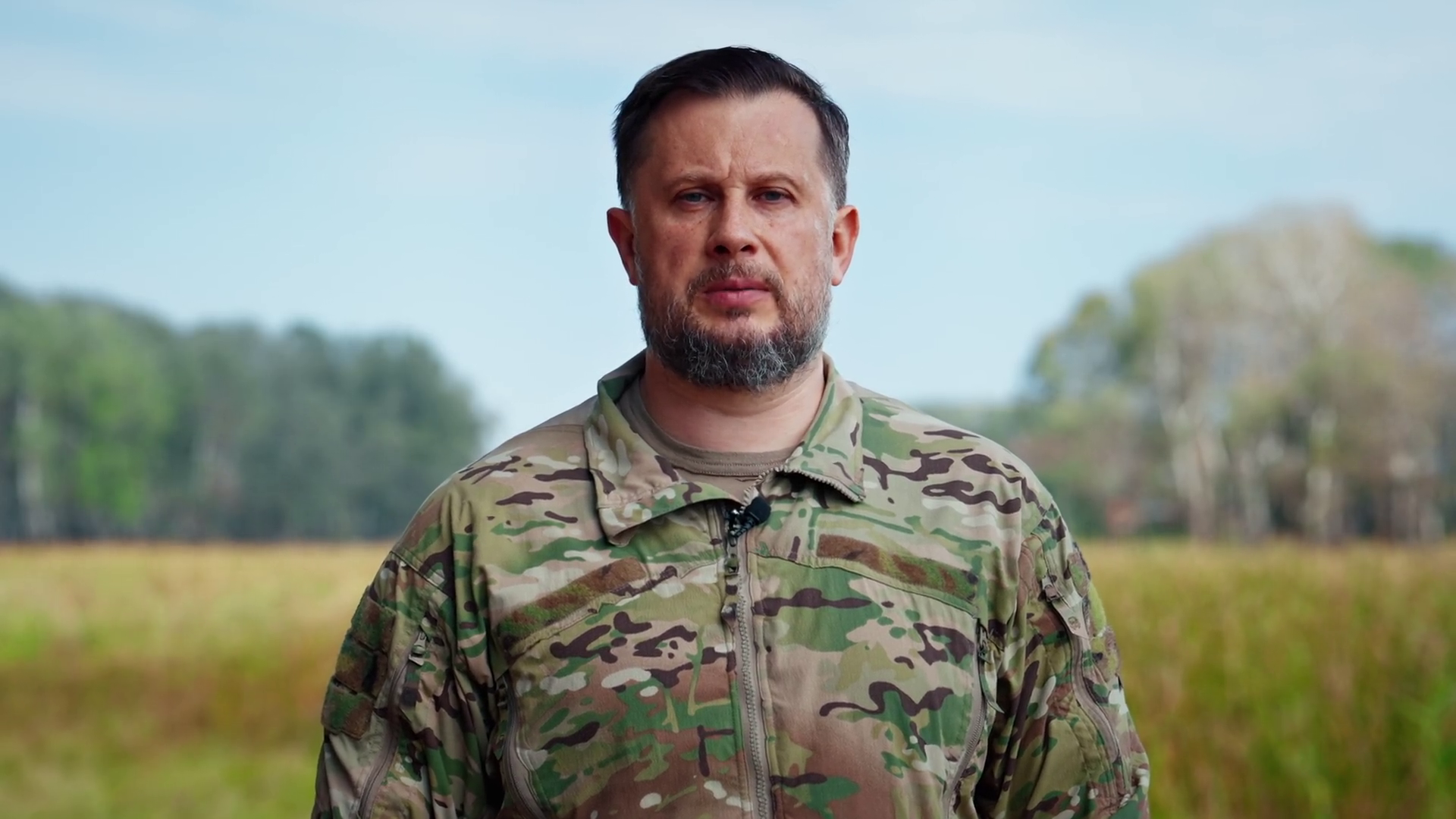




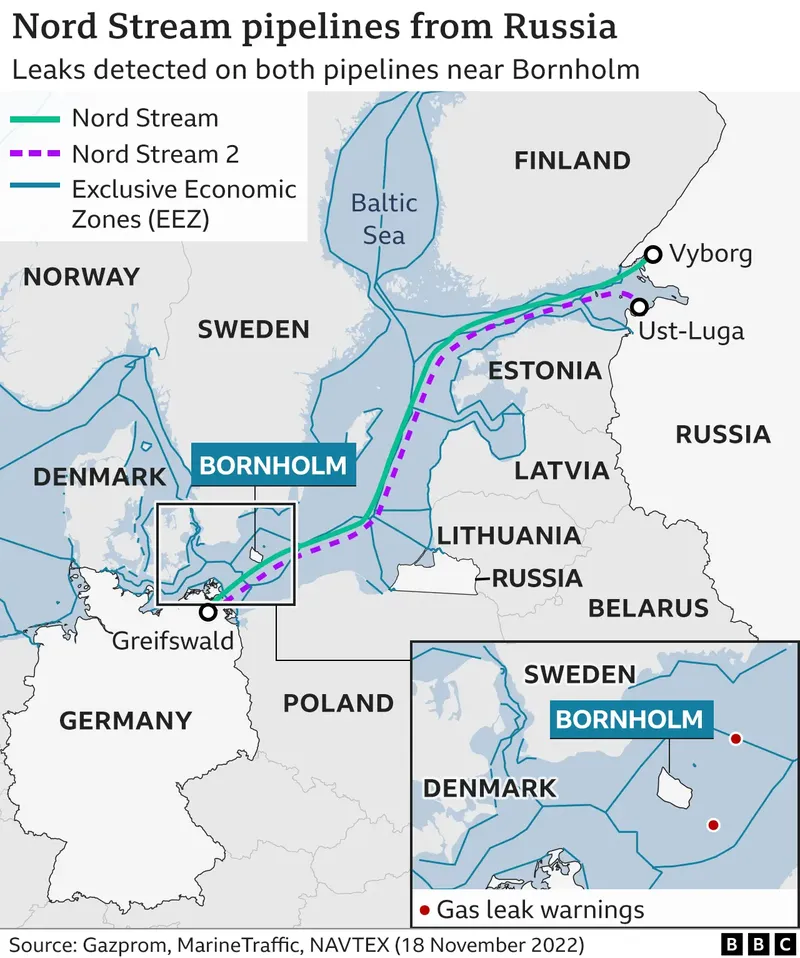
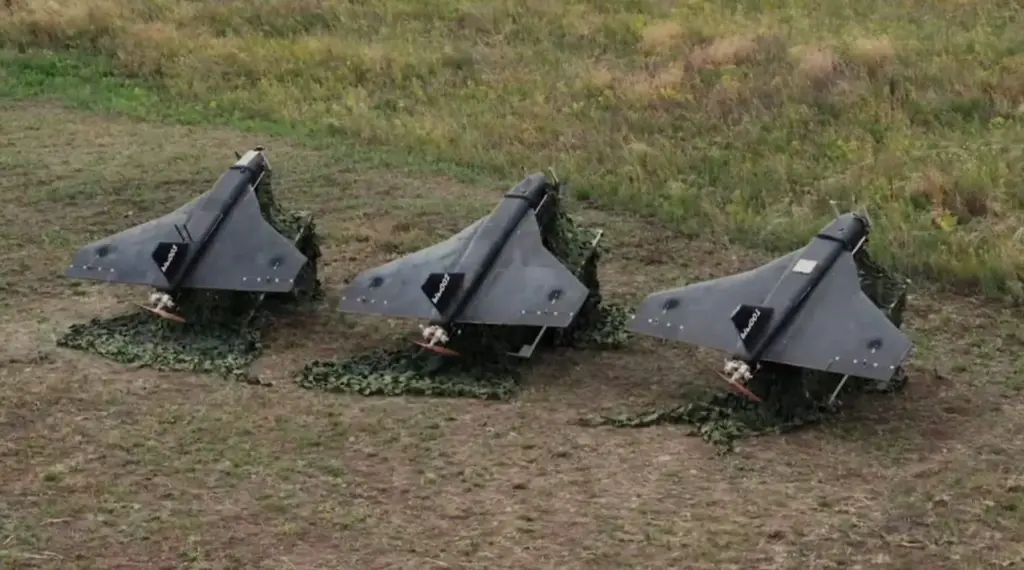

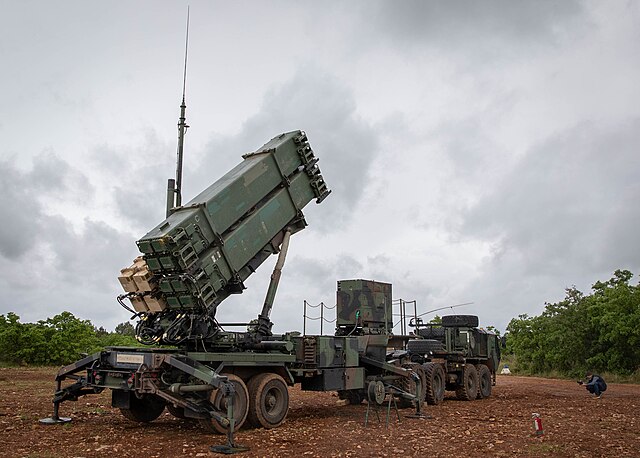
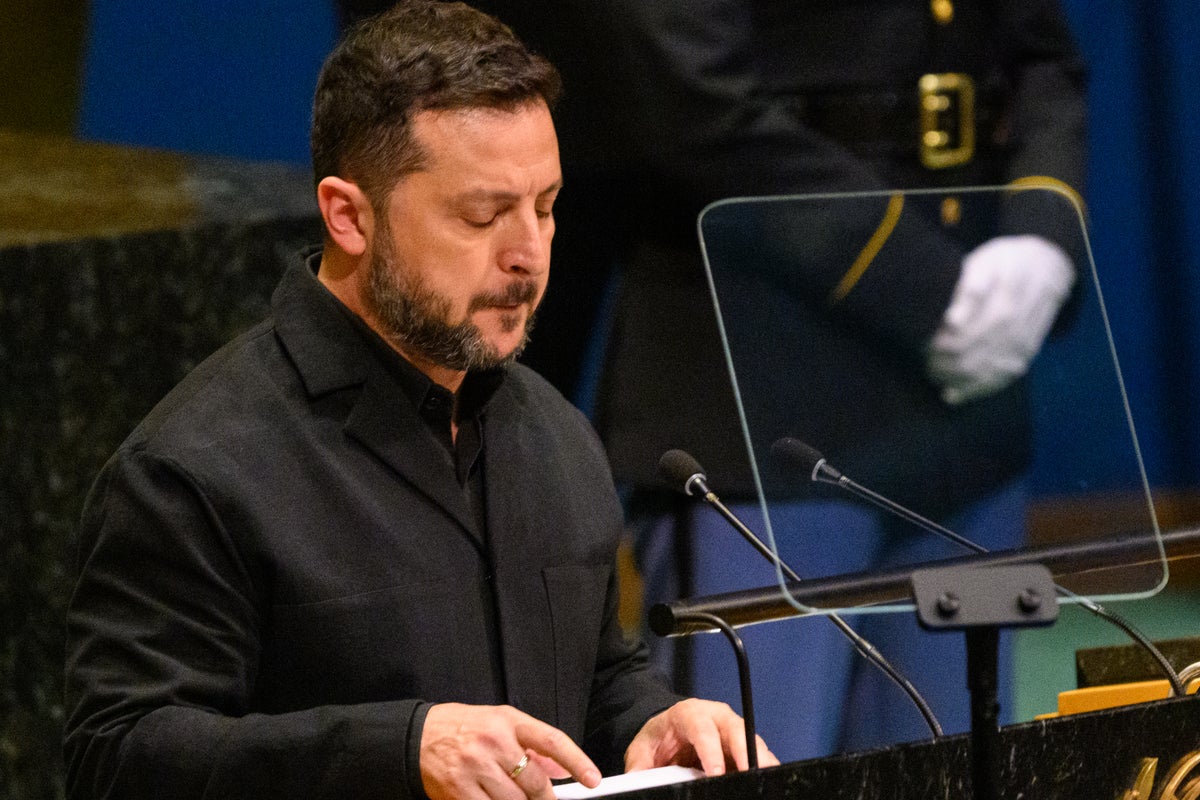

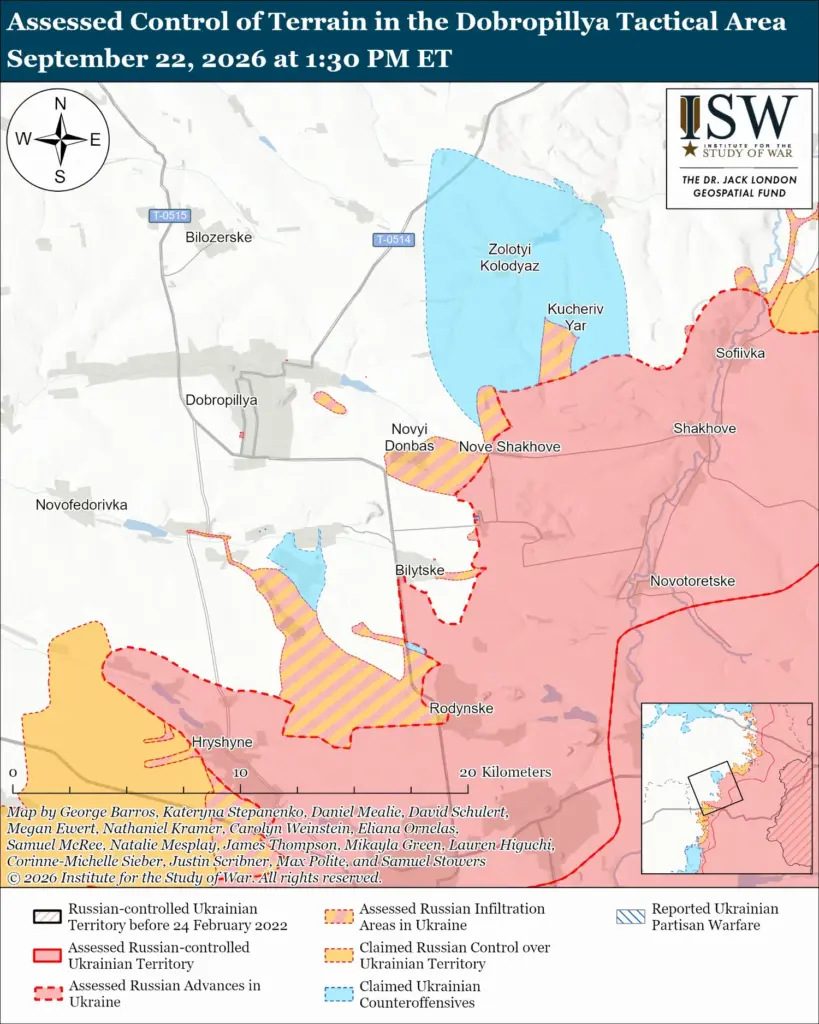


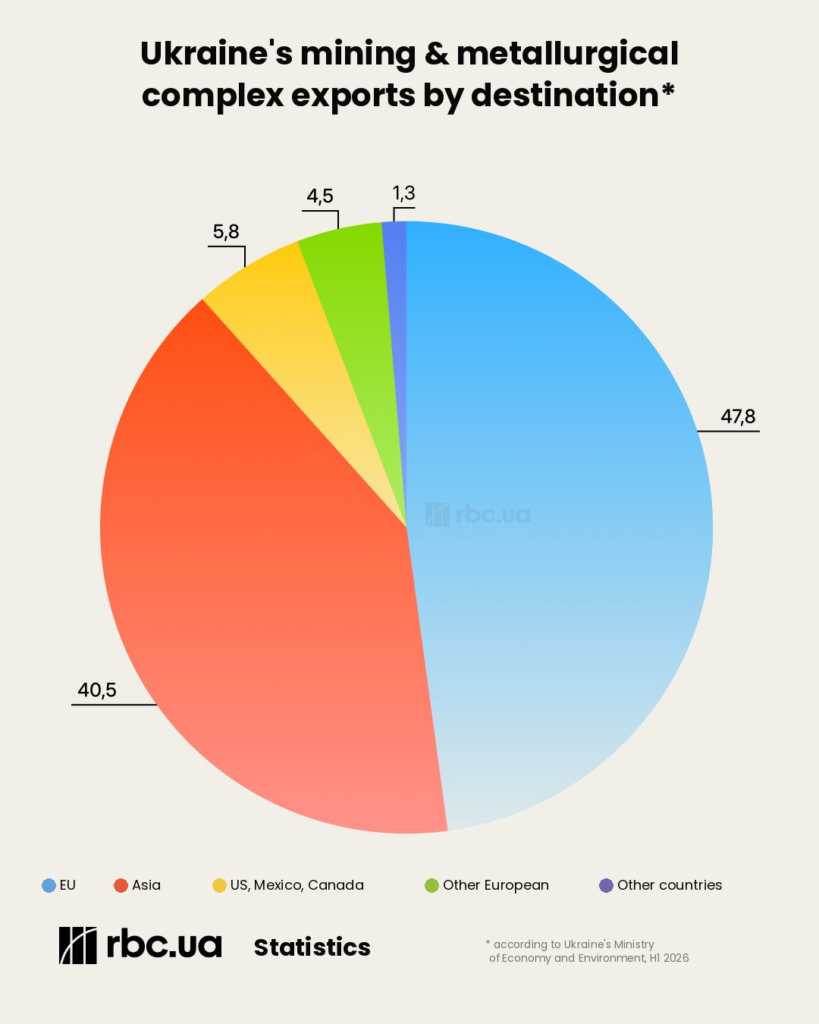


 Croke Park, Dublin
 29-30 June


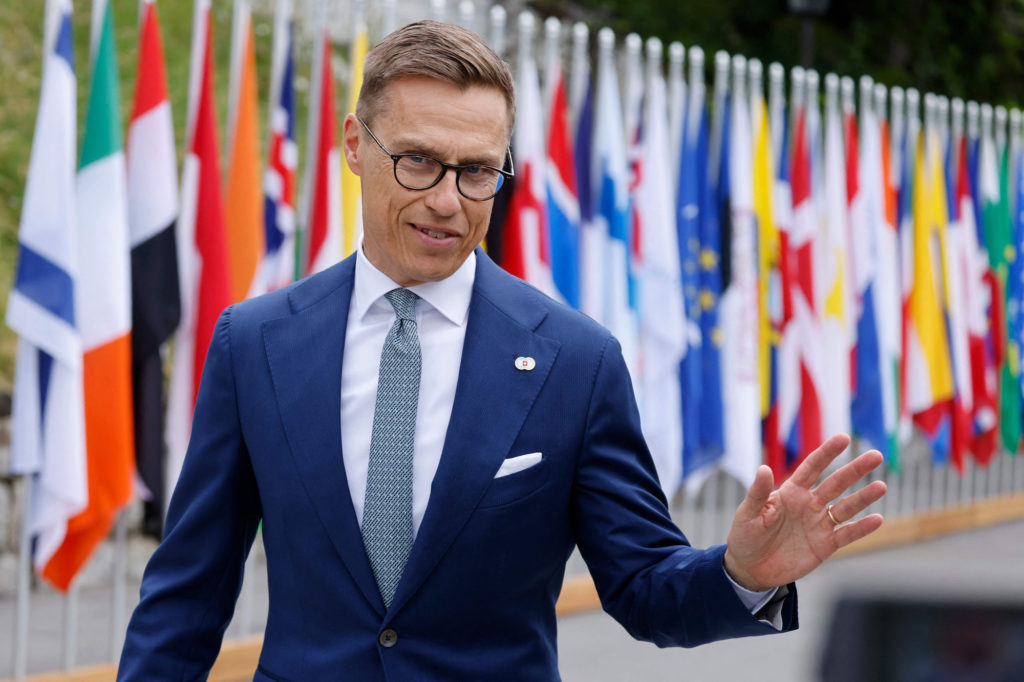



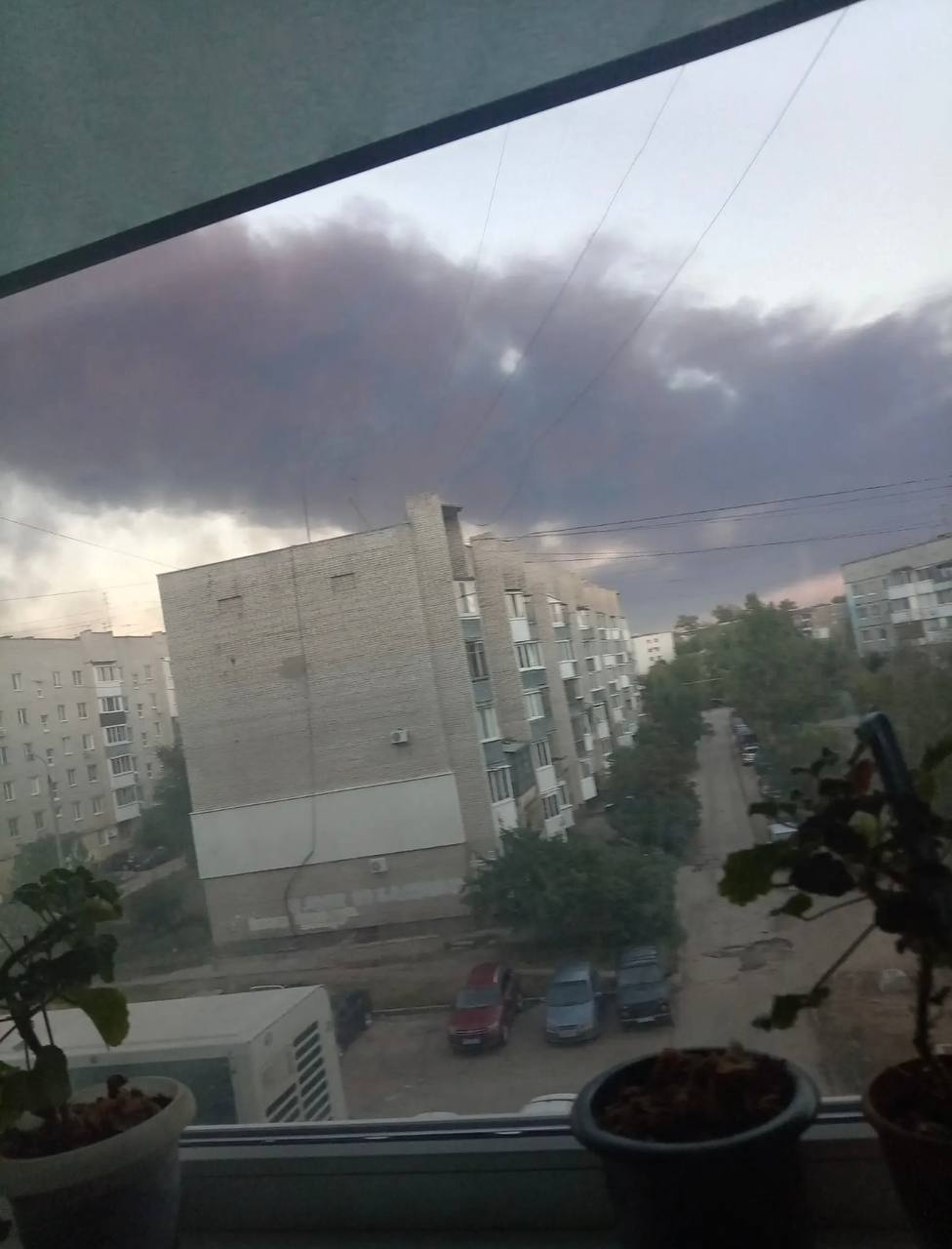

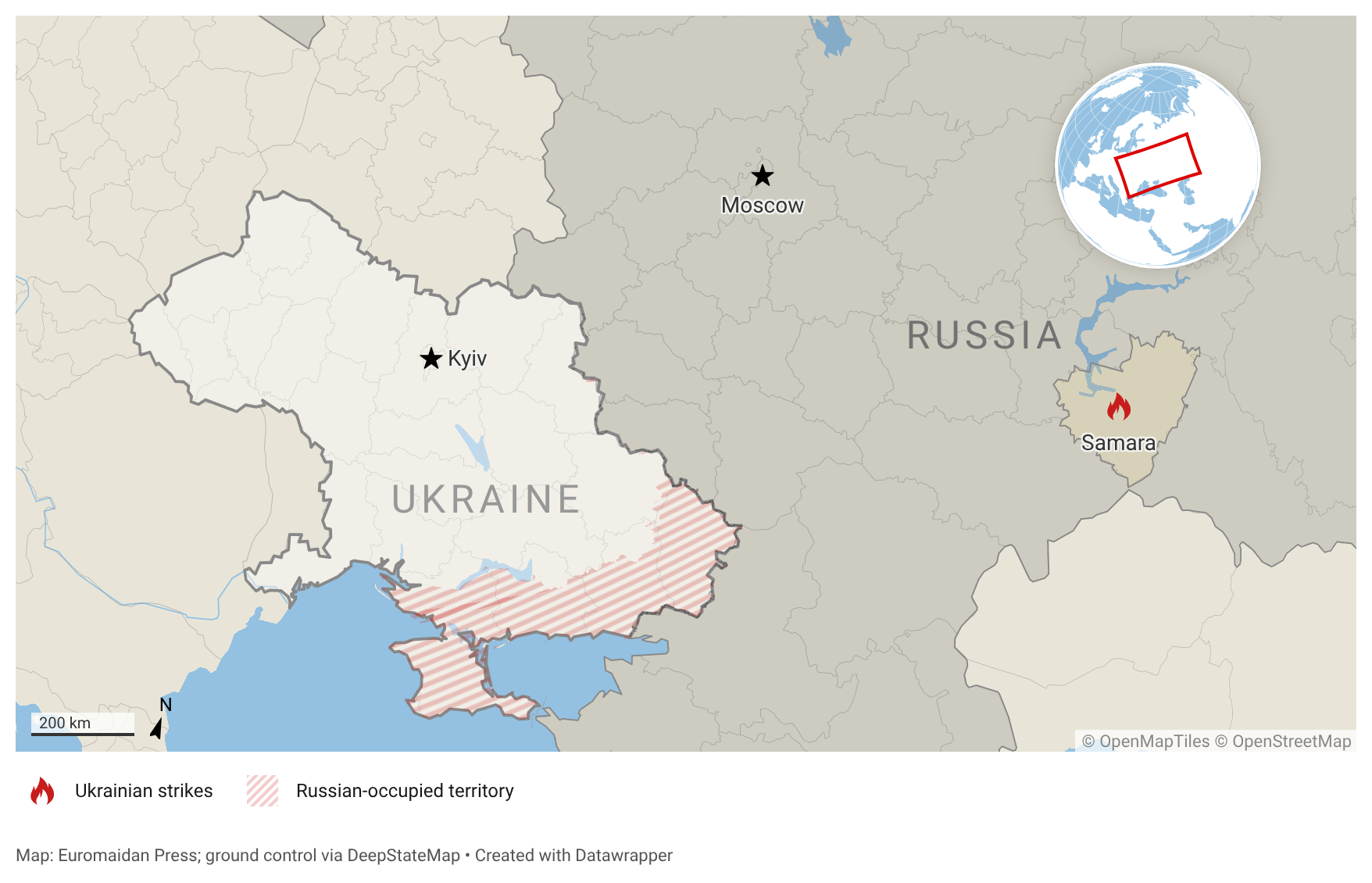
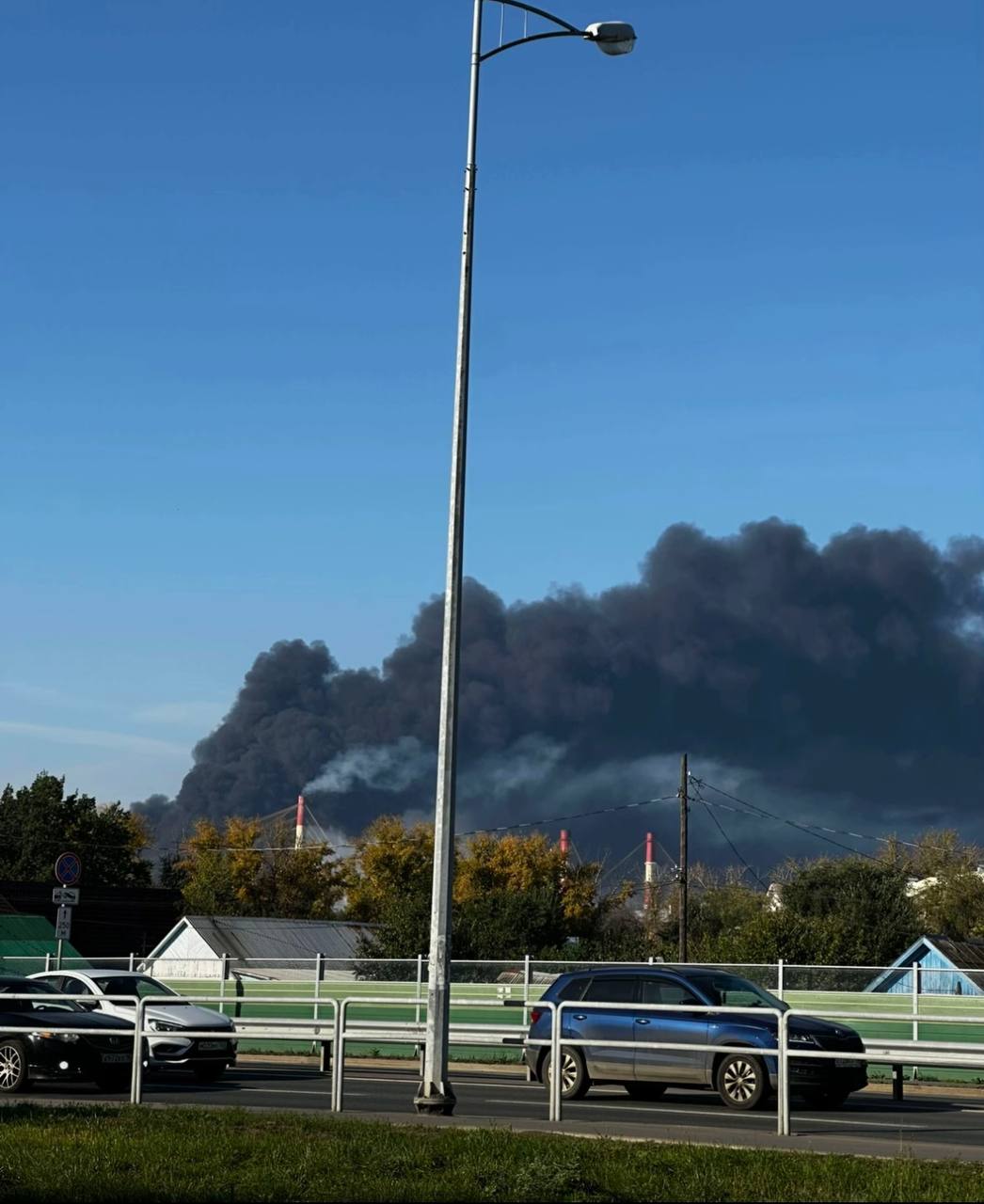
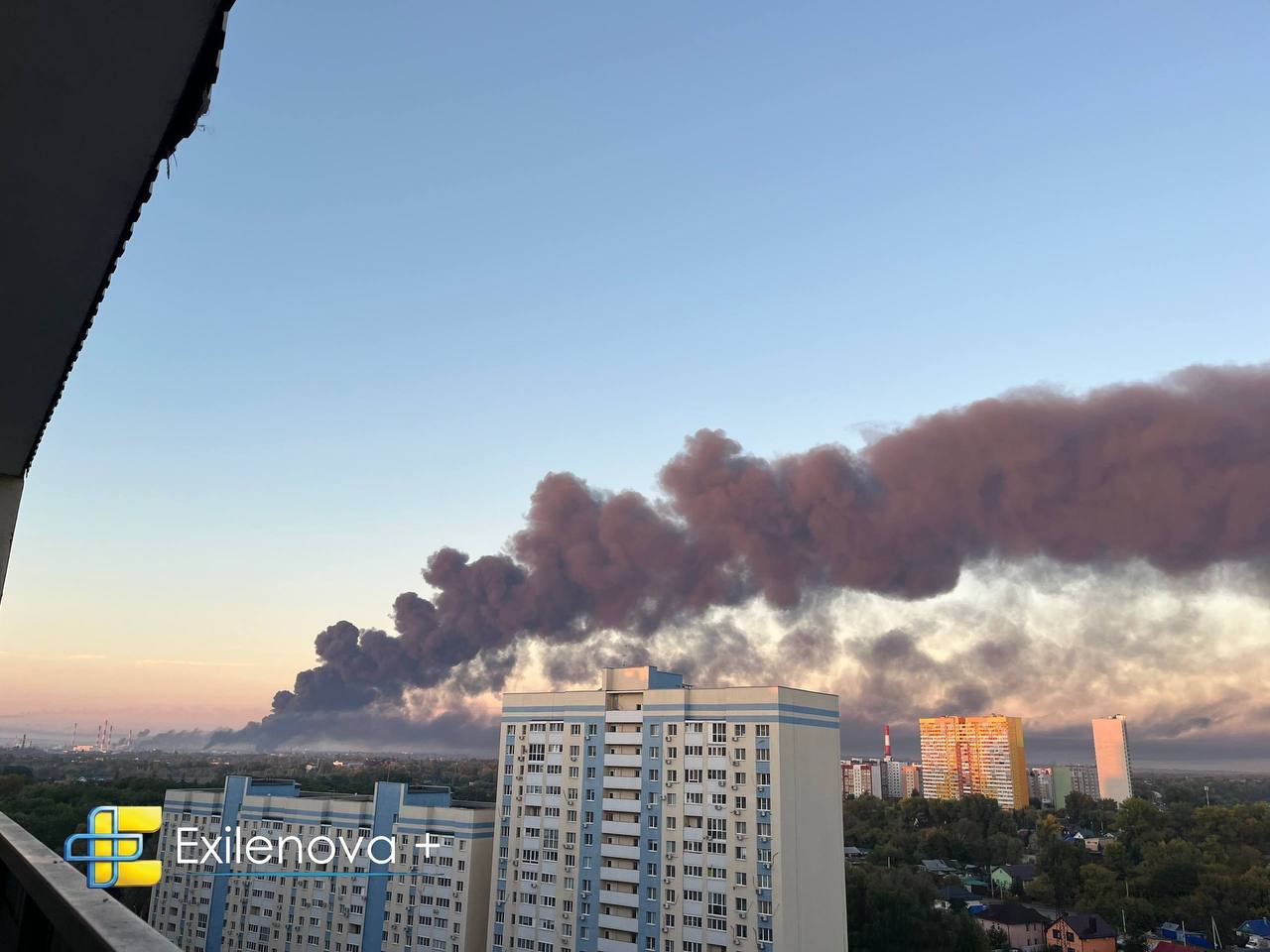


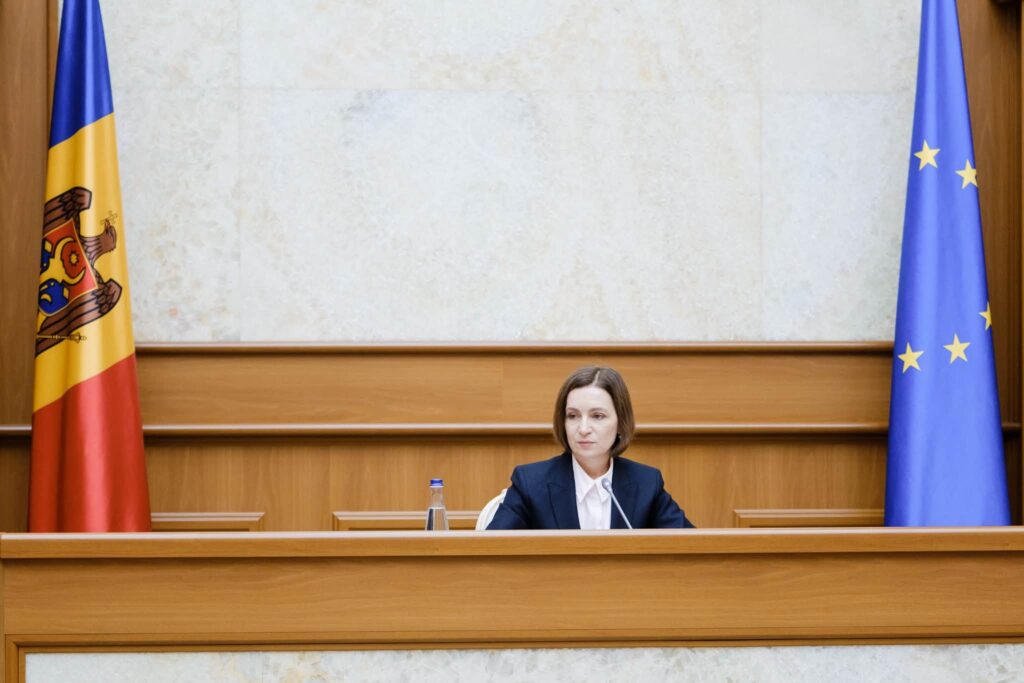
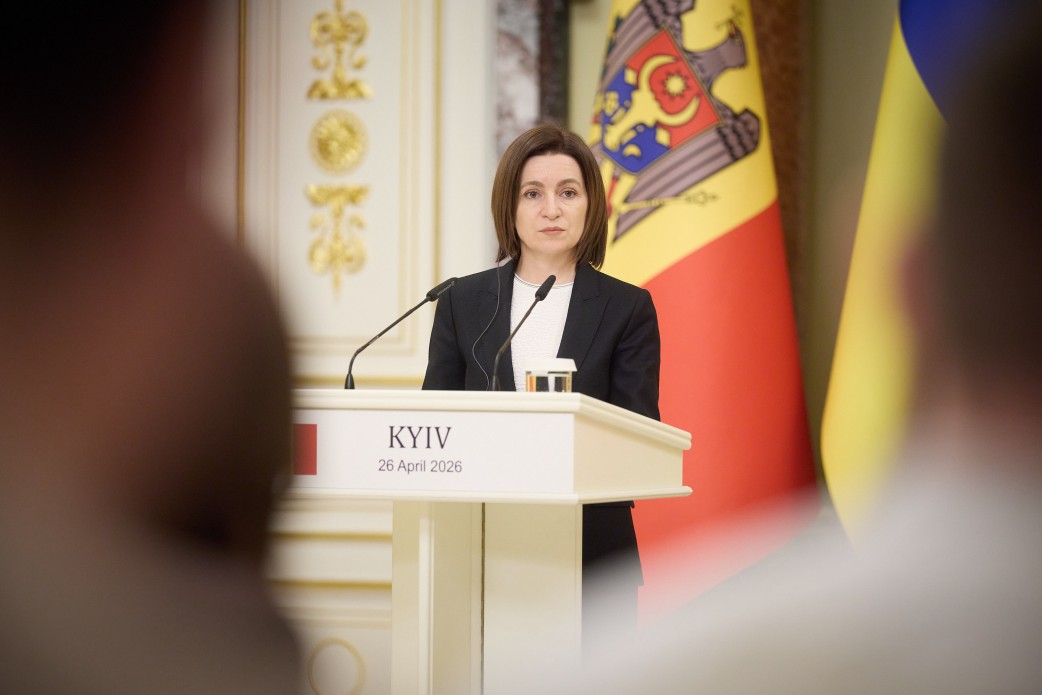


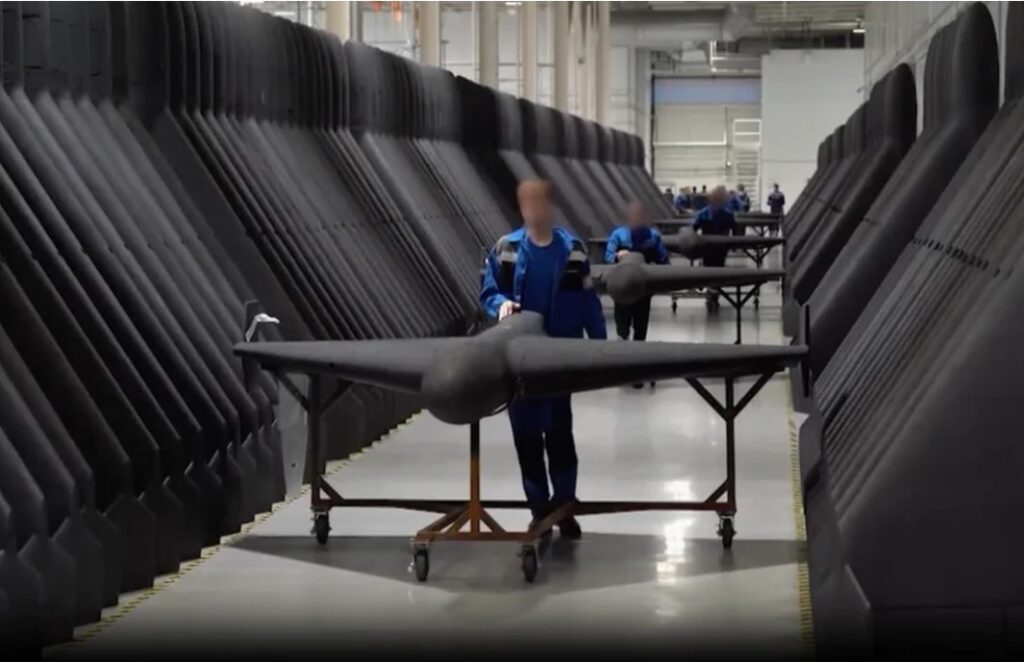

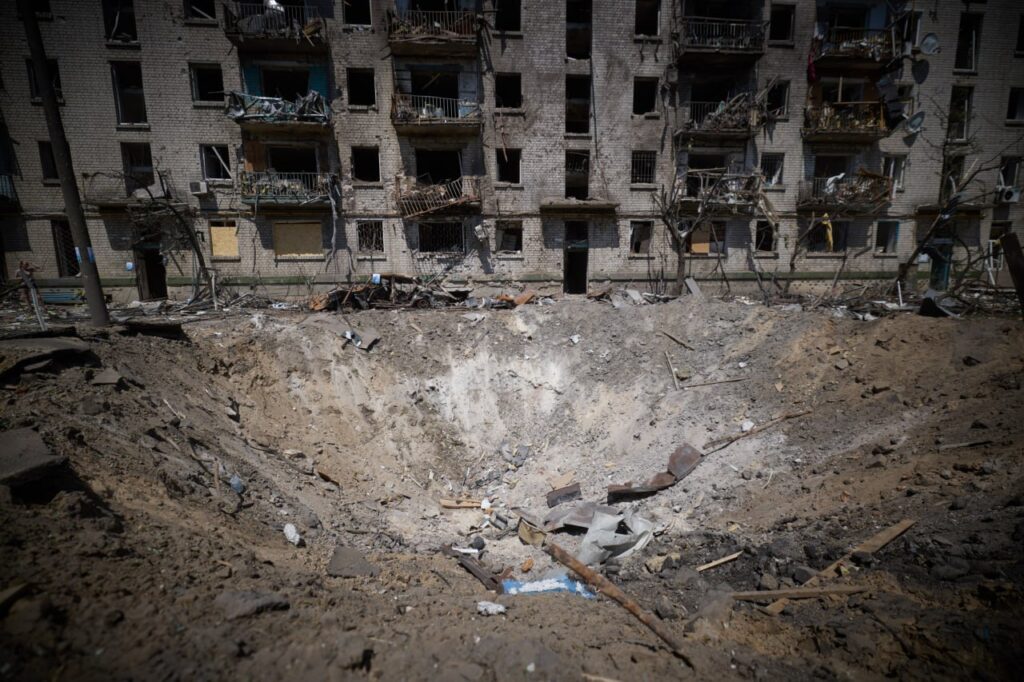
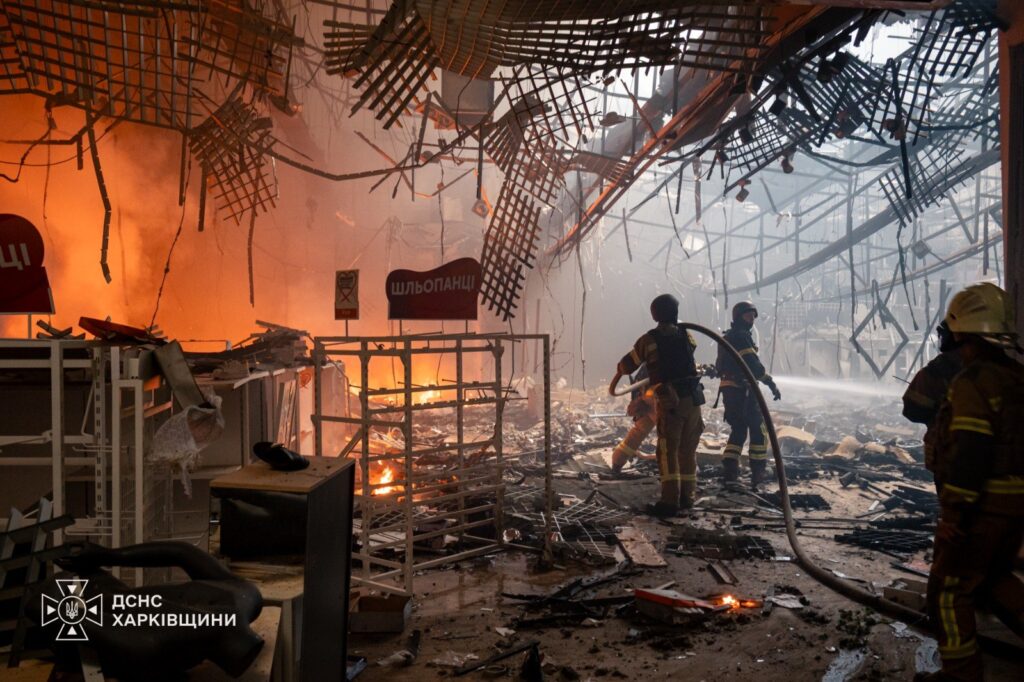
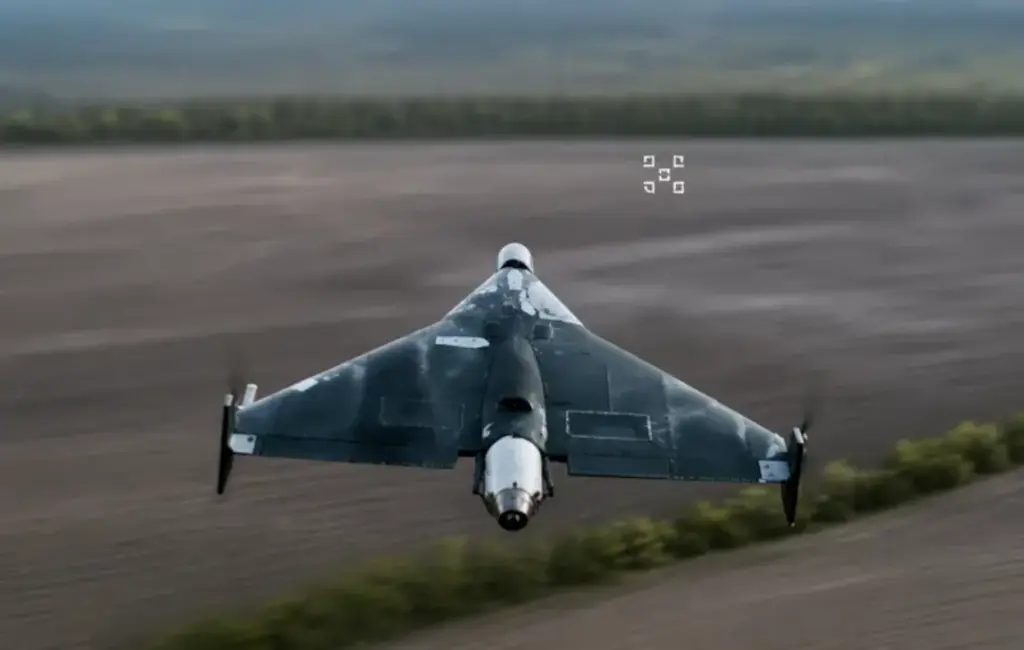
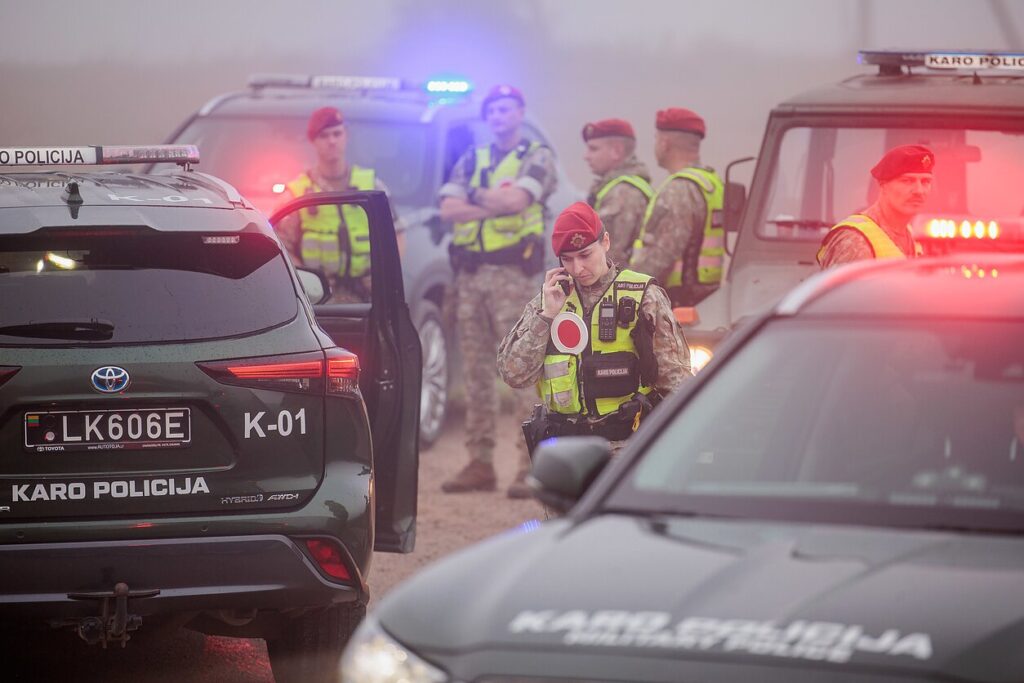
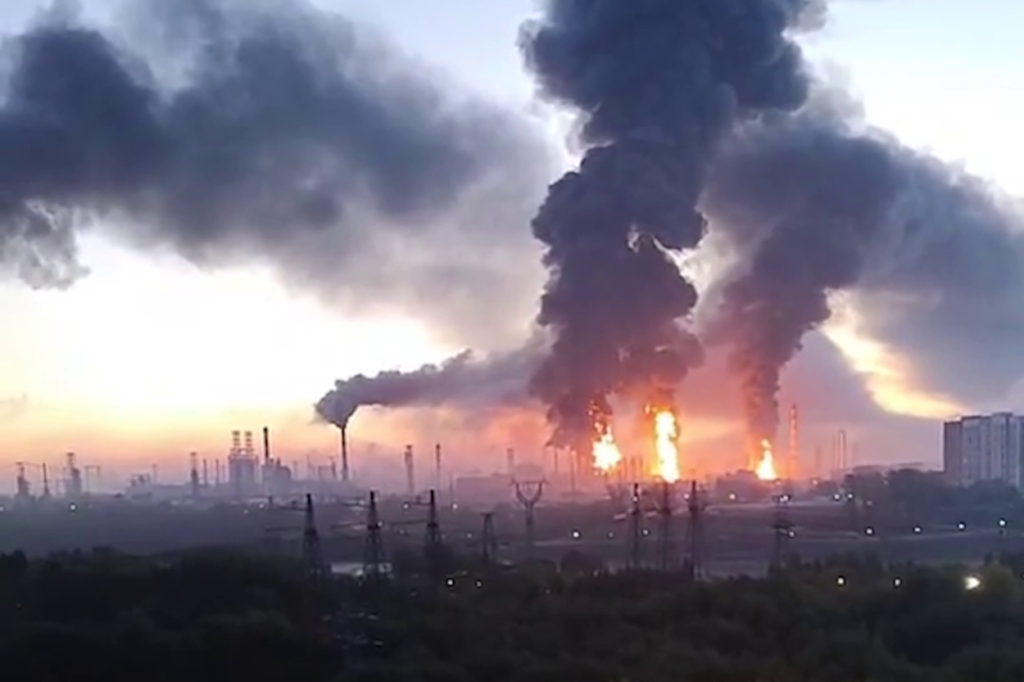
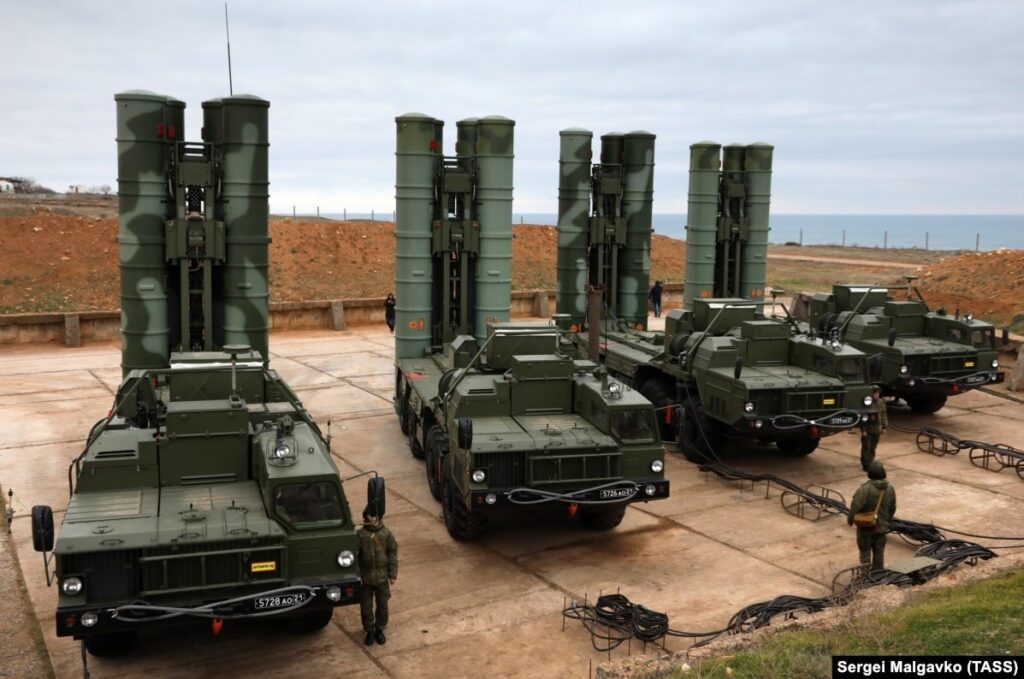
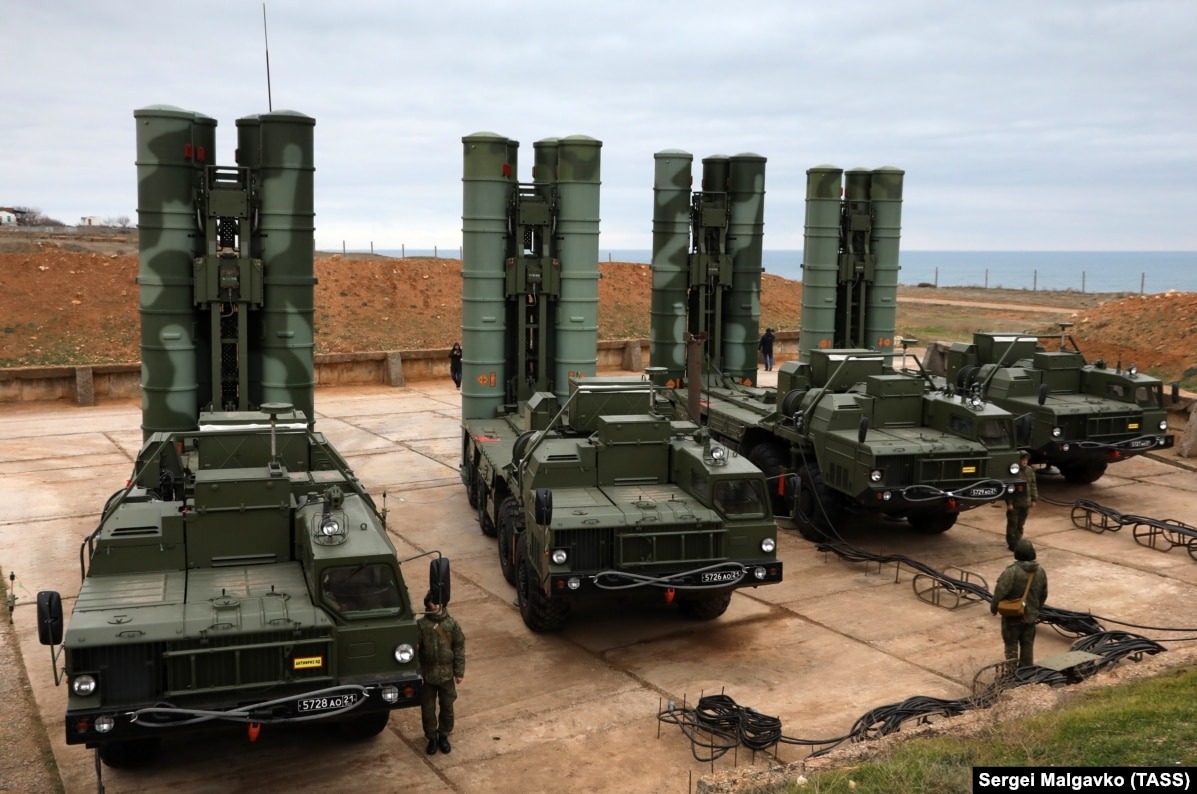

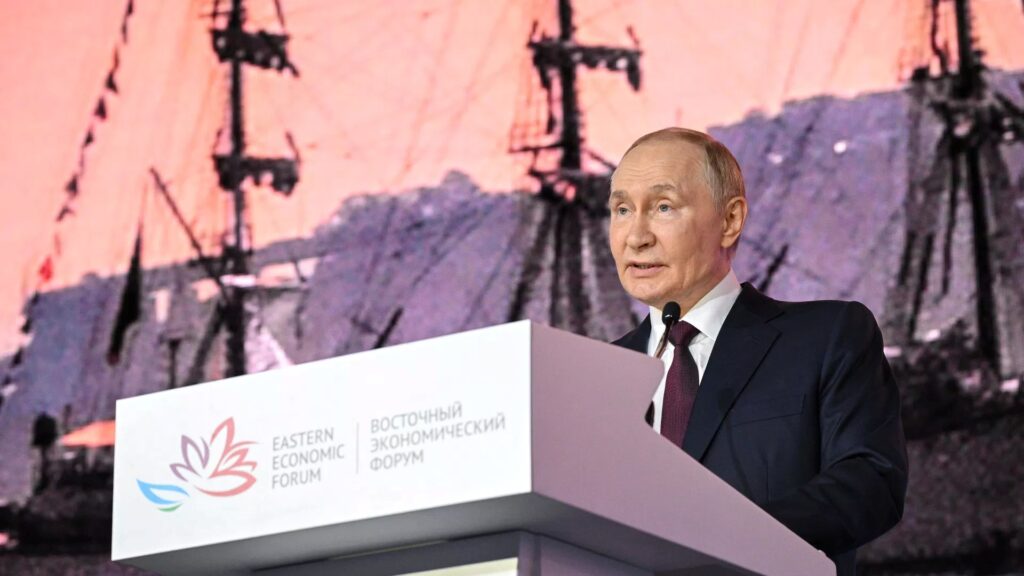
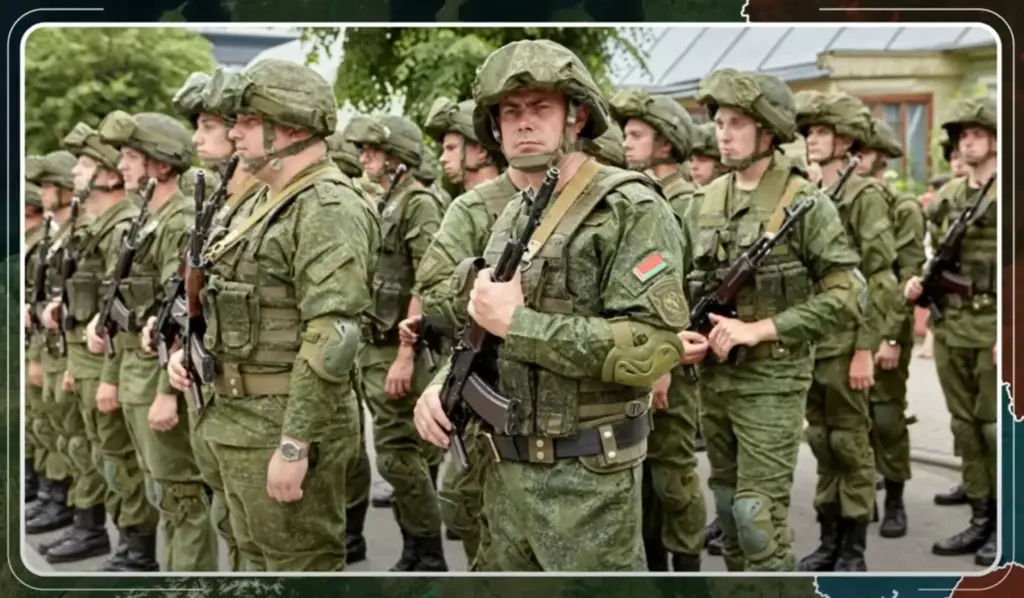


 Ukraine’s State…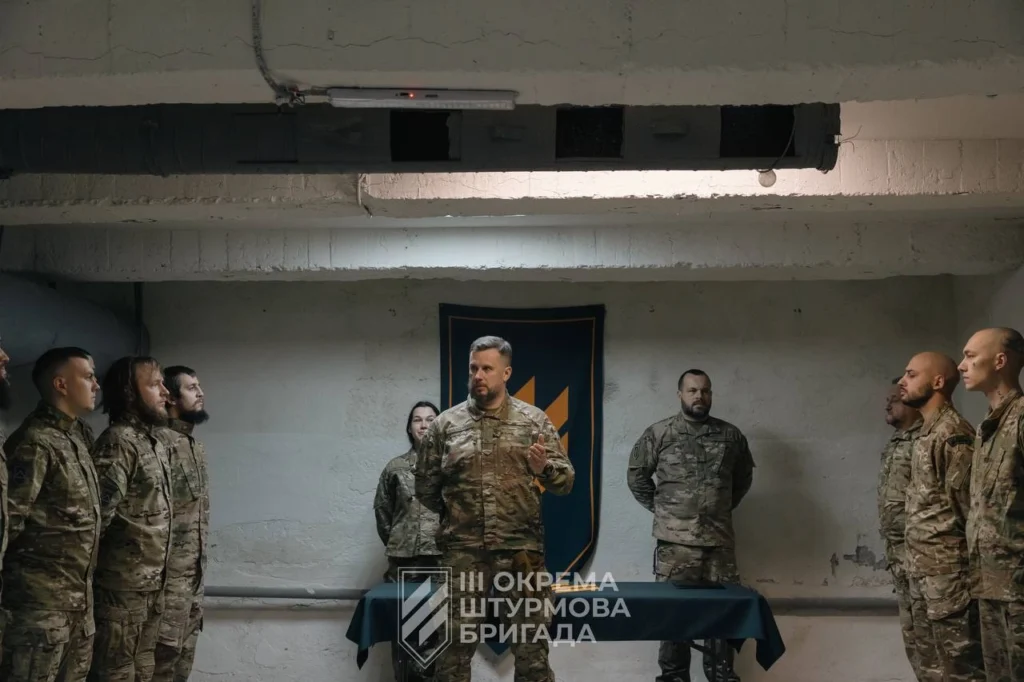
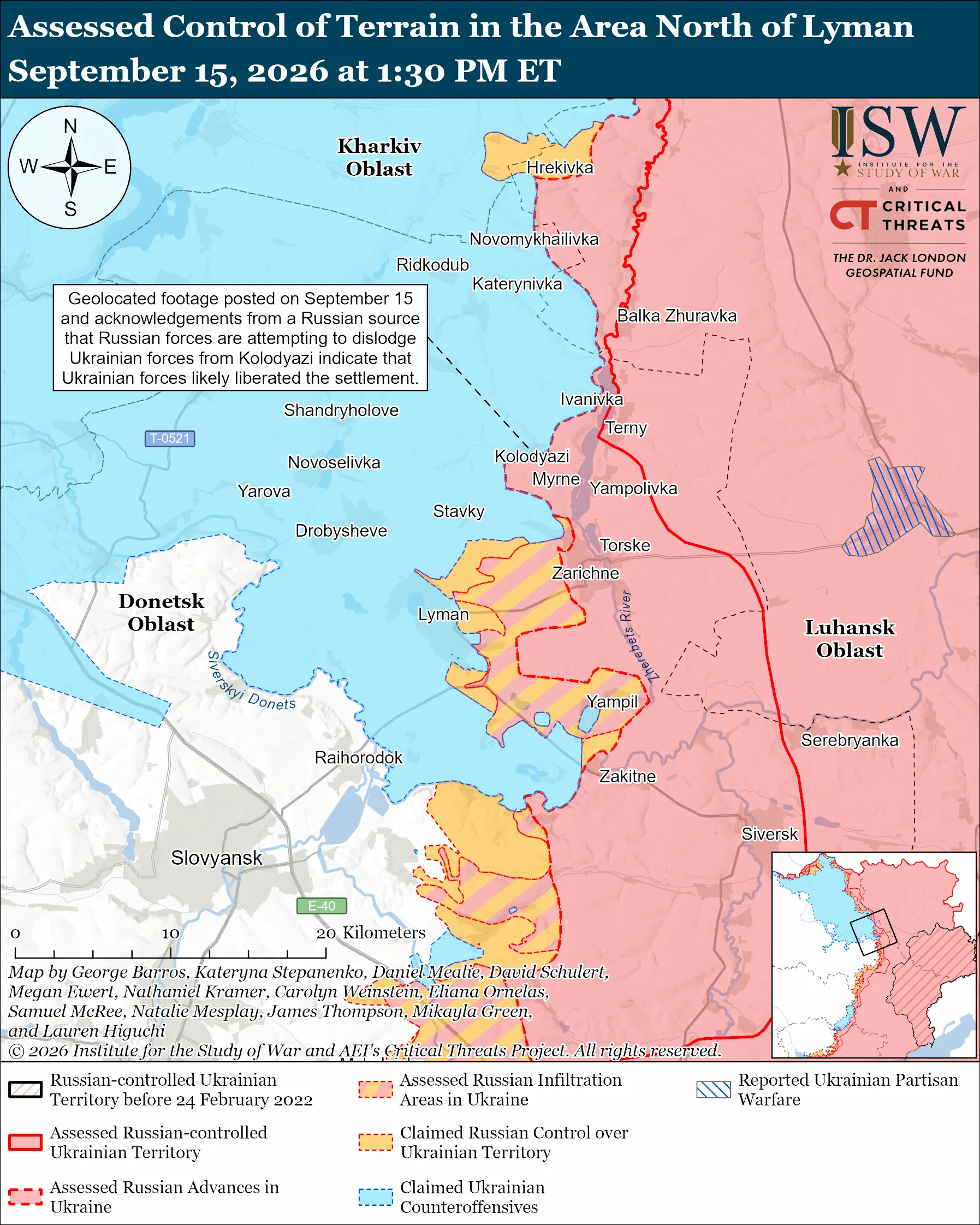












 Sur le projet d’exposition
![Who Vibecoded This Upgrade? [en]](https://i0.wp.com/climbtothestars.org/wp-content/uploads/sites/8/2026/07/img_0240.jpg?fit=1200%2C900&ssl=1)
![Pas toujours dans les vieilles casseroles [en]](https://i0.wp.com/climbtothestars.org/wp-content/uploads/sites/8/2026/07/35c76ea9-d285-4f9f-bd2d-52ba55ca1fc8.jpg?fit=1200%2C899&ssl=1)