Vue normale

  • ✇Euromaidan Press
  • Russia’s attack drones now jam the cheap interceptors sent to kill them
    Ukraine's cheap interceptor drones have been knocking Russia's nightly attackers out of the sky, so Russia has now bolted a jammer onto some of its own drones to blind them, according to Serhii "Flash" Beskrestnov, an adviser to Ukraine's President on defense technology. He examined the system, found in drone wreckage, and mapped how it strikes back at the interceptor sent to hunt it. Russia batters Ukrainian cities with long-range drones most nights, and Ukraine has le
     

Russia’s attack drones now jam the cheap interceptors sent to kill them

25 août 2026 à 12:39

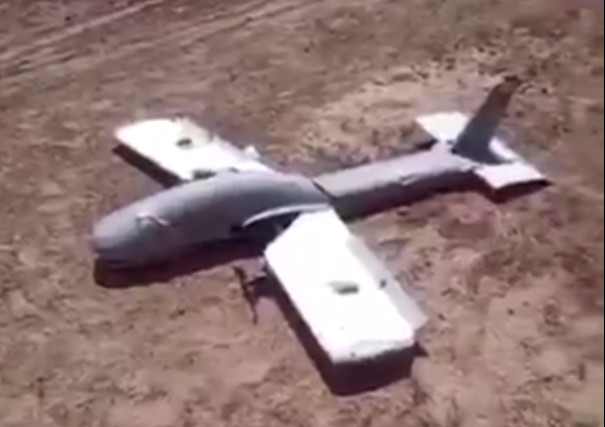
Electronic warfare equipment from Shahed drones.

Ukraine's cheap interceptor drones have been knocking Russia's nightly attackers out of the sky, so Russia has now bolted a jammer onto some of its own drones to blind them, according to Serhii "Flash" Beskrestnov, an adviser to Ukraine's President on defense technology. He examined the system, found in drone wreckage, and mapped how it strikes back at the interceptor sent to hunt it.

Russia batters Ukrainian cities with long-range drones most nights, and Ukraine has leaned on a cheap shield—drones costing a few thousand dollars—instead of burning through far pricier missiles. Anything that dulls that shield pushes the cost of defending the sky back up.

A jammer that waits for the interceptor

The unit rides on a Geran, Russia's version of the Iranian Shahed one-way drone. It listens for the video signal an approaching Ukrainian interceptor beams back to its pilot. Its receiver reads the interceptor's working frequency, then orders a transmitter to bury that same channel in noise, Beskrestnov found.

A Ukrainian Hornet drone spots another Hornet. Photo: Ukraine's 1st Azov Corps
Explore further

How Ukraine uses AI to guide long-range drone strikes through electronic warfare and deep into Russian-controlled rear areas

By his first estimate, the jammer's signal runs about five times stronger than the interceptor's video link—enough to wipe the picture and any chance of steering the drone onto its target.

Seconds decide it

In Beskrestnov's account, the system detected a test transmitter and switched on jamming after about three seconds, and the feed cut out. The device stays nearly idle until a hunter comes close, then jumps to full power to smother the signal. It targets the ordinary analog video band around 5.8 gigahertz that many cheap interceptors still use.

Possible answers, include interceptors with terminal-guidance homing for the final stretch of flight, digital communication links, or transmitters set to non-standard frequencies.

“two targets ammo one drone” how ukrainian drone crew hunts russian transport behind front line · post arti schultz daria moskalets/ armiyainform ukraine news reports
Explore further

“Two targets and ammo with one drone”: How a Ukrainian drone crew hunts Russian transport behind the front line

An old problem for Russia's drones

Russia has tried again and again to keep its one-way drones alive against Ukraine's defenses, including wiring jammers into some Shaheds earlier this year. Spending weight and power to protect a drone from a far cheaper interceptor shows how well those cheap drones work.

New Iranian loitering munition has started reaching Ukraine, analyst says. It’s built to hit deep behind front

10 août 2026 à 07:06

An Iranian Shahed-107 drone. Source: Oleksandr Kovalenko

Iran is using the war in Ukraine to make its attack drones deadlier. Iran has been refining its Shahed-107 kamikaze drones based on the experience of the war in Ukraine, military analyst Oleksandr Kovalenko said.

Ukraine has become the testing ground where Iran improves the weapons, and Russia then fires at it. The Shahed-107's warheads have received additional shrapnel elements, and a detailed aerodynamic study shows a significant improvement in the drone's structure, Kovalenko explains.

The Shahed is being upgraded from combat experience

Kovalenko said the modifications come directly from how the drones perform in Ukraine. The warheads now carry extra fragmentation elements, increasing their lethality against people and soft targets, and the airframe's aerodynamics have been reworked.

A new loitering munition may be coming

Kovalenko also warned about a weapon already appearing over Ukraine. Karar drones have recently begun reaching Ukraine, not yet on a large scale, but enough to cause some confusion in identifying the weapon. He said he would not be surprised if they appear more widely soon.

He described its specifications.

"The Karar is a loitering munition, more a flying bomb than a drone by classification, equipped with a DLE 111 gasoline engine, with a range of about 300 kilometers on a 28-liter tank and a 15-kilogram warhead," Kovalenko said.

He called it an extremely cheap means of terror for the middle rear zone.

The warning is about the rear

Kovalenko's concern is where such a weapon reaches. A cheap loitering munition with a 300-kilometer range could strike areas well behind the front that have been relatively safe, extending the threat deeper into Ukraine.

Kovalenko framed the weapon's arrival in stark terms, saying that when it appears, people should simply accept what will happen, and declining even to name the region where he expects it to appear. That is his characterization: a single analyst's warning about a weapon whose wider use he anticipates but that has not yet reached scale. EP cannot independently verify Karar's specifications or its deployment.

❌