Hassan Jihad Ibn Kariem died after reportedly ‘passing out’ and falling off Goliath rollercoaster in GeorgiaThe family of a man who was ejected from a rollercoaster at a Six Flags amusement park in Georgia and died has publicly questioned whether the death could have been prevented.Hassan Jihad Ibn Kariem was riding the Goliath rollercoaster at Six Flags Over Georgia near Atlanta alongside his niece during a family trip to celebrate her birthday when he was thrown from the ride. His niece witnes
Hassan Jihad Ibn Kariem died after reportedly ‘passing out’ and falling off Goliath rollercoaster in Georgia
The family of a man who was ejected from a rollercoaster at a Six Flags amusement park in Georgia and died has publicly questioned whether the death could have been prevented.
Hassan Jihad Ibn Kariem was riding the Goliath rollercoaster at Six Flags Over Georgia near Atlanta alongside his niece during a family trip to celebrate her birthday when he was thrown from the ride. His niece witnessed her uncle’s death, a relative told the Atlanta ABC News affiliate WSB-TV.
In the latest surge of violence, settlers targeted Palestinians during the olive harvest, a cultural touchstone and economic lifeline in the Israeli-occupied area.
In the latest surge of violence, settlers targeted Palestinians during the olive harvest, a cultural touchstone and economic lifeline in the Israeli-occupied area.
American officials say they have identified similar influence campaigns by Russia and others in years past, all trying to create discord over contentious topics.
Katie Zacharia had a rough start as she fumbled first press conference and faced questions from media about her professional backgroundUS politics live – latest updatesDonald Trump has urged Katie Zacharia, his new White House press secretary, to “reconsider” taking the job after she faced intense scrutiny from news outlets, including the rightwing cable network Fox News.Speaking with reporters outside the White House on Friday, the US president said Zacharia had been “treated very badly by the
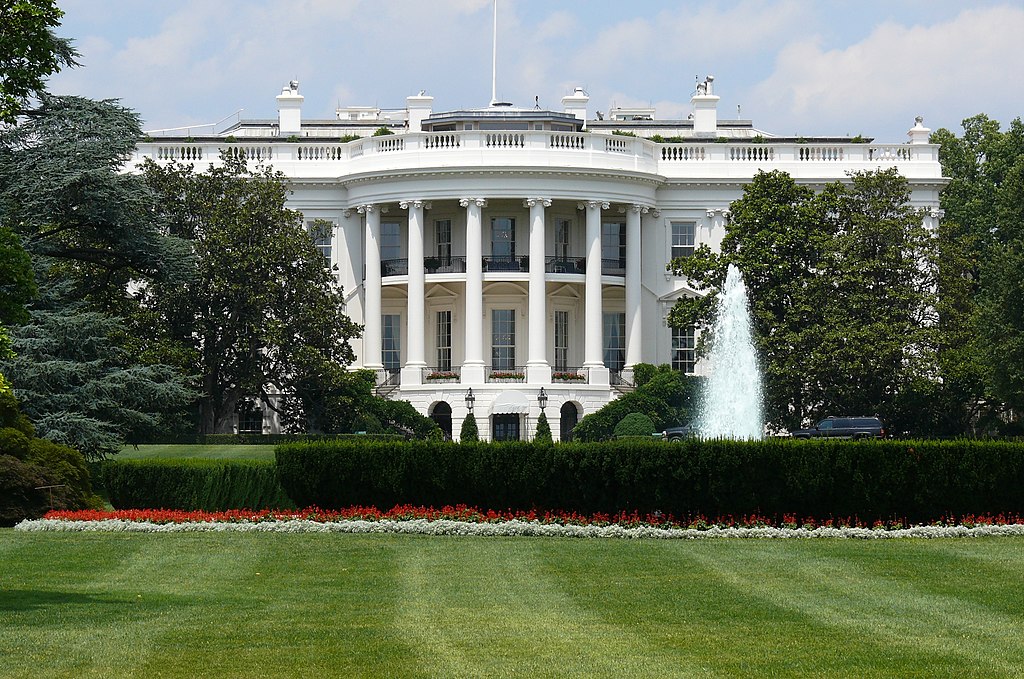
Donald Trump has urged Katie Zacharia, his new White House press secretary, to “reconsider” taking the job after she faced intense scrutiny from news outlets, including the rightwing cable network Fox News.
Speaking with reporters outside the White House on Friday, the US president said Zacharia had been “treated very badly by the media” after she stumbled through a 14-minute press conference on Tuesday and questions arose over her legal credentials.
Temporary restrictions on aircraft arrivals and departures were imposed at 27 Russian airports, Deutsche Welle reported on 16 October, citing its own calculations based on reports from Russia’s Federal Air Transport Agency.
Ukrainian President Volodymyr Zelenskyy warned airlines on 1 September that “Russian airspace is becoming completely unsafe.” Overnight, most of the airspace over European Russia was closed.
By morning, more than 200 flights had been canceled or delayed at Moscow
Temporary restrictions on aircraft arrivals and departures were imposed at 27 Russian airports, Deutsche Welle reported on 16 October, citing its own calculations based on reports from Russia’s Federal Air Transport Agency.
Ukrainian President Volodymyr Zelenskyy warned airlines on 1 September that “Russian airspace is becoming completely unsafe.” Overnight, most of the airspace over European Russia was closed.
By morning, more than 200 flights had been canceled or delayed at Moscow airports, Deutsche Welle reported, citing figures compiled by a Russian Telegram channel.
Тим часом у російських аеропортах – справжній апокаліпсис через нальоти дронів останніми днями.
Про це ниють росЗМІ. Було відмінено десятки рейсів, у терміналах – дуже багато людей. Пасажири скаржаться на задуху, дикі черги до туалетів та повну невідомість. pic.twitter.com/ZlXxY5c2mq
The list included airports in the capital. All four Moscow airports temporarily suspended arrivals and departures, the Russian outlet Astra reported on 16 October. Russian authorities said they had shot down dozens of drones, while flights were delayed and diverted to alternate airfields, according to the report.
Massive drone attack on Russia: 644 UAVs in one night, 94 shot down near Moscow
The temporary airport shutdowns were likely a consequence of a massive drone attack on Russia. From 8:00 p.m. on 15 October to 8:00 a.m. on 16 October, Russian air defenses allegedly intercepted and destroyed 644 Ukrainian unmanned aerial vehicles across 26 Russian regions, occupied Crimea, and the Black Sea, according to Russia’s Defense Ministry.
According to the list of regions published by the Russian Defense Ministry, the drone attacks covered a vast area of Russia, from regions bordering Ukraine to the Moscow region, the Volga region, the country’s northwest and southern regions, as well as occupied Crimea and the Black Sea.
Russian air defenses shot down a total of 94 drones approaching Moscow over the evening of 15 October and overnight, according to calculations by the Russian outlet RBC Radio, citing statements by Moscow Mayor Sergey Sobyanin.
In the Kaluga region, air defenses destroyed 27 drones over the evening and night, the regional governor reported. At 9:27 a.m., he updated the figures, saying another 48 UAVs had been shot down overnight, bringing the total to 75. According to preliminary information, there were no casualties or infrastructure damage.
In the Tula region, air defenses allegedly destroyed a total of 32 Ukrainian drones. There were no casualties, according to regional Governor Dmitry Milyaev in his Telegram channel.
In the Vladimir region in western Russia, authorities repelled drone attacks overnight. In the city of Vladimir, a drone attempted to attack a heating infrastructure facility, but the attack was stopped, Vladimir Region Governor Alexander Avdeyev reported. Minor damage was reported, but there was no information about casualties.
Ukraine has not yet commented on its involvement in the attacks.
The practical consequences of canceled Russian flights
Passengers on flight SU6312 from Kaliningrad to Moscow were unable to land in Moscow because of airspace closure, so the aircraft was diverted to Nizhny Novgorod, Terravia reported. After landing, passengers remained on board for about two hours before being allowed to disembark at 3:30 a.m. Instead of continuing their journey to Moscow by air, they were supposed to be transported by bus, with the trip expected to take about seven hours, the outlet reported.
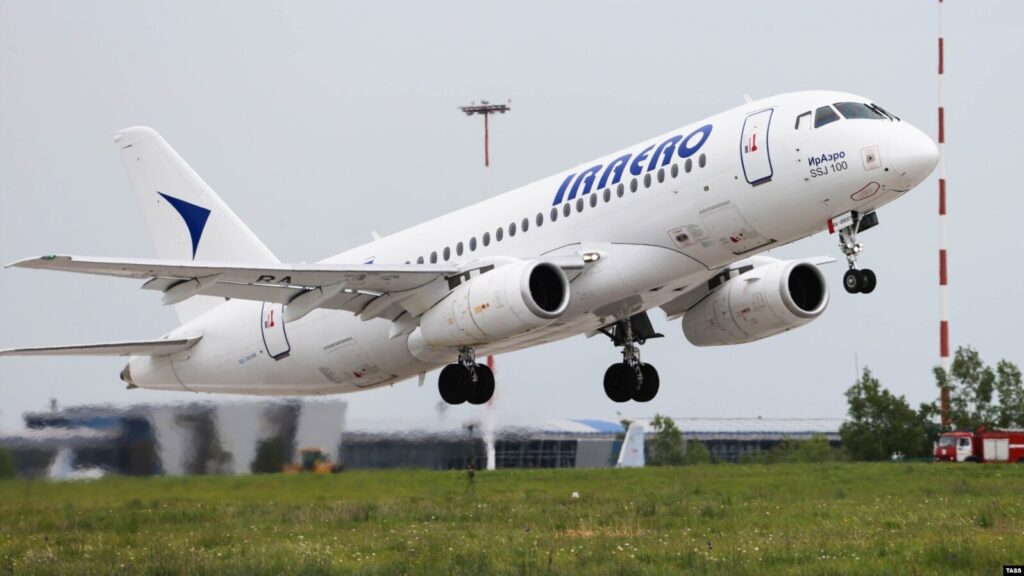
A Russian Sukhoi Superjet 100 of the IrAero airline. Illustrative photo: TASS
Passengers were not provided with food or drinks, and one woman could not find a seat on the bus, so she purchased a ticket for an early-morning train herself.
Since the beginning of the year, all four Moscow airports have been completely shut down simultaneously at least 19 times, the Russian outlet Agentstvo reported. During the first 14 days of October, the restrictions lasted 101 hours and 38 minutes, compared with 46 hours and 33 minutes in September, according to the report.
The Iran-backed group’s attacks have disrupted sports tournaments and threatened business events that the kingdom has long used to attract investment and raise its profile.
The Iran-backed group’s attacks have disrupted sports tournaments and threatened business events that the kingdom has long used to attract investment and raise its profile.
Saudi Arabia’s capital, Riyadh, has been rocked by Houthi attacks in recent weeks that have forced the authorities to close the city’s main international airport.
A bipartisan group of 22 House lawmakers is urging President Donald Trump to fully implement the new Russia sanctions law and revoke a license allowing certain Russian diesel transactions. In a letter sent on 15 October, they copied Secretary of State Marco Rubio and Treasury Secretary Scott Bessent and requested details on planned sanctions, tariffs and waivers.
Their request comes as the law’s first requirements fall due on 18 October, while lawmakers from both parties challengethe ad
A bipartisan group of 22 House lawmakers is urging President Donald Trump to fully implement the new Russia sanctions law and revoke a license allowing certain Russian diesel transactions. In a letter sent on 15 October, they copied Secretary of State Marco Rubio and Treasury Secretary Scott Bessent and requested details on planned sanctions, tariffs and waivers.
Their request comes as the law’s first requirements fall due on 18 October, while lawmakers from both parties challengethe administration’s decision to allow certain Russian diesel transactions. Some restrictions take effect automatically, while others require presidential action. The law does not specify a penalty for the president missing the deadline.
What the Russia sanctions law requires
Congress passed the Lindsey O. Graham Sanctioning Russia and Iran Act of 2026 by votes of 86–11 in the Senate and 262–159 in the House. Trump signed it on 18 September. Graham, a Republican senator from South Carolina, died in July.
Restrictions taking effect automatically on 18 October include a ban on US banks and broker-dealers processing transfers to or from the Russian government, a ban on new US investment in Russia, a ban on new US investment in Russia’s energy sector, and a ban on US energy exports to Russia.
Other measures require presidential action by the same date. The law directs Trump to review and sanction Russian officials, oligarchs and shadow-fleet vessels, sanction the Bank of Russia, specified Russian banks and state-owned companies, and impose tariffs of up to 500% on Russian goods. Tariffs of up to 100% can apply to goods from countries among the five largest importers of Russian oil or gas, or among the top five countries facilitating Russian oil sanctions evasion.
Trump may waive sanctions, restrictions and tariffs under the law if he first certifies in writing to Congress that a waiver is in the US national interest and submits a report explaining its basis.
The diesel license at the center of the dispute
House members also urged Trump to revoke General License 135, which the Treasury Department issued on 9 October and that is valid until 7 April 2027. It permits certain transactions involving Russian-origin diesel, including imports into the United States. Trump said Russia would immediately supply more than 300,000 tons of diesel to US and global markets and predicted prices would fall sharply, according to a 9 October Truth Social post.
On 13 October, a bipartisan group of 12 senators also urged Trump to rescind the deal and revoke the license. Seven senators said the deal conflicted with a 2022 law banning Russian energy imports.
The Graham Act says nothing in its provisions affects the Treasury secretary’s existing authority to issue general licenses. That provision does not resolve whether the diesel license complies with the separate 2022 law.
A White House official told Newsweek the administration would comply with the Graham Act. Bessent said the administration would use “all the legal authorities we have” and called the deal “good for the American people,” Fox News reported on 11 October.
How the sanctions could be lifted
Separately, the law sets a process for terminating sanctions, restrictions or duties against Russia. Trump must report to Congress that Russia has signed a peace agreement accepted by Ukraine’s government and ceased military hostilities against Ukraine, as well as activities to overthrow, dismantle or subvert its government. Congress has 30 days to block termination through a joint resolution of disapproval, or 60 days for reports submitted between 10 July and 7 September.
Romania has proposed a joint NATO military command for the Black Sea, as drones hit four merchant ships in 24 hours, three of them off its coast, and its foreign minister said Russia "bears full responsibility." NATO ambassadors will discuss the attacks next week.
Russia’s strikes on merchant ships in the Black Sea have escalated this autumn and reached NATO shores. Drones have attacked at least eight merchant vessels near Romania and Bulgaria since 5 October, two of them inside Romania
Romania has proposed a joint NATO military command for the Black Sea, as drones hit four merchant ships in 24 hours, three of them off its coast, and its foreign minister said Russia "bears full responsibility." NATO ambassadors will discuss the attacks next week.
Russia’s strikes on merchant ships in the Black Sea have escalated this autumn and reached NATO shores. Drones have attacked at least eight merchant vessels near Romania and Bulgaria since 5 October, two of them inside Romania’s territorial waters. Until now, neither country had named the attacker, and Bulgaria still says it cannot prove who it was. Romania’s patience appears to have run out, and next week’s NATO meeting will show whether the alliance is ready to go further as Russia’s war spills beyond Ukraine’s borders.
Acting Defense Minister Radu Miruță wrote on Facebook on 14 October that "the Black Sea needs a joint military command of the NATO riparian states." "The Black Sea incidents, involving drones, sunk ships, and naval mines, oblige us to act, not wait," he wrote, after a call with his Bulgarian counterpart. Leadership and location would rotate among the member states. Romania is ready to host the command on its coast from 2028 and would accept a start on Türkiye's coast until then, he said. He proposed that Romania and Bulgaria send NATO a joint letter backing the idea.
The next day, Foreign Minister Oana Țoiu wrote on X that four commercial ships had been attacked over the previous day, including in Romania's territorial waters and exclusive economic zone, and that eight people had died. "Russia is turning the Black Sea into a dangerous area for civilian ships," she wrote. "Killing sailors from commercial ships, both in this region and anywhere in the world, is a crime. Russia bears full responsibility for these developments."
Earlier that day, as two tankers burned off Romania's coast, Bucharest had said it was still checking whether drones were involved.
Explore further
Two tankers burn off Romania’s Sulina as Bulgaria says it lacks proof Russia is behind the Black Sea ship attacks
Țoiu said NATO Secretary General Mark Rutte had agreed to convene the allies within days, after he met Romanian President Nicușor Dan and Bulgarian Prime Minister Rumen Radev in Brussels. NATO ambassadors will meet next week, France 24 reported. No date has been announced.
An escalating drone strike campaign
Map: Euromaidan Press
Drones have been hitting merchant ships for weeks on the route from Ukraine's Danube and Odesa ports to the Bosporus. Besides the latest strikes off Romania, Reuters counts at least five cargo ships hit near Romania and Bulgaria in the past 10 days, with 23 sailors dead or missing, most of them outside any NATO member's territorial waters. This week the strikes reached Romania's own waters.
The Comoros-flagged tanker Yara J was hit inside Romanian territorial waters late on 14 October, off Sulina, the port at the mouth of the Danube. Its crew was unharmed, and it was towed to the Romanian port of Constanța.
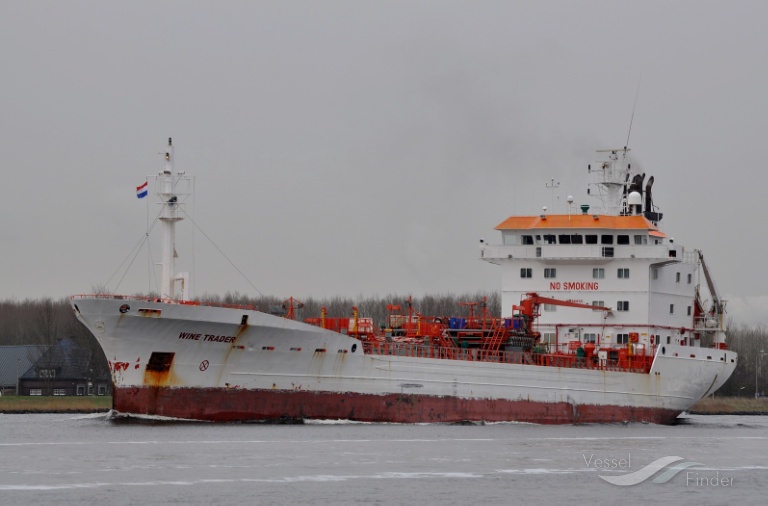
Early on 15 October drones struck the San Marino-flagged chemical tanker Wine Trader about a mile outside Romanian waters, also southeast of Sulina. Five of its 12 crew were rescued. Seven were still missing on 16 October, when rescuers returned to search the ship.
Two more ships were also targeted, Reuters reported: the Marshall Islands-flagged Sea Destiny, inside Romanian waters according to NATO, and the Tanzania-flagged Dania J, moored at the Ukrainian Danube port of Izmail.
Țoiu did not say which ships her eight dead were from, and Reuters still lists the Wine Trader's seven as missing. A NATO military source told Reuters the drones that hit both tankers came from Russia.
The chemical tanker Wine Trader. Photo: VesselFinder
Romania's president says too early to say
Romania's president has not gone as far as his foreign minister. Dan told reporters in Brussels it was "obvious" that the attacks were Russian attempts to destabilize Romania and Bulgaria and reduce support for Ukraine. But he also said it was too early to say definitively that Russia had launched the drones, according to Politico.
Bulgaria, Romania's partner on the command proposal, says it suspects Russia but cannot prove it. Two ships were hit off its coast on 13 October, and one, the HS Dignity, sank. The other, the Chelsea 3, is Ukrainian-owned.
Radev told parliament on 14 October that the attacks worked in Russia's favor and that "logic leads there." "The problem is that we cannot prove it," he told MPs. Sofia summoned the Russian ambassador. Radev also said EU leaders would discuss a moratorium on attacks on civilian ships in the Black Sea.
Bucharest has blamed Russia for drones before, though over its airspace, not its shipping. On 27 July it expelled a Russian diplomat after prosecutors confirmed that fragments of drones downed on Romanian territory were Russian. Russia, Romania's Foreign Ministry said then, "bears exclusive responsibility."
Ukraine ships most of its farm exports across the Black Sea. Euromaidan Press's David Axe has written on how the fight over shipping there has escalated.
Explore further
Russia is losing the Black Sea grain war it started. Its answer is to sink civilian ships off Romania and Bulgaria
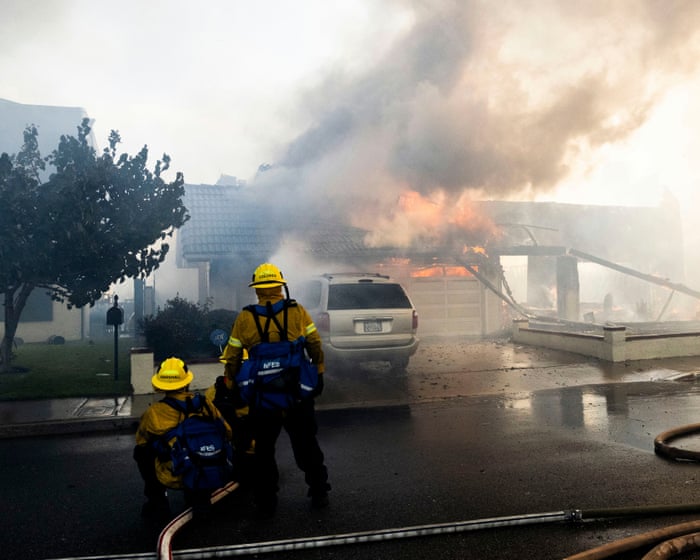
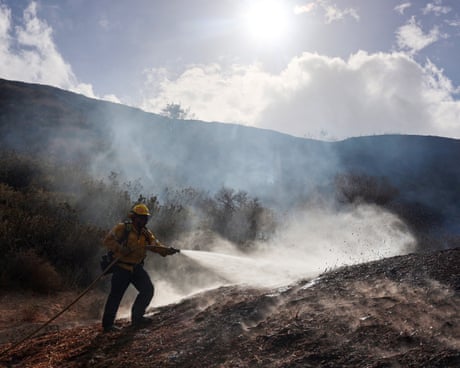
Hot, windy weather stokes fires in southern California with mandatory evacuation orders in place for manyA fast-moving brush fire has spread into neighborhoods in southern California as the region braces for more hot, windy weather that will amplify fire dangers through Saturday.Several homes could be seen ablaze in video footage captured by local news helicopters as firefighters worked to wrangle the more than 465 acre Norte fire, which erupted in Orange county on Friday afternoon. Nine schools
Hot, windy weather stokes fires in southern California with mandatory evacuation orders in place for many
A fast-moving brush fire has spread into neighborhoods in southern California as the region braces for more hot, windy weather that will amplify fire dangers through Saturday.
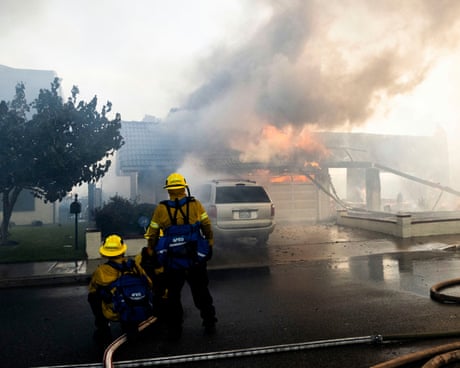
Several homes could be seen ablaze in video footage captured by local news helicopters as firefighters worked to wrangle the more than 465 acre Norte fire, which erupted in Orange county on Friday afternoon. Nine schools in the area dismissed early and mandatory evacuations were issued in parts of San Juan Capistrano and San Clemente, as the Orange county fire authority urged all residents under the order to leave quickly.
À compter du 30 octobre, les entreprises et les médias qui utilisent les outils professionnels de Facebook, Instagram ou WhatsApp pourraient autoriser Meta à explorer leurs sites Web et à en récupérer les contenus, notamment pour entraîner ses systèmes d’intelligence artificielle. Cette autorisation figure dans une nouvelle version des conditions commerciales de l’entreprise. Selon une […]
À compter du 30 octobre, les entreprises et les médias qui utilisent les outils professionnels de Facebook, Instagram ou WhatsApp pourraient autoriser Meta à explorer leurs sites Web et à en récupérer les contenus, notamment pour entraîner ses systèmes d’intelligence artificielle. Cette autorisation figure dans une nouvelle version des conditions commerciales de l’entreprise. Selon une […]
Google franchit une nouvelle étape dans ses relations avec l’industrie de l’information. Le géant américain annonce que plus de 400 publications à travers le monde participent désormais à son programme News AI, une initiative qui prévoit une rémunération des éditeurs en échange de contenus destinés au développement de nouvelles fonctionnalités d’intelligence artificielle. Parmi les nouveaux […]
Google franchit une nouvelle étape dans ses relations avec l’industrie de l’information. Le géant américain annonce que plus de 400 publications à travers le monde participent désormais à son programme News AI, une initiative qui prévoit une rémunération des éditeurs en échange de contenus destinés au développement de nouvelles fonctionnalités d’intelligence artificielle. Parmi les nouveaux […]
US president says Zelenskyy ‘more difficult to deal with than Putin’ after ‘energy ceasefire’ collapsesEurope live – latest updatesDonald Trump has called Ukraine’s renewed strikes on Russian oil refineries “a disgrace” and criticised Volodymyr Zelenskyy after an energy ceasefire between Russia and Ukraine failed to take hold.Ukraine resumed strikes on Russian oil refineries after Zelenskyy said Kyiv was abandoning a ceasefire unilaterally declared by Trump on Sunday, having briefly halted i
Donald Trump has called Ukraine’s renewed strikes on Russian oil refineries “a disgrace” and criticised Volodymyr Zelenskyy after an energy ceasefire between Russia and Ukraine failed to take hold.
Ukraine resumed strikes on Russian oil refineries after Zelenskyy said Kyiv was abandoning a ceasefire unilaterally declared by Trump on Sunday, having briefly halted its attacks to demonstrate its readiness for peace talks. Russia had continued its strikes on Ukrainian power plants.
The media-savvy Democratic senator is defying predictions of a tight re-election battle. But he insists he has ‘zero interest’ in a presidential run in 2028Jon Ossoff has “zero interest” in running for president in 2028, he declared during a debate this week. Jon Ossoff has “zero interest” in running for president in 2028, he told a local TV station last month. Jon Ossoff has “zero interest” in running for president in 2028, he told MS Now – twice – in August.The Democratic US senator for Georgi
The media-savvy Democratic senator is defying predictions of a tight re-election battle. But he insists he has ‘zero interest’ in a presidential run in 2028
Jon Ossoff has “zero interest” in running for president in 2028, he declared during a debate this week. Jon Ossoff has “zero interest” in running for president in 2028, he told a local TV station last month. Jon Ossoff has “zero interest” in running for president in 2028, he told MS Now – twice – in August.
The Democratic US senator for Georgia said as much to CNN. And the Atlanta Journal-Constitution. And MS Now, again. And in his second Senate debate on Tuesday night.
A sugarcane crop withered by El Niño in India, the world’s second-largest producer, is hurting consumers and farmers — plus undermining the country’s energy security goals.
A sugarcane crop withered by El Niño in India, the world’s second-largest producer, is hurting consumers and farmers — plus undermining the country’s energy security goals.
A worker tending to a sugarcane crop in Maharashtra, India, in September.
Representative Alexandria Ocasio-Cortez campaigned with Dr. Abdul El-Sayed in a swath of Michigan including areas won by President Trump, making a progressive pitch in a key Senate race.
Representative Alexandria Ocasio-Cortez campaigned with Dr. Abdul El-Sayed in a swath of Michigan including areas won by President Trump, making a progressive pitch in a key Senate race.
Dr. Abdul El-Sayed, the Democratic nominee for the Senate in Michigan, campaigned with Representative Alexandria Ocasio-Cortez on Thursday, including in areas won by President Trump.
Paolo Zampolli, a longtime Trump associate, gained attention earlier this year with a report that his ex-wife had been detained by ICE after his request.
Paolo Zampolli, a longtime Trump associate, gained attention earlier this year with a report that his ex-wife had been detained by ICE after his request.
The Ukrainian president’s defiant decision to continue attacking Russian refineries underscores President Trump’s inability to end a war he had promised to resolve.
The Ukrainian president’s defiant decision to continue attacking Russian refineries underscores President Trump’s inability to end a war he had promised to resolve.
President Trump during a campaign stop in Alaska on Tuesday. He has not delivered on his promises to end the war in Ukraine, or to lower prices, and recent deals with Russia could complicate both issues.
The Ukrainian president’s defiant decision to continue attacking Russian refineries underscores President Trump’s inability to end a war he had promised to resolve.
The Ukrainian president’s defiant decision to continue attacking Russian refineries underscores President Trump’s inability to end a war he had promised to resolve.
President Trump during a campaign stop in Alaska on Tuesday. He has not delivered on his promises to end the war in Ukraine, or to lower prices, and recent deals with Russia could complicate both issues.
Katie Zacharia faces mounting questions over her legal credentials after admitting she did not pass the bar examDonald Trump’s new White House press secretary says it is “unknown” how much she will engage with the press, amid mounting questions over her legal credentials after admitting she did not pass the bar exam.In a brief interview with the Guardian, Katie Zacharia detailed the whirlwind sprint to replace her predecessor Karoline Leavitt as the US president’s chief spokesperson. Continue re
Katie Zacharia faces mounting questions over her legal credentials after admitting she did not pass the bar exam
Donald Trump’s new White House press secretary says it is “unknown” how much she will engage with the press, amid mounting questions over her legal credentials after admitting she did not pass the bar exam.
In a brief interview with the Guardian, Katie Zacharia detailed the whirlwind sprint to replace her predecessor Karoline Leavitt as the US president’s chief spokesperson.
Katie Zacharia, the White House press secretary, aboard Air Force One on Wednesday. “I woke up at 3 in the morning on Tuesday to prepare with what I had,” she said of her first press briefing.
Largest blaze the Henderson fire near San Diego as strong winds and severe heat could fuel rapid spreadMultiple wildfires ignited across California on Thursday as the state braced for more strong winds and high temperatures that could fuel rapid fire growth over the next several days.The largest blaze, dubbed the Henderson fire, erupted in Camp Pendleton, a San Diego Marine Corps training base, and quickly consumed more than 1,000 acres. Evacuations have been issued and officials briefly closed
Largest blaze the Henderson fire near San Diego as strong winds and severe heat could fuel rapid spread
Multiple wildfires ignited across California on Thursday as the state braced for more strong winds and high temperatures that could fuel rapid fire growth over the next several days.
The largest blaze, dubbed the Henderson fire, erupted in Camp Pendleton, a San Diego Marine Corps training base, and quickly consumed more than 1,000 acres. Evacuations have been issued and officials briefly closed part of the Interstate 5, a major highway in the region.
El Niño will likely shift weather patterns to bring more rain, but much snow still isn’t forecast for the northern statesWinter in the United States looks like it will generally be wetter and warmer, but not necessarily snowier, according to the federal government’s seasonal outlook and other meteorologists’ forecasts. You can thank or blame El Niño.El Niño is likely to shift weather patterns to bring more moisture, but with it higher temperatures. That should help erase persistent western droug
El Niño will likely shift weather patterns to bring more rain, but much snow still isn’t forecast for the northern states
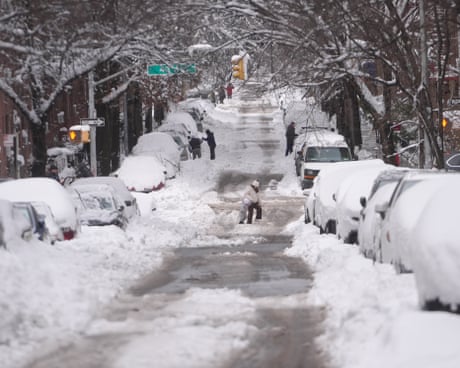
Winter in the United States looks like it will generally be wetter and warmer, but not necessarily snowier, according to the federal government’s seasonal outlook and other meteorologists’ forecasts. You can thank or blame El Niño.
El Niño is likely to shift weather patterns to bring more moisture, but with it higher temperatures. That should help erase persistent western drought, but it is unlikely to make northern snow-lovers happy, the National Oceanic and Atmospheric Administration (Noaa) said on Thursday.
The lawsuit seeks to temporarily block the state from counting mail ballots of voters it claims are likely noncitizens, opening a new front in the administration’s legal fights with election officials.
The lawsuit seeks to temporarily block the state from counting mail ballots of voters it claims are likely noncitizens, opening a new front in the administration’s legal fights with election officials.
A lawsuit from the Trump administration is seeking a court order to force California to not count — at least in the short term — any mail ballots received from some 20,000 people in the state the administration claims are “likely noncitizens.”
DoJ had demanded that LA county confirm citizenship of people on list in thumb drive, but officials refusedSend us your questions about immigration and the midtermsThe US Department of Justice sued California on Thursday, seeking a court order to prevent the state from tabulating certain ballots cast in the midterm elections.The suit came two days after the department made a specious demand to the state. On Tuesday, the department sent election officials in Los Angeles county a thumb drive with
The US Department of Justice sued California on Thursday, seeking a court order to prevent the state from tabulating certain ballots cast in the midterm elections.
The suit came two days after the department made a specious demand to the state. On Tuesday, the department sent election officials in Los Angeles county a thumb drive with a handwritten password purporting to contain the names of noncitizens registered to vote. The department asked officials to confirm the citizenship of anyone on the list and set aside ballots from those whose status could not be confirmed. It gave the state 48 hours – an extremely narrow window – to take action. It did not provide details on how it came up with the names on the list. In its lawsuit, filed in federal court in the central district of California, the justice department said it had provided the state with more than 20,000 names of likely noncitizens.
Former QB says he is looking ‘for next landing spot’Aikman and Buck said to have argued over contractsLongtime Monday Night Football announcer Troy Aikman said he is looking for his “next landing spot” with his ESPN contract set to expire after February’s Super Bowl.“I’ll broadcast through this season, and I’ll be a free agent at the end of the year and kind of see what happens,” Aikman said in a radio interview with KTCK of Dallas on Thursday morning. Continue reading...
Former QB says he is looking ‘for next landing spot’
Aikman and Buck said to have argued over contracts
Longtime Monday Night Football announcer Troy Aikman said he is looking for his “next landing spot” with his ESPN contract set to expire after February’s Super Bowl.
“I’ll broadcast through this season, and I’ll be a free agent at the end of the year and kind of see what happens,” Aikman said in a radio interview with KTCK of Dallas on Thursday morning.
UK defence secretary trying to cool tensions and is arguing it is in America’s economic interests to support KyivWes Streeting urged the US to stand by Ukraine on his visit to the American capital and sought to cool tensions between the two countries in the wake of the Starlink row that is threatening to set back Kyiv’s war effort.The British defence secretary, giving a speech before a meeting with his US counterpart, Pete Hegseth, argued that supporting Ukraine was in the long-term interests of
UK defence secretary trying to cool tensions and is arguing it is in America’s economic interests to support Kyiv
Wes Streeting urged the US to stand by Ukraine on his visit to the American capital and sought to cool tensions between the two countries in the wake of the Starlink row that is threatening to set back Kyiv’s war effort.
The British defence secretary, giving a speech before a meeting with his US counterpart, Pete Hegseth, argued that supporting Ukraine was in the long-term interests of Washington – and a business opportunity.
Rising costs and threatened healthcare benefits are testing voters’ loyalty to Trump as Democrat Randy Villegas challenges David ValadaoVanessa Martinez used to work two jobs to make ends meet. Now she works three.In another era, the 26-year-old from California’s hardscrabble Central valley could have been a poster child for the American Dream, the sort of ambitious, up-by-her-bootstraps personality that politicians of both major parties like to highlight. Continue reading...
Rising costs and threatened healthcare benefits are testing voters’ loyalty to Trump as Democrat Randy Villegas challenges David Valadao
Vanessa Martinez used to work two jobs to make ends meet. Now she works three.
In another era, the 26-year-old from California’s hardscrabble Central valley could have been a poster child for the American Dream, the sort of ambitious, up-by-her-bootstraps personality that politicians of both major parties like to highlight.
Операція ураження цілей Росії у глибині боліт триває.
Ukraine’s operation to strike Russian targets at operational and strategic depth is continuing, Unmanned Systems Forces Commander Robert “Madiar” Brovdi says. The fresh statement lands amid fears that a Starlink disruption could break front-line operations.
Overnight into 14 October, the 7th Air Assault Corps said the faster StarShield military package, an advanced version of Starlink that its units depend on, had been throttled,
Операція ураження цілей Росії у глибині боліт триває.
Ukraine’s operation to strike Russian targets at operational and strategic depth is continuing, Unmanned Systems Forces Commander Robert “Madiar” Brovdi says. The fresh statement lands amid fears that a Starlink disruption could break front-line operations.
Overnight into 14 October, the 7th Air Assault Corps said the faster StarShield military package, an advanced version of Starlink that its units depend on, had been throttled, halting a series of missions. Against that backdrop, Brovdi says his branch’s strikes are not falling.
“A serious brawl is underway in conditions of significantly worse weather, drizzle, fog, and precipitation,” Brovdi says, underscoring that the pace held through conditions that usually ground drones.
Over the first two weeks of October, the drone branch verified 7,306 Russian soldiers killed or wounded, up 59.45% on the same period in August and 24.65% in September, he writes on his Telegram page, calling the trend the opposite of de-escalation.
Where the killing climbs fastest, and who is doing it
One sector stands out above the rest. On the Dobropillia-Pokrovsk axis, in the zone of the Azov group, the branch’s drones accounted for 3,221 Russian losses in the first two weeks of October, a 102% jump on August and 42.5 percent on September, Brovdi reports.
The figures cover only the drone branch and are verified in the military’s Delta, the video fixation system, he stresses, so the full count of Russian losses across all Ukrainian forces can be much higher.
The scale of a campaign that will not slow down
The numbers behind the claim are large. Over the first two weeks of October, the branch flew 124,500 combat missions, strike and reconnaissance, and hit 32,172 Russian targets, of which manpower was 22.7%, by his count.
That works out to about 2,298 Russian targets a day, he adds, the kind of tempo that makes any talk of a lull on the front hard to square with what his drones are recording. The deep-strike half of that campaign has grown 1,150% over 2026, reaching military-industrial and energy sites far inside Russia, according to Euromaidan Press.
The move will force a vote on the agreement after the midterm elections, though it faces steep odds in the Republican-controlled Congress even amid bipartisan concern about the deal.
The move will force a vote on the agreement after the midterm elections, though it faces steep odds in the Republican-controlled Congress even amid bipartisan concern about the deal.
Statehouses make health-care policy, guide education, and may redraw congressional districts ahead of 2028. With the stakes high, more than 6,100 legislators will be elected Nov. 3.
Statehouses make health-care policy, guide education, and may redraw congressional districts ahead of 2028. With the stakes high, more than 6,100 legislators will be elected Nov. 3.
Two tankers caught fire within about 12 hours off Sulina, Romania’s port at the mouth of the Danube, Romanian authorities reported. The crew of one said a drone hit it inside Romania’s territorial waters, while Bucharest says it is still checking whether drones were involved. Bulgaria, where drones sank ships in its economic zone this month, says it lacks proof that Russia launched them.
For months, Russia has struck civilian ships on the sea route that carries most of Ukraine’s farm ex
Two tankers caught fire within about 12 hours off Sulina, Romania’s port at the mouth of the Danube, Romanian authorities reported. The crew of one said a drone hit it inside Romania’s territorial waters, while Bucharest says it is still checking whether drones were involved. Bulgaria, where drones sank ships in its economic zone this month, says it lacks proof that Russia launched them.
For months, Russia has struck civilian ships on the sea route that carries most of Ukraine’s farm exports, while its drones have repeatedly crossed into Moldova and Romania during attacks on Ukraine. As long as Bucharest and Sofia wait for drone wreckage before naming anyone, Russia, the party Bulgaria’s own prime minister says the logic points to, pays no price for extending its war on Ukraine’s trade routes into NATO members’ waters.
Seven sailors missing after the second fire
The San Marino-flagged chemical tanker Wine Trader reported a fire in its superstructure around 07:00 on 15 October while anchored in Romanian territorial waters about 13 nautical miles southeast of Sulina, Romania’s Naval Authority said. By midday, five of its 12 crew had been recovered and seven were still missing.
The chemical tanker Wine Trader. Photo: VesselFinder
Hours earlier, at 01:34, a drone entered Romanian airspace over the country’s waters southeast of Sulina for about a minute before vanishing from radar, the Defense Ministry said. Authorities have not named a cause for the fire, though unnamed sources
The president is used to bullying his media targets. The quagmire that is his libel actions shows the broadcaster is working to a different scriptFor the greatest account of the BBC’s finest hour, one must turn to Penelope Fitzgerald’s novel, Human Voices, written in 1980 and set 40 years earlier, at the corporation’s Portland Place wartime HQ. Flanked by sandbags and infused with a smell of cooking “from the deep hold that suggested more strongly than ever a cruise on the Queen Mary”, the organ
The president is used to bullying his media targets. The quagmire that is his libel actions shows the broadcaster is working to a different script
For the greatest account of the BBC’s finest hour, one must turn to Penelope Fitzgerald’s novel, Human Voices, written in 1980 and set 40 years earlier, at the corporation’s Portland Place wartime HQ. Flanked by sandbags and infused with a smell of cooking “from the deep hold that suggested more strongly than ever a cruise on the Queen Mary”, the organisation that Fitzgerald describes is at once noble and deeply eccentric. “Broadcasting House stood headed on a fixed course south,” she writes. “With the best engineers in the world, and a crew varying between the intensely respectable and barely sane, it looked ready to scorn any disaster.”
In other words, a formidable foe, one that in the spring of 1940, in the face of anticipated Nazi invasion, decided “without prompting, that truth was more important than consolation, and, in the long run, would be more effective”. I bring this up in respect to the gathering storm of Donald Trump versus the BBC, a fight triggered by the US president’s $10bn defamation lawsuit – $10bn! It’s a wonder he didn’t go for $10 gazillion – brought against the corporation at the end of last year in response to a poorly edited episode of Panorama. The BBC was at fault, editing together comments made by the US president at a rally on 6 January 2021 to give, as the corporation’s apology put it, “the mistaken impression that President Trump had made a direct call for violent action”. But it is fighting the lawsuit.
As the midterm elections loom, Oliver Laughland and Tom Silverstone travel to rural West Virginia, a Republican party stronghold, to explore how soaring gas prices, war in the Middle East and datacenter expansion are affecting Donald Trump's popularity among his base. Although the state remains staunchly Republican, there are signs of a new politics emerging – and local Democrats are looking to capitalize on it Continue reading...
As the midterm elections loom, Oliver Laughland and Tom Silverstone travel to rural West Virginia, a Republican party stronghold, to explore how soaring gas prices, war in the Middle East and datacenter expansion are affecting Donald Trump's popularity among his base. Although the state remains staunchly Republican, there are signs of a new politics emerging – and local Democrats are looking to capitalize on it
Debris from a Russian drone damaged Cosmogony, a painting that set a national record in Ukraine, the Korsaks Museum of Contemporary Ukrainian Art in Lutsk, where the artwork was exhibited, reported on 14 October. A fire destroyed part of the painting’s final section, titled The Future, according to the statement.
Russian drones continue to attack Ukraine. Overnight into 15 October alone, Ukrainian air defense forces downed or suppressed 536 Russian unmanned aerial vehicles (UAVs). In re
Debris from a Russian drone damaged Cosmogony, a painting that set a national record in Ukraine, the Korsaks Museum of Contemporary Ukrainian Art in Lutsk, where the artwork was exhibited, reported on 14 October. A fire destroyed part of the painting’s final section, titled The Future, according to the statement.
Russian drones continue to attack Ukraine. Overnight into 15 October alone, Ukrainian air defense forces downed or suppressed 536 Russian unmanned aerial vehicles (UAVs). In recent days, Lutsk, a city in northwestern Ukraine, has been among the cities damaged by Russian attacks. Russian UAV attacks set fire to an oil depot, a wholesale warehouse, and a shopping center. At the museum, located on the shopping center’s premises, the fire damaged Ukraine’s largest painting, which covers a canvas of more than 2,000 square meters.
Russian attack damages museum in Lutsk
A fire broke out at the Adrenalin City shopping and entertainment complex, where the museum is located, Suspilne Lutsk reported. The blaze damaged the last of the painting’s six sections, according to the report.
“By destroying art and culture, they are also trying to destroy Ukrainians,” Tetiana Repnytska, director of the Museum of Contemporary Ukrainian Art in Lutsk, told Suspilne Lutsk.
A section of Petro Antyp’s painting Cosmogony before a Russian drone attack on Lutsk on 13 October 2026. Photo: Korsaks Museum of Contemporary Ukrainian Art/Facebook
Museum staff also had to evacuate more than 300 works by Ukrainian artist Emma Andiievska, which were exhibited alongside Cosmogony, Oles Tomakh, the museum’s chief curator, told Suspilne Lutsk. Some works could not be removed in time, resulting in shattered glass. However, the museum’s other exhibition halls were unaffected, the chief curator said.
The museum is weighing whether to fully restore the damaged fragment or keep the fire’s traces as a reminder of the war, and will decide after consulting the artist, Petro Antyp, and restoration specialists, it said. Repnytska told Suspilne Lutsk that the painting’s authors could also create a new section.
“Despite the shelling, we will continue to develop contemporary Ukrainian art and preserve it,” the museum director said.
Cosmogony—Ukraine’s largest painting
Artist Petro Antyp began working on the painting in November 2022, Suspilne Lutsk reported, and it took almost two years to complete, according to the museum’s website. The painting covers an area of 2,086 square meters.
In September 2024, the project set a national record as Ukraine’s largest painting.
The artwork explores the evolution of the universe, Earth, nature, humanity, society, culture, and science. Its six sections combine myths, legends, scientific theories, and symbols from different cultures, according to the museum’s website.
A section of Petro Antyp’s painting Cosmogony. Photo: Taras Luchko
The project extends beyond the canvas, as the museum presents a multimedia performance that combines light, sound, and art.
Civilians killed and injured in Russia’s latest attack on Lutsk
Around noon on 14 October, a Russian jet-powered Shahed drone attacked Lutsk. Drone debris damaged a wholesale goods warehouse and a residential building, Roman Romaniuk, acting head of the Volyn Regional Military Administration, told Suspilne.
Falling drone debris sparked a large fire at the Yevrohurt wholesale warehouse. A nine-story residential building on Sobornosti Avenue was also damaged, Romaniuk later reported on social media.
Six people were killed in the strike on the warehouse: five were found at the scene, and another person died in the hospital. Eleven more people were injured, Romaniuk said.
Aftermath of Russia’s attack on Lutsk on 14 October 2026. Photo: Volyn Regional State Emergency Service
Two other people, including a child, were injured in the residential building. Twelve people remained hospitalized, one of whom was in serious condition, according to the report.
The Trump administration is weighing looser sanctions on shadow fleet tankers that have hauled oil from Russia, Iran, and Venezuela, a US official said on 14 October, Reuters reported. An industry research group expects the change to do little for freight rates.
With Reuters calling high fuel prices a risk for Trump before the 3 November midterms, Washington has already eased sanctions on Russian oil and diesel this year and is now looking at the ships blacklisted for hauling sanctioned
The Trump administration is weighing looser sanctions on shadow fleet tankers that have hauled oil from Russia, Iran, and Venezuela, a US official said on 14 October, Reuters reported. An industry research group expects the change to do little for freight rates.
With Reuters calling high fuel prices a risk for Trump before the 3 November midterms, Washington has already eased sanctions on Russian oil and diesel this year and is now looking at the ships blacklisted for hauling sanctioned cargoes. In March, Treasury Secretary Scott Bessent said a waiver on Russian oil at sea would bring Moscow no significant financial benefit, yet Russia’s seaborne oil income jumped by $890 million in the week to 15 March, Bloomberg data showed.
“Legal oil” on blacklisted ships
The talks center on letting “legal oil” sail on previously sanctioned vessels, the official said. Only crude or fuel free of US sanctions would qualify, not Russian or Iranian oil. Washington wants more crude and refined products moving out of the Gulf, the official added. Companies would need US Treasury approval to use the ships.
Explore further
Ukraine is going back to hitting Russian oil after its Trump-pressured pause, during which Kyiv got no US warnings of incoming ballistic missiles
Research group Energy Aspects said US Energy Secretary Chris Wright, in a video to the World Petroleum Congress in Riyadh, tied the easing to record freight rates. Those rates hit records after the Iran and Ukraine wars drove up inflation and left US crude too costly for Asian refiners, Reuters said. Energy Aspects itself expects the easing to do little for freight rates, since most tankers sanctioned over Russian or Venezuelan links have kept trading for the past three months.
The Energy Department said any relief would do nothing to help Russia ship its oil or refined products. Treasury referred questions to the Energy Department. Yet Reuters noted that both departments could face pressure to let these vessels carry Russian diesel, given Trump’s push to get it onto world markets fast.
Britain is pushing the other way. UK finance minister John Healey urged counterparts at International Monetary Fund meetings in Bangkok on 15 October to keep tough sanctions on Russia, “especially a tighter ban on shipping services” that keep Putin’s shadow fleet operating.
Diesel license criticism and an unconfirmed ceasefire
On 9 October, the US Treasury issued a license clearing Russian-origin diesel trade until 7 April 2027. Ukrainian President Volodymyr Zelenskyy told reporters it was a weak decision unworthy of Ukraine’s partners. Democratic Senators Jeanne Shaheen, Chuck Schumer, and Elizabeth Warren called it a “total betrayal of Ukraine.” Republican Senator Thom Tillis said there is “a legitimate case for saying the president’s not following the law.”
Explore further
“He thinks Ukraine is a weak link and that it needs to be squeezed into giving in”: diplomat on why Trump pressures Kyiv, not Moscow
Trump then pressed Kyiv to spare Russian refineries and declared an “energy ceasefire” on 11 October. A White House official told Axios it covers only oil refineries. Neither side confirmed a similar announcement Trump made in mid-September, AAP reported.
Kremlin spokesperson Dmitry Peskov told reporters on 13 October that contacts on the ceasefire were continuing and referred further questions to Trump, Russian newspaper Vedomosti reported. He claimed the diesel deal was “a very mutually beneficial item of Russian-American cooperation” that serves the interests of Russia, the US, and world energy markets, Russian newspaper Kommersant reported.
A Russian researcher, who died from an unknown illness, worked at a remote anti-plague facility. Few foreigners have visited these labs, which dot the former Soviet states, and are shrouded in secrecy.
A Russian researcher, who died from an unknown illness, worked at a remote anti-plague facility. Few foreigners have visited these labs, which dot the former Soviet states, and are shrouded in secrecy.
Ukrainian engineers are rushing to perfect A.I.-guided, jet-driven interceptors. Their goal: to stop a fast Russian threat in the latest round of a deadly tech duel.
Ukrainian engineers are rushing to perfect A.I.-guided, jet-driven interceptors. Their goal: to stop a fast Russian threat in the latest round of a deadly tech duel.
When social media posts denouncing the police surfaced, they were supposed to harm a socialist’s re-election. But the democratic socialists of Portland, and other cities, are showing their strength.
When social media posts denouncing the police surfaced, they were supposed to harm a socialist’s re-election. But the democratic socialists of Portland, and other cities, are showing their strength.
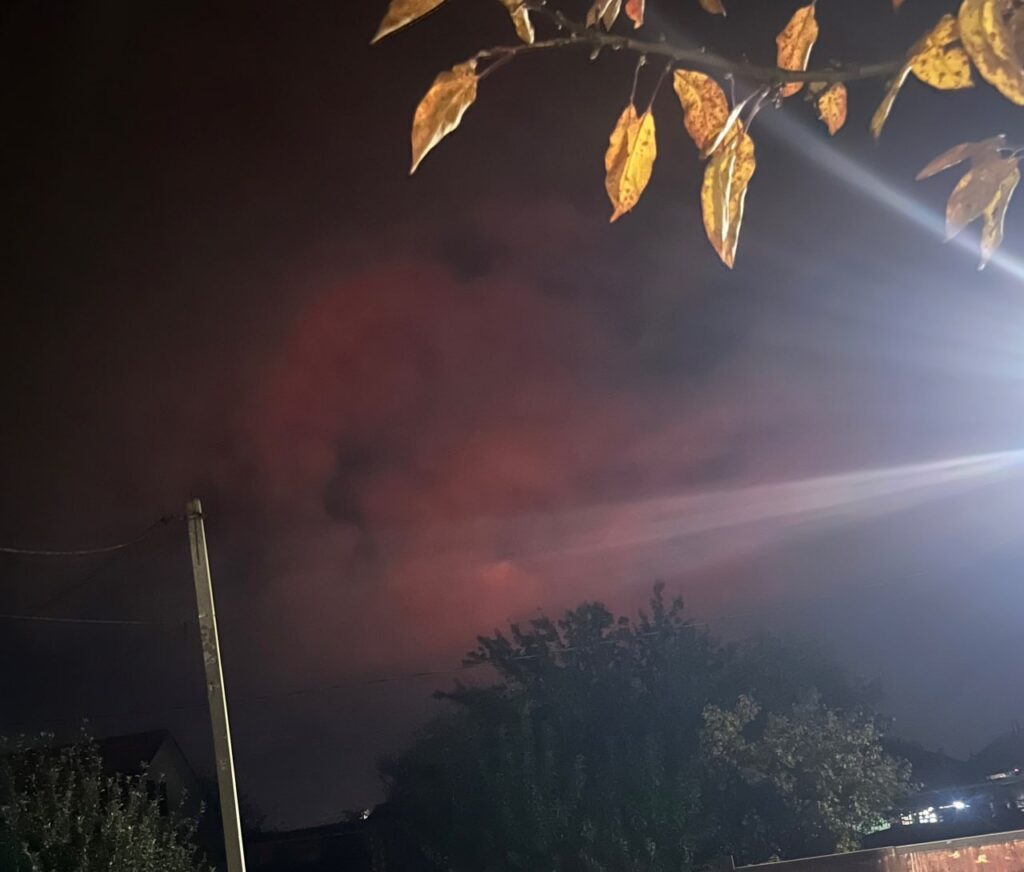
Ukraine’s Navy hit six Su-34M bombers at Russia’s Borisoglebsk military airfield in Voronezh Oblast with Neptune missiles overnight into 15 October, the Navy said. Residents filmed a large fire at the base after a missile alert, and the Navy’s count has not been independently confirmed. The facility is about 400 km from the frontline.
Glide bombs are now central to how Russia’s army fights, used to pin down Ukrainian defenders, including drone teams, before small infantry groups move in
Ukraine’s Navy hit six Su-34M bombers at Russia’s Borisoglebsk military airfield in Voronezh Oblast with Neptune missiles overnight into 15 October, the Navy said. Residents filmed a large fire at the base after a missile alert, and the Navy’s count has not been independently confirmed. The facility is about 400 km from the frontline.
Glide bombs are now central to how Russia’s army fights, used to pin down Ukrainian defenders, including drone teams, before small infantry groups move in. They also hit frontline cities and the civilians who live in them.
Six bombers and flight equipment hit, the Navy says
The Neptune coastal missile system also hit technical equipment that supports flights, the Navy said. It recorded secondary detonations and a fire on the airfield and said details were still being clarified.
The Su-34M can carry several guided and high-explosive aerial bombs at once, along with missiles, the Navy noted. It called the jet one of Russia’s key tools for glide-bomb strikes on Ukrainian positions and frontline towns. In September, a Ukrainian Neptune missile reached a Russian warship at its own pier.
Smoke over Borisoglebsk in Voronezh Oblast, Russia, during the fire at the town’s military airfield, 14 October 2026. Photo: Supernova+/Telegram
Fire over the airfield late on 14 October
Voronezh Oblast Governor Aleksandr Gusev declared a missile alert across the region shortly before 22:00 local time on 14 October. Within an hour, Ukrainian monitoring channel Exilenova+ reported explosions and a fire, preliminarily at the Borisoglebsk airfield. It later wrote that the airfield had come under missile attack and a fire was burning there. Ukrainian monitoring channel Supernova+ posted footage from the town showing the blaze.
On the morning of 15 October, Gusev claimed that 33 drones and several jet-powered aerial targets had been downed over the oblast overnight. He did not mention the airfield.
A base Ukraine has hit before
The airfield hosts the 783rd training aviation center and units of the 105th composite aviation division of Russia’s Aerospace Forces, which flies Su-34, Su-35S, and Su-30SM jets, Ukrainian defense outlet Militarnyi reported. In summer 2026, it had no permanently based combat jets, and Russia used it mainly as a stopover to refuel and rearm aircraft striking Ukraine, the outlet said, citing satellite observation.
Ukrainian drones hit the airfield overnight on 8 July, starting a fire, and satellite images later showed its fuel and lubricants depot destroyed. Drones also attacked the base’s pilot training center in July 2025.
The same night, Ryazan Oblast Governor Pavel Malkov reported a fire at an oil refinery in Ryazan. It came as Ukrainian President Volodymyr Zelenskyy said Ukraine was resuming strikes on Russian refineries.
Update: Satellite imagery confirms the strike
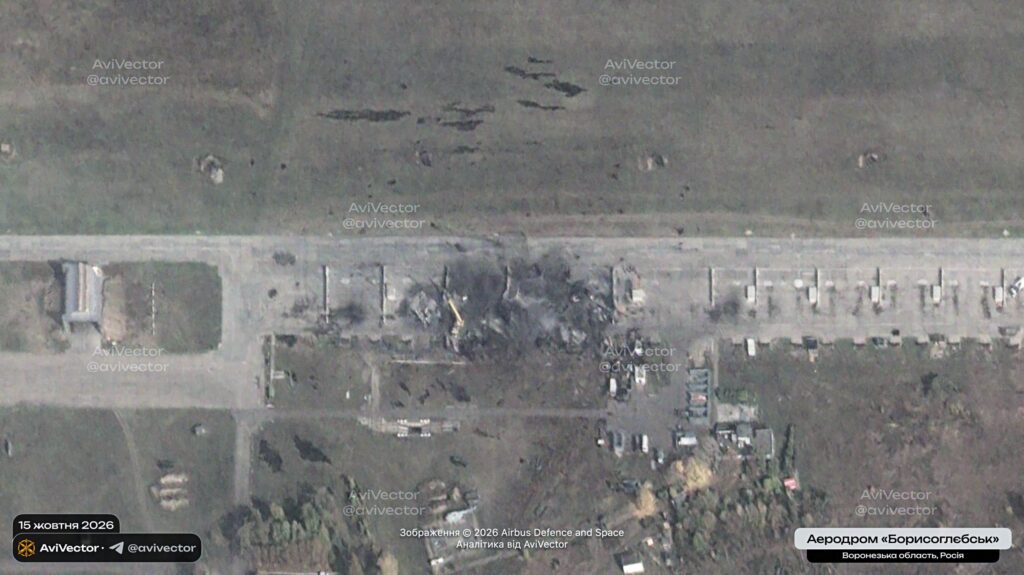
New satellite images show damage at Borisoglebsk airbase and six Su-34 bombers positioned in the affected area two days earlier, although the extent of the aircraft losses remains unconfirmed.
Satellite image shows the aftermath of Ukraine's strike on Borisoglebsk airbase in Russia's Voronezh Oblast on 15 October 2026. Image: Airbus Defence and Space / AviVector.Satellite image from 13 October shows six Russian Su-34 fighter-bombers parked in the area later struck at Borisoglebsk airbase. Image: Exilenova+.
The monitoring channel Exilenova+ reports that 4 airframes were completely destroyed, while 2 others sustained significant damage.
President Volodymyr Zelensky expressed overt frustration with the United States in an interview with The Financial Times. He had paused the strikes to comply with a demand from the United States.
President Volodymyr Zelensky expressed overt frustration with the United States in an interview with The Financial Times. He had paused the strikes to comply with a demand from the United States.

 Connexion








 Тим часом у російських аеропортах – справжній апокаліпсис через нальоти дронів останніми днями.