❌

Vue normale

  • ✇US news | The Guardian
  • US judge orders Trump to sit for deposition in $10bn lawsuit against BBC
    Judge threatens to dismiss Trump’s BBC lawsuit unless he cooperates with discovery process and sits for depositionDonald Trump has been ordered by a US judge to cooperate with the discovery process mandated for his lawsuit against the BBC and to sit for a deposition by 11 December – or else he could be subject to sanctions, including the possible dismissal of the $10bn lawsuit.The lawsuit stems from a Panorama documentary aired by the BBC that spliced together two comments made nearly an hour ap
     

US judge orders Trump to sit for deposition in $10bn lawsuit against BBC

22 octobre 2026 à 13:18

Judge threatens to dismiss Trump’s BBC lawsuit unless he cooperates with discovery process and sits for deposition

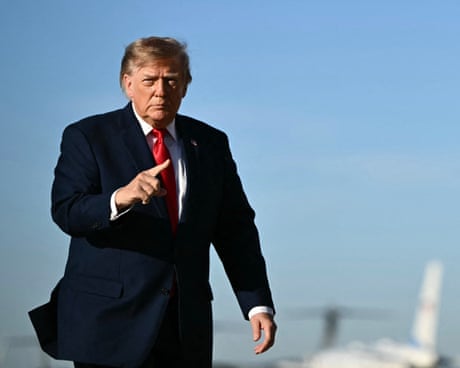
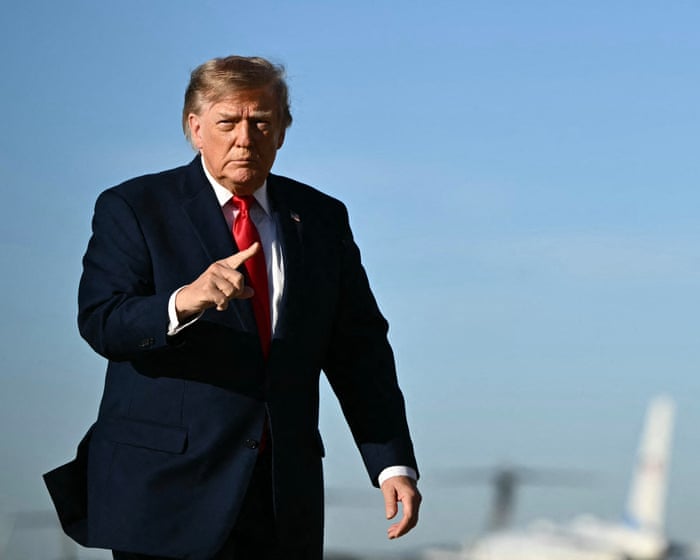
Donald Trump has been ordered by a US judge to cooperate with the discovery process mandated for his lawsuit against the BBC and to sit for a deposition by 11 December – or else he could be subject to sanctions, including the possible dismissal of the $10bn lawsuit.

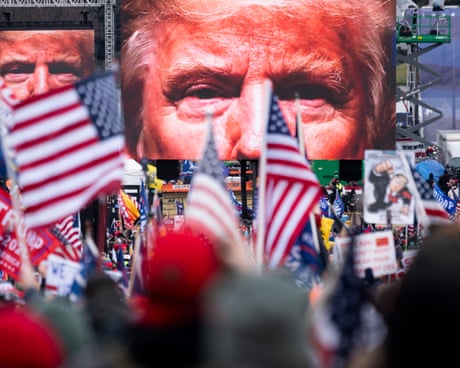
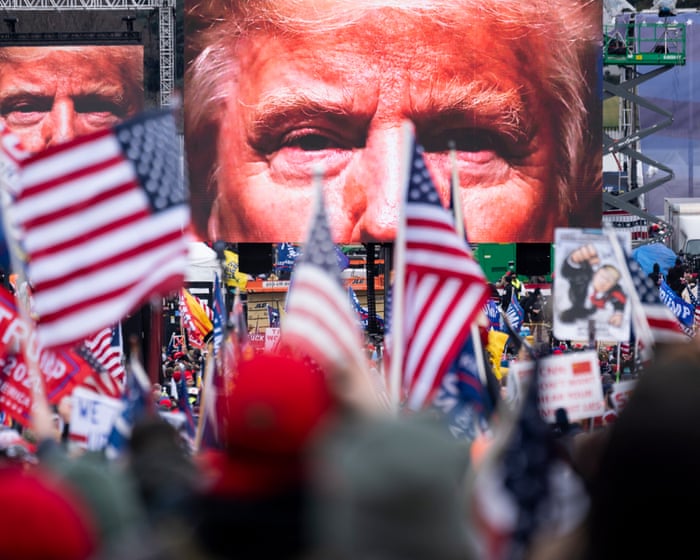
The lawsuit stems from a Panorama documentary aired by the BBC that spliced together two comments made nearly an hour apart by Trump during a rally on 6 January 2021, before the US Capitol riot. The BBC has acknowledged that this specific edit was misleading, but Trump has gone on to claim, falsely, that the BBC did not just edit his speech but used AI to insert words into his speech.

Continue reading...

© Photograph: Kent Nishimura/AFP/Getty Images

© Photograph: Kent Nishimura/AFP/Getty Images

© Photograph: Kent Nishimura/AFP/Getty Images

  • ✇US news | The Guardian
  • Trump should fear the BBC. Instead he’s picked a fight – and he seems to be losing | Emma Brockes
    The president is used to bullying his media targets. The quagmire that is his libel actions shows the broadcaster is working to a different scriptFor the greatest account of the BBC’s finest hour, one must turn to Penelope Fitzgerald’s novel, Human Voices, written in 1980 and set 40 years earlier, at the corporation’s Portland Place wartime HQ. Flanked by sandbags and infused with a smell of cooking “from the deep hold that suggested more strongly than ever a cruise on the Queen Mary”, the organ
     

Trump should fear the BBC. Instead he’s picked a fight – and he seems to be losing | Emma Brockes

15 octobre 2026 à 06:00

The president is used to bullying his media targets. The quagmire that is his libel actions shows the broadcaster is working to a different script

For the greatest account of the BBC’s finest hour, one must turn to Penelope Fitzgerald’s novel, Human Voices, written in 1980 and set 40 years earlier, at the corporation’s Portland Place wartime HQ. Flanked by sandbags and infused with a smell of cooking “from the deep hold that suggested more strongly than ever a cruise on the Queen Mary”, the organisation that Fitzgerald describes is at once noble and deeply eccentric. “Broadcasting House stood headed on a fixed course south,” she writes. “With the best engineers in the world, and a crew varying between the intensely respectable and barely sane, it looked ready to scorn any disaster.”

In other words, a formidable foe, one that in the spring of 1940, in the face of anticipated Nazi invasion, decided “without prompting, that truth was more important than consolation, and, in the long run, would be more effective”. I bring this up in respect to the gathering storm of Donald Trump versus the BBC, a fight triggered by the US president’s $10bn defamation lawsuit – $10bn! It’s a wonder he didn’t go for $10 gazillion – brought against the corporation at the end of last year in response to a poorly edited episode of Panorama. The BBC was at fault, editing together comments made by the US president at a rally on 6 January 2021 to give, as the corporation’s apology put it, “the mistaken impression that President Trump had made a direct call for violent action”. But it is fighting the lawsuit.

Emma Brockes is a Guardian columnist

Continue reading...

© Photograph: Bill Clark/CQ-Roll Call, Inc/Getty Images

© Photograph: Bill Clark/CQ-Roll Call, Inc/Getty Images

© Photograph: Bill Clark/CQ-Roll Call, Inc/Getty Images

  • ✇Euromaidan Press
  • Russia paid a recruit to vandalize London mosques and make it look like a homegrown hate crime
    Illia Bilyk, a 21-year-old Ukrainian national, admitted five counts of racially and religiously aggravated criminal damage on 17 September over graffiti at five Muslim institutions in east London, the BBC reported. The BBC and Hope Not Hate linked Bilyk’s attacks to the same Russian network behind arsons targeting properties connected to former UK Prime Minister Keir Starmer. The network operated Direct Action UK, a fake British far-right group that recruited people through Telegram and
     

Russia paid a recruit to vandalize London mosques and make it look like a homegrown hate crime

18 septembre 2026 à 14:26

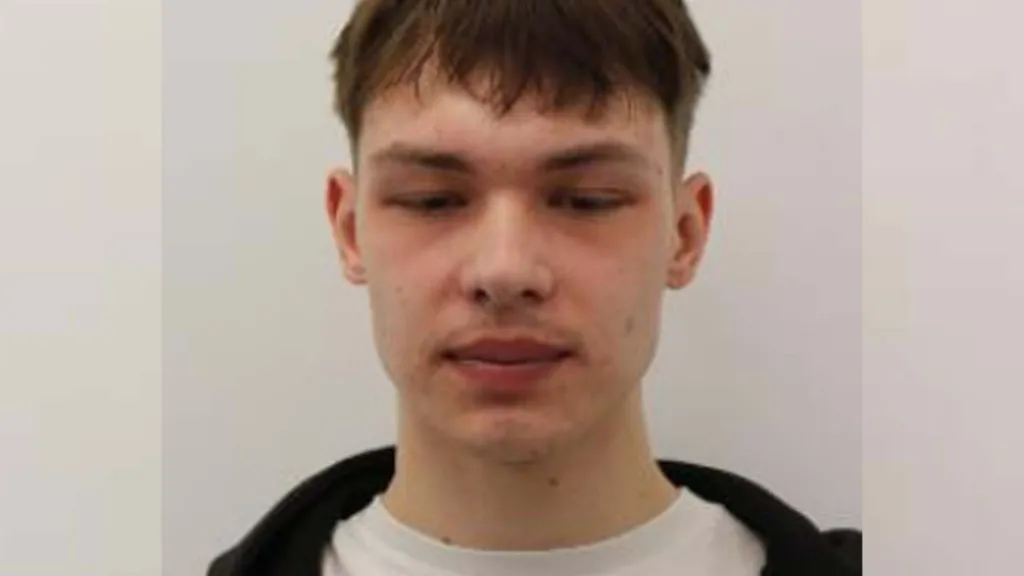
Police custody photograph of Illia Bilyk against a plain white background.

Illia Bilyk, a 21-year-old Ukrainian national, admitted five counts of racially and religiously aggravated criminal damage on 17 September over graffiti at five Muslim institutions in east London, the BBC reported.

The BBC and Hope Not Hate linked Bilyk’s attacks to the same Russian network behind arsons targeting properties connected to former UK Prime Minister Keir Starmer. The network operated Direct Action UK, a fake British far-right group that recruited people through Telegram and shared images of the resulting vandalism. Investigations have documented the same recruitment model across Europe for surveillance, sabotage, and other criminal assignments.

The Metropolitan Police said Bilyk sprayed offensive graffiti at three mosques, Noor Ul Islam Primary School, and the Islamic Shariah Council on 23 and 25 January 2025. Images then appeared in a Direct Action UK Telegram group. Russian operators created the group to pose as a British far-right movement, the BBC reported. Bilyk will be sentenced on 19 October.

The handler, known as EL or “El Money,” also recruited through Telegram groups used by Ukrainians seeking work, the BBC found. Ukrainian builder Roman Lavrynovych was paid in cryptocurrency and steered from posters and graffiti to arson.

In May 2025, Lavrynovych set fire to a car and properties connected to Starmer. Nobody was injured. Lavrynovych was jailed for seven years, while Ukrainian-born Romanian national Stanislav Carpiuc was also convicted.

The BBC identified EL as Yevgeny Lyukshin, a 23-year-old Russian diplomat and son of a senior Foreign Ministry official. It cited matching personal details, his presence in the Direct Action UK chat, family connections, and information-warfare training from Rybar, a sanctioned pro-Kremlin Telegram outlet.

However, the BBC could not conclusively establish that Lyukshin was EL, while British police said they had no evidence the attacks were state-sponsored. Lyukshin did not respond. The Russian Embassy denied any connection between Russia or its Foreign Ministry and unlawful activity.

Paid local recruits make Russia-linked attacks look homegrown

The London operation is one of several cases across Europe and other continents.

UK intelligence warned that Moscow increasingly relies on non-state actors, meaning hired civilians and criminals outside its formal services, for espionage, sabotage, assassination, and information operations.

This month, US prosecutors alleged that another Russian network recruited local residents for surveillance, sabotage, and murder-for-hire.

❌