❌

Vue normale

The US has until 18 October to choose its Russia sanctions targets—if any. Kyiv’s wish list leads with the firms feeding Russia’s Starlink clone
1 octobre 2026 à 04:18

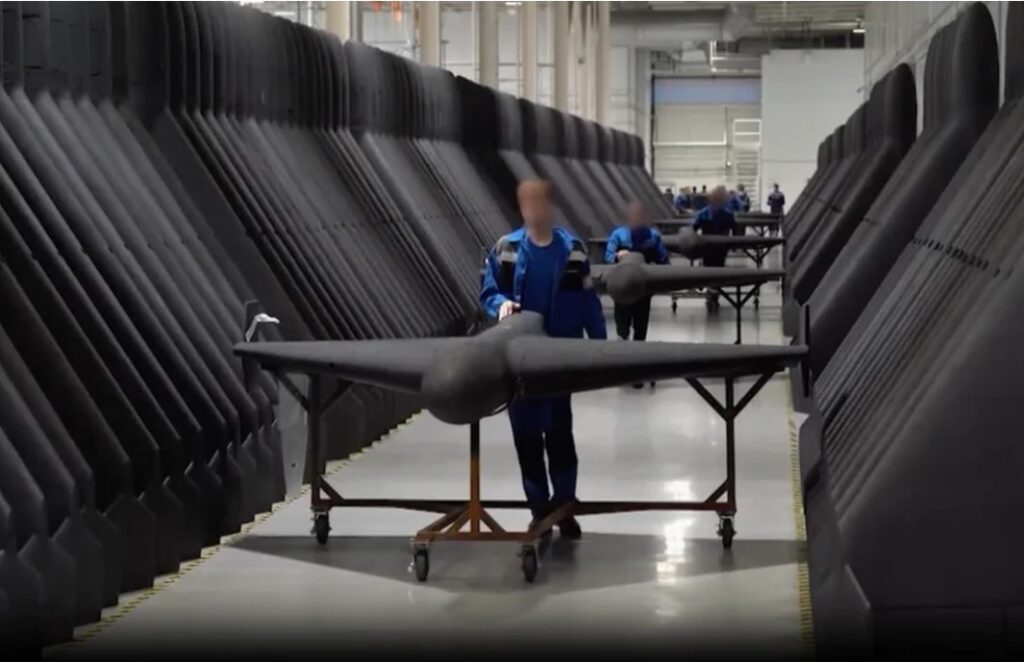
A worker at the Kronstadt UAV production plant in Dubna.

Ukraine is about to tell Washington exactly which Russian targets it wants punished under America's new sanctions law, the Associated Press reported. A senior Ukrainian diplomat said Kyiv will hand the Trump administration and Congress a wish list of companies, ships, and people this week—and at the top are the firms supplying parts for Russia's answer to Starlink.

The law requires Washington to act but lets the president waive the sanctions if he certifies that doing so serves US national interests, and the first choice falls due in weeks. For Ukraine, a measure that names no targets changes nothing on the ground—which is why the fight now is over whose names make the list before the clock runs out.

A list topped by Russia's Starlink clone

Denys Sienik, chargé d'affaires at Ukraine's embassy in Washington, said the priority is a group of Russian firms making components for Rassvet, Moscow's homegrown satellite network, which Russia hopes to complete by the end of the year—though its own officials have put the start of service in 2027. Bureau 1440, the firm building Rassvet, is not itself on US sanctions lists, but its parent company, ICS Holding, is under US blocking sanctions, according to Militarnyi. The suppliers feeding the network parts are not sanctioned, and those are the ones Kyiv wants added to the list.

Russia sped up the project after Ukraine and SpaceX cut off the Starlink terminals its troops had used without authorization at the front. If Russia completes the constellation, Sienik said, it could strike Ukraine at will with real-time information—a danger he warned would bite hardest this winter. "If these entities are not sanctioned, it will actually make this program possible for Russia and that will be a game-changer," he told reporters, Reuters reported. Kyiv wants access to Starlink inside Russia, too, so it can strike targets there.

Euromaidan Press has reported how such a network would change the battlefield: the satellites transmit in high-frequency bands that are hard to jam, and a relay overhead would feed drones and missiles fresh coordinates mid-flight, letting them fly low under air defenses that struggle to see them.

Oil tankers and attacks on US firms

Ukraine is pushing for tougher action against Russia's shadow fleet, too—the aging tankers that sell its oil around Western restrictions—and is asking the administration and American industry to publicly condemn Russian attacks on US companies' operations inside Ukraine, Sienik said.

The deadline Washington is now facing

The requests arrive as the administration faces an 18 October deadline to decide which Russian entities, if any, to sanction under the Lindsey O. Graham Sanctioning Russia and Iran Act, which US President Donald Trump signed into law on 18 September. The law directs the White House to impose tariffs on Russia's biggest oil buyers and to block its banks, officials, and tankers—but lets the president waive those measures, which is why Kyiv is lobbying for the toughest list it can get.

A fresh $42 million, new sanctions, and a seat in the coalition rebuilding Ukraine’s Navy. Australia just signed its long-term security pact with Ukraine

24 septembre 2026 à 04:46

Anthony Albanese and Volodymyr Zelenskyy.

A new bilateral security agreement puts Australia's support for Ukraine on a long-term footing, the Australian government said. The pact bundles fresh money for Kyiv, wider sanctions on Russia, and a new role for Australia in a multinational effort to rebuild Ukraine's Navy.

Australia sits half a world from the front, yet it wants what Ukraine has learned. The deal runs both ways—Australia sends money and equipment, and treats more than four years of Ukrainian war-fighting as a lesson for its own forces. One-off aid packages are giving way to long-term security pacts as Ukraine's partners lock in support—and, more and more, ask to learn from the force that has spent years fighting Russia.

A bigger package and new sanctions

Prime Minister Anthony Albanese and President Volodymyr Zelenskyy signed the agreement on 24 September. Albanese pledged an additional A$60 million ($42 million) in support. It splits into A$45 million ($32 million) of Australian Defence Force equipment, A$10 million for Ukraine's Energy Support Fund, and A$5 million in humanitarian aid. That lifts Australia's total contribution to almost A$1.9 billion ($1.3 billion). Australia also widened its sanctions on Russia to almost 1,900 measures and listed nearly 300 shadow-fleet vessels—the aging tankers Moscow uses to move oil around Western price caps.

ukraine's patriot systems starvation ration air force spox says · post defense system's launcher 210519-a-so154-750_-_patriot_missile_system_operates_in_croatia ukraine news ukrainian reports
Explore further

“What happens in Ukraine matters in Indo-Pacific”: Australia pledged Ukraine another $70 million

Australia will also join the Maritime Capability Coalition for Ukraine, a UK- and Norway-led group building up Ukraine's Navy. The government cast the move as another two-way exchange: it helps Ukraine at sea while giving Australian planners insights into advanced maritime capabilities and their operational use.

Lessons that run both ways

The agreement frames the partnership as a trade in know-how, not just aid. Deputy Prime Minister Richard Marles said that through deeper cooperation Australia could "lend our strengths and insights to help grow Ukraine's defence industrial base, and likewise learn from the hard-fought lessons of Ukraine's resistance in developing our future capabilities." Ukraine has shown what an innovative, agile force can do in a drone-heavy war, and Canberra wants the lessons. Australia has already supplied 49 retired M1A1 Abrams tanks and 120 Bushmaster protected vehicles, hardware Ukrainian crews took straight into frontline use. Two Australian companies are also developing Arrow interceptor drones for delivery to Ukraine.

  • ✇Euromaidan Press
  • Russia’s secret drone math: one Tatarstan plant could yield 28,000 more drone bodies a year
    Russia is quietly moving to expand the capacity of the plant behind its long-range attack drones, a step that could sharply raise how many it launches at Ukraine, according to Politico. The plan turns on a single carbon fiber factory in Russia's Tatarstan region and runs to the end of the decade. These files add something narrower than Russia's known intent to fight on: they identify carbon fiber as a critical material capping how many drones it can build. To break that cap, the Kremli
     

Russia’s secret drone math: one Tatarstan plant could yield 28,000 more drone bodies a year

21 septembre 2026 à 09:31

axios cuba has acquired over 300 russian iranian military drones · post russia's drone factory tatarstan shahed_plant alabuga video ukraine news ukrainian reports

Russia is quietly moving to expand the capacity of the plant behind its long-range attack drones, a step that could sharply raise how many it launches at Ukraine, according to Politico. The plan turns on a single carbon fiber factory in Russia's Tatarstan region and runs to the end of the decade.

These files add something narrower than Russia's known intent to fight on: they identify carbon fiber as a critical material capping how many drones it can build. To break that cap, the Kremlin is funding production lines that will not run until the decade's end—a bet on winning by out-building Ukraine, even as the strikes grind on.

The bottleneck Russia wants to break

Politico obtained internal documents from Russian state nuclear corporation Rosatom showing its Alabuga-Volokno plant would add 500 tons of military-grade aerospace carbon fiber a year by 2029. Rosatom declined to comment. Weapons expert David Albright, who heads the Institute for Science and International Security, estimated that volume could yield airframes for about 28,000 more attack drones a year—a 78% jump.

Ukraine already estimates Russia can build more than 36,000 Shahed/Geran kamikaze drones a year. Carbon fiber is the choke point: it keeps the airframes light and strong, and Russia has no cheap substitute.

"Without the carbon fiber, they can't make the drone. Can't substitute for the carbon fiber in the drone and keep its weight down," Albright said.

Moscow is investing in the raw material, not just more assembly halls—the fiber, not floor space, is what caps output.

Ground already cleared in Tatarstan

Documents gathered by the Ukrainian Security and Cooperation Center describe a new factory on the site designed to produce UMT42S-3K aerospace-grade fiber. Satellite images from May to July show land cleared for construction. Albright's own August imagery shows foundations going in. He said the stated 2027 completion date "requires rapid construction." Russia has spent the past year adding new assembly halls at the same site.

The plant and its parent, Rosatom's Umatex Group, already sit under US, UK, and other Western sanctions. The US House Select Committee on China and the Ukrainian government both verified the documents, officials told Politico.

The push comes as Russia leans harder on jet-powered Shaheds, which Ukraine's Air Force says are hard to down with conventional defenses. Kyiv has fielded its first jet interceptor and tested a new one in September—but the plant is a bid to out-build those defenses faster than Ukraine can scale them.

❌