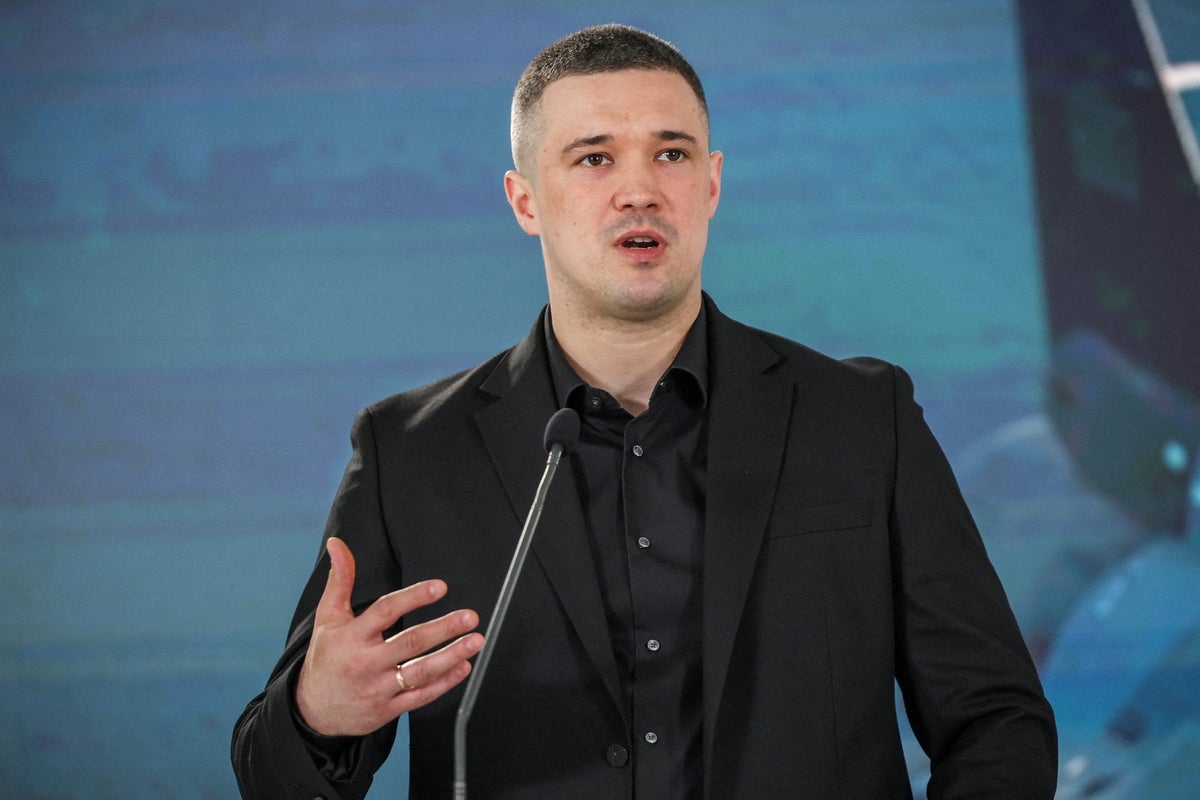
Croatian police arrested a Ukrainian diver in Pula on 19 August 2026 over his alleged role in the 2022 Nord Stream pipeline explosions, Croatian broadcaster HRT reported. German prosecutors confirmed to AP that the suspect was Volodymyr Zhuravlov (Zhuravliov in Ukrainian official transliteration). Legal Tribune Online reported that he was detained on the set of Zmiinyi (Snake) Island.
The arrest gives German prosecutors a third chance to secure Zhuravliov after two atte
Croatian police arrested a Ukrainian diver in Pula on 19 August 2026 over his alleged role in the 2022 Nord Stream pipeline explosions, Croatian broadcaster HRT reported. German prosecutors confirmed to AP that the suspect was Volodymyr Zhuravlov (Zhuravliov in Ukrainian official transliteration). Legal Tribune Online reported that he was detained on the set of Zmiinyi (Snake) Island.
The arrest gives German prosecutors a third chance to secure Zhuravliov after two attempts in Poland failed. If Croatia extradites him, he would become the second suspected member of the alleged team to face proceedings in Germany. Berlin has pursued other suspects in the Nord Stream case across Europe, but the identity of the person who ordered the sabotage remains unknown.
Previous arrests and arrest attempts
Germany’s Federal Public Prosecutor’s Office said Zhuravliov was a trained scuba diver who took part in the dives needed to place explosives on Nord Stream 1 and 2 near Denmark’s Bornholm island. Prosecutors say the group sailed from Rostock aboard a yacht that middlemen rented from a German company using forged identity documents.
The 2024 European arrest warrant accuses Zhuravliov of jointly causing an explosion, anti-constitutional sabotage, and destroying structures. He would appear before an investigating judge at Germany’s Federal Court of Justice following extradition, prosecutors said. A Croatian court must first approve his surrender.
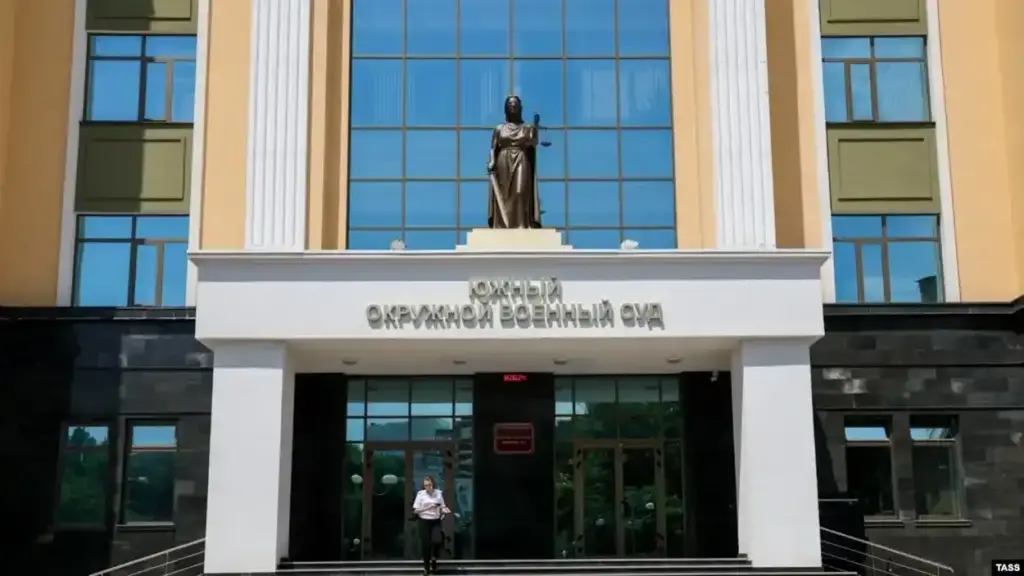
LTO reported that investigators first sought Zhuravliov’s arrest in Poland in the summer of 2024, but he crossed into Ukraine before police detained him. Polish police arrested him near Warsaw in autumn 2025. However, a court rejected Germany’s extradition request after finding that the pipelines could be treated as a legitimate military target during an armed conflict. Zhuravliov has denied involvement.
Volodymyr Zhuravliov. Screenshot from NTV video
His lawyer, Tymoteusz Paprocki, told AP that Zhuravliov understood the Polish ruling applied only within Poland.
Another Ukrainian suspect, Serhii K., was arrested near Rimini in August 2025 and extradited to Germany that November after unsuccessful appeals. Prosecutors allege he coordinated the operation rather than joining the dives. They charged him in Hamburg in June 2026.
The route of the Nord Stream pipelines beneath the Baltic Sea. Map: BBC
What was Nord Stream?
Nord Stream 1 and 2 ran beneath the Baltic Sea, carrying—or designed to carry—Russian gas directly to Germany while bypassing Ukraine. Explosions on 26 September 2022 damaged three of their four lines at a depth of about 80 meters.
No court has established who ordered the attack. Ukraine’s Prosecutor General’s Office says no facts demonstrate Ukrainian state involvement and is examining whether Russia staged a false-flag operation using Ukrainians. LTO reported that Germany’s Federal Court of Justice found strong grounds in December 2025 to believe that a state had initiated and directed the sabotage, but did not identify which state.
Ukrainian units can now tell drone makers exactly what they need and have it built. A new tool on the state defense-technology marketplace Brave1 Market lets military units order custom drones with defined specifications for specific battlefield needs, not only serial models, Ukraine's Defense Ministry announced.
Russia's war has pushed Kyiv to rebuild military procurement from the ground up, trading slow bureaucratic pipelines for digital platforms where frontline unit
Ukrainian units can now tell drone makers exactly what they need and have it built. A new tool on the state defense-technology marketplace Brave1 Market lets military units order custom drones with defined specifications for specific battlefield needs, not only serial models, Ukraine's Defense Ministry announced.
Russia's war has pushed Kyiv to rebuild military procurement from the ground up, trading slow bureaucratic pipelines for digital platforms where frontline units pick and receive their own weapons faster. Brave1 has already processed over $235 million in orders.
The new tool turns Ukraine's drone procurement from a catalog-based system into a made-to-order one. Where units once chose from ready-made drones, they can now specify what they need across more than 17 characteristics and have makers compete to build it.
How the custom orders work
A unit defines the drone it wants. It submits a request specifying the required characteristics, quantity, and desired delivery timelines, selecting from parameters such as communication type, camera specifications, payload weight, and flight duration.
The manufacturer does not receive information about which unit made the request, and the system automatically sends the request to potential suppliers, who can submit offers or decline to participate. Keeping the requesting unit anonymous prevents makers from favoring or identifying particular units and keeps the competition on the drone itself.
Makers compete on price
When offers match, the system runs an auction. If several manufacturers propose solutions with identical characteristics, the system launches an automatic bidding process, and the lowest-priced offer wins. A military unit can then conclude a direct agreement with the maker, according to the Defense Ministry.
The mechanism drives cost down while meeting the spec. By pitting makers against each other on price once they meet the required characteristics, the system gets units the drone they specified at the lowest available cost, then lets them contract the winner directly, cutting out intermediaries.
Gasoline prices have risen roughly 10–13% in Tajikistan, Kyrgyzstan, and Uzbekistan as Russia restricts exports after Ukrainian strikes on its refineries, Kazakh economist Aidar Alibayev estimated in a 20 August interview with Current Time. He did not specify the comparison period.
Earlier Ukrainian attacks disrupted Kazakhstan’s crude exports through Russia’s Black Sea ports. Strikes at refineries are creating a different kind of squeeze: Russia has less gasoline avail
Gasoline prices have risen roughly 10–13% in Tajikistan, Kyrgyzstan, and Uzbekistan as Russia restricts exports after Ukrainian strikes on its refineries, Kazakh economist Aidar Alibayevestimated in a 20 August interview with Current Time. He did not specify the comparison period.
Earlier Ukrainian attacks disrupted Kazakhstan’s crude exports through Russia’s Black Sea ports. Strikes at refineries are creating a different kind of squeeze: Russia has less gasoline available to dependent neighbors. Tajikistan and Kyrgyzstan are seeking other suppliers, while Kazakhstan could face growing pressure if the shortages persist.
Tajikistan has been hit hardest because it depends heavily on Russian fuel and has the region’s most difficult delivery routes, Alibayev said. He estimated gasoline prices there had risen 12–13%. Current Time reported that Tajikistan is exploring supplies from China; Alibayev said it was also turning to Iran.
Kyrgyzstan, which sources more than 90% of its gasoline from Russia, asked its neighbors, Azerbaijan and Kazakhstan, as well as other countries, for help. Current Time reported that a deputy prime minister said its reserves would last about six weeks. Alibayev estimated prices had climbed around 10%, compared with 11–11.5% in Uzbekistan, which he estimated gets half its fuel from Russia.
In Uzbekistan, Alibayev estimated that fuel prices had risen by about 11% and said the country gets about half of its fuel from Russia.
Russia extended its gasoline and diesel export restrictions through 31 January 2027 as shortages mounted. Intergovernmental and humanitarian shipments remain exempt, while diesel producers regain some export rights from 1 September. Current Time also reported that Russian companies had begun buying gasoline from Belarus.
Kazakhstan is better insulated than its neighbors because its refineries in Atyrau, Shymkent, and Pavlodar produce enough fuel to meet most domestic demand, Alibayev noted. Motorists from Russia and neighboring states are crossing its borders to refuel. He attributed Kazakhstan’s price rises mainly to domestic taxes and the end of an export moratorium—not Russia’s shortage alone.
Central Asia looks for routes beyond Russia as war drags on
Kashagan oil field near Atyrau. CPC disruptions have prompted Kazakhstan to reroute crude to China. Map: Euromaidan Press / Datawrapper
At an informal summit of Central Asian leaders in Cholpon-Ata in early August, Tajik President Emomali Rahmon proposed building a refinery to serve the whole region. For now, Alibayev said, the decisive factor is how long Russia’s troubles last: the longer Ukraine’s strikes continue, the more they will weigh on prices across Central Asia.
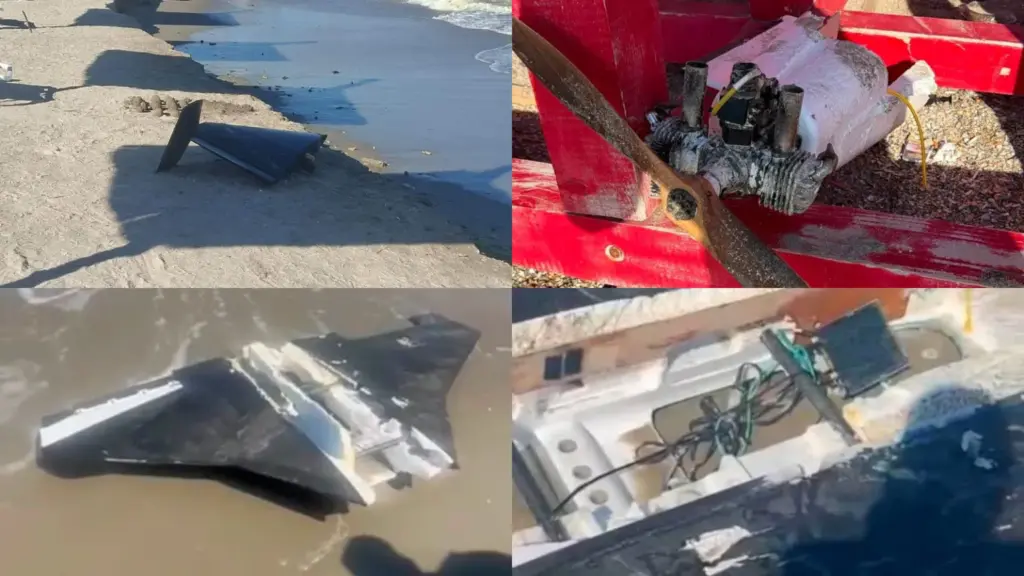
Romania destroyed an explosives-laden maritime drone near its critical Neptun Deep gas platform and recovered debris from a separate aerial drone that crashed on its soil, the Romanian Defense Ministry reported. The incidents came during a major Russian attack on Ukraine on 20 August that killed 14 people in Kyiv city and oblast, caused incidents in Moldova, and triggered air defense activation in Poland.
Russia's war against Ukraine has turned the Black Sea and the air
Romania destroyed an explosives-laden maritime drone near its critical Neptun Deep gas platform and recovered debris from a separate aerial drone that crashed on its soil, the Romanian Defense Ministry reported. The incidents came during a major Russian attack on Ukraine on 20 August that killed 14 people in Kyiv city and oblast, caused incidents in Moldova, and triggered air defense activation in Poland.
Russia's war against Ukraine has turned the Black Sea and the airspace above NATO's eastern flank into a recurring security problem. Romanian forces have now destroyedfive drones over or near its territory this year, while more than 150 mines have drifted across Black Sea trade lanes since the full-scale invasion began.
F-16 fires cannon at sea drone near gas platform
A commercial vessel spotted a drifting maritime drone near the Neptun Alpha production platform, approximately 80 nautical miles east of Constanța, at around 06:28, the Defense Ministry said. Two Romanian F-16s scrambled with orders to fire. One engaged the target with its onboard cannon—the first time Romania used a cannon against a drone and the first engagement against a maritime drone. All previous shootdowns used air-to-air missiles against aerial drones.
The country's Defense Minister Radu Miruță said the drone was carrying explosives and was spotted just hundreds of meters from the platform where several hundred people work. Through a recently established direct communication channel, Ukraine confirmed the drone was not of Ukrainian origin. President Nicușor Dan directly blamed Russia, condemning "the intensification of these types of irresponsible incidents on the part of the Russian Federation."
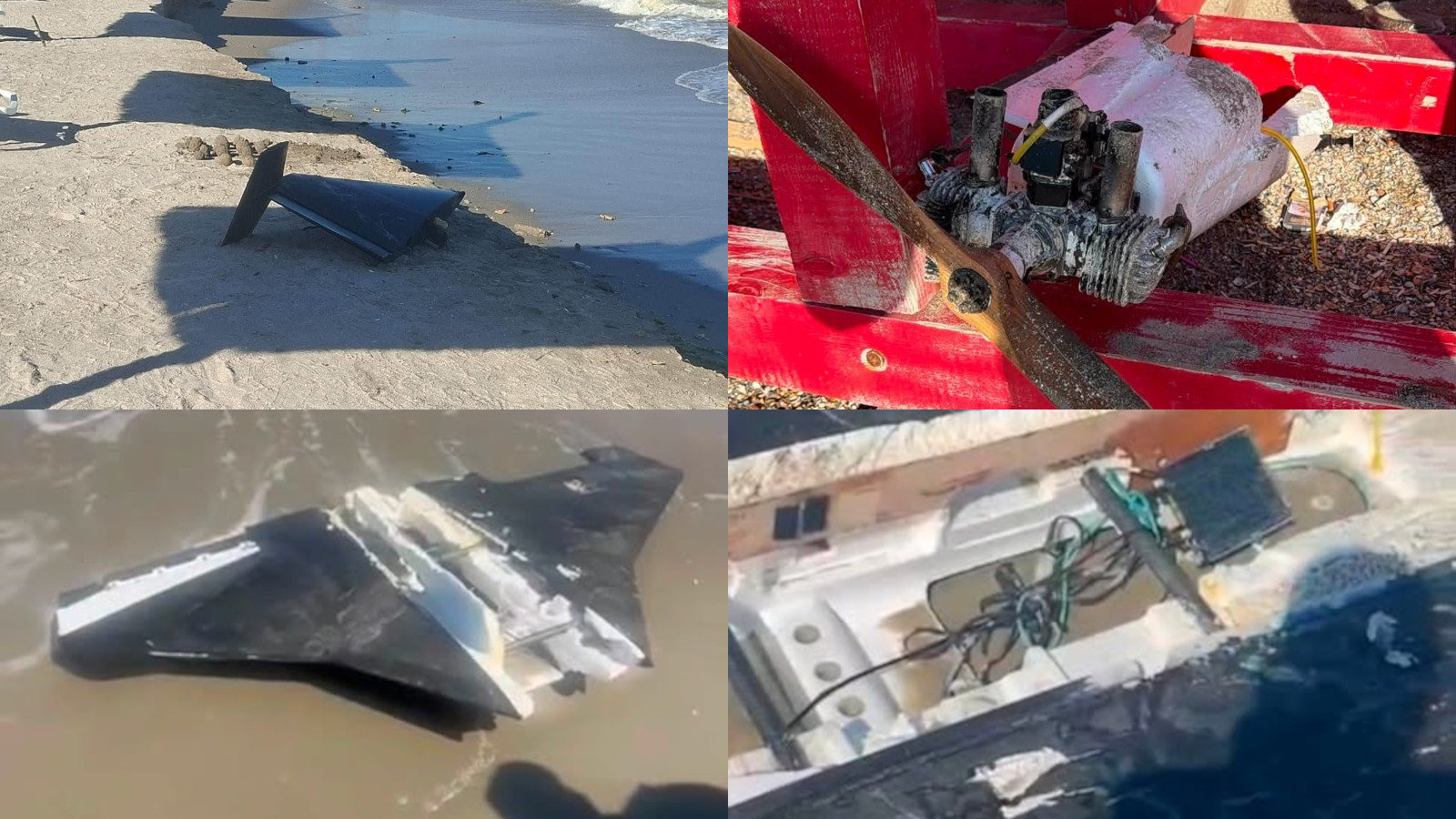
The engagement came nine days after Romanian navy divers destroyed two Gerbera-type drones drifting near the same platform by controlled detonation.
Explore further
14 killed as Russia unleashes massive overnight barrage on unprotected Kyiv, striking homes, hospital, school and railway infrastructure
Aerial drone crashes in Romania's Tulcea County
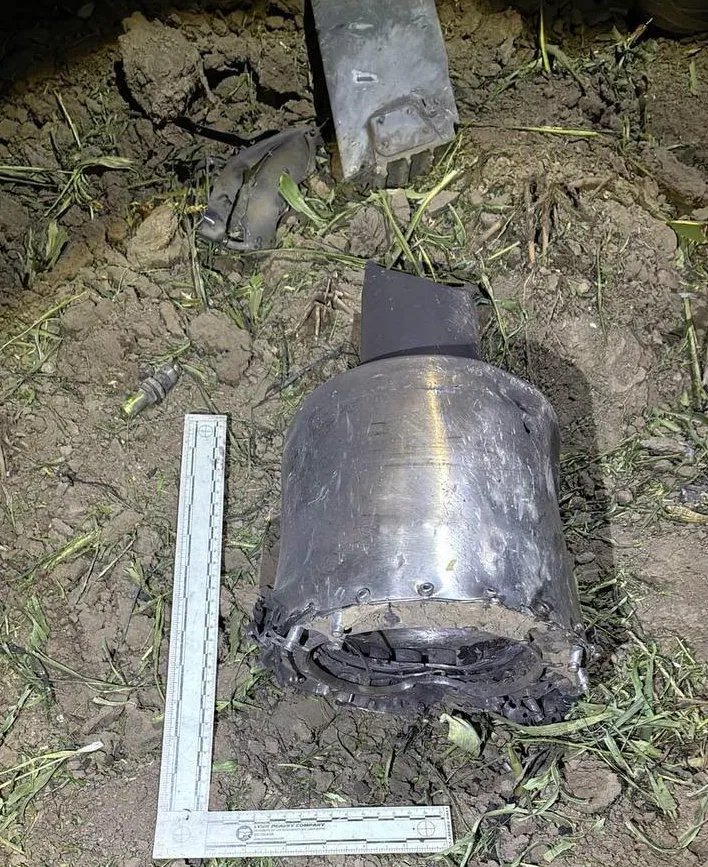
Earlier overnight, Romanian radar detected aerial targets near the Ukrainian border at 02:23, the Defense Ministry said. Two Spanish F-18s from NATO's air policing mission and a Romanian IAR-330 SOCAT helicopter scrambled. At 03:21, a drone crossed into Romanian airspace 13 km east of Galați and crashed three minutes later near the village of Grindu in Tulcea County. No casualties or damage were reported. The fragments posed no explosive hazard.
The crash came four days after a Spanish F-18 shot down another drone over Romanian airspace, Euronews reported. Romanian F-16s intercepted three Russian drones in July.
Explore further
Russian Shaheds hit near Moldova-border crossing, burn food cargo, and black out 13,000 in Odesa Oblast
Poland activates defenses, Moldova hit by drone spillover
Poland's Operational Command activated military aircraft and ground-based air defense systems during the Russian attack as a preventive measure. The Netherlands provided air defense support. No breach of Polish airspace was recorded.
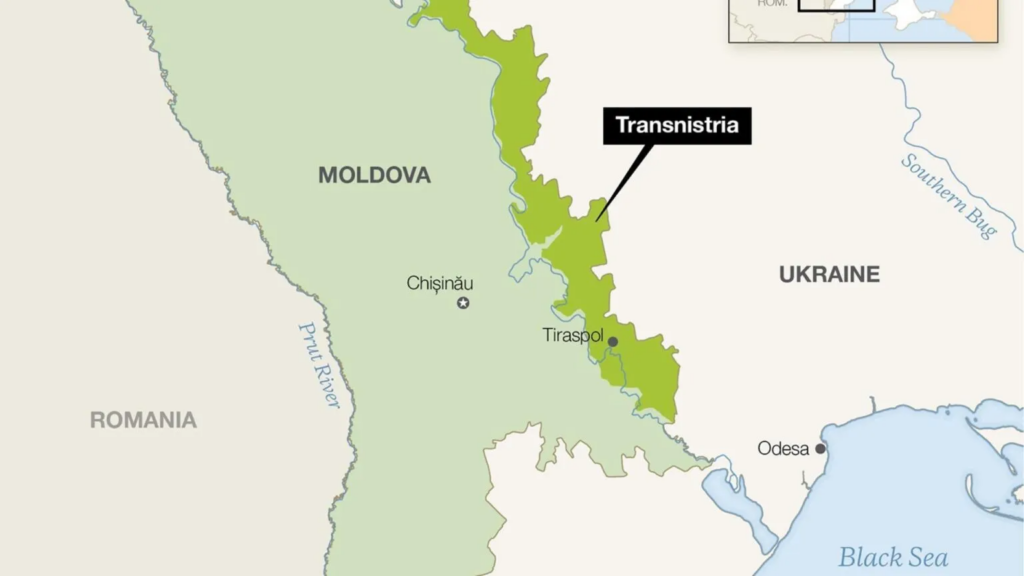
Moldova faced multiple incidents. At 03:16, the country's National Army detected what was preliminarily identified as a Shahed-136/Geran-2 drone crossing from Ukraine near Kotlovyna in Odesa Oblast into Moldova's Gagauzia region. It returned to Ukrainian airspace six minutes later, public broadcaster Moldova1 said.
Explore further
Russian drone attacks on Ukraine’s Danube ports hit recent high, Romania says
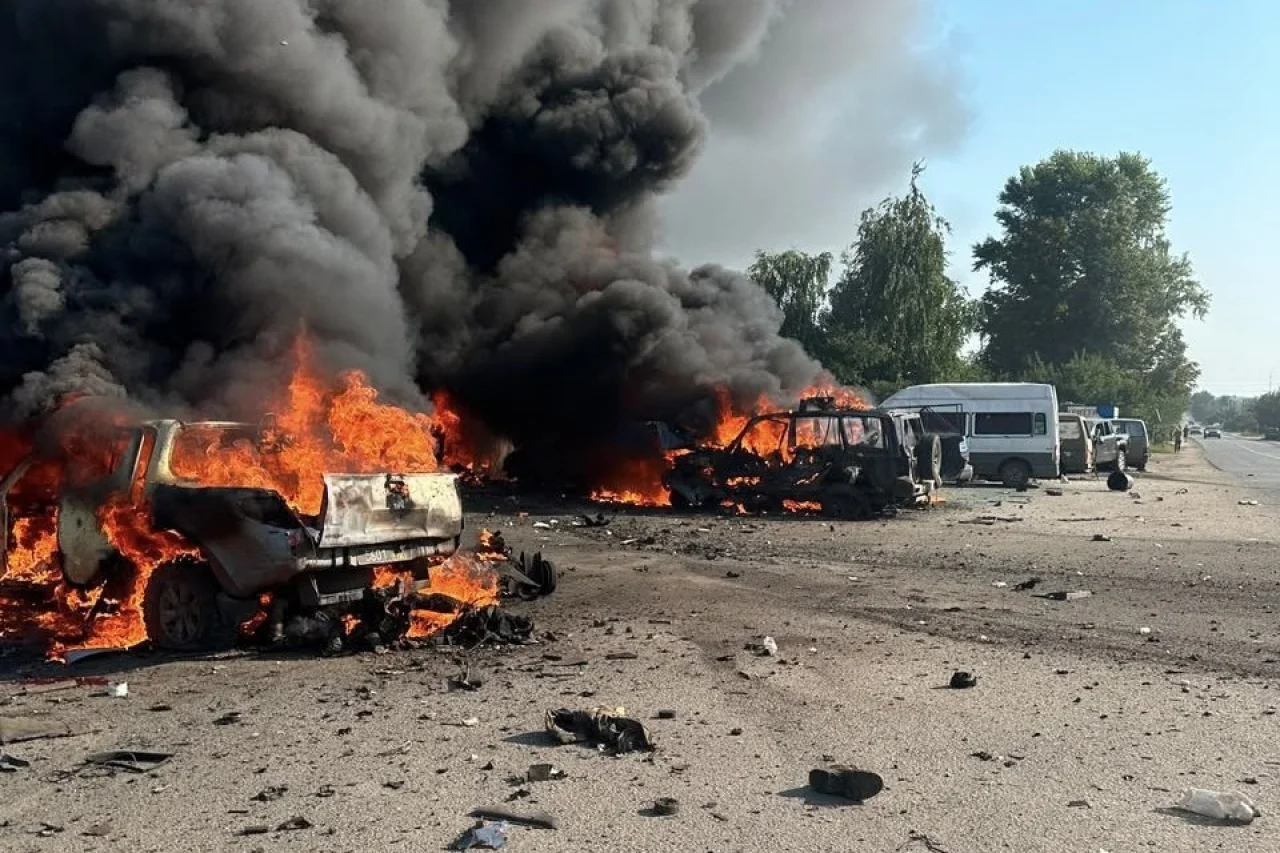
Separately, an explosion at a truck parking lot on Ukrainian territory about 150 meters from the Giurgiulești-Reni border crossing at around 03:45 sparked a fire that spread onto Moldovan soil, Newsmaker reported. Border police found drone fragments in a crater approximately 1 km inside Moldovan territory.
Russian strikes in southern Odesa Oblast overnight into 20 August left 13,000 utility customers without power, Odesa Oblast head Oleh Kiper reported. President Volodymyr Zelenskyy also said drones attacked a checkpoint on Ukraine’s border with Moldova.
Russia has intensified attacks on southern Ukraine’s Danube region, where ports and transport routes lie close to Moldova and Romania. The spillover from the attacks has forced these neighboring countries to close airspac
Russian strikes in southern Odesa Oblast overnight into 20 August left 13,000 utility customers without power, Odesa Oblast head Oleh Kiper reported. President Volodymyr Zelenskyy also said drones attacked a checkpoint on Ukraine’s border with Moldova.
Russia has intensified attacks on southern Ukraine’s Danube region, where ports and transport routes lie close to Moldova and Romania. The spillover from the attacks has forced these neighboring countries to close airspace, scramble aircraft, and shoot drones down.
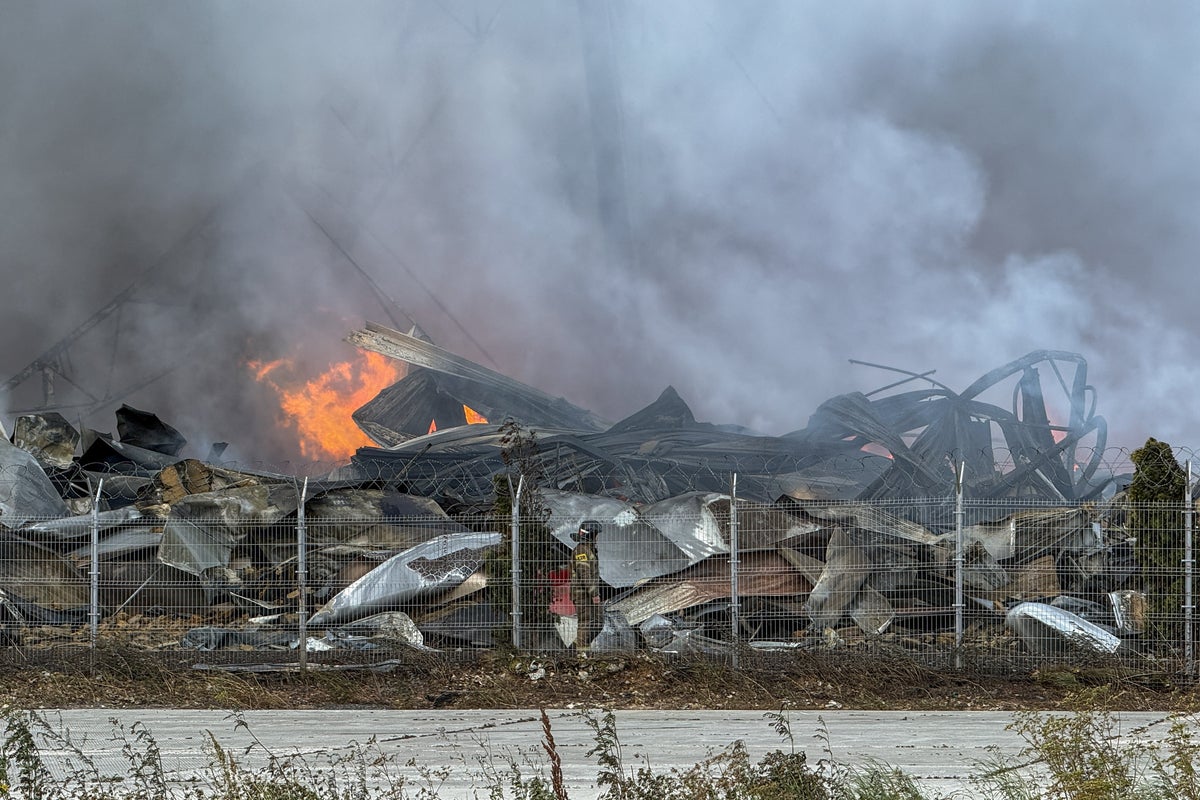
The Odesa Oblast Military Administration said Russian strikes disrupted power in several communities, and repair crews began restoration work. It did not identify damaged electrical equipment or say whether the grid had been shut down as a precaution. Two truck trailers carrying food caught fire at another location, but firefighters extinguished both blazes, the State Emergency Service said. No casualties were reported.
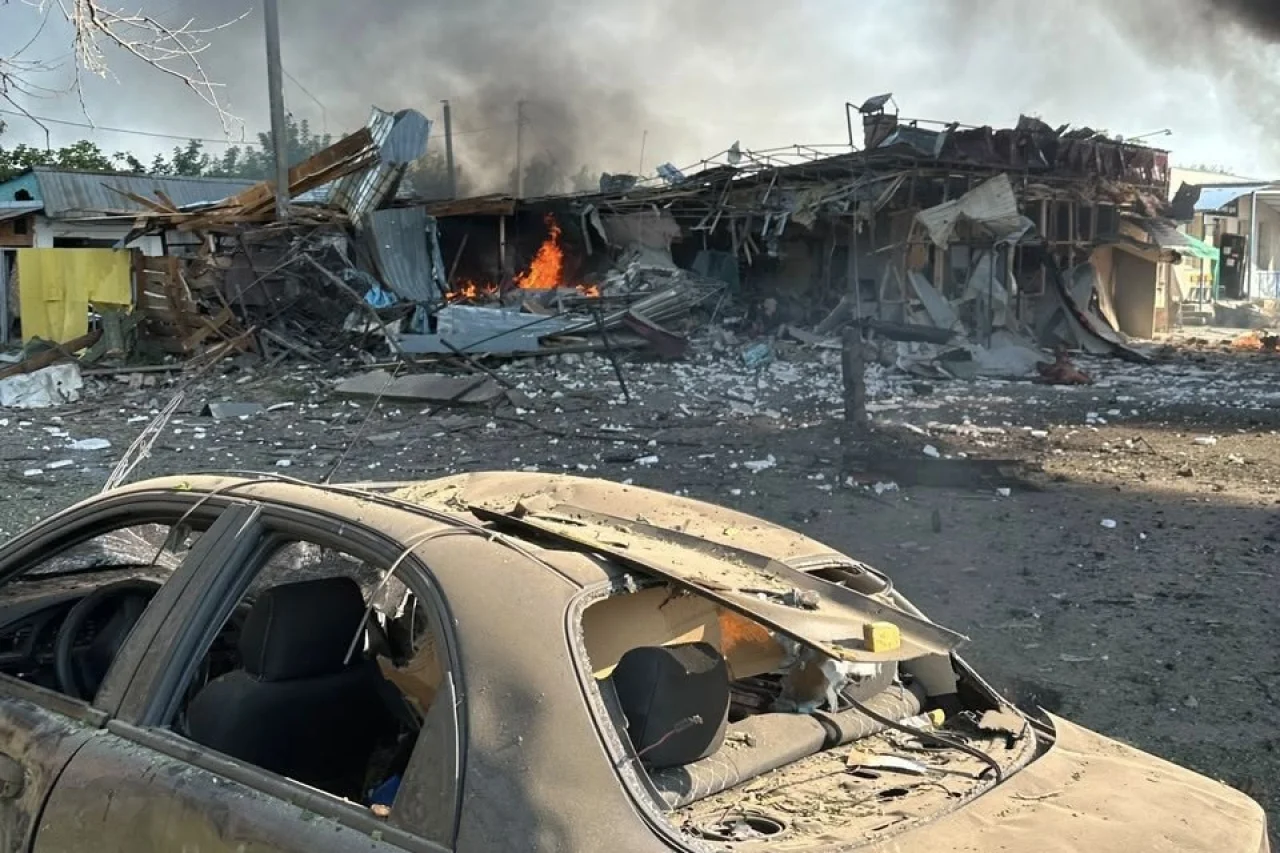
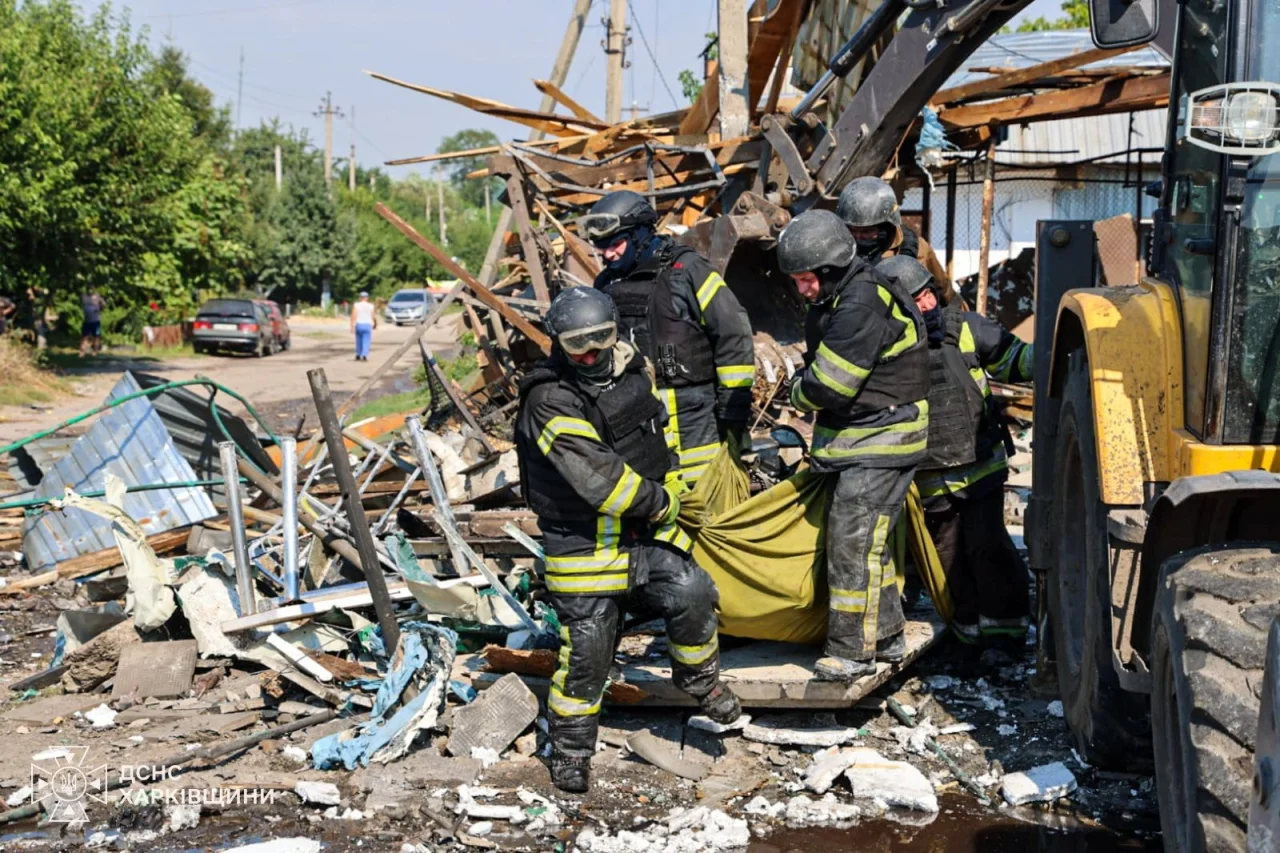
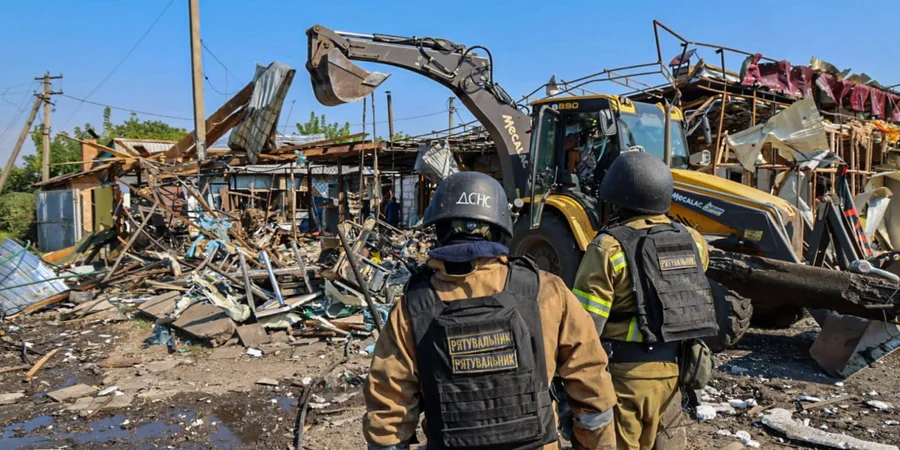
One of the food trucks that was struck during Russia's assault. Source: DSNS of Ukraine
Zelenskyy did not identify which crossing was attacked or describe the damage. The Izmail District State Administration later reported that Russia attacked the Reni community with Shahed-136 drones. It recorded a hit on an unspecified site near the Reni–Giurgiulești international checkpoint.
Approximate location of where the strike occurred.
People and freight cross between Ukraine and Moldova through checkpoints such as Reni–Giurgiulești. The district administration did not describe the damage or say whether the checkpoint remained open.
Russian attacks keep reaching Moldova
At 03:16 on 20 August, surveillance systems operated by Moldova’s National Army detected an unauthorized flight, public broadcaster Moldova1 reported.
The object was preliminarily identified as a Shahed-136/Geran-2, a long-range explosive drone used by Russia. It crossed from Ukraine near Kotlovyna in southwestern Odesa Oblast and flew toward Etulia in Moldova’s autonomous Gagauzia region. It returned to Ukrainian airspace at 03:22.
Explore further
Blast marks Moldova’s third airspace breach in nine days
Similar incidents occurred earlier in August. An unidentified aerial object exploded in a Moldovan field 12 kilometers from Ukraine on 9 August. On 17 August, Moldova closed part of its airspace for 15 minutes after Ukraine’s Air Force warned that a Russian Banderol, a jet-powered missile-drone, had crossed from Odesa Oblast. The object later exploded near Talmaza.
Romania activates defenses
On 20 August, Romania’s Defense Ministry said its radars detected targets near Ukraine at 02:23 and scrambled two Spanish F-18s and a Romanian helicopter. A drone entered Romanian airspace east of Galați at 03:21 and crashed near Grindu at 03:24. Its impact started a fire that went out on its own. Romania reported no casualties or material damage.
Four days earlier, a Spanish F-18 shot down a drone that entered Romania from Moldova. NATO said it appeared to be Russian.
Russia has recently intensified attacks on Ukraine’s Danube ports and struck the Mayaky bridge connecting southern Ukraine with Moldova and Romania. Such attacks can disrupt Ukraine’s transport links and force neighboring militaries to react within minutes.
Ypsilanti Township in Michigan passed a six month moratorium on “major electric utility infrastructure” on Tuesday night. The moratorium is a delaying tactic, the latest in the Township’s long fight to stop the construction of a $1.2 billion data center that’s backed by the University of Michigan and the Pentagon’s nuclear war scientists at Los Alamos National Laboratories (LANL).Last year, the university announced it was partnering with LANL on the construction of a massive 220,000 square fo
Ypsilanti Township in Michigan passed a six month moratorium on “major electric utility infrastructure” on Tuesday night. The moratorium is a delaying tactic, the latest in the Township’s long fight to stop the construction of a $1.2 billion data center that’s backed by the University of Michigan and the Pentagon’s nuclear war scientists at Los Alamos National Laboratories (LANL).
Last year, the university announced it was partnering with LANL on the construction of a massive 220,000 square foot hyperscale data center in Ypsilanti Township and residents have been fighting it ever since. During a meeting of the Township Board on August 18, the council unanimously passed a resolution that will delay the construction of new electrical infrastructure for 180 days.
💡
Do you know anything else about this story? Is your town fighting a data center? I would love to hear from you. Using a non-work device, you can message me securely on Signal at +1 347 762-9212 or send me an email at matthew@404media.co.
Data centers need a lot of energy, and Michigan’s power authority will have to build new substations in the Township to power the proposed facility. The moratorium asked the local power authorities to use the six month delay to study noise pollution and how the new infrastructure would affect existing customers.
The moratorium is narrowly focused on “the nature and scale of electrical infrastructure necessary to serve new high-energy-demand land uses [...] including infrastructure associated, but not limited to hyper-scale data centers, mid-sized data centers, artificial intelligence computing facilities, and high-performance computational centers, industrial facilities, and other intensive electrical users.”
Earlier this month, the University of Michigan announced it had settled on a specific plot of land in Ypsilanti Township — a 144-acre plot on Textile Road. In a press release about the decision, the University said the data center would have the “capacity to change the world” and insisted it would not be a “high value target risk” in a war, that it would not store any hazardous nuclear material, and was not a weapons production facility. LANL previously confirmed that the data center will be used for nuclear weapons research. Ypsilanti Township Supervisor Brenda Stumbo told WEMU news that the selection of the site was a “travesty of justice” because it ignores constituents’ concerns about environmental impact.
During the August 18 moratorium vote, the Board projected a large stock photograph of an electric substation behind its members. The photo was meant to remind people of the size of the incoming infrastructure and the lack of communication from the university about it.
“This picture’s really important to think about because U of M has been so crystal clear that they’ve been communicating to us abundantly — which is not true,” Township clerk Debbie Swanson said during the meeting. “That speaks to the lack of respect.”
Ypsilanti Township's data center fight is unique in that its board of local leaders are united with the community in opposition to the project. Township Board members have repeatedly spoken about the University's lack of respect and lack of communication. “We will fight to our very last breath,” Strumbo said during a Board meeting in June. In April, the Board voted to institute a 365 moratorium on delivering water to data centers. The University threatened legal action in response and called the move “discriminatory.”
The University of Michigan declined to comment on this story.
Ukraine’s Defense Forces struck a major oil refinery and a Black Sea oil terminal on 19 August and overnight into 20 August, Ukraine’s General Staff reported. Drones also hit a key mainland electricity hub supplying occupied Crimea, Militarnyi reported after analyzing NASA satellite data.
Together, the reported strikes put three parts of Russia’s war machine under attack within hours: fuel production, Black Sea oil exports, and the mainland electricity bridge to occupie
Ukraine’s Defense Forces struck a major oil refinery and a Black Sea oil terminal on 19 August and overnight into 20 August, Ukraine’s General Staff reported. Drones also hit a key mainland electricity hub supplying occupied Crimea, Militarnyi reported after analyzing NASA satellite data.
Together, the reported strikes put three parts of Russia’s war machine under attack within hours: fuel production, Black Sea oil exports, and the mainland electricity bridge to occupied Crimea. They continue a deep-strike campaign intended to disrupt fuel supplies and logistics supporting Russia's invasion
A major refinery deep inside Russia
Ukraine struck the TANECO refinery in Nizhnekamsk, in the Russian republic of Tatarstan, where the General Staff reported a fire at the production site. Militarnyi had earlier identified the same facility from eyewitness footage showing a drone reaching the city’s industrial zone despite Russian air-defense fire.
Ukrainian attack drones swarmed Russia’s Nizhnekamsk Oil Refinery this morning, scoring multiple hits and setting the plant on fire.
Seen here, a Ukrainian Fire Point FP-1 maneuvers and then dives into one of the already-burning Russian refinery’s process units. pic.twitter.com/3v9AjEZFs5
Owned by Tatneft, TANECO is one of Russia’s newest, largest, and most technologically advanced refineries. It can process more than 16 million tons of crude annually and produces gasoline, diesel, aviation fuel, marine fuel, and other petroleum products.
Neither the General Staff nor the available imagery established whether processing equipment was damaged or production stopped.
A Black Sea terminal moving about 20 million tons a year
Ukraine also hit the Tamanneftegaz oil and gas terminal in the village of Volna, Krasnodar Krai, where the General Staff reported another fire. Militarnyi found a corresponding fire in NASA Fire Information for Resource Management System (FIRMS) data and assessed that storage tanks were likely burning.
Thermal anomalies on NASA FIRMS from left to right: Tamanneftegaz terminal and Taman 500-kilovolt substation. Source: NASA FIRMS
Militarnyi described Tamanneftegaz as southern Russia’s largest private oil terminal. The complex can handle about 19.9 million tons annually, while its tank farm held more than 1 million cubic meters before Ukrainian attacks began.
The Tamanneftegaz terminal receives, stores, and loads petroleum products onto tankers, making it an important link in Russia’s Black Sea exports. Drones previously hit three tanks and pipelines there on 30 July.
The mainland electricity gateway to occupied Crimea
Drones hit the Taman 500-kilovolt substation in Krasnodar Krai, where NASA satellite data recorded a fire, Militarnyi reported. All four lines of Russia’s power bridge across the Kerch Strait pass through this high-voltage hub, making it the principal mainland gateway for electricity sent to occupied Crimea, Militarnyi reported.
Confirmed: Metrics show a sudden decline in internet connectivity across Russian-controlled Crimea with high impact to Sevastopol and Simferopol corresponding to a power blackout after overnight Ukrainian drone attacks targeting energy infrastructure pic.twitter.com/dqCXzTDcWO
Power failed in Simferopol, Sevastopol, Kerch, Feodosia, and Yalta around 1:45 a.m., according to Suspilne Crimea. Electric transport stopped in several cities. Sevastopol’s occupation chief said restrictions were lifted after about 90 minutes, although the grid remained unstable and some nearby settlements still lacked electricity. Social facilities in Sevastopol switched to backup power.
Crimean Wind also reported explosions near the Kafa and Malorechenske substations inside Crimea, Suspilne Crimea reported. The available evidence therefore does not establish that the Taman strike alone caused the outages.
Ukraine’s sustained long-range strike campaign
Ukraine's long-range strikes on Russian targets have ramped up in recent months. One day earlier, drones hit a key crude-processing unit at the Bashneft-UNPZ refinery in Ufa, Militarnyi reported. Ukraine had also struck TANECO on 10 August and both Nizhnekamsk refineries on 12 June, Suspilne reported.
Euromaidan Press reported that Ukrainian deep strikes hit 18 Russian oil and gas facilities in May, making it the heaviest month of 2026 at that point. On 6 August, drones attacked a top-five refinery in Yaroslavl for the seventh time this year. Five days later, they reached Orsk, about 1,500 kilometers from Ukraine.
Khrystyna, 22, joined Ukraine's 159th Separate Mechanized Brigade after finding the unit on social media and leaving her contact details — a recruiter called her back and offered her the "18–24" contract, she said in a video published on the brigade's Facebook page.
Roughly one-third of candidates at Ground Forces recruitment centers in early 2026 chose positions as drone pilots or operators, according to the Ministry of Defense. About 80,000 Ukrainian service personne
Khrystyna, 22, joined Ukraine's 159th Separate Mechanized Brigade after finding the unit on social media and leaving her contact details — a recruiter called her back and offered her the "18–24" contract, she said in a video published on the brigade's Facebook page.
Roughly one-third of candidates at Ground Forces recruitment centers in early 2026 chose positions as drone pilots or operators, according to the Ministry of Defense. About 80,000 Ukrainian service personnel participate in drone operations in some capacity, according to official Armed Forces statements.
Before enlisting, she worked as an administrator, a waitress, and a sushi chef. After signing, she completed professional training that included drone operation and combat sorties.
"I always believe that the 159th is the elite," she said, adding that what she liked most about military life was the people in her unit.
Screenshot from video: 159th Separate Mechanized Brigade / Facebook
"18–24" program details
The "18–24" program, launched on 11 February 2025, offers one-year voluntary contracts to Ukrainians aged 18 to 24 who are not yet subject to conscription. Recruits receive a UAH 1 million (about $22,400) bonus, monthly pay of up to UAH 120,000 ($2,700), a zero-interest mortgage, and free medical care.
A drone operator track added in July 2025 extends the commitment to two years and includes up to 45 days of basic training and up to 60 days of professional drone training.
Uptake has been slow—only around 500 recruits had joined by December 2025, United24 Media reported.
The Unmanned Systems Forces—established in June 2024 as the world's first military branch dedicated to unmanned systems—number about 15,000.
Russia's Matryoshka bot network has launched disinformation campaigns targeting elections in Sweden, Germany, and France this month, fabricating video clips branded with the logos of trusted European media outlets, Sweden's national public broadcaster SVT reported. Analysts in multiple countries found the campaign aims not to reach mass audiences but to overwhelm newsrooms' fact-checking capacity.
Russia is waging a full-spectrum hybrid war against European democracies
Russia's Matryoshka bot network has launched disinformation campaigns targeting elections in Sweden, Germany, and France this month, fabricating video clips branded with the logos of trusted European media outlets, Sweden's national public broadcaster SVT reported. Analysts in multiple countries found the campaign aims not to reach mass audiences but to overwhelm newsrooms' fact-checking capacity.
Russia is waging a full-spectrum hybrid war against European democracies that support Ukraine. Beyond bot-driven disinformation, European intelligence agencies have tracked Russian operatives buying properties near military bases, suspected Russian arson at a defense manufacturer supplying Ukraine, and a Russian operation to discredit Sweden that Swedish security services stopped this month. Poland and the Baltic states face similar threats of sabotage linked to their support for Kyiv.
Fake clips target Swedish PM weeks before the vote
Seven fabricated video clips appeared on the social media platform X within a single hour on 18 August. Among them were clips branded with the logos of SVT and the Swedish newspaper Dagens Nyheter. Others hijacked the visual branding of Euronews and Germany's Der Spiegel. None were ever produced by these outlets.
The fake videos spread lies about election fraud in Sweden and directed false accusations at Prime Minister Ulf Kristersson personally. Sweden holds general elections on 13 September.
"We see this all over Europe. Russians target countries that support Ukraine," Kristersson told SVT.
Russian opposition analysis group Antibot4navalny linked the posts to Matryoshka, a pro-Russian influence campaign named after the Russian nesting doll.
Fabricated social media posts from Russia's Matryoshka bot network targeting Sweden's 2026 election, featuring fake headlines with hijacked media branding, 18 August 2026. Screenshot: SVT
Also known as Operation Overload and Storm-1679, Matryoshka was first exposed by Antibot4navalny in 2024 and is one of several Kremlin-linked disinformation networks alongside the Doppelgänger campaign and Storm-1516. A previous SVT review found the majority of Matryoshka's posts aimed to influence Western support for Ukraine.
Explore further
Sweden says it stopped Russian operation to discredit country and EU. But no one will be prosecuted
Campaign targets newsrooms, not audiences
The fabricated posts rarely get more than a few hundred or a few thousand genuine views, Antibot4navalny told SVT. Analysts say the campaign is not primarily designed to reach a large audience. Matryoshka operators actively push fabricated posts to journalists and fact-checkers, often disguising them as verification requests. A 2024 report by France's state anti-disinformation body Viginum suggested the campaign aims to distract and overload newsrooms' fact-checking resources through large volumes of targeted requests. In posts targeting Sweden, the network tagged the social media accounts of several outlets, including SVT and Dagens Nyheter.
The campaign may also seek to generate media coverage that amplifies its message or makes it appear more influential than it is, the think tank ISD assessed.
Explore further
Sweden detains Russians who “camped” near home of CEO of Gripen jets Ukraine is buying
Germany and France targeted the same month
On 12 August, Germany's domestic intelligence agency, the Federal Office for the Protection of the Constitution (BfV), warned that Matryoshka is targeting local and regional elections in Germany scheduled for September. In early August, France's Viginum detected a Matryoshka operation directed at presidential candidate Gabriel Attal ahead of the 2027 vote. French prosecutors opened a probe into the campaign on 18 August.
In April, the network promoted false claims of Ukraine's involvement in the assassination attempt on US President Donald Trump.
Russia suspended mass production of its Kinzhal air-launched ballistic missiles in April, but still has around 50 in its arsenal, according to Ukraine’s Defense Intelligence Directorate (HUR), Ukrainska Pravda reported.
Russia has repeatedly used Kinzhal air-launched ballistic missiles to strike targets across Ukraine, including during major attacks on Kyiv and other Ukrainian cities. The missile is launched from aircraft and travels at high speed, making it particularl
Russia suspended mass production of its Kinzhal air-launched ballistic missiles in April, but still has around 50 in its arsenal, according to Ukraine’s Defense Intelligence Directorate (HUR), Ukrainska Pravda reported.
Russia has repeatedly used Kinzhal air-launched ballistic missiles to strike targets across Ukraine, including during major attacks on Kyiv and other Ukrainian cities. The missile is launched from aircraft and travels at high speed, making it particularly difficult for Ukraine to defend against.
Ukrainska Pravda reported the figures on 20 August, citing HUR data as of July. The intelligence agency said Russia has suspended mass production of the Kinzhal in part because of accuracy problems with the missile. Moscow is instead redirecting production resources toward other ballistic and cruise missiles that can be produced and used more reliably.
Russia shifts production toward other missiles
According to HUR, Russia has redirected rocket fuel, funding, and components toward producing more accurate ballistic and cruise missiles.
The shift is helping Moscow increase production of missiles for the Iskander-M system, HUR said.
“Redirecting production resources towards missile systems enables Russia to maintain the required production rates and ensure the regular use of missiles against Ukraine,” the agency said, as quoted by Ukrainska Pravda.
The production shift suggests Russia is prioritizing missile types it can produce and use more efficiently, rather than maintaining mass Kinzhal production.
Explore further
Putin’s Mach-10 wonder weapon misses by 30 meters. Russia stopped building it in April.
Russia has sharply increased its use of ballistic missiles against Kyiv and other Ukrainian cities in recent months, adding heavier ballistic barrages to its large-scale drone and cruise missile attacks. The escalation has put greater pressure on Ukraine’s air defenses, particularly because ballistic missiles are harder to intercept and can reach their targets within minutes.
Kinzhal remains in Russian arsenal despite production halt
The suspension of mass production does not mean Russia has stopped using Kinzhal missiles, according to HUR.
HUR said Russia still had around 50 Kinzhals as of July, while also holding around 50 North Korean KN-23-series ballistic missiles, including KN-24 and KN-30 variants.
The intelligence agency also said the Kinzhal is undergoing further development to improve issues with its accuracy.
Russian voenkors publishes satellite images from the Starokostiantyniv area!
The photo shows craters from missiles that did not reach their targets. In some cases, the Kinzhals' deviation was up to 144 meters. pic.twitter.com/qvameRj5t8
This means that while Russia has paused mass production, it retains a substantial reserve of Kinzhals that can still be used against Ukraine.
HUR's assessment also highlights a key limitation of the Kinzhal: despite being a high-speed air-launched ballistic missile, it has faced accuracy problems. Russia is therefore shifting production capacity toward missile systems it considers more reliable and easier to produce at scale.
A deliberately set fire at a Tallinn building used by Milrem Robotics did not disrupt its deliveries of military ground robots to Ukraine, CEO Kuldar Väärsi told Reuters on 19 August 2026. Estonian prosecutors said three suspects had been detained in Latvia.
The Milrem arson case fits in a broader pattern of suspected or confirmed sabotage against Ukraine’s military supply chain. Similar attacks throughout Europe have hit plants making drones, thermal optics, and other
A deliberately set fire at a Tallinn building used by Milrem Robotics did not disrupt its deliveries of military ground robots to Ukraine, CEO Kuldar Väärsi told Reuters on 19 August 2026. Estonian prosecutors said three suspects had been detained in Latvia.
The Milrem arson case fits in a broader pattern of suspected or confirmed sabotage against Ukraine’s military supply chain. Similar attacks throughout Europe have hit plants making drones, thermal optics, and other equipment for the front. Milrem supplies unmanned ground vehicles (UGVs) that help Ukrainian units move supplies and evacuate wounded without putting drawing upon valuable manpower.
The fire broke out overnight on 15 August in Tallinn’s Lasnamäe district after a resident reported suspicious activity. Nobody was injured, and Milrem has not disclosed what was damaged.
Milrem says it is one of only two foreign suppliers with unmanned ground vehicle (UGV) fleets in active Ukrainian service and expects more than 200 of its systems to be operating there by year-end.
The Netherlands is funding more than 150 additional Milrem vehicles for Ukraine. In June, Milrem and VDL Defentec opened a Dutch production line to support the delivery of more than 100 THeMIS UGVs. Väärsi the fire had not affected production, supply chains, or delivery schedules for this year or next.
A fifth-generation THeMIS unmanned ground vehicle developed by Milrem Robotics. Illustrative image. Photo: Milrem Robotics/Wikimedia Commons, CC BY-SA 4.0.
Unmanned ground vehicles (UGVs) are tracked or wheeled machines with no crew aboard. ArmyInform reported that Ukrainian troops use them to carry ammunition, fuel, and food along exposed routes. A Ukrainian commander identified only as Nazar told ArmyInform that frontline units still rely mainly on UGVs for logistics, although some robots carry explosives.
Three suspects detained as investigators examine possible Russian role
State Prosecutor Gardi Anderson said prosecutors suspect all three detainees of taking part in the arson. Latvian authorities are holding them while the two countries arrange their transfer to Estonia. An Estonian court approved prosecutors’ requests to place two in pretrial detention. A decision on the third remained pending.
Estonian Prime Minister Kristen Michalsaid investigators were examining whether the fire was the result of sabotage and whether Russia was involved. Authorities have not disclosed the suspects’ alleged motive, whether anyone directed them, or released evidence connecting the attack to Moscow.
Arson has hit other European suppliers to Ukraine
In March, a fire destroyed nearly all of the production capacity at a Czech plant that makes drones and thermal optics for Ukraine. Authorities detained four suspects while investigating possible terrorism and Russian involvement.
Lithuania also charged six people over an attempt to burn a factory supplying radio-wave scanners to Ukraine. Investigators said Russia-based organizers with GRU links coordinated the operation and connected the network to attempted attacks elsewhere in Europe.
Russia has denied Western accusations that it conducts sabotage in Europe.
Editor's note: This is a developing story.
Russia launched a massive overnight missile and drone attack targeting Kyiv and the surrounding region, killing 14 people and injuring more than 40, Ukrainian authorities said on 20 August.
The attack involved ballistic and cruise missiles alongside hundreds of drones. Ukraine’s Air Force said the main direction of the attack was Kyiv Oblast, with strikes and debris recorded at multiple locations. Several explosions were hea
Russia launched a massive overnight missile and drone attack targeting Kyiv and the surrounding region, killing 14 people and injuring more than 40, Ukrainian authorities said on 20 August.
The attack involved ballistic and cruise missiles alongside hundreds of drones. Ukraine’s Air Force said the main direction of the attack was Kyiv Oblast, with strikes and debris recorded at multiple locations. Several explosions were heard in the capital around midnight on 20 August, according to Euromaidan Press reporters in the city.
Residential building hit in Kyiv
In Kyiv, strikes, damage, and fires were reported in the Sviatoshynskyi, Darnytskyi, and Solomianskyi districts.
In Solomianskyi district, the upper two floors of a nine-story residential building were destroyed, with a fire breaking out across the seventh through ninth floors.
People were trapped in two residential buildings and a school bomb shelter, prompting emergency crews to carry out rescue operations.
Thirteen people have now been confirmed killed in Kyiv, including a woman whose body was discovered by rescuers in Solomianskyi district, Interior Minister Ivan Vyhivskyi said.
Ukrainian President Volodymyr Zelenskyy said a children's hospital and a school were also damaged in the capital.
Kyiv Mayor Vitali Klitschko said the city would observe 21 August as a day of mourning, with entertainment events banned and flags lowered.
Death toll from Russia's missile attack on Kyiv city and Oblast climbs to 14
Ukraine's Interior Minister Ivan Vyhivskyi says another woman's body was found in Solomianskyi. More than 40 were wounded. The strikes damaged about 20 residential buildings, a school, a children's… pic.twitter.com/3wicnc5lni
Around 20 residential buildings in Kyiv were significantly damaged, along with a school, children's hospital, and kindergarten, Vyhivskyi said.
In Sviatoshynskyi district, Russian strikes hit an industrial site and sparked fires at warehouses covering 500 and 1,000 square meters. Another warehouse also caught fire.
In Darnytskyi district, a non-residential site was hit, causing fires across warehouses and vehicles covering about 1,000 square meters. Rescuers saved one person and handed them over to medics.
Other locations saw damage to residential buildings, a medical facility, cars, garages, and stores.
More than 600 rescuers and police officers have been involved in clearing the aftermath since overnight. Emergency crews are currently working at two sites in Kyiv and three more in Boryspil and Brovary districts.
Rescuers are using specialized equipment and robotic systems to clear the rubble and check whether anyone remains trapped.
Police have set up assistance centers at the attack sites to register reports of damaged or destroyed property. More than 200 reports have already been processed in Kyiv, while psychologists are assisting people who lost relatives or their homes.
Russia's overnight missile attack killed at least 12 people in Kyiv and injured 34.
Russia pounded Kyiv and its surrounding region for hours into 20 August with dozens of ballistic missiles, Kalibr cruise missiles, and jet-powered Shahed drones.
The attack also hit Kyiv Oblast. One man was killed in Brovary district and another was injured.
In Boryspil district, six people were injured, four of whom were hospitalized. The attack damaged 14 private homes, four warehouses, a gas station, an apartment building, and eight vehicles.
Vyhivskyi said fires also engulfed warehouses storing household goods in Kyiv Oblast. Firefighters are working to contain the blaze, with aviation also deployed.
Russian attack leaves Kyiv and six oblasts with power outages
Ukrenergo says outages hit Kyiv and Kyiv, Donetsk, Odesa, Zaporizhzhia, Dnipropetrovsk, and Kharkiv oblasts. Ukrainians are asked to limit powerful appliances from 18:00–22:00.
Zelenskyy calls for stronger ballistic missile defenses
Zelenskyy said Russia’s growing investment in ballistic missiles requires a stronger international response and more air defense for Ukraine.
He said Ukraine is working daily on its FREYJA interceptor program, but stressed that Patriot interceptors remain irreplaceable and are needed every day to protect Ukrainian cities from Russian ballistic missile attacks.
“Every additional missile saves the lives of our people,” Zelenskyy said, thanking those working to provide Ukraine with additional air defense capabilities.
Russia spent months preparing its missiles. Zelenskyy says Ukraine still lacks enough interceptors to stop them
Russia combined different ballistic missiles, cruise missiles, and drones in its overnight attack to maximize damage to civilian infrastructure, President Volodymyr… pic.twitter.com/4iaRPs7dLC
Ukraine's Air Force said Russia launched 168 Shahed-type attack drones, Gerbera decoy drones, and other drones, along with 36 Kh-101, Iskander-K, and Kh-59 cruise missiles, eight Kalibr missiles, two Banderyl-type loitering munitions, and ballistic missiles including Oniks, Zircon, Iskander-M, and S-400 missiles.
As of 9:30 a.m., Ukrainian air defenses had shot down or suppressed 31 cruise missiles, all eight Kalibr missiles, both loitering munitions, and 145 drones, according to the Air Force.
The Air Force reported impacts at 28 locations and debris from intercepted targets at two others.
The attack continued into the late morning, with air raid sirens still active and several Russian drones still in Ukrainian airspace.
Ukraine is under a massive Russian attack right now: Russia's Kalibr missiles were launched from the Novorossiysk port
The warhead of the Kalibr family of cruise missiles typically weighs 450 kg Exilenova+ pic.twitter.com/DBgfRX7xhB
Russia hit Kyiv with ballistic and hypersonic missiles overnight, damaging a children’s hospital, with people trapped in a shelter
Rail traffic disrupted
Russia's strikes also disrupted rail traffic around Kyiv after railway infrastructure was damaged. Several suburban and regional trains between Kyiv and Nizhyn were rerouted or canceled.
Strikes reported in other regions
Zelenskyy said the attack also caused damage in Odesa and Chernihiv oblasts.
In Odesa Oblast, Russian drones targeted a border crossing with Moldova, while strikes in Chernihiv Oblast damaged gas infrastructure.
Russia strikes food trucks in Odesa Oblast
The attack ignited two trailers carrying food. Ukrainian firefighters extinguished the blaze, the State Emergency Service reported. No one was killed or injured.
The US Army Contracting Command—Detroit Arsenal has published a market survey seeking companies that can supply components for M2A2 ODS-SA Bradley infantry fighting vehicles (IFVs) headed to Ukraine—parts that original manufacturers have stopped making. The posting asks for firms with immediate access to the components or a realistic plan to restart their production, Militarnyi reported.
Maintaining Western armored vehicles in active combat has strained repair chains th
The US Army Contracting Command—Detroit Arsenal has published a market survey seeking companies that can supply components for M2A2 ODS-SA Bradley infantry fighting vehicles (IFVs) headed to Ukraine—parts that original manufacturers have stopped making. The posting asks for firms with immediate access to the components or a realistic plan to restart their production, Militarnyi reported.
Maintaining Western armored vehicles in active combat has strained repair chains throughout the war, with licensing requirements and long lead times slowing restoration of battle-damaged equipment. When components go out of production entirely, the problem shifts from delayed repairs to no repairs at all.
Parts nobody makes
The survey targets components affected by what the command calls an aging manufacturing base. Original suppliers have discontinued production of multiple subsystems, including turret drive control units, transmission control modules, heater mounts, ammunition chutes, specialized Dialight Corp lens assemblies, and other structural, electrical, and mechanical parts unique to the M2A2 ODS-SA.
The Ukrainian Army's Bradley IFV. Photo: Ukraine's General Staff
The posting is not a tender and does not guarantee a contract. Its stated goal is to identify companies that can either deliver the parts now or credibly restart production.
Restoring and sustaining Bradleys for Ukraine
The parts shortage creates a two-stage problem. Before Bradleys can be shipped to Ukraine, the US military refurbishes them at its depots—restoring each vehicle to combat-ready condition under a standard called Fully Mission Capable + Safety. Without the discontinued components, that refurbishment stalls.
Explore further
Ukraine’s M-2 Bradleys engage Russian infantry at point-blank range
The same parts are also needed to keep Bradleys already fighting in Ukraine on the road. The posting specifies that field servicing must proceed without delays caused by parts shortages—meaning the crisis affects both the pipeline into Ukraine and the fleet already there.
Potential contractors must demonstrate repair and technical validation capabilities, supply chain management, and the ability to quickly resume manufacturing of parts that no longer have a producer. The command requires a detailed transition plan with a timeline from contract signing to the delivery of the first restored vehicle.
The US also plans to involve the future contractor in training Ukrainian military mechanics. The contractor would develop courses, manuals, and provide specialized tools and equipment—including instruction on armored recovery vehicles.
Explore further
Chile secretly sells 30 Marder IFVs to Germany in likely Ukraine ring exchange
The 25-mm cannon, stops T-72s, if the turret still turns
The M2 Bradley carries infantry into combat and mounts a 25-mm M242 Bushmaster cannon that fires up to 500 rounds per minute and can defeat Russian light armored vehicles and the side and rear armor of main battle tanks. The US has supplied more than 200 Bradleys to Ukraine under the previous administration, with combat losses mounting across multiple frontline sectors.
Separately, the US Army presented XM30 infantry fighting vehicle candidates at the Michigan Defense Expo 2026—the program is eventually designed to replace the Bradley.
Ukraine and Belgium are drawing up a bilateral agreement to deepen cooperation on drones, President Volodymyr Zelenskyy said after meeting Belgian Foreign Minister Maxime Prévot in Kyiv on 18 August. The two also discussed strengthening Ukraine's air power and shielding it from Russian attacks.
Cheap drones now decide much of the fighting, and Kyiv has turned years of learning to fly and defeat them into leverage—trading that edge for weapons and money with a lengthenin
Ukraine and Belgium are drawing up a bilateral agreement to deepen cooperation on drones, President Volodymyr Zelenskyy said after meeting Belgian Foreign Minister Maxime Prévot in Kyiv on 18 August. The two also discussed strengthening Ukraine's air power and shielding it from Russian attacks.
Cheap drones now decide much of the fighting, and Kyiv has turned years of learning to fly and defeat them into leverage—trading that edge for weapons and money with a lengthening line of Western partners.
A new deal takes shape
Teams on both sides are now writing the text of the Drone Deal and weighing possible dates to sign it, ArmyInform reported. Ukraine is ready to share its own expertise in unmanned systems with partners, Zelenskyy said.
Defense ran through the meeting, with both sides focused on strengthening Ukraine's combat aviation and defending its skies.
"I expect that we will be able to implement what we discussed, and there will be more protection from Russian strikes," Zelenskyy said.
Belgium has promised 30 F-16 fighter jets—the largest F-16 pledge from any single country—though none have reached Ukraine yet, with deliveries tied to Belgium's own switch to newer aircraft.
Explore further
“First time”: Ukrainian troops joined Belgium’s National Day parade in Brussels
Belgium's deeper backing
Zelenskyy thanked Belgium for more than $1.28 billion in support this year, covering defense and civilian needs alike, and for backing Ukraine's move toward the European Union. The military share flows from a standing pledge: since 2025, Belgium has committed to at least $1.16 billion in defense aid a year.
A 2024 security pact locked in that relationship, making a small Western European country one of Ukraine's steadier partners. Belgian firms also service the F-16s Ukraine already flies, the jets delivered by other partners in the coalition.
Russia has launched another massed missile attack on Kyiv in the early hours of 20 August. Russian forces struck the capital with ballistic and Zircon hypersonic missiles, with loud explosions heard across the city and region, according to Ukraine's monitoring channel Yeradar.
The strike is the latest in Russia's campaign of massed missile attacks on Kyiv. Russia has repeatedly hit the capital with ballistic and hypersonic weapons that Ukraine struggles to intercept fo
Russia has launched another massed missile attack on Kyiv in the early hours of 20 August. Russian forces struck the capital with ballistic and Zircon hypersonic missiles, with loud explosions heard across the city and region, according to Ukraine's monitoring channel Yeradar.
The strike is the latest in Russia's campaign of massed missile attacks on Kyiv. Russia has repeatedly hit the capital with ballistic and hypersonic weapons that Ukraine struggles to intercept for lack of Patriot missiles, killing civilians in their homes.
As of 1 AM, Russian Kalibr cruise missiles are approaching Ukrainian cities from Novorossiysk.
Ukraine is under a massive Russian attack right now: Russia's Kalibr missiles were launched from the Novorossiysk port
The warhead of the Kalibr family of cruise missiles typically weighs 450 kg Exilenova+ pic.twitter.com/DBgfRX7xhB
Earlier, Ukraine's Defense Ministry said that Russia went back to using imported electronics for its Kalibr cruise missiles’ guidance system after failing to replace them with homemade alternatives.
The ship-launched missile’s homing boards “are made up of more than 80–90% foreign-made components," the Ukrainian authorities reported.
The confirmed toll so far
Casualties were mounting as the attack went on. As of the latest update, one person was killed and three wounded in the attack, the Kyiv City Military Administration said, with information still being clarified.
The strikes hit across several districts. A children's hospital was damaged in the Solomianskyi district, where people were reported to be trapped in a shelter, and a five-story residential building was hit. Warehouses burned in the Sviatoshynskyi district, and non-residential buildings were struck in Darnytskyi, Kyiv Mayor Vitali Klitschko reported.
The attack was still developing
Ukraine's air defenses were engaging an ongoing threat. The Air Force had warned of ballistic weapons approaching from the north and northeast, and monitoring channels reported Russian Tu-95MS strategic bombers taking off, which typically precede cruise-missile launches.
"Explosions in the capital. Kyiv is under ballistic attack. Stay in shelters," Klitschko wrote as the strikes continued.
With the attack unfolding as officials reported it, the full toll and damage were not yet known; the figures provided were preliminary.
One of Ukraine's most prominent drone volunteers has given his comments on the new defense minister. Serhii Sternenko, a civic activist and former adviser to ousted Defense Minister Mykhailo Fedorov, has congratulated Yevhenii Khmara on his appointment to lead the Defense Ministry, Sternenko wrote on his Telegram channel.
Ukraine's parliament confirmed Khmara as defense minister after removing Fedorov, and figures from his circle, rather than boycotting his replacement,
One of Ukraine's most prominent drone volunteers has given his comments on the new defense minister. Serhii Sternenko, a civic activist and former adviser to ousted Defense Minister Mykhailo Fedorov, has congratulated Yevhenii Khmara on his appointment to lead the Defense Ministry, Sternenko wrote on his Telegram channel.
Ukraine's parliament confirmed Khmara as defense minister after removing Fedorov, and figures from his circle, rather than boycotting his replacement, are lining up to work with the new minister for Ukraine's sake.
Sternenko owns a charity foundation that has purchased 291,502 FPV drones, which have helped the Ukrainian military shoot down 12,954+ aerial targets.
Sternenko offered help and wished the minister endurance
Sternenko has framed his congratulations in terms of Ukraine's benefit.
"I wish Defense Minister Khmara success and resilience. He will need them. This is in Ukraine's interest," he wrote.
He offered his fund's expertise. Together with his team, he is ready to help the new minister with matters concerning FPV drones, because that, too, is in Ukraine's interest, Sternenko said, extending the cooperation of one of the country's largest drone-supply operations to the incoming minister.
He paired the welcome with a warning about dialogue
Sternenko's support came with a pointed caveat. He said the country "finally has a defense minister," but that many unresolved issues remain regarding "government-society" interaction.
Solving them requires engagement from the top, he argued. Their resolution requires the active involvement of the president and the emergence of agency in parliament, Sternenko said, expressing hope that, under extremely difficult conditions for Ukraine, "there will still be room for reasonable dialogue and cooperation for the sake of victory."
Earlier, Mstyslav Banik, who served as a deputy to Fedorov, said he would stay on under the newly appointed Defense Minister. He is responsible for carrying out the defense-procurement reform and became a deputy defense minister under Fedorov on 25 March 2026, having previously led the ministry's digital products. Batnik led the development of "Army+" and "Reserve+", the apps that digitized military service and mobilization.
In an interview with Army Inform, Colonel Illia Petryna, commander of the 25th Separate Sicheslav Airborne Brigade, said the brigade created a ground-robotics company as a pilot unit and that it was among the first Ukrainian brigades to organize ground robots this way.
The company was initially created to test how the systems could work in combat. They are now being used for different battlefield tasks, Petryna said. Some robots carry supplies. Others are used for evacu
In an interview with Army Inform, Colonel Illia Petryna, commander of the 25th Separate Sicheslav Airborne Brigade, said the brigade created a ground-robotics company as a pilot unit and that it was among the first Ukrainian brigades to organize ground robots this way.
The company was initially created to test how the systems could work in combat. They are now being used for different battlefield tasks, Petryna said. Some robots carry supplies. Others are used for evacuation or provide fire support.
The move is part of Ukraine's broader effort to build dedicated units around ground robots. In February 2025, Ukraine's Defense Ministry said the military was forming units focused on unmanned ground systems after testing that had begun in summer 2024. The systems were already being used for logistics, fire strikes, and evacuating wounded soldiers.
Ukraine has since continued expanding their use. By March 2026, 167 units were using ground robots, up from 67 in November 2025. More than 9,000 combat and logistical missions were conducted with unmanned ground vehicles (UGVs) that month, according to the Defense Ministry.
Learning from the battlefield
The 25th's robotic company also gives soldiers a way to test systems and report problems directly to manufacturers.
“Cooperation with manufacturers is the basis,” Petryna said. “They draw information from us about what is needed now, what is relevant at the front.”
Two soldiers of the 25th Separate Sicheslav Airborne Brigade stand beside a fixed-wing reconnaissance drone. Photo: 25th Separate Airborne Brigade / Army Inform
Soldiers use the machines in combat, identify what does not work, and pass that information back to manufacturers. The next versions can then be adapted to conditions at the front.
That creates a direct feedback loop between the battlefield and the companies developing the technology.
Petryna sees that constant adaptation as necessary because the technology and tactics of the war keep changing.
“Probably, right now, no statute in the world fits how this war is being fought,” he said. “The war has changed fundamentally.”
For the 25th, the robotic company is one way to keep adapting as the battlefield changes.
Ukraine has moved to guarantee its people places to hide amid Russia's terror. The Ukrainian parliament has passed a bill on shelters in the first reading, introduced by the opposition European Solidarity faction, with 296 MPs voting for the legislation on measures to ensure citizens' safety.
The bill responds to a sheltering crisis that Russia's escalating strikes have created, as the invading army cannot achieve full occupation of Ukraine. As Russia intensifies its a
Ukraine has moved to guarantee its people places to hide amid Russia's terror. The Ukrainian parliament has passed a bill on shelters in the first reading, introduced by the opposition European Solidarity faction, with 296 MPs voting for the legislation on measures to ensure citizens' safety.
The bill responds to a sheltering crisis that Russia's escalating strikes have created, as the invading army cannot achieve full occupation of Ukraine. As Russia intensifies its attacks on Ukrainian cities, tens of thousands of Kyiv residents now have to sleep in metro stations each night, and in Kharkiv, the underground has become a vast cover for tens of thousands.
The bill draws on the Finnish model
The legislation draws on a country known for its civil defense. It adopts Finnish experience on ensuring citizens' access to shelters and strengthens the responsibility of central and local authorities for maintaining and funding them, according to the European Solidarity.
The faction framed shelters as the top protective priority.
"We understand that the issue of bomb shelters, the issue of shelters, is becoming problem number one for protecting the civilian population," faction co-chair Iryna Herashchenko said.
The Ukrainian deputy emphasized the importance of considering the bill before the budget process begins.
What the bill requires
The bill sets concrete standards for shelters. It defines mandatory requirements, such as drinking water, medicine, sanitation facilities, a designated responsible person, and placement within 10 minutes' reach of people.
The 10-minute rule is the core of it.
"Shelters must be where there are concentrations of people, so they can reach them in 10 minutes," MP Viktoriia Siumar said.
The bill also guarantees unimpeded access to shelters during martial law, requires regular inspections of their condition, strengthens accountability for their upkeep, and supports the expansion of the civil-defense network, including through modular structures.
Ukrainian manufacturers have ranked the strike drones that Russian jamming cannot touch. The Beshket, Deadliner Q1, and Vyriy Opto drones ranked 1st, 2nd, and 3rd, respectively, in the July ranking of fiber-optic strike systems used by Ukraine's Defense Forces, according to Defender Media.
Fiber-optic drones are immune to the electronic warfare that defeats ordinary drones. Guided by a thin cable that unspools as they fly rather than a radio link, they cannot be jammed
Ukrainian manufacturers have ranked the strike drones that Russian jamming cannot touch. The Beshket, Deadliner Q1, and Vyriy Opto drones ranked 1st, 2nd, and 3rd, respectively, in the July ranking of fiber-optic strike systems used by Ukraine's Defense Forces, according to Defender Media.
Fiber-optic drones are immune to the electronic warfare that defeats ordinary drones. Guided by a thin cable that unspools as they fly rather than a radio link, they cannot be jammed, which has made them one of the most important weapons on a front where both sides jam heavily.
The top drone can lie in wait for two days
The Beshket took first place for strikes. It is a drone on a 10-inch frame that reaches 90 kilometers per hour, stays up to 16 minutes aloft, and carries up to 4 kilograms of payload on eight motors, with an ambush mode that lets it wait for a target for up to 48 hours, at $2,170 on the state Brave1 Market.
The producer of the Beshket confirmed the drone's first place but declined further comment.
The runners-up are faster and cheaper
The Deadliner Q1, made by Stellarion, took second. A 10-inch drone with a 2-kilogram payload reaches 110 kilometers per hour, cruises at 60 to 70 kilometers per hour, and flies for at least 20 minutes for $1,810 on Brave1 Market. Stellarion confirmed the placement in a press release.
Third went to the Vyriy Opto 10. The 10-inch fiber-optic drone runs on a 20-kilometer cable spool, cruises at 60 kilometers per hour with a top speed of 80 kilometers per hour, flies for 21 minutes, and carries 1 kilogram, costing about $2,000 with a thermal camera.
Why these drones matter on the front
Ukraine codified 413 unmanned aerial systems in the first half of 2026. Almost all of them are Ukrainian-made. That is more than 30% above the same period in 2025 and more than 73% above the same period in 2024.
Kyiv plans to build seven million drones in 2026, roughly double its 2025 output.
A member of former Defense Minister Mykhailo Fedorov's team is moving over to the new minister. Mstyslav Banik, who served as a deputy to Fedorov, says he is staying on under the newly appointed Defense Minister, Yevhenii Khmara, Suspilne reports.
Khmara will propose that the core of the current Defense Ministry team stay in their positions. In particular, this concerns specialists responsible for procurement reform, according to sources from the ruling Servant of the
A member of former Defense Minister Mykhailo Fedorov's team is moving over to the new minister. Mstyslav Banik, who served as a deputy to Fedorov, says he is staying on under the newly appointed Defense Minister, Yevhenii Khmara, Suspilne reports.
Khmara will propose that the core of the current Defense Ministry team stay in their positions. In particular, this concerns specialists responsible for procurement reform, according to sources from the ruling Servant of the People, per RBC-Ukraine.
Banik stays to continue the reform
Banik has run a central piece of the ministry's modernization. He is responsible for carrying out the defense-procurement reform and became a deputy defense minister under Fedorov on 25 March 2026, having previously led the ministry's digital products.
In 2025, he moved to the role of head of digital products at the Defense Ministry, where he led the development of "Army+" and "Reserve+", the apps that digitized military service and mobilization, before taking on procurement reform.
Khmara wants to keep the team
Banik is not the only figure Khmara wants to retain. According to reports, Khmara wants First Deputy Defense Minister Oleksii Vyskub to stay in his post as well, MPs said.
The priority behind the retentions is the reform's momentum. Khmara considers it important to continue the procurement reform, particularly the part connected to international support for Ukraine, MPs said, so keeping the specialists who built it preserves the expertise and the relationships with partners that the overhaul depends on.
Continuity amid a contested change
The retentions may temper a leadership change that drew protests. Khmara's appointment followed the removal of Fedorov, which prompted a month of rallies demanding Fedorov's return.
That the reformers are staying suggests that the change of minister need not mean a change in how Ukraine equips its forces.
Earlier, Fedorov addressed Ukrainians, saying the country cannot remain without a fully appointed defense minister, but at the same time called for mechanisms that would allow elections during the war.
Ukrainian activists who spent a month calling for the former defense minister’s return have criticized the appointment of his successor. People rallying in Kyiv's Mariinskyi Park for the reinstatement of Mykhailo Fedorov as defense minister greeted the news of Yevhenii Khmara's appointment to the post with disappointment, Ukrinform reports.
The rally caps a month of protests over Fedorov's dismissal. People have gathered on Ukraine's streets since President Volodymyr Ze
Ukrainian activists who spent a month calling for the former defense minister’s return have criticized the appointment of his successor. People rallying in Kyiv's Mariinskyi Park for the reinstatement of Mykhailo Fedorov as defense minister greeted the news of Yevhenii Khmara's appointment to the post with disappointment, Ukrinform reports.
The rally caps a month of protests over Fedorov's dismissal. People have gathered on Ukraine's streets since President Volodymyr Zelenskyy removed Fedorov amid a logistics-lockdown operation against Russia and successful strikes deep into its territory. Parliament approved Khmara despite the protests.
"Shame!" protesters reacted to the appointment
The crowd met the appointment with anger. They began chanting "Shame!" and beating drums as the news of Khmara's confirmation broke.
They said that the post "should belong to another person" and appealed to the Ukrainian government: "We greatly respect Khmara, but please, do not hide behind Khmara," the activists said.
"We demand dialogue"
The protesters framed their grievance as a lack of dialogue with the president. They chanted slogans including "We demand dialogue," "Do not destroy our future," "Dialogue, not ignoring," "Fedorov instead of Khmara," "Power is the people," and "Power is responsibility," and said there was no dialogue with Zelenskyy on the matter.
Some held placards reading "Return Fedorov," "Against Khmara," "Thank you for Drapatyi, return Fedorov," and others praising Fedorov's record on strikes against Russia.
The protest continues
The activists announced a pause and the next step. After the news of Khmara's appointment, they said they were ending this particular protest and called on people to come to Ivan Franko Square at 7 p.m., saying they plan to hold such actions there daily.
The day before the vote, Fedorov addressed Ukrainians, saying the country cannot remain without a fully appointed defense minister, but at the same time called for mechanisms that would allow elections to be held in full during martial law.
He did not name a specific proposal or answer the question of who exactly should launch this mechanism, adding only that "democracy cannot be a hostage to Russia."
He also stated that Fedorov declared a "systemic crisis of governance" in Ukraine and criticized the influence of private interests on the parliament's work, effectively hinting that the current leaders are ineffective.
Estonia is investigating whether Russia was behind a suspected arson attack at a Tallinn building used by Milrem Robotics, Prime Minister Kristen Michal said on 18 August.
Officials have not released evidence yet connecting Moscow to the fire.
The fire hit a site used by a defense contractor that makes unmanned ground vehicles, including THeMIS vehicles used in Ukraine. The Estonian investigation into the Milrem fire comes amid suspected or confirmed arson plots ag
Estonia is investigating whether Russia was behind a suspected arson attack at a Tallinn building used by Milrem Robotics, Prime Minister Kristen Michal said on 18 August.
Officials have not released evidence yet connecting Moscow to the fire.
The fire hit a site used by a defense contractor that makes unmanned ground vehicles, including THeMIS vehicles used in Ukraine. The Estonian investigation into the Milrem fire comes amid suspected or confirmed arson plots against other European factories supplying Ukraine.
The company executive said the site was not an office building but declined to identify its contents or what was damaged, including whether unmanned ground vehicles were inside. The company has not said whether production or deliveries were affected.
The building used by Milrem Robotics on Betooni Street in Tallinn, where the fire occurred overnight on 14–15 August 2026. Screenshot: Google Maps Street View
Milrem’s THeMIS vehicles have operated in Ukraine since 2022. By 2023, the company had delivered 15 of the vehicles to Ukrainian forces and border guards. A Dutch-funded order for more than 150 additional vehicles followed in 2025. A new Dutch production line began making them in June 2026 and handed over its first vehicles for Ukraine.
Other factories supplying Ukraine have faced arson
In January, Lithuania charged six people over an attempt to burn a factory supplying radio-wave scanners to Ukraine. Investigators said Russia-based organizers with GRU links coordinated the operation and connected the network to attempted attacks elsewhere in Europe.
Estonia has traced earlier attacks to Russian intelligence
Estonia has also uncovered Russian-directed attacks on its own territory. In 2024, Estonia’s security service detained 10 people over a Russian-coordinated operation that included damaging cars belonging to then-Interior Minister Lauri Läänemets and a journalist and defacing monuments. Officials said the operation sought to spread fear and tension. Journalists from The Insider, Re:Baltica, and Delfi reported how the GRU recruited Baltic residents for vandalism and arson.
In 2025, an Estonian court found that a Moldovan national working for the GRU burned a supermarket as a trial run before firebombing a Ukrainian restaurant in Tallinn. His cousin filmed the second attack.
Those cases explain why investigators are examining a possible Russian role in the Milrem fire, but they do not establish who caused it.
Ukraine has brought another 103 servicemembers home from Russian captivity in the first stage of a new prisoner exchange, the Coordination Headquarters for the Treatment of Prisoners of War reported on 19 August 2026. Most of the returning defenders are wounded or seriously ill after captivity that, for some, reached back to 2022, the year of Russia's full-scale invasion. The United States and the United Arab Emirates helped organize the swap, the headquarters said.
Ami
Ukraine has brought another 103 servicemembers home from Russian captivity in the first stage of a new prisoner exchange, the Coordination Headquarters for the Treatment of Prisoners of War reported on 19 August 2026. Most of the returning defenders are wounded or seriously ill after captivity that, for some, reached back to 2022, the year of Russia's full-scale invasion. The United States and the United Arab Emirates helped organize the swap, the headquarters said.
Amid Moscow's full-scale invasion, prisoner swaps have become one of the few channels that still functions between Kyiv and Moscow, and each one hinges on how many enemy captives one side can put on the table for the next round. Thousands of Ukrainian soldiers and, separately, civilians remain in Russian hands, and each release still returns only a fraction of the people whose families are waiting for them.
Who came home
The freed group covers nearly every branch of Ukraine's forces. It includes members of the Armed Forces, the Navy, Territorial Defense, the National Guard and the State Border Guard Service. Alongside soldiers and sergeants, several officers were released.
The SBU said the return of the 103 Ukrainian defenders was coordinated by the Joint Center for the Search and Release of Prisoners of War, the Coordination Headquarters for the Treatment of POWs, and other authorized agencies.
The Coordination HQ detailed the composition. The Defense Ministry accounted for 92 of those freed, and the Interior Ministry for 11. Two of the returnees are officers, the rest enlisted personnel and NCOs. Interior Minister Ivan Vyhivskyi said his ministry's 11 broke down into five National Guardsmen and six border guards.
The defenders had been captured across the Donetsk, Luhansk, Kharkiv, Zaporizhzhia, Dnipropetrovsk, Kherson and Sumy directions, as well as at Mariupol. The single largest share, 72, fell on the Donetsk front. The youngest freed defender was born in 2000, and the oldest is 59.
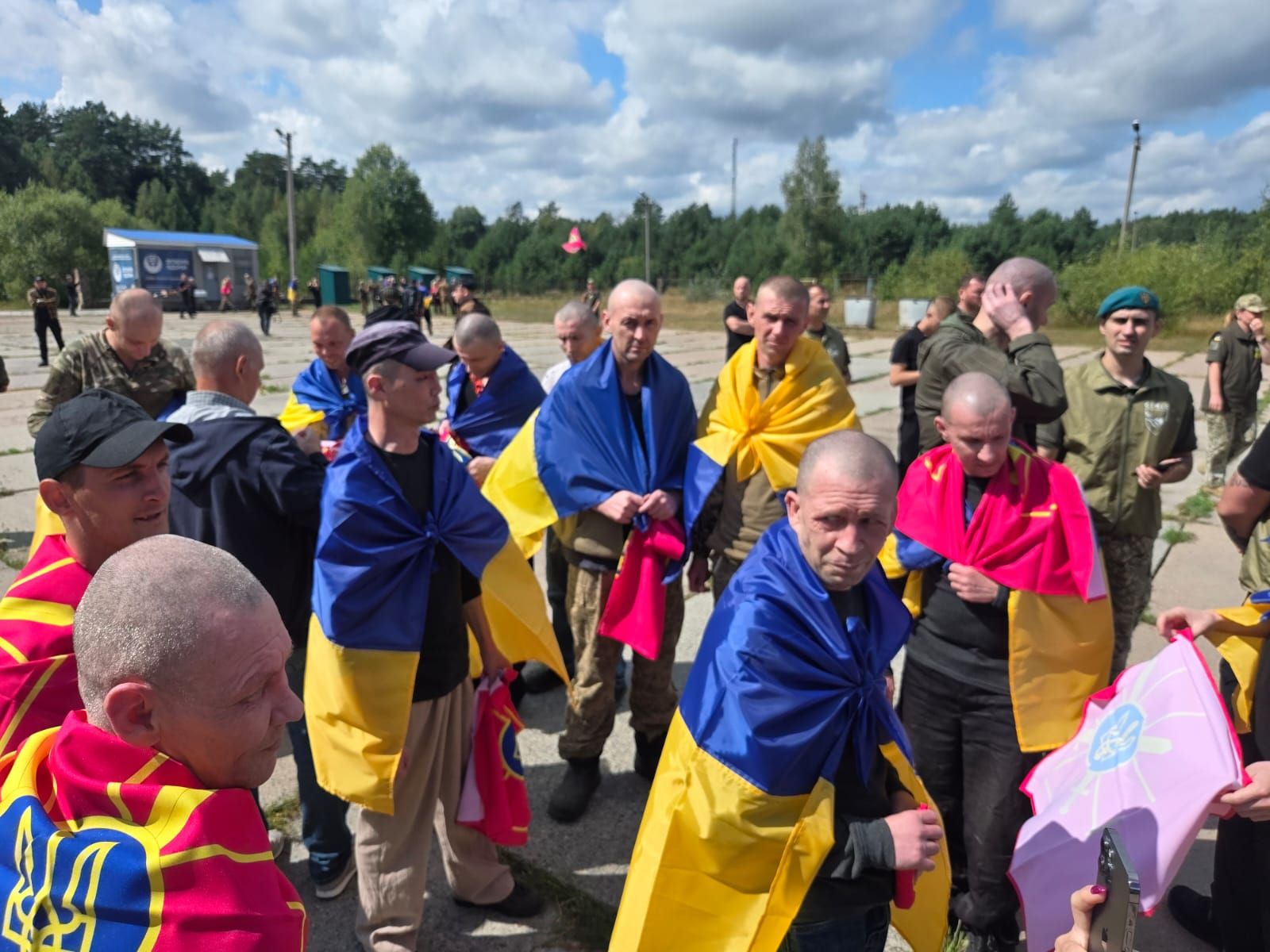
Freed Ukrainian prisoners of war and officials pose with military flags after returning from Russian captivity, 19 August 2026. Photo: Security Service of Ukraine
Years behind Russian bars
The captures span the entire full-scale war. One of those freed had been held since 2022, 16 since 2023, and 48 since 2024. Another 31 were seized in 2025 and seven this year. By the same tally, the International Committee of the Red Cross had confirmed the captivity of 102 of the group before the handover, with a single case verified through other sources.
A previous swap in late June returned 160 defenders, all of them held since 2022.
Freed Ukrainian servicemen wrapped in national flags gather after returning from Russian captivity, 19 August 2026. Photo: Coordination Headquarters for the Treatment of Prisoners of War
Wounded and ill
The released defenders will undergo full medical examinations, receive physical and psychological rehabilitation, and obtain the state payments provided by law. The head of the President's Office, Kyrylo Budanov, said doctors were already doing everything necessary for the returnees, most of whom came back with wounds and serious illness.
Their condition fits a wider pattern Ukrainian officials have described, in which Russia starves most captives and executes many surrendered soldiers on the battlefield.
Released Ukrainian defenders hold State Border Guard Service flags after their return from Russian captivity, 19 August 2026. Photo: Ivan Vyhivskyi / Interior Ministry
"We remember everyone still in captivity"
President Volodymyr Zelenskyy said the freed included men who had defended Mariupol.
"We remember every man and every woman still held captive. We are doing everything possible to bring all our people home," he said.
Freed Ukrainian servicemen wrapped in national flags gather after returning from Russian captivity, 19 August 2026. Photo: Coordination Headquarters for the Treatment of Prisoners of War
The Security Service of Ukraine noted the swap ran through the joint center it operates to coordinate the search and release of prisoners. Oleh Ivashchenko, chief of the Main Directorate of Intelligence (HUR) and head of the Coordination Headquarters, met the returning defenders in person.
Yevhenii Khmara has become Ukraine's new defense minister after the voting in the Ukrainian parliament. He will take office after the previous Minister of Defense, Mykhailo Fedorov, whose dismissal sparked major protests across Ukraine, but this did not change the decision.
During his first speech, Khmara made it clear that he would continue his predecessor's course — the technologization of the army, according to Ukraine's Defense Ministry.
"The aggressor can only
Yevhenii Khmara has become Ukraine's new defense minister after the voting in the Ukrainian parliament. He will take office after the previous Minister of Defense, Mykhailo Fedorov, whose dismissal sparked major protests across Ukraine, but this did not change the decision.
During his first speech, Khmara made it clear that he would continue his predecessor's course — the technologization of the army, according to Ukraine's Defense Ministry.
"The aggressor can only be forced into peace through the strength of our military, technological, and asymmetric solutions, first and foremost, the constant updating and effective application of technology," Khmara said.
He added that there "would be more Ukrainian weapons, and strikes would be more precise."
Threat of new wave of mobilization in Russia
Khmara also stated that intelligence data indicates Russia is preparing for a new wave of mobilization, so building up the means to destroy Russia's combat capabilities is one of the key priorities of the Defense Forces.
"A strong enemy is waging war against us, one that employs the most treacherous and cruel methods of warfare. We know about Russia's next steps, its mobilization plans, and its strategy for fall and winter," Khmara stated.
Earlier, Deputy Head of the Ukrainian Defense Intelligence, Major General Vadym Skibitsky, said in an interview with RBC-Ukraine that Russia could attempt to launch an offensive in north of Ukraine this year, but the necessary conditions for such an operation are not currently in place. Such an assault could threat Sumy, Chernihiv, and Kyiv oblasts.
Opportunities for this could arise through mobilization following the parliamentary elections in the Russian Federation in September.
Three main priorities
Also, during his speech, Khmara outlined three priorities for his position. Among them: seizing the strategic initiative in all domains of war, timely delivery of weapons to the front along with transparent procurement procedures, and human capital.
"This is about seizing the strategic initiative in all domains of war: on land, at sea, in the air, in the information space," Khmara stated.
He also emphasized the need to ensure rapid exchange of information between the front and the ministry, so that the needs of the military are promptly taken into account when making decisions.
According to the newly appointed minister, the army must receive the necessary weapons in sufficient quantities and on time, and procurement must be carried out transparently, free of unnecessary bureaucracy, and in the interests of the front and Ukraine's defense.
In addition, Khmara named "human capital, the lives and health of soldiers" as a priority.
"Technology is needed so that the Ukrainian defender has an advantage, so that the risk to a person's life is minimized," he added.
Polish prosecutors have charged a 46-year-old woman over a nationality-based attack on two Ukrainian siblings in Bydgoszcz, days after police detained her and a 34-year-old man, whom they questioned as a witness, Polish Radio's Ukrainian Service reported the detentions on 18 August 2026, with the charges filed the same evening.
The detentions came four days after the alleged attack in a park near Bydgoszcz’s main railway station. The Bydgoszcz-North district prosecutor
Polish prosecutors have charged a 46-year-old woman over a nationality-based attack on two Ukrainian siblings in Bydgoszcz, days after police detained her and a 34-year-old man, whom they questioned as a witness, Polish Radio's Ukrainian Service reported the detentions on 18 August 2026, with the charges filed the same evening.
The detentions came four days after the alleged attack in a park near Bydgoszcz’s main railway station. The Bydgoszcz-North district prosecutor charged the woman with insulting the siblings and violating a minor's bodily integrity on nationality grounds. She denied intentionally insulting or assaulting the children and gave police a different account of the encounter.
The case comes amid rising reports of suspected hate crimes against Ukrainians and worsening relations between Warsaw and Kyiv. Police received 180 such reports in the first half of 2026—about one a day. At that pace, 2026 would end more than 30% above 2025 and nearly 35% above 2024.
Prosecutors charged only the woman; the 34-year-old man detained with her was questioned as a witness, even though the mother and the consulate described both adults as aggressors. The prosecutor placed her under police supervision, imposed a no-contact order, and set bail at 5,000 zł ($1,340). The destruction of the boy's toy drone was treated as a misdemeanor because the toy was worth just over 100 zł ($27).
The siblings—a 14-year-old girl and her 12-year-old brother—were playing with a toy drone in the park when the adults confronted them about using it, their mother told police. The Ukrainian consulate said the adults also insulted and threatened the children after hearing them speak Ukrainian.
“They twisted a child’s arm, broke a toy drone, and threw fragments at the boy,” Ukraine’s Consulate General in Gdańsk said.
The consulate said the fragments scratched the boy but caused no serious injury.
Other attacks on Ukrainians in Poland
The Bydgoszcz case is one of several recent assaults involving Ukrainian victims.
Police detained two women on 14 August over an attack on Ukrainian men outside a Poznań restaurant the previous day. A video showed one woman insulting, spitting at, and striking the men.
In July, three men allegedly beat a Ukrainian couple in Wrocław after asking whether they were Ukrainian. In Łódź, a man allegedly attacked a passerby he mistook for Ukrainian, breaking his nose and jaw.
The violence has prompted public protests. On 9 August, the Committee for the Defense of Democracy organized “Don’t be indifferent” rallies in 22 cities. Two days earlier, Warsaw organizers delivered a petition with more than 11,000 signatures calling for government action against attacks on Ukrainians.
Deepening Polish-Ukrainian rift and decline in relations
The rise in anti-Ukrainian violence in Poland has unfolded amid worsening political relations between Kyiv and Warsaw. Polish support for accepting Ukrainian refugees fell from 94% in March 2022 to 48% by early 2026, while politicians increasingly use Ukraine as a wedge issue.
Historical disputes over the Volhynia massacres and the Ukrainian Insurgent Army (UPA) have also strained relations. The rift sharpened after Zelenskyy signed a decree granting a Ukrainian special forces unit the honorary title “Heroes of the UPA.” Polish President Karol Nawrocki announced on 19 June that he had decided to revoke Zelenskyy’s Order of the White Eagle, Poland’s highest state honor.
Ukraine has opened its own criminal investigation into the 2022 destruction of the Nord Stream gas pipelines, months after Germany charged a Ukrainian over the blasts, Suspilne reported. Prosecutors in Kyiv registered the case on war-crimes grounds and say they will test whether Russia staged the sabotage to discredit Ukraine. Serhii Kuznietsov is due to stand trial in Germany in October.
The undersea link was built to carry Russian gas around Ukraine and tie Europe mor
Ukraine has opened its own criminal investigation into the 2022 destruction of the Nord Stream gas pipelines, months after Germany charged a Ukrainian over the blasts, Suspilne reported. Prosecutors in Kyiv registered the case on war-crimes grounds and say they will test whether Russia staged the sabotage to discredit Ukraine. Serhii Kuznietsov is due to stand trial in Germany in October.
The undersea link was built to carry Russian gas around Ukraine and tie Europe more tightly to Moscow, a dependence Europe scrambled to shed after Russia's 2022 invasion.
Kyiv will test a Russian false-flag version
Ukraine's Security Service, under the Prosecutor General's Office, opened proceedings on 9 July under the article on violations of the laws and customs of war. Kuznietsov's Ukrainian lawyer, Mykola Katerynchuk, told Suspilne about the case.
The Prosecutor General's Office confirmed it is supervising a probe into the "possible commission in September 2022, amid the international armed conflict between Russia and Ukraine, by citizens of Ukraine, of actions connected to the undermining" of both pipelines in the Baltic Sea. It said the case was registered after the "independent discovery in the media" that Germany had charged a Ukrainian citizen.
Given Russia's use of hybrid methods, investigators will also examine whether Russians organized the explosions as a "false flag" operation, using Ukrainian citizens or imitating their participation to discredit Ukraine.
The office said it used the laws-and-customs-of-war charge because it matches the qualification chosen by Germany's Federal Prosecutor's Office.
Explore further
Russia laid Nord Stream to bypass Ukraine amid preparations for war. Four years after it exploded, Kyiv says it had nothing to do with blasts
The case against Serhii Kuznietsov
The pipelines exploded on 26 September 2022. On 8 August 2025, Germany's Federal Court of Justice issued an arrest warrant for Kuznietsov, alleging he led a group of six who mined the pipelines and detonated them remotely.
Italian police arrested him on 21 August 2025, and Italy's Supreme Court later confirmed his extradition to Germany. A Polish court, by contrast, refused a German request for another Ukrainian suspect, Volodymyr Zhuravlov.
On 2 July 2026, Germany's Federal Prosecutor's Office published its charges — an attack on civilian objects, causing an explosion, and destroying structures. Kuznietsov denies guilt.
The crew flies with the Black Sky unmanned-systems battalion of the National Guard's 3rd Operational Purpose Brigade Spartan. The commander, callsign Arti, said the crew's middle-strike drones can strike Russian military vehicles as close as 50 and as far as 150 kilometers behind the front line, mostly trucks and passenger cars, Army Inform reported.
The war now reaches deep into the Russian rear, where strike drones hit vehicles once safe from the front. Every Russian
The crew flies with the Black Sky unmanned-systems battalion of the National Guard's 3rd Operational Purpose Brigade Spartan. The commander, callsign Arti, said the crew's middle-strike drones can strike Russian military vehicles as close as 50 and as far as 150 kilometers behind the front line, mostly trucks and passenger cars, Army Inform reported.
The war now reaches deep into the Russian rear, where strike drones hit vehicles once safe from the front. Every Russian vehicle this crew burns is a blow to the invasion's logistics, leaving fewer supplies and fewer troops able to reach Russian positions. (edited)
Arti said the drones' main advantages are their range, speed, and stealth, while navigator Schultz, another crew callsign, said they are particularly effective 50–60 kilometers from the line of contact.
How the crew works
The four-person crew includes a pilot, navigator, technician and sapper. Arti joined the military intending to fly drones and first served as a second pilot on another crew before moving to middle-strike aircraft.
Schultz was mobilized in September 2024 and spent nearly a year and a half flying Mavic drones for reconnaissance, dropping munitions and delivering supplies to Ukrainian troops. That experience helped him transition to middle-strike drones.
“I navigate the terrain and give the pilot the course to fly,” Schultz said. “I already know the areas where enemy vehicles may move and where they may stage near the treelines.”
Photo: Daria Moskalets/ Army Inform
Schultz said Russian forces have become increasingly reluctant to move vehicles close to the front line after repeated Ukrainian strikes.
"At 50 to 60 kilometers from the [frontline] they're quite effective. Right on the line we won't find anyone now — nobody drives there anymore, because our guys worked them over for so long. The occupiers are already afraid to drive closer. It knocks out all the enemy's logistics," he said.
Schultz said this can mean fewer supplies and personnel reaching Russian positions.
He recalled the first time he watched one of the crew’s strikes in real time. Reconnaissance operators tracked a vehicle carrying Russian personnel while the drone crew moved in to attack.
Photo: Daria Moskalets/ Army Inform
“We saw it ourselves—we saw how we hit it, how everything exploded and burned,” he said.
The crew began flying middle-strike drones only a few months ago.
“We’re a young crew. There’s still a lot ahead,” Schultz said.
A Russian court in Rostov-on-Don sentenced 61-year-old Ukrainian Andrii Hulak to five years and four months in a penal colony over alleged service in Ukraine’s Azov brigade, Mediazona reported on 17 August 2026. The court gave no details of when he allegedly served in Azov, what role he supposedly held, or any specific act Hulak was accused of committing.
Russia declared Azov a “terrorist organization” in August 2022 and has since prosecuted Ukrainians it claims served
A Russian court in Rostov-on-Don sentenced 61-year-old Ukrainian Andrii Hulak to five years and four months in a penal colony over alleged service in Ukraine’s Azov brigade, Mediazona reported on 17 August 2026. The court gave no details of when he allegedly served in Azov, what role he supposedly held, or any specific act Hulak was accused of committing.
Russia declared Azov a “terrorist organization” in August 2022 and has since prosecuted Ukrainians it claims served in or were connected to the brigade. Mediazona says Russian courts have treated an alleged connection to units such as Azov as enough to bring charges.
Azov is a Ukrainian National Guard brigade that became a symbol of Ukrainian resistance during the defense of Mariupol. The military unit has since become a primary target of Russian propaganda campaigns aimed at defaming Ukraine.
Hulak’s detention date and location remain unknown
The human rights group Memorial identified the charge as Part 2 of Article 205.4 of Russia’s Criminal Code, which covers participation in a “terrorist group.”
Hulak was born in Prymorske, Donetsk Oblast, and lived in Russian-occupied Urzuf near Mariupol before his detention, Mediazona reported. Memorial says Russia added him to its state register of “extremists and terrorists” on 21 October 2025 and lists him as a political prisoner.
His detention date and current location remain unknown.
Russia prosecutes Ukrainians in occupied territories
Hulak’s case is part of a broader pattern of Russian prosecutions of Ukrainians from occupied territories, including civilians accused of supporting Kyiv and service members prosecuted over their military affiliations.
In occupied Crimea, rights monitors documented 520 Ukrainians facing politically motivated criminal charges by April 2026—more than twice the number recorded when the full-scale invasion began. Of those, 351 were in pre-trial detention or serving sentences.
Outside Crimea, a Russian-installed court in occupied Donetsk sentenced a 17-year-old to six and a half years for allegedly sharing military information with Ukraine’s Security Service. In occupied Zaporizhzhia Oblast, a Russian court gave two women from Enerhodar 14-year sentences over alleged donations of $120 and $57 to Ukrainian forces.
Russia could assemble a strike force for an offensive into northern Ukraine by February 2027 if Moscow launches another mobilization, Ukrainian military intelligence's (HUR) deputy chief Major General Vadym Skibitskyi told RBC-Ukraine on 18 August.
Skibitskyi said another mobilization could follow Russia’s September parliamentary elections. Depending on its scale, that call-up could produce a strike force by February 2027. Skibitskyi based the February estimate on Russi
Russia could assemble a strike force for an offensive into northern Ukraine by February 2027 if Moscow launches another mobilization, Ukrainian military intelligence's (HUR) deputy chief Major General Vadym Skibitskyi told RBC-Ukraine on 18 August.
Skibitskyi said another mobilization could follow Russia’s September parliamentary elections. Depending on its scale, that call-up could produce a strike force by February 2027. Skibitskyi based the February estimate on Russia’s 2022 mobilization. He said some personnel reached the front in December 2022, while combat-ready units arrived in January 2023.
Earlier warnings identified a northern route
The February estimate follows Ukrainian warnings about possible attacks across the northern border. In May, Zelenskyy said Ukraine was tracking five scenarios for expanding the war through the north, including an advance through Chernihiv Oblast toward Kyiv.
Syrskyi called an attack from Russia’s Bryansk Oblast into Chernihiv Oblast Moscow’s most realistic northern option, ranking it above an operation through Belarus. Its purpose, he said, would be to draw Ukrainian forces away from the east and south.
Russia has also struggled to prepare other major campaigns as Ukraine targeted the forces and systems needed to carry them out. ISW assessed that Ukrainian drones likely disrupted preparations for a spring–summer offensive in Donetsk Oblast, while a planned Russian naval-drone campaign reportedly stalled after Starlink access was blocked.
Ukrainian intelligence says Russia lacks the manpower
Skibitskyi said Moscow cannot form the units required for a new offensive without mobilization. HUR estimates Russia lost more personnel than it recruited in both June and July. The shortfall reached 3,000 in June and at least 1,000 in July, meaning monthly contracts no longer replaced battlefield losses.
The agency says Russia’s operational reserve is about one-tenth the size of its combat component against Ukraine. Moscow also lacks enough personnel to expand brigades into divisions, while recruitment for its unmanned-systems forces has reached only 30% of its quota.
CSIS estimated in January that Russia had suffered losses unmatched by any major state since World War II while advancing extremely slowly.
Ukraine's weapons marketplace DOT-Chain Defense has compressed delivery times from months to weeks after one year of operation, the country's Defense Ministry reported. For the fastest product categories—electronic warfare gear, ground robots, interceptor drones—orders now reach units within 24 hours.
Ukraine's war against Russia's invasion has pushed Kyiv to rebuild military procurement from the ground up, trading slow bureaucratic pipelines for digital platforms where
Ukraine's weapons marketplace DOT-Chain Defense has compressed delivery times from months to weeks after one year of operation, the country's Defense Ministry reported. For the fastest product categories—electronic warfare gear, ground robots, interceptor drones—orders now reach units within 24 hours.
Ukraine's war against Russia's invasion has pushed Kyiv to rebuild military procurement from the ground up, trading slow bureaucratic pipelines for digital platforms where frontline units pick and receive their own weapons faster than Western militaries have managed. Domestic manufacturers now make 90% of newly authorized systems.
Fastest deliveries measured in hours
The Defense Ministry and the Defense Procurement Agency DOT have jointly driven the acceleration, according to the ministry's statement.
"Delivery times for drones and other systems have shrunk from months to a matter of weeks, and often to days," the ministry said.
Beyond that general compression, several categories saw delivery within a single day. Electronic warfare systems, ground robotic platforms, reconnaissance and bomber drones, interceptor drones, and FPV drones on both fiber-optic and radio control all reached units within 24 hours. Ammunition for unmanned systems arrived within six days.
Explore further
Russian drone attacks on Ukraine’s Danube ports hit recent high, Romania says
Over the first year, the platform shipped more than 1.2 million drones and other systems. Units now choose from 1,181 products made by 300 domestic manufacturers.
How the marketplace works
DOT-Chain Defense supplements centralized state supply rather than replacing it, the ministry noted. Combat units use allocated funds to browse and order the equipment they need for their section of the front. The marketplace handles contracts, payments, and delivery.
The platform's drone constructor tool lets units customize drone configurations before ordering. A dedicated training course on using the marketplace recently launched inside the Army+ mobile app.
Explore further
US copies Ukraine: Washington launches Amazon-backed UAVs marketplace, inspired by Kyiv’s Brave1 Market and DOT-Chain Defense
Broader procurement picture
The one-year milestone caps a period of rapid scaling across Ukraine's defense procurement. The country contracted about $8 billion worth of drones in the first half of 2026—double the same period last year, according to the Defense Ministry.
More than 400 combat units now shop for weapons through the marketplace's companion Brave1 Market program using points earned for confirmed battlefield activity. Washington modeled its own Unmanned Aircraft Systems Marketplace on the Ukrainian original earlier this year.
The US plan to sell Türkiye F-35 stealth fighter jets has stalled, blocked by a Russian missile system Ankara bought years ago, Semafor reported. Lawmakers in Washington won't clear the deal while Türkiye keeps the hardware. The lone buyer in talks hasn't budged, and destroying the system is now on the table.
Russia has long used arms exports to pull buyers into its orbit, and the war it started raised the price of those ties—leaving governments that bought Russian air
The US plan to sell Türkiye F-35 stealth fighter jets has stalled, blocked by a Russian missile system Ankara bought years ago, Semafor reported. Lawmakers in Washington won't clear the deal while Türkiye keeps the hardware. The lone buyer in talks hasn't budged, and destroying the system is now on the table.
Russia has long used arms exports to pull buyers into its orbit, and the war it started raised the price of those ties—leaving governments that bought Russian air defense to clash with the supplier that sold it.
The Russian system is in the way
US sanctions law bars Türkiye from the F-35 program while it retains the Russian S-400, Semafor reported. That system is a long-range air defense, built to shoot down planes and missiles. Ankara already paid for six of the jets. They have sat in the United States since Washington expelled Türkiye from the F-35 program in 2019. US President Donald Trump announced plans to sell the jets more than a month ago, and nothing has moved since.
Explore further
Türkiye wants to send Ukraine old US-made cluster munitions—one human rights group is fighting to stop it
No buyer, no easy exit
One way out is to sell the S-400 to another country. Türkiye reportedly opened talks with the United Arab Emirates (UAE) last month, but they don't appear to have progressed. American lawmakers insist Ankara must give up the system entirely first.
Republican Senator Rick Scott told Semafor that Türkiye shouldn't get the jets unless it becomes a true partner—"so if they have the S-400, they cannot have the F-35." Senate Foreign Relations Committee Chairman Jim Risch, a longtime opponent, said the process is "at a standstill."
Explore further
Erdoğan asks Putin to take back Russian S-400 SAM systems in move to win Trump’s favor
Israel and Congress are the live block
The sharper obstacle sits in Washington, Semafor reported. A vote to sell would pit Israel against a NATO ally, and many of Trump's own allies want the S-400 scrapped completely. Israeli Prime Minister Benjamin Netanyahu warned the jets could "destroy the power balance in the Middle East." The outlet said AIPAC, the leading pro-Israel lobby in Washington, is pressing Congress to keep the block.
Selling it still runs through Moscow
Any resale carries its own catch: Russia must approve the transfer of the S-400, giving the Kremlin a reason to block it. The only option that bypasses Moscow is to disable or destroy the system outright. Türkiye earlier tried to return the systems to Moscow, hoping to thaw relations with Washington. It didn't work.
The Trump administration says Ankara hasn't met all the conditions to buy the jets, and the State Department wants the S-400 issue settled with guarantees first.
Russia launched a massive attack on one of Ukraine’s DTEK thermal power plants, severely damaging equipment and forcing the facility to stop generating electricity, the energy company said on 18 August.
The strike comes as Russia continues its campaign against Ukraine’s energy infrastructure ahead of another winter, with Ukrainian officials warning that Moscow is expected to intensify attacks on critical civilian systems.
DTEK power plant sustains significant damage
Russia launched a massive attack on one of Ukraine’s DTEK thermal power plants, severely damaging equipment and forcing the facility to stop generating electricity, the energy company said on 18 August.
The strike comes as Russia continues its campaign against Ukraine’s energy infrastructure ahead of another winter, with Ukrainian officials warning that Moscow is expected to intensify attacks on critical civilian systems.
DTEK power plant sustains significant damage
DTEK said Russian forces heavily damaged equipment at one of its thermal power plants, forcing the station to halt electricity generation. The company did not identify the plant or provide an estimate of when it could resume operations.
DTEK’s thermal power plants have been attacked more than 230 times since the start of Russia’s full-scale invasion, according to the company.
During the previous major attack on 12 June, one DTEK employee was killed, the company said.
Ukraine faces another winter of energy attacks
The latest strike adds to extensive damage Russia has inflicted on Ukraine’s power system. Energy Minister Denys Shmyhal said earlier this month that Russia has destroyed or damaged more than 80% of Ukraine’s power-generating capacity.
Ukraine is preparing for another difficult winter after repeated Russian strikes last winter caused widespread damage to electricity and heating infrastructure.
Shmyhal has also warned that Russia could broaden its campaign this winter by targeting Ukraine’s water systems. Such attacks could make prolonged power outages significantly more dangerous for civilians by disrupting water supplies and sewage systems.
Kyiv Oblast faces mounting Russian attacks
The power plant strike came as Russia launched another large drone attack on Ukraine, with Kyiv Oblast the main target. Ukraine’s Air Force said dozens of drones were launched during the day, with most intercepted or suppressed by Ukrainian air defenses.
The latest assault is part of a broader pattern of Russian attacks on Kyiv Oblast in recent weeks. Alongside energy infrastructure, Russian forces have repeatedly targeted warehouses, distribution centers and other logistics facilities around the capital, disrupting the systems that supply Kyiv and other parts of Ukraine.
With winter approaching, the combination of attacks on energy generation and civilian logistics is adding pressure to a country already dealing with years of damage to its critical infrastructure.
Ukraine’s military intelligence (HUR) has named 10 people and two institutions it says are teaching Ukrainian children under occupation to handle weapons—and preparing them to serve Russia.
HUR says those named use youth groups, occupation education authorities, and schools to erase children’s Ukrainian identity and prepare them for Russian military service. Publishing their names supports Ukraine’s efforts to document the system and hold its organizers accountable, but
Ukraine’s military intelligence (HUR) has named 10 people and two institutions it says are teaching Ukrainian children under occupation to handle weapons—and preparing them to serve Russia.
HUR says those named use youth groups, occupation education authorities, and schools to erase children’s Ukrainian identity and prepare them for Russian military service. Publishing their names supports Ukraine’s efforts to document the system and hold its organizers accountable, but HUR announced no charges or sanctions with the update.
How Russia militarizes Ukrainian youth in occupied territory
At a May 2026 “Zarnitsa 2.0” competition, the Kremlin-backed Movement of the First taught children to handle weapons and explosives and operate drones, HUR said.
At the competition’s stage in occupied Zaporizhzhia Oblast, regional organizer Viktoria Kostromina stated those skills would provide children with a “reliable foundation in life.”
The training sits inside a much larger school system. From 1 September, occupation schools will add a separate basic military-training track alongside a new Russian ideology class and behavior grades. More than 582,000 children across nearly 2,000 schools study under the imposed Russian curriculum, according to the Almenda Center of Civil Education.
Russia is also embedding combat preparation more deeply. “Cossack classes” will make ideological and combat-related drills compulsory for fifth-graders in four occupied Donbas cities. In Crimea, occupation authorities say they have built a pipeline that selects schoolchildren for drone training and ultimately for the Russian military reserve.
The policy has a long horizon. Putin’s 2025 strategy set a 95% “Russian civic identity” target for occupied populations by 2036.
Who HUR says is behind the indoctrination
HUR linked the individuals to the Movement of the First, Yunarmia, occupation education bodies, and a school in Simferopol.
Whom the HUR identified
Artur Orlov: chairman of the Kremlin-backed Movement of the First.
Oleksii Lavrentiev, Marina Tsvetinskaya, Ruyal Aliyev, Ekaterina Kozyr, Viktoria Kostromina and Kateryna Popova: regional Movement of the First organizers in occupied Ukraine.
Svitlana Bespalova: occupation deputy education minister in Crimea.
Nikita Polyakov: Yunarmia organizer in occupied Kherson Oblast.
Dmytro Pryvidion: director of School No. 5 in occupied Simferopol.
HUR also identified two institutions: Pryvidion’s School No. 5 and the Selet–Ak Bars youth center in Foros. It says the school holds militaristic activities and produces devices for loading rifle magazines, while the center stages pro-war events for children.
All 12 entries now appear in the “Child Kidnappers” section of HUR’s War&Sanctions database.
Ukraine has previously pursued individual organizers through criminal cases. In 2024, the SBU accused a Crimea occupation official of using schools and military camps to indoctrinate pupils and encourage enlistment in Russia’s forces.
Russia has threatened Britain with “consequences” over reports that Ukrainian forces used drones manufactured by UK companies to carry out strikes inside Russia.
The Russian Embassy in London accused the UK of deliberately escalating the war by supporting Ukraine’s long-range strike campaign, saying Britain was seeking to “contain Russia and inflict maximum damage on it by proxy.” It warned that the deeper Britain becomes involved, “the higher the price it will pay.”
Russia has threatened Britain with “consequences” over reports that Ukrainian forces used drones manufactured by UK companies to carry out strikes inside Russia.
The Russian Embassy in London accused the UK of deliberately escalating the war by supporting Ukraine’s long-range strike campaign, saying Britain was seeking to “contain Russia and inflict maximum damage on it by proxy.” It warned that the deeper Britain becomes involved, “the higher the price it will pay.”
The threat followed news that Ukrainian forces had used two British-built drone systems to strike targets inside Russia for the first time. The Sunday Times, citing Ukrainian military sources, reported that the drones had been used against targets including oil refineries in Volgograd and Yaroslavl over the past six months.
Moscow warns Britain of “consequences”
The Russian Embassy said in a statement that the reported use of British-made drones “confirms that London is deliberately opting for an escalation of the Ukraine crisis.”
It warned that British actions would “inevitably carry consequences for which it will have to answer,” without specifying what form those consequences could take.
The warning comes as Ukraine has significantly expanded its long-range strike campaign against Russian military and energy targets. Kyiv has increasingly used large drone swarms to hit targets deep inside Russia, seeking to disrupt military production, logistics, and energy revenues while forcing Moscow to spread its air defenses across a much larger area.
Burnham says UK will continue backing Ukraine
UK Prime Minister Andy Burnham rejected Moscow’s warning, saying Britain would continue supporting Ukraine despite Russian threats, The Independent reported on Tuesday.
“This is the UK doing what it has long said it would do, which is to support Ukraine 100 per cent against this illegal war led by Vladimir Putin,” Burnham said during a visit to Wolverhampton.
“We are providing support so that Ukraine can defend itself,” he said, adding: “We are not fair weather friends. We will be there in Ukraine’s hour of need, and that won’t change.”
UK Work and Pensions Minister Lilian Greenwood similarly said Britain’s resolve to support Ukraine remained “completely steadfast” and that the country would continue providing the military equipment Kyiv needs.
The UK Ministry of Defence also said Russia should have “no doubt” about the government's resolve to oppose Russian aggression in Ukraine and against Britain and its allies.
UK Prime Minister Andy Burnham and Ukrainian President Volodymyr Zelenskyy aboard the Ukrainian Navy’s Cherkasy minehunter at Portsmouth Naval Base, UK, 27 July 2026. Photo: Zelenskyy
British drones expand Ukraine’s deep-strike capabilities
According to The Sunday Times, one of the British systems used by Ukraine is the Nyan, a jet-powered one-way attack drone produced by BAE Systems subsidiary Callen-Lenz, with a reported range of more than 150 miles.
The second system has a reported range exceeding 600 miles, although its manufacturer was not identified for security reasons. The drones provide Ukraine with additional long-range strike capacity that can be produced and deployed in larger numbers than more expensive Western cruise missiles.
Explore further
British drones hit Russia for first time in Ukraine’s deep-strike campaign – The Sunday Times
The reported deployment marks a further expansion of UK military support for Ukraine as Kyiv increasingly takes the fight to Russian military and energy infrastructure inside Russia.
Ukraine's military intelligence (HUR) sees no battlefield signs that Russia is preparing for a ceasefire, deputy chief Major General Vadym Skibitskyi said in an interview with RBC-Ukraine on 18 August 2026. The agency expects no peace agreement before the end of 2026.
Russia’s General Staff plans to capture the remainder of Donetsk Oblast by year-end, Skibitskyi said. Meanwhile, HUR estimates that Russian personnel losses exceeded contract recruitment in June and July,
Ukraine's military intelligence (HUR) sees no battlefield signs that Russia is preparing for a ceasefire, deputy chief Major General Vadym Skibitskyi said in an interview with RBC-Ukraine on 18 August 2026. The agency expects no peace agreement before the end of 2026.
Russia’s General Staff plans to capture the remainder of Donetsk Oblast by year-end, Skibitskyi said. Meanwhile, HUR estimates that Russian personnel losses exceeded contract recruitment in June and July, leaving Moscow unable to create new military formations without mobilization.
HUR estimates Russia lost more troops than it recruited in both June and July. Losses exceeded new contract personnel by 3,000 in June and by at least 1,000 in July, leaving recruitment unable to replace battlefield losses. The agency says Russia’s operational reserve is only about one-tenth the size of the part already engaged in combat against Ukraine.
Russia has set a 2026 target of recruiting 409,000 personnel. Without mobilization, however, Moscow cannot create new formations or turn existing brigades into divisions because it lacks personnel, Skibitskyi said. The recruitment plan for Russia’s unmanned-systems forces is only 30% complete, and the command is trying to fill the gap with personnel from other military branches, he added.
If Russia mobilizes after its September parliamentary elections, it could assemble a powerful strike group by around February 2027, according to HUR. Skibitskyi did not rule out its use for a northern offensive. At present, however, HUR sees no conditions, indicators, or troops for such an operation.
Russia previously targeted September for Donbas
In April, Skibitskyi told the Financial Times that Moscow aimed to capture all of Donbas by September, after missing its deadlines to take Kostiantynivka and Druzhkivka. Russia was transferring 20,000 troops from strategic reserves to sustain the offensive, although this amounted to less than one month's worth of its battlefield losses.
By early August, DeepState reported 36 square kilometers of additional Russian-controlled territory across Ukraine in July, a figure that included map corrections for May and June. Without those corrections, Russia gained about 88 square kilometers.
DeepState reported limited progress near Rodynske and Kostiantynivka and toward Sloviansk and Kramatorsk, the heart of Ukraine’s “fortress belt.” At that pace, Russia had “no chance” of capturing all of Donetsk Oblast even by 2027, the group said. It cautioned that another wave of mobilization or a wider deployment of North Korean troops could change the forecast.
The 1st Corps of Ukraine's National Guard, known as Azov, says it destroyed 67 Russian fuel tanks holding 4,221 tons of fuel in occupied Donetsk Oblast, in an operation it named Hell-2. The unit released video of the strikes on 17 August, saying it had spent a month tracking where Russian forces moved and stored the fuel before hitting it.
Fuel is the blood of Russia's war, which is why its forces increasingly hide storage sites and route deliveries through improvised l
The 1st Corps of Ukraine's National Guard, known as Azov, says it destroyed 67 Russian fuel tanks holding 4,221 tons of fuel in occupied Donetsk Oblast, in an operation it named Hell-2. The unit released video of the strikes on 17 August, saying it had spent a month tracking where Russian forces moved and stored the fuel before hitting it.
Fuel is the blood of Russia's war, which is why its forces increasingly hide storage sites and route deliveries through improvised logistics hubs. Strikes on those hubs strip Russian units of what they need to move, supply, and fight. There have already been cases of Russian forces concealing fuel in grain trucks in occupied territories.
Azov warned the Russian forces before the strike
Azov says it flagged the fuel sites a month before hitting them, and struck when the Russians kept using them anyway.
“A month ago, we warned the occupier: ‘Azov sees your movements and will strike at the right moment.’ But some units of the Russian Armed Forces continued to store fuel in occupied Donetsk Oblast,” Azov said.
1 корпус НГУ «Азов» карає окупантів за спроби перевезення і зберігання військових вантажів. Задіяні у зберіганні та постачанні палива об’єкти росіян залишаються лише на картах, у реальності на їхньому місці – випалена земля. pic.twitter.com/FGgdn4J34k
Azov emphasizes that it does not attack civilian gas stations or civilians. The operation targeted facilities used to supply Russian occupation forces. At the same time, according to Azov fighters, Russian military infrastructure remains a legitimate target.
The Russians didn’t get the message the first time
Hell-2 is likely a follow-up to the Hell operation, during which the first series of strikes, Azov also targeted the fuel logistics of Russian forces in occupied Donetsk Oblast.
On 12 July, Azov reported striking a secret Russian fuel base in Novoamvrosiivka. Drone operators from the 1st Azov Corps of the National Guard conducted reconnaissance and used Hornet drones to strike the facility. The strikes damaged fuel tanks and the base’s infrastructure and blocked the railway track.
According to the report, the Russians used the facility as a logistics hub to supply their occupation forces. After the strike, they were forced to abandon the base and move their logistics operations from the occupied territory into Russia.
Ukrainian Special Operations Forces (SOF) have retaken Andriivka-Klevtsove, a settlement on the border between Donetsk and Dnipropetrovsk oblasts, and captured 30 Russian soldiers, the SOF said on 17 August.
The operation is part of Ukraine’s broader eight-month counteroffensive on the Oleksandrivka axis, during which Kyiv says its forces have recaptured 745 square kilometers and 26 villages across Donetsk, Dnipropetrovsk, and Zaporizhzhia oblasts. The offensive has pus
Ukrainian Special Operations Forces (SOF) have retaken Andriivka-Klevtsove, a settlement on the border between Donetsk and Dnipropetrovsk oblasts, and captured 30 Russian soldiers, the SOF said on 17 August.
The operation is part of Ukraine’s broader eight-month counteroffensive on the Oleksandrivka axis, during which Kyiv says its forces have recaptured 745 square kilometers and 26 villages across Donetsk, Dnipropetrovsk, and Zaporizhzhia oblasts. The offensive has pushed Russian forces back from Dnipropetrovsk Oblast after months of Russian advances toward the region.
Russian forces infiltrated the settlement in small groups
Andriivka-Klevtsove, formerly known by its Soviet name Iskra, had been targeted by Russian forces attempting to gradually establish positions in the settlement.
According to the SOF, Russian troops had been infiltrating the area in small groups and occupying positions on the Oleksandrivka axis.
SOF forces cleared Russian positions and captured 30 troops
Operators from the SOF’s 3rd Regiment, working with an SOF psychological operations center, carried out a coordinated operation to clear Russian forces from the settlement.
Footage released by the SOF shows the ground phase of the operation, including Ukrainian special forces advancing through the settlement and forcing Russian troops from their positions.
Thirty Russian servicemen surrendered and were taken prisoner, according to the SOF. Russian troops who continued to resist were killed.
Ukrainian Special Operations Forces (SOF) have retaken Andriivka-Klevtsove on the border between Donetsk and Dnipropetrovsk oblasts, capturing 30 Russian soldiers in the operation.
Russian forces had been gradually infiltrating the settlement in small groups and establishing… pic.twitter.com/1vnnP37xXx
Ukrainian forces perform traditional “Chasing Away Vipers” ritual
After securing the settlement, Ukrainian special forces raised the Ukrainian flag and performed a traditional local ritual known as “Chasing Away Vipers.”
The ritual, included in Ukraine’s National Inventory of Elements of Intangible Cultural Heritage, is intended to symbolically drive evil and misfortune from a home.
The SOF said the ritual was used this time to “cleanse” the settlement of the Russian forces it described as “real vipers.”
Andriivka-Klevtsove adds to Ukraine’s gains on the Oleksandrivka axis
Kyiv announced on 12 August that Ukrainian forces had recaptured 745 square kilometers and 26 villages during the Oleksandrivka counteroffensive, which began on 29 January.
The operation was aimed at stopping Russia’s advance toward Dnipropetrovsk Oblast and pushing Russian forces back beyond its administrative border. Kyiv said Russian forces suffered at least 9,550 killed and more than 6,600 wounded during the operation.
The US-based Institute for the Study of War assessed that the Ukrainian advances showed Kyiv could still conduct significant tactical advances and restore limited mechanized maneuver on parts of the front.
An unidentified aerial object exploded in a cornfield outside Talmaza in southeastern Moldova, tearing a crater about two meters wide and 50 centimeters deep, Moldovan police said on 18 August. The shock wave spread across roughly 45 by 20 meters, but nobody was injured.
Russia has intensified its attacks on Ukraine’s Black Sea and Danube ports, bringing drones and missiles close to Moldova’s border. Moldova has recorded three aerial incidents in nine days, with the lat
An unidentified aerial object exploded in a cornfield outside Talmaza in southeastern Moldova, tearing a crater about two meters wide and 50 centimeters deep, Moldovan police said on 18 August. The shock wave spread across roughly 45 by 20 meters, but nobody was injured.
Russia has intensified its attacks on Ukraine’s Black Sea and Danube ports, bringing drones and missiles close to Moldova’s border. Moldova has recorded three aerial incidents in nine days, with the latest forcing authorities to close part of the country’s airspace.
Investigators recovered fiberglass body fragments, damaged electronics, and a turbojet engine, which Militarnyi noted is also used by the Banderol. Police said the components resembled those of a jet-powered missile-drone but could not identify the aircraft conclusively.
Ukraine's Air Force reported on 17 August that a Russian Banderol had crossed from Odesa Oblast toward Moldova. Militarnyi identified the weapon as an S8000 and placed the crossing near the Moscow-backed breakaway region of Transnistria.
Moldova’s Defense Ministry separately said it had tracked an unidentified object flying from Kuchurhan toward Tiraspol, the capital of Transnistria.
Map showing Transnistria — the Russian-occupied strip of Moldovan territory on the left bank of the Dniester River, bordering Ukraine to the east and wedged between Chișinău and Odesa. Map: Hudson Institute
Authorities closed central Moldovan airspace for 15 minutes before the object disappeared from radar near Talmaza, Militarnyi said.
Moldova’s Foreign Ministry called the incident a serious violation of its sovereignty and a threat to public safety.
Talmaza blast follows two recent drone incidents in Moldova
The Talmaza explosion followed two similar incidents near Moldova’s border with Ukraine. On 9 August, an unidentified aircraft exploded in a field 12 kilometers from Ukraine and started a fire. Another object entered Moldovan airspace the following evening and was believed to be a jet-powered Shahed.
Investigators documented wreckage from an unidentified aerial object that exploded in a cornfield near Talmaza, Moldova, on 17 August 2026. Moldovan police said its exact type had not yet been confirmed. Credit: Poliția Republicii Moldova/Facebook.
The recent incidents continue a longer pattern. Six Russian drones entered Moldova during an attack on Ukraine in November 2025, and one landed on a civilian roof.
Explore further
More than 100 drones detected near Romania in four days, NATO jets scrambled seven times
President Maia Sandu has called for counter-drone technology capable of intercepting and destroying hostile drones that violate Moldovan airspace, acknowledging that the country currently lacks such capabilities.
Russia’s port campaign reaches Moldova’s border
Across the border, Russian attacks on Ukraine’s Danube ports have reached a recent high, with Romania detecting more than 100 drones during seven recent attacks, interim Defense Minister Radu Miruță said.
Kyiv and Chișinău are also discussing a rail route through Moldova to Romania’s Constanța port as Russian strikes disrupt Ukraine’s maritime exports. Ukraine estimates the route could carry only about 10 percent of its grain exports.
The Greek-run oil tanker Skiros was attacked near Novorossiysk on 16 August 2026 after loading Russian crude at the Caspian Pipeline Consortium (CPC) terminal, Bloomberg reported.The Suezmax-class vessel can carry about 1 million barrels. Bloomberg identified no attacker and provided no information about damage. Skiros’s Athens-based manager told the outlet that no one was injured and no pollution occurred.
CPC primarily exports Kazakh oil and carries more than two-thir
The Greek-run oil tanker Skiros was attacked near Novorossiysk on 16 August 2026 after loading Russian crude at the Caspian Pipeline Consortium (CPC) terminal, Bloomberg reported.
The Suezmax-class vessel can carry about 1 million barrels. Bloomberg identified no attacker and provided no information about damage. Skiros’s Athens-based manager told the outlet that no one was injured and no pollution occurred.
CPC primarily exports Kazakh oil and carries more than two-thirds of Kazakhstan’s oil exports. Its shipments recently accounted for almost 2% of the global oil supply. Russian crude typically makes up only 5% to 10% of CPC exports.
Earlier in August, Ukraine agreed not to attack CPC infrastructure or non-Russian ships bound for the terminal if they were not under Ukrainian sanctions and did not carry Russian cargo. Because Skiros carried Russian crude, the protection did not apply to it under the terms Bloomberg described.
Following the July attacks, CPC considered suspending operations due to environmental and safety risks but decided to continue operations, Bloomberg reported.
The Skiros attack ended an almost three-week lull in attacks on ships using the terminal. Bloomberg did not say whether it disrupted oil loading, and CPC declined to comment.
Earlier attacks cut Kazakhstan’s oil production
Earlier attacks suspended loading at the terminal. Kazakhstan’s Energy Ministry confirmed a temporary reduction in oil production to prevent storage facilities from reaching capacity, while Reuters reported CPC loadings fell by a fifth in July.
The disruption also increased shipping and war-risk insurance costs as some operators became reluctant to call at the terminal, The Financial Times reported.
Commander of Ukraine’s Unmanned Systems Forces, Robert “Madyar” Brovdi. Photo: Madyar
Robert “Madyar” Brovdi, commander of Ukraine’s Unmanned Systems Forces, later described the wider objective as the “paralysis of the logistics” of oil, fuel, and cargo that bypasses sanctions.
Satellite imagery shows the damage Ukraine's Flamingo missiles inflicted on Russia's main rocket-assembly plant, the Ukrainian Telegram channel Exilenova+ reported on 18 August. The overhead photo show a collapsed roof section over a key hall at the Progress Rocket Space Center in Samara, a Russian city about 900 km from the war zone in Ukraine. It puts a measurable figure on damage Kyiv had until now only claimed.
Ukraine has steadily carried its war into Russia's indu
Satellite imagery shows the damage Ukraine's Flamingo missiles inflicted on Russia's main rocket-assembly plant, the Ukrainian Telegram channel Exilenova+ reported on 18 August. The overhead photo show a collapsed roof section over a key hall at the Progress Rocket Space Center in Samara, a Russian city about 900 km from the war zone in Ukraine. It puts a measurable figure on damage Kyiv had until now only claimed.
Ukraine has steadily carried its war into Russia's industrial rear, striking the plants that sustain Moscow's war machine hundreds of kilometers from any front in a sharply growing deep-strike campaign. Every confirmed hit on an irreplaceable Russian factory narrows Moscow's ability to rebuild what it loses, extending a reach Kyiv keeps pushing farther into Russia.
The satellite photo centers the damage on building 106A, Exilenova+ said. Crews there wire the rockets' control systems, cabling and instrument bays. The imagery shows two missile hits on that hall, the channel reported.
The collapsed roof section runs 85 meters long and 35 meters wide. Ukraine struck the plant on 15 August with its home-built Flamingo cruise missiles, which President Volodymyr Zelenskyy confirmed at the time.
Explore further
Reported Flamingo strike hits Samara industrial area housing factory that builds rockets for Russia’s Starlink rival
A rocket hall with no domestic replacement
Progress is the only plant in Russia that serially assembles the Soyuz-2 rocket family, used to launch military reconnaissance and targeting satellites, Exilenova+ noted.
The plant also lofts the Rassvet satellites built by Bureau 1440, Russia's answer to Starlink. The country has no full alternative to the Samara site, they added. Next to building 106A stands 106B, the complex's final-assembly hall.
Ukraine's Fire Point company builds the Flamingo, a long-range cruise missile. Its growing reach lets Kyiv strike defense and space plants far from the front. Overhead imagery has exposed earlier Flamingo damage deep inside Russia.
X’s algorithm learns what you hate and shows you more of it, according to a new study just published in the Proceedings of the National Academy of Sciences (PNAS). The paper, titled Value misalignment of X’s feed algorithm is a reflection of value tensions in engagement, found that the site’s algorithm prioritized engagement above all else when it generated a user’s For You Page. It also showed that X serves more ragebait to people who say they are Democrats, although the exact reason for tha
X’s algorithm learns what you hate and shows you more of it, according to a new study just published in the Proceedings of the National Academy of Sciences (PNAS). The paper, titled Value misalignment of X’s feed algorithm is a reflection of value tensions in engagement, found that the site’s algorithm prioritized engagement above all else when it generated a user’s For You Page. It also showed that X serves more ragebait to people who say they are Democrats, although the exact reason for that is unclear.
“In 2026 that’s maybe not the most surprising headline ever,” Ziv Epstein, a postdoctoral researcher at Stanford University, and co-author of the paper, told 404 Media. “So we actually dug in a little deeper to figure out why this is actually happening, and it turns out that X's feed algorithm, like a lot of these social media algorithms, is optimized for engagement [but] it turns out that not all types of engagement are considered equally.”
The study’s goal was to understand how a user’s self-professed values system might shape what they see on X. “We recruited a nationally representative sample of N = 715 Americans who are active users of X in September and October 2024, quota matched on ethnicity, gender and partisanship, to install a browser extension to collect their [For You Page] and Following feeds,” the study said.
Epstein said the study was observational and meant to get people asking questions about what they want to see on social media, how their feed is designed, and by whom. “There are these social media algorithms that have enormous amounts of power in our lives, they shape the information that we consume, and we have very little transparency into how they operate and what their implications are,” he said. “And so, we were very interested in trying to understand the particular effects of this particular algorithm, and so I think that has kind of important implications for civil society and just fighting some of the technofeudalistic tendencies of platforms to control these algorithms.”
For the study, researchers collected a “values inventory” of the volunteers using a research tool called the Schwartz Theory of Basic Values. The values inventory in the study is presented as a wheel with 19 points that corresponded to features like “tolerance,” “dominance,” “hedonism,” and “openness to change.” Users also reported their political alignments.
Then researchers watched how users engaged with posts on X and how those posts reflected their self-reported values. “We observe that the inventory of posts from followed accounts reflects users’ self-stated values — but that there is an overall negative correlation (misalignment) between users’ explicit values and the values in content that the algorithm is more likely to amplify,” the study said.
When a user on X sees a post that makes them mad — like a press release from a politician from a political party they don’t like — sometimes they’ll fight about the post in the replies. It doesn’t matter who you follow or what your stated values are, X reads replying as engagement and will send more of the infuriating posts the user’s way.
“When we look at commenting, the act of replying to posts, that's where we actually see some kind of meaningful misalignment between people’s values and the values of the content they’re replying to,” Epstein explained.
Most of the participants liked and reposted content on X and got served more of the same sort of content. Replying was rare, just 6.8% of the interactions according to the study, but had an outsized impact on the algorithm. “Replying is only a fraction of engagement, but there does seem to be some evidence that these algorithms are prioritizing and learning more from this kind of rarer form of engagement,” Epstein said. “So it’s this feedback loop of outrage baiting. The algorithm learns that you get outraged and then continues to serve more content in that direction and that seems to be particularly true of the Democratic users of our study.”
Though this happened across the political spectrum, the study found that ragebaiting occurred more for users that identified themselves as Democrats. “Democrat users confront the abundant value-misaligned content by replying to it, which the algorithm in turn preferentially learns from and continues to feed them,” the study said. “This highlights a core tension with how engagement-maximizing algorithms operate on social media: frictions between users’ stated preferences and their behaviors of reactive confrontation are exploited by engagement-maximizing algorithms to create runaway feedback loops of increasing value misalignment.”
Epstein said he’d need to do more research to find out why X seems to serve ragebait to Democrats more often than Republicans. It could be that there’s more rightwing content on X overall or it could be that Democrats tend to engage with posts they disagree with more often. “There might be some kind of differential effects on information diets there, or it might be something more psychological about how different you know partisan identities are triggering different kinds of actions and reactions, but ultimately I don't want to speculate too much,” he said.
I asked Epstein if he worried that prioritizing “values” in a social media algorithm might lead to more siloed user bases and more echo chambers. “I do think that if we go kind of down this path of thinking through and imagining value line social media feeds, we do have to be very aware of the potentials of value echo chambers, right?” he said. “Where people just, you know, they have the certain values that they have, and all the content they see is just aligned with those values. I think that is a very scary and dark reality.”
But he also said that values are intentional and that thinking about the kind of stuff you want to see on a social media site before you pull up your feed is a positive. “You're pumping the brakes, you're taking a breath, and you're thinking about what you actually really care about. In this world — and I don't have the data for this — but I would speculate that a lot of people actually do care about seeing a diverse set of content and engaging meaningfully across these lines, and you know maybe that isn't a particular value on my 19-dimensional wheel, but this is just a starting point of thinking about our intentions and thinking very deliberately about the kind of information we want to be exposed to, versus the the knee-jerk reaction that we're kind of learning in this very kind of short, shallow attention span, emotion and negative affect-driven model of these very myopic forms of engagement.”
X did not return 404 Media’s request for comment, but Nikita Bier — X’s former head of product — confirmed that the site’s algorithm had at one time been set to favor replies. “This is no longer true,” Bier said in a post on X. “The largest contributor of seeing ragebait was the reply predictor and we were aware that angry replies were causing people to see more of that content. So last month, we gave the reply predictor a 15x boost if it’s a friend’s post — and it reduced ragebait by [an] order of magnitude.”
Update 8/18/26 at 1:30PM: This story has been updated to include a comment from X’s former head of product
Ukrainian drones struck Moscow and the surrounding oblast overnight into 18 August, cutting power, setting off fires, and hitting a warehouse of the Russian online retailer Wildberries, monitoring Telegram channels reported. Russian officials claimed air defenses shot down most of the drones and blamed the damage on falling wreckage. Ukraine's military did not claim the attack.
Ukraine's deep-strike drone campaign reaches refineries, arms plants, air bases, and warehouses a
Ukrainian drones struck Moscow and the surrounding oblast overnight into 18 August, cutting power, setting off fires, and hitting a warehouse of the Russian online retailer Wildberries, monitoring Telegram channels reported. Russian officials claimed air defenses shot down most of the drones and blamed the damage on falling wreckage. Ukraine's military did not claim the attack.
Ukraine's deep-strike drone campaign reaches refineries, arms plants, air bases, and warehouses across Russia, aiming to choke the fuel, weapons, and supplies its army runs on and to carry the war's cost back to the country that started it.
Fires and casualties across Moscow Oblast
Ukrainian monitoring Telegram channel Exilenova+ began posting footage of the strikes around 4:00. Fires broke out on an apartment-block roof and in another building in a town east of Moscow, and a retail pavilion caught fire near a shopping mall in a town to the southeast, Russian news Telegram channel Astra reported. Moscow Oblast Governor Andrei Vorobyov claimed air defenses downed more than 150 drones over the oblast. He stated three people were hurt, and that debris damaged homes.
The attack knocked out electricity for more than 5,000 customers and 46 "socially significant" facilities in two districts east of the capital, knocking 109 transformer substations offline, the regional utility Mosoblenergo said. It blamed equipment damage early on 18 August and estimated about two hours to restore power.
A drone hit a Wildberries logistics warehouse in the region, where Vorobyov said a fire was quickly contained with no casualties. Wildberries said debris only grazed a wall, that staff had been evacuated in advance, and that its goods were unharmed. Footage shared by Exilenova+ showed a large hole near the roof and no visible fire.
A fire truck outside a Wildberries logistics center in Moscow Oblast with a damaged roof after the drone attack, 18 August 2026. Photo: Exilenova+
Russia's claims
Russian officials gave sweeping counts. Moscow Mayor Sergei Sobyanin claimed 620 drones flew toward the capital region overnight, with 180 downed there. Russia's Defense Ministry claimed it destroyed 791 drones over 15 Russian regions and occupied Crimea. In a separate daily tally, it claimed 1,671 drones over 24 hours, Interfax-Russia reported. Russian state news agency RIA Novosti called the claimed drone figure an absolute record.
Ukraine's General Staff listed strikes on an ammunition depot in Donetsk Oblast and several drone-control points in Russia's Belgorod Oblast and Ukraine's Zaporizhzhia Oblast, but made no mention of the Moscow attack.
Ukrainian defense-technology company Fire Point posted video of drones over the region, citing reported explosions near a Moscow oil refinery and a possible hit on warehouse infrastructure. Fire Point manufactures the FP-1—one of the types of long-range drones widely used in such attacks.
A campaign on a Russian retail giant
Wildberries warehouses have become a frequent Ukrainian target. On 16 August, Ukraine struck the retailer's logistics sites near Moscow, halting operations, and Kyiv has now knocked out seven of its 10 largest warehouses. The strikes have cost the company at least 17% of its warehouse space and pushed it to seek storage in Kazakhstan.
Russia struck the center of Pechenihy, a settlement in Ukraine's Kharkiv Oblast, on the morning of 18 August, killing at least 10 people and wounding at least 18, Ukraine's State Emergency Service reported. Two missiles hit a post office and shops at a crossroads ringed by homes, setting a cafe and cars ablaze. Emergency crews recovered bodies from the rubble as rescue work continued through the day.
Russia strikes Ukrainian cities across the country every day, killing
Russia struck the center of Pechenihy, a settlement in Ukraine's Kharkiv Oblast, on the morning of 18 August, killing at least 10 people and wounding at least 18, Ukraine's State Emergency Service reported. Two missiles hit a post office and shops at a crossroads ringed by homes, setting a cafe and cars ablaze. Emergency crews recovered bodies from the rubble as rescue work continued through the day.
Russia strikes Ukrainian cities across the country every day, killing and wounding civilians even far from the front. Kharkiv Oblast, which borders Russia, sits within close reach of its missiles, drones, and glide bombs, which regularly hit the oblast's towns.
A strike at rush hour
Russia fired two Banderol cruise missiles into the settlement at 08:40, the Prosecutor General's Office said, opening a war-crimes investigation into the deaths. The missiles hit the central part of Pechenihy just as residents were heading to work and businesses were opening, the settlement's head, Oleksandr Husarov, said. He put the preliminary midday toll as high as 20 wounded, cautioning the figures were not final.
Destroyed shops and a post office after Russia's missile strike on the center of Pechenihy, Kharkiv Oblast, 18 August 2026. Photo: Volodymyr Zelenskyy/Telegram
Oleh Syniehubov, head of the Kharkiv Oblast Military Administration, reported that the strike burned a cafe and seven cars across roughly 400 m², and damaged 10 private houses, the post office, five shops, and 15 vehicles.
Cars burning on the road beside the struck crossroads in Pechenihy after the Russian attack. Photo: Volodymyr Zelenskyy/Telegram
The Banderol is a low-cost, jet-powered cruise missile that Russia has used against Ukrainian cities before. Built by the sanctioned firm Kronshtadt with foreign components, it reaches up to 650 km/h and carries a 114.3-kg warhead. Ukraine recently found that a new ground launcher could let Russia fire the missile in salvos and without warning.
State Emergency Service workers recover a victim's body from the debris of the destroyed shops in Pechenihy. Photo: State Emergency Service of Ukraine in Kharkiv Oblast
Ukraine's response
Acting Foreign Minister Andrii Sybiha said Putin "continues to drag out the war instead of accepting Ukraine's realistic ceasefire proposals." President Volodymyr Zelenskyy said Russia had "brutally struck a crowded crossroads" where the post office and shops stood, ringed only by homes, and vowed a response, urging partners to add pressure on Moscow.
Rescuers at the destroyed shops after Russia's strike on Pechenihy, Kharkiv Oblast. Photo: Volodymyr Zelenskyy/Telegram
The same day, Russia also struck the Kharkiv Oblast city of Izium, wounding five people, among them a nine-year-old child, and damaging five private houses, Syniehubov said. Emergency services worked at the site and the wounded received care.
Romania detected more than 100 drones involved in seven attacks on Ukraine’s Danube ports in recent days, interim Romanian Defense Minister Radu Miruță told Romanian channel Digi24 on 17 August 2026. He said the attacks were the most intense recorded recently and that Ukrainian forces destroyed most of the drones “a few dozen meters from Romanian airspace.”
Russia’s growing attacks on Ukraine’s Danube ports put a key export route at risk as Kyiv seeks other outlets whil
Romania detected more than 100 drones involved in seven attacks on Ukraine’s Danube ports in recent days, interim Romanian Defense Minister Radu Miruță told Romanian channel Digi24 on 17 August 2026. He said the attacks were the most intense recorded recently and that Ukrainian forces destroyed most of the drones “a few dozen meters from Romanian airspace.”
Russia’s growing attacks on Ukraine’s Danube ports put a key export route at risk as Kyiv seeks other outlets while its Black Sea ports are under attack. They also put Ukraine's southern border region under pressure as Kyiv develops trade links with Moldova and Romania, and NATO routes more military aid through Romania.
The latest drone swarms remained over Ukraine, and officials found no indication that Romania’s threat level had risen, Miruță stated. The Romanian military nevertheless remained on alert as attacks intensified across the Danube.
Ukraine looks south for trade and military aid
With Russia hitting its ports, Ukraine is turning to Romania and Moldova to keep trade moving. Kyiv and Chișinău are discussing a rail link through Moldova to Romania’s Constanța port, though Ukraine estimates it could carry only about 10% of its grain exports.
The rail proposal comes as Russian port strikes have cut monthly agricultural exports by 20–30% and left up to 10 million tons of grain in storage without buyers, Agriculture Minister Taras Vysotskyi has said.
Explore further
More than 100 drones detected near Romania in four days, NATO jets scrambled seven times
NATO said in December that a second aid hub in Romania would begin operating in January. It was designed to supplement the main center in Rzeszów, Poland, and route supplies toward Ukraine’s southern and eastern fronts.
Romania faces repeated drone incursions
Russian drones targeting Ukraine have repeatedly entered Romania as Moscow attacks Ukrainian ports across the Danube. More than 40 such incursions had been recorded by early June, Romanian Foreign Minister Oana Țoiu said.
The most serious occurred on 29 May, when a drone hit an apartment building in Galați. Two people were injured, and about 70 residents fled or were evacuated.
Vladimir Putin suggested that the aircraft might have been Ukrainian, but Romania’s forensic investigation later identified it as a Russian-built Geran-2.
Romanian forces later shot down three drones in 72 hours in July, while Miruță said Spanish pilots and Romanian troops destroyed a fourth on 16 August.
Debris from drones intercepted over Ukraine has also washed onto Romania’s coast, prompting temporary access restrictions while specialists checked for explosives.
Bucharest is buying low-altitude radars and ground interceptors through the EU’s SAFE program. Miruță said drones often fly at 70 to 150 meters, and ground systems would be cheaper to use than fighter-launched missiles.

 Connexion

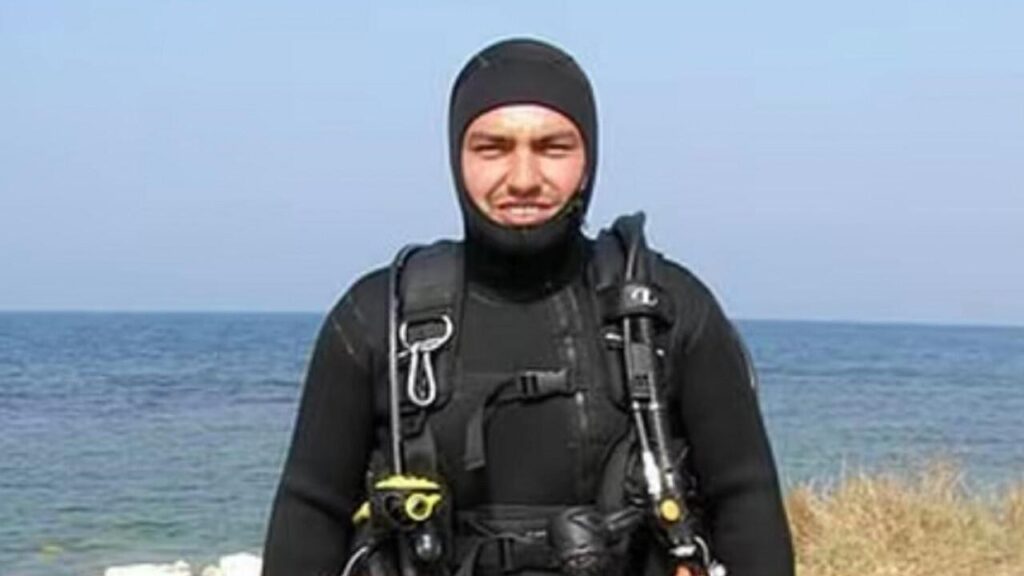
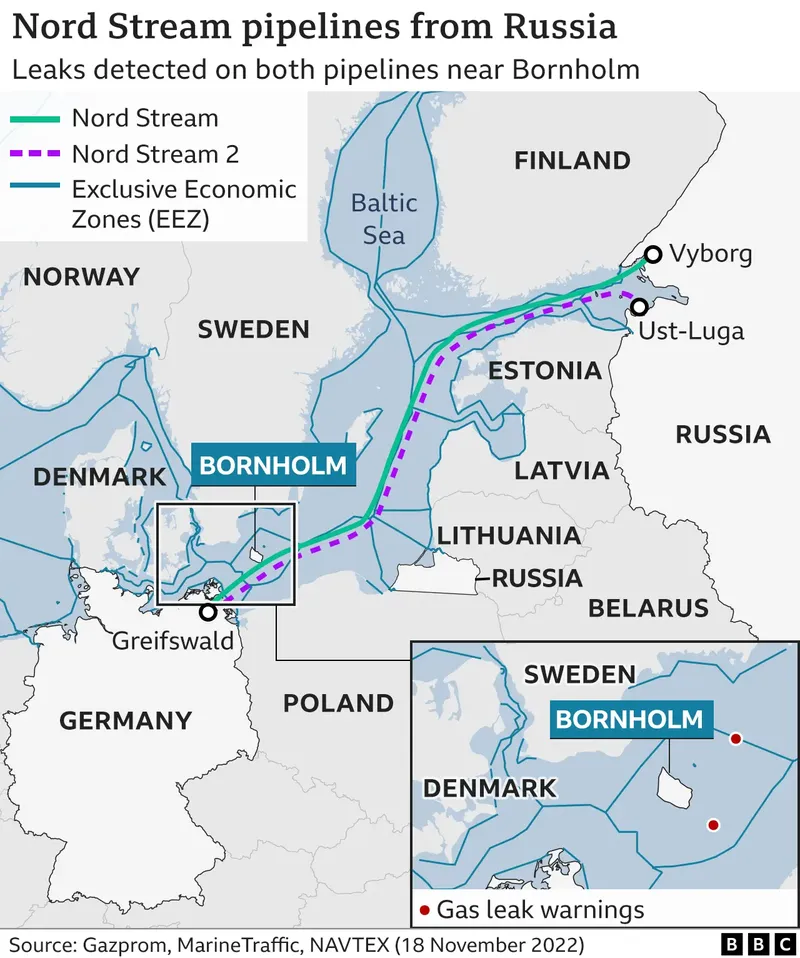
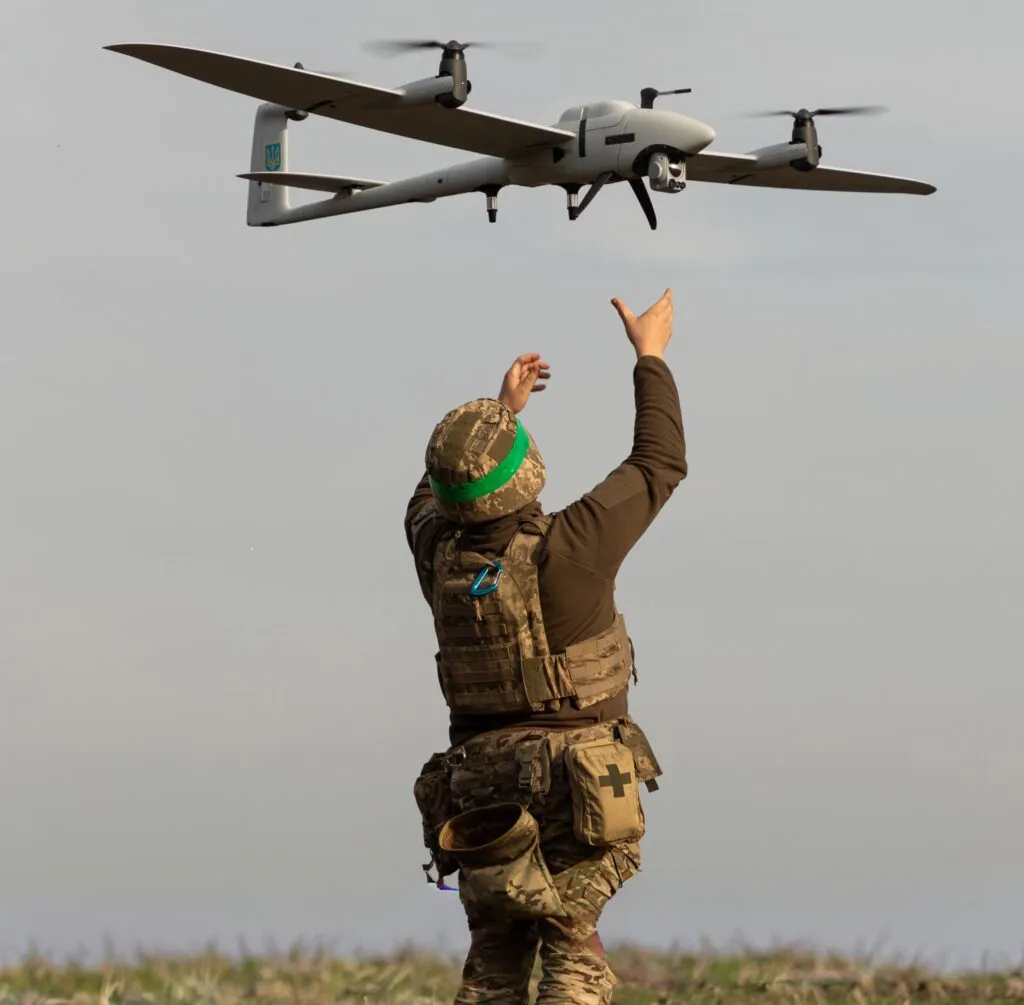
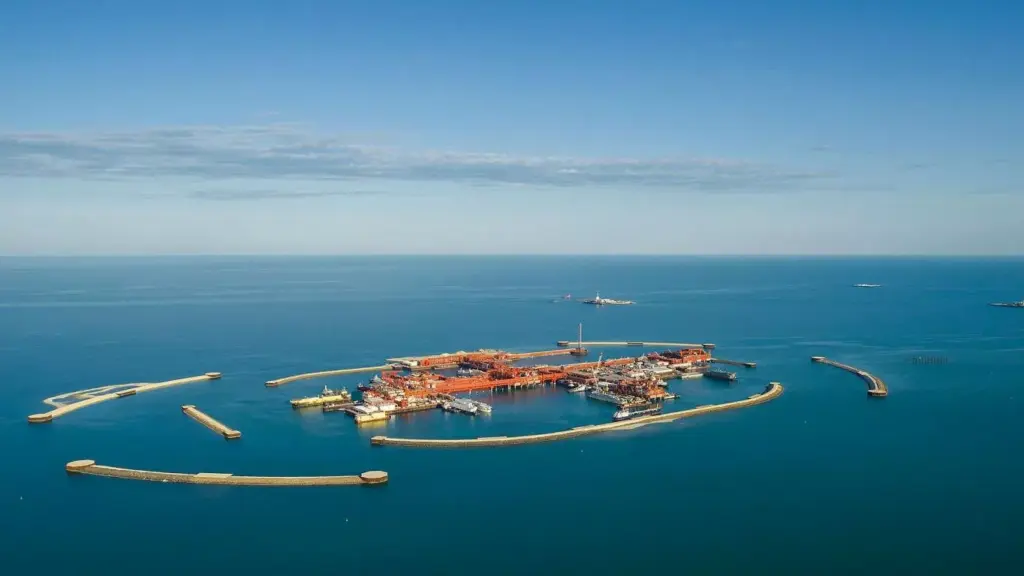


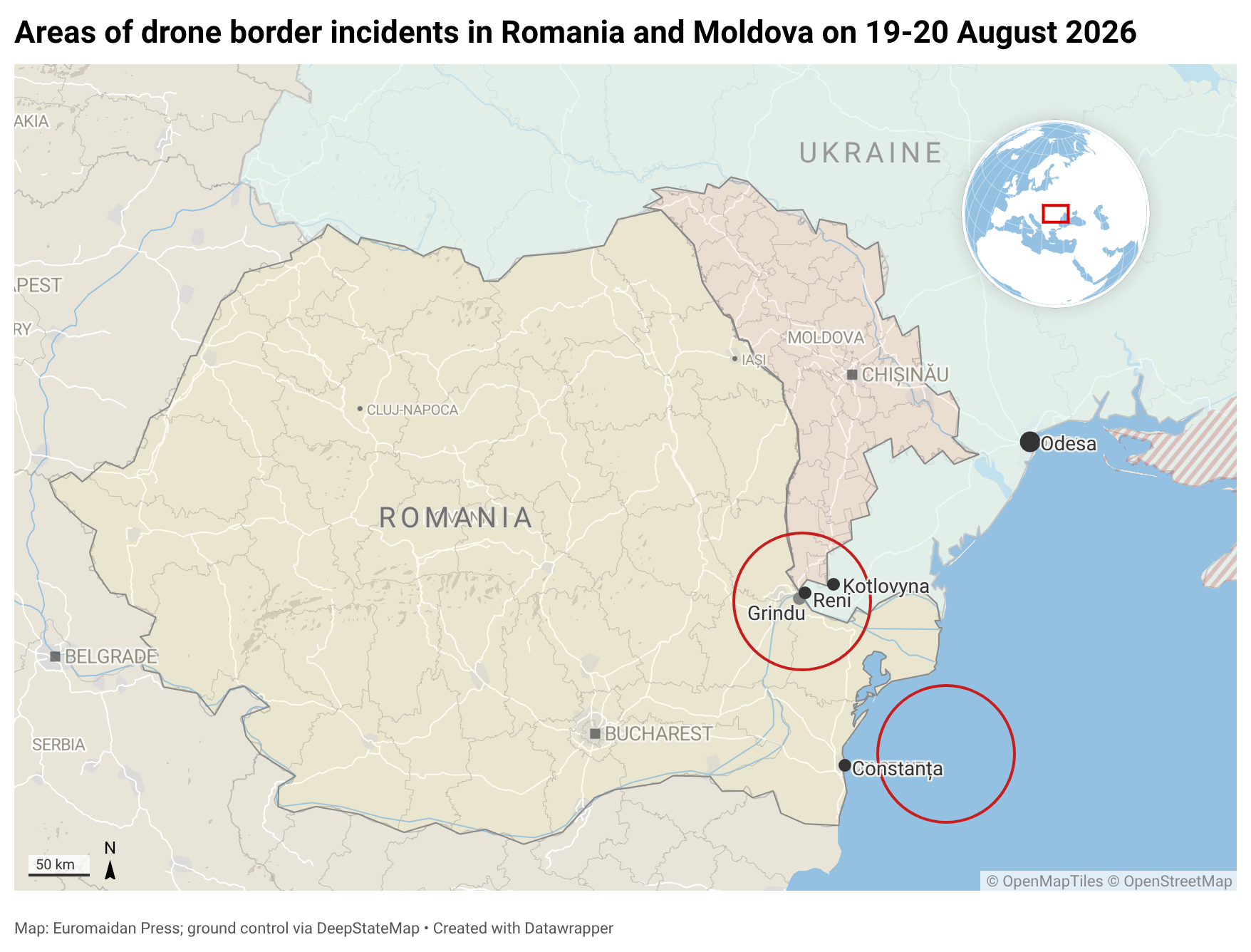
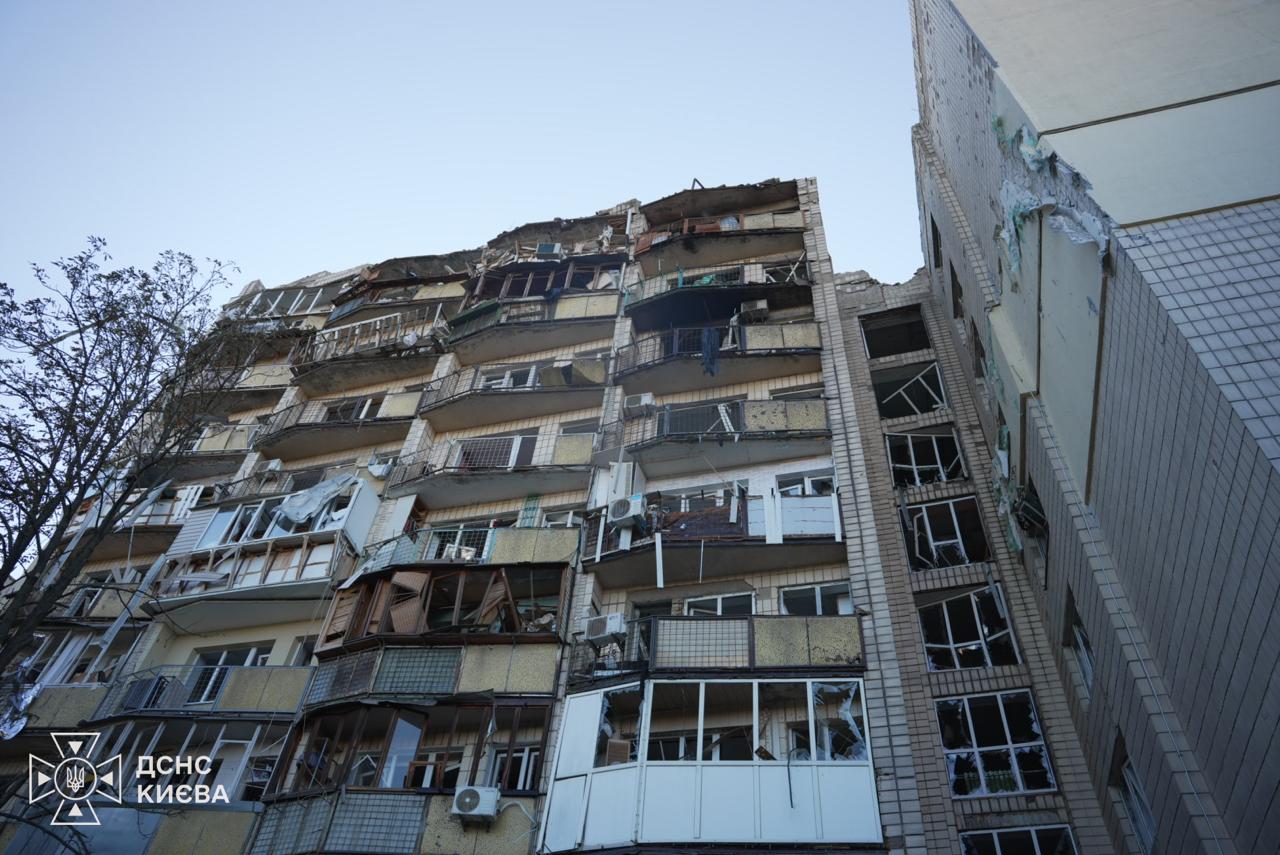
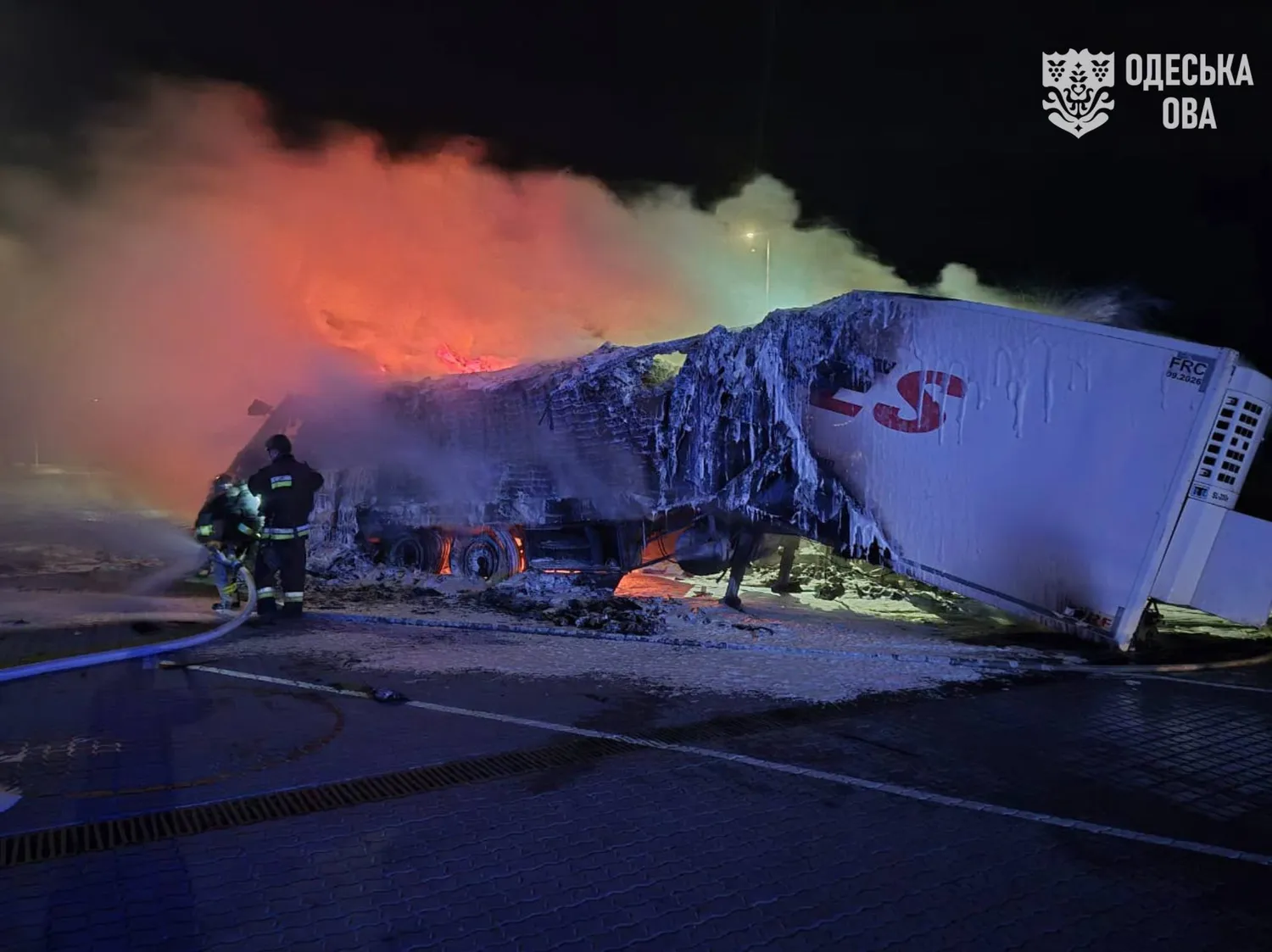
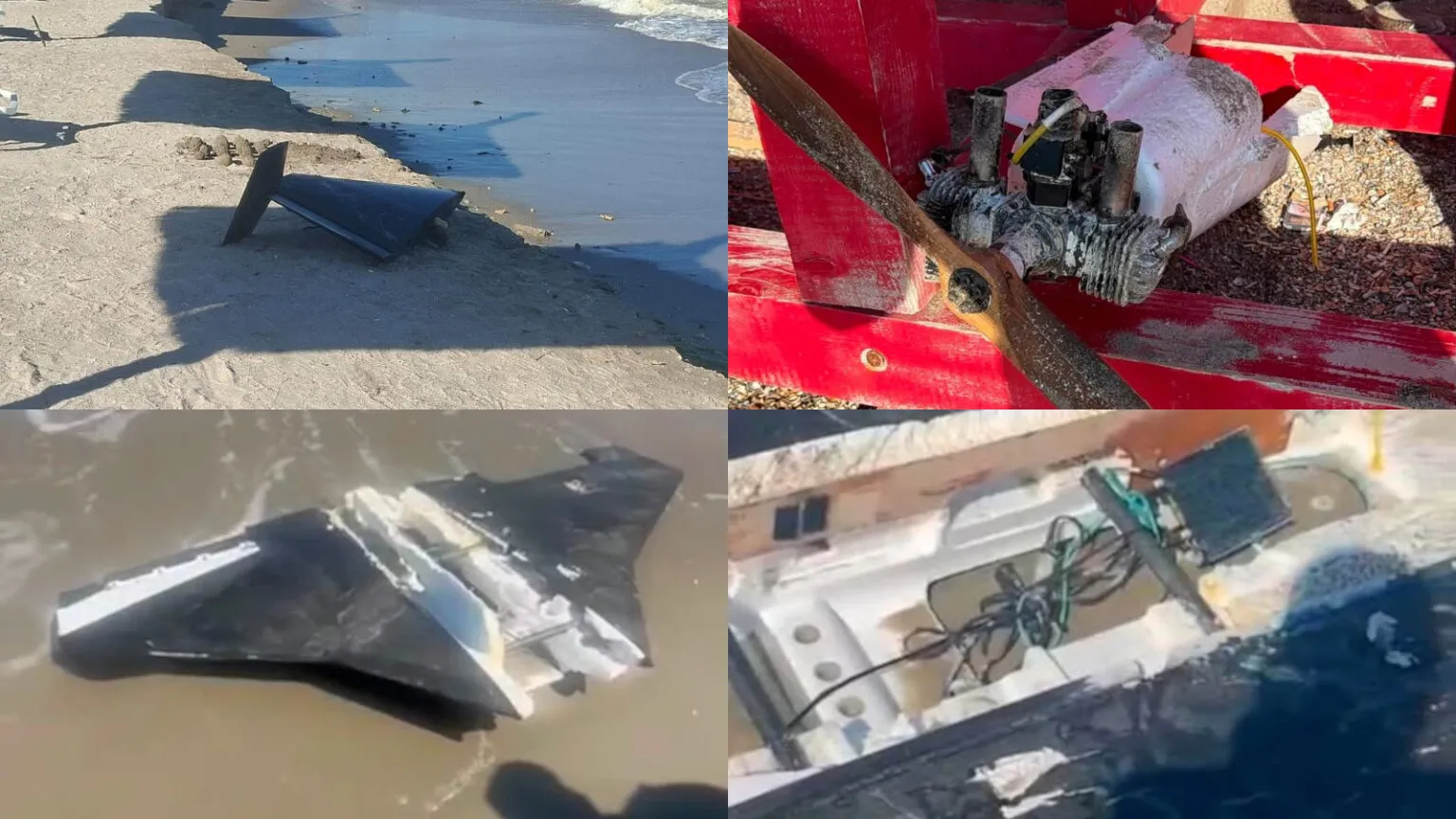

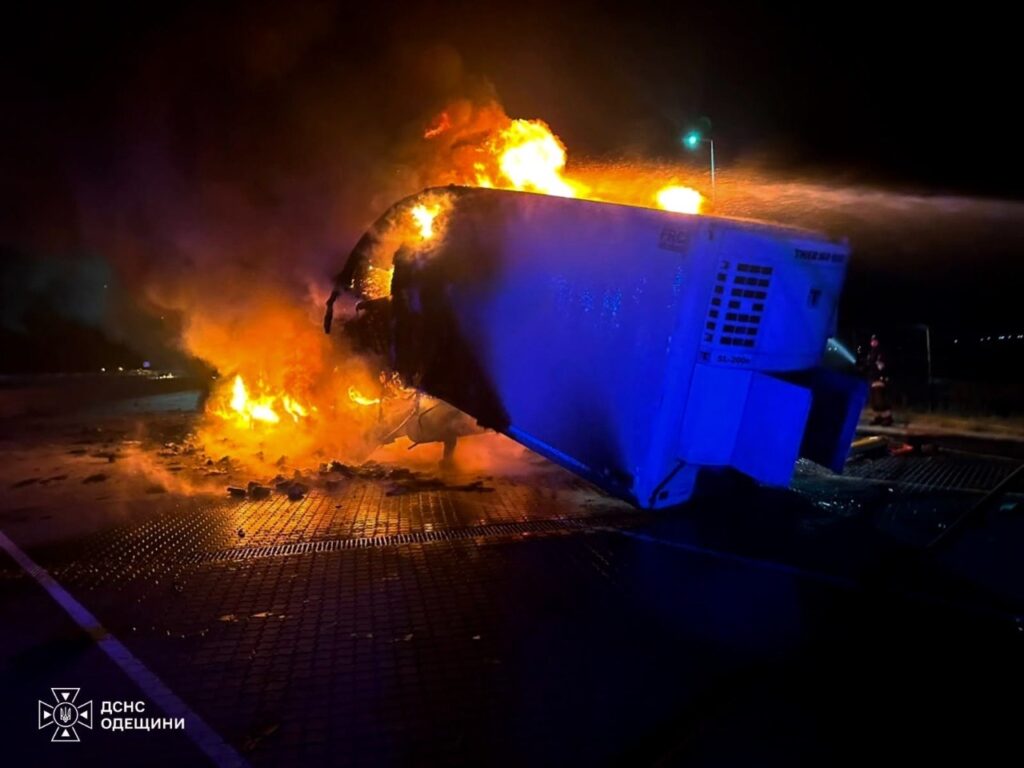

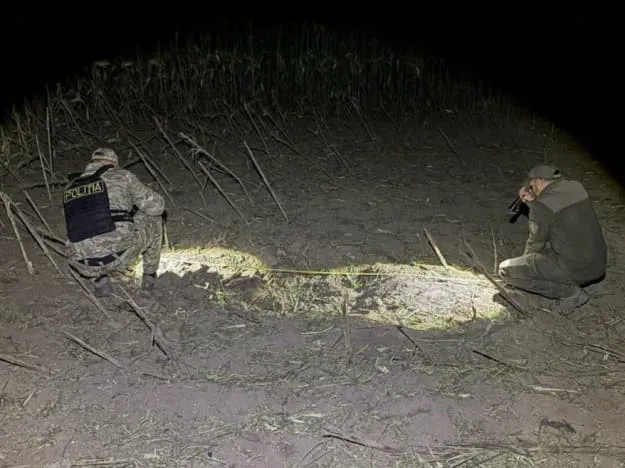
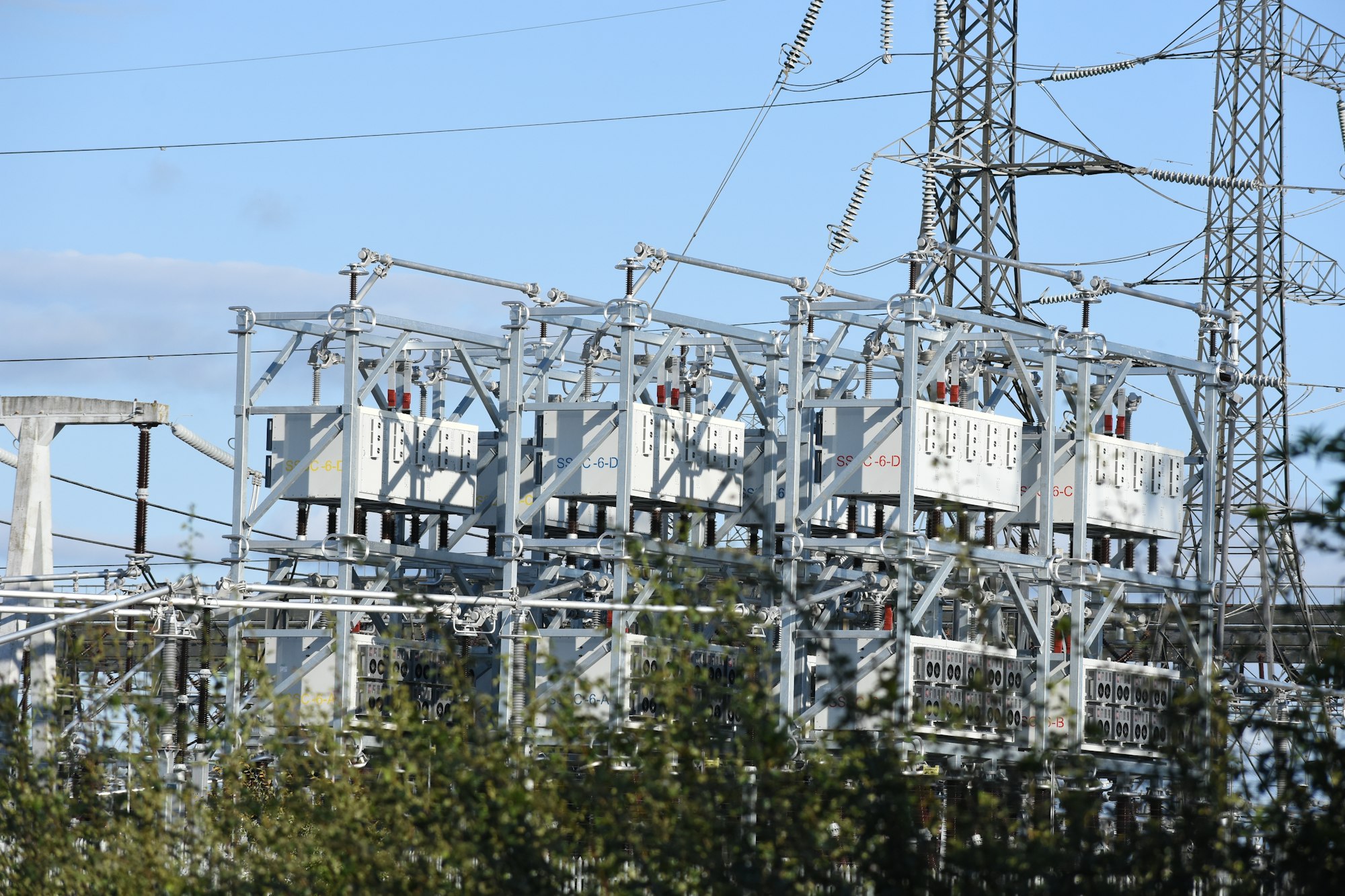
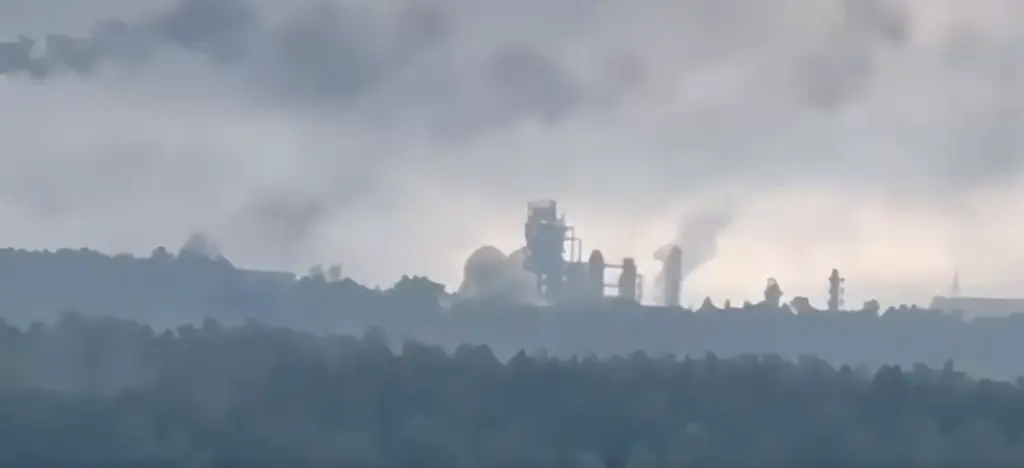
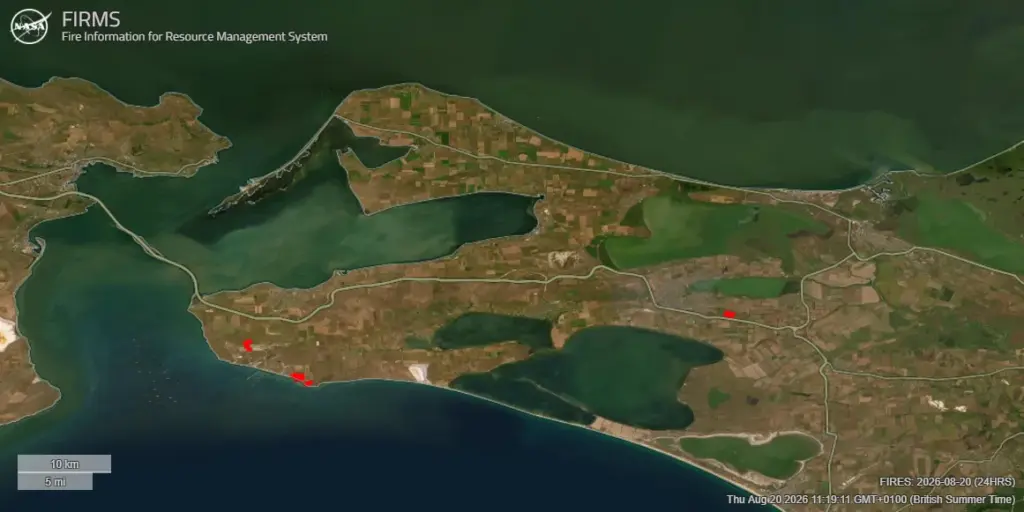
 Confirmed: Metrics show a sudden decline in internet connectivity across Russian-controlled Crimea with high impact to Sevastopol and Simferopol corresponding to a power blackout after overnight Ukrainian drone attacks targeting energy infrastructure




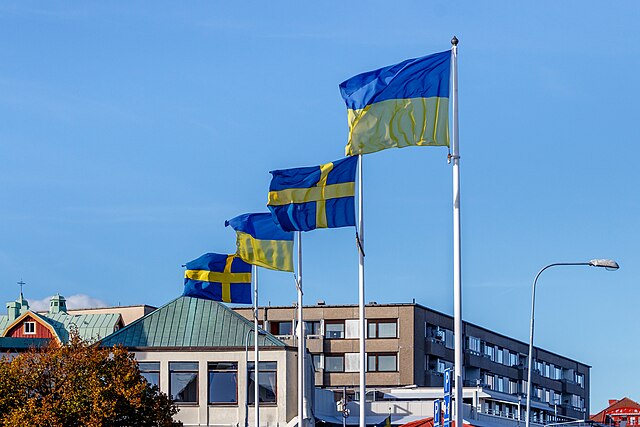

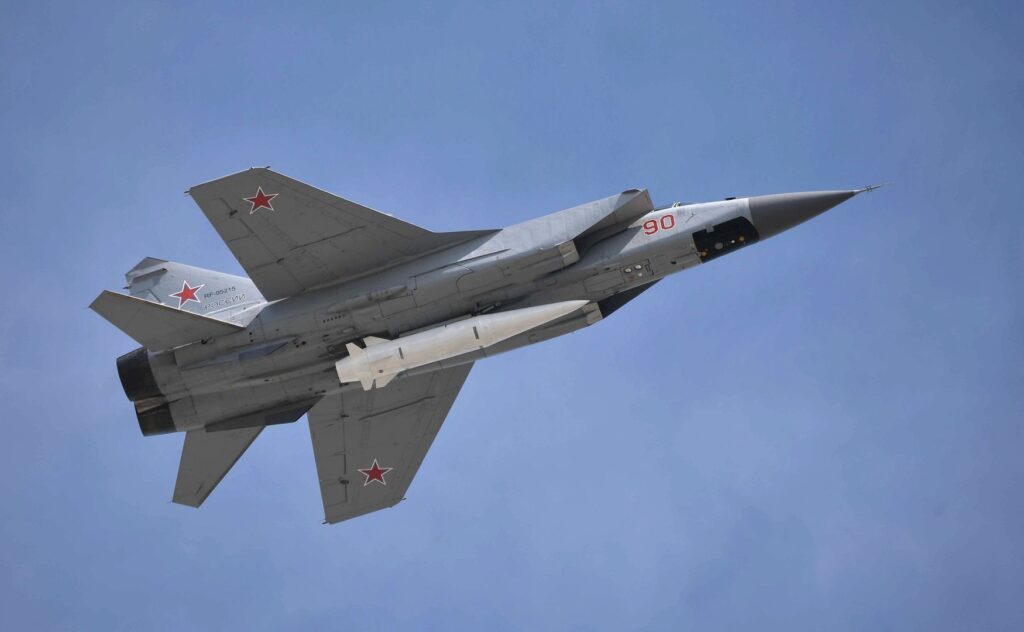

 Russian voenkors publishes satellite images from the Starokostiantyniv area!

 (@Maks_NAFO_FELLA)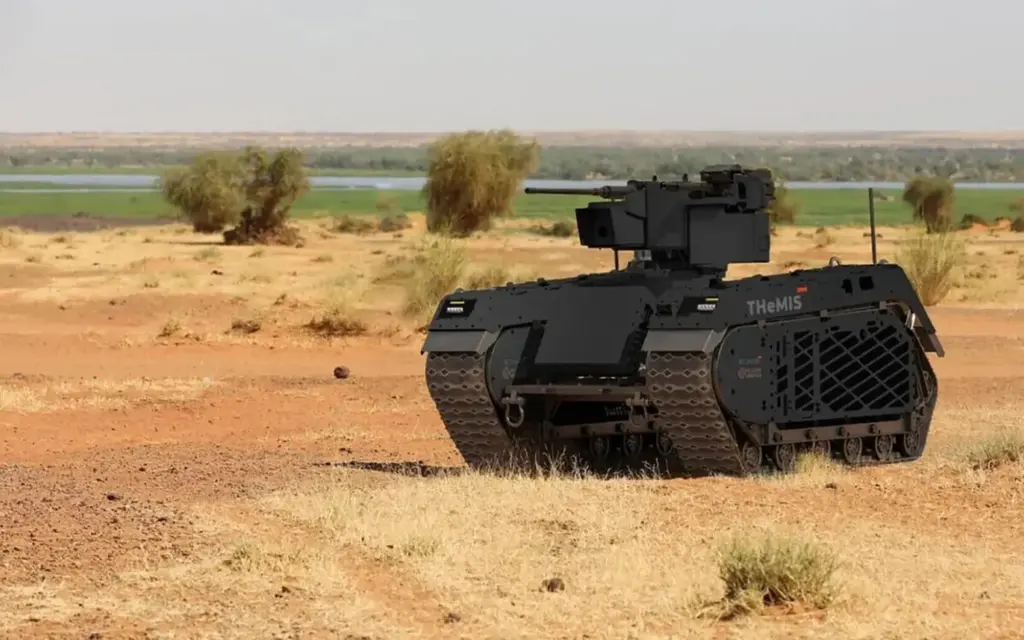

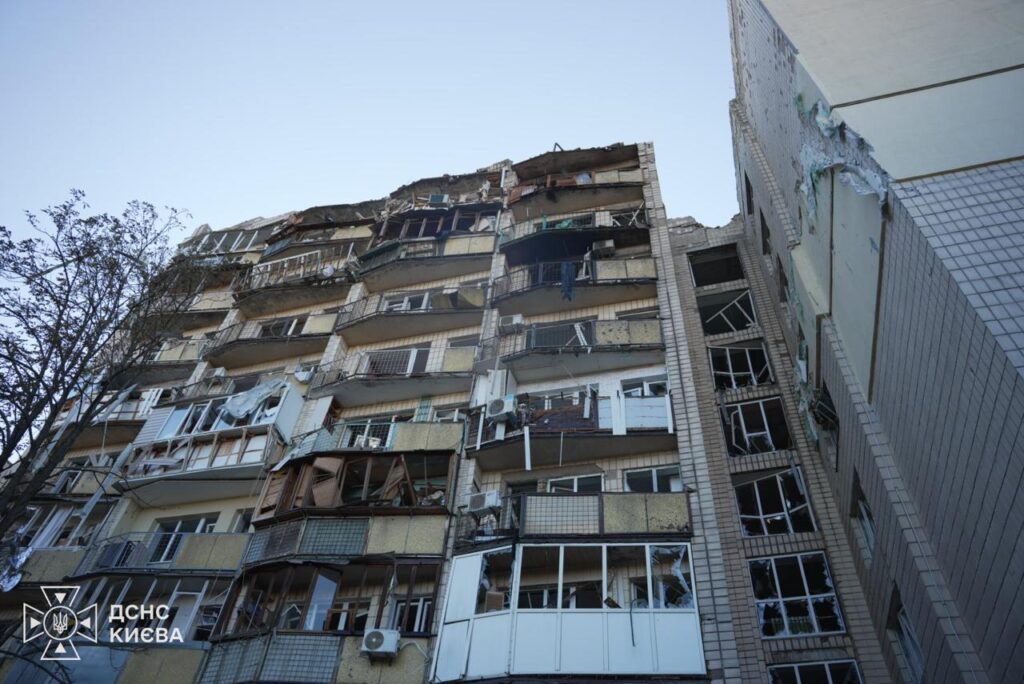
 Exilenova+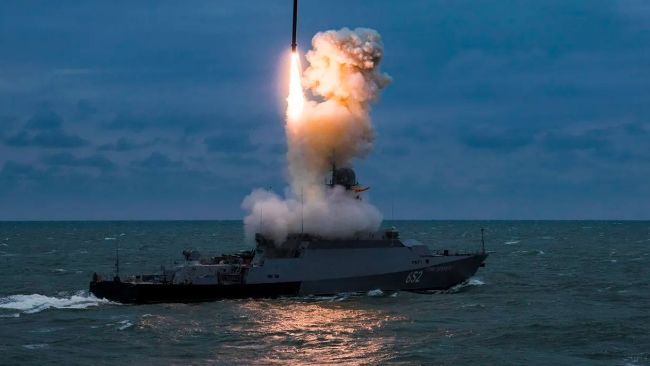
 DSNS
DSNS 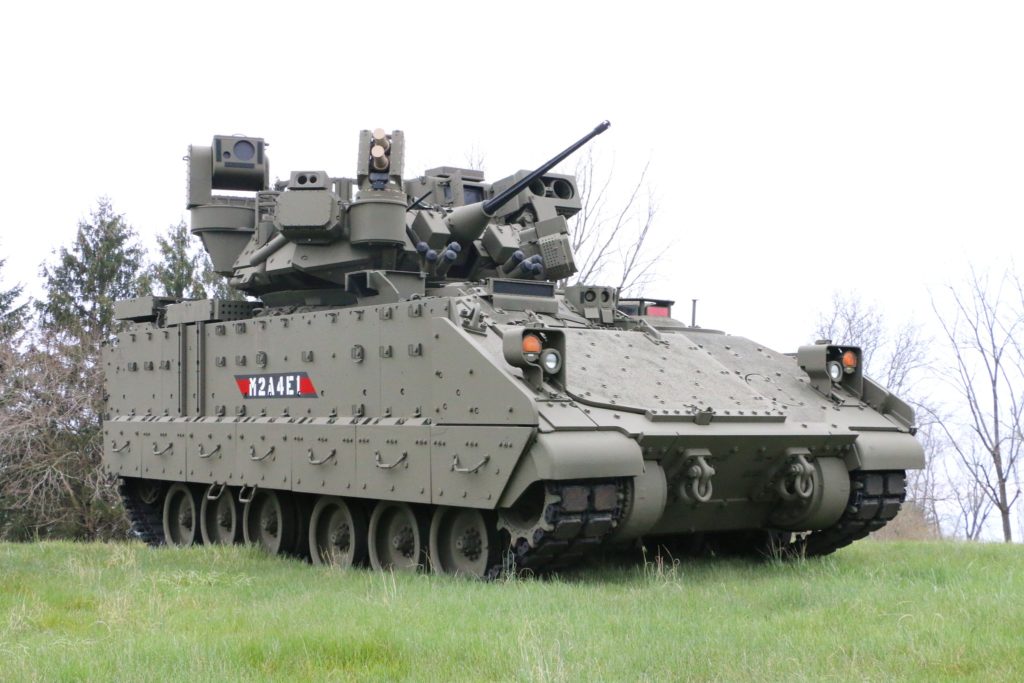
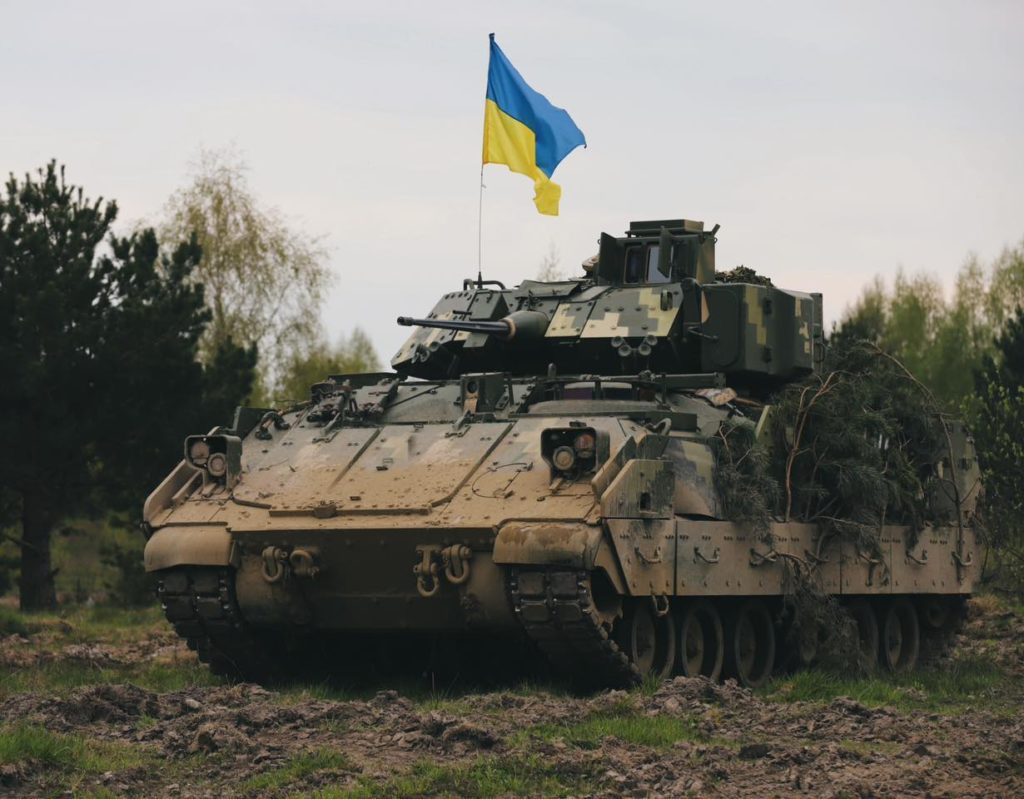
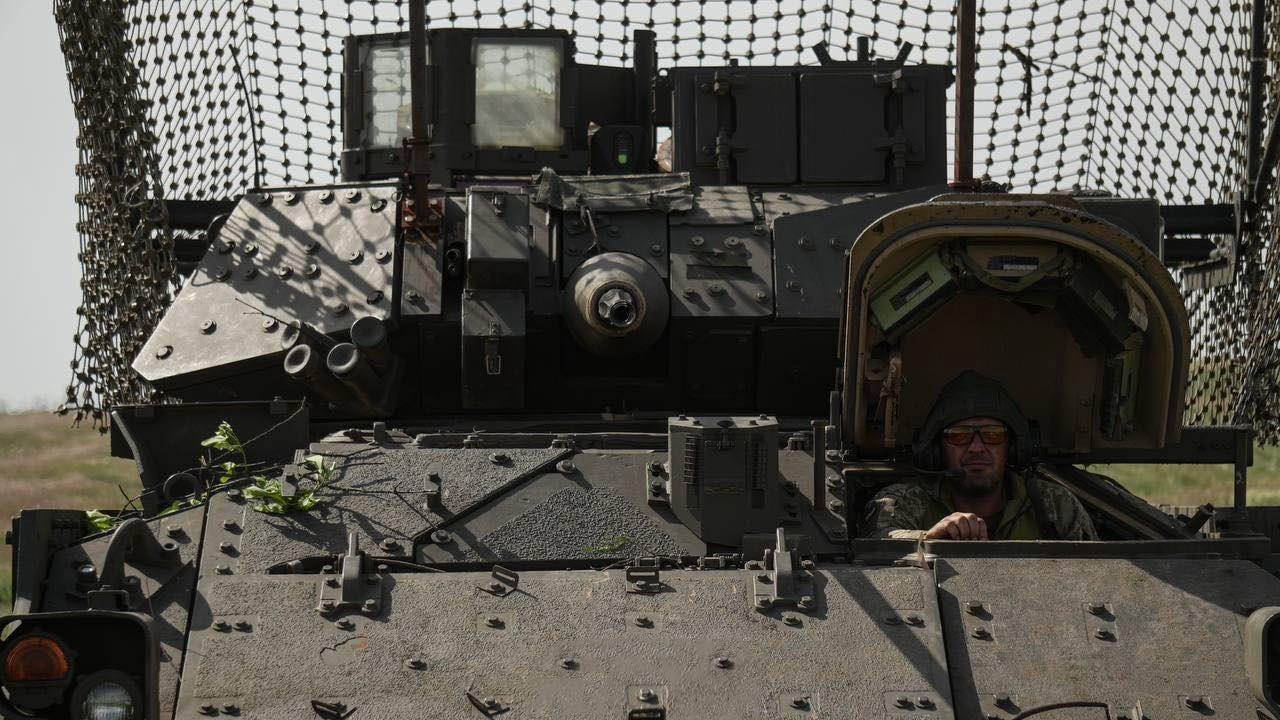
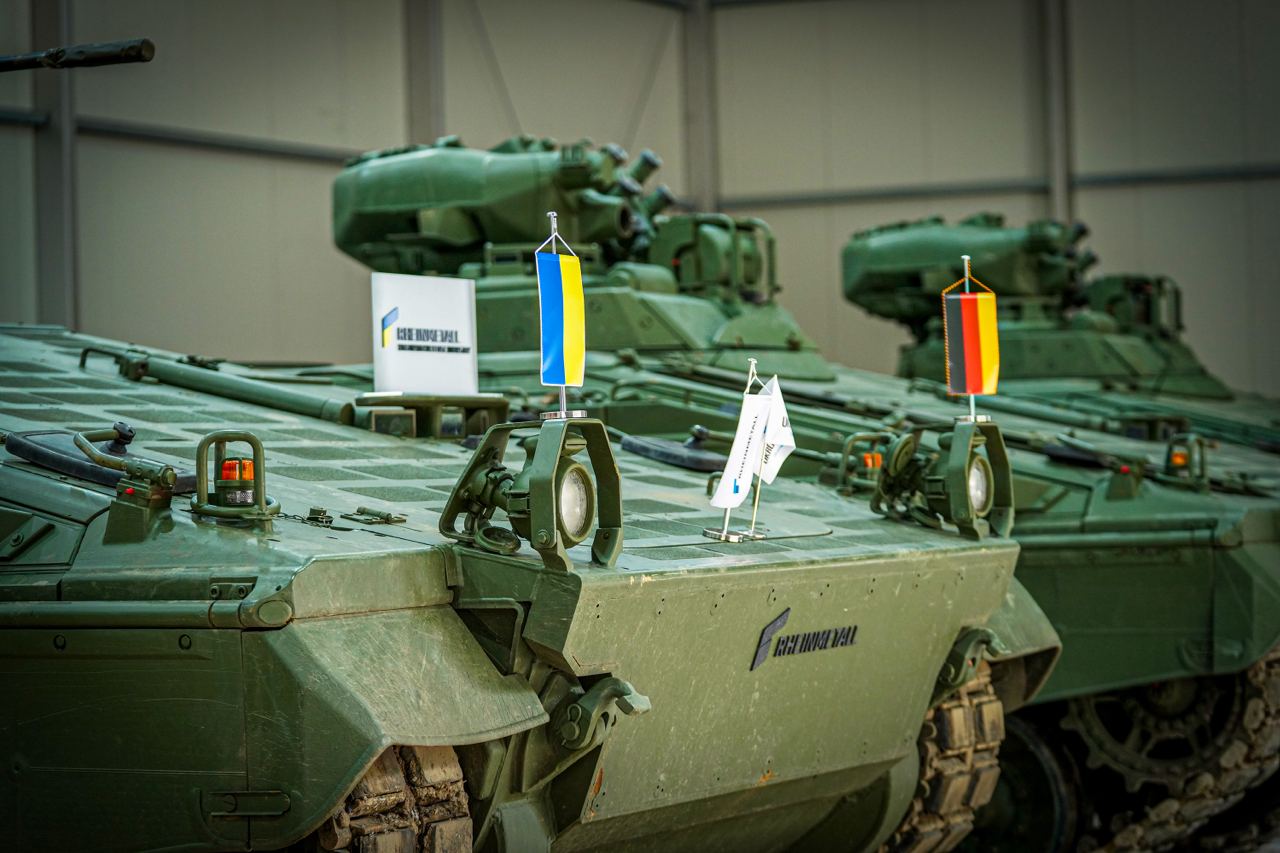
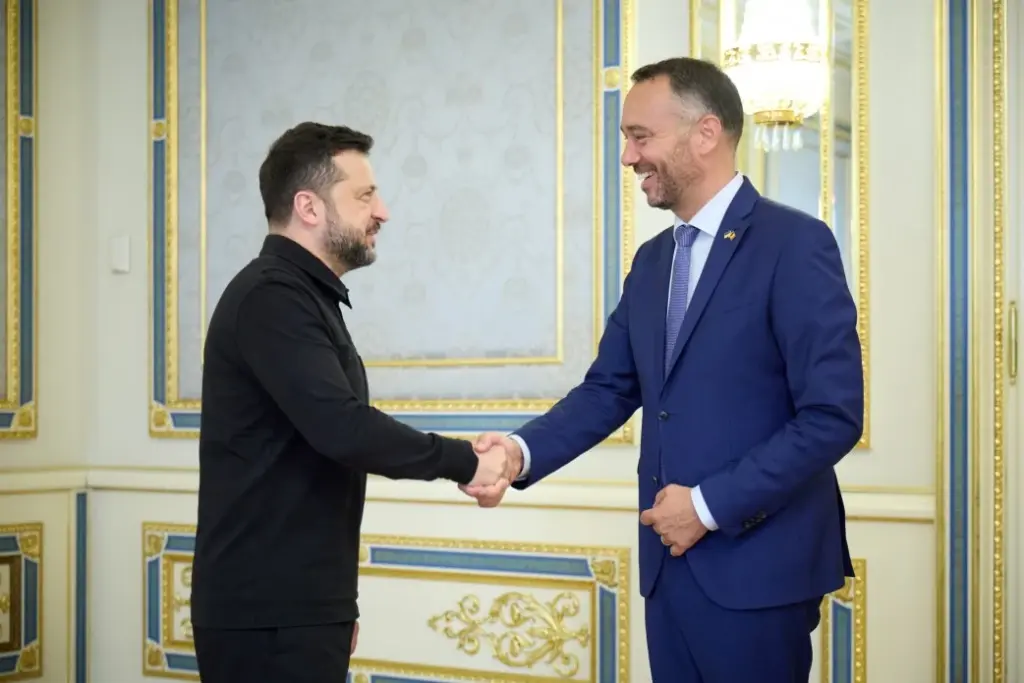

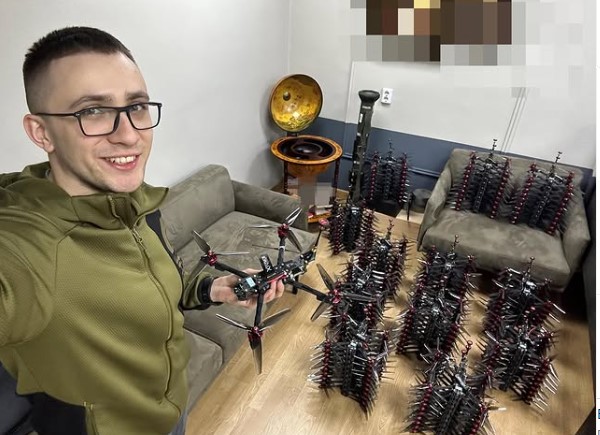
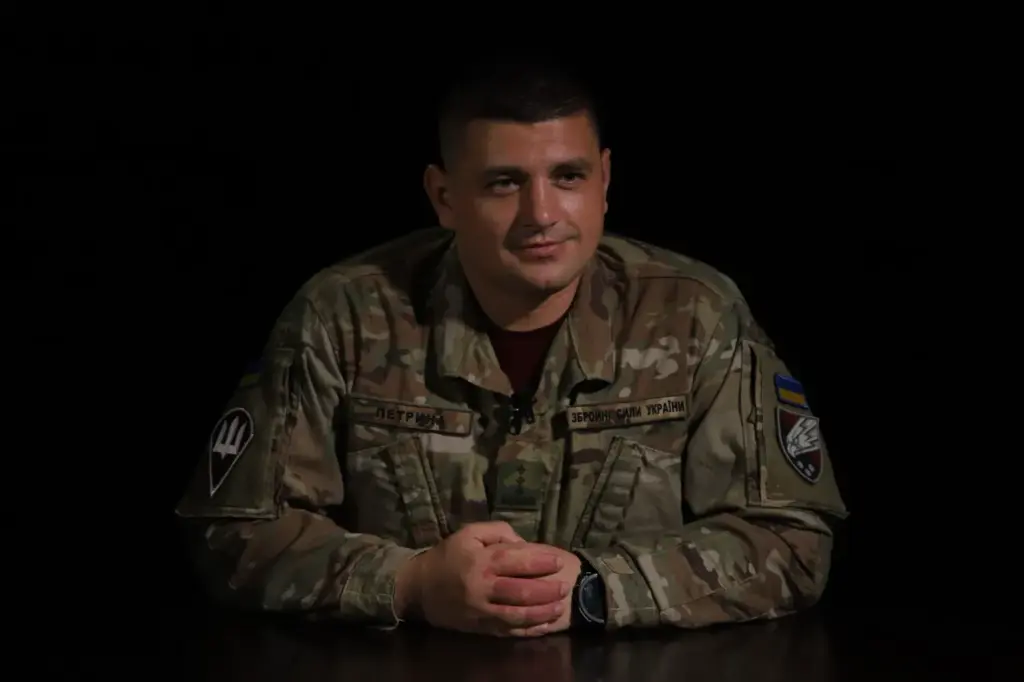
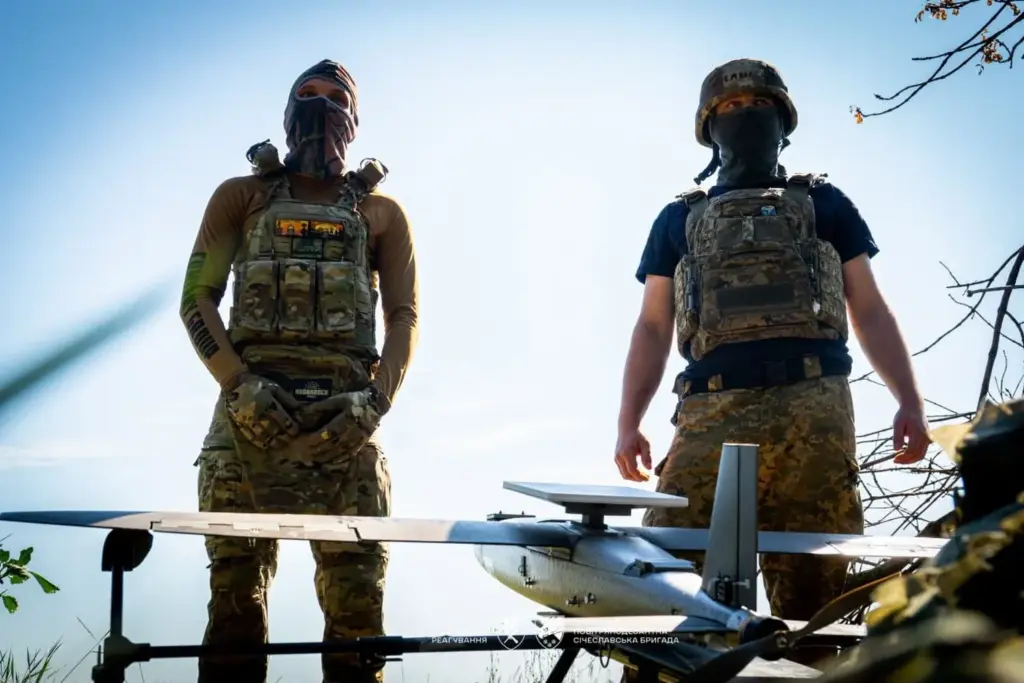

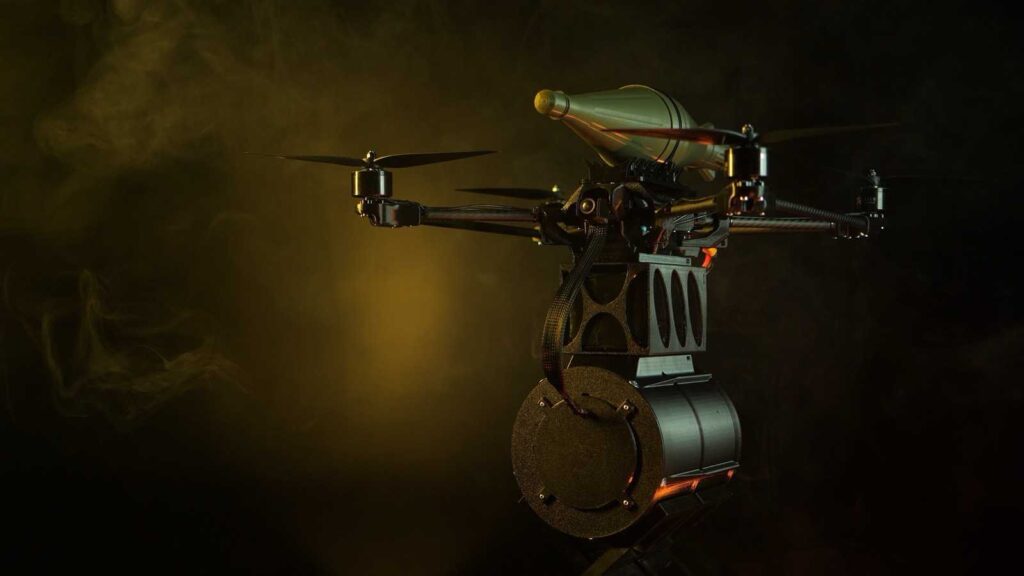
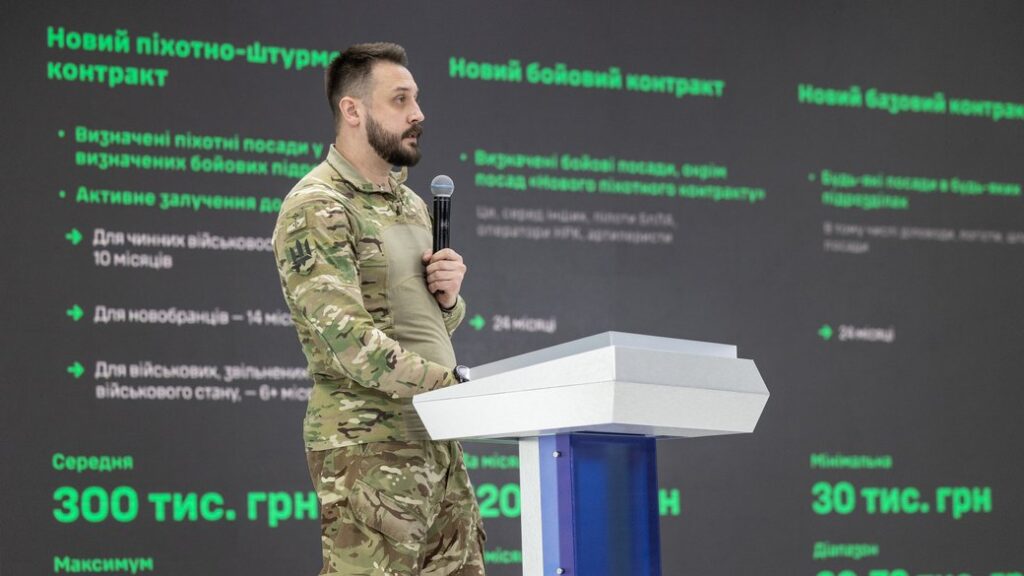
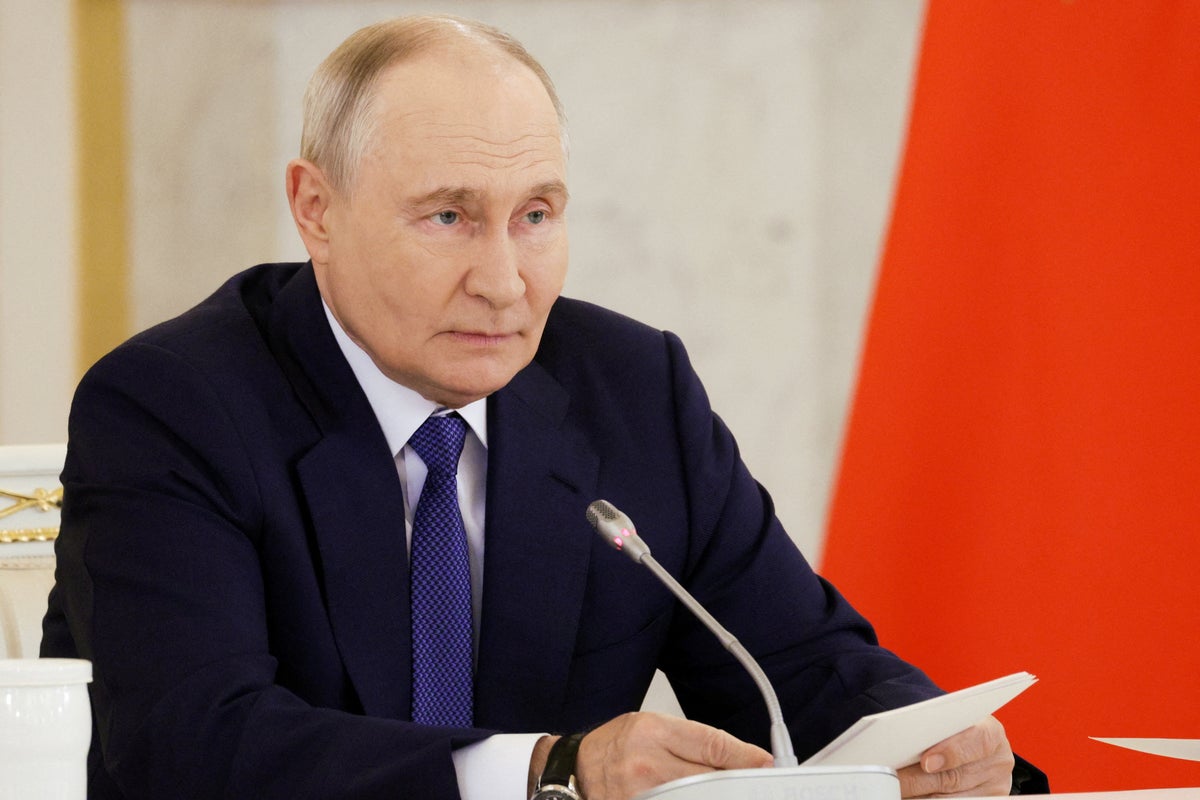
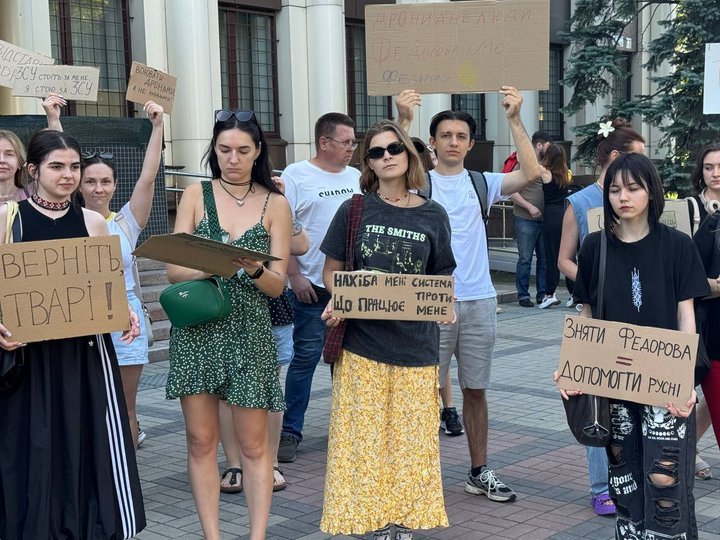


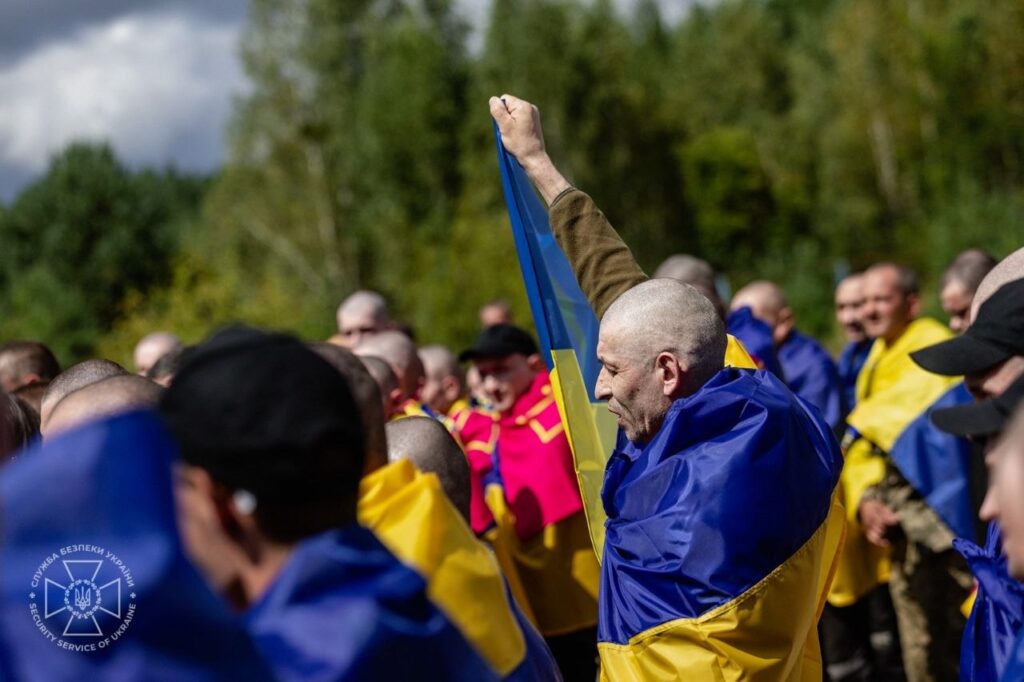
 SBU
SBU