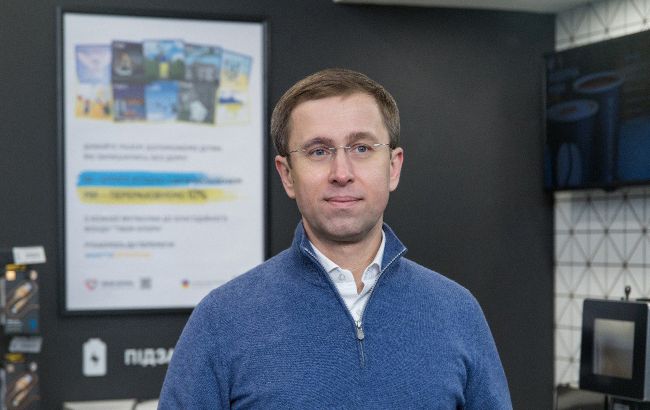
The former Ukrainian defense minister says he will only take back his old job, not another role. Mykhailo Fedorov explains that he is refusing every position Ukrainian President Volodymyr Zelenskyy has offered him in the state sector, because only the defense minister is among the roles that "really determine the course of the war," Suspilne reported.
His words came amid the fallout from a reshuffle that had run for over a week. Zelenskyy dismissed Fedorov on 15 July, per h
The former Ukrainian defense minister says he will only take back his old job, not another role. Mykhailo Fedorov explains that he is refusing every position Ukrainian President Volodymyr Zelenskyy has offered him in the state sector, because only the defense minister is among the roles that "really determine the course of the war," Suspilne reported.
His words came amid the fallout from a reshuffle that had run for over a week. Zelenskyy dismissed Fedorov on 15 July, per his own announcement, triggering six days of protests in Kyiv and at least 16 other cities that demanded his reinstatement.
Fedorov said he is grateful to Zelenskyy for the proposed ways to keep working for Ukraine, but that only three positions, apart from the soldiers on the battlefield, actually shape the war: the president, the defense minister, and the commander-in-chief.
"That is why I am not agreeing to any position other than that of the defense minister," he said.
No other post, in his view, has the real authority to defeat corruption in procurement, complete the army transformation he began, plan asymmetric operations against the enemy, and root out what he called a culture of lies and irresponsibility within the system.
Fedorov names the plan he says he was hired to finish
Fedorov grounded his refusal in unfinished work. He recalled that he came to the Defense Ministry in January 2026 at Zelenskyy's invitation, with a team and "a concrete plan for how to end the war."
That plan he called AIR-LAND-ECONOMY: defend the sky, halt the front, and strike the enemy's economy.
"Over six months, we consistently implemented exactly this plan. For the first time in recent years, Ukraine began to seize the initiative," Fedorov said.
The results, he argued, created something that had not existed before — a window of opportunity to force Russia to peace through strength — "and it cannot be lost."
Stance corners president
Fedorov's all-or-nothing position converts public sympathy into leverage. A Rating Group poll conducted on 20 and 21 July found that 72% of Ukrainians opposed his dismissal and 5% supported it, while 55% backed the removal of then-Commander-in-Chief Oleksandr Syrskyi.
President Volodymyr Zelenskyy has granted the demand with less public backing, Syrskyi's removal, and stalled on the one with more, Fedorov's return.
Now Fedorov has removed the middle option. By refusing any role other than the defense minister, he leaves President Volodymyr Zelenskyy two choices: reinstate the minister he fired a week ago, or leave out of government the official three-quarters of Ukrainians wanted kept.
What Mykhailo Fedorov described the day after his dismissal is not the residue of wartime secrecy. It is the result of conscious decisions taken on specific dates, by named ministers, against the advice of the partners paying for the weapons.Speaking to Ukrainian journalists on 16 July, Fedorov said the largest ammunition tender in the country’s history had closed with five winners. A sixth company had joined late.This firm had publicly campaigned against competitive biddi
What Mykhailo Fedorov described the day after his dismissal is not the residue of wartime secrecy. It is the result of conscious decisions taken on specific dates, by named ministers, against the advice of the partners paying for the weapons.
Speaking to Ukrainian journalists on 16 July, Fedorov said the largest ammunition tender in the country’s history had closed with five winners. A sixth company had joined late.
This firm had publicly campaigned against competitive bidding, had been searched by law enforcement, and had cut its own price by $1,000 per shell the moment it understood the tender would go ahead anyway.
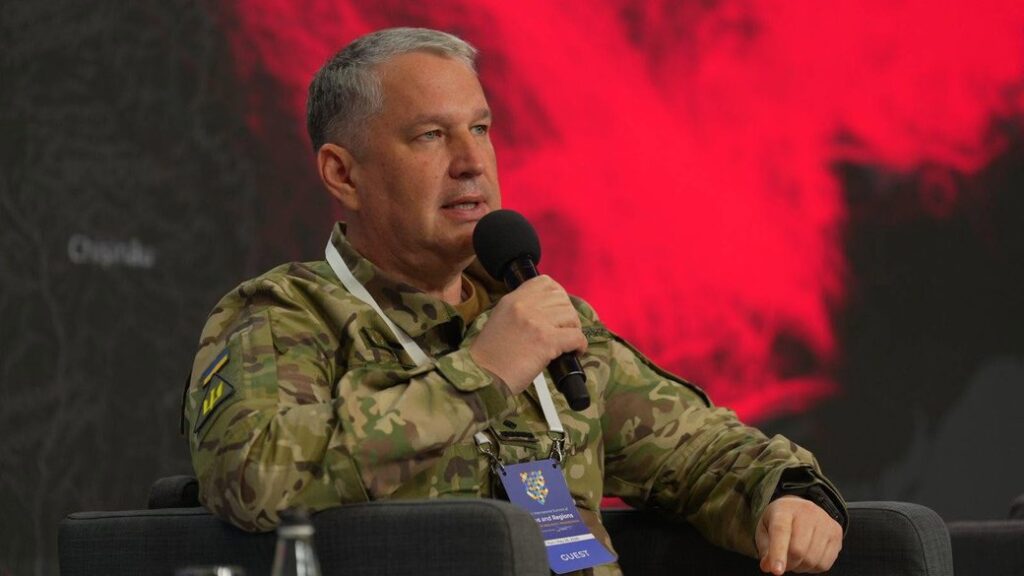
Mykhailo Fedorov at his briefing on 16 July 2026, the day after his dismissal as defense minister. Photo: screenshot from Novyny.LIVE
Fedorov said department heads at his ministry had been appointed by private companies, and would not attend meetings without bringing law-enforcement officers along. He described a contract proposal with a markup of 200–300%, for a company he said belongs to a well-known person who does not live in Ukraine.
Ninety minutes of it. Names withheld, sums exact, mechanisms laid out.
Not one word verifiable by anyone outside the ministry.
The ministry said the savings on the 155mm tender paid for tens of thousands of extra shells. A procurement figure is not accounting. It is whether a gun fires in October.
Ukraine will spend about $51 billion on weapons and equipment this year, much of it borrowed from the European Union. More than 90% of that spending is classified—NATO’s own figure, against an alliance norm of 5%.
How the money becomes rounds is decided inside a system that publishes percentages and withholds everything else.
That is the story, not whether Fedorov was fired to protect someone’s schemes, which cannot be established and which this article will not pretend to establish.
The story is why a country that spent four years building an oversight system for its arms spending has now reached a point where the only account of how that money moves comes from a fired ex-minister, and cannot be checked.
An FH-70 howitzer, which uses 155mm rounds, at the frontline in Ukraine. Photo: General Staff
What the state published
In May, Ukraine’s Defense Procurement Agency signed the largest artillery contract in its history: six manufacturers, 155mm shells, a competitive procedure against a starting price, savings above 16%—enough, the ministry said, for tens of thousands more shells than planned.
Six manufacturers, unnamed. A percentage with no unit price on either side of it. No count of who bid and lost. That is the complete public record.
Explore further
Competition across six manufacturers saves Ukraine 16% on its largest-ever 155mm shell contract
There is a reason, though. A supplier named in a public document is one with a Ukrainian address Russia can find, so the procedure runs closed. Every specialist accepts the logic.
The rule is written down. NATO’s 2024 procurement review set the 90% against a Euro-Atlantic standard of up to 5%, a level it treats as a peacetime target. The six unnamed manufacturers are not an exception to Ukraine’s approach to buying weapons. They are the rule, and the alliance Ukraine wants to join has said so in writing.
Now read that against what Fedorov told reporters on 16 July. The published figure is accurate. It hides the holdout, the searches, and the $1,000 climbdown—everything that made the number mean something. True and useless.
Mykhailo Fedorov during a June interview, a month before his dismissal, in which he described leaks and private-company influence inside the defense ministry. Photo: screenshot from PRESSING / Army—Media of Ukraine's Defense Forces
Importantly, Fedorov had said something similar already before he was fired.
In a June interview, he described officials leaking material from meetings with the procurement agency and telling excluded companies why they had been excluded.
That cannot be dismissed as the grievance of a dismissed man. It also cannot be confirmed.
His own account contains the reform’s limits. By his description, only a fifth of drone purchases run through competitive tender; four-fifths go to manufacturers ranked highest on battlefield performance data.
That may be the right design. But it is not what “moving procurement to open tenders” sounds like.
A tender with one bidder is competitive in name only.
What the monitors can see
StateWatch, a think tank that monitors defense contracts, went through every tender the Defense Procurement Agency published in March—99 of them, worth about 15 billion hryvnias ($340 million). The average number of companies bidding on each was 1.6, which means that most drew a single bidder. Drone purchases attracted more.
A tender with one bidder is competitive in name only.
StateWatch also marks the limit of its own work. It sees only what passes through Prozorro, the open electronic bidding system. Direct contracts never enter it.
Neither does anything classified, which is most of it.
What StateWatch can see is only a fraction of what Ukraine spends. It has recorded one clear improvement: the General Staff now specifies drones by technical characteristics rather than by manufacturer name, a change the think tank had recommended to remove preferences for particular producers.
The Logistics Forces command went public against Fedorov last week, arguing that announced tenders and signed contracts are not the same as equipment reaching units.
Procurement volume is presented as delivered supply, which a spokesperson called pure PR, citing grenade launcher rounds made in 1984 as an example of what arrives.
A serious argument, resting on the same unverifiable ground as the claims it disputes.
Ukraine’s Secretary of the National Security and Defense Council Rustem Umerov, 10 February 2026. Photo: Rustem Umerov on Facebook
The oversight, unbuilt
It’s not that the oversight system was just thrown overboard. It was first built, then dismantled in stages, each stage documented—and it was built partly at the insistence of the states paying for the weapons.
The Defense Procurement Agency was set up in August 2022. At the Washington summit two years later, NATO and Ukraine approved a joint review of Ukrainian defense procurement—requested by Ukraine’s defense minister—resulting in 21 recommendations.
It told Kyiv to run two agencies throughout the war, one for lethal purchases and one for everything else, and to establish independent supervisory boards immediately to provide the agencies with governance and oversight outside the ministry.
But the agreed structure did not hold.
Over the following year, Defense Minister Rustem Umerov narrowed the board’s powers by decree and removed the agency’s procurement chief, despite the board voting unanimously to keep her. In December 2025, his successor Denys Shmyhal merged the two agencies into one, effective 1 January 2026.
Denys Shmyhal (L) as Defense Minister of Ukraine and Mykhailo Fedorov as First Vice Prime Minister of Ukraine pose together. Photo: Ministry of Defense of Ukraine
NATO’s review had recommended the merger, but for peacetime. Regarding doing it mid-war, NATO said the opposite: no further centralization while the fighting continues—it would disrupt supply and erode public support for the reform.
Fedorov arrived thirteen days later.
So the tenders ran inside an agency consolidated during the period the review said not to consolidate, supervised by boards whose powers had been narrowed a year earlier, under a ministry that had already removed one procurement chief for reasons her own board rejected.
The secrecy protecting suppliers is unavoidable, and no one in Berlin or Washington disputes it.
But the narrowing of oversight is a different matter: the boards were weakened, and the agencies merged by choice, directly against the written advice of the countries paying for the weapons.
Prime Minister Yuliia Svyrydenko addresses the Verkhovna Rada before the vote on her dismissal, 14 July 2026. Photo: Svyrydenko/Telegram
The dismissal
Fedorov was removed on 15 July during a cabinet reshuffle.
Yulia Svyrydenko lost the premiership the same week, and nobody marched for her. For Fedorov, protests broke out in 17 cities the next day, with signs reading “They removed the auditor, not the thieves.”
Officially, no reason was given. What exists is an account of a closed faction meeting, reconstructed by Ukrainska Pravda from deputies in the room.
The president said he could no longer tolerate a defense ministry and general staff at war with each other, and that Fedorov had not delivered his promised mobilization reform. In a line that has aged strangely, he added that both Fedorov and Syrskyi should by rights go—but that he could not do both at once.
The Financial Times reported a fourth reason, citing people familiar with the situation: that Fedorov had repeatedly blocked attempts to steer lucrative contracts toward favored companies. The presidential office declined to comment. The General Staff denied there was any dispute at all.
Four explanations, arriving by four routes. The analyst best placed to weigh them, Volodymyr Fesenko, told the paper there seemed to have been a trigger “which we still do not fully understand.”
Olexiy Haran, professor of comparative politics at Kyiv-Mohyla Academy and research director at the Ilko Kucheriv Democratic Initiatives Foundation. Photo: Olexiy Haran / Facebook
Euromaidan Press reported a fifth reading: Oleksiy Haran, a professor of comparative politics at Kyiv-Mohyla Academy, argued that Fedorov’s real liability was that he had grown too popular to be a reliable subordinate for Zelenskyy.
Fedorov’s trust rating had just overtaken the president’s own. The Financial Times also noted that people around Zelenskyy suspected the minister of his own political ambitions.
Explore further
“They removed the auditor, not the thieves”: why Ukrainians are protesting Zelenskyy’s reshuffle
Fedorov had asked for two men to be fired: the commander-in-chief and the chief of the General Staff. Instead, he himself was dismissed.
Six days later, amid ongoing protests, Zelenskyy dismissed Oleksandr Syrskyi and named Mykhailo Drapatyi as his replacement. On 22 July, the president signed the decree and appointed Ihor Skybiuk chief of the General Staff in place of Andrii Hnatov.
Five days before his own appointment, on the day after Fedorov’s dismissal, Drapatyi had written that the army needed rules under which making the right decision would not depend on an individual commander’s courage or on the backing of particular officials, and that the transformation had to continue regardless of which ministers or teams came and went.
A Ukrainian soldier prepares 155mm artillery shells in his fighting position. Illustrative image, photo via Eastnews.ua.
What is not public
The personnel decisions are public. The procurement record, largely, is not. What stays sealed inside the 155mm tender and the cases around it:
The five winners of the 155mm procedure, and the sixth company that joined late
the initial and final unit price
the losing bidders, in any category
the companies said to have been represented by ministry officials
the company said to carry a 200–300% margin, and the person said to own it
the Bureau of Economic Security letter, or any case number attached to it
the results of the internal investigations and the polygraphs
which direct contracts were canceled, and which companies lost them.
Why he was fired cannot be known. Whether his reform survives him can—it will show in what the ministry does next, in public.
The second 155mm tender closed for offers on 7 July, eight days before Fedorov’s dismissal. Whether it was completed, how many bidders it drew, whether contracts were awarded—the ministry either publishes that or does not.
The drone tender is at the same stage. The share of procurement that is competitive rather than direct is a number the ministry chose to publish under Fedorov; whether it keeps publishing is a decision, and a visible one.
An acting minister runs the ministry now. Yevhenii Khmara, a career security service officer, took over on 20 July but has not been confirmed by parliament.
The merged agency’s supervisory board still exists, and what it is permitted to see is the closest thing the system has left to an independent instrument.
Fedorov said he did not know what to say. He said he was sorry.
Emergency workers responding to a Russian strike on Romny in Ukraine's Sumy Oblast overnight on 3 July 2026. Photo: Ukraine's State Emergency Service
Sumy Oblast, the week before
The week before he was dismissed, Fedorov went to Sumy Oblast. He had been getting messages, he said, that the region had been abandoned.
What he found he called typical: several units responsible for the area on paper, and nobody responsible for the sky over the city.
At a building struck by a guided bomb, Fedorov, still the minister then,met a man who had buried his wife and daughter the day before. The man, a soldier, had been heading back to the front when it happened. He was on the phone with his family and saw the bomb come in. The first one missed. The second hit the building.
Fedorov said he did not know what to say. He said he was sorry.
Then the man told him he had seen that Ukraine had signed the Gripen contract, that Gripen shoots down the aircraft that drops those bombs, and asked him to push it through and destroy the people who killed his family.
That contract wassigned on 30 June: 16 Gripen E fighters, about $2.5 billion, paid for with a European Union loan. The aircraft are scheduled to arrive in 2029 and 2030.
Ukraine's new military command is now complete, and Ukrainian leader Volodymyr Zelenskyy says its first job is to change the army. The new leadership is preparing a modernization of the Defense Forces that must proceed in coordination and without easing pressure on the enemy, the president said in his evening address.
Zelenskyy dismissed Oleksandr Syrskyi as commander-in-chief on 21 July after six days of protests and named Mykhailo Drapatyi in his place. On 22 July, he app
Ukraine's new military command is now complete, and Ukrainian leader Volodymyr Zelenskyy says its first job is to change the army. The new leadership is preparing a modernization of the Defense Forces that must proceed in coordination and without easing pressure on the enemy, the president said in his evening address.
Zelenskyy dismissed Oleksandr Syrskyi as commander-in-chief on 21 July after six days of protests and named Mykhailo Drapatyi in his place. On 22 July, he appointed Major General Ihor Skybiuk as Chief of the General Staff, replacing Andrii Hnatov, per Interfax Ukraine.
"The guys are combat-experienced. The troops know them, Drapatyi, Khmara, Skybiuk," Zelenskyy said, naming the new commander-in-chief, Acting Defense Minister Yevhenii Khmara, and the new General Staff chief.
Zelenskyy warns against transition gap
The Ukrainian leader said the next step is to prepare the modernization of the Defense Forces in such a way that denies Russian forces any chance to exploit the transitional period.
"It is important that everything goes absolutely coordinated, and that the Russians get no crack and no opportunity," Zelenskyy said.
Pressure on Russia must only grow, he added, listing long-range strikes, mid-strikes, partners' sanctions, and the strengthening of Ukrainian positions at the front. That list matches the program that Acting Defense Minister Khmara outlined after his meeting with Drapatyi, which is built on deep-strike, middle-strike, and ground robotic systems.
President thanks society and gives tasks to new command
Zelenskyy thanked military personnel and civilians for their trust in the new command and called for them to turn that trust into additional motivation for the Defense Forces.
"It is important that the guys are strong, that they justify the trust society has now demonstrated. We are giving all the tools," he said.
The trust he referenced is measurable and uneven. A Rating Group poll conducted on 20 and 21 July found 55% of Ukrainians backed Syrskyi's removal, while 72% also opposed Defense Minister Mykhailo Fedorov's dismissal and 5% supported it, sparking the protests. The command changes have satisfied the first number. The second remains the open question of the reshuffle, and Zelenskyy has still made no commitment on Fedorov's return.
Ukrainians opposed the firing of their defense minister by 14 to one. A Rating Group survey conducted on 20-21 July found that 72% of Ukrainians did not support Mykhailo Fedorov's dismissal as defense minister and 5% supported it, while 55% backed Oleksandr Syrskyi's resignation as commander-in-chief and 15% opposed it.
Zelenskyy dismissed Fedorov on 15 July after six months as defense minister, and Fedorov said the day after that Syrskyi had given him an ultimatum and bloc
Ukrainians opposed the firing of their defense minister by 14 to one. A Rating Group survey conducted on 20-21 July found that 72% of Ukrainians did not support Mykhailo Fedorov's dismissal as defense minister and 5% supported it, while 55% backed Oleksandr Syrskyi's resignation as commander-in-chief and 15% opposed it.
Zelenskyy dismissed Fedorov on 15 July after six months as defense minister, and Fedorov said the day after that Syrskyi had given him an ultimatum and blocked his reforms. After that, protests broke out in Kyiv and at least 16 other cities demanding Fedorov's return and Syrskyi's removal.
On 21 July, Zelenskyy dismissed Syrskyi and named Mykhailo Drapatyi commander-in-chief. Meanwhile, Fedorov remains outside the government, and protests continue.
Numbers match what streets were chanting
The survey ran on the fifth and sixth days of protests that began on 16 July, when demonstrators in Kyiv and at least 16 other cities carried cardboard signs reading "Bring Fedorov back" and "Syrskyi out."
Rating Group's figures put a national number on those two slogans and show they carried different weights. Nearly three-quarters of Ukrainians rejected the removal of the reformist minister who ran drone procurement and the Army of Drones program. A smaller but decisive majority wanted the commander-in-chief, whose command style soldiers criticized, to go.
Zelenskyy has met weaker demand and left stronger one open
The sequencing now sits awkwardly against the numbers. Zelenskyy dismissed Syrskyi on 21 July and appointed Drapatyi in his place, the change 55% wanted. He has not made his decision on Fedorov, the man whom most Ukrainians did not want removed, though he met him on 21 July, and reports have suggested a possible role in coordinating military technology.
Earlier, protesters demanding the return of dismissed defense minister Mykhailo Fedorov set the government a deadline: reinstate him and remove Commander-in-Chief Oleksandr Syrskyi by 24 July, or they will begin open-ended nightly rallies.
It is the second time in a year that Ukraine’s streets have set terms on one of Volodymyr Zelenskyy’s wartime decisions. Last summer, a week of rallies forced him to reverse a law that curbed the independence of the country’s anti-corruption agencies.
On the fifth straight day of protests demanding his removal, Ukraine’s Commander-in-Chief Oleksandr Syrskyi ended his silence—with a rare column apologizing to dismissed defense minister Mykhailo Fedorov and insisting he is fighting Russia, not the ministry—three days before the protesters’ 24 July deadline expires.The column carries hard facts along with the apology: a month after new military contracts were unveiled, about 2,000 servicemen in a million-strong army have s
On the fifth straight day of protests demanding his removal, Ukraine’s Commander-in-Chief Oleksandr Syrskyi ended his silence—with a rare column apologizing to dismissed defense minister Mykhailo Fedorov and insisting he is fighting Russia, not the ministry—three days before the protesters’ 24 July deadline expires.
The column carries hard facts along with the apology: a month after new military contracts were unveiled, about 2,000 servicemen in a million-strong army have signed them, Syrskyi wrote, and money for soldiers’ pay was redirected to drone purchases, putting second-half salaries in question.
Since Fedorov’s dismissal in last week’s government reshuffle, protesters in more than a dozen cities have set the government an ultimatum: reinstate the minister and remove Syrskyi by 24 July, or rallies go nightly.
Explore further
Ukraine’s protesters set a 24 July deadline as Zelenskyy weighs replacing his army chief
Syrskyi is the last of the principals to speak. Fedorov thanked his supporters on 18 July, writing that changes will come and that “dialogue exists.” Presidential Office head Kyrylo Budanovurged calm on 20 July, saying the position of society “has been heard” and warning that the enemy watches every internal dispute, waiting for Ukrainians to fight each other. Volodymyr Zelenskyy has promised decisions. The commander-in-chief’s column is the first point-by-point answer to the accusations.
“Mykhailo Albertovych, forgive me. I can be harsh.”
Oleksandr Syrskyi
An apology, and a defense
Syrskyi wrote in Militarnyi that media work does not interest him and that it came as a surprise to learn he and the minister had a “conflict,” having seen their relations as working ones—hard questions, different positions. Then he addressed the former minister directly: “Mykhailo Albertovych, forgive me. I can be harsh.”
He asked both Fedorov and the public to focus on victory rather than personalities, warning that splitting into a “Fedorov camp” and a “Syrskyi camp” reduces questions of life and death to slogans—the greatest favor Ukrainians could do the enemy.
He also answered the charge he called the strangest: that he does not want to fight with drones. The Unmanned Systems Forces were created as a separate branch under his command, he wrote, and he personally proposed Robert Brovdi, the officer known as Madiar, to lead them. “It was an unpopular decision, and I took full responsibility for it,” Syrskyi wrote.
But drones alone do not prepare a battlefield, he argued: the army also needs artillery, mortars, air defense, and electronic warfare, and the ministry must buy everything, not only what is in fashion. As for the demand that he publish a war strategy, he wrote that whoever asks the commander to present his strategy publicly is asking him to present it to the enemy.
Explore further
New chief of Ukraine’s drone corps sets 100-day plan to reshape the sky
The numbers he chose to publish
Beyond the apology, Syrskyi turned to the reform the protesters credit Fedorov with—and published a number: a month after the new military contracts were presented, about 2,000 servicemen had signed them. At the same time, he had received a stream of demotivated soldiers who expected one set of terms and got another.
Those contracts are the centerpiece of the army reform Fedorov launched a month before his dismissal: for the first time, soldiers can sign for a fixed term—10 to 14 months in infantry-assault roles, 24 months in other combat and support positions—with a guaranteed deferral from mobilization when the contract ends, replacing service without an end date, Fedorov explained in June. Signing opened on 15 June.
The government resolution behind the contract “experiment” raises serious legal questions, Syrskyi added, contrasting it with pay rises in the Interior Ministry system, which went through budget amendments and a parliamentary vote.
Yevhenii Khmara, the special-operations commander named acting defense minister on 16 July 2026. Photo: Volodymyr Zelenskyy / Telegram
An acting minister, a running clock
While the general wrote, the government moved. From 20 July, deputy defense minister Yevhenii Khmara—who previously led the Security Service’s Alpha special operations center and served as the agency’s acting head—officially took over as acting defense minister under a Cabinet order signed by new Prime Minister Serhii Koretskyi, the Ukrainian outlet NV reported.
A permanent minister still requires a parliamentary vote, and MPs closed their July sittings, leaving both ministries vacant until the next scheduled plenary on 18 August, unless Parliament is recalled early.
Meanwhile, ZN.UA reported that the President’s Office is considering offering Fedorov a new role as coordinator of military technology development—a “miltech czar”—while discussions continue on a possible replacement for Syrskyi, citing its sources in Washington. Neither has been confirmed.
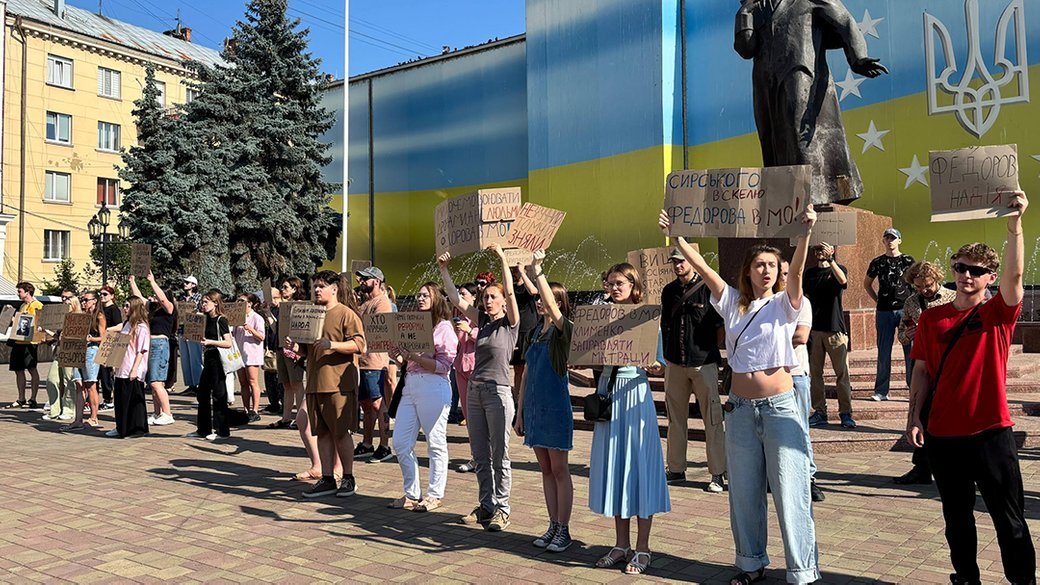
Protesters at the Taras Shevchenko monument in Lviv on 20 July 2026, the fifth straight day of rallies over the government reshuffle. Cardboard signs read “To be handed personally into Ze’s paws!”—mimicking the wording of a hand-delivered letter to President Volodymyr Zelenskyy—alongside “There are no vacations in war,” a jab at lawmakers on summer recess, and “Vova, can you hear?”, using the president’s diminutive. Photo: Euromaidan Press
In Lviv, a crossed-out cheese
The streets did not wait for the column. Protesters came out for a fifth straight day in cities across Ukraine, including Lviv, where two of them—Yarema, 20, and Khrystyna, 21—answered Euromaidan Press’s question about why they were there by pointing at their cardboard sign: a wedge of cheese, crossed out. Syr—cheese—is the first syllable of the commander-in-chief’s surname.
“We are here because we see the possibility, the opportunity, and the desire to fight for our future, the future of our country,” Yarema told Euromaidan Press. “We have seen the changes that were happening. And we want these changes to continue happening, because these were good changes, first and foremost, for our military.”
“This is not the first rally,” he added. “But I hope it’s the last.”
In five days, Ukraine dismissed its prime minister, installed a new Cabinet, and removed the defense minister who built its drone war—and for the first time since last summer, thousands of Ukrainians filled the streets of 17 cities against a wartime decision of their own president. The prime minister nobody protested for is gone quietly. Thousands demanded the reformer stay. He is gone anyway.
Three forces claim the ground: the constitutional institutions on paper, the
In five days, Ukraine dismissed its prime minister, installed a new Cabinet, and removed the defense minister who built its drone war—and for the first time since last summer, thousands of Ukrainians filled the streets of 17 cities against a wartime decision of their own president. The prime minister nobody protested for is gone quietly. Thousands demanded the reformer stay. He is gone anyway.
Three forces claim the ground: the constitutional institutions on paper, the Office of the President in practice, and a society.
What the week decided is who now governs Ukraine, and the question reaches past Kyiv into EU accession talks and the shape of postwar politics. Three forces claim the ground: the constitutional institutions on paper, the Office of the President in practice, and a society that has now twice in 12 months forced its leader to answer to the street.
Explore further
Ukraine’s government reshuffle followed the letter of the Constitution. But did it follow its spirit?
Five days, one government
Late on 11 July, President Volodymyr Zelenskyy signaled coming personnel changes on the diplomatic front. The next day, he set out the scope.
“Ukraine is changing its political strategy,” he wrote on Telegram, assigning each foreign-policy priority to “a specific person,” announcing that the Cabinet would be renewed, and thanking Prime Minister Yuliia Svyrydenko for her work while offering her “a new significant direction in relations with a key partner”—wording widely read as the Washington ambassadorship.
On 14 July, Parliament voted 258 to accept Svyrydenko’s resignation, which under the Constitution brought down her entire Cabinet with her.
He named three unfinished reforms: completing the ministry’s NATO-standard reorganization, moving all procurement to open tenders, and building a culture of accountability.
On 15 July, it emerged that Defense Minister Mykhailo Fedorov—the 35-year-old who built Ukraine’s drone ecosystem, and whose first months in the ministry produced an audit exposing $7.2 billion in defense overspending—would not be renominated.
In a parting post, he named three unfinished reforms: completing the ministry’s NATO-standard reorganization, moving all procurement to open tenders, and building a culture of accountability for decisions taken.
In the same accounting, he pointedly noted that Ukraine had tested a ballistic missile developed within the ministry’s area of responsibility on 14 July—the very day the government fell—with its accuracy maximized and its cost cut by 30%. “Symbolically,” he called the timing.
Much of the government stayed: Denys Shmyhal kept the energy portfolio as first deputy prime minister.
Serhii Sternenko, whose foundation delivered over 118,000 FPV drones to the army, resigned as a ministry adviser the same day, calling the state “further from victory.” By evening, the first rallies formed in Lviv.
President Volodymyr Zelenskyy with newly appointed Prime Minister Serhii Koretskyi. Photo: Zelenskyy / Telegram
On 16 July, Parliament appointed Naftogaz chiefSerhii Koretskyi as prime minister with 289 votes, then approved his Cabinet as a package with 264 votes, leaving open the two seats the president alone nominates: defense and foreign affairs.
Deputy Air Force commander Pavlo Yelizarov resigned in protest.
Outside, “cardboard protests” spread to Kyiv and at least 16 other cities. Deputy Air Force commander Pavlo Yelizarov resigned in protest, warning that the firing and the blocking of Fedorov’s reforms “will cause numerous casualties and destruction of Ukraine.”
Explore further
Ukraine’s deputy Air Force commander resigns the moment Fedorov loses the ministry
That evening, Zelenskyy did two things at once. He told the crowds they were right to protest even in wartime—then pressed ahead anyway, passing over both Fedorov and Interior Minister Ihor Klymenko, his own reported first choice for defense, to name special-operations commander Yevhenii Khmara acting defense minister.
Ukraine had a defense minister whom Parliament had not confirmed.
Klymenko did not stay at Interior either: the president moved him to run the National Security and Defense Council, and National Police chief Ivan Vyhivskyi took over Interior.
By 17 July, the demonstrations had entered a second day, and Ukraine had a defense minister whom Parliament had not confirmed.
The explanation the president gave
This time, Zelenskyy offered reasons. The reshuffle would refocus the government on energy resilience before another winter of Russian strikes and on EU accession—a logic under which Koretskyi, who ran Naftogaz through Russia’s campaign against the grid, is a defensible pick.
“Together we win, and together we bear responsibility for things that cause confusion and public resonance.”
On Fedorov, the president pointed to a broken relationship between the Defense Ministry and the military command, said he could not choose between the minister and Commander-in-Chief Oleksandr Syrskyi, and refused to assign the blame to either side alone.
“Together we win, and together we bear responsibility for things that cause confusion and public resonance,” he said at a press conference with British Prime Minister Keir Starmer, adding that he still wanted Fedorov on the team.
In a documented conflict between a reforming minister and his commander-in-chief, the president resolved it by removing the minister mid-reform.
The stated reasons leave the central question standing. In a documented conflict between a reforming minister and his commander-in-chief—a conflict Fedorov himself has now described in detail—the president resolved it by removing the minister mid-reform, not the commander. Nothing in the public account says why that was the choice.
Explore further
Fedorov breaks his silence: Ukraine’s army chief Syrskyi gave him an ultimatum—then blocked his reforms
Olexiy Haran, professor of comparative politics at Kyiv-Mohyla Academy and research director at the Ilko Kucheriv Democratic Initiatives Foundation. Photo: Olexiy Haran / Facebook
“It was about personal loyalty”
Oleksiy Haran, professor of comparative politics at the National University of Kyiv-Mohyla Academy and research director at the Ilko Kucheriv Democratic Initiatives Foundation, told Euromaidan Press the search for a policy rationale starts from the wrong end.
“Definitely, it was about personal loyalty.”
The problem is not this reshuffle, he argued, but where decisions get made: in the Office of the President, on Bankova Street—under Zelenskyy and, before his dismissal, under his chief of staff Andriy Yermak. “Definitely, it was about personal loyalty,” Haran said.
In his reading, this is a system Zelenskyy built and cannot imagine running any other way: the president “is not democratic in essence” and believes himself a “messianic leader”—a self-conception dented by early wartime failures, then restored by success.
Much of the Cabinet simply stayed or shuffled sideways.
Haran also punctured the “wholesale purge” framing that dominated the week’s commentary. Much of the Cabinet simply stayed or shuffled sideways. “They are just moving around,” he said. Zelenskyy speaks of a new political approach, Haran noted—“but what’s that approach about? I don’t see it.”
One appointment inside that Cabinet showed the deeper pattern. The Digital Transformation Ministry—the body that built the e-governance and digitized document app Diia and reorganized the state around it—appointed Oksana Ferchuk, the first person to lead it who was not part of Fedorov’s founding team.
As Ukrainska Pravda noted, the ministry’s reach had leaned less on its projects than on Fedorov’s political weight and his direct line to the president—a reach Fedorov himself credited to Zelenskyy’s backing.
Ukrainians’ distrust of state institutions is a long-run trend that predates Zelenskyy.
There is a deeper reading: that inner-circle rule is the inheritance of Soviet institutional distrust and the lawless 1990s, when only personal networks could be relied on. Haran is skeptical of the tidy version.
Many Soviet citizens believed the system’s promises of justice, he noted, and Ukrainians’ distrust of state institutions is a long-run trend that predates Zelenskyy rather than a trait he personally embodies. What the war changed, he added, is that trust rose toward the army, the security services, and the anti-corruption bodies.
Protesters voice their stance on the government reshuffle at a rally in Khmelnytskyi, 16 July 2026. Signs read "Don't do dumb things," "Instead of military tech—total encephalopathy," "Change the system, not Fedorov," and "Innovation, not Soviet ways." Photo: Suspilne Khmelnytskyi
The other trust system
That is the half of the story that the protests made visible. Whatever its roots, personalized power is only one of Ukraine’s two working systems of trust—and this week they collided in the open.
Nearly every career politician on the list is distrusted by more people than trust them.
Polling shows how differently the two are priced. In the latest national survey by the Kyiv International Institute of Sociology, conducted in May, Fedorov’s trust rating climbed to 50% from 38% in January, and his trust-minus-distrust balance now edges slightly ahead of the president’s own, KIIS polling shows.
The figures Ukrainians trust most are military commanders and volunteers; nearly every career politician on the list is distrusted by more people than trust them. Svyrydenko, the dismissed prime minister, was trusted by 27%—and her removal drew not a single placard.
Protesters rally in central Kyiv on 17 July 2026 against the government reshuffle. One cardboard sign reads “Syrskyi out,” referring to Commander-in-Chief Oleksandr Syrskyi. Photo: Euromaidan Press
“The audit showed 300 billion in theft. They removed the auditor, not the thieves.”
Fedorov’s drew thousands. In Lviv, one cardboard sign read: “The audit showed 300 billion in theft. They removed the auditor, not the thieves.” The protesters were not demanding elections or the president’s resignation. They were defending one official on one record—open procurement, a drone industry, an audit—against a decision made without them.
Olena Shandra, 18, protests the government reshuffle in central Kyiv on 17 July 2026. Her sign reads "Ukraine does not need Soviet cheese"—a pun on Commander-in-Chief Oleksandr Syrskyi, whose surname contains the Ukrainian word for cheese, "syr." She is the daughter of Euromaidan Press EiC Alya Shandra and attended the protests independently. Photo: Euromaidan Press
Olena Shandra, 18, stood among them at a downtown Kyiv demonstration on 17 July and told Euromaidan Press what the week looked like from the square. She read it as a contest between “Soviet Ukraine and the new one”—and, for now, the Soviet one winning through Fedorov’s removal, the minister she saw as the one person in government “really wanting to introduce something new.” She had marched last July, too, against the law targeting the anti-corruption agencies.
The president “has overstayed,” but toppling him now would be “senseless and bad for Ukraine.”
Yet she drew a hard line at where the anger should stop: the president “has overstayed,” she said, but toppling him now would be “senseless and bad for Ukraine, because it plays into the hands of our main enemy—the one outside, waiting for exactly that moment.”
It is the same civic reflex that, last July, combined with a freeze on EU aid, forced Zelenskyy to reverse a law stripping the anti-corruption agencies of their independence within days.
Ukraine ends the week with a prime minister chosen for the winter, an acting defense minister awaiting a confirmation vote, a reform program running without its architects.
The president has acknowledged the crowds’ right to stand there. He has not, so far, moved for them. Ukraine ends the week with a prime minister chosen for the winter, an acting defense minister awaiting a confirmation vote, a reform program running without its architects—and, on the squares of 17 cities, a piece of cardboard that reads “Results take time.”
Ukraine completed a wholesale government reshuffle in just four days, with every constitutional requirement observed—formally. But according to a leading Ukrainian constitutional expert, the sequence of events tells a different story.
Instead of the parliament choosing a prime minister and the president acting on that decision, Volodymyr Zelenskyy appeared to settle the outcome.
But according to a leading Ukrainian constitutional expert, the sequence of events tell
Ukraine completed a wholesale government reshuffle in just four days, with every constitutional requirement observed—formally. But according to a leading Ukrainian constitutional expert, the sequence of events tells a different story.
Instead of the parliament choosing a prime minister and the president acting on that decision, Volodymyr Zelenskyy appeared to settle the outcome.
But according to a leading Ukrainian constitutional expert, the sequence of events tells a different story. Instead of the parliament choosing a prime minister and the president acting on that decision, Volodymyr Zelenskyy appeared to settle the outcome first, leaving parliament to ratify what had already been decided.
“Politically, however, it looked as though the decision had already been made by the Presidential Office,” says Andrii Biletskyi, a lawyer and criminologist who serves as administrative director of the Anti-Corruption Research and Education Centre (ACREC) at the National University of Kyiv-Mohyla Academy.
It raises questions about transparency, constitutional practice, and the growing concentration of power in wartime Ukraine. And it could very well damage Ukraine’s international reputation.
Explore further
“They removed the auditor, not the thieves”: why Ukrainians are protesting Zelenskyy’s reshuffle
Newly appointed Prime Minister Serhii Koretskyi speaks from the parliament rostrum in Kyiv on 16 July 2026. Photo: Sergii Koretskyi/X
The sequence ran backward
On 12 July, Zelenskyy announced the government “reset”, and the same day, Prime Minister Yuliia Svyrydenko confirmed that she would step down. Parliament voted her out on 14 July, dissolving the entire Cabinet with her. On 15 July, the president told journalists that Serhii Koretskyi was “surely the most prepared candidate for the post of prime minister of Ukraine.”
Under Article 114 of the Constitution, parliament appoints the prime minister on the president’s submission.
The formal submission reached parliament the same day, registered as Draft Resolution No. 15414, its subject of legislative initiative listed as the President of Ukraine.
“Formally, the constitutional procedure was followed,” says Biletskyi.
Under Article 114 of the Constitution, parliament appoints the prime minister on the president’s submission, which should rest on a proposal from the parliamentary majority.
“Politically, it looked as though the decision had already been made by the Presidential Office.”
“However, in practice, the sequence of events looked different,” Biletskyi said in comments shared exclusively with Euromaidan Press. The president announced Svyrydenko’s departure—though formally her resignation should have been her own initiative—and publicly indicated Koretskyi’s name before the parliamentary majority had officially nominated him.
“Legally, parliament’s role was preserved because MPs still voted on the appointment. Politically, however, it looked as though the decision had already been made by the Presidential Office, while parliament simply confirmed it,” Biletskyi said.
A parliament that confirms rather than chooses
In Biletskyi’s assessment, “parliament’s role has become largely formal.” The Constitution assigns the Verkhovna Rada a central role in appointing and overseeing the government; in reality, he says, most key political decisions appear to be made by the president and the Presidential Office, with parliament approving them afterwards.
“The system of checks and balances works best when parliament acts independently rather than simply endorsing decisions that have already been made elsewhere.”
The war explains part of the concentration of power in the executive. Still, “the system of checks and balances works best when parliament acts independently rather than simply endorsing decisions that have already been made elsewhere.”
The pattern continued past the vote. Hours after the new Cabinet was approved on 16 July, Zelenskyy appointed Yevhenii Khmara, head of the Security Service of Ukraine (SBU), as acting defense minister, saying he would seek parliamentary approval afterward. Appointment first, ratification after.
Explore further
Zelenskyy defends the right to protest and hands defense to his strike-war chief
That appointment carries a legal problem of its own, Biletskyi notes: Khmara is a serving military officer—a major general—while Ukraine’s Law on National Security requires the defense minister and his deputies to be civilians. A serving soldier or security service officer must leave active service before he can be formally appointed.
“Once the necessary legal procedures have been observed, I will turn to parliamentarians for support.”
Parliament, meanwhile, has dispersed until 18 August, MP Yaroslav Zhelezniak wrote on Telegram. Zelenskyy appeared to acknowledge the hurdle himself: “Once the necessary legal procedures have been observed, I will turn to parliamentarians for support of Yevhenii Khmara for the post of Minister of Defense of Ukraine,” he said in a statement. Until then, Ukraine’s Defense Ministry is run by a man the law does not yet permit to run it.
Prime Minister Yuliia Svyrydenko addresses the Verkhovna Rada before the vote on her dismissal, 14 July 2026. Photo: Svyrydenko/Telegram
What martial law allows
No rule bars replacing a government in wartime, Biletskyi says. Article 10 of Ukraine’s law on the legal regime of martial law states that the Cabinet’s powers may not be terminated while martial law is in force. But the provision reads together with Article 115 of the Constitution, which expressly allows the prime minister to resign, and provides that the resignation brings down the entire Cabinet.
The outgoing government must then keep working until the new one starts. That is what happened: Svyrydenko’s ministers stayed on in acting capacity until the 16 July votes.
What the EU can and cannot do
The EU cannot tell Ukraine who should be prime minister or how its government should be formed—“those are decisions for Ukraine’s constitutional institutions,” Biletskyi says. But Brussels does expect “candidate countries to have strong democratic institutions and an effective system of checks and balances.”
“The biggest consequences are likely to be reputational.”
“When major political decisions are made without a clear public explanation, it raises questions about transparency and the concentration of power,” he said. The EU has few practical tools to intervene in what is essentially an internal political matter: “The biggest consequences are likely to be reputational. A government reshuffle without a convincing public explanation can undermine trust, both inside Ukraine and among its European partners.”
The dismissal of Defense Minister Mykhailo Fedorov, folded into the same Cabinet dissolution, drew thousands of protesters into the streets.
The explanation gap remains open. Zelenskyy tied the change to winter preparation and an updated political strategy; government sources told Suspilne the president was satisfied with Svyrydenko’s work and had no complaints. The dismissal of Defense Minister Mykhailo Fedorov, folded into the same Cabinet dissolution, drew thousands of protesters into the streets of Kyiv, Kharkiv, Odesa, Lviv, and other cities.
Ukrainian President Volodymyr Zelenskyy has proposed a different job for Ihor Klymenko than everyone expected. He offered the outgoing interior minister the post of secretary of the National Security and Defense Council (NSDC), and said the decree appointing him is being prepared.
For days, Klymenko was the name attached to a different chair. Several lawmakers from Zelenskyy's party told Reuters that the president would propose Klymenko as defense minister to replace Mykha
Ukrainian President Volodymyr Zelenskyy has proposed a different job for Ihor Klymenko than everyone expected. He offered the outgoing interior minister the post of secretary of the National Security and Defense Council (NSDC), and said the decree appointing him is being prepared.
For days, Klymenko was the name attached to a different chair. Several lawmakers from Zelenskyy's party told Reuters that the president would propose Klymenko as defense minister to replace Mykhailo Fedorov, according to US Today.
The decision could have been changed amid mass protests against the resignation across entire Ukrainian cities.
The NSDC secretaryship is what he got instead, which means Ukraine's most-tipped defense minister candidate was moved sideways as the reshuffle closed. Klymenko had led the Interior Ministry since February 2023, taking over after his predecessor Denys Monastyrsky, who died in a helicopter crash in Kyiv Oblast.
Zelenskyy frames job as enforcement
Zelenskyy said he met with Klymenko and thanked him for his work in the Interior Ministry system.
"There were many difficult challenges, and the response was always effective. Ihor Klymenko will continue to work for Ukraine in the sphere of defending our state and people," he said.
The president defined the NSDC's role in terms of follow-through. The main task, he said, is the most effective possible coordination among all parts of the security and defense sector, as well as daily oversight of decision implementation.
"Every decision of the NSDC of Ukraine and of the Staff of the Supreme Commander-in-Chief must be fulfilled in full and on time," Zelenskyy added.
He named coordination of defense production as a separate priority.
Reshuffle rebuilt top of government in fortnight
Klymenko is expected to take the security council seat at a moment when the government around it has been almost entirely remade. A new prime minister, a departing defense minister, and now a new NSDC secretary have all arrived in the same reshuffle.
It is happening itself when Ukraine is trying to scale weapons production, hold together a ballistic-missile campaign, and stand up an anti-ballistic coalition at once.
Ukraine’s President Volodymyr Zelenskyy told the crowds demanding the return of dismissed Defense Minister Mykhailo Fedorov that they were right to protest even during the war—then pressed ahead anyway, naming his special operations chief Yevhenii Khmara acting defense minister and passing over both Fedorov and Interior Minister Ihor Klymenko, the reported frontrunner.
Explore further
Ukraine’s President Volodymyr Zelenskyy told the crowds demanding the return of dismissed Defense Minister Mykhailo Fedorov that they were right to protest even during the war—then pressed ahead anyway, naming his special operations chief Yevhenii Khmara acting defense minister and passing over both Fedorov and Interior Minister Ihor Klymenko, the reported frontrunner.
Explore further
“Cardboard” protests against Zelenskyy’s firing of Fedorov erupt across Ukraine
It was the second time in a year that street protests have thrown one of Zelenskyy’s decisions into doubt. Last July, a week of rallies forced him to reverse a law stripping Ukraine’s anti-corruption agencies of their independence. He called his own answer an ellipsis rather than a full stop and said Fedorov would remain on his team in a role to be named later, he told a briefing reported by Ukrainska Pravda.
At the briefing, Zelenskyy floated Interior Minister Ihor Klymenko as the man who could stop it.
The president tied the incoming minister’s first task to ending “busification”—recruitment officers seizing men in public and bundling them into minibuses bound for enlistment offices. At the briefing, he floated Interior Minister Ihor Klymenko as the man who could stop it. By evening, he had chosen Khmara instead.
The rallies he answered had filled nearly 20 cities that morning, most of the crowds young, and they stayed peaceful.
Ukrainian Defense Minister Mykhailo Fedorov in Germany, on 15 April 2026. Source: Fedorov
The man he fired blames the army
Fedorov, in his own farewell briefing hours earlier, argued that no minister can fix mobilization without deeper change within the army, since Ukraine’s recruitment centers answer to the military command rather than the Defense Ministry, as reported by LIGA.net.
Zelenskyy told his party’s faction that Fedorov had botched the recruitment-center reform.
Where leadership and supply already work, he said, the problem disappears—pointing to the National Guard’s 13th “Khartia” brigade, which he said has a waiting list of at least 2,000 foreign volunteers. The state, he added, is selling its recruits lies and chaos.
Explore further
Fedorov breaks his silence: Ukraine’s army chief Syrskyi gave him an ultimatum—then blocked his reforms
That runs counter to the reason given for his removal. Zelenskyy told his party’s faction that Fedorov had botched the recruitment-center reform and that he could not choose between the minister and Commander-in-Chief Oleksandr Syrskyi, lawmakers said afterward, as Censor.net reported.
Ukrainian President Zelenskyy (left) meets with Yevhen Khmara after his appointment to lead the SBU during Ukraine's largest wartime reshuffle. 5 January 2025. Photo: Zelenskyy/TB
Zelenskyy turns to his special operations chief
Khmara, whom Zelenskyy had made acting head of the Security Service in January, was told to run the ministry. The president praised his experience directing Ukraine’s long-range strike operations against Russia and said he would ask parliament to confirm him once the legal formalities were done, the president wrote on his official channel.
Parliament has already confirmed a new prime minister, Naftogaz chief Serhii Koretskyi. Khmara’s confirmation is the vote still to come.
Outgoing Defense Minister Mykhailo Fedorov used a briefing on 16 July to say Ukraine's top military command blocked his reforms and that Commander-in-Chief Oleksandr Syrskyi handed him an ultimatum, Militarnyi reported. He said he had pushed to replace both Syrskyi and General Staff chief Andrii Hnatov, and that the General Staff spent months refusing to sign off on his changes. He spoke a day after confirming he was leaving the post.
Ukraine has spent the war rebuilding it
Outgoing Defense Minister Mykhailo Fedorov used a briefing on 16 July to sayUkraine's top military command blocked his reforms and that Commander-in-Chief Oleksandr Syrskyi handed him an ultimatum, Militarnyi reported. He said he had pushed to replace both Syrskyi and General Staff chief Andrii Hnatov, and that the General Staff spent months refusing to sign off on his changes. He spoke a day after confirming he was leaving the post.
Ukraine has spent the war rebuilding its army around open tenders and a homegrown drone industry, a shift that pits startup-style managers against a traditional command structure over who controls the tools the front now runs on. Fedorov's account lands in the middle of a government shakeup. President Volodymyr Zelenskyy moved this week not to renominate him, with Interior Minister Ihor Klymenko set to take the defense post and Naftogaz chief Serhii Koretskyi approved as prime minister.
Zelenskyy's decision drew a rare wartime backlash: protests broke out in Kyiv and more than a dozen cities, and deputy Air Force commander Pavlo Yelizarov resigned the same day, warning that the firing and the blocking of Fedorov's reforms would "cause numerous casualties and destruction of Ukraine."
Fedorov, credited with building the drone force that reshaped the war, is being replaced mid-reform.
Fedorov said that once Zelenskyy told him he did not plan to dismiss Syrskyi, he accepted it and agreed to work with the general, "because our client is the Ukrainian people." But his ministry's initiatives began to be blocked, he said, and Syrskyi was "not ready to talk about problems personally, to his face."
Explore further
“Cardboard” protests against Zelenskyy’s firing of Fedorov erupt across Ukraine
Instead, the commander preferred to "weave intrigues" and assume someone had ordered a media campaign against him. That is what led Syrskyi to effectively deliver an ultimatum, Fedorov said.
"Instead of figuring out how to defeat Russia asymmetrically, which is the commander-in-chief's task, he figured out how to split the country," he said.
Fedorov stressed he had not set an "either me or Syrskyi" condition and was ready to keep working, and credited Syrskyi with saving the country in 2022. But the war had fully changed since, he argued:
"The drone changes the architecture. The management system has changed, we must change."
Explore further
The Syrskyi feud was not it: why Ukraine really dropped its drone-war minister
Why he wanted the command replaced
Fedorov said he had proposed "radical personnel decisions" — removing both Syrskyi and Hnatov — to fix systemic problems in the army, Liga reported. Ukraine has no other option, he argued, if it wants to beat the enemy asymmetrically and with minimal losses, "where strong leader-commanders will develop, will not be suppressed and written off." He tied the demand to ending abuses in the army, including in the Skelia assault regiment, hit weeks earlier by reports of non-combat deaths in its training centers.
The blocking
The obstruction was concrete, Fedorov said. For six months the General Staff refused to sign the documents needed to change the ministry's structure and create a competence center, citing formal objections and a reluctance to bring in new people.
Explore further
“Our state became further from victory”: Ukraine’s top volunteer, whose fund bought 286,000 FPV Drones, just lost his defense post
The ministry kept improvising around the blocks:
"We always hacked this with some non-standard solutions and continue to do it, but overall it doesn't work if we're talking about a serious system."
Even routine reforms stalled — approving a basic plan to supply brigades with drones took four months, and distribution still ran on loyalty rather than need, he said at the same briefing.
Fedorov also rejected the blame directed at his ministry over mobilization, noting the recruitment centers answer to the commander-in-chief and the General Staff, not to him, Liga reported. There is no fixing mobilization "without a new social contract and without real changes in the army," he said.
President Volodymyr Zelenskyy has removed the defense minister who built Ukraine’s drone war and pushed Elon Musk to cut Russia off from Starlink—Mykhailo Fedorov, a minister whom Ukrainians, in the last national poll, trust more than the president himself. Analysts and anti-corruption campaigners say the entire government was dissolved to make his removal possible without a scandalous vote.
President Volodymyr Zelenskyy has removed the defense minister who built Ukraine’s drone war and pushed Elon Musk to cut Russia off from Starlink—Mykhailo Fedorov, a minister whom Ukrainians, in the last national poll, trust more than the president himself. Analysts and anti-corruption campaigners say the entire government was dissolved to make his removal possible without a scandalous vote.
Explore further
Ukraine’s reformist defense Minister is out after six months. Earlier, his audit exposed $7.2 billion in defense overspending
The move has set off a sharp public backlash, which commentators are comparing to last summer’s anti-corruption protests. A senior air force commander resigned, and cardboard-sign crowds returned to the streets of Kyiv, Lviv, Odesa, and other cities on the morning of 16 July, hours after Russian ballistic missiles killed two people in Kyiv overnight. Parliament is expected to vote on Zelenskyy’s nominee, Interior Minister Ihor Klymenko, later in the day.
By mid-morning, the protests had spread to Ivano-Frankivsk, Kremenchuk, Poltava, Mykolaiv, with crowds in Kyiv chanting “Shame.”
The crowds gathered at the same Kyiv square, beside the Ivan Franko Theatre and in sight of the Office of the President, where they massed a year ago to defend the country’s anti-corruption agencies. This standoff forced Zelenskyy to reverse course within nine days. By mid-morning, the protests had spread to more cities—Ivano-Frankivsk, Kremenchuk, Poltava, Mykolaiv—with crowds in Kyiv chanting “Shame.”
Protesters on Rishelievska Street in Odesa on the morning of 16 July rally against the dismissal of Defense Minister Mykhailo Fedorov, one holding a sign reading “The army needs innovation, Ukraine needs Fedorov.” Photo: Телебачення Торонто / @torontotv
A resignation from inside the air force
Pavlo Yelizarov, a deputy commander of the air force, announced his resignation in protest, saying he had joined the armed forces in 2022 to win the war, not to imitate activity, and warning that stalling Fedorov’s air-defense reforms would let more Russian missiles and drones through. He called the dismissal grave harm to the country’s defense but said he would stay in uniform.
Explore further
Ukraine’s deputy Air Force commander resigns the moment Fedorov loses the ministry
Serhii Sternenko, who advised the ministry on drones, also stepped down.
By the figures Fedorov published in his farewell message, the air force’s interception rate for attack drones rose from 83% to 91% during his six months, and for cruise missiles from 47% to 87%—gains he tied to after-action reviews of each mass Russian strike. His team also ran the Logistics Lockdown program, which is choking Russian resupply to occupied Crimea.
Olexiy Haran, professor of comparative politics at Kyiv-Mohyla Academy and research director at the Ilko Kucheriv Democratic Initiatives Foundation. Photo: Olexiy Haran / Facebook
The minister who outpolled the president
Zelenskyy has cast the decision as a management problem. At a Servant of the People faction meeting on 15 July, he pointed to a running conflict between Fedorov and Commander-in-Chief Oleksandr Syrskyi. He said Fedorov had failed to deliver mobilization reform, according to lawmakers who were there.
The stated reason for dismissing Prime Minister Yulia Svyrydenko—the need for an energy specialist before winter—was unpersuasive.
Olexiy Haran, professor of comparative politics at the National University of Kyiv-Mohyla Academy and research director at the Ilko Kucheriv Democratic Initiatives Foundation, offered Euromaidan Press a different read.
The stated reason for dismissing Prime Minister Yulia Svyrydenko—the need for an energy specialist before winter—was unpersuasive, he said, since outgoing first deputy prime minister and energy minister Denys Shmyhal was already a high-level specialist in the field.
The more convincing explanation lay in Fedorov: dissolving the whole cabinet let Zelenskyy drop him without a targeted dismissal vote that would have drawn a scandal. Anti-corruption campaigner Daria Kaleniuk reached the same conclusion, telling the Kyiv Independent the entire government resignation was conceived to remove Fedorov.
In a recent poll, more Ukrainians trusted Fedorov than distrusted him by a margin of 29 points—wider than Zelenskyy’s 27.
The trigger, Haran said, may be Fedorov’s popularity. In a recent KIIS poll from May and early June, more Ukrainians trusted Fedorov than distrusted him by a margin of 29 points—wider than Zelenskyy’s 27, and beaten only by the Kharkiv mayor and the war’s most-trusted commanders, among them former army chief Valerii Zaluzhnyi.
Zelenskyy, Haran said, may have come to see his defense minister as a rival, and he predicted the removal would only lift Fedorov’s standing.
Volodymyr Omelyan, former minister of infrastructure of Ukraine. Photo: Volodymyr Omelyan / Facebook
A former minister’s harsher read
Former infrastructure minister Volodymyr Omelyan told Euromaidan Press that the reshuffle could be an attempt to strengthen the government before a hard winter—but only if real professionals are appointed and left to work free of the Office of the President, which he doubted would happen.
He dismissed a theory foreign analysts had raised with Euromaidan Press—that the change is meant to reset relations with Poland—as nonsense.
Zelenskyy’s overriding aim, Omelyan argued, is to consolidate the security services and sideline the opposition to hold power indefinitely, with the war effort, arming the military, and EU integration all ranked behind the private interests of a few people around him.
He dismissed a theory foreign analysts had raised with Euromaidan Press—that the change is meant to reset relations with Poland—as nonsense, saying it would take new presidents in both countries.
Liudmyla Buimister, non-affiliated member of Ukraine's parliament. Photo: Liudmyla Buimister / Facebook
Doubts about the successor
Klymenko, tapped to replace him, brings his own controversy. Non-affiliated MP Liudmyla Buimister warned that handing him defense would endanger a key wartime ministry, saying he had failed outright as interior minister.
She blamed him for the chaotic “busification” mobilization drives—in which men are seized off the street into vans—that police, she said, first stood back from and then made worse, in remarks on Telegram.
A reversal would mean Zelenskyy openly readmitting Fedorov, and the president, he said, is stubborn.
Incoming prime minister Serhii Koretskyi defended the nominee, calling him a results-driven minister. The objection lands on the exact ground Zelenskyy used to justify the swap: he faulted Fedorov for failing on mobilization, and mobilization is the brief on which Buimister says Klymenko has already failed.
Whether the protests move Zelenskyy is the open question. Last summer, mass protests and a freeze on EU aid reversed a similar move in nine days. Haran expects it to be harder this time: a reversal would mean Zelenskyy openly readmitting Fedorov, and the president, he said, is stubborn in such moments.
Peaceful "cardboard protests" against the dismissal of Defense Minister Mykhailo Fedorov broke out in Kyiv and at least 16 other Ukrainian cities on the morning of 16 July. The "cardboard" refers to handmade signs the protesters hold. The rallies were timed to the parliament session set to weigh a wider government reshuffle, and echoed last year's protests over Ukraine's anti-corruption bodies. Their message was to keep Fedorov in the job.
Ukraine has spent the war rebuildi
Peaceful "cardboard protests" against the dismissal of Defense Minister Mykhailo Fedorov broke out in Kyiv and at least 16 other Ukrainian cities on the morning of 16 July. The "cardboard" refers to handmade signs the protesters hold. The rallies were timed to the parliament session set to weigh a wider government reshuffle, and echoed last year's protests over Ukraine's anti-corruption bodies. Their message was to keep Fedorov in the job.
Ukraine has spent the war rebuilding its defense procurement around open tenders and a homegrown drone industry, changes that turned on the small circle of officials now being reshuffled mid-war. Losing that circle in the space of a few days—an arms-industry chief and a key minister—hands the next team a running reform to carry without its architects, at a moment when the front depends on the machine they built.
Kyiv fills the square that hosted last year's protests
In Kyiv, participants gathered from early morning in the square beside the Ivan Franko National Academic Drama Theater.
Protesters hold cardboard signs at a rally against Defense Minister Mykhailo Fedorov's dismissal in Kyiv, 16 July 2026. Signs read "Bring back Fedorov," "Fedorov = technological genius," "Fedorov = more dead Russians. Syrskyi = more dead Ukrainians," "Don't touch it, it works," "Sanych (a colloquial way to address Zelenskyy, — Ed.), what the hell?" Photo: Ukrinform
Suspilne says the action was called by veteran and former combat medic Dmytro Koziatynskyi, one of the organizers of the 2025 protests defending the independence of Ukraine's anti-corruption agencies, the National Anti-Corruption Bureau (NABU) and the Specialized Anti-Corruption Prosecutor's Office (SAP). He asked people to bring cardboard placards and stressed that the action must stay peaceful.
Rally in Kyiv against the dismissal of Defense Minister Fedorov
Hundreds filled a Kyiv square by the President's Office with cardboard signs, chanting "Fedorov is the defense minister!"
Protesters oppose the constant reshuffling of officials and the removal of people whose work they consider effective, Koziatynskyi said. Hundreds gathered on the square, most of them young people and students, chanting "Fedorov is defense minister!"
A rally in support of Ukraine's Defense Minister Mykhailo Fedorov in Ivano-Frankivsk, 16 July 2026. Signs read "Decisions should strengthen defense" and "Katsaps (Russians, - Ed.) support Fedorov's resignation." Photo: Suspilne Ivano-Frankivsk / Inna Sendetska-Moniuk
From Lviv to Odesa, the same message
Similar rallies ran the same morning in Ivano-Frankivsk, Vinnytsia, Lutsk, Khmelnytskyi, Lviv, Uzhhorod, Dnipro, Ternopil, Odesa, Mykolaiv, Cherkasy, Rivne, Zaporizhzhia, Zhytomyr, Chernivtsi, and Poltava.
A rally in support of dismissed Defense Minister Mykhailo Fedorov in Vinnytsia, 16 July 2026. Signs read "Don't destroy what works" and "Swap prisoners, not Fedorov." Photo: Suspilne Vinnytsia
Crowd sizes ranged from a few dozen to around a hundred per city. Several began with a minute of silence for those killed in the Russo-Ukrainian war.
Ivano-Frankivsk rallies against Zelenskyy's firing of Fedorov. Similar rallies ran in Kyiv, Kharkiv, Lviv, Uzhhorod, Ternopil, Lutsk, and Zaporizhzhia.
About 100 people gathered outside the administrative building on Hrushevskoho Street in western Ukraine's Ivano-Frankivsk on… pic.twitter.com/SjdbzhbMy5
The signs spelled out the anger. In Vinnytsia, people held signs reading "Don't destroy what works," "Bring back Fedorov," and "Don't take away hope." In Lutsk, slogans included "Ukraine needs results, not personnel games." In Lviv, protesters on Svobody Avenue by the Taras Shevchenko monument carried placards asking why one man's ego mattered more than the state's defense, and one that read "The audit showed 300 billion in theft. They removed the auditor, not the thieves."
Protesters voice their stance on the government reshuffle at a rally in Khmelnytskyi, 16 July 2026. Signs read "Don't do dumb things," "Instead of military tech — total encephalopathy," "Change the system, not Fedorov," and "Innovation, not Soviet ways." Photo: Suspilne Khmelnytskyi
In Mykolaiv, 26 people gathered by the city council with signs reading "Moscow is glad about your decision" and "Swap prisoners, not Fedorov."
Explore further
Ukraine’s deputy Air Force commander resigns the moment Fedorov loses the ministry
Cherkasy protesters chanted "Klymenko — no" and "Give back prisoners, not Fedorov." Lviv participant Sofia Boiko said she came out for democracy and a free country, calling it wrong to remove someone who had finally started making decisions that worked, and describing Fedorov as the most effective defense minister of the full-scale invasion.
Residents rally against the dismissal of Defense Minister Mykhailo Fedorov in Dnipro, 16 July 2026. Signs read "Bring [him] back, you animals!", "Why do I need a system that works against me," "Removing Fedorov = helping the Russians," and "Drone lovers for Fedorov." Photo: Suspilne Dnipro
The Ukrainian government–run United24 media platform joined today's protests:
"Today, the UNITED24 Media is pausing all publications to join protests over the dismissal of Defense Minister Mykhailo Fedorov. See you there," the project's X wrote.
What led to the protests
The rallies followed President Volodymyr Zelenskyy's decision not to renominate Fedorov as defense minister. Deputies from the Servant of the People party told Suspilne, after a faction meeting with the President, that he would instead put forward Interior Minister Ihor Klymenko for the post — a figure associated in public perception with a Soviet-style mindset.
Commanders of two National Guard corps, however, supported the nomination of Klymenko. Notably, the National Guard is subordinate to the Interior Ministry, not the Armed Forces.
Explore further
Ukraine’s reformist defense Minister is out after six months. Earlier, his audit exposed $7.2 billion in defense overspending
On 15 July, Fedorov confirmed he was leaving and summed up his tenure, listing among his results cutting Russian forces off from Starlink, expanding drone-procurement programs, a procurement reform, weapons contracts, and the testing of Ukrainian ballistic missiles.
A rally in support of Defense Minister Mykhailo Fedorov in Chernivtsi, 16 July 2026. Signs read "Fedorov to the Defense Ministry," "Fedorov is our hope," "Syrskyi to Skelia, Fedorov to MoN." Photo: Suspilne Chernivtsi
Mykhailo Fedorov summarized his tenure as Defense Minister, citing the cutoff of Russian forces from Starlink, the launch of the Logistics Lockdown campaign to isolate occupied Crimea, increased funding for the Drone Line, and larger drone purchases than last year.
Parliament is due on 16 July to consider the personnel changes, with Fedorov's replacement part of a broader reshuffle.
Fedorov led the Defense Ministry from January 2026, having replaced Denys Shmyhal. Klymenko took over the Interior Ministry in February 2023 after Denys Monastyrskyi died in a helicopter crash in Brovary. The defense minister is appointed by parliament on the President's nomination, as the post falls under the presidential quota.
A senior Ukrainian Air Force commander has quit over Defense Minister Mykhailo Fedorov's removal, public broadcaster Suspilne reported. Pavlo Yelizarov tied his resignation to the reshuffle, and warned about the reforms it leaves hanging.
Ukraine is deep into its fifth year of full-scale war and reshuffling its government mid-fight, with the president dropping a popular reformer reportedly to smooth over a feud with the military's highly unpopular top commander.
A resignat
A senior Ukrainian Air Force commander has quit over Defense Minister Mykhailo Fedorov's removal, public broadcaster Suspilne reported. Pavlo Yelizarov tied his resignation to the reshuffle, and warned about the reforms it leaves hanging.
Ukraine is deep into its fifth year of full-scale war and reshuffling its government mid-fight, with the president dropping a popular reformer reportedly to smooth over a feud with the military's highly unpopular top commander.
A resignation report tied to one firing
Yelizarov posted his resignation report in the stories on his Facebook page. He gave a single reason: Fedorov's dismissal.
He called Fedorov the initiator of "strategic reforms in the field of air defense." Yelizarov said that firing and the alleged blocking of those reforms "will cause numerous casualties and destruction of Ukraine."
Explore further
Ukraine’s reformist defense Minister is out after six months. Earlier, his audit exposed $7.2 billion in defense overspending
Yelizarov joined Ukraine's Armed Forces on 24 February 2022, the first day of Russia's full-scale invasion. He took the deputy Air Force command on 19 January 2026.
The reshuffle behind the exit
His departure comes during a wider Cabinet shake-up. Ukraine's parliament confirmed Fedorov as defense minister on 14 January, replacing Denys Shmyhal, in Yulia Svyrydenko's government.
Explore further
“Our state became further from victory”: Ukraine’s top volunteer, whose fund bought 286,000 FPV Drones, just lost his defense post
On 15 July, President Volodymyr Zelenskyy signaled he would propose Interior Minister Ihor Klymenko for the post in the new Cabinet — a criticized pick.
Fedorov's exit closed a six-month tenure that opened with an audit uncovering billions in defense overspending. His removal also pushed out the ministry's top drone-fund adviser.
Ukraine's youngest-ever defense minister is leaving after six months. Mykhailo Fedorov confirmed his departure on social media on 15 July, publishing a summary of what his team managed to do and what it did not.
The decision angered many Ukrainians, who are criticizing it widely.
"It was a great honor to serve the Ukrainian people as Minister of Defense," he wrote.
Fedorov is not a minor figure. He built Ukraine's "Army of Drones" program from volunteer workshops into pro
Ukraine's youngest-ever defense minister is leaving after six months. Mykhailo Fedorov confirmed his departure on social media on 15 July, publishing a summary of what his team managed to do and what it did not.
The decision angered many Ukrainians, who are criticizing it widely.
"It was a great honor to serve the Ukrainian people as Minister of Defense," he wrote.
Fedorov is not a minor figure. He built Ukraine's "Army of Drones" program from volunteer workshops into production of roughly 200,000 drones a month, created the Brave1 defense-tech cluster, and secured Starlink for Ukraine days after the full-scale war by tweeting at Elon Musk.
He became the defense minister on 14 January 2026 at 34, with a mandate to turn the army into a machine-first, manpower-light force.
Earlier, he began with an audit that uncovered about $7.2 billion in overspending and put ministry officials through a lie detector tests, The Economist reported. His departure is the second at the top of Ukraine's defense-industrial structure in two days, following the exit of Ukroboronprom chief Herman Smetanin.
The warning sign came a week earlier. When Zelenskyy flew to the NATO summit in Ankara on 7 July — the biggest defense event of the month, where Trump promised Ukraine a Patriot license — Fedorov was not in Ukraine's delegation.
Reformer under fire
Among the results the outlet credits to him: moving part of procurement onto open tenders, which cut the price of 155mm artillery shells by 16% almost immediately.
Reforms that size make enemies. An official who exposes billions in overspending, subjects a ministry to polygraphs, and strips margins out of arms contracts by opening them to competition is removing money from people who were used to receiving it.
Fedorov's own scorecard
The summary Fedorov published is his own account of his tenure, a list of claimed results rather than an independent audit. By his telling, the Defense Ministry team:
Cut off Russian access to Starlink, sharply reducing Russia's ability to wage effective drone warfare. Took over a ministry with no budget, moved money forward from year-end allowances, and invested it in mid-strike, fiber-optic FPV, cheap reconnaissance, ground robots, interceptor drones, and deep-strike drones — buying more drones in four months than in all of the previous year.
Launched "Logistics Lockdown" as a separately funded program that, Fedorov says, cut Russian supply lines and began the isolation of Crimea, and continued the Drone Line financing that underwrites drone buys for the Unmanned Systems Forces.
Introduced 70% prepayment for purchases through the eBaly system on the Brave1 Market. Ran the first tenders for long-range artillery and hundreds of thousands of drones, which he says saves the state budget billions of dollars. Bought thousands of pickups, buggies, and ATVs for the army through a tender for the first time.
Integrated Pavlo Lazar into the Air Force and introduced an after-action review of every massed attack. Over that period, Fedorov says, drone interception rose from 83% to 91% and cruise-missile interception from 47% to 87%. Contracted PAC-2 GEM-T missiles for Patriot for the first time and applied for PAC-3 European loan.
Started a baseline drone-supply system so that, from July, every combat brigade and corps receives predictable drone deliveries without manual intervention, and launched grant programs for explosives and missile producers.
Began an unpopular transformation of military service: fixed-term contracts for all with defined service periods and deferrals, one of the world's highest infantry pay scales, an open foreign-recruitment market, and new tools to bring back soldiers who went AWOL.
Exit without stated reason
Fedorov did not say why he is leaving, and Zelenskyy had not announced a replacement or a new post for him at the time of publication. His confirmation followed reports that a wider Cabinet reshuffle is underway, with Prime Minister Denys Shmyhal's government facing replacement.
His tenure had results independent of his own account. Ukraine's Defense Ministry codified 1,000 weapons samples in the first half of 2026, with the domestically made share rising to nearly 90% from 69.6% a year earlier. Ground robots ran 16,676 logistics and evacuation missions in June, up 122% since January. The counter-logistics campaign against Crimea that he funded is still running nightly.
Meanwhile, Ukraine's defense-industrial machine is scaling faster than at any point in the war. It is doing so while losing, in two days, both the head of its state arms conglomerate and the minister who ran its procurement.
Ukraine’s parliament dismissed Prime Minister Yuliia Svyrydenko on 14 July, 258 votes to one, three days short of her first year in office. No official reason has been given—not by President Volodymyr Zelenskyy, and not by Svyrydenko, who used her last hour as premier to read parliament a list of what her government had achieved.On 1 July, her Cabinet approved the rules that let partner countries buy Ukrainian weapons directly from the firms that make them. The first permi
Ukraine’s parliament dismissed Prime Minister Yuliia Svyrydenko on 14 July, 258 votes to one, three days short of her first year in office. No official reason has been given—not by President Volodymyr Zelenskyy, and not by Svyrydenko, who used her last hour as premier to read parliament a list of what her government had achieved.
On 1 July, her Cabinet approved the rules that let partner countries buy Ukrainian weapons directly from the firms that make them. The first permit sent combat drones to the US military. Thirteen days later, parliament voted her out.
Explore further
Ukraine clears its first-ever export of finished combat drones — and they went to the US
The ledger
“You also know that I love concrete results,” Svyrydenko said in her address to the parliament, and listed them: record defense funding, an electricity grid that survived the war’s hardest winter, $19.2 billion in international financing, negotiations opened on two European Union accession clusters, and the export mechanism. She thanked the president for his trust.
Parliament raised security and defense spending by 1.56 trillion hryvnias ($35 billion) in June, lifting the 2026 total to a record 4.4 trillion hryvnias ($98 billion).
The defense number is not her arithmetic alone. Parliament raised security and defense spending by 1.56 trillion hryvnias ($35 billion) in June, lifting the 2026 total to a record 4.4 trillion hryvnias ($98 billion), of which 2.3 trillion ($51 billion) buys weapons and equipment. Most of that money rests on the €90 billion ($104.4 billion) EU loan her government negotiated.
Zelenskyy is satisfied with her work and has no complaints, government officials say.
Explore further
Ukraine votes to dismiss its PM. She hasn’t accepted the exit job offered
The name that is not in the ledger
Svyrydenko took office days before the largest corruption scandal of Zelenskyy’s presidency broke. The Midas case—a $100 million kickback scheme at state nuclear operator Energoatom—cost her two ministers and, in November, brought down Andrii Yermak, the head of the President’s Office, who resigned after investigators searched his home. He denies wrongdoing.
Her farewell does not mention Yermak, the scandal, or the two ministers she lost to it.
Svyrydenko had been Yermak’s deputy at the President’s Office in 2020–21 and was widely seen as his protégée when parliament made her premier. Her farewell does not mention Yermak, the scandal, or the two ministers she lost to it.
Orysia Lutsevych of Chatham House told RFE/RL that replacing her shows Ukrainians the president is “cleaning up the executive of Yermak’s influence.” Yevhen Mahda of the Institute of World Policy called the decision abrupt: a premier with no public complaints against her went to a meeting with the president and was told to resign.
Svyrydenko cut herself loose from Yermak the moment he fell—but that the public needs to see “de-Yermakization” continue.
Political analyst Volodymyr Fesenko told the Kyiv Independent that Svyrydenko cut herself loose from Yermak the moment he fell—but that the public needs to see “de-Yermakization” continue, including through the replacement of the prime minister.
Yuliia Svyrydenko sits with members of her Cabinet in the Verkhovna Rada, 14 July 2026. Photo: Svyrydenko/Telegram
Twice in one war, without a vote
Ukraine has now replaced its government twice during the full-scale invasion, and no election has been held for either. Elections are suspended under martial law, and martial law also prohibits dismissing the Cabinet, a rule Kyiv treated as a gray area when Svyrydenko arrived, and treats the same way now.
The Washington ambassadorship offered as her exit remains unaccepted.
The Cabinet now works in acting capacity, likely under First Vice Prime Minister Denys Shmyhal—the man Svyrydenko replaced a year ago. Parliament votes on a new premier on 16 July, with Naftogaz chief Serhii Koretskyi the front-runner.
Sources say Zelenskyy wants an energy figure in place before the next heating season. The Washington ambassadorship offered as her exit remains unaccepted. She says she will announce her plans now that the government has been dismissed.
Ukraine’s parliament votes on the afternoon of 14 July to dismiss Prime Minister Yuliia Svyrydenko, while the Washington ambassadorship offered as her exit remains unaccepted.As of that morning, Svyrydenko was not considering the role for herself, three sources told Suspilne. Hours earlier, the Rada’s state-building committee backed her resignation—16 votes in favor, four abstentions. Whether she has refused outright is not known.
Sources in the President’s Office link
Ukraine’s parliament votes on the afternoon of 14 July to dismiss Prime Minister Yuliia Svyrydenko, while the Washington ambassadorship offered as her exit remains unaccepted.
As of that morning, Svyrydenko was not considering the role for herself, three sources told Suspilne. Hours earlier, the Rada’s state-building committee backed her resignation—16 votes in favor, four abstentions. Whether she has refused outright is not known.
Sources in the President’s Office linked her exit to the need to replace Ukraine’s ambassador in the US.
The Washington posting is the official rationale for the change. Sources in the President’s Office linked her exit to the need to replace Ukraine’s ambassador in the US—a role, they said, that requires an exceptionally strong figure as Kyiv works through the Patriot production license.
If the premier does not take the job, Ukraine’s second wartime change of prime minister rests on President Volodymyr Zelenskyy’s broader case: that the Cabinet needs renewal.
What Svyrydenko told parliament
Speaking to the committee before its vote, Svyrydenko said the president had made clear that the Cabinet needed to be renewed and certain policy directions strengthened, naming social and education policy as areas that could be run more effectively, Suspilne reported.
Government sources told Suspilne the president is satisfied with her work.
In her departure statement, Svyrydenko wrote on Telegram that she had discussed with the president the changes needed to strengthen the government’s work and relations with international partners, thanked her Cabinet, and said she is ready to continue serving the state and working toward a just peace.
Neither she nor Zelenskyy has publicly named a precise reason for the change. Government sources told Suspilne the president is satisfied with her work and has no complaints.
Naftogaz CEO Serhiy Koretskyi speaks at Ukraine House Davos, 20 January 2026. Photo: Ukraine House Davos
Who governs next
The likeliest candidate for the premiership is Serhii Koretskyi, head of state energy company Naftogaz, three sources in the President’s Office and the government told Suspilne. Koretskyi turned loss-making Ukrnafta profitable after 2022 and steered Naftogaz through the past winter.
Suspilne reported that Zelenskyy wanted an energy-sector figure in place before the next heating season amid Russian attacks. If parliament approves the dismissal, the Cabinet serves in an acting capacity, likely under First Vice Prime Minister Denys Shmyhal, until a new government is voted in.
Explore further
Ukraine’s Prime Minister confirms she is stepping down as a Cabinet shake-up begins
A year, minus three days
Zelenskyy proposed Svyrydenko for premiership exactly one year before the dismissal vote, on 14 July 2025; she took office three days later. Her year in charge spanned the attempt to strip Ukraine’s anti-corruption agencies of independence and the largest protests of the full-scale war, which reversed it.
It also saw the Midas corruption case that toppled the head of the President’s Office, the opening of Ukraine’s first EU accession negotiating cluster, and a €90 billion ($104.4 billion) EU loan. The sixth cluster opens in Brussels on the day parliament votes on her dismissal.
Ukraine is heading into a government reshuffle: President Volodymyr Zelenskyy announced a renewal of the Cabinet of Ministers on 12 July, Zelenskyy wrote on Telegram, and Prime Minister Yuliia Svyrydenko confirmed she is leaving the post. The President tied the shake-up to an updated political strategy for the war's demands. Parliament could vote on the change within days.
The reshuffle lands amid Kyiv's mounting frustration that Western weapons pledges turn into deliveries
Ukraine is heading into a government reshuffle: President Volodymyr Zelenskyy announced a renewal of the Cabinet of Ministers on 12 July, Zelenskyy wrote on Telegram, and Prime Minister Yuliia Svyrydenko confirmed she is leaving the post. The President tied the shake-up to an updated political strategy for the war's demands. Parliament could vote on the change within days.
The reshuffle lands amid Kyiv's mounting frustration that Western weapons pledges turn into deliveries far slower than Russia's missiles keep arriving.
A new strategy, a new government
"Ukraine is changing its political strategy," Zelenskyy wrote.
A specific, experienced person will answer for every priority direction, he said, naming the United States and the Patriot license deal, a European anti-ballistic project, EU membership, relations with Poland and Hungary, and preparation for winter, when the Russian attacks on Ukrainian energy facilities are likely to escalate as they did every previous winter.
"We determined that the changes require a renewal of the Cabinet of Ministers," the President added, thanking Svyrydenko and offering her "a new significant direction in relations with a key partner."
"I am ready to continue serving the Ukrainian state and carrying out tasks aimed at strengthening Ukraine's positions, protecting national interests, and bringing a just peace closer," she wrote.
She has led the government for almost a year, since 17 July 2025. Several MPs say her new post may be Ukraine's embassy in Washington, though officially the role stays unnamed. The President also promised changes among the heads of law enforcement agencies.
Explore further
Recovery conference for Ukraine opens in Poland as Warsaw-Kyiv ties hit bottom
The Naftogaz chief leads the race
Lawmakers name four candidates for the premiership: Naftogaz and Ukrnafta chief Serhii Koretskyi, First Vice PM and Energy Minister Denys Shmyhal, Defense Minister Mykhailo Fedorov, and Kharkiv Mayor Ihor Terekhov. Opposition MP Yaroslav Zheleznyak called Koretskyi the favorite. Sources of RBC-Ukraine, including in the President's Office, agree.
Serhii Koretskyi, head of Ukraine's state energy company Naftogaz. Photo: Serhii Koretskyi/Facebook
Koretskyi took over loss-making Ukrnafta in 2022 and turned it into one of Ukraine's most profitable companies. In spring 2025, he became head of Naftogaz with the state gas company's storage nearly empty — and steered it through the hardest winter. If appointed, he becomes Ukraine's third prime minister of the full-scale war. Zheleznyak says the Rada may vote on dismissing the Premier as early as 13–14 July, after which the government works in acting status, likely under Shmyhal's interim leadership.
Meetings with ministers and a mayor
Alongside the announcement, Zelenskyy published reports on one-on-one meetings with Koretskyi, Shmyhal, Interior Minister Ihor Klymenko, Fedorov, and Terekhov — each with public praise for results. Such a string of individual audiences is not an ordinary day in Kyiv. On the eve of a reshuffle, every man in those chairs needed a message: assurance that he stays, or word that he moves.
The timing follows the President's evening address on 11 July, announcing the coming personnel changes on diplomatic fronts over the slow delivery of agreed weapons support.
Ukraine's current ambassador to the United States, Oksana Markarova, will be replaced in the near future, Foreign Minister Andrii Sybiha confirmed in an interview with Ukrainian Radio on July 8. Earlier on July 8, a source in the Presidential Office told the Kyiv Independent that President Volodymyr Zelensky had informed Markarova of her pending dismissal. "We can expect about 20 decrees dismissing and appointing new heads of foreign institutions," Sybiha said, specifically mentioning the U.S. a
Ukraine's current ambassador to the United States, Oksana Markarova, will be replaced in the near future, Foreign Minister Andrii Sybiha confirmed in an interview with Ukrainian Radio on July 8.
Earlier on July 8, a source in the Presidential Office told the Kyiv Independent that President Volodymyr Zelensky had informed Markarova of her pending dismissal.
"We can expect about 20 decrees dismissing and appointing new heads of foreign institutions," Sybiha said, specifically mentioning the U.S. as one of the planned replacements.
In his comments, Sybiha described Markarova as "one of our most successful ambassadors."
"She is extremely effective and charismatic, but surely every diplomat has a rotation cycle," he said. "I can confirm that the Ukrainian president's vision is to carry out rotations in all countries, both G7 and G20. That is, first and foremost, to strengthen these countries, in particular the U.S. track."
Zelensky and Sybiha on June 21 announced plans to overhaul Ukraine's diplomatic corps, teasing major personnel changes in a bid to secure better military aid packages and other support from international partners.
Zelensky discussed replacing Markarova specifically in a recent phone call with U.S. President Donald Trump, a source in the President's Office told the Kyiv Independent on July 7.
There are multiple "strong candidates" in the running to replace Markarova, the source said. Prime Minister Denys Shmyhal, Deputy Prime Minister Olha Stefanishyna, Defense Minister Rustem Umerov, and Energy Minister Herman Halushchenko are among the candidates, Bloomberg previously reported.
In his evening address, Zelensky said that a meeting with all Ukrainian ambassadors is scheduled for July 21. It was not immediately clear as to when the changes to the posts may take effect.
Markarova has served as Kyiv's ambassador to Washington since April 2021, and played a central role in coordinating U.S. military and financial support during the early phases of Russia's full-scale invasion.
The announcement of her dismissal comes at a high-stakes moment in relations between Kyiv and Washington. The U.S. Defense Department recently paused shipments of critical weapons systems, including Patriot air defense missiles and precision-guided munitions, even as Ukraine faces intensifying Russian attacks.

 Connexion
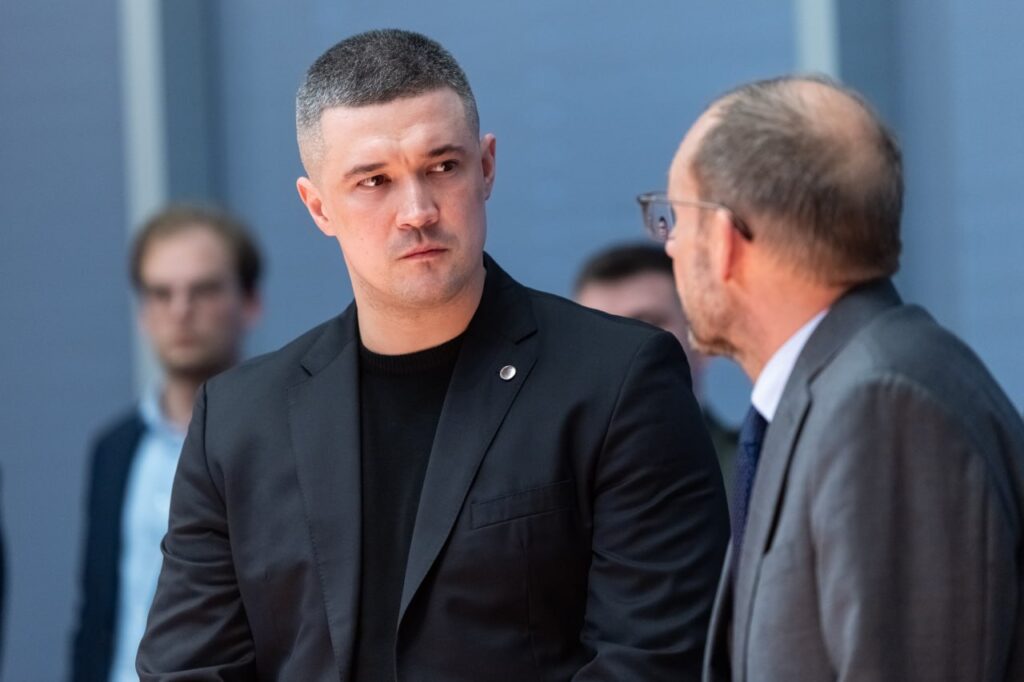
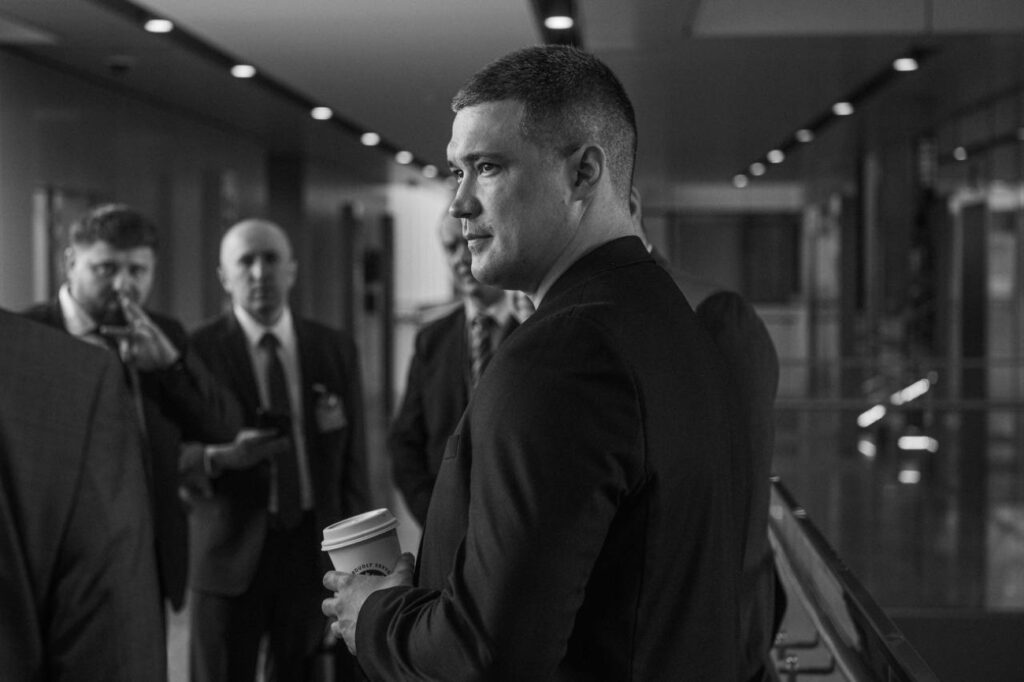
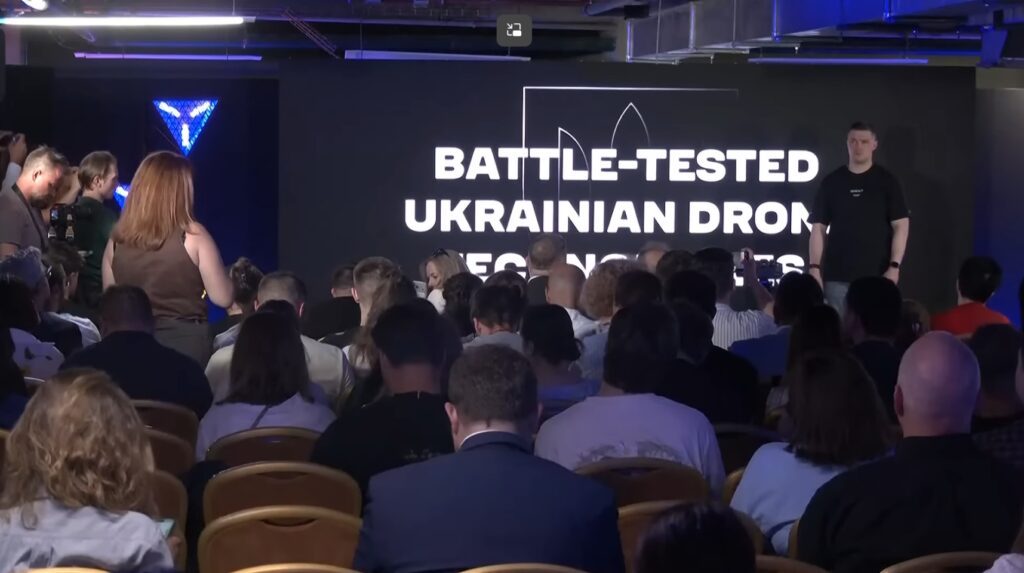
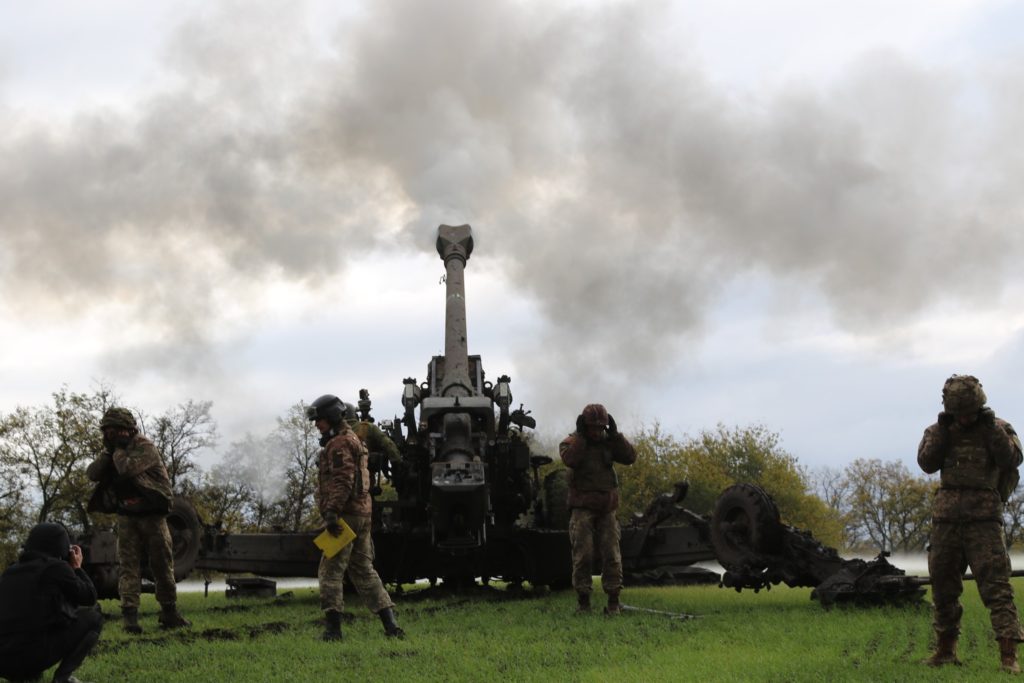
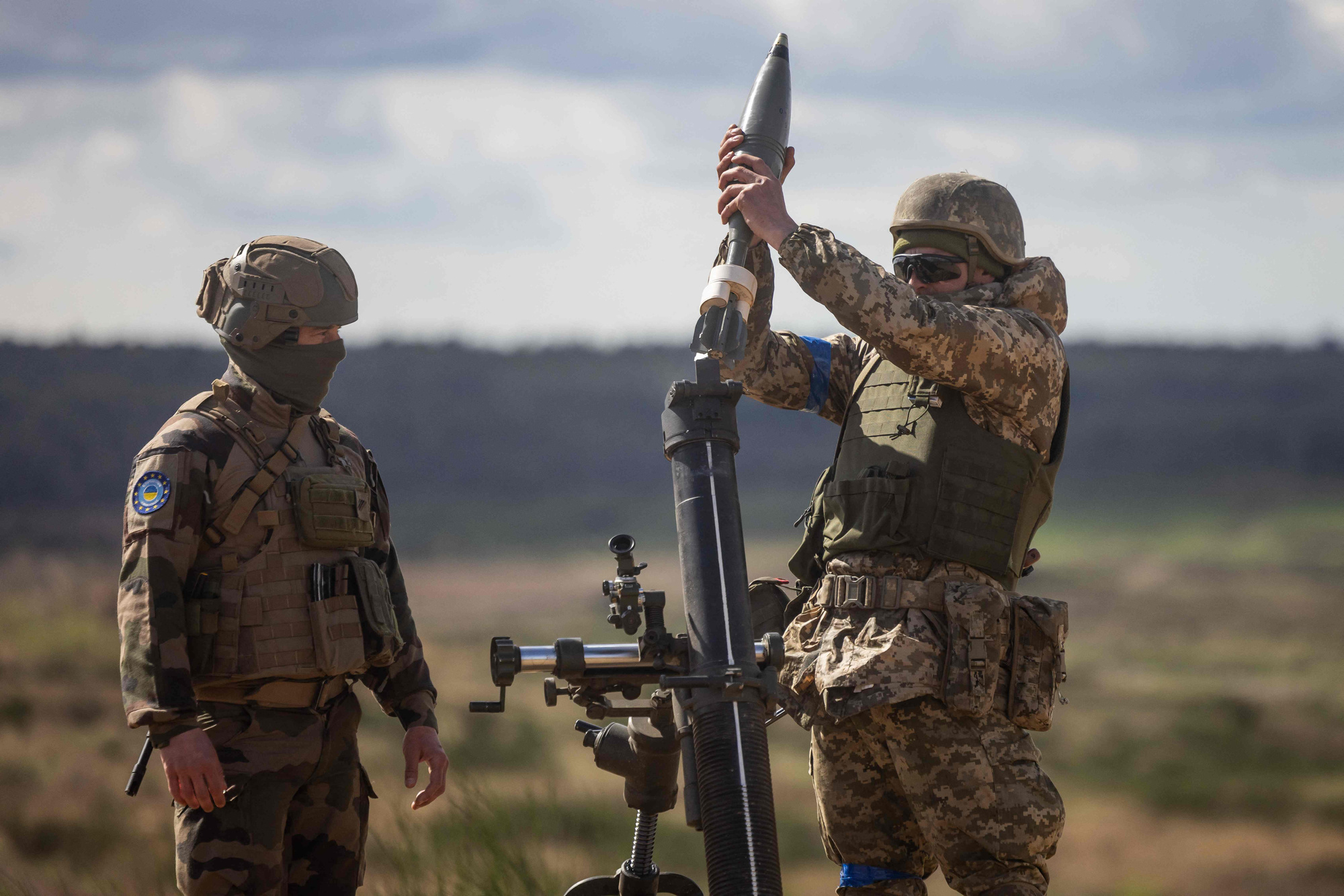
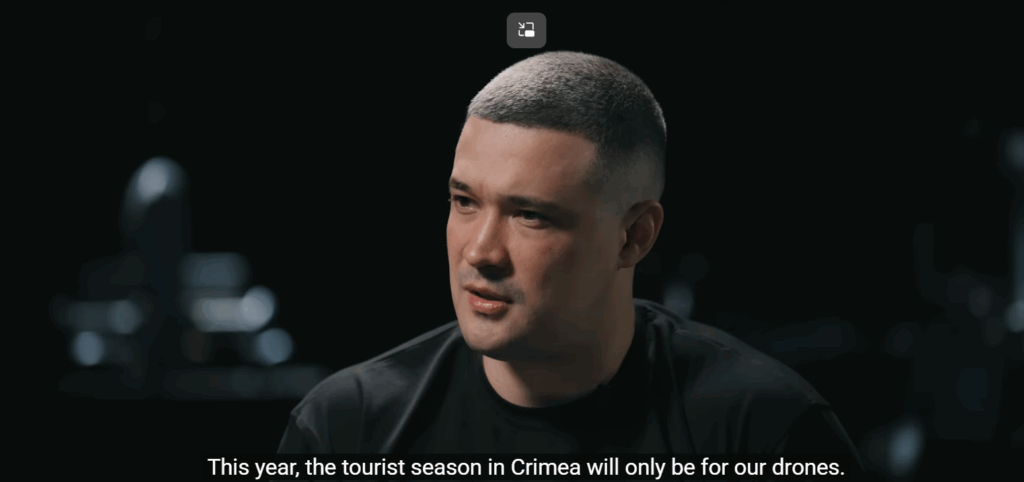
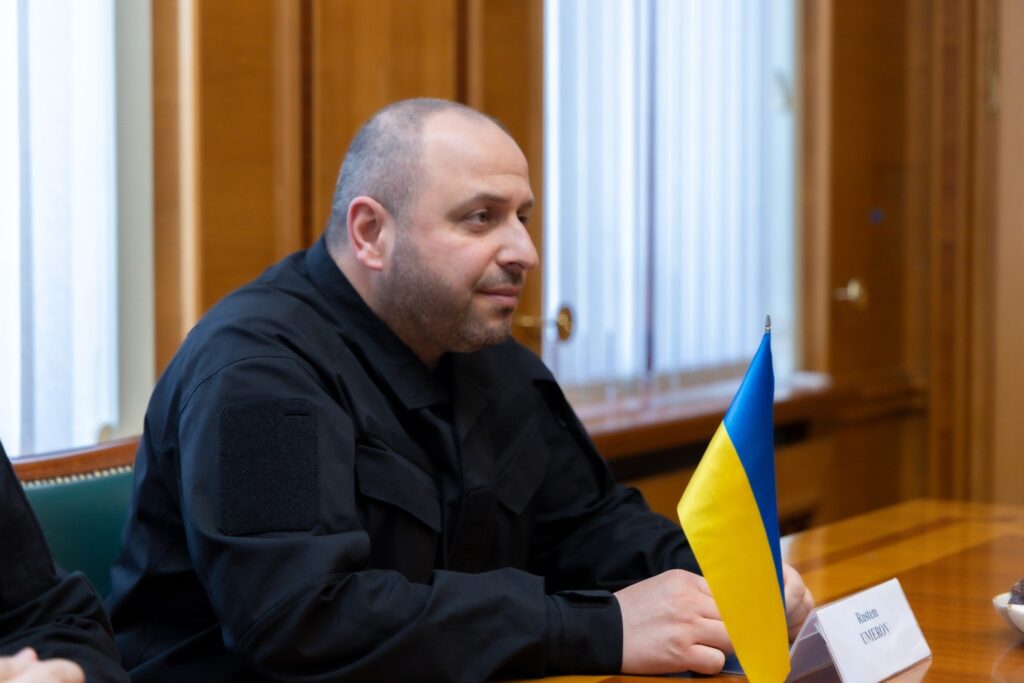

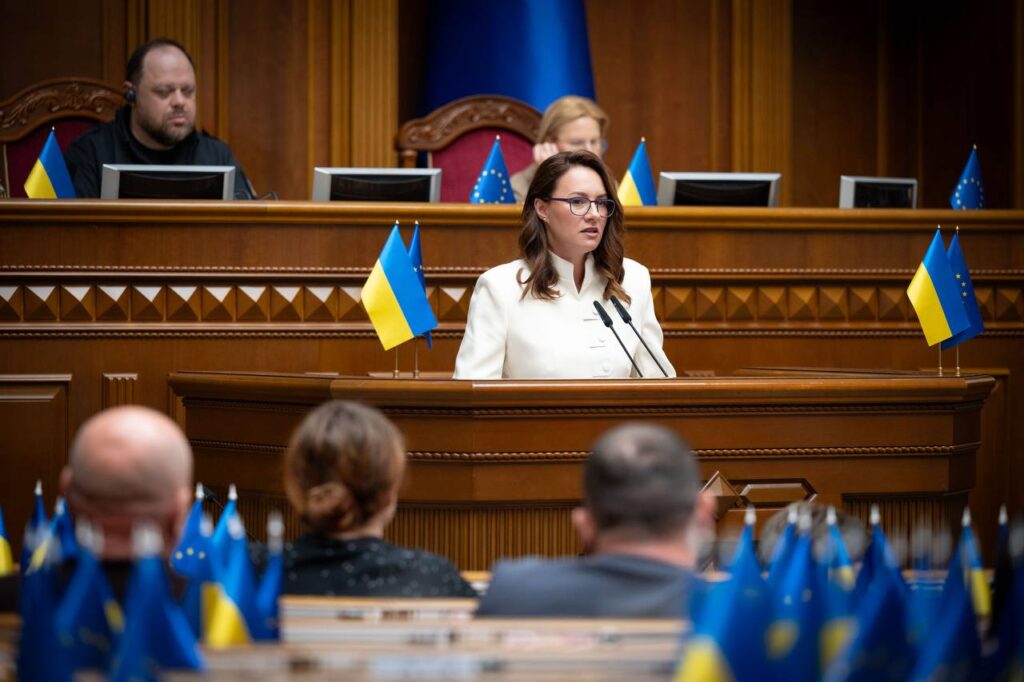
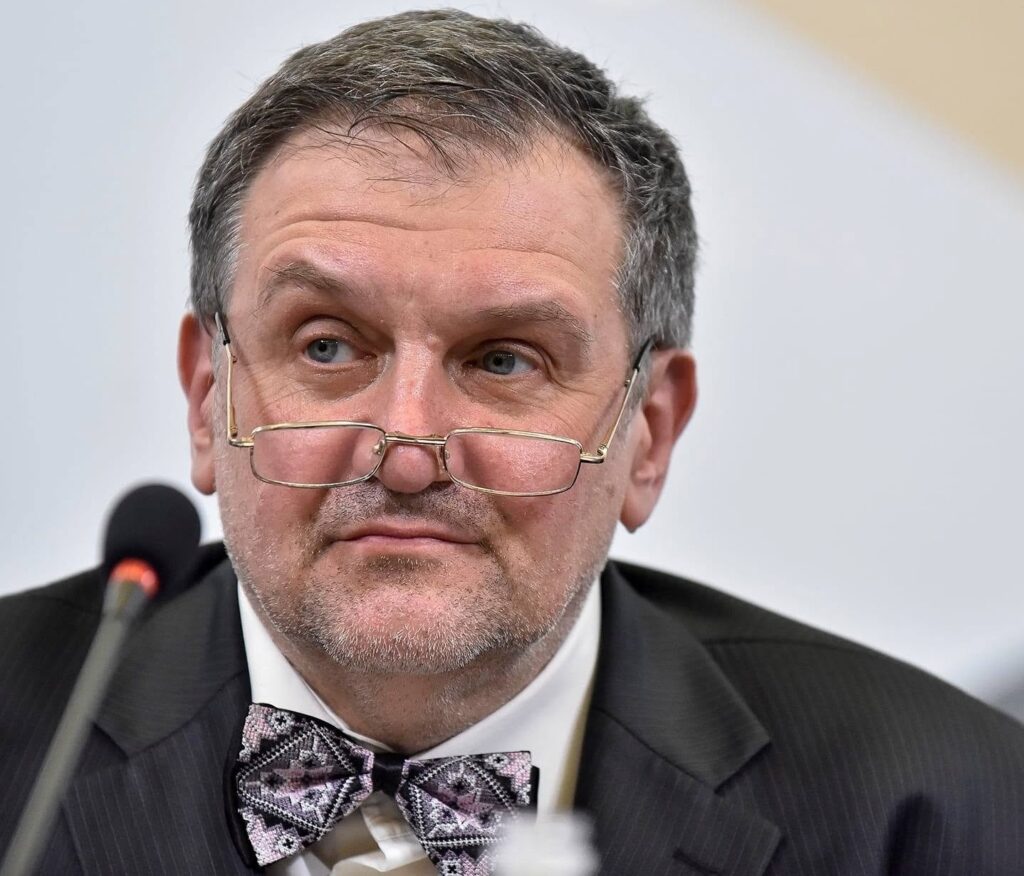
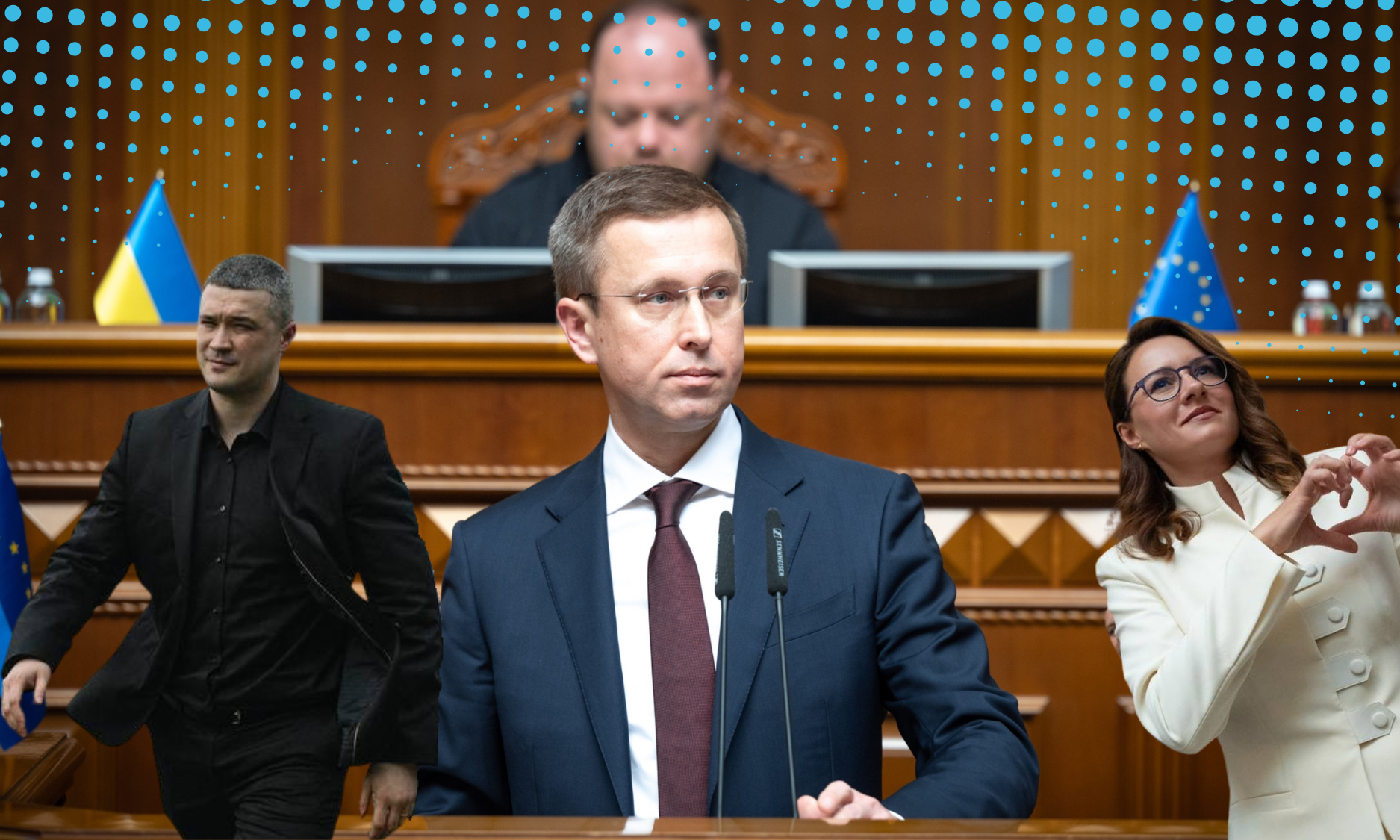
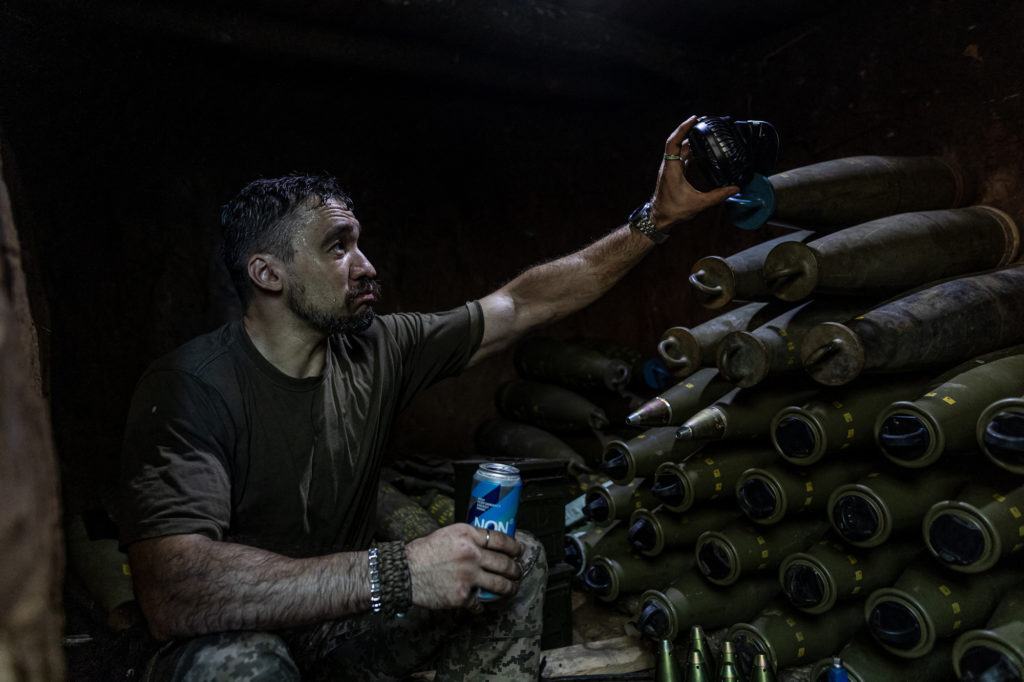
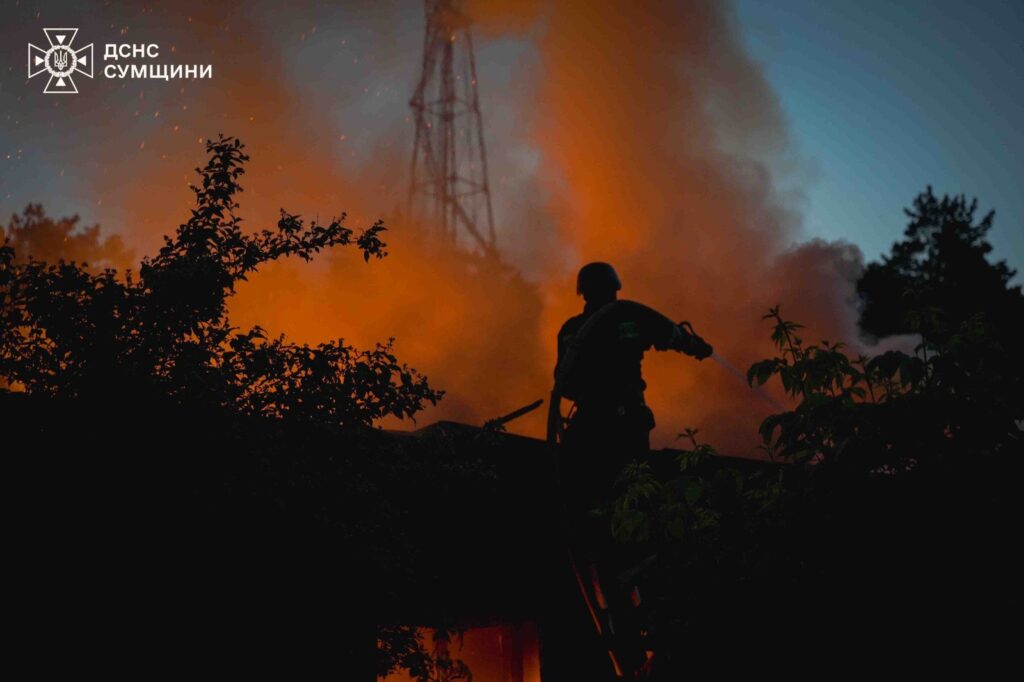
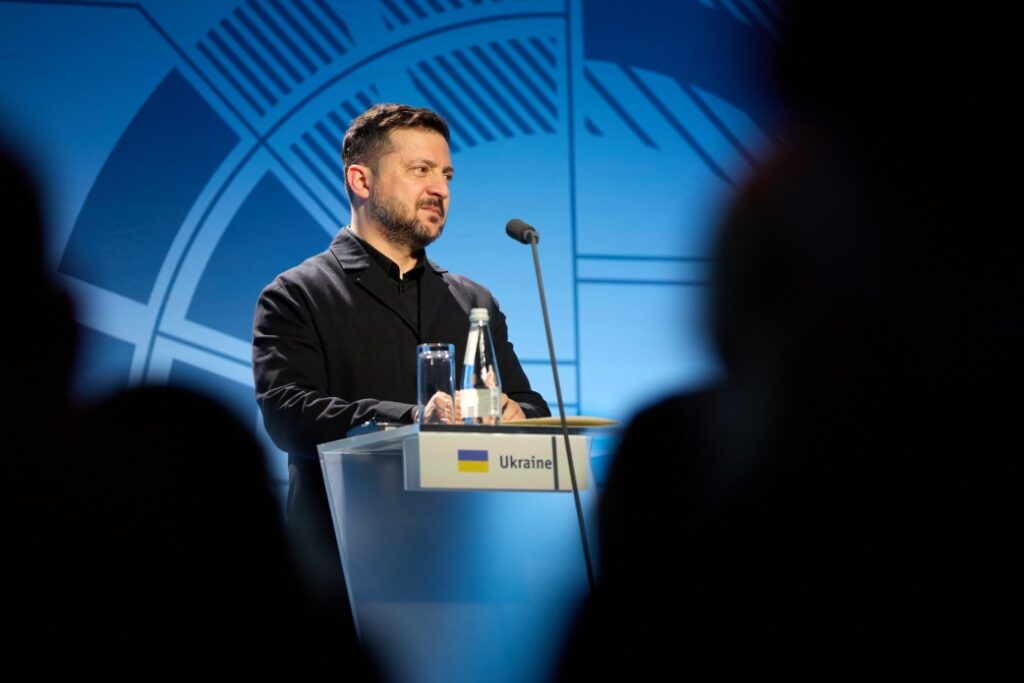
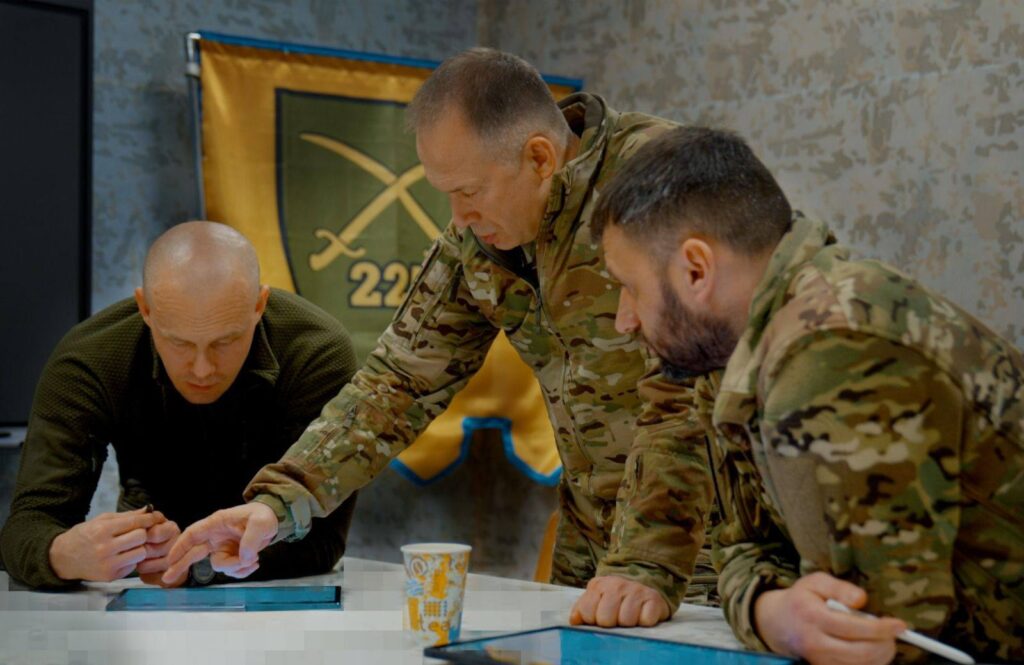
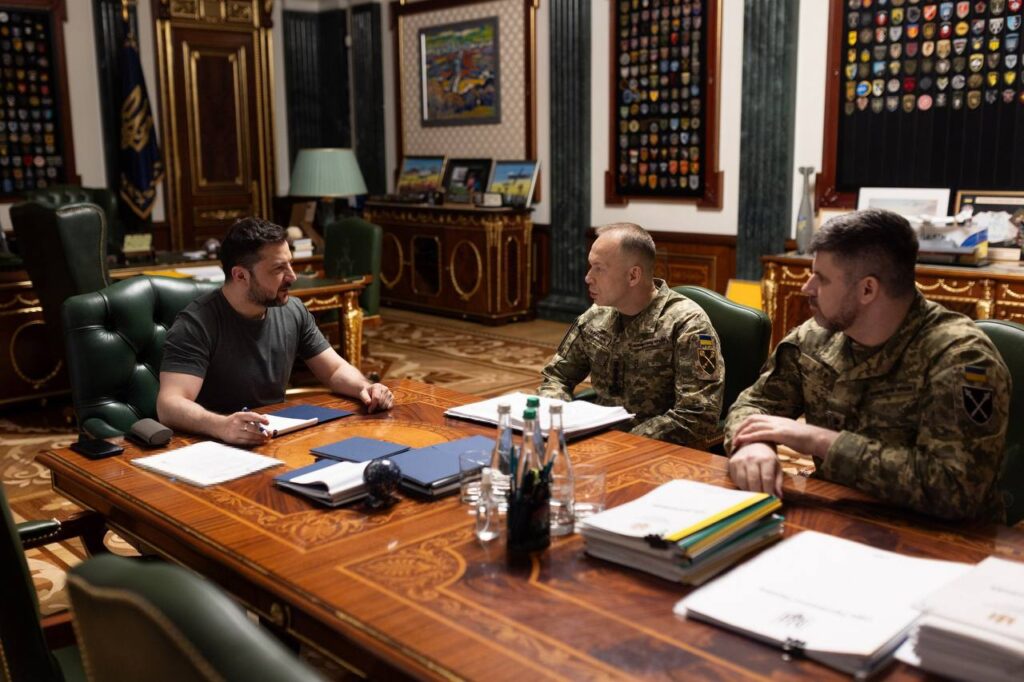
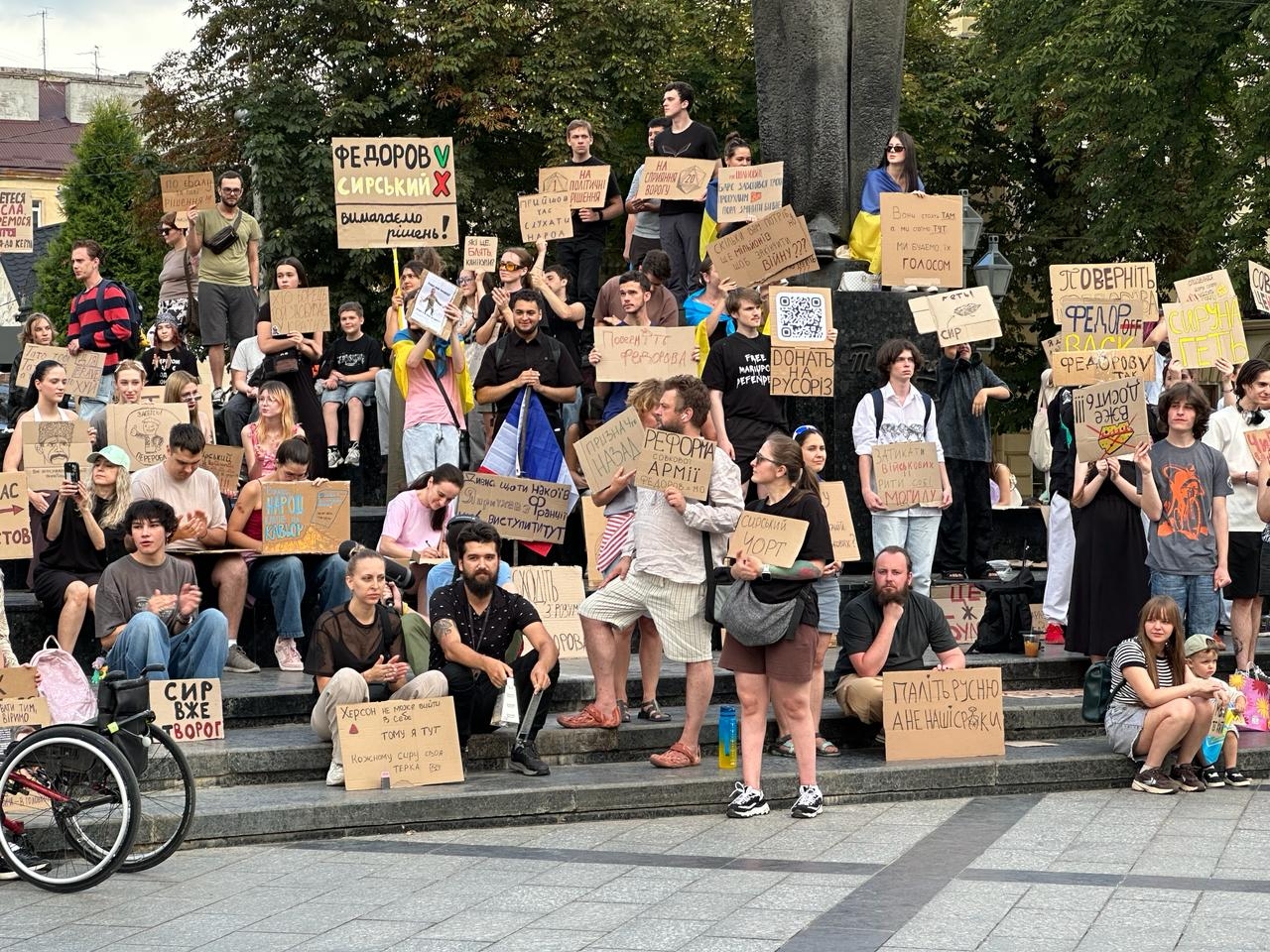

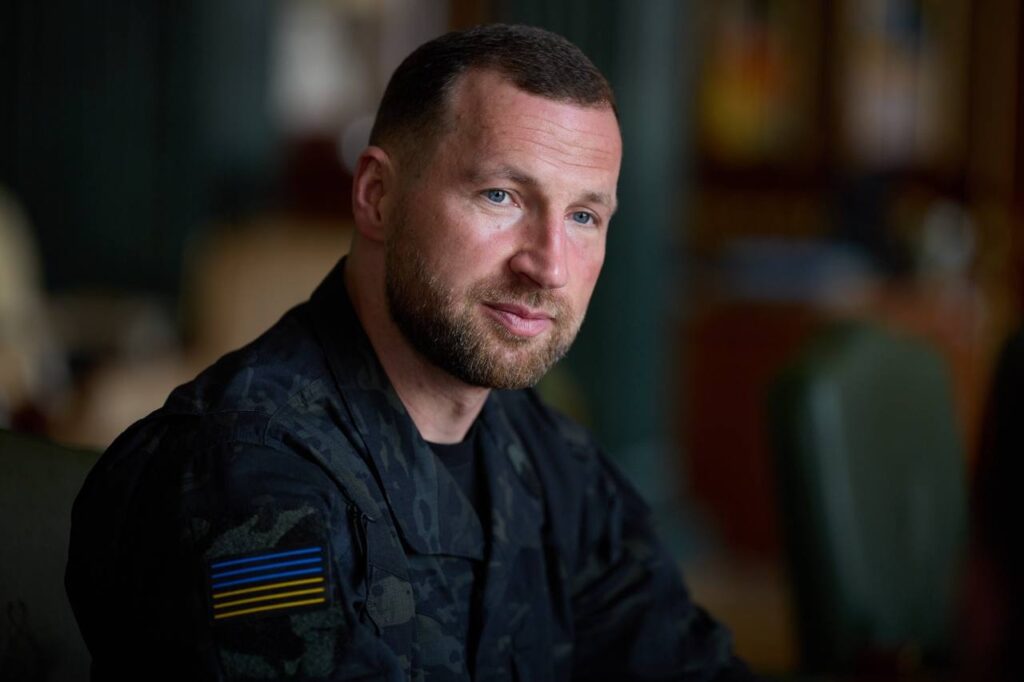
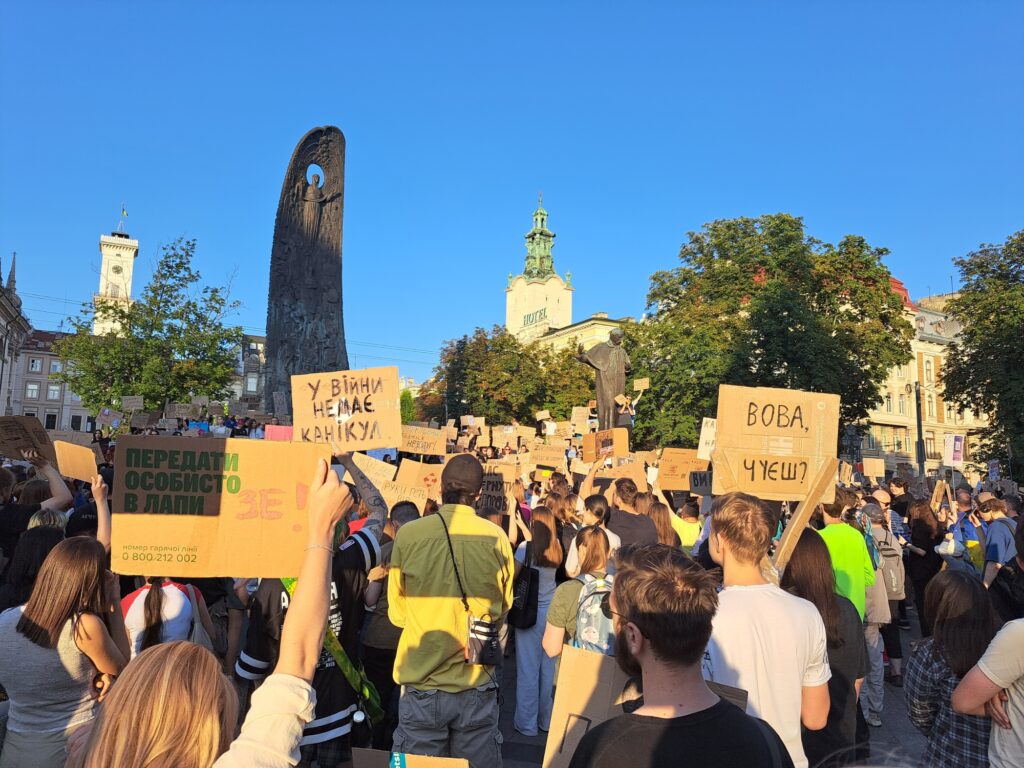
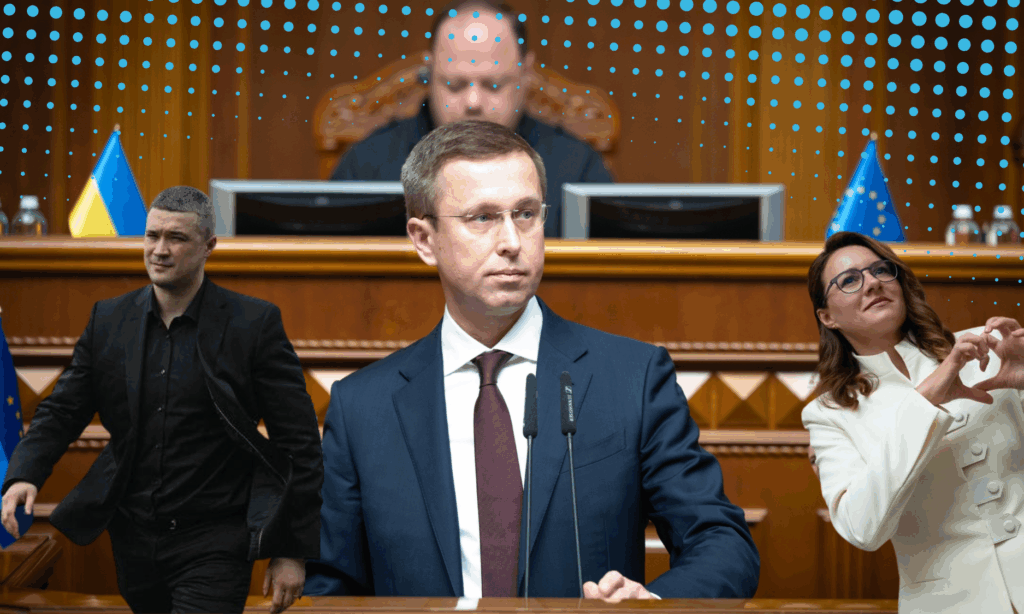
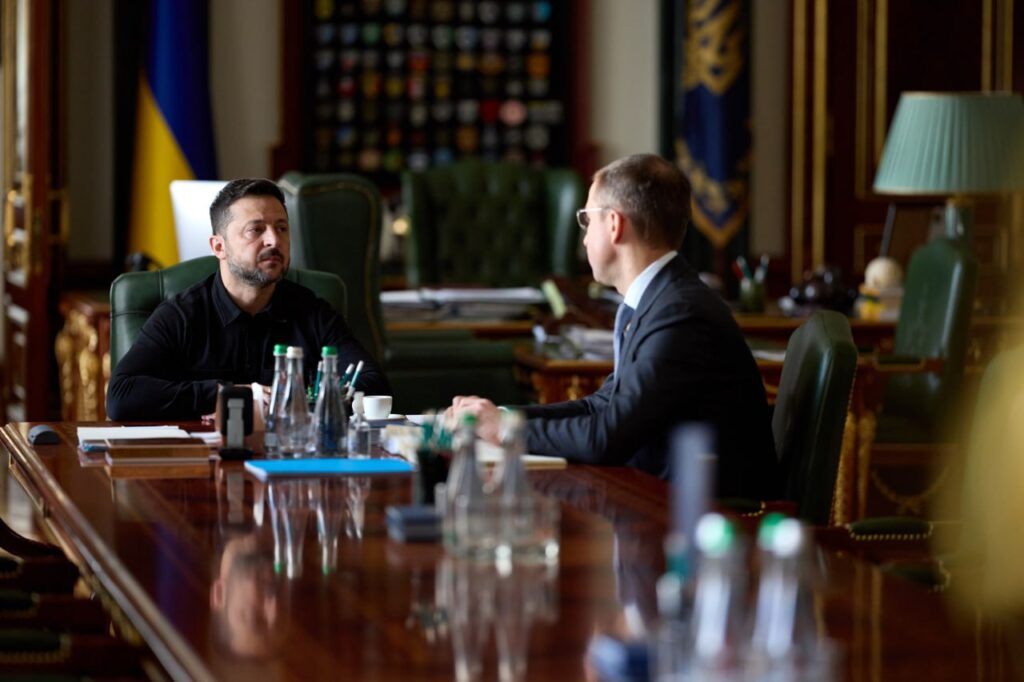
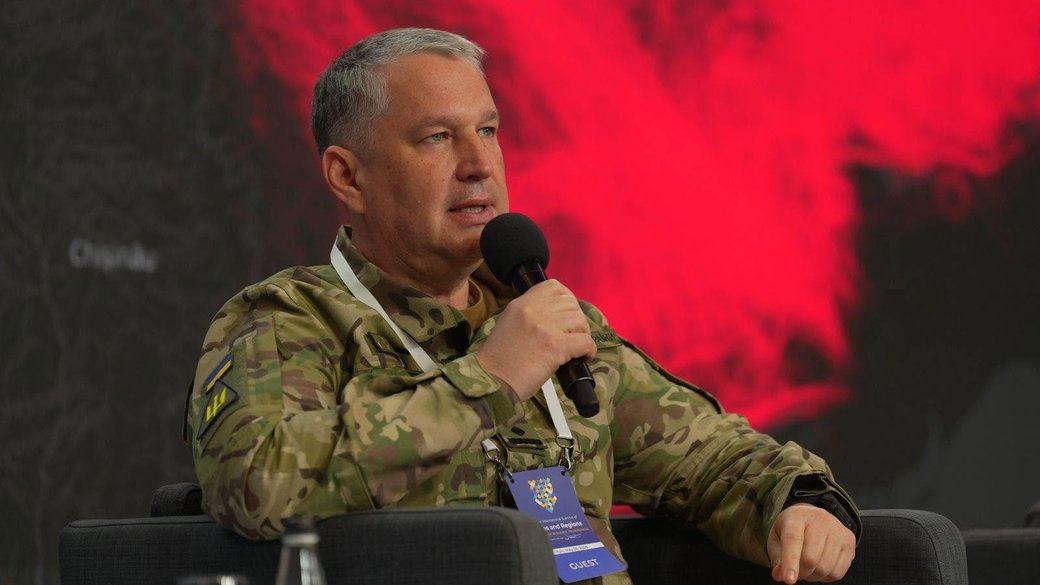
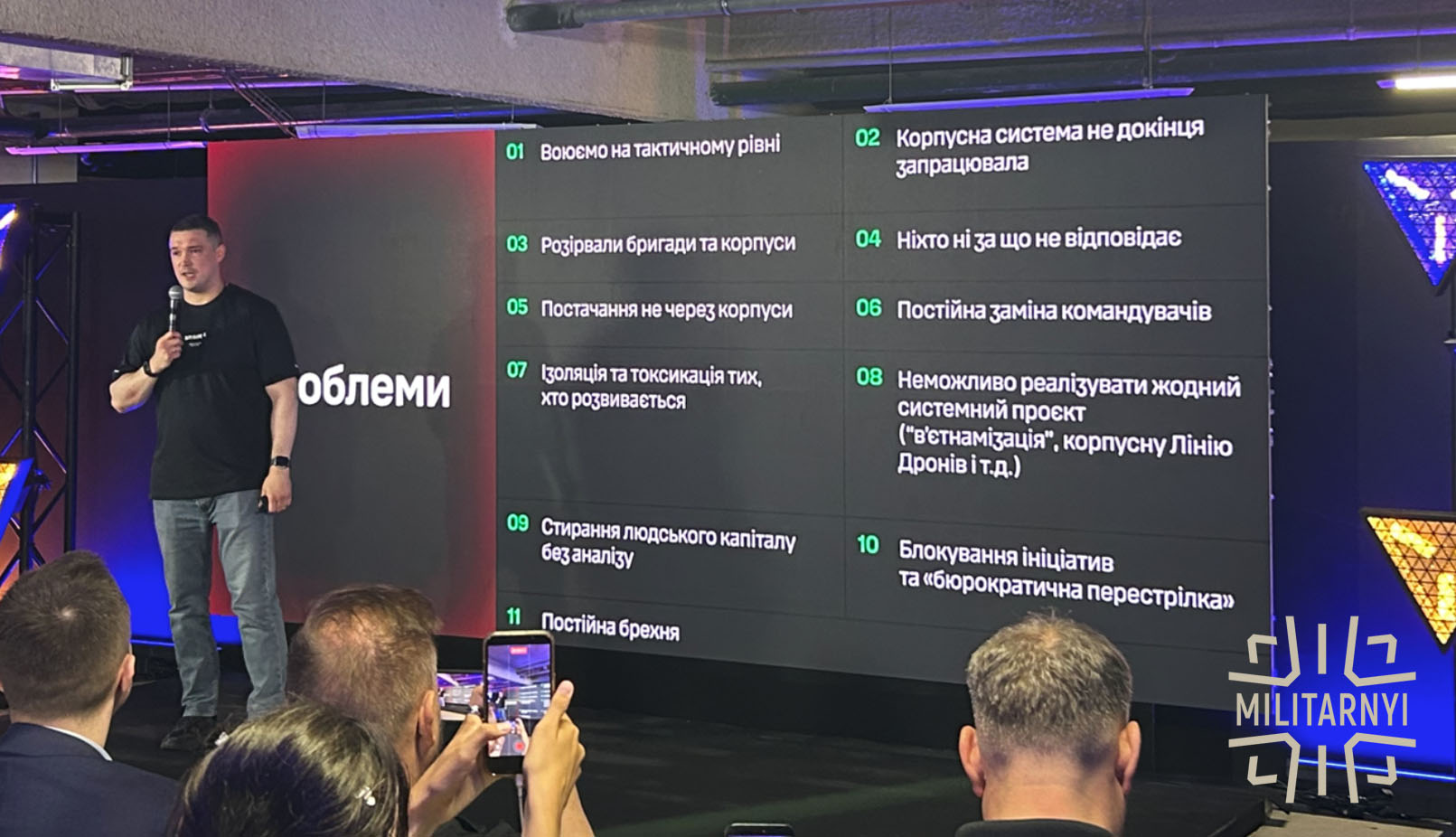
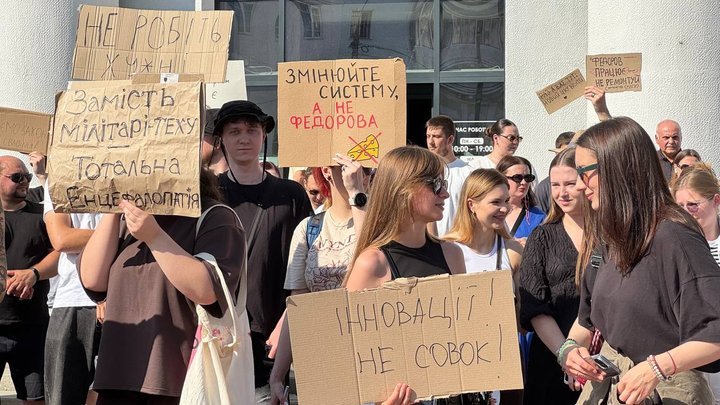
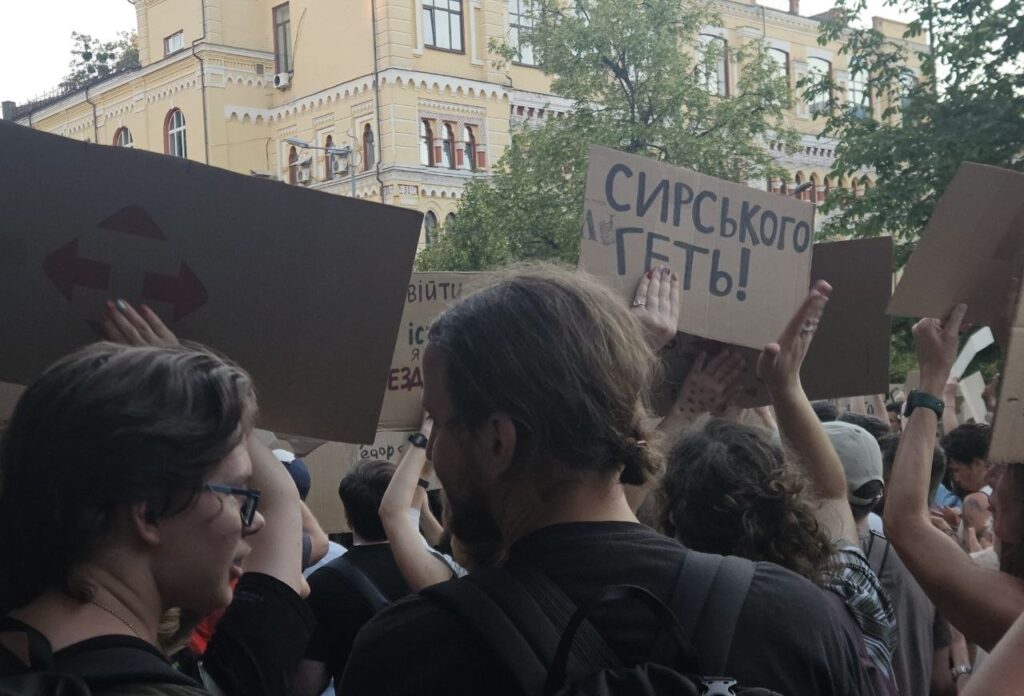
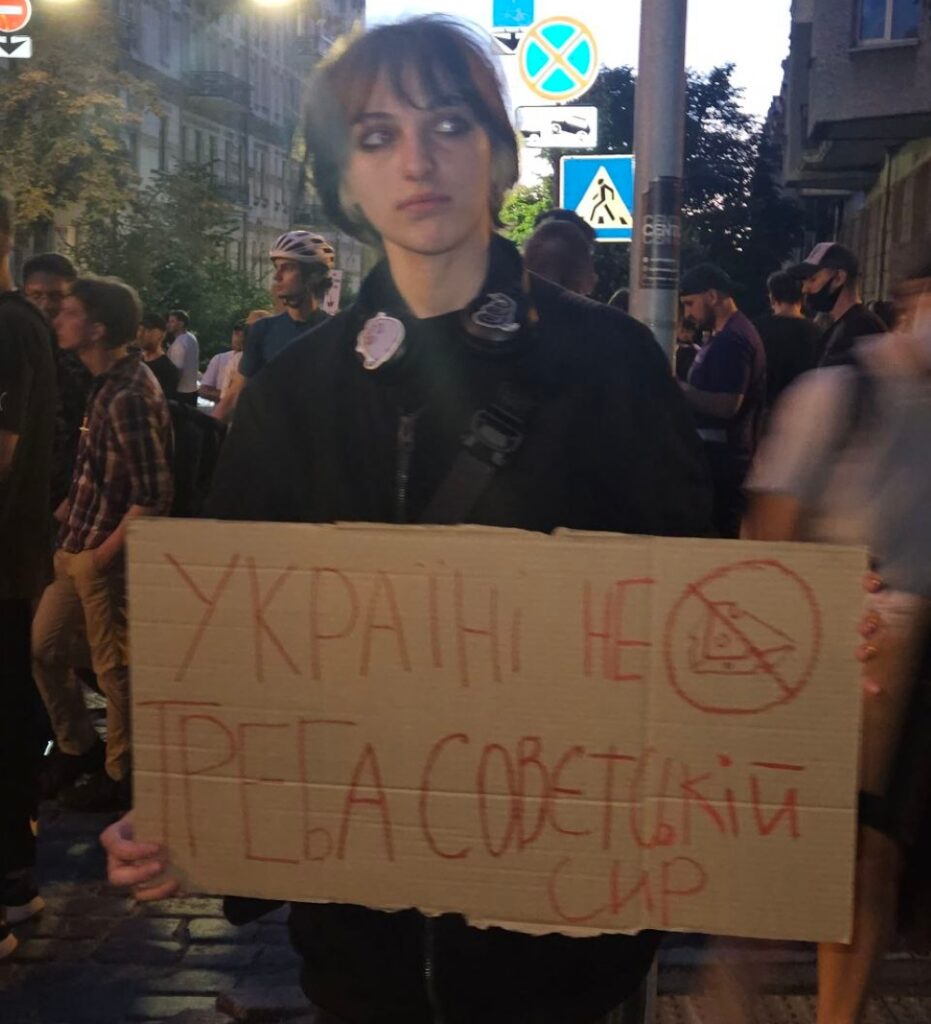
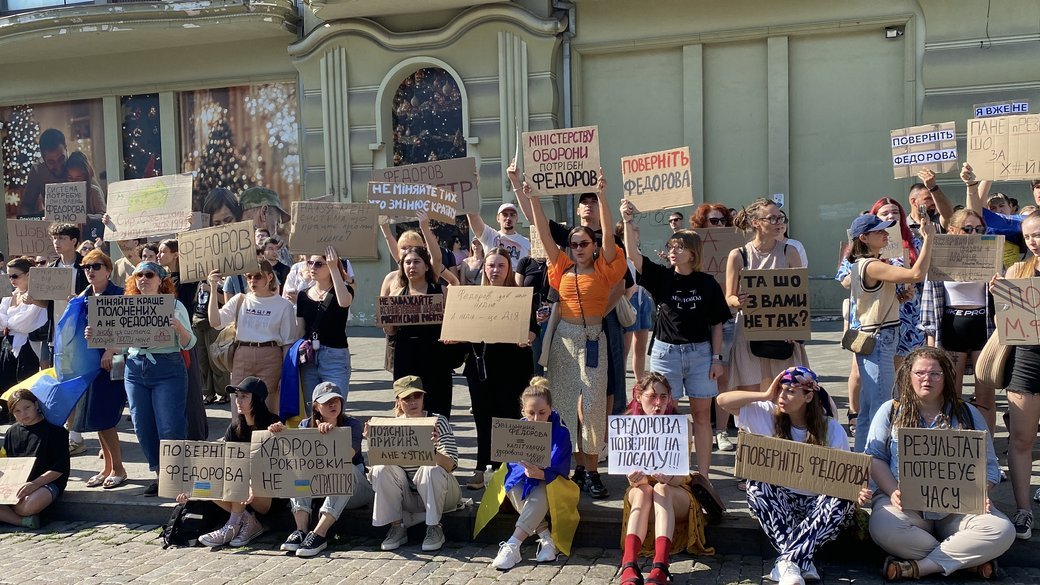
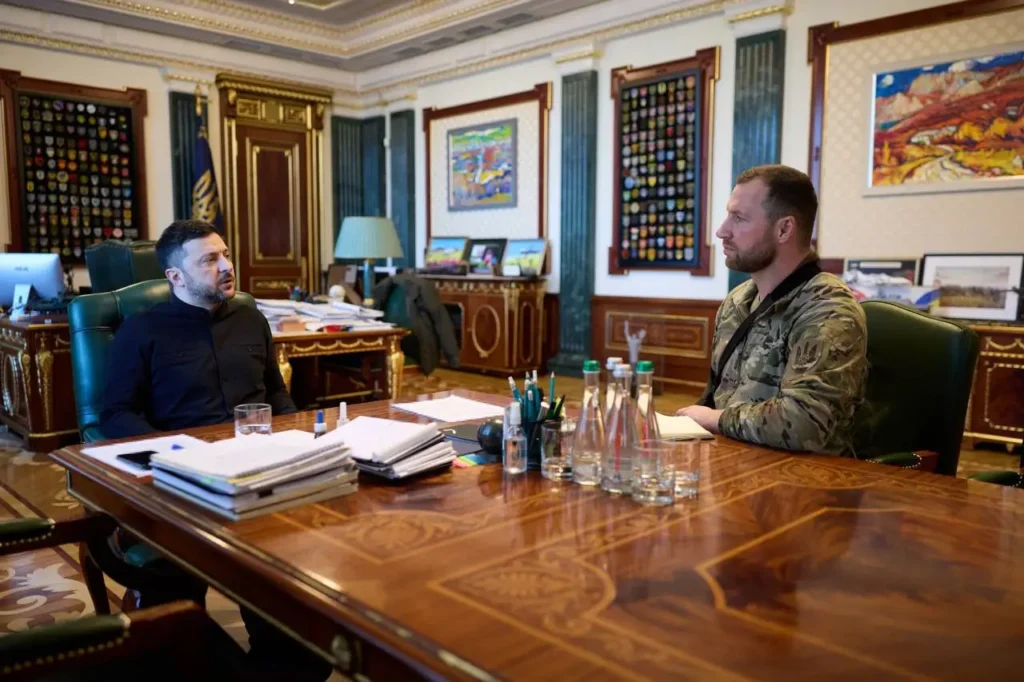
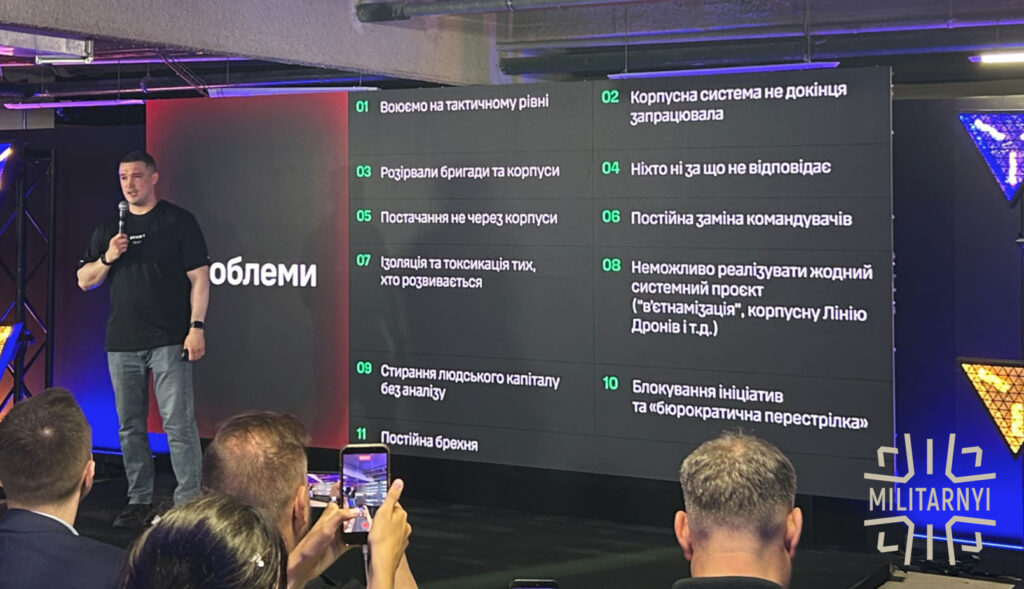
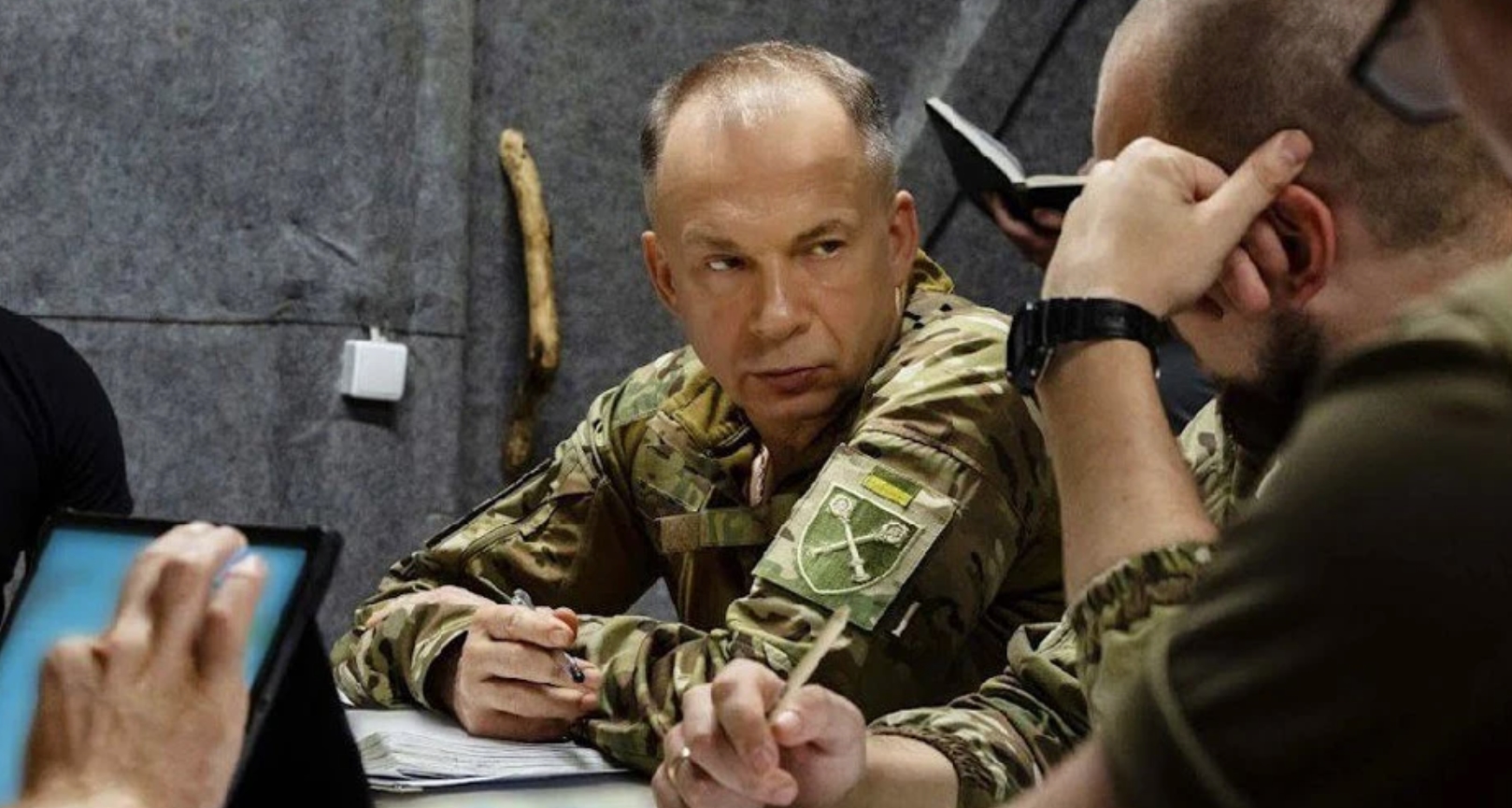
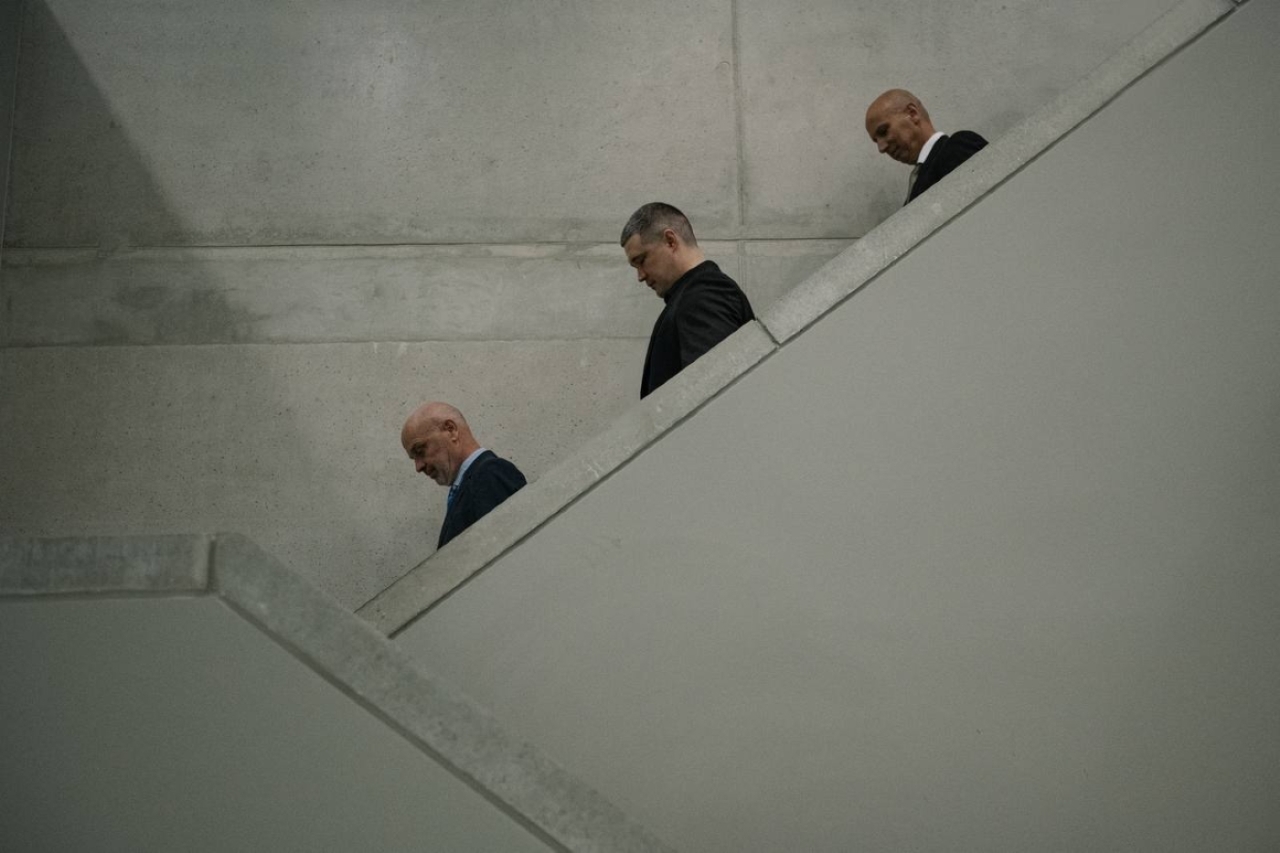
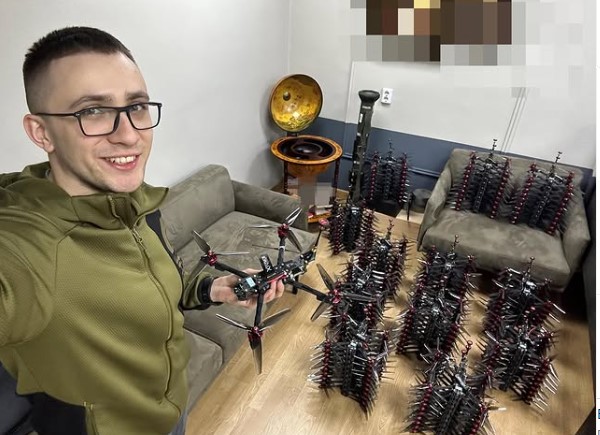
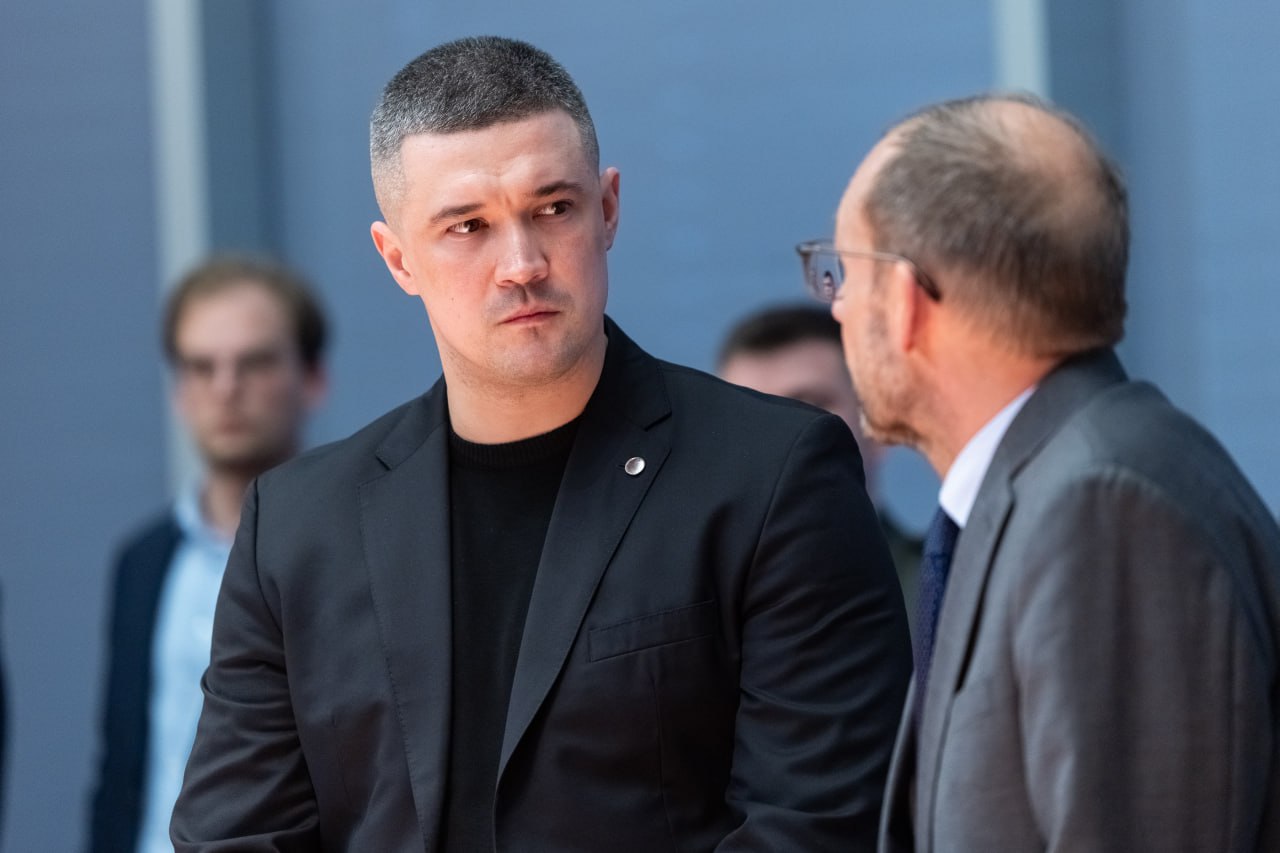
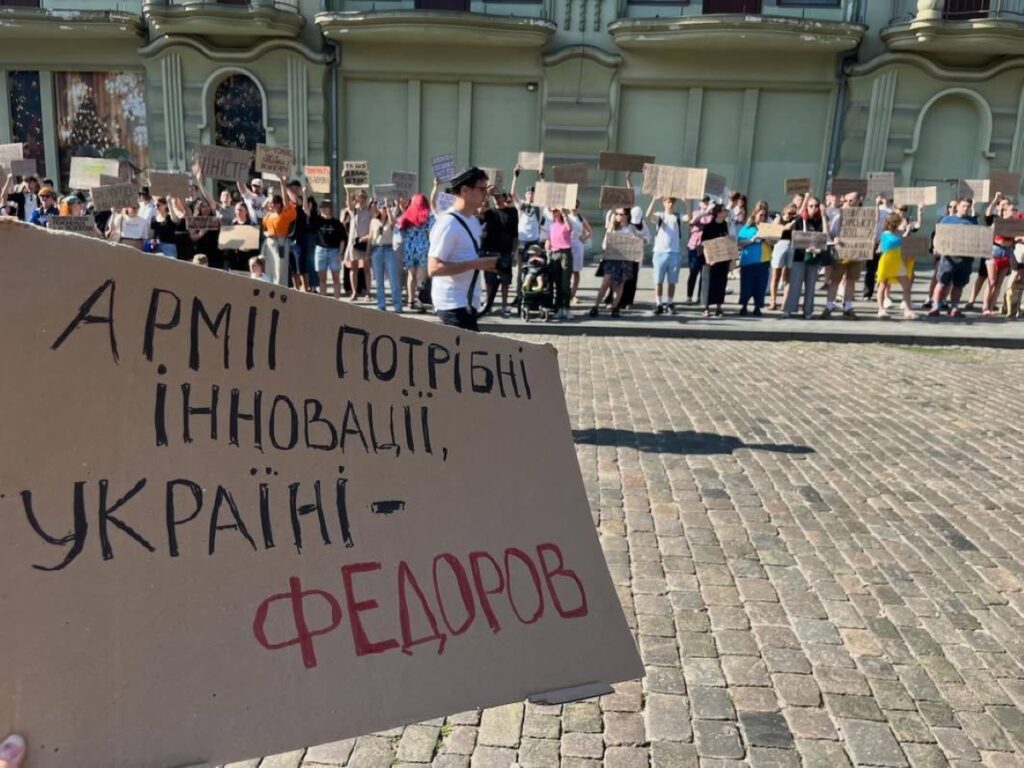
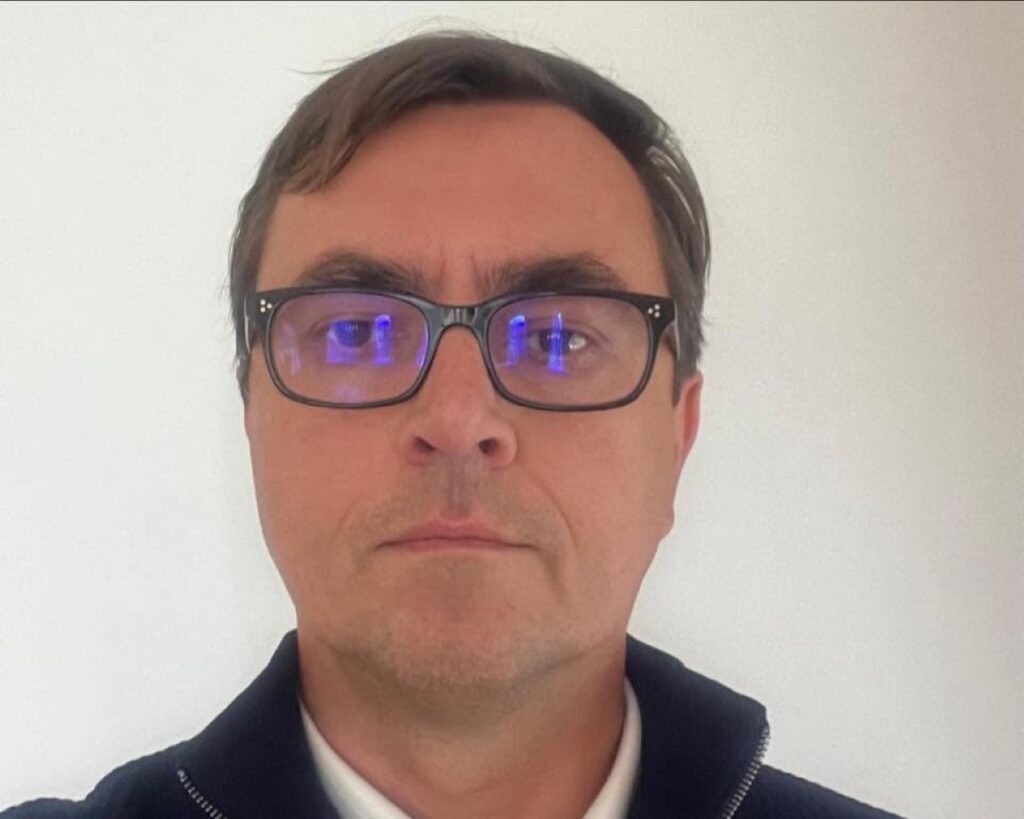
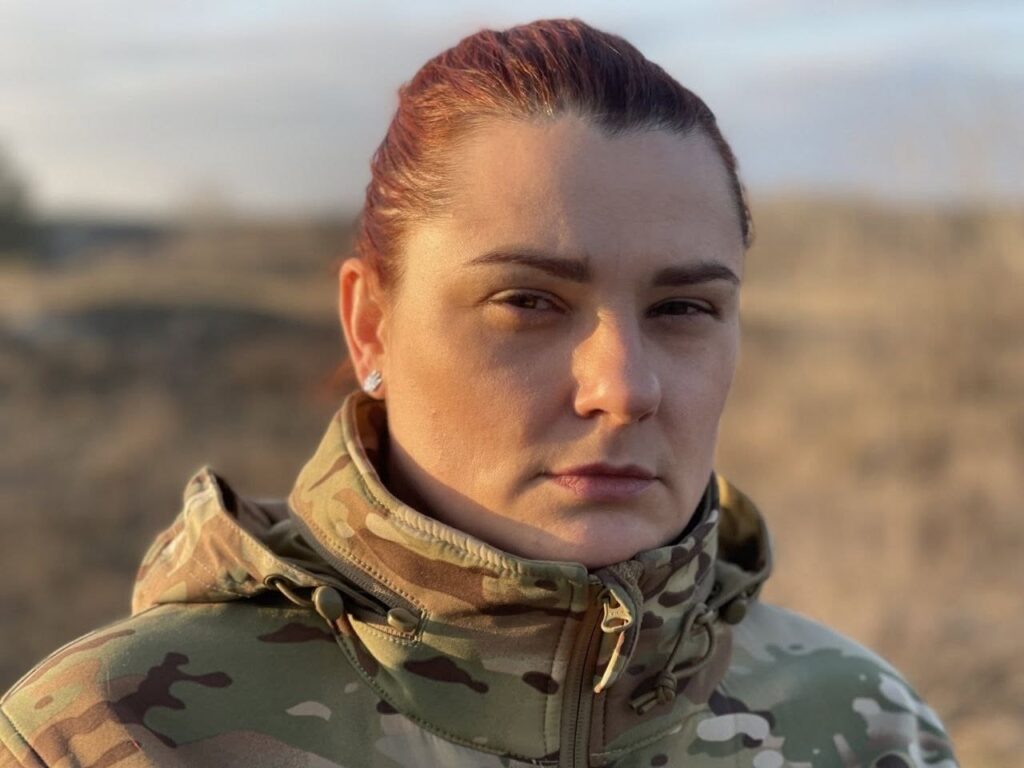
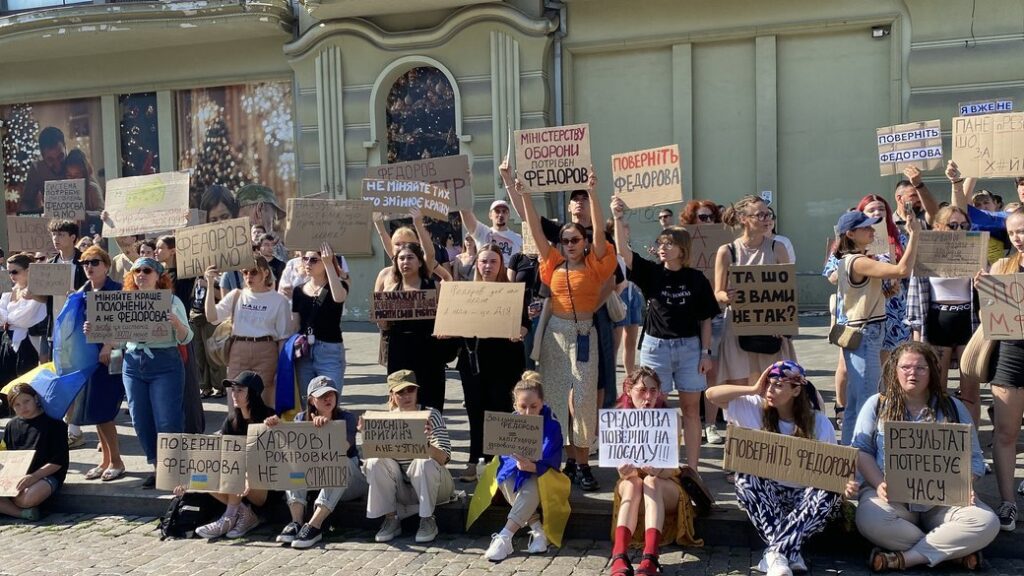
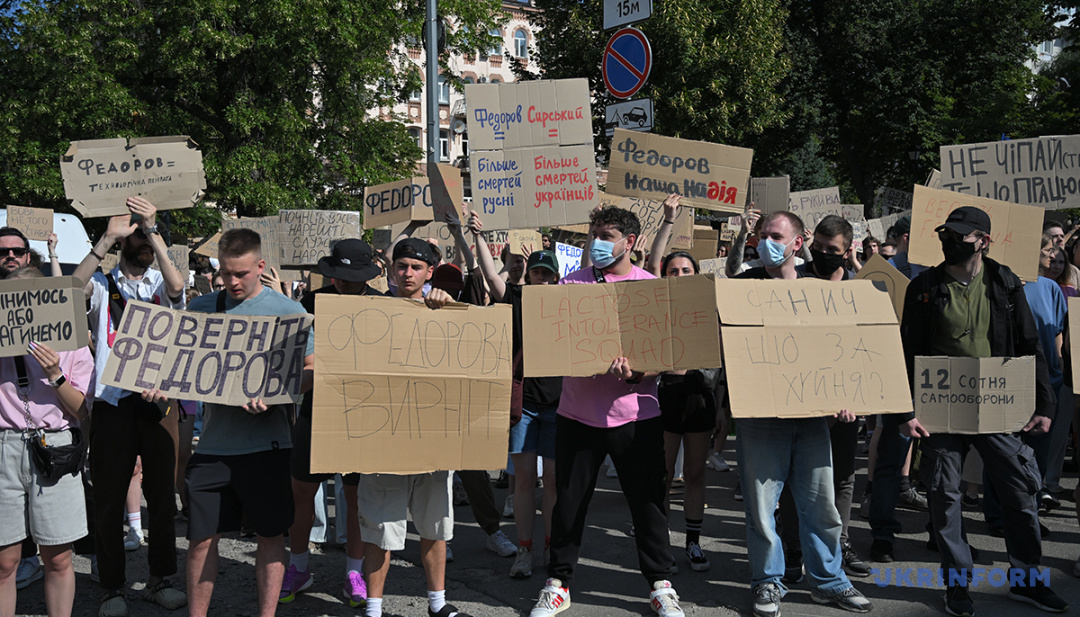
 Hromadske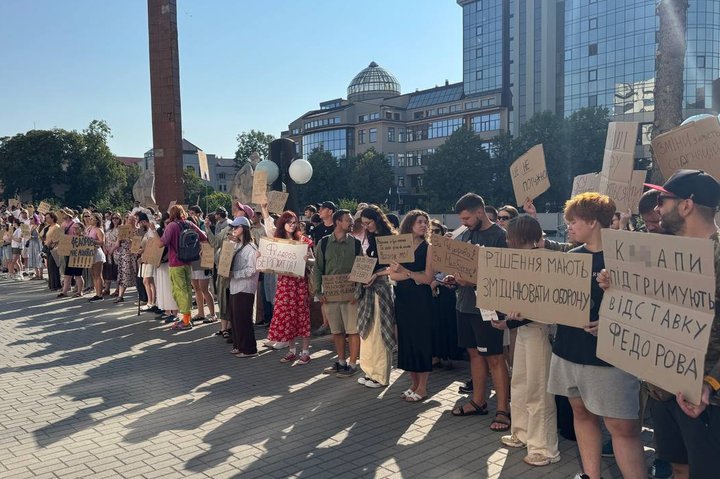
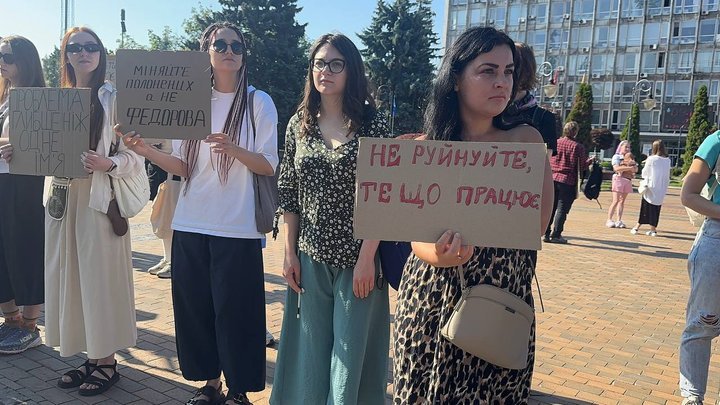
![cardboard protests against zelenskyy's firing fedorov erupt across ukraine · post residents rally dismissal defense minister mykhailo dnipro 16 2026 signs read bring [him] back animals why do need system](https://euromaidanpress.com/wp-content/uploads/2026/07/%D0%A3-%D0%94%D0%BD%D1%96%D0%BF%D1%80%D1%96-%D0%BC%D1%96%D1%81%D1%82%D1%8F%D0%BD%D0%B8-%D0%B2%D0%B8%D0%B9%D1%88%D0%BB%D0%B8-%D0%BD%D0%B0-%D0%BC%D1%96%D1%82%D0%B8%D0%BD%D0%B3-%D0%BF%D1%80%D0%BE%D1%82%D0%B8-%D0%B2%D1%96%D0%B4%D1%81%D1%82%D0%B0%D0%B2%D0%BA%D0%B8-%D0%BC%D1%96%D0%BD%D1%96%D1%81%D1%82%D1%80%D0%B0-%D0%BE%D0%B1%D0%BE%D1%80%D0%BE%D0%BD%D0%B8-%D0%A4%D0%B5%D0%B4%D0%BE%D1%80%D0%BE%D0%B2%D0%B0.-%D0%A1%D1%83%D1%81%D0%BF%D1%96%D0%BB%D1%8C%D0%BD%D0%B5-%D0%94%D0%BD%D1%96%D0%BF%D1%80%D0%BE.jpg)