Connexion
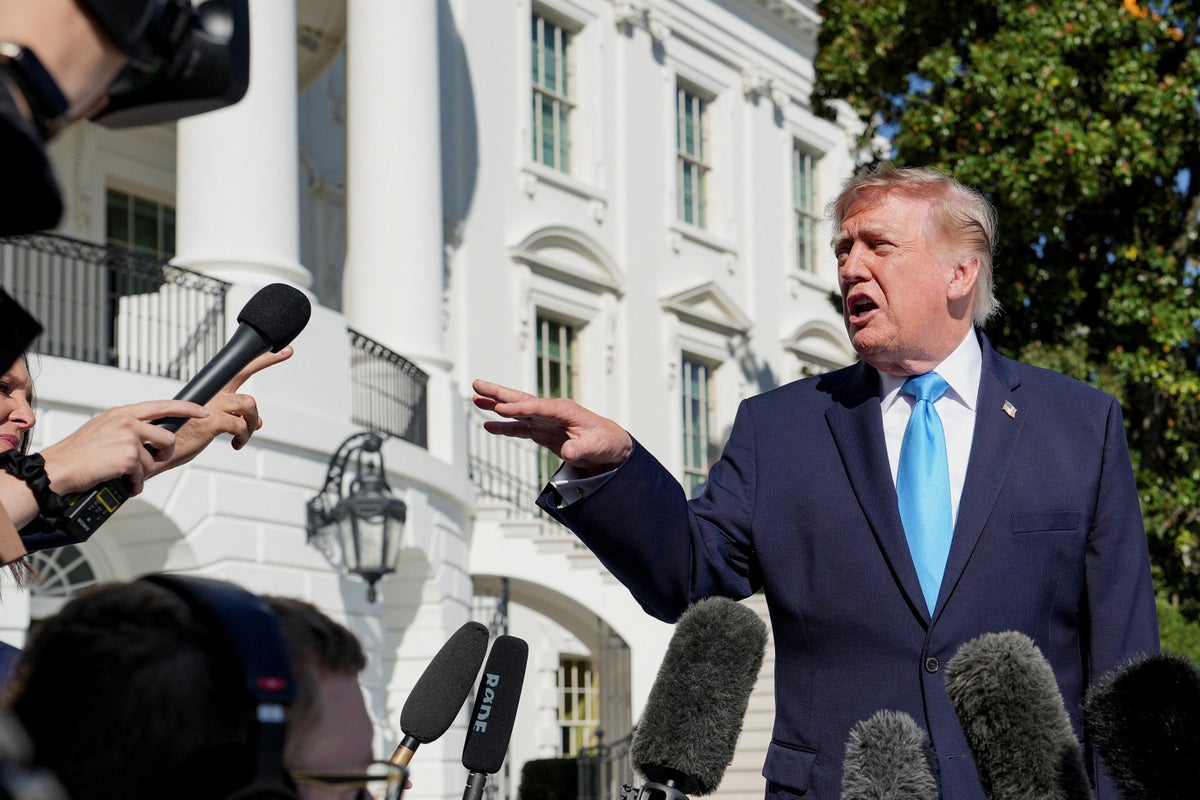
Trump blames Ukraine for record-breaking US gas prices in latest rant
5 octobre 2026 à 15:43
© Reuters

© Reuters
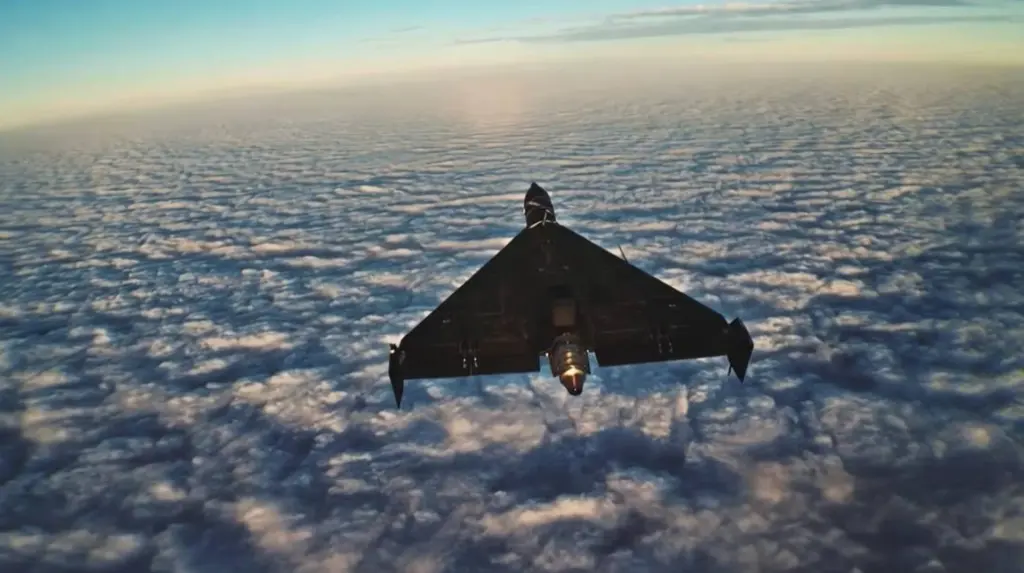

A Ukrainian drone maker just got its own air defense unit, and says it has already downed Russian jet-powered drones. Ukraine's Defense Ministry has issued an order granting the Night Hornets, the anti-Shahed unit of interceptor maker Wild Hornets, the status of a private air defense, and the company announced it is starting to build its own network of remotely launched interceptor drones.
Russia has sharply increased its use of jet-powered Shahed drones, which cuts the reaction time of Ukraine's mobile fire groups from about a minute to as little as six seconds. Now, a private company joins the air defense line, while Ukrainian military intelligence says Russia is producing up to 500 Geran-4 and Geran-5 jet drones a month.
The planned network will combine remote-control centers, a grid of remote interceptor launches built on the company's Hornet Vision Ctrl technology, and field positions. Wild Hornets will not sell protection for individual sites and will pay for the unit from drone sales profit.
"The unit has more than 50 downed Shaheds to its name, including jet-powered ones. We create technologies that work. We use them ourselves to protect our country," the company says.
The crews already go on daily combat duty alongside the military and will take orders from the Air Force command. The unit draws on Wild Hornets instructors and test pilots, including veterans of the war and pilots who rose from beginners to instructors. The company wants to fold private air defense into the country's overall system, including over Kyiv.
Due to Russia's jet-powered drones, air-raid alerts covered 30.8 percent of shopping-center operating hours across Ukraine in September, a record, up from 22 percent in August and 14.1 percent a year earlier, the Ukrainian Council of Shopping Centers reports. The average mall has now lost 176.5 working days since the full-scale invasion, including 9.6 in September alone.
Kyiv shows the sharpest jump. The share of alert time during mall hours in the capital rose from 11.6 percent in August to 32.7 percent in September, the council said.
The damage reaches well beyond the malls. Ukraine's Economy Ministry expects losses from Russian strikes to reach up to $10 billion this year, Economy Minister Oleksandr Kravchenko said on 12 September.
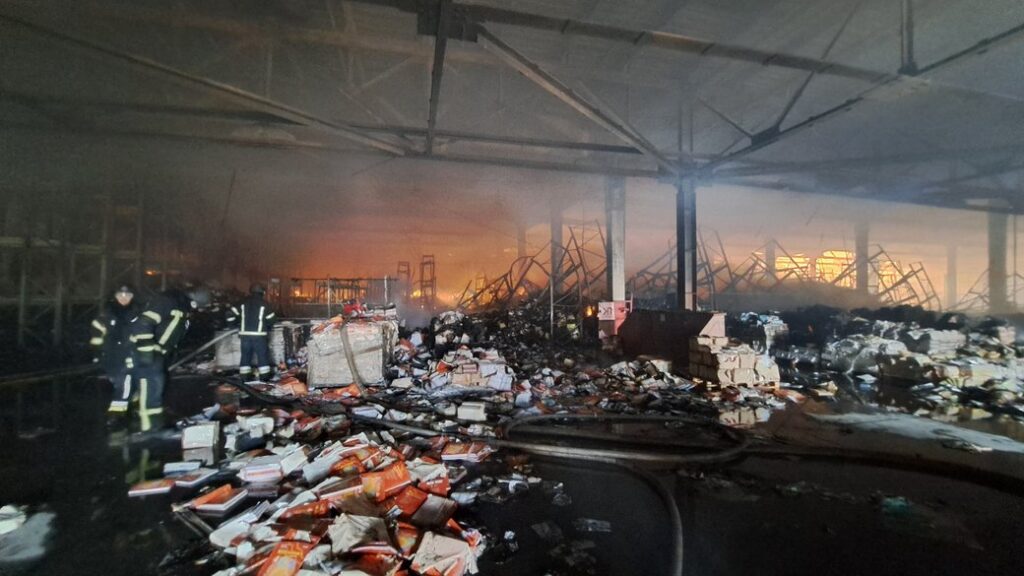
Russian missiles and drones destroyed 13 million Ukrainian books this summer, The Guardian reported. That is about a third of all books printed in Ukraine this year, the government estimates.
Russia is striking civilian warehouses, including those where publishers store their books. The uncertainty is pushing publishers toward safe international bestsellers, Publishers Weekly reported. "We'll all end up fed up with safe, non-risky books—if there are still publishers around to publish them," said Iryna Baturevych, co-founder of the publishing news outlet Chytomo.
Ranok is one of Ukraine's largest publishing houses and a leader in children's literature and school textbooks. On one day in August, Russia destroyed more than 85% of its stock, The Guardian reported.
Viktor Kruhlov, the publisher's co-founder and chief executive, was on the warehouse floor at its headquarters in Kharkiv. The facility, built on the site of a former bread factory, covered about 10,000 m².
Together with five senior colleagues, he was discussing plans for the upcoming school year, the peak of the distribution season. Moments after the meeting began, a strike hit about 30 meters from where the staff had gathered. Kruhlov heard an explosion and almost at once saw a huge fire. As colleagues tried to put out the flames, a second strike came, and he realized there could be a third and a fourth, so the staff evacuated. Fifty people were on shift that day, and no one was injured, Kruhlov told The Guardian.
Eight million books, including 628,000 new school textbooks, were in the warehouse at the time. None could be saved. Firefighters battled the blaze for a week.
Several editorial staff members who saw the remains of the warehouse for the first time looked shaken as they recognized fragments of books they had helped create.
"When you see what was produced with your brain, with your hands, with your imagination, spoiled by Russia, it's an awful feeling," Kruhlov said.
He predicted shortages at Ranok's stores this fall, when the books in stock run out and there is nothing to replace them.
Kruhlov is convinced that Russia deliberately targeted the book warehouse, but Bohdana Laiuk, Ukraine's deputy culture minister, sees the strikes as part of Russia's broader campaign against warehouses, The Guardian wrote.
"They cannot occupy Kyiv. So they target warehouses around Kyiv to take the possibility of everyday life from us—and books are part of everyday life," she said.
Books also matter to Russia's occupiers, Laiuk said.
"When the Russians occupy, the first thing they do—and we know this from the areas that were occupied and then liberated in 2022 in the Kherson and Kharkiv regions—is to go to the libraries, take the Ukrainian language books out, and destroy them," Laiuk said.
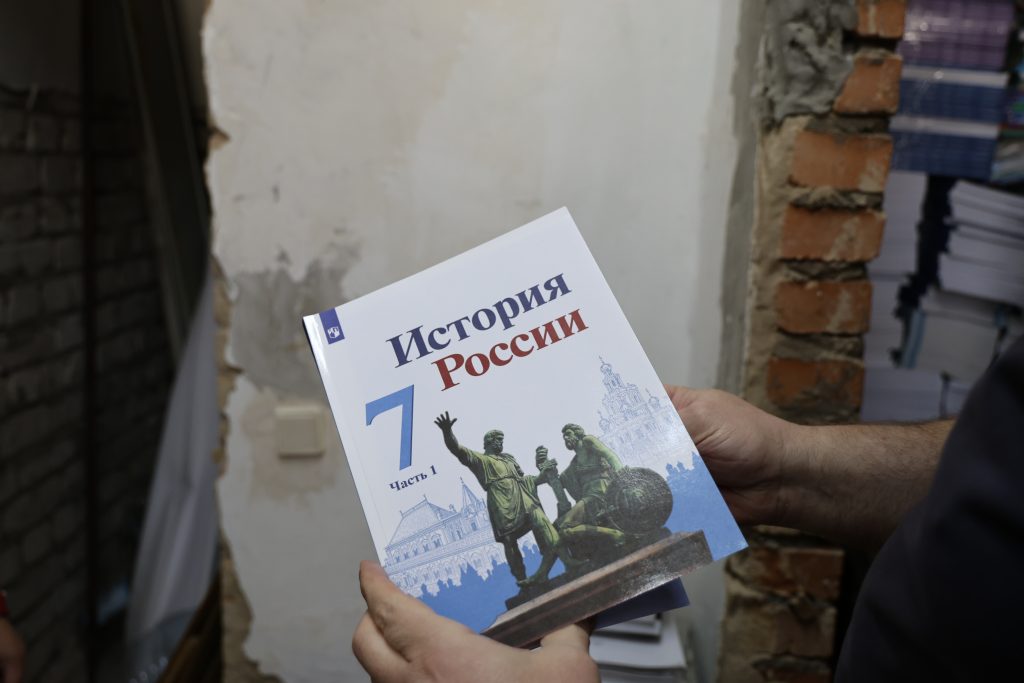
Before 2022, about 70% of the Ukrainian book market consisted of Russian-language titles, most of them imported from Russia.
Russian dominance in Ukrainian publishing developed over centuries, from tsarist bans on publishing in Ukrainian in the 19th century to Soviet Russification. Ukrainian writers were purged, and Ukrainian literature stayed in the shadow of Russian literature, the article notes.
Laiuk calls the dominance of Russian books a form of colonialism. Russia deliberately built its own information space in Ukraine through books, media, and television, she argues, so that everything would be ready for it once its tanks arrived.
Even after independence, a commercially successful Ukrainian-language novel was long seen as unlikely. But at the start of the full-scale invasion in 2022, Ukrainian bookstores stopped selling Russian imports, and interest in Ukrainian literature grew, from 1920s classics and poetry to contemporary authors and translations.
"So people are asking: what does it actually mean to be Ukrainian? Literary culture gives us the place to understand who we are," Laiuk told The Guardian in 2023.
Ranok is now rushing to reprint textbooks and bestsellers: schools need the former, while sales of popular titles will help the publisher make up for lost revenue.

For debut authors and writers of less commercial or experimental books, the situation is particularly difficult. Even before the strike on Ranok's warehouse, some publications had been delayed by attacks on printing infrastructure.
Ksenia Shpak's debut novel, an urban fantasy about a girl displaced from eastern Ukraine to the Carpathians, was due out in February 2025 but was published only that November, the article says. Half of the print run was in Ranok's Kharkiv warehouse when it was attacked.
It was her first published book, and Shpak fears the publisher will now focus on bestsellers and reprint her novel only if money allows. The Ukrainian book market is also feeling demand level off and the cost of living rise, she said.
Despite the loss of 8 million books, Kruhlov remained optimistic. Looking over the ruined warehouse in Kharkiv, he said he planned to rebuild everything—and to do it better.

Ukraine is working on a satellite system of its own, something similar to SpaceX's Starlink, Ukrainian President Volodymyr Zelenskyy said on 4 October, Interfax-Ukraine reported. He argued Kyiv should be free to turn Starlink on Russian military targets, warning that China and other states will share comparable satellite technology with Moscow within months. Ukraine's battlefield communications still ride on a network owned by Elon Musk, who has clashed with Kyiv and once limited its wartime use.
Low-orbit satellite internet has turned into a frontline utility that a single company or government can switch on or off, and both armies are now racing to own that link instead of renting it. Control of the network decides whose drones can see the battlefield and fly through the jamming to strike it—leverage Kyiv has gone without while its connection rode on hardware it does not run.
Zelenskyy said there was groundwork in place and that Ukraine was working on a system similar to Starlink. He called it fair for Ukraine to aim Starlink at military sites inside Russia. The timing is the reason, he said: some states will share the technology with Russia late this year or early next, and the Chinese are among them. Moscow is already fielding its own Starlink-style constellation, Rassvet, though for now it reaches Ukraine only in brief passes.
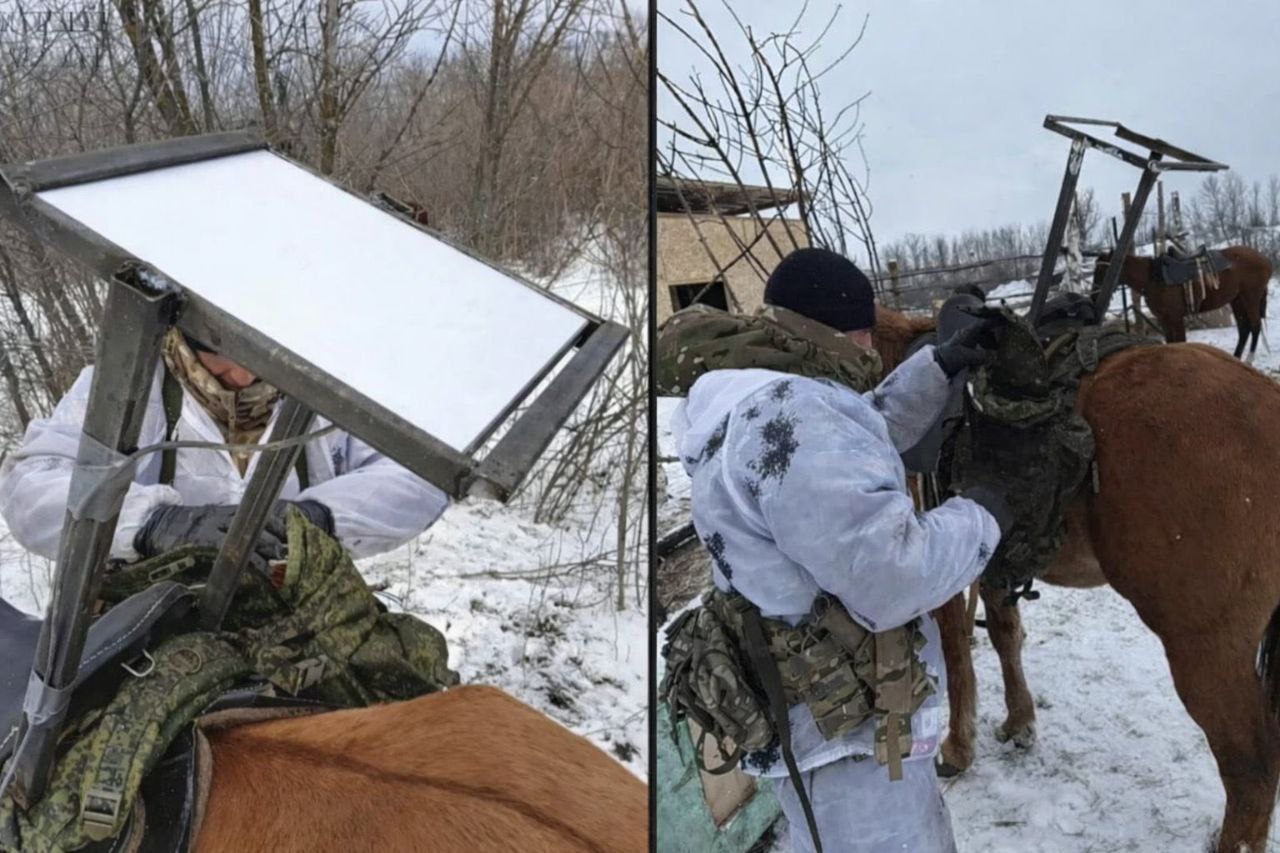
Ukraine's troops and drones lean heavily on Starlink, a network Kyiv neither owns nor controls. Musk has used that control against Kyiv before: in 2022 SpaceX refused a Ukrainian request to extend Starlink over occupied Crimea for a drone strike on Russia's warships, and it has since restricted the network's use for drone operations.
Zelenskyy has asked US President Donald Trump several times to sanction the Russian and Chinese companies building Russia's Rassvet network, most recently at the UN General Assembly in New York, he said in a recent Financial Times interview.
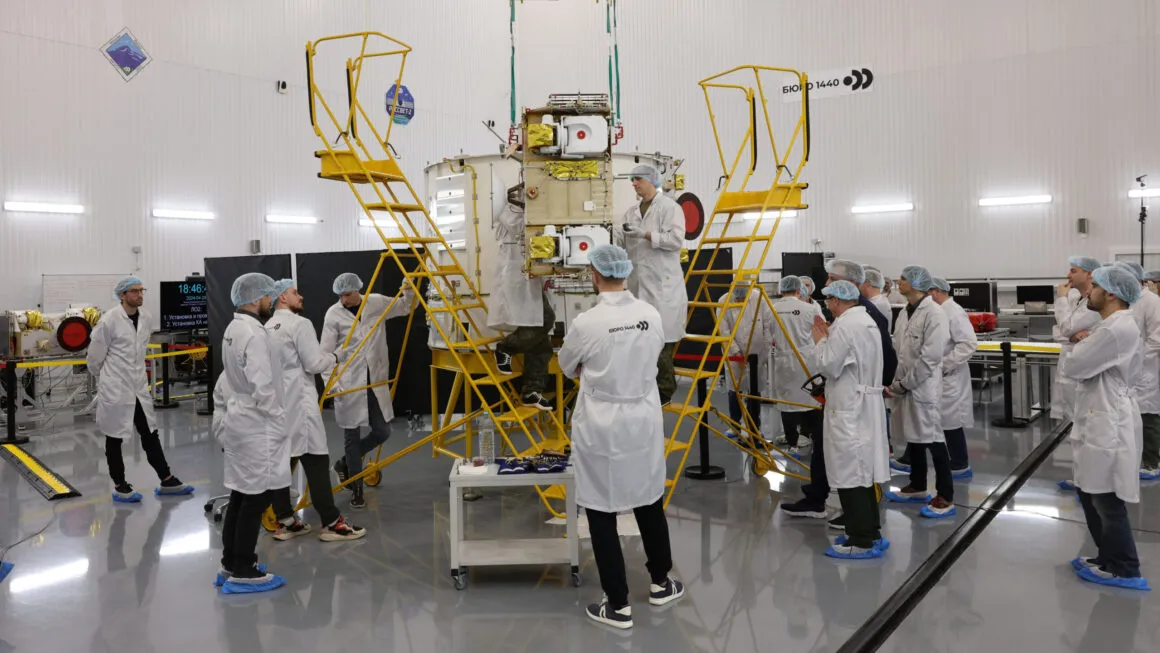
Denys Shtilerman, co-founder and chief designer at Ukrainian defense company Fire Point, told the Financial Times in May that the firm had launched two satellites this year and planned dozens more in 2027, aiming to reduce reliance on the US government and Western tech companies. To strike deep inside Russia and gather intelligence, he has said, Ukraine needs its own constellation covering all of Russia.

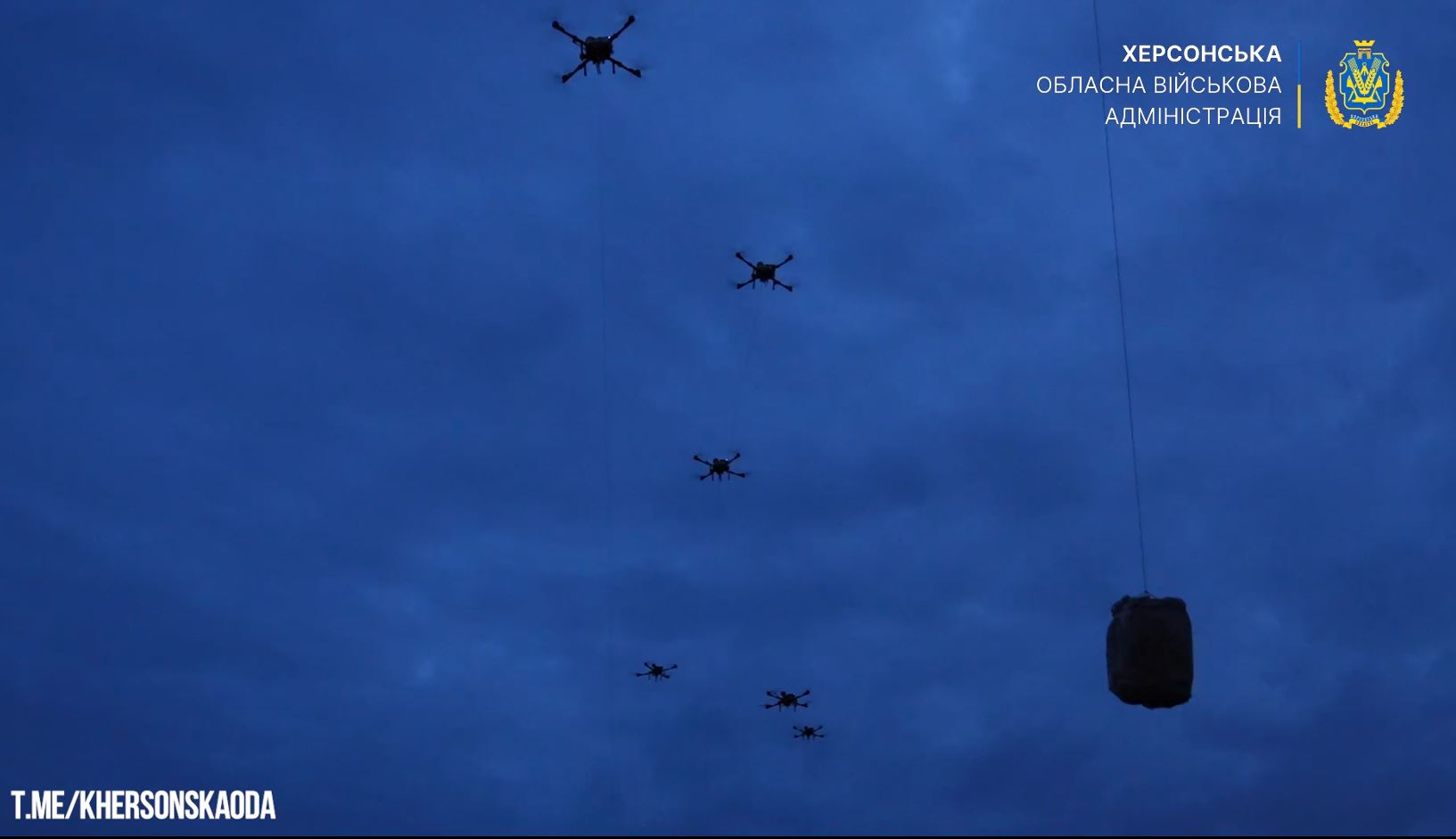
Nearly 400 parcels containing food, medicine, and children's kits were delivered to occupied Oleshky on the night of 4 October, weighing almost 4 tons in total, Interior Minister Ivan Vyhivskyi said. All the parcels reached their destinations, he added.
The operation was the second ton-scale drone delivery into the blockaded occupied town in a week. Ukrainian drone deliveries to Oleshky have run regularly since March, and on 27 September Ukrainian forces flew about 4,000 kg of food to 100 locations across the town.
Delivery does not mean the aid stays with the people it was meant for. Kherson Oblast head Oleksandr Prokudin said Russian forces shoot down drones carrying food and take supplies from residents. He also said Russian forces detain and use violence against people who receive the aid.
Prokudin also said Russian forces take food intended for children and sell it, according to Radio Svoboda. Tetiana Hasanenko, head of the Oleshky City Military Administration, said Russian troops question residents about where the food came from and treat receiving Ukrainian aid as cooperation with Ukraine.
About 2,000 people remain in Oleshky, including nearly 50 children, Prokudin said. In June, Danielle Bell, head of the UN Human Rights Monitoring Mission in Ukraine, said that food could not get into Oleshky and that sick and injured people were not receiving the medical assistance they needed. Residents had reported that no shipments had reached the town for nearly a month.
The Institute for the Study of War has described Russia's restrictions on the town as an effective blockade. The Kremlin acknowledged a "genuine humanitarian catastrophe" in Oleshky but blamed Ukraine for it: spokesman Dmitry Peskov claimed to The New York Times that Ukraine was preventing residents from leaving and disrupting supplies of food and water with drones.
Several Ukrainian units carried out the 4 October delivery. Vyhivskyi named the National Guard's 11th Mykhailo Hrushevskyi Brigade and 34th Kherson Regiment, the 30th Marine Corps, the 34th Separate Marine Brigade Borysfen, and the 79th Border Guard Detachment. The Perun drone crew also rescued six animals from the occupied territory, he said.
Drone aid to Oleshky is not new. In 2023, Ukrainian drone operators dropped water and other supplies to civilians in Oleshky and nearby settlements. What distinguishes the current effort is its repeated, ton-scale deliveries into the occupied town.

arXiv, an open-access repository where researchers publish preprint academic research, has announced it will rate limit submissions because it has been inundated with AI-written papers. A researcher can now only send in two pieces per calendar month and have a total of three active submissions at any given time. In a blog post about the change, arXiv said AI has made it too easy to spam the publisher’s inbox and its volunteer moderation team is overwhelmed.
“The heart of arXiv’s process for detecting and rejecting low-quality papers is our many volunteer moderators,” Thomas Dietterich, an Oregon State University professor emeritus and the chair of arXiv’s editorial advisory council said in a statement. “We are so grateful that they donate their time and expertise every day. However, a relatively small proportion of authors are submitting a large number of low-quality papers and consuming a disproportionate fraction of the moderators’ time. This is unfair to authors who continue to submit quality papers — their papers can be delayed for days or weeks as a result.”
According to arXiv, it received 9,869 submissions in September 2016, 20,569 submissions in September 2024, and 40,363 submissions in September 2026. Submissions on the site have doubled in the last two years and have sextupled in the computer science category.
AI is driving this surge in multiple ways. Researchers are using LLM to parse massive data sets, write code, and design portions of experiments; some are also using AI to write the papers. “arXiv policy permits authors to employ AI as a tool in support of their research as long as it is disclosed and the research meets arXiv’s standards of scholarly interest and advances the field of research,” arXiv said in its rate limiting blog. “However, many of the submissions that arXiv is now receiving do not satisfy these requirements.”
arXiv said it’s seen an increase in “thin papers of narrow scope” as well as salami papers — where researchers write multiple articles based on one study. “There is also a marked increase in dense, AI-written papers. AI tools are making it easy for authors to flood arXiv and other repositories with these low-value papers,” it said.
Rate limiting was already part of arXiv’s policy, but it was originally left to each individual moderator’s discretion. “This policy update strives to fairly distribute the incredibly valuable work of our volunteer moderators who check that submissions meet these standards,” the publisher said.
This new policy is another part of a long battle the publication is having with AI-powered slop and spam. A little less than a year ago, the archive stopped accepting review articles and position papers in the computer science category and cited low effort LLM-written articles as the reason. In January it started requiring new authors to receive an endorsement from an existing author in the system. Previously the publisher accepted an academic email address as the sole qualifier. In May, arXiv took things a step farther and said it would ban researchers who submitted AI slop from the site for a year.
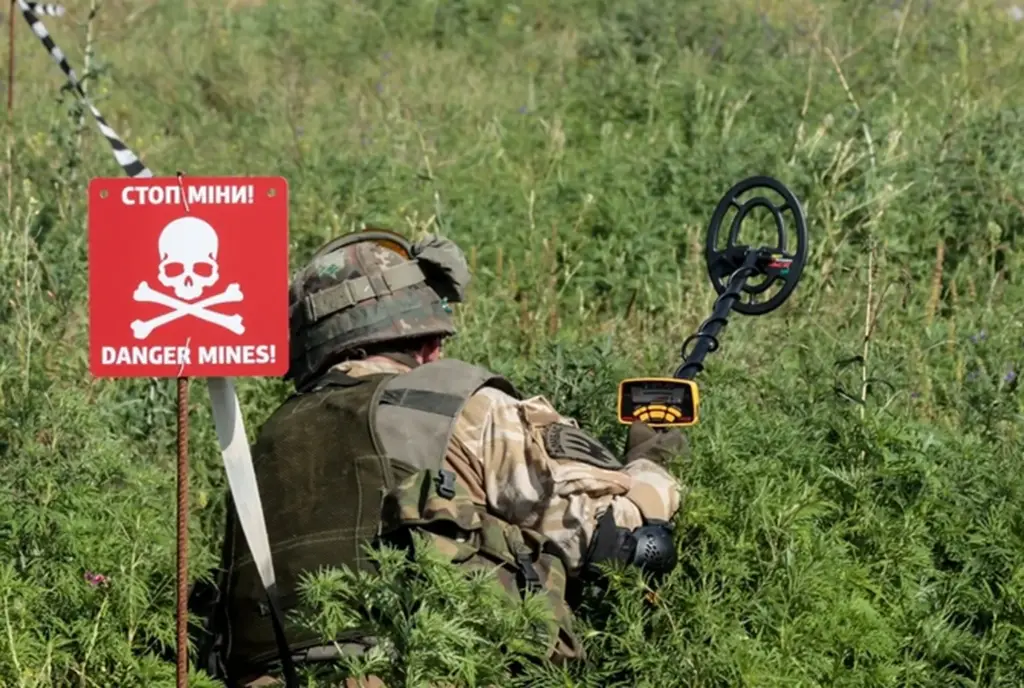
Ukraine continues to demine its 132,000 square kilometers of potentially hazardous territory. During the last month, Defense Ministry demining units cleared 1,347 hectares of that liberated territory, the ministry said.
In September, Tymur Pistryuha, head of the Board of the Ukrainian Deminers Association, said that Ukraine is the most heavily mined country in the world — a fact recognized by the international community. The contaminated area continues to grow with every day of the war, Suspilne reports.
Ukraine clears 483,366 explosive devices overall
During the month, Ukraine surveyed and cleared 339.84 hectares of agricultural land, 21.31 kilometers of roads, 40.4 kilometers of railway tracks of mines and explosive remnants of war.
In total, in September, demining specialists detected and destroyed 364 explosive devices. Since the beginning of Russia’s full-scale invasion, 483,366 such devices have been detected and destroyed.
Such missions are conducted by several structures at once. Among them are the Main Directorate for Mine Action, Civil Protection and Environmental Safety, and the Defense Ministry, which engages demining units of the Armed Forces of Ukraine and the State Special Transport Service in clearing liberated territories of explosive remnants of war.
Explosive ordnance disposal units of the National Police of Ukraine and pyrotechnic units of the State Emergency Service of Ukraine are also involved in demining operations.
Those deminers now fly drones fitted with special magnetometers that register changes in the Earth's magnetic field, picking out hidden metal from the air and keeping sappers off ground that may be sown with mines.
New plan for mass demining
To make the process more effective, the government has approved a procedure under which the Ministry of Defense’s Mine Action Center will prepare a single national humanitarian demining plan every year, while the National Mine Action Authority will approve it.
The plan will be prepared according to a clear timetable for everyone involved in the process, including government authorities, demining operators, and local communities. The Mine Action Center will collect data on contaminated areas, local communities' needs, and demining operators' capacities, and use this information to develop humanitarian demining plans.
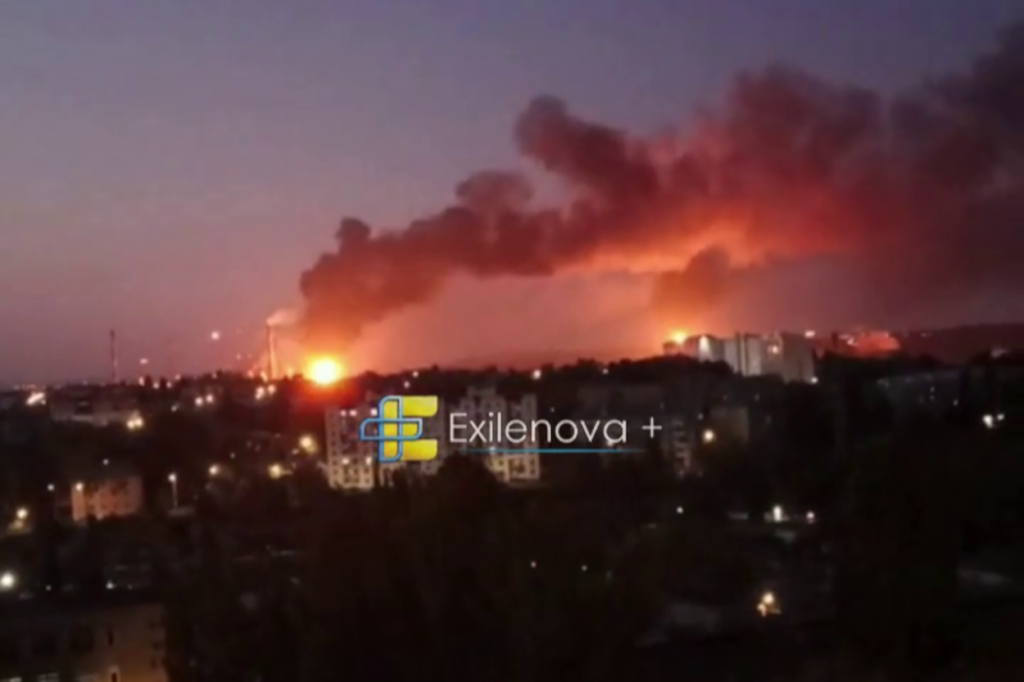
Ukraine's Security and Defense Forces have "put out of action" more than 51% of Russia's oil refining capacity through recent long-range strikes, Defense Minister Yevhenii Khmara said in a statement published by the Defense Ministry on 4 October. These "carefully thought-out" actions were aimed at "bleeding the Russian war machine" and "destroying its military-economic potential," Khmara said.
Ukraine treats Russia's refineries as a priority target because their revenue helps fund the war. Even Russian President Vladimir Putin claimed on 1 October that the strikes had cost Russia 1% of its GDP and had "partially" achieved their goal, Interfax reported.
The ministry did not publish how it calculated the figure.
"The consequences of Ukrainian operations are not always visible immediately. But the effect accumulates and produces a tangible result," the ministry said.
The ministry named eight recently struck facilities, among others. One of them is the Moscow Oil Refinery, which Ukraine targeted in a massive drone attack on the night of 20 September, Ukrainian President Volodymyr Zelenskyy said. The refinery, operated by Gazprom Neft in Moscow's Kapotnya district, supplies about 40% of Moscow's fuel market and 70% of the Moscow region's demand for gasoline and aviation fuel, according to Russian news Telegram channel Astra.
Another was KINEF, which Ukraine has attacked repeatedly. It is Russia's second-largest oil refinery by capacity, and the Ukrainian military struck it on the night of 30 August, setting off a fire at the facility.
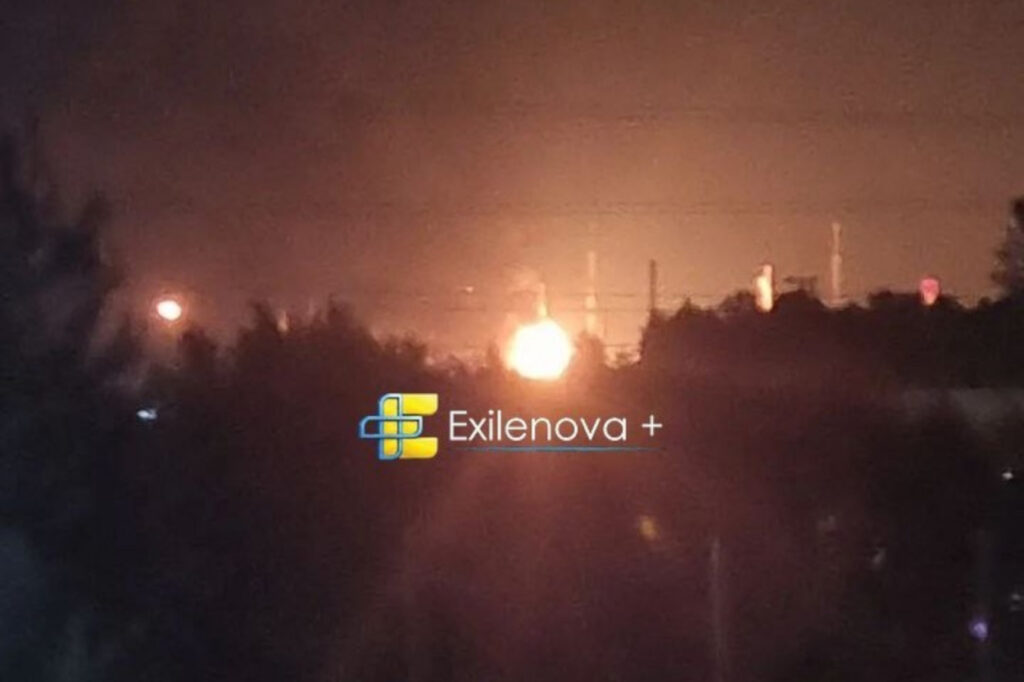
The ministry also named the Yaroslavl, Perm, Ilsky, Saratov, and Syzran refineries and the Ust-Luga port complex.
This year, Ukraine has tripled the production and procurement of long-range attack drones, the ministry said.
"This is not the limit. We will continue to scale up deep-strike capabilities," the statement said.
International cooperation is part of that push. Berlin will fund the production of additional DeepStrike-class long-range drones in Ukraine, German Defense Minister Boris Pistorius said after a meeting of the Ukraine Defense Contact Group on 15 April. The sides also agreed to jointly develop and produce a medium- and long-range drone system.
Ukraine and Germany also signed an agreement on the joint production of Bars drones, Ukrainian Foreign Minister Andrii Sybiha said on 8 July. The Bars' modular design allows it to be used for deep strikes, among other missions.
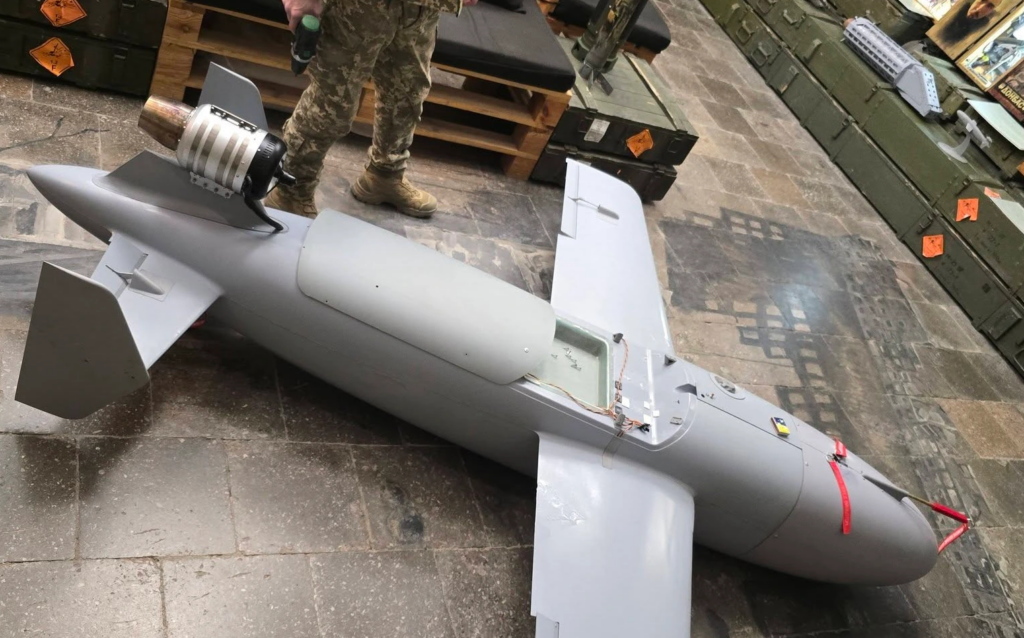
Russian refineries cut crude oil processing by 14% in the first nine months of the year compared with the same period last year amid Ukrainian drone attacks, according to calculations by two industry sources.
Experts' estimates of the decline differ widely. In August, Serhii Vakulenko of the Carnegie Russia Eurasia Center put it at 25–28%, while Russian economic commentator Vyacheslav Shiryaev put it at 65–70%, according to Defense-Aerospace.
Fuel production data give a more concrete picture: in July, Russia's gasoline and diesel output was about a quarter to a third lower than in March 2026, the outlet reported.

Bills could soon approach record levels again, forecasters have warned
© Getty/iStock
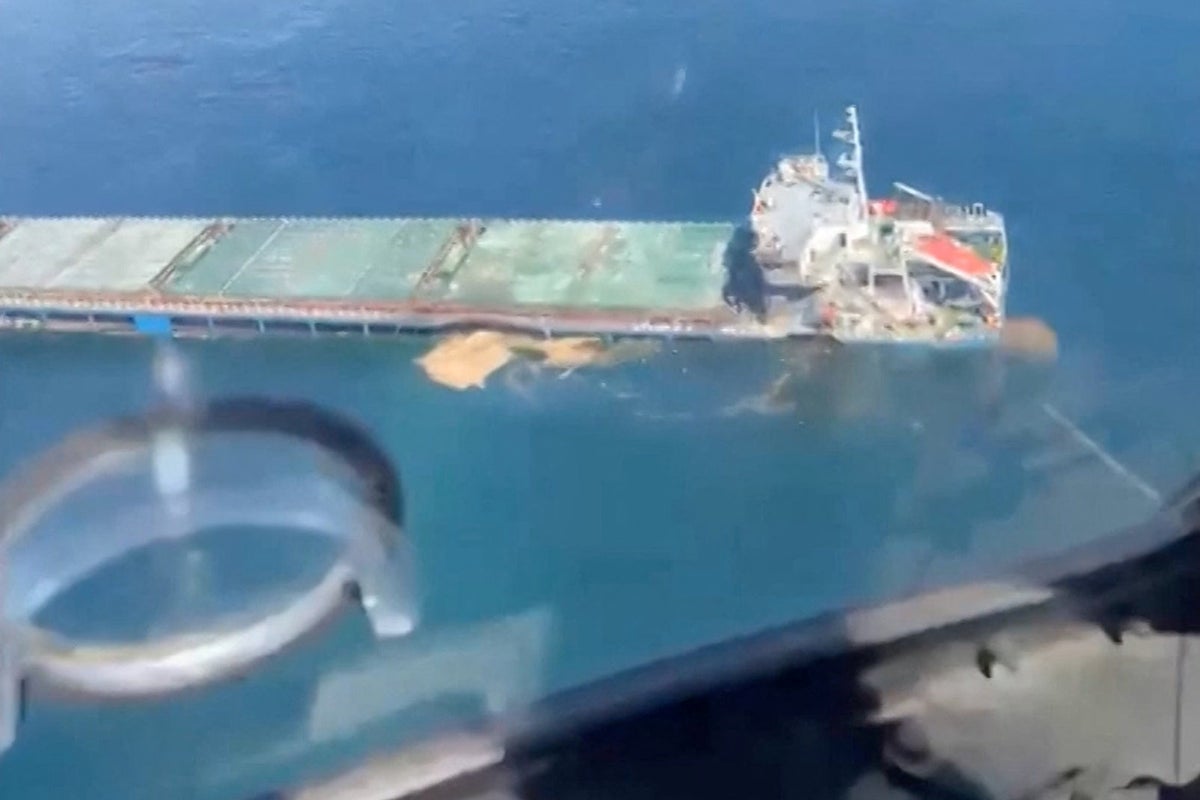
© Reuters
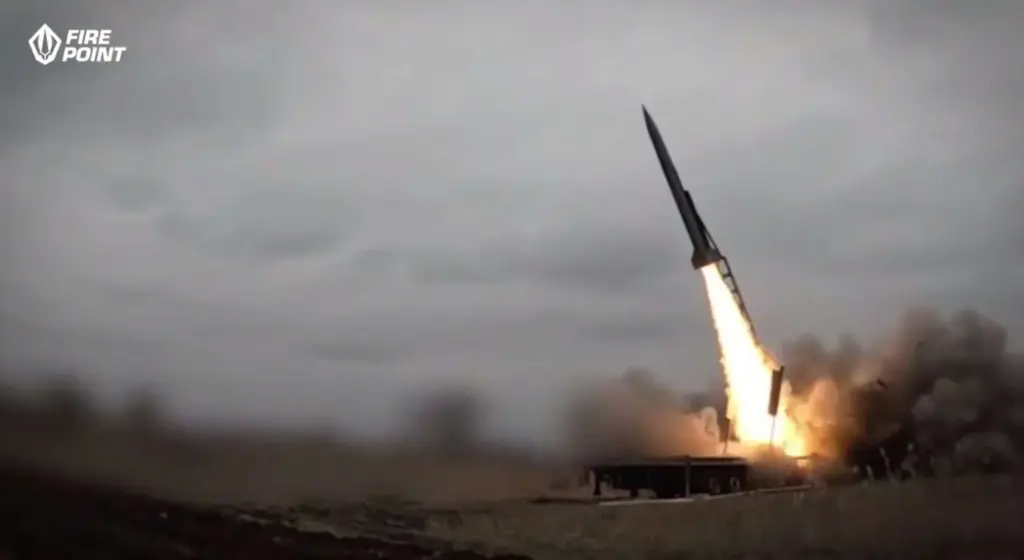
Ukraine has developed a new missile to knock down Russia's fast, jet-powered Shahed drones, the ones its air defenses catch far less often than older models, President Volodymyr Zelenskyy said on 4 October, Suspilne reported. The weapon, called Nika, has not yet been tested. He announced it during a visit to Kyiv by German Chancellor Friedrich Merz.
Russia's plants turn out an estimated 3,000 jet-powered Geran-4 and Geran-5 drones a month, Ukraine's military intelligence estimates, and the jets fly fast enough to outrun the cheap interceptors built for slower, propeller-driven Shaheds. Ukraine plans about 400 units of just one of five interceptor models it is testing by the end of October, as it scrambles to close the gap before winter.
Both the Ukrainian and German sides have reacted positively to the missile, Zelenskyy said, though he stayed cautious on the result: for now, he said, it only "could be positive." In the same remarks, he announced a successful test of a separate system, the German-Ukrainian interceptor Spys.
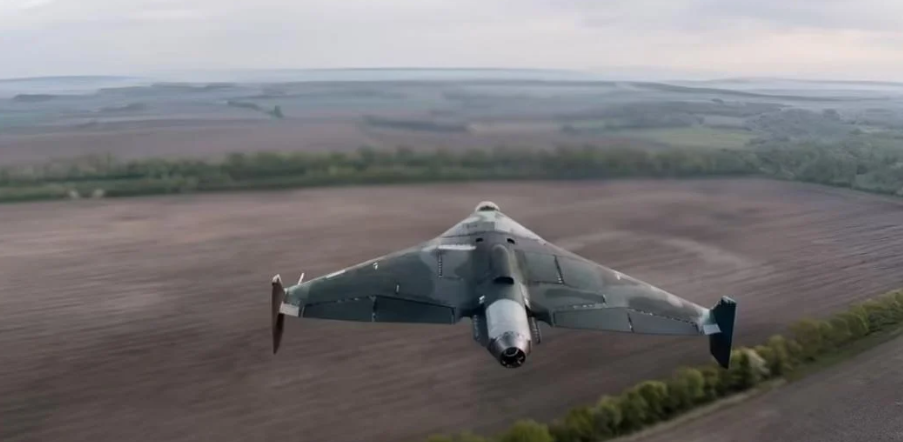
Ukraine shoots down 85-92% of propeller-driven Shaheds, Zelenskyy said. Against the jet-powered variants, interception falls to roughly 50-60%, he noted at the press conference with Merz. F-16 fighter jets help close the gap, he said.
Over the past month, Ukraine tested a new generation of drone interceptors built for the jet-Shahed threat. On 15 September, one struck a Shahed in trials, though Zelenskyy said developers still needed to refine its control system. On 19 September, he said the Security Service of Ukraine (SBU) had created its own interceptor drone and used it to down a jet Shahed in combat. Nika adds a purpose-built missile to that mix.

© Reuters
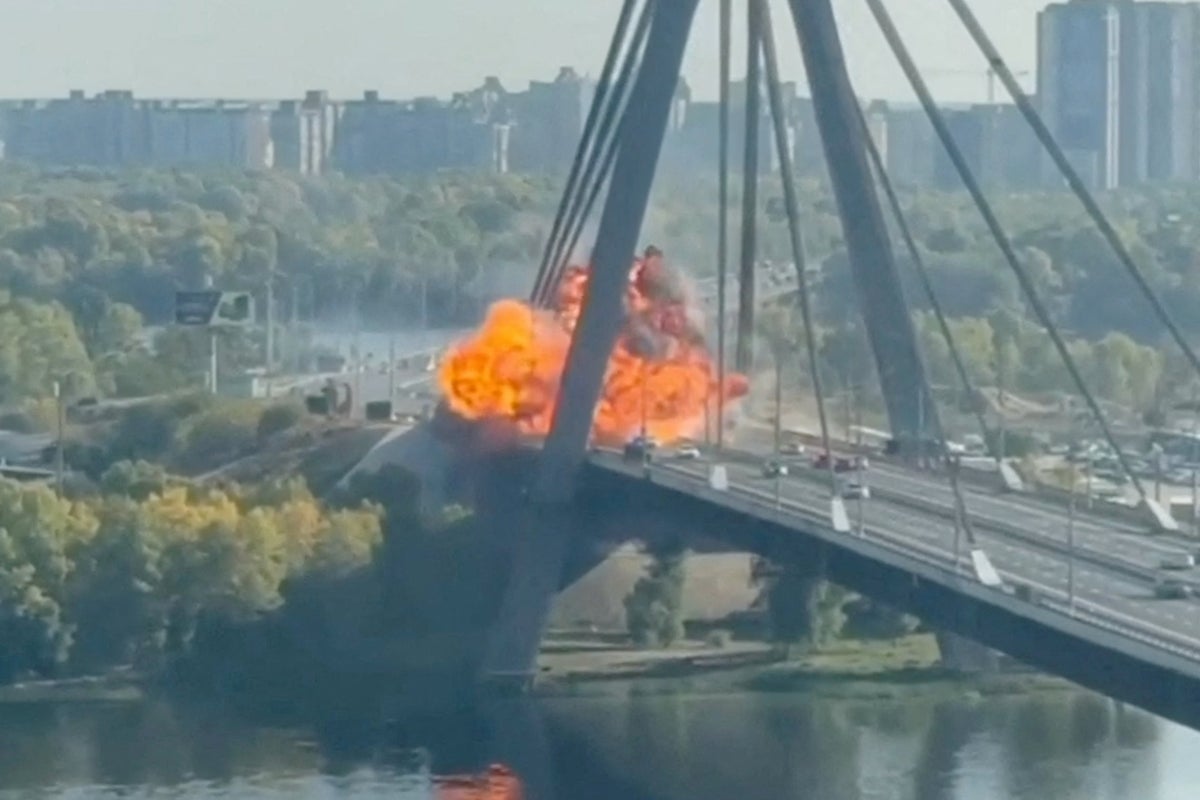
Eyewitness video showed the moment a Russian drone struck the North Bridge in the Ukrainian capital of Kyiv on Sunday (4 October).
© Reuters

Average UK diesel prices have topped £2 a litre for the first time and have rocketed in recent months due to the wars in Iran and Ukraine
© Getty/iStock

The EU Delegation and all EU embassies will keep working in Kyiv despite Russia's warning that foreign diplomats should leave or risk their lives, EU Ambassador to Ukraine Katarína Mathernová said on 4 October. Poland and Estonia also said their embassies would stay, calling the threats an attempt to intimidate Europe.
Russia attacks Kyiv daily as Moscow tries to make the city unlivable. Alongside the strikes, it now threatens the foreign missions that anchor Ukraine's support in the capital.
Russia's Foreign Ministry singled out the embassies still working in Kyiv and the foreign officials who keep visiting Ukraine, Mathernová wrote. Moscow claimed that if something happened to them, the responsibility would be theirs.
"The responsibility for russian attacks belongs to russia! Not to anybody else," Mathernová wrote, adding: "Moscow wants to scare Europe into reducing its support for Ukraine. That will not happen."
The EU Delegation continues its work while taking the security of its team seriously, she added.
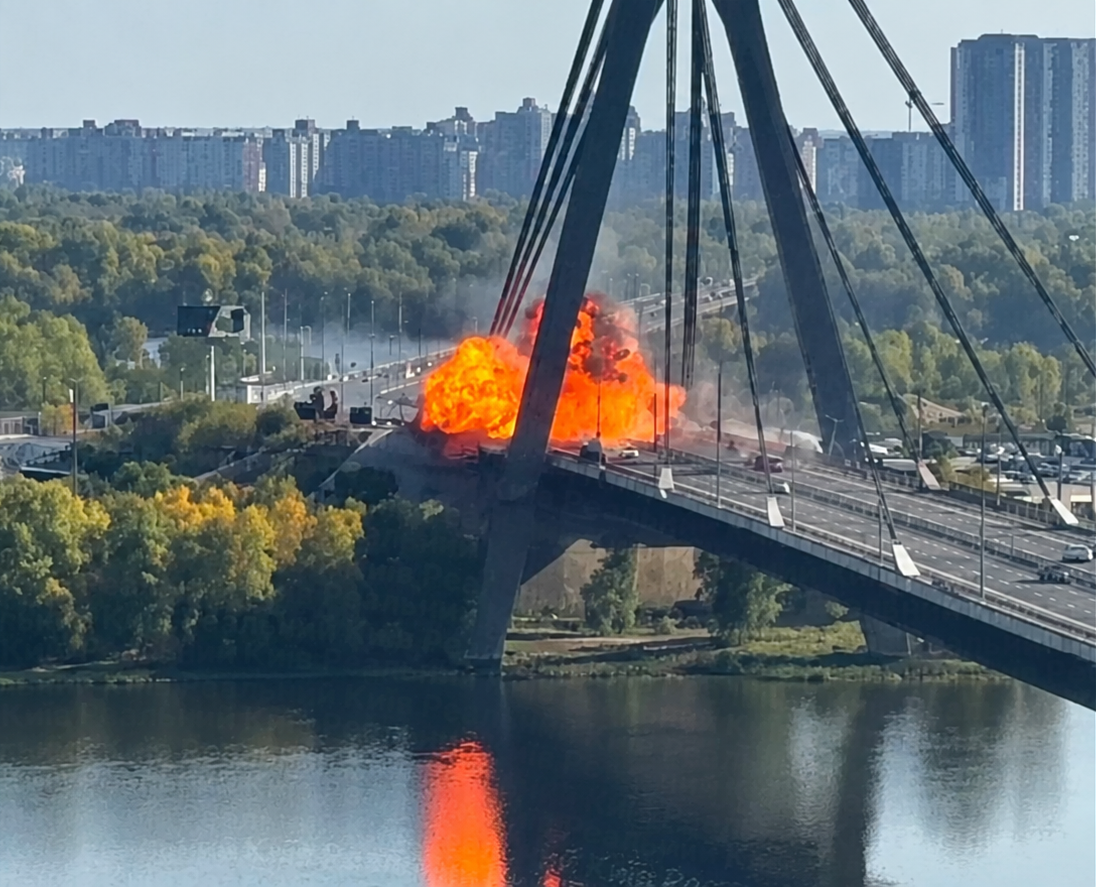
She pointed to the morning's strike on the Northern Bridge, saying the repeated attacks disrupt the connections between the two banks of the Dnipro. People worry about getting to work, reaching their families, and getting home safely, she wrote.
Poland's Foreign Ministry said it had no intention of changing how its Kyiv embassy works. The Kremlin's threats and calls for diplomats to leave show it is trying to intimidate Europe and undermine support for Ukraine, the ministry said. Such threats contradict international law and will not work, it added.
Estonia's Foreign Ministry said its embassy stays in Kyiv and its support for Ukraine remains firm. Russia's threats only strengthen Estonia's resolve to stand with Ukraine, the ministry said.

The European Commission also responded. Russia's threats show the Kremlin is losing the war and losing its self-control, Commission spokesperson Christian Wigand said, Suspilne reported.
This year alone, the EU has approved €28.3 billion ($32.3 billion) in defense procurement plans for Ukraine and is releasing another €6.6 billion ($7.5 billion) linked to military aid, Mathernová wrote. It is also moving forward with its biggest-ever sanctions listings against Russia, and this week imposed new sanctions over the deportation of Ukrainian children.
German Chancellor Friedrich Merz came to Kyiv on the same day, as Russian attacks on the city continued. He and Zelenskyy visited the National Academy of Sciences building, hit by a Russian drone in September, and Zelenskyy thanked him for coming despite the air raid alert, calling it "a needed and brave signal," in a post on Telegram. Germany remains a reliable partner at Ukraine's side even in difficult times, Merz wrote.

German Chancellor Friedrich Merz arrived in Kyiv on an unannounced visit on 4 October and announced more than €1.3 billion ($1.5 billion) in new German support for Ukraine, Ukrainian President Volodymyr Zelenskyy said at a joint press conference. Part of the money will fund interceptors against Russia's jet-powered drones, as Russian drones struck Kyiv again during Merz's visit. Merz also pledged to speed up Ukraine's EU accession and announced a Coalition of the Willing meeting in Berlin this winter.
Russia now attacks Kyiv and other Ukrainian cities daily, increasingly with jet-powered drones that outrun the cheap interceptors built for slower Shaheds. That leaves Ukraine dependent on scarce air defense missiles and on partners willing to pay for new weapons fast.
The €1 billion ($1.13 billion) military part of the package includes funding for joint production of interceptor drones against jet-powered drones, Merz said. Recent technological progress means the new interceptors can quickly enter serial production, he added.
"This will quickly and noticeably strengthen Ukraine's air defense," Merz said.
The package also includes long-range weapons, combat drones, and satellite equipment, which Merz said should help Ukraine destroy Russian launchers more effectively. A separate €350 million ($394 million) will go to Ukraine's energy sector before winter, covering generators, transformer substations, and repair kits, Liga reported.

The two countries also signed an agreement on counter-drone cooperation, Merz said. He stressed that the help runs both ways, with German defense companies learning from Ukraine's war experience. The broader deal also covers joint development of weapons with a range of more than 1,000 km, Reuters reported.
Among interceptor drones, the Bars has so far shown the best results, downing up to 30% of its targets, Zelenskyy said. He expects the first results from small missiles designed to counter jet drones in the second half of October.
Before the visit, Russia's Foreign Ministry warned foreign nationals and diplomats against staying in Ukraine and threatened new massive strikes on Kyiv. Merz arrived by train with Economy Minister Katherina Reiche and a delegation of German business executives.
"Despite the threats that have reached us from Moscow in recent days, I came today... This shows: we will not let ourselves be intimidated," Merz said.
Merz and Zelenskyy visited the National Academy of Sciences, where a Russian drone killed two people and injured seven on 28 September, the State Emergency Service and the Office of the President said. An air-raid alert sounded while they spoke with rescuers, and emergency service chief Andrii Danyk showed Merz the movement of Russian drones in real time. The same day, a Russian drone hit Kyiv's Northern Bridge again.
"I can only repeat it once again from this point: Mr Putin, put an end to this senseless war," Merz said during the visit. "We are ready for talks, we are ready to discuss bringing this war to an end, but these barbaric attacks on the civilian population of Ukraine must stop," he added, Reuters reported.
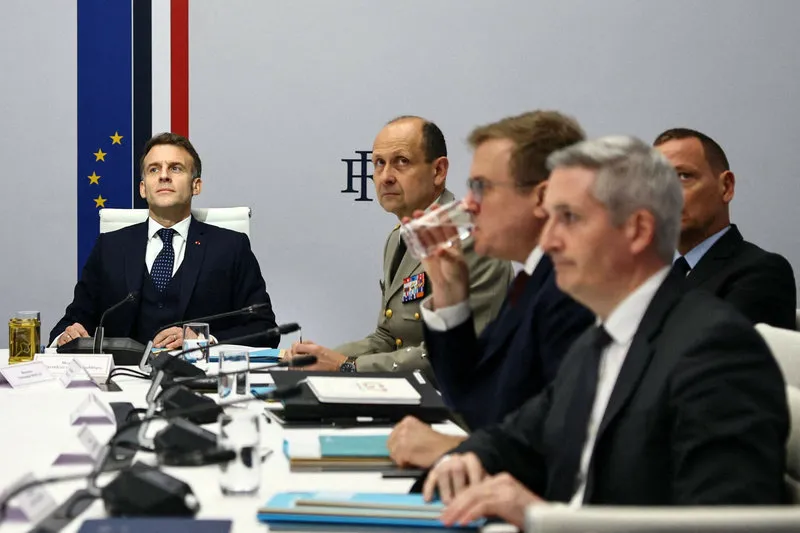
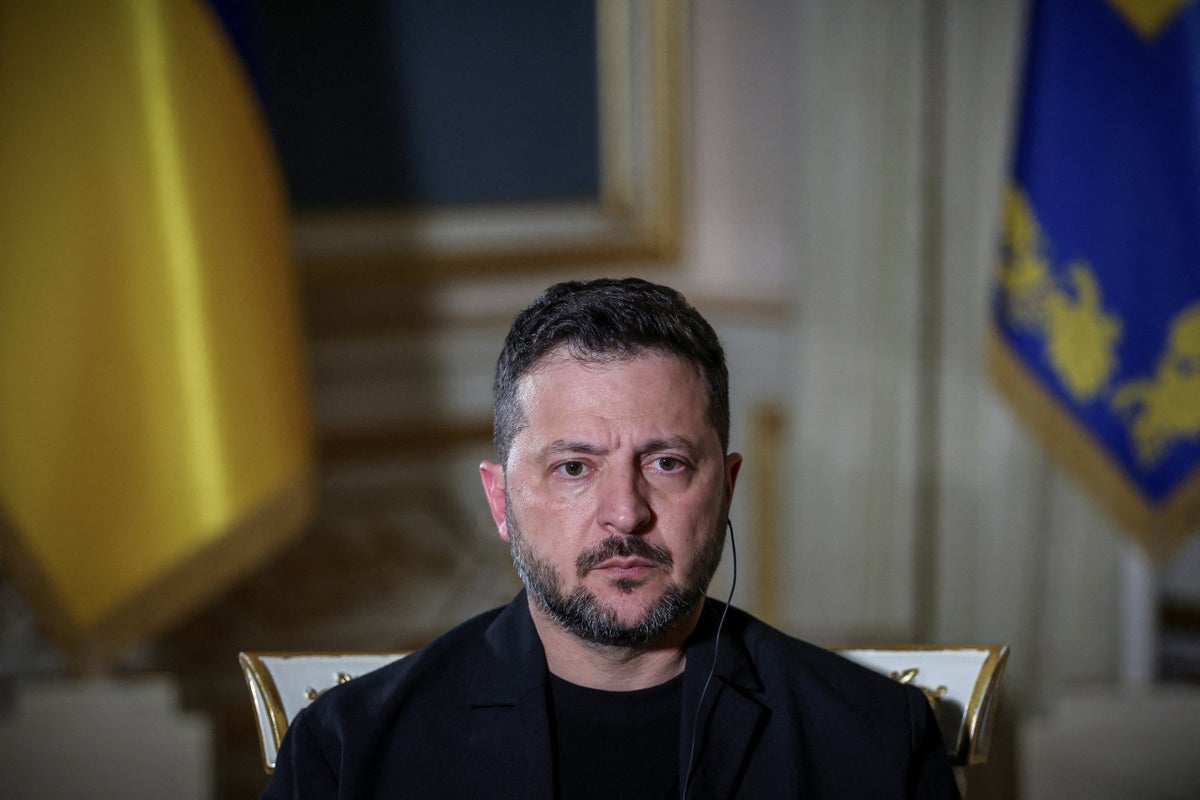
Zelenskyy called the chancellor's presence despite the alert "a needed and brave signal" from Merz personally and from all of Germany.
Germany wants to speed up Ukraine's EU accession and is working toward that in Brussels, Merz said. He welcomed Zelenskyy's assurances on rule-of-law and anti-corruption reforms, which he said matter for further financial aid. Together with France and the UK, Germany plans to host a Coalition of the Willing meeting in Berlin this winter to coordinate further support, he added.

The trip was Merz's second to Ukraine as chancellor and his fourth since the full-scale invasion. He arrived just as his standing at home is slipping: the far-right AfD reached 30% for the first time in an INSA poll for Bild, while Merz's CDU/CSU fell to a record low of 18%. Days earlier, Merz had directly accused the AfD of having "Russian backers."
© Reuters
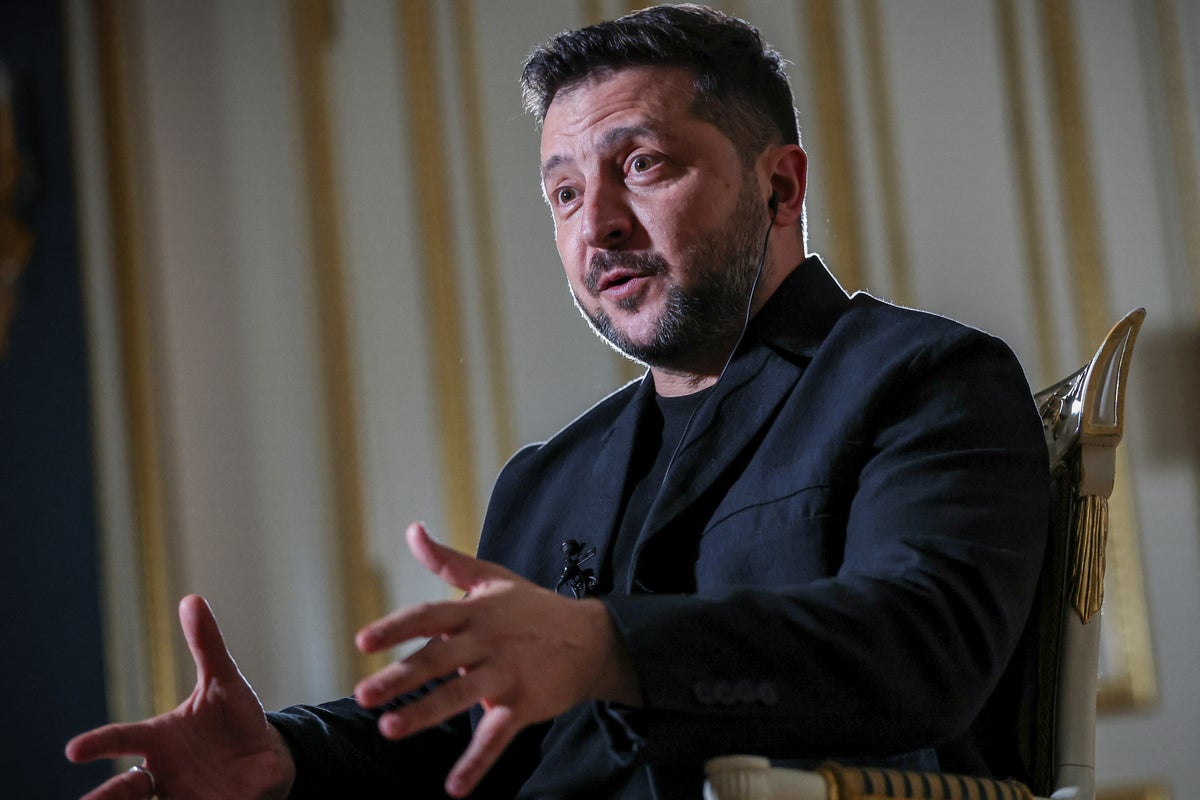
Ukrainian President Volodymyr Zelensky says Ukraine will intensify strikes on Russian oil refineries, which he says fund the war, after a fresh Russian bombardment aimed at driving civilians out of Kyiv and other major cities.
© Reuters

Russia struck Kyiv's Northern Bridge with a drone again on 4 October, the second hit on the crossing in two days, Kyiv Mayor Vitali Klitschko said. The attack damaged a heating main and rerouted public transport, as overnight and morning strikes also hit Kyiv Oblast, Dnipro, and Sumy, where one person was killed.
Russia's air attacks on Ukrainian cities are daily, and in recent days they have hit a Kyiv school sheltering children and turned supermarkets into targets. Strikes on the crossings between the capital's two banks add another layer: they disrupt how millions of people move through the city every day.
The drone hit the bridge's roadway, and videos posted by local channels showed a crater, Liga reported. The strike also damaged a heating main, cutting hot water in Kyiv's Desnianskyi district on the left bank, Klitschko wrote. Repair crews are working to restore it, he added.
Kyiv's transport operator Kyivpastrans cut trolleybus routes short of the river. Routes 29, 30, 31, and 47 now run from the left bank only to Darnytsia Square, and routes 29, 30, and 31 run from the right bank only to Pochaina metro station. Buses 21, 73, 101, and 114 run only to Darnytsia Square because the bridge is closed to traffic.
Russia first hit the Northern Bridge on 3 October, damaging its roadway and trolleybus lines. Two people were injured, and one of them was hospitalized, Klitschko said. A day earlier, repeated drone strikes hit the Southern Bridge and forced its closure. Overnight on 4 October, drone debris also fell on two locations in Kyiv's Dniprovskyi district, Klitschko reported.
Ukraine's government has already begun work on earth dams and pontoon crossings in case the city's Dnipro bridges are knocked out, Restoration Minister Mykola Kalashnyk told Suspilne.
The strike came as German Chancellor Friedrich Merz visited Kyiv. Ukraine and Germany would reach important agreements during the visit, Zelenskyy said. This week alone, Russia launched more than 1,900 attack drones, 1,700 guided bombs, and 25 missiles at Ukraine, more than 800 of the drones jet-powered, he added.
Russia launched 135 attack drones at Ukraine overnight, 52 of them jet-powered Shaheds, Ukraine's Air Force reported. By 08:30, air defenses had downed or suppressed 123 drones and two Banderol or Dan-T missiles. Strikes hit five locations, and debris fell on five more.
In Kyiv Oblast, Russian drones damaged six detached houses, a car, a church, a primary school, a café, and a medical facility in Boryspil Raion, the Kyiv Oblast Military Administration said. No one was killed or injured.
Russia attacked a communications company's building in central Dnipro, Dnipropetrovsk Oblast head Oleksandr Hanzha reported.
"The whole street there is covered in broken glass, debris, and branches," Dnipro Mayor Borys Filatov wrote, adding that nearby homes and schools escaped damage.
In Sumy, Russian drones struck an ordinary medical supplies warehouse and killed one person, Zelenskyy said. Strikes across the city injured seven people, two of them seriously, the Sumy city council said. The attack also damaged gas networks and left 70 apartments without gas.
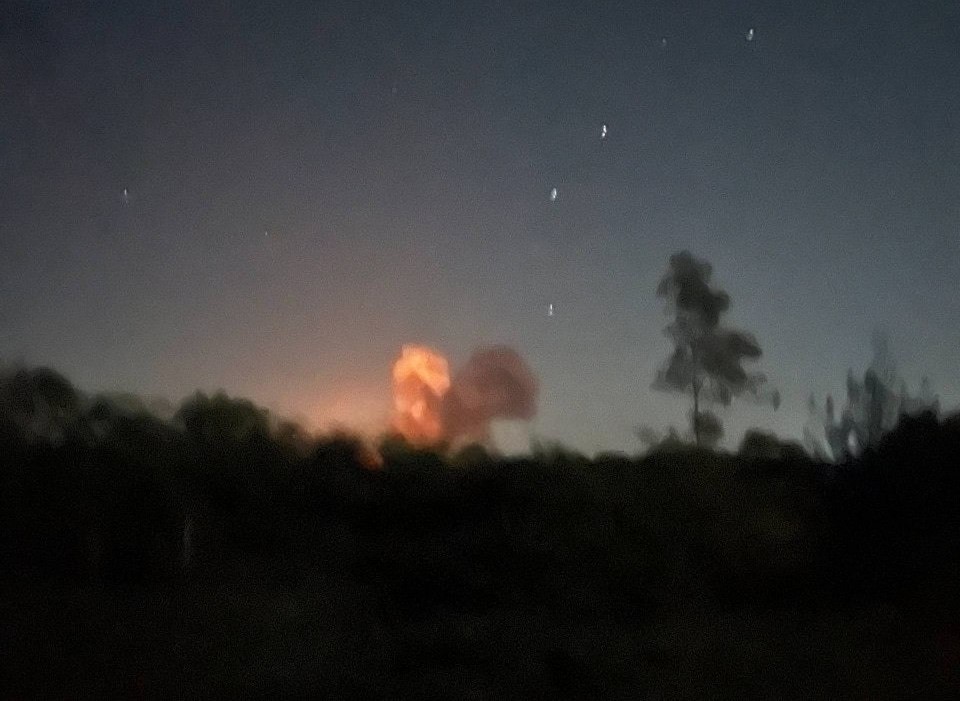
Drones attacked Russia's Khanskaya military airfield in the Republic of Adygea overnight on 4 October, Ukrainian outlet Militarnyi reported. Local reports, footage, and satellite fire data point to a blaze near the base, which trains Russian military pilots and also serves combat aviation. Neither side has reported the extent of the damage.
Ukraine is pressing its long-range campaign against the bases, refineries, and depots that keep Russia's war going, and Kyiv is vowing to hit harder as Russia escalates its strikes on Ukrainian cities. Airfields are part of that target list: in August, Ukraine struck one in Krasnodar Krai in the same overnight wave that hit Russia's second-largest refinery.
Locals reported an attack and a fire at the airfield, Ukrainian monitoring channel Exilenova+ wrote, sharing footage of the blaze. Drone warnings for the area began at 01:42 and lasted until 05:34, Militarnyi said. Over that time, Russian monitoring channels reported drones and active air defenses in the region and around the airfield.
NASA's FIRMS fire-detection data from geostationary orbit also showed a fire in the airfield's area, Militarnyi noted. It also published a video of a Ukrainian drone flying toward the base.
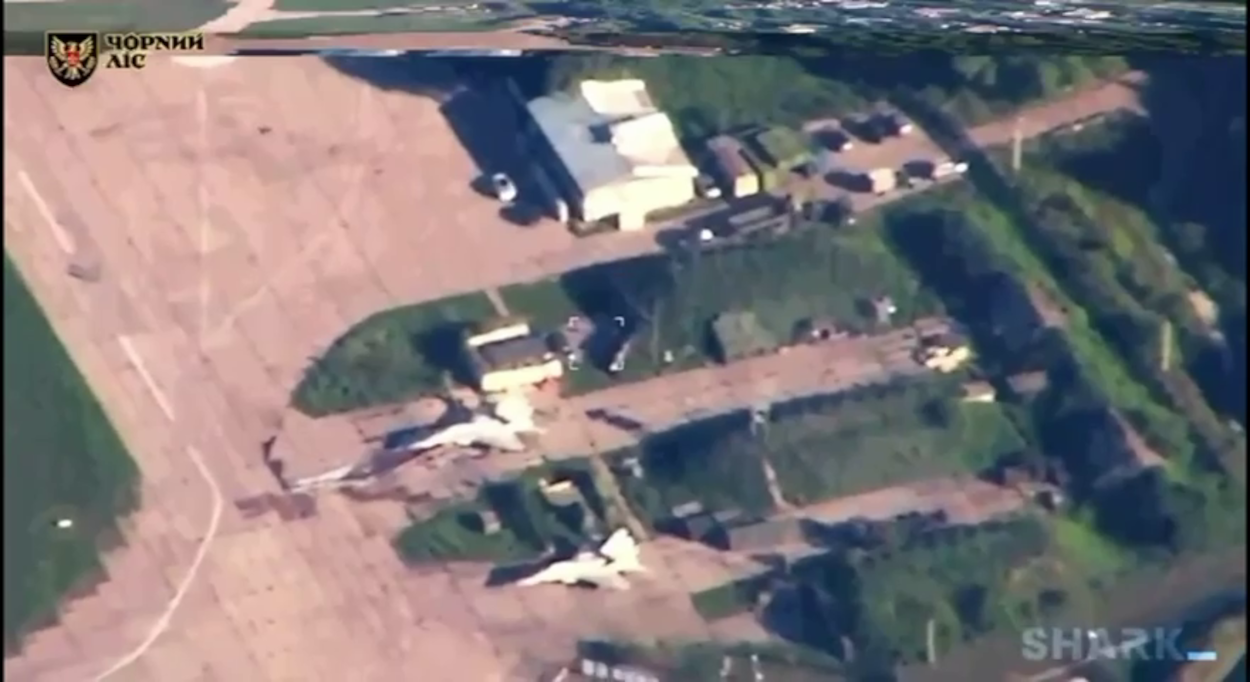
The airfield lies 6 km northwest of Maykop and 3 km east of the village of Khanskaya, about 500 km from Ukrainian-controlled territory, according to Militarnyi. Before the war, it was used mainly for training flights and hosted L-39 trainer jets.

The 761st Training Aviation Regiment was based there until it was disbanded in 2009, when the 272nd Training Aviation Base was formed in its place. The base, military unit 55661, belongs to the Krasnodar Higher Military Aviation School of Pilots. Ukraine's General Staff said in October 2024 that Su-34, Su-27, and Su-35 jets, which Russia uses in its war against Ukraine, were based at the airfield, Militarnyi wrote. In March 2026, the General Staff said Russian forces actively use it for operational-tactical aviation.
Ukrainian drones attacked the airfield as early as October 2024. On 25 December 2025, Ukraine's General Staff said its forces had hit the Maykop airfield and started a fire. That was the same night Ukraine hit the port of Temryuk. Drones attacked the base again on 29 December, when Russian authorities claimed to have repelled the attack. Ukraine struck the airfield once more in March 2026.
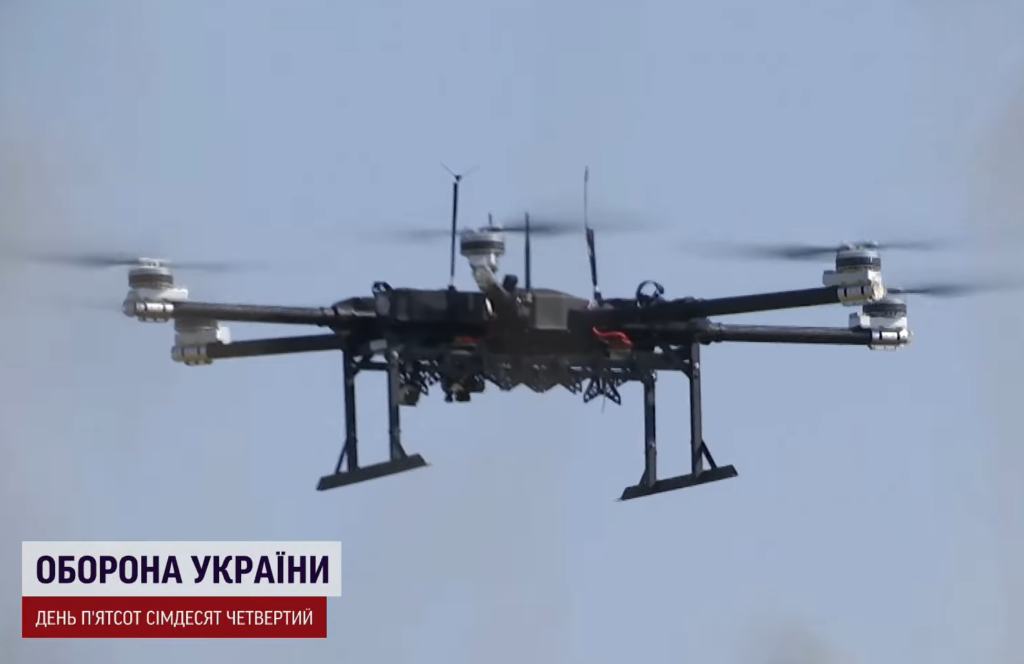
A Ukrainian firm is testing a jammer light enough to ride on a heavy bomber drone and shield it from the enemy FPVs that hunt it. Aura-Ukraine has begun final tests of the system, called Aura 3K mini, the Dignitas Fund, a charity developing it with the manufacturer, Oboronka reports.
The bombers it is built to protect have become some of Ukraine's most valued drones. In the Donetsk operation last month, heavy bombers dropped kamikaze ground robots more than 10 kilometers behind Russian lines. The same weapon has been fitted with guided bombs that strike at long range with high precision.
At the same time, heavy bombers are large, making them prime targets for Russia. Keeping them in the air, and out of enemy hands, is the point of the new shield.
Two jammers cover 360 degrees
Aura 3K mini wraps the drone in a spherical, 360-degree cover using two broadband jammers, the fund says. Two emitters, not one, close the blind angles a single jammer would leave.
They work across the 2.1 to 2.8 GHz band, enough to disrupt FPV drones without cutting the bomber's own Starlink link. The whole device weighs about 2.4 kilograms.
"Radiation-pattern tests start on the front line in the coming days," the fund's press service says, and if they succeed, the system is set for serial production.
The fund moves to automate it
The next step is to make the jammer smarter, the fund says. It wants an auto-on function that fires only when a threat is detected, so the bomber does not give away its position with constant emission.
The team also plans to adapt Aura 3K mini to Vampire-type bombers, the heavy night drones that Russian troops nickname "Baba Yaga". That would widen the shield's reach across more of Ukraine's bomber fleet.
Russia hunts the Baba Yaga
The nickname points to a fairytale Slavic witch who flies by night. The real thing has been hard for Russia to counter: in 2024, a Ukrainian night bomber was often impossible to jam and, by one account, could be destroyed only with a flamethrower. By 2025, Russia was offering its soldiers 10 days' leave for capturing a Baba Yaga it could not build itself.
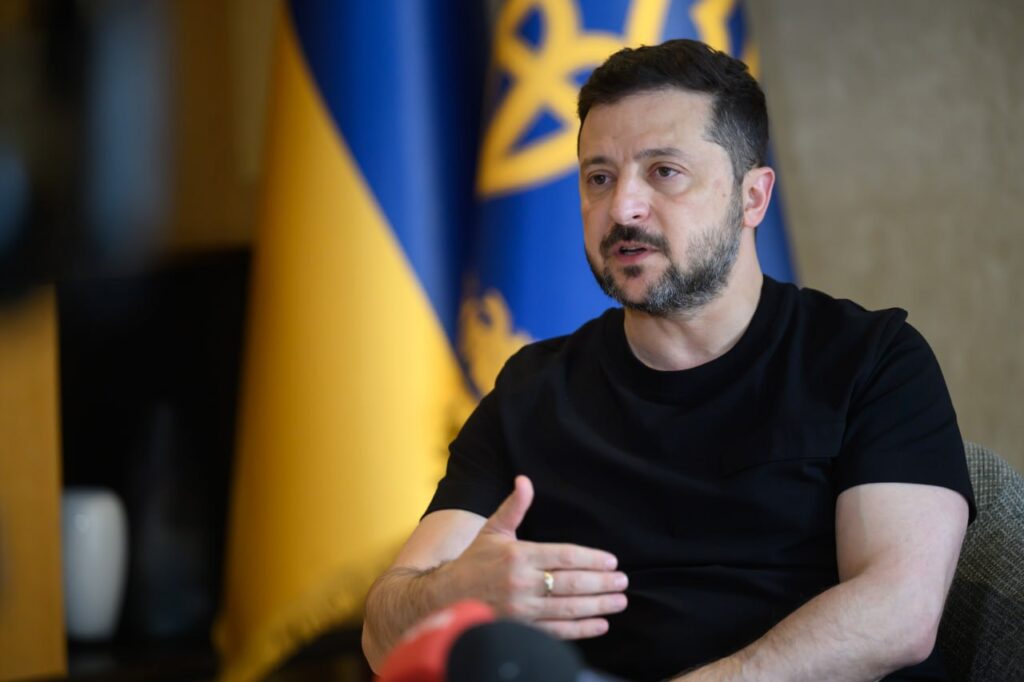
Ukraine will intensify strikes on Russian oil refineries in response to Moscow’s expanded campaign against Ukrainian infrastructure, Ukrainian President Volodymyr Zelenskyy said in an interview with Reuters on 3 October.
Russia has increased attacks on Kyiv in recent weeks, hitting energy and telecommunications infrastructure, roads, railways, and bridges across the Dnipro. Zelenskyy said Ukraine would respond by targeting the Russian energy infrastructure that helps finance the war.
Russian forces have broadened their strikes on infrastructure in and around Kyiv in recent weeks, with attacks increasingly affecting systems that support civilian life.
Zelenskyy said Ukrainian intelligence obtained documents indicating that Russian authorities had approved a broader policy for targeting infrastructure, including logistics, roads, schools, and hospitals. He said the goal is to put pressure on residents to leave Kyiv and other major cities.
Russia has also begun targeting bridges across the Dnipro, which connect the eastern and western parts of the capital.
Ukraine plans to keep striking Russian oil refineries because they generate revenue that supports Moscow’s war effort, Zelenskyy said.
The policy puts Kyiv at odds with US President Donald Trump, who has urged Ukraine not to attack Russian oil facilities, arguing that such strikes contribute to higher global diesel prices.
Zelenskyy said he sees no indication that Moscow is prepared for either peace talks or an agreement to halt attacks on energy infrastructure.
Ukraine’s “long-range sanctions” hit targets supporting Russia’s war machine in Samara and Bryansk oblasts, including positions of Iskander missile crews, President Volodymyr Zelenskyy said. He also reported new “results” in the Black Sea.
— Euromaidan Press (@EuromaidanPress) October 3, 2026
Zelenskyy said the strikes came in… pic.twitter.com/4OFHaJ2bH7
Ukraine is also preparing for intensified Russian attacks on its energy system over the winter. Ukrainian officials say Russia has stockpiled hundreds of ballistic missiles for a new campaign against electricity and other critical infrastructure.
Russia has also expanded its use of fast jet-powered Geran drones, launching dozens each day since the summer.
Ukrainian F-16s and MiG aircraft are intercepting around 60% of these drones, according to Zelenskyy, but ammunition for their 20 mm cannons is running low. Ukraine is increasing the use of electronic warfare and expects a first shipment of small, inexpensive air defense missiles designed to counter the jet-powered drones later in October.
Ukraine is developing five interceptor drone models to counter Russian Shaheds. Two have already undergone testing, with Zelenskyy putting their current interception rate at around 30%.
Ukraine is also expanding its long-range strike capabilities. It has used its domestically produced FP-7 ballistic missile in combat for the first time, with a range of about 250 kilometers, while work continues on the longer-range FP-9.
At the same time, Kyiv is working with European partners to secure additional funding for its defense needs. Ukraine has found financing to order drones for early 2027 and is working to close a $27 billion gap in this year’s defense budget through its own resources, bilateral assistance, and financing linked to the EU’s €90 billion loan package.
Zelenskyy said Ukraine’s ability to sustain its defense and expand its strike capabilities will remain central as Russia prepares for another winter campaign.
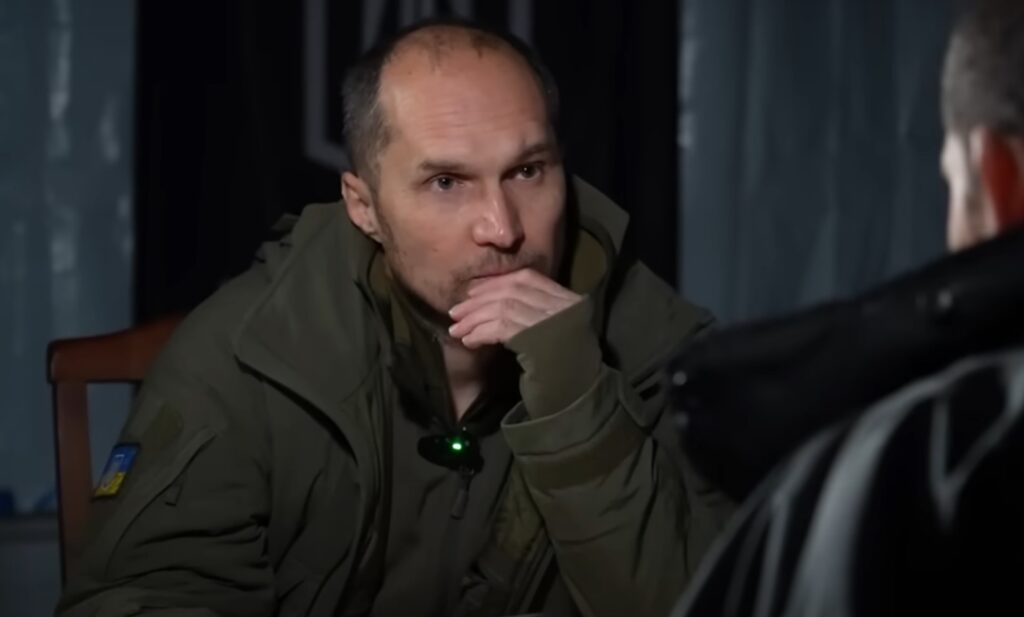
Ukraine's top general is held responsible for the entire army but cannot freely choose the people who run it, says drone company commander Yurii Butusov, according to Radio NV. Commander-in-Chief Mykhailo Drapatyi still lacks full power to form his own command team, with key appointments controlled by the president's wartime lead, which unbalances the force, he believes.
Drapatyi was named a commander-in-chief in July. Since then, he has moved fast where he can: cutting more than 30 obsolete, Soviet-era General Staff orders, pressing to give combat-tested sergeants real authority, and opening a review of the officer corps to weed out those without combat experience.
For the reform of the force, Butusov argues, he has to be able to build his own team, and that is just what he is not being allowed to do. Key appointments, from the Air Force to the Air Assault Forces, stay under the direct control of the Supreme Commander's headquarters.
The headquarters keeps control
"One person should be responsible for managing the General Staff. It is Mykhailo Drapatyi, if he is given the chance to really be the sole commander-in-chief," Butusov says.
Any leader, he continues, has the right to build a structure to his own standards. But when people are slotted into the chain of command without the commander's knowledge, it breeds dysfunction.
"If there are political appointments to the General Staff without his knowledge, to the commanders of the branches without his knowledge, there will be problems, opposition, internal conflicts," he says, the kind that have dogged the army for years.
One deputy stays 'acting'
The limits show in Drapatyi's own inner circle, Butusov says. One of his first moves was to name Serhii Sobko deputy chief of the General Staff, yet Sobko remains only "acting", the prefix never lifted.
Only the president, as supreme commander, can finalize such appointments, he notes, and the delay points to "artificial restraints." Drapatyi has been allowed to shape the Ground Forces, by his account, while other structures remain under the headquarters' control.
Blame outruns the power
The result, in Butusov's words, is a commander-in-chief who carries the responsibility without the authority: the public and leadership hold him answerable for an army he cannot fully command.
A few hidden transmitters may be sitting somewhere in Kyiv, switching on just long enough to steer Russian drones onto their targets. Presidential adviser Serhii Beskrestnov, known as Flash, says one to three concealed enemy repeaters may be operating in the capital, giving Russia a brief online channel to guide jet-powered Gerans onto precise targets.
He calls the devices MESH repeaters, compact modems that relay a short control signal to a Geran at the moment of attack, a channel Ukraine has been testing electronic warfare against for months. As long as they operate, he warns, sealing the city with jammers will not work.
Flash makes the case
"I now insist that the enemy's MESH radio repeaters are being switched on in Kyiv, providing a temporary, short-term control channel for jet-powered Gerans to adjust strikes," Flash says.
He keeps the number low: "Maybe 1 to 3. Such repeaters are hard to find, but we have to search." As evidence, he points to the guided strike on the headquarters of Ukraine's Security Service. A Russian agent, he said then, likely switched on a MESH relay within five kilometers of the target for the length of the attack.
The wreckage shows no other hidden link, he adds: "No LTE, no Rassvet, no alien quantum modems."
Jamming alone won't shield Kyiv
The stakes, in his telling, run past the bridges.
"As long as online control of the drones exists, not only the bridges but the air-defense assets on them will be under threat," Flash explains, noting that a Gepard anti-aircraft gun on a bridge crossed by tens of thousands a day cannot be hidden.
Without a stable channel right up to the impact point, he argues, a drone cannot strike a bridge pier or cable precisely. He leaves room for doubt, ending, "Let me be wrong about the repeaters." Yet in the whole war, he adds, he has "never once been wrong" in his technical reads of the enemy.

Ukraine has stopped paying veterans to go to the gym because of the economic crisis looming in the country, the war, Russian strikes, and the lack of reforms needed to receive extra funds from the EU. The Veteran Sports program, which provided veterans and combat participants with about $33 per quarter toward a nearly monthly gym membership, was suspended on 1 October after the state found no funds for it, the Ministry of Veterans Affairs said.
The suspension is a telling sign of Ukraine's budget squeeze, and the ministry puts it plainly: defense comes first, so the money for everything else runs short. It fits a wider government decision to freeze non-essential spending and fund only the army, pensions, and public wages.
The program proved far more popular than planned, drawing more than 800,000 users and costing over double its budget.
Defense takes the money
"The main priority of state spending remains the country's defense. Under these conditions, the state budget's ability to finance other areas is limited," the ministry said.
Launched in 2026 with about $13 million for an expected 100,000 recipients per quarter, and roughly 300,000 applications over three, the program instead saw more than 800,000 uses. Payments passed $27 million, more than twice what was set aside.
The crisis runs deeper
The squeeze has two main drivers. Russia's intensifying strikes on Ukraine's energy and infrastructure are pushing the war's cost higher and battering the economy.
And billions in Western money sit on hold: Kyiv has struggled to complete the reforms the EU set out before releasing roughly $20 billion in aid, and the prime minister has admitted that part of it is late because Ukraine missed commitments to its partners.
The ministry plans a 2027 restart
Ukraine intends to bring the program back in 2027, this time for good, said Deputy Veterans Minister Ruslan Prykhodko.
"We have to account for real demand, fix the shortcomings we saw this year, and make the use of funds more targeted," he said.
In next year's budget, Ukraine would provide significantly more funds, he added. In the meantime, the ministry says it is talking to the sports community and businesses about covering the gap for veterans, with concrete proposals to come.

Russia struck Kyiv’s Northern Bridge with a drone on 3 October, damaging the roadway and overhead trolleybus lines, Kyiv Mayor Vitali Klitschko said. Two people were injured, one of whom was hospitalized.
The strike came one day after repeated Russian drone attacks on the Southern Bridge, which damaged its support structures, road surface and subway infrastructure and forced its closure. The attacks caused severe traffic disruption across Kyiv, with major roads gridlocked and some people reportedly walking across bridges.
The Northern Bridge connects Kyiv’s Obolon and Troieshchyna districts and is one of the capital’s major routes across the Dnipro.
Damage to its roadway and trolleybus network adds another disruption to Kyiv’s transport system after the attacks on the Southern Bridge. The Northern and Southern bridges are among the capital’s key crossings between its eastern and western banks.
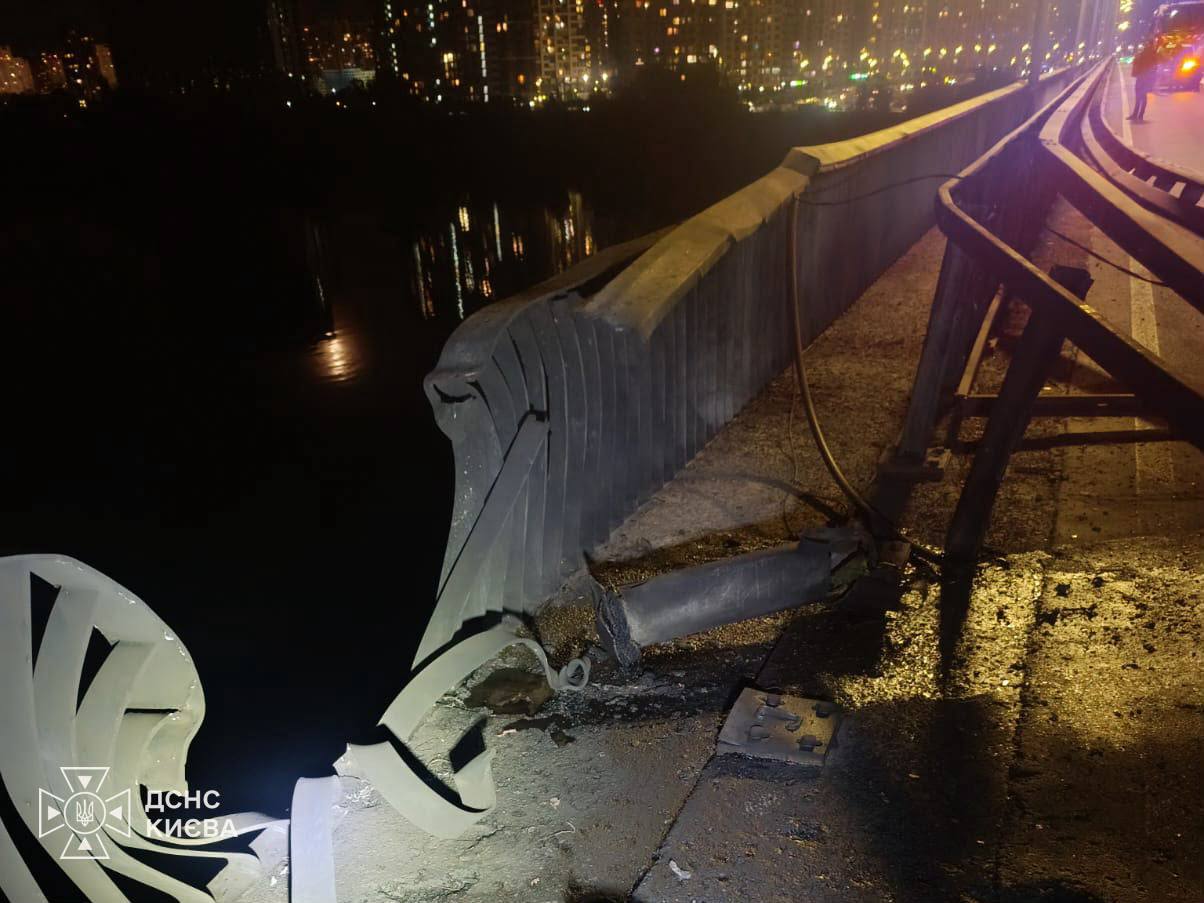
Kyiv authorities announced temporary changes to bridge traffic rules following the attacks.
During air raids, traffic on the Southern Bridge will be restricted for 15 minutes in the direction from the right bank to the left bank, while traffic in the opposite direction will remain open. On the Podilskyi-Voskresenskyi Bridge, traffic in both directions will stop for 15 minutes when an air-raid alert is announced or lifted.
The Northern, Darnytskyi, Paton and Metro bridges will operate without restrictions during air raids, according to the Kyiv City Military Administration.
Russia’s repeated strikes on Kyiv’s Southern Bridge are now severely disrupting traffic across the capital.
— Euromaidan Press (@EuromaidanPress) October 2, 2026
Major roads are gridlocked, with some people reportedly walking across bridges as traffic comes to a standstill. Photos from Suspilne show the resulting congestion on… pic.twitter.com/7SyYG0WOCO
The bridge strikes come amid an intensifying Russian aerial campaign against Kyiv. Russian drones and missiles have increasingly targeted the capital in recent weeks, damaging residential buildings, schools and infrastructure and disrupting daily life.
The attacks on the bridges add a different dimension to that campaign, directly disrupting movement between Kyiv’s two banks. With multiple crossings affected within days, the strikes have already translated into major traffic disruptions for the city’s residents.

Three Russian missiles and two drones crossed Moldova’s airspace and exploded on Saturday morning, Moldovan Defense Minister Anatolie Nosatîi told TVR Moldova.
Moldova has seen a dramatic increase in Russian drone incursions in recent weeks as Russia ramps up near-constant drone attacks across Ukraine.
The five incidents occurred between 7:45 and 8:00 a.m., with explosions and debris reported across several districts. Moldova’s Foreign Ministry condemned the airspace violation.
The Moldovan authorities initially said that five drones had crossed the country’s airspace before Nosatîi clarified that the five incidents involved three missiles and two drones. President Maia Sandu said the missiles were Banderol-type missiles, according to NewsMaker.
Nosatîi said the incidents had been documented and that evidence recovered at the sites could be presented to Russia’s ambassador.
Moldova’s Foreign Ministry said Russia’s war against Ukraine continues to create concrete threats for the country and condemned the violation of its airspace.

According to NewsMaker, fragments were found outside Căușeni, near Dubovca in Hîncești District, between Delacău and Puhăceni in Anenii Noi District, and near Crocmaz in Ștefan Vodă District.
Near Crocmaz, an explosion in a vineyard field caused a vegetation fire and damaged windows at a nearby agricultural facility. Fragments were also found near Constantinovca in Căușeni District, where an explosion caused another vegetation fire.

Moldova’s Defense Ministry later reported a sixth unauthorized flight over the country that did not result in an explosion. The object entered Moldovan airspace at 8:04 a.m. from the direction of Udobne, Ukraine, and exited a minute later toward Biliaivka, Ukraine.
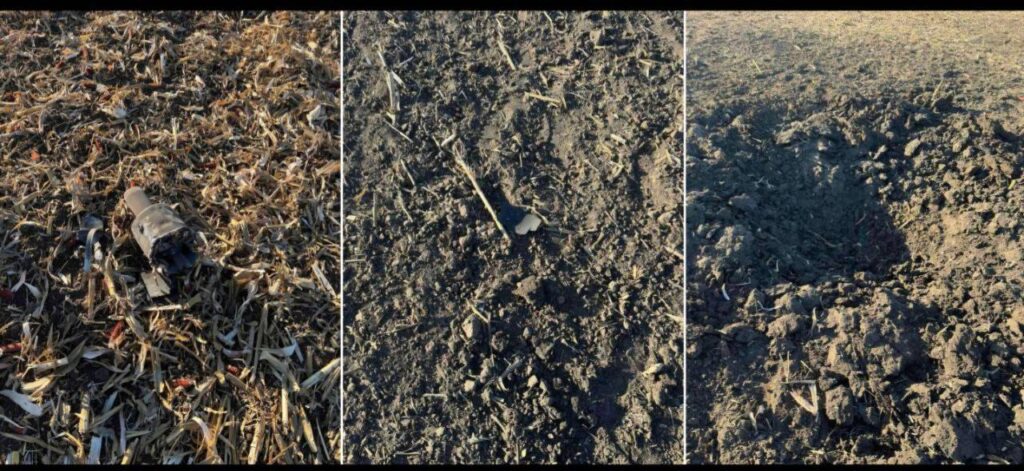
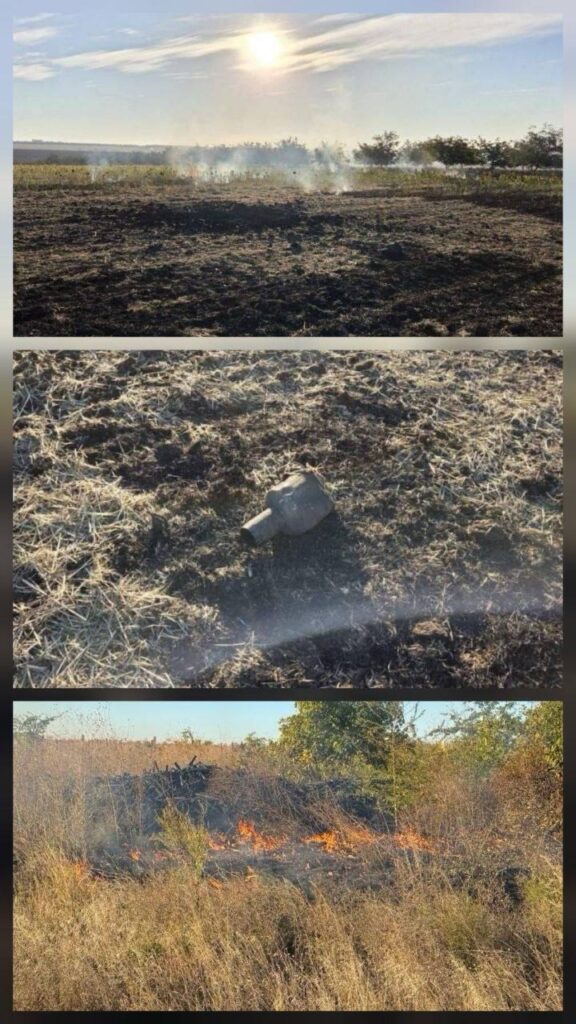
Asked why the weapons were not intercepted, Nosatîi said Moldova was taking measures to strengthen its air-defense capabilities and acquire interception systems.
He said the drones are sophisticated and fast, adding that Moldova, like Ukraine, is learning how to defend against them. He also said Moldova needs additional resources to protect its 1,212-kilometer border with Ukraine and monitor its airspace.
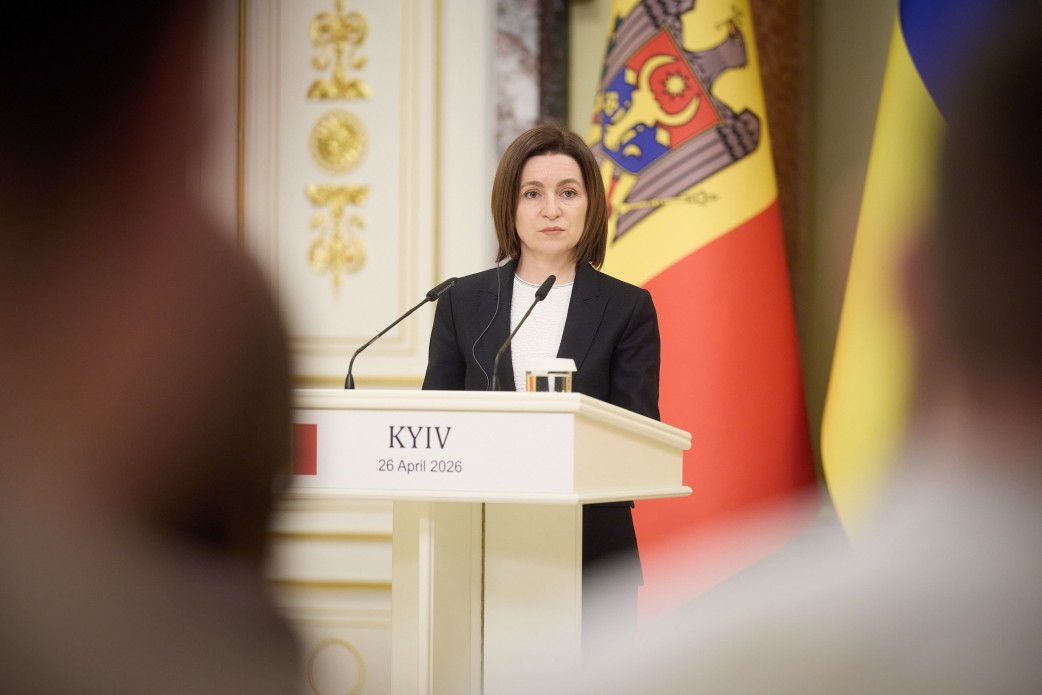
Moldovan authorities urged residents not to approach or touch any fragments they find, but to mark the location and notify police or the military so the area can be secured and the debris neutralized.
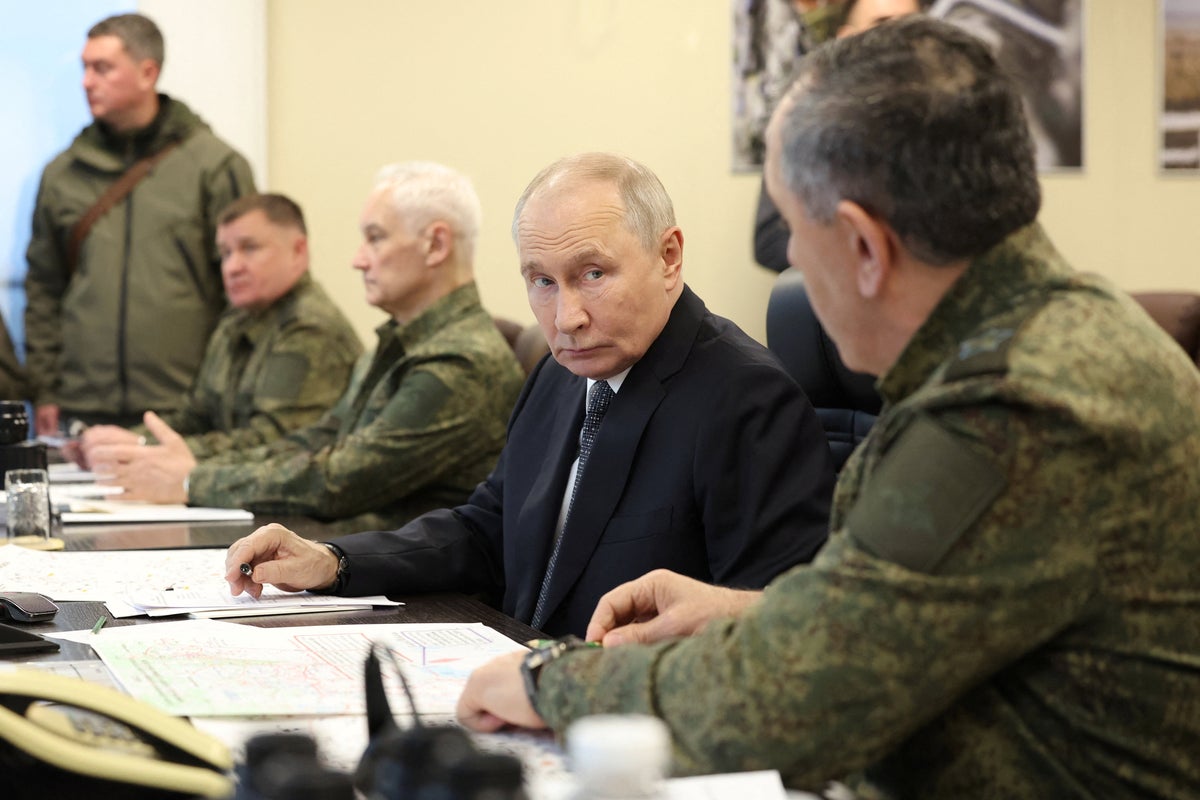
Vladimir Putin has said the main objective of the Centre-2026 drills in the Urals is to improve commanders’ skills in leading troops while repelling external aggression.
© Reuters

Ukraine helped 41 citizens escape from Russian-occupied territories into Ukrainian-controlled territory in August and September, including four children and five teenagers, Ukrainian Ombudsman Dmytro Lubinets said.
For many, the crossing marked the end of months or years under Russian occupation and the beginning of their return to life in government-controlled Ukraine.
They returned to Ukraine via Belarus through the Mokrany-Domanove crossing in Ukraine's Volyn Oblast.
Lubinets described several cases among those who returned.
One family was able to leave after the father was released from Russian captivity. Their older son remains in captivity, while the woman and her younger son had been under the control of occupation authorities and, according to their account, were previously taken to a detention facility under the pretext of providing medical care and subjected to forced treatment.
A young medical worker was evacuated shortly before she could have been mobilized into Russia’s armed formations, according to Lubinets.
Another returned man had been detained several times in occupied territory and held in basements. His Ukrainian passport had also been confiscated.
For those returning, reaching Ukrainian-controlled territory is only the first step. The Ombudsman’s Office and partner organizations provide assistance with restoring documents, financial support, temporary accommodation, psychological and social services, and onward travel.
The office said that, in August and September, its joint project with Caritas Ukraine provided assistance to 1,140 people, including people evacuated from occupied territory.
Ukraine’s efforts to facilitate returns are taking place against a broader problem of displacement from occupied territory. A 2026 UN report documented forcible transfers and deportations from areas occupied by Russia, as well as barriers that make it difficult for displaced Ukrainians to return.
The Mokrany-Domanove crossing is one of the routes through which Ukrainians can return to government-controlled territory, making it a key part of Ukraine’s effort to bring civilians home from occupation.
Lubinets said his office continues receiving requests from people seeking to leave occupied territory and works with Ukrainian, international and third-country partners to find routes out.
Lubinets noted that the situation remains particularly difficult in Oleshky and surrounding settlements in Kherson Oblast, where Ukrainian authorities say elderly people, people with disabilities, sick residents and families remain without reliable access to food, water, medicine, healthcare and communications. Recent reporting has put the number of civilians still in Oleshky at around 2,000, including about 50 children.

Russia has ordered Hungarian diplomatic staff to leave the country weeks after Hungary expelled 10 Russian diplomats over activities Budapest said were incompatible with their diplomatic status, Euronews reported.
The tit-for-tat expulsions mark a significant change in relations between Budapest and Moscow following Viktor Orbán’s 16-year rule as Hungarian Prime Minister.
Russia’s Foreign Ministry summoned Hungary’s chargé d’affaires Gábor Gergics on 1 October and informed him that staff at the Hungarian embassy in Moscow and consulates in St Petersburg and Kazan would have two weeks to leave. Moscow described Hungary’s September expulsion as “baseless and openly unfriendly,” according to Euronews.
Hungary expelled 10 Russian diplomats on 8 September, citing activities it said were unacceptable for diplomats under the Vienna Convention. The government did not publicly provide details of the alleged activities.
Budapest said it was not seeking an escalation but would maintain its decision, while also saying its diplomatic missions in Russia would continue operating.
The expulsions come as Hungary’s foreign policy shifts under Prime Minister Péter Magyar, who took office after Viktor Orbán’s Fidesz lost the April election. Magyar’s government has moved to strengthen Hungary’s alignment with the EU and NATO while maintaining what it describes as pragmatic relations with Moscow.
Under Orbán, Hungary maintained unusually close relations with Russia compared with other EU members. Budapest continued cooperation with Moscow after Russia’s full-scale invasion of Ukraine, and Orbán repeatedly opposed or delayed EU measures related to Ukraine.
The new government has taken a different position. In September, Hungary expelled the 10 Russian diplomats, and its new foreign policy doctrine identified Russia as a threat to Hungary’s security. Earlier, the government’s guidance for its UN delegation condemned Russia’s war against Ukraine and affirmed Ukraine’s sovereignty and right to self-defense, according to Euronews.
The shift has not amounted to a complete break with Moscow. Magyar has said Hungary will pursue pragmatic relations with Russia, while Budapest continues to seek concessions from Kyiv over the rights of Hungary’s minority in Ukraine.

Kazakhstan detained Ukrainian citizen Liubov Rozhanska in Astana on 1 October at Russia’s request, after she traveled there to receive her grandson, a Ukrainian boy whose father has sought his return to Ukraine, Deutsche Welle (DW) reported.
Russia accuses Rozhanska of attempting to abduct the child and is seeking her detention through the Collective Security Treaty Organization (CSTO), a Russia-led security alliance that includes Kazakhstan.
She could now face deportation to Russia, despite never having entered the country, according to her lawyers cited by DW.
The case involves a boy born in Odesa in 2018. His mother took him from Ukraine to Russia’s Kaliningrad Oblast in 2021, before Russia’s full-scale invasion. In 2022, she and the child obtained Russian citizenship.
The boy’s Ukrainian father challenged the child’s residence in court. In March 2025, Ukraine’s Supreme Court ruled that the boy should live in Odesa with his father.
According to Rozhanska’s lawyer, Oleksii Pryanishnikov, the boy’s stepfather and step-grandfather contacted her in July 2026 about arranging the child’s transfer to his Ukrainian father and grandmother.
By August, a Kaliningrad court had issued a warrant to detain Rozhanska in connection with an alleged attempt to abduct the child. Russian investigators were also preparing documents to seek her extradition through the CSTO, according to documents cited by DW.
Rozhanska then traveled to Astana and was detained at the airport after arriving from Istanbul.
Kazakh lawyer Riza Nurbaeva told DW that Rozhanska did not know about the Russian criminal case and had never entered Russia. She said the Ukrainian was detained under the Kaliningrad court’s warrant.
Pryanishnikov described the detention as a “planned operation” by Russia’s Federal Security Service and alleged that it has a political dimension connected to Russia’s war against Ukraine.
His allegation comes in the context of Russia’s documented transfer and deportation of Ukrainian children to Russia and efforts to assimilate them into Russian society, grant them Russian citizenship and sever their ties to Ukraine.
In this case, Russia is using international legal mechanisms to potentially prevent a Ukrainian child from returning to his father in Ukraine.
Rozhanska is currently being held in a Kazakh pretrial detention center. A court hearing is expected within three days, according to DW.

Russia is attempting to build a new "shadow fleet" to "circumvent sanctions and sustain revenues from its gas exports," the UK Foreign Office said on 1 October. Britain sanctioned eight vessels linked to the trade, including some that entered service this year, as part of a 31-designation package.
The sanctions come as the EU prepares to end imports of Russian liquefied natural gas (LNG), which arrives by tanker, from the beginning of 2027. London presented the package as part of a push to increase economic pressure on Moscow before winter, noting that Russia launched more than 3,100 jet-powered drones at Ukraine in September, beating the wartime record it had set in August.
The UK sanctions target three shadow fleet vessels, two vessels providing them with bunkering services, and three Russian-owned ice-class vessels, according to the UK Foreign Office.
The sanctioned vessels include the Russian-flagged Aleksey Kosygin and Konstantin Posiet, which are among a new generation of LNG tankers, The Telegraph reported. The vessels were assembled in Russia and are designed to break through ice up to two meters thick. The Aleksey Kosygin was delivered in December 2025 before entering service this year, according to the paper.
The other sanctioned vessels are the Pyotr Stolypin, Portovyy, Chaivo, Avacha, Bebek-E, and Galle Energy, according to the UK Sanctions Notice. The Telegraph reported that the Pyotr Stolypin entered service this year, while Bebek-E was built in 1979 and Galle Energy is a 75-foot crew transport vessel flagged in Sri Lanka.
Moscow has also long been accused of moving its oil past Western restrictions using what The Telegraph describes as “a secretive fleet of ageing tankers often with obscure ownership and insurance.” The EU said it had placed more than 670 vessels on its shadow fleet sanctions list as of 23 July, while the UK government said it had targeted nearly 600 tankers.
In June, Britain sanctioned four LNG carriers—the Orion, Merkuriy, Kosmos, and Luch—which are listed in the UK Sanctions List with shipping and trade sanctions. gCaptain reported that the vessels had been purchased through intermediaries, reflagged, and renamed, and were sailing toward China after LNG was transferred to them ship-to-ship near Murmansk.
Later in June, Ukraine’s Foreign Intelligence Service said Russia was assembling a fleet of aging gas tankers ahead of the EU restrictions. The service said seven of about 23 vessels had been bought through front companies between February 2024 and May 2025, and that their use “allows Russia to partially circumvent restrictions.”
The package also targets Novatek Gas and Power Asia, a Singapore subsidiary of Russia's largest LNG producer, Novatek. Vladyslav Vlasiuk, the Ukrainian president’s commissioner for sanctions policy, described it as Novatek’s Singapore trading arm in a post on X.
The new package leaves a limited route for some Russian LNG to continue reaching Japan and South Korea. The UK said existing licensing arrangements have been extended to cover LNG, on a targeted and time-limited basis, to support the two countries’ energy security.
Vlasiuk said Russia’s Arctic gas is “one of the Kremlin’s key future revenue streams,” and that “it must stay frozen,” according to his post on X. He also thanked the UK for taking Ukraine’s proposals into account.
The 1 October package contained 31 designations in total. It also targeted eight people involved in the arbitrary detention, torture, and ill-treatment of Ukrainian civilians and seven people over the indoctrination and militarization of Ukrainian children, according to the UK government. The government said international sanctions have already deprived Russia of nearly $500bn in funding for its war effort.

© PA Media

Russian forces have repeatedly struck Kyiv’s Southern Bridge with drones since 1 October, disrupting one of the capital’s main routes between the left and right banks of the Dnipro.
The strikes are part of a broader intensification of Russian drone attacks on the capital. In recent weeks, Russia has begun launching daily attacks involving jet-powered Geran drones, increasingly disrupting everyday life in Kyiv.
The Southern Bridge is an important road and rail crossing over the Dnipro. It carries road traffic between Kyiv's left and right banks and also forms part of the city's metro network.
The bridge was fully closed to traffic following the latest attacks, while restrictions were also introduced on the Metro and Paton bridges, according to Suspilne. Public transport has been diverted to alternative routes, while the disruptions have caused major traffic congestion across Kyiv.
Update 17:50: Kyiv Mayor Vitali Klitschko said Russian forces have struck the Southern Bridge again on the evening of 2 October. The bridge remains closed to road traffic and metro services following several previous attacks. Emergency services are heading to the site.
The Southern Bridge came under attack multiple times on 1 October and was targeted again during the overnight attack into 2 October.
Ukrainian President Volodymyr Zelenskyy said Russian forces struck the bridge several times with drones during the night. He said the attacks were part of a larger Russian barrage involving more than 100 attack drones, nearly 50 of them jet-powered Gerans.
The bridge has not been destroyed, but the repeated strikes have forced authorities to limit its use and reorganize traffic across the Dnipro.
Ukrainian analyst Andrii Kovalenko said the Southern Bridge is difficult to destroy with the weapons Russia is using. However, he said such strikes can damage the bridge enough to disrupt its normal operation, while the resulting disruption can also be used to spread panic.
Russia’s repeated strikes on Kyiv’s Southern Bridge are now severely disrupting traffic across the capital.
— Euromaidan Press (@EuromaidanPress) October 2, 2026
Major roads are gridlocked, with some people reportedly walking across bridges as traffic comes to a standstill. Photos from Suspilne show the resulting congestion on… pic.twitter.com/7SyYG0WOCO
Zelenskyy said Russia's intensified attacks are part of a broader effort to disrupt life in Ukrainian cities and damage infrastructure beyond individual military targets.
Citing Ukrainian intelligence and people he said are close to Russian President Vladimir Putin, Zelenskyy claimed Putin said in early September: “Now, there are no rules.” Zelenskyy said Russia had failed to occupy Ukraine and was therefore turning to mass attacks and killings.
“They want to destroy our bridges and, as we understand it, our data centers, internet, mobile networks, hospitals, kindergartens, schools, universities – everything,” Zelenskyy said.
He added that Russia wants to force Ukrainians to leave their cities. “They want people to flee their cities, and we need to do everything to save our people and our cities,” he said.
The bridge’s closure puts additional pressure on the capital's other bridges. On 2 October, traffic on the Metro Bridge was restricted to one lane toward the right bank, while traffic from the right bank toward the left was restricted on the Paton Bridge.
Several bus routes were diverted to other bridges. Kyiv authorities reported major traffic jams on the city's main roads as the restrictions disrupted normal movement between the two sides of the capital.
Metro service across the Southern Bridge also remains tied to an assessment of the structure. Kyiv Mayor Vitali Klitschko said on Friday the metro can resume crossing the bridge during yellow-level air alerts after experts provide an assessment confirming its condition.
The bridge strikes came alongside attacks on civilian areas of Kyiv. A Russian drone hit the upper floors of a 25-story residential building in the Darnytskyi district on 2 October, causing a fire on the 24th and 25th floors.
One person was killed and two were injured. The attack also damaged buildings and vehicles in the Holosiivskyi district.
A Russian drone struck a 25-story residential building in Kyiv’s Darnytskyi district this morning.
— Euromaidan Press (@EuromaidanPress) October 2, 2026
According to President Volodymyr Zelenskyy, Russia launched more than 100 attack drones at Ukraine overnight, including nearly 50 jet-powered drones.
In Kyiv, the strike caused a… pic.twitter.com/jiGjJeUgVf
The growing frequency of jet-powered Geran attacks is making the impact of Russian strikes increasingly visible beyond individual damage sites. Repeated attacks on infrastructure such as the Southern Bridge can disrupt transportation and daily routines across the capital even when the targeted structures are not destroyed.
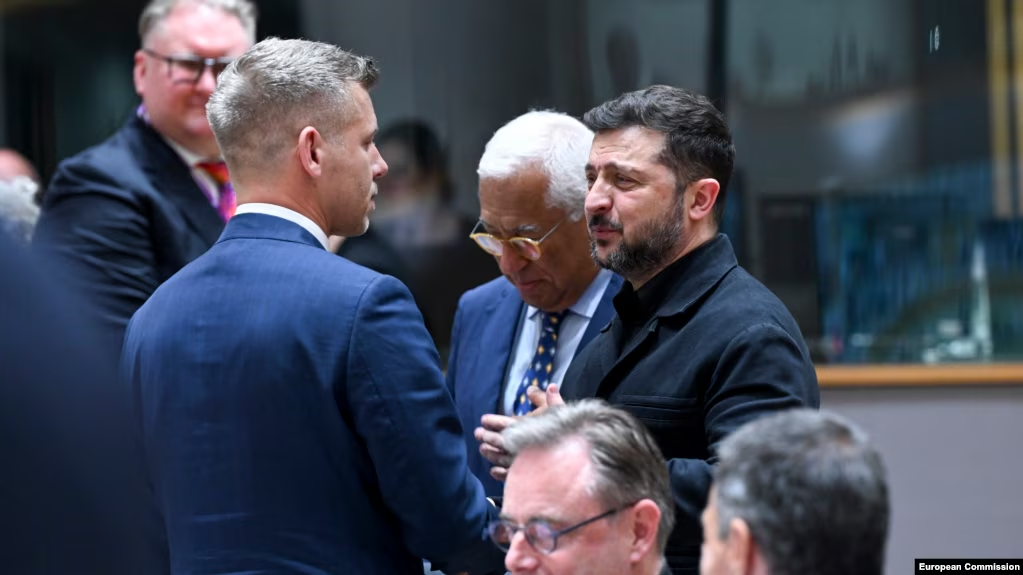
Ukraine's parliament registered a bill on minority-language schooling on 1 October to lift Hungary's block on the country's European Union membership talks, Ukrinform reported. Kyiv acts first with the legislation. Budapest reciprocates by letting the EU push the stalled accession process forward. Hungary's government welcomed the text within a day.
Ukraine's route into the European Union turns on unanimous votes, so one member state's leverage can stall the entire queue—and Kyiv is trying to pry the clusters open one bargain at a time before the window for this year's progress closes.
European Pravda, citing unnamed sources, reported that the two capitals agreed to move in parallel after a public standoff, with neither side willing to go first on trust alone. Ukraine registers and passes the bill. In return, Hungary is to let the Council of the EU presidency send Kyiv, on 6 October, the requests needed to open two negotiating clusters—stages of the membership process. The Rada plans an extraordinary session on 12 October to adopt it, and European Pravda says the votes are there. A Council of the EU decision is due on 13 October, ahead of a European Council summit two days later. Deputy Prime Minister Vsevolod Chentsov said rebuilding trust will take concrete steps from both governments.
Lawmakers filed Bill No. 16119, which creates a national minority school status: a school qualifies when over half its pupils—50% plus one—study in a national-minority language that is also an official EU language. By Education Ministry estimates, that fits about 149 schools, roughly 1.2% of Ukraine's general secondary institutions. Ukrainian stays the language of instruction, and the bill does not return Russian to classrooms.

Pupils at qualifying schools could use the minority language with teachers and classmates, not only in lessons, and parents could petition to add subjects taught in Ukrainian. The text also covers Ukraine's indigenous peoples, such as Crimean Tatars, and drops a Ukrainian-language certificate requirement for the heads of 29 private schools for as long as they stay in their posts. Education committee head Serhii Babak said the solution protects Ukrainian while meeting an EU accession commitment.
Hungarian Prime Minister Péter Magyar posted on Facebook that the bill strengthens legal guarantees for Hungarian-language education and the school network, and wrote that he expects those rights honored in practice. European Pravda framed the outcome as a win Magyar's own voters can read as delivering what the previous government never secured. Foreign Minister Anita Orbán said the new government had achieved more in a few months for the Hungarian minority in Zakarpattia than Viktor Orbán's cabinet managed in ten years. Under Magyar, Hungary agreed in June to open the first accession cluster but kept slowing the rest. Only in recent weeks, European Pravda wrote, did Budapest abandon Orbán-style unconditional blocking. This bill is meant to free the next two.

Donald Trump has threatened to ban US diesel exports of diesel – here’s what that could mean
© Reuters

Ukraine has turned ground robots into a frontline workhorse, and the state is now trying to buy them at scale through its first competitive, ministry-spec tender. Viktor Pavlov, an officer of the 3rd Separate Assault Brigade's UGV battalion, laid out the risks of that model to Army Inform, the Defense Ministry's outlet, in an interview. Once a robot clears the military's technical requirements, price becomes the main criterion, Pavlov says. The order is split into lots, and no maker can take more than half a class. He warns the model may not tell a cheap, makeshift machine from one that actually survives at the front.
Robots now handle the war's deadliest chores—driving supplies through kill zones and reaching the wounded where people can't—and Ukraine has already contracted more than 22,000 for 2026. How the military buys them now shapes whether the push yields machines troops trust or a stockpile of cheap ones they don't.
Aerial drones became disposable, mass-produced weapons years ago. Ground robots—the tracked and wheeled machines that haul supplies, pull out the wounded, and attack Russian positions—are only now reaching serial state supply. In August, the Defense Procurement Agency (DOT), the body that buys Ukraine's arms, opened its first competitive tenders for logistics and strike robots built to specs set by the Defense Ministry. Pavlov, founder of Ukraine's UGV School, calls it an experimental format that can work where market prices are inflated. Splitting the order into lots also gives smaller engineering teams a real chance, he said, because many large producers are already busy with state contracts.
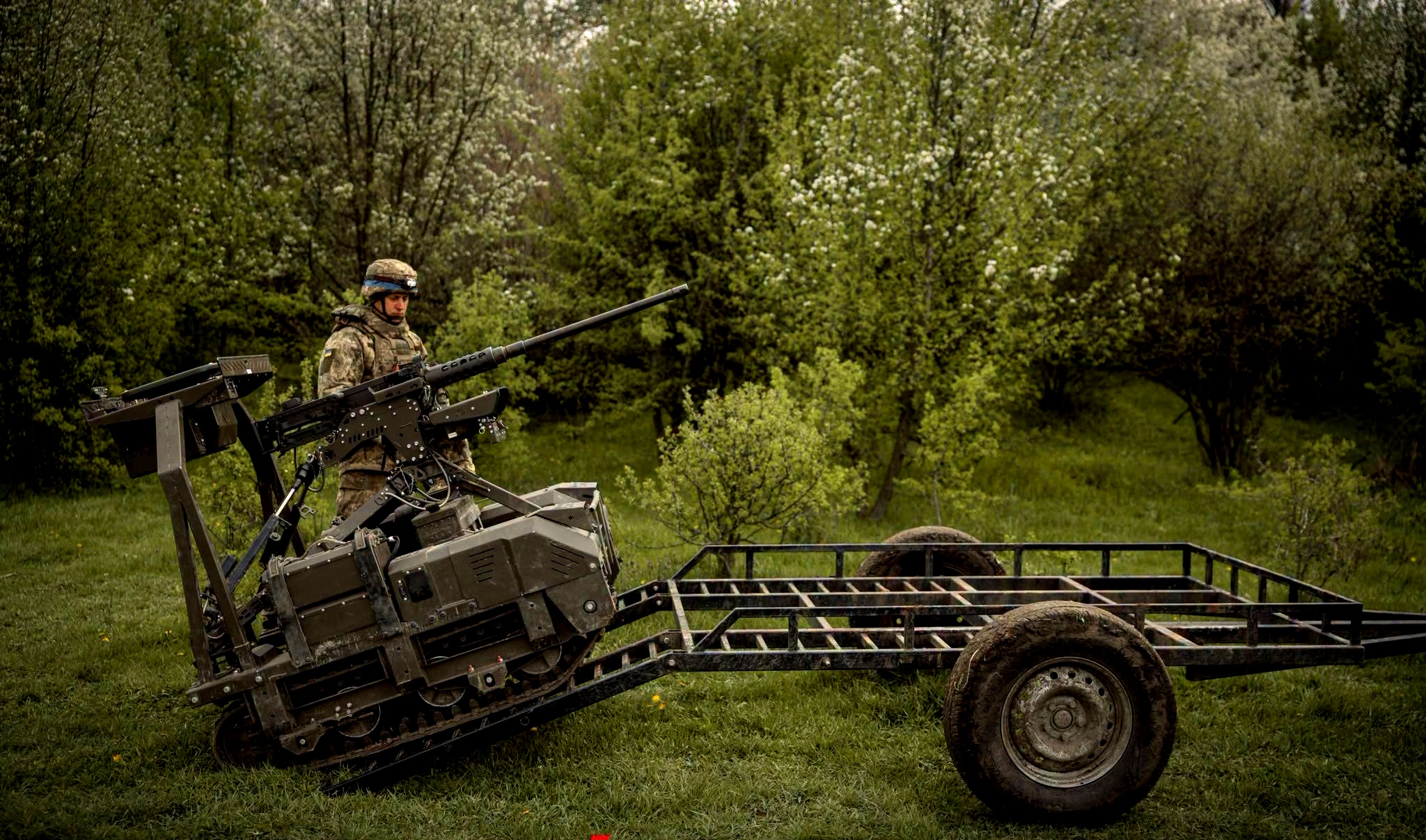
A tender rewards the cheapest product that formally meets the requirements, not the best one, Pavlov said. A thermal camera, for example, can be listed as desirable rather than mandatory, so a maker chasing the lowest price will most likely leave it off. On any given feature the machines diverge—suspension, cameras, comms channels, a winch—one has it, another doesn't, yet both can land in the same class.
The machines themselves are very different. One carries 250 kilograms, another up to 349, but both fall into the "200-plus" category. Unlike FPV drones, which share standard sizes and parts, ground robots have no common frame—Ukraine fields many local variants. Pavlov compared the choice to picking an iPhone over a cheaper Android: on paper the features match, but soldiers know which machine they can run and repair.

He also fears the model punishes innovation. A company can spend 18 months and a 20-person team building a robot, then watch a rival copy it, skip the research costs, and undercut it. A design troops already know how to run and repair—like the Ratel—is a known quantity. An untested bargain can break down mid-mission with no spare parts.
Price competition should be one tool, not the only one, Pavlov argued. New robots should first reach units through pilot buys, letting soldiers test them and say what works. Proven systems can then be contracted in bulk, with tenders saved for classes where the offers are truly comparable. Ukraine's robots are too varied, he said, and what units need can't always be squeezed onto a spec sheet.
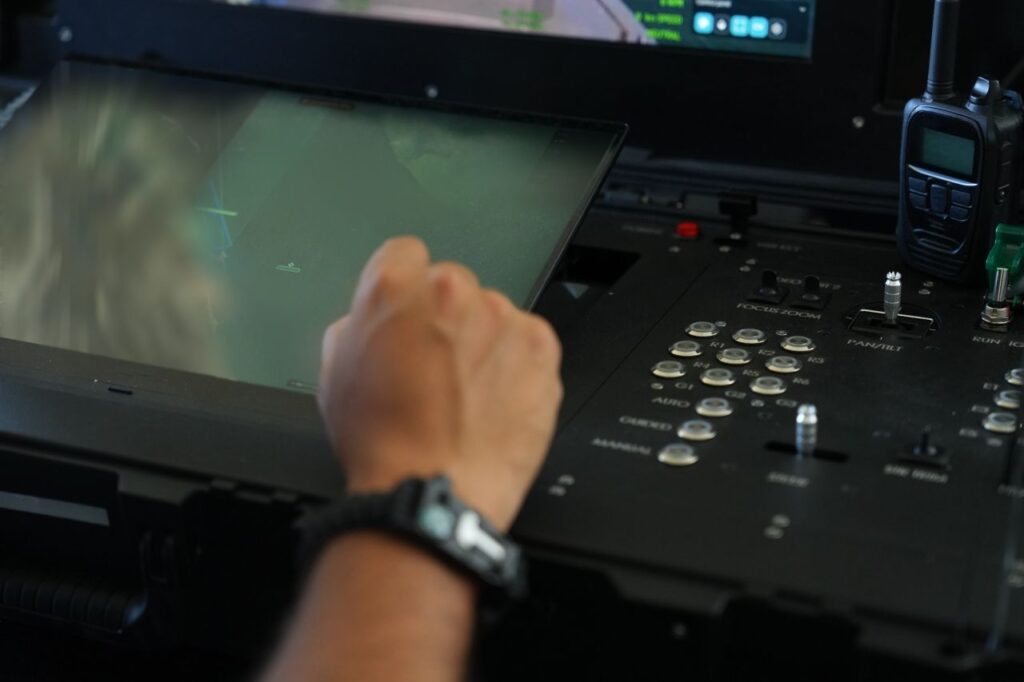
UFORCE, a Ukrainian defense company, says it fielded 11 crewless boats and eight drones at NATO's largest unmanned-systems exercise in Portugal, Militarnyi reported. The firm's crews acted as both mock enemy and allied forces alongside Ukraine's Navy during the 31 August–25 September drills. The turnout more than doubled the company's presence at last year's exercise, when it brought five vessels.
Ukraine began the all-out war without large warships, yet uncrewed boats drove Russia's Black Sea Fleet out of its main base on the Black Sea—a result that now pulls far larger navies to the same ranges to test the weapon for themselves.
UFORCE joined REPMUS 26, the Portuguese Navy's annual exercise, co-organized with NATO, where member states try out robots and drones built for combat at sea. This year the company widened its presence sharply, UFORCE said on LinkedIn. Across the scenarios, its crews ran strikes, reconnaissance, and defense.
At the center sat the MV7, an uncrewed boat UFORCE showed in every setup it offers. Across its configurations, the MV7 carried interceptors, FPV drones, other kinetic weapons, and electronic-warfare gear. Crews launched flying drones straight off the decks while the boats sat on the water, all run by a single control program.
The company brought three systems to REPMUS for the first time: the Nemesis SeaStrike drone, which launches from the MV7, the MV11 boat, and a supply vessel called L11. UFORCE teams worked beside Ukraine's Navy throughout. Portuguese President António José Seguro inspected the MV7 on the pier, the company said.
Ukraine was at REPMUS last year, too. At REPMUS 2025, a Ukrainian-led "enemy" team beat NATO's side across all five drill scenarios and, in one, landed enough mock strikes on a NATO frigate to have sunk it in a real battle. Ukraine also brought the upgraded Magura v7.2 to that year's drills.

These graphics explain what the Democrats would need to do to flip the Senate and House of Representatives
A turning point in Donald Trump’s second term will soon arrive. On 3 November, voters across the US will decide whether to keep the president’s Republican allies in control of Congress, or return Democrats to the majority.
Many indicators of voter sentiment suggest the Democrats are favored to take back control of the House of Representatives, and potentially the Senate. Winning either would be a significant victory for the party and give it the power to block Trump’s legislative agenda and more aggressively investigate his administration.
Continue reading...
© Illustration: Guardian Design / Getty Images

© Illustration: Guardian Design / Getty Images

© Illustration: Guardian Design / Getty Images
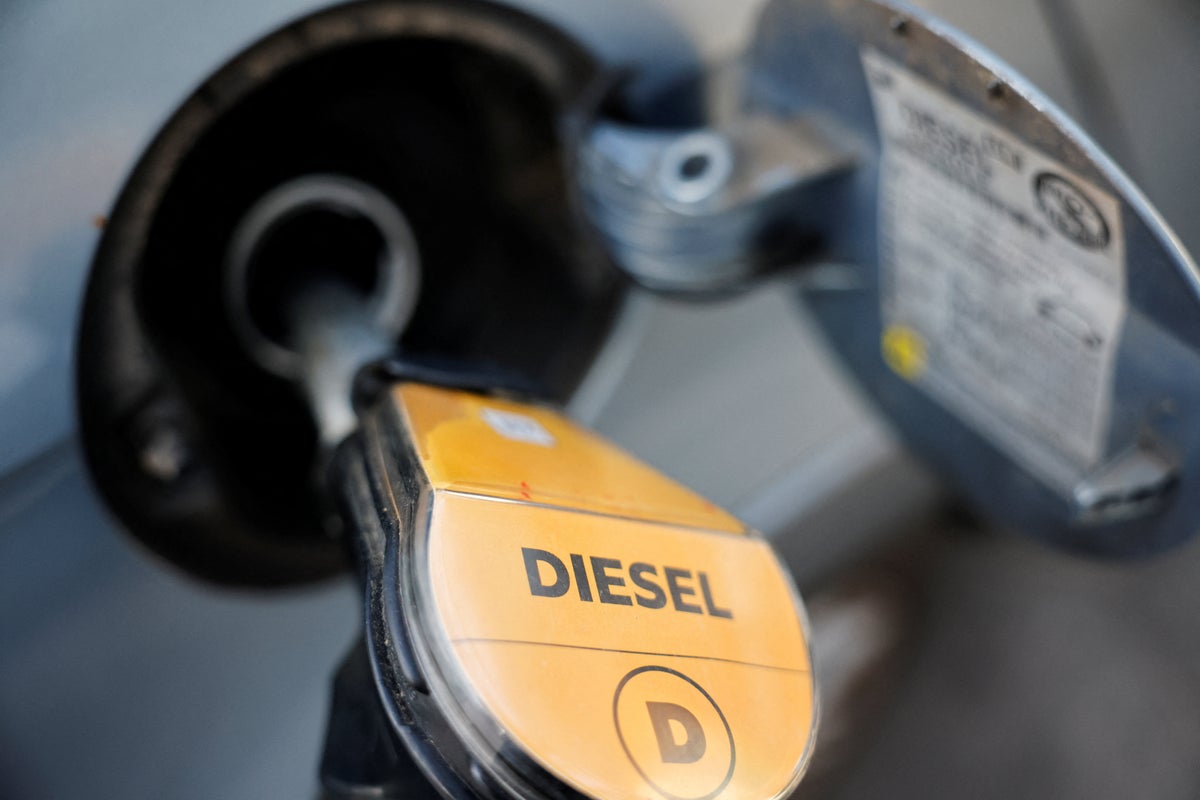
Fuel prices have risen steadily in recent weeks and reached a new record high this week
© Reuters
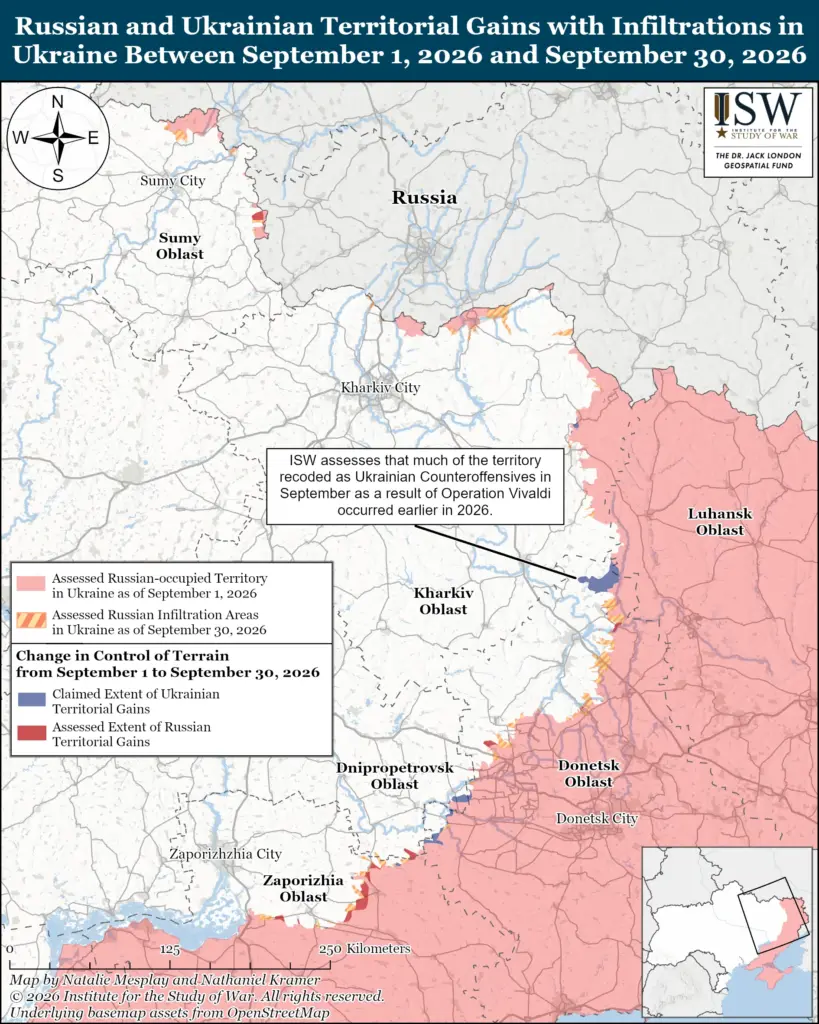
Russia lost almost 300 km² of Ukrainian territory on net between March and September 2026, and it likely gained no ground in September despite its heaviest casualties of the year, the Institute for the Study of War (ISW) assessed. Ukraine's Operation Vivaldi accounts for much of the swing. The think tank notes that Ukraine's secrecy around such counterattacks makes exact monthly tallies hard.
Russia has pressed attacks along the entire front through 2026, accepting mass casualties for marginal ground, and its battlefield year has already been called its worst since 2023. Its losses have been outpacing its recruitment for months.
Russian forces seized 175.54 km² in September but lost 256.35 km², a net loss of 80.81 km², or minus 2.69 km² a day, ISW calculated. The balance stayed negative when Russian infiltrations into areas Russia does not control are counted: Russia seized or infiltrated 143.2 km² but lost 318.38 km², a net loss of 175.18 km².
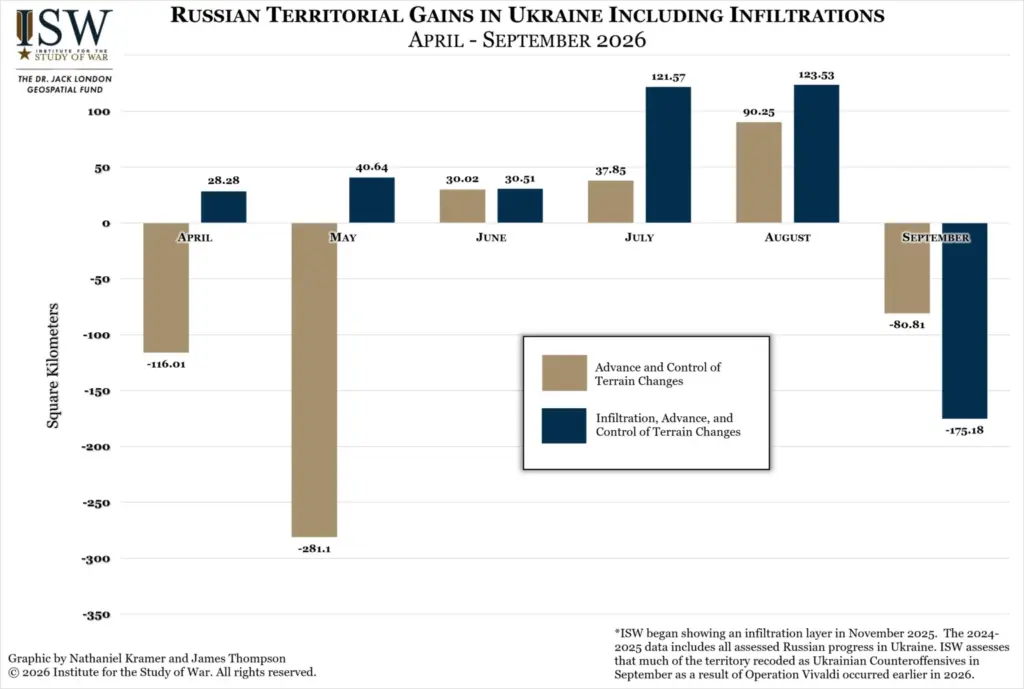
The September figures include at least 147 km² near Lyman that Ukraine liberated over earlier months, but that ISW recorded only once details of Operation Vivaldi emerged in September. The operation already disrupted Russia's plan to encircle the Fortress Belt cities from the Lyman and Dobropillia directions.

Russia's rate of seizing territory dropped sharply in March 2026 and has stayed low, or even negative, since, ISW found. After controlling for the gains Ukraine made during Vivaldi, Russia lost control of 293.59 km² net across the front since March. Counting infiltrations, it gained a presence in only 174.44 km² over the same period.
ISW's monthly chart shows net Russian losses of 116.01 km² in April and 281.1 km² in May, modest gains in June, July, and August, and a net loss again in September. Oleksandr Syrskyi, then Ukraine's commander-in-chief, reported in June that Ukrainian forces had recaptured 100 km² in May.
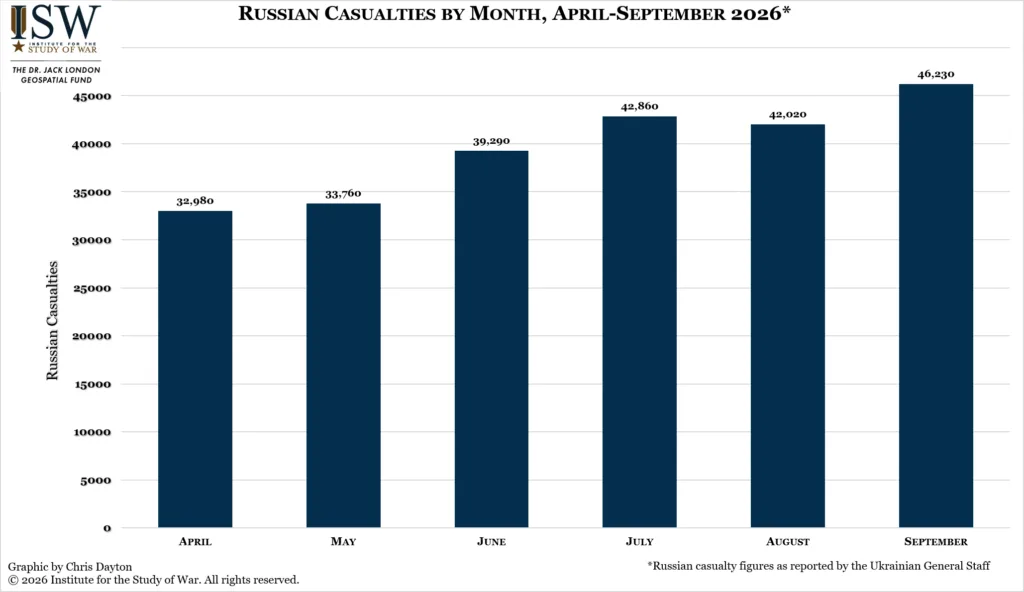
Russian forces suffered 46,230 casualties in September, Ukraine's General Staff reported. It is the third straight month above 40,000 and the highest monthly toll of 2026, by Kyiv's count. Monthly Russian casualties have climbed from 32,980 in April to 42,860 in July and 42,020 in August, ISW's chart shows.
Russia keeps suffering heavy personnel losses while making extremely limited or even net-negative territorial gains, ISW said, and its current force generation system still recruits fewer soldiers than it needs to replace them.
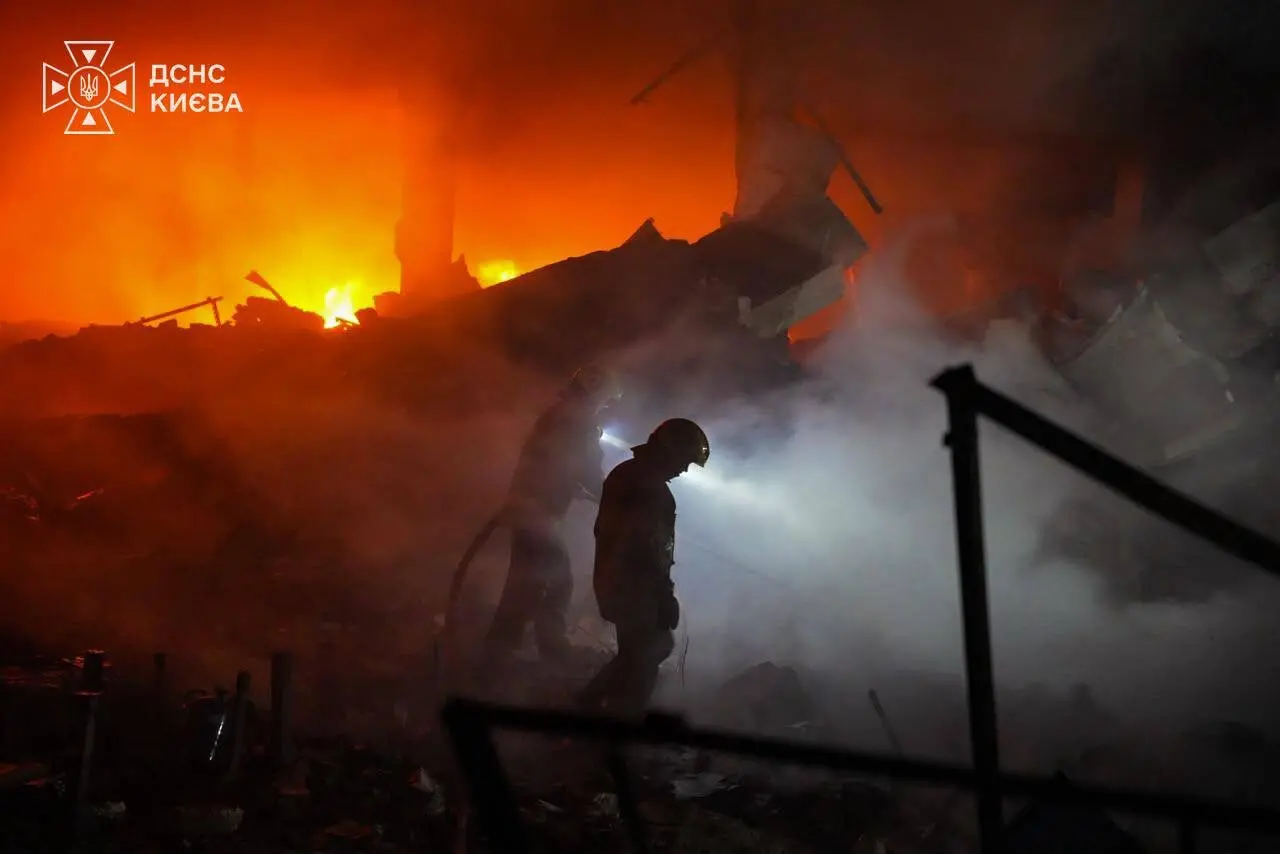
Ukraine's effective operational security around Vivaldi, likely to continue in future counterattacks, will make meaningful month-to-month assessments of Russian gains and losses hard, the think tank added.
Ministry of Defence described the incident as a ‘tragic accident while observing Ukrainian forces test a new defensive capability’
© PA Media

Drones attacked Russia's Volgograd and Samara oblasts overnight on 2 October, sparking fires near an oil refinery, a chemical plant, and likely a major oil-transport hub, Ukrainian and Russian monitoring channels reported. Regional officials acknowledged the attack but not the fires, and the extent of any damage remains unconfirmed.
Explosions sounded for a long time in Volgograd itself and around the refinery's industrial zone, Ukrainian Telegram channel Exilenova+ wrote.
Residents reported drones flying over and blasts "in all districts of the city," and complained that no air raid alert sounded, Russian news Telegram channel Astra reported. Its OSINT analysis of eyewitness footage placed the glow near the Lukoil refinery and the neighboring Kaustik chemical plant, though the available videos do not show which facility caught fire.
Volgograd Oblast Governor Andrei Bocharov claimed a "massive drone attack" on the region's industrial infrastructure. He mentioned a fire in an apartment building and one person hospitalized, but no fires at plants.
Lukoil-Volgogradneftepererabotka is one of Russia's largest refineries. It processes 14.8–15.7 million tons of crude a year, about 5% of Russia's refining, and makes gasoline, diesel, jet fuel, fuel oil, and bitumen, according to Astra.

Drones have hit the plant repeatedly. In May 2025, strikes damaged its ELOU-AVT-1 and ELOU-AVT-6 primary processing units. A 29 May 2026 strike halted production at the plant, about 500 km east of the war zone, Ukraine's General Staff said. On 31 July, drones set the refinery ablaze again, and Astra reported the AVT-1 and AVT-6 units stopped.
Kaustik sits in Volgograd's southern Krasnoarmeysky district. It is one of the region's leading plants and makes basic chemicals with dual civilian and military use, Astra wrote. The outlet called that output critical to Russia's military industry. The plant runs chlor-alkali production built on salt electrolysis. It makes hydrochloric acid, plastics, synthetic resins, and industrial gases, according to OSINT-Varta. Such products can serve military industry too, including polymer parts and protective coatings for hardware, Militarnyi noted.

Explosions also rocked Samara, with an especially strong one around 06:30, Astra reported. Its OSINT expert linked reader photos to a fire at the Samara linear production dispatch station in the settlement of Prosvet.
Ukrainian monitoring channel Supernova+ shared video of thick black smoke on the horizon and reported a fire at the station. Exilenova+ reported explosions in Samara followed by a fire.
The station belongs to Transneft, Russia's state pipeline operator. It covers more than 216 hectares and holds 71 tanks with a combined capacity of over 1.6 million m³ of crude. Astra called it Europe's largest tank farm.
Four trunk pipelines converge there, carrying oil from Western Siberia, Tatarstan, Orenburg Oblast, and Kazakhstan. The station blends high- and low-sulfur crude into Urals, Russia's flagship export grade, according to Militarnyi.
Samara authorities did not comment on the fire. Mayor Ivan Noskov stated only that ground public transport was suspended. Samara Oblast Governor Vyacheslav Fedorishchev did not report an attack at all.
The station has been hit before. Operators of the 14th Regiment of Ukraine's Unmanned Systems Forces struck it again overnight on 23 September 2025. On 21 April 2026, drones of the Security Service of Ukraine's Alfa special operations center hit it, reportedly damaging five crude tanks of about 20,000 m³ each.
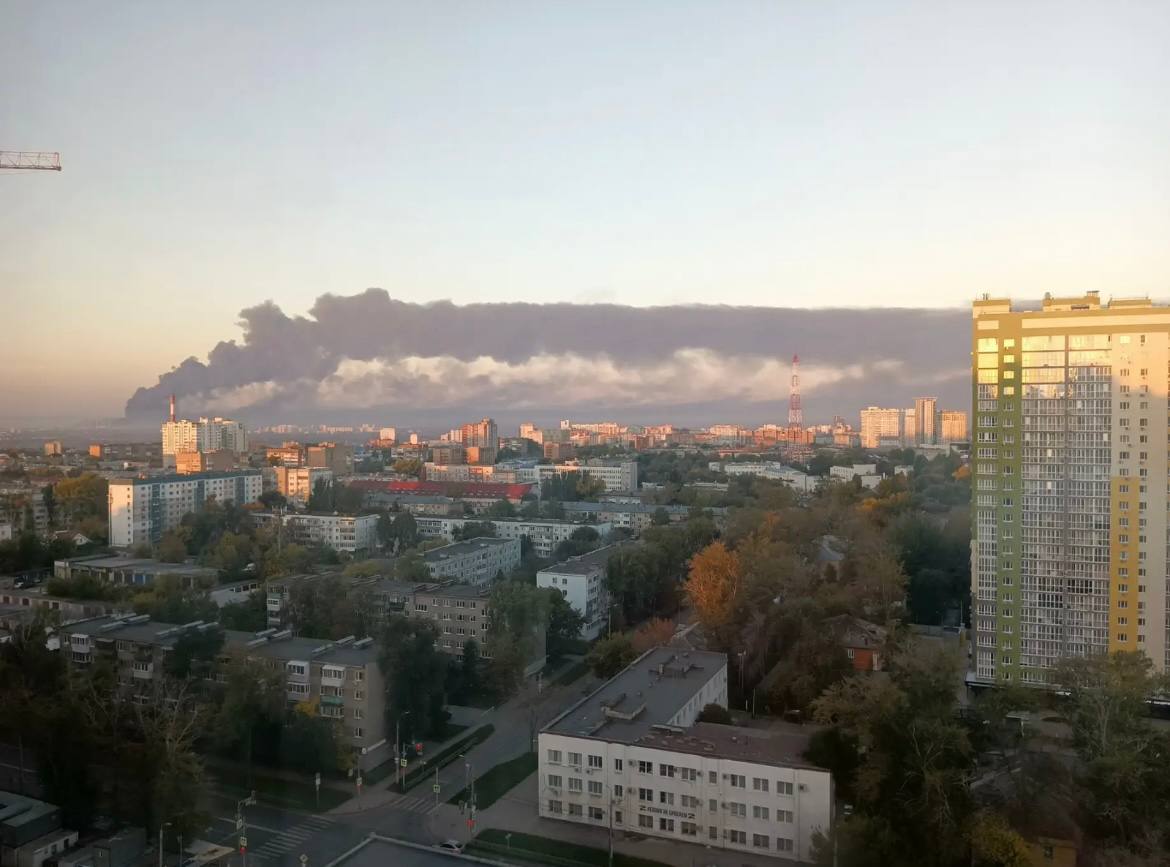
Ukraine's long-range drones have already pushed Russia's fuel shortages into Central Asia, and Washington has pressed Kyiv to stop, so every hit on processing or export logistics tests how long oil can fund Moscow's war.

Ukraine may soon receive a multimillion package of 20-mm rounds for its F-16 fighter jets, Foreign Minister Andrii Sybiha told journalists, Hromadske reported. He called the ammunition critical for shooting down Russia's jet-powered drones and said several partners have already begun transferring it. He expects the larger package after an upcoming high-level visit.
Russia now strikes Kyiv and other Ukrainian cities daily, increasingly with jet-powered drones that outrun the cheap interceptors built for slower Shaheds. Fighter jets are among the tools Ukraine uses against them, while its overall interception rate for jet drones still trails its rate against propeller drones.
Sybiha said Ukraine has yet to build up its capability to repel jet drones.
"Given that we have not yet built up the capability to repel jet drones, and given the preparations for new strikes, it was critically important to help our military shoot down these drones. Apart from air defense systems, which are too expensive to use constantly against drones, the most effective tools right now are F-16 fighter jets," Sybiha said.
He thanked Spain, Belgium, and Poland, which have begun the process of transferring the ammunition, and said that thanks to them Ukraine will "very soon" have the rounds it needs.
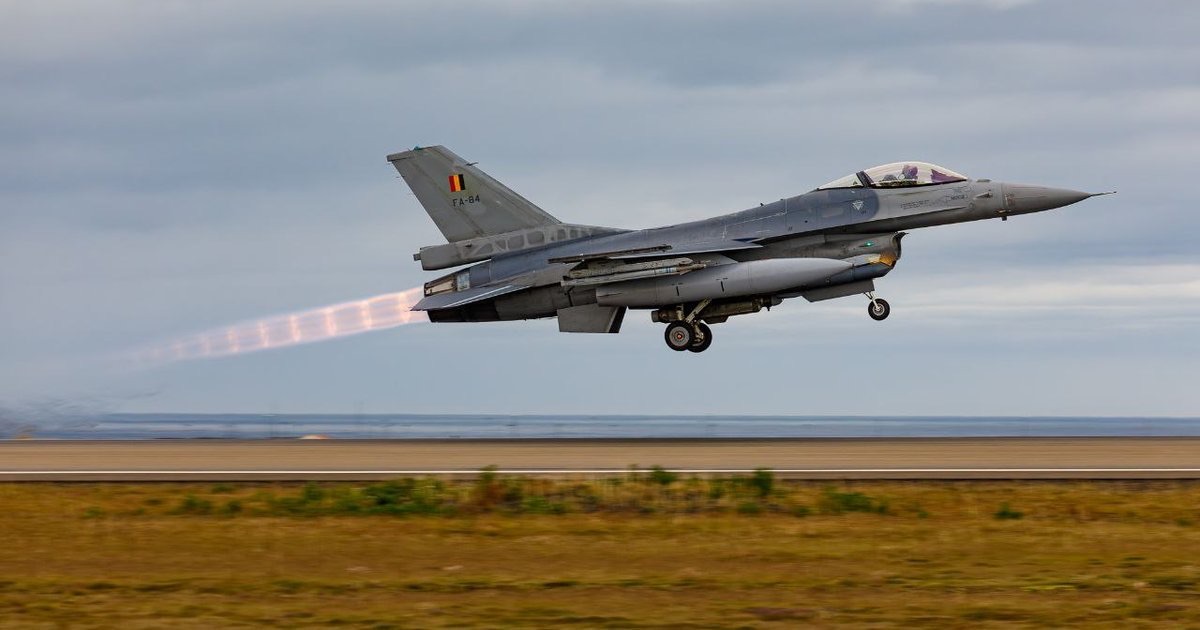
Sybiha linked the larger package to a visit he did not name.
"We will soon have one very serious visit. We think that one of the decisions following this visit will be a multimillion package of this ammunition for Ukraine," he said.
Talks on buying the rounds from private manufacturers are also underway, he added.
Ukraine has already received urgent batches of F-16 ammunition from Belgium, Spain, and other partners, and Belgium plans to send three more F-16s by the end of 2026 under an accelerated procedure. The jets' air-to-air missiles and cannon rounds are imported and not always in stock.
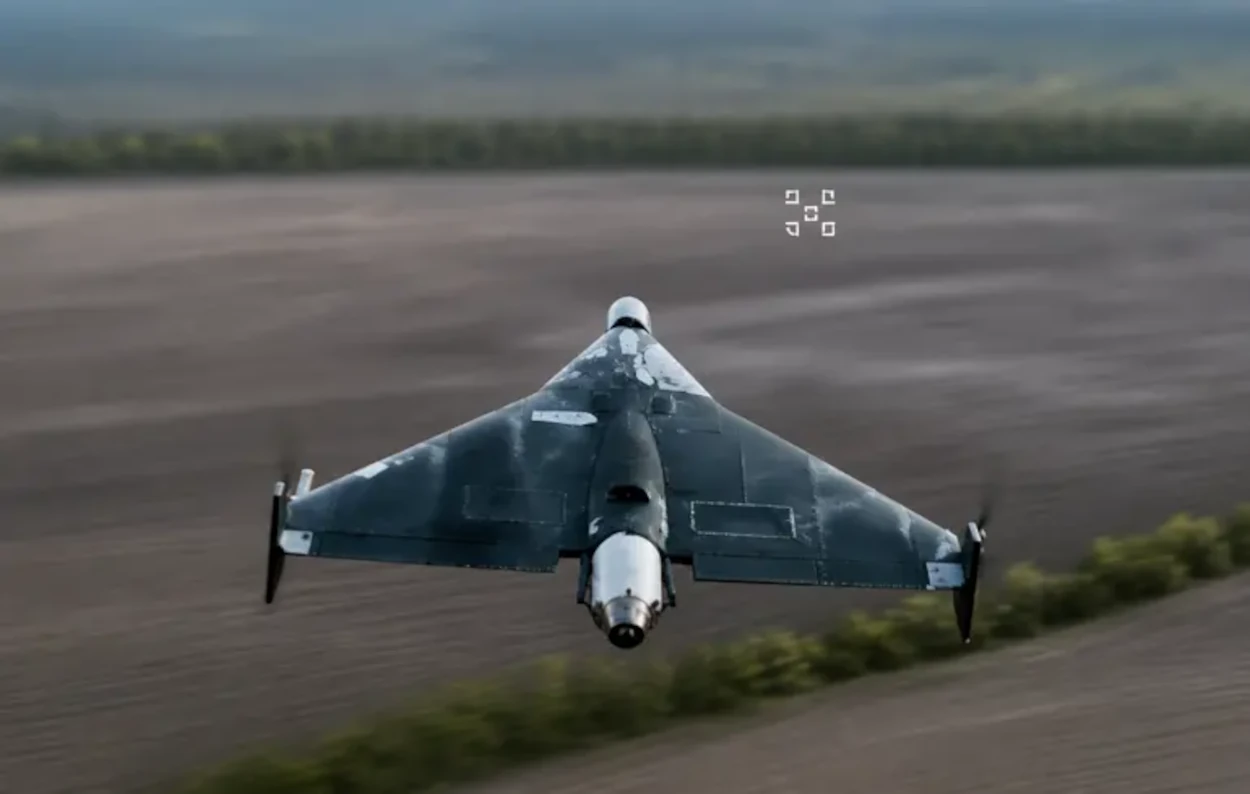
Overnight on 2 October, Russia launched 108 drones at Ukraine, 47 of them jet-powered, and air defenses downed 88 of them. In Kyiv, a Russian strike on a 25-story residential building in the Darnytskyi district killed one person and injured two. Russia also targeted the Southern Bridge again, after striking it three times the previous day, and the city restricted public transport across several bridges.
In Kharkiv Oblast, a Russian FPV drone hit a car in the Solonytsivka hromada on the afternoon of 1 October, injuring a man and a boy. A Russian strike damaged a civilian enterprise in Rivne Oblast and started a fire that forced an evacuation of nearby homes, regional head Oleksandr Koval said, and drones attacked Cherkasy Oblast.
In neighboring Romania, an object believed to be a drone crashed near the village of Plauru in Tulcea County during the attack, starting a fire that caused no casualties, Romania's Defense Ministry said.
Royal Marines also conducted their first exercise in the Faroe Islands since World War Two
© AFP/Getty
© AFP/Getty
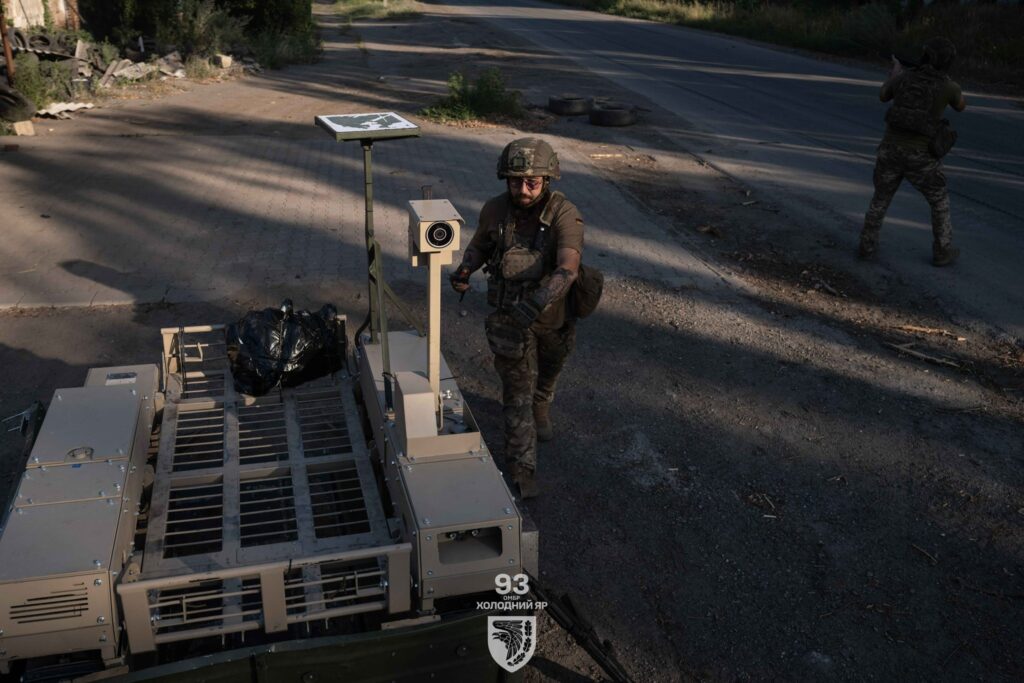
The robots Ukraine wants to throw into its deadliest fights should cost as little as $10,000 each, Mykhailo Fedorov says. The former defense minister has set out the first stage of his Army of Robots: cheap, simple humanoid-like machines that would take over an infantry's most dangerous jobs, with tens of thousands needed, he said on Telegram, citing his own interview with Forbes.
On 26 September, Fedorov, who continues to work on military tech reforms despite his sudden and unexpected dismissal, announced the creation of the Army of Robots.
Humanoid robots would carry ammunition and pull out the wounded, lay and clear minefields, scout, hold positions, and strike, taking the roles that today cost soldiers their lives.
"Our main goal is to save lives. A human should not take risks where a machine can do the job," Fedorov says.
At the first stage, it will not be a classic humanoid but a simpler humanoid-like robot that can be produced quickly and scaled up, he adds.
Such a machine should perform some of an infantryman's tasks directly on the battlefield.
Today, such platforms cost $40–70 thousand on average. For mass use in war, Ukraine needs something much cheaper: the target is $10–20 thousand per unit, he believes.
"The potential need is tens of thousands of such machines," Fedorov continues.
The former defense minister adds that he and his team are already working with teams that have ready-made MVPs and are designing solutions.
"Next come prototypes, simulations, model training, and finding the right combination of hardware and software," he explains.
The Army of Robots is not a single product but an ecosystem that will unite companies, startups, engineers, R&D, and capital around the robotization of the front.
"Our task is to get from prototype to mass product as quickly as possible," he adds.
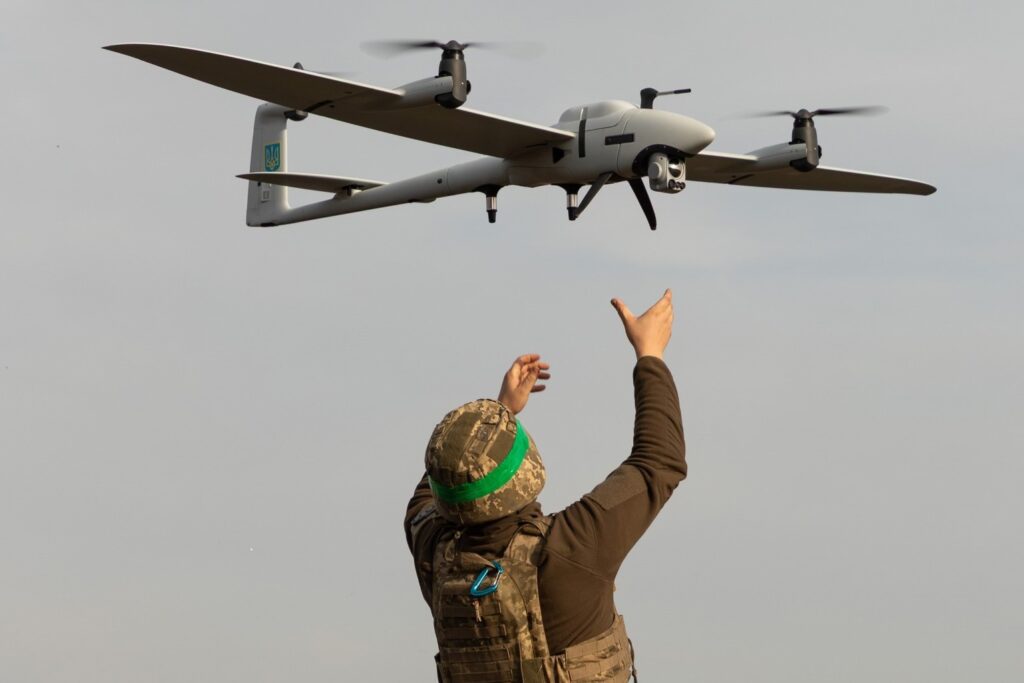
A Ukrainian drone maker is preparing to build unmanned systems in the heart of western Europe. TAF Industries and Luxembourg's LUXUAV have signed a memorandum to jointly develop, industrialize, and field weapons in Belgium and Luxembourg, under the Build with Ukraine initiative, TAF said.
The deal is part of Build with Ukraine, an initiative that enables Ukrainian arms manufacturers to take their operations to a new level by scaling up production beyond the country’s borders. This involves exporting Ukrainian military technologies to partner countries that support Ukraine financially and politically. In return, joint production lines will be established on their territory, according to Ukraine's Arms Council.
The deal targets the Benelux
The memorandum is a first step, TAF said, with joint work on autonomous systems in the two countries to follow. The aim is to move from signed intent to shared production lines and fielded drones.
TAF Industries, a Ukrainian unmanned-systems maker, and LUXUAV, a Luxembourg defense-tech firm, plan to develop, industrialize, and deploy drone solutions across Luxembourg and Belgium, pooling Ukraine's battlefield experience with European manufacturing muscle.
Build with Ukraine spreads west
TAF's chief executive, Volodymyr Zinovskyi, framed the memorandum as a way of "combining Ukrainian innovations, proven by war, with European industrial and technological capabilities," arguing that European security now depends on industry, states, and research working across borders.
Belgium has already contracted a Ukrainian producer to build drones and counter-drone systems on Belgian soil.
Europe wants the know-how
The timing fits Europe's new urgency. Russian drones have strayed into Polish, Romanian, and Moldovan skies in recent weeks, and member states scrambling to build defenses increasingly look to Ukraine, the one country fighting a mass drone war, for the technology and the lessons.
Earlier, Polish Prime Minister Donald Tusk warned of very difficult weeks and months ahead, “linked to Russia’s extremely aggressive stance toward Ukraine," according to TVP Info. As he emphasized, Polish security services were on heightened alert due to the situation along the country’s eastern border.

The Russian government has submitted a draft federal budget for 2027–2029 to the State Duma, Meduza reported on 30 September, citing TASS. In all three years, Russia's expenditures will exceed its revenues, the outlet noted.
Russia's finances have been eroding since it launched its full-scale invasion of Ukraine. To keep paying for the war, the Kremlin has drained its reserves, borrowed more, and pushed tax burdens onto residents and businesses, while the wider economy stalls.
The government listed social obligations, including aid to those who fought in its war against Ukraine and their families, along with defense needs among the budget's priorities, while its press release left out the planned cuts to social spending and the rise in military spending, Meduza noted, citing The Bell.
Russia's federal budget for 2027 sets spending at 48.8 trillion rubles ($585 billion) and revenue at 43.3 trillion ($519 billion), the Russian government stated, leaving a deficit of 5.5 trillion rubles ($66 billion). It claimed the draft is "balanced" and that healthcare spending will rise compared with 2026.
Deficits of 5.1 trillion rubles ($61 billion) in 2028 and 5.3 trillion ($64 billion) in 2029 are also planned, about 2% of GDP a year, Meduza noted.
This year's deficit is now set to reach a record 7.345 trillion rubles ($88 billion), nearly double the previous forecast of 3.785 trillion ($45 billion), The Moscow Times reported on 1 October. To help close the gap, Moscow plans an array of tax hikes for 2027–2029 to fund military spending. Already by May, its four-month deficit had run 50% above what it had planned for the whole year.
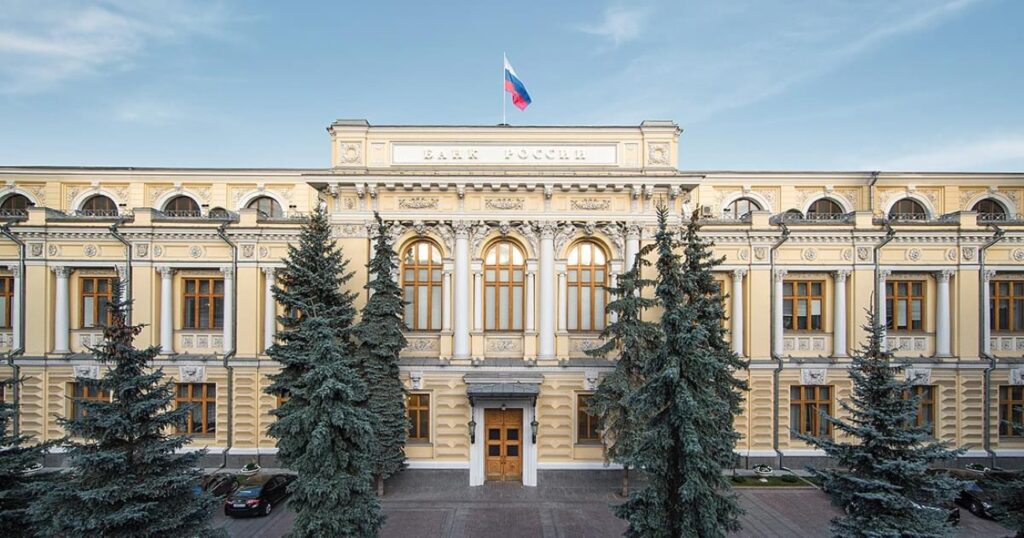
Even as the deficit widens, Russia plans its highest defense spending since the full-scale invasion began: 17.1 trillion rubles ($202.58 billion) in 2027, 27% more than the 13.5 trillion originally planned.
Only 2.3 trillion rubles ($28 billion) of that sum is itemized in public documents, and 34.9% of all 2027 spending will be classified, the highest share in at least 12 years, exiled outlet Vyorstka reported. The Duma is expected to hold the first of three readings on 29 October, the date proposed by Budget Committee chairman Andrei Makarov, Interfax reported.

Russia lost more troops in September than in any other month this year, hitting the record, by Ukraine's count. The General Staff put last month's Russian casualties at 46,230, a 2026 record and 45.8% above January's.
At the same time, Russia's strikes on Ukraine's rear escalated in September and are climbing again in October. The result is a grind that bleeds Russia on the ground while Ukrainian cities absorb the blows from above.
Losses span the whole front
"Ukraine's Defense Forces continue to inflict systemic and tangible losses on the Russian occupation forces in personnel and equipment along the entire line of contact," the General Staff says.
The toll climbs all year
The monthly figures have risen almost without pause. After a dip to 26,090 in February, Russian losses climbed through the spring and summer, 39,290 in June, 42,860 in July, 42,020 in August, before last month's high.
The record reaches down to a single day: the General Staff counted 2,090 Russian casualties in the 24 hours to 28 September, which British Defense Intelligence assessed as the highest daily toll since the full-scale invasion, one of only four days to top 2,000, the other three in 2024.
British intelligence tied the high rate to intense fighting around the fortified belt of Donetsk cities, especially near Dobropillia.
Meanwhile, Kyiv is also continuing its Vivaldi Operation near Lyman, and its latest mission used ground robots, each carrying two Bullspike grenade launchers to launch an attack on Russian positions and then detonate inside their shelters.
Kyiv reads the climb
Across the war, Ukraine says it has put roughly 1.5 million Russian troops out of action, a toll that has bought little ground as the months-long summer offensive stalled short of its goals.
"Every attempt to pressure our positions ends for the enemy in disproportionate losses of wounded and killed," the General Staff says.
The figures are Kyiv's own and cannot be independently checked: they count the Russians' wounded and killed but never their own.