Connexion
Ukraine’s former defense minister, dismissed suddenly, has announced Army of Robots. He says target is $10,000 per unit and need is tens of thousands
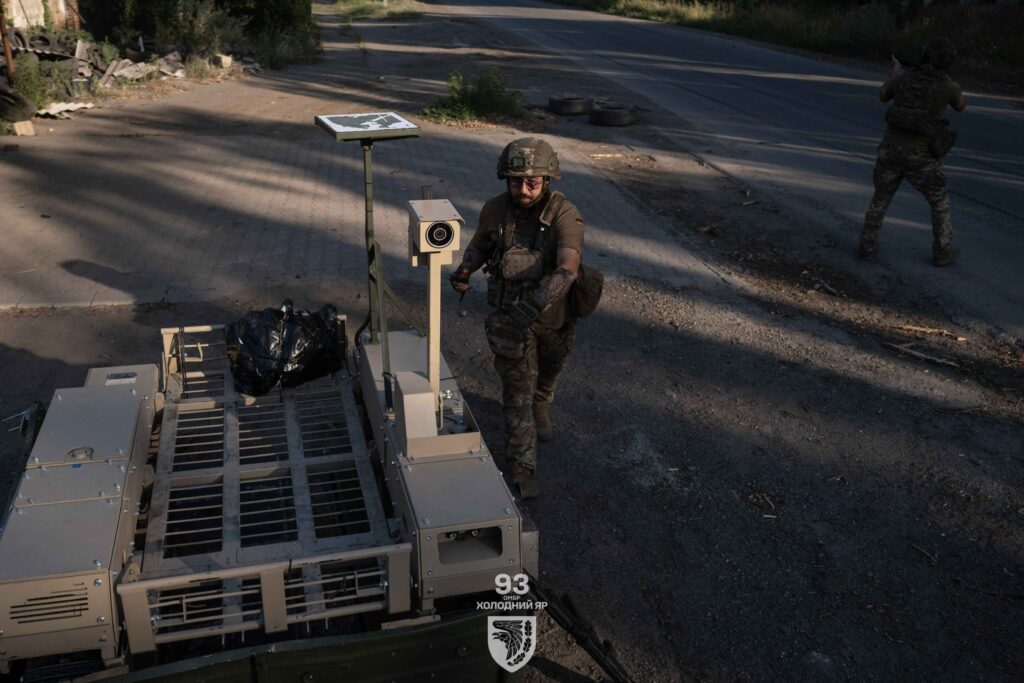
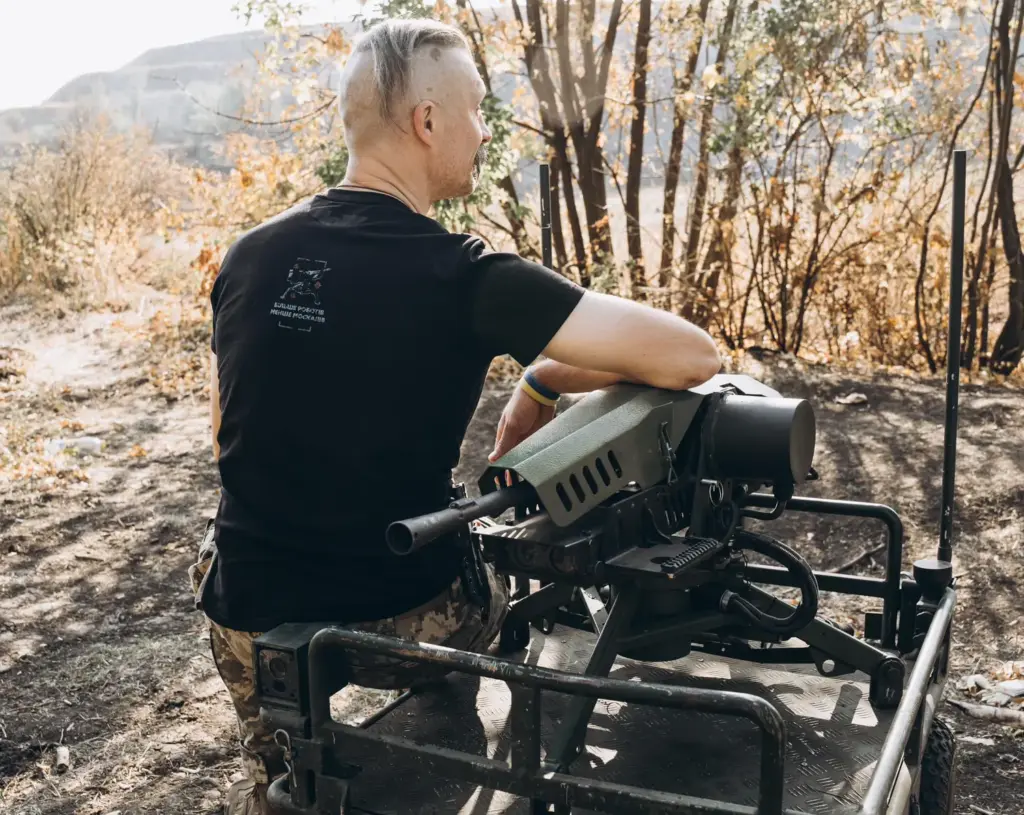
The robots Ukraine wants to throw into its deadliest fights should cost as little as $10,000 each, Mykhailo Fedorov says. The former defense minister has set out the first stage of his Army of Robots: cheap, simple humanoid-like machines that would take over an infantry's most dangerous jobs, with tens of thousands needed, he said on Telegram, citing his own interview with Forbes.
On 26 September, Fedorov, who continues to work on military tech reforms despite his sudden and unexpected dismissal, announced the creation of the Army of Robots.
Humanoid robots would carry ammunition and pull out the wounded, lay and clear minefields, scout, hold positions, and strike, taking the roles that today cost soldiers their lives.
Potential need amounts to thousands
"Our main goal is to save lives. A human should not take risks where a machine can do the job," Fedorov says.
At the first stage, it will not be a classic humanoid but a simpler humanoid-like robot that can be produced quickly and scaled up, he adds.
Such a machine should perform some of an infantryman's tasks directly on the battlefield.
Today, such platforms cost $40–70 thousand on average. For mass use in war, Ukraine needs something much cheaper: the target is $10–20 thousand per unit, he believes.
"The potential need is tens of thousands of such machines," Fedorov continues.
Next come prototypes
The former defense minister adds that he and his team are already working with teams that have ready-made MVPs and are designing solutions.
"Next come prototypes, simulations, model training, and finding the right combination of hardware and software," he explains.
The Army of Robots is not a single product but an ecosystem that will unite companies, startups, engineers, R&D, and capital around the robotization of the front.
"Our task is to get from prototype to mass product as quickly as possible," he adds.
Read also
-
A school with children, a café, warehouses: Russia’s drones hit civilian Kyiv again
-
Ukraine’s bomber drones, ones that dropped ground robots in its recent Donetsk counteroffensive, are getting 2.4-kilogram jammer to shield them from FPVs
-
As Russia expands attacks on Kyiv, Ukraine prepares to hit Moscow’s oil industry harder in response