Vue lecture

Poland sent Ukraine 350 tanks—Europe just agreed to refund it half a billion dollars
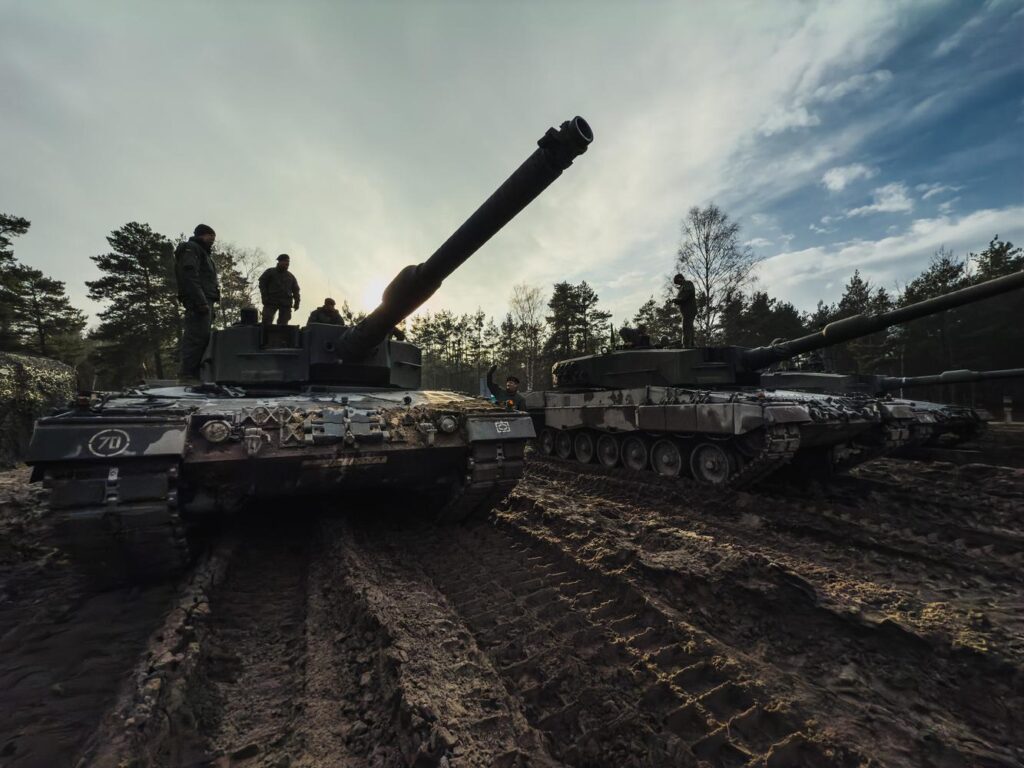
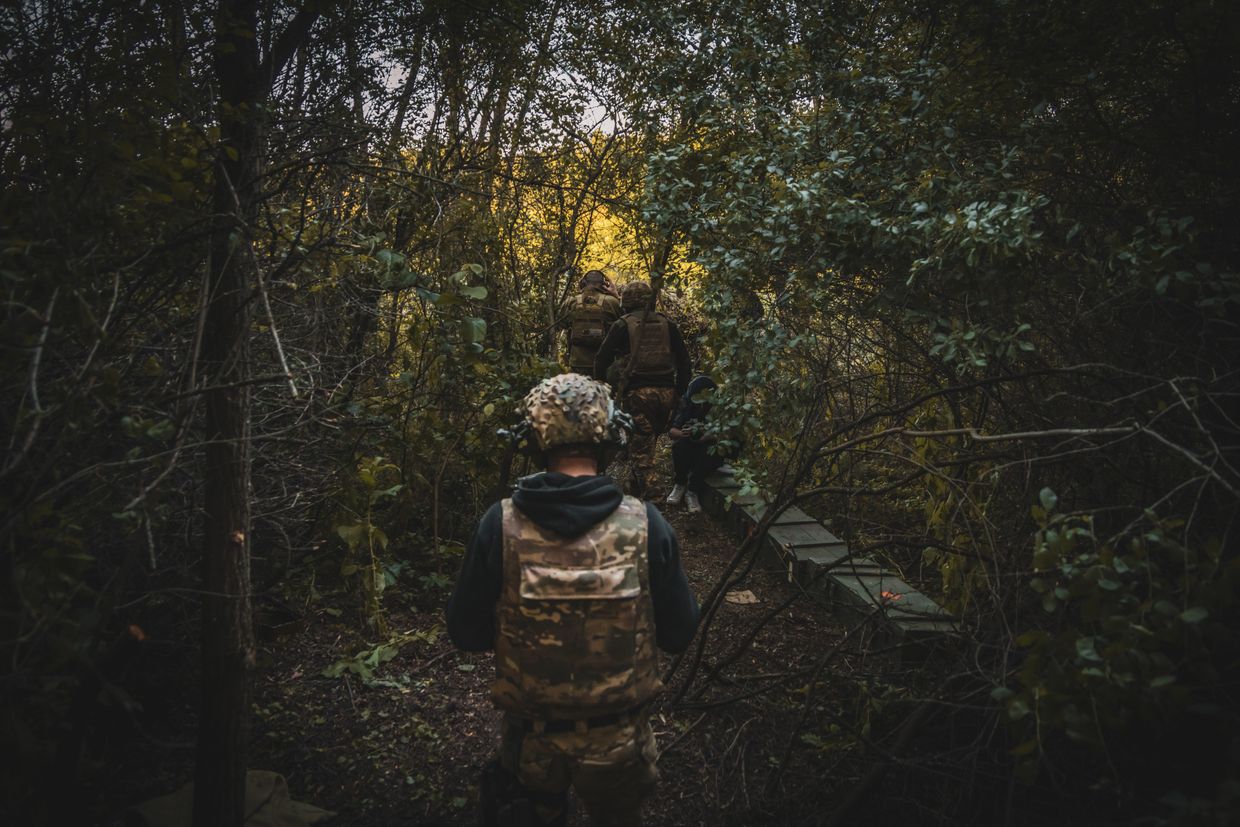
Ukrainian troops train in Poland to master Allied Leopard 2 tanks

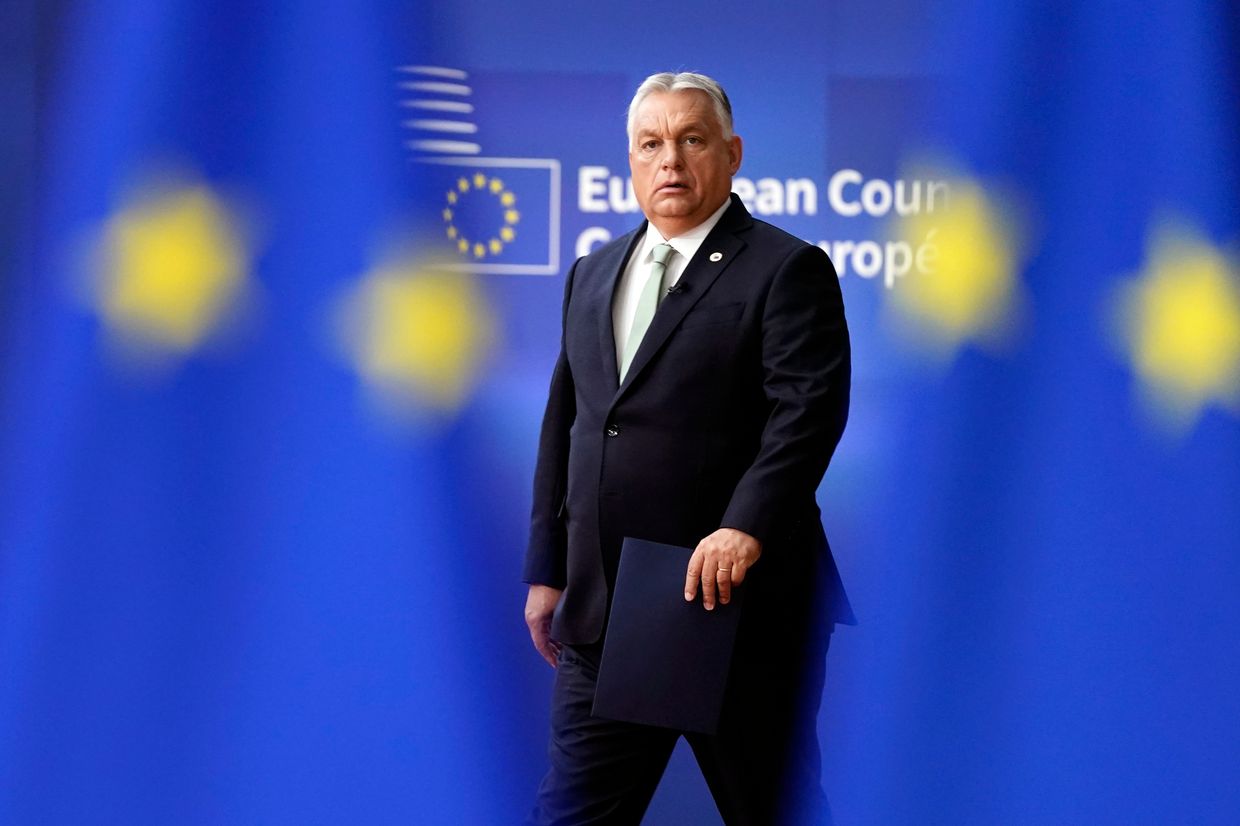
Poland will recover hundreds of millions of euros from a shared European Union fund for weapons it handed to Ukraine, the defense outlet Militarnyi reported. The money had been frozen for two years and only started moving after a change of government in Hungary lifted a veto.

Europe's ability to keep weapons moving to Ukraine rests on members trusting they will be paid back for what they give away. When that cost-sharing seizes up, national governments face the full bill alone, and the case for the next donation gets harder. A single member's veto can jam that machinery for years.

The money starts flowing again

Poland will receive up to $500 million in 2027 from the European Peace Facility (EPF), an EU fund that reimburses member states for military aid to Ukraine. Deputy Defense Minister Paweł Zalewski told the Polish news agency PAP that the ceiling combines the $465 million now secured with a possible $12–35 million more, depending on which of the two payout options the European Commission picks. Warsaw had already collected $960 million earlier, bringing its total EU reimbursement to roughly $1.4 billion.
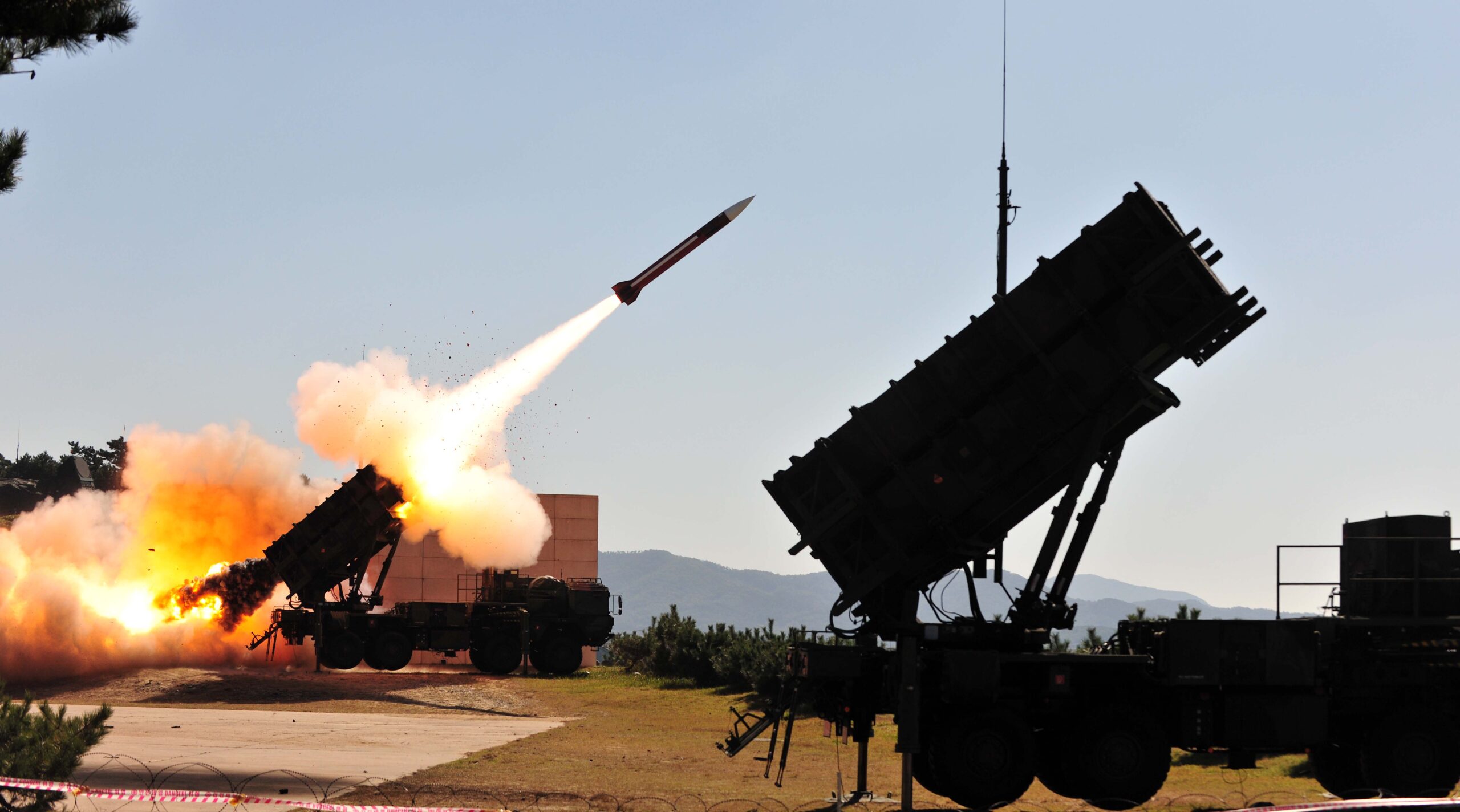
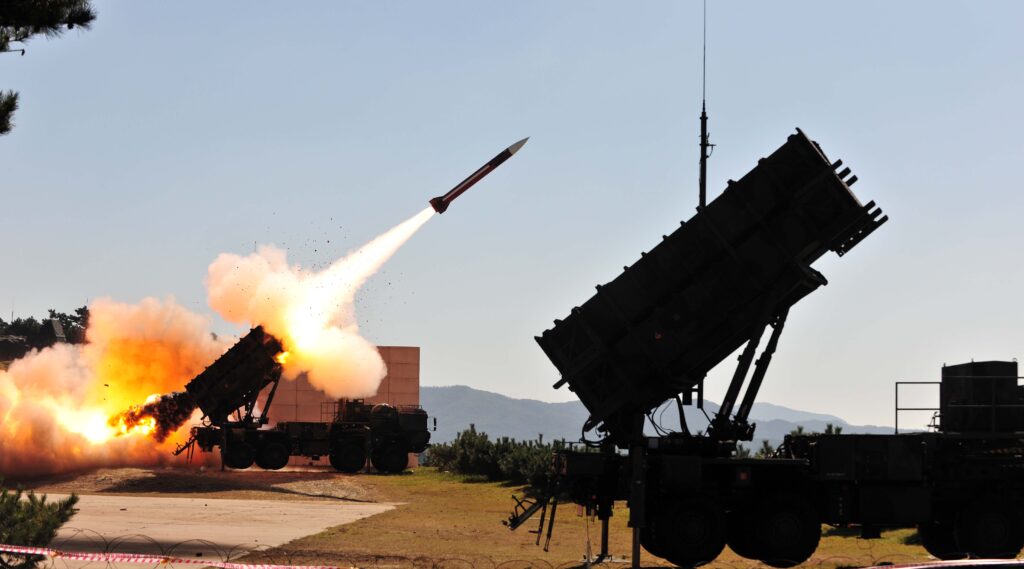
A Patriot air defense missile launcher. Photo: South Korean defense ministry.
Explore further

190 or 580 Patriot missiles? What Ukraine’s EU-loan request could buy—and why Washington still decides

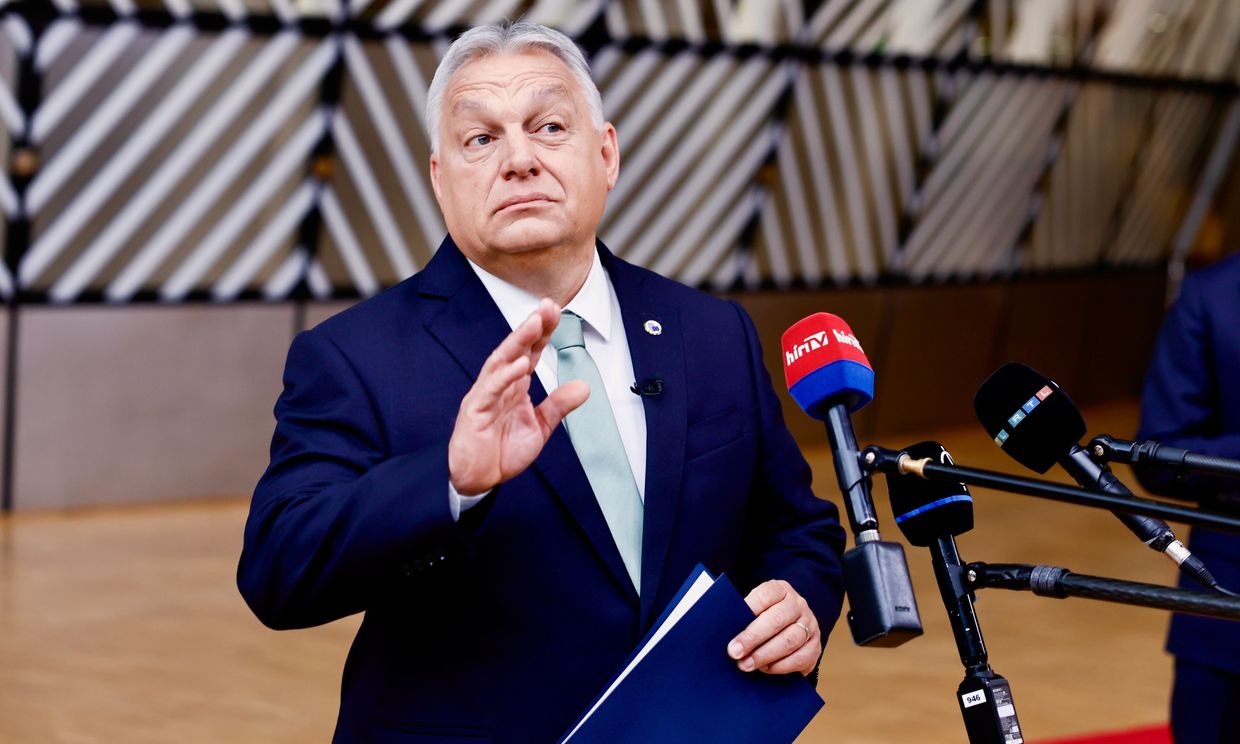
The reimbursements had stalled in 2024, when Hungary blocked a $7.7 billion tranche. Budapest dropped the veto in June 2026 after a new government took over, unfreezing the funds. The bloc is now steering part of the money toward joint arms purchases and its training mission for Ukraine, rather than just reimbursement.

Where Poland stands among donors

By Militarnyi's tally of Kiel Institute figures, total Polish aid has reached $6.8 billion, with $5.2 billion of that military. That ranks Poland 11th among donors by raw volume. When weighed against each country's economy, it ranks 9th, equal to 1.021% of Polish GDP, with the military share at 0.775%.
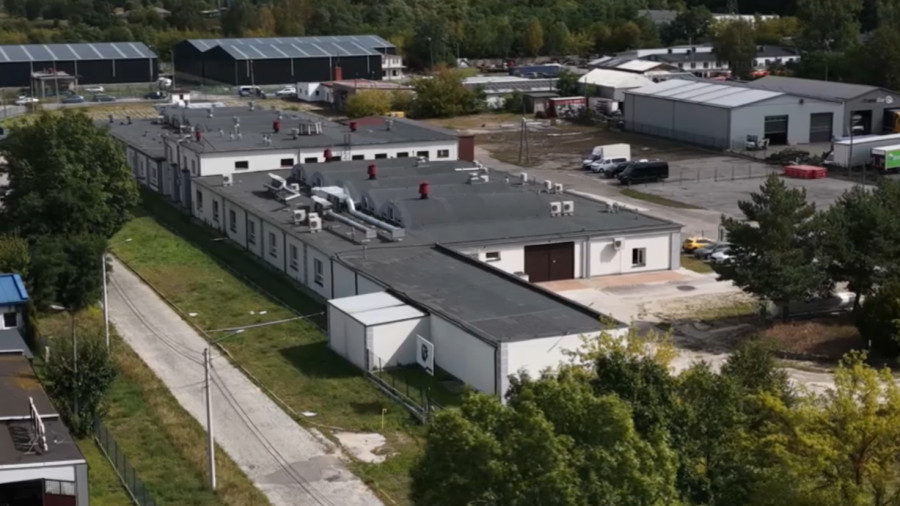
View of the WB Group factory building in Skarżysko-Kamienna, Poland. August 2026.
Explore further

A masked figure got into a Polish drone-parts plant—Poland now suspects a foreign spy service set the fire

What Warsaw handed over

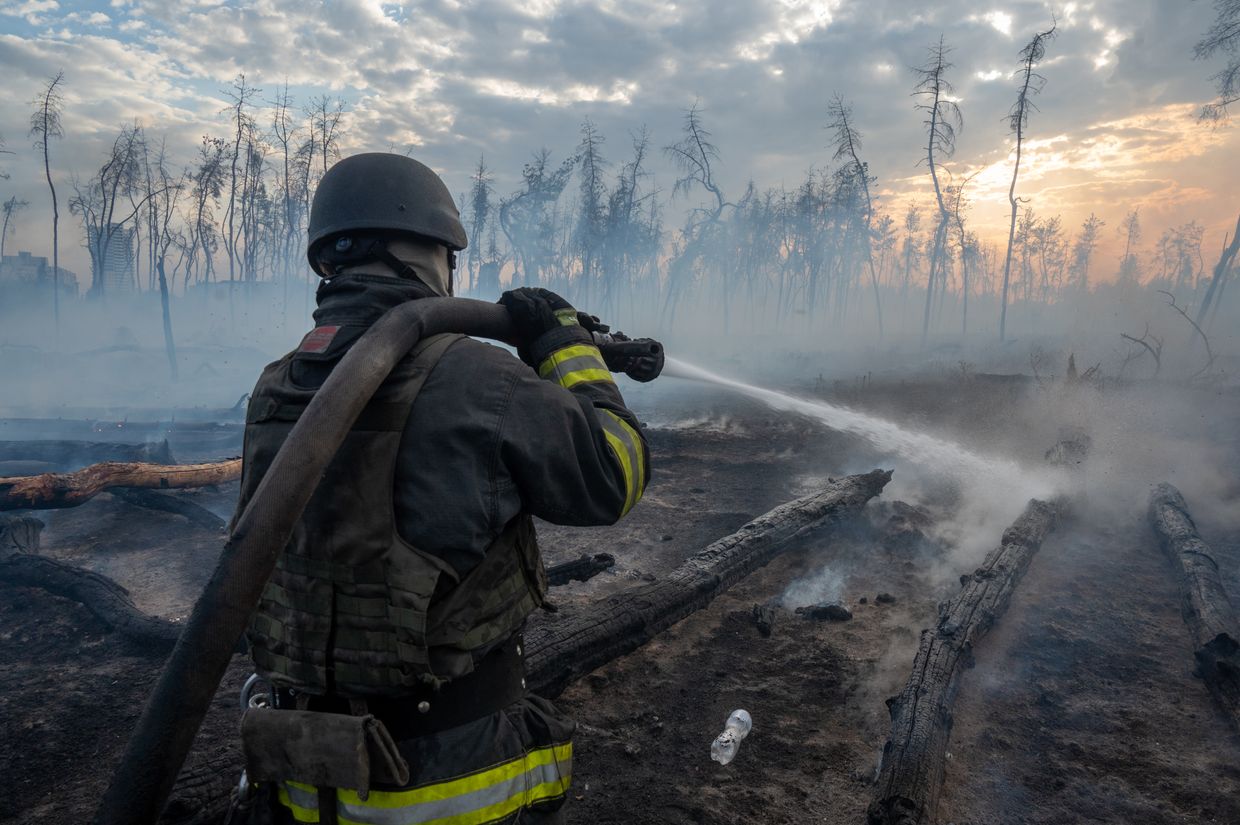
Poland has supplied ammunition and other weapons since early 2022, before the full-scale invasion, and has since handed over more than 350 tanks—14 Leopard 2A4, about 60 PT-91 Twardy, and roughly 280 Soviet-era T-72 variants. Warsaw also sent Krab self-propelled howitzers, Piorun shoulder-fired air-defense missiles, and Grad rocket launchers. Alongside Slovakia, it was among the first NATO states to send Ukraine fighter jets, delivering 14 MiG-29 jets and 10 Mi-24 attack helicopters between 2022 and 2024.

  •  

EU foreign ministers want Russia’s ex-fighters out. Nobody has written down what counts as proof

eu foreign ministers want russia's ex-fighters out nobody has written down what counts proof · post kaja kallas high representative affairs security policy 9 2025 ukraine news ukrainian reports

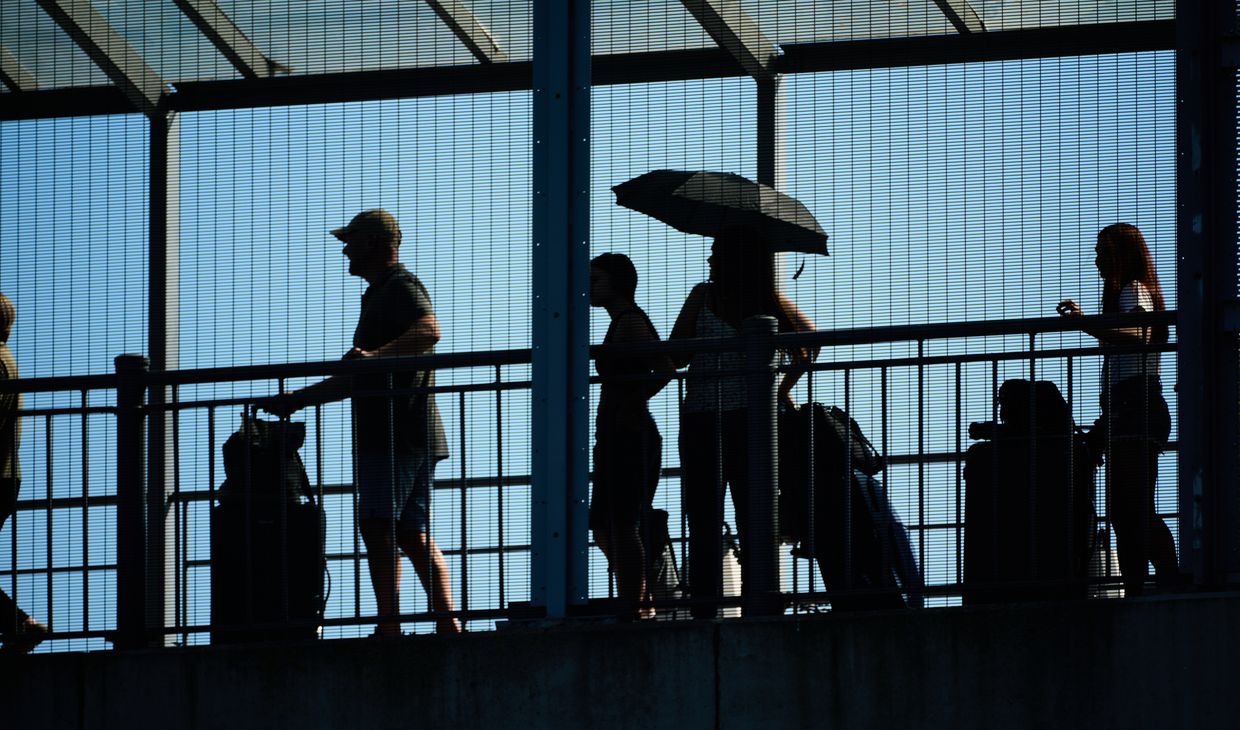
EU foreign ministers have given broad backing to an entry ban on Russians who fought in Ukraine and to stricter tourist visa rules for Russian citizens, DW reported. The bloc's foreign policy chief announced that support on 2 September, after an informal meeting in Wicklow, Ireland, without setting out what the tightening would involve. She tied the visa question to the risk of sabotage in Europe.

Russia has been attacking Ukraine since 2014 and at full scale since 2022, bombing Ukrainian cities, and for several years its agents have also worked inside Europe, cutting cables, flying drones over military bases, and setting fires at plants and warehouses that supply Ukraine. The bloc that funds much of Ukraine's defense has still not managed to keep the citizens of that state out of its own territory.

"Broad support," and nothing pinned down

EU foreign policy chief Kaja Kallas spoke to reporters after the ministers finished. 

"There was broad support for moving ahead with a ban on entry to the EU for Russian ex-combatants and tougher visa restrictions for Russian tourists," she said.

She did not name the restrictions planned for Russian tourists, say when they might take effect, or say which categories of Russian citizens they would cover.

The bloc has no unified position on tightening visa rules further, Kallas acknowledged. Some member states have so far argued against additional steps in that direction, she said.

greece blocked gas ban france italy softened entry ban—now brussels tries 1600 companies helping russia's war · post 9 parade moscow 2025 youtube/kremlin grate patriotic warr shitshow ukraine news ukrainian
Explore further

Russia’s former soldiers may face a locked EU border—if France and Italy stop balking

Many EU countries say tourist visas serve sabotage preparation

Reporters asked Kallas about accounts that one suspect in the Leipzig attack may have entered the EU on a tourist visa issued by Italy. German authorities have to confirm or refute those accounts, she said. If the information is correct, it shows that visas can be used to enter the bloc by potential wrongdoers who intend to harm it, she added. Many EU countries pointed out that tourist visas are used in preparing sabotage, because the people who carry it out need to get onto EU territory, she said.

Berlin blamed Moscow for the hybrid attack in Leipzig on 1 September, and moved to close Russia's consulate in Bonn and end the agreement for a Moscow-backed cultural center in Berlin after the drone attack on Leipzig/Halle Airport. Lithuania has exposed a Russian military intelligence network behind attempted arson in four NATO countries, and someone left funeral wreaths outside defense companies in Lithuania and Czechia in late August.
russia's ex-combatants entering eu risk flagged leaked threat assessment · post russian soldier captured perspective ukrainian fpv drone moments before impact 2025 birds magyar about strike ukraine news reports
Explore further

Russia’s ex-combatants entering the EU is a risk flagged in a leaked threat assessment

"It is not normal": Russians in Europe while Russia bombs Ukraine

Many ministers raised the visa question while the meeting was discussing Russia's war against Ukraine, Kallas said.

"It is not normal when a country bombs Ukraine, kills civilians—in July and August more than ever during this war—and at the same time Russians enter and enjoy the hospitality of European countries. That should not be," she said.

EU representatives said in July that the ban, kept separate from the tourist visa rules, was agreed in principle but still needed an evidence standard for refusing entry. The EU Council signs off after that, and the European Commission hoped at the time to finish by October.

UN monitors counted 437 civilians killed and more than 2,600 injured across Ukraine in July, the deadliest month since 2022. That count included 183 children killed or injured, also the highest since 2022. Russian drones and missiles then kept Kyiv under near-constant fire for four days at the end of August.
  •  

Russian Black Sea attacks, low Danube waters push EU to seek alternative routes for Ukrainian grain exports

russian black sea attacks low danube waters push eu seek alternative routes ukrainian grain exports · post civilian bulk carrier golden leo ablaze after missiles hit left odesa cargo corn

The European Union is discussing export support with Ukraine and its neighboring countries, including through so-called solidarity lanes, Agriculture Commissioner Christophe Hansen told Bloomberg on 2 September.

Strikes in the Black Sea have curtailed exports from both Ukraine and Russia, while low water limits how much grain vessels can carry on the Danube, Ukraine’s main fallback when sea traffic slows. Wheat and corn prices are at multiyear highs, and the Bloomberg Agriculture Spot Index jumped by more than 13% in August, its sharpest monthly rise in over a decade. Hansen said the EU’s role as a major food exporter means drought-driven production losses could cause shortages elsewhere.

Created after Russia's full-scale invasion, the solidarity lanes carry Ukrainian exports by road, rail, and river through neighboring countries when Black Sea shipping is disrupted.

The European Commission is separately weighing relief for drought-hit EU farmers. Hansen urged governments to use flexibilities in the Common Agricultural Policy, the EU's farm-subsidy system, including exemptions for circumstances beyond farmers' control, emergency fertilizer aid, and earlier payments, but proposed no new measures in a letter seen by Bloomberg. EU agriculture ministers are due to discuss the drought in Ireland next week and in Brussels later in September.

Russian attacks squeeze Ukraine’s export routes

Low water is only one obstacle to Ukraine’s southern export routes. Russia has repeatedly attacked ports and transport links along the Danube and on Odesa Oblast’s Black Sea coast. Some Ukrainian farmers have sold wheat below production cost as port prices fell, leaving less money for the next sowing.

Romania detected more than 100 drones during seven attacks on Danube ports in mid-August, interim Romanian Defense Minister Radu Miruță said. Russia struck Izmail, Ukraine's largest Danube port, three times in August. The 29 August attack killed one person and destroyed five grain trucks, Odesa regional authorities said.

Ukraine and Moldova have pursued a rail corridor through Moldova to Constanța, Romania’s main Black Sea port, as an alternative. Moldova later halved transit tariffs through 31 December. Ukrainian officials estimate the corridor could handle around 10% of Ukraine's grain exports, Reuters reported.

  •  

190 or 580 Patriot missiles? What Ukraine’s EU-loan request could buy—and why Washington still decides

A Patriot air defense missile launcher. Photo: South Korean defense ministry.

Ukraine has asked the EU to spend billions from its support loan on Patriot air-defense missiles, a request European Commission President Ursula von der Leyen confirmed the bloc is weighing. How far the money would stretch depends on a price only Washington controls.

Russia keeps firing more ballistic missiles at Ukrainian cities than the country can shoot down, the warheads hardest for its air defenses to stop. Only a US-made Patriot system can catch them, and their interceptors remain in short supply worldwide, so who pays for them and Washington that agrees or disagrees to sell them now shapes how many cities stay covered.

The exemption Kyiv needs

The European Commission has already received a payment request covering Ukraine's air defenses, including the PAC-3 interceptors that arm Patriot systems. Von der Leyen put it at "several billion euros" and said member states were reviewing it, without naming a figure.

Suspilne, citing its own sources, reported that the request seeks just over $2.3 billion, with another $4.6 billion from the loan's defense tranche going to arms manufactured in Ukraine and the EU, mostly drones.

The money would come from the EU's $104 billion support loan for 2026–27. Because PAC-3 is US technology, spending loan money on it needs an EU exemption. National representatives will take up the decision on 7 September.

What the money actually buys

Defense Express has calculated how many interceptor missiles Ukraine can get with the loan. At the $4–5 million per round the US Army pays, $2.3 billion would fund 460-580 interceptors. At the $6.61 million export price Germany paid in late 2024, about 315. At up to $12.3 million each, the US cleared for Saudi Arabia on 30 January 2026, just 190.

Why money isn't the real problem

For Ukraine, the harder question is not price but whether it can get the missiles at all. Even 315 rounds would equal about half the world's current yearly output, which the sole producer, Lockheed Martin, is straining to lift from around 600 a year to 2,000 by 2030.

Kyiv has been short of interceptors for months. In August, Zelenskyy said Ukraine reached a deal with the US for monthly Patriot deliveries, but that it still needs at least around 5% of American output to get through winter. EU Foreign Policy Chief Kaja Kallas has urged member states to hand over interceptors, especially those with shelf lives nearing their end.

  •  

Ukraine says it busted a Kyiv crypto ring that drained EU citizens’ wallets

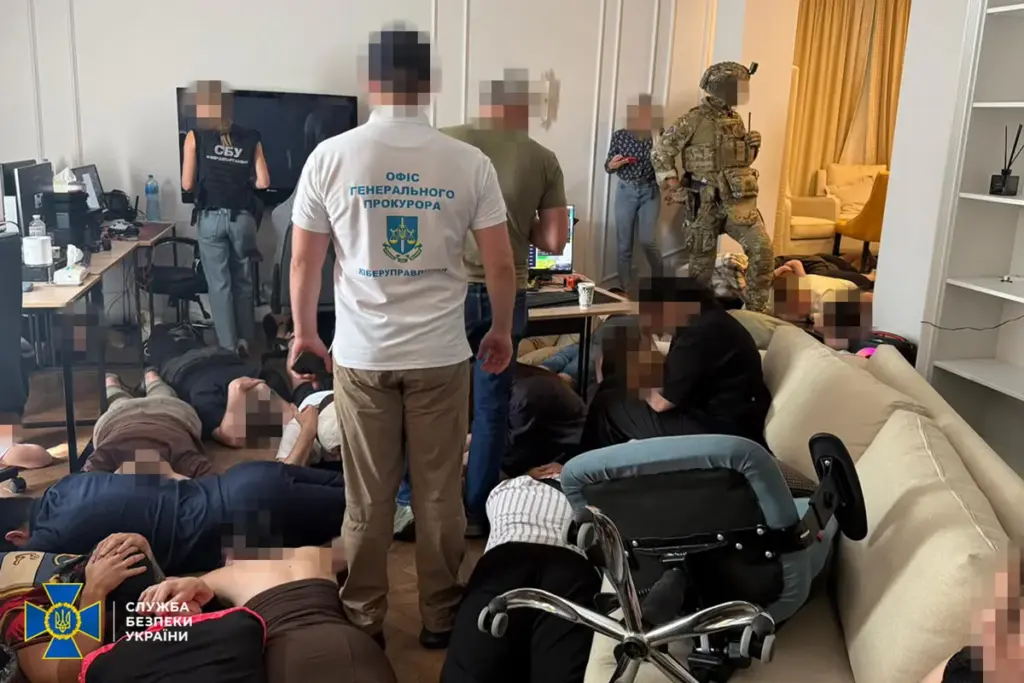
SBU and Prosecutor General’s Office personnel stand inside a crowded room with computers as several people with pixelated faces lie or sit on the floor. An armed tactical officer stands near the back.

Ukraine’s Security Service (SBU) and National Police shut down a Kyiv-based network of several dozen people who allegedly used fake cryptocurrency investment platforms and malicious code to steal digital assets from citizens of EU countries, the SBU said on 1 September.
Investigators identified the alleged organizer as a 25-year-old Kyiv IT specialist, according to the SBU. The case reaches beyond Ukraine because the agency says the alleged victims were EU citizens. The agency said the network’s monthly turnover from funds obtained illegally could reach $1 million during its most lucrative periods.

The SBU said investigators had documented alleged crimes by every member of the group. However, its statement did not specify how long the network had operated, how many EU citizens were affected, which countries they lived in, or the total amount allegedly stolen.

The agency did not name any foreign law enforcement partners involved.

How the crypto ring operated

The alleged organizer of the crypto ring recruited other tech workers in the capital, the SBU said. Posing as cryptocurrency-platform representatives, they offered targets seemingly profitable ways to invest in digital assets.

The network found victims by posting about supposedly lucrative crypto projects in popular Telegram channels, then showed them fabricated trading results and fake profits to make the operation look legitimate, investigators said.

Engaged targets were sent a link to a counterfeit site that mimicked a real crypto service and were persuaded to connect their wallets and approve a transaction, the SBU said. The site carried malicious code called a “drainer” that, the agency said, let the operators withdraw the victims’ assets to addresses they controlled—emptying the wallets.

During 23 searches of the suspects’ offices and homes, officers seized phones, computers, money believed to be criminal proceeds, and 16 high-end cars, including Porsche, BMW, and Mercedes-Benz models, the SBU said.

Authorities were still deciding whether to serve notices of suspicion, while the investigation continued under the Prosecutor General’s Office, the SBU said. Those involved could face up to 12 years in prison with confiscation of property.

Ukraine’s role in combating cross-border cybercrime

Ukraine has previously joined with foreign agencies to pursue cross-border cyber threats. In April, the SBU said it worked with the FBI, EU law enforcement, and Polish counterintelligence to disrupt Russian military-intelligence spying through hacked routers. The operation blocked more than 100 servers and removed hundreds of routers in Ukraine from Russian control.

  •  

Russia says Armenia’s EU accession law means leaving Moscow-led trade bloc. Yerevan disagrees

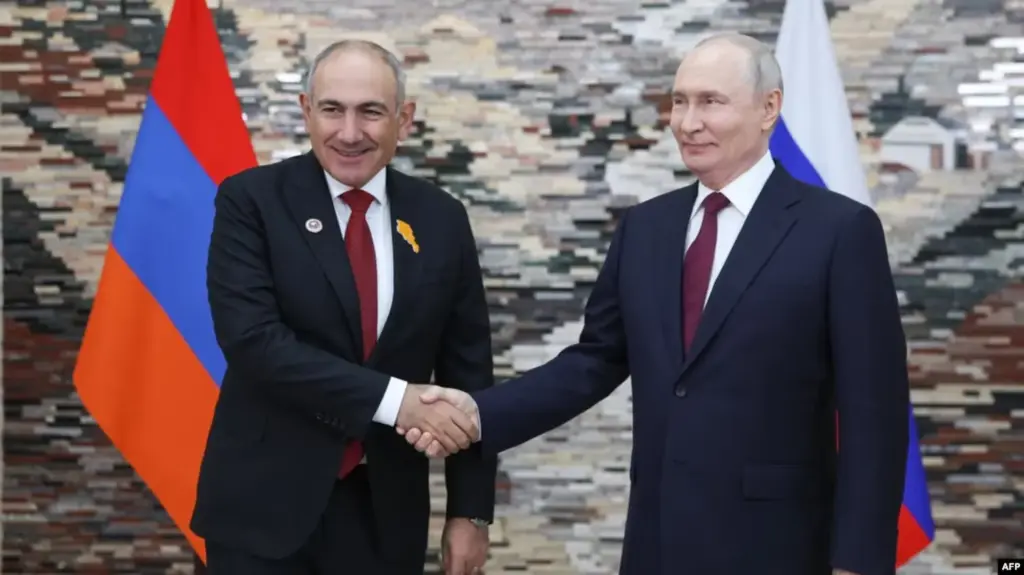
Nikol Pashinyan and Vladimir Putin meet in Bishkek

Russian President Vladimir Putin said Armenia's 2025 law launching the EU accession process "amounts to a declaration of withdrawal" from the Russia-led Eurasian Economic Union. Armenian Prime Minister Nikol Pashinyan replied that Armenia had filed no notice to leave and had violated none of the bloc's rules. The leaders met on 1 September in Bishkek, Kyrgyzstan, during a Shanghai Cooperation Organization summit.

The exchange turns Armenia's westward shift into an open dispute over how far it has already moved from Moscow. Yerevan is preparing an EU application and has frozen participation in Russia's military alliance, but it still belongs to the trade bloc. Russia remains Armenia's largest trade partner, accounting for about 35% of its foreign trade.

The disagreement

In the opening minutes, Putin acknowledged that Armenia's aspiration to join the EU was the country's "legitimate right," but said it "creates difficulties" given Armenia's membership in the bloc that links Russia, Belarus, Kazakhstan, Kyrgyzstan, and Armenia. He told Pashinyan that adopting a law launching the process of joining another organization "amounts to a declaration of withdrawal from ours."

Putin urged Armenia to decide quickly and repeated his call for a referendum on whether Armenia should remain in the trade bloc or pursue EU membership, telling Pashinyan to give the people a choice so the matter could be closed.

Pashinyan pushed back. He noted that the bloc's rules have no mechanism to expel a member state—only a voluntary withdrawal process requiring six months' notice—and that Armenia has filed no such notice. He told Putin the issue had not matured enough for a referendum, arguing that Armenia first needs to submit a formal EU application, receive a response, and agree on an accession roadmap.

How far Armenia has moved

Armenia's parliament passed a law launching the EU accession process in March 2025, though the government has said the law does not amount to a formal membership bid. On 24 August, Pashinyan told lawmakers that the government would begin preparing a formal application "in the near future." Armenia has also dropped the "strategic partner" label for Russia from its new government program and effectively frozen its participation in the Russian-led Collective Security Treaty Organization since early 2024.

Russia's response

Since May 2026, Moscow has imposed a series of bans on Armenian agricultural imports—including fruit, vegetables, and mineral water—citing phytosanitary concerns. The EU called the measures "economic coercion" and announced a support package of more than €50 million for Armenia in June.

Pashinyan says dialogue will continue

After the meeting, Pashinyan posted a video describing the talks as "very good" and saying the two leaders had agreed to continue a "sincere and constructive dialogue" during a future visit to Moscow. He said bilateral relations needed to be "rethought" under new circumstances.

  •  

Latvia blocks Russian and Belarusian books, clothes and toys

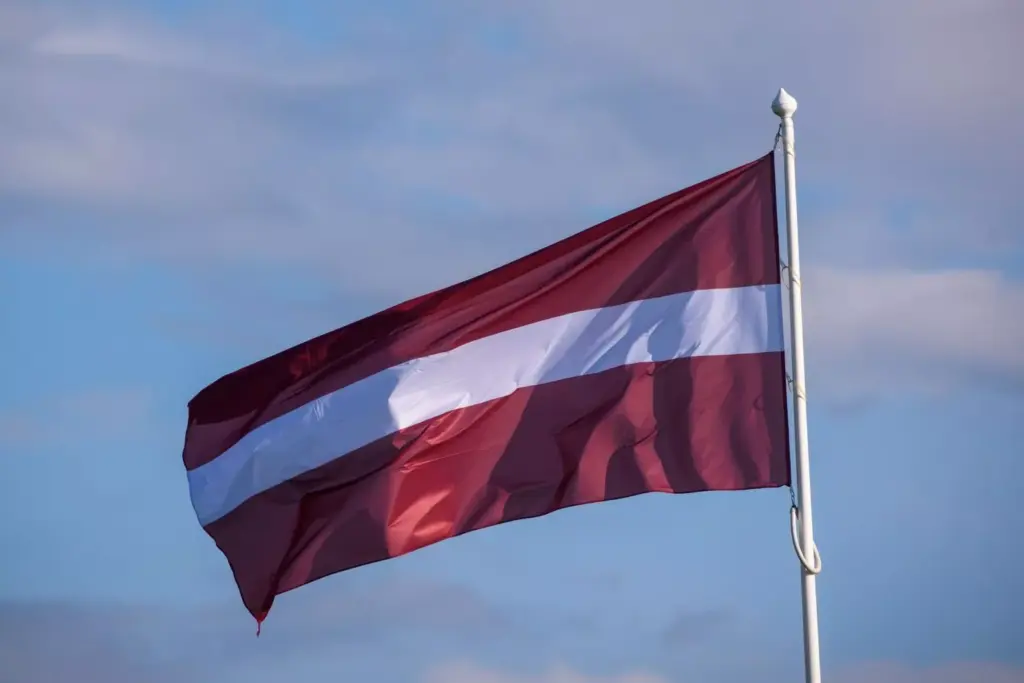
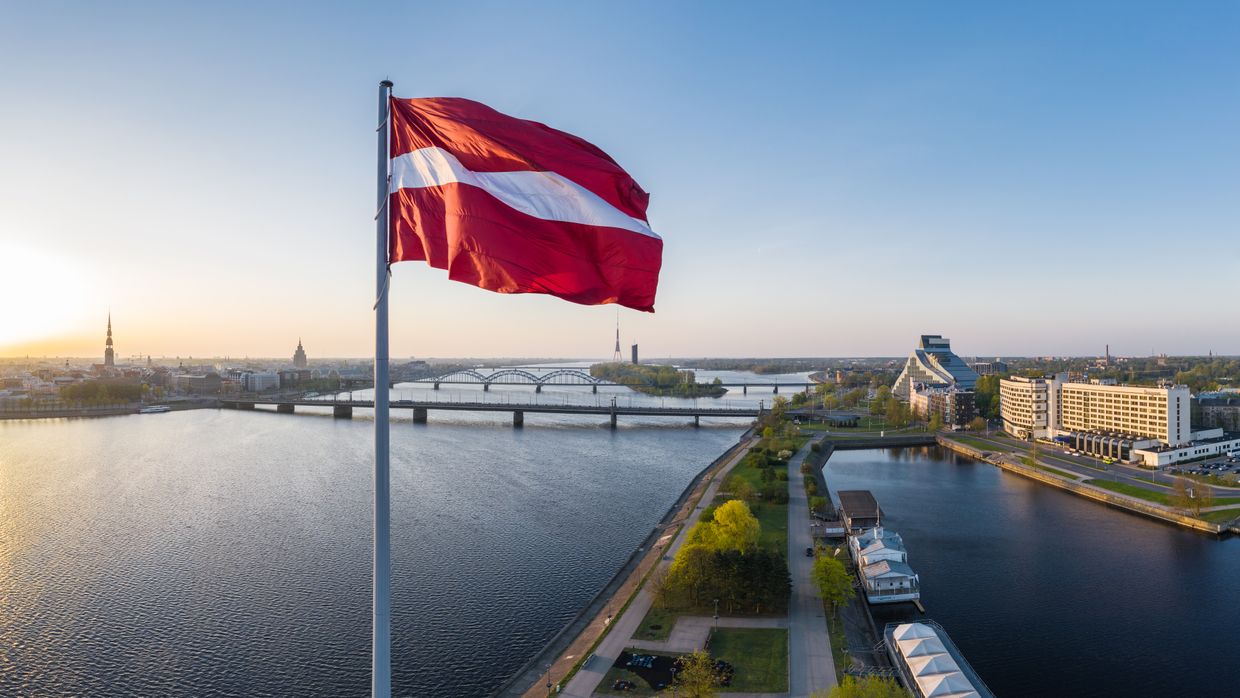
Latvian flag flying from a white flagpole against a blue, lightly clouded sky.

On 1 September 2026, Latvia banned imports of Russian- and Belarusian-made books, clothing, toys, and other consumer goods, including shipments routed through third countries, Latvian Public Media reported.

The restricted goods were worth approximately €12.5 million ($14.5 million) in 2025, or 6.5% of Latvia’s remaining imports from the two countries. Although modest economically, the measure goes beyond EU-wide sanctions and advances Riga’s effort to deny Moscow and Minsk revenue during Russia’s war against Ukraine.

The restrictions cover the following:

  • Books, newspapers, and other printed material
  • Clothing, textiles, footwear, and headwear
  • Toys, games, and sporting equipment.

Latvia’s Cabinet approved the final product list on 25 August following a Foreign Ministry proposal, completing restrictions parliament authorized on 23 July.

The ban applies regardless of whether the products arrive directly or through another country. Russian- and Belarusian-made goods may still transit Latvia on their way to other EU markets, Meduza reported.

Food and beverages are not covered. The restrictions are scheduled to remain in force until 1 July 2027 and will be reviewed annually.

The Foreign Ministry said the measure is also intended to limit the entry of Russian propaganda material. The targeted products accounted for only 0.05% of Latvia’s total imports in 2025, according to Euronews.

How Latvia has been cutting off trade with Russia and Belarus

Latvia’s combined imports from Russia and Belarus have already fallen by 91%, from €2.13 billion ($2.47 billion) in 2022 to €193 million ($224 million) in 2025, according to Latvian Public Media. Much of that decline followed the country’s departure from Russian energy supplies and the Baltic states’ disconnection from the Russian and Belarusian electricity grids.

The latest prohibition blocks consumer goods that Brussels has not collectively banned.

Latvian Prime Minister Andris Kulbergs previously pledged to eliminate the country’s remaining commercial links with Russia and Belarus, although pharmaceutical exporters were expected to remain exempt.

In August, Latvia also resumed publishing a monthly register of businesses trading with either country, naming 171 companies. Inclusion on the list does not itself indicate a sanctions violation.

  •  
  •  

The Guardian view on rare earths: it’s common sense to secure essential supply chains | Editorial

Par : Editorial

Outsourcing the industry to China cannot continue, but Europe knows it can no longer count on the US for a solution

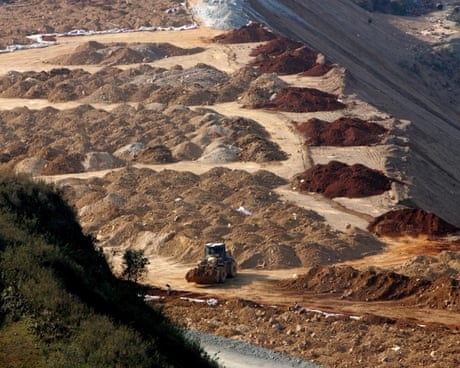
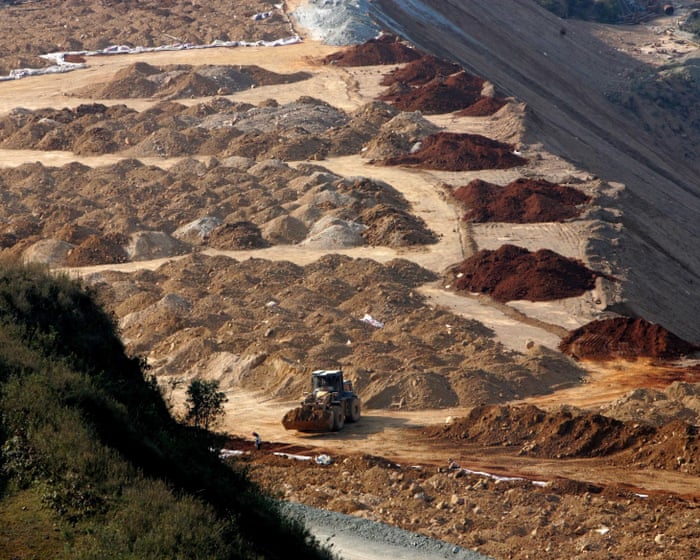
The alarm sounded 16 years ago. In 2010, China blocked exports of key rare earths to Japan in a row over disputed islands in the East China Sea. The critical minerals are essential to everything from advanced weaponry and iPhones to electric vehicle batteries and wind turbines, so the rest of the world took note. But it didn’t take much action. China still accounts for about 70% of rare-earth mining globally and 90% of separation and processing.

Then, last year, Beijing forced Donald Trump to back away from his trade war – not with its retaliatory tariffs, but the curbing of rare-earth exports. A scramble for new supplies began in earnest. The year-long trade truce is due to expire in November. The price of erbium, an element essential to communications infrastructure, has already jumped because of fears that export controls will soon be renewed.

Continue reading...

© Photograph: Imaginechina Limited/Alamy

© Photograph: Imaginechina Limited/Alamy

© Photograph: Imaginechina Limited/Alamy

  •  

Iceland Votes to Steer Clear of European Union Talks

After divisive debate, Icelanders rejected a proposal to resume negotiations on joining the bloc in a referendum with the highest voter turnout in almost two decades.

© Marco Di Marco/Associated Press

Leaders of the “No to E.U.” campaign reacting as early results came in during a rally in Reykjavik, Iceland, on Saturday.
  •  

Icelanders Are Voting on E.U. Membership Talks. Here’s What to Know.

The Nordic nation is holding a referendum on Saturday on whether to start membership talks with the European Union. Voters are divided.

© Marco Di Marco/Associated Press

A rally opposing the resumption of talks to join the European Union in Reykjavik, Iceland, on Thursday. The banner reads “no” in Icelandic.
  •  

Why Iceland and Others Might Want In, Not Out, of the E.U. Club

A few years ago, some feared the European Union was going out of style. Now Iceland is mulling membership alongside a long list of candidates.

© Jonathan Nackstrand/Agence France-Presse — Getty Images

Reykjavik, Iceland’s capital. A vote on Saturday will determine whether the country restarts talks to join the European Union.
  •  

‘The Sauna Is Hot and Uncomfortable’: Vote on E.U. Talks Makes Iceland Sweat

The usually genial country has been bitterly divided over a vote this weekend on whether to enter membership talks with the European Union.

© Jonathan Nackstrand/Agence France-Presse — Getty Images

Posters on bus stops urged a “no” vote in Iceland’s capital, Reykjavik, on Tuesday, asking “Natural resources for sale?”
  •  

What to Know About Bank Melli, Singled Out in U.S. Call for Economic War

Bank Melli, Iran’s largest lender, already faces sanctions that severely limit its ability to operate abroad. Every foreign branch must be shut down, Treasury Secretary Scott Bessent said.

© Arash Khamooshi/Polaris for The New York Times

The main branch of Bank Melli in Tehran last year.
  •  

With ICC sanctions, Trump wants to make the world safe for war criminals | Kenneth Roth

The US is engaged in a lawless quest to protect American and Israeli officials

The Trump administration has taken another step in its crusade against the international criminal court by imposing sanctions on two more senior ICC officials. The growing number of sanctioned jurists – now 13 – does not change the lawless nature of this quest.

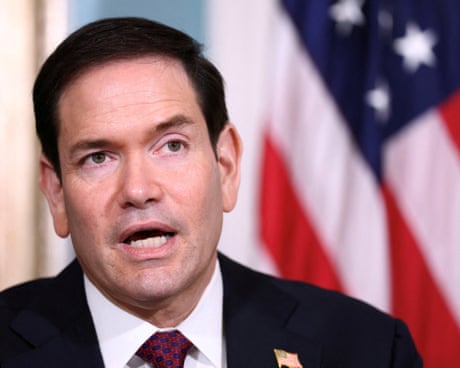
Donald Trump and his henchman, Marco Rubio, want to make the world safe for US and Israeli war criminals. No one should let them.

Continue reading...

© Photograph: Kevin Lamarque/Reuters

© Photograph: Kevin Lamarque/Reuters

© Photograph: Kevin Lamarque/Reuters

  •  

Belgium lines up a “drone deal” to tap Ukraine’s war-tested know-how

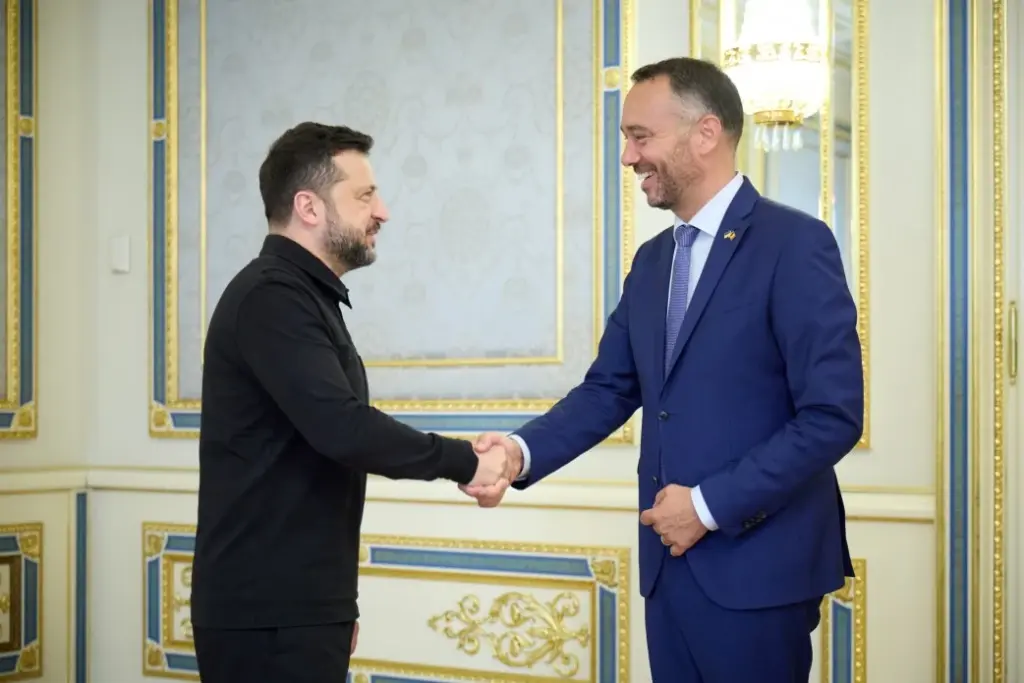
Volodymyr Zelenskyy, President of Ukraine, and Maxime Prévot, Belgium’s Deputy Prime Minister and Minister of Foreign Affairs, European Affairs, and Development Cooperation

Ukraine and Belgium are drawing up a bilateral agreement to deepen cooperation on drones, President Volodymyr Zelenskyy said after meeting Belgian Foreign Minister Maxime Prévot in Kyiv on 18 August. The two also discussed strengthening Ukraine's air power and shielding it from Russian attacks.

Cheap drones now decide much of the fighting, and Kyiv has turned years of learning to fly and defeat them into leverage—trading that edge for weapons and money with a lengthening line of Western partners.

A new deal takes shape

Teams on both sides are now writing the text of the Drone Deal and weighing possible dates to sign it, ArmyInform reported. Ukraine is ready to share its own expertise in unmanned systems with partners, Zelenskyy said.

Defense ran through the meeting, with both sides focused on strengthening Ukraine's combat aviation and defending its skies.

"I expect that we will be able to implement what we discussed, and there will be more protection from Russian strikes," Zelenskyy said.

Belgium has promised 30 F-16 fighter jets—the largest F-16 pledge from any single country—though none have reached Ukraine yet, with deliveries tied to Belgium's own switch to newer aircraft.

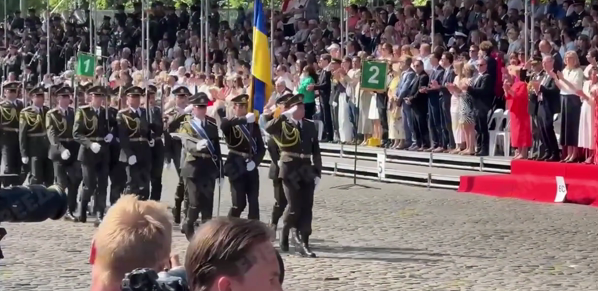
For the first time, Ukrainian soldiers marched among the foreign troops in Brussels on 21 July 2026. Source: Freedom
Explore further

“First time”: Ukrainian troops joined Belgium’s National Day parade in Brussels

Belgium's deeper backing

Zelenskyy thanked Belgium for more than $1.28 billion in support this year, covering defense and civilian needs alike, and for backing Ukraine's move toward the European Union. The military share flows from a standing pledge: since 2025, Belgium has committed to at least $1.16 billion in defense aid a year.

A 2024 security pact locked in that relationship, making a small Western European country one of Ukraine's steadier partners. Belgian firms also service the F-16s Ukraine already flies, the jets delivered by other partners in the coalition.

  •  

In Italy, a Beach Club Run by Nuns Is in Jeopardy

The Sisters of Charity of Saint Mary have hosted beachgoers in the town of Spotorno for decades. But change is coming.

© Zoonar, via Alamy

An aerial view in 2023 of beach clubs on the Spotorno coastline in Italy, along the Ligurian Sea.
  •  

NYT: France, Germany and UK build joint format to secure Europe a place in Ukraine peace talks

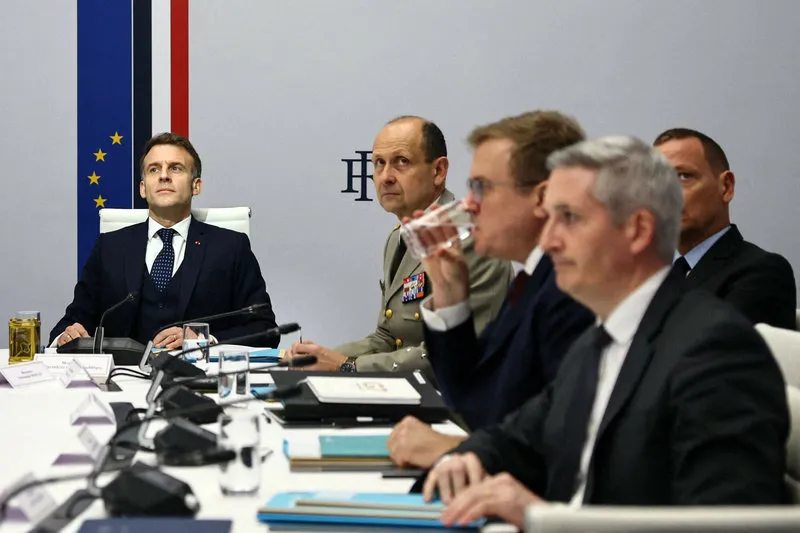
French President Emmanuel Macron sits with military officers and government officials during a Coalition of the Willing meeting in Paris on 24 February 2026.

France, Germany, and the UK are working to create a format representing Europe in talks over Russia’s war against Ukraine, The New York Times reported on 15 August, citing five European officials. Known collectively as the E3, the three countries would support Ukraine’s position and protect European interests in any settlement.

The initiative is Europe’s attempt to secure a place in talks the US is expected to lead. The three governments fear that Washington and Moscow could reach a deal without them, although Europe would have to enforce sanctions, decide how to use frozen Russian assets, and help protect Ukraine afterward. European officials also doubt Washington will stay committed to serious negotiations.

The officials expect Washington to lead negotiations with Moscow. The E3 wants to become the core group supporting Ukraine, following Kyiv’s request that it prepare for talks. France and Germany are shaping the position, while Britain fears damaging relations with Trump.

Poland, Italy, and the Nordic countries would be consulted, with the EU later involved. Some Baltic states and Hungary do not trust France and Germany to represent them. London called the discussion speculative.

The Coalition has rehearsed a force but not agreed to deploy it

The E3 forms the core of the Coalition of the Willing. At a 7 June meeting with President Volodymyr Zelenskyy, its leaders backed an immediate ceasefire and legally binding guarantees, including the deployment of a multinational force.

More than 600 British troops rehearsed with French paratroopers and an Italian platoon in February for a possible deployment. They could form the core of a 10,000-strong force pledged by London and Paris after a ceasefire.

Yet some members reportedly made Russia’s consent a condition for deploying troops, effectively giving Moscow a veto. Bulgaria has left, and Germany has not committed troops. The Coalition’s leadership is also shifting after Keir Starmer’s resignation and ahead of Emmanuel Macron’s departure in 2027.

Ukraine talks still misunderstand Russia's intentions

European officials see few signs that Vladimir Putin is ready for serious negotiations, the NYT reported. A separate EU attempt to open direct contact with Moscow divided member states.

Experts told Euromaidan Press that Russia uses peace processes to stall, press maximalist demands, and improve its battlefield position. Moscow also dismissed a Black Sea ceasefire proposal after Kyiv offered a mutual halt to attacks on civilian targets.

Ukraine’s partners risk mistaking Russia’s presence at talks for a willingness to compromise. Former Ukrainian diplomat Iuliia Osmolovska warned that Moscow also benefits from failed negotiations by exhausting Western governments until they pressure Kyiv to concede.

Before 2022, Russia signed 26 ceasefires in eastern Ukraine; none lasted more than two weeks. A pause can bank concessions, rotate troops, and let Moscow resume fighting from a stronger position.

  •  

Wary of Trump, Europe Seeks Role in Eventual Russia-Ukraine Talks

French, German and British diplomats are working on a format for future negotiations — even if Russia has shown little interest.

© Nina Liashonok/Reuters

Rescue workers at the site of a Russian strike on a residential building in Odesa, Ukraine, this week.
  •  

Wary of Trump, Europe Seeks Role in Eventual Russia-Ukraine Talks

French, German and British diplomats are working on a format for future negotiations — even if Russia has shown little interest.

© Nina Liashonok/Reuters

Rescue workers at the site of a Russian strike on a residential building in Odesa, Ukraine, this week.
  •  

France’s Top Court Strikes Down Ban on Social Media for Children

The move was a setback for President Emmanuel Macron, who championed the ban. He vowed to pass a new version before he leaves office next spring.

© Manuel Ausloos/Reuters

France’s Constitutional Council said that the ban was too wide-ranging, and did not take into account the age, maturity or family situation of children.
  •  

Russia Campaigned to Derail Moldova’s Pro-Western Government

In Moldova, Moscow paid Orthodox priests, conducted a vote-buying scheme and set up training camps on election interference — all in an effort to derail the Western-leaning government.

© Vadim Ghirda/Associated Press

Police officers in Chisinau, the Moldovan capital, watching protesters gather outside the electoral commission after the polls closed for parliamentary elections in 2025.
  •  

More Wildfires and Extreme Heat Roil Europe, but Relief Is on the Horizon

Another day of near record heat baked the continent on Friday, but temperatures could retreat to seasonal averages in the coming days.

© Miroslav Lelas/Agence France-Presse — Getty Images

  •  

Ukraine asks the EU for €220 million to unlock €4 billion in farm loans as Russia’s port strikes choke exports

A green combine harvester cuts wheat beneath a blue, partly cloudy sky.

Ukraine and international partners agreed to work urgently on a mechanism for up to €4 billion ($4.6 billion) in farm loans, Ukrinform reported on 13 August. The plan would use a proposed €220 million ($253 million) EU grant, the Agriculture Ministry said.

Ukraine rebuilt its maritime trade after pushing Russia’s fleet away from its coast. By 2025, its Black Sea route carried about 92% of the country’s grain and oilseed exports. Russia is now striking the Odesa ports sustaining that recovery. The ministry says the attacks have closed three deep-water ports. Ukraine planned to export 64.4 million tons of agricultural products in 2026/27, but now says shipments may reach only 29.6 million tons. The proposed loan mechanism is meant to cover that cash shortfall before next year’s sowing.

EU and Norwegian diplomats joined the meeting with representatives of the World Bank and the UN Food and Agriculture Organization.

The participants agreed to develop the plan through the Ukraine Facility and EU guarantee institutions. They aim to do so in the coming weeks, before fall storage use peaks. The grant has not yet been approved.

Odesa attacks send Kyiv toward Baltic ports

The loan plan comes as Russia’s attacks force Ukraine to seek new export routes.

Russia initially blockaded Ukraine’s ports after launching its full-scale invasion. Ukraine later restored a sea corridor after forcing much of Russia’s Black Sea Fleet away. Moscow then shifted pressure to missiles and drones, hitting Ukrainian ports 90 times in 2025 and intensifying attacks this summer.

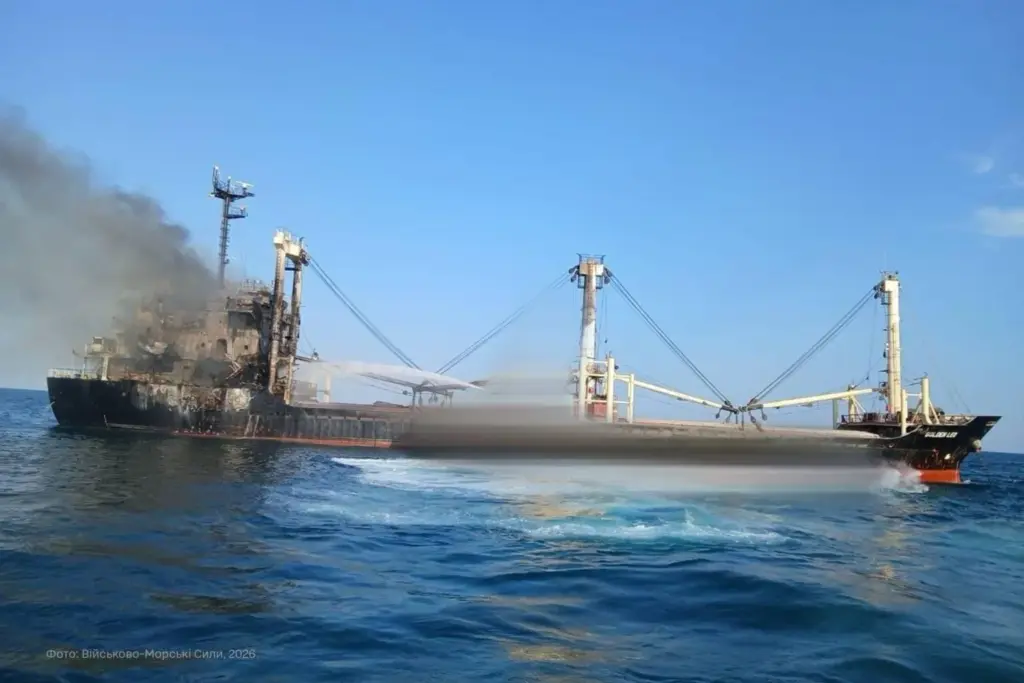
A Russian strike killed 10 people aboard the grain-carrying Golden Leo on 19 July. Three days later, no ship passed through the corridor.

Kyiv is now considering the Polish Baltic ports of Gdańsk, Gdynia, Szczecin, and Świnoujście. Yet the ministry estimates that all alternative routes may eventually carry only 2.9 million tons a month. Ukraine’s monthly target was 5.4 million tons.

Farm loans target next year’s sowing

The €220 million would not go directly to growers. It would subsidize interest and partly cover banks’ lending risks, including by expanding Ukraine’s “5-7-9%” affordable-loan program.

The ministry wants the support to generate €4 billion in farm loans at annual rates no higher than 10%. It calculates that every euro of grant money could mobilize more than €18 in lending.

Ukraine has also temporarily adjusted minimum export price coefficients to offset higher logistics costs, meeting participants noted. Without grain sales, farmers struggle to pay wages and land rents or buy fuel and fertilizer. By November, Ukraine's storage shortfall could reach 11 million tons of crops, with more than €10.8 billion ($12.4 billion) tied up in unsold stocks.

  •  

Ukraine gave up 1,900 nuclear warheads in 1994 on Western promises that didn’t work. New plan would replace them with Britain’s shield instead

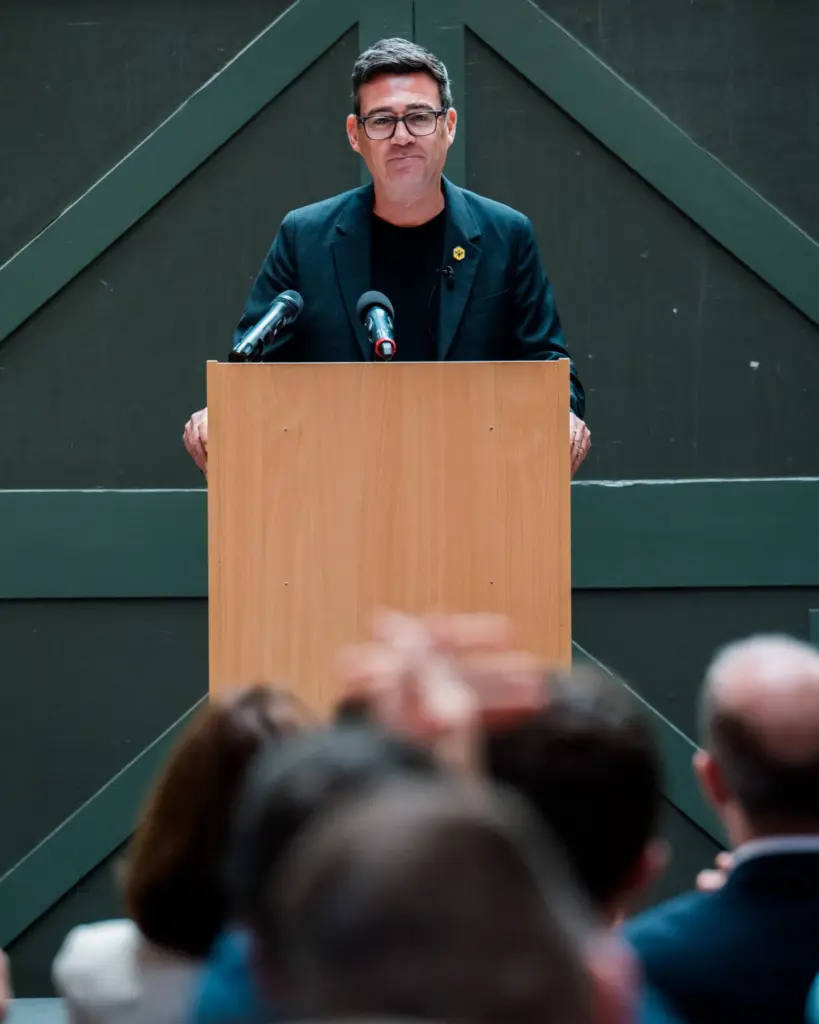
UK Prime Minister Andy Burnham speaks at a lectern before an audience.

A plan presented to the UK's new Prime Minister, Andy Burnham, would extend Britain's nuclear umbrella to Ukraine and other non-NATO European states. In exchange, Britain would regain access to the EU single market for goods, The Telegraph reported on 9 August.

The proposal comes as European governments question whether they can rely on US protection and struggle to turn moral support for Ukraine into troops and weapons. Russia's invasions, despite the assurances Kyiv received from the US and the UK when it surrendered its nuclear arsenal under the Budapest memorandum, have also revived calls for nuclear-backed guarantees.

Former Conservative MP Nick Boles drafted the plan. He proposes a "European Confederation" that combines single-market access with NATO-style mutual defense commitments. 

For Ukraine, it would provide protection modeled on NATO Articles 4 and 5 while Kyiv pursued full EU membership.

Ukraine would maintain a large army as Europe's bulwark against Russia and share defense technology with other members of the Confederation. Britain would raise defense spending to 3.5% of GDP, while both countries would gain full access to the EU's single market for goods.

Boles said Europe needed a new security model because neither US President Donald Trump nor a future US president could be guaranteed to "defend Europe as if it were Kansas." 

Boles's plan is not Burnham government policy. Nevertheless, it has circulated among officials, including National Security Adviser Jonathan Powell, as London considers deeper cooperation with the EU.

Britain's support bumps against Europe's political limits

Prime Minister Burnham entered Downing Street as a firm supporter of Ukraine. He assured Ukrainian President Volodymyr Zelenskyy that British support remained unchanged and pledged to preserve aid levels.

Britain also co-leads with France the Coalition of the Willing, which plans to deploy forces in Ukraine after a ceasefire to deter another Russian attack.

The Coalition has brought together representatives of 40 countries. Still, members remain divided over how far to support Ukraine.

Britain and France have formally declared their intention to deploy forces after a potential ceasefire in Ukraine. Yet Poland offered logistical support but ruled out troop deployment, while Bulgaria has withdrawn from the Coalition. Europe has promised deterrence, but key deep-strike missiles may not arrive until 2029.

Boles's plan would pair Britain's nuclear deterrent with Ukraine's conventional military strength. Unlike the Coalition’s voluntary plans, Boles's proposed European Confederation would place its defense guarantees in a treaty. NATO would initially be responsible for carrying them out.

From surrendered weapons to a nuclear shield

Ukraine inherited the world's third-largest nuclear arsenal after the Soviet collapse, including about 1,900 strategic warheads. 

Kyiv relinquished them under the 1994 Budapest Memorandum after receiving security assurances from Russia, Britain, and the US. Despite these promises, Russia invaded Ukraine in 2014 and launched its full-scale war in 2022.

Russia's invasions have revived calls among Ukrainian lawmakers for nuclear-backed security guarantees. Politician Roman Kostenko has called for guarantees that could include British and French nuclear retaliation in the event of another Russian attack. 

Under Boles's proposal, Ukraine would not regain its own warheads. It would instead come under Britain's nuclear shield.

  •  

A slice of Estonia’s new EU billions will buy drones—for Ukraine, not itself

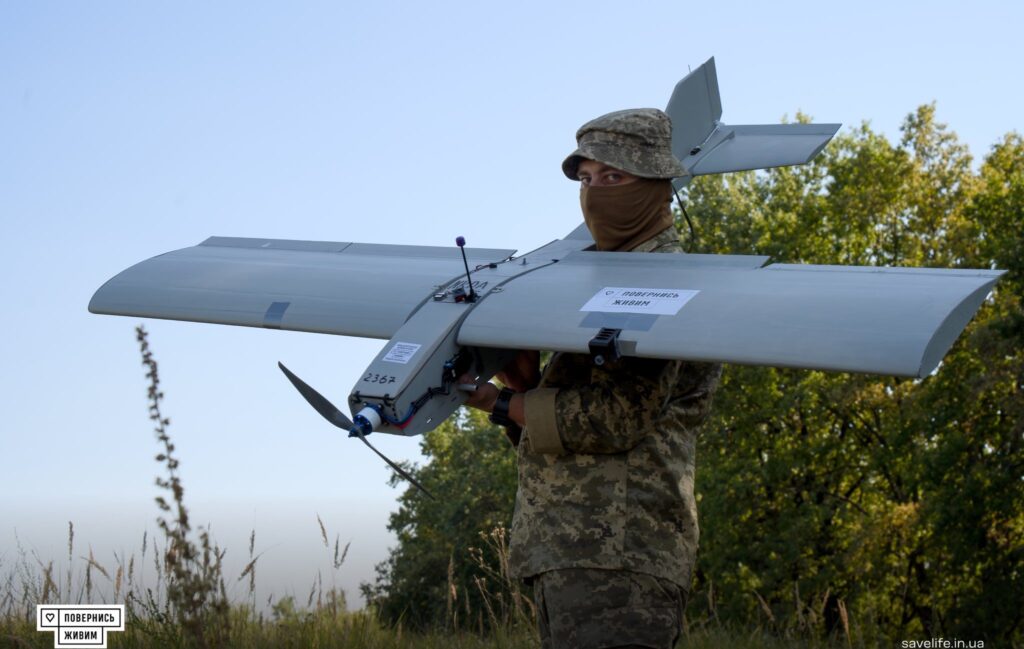
A Ukrainian service member holds a Darts attack drone, which has a reported range of 40-60 kilometers. Russian military sources say that these are among the Ukrainian drones that mount a directional antenna that can dynamically maintain connection with a signal repeater. (Photo: Come Back Alive Foundation)

Estonia will use part of a new European Union loan to arm Ukraine with drones, drawing on a loan worth up to €2.34 billionaccording to ERR. The loan will also rebuild its own air defense and ammunition stocks, and all of it must be spent by 2030.

As Moscow continues its all-out war in Ukraine, the EU's northeast is rearming fast, bracing for a Russia that regional military chiefs expect to be combat-ready again within two years.

What the loan buys

Estonia signed the financing deal with the European Commission under SAFE (Security Action for Europe), a €150 billion EU program that raises money jointly on the markets and lends it to member states on cheap terms to fast-track defense spending, its finance ministry said.

A share of Estonia's up-to-€2.34 billion will go to Ukraine as drones. The rest strengthens air defense, buys military vehicles, and refills artillery shells and other ammunition. The credit runs 45 years, and every purchase and delivery must be finished by 2030. Estonia filed its final application in November 2025.

baltic- states
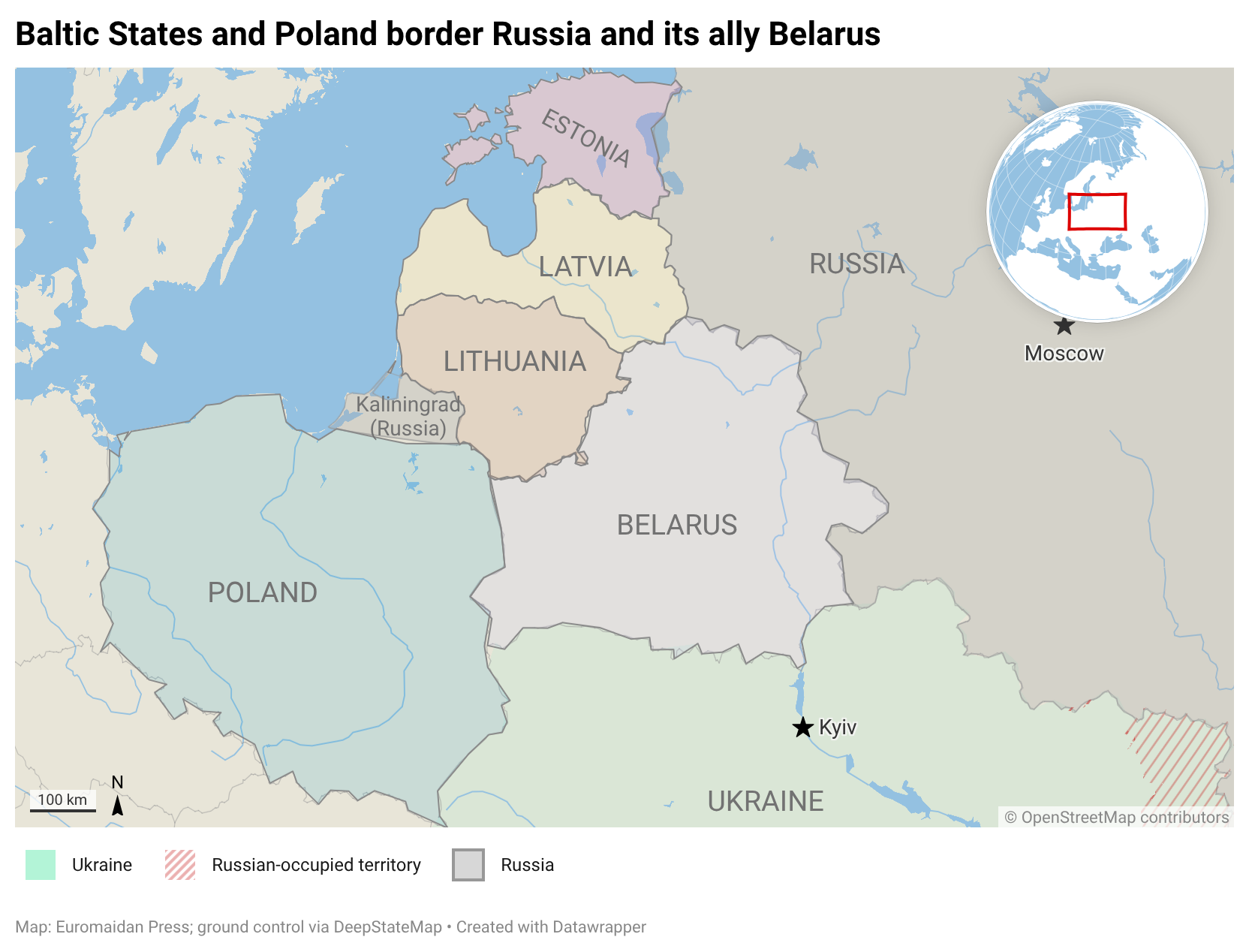
The Baltic region. Map: Euromaidan Press

Why the loan helps

Borrowing through SAFE lets Estonia raise money on better terms than it could alone, because the EU issues debt at lower rates. The bloc raises the money jointly and splits it among members. Estonia will hold defense spending above 5% of GDP, and the loan eases the strain that puts on its budget.

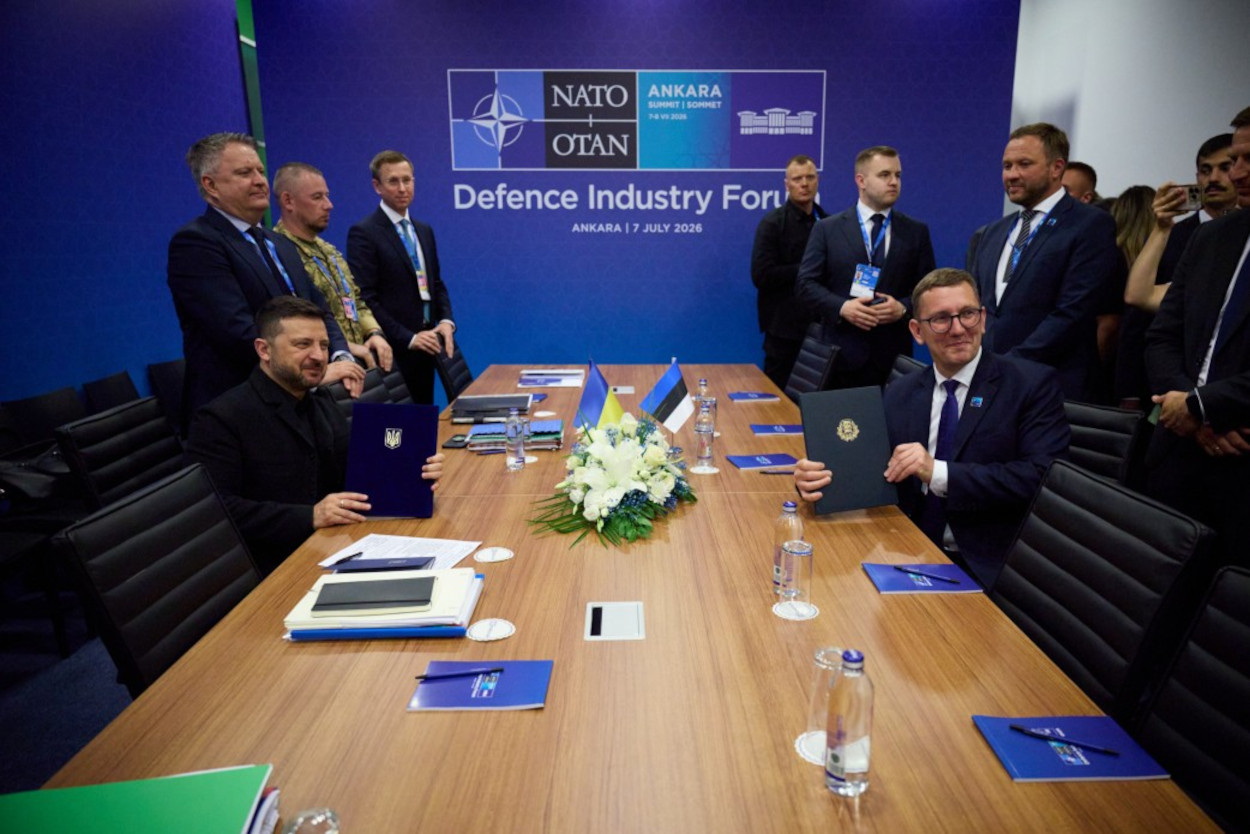
Ukrainian President Volodymyr Zelenskyy and Estonian Prime Minister Kristen Michal on the sidelines of the NATO summit in Ankara, 7 July 2026. Photo: Ukrainian President's Office
Explore further

“Ukraine is becoming a security provider for Europe”: Ukraine signs Drone Deals with Estonia, the Netherlands, and Denmark as Europe taps Kyiv’s battlefield-tested weapons technology

Estonia, a NATO and EU state of about 1.3 million people, shares a 294-kilometer border with Russia and treats Moscow's war on Ukraine as a direct threat to its own security. It has studied that war closely for years and is now racing to rebuild its air defenses and ammunition stocks.

Kadri Peters, a deputy secretary general at Estonia's Defense Ministry, said the fast-changing security situation in Europe demands stronger, quicker defense from the whole alliance. She said large-scale purchases ahead will directly affect Estonia's security and the wider region.

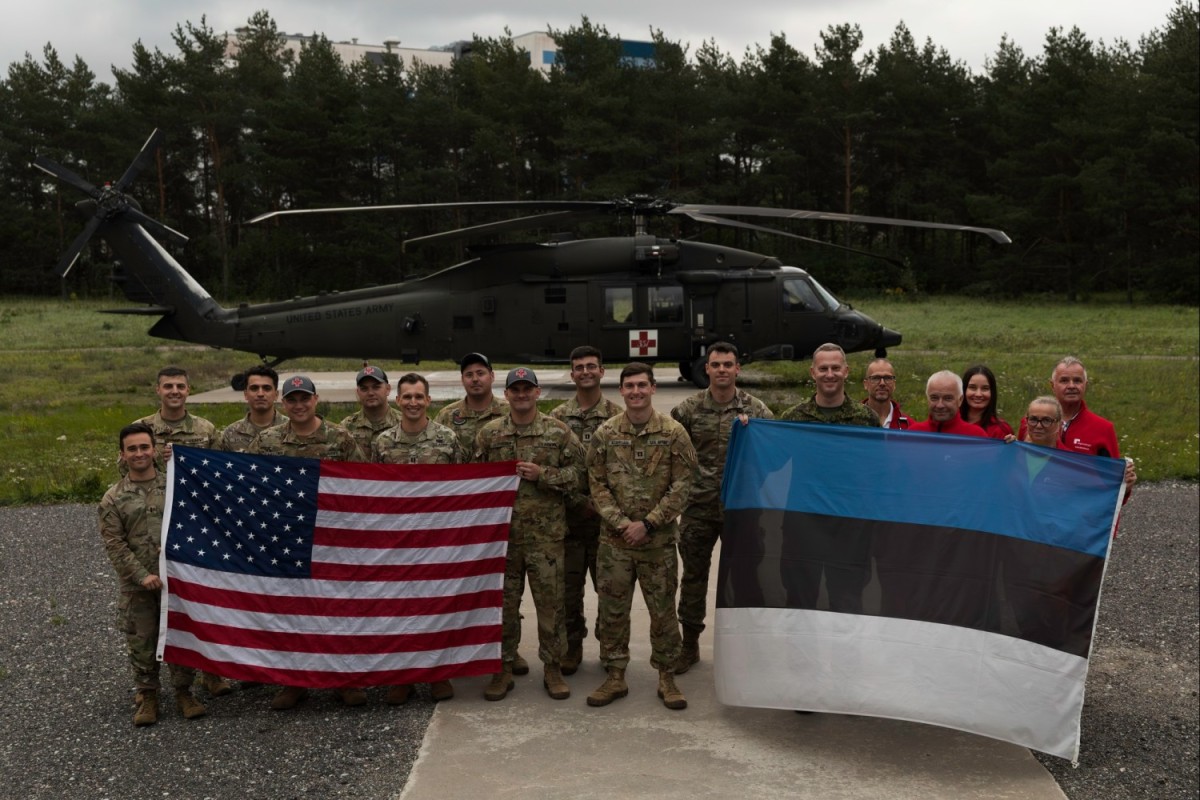
soldiers left summer rotation estonia doesn't know how many coming back—or when · post army task force knighthawk 3rd combat aviation brigade 101st airborne division north medical centre staff during
Explore further

US soldiers left for a “summer rotation.” Estonia doesn’t know how many are coming back—or when

In July, Estonia and the United States agreed to resume weapons deliveries in the coming months, after a pause tied to the war in Iran, with long-range ATACMS ballistic missiles the exception. In May, Washington had warned European allies of long delays as it drained its own stocks, mainly of HIMARS rocket ammunition and NASAMS air-defense missiles. The same shortages hit Ukraine the hardest: it currently struggles to shoot down Russian ballistic missiles for lack of US-made PAC-3 interceptors.

Estonia has been backing Kyiv since the beginning of Russia's full-scale invasion in 2022. It co-leads an IT coalition that has funneled over €1.4 billion into Ukraine's drone programs, and has moved to tap Kyiv's battlefield-tested drone technology for its own forces.

  •  

Ukraine synchronizes restrictions on Russia with EU sanctions

Ukraine synchronizes restrictions on Russia with EU sanctions

Ukraine has synchronized its sanctions against Russia with the last three packages of economic penalties imposed by the European Union, President Volodymyr Zelensky announced on July 8.

"Three more packages of EU sanctions are fully effective in Ukraine," Zelensky said in his evening address.

Earlier on July 8, the president announced a new round of sanctions, including restrictions on five Chinese-registered companies accused of supplying components found in Russian Shahed-type drones used to attack Ukraine.

Vladyslav Vlasiuk, Zelensky's sanctions commissioner, told reporters on July 8 that the latest decrees bring Ukrainian penalties in line with the EU's 15th, 16th, and 17th packages of sanctions against Russia.

The 15th package targets individuals from Russia, Belarus, and China, among other countries, according to Vlasiuk. It includes the Russian pilot Alexander Azarenkov, who was involved in the deadly attack on the Okhmatdyt children's hospital in Kyiv. Zelensky signed the sanctions decree on the one-year anniversary of the strike.

The 16th package includes individuals from Russia, China, Turkey, and other nations. It also targets the Voin Center, Russia's military-patriotic education organization operating in occupied Ukrainian territories, and Pivdennyi Flot LLC, which transports Russian oil via its "shadow fleet," Vlasiuk said.

The 17th package designates firms from Russia, China, Turkey, and other countries, including the gold-mining company Petropavlovsk and the Chinese company Skywalker Technology Co. Ltd, produce drone parts for Russia.

The EU is expected to approve its 18th package of sanctions against Russia later this week, after facing opposition from pro-Kremlin bloc members Slovakia and Hungary.

Ukraine has taken measures to coordinate sanctions with international partners in order to amplify pressure on Moscow. Zelensky on June 27 signed a decree to synchronize Ukraine's sanctions against Russia with those imposed by the EU and Group of Seven (G7).

Ukraine war latest: Trump reportedly pledges to send 10 Patriot missiles to Ukraine, asks Germany to send battery
* Trump reportedly pledges to send 10 Patriot missiles to Ukraine, asks Germany to send battery * ‘They have to be able to defend themselves’ — Trump says US will send additional weapons shipments to Ukraine, criticizes Putin * EU to impose ‘toughest’ sanctions on Russia in coordination with US senators, French foreign minister says * Russia’s Black Sea Fleet shrinks presence in key Crimean bay, Ukrainian partisans say * Putin signs decree allowing foreigners to serve in Russian army during
Ukraine synchronizes restrictions on Russia with EU sanctionsThe Kyiv IndependentThe Kyiv Independent news desk
Ukraine synchronizes restrictions on Russia with EU sanctions

  •  

Ukraine's 2026 budget could face $19B shortfall as Europe weighs how to fill the gap, FT reports

Ukraine's 2026 budget could face $19B shortfall as Europe weighs how to fill the gap, FT reports

The European Commission is discussing with EU member states various options to cover Ukraine's budget deficit for next year, which could range from $8 billion to $19 billion, the Financial Times reported on July 8.

International partners have provided Ukraine with over $39 billion for its wartime economy so far this year, Prime Minister Denys Shmyhal announced.

The financial hole in Ukraine's budget is linked to reduced U.S. support and the lack of prospects for a swift ceasefire with Russia that Europe had hoped for, the Financial Times reported.

A senior EU official told the publication that many of Ukraine's partners had previously counted on a peace deal in 2025, but are now forced to revise their funding plans.

This includes the European Commission, which has already adjusted spending from Ukraine-related funding streams.

Without support from Western partners, Kyiv would face a budget deficit of $19 billion in 2026, according to the Financial Times. However, even if additional international financing for the wartime economy can be secured, a gap of at least $8 billion would remain.

To support Ukraine's budget, Europe is considering providing military aid in the form of off-budget grants that would be recorded separately as external transfers but would count toward NATO member countries' national defense spending targets.

One EU diplomat told the Financial Times that military support for Ukraine is viewed as a contribution to the defense of all of Europe.

In a document for G7 countries reviewed by Financial Times, Kyiv proposed that European allies co-finance Ukrainian forces, framing this as a service to strengthen continental security.

Other support options under discussion include potentially accelerating payments from the existing $50 billion G7 loan program and reinvesting frozen Russian assets in higher-yield financial instruments that the EU allocated to help service the debt.

According to the Financial Times, two sources confirmed that the commission planned to discuss these options with EU finance ministers on July 8.

The funding issue will also be raised at the Ukraine Recovery Conference in Rome on July 10-11, dedicated to Ukraine's reconstruction needs. European Commission President Ursula von der Leyen will attend the event.

  •  

Ukrainian businesses outraged as government blocks economic crimes bureau chief nominee

Ukrainian businesses outraged as government blocks economic crimes bureau chief nominee

Ukraine's Cabinet of Ministers rejected a nominee to lead the economic crimes agency, drawing swift criticism from lawmakers and businesses over alleged interference in the selection process.

The agency, the Bureau of Economic Security, was created in 2021 to investigate economic crimes. It has since faced accusations of being used to pressure — and in some cases extort — businesses, prompting multiple calls and efforts to overhaul it.

Selecting a new director of the agency by the end of July is one of Ukraine's obligations to the EU and International Monetary Fund as part of international financing packages extended to the war-torn country by the institutions.

As part of a recent attempt to relaunch the bureau, Oleksandr Tsyvinsky on June 30 was officially nominated by the bureau's selection commission that consists of six members — three from the government and three international experts. Tsyvinsky is known for exposing schemes involving illegal land seizures in Kyiv..

But Ukraine's government on July 8 said it had rejected Tsyvinsky following alleged concerns raised by the country's intelligence service of potential Russian connections.

The government unanimously decided to ask the commission to submit two new candidates who meet all security requirements, the government press service wrote on its official Telegram channel, a move it claims aligns with the law.

Following Tsyvinsky's nomination, it was revealed that his father holds a Russian passport. He has said he hasn't spoken to his father, who lives in Russia, in years.

Tsyvinsky holds clearance for state secrets and has passed special vetting, backed by over 20 years in law enforcement, including nearly a decade at the National Anti-Corruption Bureau of Ukraine (NABU).

Opposition lawmaker Yaroslav Zhelizniak, said the government had no grounds to reject a properly nominated candidate, claiming President Volodymyr Zelensky's office is behind the blocking of the nomination.

"The (bureau's) legislation provides no legal grounds for the cabinet to demand a new shortlist or impose additional, undefined requirements such as 'security criteria.' The term itself is absent from any statute and therefore has no legal force," Zhelizniak said.

"The SBU letter in this case is nothing more than an indicator of the winner's disloyalty to the President's Office and a desire to block the appointment," said Olena Shcherban, deputy executive director of the AntAC in a statement following the news.

Major business associations have called on Zelensky, Parliament Speaker Ruslan Stefanchuk, and Prime Minister Denys Shmyhal to reverse the government's decision.

The business groups warned that failing to reform the agency will harm investment decisions, particularly as Ukraine's wartime economy needs to attract capital.

"War is a time for radical changes in the rule of law and business climate, otherwise the economy cannot ensure the country's survival," the businesses wrote in an open letter.

‘Neither side wasted time’ — Ukraine’s economy minister on minerals deal negotiations with Trump’s ‘business-oriented’ administration
Ukraine’s Economy Minister Yuliia Svyrydenko says her task is simple — to get the investment fund behind the closely watched minerals deal with the U.S. off the ground, and prove its detractors wrong. “There are so many criticisms from different parties that this fund is just a piece of paper we can put on the shelves — that it won’t be operational,” Svyrydenko, who is also Ukraine’s first deputy prime minister, tells the Kyiv Independent at Ukraine’s Cabinet of Ministers on July 4, the morning
Ukrainian businesses outraged as government blocks economic crimes bureau chief nomineeThe Kyiv IndependentLiliane Bivings
Ukrainian businesses outraged as government blocks economic crimes bureau chief nominee
  •  

EU to impose 'toughest' sanctions on Russia in coordination with US senators, French foreign minister says

EU to impose 'toughest' sanctions on Russia in coordination with US senators, French foreign minister says

The EU will introduce the "toughest sanctions... imposed (on Russia) in the last three years" in coordination with U.S. senators, French Foreign Minister Jean-Noel Barrot said in a television interview on July 7.

"(Russian President Vladimir) Putin is no longer advancing on the front and is now limited to shelling residential areas with drones and missiles. This is leading to numerous casualties among the civilian population. This must stop," Barrot said.

U.S. Senator Lindsey Graham said on June 29 that U.S. President Donald Trump was ready for the Senate to vote on a bill to impose new sanctions on Russia. The Republican senator has repeatedly called for implementing additional sanctions against Moscow.

Barrot noted the EU is planning to impose the strongest sanctions against Russia that the bloc has introduced since 2022.

"This (war) cannot continue; it must stop. To achieve this, in coordination with American senators, Europe is preparing to introduce, based on French proposals, the toughest sanctions we have imposed in the last three years," he said.

"They will directly deplete the resources that allow Vladimir Putin to continue his war," Barrot added.

In the U.S., senators have been working on a sanctions bill, with Graham saying voting on a bill is expected to begin following the end of the July congressional break.

Graham, earlier on July 7, said he expects "the Senate will move the bipartisan Russian sanctions bill that will allow tariffs and sanctions to be placed on countries who prop up Putin’s war machine and do not help Ukraine."

The bill led by Graham has been in the works for several months as the White House has failed attempts to broker a peace deal between Ukraine and Russia.

"Ukraine has said yes to ceasefires and to any and all meeting requests while Putin continues to defy peace efforts. It is now time to put more tools in President Trump’s toolbox in order to end the war," he said.

Russia has relied on its partners, including Belarus, China, and Iran, for trade and to bypass Western sanctions meant to inhibit Moscow's ability to continue its war against Ukraine.

Ukraine war latest: Russian airports cancel nearly 300 flights amid drone attacks on Russia
Key developments on July 7: * Russian airports cancel nearly 300 flights amid drone attacks on Russia * BRICS summit statement condemns attacks on Russian railways, avoids urging Russia to cease war efforts in Ukraine * Ukrainian drone strike hits major oil refinery in Russia’s Krasnodar Krai, HUR source claims * Ukraine confirms drone strike on Russian chemical plant near Moscow * Russia strikes conscription offices in Kharkiv and Zaporizhzhia, Ukraine says Several Russian airports have
EU to impose 'toughest' sanctions on Russia in coordination with US senators, French foreign minister saysThe Kyiv IndependentThe Kyiv Independent news desk
EU to impose 'toughest' sanctions on Russia in coordination with US senators, French foreign minister says
  •  

EU to help Moldova fight hybrid attacks from 'agents of autocracy,' von der Leyen says ahead of September election

EU to help Moldova fight hybrid attacks from 'agents of autocracy,' von der Leyen says ahead of September election

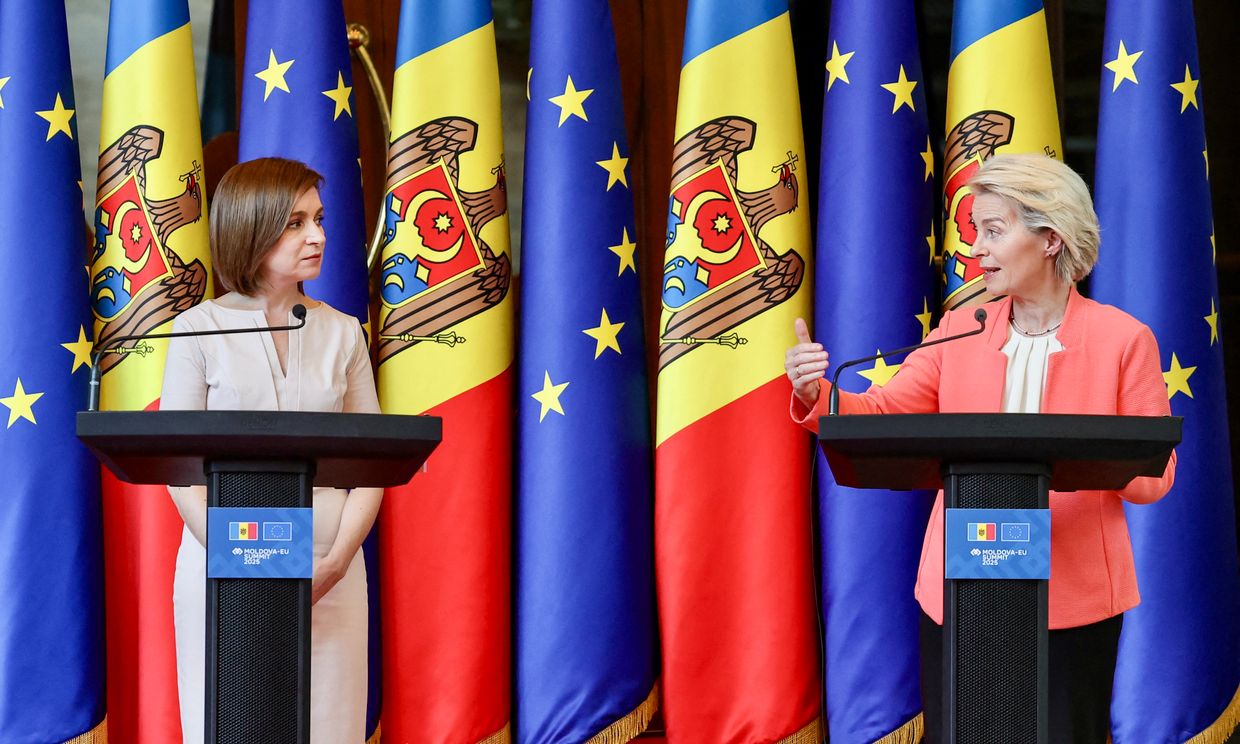
European Commission President Ursula von der Leyen pledged on July 4 that the European Union will help Moldova defend itself against hybrid threats by "agents of autocracy."

"We are committed to protecting you against the hybrid attacks and the energy shocks that your country has been a victim of," von der Leyen said following the EU-Moldova summit in Chisinau.

"Who is behind those attacks is clear to all of us here. These are the same agents of autocracy trying to undermine our democracies everywhere in Europe."

Von der Leyen praised Moldova's support for Ukraine and the EU, noting its acceptance of hundreds of thousands of Ukrainian refugees and its assistance with European wildfire response efforts.

The visit was made in show of solidarity with Moldova, one of Europe's poorest countries, as it prepares for high-stakes parliamentary elections on Sept. 28.

The pro-European government of President Maia Sandu faces a challenge from the pro-Russian Socialist Party, amid growing fears of destabilization ahead of the vote.

Sandu has accused Russia of using its military presence in Moldova's Russian-occupied Transnistria region to stir unrest and derail the country's EU aspirations. On June 12, she warned that Moscow could provoke a crisis in Transnistria to influence the election outcome.

Transnistria has been under Russian-backed separatist control since the early 1990s, with approximately 1,000 to 1,500 Russian troops still stationed in the region.

On June 11, Transnistrian authorities declared a 30-day state of emergency after a sharp drop in natural gas supplies. The unrecognized region has faced mounting energy shortages since January, when Russian energy giant Gazprom halted deliveries in what many see as an attempt to destabilize the situation in Moldova.

Moldova was granted EU candidate status in 2022. Sandu's ruling Party of Action and Solidarity aims to maintain its parliamentary majority and move the country closer to full membership by 2030.

Moldovan Prime Minister Dorin Recean earlier told the Financial Times that Russia plans to send 10,000 troops to Transnistria and establish a pro-Kremlin government in Moldova.

Death of top Russian oil executive fuels fresh scrutiny of elite’s ‘window falls’
The unexplained death of a top Russian oil executive on July 4 is fueling renewed scrutiny over the rising number of high-profile Russian officials and businessmen who have died under mysterious circumstances, specifically, have fallen out of windows. Andrei Badalov, vice president of Transneft, Russia’s largest state-controlled pipeline transport company,
EU to help Moldova fight hybrid attacks from 'agents of autocracy,' von der Leyen says ahead of September electionThe Kyiv IndependentTim Zadorozhnyy
EU to help Moldova fight hybrid attacks from 'agents of autocracy,' von der Leyen says ahead of September election
  •  

Moldova's EU future rests on September election, President Sandu says

Moldova's EU future rests on September election, President Sandu says

Moldovan President Maia Sandu said on July 4 that her country's European Union aspirations depend on Moldovan citizens as a crucial September 28 election approaches.

Sandu hopes her pro-European Party of Action and Solidarity (PAS) will retain its parliamentary majority, paving the way for Moldova, one of Europe's poorest nations, to join the EU by 2030.

Sandu made her remarks at the conclusion of the 27-nation bloc's inaugural summit with Moldova. Her PAS party faces a challenge from the pro-Russian Socialist Party and its allies in the upcoming election. Sandu secured re-election last year by a narrow margin against a Socialist challenger in the ex-Soviet state, located between Ukraine and Romania. A referendum seeking public backing for EU membership also just barely surpassed a 50% majority.

"Prosperity and peace do not occur for nothing, you have to build them. With collective effort and unity. When citizens are united and choose the correct path and proceed along it," Sandu told a news conference after the summit. "The European Union is already happening here. The only risk is if we stop. If we decide this autumn that nothing will stop us, then everything is possible."

Sandu and her party have condemned Russia's invasion of Ukraine and accuse Moscow of destabilizing Moldova. Russia, in turn, claims many Moldovans desire to maintain ties with Moscow and accuses Sandu of fostering Russophobia.

Opinion polls suggest that no single party will likely secure a parliamentary majority. If no majority emerges, pro-European parties would need to engage in coalition talks.

At the summit, which included European Commission President Ursula von der Leyen and European Council head Antonio Costa, the EU announced the disbursement of the first €270 million ($318 million) tranche of an Economic Growth Plan for Moldova.

‘Disingenuous’ Hegseth paused Ukraine weapons despite Pentagon finding aid wouldn’t hurt US readiness, NBC reports
A senior military review had concluded that while some munitions stockpiles, including precision weapons, were low, they had not fallen below critical thresholds, according to NBC. Still, U.S. Defense Secretary Pete Hegseth opted to stop the shipment. This is reportedly his third such move since February.
Moldova's EU future rests on September election, President Sandu saysThe Kyiv IndependentAnna Fratsyvir
Moldova's EU future rests on September election, President Sandu says
  •  

EU seals new trade deal with Ukraine, key details still pending

EU seals new trade deal with Ukraine, key details still pending

The European Union has reached a long-term trade agreement with Ukraine, marking the end of wartime trade liberalisation measures, though key details of the deal remain undisclosed.

EU Trade Commissioner Maros Sefcovic and Agriculture Commissioner Christophe Hansen announced the agreement on June 30, calling it a "predictable" and "reciprocal" framework. However, they did not reveal the final quotas or volumes included in the deal. Sefcovic noted that the finer points would be finalised "in the coming days."

The new deal replaces the autonomous trade measures (ATMs) that allowed Ukrainian agri-food exports to enter the EU tariff-free since 2022. Those temporary measures expired on June 5, reinstating pre-war trade conditions for a brief period.

Structured in three tiers, the new framework introduces modest increases in quotas for products considered sensitive by EU member states, such as eggs, poultry, sugar, wheat, maize, and honey. A second group of products—including butter, skimmed milk powder, oats, barley, malt, and gluten—will see their quotas adjusted to reflect peak import levels reached since the start of the war. A third category, which includes items such as whole milk powder, fermented milk, mushrooms, and grape juice, will be fully liberalised.

Once finalised, the text of the agreement will be submitted to the Council for ratification.

Sefcovic said negotiations concluded over the weekend, less than a month after formal talks began. However, some critics claim the EU delayed the process to avoid backlash from farmers ahead of Poland’s presidential election.

The agreement also benefits EU producers, granting them greater access to the Ukrainian market for goods like pork, poultry, and sugar. But Hansen made it clear that expanded access for Ukrainian exports will depend on Ukraine’s compliance with EU agricultural standards by 2028, including rules on animal welfare and pesticide use. "This commitment also fits perfectly with Ukraine's EU accession path," he said.

The deal includes safeguard provisions, allowing the EU or individual member states to restrict imports if domestic markets face serious disruptions. “Both EU and Ukrainian producers deserve a stable and predictable basis for the future development of bilateral trade,” Hansen added.

Smashing previous monthly record, Russia launches 5,337 kamikaze drones against Ukraine during June
Russia launched a record 5,337 Shahed-type drones against Ukraine in June, according to data from the Ukrainian Air Force and Dragon Capital, smashing the previous record of 4,198 set in March. Russia’s bombardments, a fact of life after three years of full-scale war, have intensified dramatically in May
EU seals new trade deal with Ukraine, key details still pendingThe Kyiv IndependentYuliia Taradiuk
EU seals new trade deal with Ukraine, key details still pending
  •  

'Russia will hit your other cheek as well' — Ukraine rebukes Slovak FM's call to 'perhaps forgive' Moscow

'Russia will hit your other cheek as well' — Ukraine rebukes Slovak FM's call to 'perhaps forgive' Moscow

Ukrainian Foreign Minister Andrii Sybiha on June 30 rebuked Slovakia's foreign minister after he suggested the international community might "perhaps even forgive" Russia's actions and reengage in dialogue with Moscow to end the war in Ukraine.

"Russia's sense of impunity is the root cause of its crimes," Sybiha wrote in a post on X. "It's naive to expect a criminal to stop if their crime is forgiven instead of punished. Russia will hit your other cheek as well. And those who have lost no one in this war have no right to make such statements."

Sybiha's remarks came in response to comments made by Slovak Foreign Minister Juraj Blanar during a domestic media interview on June 29. Blanar argued the war in Ukraine could not be resolved militarily and called for a return to diplomacy, suggesting Russia could be forgiven.

"Let us return to respect for international law and seek ways to communicate with the Russian Federation," he said. "And perhaps even forgive everything that has happened."

Juraj, Russia's sense of impunity is the root cause of its crimes. It's naive to expect a criminal to stop if their crime is forgiven instead of punished. Russia will hit your other cheek as well. And those who have lost no one in this war have no right to make such statements. pic.twitter.com/ALLzGT6ugP

— Andrii Sybiha 🇺🇦 (@andrii_sybiha) June 30, 2025

Slovakia recently requested a delay in adopting the European Union's 18th sanctions package against Russia, citing the need for further clarification on how it would impact member states, particularly in light of the EU's RePowerEU initiative to end dependence on Russian fossil fuels by 2030.

Fico's administration has distanced itself from the pro-Ukraine consensus within the EU and NATO. Since taking office in 2023, he has halted Slovak military aid to Ukraine and pursued diplomatic engagement with Russia. Earlier this year, Fico attended Russia's Victory Day Parade in Moscow and met with President Vladimir Putin — a gesture most Western leaders avoided.

Fico has dismissed the idea of meeting with President Volodymyr Zelensky, telling Slovak broadcaster STVR that Zelensky "hates me" and that such a meeting "has no significance."

Ukraine has consistently emphasized that peace can only come through justice and accountability for Russian war crimes and aggression, a position echoed by many Western governments.

More empty threats from Washington, more deadly bombs from Russia
The ongoing and escalating slaughter of Ukrainian civilians depends on two preconditions: Moscow’s determination to erase Ukraine, and the tacit permission it receives from America and Europe. On Monday, a Russian missile tore through a residential building in Kyiv, leaving at least six civilians dead and over a dozen
'Russia will hit your other cheek as well' — Ukraine rebukes Slovak FM's call to 'perhaps forgive' MoscowThe Kyiv IndependentAndrew Chakhoyan
'Russia will hit your other cheek as well' — Ukraine rebukes Slovak FM's call to 'perhaps forgive' Moscow
  •  

EU fails to adopt new Russia sanctions due to Hungarian, Slovak opposition, source says

EU fails to adopt new Russia sanctions due to Hungarian, Slovak opposition, source says

Editor's note: The story was updated with Slovak Prime Minister Robert Fico's statement voiced during the EU summit.

EU ambassadors have failed to approve the 18th package of sanctions against Russia due to opposition from Hungary and Slovakia, an unnamed EU official told the Kyiv Independent on June 27.

After the 17th package of sanctions against Russia took effect on May 20, Ukraine's allies announced the following day that another round of restrictions was already in the works. Meanwhile, officials in Hungary and Slovakia protested against the approval of new restrictions against Russia.

Unlike Hungarian Prime Minister Viktor Orban, who has consistently opposed sanctions against Russia, Slovakia has not previously attempted to block EU sanctions.

"No agreement was reached. Ambassadors will return to this issue after two reservations are removed," the source told Suspilne in a reference to the position of Slovakia and Hungary.

Slovakia has requested that the adoption of the 18th package of EU sanctions against Russia be postponed until a decision is made on the consequences for the member states from RePowerEU, the European Commission's initiative to end dependence on Russian fossil fuels by 2030 in response to Russia's invasion of Ukraine.

Slovak Prime Minister Robert Fico voiced this proposal during the EU summit, the Slovak Foreign Ministry told Suspilne.

The ambassadors also agreed to extend sectoral sanctions against Russia for six months. These sanctions encompass a broad array of economic areas, including restrictions on trade, finance, technology and dual-use goods, industry, transport, and luxury goods.

In June, the European Commission presented the 18th package of sanctions, which includes new restrictions against the Russian energy and banking sectors and transactions related to the Nord Stream gas pipeline project.

Ukraine's European allies are tightening sanctions against Russia as Moscow refuses to accept a ceasefire. Despite Russia's refusal, no new U.S. sanctions have been imposed so far.

Warfare in Ukraine has changed… again
The Kyiv Independent’s Francis Farrell explains a new modification of the standard first-person view (FPV) drone that already once transformed the way war is fought. Fiber optic cable now used to connect drone operators to FPVs ensures a perfect image and control experience all the way to the target — and cannot be spotted by enemy drone detectors.
EU fails to adopt new Russia sanctions due to Hungarian, Slovak opposition, source saysThe Kyiv IndependentFrancis Farrell
EU fails to adopt new Russia sanctions due to Hungarian, Slovak opposition, source says
  •  

Zelensky signs decree to synchronize Russia sanctions with EU, G7

Zelensky signs decree to synchronize Russia sanctions with EU, G7

President Volodymyr Zelensky signed a decree on June 27 to coordinate sanctions against Russia with international partners, particularly the European Union and the Group of Seven (G7), the President's Office said on its website.

A day earlier, EU member states' leaders gave their political consent to extend the sanctions previously imposed on Russia for its war against Ukraine.

The EU Committee of Permanent Representatives (CORPER) also extended sectoral sanctions against Russia for another six months on June 26, European Pravda reported, citing a diplomatic source. The sanctions include restrictions against entire sectors or industries of the Russian economy or areas of operation of Russian businesses.

Meanwhile, the participants did not approve the new 18th package of sanctions, which targeted Russia's energy and banking sectors, due to Slovakia's veto.

Zelensky's June 27 decree implements a decision by Ukraine's National Security and Defense Council's (NSDC) to synchronize the sanctions against Russia with the EU and G7.

According to the document, sanctions approved by partner states must be submitted to the NSDC for consideration and approval no later than the 15th day after the partner state's decision comes into force.

The Cabinet of Ministers, the Security Service of Ukraine (SBU), and the National Bank of Ukraine must also ensure the implementation of sanctions approved by international partners in Ukraine.

After the 17th package of sanctions against Russia took effect on May 20, Ukraine's allies announced the following day that another round of restrictions was already in the works.

The push for tighter sanctions comes as Russia continues to reject ceasefire proposals and presses forward with military operations.

Russia pulls its scientists out of Iranian nuclear plant, as Israeli strikes threaten decades of collaboration
Israel’s strikes on Iranian nuclear facilities have alarmed none more than Russia, the country that first brought nuclear power to Iran in defiance of Western objections. We’re “millimeters from catastrophe,” said Kremlin spokeswoman Maria Zakharova on June 18 in response to a bombing campaign that Israel launched against Iran on June 13. Decades of conflict with the West have united Iran and Russia, despite a cultural gulf between the two nations that dwarfs the Caspian Sea that physically di
Zelensky signs decree to synchronize Russia sanctions with EU, G7The Kyiv IndependentKollen Post
Zelensky signs decree to synchronize Russia sanctions with EU, G7
  •  

European companies shipping critical missile parts to Russia, Zelensky tells EU

European companies shipping critical missile parts to Russia, Zelensky tells EU

European firms continue to ship critical weapons components to Russia, President Volodymyr Zelensky told the European Council on June 26 in a plea for tougher EU sanctions against Moscow.

"Some European companies are still sending critical components to Russia. These end up in missiles and other weapons used to kill us, kill Ukrainians," Zelensky said in a video address to the European Council summit in Brussels.

Ukraine is in the process of identifying these materials and will pass along evidence to EU officials, he said.

Zelensky's remarks were part of a broader appeal for the EU to expand and strengthen economic penalties on Russia. While the bloc reached an agreement in Brussels to extend current sectoral sanctions for another six months, it is still debating its proposed 18th package of sanctions against Russia.

Zelensky urged the EU to pass "a truly strong" 18th package, targeting "Russia's oil trade, its shadow tanker fleet, Russian banks and other financial instruments, and the supply chains that bring equipment or parts for making weapons."

The sanctions should not only penalize Russia's so-called "shadow fleet" vessels, but also the tankers' captains and the ports Russia uses to export oil, Zelensky said.

The president also reiterated his call to drop the current oil price cap to $30 per barrel.

"Russia's military ambitions grow when its oil revenues are high," he said.

Several European countries still rely heavily on Russian oil and gas, Zelensky pointed out. Ukraine understands the complexities of this situation and treads carefully in order to respect its partnership with the EU.

"Yet, sadly, we don't always feel this same understanding in return when it comes to Ukraine's needs," Zelensky said.

"It feels especially strange to hear such strong criticism — even political pressure from some  leaders — while our respect for EU rules allows oil to keep flowing."

While Zelensky did not specify any particular EU leaders, Slovak Prime Minister Robert Fico in June threatened to veto the 18th sanctions package, citing concerns over Slovakia's reliance on Russia's energy imports. Fico has emerged as one of the EU's strongest supporters of Russia, alongside Hungarian Prime Minister Viktor Orban.

Orban took aim against Kyiv at the Brussels summit by blocking a unanimous statement of support for Ukraine's accession to the EU. All 26 other member states supported the statement, while Hungary was the sole opponent.

In his address to the Council, Zelensky urged the EU to send a clear signal of support for Ukraine's European path. Ukraine has fulfilled its obligations in the accession process, the president argued, and deserves recognition of its progress.

"Any delay by Europe at this point could create a global precedent and a reason to doubt Europe's words and commitments," he said.

Putin under pressure to declare war on Ukraine, but experts say Russia isn’t ready
Despite suffering over 1 million casualties, pounding Ukrainian cities nightly with missiles and drones, and committing countless war crimes, one startling fact about Russia’s full-scale invasion remains — Moscow has yet to officially declare war on Ukraine. In February 2022, Russian President Vladimir Putin described what he believed was going to be a swift victory and the capture of Kyiv within days as a “special military operation.” Nearly three-and-a-half years later, the Kremlin is stuck
European companies shipping critical missile parts to Russia, Zelensky tells EUThe Kyiv IndependentChris York
European companies shipping critical missile parts to Russia, Zelensky tells EU

  •  

EU agrees to extend sanctions against Russia for 6 months

EU agrees to extend sanctions against Russia for 6 months

Editor's Note: This is a developing story and is being updated.

The European Union on June 26 reached an agreement to extend sanctions against Russia for another six months, an undisclosed EU official told the Kyiv Independent.

Polish Prime Minister Donald Tusk confirmed the agreement shortly afterwards in a joint press conference alongside European Commission President Ursula von der Leyen and European Council President Antonio Costa at the EU summit in Brussels.

The EU made the decision on June 26 to extend its current sanctions against Russia for six more months, Tusk said.

"We still have a decision about the 18th sanctions package ahead of us," he added.

The EU votes to renew its sectoral sanctions against Russia every six months in January and July. Sanctions encompass a broad array of economic areas, including restrictions on trade, finance, technology and dual-use goods, industry, transport, and luxury goods.

The latest agreement comes amid fears that Hungary, one of the bloc's most Kremlin-friendly member states, would attempt to block the extension. Hungary has repeatedly threatened to use its veto power to obstruct the sanctions process.

The European bloc first adopted sanctions related to Russian aggression on July 31, 2014, after Moscow occupied Crimea and invaded Ukraine's eastern Donbas region. The EU has significantly scaled up its sanctions measures in the wake of the full-scale invasion, adopting 17 major sanctions packages since February 2022.

The EU on June 10 unveiled its 18th package of sanctions against Russia, expanding current measures to include new restrictions on energy, banking, oil, and other sectors. The initial proposal included banning transactions involving the Nord Stream 1 and Nord Stream 2 pipelines and reducing the oil price cap from $60 to $45 per barrel.

Soon after the package was announced, however, the EU reportedly postponed the effort to reduce the oil price cap.

The 18th round of sanctions is currently under debate. Slovak Prime Minister Robert Fico, another Moscow-friendly European leader, has threatened to veto the package. Slovakia has not previously attempted to block EU sanctions against Russia.

Ukraine war latest: Russia’s advance in Sumy Oblast ‘halted’; Kyiv, Moscow carry out POW swap
Key developments on June 26: * “50,000 Russian troops pinned down” — Ukraine halts advance in Sumy Oblast, summer offensive “faltering,” Syrskyi says * Ukraine, Russia conduct new POW swap under Istanbul deal * North Korea likely to send more troops to Russia by August, South Korea says * Explosions reported in Moscow, Russia
EU agrees to extend sanctions against Russia for 6 monthsThe Kyiv IndependentThe Kyiv Independent news desk
EU agrees to extend sanctions against Russia for 6 months
  •  

Hungary blocks EU statement backing Ukraine’s accession talks at Brussels summit

Hungary blocks EU statement backing Ukraine’s accession talks at Brussels summit

The European Council failed to unanimously adopt a statement of support for Ukraine during its June 26 meeting in Brussels, after Hungary once again failed to support it.

On the eve of the European Council summit, Hungary's government announced on June 26 that 95% of participants in a so-called "national consultation" opposed Ukraine's accession to the EU.

The highly-particized plebiscite, promoted by Prime Minister Viktor Orban's government, has already drawn criticism over its credibility and turnout, raising concerns that Orban may use its results to justify future resistance to Ukraine’s EU accession.

To register their "vote" in the national consultation, Hungarian citizens received their "ballot" in the post, together with a letter from Orban urging people to vote against.

According to the European Council's statement, the document found "firmly supported" by 26 out of the 27 states. All EU states, except Hungary, reaffirmed Ukraine's "inherent right to choose its own destiny" and support for the country's "path towards EU membership."

"The European Council commends Ukraine for the pace of its accession-related reforms under the most challenging circumstances, welcomes the significant progress achieved, and encourages Ukraine and the Commission to intensify work in the accession process," the statement read.

EU member states also agreed to take note of the Commission’s assessment that Ukraine is ready to open the Fundamentals cluster. However, formal negotiations can only begin with the unanimous consent of all 27 member states.

Ukraine applied for EU membership shortly after Russia launched its war in 2022 and was granted candidate status within months.

As an EU member, Hungary has veto power over further progress.

Orban said he voted against Ukraine's accession to the EU in the consultation, publicly sharing photos of himself marking "against" on the poll ballot. He warned earlier this year that allowing Kyiv to join the EU would "destroy" Hungary.

With Trump disengaged and EU complacent, Ukrainian reforms lose momentum
Russia’s all-out war has accelerated Ukraine’s push to join the European Union and NATO, as well as its dependency on Western loans and aid. Before, these things would have been heavily preconditioned on Ukraine implementing crucial reforms. However, the war has also eased the pressure on Kyiv to carry out
Hungary blocks EU statement backing Ukraine’s accession talks at Brussels summitThe Kyiv IndependentOleg Sukhov
Hungary blocks EU statement backing Ukraine’s accession talks at Brussels summit
  •  

Orban claims 95% oppose Ukraine's EU accession in disputed Hungary referendum

Orban claims 95% oppose Ukraine's EU accession in disputed Hungary referendum

Hungary's government announced on June 26 that 95% of participants in a national consultation opposed Ukraine's accession to the EU, Hungarian news outlet Telex reported.

The poll, promoted by Prime Minister Viktor Orban's government, has already drawn criticism over its credibility and turnout. Telex reported that the system could be manipulated — testing showed that users were able to vote twice using different email addresses.

According to Telex, 2,278,000 people participated in the consultation — approximately 29% of the electorate that voted in the 2024 European Parliament elections. Of those, the government claimed 95% voted against Ukraine joining the EU, while only 5% supported the bid.

Ukraine applied for EU membership shortly after Russia launched its war in 2022 and was granted candidate status within months. As an EU member, Hungary has veto power over further progress.

The consultation results were released on the eve of the European Council summit, giving Orban leverage to delay Ukraine's membership. But the process itself has drawn skepticism.

Government spokesman Gergely Gulyas claimed printed ballots were notarized and secure, and that electronic votes, which made up 10% of the total, were being verified. However, he could not confirm whether the system could detect if someone voted both by mail and online.

Opposition leader Peter Magyar on June 22 dismissed the consultation as a "government propaganda campaign" and cited internal data from Magyar Posta indicating that only 3-7% of mailed ballots were returned.

"It's the lowest-ever turnout for any such consultation," Magyar wrote on social media.

Since 2010, Orban's government has conducted more than a dozen similar national consultations — non-binding letter campaigns with leading questions designed to reinforce government positions.

Previous campaigns targeted topics like LGBTQ rights and EU migration policy. In one 2023 consultation, voters were asked whether they supported Brussels' alleged plans to create "migrant ghettos" in Hungary — 99% voted no, with turnout under 20%.

On April 22, Orban said he voted against Ukraine's accession to the EU in the consultation, publicly sharing photos of himself marking "against" on the poll ballot. He warned earlier this year that allowing Kyiv to join the EU would "destroy" Hungary.

Orban, the EU's most openly pro-Russian leader, has blocked or delayed military aid to Ukraine, maintained close ties with President Vladimir Putin, and echoed Kremlin talking points.

Hungary's opposition and Western critics view his administration as increasingly authoritarian, citing the erosion of press freedom, judicial independence, and electoral fairness.

Despite the low turnout and widespread allegations of manipulation, Orban is expected to use the consultation's outcome to justify future obstruction of Ukraine's EU integration.

Hungary’s soft power meets Ukraine’s hard reality in Zakarpattia
BEREHOVE, Zakarpattia Oblast — Thin gray smoke drifts beyond the patchwork of Soviet-era apartment blocks, historical buildings, and hillside vineyards that make up Berehove — the heart of the Hungarian community in Ukraine’s westernmost Zakarpattia Oblast. “That’s Hungary, over there, where you see the smoke,” gestures Vitalii Antipov, a member of the local council, toward the not-so-distant horizon. He stands on top of a hill adorned by a massive white cross with a makeshift inscription thank
Orban claims 95% oppose Ukraine's EU accession in disputed Hungary referendumThe Kyiv IndependentMartin Fornusek
Orban claims 95% oppose Ukraine's EU accession in disputed Hungary referendum
  •  

'You can count on us' — EU reiterates support for Ukraine at NATO summit

'You can count on us' — EU reiterates support for Ukraine at NATO summit

European Commission President Ursula von der Leyen reiterated the EU's ongoing support for Ukraine at a NATO summit in The Hague on June 24.

"We have designed a funding program of 50 billion euros, we call it Safe, where member states, but also Ukraine and other partners, can take these loans to invest in the (Ukrainian) defense industry," she said, addressing President Volodymyr Zelensky.

"We are integrating our defense industries as if Ukraine was in the EU. This is good for Ukraine. And just as good for Europe, as Ukraine is now home to extraordinary innovation," von der Leyen later said in a post to social media.

NATO is holding a summit in The Hague from June 24-25 with world leaders, including Zelensky and U.S. President Donald Trump present.

"(M)y dear friend Volodymyr, you're here among friends and we stand by Ukraine from the very first day on and you can count on us also for the future," von der Leyen said.

The leader described the EU's 18th sanctions package as a "biting one" to apply pressure on Moscow and Russian President Vladimir Putin.

"Secondly, of course, there's constant financial support to Ukraine because we know you're fighting a war that is also protecting our values and our principles, and thirdly, indeed, we have to put pressure on President Putin (so) that he comes to the negotiation table," von der Leyen said.

She noted that members of the Group of Seven (G7) will also be implementing additional sanctions against Russia.

"All this shows you are among friends, you can count on us, we stand by your side," von der Leyen said.

The White House has confirmed that Trump and Zelensky will hold a meeting at the NATO summit.

Investigation: How Russia prepares its strategic missile plant for ‘eternal war’
Key findings: * Despite international sanctions, Russia’s strategic missile plant was able to import complex machinery to dramatically increase missile production. * The Kyiv Independent has identified the equipment supplied to the plant, as well as the supply chains, mostly from China. * We located the plant’s new premises, built to house the
'You can count on us' — EU reiterates support for Ukraine at NATO summitThe Kyiv IndependentAlisa Yurchenko
'You can count on us' — EU reiterates support for Ukraine at NATO summit
  •  

'A total failure' — Hungarian opposition leader says Ukraine EU accession national poll had lowest ever turnout

'A total failure' — Hungarian opposition leader says Ukraine EU accession national poll had lowest ever turnout

Hungary's national consultation on Ukraine's accession to the EU had the lowest ever turnout at such a poll, Hungarian opposition leader Peter Magyar said on June 21.

"The... government propaganda campaign is a total failure. Based on information we received from multiple sources within Magyar Posta (Hungarian Post), only 3-7% of the sent 'ballots' were returned," Magyar said in a post to social media.

The poll was announced by Hungarian Prime Minister Viktor Orban in early March and officially launched on April 19 with ballot papers sent to Hungarian citizens. Many ballot papers explicitly encouraged voters to reject Ukraine’s EU bid.

Orban, on April 22, said he voted against Ukraine's accession to the EU in the national consultation, publicly sharing photos of himself marking "against" on the poll ballot.

"This means that realistically, a maximum of 500,000 people may have 'voted' on paper... the Prime Minister’s Office revealed... that the number of online submissions was negligible compared to the paper-based ones," Magyar said.

"This aligns with information received from government sources — indicating that despite the propaganda lies, the total number of 'voters' could be at most 600,000," he added.

Despite the government's resistance, polling shows public support for Ukraine's accession to the bloc. According to Magyar's opposition party, Tisza's "Voice of the Nation" initiative, which received over 1.1 million responses, 58.18% of participants supported Ukraine's EU bid.

Magyar claims that the national poll garnered around 600,000 responses would mean that the opposition party's own polling received more responses than the government poll.

"This is the lowest number in the 'glorious' history of (national consultations). And this was only achieved over several months, with total mobilization and the burning of tens of billions in public funds. A total failure," Magyar said.

Hungarian officials have repeatedly threatened to undermine Ukraine's EU candidacy and EU support for Ukraine. Hungary has repeatedly blocked or delayed EU aid packages for Kyiv.

"(T)he failed, corrupt regime doesn’t care about people's real problems, and doesn’t dare to look people in the eye. They only send them letters," Magyar said.

Comrades, be proud of lying about two million pen pals, funded by 10 billion forints ($29 million) in state propaganda," he added, addressing Hungary's ruling government.

European officials have denounced Hungary for aligning with Russia. European officials, including Estonian Foreign Minister Margus Tsahkna, have suggested stripping Hungary of its voting power within the bloc.

Hungary maintains positive relations with Russia in contrast with other EU members. On March 26, Hungarian Foreign Minister Peter Szijjarto visited Moscow to discuss continued economic cooperation between the two countries.

How 3 years of war have ravaged Ukraine’s forests, and the people who depend on them
Editor’s note: This story was published in conjunction with Grist. Twenty-two-year-old software developer Artem Motorniuk has spent his entire life in the Zaporizhzhia region of Ukraine, living in the north and visiting his grandparents in the south. It’s been almost four years since he’s seen them in person.
'A total failure' — Hungarian opposition leader says Ukraine EU accession national poll had lowest ever turnoutThe Kyiv IndependentChad Small
'A total failure' — Hungarian opposition leader says Ukraine EU accession national poll had lowest ever turnout
  •  

Baltics, Nordics, Poland propose Schengen ban for Russians who fought in Ukraine

Baltics, Nordics, Poland propose Schengen ban for Russians who fought in Ukraine

Editor's note: This story has been updated to include the joint statement issued by the ministers of the Baltic states, Nordic countries, and Poland.

A coalition of European Union countries is pushing to bar Russian citizens who participated in the war against Ukraine from entering the Schengen Area, citing serious security concerns,  Estonian broadcaster ERR reported on June 19.

The call comes as Russia increased its hybrid operations targeting the European Union. EU security agencies have repeatedly warned of Russian-linked sabotage operations, including arson attacks, orchestrated by Moscow as part of hybrid warfare strategies.

Interior ministers from the Baltic states, Nordic countries, and Poland met in Tallinn on June 19, where they issued a joint statement confirming their intent to prevent entry into the visa-free Schengen zone for Russians who took part in the war against Ukraine, ERR reported.

"There are hundreds of thousands of Russian citizens who have fought against Ukraine," Estonian Interior Minister Igor Taro said following the meeting. "We must take a clear stance; these individuals cannot freely travel across Schengen."

"We will not issue them residence permits or visas," he added. "This group, which has been killing and destroying, poses a very significant security threat to all of us."

The ministers emphasized that this restriction should remain in place even after active hostilities cease in Ukraine.

"Member States should take all necessary measures to ensure that individuals who are or have been contracted by the Russian armed forces or other armed groups acting on behalf of the regime are not allowed to undermine our security or move freely within the Schengen Area," the joint statement read.

The high-level meeting also included European Commissioner for Home Affairs and Migration Magnus Brunner, as well as representatives from the EU border agency Frontex.

The Schengen Area allows for visa-free travel across 29 European countries for up to 90 days in any 180-day period. While several EU member states have imposed national restrictions on Russian travelers, others continue processing applications, keeping access routes open.

Latvia has been among the most vocal proponents of stricter visa policies for Russian nationals. Latvian Foreign Minister Baiba Braze urged on May 25 all EU countries to suspend visa issuance to Russians, citing escalating security threats from Moscow.

"Latvia calls on the EU countries to halt visa issuance for Russian citizens, citing security concerns," Braze wrote on X. She noted that Schengen visa approvals for Russian nationals had surged by 25% in 2024 compared to 2023.

Latvia imposed entry restrictions in September 2022 as part of a coordinated effort with Lithuania, Estonia, and Poland. Czechia followed suit in October 2022.

Concerns over the abuse of Schengen visas and diplomatic privileges have intensified amid a wave of suspected Russian sabotage and espionage on EU soil. Polish and Czech authorities have recently led an effort to limit the movement of Russian diplomats within the bloc, targeting individuals allegedly working under diplomatic cover for Russian intelligence services.

Latvia prohibits Russian, Belarusian citizens from purchasing real estate
The bill — which carves out exceptions for EU and Latvian permanent residence holders, Belarusian refugees, and repatriates — establishes the new restrictions under the pretenses of protecting the country’s national security.
Baltics, Nordics, Poland propose Schengen ban for Russians who fought in UkraineThe Kyiv IndependentDmytro Basmat
Baltics, Nordics, Poland propose Schengen ban for Russians who fought in Ukraine
  •  

EU proposes integrating Ukraine into bloc's mobile roaming area

EU proposes integrating Ukraine into bloc's mobile roaming area

The European Commission has proposed that Ukraine join the European Union's mobile roaming area starting January 1, 2026, providing Ukrainian users the ability to make phone calls, texts, and use mobile data in the bloc's 27 countries at no extra charge.

"We want Ukrainian citizens to stay connected to their loved ones across the EU, as well as in their home country. That's why we propose that Ukraine join our roaming family," European Commission President Ursula von der Leyen said in a statement.

The proposal, first announced on June 16, will serve as a means of integration into the European Union's "Roam like at Home" provision in affect between all EU nations. The proposed change will impact the over four million Ukrainian refugees living in the EU.

Ukraine's full integration in the roaming provisions will replace voluntary measures that "allowed for roaming without surcharges and affordable international calls for EU and Ukrainian citizens abroad," according to the European Commission. The current measure will extend to December 31, 2025, ahead of the planned integration.

If approved, Ukraine will become the only country outside of the EU to join the bloc's "Roam like at Home" policy.

The move, which awaits European Council approval, comes as Ukraine continues to implement reforms in pursuing membership in the European Union.

Ukraine applied for EU membership at the onset of Russia's full-scale invasion in 2022. The country has made quick progress, achieving candidate status within months, with the initial negotiations formally launching in June 2024.

Since the start of 2025, Ukraine has opened three negotiation clusters under Poland's rotating presidency.

Poland lead the EU Council's presidency until June, and Denmark will take over the role in July. Ukraine aims to open the remaining three negotiation clusters in the second half of 2025 under the Danish chairmanship, the President Volodymyr Zelensky said.

There are six accession negotiation clusters, consisting of several individual chapters. Negotiations prepare a candidate country to become an EU member.

The EU’s Commissioner for Enlargement, Oliver Varhelyi, said that Ukraine could potentially join the bloc by 2029 if it successfully implements necessary reforms.

‘I am against Ukraine’s entry into the European Union,’ Polish president-elect Nawrocki says
“Ukraine must understand that other countries, including Poland, Hungary, and other European countries, also have their own interests,” Polish President-elect Karol Nawrocki said.
EU proposes integrating Ukraine into bloc's mobile roaming areaThe Kyiv IndependentVolodymyr Ivanyshyn
EU proposes integrating Ukraine into bloc's mobile roaming area


  •  

EU reportedly eyes riskier investments for frozen Russian assets to boost Ukraine aid

EU reportedly eyes riskier investments for frozen Russian assets to boost Ukraine aid

The European Union is developing a plan to generate more revenue for Ukraine by shifting nearly 200 billion euros ($215 billion) in frozen Russian assets into higher-yield, riskier investments, Politico reported on June 19, citing unnamed sources.

The assets, largely held by Belgium-based clearinghouse Euroclear, have been immobilized since 2022 under EU sanctions imposed following Russia's full-scale invasion of Ukraine.

Under the current framework, the funds are invested conservatively with the Belgian central bank, generating low but steady returns. In 2024, this approach yielded around 4 billion euros ($4.3 billion) in windfall profits, which the EU allocated to help service a G7-backed 45-billion-euro loan for Ukraine (around $50 billion).

Now, with that loan largely disbursed and concerns mounting over future financing, especially amid signals from U.S. President Donald Trump that American support could be scaled back, EU officials are under pressure to find new funding streams.

According to Politico, the proposed plan would redirect the frozen Russian assets into a special investment fund under EU control, allowing for higher returns without confiscating the assets — a move designed to sidestep legal and political opposition.

As part of the current G7-led funding framework, Ukraine has already received 7 billion euros ($8 billion) from the EU under the Extraordinary Revenue Acceleration (ERA) initiative, which uses profits from frozen Russian sovereign assets to fund loans.

Prime Minister Denys Shmyhal confirmed on June 13 that a fifth tranche of 1 billion euros ($1.1 billion) had been disbursed to support Ukraine's state budget. The ERA mechanism, part of the broader $50 billion G7 program, aims to ensure stable financing for Kyiv while making Russia shoulder the cost of its aggression.

According to Politico, finance ministers from all 27 EU countries are expected to debate the idea during an informal dinner in Luxembourg on June 19.

Poland, which currently holds the Council of the EU's rotating presidency, emphasized the urgency of the discussions, writing in an invitation letter seen by Politico that "further steps regarding the sanctions regime" and the potential use of frozen Russian assets "must be addressed."

The European Commission has also been holding informal consultations with a group of member states, including France, Germany, Italy, and Estonia, to explore legal options for keeping the Russian assets frozen in case Hungary exercises its veto power during the semiannual sanctions renewal process. So far, no workaround has been finalized.

Hungarian Prime Minister Viktor Orban has repeatedly threatened to block sanctions extensions as a gesture of goodwill toward Moscow, raising concerns the assets could be unfrozen and returned to Russia by default.

By now, much of the EU's 50-billion-euro ($57 billion) Ukraine Facility, agreed in 2023 and intended to last through 2027, has already been spent. The bloc's broader 1.2-trillion-euro ($1.37 billion) budget is stretched thin, and any additional top-ups would also require unanimous support.

Russia just accidentally admitted to its staggering troop losses in Ukraine
A senior Russian official on June 19 inadvertently confirmed the staggering troop losses incurred by Moscow’s forces during its full-scale invasion of Ukraine. In an interview with CNN, Russian Ambassador to the U.K. Andrey Kelin was asked about Moscow’s maximalist intentions in Ukraine and its ability to recruit enough
EU reportedly eyes riskier investments for frozen Russian assets to boost Ukraine aidThe Kyiv IndependentChris York
EU reportedly eyes riskier investments for frozen Russian assets to boost Ukraine aid
  •  

'If we don't help Ukraine further, we should start learning Russian,' EU diplomacy chief says

'If we don't help Ukraine further, we should start learning Russian,' EU diplomacy chief says

Failure to provide stronger military and financial support for Ukraine could leave Europe vulnerable to growing Russian influence, meaning Europeans might have to "start learning Russian," the EU's top diplomat, Kaja Kallas, said, the Guardian reported on June 17.

"We know that Russia responds to strength and nothing else," Kallas said. She called Ukraine "Europe's first line of defense" and emphasized the need for continued sanctions against Russia and more aid to Kyiv.

The comments come as Russian forces are intensifying their attacks on Ukrainian cities and the Kremlin continues to reject a push by Kyiv and its Western allies for an unconditional ceasefire.

"To quote my friend, NATO Secretary General Mark Rutte: if we don’t help Ukraine further, we should all start learning Russian," Kallas said.

Kallas cited a sharp increase in Russia's military spending, noting that Moscow is now allocating more money to defense than the EU combined, and more than its own health care, education, and social policies put together.

"This is a long-term plan for a long-term aggression," she said.

In light of this, Kallas urged governments to adopt NATO's new target of spending 5% of GDP on defense, warning of Russia's hybrid warfare tactics, including airspace violations, attacks on critical infrastructure, and covert sabotage operations within EU borders.

The 5% defense spending target is expected to be formally adopted during the upcoming NATO summit, which will take place on June 24 and 25 in The Hague. U.S. President Donald Trump has insisted that the European allies increase their defense budgets.

Earlier, Kallas said Russian President Vladimir Putin "cannot be trusted" to mediate peace while continuing to bomb Ukrainian cities and civilians, as Moscow suggested to mediate negotiations between Israel and Iran amid growing escalation.

"Clearly, President Putin is not somebody who can talk about peace while we see actions like this," she said during a June 17 briefing, after a massive Russian missile and drone strike on Kyiv killed at least 28 people and wounded over 130.

Kallas also reiterated her call for the EU to move forward with tightening the oil price cap on Russian exports, even without U.S. backing. She warned that the ongoing Israel-Iran crisis could cause oil prices to spike, boosting Russia's war revenues.

The EU is currently preparing its 18th sanctions package against Moscow, targeting energy, defense, and banking sectors. The 17th round of sanctions came into effect in May.

Putin says he’s ready to meet Zelensky if West ‘stops pushing’ Ukraine to fight
Russia wants to end the war in Ukraine “as soon as possible,” preferably through peaceful means, and is ready to continue negotiations — provided that Kyiv and its Western allies are willing to engage, Vladimir Putin said.
'If we don't help Ukraine further, we should start learning Russian,' EU diplomacy chief saysThe Kyiv IndependentOlena Goncharova
'If we don't help Ukraine further, we should start learning Russian,' EU diplomacy chief says
  •  

Ukraine's parliament passes state asset agency reform crucial for EU funding

Ukraine's parliament passes state asset agency reform crucial for EU funding

Ukraine's parliament passed a reform of the Asset Recovery and Management Agency (ARMA) on June 18, a key step toward European integration and a condition listed in the EU's Ukraine Facility plan.

The legislation passed with the support of 253 lawmakers "after months of obstructions... unblocking 600 million euros ($690 million) in EU funds," lawmaker Yaroslav Zhelezniak said.

The ARMA is Ukraine's national agency tasked with locating, recovering, and managing assets seized in criminal proceedings, namely during corruption cases.

Proposed reforms include stricter integrity and qualification standards for leadership candidates and merit-based hiring through open competitions involving civil society. They also call for independent external audits, clear deadlines for appointing asset managers, and the use of certified professionals held legally accountable for mismanagement.

The Ukraine Facility, an EU program providing Ukraine with 50 billion euros ($58 billion) in multi-year financial support contingent on reforms, set the end of March as the deadline for the ARMA's reform.

Anti-corruption experts, lawmakers, and Transparency International in Ukraine have backed the reforms, but discussions have dragged on for months since several versions of the bill were introduced in December 2024 and January.

The ARMA has long criticized the proposed legislation, arguing it had already carried out substantial and "transformative" reforms since 2023.

Transparency International reacted by saying that the ARMA's "public communication suggests that the agency’s primary concern is not the introduction of meaningful reforms, but ensuring that its current leadership can continue operating as it has."

Ukraine has embarked on extensive reforms as part of its efforts to join the EU and other Western structures, though Russia's full-scale invasion has presented fresh challenges to this effort.

Ukraine’s parliament passes bill on multiple citizenship
Ukraine’s parliament on June 18 supported a bill allowing Ukrainian citizens to hold passports of foreign countries, lawmaker Yaroslav Zhelezniak said.
Ukraine's parliament passes state asset agency reform crucial for EU fundingThe Kyiv IndependentMartin Fornusek
Ukraine's parliament passes state asset agency reform crucial for EU funding
  •  

Putin 'cannot be trusted' as mediator, Kallas says, urges EU to tighten Russian oil cap after deadly Kyiv strike

Putin 'cannot be trusted' as mediator, Kallas says, urges EU to tighten Russian oil cap after deadly Kyiv strike

Russian President Vladimir Putin "cannot be trusted" to mediate peace in the Middle East while continuing to launch brutal attacks against civilians, EU High Representative Kaja Kallas said on June 17, following a mass Russian strike on Kyiv that killed at least 21 people and injured over 130.

"Clearly, President Putin is not somebody who can talk about peace while we see actions like this,” Kallas said during a briefing in Brussels. "He's not a mediator that can really be considered. Russia cannot be a mediator if they don't really believe in peace."

Russia has sought to position itself as a potential mediator in the escalating conflict between Israel and Iran. Kremlin spokesperson Dmitry Peskov said on June 17 that Israel appeared unwilling to accept Russia’s offer of mediation.

President Donald Trump said on June 15 that Putin had expressed willingness to help mediate between Tel Aviv and Tehran — an idea already dismissed by France. EU leaders have also questioned Moscow’s neutrality given its deep military ties with Iran, which has supplied Russia with drones and missiles used in attacks on Ukraine.

Kallas also pointed to Iran's role in enabling Russia's attacks. "Iran has helped Russia do these attacks… their cooperation is working in this regard," she said.

Kallas urged the European Union to press forward with lowering the oil price cap on Russian oil, even without U.S. support, warning that Middle East tensions could otherwise drive prices up and boost Russia's revenues.

"The whole idea of the oil price cap is to lower the prices," Kallas said. "We shouldn't end up in a situation where the crisis in the Middle East increases oil prices and makes Russia earn more… that would mean they can fund their war machine on a bigger scale."

Her warning comes after global oil prices soared on June 13, following an Israeli strike on Iran that raised fears of a broader regional conflict. Brent and Nymex crude prices surged more than 10% before stabilizing around 7.5% higher, with Brent at $74.50 a barrel and Nymex at $73.20, the BBC reported.

The spike threatens to undermine Western efforts to restrict Russia’s wartime revenues, which heavily depend on oil exports.

Earlier, Kallas said the EU can act independently to lower the oil price ceiling, noting that most Russian crude flows through European-controlled waters.

"Even if the Americans are not on board, we can still do it and have an impact," she said.

Her remarks come as the EU works on its 18th sanctions package targeting Russia's energy, banking, and defense sectors. The 17th package entered into force on May 20. European Commission President Ursula von der Leyen has said new measures will further target Russia's war-sustaining supply chains.

Kallas spoke hours after one of Russia's deadliest attacks on Kyiv since the start of its full-scale invasion. The nearly nine-hour assault saw Moscow fire 472 aerial weapons, including over 280 Shahed drones and multiple cruise and ballistic missiles.

Ukraine's Air Force reported intercepting 428 targets, but several missiles hit residential buildings, including a nine-story apartment block in Solomianskyi district, where 16 people were killed.

President Volodymyr Zelensky called the assault "one of the most horrifying attacks on Kyiv" and again called on Western leaders to act decisively.

After 3 years of full-scale war in Ukraine, Europe finally lays out road map to detox from Russian oil and gas
After three years of limited measures and political hangovers, the European Union has laid out a legal roadmap to finally end its long-standing addiction to Russian oil and gas. Under a new legislative proposal announced in Strasbourg on June 17, Brussels aims to cut off all remaining imports of Russian
Putin 'cannot be trusted' as mediator, Kallas says, urges EU to tighten Russian oil cap after deadly Kyiv strikeThe Kyiv IndependentAlex Cadier
Putin 'cannot be trusted' as mediator, Kallas says, urges EU to tighten Russian oil cap after deadly Kyiv strike
  •  

'We are determined to increase pressure on Russia' — Macron says as EU ready to toughen sanctions

'We are determined to increase pressure on Russia' — Macron says as EU ready to toughen sanctions

The European Union and its allies are ready to toughen sanctions on Russia, French President Emmanuel Macron said on the sidelines of the Group of Seven (G7) summit on June 17.

"With President (Volodymyr) Zelensky at the G7. We stand in solidarity with the Ukrainian people after last night’s massive Russian strikes," Macron said in a post to social media.

"We are determined to increase pressure on Russia to accept the immediate and unconditional ceasefire that Ukraine is ready for," he added.

Macron attended the G7 summit in Kananaskis, Canada, from June 15-17. Global leaders discussed a wide range of topics, including Russia's war against Ukraine.

As the G7 leaders met in Canada, Russia launched one of its worst drone and missile attacks on Kyiv since it began its full-scale war against Ukraine in February 2022, killing 16 people and injuring at least 134.

"The common position that is emerging is to say, 'We need to strengthen sanctions,'" CBC News reported, citing Macron.

Europe is proposing much tougher sanctions than the U.S. has imposed on Russia, Macron said, adding that the EU is in "very close co-ordination" with Canada, Japan, and the U.K.

Several countries, including Canada and the U.K., introduced additional sanctions on Russia as the G7 summit was ongoing.

Canada introduced a new military aid package for Ukraine in addition to its sanctions against Russia.

"In our view, this has changed the situation because it will allow us to bring Russia back to the negotiating table, as (U.S.) President (Donald) Trump has been demanding," Macron said, according to CBC News.

Zelensky attended the summit and met with various leaders, including Macron and Canadian Prime Minister Mark Carney.

Zelensky left the summit early, citing Russia's attack on Kyiv. The nearly nine-hour-long attack saw Moscow's forces launch large numbers of drones and missiles at Ukraine's capital.

Foreign Minister Andrii Sybiha condemned the attack, calling it a "massive and brutal strike" timed deliberately to coincide with the G7 summit.

Zelensky described the drone and missile assault as "one of the most horrifying attacks on Kyiv."

‘He said he wasn’t going anywhere’ — Survivors search for missing following Russia’s deadliest attack on Kyiv this year
Sitting a few meters from the rubble of what used to be a nondescript nine-story residential building in Kyiv, Lilia rises to her feet every time another pile of debris is cleared from the site targeted by Russia during a mass overnight attack on June 17. “We are waiting (as
'We are determined to increase pressure on Russia' — Macron says as EU ready to toughen sanctionsThe Kyiv IndependentKateryna Denisova
'We are determined to increase pressure on Russia' — Macron says as EU ready to toughen sanctions
  •  
❌