Vue normale

  • ✇Euromaidan Press
  • Black Sea attacks delayed up to 2.5 million tons of wheat bound for Asia
    Wheat buyers from Egypt to Indonesia are paying more after an unspoken wartime arrangement that kept Black Sea grain ships safe collapsed in July. Jordan canceled two wheat tenders and two for barley this month after attracting few offers.Asian mills face delays on 2 to 2.5 million tons booked for summer delivery—30% to 50% of their import needs—and Indonesia is looking to Australia, Argentina, and Romania to replace about 600,000 tons contracted from the region.Ukraine’s
     

Black Sea attacks delayed up to 2.5 million tons of wheat bound for Asia

20 août 2026 à 08:36

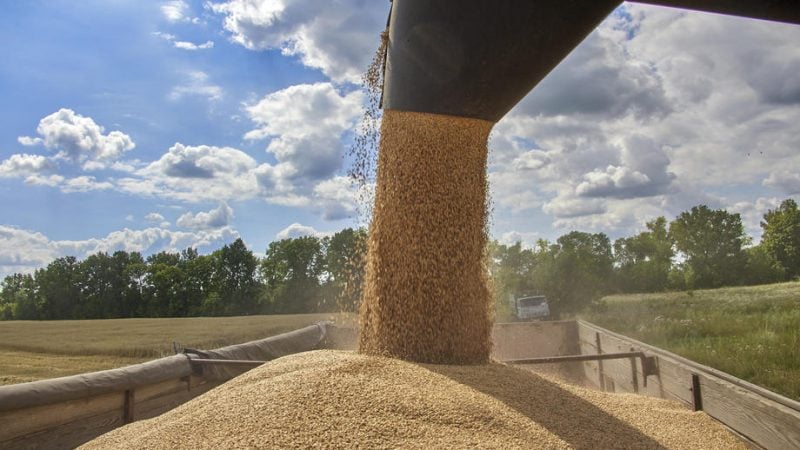
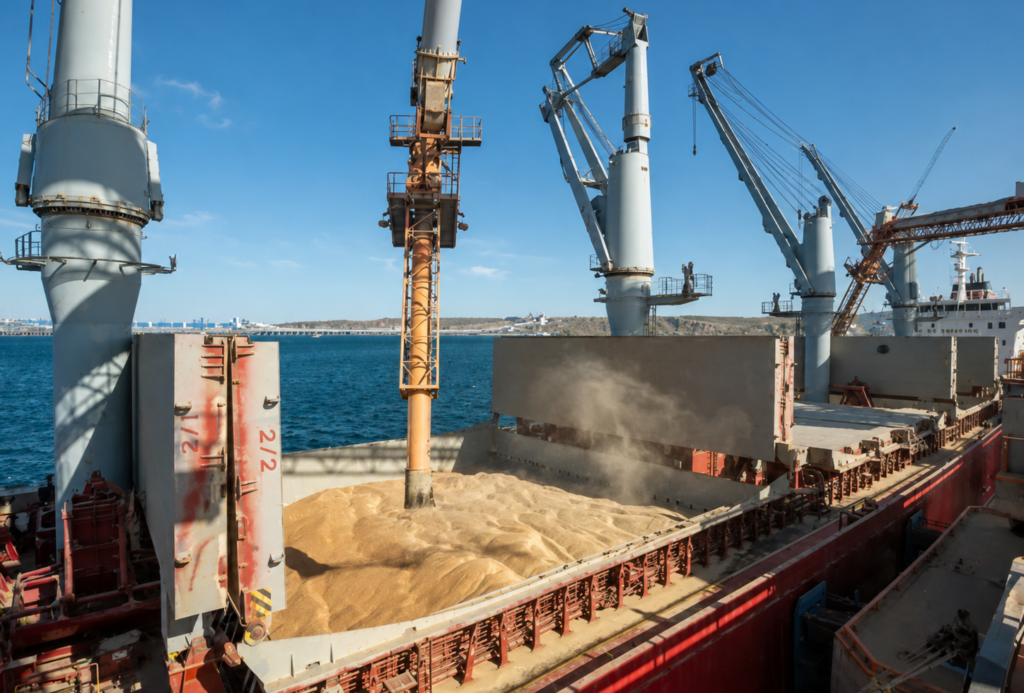
grain loaded onto a ship

Wheat buyers from Egypt to Indonesia are paying more after an unspoken wartime arrangement that kept Black Sea grain ships safe collapsed in July. Jordan canceled two wheat tenders and two for barley this month after attracting few offers.

Asian mills face delays on 2 to 2.5 million tons booked for summer delivery—30% to 50% of their import needs—and Indonesia is looking to Australia, Argentina, and Romania to replace about 600,000 tons contracted from the region.

Ukraine’s infrastructure ministry counted 67 attacks on port facilities in July, 35 on civilian vessels in port, and 22 on ships in the maritime corridor. The corresponding figure for all of 2025 was just 14, according to Reuters.

Ukraine’s agriculture ministry has warned that exports may fall nearly by half this season.

Egypt bought 82% from two countries at war

Egypt sourced over four-fifths of its wheat imports from Russia and Ukraine in the first half of 2026. Its private sector, which imports more than half the country’s wheat, has less grain stored than the government, and “the situation is getting worse by the day,” Alexandria-based trader Hesham Soliman told Reuters.

A vessel heading to load grain for Egypt was attacked approaching Novorossiysk last week. Ukrainian President Volodymyr Zelenskyy said he discussed the threat with Egyptian President Abdel Fattah al-Sisi.

Black Sea wheat trades at about $260 to $280 a ton. Australian wheat is quoted at $315 to $320, including cost and freight to Asia, while the cheapest American wheat is at $305, Reuters data showed.

Chicago wheat futures have climbed more than 17% since early July. For now, stronger local harvests in parts of North Africa have cushioned the impact—Egypt procured record volumes of domestic wheat.

Sunflower first, now wheat

India’s refiners shifted to soybean as 150,000 tons of Ukrainian sunflower cargo sat delayed at Black Sea ports. Now the same is happening in wheat.

modi and zelenskyy during the g7 meeting in france, 17 june 2026
Explore further

India’s cooking-oil imports jump for festival season—but not war-hit sunflower

Ukraine’s agriculture ministry has warned that exports may fall nearly by half this season. On the Russian side, Novorossiysk’s largest grain terminals halted after drone strikes in August; few shipowners will now enter either country’s ports, traders told Reuters.
Moldova halves grain-transit fees for Ukraine as its own farmers threaten protests

18 août 2026 à 04:52

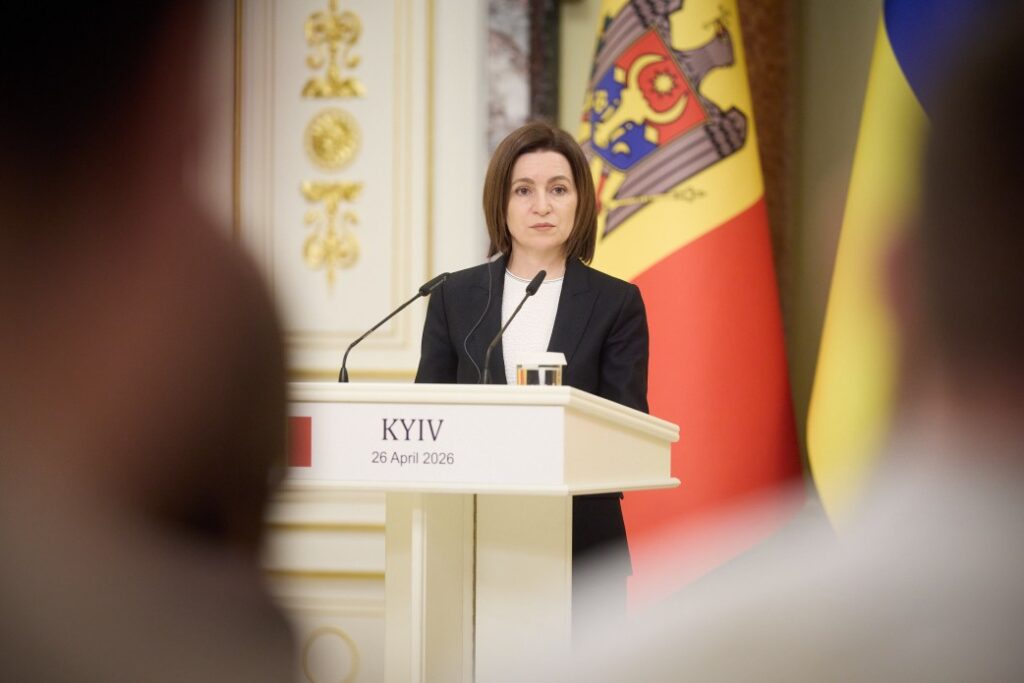
Moldovan President Maia Sandu in Kyiv on the anniversary of the Chernobyl nuclear disaster, 26 April 2026. Photo: Ukrainian President's Office

Moldova will now carry Ukraine’s grain to Romania at half price, and President Maia Sandu is defending that choice against Moldovan farmers who stand to lose from it. What Kyiv was still negotiating a week earlier is now a signed tariff cut, and the growers left to absorb it have threatened mass protests.

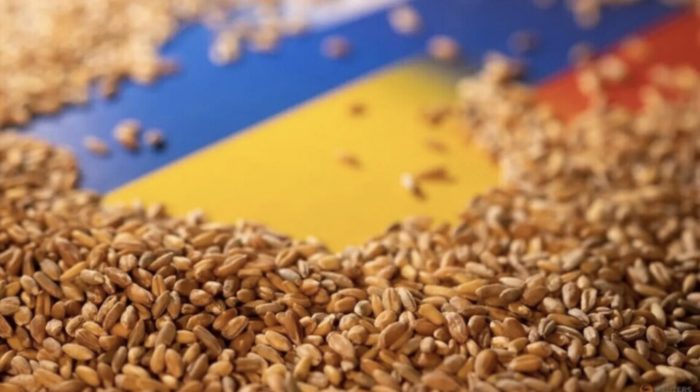
Ukrainian grain
Explore further

Ukraine and Moldova discuss rail corridor for grain amid Russian Black Sea attacks

Sandu ties Ukraine’s harvest to Moldova’s security

Speaking on Radio Moldova, Sandu argued that helping a wartime neighbor keep its export income is worth the strain at home, NewsMaker reported.

“If Ukraine cannot sell its products and has no money to defend itself, then we will have bigger problems than we do today,” she said. “We cannot turn our backs on Ukrainians who are bombed every night and every day wake up, grow grain, and resist. Through their resistance, they protect our peace too.”

She set Moldova’s role against that of larger backers: “Other states help them much more—with financial aid, with military aid. Here we can help them, with these transit routes.”

Through their resistance, they protect our peace too.

Maia Sandu

Farmers set a 21 August deadline

Moldova has halved rail transit tariffs on Ukrainian goods from 10 August to 31 December 2026, a move that could earn Moldovan Railways several million euros and route around 10% of Ukraine’s expected six million tons of 2026 cargo through its territory, Curs de Guvernare reported.

The cut has unsettled local growers. The association Forța Fermierilor (Farmers’ Force) says they face real risks and wants a seat in overseeing the transit. After meeting Prime Minister Vasile Tofan on 17 August, it warned of “massive” protests unless the government shows progress by 21 August.

Russian strikes push grain onto the rails

Ukraine wants the overland route because Russia’s strikes have made the sea route unreliable. Odesa’s ports handle about 90% of Ukraine’s grain, and an overnight strike on Odesa on 17 August damaged another foreign civilian ship.

In July alone, Russian attacks damaged 28 vessels at Greater Odesa’s ports and killed 21 sailors, monitor Andrii Klymenko reported. The rail line to Romania’s Constanța port is the safer alternative. Even in 2023, when Moldova moved to shield its market from Ukrainian grain, it kept transit open.

  • ✇Euromaidan Press
  • India’s cooking-oil imports jump for festival season—but not war-hit sunflower
    India, the world’s biggest edible-oil importer, bought a 10-month high of about 1.5 million tons of vegetable oil in July, up roughly a third from June, as refiners restocked for the August-to-November festival season.The jump was led by palm oil, up by half, and soybean oil, up about a third, data compiled by UkrAgroConsult. Sunflower oil rose just 4%, the weakest of the three, and India buys most of it from Ukraine and Russia, the world’s leading exporters. Vegetable
     

India’s cooking-oil imports jump for festival season—but not war-hit sunflower

18 août 2026 à 03:44

modi and zelenskyy during the g7 meeting in france, 17 june 2026

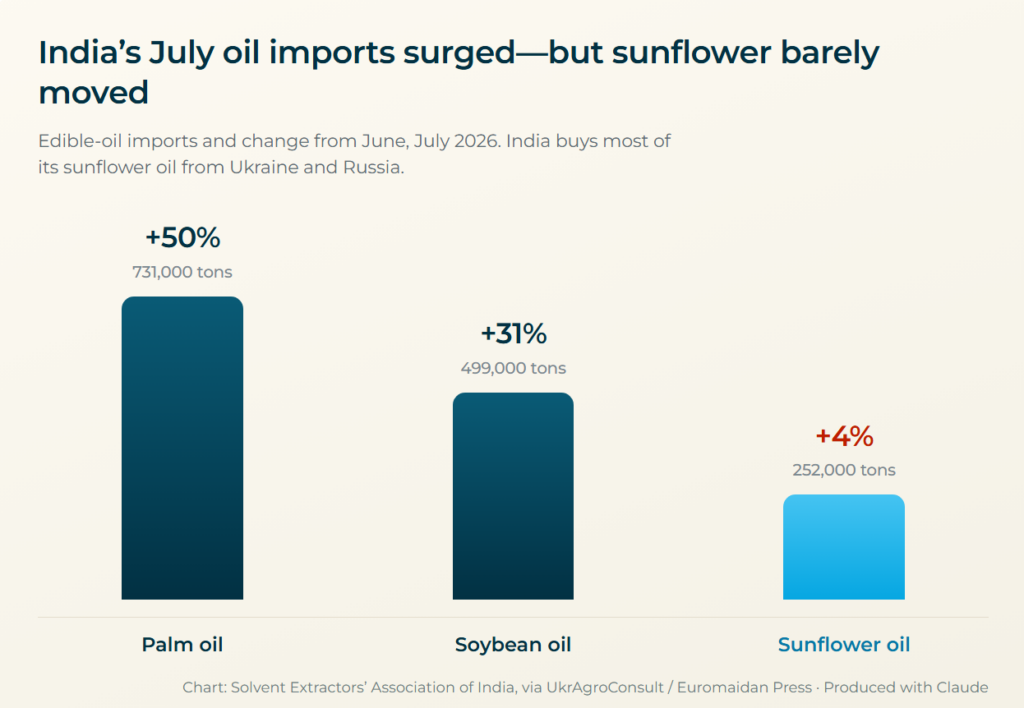
India, the world’s biggest edible-oil importer, bought a 10-month high of about 1.5 million tons of vegetable oil in July, up roughly a third from June, as refiners restocked for the August-to-November festival season.

The jump was led by palm oil, up by half, and soybean oil, up about a third, data compiled by UkrAgroConsult. Sunflower oil rose just 4%, the weakest of the three, and India buys most of it from Ukraine and Russia, the world’s leading exporters.

Vegetable oil and meal earn more than 15% of Ukraine’s foreign currency.

Now the sunflower supply is the one going into reverse. India’s sunflower-oil imports are set to fall in August to their lowest since February, with about 150,000 tons of cargo delayed at Black Sea ports and buyers in the south switching to soybean, four traders told Reuters.

The switch is only partly about the war. Soybean and palm oil are cheap, and India’s own mills are pressing less oil from a smaller domestic harvest, leaving refiners leaning on imports, Rajesh Patel told OFI. The GGN Research partner expects soybean oil imports to top 500,000 tons a month into the autumn.

edible oil imports of india, july 2026
India’s edible-oil imports hit a 10-month high in July 2026 as refiners stocked up for the festival season, but the surge went to palm and soybean oil while sunflower barely moved. Chart: Solvent Extractors’ Association of India, via UkrAgroConsult / Euromaidan Press · Made with Claude

Russia’s strikes close Ukraine’s window

Ukraine is in no position to capture that demand. Russian strikes on Chornomorsk in mid-July forced Kernel, its largest exporter, to halt its terminals there, and the country’s farmers’ union reckons the summer attacks have cost a third of its capacity to ship grain by sea.

ukraine grain
Explore further

Russia’s port strikes leave Ukraine’s grain with almost nowhere else to go

Vegetable oil and meal earn more than 15% of Ukraine’s foreign currency, among its largest sources of the hard cash that funds the war, the industry association Ukroliyaprom has said.

The squeeze runs through geography Ukraine cannot change: almost all its farm exports leave by sea, through a handful of Odesa ports now under regular fire, with no land route at anything near the scale.

Kyiv now expects to export barely half the harvest it had planned to sell abroad this season, and is arranging emergency loans so farmers can plant the next crop. Since the start of August, grain leaving by rail has dropped by more than three-quarters year-on-year, according to Ukrzaliznytsia data.

Ukraine asks the EU for €220 million to unlock €4 billion in farm loans as Russia’s port strikes choke exports

13 août 2026 à 12:10

A green combine harvester cuts wheat beneath a blue, partly cloudy sky.

Ukraine and international partners agreed to work urgently on a mechanism for up to €4 billion ($4.6 billion) in farm loans, Ukrinform reported on 13 August. The plan would use a proposed €220 million ($253 million) EU grant, the Agriculture Ministry said.

Ukraine rebuilt its maritime trade after pushing Russia’s fleet away from its coast. By 2025, its Black Sea route carried about 92% of the country’s grain and oilseed exports. Russia is now striking the Odesa ports sustaining that recovery. The ministry says the attacks have closed three deep-water ports. Ukraine planned to export 64.4 million tons of agricultural products in 2026/27, but now says shipments may reach only 29.6 million tons. The proposed loan mechanism is meant to cover that cash shortfall before next year’s sowing.

EU and Norwegian diplomats joined the meeting with representatives of the World Bank and the UN Food and Agriculture Organization.

The participants agreed to develop the plan through the Ukraine Facility and EU guarantee institutions. They aim to do so in the coming weeks, before fall storage use peaks. The grant has not yet been approved.

Odesa attacks send Kyiv toward Baltic ports

The loan plan comes as Russia’s attacks force Ukraine to seek new export routes.

Russia initially blockaded Ukraine’s ports after launching its full-scale invasion. Ukraine later restored a sea corridor after forcing much of Russia’s Black Sea Fleet away. Moscow then shifted pressure to missiles and drones, hitting Ukrainian ports 90 times in 2025 and intensifying attacks this summer.

A Russian strike killed 10 people aboard the grain-carrying Golden Leo on 19 July. Three days later, no ship passed through the corridor.

Kyiv is now considering the Polish Baltic ports of Gdańsk, Gdynia, Szczecin, and Świnoujście. Yet the ministry estimates that all alternative routes may eventually carry only 2.9 million tons a month. Ukraine’s monthly target was 5.4 million tons.

Farm loans target next year’s sowing

The €220 million would not go directly to growers. It would subsidize interest and partly cover banks’ lending risks, including by expanding Ukraine’s “5-7-9%” affordable-loan program.

The ministry wants the support to generate €4 billion in farm loans at annual rates no higher than 10%. It calculates that every euro of grant money could mobilize more than €18 in lending.

Ukraine has also temporarily adjusted minimum export price coefficients to offset higher logistics costs, meeting participants noted. Without grain sales, farmers struggle to pay wages and land rents or buy fuel and fertilizer. By November, Ukraine's storage shortfall could reach 11 million tons of crops, with more than €10.8 billion ($12.4 billion) tied up in unsold stocks.

  • ✇Euromaidan Press
  • Moldova overtakes every EU country as Ukraine’s top dairy buyer
    Moldova has overtaken Poland and Germany to become the largest foreign buyer of Ukrainian dairy products in the first seven months of 2026. It is not the win it sounds like.A country of some 2.5 million people now buys more Ukrainian dairy than any EU member, as falling European prices make EU sales less attractive and cheap imports capture a growing share of Ukraine’s home market. Ukraine now buys about as much dairy from abroad as it sells—unusual for a country used t
     

Moldova overtakes every EU country as Ukraine’s top dairy buyer

13 août 2026 à 08:54

sandu and zelenskyy

Moldova has overtaken Poland and Germany to become the largest foreign buyer of Ukrainian dairy products in the first seven months of 2026. It is not the win it sounds like.

A country of some 2.5 million people now buys more Ukrainian dairy than any EU member, as falling European prices make EU sales less attractive and cheap imports capture a growing share of Ukraine’s home market.

Ukraine now buys about as much dairy from abroad as it sells—unusual for a country used to exporting it.

Why the EU sales stopped paying

Over that period, the Association of Milk Producers reports, dairy exports shrank by almost a fifth in value against last year, while imports rose by more than a third. Ukraine now buys about as much dairy from abroad as it sells—unusual for a country used to exporting it.

What pushed producers toward a small neighbor rather than the EU was price: European wholesale prices for butter and milk powder fell throughout the summer, until selling into the EU stopped paying. The association expects that to reverse only if prices climb again in the autumn.

The pull shows up most in butter, where Moldova is now the largest butter buyer, taking more than four of every ten kilograms Ukraine exports, even as the total shrinks.

Ukrainian grain
Explore further

Ukraine and Moldova discuss rail corridor for grain amid Russian Black Sea attacks

Cheaper cheese from Poland and other EU states now feeds more than half of Ukraine’s cheese market, up from under 40 percent at the start of 2025, and Ukrainian cheesemakers have cut production rather than compete.

According to the association, a large share is declared as humanitarian aid, allowing it to enter without being tested, without Ukrainian labels, and free of duties and VAT. The association estimates that this costs the budget at least 730 million hryvnias ($16 million) a year.

Moldova subsidizes its own dairy farmers for every liter of milk they sell, yet it now buys more Ukrainian dairy products than any other country.

  • ✇Euromaidan Press
  • Russia’s Odesa strikes halve Ukraine’s grain export forecast
    Ukraine’s Agriculture Ministry has cut its forecast for agricultural exports in 2026–2027 by 54% as Russian attacks disrupt shipping through Odesa’s ports, Bloomberg reported. The ministry now expects 29.6 million tons of agricultural exports, down from 64.4 million. Its wheat export forecast fell by 53%, from 17.6 million tons to 8.3 million tons. Ukraine grows far more grain than it consumes, exporting 65%–70% of its agricultural output. Bloomberg said the sector
     

Russia’s Odesa strikes halve Ukraine’s grain export forecast

11 août 2026 à 13:47

Grain pours from a combine harvester into a trailer during harvest in Ukraine.

Ukraine’s Agriculture Ministry has cut its forecast for agricultural exports in 2026–2027 by 54% as Russian attacks disrupt shipping through Odesa’s ports, Bloomberg reported.

The ministry now expects 29.6 million tons of agricultural exports, down from 64.4 million. Its wheat export forecast fell by 53%, from 17.6 million tons to 8.3 million tons.

Ukraine grows far more grain than it consumes, exporting 65%–70% of its agricultural output. Bloomberg said the sector generated more than half of Ukraine’s export revenue last year. But Russia’s summer attacks have stalled the sea corridor as the harvest arrives, driving some wheat prices below production costs. Land and river routes cannot match the Black Sea shipping capacity, while sales through neighboring EU states remain politically contested. That leaves farmers with less money for the next sowing and further reduces Ukraine’s export income.

Ukraine has about 59 million tons of grain storage. That storage could be full by early November, leaving the country 11 million tons short of space by the end of fall 2026. 

Wheat sells below cost as the silos fill up

Ukraine’s export bottleneck is already hitting its farmers. Port prices fell by another 12-15% in one week, while some farmers sold wheat below production cost. When ships stop, traders either stop buying or pass the higher cost of alternative routes on to producers. That leaves farmers with less cash for fall sowing.

To ease the pressure, the government has approved subsidized loans for agricultural producers. President Volodymyr Zelenskyy said Kyiv would expand storage. Ukraine's Agriculture Ministry has also asked the European Commission for €220 million to help cover interest for small and medium-sized farms.

Ukraine and Moldova are discussing a rail route to Romania’s Constanța port. According to the report, grain was already being redirected through Romania, Slovakia, and Hungary, but these routes cannot replace Odesa’s capacity.

Now the ports and the ships are Russia's targets

The export bottleneck is only part of the problem. Russia’s bombardment also threatens the ports, civilian ships, and crews needed to keep the corridor operating. 

The port of Odesa normally handles about 90% of Ukraine’s grain shipments. Russia intensified attacks on terminals and civilian ships in July 2026 as the harvest reached the coast.

On 19 July, three Russian missiles struck the foreign-flagged Golden Leo as it left Odesa carrying corn, killing 10 people, including a Ukrainian sea pilot. Three days later, no vessel passed through the corridor.

Alternative routes offer little relief, as record-low Danube levels were restricting river traffic. Poland continues to bar Ukrainian grain from its domestic market. Those constraints leave more of the harvest inside Ukraine and farmers with less money to plant the next crop.

❌