Vue normale

After years of disputes, Hungary finds common ground with Ukraine—on honoring Soviet deportations from Zakarpattia

4 septembre 2026 à 15:53

Aerial view of Ukraine’s Verkhovna Rada building in Kyiv, topped by the Ukrainian flag.

Budapest praised the Verkhovna Rada—Ukraine’s parliament—after it voted 261–0 to classify mass arrests, deportations, and persecution by the Soviet military administration in Zakarpattia (also known as Transcarpathia) from 1944 to 1946 as crimes of the communist regime.

The vote makes the Verkhovna Rada the first state body in the world to recognize the repression of Zakarpattia’s Hungarian community as a crime, according to European Pravda. It creates an opening for historical reconciliation after years of minority-rights disputes, strained relations, and blocking Ukraine’s EU accession. However, Budapest continues to press Kyiv for further concessions.

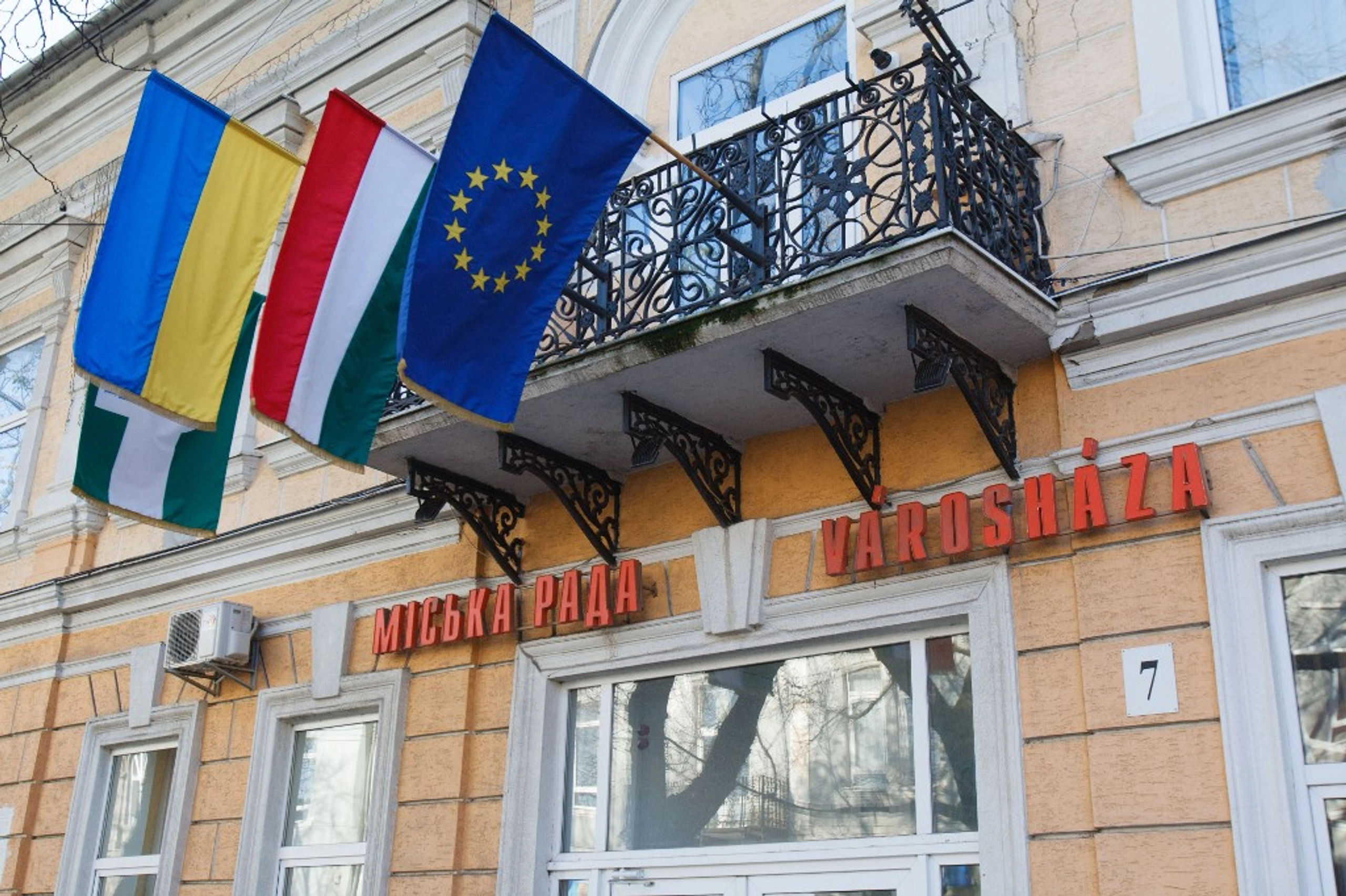
After Soviet forces took control of Zakarpattia—Ukraine’s westernmost region, bordering Hungary and home to the country’s largest ethnic Hungarian community—the NKVD, Stalin’s secret police, and SMERSH, Soviet military counterintelligence, detained civilian men aged 18 to 50 under the pretext of mobilization.

The men were deported without trial to labor camps and the Soviet Gulag prison-camp system. Hungary’s Foreign Ministry said tens of thousands of Hungarian- and German-speaking men were deported, and many thousands died under the inhumane conditions of forced labor.

The campaign became known in Hungarian as malenkij robot. Derived from a Russian phrase meaning “a little work,” Soviet troops used this deceptive phrase when taking people away.

Hungarian Foreign Minister Anita Orbán—no relation to former Prime Minister Viktor Orbán—called the declaration “a fitting tribute” to thousands targeted by Soviet terror because of their Hungarian identity. She said Hungary was ready to help uncover the truth about the past and honor the victims.

Hungary welcomes the Ukrainian parliament’s declaration condemning Soviet authorities' coercive measures against the Hungarian community in Transcarpathia between 1944 and 1946. The declaration is a fitting tribute to the thousands of victims of deportation and forced labor…

— Anita Orban (@_OrbanAnita) September 3, 2026

The resolution calls for memorials, archival publications, research, and the inclusion of the repression in educational programs. It also draws a parallel with Russia’s present-day occupation practices, saying Moscow is committing similar large-scale repression against civilians in occupied Ukraine.

Marton Hajdu, chair of the Hungarian parliament’s foreign affairs committee, nevertheless said reconciliation must be accompanied by Kyiv’s full implementation of its June agreement with Budapest on minority rights.

A cautious thaw in Hungarian-Ukrainian relations

The exchange adds to tentative signs of improving relations since Péter Magyar ended Viktor Orbán’s 16 years in power in April. Magyar’s government summoned Russia’s ambassador after Moscow struck Zakarpattia and later closed a money-laundering case involving $82 million belonging to Ukraine’s state-owned Oschadbank, reversing another Orbán-era dispute.

Budapest and Kyiv also reached a June agreement covering Hungarian-language education and the use of Hungarian in public services. Yet Magyar’s government has continued to slow parts of Ukraine’s EU accession process amid domestic pressure to defend Zakarpattia’s Hungarian community. The recognition of Soviet crimes, therefore, provides new common ground without settling the wider disagreements between the neighbors.

Hungary sent commandos to seize Ukraine’s $82 million bank convoy. Its investigators now say they have found no crime

21 août 2026 à 06:22

Stacks of bundled banknotes and nine gold bars arranged on a wooden table.

Hungary has closed the Oschadbank case after finding no crime connected to an $82 million shipment of cash and gold belonging to Ukraine’s state-owned savings bank, The Insider reported on 20 August 2026, citing the bank’s lawyer Lóránt Horváth.

Closing the money-laundering case removes the allegation used to justify seizing Oschadbank’s assets. A separate criminal investigation is examining the couriers’ detention, while Prime Minister Péter Magyar’s government has opened an internal review of the agencies involved. Together with the return of the assets, these steps reverse how this case was handled under former PM Viktor Orbán and may help improve relations with Ukraine.

Hungary’s National Tax and Customs Administration (NAV), the country’s tax and customs authority, traced the assets to a documented deal between Austria’s Raiffeisen Bank International and Oschadbank. Raiffeisen provided records establishing the assets’ origin and Oschadbank’s payment, according to Horváth’s account of NAV’s decision.

Meanwhile, a separate investigation into the couriers’ alleged unlawful detention remains open. János Hajdu, the former head of Hungary’s Counter-Terrorism Center (TEK), is a suspect. TEK is the country’s armed counterterrorism police.

A leaked prosecution document named former Prime Minister Viktor Orbán and three other former officials, including Hajdu, among those involved in deciding on the operation. Orbán has not been named as a suspect, Euronews reported on 30 June.

Orbán denies wrongdoing and says the raid was lawful.

How the Oschadbank case began

TEK stopped two armored cash-in-transit vans near Budapest on 5 March 2026. They carried $40 million, €35 million, and nine kilograms of gold from Vienna to Kyiv under a routine banking contract, Euromaidan Press reported. Officers detained the seven Oschadbank employees as witnesses, kept them handcuffed for 28 hours, and denied them lawyers and Ukrainian consular access, Ukraine’s Foreign Ministry said.

Hungary deported the couriers and imposed three-year Schengen bans, which barred them from most of Europe, although none had been charged with a crime. The orders and bans were later annulled.

Orbán’s government nevertheless portrayed the shipment as possible money laundering. Fidesz politicians also alleged, without evidence, that it was intended to finance Magyar’s then-opposition party, Tisza.

Hungary returned the vans, cash, and gold by 6 May. Ukrainian Foreign Minister Andrii Sybiha called the handover a break with Orbán-era “lawlessness” and a sign that relations could advance through “mutual respect and healthy pragmatism,” Reuters reported.

  • ✇The Kyiv Independent
  • Orban claims 95% oppose Ukraine's EU accession in disputed Hungary referendum
    Hungary's government announced on June 26 that 95% of participants in a national consultation opposed Ukraine's accession to the EU, Hungarian news outlet Telex reported. The poll, promoted by Prime Minister Viktor Orban's government, has already drawn criticism over its credibility and turnout. Telex reported that the system could be manipulated — testing showed that users were able to vote twice using different email addresses. According to Telex, 2,278,000 people participated in the consultat
     

Orban claims 95% oppose Ukraine's EU accession in disputed Hungary referendum

26 juin 2025 à 06:43
Orban claims 95% oppose Ukraine's EU accession in disputed Hungary referendum

Hungary's government announced on June 26 that 95% of participants in a national consultation opposed Ukraine's accession to the EU, Hungarian news outlet Telex reported.

The poll, promoted by Prime Minister Viktor Orban's government, has already drawn criticism over its credibility and turnout. Telex reported that the system could be manipulated — testing showed that users were able to vote twice using different email addresses.

According to Telex, 2,278,000 people participated in the consultation — approximately 29% of the electorate that voted in the 2024 European Parliament elections. Of those, the government claimed 95% voted against Ukraine joining the EU, while only 5% supported the bid.

Ukraine applied for EU membership shortly after Russia launched its war in 2022 and was granted candidate status within months. As an EU member, Hungary has veto power over further progress.

The consultation results were released on the eve of the European Council summit, giving Orban leverage to delay Ukraine's membership. But the process itself has drawn skepticism.

Government spokesman Gergely Gulyas claimed printed ballots were notarized and secure, and that electronic votes, which made up 10% of the total, were being verified. However, he could not confirm whether the system could detect if someone voted both by mail and online.

Opposition leader Peter Magyar on June 22 dismissed the consultation as a "government propaganda campaign" and cited internal data from Magyar Posta indicating that only 3-7% of mailed ballots were returned.

"It's the lowest-ever turnout for any such consultation," Magyar wrote on social media.

Since 2010, Orban's government has conducted more than a dozen similar national consultations — non-binding letter campaigns with leading questions designed to reinforce government positions.

Previous campaigns targeted topics like LGBTQ rights and EU migration policy. In one 2023 consultation, voters were asked whether they supported Brussels' alleged plans to create "migrant ghettos" in Hungary — 99% voted no, with turnout under 20%.

On April 22, Orban said he voted against Ukraine's accession to the EU in the consultation, publicly sharing photos of himself marking "against" on the poll ballot. He warned earlier this year that allowing Kyiv to join the EU would "destroy" Hungary.

Orban, the EU's most openly pro-Russian leader, has blocked or delayed military aid to Ukraine, maintained close ties with President Vladimir Putin, and echoed Kremlin talking points.

Hungary's opposition and Western critics view his administration as increasingly authoritarian, citing the erosion of press freedom, judicial independence, and electoral fairness.

Despite the low turnout and widespread allegations of manipulation, Orban is expected to use the consultation's outcome to justify future obstruction of Ukraine's EU integration.

Hungary’s soft power meets Ukraine’s hard reality in Zakarpattia
BEREHOVE, Zakarpattia Oblast — Thin gray smoke drifts beyond the patchwork of Soviet-era apartment blocks, historical buildings, and hillside vineyards that make up Berehove — the heart of the Hungarian community in Ukraine’s westernmost Zakarpattia Oblast. “That’s Hungary, over there, where you see the smoke,” gestures Vitalii Antipov, a member of the local council, toward the not-so-distant horizon. He stands on top of a hill adorned by a massive white cross with a makeshift inscription thank
Orban claims 95% oppose Ukraine's EU accession in disputed Hungary referendumThe Kyiv IndependentMartin Fornusek
Orban claims 95% oppose Ukraine's EU accession in disputed Hungary referendum

'A total failure' — Hungarian opposition leader says Ukraine EU accession national poll had lowest ever turnout

21 juin 2025 à 23:13
'A total failure' — Hungarian opposition leader says Ukraine EU accession national poll had lowest ever turnout

Hungary's national consultation on Ukraine's accession to the EU had the lowest ever turnout at such a poll, Hungarian opposition leader Peter Magyar said on June 21.

"The... government propaganda campaign is a total failure. Based on information we received from multiple sources within Magyar Posta (Hungarian Post), only 3-7% of the sent 'ballots' were returned," Magyar said in a post to social media.

The poll was announced by Hungarian Prime Minister Viktor Orban in early March and officially launched on April 19 with ballot papers sent to Hungarian citizens. Many ballot papers explicitly encouraged voters to reject Ukraine’s EU bid.

Orban, on April 22, said he voted against Ukraine's accession to the EU in the national consultation, publicly sharing photos of himself marking "against" on the poll ballot.

"This means that realistically, a maximum of 500,000 people may have 'voted' on paper... the Prime Minister’s Office revealed... that the number of online submissions was negligible compared to the paper-based ones," Magyar said.

"This aligns with information received from government sources — indicating that despite the propaganda lies, the total number of 'voters' could be at most 600,000," he added.

Despite the government's resistance, polling shows public support for Ukraine's accession to the bloc. According to Magyar's opposition party, Tisza's "Voice of the Nation" initiative, which received over 1.1 million responses, 58.18% of participants supported Ukraine's EU bid.

Magyar claims that the national poll garnered around 600,000 responses would mean that the opposition party's own polling received more responses than the government poll.

"This is the lowest number in the 'glorious' history of (national consultations). And this was only achieved over several months, with total mobilization and the burning of tens of billions in public funds. A total failure," Magyar said.

Hungarian officials have repeatedly threatened to undermine Ukraine's EU candidacy and EU support for Ukraine. Hungary has repeatedly blocked or delayed EU aid packages for Kyiv.

"(T)he failed, corrupt regime doesn’t care about people's real problems, and doesn’t dare to look people in the eye. They only send them letters," Magyar said.

Comrades, be proud of lying about two million pen pals, funded by 10 billion forints ($29 million) in state propaganda," he added, addressing Hungary's ruling government.

European officials have denounced Hungary for aligning with Russia. European officials, including Estonian Foreign Minister Margus Tsahkna, have suggested stripping Hungary of its voting power within the bloc.

Hungary maintains positive relations with Russia in contrast with other EU members. On March 26, Hungarian Foreign Minister Peter Szijjarto visited Moscow to discuss continued economic cooperation between the two countries.

How 3 years of war have ravaged Ukraine’s forests, and the people who depend on them
Editor’s note: This story was published in conjunction with Grist. Twenty-two-year-old software developer Artem Motorniuk has spent his entire life in the Zaporizhzhia region of Ukraine, living in the north and visiting his grandparents in the south. It’s been almost four years since he’s seen them in person.
'A total failure' — Hungarian opposition leader says Ukraine EU accession national poll had lowest ever turnoutThe Kyiv IndependentChad Small
'A total failure' — Hungarian opposition leader says Ukraine EU accession national poll had lowest ever turnout
❌