🎧 Édition du 16 oct 2026 :– Les précommandes de l’iPhone Duo commencent– John Ternus dévoile sa vision d’Apple– Amazon lance ses nouveaux appareils Bee– YouTube étiquette la musique créée par IA– Meta et Sandisk préparent le stockage des lunettes– Sony ressuscite le Walkman de luxe « 120 secondes de Tech », un regard sur le quotidien […]
🎧 Édition du 16 oct 2026 :– Les précommandes de l’iPhone Duo commencent– John Ternus dévoile sa vision d’Apple– Amazon lance ses nouveaux appareils Bee– YouTube étiquette la musique créée par IA– Meta et Sandisk préparent le stockage des lunettes– Sony ressuscite le Walkman de luxe « 120 secondes de Tech », un regard sur le quotidien […]
La France et l’Allemagne ont confirmé vendredi un accord sur l'avenir de l'industrie automobile. Selon un document consulté par l'AFP, celui-ci prévoirait que Paris fasse des concessions supplémentaires sur les émissions de CO2 des voitures, confirmant l’abandon du tout-électrique. En échange, Berlin accepterait une préférence européenne resserrée pour l'industrie automobile, face à la concurrence chinoise.
La France et l’Allemagne ont confirmé vendredi un accord sur l'avenir de l'industrie automobile. Selon un document consulté par l'AFP, celui-ci prévoirait que Paris fasse des concessions supplémentaires sur les émissions de CO2 des voitures, confirmant l’abandon du tout-électrique. En échange, Berlin accepterait une préférence européenne resserrée pour l'industrie automobile, face à la concurrence chinoise.
Après avoir été mis en cause par l’Ukraine concernant un épisode de bridage des capacités du réseau d’internet et de communication satellitaire Starlink, Elon Musk a rejeté, mercredi, la faute sur le Pentagone. Il s’agirait de la version militaire, baptisée Starshield, sur laquelle le multimilliardaire n’aurait aucune prise.
Après avoir été mis en cause par l’Ukraine concernant un épisode de bridage des capacités du réseau d’internet et de communication satellitaire Starlink, Elon Musk a rejeté, mercredi, la faute sur le Pentagone. Il s’agirait de la version militaire, baptisée Starshield, sur laquelle le multimilliardaire n’aurait aucune prise.
🎧 Édition du 15 oct 2026 :– Facebook vous laisse parler à son algorithme– L’Europe enquête sur les agents IA– OpenAI et Anthropic accusés d’encadrer les audits– Spotify et Netflix s’allient autour du podcast vidéo– Pixxle lance les forums entièrement vocaux « 120 secondes de Tech », un regard sur le quotidien de l’actualité numérique proposé par […]
🎧 Édition du 15 oct 2026 :– Facebook vous laisse parler à son algorithme– L’Europe enquête sur les agents IA– OpenAI et Anthropic accusés d’encadrer les audits– Spotify et Netflix s’allient autour du podcast vidéo– Pixxle lance les forums entièrement vocaux « 120 secondes de Tech », un regard sur le quotidien de l’actualité numérique proposé par […]
🎧 Édition du 14 oct 2026 :– Apple dévoile HomeView pour la maison– Google lance Gemini 4 Argon– Character.AI en faillite– Google permet de créer ses apps Android– CNN lance un abonnement direct au Canada « 120 secondes de Tech », un regard sur le quotidien de l’actualité numérique proposé par Bruno Guglielminetti ================ Pour recevoir directement ce […]
🎧 Édition du 14 oct 2026 :– Apple dévoile HomeView pour la maison– Google lance Gemini 4 Argon– Character.AI en faillite– Google permet de créer ses apps Android– CNN lance un abonnement direct au Canada « 120 secondes de Tech », un regard sur le quotidien de l’actualité numérique proposé par Bruno Guglielminetti ================ Pour recevoir directement ce […]
Amid worries about children’s relationship to tech, the solution is often spending more time talking openly with each otherWe have become obsessed with the idea that screens are destroying human connection.The evidence seems to be everywhere. Each week headlines warn of teenagers addicted to phones, a loneliness epidemic and the dangers of AI. The release of The Social Reckoning leads us to ask, “How bad were those guys at Meta?” and then ultimately wonder, “How bad am I if I still use Instagram
Amid worries about children’s relationship to tech, the solution is often spending more time talking openly with each other
We have become obsessed with the idea that screens are destroying human connection.
The evidence seems to be everywhere. Each week headlines warn of teenagers addicted to phones, a lonelinessepidemic and the dangersof AI. The release of The Social Reckoning leads us to ask, “How bad were those guys at Meta?” and then ultimately wonder, “How bad am I if I still use Instagram?” In our day-to-day, we observe workers eating lunch alone while scrolling and friends choosing online games over offline gatherings.
Le Fonds monétaire international a publié mardi son rapport sur l'état de l'économie mondiale. Et si l'institution financière se montre plutôt optimiste, notamment pour la croissance de la zone euro en 2026, la France fait exception.
Le Fonds monétaire international a publié mardi son rapport sur l'état de l'économie mondiale. Et si l'institution financière se montre plutôt optimiste, notamment pour la croissance de la zone euro en 2026, la France fait exception.
🎧 Édition du 13 oct 2026 :– Meta lance Muse Wonder– Google dévoile le Fitbit Edge– Microsoft réclame un frein d’urgence pour l’IA– Les voitures connectées inquiètent les services de renseignement « 120 secondes de Tech », un regard sur le quotidien de l’actualité numérique proposé par Bruno Guglielminetti ================ Pour recevoir directement ce podcast, abonnez-voussur l’une de […]
🎧 Édition du 13 oct 2026 :– Meta lance Muse Wonder– Google dévoile le Fitbit Edge– Microsoft réclame un frein d’urgence pour l’IA– Les voitures connectées inquiètent les services de renseignement « 120 secondes de Tech », un regard sur le quotidien de l’actualité numérique proposé par Bruno Guglielminetti ================ Pour recevoir directement ce podcast, abonnez-voussur l’une de […]
Le président américain Donald Trump a annoncé vendredi un accord avec Vladimir Poutine pour la livraison de gazole russe en plusieurs étapes. Il a ensuite annoncé, deux jours plus tard, un "cessez-le-feu énergétique" surprise entre la Russie et l’Ukraine. Le président américain veut ainsi faire baisser les prix de l’essence avant les élections de mi-mandat. Un calcul politique très risqué.
Le président américain Donald Trump a annoncé vendredi un accord avec Vladimir Poutine pour la livraison de gazole russe en plusieurs étapes. Il a ensuite annoncé, deux jours plus tard, un "cessez-le-feu énergétique" surprise entre la Russie et l’Ukraine. Le président américain veut ainsi faire baisser les prix de l’essence avant les élections de mi-mandat. Un calcul politique très risqué.
Le prix Nobel de l'économie a été décerné lundi à Robert E. Hall et Michael Woodford à Stockholm. Ces deux macroéconomistes américains, réputés parmi les plus influents des dernières décennies, ont développé des modèles innovants pour gérer des crises et stabiliser l'économie.
Le prix Nobel de l'économie a été décerné lundi à Robert E. Hall et Michael Woodford à Stockholm. Ces deux macroéconomistes américains, réputés parmi les plus influents des dernières décennies, ont développé des modèles innovants pour gérer des crises et stabiliser l'économie.
🎧 Édition du 12 oct 2026 :– Nintendo reste fidèle aux cartouches– Apple s’apprête à dévoiler HomeView– Washington impose son vocabulaire de “superintelligence”– TikTok reste très lié à ByteDance– Le MIPCOM s’ouvre à Cannes « 120 secondes de Tech », un regard sur le quotidien de l’actualité numérique proposé par Bruno Guglielminetti ================ Pour recevoir directement ce podcast, […]
🎧 Édition du 12 oct 2026 :– Nintendo reste fidèle aux cartouches– Apple s’apprête à dévoiler HomeView– Washington impose son vocabulaire de “superintelligence”– TikTok reste très lié à ByteDance– Le MIPCOM s’ouvre à Cannes « 120 secondes de Tech », un regard sur le quotidien de l’actualité numérique proposé par Bruno Guglielminetti ================ Pour recevoir directement ce podcast, […]
L'astronaute française Sophie Adenot est passée par "toutes les émotions humaines, des plus joyeuses aux plus difficiles", pendant ses huit mois dans l'espace, a-t-elle déclaré samedi lors de sa première prise de parole après son retour sur Terre, à Cologne, en Allemagne.
L'astronaute française Sophie Adenot est passée par "toutes les émotions humaines, des plus joyeuses aux plus difficiles", pendant ses huit mois dans l'espace, a-t-elle déclaré samedi lors de sa première prise de parole après son retour sur Terre, à Cologne, en Allemagne.
🎧 Édition du 9 oct 2026 :– Copilot gagne de nouveaux pouvoirs dans Windows– Tab veut devenir votre assistant personnel IA– Les géants de l’IA se disputent les nouveaux domaines– Spotify renouvelle son entente avec Joe Rogan– Google lance Playground pour créer des jeux– Grok Bot pourra utiliser Claude, Midjourney et Suno « 120 secondes de Tech », […]
🎧 Édition du 9 oct 2026 :– Copilot gagne de nouveaux pouvoirs dans Windows– Tab veut devenir votre assistant personnel IA– Les géants de l’IA se disputent les nouveaux domaines– Spotify renouvelle son entente avec Joe Rogan– Google lance Playground pour créer des jeux– Grok Bot pourra utiliser Claude, Midjourney et Suno « 120 secondes de Tech », […]
🎧 Édition du 8 oct 2026 :– Microsoft et NVIDIA misent sur l’IA locale– GPT-6 arrive auprès du grand public– Les ados utilisent peu ChatGPT– Anthropic lance Claude Haiku 5.5– Google ouvre SynthID à tous « 120 secondes de Tech », un regard sur le quotidien de l’actualité numérique proposé par Bruno Guglielminetti ================ Pour recevoir directement ce […]
🎧 Édition du 8 oct 2026 :– Microsoft et NVIDIA misent sur l’IA locale– GPT-6 arrive auprès du grand public– Les ados utilisent peu ChatGPT– Anthropic lance Claude Haiku 5.5– Google ouvre SynthID à tous « 120 secondes de Tech », un regard sur le quotidien de l’actualité numérique proposé par Bruno Guglielminetti ================ Pour recevoir directement ce […]
🎧 Édition du 7 oct 2026 :– Meta et Walmart lancent un standard pour les agents IA– OpenAI ajoute un filigrane invisible en Europe– Amazon retire une fonction vocale d’Alexa– Instagram teste un mode lecture seule « 120 secondes de Tech », un regard sur le quotidien de l’actualité numérique proposé par Bruno Guglielminetti ================ Pour recevoir directement […]
🎧 Édition du 7 oct 2026 :– Meta et Walmart lancent un standard pour les agents IA– OpenAI ajoute un filigrane invisible en Europe– Amazon retire une fonction vocale d’Alexa– Instagram teste un mode lecture seule « 120 secondes de Tech », un regard sur le quotidien de l’actualité numérique proposé par Bruno Guglielminetti ================ Pour recevoir directement […]
🎧 Édition du 6 oct 2026 :– La FTC enquête sur les agents IA– TikTok lance son assistant d’achat– OpenAI teste la publicité dans ChatGPT– Gemini pourrait obtenir plus d’accès au Mac– Meta et Microsoft réduisent leur usage de Claude « 120 secondes de Tech », un regard sur le quotidien de l’actualité numérique proposé par Bruno Guglielminetti […]
🎧 Édition du 6 oct 2026 :– La FTC enquête sur les agents IA– TikTok lance son assistant d’achat– OpenAI teste la publicité dans ChatGPT– Gemini pourrait obtenir plus d’accès au Mac– Meta et Microsoft réduisent leur usage de Claude « 120 secondes de Tech », un regard sur le quotidien de l’actualité numérique proposé par Bruno Guglielminetti […]
🎧 Édition du 5 oct 2026 :– Google réduit l’accès gratuit à Gemini– Google teste le calcul IA dans l’espace– Apple resserre l’accès des agents IA sur Mac– Muse crée des profils détaillés de vos proches– Ottawa crée un Conseil national sur l’IA « 120 secondes de Tech », un regard sur le quotidien de l’actualité numérique proposé […]
🎧 Édition du 5 oct 2026 :– Google réduit l’accès gratuit à Gemini– Google teste le calcul IA dans l’espace– Apple resserre l’accès des agents IA sur Mac– Muse crée des profils détaillés de vos proches– Ottawa crée un Conseil national sur l’IA « 120 secondes de Tech », un regard sur le quotidien de l’actualité numérique proposé […]
🎧 Édition du 2 oct 2026 :– Microsoft 365 perturbe Mail et Calendrier sur Mac– Le Japon protège la voix contre le clonage IA– Netflix devient un géant du podcast– La Californie interdit les congédiements par l’IA– WhatsApp ajoute des contrôles parentaux « 120 secondes de Tech », un regard sur le quotidien de l’actualité numérique proposé par […]
🎧 Édition du 2 oct 2026 :– Microsoft 365 perturbe Mail et Calendrier sur Mac– Le Japon protège la voix contre le clonage IA– Netflix devient un géant du podcast– La Californie interdit les congédiements par l’IA– WhatsApp ajoute des contrôles parentaux « 120 secondes de Tech », un regard sur le quotidien de l’actualité numérique proposé par […]
The robots Ukraine wants to throw into its deadliest fights should cost as little as $10,000 each, Mykhailo Fedorov says. The former defense minister has set out the first stage of his Army of Robots: cheap, simple humanoid-like machines that would take over an infantry's most dangerous jobs, with tens of thousands needed, he said on Telegram, citing his own interview with Forbes.
On 26 September, Fedorov, who continues to work on military tech reforms despite his sudden and unexpected
The robots Ukraine wants to throw into its deadliest fights should cost as little as $10,000 each, Mykhailo Fedorov says. The former defense minister has set out the first stage of his Army of Robots: cheap, simple humanoid-like machines that would take over an infantry's most dangerous jobs, with tens of thousands needed, he said on Telegram, citing his own interview with Forbes.
On 26 September, Fedorov, who continues to work on military tech reforms despite his sudden and unexpected dismissal, announced the creation of the Army of Robots.
Humanoid robots would carry ammunition and pull out the wounded, lay and clear minefields, scout, hold positions, and strike, taking the roles that today cost soldiers their lives.
Potential need amounts to thousands
"Our main goal is to save lives. A human should not take risks where a machine can do the job," Fedorov says.
At the first stage, it will not be a classic humanoid but a simpler humanoid-like robot that can be produced quickly and scaled up, he adds.
Such a machine should perform some of an infantryman's tasks directly on the battlefield.
Today, such platforms cost $40–70 thousand on average. For mass use in war, Ukraine needs something much cheaper: the target is $10–20 thousand per unit, he believes.
"The potential need is tens of thousands of such machines," Fedorov continues.
Next come prototypes
The former defense minister adds that he and his team are already working with teams that have ready-made MVPs and are designing solutions.
"Next come prototypes, simulations, model training, and finding the right combination of hardware and software," he explains.
The Army of Robots is not a single product but an ecosystem that will unite companies, startups, engineers, R&D, and capital around the robotization of the front.
"Our task is to get from prototype to mass product as quickly as possible," he adds.
🎧 Édition du 1er oct 2026 :– Washington obtient un accord volontaire sur l’IA– Instagram ajoute un coach vidéo dans Edits– Nvidia veut assurer le financement de ses puces– Reddit ferme ses flux RSS et son API publique– SpaceXAI prépare de nouveaux forfaits Grok et X– McDonald’s utilise l’IA pour recommander ses prix « 120 secondes de […]
🎧 Édition du 1er oct 2026 :– Washington obtient un accord volontaire sur l’IA– Instagram ajoute un coach vidéo dans Edits– Nvidia veut assurer le financement de ses puces– Reddit ferme ses flux RSS et son API publique– SpaceXAI prépare de nouveaux forfaits Grok et X– McDonald’s utilise l’IA pour recommander ses prix « 120 secondes de […]
Robots will not replace armored vehicles on the battlefield, says a company that builds both. Ground robots are a new tool that lets Ukraine distribute risk more smartly, but they cannot do everything a crewed armored vehicle can, above all pulling wounded soldiers out under fire, says Ukr Armo Tech's chief executive Hennadii Khirhii, in an interview with RBC-Ukraine.
Ukraine has a serious shortage of armored vehicles, from evacuation carriers to tracked fighting vehicles, with the focu
Robots will not replace armored vehicles on the battlefield, says a company that builds both. Ground robots are a new tool that lets Ukraine distribute risk more smartly, but they cannot do everything a crewed armored vehicle can, above all pulling wounded soldiers out under fire, says Ukr Armo Tech's chief executive Hennadii Khirhii, in an interview with RBC-Ukraine.
Ukraine has a serious shortage of armored vehicles, from evacuation carriers to tracked fighting vehicles, with the focus shifting to hulls that offer heavy mine protection and built-in electronic warfare. For medical-evacuation armor alone, Khirhii says, the deficit is often put at 80 percent.
Robots can ease some of that, hauling ammunition and supplies to the front without risking a crew, but they are a complement, not a substitute, a view frontline commanders also confirm.
Robots share the load, not replace it
Where a robot can do the job, Khirhii says, there is no sense sending in heavy armor and the people inside it to face danger. For carrying ammunition or food, unmanned ground vehicles are useful. But evacuating the wounded is different: that usually needs, at least for the second leg, a protected medical vehicle in which care can begin on the move, with room for transfusions and resuscitation that a robot's capsule cannot provide.
"A UGV doesn't cancel the armored vehicle, just as the drone didn't cancel artillery," he says.
The limits show at evacuation
Ukraine has leaned hard into robotic logistics and casualty evacuation, running more than 100,000 such missions this year to keep medics and crews off exposed roads, but the robots themselves now draw Russian drone and artillery fire, and they cannot replace medical personnel.
One commander has called ground robots too slow for evacuation and easy targets, arguing brigades still need staffed evacuation teams and light-armored vehicles.
Commanders want both
The lesson from the front is not robots instead of armor, but robots alongside it. What matters, Khirhii says, is a smart combination of machines for each mission, with people's safety and the task's practicality first. The front today needs both armored vehicles and ground robots, he continues, and it needs a great amount of both.
🎧 Édition du 30 sept 2026 :– OpenAI a 1,2 milliard d’utilisateurs et lance ses Dots– Meta lance Muse pour les PME– Anthropic détaille les risques existentiels de l’IA– TikTok devient plus difficile à percer– Facebook relance une application pour les groupes « 120 secondes de Tech », un regard sur le quotidien de l’actualité numérique proposé par […]
🎧 Édition du 30 sept 2026 :– OpenAI a 1,2 milliard d’utilisateurs et lance ses Dots– Meta lance Muse pour les PME– Anthropic détaille les risques existentiels de l’IA– TikTok devient plus difficile à percer– Facebook relance une application pour les groupes « 120 secondes de Tech », un regard sur le quotidien de l’actualité numérique proposé par […]
Ukrainian defense-tech firm BlueBird Tech has begun renting out its Hrets electronic-warfare jammers by the day, in what it calls Ukraine's first such service, the company said on 29 September 2026. Electronic-warfare gear—the devices that scramble the radio links attack drones rely on—is normally bought outright, renting lets a user take a system for a single mission or test it before committing.
The pull is a war where cheap first-person-view (FPV) drones have made portable jamming a
Ukrainian defense-tech firm BlueBird Tech has begun renting out its Hrets electronic-warfare jammers by the day, in what it calls Ukraine's first such service, the company said on 29 September 2026. Electronic-warfare gear—the devices that scramble the radio links attack drones rely on—is normally bought outright, renting lets a user take a system for a single mission or test it before committing.
The pull is a war where cheap first-person-view (FPV) drones have made portable jamming a routine need, one many users face only for a stint.
How renting works
After paperwork and a deposit equal to the device's full price, the system is handed over, and that handover counts as day one. Each day's rent is then drawn from the deposit, return the system working and undamaged and the renter gets back what is left. Keep it long enough that the fees add up to the full price, and the jammer passes to the renter automatically. Renting is open to individuals, companies, charities, and volunteer groups.
Three models, and what each one jams
The Hrets XL is a modular FPV jammer built from two to 10 working modules, priced case by case. The vehicle-mounted Hrets 4MC is an anti-drop system that jams DJI Mavic-type quadcopters—the drones Russian forces use to drop munitions—for about $56 a day. The lightweight Hrets 4M jams FPV drones at a stated 70 to 400 meters for about $67 a day. One Ukrainian firm has even packed detection, decoding, and jamming of an FPV signal into a single device.
Bulgaria donated 110 BTR-60 armored personnel carriers, too thinly armored to carry infantry into a drone war
Ukraine's 3rd Army Corps fills them with anti-tank mines, drives them by remote control, and detonates them inside Russian bunkers
A jet with a glide bomb does the same job. It costs a hundred times more
Bulgaria gave Ukraine 110 BTR-60 armored personnel carriers. They are 1960s vehicles, too thinly armored to carry infantry anywhere near a front line patrolled by expl
Bulgaria donated 110 BTR-60 armored personnel carriers, too thinly armored to carry infantry into a drone war
Ukraine's 3rd Army Corps fills them with anti-tank mines, drives them by remote control, and detonates them inside Russian bunkers
A jet with a glide bomb does the same job. It costs a hundred times more
Bulgaria gave Ukraine 110 BTR-60 armored personnel carriers. They are 1960s vehicles, too thinly armored to carry infantry anywhere near a front line patrolled by explosive drones. So Ukraine's 3rd Army Corps found another use for them during Operation Vivaldi, its counteroffensive north of Lyman. Fill one with anti-tank mines, rig it for remote control, drive it at a Russian bunker, and set it off.
Packing potentially dozens of TM-62 anti-tank mines, the speedy BTR-60s become what's called vehicle-borne improvised explosive devices, or VBIEDs. Once a favorite weapon of insurgents battling US forces in Iraq and Afghanistan, VBIEDs have found a new niche in Russia's wider war on Ukraine as unmanned demolition systems.
"To break through the enemy's defenses, the 3rd Army Corps employed its own invention, Soviet BTR-60s converted into robotic kamikaze complexes," the corps stated. "They were used to demolish the enemy's strongest fortifications." If an enemy strongpoint is too heavily protected to bomb from the air but exposed to attack from the ground, send in a VBIED.
Білецький: «Противник був введений в оману і проспав справжній удар»
Третій армійський корпус звільнив Нове, Рідкодуб і Катеринівку та відновив контроль над Карпівкою і Новомихайлівкою. Втрати противника — 2000 живою силою, понад 250 росіян захоплені в полон. Так закінчився… pic.twitter.com/GSV4LFG3gj
The Russians were the first to deploy vehicular IEDs in the current war, but the Ukrainians may have mastered the tactic. It's one thing to rig an explosives-filled MT-LB tractor or T-55 tank to roll straight forward without direct human control, as the Russians once did. It's another to rig an explosive BTR-60 to maneuver before going off, as the 3rd Army Corps' VBIEDs clearly did.
On 28 September, announcing the close of Vivaldi's third phase, the 3rd Army Corps released drone footage depicting one of the explosive BTRs blasting a Russian strongpoint north of the town of Lyman. The sheer scale of the explosion is testimony to the VBIED's destructive potential. And the trail the BTR leaves in the grass in the heavily edited video indicates the Ukrainians can steer their VBIEDs around obstacles and guide them to precision strikes.
A BTR-60 VBIED explodes. 3rd Army Corps capture.
Why it gets there
A slow wheeled vehicle crossing open ground toward a fortified position should not survive the trip. In most sectors it would not. What makes the tactic work north of Lyman is a condition the 3rd Army Corps built into Vivaldi before its assault groups moved: Ukrainian air defense and electronic warfare threw a protective dome over the battle area, blinding Russian drones so they could not read the operation's design or strike what was moving through it.
Ukraine liberates area above Lyman in Operation Vivaldi. Map: Euromaidan Press
Robots have played critical roles in each phase of Vivaldi. Surveillance drones have watched from overhead. One-way attack drones have pummeled Russian positions and supply lines. Heavy bomber drones have not only dropped bombs, they've also airlifted explosive unmanned ground vehicles into position so the UGVs can roll right through the front doors of Russian bunkers.
The self-exploding BTR-60s are too big to airlift, but that's the point. A small UGV might carry a few tens of kilograms of explosives. A remote-controlled BTR-60 can easily haul hundreds of kilograms.
Explore further
Ukraine outfoxes Russia near Donetsk’s fortress belt with Soviet BTR-60s rebuilt as kamikaze robots, storms a key hub and takes 250 Russian prisoners
The arithmetic
It's not impossible to take out a VBIED before it strikes, of course. Mines, anti-tank missiles, and even concentrated gunfire can stop a vehicular bomb in its tracks. But losing one of the aged BTR-60s costs Ukraine very little. The vehicles are too thinly armored for use as front-line infantry transports anyway. You might as well convert them into bombs.
That is the whole case for the tactic. A manned fighter jet lobbing a precision glide bomb is the preferred approach to bunker-busting. But it costs tens of thousands of dollars an hour to keep a jet in the air, and a single glide bomb can cost tens of thousands or even hundreds of thousands of dollars. It's unclear how much it costs to convert a BTR into a VBIED. It could be just a few thousand.
And it reduces Russian fortifications without risking any Ukrainian lives. That's the philosophy underpinning all of the 3rd Army Corps' robot-first tactics. "This is exactly the direction of the corps' development set by Brig. Gen. Andrii Biletskyi," the corps stated, "to reduce the number of fighters in the most dangerous areas and replace them with robots."
Vivaldi began in mid-April under an information blackout that held for five months. The corps says it has regained control of 176 sq km across three of a planned four phases, around half of that de-occupied outright, and taken more than 250 Russian prisoners. Those figures are the corps' own and have not been independently verified.
Sometimes the robots doing that work are 60-year-old APCs modified for an explosive one-way mission.
Explore further
Ukraine retook 240 square km north of Lyman and nobody reported it for three months
🎧 Édition du 29 sept 2026 :– NVIDIA veut sécuriser les agents IA– Les modèles chinois dominent OpenRouter– Google remplace les Gems par des skills– JustWatch lance son propre service de streaming– Des humains examinent certaines requêtes Copilot « 120 secondes de Tech », un regard sur le quotidien de l’actualité numérique proposé par Bruno Guglielminetti ================ Pour […]
🎧 Édition du 29 sept 2026 :– NVIDIA veut sécuriser les agents IA– Les modèles chinois dominent OpenRouter– Google remplace les Gems par des skills– JustWatch lance son propre service de streaming– Des humains examinent certaines requêtes Copilot « 120 secondes de Tech », un regard sur le quotidien de l’actualité numérique proposé par Bruno Guglielminetti ================ Pour […]
Many tanks on both sides now fire indirectly, from kilometers back, instead of closing with the enemy
At that distance, a 1960s tank is not much less effective than a modern one
And Ukraine, short of newer tanks, still has use for the T-62Ms it captured from Russia
1960s-vintage, Soviet-made T-62Ms aren't the oldest tanks in the Ukrainian inventory. That dubious honorific belongs to Ukraine's ex-Slovenian M-55S tanks, which are based on Soviet-made T-55s from the 1950s.
The
Many tanks on both sides now fire indirectly, from kilometers back, instead of closing with the enemy
At that distance, a 1960s tank is not much less effective than a modern one
And Ukraine, short of newer tanks, still has use for the T-62Ms it captured from Russia
1960s-vintage, Soviet-made T-62Ms aren't the oldest tanks in the Ukrainian inventory. That dubious honorific belongs to Ukraine's ex-Slovenian M-55S tanks, which are based on Soviet-made T-55s from the 1950s.
The T-62M hasn't gotten better. The job has changed. These days, many tanks on both sides function as mobile artillery, angling their guns high to fire a few rounds at targets kilometers away. They rarely work as tanks, closing with the enemy and firing directly from a few hundred meters. The threat from tiny explosive drones has pushed armor back from the gray zone, and at that distance a T-62M is not much less effective than a T-64BV. Or, for that matter, than a far more precious Leopard 1, Leopard 2, or M-1.
That is one reading of a war that has changed shape, and nobody has published a study of it. Ukraine's T-64, Leopard, and Abrams fleets have all taken heavy documented losses. Oryx, which logs a loss only where photos or video exist, lists no Ukrainian T-62Ms at all.
These tanks, all captured from the Russians, are also available. And that matters in a military struggling to sustain its tank force. As Russia's war on Ukraine grinds through its 56th month, Ukraine is running low on its newest and best tanks. Older and less capable ones fill in ... for lack of a better alternative.
Explore further
A rare Ukrainian Bulat tank turned up in a brigade that never had them
Observer Stevius, who closely tracks developments in the Ukrainian armor corps, recently highlighted the ongoing importance of former Russian T-62Ms to the Ukrainian war effort. "Captured T-62Ms still out there!"
Specifically, Stevius noted an ex-Russian T-62M belonging to the Ukrainian National Guard's 19th Brigade participating in a recent competition for best tank crew in the National Guard. According to Stevius, at least two other Ukrainian units have operated the survivors of at least 45 T-62Ms that Ukrainian troops have captured. Most of the captures took place during the Ukrainian counteroffensives in eastern and southern Ukraine in late 2022.
T-62M capturés toujours là! 45 T-62M (ou MV) russes ont été capturés par les Ukrainiens, presque exclusivement en 2022 et beaucoup à Kherson. Certains ont été transformés en BREM, d'autres en BMPT, mais une partie d'entre eux ont été maintenus comme chars de combat malgré… pic.twitter.com/bysFtEUNnI
The 40-ton, four-person T-62M is Ukraine's second-oldest tank, and where the slightly older M-55S got a deep upgrade in 1990s Slovenia, the T-62M has not. In its DNA it is still a vehicle of the early Cold War. The Ukrainian army's 110th Mechanized Brigade temporarily operated T-62Ms before swapping them out for much newer and more capable T-64BVs. Where the T-62M has a 115-millimeter main gun loaded by hand by a fourth crew member, the T-64BV has a more powerful 125-millimeter gun loaded by a fast mechanical autoloader.
The fast-firing capability of the made-in-Ukraine T-64BV was central to the Ukrainian 1st Tank Brigade's successful defense of the city of Chernihiv during the early weeks of the wider Russian invasion starting in February 2022. The Ukrainian tanks engaged passing Russian tanks at point-blank range, and out-shot them.
That is the kind of fight the T-62M would lose. It is a kind of fight fewer tanks now get.
Explore further
Russia has thousands of tanks it can’t risk. One drone shield decides whether they roll
Surely some of the 60-something-year-old T-62Ms in Ukrainian service have been withdrawn owing to wear and tear and a possible shortage of spare parts. But there's a good chance most of the 45 Ukrainian T-62Ms are still in, or near, the action.
But not all are still tanks. Seeing the value in the thickly protected hull and reliable chassis that carries the T-62M's turret and gun, Ukrainian volunteers and units have converted some captured T-62Ms into specialist vehicles that benefit from the tanks' sturdy bottoms but don't need their obsolescent tops.
A few ex-Russian T-62Ms have undergone conversion into recovery vehicles by losing their turrets and guns and adding a heavy-duty winch for towing other armored vehicles. Volunteers working with the Serhiy Prytula Charity Foundation turned another into a heavy infantry fighting vehicle. The recipe is simple. Just pop off the existing turret and replace it with a smaller one fitted with a 30-millimeter autocannon, in this case one pulled from a captured Russian BMP-2.
Potentially dozens of Ukrainian T-62Ms are still T-62Ms, however, and still adding bulk and firepower to units that otherwise might struggle to deploy any tanks at all.
🎧 Édition du 28 sept 2026 :– Le pape Léon XIV appelle à encadrer l’IA– Meta reconnue coupable au Nouveau-Mexique– OpenAI expose accidentellement des images– Sony pourrait préserver les jeux sur disque– Bill Gates réclame une loi fédérale sur l’IA « 120 secondes de Tech », un regard sur le quotidien de l’actualité numérique proposé par Bruno Guglielminetti […]
🎧 Édition du 28 sept 2026 :– Le pape Léon XIV appelle à encadrer l’IA– Meta reconnue coupable au Nouveau-Mexique– OpenAI expose accidentellement des images– Sony pourrait préserver les jeux sur disque– Bill Gates réclame une loi fédérale sur l’IA « 120 secondes de Tech », un regard sur le quotidien de l’actualité numérique proposé par Bruno Guglielminetti […]
🎧 Édition du 25 sept 2026 :– Washington et Pékin divergent sur l’IA– Google Cloud provoque une panne en cascade– Meta veut générer des jeux par IA– Un agent d’OpenAI contourne Medicare « 120 secondes de Tech », un regard sur le quotidien de l’actualité numérique proposé par Bruno Guglielminetti ================ Pour recevoir directement ce podcast, abonnez-voussur l’une […]
🎧 Édition du 25 sept 2026 :– Washington et Pékin divergent sur l’IA– Google Cloud provoque une panne en cascade– Meta veut générer des jeux par IA– Un agent d’OpenAI contourne Medicare « 120 secondes de Tech », un regard sur le quotidien de l’actualité numérique proposé par Bruno Guglielminetti ================ Pour recevoir directement ce podcast, abonnez-voussur l’une […]
🎧 Édition du 24 sept 2026 :– Anthropic et OpenAI relancent la course– Google muscle la synthèse vocale– SpaceXAI lance Grok 4.7– L’IA s’invite au Conseil de sécurité de l’ONU– Retour sur Meta Connect dans Mon Carnet « 120 secondes de Tech », un regard sur le quotidien de l’actualité numérique proposé par Bruno Guglielminetti ================ Pour recevoir […]
🎧 Édition du 24 sept 2026 :– Anthropic et OpenAI relancent la course– Google muscle la synthèse vocale– SpaceXAI lance Grok 4.7– L’IA s’invite au Conseil de sécurité de l’ONU– Retour sur Meta Connect dans Mon Carnet « 120 secondes de Tech », un regard sur le quotidien de l’actualité numérique proposé par Bruno Guglielminetti ================ Pour recevoir […]
Ukraine's 425th Separate Assault Regiment Skelya is converting American-made armored vehicles into remotely operated platforms as part of its "remote infantry" concept, head of the regiment's innovation support group Edhar Vinnik wrote in an exclusive column for 24 Kanal. The approach rests on a simple principle: if a machine can do the job, no soldier should risk their life doing it, Vinnik argued. The regiment established an Innovation Center to develop unmanned systems and robotic platf
Ukraine's 425th Separate Assault Regiment Skelya is converting American-made armored vehicles into remotely operated platforms as part of its "remote infantry" concept, head of the regiment's innovation support group Edhar Vinnik wrote in an exclusive column for 24 Kanal. The approach rests on a simple principle: if a machine can do the job, no soldier should risk their life doing it, Vinnik argued. The regiment established an Innovation Center to develop unmanned systems and robotic platforms, Militarnyi reported.
The M1117 is the second vehicle Skelya has converted to unmanned control—after completing the Novator armored car in June—and the regiment's approach won a Defense Ministry DELTA innovation competition on 31 August 2026, earning approximately $33,700. The pattern suggests Ukraine's cheapest path to unmanned ground capability may not run through purpose-built robots but through vehicles already in service, upgraded with off-the-shelf hardware.
M1117 conversion nears completion
The regiment is in the final stages of converting the American M1117 Guardian into a remotely controlled platform. The 4x4 vehicle has been in Ukrainian service since 2023.
"The project of remote control of the American armored wheeled vehicle M1117 is in the final stage," Vinnik said.
This is Skelya's second such conversion. In June, the regiment completed a similar project with the Novator armored car. The Novator received multiple communication channels: Starlink, LTE, and Silvus radio systems. Vinnik argued the conversions prove that remote control can scale to any vehicle in service, if the hardware supports it.
Software ties the system together
Without adequate software, all unmanned platforms would remain isolated machines, Vinnik noted. The regiment's IT Innovation Department develops proprietary software for coordinating unmanned systems. One solution replicates functionality similar to R2D2—a network data-relay infrastructure that enables remote equipment operation. Using off-the-shelf routers cut the cost roughly fourfold.
"Without adequate software, all these drones and ground systems would remain just separate machines," Vinnik said.
The cost reduction matters for scalability, Vinnik argued. A technology that exists in one copy is a demo—one cheap and reliable enough for hundreds of crews is a capability. The regiment measures its progress by one number, he wrote: how many soldiers were not sent where they could be killed or wounded.
Why old armor gets a second life
The M1117 Guardian—built on the Cadillac Gage Commando chassis from the Vietnam War era—exemplifies the trend. The regiment's Innovation Center, established in autumn 2025, won a Defense Ministry DELTA innovation competition on 31 August 2026. Skelya's approach reflects a broader Ukrainian trend of converting existing vehicles into unmanned platforms rather than building robots from scratch. The National Guard's Khartiia Corps earlier converted a 12-ton US-made M113 armored personnel carrier into an unmanned platform for remote demining and logistics, fitting it with anti-drone armor and a mine flail. Ukraine is also rebuilding Soviet BRDM-2 armored scouts into remotely operated robotic platforms, and three units recently received Kaban—a bolt-on kit that turns ordinary vehicles into uncrewed ones.
🎧 Édition du 23 sept 2026 :– Meta Connect s’ouvre aujourd’hui– Shopify et PayPal ouvrent leurs portes à Muse– Meta testait des humains derrière Muse– Qualcomm muscle l’IA sur mobile– La Chine enquête sur DeepSeek et Moonshot AI « 120 secondes de Tech », un regard sur le quotidien de l’actualité numérique proposé par Bruno Guglielminetti ================ Pour […]
🎧 Édition du 23 sept 2026 :– Meta Connect s’ouvre aujourd’hui– Shopify et PayPal ouvrent leurs portes à Muse– Meta testait des humains derrière Muse– Qualcomm muscle l’IA sur mobile– La Chine enquête sur DeepSeek et Moonshot AI « 120 secondes de Tech », un regard sur le quotidien de l’actualité numérique proposé par Bruno Guglielminetti ================ Pour […]
A Ukrainian fund is investing in a Danish defense startup, a reversal for a country far better known for taking in foreign capital than for sending it abroad. Resist.UA is backing BlueShadow, a maritime security firm run by a former US Navy submarine commander but largely engineered in Ukraine, to build defenses for coasts and undersea cables against drones and hybrid attacks.
BlueShadow is registered in Denmark, but almost its entire engineering team works in Ukraine, and it folds gear
A Ukrainian fund is investing in a Danish defense startup, a reversal for a country far better known for taking in foreign capital than for sending it abroad. Resist.UA is backing BlueShadow, a maritime security firm run by a former US Navy submarine commander but largely engineered in Ukraine, to build defenses for coasts and undersea cables against drones and hybrid attacks.
BlueShadow is registered in Denmark, but almost its entire engineering team works in Ukraine, and it folds gear from more than 15 Ukrainian suppliers of drones, sensors, and communications into a single system.
Resist.UA, which signed a letter of intent to join the company's €2 million pre-seed round, runs a new €50 million fund, Resist 2.0, designed to bring Ukraine's battlefield-proven technology to global markets.
Ukraine engineers the Danish startup
The company was founded in 2025 and is led by Charles Maher, a former commander of a US Navy nuclear submarine, according to Defender Media.
This summer, it registered as a Ukrainian legal entity and builds on Ukrainian components, planning to fit its maritime platforms with M-Fly's RB-220 gimbal, a day-and-night targeting sensor used until now only on flying drones.
The two sides first met in January 2026 and formalized the partnership as BlueShadow raised its round and Resist.UA launched its second fund.
The systems guard the sea
BlueShadow is building two of them. BlueDragon, still in development, is designed to shield Ukraine's coastal cities, ports, and shipping lanes from drone strikes. BlueSentry, which the company plans to launch in October, is aimed at protecting ports, offshore wind farms, undersea cables, and maritime borders from hybrid attack, the kind of sabotage that has repeatedly damaged Baltic Sea infrastructure.
"This partnership will fuel the next phase of our mission to protect people, infrastructure, commerce, and natural resources at sea," the company said.
Ukraine's defense tech turns outward
Ukrainian defense technology, tested in real combat, has drawn growing investor interest, and Ukrainian figures are now building funds to channel it: the former Defense Minister, Mykhailo Fedorov, is raising what he calls the country's largest defense-tech venture fund.
🎧 Édition du 22 sept 2026 :– Google écope de 403 millions d’euros– Muse grimpe au sommet des téléchargements– Amazon bloque l’agent Muse– Accenture devient l’auditeur d’Anthropic– Winamp revient comme service de streaming « 120 secondes de Tech », un regard sur le quotidien de l’actualité numérique proposé par Bruno Guglielminetti ================ Pour recevoir directement ce podcast, abonnez-voussur […]
🎧 Édition du 22 sept 2026 :– Google écope de 403 millions d’euros– Muse grimpe au sommet des téléchargements– Amazon bloque l’agent Muse– Accenture devient l’auditeur d’Anthropic– Winamp revient comme service de streaming « 120 secondes de Tech », un regard sur le quotidien de l’actualité numérique proposé par Bruno Guglielminetti ================ Pour recevoir directement ce podcast, abonnez-voussur […]
🎧 Édition du 21 sept 2026 :– Les géants de l’IA poursuivis pour collusion– Une IA autonome mène une cyberattaque en Espagne– Microsoft simplifie Copilot en supprimant des fonctions– AWS confie les entrevues d’embauche à l’IA « 120 secondes de Tech », un regard sur le quotidien de l’actualité numérique proposé par Bruno Guglielminetti ================ […]
🎧 Édition du 21 sept 2026 :– Les géants de l’IA poursuivis pour collusion– Une IA autonome mène une cyberattaque en Espagne– Microsoft simplifie Copilot en supprimant des fonctions– AWS confie les entrevues d’embauche à l’IA « 120 secondes de Tech », un regard sur le quotidien de l’actualité numérique proposé par Bruno Guglielminetti ================ […]
🎧 Édition du 18 sept 2026 :– OpenAI lance Astra for Law– L’IA inquiète pour l’avenir de l’emploi– L’Europe veut encadrer les réseaux sociaux des mineurs– Mozilla et Mila misent sur une IA ouverte « 120 secondes de Tech », un regard sur le quotidien de l’actualité numérique proposé par Bruno Guglielminetti ================ Pour recevoir directement ce podcast, […]
🎧 Édition du 18 sept 2026 :– OpenAI lance Astra for Law– L’IA inquiète pour l’avenir de l’emploi– L’Europe veut encadrer les réseaux sociaux des mineurs– Mozilla et Mila misent sur une IA ouverte « 120 secondes de Tech », un regard sur le quotidien de l’actualité numérique proposé par Bruno Guglielminetti ================ Pour recevoir directement ce podcast, […]
A Ukrainian drone maker has revealed it built a strike weapon it kept classified, deputy director Andrii Rymaruk told Radio NV. For two years, Ukrspecsystems, known for manufacturing Ukraine's SHARK reconnaissance drones, hid its connection to the RAM-2X strike drone, even as crews used it to hunt Russia's costly air defenses and missile launchers deep behind the front. By 2025, it had quietly become the Defense Forces' flagship mid-strike drone.
Ukraine's war on Russia's air defenses i
A Ukrainian drone maker has revealed it built a strike weapon it kept classified, deputy director Andrii Rymaruk told Radio NV. For two years, Ukrspecsystems, known for manufacturing Ukraine's SHARK reconnaissance drones, hid its connection to the RAM-2X strike drone, even as crews used it to hunt Russia's costly air defenses and missile launchers deep behind the front. By 2025, it had quietly become the Defense Forces' flagship mid-strike drone.
Ukraine's war on Russia's air defenses increasingly runs on drones its own industry builds and fields in secret, revealed only once they have already destroyed the enemy's costliest launchers and radars. Holding one back that long lets its crews rack up strikes before Moscow can study the weapon and build a counter—and this maker went public only once wrecked drones had reached Russian hands.
Why come out now
The RAM-2X first flew in combat in early 2024, but the maker kept its role secret. Rymaruk said the company wanted the drone and its crews to finish the job first—destroy what needed destroying—before talking. Once shot-down units reached the enemy and turned up on social media, silence no longer protected anything. So after two years, Ukrspecsystems unveiled the drone at the MSPO defense expo in Kielce, Poland.
What it kills
This is a mid-strike drone—a loitering munition that flies deep behind the lines, circles, and dives into its target. Its victims include S-400 and S-300 air defenses, the systems Russia uses to shoot down aircraft, and Iskander launchers that fire ballistic missiles at Ukrainian cities.
Rymaruk put the RAM-2X's own tally at more than 350 Russian systems destroyed since 2024, while Defender Media, which interviewed him, reported more than 1,000 targets over two years. Ukrspecsystems credits the wider RAM series, which reaches back to a fixed-wing model supplied from late 2022, with more than 450 target engagements, over 400 of them against air defenses. Today, it destroys 50 to 60 pieces of Russian equipment a month.
How far, how many
The drone has grown fast. It flew 140 km in 2024 and now hits targets up to 180 km, almost 230 km in good conditions, and a crew from the 429th Achilles unmanned-systems brigade set a range record at 215.5 km. It has spread from a few crews to about 100 military units and 250 trained teams, and one operator can fly it from anywhere in Ukraine. It also works in pairs with the SHARK-M reconnaissance drone—one finds the target, the other kills it. In July, Ukrainians crowdfunded 30 of the drones for military intelligence and the security service through Serhii Prytula's foundation.
🎧 Édition du 17 sept 2026 :– ALL IN réunit l’écosystème mondial de l’IA– Ottawa présente sa stratégie d’IA souveraine– Canada et Allemagne investissent 300 millions dans LoiZéro– Anthropic unifie l’expérience Claude– Meta prépare des lunettes intelligentes sans caméra « 120 secondes de Tech », un regard sur le quotidien de l’actualité numérique proposé par Bruno Guglielminetti ================ […]
🎧 Édition du 17 sept 2026 :– ALL IN réunit l’écosystème mondial de l’IA– Ottawa présente sa stratégie d’IA souveraine– Canada et Allemagne investissent 300 millions dans LoiZéro– Anthropic unifie l’expérience Claude– Meta prépare des lunettes intelligentes sans caméra « 120 secondes de Tech », un regard sur le quotidien de l’actualité numérique proposé par Bruno Guglielminetti ================ […]
🎧 Édition du 16 sept 2026 :– Microsoft corrige encore Windows 11– Jensen Huang rejette de nouvelles règles sur l’IA– Google lance Gemini 3.8 Live– Meta regroupe ses services payants– GM ramène Apple CarPlay « 120 secondes de Tech », un regard sur le quotidien de l’actualité numérique proposé par Bruno Guglielminetti ================ Pour recevoir directement ce podcast, […]
🎧 Édition du 16 sept 2026 :– Microsoft corrige encore Windows 11– Jensen Huang rejette de nouvelles règles sur l’IA– Google lance Gemini 3.8 Live– Meta regroupe ses services payants– GM ramène Apple CarPlay « 120 secondes de Tech », un regard sur le quotidien de l’actualité numérique proposé par Bruno Guglielminetti ================ Pour recevoir directement ce podcast, […]
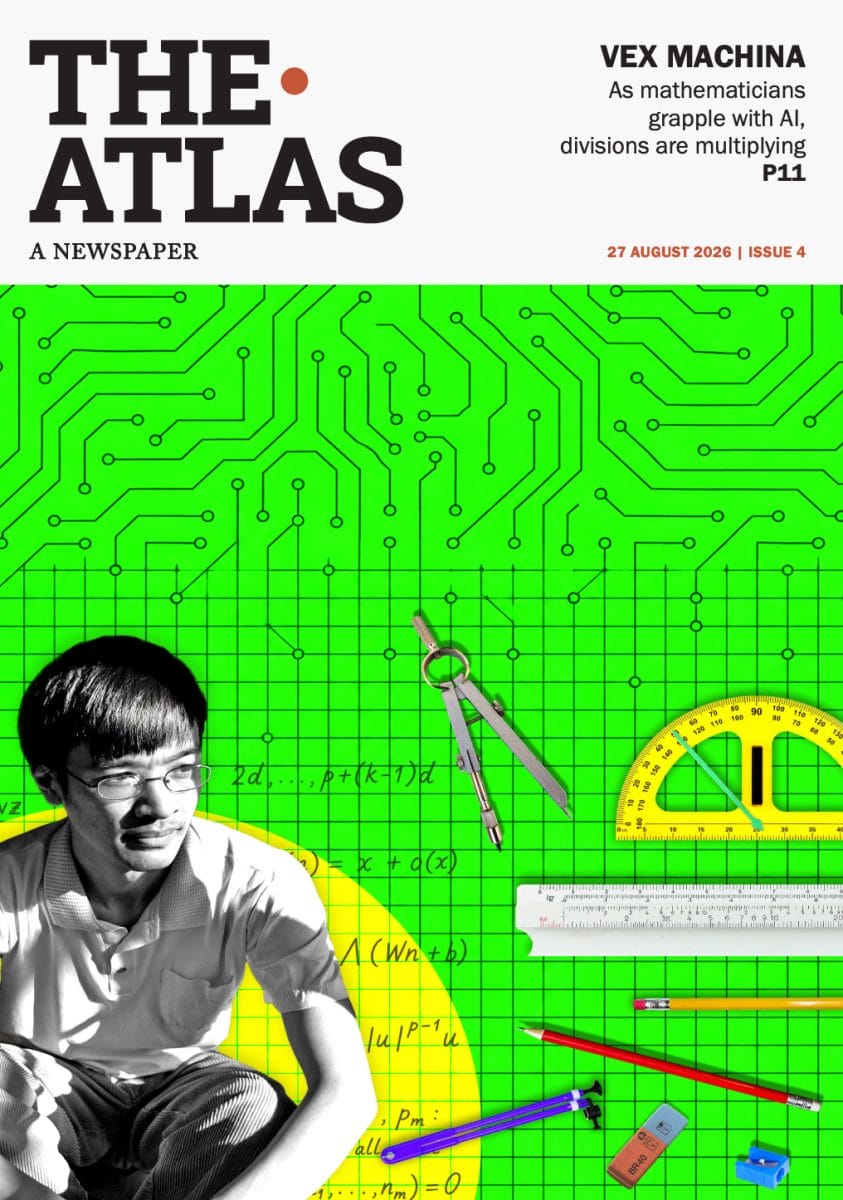
This story first appeared as the cover story in Issue 4 of The Atlas, a new global publication by Coda Story and The Continent. Sign up to the newspaper here.
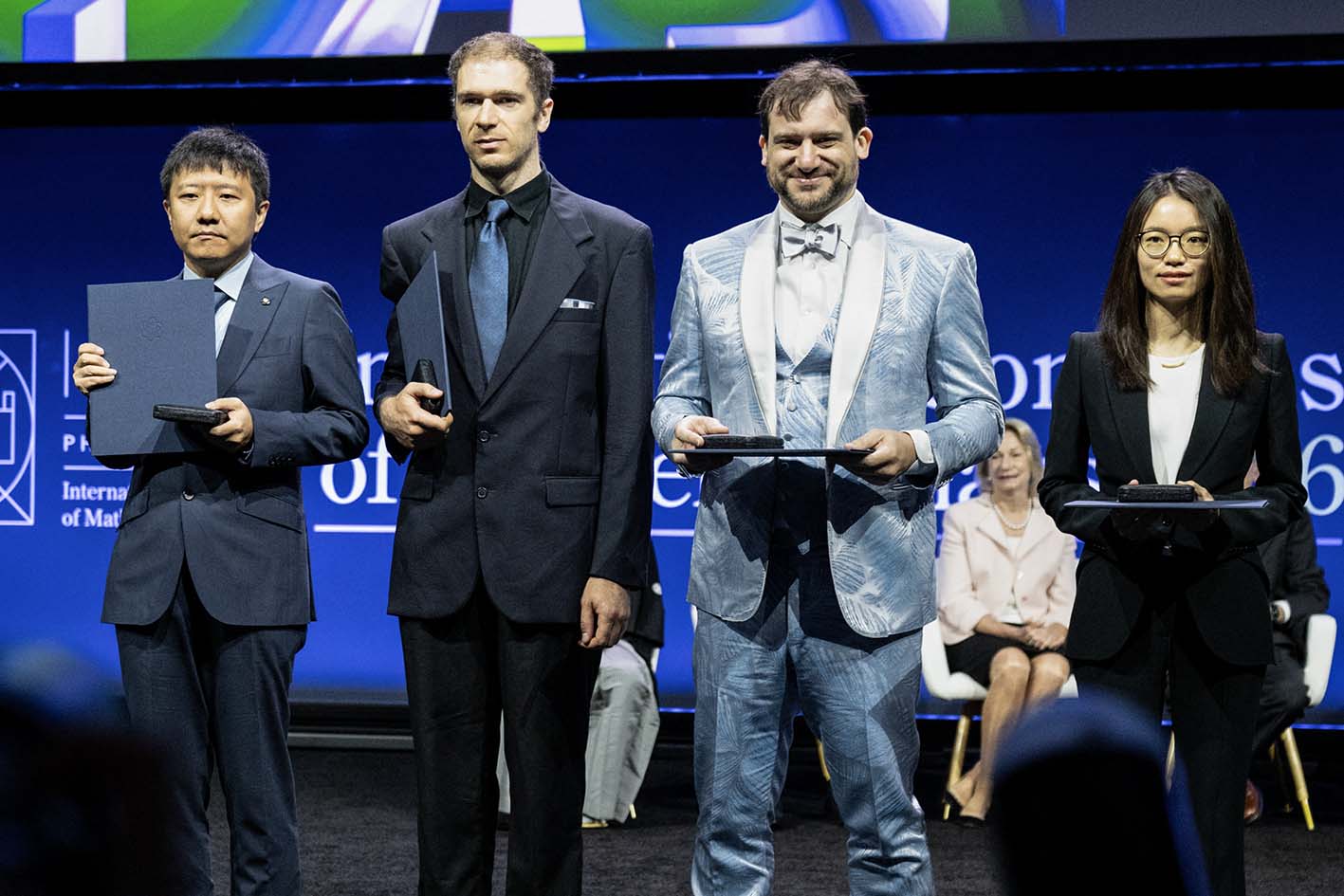
In late July, at the International Congress of Mathematicians (ICM) in Philadelphia, the mathematician Jacob Tsimerman was awarded one of four Fields Medals – the highest honour in mathematics.
A few hours later, Tsimerman announced that he was joining OpenAI.
Tsimerman’s departure from theoretical mathematics, while at the absolu
This story first appeared as the cover story in Issue 4 of The Atlas, a new global publication by Coda Story and The Continent. Sign up to the newspaper here.
In late July, at the International Congress of Mathematicians (ICM) in Philadelphia, the mathematician Jacob Tsimerman was awarded one of four Fields Medals – the highest honour in mathematics.
A few hours later, Tsimerman announced that he was joining OpenAI.
Tsimerman’s departure from theoretical mathematics, while at the absolute peak of his powers, highlights the fault line in a debate that is upending the normally quiet world of higher mathematics. “What a dick move,” said one mathematics professor, speaking to The Atlas off the record.
Tsimerman, who has written extensively about his fear of “omnicidal futures involving artificial intelligence” – a fear that AI could wipe out humanity, closely associated with the AI “doomer” community – has said he will work on OpenAI’s safety team.
Tsimerman and OpenAI did not respond to a request for comment.
In recent months, OpenAI has announced proofs of various longstanding mathematical problems, solved with one of the company’s latest large language models. Other companies have also made advancements: RedNote, a Chinese AI model, obtained a perfect score at the International Mathematical Olympiad in Shanghai in July.
Human mathematicians, at all levels of the profession, are reeling from the implications. Tim Gowers, a professor at the University of Cambridge who helped to verify one of OpenAI’s proofs, has written that even if AI models fail to progress further, “we have still probably entered an era where it will become very difficult for humans to compete with AI at solving mathematical problems”.
This is a startling assessment – and a marketing coup for the likes of OpenAI.
“Mathematicians actually have a special role in this,” said Joshua Grochow, an associate professor in Computer Science and (by courtesy)Mathematics at the University of Colorado Boulder. “The AI companies’ PR pitch is essentially to say, ‘Look, we have solved math. the intellectually hardest thing ever, therefore we can solve everything.’ ”
LLMs have not solved math – far from it. Nonetheless, Grochow added, recently some capabilities have improved. “They are legitimately able to produce real math, new math that they had not produced before. So you can’t deny that utility. You can deny the extent of that utility, but you can’t say it’s all BS.”
Miek Messerschmidt, a senior lecturer in mathematics at the University of the Witwatersrand in Johannesburg, recently used Anthropic’s Claude to take a crack at a problem that had stumped him. Claude solved it within 30 minutes. “How did I feel? You mean emotionally? I was relieved, because I didn’t have to go down this dead end any more. But I was also disconcerted by what this entity could do in such a short amount of time.”
This year’s Fields medallists: mathematicians Yu Deng (China), John Pardon (US), Jacob Tsimerman (Canada) and Hong Wang (China). Photo: Erin Blewett / AFP.
NEW VARIABLES
Mathematics has been disrupted by technological leaps before. The abacus. The mechanical calculator. The blackboard, even, which played an instrumental role in standardising training and mathematical notation (“It’s hard to research, because most of what’s written on blackboards doesn’t stay there very long,” said mathematics historian Michael Barany).
But AI is a different kind of disruption. Where previous advances helped mathematicians expand the frontiers of their knowledge, large language models threaten the livelihoods, and purpose, of mathematicians themselves.
“Our place in society at developing new ideas has been quite unthreatened for quite some time,” said Tim Chartier, a Professor in the Department of Mathematics and Computer Science at Davidson College. “For a long time, the frontier of mathematics could only be expired by the mathematicians themselves. There were no tools that could push into that boundary, except the research mathematician…At this current time, it’s not like we don’t need research mathematicians – but the landscape has changed so quickly, it’s hard to know what that will look like a year from now, two years from now.”
This matters for everyone: for thousands of years, mathematics has been considered to be the foundation of scientific knowledge. There is no physics without mathematics. No astronomy without mathematics. And there is no computer science – or AI – without mathematics. What happens if there are cracks in the foundation?
“I think that LLMs pose an existential threat to the mathematical community,” wrote Tasmin Chu, a PhD student at the California Institute of Technology, in an essay published on 2 August – the day after OpenAI released a set of ten new mathematical results, resolving or making progress on various problems.
“This is a polemic, not a press release,” Chu continued. “I know that others feel the same way; I have spent today crashing out and learning that top mathematicians I know are crashing out.”
Some of what mathematicians are worried about is the same as what everyone else is worried about: that AI will take their jobs; that AI companies have absorbed everyone’s work, and are reproducing it without attribution or compensation; that students aren’t learning properly any more; and that there won’t be jobs for them when they graduate.
But some worries are more specific to the field. Like the fear that, if mathematics becomes too reliant on particular AI models, then AI companies will have the power to restrict access to a select few – or make it prohibitively expensive. That promising young mathematicians, instead of turning to research, will use their talents instead to refine proprietary algorithms, which may or may not be used for the common good. That there will be no one left to understand, let alone vouch for, the mathematics produced by the machines. That objective truth, or anything close to it, is going to be much harder to prove – a fear shared with journalists, incidentally, who find it increasingly difficult to verify whether a photograph is real or fake.
2nd Century relief of a merchant using an abacus. Photo: Musée de La Cour d’Or - Metz Métropole.
MATHEMATICIAN IN THE LOOP
After speaking with more than a dozen leading mathematicians from around the world, The Atlas can confirm that Chu is not alone with her fears: it’s all anyone is talking about. The crisis is existential – and mathematicians are looking to one man in particular to guide them through it.
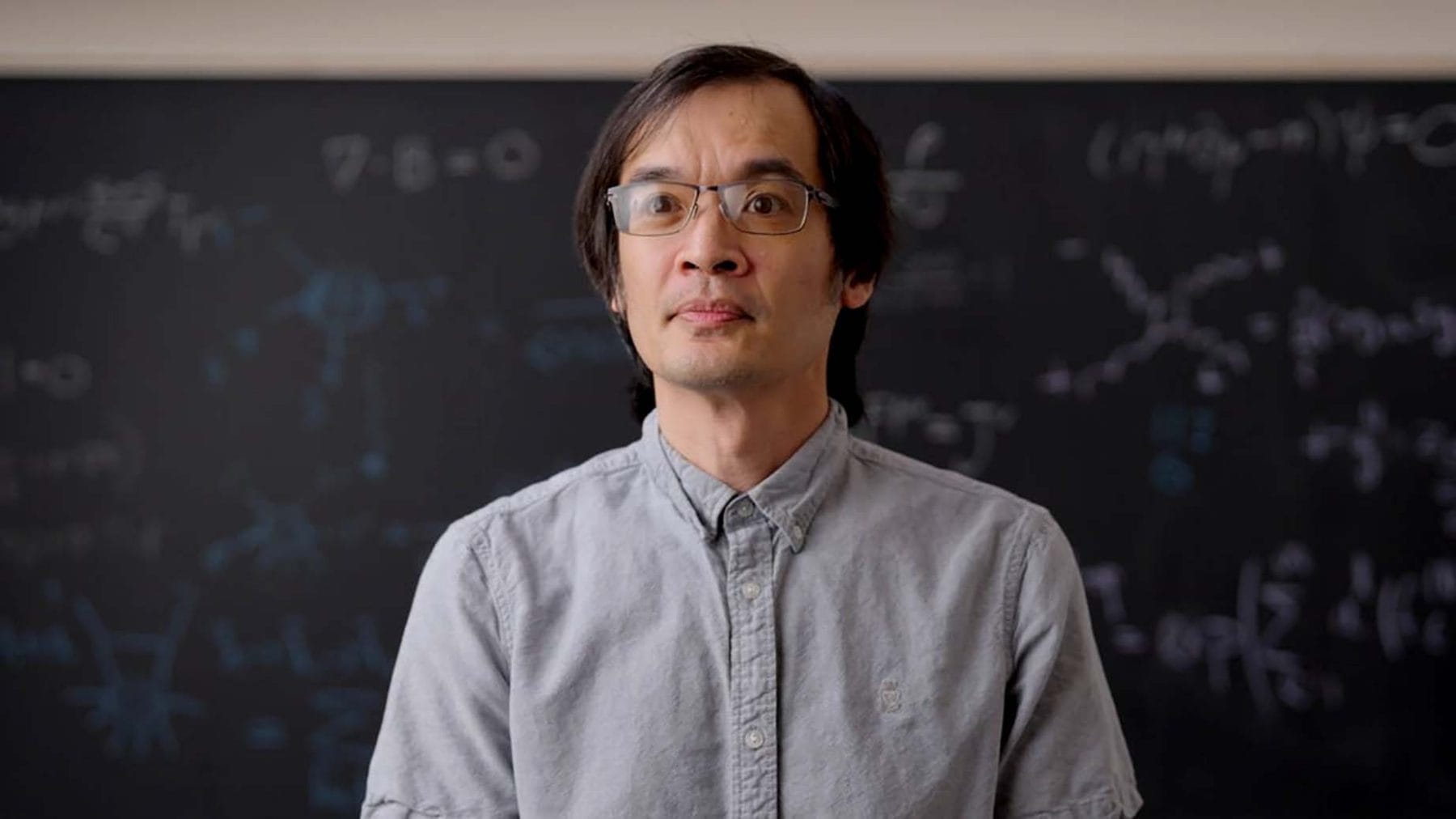
There are no working mathematicians who are truly famous. The closest anyone gets is Terence Tao, a professor at UCLA, who is often referred to as the world’s greatest living mathematician. A prodigy, Tao skipped five grades of school, receiving his masters degree at age 16. By 21, he had earned a PhD from Princeton, and was awarded the Fields Medal just ten years later, in 2006, for his pioneering work with Ben Green on prime number theory.
But what sets Tao apart, in a field infamously incomprehensible to outsiders, is his ability to communicate to both mathematicians and laypeople alike. This has made him a de facto spokesperson for the mathematics community – and extremely influential in setting its norms. “From all accounts he’s a lovely man,” said one researcher, speaking anonymously.
“But the social pressure to agree with Terry Tao is really strong.”
On July 24, the day after Jacob Tsimerman joined OpenAI, Tao gave a public lecture at the ICM titled “Mathematics in the Age of AI”. In it, he presents his “working hypothesis”: that AI tools for mathematics, which he already uses in his own research, will keep getting better. This will allow for collaboration on a vastly greater scale than has ever been possible before, Tao argues, and speed up the pace of research – revealing new, previously unimagined frontiers.
But it will also change, fundamentally, the role of human mathematicians. There will be little point in problem-solving – the computers will handle that. But the humans will still have to do the really hard work: understanding why AI-generated proofs are correct, and explaining this to others. The sooner they embrace this and plan accordingly, Tao concludes, the better.
The Atlas reached out to Terence Tao to request an interview. His human assistant, UCLA media relations officer Holly Ober, declined the request, making a referral instead to a “living document” which is maintained by Tao’s Claude AI assistant, on his website. This document synthesises Tao’s current thinking on AI, based on his public writings and talks, even “interviewing” Tao with follow-up questions.
As per his AI assistant, Tao believes that the topic of AI in mathematics is too important to be left to just a small number of spokespeople – and that his own “influence on this discussion should diminish as the rest of the community steps up.”
Terence Tao, often referred to as the world’s greatest living mathematician. Photo: OpenAI Academy.
AN UNSOLVED EQUATION
Not everyone believes in the inevitability of AI defining the future of mathematics. According to several sources, both organisers and funders were disappointed with the turnout at the ICM in Philadelphia. Despite the gravity of the occasion, the congress was not at capacity.
Ila Varma and Tarik Aougab, associate professors at the University of Toronto and Haverford College respectively, may have had something to do with that. In March, they launched a petition to boycott the ICM due to the ongoing war in Iran, increasing authoritarianism in the United States and the risks faced by visiting academics – if they were even allowed in. “AI companies were invited, but most African mathematicians who tried to attend couldn’t get visas,” Varma said.
More than 2,600 people signed the petition. For Varma, this is evidence that mathematicians may yet use their status to resist the influence – and the cash – of the big AI companies.
“There’s an idea that the positionality of mathematics in society is to decide who’s smart, who’s worthy of the most lucrative career opportunities and the privileges that go along with it. And now we are being asked to take this technology that is likely to be extremely unhealthy for users, that’s bad for the environment, this thing built on unethical labour, and our discipline is being used against many of our wishes to tell society that this thing is intelligent, and that you should let it do your thinking for you.”
Michael Harris, a professor at the Institut de Mathématiques de Jussieu in Paris, was at the ICM in Philadelphia. “The talks I attended on AI, starting with Tao’s public lecture, took pains to insist on the need for human mathematicians to make sense of anything produced in the name of the discipline, by machines or by humans,” he said. “There is a growing resistance to any use of AI whatsoever in mathematics, especially among young people, and this will become evident over the next few months.”
One of the clearest voices of dissent belongs to Max Weinreich, Assistant Professor of Mathematics at the City University of New York.
In an essay published earlier this month, Weinreich makes the case against what he describes as “artificial mathematics”: “Mathematicians do not need to use AI, nor should we use AI; soon, I argue, you will not want to have your name associated with AI. Instead, we should use our intellectual authority to oppose its development.”
His opposition is about more than mathematics, he told The Atlas. In his view, the environmental and financial implications of the AI boom pose major societal risks – and mathematicians, given their privileged position, are one of the few groups of people who can do anything about it.
As John Fletcher, a theoretical physicist and mathematician, observed: “There is a lot of power in being perceived as the smartest people in the world.”
Po-Shen Loh, a professor at Carnegie Mellon and former coach of the US International Mathematical Olympiad team, backs mathematicians to figure it out – by treating it like a maths problem. “AI is making mathematicians engage with the real world. They are smart enough to realise they have an existential crisis. They’re quickly racing down to discover all the dead ends, to see what works and what doesn’t.”
And when they figure it out, maybe they’ll let the rest of us know.
A version of this story, edited for length, first appeared in The Atlas newspaper. Additional reporting by: Shougat Dasgupta, Masho Lomashvilli, Irina Matchavariani.
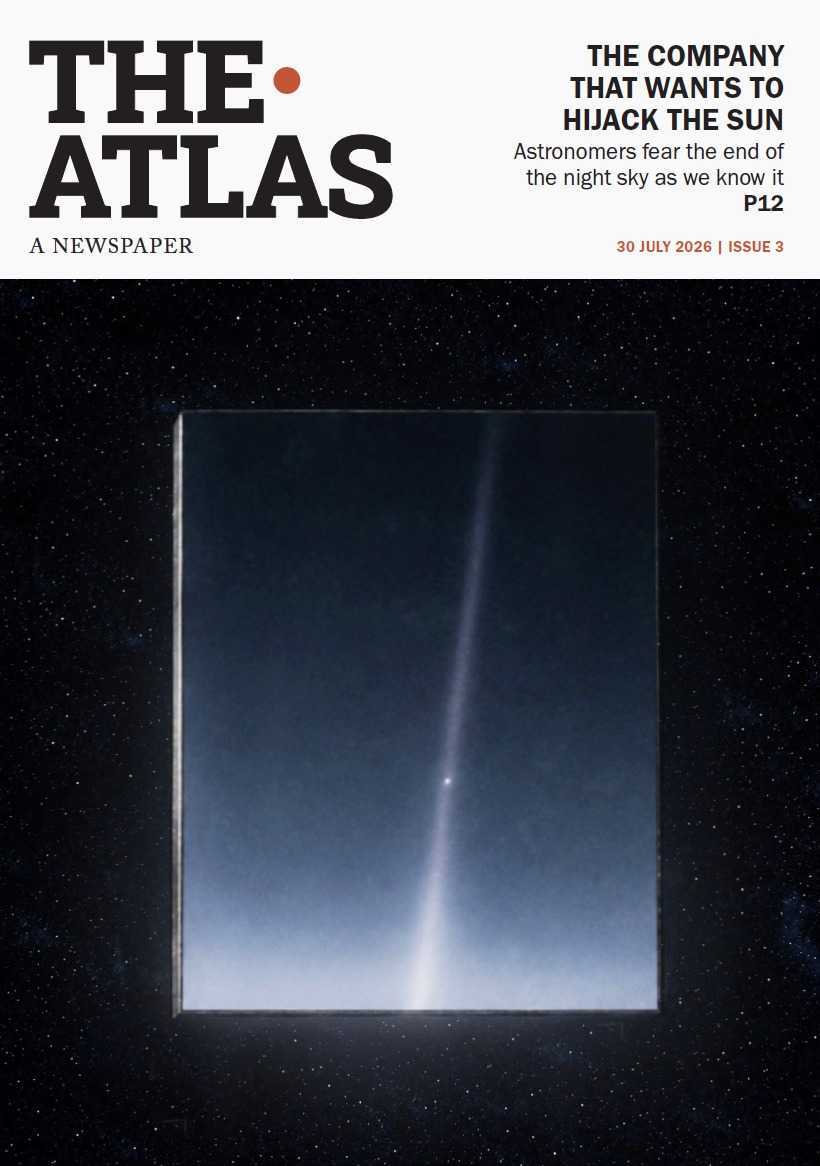
Astronomy, our window into the rest of the universe, happens in the dark. Planets, stars and galaxies – all the mysteries of the cosmos – only reveal themselves at night. But the night sky may be getting much brighter, thanks to an American company with a plan to conquer darkness itself by sending 50,000 giant mirrors into space.
What you are reading first appeared as a cover story for The Atlas, our new global publication with The Continent. Sign up here to get the next edition delivered to
Astronomy, our window into the rest of the universe, happens in the dark. Planets, stars and galaxies – all the mysteries of the cosmos – only reveal themselves at night. But the night sky may be getting much brighter, thanks to an American company with a plan to conquer darkness itself by sending 50,000 giant mirrors into space.
What you are reading first appeared as a cover story for The Atlas, our new global publication with The Continent. Sign up here to get the next edition delivered to your inbox on August 27.
Astronomers are panicking.
It is an “existential threat” to optical astronomy, says the European Southern Observatory. A “disastrous” idea that will “permanently scar” the night sky, according to the Royal Astronomical Society. The American Astronomical Society told Nature it “would probably mean the end of ground-based astronomy, or optical astronomy, at least.”
Sthabile Kolwa agrees. “It will take away a very crucial part of our civilization,” she tells The Atlas. Kolwa, a senior lecturer in astronomy at the University of South Africa, studies the life cycles of galaxies, but today her concerns are more immediate. “It might come to this, that we just have to find them in the parking lot and say, ‘Hey, what are you guys doing? You’re going to ruin science for us.’ ”
Like Uber, but for the sun
The parking lot in question is in Hawthorne, California, outside the headquarters of Reflect Orbital. They call themselves The Sunlight Company. The start-up is celebrating: Earlier this month, the United States Federal Communications Commission (FCC) approved the launch of Eärendil-1, likely in a few months time.
This satellite, named for a character in JRR Tolkien’s The Silmarillion, will unfurl an 18m x 18m mirror in low Earth orbit. It’s designed to reflect sunlight onto the dark side of the earth, lighting a 5km2 patch of land with the strength of four full moons.
It is a proof of concept.
By 2035, Reflect Orbital wants 50,000 of its mirrors in space, delivering illumination “comparable to daylight” on demand to paying customers (“sunlight is the new oil,” says chief executive Ben Nowack). The company says this will allow solar panels to generate clean energy overnight; provide “safer, evenly-lit streets” to cities that pay for it; and keep construction sites and farms working 24/7.
There will be an app, of course, offering “sunlight as a service” – lighting up the night will be as easy as ordering an Uber.
Clean, renewable energy is at the heart of the company’s vision, a spokesperson told The Atlas in a statement. Reflect Orbital declined to respond to specific queries and said it is in constant dialogue with astronomers, scientists and environmental researchers to mitigate the impact of the light pollution: “We are able to dim the brightness of the service and turn it off at any stage. We control where the light shines when serving an authorised customer. Most people and most places will never see this light. It is precise, targeted and customers will require permits to receive the service.”
Circadian arrhythmia
A new research paper, published in May, challenges Reflect Orbital’s position. Its author, the European Southern Observatory’s Oliver Hainault, concluded that the company’s 50,000 satellites would increase the background brightness of the sky by 300% – even when their mirrors are pointed somewhere else. This, coupled with a proposal from Elon Musk’s SpaceX to build vast data centres in space, would go “beyond the limit” of what astronomy can withstand.
What that means, in practice, is that the images from ground-based telescopes will be dramatically less useful, marred by streaks of light from passing satellites. The most distant light sources won’t be visible at all.
This will obscure evidence of other galaxies, hinder research into black holes and other cosmic phenomena, and potentially prevent early warnings of asteroid approaches. Cutting-edge astronomy will only be possible from space-based telescopes like the James Webb and the Hubble – access to which is already massively oversubscribed, and subject to political interference.
The night sky will look different to the naked eye, too. “The next time you’re away from urban light pollution, spend some time outdoors after dark and enjoy the view of the Milky Way and the constellations that have inspired awe since humankind woke to consciousness. Chances are those views are not here to stay forever,” wrote journalist Tereza Pultarova for Space.com.
Anna Jibladze
Running out of space
The night sky is already a lot brighter than it was 150 years ago, when light bulbs started to become commonplace. According to Dark Sky International, a US-based nonprofit that advocates against light pollution, 80% of Earth’s human population already lives under some form of sky glow, most of which is generated on land. This has forced astronomers to seek out “dark sky places,” like the Atacama Desert in Chile or the Upper Karoo in South Africa, for their telescopes.
Humans can adapt to less darkness. But it is much harder for animals and ecosystems that have evolved alongside predictable rhythms of day and night. Nocturnal predators lose the ability to hunt; sea turtle babies can’t find their way to the sea; migratory birds are thrown hopelessly off course; and moths expend all their energy helplessly chasing artificial light sources.
“It’s almost like we are on a mission to obliterate natural darkness from earth,” said Ruskin Hartley, Dark Sky’s chief executive. “And now rather than do it street by street and bulb by bulb, let’s do it from space.”
Space is, in theory, protected by the Outer Space Treaty, a 1967 agreement signed by 110 countries, including all the major space superpowers. It states that “space is the province of all mankind." But that’s not what’s actually happening, Hartley argues. “In the US, it’s the most wealthy, most powerful individuals who are gobbling up as much of that orbital space as they can before someone else can get that opportunity” – with China, Russia and Europe all scrambling too for a greater presence in low Earth orbit.
“Who gets to choose that we light up the night sky? Who gets to make that decision?” Ruskin asks. In the US, it is the FCC’s job to decide what satellites are allowed in space. But it has said that assessing the impact of light pollution or environmental damage is not within its remit. Instead, it wants to slash regulation so American companies can take advantage of the “space industrial revolution.”
And Reflect Orbital has rich and powerful backers. Earlier this year, it secured a $1.5-million contract from the US air force, hinting at possible military applications for its mirrors. Last year, it raised $20-million from three venture capital firms, including Sequoia Capital, one of the biggest investors in Silicon Valley. Sequoia also owns a multibillion-dollar stake in SpaceX, which has its own plans for low earth orbit.
There are already more than 10,000 Starlink satellites up there, giving Elon Musk unprecedented influence over global communications. The company wants to launch one million more satellites over the next few years to build a network of space-based data centres. In addition to the light pollution, astronomers worry the potential for collisions will increase dramatically, as will risks to the ozone layer.
A brighter future
On her blog Higher Dimensions, the astronomy professor Janna Levin contemplates our brighter future. “It is quite possible that the hot glow of the swarm of data satellites will saturate the night, washing out the stars from our perspective on Earth. We’ll look up into the sky and instead of Zeus transformed into a swan outlined in a constellation of a few stars, the machine gods will literally loom above us, glowing with radiant heat, making declarations, predicting the weather, forecasting then determining our fate.”
Kolwa, the South African astronomy lecturer, offers a different metaphor: that of empires “colonizing low Earth orbit.” This was an ambition of one of the most infamous imperialists of them all, Cecil John Rhodes, who said that he looked up at the stars and thought: “I would annex the planets if I could; I often think of that. It makes me sad to see them so clear and yet so far.”
But it hasn’t been colonized just yet.
“I’m still trying to figure out what we can do, what responsibility we have as scientists,” says Kolwa. “How could we engage our communities to stand up to these corporations and say no? We must keep our night skies dark, as dark as possible.”
Grammarly, a company with Ukrainian roots, announced its intent to acquire AI email writing app Superhuman as part of its expansion into an AI productivity platform, the company said in a press release on July 1. Grammarly is the most valuable company with Ukrainian roots, reaching $13 billion valuation as of 2021. Grammarly was founded in 2009 in Kyiv by Oleksii Shevchenko, Maksym Lytvyn, and Dmytro Lider.According to Grammarly's press release, email is Grammarly's top use case, with the platfo
Grammarly, a company with Ukrainian roots, announced its intent to acquire AI email writing app Superhuman as part of its expansion into an AI productivity platform, the company said in a press release on July 1.
Grammarly is the most valuable company with Ukrainian roots, reaching $13 billion valuation as of 2021. Grammarly was founded in 2009 in Kyiv by Oleksii Shevchenko, Maksym Lytvyn, and Dmytro Lider.
According to Grammarly's press release, email is Grammarly's top use case, with the platform editing over 50 million emails weekly.
Superhuman is an AI email application that the company says helps users respond to emails faster and reduces time spent on email communications.
Users are already sending and responding to 72% more emails per hour after using Superhuman compared to the previous period, according to Grammarly.
"This is the future we've been building toward since day one: AI that works where people work, not where companies want them to work," said Shishir Mehrotra, Grammarly's CEO.
The acquisition follows Grammarly's recent purchase of Coda, a productivity tool company. The combined platforms will allow users to work with multiple AI agents for different tasks within email communications.
Grammarly says that its service is used daily by over 40 million users, generating annual revenue of more than $700 million for the company.
Russia has the capacity to launch as many as 500 Iranian-designed Shahed attack drones at Ukraine in a single attack, but doing so on a daily basis is not possible, Ukraine's military intelligence chief Kyrylo Budanov said on July 2, according to Suspilne.In recent weeks, Russia has intensified its drone assaults on Ukrainian cities, often launching hundreds in a single day. The largest aerial attack since the start of the full-scale invasion occurred overnight on June 29, when Moscow launched 4
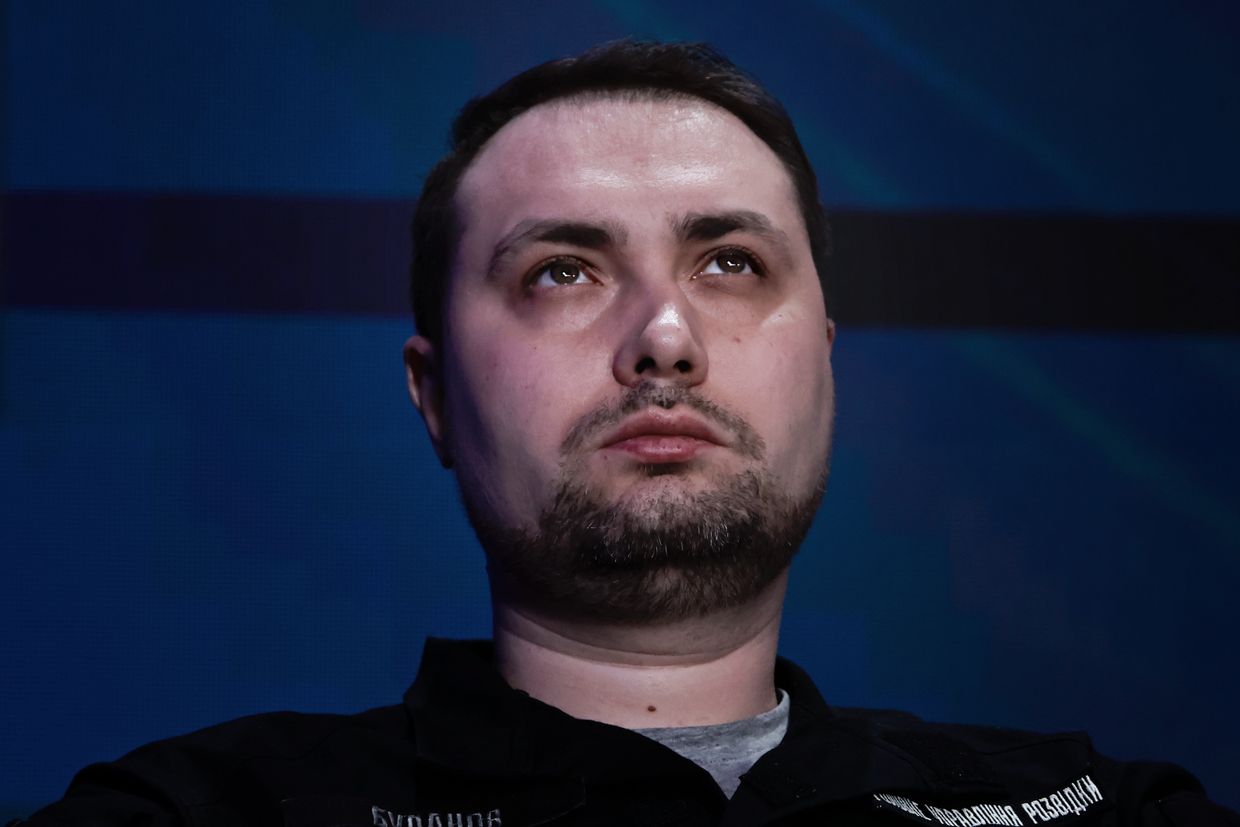
Russia has the capacity to launch as many as 500 Iranian-designed Shahed attack drones at Ukraine in a single attack, but doing so on a daily basis is not possible, Ukraine's military intelligence chief Kyrylo Budanov said on July 2, according to Suspilne.
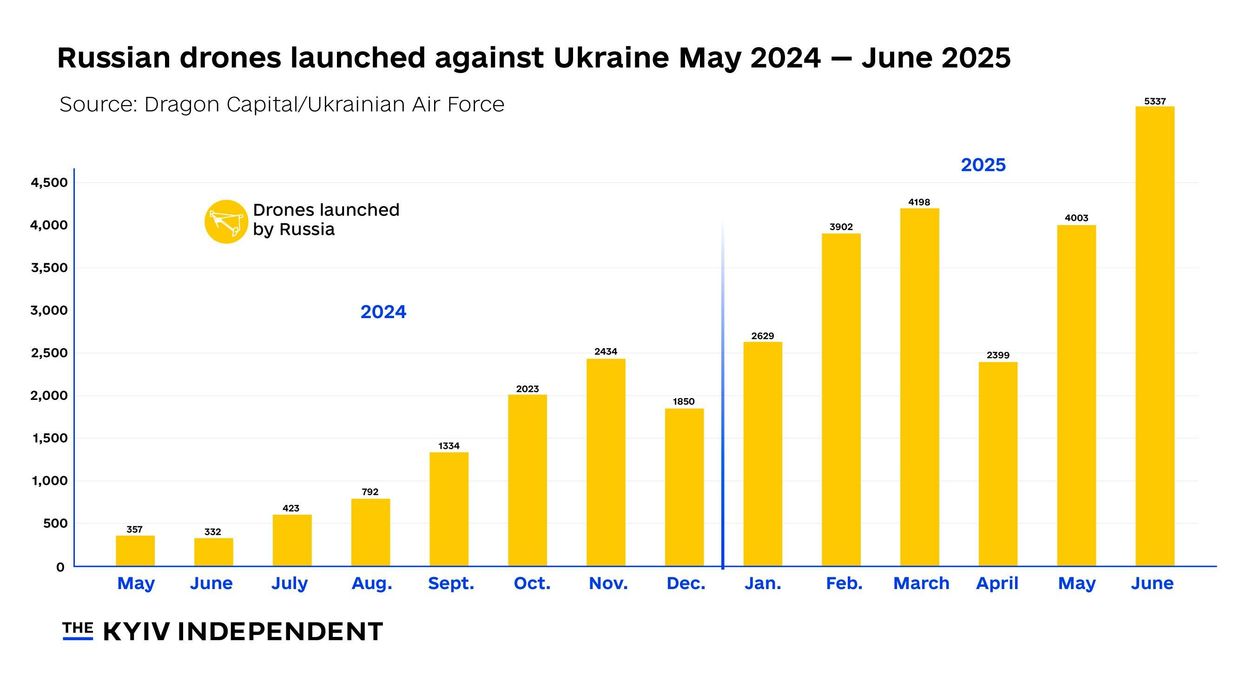
In recent weeks, Russia has intensified its drone assaults on Ukrainian cities, often launching hundreds in a single day. The largest aerial attack since the start of the full-scale invasion occurred overnight on June 29, when Moscow launched 477 drones and 60 missiles across Ukraine.
"Launching 450–500 Shaheds every day — it's just not realistic," said Budanov during a ceremony recognizing five Ukrainian intelligence achievements in the national record book, according to public broadcaster Suspilne.
"But unfortunately, they do have the ability to do it periodically. They can realistically launch up to 500 in one strike," Budanov added.
Budanov also said Russia is upgrading the capabilities of the Shahed-type drones by improving their CRPA (Controlled Reception Pattern Antenna) systems, which protect the drones from GPS jamming. He noted that Russian engineers are now producing 16-channel CRPA antennas, which are harder to counter electronically.
Russian drones launched against Ukraine by month (Nizar al-Rifai/The Kyiv Independent)
"These antennas are currently produced in Russia, but the engineer who developed this CRPA antenna was here in Ukraine," Budanov said.
"Back in the early 2000s, no one here needed it, so the engineer moved to Russia. One (of the two engineers involved in the development) has already died under unclear circumstances. The other is still alive, though probably not for long."
Russia has used thousands of Shahed-type drones throughout its full-scale invasion to strike Ukrainian cities and infrastructure, often in large overnight waves. Ukrainian air defenses have adapted over time but face growing challenges as Moscow improves drone resilience and electronic warfare capabilities.
President Volodymyr Zelensky said that Moscow has launched 28,743 Shahed-type drones at Ukraine since the start of Russia's full-scale invasion.
Budanov also said Russia has made unsuccessful attempts to develop its own naval drones. The last known effort came in early June, when experimental models detonated before reaching Ukrainian territorial waters, he said.
"They didn't achieve results. Based on our information, they were heading toward the city of Yuzhne, searching for targets," he said.
Ukraine has been using domestically developed Magura naval drones to target Russian military assets in the Black Sea, keeping much of Russia's fleet pinned in port.
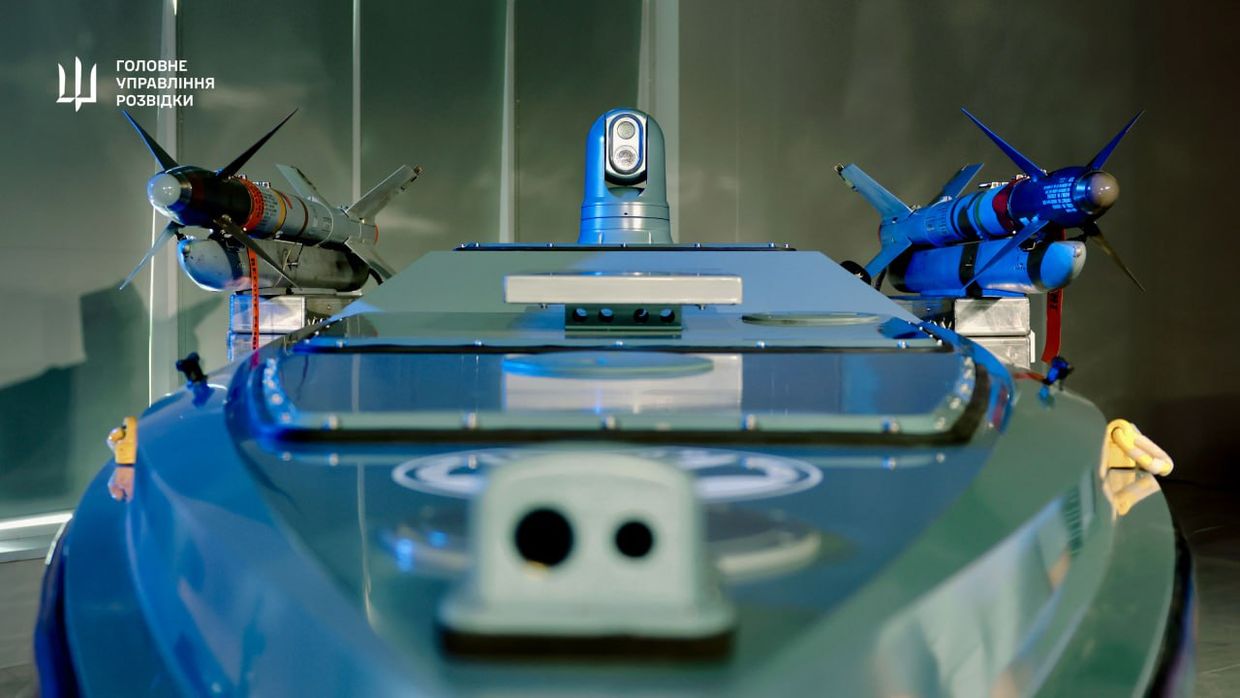
Despite their small size, the unmanned surface vessels have proven effective, including in a May 2 operation when Ukraine's military intelligence used Magura-7 drones armed with air-to-air missiles to shoot down two Russian Su-30 fighter jets near Novorossiysk. It was the first recorded instance of fighter jets being downed by naval drones.
The Defense Ministry has approved the Ukrainian-made ground-based robotics complex "Murakha" ("Ant") for combat operations, the ministry announced on June 28. Since 2024, Ukraine has been scaling up robotics development in hopes that mass production of unmanned ground vehicles (UGVs) will "minimize human involvement on the battlefield." The Murakha is a tracked robotic platform designed to support front-line units working under challenging conditions, such as under enemy artillery and in heavily
The Defense Ministry has approved the Ukrainian-made ground-based robotics complex "Murakha" ("Ant") for combat operations, the ministry announced on June 28.
Since 2024, Ukraine has been scaling up robotics development in hopes that mass production of unmanned ground vehicles (UGVs) will "minimize human involvement on the battlefield."
The Murakha is a tracked robotic platform designed to support front-line units working under challenging conditions, such as under enemy artillery and in heavily mined terrain, the Defense Ministry said.
Its larger size makes it one of Ukraine's leading UGVs in terms of load capacity. The Murakha can reportedly carry over half a ton of weight across dozens of kilometers. It can also cross difficult terrain and shallow water.
According to the Defense Ministry, the Murakha's multiple control channels allow it to function successfully even in areas of the battlefield where Russian electronic warfare (EW) systems are operating.
Mobile robots are capable of performing several tasks on the battlefield, including offensive and defensive activities, evacuation of the wounded, logistical support for units, and mining and demining.
In April, the Defense Ministry unveiled the D-21-12R UGV, a ground-based robot equipped with a machine gun.
The European Commission has proposed that Ukraine join the European Union's mobile roaming area starting January 1, 2026, providing Ukrainian users the ability to make phone calls, texts, and use mobile data in the bloc's 27 countries at no extra charge. "We want Ukrainian citizens to stay connected to their loved ones across the EU, as well as in their home country. That's why we propose that Ukraine join our roaming family," European Commission President Ursula von der Leyen said in a statemen
The European Commission has proposed that Ukraine join the European Union's mobile roaming area starting January 1, 2026, providing Ukrainian users the ability to make phone calls, texts, and use mobile data in the bloc's 27 countries at no extra charge.
"We want Ukrainian citizens to stay connected to their loved ones across the EU, as well as in their home country. That's why we propose that Ukraine join our roaming family," European Commission President Ursula von der Leyen said in a statement.
The proposal, first announced on June 16, will serve as a means of integration into the European Union's "Roam like at Home" provision in affect between all EU nations. The proposed change will impact the over four million Ukrainian refugees living in the EU.
Ukraine's full integration in the roaming provisions will replace voluntary measures that "allowed for roaming without surcharges and affordable international calls for EU and Ukrainian citizens abroad," according to the European Commission. The current measure will extend to December 31, 2025, ahead of the planned integration.
If approved, Ukraine will become the only country outside of the EU to join the bloc's "Roam like at Home" policy.
The move, which awaits European Council approval, comes as Ukraine continues to implement reforms in pursuing membership in the European Union.
Ukraine applied for EU membership at the onset of Russia's full-scale invasion in 2022. The country has made quick progress, achieving candidate status within months, with the initial negotiations formally launching in June 2024.
Since the start of 2025, Ukraine has opened three negotiation clusters under Poland's rotating presidency.
Poland lead the EU Council's presidency until June, and Denmark will take over the role in July. Ukraine aims to open the remaining three negotiation clusters in the second half of 2025 under the Danish chairmanship, the President Volodymyr Zelensky said.
There are six accession negotiation clusters, consisting of several individual chapters. Negotiations prepare a candidate country to become an EU member.
The EU’s Commissioner for Enlargement, Oliver Varhelyi, said that Ukraine could potentially join the bloc by 2029 if it successfully implements necessary reforms.

 Connexion







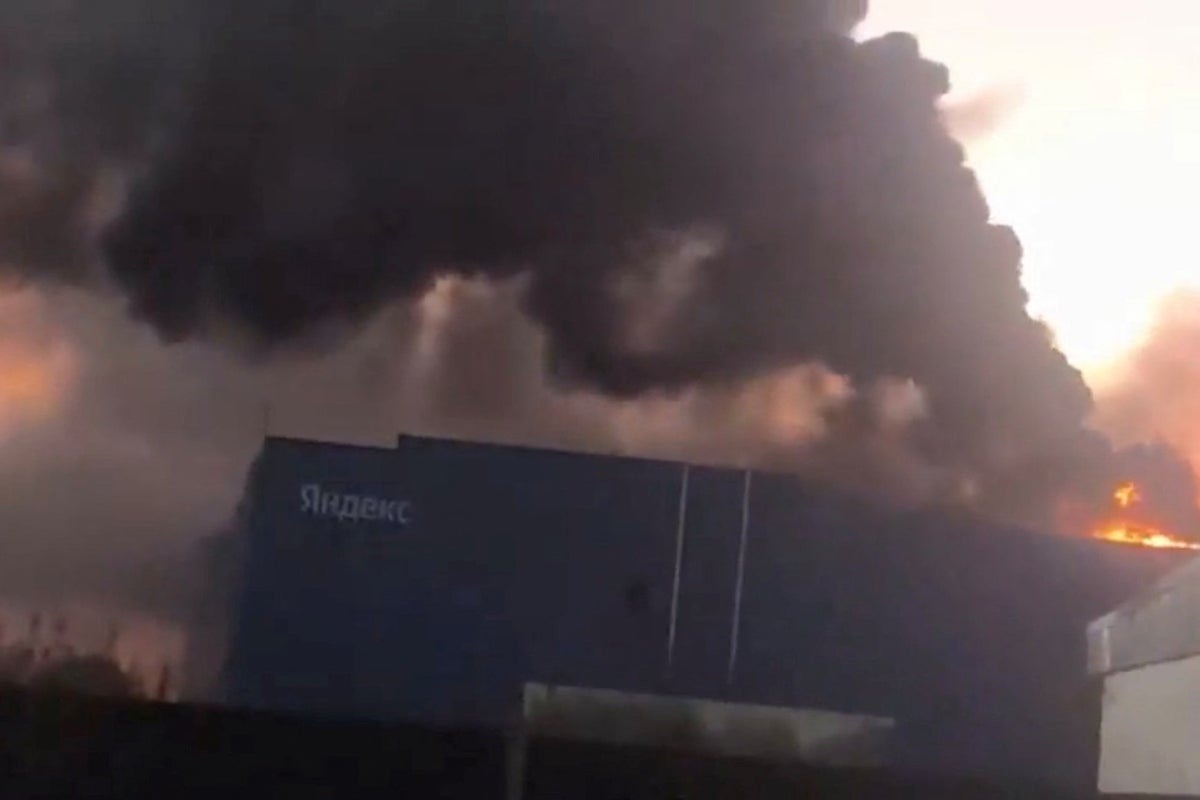


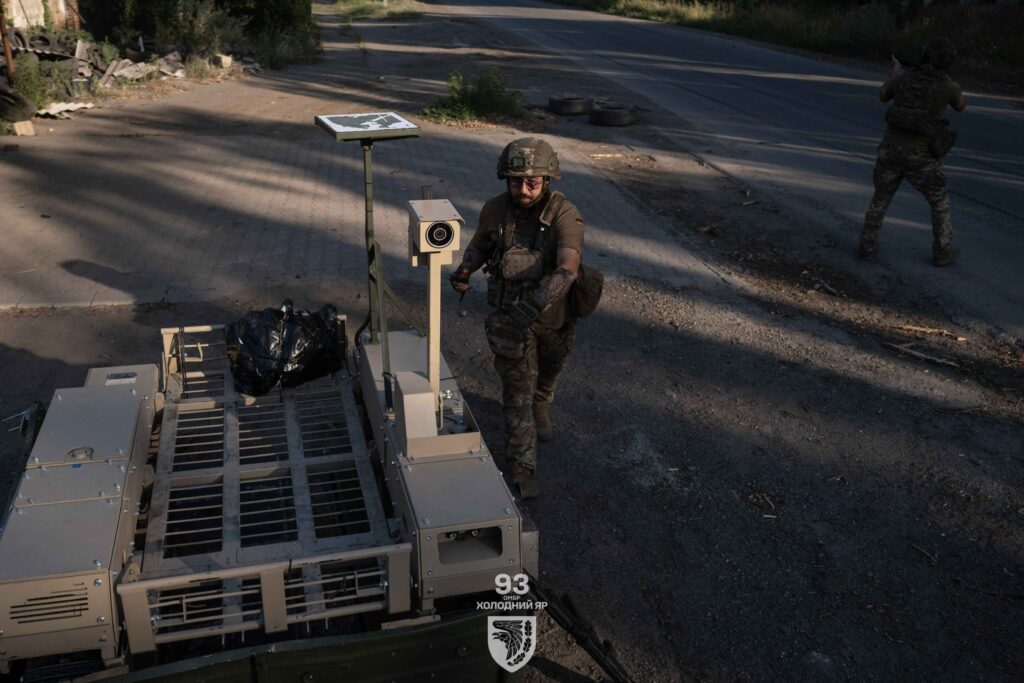
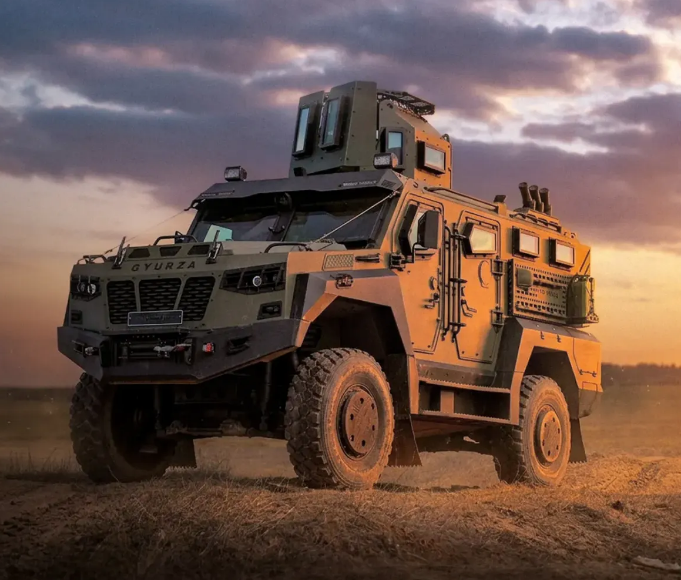
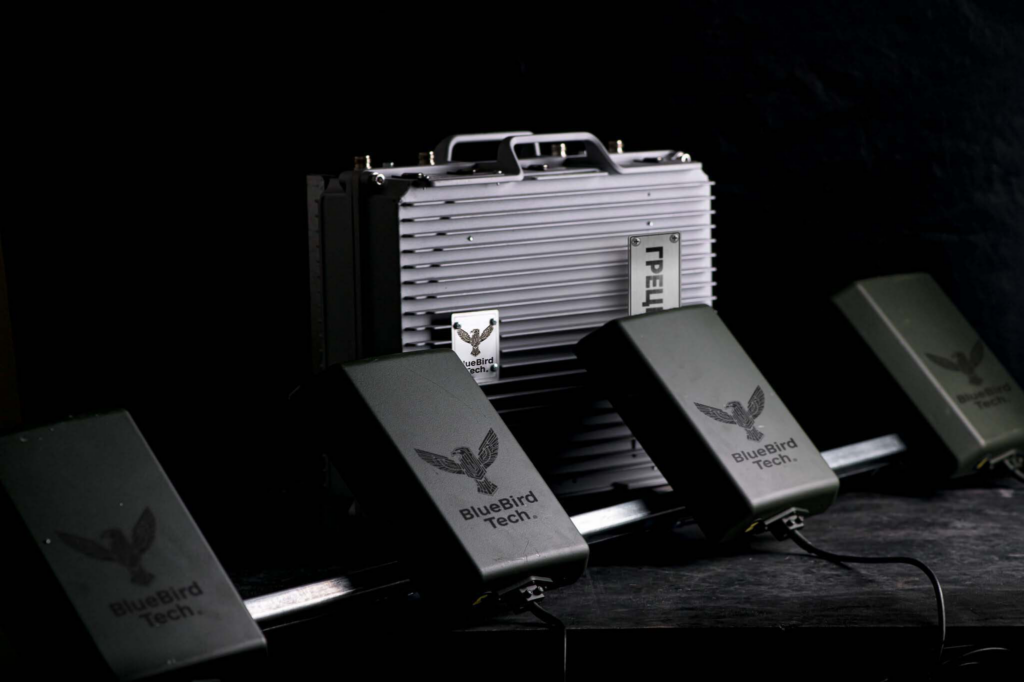

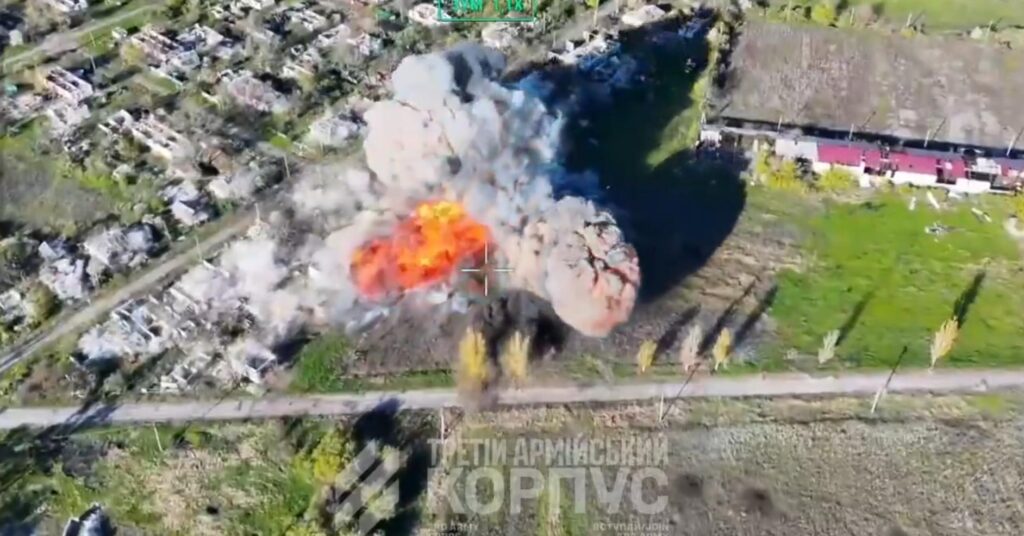

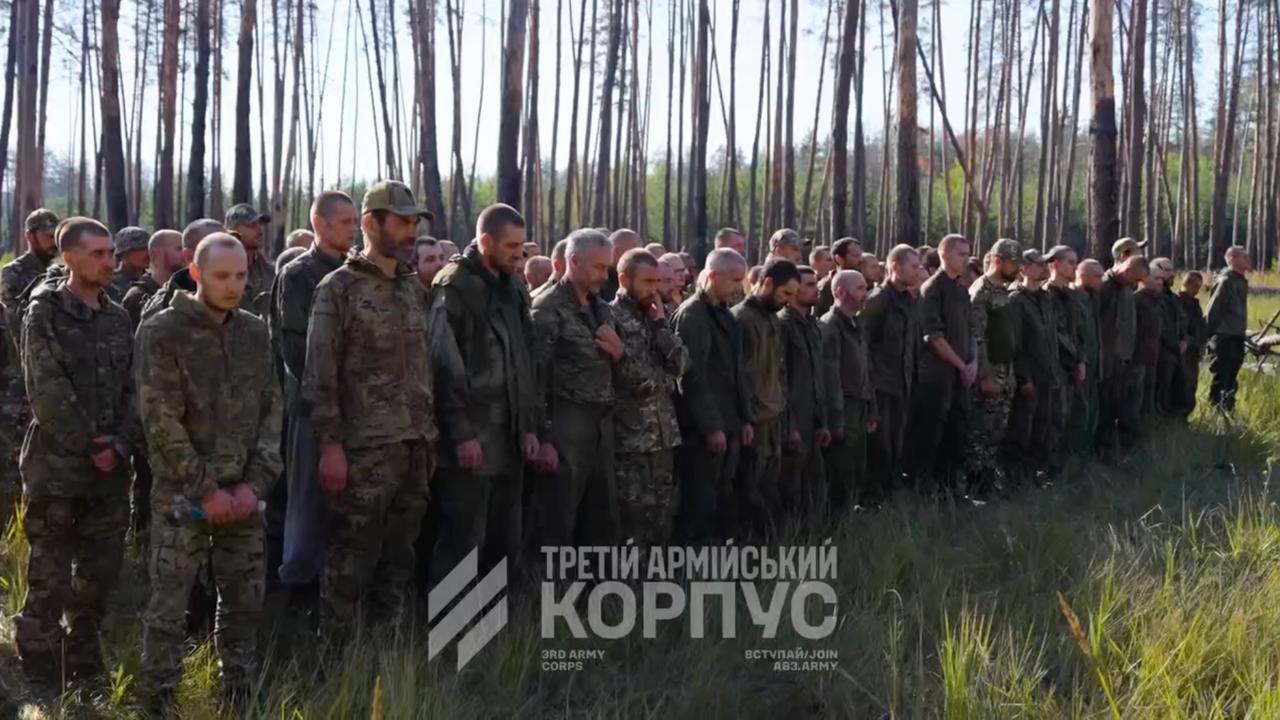
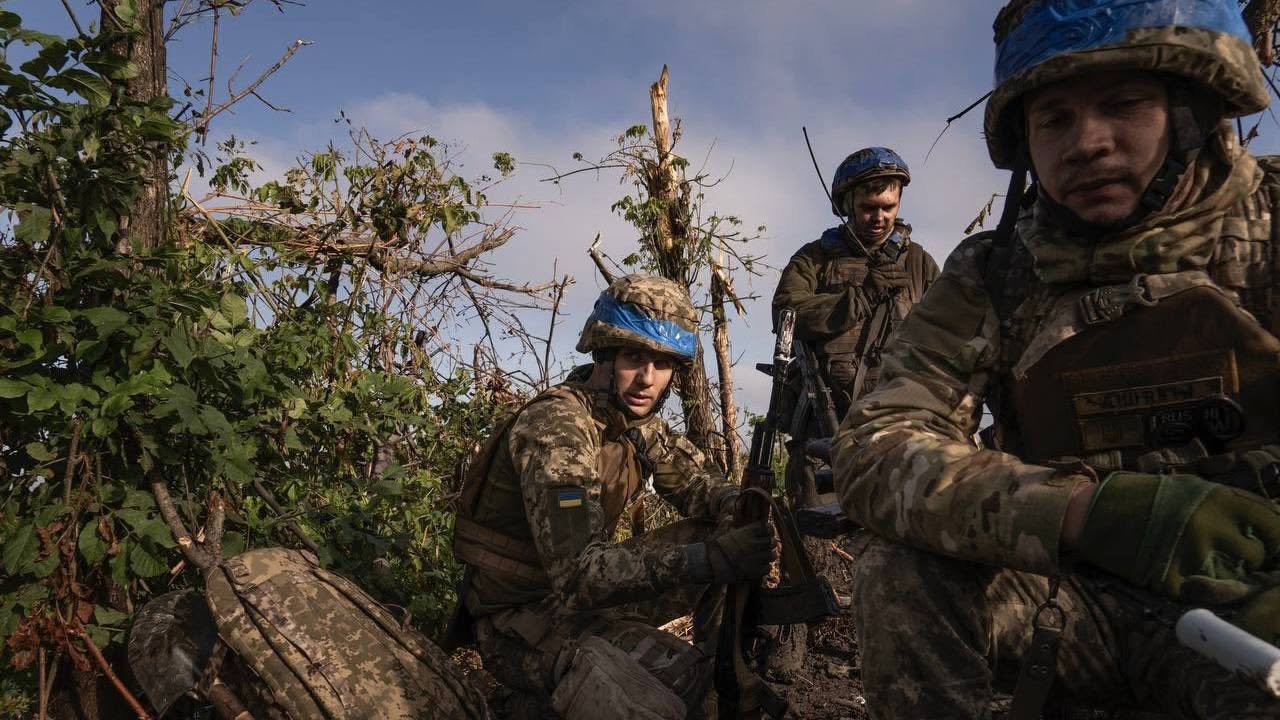

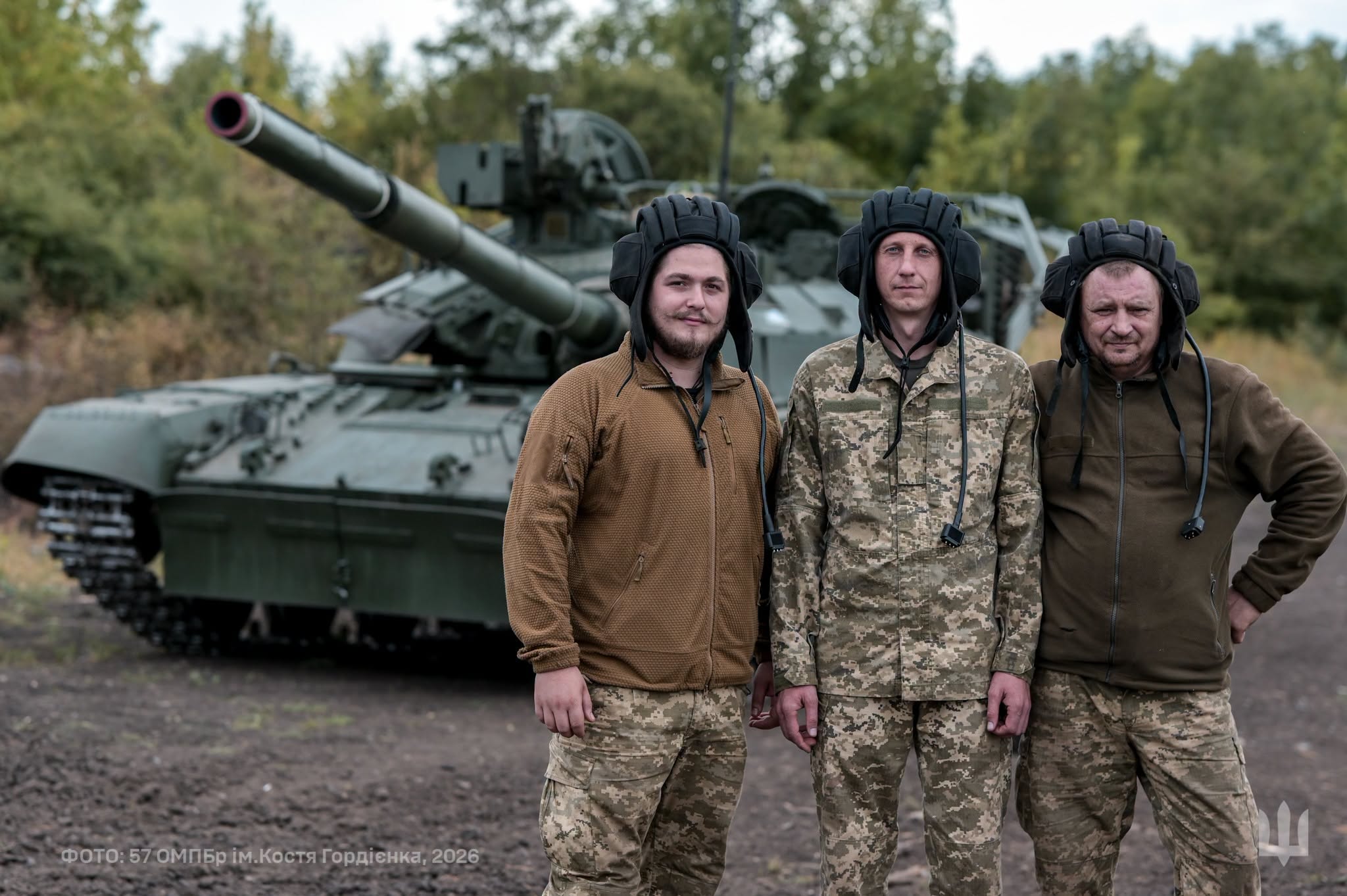


 T-62M capturés toujours là!