How U.S. Support to Ukraine Has Evolved Under Trump

© Tierney L. Cross/The New York Times


© Tierney L. Cross/The New York Times

Analysts say fuel will take weeks to ship and quantity is too small to affect prices, while full deal is unlikely to be met given damage to Russian refineries
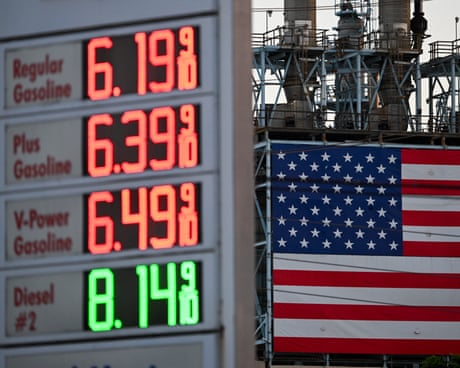
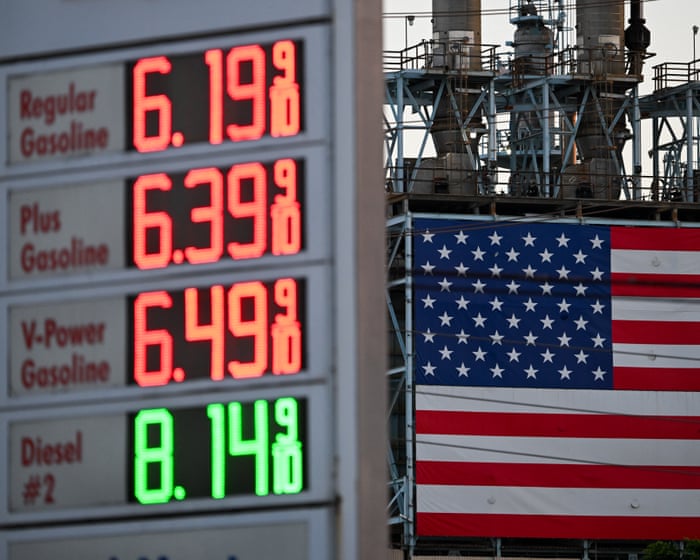
Donald Trump’s deal with Vladimir Putin to temporarily lift sanctions on US imports of Russian diesel will have little “meaningful” effect on motorists and businesses in the US and overseas, energy and foreign policy analysts have predicted.
The US president infuriated Volodymyr Zelenskyy when he announced the deal on Friday, writing on Truth Social that the agreement with his Russia counterpart to supply millions of tonnes of diesel was essential to reduce fuel prices in the US, which have soared after his decision to go to war against Iran.
Continue reading...
© Photograph: Patrick T Fallon/AFP/Getty Images

© Photograph: Patrick T Fallon/AFP/Getty Images

© Photograph: Patrick T Fallon/AFP/Getty Images

The US president has taken credit for far-right victories across Latin America, but those wins have had more to do with fears of gang crime than his meddling
Donald Trump has enjoyed very few foreign policy victories since returning to power. From failed wars to failed peace processes, his second term in office has been marked by one costly blunder on the world stage after another. In Latin America, though, the US president has a different story to tell.
His administration’s national security strategy outlined how the US wanted to “restore American preeminence in the Western Hemisphere”. It was a brazen document, laying out how his government would interfere in the political life of countries it considered part of its sphere of influence, rewarding governments and movements that are “broadly aligned with our principles and strategy”.
Continue reading...
© Photograph: Bruna Prado/AP

© Photograph: Bruna Prado/AP

© Photograph: Bruna Prado/AP


© Adriana Zehbrauskas for The New York Times


© Adriana Zehbrauskas for The New York Times


Russia is attempting to build a new "shadow fleet" to "circumvent sanctions and sustain revenues from its gas exports," the UK Foreign Office said on 1 October. Britain sanctioned eight vessels linked to the trade, including some that entered service this year, as part of a 31-designation package.
The sanctions come as the EU prepares to end imports of Russian liquefied natural gas (LNG), which arrives by tanker, from the beginning of 2027. London presented the package as part of a push to increase economic pressure on Moscow before winter, noting that Russia launched more than 3,100 jet-powered drones at Ukraine in September, beating the wartime record it had set in August.
The UK sanctions target three shadow fleet vessels, two vessels providing them with bunkering services, and three Russian-owned ice-class vessels, according to the UK Foreign Office.
The sanctioned vessels include the Russian-flagged Aleksey Kosygin and Konstantin Posiet, which are among a new generation of LNG tankers, The Telegraph reported. The vessels were assembled in Russia and are designed to break through ice up to two meters thick. The Aleksey Kosygin was delivered in December 2025 before entering service this year, according to the paper.
The other sanctioned vessels are the Pyotr Stolypin, Portovyy, Chaivo, Avacha, Bebek-E, and Galle Energy, according to the UK Sanctions Notice. The Telegraph reported that the Pyotr Stolypin entered service this year, while Bebek-E was built in 1979 and Galle Energy is a 75-foot crew transport vessel flagged in Sri Lanka.
Moscow has also long been accused of moving its oil past Western restrictions using what The Telegraph describes as “a secretive fleet of ageing tankers often with obscure ownership and insurance.” The EU said it had placed more than 670 vessels on its shadow fleet sanctions list as of 23 July, while the UK government said it had targeted nearly 600 tankers.
In June, Britain sanctioned four LNG carriers—the Orion, Merkuriy, Kosmos, and Luch—which are listed in the UK Sanctions List with shipping and trade sanctions. gCaptain reported that the vessels had been purchased through intermediaries, reflagged, and renamed, and were sailing toward China after LNG was transferred to them ship-to-ship near Murmansk.
Later in June, Ukraine’s Foreign Intelligence Service said Russia was assembling a fleet of aging gas tankers ahead of the EU restrictions. The service said seven of about 23 vessels had been bought through front companies between February 2024 and May 2025, and that their use “allows Russia to partially circumvent restrictions.”
The package also targets Novatek Gas and Power Asia, a Singapore subsidiary of Russia's largest LNG producer, Novatek. Vladyslav Vlasiuk, the Ukrainian president’s commissioner for sanctions policy, described it as Novatek’s Singapore trading arm in a post on X.
The new package leaves a limited route for some Russian LNG to continue reaching Japan and South Korea. The UK said existing licensing arrangements have been extended to cover LNG, on a targeted and time-limited basis, to support the two countries’ energy security.
Vlasiuk said Russia’s Arctic gas is “one of the Kremlin’s key future revenue streams,” and that “it must stay frozen,” according to his post on X. He also thanked the UK for taking Ukraine’s proposals into account.
The 1 October package contained 31 designations in total. It also targeted eight people involved in the arbitrary detention, torture, and ill-treatment of Ukrainian civilians and seven people over the indoctrination and militarization of Ukrainian children, according to the UK government. The government said international sanctions have already deprived Russia of nearly $500bn in funding for its war effort.


© Kenny Holston/The New York Times


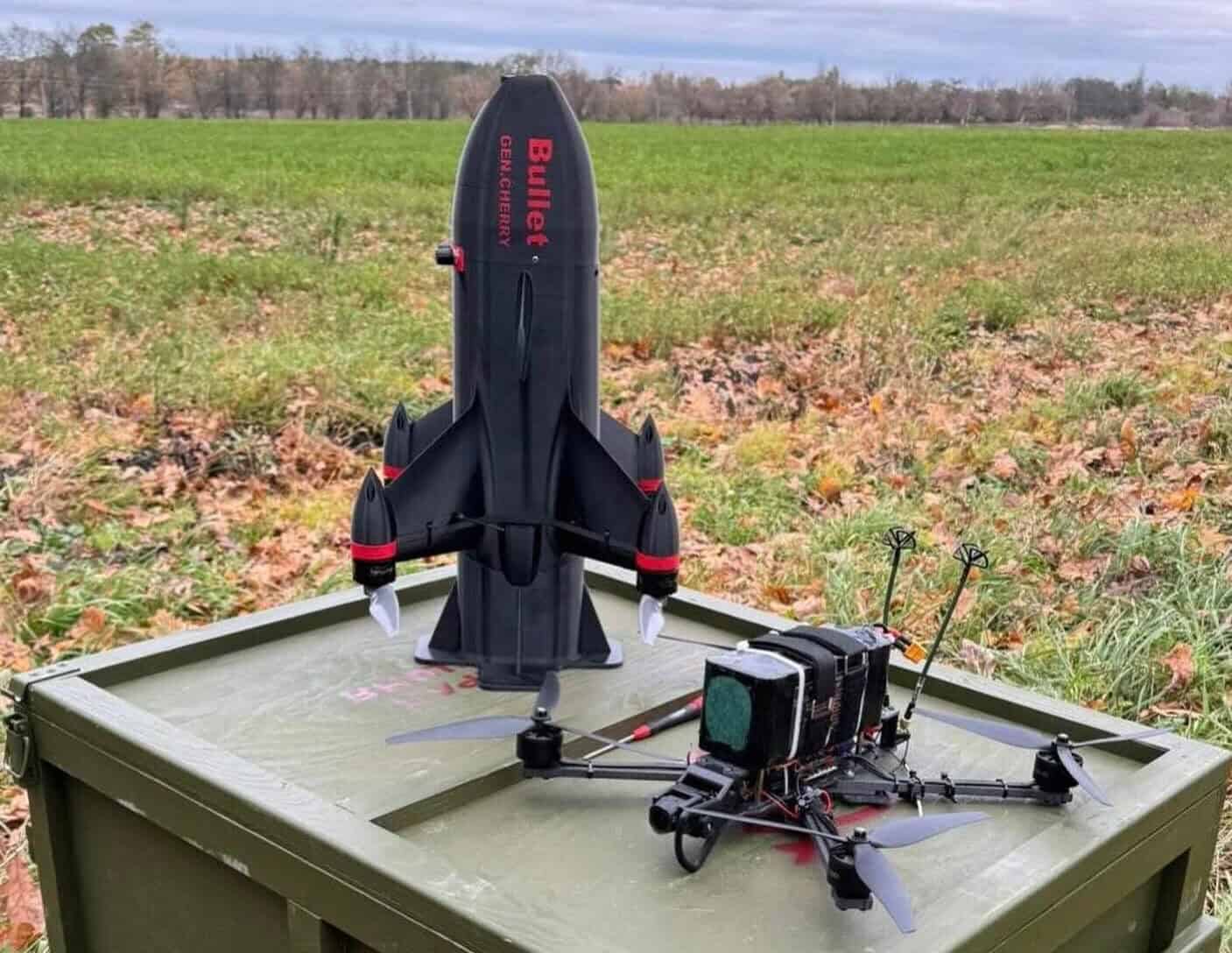
Ukraine's arms industry wants the government to scrap a steep fee on weapons exports, warning it undercuts their prices just as Europe's defense market opens, RBC-Ukraine reported. The same fee has opened a second fight in Kyiv, where parliament this week declined to turn its revenue into money for the army.
Russia's war on Ukraine has pushed Europe into rearming, and Ukraine's battle-tested arms makers are among the few that can deliver at scale right now—an opening that domestic red tape could blunt, handing the advantage to competitors just as the market grows.
The push comes as Europe opens a major market for Ukrainian weapons. The EU's €90 billion Ukraine Support Loan for 2026-2027 reserves €60 billion for defense purchases, and partners increasingly want weapons built on their own soil. International partners report more than 200 cooperation approaches to Ukrainian firms still without a decision, according to the industry's press release. Producers link the fee fix to Build with Ukraine, a co-production push they consider strategically significant.
On 15 September, the Verkhovna Rada—Ukraine's parliament—rejected a bill in first reading that would have sent fee revenue collected from 1 August 2026 into a special budget fund for the Defense Ministry, half for buying, modernizing, and repairing weapons, half for soldiers' pay. The vote left the fee itself untouched, since it rests on the Cabinet resolution, and settled only that its revenue will not be earmarked for the army.
The Ukrainian Council of Arms Manufacturers, joined by other defense and employer groups, prepared proposals to rework the July government resolution, No. 875. They want the fee—20% on finished goods and technologies, 30% on parts—cut to zero, or capped at 5%. Firms must also pay upfront, before any foreign payment lands, with no refund guaranteed if a deal collapses. A UAH 15 million (about $337,000) threshold shuts out the small test shipments new clients often begin with.
The fee has drawn complaints since the resolution took effect in early July. Ihor Fedirko, the council's executive director, earlier said the 30-day review window was welcome but warned it could clog into a bureaucratic queue as staff leave the agencies running it. One of the associations behind the submission calls the 30% rate on parts prohibitive, since Europe is where Ukrainian firms would undercut Chinese suppliers on price.
Ukraine has swung from banning weapons sales abroad to courting foreign buyers, and its defense sector now ranks among the country's fastest-growing industries. Wartime certification to NATO standards is turning that output into something European militaries can actually buy.


The European Union has reached a long-term trade agreement with Ukraine, marking the end of wartime trade liberalisation measures, though key details of the deal remain undisclosed.
EU Trade Commissioner Maros Sefcovic and Agriculture Commissioner Christophe Hansen announced the agreement on June 30, calling it a "predictable" and "reciprocal" framework. However, they did not reveal the final quotas or volumes included in the deal. Sefcovic noted that the finer points would be finalised "in the coming days."
The new deal replaces the autonomous trade measures (ATMs) that allowed Ukrainian agri-food exports to enter the EU tariff-free since 2022. Those temporary measures expired on June 5, reinstating pre-war trade conditions for a brief period.
Structured in three tiers, the new framework introduces modest increases in quotas for products considered sensitive by EU member states, such as eggs, poultry, sugar, wheat, maize, and honey. A second group of products—including butter, skimmed milk powder, oats, barley, malt, and gluten—will see their quotas adjusted to reflect peak import levels reached since the start of the war. A third category, which includes items such as whole milk powder, fermented milk, mushrooms, and grape juice, will be fully liberalised.
Once finalised, the text of the agreement will be submitted to the Council for ratification.
Sefcovic said negotiations concluded over the weekend, less than a month after formal talks began. However, some critics claim the EU delayed the process to avoid backlash from farmers ahead of Poland’s presidential election.
The agreement also benefits EU producers, granting them greater access to the Ukrainian market for goods like pork, poultry, and sugar. But Hansen made it clear that expanded access for Ukrainian exports will depend on Ukraine’s compliance with EU agricultural standards by 2028, including rules on animal welfare and pesticide use. "This commitment also fits perfectly with Ukraine's EU accession path," he said.
The deal includes safeguard provisions, allowing the EU or individual member states to restrict imports if domestic markets face serious disruptions. “Both EU and Ukrainian producers deserve a stable and predictable basis for the future development of bilateral trade,” Hansen added.