On 15 December, the EU Council adopted restrictive measures targeting 12 individuals and two organizations involved in anti-Ukrainian information campaigns and cyber operations against the EU and its allies.
The sanctions cover former military and police personnel from Europe, cyber groups, and Russian electronic warfare units in Kaliningrad.
EU sanctions the 142nd Separate Electronic Warfare Battalion
The measures target those promoting pro-Russian propaganda, disinformati
On 15 December, the EU Council adopted restrictive measures targeting 12 individuals and two organizations involved in anti-Ukrainian information campaigns and cyber operations against the EU and its allies.
The sanctions cover former military and police personnel from Europe, cyber groups, and Russian electronic warfare units in Kaliningrad.
EU sanctions the 142nd Separate Electronic Warfare Battalion
The measures target those promoting pro-Russian propaganda, disinformation, and anti-NATO narratives, undermining international support for Ukraine.
This includes the International Russophile Movement and the 142nd Separate Electronic Warfare Battalion, responsible for GPS and shortwave communication interference technologies within the EU.
Cyber threats and intelligence operations
The sanctions list also includes personnel from Russia’s military intelligence unit 29155 and the cyber group Cadet Blizzard, who participated in cyberattacks against Ukrainian government agencies, EU countries, and NATO allies, attempting to access confidential information and destabilize political situations.
What do those new measures include?
Overall, the sanctions now apply to 59 individuals and 17 organizations.
Their assets are frozen, and EU citizens and companies are prohibited from providing funds, financial assets, or economic resources to them. The individuals are also banned from entering or transiting through the EU.
Fewer than 10% of Ukraine’s deep strikes actually hit protected targets inside Russia and fewer still do any significant damage, according to a new report by the Royal United Services Institute (RUSI.)
Russia’s air defense network is stronger and more comprehensive than often credited, RUSI wrote, citing October 2025 data from the Armed Forces of Ukraine. This is a major obstacle to degrading Moscow’s hydrocarbon and military industries, to weaken its ability to sustai
Fewer than 10% of Ukraine’s deep strikes actually hit protected targets inside Russia and fewer still do any significant damage, according to a new report by the Royal United Services Institute (RUSI.)
Russia’s air defense network is stronger and more comprehensive than often credited, RUSI wrote, citing October 2025 data from the Armed Forces of Ukraine. This is a major obstacle to degrading Moscow’s hydrocarbon and military industries, to weaken its ability to sustain the invasion.
But Russian air defense does have exploitable weaknesses. For one, Russia struggles to produce critical tech and materials in its own territory, relying on foreign supply chains, which are vulnerable to disruptions and sanctions.
As an example, sanctions can go after middleman companies like Electrotrade, which sold $1.1 million worth of American-made electronics to Russia since the start of 2024.
Russian companies are exposed to cyber attacks, as well as kinetic ones — when Ukrainians manage to target manufacturing pressure points that can bottleneck production.
Sanctions and cyber-attacks have slowed down Russia's advanced aircraft programs, according to a November investigation by InformNapalm.
“Russian air defences have imposed significant constraints on Ukraine’s military, shielded the Russian military and industry from the bulk of attempts to strike them in depth and improved substantially over the course of the war,” RUSI wrote. “Russia has also avoided using some parts of its air defence systems that are most concerning for NATO.”
“At the same time, Russian air defences can be penetrated and destroyed. They are not insurmountable but are a major obstacle to efficiently striking Russian forces and territory.”
How to degrade Russia’s air defense, in a nutshell
RUSI identified the following weak points. First, countries can use sanctions and export control to target Russia’s imports of:
Foreign electronics for command and control systems and radar
Raw materials, like beryllium oxide ceramics that’s used in heat sinks
Western measuring equipment and calibration tools that make air defenses effective
Western machine tools used in making advanced weapons
Sanctions can also disrupt the repair of Russian air defense facilities that have already been damaged by Ukraine. Next, Ukraine can exploit vulnerabilities by:
Hacking software to compromise Russian manufacturing
Striking at critical nodes within air defence production.
A Russian Pantsir-S1 air defense system on display. Photo: Wikimedia Commons
Russian defense evolved in tandem with Ukraine’s offense
The Soviet Union realized in the 1970s that it would struggle to keep up with NATO aircraft. Both the USSR and the Russian Federation invested heavily in integrated air and missile defense, resulting in what RUSI calls “the densest, most sophisticated and most integrated air defence networks in the world.”
This is still not enough to cover the entirety of Russia’s massive territory, not to mention the 1,000-kilometer front line and all the Ukrainian territories that Russia has captured.
Ukrainians have been able to force Russians to make tough choices about which sites to defend, and which to leave vulnerable.
The sites that are well-defended, however, have grown increasingly resilient. Both Ukraine and Russia have been evolving their attack and defense strategies with drones and missiles, learning from one another over the course of the full-scale invasion.
One example is Ukraine’s successful use of AGM-88 (HARM) anti-radiation missiles to target Russian radar and create paths for other weapons. These have been used in combination with drones and missiles such as Storm Shadows, to even take down batteries of S-400s, Russia’s most advanced air defense missile systems.
Yet, the Russians learned to adapt, shutting off radar at critical moments, or shooting down the HARMs in flight.
Ukraine also saw early success with guided multiple-launch rocket systems (GMLRS) and army tactical missile systems (ATACMS), but Russians have adapted to these as well. According to RUSI data, the rate of successful hits with GMLRS went from 70% in 2022, to 30% in 2023-2024, to about 8% in 2025.
The Russians also improved the efficiency of their air defense, requiring fewer interceptors on their S-400 systems to shoot down Ukrainian targets.
“With the right combination of strike systems, good intelligence and EW, hit rates can be brought back up,” RUSI wrote. “But this slowed the pace of Ukrainian strikes, removed many targets from consideration, and therefore had second-order consequences for Ukrainian options that are harder to quantify.”
Russia’s most common workhorse air defense systems
Strategic systems: S-300 and S-400 surface to air missile batteries
Long-range systems that hold Ukrainian aircraft at risk and coordinate the broader network. The S-400's brain — the Elbrus-90micro computing system — depends on Taiwanese chips Russia can't manufacture domestically. The main Russian producer is reportedly facing bankruptcy.
Tactical systems: Buk-M3 self-propelled surface to air missile
Mobile systems protecting ground forces. These are less vulnerable to supply chain disruption but still dependent on the same microelectronics ecosystem.
Short-range systems: Tor-M2, Pantsir-S2
Point defense "goalkeepers" that intercept what breaks through. Russia is reportedly burning through Pantsir interceptors faster than it can produce them. Both Pantsir assembly sites sit in Tula, 350 km from Ukraine.
A Buk-M3 surface-to-air missile launcher of the Russian Armed Forces. Illustrative photo: Russian Defense Ministry
Some targets are out of reach
Ukraine has been successful at striking Russian oil infrastructure, especially refineries, in 2025. President Volodymyr Zelenskyy claimed that attacks are happening practically every day.
This caused noticeable harm to Russia’s refining capacity. Hydrocarbon sales are Russia’s lifeline that fuels its government and military budgets.
“Russia… struggled to prepare for Ukraine’s long-range strike campaign on its territory,” RUSI wrote. Russia has continued to take hits around oil refineries, military-industrial sites and logistics hubs as Ukraine has scaled the production of a wide range of long-range strike systems.”
However, while drone strikes can send refineries up in flame, these can be repaired with relative ease. Worse, more hardened industrial targets are tougher nuts to crack.
Ukraine must expend 100-150 drones costing up to $80,000 apiece, just for ten to slip through and deal potentially negligible damage. Combined strikes with drones and missiles are more effective, but become harder to repeat against the same target in the future.
According to RUSI, Russia's air defenses have absorbed significant Ukrainian resources and put many high-value targets out of reach. Even successful combined attacks are "rarely repeatable."
However, the report found that Russia's system is vulnerable to sanctions, cyber attacks, and regular ones.
Supply chain vulnerabilities
In the report, Russia's air defense production was described as a "hub and spoke" system, with subordinate manufacturers all producing for a single central industrial company, such as the Almaz-Antey concern.
“Although the first and second tiers of Russian air defence production (at first glance) appear to be sovereign and founded on a robust research and industrial base, the industry also faces significant dependencies on foreign supply of raw materials, components and machine tools,” according to RUSI.
For instance, Russian systems use imported microelectronics that Russia struggles to make at home. The S-400 systems’ radar and command and control elements rely on the Ellbrus-90 microcomputing system, whose manufacturer faces production obstacles.
The manufacturer has long relied on Taiwanese imports of electronics, and there has been no open-source confirmation that production has successfully been established in Russia. The Taiwanese manufacturer, TSMC, reportedly terminated the contracts after the full-scale invasion began in 2022.
“Russia’s microelectronics industry is underperforming, still dependent on foreign suppliers for more complex chips, and that disruption to its operations would have a serious impact on the production of some of the most critical components of its air defence systems,” RUSI wrote.
Even when Russia does make its own microelectronics, it often depends on imports, including from the US. These include printed circuit board laminates made by the Rogers Corporation, which perform better than Russian-built analogues.
Since 1 January 2024, Russian companies have imported $1.1 million of Rogers printed circuit boards, mostly via China but also via Türkiye, India and Lithuania, according to trade records. The biggest importer in 2024, LLC Electrade-M, sold directly to Russia’s biggest military plants.
As of October 2025, LLC Electrade-M is only sanctioned by Ukraine.
Russia also imports raw materials, like beryllium oxide ceramics, used for heat sinks in high-power radio-frequency electronics. Russia has no operating plants that make their own, importing from Kazakhstan.
Cyber and kinetic attacks
Russia also relies on foreign software, which opens the door for targeted cyberattacks, RUSI wrote. Russia is aware of these vulnerabilities, but has so far stalled on making domestic analogues.
“There is a large attack surface within Russian design bureaus that could be exploited to either disrupt the design and modelling of Russian radar, or even to introduce compromises into the design,” according to the report.
Finally, the supply chain for air defense can be hit by physical attacks. There are two assembly sites to make Pantsir complexes in Tula, around 350 kilometers from the Ukrainian border.
These sites are heavily defended and likely too robust for Ukrainian drones to do a lot of harm. However, cruise missiles would do the trick, if Ukraine expands its domestically produced stockpile, or manages to source more from allied countries.
“While the clustering of these sites enables the concentration of air defence, it also means that once the defences are saturated, all sites become vulnerable,” RUSI wrote.
“Ukraine could, therefore, mount an operation to saturate the defences on an approach to Tula before delivering a significant blow to Pantsir production with cruise missiles – ironically resulting in limiting Russia’s ability to defend other targets over the course of 2026.”
Lithuania is preparing for a potential threat from Russia by creating a major facility on the border with Poland and Belarus, Delfi reports. The Lithuanian State Defense Council has approved the establishment of the Kapčiamestis brigade training ground in the Lazdijai district.
According to the president’s chief advisor, Deividas Matulionis, the location was chosen as the most strategically suitable for defending part of the Suwałki corridor.
This comes amid military chief
Lithuania is preparing for a potential threat from Russia by creating a major facility on the border with Poland and Belarus, Delfi reports. The Lithuanian State Defense Council has approved the establishment of the Kapčiamestis brigade training ground in the Lazdijai district.
According to the president’s chief advisor, Deividas Matulionis, the location was chosen as the most strategically suitable for defending part of the Suwałki corridor.
This comes amid military chiefs and intelligence agencies warning that an attack from Russia on Europe could come as early as 2028, as per Politico.
Strategic Suwałki corridor under NATO watch
The Suwałki corridor is a 100-kilometer land strip connecting Lithuania and Poland, bordered by Belarus and Russia’s Kaliningrad exclave.
It is the only route through which NATO forces can quickly reinforce the Baltic states in the event of a conflict, making it both vulnerable and strategically crucial.
“Special attention will be given to the defense of this corridor by Lithuania, Poland, and NATO,” emphasized Matulionis.
Expanding defense capabilities
In addition to the Kapčiamestis training ground, the area of the Tauragė training ground near Russia’s Kaliningrad region will be doubled.
Its territory will be extended to the Jurbarkas district, enhancing border coverage and readiness for potential threats.
Ukraine reaches Russian oil platforms in "safe rear areas". Ukrainian long-range drones, operated by the Alpha Special Operations Center of the Security Service (SBU), have struck oil production platforms owned by Lukoil-Nizhnevolzhskneft in the Caspian Sea for the third time in the past week, UkrInform reports.
On 11 and 12 December, SBU drones had already hit the Filanovsky and Korchagin platforms. The Filanovsky field is one of the largest discovered in Russia and in it
Ukraine reaches Russian oil platforms in "safe rear areas". Ukrainian long-range drones, operated by the Alpha Special Operations Center of the Security Service (SBU), have struck oil production platforms owned by Lukoil-Nizhnevolzhskneft in the Caspian Sea for the third time in the past week, UkrInform reports.
On 11 and 12 December, SBU drones had already hit the Filanovsky and Korchagin platforms. The Filanovsky field is one of the largest discovered in Russia and in its sector of the Caspian Sea, with estimated reserves of 129 million tons of oil and 30 billion cubic meters of gas.
This time, the strike targeted a platform at the Korchagin oil and gas condensate field. According to the source, the drones damaged critical equipment, resulting in a complete halt of production processes at the site.
Striking oil revenues as a weapon of war
The Security Service of Ukraine emphasizes that such operations are part of a systematic effort to reduce the flow of oil revenues into Russia’s budget.
These funds are used to finance the war against Ukraine, from missile production to sustaining the army.
“No Russian facility that supports the war effort is safe, regardless of its location,” the SBU source said.
Ukraine is increasingly pushing combat operations deep into Russia's rear, undermining its capacity to wage war.
The issue of Ukrainian territories remains the most sensitive and difficult topic in negotiations, even with allies. Ukrainian President Volodymyr Zelenskyy has acknowledged that Ukraine and the US currently hold differing positions on territorial issues discussed during negotiations.
Russia is demanding that Ukraine surrender the Luhansk and Donetsk regions, which Russia does not fully control. The US plan envisions the creation of a demilitarized zone. At the sam
The issue of Ukrainian territories remains the most sensitive and difficult topic in negotiations, even with allies. Ukrainian President Volodymyr Zelenskyy has acknowledged that Ukraine and the US currently hold differing positions on territorial issues discussed during negotiations.
Russia is demanding that Ukraine surrender the Luhansk and Donetsk regions, which Russia does not fully control. The US plan envisions the creation of a demilitarized zone. At the same time, it is Ukrainian forces that would be required to withdraw from the territories where this zone would be established.
Who would control this demilitarized zone remains unclear. If there are no security forces to protect it, Russian troops will enter these areas to clean out the territory from a supposedly disloyal population. This would inevitably lead to war crimes and repression.
Zelenskyy made the statement in Berlin, speaking to the media alongside German Chancellor Friedrich Merz.
According to the Ukrainian president, dialogue on territorial matters has been insufficient so far.
“There has not been enough dialogue on territories, and it seems that for now we have different positions. I will say this frankly. But I believe our partners have heard my personal position,” Zelenskyy said.
He emphasized that it was crucial for him to clearly communicate Ukraine’s stance — without ambiguity or compromises that could call the country’s sovereignty into question.
The US as a mediator, not a decision-maker
Zelenskyy separately stressed that the US is acting as a mediator, not as a party imposing solutions.
“I believe the American side, as a mediator, will propose various steps to try to find at least some form of consensus. I would like the US to continue in this mediation format,” he stated.
Earlier in Berlin, Zelenskyy held talks with a US delegation led by Special Presidential Envoy Steve Witkoff and Jared Kushner. According to the president, tangible progress has been achieved on several other issues.
“There was real progress on many issues. To be honest, I don’t know how the aggressor state will perceive this,” Zelenskyy added.
Russia's territorial demands and Ukraine's firm position
Zelenskyy noted that the current draft negotiation documents no longer contain destructive provisions, and the issue of territorial concessions is no longer on the agenda.
At the same time, Kyiv’s and Moscow’s visions regarding territory remain fundamentally opposed.
“Russia wants what it wants… We clearly understand what they want. Whether we believe it or not, we know with 100% certainty what they want,” he said.
He underscored that the most important outcome of the talks was ensuring that US partners clearly understood Ukraine’s position on territorial integrity.
My hometown has been hit again. Over 12–14 December, Russia directed about 300 various airborne weapons at Odesa Oblast—with over 130 Shahed drones launched just Sunday morning alone, according to regional military authorities.
The strikes targeted critical infrastructure across the southern coast. The sheer concentration of firepower overwhelmed the city's air defenses. Four days later, this city of 1 million people remains without electricity, heating, or running wate
My hometown has been hit again. Over 12–14 December, Russia directed about 300 various airborne weapons at Odesa Oblast—with over 130 Shahed drones launched just Sunday morning alone, according to regional military authorities.
The strikes targeted critical infrastructure across the southern coast. The sheer concentration of firepower overwhelmed the city's air defenses. Four days later, this city of 1 million people remains without electricity, heating, or running water.
This is the longest continuous blackout Odesa has endured since Russia's full-scale invasion began in February 2022. Previous attacks knocked out power for hours, sometimes a day.
Now, as winter darkness falls at 4 p.m. and temperatures drop toward freezing, an entire city is learning what it means to function without the infrastructure of modern life—and demonstrating why Russia's strategy of breaking Ukrainian civilian morale through suffering has failed for nearly three years.
When the city goes dark
Blackouts are nothing new for wartime Odesa. After previous strikes, one or two districts might lose power while repair crews worked through the night. This is different. I took this photo from my apartment on Friday night. Across the city, neighbors saw the same thing—flames on the horizon, the only light breaking the darkness.
When the sun sets now, the entire city sinks into complete darkness. The only lights visible are the dim glows of shops and restaurants running on generators—and those close early, fuel being precious.
Potable water disappeared from supermarket shelves within hours of the attack. It's only now, four days later, that bottles are gradually returning to meet demand.
The free public water distribution points—pumps drawing groundwater with the help of generators—have seen lines stretching for blocks, residents clutching every container they could find at home.
How 1 million people cope
Ukraine's network of Resilience Centers—warming points where people can charge phones, power banks, and other devices—has become a lifeline. Odesa has 410 of these centers operating. Supermarkets across the city now offer free charging stations for small electronics, their generator-powered outlets surrounded by clusters of phones.
Odesa residents gather at a Resilience Center to charge devices and warm up. Composite photo: AuthorOdesa residents charging electronic devices at Tavria V and ATB supermarkets during the city-wide blackout. Composite photo: Author
Cooking at home requires preparation: those who stockpiled gas cartridges and portable burners beforehand can manage. With refrigerators useless, many have turned balconies and window ledges into improvised cold storage, bags of food dangling outside apartments in the December chill.
Others simply order takeout or dine at restaurants—Odesa has no shortage of these for every budget, and the ones with generators remain packed. But some ill-prepared businesses were forced to shut down, like my favorite bakery on the corner.
Some residents have advantages. Newer apartment buildings often have stored water reserves, backup power for essential systems, and elevators that operate on emergency schedules. Those in older Soviet-era buildings or the historic downtown have fewer options. The disparity is stark but unremarked upon—everyone is improvising.
And helping each other. "People who got water and power back offer help to others," one resident wrote. Yesterday someone proposed "rescuing food from refrigerators by gathering at the seaside and cooking it all to music." Somehow, Odesa keeps its humor.
Explore further
Russia bombs Odesa’s port—US and EU firms expand offices anyway
Emergency response and gradual repairs
Assistance has arrived from Ukraine's Emergency Service units across multiple oblasts. Tank trucks delivering water are now stationed in every district. Other regions have donated generators to power boiler facilities, racing to restore heat before temperatures drop further.
Ukraine's State Emergency Service distributes water to Odesa residents during the city-wide blackout. Composite photo: DSES Odesa
According to DTEK Odesa Electric Networks, as of 15 December power engineers had restored electricity to nearly all critical infrastructure in Odesa and the surrounding region, plus another 84,800 households.
Workers repair damaged electrical infrastructure in Odesa after Russian strikes on 13–14 December 2025. Composite photo: DTEK Odesa Electric Networks / Facebook
More connections are expected through the week, though full stabilization of the grid remains distant. Odesa will likely operate under strict electricity distribution schedules for weeks to come.
A city that refuses to stop
Odesa has always been known for its resilience and entrepreneurial spirit, and even four days into complete blackout, that reputation holds. Most supermarkets and shops remain open. Restaurants are serving customers. Public transport—everything except the electric trams—continues running.
The port, despite heavy strikes, withstood the attack; ships still ride at anchor in the harbor, and maritime trade, though reduced, continues.
Schools opened today on generator power, with lessons cut to 30 minutes to fit the shortened winter daylight. Teachers and students are adapting the way everyone else has—without complaint, because complaint changes nothing.
This is how a predominantly Russian-speaking city responds to Russia's attempt to freeze it into submission.
The future of Odesa—like so many Ukrainian towns—depends on what comes next: the terms of eventual negotiations, the durability of Western support. For now, the city waits for the lights to return—and keeps moving in the darkness.
On 14 December, protesters gathered outside Euroclear headquarters with a Christmas tree that looked like it was made of blood-stained banknotes—a symbol of the Belgian profits from holding €200 billion in frozen Russian assets.
The actions were organized by the International Center for Ukrainian Victory, European Network in Solidarity with Ukraine, and Frozen Assets Action.
Two days earlier, activists rallied outside the European Commission under the banner “Ukraini
On 14 December, protesters gathered outside Euroclear headquarters with a Christmas tree that looked like it was made of blood-stained banknotes—a symbol of the Belgian profits from holding €200 billion in frozen Russian assets.
The actions were organized by the International Center for Ukrainian Victory, European Network in Solidarity with Ukraine, and Frozen Assets Action.
Two days earlier, activists rallied outside the European Commission under the banner “Ukrainian lives over profit.” Signs read “Belgium hesitates, Russia kills” and “Is De Wever the next Orbán?”—a reference to Belgian Prime Minister Bart De Wever, who on 2 December called Ukrainian victory “a fairy tale, a complete illusion.”
“Europe stands with Ukraine, Belgium stands with profits”—activists rally outside the European Commission ahead of the 18 December vote on frozen Russian assets, Brussels, 12 December 2025. Photo: Anastasiia Varvarina
Belgium’s opposition could derail a European Council vote on 18 December to approve a reparations loan backed by profits from frozen Russian state assets. If the vote fails, European taxpayers—not Russia—would foot the bill for Ukraine’s defense funding.
Protesters with Ukrainian, Belgian, EU, and free Belarus flags outside the European Commission, Brussels, 12 December 2025. Photo: Anastasiia Varvarina
Euroclear earns substantial revenue simply by holding the assets. Every month the decision is delayed, that revenue continues to flow.
The “blood money Christmas tree”—activists highlight Euroclear’s profits from frozen Russian assets while Ukraine pays in lives, Brussels, 14 December 2025. Photo: Anastasiia Varvarina
“As a father, I cannot stand by while Ukrainian children are murdered and deported by Russia. Belgium has a moral choice to make: protect Russian money, or protect Ukrainian children,” said Antonio Albaladejo Román, who lives in Brussels.
Protesters demand the use of frozen Russian assets for Ukraine outside the European Commission, Brussels, 12 December 2025. Photo: Anastasiia Varvarina
The stakes extend beyond December. In January, the EU’s annual vote to extend sanctions on Russia requires unanimous approval from all 27 member states. Hungary has already announced it will veto. Without sanctions extension, the frozen assets argument becomes moot—and Russia regains access to billions.
Activists with signs reading “Is De Wever the next Orbán?” and “Faisons payer la Russie” (“Make Russia pay”) outside the European Commission, Brussels, 12 December 2025. Photo: Anastasiia Varvarina
The Brussels protests are part of a wider campaign across European capitals. Actions took place in Prague, Warsaw, Vienna, Stockholm, and Copenhagen in the lead-up to the 18 December vote.
Activists are calling on supporters to sign petitions, contact Belgian embassies, and pressure PM De Wever directly on social media using #MakeRussiaPay and #UnblockReparationLoan.
“Make Russia pay” Euroclear protest, Brussels, 14 December 2025. Photo: Anastasiia Varvarina
A historic moment for the Ukrainian Navy: underwater drones “Sub Sea Baby” have, for the first time in history, destroyed a Russian Project 636.3 “Varshavyanka” submarine, neutralizing its missile threat, the Security Service of Ukraine (SBU) reports.
The Russian submarine carried four “Kalibr” cruise missile launchers, which the enemy used to strike Ukrainian territory. Destroying the vessel effectively eliminates these weapons, significantly weakening the Ru
A historic moment for the Ukrainian Navy: underwater drones “Sub Sea Baby” have, for the first time in history, destroyed a Russian Project 636.3 “Varshavyanka” submarine, neutralizing its missile threat, the Security Service of Ukraine (SBU) reports.
The Russian submarine carried four “Kalibr” cruise missile launchers, which the enemy used to strike Ukrainian territory. Destroying the vessel effectively eliminates these weapons, significantly weakening the Russian Black Sea Fleet's strike capability.
The Kalibr missile attacks have severely damaged Ukraine's thermal power plants, substations, and other crucial energy infrastructure, leading to widespread power outages in the country.
"Black holes" are vulnerable to modern unmanned technologies
The operation demonstrated that autonomous underwater drones can redefine classical naval combat concepts. Submarines, which traditionally had the advantage due to the stealth of their hulls (“black holes”), are now vulnerable to modern unmanned technologies
A joint operation by the 13th Main Directorate of Military Counterintelligence of the SBU and the Ukrainian Navy showcased a new level of maritime asymmetry.
“Sea Babies" have already forced Russian ships out of Sevastopol Bay
The value of a “Varshavyanka”-class submarine is estimated at $400 million, and constructing a modern equivalent could cost up to $500 million due to international sanctions.
Previously, the submarine had been stationed at Novorossiysk port, following successful operations by “Sea Baby” surface drones that forced Russian ships out of Sevastopol Bay.
This event sends a strong signal to the world: modern unmanned systems are capable of neutralizing traditional naval forces, changing the rules of naval warfare.
The Russian submarine carried four “Kalibr” cruise missile launchers, which the enemy used to strike Ukrainian territory. Destroying the vessel effectively eliminates these weapons, significantly weakening the Russian Black Sea Fleet's strike capability.
Russian forces are unlikely to sustain the Kremlin’s goal of simultaneous offensive operations across multiple directions due to growing manpower and equipment problems, according to the Institute for the Study of War. Russia’s attempts to escalate fighting along Ukraine’s Fortress Belt — a major fortified defensive line in Donetsk Oblast — are expected to stretch its forces even further.
This comes as, during the Russo-Ukrainian war, Russia continues costly ground assaults
Russian forces are unlikely to sustain the Kremlin’s goal of simultaneous offensive operations across multiple directions due to growing manpower and equipment problems, according to the Institute for the Study of War. Russia’s attempts to escalate fighting along Ukraine’s Fortress Belt — a major fortified defensive line in Donetsk Oblast — are expected to stretch its forces even further.
This comes as, during the Russo-Ukrainian war, Russia continues costly ground assaults across multiple front-line sectors, making only incremental gains while suffering heavy losses in personnel and equipment.
Russian forces face exhaustion across multiple fronts
The Institute for the Study of War (ISW) said in its 14 December report that Russian troops will likely continue to "struggle to maintain the Kremlin’s desired multi-pronged offensive operations in different operational directions." These multi-directional attacks come with high logistical costs, which Russia appears unable to meet in the long term.
ISW noted that Russian President Vladimir Putin and top military officials have recently intensified their battlefield narratives, exaggerating claimed advances on several axes. In particular, they have emphasized operations around Vovchansk, Kupiansk, Siversk, Pokrovsk-Myrnohrad, and Hulyaipole.
On 27 November, Putin implied that Russian forces near Huliaipole would soon achieve a breakthrough in the Zaporizhzhia direction. However, ISW stated that Russia must either significantly increase the amount of manpower and matériel deployed in each direction to see real results, or pull resources from one sector to bolster another — a tradeoff that would undercut the Kremlin’s messaging of broad success across the entire frontline.
Russian military overstretched near Huliaipole and Oleksandrivka
Ukrainian military observer Kostiantyn Mashovets said on 13 December that the Russian Eastern Grouping of Forces, which operates in the Huliaipole and Oleksandrivka directions, will require regrouping or reinforcements from other parts of the front to maintain their offensive push. He stated that troops under the 5th and 36th Combined Arms Armies are already struggling to carry out operations due to their wide area of responsibility and limited resources.
Mashovets assessed that sustaining pressure near Huliaipole would require either narrowing the frontline or redeploying additional forces, potentially including elements of the 36th and 29th Combined Arms Armies from the Oleksandrivka area to reinforce the 5th Army. He judged that key 5th Army formations, including the 127th Motorized Rifle Division and the 57th Separate Motorized Rifle Brigade, are unlikely to achieve near-term success.
ISW previously assessed that a mid-November breakthrough near Huliaipole was likely enabled in part by a concentrated force grouping comparable in size to that used in the Pokrovsk-Dobropillia direction. Russia has since reinforced the area by reallocating units from other sectors, including VDV, tank, and motorized rifle formations.
Push toward Fortress Belt to drain Russian military further
ISW assessed that Russia’s attempt to begin an assault on the Fortress Belt — Ukraine’s primary fortified line in Donetsk Oblast since 2014 — will likely place even more pressure on its forces. Mashovets warned that launching an attack on key strongholds like Sloviansk and Kramatorsk would require Russia to commit forces and resources from the Western, Southern, and Central Groupings of Forces. In doing so, Russian troops would be unable to maintain activity in other directions, including Velykyi Burlyk and Orikhiv.
He added that structural issues within Russia’s wartime economy and defense industrial base will further complicate efforts to sustain the scale of operations needed for such a push. ISW noted that to follow up on tactical gains around Huliaipole or to capture remaining parts of Donetsk Oblast, Russia would need to weaken its efforts in other frontline sectors.
"The Kremlin is therefore making territorial demands of unoccupied parts of Donetsk, Luhansk, Zaporizhzhia, and Kherson oblasts because it cannot militarily seize these regions at this time," the ISW concluded.
The Trump administration is reportedly offering Ukraine security guarantees similar to NATO's Article 5—legally binding and approved by Congress. A senior US official told Axios the administration7 wants to give Ukraine "a security guarantee that will not be a blank check on the one hand but will be strong enough on the other hand."
There's a catch. Under the original 28-point "peace plan," these guarantees would be deemed invalid if Ukraine launches a missile at Moscow
The Trump administration is reportedly offering Ukraine security guarantees similar to NATO's Article 5—legally binding and approved by Congress. A senior US official told Axios the administration7 wants to give Ukraine "a security guarantee that will not be a blank check on the one hand but will be strong enough on the other hand."
There's a catch. Under the original 28-point "peace plan," these guarantees would be deemed invalid if Ukraine launches a missile at Moscow or St. Petersburg "without cause." Both Russia and the US have repeatedly blamed Ukraine for a war Russia started.
In other words: these "guarantees" come with an escape clause designed for the guarantor, not the guaranteed.
What Article 5 actually says
According to NATO, Article 5 states that an armed attack against one member shall be considered an attack against all members, triggering an obligation for each member to come to its assistance.
The Alliance stresses, however, that "this assistance may or may not involve the use of armed force." Each member nation determines its specific actions according to its own constitutional processes. If the Alliance is under threat, each member state will consider its own defensive needs before committing military support to allies.
NATO's collective defense pledge is not an automatic tripwire for war. It's a political commitment—one that only works if adversaries believe it will be honored.
NATO can barely defend itself
After three decades of downsizing and underfunding, European member states are fundamentally dependent on support from allies who—except for the United States—are unable to come to their assistance.
The numbers are damning:
As of 2024, NATO member states had accumulated a collective backlog of 433 years—each year representing one member state that did not meet its 2% spending pledge.
During the Cold War, European members invested an average of 3.5% of GDP on defense. Today, they spend just 2.27%. While all of this is a investment in European security, not all is used to rebuild the military power of NATO. Instead, a great part is invested in Ukraine. Fortunately.
The 2% target itself is only 57% of what Europe spent in the 1980s to maintain credible deterrence.
European leaders have agreed to raising spending to 5% of GDP. NATO members have agreed to use at least 3.5 % dedicated to core military defence and up to 1.5 % for broader security and related investments—and have reaffirmed strong, continued support for Ukraine (including counting eligible Ukraine aid within this spending calculation) as part of their collective defence commitments, aiming for a total of 5 % of GDP by 2035.
This is an acknowledgment that current levels are not deterring Russia. But as Lithuanian President Gitanas Nausėda pointed out: "There was a promise to invest 2% eleven years ago. Now we are talking about 3% spending. Despite long discussions, despite nice plans, we are still below the threshold of 2%."
Explore further
Trump’s NSS proves Europe and Ukraine are on their own—and must save themselves
If NATO deterrence worked
Consider what's actually happening:
The full-scale war would never have happened. NATO's 2010 Strategic Concept pledged to use political and military means to end wars that threaten the security of the Alliance. Instead, the 2022 Strategic Concept became a commitment to do less.
Russia would not be waging hybrid war against NATO members. More importantly, the Alliance would be responding in kind. It isn't.
NATO wouldn't be preparing for a possible Russian attack as early as 2030.German intelligence warns Russia intends to test NATO's collective defense commitment. Some analysts believe aggression could begin within three years.
When discussing security guarantees for Ukraine, Europe has indicated it can provide a mere 25,000 to 30,000 soldiers as a deterrence force—conditional on US military support.
Foreign military aid to Ukraine plunged 43% in July and August compared to the first half of the year, due to US policy shifts, uneven burden-sharing among European donors, and fiscal constraints.
If the Alliance cannot deter attacks against its own members, why would it deter future attacks against Ukraine? This is why Ukraine's Defense Minister has underscored that the fastest way to strengthen European security is to support Ukraine—which has several critical military capabilities its European partners lack.
The built-in excuse not to respond
The US has explicitly ruled out deploying combat troops to engage directly with Russia. It is instead signaling that Europe must take responsibility for Ukraine and its own security.
A reset of US-Russian relations—including business opportunities a "peace" would bring—appears to be the administration's main objective. The US plan bears more similarities to a business arrangement than a peace plan. Given experience, the Trump administration would likely have no qualms about blaming Ukraine for any future restart of hostilities.
As Foreign Minister Andrii Sybiha stated on the anniversary of the Budapest Memorandum: "Having had such a bitter experience in the past, Ukraine does not trust empty pledges anymore—we trust the strength of our army and weapons."
Explore further
Trump’s Ukraine plan proves the transatlantic alliance is dead
Trump's credibility problem
President Trump has sowed doubt about whether he would honor NATO's Article 5 commitments since his first presidential campaign, conditioning US protection on political demands like higher defense spending.
In March 2025, he told reporters: "If they don't pay, I'm not going to defend them. No, I'm not going to defend them." Three months later, when asked about Article 5, he said: "Depends on your definition. There's numerous definitions of Article 5. You know that, right? But I'm committed to being their friends."
The new National Security Strategy makes this explicit. It links cooperation to ideologically aligned partners and, according to War on the Rocks, "elevates the culture wars into a governing logic for national security," using ideological tests to judge allies.
The Kremlin welcomed the strategy, with spokesman Dmitry Peskov calling it "largely consistent with our vision."
Its failure to reciprocate Europe's persistent support for American-led military operations globally
Threats of annexation against allied territories
A trade war against Europe exactly as it urgently rearms
The end of defense aid to Ukraine
Persistent support for Russian demands for Ukraine's capitulation
Explore further
Europe now faces two strategic adversaries: Russia and the United States
The trust deficit
European and American discord is becoming increasingly open. Media reported a tense phone call on Wednesday between Friedrich Merz, Emmanuel Macron, Keir Starmer, and Donald Trump. Trump said "pretty strong words" were exchanged.
According to the Guardian, nearly half of Europeans see President Trump as "an enemy of Europe." In a Pew Research Center global survey, 64% said they had no confidence in Trump—compared with 57% for Putin. Roughly three-in-four or more lacked confidence in Trump in Germany, Sweden, France, Spain, and the Netherlands.
If Europe no longer trusts the US's commitment to collective defense, why should Ukraine trust US "security guarantees"?
Why should anyone trust a US security guarantee after Washington stepped back and stopped helping Ukraine defend itself during this full-scale war? Why should we believe it will step forward during the next?
US "security guarantees" come without either security or guarantees.
Hans Petter Midttun, independent analyst on hybrid warfare, Non-Resident Fellow at the Centre for Defense Strategies, board member of the Ukrainian Institute for Security and Law of the Sea, former Defense Attaché of Norway to Ukraine, and officer (R) of the Norwegian Armed Forces.
Editor's note. The opinions expressed in our Opinion section belong to their authors. Euromaidan Press' editorial team may or may not share them.
In Australia, during a shooting at Sydney’s Bondi Beach, 87-year-old Ukrainian immigrant Alex Kleytman, born in Ukraine's Odesa, survived the Holocaust and had lived in the country for nearly 60 years. He was killed while trying to protect his wife, NBC News reports.
The advocacy group, the Executive Council of Australian Jewry, said more than 3,700 anti-Jewish incidents occurred in Australia during the two years following the Hamas attack in 2023, per NPR. Hamas l
In Australia, during a shooting at Sydney’s Bondi Beach, 87-year-old Ukrainian immigrant Alex Kleytman, born in Ukraine's Odesa, survived the Holocaust and had lived in the country for nearly 60 years. He was killed while trying to protect his wife, NBC News reports.
The advocacy group, the Executive Council of Australian Jewry, said more than 3,700 anti-Jewish incidents occurred in Australia during the two years following the Hamas attack in 2023, per NPR. Hamas launched a surprise attack on Israel, killing over 1,200 people and taking more than 250 hostages. Among the victims were around 40 foreigners from over 30 countries.
On 14 December, during a festival celebrating the Jewish holiday of Hanukkah at Bondi Beach in Sydney, a shooting occurred. At least 15 people were killed, including one of the attackers, and dozens were injured. Australian police classified the attack as a terrorist act and an antisemitic incident, per Reuters.
From Siberia to Australia, and again hatred
Alex Kleytman survived the Holocaust alongside his mother and younger brother, enduring Siberia. This region of Russia served as a primary site for political repressions under the Soviet Union, housing vast networks of exile settlements, labor camps, and Gulags. After World War II, he emigrated from Ukraine to Australia.
His death was confirmed by his wife, Larisa Kleytman, also a Holocaust survivor. The couple had been together for nearly 60 years.
Moments before the tragedy, she heard several loud sounds like “booms” and immediately saw her husband fall to the ground.
After the attack, Larisa Kleytman admitted she was “shocked” and “confused” and is trying to understand what happened.
Ukrainian frontline commanders speak plainly: peace talks do not change Russia's stance and actions toward Ukraine. Kyiv has no alternative aside from fighting, though talks around the peace perspective flicker with hopes, says Robert Brovdi, also known as Madiar, the commander of Ukraine's UAV systems.
In his words, for Russian President Vladimir Putin to stop the war is to destroy his regime.
Russia rehearses caution in demobilization from war in Ukraine—but 1989 Afgh
Ukrainian frontline commanders speak plainly: peace talks do not change Russia's stance and actions toward Ukraine. Kyiv has no alternative aside from fighting, though talks around the peace perspective flicker with hopes, says Robert Brovdi, also known as Madiar, the commander of Ukraine's UAV systems.
In his words, for Russian President Vladimir Putin to stop the war is to destroy his regime.
“There's no other path visible to us now except continued fighting, even if a glimmer of hope appears: for the old man in the bunker, stopping would mean destroying himself,"said Madiar.
According to Brovdi, for the Kremlin, negotiations are merely a way to relieve sanction pressure. Options for peace may exist, "of course, but it is more rational to act without false illusions," he adds.
“Extracting the worm to the last bit will take time. There are no rose-colored glasses,” says Madiar.
The Kremlin’s strategy remains unchanged: attrition and pressure through massive assaults
Today, according to a brief daily update, the occupiers are again pressing with a “meat movement” as of 11:00 a.m. on 15 December. Ukraine's UAV Forces have already neutralized over 200 Russian soldiers.
“So by midnight on 15 December (in another 13 hours), there will be a new number. I predict it will reach the full assault strength of a battalion," claimed Madiar.
Ukraine's Khartiia Brigade: Struggle for Ukraine’s independence has no diplomatic solution
Another commander, Yuri Butusov of the Khartiia 13th National Guard Brigade, stated that he doesn’t see "any logic in negotiations so far."
“Moscow continues its offensive. For Putin, negotiations are about blocking further sanctions; they are a tool to split the unified anti-Russian front in NATO countries, in Europe, in the US,” Butusov said.
The war against Russia, the war for Ukraine’s independence it is a war that has no political or diplomatic solution, he added.
“Let’s be realistic: the current reality is war. It has exclusively a military-diplomatic solution. ," he stressed.
Therefore, political positions in negotiations are primarily determined on the frontline by Ukrainian soldiers.
As is clear, both top military figures indicate that for Russia, negotiations are a way to avoid sanctions and wage a hybrid war against Europe. At the same time, Moscow has no intention of ending combat operations.
The General Assembly of the International Chess Federation (FIDE) has voted to restore national symbols to participants from Russia and Belarus, according to a statement by the federation’s press service. Earlier, Ukraine said it views such actions as tacit approval of the destruction of Ukrainian athletes.
Russia has killed at least 644 members of the Ukrainian sports community, injured 20, detained 20, and 13 are considered missing; at least 799 sports facilities have bee
The General Assembly of the International Chess Federation (FIDE) has voted to restore national symbols to participants from Russia and Belarus, according to a statement by the federation’s press service. Earlier, Ukraine said it views such actions as tacit approval of the destruction of Ukrainian athletes.
Russia has killed at least 644 members of the Ukrainian sports community, injured 20, detained 20, and 13 are considered missing; at least 799 sports facilities have been affected by strikes, of which 180 were completely destroyed. Belarus has also actively assisted Russia in committing these crimes.
Previously, Dmitry Tymoshenko, First Secretary of Ukraine’s Permanent Mission, urged UN member states to continue suspending Russian athletes from international competitions, UkrInform reports. He emphasized that Russian aggression deprives sport of its ability to serve as a factor for peace.
Restoring participation legitimizes the occupation, normalizes war crimes, and lifts the isolation of the two regimes.
FIDE voting and the two scenarios
At the FIDE General Assembly, two resolutionswere considered:
The Russian Chess Federation proposed the full restoration of rights for Russian and Belarusian participants.
The FIDE Council proposed restoring rights only for juniors, in line with IOC recommendations.
Voting results:
For the Russian resolution: 61 countries in favor, 51 against, 14 abstained from voting, 15 abstentions.
For the FIDE Council resolution: 69 countries in favor, 40 against, 15 abstentions, 17 did not vote.
Both decisions became legally binding.
Consequences for international sport
FIDE adopted the following measures:
Russian and Belarusian participants are allowed to compete in team competitions.
National symbols are restored at the junior level.
Official FIDE events are permitted to be held in Belarus.
Regarding senior-level competitions and the use of flags and anthems, a decision will be made later after consultations with the IOC.
The federation explained that the voting was conducted by a simple majority, not as a critical issue, so the decision on national symbols was adopted under general conditions.
Today, there are interesting updates from the Russian Federation.
Here, а series of aviation accidents far from the battlefield in Ukraine shows Russia’s air fleet is imploding at an unprecedented rate. The Russian sacrifice of expensive high-tech military to finance low-tech operations in Ukraine is now backfiring and leading to even greater and in many cases irreplaceable losses.
Screenshot from Reporting From Ukraine's video.
Catastrophic incidents point to systemic fail
Today, there are interesting updates from the Russian Federation.
Here, а series of aviation accidents far from the battlefield in Ukraine shows Russia’s air fleet is imploding at an unprecedented rate. The Russian sacrifice of expensive high-tech military to finance low-tech operations in Ukraine is now backfiring and leading to even greater and in many cases irreplaceable losses.
Screenshot from Reporting From Ukraine's video.
Catastrophic incidents point to systemic failure
Russia’s aviation suffered another major blow with the crash of its last operational Antonov-22, a 50-year-old aircraft undergoing a post-repair test flight, which broke apart midair over the Ivanovo region, falling into a local water reservoir.
Russian sources shared footage showing the crash of the An-22 military transport aircraft in Russia’s Ivanovo Oblast on 9 December.
The video captures the moment the plane breaks apart mid-air before plunging into the Uvod Reservoir. All 7 crew members were killed. Preliminary… pic.twitter.com/WPkXRO0ssN
Seven crew members were on board, and the Russian Ministry of Defense tried to frame the crash as a routine accident, yet even Russian state media quietly acknowledged the aircraft had exceeded any realistic airworthiness limits. Eyewitnesses reported that sections of the fuselage detached before impact, confirming structural fatigue long suspected in Russia’s aging transport fleet.
Critically, this was the last active An-22, a platform Russia continued using simply because it lacked the capacity to replace it. The crash underscores a deeper problem: nearly four years of war, sanctions, and frantic military use have pushed a legacy fleet far past safe operating thresholds, as this incident is far from isolated, but part of a rapidly accelerating pattern of systemic failure.
Screenshot from Reporting From Ukraine's video.
The An-22 disaster came just one day after another grotesque aviation failure, this time inside a hangar. Two Russian Su-34 fighter-bomber pilots were killed instantly when their ejection seats suddenly activated, launching them into the ceiling of the hangar they were still in.
Officially, it was labeled an accident, noted that the pilots had sustained injuries incompatible with life, but in Russia’s collapsing aviation environment, the line between accident, sabotage, and incompetence has become increasingly blurred. Magyar’s Birds, Ukraine’s well-known drone unit, openly hinted after the event that Russian pilots remain legitimate targets for Ukrainian intelligence, suggesting that such accidents may not always be accidental. Even if this case was simply the result of neglected maintenance, the psychological effect is the same: panic within the ranks and a growing fear that anything, from a seat to a sensor, can kill you without warning.
Failures across fighter jets and helicopters
The catalogue of recent Russian aviation incidents shows a consistent pattern of basic failures. In the last months alone, a Su-35 crashed while landing at Kubinka after being scrambled to counter a Ukrainian drone attack, with the pilot surviving but in critical condition.
Screenshot from Reporting From Ukraine's video.
A Mig-31 in the Lipetsk region went down after its landing gear malfunctioned mid-flight, with both pilots severely injured despite ejecting. A Su-30SM in Karelia failed to land entirely, killing both aviators. Importantly, these are not frontline shoot-downs but malfunctions during routine flights, with the Russian helicopter fleet suffering the same fate.
A Ka-52 accident destroyed the helicopter along with killing its crew, while a far more damaging crash occurred in Dagestan when a Ka-226 carrying senior engineering specialists fell from the sky. Among the dead were the Kizlyar Electromechanical Plant’s chief engineer, chief instructor for construction, and the deputy director, specialists whose expertise cannot be replaced quickly, if at all.
Screenshot from Reporting From Ukraine's video.
The Kizlyar facility produces critical avionics and control systems for Su and Mig fighter and fighter-bomber jets, meaning this single crash inflicted consequences far beyond the loss of an airframe, harming Russia's war efforts in Ukraine directly.
Behind the crashes: shortages, brain drain, and unsustainable systems
Small accidents were just the beginning, followed by big failures, and what we see now is the start of the total collapse, with the An-22 literally falling apart in the sky. Spare parts shortages, loss of qualified technicians, and reliance on cannibalized Soviet-era components have turned routine Russian operations into high-risk events.
Screenshot from Reporting From Ukraine's video.
They are particularly dangerous not just because Russia is losing aircraft but because it is losing key specialists, the only people who know how to keep this old machinery running. Replacing pilots is difficult enough; replacing engineers with decades of knowledge about Soviet-era systems is far worse for an army, continuing to rely on old equipment.
Russian aviation in terminal decline
Overall, taken together, these events show an air force approaching structural collapse. Combat losses over Ukraine already strain Russia’s fleet, but the surge of accidents deep in the rear exposes a different crisis: Russia can no longer maintain the aircraft it still has.
As sanctions tighten and electronic components become harder to source, the frequency of such failures will only increase. The collapse will not be sudden but cumulative, aircraft by aircraft, crew by crew, until Russia's once formidable air fleet becomes unsustainable, held together by aging parts, improvised fixes, and luck that is steadily running out.
In our regular frontline report, we pair up with the military blogger Reporting from Ukraine to keep you informed about what is happening on the battlefield in the Russo-Ukrainian war.
The new Russian drone is used not only for strikes on ground targets but also for hunting Ukrainian aircraft and helicopters. Ukraine's Defense Intelligence reports indicate that the new Geran modification includes components from the US, the UK, Germany, Japan, Switzerland, and Taiwan.
For the production of this drone, Russia used a combination of Soviet-era weaponry and modern Western electronics. The technology may potentially be transferred to Iran and other Russian all
The new Russian drone is used not only for strikes on ground targets but also for hunting Ukrainian aircraft and helicopters. Ukraine's Defense Intelligence reports indicate that the new Geran modification includes components from the US, the UK, Germany, Japan, Switzerland, and Taiwan.
For the production of this drone, Russia used a combination of Soviet-era weaponry and modern Western electronics. The technology may potentially be transferred to Iran and other Russian allies.
This is direct evidence of systemic failures in export controls and sanctions, the consequences of which could extend far beyond the war in Ukraine.
Geran received missiles and began hunting in the sky
To expand combat capabilities, the Russians adaptedthe old Soviet R-60 air-to-air missile for launch from the drone. The missile, equipped with the APU-60-1MD aviation launcher, is mounted on a special bracket on the upper front part of the Geran fuselage.
The UAV is equipped with two cameras, one in the nose and another behind the launcher. Video and control commands are transmitted through a Chinese mesh modem, Xingkay Tech XK-F358, allowing the operator to remotely manage the combat situation.
Western electronics in Russian weaponry
Navigation and inertial units remain typical for other Geran drones, but in electronic warfare (EW) conditions, a 12-channel jamming-resistant “Kometa” module is used.
The electronics also include:
a single-board Raspberry Pi 4 computer (the UK);
a tracker;
two GSM modems for telemetry transmission.
The likely operational principle involves sending an image to the operator, who commands missile launch if an aircraft or helicopter enters the target zone. The R-60 missile’s infrared seeker then independently locks onto the target.
“Another probable method involves pre-locking the target with the missile’s seeker and transmitting the information to the operator, who then issues the launch command,” intelligence noted.
Experience for Iran and a new asymmetric threat
Ukrainian military intelligence emphasizes that the primary goal of this development is to create a threat to the Ukrainian army and tactical aviation, thereby reducing the effectiveness of intercepting enemy UAVs.
Consequently, the multi-purpose version of the Iranian Shahed-136 gains a new role, and the operational experience will likely be shared with Iran and other Russian partners.
This case demonstrates a dangerous trend: authoritarian regimes are combining outdated arsenals with modern electronics, creating asymmetric threats to aviation and global security.
Fighting the “Shaheds” is increasingly not only a Ukrainian task but part of a broader confrontation with a network of authoritarian regimes testing the future of warfare today.
As EU leaders debate using frozen Russian assets to fund Ukraine’s defense, the exact legal mechanism paralyzing that decision is being turned against Ukraine itself. A new report reveals 13 arbitration cases now challenging Kyiv’s sanctions and national security measures—most using European investment treaties.
An analysis by the German NGO PowerShift, published on 9 December, found that sanctioned Russian oligarchs and companies have filed 24 cases directly challengin
As EU leaders debate using frozen Russian assets to fund Ukraine’s defense, the exact legal mechanism paralyzing that decision is being turned against Ukraine itself. A new report reveals 13 arbitration cases now challenging Kyiv’s sanctions and national security measures—most using European investment treaties.
An analysis by the German NGO PowerShift, published on 9 December, found that sanctioned Russian oligarchs and companies have filed 24 cases directly challenging the sanctions imposed after the 2022 invasion. More than half target Ukraine.
The total claimed exceeds $62 billion—approaching the €70 billion ($82.3 billion) in military assistance the EU has provided since the war began.
Belgium has resisted using €210 billion ($247 billion) in frozen Russian assets partly due to fears of investor-state arbitration under its treaty with Russia. Yet, Ukraine faces even greater exposure: seven cases against Kyiv are based on investment treaties with EU member states, and two more on the UK-Ukraine treaty.
The mechanism—investor-state dispute settlement, or ISDS—lets foreign investors sue governments before private arbitration tribunals rather than national courts. Awards can be enforced against a country’s assets worldwide.
Fridman leads the charge
Russian oligarch Mikhail Fridman, who faces EU and UK sanctions over alleged ties to the Kremlin, has filed five ISDS cases and threatened a sixth. Three target Ukraine directly.
After Kyiv nationalized Sense Bank in July 2023—because its owners were under sanctions — Fridman’s Luxembourg-based ABH Holdings filed a $1 billion claim.
The legal basis: the 1996 investment treaty between Ukraine and the Belgium-Luxembourg Economic Union.
A second Fridman-linked company, CTF Holdings, is suing Ukraine under the same treaty after Kyiv sanctioned it for ties to the oligarch. A third case, filed by EMIS Finance under the Netherlands-Ukraine treaty, demands $400 million in compensation for loans connected to the nationalization of Sense Bank.
Ukraine’s Security Service has accused Fridman of funneling 2 billion rubles (roughly $21 million at 2023 exchange rates) into Russian military factories since the full-scale invasion began. He denies the allegations.
Six of the 13 ISDS cases against Ukraine were filed in 2025 alone. Chart: PowerShift / Euromaidan Press
Six cases filed in 2025 alone
The pace is accelerating. Of 13 ISDS cases against Ukraine’s sanctions and security measures since 2022, six were filed this year.
Russian oil giant Tatneft submitted a notice of dispute against Ukraine after Kyiv sanctioned and froze its assets.
The claim—filed under the Russia-Ukraine investment treaty that Kyiv terminated in 2023—can still proceed due to a 10-year sunset clause protecting existing investments.
Other cases target Ukraine’s sanctions on companies linked to Russian businessmen Vadym Novynskyi and Andrey Molchanov. British-registered Enwell Energy is suing under the UK-Ukraine treaty; German-registered AEROC Investment Deutschland under the Germany-Ukraine treaty.
Ukraine faces more arbitration cases than all EU member states combined. Chart: PowerShift / Euromaidan Press
EU protects itself, not Ukraine
The EU’s 18th sanctions package, adopted in July, explicitly bars sanctioned Russians from using ISDS to challenge European sanctions and blocks enforcement of any awards. Switzerland adopted similar measures in October.
However, these protections do not extend to Ukraine.
This is a critical gap. European investment treaties are being used to challenge Kyiv’s national security decisions, yet Brussels has offered no equivalent shield. The cases “could have significant impacts on Ukraine’s public budget,” the PowerShift report notes.
The authors recommend that the EU and Ukraine negotiate a termination treaty for all investment agreements between them, following the model EU states used to cancel treaties among themselves. Such termination would also be required if Ukraine joins the EU.
There is no public indication that Brussels or Kyiv is pursuing this. So far, the Ukrainian government has not publicly addressed the growing pattern of ISDS cases targeting its sanctions policy.
The majority of Ukrainian society is not ready to hold elections during a full-scale war. According to a survey by the Kyiv International Institute of Sociology, 57% of citizens believe that elections are possible only after a final peace agreement and the complete end of hostilities.
This position reflects a clear understanding that without an end to shelling and without access to the electoral process for millions of soldiers, refugees, and residents of occupied territori
The majority of Ukrainian society is not ready to hold elections during a full-scale war. According to a survey by the Kyiv International Institute of Sociology, 57% of citizens believe that elections are possible only after a final peace agreement and the complete end of hostilities.
This position reflects a clear understanding that without an end to shelling and without access to the electoral process for millions of soldiers, refugees, and residents of occupied territories, elections cannot be held.
Previously, US President Donald Trump said that Ukraine should hold new electionsdespite its ongoing war with Russia. Under Ukraine’s constitution, they cannot be held during martial law, the New York Post reports.
In response, President Volodymyr Zelenskyy stated that he would be ready to hold elections within three months, provided that the US and Europe ensure the security of the process.
Trump has not publicly commented on this proposal.
Meanwhile, Russia has been calling Ukraine's government and Zelenskyy, who has been at the helm of defending Ukraine for the fourth year of the war, illegitimate. According to Moscow, it has been one of the reasons Moscow does not want to make a peace deal with Kyiv. This regards the agreement without concrete security guarantees for Ukraine.
It is unclear how the Kremlin's position will change if Ukraine again chooses leaders who refuse to surrender to Russia during the potential elections.
Elections are possible only after peace, not under fire
According to the survey, only 9% of Ukrainians believe elections should be held before a ceasefire. For comparison, in September 2025, 11% held this view, while 63% already supported holding elections only after the war had ended.
Trust in Zelenskyy remains high despite political tensions
Sociologists also recorded the level of trust in the Ukrainian president. Sixty-one percent of Ukrainians trust Volodymyr Zelenskyy, while 32% do not. The trust–distrust balance stands at +29%.
The poll notes that these indicators are dynamic. Among respondents surveyed at the end of November, 49% trusted Zelenskyy. This is apparently connected to "Mindichgate", a major corruption scandal in Ukraine involving businessman Tymur Mindich and his alleged ties to Zelenskyy's inner circle.
Kyiv implemented personnel changes and anti-corruption measures following the Mindichgate scandal, including dismissals of key ministers. Zelenskyy also fired his top aide, Andrii Yermak, who might have had links to he scheme. Meanwhile, the EU praised Ukraine's efforts in combating corruption but stated that further actions were necessary.
In December, support for Zelenskyy rose to 63%, and during the period from 8 December to 13 December, it increased to 65%.
Donetsk and Luhansk factor
Euromaidan Press previously reported that, according to the same poll, three-quarters of Ukrainians reject a "peace plan" that would require withdrawing forces from Donbas, limiting the size of the Ukrainian army, and offering no concrete security guarantees.
This figure contradicts Trump's statements that 82% of Ukrainians want a peace deal with Russia on Moscow's terms.
Russia maintains that the entire Donbas region, encompassing Donetsk and Luhansk oblasts, belongs to it as Russian territory, rejecting any Ukrainian control or demilitarized zones without full Russian administration.
According to the poll, 72% of Ukrainians, although mostly without enthusiasm, the sociologists note, are prepared to approve the European-Ukrainian plan. Only 14% categorically reject it.
Ukraine's electricity grid faces potential complete failure in eastern oblasts as Russia intensifies attacks on power infrastructure, The Washington Post reports citing officials and analysts familiar with the situation.
"We are, if not at the brink" of a complete blackout in the east "then very close to it," a senior European diplomat told the newspaper.
The assault threatens to sever transmission lines connecting western Ukraine — where most electricity is currentl
Ukraine's electricity grid faces potential complete failure in eastern oblasts as Russia intensifies attacks on power infrastructure, The Washington Post reports citing officials and analysts familiar with the situation.
"We are, if not at the brink" of a complete blackout in the east "then very close to it," a senior European diplomat told the newspaper.
The assault threatens to sever transmission lines connecting western Ukraine — where most electricity is currently generated — to the eastern part of the country, effectively splitting the nation's power grid in two.
Russia launched close to 5,000 drones and missiles in November alone, compared to 2,000 per month at the year's start, according to Ukrainian Deputy Energy Minister Mykola Kolisnyk. The campaign, which began in October, has triggered major power shortages as winter temperatures drop.
In Kyiv, residents now endure up to 16 hours daily without electricity. Businesses operate primarily on generators.
"They have these strategic attacks," Kolisnyk said. "For example, in the end of November we had an attack on electricity generation in western part of Ukraine and it was massive. It was split between different type of facilities, substations, power generation — there were a number of aims."
The frequency of strikes has increased, leaving less time for repairs. Power workers reduced outages in Kyiv to 2.5 hours per day in early December, but a major attack overnight on 5 December critically damaged the grid again.
"We're reacting as fast as we can but it's getting more and more difficult," said Maxim Timchenko, CEO of DTEK, Ukraine's largest private energy company. "We've lost a significant proportion of our capacity. A key focus now is to find replacement equipment in different parts of Europe, which we can deliver to Ukraine quickly. The most important parts are transformers and gas compressors."
Beyond severing the east-west connection, Russia is "pursuing another strategy to create [energy] islands," the European diplomat said, isolating individual regions from both electricity generation and transmission systems.
From October to December, Russia "launched eight massive missile and drone strikes on Ukraine's energy infrastructure," said Valerii Osadchuk, head of communications at Ukraine's electricity grid operator Ukrenergo. Attacks "on individual energy facilities or specific regions have been taking place almost every day."
Kyiv has proposed an energy ceasefire under which Russia would halt attacks on Ukrainian power infrastructure while Ukraine would stop long-range strikes on Russian oil and gas facilities. On Thursday and Friday, Ukrainian security services said drones attacked and shut down a Russian oil platform in the Caspian Sea.
Moscow rejected the proposal last week. Kremlin spokesman Dmitry Peskov said Russia is working toward "peace, not a ceasefire."
"For weeks now, I've been publicly calling to offer Russians a negotiated energy truce," said Ukrainian lawmaker Victoria Gryb, who serves on parliament's energy committee. "Such a step, if all necessary diplomatic efforts are urgently and persistently made, would make winter perspectives a bit less pessimistic. It could also represent a vital first step toward genuine peace."
President Volodymyr Zelenskyy told journalists on 11 December he was "ready" for an energy ceasefire, but added that "the United States believes we are close to an agreement," which must be implemented before laying groundwork for a full ceasefire.
Despite the escalating crisis, the grid continues to function. One person familiar with the situation noted that in 2022, major repairs during a total blackout took only two days. If Ukraine obtains necessary supplies and Russia doesn't repeatedly bomb the same locations, repairs could happen quickly and it won't be "the end of the world," the person said.
"The situation could be much worse if not for the engineering efforts of Ukrenergo," said Mykhailo Gonchar, president of the Center for Global Studies Strategy XXI in Kyiv. Still, power supply "will be unstable throughout the winter and even spring."
Restrictions on electricity now apply throughout the country, with front-line regions suffering most. "All day long the Russians are trying to strike energy facilities there, from the small to the big," Kolisnyk said.
Some residents say they have adapted to winters without stable power. Tetiana Palienko, 43, a beautician living with her three children, noted that "connectivity is better now — telephone connections and the internet work, everything functions." Last week she threw a St. Nicholas Day party at her daughter's school without electricity.
"There was no electricity, so everyone turned on flashlights," she said. "Everything started on time — no one waited for the power to come back on."
But Karolina Machula, 19, an administrator at a boxing club, describes climbing 15 flights of stairs when elevators fail. "It's psychologically damaging: You laugh in order not to cry," she said. "Our fridge short-circuited because it's constantly being turned on and off. And when it's turned off for a long time, all your produce spoils — you can't buy anything."
"I don't want to leave the country at all. Never in my life. But Ukrainians are just surviving this year," Machula added.
This winter, the war will become more tangible, colder, and darker for Russia than it has been before, said Yevhen Dykyi, a former company commander of the Aidar Battalion. At the same time, he warned that this does not mean the winter will be easy for Ukraine, Radio NV reports.
However, the balance of power is shifting significantly, primarily in the areas of drones and energy pressure.
According to Dykyi, the Defense Forces have already succeeded in striking some Russian
This winter, the war will become more tangible, colder, and darker for Russia than it has been before, said Yevhen Dykyi, a former company commander of the Aidar Battalion. At the same time, he warned that this does not mean the winter will be easy for Ukraine, Radio NV reports.
However, the balance of power is shifting significantly, primarily in the areas of drones and energy pressure.
According to Dykyi, the Defense Forces have already succeeded in striking some Russian enterprises involved in drone assembly.
The problem is that Russia has many such facilities, most of which carry out final assembly, while key components are supplied from China. Despite this, Ukraine has gradually managed to level the situation.
This winter will be colder and darker specifically for Russia
Dykyi emphasized that Ukraine and Russia are entering the winter period under fundamentally different conditions.
“This winter will be colder and darker in Russia than it will be for us. But that does not mean it will be easy for us,” he stressed.
He added that Russian society may, for the first time, feel the consequences of the war not through television screens but in everyday life, through problems with energy supply and security deep in the rear.
Ukraine is reaching parity and beginning to pull ahead in drones
According to Dykyi, drone warfare has become the key factor driving these changes. This winter, Ukraine is no longer merely catching up but is reaching parity with Russia.
“We are establishing the same kind of combined, comprehensive practice of deployment,” he noted.
Ukrainian drone production has entered a phase of scalability. This is no longer about isolated strikes, but about systematic analytical work, how many hundreds of drones are launched, what percentage is intercepted, and how many targets are hit.
According to him, in terms of both quantity and effectiveness of drones, Ukraine is expected to move this winter from parity to overtaking Russia.
Russians will have to keep warm with love for the leader
Commenting on expectations within Russian society, Dykyi made an ironic remark.
“They wanted to play this game together, so let’s see how Russian society reacts when the only thing left to keep them warm is love for their leader," he stressed.
He also noted that Ukraine’s missile component for strikes against Russia is still at an early stage. There are not many missiles, and some are still undergoing testing. By contrast, drones have already become a systemic force capable of influencing the course of the war even in winter.
Poland could donate six to eight MiG-29 fighter jets to Ukraine from among the 14 currently in service with the Polish Air Force, Deputy Minister of National Defense Cezary Tomczyk said on 14 December, RMF24 reports.
The aircraft in question are reaching the end of their operational lifespan by the end of December 2025, after which they can no longer be safely and effectively operated, Tomczyk explained.
"These machines are leaving the Polish army at the end of Decem
Poland could donate six to eight MiG-29 fighter jets to Ukraine from among the 14 currently in service with the Polish Air Force, Deputy Minister of National Defense Cezary Tomczyk said on 14 December, RMF24 reports.
The aircraft in question are reaching the end of their operational lifespan by the end of December 2025, after which they can no longer be safely and effectively operated, Tomczyk explained.
"These machines are leaving the Polish army at the end of December. They can end up in a museum, be sold or scrapped, or they can go to Ukraine and help destroy our enemies. In my opinion, the situation seems quite obvious, but the decision has not yet been made," Tomczyk said.
The deputy minister emphasized that since the service life of these aircraft cannot be extended, their transfer to Ukraine would not result in any loss of combat capability for the Polish military. He added that Poland could negotiate technology transfers from Ukraine in exchange, particularly drone technologies developed by Ukrainians during the Russian invasion.
Tomczyk indicated the issue will likely be discussed during the meeting between the presidents of Poland and Ukraine on 19 December. "We need to close this issue. Since the MiGs are becoming obsolete, we should continue to make good use of them," he stressed.
The matter has been under negotiation for several days. On 10 December, the Polish Armed Forces General Staff announced ongoing talks with Ukraine about transferring MiG-29s that have reached their target service life. Poland's President Karol Nawrocki, however, stated he was not informed about the potential transfer of Polish MiG-29s to Ukraine.
On 12 December, Ukraine's ambassador to Poland shared details of the negotiations, noting that the arrangement would be an exchange rather than a simple donation.
Defense Minister Władysław Kosiniak-Kamysz previously indicated that Ukrainian drone technologies could come to Poland in return for the aircraft transfer.
The deputy defense minister also addressed the re-publication of a report by the National Security Bureau concerning Russian influence in Poland between 2007-2022. The report, prepared by a team led by current BBN chief Sławomir Cenckiewicz and originally published in November 2023, included recommendations against entrusting Prime Minister Donald Tusk and several politicians from his circle with important public functions for 10 years.
Tomczyk called it a "private vendetta" and accused Cenckiewicz of focusing on propaganda rather than substantive work. "Every time someone responsible for security—whether the government or the president—does something like this, it's not only a foul but an act to the detriment of the state," Tomczyk said.
He described the entire commission as politically motivated rather than fact-based. "We know that this whole intrigue and commission was invented only to prevent Donald Tusk from winning the election. But Donald Tusk won the election and is now Prime Minister, and this type of BBN activity is simply sabotaging one's own state, it's just political sabotage," the deputy minister said.
Meanwhile, ahead of the 19 December meeting, President Nawrocki said Ukraine should involve Poland more in peace negotiations, telling Wirtualna Polska that his proposal for a Ukraine-Poland-US-Russia format "remains my dream now." He added that Zelenskyy "views Poland as a stable, obvious value that does not require any special moves."
Ukrainian forces struck the Luch combined heat and power plant in Belgorod overnight on 15 December, according to Belgorod Oblast governor Vyacheslav Gladkov, ASTRA, and The Moscow Times.
"Preliminarily, no one was injured," Gladkov claimed, though he confirmed "serious damage to engineering infrastructure."
Windows were damaged in six apartment buildings and one private house.
Local outlet Pepel reported a large plume of smoke rising over the power plant area
Ukrainian forces struck the Luch combined heat and power plant in Belgorod overnight on 15 December, according to Belgorod Oblast governor Vyacheslav Gladkov, ASTRA, and The Moscow Times.
"Preliminarily, no one was injured," Gladkov claimed, though he confirmed "serious damage to engineering infrastructure."
Windows were damaged in six apartment buildings and one private house.
Local outlet Pepel reported a large plume of smoke rising over the power plant area following the strike. ASTRA geolocated the source of the smoke.
The Luch CHP plant is one of Belgorod's key energy facilities, running on natural gas and supplying electricity and heat to the Kharkovskaya Gora neighborhood and other city districts, according to Russian media.
This marks the fourth attack on Belgorod's energy infrastructure in recent months. On 28 September, Ukrainian forces targeted the Luch plant and a city substation, causing power outages in parts of Belgorod, Stary Oskol, Shebekino, and several other settlements in the region. One of the plant's power units was hit again on 5 October, leaving thousands of residents without electricity. Another strike followed on 10 November.
The overnight operation extended beyond Belgorod. Moscow Mayor Sergei Sobyanin reported from the evening of 14 December through the morning of 15 December about drones allegedly shot down over the Russian capital, claiming a total of 15 drones were destroyed. He mentioned only "falling debris" after the "downings" but provided no information about consequences. Sheremetyevo Airport imposed restrictions under the "carpet" plan, with aircraft arrivals and departures requiring coordination with relevant authorities.
In Rostov Oblast, Governor Yuri Slyusar said drone attacks hit several districts. A car caught fire, a private house roof was damaged, and some buildings had partially damaged windows. He said that damage to power lines in Kamyansk district shut down a water intake facility and pumping station. Residents of the Zavodskoy neighborhood in Kamyansk, Maslovka hamlet, and Pogorelovo station were left without water supply.
Russia's Defense Ministry claimed to have intercepted and destroyed 130 Ukrainian drones overnight. The ministry's breakdown: 38 over Astrakhan Oblast, 25 over Bryansk Oblast, 25 over Moscow Oblast (including 15 headed for Moscow), eight each over Belgorod, Rostov, and Kaluga oblasts, six over Tula Oblast, four over the Republic of Kalmykia, three each over Kursk and Oryol oblasts, one over Ryazan Oblast, and one over the Caspian Sea.
According to Telegram channel Shot, citing Moscow and Moscow Oblast residents, explosions were heard overnight in the Istra district of the capital, as well as in Kolomna and Kashira in Moscow Oblast.
Recent Ukrainian drone operations have intensified. On 11 December, Russia reported attacks on Moscow, Novgorod, and Smolensk regions. On 12 December, Russians claimed an attack on an oil refinery in Yaroslavl and a hit on an apartment building in Tver.
European Union leaders are scrambling to influence Ukraine peace negotiations and secure financing for Kyiv ahead of a critical summit 18 December, as divisions threaten both efforts.
Ukrainian President Volodymyr Zelenskyy met with US officials including special envoy Steve Witkoff and Jared Kushner in Berlin on 15 December for over five hours of discussions. "A lot of progress was made, and they will meet again tomorrow morning," Witkoff said on X, noting the talks co
European Union leaders are scrambling to influence Ukraine peace negotiations and secure financing for Kyiv ahead of a critical summit 18 December, as divisions threaten both efforts.
Ukrainian President Volodymyr Zelenskyy met with US officials including special envoy Steve Witkoff and Jared Kushner in Berlin on 15 December for over five hours of discussions. "A lot of progress was made, and they will meet again tomorrow morning," Witkoff said on X, noting the talks covered a 20-point peace plan and economic agendas.
The Berlin meeting, which also involved UK, German and potentially French leaders, represents Europe's attempt to shape final settlement terms weeks after an initial 28-point peace plan drafted by Witkoff "provoked a furious backlash in both Kyiv and European capitals," according to POLITICO. The current focus is on a 20-point amendment drafted by Kyiv and European allies and submitted to Washington last week.
Territorial disputes remain central. Trump has proposed emptying occupied territories of Ukrainian and Russian troops to create a demilitarized "free economic zone" for US business interests. Ukraine rejected this proposal, a French official told POLITICO. "The US has insisted on territorial concessions despite fierce European objections," the official said.
Zelenskyy signaled flexibility over the weekend, saying he was willing to "compromise" and not demand NATO membership. Instead, Ukraine should receive an ad-hoc collective defense arrangement, he said. "The bilateral security guarantees between Ukraine and the United States … and the security guarantees from our European colleagues for us, as well as from other countries such as Canada and Japan ― these security guarantees for us provide an opportunity to prevent another outbreak of Russian aggression."
Europe's leaders maintain there can be no territorial progress before Ukraine receives security guarantees.
The diplomatic push comes as Trump has called European leaders "weak" and said they "talk, but they don't produce." NATO Secretary General Mark Rutte warned last week: "We are Russia's next target, and we are already in harm's way. Russia has brought war back to Europe and we must be prepared for the scale of war our grandparents and great grandparents endured."
Simultaneously in Brussels, EU foreign ministers and diplomats are battling over a loan plan using frozen Russian assets. The EU has spent months trying to convince Belgian Prime Minister Bart De Wever to approve using cash value from €185 billion in Russian state assets held in Brussels-based Euroclear to fund Ukraine, with an additional €25 billion from assets elsewhere in the bloc.
Opposition is growing. Italy, Malta and Bulgaria sent a letter Friday demanding alternative financing options. Czech Prime Minister Andrej Babiš rejected the plan Sunday. Belgium, while "engaging constructively," continues making changes to draft measures, according to diplomats.
The five countries cannot form a blocking minority even with potential support from Hungary and Slovakia, but their public criticism undermines hopes for agreement at Thursday's summit. "The more such cases we have the more likely it is that we will have to find other solutions," an EU diplomat said.
Three diplomats insisted no alternatives are being considered and they remain committed to the original plan despite concerns the money might not be approved before year's end. "There is no option B," a German official said, calling the decision "a decision on the future of Europe."
An EU official warned that further disunity this week would send a "disastrous signal to Ukraine" and added: "It's also fair to say that Europe will then fail as well."
Stefan Kornelius, spokesperson for German Chancellor Friedrich Merz, said "numerous European heads of state and government, as well as the leaders of the EU and NATO, will join the talks" following the initial Berlin discussion. French President Emmanuel Macron has not confirmed attendance but spoke with Zelenskyy by phone Sunday.
EU affairs ministers continue discussions Tuesday in Brussels ahead of Thursday's summit. Wednesday will see Eastern European leaders from the Baltics and Poland meet in Helsinki. A meeting of EU ambassadors originally scheduled for Sunday evening was postponed until Monday.
On Friday, the EU made Russian asset freezes permanent—removing the risk that Hungary could veto renewals and force the money back to Moscow. By Monday, the bloc’s top diplomat was admitting the next step is “increasingly difficult.”
EU foreign policy chief Kaja Kallas told reporters in Brussels that converting frozen Russian assets into loans for Ukraine remains the “most credible” funding option—but member states still can’t agree on how. “The other options are not re
On Friday, the EU made Russian asset freezes permanent—removing the risk that Hungary could veto renewals and force the money back to Moscow. By Monday, the bloc’s top diplomat was admitting the next step is “increasingly difficult.”
EU foreign policy chief Kaja Kallas told reporters in Brussels that converting frozen Russian assets into loans for Ukraine remains the “most credible” funding option—but member states still can’t agree on how. “The other options are not really flying,” she said.
“We are not there yet, and this is increasingly difficult, but we still have some days.”
Those days are running out. EU leaders will meet on Thursday and Friday to decide whether €210 billion in immobilized Russian sovereign assets can be used to back a loan that would fund Ukraine’s military and civilian needs through 2027. Without an agreement, Europe loses its strongest card in any peace negotiations with Moscow.
Where the frozen Russian assets are: Bulk of the frozen assets are held at a Belgian depository by Euroclear, but there is also money in France and in Luxembourg. Chart: Euromaidan Press
Belgium holds the key
Belgium, where most assets sit at the clearinghouse Euroclear, backed the indefinite freeze last week. But Prime Minister Bart De Wever’s government simultaneously called on the Commission to propose alternative funding options—a demand now joined by Malta, Bulgaria, and Italy.
The problem: no alternatives exist.
The previous backup—a €90 billion eurobond scheme—died when Hungary vetoed it on 5 December. Direct funding from national budgets faces even steeper resistance.
Russia is applying pressure of its own. The Bank of Russia filed a lawsuit in Moscow on Monday seeking 18.2 trillion rubles ($229 billion) from Euroclear—the latest in a series of legal actions since 2022 that feed Belgian concerns about liability.
Explore further
Belgium says Europe’s €140 billion Ukraine plan could bankrupt it. Is that true?
Berlin talks raise the stakes
The asset deadlock comes as US-Ukraine peace negotiations resume in Berlin this week with European participation. US envoy Steve Witkoff and Ukrainian President Volodymyr Zelenskyy are both expected.
The Kremlin has already rejected European modifications to Trump’s peace plan as “unacceptable”—and Moscow has accused Chancellor Friedrich Merz of “warmongering” for pushing the frozen assets scheme.
The timing creates a bind.
If Europe can’t agree on using Russian money to fund Ukraine, its influence in shaping any peace deal shrinks. Putin isn’t negotiating seriously because he’s betting Europe will exhaust itself first. A two-year funding package backed by frozen assets would break that bet.
Three-quarters of Ukrainians reject a "peace plan" that would require withdrawing forces from Donbas, limiting the Ukrainian army's size, and offering no concrete security guarantees, according to a survey by the Kyiv International Institute of Sociology conducted between 26 November and 13 December.
"The Russian plan remains categorically unacceptable – 75% of Ukrainians consider it completely unacceptable (the same as in September 2025). Only 17% of Ukrainians are rea
Three-quarters of Ukrainians reject a "peace plan" that would require withdrawing forces from Donbas, limiting the Ukrainian army's size, and offering no concrete security guarantees, according to a survey by the Kyiv International Institute of Sociology conducted between 26 November and 13 December.
"The Russian plan remains categorically unacceptable – 75% of Ukrainians consider it completely unacceptable (the same as in September 2025). Only 17% of Ukrainians are ready for the Russian version of peace (the same as before)," KIIS reported.
The institute presented respondents with two abbreviated versions of potential peace agreements without initially identifying their origins. One represented a conditional plan from Europe and Ukraine, the other a conditional Russian plan.
The European-Ukrainian plan outlined:
Ukraine would receive reliable security guarantees from Europe and the USA, including sustainable weapons and financial support, plus protection of Ukrainian airspace from Russian attacks. The current frontline would be frozen with Russia maintaining control over occupied territories, though Ukraine and the world would not officially recognize this. Ukraine would continue its path toward EU membership, and sanctions against Russia would remain until sustainable peace is established and threats of renewed aggression disappear.
The Russian plan specified:
The USA and Europe would lift all sanctions against Russia. Russian would gain official status. Ukraine would significantly reduce its army and limit armaments. Ukraine would permanently renounce NATO membership, with the West unable to supply weapons. Russia would determine Ukraine's security guarantees and serve as one of the guarantor countries. Ukraine would withdraw forces from parts of Donetsk region it currently controls, including Kramatorsk, Sloviansk and other cities. Ukraine would officially recognize Crimea, Donetsk and Luhansk regions as part of Russia and permanently renounce them. Russia would retain control over occupied parts of Kherson and Zaporizhzhia regions.
Meanwhile, 72% of Ukrainians—though mostly without enthusiasm, the sociologists note—are prepared to approve the European-Ukrainian plan. Only 14% categorically reject it.
The survey interviewed 547 respondents aged 18 and older via telephone using random mobile number sampling. Respondents lived in government-controlled territory of Ukraine. The sample excluded residents of temporarily uncontrolled territories, though some respondents were internally displaced persons who relocated from occupied areas, as well as citizens who left the country after February 24, 2022.
Under normal circumstances, the statistical margin of error for such a sample (with probability 0.95 and design effect 1.3) would not exceed 5.6% for indicators near 50%, 4.8% for indicators near 25%, 3.4% for indicators near 10%, and 2.5% for indicators near 5%.
The sociologists note that wartime conditions add some systematic deviation beyond the formal margin of error, but they believe the results maintain high representativeness and allow reliable analysis of public sentiment.
Russian air defenses were pretty shoddy early in the wider war
They've improved since then, one think tank concluded
Concentrating radars, missiles and guns around certain key targets, the Russians can shoot down the cast majority of Ukraine's deep-strike drones
Russia can't defend everywhere, but it can prioritize its defense in order to blunt the impact of Ukrainian drone raids—and preserve the Russian economy
Russian air defenses struggled early in Russi
Russian air defenses were pretty shoddy early in the wider war
They've improved since then, one think tank concluded
Concentrating radars, missiles and guns around certain key targets, the Russians can shoot down the cast majority of Ukraine's deep-strike drones
Russia can't defend everywhere, but it can prioritize its defense in order to blunt the impact of Ukrainian drone raids—and preserve the Russian economy
Russian air defenses struggled early in Russia's wider war on Ukraine. Nearly four years later, Russia's air-defenders have adopted better tactics and newer equipment—and have now become a major obstacle for Ukraine's deep-strike campaign.
That's one main takeaway from a new report from the Royal United Services Institute in London. "Russia produces some of the most formidable air defense systems in the world and fields them in large numbers," the RUSI team, including analyst Jack Watling, wrote.
"These pose a threat to NATO air forces and to conventional deterrence in Europe," the RUSI team added. "They also intercept most Ukrainian munitions targeting Russia’s infrastructure and industry and therefore contribute to securing the revenue generation that underpins Russia’s aggression against Ukraine."
Explore further
Ukraine’s Su-27 fleet is vanishing—and no one can save it
Russia's air defense improved since 2022
Russia's thousands of fixed surface-to-air missile batteries and mobile guns and launchers weren't always so fearsome. When Russian regiments rolled deeper into Ukraine on 24 February 2022, Russian commanders feared their overeager, inexperienced air defenders would shoot down Russian planes, drones, and missiles.
"In the first few days of the war, Russian air defenders were under orders to treat all aircraft and other aerial vehicles as friendly," the RUSI analysts wrote. "The result was embarrassing, as Ukrainian UAVs and aircraft struck Russian columns. Russian air defenses quickly transitioned to protecting key nodes, and losses of Ukrainian aircraft increased immediately."
The threat endures, even as the Russian armed forces have lost hundreds of air defense radars, launchers, and vehicles. Steady losses to Russian missiles have badly depleted Ukrainian air force brigades—in particular, the units flying irreplaceable Sukhoi Su-27 interceptors.
Fire and thick smoke rise over the Slavneft-YANOS oil refinery in Yaroslavl, Russia, after a drone strike overnight on 12 December 2025. Photo: Exilenova+
Ukraine has trouble striking protected objects
The Russians have been less successful countering Ukraine's one-way strike drones, which routinely target oil refineries, factories, and other strategic facilities as deep as 1,600 km inside Russia. But the same geographic factors that complicate Russian air defense efforts in Russia also limit the impact of Ukrainian drone strikes.
"Russia has continued to take hits around oil refineries, military-industrial sites, and logistics hubs as Ukraine has scaled the production of a wide range of long-range strike systems," the RUSI team explained. "The regular images of fires in Russia have caused a perception that Russian air defenses are failing to protect the territory."
Explore further
Russia just moved 16 bombers 2,900 km closer to Ukraine
"The reality is more complex," the analysts stressed. "There are a lot of targets in Russia, and they are geographically dispersed, meaning that they cannot all be defended. Ukraine has, over time, become quite adept at attacking targets that lack air defense and has prioritized targets where flammable or sensitive materials will allow small numbers of munitions with limited payloads to cause cascading damage to a facility."
But there are many other, better-defended targets.
"When Ukraine has attacked more protected targets, the results have been consistent. Out of a salvo of 100–150 UAVs, costing between $20,000 and $80,000 each, around 10 will get to their target, where their small payload often causes negligible damage that can quickly be repaired."
A Ukrainian drones' explosive payload is often small relative to its overall mass because, in order to range deep inside Russia, it needs to carry as much fuel as possible.
The big picture is a bleak one for Ukraine's deep-strike campaign, RUSI concluded.
Costly attacks, limited effect
The overall success rate of Ukrainian strikes has been that less than 10% of munitions have reached a target, and fewer still have delivered an effect. Successful strikes on hardened targets have often required Ukraine to fire over 100 UAVs on one attack vector to exhaust the air defenses in a sector, and only then fire cruise missiles or larger UAVs to deliver damage.
Even where Storm Shadow or other prestige weapons are used by Ukraine, the improvements in Russian munitions matching have meant that they often intercept over 50% of these munitions, even when they are part of a complex salvo.
Russia’s air defenses, therefore, have absorbed many resources from Ukraine and have made large numbers of high-value targets unreachable.
On several occasions, Ukraine has lined up complex attacks and gamed the air defense system to get munitions on target. Such techniques are rarely repeatable.
Explore further
How Ukraine can win, p.2: The single drone target that could cripple Russia’s oil empire
Russian soldiers expect peace from Trump more than from Putin.
This single finding, drawn from our team's 3.5-year monitoring of Russian military communities for Ukrainian defense agencies, captures something Western analysts often miss: the Russian army is no longer fighting from conviction. It's fighting from the absence of alternatives.
For decades, Russia's political stability rested on an unwritten social contract: the Kremlin guaranteed relative order, economic
Russian soldiers expect peace from Trump more than from Putin.
This single finding, drawn from our team's 3.5-year monitoring of Russian military communities for Ukrainian defense agencies, captures something Western analysts often miss: the Russian army is no longer fighting from conviction. It's fighting from the absence of alternatives.
For decades, Russia's political stability rested on an unwritten social contract: the Kremlin guaranteed relative order, economic comfort, and physical security; citizens stayed out of politics and demonstrated complete loyalty. This formula shaped modern Russia more deeply than any ideology.
However bold Russian diplomats are, they're bluffing, projecting strength to the end.
Since the full-scale invasion, this deal has eroded. The state provides less security, less stability, less prosperity—while demanding greater loyalty and greater sacrifice. Yet the contract hasn't collapsed.
It persists because Russians, conditioned by fear and uncertainty, continue to adapt.
Two narratives dominate Western discourse about Russia's wartime condition: that Russia is strong enough to sustain the war for another decade, or that collapse is imminent. The first breeds resignation. The second breeds false hope.
The reality is that Russia is steadily being depleted—economically and in manpower. But this deterioration, cushioned by incomplete sanctions and partnerships with India and China, can continue for some time before the final reckoning.
However bold Russian diplomatic posturing appears, they're bluffing. This is classic Russian statecraft—projecting strength to the end, never acknowledging weakness, intimidating through force. Yet as The Economist noted, Russia has traded 1% of its population for 1.45% of Ukrainian territory captured over three years. At this rate, several more years would pass before reaching even the territorial boundaries they demand at negotiations.
The Russian system holds together through momentum, not confidence. And nowhere is this fragility clearer than inside the military.
Explore further
Russia’s problem isn’t just Putin, it’s Russians
Exhaustion you can measure
Russian forces are exhausted—not metaphorically, but measurably, systemically. Our monitoring of military communities over recent years reveals deep, accumulated fatigue.
In 2022, Russia mobilized roughly 300,000 people—a shock that temporarily stabilized the front but triggered mass exodus. Since then, the Kremlin has avoided another public mobilization, relying instead on covert recruitment, contract schemes, and regional volunteer battalions—over 50 created nationwide.
To maintain even current territorial gains, Russia needs substantially more manpower. That requires general mobilization—precisely what Putin wants to avoid. The political cost is too high. Reserves are depleted. Those willing to fight for money have mostly signed up. Regional recruitment data reveals the constraints: wealthy regions attract few volunteers; the burden falls disproportionately on poorer ethnic regions like Buryatia and Bashkortostan.
Desperate for solutions, they resort to half-measures. Putin recently signed a decree calling up reservists for military exercises in 2026—two clauses remain classified. Starting 1 January, conscription will operate year-round rather than during designated periods. This is a step toward full compulsory mobilization.
Over four years, only two events genuinely rattled Russian society and exposed the system's fragility: the 2022 mobilization and Prigozhin's mutiny.
Inside the army, soldiers openly wish for the war to end but insist they'll "fight to the end"—not from conviction but because they fear their commanders more than combat. Many believe political changes abroad, not in Moscow, will determine when they go home.
This is the psychology of a force fighting from the absence of alternatives.
Explore further
Russia has 18 months of war funding left—and China just said no
The money is running out
Money became the Kremlin's primary recruitment tool. Contract soldiers' salaries reached roughly 210,000 rubles monthly ($2,100)—a fortune in poor regions. Beyond salaries, signing bonuses ballooned through early 2025, varying by region as the Kremlin set recruitment quotas. But now they're plummeting:
Samara: 3.6 million rubles down to 2.1 million, then to 400,000
Tatarstan: 1.5 million up to 2.7 million, then down to 400,000
Bashkortostan: 1.6 million to 1 million (varying by locality)
Nizhny Novgorod: 2.6 million to 1.1 million, with summer reports of non-payment
St. Petersburg: 1.6 million municipal bonus entirely cancelled
Many regions slashed payments because budgets cannot sustain the war. Some regional deficits tripled year-over-year: Tatarstan's reached 31 billion rubles, Bashkortostan's 28 billion, Yamal's 42.3 billion.
Where money once served as the primary motivator, the state now struggles to maintain even the illusion of financial reward.
Inside the army, the picture is grimmer. Soldiers report that 50-80% of their salary goes toward purchasing basic equipment—drones, uniforms, fuel, even food. Refuse to contribute to the "obshchak" (communal fund) and you find yourself either in a pit or sent on assault missions.
Punishment for unauthorized absence is savage: brutal beatings, pit confinement, assault duty. Corruption is systemic. Many soldiers now admit they would pay simply to leave the front.
Explore further
Russia’s war machine is running out of cash—and out of illusions
The Kremlin still relies on an old formula: keep life tolerable, and people will remain politically passive. But every component of that formula is gradually being undermined.
Putin entered the 2000s as the savior who rescued Russians from the hungry 1990s. This narrative pervades Russian regions—"at least we live better than in the '90s!" The war became somewhat existential for Russians because propaganda instrumentalized the trauma of bad times: if Russia loses, it will be brought to its knees and you'll live worse than in the '90s.
The security situation has deteriorated. Ukrainian drone strikes deep inside Russia have shaken the sense of security in regions previously untouched by conflict.
Economic predictability has vanished. In 2026, approximately 40% of Russia's entire federal budget is allocated to military, police, and security services—an extraordinary signal that priorities have completely shifted away from the civilian population.
Regional stability is cracking. Families from Kursk who couldn't obtain compensation for destroyed homes for nearly a year eventually turned to public protest—in one of Russia's most loyal regions. In Buryatia, wives of mobilized men publicly confronted local authorities despite the risk of repression.
These aren't political uprisings yet. They're breaches of the deal—moments when people say: "This isn't what we agreed to."
The army as mirror
The clearest signals come from the military. Russia's armed forces are now the starkest indicator of regime fragility.
When an army holds together through fear, is financially exhausted, and forced to fight without clear purpose, it ceases to be a stabilizing institution and becomes a mirror reflecting the weaknesses of the entire machine.
Our research shows:
Soldiers expect punishment, not support
Many see no future beyond the front
Corruption is so entrenched that even survival depends on unofficial payments
Desertion attempts are widespread; captured deserters face savage beatings and "one-way missions"
A significant proportion of soldiers hope the war will end through Western political shifts, not Moscow's decisions
What looks like stability in Russia is increasingly just the residue of fear and habit.
Russia's social contract isn't breaking in a dramatic, revolutionary manner. It's disintegrating gradually from all sides: in exhausted brigades, in bankrupt regions, in families waiting for compensation that never arrives, in soldiers who would rather pay for discharge than stay.
Every contract has a breaking point. Russia's becomes possible the moment daily life becomes worse than the fear of punishment.
Russia's social contract isn't breaking dramatically—it's disintegrating gradually from all sides.
The mood inside the military—exhaustion, financial collapse, despair—shows movement in that direction is underway.
Russia still projects stability. But beneath the surface, the state is stretched thin, the army is running on fumes, and society is quietly realizing that the deal once struck no longer exists.
Explore further
Russia accidentally admits what it denied for three years: war is breaking its economy
Multidimensional chess
Russia can still sustain this war—but it can no longer scale. The manpower pool is drying up. The signing bonuses are collapsing. The regions are going broke. If Ukraine doesn't exhaust itself first and builds its resistance strategically, the breaking point will come.
For this breaking point to arrive before Ukraine's own forces are exhausted, enormous effort is still required.
This is multidimensional chess. Moving on only one front, or taking turns, means risking defeat. Progress must be simultaneous, leaving no direction unattended: the battlefield; weakening energy and refining capabilities deep inside Russia; strengthening sanctions; pressuring the shadow fleet; and mounting an information offensive against the Russian population.
We need to reach Russians—both in the regions and in the army—amplifying their sense of injustice and the regime's broken promises. Only simultaneous progress on all these fronts will eventually bring down Russia's totalitarian edifice.
Liubov Tsybulska heads NGO "Join Ukraine," focusing on Russia's war machine analysis and cognitive warfare research. She founded Ukraine's Centre for Strategic Communication and Information Security, previously directed the Hybrid Warfare Analytical Group at Ukraine Crisis Media Center, and advised Ukraine's military and government leadership on strategic communications.
Editor's note. The opinions expressed in our Opinion section belong to their authors. Euromaidan Press' editorial team may or may not share them.
Ukrainian Army’s Special Operations Forces (SSO) carried out drone strikes against Russian military infrastructure in temporarily occupied Crimea and Donetsk Oblast overnight on 14 December, according to the SSO. The unit said FP-2 strike drones targeted a moving fuel train, an oil depot, and other military objects, and shared video footage of the hits. The Ukrainian Army’s General Staff confirmed additional strikes conducted by other Ukrainian forces in several occupied ob
Ukrainian Army’s Special Operations Forces (SSO) carried out drone strikes against Russian military infrastructure in temporarily occupied Crimea and Donetsk Oblast overnight on 14 December, according to the SSO. The unit said FP-2 strike drones targeted a moving fuel train, an oil depot, and other military objects, and shared video footage of the hits. The Ukrainian Army’s General Staff confirmed additional strikes conducted by other Ukrainian forces in several occupied oblasts.
Amid the ongoing Russo-Ukrainian war, Ukrainian forces continue its rear strikes in the occupied territories, and inside Russia, targeting military installations, logistics assets, fuel and defense-industry facilities.
SSO strikes train and fuel infrastructure in Crimea
According to the SSO, Ukrainian drones hit a moving train transporting fuel and lubricants for Russian troops near the settlement of Yantarne in occupied Crimea. The same drone unit also struck an oil depot in the nearby settlement of Bitumne.
The SSO said its middle-range FP-2 strike UAVs were used to target enemy positions in both Crimea and Donetsk Oblast. The statement emphasized the ongoing use of asymmetric actions to degrade the Russian army’s offensive potential and included video footage showing multiple strikes.
SSO hits Russian electronic warfare and drone training sites in Donetsk Oblast
In Donetsk Oblast, SSO drones struck a Volna-2 electronic warfare station in the settlement of Marianivka. Another strike reportedly hit a training center for FPV drone operators near Dokuchaievsk.
The SSO described the strikes as part of broader efforts to disrupt the enemy’s ability to coordinate and conduct drone warfare.
Other Ukrainian forces hit radar and air defense systems, General Staff says
The Ukrainian Army’s General Staff confirmed SSO's attacks and reported that other Ukrainian military units conducted additional strikes on Russian targets in occupied Donetsk, Zaporizhzhia, and Crimean regions. In Donetsk Oblast, the General Staff reported that two command posts belonging to different units of Russia’s 76th Air Assault Division were struck, as well as another electronic warfare station and a radar station named Imbyr.
In Zaporizhzhia Oblast, Ukrainian forces hit a Tor-M2 air defense system and a laboratory used for Russian UAV systems.
In occupied Crimea, the General Staff confirmed strikes on two fuel bases, the Kasta-2E2 radar station, and a 96L6E radar unit used as part of Russian S-300 and S-400 air defense systems. The damage levels are still being assessed.
Ukrainian drones targeted several Russian energy facilities overnight on 14 December, triggering explosions, fires, evacuations, and power outages, according to local sources. The strikes targeted an oil refinery in Krasnodar Krai, an oil depot in Volgograd Oblast, and likely another refinery in Yaroslavl.
Amid the ongoing Russo-Ukrainian war, such Ukrainian attacks are part of a deep-strike campaign, targeting Russian fuel facilities in order to disrupt military supplies a
Ukrainian drones targeted several Russian energy facilities overnight on 14 December, triggering explosions, fires, evacuations, and power outages, according to local sources. The strikes targeted an oil refinery in Krasnodar Krai, an oil depot in Volgograd Oblast, and likely another refinery in Yaroslavl.
Amid the ongoing Russo-Ukrainian war, such Ukrainian attacks are part of a deep-strike campaign, targeting Russian fuel facilities in order to disrupt military supplies and oil exports.
Afipsky refinery hit in Krasnodar Krai
Strike drones attacked the Afipsky oil refinery in Krasnodar Krai. Ukrainian Telegram channel Exilenova+, citing local residents, said explosions occurred near the facility during the attack. Russian news Telegram channel Astra also reported blasts in the refinery area during the drone strike on energy infrastructure. Videos, shared by the channels, show explosions at the facility.
After the explosions, power outages hit several city districts. Local explanations linked the blackout to the refinery’s role as a key infrastructure hub that provides electricity transit, water supply, and wastewater treatment for nearby settlements and industrial facilities.
The Afipsky refinery processes about 6.25 million tons of oil annually and produces gasoline, diesel fuel, gas oil, vacuum gas oil, fuel oil, sulfur, and gas condensate distillates.
The Krasnodar Krai operational headquarters claimed that drone debris fell at two addresses in Afipsky settlement, but no residents were injured. Debris allegedly sparked a fire in the yard of a detached residence. In another case, fragments shattered windows in a private home. Later updates from local authorities stated debris damaged several more homes in the same village.
Due to its strategic importance, Ukrainian drones have targeted the Afipsky refinery repeatedly. On 29 November, a previous strike hit the facility, which satellite imagery later confirmed by showing scorched areas and explosion marks inside the refinery’s production perimeter.
Due to its strategic importance, Ukrainian drones have repeatedly targeted the Afipsky refinery, including a 29 November 2025 strike later confirmed by satellite images showing scorch marks and blast traces inside the facility.
Another drone strike targeted an oil depot in Uryupinsk, Volgograd Oblast, Russia
Ukrainian drones also attacked an oil depot in Uryupinsk, Volgograd Oblast, Astra reported. Local residents reported explosions and a fire at the site. Volgograd Oblast Governor Andrei Bocharov later confirmed the attack, saying drone "debris" caused a fire at the oil depot.
According to the governor’s statement, no injuries were reported.
The Ukrainian Armed Forces later confirmed strikes on both the Afipsky refinery in Krasnodar Krai and the Uryupinsk oil depot in Volgograd Oblast, reporting explosions and fires at both sites, with damage still being assessed.
Yaroslavl refinery likely hit again
A refinery operated by Slavneft-YANOS in Yaroslavl was likely attacked again, Astra reported, citing readers and local Telegram channels. Air raid alerts sounded in the city before the reported strike. The same refinery previously came under drone attack in the early hours of 12 December.
Russia’s Defense Ministry claimed its air defenses intercepted 141 Ukrainian drones overnight, including over Russian territory and occupied Crimea. The ministry said air defenses shot down 35 drones over Bryansk Oblast, 32 over Crimea, 22 over Krasnodar Krai, 15 over Tula Oblast, and 13 over Kaluga Oblast. The ministry also claimed interceptions over Kursk, Ryazan, Rostov, Belgorod, Leningrad, Smolensk, Pskov, Novgorod oblasts, and the Moscow region. It later claimed a total of 235 Ukrainian fixed-wing drones were intercepted overnight.
The Russian Defense Ministry’s reports did not include Volgograd Oblast, where the Uryupinsk oil depot caught fire.
Ukrainian forces continue advancing within and near Kupiansk, Kharkiv Oblast, while heavy fighting continues near the city, the Institute for the Study of War (ISW) reports. New geolocated footage and Ukrainian reporting show gains inside the city and nearby settlements. Russian sources acknowledge some losses but dispute the scope of Ukrainian progress despite available evidence.
Kupiansk in Kharkiv Oblast has remained one of the most active frontline sectors this year, wi
Ukrainian forces continue advancing within and near Kupiansk, Kharkiv Oblast, while heavy fighting continues near the city, the Institute for the Study of War (ISW) reports. New geolocated footage and Ukrainian reporting show gains inside the city and nearby settlements. Russian sources acknowledge some losses but dispute the scope of Ukrainian progress despite available evidence.
Kupiansk in Kharkiv Oblast has remained one of the most active frontline sectors this year, with Russian forces advancing toward the city through the autumn and Ukrainian troops launching a coordinated counteroffensive to halt their progress and reclaim lost ground.
ISW reported on 13 December that Ukrainian forces advanced in central Kupiansk while conducting clearing operations. Footage published on 12 December shows Ukrainian units moving through central districts and pushing southeast of Petropavlivka, east of Kupiansk. Additional footage from 12 and 13 December indicates Russian infiltration groups remain in northern and western Kupiansk.
Ukrainian military observer Yurii Butusov reported that Ukrainian forces fully seized Yuvileynyi Microraion ("micro-district") in southwestern Kupiansk. He assessed that losing this area likely prevents Russian forces from sustaining remaining positions in southern Kupiansk. Butusov also said Ukrainian units continue clearing operations across the city.
Russian infiltration attempts persist
The chief of staff of a Ukrainian drone battalion reported that Russian forces still attempt to penetrate Kupiansk. He said Russian troops primarily move on foot during these efforts. ISW noted that these infiltration attempts continue despite Ukrainian advances and ongoing clearance.
Assessed control of terrain in the Kupiansk direction on 13 December 2025. Map: Institute for the Study of War
Russian milbloggers acknowledge losses
Russian milbloggers acknowledged Ukrainian advances into Yuvileynyi Microraion and northwest of Kupiansk. They reported heavy fighting near Myrove and Radkivka, both northwest to north of the city. One milblogger admitted Russia lost Radkivka and two defensive positions south and east of the settlement. Many Russian milbloggers continued rejecting Ukrainian reports despite evidence supporting Ukrainian claims.
Kupiansk counteroffensive
Ukrainian forces launched their counteroffensive in the Kupiansk area in September 2025 following rapid Russian advances during the summer. By early August, Russian troops had infiltrated Kupiansk, and by late August, the Russian military command began publicly presenting these infiltrations as significant gains. According to Butusov, Russian assault units from the 121st and 122nd motorized rifle regiments, the 27th Motorized Rifle Brigade, and the 1855th Battalion had established entrenched positions in the city and seized a key elevation north of Kupiansk, putting Ukraine in a critical situation by mid-September.
Explore further
Ukraine says its troops encircled remaining Russians in Kupiansk and freed nearby villages (VIDEO, MAP)
Butusov reported that Ukrainian forces later liberated Tyshchenkivka, Kindrashivka, and Radkivka, enabling a breakthrough in Russian defenses. By 21 October, they reached the west bank of the Oskil River and severed Russian supply lines to Kupiansk from the north. Despite facing a Russian-created drone “kill zone,” Ukrainian units adapted and regained the initiative.
"The Kremlin has been leveraging its claims of advances in and near Kupiansk for a cognitive warfare effort designed to portray the Ukrainian lines as on the verge of collapse," ISW noted, adding that "the Ukrainian counterattacks in the Kupiansk direction continue to demonstrate that this narrative is false."
During an online press conference on 14 December, Ukrainian President Volodymyr Zelenskyy addressed questions about ongoing US-led indirect peace negotiations between Kyiv and Moscow. According to Euromaidan Press, he responded to US President Donald Trump's recent claim that Zelenskyy alone dislikes the peace plan, while his team allegedly loves it.
"The plan won't be one that pleases everyone," Zelenskyy said. "There are definitely many compromises in one format of the p
During an online press conference on 14 December, Ukrainian President Volodymyr Zelenskyy addressed questions about ongoing US-led indirect peace negotiations between Kyiv and Moscow. According to Euromaidan Press, he responded to US President Donald Trump's recent claim that Zelenskyy alone dislikes the peace plan, while his team allegedly loves it.
"The plan won't be one that pleases everyone," Zelenskyy said. "There are definitely many compromises in one format of the plan or another."
Berlin summit to discuss 20-point framework with ceasefire provisions
Zelenskyy spoke ahead of meetings with US and European officials in Berlin on 14-15 December. Asked whether the summit could change the situation, he replied:
"Definitely. Because we will be considering the 20-point framework plan, at the end of which there is talk of ceasefire. A ceasefire will definitely change the security situation on the ground."
He planned separate meetings with German Chancellor Friedrich Merz and other European leaders.
Ukraine's red line: no third Russian aggression
Zelenskyy emphasized that any agreement must serve Ukraine's interests and prevent future attacks.
"The most important thing is that the plan be as fair as possible, primarily for Ukraine, because Russia started the war," he said. "And the main thing is that it be effective, that the plan could truly be not just a piece of paper, but an important step toward ending the war."
The Ukrainian President stressed one non-negotiable requirement:
"After signing it, Russia must have no opportunity to start another, third aggression against the Ukrainian people."
Explore further
ISW: Kremlin statements again show Russia’s unwillingness to pursue real peace
NATO rejection forced Ukraine into bilateral deals
Zelenskyy explained how Ukraine's security strategy evolved after Western partners blocked its preferred path to obtain security guarantees from its allies.
"Ukraine's conditions from the very beginning — or maybe not conditions, correctly said, the desire — was NATO membership. And these were real security guarantees," he said. "Some partners from the United States of America and Europe did not support this direction."
Ukraine now seeks "Article 5-like" bilateral guarantees from the US, mirroring NATO's mutual defense clause.
"And this is already a compromise on our part," Zelenskyy noted, insisting that these arrangements must be "legally binding guarantees, not a Budapest Memorandum," and approved by US Congress.
The Budapest Memorandum was an agreement under which Ukraine gave up the world’s third-largest nuclear arsenal in exchange for security assurances from Russia and the United States. In 2014, Russia invaded Ukraine, escalating its aggression into a full-scale war in 2022. Meanwhile, under Donald Trump, the United States halted military aid to Ukraine, shifted to selling weapons instead, and pushed for a so-called “peace” deal.
Citing an unnamed US official, Axios said that Washington is "willing" to grant Ukraine a legally binding, congressionally approved security guarantee based on NATO’s Article 5.
Russia rejects "stand where we stand" ceasefire
The Ukrainian President says Ukraine's ceasefire position is straightforward:
"I believe that today a fair possible option should be: we stand where we stand," Zelenskyy said. "And this is true, because this is what a ceasefire is — the sides stand, and then diplomatically try to resolve all general issues."
Russia rejected this approach. "Russians respond that we must leave the Donbas or they will occupy it anyway," Zelenskyy said.
According to the President, the US then proposed a "compromise": Russian forces would not enter part of eastern Ukraine if Ukrainian forces withdrew.
"I don't consider this fair," Zelenskyy responded, adding: "If Ukrainian troops withdraw 5-10 kilometers, for example, then why don't Russian troops withdraw the same distance deeper into occupied territories?"
He called this "a question that has no answer yet. But it's very sensitive and very hot."
At the start of the full-scale invasion, Russia exploited previous ceasefires under the so-called Minsk agreements signed in 2014 and 2015. By 2022, Ukrainian troops had been withdrawn from many frontline areas, and the Zelenskyy government had even removed minefields in some locations, including along the administrative border with Crimea. The latter facilitated Russia’s rapid seizure of southern Kherson Oblast and contributed to the encirclement of Mariupol.
Explore further
Ukraine denies agreeing to Donbas buffer zone, calls Le Monde report a misinterpretation
Russia seeks territorial gains without fighting for them
Zelenskyy accused Moscow of pursuing a strategy to avoid military costs.
"Russia wants to not expend forces and occupy our east through political means, diplomatic-political means," he said.
He cited Kupiansk as an example of Russian disinformation supporting this strategy.
"I was recently in Kupiansk and showed who controls this city," Zelenskyy said, adding that "There is a lot of such disinformation from the Russians," and saying to American negotiators: "Don't believe everything Russia says."
Moscow recently claimed to have seized this city in Kharkiv Oblast and to have surrounded Ukrainian forces there. A few days ago, however, Ukraine reported that its troops had instead cut off the Russian units that entered the city.
Explore further
“Reality speaks for itself”: Zelenskyy visits Kupiansk as Ukraine traps remaining Russian forces
Ukraine expands negotiating team after Kushner joins US side
The addition of Jared Kushner, Trump's son-in-law and representative, to the US team brought an economic component to the talks. According to Zelenskyy, negotiations now cover three tracks: the 20-point framework, Ukraine's economic reconstruction, and post-war security.
Ukraine responded by expanding its delegation to include the Prime Minister, Economy Minister, Chief of General Staff Andrii Hnatov, and intelligence representatives.
Kyiv awaits US response to latest plan modifications
Zelenskyy confirmed he sent updated comments to Washington but received no formal response yet. Military officials met in Stuttgart, and Hnatov was traveling with the negotiating group.
"I think today or tomorrow I'll receive details. There are no more details for now."
The US speaks for Russia because Ukraine has no direct Kremlin contact
Since Ukraine has no direct dialogue with Moscow, American negotiators "represent the Russian side, if you can say so, because they convey their signals, demands, steps of readiness or unreadiness," Zelenskyy explained. Ukraine discusses both bilateral US-Ukraine matters and reactions to Russian positions with Washington.
Notoriously, since Trump started pushing for Kyiv-Moscow peace agreement, Russia didn't show any readiness to any compromises and continues to insist on Ukraine's de facto capitulation.
Zelenskyy expressed confidence that pressure could work:
"If America pushes, if partners push, and if America wants to end this war the way they're demonstrating today at the highest level, I believe Russia will have to make compromises."
Explore further
Pope Leo XIV warns Trump approach threatens US-Europe alliance after Zelenskyy meeting
"Current times demand respect only for strength"
Zelenskyy offered a blunt assessment of the current geopolitical reality.
"Today we're talking not about fairness, but about strength," he said. "And unfortunately, this time demands respect only for strength, not for values."
He recalled how international law failed to stop Russia earlier.
"If we were talking about fairness and values, about respect for international law, Russians should have been condemned from the very beginning, more than 10 years ago, for the invasion of sovereign Ukrainian land. This didn't happen. It was only in words."
This reality shapes Ukraine's insistence on enforceable guarantees.
"Today we want non-repetition of war after a ceasefire. And therefore legally binding guarantees are mandatory," Zelenskyy noted.
Throughout 2014-2021, Russia notoriously violated each of multiple previous ceasefires under Minsk accords.
What if peace talks fail?
"We cannot afford to think about this," Zelenskyy said.
He acknowledged the need for realism but refused to dwell on failure scenarios.
"It's like running a long distance, like a marathon. You have to pull yourself together, find another path, and again do everything so that this war ends."
Explore further
Zelenskyy under US pressure to accept Trump “peace” plan fast, Axios says
US President Donald Trump’s advisers have allegedly proposed offering Ukraine Article 5-style security guarantees as part of a broader peace plan, according to Axios. A senior US official told the publication the proposed guarantee would be legally binding and approved by Congress.
This comes as Russia's invasion of Ukraine continues, while the US under Trump has been pushing for a peace deal, based on Moscow's demands. According to Axios, the White House is pressuring Ukra
US President Donald Trump’s advisers have allegedly proposed offering Ukraine Article 5-style security guarantees as part of a broader peace plan, according to Axios. A senior US official told the publication the proposed guarantee would be legally binding and approved by Congress.
This comes as Russia's invasion of Ukraine continues, while the US under Trump has been pushing for a peace deal, based on Moscow's demands. According to Axios, the White House is pressuring Ukraine to accept the plan.
Trump advisers push NATO-style guarantee linked to peace terms
Axios reports that Steve Witkoff and Jared Kushner are expected to meet President Volodymyr Zelenskyy on 15 December in Berlin. The meeting will also involve the leaders of Germany, France, and the United Kingdom. Two White House officials told Axios that the meeting aims to reach an agreement on the US plan for peace in Ukraine.
A White House official said the US believes most issues are allegedly close to resolution, but Ukraine's territorial concessions to Russia remain the key sticking point. The official pointed to public remarks made by Zelenskyy on 11 December as a potential signal of progress.
During those remarks, Zelenskyy said that the fairness of the proposed compromises “will be answered by the people of Ukraine” through a referendum or election. The same day, he also stated that he was skeptical of the US proposal for a “free economic zone” in the Donbas and is seeking changes and clarifications. Around 14% of the Donbas remains under Ukrainian control.
A White House official told Axios that the US included Russia’s demand for full control of Donbas in the plan, but proposed making the contested area a demilitarized zone. Holding a vote during wartime would be difficult, but Axios reports that during a 12 December meeting, European officials said they would support Zelenskyy if he proposed a referendum.
US proposal based on three agreements, Axios reports
Axios reports that Witkoff and Kushner discussed the demilitarized zone proposal with the national security advisers of Ukraine, Germany, France, and the United Kingdom. A White House official said those talks, along with recent US-Ukraine discussions on 11 December, led Trump to send his advisers to Europe. Another official told Axios:
“They believe there could be a chance at peace and the [US] President trusts them.”
Axios states that negotiations on the security guarantees for Ukraine have made significant progress. A senior US official said the Trump administration is willing to give Ukraine a guarantee based on NATO’s Article 5 that would be legally binding and approved by Congress.
“We want to give the Ukrainians a security guarantee that will not be a blank check on the one hand but will be strong enough on the other hand. We are willing to send it to Congress to vote on it,” the US official said.
The same official told Axios the current framework includes three separate agreements: one on peace, one on security guarantees, and one on reconstruction. According to the official, the latest talks provided Ukraine with “a full day-after vision” for the first time.
Russia currently controls about 20% of Ukraine. The US official claimed,
“According to the current proposal the war will end with Ukraine keeping the sovereignty over 80% of its territory, will get the biggest and strongest security guarantee it has ever got and will get a very significant prosperity package.”
Ukraine imposed sanctions on 656 Russian shadow fleet vessels on Saturday — the largest single sanctions package ever applied against the tanker network Moscow uses to evade Western oil restrictions.
The blacklist comes days after Ukrainian naval drones struck five shadow fleet tankers in the Black Sea, tripling war-risk insurance costs in a single month. It marks the latest escalation in Kyiv's campaign to deprive Russia of its hydrocarbon revenues — a campaign that ha
Ukraine imposed sanctions on 656 Russian shadow fleet vessels on Saturday — the largest single sanctions package ever applied against the tanker network Moscow uses to evade Western oil restrictions.
The 656-vessel decree signed by President Volodymyr Zelenskyy dwarfs all previous efforts. The US sanctioned 183 tankers in January 2025 — until now, the largest single package. The EU's entire accumulated blacklist stands at 557 vessels, built across multiple packages since June 2024. Ukraine just exceeded both in a single move.
"This is the largest sanctions package ever applied against tankers and vessels that work for the aggression," Zelenskyy said.
What is the shadow fleet
The shadow fleet refers to a network of over 1,000 aging tankers to circumvent Western oil sanctions and the $60-per-barrel price cap imposed after the 2022 invasion.
These vessels fly "flags of convenience" from countries like Gambia, Panama, or the Comoros, disable tracking systems, and use shell companies to hide ownership.
Ukrainian intelligence estimates one in six tankers worldwide — roughly 17% of global capacity — now belongs to this network. Russia uses the fleet to transport more than 60% of its seaborne oil exports, according to Ukraine's Presidential Office.
Explore further
“Kinetic sanctions”: 160 strikes on Russian refineries in 2025 cut oil output by 90% – SBU chief
What Ukraine found
Ukrainian intelligence monitored the Black, Red, and Baltic Seas to identify the sanctioned vessels, according to the Presidential Office. Ship owners systematically disabled Automatic Identification Systems and used schemes to conceal ownership and cargo origin.
The tankers fly flags from more than 50 countries — most commonly Gambia, Sierra Leone, Panama, and Cameroon. Ukraine says it will share intelligence with these flag states and pressure them to revoke licenses. The sanctions apply for 10 years under Decree No. 929/2025.
Why the fleet matters
Beyond oil smuggling, the shadow fleet poses environmental and security threats. European officials warn these poorly maintained vessels risk catastrophic spills — and may serve as platforms for hybrid attacks. Drones spotted over European airports have been linked to shadow fleet tankers.
"We will work to ensure that each of these vessels, every shipowning company, and the entire infrastructure of Russia's oil export are also blocked by our partners," Zelenskyy said.
Explore further
Russian “shadow fleet” tanker suspected of involvement in Danish drone incursions resumes voyage after French detention
Ukraine's oil war
The sanctions formalize what Ukraine has been doing kinetically. Over the past year, Kyiv has struck over 160 Russian refineries with long-range drones, knocking 20% of refining capacity offline. It has sanctioned Arctic LNG projects that remain largely untouched by Western restrictions. And now it's targeting the ships themselves — with drones and blacklists alike.
"We are implementing what we call kinetic sanctions," SBU chief Vasyl Malyuk said in October. "These are the dirty oil rubles the enemy uses to kill us."
"Pressure on Russia and diplomacy to end the war must go hand in hand," Zelenskyy said.
Explore further
Ukraine’s $240,000 drones are bleeding Russia’s oil fleet dry
Belarus released 123 political prisoners on 13 December, including Nobel Peace Prize laureate Ales Bialiatski and opposition leader Maria Kalesnikava, hours after the United States agreed to lift sanctions on Belarusian potash, according to state news agency Belta. The mass release followed two days of negotiations between Belarusian self-proclaimed President Aliaksandr Lukashenka and John Coale, Donald Trump's special envoy.
This marks the largest prisoner release sinc
Belarus released 123 political prisoners on 13 December, including Nobel Peace Prize laureate Ales Bialiatski and opposition leader Maria Kalesnikava, hours after the United States agreed to lift sanctions on Belarusian potash, according to state news agency Belta. The mass release followed two days of negotiations between Belarusian self-proclaimed President Aliaksandr Lukashenka and John Coale, Donald Trump's special envoy.
This marks the largest prisoner release since Trump's administration began engaging Lukashenka earlier this year—a strategy US officials described to Reuters as an effort to weaken Putin's grip on his closest ally. All were jailed after opposing Lukashenka's manifestly rigged 2020 election, which sparked the largest protests in Belarusian history; now the dictator is trading them for sanctions relief as he tries to ease Western isolation.
Belarus has faced international condemnation not only for its crackdown on democracy but for allowing Russia to use its territory to launch the 2022 invasion of Ukraine — and continues supporting Moscow's war effort.
"I drove through all of Belarus blindfolded," Bialiatski told journalists in Vilnius. He thanked American diplomats for his release but emphasized he did not ask for pardon.
Who walked free
Among the most prominent names: Viktar Babaryka, the former banker arrested in 2020 while preparing to challenge Lukashenka for president, was serving a 14-year sentence on fraud charges he denies, according to the Moscow Times. Lawyer Maksim Znak, who represented opposition figures, had been sentenced to 10 years. Both had been held incommunicado for extended periods.
Bialiatski, 63, founded the Viasna human rights center that documented political persecution in Belarus for decades — until he became a political prisoner himself in July 2021. He shared the 2022 Nobel Peace Prize with Russia's Memorial and Ukraine's Center for Civil Liberties while behind bars, then was sentenced to 10 years in 2023 on politically motivated charges.
He'd been imprisoned at a penal colony in Gorki notorious for beatings and hard labor; his wife said his health was deteriorating with multiple chronic illnesses, Reuters reported.
Viasna human rights center founder, Lukashenka's regime political prisoner, and Nobel laureate Ales Bialiatski gives first comments in Vilnius after being released from prison on 13 December 2025. Screenshot from broadcast
Kalesnikava, 43, spent over a year and a half in complete isolation. According to Belarusian independent outlet Nasha Niva, authorities recently moved her from a penal colony to a pre-trial detention facility to "feed her up" and make her more presentable before release.
The professional flautist became a symbol of resistance when Belarusian authorities tried to deport her in September 2020—she tore up her passport at the border and walked back into Belarus. She had been serving an 11-year sentence for allegedly conspiring to seize power after becoming the face of mass anti-Lukashenka protests in 2020.
Tsapkala, Tsikhanouskaya, and Kalesnikava during a rally in support of Tsikhanouskaya held prior to elections. Photo: tut.by
"She is free! I cannot describe my happiness!" Kalesnikava's sister Tatsiana Khomich wrote on X after speaking with her by video. Kalesnikava herself was "very happy to be freed" and "thankful to the USA and Trump for their efforts," Khomich told Reuters.
Ukraine receives 114 civilians
Separately, Ukraine's Coordination Headquarters for POW Treatment announced it received 114 civilians from Belarus — five of them Ukrainians accused of working for Ukrainian intelligence, plus over 100 Belarusian political prisoners. Ukraine's military intelligence chief Kyrylo Budanov personally coordinated the operation.
The youngest Ukrainian freed is 25 years old. His wife was returned during a previous exchange. Among the Belarusians transiting through Ukraine were Kalesnikava, Babaryka, and former TUT.by editor-in-chief Maryna Zalatava, who was serving a 12-year sentence. After receiving medical care, the Belarusian citizens will be transported to Poland or Lithuania at their request.
Belarusian opposition figures, civilians, and Ukrainians in Belarusian jails, released after the US agreed to ease sanctions on Lukahshenka's regime, en route through Ukraine on 13 December 2025. Photo: Ukraine's Main Intelligence Directorate
Belarusian opposition figures, civilians, and Ukrainians in Belarusian jails, released after the US agreed to ease sanctions on Lukahshenka's regime, en route through Ukraine on 13 December 2025. Photo: Ukraine's Main Intelligence Directorate
Belarusian opposition figures, civilians, and Ukrainians in Belarusian jails, released after the US agreed to ease sanctions on Lukahshenka's regime, en route through Ukraine on 13 December 2025. Photo: Ukraine's Main Intelligence Directorate
The price: sanctions relief
The deal came at a cost. "Per the instructions of President Trump, we, the United States, will be lifting sanctions on potash," Coale told reporters in Minsk. Belarus is one of the world's leading potash producers, and the sanctions had significantly constrained its export revenues.
This follows a pattern: in June, Trump's envoy Keith Kellogg secured the release of 14 political prisoners including opposition figure Siarhei Tsikhanouski. In September, Washington lifted sanctions on Belarus's national airline after 52 prisoners were freed.
The Belarusian opposition has viewed Trump's outreach with deep skepticism.
Syarhey Tsikhanouski and Svyatlana Tsikhanouskaya meet with Belarusians in Warsaw on June 26, days after Tsikhanouski's release from a prison in Belarus. Photo: RFE/RL
"But let's not be naive: Lukashenka hasn't changed his policies, his crackdown continues, and he keeps on supporting Russia's war against Ukraine," exiled opposition leader Sviatlana Tsikhanouskaya told the AP. "That's why we need to be extremely cautious with any talk of sanctions relief, so that we don't reinforce Russia's war machine and encourage continued repressions."
Explore further
Five years in exile, Belarus opposition grinds for European support as Lukashenka woos Trump
Over 1,000 remain imprisoned
Despite the releases, human rights group Viasna counted 1,227 political prisoners as of 12 December — the eve of the releases. Since the disputed 2020 election, 4,288 people have been recognized as political prisoners. Lukashenka's crackdown following the vote jailed nearly all visible opposition and crushed independent media.
All released prisoners have now left Belarus, according to Franak Viacorka, an adviser to Tsikhanouskaya, cited by CNN. Bialiatski was transported to Lithuania; most Belarusian political prisoners will proceed to Poland or Lithuania after receiving medical care.
Explore further
On Trump’s request, Belarus releases 14 political prisoners charged for opposing government and its support for Russia’s war
Commander-in-Chief of the Armed Forces of Ukraine Oleksandr Syrskyi said that the operational situation on the front remains difficult, with Russian forces conducting offensive operations along virtually the entire line of contact.
According to him, on certain days the number of combat clashes reaches 300 — the highest number since the start of the war. Despite this, the Ukrainian army is holding back the pressure, "destroying the Kremlin's plans, not abandoning active
Commander-in-Chief of the Armed Forces of Ukraine Oleksandr Syrskyi said that the operational situation on the front remains difficult, with Russian forces conducting offensive operations along virtually the entire line of contact.
According to him, on certain days the number of combat clashes reaches 300 — the highest number since the start of the war. Despite this, the Ukrainian army is holding back the pressure, "destroying the Kremlin's plans, not abandoning active defense tactics and effectively applying them," he said.
Syrskyi said that the strength of the Russian grouping has stood at approximately 710,000 troops for an extended period. At the same time, Russians are failing to increase this number despite active recruitment in Russia, because Ukrainian soldiers are "eliminating" a thousand occupiers killed and wounded daily.
The Commander-in-Chief of the Armed Forces noted that in November, Russians managed to take control of some Ukrainian territories.
However, Syrskyi stated that on certain critical directions, the Defense Forces are conducting their own active operations and clearing settlements of the enemy. In particular, active operations continue in the area of the Pokrovsk-Myrnograd agglomeration. In Pokrovsk itself, over recent weeks, the Armed Forces have managed to retake control of approximately 16 square kilometers in the northern part of the city.
Syrskyi also reported that Russian occupiers are deploying additional reserve forces to the Pokrovsk direction.
"We are holding the defense of the Pokrovsk-Myrnograd agglomeration. Once again, I visited the military command bodies continuing our operation in this direction with a working trip. The situation remains difficult. The enemy is trying to increase pressure on our defensive positions, transferring additional reserves here," he wrote.
Following reports from commanders, Syrskyi said he "clarified tasks" for corps commanders and units holding the lines in this direction. Steps were determined to strengthen the defense, including maintaining the operation of important logistics routes, increasing the effectiveness of fire impact, improving coordination between units, and providing defenders with everything necessary.
"We remain committed to active defense tactics. This is about improving the operational position, conducting local operations to displace the enemy from certain territories, creating conditions for subsequent maneuvers of our forces," the military leader noted.
Ukrainian OSINT project Deepstate claims that the north of Pokrovsk is in a gray zone and that Myrnograd is also surrounded by it from the northwest. This means active combat operations are ongoing in this territory, and it's unknown who exactly controls it.
On 4 December, LIGA.net's sources in the 38th separate brigade of marines stated that Myrnograd is currently almost completely surrounded by Russian forces. The enemy is using many guided aerial bombs, and the situation in the direction is extremely difficult.
On 8 December, the Seventh Corps of the Airborne Assault Forces confirmed the withdrawal of Ukrainian troops to more advantageous lines near Pokrovsk and Myrnograd. The command indicated this maneuver was carried out to preserve defenders' lives, improve the grouping's logistical support, and to straighten the front line.
Syrskyi reported that at one point in autumn 2024, there were no Ukrainian forces in Pokrovsk. However, in mid-November, defenders conducted an offensive and are currently holding the north of the city.
On 10 December, the "East" grouping reported that defenders repelled a mechanized Russian assault in Pokrovsk, and the General Staff showed video with a burning Russian column.
Russian artists will be blocked on Spotify, Apple Music, and other streaming platforms following decisions by the National Security and Defense Council, according to Oleksandr Sanchenko, head of the Verkhovna Rada subcommittee on the music industry and president of the All-Ukrainian Association of Music Events UAME, reports Interfax-Ukraine.
UAME created an open Google form and reached out to music media for information support. "We added a list of artists and submitted
Russian artists will be blocked on Spotify, Apple Music, and other streaming platforms following decisions by the National Security and Defense Council, according to Oleksandr Sanchenko, head of the Verkhovna Rada subcommittee on the music industry and president of the All-Ukrainian Association of Music Events UAME, reports Interfax-Ukraine.
UAME created an open Google form and reached out to music media for information support. "We added a list of artists and submitted it to the Security Service of Ukraine, and they or the Ministry of Culture submit it to the NSDC. Some have already been issued, some are in process," Sanchenko said.
The MP explained that streaming platforms have already been consulted on how they envision implementing the ban on Russian music in Ukraine.
"They essentially told us that there are two options: either you pass a law that, for example, requires banning by language, then we will respond; or you have NSDC sanctions on specific artists and you request that you want to block by geolocation so they are not displayed in Ukraine, or delete if it relates to terrorism or similar," Sanchenko said.
The first option does not meet Ukraine's European integration requirements, he explained. The Presidential Office and the relevant parliamentary subcommittee are now working to ensure the NSDC decision is adopted as quickly as possible.
The process currently involves the first 120 artists who have come under sanctions. The MP expects the NSDC to transfer information about them to music platforms in the near future.
International streaming platforms operating officially in Ukraine include Spotify, Apple Music, YouTube Music, Deezer, SoundCloud, Amazon Music (limited access, without full localization), and Tidal (available but not widely used). Ukrainian services MEGOGO Music and Kyivstar Music also operate in the market.
Spotify, Apple Music, and YouTube Music hold the largest market share in Ukraine and are the primary platforms for content policy discussions.
Russia is preparing to deploy its Oreshnik medium-range ballistic missile system in Belarus, primarily to pressure the European Union and NATO rather than Ukraine, according to Oleh Ivashchenko, head of Ukraine's Foreign Intelligence Service.
"The deployment of Oreshnik on Belarusian territory is a means of pressure primarily on the EU and NATO, not on Ukraine," Ivashchenko told Ukrinform. "This move will allow Russia to expand its capabilities for striking the capital
Russia is preparing to deploy its Oreshnik medium-range ballistic missile system in Belarus, primarily to pressure the European Union and NATO rather than Ukraine, according to Oleh Ivashchenko, head of Ukraine's Foreign Intelligence Service.
"The deployment of Oreshnik on Belarusian territory is a means of pressure primarily on the EU and NATO, not on Ukraine," Ivashchenko told Ukrinform. "This move will allow Russia to expand its capabilities for striking the capital of any European country and significantly reduce missile flight time compared to launching from the Kapustin Yar test site."
Russia and Belarus are currently building military facilities for the system, including launch installations and surveillance and communications infrastructure, Ivashchenko said. However, these preparations have not yet been completed.
The intelligence chief emphasized that without finishing construction of these supporting elements, any launcher placed in Belarus would serve merely as a mock-up. He added that Minsk will have no authority to use the weapon system independently, as Oreshnik will remain integrated within Russia's Strategic Missile Forces unified command structure.
According to the Foreign Intelligence Service, Russia plans to position Oreshnik in the Mozyr region of Belarus by the end of 2025. The location would place the missiles 120-140 kilometers from Ukraine's border and approximately 200 kilometers from Lithuania, the nearest NATO and EU member state.
Ivashchenko explained that deploying the system outside Russian territory serves a dual purpose: shielding it from Ukrainian strikes while intensifying threats against European capitals. Placing such weaponry in Russia's European territories makes it a legitimate target for Ukraine's Defense Forces, he noted.
Self-proclaimed Belarusian president Aliaksandr Lukashenka announced on October 31 that the Oreshnik missile system is scheduled for combat duty deployment in December.
Earlier, SBU head Vasyl Maliuk revealed that Ukrainian special forces destroyed one of three Oreshnik systems at the Kapustin Yar test site in Russia's Astrakhan region in the summer before last. The operation was not publicized but proved successful, with several foreign leaders informed alongside Ukraine's president.
The 2026 Sundance International Independent Film Festival has announced its program, which will run from 22 January to 1 February in Park City, Utah. In 2027, the festival will relocate to Boulder, Colorado.
Among the 105 film projects selected is "How to Divorce During a War" by screenwriter Andrius Blaževičius and producer Marija Razgutė. The film is a co-production between Lithuania, Luxembourg, Ireland, and the Czech Republic.
The story begins in Vilnius in 2022,
The 2026 Sundance International Independent Film Festival has announced its program, which will run from 22 January to 1 February in Park City, Utah. In 2027, the festival will relocate to Boulder, Colorado.
Among the 105 film projects selected is "How to Divorce During a War" by screenwriter Andrius Blaževičius and producer Marija Razgutė. The film is a co-production between Lithuania, Luxembourg, Ireland, and the Czech Republic.
The story begins in Vilnius in 2022, one day before Russia's full-scale invasion of Ukraine. The plot centers on a married couple, in which the wife Maria wants to divorce her husband Vitas. They must now navigate the divorce process while dealing with the refugee crisis and a personal midlife crisis.
Variety describes the film as "both a relationship drama and a war film. It shows the ironic duality of the couple's midlife crisis and the lives of Ukrainian refugees in Vilnius."
The festival will also screen "Oligarch and Art Dealer," a film about a Russian oligarch co-produced by Denmark, France, and the United States. The documentary was directed by Andreas Dalsgaard and produced by Christoph Jörg and Miriam Nørgaard.
The documentary examines a decade-long scandal between Swiss art dealer Yves Bouvier and Russian collector Dmitry Rybolovlev. The Russian accused Bouvier of fraud and document forgery.
The decision to program films dealing with Ukrainian refugees and Russian figures on the same festival stage raises questions about context and sensitivity given the ongoing war.
The festival will host the world premiere of three films starring British singer Charli XCX. One is "Moment," a pseudo-documentary in which she plays herself.
"This is not a tour documentary and not a concert film," the singer said. The film also features Rachel Sennott, Alexander Skarsgård, Kate Berlant, and Kylie Jenner.
The film was directed and written by Aidan Zamiri, with screenplay by Bertie Brandes and producers Charli XCX and David Hinojosa. Charli will also appear in the US-France co-production "The Gallerist," directed and written by Katie Yan, with screenplay by James Pedersen and producers Ash Sarohia, Sophie Mas, Natalie Portman, Jonathan King, Tom McCarthy, and Ray Baron.
The film follows a gallerist attempting to sell a corpse at Art Basel Miami. The cast includes Natalie Portman, Jenna Ortega, Sterling K. Brown, Zach Galifianakis, Da'Vine Joy Randolph, and Catherine Zeta-Jones.
The third film featuring Charli XCX is "I Want Your Sex," an erotic thriller directed by Gregg Araki. Cooper Hoffman plays a young man who begins working for a provocative artist played by Olivia Wilde and soon finds himself in "a world of sex, obsession, power, betrayal, and murder."
The selection also includes numerous comedy films. Among them are Olivia Wilde's "The Invite," David Wain's "Gail Daughtry and the Celebrity Sex Pass," Eleanor Wilson and Alex Huston Fischer's "Wicker," John Wilson's documentary "The History of Concrete," Josephine Decker's "Chasing Summer," Macon Blair's "The Shitheads," and Casper Kelly's "Buddy."
The complete film list is available at the link.
Each year, the Sundance Institute holds the largest independent film festival in Utah. Past success stories include Steven Soderbergh with "Sex, Lies, and Videotape" in 1989, Quentin Tarantino with "Reservoir Dogs" in 1992, and Ryan Coogler with "Fruitvale Station" in 2013.
The Sundance Institute will also hold an event honoring its late founder Robert Redford, who died in September 2025.
American media outlet Axios reports that the US administration is prepared to offer Ukraine security guarantees based on NATO's Article 5, citing an unnamed senior US official. However, the plan reportedly includes Ukraine withdrawing its forces from Donbas and establishing a demilitarized zone there.
According to Axios, negotiations regarding security guarantees that Ukraine would receive from the US and Europe have made significant progress.
An anonymous senior US
American media outlet Axios reports that the US administration is prepared to offer Ukraine security guarantees based on NATO's Article 5, citing an unnamed senior US official. However, the plan reportedly includes Ukraine withdrawing its forces from Donbas and establishing a demilitarized zone there.
According to Axios, negotiations regarding security guarantees that Ukraine would receive from the US and Europe have made significant progress.
An anonymous senior US official told the outlet that President Donald Trump's administration is ready to provide Ukraine with a security guarantee aligned with NATO's Article 5 on collective defense, which treats an attack on one alliance member as an attack on all. The source claimed this guarantee would be approved by Congress and carry legal force.
"We want to give the Ukrainians a security guarantee that on the one hand is not a blank check, and on the other hand is strong enough. We are prepared to send it to Congress for a vote," the official said.
Axios also reported, citing two anonymous White House officials, that a 15 December meeting is expected in Berlin between US Special Envoy Steve Witkoff, Trump's son-in-law Jared Kushner, and Ukrainian President Volodymyr Zelenskyy. Leaders from Germany, France, and the United Kingdom are also expected to participate.
The Wall Street Journal previously reported on Witkoff's upcoming Berlin visit.
The negotiations aim to reach agreement on the US peace plan, Axios reports. "The White House is pushing Ukraine hard to approve its plan, but the territorial concessions being demanded of Kyiv remain the main sticking point. The American side believes all other issues are close to being resolved and that Zelensky may have proposed a path to progress on territory," the outlet states.
Zelenskyy previously disclosed that America's peace plan calls for Ukrainian forces to withdraw from Donbas while Russian forces would not enter the area. Instead, Washington proposes creating a "free economic zone" or "demilitarized zone." However, Zelenskyy indicated that negotiations on this matter are ongoing.
He suggested that the question of whether the compromises being demanded of Kyiv are fair "will be answered by the people of Ukraine" through a referendum or elections.
A US official told Axios that during a virtual meeting on 12 December, European partners stated they would support Zelenskyy if he proposes a referendum on territorial issues. During the same meeting, Witkoff and Kushner discussed the demilitarized zone plan with national security advisers from Ukraine, Germany, France, and the United Kingdom, the outlet reports.
According to a White House official, this exchange and the latest round of US-Ukraine negotiations the day before showed sufficient progress to convince Trump to send his representatives to Europe.
"They [Witkoff and Kushner] believe there is a chance for peace, and the president trusts them," another administration official stated.
One Axios source claimed: "Under the current proposal, the war would end with Ukraine retaining sovereignty over 80% of its territory, receiving the biggest and strongest security guarantees it has ever had, and a very significant prosperity package."
It remains unknown whether Russia will support the American proposals.
The day before, the Office of the President denied reports that Ukraine had allegedly agreed to create a buffer zone in Donbas under the American peace plan.
Commander-in-Chief of the Armed Forces of Ukraine Oleksandr Syrskyi reported that Russian occupiers are deploying additional reserve forces to the Pokrovsk direction.
"We are holding the defense of the Pokrovsk-Myrnograd agglomeration. Once again, I visited the military command bodies continuing our operation in this direction with a working trip. The situation remains difficult. The enemy is trying to increase pressure on our defensive positions, transferring additiona
Commander-in-Chief of the Armed Forces of Ukraine Oleksandr Syrskyi reported that Russian occupiers are deploying additional reserve forces to the Pokrovsk direction.
"We are holding the defense of the Pokrovsk-Myrnograd agglomeration. Once again, I visited the military command bodies continuing our operation in this direction with a working trip. The situation remains difficult. The enemy is trying to increase pressure on our defensive positions, transferring additional reserves here," he wrote.
According to Syrskyi, following the reports, he "clarified tasks" for corps commanders and units holding the lines in this direction. The commander-in-chief said steps were determined to strengthen the defense, including maintaining the operation of important logistics routes to increase the effectiveness of fire impact, improving coordination between units, and providing defenders with everything necessary.
"We remain committed to active defense tactics. This is about improving the operational position, conducting local operations to displace the enemy from certain territories, creating conditions for subsequent maneuvers of our forces," the military leader noted.
Ukrainian OSINT project Deepstate claims that the north of Pokrovsk is in a gray zone and that Myrnograd is also surrounded by it from the northwest. This means active combat operations are ongoing in this territory – and it's unknown who exactly controls it.
On 4 December, LIGA.net's sources in the 38th separate brigade of marines stated that Myrnograd is currently almost completely surrounded by Russian forces. The enemy is using many guided aerial bombs, and the situation in the direction is extremely difficult.
On 8 December, the Seventh Corps of the Airborne Assault Forces confirmed the withdrawal of Ukrainian troops to more advantageous lines near Pokrovsk and Myrnograd. The command indicated this maneuver was carried out to preserve defenders' lives, improve the grouping's logistical support, and to straighten the front line.
Commander-in-Chief Syrskyi reported that at one point in autumn 2025, there were no Ukrainian forces in Pokrovsk. However, in mid-November, defenders conducted an offensive – and are currently holding the north of the city.
On 10 December, the "East" grouping reported that defenders repelled a mechanized Russian assault in Pokrovsk, and the General Staff showed video with a burning Russian column.
American volunteer Bruce Keller, who gained attention for videos showing him taking Russian soldiers prisoner while politely ordering them to kneel, has explained his approach was aimed at reducing tension and avoiding casualties, according to an interview with 24 Channel.
Keller, who served four years in the US Marine Corps, filled out an application on the Foreign Legion's website and traveled to Ukraine. After training with other foreign volunteers, he joined the 63r
American volunteer Bruce Keller, who gained attention for videos showing him taking Russian soldiers prisoner while politely ordering them to kneel, has explained his approach was aimed at reducing tension and avoiding casualties, according to an interview with 24 Channel.
Keller, who served four years in the US Marine Corps, filled out an application on the Foreign Legion's website and traveled to Ukraine. After training with other foreign volunteers, he joined the 63rd Separate Mechanized Brigade.
Regarding the viral footage of him capturing occupiers, the American said he had done similar operations several times before and focused on minimizing risk of losses on both sides.
"And if I need to be polite with them to do that, give them a cigarette, I will do it, regardless of how it looks to someone," the serviceman added.
The prisoners were escorted to friendly positions, where a wounded Ukrainian was also present. From there, they were transferred further—the last time Keller saw them.
Keller also revealed he learned basic Ukrainian while stationed at positions with only Ukrainian soldiers. He explained this was important for everyone's survival and emphasized it was his responsibility since he works in Ukraine and with Ukrainians.
The American says he loves Ukraine and wants to remain in the country after the war, start a family, and learn more about its history, describing it as "simply amazing" to him.
Regarding his family, Keller shared they were not thrilled when they learned about his intention to fight in Ukraine, but eventually accepted it and are simply happy he stays alive.
Earlier, the 63rd Separate Mechanized Brigade released video showing Bruce and his comrades taking four Russians prisoner in the Serebryansky forestry.
"[Come] here, or I'll kill you. On your knees, please," the American says in the footage, then offers the Russians cigarettes and adds: "Bon appétit."
Czech military police have launched an investigation into FPV Space, a company that supplies drones to "Group D" — the organization behind the Drony Nemesis project, which collects funds to deliver drones to Ukraine. The probe centers on allegations of fraud and illegal export of military equipment.
According to iRozhlas on 11 December, military police conducted searches at FPV Space. Novinky reported that three individuals were detained: Zdeněk Poul, a key FPV Space em
Czech military police have launched an investigation into FPV Space, a company that supplies drones to "Group D" — the organization behind the Drony Nemesis project, which collects funds to deliver drones to Ukraine. The probe centers on allegations of fraud and illegal export of military equipment.
According to iRozhlas on 11 December, military police conducted searches at FPV Space. Novinky reported that three individuals were detained: Zdeněk Poul, a key FPV Space employee and former military police officer; David Špaček, a former Czech military intelligence officer; and the company's accountant. They were later released.
The investigation focuses on potential violations of export controls for dual-use goods and the possible illegal export of military equipment to a war zone — offenses that carry sentences of 5 to 12 years in prison. Police suspect that drones were purchased at prices lower than declared, with the difference pocketed as profit, and that the company lacked the necessary export licenses, Idnes writes.
No charges have been filed yet. Aleš Cimbala, spokesman for the Prague Municipal Public Prosecutor's Office, told Radiožurnál: "The criminal case is currently in the initial phase of criminal proceedings, which we call verification. The purpose of verification is to clarify and verify the circumstances suggesting that a crime has been committed. However, these actions do not allow us to infer the further development of the criminal case. Criminal prosecution of a specific person has not yet been initiated."
The accounts of "Group D," where people send money to help Ukraine, have been frozen.
Actor Ondřej Vetchý, one of the public faces of the Drony Nemesis project, and Milan Mikulecký, co-founder of "Group D," were questioned by police as witnesses. Following the interrogation, Mikulecký stated that the group is not and has never been suspected of any illegal activity and undergoes financial audits.
Radek Ondruš, the lawyer representing the detained trio, told Seznam Zprávy that under this interpretation, even those who delivered ambulances or bulletproof vests to Ukraine could be accused, as some might consider these military materials.
The police operation comes shortly before the end of Defense Minister Jana Černochová's term. She has had conflicts with the honorary chairman of "Group D" — Chief of the General Staff Karel Řehka. Last year, she criticized Řehka for creating his own official X account. This year, she initiated an audit of the organization and ordered a review of military personnel who received free drone training from "Group D."
The dispute was addressed in February by Prime Minister Petr Fiala. President Petr Pavel also weighed in, urging that the conflict not be resolved through media attacks, warning this could damage the reputation of the army, the ministry, and the entire Czech Republic. Neither Černochová nor Řehka have commented on the current developments.
The G7+ Ukraine Energy Coordination Group held a virtual meeting on 12 December to reaffirm support for Ukraine's energy security and condemn Russia's deliberate strikes on energy infrastructure, according to a statement from the group's co-chairs reported by Evropeiska Pravda.
Participants confirmed their support for Ukraine in defending its territorial integrity and right to exist, as well as its freedom, sovereignty and independence. They also emphasized the urgent n
The G7+ Ukraine Energy Coordination Group held a virtual meeting on 12 December to reaffirm support for Ukraine's energy security and condemn Russia's deliberate strikes on energy infrastructure, according to a statement from the group's co-chairs reported by Evropeiska Pravda.
Participants confirmed their support for Ukraine in defending its territorial integrity and right to exist, as well as its freedom, sovereignty and independence. They also emphasized the urgent need for an immediate ceasefire leading to a just and lasting peace.
The coordination group committed to strengthening Ukraine's position through several measures. First, it pledged to enhance resilience through active and passive air defense of Ukraine's energy infrastructure "to avoid prolonging the cycle of 'we restore, they destroy,'" the statement reads.
The group will continue ensuring the availability of all repair and restoration capacities in Ukraine, as well as supplying necessary equipment. It also committed to ensuring Ukraine receives sufficient gas and electricity for winter.
Additional priorities include closing the financial gap between needs and funding for the Ukraine Energy Support Fund, and accelerating reform of Ukraine's energy markets to improve efficiency and resilience of energy production, transmission and distribution.
The group also pledged to support Ukraine in addressing governance issues at state-owned enterprises, taking into account all lessons "learned from current investigations in the energy sector."
In November, the European Investment Bank and EU announced over €200 million for restoration and energy resilience in Ukraine. Germany announced additional "winter" assistance of €40 million in response to ongoing Russian attacks on Ukraine's infrastructure.
On 10 December, the European Investment Bank allocated €18.4 million for energy-efficient modernization of social institutions in three Ukrainian regions.
Former Czech Prime Minister Petr Fiala announced the completion of this year's ammunition delivery target to Ukraine. The Czech-led initiative supplied 1.8 million units of large-caliber ammunition in 2024.
"I promised to deliver 1 800 000 pieces of large-caliber ammunition to Ukraine's defenders this year. I am glad to confirm that we have fulfilled this goal today," Fiala wrote on X.
The Czech initiative launched in early 2024 coordinates procurement of 155mm and 1
Former Czech Prime Minister Petr Fiala announced the completion of this year's ammunition delivery target to Ukraine. The Czech-led initiative supplied 1.8 million units of large-caliber ammunition in 2024.
"I promised to deliver 1 800 000 pieces of large-caliber ammunition to Ukraine's defenders this year. I am glad to confirm that we have fulfilled this goal today," Fiala wrote on X.
The Czech initiative launched in early 2024 coordinates procurement of 155mm and 122mm artillery shells from countries outside the European Union. Over 18 nations participate in the program, including the Netherlands, Canada, Germany, France, and Poland, with each country determining its own funding levels and ammunition types.
President Petr Pavel recently said that the Czech Republic must continue supporting Ukraine not only for ideological but also for practical reasons. His comments came as parties forming the next government coalition discuss revising Czech support for Ukraine.
Tomio Okamura, chairman of the Chamber of Deputies and leader of the far-right SPD party, has called for ending all financial transfers to Ukraine and shutting down the Czech ammunition initiative.
Czech citizens largely support continued humanitarian aid to Ukraine, but their position on supporting refugees and supplying weapons to Kyiv remains divided, according to polling data.
President Volodymyr Zelenskyy reported that Russia launched over 450 strike drones and 30 missiles of various types overnight into 13 December, with the main strike directed at energy infrastructure in southern Ukraine and the Odesa Oblast.
Thousands of people are without power in Kirovohrad, Mykolaiv, Odesa, Sumy, Kharkiv, Kherson, and Chernihiv oblasts, according to Zelenskyy's social media post. Russians also attacked Dnipropetrovsk and Cherkasy oblasts.
"It's imp
President Volodymyr Zelenskyy reported that Russia launched over 450 strike drones and 30 missiles of various types overnight into 13 December, with the main strike directed at energy infrastructure in southern Ukraine and the Odesa Oblast.
Thousands of people are without power in Kirovohrad, Mykolaiv, Odesa, Sumy, Kharkiv, Kherson, and Chernihiv oblasts, according to Zelenskyy's social media post. Russians also attacked Dnipropetrovsk and Cherkasy oblasts.
"It's important that everyone now sees what Russia is doing. Every step they take in terror against our people, all the attacks, because this is definitely not about ending the war," Zelenskyy stated. "They still want to destroy our state, to cause as much pain as possible to our people."
The president emphasized the need for international support: "That is why we need support in everything that will help protect lives and end this war: strengthening air defense and our soldiers at the front, strengthening our long-range capabilities and strengthening pressure on Russia."
Zelenskyy added: "For all our diplomatic efforts to have results, we need to put pressure on the aggressor so they end the war they started."
Odesa was under massive combined Russian attack overnight into 13 December, with local residents reporting power outages across most of the city.
Exclusives
Ukraine’s $240,000 drones are bleeding Russia’s oil fleet dry. Five tankers hit in two weeks—and insurance costs have tripled.
Can exhausted Ukrainian territorials save Huliaipole?. Huliaipole anchors Ukrainian defenses in eastern Zaporizhzhia. But there aren't enough Ukrainian troops to hold it.
Borscht gets cheaper, butter eases—Ukraine beats inflation forecast (INFOGRAPHIC). Record vegetable harvest absorbs price shocks, but the cushion is fragile.
Today, the biggest news comes from Europe.
Here, a clear shift in mood is spreading across capitals that spent years absorbing Russian hybrid pressure without responding in kind. As Russia's deliberate escalation pushes governments over the edge, many now state they are preparing non-kinetic tools that match the scale of the Russian problem.
Europe is fed up, as Baltic leaders have warned that Russia's hybrid campaign is now targeting the foundations of European
Here, a clear shift in mood is spreading across capitals that spent years absorbing Russian hybrid pressure without responding in kind. As Russia's deliberate escalation pushes governments over the edge, many now state they are preparing non-kinetic tools that match the scale of the Russian problem.
Europe is fed up, as Baltic leaders have warned that Russia's hybrid campaign is now targeting the foundations of European security, and senior EU officials say the bloc must be ready to respond by launching cyberattacks and information operations of its own.
The turning point is recognizing that purely defensive measures do not alter Russia's behavior. This comes as Russian hybrid activity has grown steadily and predictably.
Russian hybrid activity across the Baltic
GPS interference over the Baltic has forced rerouting of commercial flights multiple times in recent weeks, including near Estonia and Finland.
Attempts to tamper with rail lines, most recently in Estonia, have triggered investigations and raised concerns about coordinated pressure. Airspace incursions from Kaliningrad and the Baltic, often brief but deliberate, continue to test reaction times.
Online, Russian-linked accounts with millions of followers spread stories aimed at weakening trust in institutions.
Cyber scenarios targeting the Yelabuga drone hub
As a response, attention is now turning to what a cyber operation against the Yelabuga industrial hub could achieve, and specialists describe three distinct scenarios.
The first, considered the most valuable, involves infiltrating and remaining hidden within the system, thereby giving Europe access to the exact specifications and software of new Shahed variants and enabling the sharing of this knowledge with Ukraine. This allows Ukraine to develop countermeasures immediately, rather than after weeks of examining wreckages.
Covertly embedding within Yelabuga's cyber systems would also reveal delivery routes and storage sites. This enables Ukraine to anticipate where strikes will come from and pre-position air defenses accordingly, as well as target launch teams and warehouses before drones are released.
The second scenario focuses on slow degradation, where malware quietly interferes with production and programming. Small inefficiencies would accumulate over full cycles, potentially reducing output by hundreds or thousands of drones over time.
While malware inside the guidance software could also make new Shahed models less accurate, easier to intercept, or less capable of performing the complex flight maneuvers Russia relies on to bypass defenses.
The third scenario is a full shutdown, where factory operating systems, programming bases, and backups are deleted entirely.
This would reduce production not by half but to zero, forcing Russia to rebuild the entire digital infrastructure from scratch, a process that could take months before the line even restarts and far longer before it regains its previous efficiency.
Options targeting energy infrastructure
At the same time, Europe is considering cyber measures targeting Russia's energy infrastructure, with a focus on digital controls. A momentary disruption could reduce refinery throughput by 5 to 10% for several days and delay pipeline scheduling across several regions.
A longer disruption would create export bottlenecks at three to four major terminals, slowing the flow of revenue that creates Russia's budget. Since energy remains central to Russia's stability, even modest disruptions in digital systems increase financial strain at a sensitive moment, without damaging physical infrastructure.
Disrupting Russia's military logistics
Europe is also reviewing options that target Russia's logistical networks, as Russia's rail system relies on centralized routing software to coordinate long-distance military shipments.
A short disruption could delay priority movements by 48 to 72 hours, while a broader disruption could reduce east-west transport capacity by 20 to 25% for several days. These delays ripple quickly: units wait longer for resupply, rotations lose timing, and regional stockpiles become misaligned with demand.
However, with each increase in the severity of attack, cyber defenses would harden and gaps closed, meaning the decision which action to take relies fully on the consideration between short- and long-term gains for Europe and Ukraine.
Information operations under consideration
The final measure under discussion is a large-scale information operation targeting Russian society. Europe has seen how Russian networks shape debate in the West, often operating from accounts outside Russia with vast followings. A European operation would focus on accurate information on economic pressures, casualties, and the cost of the war.
Reaching even 5 to 10% of the online Russian audience would increase search traffic related to shortages and losses, forcing the Kremlin to allocate more resources to domestic messaging and censorship, a practice that will become obvious to even the most hardened Kremlin supporters.
A signal, not a replacement for military support
Overall, Europe's shift toward non-kinetic retaliation marks a real change in how it intends to manage hybrid pressure. By preparing cyber options and targeted information tools, Europe is signaling that Russian activity will now face direct consequences.
These steps do not replace military support for Ukraine, but they introduce new uncertainty into Russia's planning and raise the cost of continuing its current approach.
In our regular frontline report, we pair up with the military blogger Reporting from Ukraine to keep you informed about what is happening on the battlefield in the Russo-Ukrainian war.
The European Union agreed on Friday to remove the time limit on freezing Russian central bank assets held in Europe, a step meant to address uncertainty around using the funds to support Ukraine.
EU states have been working on a plan to raise up to €165 billion for Ukraine’s military and civilian needs in 2026-27, backed by Russian sovereign assets frozen by sanctions.
The loan would be repaid by Ukraine only once Russia pays war damages, making it functionally an a
The European Union agreed on Friday to remove the time limit on freezing Russian central bank assets held in Europe, a step meant to address uncertainty around using the funds to support Ukraine.
EU states have been working on a plan to raise up to €165 billion for Ukraine’s military and civilian needs in 2026-27, backed by Russian sovereign assets frozen by sanctions.
The loan would be repaid by Ukraine only once Russia pays war damages, making it functionally an advance on future reparations. Efforts have so far been slowed by political resistance from some governments and Belgium’s concerns over legal exposure.
EU ends six-month renewal cycle
EU governments approved the shift from six-month renewals to an open-ended freeze covering about €210 billion in Russian assets. Officials said the change reduced the chance that Hungary or Slovakia could block future renewals and force the money’s return to Moscow.
Much of the freeze’s practical impact falls on Belgium because most of the assets are held by Brussels-based Euroclear. Belgian officials have been seeking clear guarantees that the country would not be left with potential liabilities if Russia won a legal challenge.
Leaders are expected to address these concerns at a summit on 18 December.
Ukraine hails 'landmark step,' Russia threatens legal action
Ukrainian Prime Minister Yulia Svyrydenko called the decision a “landmark step toward justice and accountability,” saying it “strengthens the foundation for the reparations loan mechanism.”
The Russian central bank separately on Friday said the EU plan to use the assets was illegal and reserved the right to use all available means to defend its interests.
It also said it had sued Euroclear in a Moscow court over actions that it argued prevented the bank from accessing its funds and securities. Euroclear has faced similar cases in Russia since 2022.
EU leaders: Russia's costs will keep rising
EU foreign policy chief Kaja Kallas said the decision keeps Russian funds “on EU soil unless Russia fully pays reparations to Ukraine,” adding that Europe will continue raising pressure on Moscow.
European Commission President Ursula von der Leyen welcomed the outcome, saying it sent a “strong signal” that Russia’s costs would keep rising as long as the war continued.
The International Volleyball Federation (FIVB) has decided to allow young volleyball players with Russian and Belarusian passports to compete in international tournaments again, the organization's press service reports.
The FIVB Board of Administration approved the decision at a meeting last Friday. The new rules will take effect on 1 January 2026.
"This is to ensure that the next generation of young volleyball and beach volleyball players have their fundamental righ
The International Volleyball Federation (FIVB) has decided to allow young volleyball players with Russian and Belarusian passports to compete in international tournaments again, the organization's press service reports.
The FIVB Board of Administration approved the decision at a meeting last Friday. The new rules will take effect on 1 January 2026.
"This is to ensure that the next generation of young volleyball and beach volleyball players have their fundamental right to participate in international competitions without any political interference," the FIVB explained.
Youth teams from Russia and Belarus will now be permitted to compete under their national symbols at international tournaments. However, the ban on senior national teams from these countries remains in place.
"FIVB remains deeply concerned about the ongoing war in Ukraine and strongly condemns all forms of violence. We hope for a peaceful resolution to the situation as soon as possible and continue to support the Ukrainian volleyball community through the FIVB Volleyball Empowerment program," the federation added.
The decision follows a recent recommendation by the International Olympic Committee (IOC) to admit Russian and Belarusian athletes to international competitions at the youth level.
The European Commission is prepared to incorporate additional guarantees that Belgium is seeking into the plan to use immobilized Russian central bank assets for providing loans to Ukraine, European Economic Commissioner Valdis Dombrovskis announced on 12 December following a meeting of EU finance ministers.
The EU scheme envisions using Russian sovereign assets held in Euroclear, the Belgian central securities depository, to finance a loan to Ukraine that would only be
The European Commission is prepared to incorporate additional guarantees that Belgium is seeking into the plan to use immobilized Russian central bank assets for providing loans to Ukraine, European Economic Commissioner Valdis Dombrovskis announced on 12 December following a meeting of EU finance ministers.
The EU scheme envisions using Russian sovereign assets held in Euroclear, the Belgian central securities depository, to finance a loan to Ukraine that would only be repaid once Russia pays war damages to Kyiv. However, Belgium has conditioned its approval on receiving commitments from other EU member states to share any potential financial burden arising from legal action Russia might take against Euroclear.
"We are putting forward solid guarantees for Belgium and also financial institutions in our proposal," Dombrovskis told a news conference. "But from the Commission side, we are open to work further and see how to further accommodate Belgium's concerns, and this work is ongoing as we speak."
According to Reuters, the negotiations come as the EU faces a timeline pressure. Dombrovskis indicated that Ukraine will require EU funding starting from the second quarter of 2026. To bridge the gap, the Commission is coordinating with other G7 countries—the United States, Canada, Japan, and Britain—to front-load their financial assistance to Ukraine in the first quarter of next year.
"We are making progress on this, and it looks like we'll be able to cover the financing need for Ukraine for the first quarter," Dombrovskis said.
The dispute over guarantees reflects broader tensions around the handling of Russian assets. Politico previously reported that EU countries have accused Belgium of withholding complete information about how it manages tax revenues generated from these funds, with particular scrutiny directed at Prime Minister Bart De Wever's government.
The resolution of Belgium's concerns is crucial for the implementation of the loan mechanism, which represents a significant portion of Western financial support for Ukraine as the war continues.
Ukrainian Prime Minister Yulia Svyrydenko announced that the Ukrainian team held negotiations with representatives of US President Donald Trump and American investors.
The meeting included Trump representatives Jared Kushner and Steven Witkoff, World Bank President Ajay Banga, and BlackRock CEO Larry Fink.
"A joint working group has been formed. Its primary task is to develop an action plan in the shortest possible time. The Ukrainian team is ready to work as intensi
Ukrainian Prime Minister Yulia Svyrydenko announced that the Ukrainian team held negotiations with representatives of US President Donald Trump and American investors.
The meeting included Trump representatives Jared Kushner and Steven Witkoff, World Bank President Ajay Banga, and BlackRock CEO Larry Fink.
"A joint working group has been formed. Its primary task is to develop an action plan in the shortest possible time. The Ukrainian team is ready to work as intensively as our American partners are ready to work. Economic plans have every chance of successful implementation if ironclad security guarantees work, as representatives of the United States stated at the meeting," Svyrydenko wrote.
Media outlets reported in January that BlackRock halted fundraising for a multibillion-dollar Ukraine reconstruction fund following Trump's election victory. The negotiations were suspended allegedly due to lack of investor interest amid growing uncertainty about Ukraine's future.
President Volodymyr Zelenskyy recently announced that BlackRock head Larry Fink was part of the American team working on a document regarding Ukraine's reconstruction and economic recovery.
Zelenskyy emphasized that overall security would determine economic security and form the foundation of a safe business environment.

 Connexion


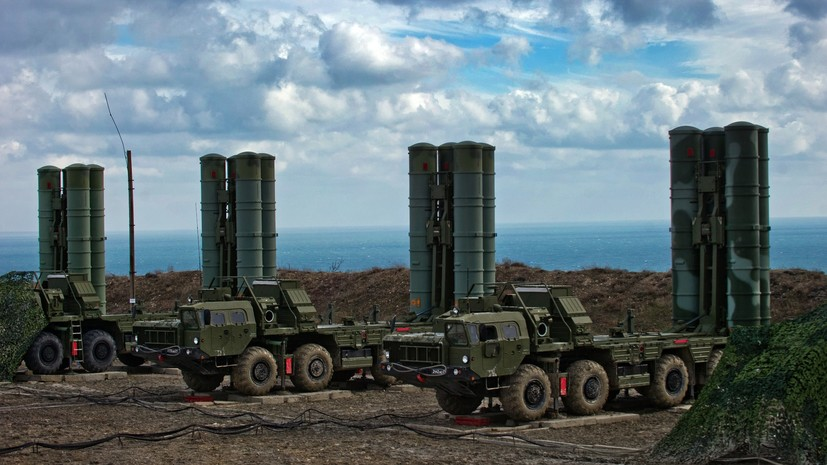


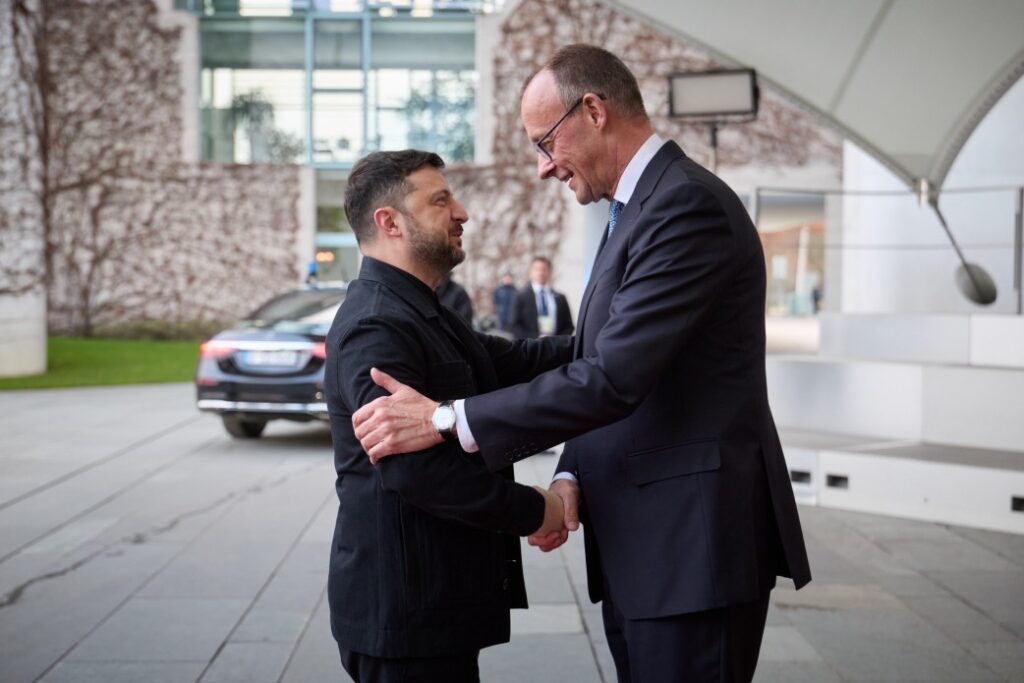


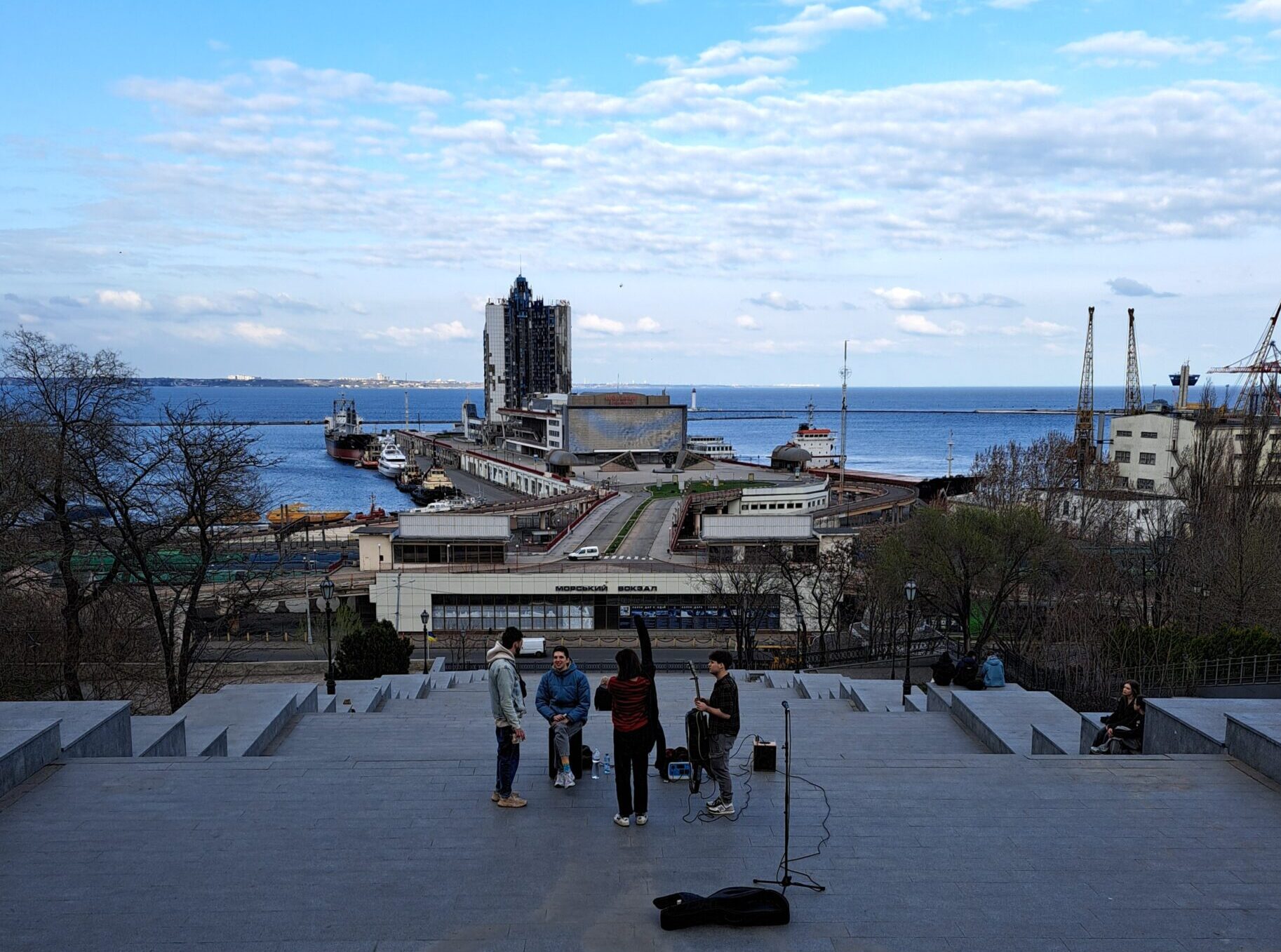


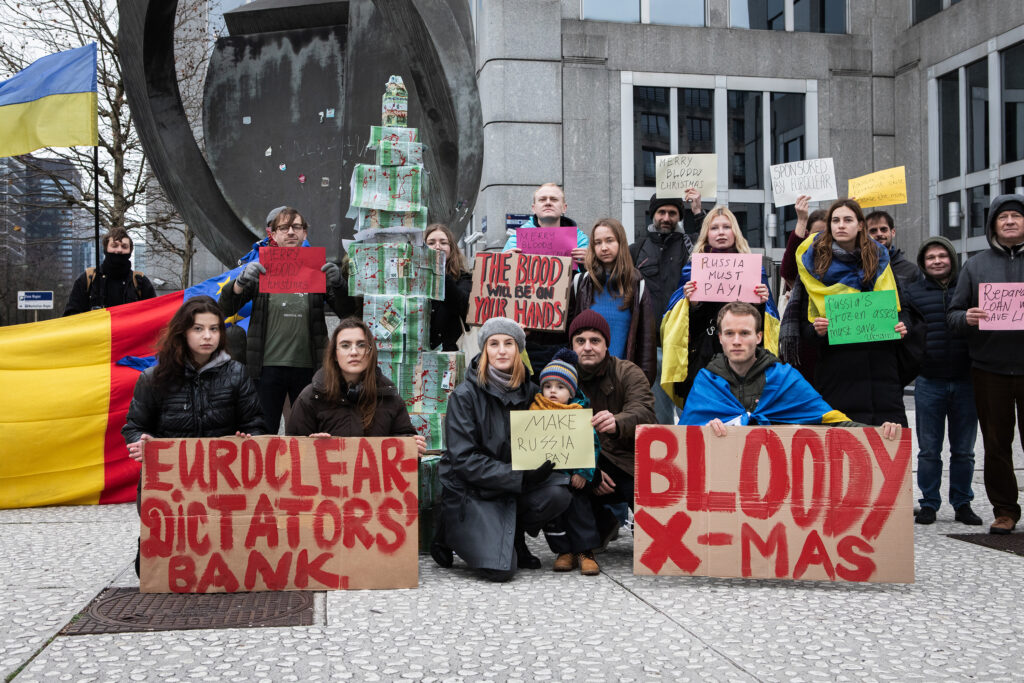


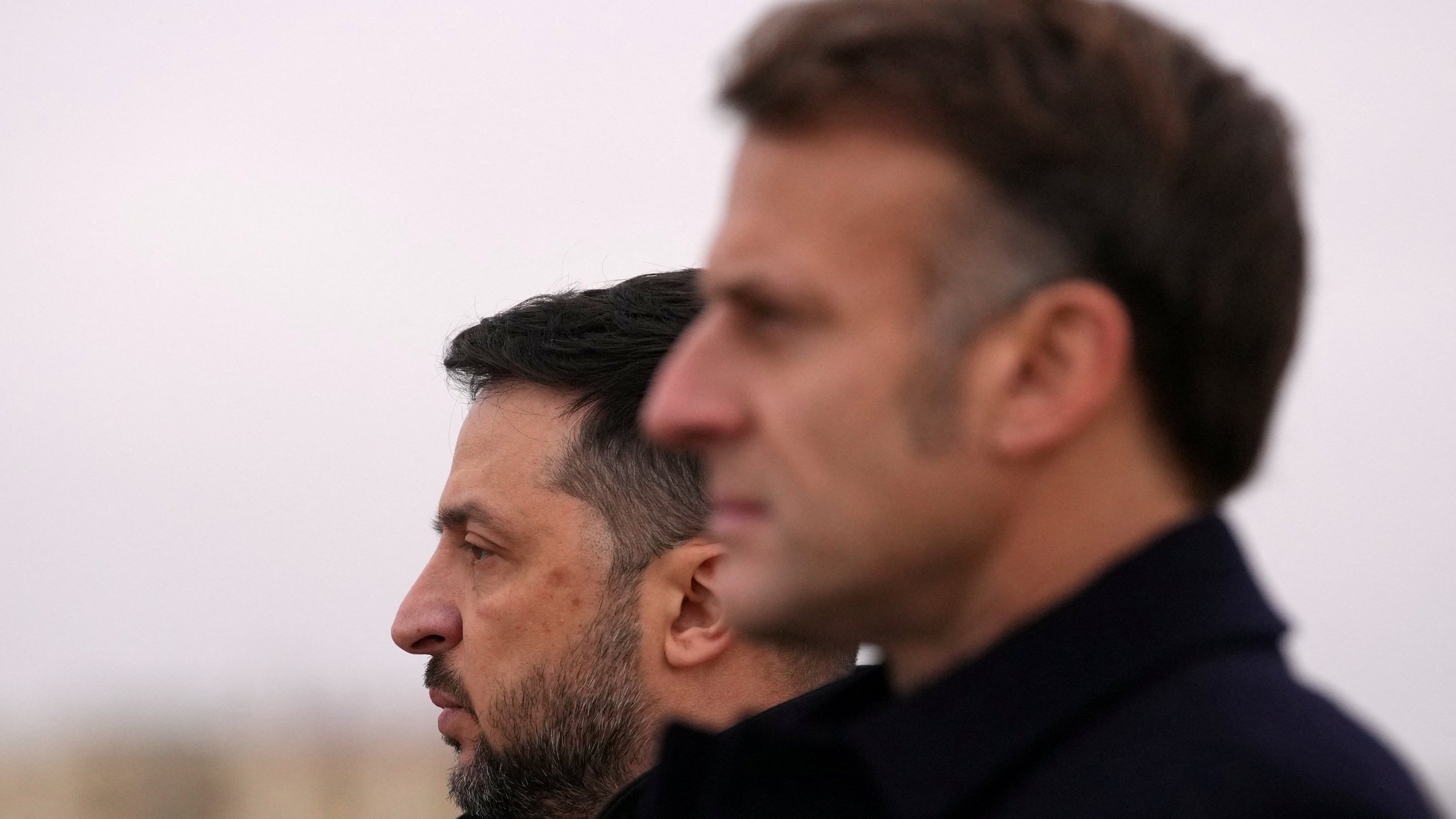
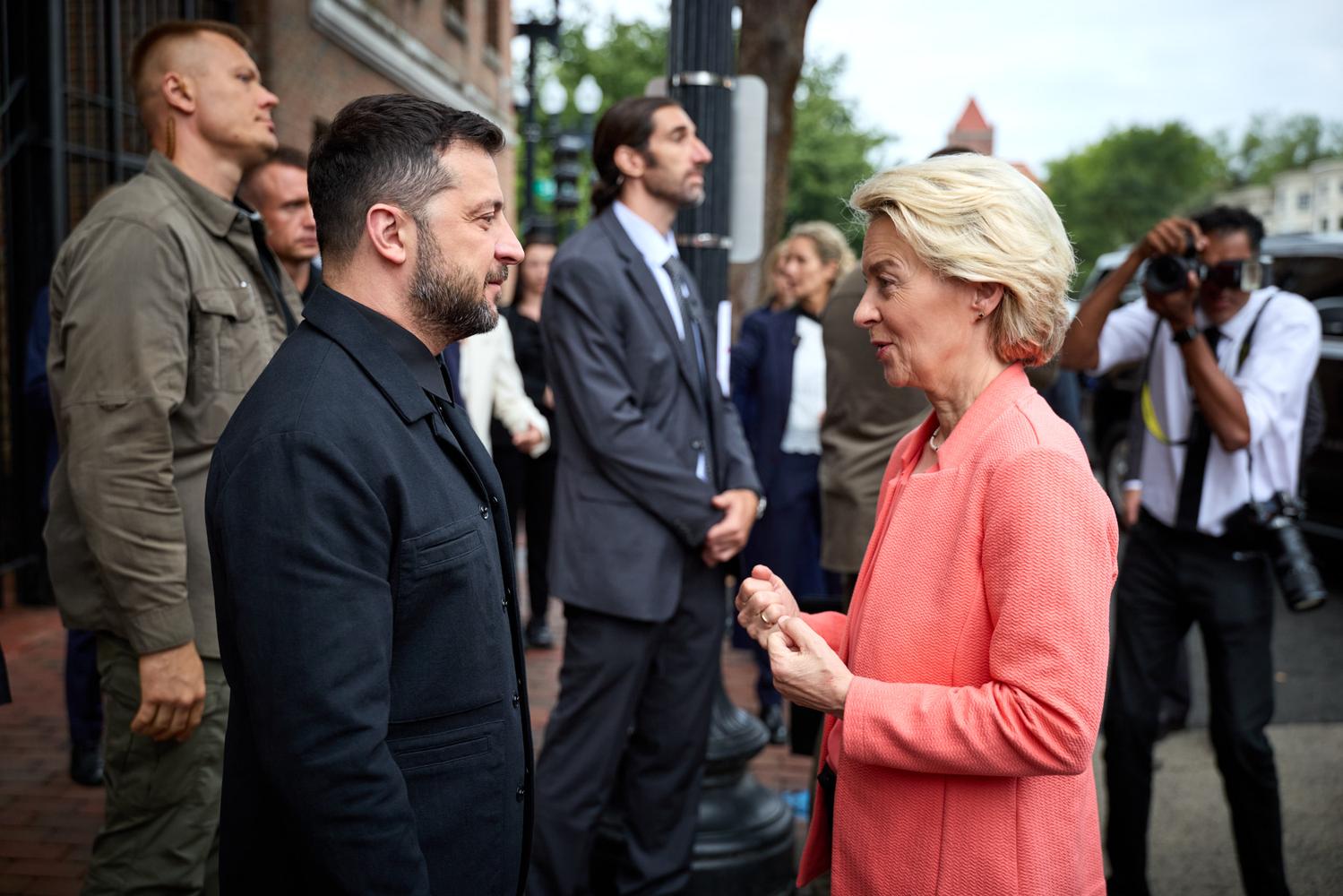





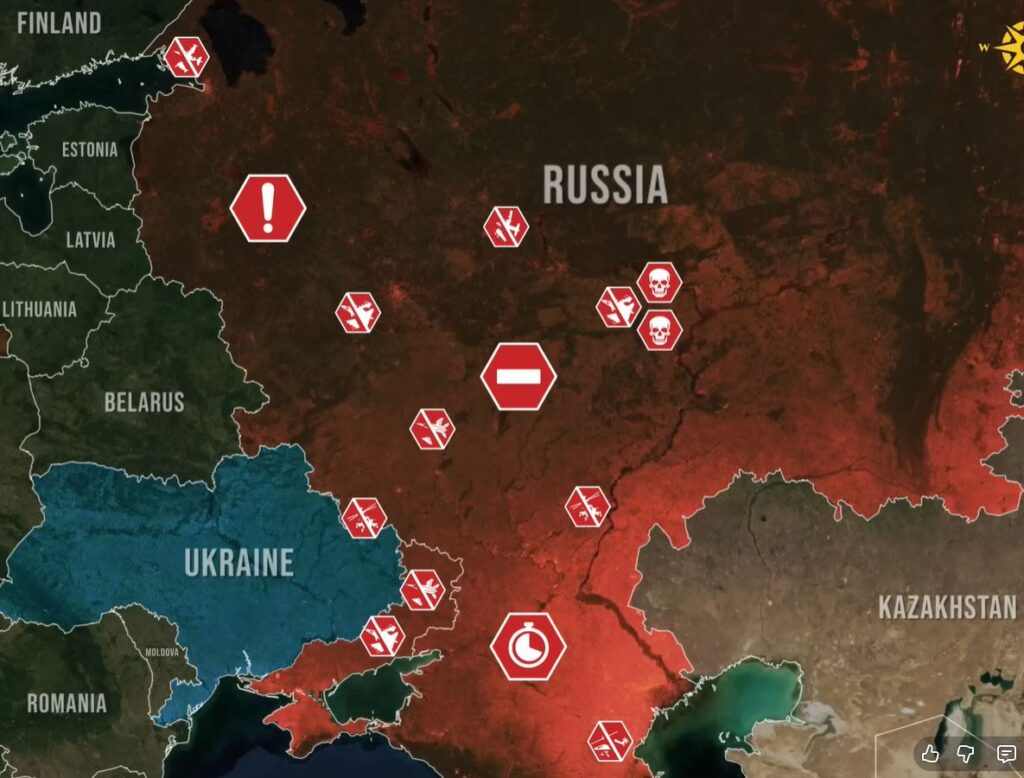
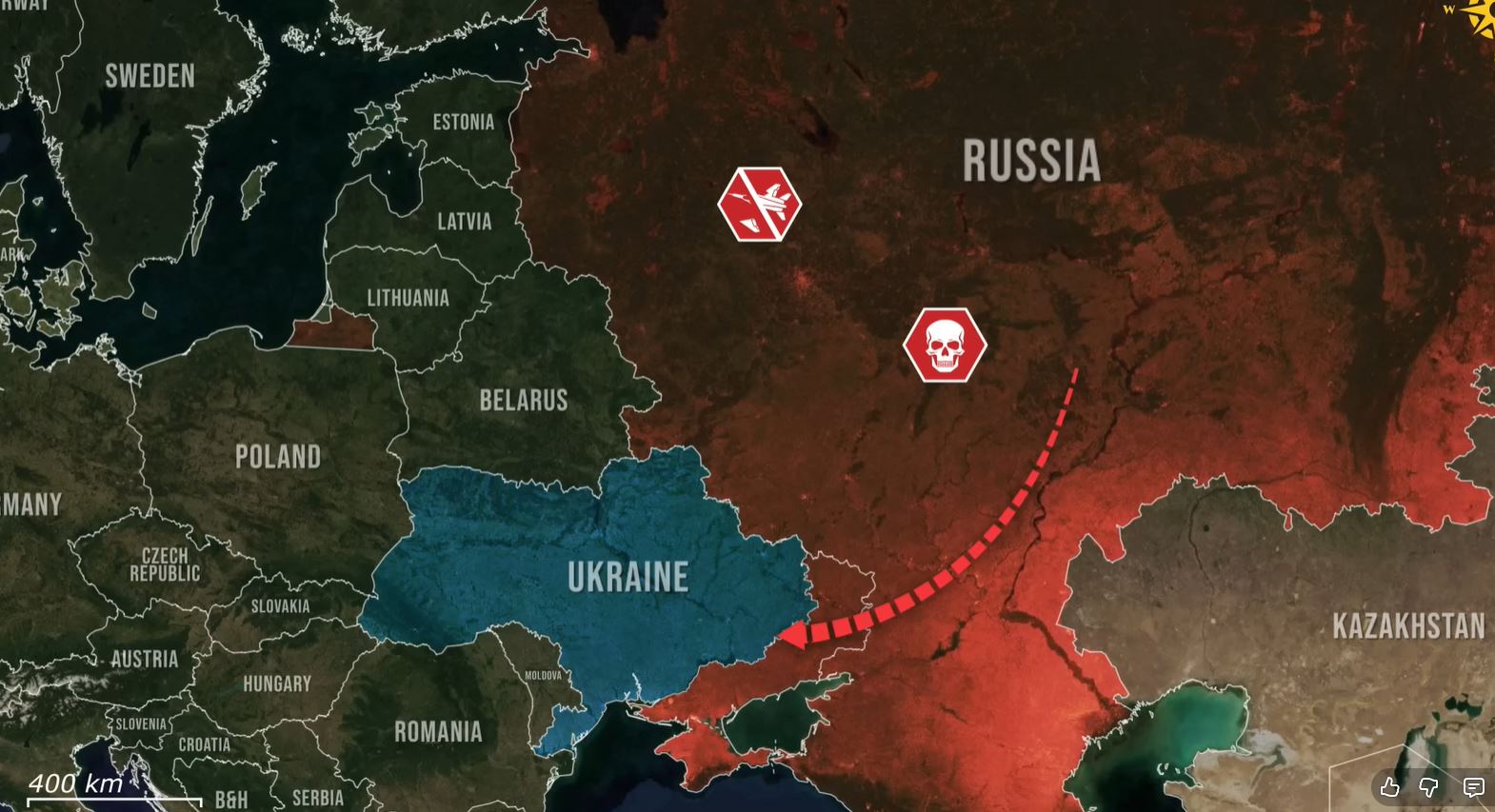


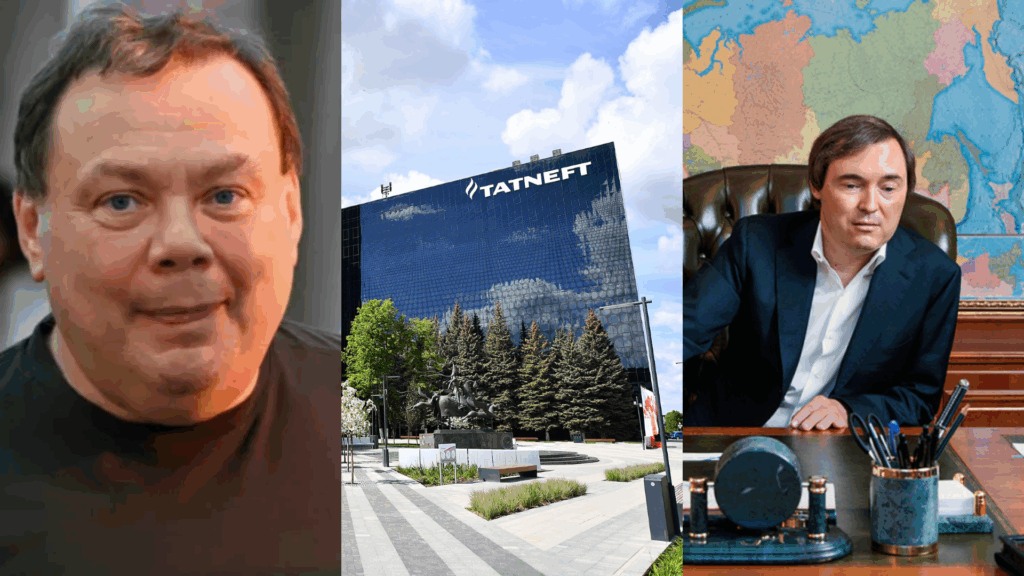
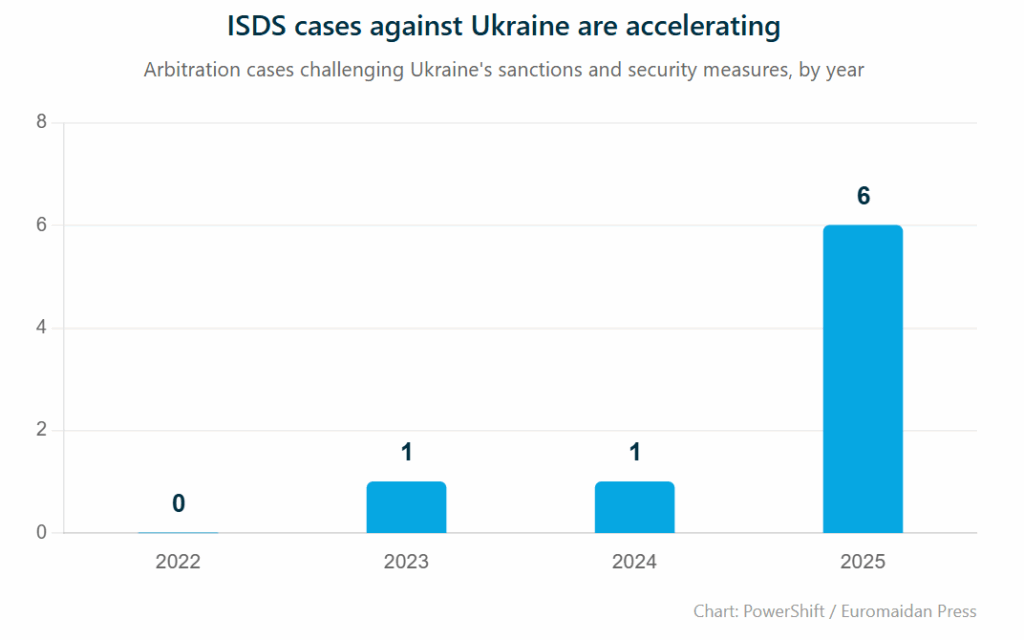

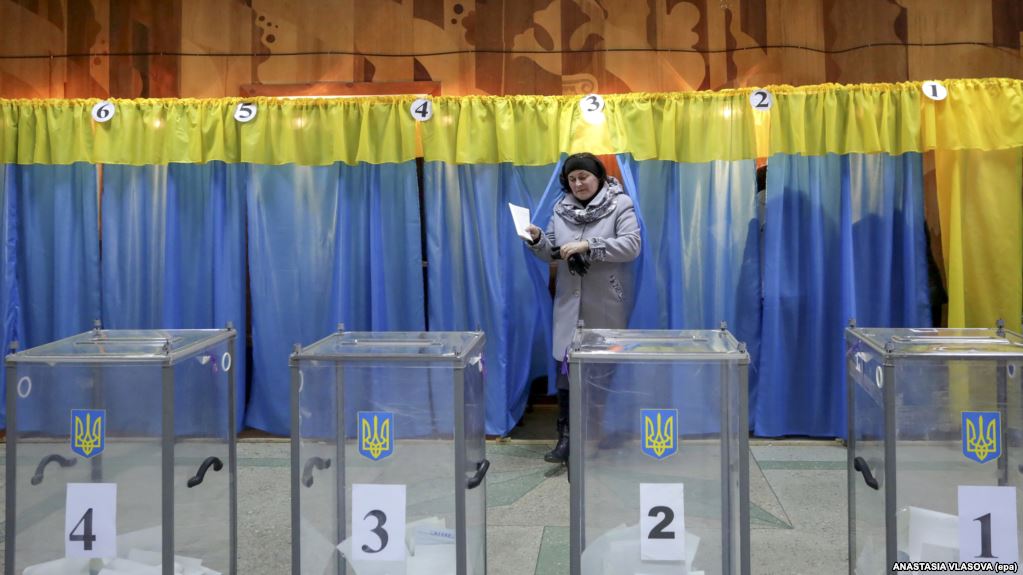

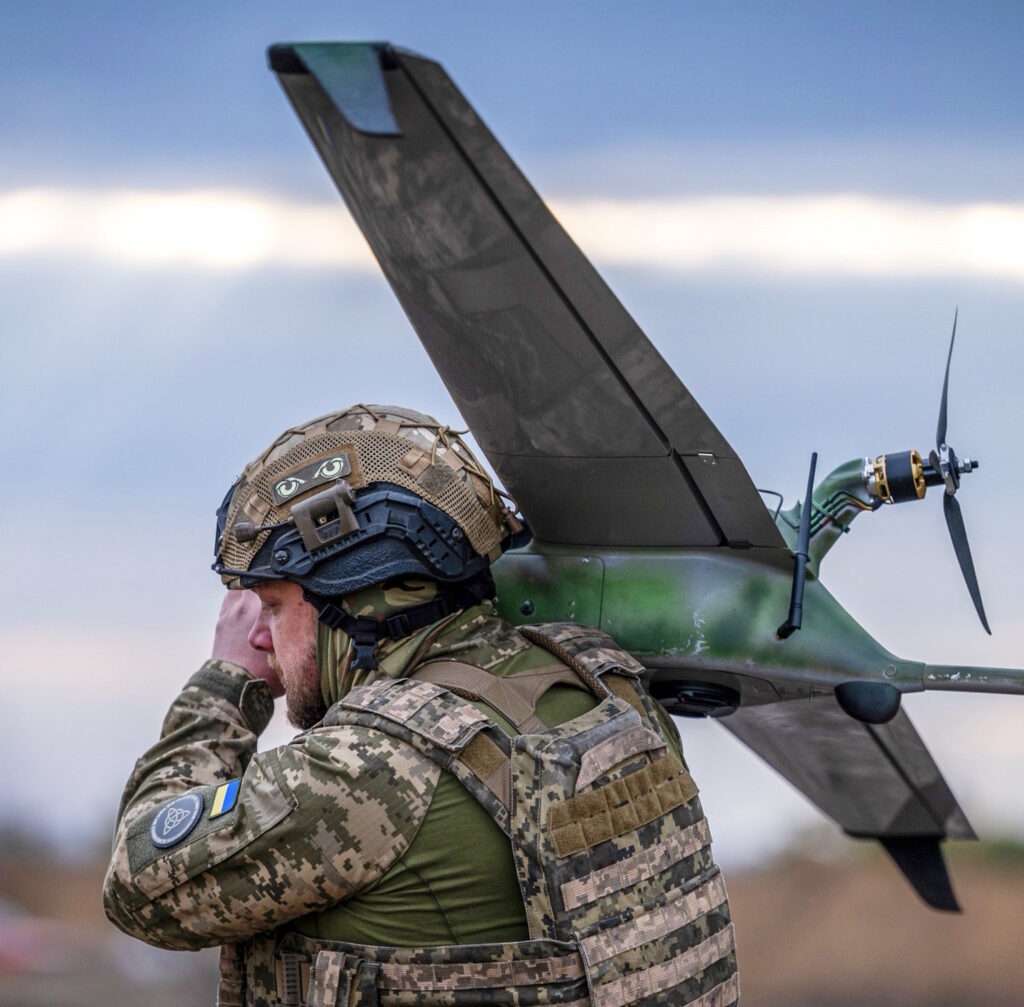
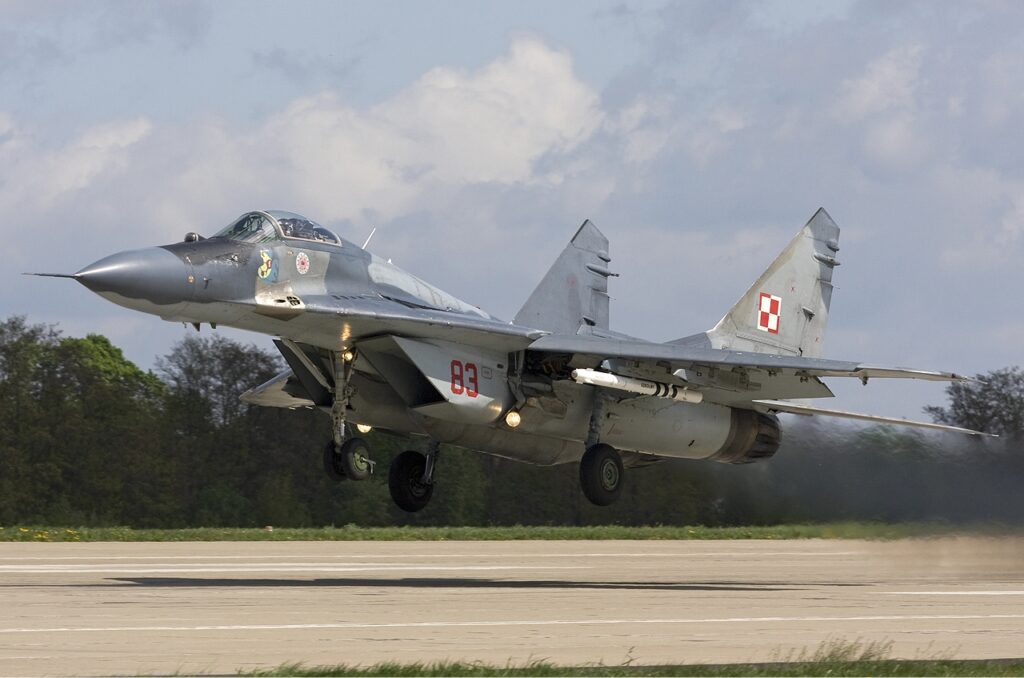
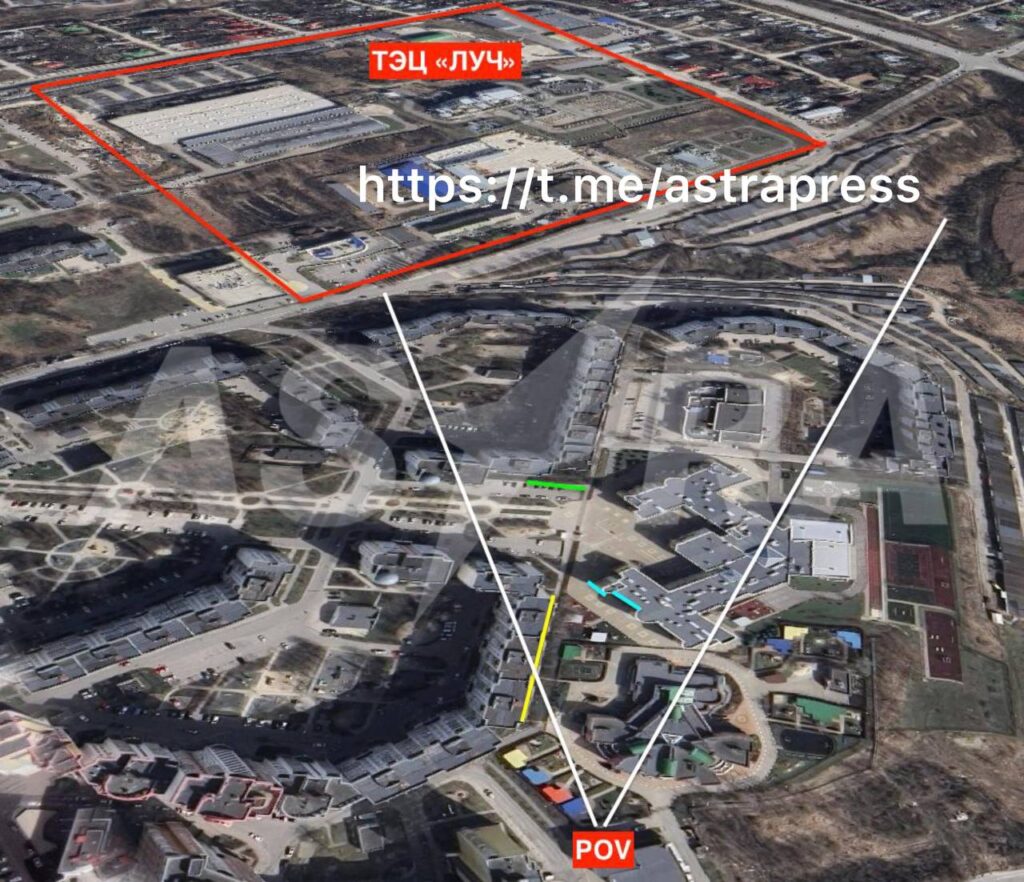
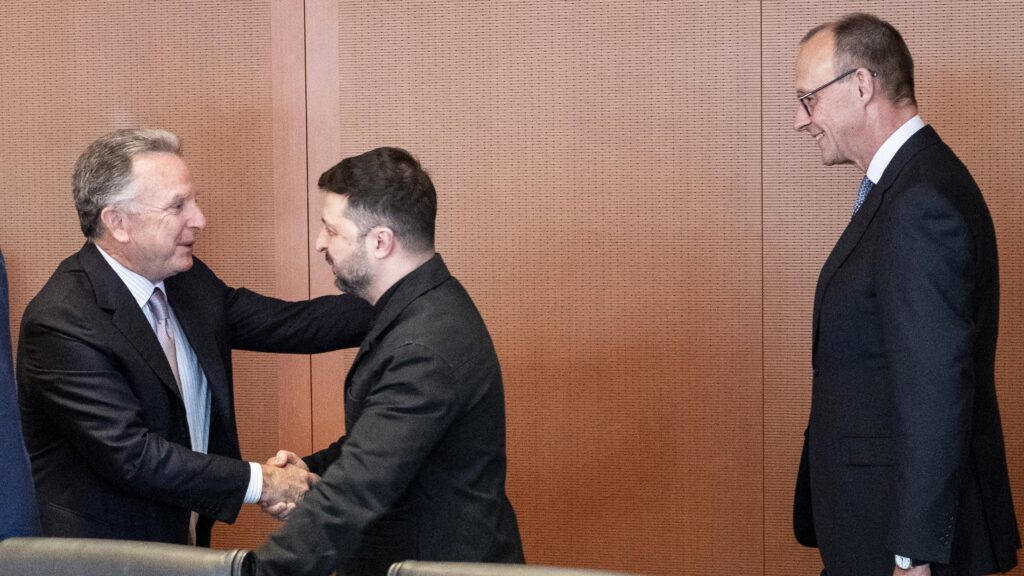

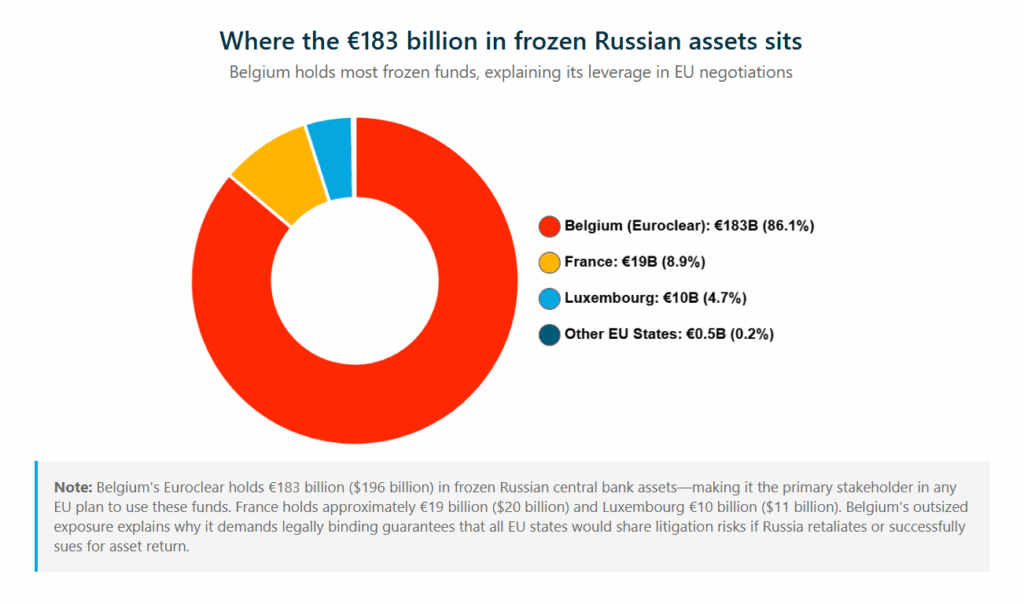

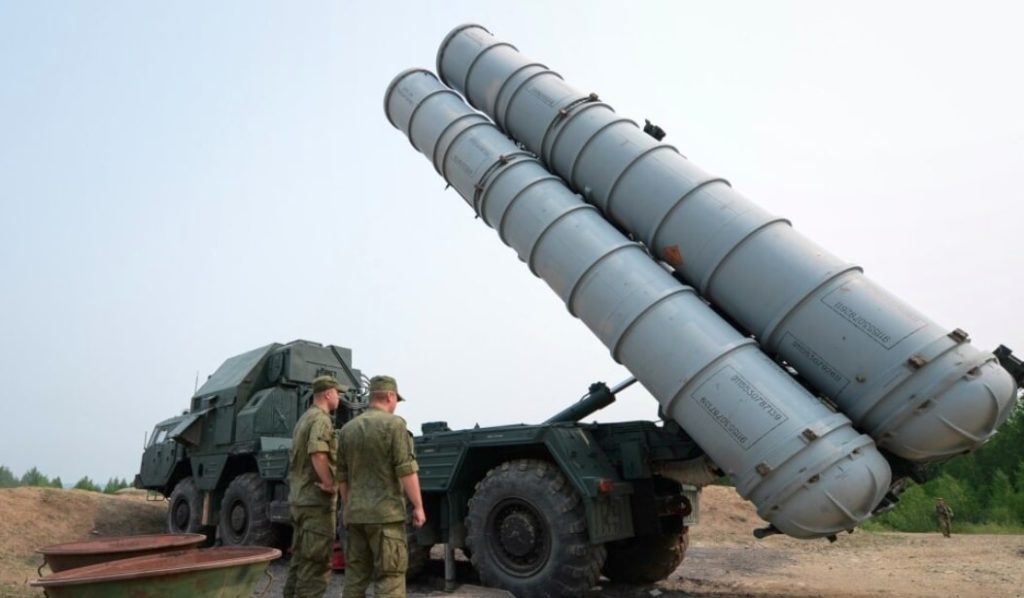

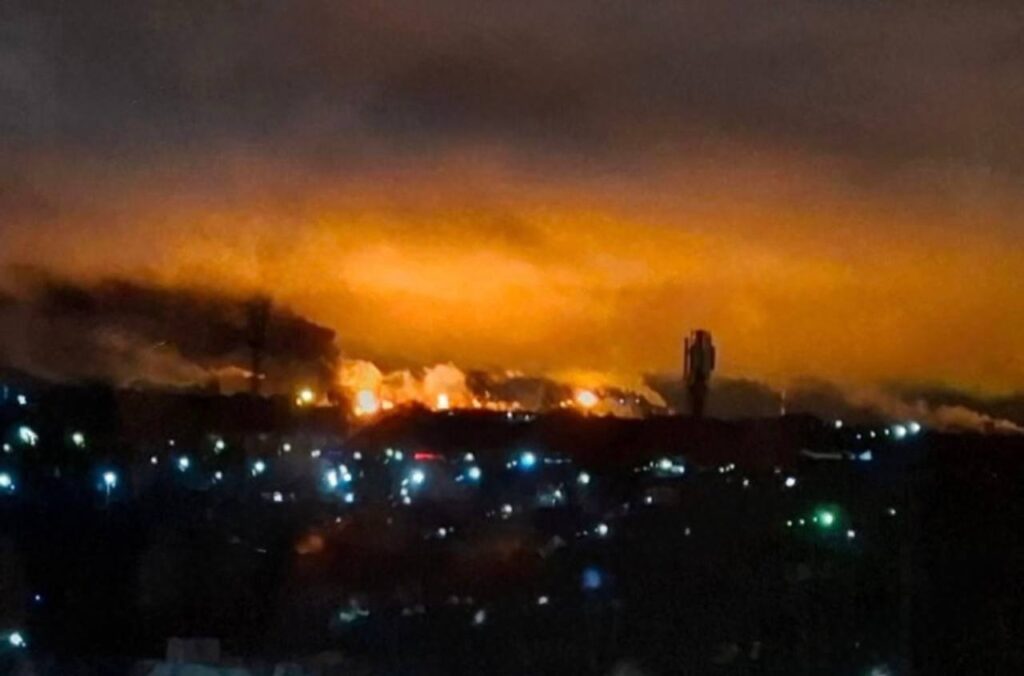

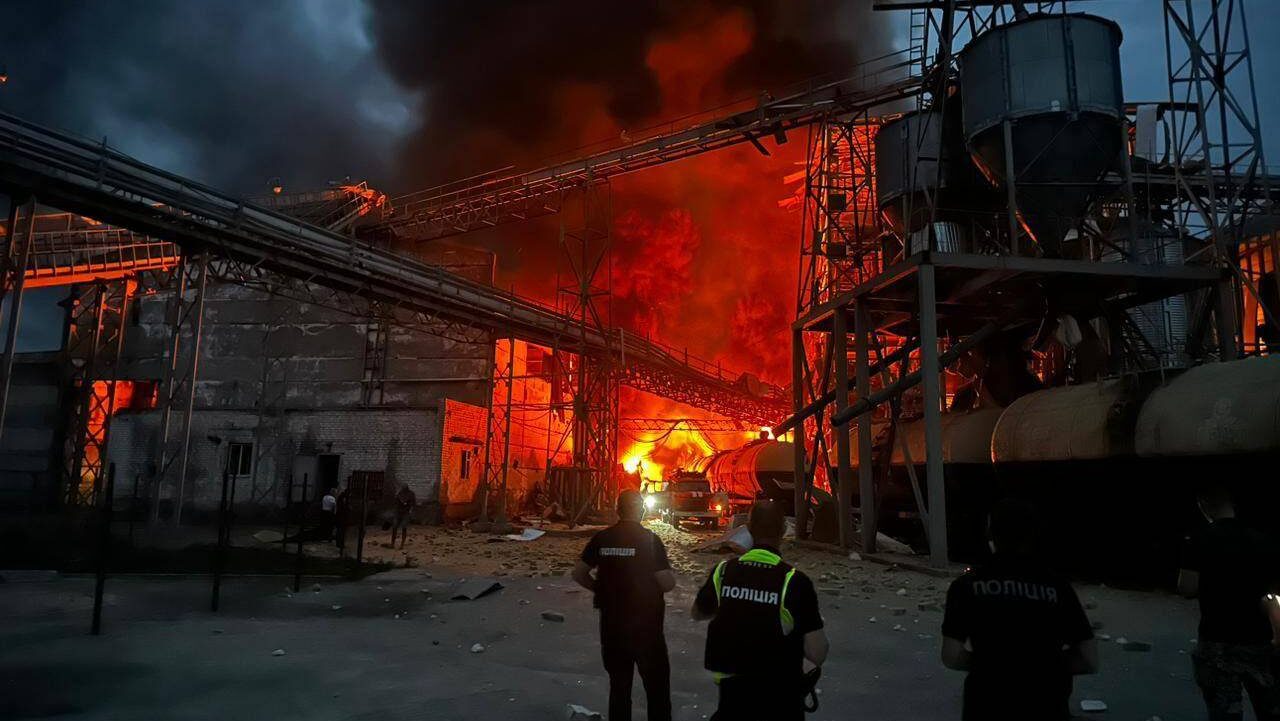


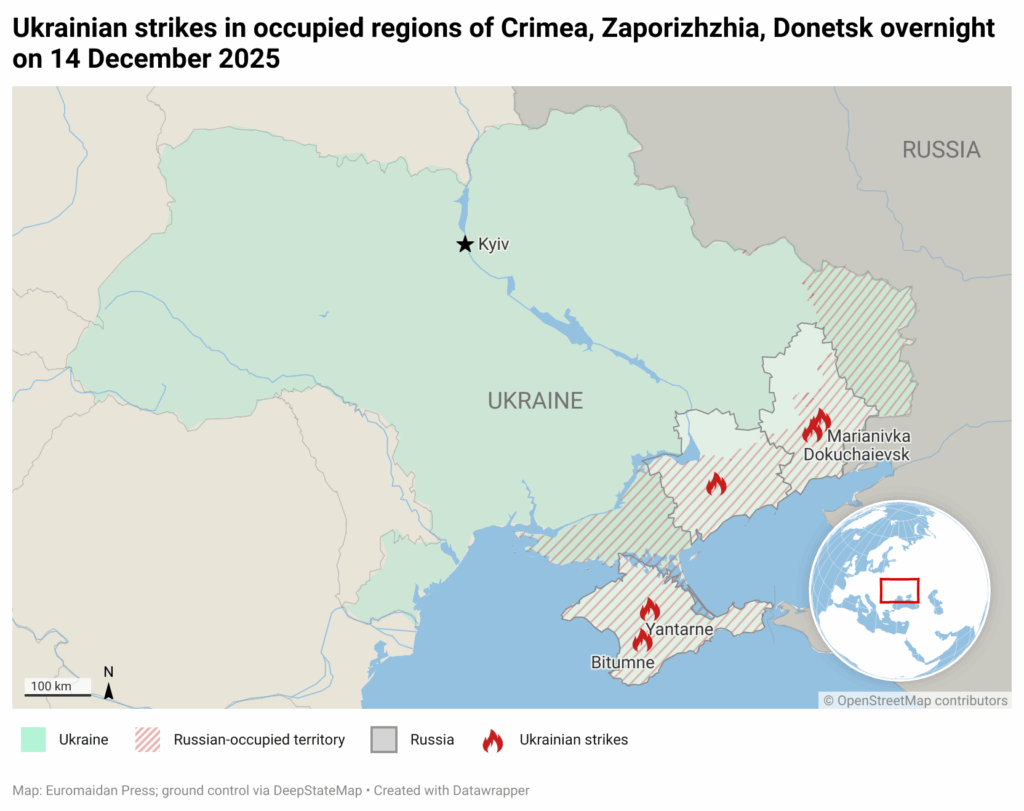

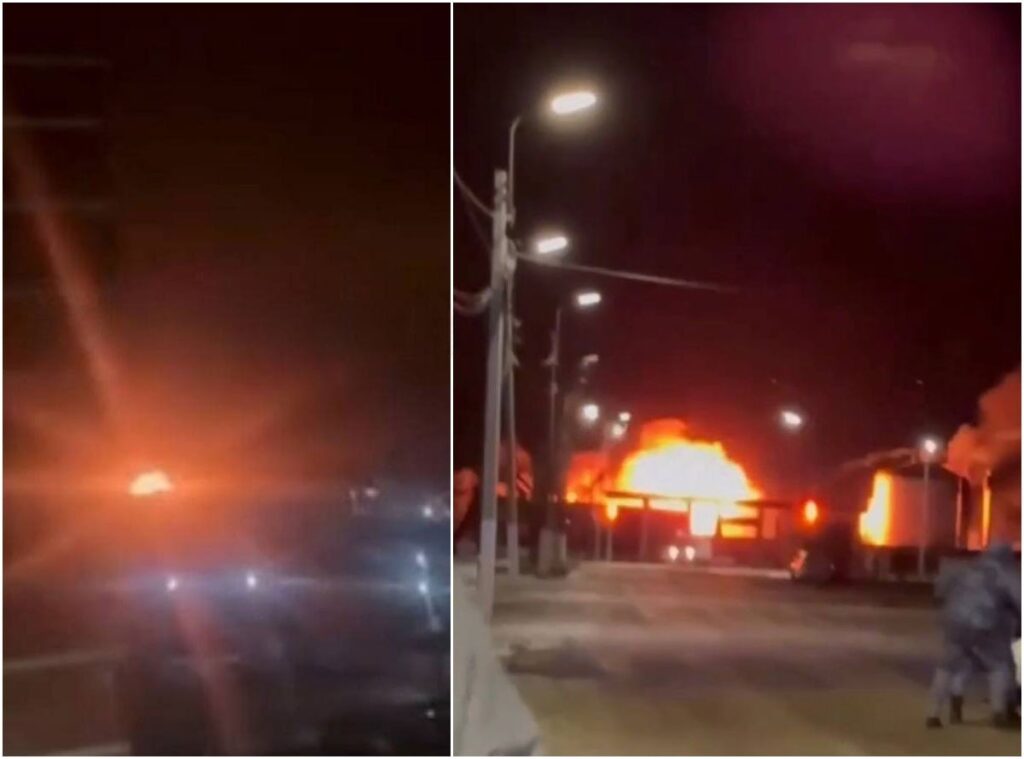

 Exilenova+