Vue normale

Reçu aujourd’hui — 16 décembre 2025
  • ✇Euromaidan Press
  • European leaders pledge EU membership for Ukraine, commit troops and frozen Russian assets
    Twelve European leaders committed to "strongly support Ukraine's accession to the European Union" in a joint statement released 15 December following emergency talks in Berlin, while pledging to deploy a multinational military force inside Ukraine and use €210 billion in frozen Russian assets for reconstruction. The statement represents the most concrete European security package for Ukraine since Russia's 2022 invasion. It comes as EU leaders prepare for a summit on 18
     

European leaders pledge EU membership for Ukraine, commit troops and frozen Russian assets

16 décembre 2025 à 06:07

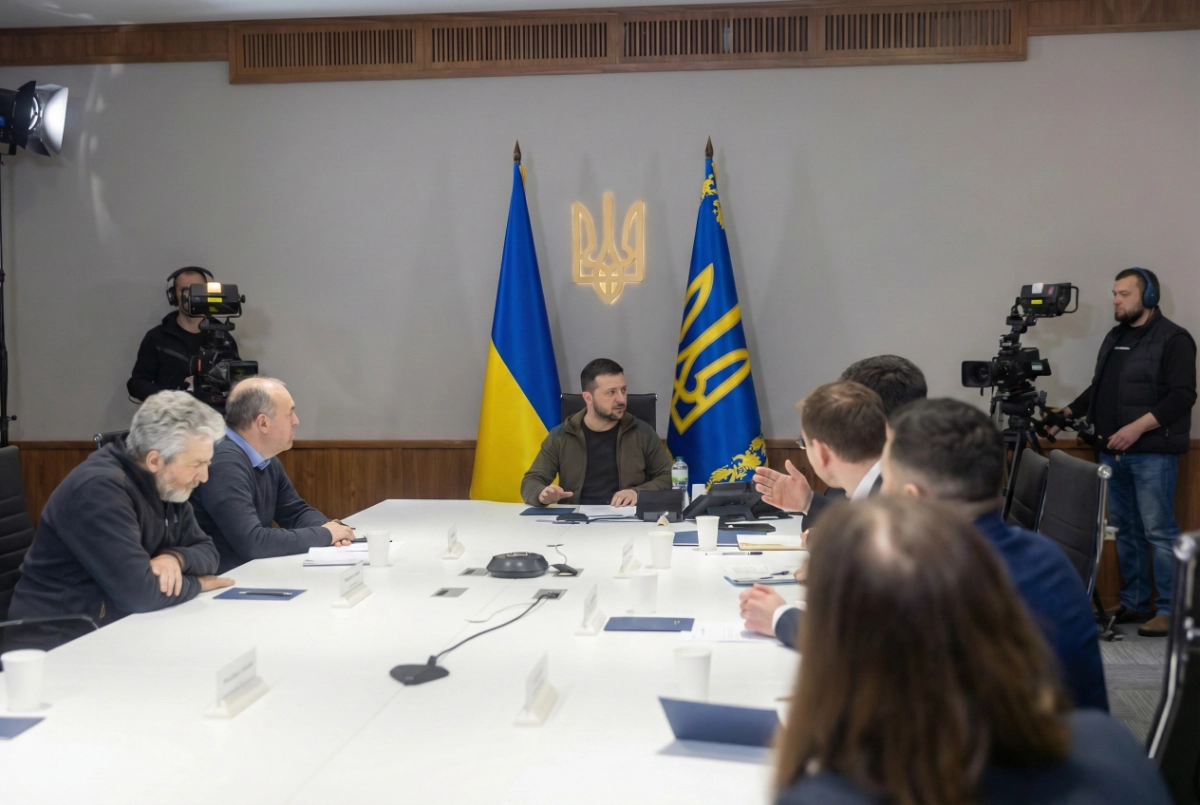
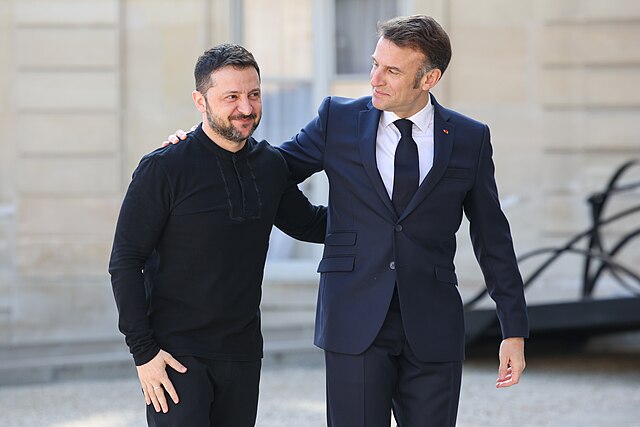
European leaders and Ukrainian President Volodymyr Zelenskyy at Berlin summit on Ukraine, 15 December 2025

Twelve European leaders committed to "strongly support Ukraine's accession to the European Union" in a joint statement released 15 December following emergency talks in Berlin, while pledging to deploy a multinational military force inside Ukraine and use €210 billion in frozen Russian assets for reconstruction.

The statement represents the most concrete European security package for Ukraine since Russia's 2022 invasion. It comes as EU leaders prepare for a summit on 18-19 December to decide on converting frozen Russian central bank assets into loans for Kyiv—a mechanism the statement explicitly referenced by noting that "Russian sovereign assets in the European Union have been immobilized."

Key commitments from the Berlin statement:

  • Strong support for Ukraine's EU membership
  • European-led multinational force operating inside Ukraine
  • US-led ceasefire monitoring mechanism
  • 800,000-strong Ukrainian military maintained post-war
  • Legally binding defense commitments against future attacks
  • Frozen Russian assets tied to war reparations

Which European leaders signed the Berlin statement?

The statement carries signatures from:

European Council President António Costa

Chancellor Friedrich Merz (Germany)

President Emmanuel Macron (France)

President Alexander Stubb (Finland)

Prime Minister Keir Starmer (UK)

Prime Minister Giorgia Meloni (Italy)

Prime Minister Donald Tusk (Poland)

Prime Minister Ulf Kristersson (Sweden)

Prime Minister Mette Frederiksen (Denmark)

Prime Minister Dick Schoof (Netherlands)

Prime Minister Jonas Gahr Støre (Norway)

European Commission President Ursula von der Leyen

The statement remains "open for other countries to join"—acknowledging that not all 27 EU members signed. Hungary's Viktor Orbán and Slovakia's Robert Fico, both of whom have threatened to veto EU support for Ukraine, were absent from the list.

European troops to deploy inside Ukraine

The statement's most significant military commitment: a "European-led 'multinational force Ukraine' made up from contributions from willing nations within the framework of the Coalition of the Willing and supported by the US."

This force would operate inside Ukrainian territory with a broad mandate to "assist in the regeneration of Ukraine's forces, in securing Ukraine's skies, and in supporting safer seas."

The explicit mention of air and naval security suggests European personnel could help operate or support air defense systems and Black Sea operations—roles marking a substantial escalation of Western military involvement in Ukraine.

Leaders also committed to maintaining Ukraine's armed forces at "a peacetime level of 800,000 to be able to deter conflict and defend Ukraine's territory," which would make the Ukrainian military one of Europe's largest standing forces.

US-led ceasefire monitoring mechanism explained

Washington would lead the mechanism ensuring any peace deal holds. The statement outlined "a US led ceasefire monitoring and verification mechanism with international participation to provide early warning of any future attack and attribute and respond to any breaches."

The arrangement includes "a deconfliction mechanism to work on mutual deescalatory actions that can be taken to benefit all parties"—language suggesting direct US-Russia communication channels to prevent incidents from escalating.

What happens if Russia violates a ceasefire:

  • Legally binding commitment to respond
  • Measures "may include armed force"
  • Intelligence and logistical assistance
  • Economic and diplomatic actions

Frozen Russian assets and Ukraine reparations

The Berlin statement directly tied Russia's €210 billion in frozen assets to future compensation, declaring that leaders would "invest in the future prosperity of Ukraine, including making major resources available for recovery and reconstruction... taking into account the need for Russia to compensate Ukraine for the damage caused."

The EU permanently froze Russian central bank assets last week, eliminating the six-month renewal cycle that had left funds vulnerable to Hungarian vetoes. The 18-19 December summit will determine whether those assets can back a reparations loan that Ukraine would only repay if Moscow compensates Kyiv for war damages.

Ukraine EU membership path confirmed

Leaders pledged to "strongly support Ukraine's accession to the European Union"—the clearest endorsement since Hungary began blocking formal accession negotiations in early 2025.

The statement emphasized that "decisions on territory are for the people of Ukraine, once robust security guarantees are effectively in place," and that leaders would "support President Zelenskyy to consult his people if needed."

What Europe demands from Russia

The statement called on Moscow "to show willingness to work towards a lasting peace by agreeing to President Trump's peace plan and to demonstrate their commitment to end the fighting by agreeing to a ceasefire."

Leaders welcomed "significant progress on President Trump's efforts to secure a just and lasting peace in Ukraine" and committed to "continue to increase pressure on Russia to bring Moscow to negotiate in earnest."

They were clear: "Nothing is agreed until everything is agreed."
  • ✇Euromaidan Press
  • Zelenskyy confirms Russia still demands all of Donbas in “peace” plan
    After meetings with American and European officials in Berlin on 15 December, Ukrainian President Volodymyr Zelenskyy confirmed that Russia still demands full control of eastern Ukraine's Donbas in its so-called peace plan. He said Ukraine will not surrender any of its internationally recognized territory and rejected any compromise on the Donbas. The Donbas is a historic name for a coal basin and is colloquially used to denote either both Luhansk and Donetsk oblasts, or so
     

Zelenskyy confirms Russia still demands all of Donbas in “peace” plan

16 décembre 2025 à 05:20

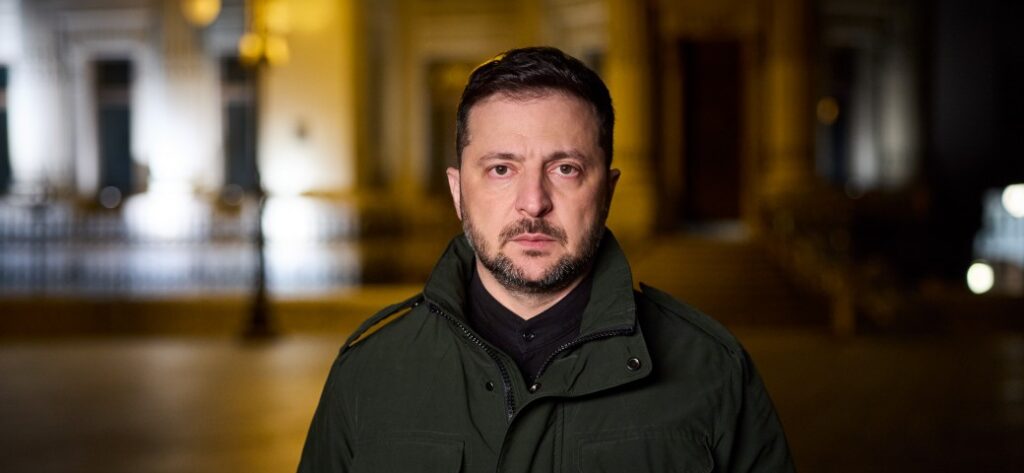
zelenskyy confirms russia still demands all donbas peace plan · post ukrainian president volodymyr during evening address 31 2025 ec7492c6 785815c16574a4eb2b7a60c4_1761937691_extra_large ukraine news reports

After meetings with American and European officials in Berlin on 15 December, Ukrainian President Volodymyr Zelenskyy confirmed that Russia still demands full control of eastern Ukraine's Donbas in its so-called peace plan. He said Ukraine will not surrender any of its internationally recognized territory and rejected any compromise on the Donbas.

The Donbas is a historic name for a coal basin and is colloquially used to denote either both Luhansk and Donetsk oblasts, or sometimes just Donetsk Oblast. In recent years of the ongoing Russo-Ukrainian war, Moscow has focused on capturing the entire Donbas region, sending its most numerous ground armies into repeated attacks that have brought only incremental gains at the cost of heavy personnel and equipment losses, yet it has still failed to capture the region in its entirety.

Zelenskyy: Russia still wants Donbas — Ukraine won’t give it up

Speaking at a 15 December online press conference attended by Euromaidan Press, Zelenskyy said Moscow still demands the entire Donbas in negotiations.

“Their position has not changed,” he said. “We do not want to give up our Donbas.” 

He made clear that Ukraine will not recognize Russian control over any part of the region, either legally or in practice.

"Neither de jure nor de facto will we recognize Donbas – its temporarily occupied part – as Russian. Absolutely. Nevertheless, we are discussing the territorial issue. You know it is one of the key issues. At this point, there is no consensus on it yet," the President said.

Zelenskyy also addressed American suggestions to create a “free economic zone” in the area, saying that "a “free economic zone” does not mean under the control of the Russian Federation." He stressed that this issue remains one of the most sensitive points in the talks and no consensus has been reached.

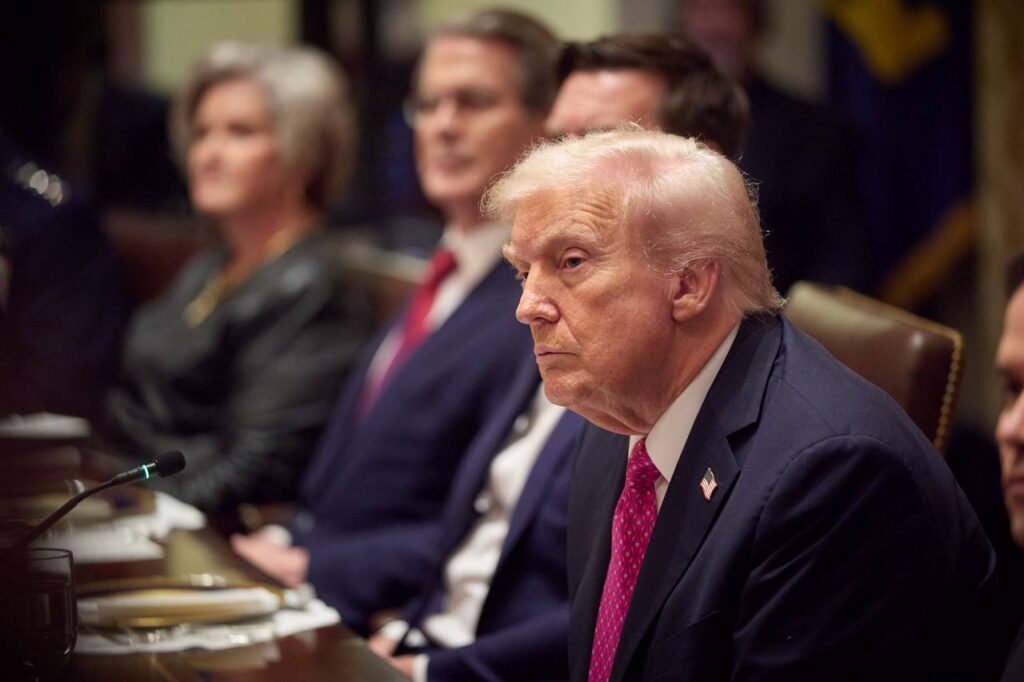
Zelenskyy Trump white house peace deal
Explore further

Trump offers Ukraine “security guarantees” that are designed to fail

Zelenskyy previously told Bloomberg that the territorial issue — specifically Russia’s demand for the Donbas — remains the main unresolved point in talks. On 19 November, media reported that US envoy Steve Witkoff had presented a 28-point peace plan to Trump, allegedly developed with Russian representative Kirill Dmitriev. The plan called for Ukraine to withdraw from Donetsk Oblast and drop its NATO ambitions. Some of those provisions have since been removed, shortening the plan to 20 points.

No compromise on territory, but security talks advance

While territorial discussions remain stuck, Zelenskyy said there has been real progress in other areas, especially on security guarantees. He reiterated the US Congress is expected to vote on legally binding commitments that would require a response if Russia violates any future peace deal or ceasefire. The proposed mechanism would mirror NATO’s Article 5, providing a collective response to aggression.

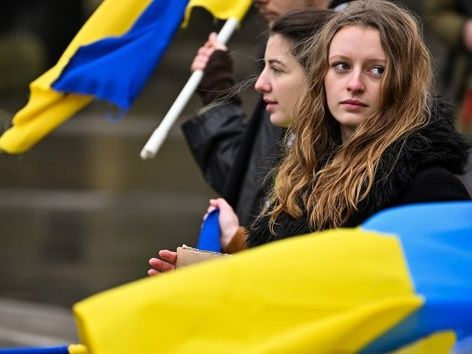
ukrainians
Explore further

75% of Ukrainians oppose “peace plan,” which includes withdrawal of troops from Donbas

The Ukrainian President said detailed talks have also covered Ukraine’s long-term defense needs, including the size of its army, required weapons and training, and sustainable funding. He welcomed growing cooperation between the US and Europe, noting that the broader Coalition of the Willing — now called Europe+ — includes Canada and other non-EU partners.

Russia’s response will shape the next steps

Zelenskyy warned that if Russian President Vladimir Putin rejects the proposals, Ukraine will request more weapons and tougher sanctions from the US. He said this would be a fair reaction to a complete refusal by Moscow to engage in a peaceful resolution.

He added that around 90% of the draft peace documents have been agreed. The next phase includes consultations between the US and Russia, further talks in the United States, and potentially a summit with US President Donald Trump.

Asked about holding a referendum on the final peace agreement, Zelenskyy said no such plans exist for now. He noted that any vote would require a ceasefire and a secure environment, and that Ukraine is focused on easing the burden on civilians already suffering from war.

Reçu hier — 15 décembre 2025
  • ✇Euromaidan Press
  • Trump offers Ukraine “security guarantees” that are designed to fail
    The Trump administration is reportedly offering Ukraine security guarantees similar to NATO's Article 5—legally binding and approved by Congress. A senior US official told Axios the administration7 wants to give Ukraine "a security guarantee that will not be a blank check on the one hand but will be strong enough on the other hand." There's a catch. Under the original 28-point "peace plan," these guarantees would be deemed invalid if Ukraine launches a missile at Moscow
     

Trump offers Ukraine “security guarantees” that are designed to fail

15 décembre 2025 à 10:26

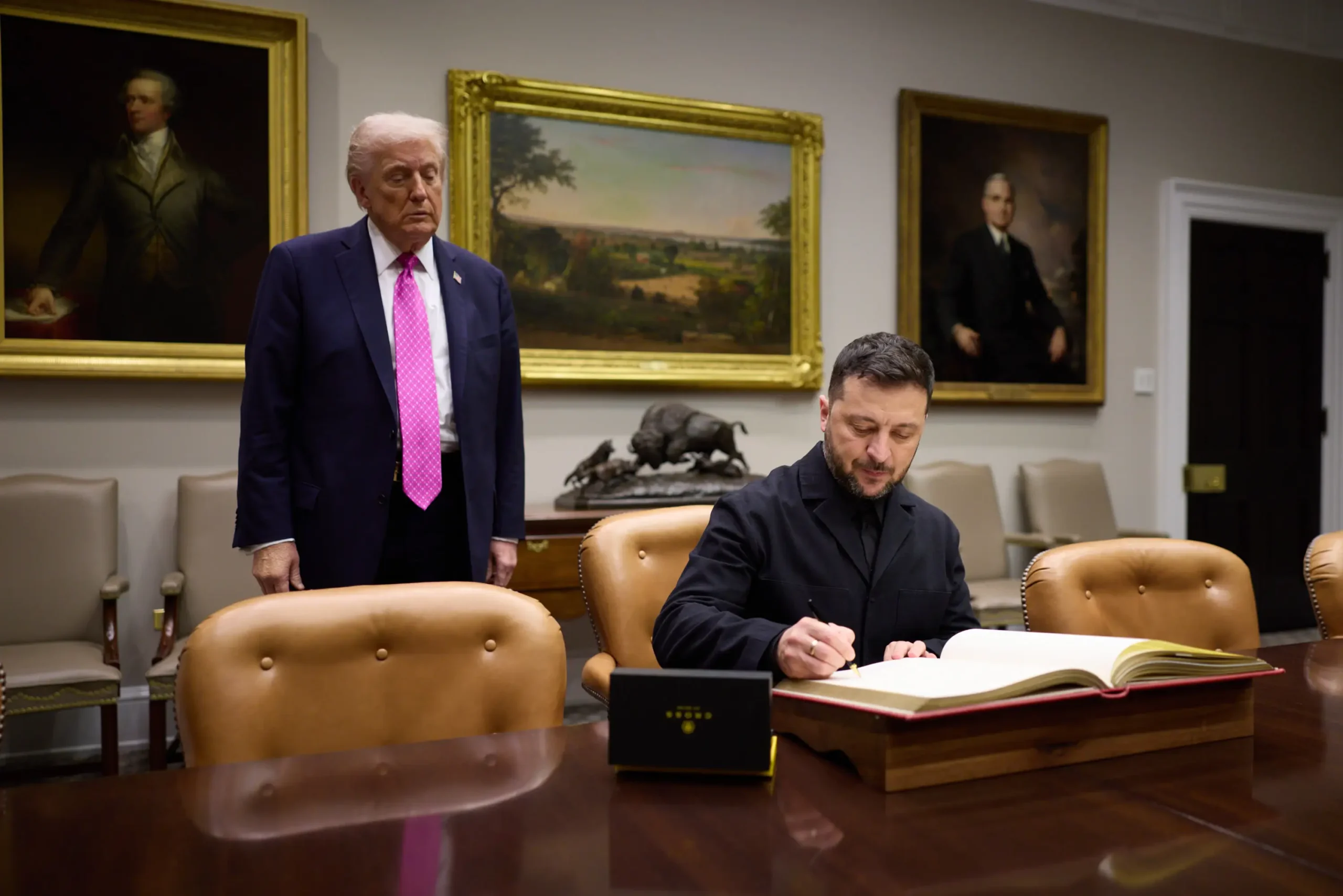
Zelenskyy Trump white house peace deal

The Trump administration is reportedly offering Ukraine security guarantees similar to NATO's Article 5—legally binding and approved by Congress. A senior US official told Axios the administration7 wants to give Ukraine "a security guarantee that will not be a blank check on the one hand but will be strong enough on the other hand."

There's a catch. Under the original 28-point "peace plan," these guarantees would be deemed invalid if Ukraine launches a missile at Moscow or St. Petersburg "without cause." Both Russia and the US have repeatedly blamed Ukraine for a war Russia started.

In other words: these "guarantees" come with an escape clause designed for the guarantor, not the guaranteed.

What Article 5 actually says

According to NATO, Article 5 states that an armed attack against one member shall be considered an attack against all members, triggering an obligation for each member to come to its assistance.

The Alliance stresses, however, that "this assistance may or may not involve the use of armed force." Each member nation determines its specific actions according to its own constitutional processes. If the Alliance is under threat, each member state will consider its own defensive needs before committing military support to allies.

NATO's collective defense pledge is not an automatic tripwire for war. It's a political commitment—one that only works if adversaries believe it will be honored.

NATO can barely defend itself

After three decades of downsizing and underfunding, European member states are fundamentally dependent on support from allies who—except for the United States—are unable to come to their assistance.

The numbers are damning:

  • As of 2024, NATO member states had accumulated a collective backlog of 433 years—each year representing one member state that did not meet its 2% spending pledge.
  • During the Cold War, European members invested an average of 3.5% of GDP on defense. Today, they spend just 2.27%. While all of this is a investment in European security, not all is used to rebuild the military power of NATO. Instead, a great part is invested in Ukraine. Fortunately.
  • The 2% target itself is only 57% of what Europe spent in the 1980s to maintain credible deterrence.

European leaders have agreed to raising spending to 5% of GDP. NATO members have agreed to use at least 3.5 % dedicated to core military defence and up to 1.5 % for broader security and related investments—and have reaffirmed strong, continued support for Ukraine (including counting eligible Ukraine aid within this spending calculation) as part of their collective defence commitments, aiming for a total of 5 % of GDP by 2035.

This is an acknowledgment that current levels are not deterring Russia. But as Lithuanian President Gitanas Nausėda pointed out: "There was a promise to invest 2% eleven years ago. Now we are talking about 3% spending. Despite long discussions, despite nice plans, we are still below the threshold of 2%."

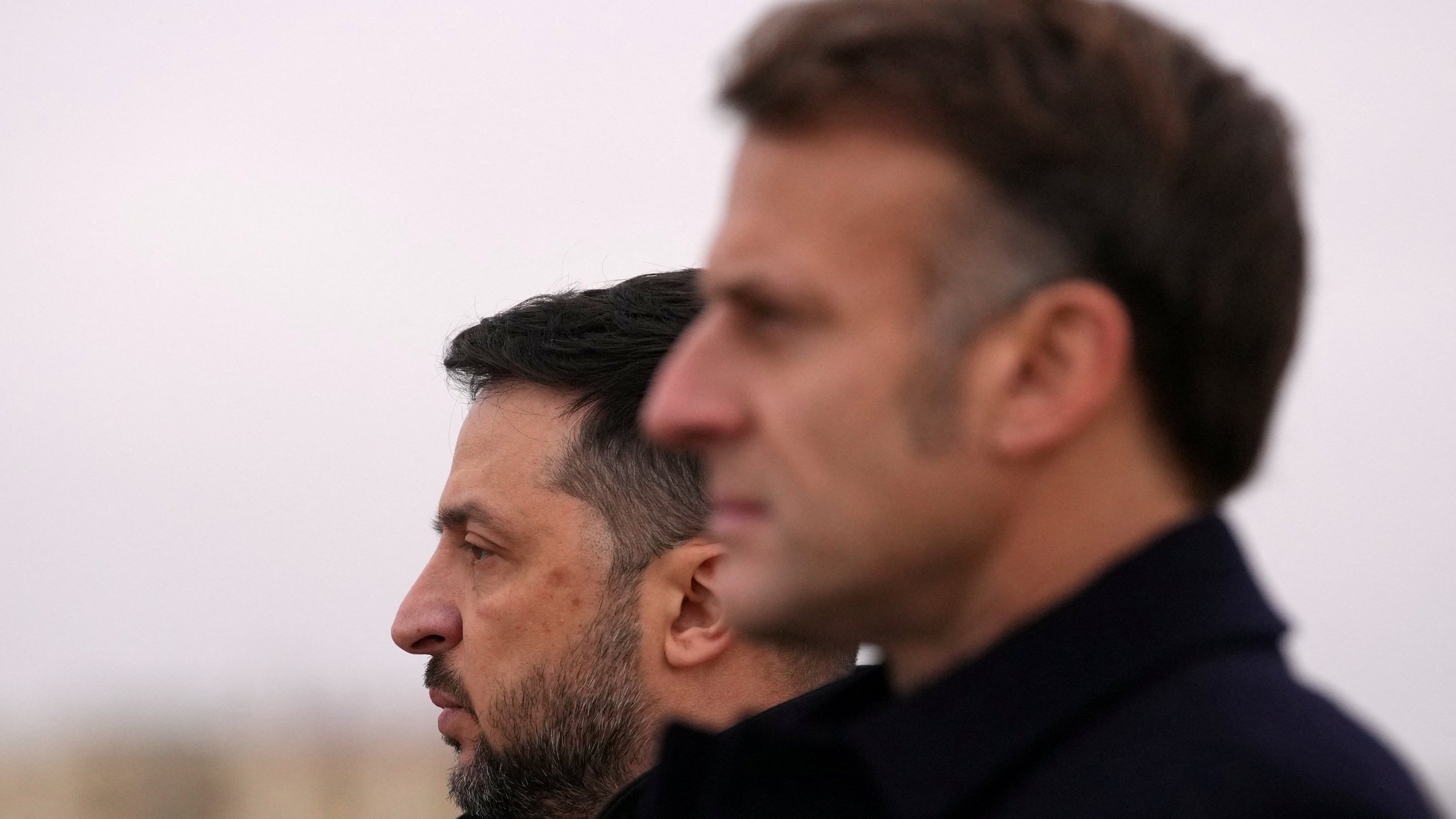
zelenskyy in france
Explore further

Trump’s NSS proves Europe and Ukraine are on their own—and must save themselves

If NATO deterrence worked

Consider what's actually happening:

  • The full-scale war would never have happened. NATO's 2010 Strategic Concept pledged to use political and military means to end wars that threaten the security of the Alliance. Instead, the 2022 Strategic Concept became a commitment to do less.
  • Russia would not be waging hybrid war against NATO members. More importantly, the Alliance would be responding in kind. It isn't.
  • NATO wouldn't be preparing for a possible Russian attack as early as 2030. German intelligence warns Russia intends to test NATO's collective defense commitment. Some analysts believe aggression could begin within three years.

When discussing security guarantees for Ukraine, Europe has indicated it can provide a mere 25,000 to 30,000 soldiers as a deterrence force—conditional on US military support.

Foreign military aid to Ukraine plunged 43% in July and August compared to the first half of the year, due to US policy shifts, uneven burden-sharing among European donors, and fiscal constraints.

If the Alliance cannot deter attacks against its own members, why would it deter future attacks against Ukraine? This is why Ukraine's Defense Minister has underscored that the fastest way to strengthen European security is to support Ukraine—which has several critical military capabilities its European partners lack.

The built-in excuse not to respond

The US has explicitly ruled out deploying combat troops to engage directly with Russia. It is instead signaling that Europe must take responsibility for Ukraine and its own security.

A reset of US-Russian relations—including business opportunities a "peace" would bring—appears to be the administration's main objective. The US plan bears more similarities to a business arrangement than a peace plan. Given experience, the Trump administration would likely have no qualms about blaming Ukraine for any future restart of hostilities.

As Foreign Minister Andrii Sybiha stated on the anniversary of the Budapest Memorandum: "Having had such a bitter experience in the past, Ukraine does not trust empty pledges anymore—we trust the strength of our army and weapons."

Ukraine USA Trump Zelenskyy talks
Explore further

Trump’s Ukraine plan proves the transatlantic alliance is dead

Trump's credibility problem

President Trump has sowed doubt about whether he would honor NATO's Article 5 commitments since his first presidential campaign, conditioning US protection on political demands like higher defense spending.

In March 2025, he told reporters: "If they don't pay, I'm not going to defend them. No, I'm not going to defend them." Three months later, when asked about Article 5, he said: "Depends on your definition. There's numerous definitions of Article 5. You know that, right? But I'm committed to being their friends."

The new National Security Strategy makes this explicit. It links cooperation to ideologically aligned partners and, according to War on the Rocks, "elevates the culture wars into a governing logic for national security," using ideological tests to judge allies.

The Kremlin welcomed the strategy, with spokesman Dmitry Peskov calling it "largely consistent with our vision."

US credibility has been further undermined by:

  • Its failure to live up to the Budapest Memorandum
  • Its failure to reciprocate Europe's persistent support for American-led military operations globally
  • Threats of annexation against allied territories
  • A trade war against Europe exactly as it urgently rearms
  • The end of defense aid to Ukraine
  • Persistent support for Russian demands for Ukraine's capitulation
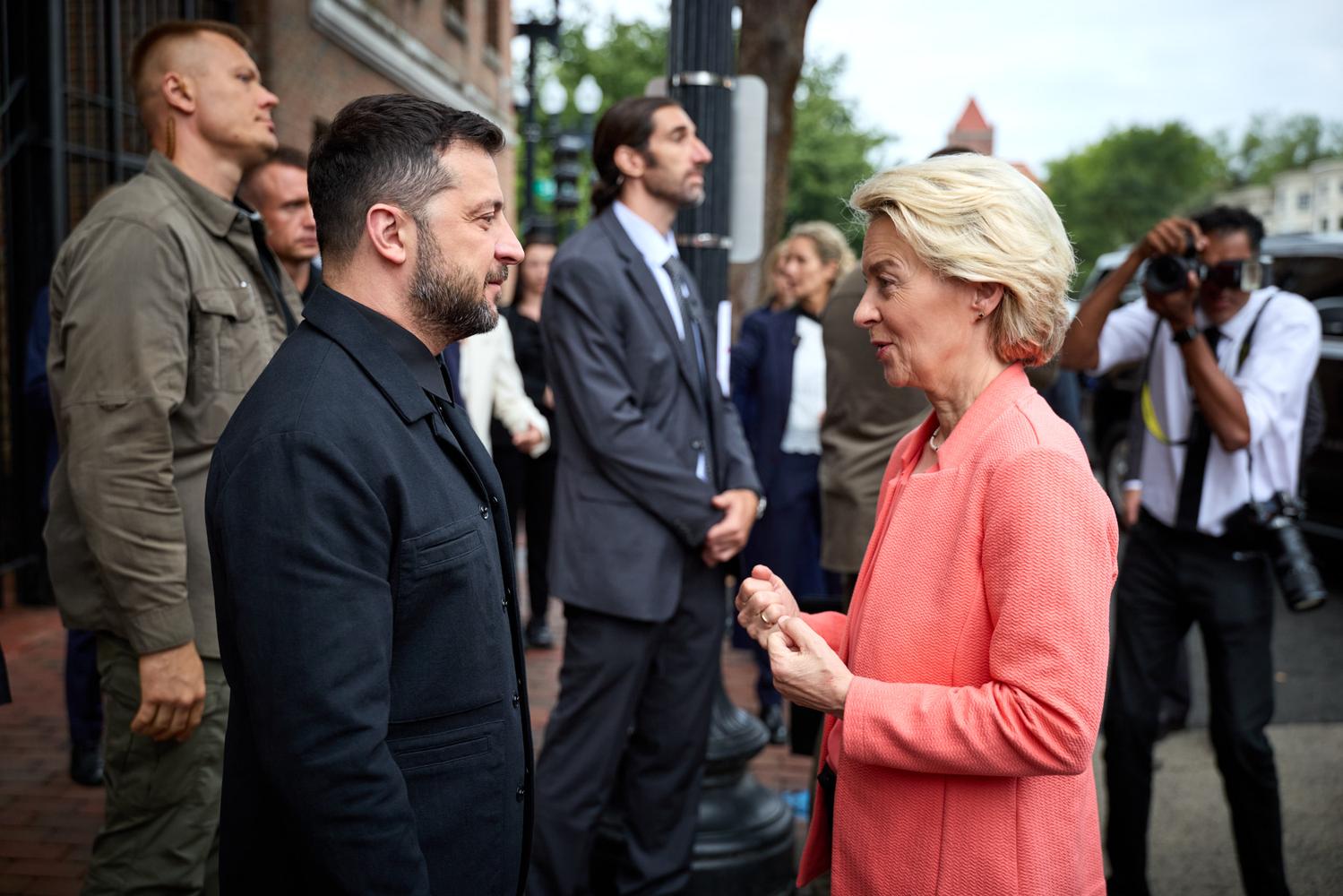
USA EU Van Der Leyen Trump
Explore further

Europe now faces two strategic adversaries: Russia and the United States

The trust deficit

European and American discord is becoming increasingly open. Media reported a tense phone call on Wednesday between Friedrich Merz, Emmanuel Macron, Keir Starmer, and Donald Trump. Trump said "pretty strong words" were exchanged.

According to the Guardian, nearly half of Europeans see President Trump as "an enemy of Europe." In a Pew Research Center global survey, 64% said they had no confidence in Trump—compared with 57% for Putin. Roughly three-in-four or more lacked confidence in Trump in Germany, Sweden, France, Spain, and the Netherlands.

If Europe no longer trusts the US's commitment to collective defense, why should Ukraine trust US "security guarantees"?

Why should anyone trust a US security guarantee after Washington stepped back and stopped helping Ukraine defend itself during this full-scale war? Why should we believe it will step forward during the next?

US "security guarantees" come without either security or guarantees.

Hans Petter Midttun
Hans Petter Midttun, independent analyst on hybrid warfare, Non-Resident Fellow at the Centre for Defense Strategies, board member of the Ukrainian Institute for Security and Law of the Sea, former Defense Attaché of Norway to Ukraine, and officer (R) of the Norwegian Armed Forces. 

Editor's note. The opinions expressed in our Opinion section belong to their authors. Euromaidan Press' editorial team may or may not share them.

Submit an opinion to Euromaidan Press

Reçu avant avant-hier

Zelenskyy outlines Ukraine’s red lines and pushes back on Trump’s claim that everyone but him loves US peace plan

14 décembre 2025 à 08:34

zelenskyy pushes back trump's claim everyone loves peace plan · post president volodymyr addresses nation 27 2025 presidentgovua zelenskyy-no-territorial-concessions-ukraine-defense-diplomacy ukraine news ukrainian reports

During an online press conference on 14 December, Ukrainian President Volodymyr Zelenskyy addressed questions about ongoing US-led indirect peace negotiations between Kyiv and Moscow. According to Euromaidan Press, he responded to US President Donald Trump's recent claim that Zelenskyy alone dislikes the peace plan, while his team allegedly loves it.

"The plan won't be one that pleases everyone," Zelenskyy said. "There are definitely many compromises in one format of the plan or another."

Berlin summit to discuss 20-point framework with ceasefire provisions

Zelenskyy spoke ahead of meetings with US and European officials in Berlin on 14-15 December. Asked whether the summit could change the situation, he replied:

"Definitely. Because we will be considering the 20-point framework plan, at the end of which there is talk of ceasefire. A ceasefire will definitely change the security situation on the ground."

He planned separate meetings with German Chancellor Friedrich Merz and other European leaders.

Ukraine's red line: no third Russian aggression

Zelenskyy emphasized that any agreement must serve Ukraine's interests and prevent future attacks.

"The most important thing is that the plan be as fair as possible, primarily for Ukraine, because Russia started the war," he said. "And the main thing is that it be effective, that the plan could truly be not just a piece of paper, but an important step toward ending the war."

The Ukrainian President stressed one non-negotiable requirement:

"After signing it, Russia must have no opportunity to start another, third aggression against the Ukrainian people."

isw kremlin statements again show russia’s unwillingness pursue real peace · post russian fund chief presidential envoy kirill dmitriev (left) special missions steve witkoff (right) saint petersburg 2025 ria novosti
Explore further

ISW: Kremlin statements again show Russia’s unwillingness to pursue real peace

NATO rejection forced Ukraine into bilateral deals

Zelenskyy explained how Ukraine's security strategy evolved after Western partners blocked its preferred path to obtain security guarantees from its allies.

"Ukraine's conditions from the very beginning — or maybe not conditions, correctly said, the desire — was NATO membership. And these were real security guarantees," he said. "Some partners from the United States of America and Europe did not support this direction."

Ukraine now seeks "Article 5-like" bilateral guarantees from the US, mirroring NATO's mutual defense clause.

"And this is already a compromise on our part," Zelenskyy noted, insisting that these arrangements must be "legally binding guarantees, not a Budapest Memorandum," and approved by US Congress.

The Budapest Memorandum was an agreement under which Ukraine gave up the world’s third-largest nuclear arsenal in exchange for security assurances from Russia and the United States. In 2014, Russia invaded Ukraine, escalating its aggression into a full-scale war in 2022. Meanwhile, under Donald Trump, the United States halted military aid to Ukraine, shifted to selling weapons instead, and pushed for a so-called “peace” deal.

Citing an unnamed US official, Axios said that Washington is "willing" to grant Ukraine a legally binding, congressionally approved security guarantee based on NATO’s Article 5.

Russia rejects "stand where we stand" ceasefire

The Ukrainian President says Ukraine's ceasefire position is straightforward:

"I believe that today a fair possible option should be: we stand where we stand," Zelenskyy said. "And this is true, because this is what a ceasefire is — the sides stand, and then diplomatically try to resolve all general issues."

Russia rejected this approach. "Russians respond that we must leave the Donbas or they will occupy it anyway," Zelenskyy said.

According to the President, the US then proposed a "compromise": Russian forces would not enter part of eastern Ukraine if Ukrainian forces withdrew.

"I don't consider this fair," Zelenskyy responded, adding: "If Ukrainian troops withdraw 5-10 kilometers, for example, then why don't Russian troops withdraw the same distance deeper into occupied territories?"

He called this "a question that has no answer yet. But it's very sensitive and very hot."

At the start of the full-scale invasion, Russia exploited previous ceasefires under the so-called Minsk agreements signed in 2014 and 2015. By 2022, Ukrainian troops had been withdrawn from many frontline areas, and the Zelenskyy government had even removed minefields in some locations, including along the administrative border with Crimea. The latter facilitated Russia’s rapid seizure of southern Kherson Oblast and contributed to the encirclement of Mariupol.
Ukrainian President Volodymyr Zelenskyy addresses journalists in Kyiv about Donbas buffer zone proposals in peace talks
Explore further

Ukraine denies agreeing to Donbas buffer zone, calls Le Monde report a misinterpretation

Russia seeks territorial gains without fighting for them

Zelenskyy accused Moscow of pursuing a strategy to avoid military costs.

"Russia wants to not expend forces and occupy our east through political means, diplomatic-political means," he said.

He cited Kupiansk as an example of Russian disinformation supporting this strategy.

"I was recently in Kupiansk and showed who controls this city," Zelenskyy said, adding that "There is a lot of such disinformation from the Russians," and saying to American negotiators: "Don't believe everything Russia says."

Moscow recently claimed to have seized this city in Kharkiv Oblast and to have surrounded Ukrainian forces there. A few days ago, however, Ukraine reported that its troops had instead cut off the Russian units that entered the city.
Ukrainian President Volodymyr Zelenskyy delivering a national address in Kupiansk, Kharkiv Oblast, 12 December 2025. Photo: Ukrainian President's Office
Explore further

“Reality speaks for itself”: Zelenskyy visits Kupiansk as Ukraine traps remaining Russian forces

Ukraine expands negotiating team after Kushner joins US side

The addition of Jared Kushner, Trump's son-in-law and representative, to the US team brought an economic component to the talks. According to Zelenskyy, negotiations now cover three tracks: the 20-point framework, Ukraine's economic reconstruction, and post-war security.

Ukraine responded by expanding its delegation to include the Prime Minister, Economy Minister, Chief of General Staff Andrii Hnatov, and intelligence representatives.

Kyiv awaits US response to latest plan modifications

Zelenskyy confirmed he sent updated comments to Washington but received no formal response yet. Military officials met in Stuttgart, and Hnatov was traveling with the negotiating group.

"I think today or tomorrow I'll receive details. There are no more details for now."

The US speaks for Russia because Ukraine has no direct Kremlin contact

Since Ukraine has no direct dialogue with Moscow, American negotiators "represent the Russian side, if you can say so, because they convey their signals, demands, steps of readiness or unreadiness," Zelenskyy explained. Ukraine discusses both bilateral US-Ukraine matters and reactions to Russian positions with Washington.

Notoriously, since Trump started pushing for Kyiv-Moscow peace agreement, Russia didn't show any readiness to any compromises and continues to insist on Ukraine's de facto capitulation.

Zelenskyy expressed confidence that pressure could work:

"If America pushes, if partners push, and if America wants to end this war the way they're demonstrating today at the highest level, I believe Russia will have to make compromises."

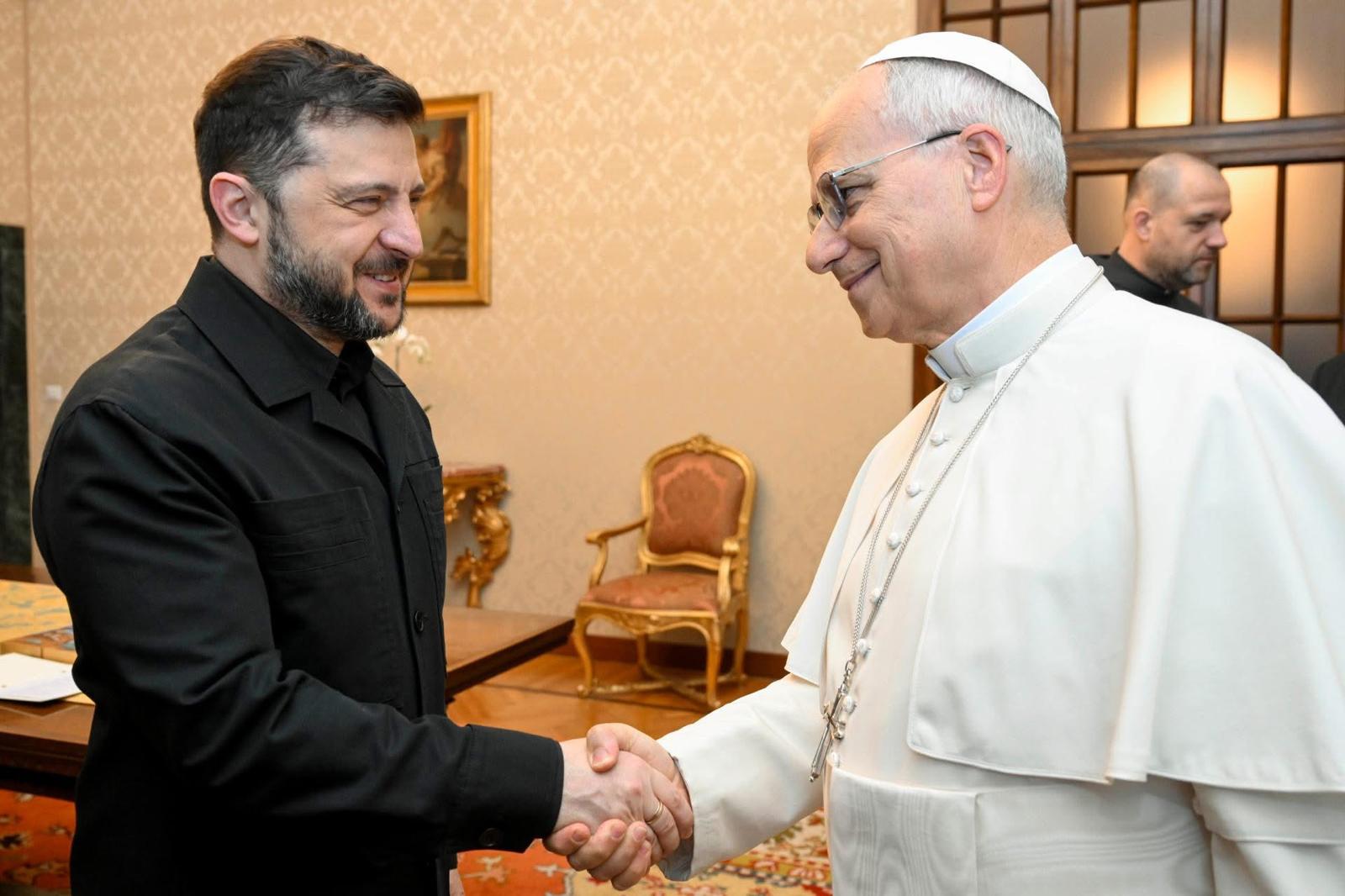
Ukrainian President Volodymyr Zelenskyy shakes hands with Pope Leo XIV at Castel Gandolfo, where the pontiff warned Trump's approach threatens the US-Europe alliance
Explore further

Pope Leo XIV warns Trump approach threatens US-Europe alliance after Zelenskyy meeting

"Current times demand respect only for strength"

Zelenskyy offered a blunt assessment of the current geopolitical reality.

"Today we're talking not about fairness, but about strength," he said. "And unfortunately, this time demands respect only for strength, not for values."

He recalled how international law failed to stop Russia earlier.

"If we were talking about fairness and values, about respect for international law, Russians should have been condemned from the very beginning, more than 10 years ago, for the invasion of sovereign Ukrainian land. This didn't happen. It was only in words."

This reality shapes Ukraine's insistence on enforceable guarantees.

"Today we want non-repetition of war after a ceasefire. And therefore legally binding guarantees are mandatory," Zelenskyy noted.

Throughout 2014-2021, Russia notoriously violated each of multiple previous ceasefires under Minsk accords.

What if peace talks fail?

"We cannot afford to think about this," Zelenskyy said.

He acknowledged the need for realism but refused to dwell on failure scenarios.

"It's like running a long distance, like a marathon. You have to pull yourself together, find another path, and again do everything so that this war ends."

zelenskyy under pressure accept trump peace plan fast axios says · post ukrainian president volodymyr donald united nations headquarters new york city 23 2025 president_donald_trump_participates_in_a_bilateral_meeting_with_ukraine’s_president_volodymyr_zelenskyy_at_the_united_nations_headquarters_(54823591811) ukraine news reports
Explore further

Zelenskyy under US pressure to accept Trump “peace” plan fast, Axios says

  • ✇Euromaidan Press
  • Trump administration considers NATO Article 5-style guarantees for Ukraine, Axios source says
    US President Donald Trump’s advisers have allegedly proposed offering Ukraine Article 5-style security guarantees as part of a broader peace plan, according to Axios. A senior US official told the publication the proposed guarantee would be legally binding and approved by Congress. This comes as Russia's invasion of Ukraine continues, while the US under Trump has been pushing for a peace deal, based on Moscow's demands. According to Axios, the White House is pressuring Ukra
     

Trump administration considers NATO Article 5-style guarantees for Ukraine, Axios source says

14 décembre 2025 à 04:31

trump administration considers nato article 5-style guarantees ukraine axios says · post president donald speaks reporters aboard air force one 2025 trump-speaks -reporters-air-force-one report cites senior united states official describing

US President Donald Trump’s advisers have allegedly proposed offering Ukraine Article 5-style security guarantees as part of a broader peace plan, according to Axios. A senior US official told the publication the proposed guarantee would be legally binding and approved by Congress.

This comes as Russia's invasion of Ukraine continues, while the US under Trump has been pushing for a peace deal, based on Moscow's demands. According to Axios, the White House is pressuring Ukraine to accept the plan. 

Trump advisers push NATO-style guarantee linked to peace terms

Axios reports that Steve Witkoff and Jared Kushner are expected to meet President Volodymyr Zelenskyy on 15 December in Berlin. The meeting will also involve the leaders of Germany, France, and the United Kingdom. Two White House officials told Axios that the meeting aims to reach an agreement on the US plan for peace in Ukraine.

A White House official said the US believes most issues are allegedly close to resolution, but Ukraine's territorial concessions to Russia remain the key sticking point. The official pointed to public remarks made by Zelenskyy on 11 December as a potential signal of progress.

During those remarks, Zelenskyy said that the fairness of the proposed compromises “will be answered by the people of Ukraine” through a referendum or election. The same day, he also stated that he was skeptical of the US proposal for a “free economic zone” in the Donbas and is seeking changes and clarifications. Around 14% of the Donbas remains under Ukrainian control.

A White House official told Axios that the US included Russia’s demand for full control of Donbas in the plan, but proposed making the contested area a demilitarized zone. Holding a vote during wartime would be difficult, but Axios reports that during a 12 December meeting, European officials said they would support Zelenskyy if he proposed a referendum.

US proposal based on three agreements, Axios reports

Axios reports that Witkoff and Kushner discussed the demilitarized zone proposal with the national security advisers of Ukraine, Germany, France, and the United Kingdom. A White House official said those talks, along with recent US-Ukraine discussions on 11 December, led Trump to send his advisers to Europe. Another official told Axios: 

“They believe there could be a chance at peace and the [US] President trusts them.”

Axios states that negotiations on the security guarantees for Ukraine have made significant progress. A senior US official said the Trump administration is willing to give Ukraine a guarantee based on NATO’s Article 5 that would be legally binding and approved by Congress.

We want to give the Ukrainians a security guarantee that will not be a blank check on the one hand but will be strong enough on the other hand. We are willing to send it to Congress to vote on it,” the US official said.

The same official told Axios the current framework includes three separate agreements: one on peace, one on security guarantees, and one on reconstruction. According to the official, the latest talks provided Ukraine with “a full day-after vision” for the first time.

Russia currently controls about 20% of Ukraine. The US official claimed, 

“According to the current proposal the war will end with Ukraine keeping the sovereignty over 80% of its territory, will get the biggest and strongest security guarantee it has ever got and will get a very significant prosperity package.”

  • ✇Euromaidan Press
  • Trump team offers Ukraine NATO-style security guarantee in exchange for Donbas demilitarization
    American media outlet Axios reports that the US administration is prepared to offer Ukraine security guarantees based on NATO's Article 5, citing an unnamed senior US official. However, the plan reportedly includes Ukraine withdrawing its forces from Donbas and establishing a demilitarized zone there. According to Axios, negotiations regarding security guarantees that Ukraine would receive from the US and Europe have made significant progress. An anonymous senior US
     

Trump team offers Ukraine NATO-style security guarantee in exchange for Donbas demilitarization

13 décembre 2025 à 05:43

trump could unleash new sanctions russia’s economy waits see europe dares move first · post president donald during meeting ukrainian volodymyr zelenskyy white house 17 2025 president's office photo_2025-10-18_02-00-51 (2)

American media outlet Axios reports that the US administration is prepared to offer Ukraine security guarantees based on NATO's Article 5, citing an unnamed senior US official. However, the plan reportedly includes Ukraine withdrawing its forces from Donbas and establishing a demilitarized zone there.

According to Axios, negotiations regarding security guarantees that Ukraine would receive from the US and Europe have made significant progress.

An anonymous senior US official told the outlet that President Donald Trump's administration is ready to provide Ukraine with a security guarantee aligned with NATO's Article 5 on collective defense, which treats an attack on one alliance member as an attack on all. The source claimed this guarantee would be approved by Congress and carry legal force.

"We want to give the Ukrainians a security guarantee that on the one hand is not a blank check, and on the other hand is strong enough. We are prepared to send it to Congress for a vote," the official said.

Axios also reported, citing two anonymous White House officials, that a 15 December meeting is expected in Berlin between US Special Envoy Steve Witkoff, Trump's son-in-law Jared Kushner, and Ukrainian President Volodymyr Zelenskyy. Leaders from Germany, France, and the United Kingdom are also expected to participate.

The Wall Street Journal previously reported on Witkoff's upcoming Berlin visit.

The negotiations aim to reach agreement on the US peace plan, Axios reports. "The White House is pushing Ukraine hard to approve its plan, but the territorial concessions being demanded of Kyiv remain the main sticking point. The American side believes all other issues are close to being resolved and that Zelensky may have proposed a path to progress on territory," the outlet states.

Zelenskyy previously disclosed that America's peace plan calls for Ukrainian forces to withdraw from Donbas while Russian forces would not enter the area. Instead, Washington proposes creating a "free economic zone" or "demilitarized zone." However, Zelenskyy indicated that negotiations on this matter are ongoing.

He suggested that the question of whether the compromises being demanded of Kyiv are fair "will be answered by the people of Ukraine" through a referendum or elections.

A US official told Axios that during a virtual meeting on 12 December, European partners stated they would support Zelenskyy if he proposes a referendum on territorial issues. During the same meeting, Witkoff and Kushner discussed the demilitarized zone plan with national security advisers from Ukraine, Germany, France, and the United Kingdom, the outlet reports.

According to a White House official, this exchange and the latest round of US-Ukraine negotiations the day before showed sufficient progress to convince Trump to send his representatives to Europe.

"They [Witkoff and Kushner] believe there is a chance for peace, and the president trusts them," another administration official stated.

One Axios source claimed: "Under the current proposal, the war would end with Ukraine retaining sovereignty over 80% of its territory, receiving the biggest and strongest security guarantees it has ever had, and a very significant prosperity package."

It remains unknown whether Russia will support the American proposals.

The day before, the Office of the President denied reports that Ukraine had allegedly agreed to create a buffer zone in Donbas under the American peace plan.

  • ✇Euromaidan Press
  • “We do not trust empty pledges anymore” – Ukraine’s foreign minister on Budapest Memorandum
    Ukraine's Foreign Minister Andrii Sybiha marked the 31st anniversary of the Budapest Memorandum on Thursday by warning that Kyiv will not accept "empty pledges" in any peace settlement with Russia. "A piece of paper that has become synonymous with a failed security arrangement," Sybiha wrote on X. "Having had such a bitter experience in the past, Ukraine does not trust empty pledges anymore — we trust the strength of our army and weapons." His statement comes days af
     

“We do not trust empty pledges anymore” – Ukraine’s foreign minister on Budapest Memorandum

5 décembre 2025 à 11:00

US President Bill Clinton, Russian President Boris Yeltsin, and Ukrainian President Leonid Kravchuk after signing the Trilateral Statement in Moscow on 14 January 1994, which would become the basis for the Budapest Memorandum.

Ukraine's Foreign Minister Andrii Sybiha marked the 31st anniversary of the Budapest Memorandum on Thursday by warning that Kyiv will not accept "empty pledges" in any peace settlement with Russia.

"A piece of paper that has become synonymous with a failed security arrangement," Sybiha wrote on X. "Having had such a bitter experience in the past, Ukraine does not trust empty pledges anymore — we trust the strength of our army and weapons."

His statement comes days after US-Russia talks in Moscow failed to produce a breakthrough, with security guarantees emerging as a central obstacle.

31 years ago on this day, the Budapest memorandum was signed. A piece of paper that has become synonymous with a failed security arrangement.

Having had such a bitter experience in the past, Ukraine does not trust empty pledges anymore—we trust the strength of our army and…

— Andrii Sybiha 🇺🇦 (@andrii_sybiha) December 5, 2025

What the Budapest Memorandum promised and how it failed

Signed on 5 December 1994, the Budapest Memorandum saw Ukraine surrender the world's third-largest nuclear arsenal - some 1,900 strategic warheads inherited from the Soviet Union - in exchange for security assurances from the United States, United Kingdom, and Russia.

The signatories committed to respect Ukraine's sovereignty and existing borders, refrain from military or economic coercion, and seek UN Security Council action if Ukraine faced aggression involving nuclear weapons.

Russia violated the agreement when it annexed Crimea in 2014 and shattered it entirely with the full-scale invasion in February 2022. The memorandum contained no enforcement mechanism, leaving Ukraine without recourse when its guarantors failed to act.

Security guarantees now dominate peace talks

The failure of the Budapest Memorandum looms over current negotiations. Ukraine has made clear it will not trade territory for vague promises.

Peace talks between US and Russian officials have produced no breakthrough. Trump's special envoy Steve Witkoff and Jared Kushner held five hours of talks with Putin in Moscow on 2 December, but Kremlin aide Yuri Ushakov said afterward that "no compromises have been found yet."

The US peace framework has shifted repeatedly since the initial 28-point proposal emerged in November. That draft would have required Ukraine to cede the remainder of Donbas, cut its armed forces in half, and accept limits on long-range weapons in exchange for unspecified security arrangements. 

A revised version softened some terms but left security guarantees vague - the plan refers to guarantees without specifying what they would entail or who would enforce them.

NATO Secretary General Mark Rutte confirmed on 3 December that no consensus exists among the alliance's 32 members for Ukraine's immediate membership, though Kyiv remains on an "irreversible path" declared at the 2024 Washington summit. 

France and the UK are separately leading a "Coalition of the Willing" to develop alternative security frameworks - but what those would look like in practice remains undefined.

Putin, speaking to India Today on 4 December, signaled no flexibility on territorial demands: "All this boils down to one thing: Either we take these territories by force, or eventually Ukrainian troops withdraw."

The lesson Kyiv draws

For Ukrainian officials, the Budapest precedent offers a clear warning: security assurances without enforcement mechanisms are worthless against an aggressor willing to use force.

"Today, Ukraine needs robust security guarantees for a real, just, and lasting peace," Sybiha wrote. "As we work to put an end to Russia's war against Ukraine, it is important to remember the bitter lessons of Budapest."

The question now facing negotiators is whether any proposed guarantee can bridge the gap between Ukraine's demand for real protection and Russia's insistence that its neighbor remain outside Western security structures.

  • ✇Euromaidan Press
  • Italy won’t arm Ukraine with US weapons because of “peace deal” that doesn’t yet exist
    Italy becomes the first European country to propose leaving Ukraine without weapons during “peace talks” that have yielded no results after a year of diplomatic efforts by US President Donald Trump, Bloomberg reports. Until recently, the Italian government insisted it would continue supporting Kyiv. Italy will not participate in the PURL program, which purchases US-made weapons for Ukraine. This program is critically important for Kyiv as it is effectively the only formal m
     

Italy won’t arm Ukraine with US weapons because of “peace deal” that doesn’t yet exist

3 décembre 2025 à 19:09

Italy becomes the first European country to propose leaving Ukraine without weapons during “peace talks” that have yielded no results after a year of diplomatic efforts by US President Donald Trump, Bloomberg reports. Until recently, the Italian government insisted it would continue supporting Kyiv.

Italy will not participate in the PURL program, which purchases US-made weapons for Ukraine. This program is critically important for Kyiv as it is effectively the only formal mechanism for obtaining weapons to counter Putin’s 600,000-strong army in Ukraine, as well as air-defense systems ahead of winter terror attacks.


Italy looks ahead to security guarantees, which do not yet exist

According to Italian officials, it is “premature” for Rome to join PURL given the ongoing peace negotiations.

"If we reach an agreement and fighting ceases, weapons won’t be needed anymore. Other things such as security guarantees will be needed," said
Italy’s Foreign Minister Antonio Tajani. 

It remains unclear what these security guarantees would entail, given that the Kremlin has previously demanded the downsizing of Ukraine’s armed forces, the abandonment of NATO aspirations, and a legally defined neutral status. It is also unknown whether Italy itself would join any such guarantees.


Rome shifts its position under the pressure of domestic problems, and in contradiction to Europe

These comments signal a strategic shift in Italy’s policy on Ukraine amid internal budget strains and tensions within the ruling coalition.

Journalists also recall that as recently as October, the Italian government had signaled readiness to join the PURL program.

Tajani’s remarks contrast sharply with the position of Europe’s top defense-industry lobby. The Aerospace, Security and Defence Industries Association of Europe has warned that the continent must continue to ramp up defense production, despite the possibility of a ceasefire in Ukraine.

  • ✇Euromaidan Press
  • NATO keeps Ukraine’s membership question in separate lane as peace talks progress
    NATO Secretary General Mark Rutte told alliance foreign ministers on 3 December that Ukraine's relationship with the alliance will be handled separately from ongoing peace negotiations between Washington and Moscow, as American envoy Steve Witkoff concluded talks with Russian officials. Rutte confirmed no consensus currently exists among NATO's 32 members for Ukraine's immediate membership, though he reaffirmed Kyiv remains on an "irreversible path" to eventual membersh
     

NATO keeps Ukraine’s membership question in separate lane as peace talks progress

3 décembre 2025 à 08:34

NATO Secretary General Mark Rutte addresses foreign ministers at North Atlantic Council meeting Brussels December 2025

NATO Secretary General Mark Rutte told alliance foreign ministers on 3 December that Ukraine's relationship with the alliance will be handled separately from ongoing peace negotiations between Washington and Moscow, as American envoy Steve Witkoff concluded talks with Russian officials.

Rutte confirmed no consensus currently exists among NATO's 32 members for Ukraine's immediate membership, though he reaffirmed Kyiv remains on an "irreversible path" to eventual membership declared at the 2024 Washington summit. This dual-track approach lets NATO preserve Ukraine's long-term alliance prospects while developing alternative security frameworks that could end the war without surrendering membership aspirations to Russian veto power.

Membership question splits principle from practice

Speaking to journalists on 2 December, Rutte distinguished between NATO's principled position and practical realities. "The practical situation is as you know that there is consensus required by all allies for Ukraine to join NATO," he stated. "And right now, as you know, there is no consensus on Ukraine joining NATO."

The Secretary General emphasized that foundational commitments remain intact—the 2008 Bucharest declaration that "Ukraine will become a member" still stands, as does the 2024 Washington summit language on Ukraine's "irreversible" path. But practical admission requires unanimous consent from all 32 members, and several allies remain skeptical of admitting a country actively at war with a nuclear power.

On NATO elements of any peace deal, Rutte was clear: "That will be dealt with separately and that obviously will include NATO," ensuring the alliance maintains control over decisions affecting its own structure.

Security guarantees as membership alternative

France and the United Kingdom are leading a "coalition of the willing" to develop alternative security frameworks for post-war Ukraine. The approach aims to avoid repeating the failures of the 2015 Minsk agreement, which Russia violated seven years later with its full-scale invasion.

A critical development came in August 2025 when the United States signaled willingness to participate. "You've also heard the Americans saying we want to participate in the security guarantees. I think that was a very important moment in August when that happened," Rutte said. The proposed framework would build on Ukrainian armed forces as "the first layer of defense" with international backing providing additional deterrence.

Peace talks advance through multiple channels

Trump's negotiation initiative has progressed significantly since February 2025, when the president began delivering on his election promise by engaging diplomatically with Putin. Recent discussions have evolved from the initial 28-point proposal, with American teams holding consultations in Geneva and Miami before Witkoff's Moscow visit.

NATO Secretary General Mark Rutte addresses foreign ministers at North Atlantic Council meeting Brussels December 2025
NATO Secretary General Mark Rutte

"We all want the bloodshed to stop and I strongly welcome President Trump's continued efforts to end this war," Rutte told ministers at the NATO Foreign Ministers meeting in Brussels on 3 December.

The Secretary General declined to comment on specific negotiation details. "I don't want to comment on every step. So last night was of course important, there will be more steps but you will not hear me on every step," he said. "We closely coordinate with the Americans what's happening but not commenting on every step."

Rutte maintained constant coordination with Secretary of State Marco Rubio despite his absence from Brussels. "Marco Rubio is very much involved, of course, in all of this. The teams are in constant contact. I personally am in constant contact with him," the Secretary General confirmed.

Military support sustains Ukraine's negotiating position

NATO's PURL program purchasing American equipment for Ukraine reached $4 billion by early December, keeping the alliance on track to meet its $5 billion target for 2025. "We are now at 4 billion. So that means we are really on track for the one billion a month August, September, October, November," Rutte announced. "And I'm cautiously optimistic that we will reach the 5 billion for the full year."

For 2026, NATO aims to sustain at least $12 billion in weapons purchases, focusing on critical systems unavailable from European production. Norway, the Netherlands, and Canada announced new contributions ahead of the Brussels meeting, bringing participation to approximately two-thirds of the alliance.

"Whilst they take place and we are not sure when they will end, Ukraine is in the strongest possible position to keep the fight going, to fight back against the Russians, but also in strongest possible position when peace talks really get to a point where they sit at the table," Rutte emphasized.

Rutte reminded ministers that the Hague Summit earlier in 2025 established a historic 5% GDP defense spending target as NATO prepares for long-term confrontation with Russia. The alliance will assess progress on defense commitments and Ukraine's status at its next summit in Ankara in July 2026.

  • ✇Euromaidan Press
  • US-Ukraine talks end without security deal – WSJ
    The question of postwar security guarantees for Kyiv remained unresolved after peace negotiations between the US and Ukraine that took place on 30 November, reports Wall Street Journal. Another unresolved issue is whether Russia will insist on international recognition of the territories it has occupied since the start of the full-scale invasion in 2022. According to WSJ, the talks covered possible timetables for new elections in Ukraine and the prospect of land swap
     

US-Ukraine talks end without security deal – WSJ

1 décembre 2025 à 03:39

negotiations in florida

The question of postwar security guarantees for Kyiv remained unresolved after peace negotiations between the US and Ukraine that took place on 30 November, reports Wall Street Journal.

Another unresolved issue is whether Russia will insist on international recognition of the territories it has occupied since the start of the full-scale invasion in 2022.

According to WSJ, the talks covered possible timetables for new elections in Ukraine and the prospect of land swaps between Russia and Ukraine.

Secretary of State Marco Rubio said after more than four hours of negotiations that there is still "more work to be done." He specifically noted the existence of another party and the planned visit of US special envoy Steve Witkoff to Moscow.

"We don't just want to end the war, we also want to help Ukraine be safe forever so never again will they face another invasion," Rubio said.

He characterized the negotiations as "productive."

"We remain realistic about how complicated this all looks, but we also realistically view the progress that is already happening. And it's not just about stopping the war, but about building a successful future for Ukraine," the Secretary of State said.

The Ukrainian delegation was led by Rustem Umerov, the secretary of the National Security and Defense Council of Ukraine, replacing Andriy Yermak, who resigned amid a corruption scandal. "Our objective is a prosperous, strong Ukraine," Umerov said, standing next to Rubio. "This meeting was productive and successful."

Kushner and Witkoff will fly to Russia on Monday to continue the talks, according to a senior US official. President Trump said Witkoff will likely meet with Russian President Vladimir Putin sometime next week.

President Zelenskyy had said that Ukrainian and US delegations would meet to continue coordinating the points of the peace plan developed in Geneva "into a form that will lead to a path toward peace and security guarantees."

These negotiations follow the Trump administration's preparation of a "peace plan" for the war. Initially it contained 28 points, including demands that Ukraine cede the remainder of Donbas, cut the size of its armed forces in half, freeze the line of contact in Zaporizhzhia and Kherson oblasts, and recognize Russian as a state language. The plan also envisioned lifting sanctions on Russia and ending investigations into war crimes by Russian military personnel.

This plan was widely criticized both in Ukraine and abroad as a list of Russian demands and essentially forced capitulation.

Later, representatives of the United States and Ukraine met in Geneva, where they prepared a revised framework document. Financial Times, citing its own sources, reported that the new peace plan was reduced to 19 points. According to the publication, the new version incorporated counter-proposals from Britain, Germany and France regarding military limitations.

Ukrainian President Volodymyr Zelenskyy confirmed that the updated version of the draft peace plan does not contain all 28 points that were there previously. He also suggested that the proposal "may now become workable."

The discussions around land swaps have been particularly complicated, according to WSJ. Russia and Ukraine would need to address the legality of territorial changes, because both their constitutions prohibit ceding territories without legal changes. Any change to Ukraine's borders would require a nationwide referendum.

Ukraine's wartime powers freeze presidential and parliamentary elections. The prospect of holding new elections is a politically fraught issue amid the war and could open Ukraine to election-interference campaigns from Russia.

A day before the US and Ukrainian delegations met in Florida, Russia bombarded Ukraine with a nearly 10-hour air assault with hundreds of missiles and drones that struck residential buildings and energy infrastructure.

At a news conference last week, Putin said he was ready for "serious" discussions to end the war but reiterated demands that Ukraine must withdraw its troops from Donetsk and Luhansk. "When Ukrainian troops leave the territories they hold, then the fighting will stop," Putin said. "If they don't, then we'll achieve that through military means."

  • ✇Euromaidan Press
  • Macron launches working group on Ukraine security guarantees – US joins for first time
    French President Emmanuel Macron said France and the UK will lead a new working group to coordinate security guarantees for Ukraine, with support from Türkiye and the United States. He made the announcement after a meeting of the “coalition of the willing” on Tuesday. The working group comes as part of wider, ongoing efforts to explore a potential peace settlement for Ukraine. Leaders are holding talks to define security arrangements, discuss international guarantees, a
     

Macron launches working group on Ukraine security guarantees – US joins for first time

25 novembre 2025 à 14:59

Volodymyr Zelenskyy and Emmanuel Macron in Paris during a March 2025 meeting on Ukraine’s peace and security.

French President Emmanuel Macron said France and the UK will lead a new working group to coordinate security guarantees for Ukraine, with support from Türkiye and the United States. He made the announcement after a meeting of the “coalition of the willing” on Tuesday.

The working group comes as part of wider, ongoing efforts to explore a potential peace settlement for Ukraine. Leaders are holding talks to define security arrangements, discuss international guarantees, and outline steps that could shape a lasting resolution to the conflict.

US joins process for first time, Türkiye brought in for Black Sea dimension

Macron said the group will begin work on Wednesday. He added that the coming days will clarify what each country will contribute as the sides move to finalize the package of guarantees.

Türkiye will take part because of its role in the maritime dimension, while the US is joining the process for the first time. Macron said the four partners will work together to align positions and complete the framework.

Zelenskyy to travel to Washington as Trump signals room for deal

The announcement comes as Washington and Kyiv prepare for high-level talks. US President Donald Trump said he sees room for an agreement related to the war, and Ukrainian President Volodymyr Zelenskyy is expected to travel to Washington next week to discuss key issues in the emerging plan.

It remains unclear whether the current peace talks will lead to concrete results, as Russia has previously rejected similar proposals and shown little willingness to negotiate on security guarantees.

❌