❌

Vue normale

  • ✇Euromaidan Press
  • A Nobel laureate’s deal: free Russia’s prisoners, fund the missiles hitting Ukraine
    Dmitry Muratov, the Nobel Peace Prize laureate and co-founder of Russia's shuttered Novaya Gazeta, has lent his name to an idea that sounds like pure humanitarianism. Russia frees some of the people it jails for opposing the war; in return, the United States eases its sanctions on the Russian economy. The scheme did not even start in an American office. According to The Atlantic, which reported the plan on 29 September, it was Muratov himself who urged Donald Trump's envoy, John Coale,
     

A Nobel laureate’s deal: free Russia’s prisoners, fund the missiles hitting Ukraine

3 octobre 2026 à 16:57

Novaya Gazeta editor-in-chief Dmitry Muratov in the Yeltsin museum, 2019. Photo: Liubov Kabalinova

Dmitry Muratov, the Nobel Peace Prize laureate and co-founder of Russia's shuttered Novaya Gazeta, has lent his name to an idea that sounds like pure humanitarianism. Russia frees some of the people it jails for opposing the war; in return, the United States eases its sanctions on the Russian economy.

The scheme did not even start in an American office. According to The Atlantic, which reported the plan on 29 September, it was Muratov himself who urged Donald Trump's envoy, John Coale, to try it. Coale had used the same model on Belarus, where some 500 prisoners were released, sanctions softened, and trade talks reopened.

Now, with Trump's approval, he wants to run it on the Kremlin.
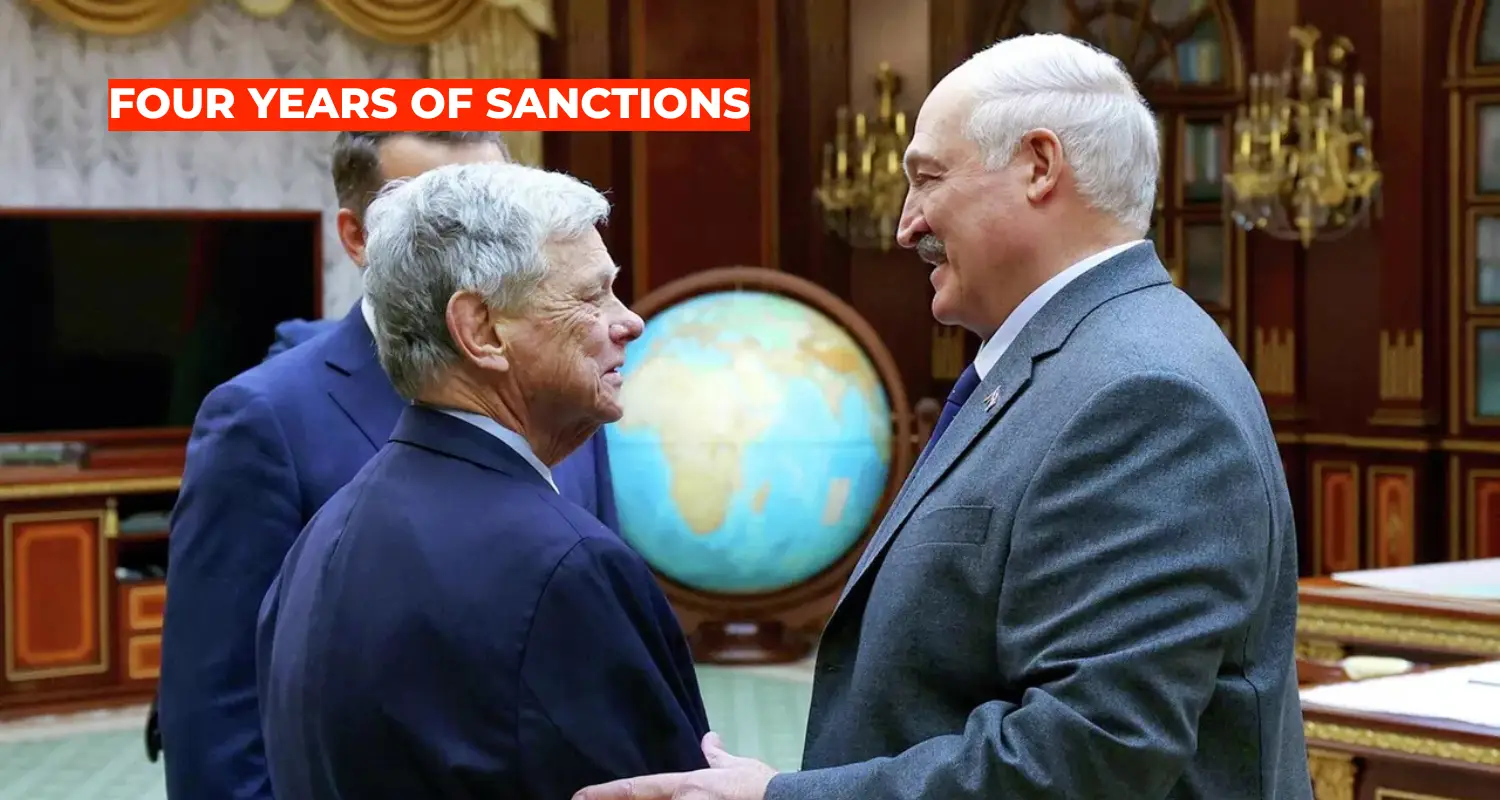
US Trump sanctions potash political prisoners lukashenka
Explore further

“A direct investment in ammunition flying across the border”: Belarusian defectors warn US sanctions relief is funding Russia’s war

The prisoners should go free. There is nothing to argue about there. No one jailed for anti-war words, for journalism, or for political dissent belongs in a cell. But here is the small detail: the price for their freedom is easing the pressure on a state that is waging war, not on the United States, which is being asked to ease the sanctions, but on Ukraine.

And here is where the real humanitarian arithmetic begins. We do not yet know which sanctions would be lifted. Whichever they are, the logic is the same: Moscow lets some of its political prisoners go, and Washington gives the Russian economy some breathing room in return. People walk out of Russian prisons, and the Kremlin gets more oxygen.

More money for the Russian state in wartime is not merely a figure in a bank report. It is more resources for the army, for missiles, for drones, for the war's continuation. And Ukrainians are the ones who feel it.

I can picture the Kremlin ghoul rubbing his hands at an idea like this. Now he can be not just president, but the director of a prisoner market: release a hundred today, jail three hundred tomorrow, so there is something to trade next time. New dissidents, journalists, activists, and merely inconvenient citizens he can pack away far faster than the West can lift a sanction.

The Kremlin ghoul can now be the director of a prisoner market: release 100 today, jail 300 tomorrow

A tidy little business model: Russia produces the prisoners, the West buys them back with its policy, and Ukraine settles the account.

Because if easing sanctions widens Russia's room to finance the war, then Ukrainians effectively get a very strange bill for someone else's humanism: a Russian political prisoner walks out of prison, and a Ukrainian gets a fresh portion of missiles and drones on their head.

By the way, about those Ukrainian civilians. By the estimates of international and Ukrainian rights groups, Russia is holding, or has held, some 16,000 of them illegally. The real figure may be higher, since not every case can be documented.

This is exactly where Muratov, as a Nobel peace laureate, might find his powers of persuasion useful. Why not put in a word for the Ukrainians in Russian prisons? The same people seized in occupied territory during "filtration," taken from their homes, buried under fabricated cases, held for years without a proper trial.

And among them are children.
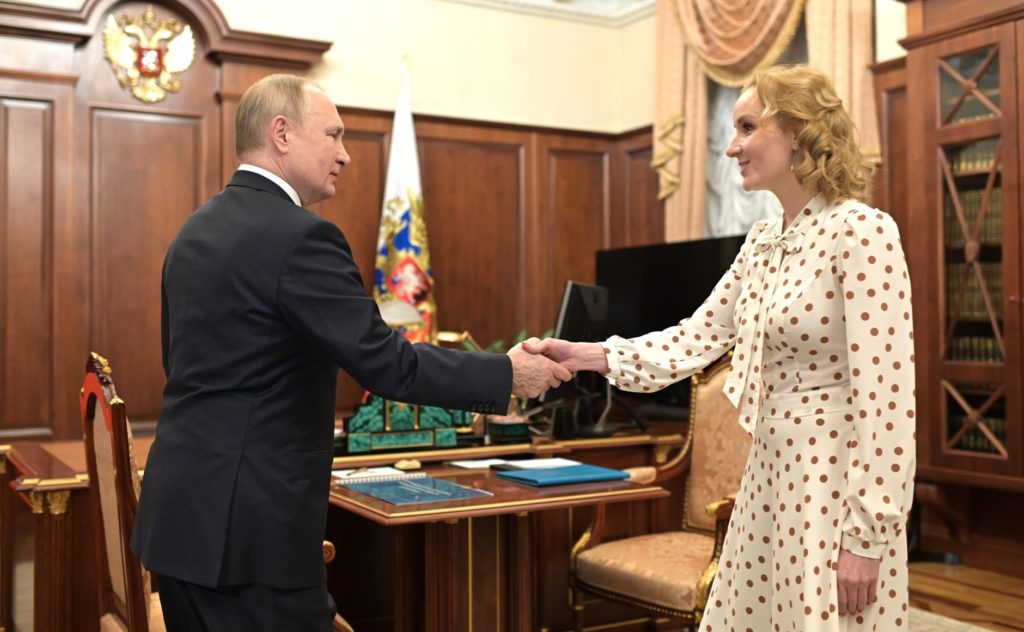
Maria Lvova-Belova and Vladimir Putin. Photo: Kremlin.ru

And here onto the stage steps Russia's Baba Yaga of "child protection": Maria Lvova-Belova, the so-called presidential commissioner for children's rights. She herself told Putin, in public, about a boy from Mariupol she had taken into her care after he was removed from the occupied city. Ukraine and international organizations view such cases as part of a wider system of unlawful transfers of Ukrainian children to Russia. The International Criminal Court has issued a warrant for her arrest on exactly those charges: the unlawful deportation and transfer of Ukrainian children.

That is what Russian care for children looks like: take a Ukrainian child from Mariupol, carry him off to Russia, and set about turning him into a Russian. If this is how Russia's children's commissioner works in public, it is frightening to imagine what happens where there are no cameras and no international warrants.

Nobody is offering to lift a single sanction for them.
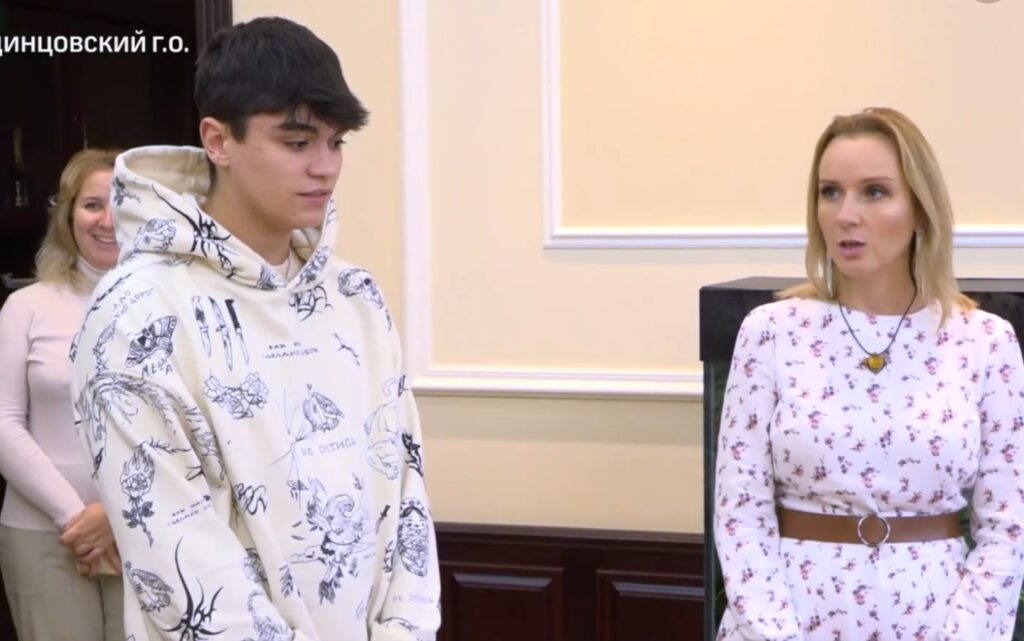
Russian Children’s Rights Commissioner Maria Lvova-Belova and her Ukrainian "adopted son" Pylyp from occupied Mariupol.

And Muratov's pacifist initiatives are not new, either. After the full-scale invasion, he was among the authors and promoters of the ceasefire appeals. One public statement, signed by 51 Nobel laureates, called for an end to the fighting, which Muratov later described as a plea for a "genuine ceasefire" before talks.

On paper it all looks wonderful: stop shooting, stop killing one another, make peace. But there is one small problem. Russia did not wander into this war alongside Ukraine. Russia launched the full-scale invasion itself.

And in these appeals, Muratov did not demand that the Kremlin withdraw its troops from Ukraine. He did not demand the de-occupation of Ukrainian territory. He did not put the question of responsibility for the aggression and the war crimes to Russia. The formula was far more convenient: just stop shooting.

But "stop killing each other" is a beautiful phrase for people who would rather not notice who attacked whom.

It turns aggressor and victim into two symmetrical sides, as though Ukraine and Russia had simply quarreled and now both must show wisdom and stop firing. There is just one nuance: if, after such a "peace," the Russian army remains on occupied Ukrainian territory, that is not an end to the aggression. It is a pause with a Russian flag on Ukrainian soil.

Now add the prisoner proposal on top. Russia does not withdraw its troops. Ukraine does not get its occupied territory back. The Kremlin answers for nothing. But a few Russian political prisoners are released, and for that, Russia's sanctions are eased too. And Ukraine, meanwhile, is simply supposed to stand to one side and rejoice that humanism has triumphed.

Ukraine is simply supposed to stand to one side and rejoice that humanism has triumphed.

Except there is a difference of principle. A Russian political prisoner can walk out of a Russian prison. A Ukrainian civilian can stay in one. And a Ukrainian soldier can be killed by a weapon Russia bought thanks to that same sanctions relief.

And then a very simple question arises for the great humanist and Nobel laureate: why should the freedom of Russia's political prisoners be bought at the expense of the freedom, the safety, and the lives of Ukrainians?

Yuriy Lukanov
Yuriy Lukanov, author of two books about the Russian-Ukrainian war Reporter Volkovsky and The Press: how Russia destroyed media freedom in Crimea.

Editor's note. The opinions expressed in our Opinion section belong to their authors. Euromaidan Press' editorial team may or may not share them.

Submit an opinion to Euromaidan Press

The Russian Prison That Evan Gershkovich Carried Home

29 septembre 2026 à 00:01
In an interview, Mr. Gershkovich, a Wall Street Journal reporter who was imprisoned in Russia for 16 months, described his ordeal and the moment that nearly broke him.

© Todd Heisler/The New York Times

“The real things I have to deal with are psychological,” Evan Gershkovich said.

A Tetris-Like Maze Blocks Protests in Pakistan’s Capital

26 septembre 2026 à 10:19
Pakistani authorities have barricaded Islamabad with more than 1,500 shipping containers to stop opposition protesters, choking off access to the capital.

© Asim Hafeez for The New York Times

He Ran a Top Lady Gaga Fan Page. Then He Vanished.

26 septembre 2026 à 21:28
Kirill Nguyen, the founder of Gaga Daily, said he had been imprisoned in Belarus for participating in pro-democracy protests. He resurfaced this week after an absence of more than two years.

© The New York Times

Lady Gaga performing at Madison Square Garden in New York in August 2025.

Families Urge Trump to Press Xi to Free Americans Detained in China

24 septembre 2026 à 02:47
The Americans being held in China are U Min Zin, a scholar who studied Myanmar, and Youlin Chen, a seismologist who researched North Korean nuclear tests.

© Jacquelyn Martin/Associated Press

Yufang Rong holding a photograph of her husband, Youlin Chen, a seismologist who was detained in China in 2024.

Families Urge Trump to Press Xi to Free Detained Americans

24 septembre 2026 à 02:47
The Americans being held in China are U Min Zin, a scholar who studied Myanmar, and Youlin Chen, a seismologist who researched North Korean nuclear tests.

© Jacquelyn Martin/Associated Press

Yufang Rong holding a photograph of her husband, Youlin Chen, a seismologist who was detained in China in 2024.

The Other Victims of China’s Church Crackdown

22 septembre 2026 à 07:01
Cherie Geng is trying to free her husband, a pastor, who was among dozens of church members detained by the Chinese police. At the same time, she must rebuild her life in exile.

Cherie Geng in her front yard.

Belarus Frees 25 Political Prisoners in Exchange for U.S. Sanctions Relief

16 septembre 2026 à 14:08
The deal is part of the Trump administration’s more transactional approach to a close Russian ally that Europe has tried to isolate.

© Mindaugas Kulbis/Associated Press

Dzmitryi Halavach, a rock musician who was one of the freed Belarusian prisoners, after arriving in Vilnius, Lithuania, on Wednesday.

Turkey Begins Broad Crackdown on L.G.B.T.Q. Community

16 septembre 2026 à 09:10
The government has called the campaign an effort to protect families. Rights organizations have accused the authorities of criminalizing L.G.B.T.Q. people and of seeking to thwart political activism.

© Dilara Acikgoz/Associated Press

Supporters of L.G.B.T.Q. rights protesting outside a courthouse in Istanbul on Tuesday. Homosexuality is not illegal in Turkey, but the government has frequently demonized L.G.B.T.Q. people.

Organizers of Hong Kong Vigils for Tiananmen Massacre Sentenced to Prison

11 septembre 2026 à 03:15
Chow Hang-tung, Lee Cheuk-yan and Albert Ho were given lengthy prison sentences under a national security law imposed on the city by Beijing.

© Philip Fong/AFP — Getty Images; Lam Yik/Reuters; Isaac Lawrence/AFP — Getty Images

From left, Lee Cheuk-yan in 2019, Chow Hang-tung in 2021 and Albert Ho in 2019.
  • ✇The Kyiv Independent
  • Ukraine, Russia carry out 2nd prisoner swap this week under Istanbul deal
    Editor's note: The story is being updated.Ukraine has brought home another group of prisoners of war released from Russian captivity, President Volodymyr Zelensky said on June 20, following another prisoner exchange a day earlier."Most of the warriors returning today from Russian captivity had been held for over two years. And now, at last, they are home," Zelensky said on X, without revealing how many captives were exchanged.Russia's Defense Ministry also said that a group of Russian soldiers h
     

Ukraine, Russia carry out 2nd prisoner swap this week under Istanbul deal

20 juin 2025 à 07:31
Ukraine, Russia carry out 2nd prisoner swap this week under Istanbul deal

Editor's note: The story is being updated.

Ukraine has brought home another group of prisoners of war released from Russian captivity, President Volodymyr Zelensky said on June 20, following another prisoner exchange a day earlier.

"Most of the warriors returning today from Russian captivity had been held for over two years. And now, at last, they are home," Zelensky said on X, without revealing how many captives were exchanged.

Russia's Defense Ministry also said that a group of Russian soldiers had been released by the Ukrainian side, without specifying the number of personnel involved.

This week's exchanges follow four similar swaps carried out last week in accordance with Ukraine-Russia agreements reached at peace talks in Istanbul on June 2.

The latest swap was another in a series focusing on seriously ill and wounded prisoners, Ukraine's Coordination Headquarters for the Treatment of the Prisoners of War (POW) said.

"These are defenders of Mariupol, Donetsk, Luhansk, Zaporizhzhia, Kherson, Kharkiv, and Chernihiv regions. Warriors of the Armed Forces, the National Guard, and the Border Guard Service," Zelensky said.

The released POWs included privates and non-commissioned officers, some of whom were captured after the siege of Mariupol in 2022, according to the Coordination Headquarters. The oldest one is 60 years old, said Ombudsman Dmytro Lubinets.

While no political breakthrough was achieved at the Istanbul negotiations, both sides agreed to a phased exchange of prisoners and the repatriation of fallen soldiers' bodies. As part of that agreement, Russia pledged to return the bodies of up to 6,000 Ukrainian service members and citizens.

Moscow has handed over 6,057 bodies to Ukraine in several stages over the past few days, though Kyiv later said that these remains also included fallen Russian soldiers.

The June 2 agreements came after the largest known POW swap in late May, when 1,000 prisoners were exchanged on each side.

Ukraine repeatedly called for a prisoner exchange in an all-for-all format, but Russia continues to reject the offer.

‘Unwanted by their homeland’ — Ukraine confirms Russia returned bodies of its soldiers disguised as Ukrainian
“This is yet another proof of how Russia treats its people with contempt,” Interior Minister Ihor Klymenko said.
Ukraine, Russia carry out 2nd prisoner swap this week under Istanbul dealThe Kyiv IndependentTim Zadorozhnyy
Ukraine, Russia carry out 2nd prisoner swap this week under Istanbul deal
❌