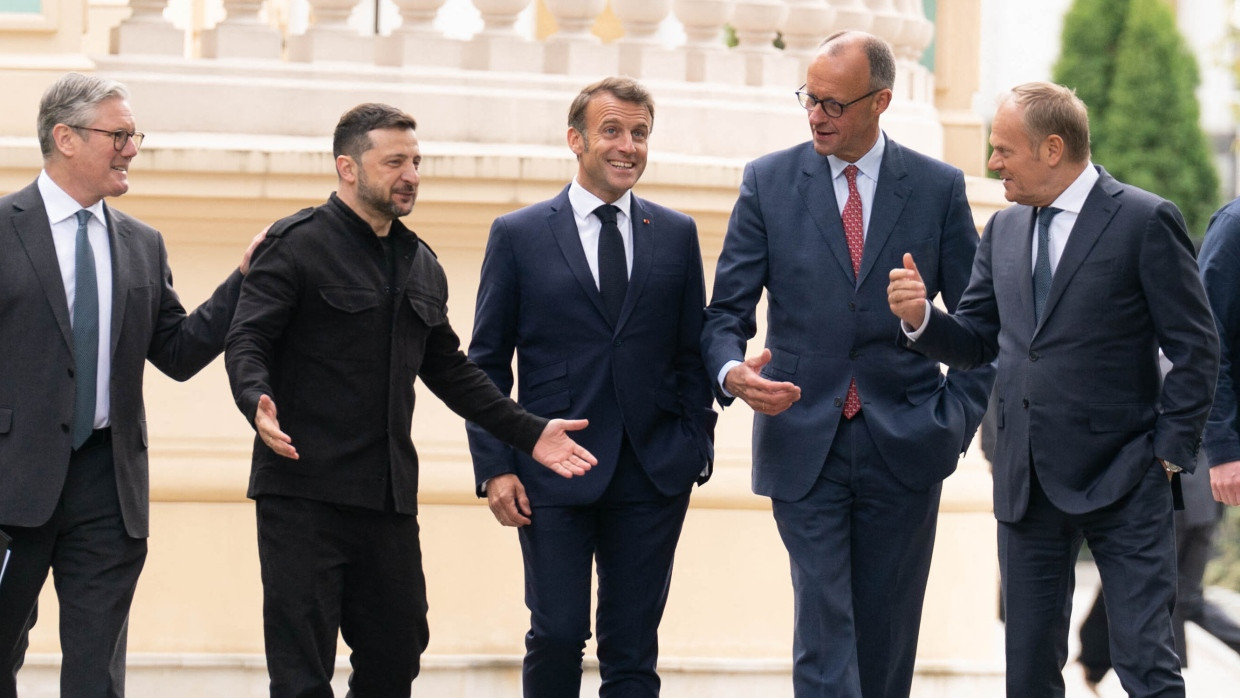
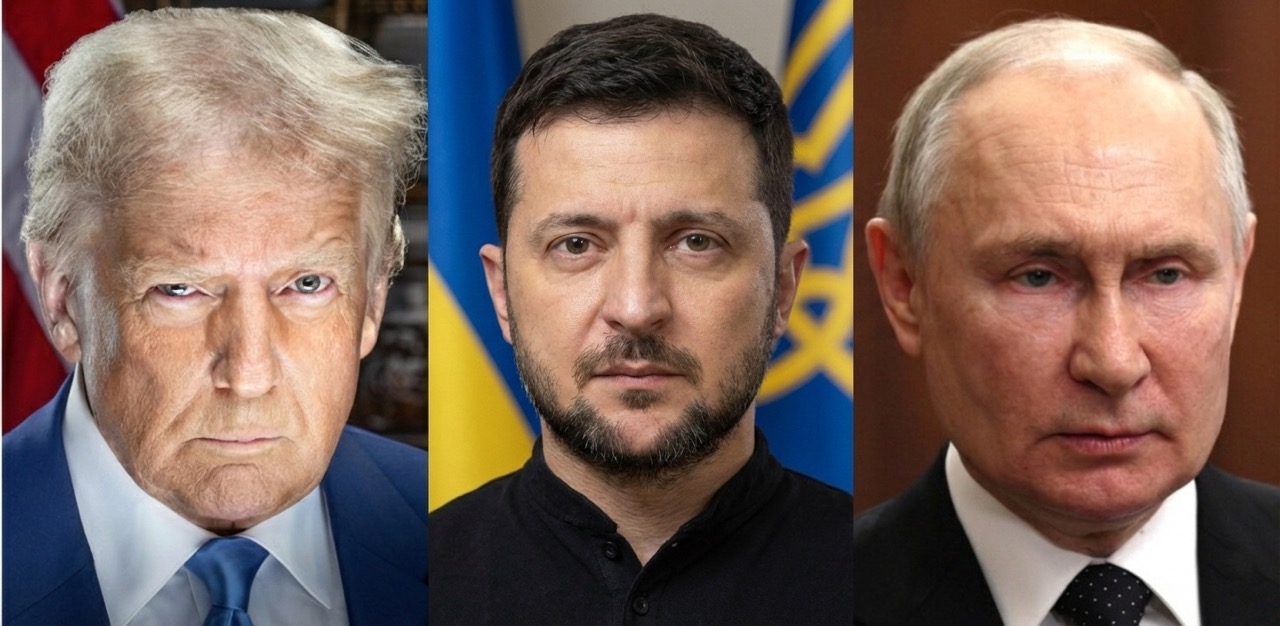
Ukrainian President Volodymyr Zelenskyy said that if Moscow refuses to accept the terms for ending hostilities worked out through negotiations with the US and Europe, it's time for Trump to move to serious pressure on Russia.
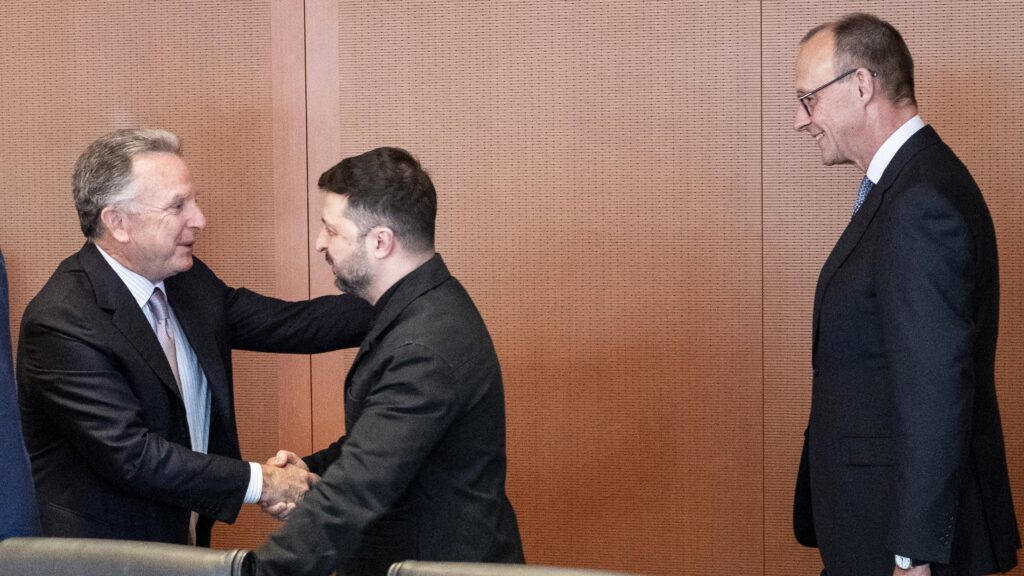
Speaking to media after negotiations in Berlin on 15 December, Zelenskyy outlined the diplomatic timeline ahead. "Today or tomorrow, we will finalize our documents. After that, I believe the United States will, in the coming days, hold consultation
Ukrainian President Volodymyr Zelenskyy said that if Moscow refuses to accept the terms for ending hostilities worked out through negotiations with the US and Europe, it's time for Trump to move to serious pressure on Russia.
Speaking to media after negotiations in Berlin on 15 December, Zelenskyy outlined the diplomatic timeline ahead. "Today or tomorrow, we will finalize our documents. After that, I believe the United States will, in the coming days, hold consultations with the Russians, and then hold consultations with the President of the United States. After that, our teams will meet. I think our negotiating teams will meet in the United States in the near future – possibly even over the weekend. And then, after that meeting, we will see how things stand. We will consider a meeting at the leaders' level, in any event with the President of the United States."
Zelenskyy was asked what he thinks will happen when Ukraine, the US, and Europe finalize agreements and the Kremlin rejects them.
"If Putin rejects everything, we will end up with exactly what we are experiencing on our plane right now – turbulence. We are indeed experiencing it now," Zelenskyy said. "But it is not that severe compared to the war, of course, and compared to what happens if Putin destroys any diplomatic opportunities and willingness – on our side, on the European side, and on the American side."
He continued that in such a scenario, he considers it logical for the US to shift to hard pressure on Russia and expand assistance to Ukraine.
"I believe the United States will apply sanctions pressure and provide us with more weapons if he rejects everything. I think that would be a fair request from us to the Americans. Because, in my view, the logic is this: if the United States is ready to provide security guarantees to Ukraine and to apply strong guarantees if Putin violates the agreement, then tell me honestly – how is that different from a situation in which Putin does not want to end the war?" Zelenskyy said.
"I believe it would be a fair request from me as President, and from some European leaders as well: then give us at least part of those guarantees so that we can repel Putin – air defense, and long-range capabilities," he concluded.
During the briefing, Zelenskyy said that following the negotiations, five documents are to be formalized – some related to security guarantees, others to reconstruction. According to him, there has been "serious progress" on the security guarantees issue.
The president also emphasized that Ukraine will not agree to legal or de facto recognition of the occupied Donbas as Russian territory.
According to US media sources, Washington believes it has resolved "90% of the disagreements" between Ukraine and Russia.
Details of the negotiation framework
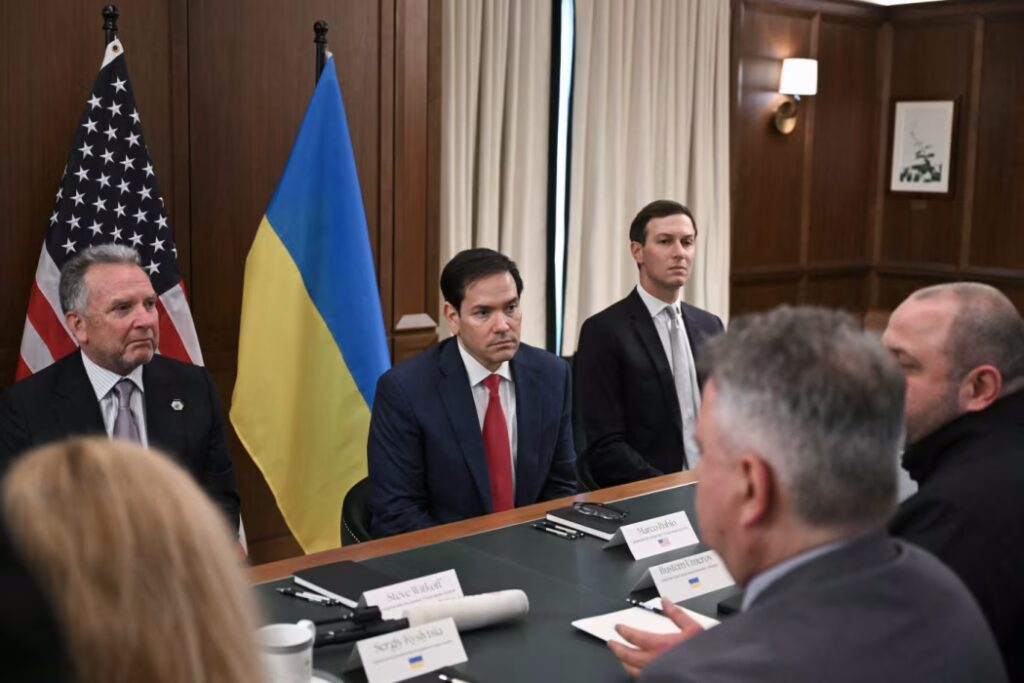
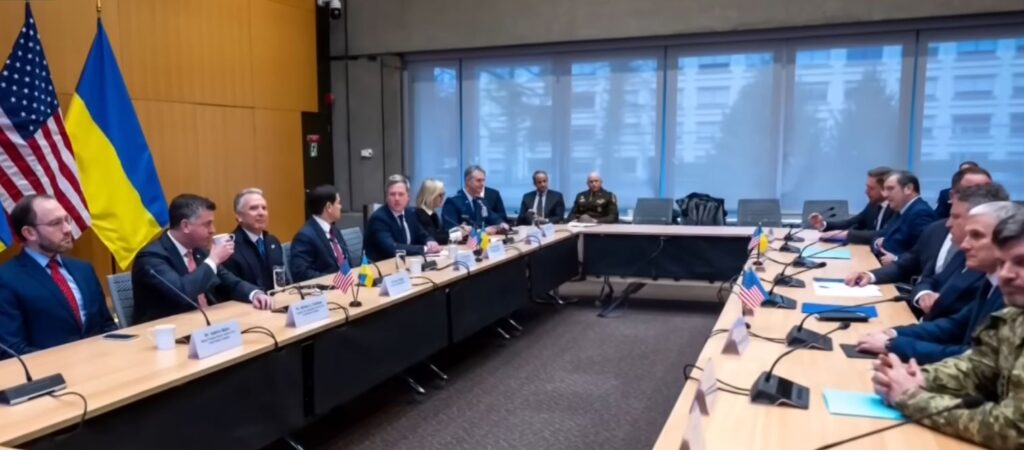
Zelenskyy also provided details about the Berlin talks, the first meeting in this format with the US team including Steve Witkoff, Jared Kushner, and General Keith Grynkewich. "The path is certainly not easy, because the war is complicated, and the path will be too. That does not mean it will be long. The Americans want a swift resolution; we care about maintaining quality even at this pace. If speed and quality coincide, we are fully on board," he said.
The negotiations involve five documents covering security guarantees and reconstruction. The security guarantees must be legally binding and approved by US Congress, including an Article 5 equivalent mirroring NATO's collective defense provision. Reconstruction documents address internally displaced persons who lost housing, with costs estimated at 70-80 billion dollars, as well as compensation for families of fallen soldiers and infrastructure repairs.
"Regarding security guarantees, it is important that our military has discussed all the details – I mean, the US-Ukrainian team. And I believe we are very close to strong security guarantees. Certainly, we are people of war, and during war, we trust facts. So, theoretically, we can see good elements on paper today, but the facts – again, I emphasize and return to this – are the votes in the US Congress," he said.
Zelenskyy noted progress on the most difficult points of the 20-point framework agreement and said Europe was successfully brought into the process alongside the US. Together with European leaders, they spoke with President Trump about these steps, with another leader-level meeting expected once documents are finalized.
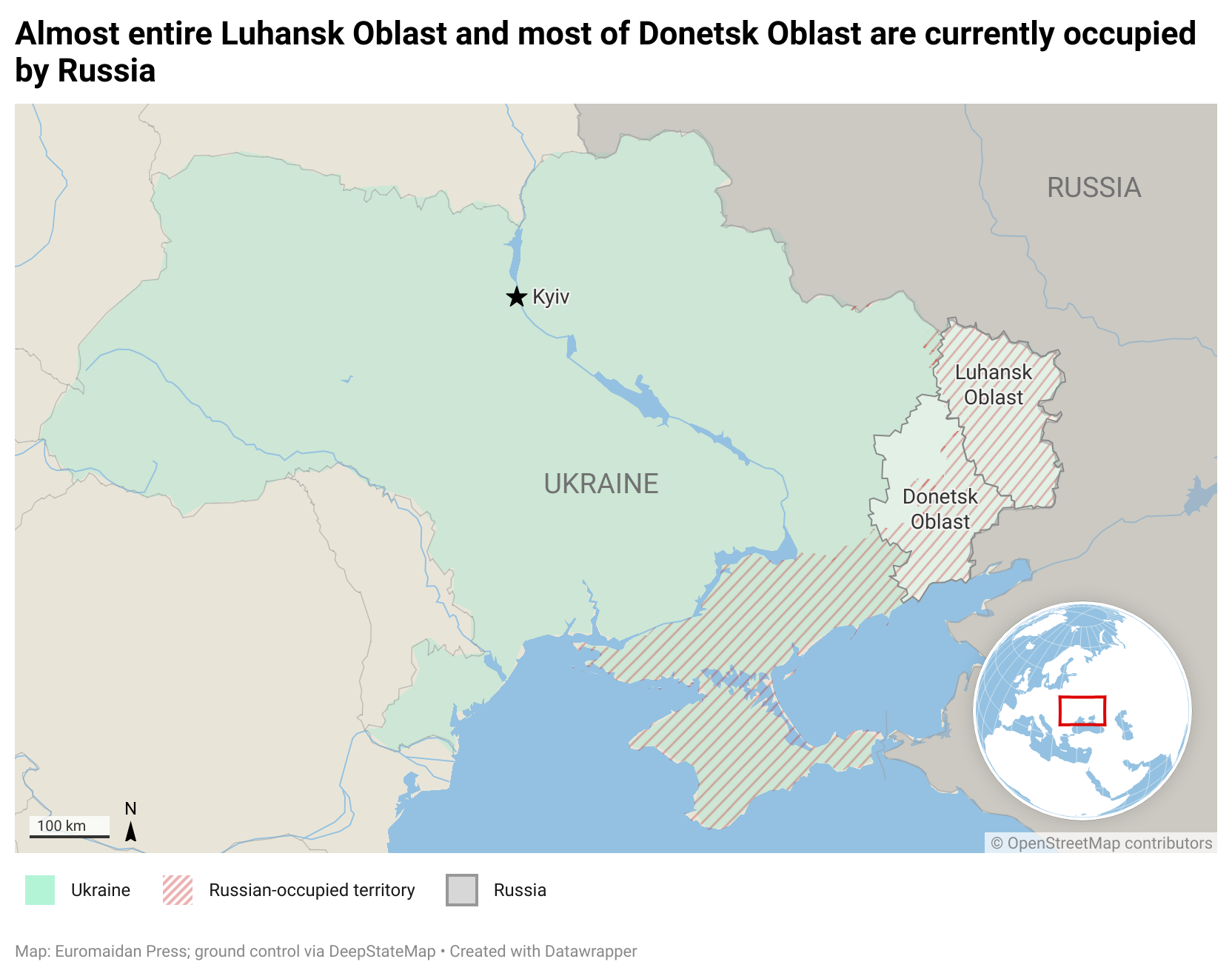
After meetings with American and European officials in Berlin on 15 December, Ukrainian President Volodymyr Zelenskyy confirmed that Russia still demands full control of eastern Ukraine's Donbas in its so-called peace plan. He said Ukraine will not surrender any of its internationally recognized territory and rejected any compromise on the Donbas.
The Donbas is a historic name for a coal basin and is colloquially used to denote either both Luhansk and Donetsk oblasts, or so
After meetings with American and European officials in Berlin on 15 December, Ukrainian President Volodymyr Zelenskyy confirmed that Russia still demands full control of eastern Ukraine's Donbas in its so-called peace plan. He said Ukraine will not surrender any of its internationally recognized territory and rejected any compromise on the Donbas.
The Donbas is a historic name for a coal basin and is colloquially used to denote either both Luhansk and Donetsk oblasts, or sometimes just Donetsk Oblast. In recent years of the ongoing Russo-Ukrainian war, Moscow has focused on capturing the entire Donbas region, sending its most numerous ground armies into repeated attacks that have brought only incremental gains at the cost of heavy personnel and equipment losses, yet it has still failed to capture the region in its entirety.
Zelenskyy: Russia still wants Donbas — Ukraine won’t give it up
Speaking at a 15 December online press conference attended by Euromaidan Press, Zelenskyy said Moscow still demands the entire Donbas in negotiations.
“Their position has not changed,” he said. “We do not want to give up our Donbas.”
He made clear that Ukraine will not recognize Russian control over any part of the region, either legally or in practice.
"Neither de jure nor de facto will we recognize Donbas – its temporarily occupied part – as Russian. Absolutely. Nevertheless, we are discussing the territorial issue. You know it is one of the key issues. At this point, there is no consensus on it yet," the President said.
Zelenskyy also addressed American suggestions to create a “free economic zone” in the area, saying that "a “free economic zone” does not mean under the control of the Russian Federation." He stressed that this issue remains one of the most sensitive points in the talks and no consensus has been reached.
Explore further
Trump offers Ukraine “security guarantees” that are designed to fail
Zelenskyy previously told Bloomberg that the territorial issue — specifically Russia’s demand for the Donbas — remains the main unresolved point in talks. On 19 November, media reported that US envoy Steve Witkoff had presented a 28-point peace plan to Trump, allegedly developed with Russian representative Kirill Dmitriev. The plan called for Ukraine to withdraw from Donetsk Oblast and drop its NATO ambitions. Some of those provisions have since been removed, shortening the plan to 20 points.
No compromise on territory, but security talks advance
While territorial discussions remain stuck, Zelenskyy said there has been real progress in other areas, especially on security guarantees. He reiterated the US Congress is expected to vote on legally binding commitments that would require a response if Russia violates any future peace deal or ceasefire. The proposed mechanism would mirror NATO’s Article 5, providing a collective response to aggression.
Explore further
75% of Ukrainians oppose “peace plan,” which includes withdrawal of troops from Donbas
The Ukrainian President said detailed talks have also covered Ukraine’s long-term defense needs, including the size of its army, required weapons and training, and sustainable funding. He welcomed growing cooperation between the US and Europe, noting that the broader Coalition of the Willing — now called Europe+ — includes Canada and other non-EU partners.
Russia’s response will shape the next steps
Zelenskyy warned that if Russian President Vladimir Putin rejects the proposals, Ukraine will request more weapons and tougher sanctions from the US. He said this would be a fair reaction to a complete refusal by Moscow to engage in a peaceful resolution.
He added that around 90% of the draft peace documents have been agreed. The next phase includes consultations between the US and Russia, further talks in the United States, and potentially a summit with US President Donald Trump.
Asked about holding a referendum on the final peace agreement, Zelenskyy said no such plans exist for now. He noted that any vote would require a ceasefire and a secure environment, and that Ukraine is focused on easing the burden on civilians already suffering from war.
The majority of Ukrainian society is not ready to hold elections during a full-scale war. According to a survey by the Kyiv International Institute of Sociology, 57% of citizens believe that elections are possible only after a final peace agreement and the complete end of hostilities.
This position reflects a clear understanding that without an end to shelling and without access to the electoral process for millions of soldiers, refugees, and residents of occupied territori
The majority of Ukrainian society is not ready to hold elections during a full-scale war. According to a survey by the Kyiv International Institute of Sociology, 57% of citizens believe that elections are possible only after a final peace agreement and the complete end of hostilities.
This position reflects a clear understanding that without an end to shelling and without access to the electoral process for millions of soldiers, refugees, and residents of occupied territories, elections cannot be held.
Previously, US President Donald Trump said that Ukraine should hold new electionsdespite its ongoing war with Russia. Under Ukraine’s constitution, they cannot be held during martial law, the New York Post reports.
In response, President Volodymyr Zelenskyy stated that he would be ready to hold elections within three months, provided that the US and Europe ensure the security of the process.
Trump has not publicly commented on this proposal.
Meanwhile, Russia has been calling Ukraine's government and Zelenskyy, who has been at the helm of defending Ukraine for the fourth year of the war, illegitimate. According to Moscow, it has been one of the reasons Moscow does not want to make a peace deal with Kyiv. This regards the agreement without concrete security guarantees for Ukraine.
It is unclear how the Kremlin's position will change if Ukraine again chooses leaders who refuse to surrender to Russia during the potential elections.
Elections are possible only after peace, not under fire
According to the survey, only 9% of Ukrainians believe elections should be held before a ceasefire. For comparison, in September 2025, 11% held this view, while 63% already supported holding elections only after the war had ended.
Trust in Zelenskyy remains high despite political tensions
Sociologists also recorded the level of trust in the Ukrainian president. Sixty-one percent of Ukrainians trust Volodymyr Zelenskyy, while 32% do not. The trust–distrust balance stands at +29%.
The poll notes that these indicators are dynamic. Among respondents surveyed at the end of November, 49% trusted Zelenskyy. This is apparently connected to "Mindichgate", a major corruption scandal in Ukraine involving businessman Tymur Mindich and his alleged ties to Zelenskyy's inner circle.
Kyiv implemented personnel changes and anti-corruption measures following the Mindichgate scandal, including dismissals of key ministers. Zelenskyy also fired his top aide, Andrii Yermak, who might have had links to he scheme. Meanwhile, the EU praised Ukraine's efforts in combating corruption but stated that further actions were necessary.
In December, support for Zelenskyy rose to 63%, and during the period from 8 December to 13 December, it increased to 65%.
Donetsk and Luhansk factor
Euromaidan Press previously reported that, according to the same poll, three-quarters of Ukrainians reject a "peace plan" that would require withdrawing forces from Donbas, limiting the size of the Ukrainian army, and offering no concrete security guarantees.
This figure contradicts Trump's statements that 82% of Ukrainians want a peace deal with Russia on Moscow's terms.
Russia maintains that the entire Donbas region, encompassing Donetsk and Luhansk oblasts, belongs to it as Russian territory, rejecting any Ukrainian control or demilitarized zones without full Russian administration.
According to the poll, 72% of Ukrainians, although mostly without enthusiasm, the sociologists note, are prepared to approve the European-Ukrainian plan. Only 14% categorically reject it.
European Union leaders are scrambling to influence Ukraine peace negotiations and secure financing for Kyiv ahead of a critical summit 18 December, as divisions threaten both efforts.
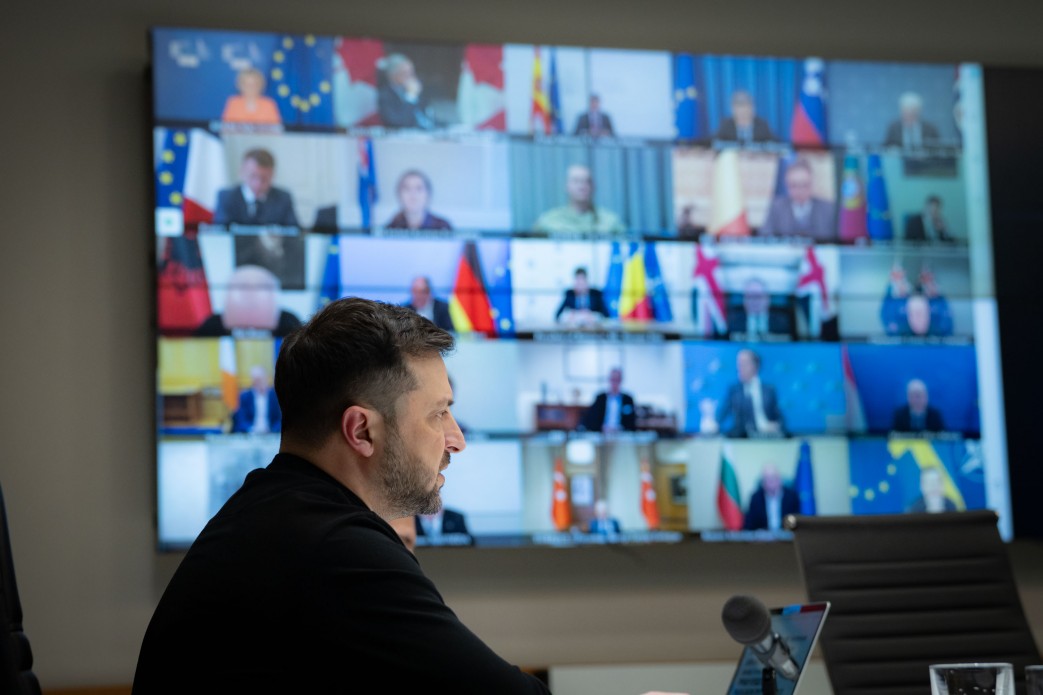
Ukrainian President Volodymyr Zelenskyy met with US officials including special envoy Steve Witkoff and Jared Kushner in Berlin on 15 December for over five hours of discussions. "A lot of progress was made, and they will meet again tomorrow morning," Witkoff said on X, noting the talks co
European Union leaders are scrambling to influence Ukraine peace negotiations and secure financing for Kyiv ahead of a critical summit 18 December, as divisions threaten both efforts.
Ukrainian President Volodymyr Zelenskyy met with US officials including special envoy Steve Witkoff and Jared Kushner in Berlin on 15 December for over five hours of discussions. "A lot of progress was made, and they will meet again tomorrow morning," Witkoff said on X, noting the talks covered a 20-point peace plan and economic agendas.
The Berlin meeting, which also involved UK, German and potentially French leaders, represents Europe's attempt to shape final settlement terms weeks after an initial 28-point peace plan drafted by Witkoff "provoked a furious backlash in both Kyiv and European capitals," according to POLITICO. The current focus is on a 20-point amendment drafted by Kyiv and European allies and submitted to Washington last week.
Territorial disputes remain central. Trump has proposed emptying occupied territories of Ukrainian and Russian troops to create a demilitarized "free economic zone" for US business interests. Ukraine rejected this proposal, a French official told POLITICO. "The US has insisted on territorial concessions despite fierce European objections," the official said.
Zelenskyy signaled flexibility over the weekend, saying he was willing to "compromise" and not demand NATO membership. Instead, Ukraine should receive an ad-hoc collective defense arrangement, he said. "The bilateral security guarantees between Ukraine and the United States … and the security guarantees from our European colleagues for us, as well as from other countries such as Canada and Japan ― these security guarantees for us provide an opportunity to prevent another outbreak of Russian aggression."
Europe's leaders maintain there can be no territorial progress before Ukraine receives security guarantees.
The diplomatic push comes as Trump has called European leaders "weak" and said they "talk, but they don't produce." NATO Secretary General Mark Rutte warned last week: "We are Russia's next target, and we are already in harm's way. Russia has brought war back to Europe and we must be prepared for the scale of war our grandparents and great grandparents endured."
Simultaneously in Brussels, EU foreign ministers and diplomats are battling over a loan plan using frozen Russian assets. The EU has spent months trying to convince Belgian Prime Minister Bart De Wever to approve using cash value from €185 billion in Russian state assets held in Brussels-based Euroclear to fund Ukraine, with an additional €25 billion from assets elsewhere in the bloc.
Opposition is growing. Italy, Malta and Bulgaria sent a letter Friday demanding alternative financing options. Czech Prime Minister Andrej Babiš rejected the plan Sunday. Belgium, while "engaging constructively," continues making changes to draft measures, according to diplomats.
The five countries cannot form a blocking minority even with potential support from Hungary and Slovakia, but their public criticism undermines hopes for agreement at Thursday's summit. "The more such cases we have the more likely it is that we will have to find other solutions," an EU diplomat said.
Three diplomats insisted no alternatives are being considered and they remain committed to the original plan despite concerns the money might not be approved before year's end. "There is no option B," a German official said, calling the decision "a decision on the future of Europe."
An EU official warned that further disunity this week would send a "disastrous signal to Ukraine" and added: "It's also fair to say that Europe will then fail as well."
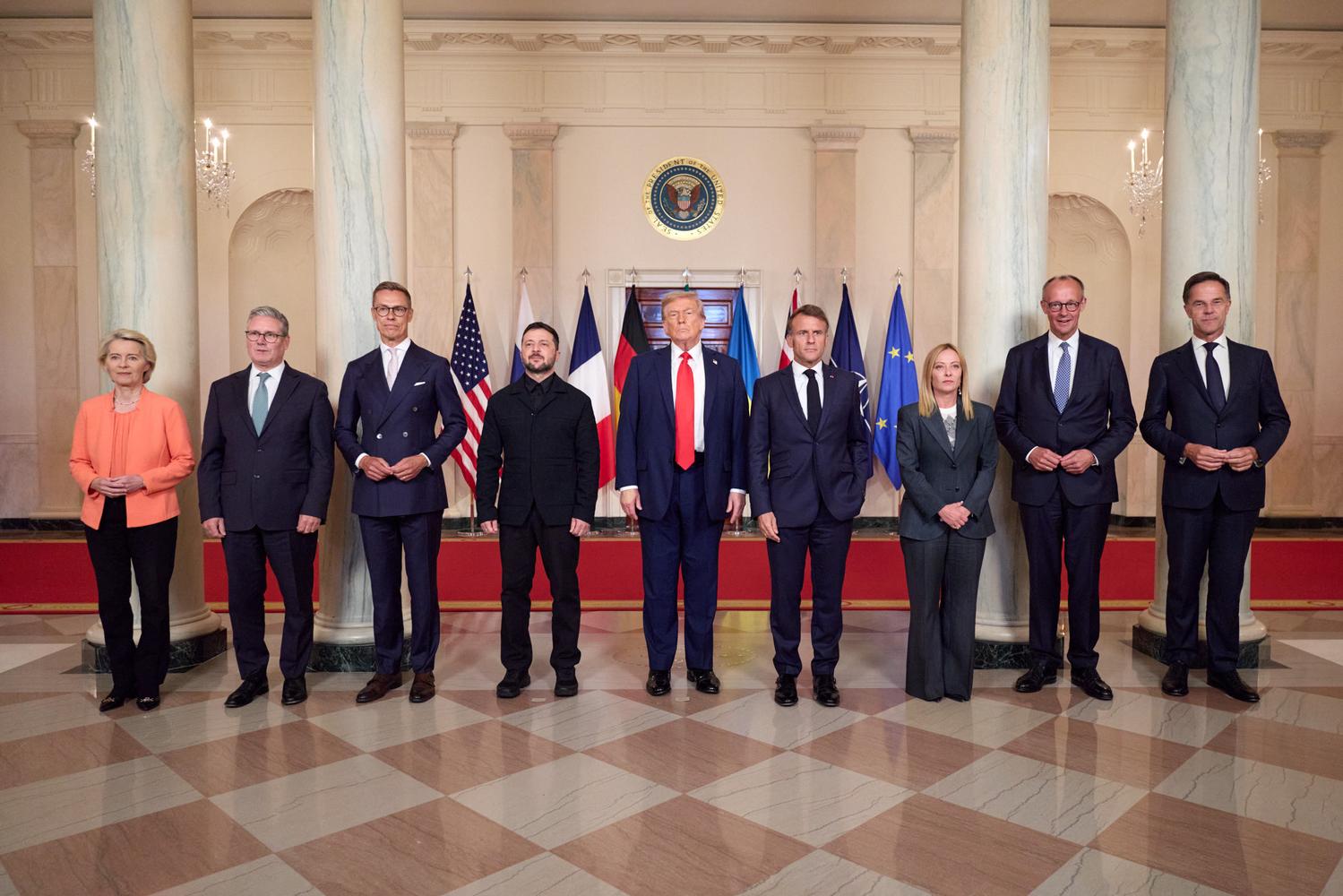
Stefan Kornelius, spokesperson for German Chancellor Friedrich Merz, said "numerous European heads of state and government, as well as the leaders of the EU and NATO, will join the talks" following the initial Berlin discussion. French President Emmanuel Macron has not confirmed attendance but spoke with Zelenskyy by phone Sunday.
EU affairs ministers continue discussions Tuesday in Brussels ahead of Thursday's summit. Wednesday will see Eastern European leaders from the Baltics and Poland meet in Helsinki. A meeting of EU ambassadors originally scheduled for Sunday evening was postponed until Monday.
Three-quarters of Ukrainians reject a "peace plan" that would require withdrawing forces from Donbas, limiting the Ukrainian army's size, and offering no concrete security guarantees, according to a survey by the Kyiv International Institute of Sociology conducted between 26 November and 13 December.
"The Russian plan remains categorically unacceptable – 75% of Ukrainians consider it completely unacceptable (the same as in September 2025). Only 17% of Ukrainians are rea
Three-quarters of Ukrainians reject a "peace plan" that would require withdrawing forces from Donbas, limiting the Ukrainian army's size, and offering no concrete security guarantees, according to a survey by the Kyiv International Institute of Sociology conducted between 26 November and 13 December.
"The Russian plan remains categorically unacceptable – 75% of Ukrainians consider it completely unacceptable (the same as in September 2025). Only 17% of Ukrainians are ready for the Russian version of peace (the same as before)," KIIS reported.
The institute presented respondents with two abbreviated versions of potential peace agreements without initially identifying their origins. One represented a conditional plan from Europe and Ukraine, the other a conditional Russian plan.
The European-Ukrainian plan outlined:
Ukraine would receive reliable security guarantees from Europe and the USA, including sustainable weapons and financial support, plus protection of Ukrainian airspace from Russian attacks. The current frontline would be frozen with Russia maintaining control over occupied territories, though Ukraine and the world would not officially recognize this. Ukraine would continue its path toward EU membership, and sanctions against Russia would remain until sustainable peace is established and threats of renewed aggression disappear.
The Russian plan specified:
The USA and Europe would lift all sanctions against Russia. Russian would gain official status. Ukraine would significantly reduce its army and limit armaments. Ukraine would permanently renounce NATO membership, with the West unable to supply weapons. Russia would determine Ukraine's security guarantees and serve as one of the guarantor countries. Ukraine would withdraw forces from parts of Donetsk region it currently controls, including Kramatorsk, Sloviansk and other cities. Ukraine would officially recognize Crimea, Donetsk and Luhansk regions as part of Russia and permanently renounce them. Russia would retain control over occupied parts of Kherson and Zaporizhzhia regions.
Meanwhile, 72% of Ukrainians—though mostly without enthusiasm, the sociologists note—are prepared to approve the European-Ukrainian plan. Only 14% categorically reject it.
The survey interviewed 547 respondents aged 18 and older via telephone using random mobile number sampling. Respondents lived in government-controlled territory of Ukraine. The sample excluded residents of temporarily uncontrolled territories, though some respondents were internally displaced persons who relocated from occupied areas, as well as citizens who left the country after February 24, 2022.
Under normal circumstances, the statistical margin of error for such a sample (with probability 0.95 and design effect 1.3) would not exceed 5.6% for indicators near 50%, 4.8% for indicators near 25%, 3.4% for indicators near 10%, and 2.5% for indicators near 5%.
The sociologists note that wartime conditions add some systematic deviation beyond the formal margin of error, but they believe the results maintain high representativeness and allow reliable analysis of public sentiment.
American media outlet Axios reports that the US administration is prepared to offer Ukraine security guarantees based on NATO's Article 5, citing an unnamed senior US official. However, the plan reportedly includes Ukraine withdrawing its forces from Donbas and establishing a demilitarized zone there.
According to Axios, negotiations regarding security guarantees that Ukraine would receive from the US and Europe have made significant progress.
An anonymous senior US
American media outlet Axios reports that the US administration is prepared to offer Ukraine security guarantees based on NATO's Article 5, citing an unnamed senior US official. However, the plan reportedly includes Ukraine withdrawing its forces from Donbas and establishing a demilitarized zone there.
According to Axios, negotiations regarding security guarantees that Ukraine would receive from the US and Europe have made significant progress.
An anonymous senior US official told the outlet that President Donald Trump's administration is ready to provide Ukraine with a security guarantee aligned with NATO's Article 5 on collective defense, which treats an attack on one alliance member as an attack on all. The source claimed this guarantee would be approved by Congress and carry legal force.
"We want to give the Ukrainians a security guarantee that on the one hand is not a blank check, and on the other hand is strong enough. We are prepared to send it to Congress for a vote," the official said.
Axios also reported, citing two anonymous White House officials, that a 15 December meeting is expected in Berlin between US Special Envoy Steve Witkoff, Trump's son-in-law Jared Kushner, and Ukrainian President Volodymyr Zelenskyy. Leaders from Germany, France, and the United Kingdom are also expected to participate.
The Wall Street Journal previously reported on Witkoff's upcoming Berlin visit.
The negotiations aim to reach agreement on the US peace plan, Axios reports. "The White House is pushing Ukraine hard to approve its plan, but the territorial concessions being demanded of Kyiv remain the main sticking point. The American side believes all other issues are close to being resolved and that Zelensky may have proposed a path to progress on territory," the outlet states.
Zelenskyy previously disclosed that America's peace plan calls for Ukrainian forces to withdraw from Donbas while Russian forces would not enter the area. Instead, Washington proposes creating a "free economic zone" or "demilitarized zone." However, Zelenskyy indicated that negotiations on this matter are ongoing.
He suggested that the question of whether the compromises being demanded of Kyiv are fair "will be answered by the people of Ukraine" through a referendum or elections.
A US official told Axios that during a virtual meeting on 12 December, European partners stated they would support Zelenskyy if he proposes a referendum on territorial issues. During the same meeting, Witkoff and Kushner discussed the demilitarized zone plan with national security advisers from Ukraine, Germany, France, and the United Kingdom, the outlet reports.
According to a White House official, this exchange and the latest round of US-Ukraine negotiations the day before showed sufficient progress to convince Trump to send his representatives to Europe.
"They [Witkoff and Kushner] believe there is a chance for peace, and the president trusts them," another administration official stated.
One Axios source claimed: "Under the current proposal, the war would end with Ukraine retaining sovereignty over 80% of its territory, receiving the biggest and strongest security guarantees it has ever had, and a very significant prosperity package."
It remains unknown whether Russia will support the American proposals.
The day before, the Office of the President denied reports that Ukraine had allegedly agreed to create a buffer zone in Donbas under the American peace plan.
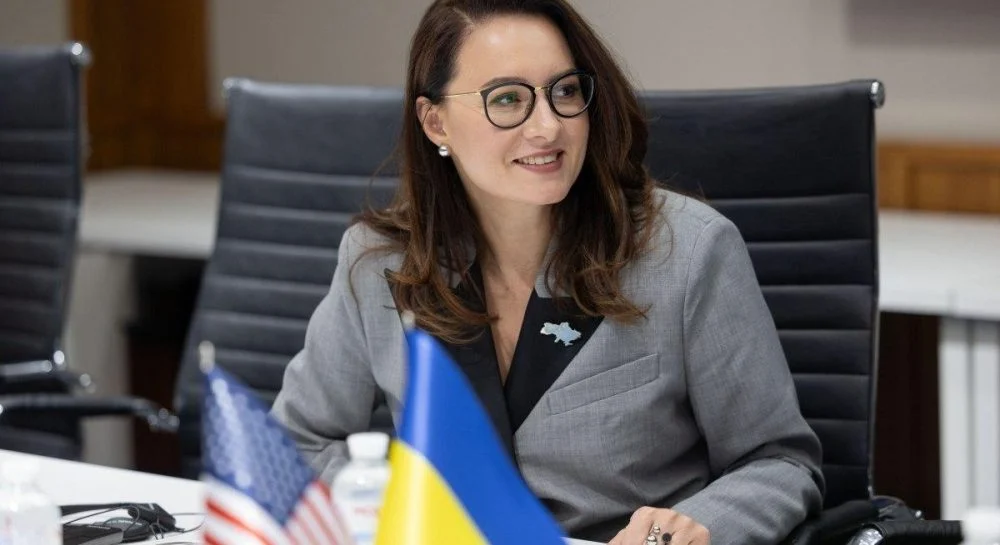
Ukrainian Prime Minister Yulia Svyrydenko announced that the Ukrainian team held negotiations with representatives of US President Donald Trump and American investors.
The meeting included Trump representatives Jared Kushner and Steven Witkoff, World Bank President Ajay Banga, and BlackRock CEO Larry Fink.
"A joint working group has been formed. Its primary task is to develop an action plan in the shortest possible time. The Ukrainian team is ready to work as intensi
Ukrainian Prime Minister Yulia Svyrydenko announced that the Ukrainian team held negotiations with representatives of US President Donald Trump and American investors.
The meeting included Trump representatives Jared Kushner and Steven Witkoff, World Bank President Ajay Banga, and BlackRock CEO Larry Fink.
"A joint working group has been formed. Its primary task is to develop an action plan in the shortest possible time. The Ukrainian team is ready to work as intensively as our American partners are ready to work. Economic plans have every chance of successful implementation if ironclad security guarantees work, as representatives of the United States stated at the meeting," Svyrydenko wrote.
Media outlets reported in January that BlackRock halted fundraising for a multibillion-dollar Ukraine reconstruction fund following Trump's election victory. The negotiations were suspended allegedly due to lack of investor interest amid growing uncertainty about Ukraine's future.
President Volodymyr Zelenskyy recently announced that BlackRock head Larry Fink was part of the American team working on a document regarding Ukraine's reconstruction and economic recovery.
Zelenskyy emphasized that overall security would determine economic security and form the foundation of a safe business environment.
Ukrainian President Volodymyr Zelenskyy is expected to arrive in the German capital on 15 December, Bild reports.
The German government has not officially confirmed the visit, but unusually high security measures are already being implemented in the government quarter and in the airspace over Berlin.
Members of the Bundestag have been informed about "police measures in connection with a state visit to the Reichstag building and the Chancellor's office" with access r
Ukrainian President Volodymyr Zelenskyy is expected to arrive in the German capital on 15 December, Bild reports.
The German government has not officially confirmed the visit, but unusually high security measures are already being implemented in the government quarter and in the airspace over Berlin.
Members of the Bundestag have been informed about "police measures in connection with a state visit to the Reichstag building and the Chancellor's office" with access restrictions on Monday, according to the publication.
Berlin police notified airports in the Berlin area on Thursday about an upcoming state visit. "In connection with the visit of a person under the highest level of protection, a flight restriction zone will be introduced in Berlin on 15 December 2025 to protect the state guest," the police letter said.
Bild notes that such measures are only taken for state guests under the highest threat level, such as US presidents or the Ukrainian president.
The visit comes amid preparations for a meeting in Berlin focused on a possible ceasefire in Ukraine, scheduled for early next week. German Chancellor Friedrich Merz has invited US representatives to join the meeting.
The invitation followed a tense phone call on Wednesday between Merz, Emmanuel Macron, Keir Starmer, and Donald Trump, during which the parties attempted to bridge differences over the direction of peace efforts. Trump later acknowledged the existence of disputes, saying "quite strong words" were exchanged during the call, highlighting disagreements over the US-supported approach.
Details of further phone calls will be communicated only "after consultation with the parties involved," according to the statement. Bild reports that Merz will hold talks with, among others, US President Donald Trump and Ukrainian President Volodymyr Zelenskyy.
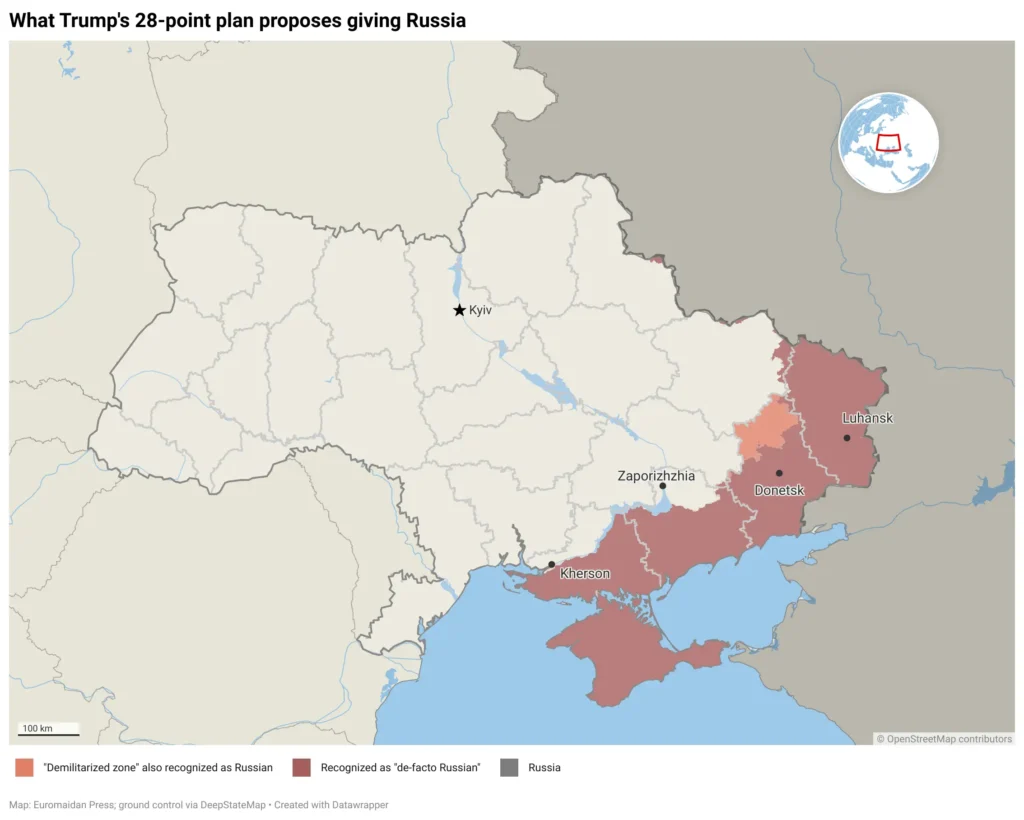
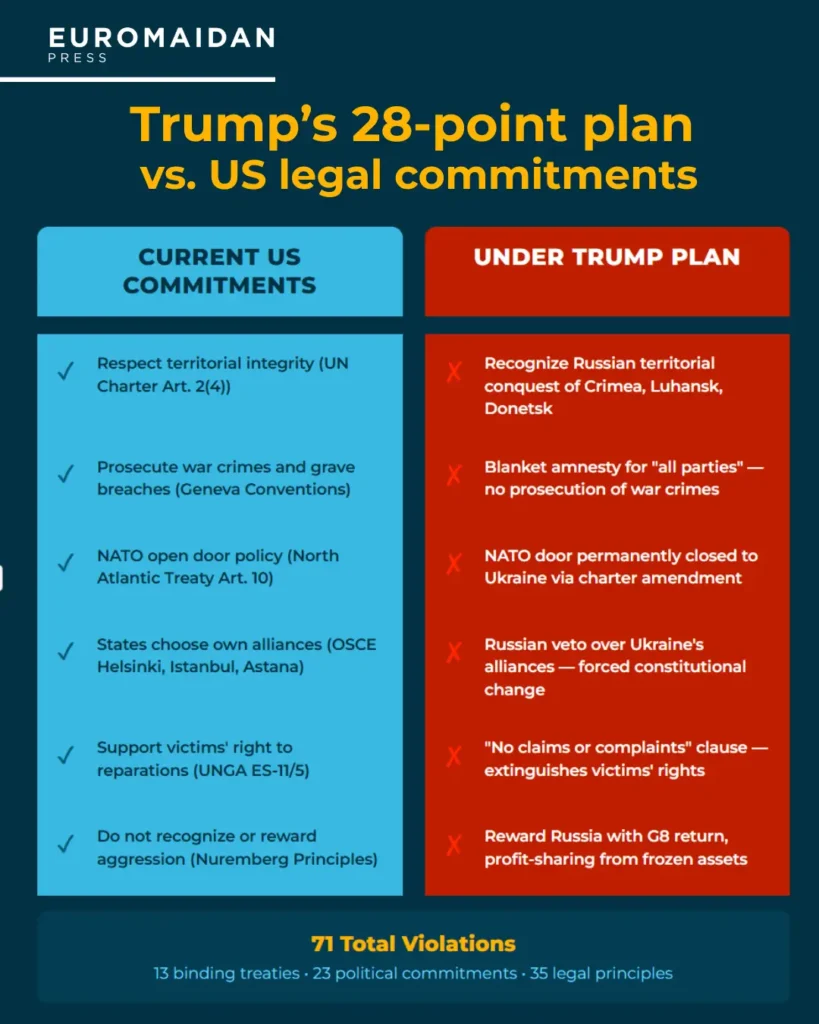
The discussions center primarily on Trump's 28-point plan for Ukraine, which demands tough concessions from the country occupied by Russia but, according to the US president, aims to establish peace.
Part of the plan that raises concerns among European security experts involves Ukraine renouncing disputed territories—territories that Russia has not yet captured. The plan also provides for cutting the Ukrainian army in half and transferring key weapons from the West. The US would also reduce its military support to the invaded country.
In return, Russia, which invaded all of Ukraine in 2022, would halt attacks.
Ukraine’s president says the United States is now exploring a “special economic zone” in parts of Donetsk as part of a possible compromise in peace talks, Ukrainska Pravda reports. The proposal would involve Ukrainian forces pulling back from territory they currently control and Russian forces agreeing not to enter it.
The proposal comes amid an intense phase of US-led diplomacy aimed at shaping a peace framework, with Washington increasingly advancing ideas that mirror
Ukraine’s president says the United States is now exploring a “special economic zone” in parts of Donetsk as part of a possible compromise in peace talks, Ukrainska Pravda reports. The proposal would involve Ukrainian forces pulling back from territory they currently control and Russian forces agreeing not to enter it.
The proposal comes amid an intense phase of US-led diplomacy aimed at shaping a peace framework, with Washington increasingly advancing ideas that mirror parts of Russia’s position in an effort to bridge the wide gaps between the two sides.
Zelenskyy: concept still vague, Kyiv may refuse
Ukrainian President Volodymyr Zelenskyy outlined the idea during a briefing with journalists in Kyiv on 11 December, citing ongoing negotiations with Washington and growing pressure from the US to find a path toward ending the war. He said the concept is still vague and that Kyiv may not accept it.
Zelenskyy said the US approach envisions Ukrainian troops withdrawing from parts of Donetsk Oblast but Russia not advancing into those areas.
The territory would be designated a “special economic zone,” or what Moscow calls a “demilitarised zone.” He added that Washington has not defined who would govern the area.
He stressed that Kyiv cannot accept a unilateral withdrawal, which Ukraine has consistently opposed because it could give Russia leverage to mount future attacks.
A fair compromise, he said, would require both sides to pull back equal distances under monitored conditions.
Territory and control of the Zaporizhzhia Nuclear Power Plant remain the two key unresolved issues in the broader talks.
Zelenskyy said one option could involve Russian forces leaving the plant and Ukraine sharing control with the United States, though he acknowledged details are unclear and Moscow may refuse.
Kyiv submits 20-point plan to Washington
The Ukrainian president confirmed that Kyiv has provided Washington with an updated 20-point peace plan and separate documents on security guarantees and reconstruction.
The latest US ideas come after weeks of activity involving American, Ukrainian, Russian and European officials, all trying to shape a framework for potential negotiations.
He said the US is seeking a quicker end to the war but has not set deadlines. Kyiv wants any future framework to begin with an immediate ceasefire, while Russia benefits from delaying one as its forces continue to push slowly along the frontline.
Zelenskyy warns US support may decline
Zelenskyy warned that Ukraine must be careful, noting Kyiv does not know what other arrangements the US and Russia may be discussing directly.
Zelenskyy also voiced concern about future American support. He said that US supplies of weapons and intelligence could eventually decline, and that Washington openly maintains its opposition to Ukraine joining NATO - another factor shaping the talks.
"Everything could still fall apart"
Ukraine and European partners remain doubtful that any Russian promises would hold, citing past ceasefire violations. European leaders continue to push for US involvement in future security guarantees, arguing that only a strong Western role can deter renewed Russian aggression.
Zelenskyy said the question of territory must ultimately be decided by Ukrainians, whether through elections or a referendum. But he cautioned that the outcome of ongoing battles will influence what is even possible.
“The final mile is the hardest,” he said. “Everything could still fall apart.”
Ukrainian President Volodymyr Zelenskyy said his government has finalized a plan with European partners outlining potential steps toward ending the war in Ukraine and is ready to present the proposals to the United States for coordination.
The plan marks a shift toward Europe taking a more active role in shaping potential peace initiatives, rather than relying solely on US-led proposals. Previous rounds of negotiations have repeatedly stalled or failed due to Russian re
Ukrainian President Volodymyr Zelenskyy said his government has finalized a plan with European partners outlining potential steps toward ending the war in Ukraine and is ready to present the proposals to the United States for coordination.
The plan marks a shift toward Europe taking a more active role in shaping potential peace initiatives, rather than relying solely on US-led proposals. Previous rounds of negotiations have repeatedly stalled or failed due to Russian refusals to make meaningful concessions and Ukraine not being willing to compromise on territorial integrity.
Zelenskyy: proposals ready to present to US
“The Ukrainian and European components are now more developed, and we are ready to present them to our partners in the US,” Zelenskyy said on Facebook.
The discussions follow a 2.5-hour meeting in London on December 8 with the leaders of Ukraine, Germany, France, and the United Kingdom.
Zelenskyy noted that Ukraine is focused on creating realistic proposals and is in constant contact with US officials to make the steps “as doable as possible.”
He added, “Everything depends on whether Russia is ready to take effective steps to stop the bloodshed and prevent the war from reigniting.” The Ukrainian side expects to send the refined proposals to Washington in the near future.
In a briefing with journalists on 8 December, Ukrainian President Volodymyr Zelenskyy said the current US‑drafted plan to resolve the Russo-Ukrainian war contains 20 points instead of the original 28, according to Liga. He said the earlier version included "openly not pro-Ukrainian" points, which have now been removed.
The US is pushing for a Kyiv–Moscow peace deal to end the war. Meanwhile, the Kremlin, convinced of its advantage, continues dragging out the process — enga
In a briefing with journalists on 8 December, Ukrainian President Volodymyr Zelenskyy said the current US‑drafted plan to resolve the Russo-Ukrainian war contains 20 points instead of the original 28, according to Liga. He said the earlier version included "openly not pro-Ukrainian" points, which have now been removed.
The US is pushing for a Kyiv–Moscow peace deal to end the war. Meanwhile, the Kremlin, convinced of its advantage, continues dragging out the process — engaging in talks while repeatedly restating demands that amount to Ukraine’s capitulation. One of Russia's demands is that Ukraine surrender the remaining part of Donetsk Oblast it controls — an area that includes the so-called Fortress Belt, which Russian forces have failed to breach despite years of grinding ground assaults.
US adjusts peace proposal after earlier Geneva and Miami discussions
Zelenskyy said the document shown to him by National Security and Defense Council Secretary Rustem Umierov differs from what followed earlier rounds of talks in Geneva and Miami. He explained that the foundation remains the same but emphasized that the plan has been streamlined.
“There were 28 points, now there are 20. They adjusted this direction. And the openly not pro-Ukrainian points have gone,” he said. He noted that the US wants compromise, but Ukraine and Washington still lack an agreed position on territory.
The President said issues tied to Ukraine’s postwar recovery involve financial commitments and must include the European perspective. He noted that he discussed this with European leaders and said Europe must be engaged in the wider conversation.
Explore further
Zelenskyy under US pressure to accept Trump “peace” plan fast, Axios says
Zelenskyy says US wants war to end, but Ukraine defines fair terms
Speaking to Liga’s correspondent in Brussels, Zelenskyy said he sees a genuine US intention to achieve peace in Ukraine. He stressed that the US is a strong partner and that US President Donald Trump seeks to end the Russian‑Ukrainian war. He added that Ukraine has a deeper understanding of the conflict because “we live inside it.”
Zelenskyy said Trump’s son‑in‑law Jared Kushner, who works with special envoy Steve Witkoff and other members of the negotiation team, “is trying hard.” He said Ukraine sees real effort from the US side.
“I definitely see that they want the war to end. This is not a game from the United States. It’s important to everyone that the war ends. But for us, it’s also important how and on what terms. So there is no risk of a repeat of the war. Because we don’t trust Russia,” he said.
Explore further
ISW: Kremlin statements again show Russia’s unwillingness to pursue real peace
Ukraine rejects territorial concessions as US seeks compromise
Zelenskyy also reiterated that Ukraine does not consider any transfer of its land. The President stated the topic of trading land for security guarantees is not on the table. Zelenskyy noted that such ideas have surfaced before but said he doubts that the approach is correct.
“We have no legal right under Ukrainian law, our Constitution, international law, to be honest, and we have no moral right. Russia insists we hand over territory. We do not want to give anything away — that’s what we fight for,” he said, adding that the US is now looking for compromise.
He highlighted several sensitive issues in talks: the Donbas (Donetsk and Luhansk oblasts), the occupied Zaporizhzhia Nuclear Power Plant, money for recovery, and long‑term security guarantees for Ukraine. On the Zaporizhzhia NPP, Zelenskyy said:
“Yes, it is occupied today, but everyone understands… I’m not sure Russia understands this, but we and our partners talk about how it won’t work normally without us. So we still need to talk about it.”
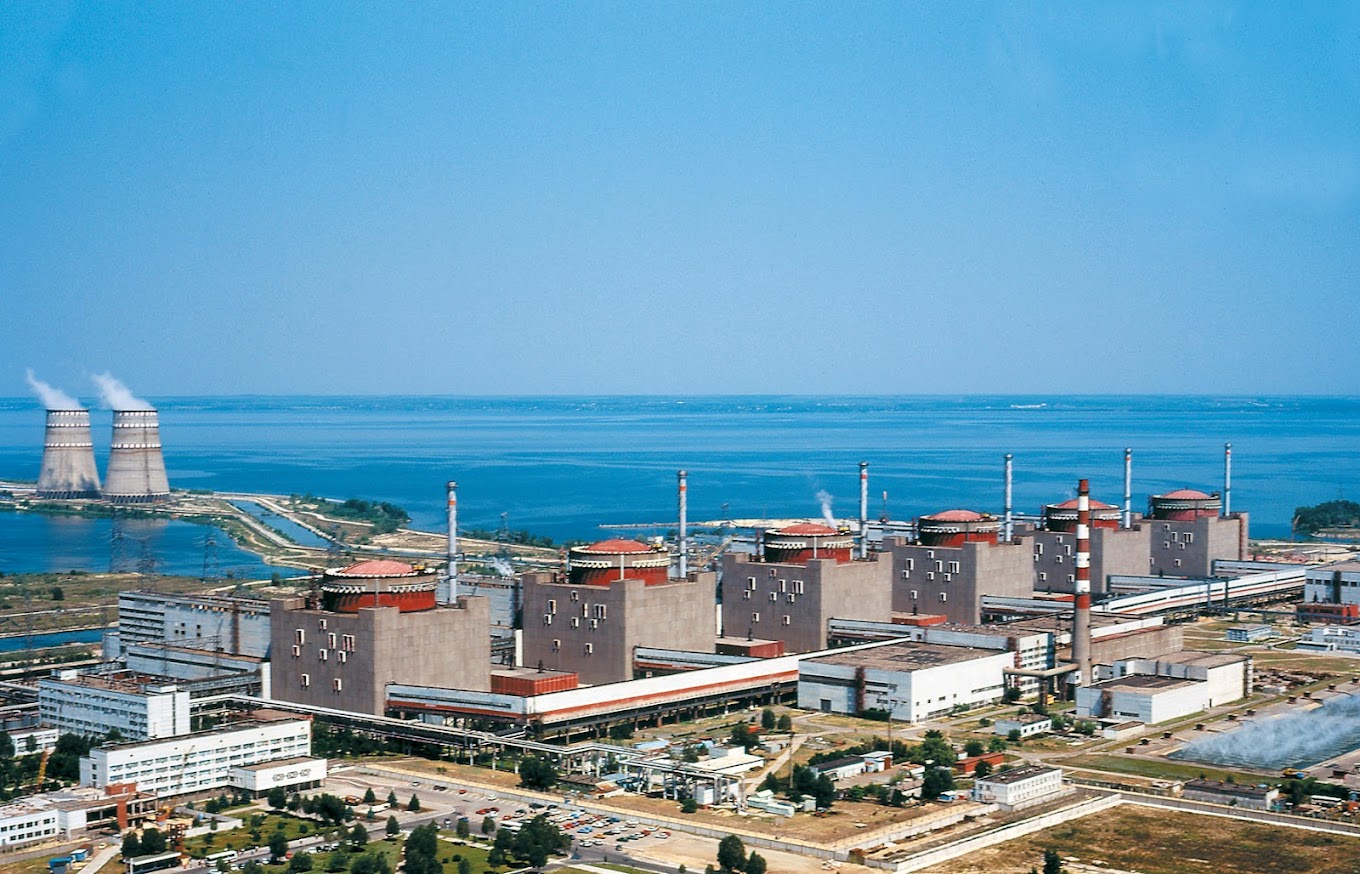
The Zaporizhzhia Nuclear Power Station in southeastern Ukraine is the largest nuclear power plant in Europe, currently occupied by Russia.
Zelenskyy warned that the most difficult topic is Russia’s push to seize part of Donetsk Oblast. He said Moscow continues pressure on Ukraine not only with its military but also by using information operations and diplomatic tools. He stressed that Ukraine must protect its land as Russia works to strengthen its position.
In the wake of a fresh US proposal on ending Russo-Ukrainian war, Ukraine's President Volodymyr Zelenskyy is facing growing pressure from the Trump administration to swiftly accept a peace plan that includes major territorial concessions to Russia, according to Axios. Unnamed Ukrainian officials said the latest American push demands Kyiv agree to terms that heavily favor Moscow, while the US continues to apply less pressure on Russia.
Trump team pushes Kyiv for fast approva
In the wake of a fresh US proposal on ending Russo-Ukrainian war, Ukraine's President Volodymyr Zelenskyy is facing growing pressure from the Trump administration to swiftly accept a peace plan that includes major territorial concessions to Russia, according to Axios. Unnamed Ukrainian officials said the latest American push demands Kyiv agree to terms that heavily favor Moscow, while the US continues to apply less pressure on Russia.
Trump team pushes Kyiv for fast approval
A Ukrainian official told Axios that after Trump's advisers Jared Kushner and Steve Witkoff met Putin in the Kremlin for five hours last week, the US position worsened. The same official said the American team then held a two-hour phone call with Zelenskyy on 6 December, where they pushed hard for a clear "yes" from him.
"It felt like the US was trying to sell us in different ways the Russian desire to take the whole of Donbas and that the Americans wanted Zelenskyy to accept all of it in the phone call," the official told Axios.
The Donbas is a historic industrial region that includes both Luhansk and Donetsk oblasts. Many Ukrainian and Western media mistakenly use the term as a synonym for Donetsk Oblast, which has been specifically referenced on multiple occasions in Russia’s demands.
Explore further
Trump criticizes Zelenskyy for not reading peace proposal as Ukrainian leader pivots to Europe
The phone call followed three days of intensive discussions between Kushner, Witkoff and Zelenskyy’s advisers in Miami. While both US and Ukrainian sources confirmed that some progress had been made, no breakthroughs occurred — particularly on the two most contentious issues: Russia’s demand for full control of Donetsk Oblast, and Ukraine’s request for strong, enforceable US security guarantees.
Kyiv questions proposal timing and terms
Zelenskyy reportedly told Kushner and Witkoff that he hadn’t read the full proposal yet because he received it only an hour before the call. A US official disputed this, telling Axios the documents had been sent the previous day. A Ukrainian official clarified that while some parts came earlier, other key elements were transmitted just before the call.
Ukrainian officials said the new proposal included tougher territorial demands and did not resolve major questions about guarantees. The updated text also raised issues around who would control specific areas, where troops would stay or withdraw, and how to ensure Russia doesn’t resume hostilities if Ukraine pulls back from the contact line.
Explore further
US envoys are “playing a game” with Ukraine, Merz and Macron warn – Spiegel
Still, Kyiv claims the US team seemed to expect Zelenskyy to approve the deal by phone. A US official rejected this characterization, saying the draft was shaped by significant Ukrainian input and that Kushner and Witkoff had also pressured Putin to accept some of Ukraine’s positions.
Speaking to reporters on 8 December, Zelenskyy confirmed that Ukraine and its European partners would deliver an updated counterproposal to the US on 9 December. He underlined the key sticking point:
“Russia insists that we give up territory. We do not want to give anything up. That is exactly what we are fighting for. The Americans are currently looking for a compromise.”
Two Ukrainian officials said the latest US offer on guarantees is broader than previous ones, but still does not include a Senate-ratified treaty.
Washington tried to take 50% of the profits from Ukraine's reconstruction—using assets that Europe froze. And bill European taxpayers €100 billion on top. Europe, apparently, was supposed to say thank you.
While attention to the Witkoff-Dmitriev "peace plan" focused on its scandalous capitulation demands—Ukraine surrendering all of Donetsk Oblast without a fight—a less-discussed provision revealed something more fundamental about Washington's intentions. That provision
Washington tried to take 50% of the profits from Ukraine's reconstruction—using assets that Europe froze. And bill European taxpayers €100 billion on top. Europe, apparently, was supposed to say thank you.
While attention to the Witkoff-Dmitriev "peace plan" focused on its scandalous capitulation demands—Ukraine surrendering all of Donetsk Oblast without a fight—a less-discussed provision revealed something more fundamental about Washington's intentions. That provision contained what was essentially Russia's bill for an indulgence from aggression. But look closer, and it was also Washington's bill to Europe.
How the Witkoff plan would divide frozen Russian assets
The plan envisioned one-third of the $300 billion in frozen Russian central bank assets going to US-supervised Ukraine reconstruction—with Americans taking 50% of profits. Europeans would add another $100 billion from their own taxpayers. The remaining $200 billion would go into a joint US-Russian investment vehicle.
Here is what the Witkoff plan means for each party:
Ukraine—the victim of Russian aggression that caused $590 billion in damages by February 2025—would see reconstruction funds controlled by Washington, which skims half the profit
Europe—which froze the assets in 2022—would be billed an additional $100 billion from its taxpayers
Russia—the aggressor—would receive a $200 billion investment vehicle as reward for stopping a war it started
Washington positioned itself to profit from Ukraine's destruction while billing Europe for Russia's rehabilitation. The cards are now on the table.
This should end the debate. Europe has spent months agonizing over legal risks and liability guarantees while Washington was negotiating with Moscow to pocket 50% of the profits from assets that Europe froze. Belgium's hesitation no longer looks like prudence—it looks like a gift to Washington and Moscow.
Why the EU's reparations loan is better than the Witkoff plan
Given Washington and Moscow's apparent willingness to divide these frozen assets between themselves while billing Europeans for reconstruction, one might expect EU partners to act faster and more decisively.
The EU has a better option. Since September, European institutions have been discussing a "reparations loan"—funds extended to Ukraine against its unconditional right to reparations from Russia, with collateral from assets frozen in EU financial institutions. Under this approach, Ukraine would receive up to €210 billion, repayable only if Russia compensates for war damages. No American middleman. No 50% profit-skimming. No $200 billion gift to Moscow.
Key differences between the two approaches:
EU reparations loan: €210 billion to Ukraine, repaid only when Russia pays war damages, controlled by Europe
Witkoff plan: $100 billion from frozen assets (US takes 50% of profits), $100 billion from European taxpayers, $200 billion to joint US-Russia vehicle
Instead of moving forward, negotiations have hit a wall. Belgium, whose Euroclear depository holds €183 billion in frozen Russian assets, has promised to veto unless it receives legally binding guarantees from other EU member states and equal distribution of legal risks.
With the 18-19 December EU Council summit approaching—and the Witkoff plan's intentions now exposed—continued delay serves no one's interests but Washington's and Moscow's.
Can Russia win a lawsuit over frozen assets? Legal analysis
We assessed risks of Russia or its central bank successfully challenging EU measures in international and national courts. The analysis provides clear grounds to assert that neither Russia nor the Bank of Russia has any chance of even being recognized as having legal standing in the ICJ, EU Court, or ECHR—let alone winning on merits.
Russia's legal options for challenging frozen asset seizure:
International Court of Justice: Russia lacks standing; no realistic path to success
EU Court of Justice: Russia lacks standing; EU treaty provisions block claims
European Court of Human Rights: Russia lacks standing after Council of Europe expulsion
Belgium-Russia Bilateral Investment Treaty: Only semi-realistic path, but Bank of Russia's role in financing aggression undermines any claim
Moreover, since 2022, the EU Council has allowed Euroclear to maintain a reserve totaling €5.58 billion for litigation and contingencies. These funds could hire the planet's best lawyers to defend cases that already have poor odds of Russian success.
Against this backdrop, Belgium's continued obstruction raises uncomfortable questions. Since 2022, Euroclear has paid Belgium €3.39 billion in windfall profit taxes. For comparison, Belgium's bilateral aid to Ukraine over the same period totaled just €2.2 billion. Belgium has its own interest in not "releasing the goose that lays golden eggs."
Explore further
Why Europe cannot afford the illusion of peace
How the EU can bypass Belgium and Hungary on frozen assets
The EU Council has a range of tools to protect frozen assets and neutralize Belgium's excuses. Political will is what remains elusive.
Currently, decisions to extend asset immobilization require unanimity every six months—giving Hungarian Prime Minister Viktor Orbán leverage to hold the EU hostage, constantly extracting concessions. But EU regulations don't require this arrangement. Council instructions allow an alternative approach: lifting sanctions only if goals have been achieved, with the burden of proof falling on Orbán and other advocates of Russian interests.
Another option involves Article 122 of the EU Treaty, which allows member governments to make decisions "in a spirit of solidarity, appropriate to the economic situation." The Commission wants to interpret this as shifting to qualified majority voting—requiring support from at least 15 countries representing minimum 65% of EU population—until "Russia ceases hostilities and pays reparations."
EU options for bypassing veto threats on frozen Russian assets:
Reverse burden of proof: Require Orbán to prove sanctions goals achieved before lifting
Article 122 qualified majority: 15+ countries with 65% of EU population can approve, bypassing Hungary
Commission three-layer guarantees: Legal protections for Belgium and Euroclear with shared risk across member states
If the Council reaches no agreement now, not just the reparations loan but asset immobilization itself faces risk. The next sanctions extension deadline falls at the end of January. Failed extension would deliver a major gift to Russia's war machine—and hand Washington and Moscow exactly what they want.
Explore further
Belgium says Europe’s €140 billion Ukraine plan could bankrupt it. Is that true?
Why Europe must act now on frozen Russian assets
We won't appeal to moral arguments—the language of interests is far more convincing.
Europe must determine which poses greater risk: finding ways around Orbán's veto, providing justified guarantees to Belgium while pushing it past its excuses, finding a complex solution that keeps Ukraine in the fight—or through inaction watching Washington and Moscow carve up European leverage between themselves.
Europe still has a chance to avert its own major war with Russia—at Russia's expense. German Chancellor Friedrich Merz put it plainly: "This is a European matter, and I see no way, in any form of economic benefit, to transfer the money we then mobilize to the United States of America."
He's right. Washington has shown its hand. Moscow has shown its hand. Europe holds Russia's billions and has a plan to use them.
The only question left: Europe, you ok with being the mark? Or will you act?
Donald Trump's envoys and Ukrainian officials held a third day of talks in Florida on 6 December, citing "real progress" on a postwar security framework even as Russian President Vladimir Putin reiterated his ultimatum to seize Ukraine's eastern Donbas region by military force.
This sharp contrast between diplomatic optimism in Hallandale Beach and Moscow's maximalist stance reveals the fundamental impasse threatening any US-mediated peace deal: While Washington speaks
Donald Trump's envoys and Ukrainian officials held a third day of talks in Florida on 6 December, citing "real progress" on a postwar security framework even as Russian President Vladimir Putin reiterated his ultimatum to seize Ukraine's eastern Donbas region by military force.
This sharp contrast between diplomatic optimism in Hallandale Beach and Moscow's maximalist stance reveals the fundamental impasse threatening any US-mediated peace deal: While Washington speaks of breakthrough momentum, the Kremlin shows no sign of compromising on its territorial demands.
Progress claims meet territorial ultimatums
US special envoy Steve Witkoff and Trump son-in-law Jared Kushner issued a joint statement with Ukraine's chief negotiator Rustem Umerov on 5 December, asserting that "real progress" depends on Russia showing "serious commitment to long-term peace, including steps toward de-escalation and cessation of killings".
The talks, held at Witkoff's Shell Bay Club golf resort, focused on security guarantees for postwar Ukraine, reconstruction funding, and joint US-Ukraine economic initiatives. Both sides agreed to continue discussions on 6 December after what officials characterized as constructive dialogues.
Yet within hours of those Florida meetings, Putin delivered a starkly different message to India Today television, declaring that Russia would take the Donbas territories "either by force, or Ukrainian troops leave these territories". The Russian president exploited his India media platform to repeat discredited historical justifications, asserting that "Kyiv is the mother of all Russian cities" as he characterized Russia's invasion as necessary.
Kremlin adviser praises Kushner as Moscow rejects key proposals
Kremlin foreign affairs adviser Yuri Ushakov told Russian state media that "if any plan leading to a settlement is put on paper, it will be the pen of Mr Kushner that will lead the way". The flattering comments came as Putin publicly rejected elements of Trump's peace proposal following five-hour talks with the US envoys at the Kremlin on 2 December.
Putin dismissed portions of the revised US peace plan, claiming the Americans "merely divided 28 into four, proposing to discuss these four packages with us," and calling the negotiations "complex work," Euromaidan Press reported. Trump characterized the Moscow discussions as "reasonably good" but admitted that the path to peace remains uncertain, emphasizing that cooperation is necessary from both sides, according to Bloomberg.
Ukrainian President Volodymyr Zelenskyy accused Putin of inventing "pretexts to drag out the war and pressure Ukraine," noting that his delegation wanted to understand what transpired during the Kremlin meetings, according to the official presidential website. French President Emmanuel Macron, speaking after talks with Chinese leader Xi Jinping, emphasized that "the unity between Americans and Europeans on the Ukrainian issue is essential" and stressed Ukraine needs guarantees against future Russian aggression, AP News reported.
As negotiations continue, the fundamental contradiction remains unresolved: Trump's team declares momentum toward peace while Putin publicly commits to seizing Ukrainian territory by military force, revealing a chasm between diplomatic rhetoric and battlefield realities.
Europe needs to stop relying on US-led proposals and craft its own approach to ending the war in Ukraine, EU Defense Commissioner Andrius Kubilius told POLITICO. He said Brussels should be prepared to negotiate alongside American plans and secure a stronger role in shaping the continent’s security future.
US-Russia talks raise concerns in Brussels
With US negotiators recently meeting in Moscow on a controversial draft peace plan that limited Ukraine’s army and banned
Europe needs to stop relying on US-led proposals and craft its own approach to ending the war in Ukraine, EU Defense Commissioner Andrius Kubilius told POLITICO. He said Brussels should be prepared to negotiate alongside American plans and secure a stronger role in shaping the continent’s security future.
US-Russia talks raise concerns in Brussels
With US negotiators recently meeting in Moscow on a controversial draft peace plan that limited Ukraine’s army and banned NATO membership, European officials worry repeated reliance on Washington could leave the bloc without influence over the European conflict’s outcome.
Kubilius argued that Europe must be able to propose its own peace initiatives to avoid being sidelined. Developing independent plans would allow Brussels to coordinate with allies while maintaining a seat at the table.
US pivot to Pacific underscores need for self-reliance
The commissioner, a former Lithuanian prime minister, said the US’s strategic pivot toward the Pacific underscores the need for Europe to strengthen its own defense capabilities.
He called for revisiting institutional mechanisms, including the EU’s mutual defense clause, and investing in military-industrial development.
Combining European and American approaches
Kubilius said the goal is to combine European and American proposals to achieve the best possible outcome, while ensuring that the EU can act independently if NATO’s Article 5 is not invoked.
He also highlighted the fragmented state of Europe’s defense industry and the need for deeper integration to support long-term strategic readiness.
Russian President Vladimir Putin claimed that several proposals in the US plan to end the war in Ukraine are unacceptable to the Kremlin, signaling that a resolution remains distant, according to comments published on 4 December, according to AP.
Putin, speaking to India Today before a state visit to New Delhi, described the discussions with US officials as “necessary” and “useful,” but added they were “difficult work” with some proposals Russia could not accept.
The
Russian President Vladimir Putin claimed that several proposals in the US plan to end the war in Ukraine are unacceptable to the Kremlin, signaling that a resolution remains distant, according to comments published on 4 December, according to AP.
Putin, speaking to India Today before a state visit to New Delhi, described the discussions with US officials as “necessary” and “useful,” but added they were “difficult work” with some proposals Russia could not accept.
The five-hour meeting at the Kremlin on 2 December involved Trump’s special envoy Steve Witkoff and Jared Kushner. The US delegation was scheduled to meet the Ukrainian team led by Rustem Umerov later Thursday at the Shell Bay Club in Hallandale Beach, though there was no immediate confirmation that the meeting took place, an official told reporters on condition of anonymity.
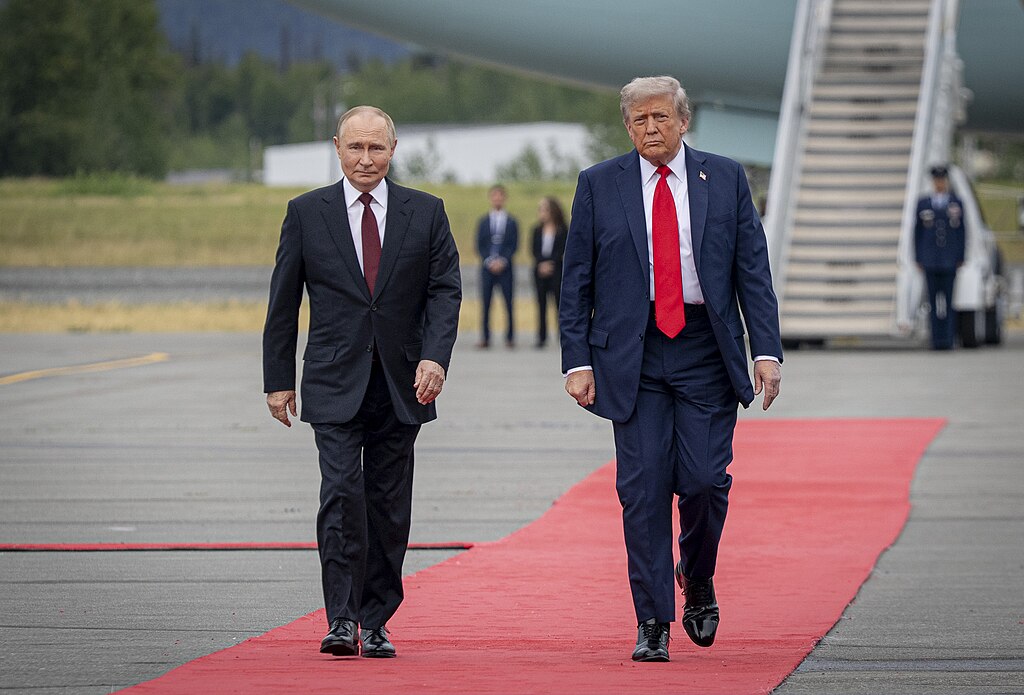
Putin said that the proposals were based on prior US-Russia discussions, including his meeting with Trump in Alaska in August, and contained new elements. “We had to go through practically every point, which is why it took so much time,” he said. “It was a meaningful, highly specific and substantive conversation. Sometimes we said, ‘Yes, we can discuss this, but with that one we cannot agree.’”
Trump said on 3 December that Witkoff and Kushner came away confident that Putin “wants to find an end to the war.” He added, “Their impression was very strongly that he’d like to make a deal.”
The initial US 28-point peace proposal was reduced to 27 points and split into four packages. Putin did not clarify which points Russia could accept or reject, emphasizing that premature disclosure could disrupt the ongoing negotiation process. “To say now what exactly doesn’t suit us or where we could possibly agree seems premature, since it might disrupt the very mode of operation that President Trump is trying to establish,” he said.
He reiterated that Russia intends to achieve its objectives in the eastern Donetsk Oblast. “All this boils down to one thing: Either we take back these territories by force, or eventually Ukrainian troops withdraw,” Putin said.
European leaders, largely excluded from the direct US-Russia-Ukraine talks, questioned Russia’s commitment to the peace initiative. French President Emmanuel Macron met with Chinese President Xi Jinping in Beijing to urge pressure on Moscow, though Xi’s response was limited: “China supports all efforts that work towards peace.”
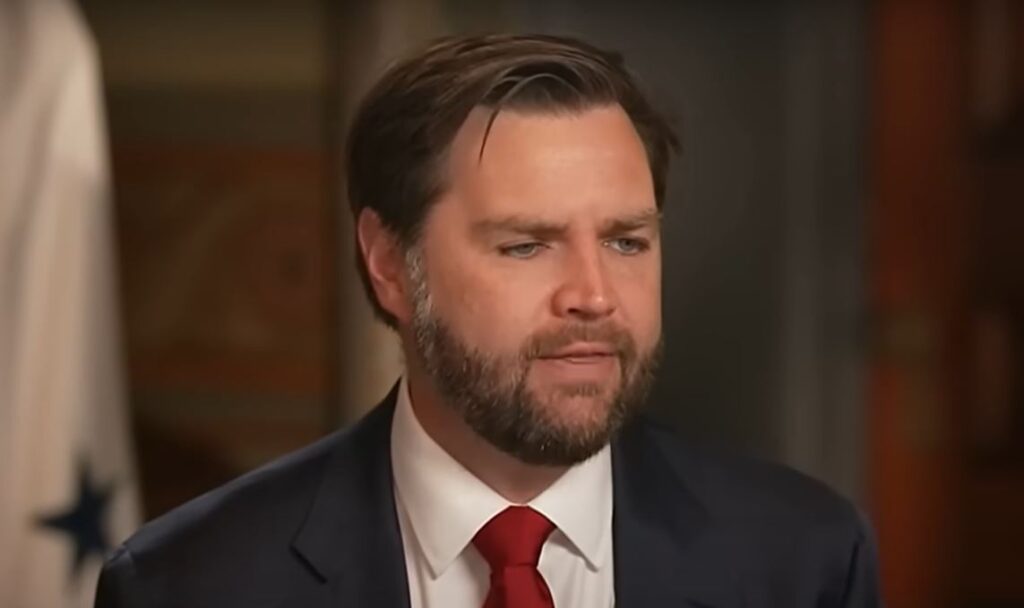
Vice President JD Vance identified the failure to broker a deal ending Russia's war against Ukraine as his biggest frustration during his first year in office, though he says progress has been made and expects "good news" in the coming weeks.
"Oh, man. I mean, look, the Russia-Ukraine thing has been a source of perennial frustration, I think, for the entire White House," Vance said in an interview with NBC News conducted Thursday inside his West Wing office.
The vice
Vice President JD Vance identified the failure to broker a deal ending Russia's war against Ukraine as his biggest frustration during his first year in office, though he says progress has been made and expects "good news" in the coming weeks.
"Oh, man. I mean, look, the Russia-Ukraine thing has been a source of perennial frustration, I think, for the entire White House," Vance said in an interview with NBC News conducted Thursday inside his West Wing office.
The vice president, who has played a role in Middle East diplomacy and efforts to negotiate a peace deal between Russia and Ukraine, said the administration had underestimated the difficulty of resolving the conflict.
"I think that we really thought — and you've heard the president say this a million times — that that would be the easiest war to solve," Vance said. "And if you would put, you know, peace in the Middle East as easier to achieve than peace in Eastern Europe, I would have told you you were crazy."
Despite these setbacks, Vance expressed optimism about near-term developments. "I do think, for what it's worth, that we have made a lot of progress, but we're not yet quite across the finish line there," he said. "I think there's hope — should hopefully be some good news the next few weeks on that front."
The comments come as Trump administration representatives have been engaging with Russia on potential peace negotiations. President Trump recently said that Stephen Witkoff and Jared Kushner believe Russian President Vladimir Putin wants to end the war. A 2 December meeting between Putin, Witkoff, and Kushner lasted nearly five hours, according to reports.
Media reports suggest Trump team representatives who traveled to Moscow may inform Russia of US willingness to recognize Russian control over occupied Ukrainian territories as part of a potential peace agreement.
In the wide-ranging NBC News interview, Vance also discussed what he considers the administration's successes, pointing to increased deportations and declining illegal border crossings. "That's where you see the clearest numbers and the most immediate return on all of our time and all of our hard work, and so that's what I'm proudest of," he said, praising Homeland Security Secretary Kristi Noem, Stephen Miller, and Tom Homan.
The vice president said he felt most effective in helping Trump pass the "big beautiful bill" through Congress, where Vance cast the tie-breaking Senate vote on the tax and spending legislation. "I spent hours at the Capitol with a bunch of United States senators, late into the night on the first vote, and I frankly didn't know whether we were going to be able to get it passed, and we did," he said.
Vance also addressed frustration over prices not declining as quickly as promised during the campaign, while deflecting blame to former President Joe Biden. Recent polls show 63% of registered voters, including 30% of Republicans, believe Trump has fallen short of expectations on the economy.
"I think the voters will ultimately have to make that choice," Vance said. "I think I would certainly say voters are impatient. I think voters have every right to be impatient. We are impatient, too."
The vice president waded into ongoing Republican debates about antisemitism, disagreeing with fellow Republicans like Sen. Ted Cruz who have warned of rising antisemitism in the party. "Do I think that the Republican Party is substantially more antisemitic than it was 10 or 15 years ago? Absolutely not," Vance said.
When pressed about his 2028 presidential ambitions, Vance repeated his standard talking point: "I try to not wake up and ever think, 'What does this mean for my future?' I always try to think, 'How can I do a good job right now.'"
The vice president volunteered names of three progressives he has come to appreciate: Sen. Bernie Sanders, Rep. Ro Khanna, and New York City Mayor-elect Zohran Mamdani, calling them politicians who "at least sometimes" listen to people.
51.4% of Ukrainians stated they intend to participate in protest actions if Ukraine agrees to unacceptable compromises during negotiations, according to a survey conducted by Info Sapiens for the New Europe Center.
44.3% of respondents said they are not ready to participate in protests, while 4.4% remain undecided.
The study documents shifts in Ukrainian attitudes toward potential concessions over recent years. 40.2% of Ukrainians now consider temporary abandonment o
51.4% of Ukrainians stated they intend to participate in protest actions if Ukraine agrees to unacceptable compromises during negotiations, according to a survey conducted by Info Sapiens for the New Europe Center.
44.3% of respondents said they are not ready to participate in protests, while 4.4% remain undecided.
The study documents shifts in Ukrainian attitudes toward potential concessions over recent years. 40.2% of Ukrainians now consider temporary abandonment of occupied territories absolutely unacceptable, down from 53.2% a year ago and 76.2% two years ago. Only 5.1% find this concession entirely acceptable.
Even fewer Ukrainians—just 2%—are prepared for legal recognition of occupied territories as Russian. 76.6% remain categorically opposed to this option.
The percentage of Ukrainians who consider refusal of NATO membership absolutely unacceptable has gradually decreased: 41.1% hold this view now, compared to 48.7% a year ago and 56.9% two years ago.
51% of Ukrainians view refusal to join the EU as absolutely unacceptable, slightly higher than last year's 50.7%.
The number of Ukrainians who consider army reduction absolutely unacceptable has increased over the year to 77.9% from 74.5%. Similarly, opposition to granting Russian language status as a second state language rose to 73% from 70.9%.
Meanwhile, the percentage of Ukrainians who find reduction of reparations from Russia absolutely unacceptable has declined to 58.7% from 62.2%. Opposition to abandoning criminal prosecution of Russian leaders and war criminals dropped to 65% from 68.4%, and opposition to lifting sanctions fell to 64.1% from 64.8%.
The survey was conducted from November 5 to 26, 2025, with a sample of 1,000 respondents.
President Zelensky stated he plans to speak with American negotiators Steve Witkoff and Jared Kushner, who met with Vladimir Putin in the Kremlin on 2 December regarding ending the war.
Commenting on these negotiations, EU High Representative for Foreign Affairs and Security Policy Kaja Kallas expressed concern that during peace talks involving the United States and Russia, the main pressure will be directed at Ukraine to force it into concessions.
US special envoy Steve Witkoff and President Donald Trump's son-in-law Jared Kushner are expected to travel from Moscow to meet Ukrainian President Volodymyr Zelenskyy in a European country following their talks with Vladimir Putin, Axios journalist Barak Ravid reports.
"They are expected to travel from Moscow to a European country and meet Ukrainian President Zelenskyy," Ravid wrote on X.
Several French media outlets suggested the two may travel to Ireland, where Ze
US special envoy Steve Witkoff and President Donald Trump's son-in-law Jared Kushner are expected to travel from Moscow to meet Ukrainian President Volodymyr Zelenskyy in a European country following their talks with Vladimir Putin, Axios journalist Barak Ravid reports.
"They are expected to travel from Moscow to a European country and meet Ukrainian President Zelenskyy," Ravid wrote on X.
Several French media outlets suggested the two may travel to Ireland, where Zelenskyy is currently on an official visit.
Zelenskyy confirmed during his latest press conference that he awaits signals from the American delegates after the Moscow talks, adding that Kyiv's next steps "may change hourly" depending on those signals.
"Ukraine would be glad to host them," the president said, though he noted he was uncertain whether Witkoff and Kushner were prepared to come "these days."
Zelenskyy also said he was ready to meet with Trump, but that meeting would likewise depend on the outcome of the Moscow negotiations.
CNN reported that several issues are at stake in the Moscow talks, but two contentious points dominate: Ukraine's aspiration to join NATO and Russia's demands for territorial concessions in Donbas.
What Witkoff and Kushner will propose to Putin remains unclear. However, CNN reports that possible compromises have already been worked out with Ukrainian negotiators that would effectively block NATO membership and grant Russia territorial advantages. These arrangements, the outlet notes, are not final.
President Volodymyr Zelenskyy confirmed that the revised US-backed peace plan now contains 20 points, following consultations in Geneva and subsequent discussions in Florida.
"Some things still need to be worked out. That's from what I've seen," Zelenskyy said during a press conference in Ireland on 2 December.
The Ukrainian president emphasized that the US is taking serious steps to end the war, but stressed the shared objective must be "to end the war, not just get
President Volodymyr Zelenskyy confirmed that the revised US-backed peace plan now contains 20 points, following consultations in Geneva and subsequent discussions in Florida.
"Some things still need to be worked out. That's from what I've seen," Zelenskyy said during a press conference in Ireland on 2 December.
The Ukrainian president emphasized that the US is taking serious steps to end the war, but stressed the shared objective must be "to end the war, not just get a pause in hostilities."
"A dignified peace is needed. And for this to really happen, everyone must be on the side of peace," he added.
Zelenskyy said he is awaiting signals from US special envoy Steve Witkoff and Donald Trump's son-in-law Jared Kushner, who are meeting with Russian leader Vladimir Putin on 2 December.
"They want to report to us immediately after their meeting. I think future steps will depend on these signals, and they will change hourly," the president stated. He added that he is ready to meet with US President Donald Trump and that "everything depends on today's talks."
The Trump administration's original proposal contained 28 points and drew sharp criticism in Ukraine and internationally for provisions that critics called a list of Russian demands. According to reports, the initial draft required Ukraine to cede the remainder of Donbas, halve the Armed Forces, freeze the front line in Zaporizhzhia and Kherson oblasts, and recognize Russian as a state language.
Financial Times reported that a revised framework was reduced to 19 points after Geneva consultations, incorporating counterproposals from the UK, Germany, and France regarding army limitations.
Zelenskyy previously confirmed that the updated version no longer includes all 28 original points and suggested the proposal "may become workable." Ukrainian and US delegations have since met again to continue aligning the Geneva framework "to a form that will lead to peace and security guarantees."
Europe stands before a choice that will determine the future of the continent. Helping Ukraine now is far cheaper than making concessions to the Kremlin. This is the conclusion reached by the authors of a new Norwegian study, “Europe’s Choice,” reported by the New York Post.
European leaders consider Russia the biggest threat to the EU. Europe faces two challenges—internal and external. According to intelligence reports, Moscow may be preparing a military operation. Meanwh
Europe stands before a choice that will determine the future of the continent. Helping Ukraine now is far cheaper than making concessions to the Kremlin. This is the conclusion reached by the authors of a new Norwegian study, “Europe’s Choice,” reported by the New York Post.
European leaders consider Russia the biggest threat to the EU. Europe faces two challenges—internal and external. According to intelligence reports, Moscow may be preparing a military operation. Meanwhile, populist parties that seek closer ties with Russia are gaining ground. Strengthening Ukraine is seen as a way to counteract aggression.
Baltic states next with $ 1.8 trillion in spending
According to the researchers, financing Ukraine’s defense for four years would cost Europe $606–$972 billion, while reinforcing the EU’s eastern flank in the event of a Russian success would cost twice as much: $1.4–$1.8 trillion.
The report directly states that in the event of a Russian victory, millions of Ukrainian refugees would “flood into Europe,” increasing pressure on EU member state budgets.
It also stresses that the Kremlin would escalate geopolitical pressure, shifting its focus to the Arctic or the Baltic States, which would require additional billions in NATO defense spending.
Diplomatic drama that changes the rules of the game
The study’s authors criticize the administration of Donald Trump, noting that it is “detached from real problems.”
The report emphasizes that Europe cannot rely solely on full American support, as Washington’s new 28-point peace plan underscores the need for the EU to take the lead.
“The recent 28-point peace plan proposed by the Trump administration illustrates the urgent need for Europe to take initiative,” the study concludes.
Europe’s choice is simple: either support Ukraine now, or pay twice as much later and lose strategic balance.
Battle for the future, one Europe can still win
The researchers argue that if the EU mobilizes up to $972 billion to fund the Ukrainian army over a four-year period, a Ukrainian victory becomes achievable.
This would cover procurement of:
8 million drones,
95 brigades,
up to 2,500 battle tanks.
“In the event of a permanent conflict or a Russian victory, Ukraine will incur a permanent need for support, while in the event of a Ukrainian military victory, Western support will be much reduced over time,”the report reads.
It also states that part of the funding could come from the confiscation of frozen Russian assets.
Earlier, Swedish Defense Minister Pål Jonson called for the use of frozen Russian assets to provide assistance to Ukraine via a reparations credit. The EU plans to make a decision regarding frozen Russian assets at the summit on 18 December 2025.
However, the final decision on this mechanism has been delayed multiple times, with Belgium raising legal and financial concerns about risks and liabilities, which may create complex legal entanglements, as many of these assets are held in the Euroclear system there.
This aid is crucial for Ukraine at a time when the US has stopped providing assistance packages to Kyiv under President Donald Trump's administration.
Kremlin's impunity will lead to new wars. Any step aimed at freeing Russia from accountability for its crimes would be a historic mistake and would inevitably trigger new conflicts, EU Justice Commissioner Michael McGrath warns, per Politico.
Ukraine has registered over 190,000 war crimes since the start of Russia’s full-scale war in 2022, including the Bucha massacre. The prosecutors believe the scale of these crimes shows a campaign to wipe out the Ukrainian nation.
Th
Kremlin's impunity will lead to new wars. Any step aimed at freeing Russia from accountability for its crimes would be a historic mistake and would inevitably trigger new conflicts, EU Justice Commissioner Michael McGrath warns, per Politico.
Ukraine has registered over 190,000 war crimes since the start of Russia’s full-scale war in 2022, including the Bucha massacre. The prosecutors believe the scale of these crimes shows a campaign to wipe out the Ukrainian nation.
The shadow of amnesty that could undermine global order
Attempts to grant Russia amnesty or remove responsibility for crimes committed against Ukrainian children and civilians undermine the system of international justice on which global security depends.
The initial US peace proposal reportedly included a promise of full amnesty for actions committed during the war, alongside plans for Russia’s reintegration into the global economy.
The Trump team’s push to rehabilitate the Kremlin leader comes despite international condemnation of Russia for alleged crimes, including the abduction of 20,000 Ukrainian children and attacks on civilians.
“Were we to do so, to allow for impunity for those crimes, we would be sowing the seeds of the next round of aggression and the next invasion. And I believe that that would be a historic mistake of huge proportions," EU Justice Commissioner stressed.
ICC warrant for Putin remains, but Trump has different priorities
In March 2023, judges of the International Criminal Court issued an arrest warrant for Vladimir Putin, deeming him “allegedly responsible for the war crime of unlawful deportation of population [children]” from Ukraine.
But Trump and his team have shown little interest so far in pursuing justice against the Russian leader.
On 30 November, the US and Ukraine held new talks in Florida, discussing key elements of Trump’s proposed peace plan.
Trump’s special envoy, Steve Witkoff, is expected to travel to Moscow today to continue negotiations, this time directly with the Russian side.
The United States is considering a scenario in which Ukraine would be effectively barred from joining NATO without legally renouncing this aspiration, CNN reports, citing unnamed sources.
According to the outlet, one of the most "problematic aspects" of the peace plan is the requirement for Ukraine to formally renounce its constitutionally enshrined aspiration to join NATO. This remains a key Russian demand for ending the full-scale war.
Sources familiar with the mat
The United States is considering a scenario in which Ukraine would be effectively barred from joining NATO without legally renouncing this aspiration, CNN reports, citing unnamed sources.
According to the outlet, one of the most "problematic aspects" of the peace plan is the requirement for Ukraine to formally renounce its constitutionally enshrined aspiration to join NATO. This remains a key Russian demand for ending the full-scale war.
Sources familiar with the matter told CNN that US and Ukrainian negotiators have discussed a likely scenario in which Kyiv would be effectively prevented from joining the Western military alliance. Arrangements on this matter would be negotiated directly between NATO member states and Moscow.
"Ukraine will not be pushed to officially, in the legal sense, reject this aspiration," one source said. "But if the United States has something to agree upon with Russia bilaterally, or if Russia wants to receive some assurances from NATO multilaterally, then this is not engaging Ukraine in the decision-making process."
The source acknowledged that such a decision may not be popular among NATO members. A final decision on this issue has not yet been made and would ultimately be made by President Volodymyr Zelenskyy, though the source provided no further details.
The source described such arrangements as a "creative solution" by the US negotiating team to tiptoe around Ukraine's red lines.
CNN reports that on 30 November, negotiations between the US and Ukraine on a peace plan took place in Florida at the Witkoff Group's Shell Bay private members club. The talks involved US Secretary of State Marco Rubio, Special Envoy Steve Witkoff, and President Donald Trump's son-in-law Jared Kushner.
A source with direct knowledge of the Florida talks characterized the intensive negotiations as "tough but very constructive" and a "step forward" that "built on progress in Geneva," where a first round of discussions on US proposals to end the war were held last week.
"It would be very premature to say we finalized everything here as a lot of things have still to be done," the source said. "But the meeting was very focused and the most problematic aspects of the peace proposals were discussed in detail."
According to the source, another problematic area involves the Kremlin's demand for Ukraine to surrender territory in the Donbas region of Eastern Ukraine that has been annexed but not yet conquered by Russia. The US plan suggested the region become a Russian demilitarized zone, which Moscow would administer but not deploy military forces into.
"The idea to give up the control to Russians, where it would significantly weaken Ukraine's defense and make further potential aggression more likely to happen and significantly decrease Ukraine's capability, this is out of the scope," the source said. "But that doesn't mean that there are no potential ways of preserving the constitutional provisions and keeping Ukraine's security."
The source refused to discuss specific options under consideration, calling the issue "too sensitive." "I really believe that if it becomes public, we may ruin the potential solution," the source said.
Following the negotiations, National Security and Defense Council Secretary Rustem Umerov stated that the US shares Ukraine's key objectives, while Secretary of State Rubio indicated that these negotiations were not final but noted progress.
The question of postwar security guarantees for Kyiv remained unresolved after peace negotiations between the US and Ukraine that took place on 30 November, reports Wall Street Journal.
Another unresolved issue is whether Russia will insist on international recognition of the territories it has occupied since the start of the full-scale invasion in 2022.
According to WSJ, the talks covered possible timetables for new elections in Ukraine and the prospect of land swap
The question of postwar security guarantees for Kyiv remained unresolved after peace negotiations between the US and Ukraine that took place on 30 November, reports Wall Street Journal.
Another unresolved issue is whether Russia will insist on international recognition of the territories it has occupied since the start of the full-scale invasion in 2022.
According to WSJ, the talks covered possible timetables for new elections in Ukraine and the prospect of land swaps between Russia and Ukraine.
Secretary of State Marco Rubio said after more than four hours of negotiations that there is still "more work to be done." He specifically noted the existence of another party and the planned visit of US special envoy Steve Witkoff to Moscow.
"We don't just want to end the war, we also want to help Ukraine be safe forever so never again will they face another invasion," Rubio said.
He characterized the negotiations as "productive."
"We remain realistic about how complicated this all looks, but we also realistically view the progress that is already happening. And it's not just about stopping the war, but about building a successful future for Ukraine," the Secretary of State said.
The Ukrainian delegation was led by Rustem Umerov, the secretary of the National Security and Defense Council of Ukraine, replacing Andriy Yermak, who resigned amid a corruption scandal. "Our objective is a prosperous, strong Ukraine," Umerov said, standing next to Rubio. "This meeting was productive and successful."
Kushner and Witkoff will fly to Russia on Monday to continue the talks, according to a senior US official. President Trump said Witkoff will likely meet with Russian President Vladimir Putin sometime next week.
President Zelenskyy had said that Ukrainian and US delegations would meet to continue coordinating the points of the peace plan developed in Geneva "into a form that will lead to a path toward peace and security guarantees."
These negotiations follow the Trump administration's preparation of a "peace plan" for the war. Initially it contained 28 points, including demands that Ukraine cede the remainder of Donbas, cut the size of its armed forces in half, freeze the line of contact in Zaporizhzhia and Kherson oblasts, and recognize Russian as a state language. The plan also envisioned lifting sanctions on Russia and ending investigations into war crimes by Russian military personnel.
This plan was widely criticized both in Ukraine and abroad as a list of Russian demands and essentially forced capitulation.
Later, representatives of the United States and Ukraine met in Geneva, where they prepared a revised framework document. Financial Times, citing its own sources, reported that the new peace plan was reduced to 19 points. According to the publication, the new version incorporated counter-proposals from Britain, Germany and France regarding military limitations.
Ukrainian President Volodymyr Zelenskyy confirmed that the updated version of the draft peace plan does not contain all 28 points that were there previously. He also suggested that the proposal "may now become workable."
The discussions around land swaps have been particularly complicated, according to WSJ. Russia and Ukraine would need to address the legality of territorial changes, because both their constitutions prohibit ceding territories without legal changes. Any change to Ukraine's borders would require a nationwide referendum.
Ukraine's wartime powers freeze presidential and parliamentary elections. The prospect of holding new elections is a politically fraught issue amid the war and could open Ukraine to election-interference campaigns from Russia.
A day before the US and Ukrainian delegations met in Florida, Russia bombarded Ukraine with a nearly 10-hour air assault with hundreds of missiles and drones that struck residential buildings and energy infrastructure.
At a news conference last week, Putin said he was ready for "serious" discussions to end the war but reiterated demands that Ukraine must withdraw its troops from Donetsk and Luhansk. "When Ukrainian troops leave the territories they hold, then the fighting will stop," Putin said. "If they don't, then we'll achieve that through military means."
The US-Ukraine diplomatic meeting in Miami concluded on 30 November, with Secretary of State Marco Rubio and Ukraine's National Security and Defense Council Secretary Rustem Umerov offering contrasting levels of detail about the outcomes, Suspilne reports.
Rubio called the session "a productive continuation of the talks in Geneva" but acknowledged "there's still work to be done." The US delegation consisted of three officials: Rubio, Special Envoy Steve Witkoff, and Jar
The US-Ukraine diplomatic meeting in Miami concluded on 30 November, with Secretary of State Marco Rubio and Ukraine's National Security and Defense Council Secretary Rustem Umerov offering contrasting levels of detail about the outcomes, Suspilne reports.
Rubio called the session "a productive continuation of the talks in Geneva" but acknowledged "there's still work to be done." The US delegation consisted of three officials: Rubio, Special Envoy Steve Witkoff, and Jared Kushner, Trump's son-in-law.
Ukraine sent a notably larger team of ten representatives, including military intelligence chief Kyrylo Budanov, Chief of the General Staff Andrii Hnatov, and Foreign Intelligence Service head Oleh Ivashchenko.
US frames goal beyond ceasefire
Rubio stated Washington's objective extends past ending hostilities: "We want to help Ukraine become safe forever, so that it never faces another invasion... We want the Ukrainian people to emerge from this war not just having rebuilt the country, but having made it stronger and more prosperous than it ever was."
The Secretary of State announced Witkoff would travel to Moscow later this week. The Kremlin confirmed the meeting but provided no details.
"We remain in contact with the Russian side to varying degrees and have a fairly good understanding of their views," Rubio said. "There are many moving parts here, and obviously there's another party that will have to be part of the equation."
Ukrainian side offers few specifics
Umerov thanked the US team and called the meeting successful. "We discussed all the important issues for Ukraine and the Ukrainian people, and the US expressed extraordinary support. Our goal is a prosperous and strong Ukraine," he said.
He later added that much work lies ahead: "We continue consultations and coordination of further steps for peace for Ukraine."
Before the talks, Umerov stated the delegation was working under clear directives from President Zelenskyy—protecting state interests, substantive dialogue, and advancing solutions developed during the Geneva meetings.
Agence France-Presse reported, citing a source in the Ukrainian delegation, that negotiations on ceasefire terms "were not easy."
This was the second meeting between the delegations in this format, following the 23 November talks in Geneva, Switzerland.
Ukrainian and American delegations convened in South Florida on 30 November to advance negotiations aimed at ending Russia's war against Ukraine.
The talks, held at Shell Bay golf resort, focused on two core issues: territorial arrangements and security guarantees.
Secretary of State Marco Rubio led the US side alongside Trump special envoy Steve Witkoff and Jared Kushner. Ukraine's delegation was headed by RNBO Secretary Rustem Umerov.
Rubio told reporters the n
Ukrainian and American delegations convened in South Florida on 30 November to advance negotiations aimed at ending Russia's war against Ukraine.
The talks, held at Shell Bay golf resort, focused on two core issues: territorial arrangements and security guarantees.
Secretary of State Marco Rubio led the US side alongside Trump special envoy Steve Witkoff and Jared Kushner. Ukraine's delegation was headed by RNBO Secretary Rustem Umerov.
Rubio told reporters the negotiations sought "an end to the war that leaves Ukraine sovereign and independent and with an opportunity for real prosperity" and ensures "there won't be such a war in the future."
Umerov thanked the Trump administration for its engagement. "The US is hearing us, US is supporting us, US is walking beside us," he said. On social media, he added: "I am in constant contact with the President of Ukraine. We have clear directives and priorities – protecting Ukrainian interests, substantive dialogue, and moving forward based on the groundwork achieved in Geneva."
Deputy Foreign Minister Serhii Kyslytsya offered a positive assessment on X: "It's been a good start of the ongoing meeting. Very engaging and so far constructive." He praised Rubio's leadership and noted he appreciated "the attitude of Jared Kushner, and how he lays out a vision." Kyslytsya did not comment on Witkoff's role.
The Florida meeting follows Geneva talks last week that both sides described as productive. The negotiations gained urgency after a leaked 28-point US peace proposal drew criticism for favoring Russia, according to the Wall Street Journal.
Witkoff and Kushner plan to travel to Moscow on 1 December to relay results to Russian President Vladimir Putin, according to a senior US administration official.
Putin stated his position at a press conference on 27 November: "When Ukrainian troops leave the territories they hold, then the fighting will stop. If they don't, then we'll achieve that through military means."
President Volodymyr Zelenskyy wrote on X that "the American side is demonstrating a constructive approach, and in the coming days it is feasible to flesh out the steps to determine how to bring the war to a dignified end."
The talks come as Zelenskyy faces domestic political pressure following the resignation of his chief of staff Andriy Yermak amid a corruption scandal.
Ukrainian and American delegations began negotiations in Miami on 30 November focused on resolving the Russia-Ukraine war, with two critical issues on the table: territories and security guarantees, Axios reports.
RNBO Secretary Rustem Umerov, who leads the Ukrainian delegation, wrote on social media: "I am in constant contact with the President of Ukraine. We have clear directives and priorities – protecting Ukrainian interests, substantive dialogue, and moving forward
Ukrainian and American delegations began negotiations in Miami on 30 November focused on resolving the Russia-Ukraine war, with two critical issues on the table: territories and security guarantees, Axios reports.
RNBO Secretary Rustem Umerov, who leads the Ukrainian delegation, wrote on social media: "I am in constant contact with the President of Ukraine. We have clear directives and priorities – protecting Ukrainian interests, substantive dialogue, and moving forward based on the groundwork achieved in Geneva."
US Secretary of State Marco Rubio stated before the meeting that the US seeks an end to the war that ensures "there won't be such a war in the future, and that Ukraine can ensure prosperity for all its people."
Deputy Foreign Minister Serhii Kyslytsya shared his impressions on X: "It's been a good start of the ongoing meeting. Very engaging and so far constructive. Warm atmosphere, conducive to potential progressive outcome. Great leadership of Marco Rubio."
Kyslytsya added that "as in Geneva, I appreciate the attitude of Jared Kushner, and how he lays out a vision." He did not comment on special envoy Steve Witkoff's position in the negotiations.
Umerov thanked US President Donald Trump for peace initiatives, noting: "Over the past 10 months, we have made significant progress, we have significant support. We are now discussing the future and security of Ukraine so that aggression against Ukraine is not repeated."
According to Axios, Witkoff will meet with Russian leader Vladimir Putin in Moscow next week to relay the results of Sunday's negotiations.
Ukraine’s third President Viktor Yushchenko has sharply criticized the proposed US-Russia peace plan for Ukraine, calling it humiliating and reminiscent of historic diplomatic failures, according to Liga. He compared the plan to the 1938 Munich Agreement — the deal widely known as the “Munich Betrayal,” which ceded part of Czechoslovakia to Nazi Germany. Yushchenko noted that the agreement preceded the outbreak of World War II by just 11 months.
The Trump administration has
Ukraine’s third President Viktor Yushchenko has sharply criticized the proposed US-Russia peace plan for Ukraine, calling it humiliating and reminiscent of historic diplomatic failures, according to Liga. He compared the plan to the 1938 Munich Agreement — the deal widely known as the “Munich Betrayal,” which ceded part of Czechoslovakia to Nazi Germany. Yushchenko noted that the agreement preceded the outbreak of World War II by just 11 months.
The Trump administration has attempted to push a peace plan that listed all major Russian demands for Ukraine, including giving up eastern Ukraine's Donetsk Oblast, relinquishing part of its weaponry, and reducing its military size to 600,000 troops. Dozens of politicians from Ukraine and Europe publicly appealed to US President Donald Trump, urging him not to appease the aggressor before any discussions on the peace plan.
Yushchenko urges US to act responsibly for nations that trusted its policy
In an interview with Liga, Yushchenko said that Ukraine and many other countries had believed in the US-led vision of freedom and democracy, adding that the US should remain fully committed to this cause.
“Very many nations, including Ukraine, have chosen their future by choosing freedom and democracy, understanding that the leader of this movement — the global leader of this movement — is America and its policy,”Yushchenko said, adding: "Dozens and dozens of nations have placed their trust in American policy, and one must be responsible for those who responded to it, who embraced this policy, and remain fully committed to it."
Yushchenko brought up the 1938 Munich Agreement, which allowed Nazi Germany to seize part of Czechoslovakia, and recalled British Prime Minister Neville Chamberlain’s justification that the UK would otherwise have to dig trenches in a faraway land unknown to many. Yushchenko pointed out that World War II broke out just 11 months later, stressing that appeasement came with a heavy price. He also noted Russia’s earlier aggressions in Moldova and Georgia as part of the same pattern.
Peace plan insults Ukraine’s legacy as nuclear disarmer and UN founder
Yushchenko reminded that Ukraine was one of the 50 founding members of the United Nations in 1945 and the first country to accept full nuclear disarmament in 1994. At that time, Ukraine transferred 1,700 nuclear warheads and their carriers, including aircraft, to Russia. The disarmament was formalized with signatures from the presidents of both the US and Russia. Now, he argues, the same countries that once guaranteed Ukraine’s sovereignty have offered it a degrading proposal.
Yushchenko expressed outrage over the 28-point plan reportedly proposed by these powers.
“It is humiliating to read those lines,” he said.
He believes the document should be archived by anyone concerned with security issues, predicting that it will go down as "the most disgraceful page in Western diplomacy" in the first half of the 21st century.
Yushchenko warns of a new Munich — but says Ukraine will reject it
Calling the 1938 agreement “a great shame of diplomacy of the last century,” Yushchenko said the world was now facing a second Munich. However, he was confident that Ukraine would not accept such terms.
Russian President Vladimir Putin has declared that Russia is ready to continue the war until the last Ukrainian. He has also claimed that there was no US “peace agreement,” only “a set of points for discussion," UNIAN reports.
His remarks came after the US presented a peace plan that was heavily criticized by both American and European officials, who branded it a "Munich-style agreement," which would lead only to Ukraine's capitulation.
The plan had reportedly been drafte
Russian President Vladimir Putin has declared that Russia is ready to continue the war until the last Ukrainian. He has also claimed that there was no US “peace agreement,” only “a set of points for discussion," UNIAN reports.
His remarks came after the US presented a peace plan that was heavily criticized by both American and European officials, who branded it a "Munich-style agreement," which would lead only to Ukraine's capitulation.
The plan had reportedly been drafted in Russia and delivered by Kirill Dmitriev ahead of a meeting between Donald Trump and Volodymyr Zelenskyy, a meeting at which the US was deciding whether to approve the delivery of Tomahawk missiles to Ukraine, weapons capable of striking targets deep inside Russia.
Putin surprised by US sanctions targeting Russia's key war-financing sector
Ultimately, the missile transfer was rejected. However, the US simultaneously imposed sanctions on major Russian oil companies.
Russian oil remains a key source of revenue that funds its military aggression against Ukraine. In 2025, profits from the oil and gas sector account for about 77.7% of Russia’s federal budget. According to the International Liberty Institute, the main buyers of Russian oil remainAsian countries, as European markets are largely restricted by sanctions.
During his latest address, Putin claimed he was surprised by the Washington move.
“There was no conflict between Russia and the US on these issues. We were still on the Anchorage platform. And suddenly the US announces sanctions against two of our oil companies,” he said.
Putin added that Moscow did not understand “what kind of signal” this was supposed to be, insisting the sanctions undermine US–Russian relations.
He also said that Russia is ready to formally commit to not attacking European countries, calling Western concerns over a potential threat to Europe “a direct lie," TASS reports.
History shows that Russia’s formal commitments to non-interference or non-aggression do not deter aggression.In the 1994 Budapest Memorandum, Russia, the US, and the UK gave Ukraine security assurances in exchange for nuclear disarmament.But in 2014, Moscow violated them.
The Russian leader called the possible confiscation of Russian assets abroad “the theft of someone else’s property,” claiming it would damage trust in the EU and that Moscow is preparing a response.
An ultimatum without concessions
Putin reiterated that the war in Ukraine will end only when Ukraine withdraws its forces from Donbas.
“If Ukrainian troops leave the territories they occupy, the fighting will stop. If they don’t, we will achieve this through military means,” he said.
He offered no concessions from Russia’s side.
Putin also added that Russia is “generally ready” to use parts of the US proposal as a basis for negotiations.
He also announced that an American delegation is expected to visit Moscow next week to discuss the US plan.
“Russia is waiting for American negotiators in Moscow in the first half of next week, and who they will be is for Trump to decide,” Putin told reporters.
From the Russian side, his aides Vladimir Medinsky and Yury Ushakov will participate in the talks.
In a clear signal that Russia has no intention of softening its position, top officials have again stated that any peace deal must meet all of Moscow’s long-standing demands, according to the Institute for the Study of War (ISW). The statements came as the Kremlin continued referencing a vague “understanding” from the recent Putin-Trump Alaska summit while dismissing talk of an imminent breakthrough.
This comes amid Russia’s ongoing full-scale invasion of Ukraine. US Presid
In a clear signal that Russia has no intention of softening its position, top officials have again stated that any peace deal must meet all of Moscow’s long-standing demands, according to the Institute for the Study of War (ISW). The statements came as the Kremlin continued referencing a vague “understanding” from the recent Putin-Trump Alaska summit while dismissing talk of an imminent breakthrough.
This comes amid Russia’s ongoing full-scale invasion of Ukraine. US President Donald Trump and his administration have renewed efforts to pressure Ukraine into accepting a peace deal, initially presenting a proposal that echoed Russian demands. The document was later reportedly revised following input from the Ukrainian side. However, it still includes provisions deemed unacceptable by both Ukraine and Russia, making a negotiated settlement unlikely.
Russia rules out concessions in peace talks
ISW reports that Russian Deputy Foreign Minister Sergei Ryabkov said on 26 November that “there can be no talk of any concessions or any surrender” of what he called the “key aspects” of Russia’s challenges with Ukraine. He added that Russia “is prepared to achieve its stated goals” through negotiations and warned that the war would continue if there are “any setbacks” in the talks.
Ryabkov stated that Russia’s position “has not changed” and mentioned what he described as an “understanding” reached with the United States at the August 2025 Alaska summit. There are no public-facing agreements from that summit.
ISW continues to assess that "the Kremlin is attempting to exploit the lack of clarity about the Alaska summit to conceal the Kremlin’s continued unwillingness to compromise and its commitment to achieving nothing short of a full victory in Ukraine."
Peskov says “too early to say” on peace progress
Kremlin Spokesperson Dmitry Peskov responded on 26 November to a question suggesting that Ukraine and Russia had never been closer to reaching a peace deal by saying “it is too early to say.” ISW interpreted this as a sign that the Kremlin is distancing itself from the current peace proposal, likely intending to reject it.
ISW reported that Kremlin officials continue setting conditions to reject any deal that does not concede to all of Russia’s maximalist demands. The think tank stated that Russia remains committed to pursuing its goals fully and is not indicating any willingness to compromise.
The Trump administration accepted a 28-point "peace plan" for Ukraine that Russia itself had written—then defended it as an American proposal. When the uproar forced revisions, leaked recordings revealed the president's personal envoy had been coaching Kremlin officials on how to manipulate Trump.
This is not hardball diplomacy. This is a broken policy process producing outcomes that echo Munich 1938.
Russia writes America's peace plan
Protesters rally against US
The Trump administration accepted a 28-point "peace plan" for Ukraine that Russia itself had written—then defended it as an American proposal. When the uproar forced revisions, leaked recordings revealed the president's personal envoy had been coaching Kremlin officials on how to manipulate Trump.
This is not hardball diplomacy. This is a broken policy process producing outcomes that echo Munich 1938.
Russia writes America's peace plan
Protesters rally against US President Trump's "peace' plan near the Russian embassy in Prague, Czechia. Photo: International Center for Ukrainian Victory
In the aftermath of the Anchorage summit, as Moscow now admits, the Russian government wrote a 28-point peace plan that it submitted to Trump's personal ambassador, Steven Witkoff. This document was then translated into English, but betrays its Russian origin. It was then leaked to the public, provoking an uproar in Congress, among European governments, and Ukraine.
This uproar was justified because this document is egregiously one-sided for Russia's benefit and in many ways resembles the Munich Accords of 1938.
Although this reaction forced Secretary of State Rubio to renegotiate this plan with Ukraine and European allies, leading to a new, more equitable, and pro-Ukrainian 19-point plan, its initial acceptance as a peace plan reflects a slipshod, unprofessional, and ignorant approach to negotiating with Russia.
Explore further
Russia’s info-op worked. Ukraine is now haggling over how much to surrender
The Munich parallels
Like Munich, the original accord was negotiated over the heads of Ukraine and Europe and then presented as an ultimatum to Ukraine.
Like Munich, the original accord gives Russia Donbas territories it has not conquered, formally recognizes it and Crimea as Russian territory, and allows Russian occupation of Zaporizhzhia and Kherson. It limits Ukraine's army to 600,000, sets ridiculous limits on the weapons it can have or receive from the West, and bars Ukraine from NATO.
The new version caps Ukraine's army at 800,000, its present number, and leaves it to Ukraine and its interlocutors to negotiate territorial issues.
And again, like Munich, the original document imposes Muscovite restrictions and demands: an election within 100 days, an end to so-called Nazi propaganda (i.e., Ukrainian nationalist and pro-independence speech), and granting legal status to the Russian language and Russian Orthodox Church—hallowed instruments of Russification and empire.
Once again, the ignorance of US officials on these points manifested itself.
Explore further
After three years of grinding losses, Trump’s plan gives Russia terms it couldn’t get in 2022
Rubio's forced reversal
Once the negative reaction came in from the G20, Europe, and Congress, Secretary of State Rubio told Senators that this was a leaked Russian draft wish list, not a US proposal.
This whole affair highlights divisions in the White House and a broken policy process. Worse yet, and besides undermining confidence in Rubio, Trump, and US foreign policy generally, this document unilaterally destroys the sanctions regime that is crippling Russia's economy.
Protesters rally against US President Trump's "peace" plan near the Russian embassy in Ottawa, Canada. 26 November 2025. Photo: International Center for Ukrainian Victory
The sanctions giveaway
Specifically, the original plan states that "The United States will enter into a long-term economic cooperation agreement for mutual development in the areas of energy, natural resources, infrastructure, artificial intelligence, data centers, rare earth metal extraction projects in the Arctic, and other mutually beneficial corporate opportunities."
This clause reintegrates Russia into the global economy without mentioning restitution, reparations, or the return of kidnapped children.
Furthermore, since Russia has played this game in the 1920s and after 1991—offering its resources to the West only for investors to be disappointed—this point amounts to selling the same horse thrice. Fortunately, the new version omits this and other efforts to entice the administration into accepting Russia's goals.
The revised plan and Moscow's predictable rejection
While the new plan negotiated by Washington, major European powers, and Ukraine is much better and its original text is exhaustively reported in the world press, it still faces many hurdles.
First, it must obtain Moscow's assent since many elements here are unacceptable to Moscow. The new draft leaves territorial issues to be negotiated between Ukraine and Moscow, along with Washington.
Perhaps most offensive to Russia, the new draft openly discusses US-backed security guarantees for Ukraine that "mirror" Article V guarantees—i.e., guarantees resembling NATO membership. These guarantees evidently allow for the stationing of NATO members' forces in Ukraine, backed up by US aerial assets stationed in Poland, should Russia attack again.
Protesters rally against US President Trump's "peace' plan near the Russian embassy in Sydney, Australia. 26 November 2025. Photo: International Center for Ukrainian Victory
Moreover, according to President Zelensky's Chief of Staff, Andriy Yermak, "the new draft would make US security guarantees 'legally binding' and not contingent on Ukraine formally abandoning its constitutional commitment to eventually join NATO."
It also stipulates relief from sanctions on condition of an end to hostilities and jettisons the earlier draft's language about Russo-American economic ties. It revises the original draft to confirm Ukraine's future membership in the EU and reserves the contentious issue of NATO membership exclusively for Kyiv and Brussels.
All these points, along with revisions concerning alleged Nazi (i.e., pro-independence and Western) propaganda and the insidious role of the Russian Orthodox Church—which is an arm of the FSB—will also disappoint if not confound Putin.
Indeed, pending the formal submission of the new plan to Moscow, Russia's initial reactions are already negative.
This is surprising, for it seemed that nothing was agreed to at Anchorage—another sign of unprofessional diplomacy.
Thus, Moscow remains wedded to the destruction of an independent Ukraine as its objective, believes it can win the war, and will not negotiate any terms offering it less than the fundamental revision of the post-Cold War settlement.
Protesters rally against US President Trump's "peace' plan near the Russian embassy in Stockholm, Sweden. 26 November 2025. Photo: International Center for Ukrainian Victory
Therefore, we should expect Russia's obdurate opposition to the new draft and ongoing pre-negotiation efforts to modify it to its taste. That conforms to its habitual tactic of trying to make the document serving as the basis of negotiation a pro-Russian paper once formal discussions begin.
Obviously, failure to garner Russian assent means continued hostilities, and even if Russia agrees, given past practice in many wars of one or both sides fighting while talking, there is no guarantee of a genuinely supervised ceasefire in place.
Trump's disqualifying negotiators
In this context, President Trump's designation of negotiators to Kyiv and Moscow represents a warning signal. His emissary to Kyiv, Secretary of the Army Daniel Driscoll, is the college roommate of Vice-President Vance, the leader of the anti-European faction in the Administration.
On 21 November, when the Russian draft emerged and the White House insisted that it had authored this plan, Driscoll told European ambassadors and Western officials, "We are not negotiating details"—according to a senior European official in the meeting at the Kyiv residence of US chargé d'affaires Julie Davis. A top European official described the tone of the meeting as "nauseating."
Driscoll further said that "The US Armed Forces love Ukraine and stand behind Ukraine, but it is the honest US military assessment that Ukraine is in a very bad position and now is the best time for peace."
Explore further
Trump’s Ukraine plan proves the transatlantic alliance is dead
Witkoff: coaching the Kremlin on how to play Trump
However disturbing this is, sending Witkoff—who has long since proven himself to be utterly uncomprehending of Moscow's tactics, objectives, and games—is even worse. This is especially true now that his 14 October conversation with Putin's representative Yuri Ushakov, and another conversation between Ushakov and Kremlin negotiator Kirill Dmitriev, has been leaked.
Vladimir Putin (left) meets with US Special Envoy Stephen Witkoff, on 6 August 2025. Photo: kremlin.ru
In these calls, Witkoff said he believed the land concessions were necessary while advising Ushakov to congratulate Trump and frame discussions more optimistically.
"Now, me to you, I know what it's going to take to get a peace deal done: Donetsk and maybe a land swap somewhere," Witkoff told Ushakov during the five-minute conversation. "But I'm saying instead of talking like that, let's talk more hopefully because I think we're going to get to a deal here."
Witkoff also offered tactical guidance on how Putin should raise the subject with Trump, including suggestions about scheduling a Trump-Putin telephone conversation before Volodymyr Zelensky's White House visit later that week. Compounding this disaster, Trump brushed aside this scandal as standard diplomatic practice—another untruth that has now triggered another uproar in Congress because this is another shocking example of ignorance and incompetence.
Unfortunately, this ignorance and incompetence pervade the Administration. In earlier conversations with Hungarian President Viktor Orbán, Trump was persuaded by his argument that Hungary needed an exemption from sanctions on Russian oil and gas, as Hungary is landlocked and has no alternative but to continue buying it.
The Czech Republic is also landlocked. It joined the sanctions without demur.
Neither is there a genuine policy process regarding Europe or Ukraine. As of June 2025, due to layoffs at the National Security Council, nobody there was working on Europe, according to a former high-ranking Pentagon official in communication with the author.
The one silver lining
Thus, it is amateur hour at the White House as Ukraine approaches its most fateful hour.
Perhaps the only redeeming feature of this fiasco is that Trump's incompetence has forced Europe to stand up. This fact, coupled with Ukraine's determination, may yet integrate Ukraine with Europe and vice versa in their mutual defense of both Europe and democracy.
Dr. Stephen J. Blank, a Senior Fellow at the Foreign Policy Research Institute, is an expert on Russian foreign policy, Eurasian security, and international relations.
US Vice President JD Vance publicly attacked Senate Republican leader Mitch McConnell on Tuesday after the Kentucky senator warned on X last Saturday that President Trump should "find new advisors" if they are "more concerned with appeasing Putin than securing real peace."
The clash exposes a widening rift within the Republican establishment at a critical moment for Kyiv. McConnell chairs the Senate Defense Appropriations Subcommittee while Armed Services Committee Chai
US Vice President JD Vance publicly attacked Senate Republican leader Mitch McConnell on Tuesday after the Kentucky senator warned on X last Saturday that President Trump should "find new advisors" if they are "more concerned with appeasing Putin than securing real peace."
The clash exposes a widening rift within the Republican establishment at a critical moment for Kyiv. McConnell chairs the Senate Defense Appropriations Subcommittee while Armed Services Committee Chair Roger Wicker has joined his criticism—meaning the two senators who control whether any peace deal gets funded or enforced are publicly questioning the administration's approach. For Ukraine, which has already agreed to "core terms" while three dealbreakers remain unresolved, the outcome of this internal battle could determine whether Washington moderates the deal or pushes Kyiv toward further concessions.
Vance fires back as his ally takes over talks
McConnell wrote that "Putin has spent the entire year trying to play President Trump for a fool," warning that "rewarding Russian butchery would be disastrous to America's interests" and comparing capitulation to "Biden's abandonment of Afghanistan."
Vance responded to McConnell's criticism with a post on X calling it "a ridiculous attack on the president's team" and accusing the senator of being "always eager to write blank checks to Biden's foreign policy."
The vice president's influence over the peace process has grown substantially. Army Secretary Dan Driscoll, whom The Hill identified as "a Vance ally," has now "taken over as Trump's top interlocutor with Ukraine"—a shift that places the negotiations firmly within Vance's orbit rather than the State Department's.
Republicans question plan's authorship and oppose original terms
The dispute intensified after Senators Mike Rounds (R-SD) and Angus King (I-ME) said Secretary of State Marco Rubio told them the original 28-point proposal was "essentially the wish list of the Russians" rather than a US-authored document, according to PBS News. Rubio's spokesperson called their account "a blatant lie."
Senator Thom Tillis (R-NC) told CBS News that McConnell's criticism "was short of what should be said," while Senator Lindsey Graham, typically a Trump ally, wrote that "several areas" of the plan "are very problematic."
Senate Republicans "still [are] wanting to do a Russia sanctions package," a Senate GOP aide told The Hill, warning that if the revised plan "adheres to that original proposal," senators will "express some significant opposition."
Negotiations advance while key issues hang in balance
The internal Republican divide comes as Trump told reporters negotiations are progressing on "standard things" with "people starting to realize it's a good deal for both parties"—while Russia has yet to formally accept any framework.
Ukraine has agreed to "core terms" of the revised proposal, but three critical issues—territorial concessions, military size limitations, and NATO membership—remain unresolved.
The Senate and House of Representatives are ready to impose sanctions aimed at weakening Russia’s negotiating position, preventing potential territorial concessions by Ukraine. The main goal is ensuring that any peace agreement does not become a “Munich-style agreement” for the country, according to Defense One.
This comes amid a Bloomberg report publication, revealing a transcript of conversations between US President’s Envoy Steve Witkoff, during a phone call with Vladim
The Senate and House of Representatives are ready to impose sanctions aimed at weakening Russia’s negotiating position, preventing potential territorial concessions by Ukraine. The main goal is ensuring that any peace agreement does not become a “Munich-style agreement” for the country, according to Defense One.
This comes amid a Bloomberg report publication, revealing a transcript of conversations between US President’s Envoy Steve Witkoff, during a phone call with Vladimir Putin’s aide Yuri Ushakov. According to the article, it becomes clear that the US-proposed peace plan was designed by Russia.
Congress members Brian Fitzpatrick and Don Bacon said they were “dumbfounded”and “sick to my stomach”after reviewing a plan that included concessions by Ukraine and reductions in its military.
“Munich-style agreement” for Ukraine – a blueprint for Russian dominance
“That is a crossing of a Rubicon where Congress now fully and wholly needs to inject itself in this debate, and that's what we're going to do,” Fitzpatrick said.
They hope to reduce Russia’s leverage through a sanctions bill, with the Senate version already backed by 85 bipartisan cosponsors. Bacon said he plans to sign it on 1 December. If it reaches 218 signatures, lawmakers will be forced to vote.
“Because that plan, that 28-point plan, was utterly ridiculous, should be nowhere in the conversation, nowhere. That's Munich Agreement all over again. We are not going down that path,” he said.
Bacon also questioned why Secretary of State Marco Rubio, the top US diplomat, was excluded from negotiations in Ukraine in favor of senior US officials whose legally defined roles are limited to equipping, training, and preparing soldiers.
The leaked agreement, which was revised and returned to Moscow last week, has been reported by CBS. The original plan included concessions from Ukraine that would have threatened its ability to exist as a sovereign democracy.
“When I looked at that 28-point peace plan on Thursday, it made me sick to my stomach. It would have allowed Russia to resume its invasion at any time,” Bacon said.
Rebuilding Ukraine with $300 billion held in Europe
He also called for careful Ukrainian measures to ensure Russia cannot manipulate the process.
“I was shocked to see Russia’s demands that Ukraine hold elections. Of course, they should hold elections,” Fitzpatrick said.
He continued, “How about Russia holds an election within 100 days too? That is monitored by international monitors, right? Why don't we do both?”
Both lawmakers agreed that a peace agreement is needed, but it must include the confiscation of $300 billion in Russian assets held in European banks to fund Ukraine’s reconstruction.
Russia has no intention of making any concessions under the American peace initiatives aimed at ending its war against Ukraine. The Russian Foreign Ministry said that after Washington updated its peace plan after consultations with Kyiv, Radio Free Europe/Radio Liberty reports.
Recently, the US unveiled a “peace plan” for Ukraine that was created in Russia. It included demands for Ukraine to downsize its military, abandon its army, and hand over territory to Russia.
T
Russia has no intention of making any concessions under the American peace initiatives aimed at ending its war against Ukraine. The Russian Foreign Ministry said that after Washington updated its peace plan after consultations with Kyiv, Radio Free Europe/Radio Liberty reports.
Recently, the US unveiled a “peace plan” for Ukraine that was created in Russia. It included demands for Ukraine to downsize its military, abandon its army, and hand over territory to Russia.
The plan was described as a path toward capitulation. In response, Europe supplemented the plan with provisions ensuring Ukraine’s sovereignty. After that, Russia declared the plan unacceptable and launched 22 missiles and 450 drones at Kyiv.
"No capitulation": The Kremlin draws a hard line
Ryabkov stressed that Moscow is not considering any options that would involve altering its approach or abandoning its declared war aims.
“There can be no talk of concessions or surrendering our positions,” he told Sky News.
The diplomat added that Russia would not accept any decisions that could be interpreted as capitulation or retreat.
Moscow praises “Trump’s efforts,” but not the plan
Despite the rejection of concessions, Ryabkov noted that the Kremlin “welcomes” the efforts of US President Donald Trump’s administration to find “reasonable solutions.”
Talks continue, while Russia also negotiates with China
Despite rejecting concessions, Ryabkov confirmed that discussion of the American plan is ongoing. He also said that Russia is holding separate negotiations with China, coordinating their positions on ending the war.
Meanwhile, Kremlin spokesperson Dmitry Peskov stated that it is too early to draw conclusions about the war in Ukraine nearing its end.
The Kremlin claims the end of the war is not close
“It is not worth making premature conclusions about the conflict in Ukraine nearing completion,” Peskov said.
He added that many people in various countries, including the US, are trying to disrupt efforts to end the war between Russia and Ukraine, as per UNIAN.
US President Donald Trump's peace efforts main objective is to end the war in Ukraine, regardless of what the peace agreement might look like, Politico reports. This suggests that the speed of resolving the conflict is a higher priority for the US leader than the outcome the agreement might bring for Ukraine.
Previously, the US attempted to pressure Kyiv into accepting a deal during its peace initiatives, at a time when Russia launched 22 missiles and over 400 drones agains
US President Donald Trump's peace efforts main objective is to end the war in Ukraine, regardless of what the peace agreement might look like, Politico reports. This suggests that the speed of resolving the conflict is a higher priority for the US leader than the outcome the agreement might bring for Ukraine.
Previously, the US attempted to pressure Kyiv into accepting a deal during its peace initiatives, at a time when Russia launched 22 missiles and over 400 drones against the Ukrainian capital.
The original plan included Ukraine ceding Donetsk Oblast and abandoning NATO membership aspirations, offering only vague security guarantees against further Russian aggression. The plan has since undergone revisions.
The pressure on Kyiv risks undermining ability to make independent decisions
Trump will sign an agreement that stops the war, and any deal both sides can agree on as quickly as possible, said a senior White House official, speaking anonymously about ongoing peace negotiations.
“The ultimate goal is peace. That’s the most important thing that can be achieved here. Stop the fighting, stop the killing. Those are the main things he wants out of this,” the official added.
Along with the initial US proposal, based on a Russian-prepared document delivered to American officials during a meeting in Miami, came pressure on Ukraine. The US requested Kyiv’s signature on a document that has been described as a path to capitulation.
If Ukraine refused, Washington could halt the delivery of weapons funded by NATO under the PURL initiative. Critical intelligence, which helps Ukraine track Russian ballistic missiles, was also at stake.
Several senators, including Mitch McConnell (R-KY), Lindsey Graham (R-SC), and Mike Rounds (R-SD), condemned the proposal.
“Those who think pressuring the victim and appeasing the aggressor will bring peace are kidding themselves,” McConnell posted on X this week.
At the same time, White House spokesperson Anna Kelly confirmed Trump’s desire to continue talks between the parties without pursuing a particular outcome beyond peace.
Civilian casualties and a coinciding corruption scandal during “fast peace” attempts
White House officials noted last week that Ukrainian President Volodymyr Zelenskyy is politically weakened in Ukraine due to a growing corruption scandal involving his inner circle.
The investigation coincided with the release of the Russian-authored peace plan. There were concerns that a weakened Zelenskyy might lack the political capital to refuse a bad peace deal for Ukraine.
Recently, a European delegation presented a counter-proposal that maintained the possibility of Ukraine joining NATO and demanded a ceasefire before any territorial negotiations.
Russia has already deemed this updated plan unacceptable. It subsequently launched an attack on Kyiv, killing seven people in a residential neighborhood and near a large distribution terminal of the Novus supermarket chain, built with the European Bank for Reconstruction and Development funds.
US President’s envoy Steve Witkoff, during a phone call with Vladimir Putin’s aide Yuri Ushakov in October, proposed working together on a joint peace plan for Ukraine, Bloomberg reports.
Ukrainian representatives were not invited to prepare for these talks, meaning Kyiv’s proposals were not taken into account.
In addition, the discussions may have influenced US President Donald Trump’s decision to deny Ukraine Tomahawk missiles, which the country needs for its defense.
A “
US President’s envoy Steve Witkoff, during a phone call with Vladimir Putin’s aide Yuri Ushakov in October, proposed working together on a joint peace plan for Ukraine, Bloomberg reports.
Ukrainian representatives were not invited to prepare for these talks, meaning Kyiv’s proposals were not taken into account.
In addition, the discussions may have influenced US President Donald Trump’s decision to deny Ukraine Tomahawk missiles, which the country needs for its defense.
A “peace plan” for Ukraine without Ukraine
The call provides the first direct insight into Witkoff’s negotiating tactics with Russia and into what may have inspired the 28-point peace proposal.
According to Bloomberg, Witkoff advised Ushakov on how Putin should discuss Ukraine with Trump. This conversation appears to have served as a starting point for the US 28-point proposal, which was called by officials and activists a path to Ukraine's capitulation.
Under the initial terms, Ukraine would have to withdraw troops from parts of eastern Donbas that Russia failed to seize militarily. This territory would become a neutral, demilitarized buffer zone, internationally recognized as Russian.
“From that, it’s going to be a really good call"
Witkoff suggested that Putin call Trump before Ukrainian President Volodymyr Zelenskyy’s visit to the White House, and also congratulate Trump on the Gaza peace deal.
“We put a 20-point Trump plan together that was 20 points for peace, and I’m thinking maybe we do the same thing with you,” Witkoff told Ushakov, according to a transcript obtained by Bloomberg.
Ushakov asked whether it would be “helpful” for Putin to call Trump before Zelenskyy’s visit. Witkoff said that it would.
He also recommended that Putin congratulate Trump on the Gaza agreement, express Russia's support for it, and acknowledge Trump as a man of peace.
“From that, it’s going to be a really good call,” Witkoff said.
He continued, “Maybe he says to President Trump: you know, Steve and Yuri discussed a very similar 20-point plan to peace, and that could be something that we think might move the needle a little bit, we’re open to those sorts of things.”
Ushakov appears to have followed some of Witkoff’s advice. Bloomberg notes that Putin did congratulate Trump during their call and said, “Mr. Trump is a real peace man.”
The next day, Ukrainian President Volodymyr Zelenskyy arrived in Washington seeking Tomahawks and was rejected.
The US has exerted pressure on Ukraine since meetings with Russian officials
Trump later called his conversation with Putin “very productive.” He then announced plans for a meeting with the Russian leader in Budapest, and mentioned that Putin had congratulated him on the Gaza deal.
Following the call, Witkoff met in Miami with Kirill Dmitriev, another senior adviser to the Kremlin. Dmitriev later told Axios that he spent three days in Miami, starting on 24 October.
On 29 October, Dmitriev and Ushakov discussed by phone how firmly Moscow should insist on its demands in any peace proposal, according to another transcript reviewed by Bloomberg.
As the two Putin aides weighed their options, Ushakov pushed for maximalist demands in communications with the White House.
Dmitriev, who heads the Russian Direct Investment Fund, suggested leaking the document unofficially and said he was confident that even if Washington didn’t fully accept Moscow’s version, it would adopt something very close.
Bloomberg notes that it could not verify exactly which proposals Russia gave to the US or how much they influenced the 28-point plan.
However, since then, Ukraine has faced intense pressure to accept the proposal developed by Witkoff with help from his Kremlin counterparts.
The US threatened to cut critical intelligence support for Ukraine’s military needed to intercept Russian ballistic missiles firing at residential buildings if Zelenskyy refused. Still, Kyiv has since secured some concessions from Washington.
Reactions of Trump and Ushakov to the leaks
Speaking to Russian media, Ushakov said the transcripts were intended to obstruct the normalization of US–Russian relations, BBC reports.
Asked about Witkoff’s call, Trump said he had not reviewed the transcript but had heard it was “standard negotiations.”
Ukraine and the United States have reached consensus on most elements of the proposed American peace plan, but at least three critical issues remain unresolved, CNN reports, citing a Ukrainian source with direct knowledge of the negotiations.
The first point of contention concerns whether Ukrainian forces would withdraw from territory that Russia has incorporated into its constitution but has not yet captured militarily.
"It would be very wrong to say we have now t
Ukraine and the United States have reached consensus on most elements of the proposed American peace plan, but at least three critical issues remain unresolved, CNN reports, citing a Ukrainian source with direct knowledge of the negotiations.
The first point of contention concerns whether Ukrainian forces would withdraw from territory that Russia has incorporated into its constitution but has not yet captured militarily.
"It would be very wrong to say we have now the version that is accepted by Ukraine," the source told CNN.
The second disputed element involves limiting the size of Ukraine's armed forces. The source confirmed that a new figure has been proposed. However, according to CNN, Kyiv seeks further modifications before agreeing to any cap on military personnel.
The third unacceptable demand for Ukraine is the requirement to renounce NATO membership. Such a concession would effectively grant Russia veto power in the Alliance "which it is not even a member of," the source noted.
Background on the US peace plan
The Trump administration has prepared a peace plan regarding Russia's war against Ukraine. Media outlets reported that Washington developed the plan in coordination with Moscow, while Ukraine and the EU were not initially involved in the process.
The plan has not been officially presented; media outlets published details based on sources. Initial reports indicated it contained 28 points, including demands that Ukraine cede the remainder of Donbas, reduce its armed forces by half, freeze the contact line in Zaporizhzhia and Kherson oblasts, and recognize Russian as a state language. The plan also envisaged lifting sanctions on Russia and halting investigations into war crimes committed by Russian military personnel.
Following discussions in Geneva, representatives from the United States and Ukraine prepared a revised framework document.
The Financial Times, citing its own sources, reported that the new peace plan was reduced from 28 points to 19. According to the publication, the updated version incorporated a counterproposal from the United Kingdom, Germany, and France regarding army size limitations. The document reportedly proposes a cap of 800,000 military personnel.
Ukrainian President Volodymyr Zelenskyy confirmed that the updated version of the draft peace plan does not contain all 28 points from the earlier proposal. He also suggested that the new version "may become workable."
Last week, Russia attacked Ukrainian civilians with more than 500 drones, cruise missiles, and rockets. Most of these drones were shot down, but the attack hit two apartment buildings in Ternopil, in western Ukraine, killing at least 31 people, including six children. Homes, shops, post offices, and power plants across Ukraine also went up in flames as a result of this barrage.
But this war crime – only the latest in Russia’s criminal war – was overshadowed by the revel
Last week, Russia attacked Ukrainian civilians with more than 500 drones, cruise missiles, and rockets. Most of these drones were shot down, but the attack hit two apartment buildings in Ternopil, in western Ukraine, killing at least 31 people, including six children. Homes, shops, post offices, and power plants across Ukraine also went up in flames as a result of this barrage.
But this war crime – only the latest in Russia’s criminal war – was overshadowed by the revelation that Russian President Vladimir Putin and US President Donald Trump have been secretly negotiating a settlement.
Reportedly authored by US special envoy Steve Witkoff, a billionaire real-estate developer and crypto-currency mogul, and Kirill Dmitriev, the head of Russia’s sovereign wealth fund, the 28-point plan is heavily skewed in favor of the Kremlin.
Trump has demanded that Ukraine accept this backroom deal by 27 November, though he has also said that it may not be his final offer.
Besides the basic injustice of allowing an aggressor to decide the outcome of the war it started, there are six fundamental problems with this “peace” plan.
Explore further
Russia’s info-op worked. Ukraine is now haggling over how much to surrender
For starters, it would increase the risk of nuclear war. If Ukraine is pressured to accept terms that amount to defeat, the rest of the world will conclude that deterring a future invasion by Russia, China, or any other nuclear power requires possessing nuclear weapons. Ukraine’s forced capitulation means nuclear proliferation and a significantly higher chance of a nuclear World War III.
That risk reflects the second problem with Trump’s peace plan: its implications for an international order that rests on the principle that national borders are inviolable. To be sure, transgressions occur, but they are the exception, not the norm. Endorsing such behavior – as Trump would be doing by rewarding Russia for invading Ukraine – is so far beyond the pale that it will shock the system. In its current form, the Witkoff-Dmitriev pact risks creating a world in which invasions and wars become routine.
Third, acquiescing to the Kremlin’s long-standing demands would undermine regional peace and stability. If the terms of the settlement leave Russia stronger than Ukraine, Putin will be encouraged in every possible way – legal, moral, psychological, and economic – to continue waging war in Europe.
Fourth, Trump’s plan does not provide credible enforcement mechanisms. Given that Russia has violated every agreement with Ukraine it has ever made, assurances from the Kremlin that it will not attempt to seize more Ukrainian territory are meaningless. US security guarantees also lack substance, especially under an administration that cares little for honesty and fair dealing. The only meaningful deterrent against new Russian aggression is for Ukraine to join NATO – which the proposed settlement expressly forbids.
In prioritizing Russia’s imperial fantasy over Ukraine’s democratic will, Trump’s plan avoids the question of reconstruction – the fifth main issue. Peace is more than the temporary absence of hostilities. I am certain that Russia would accept a ceasefire for days – or maybe even weeks – in exchange for Ukraine’s eventual capitulation. But real peace means ensuring that Ukraine retains its sovereignty and can defend itself, join alliances, and, most importantly, rebuild. While the proposed settlement does not provide for this, Ukraine’s allies have advanced perfectly reasonable (and indeed profitable) plans for reconstructing the country and attracting foreign investment.
The last, and perhaps most fundamental, problem is process. What we know about history is that securing a durable peace settlement requires involving all concerned parties. Recall that after World War I, the countries regarded as aggressors were shut out of the most critical part of the peace negotiations – a decision that contributed to the outbreak of World War II.
The pillars of world order that Trump's plan would violate. More here. Infographic by Euromaidan Press
In this case, the Ukrainians, the victims of aggression, were not consulted in the preparation of the peace plan, which reads as if it were dictated by the Russians and translated by the Americans into English. (This idea may not be as far-fetched as it sounds: It has been widely reported that Witkoff, when negotiating with Putin, relies on a Kremlin-supplied translator.)
The next most important of the concerned parties, Ukraine’s European allies, were also caught off guard by Trump’s secretive dealmaking. If there is to be genuine peace, such that Ukraine is defended and can be rebuilt, these parties must be at the negotiating table.
Explore further
Trump’s Ukraine plan proves the transatlantic alliance is dead
Trump’s approach will not work. If important parties are excluded from the peace process, it is impossible to gain a full understanding of the relevant issues and to gather the necessary information.
By excluding Ukraine and its European allies from settlement negotiations, Russia and the United States may leave Ukrainians with no choice but to fight. Trump may think he can wash his hands of Ukraine, but the problem will not have been resolved.
Trump’s yearning to win a Nobel Peace Prize – one of the most well-known vulnerabilities in the history of international relations – has led to an ill-conceived attempt at a peace settlement that, if implemented, all but ensures future conflict. As the US administration tries to bully Ukraine and its allies into accepting an unjust “peace” that will never last, we must continue calling for Ukrainians to be heard, respected, and supported.
Timothy Snyder, the inaugural Chair in Modern European History at the Munk School of Global Affairs and Public Policy at the University of Toronto and a permanent fellow at the Institute for Human Sciences in Vienna, is the author or editor of 20 books.
Copyright: Project Syndicate. This article was published by Project Syndicate on 24 November 2025 and has been republished by Euromaidan Press with permission.
Editor's note. The opinions expressed in our Opinion section belong to their authors. Euromaidan Press' editorial team may or may not share them.
It seems that Russia has played everyone again by using one of its tried and true strategies — manipulating public information and the current US government.
The so-called 28-point peace plan, which would be devastating for both Ukrainian and European security, has been presented as a default starting point since it leaked to the press last week.
Since then, the plan has been modified and whittled down after talks in Geneva, with both Kyiv and Washington saying the
It seems that Russia has played everyone again by using one of its tried and true strategies — manipulating public information and the current US government.
The so-called 28-point peace plan, which would be devastating for both Ukrainian and European security, has been presented as a default starting point since it leaked to the press last week.
Since then, the plan has been modified and whittled down after talks in Geneva, with both Kyiv and Washington saying they’ve made important progress. President Volodymyr Zelenskyy has welcomed the proposed changes.
Now, the Russians are meeting with Dan Driscoll, the US Secretary of the Army, in Abu Dhabi for their side of the negotiations. The hasty European counter-plan cobbled together in the past few days has already been rejected by the Kremlin.
US President Donald Trump initially gave Ukraine until Thanksgiving to accept the plan, or he would pull American support, including military intelligence, which would make it much easier for the Russians to capture territory and kill Ukrainians. He has since made comments suggesting that the deadline could be more flexible.
But Ukraine can still lose out.
“There was an attempt to force the US administration and Trump into trying to pressure Ukraine… and bring this proposal as a starting point,” said Lukasz Kulesa, the Director of Proliferation and Nuclear Policy at the Royal United Services Institute.
The reveal, which left European allies out of the negotiation, while making decisions affecting them, is part of Russia’s attempt to cut out as many stakeholders as possible, to deal directly with Washington.
Ukraine, which depends on US weapons and intelligence to resist the full-scale invasion, has had little choice but to play along and secure a least-bad resolution. The best outcome for Ukraine right now would be a return to status quo before the November peace plan was introduced, said Peter Feaver, a US political scientist with Duke University.
While it is possible for the talks to stall out and return to the status quo, it’s possible the situation could become worse for Ukraine, multiple observers have told Euromaidan Press. How much worse will depend on the Trump team’s unpredictable behavior.
“It's been a highly successful Russian information operation which has exploited not only Western media behaviors which Russia has always been adapted to doing, but also the incapacity of the current US administration to coordinate and to protect itself against this kind of manipulation,” said Keir Giles, a UK expert on Russia.
“The fact that the Russian proposal has now been widely established as a baseline from which negotiations should proceed, as opposed to being rejected outright, is a huge success for Moscow.”
More about the plan:
Trump’s Ukraine peace plan would violate 71 US international commitments
Americans in disarray and disagreement
The original 28-point plan was reportedly drafted by Trump’s special envoy Steve Witkoff and Kirill Dmitriev, the head of Russia’s sovereign wealth fund.
The plan reportedly resembled one that the US has already rejected. Some US senators have said that this plan was "the wish list of the Russians" and not the American position. They attributed this directly to US Secretary of State Marco Rubio.
Rubio later denied these claims, saying the plan was based on input from both Russia and Ukraine.
According to the Washington Post’s reporting, Trump had limited awareness of the details of the plan but greenlit the proposal anyway. The Post’s anonymous source also spoke of “chaos” in the Trump administration, with various departments in the White House not knowing what was going on.
The plan was first provided to the publication Axios, before being picked up by news outlets around the world.
Russia tries out multiple levers in Washington
Andriy Yermak, head of Ukraine’s Presidential Office, and US Secretary of State Marco Rubio during US–Ukraine talks in Geneva on the emerging 19-point peace framework. Photo: Andriy Yermak / X
The reactions in the US were mixed.
“The pro-Ukraine faction within the United States does not like it… And they have been scrambling to try to undo or to shift the trajectory that we appear to be on, which was a take it or leave it in three days — surrender or else,” Feaver said.
“For the anti-Ukraine faction, this is overdue. They have wanted to impose a settlement on Ukraine for a long time. And they were teeing up to do that. The ambush of Zelensky in the Oval Office in the spring was designed to do that.”
Feaver said that both strong support for and opposition to helping Ukraine are minority positionsin the US government, with the majority being somewhere in the middle, “persuadable either way,” which he said goes for both Republicans and Democrats.
The Kyiv Post cited sources in the US government, reporting there was a two-track foreign policy team in the Trump government.
One track is the traditional team, led by Rubio, which has moved cautiously, without putting out official plans and prioritizing multilateral negotiations that take into account Ukrainian, Russian, and American interests.
The other track is the “fast-moving” unofficial channel led by Witkoff. “Sources close to Witkoff not only confirmed that a full plan exists, but that it has already been delivered to both Kyiv and Moscow – even arguing that Witkoff has spent the past month quietly collecting views from both capitals.”
Russian President Vladimir Putin (right) meets with US Special Envoy Stephen Witkoff, on 25 April 2025. Photo: Kristina Kormilitsyna, MIA Russia Today
Russia reportedly had poor luck presenting their plan to the first track, then took it to Witkoff, who proved more receptive.
“We've seen it all before in terms of the use of back channels not just with regards to Russia but also in the middle in the Middle East and other places,” Kulesa said. “And the incoherence, when it comes to the work of the Trump administration.”
Europeans scramble to respond
Ukrainian President Volodymyr Zelenskyy addresses the Coalition of the Willing's 40-nation video conference on 25 November 2025, coordinating Europe's response to Trump's peace plan. Photo: President.gov.ua
The European leaders were just as blindsided by the news and scrambled to come up with a reaction.
European Commission President Ursula von der Leyen wrote that borders cannot be changed by force, that Ukraine’s armed forces cannot be limited, and that the EU’s centrality to securing peace for Ukraine must be fully reflected.
“Ukraine must have the freedom and sovereign right to choose its own destiny,” she said in a statement. “They have chosen a European destiny."
Nevertheless, the European allies have expressed their willingness to work with Kyiv and Washington. They stopped short of balking, calling the original draft a “basis, which will require additional work.”
They then created a rushed counter-proposal, which softens some of the harshest demands on Kyiv, such as the demand to give up the rest of Donbas to Russia. The plan also called for a ceasefire along the current front line and a security guarantee for Ukraine.
However, it still imposes an 800,000 limit on the Ukrainian military (up from the 600,000 in the original proposal), commits Ukraine not to try to reclaim captured territories, and provides for Russia’s reintegration into the global economy.
Even so, Kremlin aide Yuri Ushakov rejected this proposal, calling it “unconstructive.” Ushakov was a bigger fan of the US plan discussed in Alaska, saying that many aspects of it were acceptable to Moscow.
Europe as reactive as Washington
Observers have noted that this sequence of events was the repeat of a pattern in which Russia tries to set the pace of the discussion, the US abruptly jumps aboard, and Europe plays catch-up.
Part of the Europeans’ reaction could be attributed to their adaptation to Washington’s current volatility. Observers said that European leaders have learned not to overreact to initial hyperbolic messaging from the Trump administration, but demonstrating a willingness to work through it.
However, “European leaders have been delinquent in not recognizing this for what it was, and in accepting the Russian terms as a starting point as opposed to a blank sheet of paper to try to arrive at a workable and durable solution,” Giles said.
He cited the European leaders’ “absolute refusal… to take an active interest in their own defense and insert themselves in a relevant manner into the conversation about future peace in Europe.”
Kulesa would agree, calling it “a quick reaction to what was put on the table, which aims to amend or rectify the most dangerous elements of the (original peace) plan” concerning territory, NATO membership, frozen Russian assets, and accountability for war crimes.
He said the Russians oppose these rectifications and as such, wanted to freeze the Europeans out of negotiations, while keeping the diplomacy as bilateral as possible with the US.
Ukrainian President Volodymyr Zelenskyy, US President Donald Trump stand with a group of European leaders during Zelenskyy's visit to the White House on 18 August 2025. Photo: president.gov.ua
Timing of the plan
The timing of Russia’s likely leak of the original plan is part of this.
“It's easy to explain the timing on Russia's part,” Feaver said. “They feel the wind at their backs and they think maybe now, we could impose something on them.”
The Trump administration is dealing with multiple political scandals at home, and Trump himself is no longer at the peak of his political power, as he was in the spring. The decision to pressure Ukraine may have been a gambit to distract attention or show off that the administration is able to achieve quick results in world affairs, observers noted.
This, plus the weakening cohesion inside his coalition created an opportunity for one of the factions to go for the “maximal gambit,” Feaver said.
Zelenskyy is also dealing with his own scandals, after news broke of the massive corruption scheme inside state nuclear operator Energoatom.
Ukrainian investigative journalist Yuriy Nikolov said Zelenskyy also had a good reason to shift Ukrainians’ attention away towards something that can make them “rally around the flag.”
“Unfortunately… this is a short-lived story because they’re tired of rallying,” Nikolov told Euromaidan Press. “And the current circumstance is far from ideal. That is, I don't think he'll get anything positive as a result of these negotiations in Switzerland or anywhere else, in terms of concluding some kind of peace deal.”
Nikolov added that the Zelenskyy administration is not known for its long-term strategic vision and tends to act “one day at a time.”
He said that with Russia’s rejection of the European counter-proposal, it’s likely that negotiations may already be functionally dead in the water.
However, this doesn’t mean that Ukraine won’t lose out.
Situation looks bad for Ukraine
What the Trump administration ends up doing remains unpredictable.
If a middle ground cannot be reached to both Ukraine's and Russia’s satisfaction — as Moscow’s reaction has shown to be likely — the negotiations may stall out inconclusively.
However, this does not necessarily mean a return to status quo. Trump is unlikely to climb all the way down from his demands, and may limit support or attempt to shift more of the burden onto the Europeans, Feaver said.
If, instead the Russians can convince the White House that they’re going to win regardless, it’s possible that the White House, eager for a win, may keep up the pressure, potentially going through with what they did in March — cutting off Ukraine’s intelligence.
The European allies have neither the budgets, the arsenals, the intelligence apparati, nor resolve, to fully make up for such a loss.
Alternatively, negotiations may continue. But if the parties involved continue to operate as though Russia’s original proposal is the starting point, Ukraine will very likely be the loser in this situation, while Moscow will gain.
And even if the negotiations come to naught, Russia knows a reliable mechanism to chip away at Ukraine’s bargaining power in the future.
“On each of these occasions where we go around this same merry-go-round, the situation gets worse for Ukraine and for Europe,” Giles said. “All the while, Russia's position is improving.”
There will be no peace as long as Russian President Vladimir Putin believes he is in the driver's seat. He will insist on the capitulation of Ukraine, which would encourage more aggression throughout the world, and it would come back "to haunt us all,” says Republican Senator Lindsey Graham.
His words come against the backdrop of reports from CBS News that the Ukrainian government has agreed to a “peace agreement” proposed by the US to stop Russia’s nearly four-year off
There will be no peace as long as Russian President Vladimir Putin believes he is in the driver's seat. He will insist on the capitulation of Ukraine, which would encourage more aggression throughout the world, and it would come back "to haunt us all,” says Republican Senator Lindsey Graham.
His words come against the backdrop of reports from CBS News that the Ukrainian government has agreed to a “peace agreement” proposed by the US to stop Russia’s nearly four-year offensive. Ukraine’s national security advisor, Rustem Umerov, stated that a mutual understanding of the proposal has been reached, but the details still need to be worked out.
America has leverage against the Kremlin
“In that regard, America and the rest of the world have many cards that have yet to be played against Putin’s Russia. I hope we can find an honorable and just peace soon,”adds the senator.
At the same time, if Putin continues to reject ceasefires, compromise peace proposals, and insist on capitulation, then it is "time for the US to start playing its cards differently."
Negotiations between Ukrainian and Russian military intelligence
The proposed peace agreement has already been revised several times, facing devastating criticism from politicians and activists.
According to the first document, Ukraine was expected to limit the number of military personnel, promise not to join NATO, and not investigate 190,000 war crimes committed by Russia over four years of war.
Later, the plan was revised to take into account the comments of European Union representatives.
Now, consultations between Ukraine and the US regarding the final version of the peace plan have concluded.
Today, a meeting is also taking place in Abu Dhabi, where negotiations are underway between US Secretary of the Army Daniel Driscoll and the Russian delegation.
A source told Axios that the Ukrainian delegation led by Ukrainian Defense Intelligence chief Kyrylo Budanov is also in Abu Dhabi. They are conducting negotiations with both the American and Russian teams.
The source noted that the heads of Ukrainian and Russian military intelligence were supposed to meet in Abu Dhabi for another matter. Driscoll’s trip to the UAE capital surprised the sides and changed the original plan.
Peace talks are not stopping the Kremlin from killing Ukrainians. During the night of 24–25 November, Russia launched massive strikes on energy infrastructure in Kyiv and five regions. More than 100,000 Ukrainian energy consumers were left without power, according to the Ministry of Energy. The attack on the capital killed seven people.
The strikes occurred amid growing debate over a US-proposed peace plan that was intended to outline a path to ending the war.
Politicians a
Peace talks are not stopping the Kremlin from killing Ukrainians. During the night of 24–25 November, Russia launched massive strikes on energy infrastructure in Kyiv and five regions. More than 100,000 Ukrainian energy consumers were left without power, according to the Ministry of Energy. The attack on the capital killed seven people.
The strikes occurred amid growing debate over a US-proposed peace plan that was intended to outline a path to ending the war.
Politicians and experts criticized the document for effectively forcing Ukraine to capitulate, and it is currently being revised. European partners submitted amendments, and it was this updated version that the Kremlin immediately declared “unacceptable.” Just hours later, Moscow launched a new attack on Kyiv.
Darkness as a weapon: the scale of blackouts after the night strike
According to the Ministry of Energy:
40,000 consumers are without power in Kyiv Oblast
20,000 in Odesa Oblast
13,000 in Chernihiv Oblast
Over 21,000 in Dnipropetrovsk Oblast
Over 8,000 in Kharkiv Oblast
The ministry also said that emergency power cuts have been introduced across the affected regions to stabilize the grid.
Harsher blackout schedules ahead
The Ukrainian energy company "Ukrenergo" clarified that once emergency shutdowns are lifted, the affected regions will transition back to hourly outage schedules, but these schedules will be stricter than previously announced.
“Electricity limits in all affected regions will be replaced with an increased volume of hourly-scheduled outages compared to earlier forecasts. In the rest of the country, hourly outage schedules will range from 0.5 to 2.5 cycles,” the dispatch center reported.
The company added that the power situation may change throughout the day and urged residents to follow official updates from regional energy providers.
The 28-point "peace plan" published by Axios on 21 November was met with alarm by European leaders.
The plan excludes NATO from discussions about European security, has no European support, undermines the Alliance, lays the foundation for the next war, conflicts with international law, and imposes demands on the EU beyond America's authority—all while the US talks to what used to be its biggest strategic opponent.
Essentially, it affirms that the transatlantic allia
The 28-point "peace plan" published by Axios on 21 November was met with alarm by European leaders.
The plan excludes NATO from discussions about European security, has no European support, undermines the Alliance, lays the foundation for the next war, conflicts with international law, and imposes demands on the EU beyond America's authority—all while the US talks to what used to be its biggest strategic opponent.
Essentially, it affirms that the transatlantic alliance no longer exists, forcing Europe to choose between accepting this reality and acting accordingly—or clinging to a partnership that has already ended.
The US-Russian plan
The plan would require Ukraine to withdraw from unoccupied parts of Donetsk and Luhansk oblasts, handing over the fortress belt that has kept Russia at bay for nearly 12 years. Occupied territories – Crimea, Luhansk, Donetsk, Kherson, and Zaporizhzhia oblasts – would be recognised de facto as Russian, including by the United States.
A map of what Ukrainian territory would be recognized as Russian within Trump's 28-point plan
It limits Ukraine's Armed Forces to 600,000 (about 50% of present strength) and abandons vital weapons categories. It allegedly forces Ukraine to make Russian an official state language and grant official status to the Russian Orthodox Church-Moscow Patriarchate – a Kremlin-controlled organisation and recognised part of Russia's hybrid warfare toolkit.
Ukraine must constitutionally enshrine it will never join NATO, and NATO must include a provision that Ukraine will not be accepted into the Alliance.
The plan goes beyond the Kremlin's 2022 Istanbul demands in accepting Putin's conquests as legally Russian. There are no provisions requiring Russian concessions.
Explore further
After three years of grinding losses, Trump’s plan gives Russia terms it couldn’t get in 2022
What the US wants
Trump has long desired to "reset" relations with Russia – drawing the Kremlin closer, weakening China, and accessing business opportunities and rare minerals. The Trump administration sees the EU as a strategic opponent, not a partner.
The newly released draft demonstrates how far the present-day US is willing to go: ultimately sacrificing European security to advance its national interests toward Russia and China.
The transactional nature becomes unmistakable in the details. The plan states Ukraine will receive "reliable security guarantees" – but the US will receive compensation for any guarantees it provides.
The condition mirrors Trump's persistent misconception of NATO. In March, Trump argued that "If [NATO member states] don't pay, I'm not going to defend them … They should be paying more."
It includes "US cooperation with Ukraine" in operating gas infrastructure, with reports indicating negotiations would give the US control over a key pipeline.
The plan stipulates a US-led reconstruction effort using Russian frozen assets, entitling the US to 50% of any profits. Europe will add US$100 billion. The US has pledged nothing but control over the process.
This is not a peace plan – it's a deeply cynical attempt to monetise a nation fighting for survival.
Trump's plan would violate America's own legal commitments. Read more here
Russia's strategic aims
In a recent article, I argued Russia's true aims have been packaged into a series of stories, each offering the West a different illusion of peace:
The first fiction claims Russia only wants Crimea and the occupied oblasts – implying recognition could end the war.
The second expands this to Novorossiya.
The third is Putin's tale of "one people, one nation," implying peace returns once Ukraine is absorbed.
The fourth invokes the "Russian World" and a revived empire, demanding influence over former territories of Kyivan Rus, Muscovy, the Russian Empire, and the Soviet Union.
Of these four tales, the first is the Kremlin's proposed starting point for negotiations; the last is its desired end state.
While the West obsesses over the first story, Putin has never hidden his goal. It was formalized in Russia's December 2021 letters to the US and NATO, which proposed full control of Ukraine and a Russian sphere of influence encompassing much of NATO's territory.
Today, Russian officials and state media are actively setting information conditions to reject the US plan, signalling that nothing short of total victory is acceptable – because victory in Ukraine is the prerequisite for further expansion into NATO territory.
The US plan shows Washington either does not understand Russia's strategic ambitions – or does not care. For the Trump administration, the naïve hope of pulling Russia away from China – the "reverse Nixon" – appears more important than NATO's future, European security, or Ukraine's survival.
The war in the cognitive space
The war is fought in six domains – land, air, sea, space, cyberspace, and the cognitive space. Russia has succeeded only in the latter, not in Ukraine, but in the West.
The US has internalised Russia's core disinformation narratives: that NATO expansion caused the war; that the 2014 Revolution of Dignity was a Western "coup"; that Ukraine is a US proxy; that Russian speakers faced "genocide"; that Ukraine is "historically Russian land."
These false narratives run through the 28-point plan.
It promises NATO will not "expand further"; that Ukraine will never join; that NATO must solve Russia's security concerns; that Ukraine must remain non-nuclear and strategically vulnerable.
It asks Ukraine to surrender "historical lands," halve its armed forces, and hold elections in 100 days – echoing Russia's demands for "demilitarisation, denazification and regime change."
The clause insisting "all Nazi ideology must be rejected and banned" amplifies Russian propaganda.
The plan assumes Russian victory is inevitable and equates victim with aggressor by offering full amnesty to "all parties" – framing both Ukraine and Russia as equally responsible for a war Russia alone launched.
Why the guarantees have no credibility
The plan includes security guarantees modelled on NATO's Article 5. Unfortunately, they have no credibility.
When the full-scale war started, NATO's 2010 strategic concept committed the Alliance to "actively employ an appropriate mix of political and military tools to stop ongoing conflicts where they affect Alliance security."
The Alliance walked away from this ambition, pursuing a policy of avoiding NATO-Russia confrontation. Now, Russia is already waging war on NATO territory with impunity:
Since February 2022, Russian sabotage campaigns have accelerated;
Finally, the plan's credibility collapses entirely when considering its source: an administration pursuing business opportunities in Russia while demanding Ukrainian capitulation. An administration that deliberately cuts support for Ukraine and European security will not rescue its former partners when Russia launches its next assault.
The plan, by design, is meant to meet Russian demands, illustrating how closely aligned US and Russian foreign policies have become.
As The Economist put it, "under Trump, it's unclear whether America would go to war with Russia even over NATO. The plan for Ukraine hinges entirely on Trump's whims."
NATO and European security
The fact that the US sits down with Russia to decide European security over the heads of its allies – despite repeated calls from European partners to be included – sends an extremely disturbing signal.
The US-Russia plan is in clear breach of NATO's strategic concept, which commits allies to consult, coordinate, and act together on collective security.
A country actively undermining Ukrainian and European security is not an ally. Trump has repeatedly expressed strong disdain for the EU: "The European Union was formed in order to screw the United States." He argues that "in many cases, our allies are worse than our so-called enemies."
What some believed to be rhetoric has been proven policy. The present-day US sees Russia as a more important partner than Europe.
Explore further
Trump’s Ukraine peace plan would violate 71 US international commitments
Europe's choice
The Economist wrote on 22 November that the plan is "so poorly written, vague, unbalanced, and impractical that in a rational world it never would have surfaced":
Russia is rewarded for aggression by keeping seized territory, gaining re-entry into the international community, relief from sanctions, and generous profit-making opportunities.
Ukraine gets a ceasefire and an American "guarantee" that Russia won't attack again.
A clear sign the deal is fundamentally flawed: it's being presented as an ultimatum. If Trump were offering Ukraine salvation, why would he need to force it on Zelenskyy? If America's European allies thought the plan was wise, why are they scrambling to stop it?
The US-Russia plan signifies far more than a call for Ukrainian capitulation. Consider the pattern: the US's threats of annexation (Canada), land grab (Greenland), attempts to undermine European security, its trade war against Europe, and open disdain for former allies demonstrate utter contempt for Europe and the transatlantic link.
While Trump never formally declared support for a "US–China–Russia multipolar world," his policies and dismantling of alliances amount to effective endorsement – one where great powers negotiate among themselves and smaller nations (including European NATO members) lose agency.
NATO is no longer relevant as a defensive Alliance—the US is no longer an ally but a strategic opponent.
To paraphrase NATO's strategic concept:
NATO will no longer safeguard the freedom and security of Allies. The transatlantic bond no longer exists. We are no longer bound by common values: only Europe protects individual liberty, human rights, democracy and the rule of law. Europe – not the USA - remains committed to the UN Charter and the North Atlantic Treaty. NATO is no longer the essential transatlantic forum to consult and act on collective security.
Europe's vision is clear: we want a world where sovereignty, territorial integrity, human rights and international law are respected and where each country can choose its own path, free from aggression or coercion. We stand together to defend our freedom. We hope to convince the US to revert to this vision. Meanwhile, Europe will act as custodian of NATO's former vision and protect it against US, Chinese, and Russian ambitions for a multipolar world based on aggressive foreign policy.
On 21 November, Zelenskyy said Ukraine faces losing either its dignity or its key partner. Every European Head of State could make the same address. The USA's actions show Europe has already lost its strategic partner—the only choice left is dignity or dishonor.
Europe is given the choice between war and dishonour. Do not choose dishonour, because you will have war.
Europe must urgently establish a Coalition of Like-Minded countries (CALM) to secure strategic autonomy. As Manfred Weber, head of the European People's Party, stressed: "We must turn the EU into a European NATO. We can no longer rely unconditionally on the United States."
Unless Europe changes the US and Russian perception of it as weak, Europe will become irrelevant to anyone but historians.
Hans Petter Midttun, independent analyst on hybrid warfare, Non-Resident Fellow at the Centre for Defense Strategies, board member of the Ukrainian Institute for Security and Law of the Sea, former Defense Attaché of Norway to Ukraine, and officer (R) of the Norwegian Armed Forces.
Editor's note. The opinions expressed in our Opinion section belong to their authors. Euromaidan Press' editorial team may or may not share them.
Russia launched a double massive missile strike on Kyiv last night. At first, Moscow fired Kinzhal aeroballistic missiles, ballistic missiles, and drones. A few hours later, it attacked the capital again with Iskander-K missiles and Shaheds. As a result of the strike, six people were killed, and another thirteen were injured. The numbers are not final, as emergency services are working at the destruction sites.
The attack coincided with Russia's reaction to the "Europe
Russia launched a double massive missile strike on Kyiv last night. At first, Moscow fired Kinzhal aeroballistic missiles, ballistic missiles, and drones. A few hours later, it attacked the capital again with Iskander-K missiles and Shaheds. As a result of the strike, six people were killed, and another thirteen were injured. The numbers are not final, as emergency services are working at the destruction sites.
The attack coincided with Russia's reaction to the "European version" of the plan
This unprecedented attack occurred at the same time that the US and Europe were reformulating a 28-point peace agreement. The Kremlin had already stated that it considers the European version of the plan unacceptable. On the same day, Moscow launched missiles at Kyiv.
Zelensky warned: Russia will intensify pressure
A few hours before the attack, President Volodymyr Zelenskyy had warned that Russia would increase its pressure on Ukraine.
“We must be cognizant that Russia will not ease its pressure on Ukraine. In these days and weeks, it is essential to take air raid alerts and all similar strike threats very seriously,” he said.
He added that "it would be fair for all our partners, especially for the American side, to take into account the threat that their own intelligence also sees."
“If there are negotiations, if there is constructive engagement, if we are truly ending the war – then there must be no missiles, no massive strikes on Ukraine, on our people,” he concluded.
Fires and destruction in Kyiv
According to Kyiv Mayor Vitali Klitschko, a fire broke out in a 22-story residential building in the Pechersk district, affecting the 4th and 5th floors as a result of the Russian attack.
Before dawn, another missile caused destruction in a non-residential building in the Sviatoshyn district.
“According to preliminary information, there may be people under the rubble. Emergency services are heading to the scene,” he wrote.
Soon after, monitoring channels reported that following a strike near a four-story warehouse building, the bodies of four dead people were found at the site.
The towns near Kyiv were also affected by the assault, according to Mykola Kalashnyk, the Governor of Kyiv Oblast.
A Ukrainian boy was rescued during a Russian missile attack in Kyiv. Source: DSNS
In Bila Tserkva, a 14-year-old girl sustained injuries. She was hospitalized with a diagnosis of shrapnel wound to the lumbar spine, body cuts, and multiple abrasions.
In the other district, three people were injured:
A woman, 63, with a closed wound to her arm. She is receiving medical care.
A woman, 69, sustained cut wounds to her shoulder, shin, and abdomen.
A fire broke out in a Kyiv high-rise, where Russia killed two civilians on 24 November 2025. Source: DSNS
Emergency power outages
Meanwhile, following instructions from Ukrenergo, emergency power outages were applied in Kyiv.
This means residents do not know when electricity will return while energy workers repair the damaged facilities.
Even before the attack, the Ukrainian capital already faced scheduled blackouts across all of its districts.
Inconsistencies around Trump and timing amid a scandal in Ukraine
At the same time, discussions continue about the origins of the US peace plan. The Guardian has found Russian phrases in it. The Washington Post reported that US President Donald Trump was not sufficiently familiar with it.
Its public appearance also coincided with the period when Zelenskyy faced a corruption scandal. Among the original 28 points was a requirement to hold elections in Ukraine within the next 100 days.
Speaking on Sunday after the latest round of talks on Washington’s draft settlement, Merz said Germany does not support restoring the G8 format. Any revival of the club, he stressed, requires agreement from all current G7 members—and that consensus is nowhere in sight.
The US plan, still unofficial but already shaping debate across capitals, envisions gradually reintegrating Russia into the global economy and forums like the G8 if it observes a long-term ceasefire. The
Speaking on Sunday after the latest round of talks on Washington’s draft settlement, Merz said Germany does not support restoring the G8 format. Any revival of the club, he stressed, requires agreement from all current G7 members—and that consensus is nowhere in sight.
The US plan, still unofficial but already shaping debate across capitals, envisions gradually reintegrating Russia into the global economy and forums like the G8 if it observes a long-term ceasefire. The blueprint has already drawn criticism in Kyiv and across Europe. Critics warn it rewards aggression by giving Russia, among other privileges, more territorial gains than it has actually achieved.
Europe’s G8 red line
Merz’s line makes clear that any peace framework that smuggles Russia back into elite formats without real accountability is likely to hit a wall in Europe. TVP World reported him saying, “At the moment, I do not see any willingness among the six current members of the G7, who are not America, to accept Russia back into this group.”
For Kyiv, that stance helps preserve one of the few remaining levers over Moscow: exclusion from the international political arena.
As negotiations over competing peace blueprints accelerate, the German chancellor has drawn a simple red line: for now, it is too early to talk about Russia’s return to the G8.
Prestige, power and impunity
Russia was ejected from what was then the G8 in 2014 after its seizure of Crimea. Letting it back in now—after the full-scale invasion, Bucha, Mariupol, and thousands of missile and drone strikes—would signal that mass violence eventually buys respectability and leverage.
Even talking about a G8 seat for Russia before its troops leave occupied Ukrainian territory would hand Putin a free propaganda victory.
Instead, European governments are doubling down on pressure tools such as the Russian oil price cap and new sanctions packages, trying to erode the Kremlin’s war chest while backing Ukraine’s defense.
Moscow considers the European-proposed version of the US-Russia peace plan unacceptable, says Russian Presidential Aide Yuri Ushakov. He states that the Kremlin is aware of the European peace proposal, TASS.
The European plan does not limit the size of the Ukrainian Armed Forces, does not prohibit Ukraine’s NATO membership, and calls for an immediate ceasefire. These points were not included in the initial plan.
Earlier, the Institute for the Study of War reported that R
Moscow considers the European-proposed version of the US-Russia peace plan unacceptable, says Russian Presidential Aide Yuri Ushakov. He states that the Kremlin is aware of the European peace proposal, TASS.
The European plan does not limit the size of the Ukrainian Armed Forces, does not prohibit Ukraine’s NATO membership, and calls for an immediate ceasefire. These points were not included in the initial plan.
Earlier, the Institute for the Study of War reported that Russian officials and state media were creating information conditions for the Russian population to reject the “peace plan” proposed by the US.
Alexei Chepa, First Deputy Chairman of the Russian State Duma Committee on International Affairs, stated that any plan for the war's end must fully meet Russia’s demands.
He again repeated that Russia’s goal is to ensure that any peaceful settlement addresses the supposed “root causes” of its war in Ukraine, which are seen as the very existence of Ukraine's sovereignty.
A plan without a plan
At the same time, Ushakov says that many provisions of the US peace plan discussed in Alaska are acceptable to Russia.
The 2025 meeting between US President Donald Trump and Russian President Vladimir Putin ended without the signing of any concrete agreements or a peace deal regarding Ukraine. Their meeting has also changed nothing on the battlefield. After it, Russia continued bombing Ukrainian cities and killing civilians.
The Russian presidential aide claims that Moscow is familiar with one version of the US peace plan, but there have been no negotiations on it.
Ushakov also says that there are many speculations surrounding the peace plan for Ukraine, and that Russia trusts only information received directly from the US.
He assumes that the US will soon establish contact with Russia for in-person discussions of the plan’s details, although no specific agreements have been reached yet.
Every wave of “talks about freezing the war” demotivates Ukrainian fighters who risk their lives every day. Bohdan Korzhenko, commander of a rifle battalion in the 3rd Separate Assault Brigade of the Ukrainian Armed Forces, urged people not to believe that a ceasefire could be achieved next year, according to Focus.
Meanwhile, The Washington Post reports that US President Donald Trump was not familiar with the details of the 28-point peace plan, which later became a basi
Every wave of “talks about freezing the war” demotivates Ukrainian fighters who risk their lives every day. Bohdan Korzhenko, commander of a rifle battalion in the 3rd Separate Assault Brigade of the Ukrainian Armed Forces, urged people not to believe that a ceasefire could be achieved next year, according to Focus.
Meanwhile, The Washington Post reports that US President Donald Trump was not familiar with the details of the 28-point peace plan, which later became a basis for US pressure on Ukraine. The document even caught the White House by surprise, creating chaos as different departments did not understand what was happening. There are currently no signs that Russia wants to end the war.
“Here on the ground, we can see, and we understand, that fake news and rumors about a ceasefire ... are having a very negative impact on the Ukrainian Armed Forces and the army as a whole,”says Korzhenko.
Information war is just as much a part of the conflict as artillery or drones
According to the Ukrainian commander, a soldier may become demoralized while waiting for the end of the war, as politicians negotiate a ceasefire.
“In reality, the situation is not good. In our opinion, if negotiations are taking place, they should be conducted more behind the scenes,” emphasizes Korzhenko.
Such a result plays into Russia’s hands, as it intensifies its influence operations against Ukraine amid discussions of a peace plan.
He assures that active media coverage of the negotiation process does not benefit Ukraine itself. Because of this, defenders think less about the war and more about when a ceasefire might happen.
Fake peace talks benefit the Kremlin's war machine
“In my opinion, it’s not worth believing in a ceasefire in 2026. It’s not worth thinking about an end at all. We should prepare for a long and protracted war, with allies or without them,” Korzhenko notes.
At the same time, he explained that his battalion, as well as the 3rd Separate Assault Brigade as a whole, mainly consists of volunteers. These fighters believe in victory, not negotiations, so motivating them to fight is not very difficult.
Earlier, Dmytro Pletenchuk, the spokesperson for the Ukrainian Navy, said that when discussions about any possible negotiation processes arise, the Russians always intensify their terror, per UkrInform.
“This has become a tactic for the Russians: whenever there is talk of any possible negotiation processes, they always increase terror. We’ve seen this more than once, and these processes are always correlated with one another,” he said.
Just one day, when the possible peace plan's existence was started to be reported in the media, Russia launched a massive attack, killing 34 civilians in Ternopil, a city in western Ukraine.
The so-called Putin–Trump “pact”—a 28-point document that has surfaced in recent days and is being presented as a potential roadmap to peace in the Russia–Ukraine war—demands a sober and brutally honest assessment.
Calling it a peace plan is misleading.
In reality, it is nothing less than an act of Ukrainian capitulation, reflecting with disturbing accuracy the strategic objectives most congenial to the Kremlin. And if we have learned anything from recent history,
The so-called Putin–Trump “pact”—a 28-point document that has surfaced in recent days and is being presented as a potential roadmap to peace in the Russia–Ukraine war—demands a sober and brutally honest assessment.
Calling it a peace plan is misleading.
In reality, it is nothing less than an act of Ukrainian capitulation, reflecting with disturbing accuracy the strategic objectives most congenial to the Kremlin. And if we have learned anything from recent history, it is that yielding to an aggressor under the guise of diplomacy does not bring peace—it lays the groundwork for the next, even more dangerous conflict.
The networks shaping the “peace plan”
Every major geopolitical initiative must be understood in terms of who shapes it, in whose interests, and through what networks. One cannot ignore the questions surrounding the role of Kirill Dmitriev—a key figure operating through Russia’s sovereign wealth funds, with long-standing links to Kremlin influence operations and foreign-policy messaging in the United States.
It is not inconceivable that he is among the principal architects of the ongoing information operation, deployed by Russian intelligence services as a so-called “entry point” into Western political discourse.
Several intermediaries involved in circulating the plan have also drawn attention, including Barak Ravid of Axios, who first made the document public, and especially President Trump’s special envoy, Steve Witkoff, a real-estate magnate of Russian descent with no diplomatic experience but clear business interests that have previously extended toward Russia.
In the background, a power struggle is also unfolding at the top of the US administration.
Vice President JD Vance is seeking to strengthen his position, while Secretary of State Marco Rubio appears to be mitigating the diplomatic fallout as best he can.
An influence operation disguised as diplomacy
None of this provides a definitive answer as to who precisely drafted the document or when. However, it outlines a pattern that Europe cannot afford to ignore: Russia’s influence operations extend far beyond propaganda channels or conventional diplomatic maneuvers.
They operate through business interests, personal networks, the endless bubbles of social media, useful idiots, and naïve “peace proposals” that collectively convey one message—Ukraine must surrender its rights and its future.
What is clear is that Russia has used this information operation to sow significant confusion.
America’s credibility as a drafter of peace initiatives has taken a serious blow, and Western allies now face a deeply uncomfortable internal dilemma: how to preserve the cohesion of the alliance when the Trump administration, instead of pressuring the aggressor, has issued an ultimatum to the victim.
The core message of the document, now visible to the world, is simple: Ukraine should willingly cede its territory and sovereignty. In the historical context, this is alarmingly familiar. The 1938 Munich Agreement was also presented as a peace accord, but in reality, it meant the forced subjugation of a small country and the reward of an aggressor. Europeans hardly need a reminder of its consequences.
Explore further
Trump’s Ukraine peace plan would violate 71 US international commitments
The so-called Putin–Trump pact follows the same logic. It seeks to normalize the results of aggression, to push Ukraine first into a geopolitical vacuum between Moscow’s sphere of influence and a hesitant West, and ultimately to dismantle Ukrainian statehood altogether.
This would not bring peace to Europe or the world—it would return us to an era in which brute force overrides international law and small nations once again become bargaining chips.
Europe’s existential choice
Approving such a document would be a strategic catastrophe for Europe.
First: Ukraine’s sovereignty would effectively end. A country that has resisted Russia’s war of conquest for more than 11 years—proving its resilience and its commitment to defending the core values of the free world—would be forced to swallow an aggression that violates the UN Charter and the foundations of European security.
Second: all of Europe would become more vulnerable. Russia would conclude that military force pays off and that the West is prepared to sacrifice its principles in the name of “peace.” History is unequivocal: such signals do not end wars—they invite new ones. Russia’s strategic enablers—North Korea, Iran, and China—are watching closely.
It is precisely for these reasons that Europe must do the opposite of what the “pact” prescribes:
Maintain unity. The Kremlin has worked for years to fracture the West. Breaking Western unity would be a strategic jackpot for Moscow.
Punish the aggressor. Contrary to the blanket amnesty proposed in the pact, Europe must continue building an international tribunal to ensure that the gravest crime against peace—aggression—and the war crimes committed in its course do not go unpunished.
Continue supporting Ukraine. Only by applying comprehensive pressure on the aggressor can we achieve a just and lasting peace in Europe.
Affirm clearly that Europe’s future will not be determined by any autocrat or externally imposed “peace plan.” Our future will be decided by us.
Recognize Ukraine’s central role in securing peace in Europe. Ukraine belongs to Europe’s political and value space, because only through its inclusion can stability on the continent be ensured. Ukraine’s future will be determined not in Moscow or Washington, but by the Ukrainian people themselves.
Deterrence, not delusion
We stand today before a choice we have faced several times in the twentieth century: believe the aggressor’s “promises of peace,” or acknowledge that genuine peace can arise only from deterrence, resolve, and values we refuse to betray.
Europe’s states must shape their future in a way that prevents our adversaries from fracturing the common front of freedom. And we must never leave any freedom-loving European nation alone at the moment when “peace” is offered at the cost of its sovereignty.
Therefore, it is crucial that the coalition of willing states abandons its reactive posture and finally takes control of the escalation ladder.
Diplomacy will likely have to wait—the conditions for a just peace are still absent. Russia seeks to destroy Ukraine and to secure a veto over NATO enlargement. Ukraine seeks not only to survive, but to join the European Union and NATO.
Guaranteeing Ukraine’s sovereignty would be a victory for Europe. Forcing Ukraine into submission would mark an irreversible step into a new and far more dangerous era—precisely the kind of era a fundamentally fascist Russia desires, and one that a free Europe cannot permit.
Chair of the Estonian Parliament’s Foreign Affairs Committee and leading foreign policy expert, Mihkelson is an advocate of democracy, transatlantic unity, and Ukraine’s defence. A former journalist, he is one of Estonia’s most outspoken voices on security.
Editor's note. The opinions expressed in our Opinion section belong to their authors. Euromaidan Press' editorial team may or may not share them.
On Palm Sunday last April, a Russian ballistic missile ripped through a crowded city bus in Sumy, killing 35 civilians and wounding 145, Ukrainian war-crime prosecutor Vitalii Dovhal told CBS’s 60 Minutes. He arrived from church to find a burned shell packed with bodies.
Ukraine’s top prosecutor told 60 Minutes that 178,391 war-crime investigations were open at the start of the fall, calling the country “the largest crime scene in the world.”
Bus turned into crime sc
On Palm Sunday last April, a Russian ballistic missile ripped through a crowded city bus in Sumy, killing 35 civilians and wounding 145, Ukrainian war-crime prosecutor Vitalii Dovhal told CBS’s 60 Minutes. He arrived from church to find a burned shell packed with bodies.
Ukraine’s top prosecutor told 60 Minutes that 178,391 war-crime investigations were open at the start of the fall, calling the country “the largest crime scene in the world.”
Bus turned into crime scene, not battlefield
In a recent TV interview, Dovhal walked cameras through the wrecked bus, holding up fragments from an anti-personnel warhead. “It was all mud, dust, blood, crying and bodies,” he said, describing a strike on ordinary passengers.
Key facts from the Palm Sunday attack:
City: Sumy, less than 32 kilometers from Russia
Toll: 35 civilians killed, 145 wounded
Building justice, serial number by serial number
In a warehouse of mangled drones and missile parts, Dovhal shows how every fragment is logged. “On each part we find a serial number,” he said. Investigators have traced the Sumy strike to specific Russian units and, he added, “We already know the individuals who gave the orders to carry out the attacks.”
Since that 178,391 figure was shared, Ukrainian prosecutors say the tally has already passed 190,000 suspected war crimes, including more than 5,100 drone attacks on civilians in the first nine months of 2025—twice all of 2024.
Peace blueprint critics say rewards aggression, ignores victims
That mountain of evidence now collides with a Trump-backed peace blueprint shaped in talks with Putin. 28-point plan mirrors Moscow’s rejected 2022 demands, trading Ukrainian territory and military strength for sanctions relief while staying silent on war-crimes accountability.
Diplomats have warned the framework risks hollowing out the UN Charter and inviting future Russian attacks if Kyiv is pushed to accept it. For Ukrainians like Dovhal, any deal that restores trade and politics but ignores Bus Route 62 looks less like peace—and more like amnesty.
“I have never seen such a horror in my life.” The question hanging over Sumy’s shattered bus is whether the world is ready to look away and let that horror go unpunished.
Representatives from the United States and Ukraine held consultations in Geneva on 23 November 2025 to discuss a US-proposed peace framework, according to a joint statement from both governments. The statement described the talks as constructive and respectful, emphasizing shared commitment to a “just and lasting peace.” It noted that the discussions led to “meaningful progress” toward aligning positions and defining clear next steps, resulting in a refined draft of the pea
Representatives from the United States and Ukraine held consultations in Geneva on 23 November 2025 to discuss a US-proposed peace framework, according to a joint statement from both governments. The statement described the talks as constructive and respectful, emphasizing shared commitment to a “just and lasting peace.” It noted that the discussions led to “meaningful progress” toward aligning positions and defining clear next steps, resulting in a refined draft of the peace agreement.
Since January, President Trump has pressured Ukraine toward de facto submission to Russia, describing this as a “peace effort” amid Russia’s ongoing invasion of Ukraine. His new 28-point plan mirrors Russian demands. After US senators described it as Moscow’s plan, Rubio insisted it was “authored by the US,” while admitting it used “input from the Russian side.” European leaders said the plan is too favorable to Russia and needs major changes.
Joint statement emphasizes progress and cooperation
Both delegations agreed that the meeting was "highly productive." The joint statement reaffirmed that any future agreement must uphold Ukraine’s sovereignty and lead to sustainable peace.
"The parties drafted an updated and refined peace framework," the statement reads.
According to the document, Ukrainian delegation "reaffirmed its gratitude for the steadfast commitment of the United States and, personally, President Donald J. Trump for their tireless efforts aimed at ending the war and the loss of life."
The statement confirmed that final decisions will be made by Trump and Ukrainian President Volodymyr Zelenskyy.
According to the statement, the US and Ukraine will continue intensive work on the proposals and stay in close contact with European partners.
The talks were aimed at refining the framework for peace, though no final deal was reached.
Trump lashes out at Ukraine ahead of the talks
Just before the Geneva meeting began, Trump posted on Truth Social that Ukraine’s leadership had shown “zero gratitude” for American support. His administration has been pressing Kyiv to accept a 28-point proposal by Thanksgiving, i.e., 27 November, according to NBC News.
US Secretary of State Marco Rubio, who led the delegation alongside special envoy Steve Witkoff and other officials, said the framework discussed was a “living, breathing document” and that the talks had made “great strides.” He stated that technical teams would continue to work on unresolved issues and report back to both presidents.
Russia seeks recognition of land-grab, Zelenskyy warns
Speaking to Sweden’s parliament, Zelenskyy said Ukraine was working with the US and European partners to define steps toward ending the war. He emphasized that Russia seeks legal recognition of its territorial seizures and warned that “the aggressor must pay fully for the war he started.”
Zelenskyy noted that Ukraine had managed to keep “very sensitive points” on the table, including the return of abducted children and the release of all Ukrainian prisoners of war. He also called for decisions on the use of frozen Russian assets.
A comprehensive legal analysis of the Trump administration's 28-point peace plan for Ukraine reveals that enforcing it would place the United States in violation of 71 separate international legal and political obligations, including 13 binding treaties, 23 political commitments, and 35 explicit articles and legal principles the US is bound by or has endorsed.
The plan, drafted by Trump envoy Steve Witkoff in coordination with Russian presidential adviser Kirill Dmitrie
A comprehensive legal analysis of the Trump administration's 28-point peace plan for Ukraine reveals that enforcing it would place the United States in violation of 71 separate international legal and political obligations, including 13 binding treaties, 23 political commitments, and 35 explicit articles and legal principles the US is bound by or has endorsed.
The plan, drafted by Trump envoy Steve Witkoff in coordination with Russian presidential adviser Kirill Dmitriev, demands Ukraine cede territory, renounce NATO membership, and accept blanket amnesty for war crimes—all requirements that contradict the very international legal architecture Washington helped build over 80 years.
It also gives Russia more than it hoped for in 2022
After three years of grinding losses, Trump’s plan gives Russia terms it couldn’t get in 2022
Recognize Crimea, Luhansk, and Donetsk as "de facto Russian," including by the United States
Withdraw from currently held territory in Donetsk Oblast, which would then be "internationally recognised as territory belonging to the Russian Federation"
Freeze Kherson and Zaporizhzhia oblasts along current lines of contact
Enshrine in its constitution permanent renunciation of NATO membership
Cap its military at 600,000 personnel (down from current 880,000)
Accept "full amnesty for all parties involved in this conflict" with "no claims or complaints in the future"
Agree to NATO's permanent exclusion of Ukraine from membership
In exchange, the plan offers rapid reintegration of Russia into the global economy, including return to the G8, and turns frozen Russian assets partly into a joint US-Russian investment vehicle where "the US will receive 50 percent of the profits."
A map of what Ukrainian territory would be recognized as Russian within Trump's 28-point plan
Six pillars of international law the plan would demolish
There are six clusters of international commitments that the plan contradicts:
The pillars of world order that Trump's plan would violate. Infographic by Euromaidan Press
1. Non-recognition of territorial acquisition by force
The plan's Point 21 directly contradicts multiple UN General Assembly resolutions the US voted for, including Resolution ES-11/4 (2022), which declared Russian referendums and annexations "invalid" and "illegal under international law" and called on all states not to recognize these territories as part of Russia.
By agreeing to recognize Crimea, Luhansk, and Donetsk as Russian, the US would breach:
UN Charter Article 2(4): prohibition on threat or use of force against territorial integrity
UN General Assembly Resolutions 68/262 (2014), ES-11/1 (2022), and ES-11/4 (2022) on Ukraine's territorial integrity
Declaration on Friendly Relations (1970): no territorial acquisition from force shall be recognized as legal
OSCE Helsinki Final Act (1975) and Charter of Paris (1990): inviolability of frontiers
PACE Resolution 2605 (June 2025): territorial acquisitions from force are core violations of the rules-based order
2. Sovereign right to choose alliances
Points 3, 7, and 8 would institutionalize a Russian veto over Ukraine's security choices, contradicting the OSCE acquis that the US helped create. The OSCE Istanbul Summit Declaration (1999) explicitly states: "Each participating State has an equal right to security" and "the right to choose or change its security arrangements, including treaties of alliance," directly rejecting "spheres of influence."
The US would violate:
UNGA Resolution 2625 (1970): every state has the right to determine its own foreign policy
OSCE Helsinki Final Act, Charter of Paris, Istanbul Summit Declaration, and Astana Declaration: freedom to choose security arrangements
3. Prohibition of rewarding aggression
Point 13's rapid reintegration of Russia into the global economy and Point 14's profit-sharing from frozen assets would stabilize and legitimize the fruits of what the UN has characterized as aggression, violating the principle that aggression is "the supreme international crime."
This contradicts:
Nuremberg Charter and Principles: aggression as crime against peace
ILC Articles on State Responsibility (Arts. 40-41): duty not to recognize or assist serious breaches of peremptory norms
UNGA Resolution 3314 (Definition of Aggression): no territorial advantage from aggression is lawful
4. Prohibition of amnesty for war crimes
Point 26's blanket amnesty—"All parties involved in this conflict will receive full amnesty for their actions during the war"—would directly violate US treaty obligations to prosecute grave breaches of the Geneva Conventions and torture under the Convention Against Torture.
The US would breach:
Geneva Conventions (1949): obligation to search for and prosecute grave breaches
Convention Against Torture (1984): obligation to investigate and prosecute torture
Customary international humanitarian law: no amnesty permitted for war crimes
Nuremberg principles: no immunity for officials, war crimes cannot be neutralized by political deals
Point 26's "no claims or complaints" clause would extinguish victims' rights to justice by political fiat, contradicting the UN Basic Principles on the Right to a Remedy and Reparation (2005) and UNGA Resolution ES-11/5 (2022), which the US voted for, establishing an international mechanism for reparations.
6. The North Atlantic Treaty itself
The plan would force the US to violate the foundational treaty establishing NATO, which the United States serves as depositary for:
Article 10 (Open Door): NATO membership is open by unanimous agreement; no third state can veto. The plan requires NATO to amend its charter to exclude Ukraine permanently
Article 1: peaceful settlement and prohibition of force. Supporting a settlement that ratifies gains from aggression contradicts this
The analysis reveals that the plan isn't merely controversial. It's structurally incompatible with the international legal order the United States created and maintains. Every major category of the plan collides with legal commitments that form the architecture of the rules-based system.
If Washington were to enforce this plan, it would systematically dismantle:
The post-World War II principle that borders cannot be changed by force
The OSCE framework that ended the Cold War by guaranteeing states' right to choose their alliances
The Nuremberg legacy that established accountability for aggression and war crimes
NATO's open-door policy that has anchored European security for 76 years
The contradictions are fundamental. The plan would require the United States to repudiate the very legal principles it spent eight decades building, voting for in the UN General Assembly, and embedding in treaties it helped draft.
Trump's plan vs America's own legal commitments
What comes next
The Trump administration has reportedly given Ukraine until November 27 to accept the plan or risk losing American support. Ukrainian President Volodymyr Zelenskyy characterized the choice as "either the loss of dignity, or the risk of losing a key partner."
Canada's Prime Minister Mark Carney stated that while "parts of Trump's plan work," Ottawa is "concerned by the proposed limitations on Ukraine's armed forces, which would leave Ukraine vulnerable to future attack." European leaders are coordinating responses, with the EU pushing back against any deal that doesn't reflect Kyiv's positions.
Russia has rejected the plan despite its favorable terms, with senior Duma member Yevgeny Zhuravlyov dismissing it as a "provocation," insisting only full military victory is acceptable. This suggests the plan may be less a genuine peace proposal than a framework designed to shift blame for continued war onto Ukraine should Kyiv reject it.
It is clear what choosing this path would mean: the United States would trade the rules-based international order it created for a transactional deal that legitimizes conquest, rewards aggression, and establishes precedents that would echo across every territorial dispute globally.
Explore further
Trump-backed peace plan lands in Kyiv, testing Ukraine’s resolve amid war and corruption scandal
Eerik-Niiles Kross is a former Director of Intelligence for Estonia and a current Member of Parliament. He serves as the PACE General Rapporteur on Russian Democratic Forces.

 Connexion