Connexion

European leaders pledge EU membership for Ukraine, commit troops and frozen Russian assets

Twelve European leaders committed to "strongly support Ukraine's accession to the European Union" in a joint statement released 15 December following emergency talks in Berlin, while pledging to deploy a multinational military force inside Ukraine and use €210 billion in frozen Russian assets for reconstruction.
The statement represents the most concrete European security package for Ukraine since Russia's 2022 invasion. It comes as EU leaders prepare for a summit on 18-19 December to decide on converting frozen Russian central bank assets into loans for Kyiv—a mechanism the statement explicitly referenced by noting that "Russian sovereign assets in the European Union have been immobilized."
Key commitments from the Berlin statement:
- Strong support for Ukraine's EU membership
- European-led multinational force operating inside Ukraine
- US-led ceasefire monitoring mechanism
- 800,000-strong Ukrainian military maintained post-war
- Legally binding defense commitments against future attacks
- Frozen Russian assets tied to war reparations
Which European leaders signed the Berlin statement?
The statement carries signatures from:
European Council President António Costa
Chancellor Friedrich Merz (Germany)
President Emmanuel Macron (France)
President Alexander Stubb (Finland)
Prime Minister Keir Starmer (UK)
Prime Minister Giorgia Meloni (Italy)
Prime Minister Donald Tusk (Poland)
Prime Minister Ulf Kristersson (Sweden)
Prime Minister Mette Frederiksen (Denmark)
Prime Minister Dick Schoof (Netherlands)
Prime Minister Jonas Gahr Støre (Norway)
European Commission President Ursula von der Leyen
The statement remains "open for other countries to join"—acknowledging that not all 27 EU members signed. Hungary's Viktor Orbán and Slovakia's Robert Fico, both of whom have threatened to veto EU support for Ukraine, were absent from the list.
European troops to deploy inside Ukraine
The statement's most significant military commitment: a "European-led 'multinational force Ukraine' made up from contributions from willing nations within the framework of the Coalition of the Willing and supported by the US."
This force would operate inside Ukrainian territory with a broad mandate to "assist in the regeneration of Ukraine's forces, in securing Ukraine's skies, and in supporting safer seas."
The explicit mention of air and naval security suggests European personnel could help operate or support air defense systems and Black Sea operations—roles marking a substantial escalation of Western military involvement in Ukraine.
Leaders also committed to maintaining Ukraine's armed forces at "a peacetime level of 800,000 to be able to deter conflict and defend Ukraine's territory," which would make the Ukrainian military one of Europe's largest standing forces.
US-led ceasefire monitoring mechanism explained
Washington would lead the mechanism ensuring any peace deal holds. The statement outlined "a US led ceasefire monitoring and verification mechanism with international participation to provide early warning of any future attack and attribute and respond to any breaches."
The arrangement includes "a deconfliction mechanism to work on mutual deescalatory actions that can be taken to benefit all parties"—language suggesting direct US-Russia communication channels to prevent incidents from escalating.
What happens if Russia violates a ceasefire:
- Legally binding commitment to respond
- Measures "may include armed force"
- Intelligence and logistical assistance
- Economic and diplomatic actions
Frozen Russian assets and Ukraine reparations
The Berlin statement directly tied Russia's €210 billion in frozen assets to future compensation, declaring that leaders would "invest in the future prosperity of Ukraine, including making major resources available for recovery and reconstruction... taking into account the need for Russia to compensate Ukraine for the damage caused."
The EU permanently froze Russian central bank assets last week, eliminating the six-month renewal cycle that had left funds vulnerable to Hungarian vetoes. The 18-19 December summit will determine whether those assets can back a reparations loan that Ukraine would only repay if Moscow compensates Kyiv for war damages.
Ukraine EU membership path confirmed
Leaders pledged to "strongly support Ukraine's accession to the European Union"—the clearest endorsement since Hungary began blocking formal accession negotiations in early 2025.
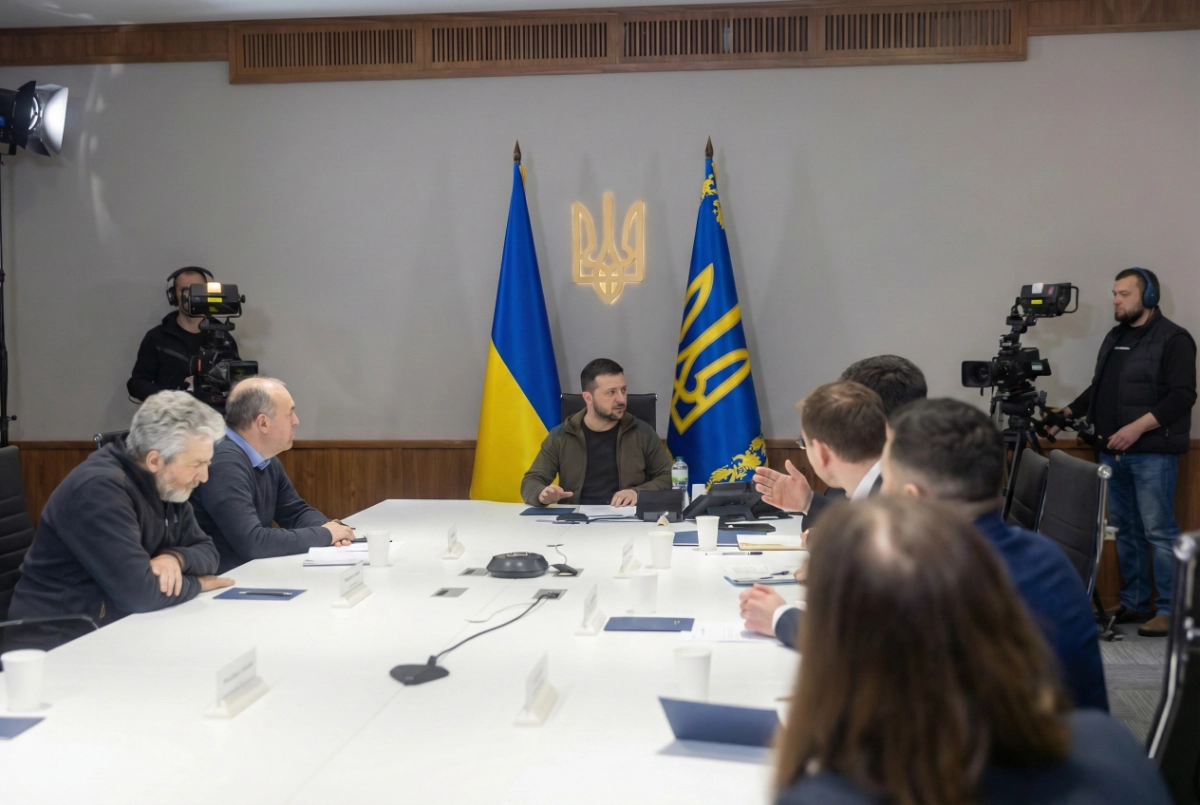
The statement emphasized that "decisions on territory are for the people of Ukraine, once robust security guarantees are effectively in place," and that leaders would "support President Zelenskyy to consult his people if needed."
What Europe demands from Russia
The statement called on Moscow "to show willingness to work towards a lasting peace by agreeing to President Trump's peace plan and to demonstrate their commitment to end the fighting by agreeing to a ceasefire."
Leaders welcomed "significant progress on President Trump's efforts to secure a just and lasting peace in Ukraine" and committed to "continue to increase pressure on Russia to bring Moscow to negotiate in earnest."
They were clear: "Nothing is agreed until everything is agreed."