❌

Vue normale

Air-raid sirens cost Kyiv’s weapons makers 61.8 working hours in month, nearly eight days, yet their contract deadlines stay fixed, two groups say

9 octobre 2026 à 14:49

Air-raid sirens are quietly stealing the hours Ukraine needs to build its weapons. The alerts ate up 61.8 hours of the standard work schedule in Kyiv between 27 August and 29 September, almost eight working days in a little over a month, yet weapons makers still face unchanged contract deadlines, the Ukrainian Gunmakers Council and the League of Defense Enterprises of Ukraine say.

In September 2026, Economy Minister Oleksandr Kravchenko said that every hour of air-raid alerts costs Ukraine’s economy about $45 million as businesses halt and workers shelter. For arms makers, those lost hours collide with fixed delivery dates and the penalties that follow if they slip.

The council’s figure covers Kyiv alone, and each plant loses more depending on its location, schedule, and processes, the groups said. On top of the siren time comes the wait to shut equipment down safely, move workers to shelter, and restart once the all-clear sounds.

A missed deadline carries a daily fine, and after 30 days, an extra 7 percent penalty. Money meant for components and the next orders goes instead to penalties and court disputes.

A rule that ignores the sirens

The contract date stays fixed unless the customer agrees to move it, the groups said. That leaves producers paying for stoppages they do not control, while the weapons still have to ship.

The Gunmakers Council has drafted changes to Cabinet Resolution No. 1275 to establish a single method for confirming real downtime from alerts and its effect on each contract’s deadline, it said. A customer could check alert times against official data and verify stoppages and restarts against a plant’s own production records, with each request judged on a case-by-case basis.

Waiting on the ministry

The groups say they have repeatedly raised the issue with the Defense Ministry and sent official letters proposing changes, and they are urging the ministry and the Defense Procurement Agency to act without delay.

They want a defined list of supporting documents, a deadline for reviewing requests, and rules for applying the mechanism to contracts that have already been signed. Until a decision comes, enterprises keep losing production time, and the risk of delay grows, the groups say.

Ukrainian producer that neutralized more than 7,000 drones over 100 square kilometers in year, plays enemy in Pentagon contest, and gets invitation to continue

9 octobre 2026 à 14:38

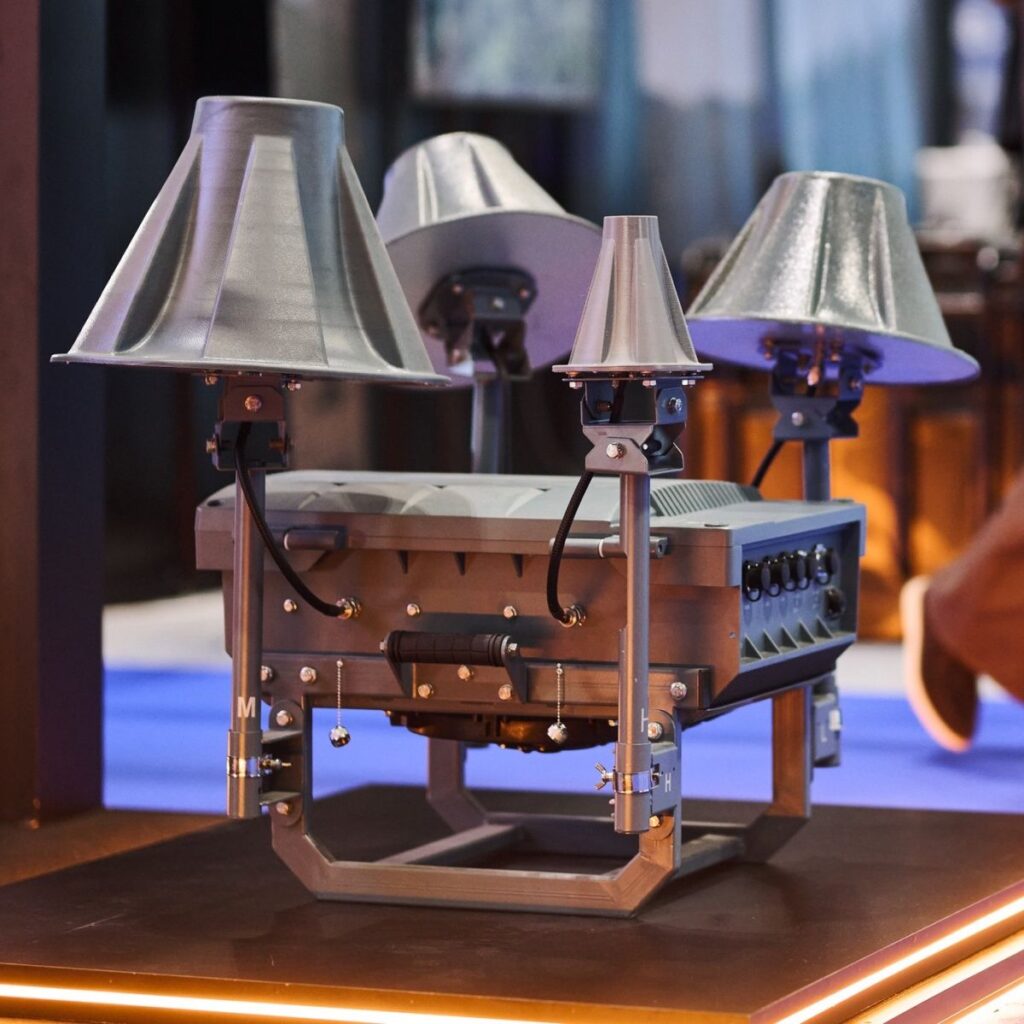
The C2 KUPOL platform. Source: Phantom Defense

A Ukrainian company has played the enemy in a Pentagon drone contest, and the US liked what it saw. Phantom Defense, a Ukrainian defense-tech firm, was one of three companies whose systems built the counter-drone environment for Gauntlet II, the second stage of the US military’s Drone Dominance program, and has been invited to take part further, Defender Media reports.

Drone Dominance is the Pentagon’s four-phase effort to field cheap attack drones fast, a roughly $1 billion program to buy more than 200,000 low-cost attack drones by 2027. Phantom Defense brought a system that was already proven at home, where in one city it neutralized more than 7,000 enemy drones over an area of more than 100 square kilometers in a year, the company says.

Rather than enter a drone of its own, Phantom Defense supplied the resistance that the American drones had to fly through. Its setup paired the Specter PRO, L, X, and XL jammers with the Streamhunter video-interception tool and a command-and-control layer that detected and classified targets, coordinated the countermeasures, and confirmed the kills. The jammers suppressed drones and held up in heat and rain, it adds.

The arrangement lets American developers fly their drones under live electronic attack rather than calm conditions, recreating a battlefield where a drone’s performance swings with the jamming around it, according to the company.

One map to run the whole fight

At the center sits Phantom Defense’s C2 system, Kupol, which integrates separate tools into a single ecosystem on a shared map. It lets crews run electronic warfare remotely, without driving out to a position, and ties in sensors, interceptor drones, and turrets, the company says.

Kupol reads the terrain and a drone database to propose the best way to take down a target, then logs each mission automatically so its recommendations sharpen over time.

The high-power Specter PRO station, built to shield positions, critical infrastructure, and cities, serves as the hardware anchor.

An invitation, not yet a contract

Previously, Ukraine’s battle-tested drone makers also took part in Drone Dominance. However, they didn’t succeed in it, though some of their technology competed under Western partners. The program bars direct purchases from Ukrainian firms, which must set up a US legal entity to bid.

  • ✇Euromaidan Press
  • AI is changing Russia’s drone war on Ukrainian cities, deputy air defense commander says
    Russian forces appear to use AI to plan air attacks and recognize targets amid raids on Ukrainian cities. This may include recent air attacks on Odesa that have come in waves with short gaps, Deputy Air Force Commander for Air Defense Colonel Yurii Cherevashenko says, Ukrinform reports. Russia has already equipped its jet-powered Geran-4 drones with machine vision, allowing them to recognize and track targets on their own in the final seconds of flight. Recently, a single jet drone hit
     

AI is changing Russia’s drone war on Ukrainian cities, deputy air defense commander says

7 octobre 2026 à 18:46

geran-5

Russian forces appear to use AI to plan air attacks and recognize targets amid raids on Ukrainian cities. This may include recent air attacks on Odesa that have come in waves with short gaps, Deputy Air Force Commander for Air Defense Colonel Yurii Cherevashenko says, Ukrinform reports.

Russia has already equipped its jet-powered Geran-4 drones with machine vision, allowing them to recognize and track targets on their own in the final seconds of flight. Recently, a single jet drone hit a locomotive in Odesa Oblast in late September and killed two railway workers.

The scale of Russia's AI use is hard to measure, Cherevashenko continues, but Ukrainian specialists already see its elements in how attacks are organized. The long, wave-by-wave strikes on Odesa would be far harder to plan and coordinate without it, he believes.

"Russian forces use AI to lay out attack routes and to recognize targets," Cherevashenko says, framing it as his own assessment rather than a confirmed fact.

The sea is harder to defend than land

Odesa Oblast is home to the biggest port in Ukraine, "Southern". Protecting it is a challenging task as guarding the airspace over water is tougher than over land, Cherevashenko says. Some air defense assets do not perform as well at sea, and in some cases, crews can intercept a target only as it approaches.

Weather adds to the problem, with storms and fog, while the open sea gives Russia more freedom to choose drone routes and launch points. To protect ports and the coast, Ukraine uses drone motherships, platforms that carry other drones aloft to extend their flight time and keep watch over set areas.

Ukraine answers AI with AI

Ukraine is also building its own AI for air defense. Automated turrets using machine vision now help counter Russian drones. According to Army Media, the Air Force says such turrets have scored their first shoot-downs, including of Geran-5 jet drones, with one soldier saying 50 rounds were enough to bring down a Geran.

Ukraine's Defense Ministry is going further. In late September, it unveiled an AI system called SPECTR, built by its A1 Artificial Intelligence Center and already in testing with several combat units, to analyze battlefield data, predict Russian moves, and suggest options to commanders.

Ukraine’s drone pilot calls it his proudest strike: cheap FPV drone detonating over two tons of explosives packed inside Russian mine-clearer

7 octobre 2026 à 18:25

A UR-77 mine-clearing vehicle. Photo: Ukraine's Defense Ministry

"Skipper", an FPV company commander in Ukraine's 413th Raid Unmanned Systems Regiment, has described destroying a Russian UR-77 mine-clearing vehicle with drones during the 2023 counteroffensive as the strike he is proudest of, according to Army TV.

The UR-77, nicknamed "Zmiy Horynych" after a fire-breathing serpent of Slavic folklore, carries a rocket-fired line charge to blow paths through minefields, as per Militarnyi. Each charge carries more than two tons of explosives, which is why a cheap FPV hit can trigger a blast far larger than the drone itself.

"It exploded so hard that I thought it was a small nuclear blast. There are more than two tons of plastic explosive inside, and when it went off after the second hit, it was something unbelievable," Skipper says.

Skipper joined the army at the start of the full-scale invasion and moved from infantry and aerial reconnaissance to commanding an FPV unit. His regiment now operates on the Zaporizhzhia front, where FPV drones conduct combat missions.

From sailing yachts to FPV drones

In civilian life, Skipper was a sailing instructor, and he says the sport partly helps in military work, especially his knowledge of navigation and radio communication. He is convinced that a technological edge can be one of the keys to victory.

He counts the UR-77 strike among his unit's early work, from a time when few Ukrainian units were using FPV drones at all, he says. The hit came during hard fighting in the counteroffensive, when his crews were among the first to work the FPV niche.

Russia turns a mine-clearer into a wrecking tool

The UR-77 was built in the 1970s for a different war, one of fast tank thrusts that needed enemy minefields cleared quickly. Its base rides on the chassis of the 2S1 Gvozdika self-propelled howitzer, and its charge can cut a lane six meters wide, with some anti-personnel mines detonated across a band up to 15 meters wide.

Modern combat changed that role. The classic mine-clearing use remains, but Russia now more often turns these machines on Ukrainian fortifications, using the line charge to flatten defenses rather than open a path.

Ukraine squeezes more defense out of Soviet-era stock, pairing Kub launcher and American RIM-7 interceptors to catch Russia’s jet-powered drones

7 octobre 2026 à 14:33

Ukraine's 156th Maksym Kryvonis Anti-Aircraft Missile Regiment has downed about 20 air targets using a Kub launcher firing under the radar and fire control of a Buk unit.

Kyiv is bolting two Soviet-era missile systems together to knock down Russia's fastest Geran-4 and Geran-5 drones. Ukraine's 156th Maksym Kryvonis Anti-Aircraft Missile Regiment has downed about 20 air targets using a Kub launcher firing under the radar and fire control of a Buk unit.

Russia has switched to jet-powered Gerans, faster drones that Ukraine's cheap interceptors struggle to catch, so more of them reach their targets. The damage from Russian strikes is set to reach up to $10 billion this year, according to Ukraine's Economy Ministry.

Meanwhile, Western resupply has thinned too. Deliveries of air defense missiles from partners fell threefold in the first half of 2026 against 2025, even though those partners hold the missiles, President Volodymyr Zelenskyy says.

So crews stretch what they have. In the Kub-Buk hybrid, a Kub launcher cannot aim on its own, lacking a radar to light up a target for its missile, according to Militarnyi. A Buk has that radar, so the two fire together, the Kub sending its 3M9 missile where the Buk points. The pairing is possible because both come from the same Soviet design line.

Western missiles in Soviet launchers

The same regiment reaches for a second workaround as Buk missiles run short. Its crews have rewired launchers to fire American RIM-7 interceptors, a Soviet-Western mongrel that troops nicknamed Frankenstein and the US calls FrankenSAM.

The patchwork earns its keep. One crew commander said some of these machines have more than 34 air kills each, and a single launcher has sent up RIM-7s 131 times, Ukrainian troops said.

A layered answer

The hybrids are one thread in a wider web. Ukraine is stitching together a layered defense against the jet-powered Gerans, leaning on electronic jamming, fighter jets, and a new class of homegrown interceptor drones. Each tool has limits, and the newest interceptors still bring down only the occasional jet drone.

The bet now is on numbers. Ukraine aims to build up to 400 interceptor drones a month by the end of October to chase the faster Gerans, Zelenskyy said on 2 October. Until that scale arrives, improvised launchers like the 156th Regiment keep filling the gap.

Russia starts pouring more into war after Putin judged Alaska talks with US would bring no “acceptable” deal to end fighting — Bloomberg

7 octobre 2026 à 13:39

greece blocked gas ban france italy softened entry ban—now brussels tries 1600 companies helping russia's war · post russian soldiers military parade 9 2025 moscow russia kremlinru victory_day_parade_2025_at_red_square ukraine news

Russia is spending more on the war than at any point since it began. Russia's military funding is on track to hit a record this year after President Vladimir Putin added almost $60 billion to the outlays set in the budget, Bloomberg reports, citing people close to the government.

Defense spending is expected to approach about $199 billion by the end of 2026, roughly 40% above the plan Moscow announced in late 2025. That reverses the course of a year ago, when the Kremlin meant to slow military growth, narrow its deficit, and rebuild reserves drained by the war.

Alaska was the turning point

Putin ordered the shift late last year, after concluding that talks with the US in Alaska would not produce an acceptable deal to end the fighting, the report says.

By January, the Kremlin judged an agreement with Ukraine to be out of reach, and the government began accelerating advance payments to defense firms and raising other war-related spending.

"The government is finally budgeting for a prolonged war in Ukraine, but still understates its cost," Bloomberg Economics economist Ekaterina Vlasova said.

The deficit nearly doubles

Paying for the war has blown out the budget. The projected 2026 deficit has climbed to more than $81 billion, up from about $44 billion as first planned, and the government covered the extra spending through increased domestic borrowing and gold sales.

The budget plans years of war

The spending is not set to fall soon. Under the budget plans, Russia's military outlays reach about $200 billion in 2027, then ease to $194 billion in 2028 and about $191 billion in 2029, a signal that Moscow is planning for a long war.

Earlier, Euromaidan Press reported that Russia was raising 2027 defense spending by 27% to a record, even as its deficit widens and oil and gas revenues fall.

Kalashnikov, Russia’s biggest small-arms maker, says it fills its entire 2026 arms contract on time with batch of 7.62mm Dragunov sniper rifle

7 octobre 2026 à 13:24

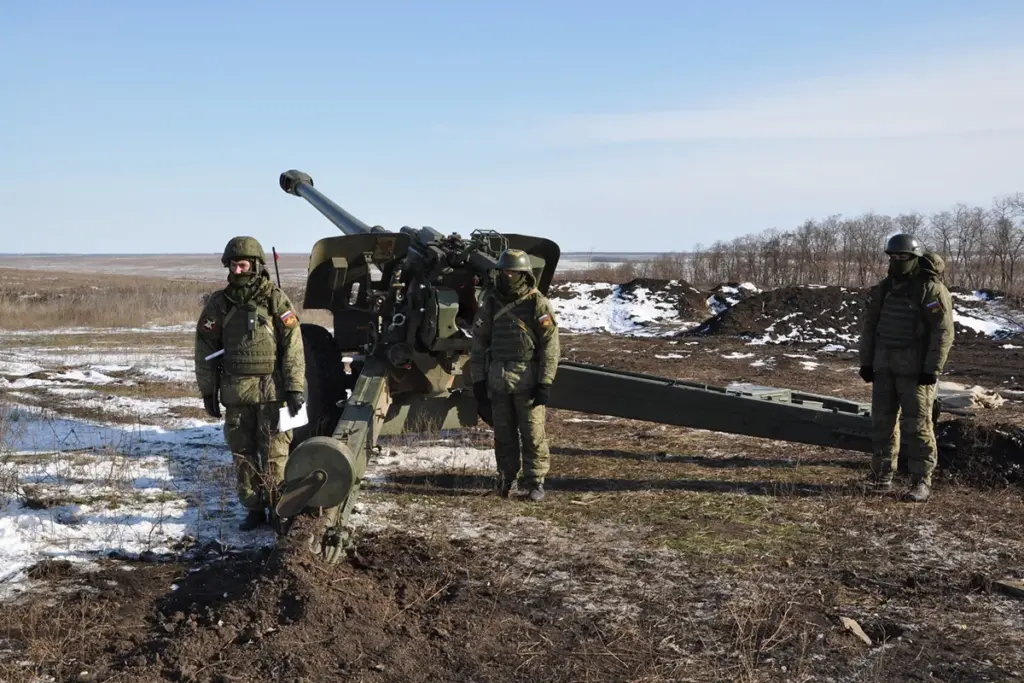
Russian soldiers stand beside a field artillery gun in a snow-covered position.

Russia's Kalashnikov concern has met its annual arms contract. The top producer of small arms has announced it delivered a batch of classic 7.62mm Dragunov sniper rifles to a Russian Security Forces customer and fully met its 2026 contract on time

The delivery shows how little the sanctions regime slows Russia's arms maker. In February 2026, Ukraine's Defense Intelligence said that nearly half of Kalashnikov's plants were still not subject to sanctions by any coalition country. Eight months later, the concern reports a full year's order delivered on schedule.

"The items were shipped on the set deadline, the obligations under the 2026 contract fully met," the manufacturer said.

A rifle in service for six decades

The weapon in that batch is not new. Designed by Yevgeny Dragunov between 1958 and 1963, the Dragunov sniper rifle entered serial production at the Izhevsk machine-building plant in 1963, so in 2026, it has remained in serial production for more than 60 years.

The self-loading 7.62mm rifle is meant to hit personnel and unarmored targets at ranges up to 800 meters, the concern said. It uses gas-operated automatics with a short-stroke piston and a gas regulator, and can fire any 7.62x54R round, though sniper ammunition yields the best grouping, according to the maker.

Sanctions chase a moving network

The sniper rifles are only one line in Kalashnikov's output. Russia's defense industry has leaned heavily on refurbishing Soviet-era armor as newer reserves run low, with Ukraine's intelligence reporting in June 2025 that Russia had begun deploying 1960s-era T-62 tanks.

The restoration work was centered primarily at the 103rd Armored Repair Plant in Atamanovka, Trans-Baikal Territory of Siberia. Ukrainian intelligence documented the transfer of 21 T-62 tanks from the eastern region to the western part.

Small arms are a different line of production, built new rather than pulled from storage. That is why a 1963 design keeps rolling off the line while the sanctions net, as Ukraine's intelligence describes it, still has holes.

Oleksandr, Kyrylo and Serhii, all aged one, and eight-year-old Maksym were killed in Ukraine’s city by Russian strike on Putin’s birthday

7 octobre 2026 à 13:04

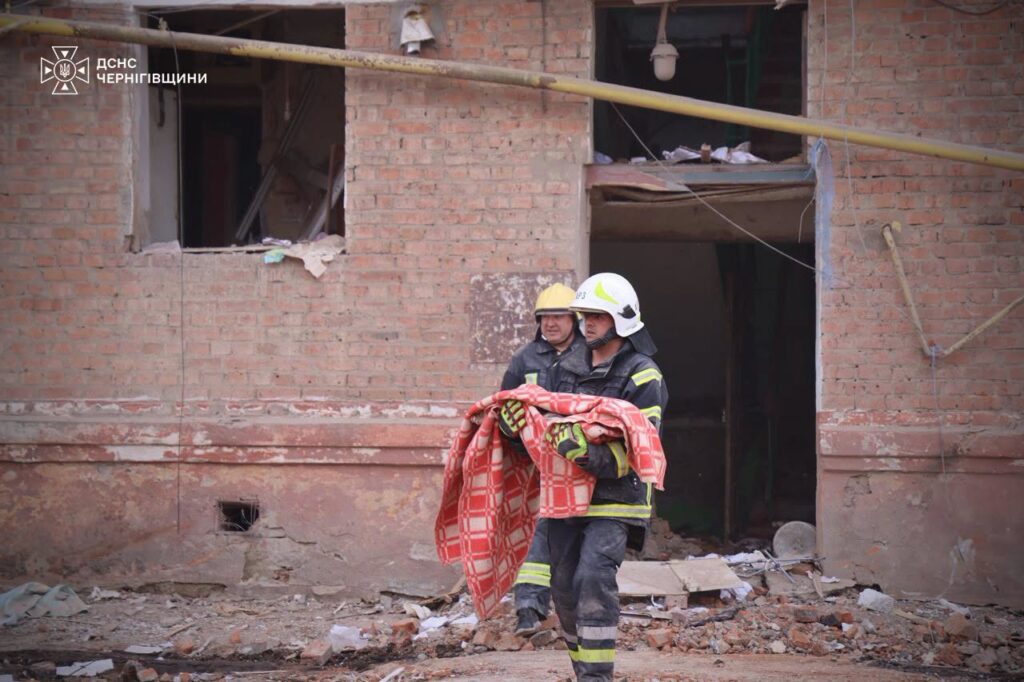
Ukrainian rescuers in Chernihiv Oblast on 7 October 2026. Source: The State Emergency Service of Ukraine

Ukrainian rescuers are still pulling bodies from a collapsed apartment block in Pryluky. A Russian missile strike on the five-story residential building in the city of Chernihiv Oblast that borders both Russia and Belarus killed 19 people, including five children, and injured 55, Ukraine's State Emergency Service reported on 7 October.

Russia hit Kyiv and a dozen other regions overnight. Air defense downed five ballistic missiles, 39 cruise missiles, and 117 drones, while missiles and drones hit 18 locations, the Air Force said. The nationwide strike killed at least 24 people, including four children.

Among the dead in Pryluky were three one-year-old boys, Oleksandr, Kyrylo, and Serhii, and eight-year-old Maksym, President Volodymyr Zelenskyy says. Seven of the injured are children. Some residents are still unreachable, and all emergency services are working at the site. Russia keeps using missiles against Ukrainian cities and civilians by deliberate choice, he states.

"My condolences to all the families and loved ones," Zelenskyy says.

The strike comes on Putin's birthday

The attack came on Russian President Vladimir Putin's birthday on 7 October.

"Continuing to use missiles against Ukraine, against our people, our children, is an absolutely conscious choice of terror. This is what Moscow chooses despite all our efforts with partners to bring peace closer," Zelenskyy says.

He urges partners to increase pressure on Russia and bolster defense support for Ukraine, saying it is important that world leaders understand this and that the world not remain silent.

A pattern of strikes on Chernihiv Oblast

Pryluky, about 150 kilometers east of Kyiv, lies in a region Russia has hit repeatedly. The overnight barrage also damaged civilian and utility infrastructure across the Pryluky community, the city council said.

Ukraine had seen the attack. The day before, Zelenskyy warned that intelligence indicated a massive Russian strike was in preparation. Russia fired about 70 missiles overnight, killing two people each in the capital Kyiv and in the cities of Kremenchuk and Oleksandriia in addition to the Pryluky dead.

Ukraine cuts more than 4,000 vacant government posts and trims deputy ministers by about 20% in the first stage of civil service reform

6 octobre 2026 à 16:47

prime minister serhii koretskyi

Ukraine is thinning its state bureaucracy. Central government bodies will cut more than 4,000 vacant positions in the first stage of a civil service reform, Prime Minister Serhii Koretskyi says, with the number of deputy ministers to fall by about 20% and deputy heads of other central bodies by nearly 18%.

The reform aims to build a professional state apparatus that can carry out tasks quickly and effectively, Koretskyi said. It comes as Ukraine faces an economic crunch, and about $20 billion in EU aid is on hold, blocked by reforms Kyiv has not completed.

The cuts are only the visible first step, and the final headcount is not set yet. The number of deputies will be tied to the volume of tasks each office carries, Koretskyi states.

"The most important thing is that we are running a functional diagnostic of the state apparatus," he continues.

The Ukrainian government will assess which functions the bodies have and whether they align with the state's realities and priorities, and only then will it define the structure and final headcount.

Training is tied to the job

Another track reshapes how officials learn. Training will be linked to the tasks of each specific post, with outreach and internships for young people and a separate program for veterans, Koretskyi says.

The Public Administration Council, which brings together officials, members of parliament, and experts, has resumed work, presenting a detailed plan on the task and assigning responsibility for each area.

The squeeze that forces the cuts

The reform lands in a tight budget. The war is costing Ukraine about $155 billion a year, and with Western aid running late, Kyiv has frozen almost everything except the army, pensions, and public wages.

On 1 October, the state suspended a veterans' gym subsidy that had cost about $13 million and drawn more than 800,000 users, for lack of funds.

Ukraine’s war leadership sets new electronic warfare tasks as Russia’s jet-powered drones slip past nearly half of its air defenses

6 octobre 2026 à 16:19

Geran-4" is an evolution of the earlier "Geran-3" model

Russia keeps upgrading its jet-powered drones, and Ukraine's electronic warfare is racing to keep up. Kyiv has set extra tasks for its military and manufacturers to scale up the most effective electronic warfare approaches, President Volodymyr Zelenskyy said after a meeting of the Supreme Commander-in-Chief's Staff on electronic warfare and infrastructure protection.

Russia keeps modifying its jet-powered Shaheds to beat each new Ukrainian defense, and Ukraine's answers have to keep pace. The race is tight: from 1 to 26 September, air defenses downed only 55 percent of the 2,730 new jet-powered drones, against 90% of the slower ones.

Hidden relays blunt Kyiv's jammers

Jamming has to improve because Russia keeps finding new ways around it. On 3 October, presidential adviser Serhii "Flash" Beskrestnov said someone had installed Russian MESH radio repeaters in Kyiv, a short control channel that guides Shahed drones onto their targets. As long as they are there, he said, closing the city with electronic warfare will not be effective.

"As long as online control of drones exists, not only the bridges but the air defense assets will be under threat," Flash stressed.

Sanctions aim at the supply chain

Beyond the jamming task, the Staff turned to where Russia gets the parts for those drones. Defense Intelligence reported on Russia's technological priorities for this year and next, and on supplies of critical components and equipment for its weapons production, Zelenskyy said.

New sanctions packages will follow, with Defense Intelligence due to send proposals to the Ukrainian government and the National Security and Defense Council, and Ukraine is working to align its sanctions with partners' jurisdictions.

The Staff also set the main tasks for supplying Ukrainian forces with long-range drones next year.

"The main criterion is that we must be able to respond in kind to Russian strikes," Zelenskyy emphasized.

Those parts, and the drones built from them, keep changing

In August, Intelligence Deputy Chief Vadym Skibitskyi said Russia remained fully dependent on Chinese turbojets for the Geran-4 and Geran-5, each costing about $35,000 to $40,000.

However, two months later, Ukraine reported the Geran-4 had received a locally built engine and a new optical navigation system. Kyiv has to stay attuned to changes to keep pace with the technology race, and so far, it is still trying to catch up rather than get ahead.

Ukraine is third in world for cyberattacks after US and Israel, and first in Europe. Machine-speed assaults run continuously and without fatigue

6 octobre 2026 à 14:35

Illustrative photo. Credit: Philippe HUGUEN / AFP

Only the US and Israel were hit by more cyberattacks than Ukraine this year. Ukraine ranked third in the world and first in Europe among the countries whose organizations and users were most often targeted by cyberattacks in the first half of 2026, accounting for 4.8% of all victims worldwide, up from fifth in the world and third in Europe a year earlier, Microsoft said in its Digital Defense Report 2026.

Microsoft processes more than 165 trillion security signals a day, which lets it show how often attackers go after customers in each country. Russian state hackers aimed 14% of their recorded activity at Ukraine, more than at any country except the US.

The era of machine-speed cyberattacks is here

Government agencies and services were the most targeted sector worldwide at 27%, up from 17% in 2025. Phishing drove 23% of intrusions Microsoft investigated, up from 7% a year earlier, and the median time from finding a vulnerability to weaponizing it has fallen well below 24 hours.

The use of artificial intelligence is pushing cyberspace into an era of “machine-speed” attacks that operate continuously and without fatigue, according to Dev.

“Many AI agents act on behalf of users and with their access rights, so a compromised agent combines user-level access with machine-scale actions,” Natalia Burlakova, Security Sales and Engineering Lead at Microsoft, says.

Deception beats code in attacks on Ukraine

Ukraine's own agency data show a similar pattern. Malware accounted for 33% of cyber incidents in the first half of 2026, and social engineering 31%, the State Service of Special Communications and Information Protection reported on 30 September. System infections made up 15%, and system compromises 4.5%.

Attackers rely less on technical complexity than on trust, according to the report by Ukraine's computer emergency response team, CERT-UA. Hacker groups create fake pages that mimic CERT-UA, Ukraine's Parliament's document management system, and the Brave1 defense technology platform.

Microsoft urges five government steps

Microsoft asks governments to prepare for faster-moving threats by assigning roles and coordinating agencies in advance of a crisis, and to treat AI security as part of national resilience. It also asks them to plan for incidents that spread, noting that 52.2% of intrusions involving valid accounts led to additional credential theft.

Ukrainian units hit record number of Russian air defense systems and radars in September, one of them 552 kilometers away

6 octobre 2026 à 12:53

two russian fighters one spy drone hit kranodar radars anti-air systems elsewhere—ukraine forces · post combat aircraft ukrainian drone's sights vityazevo airfield krasnodar krai russia 23 2026 su-33 video sbs

In September, Ukraine struck more Russian air defense systems than in each month since 2024. Its Defense Ministry reports that Ukraine stepped up strikes on targets deep in the Russian rear, and this is how it hit this amount of protective systems, radars among them, in the history of the ePoints program.

ePoints are points that Ukrainian units earn for verified combat missions, from strikes to reconnaissance and evacuation, and spend on drones, ground robots, and electronic warfare systems on the state's Brave1 Market. In September, units confirmed hits on 33,087 Russian soldiers under the program, more than in any month this year except March and April.

Every result is recorded on video in the DELTA battlefield system and verified by the Brave1 defense innovation cluster, the ministry said. Russian losses are also growing far from the contact line, it added, and units are finding new and unconventional ways to inflict them.

The strikes are meant for "bleeding the Russian war machine," Defense Minister Yevhenii Khmara said on 4 October.

Deep strikes pass 11,000

In September, the number of hits more than 20 kilometers behind the front line exceeded 11,000 for the first time. Hits beyond 50 kilometers also set a record, most of them along the Russian logistics route between Mariupol and Crimea. One air defense system was hit 552 kilometers away.

Ukraine also now has a ballistic missile for such depths, not simply drones. It fired its first FP-7 in combat on 1 October, President Volodymyr Zelensky announced without naming a target. Its maker, Fire Point, plans an interceptor version that aims to achieve a first ballistic missile shoot down by mid-2027.

Troops down more propeller Shaheds

Even as Russia kept changing its air attack tactics and launched more jet-powered drones, Ukrainian troops shot down 28% more non-jet-powered Shahed drones in September than in August, the ministry said.

Jet drones remain the harder target. Ukraine shoots down 85 to 92% of propeller-driven Shaheds but only 50 to 60% of jet-powered ones, Zelensky said on 4 October, when he announced a new small missile called Nika for testing against them. Ukraine's military intelligence estimates that Russia builds about 3,000 jet-powered drones a month.

At ruined Donetsk’s airport, three Russians snap selfies and ready jet-powered Geran-4. Ukrainian drone slips in unseen and rams their launcher

6 octobre 2026 à 11:04

russia steers its long-range drones ground towers—kyiv says hit one occupied crimea · post russia’s new “geran-4 seeker” shahed variant uses machine-vision ai targeting geran 4 ukraine news ukrainian reports

Russian troops were taking selfies beside a jet-powered Shahed launcher when a Ukrainian drone hit them. A Ukrainian drone attacked a pickup truck converted to launch Russian Shahed drones in the Donetsk airport area while its crew prepared to fire a jet-powered Geran-4, according to video from the Cursed Empire drone unit of the 100th Separate Mechanized Brigade that volunteer Serhii Sternenko published on 6 October.

Three Russian soldiers struck a pose by their drone launcher near Donetsk airport

It was their last selfie. Ukrainian drones hit the crew moments later as they prepared to fire a jet-powered Geran-4
🎥 Serhii Sternenko pic.twitter.com/ri9bNztW5y

— Euromaidan Press (@EuromaidanPress) October 6, 2026

Russia launches Shahed drones, including jet-powered ones, from pickup trucks and fixed launchers, and the ruined Donetsk airport, about 50 kilometers from the front line, is one of its drone bases. In September, Oboronka outlet counted that in general, Russia has at least 63 launchers at its drone bases, which are built to survive strikes.

The video shows three carefree Russian soldiers next to a pickup fitted with a launch frame.

"That was their last photo shoot," Sternenko noted, commenting on the hit on the soldiers.

The primary target

Earlier, an officer of the 1st Separate Center of the Unmanned Systems Forces, call sign “Falco,” explained that the primary goal of strikes on drone bases is to disrupt Russia's ability to launch drones.

This is done by destroying launchers and storage facilities, as well as creating an aerial threat over the drone base. Such attacks can delay drone launches indefinitely, while the destruction of infrastructure can reduce the overall number of drones launched.

But the "jewel" of anti-drone port operations is the military staff

Although these facilities are important targets, the Unmanned Systems Forces have another priority: drone operators.

“The most difficult and, at the same time, the most valuable target is the operator. They don’t stay near the launchers for long,” Falco said.

By taking out drone operators, Ukraine inflicts losses on a scarce resource. There are already relatively few of them, and Russia will have to spend additional money and time training new crews.

Ukraine’s Defense Ministry says some suppliers cannot build weapons ordered, and drops contracts to free $346 million for front

6 octobre 2026 à 10:23

The image shows Ukrainian marines. Source: The 34th Separate Marine Brigade of the Ukrainian Marine Corps

Ukraine is canceling part of its planned military purchases and moving the money to other priorities. Ukraine's Defense Ministry has announced that it, together with the General Staff and the Logistics Forces Command, will free about $346 million by terminating some weapons contracts and dropping some planned purchases.

What the army planned to buy in 2024 and 2025 may no longer be suitable for the front, the ministry noted, because technology and tactics change quickly. The review comes four days after the Ukrainian government drew about $1.1 billion from the defense reserve to pay soldiers in October amid a looming economic crisis.

The ministry gives five reasons for the review: some weapons no longer match combat tasks, certain suppliers cannot build the planned volume, certain models have not been codified, partners already cover some needs, and cheaper means can perform specific jobs in larger numbers.

"For us, there is one criterion: does the item work for results in combat today. Every hryvnia released from irrelevant contracts must reach the troops as the weapons needed right now and in the right place," Col. Yurii Pohribnyi, commander of the Logistics Forces, says.

The procurement agency calls each producer

The General Staff set the final list of purchases for review, and the ministry forwarded the documents to the Defense Procurement Agency to implement the decision. For specific items, delivery volumes were adjusted rather than canceled, which the contracts allow when needs change.

Affected producers have been informed, and the agency is discussing each item with suppliers based on the status and payments of each contract. Artem Romaniuk, acting director of the agency, has explained that further steps on each contract will depend on the army's current needs and the contract terms. The list of weapons stays secret for security reasons.

Funds freed up by terminating contracts and canceling planned purchases will be redirected to the urgent needs of Ukraine’s Defense Forces.

Ukraine’s drone pilots hit 76.5% more Russian infantry than two months ago: 2,699 in first five days of October

6 octobre 2026 à 10:03

The image shows Ukrainian soldiers. Source: The 80th Separate Air Assault Halytska Brigade

Ukraine's drone pilots are killing and wounding far more Russian infantry than they did a month ago. Ukraine's Unmanned Systems Forces confirmed that their pilots took out 2,699 Russian infantry from 1 to 5 October, 39.7% more than in the first five days of September, Commander Robert "Madiar" Brovdi wrote on Telegram on 6 October.

The Unmanned Systems Forces, the branch of Ukraine's military that fights with drones, count only losses verified by their own pilots in the military's Delta system, so the full picture of Russian losses is larger, Brovdi stressed. Compared with the first five days of August, the rise is 76.5%, from 1,529 losses, which he ties to denser and more frequent Russian assaults.

The sharpest growth occurred in the area of the 1st Azov Corps of Ukraine's National Guard on the Dobropillia-Pokrovsk axis in Donetsk Oblast, as fighting for fortress-belt cities continues. Drone pilots recorded 1,268 Russian losses there, 43% more than the 884 of early September and 91% more than the 664 of early August.

"Russia's hidden mobilization is in action. This is the beginning," Brovdi said ironically.

Russia doubles its monthly recruitment pace

Russian recruitment, mobilization, and contracts run at about 70,000 people a month, twice the 35,000 monthly average from January to August 2026, Brovdi noted on 16 September, when he forecast 12,500 losses for his pilots in September.

He expected the toll to keep climbing. Bigger records still lie ahead because of Russia's unannounced mobilization, Brovdi added on 24 September.

Drone pilots outpaced August by a quarter

September was completed above that forecast. The pilots logged 13,358 Russians killed or wounded, 25.35% more than the 11,010 of August, an average of 445 a day against 355, Brovdi reported. By his count, that equals the full assault infantry of one battalion every day, and his pilots hit a Russian target every 42 seconds.

Two sets of axes took the heaviest toll. In the first 24 days of September, the Dobropillia and Pokrovsk axes accounted for 4,018 losses, and the Oleksandrivka and Huliaipole axes for 3,021, according to Brovdi. The first of those groups covers the same Dobropillia-Pokrovsk axis where the Azov corps zone recorded the sharpest October rise.

From making interceptors to guarding sky: Ukrainian drone maker gets its own private air defense unit and will pay for it from weapon sales

5 octobre 2026 à 15:28

ukraine spent three years learning catch russian drones—so russia made fly faster · post geran-3 jet-powered attack drone wild hornets c1c840787fca380485636007cf683d71 news ukrainian reports

A Ukrainian drone maker just got its own air defense unit, and says it has already downed Russian jet-powered drones. Ukraine's Defense Ministry has issued an order granting the Night Hornets, the anti-Shahed unit of interceptor maker Wild Hornets, the status of a private air defense, and the company announced it is starting to build its own network of remotely launched interceptor drones.

Russia has sharply increased its use of jet-powered Shahed drones, which cuts the reaction time of Ukraine's mobile fire groups from about a minute to as little as six seconds. Now, a private company joins the air defense line, while Ukrainian military intelligence says Russia is producing up to 500 Geran-4 and Geran-5 jet drones a month.

The planned network will combine remote-control centers, a grid of remote interceptor launches built on the company's Hornet Vision Ctrl technology, and field positions. Wild Hornets will not sell protection for individual sites and will pay for the unit from drone sales profit.

"The unit has more than 50 downed Shaheds to its name, including jet-powered ones. We create technologies that work. We use them ourselves to protect our country," the company says.

Air Force commanders will direct the crews

The crews already go on daily combat duty alongside the military and will take orders from the Air Force command. The unit draws on Wild Hornets instructors and test pilots, including veterans of the war and pilots who rose from beginners to instructors. The company wants to fold private air defense into the country's overall system, including over Kyiv.

Air alerts now swallow nearly a third of mall hours

Due to Russia's jet-powered drones, air-raid alerts covered 30.8 percent of shopping-center operating hours across Ukraine in September, a record, up from 22 percent in August and 14.1 percent a year earlier, the Ukrainian Council of Shopping Centers reports. The average mall has now lost 176.5 working days since the full-scale invasion, including 9.6 in September alone.

Kyiv shows the sharpest jump. The share of alert time during mall hours in the capital rose from 11.6 percent in August to 32.7 percent in September, the council said.

The damage reaches well beyond the malls. Ukraine's Economy Ministry expects losses from Russian strikes to reach up to $10 billion this year, Economy Minister Oleksandr Kravchenko said on 12 September.

What if Russia uses nuclear weapons? Can we say Ukraine brought peace to world? Norwegian professor who nominated Zelenskyy and Ukrainians for 2026 Nobel Peace Prize takes on tough questions

6 octobre 2026 à 13:48

Dag Øistein Endsjø, a Norwegian professor at the University of Oslo, Norway.

It is rare to hear a European say "I'm sorry" to the Ukrainians. Dag Øistein Endsjø, who nominated the Ukrainian people and President Volodymyr Zelenskyy for the Nobel Peace Prize 2026, shared it several times during our interview.  

Mr. Endsjø is a professor of religious studies at the University of Oslo in Norway. He comes across as courteous and reserved. But when he talks about Europe not helping Ukraine as much as it could, his eyes give away deep personal emotion. 

"Just thank you for keeping us safe. Thank you for the extreme sacrifice you've been making for all of us. And I'm sorry that my government and the other governments haven't done enough," he said, speaking to me not as a journalist but as one of the Ukrainians.

These words cut through because tens of millions of us live under daily psychological and physical terror, feeling forgotten and betrayed.

At the same time, Professor Endsjø names things as they are, even when it is uncomfortable. When the full-scale invasion began, he says, he doubted Ukraine would hold. And he admits that Norway has profited from the war: by its own Finance Department's calculation, about €106 billion in additional revenue from higher oil and gas prices.

He was honest with us. Our questions were sharp too, even those about US President Donald Trump's chances to win this year's award, and he answered them the way he answers everything: straight.

Do you think people who fight the war can be nominated for a Nobel Peace Prize?

People who defend themselves, yes! Who defends a free and democratic state against unprovoked aggression, yes, I think so. 

Many say Ukraine should stop fighting and negotiate. Wouldn't a peace prize reward the war?

It's not a reward for the war, because the war could stop tomorrow if Russia just realized they didn't want to break international rules and pulled out. This is not about continuing the war. On the other hand, the war would stop the moment Ukraine threw out Russia. That, regrettably, seems to take more time.

This is not, in any way, about rewarding or promoting war as such. This is about standing up against war, because not standing up against war has only provoked more war and aggression from Russia.

Russia is attacking free and democratic countries unprovoked. They started in 2008 with Georgia, and then moved on to Ukraine, and as so many others point out, they have their plans.

"Moldova, if Ukraine hadn't been able to resist this invasion, would also have been under Russian rule now for sure. Poland and the Baltics would have been under extreme pressure, maybe also invaded," Mr. Endsjø says.

If there was a moment when you thought that Ukraine might lose the war?

Yes, in the beginning, when I saw those lines of tanks heading for Kyiv, I was afraid that everything was lost. Also noting the lackluster reaction from the free world and how they only came with condemnations and no ammunition, just a flight out.

If Ukraine is defending peace, why is the war getting closer to Europe's borders? 

That is because of Russia. If Ukraine hadn't defended itself and just given up, the war would have been even closer to Europe. We would be even more under threat with probably even more degrees of sabotage and terrorist attacks around in Europe.

Does Ukrainian resistance escalate the risk of direct war between NATO and Russia?

No. The other way around. If Ukraine had given up, it would have been a more direct threat to NATO countries.

But some politicians say that in this case, Russia will just negotiate and sell energy as it did in the past

Yes, while sabotaging and even murdering people around in Europe, and acting like a state of terrorism. So, no, it would remain aggressive. You can listen to various prominent Russians on Russian TV. You know, you're not allowed to say anything on Russian TV unless the government approves it...

People are again and again threatening Finland, Poland, Britain, and the Baltic. Just as they made up these fake republics in Luhansk and Donetsk in 2014, they have tried to do the same in Estonia and Latvia already.

So if it hadn't been for Ukraine and Ukraine's resistance, the risk of direct war between NATO and Russia would have been even greater. Because Ukraine keeps Russia at bay.

If Ukraine agrees to a ceasefire, will you consider this a failure or a victory?

    I, as a non-Ukrainian but fellow European, like any other European, have no right whatsoever to tell the Ukrainians what to do.

    If the Ukrainians themselves find that this most horrible war is too much, and you want a ceasefire and you want to stop, and it's not for me to criticize. It's not for any European to criticize. We cannot tell the Ukrainians what to do after that horrible sacrifice you've made already.

    I only hope that Europe and the rest of the free world will assist Ukraine even more, so that you will be even more successful in throwing out the Russian occupation army of the entire of Ukraine, including Crimea.

    What if Russia uses nuclear weapons? Can we say that Ukraine brought the world to peace?

    They will not use nuclear weapons. If they wanted to do it, they would have done that already. China and India are completely clear that they will not accept any use of nuclear weapons, so that would mean that Russia would be completely isolated and completely devastated economically in weeks. So that's not going to happen.

    Putin says the war ends if Ukraine gives up Donbas. Why give a Nobel Peace Prize to a country that refuses?

      This is just a proposal from Putin and American so-called negotiators. They're supposed to be negotiating, but this is not a negotiation. This is just about trying to make Ukraine give up without even a fight, which Russia is unable to do, and, incredibly, in some way, try to force Ukraine to give up its rightful ownership of its occupied territories.

      This is just appeasement, just as what Chamberlain did in 1938 and what Europe has done again and again in 2008 and 2014. This would be a completely terrible mistake.

      "Ukraine deserves the Nobel Prize, no matter how long they keep on fighting against this horrible aggression by this dreadful kleptocracy," Mr. Endsjø says.

      Europe says Ukraine keeps the peace for everyone. Can it then demand that Ukrainian refugees go back and fight?

        I, as a European, think that other Europeans cannot demand anything of the Ukrainians, whoever they are. This must be up to the Ukrainian people and the Ukrainian government.

        Do people in Norway still genuinely believe that Ukraine can win this war, dragging on for so long? 

          I think so. Very many do believe that. But this depends on whether the West keeps on, and the free world continues to support Ukraine. Here in Norway, we are in a particular situation because, as our own Finance Department calculated last year, we have earned an extra 106 billion euros from the war (additional government revenues generated by high energy prices — ed.) due to higher oil and gas prices. 

          We don't support you as much as we should. We should have given you those 106 billion euros. 

          Why should someone in Europe care whether Ukraine wins or loses? 

            That is the point: that this is a war against the free world from a horrible dictatorship. More or less, you can call it a kleptocracy — that's the most, I guess, the most precise definition of Russia today. It's not a democracy whatsoever. It's most of all a kleptocracy where the top leaders just steal whatever they can get their hands on.

            If Ukraine had fallen, it's not just that that would be horrible for Ukraine as such, but that would mean also that Russia would have had its hands on all the immense resources Ukraine has. Also, all the million men and women who probably would have been forced into the Russian army, and made it an even more dangerous enemy to the West.

            So this is about the survival of all of us. Ukraine is the free world. We belong together. Ukraine should have been in NATO and the EU a long time ago.

            If Russia says it only wants Donbas, why not just give it to them and let the war end?

              This is like World War II all over again. They say: "If we only get Donbas, we're going to at least have proper negotiations."

              Donbas, that is the Ukrainian Sudetenland. That's just what the West forced Czechoslovakia to do in 1938 and 1939. The Sudetenland wasn't just a nice little border region. It was the defense line of Czechoslovakia. So the moment the Germans got that, they were defenseless against the full-scale invasion that followed in the months afterward.

              "Donbas, it's not just a small border region. It's the most important line of defense," Mr. Endsjø says.

              Forcing Ukraine to give up anything whatsoever is rewarding the Russian aggression.

              But I have to give Putin right in one thing when he says: "We are, you know, continuing World War II." That's true, because you have to remember what Russia did in World War II. They started it together with Nazi Germany in 1939. They occupied the Baltic countries, they occupied Moldova, they occupied half of Poland, they split Poland with Nazi Germany, and they tried to occupy Finland.

              When Norway was invaded by Nazi Germany, Russia congratulated Germany. They were on Germany's side. The only thing that made Russia shift sides in World War II was the German invasion. What did they do after World War II? They didn't liberate any country - they occupied. They just changed one occupation for another.

              "Eastern Europe wasn't liberated before 1990 and 1991. That's the actual end of World War II, when the Russian occupation of Eastern Europe ended," he stresses.

              They even talk about the northern parts of Northern Norway. In 1945, they did have designs. They wanted Svalbard and the northern islands. They had plans to take the regions closest to Norway, which were also part of the Soviet Union. They want everything they have ever had, and they want it back.

              Trump has made no secret of his desire for the Nobel Peace Prize. Could the Committee deny Ukraine the award simply to avoid provoking him?

                Trump has been nominated for the Peace Prize several times, but I don't think he really has a chance. What I did note is that last year's recipient, Mrs. Machado from Venezuela, was probably chosen partly due to it. I don't criticize the prize, as she is a democratically elected leader, a good candidate, and a good recipient.

                "But I believe part of the reason she got it was that the Nobel Committee wanted a recipient who would not provoke President Trump," he says.

                I consider that they are going to worry about that again, about whether the recipient is going to provoke Trump or not. You never know what his reaction will be anyway. I don't think they really see him as a serious candidate — someone who just started an immense war in Iran, drawing the whole world economy down.

                My nomination has gone viral — there are thousands of posts online. I usually don't get 750,000 views on my Facebook posts, but I did with my post about Ukraine. I really do believe that Zelenskyy and Ukraine are the most worthy recipients at this point in time.

                If continuing the war means more Ukrainians will die, why not negotiate to stop the killing? Zelenskyy says Ukraine plans to fight further. Does it bring peace, really?

                It does. Look at Norway in 1940. It was peace, but it wasn't peace. It was an occupation. It was killing, it was murder, and even worse in other parts of Europe. What happened in Norway was nothing compared to what happened in Poland, the Baltics, Ukraine, and Belarus.

                Thank God the current Western leaders understand this: they are not going to force Ukraine to give up, to let millions of people live under horrible occupation, and give up more land. They stand by Ukraine now, and I hope they will support it even more, especially Norway.

                • ✇Euromaidan Press
                • Ukraine demines over 1,300 hectares in September. Now, it has new plan to tackle 132,000 km²
                  Ukraine continues to demine its 132,000 square kilometers of potentially hazardous territory. During the last month, Defense Ministry demining units cleared 1,347 hectares of that liberated territory, the ministry said. In September, Tymur Pistryuha, head of the Board of the Ukrainian Deminers Association, said that Ukraine is the most heavily mined country in the world — a fact recognized by the international community. The contaminated area continues to grow with every day of the war,
                   

                Ukraine demines over 1,300 hectares in September. Now, it has new plan to tackle 132,000 km²

                5 octobre 2026 à 11:28

                mines

                Ukraine continues to demine its 132,000 square kilometers of potentially hazardous territory. During the last month, Defense Ministry demining units cleared 1,347 hectares of that liberated territory, the ministry said.

                In September, Tymur Pistryuha, head of the Board of the Ukrainian Deminers Association, said that Ukraine is the most heavily mined country in the world — a fact recognized by the international community. The contaminated area continues to grow with every day of the war, Suspilne reports.

                Ukraine clears 483,366 explosive devices overall

                During the month, Ukraine surveyed and cleared 339.84 hectares of agricultural land, 21.31 kilometers of roads, 40.4 kilometers of railway tracks of mines and explosive remnants of war.

                  In total, in September, demining specialists detected and destroyed 364 explosive devices. Since the beginning of Russia’s full-scale invasion, 483,366 such devices have been detected and destroyed.

                  Such missions are conducted by several structures at once. Among them are the Main Directorate for Mine Action, Civil Protection and Environmental Safety, and the Defense Ministry, which engages demining units of the Armed Forces of Ukraine and the State Special Transport Service in clearing liberated territories of explosive remnants of war.

                  Explosive ordnance disposal units of the National Police of Ukraine and pyrotechnic units of the State Emergency Service of Ukraine are also involved in demining operations.

                  Those deminers now fly drones fitted with special magnetometers that register changes in the Earth's magnetic field, picking out hidden metal from the air and keeping sappers off ground that may be sown with mines.

                  New plan for mass demining

                  To make the process more effective, the government has approved a procedure under which the Ministry of Defense’s Mine Action Center will prepare a single national humanitarian demining plan every year, while the National Mine Action Authority will approve it.

                  The plan will be prepared according to a clear timetable for everyone involved in the process, including government authorities, demining operators, and local communities. The Mine Action Center will collect data on contaminated areas, local communities' needs, and demining operators' capacities, and use this information to develop humanitarian demining plans.

                  Ukraine’s bomber drones, ones that dropped ground robots in its recent Donetsk counteroffensive, are getting 2.4-kilogram jammer to shield them from FPVs

                  3 octobre 2026 à 17:26

                  A Ukrainian firm is testing a jammer light enough to ride on a heavy bomber drone and shield it from the enemy FPVs that hunt it. Aura-Ukraine has begun final tests of the system, called Aura 3K mini, the Dignitas Fund, a charity developing it with the manufacturer, Oboronka reports.

                  The bombers it is built to protect have become some of Ukraine's most valued drones. In the Donetsk operation last month, heavy bombers dropped kamikaze ground robots more than 10 kilometers behind Russian lines. The same weapon has been fitted with guided bombs that strike at long range with high precision.

                  At the same time, heavy bombers are large, making them prime targets for Russia. Keeping them in the air, and out of enemy hands, is the point of the new shield.

                  Two jammers cover 360 degrees

                  Aura 3K mini wraps the drone in a spherical, 360-degree cover using two broadband jammers, the fund says. Two emitters, not one, close the blind angles a single jammer would leave.

                  They work across the 2.1 to 2.8 GHz band, enough to disrupt FPV drones without cutting the bomber's own Starlink link. The whole device weighs about 2.4 kilograms.

                  "Radiation-pattern tests start on the front line in the coming days," the fund's press service says, and if they succeed, the system is set for serial production.

                  The fund moves to automate it

                  The next step is to make the jammer smarter, the fund says. It wants an auto-on function that fires only when a threat is detected, so the bomber does not give away its position with constant emission.

                  The team also plans to adapt Aura 3K mini to Vampire-type bombers, the heavy night drones that Russian troops nickname "Baba Yaga". That would widen the shield's reach across more of Ukraine's bomber fleet.

                  Russia hunts the Baba Yaga

                  The nickname points to a fairytale Slavic witch who flies by night. The real thing has been hard for Russia to counter: in 2024, a Ukrainian night bomber was often impossible to jam and, by one account, could be destroyed only with a flamethrower. By 2025, Russia was offering its soldiers 10 days' leave for capturing a Baba Yaga it could not build itself.

                  Ukraine’s top general wants to end Soviet rules in army. But president’s wartime headquarters may still hold reforms, commander says

                  3 octobre 2026 à 12:51

                  Ukraine's top general is held responsible for the entire army but cannot freely choose the people who run it, says drone company commander Yurii Butusov, according to Radio NV. Commander-in-Chief Mykhailo Drapatyi still lacks full power to form his own command team, with key appointments controlled by the president's wartime lead, which unbalances the force, he believes.

                  Drapatyi was named a commander-in-chief in July. Since then, he has moved fast where he can: cutting more than 30 obsolete, Soviet-era General Staff orders, pressing to give combat-tested sergeants real authority, and opening a review of the officer corps to weed out those without combat experience.

                  For the reform of the force, Butusov argues, he has to be able to build his own team, and that is just what he is not being allowed to do. Key appointments, from the Air Force to the Air Assault Forces, stay under the direct control of the Supreme Commander's headquarters.

                  The headquarters keeps control

                  "One person should be responsible for managing the General Staff. It is Mykhailo Drapatyi, if he is given the chance to really be the sole commander-in-chief," Butusov says.

                  Any leader, he continues, has the right to build a structure to his own standards. But when people are slotted into the chain of command without the commander's knowledge, it breeds dysfunction.

                  "If there are political appointments to the General Staff without his knowledge, to the commanders of the branches without his knowledge, there will be problems, opposition, internal conflicts," he says, the kind that have dogged the army for years.

                  One deputy stays 'acting'

                  The limits show in Drapatyi's own inner circle, Butusov says. One of his first moves was to name Serhii Sobko deputy chief of the General Staff, yet Sobko remains only "acting", the prefix never lifted.

                  Only the president, as supreme commander, can finalize such appointments, he notes, and the delay points to "artificial restraints." Drapatyi has been allowed to shape the Ground Forces, by his account, while other structures remain under the headquarters' control.

                  Blame outruns the power

                  The result, in Butusov's words, is a commander-in-chief who carries the responsibility without the authority: the public and leadership hold him answerable for an army he cannot fully command.

                  “No alien quantum modems”: 1 to 3 concealed devices in Kyiv may be why Russian drones keep hitting so precisely, Ukraine’s top tech adviser says

                  3 octobre 2026 à 12:14

                  ukraine spent three years learning catch russian drones—so russia made fly faster · post geran-3 jet-powered attack drone wild hornets c1c840787fca380485636007cf683d71 news ukrainian reports

                  A few hidden transmitters may be sitting somewhere in Kyiv, switching on just long enough to steer Russian drones onto their targets. Presidential adviser Serhii Beskrestnov, known as Flash, says one to three concealed enemy repeaters may be operating in the capital, giving Russia a brief online channel to guide jet-powered Gerans onto precise targets.

                  He calls the devices MESH repeaters, compact modems that relay a short control signal to a Geran at the moment of attack, a channel Ukraine has been testing electronic warfare against for months. As long as they operate, he warns, sealing the city with jammers will not work.

                  Flash makes the case

                  "I now insist that the enemy's MESH radio repeaters are being switched on in Kyiv, providing a temporary, short-term control channel for jet-powered Gerans to adjust strikes," Flash says.

                  He keeps the number low: "Maybe 1 to 3. Such repeaters are hard to find, but we have to search." As evidence, he points to the guided strike on the headquarters of Ukraine's Security Service. A Russian agent, he said then, likely switched on a MESH relay within five kilometers of the target for the length of the attack.

                  The wreckage shows no other hidden link, he adds: "No LTE, no Rassvet, no alien quantum modems."

                  Jamming alone won't shield Kyiv

                  The stakes, in his telling, run past the bridges.

                  "As long as online control of the drones exists, not only the bridges but the air-defense assets on them will be under threat," Flash explains, noting that a Gepard anti-aircraft gun on a bridge crossed by tens of thousands a day cannot be hidden.

                  Without a stable channel right up to the impact point, he argues, a drone cannot strike a bridge pier or cable precisely. He leaves room for doubt, ending, "Let me be wrong about the repeaters." Yet in the whole war, he adds, he has "never once been wrong" in his technical reads of the enemy.

                  Ukraine’s $33 veterans’ gym subsidy drew 800,000 uses. Now it is gone, squeezed by war and stalled reforms, holding up $20 billion in aid

                  3 octobre 2026 à 11:45

                  rehab-center2

                  Ukraine has stopped paying veterans to go to the gym because of the economic crisis looming in the country, the war, Russian strikes, and the lack of reforms needed to receive extra funds from the EU. The Veteran Sports program, which provided veterans and combat participants with about $33 per quarter toward a nearly monthly gym membership, was suspended on 1 October after the state found no funds for it, the Ministry of Veterans Affairs said.

                  The suspension is a telling sign of Ukraine's budget squeeze, and the ministry puts it plainly: defense comes first, so the money for everything else runs short. It fits a wider government decision to freeze non-essential spending and fund only the army, pensions, and public wages.

                  The program proved far more popular than planned, drawing more than 800,000 users and costing over double its budget.

                  Defense takes the money

                  "The main priority of state spending remains the country's defense. Under these conditions, the state budget's ability to finance other areas is limited," the ministry said.

                  Launched in 2026 with about $13 million for an expected 100,000 recipients per quarter, and roughly 300,000 applications over three, the program instead saw more than 800,000 uses. Payments passed $27 million, more than twice what was set aside.

                  The crisis runs deeper

                  The squeeze has two main drivers. Russia's intensifying strikes on Ukraine's energy and infrastructure are pushing the war's cost higher and battering the economy.

                  And billions in Western money sit on hold: Kyiv has struggled to complete the reforms the EU set out before releasing roughly $20 billion in aid, and the prime minister has admitted that part of it is late because Ukraine missed commitments to its partners.

                  The ministry plans a 2027 restart

                  Ukraine intends to bring the program back in 2027, this time for good, said Deputy Veterans Minister Ruslan Prykhodko.

                  "We have to account for real demand, fix the shortcomings we saw this year, and make the use of funds more targeted," he said.

                  In next year's budget, Ukraine would provide significantly more funds, he added. In the meantime, the ministry says it is talking to the sports community and businesses about covering the gap for veterans, with concrete proposals to come.

                  Ukraine’s former defense minister, dismissed suddenly, has announced Army of Robots. He says target is $10,000 per unit and need is tens of thousands

                  1 octobre 2026 à 19:38

                  An armed ground robot. Photo: 93rd Brigade

                  The robots Ukraine wants to throw into its deadliest fights should cost as little as $10,000 each, Mykhailo Fedorov says. The former defense minister has set out the first stage of his Army of Robots: cheap, simple humanoid-like machines that would take over an infantry's most dangerous jobs, with tens of thousands needed, he said on Telegram, citing his own interview with Forbes.

                  On 26 September, Fedorov, who continues to work on military tech reforms despite his sudden and unexpected dismissal, announced the creation of the Army of Robots.

                  Humanoid robots would carry ammunition and pull out the wounded, lay and clear minefields, scout, hold positions, and strike, taking the roles that today cost soldiers their lives.

                  Potential need amounts to thousands

                  "Our main goal is to save lives. A human should not take risks where a machine can do the job," Fedorov says.

                  At the first stage, it will not be a classic humanoid but a simpler humanoid-like robot that can be produced quickly and scaled up, he adds.

                  Such a machine should perform some of an infantryman's tasks directly on the battlefield.

                  Today, such platforms cost $40–70 thousand on average. For mass use in war, Ukraine needs something much cheaper: the target is $10–20 thousand per unit, he believes.

                  "The potential need is tens of thousands of such machines," Fedorov continues.

                  Next come prototypes

                  The former defense minister adds that he and his team are already working with teams that have ready-made MVPs and are designing solutions.

                  "Next come prototypes, simulations, model training, and finding the right combination of hardware and software," he explains.

                  The Army of Robots is not a single product but an ecosystem that will unite companies, startups, engineers, R&D, and capital around the robotization of the front.

                  "Our task is to get from prototype to mass product as quickly as possible," he adds.

                  Europe wants drones that actually work in war, so Ukrainian maker is moving in to build them in Belgium and Luxembourg

                  1 octobre 2026 à 14:46

                  A Ukrainian soldier with a drone. Source: SBS

                  A Ukrainian drone maker is preparing to build unmanned systems in the heart of western Europe. TAF Industries and Luxembourg's LUXUAV have signed a memorandum to jointly develop, industrialize, and field weapons in Belgium and Luxembourg, under the Build with Ukraine initiative, TAF said.

                  The deal is part of Build with Ukraine, an initiative that enables Ukrainian arms manufacturers to take their operations to a new level by scaling up production beyond the country’s borders. This involves exporting Ukrainian military technologies to partner countries that support Ukraine financially and politically. In return, joint production lines will be established on their territory, according to Ukraine's Arms Council.

                  The deal targets the Benelux

                  The memorandum is a first step, TAF said, with joint work on autonomous systems in the two countries to follow. The aim is to move from signed intent to shared production lines and fielded drones.

                  TAF Industries, a Ukrainian unmanned-systems maker, and LUXUAV, a Luxembourg defense-tech firm, plan to develop, industrialize, and deploy drone solutions across Luxembourg and Belgium, pooling Ukraine's battlefield experience with European manufacturing muscle.

                  Build with Ukraine spreads west

                  TAF's chief executive, Volodymyr Zinovskyi, framed the memorandum as a way of "combining Ukrainian innovations, proven by war, with European industrial and technological capabilities," arguing that European security now depends on industry, states, and research working across borders.

                  Belgium has already contracted a Ukrainian producer to build drones and counter-drone systems on Belgian soil.

                  Europe wants the know-how

                  The timing fits Europe's new urgency. Russian drones have strayed into Polish, Romanian, and Moldovan skies in recent weeks, and member states scrambling to build defenses increasingly look to Ukraine, the one country fighting a mass drone war, for the technology and the lessons.

                  Earlier, Polish Prime Minister Donald Tusk warned of very difficult weeks and months ahead, “linked to Russia’s extremely aggressive stance toward Ukraine," according to TVP Info. As he emphasized, Polish security services were on heightened alert due to the situation along the country’s eastern border.

                  Russia lost 2026-record 46,230 troops in September by Ukraine’s count, as fighting around Donetsk fortress cities grinds on

                  1 octobre 2026 à 12:24

                  The Ukrainian "Hunter" HIMARS crew destroys enemy artillery systems, UAV positions, staging areas, and logistics hubs. Source: The 148th Separate Zhytomyr Artillery Brigade, Air Assault Forces, 8th Corps of the Air Assault Forces of the Armed Forces of Ukraine.

                  Russia lost more troops in September than in any other month this year, hitting the record, by Ukraine's count. The General Staff put last month's Russian casualties at 46,230, a 2026 record and 45.8% above January's.

                  At the same time, Russia's strikes on Ukraine's rear escalated in September and are climbing again in October. The result is a grind that bleeds Russia on the ground while Ukrainian cities absorb the blows from above.

                  Losses span the whole front

                  "Ukraine's Defense Forces continue to inflict systemic and tangible losses on the Russian occupation forces in personnel and equipment along the entire line of contact," the General Staff says.

                  The toll climbs all year

                  The monthly figures have risen almost without pause. After a dip to 26,090 in February, Russian losses climbed through the spring and summer, 39,290 in June, 42,860 in July, 42,020 in August, before last month's high.

                  The record reaches down to a single day: the General Staff counted 2,090 Russian casualties in the 24 hours to 28 September, which British Defense Intelligence assessed as the highest daily toll since the full-scale invasion, one of only four days to top 2,000, the other three in 2024.

                  British intelligence tied the high rate to intense fighting around the fortified belt of Donetsk cities, especially near Dobropillia.

                  Meanwhile, Kyiv is also continuing its Vivaldi Operation near Lyman, and its latest mission used ground robots, each carrying two Bullspike grenade launchers to launch an attack on Russian positions and then detonate inside their shelters.

                  Kyiv reads the climb

                  Across the war, Ukraine says it has put roughly 1.5 million Russian troops out of action, a toll that has bought little ground as the months-long summer offensive stalled short of its goals.

                  "Every attempt to pressure our positions ends for the enemy in disproportionate losses of wounded and killed," the General Staff says.

                  The figures are Kyiv's own and cannot be independently checked: they count the Russians' wounded and killed but never their own.

                  Ukraine’s steel output fell 57% and may hit zero next month. Expert says saving it comes down to four steps, and they’re Brussels’ to make

                  1 octobre 2026 à 11:32

                  Ukraine's steel industry, one of the pillars of its wartime economy, may produce almost no steel at all next month. Output fell 57.3% in August under Russian strikes and could approach zero in October, and the recovery of giants like Zaporizhstal and ArcelorMittal Kryvyi Rih depends less on Kyiv than on Brussels, says Stanislav Zinchenko, director of the GMK Center, the center for industrial, mining, and metals sector expertise, in an analysis for ThePage.

                  Steel is Ukraine's second-largest foreign-currency earner and a prop for the hryvnia, employing more than 70,000 people directly and another 250,000 in related industries, and paying close to $1 billion a year in taxes.

                  Russian missile strikes on the big plants, compounded by an energy crisis, closed ports, and EU competition, have cut production to a fraction and threaten to halt it, Zinchenko says.

                  He calls it the worst crisis the industry has faced since independence, "a perfect storm" that has struck all at once. The sector supplies 6% of Ukraine's GDP and 13% of its foreign-currency earnings.

                  Output could hit zero

                  The fall has been precipitous. In August, steel output dropped 57.3 percent year on year to 277,000 tonnes and pig iron 65.6%, Zinchenko says. Across eight months, the decline is 12.5%, and he warns that October could bring output to zero. Exports have cratered too: iron ore down 27% over eight months, long rolled steel down 45.8%, semi-finished products down 76% in a single month, and pig-iron exports halted entirely.

                  September may yield just 100,000 to 150,000 tonnes of steel, he says. Four producers bore the brunt: Zaporizhstal, Kametstal, ArcelorMittal Kryvyi Rih, and Interpipe.

                  Rebuilding breaks new ground

                  "No one in the world has learned how to rebuild metallurgical giants after missile strikes," Zinchenko says.

                  In reality, it means technical audits, clearing rubble, and ordering unique new equipment, at a cost the plants cannot meet after four and a half years of war spent at a loss or at zero margin, their reserves gone.

                  Three steps for Kyiv

                  Zinchenko sets out three moves the state could make at once to stabilize the industry:

                  • Frontline rail. Give steelmakers priority access to locomotives from the state railway Ukrzaliznytsia within 150 kilometers of the front, so the product can still be moved out.
                  • Energy parity. Scrap or soften the rule forcing industry to import 80% of its electricity, which leaves plants paying European prices they cannot match.
                  • Market protection. Tax scrap-metal exports to keep raw material for decarbonization at home, and curb Turkish imports that undercut Ukrainian steel.

                  However, the recovery depends not on Kyiv, but on Brussels

                  Recovery is impossible without international funds and guarantees. No one will provide loans to enterprises on foreign capital markets during the war. No one will invest in recovery "into a void," the expert says.

                  He names four steps that would support the industry:

                  • A recovery fund. A dedicated fund for the steel industry, modeled on those partners built for Ukraine's energy sector, to pool grants and cheap loans.
                  • A safe sea corridor. Reopen the deepwater ports, as Ukraine managed in 2023 and 2024; without them, rail costs make exports unprofitable.
                  • No EU quotas. Remove the European Union's restrictive quotas and tariffs on Ukrainian metal.
                  • A CBAM exemption. Free Ukrainian steel, for the duration of the war and reconstruction, from the EU's carbon border levy, which Zinchenko says would otherwise finish off its competitiveness.

                  Meet those, he says, and bringing the plants back to baseline could take three to six months, with a full rebuild one to two years.

                  • ✇Euromaidan Press
                  • Ukraine solves riddle of metal “whiskers” on new Russia’s drones. They aren’t clever sensor
                    Ukraine has cracked the riddle of strange metal "whiskers" that appeared on Russian jet-powered drones striking Kyiv, and they don't appear to be some clever new sensor. They are a simple mechanical detonator, a metal tube, and a rod that, on impact, closes a circuit to set off the warhead, Serhii "Flash" Beskrestnov, presidential adviser, says, ending online guessing about the strange devices. Photos of Russian drones with long metal prongs jutting from the nose had set off speculation
                     

                  Ukraine solves riddle of metal “whiskers” on new Russia’s drones. They aren’t clever sensor

                  1 octobre 2026 à 10:43

                  A Russian jet-powered drone. Source: Flash

                  Ukraine has cracked the riddle of strange metal "whiskers" that appeared on Russian jet-powered drones striking Kyiv, and they don't appear to be some clever new sensor. They are a simple mechanical detonator, a metal tube, and a rod that, on impact, closes a circuit to set off the warhead, Serhii "Flash" Beskrestnov, presidential adviser, says, ending online guessing about the strange devices.

                  Photos of Russian drones with long metal prongs jutting from the nose had set off speculation about what they were for. The answer, Flash explains, is low-tech: when the prong hits something, the contact closes, and the charge goes off, with no sensors or electronics.

                  That simplicity sits against a more worrying trend: Russia is steadily upgrading what its drones carry, from the mix of warheads on the jet-powered Geran-4 and Geran-5 to a new charge designed to sever power pylons.

                  A contact closes the circuit

                  "It's all mechanically simple, no sensors or complex detectors," Flash says, commenting on the "whiskers".

                  It is the kind of crude, cheap fuze that suits a weapon meant to be built and spent in the thousands, where cost matters more than finesse.

                  Russia upgrades the warheads

                  Russia's jet drones, now built at roughly 3,000 a month, have become the dominant threat in its nightly campaign. The day when Flash published his "whiskers" post, Russia hit Kyiv with another round of drone strikes, hitting a school, a café, and warehouse buildings across the capital. The children inside the school were in its shelter. Fires broke out across two districts, and one person in the city was wounded.

                  On 28 September, Russia struck Kyiv's Academy of Sciences, which has a century-old history.

                  On the same day, Dmitry Peskov, Kremlin spokesperson, said Ukraine must "pay a price" for its actions in recent months and calls Russia's intensified strikes "part of this price."

                  Robots won’t replace armored vehicles, says Ukrainian company that builds both. It reveals one job they can’t do

                  30 septembre 2026 à 17:48

                  Ukraine's Gyurza-2 armored vehicle. Source: The Ukrainian Defense Ministry

                  Robots will not replace armored vehicles on the battlefield, says a company that builds both. Ground robots are a new tool that lets Ukraine distribute risk more smartly, but they cannot do everything a crewed armored vehicle can, above all pulling wounded soldiers out under fire, says Ukr Armo Tech's chief executive Hennadii Khirhii, in an interview with RBC-Ukraine.

                  Ukraine has a serious shortage of armored vehicles, from evacuation carriers to tracked fighting vehicles, with the focus shifting to hulls that offer heavy mine protection and built-in electronic warfare. For medical-evacuation armor alone, Khirhii says, the deficit is often put at 80 percent.

                  Robots can ease some of that, hauling ammunition and supplies to the front without risking a crew, but they are a complement, not a substitute, a view frontline commanders also confirm.

                  Robots share the load, not replace it

                  Where a robot can do the job, Khirhii says, there is no sense sending in heavy armor and the people inside it to face danger. For carrying ammunition or food, unmanned ground vehicles are useful. But evacuating the wounded is different: that usually needs, at least for the second leg, a protected medical vehicle in which care can begin on the move, with room for transfusions and resuscitation that a robot's capsule cannot provide.

                  "A UGV doesn't cancel the armored vehicle, just as the drone didn't cancel artillery," he says.

                  The limits show at evacuation

                  Ukraine has leaned hard into robotic logistics and casualty evacuation, running more than 100,000 such missions this year to keep medics and crews off exposed roads, but the robots themselves now draw Russian drone and artillery fire, and they cannot replace medical personnel.

                  One commander has called ground robots too slow for evacuation and easy targets, arguing brigades still need staffed evacuation teams and light-armored vehicles.

                  Commanders want both

                  The lesson from the front is not robots instead of armor, but robots alongside it. What matters, Khirhii says, is a smart combination of machines for each mission, with people's safety and the task's practicality first. The front today needs both armored vehicles and ground robots, he continues, and it needs a great amount of both.

                  Ukraine’s training facilities get boost: EU is funding centers where its army prepares soldiers, with Denmark putting in €33 million

                  30 septembre 2026 à 17:31

                  Ukrainian soldiers at the tactical training Source: The 95th Air Assault Brigade

                  The EU is putting money into the places inside Ukraine where the army trains its soldiers. The bloc will fund the modernization of several military training centers in Ukraine, upgrading facilities, housing, and equipment, with Denmark administering the funds and the Come Back Alive charity carrying out the work, the Defense Ministry said.

                  The Ministries of Defense of Ukraine and Denmark previously signed a Letter of Intent to implement a project to modernize one of the Armed Forces of Ukraine's training centers. Under this agreement, Denmark allocated about €33 million to training infrastructure, living and sanitary conditions, equipment, and drones for training defenders.

                  The money goes into the centers

                  The support will pay to modernize several training sites: better living quarters for the troops who cycle through them, upgraded facilities, and improved infrastructure, the ministry says.

                  The project runs under the EU's diplomatic and military-planning bodies, the European External Action Service, the Military Planning and Conduct Capability, and the bloc's military-assistance mission for Ukraine, with the Come Back Alive foundation carrying it out alongside the Defense Ministry.

                  Halan calls training a foundation

                  The aim is a modern environment for preparing soldiers.

                  "Modernized centers let us train the military on real combat experience," Deputy Defense Minister Liubov Halan says, thanking the EU and every partner country.

                  Training inside Ukraine, she says, is as fundamental to defense as ammunition and equipment, because weapons do not work without people trained to use them. The modernized sites, the ministry says, are meant to let Ukraine prepare its own forces to a higher standard, faster, and closer to the front.

                  Denmark administers the funds

                  The project is an EU initiative, open to any partner willing to contribute, with Denmark as the fund administrator. The ministry thanked the EU, Denmark, and Come Back Alive for support it says raises the quality of Ukraine's training.

                  Ukrainian combat simulator, used to train more than 500,000 troops, can now be ordered from NATO’s supply catalogs by single code

                  30 septembre 2026 à 15:12

                  L7 founder Ihor Bielov. Source: L7 Simulators

                  A Ukrainian combat simulator can now be found and ordered in NATO's supply catalogs by a single code. L7 Simulators, whose trainers have prepared more than 500,000 Ukrainian troops, has had its entire lineup NATO-codified, with each device assigned a 13-digit NATO Stock Number, Defender Media reports.

                  L7's more than 50 trainers, from the Browning M2 to the Stinger to the NLAW, now carry those codes, and the company can codify new ones itself, opening the door to government procurement in Ukraine and across the alliance. It is another Ukrainian defense maker stepping toward NATO's standards and supply chain.

                  Every trainer gets a NATO number

                  A NATO Stock Number is a unique 13-digit code, a kind of military barcode for supplies, that lets defense logistics systems across the alliance identify, catalog, and purchase equipment. Every simulator in L7's catalog now has one, and the firm has also won the status to assign numbers to its future products directly, rather than starting the process over for each one.

                  The code identifies, not certifies

                  The company is careful about what the step does and does not mean. Codification is not a certification that the product meets NATO's technical standards, L7 stresses, but rather a mechanism for unambiguously identifying an item within the shared defense-logistics system.

                  The firm entered that system in December 2024, when its UNITS training platform, already cleared for use by Ukraine's Defense Ministry, received the first number.

                  Half a million have trained on them

                  L7's range runs to more than 50 types of trainers, tied together in a single ecosystem the company calls UNITS: fire-training systems, anti-tank and air-defense simulators, and trainers for unmanned aircraft, with models for the Stinger, NLAW, Carl Gustaf, RPG-7, and SPG-9 among them.

                  The simulators are used by the armed forces, the National Guard, and other security agencies, and more than 500,000 service members have trained on them, with over 70,000 of them free of charge at the company's own training center.

                  Russia adds new weapon to its jet-powered drones, even more dangerous: 40-kilogram charge made to sever high-voltage pylons and iron bridges

                  30 septembre 2026 à 11:21

                  Russia's new "Geran-4 Siker" Shahed variant uses machine-vision AI for targeting. Source: Warhronika

                  Russia has a new warhead for its drones, and it is built to cut down power lines. For the first time, a jet drone has carried a shaped "cumulative-cutting" charge designed to sever high-voltage pylons and iron bridges, Serhii Beskrestnov, presidential adviser, known as Flash, said, as Russia opened its heaviest assault on Ukraine's power grid since last winter.

                  On 30 September, Russia launched its massed fall-winter campaign on Ukraine's energy infrastructure since the last heating season, hitting power sites across 11 regions overnight with missiles and drones, Prime Minister Serhii Koretskyi said.

                  The new warhead fits the aim: Flash says it is meant to bring down the high-voltage lines that carry the country's electricity. And Ukraine enters the winter exposed, with its energy resilience plans less than half complete.

                  A new charge targets the pylons

                  The device, which Flash calls a cumulative-cutting special load, is designed specifically to bring down high-voltage pylons and iron bridge structures.

                  "It consists of a main charge weighing 40 kilograms and four strike modules," he says.

                  In his reading, Russia intends to go after the major transmission lines that move power across the country, the backbone of the grid, rather than the substations it has struck before.

                  The campaign builds toward November

                  On 29 September, two senior Ukrainian officials told The Economist that Russia launched a three-part campaign of attacks on Kyiv, combining massive bombardments, sabotage, and the creation of political chaos. These efforts aimed at destabilizing the Ukrainian capital would peak by November, they said.

                  According to a representative of the Security Service of Ukraine, Russia has "thousands" of drones in its arsenal and is simultaneously expanding its stockpile of ballistic missiles. The plan is to "deploy the entire arsenal over the next two months," given that Ukraine lacks an effective weapon against jet-powered drones.

                  Ukraine’s new ground robot switches from land to water in seconds. It just ran its first supply mission, 40 kilometers to positions others can’t reach

                  30 septembre 2026 à 10:55

                  Ukraine's new amphibious ground drone. Source: Ukraine's Defense Ministry

                  A Ukrainian ground robot drove toward the front, reached the water in its path, and kept going, swimming across with ammunition and food aboard and no soldier at risk. It ran the first logistics mission with an amphibious ground robot, covering more than 40 kilometers over land and water to resupply positions, the Defense Ministry said.

                  Water is one of the front's quiet chokepoints: rivers, canals, and marshes that stop ground robots and force risky detours, and that air resupply cannot always solve. The amphibious robot drives like a normal ground vehicle, then switches to swimming in seconds, letting one machine cross terrain that halts the rest.

                  It is the latest of Ukraine's battlefield-robot firsts, which this year have included air-dropping robots behind Russian lines.

                  Water stops the others

                  The robot was developed through Brave1, Ukraine's state-backed defense-innovation cluster, which links developers with the military and government.

                  The one such robot gains additional capabilities to carry out missions across different terrains.

                  A first-ever logistics mission on an amphibious UGV: the robot covered 40 kilometers across land and water.

                  Operators of the "Alter Ego" unit (93rd Brigade) deployed the robotic system across mixed terrain. Facing water obstacles, the UGV seamlessly switched to swimming mode to… pic.twitter.com/rH8waq04a4

                  — BRAVE1 (@BRAVE1ua) September 29, 2026

                  For this operation, the system was refined over several months in close cooperation with the military, taking into account real tasks, operational experience, and the specifics of frontline terrain. The Brave1 defense innovation cluster provided grant support for the system, helping bring the solution to practical use.

                  The ministry says it is "expanding the capabilities of robotic systems" so soldiers have more tools for the fight.

                  Robots with grenade launchers

                  Earlier, Ukraine employed a new tactic during its major Operation Vivaldi in Donetsk Oblast. During the 3rd Army Corps' offensive, fighters from the world's first experimental unit of unmanned ground-strike vehicles, "NC13", upgraded their kamikaze ground drones with grenade launchers.

                  During the operation, UGVs equipped with two Bullspike grenade launchers attacked Russian positions, then detonated directly inside their shelters. The occupiers believed they were being attacked by an entire assault group. In reality, they were being torn apart by robots from the 3rd Assault Corps.

                  Russian drone explodes in Moldova, day after its opposition moves to suspend its pro-EU president. Analyst says that’s no coincidence

                  30 septembre 2026 à 10:20

                  russian gerbera drones

                  A Russian drone exploded in Moldova on 30 September, detonating near the mast of a civilian mobile operator, TV8 reported. Despite previous such attacks, this one may have another purpose, according to Oleksandr Kovalenko, a Ukrainian military analyst.

                  Moldova, which borders Ukraine and is not in NATO, has become a regular waypoint and casualty of Russia's drone war, with wreckage turning up repeatedly this year. What sets this strike apart is its timing, days into a fight over the country's pro-EU president.

                  A drone hits a telecoms mast

                  Police were alerted at 5:43 a.m. to a drone flying low over Bender, in Transnistria, the general police inspectorate said. It came down near Hîrbovăț and detonated against the mast of a civilian mobile operator, leaving blast marks along about 12 meters of the structure, with the metal deformed and scorched. Service was not disrupted. Police cordoned off the area, and specialists were examining the debris.

                  A second drone follows

                  Hours later, at 10:26, Moldova's air-monitoring system detected a second drone crossing its airspace, jet-powered and heading toward the northern town of Soroca, Moldova's Defense Ministry reported, according to European Pravda.

                  Flights were suspended over the country's north and center. Parliament speaker Igor Grosu condemned the strike: "Russia will answer for its war crimes," he says.

                  An analyst ties it to the impeachment

                  Meanwhile, Russian drones entering Moldova on this day is no coincidence, he argues, coming as the opposition moves against President Maia Sandu.

                  On 29 September, 46 opposition lawmakers registered a motion to suspend her, a step that would need 67 of parliament's 101 votes to pass and, if approved, a referendum within 30 days, Moldova Live reported.

                  Kovalenko contends pro-Russian forces are running a destabilization campaign they will reinforce with periodic drone attacks, pressing a message at Moldovans: "if you don't want war, get rid of Sandu."

                  War is costing Ukraine $155 billion per year. With Western aid running late, Kyiv is freezing everything but army, pensions, and public wages

                  28 septembre 2026 à 13:50

                  russia hits kharkiv high-rise overnight injuring 43 people strikes central kyiv dnipro broad daylight · post rescuers destroyed floors apartment building hit ukraine 28 2026 synehubov5319173733626879672 news ukrainian reports

                  Ukraine's government plans to pay for its army, pensions, and public-sector wages first, and freeze the parks, fountains, and repaving. Prime Minister Serhii Koretskyi says his Cabinet reordered its spending priorities because part of the international aid it counted on has not arrived.

                  The war is costing the country at least $155 billion this year, Koretskyi stated earlier.

                  Defense and people come first

                  "We continue to take tough anti-crisis measures to ensure the most important thing, the needs of defense and our people," Koretskyi says.

                  The state will continue to pay for the army, pensions, social benefits, and the salaries of teachers, doctors, and other public-sector workers. Everything deemed non-critical is on hold: new construction, reconstruction, capital repairs, and tidying-up projects, among them parks, squares, fountains, and repaving.

                  "It is worth finally ceasing to spend money on non-priority things," he continues, promising the state will return to them later.

                  The aid runs late

                  On 27 September, Ukraine's prime minister stated that the shortfall in the defense budget's needs stands at $27 billion.

                  "The president, the government, and all branches of authority are working with partners to find mechanisms and sources to cover the remaining $20 billion," he stressed.

                  These funds are critically needed to supply the Defense Forces with drones, missiles, equipment, and other resources ahead of winter.

                  "The government, for its part, guarantees that by 15 October, all government decisions required to receive the international financial assistance promised by partners will be implemented," he stated.

                  Local budgets get the same call

                  Koretskyi extended the order downward, urging local councils to review their own budgets and cut spending that is not a priority now. The message across government is the same: pool what is available for the army and citizens, and leave the fountains and the rest for after the war.

                  After Russia hits Kyiv’s Academy of Sciences with jet-powered drone, the Kremlin says Ukraine must “pay a price”

                  28 septembre 2026 à 13:22

                  russia hits kharkiv high-rise overnight injuring 43 people strikes central kyiv dnipro broad daylight · post firefighter tackles blaze two-story house after russian drone attack ukraine 28 2026 zelenskyy news

                  Russia says it is punishing Ukraine, and it is not hiding it. Dmitry Peskov, Kremlin spokesperson, says Ukraine must "pay a price" for its actions in recent months and calls Russia's intensified strikes "part of this price," according to UNIAN, citing Russian media.

                  Russia rarely admits its strikes are meant to punish a country rather than hit military targets, but Peskov did just that, casting the wave of attacks on Ukraine, which have struck apartment blocks, trains, and this week Kyiv's Academy of Sciences, as a "price" Ukraine has to pay. In the Kremlin's telling, Ukraine is being punished for its own deep strikes inside Russia.

                  Moscow calls the strikes a 'price'

                  Asked how Ukraine's strikes had affected Russia's position on peace talks, Peskov says Ukraine "will have to pay a price for the actions that have taken place in recent months," adding, "This is what is happening now."

                  Russia, he says, must ensure "no one gets the idea to announce plans to inflict devastating strikes on it."

                  Kyiv's deep strikes draw the reprisal

                  The "actions" are Ukraine's strikes deep in the Russian rear, targeting its assets, helping it to fund the war. Russian President Vladimir Putin complained last week of a large Ukrainian drone attack on Moscow during Russia's parliamentary election and a June strike on St. Petersburg during an economic forum, Reuters reported.

                  Ukraine has also battered Russian refineries with long-range drones and missiles, cutting fuel output enough to spark shortages and force Moscow to curb exports and buy fuel abroad.

                  The price falls on civilians

                  What the Kremlin calls a price has fallen largely on Ukrainian civilians. Through September, Russian strikes have hit trains, data centers, gas stations, and educational institutions, and on 28 September, a drone set fire to the National Academy of Sciences in central Kyiv as people inside fled through the windows.

                  “Reminiscent of 11 September at World Trade Center”: Russia strikes Ukraine’s century-old National Academy of Sciences in central Kyiv, people are climbing onto windows not to be buried alive

                  28 septembre 2026 à 07:49

                  A Russian drone struck the National Academy of Sciences of Ukraine in central Kyiv on 28 September. Image: Sternenko
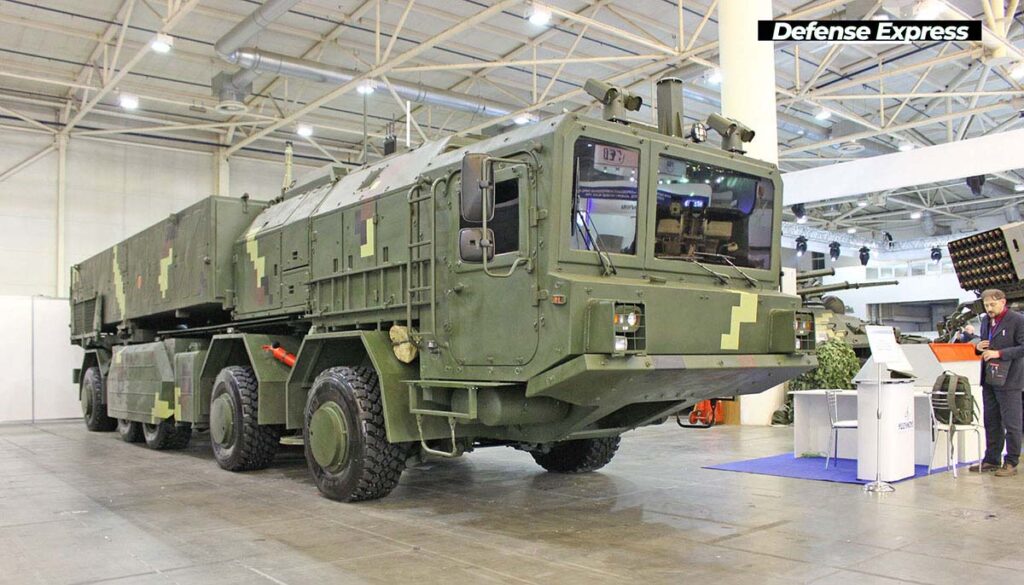
                  Russia has struck the National Academy of Sciences of Ukraine (NAS) in Kyiv on the afternoon of Monday, 28 September. People inside the building are climbing out onto the windows to avoid being burned alive.

                  Since the start of the full-scale invasion, Russia has damaged more than 4,650 educational institutions in Ukraine. Another 423 educational institutions have been completely destroyed, Ukrainian Ombudsperson Dmytro Lubinets reports.

                  The Academy was founded in Kyiv on 27 November 1918. Its first president was the eminent, world-renowned scientist Volodymyr Vernadsky.

                  As of 1 January 2026, the total number of people working at the NAS of Ukraine was 23,982, including 13,003 researchers. Among them are 2,332 doctors of science and 6,435 candidates of science.

                  Volunteers say the world looks away

                  According to Telegram channel "Lachen Writes": "There are injured and dead as a result of Russia's strike on the National Academy of Sciences."

                  Meanwhile, military volunteer Serhii Sternenko, whose fund has purchased 291,502 FPV drones and helped the Ukrainian military shoot down 12,954+ aerial targets, commented on it this way: "Just hell."

                  "The world just watches this. Europe is lifting sanctions on Russian oligarchs. Trump asks Ukraine not to hit Russia's oil refineries. Unpunished evil will come for them too," he wrote.

                  The toll remains unclear

                  Another journalist, Andrii Tsaplienko, who posted a video showing people trying to save themselves, added his own comparison for the drone strike.

                  "Footage reminiscent of 11 September at the World Trade Center," he wrote.

                  Ukrainian President Volodymyr Zelenskyy says a rescue operation is underway: the fire is being extinguished, and people who may have been inside the building are being searched for. He adds that "there will definitely be a response to this from Russia."

                  "And every one of Ukraine's partners must see, from this terror and these strikes, that support for Ukraine is truly support for people's lives, support for the principle that terror must never and nowhere be normalized," he stresses.

                  Russia must answer for all of this and feel real consequences. Thank you to everyone who is helping Ukraine!

                  Ukraine hits railways of Bryansk, Russia’s launchpad for strikes on Kyiv: downed bridge and 28 derailed cars, region’s governor says

                  28 septembre 2026 à 07:13

                  ukraine's bulava drone can now hunt dark—one camera handles day night · post kamikaze “bulava” ukraine news ukrainian reports

                  Ukraine is carrying out strikes on Russia's railways, the acting governor of Bryansk Oblast says. Yegor Kovalchuk claims that Ukrainian drones collapsed part of a bridge and derailed dozens of rail cars across the region, in a post on Telegram.

                  Bryansk is the main launchpad for Russia's drone and ballistic strikes on Kyiv and on the Chernihiv and Sumy oblasts, and its lines likely carry supplies that feed those attacks. For nearly a month, Russian jet-powered drones have been striking Kyiv from the region.

                  Kovalchuk reports damage in three districts but adds that no one was hurt in those drone attacks.

                  The launchpad's railways take hits

                  On the Dyatkovo–Lyudinovo line, a drone attack brought down part of a bridge and derailed 10 cars, Kovalchuk says. In the Unecha district, 18 empty gondola cars derailed. In the Navlia district, a strike damaged the track without stopping trains.

                  Repairs will begin, he notes, once the National Guard has inspected the sites.

                  Russia's campaign dwarfs it

                  Ukraine's strikes on Bryansk are modest beside what Russia is doing to Ukraine's railways. In the first eight months of 2026, Ukraine's state operator logged more than 1,600 attacks on its rolling stock and infrastructure, Oleh Holovashchenko of Ukrzaliznytsia tells DW.

                  Russia has damaged more than 500 locomotives since the invasion, over half of them this year, and has increasingly hunted moving trains to sever the corridors that carry Ukraine's exports and supplies.

                  A drone finds a train near Poland

                  The campaign even reaches Ukraine's western edge. On 13 September, a Russian jet Geran struck the locomotive of a passenger train at the Yahodyn crossing in Volyn, two kilometers from the Polish border.

                  A dispatcher spotted the drone in time to evacuate the passengers, among them former CIA director David Petraeus, and a diplomatic train carrying former British prime minister Boris Johnson had left early.

                  Ukraine outfoxes Russia near Donetsk’s fortress belt with Soviet BTR-60s rebuilt as kamikaze robots, storms a key hub and takes 250 Russian prisoners

                  28 septembre 2026 à 06:40

                  The image shows Russian prisoners of war on the Lyman direction. Source: The 3rd Army Corps

                  Ukraine's 3rd Army Corps has defeated Russia at the key settlement of Nove in Donetsk Oblast by pointing it the wrong way. Russia has poured its reserves into counterattacks on a feint axis and "slept through" the real strike, which took the important hub in the village and closed the decisive third season of the Vivaldi offensive, commander Andrii Biletskyi said.

                  Vivaldi is Ukraine's counteroffensive aimed at disrupting Russian forces' plans to encircle the fortress-belt cities in Donetsk Oblast from the north and south. Among them are Sloviansk, Kramatorsk, Druzhkivka, and Kostiantynivka. These cities have helped hold back Russian forces since 2014.

                  Over its first two "seasons," the 3rd Army Corps and attached units have retaken more than 125 square kilometers, half of it de-occupied outright, and inflicted more than 3,000 casualties on Russian forces.

                  The operation in Nove was its "third season," Biletskyi said, the turning point of the whole operation. The corps liberated Nove, Ridkodub, and Katerynivka and restored control of Karpivka and Novomykhailivka, adding 51 square kilometers, bringing the total liberated since the offensive began to 176. Ukrainian forces have taken 250 Russians captive.

                  The feint drew Russia's reserves

                  The victory, by Biletskyi's account, was won by deception.

                  "The enemy was convinced the main direction of the strike was Shandryholove–Zelena Dolyna," he revealed, and it burned its reserves counterattacking there.

                  He added that the Russians slept through the real strike, which was concentrated on taking Nove. The village was the prize, a key Russian hub on the bridgehead, ringed by heights that command the surrounding ground.

                  "Who controls the heights holds the initiative," Biletskyi said.

                  By spending its reserves on the wrong axis, he suggested, Russia had little left to hold Nove when the real assault arrived.

                  Old APCs crack the defense

                  To break the strongest fortifications, the corps said, it used a homemade weapon: Soviet BTR-60 armored carriers converted into remote-controlled kamikaze robots, driven into Russia's toughest positions and detonated.

                  In 2024, the Ukrainian forces received another local upgrade of the post-Soviet BTR-60 wheeled armored personnel carrier. This time it was fitted with the BM-7 "Parus" turret, known from the BTR-4 "Bucephalus" The main armament consisted of a 30 mm ZTM-1 automatic cannon paired with a 7.62 mm KT-7.62 universal machine gun.

                  Additional armament might include a set of four anti-tank guided missile launchers mounted on the sides, or two launchers and a 30 mm KBA-117 automatic grenade launcher. As a result, this upgraded BTR-60 saw a significant improvement in firepower, although the vehicle still has very weak armor and less-than-optimal access to the troop compartment.

                  It was the latest of the corps' robotic improvisations in Vivaldi, which have included air-dropped ground drones and Bullspike grenade-launcher-armed UGVs. They are Bulgarian hand-held, rocket-propelled anti-tank grenade launchers based on the Soviet RPG-22, which the Bulgarian defense industry previously produced under license.

                  The corps has leaned on such machines throughout the operation to keep its infantry out of the deadliest fights.

                  Whole units surrender

                  As the defense broke down, Russians gave up in groups, including officers, pilots, and artillery soldiers, the corps said. The 3rd Assault Brigade carried much of the fighting, while the 3rd Border Guard Detachment, named for the fallen Colonel Yevhen Pikus, retook Ridkodub and dug in on the new line, with the 10th Mobile Border Guard Detachment "DOZOR" taking an active part in the assault.

                  New Vivaldi tactic: Ukraine’s ground robots, each carrying two Bullspike grenade launchers, attack Russian positions and then detonate inside their shelters

                  27 septembre 2026 à 10:43

                  The image shows a Ukrainian soldier standing next to an unmanned ground robotic vehicle. Source: The General Staff

                  Ukraine has employed a new tactic during its major Operation Vivaldi in Donetsk Oblast. During the 3rd Army Corps' offensive, fighters from the world's first experimental unit of unmanned ground-strike vehicles, "NC13", have upgraded their kamikaze ground drones with grenade launchers.

                  Vivaldi is the counteroffensive the corps is running near Lyman in northern Donetsk Oblast. Over its first two "seasons," the 3rd Army Corps and attached units have retaken more than 125 square kilometers, half of it de-occupied outright, and inflicted more than 3,000 casualties on Russian forces.

                  Through this offensive operation, the 3rd Army Corps, commanded by Brigadier General Andrii Biletsky, disrupted Russian forces' plans to encircle the fortress-belt cities in Donetsk Oblast from the north and south. Among them are Sloviansk, Kramatorsk, Druzhkivka, and Kostiantynivka. These cities have helped hold back Russian forces since 2014.

                  From intensive training to the world-first operations

                  The NC13 unit has been through Bakhmut, Avdiivka, and other of the toughest sections of the front.

                  Among its achievements: the world's first robotic assault carried out without infantry involvement, resulting in the capture of two Russian soldiers, a sabotage operation in the enemy's rear — blowing up a crossing and disrupting an offensive — using UGVs alone, and Ukraine's first fully robotic defense of a position for 45 days without involving infantry.

                  "No one in the history of warfare has used this kind of tactic before," the soldiers commented on the offensive.

                  The defenders say that a lack of combat experience is no barrier to joining the unit. Every recruit goes through an intensive training course led by experienced instructors.

                  Grenade launchers were developed based on the Soviet RPG-22

                  During the operation, UGVs equipped with two Bullspike grenade launchers attacked Russian positions, then detonated directly inside their shelters. The occupiers believed they were being attacked by an entire assault group. In reality, they were being torn apart by robots from the 3rd Assault Corps.

                  Ukrainian troops armed ground robots with grenade launchers and sent them to storm Russian positions during Operation Vivaldi near Lyman

                  The robots fired into Russian shelters at close range, then detonated inside them
                  🎥 3rd Army Corps, NC13 Unit pic.twitter.com/rjekIYxPbA

                  — Euromaidan Press (@EuromaidanPress) September 27, 2026

                  "Yes, the UGVs carry out three tasks at once: they strike, they exert psychological pressure, and they clear the position. And most importantly, this happens without risk to our infantry," the force says.

                  The Bullspike grenade launchers were developed based on the Soviet RPG-22 anti-tank grenade launcher, which was previously manufactured under license by a Bulgarian defense company.

                  According to data from the manufacturer's website, the Bullspike RPG has a maximum aimed firing range of 350 meters, a direct-fire range of 150 meters, and armor penetration of 400 mm, Militarnyi reports.

                  The total weight of the launch unit, together with the 72.5 mm PG-22 grenade, is 3.4 kg. The length of the launcher is 780 mm.

                  The manufacturer states that the Bullspike-AT round is designed to destroy tanks, self-propelled artillery, and other armored vehicles, as well as to target enemy personnel located in bunkers, field fortifications, and urban-type brick fortifications.

                  The robots were controlled by operators from a safe shelter dozens of kilometers from the line of contact.

                  Earlier, for the first time in the world's history, the 3rd Army Corps dropped ground robots behind Russian lines from the air. The soldiers behind the mission say their heavy drones delivered kamikaze unmanned ground vehicles more than 10 kilometers into the Russian rear during the "second season" of Operation Vivaldi, letting Ukrainian troops flank them and clear another 40 square kilometers.

                  Ukraine destroys record 76 Russian air-defense systems this month, losses analyst says Russia “will never be able to restore”

                  26 septembre 2026 à 12:21

                  Russian Buk-M1 air defense system as seen by Ukrainian drone before strike. Screenshot from video: Robert "Magyar" Brovdi on Telegram

                  Ukraine has destroyed a record 76 Russian air-defense systems this month, and September is not over. The tally beats a record that had stood since July 2023 and reflects a systematic Ukrainian campaign to hunt down Russia's air defenses, opening the skies over occupied territory and inside Russia, the analyst Oleksandr Kovalenko said on Telegram.

                  Ukraine is methodically peeling apart Russia's layered air defense, and September has been its worst month yet: 76 systems destroyed, past the 73 lost in July 2023, by Kovalenko's count, with days still to go.

                  It is part of a campaign in which Ukrainian drones and special forces have hunted Russian radars and missile launchers across occupied territory and Crimea, and each one destroyed opens a corridor for the next strike.

                  The record falls with days to spare

                  Kovalenko credited Ukraine's Defense Forces' sustained hunt for Russian anti-air, which he said pays off twice: it clears the defenses that would otherwise stop Ukraine's strikes, making later attacks on occupied territory and on Russia itself more effective.

                  Each kill opens a corridor

                  Ukrainian drone and special-operations units have picked off Pantsir, Tor, Buk, and pieces of S-300 and S-400 systems across occupied territory and Crimea, sometimes several in a single night throughout 2026.

                  As Russia pulls its scarce long-range systems back to guard Moscow, fewer are left to cover occupied Ukraine, widening the openings for the next wave of Ukrainian strikes.

                  Russia cannot replace the losses

                  Over the full-scale war, Kovalenko said, Russia has lost more than 1,673 air-defense systems of every kind, from radars to surface-to-air missiles and self-propelled anti-aircraft guns.

                  That, he argued, is a level Moscow can no longer make good with a defense industry already stretched thin by the war.

                  "Such a quantity of equipment Russia will never be able to restore and compensate," he thinks.

                  He added that this means it would no longer be able to return to the pre-war level of closing the sky, neither technically nor technologically."

                  Asked if Ukraine would send troops to defend NATO, Zelenskyy offered something else: know-how to stop drones now reaching its neighbors

                  26 septembre 2026 à 12:03

                  Ukraine, the country under daily Russian attack, is offering to help defend others from it. President Volodymyr Zelenskyy says Ukraine will share its drone-defense experience with partners facing Russia's hybrid and drone attacks, NATO members and non-members alike, through its "Drone Deal" agreements, according to UNIAN.

                  Russia's hybrid and drone attacks are spreading past Ukraine, to Moldova, Germany, and Romania, and Kyiv is casting itself as the country that knows how to counter them.

                  Asked whether he would send Ukrainian troops to defend NATO members, Zelenskyy instead pointed to the drone agreements, bilateral pacts open to partners in or out of NATO, that pair weapons sales and joint production with the transfer of Ukraine's combat experience.

                  Ukraine had signed such deals with nine countries by early August and is negotiating more than a dozen others, becoming, as its officials put it, "a security provider for Europe."

                  The attacks spread past NATO

                  "Russia will continue hybrid attacks against various countries, and not only NATO members," Zelenskyy said, pointing to drone incursions over Moldova, which belongs to neither NATO nor the EU.

                  Those crossings have become routine: Moldova logged 39 Russian drone incursions in the first eight months of the year, and on 24 September, drones entered both Moldova and Romania as Poland scrambled fighters. Ukraine has offered help, Zelenskyy said, "above all to those countries that help us during the war."

                  The Drone Deal shares experience

                  The Drone Deal agreements cover the sale of drones and missiles and joint production, he added, "but also an exchange of experience."

                  He offered a precedent: "How we sent our specialists to the Middle East, how we helped protect critical infrastructure." Sharing how to defend against drones, he said, is "precisely part of this exchange."

                  Ukraine turns security provider

                  Zelenskyy did not answer the question on whether Ukraine would put troops into NATO countries under attack, steering instead to what Ukraine can already give, its hard-won experience of fighting the very weapons now reaching its neighbors' skies.

                  Combat shows speed alone can’t catch Russia’s jet-powered drones, despite eight Ukrainian makers’ assurances. So why can’t they stop them?

                  26 septembre 2026 à 11:48

                  money engineering what stands between ukraine russia's fastest drones zelenskyy says · post russia’s new “geran-4 seeker” shahed variant geran-4 news ukrainian reports

                  Last winter, eight Ukrainian companies told the defense minister that their interceptors were ready to knock Russia's jet-powered drones out of the sky. They were not. A fast-flying drone is the easy part of the design, while combat testing exposed what the interceptors lacked in key features to chase an evading jet-powered Geran, presidential adviser Serhii Beskrestnov, known as Flash, said in an interview with NV.

                  Ukraine's answer to Russia's fast, hard-to-stop jet drones was supposed to be cheap interceptors, and last winter, their makers said they had them. But a jet Geran flies 450 to 500 kilometers an hour, up from the Geran-3's 320, varies its speed to slip past defenses, and will dodge harder once interceptors appear.

                  Catching one takes maneuverability, machine-vision target-lock, and fuel to loiter and search, not just speed, Flash said. Ukraine's cheap interceptors have already downed about half of Russia's slower drones, but the jet-powered systems have stayed a step ahead.

                  Eight makers said "ready"

                  At a meeting last winter called by Mykhailo Fedorov, then-defense minister, all eight interceptor makers reported the same thing: "everything's ready, the solution exists, it flies, we tested it, speed is sufficient," Flash recalled.

                  The mistake, he said, was that no one checked on them week to week. There were also too few jet Gerans in the skies then to test against.

                  "On the range, they showed: it flies. That was the problem," explained Flash.

                  Speed is the easy part

                  The engines are not the obstacle, Flash continues, since they can be bought abroad, and neither is a plane that flies fast in a straight line. The hard part is a machine agile enough to chase a jet-powered Geran, which is far more maneuverable than the propeller kind and will start changing altitude and throwing evasive maneuvers once interceptors appear.

                  Because an operator's aim frays at such speeds, he said, the decisive pieces are automatic target capture by machine vision and automatic terminal guidance.

                  "Building a construction that just flies fast is the easiest part," he added.

                  Mass orders must wait

                  That is why Ukraine cannot simply order thousands to blanket the country, Flash said: it first needs a proven design that works for any crew, from Security Service specialists to territorial defense soldiers, and is simple to launch, operate, and maintain.

                  Once such a sample exists, he said, scaling up is only a question of money. Meanwhile, the work is moving: a Ukrainian interceptor recently notched its first kills against jet Gerans and is heading toward mass production.

                  Pentagon brings in Ukrainian jamming maker to do to its candidate drones what Russia does to Ukraine’s, and see which survives

                  26 septembre 2026 à 11:11

                  The testing of drones at Fort Carson in Colorado. Source: Unwave

                  A Ukrainian jamming-systems maker went to a US Army base to do to candidate drones what Russia does to Ukraine's: flood them with electronic warfare (EW) and see which survives. Unwave company has tested four of its EW systems at Fort Carson in Colorado as part of the Pentagon's Drone Dominance program and has been asked to continue supporting it.

                  The Pentagon is using Drone Dominance to choose the drones it will buy at scale, more than 200,000 by 2027, and it needs to know they work under jamming, the condition that decides most drone fights in Ukraine.

                  So it brought in a Ukrainian electronic-warfare maker to supply that jamming, turning Ukraine's hard-won counter-drone experience into the test bench for American hardware. It follows a pattern in which US defense efforts adopt Ukrainian battlefield models.

                  Ukraine brings the jamming

                  From 24 August to 2 September, Unwave's team worked at the base, running scenarios that pitted its jammers against drones tasked with protecting fixed positions, moving vehicles, and infrastructure.

                  The crews operated from three separate positionsat short and long range to compare how drones from different manufacturers held up.

                  "Our mission was to create conditions as close to the real battlefield as possible," the company said, adding that it judged the tasks successfully completed but could not detail the scenarios for security reasons.

                  In all, 14 drone makers and three electronic-warfare firms took part.

                  Four systems on show

                  Unwave brought four:

                  • VIHA, which it calls Ukraine's first tactical-operational jammer for directed suppression of drones
                  • BOOMBOX, built to shield troops and positions from FPV and drop-drones
                  • SHATRO, for vehicles
                  • CHOVEN-2, a multi-frequency amplifier for cars.

                  Its participation was organized by Revenant Technologies, a US firm that specializes in bringing combat-proven defense tech to the American market, and helped design the scenarios using its ties to Ukraine and frontline experience.

                  A foothold in the US market

                  For Unwave, the value is a door into the alliance's security architecture. The event showed the importance of Ukrainian, American, and European specialists testing together, the company said, and "such interaction will help integrate Ukrainian technologies into the security architecture of our allies."

                  • ✇Euromaidan Press
                  • Built by Ukrainian officers from real combat, DWAC course is now “NATO Selected”
                    A drone-warfare course written by Ukrainian officers from real combat has earned NATO status. The English-language Drone Warfare Awareness Course, built on Ukraine's war experience, is now "NATO Selected" and has been taught to officers from more than 10 countries, the General Staff said. Ukraine's combat experience is flowing into NATO's classrooms, and the alliance is starting to treat Kyiv as a teacher rather than only a recipient. It follows a broader shift of Ukrainian lessons into
                     

                  Built by Ukrainian officers from real combat, DWAC course is now “NATO Selected”

                  26 septembre 2026 à 08:50

                  A Ukrainian soldier with a ground robot. Source: The 12th Special Forces Brigade Azov

                  A drone-warfare course written by Ukrainian officers from real combat has earned NATO status. The English-language Drone Warfare Awareness Course, built on Ukraine's war experience, is now "NATO Selected" and has been taught to officers from more than 10 countries, the General Staff said.

                  Ukraine's combat experience is flowing into NATO's classrooms, and the alliance is starting to treat Kyiv as a teacher rather than only a recipient. It follows a broader shift of Ukrainian lessons into allied curricula.

                  Combat lessons become a course

                  The course came out of Ukraine's International Peacekeeping and Security Center, whose instructors at its "Partnership for Peace" training center wrote the syllabus, formally titled "Fundamentals of the Combat Use of Unmanned Systems", based on the Armed Forces' own experience.

                  In November 2025, the Ukrainian team presented it at a seminar in Sweden attended by NATO commanders and analysts.

                  The next year, it passed international trials with officers from more than a dozen countries and earned its NATO Selected mark, a recognition that it meets Alliance standards and can be offered to member-state officers, short of the full accreditation the center is still pursuing.

                  Sweden and Finland lend a hand

                  Two Nordic partners helped get it there. Sweden's SWEDINT began working with the center in 2024, teaching international methods for course development and preparing courses for accreditation.

                  Finland's FINCENT joined in 2025, sharing insights on building a military education system and assessing training needs. In the fall of 2026, delegations from both countries visited the center and signed plans for further joint work.

                  Ukraine teaches the Alliance

                  The course is one piece of a wider reversal. Ukrainian officers have trained Polish and German counterparts in drone and electronic warfare, and at the joint NATO-Ukraine center in Poland, they have set their battlefield practice against NATO doctrine, exposing where the Alliance's assumptions no longer fit in a modern war.

                  War’s next tech leap: Former Ukraine’s defense minister behind “Army of Drones” is now creating new “Army of Robots”

                  26 septembre 2026 à 08:33

                  The person who built Ukraine's "Army of Drones" is now building an "Army of Robots". Myhailo Fedorov, the former defense minister, has launched a private-sector push to robotize the war, wanting machines to take the deadliest jobs, evacuating the wounded, laying and clearing mines, and fighting, so soldiers come home, he wrote, announcing the effort at the IT Arena conference in Lviv.

                  The pitch rests on a track record. Fedorov's Army of Drones, launched in 2022, helped make drones the weapon behind more than 95 percent of Ukraine's battlefield hits. Over 700 makers now building them, and he is betting robotization is the next such leap.

                  Army of Robots is meant to be an ecosystem, not a company: investing in defense-tech firms, standing up R&D, testing with troops, and scaling fast, whatever works. Fedorov is running it from outside government, having left the defense ministry in July and started building a defense-tech company backed by Palantir chief Alex Karp.

                  Robots take the deadliest jobs

                  Fedorov's vision is a battlefield where machines go first. A sensor spots a threat, then a robot enters the danger zone, he says. Humanoid robots would carry ammunition and pull out the wounded, lay and clear minefields, scout, hold positions, and strike, taking the roles that today cost soldiers their lives. For now, it is a vision more than a fielded capability: Fedorov is describing where he wants the battlefield to go, not a robot force already in the fight.

                  The Army of Drones sets the model

                  The aim, Fedorov says, is to gather the best engineers, combat experience, and capital and point them at one goal: making robots fight instead of people. The obstacle is Russia, which he said has learned to quickly copy and scale military technology, so Ukraine must keep inventing the next cycle before the enemy does.

                  "Russia will stop only when we can break its backbone," he says, arguing that it will take Western capital, world-class engineers, and private initiative.

                  Russia’s air defenses can’t protect all its strategic sites once Ukraine’s ballistic missiles are ready, expert says

                  26 septembre 2026 à 08:16

                  Ukraine ballistic missile program

                  Russia's best defenses against ballistic missiles ring Moscow, leaving much of the rest of the country exposed to Ukraine's growing missile arsenal. That concentration is why Ukraine's homegrown ballistic missiles could cause Russia real trouble beyond the capital, even as Russia's air defenses show gaps elsewhere, expert Vadym Kushnikov says, Ukrainian Radio reports.

                  Russia has the systems to stop ballistic missiles, Kushnikov continues, but it has massed the best of them around Moscow: the S-500 "Prometey", with interceptors adapted from the A-135, the Soviet-era shield built to defend the capital from missiles.

                  Other regions, by his assessment, are left more open to Ukraine's massed and combined strikes. That matters now that Ukraine's own ballistic missile, such as the Sapsan, is entering combat.

                  The best defenses ring Moscow

                  "If you analyze the characteristics, Russia today has concentrated its most modern S-500 complexes, with 77N6-N and 77N6-N1 interceptors, in Moscow Oblast," Kushnikov says.

                  Elsewhere, he said, Russia is short of air-defense complexes, the S-400 among them, a shortfall he said is visible in satellite imagery.

                  Ukraine's ballistic program grows

                  Ukraine's deep-strike arsenal has been shifting from foreign-supplied systems to homegrown ones. Alongside its Neptune and Flamingo cruise missiles, it now fields the Sapsan, an Iskander-class ballistic missile with a range of about 500 kilometers, which President Volodymyr Zelenskyy confirmed was in combat late last year.

                  A domestic ballistic missile will let Ukraine strike deep inside Russia without waiting for a Western green light.

                  Production faces hard hurdles

                  Building them is the hard part. Ukraine's rocket-engineering tradition runs deep, Kushnikov suggests, but its production sites, mostly in the east, are direct targets of Russian strikes.

                  The missiles also depend on components that are difficult to make, chiefly solid-fuel rocket engines and the guidance that steers a warhead flying at five times the speed of sound along a ballistic arc.

                  "The combination of all these factors is exactly what our engineers have worked on for years, building the Ukrainian ballistic shield," he adds.

                  • ✇Euromaidan Press
                  • Ukrainian soldiers solve drone-delivery problem US military has chased for three decades
                    Ukrainian soldiers have built a drone that carries a combat ground robot into battle and drops it where needed, a trick the US has pursued but never fielded. The Alter Ego battalion of the 93rd Mechanized Brigade has paired a bomber drone with a purpose-built robot, the Desantnyk, and took it from idea to combat in 10 days, the Brave1 defense cluster said. The system answers a problem that has long hobbled ground robots: getting them to the fight over mined, cratered terrain they cannot
                     

                  Ukrainian soldiers solve drone-delivery problem US military has chased for three decades

                  25 septembre 2026 à 16:29

                  The purpose-built robot Desantnyk. Source: Brave1

                  Ukrainian soldiers have built a drone that carries a combat ground robot into battle and drops it where needed, a trick the US has pursued but never fielded. The Alter Ego battalion of the 93rd Mechanized Brigade has paired a bomber drone with a purpose-built robot, the Desantnyk, and took it from idea to combat in 10 days, the Brave1 defense cluster said.

                  The system answers a problem that has long hobbled ground robots: getting them to the fight over mined, cratered terrain they cannot cross on their own.

                  A drone carries the robot dozens of kilometers behind the lines and drops it precisely, in a pairing engineers call a "marsupial", one carrier delivering another. The US worked on such systems for more than 30 years, Brave1 said.

                  And it is not alone: the 3rd Army Corps has been air-dropping robots behind Russian lines in its Vivaldi offensive.

                  A drone carries the robot in

                  The Desantnyk is a compact wheeled platform. Alter Ego built a way to release it accurately from a heavy bomber drone, dropping it well beyond the range a ground robot could reach on its own. It lands deep in the enemy rear and drives on to its target. The point is to spare the robot the most dangerous, exposed leg of the journey.

                  Confirmed kills follow fast

                  According to Brave1, just 10 days passed from the idea to its first combat use, and the Desantnyk has already carried out confirmed strikes: the unit used it to destroy Russian shelters and troops. Only a handful of Ukrainian units have mastered the tactic so far.

                  Brave1 moves it to production

                  The defense cluster, a state platform for scaling battlefield inventions, said it took notice of the Desantnyk and helped the battalion find a manufacturer to move it from prototypes to serial production and out to other units.

                  Seventeen makers head to Michigan to test bomber drones for the Pentagon, and Ukrainian firms are back in field, some under US partners

                  25 septembre 2026 à 13:58

                  Ukrainian Nemesis heavy drone. Source: Militarnyi

                  Ukrainian drone makers are getting another shot at a Pentagon contract, this time for bomber drones. Seventeen companies, including Ukrainian firms and Western partners fielding Ukrainian designs, will test bomber drones at Camp Grayling in Michigan in October, the next stage of the Pentagon's Drone Dominance program, Defender Media reported.

                  The Phase 2.5 Bomber Qualifier is the latest round of the Pentagon's drive to buy combat-tested drones at scale, and Ukrainian makers are again in the field, some through US-registered partners, because Pentagon rules bar direct sales from foreign firms.

                  This time, the target is bombers, the drones that drop munitions on what is below them.

                  Seventeen makers head to Michigan

                  The contest runs at Camp Grayling, a Michigan training range, and organizers call it the hardest and fastest-paced stage of the program yet. Each company must bring at least six fully built systems.

                  The testing splits into two parts: a Bomber Qualifier, which the makers conduct themselves, and a Bomber Gauntlet run by US soldiers. Organizers have not published details of a third mission. Winners of the wider program earn Pentagon supply contracts.

                  Ukrainian bombers make the list

                  The invited firms include UFORCE USA Services, Grim Tech, Gurzuf Defence, UA Defense Tech, Skycutter, and UDD Tech Corp. Which models they will bring is not yet clear.

                  UFORCE is known for its Nemesis bombers. Grim Tech showed a light bomber, the Grim-18, at the MSPO defense expo in Poland this month, and Gurzuf builds heavy bombers, including the Ayudag-6, which recently set a Ukrainian payload record for multirotor drones at 130 kilograms.

                  A second try after a US sweep

                  In the program's last phase, the Pentagon picked five winners in each of two categories, and all were American, though a Ukrainian firm had reached the second round and, by industry accounts, Ukrainian designs were incorporated into some Western entries. For Ukraine's makers, the bomber round is another chance to turn battlefield-proven hardware into a US contract.

                  • ✇Euromaidan Press
                  • Ukraine is opening access to 5 million frames of real combat to 12 British weapons makers to train AI
                    Ukraine is opening its battlefield data to British weapons makers so they can train their AI on a war no one else has fought. Up to 12 British defense companies will join Avengers Labs, Ukraine's platform for training AI models for drones and robots on real combat data, the Defense Ministry said. Ukraine's combat data is a resource no other military has access to. British firms get to build and test their AI on battlefield data they could not access elsewhere, while Ukraine gets their t
                     

                  Ukraine is opening access to 5 million frames of real combat to 12 British weapons makers to train AI

                  25 septembre 2026 à 13:17

                  A Ukrainian drone is approaching a Russian target. Source: The Ukrainian Defense Ministry

                  Ukraine is opening its battlefield data to British weapons makers so they can train their AI on a war no one else has fought. Up to 12 British defense companies will join Avengers Labs, Ukraine's platform for training AI models for drones and robots on real combat data, the Defense Ministry said.

                  Ukraine's combat data is a resource no other military has access to. British firms get to build and test their AI on battlefield data they could not access elsewhere, while Ukraine gets their technology and joint development of AI for unmanned systems.

                  What is Avengers Labs?

                  More than 30 Ukrainian companies already use the Avengers Labs, and three of their systems have reached the battlefield. It is part of the AI push former Defense Minister Mykhailo Fedorov built around Ukraine's data.

                  The terms are built around control. The British companies can develop and test their own AI models within Avengers Labs, the ministry said, but the data remains within the platform's protected environment, with no way to download it or take it out. That lets Ukraine share the value of its war experience, the annotated record of real combat, without surrendering the record itself.

                  The platform was developed by the Center for Innovation and Development of Defense Technologies, the team that created the DELTA combat system. At the core of Avengers Labs is an annotated dataset of 5 million frames collected on the battlefield. Most of this material comes directly from the DELTA combat system and is continually supplemented with new data of practical value in combat conditions.

                  Britain trains for a real war

                  In March 2026, Ukraine announced the establishment of a system of military technology competence centers. The first in the network was intended to be the Defense AI Center "A1," which would focus on AI solutions.

                  The AI center is being launched with support from the UK. Its main tasks were planned to be:

                  analysis of combat data;

                  forecasting enemy actions;

                  development of autonomous systems;

                  new management/control tools

                  A separate center was said to have been established for each key direction of the war: drones, mid-range strike, deep strike, artillery, and others.

                  Year ago, only 12 Ukrainian brigades could order weapons online. Now, 500 units participate in revolutionary program that has delivered 1.3 million drones to front

                  23 septembre 2026 à 14:11

                  The image shows a Ukrainian soldier standing next to an unmanned ground robotic vehicle. Source: The General Staff

                  A year ago, 12 Ukrainian brigades could order their own weapons off a state marketplace. Now, more than 500 units can. DOT-Chain Defense, which lets frontline units order necessary supplies using state funds or bonuses with just a few clicks, has scaled across most of Ukraine's Defense Forces, the Defense Ministry said.

                  The platform is the delivery backbone of Ukraine's soldier-led procurement revolution. It lies in a shift in the philosophy of defense procurement. Ukraine is abandoning the Soviet principle of "fight with whatever is handed down from above" and transitioning to a market-based model that centers on the choice of the individual soldier.

                  Over its first year, it has put more than 1.3 million drones and other systems into units' hands, worth about $1.9 billion, and the orders show what this war runs on: 84 percent are drones, with electronic-warfare gear and ground robots making up most of the rest. It is also the engine behind the points-for-kills system that lets units bank credit for battlefield results and spend it on their own equipment.

                  Access jumps from 12 to 500 units

                  The growth has been steep. DOT-Chain Defense is now used by combat units across the armed forces, the National Guard, the border and special transport services, the police, the Security Service, and Defense Intelligence, says Deputy Defense Minister Mstyslav Banik.

                  Assault regiments and the "Drone Line" project have joined, ordering unmanned systems to their own specifications.

                  Drones dominate the orders

                  By the ministry's count, electronic-warfare systems make up 8.6 percent of everything ordered, ground robotic complexes 7.2 percent, and ammunition a sliver at 0.2 percent.

                  The gear, worth about $1.9 billion, came both through direct marketplace purchases and through the "Army of Drones. Bonus" program, the points system tied to the same platform.

                  The US copies the model

                  The approach has drawn imitators. The US has launched its own Amazon-style marketplace for military drones, explicitly modeled on Ukraine's Brave1 Market and DOT-Chain Defense. For Ukraine, the payoff is data: a running record of which weapons work on which part of the front, which the state uses to scale up what performs.

                  ❌