Vue normale

  • ✇Euromaidan Press
  • Ukraine contracted $8 billion in drones this year. In-stock ones reach units in nine days
    Ukraine's Defense Procurement Agency contracted for about $8 billion worth of unmanned aerial vehicles in the first half of 2026. It is double the figure for the same period last year, Ukraine's Defense Ministry said.  Purchases go partly through the state weapons marketplace, DOT-Chain Defense, where combat units select the systems they need with budget funds, and the agency handles contracts, payments, and logistics, bringing the average delivery time for in-stock items d
     

Ukraine contracted $8 billion in drones this year. In-stock ones reach units in nine days

17 juillet 2026 à 15:36

Geran-3 jet-powered Russian attack drone.

Ukraine's Defense Procurement Agency contracted for about $8 billion worth of unmanned aerial vehicles in the first half of 2026. It is double the figure for the same period last year, Ukraine's Defense Ministry said. 

Purchases go partly through the state weapons marketplace, DOT-Chain Defense, where combat units select the systems they need with budget funds, and the agency handles contracts, payments, and logistics, bringing the average delivery time for in-stock items down to 9 days.

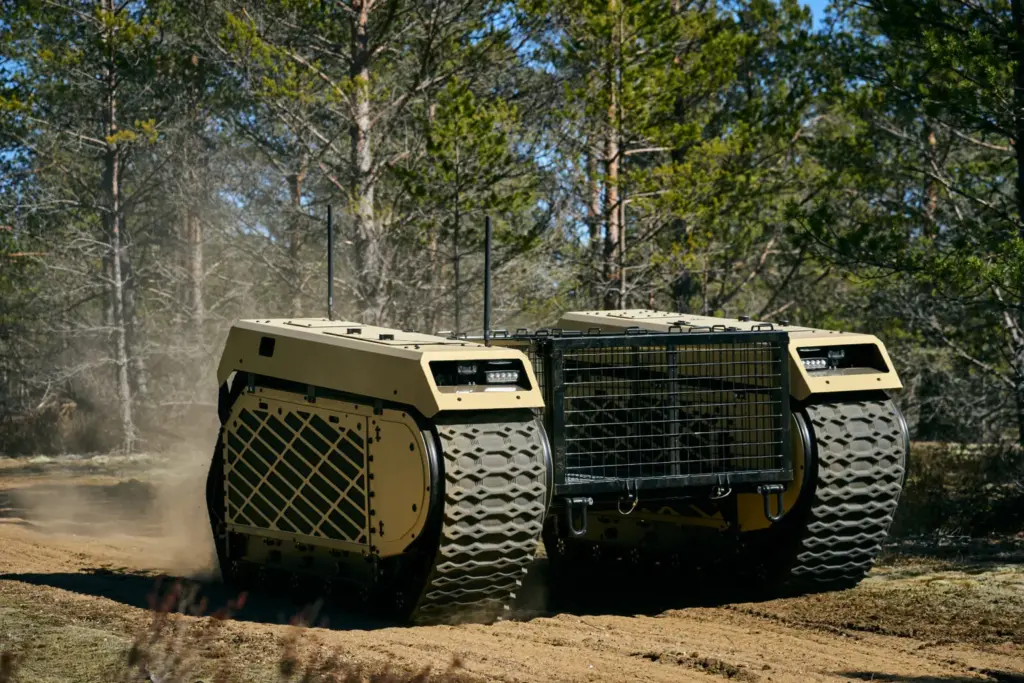
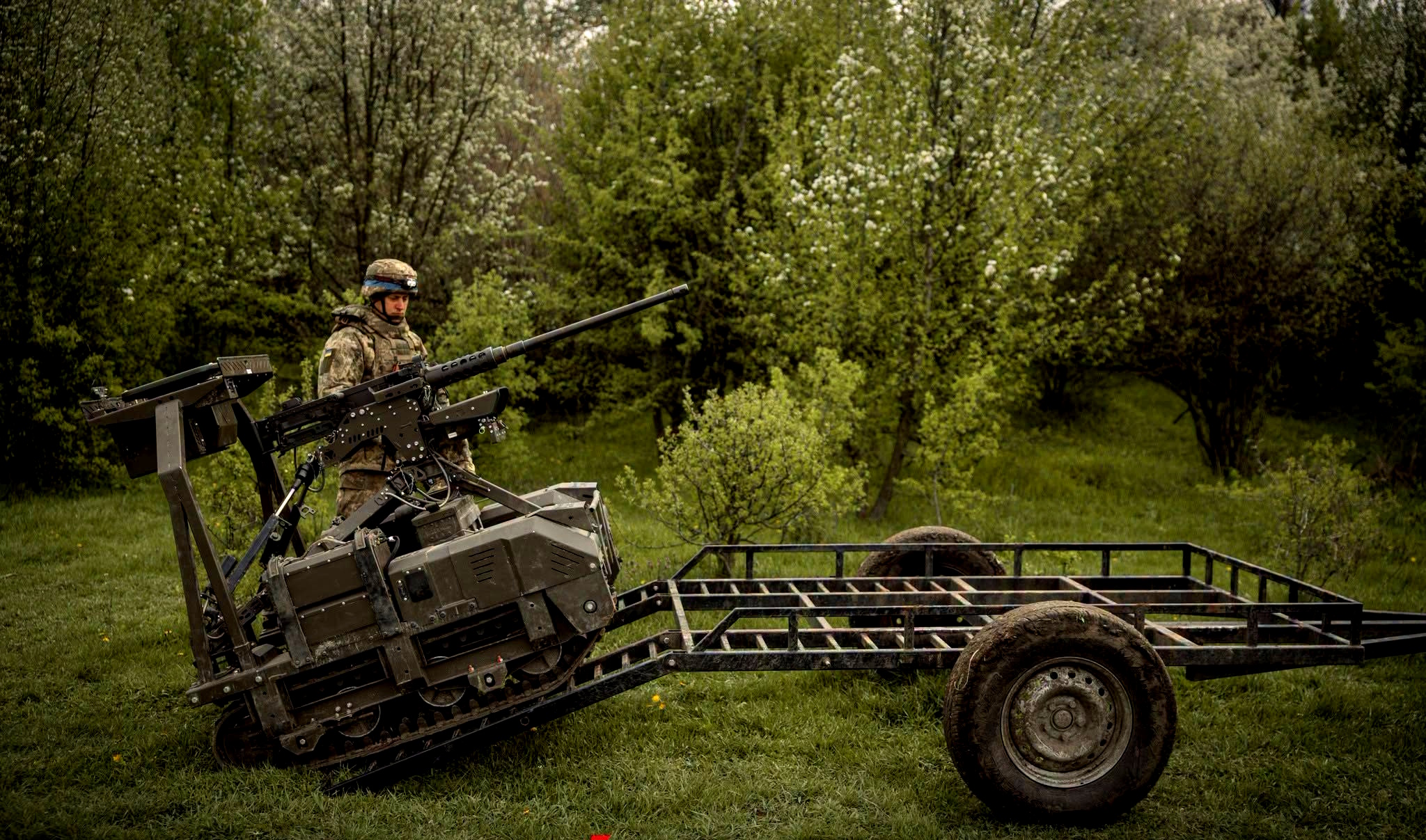
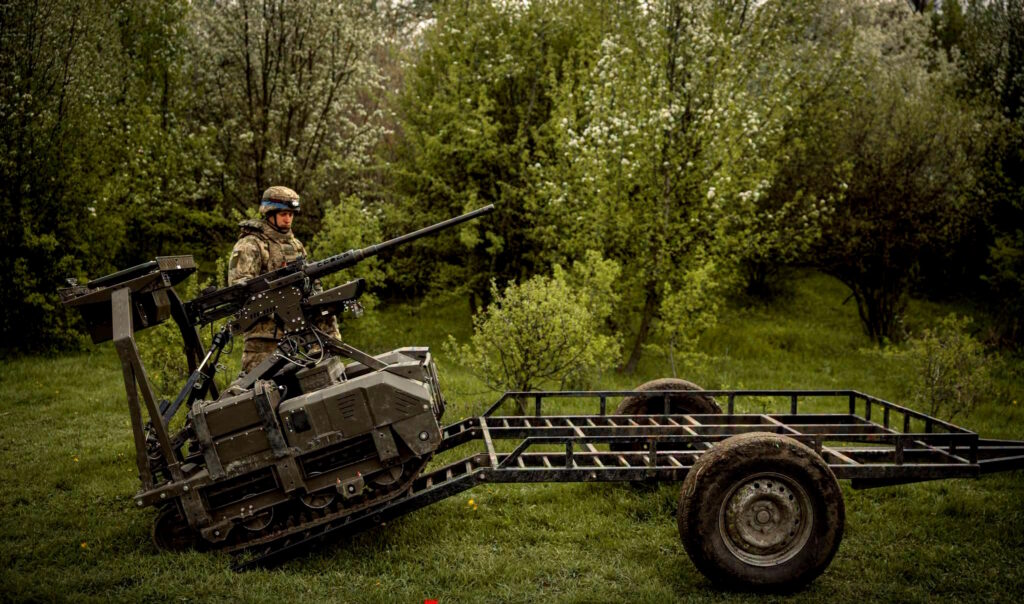
Ukraine received 1,028 ground robots and over $790 million in equipment through the same family of systems by mid-2026. The $8 billion in drones is the aerial side of the same overhaul, and it doubled year-on-year.

Battlefield data decides what gets bought

In March, the Defense Ministry introduced a procurement approach that bases drone demand on battlefield data rather than human judgment, which it says minimizes subjectivity and reduces the risk of corruption.

The algorithm is specific. Combat data from Ukraine's digital systems — eBaly, DOT-Chain, Brave1 Market, DELTA, and Mission Control — generates a ranking of unmanned systems by real performance. The General Staff, on units' requests, uses that ranking to set the list of systems to buy, defining quantities and types directly. The agency then contracts what the list names.

The point of the loop is that the state buys only drones that work, hit targets, and have proven themselves at the front, per the Defense Ministry.

It is the same eBaly performance system that has delivered more than 181,000 drones, robots, and other items to frontline units in 2026, with units ordering equipment based on points earned for confirmed battlefield results. Battlefield data, not procurement lobbying, determines market allocation.

Competitive tenders cut costs, and one contract saved 16%

For part of the drone fleet, the agency runs closed competitive tenders based on tactical-technical specifications from the General Staff, which widens the field of participants.

That approach has a track record. The same competitive method applied to long-range 155mm ammunition achieved savings of over 16%. It is the reform-and-savings logic that outgoing Defense Minister Mykhailo Fedorov made central to his tenure.

Also, the Defense Ministry, together with the Cabinet and the procurement agency, introduced a mechanism to adjust contract prices for fiber-optic drones, which kept contracting and the supply of that type running despite a sharp global rise in optical fiber prices. Fiber-optic drones cannot be jammed because they trail a physical cable, making them one of the most sought-after systems on the front.

  • ✇Euromaidan Press
  • Fedorov breaks his silence: Ukraine’s army chief Syrskyi gave him an ultimatum—then blocked his reforms
    Outgoing Defense Minister Mykhailo Fedorov used a briefing on 16 July to say Ukraine's top military command blocked his reforms and that Commander-in-Chief Oleksandr Syrskyi handed him an ultimatum, Militarnyi reported. He said he had pushed to replace both Syrskyi and General Staff chief Andrii Hnatov, and that the General Staff spent months refusing to sign off on his changes. He spoke a day after confirming he was leaving the post. Ukraine has spent the war rebuilding it
     

Fedorov breaks his silence: Ukraine’s army chief Syrskyi gave him an ultimatum—then blocked his reforms

16 juillet 2026 à 08:51

fedorov breaks silence ukraine's army chief syrskyi gave ultimatum—then blocked reforms · post mykhailo during briefing 16 2026 михайло федоров під час брифінгу липня року фото мілітарний ukraine news ukrainian

Outgoing Defense Minister Mykhailo Fedorov used a briefing on 16 July to say Ukraine's top military command blocked his reforms and that Commander-in-Chief Oleksandr Syrskyi handed him an ultimatumMilitarnyi reported. He said he had pushed to replace both Syrskyi and General Staff chief Andrii Hnatov, and that the General Staff spent months refusing to sign off on his changes. He spoke a day after confirming he was leaving the post.

Ukraine has spent the war rebuilding its army around open tenders and a homegrown drone industry, a shift that pits startup-style managers against a traditional command structure over who controls the tools the front now runs on. Fedorov's account lands in the middle of a government shakeup. President Volodymyr Zelenskyy moved this week not to renominate him, with Interior Minister Ihor Klymenko set to take the defense post and Naftogaz chief Serhii Koretskyi approved as prime minister. 

Zelenskyy's decision drew a rare wartime backlash: protests broke out in Kyiv and more than a dozen cities, and deputy Air Force commander Pavlo Yelizarov resigned the same day, warning that the firing and the blocking of Fedorov's reforms would "cause numerous casualties and destruction of Ukraine." 

Fedorov, credited with building the drone force that reshaped the war, is being replaced mid-reform. 

fedorov breaks silence ukraine's army chief syrskyi gave ultimatum—then blocked reforms · post commander-in-chief oleksandr generalstaffua олександр сирський фото ukraine news ukrainian reports
Ukraine's Commander-in-Chief Oleksandr Syrskyi. Photo: GeneralStaff.ua

The ultimatum

Fedorov said that once Zelenskyy told him he did not plan to dismiss Syrskyi, he accepted it and agreed to work with the general, "because our client is the Ukrainian people." But his ministry's initiatives began to be blocked, he said, and Syrskyi was "not ready to talk about problems personally, to his face."

cardboard protests against zelenskyy's firing fedorov erupt across ukraine · post rally support dismissed defense minister mykhailo odesa 16 2026 signs read bring back ministry needs don't change what works
Explore further

“Cardboard” protests against Zelenskyy’s firing of Fedorov erupt across Ukraine

Instead, the commander preferred to "weave intrigues" and assume someone had ordered a media campaign against him. That is what led Syrskyi to effectively deliver an ultimatum, Fedorov said.

"Instead of figuring out how to defeat Russia asymmetrically, which is the commander-in-chief's task, he figured out how to split the country," he said. 

Fedorov stressed he had not set an "either me or Syrskyi" condition and was ready to keep working, and credited Syrskyi with saving the country in 2022. But the war had fully changed since, he argued: 

"The drone changes the architecture. The management system has changed, we must change."

mykhailo fedorov
Explore further

The Syrskyi feud was not it: why Ukraine really dropped its drone-war minister

Why he wanted the command replaced

Fedorov said he had proposed "radical personnel decisions" — removing both Syrskyi and Hnatov — to fix systemic problems in the armyLiga reported. Ukraine has no other option, he argued, if it wants to beat the enemy asymmetrically and with minimal losses, "where strong leader-commanders will develop, will not be suppressed and written off." He tied the demand to ending abuses in the army, including in the Skelia assault regiment, hit weeks earlier by reports of non-combat deaths in its training centers.

The blocking

The obstruction was concrete, Fedorov said. For six months the General Staff refused to sign the documents needed to change the ministry's structure and create a competence center, citing formal objections and a reluctance to bring in new people.

Serhii Sternenko assassination
Explore further

“Our state became further from victory”: Ukraine’s top volunteer, whose fund bought 286,000 FPV Drones, just lost his defense post

The ministry kept improvising around the blocks: 

"We always hacked this with some non-standard solutions and continue to do it, but overall it doesn't work if we're talking about a serious system." 

Even routine reforms stalled — approving a basic plan to supply brigades with drones took four months, and distribution still ran on loyalty rather than need, he said at the same briefing.

Fedorov also rejected the blame directed at his ministry over mobilization, noting the recruitment centers answer to the commander-in-chief and the General Staff, not to him, Liga reported. There is no fixing mobilization "without a new social contract and without real changes in the army," he said.

FBI Evidence Team Visits Lincoln Memorial Reflecting Pool

15 juillet 2026 à 19:51
Officials surveyed the newly drained pool, where the floor began peeling soon after a $16 million repair job. President Trump has blamed vandals.

© Demetrius Freeman for The New York Times

Investigators examining the drained Lincoln Memorial Reflecting Pool in Washington on Wednesday.

Ukraine’s reformist defense Minister is out after six months. Earlier, his audit exposed $7.2 billion in defense overspending

15 juillet 2026 à 15:28

Ukrainian Defense Minister Mykhailo Fedorov in Germany, on 15 April 2026. Source: Fedorov

Ukraine's youngest-ever defense minister is leaving after six months. Mykhailo Fedorov confirmed his departure on social media on 15 July, publishing a summary of what his team managed to do and what it did not.

The decision angered many Ukrainians, who are criticizing it widely.

"It was a great honor to serve the Ukrainian people as Minister of Defense," he wrote.

Fedorov is not a minor figure. He built Ukraine's "Army of Drones" program from volunteer workshops into production of roughly 200,000 drones a month, created the Brave1 defense-tech cluster, and secured Starlink for Ukraine days after the full-scale war by tweeting at Elon Musk.

He became the defense minister on 14 January 2026 at 34, with a mandate to turn the army into a machine-first, manpower-light force.

Earlier, he began with an audit that uncovered about $7.2 billion in overspending and put ministry officials through a lie detector tests, The Economist reported. His departure is the second at the top of Ukraine's defense-industrial structure in two days, following the exit of Ukroboronprom chief Herman Smetanin.

The warning sign came a week earlier. When Zelenskyy flew to the NATO summit in Ankara on 7 July — the biggest defense event of the month, where Trump promised Ukraine a Patriot license — Fedorov was not in Ukraine's delegation.

Reformer under fire

Among the results the outlet credits to him: moving part of procurement onto open tenders, which cut the price of 155mm artillery shells by 16% almost immediately.

Reforms that size make enemies. An official who exposes billions in overspending, subjects a ministry to polygraphs, and strips margins out of arms contracts by opening them to competition is removing money from people who were used to receiving it.

Fedorov's own scorecard

The summary Fedorov published is his own account of his tenure, a list of claimed results rather than an independent audit. By his telling, the Defense Ministry team:

Cut off Russian access to Starlink, sharply reducing Russia's ability to wage effective drone warfare. Took over a ministry with no budget, moved money forward from year-end allowances, and invested it in mid-strike, fiber-optic FPV, cheap reconnaissance, ground robots, interceptor drones, and deep-strike drones — buying more drones in four months than in all of the previous year.

Launched "Logistics Lockdown" as a separately funded program that, Fedorov says, cut Russian supply lines and began the isolation of Crimea, and continued the Drone Line financing that underwrites drone buys for the Unmanned Systems Forces.

Introduced 70% prepayment for purchases through the eBaly system on the Brave1 Market. Ran the first tenders for long-range artillery and hundreds of thousands of drones, which he says saves the state budget billions of dollars. Bought thousands of pickups, buggies, and ATVs for the army through a tender for the first time.

Integrated Pavlo Lazar into the Air Force and introduced an after-action review of every massed attack. Over that period, Fedorov says, drone interception rose from 83% to 91% and cruise-missile interception from 47% to 87%. Contracted PAC-2 GEM-T missiles for Patriot for the first time and applied for PAC-3 European loan.

Started a baseline drone-supply system so that, from July, every combat brigade and corps receives predictable drone deliveries without manual intervention, and launched grant programs for explosives and missile producers.

Began an unpopular transformation of military service: fixed-term contracts for all with defined service periods and deferrals, one of the world's highest infantry pay scales, an open foreign-recruitment market, and new tools to bring back soldiers who went AWOL.

Exit without stated reason

Fedorov did not say why he is leaving, and Zelenskyy had not announced a replacement or a new post for him at the time of publication. His confirmation followed reports that a wider Cabinet reshuffle is underway, with Prime Minister Denys Shmyhal's government facing replacement.

His tenure had results independent of his own account. Ukraine's Defense Ministry codified 1,000 weapons samples in the first half of 2026, with the domestically made share rising to nearly 90% from 69.6% a year earlier. Ground robots ran 16,676 logistics and evacuation missions in June, up 122% since January. The counter-logistics campaign against Crimea that he funded is still running nightly.

Meanwhile, Ukraine's defense-industrial machine is scaling faster than at any point in the war. It is doing so while losing, in two days, both the head of its state arms conglomerate and the minister who ran its procurement.

Trump-Linked Firm’s Fees for Organizing Freedom 250 Events Remain Secret

2 juillet 2026 à 14:10
Event Strategies, Inc., a longtime vendor to President Trump’s campaigns, is organizing the Great American State Fair and the July 4 celebrations.

© Alex Kent/The New York Times

A company with deep ties to President Trump is organizing the Great American State Fair and the fireworks display planned for Saturday.

Trump Remakes Washington, D.C., Into a Maze of Fences and Guard Members

1 juillet 2026 à 13:26
President Trump seems to have turned swaths of the city into either a construction zone or an armed camp as he seeks to prove that he alone can improve it.

© Tierney L. Cross for The New York Times

Federal officials have effectively closed off access to the Reflecting Pool ahead of the nation’s 250th anniversary.

Trump Cut a Billion-Dollar Mining Deal. His Sons Stand to Profit.

28 juin 2026 à 09:52
An agreement between the U.S. and Kazakhstan has given a group of American investors with ties to the president and the commerce secretary access to one of the world’s largest untapped reserves of tungsten.

© Sergey Ponomarev for The New York Times

  • ✇Euromaidan Press
  • Ukraine asked Denmark to rework its aid. New 15,000 rounds will hit Russian logistics from safer distance
    Denmark is rerouting planned military aid to send Ukraine long-range artillery instead of short-range shells. Ukraine's Defense Forces will receive an additional 15,000 long-range artillery rounds after Kyiv asked Copenhagen to shift the resources, and some of the munitions have already arrived, Defense Minister Mykhailo Fedorov said. The swap reflects how the war's geometry has changed. As the drone kill-zone widens along the front, short-range guns force crews dangerou
     

Ukraine asked Denmark to rework its aid. New 15,000 rounds will hit Russian logistics from safer distance

24 juin 2026 à 12:27

before russia's all-out war ukraine imported almost weapons four years later buys more than any country earth · post ukrainian gunners general staff armed forces artillerymen artillery gun howitzer shells

Denmark is rerouting planned military aid to send Ukraine long-range artillery instead of short-range shells. Ukraine's Defense Forces will receive an additional 15,000 long-range artillery rounds after Kyiv asked Copenhagen to shift the resources, and some of the munitions have already arrived, Defense Minister Mykhailo Fedorov said.

The swap reflects how the war's geometry has changed. As the drone kill-zone widens along the front, short-range guns force crews dangerously close to the enemy, while long-range rounds let Ukraine strike logistics and command posts from safer distances.

Denmark, which has emerged as Ukraine's biggest military backer relative to its economy, agreed to the change within days, Fedorov said.

Kyiv steers donor funds

"We are fighting for every dollar of international support," he wrote, adding that Ukraine concentrates resources on the solutions that deliver the biggest battlefield result.

He named three constant priorities: air defense, long-range artillery, and Ukrainian drones. For Denmark, Ukraine proposed reworking part of the already-planned support, shifting it from short-range artillery to long-range solutions, and Copenhagen responded quickly, he said.

Long-range rounds top front's needs

Long-range munitions rank among the front's most urgent demands, Fedorov said.

"Amid the constant expansion of the drone kill-zone, they let us hit the enemy, its logistics, and command posts more effectively, while reducing the risk to our troops," he wrote.

Cheap reconnaissance and strike drones now saturate the gray zone, making it lethal for short-range gun crews to work close to Russian positions. Fedorov thanked Denmark for adapting its support to what the front actually needs.

Denmark anchors Ukraine's arsenal

Copenhagen has sent F-16 fighter jets, tanks, air defense, artillery, and drones since 2022, and pioneered the "Danish model", which channels donor money, much of it interest from frozen Russian assets, into weapons built inside Ukraine.

It has committed more than $11 billion in military aid through 2028, though it trimmed its 2026 line earlier and later added funds back. 

Ukraine turned combat into currency: more than 400 units now shop for their own weapons with points earned in battle

24 juin 2026 à 10:53

The image shows Ukrainian soldiers on motorcycles. Source: The 3rd Separate Assault Brigade

More than 400 Ukrainian combat units now shop for their own weapons with points they earn in battle. Together they have ordered over 500,000 drones, ground robots, and other systems through the army's Brave1 Market marketplace, paying with points banked for hitting Russian forces and running other combat missions, Defense Minister Mykhailo Fedorov said.

The setup runs as a loop. A unit completes a combat mission, receives e-points, and picks the hardware it needs off the marketplace. It gives frontline units a direct line to manufacturers and gives the state something harder to come by: a running record of which weapons actually work on which part of the front.

"This model gives units more flexibility on the battlefield, and gives the state real data on how effective different systems are," Fedorov wrote.

That information becomes the basis for scaling up the most effective technologies for the Defense Forces.

Units earn points beyond kills

E-points are awarded not only for hitting Russian targets but also for reconnaissance, logistics, and evacuation missions, a scope wider than the kill-counting of the system's first months in 2025. The point values read like a game: roughly six points for a Russian soldier killed, and up to 50 for a mobile rocket launcher, Fedorov has explained.

The Defense Ministry launched the updated program in August 2025 and tied it to the Brave1 Market. The system has delivered more than 181,000 items to the front this year, with about 95% of drone units enrolled and ordering alongside standard state supply, Fedorov said in April. Top units climb a public leaderboard and reach the best hardware first, with Birds of Madiar topping the rankings.

Marketplace stocks 800 systems

More than 800 Ukrainian-made products are listed for points: drones, ground robotic systems, and electronic warfare equipment. Units choose the specific tools a stretch of front demands rather than waiting on a one-size order from the rear, and can pull in new gear quickly as the fighting on their sector shifts week to week.

DOT-Chain Defence pays and delivers

Units order straight from manufacturers, while DOT-Chain Defense handles payment and delivery. The marketplace channels weapons toward the fight where they matter most: drones now carry out more than 80% of strikes on Russian targets, Zelenskyy said in January, having overtaken artillery as Ukraine's main battlefield killer. The model has drawn imitators abroad, with Washington recently copying Brave1 Market and DOT-Chain Defense to build a near-identical marketplace for the US military.

  • ✇Euromaidan Press
  • Ukraine binds a quarter of its economy to EU procurement rules—and unlocks $3.4 billion
    A new procurement law rarely travels beyond a country’s own civil servants. Ukraine’s does. The reform Volodymyr Zelenskyy just signed binds about a quarter of the country’s wartime economy to European Union rules, unlocks $3.4 billion in World Bank budget support, and clears an early hurdle on Ukraine’s path into the EU. It forms part of the first cluster of accession talks, which the EU opened on 15 June. He signed the law on 23 June, finishing a reform two years
     

Ukraine binds a quarter of its economy to EU procurement rules—and unlocks $3.4 billion

24 juin 2026 à 07:59

president zelenskyy at arms makers’ day

A new procurement law rarely travels beyond a country’s own civil servants. Ukraine’s does. The reform Volodymyr Zelenskyy just signed binds about a quarter of the country’s wartime economy to European Union rules, unlocks $3.4 billion in World Bank budget support, and clears an early hurdle on Ukraine’s path into the EU.

It forms part of the first cluster of accession talks, which the EU opened on 15 June.

He signed the law on 23 June, finishing a reform two years in the making. It forms part of the first cluster of accession talks, which the EU opened on 15 June—and even as Ukraine clears the substance inside that cluster, Hungary is blocking the procedural step needed to open the rest.

magyar zelensky
Explore further

Back to business: Hungary again blocks Ukraine’s EU accession – Kyiv’s mid-July deadline now at risk

Enacting the law releases $3.4 billion under the World Bank’s Development Policy Operations program, money routed straight into the budget for priority social and humanitarian spending.

Deputy Chair of the Parliamentary Committee on Economic Development, Oleksii Movchan, called it a historic moment that locks in European rules of the game in a field where a quarter of national output is distributed.

What Prozorro is—and why it travels

Prozorro—“transparent” in Ukrainian—is the open-source system that publishes Ukraine’s state tenders for anyone to see, built by civic activists after the 2014 Maidan revolution and credited with saving roughly $6 billion since 2017.

Multilateral lenders have recognized Prozorro as meeting their procurement standards.

Multilateral lenders, the World Bank among them, have recognized Prozorro as meeting their procurement standards and committed to channeling more of their Ukraine financing through it. That reaches beyond Ukraine: procurement is the channel through which reconstruction, and the foreign money funding it, will eventually flow.

What the law changes

The reform implements EU Directive 2014/24/EU and broadens the menu of tender formats that Ukrainian buyers can use, introducing European mechanisms for complex and repeat purchases.

For mid-range purchases, an electronic marketplace becomes mandatory.

It forces large contracts to be split into lots, so a single dominant supplier cannot sweep an entire order, and small regional firms can bid on slices of big reconstruction tenders. For mid-range purchases, an electronic marketplace becomes mandatory.

The new rules take effect nine months after publication, the window the government has to write the secondary legislation and the Prozorro team to build the tools.

it took a long time to prepare ukraine’s new public procurement law
Ukraine’s new public procurement law spent most of its two years stalled: registered in August 2024, it cleared a first reading that September, then sat until anti-corruption watchdogs forced a rework, passing only in May 2026 and signed in June. The law takes effect in early 2027, with full alignment to EU rules due by year’s end. Chart: Verkhovna Rada, Ministry of Economy / Euromaidan Press

Why it took two years

The Cabinet-initiated bill was registered in August 2024 and cleared its first reading that September. Then it stalled, and the problem lay in the draft itself.

Anti-corruption monitors warned at the time that the government had pushed it through behind closed doors, that it still did not comply with the very EU directive it was meant to implement, and that it carried provisions they called corruption risks.

Several potentially corrupt provisions were stripped before the bill finally passed on 27 May.

A lengthy rework followed, bringing Transparency International Ukraine, the State Audit Service, and the Antimonopoly Committee into working groups that secured more than 40 changes; several potentially corrupt provisions were stripped before the bill finally passed on 27 May with 245 votes in favor and none against.

Transparency International Ukraine says the European Commission’s feedback on the final text is still pending and will likely require further changes, with full harmonization due under the EU’s Ukraine Facility by 2027.

The defense localization wrinkle

The law also widens Ukraine’s localization requirements—the “Made in Ukraine” rules favoring domestic production—and extends them, for the first time, to civilian goods bought for the defense forces. Body armor, helmets, and mechanized demining equipment have been added to the localization list.

The State Audit Service will gain the power to verify a product’s origin at every stage.

The degree of localization will be calculated based on production costs to prevent suppliers from inflating the figure, and the State Audit Service will gain the power to verify a product’s origin at every stage.

That expansion lands on a system with a known strain. In May, a National Guard soldier said an auto-parts dealer had won his unit’s drone-battery tender by cutting the price from 6,250 hryvnia ($156) to 3,780 hryvnia ($95) per unit, then delivered batteries labeled to spec but packed with cheaper, explosion-prone cells.

The new law routes more defense goods through that same system.

  • ✇Euromaidan Press
  • Ukraine built 90% of its newly authorized weapons itself. Year ago, it was 70%
    Ukraine's Defense Ministry has announced that it has codified and authorized 1,000 samples of weapons and military equipment since the start of 2026. It's a 50% increase from the 659 samples authorized during the same period in 2025. The pace of codification and the domestic share signal a substantive shift in Ukraine's wartime defense-industrial dependency, with Ukrainian defense industry capacity progressively scaling over three years of full-scale war. Of the 1,000 sampl
     

Ukraine built 90% of its newly authorized weapons itself. Year ago, it was 70%

16 juin 2026 à 15:33

A Ukrainian soldier is loading a ground robotic system. Source: The General Staff

Ukraine's Defense Ministry has announced that it has codified and authorized 1,000 samples of weapons and military equipment since the start of 2026. It's a 50% increase from the 659 samples authorized during the same period in 2025.

The pace of codification and the domestic share signal a substantive shift in Ukraine's wartime defense-industrial dependency, with Ukrainian defense industry capacity progressively scaling over three years of full-scale war.

Of the 1,000 samples authorized, 892 are produced in Ukraine, raising the domestic share to nearly 90%, up from 69.6% in 2025 and 74.6% in 2024.

The 1,000 samples include over 300 unmanned aerial complexes, 188 ammunition types, 128 communication systems, more than 60 electronic warfare and electronic intelligence systems, 50 ground robotic complexes, and nearly 50 armored vehicles and special armored cars. 

Unmanned aerial systems lead 2026 weapons codification

"All of the codified samples have passed the necessary testing and confirmed their declared characteristics. A significant portion is already being used by Defense Forces units," the Defense Ministry stated.

The pace of codification accelerated through 2026: in May 2026 alone, the Defense Ministry codified 175 new weapons models for operational use.

The dominance of unmanned aerial complexes among the 2026 codifications reflects Ukrainian battlefield priorities — Russia's intensified Shahed-type drone strikes, Ukraine's middle-strike operations against Russian rear targets, and the operational shift toward unmanned-systems integration across combat arms.

Ukrainian manufacturers expand domestic share to 90%

The Ukrainian-made share of newly authorized weapons has risen sharply over three years of full-scale war from 74.6% in 2024 to 69.6% in 2025 to nearly 90% in 2026. The Defense Ministry emphasized that Ukrainian manufacturers are increasingly producing high-technology weapons and military equipment designed with consideration of contemporary war experience and frontline needs.

Cabinet allocates $244.6 million to boost defense capabilities

The Cabinet of Ministers additionally allocated $244.6 million in May 2026 to strengthen Ukraine's defense capabilities. Of this amount, $204.2 million is directed to new weapons procurement, modernization, and the repair of military equipment, while $40.4 million is invested in the development of the Ukrainian defense industrial complex.

The defense-industrial investment is allocated to implementing new technologies, expanding production capacity, and supporting further sector development. Fedorov took over as Defense Minister on 14 January 2026 and has focused his tenure on the technological transformation of the Ukrainian Armed Forces.

  • ✇The Kyiv Independent
  • UK to buy Ukraine weapons with frozen Russian asset proceeds
    The U.K. has used interest generated from frozen Russian assets to purchase weapons for Ukraine, buying 350 air defense missiles worth £70 million ($87 million), The Guardian reported on June 25.The move represents the U.K.'s first direct use of Russia-linked funds to buy weaponry for Kyiv.The weapons purchase was funded through Britain's Extraordinary Revenue Acceleration (ERA) scheme, which captures interest from frozen Russian central bank assets.According to The Guardian, the missiles, origi
     

UK to buy Ukraine weapons with frozen Russian asset proceeds

25 juin 2025 à 07:03
UK to buy Ukraine weapons with frozen Russian asset proceeds

The U.K. has used interest generated from frozen Russian assets to purchase weapons for Ukraine, buying 350 air defense missiles worth £70 million ($87 million), The Guardian reported on June 25.

The move represents the U.K.'s first direct use of Russia-linked funds to buy weaponry for Kyiv.

The weapons purchase was funded through Britain's Extraordinary Revenue Acceleration (ERA) scheme, which captures interest from frozen Russian central bank assets.

According to The Guardian, the missiles, originally designed as air-to-air weapons, were converted by RAF engineers and MBDA UK in just three months to fire from ground-based systems.

Five additional Raven launcher systems will accompany the missiles to Ukraine, bringing the total to 13.

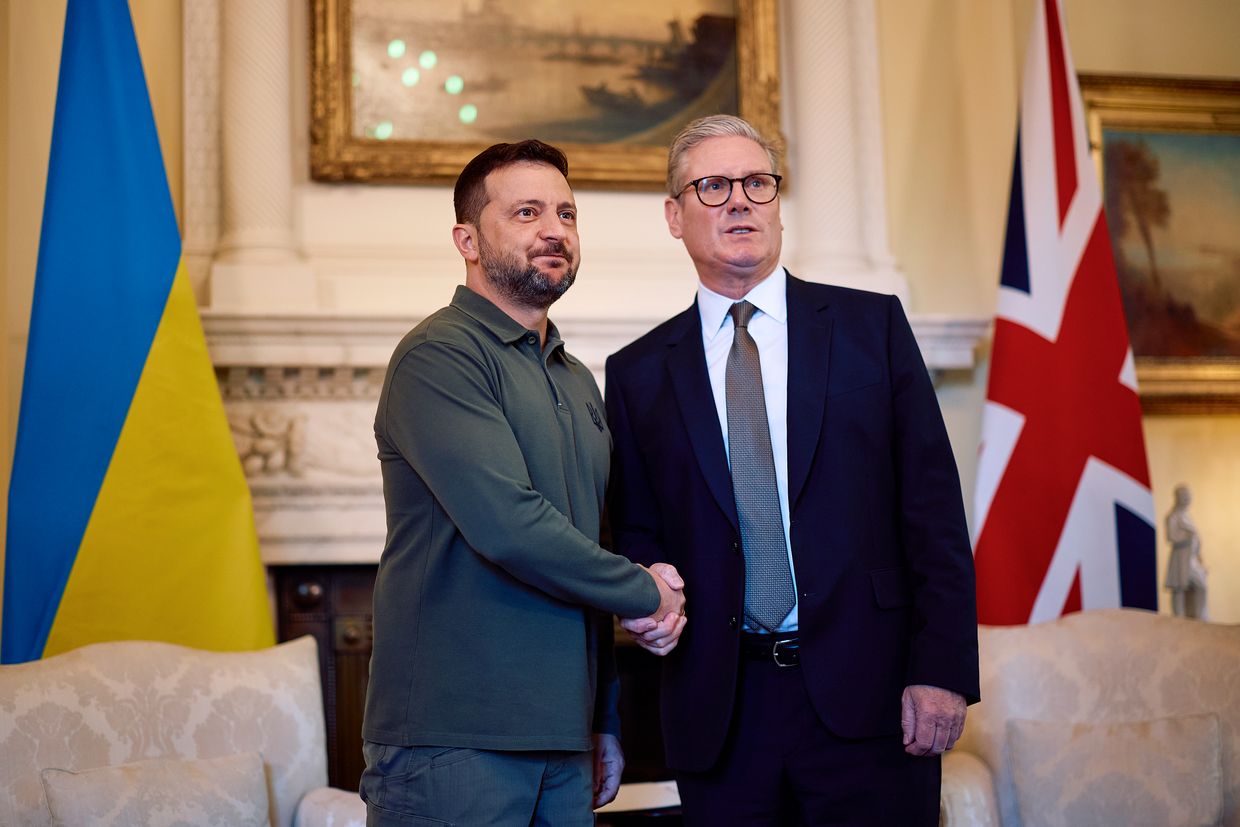
U.K. Prime Minister Keir Starmer announced the package ahead of NATO's annual summit.

"Russia, not Ukraine, should pay the price for Putin's barbaric and illegal war," he said.

The package is part of Britain's largest-ever annual military commitment to Ukraine of £4.5 billion ($5.6 billion), the Guardian reports.

It follows a £1.6 billion ($2.0 billion) deal in March for over 5,000 air defense missiles and a separate £350 million ($436 million) investment to increase drone deliveries tenfold.

The announcement comes as Starmer and President Volodymyr Zelensky agreed to work closely on military production between the UK and Ukraine. On June 24, Ukraine's Defense Minister Rustem Umerov announced that Britain will finance Ukrainian-designed drones manufactured in the UK.

European countries cannot fully confiscate the frozen Russian assets due to concerns about international law and financial stability. The European Central Bank warned that such a move could undermine confidence in the euro as a reserve currency, since most of the assets are euro-denominated.

Instead, only the interest generated from these funds is currently being used to back a $50 billion loan package for Ukraine, while the principal amount of 300 billion euros ($348 billion) remains frozen but not seized.

In June, Ukraine received another 1 billion euros ($1.1 billion) from the EU as part of the G7 loan program backed by frozen Russian assets, Prime Minister Denys Shmyhal announced.

  • ✇The Kyiv Independent
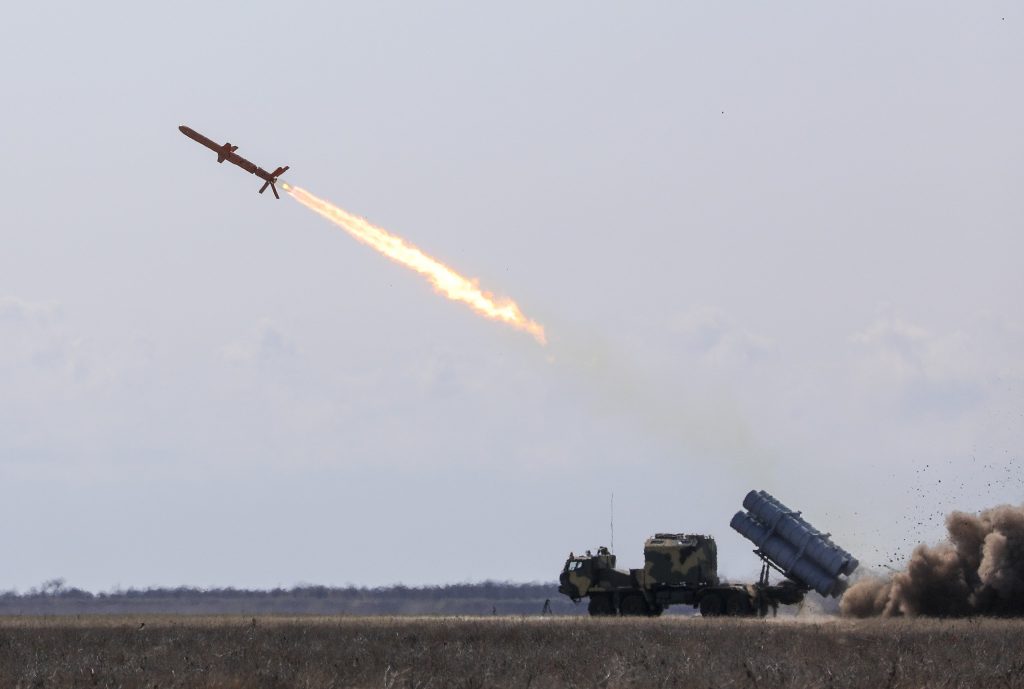
  • Ukraine's Sapsan ballistic missile to enter serial production following successful combat testing
    Ukraine’s domestically developed short-range Sapsan ballistic missile has successfully completed combat testing and is in the process of serial production, Ukrainian media reported on June 13.The missile, with a payload of 480 kg, completed testing in May after successfully striking a Russian military target at a range of nearly 300 km, Valentyn Badrak, head of the an independent Ukrainian think Center for Army, Conversion and Disarmament Studies told Liga.net.Ukraine's Defense Ministry reported
     

Ukraine's Sapsan ballistic missile to enter serial production following successful combat testing

13 juin 2025 à 18:24
Ukraine's Sapsan ballistic missile to enter serial production following successful combat testing

Ukraine’s domestically developed short-range Sapsan ballistic missile has successfully completed combat testing and is in the process of serial production, Ukrainian media reported on June 13.

The missile, with a payload of 480 kg, completed testing in May after successfully striking a Russian military target at a range of nearly 300 km, Valentyn Badrak, head of the an independent Ukrainian think Center for Army, Conversion and Disarmament Studies told Liga.net.

Ukraine's Defense Ministry reportedly dedicated a department to formulate and test the missile.

There is no reported timeline as to when the missiles can be seen in regular use on the battlefield.

Domestically produced long-range weapons are of key importance to Ukraine's defense strategy, as Western partners have been slow in delivering adequate weaponry amid increasing Russian attacks and offensives.

The news comes as U.S. Defense Secretary Pete Hegseth said in a congressional hearing on June 10 that the United States will reduce funding allocated for military assistance to Ukraine in its upcoming defense budget

In November 2024, President Volodymyr Zelensky announced that Ukraine has produced its first 100 missiles.

Since then, Ukraine has continued to increase domestic weapon production. Zelensky said on April 16 that over 40% of the weapons used at the front line are now produced in Ukraine, including over 95% of drones used at front line.

Zelensky also previously revealed that Ukraine had developed another domestic-made weapon, a missile-drone Palianytsia.

As Ukraine attempt to increase its defense production, Russia has continued to unleash large-scale attacks on Ukrainian cities, regularly launching hundreds of drones to overwhelm Ukrainian air defenses.

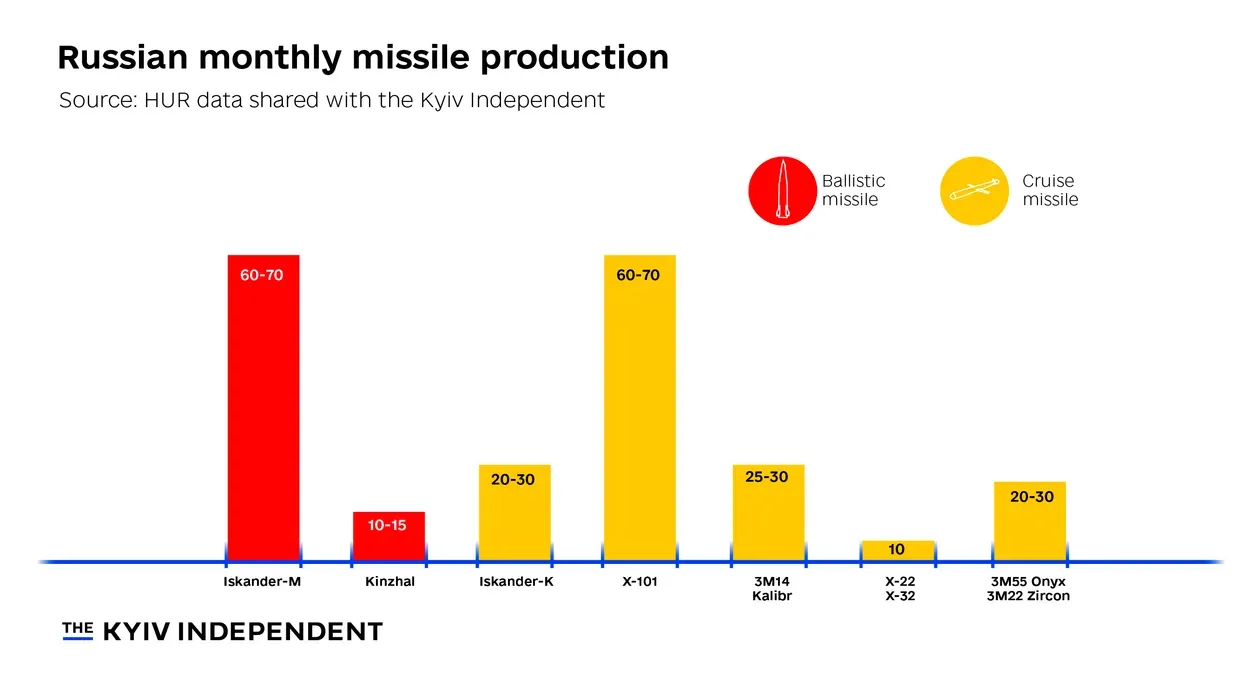
Ukraine's military intelligence (HUR) shared with the Kyiv Independent that Russia's production of ballistic missiles has increased by at least 66% over the past year.

Ukraine's Sapsan ballistic missile to enter serial production following successful combat testing
Russian monthly missile production (Nizar al-Rifai/The Kyiv Independent)

Ukraine's Defense Minister Rustem Umerov said in late 2024 that Ukraine also resumed and scaled up serial production of Neptune cruise missiles, modifying them to have a greater range.

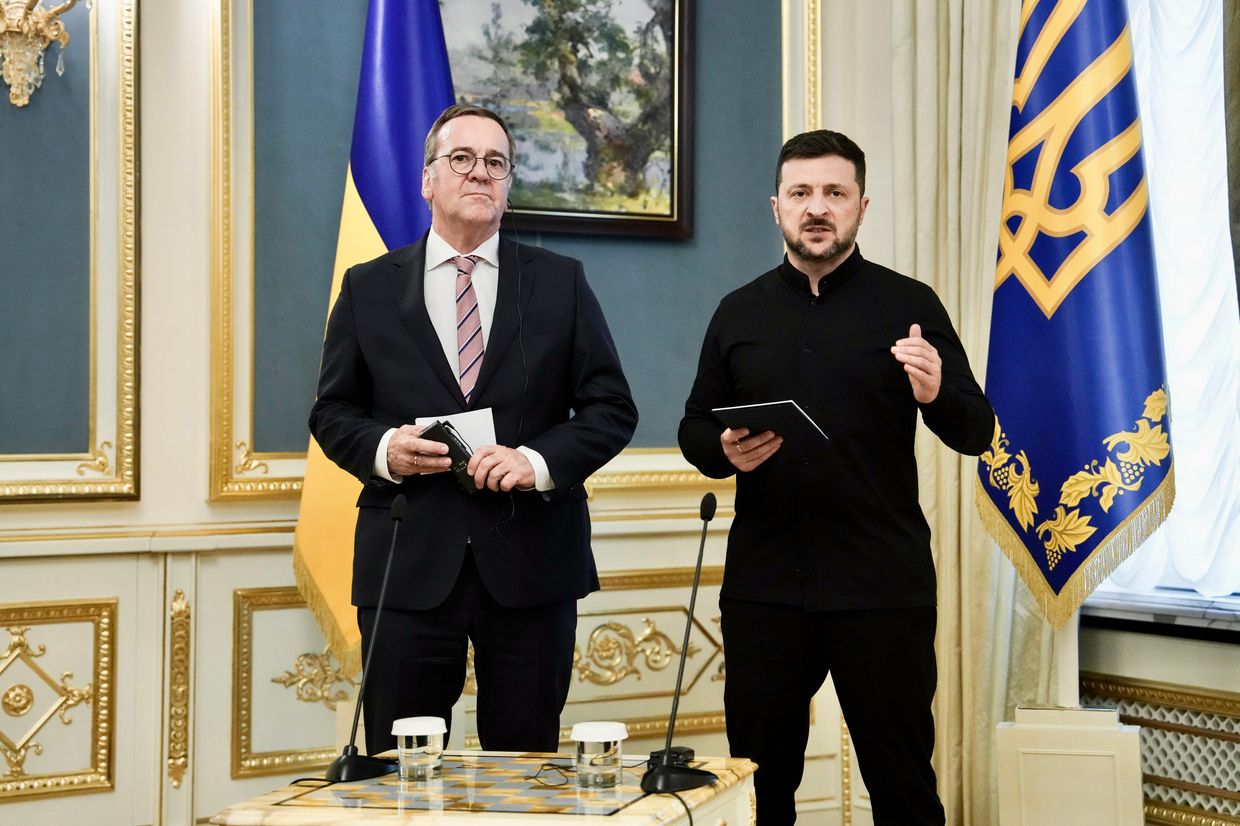
Kyiv has received a number of long-range missiles from partners, such as U.S.-made ATACMS, British Storm Shadow, or French SCALP/T. Despite Ukrainian requests, German Defense Minister Boris Pistorius said on June 12 that Berlin has no plans to provide Taurus long-range missiles to Kyiv.

Germany to supply new Iris-T air defense systems to Ukraine, rules out Taurus missiles
Germany will deliver new IRIS-T air defense systems to Ukraine under a three-year supply plan, President Volodymyr Zelensky said during a joint press conference with German Defense Minister Boris Pistorius, who said Berlin has no plans to provide Taurus long-range missiles.
Ukraine's Sapsan ballistic missile to enter serial production following successful combat testingThe Kyiv IndependentTim Zadorozhnyy
Ukraine's Sapsan ballistic missile to enter serial production following successful combat testing
❌