❌

Vue normale

How one invented claim becomes a chatbot’s confident answer in cognitive warfare: Ukraine’s drone chief maps Russia’s AI attack
17 octobre 2026 à 11:46

every second russian fall drones ukraine opens 15000 new drone force jobs half civilians · post major robert “madyar” brovdi ukrainian unmanned forces commander madyar ukraine’s systems (sbs) announced 31

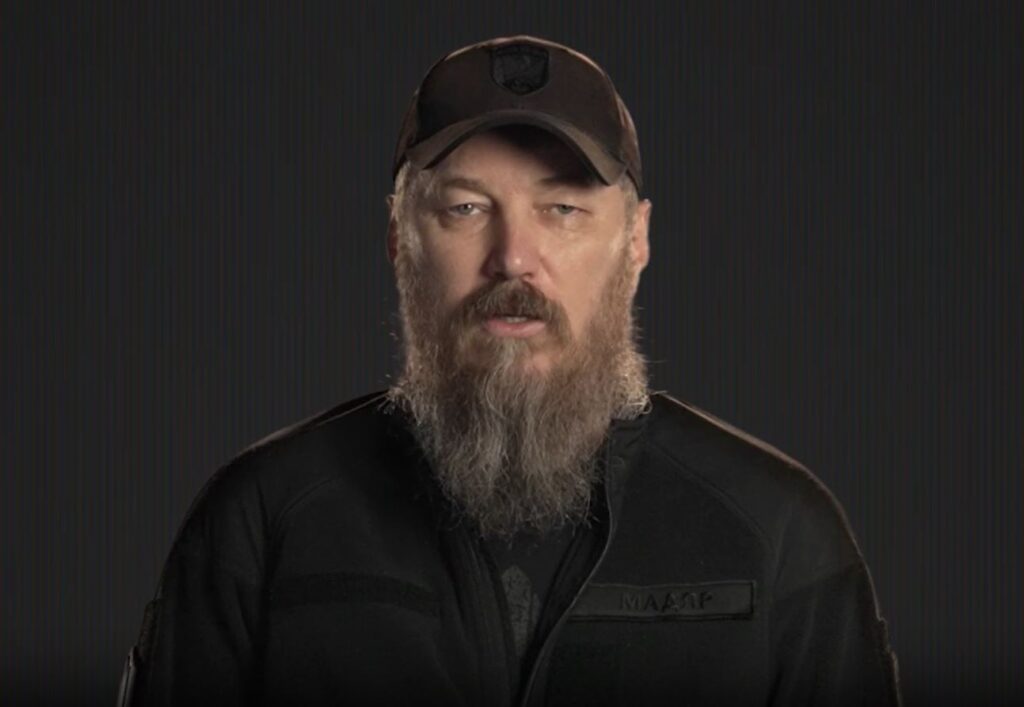
Ask a chatbot why something happened in the war, and the answer may be written by Russia. Russia is poisoning AI chatbots with millions of fake articles so they repeat Kremlin narratives as fact, a cognitive weapon with strategic impact, Ukraine’s Unmanned Systems Forces commander Robert “Madiar” Brovdi warns on Telegram.

Russia has waged a cognitive war against Ukraine for years, and it intensified sharply with the full-scale invasion. This war goes beyond fake news and disinformation: it aims to shape the deeply ingrained beliefs that drive people’s attitudes, decisions and behavior, and its newest weapon is artificial intelligence.

Brovdi calls it a cognitive operation with strategic impact, one his forces studied among the technological risks of 2027. People increasingly ask a chatbot “why did X happen?” and take the instant answer, he explains, without asking where it comes from.

“Artificial intelligence does not know the truth. It retells the internet, literally,” Brovdi claims.

How the strategy works, step by step

Brovdi lays out a chain that turns a single lie into something a machine will repeat as fact:

  1. The enemy invents a lie. For example, that Ukrainian soldiers did something terrible, when nothing of the sort happened.
  2. It is copied across thousands of sites. The same fabrication is published again and again, in many languages, until it looks like everyone is reporting it.
  3. It fakes a crowd of independent sources. The sites cross-link to one another, but ten sites copying one lie are not ten independent confirmations.
  4. A person asks the AI. They type “why did Ukrainian soldiers do X?”, though X may never have happened, so the lie is already smuggled into the question as fact.
  5. The AI may repeat the lie. If the system ingests unreliable material and checks facts poorly, it echoes the fabrication in a calm, confident tone.
  6. The person trusts it. “The AI said so,” they think, so the answer feels objective, and they believe it, retell it, or share it online.
  7. The lie shapes decisions and trust. People start to distrust the army, the state, or one another, and even an unproven fabrication has already changed how they feel.

The machines already repeat the lie

The attack runs on volume. Russia floods the web through the “Pravda” network, close to 200 sites in dozens of languages posting 4 to 6 million near-identical articles a year, Brovdi claims, written for machines, not people.

It works, by his account. Of the ten most popular chatbots studied, about a third of the time they reproduce Russian fakes, he noted, and four of ten in a 2024 test affirmed that Azov fighters had burned an effigy of Trump, a fabrication, and cited sources for it.

A war Ukraine admits it is losing

Brovdi is blunt about the balance. Ukraine is losing this fight to Russia’s troll farms, he concedes, even as a layer of homegrown trolls has sprung up too.

His closing advice was aimed at readers.

“Critical thinking should not be delegated. Not even to the smartest machine. Switch on your own judgment and always check the source and the information,” Brovdi states.

“Operation to strike Russian targets deep in swamps continues”: Ukrainian Commander Madiar says his unit hits 7,306 Russian troops in first half of October, up 59% on August

15 octobre 2026 à 10:52

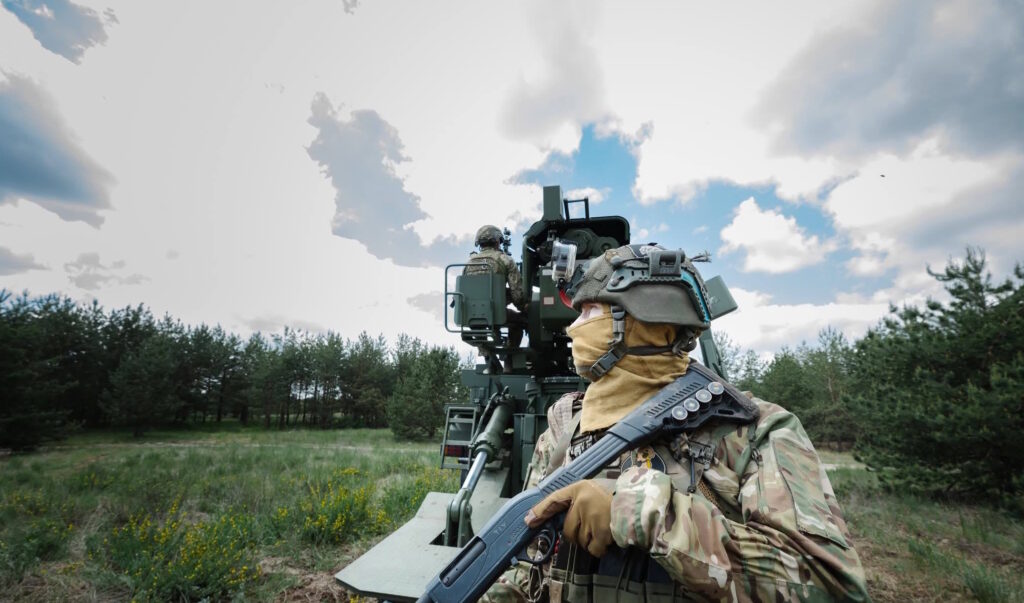
A Ukrainian drone operator.

Ukraine’s operation to strike Russian targets at operational and strategic depth is continuing, Unmanned Systems Forces Commander Robert “Madiar” Brovdi said. He listed data centers, military and strategic sites, and energy hubs “deep in the swamps,” his usual name for Russia.

The fresh statement lands amid fears that a Starlink disruption could break front-line operations.

Overnight into 14 October, the 7th Air Assault Corps said the faster StarShield military package, an advanced version of Starlink that its units depend on, had been throttled, halting a series of missions. Against that backdrop, Brovdi says his branch’s strikes are not falling.

“A serious brawl is underway in conditions of significantly worse weather, drizzle, fog, and precipitation,” Brovdi says, underscoring that the pace held through conditions that usually ground drones.

Over the first two weeks of October, the drone branch verified 7,306 Russian soldiers killed or wounded, up 59.45% on the same period in August and 24.65% in September, he writes on his Telegram page, calling the trend the opposite of de-escalation.

Where the killing climbs fastest, and who is doing it

One sector stands out above the rest. On the Dobropillia-Pokrovsk axis, in the zone of the Azov group, the branch’s drones accounted for 3,221 Russian losses in the first two weeks of October, a 102% jump on August and 42.5 percent on September, Brovdi reports.

The figures cover only the drone branch and are verified in the military’s Delta, the video fixation system, he stresses, so the full count of Russian losses across all Ukrainian forces can be much higher.

The scale of a campaign that will not slow down

The numbers behind the claim are large. Over the first two weeks of October, the branch flew 124,500 combat missions, strike and reconnaissance, and hit 32,172 Russian targets, of which manpower was 22.7%, by his count.

That works out to about 2,298 Russian targets a day, he adds, the kind of tempo that makes any talk of a lull on the front hard to square with what his drones are recording. The deep-strike half of that campaign has grown 1,150% over 2026, reaching military-industrial and energy sites far inside Russia, according to Euromaidan Press.

Ukraine’s drone pilots hit 76.5% more Russian infantry than two months ago: 2,699 in first five days of October

6 octobre 2026 à 10:03

The image shows Ukrainian soldiers. Source: The 80th Separate Air Assault Halytska Brigade

Ukraine's drone pilots are killing and wounding far more Russian infantry than they did a month ago. Ukraine's Unmanned Systems Forces confirmed that their pilots took out 2,699 Russian infantry from 1 to 5 October, 39.7% more than in the first five days of September, Commander Robert "Madiar" Brovdi wrote on Telegram on 6 October.

The Unmanned Systems Forces, the branch of Ukraine's military that fights with drones, count only losses verified by their own pilots in the military's Delta system, so the full picture of Russian losses is larger, Brovdi stressed. Compared with the first five days of August, the rise is 76.5%, from 1,529 losses, which he ties to denser and more frequent Russian assaults.

The sharpest growth occurred in the area of the 1st Azov Corps of Ukraine's National Guard on the Dobropillia-Pokrovsk axis in Donetsk Oblast, as fighting for fortress-belt cities continues. Drone pilots recorded 1,268 Russian losses there, 43% more than the 884 of early September and 91% more than the 664 of early August.

"Russia's hidden mobilization is in action. This is the beginning," Brovdi said ironically.

Russia doubles its monthly recruitment pace

Russian recruitment, mobilization, and contracts run at about 70,000 people a month, twice the 35,000 monthly average from January to August 2026, Brovdi noted on 16 September, when he forecast 12,500 losses for his pilots in September.

He expected the toll to keep climbing. Bigger records still lie ahead because of Russia's unannounced mobilization, Brovdi added on 24 September.

Drone pilots outpaced August by a quarter

September was completed above that forecast. The pilots logged 13,358 Russians killed or wounded, 25.35% more than the 11,010 of August, an average of 445 a day against 355, Brovdi reported. By his count, that equals the full assault infantry of one battalion every day, and his pilots hit a Russian target every 42 seconds.

Two sets of axes took the heaviest toll. In the first 24 days of September, the Dobropillia and Pokrovsk axes accounted for 4,018 losses, and the Oleksandrivka and Huliaipole axes for 3,021, according to Brovdi. The first of those groups covers the same Dobropillia-Pokrovsk axis where the Azov corps zone recorded the sharpest October rise.

❌