
 Connexion
Ukraine’s drone pilot calls it his proudest strike: cheap FPV drone detonating over two tons of explosives packed inside Russian mine-clearer
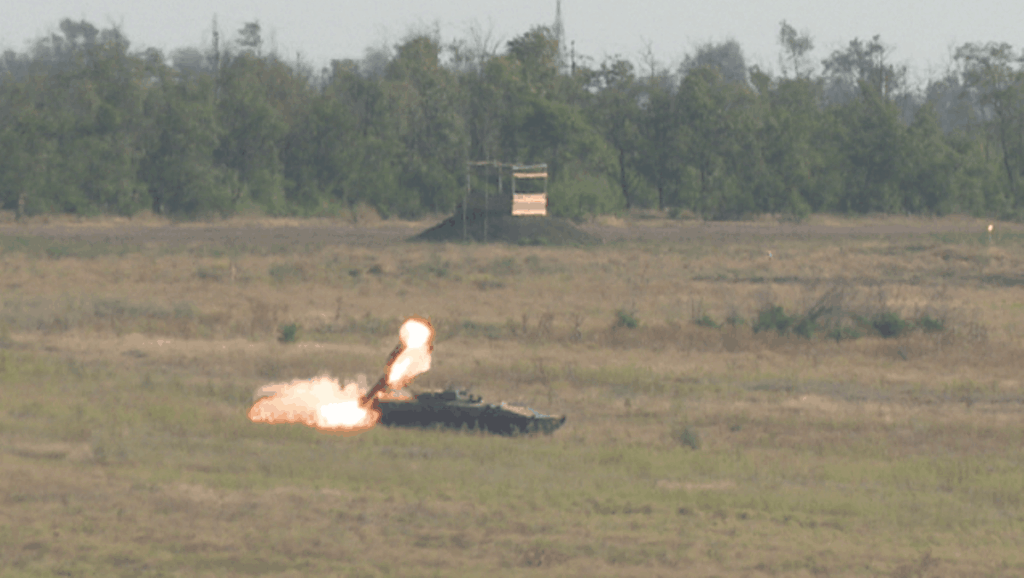
"Skipper", an FPV company commander in Ukraine's 413th Raid Unmanned Systems Regiment, has described destroying a Russian UR-77 mine-clearing vehicle with drones during the 2023 counteroffensive as the strike he is proudest of, according to Army TV.
The UR-77, nicknamed "Zmiy Horynych" after a fire-breathing serpent of Slavic folklore, carries a rocket-fired line charge to blow paths through minefields, as per Militarnyi. Each charge carries more than two tons of explosives, which is why a cheap FPV hit can trigger a blast far larger than the drone itself.
"It exploded so hard that I thought it was a small nuclear blast. There are more than two tons of plastic explosive inside, and when it went off after the second hit, it was something unbelievable," Skipper says.
Skipper joined the army at the start of the full-scale invasion and moved from infantry and aerial reconnaissance to commanding an FPV unit. His regiment now operates on the Zaporizhzhia front, where FPV drones conduct combat missions.
From sailing yachts to FPV drones
In civilian life, Skipper was a sailing instructor, and he says the sport partly helps in military work, especially his knowledge of navigation and radio communication. He is convinced that a technological edge can be one of the keys to victory.
He counts the UR-77 strike among his unit's early work, from a time when few Ukrainian units were using FPV drones at all, he says. The hit came during hard fighting in the counteroffensive, when his crews were among the first to work the FPV niche.
Russia turns a mine-clearer into a wrecking tool
The UR-77 was built in the 1970s for a different war, one of fast tank thrusts that needed enemy minefields cleared quickly. Its base rides on the chassis of the 2S1 Gvozdika self-propelled howitzer, and its charge can cut a lane six meters wide, with some anti-personnel mines detonated across a band up to 15 meters wide.
Modern combat changed that role. The classic mine-clearing use remains, but Russia now more often turns these machines on Ukrainian fortifications, using the line charge to flatten defenses rather than open a path.
Read also
-
AI is changing Russia’s drone war on Ukrainian cities, deputy air defense commander says
-
Ukraine squeezes more defense out of Soviet-era stock, pairing Kub launcher and American RIM-7 interceptors to catch Russia’s jet-powered drones
-
Russia starts pouring more into war after Putin judged Alaska talks with US would bring no “acceptable” deal to end fighting — Bloomberg

