
 Connexion
Robots won’t replace armored vehicles, says Ukrainian company that builds both. It reveals one job they can’t do
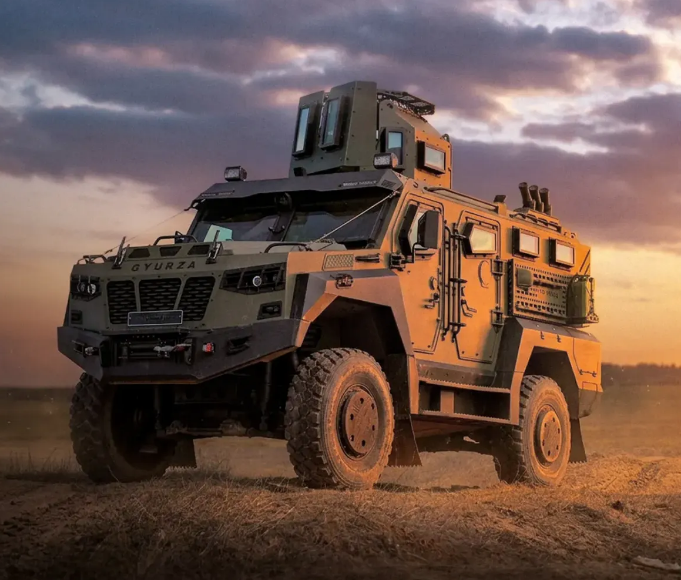
Robots will not replace armored vehicles on the battlefield, says a company that builds both. Ground robots are a new tool that lets Ukraine distribute risk more smartly, but they cannot do everything a crewed armored vehicle can, above all pulling wounded soldiers out under fire, says Ukr Armo Tech's chief executive Hennadii Khirhii, in an interview with RBC-Ukraine.
Ukraine has a serious shortage of armored vehicles, from evacuation carriers to tracked fighting vehicles, with the focus shifting to hulls that offer heavy mine protection and built-in electronic warfare. For medical-evacuation armor alone, Khirhii says, the deficit is often put at 80 percent.
Robots can ease some of that, hauling ammunition and supplies to the front without risking a crew, but they are a complement, not a substitute, a view frontline commanders also confirm.
Robots share the load, not replace it
Where a robot can do the job, Khirhii says, there is no sense sending in heavy armor and the people inside it to face danger. For carrying ammunition or food, unmanned ground vehicles are useful. But evacuating the wounded is different: that usually needs, at least for the second leg, a protected medical vehicle in which care can begin on the move, with room for transfusions and resuscitation that a robot's capsule cannot provide.
"A UGV doesn't cancel the armored vehicle, just as the drone didn't cancel artillery," he says.
The limits show at evacuation
Ukraine has leaned hard into robotic logistics and casualty evacuation, running more than 100,000 such missions this year to keep medics and crews off exposed roads, but the robots themselves now draw Russian drone and artillery fire, and they cannot replace medical personnel.
One commander has called ground robots too slow for evacuation and easy targets, arguing brigades still need staffed evacuation teams and light-armored vehicles.
Commanders want both
The lesson from the front is not robots instead of armor, but robots alongside it. What matters, Khirhii says, is a smart combination of machines for each mission, with people's safety and the task's practicality first. The front today needs both armored vehicles and ground robots, he continues, and it needs a great amount of both.
Read also
-
Russo-Ukrainian war, day 1680: Ukraine brings 14 more children home from occupied Kherson
-
41 Ukrainians made the long journey from occupation to Ukrainian-controlled territory after enduring Russian pressure, detention and control
-
Russia retaliates after Hungary expels 10 diplomats, deepening Budapest-Moscow rift since Orbán’s ouster
Read also
-
41 Ukrainians made the long journey from occupation to Ukrainian-controlled territory after enduring Russian pressure, detention and control
-
Russia retaliates after Hungary expels 10 diplomats, deepening Budapest-Moscow rift since Orbán’s ouster
-
Ukrainian grandmother detained in Kazakhstan at Russia’s request while trying to bring grandson back to Ukraine
Read also
-
41 Ukrainians made the long journey from occupation to Ukrainian-controlled territory after enduring Russian pressure, detention and control
-
Russia retaliates after Hungary expels 10 diplomats, deepening Budapest-Moscow rift since Orbán’s ouster
-
Ukrainian grandmother detained in Kazakhstan at Russia’s request while trying to bring grandson back to Ukraine
