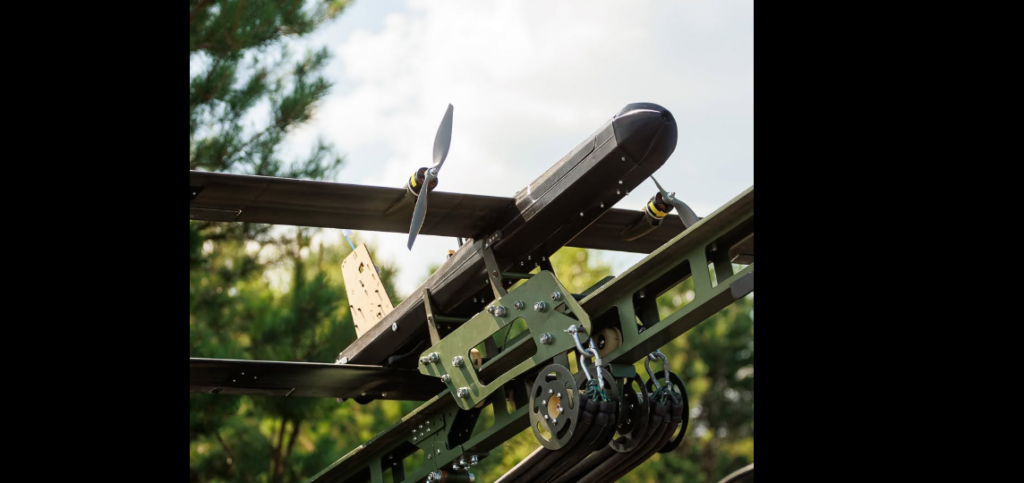
The Ukrainian military is completing work on new aviation developments. They are essentially finished and already in testing, and the aircraft carrying them will enter combat, aviation commander Colonel Oleksandr Diakiv said in an Air Force Command segment.
Ukraine has already done with jets built decades ago. Its crews turned the 1970s-era Su-24 bomber into a launcher for British-French Storm Shadow and SCALP cruise missiles, which carry a 450-kilogram warhead to about
The Ukrainian military is completing work on new aviation developments. They are essentially finished and already in testing, and the aircraft carrying them will enter combat, aviation commander Colonel Oleksandr Diakiv said in an Air Force Command segment.
Ukraine has already done with jets built decades ago. Its crews turned the 1970s-era Su-24 bomber into a launcher for British-French Storm Shadow and SCALP cruise missiles, which carry a 450-kilogram warhead to about 250 kilometers, and used them to strike a Russian command post in occupied Luhansk Oblast on 25 May.
A commander whose air force already remade its Soviet fleet this way is probably not making an empty promise when he says more is coming.
The commander hints at what is coming
Ukraine's aircraft are not done gaining capability, Diakiv said. Standing in front of his own aircraft, he said it would still prove itself.
"We have ideas, we have developments, and we are working on this. We have surprises for our neighbors," Diakiv said.
Part of the work is already in testing, and he tied it directly to combat.
"They are starting to work, they are going through their trials. And it is not for nothing that I say these aircraft will enter combat. Let it be a surprise," he noted.
The old jets already took on new roles
The track record runs across the fleet. The MiG-29 and Su-27 now serve as multirole fighters that strike both air and ground targets, Diakiv said, a shift Ukraine achieved by mastering new weapon types during the full-scale war.
That adaptation is documented. US contractors helped Ukrainian crews modify Su-27s and MiG-29s to fire American AGM-88 HARM anti-radiation missiles at Russian air defenses, and the jets also drop Western precision glide bombs.
The war has no template
Ukrainian aviation adapts constantly to Russian air defenses, fighters, and electronic warfare, Diakiv said. Pilots complete missions and return to base.
This kind of prolonged, high-technology war, fought across many domains, has no precedent, he added, and Ukraine's combat experience is becoming the basis for further developing its aviation.
A Russian strike on southern Odesa Oblast killed one person overnight and set grain trucks on fire. Five trucks loaded with grain were destroyed and three more damaged, with one person killed and three injured, the head of the Odesa Regional Military Administration, Oleh Kiper, said.
The strike hit the Izmail district, home to Ukraine's largest Danube port. The port became a maritime lifeline after Russia's 2022 Black Sea blockade, carrying the overflow whenever the sea
A Russian strike on southern Odesa Oblast killed one person overnight and set grain trucks on fire. Five trucks loaded with grain were destroyed and three more damaged, with one person killed and three injured, the head of the Odesa Regional Military Administration, Oleh Kiper, said.
The strike hit the Izmail district, home to Ukraine's largest Danube port. The port became a maritime lifeline after Russia's 2022 Black Sea blockade, carrying the overflow whenever the sea lanes are constrained, National Security Journal reported. The attack is part of a campaign against the food supply.
Ukraine is one of the world's largest suppliers of wheat, maize, and sunflower, so the strikes register far beyond its borders, in the import-dependent countries that buy its grain.
Fire destroyed eight trucks
The attack set eight cargo trucks and dry grass nearby alight, the press service of the State Emergency Service in Odesa Oblast reported. Rescuers have since put out the fires.
"Unfortunately, a person was killed in the attack, and three more were injured," the service said.
The strike hit transport infrastructure
Russia struck the Izmail district overnight on 29 August, damaging transport infrastructure, the Izmail District State Administration reported. The district sits on the Danube close to the Romanian border.
"There are casualties. Sadly, a person has been killed. The injured have been given the necessary help. Representatives of the security structures and medical workers are working at the scene," the administration said.
The Danube corridor is a standing target
The strike fits a pattern. Russia hit Izmail's port infrastructure on 13 August, cutting power in parts of the city, and struck it again days later, damaging a Togo-flagged civilian vessel. The attacks come during Ukraine's peak wheat harvest, expected at around 60 million metric tons this year, close to the 2025 crop. Farmers need the export revenue now to finance next year's sowing, and storage is filling as grain goes unshipped.
Russia's Defense Ministry has described its Izmail strikes as hitting berthing terminals for military cargo and depots for Western-supplied weapons. The trucks burned in this strike were carrying grain.
Poland's prime minister says the next seven or eight months could decide the region's security. Donald Tusk said there are signs of serious Russian preparations to escalate tensions, both in the war against Ukraine and across the region, according to Ukrinform.
Tusk's warning follows weeks of similar alarms from the countries on NATO's eastern edge. Lithuanian President Gitanas Nausėda said on 15 July that intelligence pointed to possible Russian strikes on critical inf
Poland's prime minister says the next seven or eight months could decide the region's security. Donald Tusk said there are signs of serious Russian preparations to escalate tensions, both in the war against Ukraine and across the region, according to Ukrinform.
Tusk's warning follows weeks of similar alarms from the countries on NATO's eastern edge. Lithuanian President Gitanas Nausėda said on 15 July that intelligence pointed to possible Russian strikes on critical infrastructure in the Baltic states or Poland, according to Defense News.
Poland is the main transit route for Western military aid to Ukraine, which makes its security inseparable from Ukraine's. Tusk himself said in July that Russia could be ready for a confrontation with Europe as early as 2027.
The CIA visit was not the whole of it
At the meeting, reporters asked Tusk about the recent visit of CIA Director John Ratcliffe to Moscow. Poland is in constant contact with the agency's leadership and was not caught off guard by news of Ratcliffe's activity, he said.
Some security information must stay confidential, Tusk added, but that does not mean the public should be deprived of information about the most important threats.
The signals go beyond one trip
The matter is no longer only the CIA director's visit to Moscow, Tusk said. Over recent weeks, numerous public signals have pointed to Russian preparation for escalation.
Russia is very seriously preparing to escalate tensions, both in the war with Ukraine and across the whole region, and that for Russia this fall and winter are meant to be key, he claimed.
Moscow states its aims openly
Some Russian figures have described the war's purpose in plain terms. This week, State Duma vice-speaker Pyotr Tolstoy said Russia views Ukraine as a "territory" that would allow Moscow to export its energy to Europe via a short route, not as a sovereign country.
Tolstoy, whom the EU sanctioned in 2022 as a central figure in Russian state propaganda, also called for massed bombing of Ukrainian cities to break the population into surrender. His remarks are one more public signal of the kind Tusk pointed to.
Ukraine's new defense minister wears his war on his wrist. Yevhenii Khmara's bracelet carries, on each of its chains, the engraved name of a comrade who did not come back from the war, The National Interest reported.
Khmara took over the Defense Ministry on 19 August, replacing Mykhailo Fedorov, whose July dismissal set off nationwide protests. He came to the job from the SBU, Ukraine's Security Service, which he had led for seven months when Ukraine's campaign against
Ukraine's new defense minister wears his war on his wrist. Yevhenii Khmara's bracelet carries, on each of its chains, the engraved name of a comrade who did not come back from the war, The National Interest reported.
Khmara took over the Defense Ministry on 19 August, replacing Mykhailo Fedorov, whose July dismissal set off nationwide protests. He came to the job from the SBU, Ukraine's Security Service, which he had led for seven months when Ukraine's campaign against Russian oil refining reached its widest scale.
He did not volunteer the story
Khmara did not explain the bracelet until a reporter asked him about it over dinner in Kyiv this month. The names now travel with him into the meetings where decisions about Ukraine's defense are made.
He ran the SBU during the oil campaign
Alpha, the SBU's special operations unit, is a tiny share of Ukraine's armed forces, yet the service's own accounting credits it with an outsized share of the damage inflicted on Russia, up to 20 percent of all enemy infantry losses.
More telling is what happened to Russian oil during his seven months in charge of the service. Ukraine's General Staff now estimates that nearly 43 percent of Russia's refining capacity has been knocked out. To a large extent, this is the result of the campaign Khmara helped oversee.
Khmara also developed a doctrine of ruthless cost asymmetry: strike operations designed to cost roughly 2 percent of the economic damage they inflict, targeting not individual facilities but critical nodes within the system.
Khmara insisted that part of the staff of the previous minister stayed
Earlier, Khmara has proposed that the core of the former Defense Ministry team remain in their positions. In particular, this concerns specialists responsible for procurement reform.
Mstyslav Banik, who served as a deputy to Fedorov, confirmed that he was staying on under the newly appointed defense minister. He led a central part of the ministry's modernization and is responsible for implementing the defense procurement reform.
Ukraine has decided which Western fighters it will build its air force around. The Air Force settled on three platforms, the Swedish JAS 39 Gripen, the French Rafale, and the American F-16, aviation commander Colonel Oleksandr Diakiv said in a segment by the Air Force Command.
Ukraine entered the full-scale war flying Soviet-era jets and has spent three years assembling a Western fleet. F-16s arrived in 2024 and now fly combat missions. France has delivered Mirage 2000s
Ukraine has decided which Western fighters it will build its air force around. The Air Force settled on three platforms, the Swedish JAS 39 Gripen, the French Rafale, and the American F-16, aviation commander Colonel Oleksandr Diakiv said in a segment by the Air Force Command.
Ukraine entered the full-scale war flying Soviet-era jets and has spent three years assembling a Western fleet. F-16s arrived in 2024 and now fly combat missions. France has delivered Mirage 2000s, and Sweden has pledged to deliver Gripen. The choice narrows Ukraine's field to three types it can sustain, arm, and repair at war tempo.
The choice weighed more than performance
Ukraine assessed every platform that might suit it, Diakiv said, and concluded it could operate three with maximum effectiveness. The decision turned on aircraft and operating costs, weapons, logistics, parts availability, what Ukrainian infrastructure can support, and the speed of repairs and battle-damage recovery.
"We went through all the platforms that were possibly acceptable for us. And we came to the conclusion that Ukraine can use three platforms with maximum effectiveness," Diakiv explained.
The F-16 already operates in Ukraine, so the Air Force has both the aircraft and trained pilots, technicians, and specialists who know its quirks. That experience will speed the adoption of the other Western types, according to Diakiv.
The Gripen suits a country under fire
Also, Diakiv singled out the Gripen, a multirole fighter that can strike air and ground targets and carries Swedish and other European weapons. Its main advantage is that it demands little infrastructure.
The jet can operate from unprepared surfaces and stretches of road and requires minimal ground crew to prepare for another flight in 15 to 20 minutes, according to the commander.
The aircraft is only part of the system
Taking on a new platform is not a matter of handing over jets, Diakiv believes. Weapons, ground support, parts, logistics, and trained people all have to arrive together, and Ukrainian pilots, engineers, and logistics specialists are now training abroad.
"You can buy a plane, you can buy a missile, you can buy a bomb, but you cannot buy experience," Diakiv said.
That combat experience, according to the colonel, is increasingly shaping the aviation coalition, with allies helping Ukraine realize ideas drawn from its own fighting rather than only offering finished solutions.
Russia is looking for its next foreign recruits in Indonesia, Kyiv says. Ukraine's Foreign Intelligence Service reports that it has obtained documents on at least eight Indonesian citizens recruited into the Russian occupation army.
Russia has recruited at least 27,000 foreign nationals from more than 130 countries since February 2022, a joint report by the International Federation for Human Rights and Truth Hounds found in April, separate from roughly 14,000 North Kore
Russia is looking for its next foreign recruits in Indonesia, Kyiv says. Ukraine's Foreign Intelligence Service reports that it has obtained documents on at least eight Indonesian citizens recruited into the Russian occupation army.
Russia has recruited at least 27,000 foreign nationals from more than 130 countries since February 2022, a joint report by the International Federation for Human Rights and Truth Hounds found in April, separate from roughly 14,000 North Korean troops. Up to 20% of these fighters do not survive the first four months.
The scheme runs on false promises
"The scheme by which Moscow seeks foreign cannon fodder has already been tested on dozens of other countries," the Foreign Intelligence Service said.
Recruiters offer high pay, non-combat work, fast-tracked Russian citizenship, and social guarantees, drawing in people who often have no idea where they are actually being sent, the service said. The same model worked earlier on citizens of Nepal, Cuba, Kenya, and India, and most ended up on the front line without training, with some dying in the first weeks.
Recruitment fills three needs at once
Each foreigner serves several functions for the Kremlin, the service said. A recruit fills a personnel gap at the front and doubles as propaganda about supposed global support for the war.
The third driver is domestic. Discontent over the economy, the war, and plans for a new wave of mobilization has cut the number of Russians willing to sign contracts, bringing dissatisfaction to 69 percent.
The pattern is widening by design
Indonesia is the latest example of Russia's system to fight with its hands of foreign mercenaries.
"Indonesia, the world's largest Muslim country with a population of over 280 million, has joined the list of countries that have become the Kremlin's latest market for cheap human labor for the war," the service said.
Ukraine's drone interceptors work until the weather turns. On 28 July, Presidential advisor Serhii "Flash" Beskrestnov wrote that fog and cloud in fall, winter, and spring can leave an interceptor pilot unable to see more than a dozen meters, and that success rates fall as soon as winter begins, a problem that is especially severe over the sea.
Cheap interceptor drones have become one of Ukraine's main answers to Shahed saturation. But nearly every system shares the fla
Ukraine's drone interceptors work until the weather turns. On 28 July, Presidential advisor Serhii "Flash" Beskrestnov wrote that fog and cloud in fall, winter, and spring can leave an interceptor pilot unable to see more than a dozen meters, and that success rates fall as soon as winter begins, a problem that is especially severe over the sea.
Cheap interceptor drones have become one of Ukraine's main answers to Shahed saturation. But nearly every system shares the flaw Beskrestnov names: it depends on a pilot or camera seeing the target. Ukrainian and foreign teams are all racing toward the same fix, an onboard seeker head.
The method started simple
The earliest approach was primitive but cheap and effective, Beskrestnov said. A pilot flies the interceptor to the right point using the radar network, then finds the target by eye, chases it, and attacks.
Russia answered not only with jet Shaheds but with onboard electronic warfare, evasion systems, in-flight maneuvers, and rear-facing cameras to watch the sky behind, he explained. Ukraine replied with machine-vision target capture and guidance.
Bad weather remains unsolved
None of that fixes visibility, Beskrestnov wrote, and the problem hits both ordinary and jet interceptors. The way out, he argued, is an autonomous seeker head, acoustic, thermal, or radar, mounted on the interceptor itself.
A radar seeker is the ideal, in his view, because it opens the door to a fully autonomous system with no human in the loop: the network sees the target, launches the nearest interceptor, guides it by tactical radar, and the seeker locks on for the kill.
A US firm has put a price on it
Building a radar small enough for an interceptor has proven hard, and teams in Ukraine and abroad are working on it, Beskrestnov said, adding that he would not discuss the Ukrainian efforts because the subject is sensitive.
He pointed to the American company Archimedes, which he said announced a radar days ago, operating at 24 gigahertz with a 25-by-14-degree field of view and a one-kilometer lock-on range, shown in a promotional video mounted on several Ukrainian interceptors, at about $4,000 per unit. Whether it works remains to be seen, he added, given how hard the problem is.
Ukrainian forces are using unmanned ground vehicles (UGVs) to evacuate wounded troops from frontline positions, but the robotic systems themselves have become targets for Russian drones and artillery.
Ukraine has increasingly turned to ground robots for casualty evacuation as Russian surveillance and strike capabilities make traditional evacuation routes more dangerous. The systems help deny Russia another opportunity to target medics and evacuation crews. Now, the robo
Ukrainian forces are using unmanned ground vehicles (UGVs) to evacuate wounded troops from frontline positions, but the robotic systems themselves have become targets for Russian drones and artillery.
Ukraine has increasingly turned to ground robots for casualty evacuation as Russian surveillance and strike capabilities make traditional evacuation routes more dangerous. The systems help deny Russia another opportunity to target medics and evacuation crews. Now, the robots themselves come under Russian fire during evacuation missions.
Maksym Shtrul, commander of the 3rd Medical Company of Ukraine’s 1st Separate Medical Battalion, said Russian forces try to strike anything that moves. He described the challenges of robotic medical evacuations in an interview with Army FM, reported by ArmyInform on 27 August.
In one of the first major operations of this kind, around four UGVs were used to evacuate a single wounded soldier. During one mission, a robotic vehicle moving across an exposed area came under attack from about 15 Russian FPV drones as well as artillery fire.
Russian fire is only one part of the danger
Shtrul said it would be inaccurate to describe Russia as systematically hunting UGVs specifically, but concentrated attacks on robotic systems have occurred.
The robots also face the physical challenges of the battlefield. Evacuation routes are planned in advance, but Russian strikes can suddenly make them impassable. A glide-bomb strike can leave a crater around five meters deep in a road, while a fallen tree can block a route with no way around it.
UGVs cannot cross rivers and can also become stuck in mud, fall into holes or become trapped on difficult terrain. Engineers may need to assist operators when a vehicle encounters such obstacles.
A robotic evacuation takes a team
Getting a wounded soldier out with a UGV requires far more than an operator driving a robot.
A specialist prepares the mission and route, while a medic maintains contact with the wounded soldier and helps prepare them for loading. Operators must also continuously monitor communications, which can deteriorate suddenly at the front.
When a communications problem is expected, the robot can be temporarily moved into cover. Engineers are available to help operators deal with mechanical or terrain-related problems during the mission.
Why Ukraine uses UGVs
Despite becoming targets themselves, UGVs can reduce the number of people exposed to Russian fire during medical evacuation.
Shtrul said the systems are less visible than large tracked or wheeled vehicles and can be more easily concealed under trees or in vegetation. They also generate less heat, making them harder to detect with thermal imaging.
The systems cannot replace medical personnel entirely. Medical treatment available during the journey is limited, and a UGV may have to stop near another Ukrainian position if the wounded soldier needs immediate care.
The growing use of robotic evacuation reflects the increasingly dangerous conditions faced by Ukrainian medics at the front. Even when no medic is physically sent into the exposed area, the vehicle carrying a wounded soldier can still draw Russian drones and artillery fire.
A 77-year-old woman was evacuated from a frontline area around Lyman, Donetsk Oblast, using a ground robot after she was spotted walking alone along a shelled road.
Drone operators from Ukraine’s 60th Mechanized Brigade saw her moving through craters and past the bodies of… pic.twitter.com/DscHXDECjV
A Ukrainian ground robot used to run 12-15 missions. Near Kupiansk, it now survives three or four. The lifespan is collapsing under the denser Russian FPV drone and mining fire, Andrii Kopach, call sign "Matematyk", who commands a ground-robot unit in the "Lava" unmanned regiment of the "Khartia" corps, told Oboronka.
Ground robots have become a daily part of the front in Ukraine. Ukrainian units ran 16,676 logistics, strike, and evacuation missions with them in June, u
A Ukrainian ground robot used to run 12-15 missions. Near Kupiansk, it now survives three or four. The lifespan is collapsing under the denser Russian FPV drone and mining fire, Andrii Kopach, call sign "Matematyk", who commands a ground-robot unit in the "Lava" unmanned regiment of the "Khartia" corps, told Oboronka.
Ground robots have become a daily part of the front in Ukraine. Ukrainian units ran 16,676 logistics, strike, and evacuation missions with them in June, up 122 percent since January, and the military has contracted more than 22,000 for 2026, nearly double the 2025 total. That scale runs into a wall at the front, where Russia now assigns FPV crews, including fiber-optic drones, specifically to kill the robots.
The lifespan keeps shrinking
The pace of technological change is the core problem, Matematyk said. Ukrainian makers keep improving the platforms, but cannot always keep pace with how quickly the fighting evolves.
A machine may last only three or four missions now, as in Kharkiv Oblast, where it was eight or nine before and 12 to 15 earlier still, he said. Mining, Russian fiber-optic activity, FPV activity, and a targeted focus on countering robots all drive the decline.
Speed is the missing requirement
Most robots at the front are technologically outdated in speed and suspension, Matematyk said. Current figures of 10 to 15 kilometers per hour no longer allow a machine to cross logistics routes safely.
He put the problem in an image. Gun-armed combat robots, he said, are "Persian elephants", fearsome but so slow to reach the objective that "a couple of centuries" pass first. What the army needs are "Arabian steeds" that gallop in, do the job, and gallop back.
AI defense is in development
Ukrainian troops are working with Brave1 and the Digital Transformation Ministry on AI-based active-protection systems that could autonomously detect and neutralize enemy FPVs, Matematyk said. The approaches vary, from a camera to a mini-radar to a camera paired with sound.
The countermeasures could be net launchers, or for fast machines, shotgun blasts and shrapnel, he said. The detection and response are trained on models built from the data his unit has logged over previous years. Ukraine still holds a quality edge over Russian robots through better Starlink-based communications and decentralized robot groups in its units, he added.
Ukraine's new defense minister went to Kherson Oblast days after Russia destroyed the heat of its main city. Yevhenii Khmara visited the region and met the head of the regional military administration, Oleksandr Prokudin, to discuss the region's most urgent needs, the Defense Ministry reported.
Russia hit the Kherson combined heat and power plant with a glide bomb on 26 August, then struck it again overnight with four more, destroying all the heat- and power-generating
Ukraine's new defense minister went to Kherson Oblast days after Russia destroyed theheatof its main city. Yevhenii Khmara visited the region and met the head of the regional military administration, Oleksandr Prokudin, to discuss the region's most urgent needs, the Defense Ministry reported.
Russia hit the Kherson combined heat and power plant with a glide bomb on 26 August, then struck it again overnight with four more, destroying all the heat- and power-generating equipment that remained, Naftogaz said.
Prokudin has urged residents to leave, warning the city may go without heat and power through the winter. He said that Russia has dropped 170 glide bombs on the oblast since 1 July, more than in the entire first half of 2026.
Air defense topped the agenda
Khmara and Prokudin discussed strengthening defenses against various types of drones and protection against aerial bombs, as well as the safety of roads and critical infrastructure, which are being attacked by Russians day and night. They also addressed giving troops in this direction more capacity to strike the Russian targets that threaten civilians and soldiers.
The needs match the threat Prokudin has described. No region of Ukraine currently has the means to shoot down jet-powered Shaheds or glide bombs, he said, and Russia has begun using both more heavily against Kherson's infrastructure.
The minister met marines and the wounded
Khmara spoke with commanders and troops of the 30th Marine Corps operating on the Prydniprovskyi direction, the ministry said. The talks covered financial support for combat units and larger purchases of strike systems.
"We have taken up the soldiers' requests that need Defense Ministry decisions," the ministry said.
Khmara also visited a medical facility treating wounded troops and presented state awards.
The ministry frames it as direct contact
The Defense Ministry said it plans to keep working directly with troops and the leadership of front-line regions to strengthen the Defense Forces and protect Ukrainian lives.
Russia is filling its assault units from the bars of occupied Donetsk, partisans say. An agent of the ATESH movement inside the headquarters of Russia's Dnepr group of forces reported that local recruiters in the city are hunting men in bars and on the streets, mainly those drinking, and taking them heavily intoxicated to enlistment offices, the partisans say.
The claim fits a pattern documented three days earlier. On 24 August, three Russian legal-aid groups recorded
Russia is filling its assault units from the bars of occupied Donetsk, partisans say. An agent of the ATESH movement inside the headquarters of Russia's Dnepr group of forces reported that local recruiters in the city are hunting men in bars and on the streets, mainly those drinking, and taking them heavily intoxicated to enlistment offices, the partisans say.
The claim fits a pattern documented three days earlier. On 24 August, three Russian legal-aid groups recorded 47 complaints of forced recruitment across 16 Russian regions and occupied Donetsk Oblast in July and August, targeting men with alcohol, drug, or mental health problems. ATESH now reports the same method inside occupied Donetsk.
There, they are pressured into signing contracts with the Russian army.
The recruits fill named units
The first such "volunteers" have already appeared in two Russian units, according to ATESH. The group named the 328th Guards Air Assault Regiment on the Zaporizhzhia direction and the 77th Separate Motor Rifle Regiment in Donetsk Oblast.
Both units use the men to replace losses in formations that the Russian command keeps throwing into assaults, ATESH said. The claim could not be independently verified.
The method points to a recruitment shortfall
Russian authorities can no longer fill losses with promises of payments and propaganda, so enlistment offices, local administrations, and recruiters have turned to deception, pressure, and what the group called the effective abduction of people.
That reading matches what a Russian rights group said. Volunteers are getting harder to find, which is why the pressure is increasing, said Grigory Sverdlin, director of the anti-mobilization group Idite Lesom.
ATESH works from inside the occupation
ATESH is a Ukrainian and Crimean Tatar partisan movement founded in September 2022. It operates in the occupied territories and inside Russia, and says its network includes Ukrainians, Crimean Tatars, anti-war Russians, and sources within Russia's military and occupation administrations. Its claims are often impossible to verify independently.
A NATO country's defense minister wanted Mykhailo Fedorov the day after Ukraine dismissed him. Fedorov, Ukraine's former defense minister, has agreed to advise Italian Defense Minister Guido Crosetto on defense innovation, he wrote on Telegram.
As deputy prime minister and digital transformation minister, Fedorov created the Brave1 defense-tech cluster, then ran the Defense Ministry from 14 January 2026 until his dismissal in July. The removal triggered nationwide prote
A NATO country's defense minister wanted Mykhailo Fedorov the day after Ukraine dismissed him. Fedorov, Ukraine's former defense minister, has agreed to advise Italian Defense Minister Guido Crosetto on defense innovation, he wrote on Telegram.
As deputy prime minister and digital transformation minister, Fedorov created the Brave1 defense-tech cluster, then ran the Defense Ministry from 14 January 2026 until his dismissal in July. The removal triggered nationwide protests through July, with demonstrators calling for his reinstatement.
Earlier, Fedorov refused every other post Zelenskyy offered, saying only the defense minister, the president, and the commander-in-chief truly shape the war.
"I thanked Guido for his personal support and for offering me the opportunity to serve as his adviser on defense innovation. In this role, I will help Italy develop modern warfare technologies," he said.
Crozetto moved within a day
The Italian minister said he called Fedorov the day after the dismissal and asked when he would come to Rome to work as an advisor.
Fedorov met Crosetto on the first stop of an international trip focused on digitalization and defense technology.
The focus stays on his own projects
Fedorov said his main focus is unchanged and that he continues working in Ukraine on his own projects to strengthen its defense and attract international resources. In the advisory role, he will help Italy develop technologies of modern war and adapt to new security challenges, he wrote.
The two discussed drones, autonomous systems, air defense, and the development of a defense-tech ecosystem. The future of defense belongs to countries that can quickly test and scale new solutions, Fedorov said, and Ukraine's experience could serve as the basis for a new defense model for Europe.
Earlier, the Ukrainian parliament approved Yevhenii Khmara as the new defense minister. During his first speech, Khmara made it clear that he would continue his predecessor's course — the technologization of the army.
He added that there "would be more Ukrainian weapons, and strikes would be more precise.
Russian attacks have destroyed about 90% of Ukraine’s modern facilities for storing goods, significantly disrupting the country’s retail logistics, Ukraine’s Agriculture Minister Taras Vysotskyi said on 28 August, according to Interfax-Ukraine.
Russia has increasingly targeted Ukraine’s civilian commercial and logistics infrastructure in recent weeks, striking warehouses, distribution centers, hypermarkets, postal terminals and other facilities that keep goods moving th
Russian attacks have destroyed about 90% of Ukraine’s modern facilities for storing goods, significantly disrupting the country’s retail logistics, Ukraine’s Agriculture Minister Taras Vysotskyi said on 28 August, according to Interfax-Ukraine.
Russia has increasingly targeted Ukraine’s civilian commercial and logistics infrastructure in recent weeks, striking warehouses, distribution centers, hypermarkets, postal terminals and other facilities that keep goods moving through the country. The campaign has damaged supply chains and forced businesses to find more expensive and vulnerable ways to store and deliver products.
Vysotskyi said the destruction does not pose a threat of famine, but warned that continued Russian attacks on logistics infrastructure could affect the range of products available in Ukrainian stores. Supermarkets in Kyiv have already seen widespread empty shelves in recent weeks.
Retailers forced to change how goods are delivered
The destruction of warehouses has forced retailers to change how they move products around the country, with deliveries increasingly being made “from the wheels” rather than through conventional storage and distribution facilities, Vysotskyi said.
Such logistics are more complicated and expensive, he said, while some companies have begun relocating their operations to other areas. Russian attacks, however, have also reached some of the relocated facilities.
The comments come as Russia has increasingly targeted commercial and logistics infrastructure across Ukraine. In recent days, Russian drones have struck warehouses, hypermarkets, postal terminals and shopping centers, including in Kyiv, Kyiv Oblast, Kharkiv and Zaporizhzhia.
Explore further
Kyiv has been under attack for 2 days nonstop. Russia is targeting the capital’s civilian supply chains
No threat of famine, minister says
Despite the scale of the destruction, Vysotskyi stressed that Ukraine does not face a food shortage severe enough to threaten the population with famine.
The main impact is expected to be on logistics, availability and the range of goods offered in stores. With fewer storage facilities, retailers have less capacity to stock products and must rely more heavily on direct deliveries.
The shift can also increase costs because goods have to move more frequently and over potentially longer routes without the buffer provided by large distribution centers.
Emergency workers respond to a Russian strike on a shopping center in Kharkiv, Ukraine, on 28 August 2026. Photo: Ukraine’s State Emergency Service
Calls for risk-sharing after Russian strikes
Vysotskyi also called for a system to distribute the financial risks when Russian attacks destroy goods somewhere along the supply chain.
He said these losses currently fall within private contractual relationships between businesses, with the state not acting as an operator in the supply chain. In his view, the risks should be shared more fairly between companies involved in supplying and selling products.
He said such a system would not necessarily mean splitting losses equally. Different products have different margins, sales conditions and profitability, so the share of risk should depend on the specific product and terms of cooperation.
Russia’s attacks on storage and distribution infrastructure are therefore creating effects far beyond the facilities themselves. Damage to the supply chain can change what products reach stores, increase the cost of getting them there, and make Ukraine’s retail system more vulnerable to further strikes.
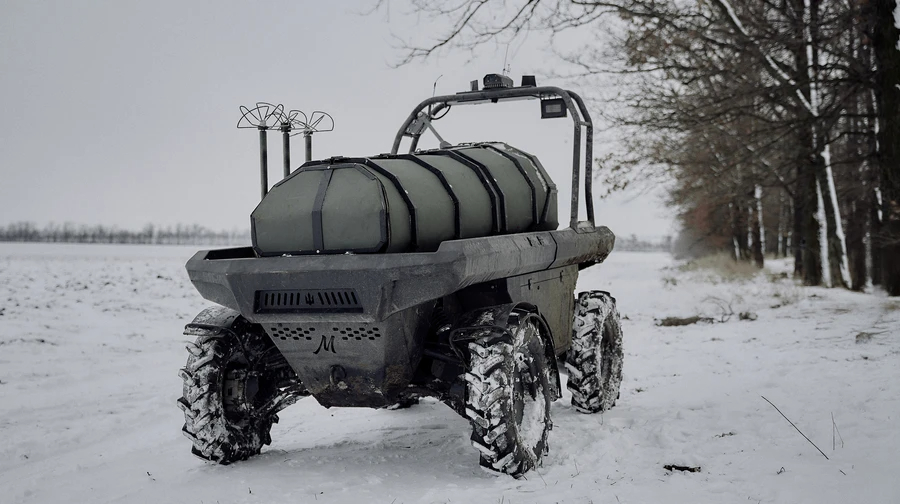
Ukraine is bolting the war's most common rifle onto its robots. A company in the Brave1 cluster has developed a turret built around the Kalashnikov that mounts on low-cost unmanned ground vehicles, the state cluster's press service told Defender Media.
Ground robots have become a daily part of the front in Ukraine. Ukrainian units ran 16,676 logistics, strike, and evacuation missions with them in June, up 122 percent since January, and the military has contracted more t
Ukraine is bolting the war's most common rifle onto its robots. A company in the Brave1 cluster has developed a turret built around the Kalashnikov that mounts on low-cost unmanned ground vehicles, the state cluster's press service told Defender Media.
Ground robots have become a daily part of the front in Ukraine. Ukrainian units ran 16,676 logistics, strike, and evacuation missions with them in June, up 122 percent since January, and the military has contracted more than 22,000 for 2026, nearly double the 2025 total.
Arming them cheaply is the next step, and the Kalashnikov is the most cost-effective option because it is already the standard rifle across the force.
The robots are already in combat
Ground drones fitted with the turret are undergoing combat testing in Ukrainian units. Fighters of the Security Service Special Operations Center "A" have used one to destroy Russian ambushes set with concealed waiting-mode drones.
The complex is built on a four-wheel chassis with airless tires and an armored body. At the core of the weapon module is a twin turret mounting two Kalashnikov rifles.
The build took under six months
The developers have received a technical assignment and a grant from the cluster to create the turret. The path from idea to finished prototype took less than six months.
Beyond the base version, the turret can be mounted on other wheeled and tracked ground robots. That flexibility is the point: one weapon module across many platforms.
The rifle choice is about scale
The developers chose the Kalashnikov because it is the most widespread small arm in Ukrainian units, according to Brave1. The cluster considers it a simple, effective solution that lets Ukraine quickly scale up strike robots for assaults and for defense against Russian infantry.
Earlier, the Ukrainian Defense Ministry said it would buy logistics and strike-ground robotic complexes under a new strategy that calls for sticking to the Defense Ministry's specifications rather than approving models one at a time.
Russia flies its missile raids on Ukraine from Engels-2. Ukraine keeps reaching the strategic bombers there. Soldiers of the Security Service's Alpha unit have struck a Tu-95MS missile carrier at the Russian airbase, President of Ukraine Volodymyr Zelenskyy wrote.
The Tu-95 is part of Russia's nuclear triad, a Soviet-era strategic bomber Russia has used to launch cruise missiles at Ukraine since 2022. Ukraine has spent the war whittling down the fleet. On 1 June 2025, O
Russia flies its missile raids on Ukraine from Engels-2. Ukraine keeps reaching the strategic bombers there. Soldiers of the Security Service's Alpha unit have struck a Tu-95MS missile carrier at the Russian airbase, President of Ukraine Volodymyr Zelenskyy wrote.
The Tu-95 is part of Russia's nuclear triad, a Soviet-era strategic bomber Russia has used to launch cruise missiles at Ukraine since 2022. Ukraine has spent the war whittling down the fleet. On 1 June 2025, Operation Spiderweb smuggled explosive drones deep inside Russia on trucks and hit 41 strategic bombers along with other bombers in a single day.
The satellite image shows the damage
The first image of the bomber has appeared on social media. A satellite photo published on Friday, 28 August, by OSINT analysts Exilenova+ shows the aircraft suffered critical damage in the strike.
The bomber lost about a third of its right wing to the drone hit. Other damage is hard to judge in the image due to low resolution.
The Russian Engels-2 air base is home to Tu-95MS and Tu-160 strategic bombers, which regularly launch Kh-101 cruise missiles at Ukraine. The base also houses ammunition and fuel storage facilities, equipment, and aircraft maintenance infrastructure.
A Russian Tu-95 strategic bomber. Source: Exilenova+
Strikes targeting Russian bombers and the airfield’s infrastructure are critically important. They are aimed at degrading the aggressor country’s military capabilities.
A second Engels-2 bomber in weeks
This is not the first Tu-95 Ukraine has reached at the base recently. Ukrainian drones struck Engels-2 in early July, ArmyInform reported, destroying a different Tu-95 whose tail section was torn off and thrown dozens of meters by the blast.
Analyst Oleksandr Kovalenko of Information Resistance said Russia has up to 12 flyable Tu-95MS left after Operation Spiderweb, in varying states of readiness, and that the one hit overnight belonged to the serviceable group.
A senior Russian official said out loud what Russia's missiles do every night. Pyotr Tolstoy, deputy chairman of the State Duma and great-great-grandson of Russian writer Lev Tolstoy, has called for massed bombing of Ukrainian cities to break the resistance of the people living in them and force a surrender, the news outlet 24 Kanal reported.
Russia denies striking civilians and claims after each attack that it hit military targets, even as its missiles land on homes, h
A senior Russian official said out loud what Russia's missiles do every night. Pyotr Tolstoy, deputy chairman of the State Duma and great-great-grandson of Russian writer Lev Tolstoy, has called for massed bombing of Ukrainian cities to break the resistance of the people living in them and force a surrender, the news outlet 24 Kanal reported.
Russia denies striking civilians and claims after each attack that it hit military targets, even as its missiles land on homes, hospitals, power plants, and food depots. Ukraine's Foreign Ministry Spokesperson Heorhii Tykhyi said Tolstoy's words should be grounds for an International Criminal Court arrest warrant, calling them a Russian official's demand for war crimes.
What Tolstoy has urged in public, Russian forces have done for more than 12 years while denying it.
The presenter proposed emptying the cities
On the state talk show Vremya Pokazhet, which Tolstoy hosts, he was reminded that more than 20 million people live in Ukraine and asked what would become of them if the country were turned to scorched earth. He proposed warning residents a day before strikes so they could flee their homes.
"You think we are calling for cruelty? We are calling for demoralizing the population so thoroughly that it comes out to meet our troops with its little paws up," Tolstoy said.
Then he named the reason
In the end, Tolstoy described what Ukraine means for Russia's plans.
"[Ukraine] is the kind of territory that will allow us to export our energy resources to Europe by the short route," he said.
He also characterized European leaders in the same speech.
"So gray-haired dwarves from Europe greet them (Ukrainians), and all these notorious Ursulas and Kaja Kallases, do they represent any value to us? No," Tolstoy claimed.
The descendant of a novelist, sanctioned in 2022
Tolstoy trained in France and worked with Le Monde and Agence France-Presse before working with the Russian state television and politics.
The European Union placed him on its sanctions list on 23 February 2022, the day before the full-scale war, naming him a central figure in Russian state propaganda. In 2024, he told the French channel BFMTV that Russian forces would kill French soldiers if they deployed to Ukraine.
Sweden will transfer 10 coast guard boats to Ukraine, the Swedish government announced on 27 August 2026. Stockholm will also direct additional funds to multilateral defense programs for Kyiv.
Russia's full-scale invasion added to some 13,500 km² of Ukraine's rivers, lakes, and Black Sea coastline now potentially contaminated with explosive remnants of war, in the world's most mined country, and emergency service divers had cleared 190 km² of it by November 2025. Allied
Sweden will transfer 10 coast guard boats to Ukraine, the Swedish government announced on 27 August 2026. Stockholm will also direct additional funds to multilateral defense programs for Kyiv.
Russia's full-scale invasion added to some 13,500 km² of Ukraine's rivers, lakes, and Black Sea coastline now potentially contaminated with explosive remnants of war, in the world's most mined country, and emergency service divers had cleared 190 km² of it by November 2025. Allied nations have committed billions in military support to Kyiv since 2022, from fighter jets to anti-drone systems.
Rescue boats for Ukraine's mined waterways
Ukraine's State Emergency Service will receive the work and high-speed vessels in their current condition, after the coast guard removes their markings and equipment. The agency will use them for waterborne rescue operations, including clearing mines from river channels.
Explore further
Sweden detains Russians who “camped” near home of CEO of Gripen jets Ukraine is buying
Sweden's Civil Defense Minister Carl-Oskar Bohlin said Sweden is further strengthening Ukraine's maritime capabilities. He described towage, mine clearance, and transport as important capabilities that can now increase further. Sweden's Civil Defense Agency will handle transporting the boats to Ukraine.
The donation follows Sweden's broader naval support for Kyiv. In January 2025, Stockholm doubled its pledge of CB90 assault boats for Ukraine's navy to 32 and added 23 naval combat modules to arm them. The coast guard vessels serve a different purpose—rescue and utility work for a civilian agency, not combat operations.
Another $28 million for defense funds
Sweden will also channel 270 million Swedish kronor (about $28 million) to multilateral defense funds supporting Ukraine, mainly for air defense. Of that sum, $14 million goes to the Prioritized Ukraine Requirements List (PURL), to which Sweden contributed $108 million in June. Allies and partners fund high-priority American materiel through the US-led, NATO-administered program, and this package covers advanced air defense systems and ammunition for Kyiv.
Explore further
Sweden’s first 16 Gripens to reach Ukraine in early 2027. They come with weapons
The government said this marks Sweden's fifth PURL contribution. With the new payment, Stockholm's total PURL funding reaches $552 million.
In July, Sweden's defense minister confirmed Ukraine may use the Meteor missiles promised with its Gripen fighters against Russian aircraft over Russian territory.
Russia has spent the past two days repeatedly attacking Kyiv and Kyiv Oblast with jet-powered drones, hitting commercial and logistics infrastructure and disrupting businesses and supply chains around the capital.
The attacks have struck civilian enterprises, food warehouses, hypermarkets, postal terminals, and warehouses storing books, according to Ukraine’s Interior Minister Ivan Vyhivskyi. Fires have broken out at multiple warehouse sites, while repeated strikes have
Russia has spent the past two days repeatedly attacking Kyiv and Kyiv Oblast with jet-powered drones, hitting commercial and logistics infrastructure and disrupting businesses and supply chains around the capital.
The attacks have struck civilian enterprises, food warehouses, hypermarkets, postal terminals, and warehouses storing books, according to Ukraine’s Interior Minister Ivan Vyhivskyi. Fires have broken out at multiple warehouse sites, while repeated strikes have forced emergency crews to repeatedly stop their work and seek shelter.
The attacks are also affecting the movement and storage of essential goods around Kyiv, with damage to food warehouses and other logistics facilities contributing to supply disruptions and shortages.
Russia expands its aerial campaign against Kyiv
The latest wave comes after Russia dramatically ramped up its use of ballistic missiles against Kyiv and other Ukrainian cities in recent months. Now, improved Russian jet-powered drones are being used to sustain repeated attacks on the capital and surrounding oblast.
Russian forces have been launching the jet-powered drones at Ukrainian regions almost continuously for the previous two days.
The pattern has left Kyiv and Kyiv Oblast under prolonged air raid alerts while putting emergency crews under the threat of repeated strikes.
In Kyiv alone, air raid alerts were issued 13 times on 27 August and lasted for more than 14 hours in total.
Across Ukraine, Russian attacks killed 16 people and injured another 50 during the day, Vyhivskyi said.
Kyiv Oblast has been among the hardest-hit areas. Ukraine’s State Emergency Service (DSNS) said on Friday morning the oblast had come under 38 Russian attacks since the first strike overnight on 27 August.
In Bucha district, firefighters worked at several locations where Russian drone strikes caused fires at warehouses and damaged vehicles.
At one site, a drone struck again while rescuers were working. After checking the area, emergency crews returned to the site and continued fighting the fire.
Firefighters also extinguished a fire involving 13 passenger cars. A nearby apartment building was damaged by the blast wave, which shattered windows.
At three locations, crews were still working to extinguish fires at warehouse buildings caused by the repeated attacks.
Aftermath of a Russian strike on Kyiv Oblast, 28 August 2026. Photo: Ukraine's State Emergency Service
Repeat strikes put rescuers at risk
The repeated attacks have made emergency operations particularly dangerous. Since rescuers began working, air raid alerts in the oblast had sounded 20 times as of Friday morning, according to the DSNS.
Firefighters have repeatedly been forced to stop their work and move to shelters or safe distances because of the threat of another strike, before returning to the fires once the danger passes.
Vyhivskyi said one person was killed and others injured in Kyiv Oblast on the morning of 28 August after civilians remained near a site where crews were clearing the aftermath of an earlier strike despite the threat of another attack.
Russia’s latest attacks on Kyiv Oblast have repeatedly put emergency crews in danger, with firefighters forced to halt their work and move to safety as follow-up strikes hit the area.
Ukraine's State Emergency Service said that on 27 August, the oblast came under 28 additional… pic.twitter.com/cPdkj6Wxwa
The attacks on Kyiv and Kyiv Oblast are part of a broader recent pattern of Russian strikes on commercial infrastructure across Ukraine. In recent weeks, Russian drones have hit shopping centers, hypermarkets, warehouses, postal terminals and other civilian businesses.
In Kharkiv, a Russian jet-powered drone struck a closed shopping center in the city’s Kyivskyi district on 28 August, partially damaging the building and starting a fire among equipment and furniture. Firefighters extinguished the blaze despite the threat of repeat strikes. No casualties were reported.
Russia has struck another shopping center in Kharkiv with a jet-powered drone, hitting a closed commercial facility in the city’s Kyivskyi district.
The strike comes amid Russia’s intensified campaign against commercial sites across Ukraine, including shopping centers,… pic.twitter.com/KSj719sSKz
In Zaporizhzhia, another Russian drone strike injured five people and set a shopping center on fire. The blaze covered about 14,000 square meters, and firefighters had to repeatedly take shelter because of the threat of follow-up attacks.
A Russian drone strike on Zaporizhzhia injured five people and sparked a massive fire at a shopping center, with the blaze spreading across about 14,000 square meters.
The attack comes amid Russia’s intensified targeting of commercial and logistics sites across Ukraine,… pic.twitter.com/Iu5OyoGCGx
The strikes are adding pressure to Ukraine’s civilian supply and logistics networks, particularly around major population centers. Damage to food warehouses, retail facilities and logistics sites can disrupt the storage and movement of goods, contributing to shortages and delays for businesses and consumers.
Explore further
Russian drone strike on Kryvyi Rih shopping center kills 15, injures 130. Second attack targeted rescue workers 30 minutes later
Authorities warn civilians to stay away
Ukrainian authorities have urged residents to remain in shelters or other safe locations during air raid alerts and avoid areas where emergency crews are working.
The DSNS warned people not to approach sites where the aftermath of Russian strikes is being cleared, citing the continuing threat of repeat attacks.
Vyhivskyi also urged residents to treat every air raid alert as a signal to move to a shelter or other safe location, warning that no urgent task is worth risking a life.
Victim of a Russian strike on Kyiv Oblast, 28 August 2026. Photo: Ukraine's State Emergency Service
Russians are buying their war gear on Ozon. Users of Russia's second-largest online marketplace ordered about $300 million in dual-use and military goods between August 2025 and July 2026, according to internal company data examined by the independent outlet Verstka.
Ukraine is now burning those warehouses down. Its forces struck three Ozon logistics centers covering 314,000 square meters on 24 August, part of a campaign that hit at least four Ozon hubs across southern
Russians are buying their war gear on Ozon. Users of Russia's second-largest online marketplace ordered about $300 million in dual-use and military goods between August 2025 and July 2026, according to internal company data examined by the independent outlet Verstka.
Ukraine is now burning those warehouses down. Its forces struck three Ozon logistics centers covering 314,000 square meters on 24 August, part of a campaign that hit at least four Ozon hubs across southern Russia over several days, Militarnyi reports.
Body armor led the spending
The biggest class by money was tactical gear, six categories covering body armor, helmets, load-bearing vests and belts, armor plates and adapters, and neck and shoulder protection. Users ordered more than 527,000 such items for about $110 million.
Body armor was the single most-ordered product in the class. Almost 157,700 vests were sold for roughly $61 million, at an average of about $388 each.
Optics were the costliest goods
Military optics ranked second by spending and carried the highest prices. Buyers ordered almost 350,000 scopes, night-vision devices, and thermal imagers for about $87 million.
The average thermal sight went for about $1,680, with more than 28,000 ordered. Plain optical scopes were the most common, with over 110,000 orders, followed by almost 99,000 collimator sights.
Drone parts made up the rest
Users also spent about $75 million on drones and drone components. Half of that, roughly $36 million, went to a single category labeled accessories for drones and quadcopters.
That category alone drew 554,000 orders. It consists mostly of the parts to assemble a copter from scratch: frames, propellers, receivers, and cameras.
The first Ukrainian strikes on Ozon started on 22 August. Ozon and Wildberries—Russia’s two largest online marketplaces—and their smaller rivals collectively sell goods and services worth the equivalent of 8.5% of Russia’s GDP and employ 4 million people.
Poland's governing coalition under Prime Minister Donald Tusk misread how far Kyiv's ambitions had grown and kept presenting Warsaw as Kyiv's indispensable guide to Europe, Polish journalist Mateusz Mazzini argued in The Guardian on 26 August 2026. It also never readied Polish society to treat refugees as its equals, and it encouraged the belief that Warsaw could decide whether Ukraine gets into the EU, he wrote.
The two countries built their partnership during Russia's
Poland's governing coalition under Prime Minister Donald Tusk misread how far Kyiv's ambitions had grown and kept presenting Warsaw as Kyiv's indispensable guide to Europe, Polish journalist Mateusz Mazzini argued in The Guardian on 26 August 2026. It also never readied Polish society to treat refugees as its equals, and it encouraged the belief that Warsaw could decide whether Ukraine gets into the EU, he wrote.
The two countries built their partnership during Russia's full-scale invasion, with Poland becoming Ukraine's main supply route for Western weapons, a leading provider of military and humanitarian aid, and a leading advocate for Kyiv's bid to join the European Union. That relationship has since frayed over refugee policy, historical disputes, and attitudes toward Ukrainians. A July poll by CBOS, Poland's biggest pollster, found that 52% of Poles opposed accepting Ukrainian refugees, compared with 42% who supported it, the first such reversal since the survey began in 2015.
He also points to Russian propaganda on Polish social media, where false stories about Ukrainian "welfare queens" living off Polish taxpayers feed hostility that keeps turning violent. Neither government prepared for the goodwill running out, he says, and Russian disinformation worked the gap they left to drive the two apart and thin Europe's backing for Kyiv.
Historical disputes have added to the tension
On 19 June 2026, Polish President Karol Nawrocki revoked the Order of the White Eagle, Poland's highest state decoration, previously awarded to Ukrainian President Volodymyr Zelenskyy. The move followed a decree Zelenskyy signed on 26 May giving an existing Ukrainian special operations unit the honorary name Heroes of the UPA, after the Ukrainian Insurgent Army.
Nawrocki cited Poland's dispute with Ukraine over the UPA's role in the World War II-era massacres of Poles in Volhynia. He said the decision did not change Poland's strategic security policy and that Poland continues to support Ukraine because Russia's aggression threatens Poland and Europe.
The journalist also faults Poland for missing how Ukrainians in the country have become more economically independent. They established more than 33,000 sole proprietorships in Poland in 2024, according to the Polish Economic Institute.
Ukraine has changed internationally as well, in his account, going from taking Western aid after the 2022 invasion to selling military technology and know-how around the world. Kyiv's leaders now approach Washington and Western European capitals on their own, he argues, and no longer need an "advocate," least of all in Warsaw.
Looking ahead, he expects Ukraine to integrate further into the European economy, competing more directly with French and German businesses as it already does with Polish ones. Kyiv, in his forecast, will approach Brussels, Paris, and Berlin as an equal rather than a supplicant, on the argument that the cost it has borne holding Russia off Europe entitles it to that place. His warning is aimed past Warsaw. Poland has already paid for misreading Ukraine, he writes, and other European capitals can still avoid repeating the error.
A wave of anti-Ukrainian attacks
The strain has also turned violent. Ukrainian citizens filed 180 hate-crime reports with Polish police in the first half of 2026, roughly one a day and more than 30% above a year earlier, national police figures showed, Rzeczpospolita reported. The figures count reports filed, not confirmed offenses.
In late July, three men allegedly beat a Ukrainian couple in Wrocław after asking whether they were Ukrainian. Police detained two suspects and treated the assault as a nationality-motivated hate crime. Earlier that month, a man in Łódź attacked a passerby he mistook for Ukrainian, breaking his nose and jaw and telling him his place was not in Poland.
A Russian drone company is developing an interceptor drone—the cheap counter-drone weapon Ukraine has fielded at scale against Russian attack drones—internal documents published by the Russian resistance group Black Spark describe, the defense outlet Militarnyi reported. The documents describe two designs under consideration, and Black Spark alleges the company cooperated with Boeing before the full-scale invasion and spied on European companies.
Interceptor drones—unma
A Russian drone company is developing an interceptor drone—the cheap counter-drone weapon Ukraine has fielded at scale against Russian attack drones—internal documents published by the Russian resistance group Black Spark describe, the defense outlet Militarnyi reported. The documents describe two designs under consideration, and Black Spark alleges the company cooperated with Boeing before the full-scale invasion and spied on European companies.
Interceptor drones—unmanned aircraft that hunt other drones—scaled up out of Ukraine's need to shoot down Russia's mass Shahed attacks without spending million-dollar missiles on them. Ukraine now fields them from dozens of licensed makers, and their spread has pushed Russia toward faster jet-powered attack drones. Russia already flies anti-drone interceptors of its own—Ukrainian troops downed one in July—and the leaked designs would fly far faster than that machine.
Mortar-launched drone-killer
NIK is considering two interceptor designs. The first modifies the company's existing UBB-M, a folding-wing loitering munition that launches from a 160 mm container by mortar-style ejection. For the interceptor role, designers changed the wing from straight to swept, shrank the wingspan, installed a larger battery, and fitted a more powerful motor.
Explore further
Russia’s attack drones now jam the cheap interceptors sent to kill them
The modified drone weighs 15-16 kg, carries a 3 kg payload—likely a warhead—and flies at 250-300 km/h with a 20 km operating radius and up to 10 minutes of flight time, operating between 20 meters and 4.5 km altitude. NIK's second design has a cone-shaped fuselage with four electric motors. Its specifications remain unknown.
Espionage claim comes with no documents
Black Spark says the documents came from someone inside the company, not a break-in, and that it holds evidence the firm spied on European companies. It gave no details on the Boeing cooperation beyond dating it before the invasion.
The leak is Black Spark's latest operation against Russia's defense industry. The group, which operates inside Russia, says it infiltrated the Alabuga factory where Russia assembles Shahed-derived Geran drones and copied personnel databases. Ukraine's Special Operations Forces have acknowledged joint missions with Black Spark, including attacks on Russian oil infrastructure.
Bulgaria will add seven minehunter ships to its navy under two agreements with Belgium and the Netherlands, Reuters reported. Parliament cleared the acquisition on 26 August, and the vessels are meant for a sea where mines have drifted since Russia invaded Ukraine. They will work within a three-country task force whose mission widened this summer beyond mine clearance.
Russia's invasion turned the Black Sea into hostile water for civilian shipping: mines drift out of th
Bulgaria will add seven minehunter ships to its navy under two agreements with Belgium and the Netherlands, Reuters reported. Parliament cleared the acquisition on 26 August, and the vessels are meant for a sea where mines have drifted since Russia invaded Ukraine. They will work within a three-country task force whose mission widened this summer beyond mine clearance.
Russia's invasion turned the Black Sea into hostile water for civilian shipping: mines drift out of the fighting, strikes fall on port after port, and grain leaves through whatever routes are still open. Mine clearance is the slow work that keeps those lanes usable at all, and every hull committed to it widens the area the navies bordering that sea can actually cover.
What parliament approved
Three of the hulls come through a sale the Netherlands agreed with Sofia, and they carry the gear for locating mines and mine-like objects and blowing them up. The remaining four arrive under a three-way handover deal signed by the two donor countries and the recipient, according to Reuters.
Before the three sale ships change hands, the Dutch will put their systems back in working order and raise how much they can do at sea. The bill for the yard work on all seven, up to the level the alliance requires, falls to the buyer. Alongside the ships, a signed memorandum provides for training the crews and supplying spares and extra kit.
Ukrainian minehunters Mariupol and Melitopol. Both ships are named after Ukrainian cities that Russia now occupies. Credit: ArmyInform
Belgium and the Netherlands, together with the UK, handed Ukraine five mine countermeasure vessels in April, described at the time as the core of a future large-scale Black Sea clearance operation.
A task force that grew
Bulgaria, Romania, and Türkiye signed the agreement creating a joint Mine Countermeasures Task Group in January 2024, and the group began work that summer. Three other states hold coastline on the same sea: Georgia, Russia, and Ukraine.
"Bulgaria is part of the mine countermeasures group established together with our colleagues from Türkiye and Romania, and it is working in excellent coordination to clear the maritime areas of the three countries," Bulgarian Defense Minister Dimitar Stoyanov said.
At a NATO summit in July, the three agreed to expand the force so it also protects critical infrastructure. Romania's national defense strategy had already flagged risks to Black Sea infrastructure.
Moldova will invest in air defense after repeated Russian drone incursions, Moldovan President Maia Sandu said, RFE/RL reported. She spoke at the country's independence celebrations on 27 August alongside the Ukrainian and Romanian presidents, hours after another group of drones entered Moldovan airspace during Russian strikes on Ukraine. The Institute for the Study of War (ISW) says the crossings show Putin continuing to normalize the threat that Russia's strikes on we
Moldova will invest in air defense after repeated Russian drone incursions, Moldovan President Maia Sandu said, RFE/RL reported. She spoke at the country's independence celebrations on 27 August alongside the Ukrainian and Romanian presidents, hours after another group of drones entered Moldovan airspace during Russian strikes on Ukraine. The Institute for the Study of War (ISW) says the crossings show Putin continuing to normalize the threat that Russia's strikes on western Ukraine pose to European states.
Russia's drones and missiles have worked the southwestern edge of Ukraine all summer, hitting the Danube ports and later the crossings that tie the region to the European Union, and the machines regularly stray past the borders—aerial drones into the airspace next door, sea drones into Black Sea waters and onto the beaches. Romania's fighter jets and Bulgaria's navy now destroy what reaches them, while a neutral country with no alliance behind it and no way to shoot anything down is assembling that capability.
"We cannot be intimidated"
Russian drones have violated the airspace of Moldova and Romania dozens of times, Sandu noted. She met Romanian President Nicușor Dan and Ukrainian President Volodymyr Zelenskyy in Chișinău for the anniversary.
"And today, on the eve of our holiday, Russian drones invaded our airspace with the obvious aim of intimidating us. And now I want to say clearly, in the presence of our friends—we cannot be intimidated. We are investing in air defense in order to have the capability to protect our people and infrastructure," she said.
Sandu also called on every country of the free world to help Ukraine, and specifically to strengthen its air defense before winter. While Ukraine fights in the east, she said, Moldova can sleep calmly. Russian drones have breached Moldovan airspace repeatedly before this month.
Ukrainian President Volodymyr Zelenskyy, Moldovan President Maia Sandu, and Romanian President Nicușor Dan at a joint press conference in Chișinău, Moldova, 27 August 2026. Photo: Moldova 1
Five drones from the Ukrainian border
Moldova's Defense Ministry reported five unidentified drones entering Moldovan airspace from various points along the border area with Ukraine in Odesa Oblast early on 27 August, the day after a single drone crossed the border and left minutes later. The five crossings ran from 03:56 to 06:02, and each drone flew over the country briefly before turning back toward Ukraine, following Russian air attacks there, the ministry said.
ISW says these incidents show that Putin continues to normalize the threat that Russia's strike campaign against the westernmost parts of Ukraine poses to European states, including Moldova and eastern NATO members. The crossings also show the Kremlin accepting the risk that its war can damage other states.
Fragments police preliminarily identified as parts of a combat drone, recovered near Crocmaz in Moldova's Ștefan Vodă district, 9 August 2026. Photo: Consiliul Raional Ștefan Vodă/Facebook
Moldova is not in NATO or the EU, and it is a neutral state. Russian drones have crossed its airspace illegally around 70 times since the start of the full-scale war, Moldova's National Army says. Defense Minister Anatolie Nosatîi called the situation extremely serious after one incursion this month halted air traffic over the country for 15 minutes, and said the army needs modernizing.
Romania shoots, Bulgaria clears up
Unlike Moldova, the NATO members in the region act on what reaches them. Romania intercepts what crosses in, and Bulgaria destroys what drifts to its coast:
26 June: Bulgaria's navy destroyed a drifting drone seven nautical miles off Kranevo.
21 July: Bulgarian, Romanian, and Turkish ships destroyed a drifting drone 21 nautical miles off Ahtopol.
24–26 July: Romanian F-16s downed three drones, the country's first shootdowns at home.
Early August: Romanian jets scrambled before Ukraine shot the drone down.
16 August: a Spanish F/A-18 downed a drone north of Galați, the fourth over Romania this year, the Defense Ministry said.
20 August: a Romanian F-16 destroyed an explosive-laden sea drone with its cannon near an offshore gas platform. President Nicușor Dan blamed Russia.
22 August: two more drone wrecks turned up on Bulgarian beaches, one of them a Russian decoy without a warhead.
Finnish police and the Border Guard suspect a scheme that turned paper employment into residence permits and citizenship, Yle reported. Investigators believe one man organized it through companies that did little or no business, and that it may have run for more than two decades. The suspected organizer and the people who obtained citizenship are Russian nationals.
Russia's invasion of Ukraine pushed European states to restrict Russian travel, freeze assets, and harden
Finnish police and the Border Guard suspect a scheme that turned paper employment into residence permits and citizenship, Yle reported. Investigators believe one man organized it through companies that did little or no business, and that it may have run for more than two decades. The suspected organizer and the people who obtained citizenship are Russian nationals.
Russia's invasion of Ukraine pushed European states to restrict Russian travel, freeze assets, and harden their borders, while Moscow expanded sabotage, espionage, and recruitment across the continent. A passport from any member state carries movement, residence, and work rights across the whole union, so documents issued on false grounds in one country become an opening into all of them.
Jobs that existed only in documents
Authorities suspect the main figure arranged fictitious employment relationships for foreign nationals. That paperwork let them apply for Finnish residence permits and, later, for citizenship. From 2003 he registered several companies in southeastern Finland, police and the Border Guard said. The firms either did no real business at all or very little of it. The suspected criminal arrangement appeared shortly after 2003.
Applicants are suspected of paying for the fictitious jobs and for help assembling their documents.
Explore further
Russian spies buying properties near military bases across Europe, three intelligence agencies warn
At least 12 citizenships, five unfinished applications
At least 12 people obtained Finnish citizenship without grounds, by the investigation's account. Five more naturalizations were still unfinished when the preliminary investigation opened in 2024. Criminal police commissioner Teppo Tähtinen said the scale of the case came as a surprise to investigators.
Investigators also believe the arrangement ran further back, with people naturalized earlier possibly involved. The statute of limitations has expired on those cases.
Explore further
Russia will be combat-ready again by 2027 — Estonia’s military chief sets a two-year clock for NATO
The preliminary investigation found that the main suspect and his accomplices sat Finnish language exams for other people. They also completed study assignments in Finnish on their behalf. Without that, the applicants probably could not have obtained citizenship, the investigation found.
Naturalization normally requires five to eight years ofresidence on a residence permit, Finnish or Swedish at B1 level, and confirmed income, The Moscow Times reported. In 2025, 14,689 people received Finnish citizenship. Russians were among the nationalities filing the most applications, together with citizens of Iraq, Syria, Afghanistan, and Somalia.
Finland's harder line toward Russia
Finland has kept its eastern border with Russia closed, and Helsinki has accused Moscow of steering migrants toward the crossings. The country has also rearmed since Russia's full-scale invasion of Ukraine, raising its reserve age and setting a long-term troop target. Last week Finnish authorities opened an inquiry into a suspected Russian airspace violation over the Gulf of Finland.
Ukrainian drones attacked two Ozon logistics centers overnight on 27 August, one in Ufa and one in Orenburg Oblast, Russia's second-largest online store said. Staff were evacuated at both sites, and preliminary information indicated no casualties. Video published by Ukrainian monitoring channel Exilenova+ shows a drone reaching the Bashkortostan warehouse and exploding.
Ukraine's deep-strike campaign has spread across Russian refineries and fuel depots, chemical plants,
Ukrainian drones attacked two Ozon logistics centers overnight on 27 August, one in Ufa and one in Orenburg Oblast, Russia's second-largest online store said. Staff were evacuated at both sites, and preliminary information indicated no casualties. Video published by Ukrainian monitoring channel Exilenova+ shows a drone reaching the Bashkortostan warehouse and exploding.
Ukraine's deep-strike campaign has spread across Russian refineries and fuel depots, chemical plants, arms factories, railways, and the warehouses that move consumer goods. Together the strikes take refining capacity, storage space, and freight throughput out of service repeatedly, and sanctions leave Russia fewer parts and crews to restore them with.
The strike on camera
Exilenova+ reported in the morning that an Ozon warehouse was burning after impacts in Blagoveshchensk, a town north of Ufa. The Bashkortostan capital lies roughly 1,300 kilometers from the war zone in Ukraine. Around midday the channel published eyewitness video of what it called the moment of a drone attack on the site, and said the warehouse had not caught fire. The footage shows a drone reaching the site and detonating there.
Drone hit another Russian warehouse
Eyewitness video from Blagoveshchensk in Bashkortostan shows the moment a Ukrainian drone reached Ozon's fulfillment center — the largest logistics complex the online retailer runs in the Volga area — and detonated. The channel that published… pic.twitter.com/oHUgjRz0v0
Earlier, the channel reported that residents of Sterlitamak, Bashkortostan's second-largest city, about 120 kilometers from Ufa, had written about explosions, with nothing then known about impacts. Astra later placed smoke over what it said was probably the Bashkir Soda Company works there.
Ozon said the Orenburg site—about 1,200 kilometers from the war zone—has resumed work. The one it placed in Ufa sustained what it called minor damage but remains closed, because the grounds need a thorough inspection. It is not accepting deliveries.
Russian news Telegram channel Astra identified the damaged facility from the eyewitness footage as Ozon's UFA_RFC fulfillment center in Blagoveshchensk. When it opened in late 2024 it was billed as the largest Ozon logistics complex in Russia's Volga federal district, with a total area of 93,000 square meters.
Smoke over the Ufa refineries
Astra also traced smoke in eyewitness footage to the Bashneft-Ufaneftekhim refinery in Ufa. The plant is one of Rosneft's leading refineries and a dual-use site: it supplies specialized fuel to Russia's armed forces and petrochemical feedstock for defense-grade materials. It burned after a strike on 1 August.
Bashneft runs three refineries side by side in Ufa's northern industrial zone—Ufaneftekhim, Novoil, and UNPZ—forming one of Russia's largest refining complexes, with a combined capacity of up to 23.5 million tons of feedstock a year.
Explore further
Ukrainian drones hit warehouse belonging to Russian online retailer Ozon for the first time
What officials said, and didn't
Bashkortostan's authorities did not report the attack. Orenburg Oblast governor Yevgeny Solntsev mentioned drone danger in his region but gave no account of consequences. Ufa closed its airport.
Russia's Defense Ministry claimed air defenses destroyed 267 Ukrainian fixed-wing drones overnight across Russian regions, Bashkortostan among them.
The campaign so far
Ukraine's warehouse campaign began with Wildberries, Russia's largest online marketplace, which lost eight warehouses and roughly 860,000 square meters of storage in July alone. It reached Ozon for the first time on 22 August at Chapayevsk in Samara Oblast, where more than 500 employees evacuated and people were hurt. Four more Ozon hubs were hit across southern Russia two nights later.
Finnish President Alexander Stubb said Ukraine would receive about 90% of the drones that Finnish companies build under a planned Finland–Ukraine framework agreement, Mi-Ukraina reported on 26 August. Three days earlier in Kyiv, he said the other 10% would stay in Finland.
The planned arrangement follows a broader European shift toward co-production with Ukraine rather than supplying weapons from existing stockpiles. Drones have shaped much of the fighting on both sides
Finnish President Alexander Stubb said Ukraine would receive about 90% of the drones that Finnish companies build under a planned Finland–Ukraine framework agreement, Mi-Ukraina reported on 26 August. Three days earlier in Kyiv, he said the other 10% would stay in Finland.
The planned arrangement follows a broader European shift toward co-production with Ukraine rather than supplying weapons from existing stockpiles. Drones have shaped much of the fighting on both sides since Russia's full-scale invasion in 2022, and Russia has repeatedly struck defense plants inside Ukraine—a Bayraktar plant under construction in Kyiv was hit four times in six months by August 2025—pushing Ukrainian makers to expand production into allied countries, Finland among them.
Asked what still had to be agreed before production could begin, Stubb said nothing did.
"Everything is done. There is a so-called framework agreement on drones that we're working on. It's more about cooperation between states—that is, Zelenskyy and me. And the companies between themselves do what they have to do. I think the doors are already open," Stubb said.
He said the 90/10 ratio is common practice in corporate contracts and that companies would determine the pace of production after finalizing their decisions. Some details could remain classified because of military secrecy, he said.
At a press conference on 23 August after the Nordic-Baltic Eight summit with Ukraine, Stubb had described the deal as still taking shape. He said seven Finnish defense companies interested in cooperation with Ukraine, including on maritime drone production, had traveled to Kyiv with him and that one had already provided production estimates.
"The companies are making actual deals. I'm looking forward to the results, but it seems one of the companies has already provided data on the number of drones that can be produced in Finland. And I think the deal will follow approximately the so-called 90/10 proportion. So 90% of the output is supplied to Ukraine, and 10% stays in Finland," Stubb said, according to Unian.
President of Ukraine Volodymyr Zelenskyy and President of Finland Alexander Stubb took part in a roundtable on Ukrainian-Finnish cooperation in the defense industries, organized with the participation of the Ukrainian Council of Defense Industry. Photo: president.gov.ua
Ukrainian President Volodymyr Zelenskyy said on 23 August that three of the seven Finnish companies present had already signed agreements for joint production, including drones. Yle identified the three as Patria, Insta, and Boomeranger, saying they had signed letters of intent with Ukrainian counterparts. Patria and the Ukrainian company General Chereshnia signed a memorandum of intent to produce defense drones in Finland, Patria announced.
Separately, Ukrainian drone maker Airlogix and Finnish technology company Innokas signed a letter of intent to establish joint drone manufacturing in Finland under Ukraine's "Build with Ukraine" initiative. Ukrainian firm TAF Industries and Finnish company Summa Defence had signed a similar agreement earlier under the same initiative.
Zelenskyy said the cooperation would combine Ukrainian combat experience with Finnish technology. Stubb said Finland already faces hybrid attacks, from undersea cable sabotage to drones, and treats sabotage as a standing risk to the plants, adding that Finland ranks among the largest per-capita suppliers of military equipment to Ukraine.
From support to co-production—and a two-way expertise swap
Stubb said the planned arrangement is not far from Denmark's model of directly financing Ukrainian defense production, according to Yle.
Zelenskyy said the agreements cover drones built in Finland for Ukraine and Europe, expanded maritime unmanned systems, and a plant for ground robotic systems, and Stubb said the documents signed during the visit concerned air, land, and sea.
The Finnish president said in the Mi-Ukraina interview that Europe's relationship with Ukraine has changed since the full-scale invasion. Ukraine once needed European support, while Europe now needs Ukraine's battlefield experience, he said. What Finland learned, by his account: trench warfare is over, a 40-kilometer kill zone means tanks firing at shorter range have no role, and Ukraine holds more data on modern war than the rest of Europe combined.
Norway's Air Force has put its first counter-drone system into service at Ørland, the country's only combat aircraft base, NRK reported. A launcher now stands beside the runway where Norway's F-35 stealth fighters are parked, bought specifically to bring drones down. The deployment follows a wave of drone sightings across Europe last autumn and will be phased in at other Norwegian bases.
Since Russia's full-scale invasion, European states have logged drone sightings ove
Norway's Air Force has put its first counter-drone system into service at Ørland, the country's only combat aircraft base, NRK reported. A launcher now stands beside the runway where Norway's F-35 stealth fighters are parked, bought specifically to bring drones down. The deployment follows a wave of drone sightings across Europe last autumn and will be phased in at other Norwegian bases.
Since Russia's full-scale invasion, European states have logged drone sightings over airports and bases, airspace violations, sabotage, and arrests for espionage, much of it attributed to Moscow, which denies involvement. This month, a suspected case turned physical: an explosive drone struck a Ukrainian cargo plane at a German airport but failed to detonate.
The launcher came from the British company ISS Aerospace and works as one of several effectors inside a system the military calls Counter Unmanned Aerial Systems, or C-UAS. Radars and other sensors spot the drones first. It is built to protect fixed installations against drones weighing up to 150 kilograms, and it can either jam a machine or destroy it. Ørland already has NASAMS air defenses, the Norwegian-American missile system Ukraine also uses, but firing interceptor missiles at small drones is expensive and described as shooting sparrows with cannons.
"We received a system in the spring, which we are introducing now, and it gives us a hugely increased capacity in drone defense," said the head of the counter-drone unit at the base, Sondre Steinsvik.
Officers of the base defense battalion and the counter-drone unit beside the British-supplied launcher at the Ørland fighter base in Norway, 26 August 2026. Photo: Ingrid Lindgaard Stranden / NRK
What pushed it forward
Police reported observations of possible drones near the base in September last year, part of a wider wave across Europe that also closed Oslo airport. Trøndelag police later concluded the lights had most likely been blinking celestial bodies. The purchase was already underway, but the sightings accelerated it, and the new sensors are meant to make such calls easier in future. Ørland's mayor said at the time the drone defense was arriving far too late.
A NASAMS air defense launcher at the Ørland fighter base in Norway, 26 August 2026. Photo: Ingrid Lindgaard Stranden / NRK
Small drones have become easily available, are relatively easy to smuggle in or rebuild locally, and could potentially do serious damage to aircraft parked in the open, according to Lars Peder Haga of Norway's Air Force Academy, who said that from a defense standpoint, such purchases can never move fast enough.
Explore further
About 50 grams of suspected military explosive lay in a German field 10 days after the attempt on Ukraine’s plane
Next bases, and Norway's own drones
Evenes air station, which handles Norway's quick-reaction alert mission among other duties, is among the sites due to receive it, NRK reported. Parliament's long-term plan set aside nearly $2 billion for drones, electronic warfare, and autonomy through 2036.
The base has also built a drone troop of its own, flying machines for search and mapping, with the aim of arming them to strike other drones.
"That is the direction we want to go. We see it is very effective in Ukraine," said the head of the base defense battalion, Tormod Overland.
A car bomb killed a lieutenant colonel of Russia's Aerospace Forces in St. Petersburg on the morning of 27 August, the local outlet Fontanka reported. His wife survived and reached hospital in serious condition. Russia's Investigative Committee opened a criminal case, and nobody has claimed responsibility for the attack.
Ukraine's war reaches deep into Russia's rear, where officers, arms-industry figures, and quisling officials keep dying in blasts far from the front. W
A car bomb killed a lieutenant colonel of Russia's Aerospace Forces in St. Petersburg on the morning of 27 August, the local outlet Fontanka reported. His wife survived and reached hospital in serious condition. Russia's Investigative Committee opened a criminal case, and nobody has claimed responsibility for the attack.
Ukraine's war reaches deep into Russia's rear, where officers, arms-industry figures, and quisling officials keep dying in blasts far from the front. Who put the bomb in this car is a separate question. It could be Kyiv, or it could be a criminal score being settled — Russia has no shortage of those.
A bomb inside the car
Witnesses said the officer and his wife were pulling away from their house in a southern suburb of the city at around 10 a.m. when an improvised explosive device went off inside the car, Militarnyi reported. The officer died on the spot, and the blast tore off the legs of both spouses. Fontanka placed the dead officer in Russia's Air Force and Air Defense branches, which sit within the Aerospace Forces.
Russian channel Ren TV published a video of the wreckage and said the explosion followed the driver starting the engine. The Geely lost its rear window, hood, and rear bumper, and its body was badly deformed, and parts landed dozens of meters away, according to the channel. Footage from the site shows debris across the roadway and emergency crews arriving.
A car bomb killed a Russian Aerospace Forces lieutenant colonel in St. Petersburg
The unnamed officer died where he sat on the morning of 27 August. The Geely's hood and rear bumper ended up on the road, and parts landed dozens of meters away. Investigators opened the case as… pic.twitter.com/g132U7Oaft
Witnesses told the Russian news Telegram channel Ostorozhno Novosti that the blast wave badly deformed the driver's door and damaged cars parked alongside. Ukrainian monitoring Telegram channel Exilenova+ posted several clips from the site and described the dead man as a military pilot.
The Investigative Committee's St. Petersburg directorate said it had opened a criminal case over the burning of a car in which two people were hurt. It confirmed that one of them died and one was hospitalized, and it did not name the article of the criminal code.
Russia's Defense Ministry bought a significant share of the housing in that part of the city for servicemen and their families, according to available information.
Russian Aerospace Forces officer killed by a bomb in his own car in St. Petersburg
Bombings in Russia's rear
The killing follows a run of blasts against people tied to Russia's war. Earlier this month, a bomb under the car of Vladimir Tkachuk, who heads the plant making Upyr first-person-view drones, killed his bodyguard and put Tkachuk in intensive care. Major General Valery Plokhotnyuk reportedly died on 1 August in a blast at an Italian restaurant in Moscow.
Explore further
Car bomb kills Russian general who armed Russia’s war on Ukraine—fourth top officer assassinated near Moscow since late 2024
At least four senior officers have died in bombings in and around the capital since late 2024, including chemical defense chief Igor Kirillov, General Staff officer Yaroslav Moskalik, military planner Fanil Sarvarov, and Damir Davydov, who ran missile and shell deliveries for the Defense Ministry. Ukraine's security service claimed the Kirillov operation openly and, through a source, a 2024 Sevastopol car bombing that killed a Black Sea Fleet brigade commander. Kyiv has stayed silent on most of the rest.
The Financial Times reported that Sweden, the Netherlands, Spain, and Poland are jointly urging the European Commission to restart work on using more than €200 billion ($233 billion) in frozen Russian central bank assets to fund Ukraine. Belgium blocked the proposal in December over legal and financial concerns.The Council says the EU’s €90 billion ($105 billion) loan covers two-thirds of Ukraine’s projected funding needs for 2026 and 2027. In the Financial Times,
The Financial Times reported that Sweden, the Netherlands, Spain, and Poland are jointly urging the European Commission to restart work on using more than €200 billion ($233 billion) in frozen Russian central bank assets to fund Ukraine. Belgium blocked the proposal in December over legal and financial concerns.
The Council says the EU’s €90 billion ($105 billion) loan covers two-thirds of Ukraine’s projected funding needs for 2026 and 2027. In the Financial Times,Swedish Foreign Minister Maria Malmer Stenergard called the loan a “manifestation of the EU’s commitment to support Ukraine,” but said it was “clearly not enough.”
A draft obtained by the Kyiv Independent is dated 27 August and asks EU foreign ministers to hold an initial discussion in Ireland on 1–2 September. Three EU diplomats told the outlet they expected it to be sent the same day.
EU rules already channel profits from frozen assets to Ukraine, primarily to help repay EU and G7 loans. The Commission proposedusing cash balances from the Russian holdings for a separate reparations loan, while leaving the assets frozen.
In February, Kaja Kallas acknowledged that EU officials had done no further work on the option since December. Separately, Ukrainians and their supporters rallied across dozens of countries from 22 to 24 August to demand that Europe use the assets.
Explore further
Ukrainians rally across dozens of countries to demand Europe use Russia’s frozen billions
Belgium’s objections remain unchanged. The government fears Russian legal retaliation and wider risks to financial markets because most of the assets are held in Belgium. No new proposal has resolved those concerns, and the coalition is asking the Commission for a progress report on possible legal and technical solutions.
Belarus is fitting a new base near its border with Ukraine to receive heavy military hardware by rail, according to Radio Svaboda, the Belarus service of Radio Free Europe/Radio Liberty. On paper it is a training ground—but the leaked design documents describe a site built to unload trainloads of vehicles. The work is moving ahead even as Belarusian commanders have begun saying there is no real threat from the West.
Belarus keeps adding permanent military infrastructure
Belarus is fitting a new base near its border with Ukraine to receive heavy military hardware by rail, according to Radio Svaboda, the Belarus service of Radio Free Europe/Radio Liberty. On paper it is a training ground—but the leaked design documents describe a site built to unload trainloads of vehicles. The work is moving ahead even as Belarusian commanders have begun saying there is no real threat from the West.
Belarus keeps adding permanent military infrastructure on its Ukrainian frontier even as its own commanders now drop the Western-threat case behind it.
A rail line sized for military trains
Construction is under way near the village of Yakimaŭka in Homiel Oblast, the part of Belarus that runs along Ukraine's northern edge. Radio Svaboda reported that the new rail infrastructure is designed to receive military trains. The finding rests on project documents obtained by a community of Belarusian railway workers.
The papers describe a separate access track sized for up to 60 railcars and a cargo platform with a ramp for unloading wheeled and tracked vehicles. A state military-design institute, Vaenpraekt, is listed as the client.
A base for a new assault brigade
The papers pin the range only to Homiel Oblast, but Radio Svaboda links it to a wider military complex built near Homiel since late 2023. That complex is the planned home of the 37th separate air-assault brigade of Belarus's Special Operations Forces. Cadastral maps split it into an eastern "military town" and a western "training-tactical field."
Alyaksandr Lukashenka's government created the brigade in 2025 to strengthen the country's southern sector, ostensibly against a threat from Ukraine. Part of the military town was reported finished in June 2026, and crews have since moved to the rail tracks.
Belarus drops its own threat talk
For months, Belarusian officials have claimed the West was preparing to attack. In June 2026, the Minister of Defense of Belarus Viktar Khrenin pressed the line at a meeting of defense ministers from the Russia-led Collective Security Treaty Organization (CSTO) in Moscow, and again at an "anti-fascist congress" in Minsk, where he accused Europeans of a "Nazi mentality."
Khrenin told Lukashenka the situation around Belarus was calm, with no sign that neighbors were preparing to act. On 16 August, the commander of Belarus's air force and air defense, Andrei Lukyanovich, said there was no external threat and that operational contacts with Latvia, Lithuania, and Poland were ongoing.
China is helping Russia build a faster Shahed. Russia has begun using upgraded Shahed drones with Chinese-made turbojet engines that fly at speeds close to three times those of earlier versions, the Wall Street Journal reported.
The Shahed jet is designed to beat Ukraine's air defenses. Ukrainian interceptors have downed about 90 percent of the older piston-engine drones, which cruise at roughly 180 kilometers per hour, so Russia switched to the jet-powered Geran-4, whi
China is helping Russia build a faster Shahed. Russia has begun using upgraded Shahed drones with Chinese-made turbojet engines that fly at speeds close to three times those of earlier versions, the Wall Street Journal reported.
The Shahed jet is designed to beat Ukraine's air defenses. Ukrainian interceptors have downed about 90 percent of the older piston-engine drones, which cruise at roughly 180 kilometers per hour, so Russia switched to the jet-powered Geran-4, which cruises at around 500 kilometers per hour.
The engines come from one Shenzhen firm
The turbojets come from Telefly Telecommunications Equipment, founded in Shenzhen in 2010. The company chiefly makes computer hardware and communications equipment, but also sells its own line of micro-turbojets for drones.
China has long been the main clearinghouse for Shahed parts, including engine components, servomotors, and gyroscopes, the newspaper reported.
The company scrubbed its own website
After Ukraine publicized the discovery of Telefly engines in Russian drones, the turbojet section disappeared from the English-language pages of the company's website. The pages in Chinese and other languages still carry them.
China's foreign ministry, which did not respond either, has previously said it strictly regulates exports of dual-use components and rejects unilateral US sanctions on such trade.
Western parts fade as Chinese parts arrive
Downed Shaheds once carried microcontrollers from Texas Instruments in the US and linear regulators from STMicroelectronics, which the newspaper lists as being based in Switzerland. Over time, the Western components are disappearing even as the drones gain better navigation and attack systems, because US Treasury investigations found nearly all the Western parts were being diverted through Chinese intermediaries, often shell companies in Hong Kong.
Ukrainian government researcher Colonel Oleksandr Zaruba said in June that Shaheds now hold more antennas, modems, and SIM cards to correct their flight paths through local mobile networks, and that the components increasingly come from China.
Ukraine has drawn up a list of those who build Russia's ballistic missiles and wants all of them sanctioned by its allies. Kyiv is asking partners to impose sanctions on more than 100 Russian ballistics producers, presidential sanctions commissioner Vladyslav Vlasiuk said at a press conference in Kyiv, according to Ukrinform.
The demand rests on physical evidence. An Iskander that Russia fired at Kyiv Oblast on 10 July held more than 140 foreign components, 62 of them A
Ukraine has drawn up a list of those who build Russia's ballistic missiles and wants all of them sanctioned by its allies. Kyiv is asking partners to impose sanctions on more than 100 Russian ballistics producers, presidential sanctions commissioner Vladyslav Vlasiuk said at a press conference in Kyiv, according to Ukrinform.
The demand rests on physical evidence. An Iskander that Russia fired at Kyiv Oblast on 10 July held more than 140 foreign components, 62 of them American, alongside parts from Switzerland, Germany, Taiwan, China, and Japan, Vlasiuk reported in July. Most were made recently, which means the parts are still reaching Russia. Naming the factories is Ukraine's attempt to close the gap at the production end rather than chase each shipment.
The plan runs on synchronization
The commissioner laid out several parts of the plan at the press conference. The first is getting the same producers sanctioned everywhere at once, so a firm blocked in one country cannot operate through another. He said the files were handed to partners a few weeks ago, and Ukrainian specialists expect to identify every producer on allied lists by September or October.
The plan also covers what Vlasiuk called kinetic sanctions, meaning strikes on Russian defense-industry sites. He named the Kamensky Combine, which makes components for rocket fuel, as one such target.
The critical parts are still foreign
Ukraine keeps finding Western microelectronics in identified Russian ballistics, including Iskander-M missiles and those used by the S-400 system, with parts traced to the US, Japan, Germany, Taiwan, France, Britain, and Switzerland. The most sensitive elements are the Kometa satellite navigation system and autonomous inertial guidance units, which run on American, Swiss, and French microelectronics.
Ballistics is the most demanding product for quality and precision, Vlasiuk said, which is why those two systems are the chokepoint.
Ukraine wants smaller packages, sooner
The commissioner asked partners to adopt more stringent export controls, up to licensing or banning the export of sensitive components to third countries that help Russia evade sanctions. Ukraine has also compiled a list of more than 10 critical materials, including ammonium perchlorate, aluminum powder, and tungsten, as well as the numerically controlled machine tools Russia needs to build the missiles.
The EU has already begun work on a large 22nd sanctions package. Ukraine is urging it not to wait, asking instead for an interim ballistics package in September and another in October, moving in small steps as Ukraine, Britain, and Canada already do.
Ukraine is turning ordinary cars into robots instead of building them from scratch. Three units of the Armed Forces received the Kaban remote-control system, which converts vehicles into uncrewed ones, developer Drone Fight Group told Defender Media.
Ground robots have become a daily part of Ukraine's front. Ukrainian units ran 16,676 logistics and evacuation missions with them in June, up 122 percent since January, and the military has contracted more than 22,000 groun
Ukraine is turning ordinary cars into robots instead of building them from scratch. Three units of the Armed Forces received the Kaban remote-control system, which converts vehicles into uncrewed ones, developer Drone Fight Group told Defender Media.
Ground robots have become a daily part of Ukraine's front. Ukrainian units ran 16,676 logistics and evacuation missions with them in June, up 122 percent since January, and the military has contracted more than 22,000 ground robots for 2026, nearly double the 2025 total. Most are purpose-built platforms. Kaban takes the opposite route, converting vehicles that a unit already has.
The developers say Kaban was passed to the 3rd Army Corps, the 429th Separate Unmanned Systems Regiment "Akhilles", and the 49th Brigade of the Armed Forces.
The system bolts on without modification
Kaban installs on a vehicle without altering its construction and works with different models, Drone Fight Group said. It lets the operator switch between remote and manual control.
The operator navigates on a digital map, plotting routes and setting markers. Manual correction is built in for GPS spoofing cases. The system predicts its trajectory and can automatically stop the vehicle if the connection is lost.
Starlink carries the control link
The main communication channel is Starlink, and the system also supports analog video transmission and radio control, according to the developers. A vehicle can be fitted with thermal cameras if needed.
Kaban provides two-way audio and remote control of lights, infrared illumination, and searchlights, and it can pull data from the vehicle's onboard computer. Among the optional add-ons, the developers list net launchers and platforms for launching drones.
Combat testing came before the handover
Kaban is developed with support from the Brave1 cluster, and the system has already passed combat trials, according to the developers. Work continues to refine it using feedback from military units.
Russia is trying to build the weapon Ukraine used against it. The Russian fleet is set to receive more than 150 uncrewed surface vessels in 2026, with the state order possibly rising to 230 units, Ukraine's Defense Intelligence told Oboronka.
Ukraine's naval drones drove Russia's Black Sea Fleet out of its main base. Magura strike drones operated by Defense Intelligence sank or damaged more than a dozen Russian vessels and forced the fleet to relocate from Sevastopol to
Russia is trying to build the weapon Ukraine used against it. The Russian fleet is set to receive more than 150 uncrewed surface vessels in 2026, with the state order possibly rising to 230 units, Ukraine's Defense Intelligence told Oboronka.
Ukraine's naval drones drove Russia's Black Sea Fleet out of its main base. Magura strike drones operated by Defense Intelligence sank or damaged more than a dozen Russian vessels and forced the fleet to relocate from Sevastopol to Novorossiysk, roughly 300 kilometers east.
Russia is now ordering the same class of weapon in volume, three years after Ukraine first attacked Sevastopol with drone boats in October 2022.
Intelligence lists Russia's priorities
Ukraine's Defense Intelligence has identified what Russia is prioritizing in its uncrewed surface vessel program. Those are building universal drones from Russian-made components, integrating protected communications and artificial intelligence, and increasing the vessels' operating range.
Sanctions slow the build
Russian production is held back by a shortage of electronic components caused by sanctions, according to the agency. Moscow is finding it harder to import and to develop communications resistant to electronic warfare, Ukraine's Defense Intelligence said.
Limits on Starlink access may also have shaped Russia's naval drone development, the agency added. Russian forces had actively used the terminals to control uncrewed systems.
The imitation runs behind the original
Ukraine unveiled the Magura V11, the largest boat in the family, at its Independence Day drone parade on 24 August.
Rather than ramming ships like the one-way craft that cleared the Black Sea Fleet from Sevastopol, the V11 carries and launches other drones and stays at sea up to seven days.
UFORCE said the drone carries up to 2,200 kg (about 4,850 pounds) and can stay at sea for up to seven days. The company built it for reconnaissance, surveillance, support of landing operations, and resupplying fuel and equipment to other naval drones.
The Ukrainian company that taught Ukraine to hear Russian drones is now learning to listen underwater. Zvook, which develops acoustic systems for detecting drones and missiles, has begun testing hydrophones to detect vessels and other underwater objects by sound, the company said on LinkedIn.
Zvook built its name on land. Its acoustic sensors cover Ukraine at 1,000 meters and below for less than 50 million euros, a system NATO's assistant secretary-general for operation
The Ukrainian company that taught Ukraine to hear Russian drones is now learning to listen underwater. Zvook, which develops acoustic systems for detecting drones and missiles, has begun testing hydrophones to detect vessels and other underwater objects by sound, the company said on LinkedIn.
Zvook built its name on land. Its acoustic sensors cover Ukraine at 1,000 meters and below for less than 50 million euros, a system NATO's assistant secretary-general for operations, Tom Goffus, called crazy for its cost-effectiveness. Lithuania chose the same Ukrainian acoustic technology for deployment in 2026 after Russian drones entered its airspace.
The approach stays passive
Zvook says its underwater method emits nothing, unlike traditional sonar. Active sonar sends sound into the water and listens for its return. The company's system only listens to the acoustic environment and uses the information already present in it.
That principle is familiar to the company from the air. Underwater, almost everything else changes: sound propagation, background noise, reflections, environmental conditions, and acoustic signatures create a different detection problem.
Testing comes before any product
The company says its focus now is not a finished product but real-world data. It is working out which objects can be reliably detected and classified, and where a distributed passive underwater acoustic system could have practical value.
Possible applications range from maritime security and vessel awareness to the protection of ports and critical underwater infrastructure, the company explained. Zvook added that it is seeking commercial joint testing with defense organizations, maritime operators, and infrastructure owners.
The company frames it as one method across domains
Zvook cast the shift as continuity rather than a new line of work. From listening to the sky to acoustic tracking, and now beneath the surface, the domain changes, but the principle stays the same: passive, always listening, emitting nothing, the company said.
President of Ukraine Volodymyr Zelenskyy has announced a reinforcement of Ukrainian positions in Donetsk Oblast. This comes amid a Russian offensive against the fortress cities that have defended the region since 2014. Zelenskyy announced the decision after a meeting with Commander-in-Chief Mykhailo Drapatyi.
Russian President Vladimir Putin has ordered his army to seize the entire territory of Donetsk and Luhansk oblasts by the end of this year, Zelenskyy said earlier.
President of Ukraine Volodymyr Zelenskyy has announced a reinforcement of Ukrainian positions in Donetsk Oblast. This comes amid a Russian offensive against the fortress cities that have defended the region since 2014. Zelenskyy announced the decision after a meeting with Commander-in-Chief Mykhailo Drapatyi.
Russian President Vladimir Putin has ordered his army to seize the entire territory of Donetsk and Luhansk oblasts by the end of this year, Zelenskyy said earlier. This comes amid plans in Russia to mobilize 300,000 Russians in the autumn, UNIAN reports.
After speaking with the military and hearing General Staff reports, Zelenskyy said he, Drapatyi, and Defense Minister Yevhenii Khmara determined the next steps to strengthen Ukrainian positions. Two renewed groupings in Donetsk Oblast will be reinforced.
Two Azov commanders take the groupings
The groupings will be led by Hero of Ukraine Denys Prokopenko and Hero of Ukraine Andrii Biletskyi, Zelenskyy said. Prokopenko commands the 1st Azov Corps of the National Guard and led the defense of Mariupol in 2022. Biletskyi founded the Azov movement in 2014 and now commands the 3rd Army Corps.
Prepare for the worst
Robert “Madiar” Brovdi, commander of Ukraine’s Unmanned Systems Forces, has commented on the decision.
“This is Smart War. Total synchronization with the Unmanned Systems Forces grouping, the shortest possible ‘sensor-to-shooter’ chain,” he said, adding that Russian forces should prepare for the worst possible consequences.
Analysts urged the move before it came
Earlier, two experts had also called for such a decision: Oleksandr Kovalenko of Information Resistance and Yurii Butusov, a drone company commander in the National Guard’s Khartia Corps.
"The eastern flank of the Sloviansk-Kramatorsk agglomeration is taking on an increasingly threatening character," said Kovalenko, suggesting Andrii Biletskyi's 3rd Army Corps, often described as one of the most capable formations in Ukraine's forces, can be used to stop the catastrophe.
Yurii Butusov said that if Ukraine's forces retreat from Sloviansk and Kramatorsk, it could ultimately lead to the loss of the Donbas.
Serhii "Flash" Beskrestnov, advisor to the president on the development of defense technologies, has highly praised the recent personnel changes in the new Ukrainian commander-in-chief's staff. He says that Mykhailo Drapatyi is appointing the most competent people available to the Armed Forces' technical directions, adding that "after many years of war, he knows most of the army's technical specialists."
The endorsement comes from Beskrestnov, an adviser to former Ukrai
Serhii "Flash" Beskrestnov, advisor to the president on the development of defense technologies, has highly praised the recent personnel changes in the new Ukrainian commander-in-chief's staff. He says that Mykhailo Drapatyi is appointing the most competent people available to the Armed Forces' technical directions, adding that "after many years of war, he knows most of the army's technical specialists."
The endorsement comes from Beskrestnov, an adviser to former Ukrainian Defense Minister Mykhailo Fedorov, considered the most effective in Ukraine's history. After the dismissal, he became a non-staff adviser to President Volodymyr Zelenskyy.
The technology war moves weekly
Beskrestnov rates the new appointees on temperament as much as expertise.
"The main thing is that these new heads are energetic, modern, and good communicators," he wrote.
In a war of technologies, everything changes literally every week, and "we have to react to all the enemy's challenges just as fast. Analyze, forecast, respond, and act a step ahead of the enemy," he added.
Drapatyi arrived in the same reshuffle
Zelenskyy named Drapatyi commander-in-chief on 21 July, replacing Oleksandr Syrskyi, and said in the same address that he had offered Fedorov a leadership position bringing together Ukraine's technological capabilities.
Fedorov's removal drew street protests across Ukraine. Drapatyi commands the General Staff rather than the ministry, so the appointments Beskrestnov praises sit outside the structure he left behind.
Change will be slow, he expects
"I believe big positive changes are ahead of us, but this will not happen fast, because a great deal has to change," Beskrestnov said.
He did not name any of the new appointees or their posts.
Earlier, Beskrestnov disclosed Russia's new tactics in its drones. According to him, while Ukraine's cheap interceptor drones have been knocking Russia's nightly attackers out of the sky, Russia has now bolted a jammer onto some of its own drones to blind them.
Belarus is building railway infrastructure capable of receiving military trains near the village of Yakimauka in Homiel Oblast, according to Radio Free Europe/Radio Liberty. Project documentation obtained by the Belarusian Association of Railway Workers confirms that separate railway infrastructure is being designed for a facility officially called "Construction of a training ground in Homiel Oblast," with the Military Design Institute named as the client.
Minsk backed
Belarus is building railway infrastructure capable of receiving military trains near the village of Yakimauka in Homiel Oblast, according to Radio Free Europe/Radio Liberty. Project documentation obtained by the Belarusian Association of Railway Workers confirms that separate railway infrastructure is being designed for a facility officially called "Construction of a training ground in Homiel Oblast," with the Military Design Institute named as the client.
Minsk backed Russia's aggression against Ukraine and opened its military infrastructure and airspace to the Russian army for the war and for strikes on Ukrainian cities. The first ballistic missiles in 2022 to Kyiv Oblast were launched from the territory of Belarus, killing dozens of civilians.
The site under construction lies about 40 kilometers from the Ukrainian border, and Belarus's three existing air assault brigades sit in Vitsebsk, Brest, and Maryina Horka, none of them on the southern frontier.
The documents specify 60 wagons
The project includes a separate access track designed for up to 60 wagons and a freight platform with a ramp for unloading wheeled and tracked equipment, according to the documentation. The exact location of the new training ground is not yet known.
A new base against "threats from Ukraine"
Large-scale construction of a military base has been underway near Homiel since late 2023, and the 37th Separate Air Assault Brigade of Belarus's Special Operations Forces is likely to be deployed there. Part of the new military town was finished in June 2026, and rail construction continues.
Belarus has formed one battalion of the brigade and plans a second this year, along with combat support, artillery, air defense, and reconnaissance units, Special Operations Forces commander Colonel Aliaksandr Iliukevich said, according to Dzerkalo Tyzhnia.
The government of Alexander Lukashenka established this brigade to “strengthen the southern sector,” ostensibly to counter threats from Ukraine. The eastern part of the new facility is designated on Belarusian state cadastral maps as a “military camp,” while the western section is marked as a “training and tactical field.”
The Embassy of Ukraine in the USA asked the Annapolis Symphony Orchestra (ASO) on 25 August to cancel Russian-born violinist Vadim Repin's participation in its Forces of Nature concerts on 6–7 November at Maryland Hall, citing his involvement in Russian state-sponsored and state-linked cultural initiatives.
Since 2022, Ukrainian diplomats have turned individual concert bookings into an object of foreign policy, arguing that a performer carrying Russian state honors and
The Embassy of Ukraine in the USA asked the Annapolis Symphony Orchestra (ASO) on 25 August to cancel Russian-born violinist Vadim Repin's participation in its Forces of Nature concerts on 6–7 November at Maryland Hall, citing his involvement in Russian state-sponsored and state-linked cultural initiatives.
Since 2022, Ukrainian diplomats have turned individual concert bookings into an object of foreign policy, arguing that a performer carrying Russian state honors and state money brings the state onto the stage with him. Western institutions have answered case by case rather than by policy, so every booking is renegotiated from scratch, and what one venue cancels, another can quietly restore.
The embassy said Repin performed with the State Kremlin Orchestra on 21 February 2024 at a concert the Kremlin Foundation staged for Defender of the Fatherland Day, a Russian military holiday, framed as a tribute to Russia's "great defenders." It said his Vadim Repin Foundation for the Development of the Arts has received substantial funding since the start of the full-scale invasion from Russia's Presidential Fund for Cultural Initiatives, a state-established institution supporting Russia's cultural policy.
The embassy's request comes four years after the Annapolis Symphony dropped Repin from a March 2022 program and staged a tribute to Ukraine in his place—a decision the orchestra said at the time reflected both the war and respect for Repin's apolitical stance and the safety of him and his family.
A graphic from the Ukrainian embassy's appeal to the Annapolis Symphony Orchestra. Image: Embassy of Ukraine in the USA / Facebook
The orchestra has not addressed the reversal directly, but the program notes for the concert argue that Shostakovich wrote the concerto for Ukrainian-born David Oistrakh under Stalinist repression and that it "calls on listeners to reject the politics of revenge and hate while embracing the healing cycle of forgiveness." The embassy is asking ASO to reaffirm what it describes as the solidarity with Ukraine shown in 2022.
"We hope the Annapolis Symphony Orchestra will give these concerns careful consideration and reaffirm the solidarity with Ukraine it demonstrated in 2022, when it withdrew Mr. Repin from its program and replaced his performance with a musical tribute to Ukraine," the embassy said.
In March 2022, days after Russia's full-scale invasion began, ASO replaced Repin's planned appearance. The orchestra's then-executive director, Edgar Herrera, told WTOP that the decision was not only a response to the war but also "out of respect to Repin's apolitical stance and concerns for the safety of himself and his family."
The embassy noted that Germany's Mannheim Philharmonic, the Hungarian National Philharmonic, and Florida's Palm Beach Symphony have all reconsidered working with Repin this year, and that Palm Beach canceled his performance in March. Mannheim dropped a February concert after a request from Ukraine's embassy in Berlin, and the Hungarian orchestra replaced him at its Budapest season opening in June. A Change.org petition launched in June by Ukrainian Cultural Front DC had already called on ASO to cancel the November concerts.
Neither ASO nor Repin has commented publicly on the embassy's request.
Ukrainian drones struck the Wildberries logistics hub in the Russian town of Kotovsk for the second time in six weeks, Ukrainian monitoring channel Exilenova+ reported. A fire took hold across most of the 108,000-square-meter complex, and by late morning, the regional governor said the warehouse was destroyed. Wildberries, Russia's biggest online store, had restarted the site after a July strike. The facility is located in Tambov Oblast, about 420 km from the war zone i
Ukrainian drones struck the Wildberries logistics hub in the Russian town of Kotovsk for the second time in six weeks, Ukrainian monitoring channel Exilenova+ reported. A fire took hold across most of the 108,000-square-meter complex, and by late morning, the regional governor said the warehouse was destroyed. Wildberries, Russia's biggest online store, had restarted the site after a July strike. The facility is located in Tambov Oblast, about 420 km from the war zone in Ukraine.
Since mid-July, Kyiv's long-range drones have been burning through the depots of Wildberries and Ozon, Russia's two biggest online stores, alongside the refineries and fuel depots that remain on the target list. Marketplace hubs are wide, flat, and largely uncovered by air defense, and the space takes months to replace, so the campaign now reaches the part of the Russian economy that touches every household.
The second fire at the same hub
Exilenova+ reported the strike at 01:24, saying Ukraine's Defense Forces had hit the site again and that a fire was burning. Later, the channel continued to share photos and videos from Kotovsk. The Russian news Telegram channel Astra reported that local residents described the warehouse as attacked and alight. Witnesses counted at least 10 explosions in 40 minutes. Wildberries said a drone attack damaged its logistics facility in the oblast and started a fire, and that the site had stopped accepting new deliveries.
Smoke rising from the Wildberries logistics center after the drone strike in Kotovsk, Tambov Oblast, Russia, 26 August 2026. Photo: Supernova+
What the governor said, and what changed by morning
Tambov Oblast governor Yevgeny Pervyshov confirmed the attack and put the burning area at more than 100,000 square meters. He claimed air defenses and mobile fire groups of a regional volunteer reserve unit destroyed 16 drones. He initially reported one Wildberries employee hurt, with concussion from a blast wave, and said a downed Ukrainian drone set a house on fire in a dacha settlement.
A helicopter carrying a water bucket above the burning Wildberries logistics center in Kotovsk, Tambov Oblast, Russia, 26 August 2026. Photo: Exilenova+
By 11:17, Pervyshov's account had changed. Fire had destroyed the warehouse completely, and two people were injured, he said. Three strike drones had reached the building, the official stated. He closed by again urging men in the oblast to join the defense of its skies. Earlier, Kotovsk's mayor asked residents not to leave their homes for two days, citing the risk of carbon monoxide poisoning from the burning warehouse.
Russia's Defense Ministry separately claimed it destroyed 426 drones overnight across the country.
Last night, Ukrainian drones struck another warehouse in Russia
The Wildberries hub in Kotovsk, Tambov Oblast, caught fire and the company announced a "temporary" suspension of its operations.
Ukrainian President Volodymyr Zelenskyy said Ukrainian forces hit 16 targets in Russia over the past day, naming oil facilities — "the Russian oil wallet that finances the war" — along with airfields, a missile unit, a military plant, and Russian logistics. War has to return to where it came from, he said.
Almost no storage left in central Russia
The Kotovsk hub opened in 2025 as one of Wildberries' key logistics sites for central Russia, built to hold up to 54 million items at full capacity. Drones first hit it overnight on 18 July, when seven warehouse staff died and, by the governor's count, 25 more were hurt. The company suspended operations then, too.
By the end of July, the retailer had already lost more than a million square meters of warehouse space, Exile+ calculated, which leaves it physically almost no free capacity in the center of the country.
From one marketplace to the next
Ukrainian drones destroyed eight Wildberries warehouses in July alone, roughly 860,000 square meters or about 15.4% of the company's storage. The campaign widened to Ozon, Russia's second-largest online store, with its biggest Russian complex hit in Orenburg on 23 August, and three southern hubs struck the next night.
Ukraine has unveiled the largest robot boat in its Magura sea-drone family, and this one is built to carry and launch other drones instead of ramming enemy ships, the company UFORCE told Militarnyi. UFORCE showed the new V11 during Ukraine's Independence Day drone parade, signaling a move from single-use attack craft toward a floating base at sea.
Ukraine has fought its Black Sea war with throwaway robot boats—cheap, one-way, built to hit a ship and go down with it. Shi
Ukraine has unveiled the largest robot boat in its Magura sea-drone family, and this one is built to carry and launch other drones instead of ramming enemy ships, the company UFORCE told Militarnyi. UFORCE showed the new V11 during Ukraine's Independence Day drone parade, signaling a move from single-use attack craft toward a floating base at sea.
Ukraine has fought its Black Sea war with throwaway robot boats—cheap, one-way, built to hit a ship and go down with it. Shifting toward reusable platforms that keep other machines running far from any coast marks a different bet.
A floating base, not a battering ram
The V11 is the biggest drone in its class. Earlier, Magura boats were made to hit warships. This one is a transport platform that carries other unmanned systems and gear. Its main feature is the ability to launch a larger number of unmanned systems straight from its deck, turning one boat into a mobile base for them. The company refers to the drone as both the V11 and the MV11.
Explore further
American defense company Red Cat announces serial production of copy of Ukraine’s Magura V7 and says it’s their own development
What the V11 can do
UFORCE says the drone carries up to 2,200 kg (about 4,850 pounds) and can stay at sea for up to seven days. The company built it for reconnaissance, surveillance, support of landing operations, and resupplying fuel and equipment to other naval drones.
"It is a platform that provides multi-domain capability: one carrier that carries and launches other unmanned systems far from shore for operations across all domains," said Oleh Rogynskyy, CEO of UFORCE.
He said the investment the company attracts works for Ukraine's Defense Forces.
From strikes to a US production line
UFORCE's design and engineering office in Portugal developed the V11, drawing on international investment and aiming at the needs of Ukraine's Defense Forces. Its work there was first reported in September 2025.
Explore further
Meet the Magura W6: Ukraine’s latest threat to Russian warships
In July, the company and the US firm ReconCraft signed a memorandum for the licensed production of Magura naval drones in the US. Ukraine's Magura boats have forced Russia's Black Sea Fleet back to safer ports, and some versions have even shot down Russian fighter jets.
Slovak police foiled a planned arson attack on a drone factory in the country's east, the force said on 25 August. Investigators charged three foreigners with preparing the attack on commission and seized incendiary material and equipment at the scene. The plant belongs to the Ukrainian drone maker Skyeton, Militarnyi reported.
Russia's war has an arm inside Europe that usually works without missiles against Ukraine supporters — agents and recruited locals, carrying out
Slovak police foiled a planned arson attack on a drone factory in the country's east, the force said on 25 August. Investigators charged three foreigners with preparing the attack on commission and seized incendiary material and equipment at the scene. The plant belongs to the Ukrainian drone maker Skyeton, Militarnyi reported.
Russia's war has an arm inside Europe that usually works without missiles against Ukraine supporters — agents and recruited locals, carrying out arsons, parcel fires, flying an explosive drone at a Ukrainian cargo plane in Germany, plotting against arms-industry figures — and the point of hiring strangers to light fires is that a burned production hall costs Moscow nothing it can be held to account for.
Had the attack in Slovakia gone ahead, it risked a large fire, danger to life and health, and damage on a large scale, police stated. About 70 employees could have been in the building at the time, by preliminary estimates. Property inside the production hall is worth tens of millions of euros, according to the findings so far.
Officers seized a larger quantity of incendiary mixture, along with tools, mobile phones, an action camera, and a hand-made plan. The police Criminalistics and Expertise Institute gave a preliminary finding that the substance was a mixture of gasoline and polystyrene, commonly called napalm. Slovakia's anti-crime unit ÚBOK, part of the Police Presidium, identified the people preparing the attack and stopped it. Nobody was hurt and no property was damaged, police said.
Items seized during the operation, and one of the detained men, eastern Slovakia, August 2026. Photo: Police of the Slovak Republic
The charges, and where the three were detained
An ÚBOK investigator charged the three foreigners with preparing a particularly serious crime of general endangerment, committed as co-perpetrators on order. Officers detained two of them in Slovakia, and the investigator moved to have both taken into custody. German authorities detained the third on a European arrest warrant. The investigation continues, and the legal classification of the men's actions may still change.
Explore further
About 50 grams of suspected military explosive lay in a German field 10 days after the attempt on Ukraine’s plane
The plant, and a company Russia has already hit
Slovakia, a NATO and EU member, borders Ukraine on its eastern edge. Skyeton builds the Raybird, a fixed-wing reconnaissance drone that has served with Ukraine's Armed Forces since 2018 and stays airborne for up to 28 hours. The company began production in Slovakia in 2024, and more than €10 million in foreign investment went into the plant, one of several sites Ukrainian firms opened abroad to cut the risk of Russian attacks.
That risk is not theoretical. Russia destroyed Skyeton's Kyiv office in May, and the company said it had already spread production capacity across Ukraine and abroad in anticipation.
A Skyeton representative told Militarnyi:
"The recent attempt on our production in Slovakia is another sign that Ukrainian arms makers are already a bone in their throat, which means we are on the right path."
2024
WSJ: Russian sabotage groups suspected for arson attack on plant producing air defense systems for Ukraine
Arson against Ukraine's defense partners in Europe
Companies working for Ukraine have been hit across several countries this year and earlier.
In March, suspects who claimed a pro-Palestinian motive set fire to the Pardubice production of Archer, a Ukrainian maker of thermal imaging sights, destroying nearly all of the company's capacity in Czechia.
Estonia opened a Russian-link investigation this month into a suspected arson at a military robot maker supplying Ukraine, and Lithuania charged six people in January over an attempt to burn a factory that supplied radio-wave scanners.
A powerful explosion of undetermined cause hit EMCO, one of Bulgaria's largest private arms makers, which produces artillery ammunition for Ukraine, on 10 August.
A Ukrainian court sentenced three Russian agents to 15 years each for guiding Russian strikes on Donetsk Oblast, the Security Service of Ukraine (SBU) said on 26 August. Each had been recruited to mark Ukrainian military sites or civilian targets in the east, and counterintelligence exposed them between spring 2025 and March this year. The court found all three guilty of treason committed under martial law. The SBU did not name the court or say which specific strikes th
A Ukrainian court sentenced three Russian agents to 15 years each for guiding Russian strikes on Donetsk Oblast, the Security Service of Ukraine (SBU) said on 26 August. Each had been recruited to mark Ukrainian military sites or civilian targets in the east, and counterintelligence exposed them between spring 2025 and March this year. The court found all three guilty of treason committed under martial law. The SBU did not name the court or say which specific strikes the men enabled.
Russia has spent this war turning Ukrainian civilians into spotters for its bombs — reaching them through Telegram job and drug channels, forged official summonses, relatives in occupied areas, and promises of easy money — and the SBU has opened more than 3,800 treason investigations since 2022 as of February 2026, so any single verdict stands for a caseload far larger than what reaches the news.
The informer inside the armor repair base
One of the convicted men worked at a Defense Forces repair base, and the SBU detained him in the Kramatorsk sector in April 2025. Russian services noticed him through his brother, who lives in Russia and works for the Federal Security Service (FSB), the investigation established. Recruitment through relatives in Russia or the occupied territories is a method Ukrainian counterintelligence has documented before, including inside a marine brigade on the active front.
During his own shifts at the defense enterprise, he recorded the geolocations of repair shops used to restore heavy armored vehicles for Ukraine's Armed Forces. He tried to pass the photographs and building coordinates to his Russian handler through an anonymous chat in a messenger.
The Dobropillia man who aimed 1.5-ton bombs near Pokrovsk
The second man was an unemployed resident of Dobropillia and an agent of Russian military intelligence, which noticed him through anti-Ukrainian comments in Telegram channel chats, the SBU said. The agency's counterintelligence detained him near Pokrovsk in March this year. Investigators established that he directed 1.5-ton guided aerial bombs at fortified areas and at artillery positions that keep Russian assault groups under fire control on the Pokrovsk axis. Russian forces have leaned more heavily on heavy glide bombs across this stretch of front this year, hitting fortifications and reducing towns to rubble their infantry then uses as cover.
The Kostiantynivka resident who marked his own city
The third man, recruited by the FSB, lived in Kostiantynivka, and SBU military counterintelligence exposed him in August 2025, according to the report. He approached Russian services through pro-Kremlin Telegram channels and offered them his help.
He directed Russian guided aerial bombs and small first-person-view drones at the civilian infrastructure of the front-line city, according to the case materials. He also tracked the positions of Ukrainian drone units carrying out combat tasks on the Kramatorsk axis. Russian strikes on that axis have repeatedly hit residential blocks, with prosecutors opening war-crimes investigations.
Ukrainian courts have handed down the same 15-year term in comparable cases, including for a locomotive depot engineer who mapped Ukrainian positions around Lyman.
Fire has destroyed the Kherson apartment of Mariano García Calatayud, the Spanish volunteer, who was abducted by Russian forces during the occupation of the city in 2022. His partner, Tetiana Marina, told ZMINA she received two videos from neighbors that morning, the first showing her apartment alight and the second showing the fire spreading through the building.
Calatayud is one case in a system of civilian captivity that Russia does not acknowledge. Ukraine's ombudsm
Fire has destroyed the Kherson apartment of Mariano García Calatayud, the Spanish volunteer, who was abducted by Russian forces during the occupation of the city in 2022. His partner, Tetiana Marina, told ZMINA she received two videos from neighbors that morning, the first showing her apartment alight and the second showing the fire spreading through the building.
Calatayud is one case in a system of civilian captivity that Russia does not acknowledge. Ukraine's ombudsman estimates Russia holds up to 20,000 Ukrainian civilians, with confirmed identities for only a fraction. Russia has never charged Calatayud with a crime, never allowed him a lawyer or contact with his family, and for more than three and a half years has declined to confirm it holds him at all.
The building stands at the start of Yevropeiska Street, formerly Suvorova, roughly 500 to 700 meters from the Dnipro, Marina said. Police have recorded the damage. She does not know what caused the fire and suspects a Russian drone.
The videos showed the fire spreading
"In the first, I saw clearly that only my apartment was engulfed. In the second, I saw that all the apartments in the video had burned," Marina said.
She is still trying to reach a neighbor, Iryna, who had been sleeping in a bomb shelter because of the shelling.
"I still do not know what happened, but everything burned. It does look like a drone," she said.
A moral debt brought him to Ukraine
Calatayud ran the road construction department at Valencia city hall before retiring. He moved to Ukraine in 2014, collected humanitarian aid from several countries and delivered it to Marinka and Krasnohorivka in Donetsk Oblast, and worked with orphanages.
Marina explained his reason to Radio Free Europe/Radio Liberty. Under Franco, many children of repressed Spaniards were sent to Ukraine, to Odesa. His mother's family was among the repressed.
"That is why he went to Ukraine in 2014, to, as he put it, repay a debt to Ukraine," she said.
When Russian forces took Kherson, he stayed. He could have left for Spain, but did not.
Russia stopped acknowledging him
On 19 March 2022, Calatayud attended a pro-Ukrainian rally. Two men in balaclavas seized him at his own entrance, handcuffed him, put him in a dark blue minibus, and drove him to the occupation administration, Marina said.
He was held in Simferopol pre-trial detention center No. 2. According to other civilian hostages, he was beaten and subjected to electric shocks while in detention. They also described inhumane conditions and a lack of proper medical care. He suffered a heart attack in custody.
In December 2023, Russia reported Calatayud's transfer to Kherson Oblast, the Media Initiative for Human Rights reported. Spain proposed exchanging him for a Russian prisoner of war, and Russia refused. The Red Cross is searching for him in penal colonies, including in Siberia.
Russian military bloggers listed him in a database of foreign fighters, claiming he had joined Kherson's territorial defense. He never carried a weapon in the city, his wife said.
The Technological Forces of Ukraine have presented a strike drone built to cut Russian logistics. The new fixed-wing Baton is designed to hit firing positions, supply routes, and other targets at tactical depth, out to 90 kilometers, according to the association's announcement.
Everything Russian troops eat, fire, and drive reaches them by road and train. Ukraine has pushed cumulative Russian motor-transport losses past 100,000 vehicles by working that ground, destroyin
The Technological Forces of Ukraine have presented a strike drone built to cut Russian logistics. The new fixed-wing Baton is designed to hit firing positions, supply routes, and other targets at tactical depth, out to 90 kilometers, according to the association's announcement.
Everything Russian troops eat, fire, and drive reaches them by road and train. Ukraine has pushed cumulative Russian motor-transport losses past 100,000 vehicles by working that ground, destroying 483 in a single day on 29 May, the highest daily figure since February 2022. Baton is built for that band.
The numbers come from the association
Baton carries three kilograms over a stated range of up to 90 kilometers, stays airborne for 50 minutes, and cruises at 105 kilometers per hour, with a maximum of 140 kilometers per hour, according to the announcement. Its working altitude ranges from 150 to 500 meters, with a ceiling of 1,500 meters.
Eight airframes fit in one pickup, launch comes from a catapult under ground-station control, and preparation takes about 15 minutes, the association said.
Autonomy takes over at two kilometers
The drone locks onto a target and flies to it automatically from up to 2 kilometers away and at altitudes up to 500 meters, the association said. That final stretch is where Russian jamming would otherwise break the link.
Depending on the version, it carries analog or digital video, communicates over LTE or Starlink, and navigates a route autonomously with real-time positioning, according to the announcement.
Two figures do not sit together
Fifty minutes at the stated cruising speed covers roughly 87 kilometers. The 90-kilometer range is therefore a one-way distance at near-full endurance rather than an operating radius.
Earlier, a Ukrainian drone maker pitched a weapon that functions like a mortar, rather than a drone. F-Drones unveiled the F5, a compact five-inch strike FPV built for assault units working treelines, built-up areas, and position support at short range.
Ukraine opened a nationwide investigation into soldiers' payments five days ago. The State Bureau of Investigation has now charged a deputy commander of a separate security and servicing battalion in Odesa Oblast with issuing travel orders that sent his subordinates to fake combat groupings on paper, the bureau reported on 25 August.
Combat pay in Ukraine runs on paperwork. Assault and zonal payments depend on time spent on each mission and require documentary confirmat
Ukraine opened a nationwide investigation into soldiers' payments five days ago. The State Bureau of Investigation has now charged a deputy commander of a separate security and servicing battalion in Odesa Oblast with issuing travel orders that sent his subordinates to fake combat groupings on paper, the bureau reported on 25 August.
Combat pay in Ukraine runs on paperwork. Assault and zonal payments depend on time spent on each mission and require documentary confirmation, with the highest rates going to troops on the line of contact.
The travel orders carried the scheme
The soldiers collected the additional payment known as the Defender's Bonus for combat participation that did not happen, taking about $15,600, without grounds, according to the agency.
"In fact, soldiers remained in Odesa. Despite this, they were paid an additional bonus," officers said.
Part of that money went back to the officer who arranged it. He was detained and charged under Part Five of Article 426-1 of the Criminal Code, which covers a military official exceeding authority and carries a sentence of up to 12 years.
The case sits inside a national sweep
The bureau launched the operation, called Justice for Soldiers, on 20 August together with the General Staff, conducting 72 searches and preparing suspicions against 22 people.
Most of the cases concerned money wrongly paid to soldiers. Twelve proceedings were related to the illegal calculation and receipt of payments by soldiers, with 58 searches conducted and suspicions planned against 20 people.
Twelve of those proceedings deal with the illegal calculation and receipt of payments by soldiers. A separate strand covers commanders using troops for private labor.
A separate strand targeted the misuse of soldiers themselves. Five searches were conducted in a case involving the illegal use of military labor, in which subordinates, instead of performing military duties, were used for construction, household, and other work in the commanders' private interests.
Ukrainian officers have marched in one of Canada's oldest military parades for three consecutive years, Ukraine's Consul General in Toronto, Oleh Nikolenko, said. They took part in the 105th Warriors' Day Parade in Toronto, an event honoring former and serving military personnel that draws veterans, active-duty soldiers, and their families.
The parade rests on a working military relationship. Canadian forces have trained more than 50,000 Ukrainian security forces person
Ukrainian officers have marched in one of Canada's oldest military parades for three consecutive years, Ukraine's Consul General in Toronto, Oleh Nikolenko, said. They took part in the 105th Warriors' Day Parade in Toronto, an event honoring former and serving military personnel that draws veterans, active-duty soldiers, and their families.
The parade rests on a working military relationship. Canadian forces have trained more than 50,000 Ukrainian security forces personnel since 2015 under Operation UNIFIER, roughly 16,000 of them across Europe since the full-scale invasion, with about 300 Canadian personnel currently deployed on the mission, Canada's Department of National Defense said.
The parade has opened the CNE since 1921
The Warriors' Day Parade has opened the Canadian National Exhibition every year since 1921, marching from the Princes' Gates along Princes' Boulevard to the Stanley Barracks, and organizers call it the longest-running veterans' parade in the free world, according to the CNE.
The consul general framed it as a signal
Nikolenko said Ukrainian soldiers standing among those Toronto honors carried weight beyond the occasion.
"It was very important to see Ukrainian defenders among those to whom Torontonians paid tribute. Their presence is a powerful symbol of the strength of Ukrainian-Canadian friendship, solidarity, and shared support," he stated.
European capitals opened their parades this summer
During the summer of 2026, Ukrainian defenders took part in different parades of their allies. In July, twenty-five Ukrainian soldiers marched down the Champs-Élysées at France's Bastille Day parade on 14 July, behind around 500 troops from 35 Coalition of the Willing countries, while two French Mirage 2000B fighters opened the flypast with a Ukrainian co-pilot in each cockpit.
A week later, the same soldiers led the foreign component of Belgium's National Day parade in Brussels, their first appearance in the city that hosts NATO and EU headquarters.
However, Ukraine was not invited to Poland's Armed Forces Day parade in Warsaw on 15 August, the largest in Polish history, while contingents from the US, Canada, Australia, Lithuania, and other allies did take part, Militarnyi reported.
A delegation from the Spanish Santa Clara Convent Foundation, with Sister Lucía Caram, visited Ukraine on its most important day. It handed an ambulance, a pickup, and five cars to the 11th Border Detachment, the "Forpost" brigade holding one of the hardest sectors in Kharkiv Oblast, the State Border Guard Service reported.
The vehicles are the visible part of a medical channel. Sister Lucía Caram, based in Manresa, delivered its 45th convoy to Kyiv this week, according
A delegation from the Spanish Santa Clara Convent Foundation, with Sister Lucía Caram, visited Ukraine on its most important day. It handed an ambulance, a pickup, and five cars to the 11th Border Detachment, the "Forpost" brigade holding one of the hardest sectors in Kharkiv Oblast, the State Border Guard Service reported.
The vehicles are the visible part of a medical channel. Sister Lucía Caram, based in Manresa, delivered its 45th convoy to Kyiv this week, according to Atalayar.
The surgery program moves to its next stage
Acting Border Guard Service head Major General Valerii Vavryniuk met the delegation alongside a simultaneous video call with Spanish Defense Minister Margarita Robles.
Two commitments came out of it. The border service is to continue rehabilitating severely wounded border guards in Spanish medical facilities, and to begin advanced training for its own surgeons in reconstructive surgery.
Housing came up as well
Caram raised an initiative by the HANSEN Ukrainian Mission, which offered partnership support in housing families who lost their homes to fighting in the east.
The two sides also discussed rehabilitation more broadly for border guards wounded in combat. Vavryniuk thanked Caram and Spain for the aid programs.
Catalan business pays for the convoys
Before the meeting, Caram and the head of the 10th Mobile Border Detachment laid flowers at the Nebesnyi Dozor monument in Kyiv's Darnytskyi district. She also attended Ukraine's National Prayer Breakfast, the annual interfaith event bringing together political, religious, and civic figures.
Earlier, Robles announced Spain would transfer 100 VAMTAC armored tactical vehicles to Ukraine, along with a batch of 155 mm artillery shells.
In March, Spanish Prime Minister Pedro Sánchez announced a new €1 billion military aid package for Ukraine for 2026. Part of the aid, financed through the EU SAFE instrument, was intended to support the development of joint production within Ukraine’s defense industry.
Ukrainian troops have been shooting down Russian aircraft with Polish Pioruns since 2022. Poland's Defense Ministry has signed a framework agreement worth more than $2 billion for several thousand shoulder-fired systems in the largest order ever placed for these launchers and missiles.
The money comes from SAFE, the European Union's 150-billion-euro defense loan facility created in response to Russia's war. Poland holds the largest national envelope at 43.7 billion euro
Ukrainian troops have been shooting down Russian aircraft with Polish Pioruns since 2022. Poland's Defense Ministry has signed a framework agreement worth more than $2 billion for several thousand shoulder-fired systems in the largest order ever placed for these launchers and missiles.
The money comes from SAFE, the European Union's 150-billion-euro defense loan facility created in response to Russia's war. Poland holds the largest national envelope at 43.7 billion euros, ahead of 18 other participants, TVP World reports.
Four countries split the order
The systems will go to the armed forces of Poland, Latvia, Lithuania, and Norway, the last of which is not an EU member. More than 80% of the missiles and launchers are earmarked for the Polish army, with the implementation agreement for Poland financed from SAFE funds, according to the ministry's release.
The contract also covers simulators, training, and logistics packages. Mesko, part of the state-owned PGZ defense group, manufactures the system.
"Piorun is our export hit," said Magdalena Sobkowiak-Czarnecka, state secretary at Poland's Defense Ministry, adding that other EU countries showed interest in them during talks on the SAFE mechanism.
The seeker head does the work
The Piorun is a modernized Grom that remains in Polish service. The upgrade brought a modified launch mechanism, a new and more sensitive homing head, and an electro-optical sight mounted on a rail.
Those changes improved target acquisition, resistance to countermeasures, and effective range against low-flying aircraft, helicopters, cruise missiles, and drones.
Ukraine's record set the reference
Poland approved its first Piorun transfer to Ukraine on 1 February 2022, three weeks before the full-scale invasion. Ukrainian crews have since used the system against cruise missiles, aircraft, and helicopters, and Western analysts list it among the short-range systems European industry can supply without American approval.
The ministry's announcement names no allocation for Ukraine.
Ukraine's ground robots ran more than 100,000 missions in the first eight months of 2026. The Defense Procurement Agency will now buy logistics and strike ground robotic complexes according to specifications set by the Defense Ministry, rather than approving models one at a time, the ministry announced.
The mechanism is three days old. The agency applied the same structure to fiber-optic FPV drones on 22 August—classes, multiple lots each, no supplier above half a class
Ukraine's ground robots ran more than 100,000 missions in the first eight months of 2026. The Defense Procurement Agency will now buy logistics and strike ground robotic complexes according to specifications set by the Defense Ministry, rather than approving models one at a time, the ministry announced.
The mechanism is three days old. The agency applied the same structure to fiber-optic FPV drones on 22 August—classes, multiple lots each, no supplier above half a class. Ukraine is standardizing how it buys entire weapons categories, one category at a time.
The rules sort makers by class
Complexes will be divided into classes by operating range and payload, with four to five lots per class. No single manufacturer may take more than half the order within one class.
Suppliers must meet the technical specifications and hold at least one codified ground robotic complex. The procurement runs in a closed environment under defense security requirements.
"A tender is one of the best instruments for this, because we can buy more equipment for the same money and minimize the risk of supply disruptions by splitting the order among different manufacturers," Deputy Defense Minister Mstyslav Banik said.
Mission volume keeps climbing
Monthly figures of ground robot missions logged in the DELTA combat system rose almost without interruption: 7,511 in January, 11,028 in April, 19,969 in July. Units recorded another 15,729 between 1 and 20 August, about 790 a day compared with roughly 640 a day in July, The Defense Post reported.
Ukraine has contracted more than 22,000 ground robots since January, nearly double the total for all of 2025. The number of units operating them grew from 117 at the end of 2025 to 230 by mid-2026.
A commander disputes the evacuation case
The ministry lists casualty evacuation as one of the tender's purposes. A frontline officer challenged that three days ago.
Tetiana Chornovol, who commands an anti-tank guided missile platoon, said ground robots are too slow for evacuation and often easy targets for Russian drones, arguing brigades need staffed evacuation teams and small light-armored vehicles instead.

 Connexion
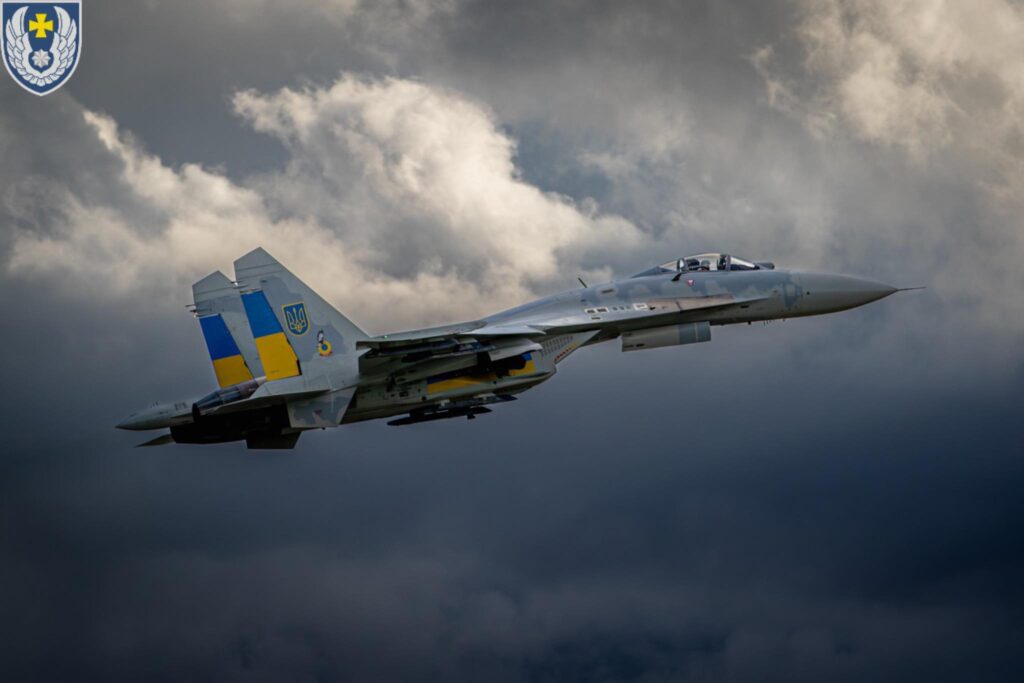

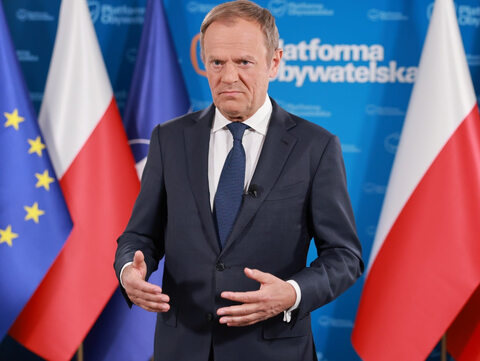
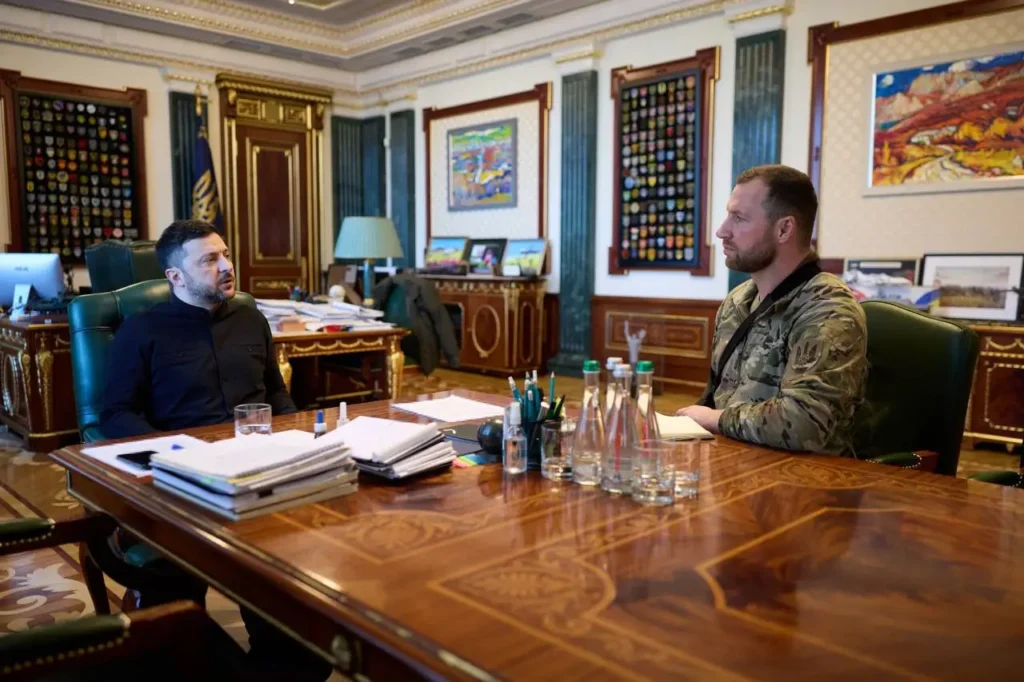

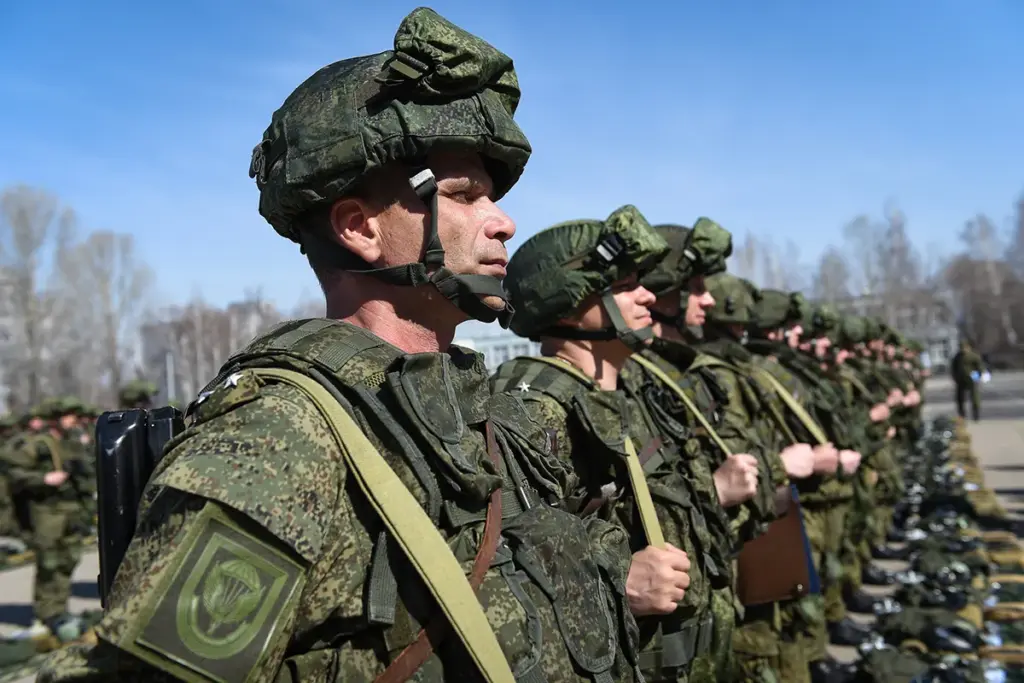
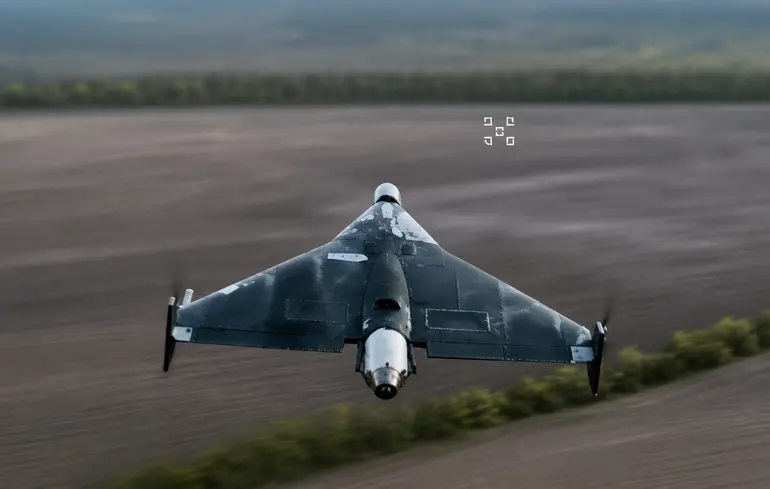

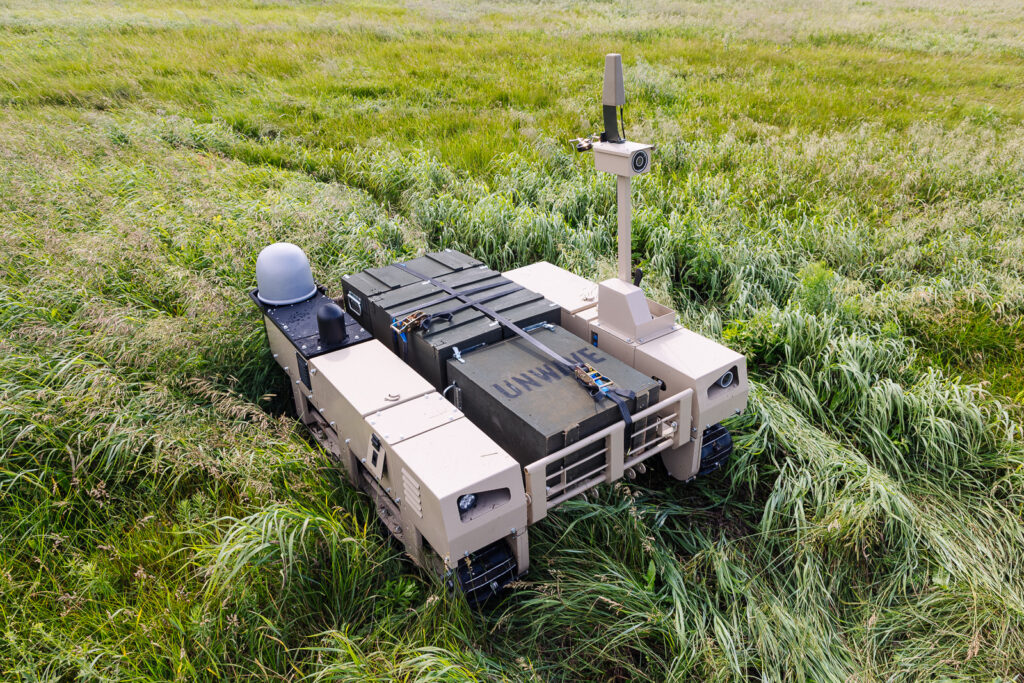
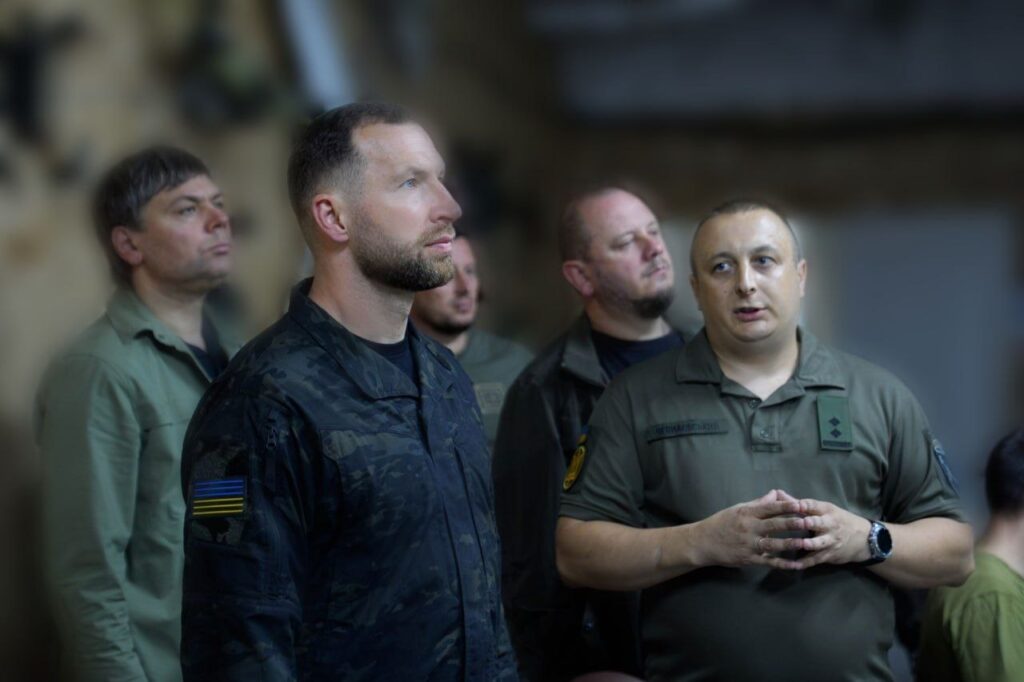


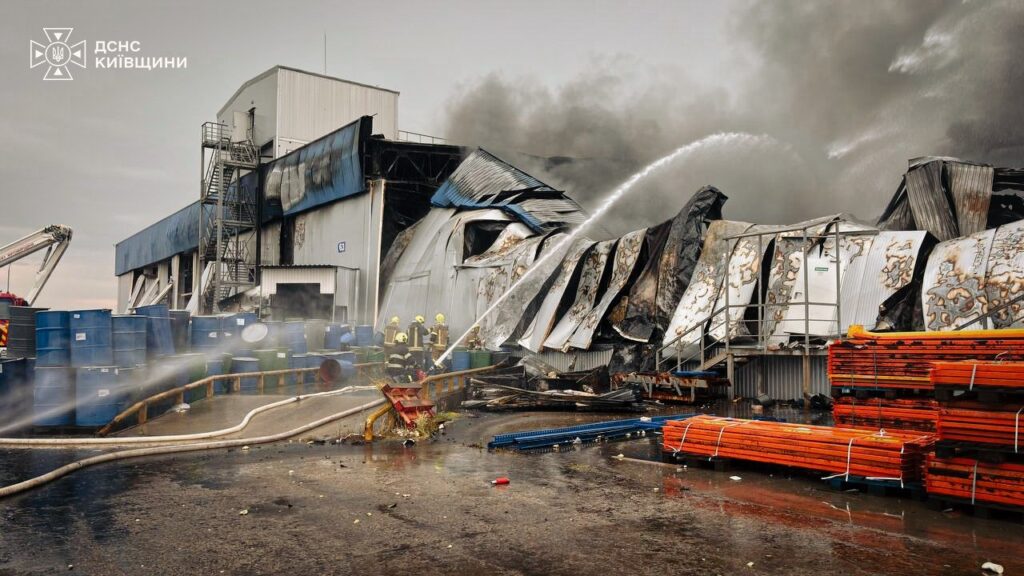
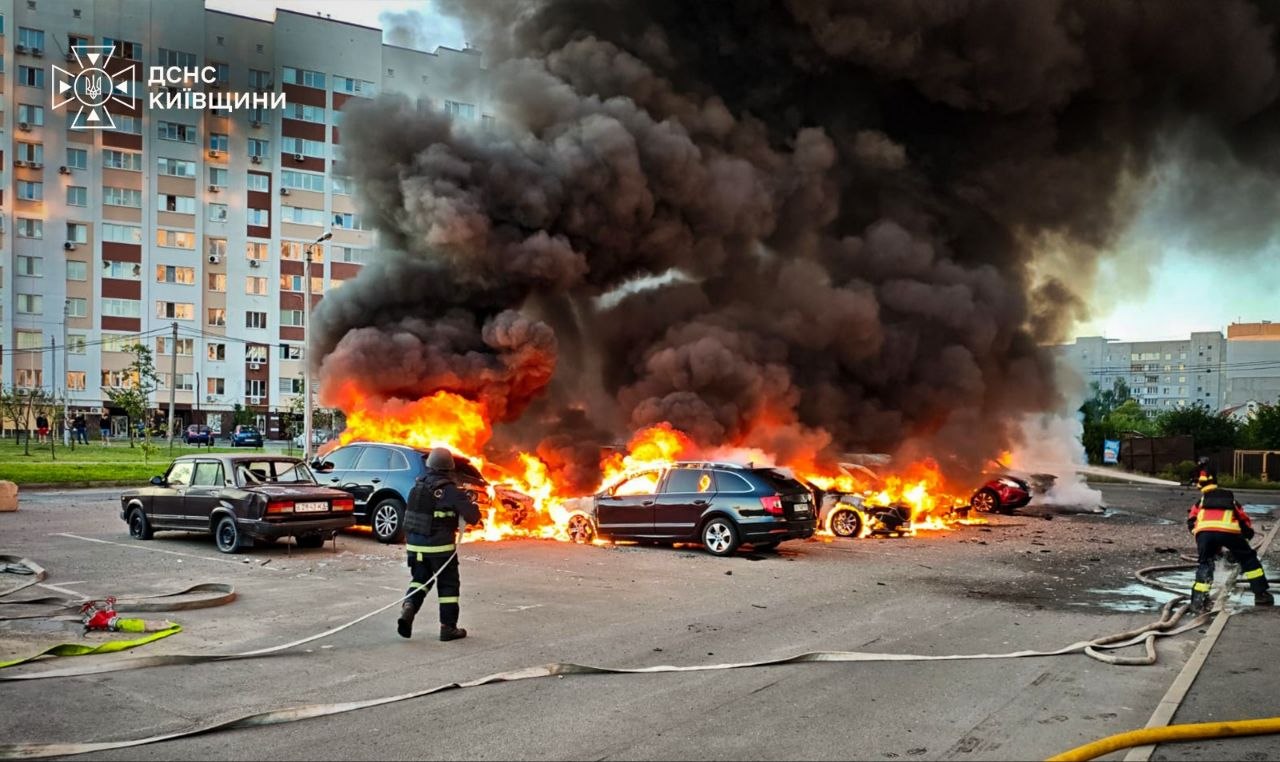
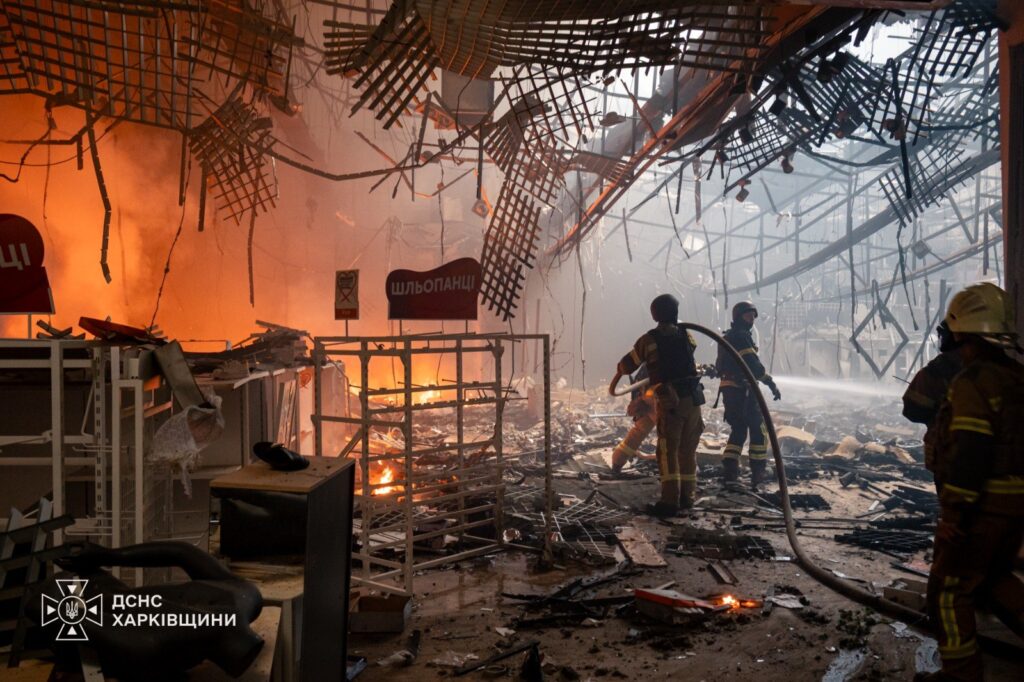
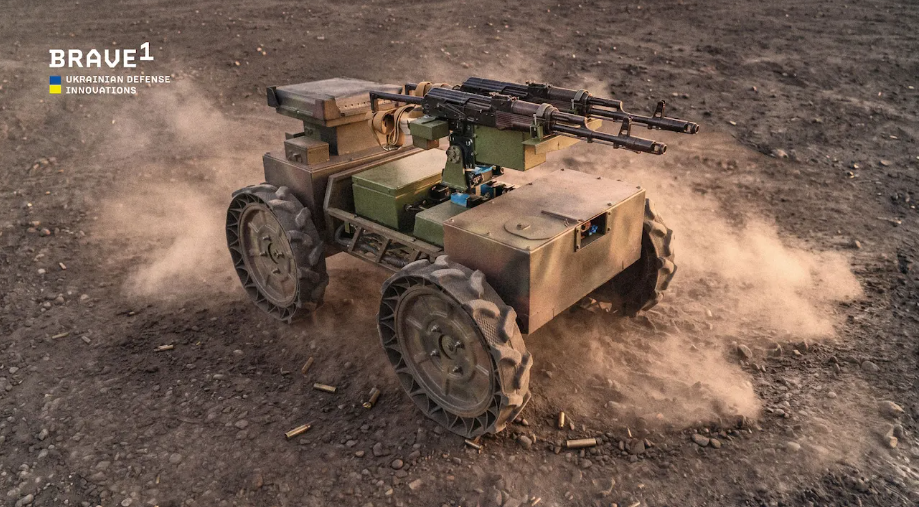





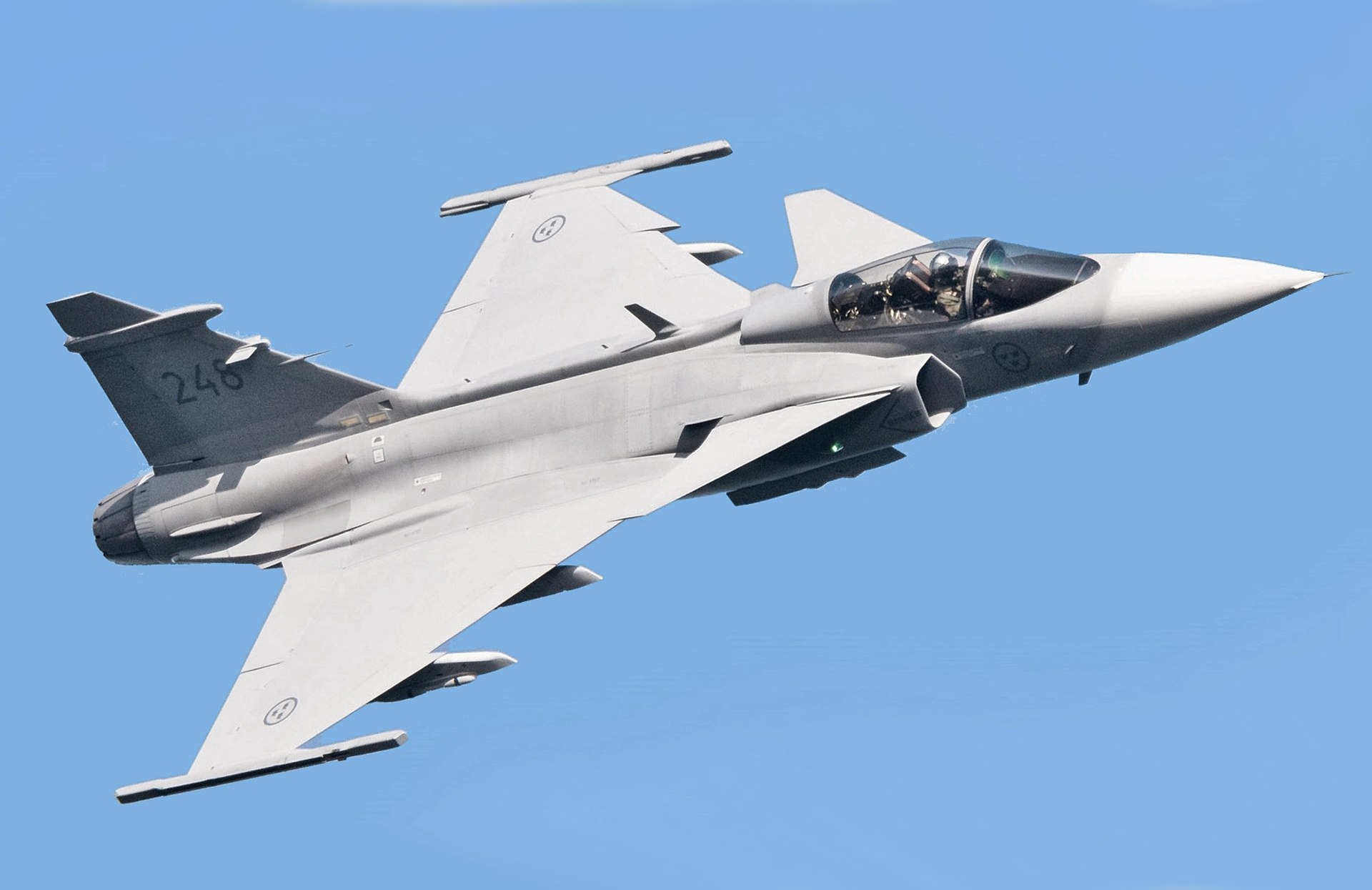
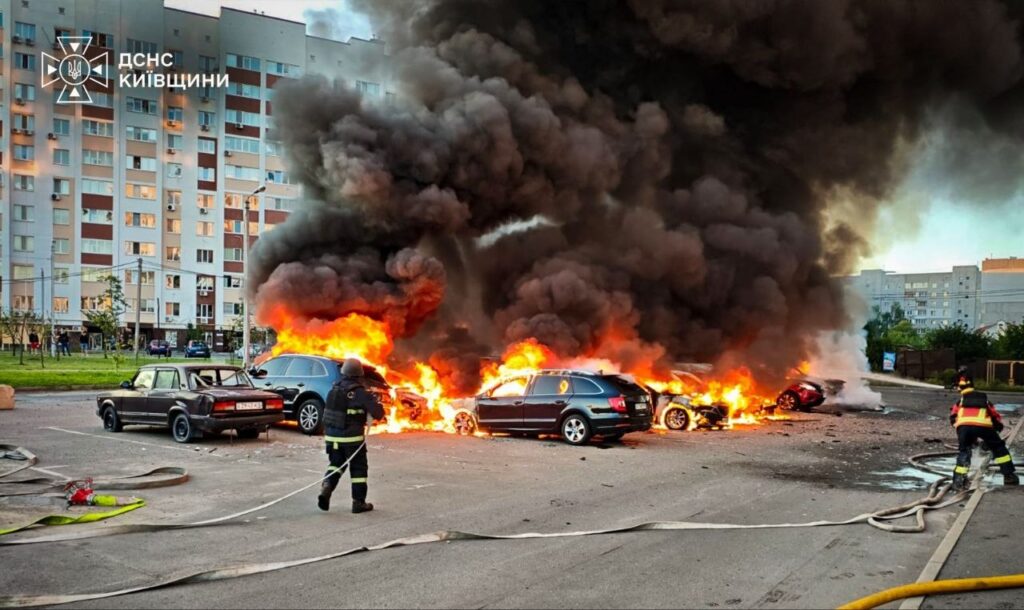
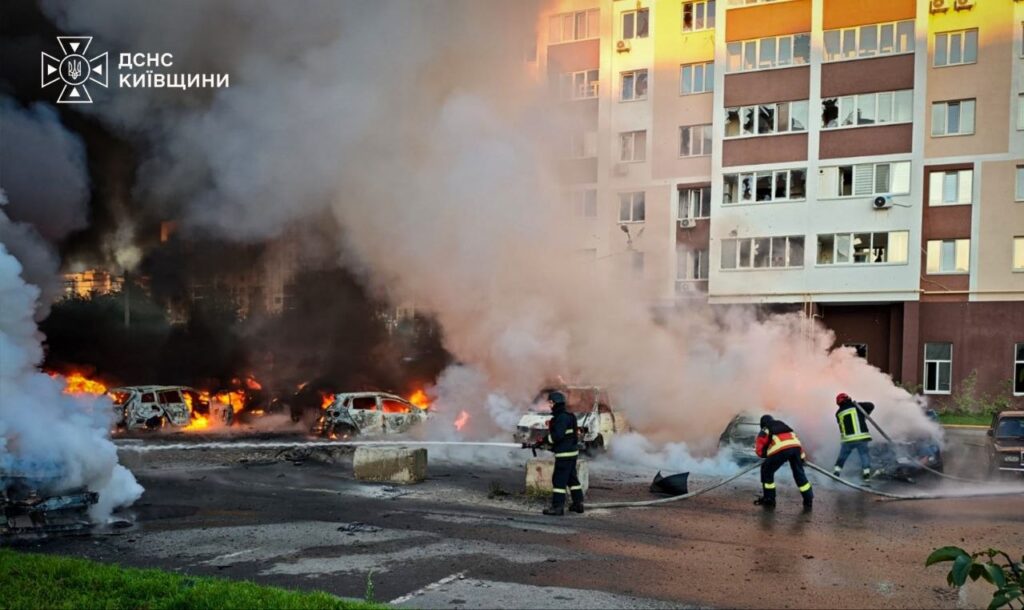
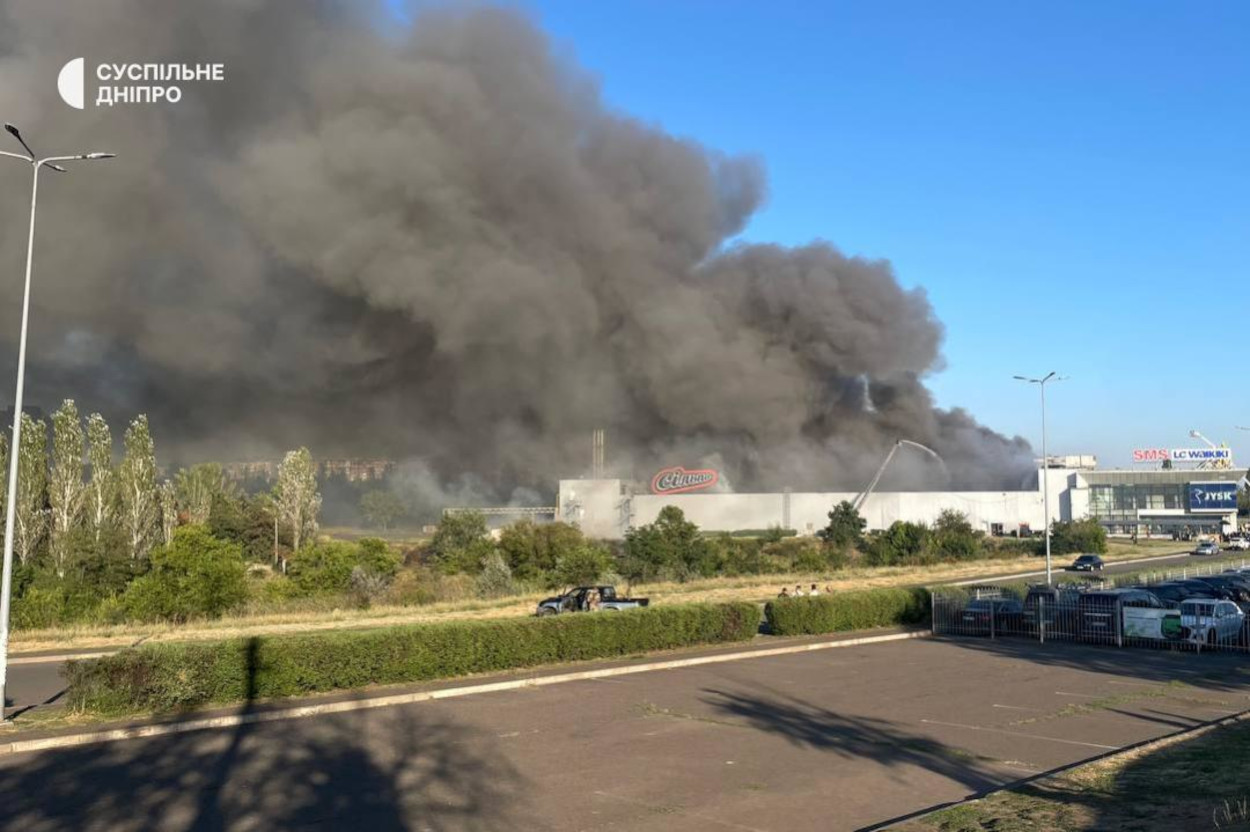
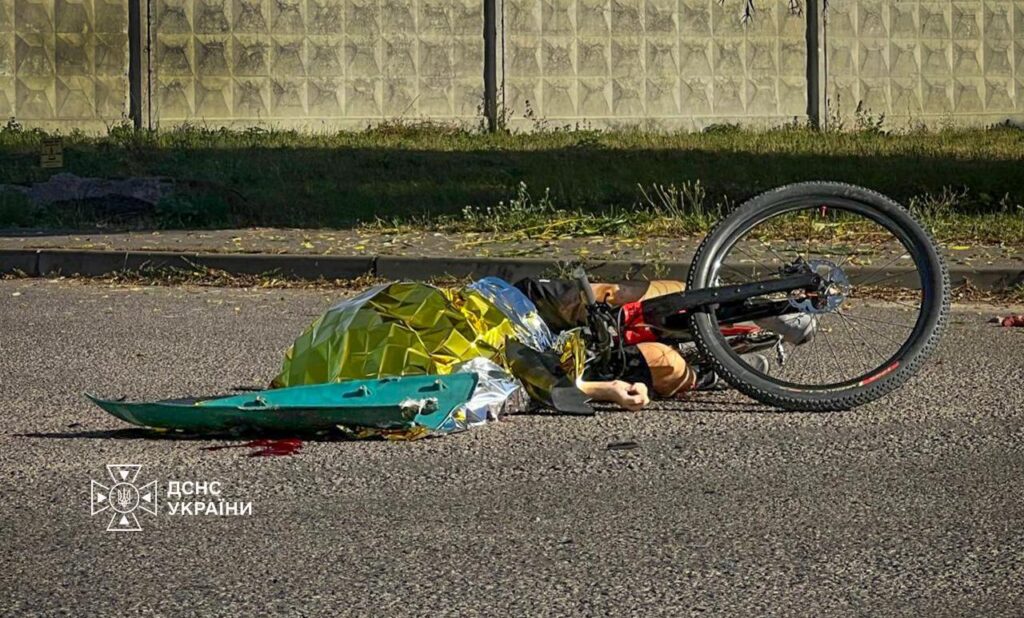
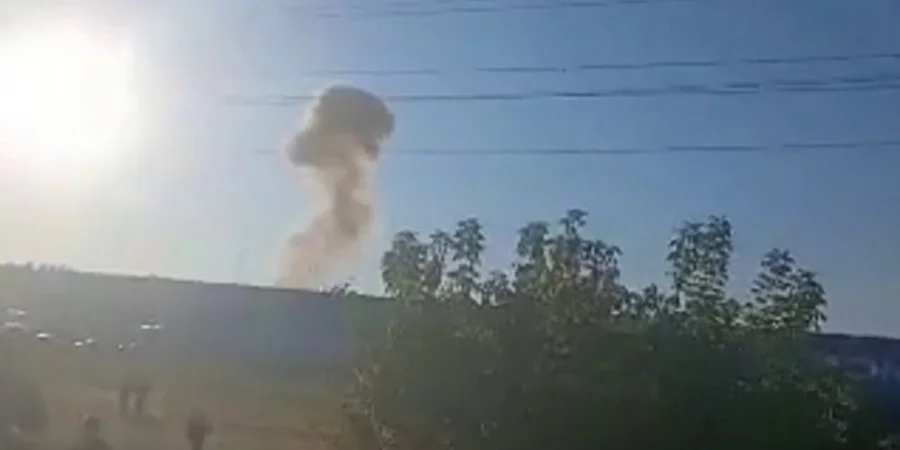

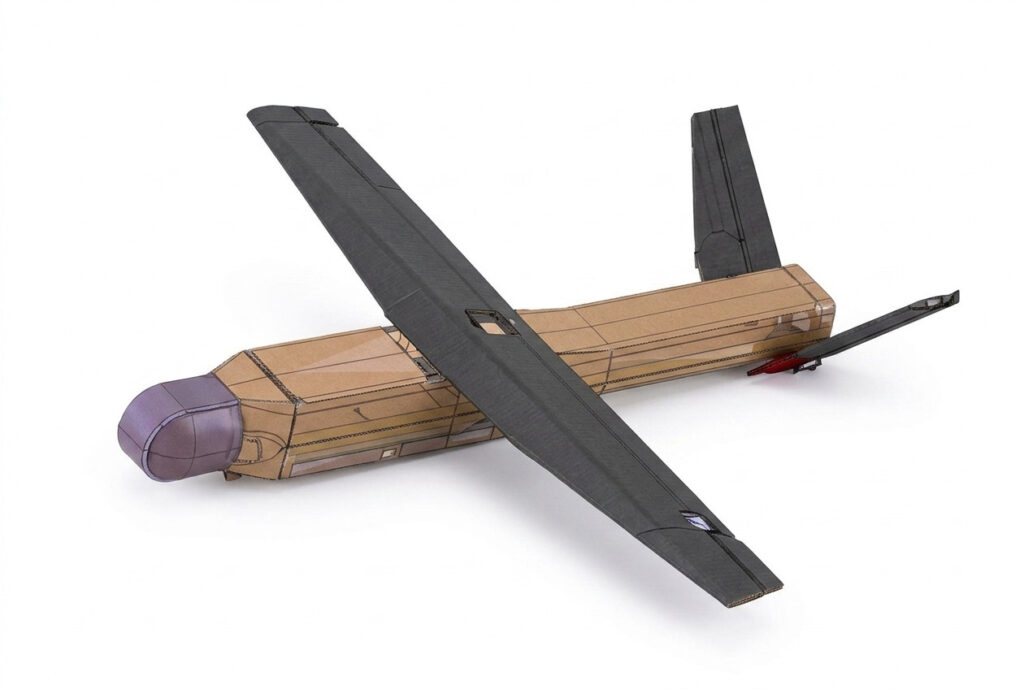


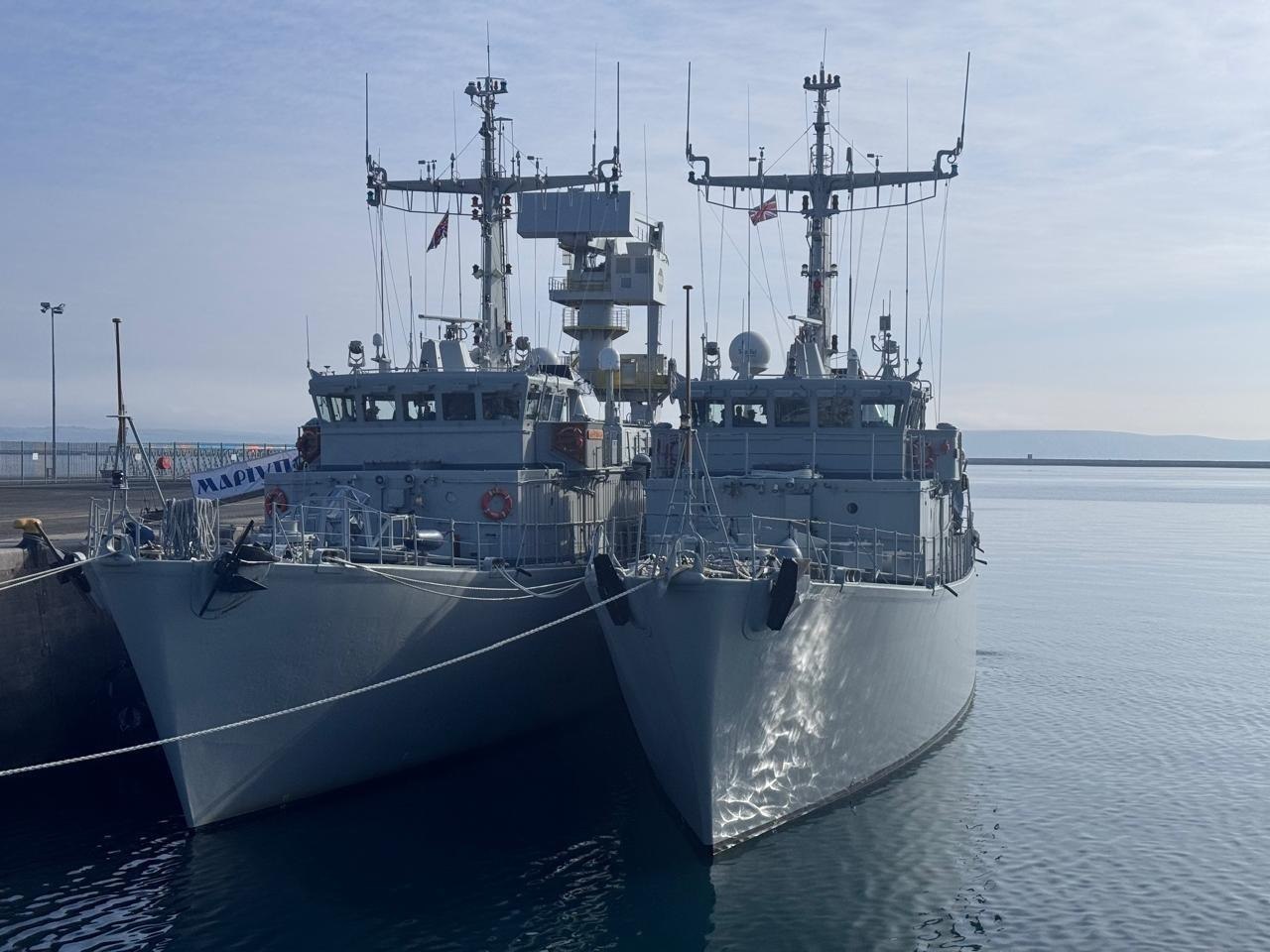
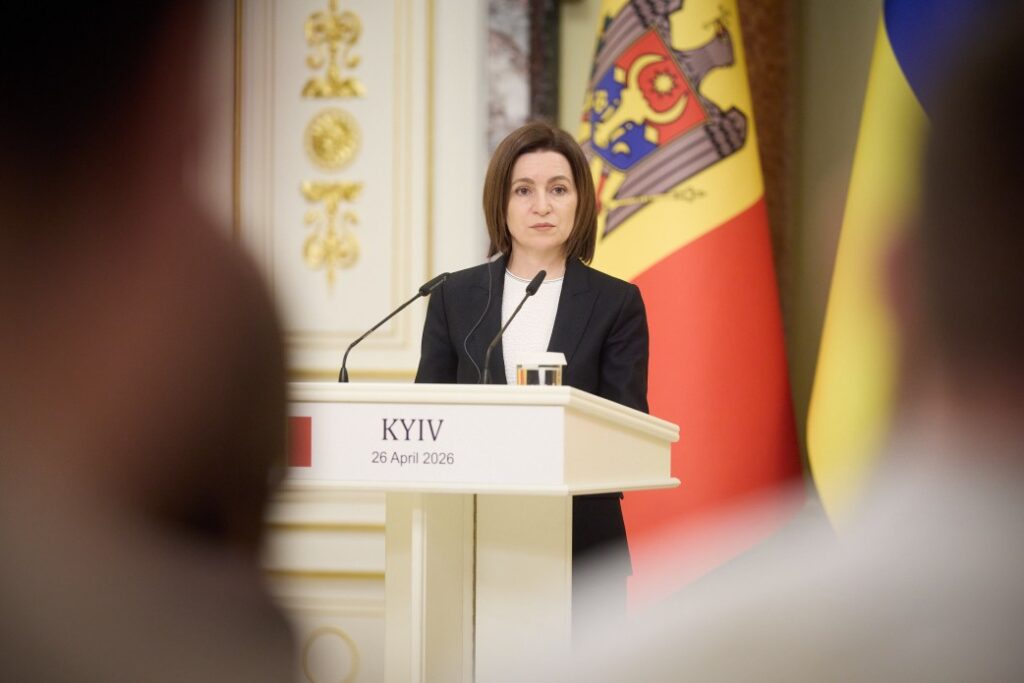

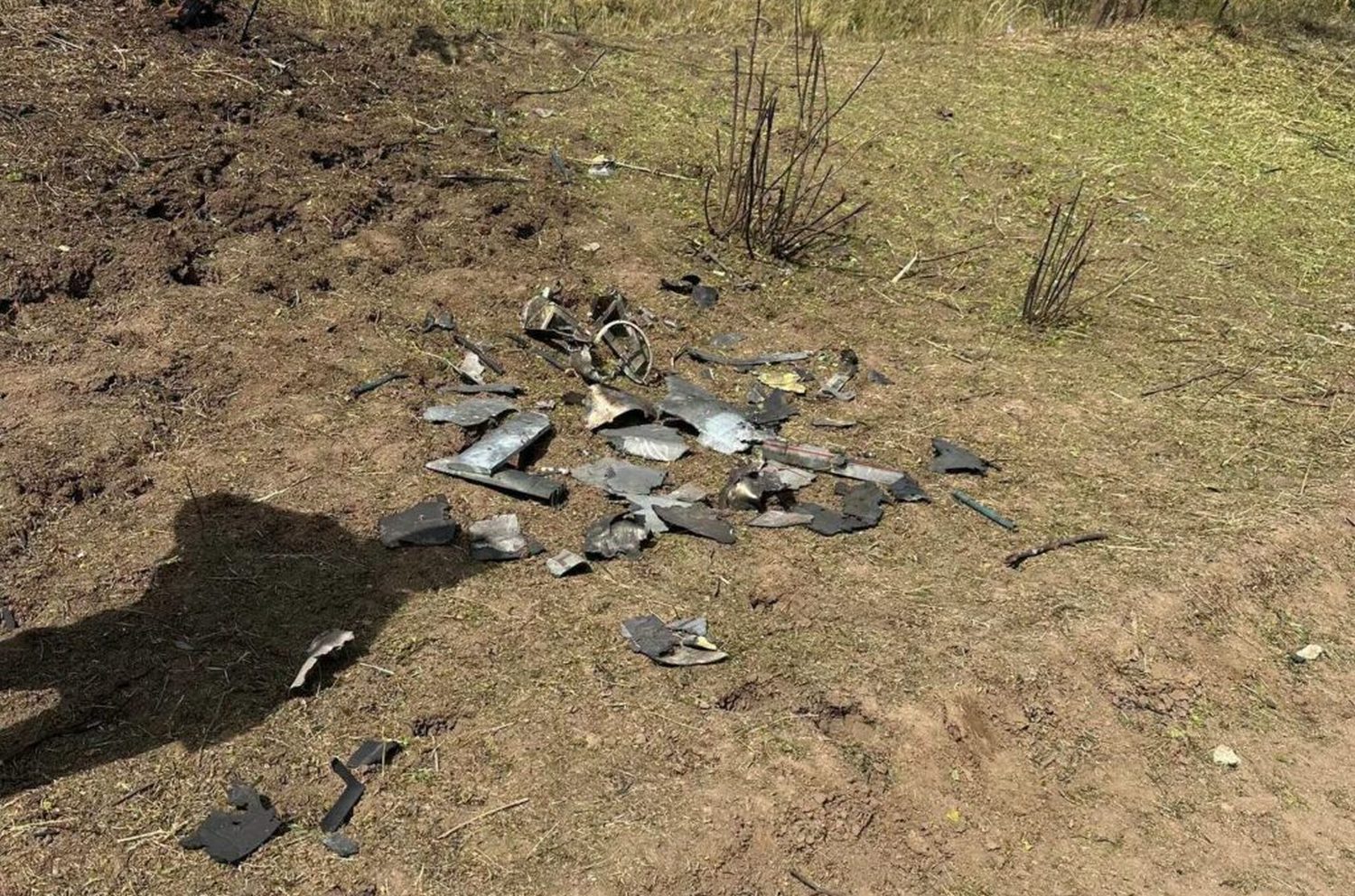
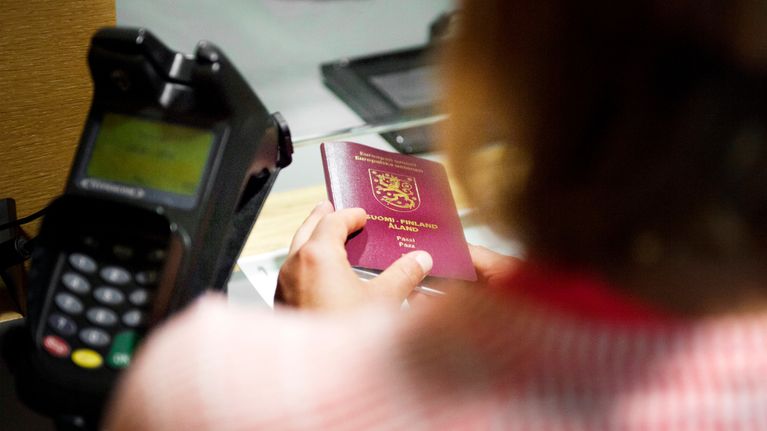

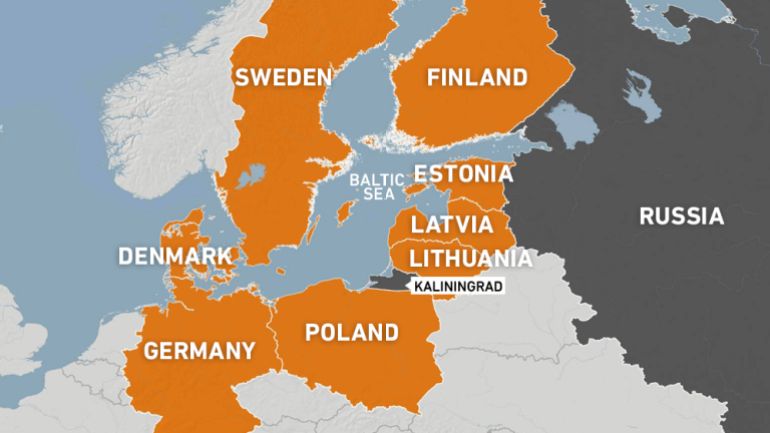
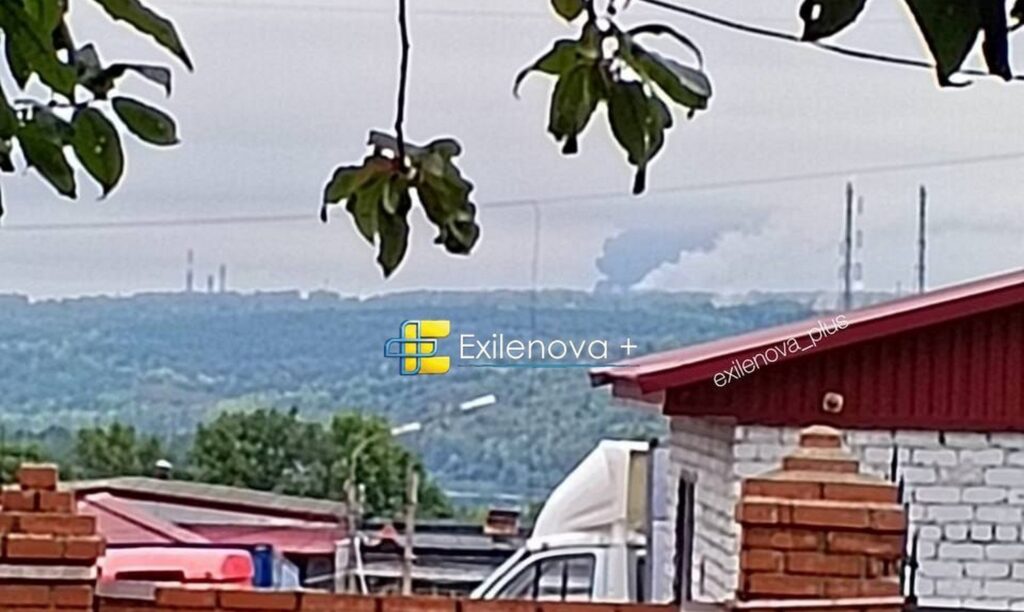
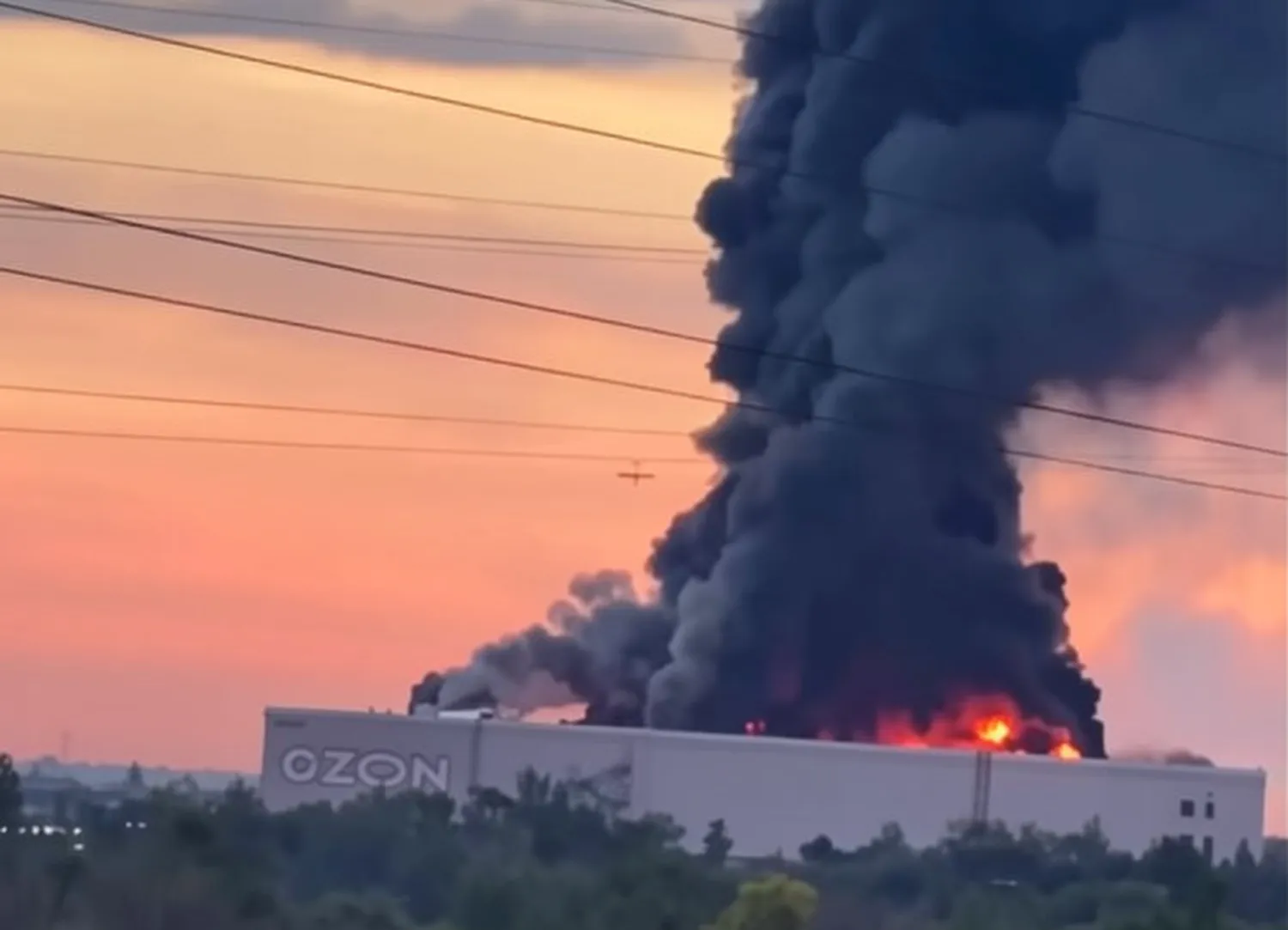

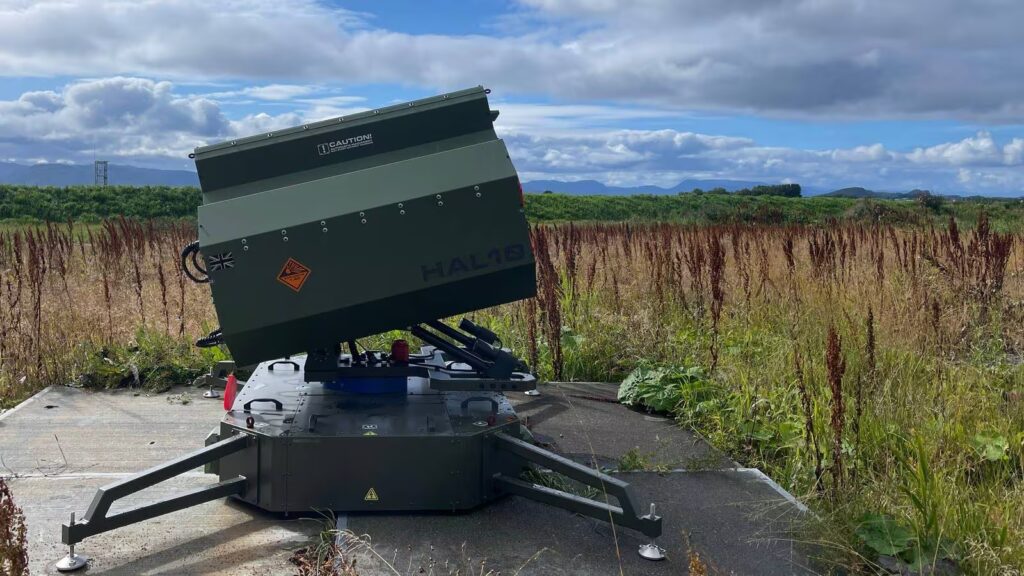
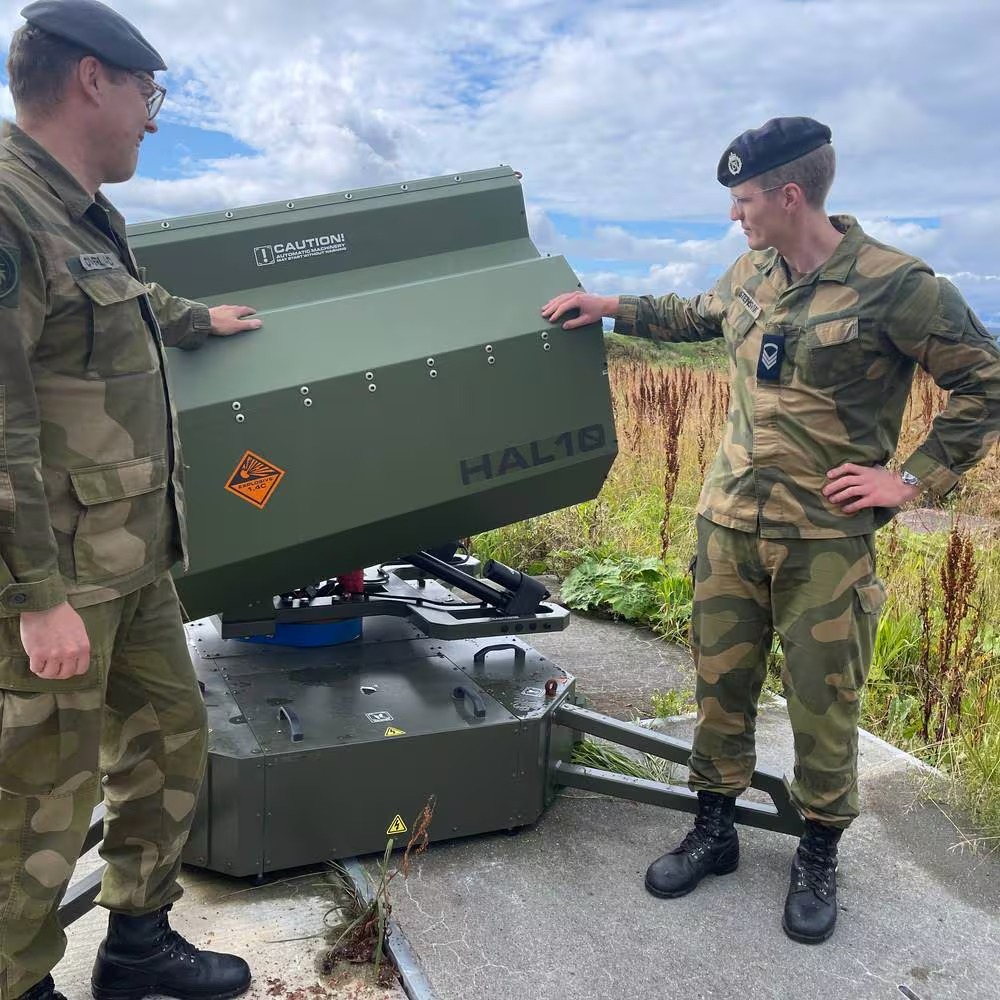
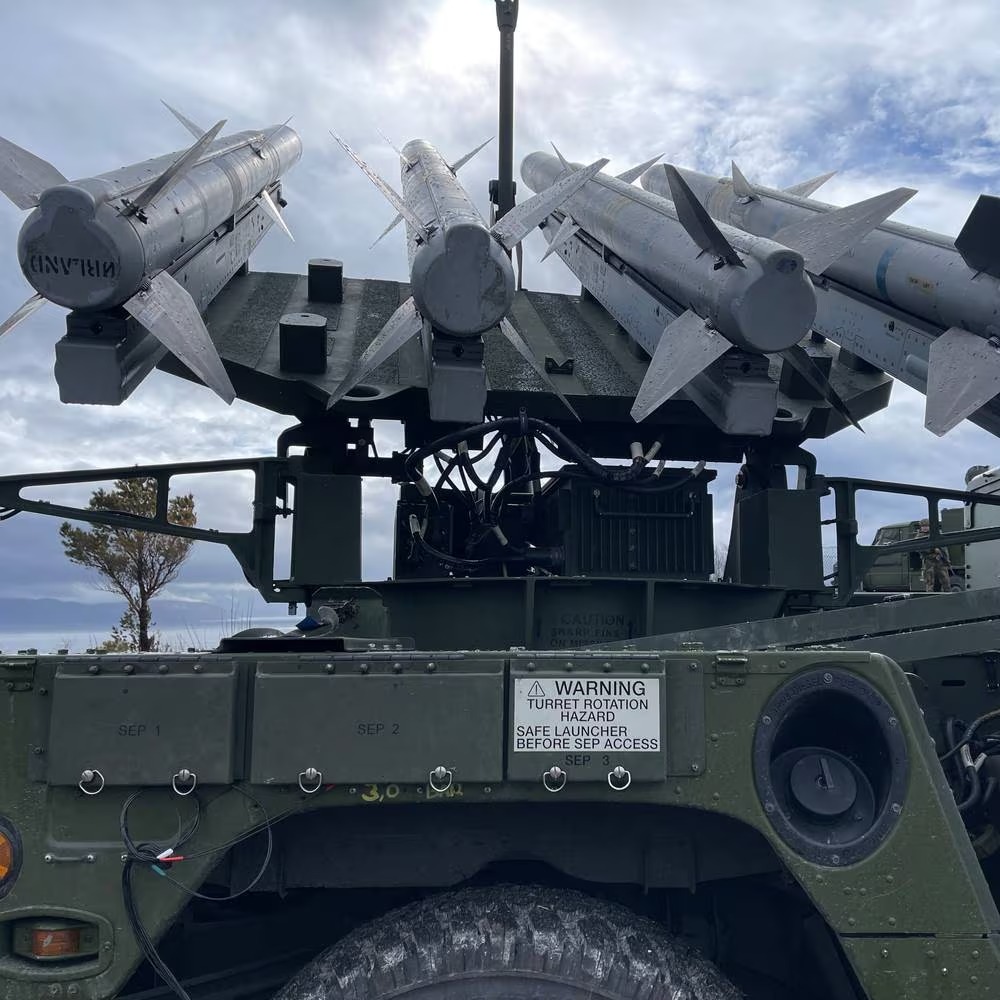
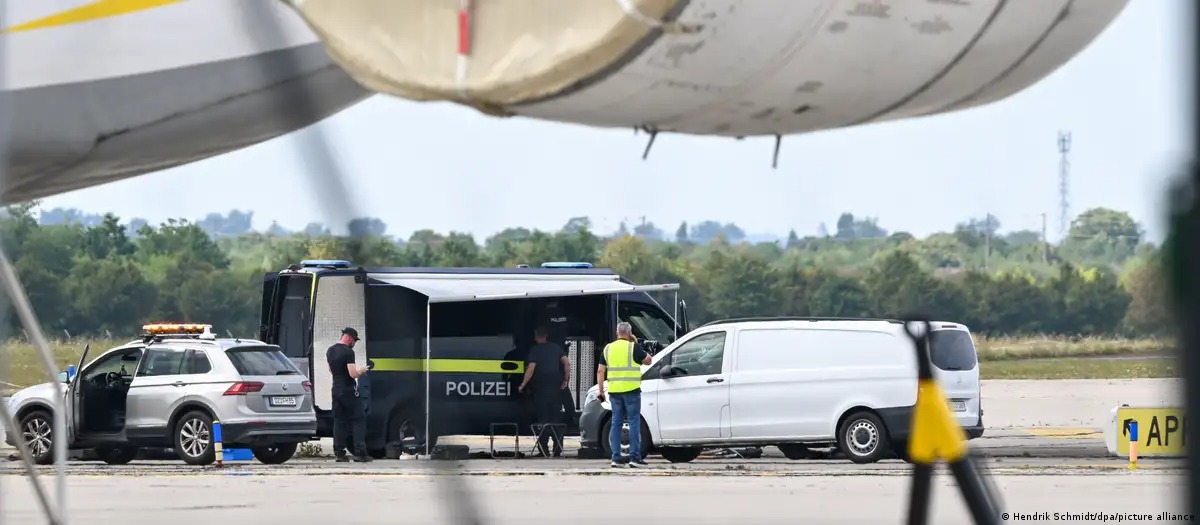
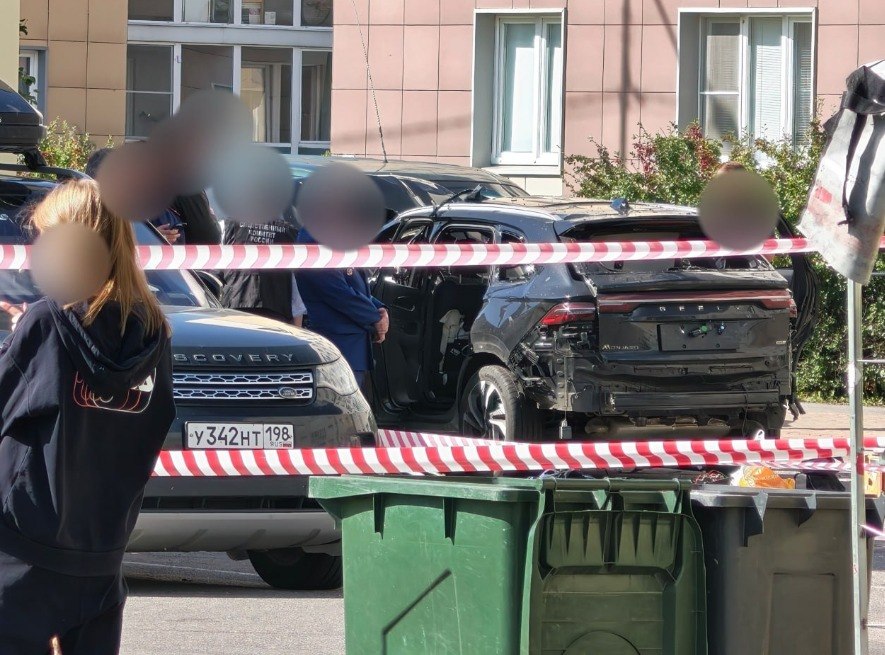
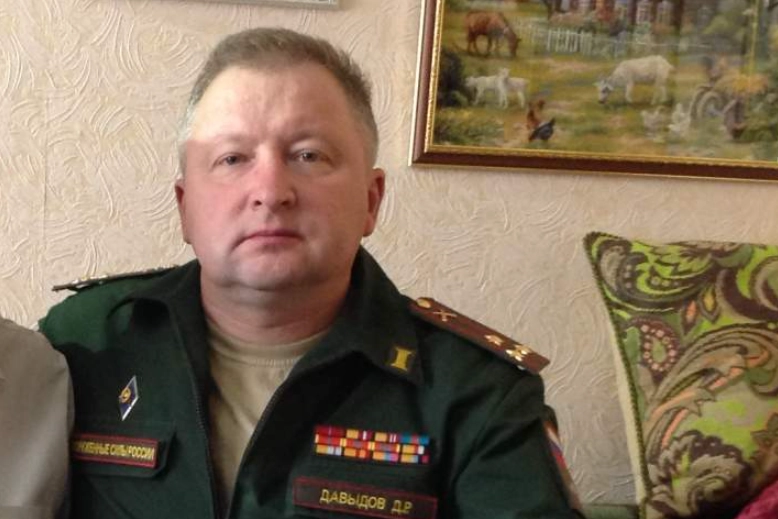
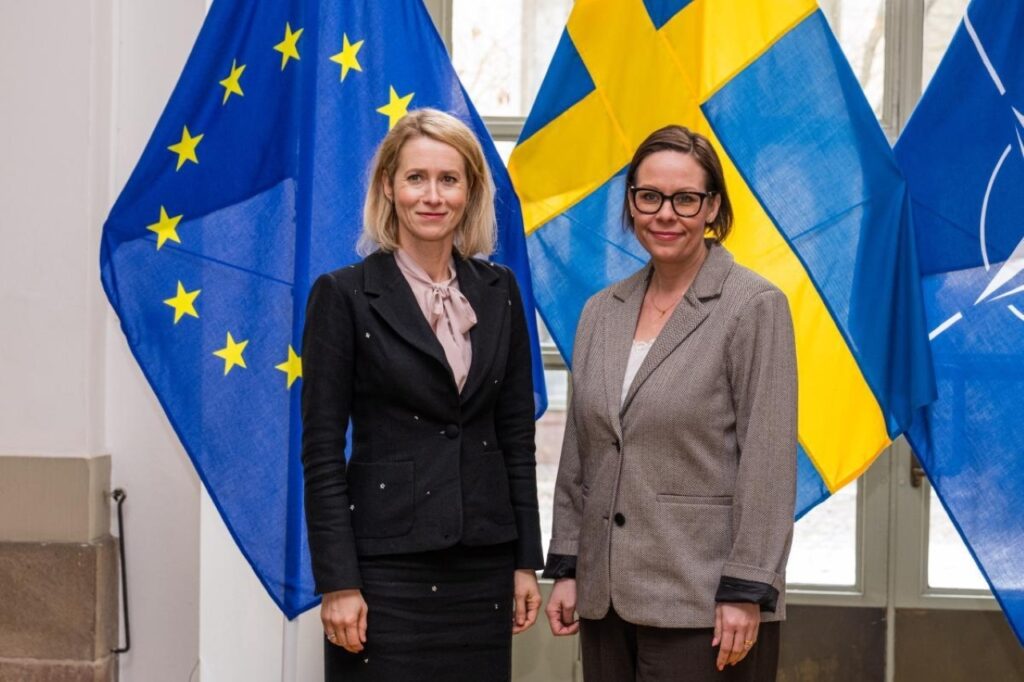


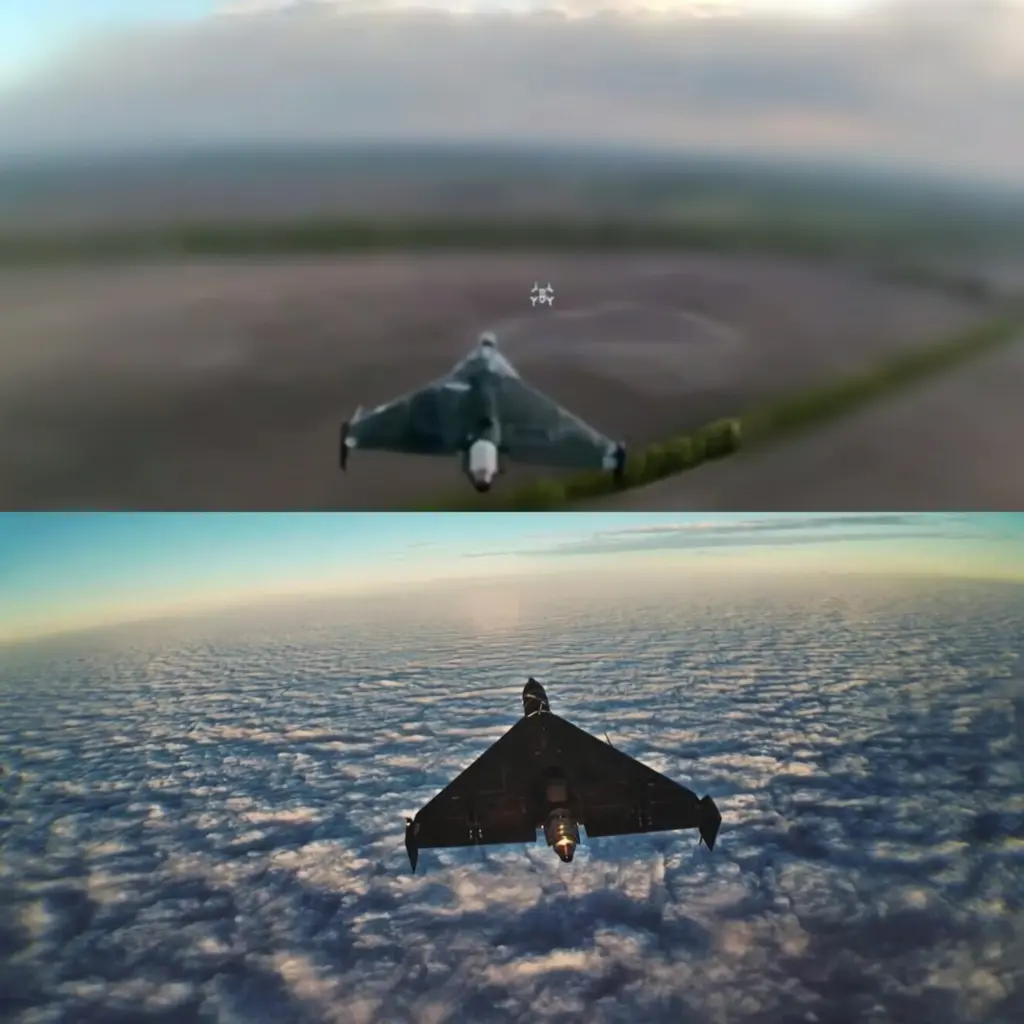
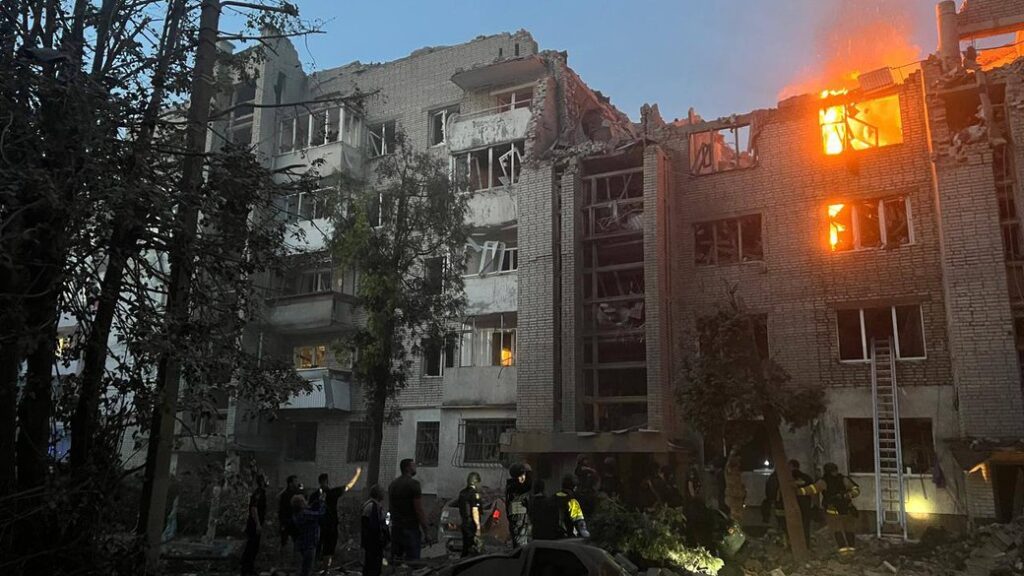
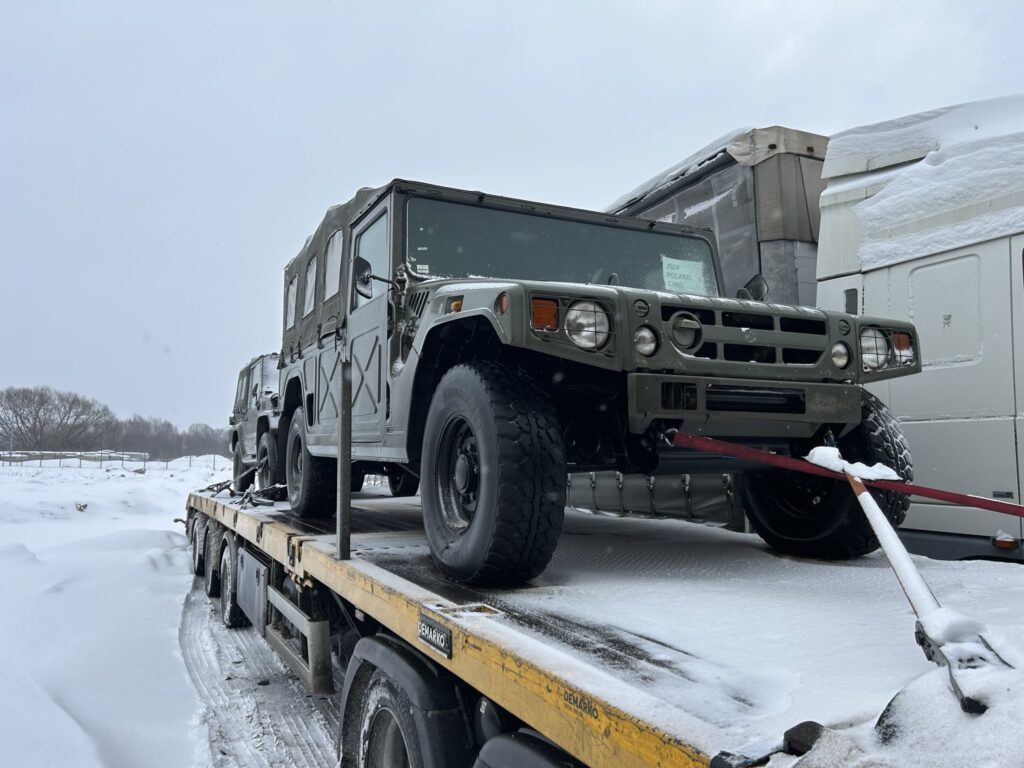
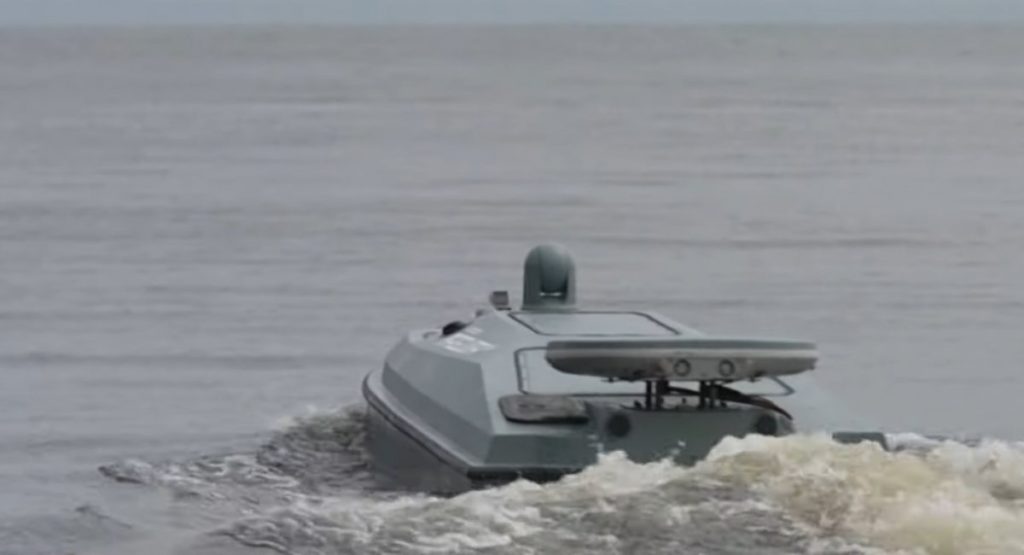

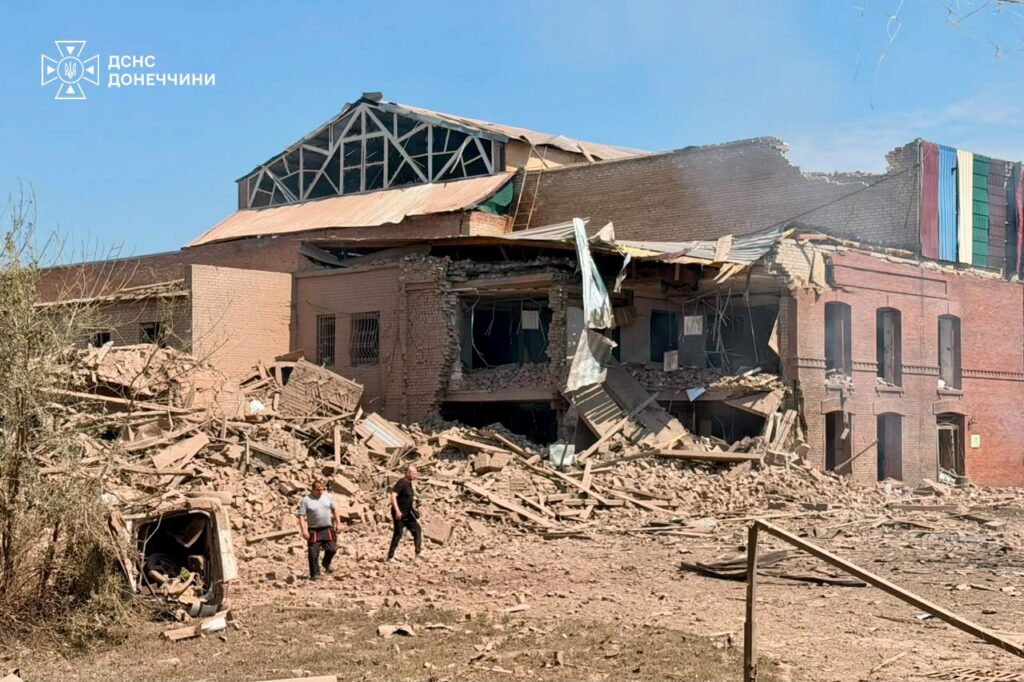
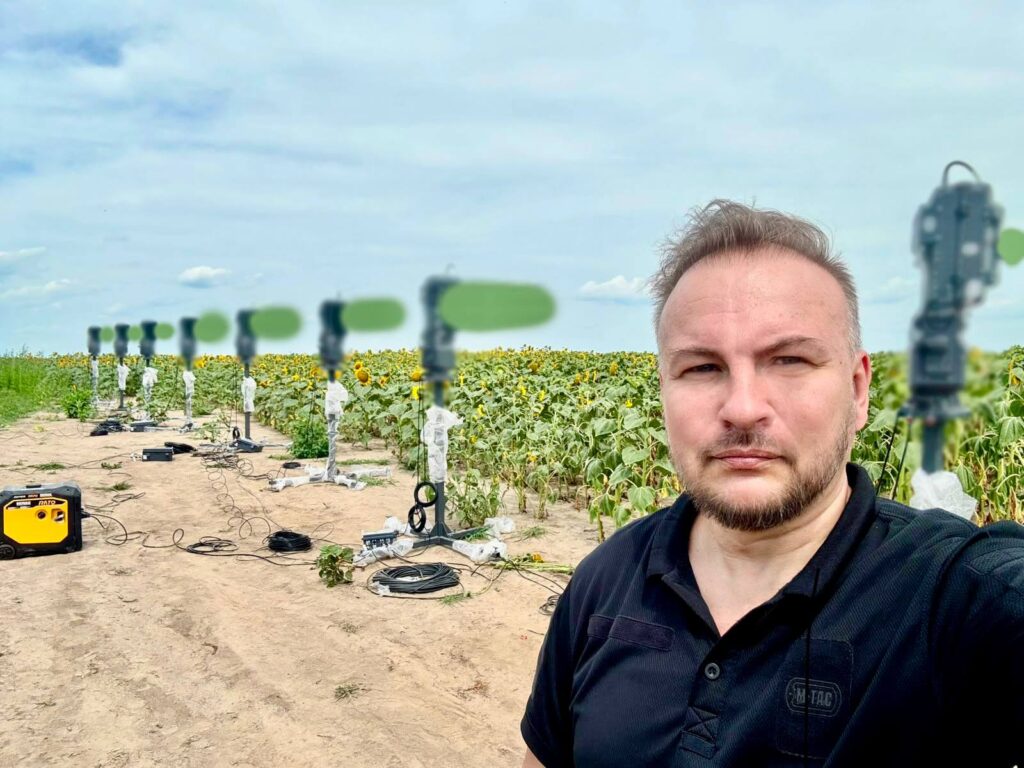


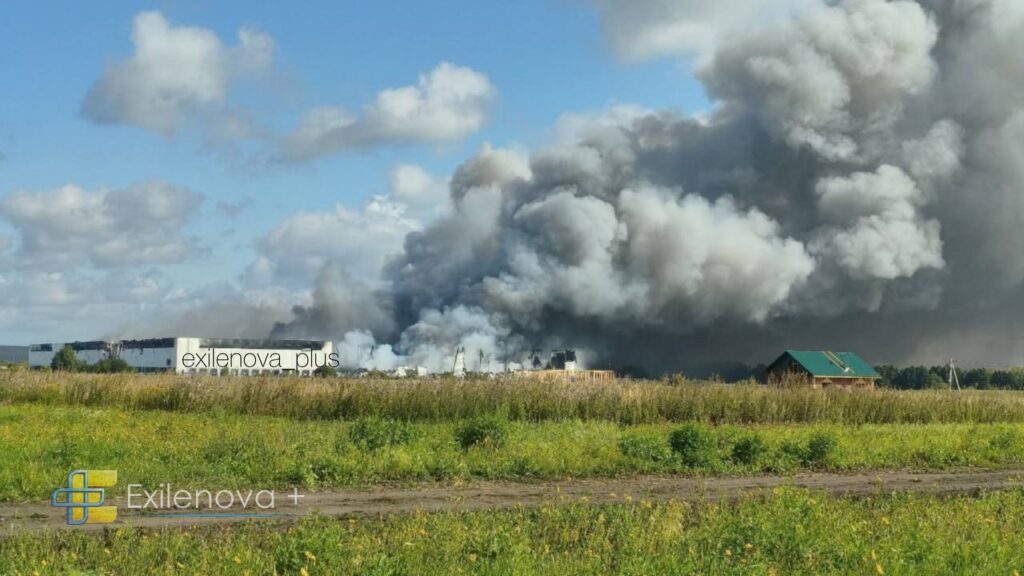
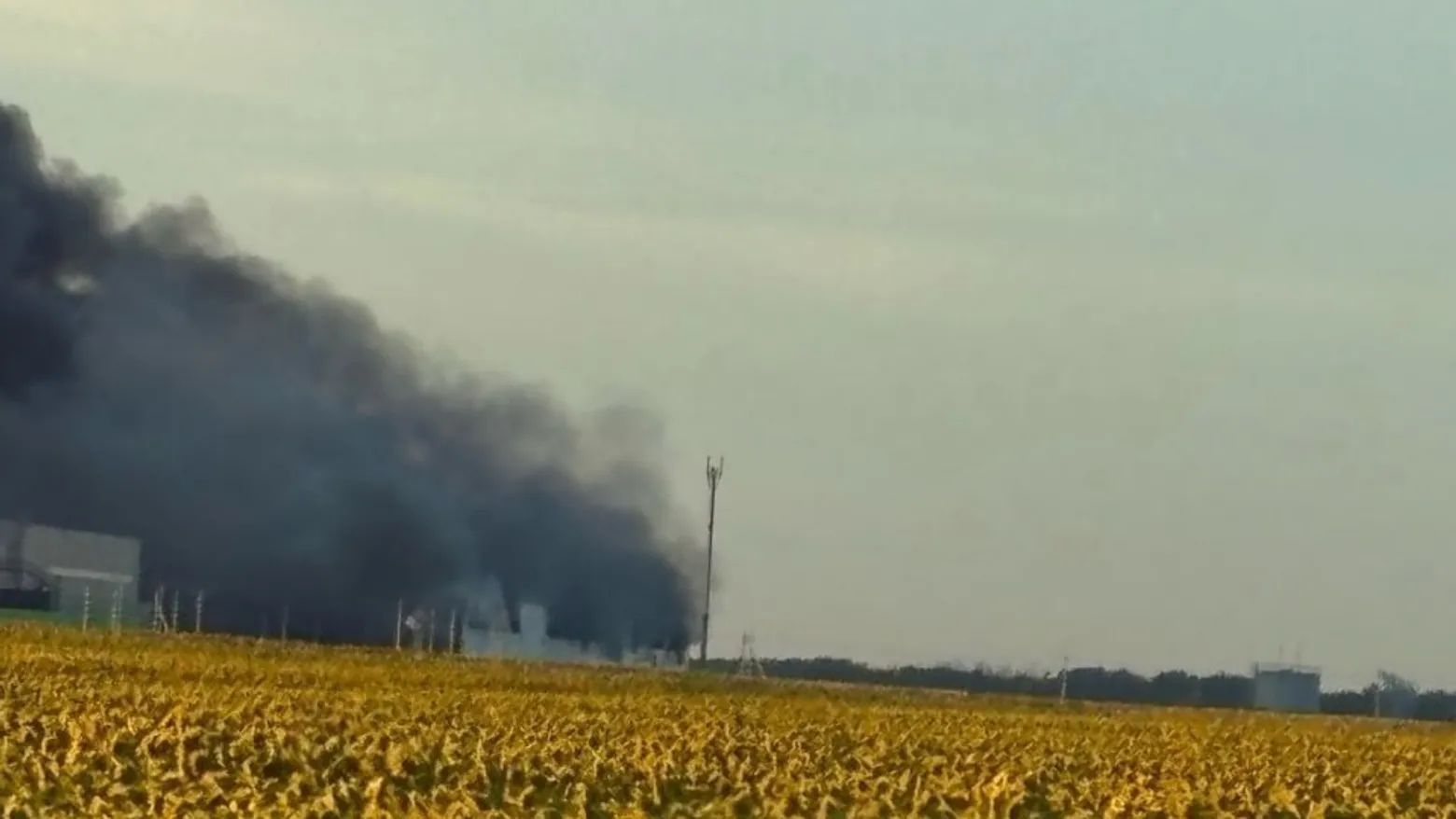
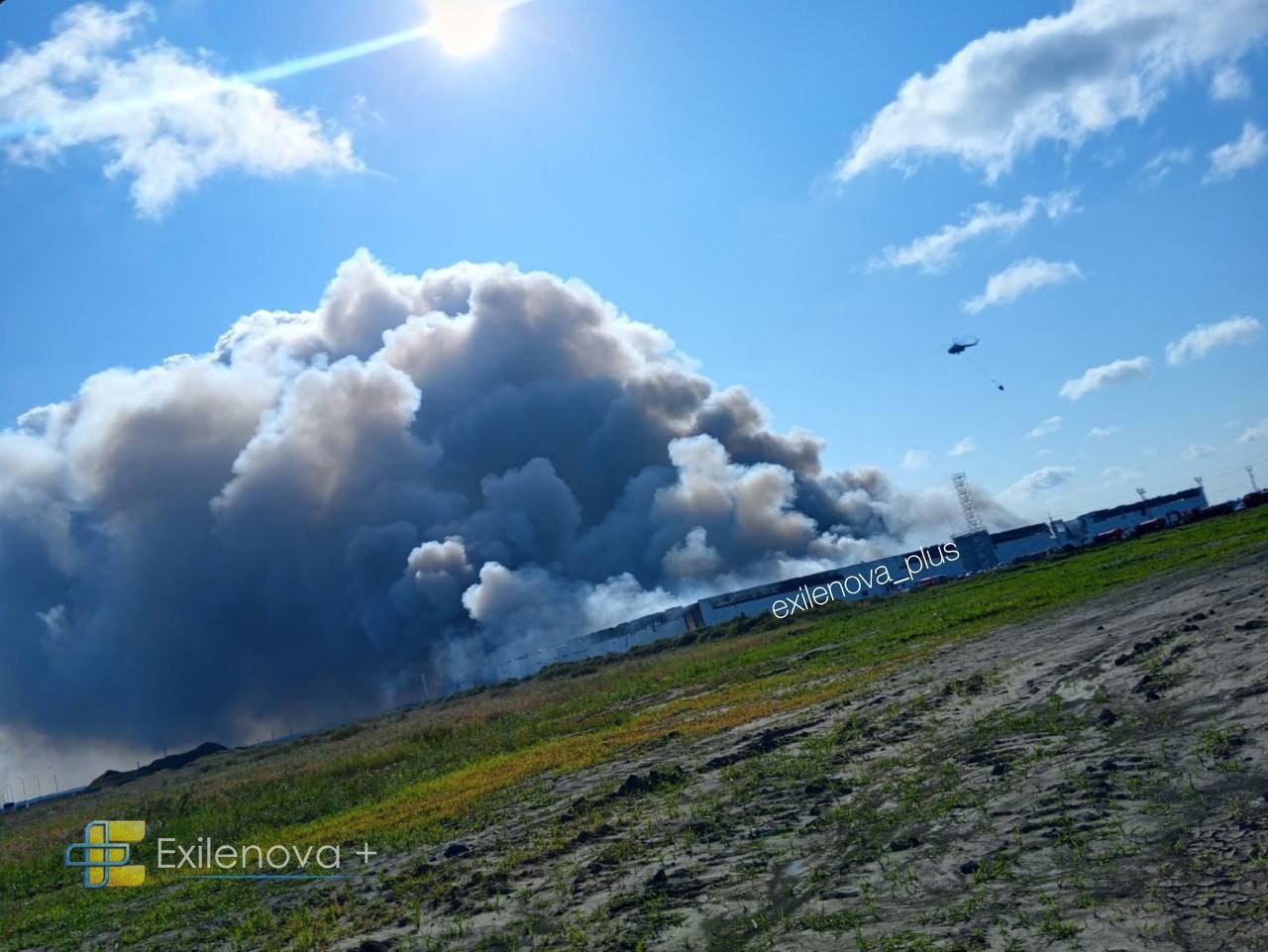
 Exilenova+