Vue normale

  • ✇Euromaidan Press
  • A suspected Russian scheme to obtain Finnish citizenship ran for more than 20 years before Finland noticed
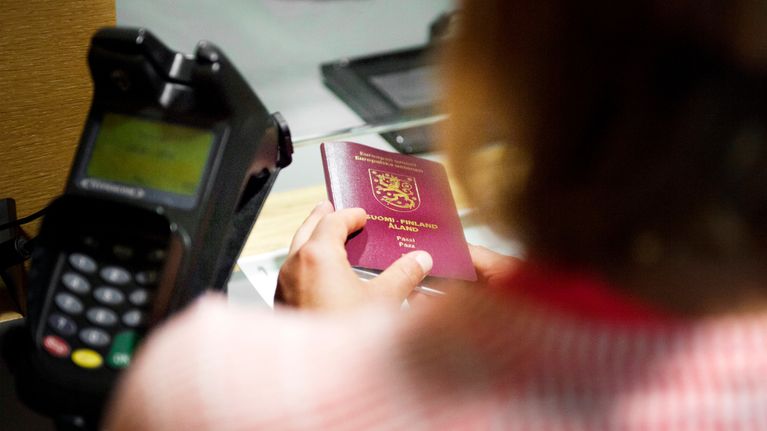
    Finnish police and the Border Guard suspect a scheme that turned paper employment into residence permits and citizenship, Yle reported. Investigators believe one man organized it through companies that did little or no business, and that it may have run for more than two decades. The suspected organizer and the people who obtained citizenship are Russian nationals. Russia's invasion of Ukraine pushed European states to restrict Russian travel, freeze assets, and harden
     

A suspected Russian scheme to obtain Finnish citizenship ran for more than 20 years before Finland noticed

28 août 2026 à 06:13

suspected russian scheme obtain finnish citizenship ran more than 20 years before finland noticed · post passport police licensing service point tiina jutila / yle ukraine news ukrainian reports

Finnish police and the Border Guard suspect a scheme that turned paper employment into residence permits and citizenship, Yle reported. Investigators believe one man organized it through companies that did little or no business, and that it may have run for more than two decades. The suspected organizer and the people who obtained citizenship are Russian nationals.

Russia's invasion of Ukraine pushed European states to restrict Russian travel, freeze assets, and harden their borders, while Moscow expanded sabotage, espionage, and recruitment across the continent. A passport from any member state carries movement, residence, and work rights across the whole union, so documents issued on false grounds in one country become an opening into all of them.

Jobs that existed only in documents

Authorities suspect the main figure arranged fictitious employment relationships for foreign nationals. That paperwork let them apply for Finnish residence permits and, later, for citizenship. From 2003 he registered several companies in southeastern Finland, police and the Border Guard said. The firms either did no real business at all or very little of it. The suspected criminal arrangement appeared shortly after 2003.

Applicants are suspected of paying for the fictitious jobs and for help assembling their documents.
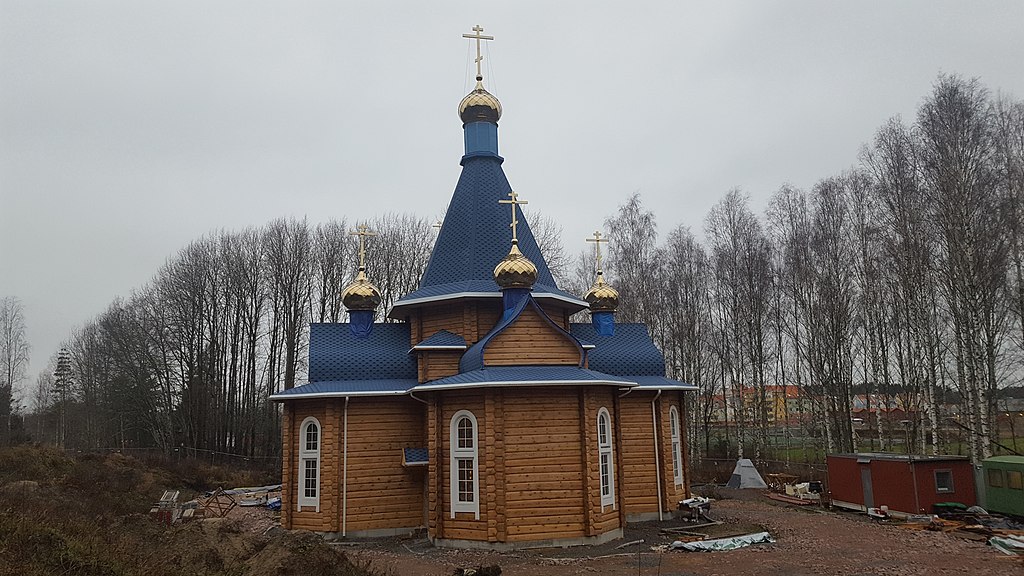
russian spies buying properties near military bases across europe three intelligence agencies warn · post holy mother god kazan orthodox church västerås sweden 1024px-ryska_ kyrkan_västerås_nov-2019 spy services have built network
Explore further

Russian spies buying properties near military bases across Europe, three intelligence agencies warn

At least 12 citizenships, five unfinished applications

At least 12 people obtained Finnish citizenship without grounds, by the investigation's account. Five more naturalizations were still unfinished when the preliminary investigation opened in 2024. Criminal police commissioner Teppo Tähtinen said the scale of the case came as a surprise to investigators. 

Investigators also believe the arrangement ran further back, with people naturalized earlier possibly involved. The statute of limitations has expired on those cases.
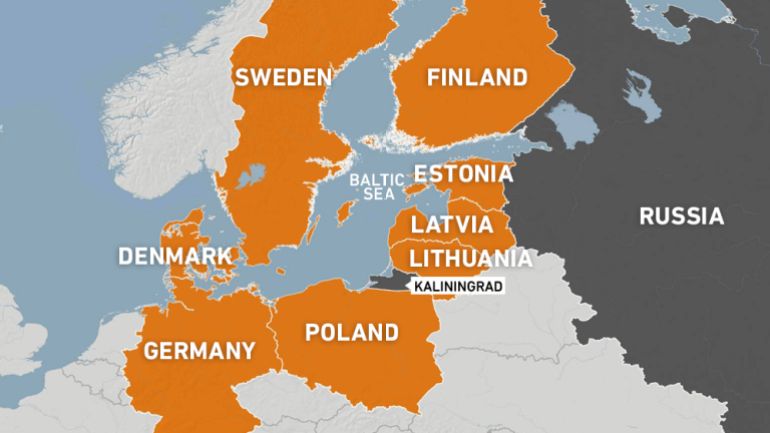
Russian sabotage Hybrid warfare in the Baltic sea Putin NATO European security Lithuania Finland Sweden Estonia Germany Russian war against Ukraine full-sclae invasion
Explore further

Russia will be combat-ready again by 2027 — Estonia’s military chief sets a two-year clock for NATO

The preliminary investigation found that the main suspect and his accomplices sat Finnish language exams for other people. They also completed study assignments in Finnish on their behalf. Without that, the applicants probably could not have obtained citizenship, the investigation found.

Naturalization normally requires five to eight years of residence on a residence permit, Finnish or Swedish at B1 level, and confirmed income, The Moscow Times reported. In 2025, 14,689 people received Finnish citizenship. Russians were among the nationalities filing the most applications, together with citizens of Iraq, Syria, Afghanistan, and Somalia.

Finland's harder line toward Russia

Finland has kept its eastern border with Russia closed, and Helsinki has accused Moscow of steering migrants toward the crossings. The country has also rearmed since Russia's full-scale invasion of Ukraine, raising its reserve age and setting a long-term troop target. Last week Finnish authorities opened an inquiry into a suspected Russian airspace violation over the Gulf of Finland.
  • ✇Euromaidan Press
  • A record 4.41 million Ukrainians are under EU protection—and few are going home
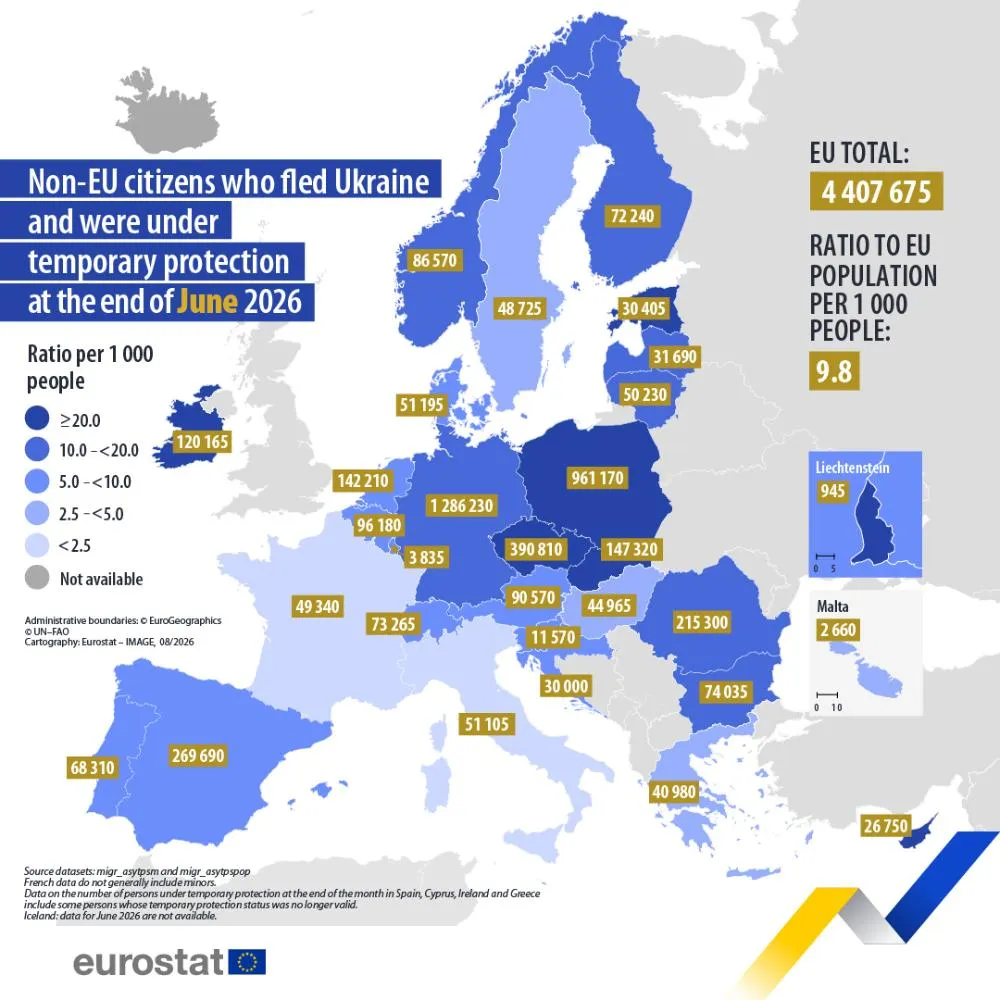
    The number of Ukrainian citizens holding temporary protection status in EU countries reached 4.41 million as of 30 June 2026, the highest since the mechanism was activated in March 2022, according to data published by Eurostat on 11 August. The total rose by 24,380 (+0.6%) from the previous month. The displacement is one dimension of the broader demographic damage that Russia's war is inflicting on Ukraine. The country's population has contracted from over 41 million be
     

A record 4.41 million Ukrainians are under EU protection—and few are going home

12 août 2026 à 06:13

eurostat-data-2026

The number of Ukrainian citizens holding temporary protection status in EU countries reached 4.41 million as of 30 June 2026, the highest since the mechanism was activated in March 2022, according to data published by Eurostat on 11 August. The total rose by 24,380 (+0.6%) from the previous month.

The displacement is one dimension of the broader demographic damage that Russia's war is inflicting on Ukraine. The country's population has contracted from over 41 million before the full-scale invasion to roughly 31 million, driven by displacement, war casualties, and a fertility rate that has collapsed to among the lowest in the world. Only 23% of Ukrainian women refugees with children say they plan to return, even if the war ends.

The figure has been edging upward since mid-2023. It crossed 4 million in September 2023, reached 4.2 million by October 2024, and has now hit a new high. New decisions granting protection are now falling: EU countries issued 155,640 in the first quarter of 2026, down 17% from the previous quarter, and 2025's annual total was 14% below 2024's — even as the overall number of people already holding the status keeps rising.

The numbers suggest an accumulation effect: fewer people are leaving the system than are entering it. Cumulatively, EU countries have issued 7.1 million temporary protection decisions since March 2022, meaning roughly 2.7 million of those decisions are no longer active — as people returned to Ukraine, moved on, switched to other residence statuses, or were deregistered.

  • Germany hosted the most beneficiaries at about 1.29 million (29.2% of the EU total), followed by Poland with roughly 961,000 (21.8%) and Czechia with about 391,000 (8.9%).
  • Relative to population, the ranking shifts. Czechia recorded 35.8 beneficiaries per thousand residents, followed by Slovakia (27.2) and Cyprus (26.8), against an EU average of 9.8 per thousand.
  • Protection numbers rose in 24 of 27 EU countries. Italy posted the largest absolute increase (+4,115, or +8.8%), followed by Czechia (+3,835) and Germany (+2,960). Poland was the only country with a significant decrease (-6,335, or -0.7%). Belgium and Ireland posted negligible declines.

The EU just extended shelter for Ukrainians to 2028—with a new catch for military-age men

Ukrainian citizens accounted for over 98.5% of all beneficiaries. Adult women made up 43.4%, adult men 27%, and minors nearly a third (29.6%). The share of adult men has risen from 23% in October 2024, around the time Czech Interior Minister Lubomír Metnar's government pushed for the new military-compliance condition adopted by the Council in August.

The EU's temporary protection mechanism, activated in March 2022, has been renewed annually since. The most recent extension, a Council decision that took effect on 5 August, prolonged the framework to March 2028 while adding a new condition: Ukrainian men of military age applying for the first time must now prove they have met their mobilization obligations, including through Ukraine's Reserve+ app. The June data predates that rule, making it a baseline for measuring its impact.

❌