Vue normale

  • ✇Euromaidan Press
  • Russia’s number two online retailer reports drone attacks on logistics hubs in two regions
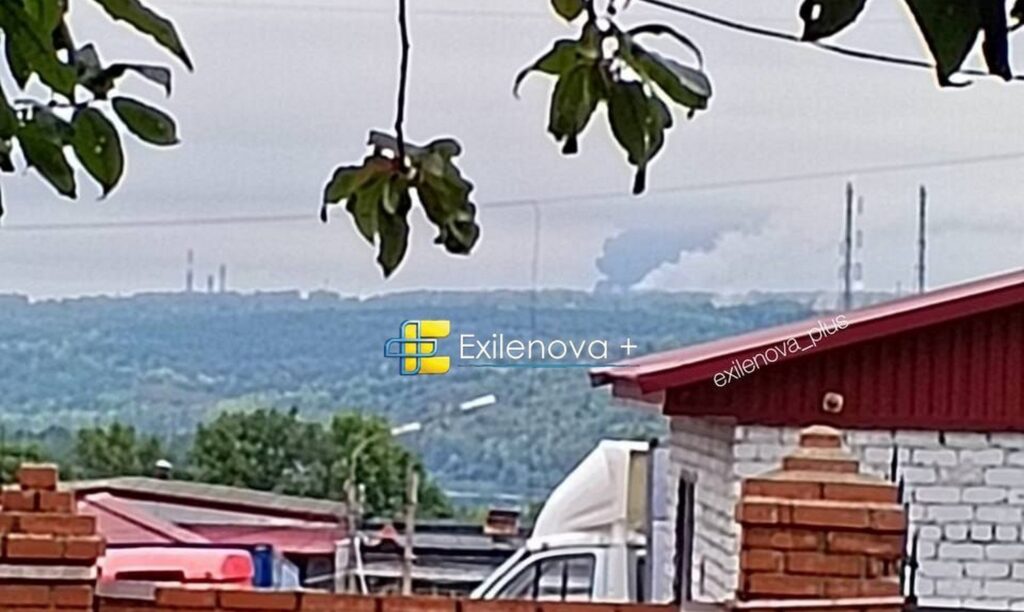
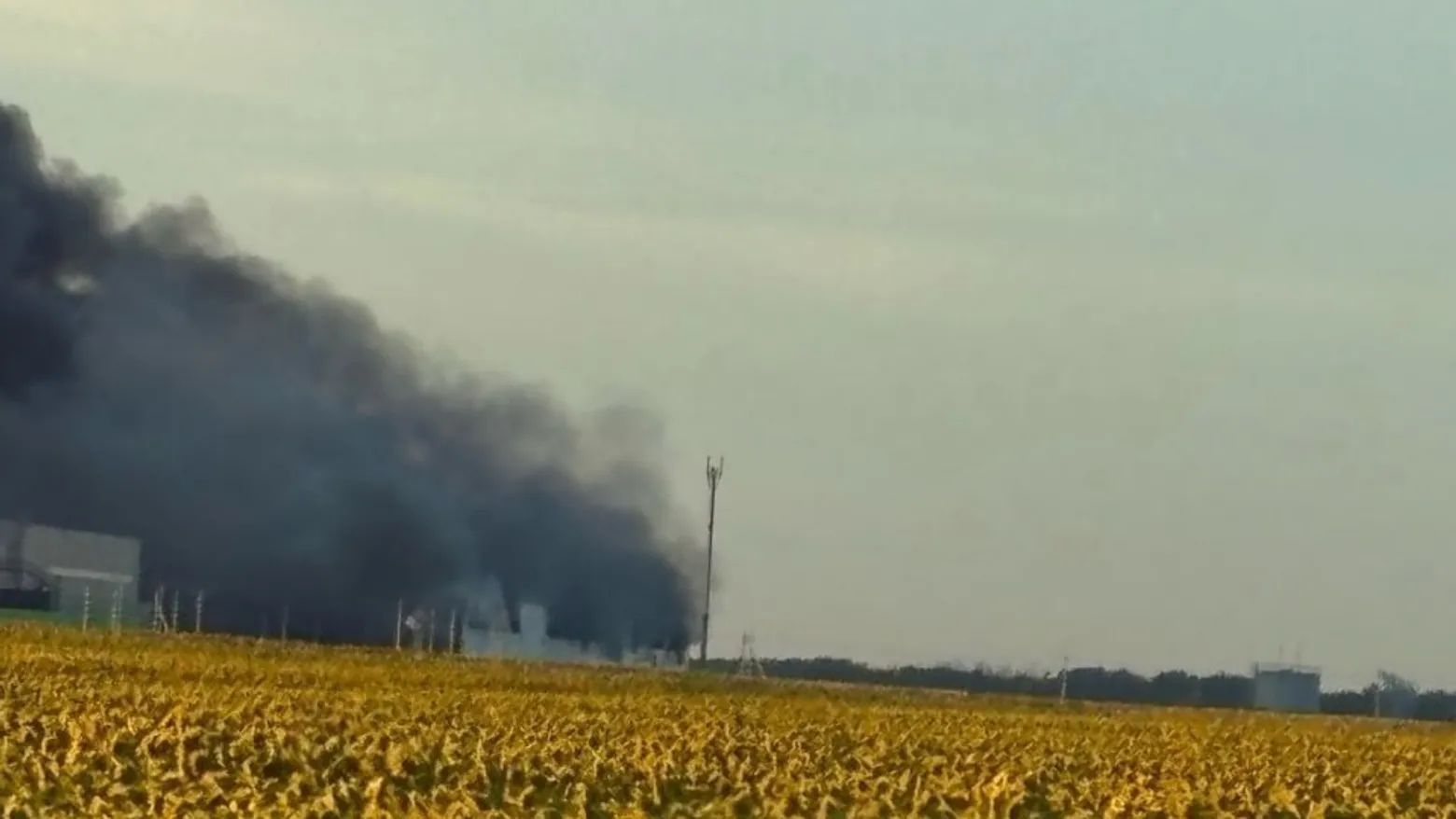
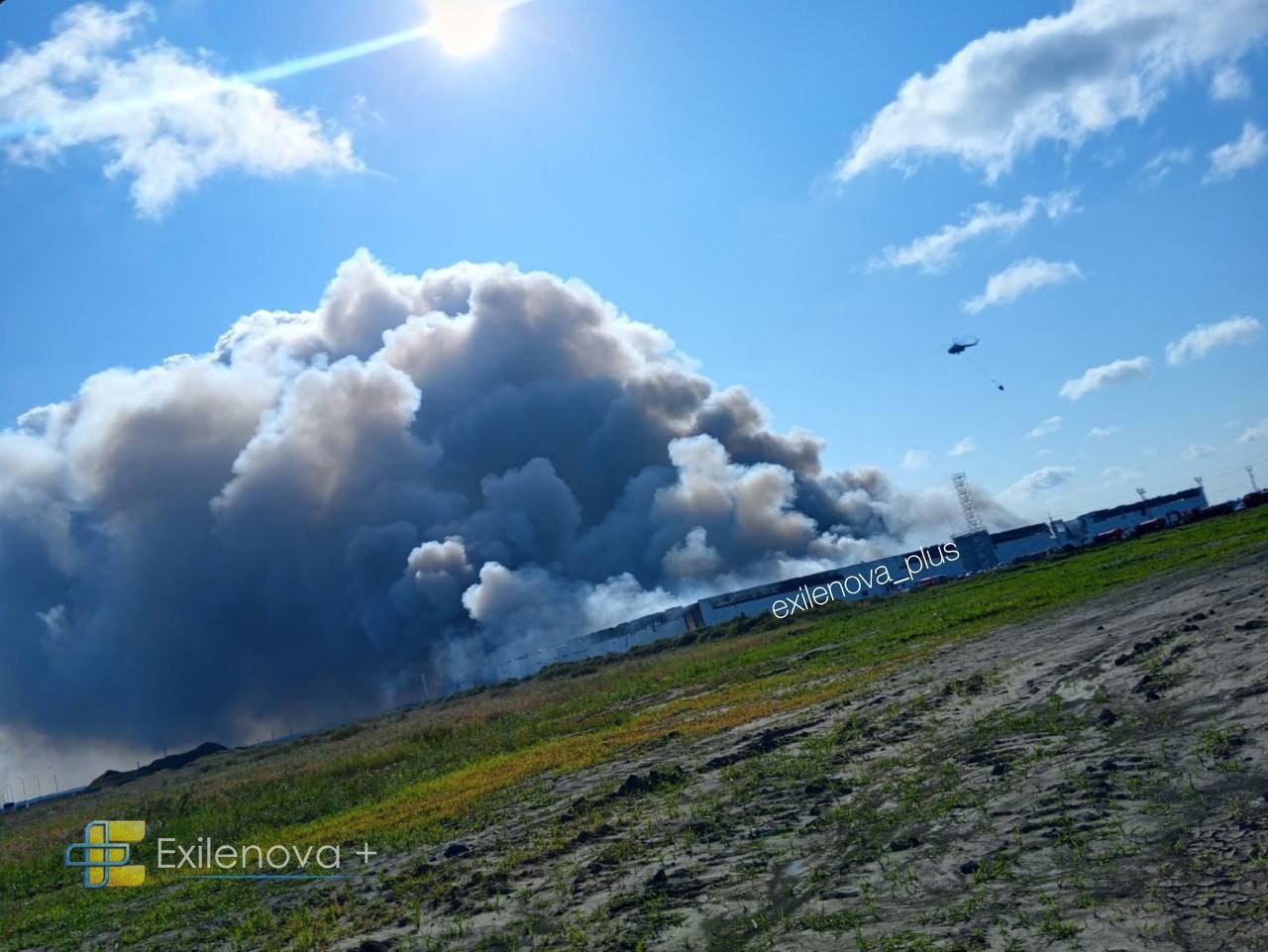
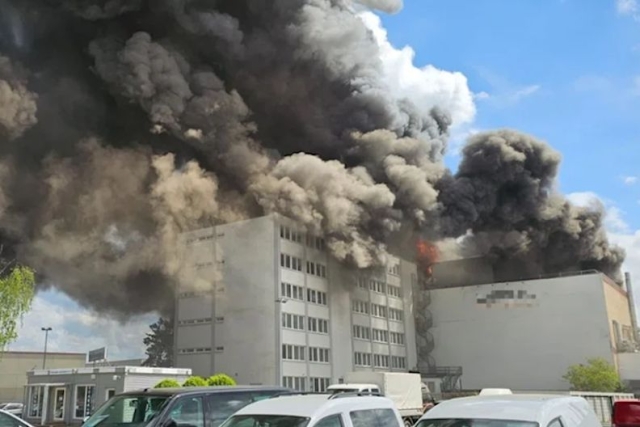
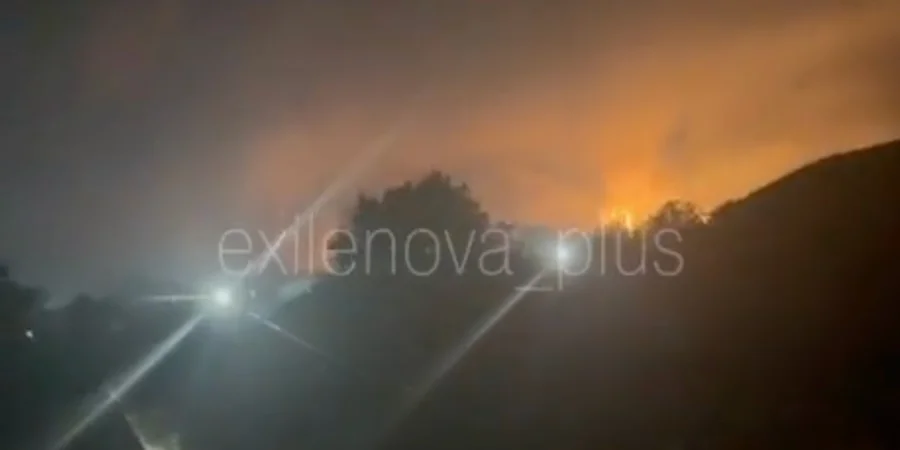
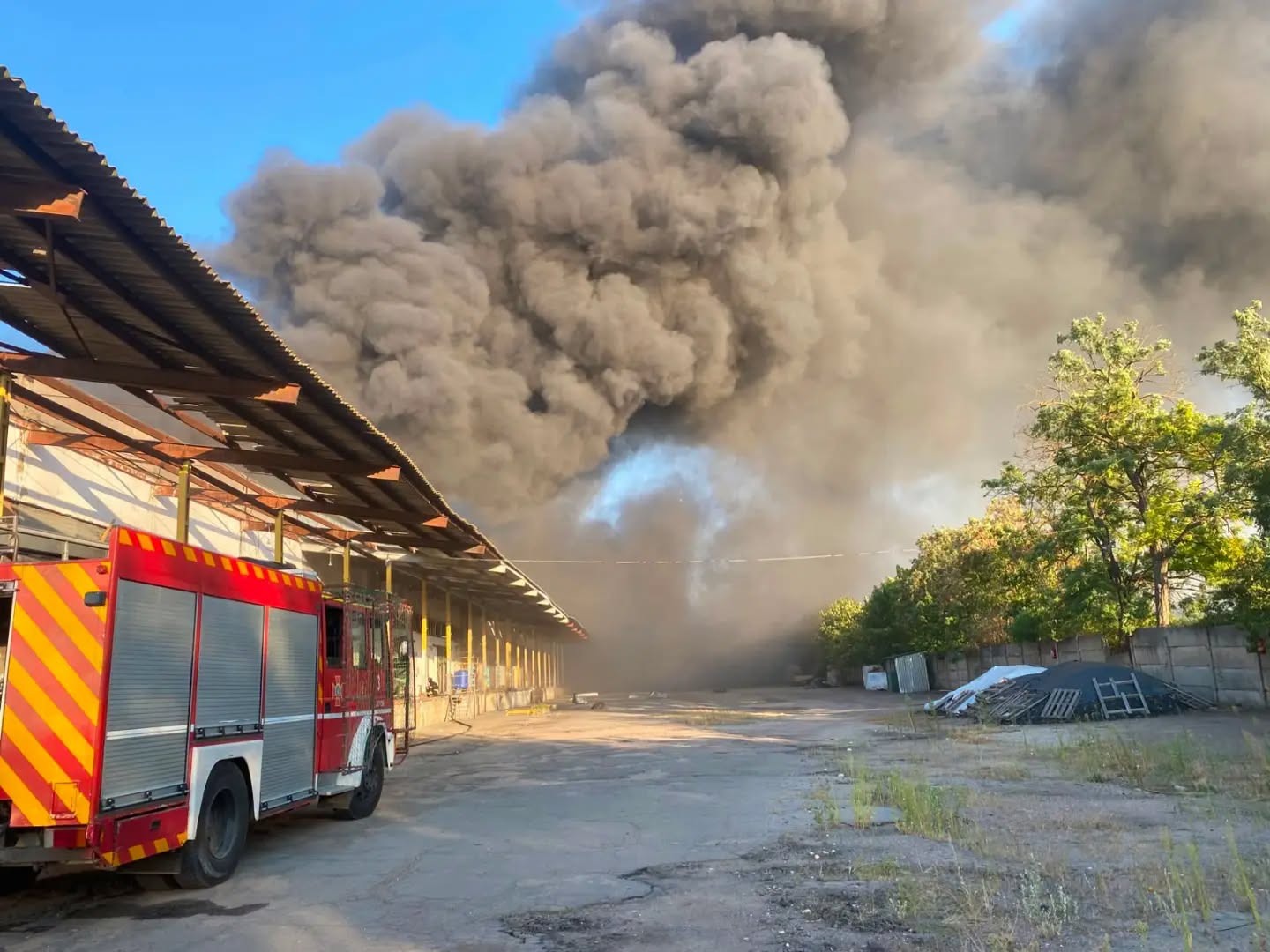
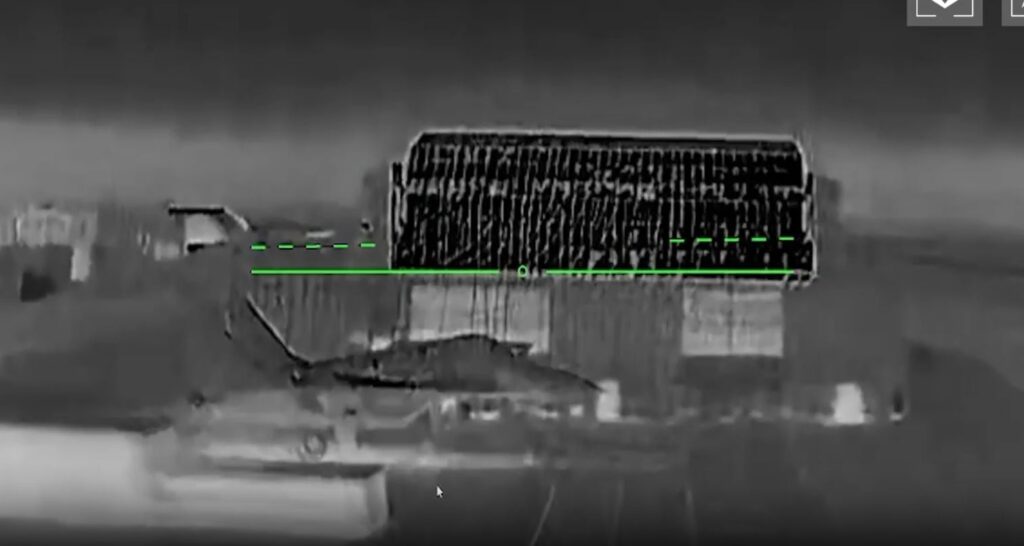
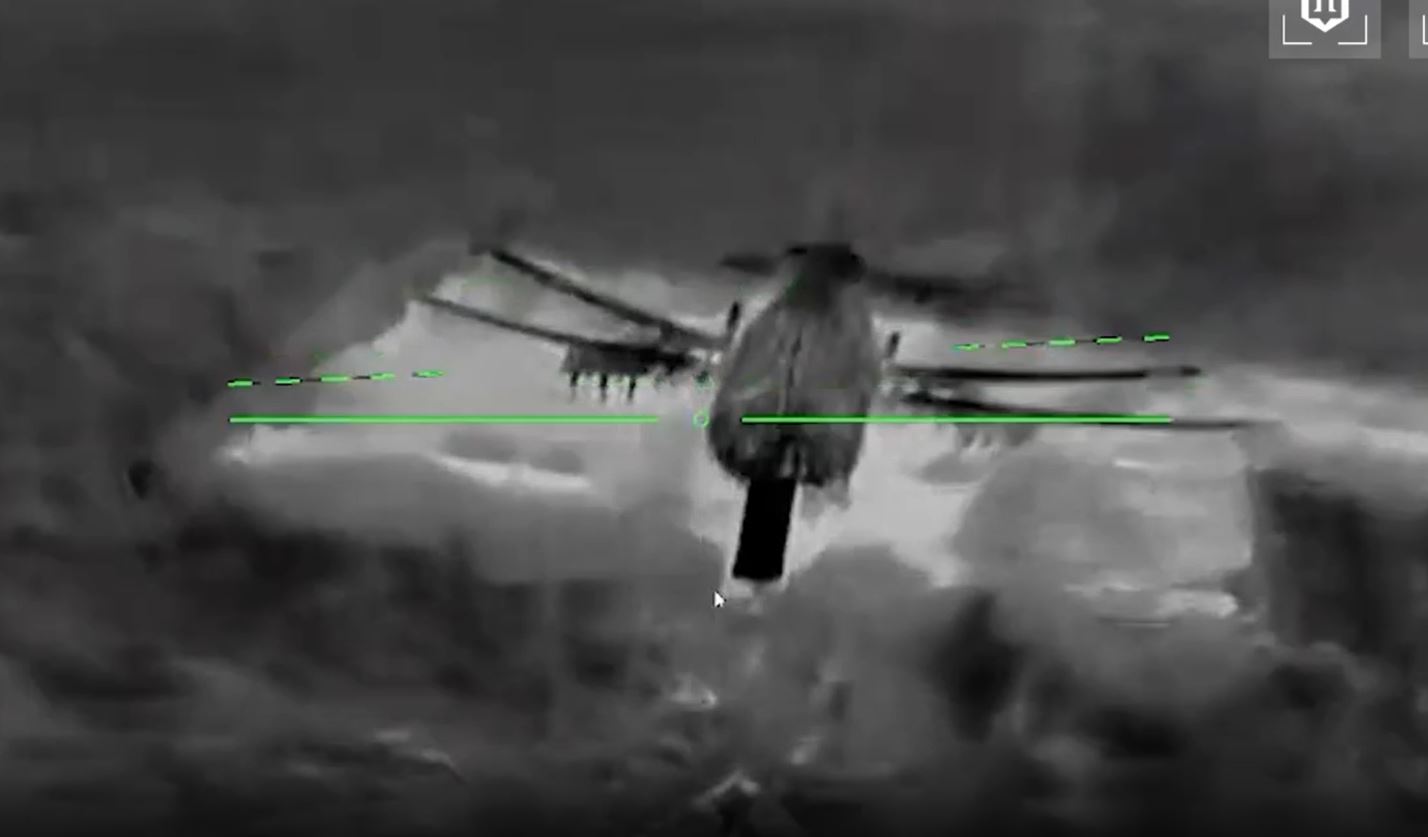
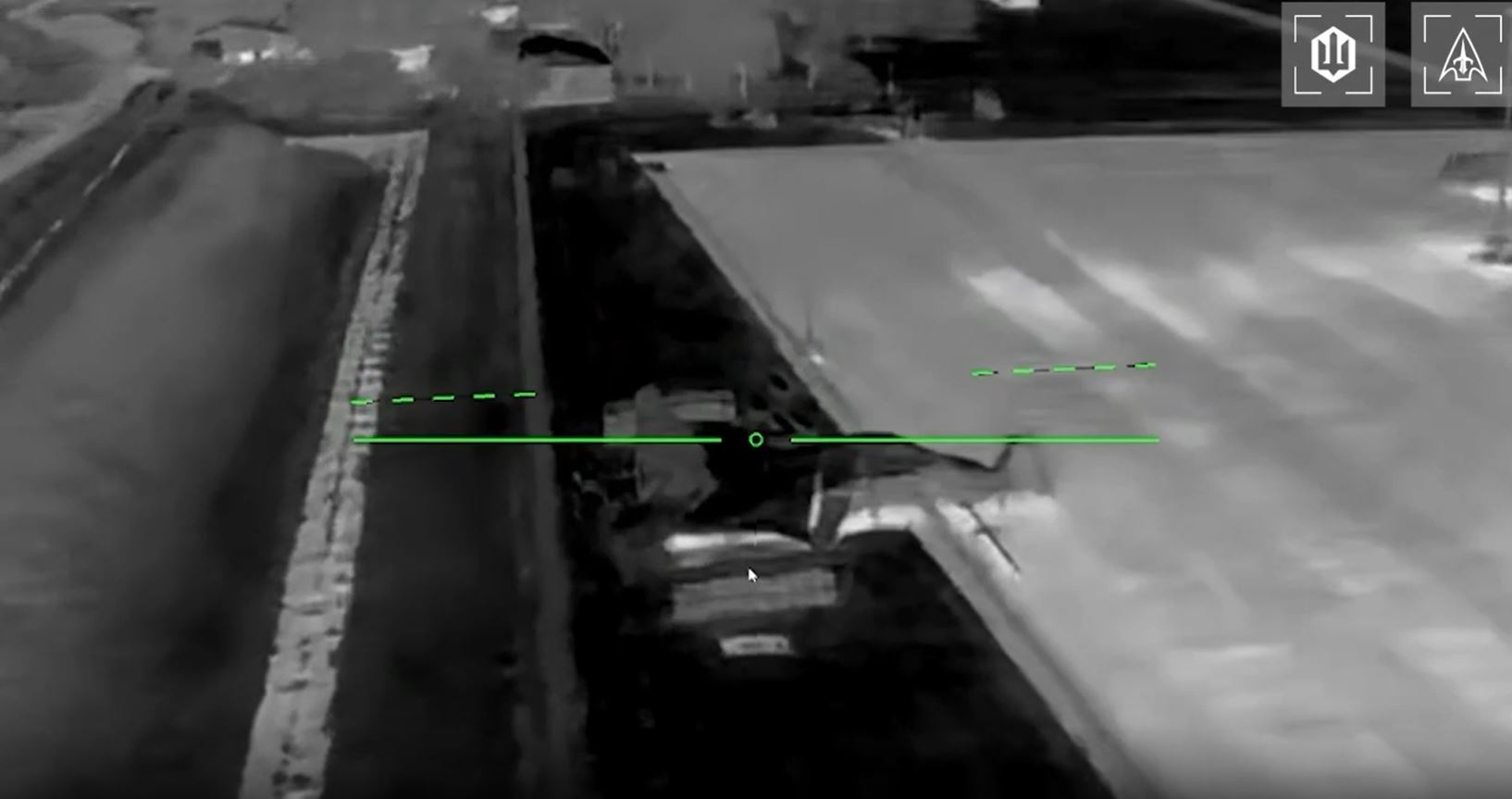
    Ukrainian drones attacked two Ozon logistics centers overnight on 27 August, one in Ufa and one in Orenburg Oblast, Russia's second-largest online store said. Staff were evacuated at both sites, and preliminary information indicated no casualties. Video published by Ukrainian monitoring channel Exilenova+ shows a drone reaching the Bashkortostan warehouse and exploding. Ukraine's deep-strike campaign has spread across Russian refineries and fuel depots, chemical plants,
     

Russia’s number two online retailer reports drone attacks on logistics hubs in two regions

27 août 2026 à 11:38

russia's number two online retailer reports drone attacks logistics hubs regions · post smoke rising beyond residential area blagoveshchensk bashkortostan russia 27 2026 exilenova ukraine news ukrainian

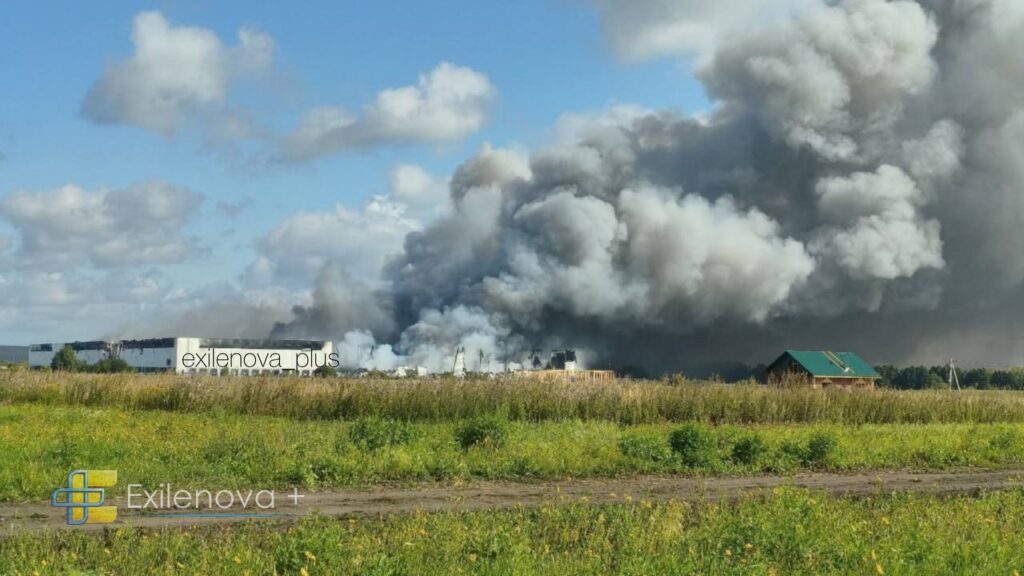
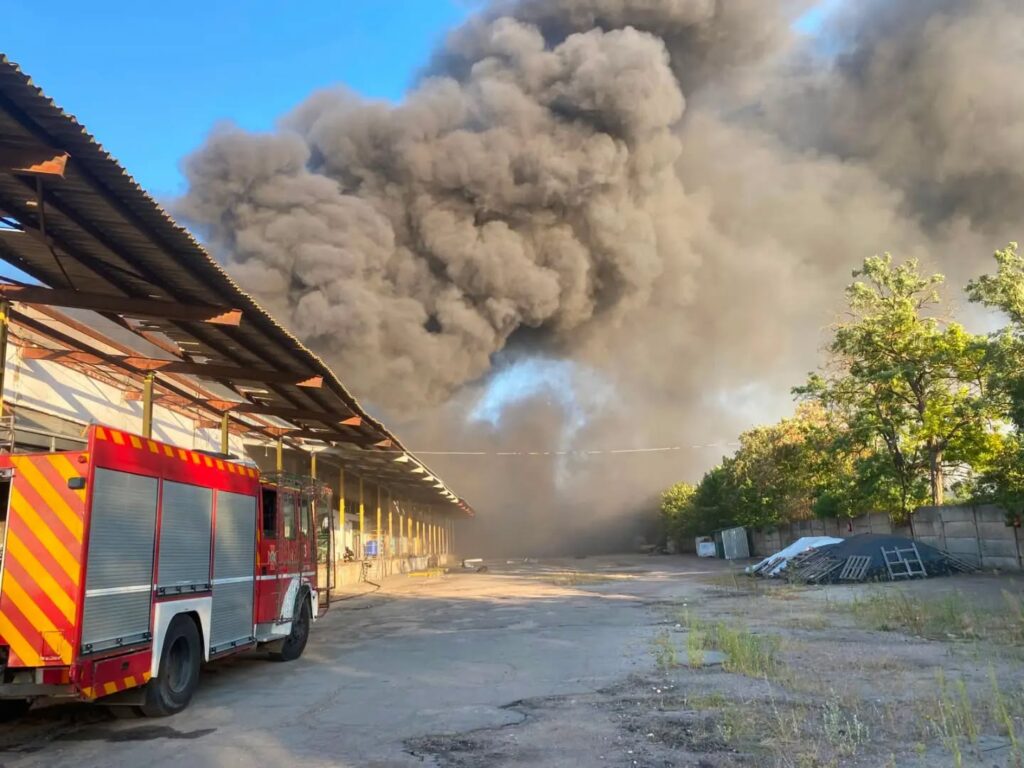
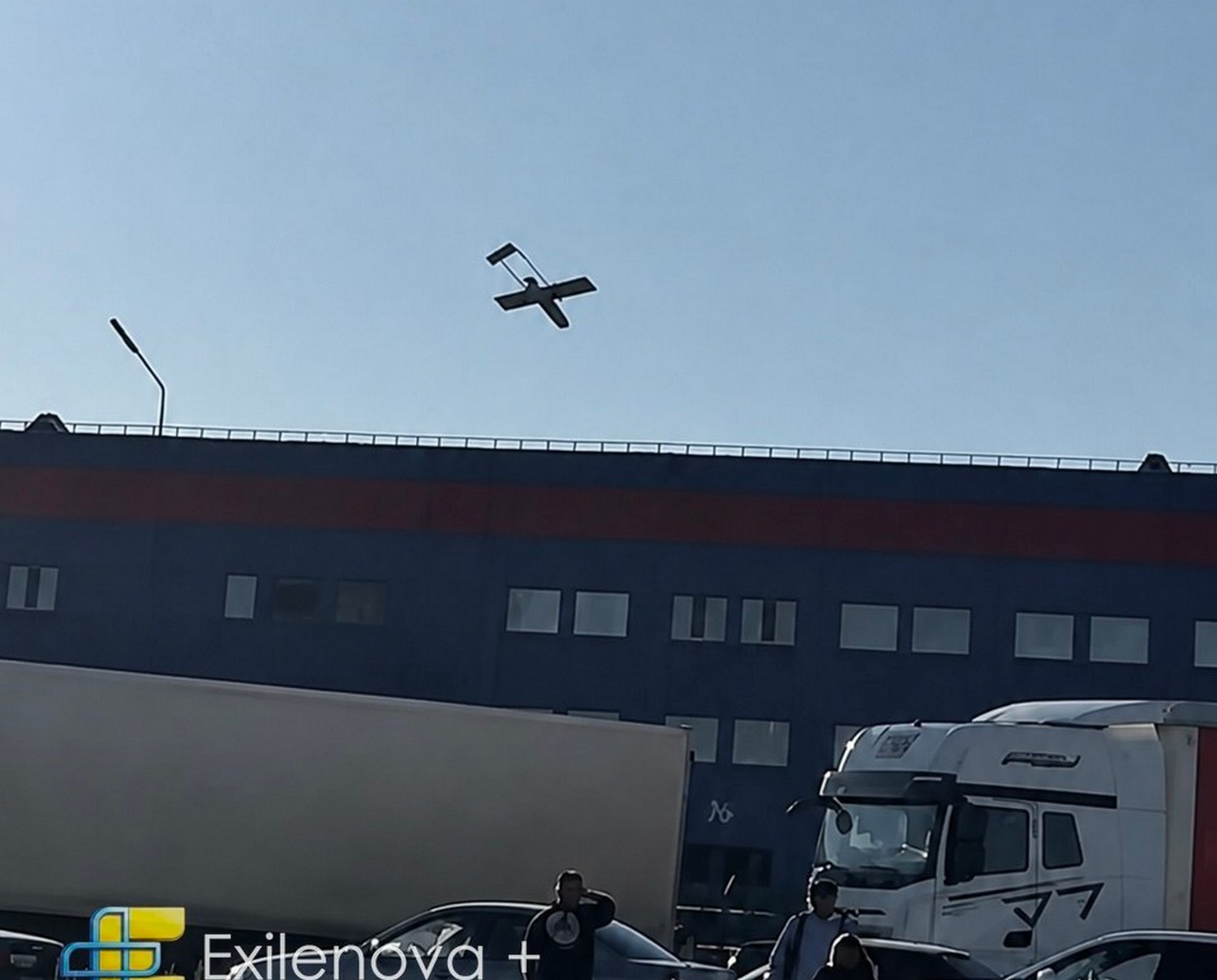
Ukrainian drones attacked two Ozon logistics centers overnight on 27 August, one in Ufa and one in Orenburg Oblast, Russia's second-largest online store said. Staff were evacuated at both sites, and preliminary information indicated no casualties. Video published by Ukrainian monitoring channel Exilenova+ shows a drone reaching the Bashkortostan warehouse and exploding.

Ukraine's deep-strike campaign has spread across Russian refineries and fuel depots, chemical plants, arms factories, railways, and the warehouses that move consumer goods. Together the strikes take refining capacity, storage space, and freight throughput out of service repeatedly, and sanctions leave Russia fewer parts and crews to restore them with.

The strike on camera

Exilenova+ reported in the morning that an Ozon warehouse was burning after impacts in Blagoveshchensk, a town north of Ufa. The Bashkortostan capital lies roughly 1,300 kilometers from the war zone in Ukraine. Around midday the channel published eyewitness video of what it called the moment of a drone attack on the site, and said the warehouse had not caught fire. The footage shows a drone reaching the site and detonating there.

Drone hit another Russian warehouse

Eyewitness video from Blagoveshchensk in Bashkortostan shows the moment a Ukrainian drone reached Ozon's fulfillment center — the largest logistics complex the online retailer runs in the Volga area — and detonated. The channel that published… pic.twitter.com/oHUgjRz0v0

— Euromaidan Press (@EuromaidanPress) August 27, 2026

Earlier, the channel reported that residents of Sterlitamak, Bashkortostan's second-largest city, about 120 kilometers from Ufa, had written about explosions, with nothing then known about impacts. Astra later placed smoke over what it said was probably the Bashkir Soda Company works there.


Ozon said the Orenburg site—about 1,200 kilometers from the war zone—has resumed work. The one it placed in Ufa sustained what it called minor damage but remains closed, because the grounds need a thorough inspection. It is not accepting deliveries.

Russian news Telegram channel Astra identified the damaged facility from the eyewitness footage as Ozon's UFA_RFC fulfillment center in Blagoveshchensk. When it opened in late 2024 it was billed as the largest Ozon logistics complex in Russia's Volga federal district, with a total area of 93,000 square meters.

Smoke over the Ufa refineries

Astra also traced smoke in eyewitness footage to the Bashneft-Ufaneftekhim refinery in Ufa. The plant is one of Rosneft's leading refineries and a dual-use site: it supplies specialized fuel to Russia's armed forces and petrochemical feedstock for defense-grade materials. It burned after a strike on 1 August.
Bashneft runs three refineries side by side in Ufa's northern industrial zone—Ufaneftekhim, Novoil, and UNPZ—forming one of Russia's largest refining complexes, with a combined capacity of up to 23.5 million tons of feedstock a year.
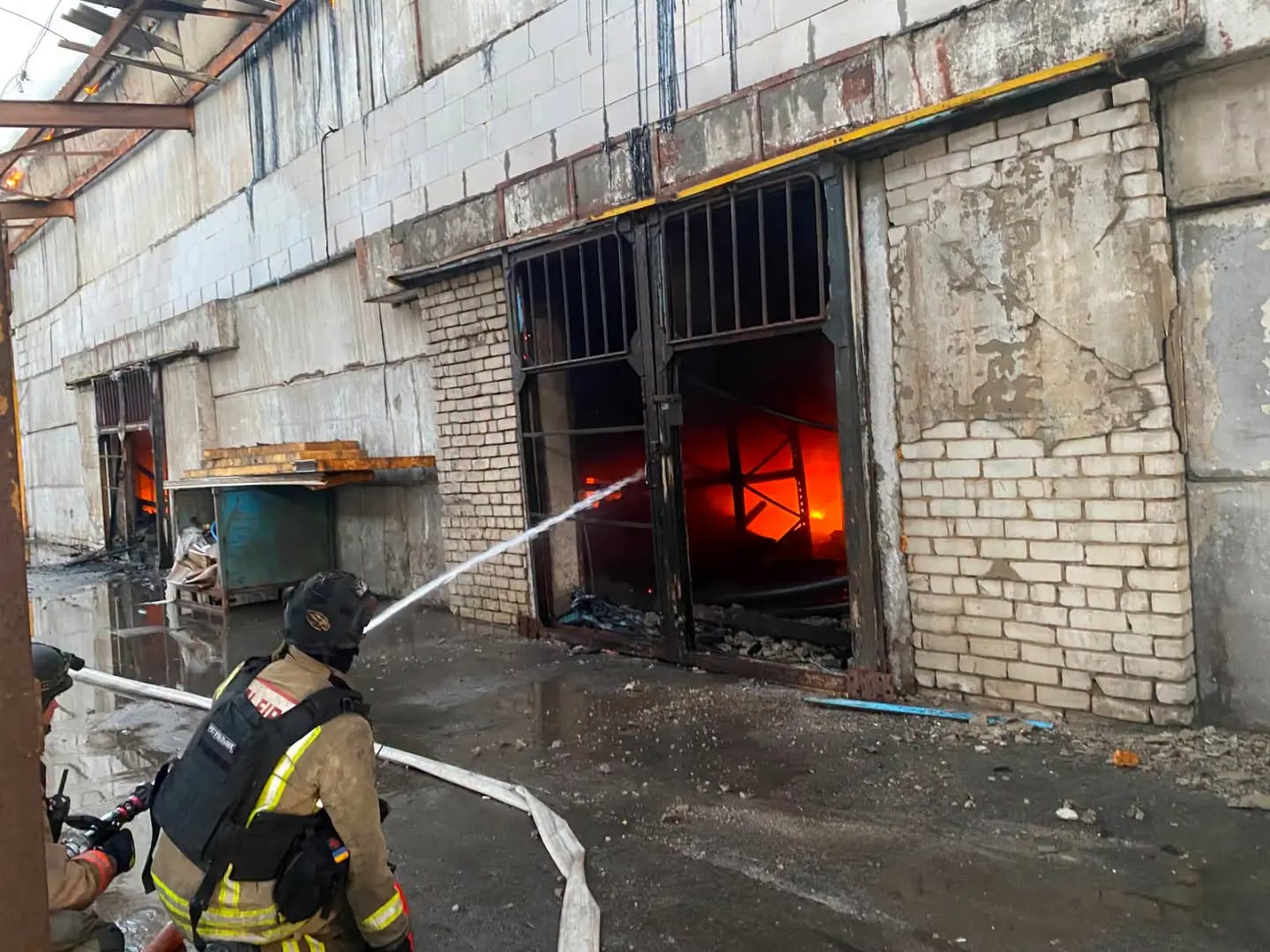
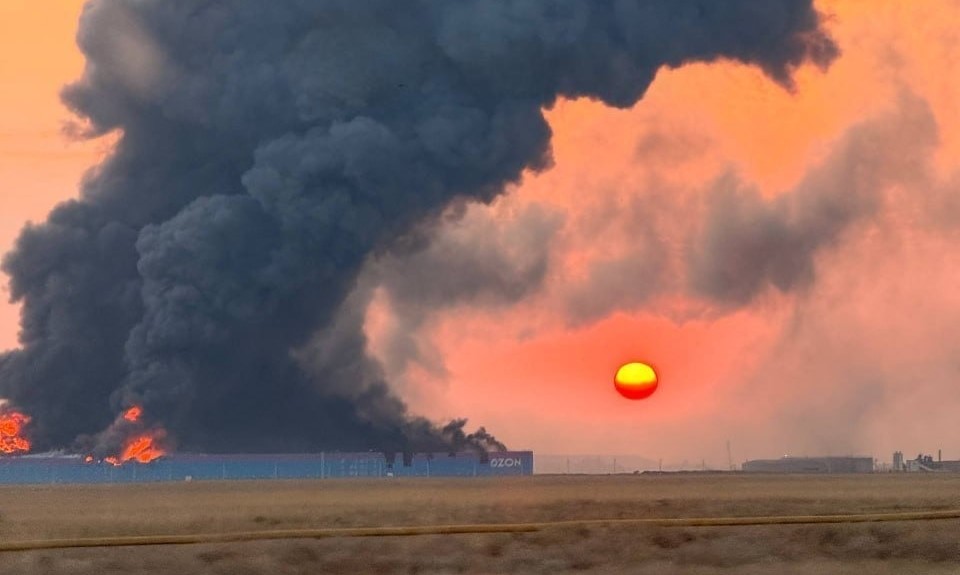
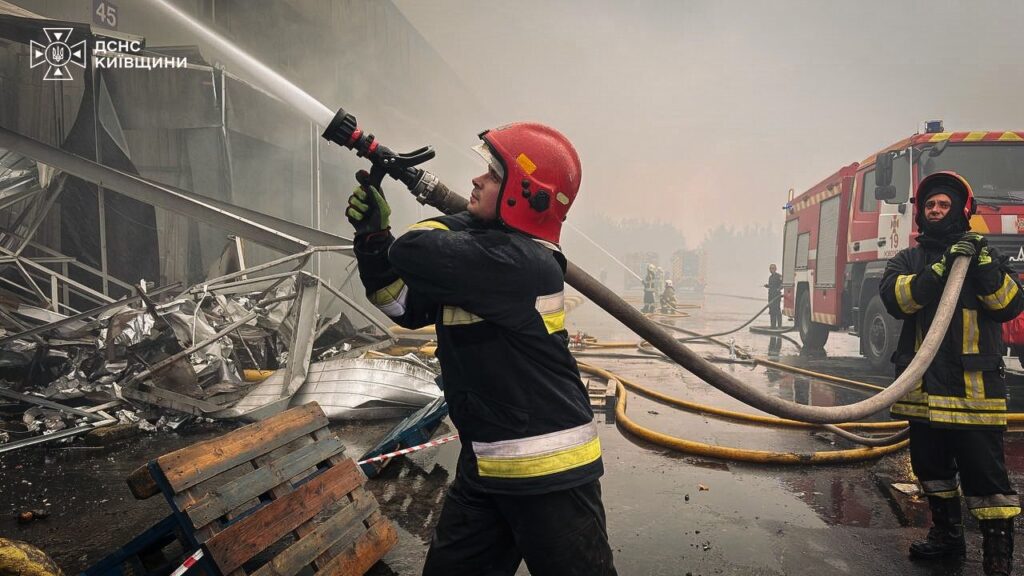
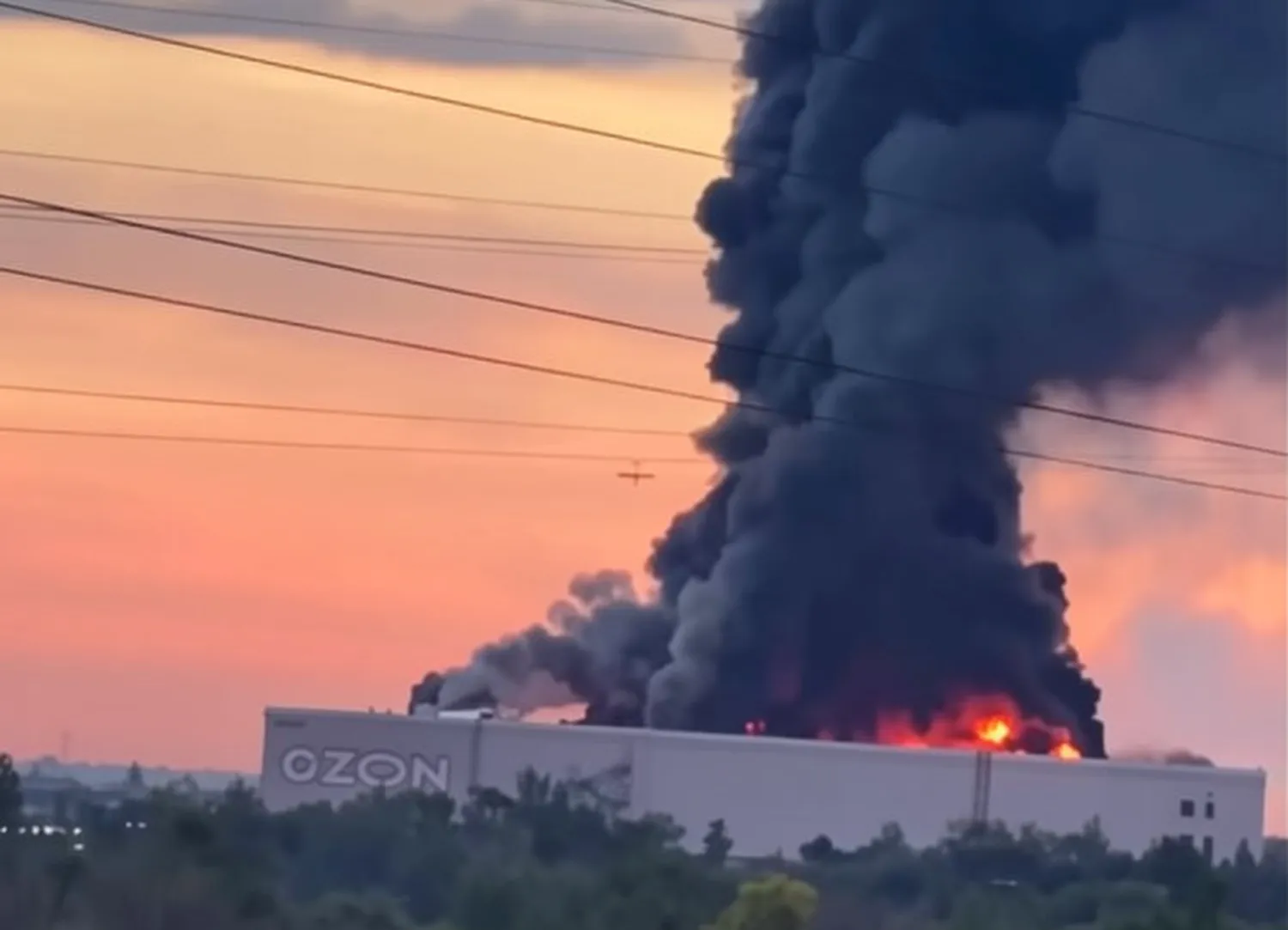
Thick black smoke and flames rise from an Ozon warehouse in Chapayevsk, Russia, at sunset.
Explore further

Ukrainian drones hit warehouse belonging to Russian online retailer Ozon for the first time

What officials said, and didn't

Bashkortostan's authorities did not report the attack. Orenburg Oblast governor Yevgeny Solntsev mentioned drone danger in his region but gave no account of consequences. Ufa closed its airport.

Russia's Defense Ministry claimed air defenses destroyed 267 Ukrainian fixed-wing drones overnight across Russian regions, Bashkortostan among them.

The campaign so far

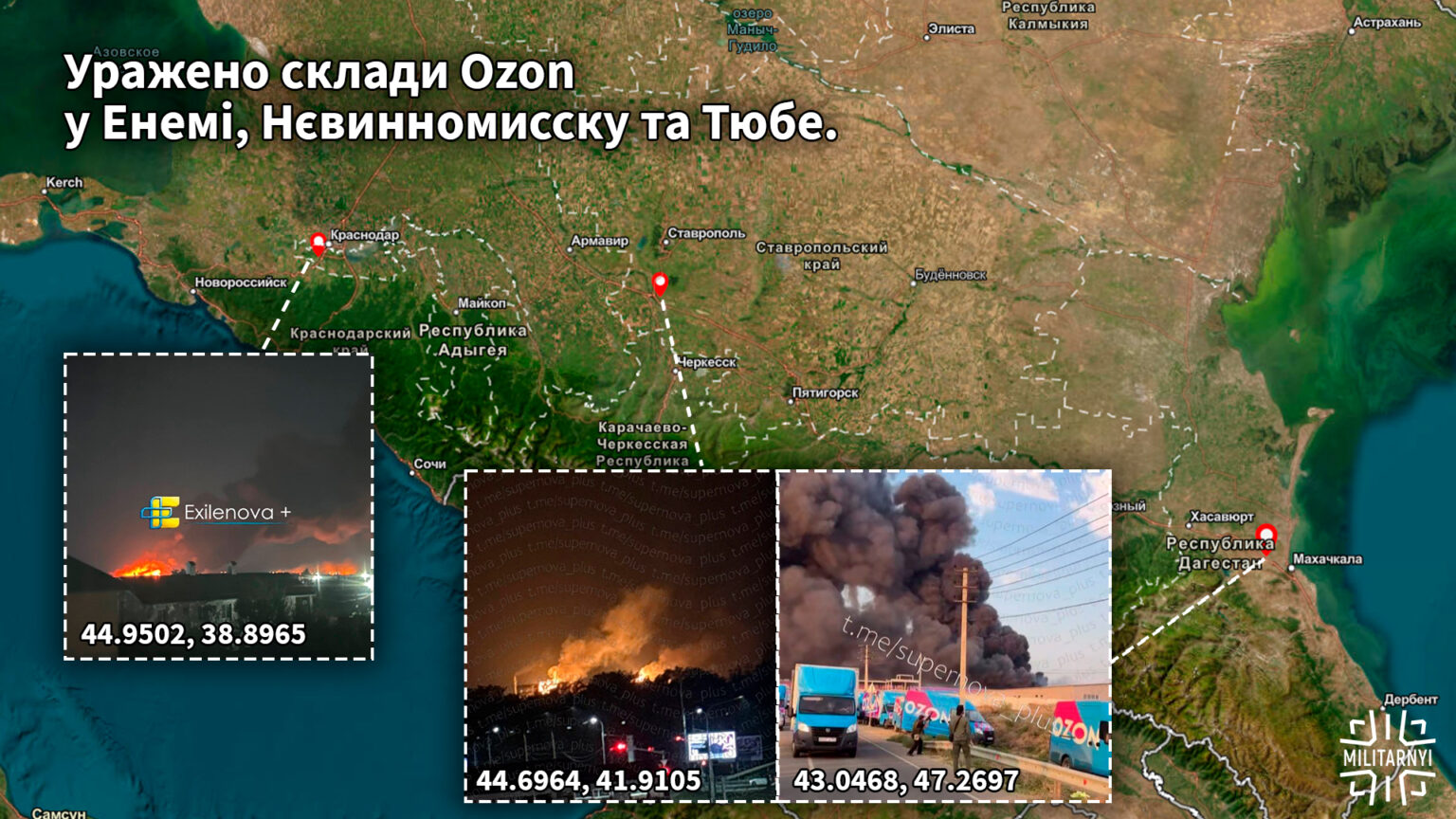
Ukraine's warehouse campaign began with Wildberries, Russia's largest online marketplace, which lost eight warehouses and roughly 860,000 square meters of storage in July alone. It reached Ozon for the first time on 22 August at Chapayevsk in Samara Oblast, where more than 500 employees evacuated and people were hurt. Four more Ozon hubs were hit across southern Russia two nights later.

  • ✇Euromaidan Press
  • Ukraine to get 90% of drones under planned Finnish production deal, Finland’s president says
    Finnish President Alexander Stubb said Ukraine would receive about 90% of the drones that Finnish companies build under a planned Finland–Ukraine framework agreement, Mi-Ukraina reported on 26 August. Three days earlier in Kyiv, he said the other 10% would stay in Finland. The planned arrangement follows a broader European shift toward co-production with Ukraine rather than supplying weapons from existing stockpiles. Drones have shaped much of the fighting on both sides
     

Ukraine to get 90% of drones under planned Finnish production deal, Finland’s president says

27 août 2026 à 11:09

Alexander Stubb

Finnish President Alexander Stubb said Ukraine would receive about 90% of the drones that Finnish companies build under a planned Finland–Ukraine framework agreement, Mi-Ukraina reported on 26 August. Three days earlier in Kyiv, he said the other 10% would stay in Finland.

The planned arrangement follows a broader European shift toward co-production with Ukraine rather than supplying weapons from existing stockpiles. Drones have shaped much of the fighting on both sides since Russia's full-scale invasion in 2022, and Russia has repeatedly struck defense plants inside Ukraine—a Bayraktar plant under construction in Kyiv was hit four times in six months by August 2025—pushing Ukrainian makers to expand production into allied countries, Finland among them.

Asked what still had to be agreed before production could begin, Stubb said nothing did.

"Everything is done. There is a so-called framework agreement on drones that we're working on. It's more about cooperation between states—that is, Zelenskyy and me. And the companies between themselves do what they have to do. I think the doors are already open," Stubb said.

He said the 90/10 ratio is common practice in corporate contracts and that companies would determine the pace of production after finalizing their decisions. Some details could remain classified because of military secrecy, he said.

At a press conference on 23 August after the Nordic-Baltic Eight summit with Ukraine, Stubb had described the deal as still taking shape. He said seven Finnish defense companies interested in cooperation with Ukraine, including on maritime drone production, had traveled to Kyiv with him and that one had already provided production estimates.

"The companies are making actual deals. I'm looking forward to the results, but it seems one of the companies has already provided data on the number of drones that can be produced in Finland. And I think the deal will follow approximately the so-called 90/10 proportion. So 90% of the output is supplied to Ukraine, and 10% stays in Finland," Stubb said, according to Unian.

zelenskyy and stubb
President of Ukraine Volodymyr Zelenskyy and President of Finland Alexander Stubb took part in a roundtable on Ukrainian-Finnish cooperation in the defense industries, organized with the participation of the Ukrainian Council of Defense Industry. Photo: president.gov.ua

Ukrainian President Volodymyr Zelenskyy said on 23 August that three of the seven Finnish companies present had already signed agreements for joint production, including drones. Yle identified the three as Patria, Insta, and Boomeranger, saying they had signed letters of intent with Ukrainian counterparts. Patria and the Ukrainian company General Chereshnia signed a memorandum of intent to produce defense drones in Finland, Patria announced.

Separately, Ukrainian drone maker Airlogix and Finnish technology company Innokas signed a letter of intent to establish joint drone manufacturing in Finland under Ukraine's "Build with Ukraine" initiative. Ukrainian firm TAF Industries and Finnish company Summa Defence had signed a similar agreement earlier under the same initiative.

Zelenskyy said the cooperation would combine Ukrainian combat experience with Finnish technology. Stubb said Finland already faces hybrid attacks, from undersea cable sabotage to drones, and treats sabotage as a standing risk to the plants, adding that Finland ranks among the largest per-capita suppliers of military equipment to Ukraine.

From support to co-production—and a two-way expertise swap

Stubb said the planned arrangement is not far from Denmark's model of directly financing Ukrainian defense production, according to Yle.

Zelenskyy said the agreements cover drones built in Finland for Ukraine and Europe, expanded maritime unmanned systems, and a plant for ground robotic systems, and Stubb said the documents signed during the visit concerned air, land, and sea.

The Finnish president said in the Mi-Ukraina interview that Europe's relationship with Ukraine has changed since the full-scale invasion. Ukraine once needed European support, while Europe now needs Ukraine's battlefield experience, he said. What Finland learned, by his account: trench warfare is over, a 40-kilometer kill zone means tanks firing at shorter range have no role, and Ukraine holds more data on modern war than the rest of Europe combined.

Norway’s Air Force put its first anti-drone system into service at the fighter base—and wants its own drones doing the same job

27 août 2026 à 08:25

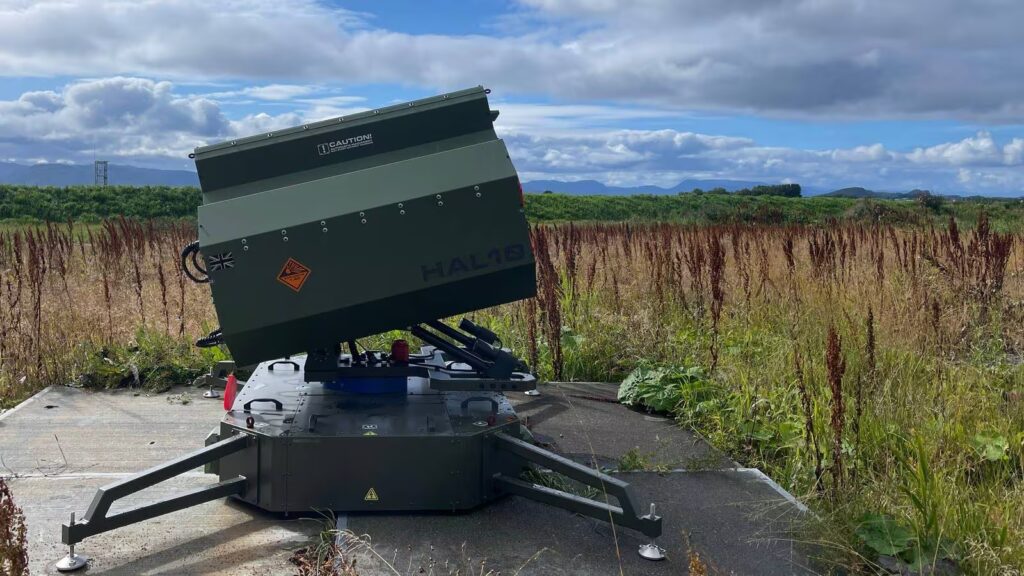
norway's first drone defense went live fighter base—and it's training its own drones do same job · post launcher norway has acquired specifically shoot down mounted beside runway ørland base

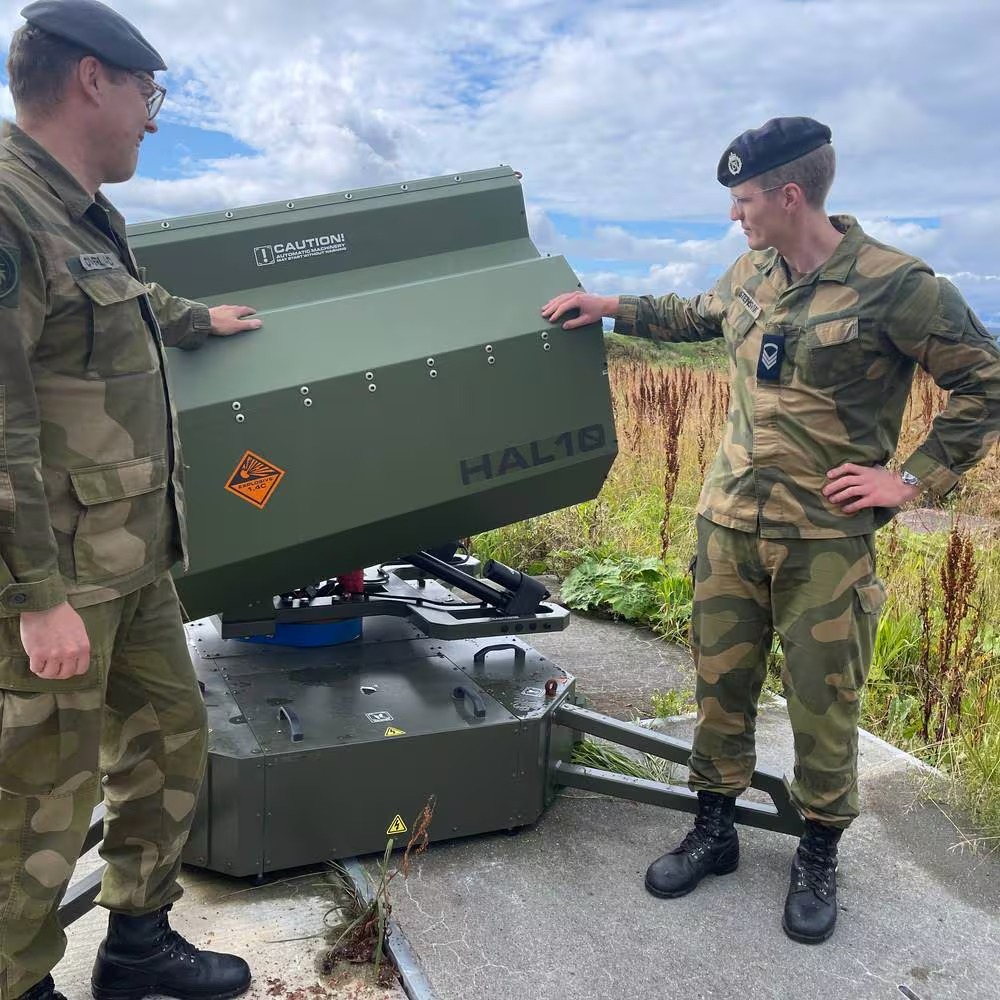
Norway's Air Force has put its first counter-drone system into service at Ørland, the country's only combat aircraft base, NRK reported. A launcher now stands beside the runway where Norway's F-35 stealth fighters are parked, bought specifically to bring drones down. The deployment follows a wave of drone sightings across Europe last autumn and will be phased in at other Norwegian bases.

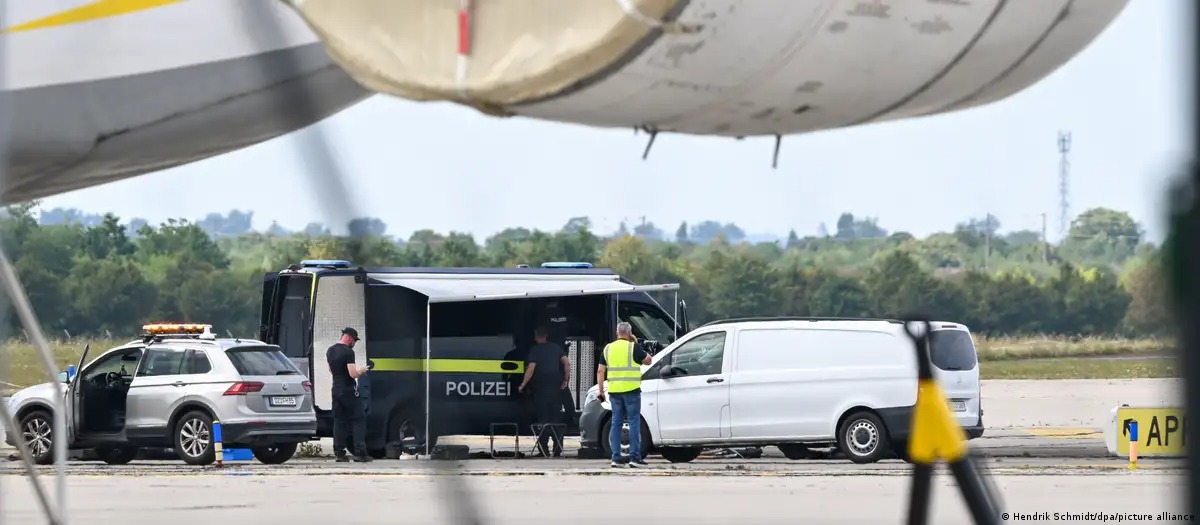
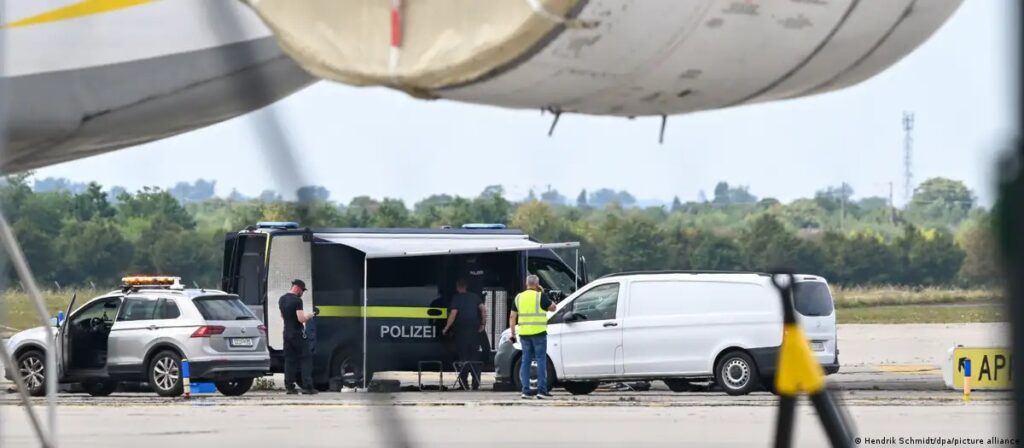
Since Russia's full-scale invasion, European states have logged drone sightings over airports and bases, airspace violations, sabotage, and arrests for espionage, much of it attributed to Moscow, which denies involvement. This month, a suspected case turned physical: an explosive drone struck a Ukrainian cargo plane at a German airport but failed to detonate.

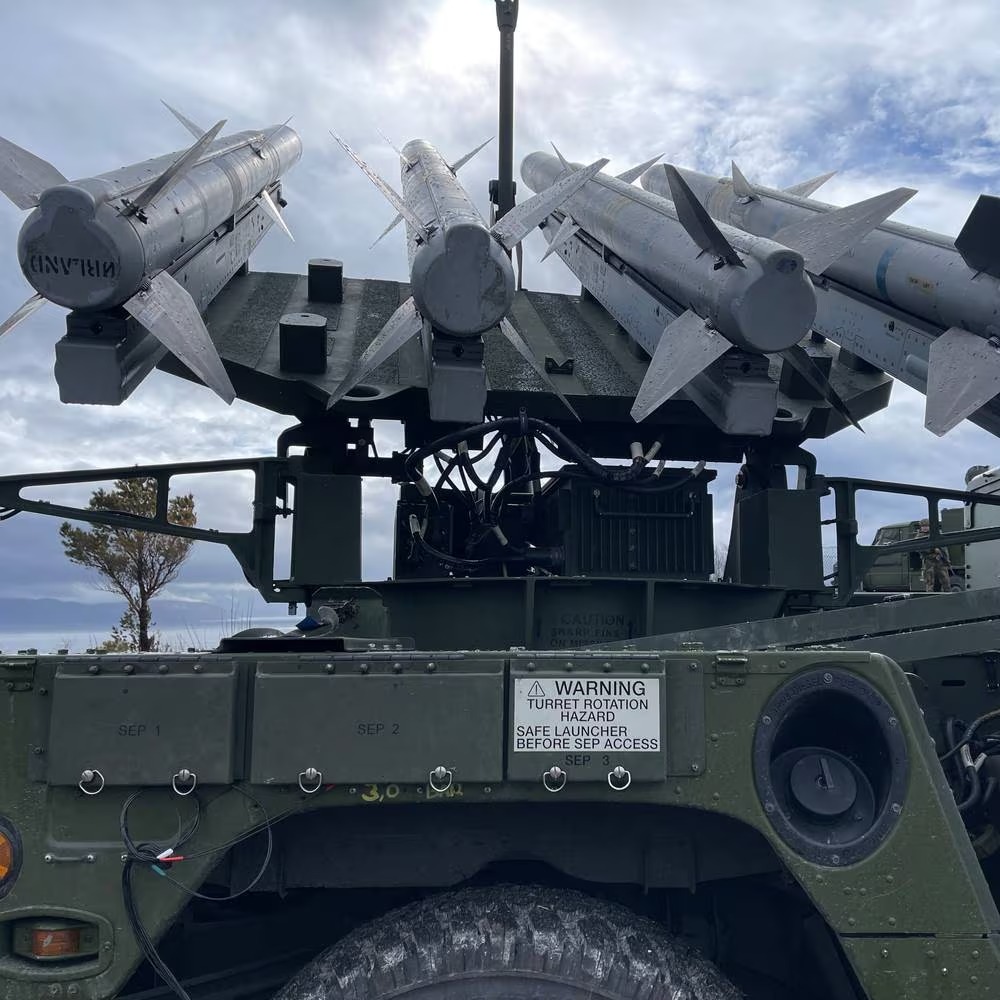
The launcher came from the British company ISS Aerospace and works as one of several effectors inside a system the military calls Counter Unmanned Aerial Systems, or C-UAS. Radars and other sensors spot the drones first. It is built to protect fixed installations against drones weighing up to 150 kilograms, and it can either jam a machine or destroy it. Ørland already has NASAMS air defenses, the Norwegian-American missile system Ukraine also uses, but firing interceptor missiles at small drones is expensive and described as shooting sparrows with cannons.

"We received a system in the spring, which we are introducing now, and it gives us a hugely increased capacity in drone defense," said the head of the counter-drone unit at the base, Sondre Steinsvik.

norway's first drone defense went live fighter base—and it's training its own drones do same job · post officers base battalion counter-drone unit beside british-supplied launcher ørland norway 26 2026
Officers of the base defense battalion and the counter-drone unit beside the British-supplied launcher at the Ørland fighter base in Norway, 26 August 2026. Photo: Ingrid Lindgaard Stranden / NRK

What pushed it forward

Police reported observations of possible drones near the base in September last year, part of a wider wave across Europe that also closed Oslo airport. Trøndelag police later concluded the lights had most likely been blinking celestial bodies. The purchase was already underway, but the sightings accelerated it, and the new sensors are meant to make such calls easier in future. Ørland's mayor said at the time the drone defense was arriving far too late.

norway's first drone defense went live fighter base—and it's training its own drones do same job · post nasams air launcher ørland base norway 26 2026 kampflybasen er godt beskyttet
A NASAMS air defense launcher at the Ørland fighter base in Norway, 26 August 2026. Photo: Ingrid Lindgaard Stranden / NRK

Small drones have become easily available, are relatively easy to smuggle in or rebuild locally, and could potentially do serious damage to aircraft parked in the open, according to Lars Peder Haga of Norway's Air Force Academy, who said that from a defense standpoint, such purchases can never move fast enough.

fifty grams hexogen ten days late what germany missed after attack ukraine's plane · post german police vehicles officers apron beneath wing ukrainian cargo aircraft leipzig/halle airport 2026 leipzig halle
Explore further

About 50 grams of suspected military explosive lay in a German field 10 days after the attempt on Ukraine’s plane

Next bases, and Norway's own drones

Evenes air station, which handles Norway's quick-reaction alert mission among other duties, is among the sites due to receive it, NRK reported. Parliament's long-term plan set aside nearly $2 billion for drones, electronic warfare, and autonomy through 2036.

The base has also built a drone troop of its own, flying machines for search and mapping, with the aim of arming them to strike other drones. 

"That is the direction we want to go. We see it is very effective in Ukraine," said the head of the base defense battalion, Tormod Overland.

  • ✇Euromaidan Press
  • Russian Aerospace Forces officer killed by a bomb in his own car in St. Petersburg
    A car bomb killed a lieutenant colonel of Russia's Aerospace Forces in St. Petersburg on the morning of 27 August, the local outlet Fontanka reported. His wife survived and reached hospital in serious condition. Russia's Investigative Committee opened a criminal case, and nobody has claimed responsibility for the attack. Ukraine's war reaches deep into Russia's rear, where officers, arms-industry figures, and quisling officials keep dying in blasts far from the front. W
     

Russian Aerospace Forces officer killed by a bomb in his own car in St. Petersburg

27 août 2026 à 08:12

russian aerospace forces officer killed bomb own car st petersburg · post which explosion lieutenant colonel cordoned off slavyanka micro-district russia 27 2026 blown up ukraine news ukrainian reports

A car bomb killed a lieutenant colonel of Russia's Aerospace Forces in St. Petersburg on the morning of 27 August, the local outlet Fontanka reported. His wife survived and reached hospital in serious condition. Russia's Investigative Committee opened a criminal case, and nobody has claimed responsibility for the attack.

Ukraine's war reaches deep into Russia's rear, where officers, arms-industry figures, and quisling officials keep dying in blasts far from the front. Who put the bomb in this car is a separate question. It could be Kyiv, or it could be a criminal score being settled — Russia has no shortage of those.

A bomb inside the car

Witnesses said the officer and his wife were pulling away from their house in a southern suburb of the city at around 10 a.m. when an improvised explosive device went off inside the car, Militarnyi reportedThe officer died on the spot, and the blast tore off the legs of both spouses. Fontanka placed the dead officer in Russia's Air Force and Air Defense branches, which sit within the Aerospace Forces.

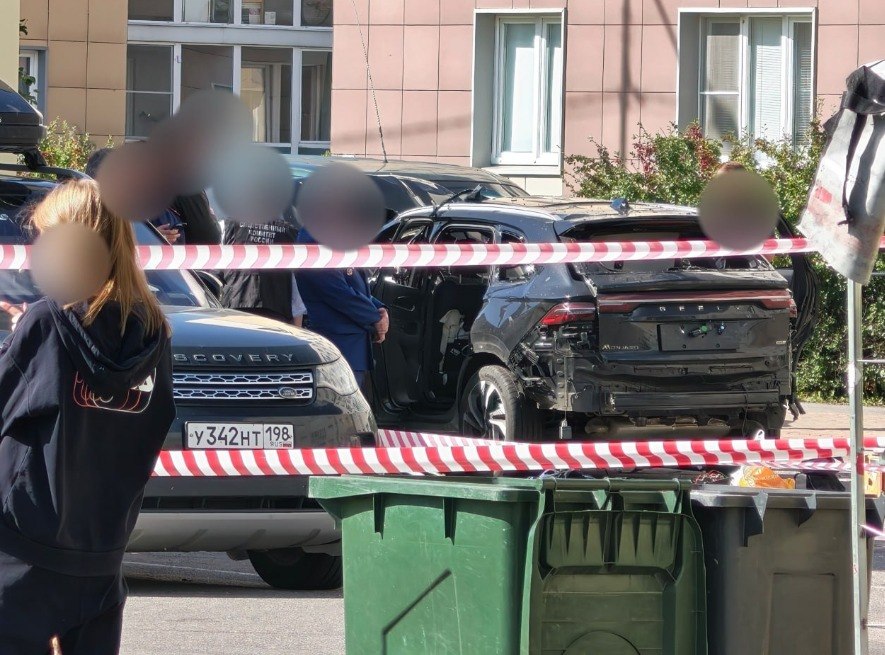
Russian channel Ren TV published a video of the wreckage and said the explosion followed the driver starting the engine. The Geely lost its rear window, hood, and rear bumper, and its body was badly deformed, and parts landed dozens of meters away, according to the channel. Footage from the site shows debris across the roadway and emergency crews arriving.

A car bomb killed a Russian Aerospace Forces lieutenant colonel in St. Petersburg

The unnamed officer died where he sat on the morning of 27 August. The Geely's hood and rear bumper ended up on the road, and parts landed dozens of meters away. Investigators opened the case as… pic.twitter.com/g132U7Oaft

— Euromaidan Press (@EuromaidanPress) August 27, 2026

Witnesses told the Russian news Telegram channel Ostorozhno Novosti that the blast wave badly deformed the driver's door and damaged cars parked alongside. Ukrainian monitoring Telegram channel Exilenova+ posted several clips from the site and described the dead man as a military pilot.

The Investigative Committee's St. Petersburg directorate said it had opened a criminal case over the burning of a car in which two people were hurt. It confirmed that one of them died and one was hospitalized, and it did not name the article of the criminal code. 

Russia's Defense Ministry bought a significant share of the housing in that part of the city for servicemen and their families, according to available information.

russian aerospace forces officer killed bomb own car st petersburg · post which explosion lieutenant colonel cordoned off slavyanka micro-district russia 27 2026 blown up ukraine news ukrainian reports

Russian Aerospace Forces officer killed by a bomb in his own car in St. Petersburg

Bombings in Russia's rear

The killing follows a run of blasts against people tied to Russia's war. Earlier this month, a bomb under the car of Vladimir Tkachuk, who heads the plant making Upyr first-person-view drones, killed his bodyguard and put Tkachuk in intensive care. Major General Valery Plokhotnyuk reportedly died on 1 August in a blast at an Italian restaurant in Moscow.


GRAU
Explore further

Car bomb kills Russian general who armed Russia’s war on Ukraine—fourth top officer assassinated near Moscow since late 2024

At least four senior officers have died in bombings in and around the capital since late 2024, including chemical defense chief Igor Kirillov, General Staff officer Yaroslav Moskalik, military planner Fanil Sarvarov, and Damir Davydov, who ran missile and shell deliveries for the Defense Ministry. Ukraine's security service claimed the Kirillov operation openly and, through a source, a 2024 Sevastopol car bombing that killed a Black Sea Fleet brigade commander. Kyiv has stayed silent on most of the rest.

  • ✇Euromaidan Press
  • Four EU states revive push to use Russia’s frozen billions for Ukraine
    The Financial Times reported that Sweden, the Netherlands, Spain, and Poland are jointly urging the European Commission to restart work on using more than €200 billion ($233 billion) in frozen Russian central bank assets to fund Ukraine. Belgium blocked the proposal in December over legal and financial concerns.The Council says the EU’s €90 billion ($105 billion) loan covers two-thirds of Ukraine’s projected funding needs for 2026 and 2027. In the Financial Times,
     

Four EU states revive push to use Russia’s frozen billions for Ukraine

27 août 2026 à 05:50

kaja kallas and maria malmer stenergard

The Financial Times reported that Sweden, the Netherlands, Spain, and Poland are jointly urging the European Commission to restart work on using more than €200 billion ($233 billion) in frozen Russian central bank assets to fund Ukraine. Belgium blocked the proposal in December over legal and financial concerns.

The Council says the EU’s €90 billion ($105 billion) loan covers two-thirds of Ukraine’s projected funding needs for 2026 and 2027. In the Financial Times, Swedish Foreign Minister Maria Malmer Stenergard called the loan a “manifestation of the EU’s commitment to support Ukraine,” but said it was “clearly not enough.”

A draft obtained by the Kyiv Independent is dated 27 August and asks EU foreign ministers to hold an initial discussion in Ireland on 1–2 September. Three EU diplomats told the outlet they expected it to be sent the same day.

EU rules already channel profits from frozen assets to Ukraine, primarily to help repay EU and G7 loans. The Commission proposed using cash balances from the Russian holdings for a separate reparations loan, while leaving the assets frozen.

In February, Kaja Kallas acknowledged that EU officials had done no further work on the option since December. Separately, Ukrainians and their supporters rallied across dozens of countries from 22 to 24 August to demand that Europe use the assets.

icuv demonstration at the eu commission on 12 december 2025
Explore further

Ukrainians rally across dozens of countries to demand Europe use Russia’s frozen billions

Belgium’s objections remain unchanged. The government fears Russian legal retaliation and wider risks to financial markets because most of the assets are held in Belgium. No new proposal has resolved those concerns, and the coalition is asking the Commission for a progress report on possible legal and technical solutions.

  • ✇Euromaidan Press
  • Up to 60 railcars: Belarus wires a border base to take in military trains
    Belarus is fitting a new base near its border with Ukraine to receive heavy military hardware by rail, according to Radio Svaboda, the Belarus service of Radio Free Europe/Radio Liberty. On paper it is a training ground—but the leaked design documents describe a site built to unload trainloads of vehicles. The work is moving ahead even as Belarusian commanders have begun saying there is no real threat from the West. Belarus keeps adding permanent military infrastructure
     

Up to 60 railcars: Belarus wires a border base to take in military trains

27 août 2026 à 04:22

An illustrative image. Railway tracks

Belarus is fitting a new base near its border with Ukraine to receive heavy military hardware by rail, according to Radio Svaboda, the Belarus service of Radio Free Europe/Radio Liberty. On paper it is a training ground—but the leaked design documents describe a site built to unload trainloads of vehicles. The work is moving ahead even as Belarusian commanders have begun saying there is no real threat from the West.

Belarus keeps adding permanent military infrastructure on its Ukrainian frontier even as its own commanders now drop the Western-threat case behind it.

A rail line sized for military trains

Construction is under way near the village of Yakimaŭka in Homiel Oblast, the part of Belarus that runs along Ukraine's northern edge. Radio Svaboda reported that the new rail infrastructure is designed to receive military trains. The finding rests on project documents obtained by a community of Belarusian railway workers.

The papers describe a separate access track sized for up to 60 railcars and a cargo platform with a ramp for unloading wheeled and tracked vehicles. A state military-design institute, Vaenpraekt, is listed as the client.

A base for a new assault brigade

The papers pin the range only to Homiel Oblast, but Radio Svaboda links it to a wider military complex built near Homiel since late 2023. That complex is the planned home of the 37th separate air-assault brigade of Belarus's Special Operations Forces. Cadastral maps split it into an eastern "military town" and a western "training-tactical field."

Alyaksandr Lukashenka's government created the brigade in 2025 to strengthen the country's southern sector, ostensibly against a threat from Ukraine. Part of the military town was reported finished in June 2026, and crews have since moved to the rail tracks.

Belarus drops its own threat talk

For months, Belarusian officials have claimed the West was preparing to attack. In June 2026, the Minister of Defense of Belarus Viktar Khrenin pressed the line at a meeting of defense ministers from the Russia-led Collective Security Treaty Organization (CSTO) in Moscow, and again at an "anti-fascist congress" in Minsk, where he accused Europeans of a "Nazi mentality."

Khrenin told Lukashenka the situation around Belarus was calm, with no sign that neighbors were preparing to act. On 16 August, the commander of Belarus's air force and air defense, Andrei Lukyanovich, said there was no external threat and that operational contacts with Latvia, Lithuania, and Poland were ongoing.

Russia’s new jet Shaheds run on turbojets from one Chinese company. It deleted them from its English website

27 août 2026 à 01:12

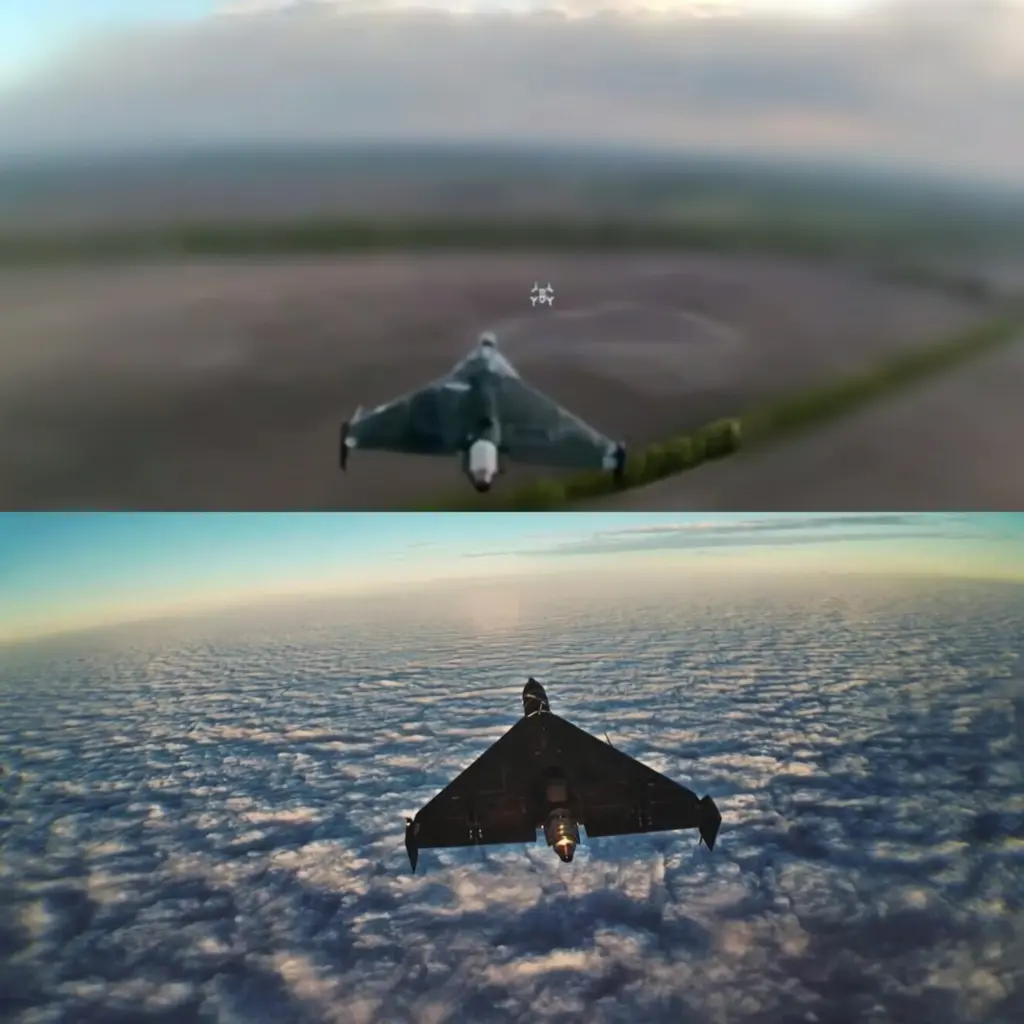
Geran-4" is an evolution of the earlier "Geran-3" model

China is helping Russia build a faster Shahed. Russia has begun using upgraded Shahed drones with Chinese-made turbojet engines that fly at speeds close to three times those of earlier versions, the Wall Street Journal reported.

The Shahed jet is designed to beat Ukraine's air defenses. Ukrainian interceptors have downed about 90 percent of the older piston-engine drones, which cruise at roughly 180 kilometers per hour, so Russia switched to the jet-powered Geran-4, which cruises at around 500 kilometers per hour.

The engines come from one Shenzhen firm

The turbojets come from Telefly Telecommunications Equipment, founded in Shenzhen in 2010. The company chiefly makes computer hardware and communications equipment, but also sells its own line of micro-turbojets for drones.

China has long been the main clearinghouse for Shahed parts, including engine components, servomotors, and gyroscopes, the newspaper reported.

The company scrubbed its own website

After Ukraine publicized the discovery of Telefly engines in Russian drones, the turbojet section disappeared from the English-language pages of the company's website. The pages in Chinese and other languages still carry them.

China's foreign ministry, which did not respond either, has previously said it strictly regulates exports of dual-use components and rejects unilateral US sanctions on such trade.

Western parts fade as Chinese parts arrive

Downed Shaheds once carried microcontrollers from Texas Instruments in the US and linear regulators from STMicroelectronics, which the newspaper lists as being based in Switzerland. Over time, the Western components are disappearing even as the drones gain better navigation and attack systems, because US Treasury investigations found nearly all the Western parts were being diverted through Chinese intermediaries, often shell companies in Hong Kong.

Ukrainian government researcher Colonel Oleksandr Zaruba said in June that Shaheds now hold more antennas, modems, and SIM cards to correct their flight paths through local mobile networks, and that the components increasingly come from China.

Iskander Russia fired at Kyiv Oblast in July held 62 American parts. Ukraine has now named more than 100 Russian ballistics producers and wants its allies to sanction all of them

26 août 2026 à 18:02

two children pulled rubble alive three did survive—one village near kryvyi rih after russian missile attack · post residential building burns strike lviv 30 2026 у львові після обстрілу горить

Ukraine has drawn up a list of those who build Russia's ballistic missiles and wants all of them sanctioned by its allies. Kyiv is asking partners to impose sanctions on more than 100 Russian ballistics producers, presidential sanctions commissioner Vladyslav Vlasiuk said at a press conference in Kyiv, according to Ukrinform.

The demand rests on physical evidence. An Iskander that Russia fired at Kyiv Oblast on 10 July held more than 140 foreign components, 62 of them American, alongside parts from Switzerland, Germany, Taiwan, China, and Japan, Vlasiuk reported in July. Most were made recently, which means the parts are still reaching Russia. Naming the factories is Ukraine's attempt to close the gap at the production end rather than chase each shipment.

The plan runs on synchronization

The commissioner laid out several parts of the plan at the press conference. The first is getting the same producers sanctioned everywhere at once, so a firm blocked in one country cannot operate through another. He said the files were handed to partners a few weeks ago, and Ukrainian specialists expect to identify every producer on allied lists by September or October.

The plan also covers what Vlasiuk called kinetic sanctions, meaning strikes on Russian defense-industry sites. He named the Kamensky Combine, which makes components for rocket fuel, as one such target.

The critical parts are still foreign

Ukraine keeps finding Western microelectronics in identified Russian ballistics, including Iskander-M missiles and those used by the S-400 system, with parts traced to the US, Japan, Germany, Taiwan, France, Britain, and Switzerland. The most sensitive elements are the Kometa satellite navigation system and autonomous inertial guidance units, which run on American, Swiss, and French microelectronics.

Ballistics is the most demanding product for quality and precision, Vlasiuk said, which is why those two systems are the chokepoint.

Ukraine wants smaller packages, sooner

The commissioner asked partners to adopt more stringent export controls, up to licensing or banning the export of sensitive components to third countries that help Russia evade sanctions. Ukraine has also compiled a list of more than 10 critical materials, including ammonium perchlorate, aluminum powder, and tungsten, as well as the numerically controlled machine tools Russia needs to build the missiles.

The EU has already begun work on a large 22nd sanctions package. Ukraine is urging it not to wait, asking instead for an interim ballistics package in September and another in October, moving in small steps as Ukraine, Britain, and Canada already do.

  • ✇Euromaidan Press
  • Three Ukrainian units received kit that makes an uncrewed vehicle out of whatever they’re already driving
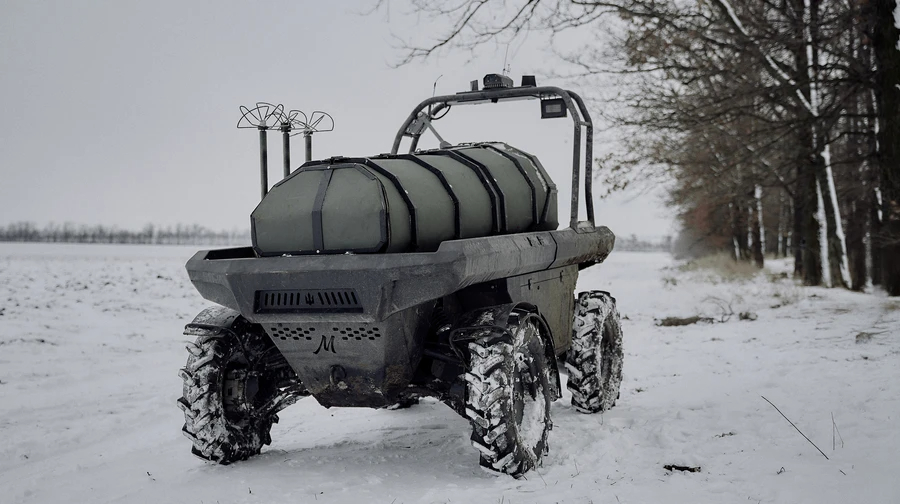
    Ukraine is turning ordinary cars into robots instead of building them from scratch. Three units of the Armed Forces received the Kaban remote-control system, which converts vehicles into uncrewed ones, developer Drone Fight Group told Defender Media. Ground robots have become a daily part of Ukraine's front. Ukrainian units ran 16,676 logistics and evacuation missions with them in June, up 122 percent since January, and the military has contracted more than 22,000 groun
     

Three Ukrainian units received kit that makes an uncrewed vehicle out of whatever they’re already driving

26 août 2026 à 17:48

japan quietly ships military-grade off-roaders ukraine — here’s what can do · post toyota high mobility vehicle transferred loaded transport truck 14 2026 переданий японією позашляховик hmv січня року посольство

Ukraine is turning ordinary cars into robots instead of building them from scratch. Three units of the Armed Forces received the Kaban remote-control system, which converts vehicles into uncrewed ones, developer Drone Fight Group told Defender Media.

Ground robots have become a daily part of Ukraine's front. Ukrainian units ran 16,676 logistics and evacuation missions with them in June, up 122 percent since January, and the military has contracted more than 22,000 ground robots for 2026, nearly double the 2025 total. Most are purpose-built platforms. Kaban takes the opposite route, converting vehicles that a unit already has.

The developers say Kaban was passed to the 3rd Army Corps, the 429th Separate Unmanned Systems Regiment "Akhilles", and the 49th Brigade of the Armed Forces.

The system bolts on without modification

Kaban installs on a vehicle without altering its construction and works with different models, Drone Fight Group said. It lets the operator switch between remote and manual control.

The operator navigates on a digital map, plotting routes and setting markers. Manual correction is built in for GPS spoofing cases. The system predicts its trajectory and can automatically stop the vehicle if the connection is lost.

Starlink carries the control link

The main communication channel is Starlink, and the system also supports analog video transmission and radio control, according to the developers. A vehicle can be fitted with thermal cameras if needed.

Kaban provides two-way audio and remote control of lights, infrared illumination, and searchlights, and it can pull data from the vehicle's onboard computer. Among the optional add-ons, the developers list net launchers and platforms for launching drones.

Combat testing came before the handover

Kaban is developed with support from the Brave1 cluster, and the system has already passed combat trials, according to the developers. Work continues to refine it using feedback from military units.

Russia’s fleet is set to get 150 uncrewed vessels in 2026, and possibly 230. Sanctions are holding the build back

26 août 2026 à 15:48

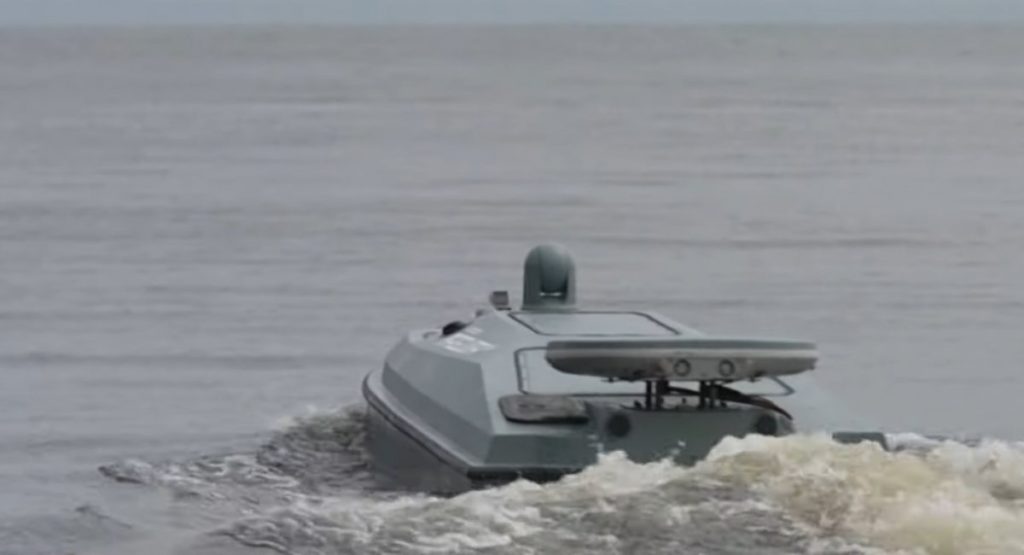
Ukrainian kamikaze drone Magura V5. Screenshot from CNN video

Russia is trying to build the weapon Ukraine used against it. The Russian fleet is set to receive more than 150 uncrewed surface vessels in 2026, with the state order possibly rising to 230 units, Ukraine's Defense Intelligence told Oboronka.

Ukraine's naval drones drove Russia's Black Sea Fleet out of its main base. Magura strike drones operated by Defense Intelligence sank or damaged more than a dozen Russian vessels and forced the fleet to relocate from Sevastopol to Novorossiysk, roughly 300 kilometers east.

Russia is now ordering the same class of weapon in volume, three years after Ukraine first attacked Sevastopol with drone boats in October 2022.

Intelligence lists Russia's priorities

Ukraine's Defense Intelligence has identified what Russia is prioritizing in its uncrewed surface vessel program. Those are building universal drones from Russian-made components, integrating protected communications and artificial intelligence, and increasing the vessels' operating range.

Sanctions slow the build

Russian production is held back by a shortage of electronic components caused by sanctions, according to the agency. Moscow is finding it harder to import and to develop communications resistant to electronic warfare, Ukraine's Defense Intelligence said.

Limits on Starlink access may also have shaped Russia's naval drone development, the agency added. Russian forces had actively used the terminals to control uncrewed systems.

The imitation runs behind the original

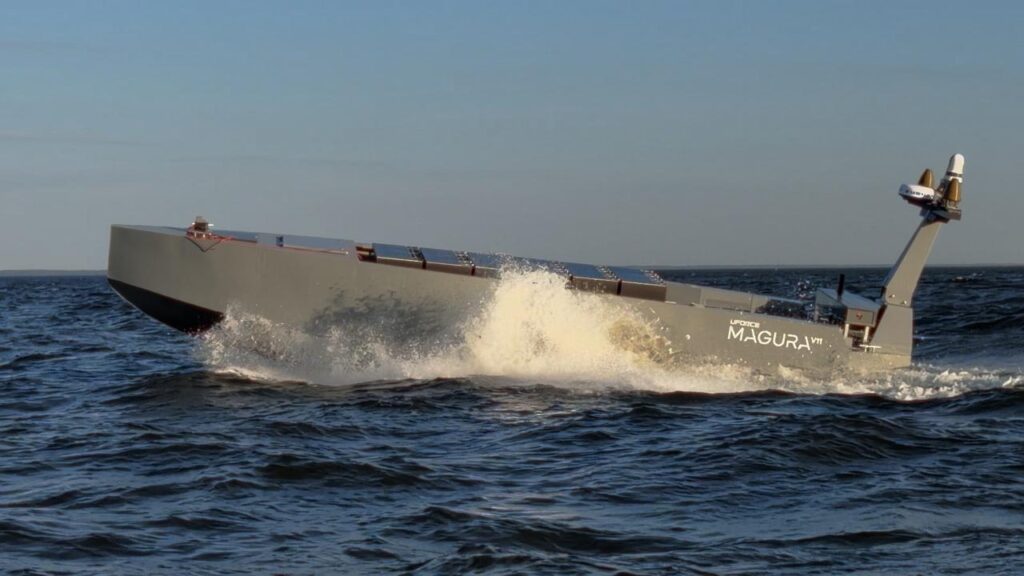
Ukraine unveiled the Magura V11, the largest boat in the family, at its Independence Day drone parade on 24 August.

Rather than ramming ships like the one-way craft that cleared the Black Sea Fleet from Sevastopol, the V11 carries and launches other drones and stays at sea up to seven days.

UFORCE said the drone carries up to 2,200 kg (about 4,850 pounds) and can stay at sea for up to seven days. The company built it for reconnaissance, surveillance, support of landing operations, and resupplying fuel and equipment to other naval drones.

  • ✇Euromaidan Press
  • Zvook covers Ukraine’s skies for under €50 million. Now, it has started testing hydrophones underwater
    The Ukrainian company that taught Ukraine to hear Russian drones is now learning to listen underwater. Zvook, which develops acoustic systems for detecting drones and missiles, has begun testing hydrophones to detect vessels and other underwater objects by sound, the company said on LinkedIn. Zvook built its name on land. Its acoustic sensors cover Ukraine at 1,000 meters and below for less than 50 million euros, a system NATO's assistant secretary-general for operation
     

Zvook covers Ukraine’s skies for under €50 million. Now, it has started testing hydrophones underwater

26 août 2026 à 15:35

The Zvook underwater system. Source: The Zvook company

The Ukrainian company that taught Ukraine to hear Russian drones is now learning to listen underwater. Zvook, which develops acoustic systems for detecting drones and missiles, has begun testing hydrophones to detect vessels and other underwater objects by sound, the company said on LinkedIn.

Zvook built its name on land. Its acoustic sensors cover Ukraine at 1,000 meters and below for less than 50 million euros, a system NATO's assistant secretary-general for operations, Tom Goffus, called crazy for its cost-effectiveness. Lithuania chose the same Ukrainian acoustic technology for deployment in 2026 after Russian drones entered its airspace.

The approach stays passive

Zvook says its underwater method emits nothing, unlike traditional sonar. Active sonar sends sound into the water and listens for its return. The company's system only listens to the acoustic environment and uses the information already present in it.

That principle is familiar to the company from the air. Underwater, almost everything else changes: sound propagation, background noise, reflections, environmental conditions, and acoustic signatures create a different detection problem.

Testing comes before any product

The company says its focus now is not a finished product but real-world data. It is working out which objects can be reliably detected and classified, and where a distributed passive underwater acoustic system could have practical value.

Possible applications range from maritime security and vessel awareness to the protection of ports and critical underwater infrastructure, the company explained. Zvook added that it is seeking commercial joint testing with defense organizations, maritime operators, and infrastructure owners.

The company frames it as one method across domains

Zvook cast the shift as continuity rather than a new line of work. From listening to the sky to acoustic tracking, and now beneath the surface, the domain changes, but the principle stays the same: passive, always listening, emitting nothing, the company said.

“This is smart war”: Ukraine is reinforcing two Donetsk groupings, as Russia pushes at fortress cities. Azov commanders will lead both

26 août 2026 à 14:59

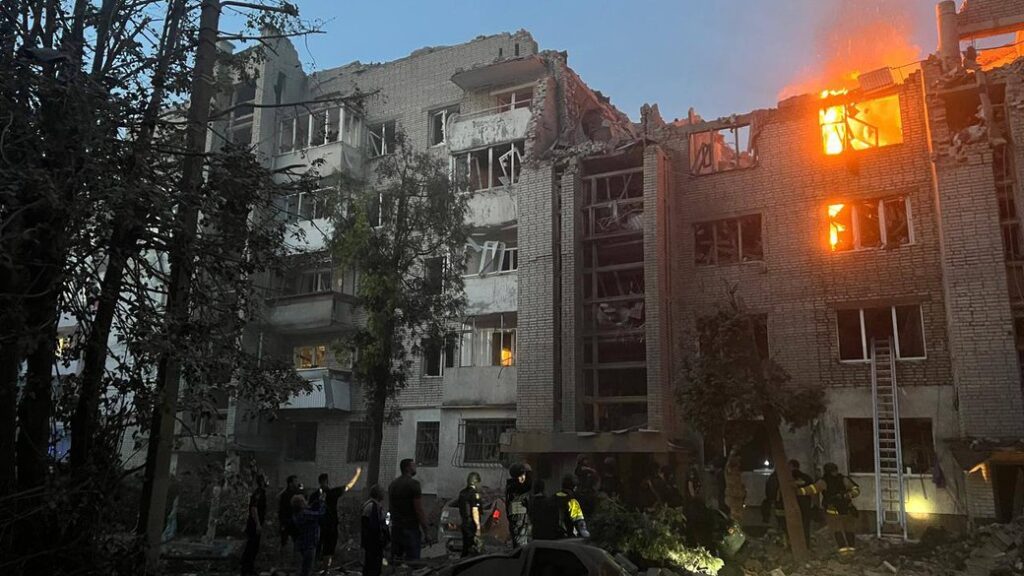
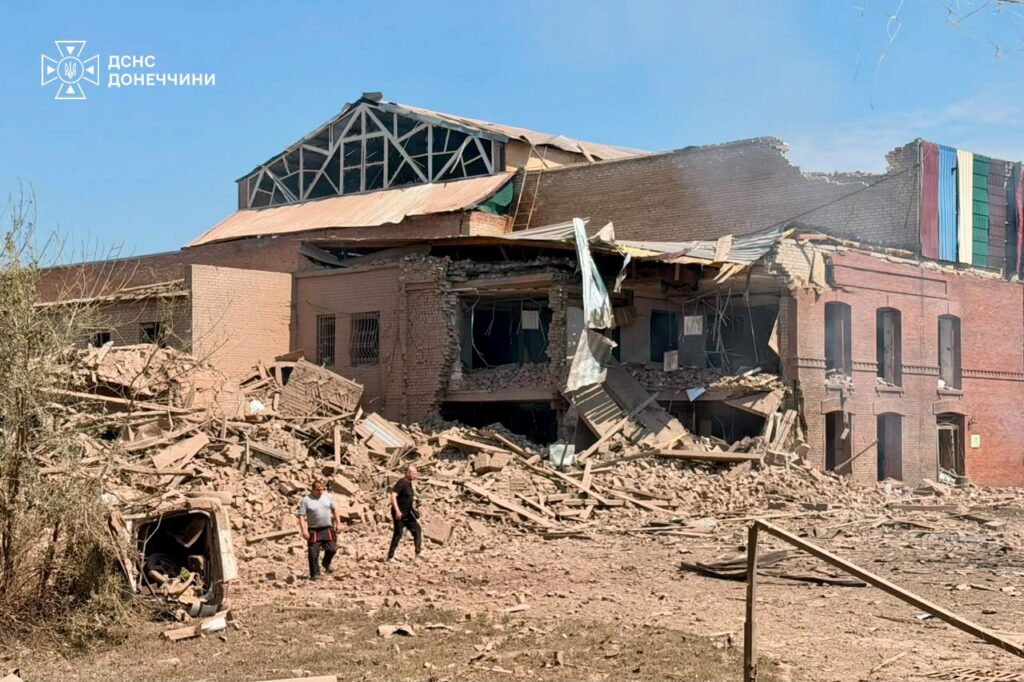
Aftermath of a Russian guided bomb attack on Sloviansk, Donetsk Oblast, Ukraine, 24 July 2026. Photo: Ukraine's State Emergency Service

President of Ukraine Volodymyr Zelenskyy has announced a reinforcement of Ukrainian positions in Donetsk Oblast. This comes amid a Russian offensive against the fortress cities that have defended the region since 2014. Zelenskyy announced the decision after a meeting with Commander-in-Chief Mykhailo Drapatyi.

Russian President Vladimir Putin has ordered his army to seize the entire territory of Donetsk and Luhansk oblasts by the end of this year, Zelenskyy said earlier. This comes amid plans in Russia to mobilize 300,000 Russians in the autumn, UNIAN reports.

After speaking with the military and hearing General Staff reports, Zelenskyy said he, Drapatyi, and Defense Minister Yevhenii Khmara determined the next steps to strengthen Ukrainian positions. Two renewed groupings in Donetsk Oblast will be reinforced.

Two Azov commanders take the groupings

The groupings will be led by Hero of Ukraine Denys Prokopenko and Hero of Ukraine Andrii Biletskyi, Zelenskyy said. Prokopenko commands the 1st Azov Corps of the National Guard and led the defense of Mariupol in 2022. Biletskyi founded the Azov movement in 2014 and now commands the 3rd Army Corps.

Prepare for the worst

Robert “Madiar” Brovdi, commander of Ukraine’s Unmanned Systems Forces, has commented on the decision.

“This is Smart War. Total synchronization with the Unmanned Systems Forces grouping, the shortest possible ‘sensor-to-shooter’ chain,” he said, adding that Russian forces should prepare for the worst possible consequences.

Analysts urged the move before it came

Earlier, two experts had also called for such a decision: Oleksandr Kovalenko of Information Resistance and Yurii Butusov, a drone company commander in the National Guard’s Khartia Corps.

"The eastern flank of the Sloviansk-Kramatorsk agglomeration is taking on an increasingly threatening character," said Kovalenko, suggesting Andrii Biletskyi's 3rd Army Corps, often described as one of the most capable formations in Ukraine's forces, can be used to stop the catastrophe.

Yurii Butusov said that if Ukraine's forces retreat from Sloviansk and Kramatorsk, it could ultimately lead to the loss of the Donbas.

Ukraine’s new commander-in-chief has been picking technical chiefs. Adviser who knows them says he is putting most competent people

26 août 2026 à 14:26

Presidential adviser on defense technology development Serhii "Flash" Beskrestnov at the test range of new electronic warfare means against jet-powered Shaheds. Source: Serhii "Flash" Beskrestnov

Serhii "Flash" Beskrestnov, advisor to the president on the development of defense technologies, has highly praised the recent personnel changes in the new Ukrainian commander-in-chief's staff. He says that Mykhailo Drapatyi is appointing the most competent people available to the Armed Forces' technical directions, adding that "after many years of war, he knows most of the army's technical specialists."

The endorsement comes from Beskrestnov, an adviser to former Ukrainian Defense Minister Mykhailo Fedorov, considered the most effective in Ukraine's history. After the dismissal, he became a non-staff adviser to President Volodymyr Zelenskyy.

The technology war moves weekly

Beskrestnov rates the new appointees on temperament as much as expertise.

"The main thing is that these new heads are energetic, modern, and good communicators," he wrote.

In a war of technologies, everything changes literally every week, and "we have to react to all the enemy's challenges just as fast. Analyze, forecast, respond, and act a step ahead of the enemy," he added.

Drapatyi arrived in the same reshuffle

Zelenskyy named Drapatyi commander-in-chief on 21 July, replacing Oleksandr Syrskyi, and said in the same address that he had offered Fedorov a leadership position bringing together Ukraine's technological capabilities.

Fedorov's removal drew street protests across Ukraine. Drapatyi commands the General Staff rather than the ministry, so the appointments Beskrestnov praises sit outside the structure he left behind.

Change will be slow, he expects

"I believe big positive changes are ahead of us, but this will not happen fast, because a great deal has to change," Beskrestnov said.

He did not name any of the new appointees or their posts.

Earlier, Beskrestnov disclosed Russia's new tactics in its drones. According to him, while Ukraine's cheap interceptor drones have been knocking Russia's nightly attackers out of the sky, Russia has now bolted a jammer onto some of its own drones to blind them.

  • ✇Euromaidan Press
  • Belarus built base near Ukraine. Now it’s laying rail that can unload 60 wagons of military equipment
    Belarus is building railway infrastructure capable of receiving military trains near the village of Yakimauka in Homiel Oblast, according to Radio Free Europe/Radio Liberty. Project documentation obtained by the Belarusian Association of Railway Workers confirms that separate railway infrastructure is being designed for a facility officially called "Construction of a training ground in Homiel Oblast," with the Military Design Institute named as the client. Minsk backed
     

Belarus built base near Ukraine. Now it’s laying rail that can unload 60 wagons of military equipment

26 août 2026 à 11:41

Parliament-building-Minsk-Belarus

Belarus is building railway infrastructure capable of receiving military trains near the village of Yakimauka in Homiel Oblast, according to Radio Free Europe/Radio Liberty. Project documentation obtained by the Belarusian Association of Railway Workers confirms that separate railway infrastructure is being designed for a facility officially called "Construction of a training ground in Homiel Oblast," with the Military Design Institute named as the client.

Minsk backed Russia's aggression against Ukraine and opened its military infrastructure and airspace to the Russian army for the war and for strikes on Ukrainian cities. The first ballistic missiles in 2022 to Kyiv Oblast were launched from the territory of Belarus, killing dozens of civilians.

The site under construction lies about 40 kilometers from the Ukrainian border, and Belarus's three existing air assault brigades sit in Vitsebsk, Brest, and Maryina Horka, none of them on the southern frontier.

The documents specify 60 wagons

The project includes a separate access track designed for up to 60 wagons and a freight platform with a ramp for unloading wheeled and tracked equipment, according to the documentation. The exact location of the new training ground is not yet known.

A new base against "threats from Ukraine"

Large-scale construction of a military base has been underway near Homiel since late 2023, and the 37th Separate Air Assault Brigade of Belarus's Special Operations Forces is likely to be deployed there. Part of the new military town was finished in June 2026, and rail construction continues.

Belarus has formed one battalion of the brigade and plans a second this year, along with combat support, artillery, air defense, and reconnaissance units, Special Operations Forces commander Colonel Aliaksandr Iliukevich said, according to Dzerkalo Tyzhnia.

The government of Alexander Lukashenka established this brigade to “strengthen the southern sector,” ostensibly to counter threats from Ukraine. The eastern part of the new facility is designated on Belarusian state cadastral maps as a “military camp,” while the western section is marked as a “training and tactical field.”

Ukraine asks US orchestra to drop Russian-born violinist, citing ties to Kremlin-backed cultural initiatives

26 août 2026 à 10:37

vadim repin

The Embassy of Ukraine in the USA asked the Annapolis Symphony Orchestra (ASO) on 25 August to cancel Russian-born violinist Vadim Repin's participation in its Forces of Nature concerts on 6–7 November at Maryland Hall, citing his involvement in Russian state-sponsored and state-linked cultural initiatives.

Since 2022, Ukrainian diplomats have turned individual concert bookings into an object of foreign policy, arguing that a performer carrying Russian state honors and state money brings the state onto the stage with him. Western institutions have answered case by case rather than by policy, so every booking is renegotiated from scratch, and what one venue cancels, another can quietly restore.

The embassy said Repin performed with the State Kremlin Orchestra on 21 February 2024 at a concert the Kremlin Foundation staged for Defender of the Fatherland Day, a Russian military holiday, framed as a tribute to Russia's "great defenders." It said his Vadim Repin Foundation for the Development of the Arts has received substantial funding since the start of the full-scale invasion from Russia's Presidential Fund for Cultural Initiatives, a state-established institution supporting Russia's cultural policy.

The embassy's request comes four years after the Annapolis Symphony dropped Repin from a March 2022 program and staged a tribute to Ukraine in his place—a decision the orchestra said at the time reflected both the war and respect for Repin's apolitical stance and the safety of him and his family.

no stage for russia
A graphic from the Ukrainian embassy's appeal to the Annapolis Symphony Orchestra. Image: Embassy of Ukraine in the USA / Facebook

The orchestra has not addressed the reversal directly, but the program notes for the concert argue that Shostakovich wrote the concerto for Ukrainian-born David Oistrakh under Stalinist repression and that it "calls on listeners to reject the politics of revenge and hate while embracing the healing cycle of forgiveness." The embassy is asking ASO to reaffirm what it describes as the solidarity with Ukraine shown in 2022.

"We hope the Annapolis Symphony Orchestra will give these concerns careful consideration and reaffirm the solidarity with Ukraine it demonstrated in 2022, when it withdrew Mr. Repin from its program and replaced his performance with a musical tribute to Ukraine," the embassy said.

In March 2022, days after Russia's full-scale invasion began, ASO replaced Repin's planned appearance. The orchestra's then-executive director, Edgar Herrera, told WTOP that the decision was not only a response to the war but also "out of respect to Repin's apolitical stance and concerns for the safety of himself and his family."

The embassy noted that Germany's Mannheim Philharmonic, the Hungarian National Philharmonic, and Florida's Palm Beach Symphony have all reconsidered working with Repin this year, and that Palm Beach canceled his performance in March. Mannheim dropped a February concert after a request from Ukraine's embassy in Berlin, and the Hungarian orchestra replaced him at its Budapest season opening in June. A Change.org petition launched in June by Ukrainian Cultural Front DC had already called on ASO to cancel the November concerts.

Neither ASO nor Repin has commented publicly on the embassy's request.

  • ✇Euromaidan Press
  • A warehouse built to hold up to 54 million items burned down in Tambov Oblast, Russia
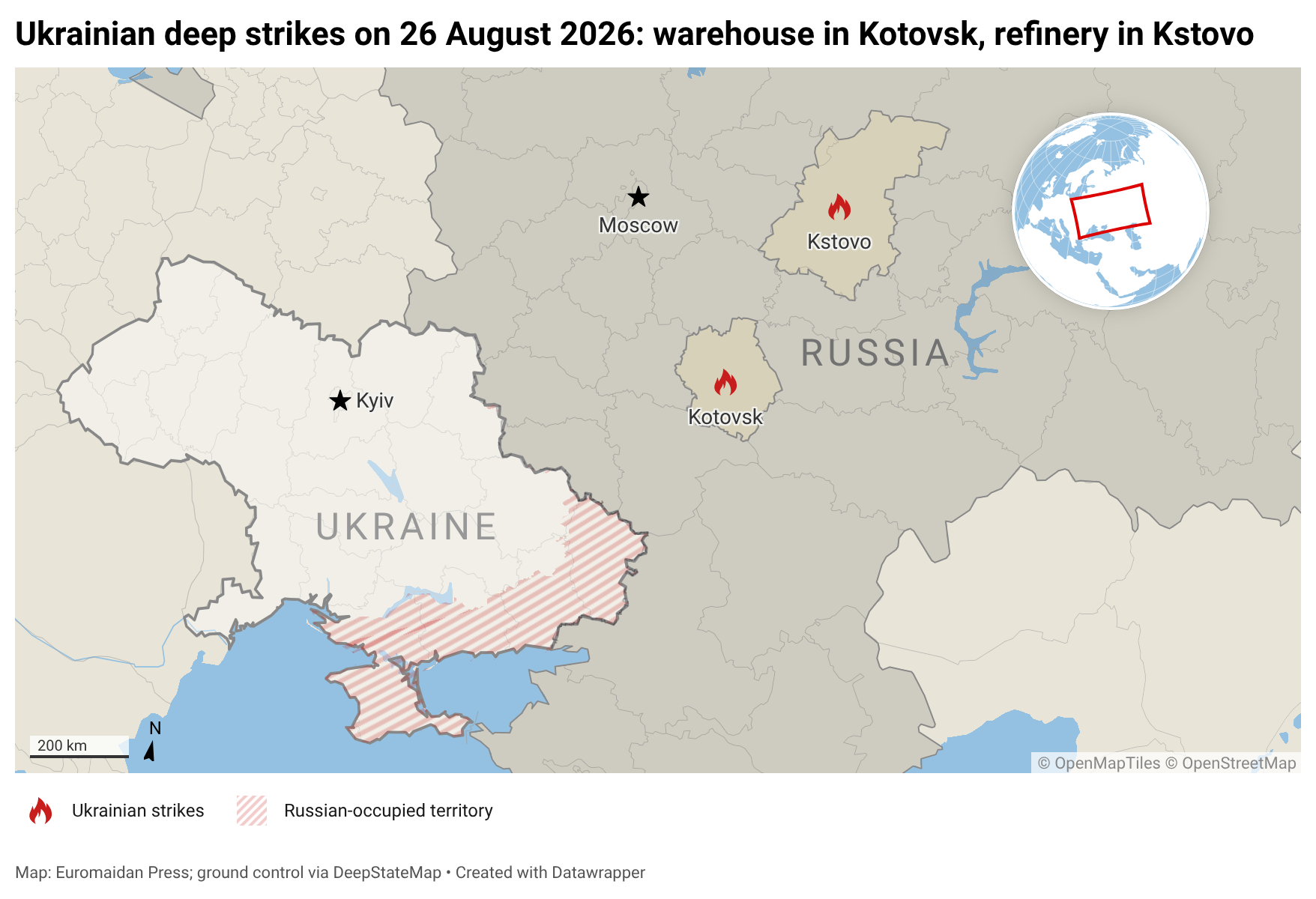
    Ukrainian drones struck the Wildberries logistics hub in the Russian town of Kotovsk for the second time in six weeks, Ukrainian monitoring channel Exilenova+ reported. A fire took hold across most of the 108,000-square-meter complex, and by late morning, the regional governor said the warehouse was destroyed. Wildberries, Russia's biggest online store, had restarted the site after a July strike. The facility is located in Tambov Oblast, about 420 km from the war zone i
     

A warehouse built to hold up to 54 million items burned down in Tambov Oblast, Russia

26 août 2026 à 09:13

warehouse built hold 54 million items fire tambov oblast russia · post burned-out buildings wildberries logistics center kotovsk 26 2026 exilenova+ ukraine news ukrainian reports

Ukrainian drones struck the Wildberries logistics hub in the Russian town of Kotovsk for the second time in six weeks, Ukrainian monitoring channel Exilenova+ reported. A fire took hold across most of the 108,000-square-meter complex, and by late morning, the regional governor said the warehouse was destroyed. Wildberries, Russia's biggest online store, had restarted the site after a July strike. The facility is located in Tambov Oblast, about 420 km from the war zone in Ukraine.

Since mid-July, Kyiv's long-range drones have been burning through the depots of Wildberries and Ozon, Russia's two biggest online stores, alongside the refineries and fuel depots that remain on the target list. Marketplace hubs are wide, flat, and largely uncovered by air defense, and the space takes months to replace, so the campaign now reaches the part of the Russian economy that touches every household.

The second fire at the same hub

Exilenova+ reported the strike at 01:24, saying Ukraine's Defense Forces had hit the site again and that a fire was burning. Later, the channel continued to share photos and videos from Kotovsk. The Russian news Telegram channel Astra reported that local residents described the warehouse as attacked and alight. Witnesses counted at least 10 explosions in 40 minutes. Wildberries said a drone attack damaged its logistics facility in the oblast and started a fire, and that the site had stopped accepting new deliveries.

warehouse built hold 54 million items fire tambov oblast russia · post smoke rising wildberries logistics center after drone strike kotovsk 26 2026 supernova+ ukraine news ukrainian reports
Smoke rising from the Wildberries logistics center after the drone strike in Kotovsk, Tambov Oblast, Russia, 26 August 2026. Photo: Supernova+

What the governor said, and what changed by morning

Tambov Oblast governor Yevgeny Pervyshov confirmed the attack and put the burning area at more than 100,000 square meters. He claimed air defenses and mobile fire groups of a regional volunteer reserve unit destroyed 16 drones. He initially reported one Wildberries employee hurt, with concussion from a blast wave, and said a downed Ukrainian drone set a house on fire in a dacha settlement.

warehouse built hold 54 million items fire tambov oblast russia · post helicopter carrying water bucket above burning wildberries logistics center kotovsk 26 2026 exilenova+ ukraine news ukrainian reports
A helicopter carrying a water bucket above the burning Wildberries logistics center in Kotovsk, Tambov Oblast, Russia, 26 August 2026. Photo: Exilenova+

By 11:17, Pervyshov's account had changed. Fire had destroyed the warehouse completely, and two people were injured, he said. Three strike drones had reached the building, the official stated. He closed by again urging men in the oblast to join the defense of its skies. Earlier, Kotovsk's mayor asked residents not to leave their homes for two days, citing the risk of carbon monoxide poisoning from the burning warehouse.

Russia's Defense Ministry separately claimed it destroyed 426 drones overnight across the country.

Last night, Ukrainian drones struck another warehouse in Russia

The Wildberries hub in Kotovsk, Tambov Oblast, caught fire and the company announced a "temporary" suspension of its operations.

📹Exilenova+ pic.twitter.com/qH0Qi3f6YV

— Euromaidan Press (@EuromaidanPress) August 26, 2026

Ukrainian President Volodymyr Zelenskyy said Ukrainian forces hit 16 targets in Russia over the past day, naming oil facilities — "the Russian oil wallet that finances the war" — along with airfields, a missile unit, a military plant, and Russian logistics. War has to return to where it came from, he said.

Almost no storage left in central Russia

The Kotovsk hub opened in 2025 as one of Wildberries' key logistics sites for central Russia, built to hold up to 54 million items at full capacity. Drones first hit it overnight on 18 July, when seven warehouse staff died and, by the governor's count, 25 more were hurt. The company suspended operations then, too.

By the end of July, the retailer had already lost more than a million square meters of warehouse space, Exile+ calculated, which leaves it physically almost no free capacity in the center of the country.

From one marketplace to the next

Ukrainian drones destroyed eight Wildberries warehouses in July alone, roughly 860,000 square meters or about 15.4% of the company's storage. The campaign widened to Ozon, Russia's second-largest online store, with its biggest Russian complex hit in Orenburg on 23 August, and three southern hubs struck the next night.

  • ✇Euromaidan Press
  • Biggest Magura sea drone doesn’t ram ships. It carries other drones and stays out seven days
    Ukraine has unveiled the largest robot boat in its Magura sea-drone family, and this one is built to carry and launch other drones instead of ramming enemy ships, the company UFORCE told Militarnyi. UFORCE showed the new V11 during Ukraine's Independence Day drone parade, signaling a move from single-use attack craft toward a floating base at sea. Ukraine has fought its Black Sea war with throwaway robot boats—cheap, one-way, built to hit a ship and go down with it. Shi
     

Biggest Magura sea drone doesn’t ram ships. It carries other drones and stays out seven days

26 août 2026 à 07:21

MV11 from the MAGURA family

Ukraine has unveiled the largest robot boat in its Magura sea-drone family, and this one is built to carry and launch other drones instead of ramming enemy ships, the company UFORCE told Militarnyi. UFORCE showed the new V11 during Ukraine's Independence Day drone parade, signaling a move from single-use attack craft toward a floating base at sea.

Ukraine has fought its Black Sea war with throwaway robot boats—cheap, one-way, built to hit a ship and go down with it. Shifting toward reusable platforms that keep other machines running far from any coast marks a different bet.

A floating base, not a battering ram

The V11 is the biggest drone in its class. Earlier, Magura boats were made to hit warships. This one is a transport platform that carries other unmanned systems and gear. Its main feature is the ability to launch a larger number of unmanned systems straight from its deck, turning one boat into a mobile base for them. The company refers to the drone as both the V11 and the MV11.

australia spending billions drones — ukraine says can make money count new ukrainian maritime magura v7 (left) older v5 2025 militarnyi has offered share its combat-tested drone technology battlefield expertise
Explore further

American defense company Red Cat announces serial production of copy of Ukraine’s Magura V7 and says it’s their own development

What the V11 can do

UFORCE says the drone carries up to 2,200 kg (about 4,850 pounds) and can stay at sea for up to seven days. The company built it for reconnaissance, surveillance, support of landing operations, and resupplying fuel and equipment to other naval drones.

"It is a platform that provides multi-domain capability: one carrier that carries and launches other unmanned systems far from shore for operations across all domains," said Oleh Rogynskyy, CEO of UFORCE.

He said the investment the company attracts works for Ukraine's Defense Forces.

From strikes to a US production line

UFORCE's design and engineering office in Portugal developed the V11, drawing on international investment and aiming at the needs of Ukraine's Defense Forces. Its work there was first reported in September 2025.

meet magura w6 ukraine's latest threat russian warships drone funded pumb bank being presented hur 2025 5398010383781982294 ukrainian military intelligence has received new-generation maritime part its continued efforts challenge naval
Explore further

Meet the Magura W6: Ukraine’s latest threat to Russian warships

In July, the company and the US firm ReconCraft signed a memorandum for the licensed production of Magura naval drones in the US. Ukraine's Magura boats have forced Russia's Black Sea Fleet back to safer ports, and some versions have even shot down Russian fighter jets.

  • ✇Euromaidan Press
  • A gasoline and polystyrene mix—police call it napalm—was meant for a Ukrainian drone plant in Slovakia
    Slovak police foiled a planned arson attack on a drone factory in the country's east, the force said on 25 August. Investigators charged three foreigners with preparing the attack on commission and seized incendiary material and equipment at the scene. The plant belongs to the Ukrainian drone maker Skyeton, Militarnyi reported. Russia's war has an arm inside Europe that usually works without missiles against Ukraine supporters — agents and recruited locals, carrying out
     

A gasoline and polystyrene mix—police call it napalm—was meant for a Ukrainian drone plant in Slovakia

26 août 2026 à 06:46

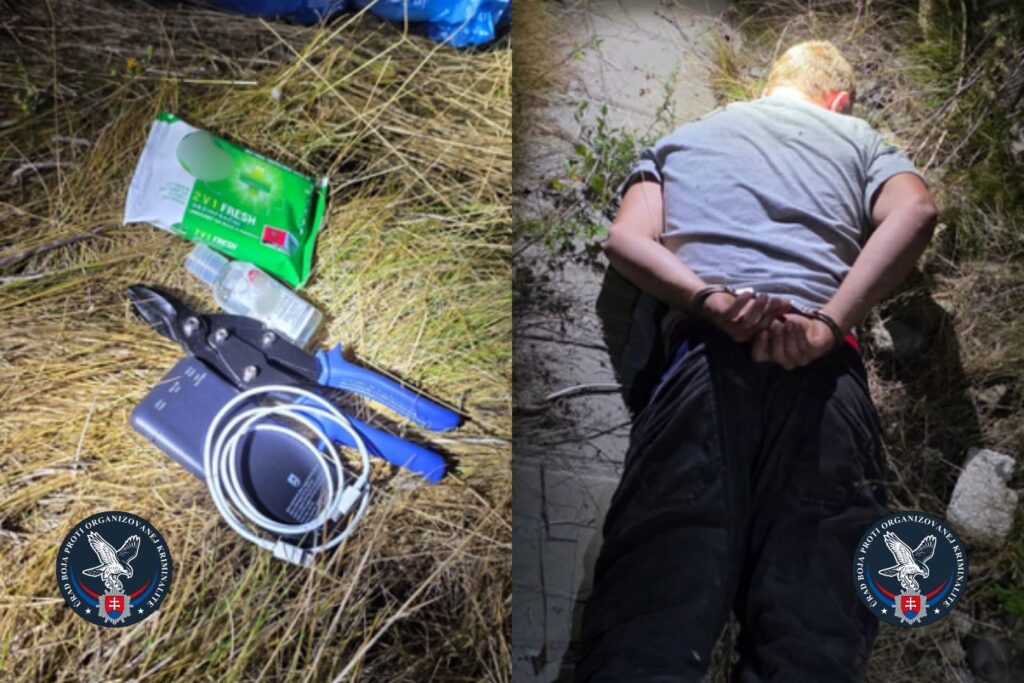
gasoline polystyrene—the mix police call napalm—was meant ukrainian drone plant slovakia · post man detained suspicion preparing arson attack items seized site eastern 2026 slovak ukraine news reports

Slovak police foiled a planned arson attack on a drone factory in the country's east, the force said on 25 August. Investigators charged three foreigners with preparing the attack on commission and seized incendiary material and equipment at the scene. The plant belongs to the Ukrainian drone maker Skyeton, Militarnyi reported.

Russia's war has an arm inside Europe that usually works without missiles against Ukraine supporters — agents and recruited locals, carrying out arsons, parcel fires, flying an explosive drone at a Ukrainian cargo plane in Germany, plotting against arms-industry figures — and the point of hiring strangers to light fires is that a burned production hall costs Moscow nothing it can be held to account for.

Had the attack in Slovakia gone ahead, it risked a large fire, danger to life and health, and damage on a large scale, police stated. About 70 employees could have been in the building at the time, by preliminary estimates. Property inside the production hall is worth tens of millions of euros, according to the findings so far.

Officers seized a larger quantity of incendiary mixture, along with tools, mobile phones, an action camera, and a hand-made plan. The police Criminalistics and Expertise Institute gave a preliminary finding that the substance was a mixture of gasoline and polystyrene, commonly called napalm. Slovakia's anti-crime unit ÚBOK, part of the Police Presidium, identified the people preparing the attack and stopped it. Nobody was hurt and no property was damaged, police said.

gasoline polystyrene—the mix police call napalm—was meant ukrainian drone plant slovakia · post items seized during operation one detained men eastern 2026 ukraine news reports
Items seized during the operation, and one of the detained men, eastern Slovakia, August 2026. Photo: Police of the Slovak Republic

The charges, and where the three were detained

An ÚBOK investigator charged the three foreigners with preparing a particularly serious crime of general endangerment, committed as co-perpetrators on order. Officers detained two of them in Slovakia, and the investigator moved to have both taken into custody. German authorities detained the third on a European arrest warrant. The investigation continues, and the legal classification of the men's actions may still change.

fifty grams hexogen ten days late what germany missed after attack ukraine's plane · post german police vehicles officers apron beneath wing ukrainian cargo aircraft leipzig/halle airport 2026 leipzig halle
Explore further

About 50 grams of suspected military explosive lay in a German field 10 days after the attempt on Ukraine’s plane

The plant, and a company Russia has already hit

Slovakia, a NATO and EU member, borders Ukraine on its eastern edge. Skyeton builds the Raybird, a fixed-wing reconnaissance drone that has served with Ukraine's Armed Forces since 2018 and stays airborne for up to 28 hoursThe company began production in Slovakia in 2024, and more than €10 million in foreign investment went into the plant, one of several sites Ukrainian firms opened abroad to cut the risk of Russian attacks.

That risk is not theoretical. Russia destroyed Skyeton's Kyiv office in May, and the company said it had already spread production capacity across Ukraine and abroad in anticipation.

A Skyeton representative told Militarnyi:

"The recent attempt on our production in Slovakia is another sign that Ukrainian arms makers are already a bone in their throat, which means we are on the right path." 

Russian sabotage defense factories
2024

WSJ: Russian sabotage groups suspected for arson attack on plant producing air defense systems for Ukraine

Arson against Ukraine's defense partners in Europe

Companies working for Ukraine have been hit across several countries this year and earlier. 

In March, suspects who claimed a pro-Palestinian motive set fire to the Pardubice production of Archer, a Ukrainian maker of thermal imaging sights, destroying nearly all of the company's capacity in Czechia.

Estonia opened a Russian-link investigation this month into a suspected arson at a military robot maker supplying Ukraine, and Lithuania charged six people in January over an attempt to burn a factory that supplied radio-wave scanners. 

A powerful explosion of undetermined cause hit EMCO, one of Bulgaria's largest private arms makers, which produces artillery ammunition for Ukraine, on 10 August.

  • ✇Euromaidan Press
  • One tracked tank repairs, one marked artillery, one aimed bombs at civilians—all three got 15 years
    A Ukrainian court sentenced three Russian agents to 15 years each for guiding Russian strikes on Donetsk Oblast, the Security Service of Ukraine (SBU) said on 26 August. Each had been recruited to mark Ukrainian military sites or civilian targets in the east, and counterintelligence exposed them between spring 2025 and March this year. The court found all three guilty of treason committed under martial law. The SBU did not name the court or say which specific strikes th
     

One tracked tank repairs, one marked artillery, one aimed bombs at civilians—all three got 15 years

26 août 2026 à 04:20

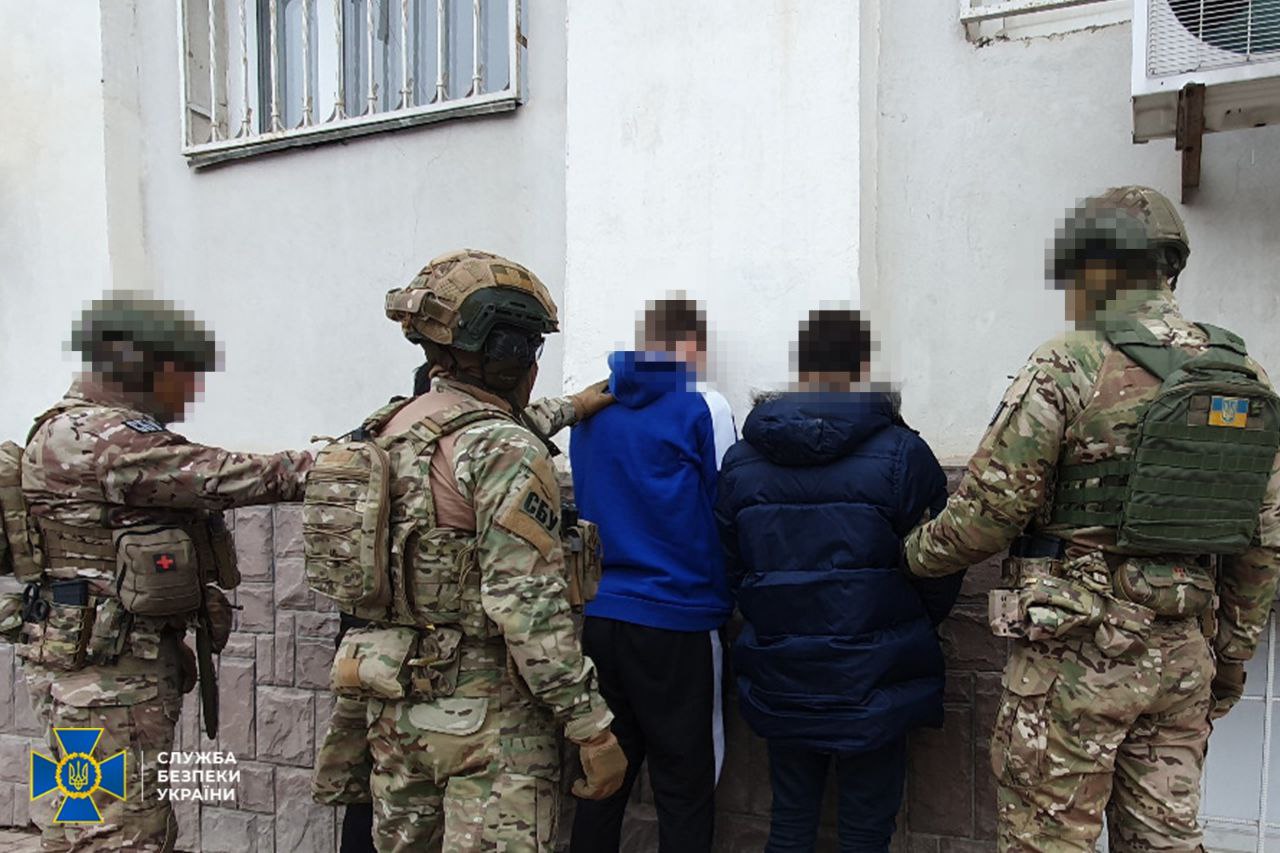
SBU officers in camouflage and tactical gear, seen from behind during an operation.

A Ukrainian court sentenced three Russian agents to 15 years each for guiding Russian strikes on Donetsk Oblast, the Security Service of Ukraine (SBU) said on 26 August. Each had been recruited to mark Ukrainian military sites or civilian targets in the east, and counterintelligence exposed them between spring 2025 and March this year. The court found all three guilty of treason committed under martial law. The SBU did not name the court or say which specific strikes the men enabled.

Russia has spent this war turning Ukrainian civilians into spotters for its bombs — reaching them through Telegram job and drug channels, forged official summonses, relatives in occupied areas, and promises of easy money — and the SBU has opened more than 3,800 treason investigations since 2022 as of February 2026, so any single verdict stands for a caseload far larger than what reaches the news.

The informer inside the armor repair base

One of the convicted men worked at a Defense Forces repair base, and the SBU detained him in the Kramatorsk sector in April 2025. Russian services noticed him through his brother, who lives in Russia and works for the Federal Security Service (FSB), the investigation established. Recruitment through relatives in Russia or the occupied territories is a method Ukrainian counterintelligence has documented before, including inside a marine brigade on the active front.

During his own shifts at the defense enterprise, he recorded the geolocations of repair shops used to restore heavy armored vehicles for Ukraine's Armed Forces. He tried to pass the photographs and building coordinates to his Russian handler through an anonymous chat in a messenger.

sbu arrests suspected russian spies foils sabotage plots lyman chernihiv kirovohrad vinnytsia detainment saboteurs security service says arrested agent aiding airstrikes 2 ukraine's reported multiple agents involved espionage across several
Explore further

SBU arrests suspected Russian spies, foils sabotage plots in Lyman, Chernihiv, Kirovohrad, Vinnytsia

The Dobropillia man who aimed 1.5-ton bombs near Pokrovsk

The second man was an unemployed resident of Dobropillia and an agent of Russian military intelligence, which noticed him through anti-Ukrainian comments in Telegram channel chats, the SBU said. The agency's counterintelligence detained him near Pokrovsk in March this year. Investigators established that he directed 1.5-ton guided aerial bombs at fortified areas and at artillery positions that keep Russian assault groups under fire control on the Pokrovsk axis. Russian forces have leaned more heavily on heavy glide bombs across this stretch of front this year, hitting fortifications and reducing towns to rubble their infantry then uses as cover.

The Kostiantynivka resident who marked his own city

The third man, recruited by the FSB, lived in Kostiantynivka, and SBU military counterintelligence exposed him in August 2025, according to the report. He approached Russian services through pro-Kremlin Telegram channels and offered them his help.

He directed Russian guided aerial bombs and small first-person-view drones at the civilian infrastructure of the front-line city, according to the case materials. He also tracked the positions of Ukrainian drone units carrying out combat tasks on the Kramatorsk axis. Russian strikes on that axis have repeatedly hit residential blocks, with prosecutors opening war-crimes investigations.

Ukrainian courts have handed down the same 15-year term in comparable cases, including for a locomotive depot engineer who mapped Ukrainian positions around Lyman.

Retired Valencia official came to Ukraine to repay debt from Franco’s time. Russia has held him since 2022, and now his Kherson apartment has burned

26 août 2026 à 02:19

Screenshot from a video provided by Tetiana Marina, his civilian wife. Source: ZMINA

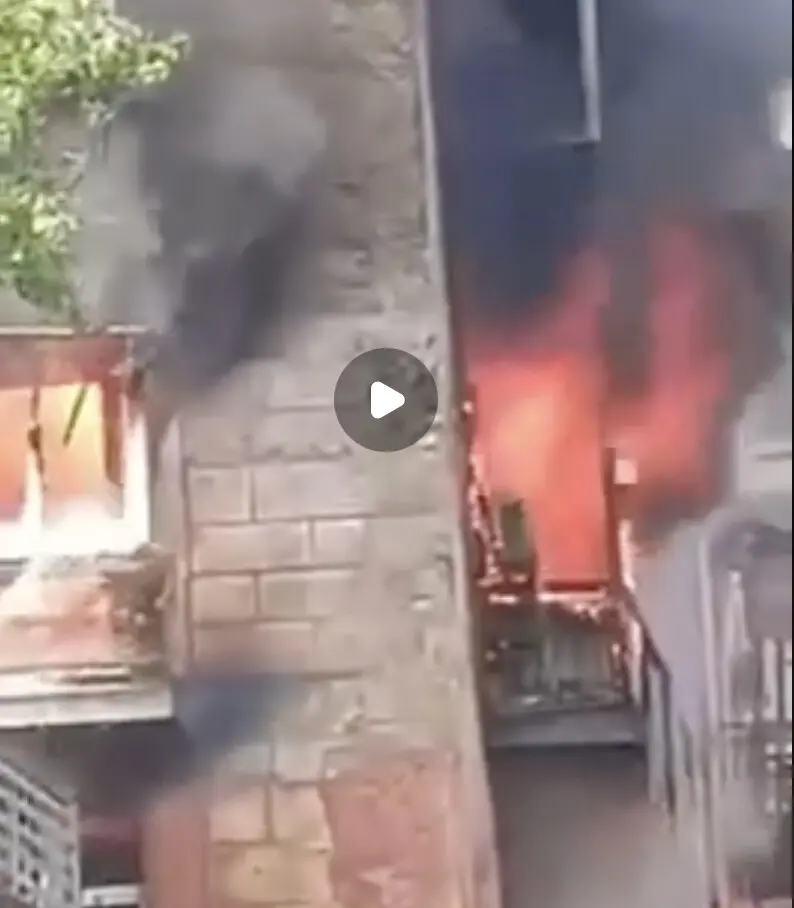
Fire has destroyed the Kherson apartment of Mariano García Calatayud, the Spanish volunteer, who was abducted by Russian forces during the occupation of the city in 2022. His partner, Tetiana Marina, told ZMINA she received two videos from neighbors that morning, the first showing her apartment alight and the second showing the fire spreading through the building.

Calatayud is one case in a system of civilian captivity that Russia does not acknowledge. Ukraine's ombudsman estimates Russia holds up to 20,000 Ukrainian civilians, with confirmed identities for only a fraction. Russia has never charged Calatayud with a crime, never allowed him a lawyer or contact with his family, and for more than three and a half years has declined to confirm it holds him at all.

The building stands at the start of Yevropeiska Street, formerly Suvorova, roughly 500 to 700 meters from the Dnipro, Marina said. Police have recorded the damage. She does not know what caused the fire and suspects a Russian drone.

The videos showed the fire spreading

"In the first, I saw clearly that only my apartment was engulfed. In the second, I saw that all the apartments in the video had burned," Marina said.

She is still trying to reach a neighbor, Iryna, who had been sleeping in a bomb shelter because of the shelling.

  • "I still do not know what happened, but everything burned. It does look like a drone," she said.
A moral debt brought him to Ukraine

Calatayud ran the road construction department at Valencia city hall before retiring. He moved to Ukraine in 2014, collected humanitarian aid from several countries and delivered it to Marinka and Krasnohorivka in Donetsk Oblast, and worked with orphanages.

Marina explained his reason to Radio Free Europe/Radio Liberty. Under Franco, many children of repressed Spaniards were sent to Ukraine, to Odesa. His mother's family was among the repressed.

"That is why he went to Ukraine in 2014, to, as he put it, repay a debt to Ukraine," she said.

When Russian forces took Kherson, he stayed. He could have left for Spain, but did not.

Russia stopped acknowledging him

On 19 March 2022, Calatayud attended a pro-Ukrainian rally. Two men in balaclavas seized him at his own entrance, handcuffed him, put him in a dark blue minibus, and drove him to the occupation administration, Marina said.

He was held in Simferopol pre-trial detention center No. 2. According to other civilian hostages, he was beaten and subjected to electric shocks while in detention. They also described inhumane conditions and a lack of proper medical care. He suffered a heart attack in custody.

In December 2023, Russia reported Calatayud's transfer to Kherson Oblast, the Media Initiative for Human Rights reported. Spain proposed exchanging him for a Russian prisoner of war, and Russia refused. The Red Cross is searching for him in penal colonies, including in Siberia.

Russian military bloggers listed him in a database of foreign fighters, claiming he had joined Kherson's territorial defense. He never carried a weapon in the city, his wife said.

Ukraine has wrecked more than 100,000 Russian vehicles by hitting the roads, and this new drone is built exactly for that job

26 août 2026 à 01:15

The new fixed-wing Baton. Source: The Technological Forces of Ukraine

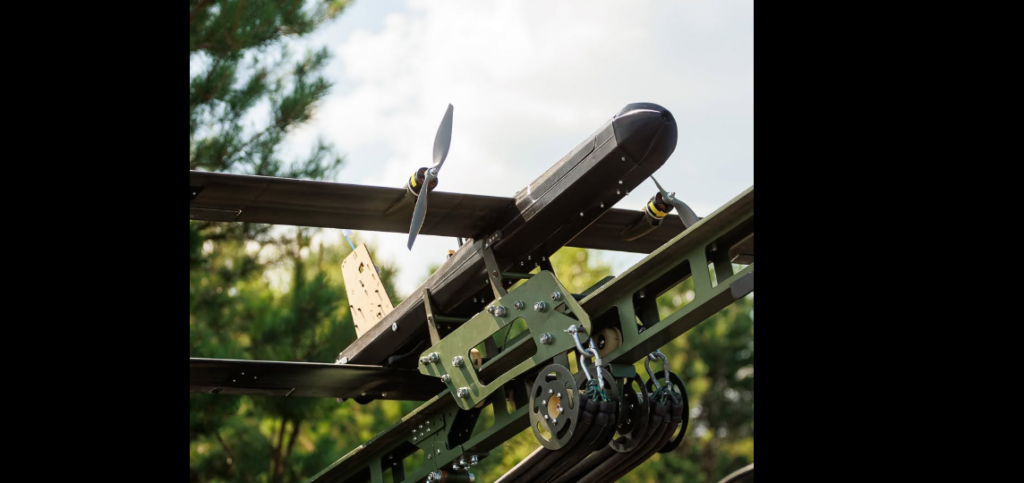
The Technological Forces of Ukraine have presented a strike drone built to cut Russian logistics. The new fixed-wing Baton is designed to hit firing positions, supply routes, and other targets at tactical depth, out to 90 kilometers, according to the association's announcement.

Everything Russian troops eat, fire, and drive reaches them by road and train. Ukraine has pushed cumulative Russian motor-transport losses past 100,000 vehicles by working that ground, destroying 483 in a single day on 29 May, the highest daily figure since February 2022. Baton is built for that band.

The numbers come from the association

Baton carries three kilograms over a stated range of up to 90 kilometers, stays airborne for 50 minutes, and cruises at 105 kilometers per hour, with a maximum of 140 kilometers per hour, according to the announcement. Its working altitude ranges from 150 to 500 meters, with a ceiling of 1,500 meters.

Eight airframes fit in one pickup, launch comes from a catapult under ground-station control, and preparation takes about 15 minutes, the association said.

Autonomy takes over at two kilometers

The drone locks onto a target and flies to it automatically from up to 2 kilometers away and at altitudes up to 500 meters, the association said. That final stretch is where Russian jamming would otherwise break the link.

Depending on the version, it carries analog or digital video, communicates over LTE or Starlink, and navigates a route autonomously with real-time positioning, according to the announcement.

Two figures do not sit together

Fifty minutes at the stated cruising speed covers roughly 87 kilometers. The 90-kilometer range is therefore a one-way distance at near-full endurance rather than an operating radius.

Earlier, a Ukrainian drone maker pitched a weapon that functions like a mortar, rather than a drone. F-Drones unveiled the F5, a compact five-inch strike FPV built for assault units working treelines, built-up areas, and position support at short range.

Ukraine starts checks: Five days later, deputy commander was charged for $15,600 in combat pay for combat that never happened

25 août 2026 à 18:07

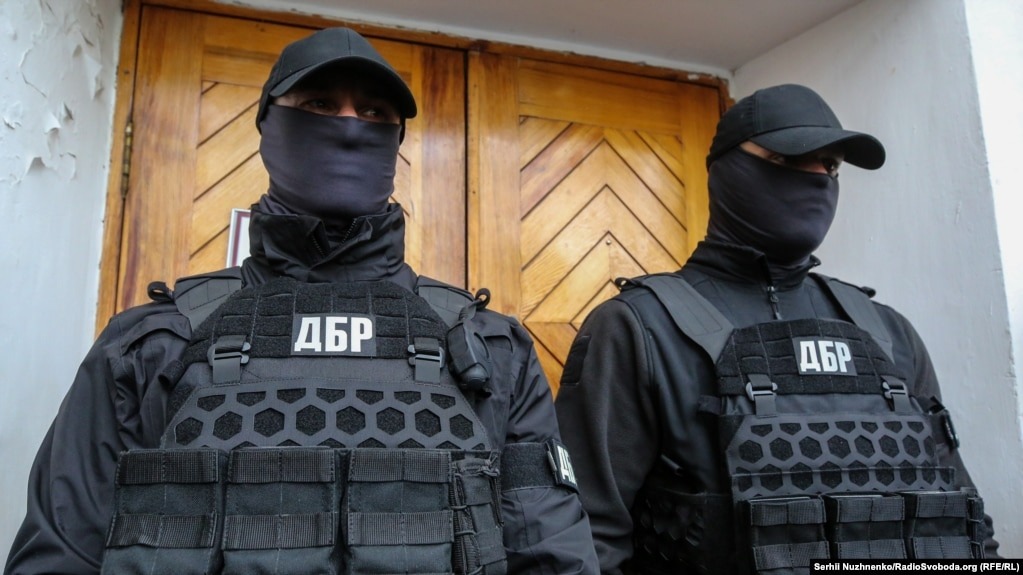
generic DBR SBI officers

Ukraine opened a nationwide investigation into soldiers' payments five days ago. The State Bureau of Investigation has now charged a deputy commander of a separate security and servicing battalion in Odesa Oblast with issuing travel orders that sent his subordinates to fake combat groupings on paper, the bureau reported on 25 August.

Combat pay in Ukraine runs on paperwork. Assault and zonal payments depend on time spent on each mission and require documentary confirmation, with the highest rates going to troops on the line of contact.

The travel orders carried the scheme

The soldiers collected the additional payment known as the Defender's Bonus for combat participation that did not happen, taking about $15,600, without grounds, according to the agency.

"In fact, soldiers remained in Odesa. Despite this, they were paid an additional bonus," officers said.

Part of that money went back to the officer who arranged it. He was detained and charged under Part Five of Article 426-1 of the Criminal Code, which covers a military official exceeding authority and carries a sentence of up to 12 years.

The case sits inside a national sweep

The bureau launched the operation, called Justice for Soldiers, on 20 August together with the General Staff, conducting 72 searches and preparing suspicions against 22 people.

Most of the cases concerned money wrongly paid to soldiers. Twelve proceedings were related to the illegal calculation and receipt of payments by soldiers, with 58 searches conducted and suspicions planned against 20 people.

Twelve of those proceedings deal with the illegal calculation and receipt of payments by soldiers. A separate strand covers commanders using troops for private labor.

A separate strand targeted the misuse of soldiers themselves. Five searches were conducted in a case involving the illegal use of military labor, in which subordinates, instead of performing military duties, were used for construction, household, and other work in the commanders' private interests.

  • ✇Euromaidan Press
  • Ukrainian officers march in Toronto’s 105-year-old Warriors’ Day Parade
    Ukrainian officers have marched in one of Canada's oldest military parades for three consecutive years, Ukraine's Consul General in Toronto, Oleh Nikolenko, said. They took part in the 105th Warriors' Day Parade in Toronto, an event honoring former and serving military personnel that draws veterans, active-duty soldiers, and their families. The parade rests on a working military relationship. Canadian forces have trained more than 50,000 Ukrainian security forces person
     

Ukrainian officers march in Toronto’s 105-year-old Warriors’ Day Parade

25 août 2026 à 17:38

Ukrainian officers marched in one of Canada's oldest military parades. Source: Oleh Nikolenko

Ukrainian officers have marched in one of Canada's oldest military parades for three consecutive years, Ukraine's Consul General in Toronto, Oleh Nikolenko, said. They took part in the 105th Warriors' Day Parade in Toronto, an event honoring former and serving military personnel that draws veterans, active-duty soldiers, and their families.

The parade rests on a working military relationship. Canadian forces have trained more than 50,000 Ukrainian security forces personnel since 2015 under Operation UNIFIER, roughly 16,000 of them across Europe since the full-scale invasion, with about 300 Canadian personnel currently deployed on the mission, Canada's Department of National Defense said.

The parade has opened the CNE since 1921

The Warriors' Day Parade has opened the Canadian National Exhibition every year since 1921, marching from the Princes' Gates along Princes' Boulevard to the Stanley Barracks, and organizers call it the longest-running veterans' parade in the free world, according to the CNE.

The consul general framed it as a signal

Nikolenko said Ukrainian soldiers standing among those Toronto honors carried weight beyond the occasion.

"It was very important to see Ukrainian defenders among those to whom Torontonians paid tribute. Their presence is a powerful symbol of the strength of Ukrainian-Canadian friendship, solidarity, and shared support," he stated.

European capitals opened their parades this summer

During the summer of 2026, Ukrainian defenders took part in different parades of their allies. In July, twenty-five Ukrainian soldiers marched down the Champs-Élysées at France's Bastille Day parade on 14 July, behind around 500 troops from 35 Coalition of the Willing countries, while two French Mirage 2000B fighters opened the flypast with a Ukrainian co-pilot in each cockpit.

A week later, the same soldiers led the foreign component of Belgium's National Day parade in Brussels, their first appearance in the city that hosts NATO and EU headquarters.

However, Ukraine was not invited to Poland's Armed Forces Day parade in Warsaw on 15 August, the largest in Polish history, while contingents from the US, Canada, Australia, Lithuania, and other allies did take part, Militarnyi reported.

Spanish nun’s foundation brings her 45th convoy to Kyiv on Independence Day. It hands ambulance and six vehicles to border brigade fighting for Kharkiv

25 août 2026 à 16:25

Sister Lucía Caram from the the Spanish Santa Clara Convent Foundation is receiving an award from the Ukrainian State Border Guard Service. Source: Ukrainian State Border Guard Service

A delegation from the Spanish Santa Clara Convent Foundation, with Sister Lucía Caram, visited Ukraine on its most important day. It handed an ambulance, a pickup, and five cars to the 11th Border Detachment, the "Forpost" brigade holding one of the hardest sectors in Kharkiv Oblast, the State Border Guard Service reported.

The vehicles are the visible part of a medical channel. Sister Lucía Caram, based in Manresa, delivered its 45th convoy to Kyiv this week, according to Atalayar.

The surgery program moves to its next stage

Acting Border Guard Service head Major General Valerii Vavryniuk met the delegation alongside a simultaneous video call with Spanish Defense Minister Margarita Robles.

Two commitments came out of it. The border service is to continue rehabilitating severely wounded border guards in Spanish medical facilities, and to begin advanced training for its own surgeons in reconstructive surgery.

Housing came up as well

Caram raised an initiative by the HANSEN Ukrainian Mission, which offered partnership support in housing families who lost their homes to fighting in the east.

The two sides also discussed rehabilitation more broadly for border guards wounded in combat. Vavryniuk thanked Caram and Spain for the aid programs.

Catalan business pays for the convoys

Before the meeting, Caram and the head of the 10th Mobile Border Detachment laid flowers at the Nebesnyi Dozor monument in Kyiv's Darnytskyi district. She also attended Ukraine's National Prayer Breakfast, the annual interfaith event bringing together political, religious, and civic figures.

Earlier, Robles announced Spain would transfer 100 VAMTAC armored tactical vehicles to Ukraine, along with a batch of 155 mm artillery shells.

In March, Spanish Prime Minister Pedro Sánchez announced a new €1 billion military aid package for Ukraine for 2026. Part of the aid, financed through the EU SAFE instrument, was intended to support the development of joint production within Ukraine’s defense industry. 

  • ✇Euromaidan Press
  • Poland signs $2 billion Piorun order, largest ever for launcher Ukraine has used since 2022
    Ukrainian troops have been shooting down Russian aircraft with Polish Pioruns since 2022. Poland's Defense Ministry has signed a framework agreement worth more than $2 billion for several thousand shoulder-fired systems in the largest order ever placed for these launchers and missiles. The money comes from SAFE, the European Union's 150-billion-euro defense loan facility created in response to Russia's war. Poland holds the largest national envelope at 43.7 billion euro
     

Poland signs $2 billion Piorun order, largest ever for launcher Ukraine has used since 2022

25 août 2026 à 16:02

A Polish Piorun shoulder-fired system. Source: Oboronka

Ukrainian troops have been shooting down Russian aircraft with Polish Pioruns since 2022. Poland's Defense Ministry has signed a framework agreement worth more than $2 billion for several thousand shoulder-fired systems in the largest order ever placed for these launchers and missiles.


The money comes from SAFE, the European Union's 150-billion-euro defense loan facility created in response to Russia's war. Poland holds the largest national envelope at 43.7 billion euros, ahead of 18 other participants, TVP World reports.

Four countries split the order

The systems will go to the armed forces of Poland, Latvia, Lithuania, and Norway, the last of which is not an EU member. More than 80% of the missiles and launchers are earmarked for the Polish army, with the implementation agreement for Poland financed from SAFE funds, according to the ministry's release.

The contract also covers simulators, training, and logistics packages. Mesko, part of the state-owned PGZ defense group, manufactures the system.

"Piorun is our export hit," said Magdalena Sobkowiak-Czarnecka, state secretary at Poland's Defense Ministry, adding that other EU countries showed interest in them during talks on the SAFE mechanism.

The seeker head does the work

The Piorun is a modernized Grom that remains in Polish service. The upgrade brought a modified launch mechanism, a new and more sensitive homing head, and an electro-optical sight mounted on a rail.

Those changes improved target acquisition, resistance to countermeasures, and effective range against low-flying aircraft, helicopters, cruise missiles, and drones.

Ukraine's record set the reference

Poland approved its first Piorun transfer to Ukraine on 1 February 2022, three weeks before the full-scale invasion. Ukrainian crews have since used the system against cruise missiles, aircraft, and helicopters, and Western analysts list it among the short-range systems European industry can supply without American approval.

The ministry's announcement names no allocation for Ukraine.

For first time, Ukraine is tendering ground robots to ministry-set specifications and no maker can take more than half of any class

25 août 2026 à 15:41

The MAUL unmanned ground vehicle. Source: AIDronesUA

Ukraine's ground robots ran more than 100,000 missions in the first eight months of 2026. The Defense Procurement Agency will now buy logistics and strike ground robotic complexes according to specifications set by the Defense Ministry, rather than approving models one at a time, the ministry announced.

The mechanism is three days old. The agency applied the same structure to fiber-optic FPV drones on 22 August—classes, multiple lots each, no supplier above half a class. Ukraine is standardizing how it buys entire weapons categories, one category at a time.

The rules sort makers by class

Complexes will be divided into classes by operating range and payload, with four to five lots per class. No single manufacturer may take more than half the order within one class.

Suppliers must meet the technical specifications and hold at least one codified ground robotic complex. The procurement runs in a closed environment under defense security requirements.

"A tender is one of the best instruments for this, because we can buy more equipment for the same money and minimize the risk of supply disruptions by splitting the order among different manufacturers," Deputy Defense Minister Mstyslav Banik said.

Mission volume keeps climbing

Monthly figures of ground robot missions logged in the DELTA combat system rose almost without interruption: 7,511 in January, 11,028 in April, 19,969 in July. Units recorded another 15,729 between 1 and 20 August, about 790 a day compared with roughly 640 a day in July, The Defense Post reported.

Ukraine has contracted more than 22,000 ground robots since January, nearly double the total for all of 2025. The number of units operating them grew from 117 at the end of 2025 to 230 by mid-2026.

A commander disputes the evacuation case

The ministry lists casualty evacuation as one of the tender's purposes. A frontline officer challenged that three days ago.

Tetiana Chornovol, who commands an anti-tank guided missile platoon, said ground robots are too slow for evacuation and often easy targets for Russian drones, arguing brigades need staffed evacuation teams and small light-armored vehicles instead.

  • ✇Euromaidan Press
  • Russia’s attack drones now jam the cheap interceptors sent to kill them
    Ukraine's cheap interceptor drones have been knocking Russia's nightly attackers out of the sky, so Russia has now bolted a jammer onto some of its own drones to blind them, according to Serhii "Flash" Beskrestnov, an adviser to Ukraine's President on defense technology. He examined the system, found in drone wreckage, and mapped how it strikes back at the interceptor sent to hunt it. Russia batters Ukrainian cities with long-range drones most nights, and Ukraine has le
     

Russia’s attack drones now jam the cheap interceptors sent to kill them

25 août 2026 à 12:39

Electronic warfare equipment from Shahed drones.

Ukraine's cheap interceptor drones have been knocking Russia's nightly attackers out of the sky, so Russia has now bolted a jammer onto some of its own drones to blind them, according to Serhii "Flash" Beskrestnov, an adviser to Ukraine's President on defense technology. He examined the system, found in drone wreckage, and mapped how it strikes back at the interceptor sent to hunt it.

Russia batters Ukrainian cities with long-range drones most nights, and Ukraine has leaned on a cheap shield—drones costing a few thousand dollars—instead of burning through far pricier missiles. Anything that dulls that shield pushes the cost of defending the sky back up.

A jammer that waits for the interceptor

The unit rides on a Geran, Russia's version of the Iranian Shahed one-way drone. It listens for the video signal an approaching Ukrainian interceptor beams back to its pilot. Its receiver reads the interceptor's working frequency, then orders a transmitter to bury that same channel in noise, Beskrestnov found.

A Ukrainian Hornet drone spots another Hornet. Photo: Ukraine's 1st Azov Corps
Explore further

How Ukraine uses AI to guide long-range drone strikes through electronic warfare and deep into Russian-controlled rear areas

By his first estimate, the jammer's signal runs about five times stronger than the interceptor's video link—enough to wipe the picture and any chance of steering the drone onto its target.

Seconds decide it

In Beskrestnov's account, the system detected a test transmitter and switched on jamming after about three seconds, and the feed cut out. The device stays nearly idle until a hunter comes close, then jumps to full power to smother the signal. It targets the ordinary analog video band around 5.8 gigahertz that many cheap interceptors still use.

Possible answers, include interceptors with terminal-guidance homing for the final stretch of flight, digital communication links, or transmitters set to non-standard frequencies.

“two targets ammo one drone” how ukrainian drone crew hunts russian transport behind front line · post arti schultz daria moskalets/ armiyainform ukraine news reports
Explore further

“Two targets and ammo with one drone”: How a Ukrainian drone crew hunts Russian transport behind the front line

An old problem for Russia's drones

Russia has tried again and again to keep its one-way drones alive against Ukraine's defenses, including wiring jammers into some Shaheds earlier this year. Spending weight and power to protect a drone from a far cheaper interceptor shows how well those cheap drones work.

  • ✇Euromaidan Press
  • Ukrainian drone maker is pitching its new five-inch strike FPV as assault squad’s mortar
    A Ukrainian drone maker is pitching a weapon that works like a mortar, not a drone. F-Drones has unveiled the F5, a compact five-inch strike FPV built for assault units working treelines, built-up areas, and position support at short range, according to the company's announcement. Fiber-optic drones are now a bulk consumable. Ukraine's military received 374,000 under state contracts in 2025 and nearly as many again in the first four months of 2026, the Defense Ministry
     

Ukrainian drone maker is pitching its new five-inch strike FPV as assault squad’s mortar

25 août 2026 à 12:24

F-Drones has unveiled the F5, a compact five-inch strike FPV built for assault units. Source: F5

A Ukrainian drone maker is pitching a weapon that works like a mortar, not a drone. F-Drones has unveiled the F5, a compact five-inch strike FPV built for assault units working treelines, built-up areas, and position support at short range, according to the company's announcement.

Fiber-optic drones are now a bulk consumable. Ukraine's military received 374,000 under state contracts in 2025 and nearly as many again in the first four months of 2026, the Defense Ministry reported in April.

The F5 arrives three days after Ukraine's Defense Procurement Agency launched its first purchase of fiber-optic FPV drones, in line with ministry-set specifications rather than individual manufacturers.

The specifications come from the manufacturer

F-Drones describes a lightweight five-inch carbon frame that carries up to one kilogram and is supplied in two control configurations.

The fiber-optic version flies about six kilometers. The radio version reaches roughly twice that, up to 13 kilometers. Several drones fit in one backpack, and a ground robot can deliver nine to a position at once, compared with the six FPVs per carrier on the Black Widow ground system.

Fiber optics buys immunity at a cost

F-Drones calls the fiber version fully invulnerable to electronic warfare. Fiber-optic control does defeat jamming because the drone emits no radio signal, but the cable restricts range and maneuverability and can snap or tangle mid-flight, cutting control. Ukrainian crews have also tracked Russian operators by following reflective fibers in sunlight back to the launch point.

The company compares its drone to a mortar

The pitch is about availability, not reach.

"In its role, the F5 is closer to an 82mm mortar than to a classic long-range FPV: always nearby and ready to close out the task here and now," the company said.

The F5 ships with a codified Opera electronic initiation board, and F-Drones says the aircraft has been tested and codified by Ukraine's Defense Ministry.

  • ✇Euromaidan Press
  • Ukraine mapped Russia’s Su-35 down to individual control units—and found 22 firms nobody has sanctioned
    Ukraine's military intelligence has named the Russian companies that build the Su-35S fighter jet and singled out those no country has sanctioned, according to the Main Intelligence Directorate of Ukraine's Defense Ministry (HUR). The unsanctioned suppliers make parts as ordinary as wheels and fuel-system units, and one of them helped develop the aircraft. Kyiv wants sanctions efforts synchronized across every link of Russia's military-industrial complex. More than four
     

Ukraine mapped Russia’s Su-35 down to individual control units—and found 22 firms nobody has sanctioned

25 août 2026 à 10:30

ukraine mapped russia's su-35 down individual control units—and found 22 firms nobody has sanctioned · post interactive 3d model su-35s multirole fighter published ukraine's war&sanctions portal l-150-35 radar warning station

Ukraine's military intelligence has named the Russian companies that build the Su-35S fighter jet and singled out those no country has sanctionedaccording to the Main Intelligence Directorate of Ukraine's Defense Ministry (HUR). The unsanctioned suppliers make parts as ordinary as wheels and fuel-system units, and one of them helped develop the aircraft. Kyiv wants sanctions efforts synchronized across every link of Russia's military-industrial complex.

More than four years of harsh restrictions have made Russia's arms industry slower and costlier to run rather than idle, and it keeps closing the gaps by substituting parts and buying through third countries. Every restriction works one company at a time, which makes the depth of a sanctions list, not its length, the thing that decides whether production slows.

The 22 firms no one has sanctioned

HUR identified 79 companies in the Su-35S production chain. Of those, 22 face no sanctions from any country restricting Russia over the war. The agency highlighted three. Rubin Aviation Corporation supplies the aircraft's braking and non-braking wheels. Gidroavtomatika builds the AU46-05 control units inside the fuel system. The Oktava research institute carried out design and development work on the Su-35S itself.

Russian Airspace Force's Su-34 fighter-bomber (left) and Su-35 fighter jet (right). Illustrative image: Flickr/Laith Jobran

What the rest of the network builds

The 79 firms develop and produce the engines and fuel system, the control, communications, and guidance systems, the electronic warfare suite, and the main aviation missiles the jet carries into the war against Ukraine. HUR set the data out in the "Components in weapons" section of its War&Sanctions portal. The page carries a rotatable 3D model of the aircraft whose parts open onto the firms behind them, alongside directory listings and a profile for each company.

Russia uses the jet mainly to cover its own Su-34 fighter-bomber strike groups, ground troops, and installations. It also intercepts Ukrainian drones and cruise missiles, and works against Ukrainian air defense systems. Ukraine's Air Force said in July it had shot one down over the east, and such losses are hard for Moscow to replace: Russian factories ordered 12 of the jets in 2024 and delivered 10.

ukraine mapped russia's su-35 down individual control units—and found 22 firms nobody has sanctioned · post interactive 3d model su-35s multirole fighter published ukraine's war&sanctions portal l-150-35 radar warning station
Explore further

Ukraine mapped Russia’s Su-35 down to individual control units—and found 22 firms nobody has sanctioned

Three sanctions regimes, loosely aligned

The gaps HUR points to exist because the restrictions are not one list. The EU legislates in packages, the US and other G7 states maintain their own designations, and Ukraine issues sanctions by presidential decree, each covering a different set of firms. Kyiv has spent years asking partners to synchronize those lists, and its own designations often run ahead of them. A company can therefore supply a frontline fighter and still trade freely under most of them.

Previously, HUR ran the same exercise on the Su-34, where a third of the production network was still unsanctioned. The same pattern shows up above the component level, with Russia's largest arms conglomerate covered by EU measures while hundreds of its subsidiaries are not, and Western machine tools still sitting inside Russian missile plants. 

  • ✇Euromaidan Press
  • The fifth fire at the same refinery this year—and Russia still calls it debris
    Ukrainian drones struck the Afipsky oil refinery in southern Russia overnight on 25 August, monitoring Telegram channels reported. Regional authorities claimed falling drone debris caused fires. Ukraine's General Staff later confirmed the strike, and, in the same post, a hit on a gas processing plant in Astrakhan Oblast the night before.  Ukraine's long-range drones reach deep into Russia against refineries and fuel depots, but also arms plants, military bases, rail nod
     

The fifth fire at the same refinery this year—and Russia still calls it debris

25 août 2026 à 10:15

fifth fire same refinery year—and russia still calls debris · post afipsky oil seen road night krasnodar krai 25 2026 сили оборони завдали удару по афіпському нпз у росії exilenova+

Ukrainian drones struck the Afipsky oil refinery in southern Russia overnight on 25 August, monitoring Telegram channels reported. Regional authorities claimed falling drone debris caused fires. Ukraine's General Staff later confirmed the strike, and, in the same post, a hit on a gas processing plant in Astrakhan Oblast the night before. 

Ukraine's long-range drones reach deep into Russia against refineries and fuel depots, but also arms plants, military bases, rail nodes, and the warehouses of Russia's biggest online retailers — straining the economy and cutting the oil revenues that feed the war machine.

Fire at the plant, and Russia's debris account

Initially, the Ukrainian monitoring Telegram channels Exilenova+ and Supernova+ reported the strike, publishing footage of the fire and placing one burning storage tank on the plant's grounds. NASA's FIRMS satellite fire data confirmed the burning site, Militarnyi reported.

fifth fire same refinery year—and russia still calls debris · post fire-detection points afipsky oil settlement krasnodar krai 25 2026 insets plant its location southwest night пожежа на афіпському нпз
Fire-detection points at the Afipsky oil refinery and in Afipsky settlement, Krasnodar Krai, Russia, 25 August 2026, with insets showing the plant, its location southwest of Krasnodar, and the fire at night. Map: Militarnyi analysis using ESRI mapping and NASA FIRMS data

The Krasnodar Krai operational headquarters stated that falling drone parts started the fire. Governor Veniamin Kondratyev claimed that debris fell on the grounds of the Afipskaya railway station, killing two people and injuring two more, and stated that fires broke out in the nearby settlement and at the refinery itself.

Ukrainian forces struck two U-272 gas separation units at the Astrakhan gas processing plant the night before, the General Staff wrote in the same post. That plant makes technical sulfur, which goes into explosives. 

Drones also attacked Rostov Oblast overnight, with the Novoshakhtinsk refinery as the target, according to Supernova+.

Afipsky ranks among the largest refineries in southern Russia and handles more than 2% of the country's refining, Ukrainian sources said. Reuters, citing industry sources, put 2024 throughput at the plant together with the linked Krasnodar refinery at 7.2 million tons. Reuters also described it as export-oriented and not currently making commercial gasoline or diesel for the domestic market, a narrower picture than the product list Ukrainian sources give. Ukraine's military has previously described Afipsky as a producer of motor fuels for Russia, involved in supplying the Russian army.

The refinery Ukraine keeps targeting

Drones have reached the plant repeatedly this year, in January, March, June, and July, making the latest hit the fifth since the start of the year, The Moscow Times counted. In the July case, the Russian news Telegram channel Astra said the fire started near the tank farm.

Ukrainian drones have attacked Russian refineries more than 70 times since the start of 2026 and knocked several dozen plants out of service, The Moscow Times said, while Ukraine's General Staff counted 194 strikes on refineries in the first half of the year alone. Five stopped processing entirely after strikes since 1 August: Permnefteorgsintez, Orsknefteorgsintez, Zapsibneftekhim, and the Saratov and Volgograd refineries, the outlet said.

  • ✇Euromaidan Press
  • Ukraine destroys depot that occupiers filled with generators, after Russian state TV filmed them
    Russian propagandists filmed the target for Ukraine themselves. Operators of Ukraine's 422nd Separate Unmanned Systems Regiment "Luftwaffe", part of the 17th Army Corps, have destroyed a Russian logistics hub that occupation forces had set up inside a former Epicentr hardware store in occupied Melitopol, regiment commander Major Mykola Kolesnyk told Army TV. Melitopol sits on Russia's land corridor to occupied Crimea. The city was occupied on the second day of Russia's
     

Ukraine destroys depot that occupiers filled with generators, after Russian state TV filmed them

25 août 2026 à 09:41

An explosion. Credit: UkrInform

Russian propagandists filmed the target for Ukraine themselves. Operators of Ukraine's 422nd Separate Unmanned Systems Regiment "Luftwaffe", part of the 17th Army Corps, have destroyed a Russian logistics hub that occupation forces had set up inside a former Epicentr hardware store in occupied Melitopol, regiment commander Major Mykola Kolesnyk told Army TV.

Melitopol sits on Russia's land corridor to occupied Crimea. The city was occupied on the second day of Russia's full-scale war in 2022.

Russian occupation forces had moved a large consignment of generators and other equipment into the building for military use. Russian state television broadcast footage of the delivery.

Propaganda footage exposed the shipment

The video gave the regiment its confirmation. Russian channels posted footage showing many generators that had not been there before, Kolesnyk said, that had been brought in deliberately.

"The hub was used, above all, to supply the people fighting directly against us, as their forward positions are not far from there. Calling it a civilian facility would be a considerable stretch, because this really was a hub whose services were used directly by Russian troops," Kolesnyk explained.

Operators tracked the target before striking

The regiment watched the site before hitting it, and no civilian was harmed, according to Kolesnyk. He set the operation against the Russian strike on Kryvyi Rih on 21 August, when two waves of drones, half an hour apart, killed 16 people and injured 130, including 23 children.

The UN Human Rights Monitoring Mission in Ukraine visited the site and a hospital and said the shopping center was operational and full of civilians when it was struck, and that the attack appears to breach international humanitarian law.

Generators feed the drone war

The hub's destruction will narrow Russian capacity to equip shelters, Kolesnyk said. The generators mattered for a more specific reason.

"A generator is what makes it possible to charge batteries for the unmanned component that then flies at us. So it is an absolutely legitimate target, and I am sure we will not stop here," the commander added.

A logistics hub in occupied Melitopol just got hit right after Russia stocked it with generators for its army

Anything feeding Russia's war machine is a legitimate target, and this was one
🎥 22nd Unmanned Systems Regiment "Luftwaffe" pic.twitter.com/B9UjZlJJTj

— Euromaidan Press (@EuromaidanPress) August 25, 2026

Russia set target specific target for military recruits in 2026: in Arkhangelsk Oblast, man was sent to front after being detained for drinking on street

25 août 2026 à 08:22

greece blocked gas ban france italy softened entry ban—now brussels tries 1600 companies helping russia's war · post russian soldiers military parade 9 2025 moscow russia kremlinru victory_day_parade_2025_at_red_square ukraine news

Russia is ramping up a campaign of covert mobilization to recruit troops for its war against Ukraine. Over the past month and a half, residents of at least 17 Russian regions have complained of forcible detention, beatings, and coercion into signing contracts with the Russian Defense Ministry, the independent outlet Verstka reported, citing three legal-aid organizations.

Russia recruited 403,000 soldiers in 2025 and set a target of 409,000 for 2026, Ukraine's military intelligence chief Kyrylo Budanov said. Since April, Russian companies have been ordered to nominate two to five employees each for military service.

The School of the Conscript recorded 11 complaints in July and August. Five came from Udmurtia, one each from Primorye, Irkutsk, Ryazan, and Arkhangelsk oblasts, one from Buryatia, and one from the temporarily occupied territories of Donetsk Oblast.

The victims share a profile

The men targeted are not chosen at random. In most appeals, complainants say the victims are men with alcohol, drug, or mental health problems, older or physically disabled men, men living alone, and men with pending legal trouble, said Timofey Vaskin, who heads the legal department at the School of the Conscript.

Four cases show the method

Idite Lesom documented how the coercion works in practice. In Novorossiysk, a man was taken to a police station, beaten, had drugs planted on him, and was made to sign a contract.

In Arkhangelsk Oblast, a man detained for drinking on the street was sent to the front. In Omsk, a man was taken from his workplace, held, and had the contract signed for him. In Udmurtia, a man was removed from a psychiatric register and sent to Donetsk Oblast.

Recruiters work from state records

The targeting runs on official data. Authorities know who carries debts, who is under investigation, and who has recently lost a driver's license, and those are the people they pursue, said Idite Lesom's director, Grigory Sverdlin.

Volunteers are getting harder to find, which is why the pressure is increasing, he added. Call to Conscience advised men in affected regions to grant relatives the power of attorney to represent them at enlistment offices, avoid drinking alone, and refuse to sign a contract under any circumstances.

  • ✇Euromaidan Press
  • A Russian drone chose its own target and killed three. The code that told it what to look for was readable
    Ukrainian investigators recovered an unencrypted American AI module from a Russian Molniya drone that killed three civilians near a Zaporizhzhia gas station on 6 July, and read the code that guided its targeting, the New York Times reported. No human operator made the final call. Commercially sold AI boards have been turning up inside Russian strike weapons for more than a year, and autonomy is the direction both armies are moving in. What changed is the evidence rather
     

A Russian drone chose its own target and killed three. The code that told it what to look for was readable

25 août 2026 à 08:21

russian drone chose its own target killed three code told what look readable · post molniya general cherry video equipped artificial intelligence shot down over zaporizhzhia ukraine news ukrainian reports

Ukrainian investigators recovered an unencrypted American AI module from a Russian Molniya drone that killed three civilians near a Zaporizhzhia gas station on 6 July, and read the code that guided its targeting, the New York Times reported. No human operator made the final call.

Commercially sold AI boards have been turning up inside Russian strike weapons for more than a year, and autonomy is the direction both armies are moving in. What changed is the evidence rather than the technology. Until now, autonomy had to be inferred from what a wreck lacked—an antenna, a radio trace.

Tetiana Bubynets, a 19-year-old accounting student at Zaporizhzhia National University, was declared dead at a hospital, one of her professors said. Oleksii Svirin, 41, and Roman Karpii, 48, later died of their injuries. The drone had attempted to navigate around an apartment building toward the gas station's propane tanks but struck a wall and detonated near people sheltering there.

What investigators found in the wreckage

The wreckage contained an Nvidia Jetson Orin minicomputer, an off-the-shelf AI module that costs a few hundred dollars. The chip was not encrypted. Ukrainian officials said they could read the terrain imagery loaded for visual navigation and the object-detection code that defined what the drone was trained to target, NYT reported. The drone carried no radio antennas and was flying in a wave of approximately six, none of them transmitting. A missing antenna alone would not prove self-targeting—a drone flying a preprogrammed route needs no antenna either, but it would have no use for an Nvidia chip.

Human operators had programmed the drone to fly toward the gas station and set the general target area before launch. Once near the site, the onboard system identified and selected the specific object—most likely propane tanks it had been trained to recognize—on its own, drone experts and military officials said. Vadym Kushnikov, a drone expert at the Kharkiv Aviation Institute, described the drone as "a preprogrammed tool trained in virtual reality to track specific objects," NYT reported.

russian drone chose its own target killed three code told what look readable · post molniya kamikaze photos sources militarnyi ukraine news ukrainian reports
Russian Molniya kamikaze drones. Photos from Russian sources via Militarnyi

Where else the Nvidia module has turned up

Kateryna Bondar, a senior fellow at the Wadhwani AI Center at the Center for Strategic and International Studies in Washington, told NYT that no earlier Russian strike by a self-targeting drone has been documented killing civilians, which would make 6 July the first such case on record. She called the Nvidia module "the best proof" that Russia was experimenting with autonomous AI.

The Jetson Orin is not new to the battlefield. The module is made by the American chipmaker Nvidia. Ukraine's sanctions on Russia's AI drone supply networks, imposed in August 2025, hit Russian, Chinese, and Belarusian drone developers and component suppliers—not Nvidia.

Ukrainian intelligence first identified the module in the V2U autonomous strike drone in June 2025, mounted in a Chinese Leetop A203 minicomputer. It has since reported Jetson-based AI modules in Russia's Lancet and Klin drones—the Klin an older Jetson TX2—and, most recently, in the S-71 Monokhrom cruise missile.

In those cases, the finding was the hardware, and what Ukrainian intelligence inferred from it. This time, the code itself was legible.

Nvidia confirmed to NYT that the photographed board was a Jetson Orin. The company said the minicomputer is a consumer-grade product "sold to students, developers and start-ups for a wide range of beneficial applications," that it does not sell the computer in Russia, and that it is widely available through resellers.

Zaporizhzhia as testing ground

Russia began test flights of AI-guided Molniya drones in May, and had begun testing self-targeting systems in the V2U several months earlier, some of those for last-mile guidance only, Ukrainian air defense experts told NYT. Local air defense officials said Russia has been aiming at civilian objects—pumps and propane tanks at gas stations—along with military recruitment centers while trying out autonomous drones in Zaporizhzhia. Why those targets were chosen for the tests is not clear.

Gas stations have been under sustained attack independently of the AI trials. Russia has destroyed approximately 200 across Ukraine since spring, around 50 in June alone, by UNITED24 Media's count.

In Zaporizhzhia, gas stations now prop plastic sheeting at odd angles around propane tanks to confuse the drones' image recognition, and Ukraine has turned to shooting down drones that electronic warfare cannot jam.

582,000 children, 2,000 schools, no Ukrainian language: Russia sent occupied territories its first lesson – on “Unity of the Peoples of Russia”

25 août 2026 à 07:49

Two children handle rifles as a uniformed man demonstrates a weapon on a table outdoors.

The school year in the temporarily occupied territories of Ukraine will open with propaganda. On 1 September, pupils in territories outside Ukrainian government control will begin the day with a flag-raising, Russian anthem, and a first lesson drawn from the state "Conversations about Important Things" program, the occupation outlet Donetsk News Agency reported.

Russia's curriculum now governs almost 2,000 schools in the temporarily occupied territories, shaping the education of more than 582,000 children, according to research by the Almenda Center of Civil Education, Ukrainska Pravda reports. Ukrainian was removed as a school subject entirely under federal standards on 15 December 2025.

Russia's education minister Sergey Kravtsov said the relevant recommendations have already been sent to the regions.

The first lesson carries a state theme

The opening session is tied to what Moscow calls the Year of the Unity of Russia's Peoples. The stated content covers cohesion among the country's peoples, "careful treatment of historical memory," and the formation of patriotic views and spiritual-moral guideposts.

"Conversations about Important Things" run every Monday in schools and colleges across Russia and the occupied territories. In practice, the sessions serve as propaganda.

Three other changes land on the same date

The flag ceremony is not the only thing new this September. A compulsory Russian identity subject, a standalone military training course, and behavior grades for children in second grade all take effect on 1 September, the Yellow Ribbon resistance movement reported.

Two new regional history textbooks also became compulsory for grades 5–7 that day. They recast Donetsk, Luhansk, Zaporizhzhia, and Kherson oblasts as historically Russian land.

Earlier, an expert mission under the OSCE's Moscow Mechanism told the OSCE Permanent Council that Russia's remaking of education in the occupied territories breaches Article 43 of the Hague Regulations and Article 50 of the Fourth Geneva Convention.

  • ✇Euromaidan Press
  • Chernivtsi Oblast commissions three mini power plants to keep heat on during blackouts
    The local administration told Suspilne that Chernivtsi Oblast, on Ukraine’s borders with Romania and Moldova, has commissioned three gas-fired cogeneration units totaling 3.9 MW since the beginning of 2026. The units generate electricity and usable heat from the same gas, allowing municipal boiler houses to continue supplying heat when grid power fails.Ukraine’s Communities Ministry says smaller, decentralized plants are part of the country’s response to repeated Russian a
     

Chernivtsi Oblast commissions three mini power plants to keep heat on during blackouts

25 août 2026 à 06:28

a mini power plant in chernivtsi

The local administration told Suspilne that Chernivtsi Oblast, on Ukraine’s borders with Romania and Moldova, has commissioned three gas-fired cogeneration units totaling 3.9 MW since the beginning of 2026. The units generate electricity and usable heat from the same gas, allowing municipal boiler houses to continue supplying heat when grid power fails.

Ukraine’s Communities Ministry says smaller, decentralized plants are part of the country’s response to repeated Russian attacks on energy infrastructure. Producing power close to where it is consumed helps maintain essential services when larger facilities or transmission lines are damaged.

A strike at one large plant can cut off all services. When generation is divided among boiler houses and utilities, damage to one unit affects only that site, while the others continue operating. Disabling the whole system would require attacks on many separate targets rather than on a single concentrated source.

Kyiv skyline in darkness during a blackout caused by Russian missile attacks on energy infrastructure
Explore further

Kyiv misses its deadline as Zhytomyr shows how to outlast Russian strikes

According to Vasyl Zazuliak’s Facebook post, one 1.2–1.3 MW unit installed in Chernivtsi fully covered a large boiler house’s electricity demand and could send an additional 400–500 kilowatts into the grid. Zazuliak, then Chernivtsi’s deputy mayor, said the boiler house could therefore continue operating during a blackout.

The latest Suspilne report says the oblast installed two earlier units, each with 1.5 MW of capacity, during 2024–2025. Five more units totaling 10.5 MW are due by the end of 2026, followed by seven totaling 20.4 MW in 2027. Officials withheld their locations because disclosure could harm national security.

Delivery has outrun commissioning

Lviv-based investigative outlet NGL.media surveyed Ukraine’s regional administrations about cogeneration equipment supplied during 2022–2025. Its March investigation found that 59% of 137 identified units had been commissioned by February.

Ukraine’s Communities Ministry told the outlet that USAID had supplied 188 units in total, meaning the 59% figure covers the documented sample rather than the entire program. Projects often stalled because utilities could not finance connections or find specialists to install and service the equipment.

The Cabinet later allocated funding to connect 75 existing units with almost 100 MW of electrical capacity. It ordered communities to complete the connections by 1 October after acknowledging that local authorities lacked sufficient financing and technical expertise.

About 50 grams of suspected military explosive lay in a German field 10 days after the attempt on Ukraine’s plane

25 août 2026 à 05:18

fifty grams hexogen ten days late what germany missed after attack ukraine's plane · post german police vehicles officers apron beneath wing ukrainian cargo aircraft leipzig/halle airport 2026 leipzig halle

German investigators now count three drones around the failed 4–5 August attack on a Ukrainian cargo plane at Leipzig airport, Tagesschau reported on 25 August. Officers found the third machine and a suspected military explosive in a field near the runways. Security circles assume Russian intelligence services helped plan the attempt, and Russia denies any role.

Russia has answered Western support for Ukraine with a campaign inside Europe that runs on arson, recruited agents, and plots against arms-industry figures. While attribution in this case stays at the level of assumption, a suspected move by Moscow's services from watching people to leaving explosives on a working apron widens what German authorities have to guard rather than merely monitor.

A third drone and about 50 grams of suspected hexogen

Investigators found the third drone on the early evening of 14 August in a field in Kabelsketal, security circles told NDR, WDR, and the newspaper Süddeutsche Zeitung (SZ). The area borders the airport's western edge in Saxony-Anhalt. Forensic technicians from Germany's Federal Criminal Police Office (BKA) arrived that day, and the next day they reportedly found a substance at the site. First assessments put it at about 50 grams of hexogen, a military explosive known internationally as RDX. The perpetrators may have had a far larger attack in mind than what has become public, according to Tagesschau. 

The target was a Ukrainian plane

The drone found on the tarmac was meant to hit a Ukrainian Antonov cargo aircraft that moves military goods, according to the investigation cited by the public broadcasters NDR and WDR and SZ. The bomb never went off, because its detonator was apparently defective. The plane had been apparently loaded with ammunition the previous day. Leipzig/Halle carries military freight for the German armed forces and NATO allies, and Ukraine's Antonov Airlines uses it as a base, Euronews reported the same day.

Ukrainian An-124 at Leipzig Airport in Germany. August 5 August, 2026. Photo: screenshot from Bild video
Explore further

A bomb-laden drone hit a Ukrainian An-124 in Germany, then lay unnoticed for hours

The first drone turned up on the airport grounds at around 23:42 on 4 August. Shortly afterward, at about 00:03, a second drone reportedly collided with a cargo plane of the delivery company DHL. That aircraft had broken off its landing because the first find shut the airport, and it probably hit the drone at fence height at several hundred kilometers per hour. Neither that drone nor parts of it have turned up, NDR, WDR, and SZ reported. The German broadcasters placed the damage on the tail unit, while Bild gave a different account, putting the collision about six kilometers out with minor damage to the nose, Euronews said.

Camera footage analyzed after the attempt showed a quadcopter carrying Semtex plastic explosive fly into the wing of a parked An-124 Ruslan without detonating, and Washington assessed that the drone belonged to Russian intelligence. The same airport saw a parcel ignite in July 2024, before crews could load it onto a DHL cargo plane, in what security services treated as a suspected Moscow-linked arson plot.

State-protection officers at the BKA work under orders from Federal Prosecutor General Jens Rommel to establish how the attack was meant to run and who is responsible. Investigators are following several leads, among them recovered DNA. Germany ranks among Ukraine's biggest military backers, and its authorities suspect Russia of orchestrating many of the drone incidents as part of a campaign of sabotage, espionage, and disinformation, Euronews said.

  • ✇Euromaidan Press
  • Aid the Ukrainian Red Cross stockpiled for winter in Kherson burned in a Russian drone attack
    Humanitarian supplies stored for the coming winter in Kherson burned in a Russian drone attack, the Ukrainian Red Cross said. The fire at the organization's warehouse also took stock kept for emergency repairs after Russian strikes. The attack injured no staff or volunteers, and Red Cross teams keep working in Kherson and Kherson Oblast. The war grinds on with daily Russian strikes on cities far behind the front, wearing civilians down while Russia's ground gains stay s
     

Aid the Ukrainian Red Cross stockpiled for winter in Kherson burned in a Russian drone attack

25 août 2026 à 05:17

aid ukrainian red cross stockpiled winter kherson burned russian drone attack · post smoke rising over warehouse where caused fire 23 2026 fb kherson784818077_2 ukraine news reports

Humanitarian supplies stored for the coming winter in Kherson burned in a Russian drone attack, the Ukrainian Red Cross said. The fire at the organization's warehouse also took stock kept for emergency repairs after Russian strikes. The attack injured no staff or volunteers, and Red Cross teams keep working in Kherson and Kherson Oblast.

The war grinds on with daily Russian strikes on cities far behind the front, wearing civilians down while Russia's ground gains stay slow and costly, and humanitarian stock is one of the things that campaign consumes.

Winter equipment, medical supplies, and blankets among the burned stock

The attack occurred on the evening of 23 August. The fire damaged or destroyed aid worth almost UAH 28 million ($626,000), the Red Cross said. Part of the stock was equipment and materials for the autumn and winter period. Another part was held for fast response after Russian shelling, including materials for temporarily covering damaged buildings. The warehouse also stored medical supplies, blankets, hygiene kits, and equipment for supplying water and electricity.

aid ukrainian red cross stockpiled winter kherson burned russian drone attack · post firefighter directing water burning warehouse 23 2026 fb kherson77897272 ukraine news reports
A firefighter directing water into the burning Ukrainian Red Cross warehouse, Kherson, 23 August 2026. Photo: Ukrainian Red Cross

Kherson and the de-occupied part of Kherson Oblast come under Russian attack every day with various weapons. Authorities there report civilian casualties and damage daily. Ukrainian prosecutors have documented more than 11,000 small-drone attacks on civilians since 2024, with nearly half of the cases in Kherson Oblast.

aid ukrainian red cross stockpiled winter kherson burned russian drone attack · post smoke rising over warehouse where caused fire 23 2026 fb kherson784818077_2 ukraine news reports

Aid the Ukrainian Red Cross stockpiled for winter in Kherson burned in a Russian drone attack

Aid stores keep burning across Ukraine

In early August, the Ukrainian Red Cross said Russian forces had subjected its facilities to "unprecedented attacks" in July, which hurt its ability to respond quickly and deliver aid to people. A massive Russian attack on Kyiv damaged one of its warehouse complexes, burning 320,000 units of humanitarian cargo and hospital equipment worth more than $1.77 million. Russian forces destroyed a Red Cross humanitarian aid warehouse in Kherson on 20 December 2023. 

aid ukrainian red cross stockpiled winter kherson burned russian drone attack · post fire burning inside warehouse rubble outside building 23 2026 fb kherson78234522 ukraine news reports
Fire burning inside the Ukrainian Red Cross warehouse, with rubble outside the building, Kherson, 23 August 2026. Photo: Ukrainian Red Cross

Other aid stores have burned this summer, among them a World Health Organization medical warehouse in Dnipro and a Kyiv Oblast warehouse holding HIV-prevention supplies.

  • ✇Euromaidan Press
  • Second Russian MiG-29 in two days: Ukraine’s drones worked over Millerovo airbase
    Ukrainian drones worked over dozens of Russian military and industrial sites overnight on 24 August, reaching from occupied Ukraine and the Black Sea to southern Russia, the commander of Ukraine's Unmanned Systems Forces (SBS) reported. The night's targets included a fighter jet at a Russian airbase, air-defense radars, fuel and propellant facilities, and vessels of Russia's sanctions-evading shadow fleet. A fuller breakdown released later in the day named the site of e
     

Second Russian MiG-29 in two days: Ukraine’s drones worked over Millerovo airbase

24 août 2026 à 14:36

second russian mig-29 two days ukraine's drones worked over millerovo airbase · post fighter jet beside shelter rostov oblast russia ukrainian drone's sights 24 2026 telegram madyar ukraine news reports

Ukrainian drones worked over dozens of Russian military and industrial sites overnight on 24 August, reaching from occupied Ukraine and the Black Sea to southern Russia, the commander of Ukraine's Unmanned Systems Forces (SBS) reportedThe night's targets included a fighter jet at a Russian airbase, air-defense radars, fuel and propellant facilities, and vessels of Russia's sanctions-evading shadow fleet. A fuller breakdown released later in the day named the site of each strike and the unit that carried it out. Footage released with the breakdown shows the strikes.

Ukraine has been running mid-range strikes across the belt from occupied Crimea to Rostov Oblast for months, taking out the radars, missile batteries, and the aircraft that fly air-defense patrols over it — a rolling effort to thin the cover that meets every deeper Ukrainian strike.

A fighter jet and a decoy at the same airbase

Robert Brovdi, callsign Madyar, said his crews hit 66 targets in the operational depth of the Russian rear. Among them was a MiG-29 at Dolotinka, on the grounds of the Millerovo airbase in Rostov Oblast. The 1st Separate Center of the SBS carried out that strike.

second russian mig-29 two days ukraine's drones worked over millerovo airbase · post ka-52 helicopter mockup rostov oblast russia ukrainian drone's sights 24 2026 heli ukraine news reports
A Ka-52 helicopter mockup at Millerovo airbase in Rostov Oblast, Russia, in a Ukrainian drone's sights, 24 August 2026. Photo: Telegram/Robert Brovdi

The same unit hit a mockup of a Ka-52 Alligator attack helicopter at the same location. Russia uses such decoys to draw drones away from real aircraft.

two russian fighters one spy drone hit kranodar radars anti-air systems elsewhere—ukraine forces · post combat aircraft ukrainian drone's sights vityazevo airfield krasnodar krai russia 23 2026 su-33 video sbs
Explore further

Ukraine’s drones hit two Russian fighters and a spy drone—and blinded radars from occupied Crimea to Rostov

It was the third Russian fighter jet Ukrainian drones reached in two days. Crews struck another MiG-29, a jet SBS identified as a Su-33 and Militarnyi assessed as a Su-30SM, and an Orion strike-reconnaissance drone at Vityazevo in Krasnodar Krai on 23 August. Ukrainian drones have caught a MiG-29 on a Russian airfield before, at Kursk in July.

Four radars, from Rostov Oblast to occupied Crimea

Crews hit four radar systems overnight. Two Kasta-2E2 sets went down at Geraskin and Karaichev in Rostov Oblast, and a Nebo-SV at Gukovo in the same oblast. All three fell to the 1st Separate Center.

The fourth, an ST-68, stood at Rozdolne in occupied Crimea. The 9th Kairos battalion of the 414th Madyar's Birds brigade struck it.

The radar work is part of a campaign against Russian sensors and launchers that has run for months without a pause.

Rocket propellant, fuel, and two ships

The 1st Separate Center struck the Kamensky Combine at Kamensk-Shakhtinsky in Rostov Oblast, a plant producing solid rocket fuel, according to SBS. The 9th Kairos battalion hit a fuel tank at Yeysk in Krasnodar Krai. In occupied Luhansk Oblast, the 20th K-2 brigade struck a fuel depot belonging to the 106th material support brigade of Russia's 41st Army at Dovzhansk. 

Brovdi also said his crews hit and destroyed two shadow-fleet vessels, a tanker and a bulk carrier, in the Black Sea. No independent account of either loss has appeared.

A drone school, relays, and a base in occupied Kherson Oblast

In occupied Kherson Oblast, Ukrainian crews destroyed the quarters of a Russian National Guard rapid-response unit and hit two relay stations for Geran attack drones, according to the SBS breakdown.

second russian mig-29 two days ukraine's drones worked over millerovo airbase · post explosions base national guard rapid-response unit strilkove occupied kherson oblast 24 2026 - seen ukraine news ukrainian
Explosions at the base of a Russian National Guard rapid-response unit in Strilkove, occupied Kherson Oblast, 24 August 2026. Photo: Telegram/Robert Brovdi

They also struck a shelter for a Zala reconnaissance drone crew in occupied Crimea, a drone school in occupied Zaporizhzhia Oblast, and a drone laboratory in occupied Donetsk Oblast.

Brovdi also reported 11 Russian rear deployment points burning across occupied Zaporizhzhia, Donetsk, and Luhansk oblasts, along with strikes on energy nodes in occupied territory.

  • ✇Euromaidan Press
  • Russia grinds up the eastern approach to Sloviansk after its northeastern push stalled
    Russian forces have gained ground on the eastern approaches to Sloviansk and continue to prioritize an eastern route toward the city, according to the Institute for the Study of War (ISW). Their earlier push from the northeast had bogged down, and Russia now aims to set up a future assault on one of the last major cities Ukraine still holds in Donetsk Oblast. A quick move on the city itself remains extremely unlikely, ISW said. Russia's 2026 summer campaign in the east
     

Russia grinds up the eastern approach to Sloviansk after its northeastern push stalled

24 août 2026 à 13:29

The aftermath of the destruction following one of the strikes in Sloviansk

Russian forces have gained ground on the eastern approaches to Sloviansk and continue to prioritize an eastern route toward the city, according to the Institute for the Study of War (ISW). Their earlier push from the northeast had bogged down, and Russia now aims to set up a future assault on one of the last major cities Ukraine still holds in Donetsk Oblast. A quick move on the city itself remains extremely unlikely, ISW said.

Russia's 2026 summer campaign in the east has advanced through field edges and small villages rather than the breakthroughs the Kremlin keeps promising, the grinding pattern that has defined the fighting across Donetsk Oblast for years.

Destroyed Kostiantynivka
Explore further

Kostiantynivka: Why one city in Donbas matters so much that Putin lies about having captured it

The eastern approach

Ukrainian military observer Kostiantyn Mashovets reported that Russian forward units are advancing across several tactical areas at once in the Sloviansk direction. He said the command of Russia's 3rd Combined Arms Army rushes assault infantry forward right after each successful infiltration. Russian troops reached the southeastern edge of Pyskunivka, east of Sloviansk, from the east and northeast, moving off positions they had seized on the southern bank of the Siverskyi Donets, Mashovets said. Zakitne lies northeast of Pyskunivka and Kryva Luka southeast of it, and ISW read the advance as evidence Russia has consolidated positions in both.

They also infiltrated the southern and southeastern outskirts of Mykolaivka from western Rai-Oleksandrivka. ISW assessed that Russia is running a dual effort to connect its units near Kryva Luka with those at Rai-Oleksandrivka, so it can assault Mykolaivka from dominant terrain to the east and south at once. Mashovets added that other Russian groups slipped through three settlements along the E-40 Bakhmut-Sloviansk highway, trying to hold the western bank of the Siverskyi Donets-Donbas Canal and reach the river just east of the city.

ISW observed reports on 23 August that Ukrainian forces repelled a Russian infiltration attempt in Mykolaivka.

Oleksandr Borodin, spokesperson for Ukraine's 3rd Army Corps, said the Lyman direction falls in his corps' zone and that Russia's goal there is to half-encircle the Sloviansk-Kramatorsk agglomeration from the flank—first securing bridgeheads across the rivers, then cutting logistics. He called those plans unrealistic:

"We have quite serious defensive positions there and have been preparing for a long time. The capabilities they currently have to try to accomplish this task are insufficient even to come close to achieving such a goal."

Why Moscow switched directions

Russia prioritized attacking Sloviansk from the northeast through Lyman when it opened its spring-summer 2026 offensive, but that effort has largely stalled. The Siverskyi Donets River, which loops north and northeast of the city, together with a web of canals, handed Ukrainian defenders a natural moat. So Russian commanders now treat Mykolaivka as a key prize. Taking it would let them strike west toward Sloviansk from the east, skirting the water obstacles that blocked the northeastern route.

Soldiers of the 93rd Separate Mechanized Brigade’s Fox Crew prepare for a logistics run near the Kramatorsk–Kostiantynivka road in Donetsk Oblast. The unit, once focused on anti-tank warfare, now uses strike drones to disrupt Russian supply lines. Credit: 93rd Separate Mechanized Brigade / Fox Crew.
Explore further

Ukrainian intelligence units will not help: Analyst warns that once Russia breaks into Sloviansk and Kramatorsk, reinforcing them only delays inevitable

A slow road into the Fortress Belt

Sloviansk anchors the northern end of Ukraine's Fortress Belt, a chain of fortified cities that has blunted Russian advances in Donetsk Oblast since 2014. ISW cautioned that Russian forces are extremely unlikely to make fast gains west of Mykolaivka, since they still need to seize several more settlements first.

Ukraine's President Volodymyr Zelenskyy said on 23 August that Putin has ordered his army to seize all of Donetsk Oblast by 31 December. By ISW's count, it is the 15th such deadline since 2022, and Russia has missed every one that has come due.

Zelenskyy put Russia's frontline casualties this year at around 267,000, including about 155,000 killed, and said 70% to 80% of them fall in the Kostiantynivka direction. Russia holds about 79.89% of Donetsk Oblast, by ISW's count, and Zelenskyy said the Kremlin is preparing to mobilize around 300,000 men after the 18–20 September State Duma elections, partly to reinforce Donetsk and Luhansk oblasts.

  • ✇Euromaidan Press
  • Ukraine returns 10 servicemen its own records had marked missing in action
    Ukraine brought a small group of servicemen home from captivity on 24 August, its Independence Day, and every one of them had been carried as missing in action, Ukrainian President Volodymyr Zelenskyy announced. The men crossed back through Belarus as a separate stage of the exchange now under way. Ukraine's prisoner-of-war agency later set out who they were. Amid Russia's all-out war in Ukraine, prisoner swaps remain one of the few Ukrainian-Russian mechanisms still pr
     

Ukraine returns 10 servicemen its own records had marked missing in action

24 août 2026 à 11:10

title · post returned servicemen staff coordination headquarters treatment prisoners war outside its building 24 2026 pow swap zelensky5215191480174059044 ukraine news ukrainian reports

Ukraine brought a small group of servicemen home from captivity on 24 August, its Independence Day, and every one of them had been carried as missing in action, Ukrainian President Volodymyr Zelenskyy announced. The men crossed back through Belarus as a separate stage of the exchange now under way. Ukraine's prisoner-of-war agency later set out who they were.

Amid Russia's all-out war in Ukraine, prisoner swaps remain one of the few Ukrainian-Russian mechanisms still producing results while every negotiating track on territory and ceasefires stays deadlocked, which leaves each completed stage as the practical measure of what still passes between two governments that agree on nothing else.

Ten men Ukraine had listed as missing, not captured

President Zelenskyy said Ukraine was bringing back 10 of its soldiers through Belarus. They serve in the Armed Forces and the National Guard, and they defended the country in the Donetsk sector in the east. He called it a special stage of the exchange.

title · post returned servicemen inside minibus day release 24 2026 pow swap zelensky5215191480174059045 ukraine news ukrainian reports
Returned servicemen inside a minibus on the day of their release, 24 August 2026. Photo: Zelenskyy

The Coordination Headquarters for the Treatment of Prisoners of War, the state body that runs Ukraine's exchanges, specified the details in the afternoon. The freed men hold the ranks of sergeant, soldier, and sailor. All 10 had been logged as missing rather than captured. 

title · post serviceman ukrainian navy uniform holds flag beside troops returned russian captivity 24 2026 pow swap coord hq5215453606323101166 ukraine news reports
A serviceman in Ukrainian Navy uniform holds a flag beside troops returned from Russian captivity, 24 August 2026. Photo: Coordination Headquarters for the Treatment of Prisoners of War

Two had been listed as missing since 2024, the other eight since 2025. The agency said the handover came out of talks run by its own exchange working group. It described the return as the second stage of the current exchange. 

title · post returned servicemen hold ukrainian navy unit flags including those 38th separate marine brigade 24 2026 pow swap zelensky5215191480174059051 ukraine news reports
Returned servicemen hold Ukrainian, Navy, and unit flags, including those of the 38th Separate Marine Brigade, 24 August 2026. Photo: Zelenskyy

The first stage ran on 19 August and brought back 103 servicemen. 

two officers 101 soldiers—ukraine's newest homecoming russian cells · post freed ukrainian defender raises fist among fellow released captives wrapped national flags 19 2026 4 pow exchange sbu5199714552638020898 ukraine news
Explore further

Two officers, 101 soldiers—Ukraine’s newest homecoming from Russian cells

Locating Ukrainian captives inside Russia or the occupied territories is often difficult, as is verifying their identities, because Russia withholds data on captured soldiers and civilian hostages. Former detainees describe beatings, electric shocks, mock executions, and refusals of medical care, and civilians held without trial report the same treatment as the soldiers.

Roughly 7,000 Ukrainian service members were in Russian captivity as of May 2026, with civilian detainees estimated at 10,000 to 20,000. Ukraine had returned 9,606 military personnel and civilians through exchanges by late June. 

  • ✇Euromaidan Press
  • Russia’s biggest electronics chain delays seller payments as it expands online
    Independent businesses selling through M.Video, Russia’s largest electronics chain, waited months to receive customer payments for goods already sold. One seller received it only after filing a formal demand that usually precedes a lawsuit, according to a Vedomosti report. The sellers are independent businesses using M.Video’s website as their storefront. Under M.Video’s seller contract, a customer buys from the independent business while M.Video collects the payment as
     

Russia’s biggest electronics chain delays seller payments as it expands online

24 août 2026 à 10:18

v.mideo store at grozny mall in chechnya

Independent businesses selling through M.Video, Russia’s largest electronics chain, waited months to receive customer payments for goods already sold. One seller received it only after filing a formal demand that usually precedes a lawsuit, according to a Vedomosti report.

The sellers are independent businesses using M.Video’s website as their storefront. Under M.Video’s seller contract, a customer buys from the independent business while M.Video collects the payment as the seller’s agent.

The business pays M.Video a commission for listing the product and handling payment and delivery. Until M.Video transfers the proceeds, the seller has already handed over the product but has not received the money from the sale.

Some sellers turn to legal demands

Sellers said payments for goods sold in May and June were still missing in August. One sent M.Video a formal demand on 13 August, giving the company five days to pay and waiving interest. The money arrived on 18 August.

Another business said its demand went unanswered, while its assigned manager stopped responding. It continued shipping orders until mid-July because M.Video had promised to transfer payment for its May sales.

Similar complaints had already surfaced two months earlier. M.Video told ABN that transfers were regular, but rapid growth sometimes required additional checks before funds could be released. The same report cited a business that had waited 24 working days after approving its sales statement; its previous transfer had also arrived late.

Independent sellers are taking a larger role in M.Video’s business. M.Video’s annual results show that products from these sellers accounted for one in every ten orders in 2025. According to its half-year marketplace update, turnover from these businesses quadrupled year-on-year as M.Video expanded beyond electronics. The number of products listed grew nearly sixfold.

The shift follows heavy losses in M.Video’s store-based business. M.Video’s annual results show that it lost about 64 billion rubles (about $770 million)—nearly one-fifth of its annual revenue. The chain closed hundreds of underperforming stores and opened only 11.

  • ✇Euromaidan Press
  • EU approves $7.12 billion for Ukraine’s defense as Kyiv marks 35 years of independence
    The European Commission approved €6.1 billion ($7.12 billion) in new defense procurement for Ukraine on 24 August, covering air and missile defense systems, missiles, ammunition, and radars. European Commission President Ursula von der Leyen announced the decision as Ukraine marked its Independence Day. Russia's intensifying missile campaign has outpaced what Ukraine's partners can supply, and Europe is now financing the systems its own industry can build while the scar
     

EU approves $7.12 billion for Ukraine’s defense as Kyiv marks 35 years of independence

24 août 2026 à 10:11

eu approves $712 billion ukraine's defense kyiv marks 35 years independence · post european commission president ursula von der leyen 5th ukraine–southeast europe summit 15 2026 presidentgovua ukraine news ukrainian

The European Commission approved €6.1 billion ($7.12 billion) in new defense procurement for Ukraine on 24 August, covering air and missile defense systems, missiles, ammunition, and radars. European Commission President Ursula von der Leyen announced the decision as Ukraine marked its Independence Day.

Russia's intensifying missile campaign has outpaced what Ukraine's partners can supply, and Europe is now financing the systems its own industry can build while the scarcest interceptors stay in American hands.

How the €90 billion loan pays out

The funding is part of the EU's €90 billion ($105 billion) Ukraine Support Loan for 2026-27, with €60 billion allocated to defense and €30 billion for budgetary support. The new package comes on top of €16 billion in previously approved defense procurement. Reuters put the disbursed total at €8.35 billion.

On 30 June, the European Commission disbursed €3.9 billion as the first payment under a first tranche of around €6 billion dedicated to drone procurement. On 15 July, it disbursed €1.1 billion, and on 30 July another €3.47 billion for drones, missiles, air defense, and Gripen fighter jets. The Commission's own three defense-window payments add to €8.47 billion.

Most of the buying will be from EU defense companies, and the Commission said deliveries will mean drawing down stockpiles, reprioritizing orders, and raising production. Under the mechanism, Ukraine submits signed contracts with defense companies, and the Commission reviews them before releasing funds.

Interceptor deliveries are falling as strikes rise

Air defense is among Ukraine’s most urgent military needs as Russia steps up its aerial campaign. The European Commission said Ukraine faced 376 missile strikes in July alone.

Kyiv has repeatedly warned of shortages of interceptors, particularly for ballistic missiles. The shortfall traces to Washington: since the United States went to war with Iran, it faces its own Patriot shortage and has resisted releasing large numbers to Ukraine.

Ukrainian President Volodymyr Zelenskyy released figures ahead of the Independence Day meeting that show the scale: Ukraine received 675 Patriot interceptors in 2023 and 364 in 2025, while 264 are projected for 2026, against a request for at least 300 for the winter, according to Kyiv Post.

Allies gather in Kyiv with missiles on the table

The announcement coincided with a hybrid meeting of the Coalition of the Willing in Kyiv. British Prime Minister Andy Burnham, German Chancellor Friedrich Merz, and French President Emmanuel Macron co-chaired the meeting, with Macron joining by videoconference, the Élysée Palace said. European Council President António Costa also took part, and NATO was represented by Deputy Secretary General Radmila Šekerinska.

Britain agreed to let defense firm MBDA release classified information on UK components of the long-range SCALP missile so Ukraine and France can set up local assembly lines, the UK government said. The EU decision followed Norway's pledge on 23 August to provide Ukraine with about $9 billion in support in 2027, including military, humanitarian, and financial assistance. Nordic and Baltic leaders announced the pledge during a visit to Kyiv.

  • ✇Euromaidan Press
  • No GPS, no landmarks—how Ukraine’s drones hunt Russian spy drones far out over the Black Sea
    Ukraine is building a sea-facing layer of air defense along its southern coast, Kyrylo Liukov, head of the unmanned technologies department at the Serhii Prytula Foundation, wrote in a column for RBC-Ukraine. Winged interceptors now reach the Russian spy drones that guide strikes in the south. Russia's nightly drone strikes on Ukrainian cities have turned air defense into a race to close every corridor Russia can fly through, over land first and now over the open sea. K
     

No GPS, no landmarks—how Ukraine’s drones hunt Russian spy drones far out over the Black Sea

24 août 2026 à 08:58

Ukraine sea drone USV machine gun naval

Ukraine is building a sea-facing layer of air defense along its southern coast, Kyrylo Liukov, head of the unmanned technologies department at the Serhii Prytula Foundation, wrote in a column for RBC-Ukraine. Winged interceptors now reach the Russian spy drones that guide strikes in the south.

Russia's nightly drone strikes on Ukrainian cities have turned air defense into a race to close every corridor Russia can fly through, over land first and now over the open sea. Kyiv does it with cheap interceptors rather than costly missiles, and keeps having to chase Russian workarounds. The sea was the stretch air defense could not reach, and it is where Russia keeps the spotters that make its Shahed swarms steerable.

Land and sea are two different fights

Defending the sky over land and over open water are two different problems, Liukov wrote. Multirotor copters are fast and simple to launch near the coast, but past roughly 25 km offshore, a multirotor is almost useless. Russia builds its mission routes so that drones cross dozens of kilometers over sea before they turn toward Ukrainian targets. Fixed-wing drones close the gap. Built like gliders, they loiter for over an hour and hold a link at 40 km and beyond, helped by an open radio horizon that land's terrain and buildings deny them.

Recon drones are the priority target for a reason. Beyond spotting and confirming hits, they work as relays in a MESH network for a group of strike drones. In that setup, Russian crews can steer Shaheds by hand right up to the moment of impact, Liukov wrote.

Southern units recently set three distance records with foundation-supplied interceptors. The 18th aviation commandant's office of Air Command South downed a Russian Orlan-30 reconnaissance drone 110 km out. It used a Wovkulaka Spitfire interceptor, the longest kill on record for that system.

The 12th Separate Special Purpose Center set the other two, flying a system from the miltech company TechnoTaras: an Orlan downed at 86 km, and a 145 km hunt measured from the takeoff point that held a stable digital link the whole way, Liukov wrote. That leaves Russia's drones exposed much farther from shore than its planners assume, he added—and if such results become routine, Russia has to pull its transit routes farther out still.

The Maiachnia beacon line

A less obvious problem was navigation, not shooting. A drone flying without GPS steers by landmarks, and over open sea, there are none. Late last year, the foundation, the 12th Separate Special Purpose Center, and TechnoTaras launched a project called Maiachnia. It strings radio beacons on the Skyline system along the coast from Ochakiv to Izmail. The beacons work on their own and keep backup power, tied to a central network that operators can adjust remotely. An operator can then track the drone even under GPS jamming, bad weather, or a temporary loss of link, and bring it home. More than five southern units now fly the foundation's winged drones.

The real stakes sit offshore—the southern ports and the Black Sea grain corridor that Russian drones threaten and that land-based copters can barely reach. Keeping Russian drones farther offshore would buy room there. But Russia is scaling up a faster, jet-powered Shahed, and the interceptor answer to it is early—so the offshore edge just won will have to be defended again.

“You wanted our land. You lost your refineries and your fleet.”—Ukraine’s anniversary message to Russia

24 août 2026 à 07:30

wanted land lost refineries fleet—ukraine's anniversary message russia · post ukrainian president volodymyr zelenskyy delivers independence day address front st michael's golden-domed monastery kyiv 24 2026 presidentgovua download ukraine news

Ukraine celebrated 35 years of independence on 24 August, and Ukrainian President Volodymyr Zelenskyy marked the day with an address listing what the invasion has cost Russia, published by the President's Office. He said Putin is mortal and out of time to understand Ukraine, and said Ukraine will not hand over Donbas or save the Kremlin half a million soldiers. He also asked partners for sanctions and weapons strong enough to force an end to the war.

Russia has been invading Ukraine since 2014 and fighting a full-scale war on it since 2022, and Ukraine now supplies a growing share of the missiles and drones it fights back with, while the air defense shielding its cities still hangs on decisions taken in Washington and European capitals—which is what makes a holiday speech a statement of what Kyiv will not trade and what it needs built or delivered next.

The losses he read back to Moscow

President Zelenskyy turned from his own citizens to Russia partway through the speech. 

"You wanted to take all our Ukraine, all our land; instead, you lost your oil refineries, your fleet, your profits, your entire generation that you sent into the meat grinder," he said. 

A country that wanted Ukraine erased from the map, he added, is now absent from the international agenda of the future civilization.

For five years now, Russia has tried to exhaust and break Ukrainians — cutting light and heat, destroying homes, Kyiv Mayor Klitschko said on Ukraine's 35th Independence Day

"The aggressor failed to understand one fundamental thing: above all else, Ukrainians love freedom," he… pic.twitter.com/NvVVKSKIK1

— Euromaidan Press (@EuromaidanPress) August 24, 2026

He set Moscow's self-image against its filling stations. 

"For 27 years, the head of Russia has talked about greatness, while Russia is standing in lines for gasoline," Zelenskyy said. 

Moscow and St. Petersburg brought back gasoline rationing this month, and Rosneft capped fills at every station in the country.

On the Russian leader he was blunt. 

"Putin hopes that we are tired. But we know that he is mortal," he said, adding that Putin never understood Ukraine and now will not have the time to.

A fifth Independence Day at war

Before the holiday, Russian ballistic missiles hit Kyiv and its main airport hub twice in 24 hours. A solution to Russian ballistic terror must be found, Zelenskyy said, and that gamble must not pay off. 

Russia does not want peace, it wants mobilization, the president said. Ukraine will not let Moscow seize the initiative or convince Europe that surrendering Donbas ends the war. Russia keeps pushing back the dates for taking all of Donetsk Oblast and will keep pushing them back, he said.

The president called Ukraine's defense industry a giant that forges independence around the clock, and demanded more from it. Mid-range strikes cut Russian logistics and long-range weapons cut Russian profits, he said, listing Moscow, Tuapse, Tula, Ryazan, Olenya, and Omsk among the places already hit. 

two russian fighters one spy drone hit kranodar radars anti-air systems elsewhere—ukraine forces · post combat aircraft ukrainian drone's sights vityazevo airfield krasnodar krai russia 23 2026 su-33 video sbs
Explore further

Ukraine’s drones hit two Russian fighters and a spy drone—and blinded radars from occupied Crimea to Rostov

Ukraine's home-built Flamingo cruise missiles should stop being a rare species and arrive en masse: "They must 'winter' in Russia," Zelenskyy noted. 

Previously, Flamingos have hit defense plants more than 1,000 km from the border, though they still appear in strikes in small numbers.

"China should no longer remain silent"

Ukraine is not asking anyone to fight for it, the president said — only for everything needed to stop the war before Putin starts the next one. He wants sanctions that make Russians howl and Moscow at a negotiating table, and said Washington has lost its illusions about Russian intentions. Europe must be Europe, he said: united, ambitious, brave. 

"China should no longer remain silent," he added, saying Beijing must cool the ardor of someone who puts on a sailor's uniform and cap and talks about a nuclear strike—a description that fits Putin.

Dagestan, Stavropol Krai, Adygea: Ukraine’s drones worked straight down the delivery map of Russia’s No. 2 online store

24 août 2026 à 04:48

dagestan stavropol krai adygea ukraine's drones worked straight down delivery russia's 2 online store · post fire ozon logistics complex tyube settlement 24 2026 пожежа на території логістичного комплексу у

Ukrainian drones struck three warehouses of the Russian online retailer Ozon across the country's south overnight on 24 August, monitoring Telegram channels reported. Ozon is Russia's second-largest online store, an Amazon-style marketplace, shipping customer orders out of huge regional depots. Fires broke out, the company closed one hub, and its shares fell in Monday trading.

Kyiv's deep-strike campaign has moved from refineries and fuel depots onto the freight network that carries Russian consumer goods and dual-use parts, where the sprawling marketplace hubs make wide, flat targets that Russian air defenses have failed to cover, so each fire takes storage out of use faster than the retailers can rent replacements.

Three warehouses, 314,714 square meters

The three struck sites cover 314,714 m² in three Russian regions, Militarnyi calculated. The largest, about 130,000 m², stands in Tyube in Dagestan, 800 to 900 km from Ukraine's border. Russian news Telegram channel Astra called it the company's biggest warehouse in the North Caucasus. Residents said the fire was visible up to 10 kilometers away.

Dagestan Ozon, moment of attack pic.twitter.com/z52qNTlGV9

— Exilenova+ (@Exilenova_plus) August 24, 2026

Nevinnomyssk in Stavropol Krai holds the second site, 93,514 m². The third, 91,200 m², sits near Enem in Adygea, on the boundary with Krasnodar Krai. Drones have now hit five Ozon warehouses, Militarnyi noted.

dagestan stavropol krai adygea ukraine's drones worked straight down delivery russia's 2 online store · post locations three ozon logistics warehouses struck 24 2026 логістичні склади компанії атаковані серпня року
Locations of three Ozon logistics warehouses struck in Adygea, Stavropol Krai, and Dagestan, 24 August 2026. Map: Militarnyi/ESRI

The company's account differs

Ozon said fires started at its Dagestan and Krasnodar warehouses and that people were injured in Dagestan. In Nevinnomyssk it evacuated staff, closed the site, and stated that the facilities and the goods inside were "in order."

Six of the retailer's complexes have come under drone attack in three days, according to the company. The company also said the Adygeysk and Nevinnomyssk warehouses escaped damage. Monitoring data places a struck 93,514 m² warehouse in Nevinnomyssk.

Russian officials blame falling debris

Krasnodar Krai Governor Veniamin Kondratyev claimed drone debris allegedly killed two children at a private children's center in Krasnodar, with the injured count later put at 12.

one russian warehouse smolders near kazakhstan while bigger fire rages st petersburg · post ukrainian drone over ozon logistics complex orenburg russia 23 2026 fp-1 hitting ozone exilenova ukraine news
Explore further

One Russian warehouse smolders near Kazakhstan while a bigger fire rages near St. Petersburg

Head of Adygea Murat Kumpilov confirmed a fire at the Ozon center in Takhtamukaysky district. Acting head of Dagestan Fyodor Shchukin claimed falling drone fragments started the Kumtorkalinsky district fire and hurt nobody, which the company contradicts. Stavropol Krai Governor Vladimir Vladimirov claimed air defenses were repelling a raid on Nevinnomyssk's industrial zone.

Rostov Oblast head Yuri Slyusar claimed 120 drones were downed over the oblast. Russia's Defense Ministry claimed 351 Ukrainian drones destroyed across 10 Russian regions and occupied Crimea, without saying how many got through.

Ozon shares dropped 28% on Monday morning, state agency TASS reported, while Reuters put the fall at almost 13%.

The third night in a row

Ukraine has destroyed or damaged 29 marketplace warehouses since 18 July, RFE/RL said, mapping them with satellite imagery. Drones struck the Orenburg complex on 23 August, where the company pulled more than 300 workers out. On 22 August they hit the Chapayevsk warehouse in Samara Oblast, the first strike on the company, where people were injured.

Custom Code

Before Ozon, Ukrainian drones spent weeks on Wildberries, Russia's largest marketplace, wrecking about 15.4% of its storage space in July alone.

Independence Day gift from inside Russian army: Partisans say soldier whose comrades were killed over extortion money destroyed truck resupplying Kostiantynivka front

24 août 2026 à 03:34

The destroyed KamAZ truck by a partisan in the Atesh group. Source: Atesh

Ukrainian partisans have dedicated their new “catch” to Ukraine’s Independence Day. According to ATESH, they destroyed a military KamAZ truck that was used in assaults on Donetsk Oblast and was stationed with Russian occupation forces in Rostov Oblast.

ATESH is a Ukrainian-Crimean Tatar partisan movement founded in September 2022 in response to Russia's full-scale invasion. The group operates in occupied Ukrainian territories and in Russia itself, with members including Crimean Tatars, Ukrainians, and Russians who were mobilized into the Russian army but now work for Ukraine.

The operation was carried out without the partisans even having to do it themselves. The vehicle was used in the offensive toward Kostiantynivka, one of the hottest sectors of the current fighting, alongside the Russian advances toward Sloviansk and Kramatorsk.

The sabotage was carried out by a soldier from the Russian Armed Forces’ “Center” Group of Forces, which is assaulting Kostiantynivka. The vehicle was actively used to supply the advancing forces, and its loss disrupts Russian logistics.

Putin has a primary target, Zelenskyy says

Earlier, President Zelenskyy said that the offensive toward Kostiantynivka would remain one of the Russian military’s main priorities through the end of the year, according to Suspilne.

“Putin’s unchanged primary objective on the front is Kostiantynivka–Sloviansk. The latest deadline he has given his generals is to complete the occupation of Donetsk and Luhansk oblasts by the end of the year,” he said.

Since the beginning of 2026, Russia has lost 267,000 personnel along the entire front line, including approximately 155,000 killed, according to the figures cited in the report. Russian forces are suffering their heaviest losses specifically in the sector stretching from Sloviansk to Kostiantynivka.

How was the operation carried out?

The agent joined the movement out of revenge: his commanders killed his fellow soldiers after he refused to pay extortionate demands. The partisans said that such abuses in the Russian army are commonplace, and that the only way to survive and punish those responsible is to resist from within.

Earlier, the partisans reported that Russia’s 64th Motor Rifle Brigade, which has been implicated in crimes in Bucha, was concealing its actual losses. The command allegedly registers many of the dead as “missing in action” in order to reduce the official death toll and avoid payments to their families.

Meanwhile, security and counterintelligence services are reportedly putting pressure on the women, threatening them with criminal charges for “discrediting” the army and the complete loss of any payments if they continue searching for their missing relatives.

  • ✇Euromaidan Press
  • Every Russian attack on Kyiv costs the city about $12 million. They now come almost twice in week
    Each Russian attack on Kyiv costs the city budget about $12 million. Russian strikes have already damaged more than four thousand buildings in the capital, Mayor Vitali Klitschko said in answer to a Novyny.LIVE journalist. Russian forces now strike Kyiv with ballistic and cruise missiles or drones on average almost twice a week. The latest massed attack, on the night of 20 August, killed at least 16 people in Kyiv and the region. The cumulative damage keeps growing
     

Every Russian attack on Kyiv costs the city about $12 million. They now come almost twice in week

23 août 2026 à 15:10

Ukrainian firefighters respond to a blaze at warehouses hit by a Russian drone strike in Kyiv Oblast’s Brovary district, 18 August 2026. Photo: Ukraine's State Emergency Service

Each Russian attack on Kyiv costs the city budget about $12 million. Russian strikes have already damaged more than four thousand buildings in the capital, Mayor Vitali Klitschko said in answer to a Novyny.LIVE journalist.

Russian forces now strike Kyiv with ballistic and cruise missiles or drones on average almost twice a week. The latest massed attack, on the night of 20 August, killed at least 16 people in Kyiv and the region.

The cumulative damage keeps growing

The toll on the city's housing is vast. More than four thousand buildings in Kyiv have been damaged by Russian strikes, Klitschko continued, with each attack adding to a repair bill the city carries alongside the human losses.

New shelters are planned, but old money went unspent

Kyiv plans to expand its shelter network. By the end of 2026, the city intends to install new mobile shelters, placed first in districts and locations that lack other accessible cover, Klitschko stated.

The plan follows a failure that the mayor acknowledged. Last year, Kyiv allocated $12 million for mobile shelters, but the district administrations did not use the money. It was returned to the city budget.

The capital also still lacks enough professional bomb shelters capable of better protecting people during missile strikes, he added. This gap persists as tens of thousands of Kyiv residents shelter in metro stations through the attacks.

The city is building a backup heating system

Meanwhile, Kyiv is preparing for winter under fire. The city has completed more than 50% of planned work to create a backup heating system, with readiness at some sites already reaching 90%, the Kyiv mayor added.

Russia has struck Ukraine's energy and heating infrastructure each winter of the war. A backup system is Kyiv's insurance that a successful strike on one heat source does not leave districts frozen, part of the same preparation for the heating season that Ukraine's government is racing to complete nationally before the cold.

Ukraine’s drones hit two Russian fighters and a spy drone—and blinded radars from occupied Crimea to Rostov

23 août 2026 à 12:36

two russian fighters one spy drone hit kranodar radars anti-air systems elsewhere—ukraine forces · post combat aircraft ukrainian drone's sights vityazevo airfield krasnodar krai russia 23 2026 su-33 video sbs

Ukraine's drones hit three Russian aircraft and eleven air-defense targets in one day, its Unmanned Systems Forces reported on 23 August. The strikes reached from occupied Crimea to airbases hundreds of kilometers inside Russia. They pushed the force's August count of struck Russian air-defense assets to 20, the latest run in a Ukrainian campaign against Russia's radars and launchers that has not paused for months.

Russia leans on a layered net of radars and mobile launchers to keep Ukrainian drones and missiles away from its airfields, fuel plants, and occupied land, so every set burned off that net widens the corridors its long-range weapons fly through. With its S-400 battery caught in the open again and jets chased off Crimea still within reach, Russia has shrinking safe ground for the aircraft and air defenses covering its south — a squeeze already visible when Ukraine caught a fighter and its protecting launcher on the same airfield weeks earlier.

A one-day sweep of 14 targets

The Unmanned Systems Forces (SBS) commander, Robert Brovdi, callsign Madyar, put the 23 August haul at 14 targets. They included two fighter jets, a strike-reconnaissance drone, eight radar systems, a Tor and a Pantsir short-range launcher, and a position of an S-400 — a Russian long-range air-defense system.

Eleven of the 14 fell in Rostov Oblast and Krasnodar Krai in southern Russia. The other three were in occupied Crimea. 

two russian fighters one spy drone hit kranodar radars anti-air systems elsewhere—ukraine forces · post aftermath strike combat aircraft seen another ukrainian vityazevo airfield krasnodar krai russia 23 2026 дорозвідка
Aftermath of the strike on a Russian combat aircraft as seen from another Ukrainian drone at Vityazevo airfield in Krasnodar Krai, Russia, 23 August 2026. Screenshot: SBS

Jets that fled Crimea, caught on the mainland

The three aircraft were struck at Vityazevo, a Krasnodar Krai airfield about 300 km from the front line, the 1st Separate Center of the Unmanned Systems Forces said. Militarnyi assessed that the jet SBS called a Su-33 was likely a two-seat Su-30SM, judging by its cockpit hump.

two russian fighters one spy drone hit kranodar radars anti-air systems elsewhere—ukraine forces · post ukrainian strikes su-30sm fighter mig-29 orion strike-reconnaissance vityazevo airfield krasnodar krai russia 23 2026 airfield's
Ukrainian drone strikes on a Su-30SM fighter, a MiG-29 fighter, and an Orion strike-reconnaissance drone at the Vityazevo airfield in Krasnodar Krai, Russia, 23 August 2026, with the airfield's location marked on the map. Collage: Militarnyi

Russia flies the Su-30 from its southern bases to attack Odesa and Mykolaiv oblasts, to hunt Ukrainian sea drones, and to patrol occupied territory. The struck jet likely belonged to a naval aviation regiment pushed off Crimea by repeated Ukrainian strikes on the peninsula.

two russian fighters one spy drone hit kranodar radars anti-air systems elsewhere—ukraine forces · post strike podlyot radar holovativka rostov oblast russia 23 2026 sbs ukraine news ukrainian reports
A strike on a Russian Podlyot radar at Holovativka in Rostov Oblast, Russia, 23 August 2026. Screenshot: SBS

Based on the SBS footage, Militarnyi says one drone could not hit the fighter cleanly. It exploded beside the aircraft and set off a fire that Russian crews tried to put out — a near miss, but enough to sideline the jet for a long stretch. A second drone then found the MiG-29 fighter jet and scored a direct hit, starting a large fire. A third caught the Orion, a strike-reconnaissance drone Russia uses to launch small cruise missiles and to track Ukrainian naval drones in the Black Sea.

Radars, launchers, and an S-400 on the coast

The air-defense targets ran across three regions. In occupied Crimea, crews hit a Nebo-U long-range radar at Sevastopol, the ST-68 at Yevpatoria some 30 km from the front, and a 36D6M at Uiutne. In Rostov Oblast and Krasnodar Krai they knocked out more radars, including two Kasta-2E2 sets and two Podlyot radars, plus the Tor at Pudovy and the Pantsir at Yeysk.

The 413th Reid regiment of the SBS reported hitting the S-400 position near Gelendzhik on the Krasnodar coast — the same stretch where drone crews have caught the system out in the open before.

two russian fighters one spy drone hit kranodar radars anti-air systems elsewhere—ukraine forces · post enhanced colorized frame thermal footage view ukrainian closing st-68 radar moments before impact yevpatoria occupied
Enhanced and colorized frame from the drone thermal footage showing the view from a Ukrainian drone closing on a Russian ST-68 radar moments before impact at Yevpatoria in occupied Crimea, 23 August 2026. Screenshot: Ukraine's Unmanned Systems Forces (SBS)

An August of hunting Russia's air shield

A battlefield video counter run by the force reached 20 Russian air-defense assets struck through August. The month's work extended a campaign that has steadily burned through the sensors and launchers guarding Russian airfields and occupied territory. 

Russia holds up to 20,000 Ukrainian civilians in captivity. One of newest is teacher who stayed in her occupied village to care for her 83-year-old mother

23 août 2026 à 10:40

Hanna Pyrozhenko, a resident of Pershokostiantynivka in Kherson Oblast. Source: The Crimean Tatar Resource Center

On 5 August, Russia detained Hanna Pyrozhenko, a resident of Pershokostiantynivka in Kherson Oblast. The 52-year-old former teacher is currently being unlawfully held in Henichesk. Her husband, who tried to find out where she was being held, was tortured by the Russians and ordered to leave the occupied village, Zarema Bariieva, a manager at the Crimean Tatar Resource Center, says.

Russia is currently holding around 7,000 Ukrainian prisoners of war and up to 20,000 civilian hostages. Some of them are subjected to systematic torture and cruel treatment, including amputations without anesthesia and denial of medical care to wounded detainees, says Deputy Speaker of the Ukrainian Parliament Olena Kondratiuk, according to ZMINA.

Teacher who stayed

Hanna is a former teacher at a local school with more than 20 years of teaching experience. After the full-scale war began, she resigned from her job to care for her 83-year-old mother and her 77-year-old brother.

“She could not and did not want to leave her native village, where she had spent her entire life,” Bariieva said.

Russian security forces first searched the Pyrozhenkos’ home in January 2025. They found nothing at the time and left the couple alone for a while.

Russia troops don't answer questions

On 5 August, FSB officers searched the Pyrozhenkos’ home for a second time. This time, they confiscated Hanna’s phone and laptop and detained her.

“The woman was given just a few minutes to change clothes. Then, without explaining anything, they ordered her to go with them. Her husband’s questions about where he should look for his wife and when she would return home went unanswered,” the human rights activist added.

The Crimean Tatar Resource Center established that Hanna was initially held in Chaplynka and was later transferred to Henichesk. It is currently unknown what exactly she is accused of. A lawyer appointed by the occupation authorities said she would be returned home only to participate in an investigative experiment.

Propaganda teaching instead of truth

At a time when Ukrainian teachers are being detained by Russian security forces, Russia continues to bring its own teachers into the occupied territories.

Russian educators, in turn, are attempting to “re-educate” schoolchildren by eradicating everything Ukrainian from them, according to Ukraine’s Center of National Resistance.

“They tell children about ‘heroes of the SMO’ [the Russian term for its war in Ukraine] and ‘Ukrainian Nazis,’ involve them in activities to support the occupation forces, and organize clubs centered around ‘Victory Day fanaticism’ and the creation of rocket models,” the statement said.

The Kremlin's policy of "re-educating" Ukrainian children and fully colonizing the occupied territories is overseen by Russia's highest leadership. This is evidenced by the visit of Maria Lvova-Belova, Russia's presidential commissioner for children's rights, to the occupied areas of Zaporizhzhia Oblast.

The International Criminal Court has accused her, along with Russian ruler Vladimir Putin, of war crimes over the unlawful deportation and transfer of Ukrainian children from occupied territories.

To ensure that teachers in the occupied territories of the Donetsk and Zaporizhzhia regions teach in accordance with the Kremlin's directives, they are sent to Russia for "professional development" training.

Ukraine’s ousted defense minister confirms M&M’s operation planning and discloses real story behind its name

23 août 2026 à 10:12

Ukrainian Defense Minister Mykhailo Fedorov in Germany, on 15 April 2026. Source: Fedorov

Former Defense Minister Mykhailo Fedorov has confirmed that Kyiv had planned an operation against targets in Moscow. Recently, The Atlantic reported that at the beginning of 2026, Kyiv had planned Operation M&M’s, which involved using AI-powered drones against Moscow's airports to paralyze them.

President Volodymyr Zelenskyy warned at the time that if any of the drones struck a civilian aircraft, Ukraine’s actions could be perceived as an act of piracy. Nevertheless, work on implementing the plan began.

Sources in the Office of the President have declined to confirm the organization of the operation in comments to journalists. However, former Defense Minister Mykhailo Fedorov, who initiated the operation and whose departure from office led to the plan being shelved, did confirm it.

Why M&M’s?

In an interview with 24 Channel, Fedorov declined to explain the idea behind the operation, adding that it could still be implemented in the future.

But he provided details on the operation’s codename, saying journalists had misinterpreted it, as the plan had nothing to do with deploying a large number of cheap drones.

“That is a mistake. At a meeting where we were discussing fully autonomous deep-strike drones, I was handing out M&M’s to everyone. It was my birthday, and someone gave me a box of M&M’s. I shared them with everyone and said that we would call this autonomous-drone project M&M’s," Fedorov said.

What does the former minister plan to do next?

During the interview, Fedorov said he wants to create a venture fund to attract Western capital for investment in Ukrainian startups and developers.

“I have several priorities. One is cheap missiles, because I am convinced that they are the future of warfare involving artificial intelligence. These are inexpensive missiles that could be used to deter strikes and further escalation," he explained.

Another priority for him is the robotization of the front line and the deployment of sensors.

"We need to think about how to remove infantry from the front line. We need to robotize the front line as much as possible so that people do not have to spend months in dugouts under drone attacks," he said.

Opposition to the system

Fedorov also announced that he planned to travel to the US the following week, not to seek President Donald Trump’s support after calls for Ukraine to hold elections.

When asked whether he planned to meet Elon Musk there and continue their cooperation in some form, the former minister replied, “We’ll see.”

He said he did not yet know whether he would run for president or parliament, or, if so, which political team he would join, adding that everything would become clear only after it was possible to prepare for a vote.

The former minister also said that he was currently in opposition—not to any particular politician, but to the system.

“We are not talking about one person, or two people, or just some top officials. We are talking about hundreds of people who have simply become accustomed over the years to making money from the state budget,” he said.

❌