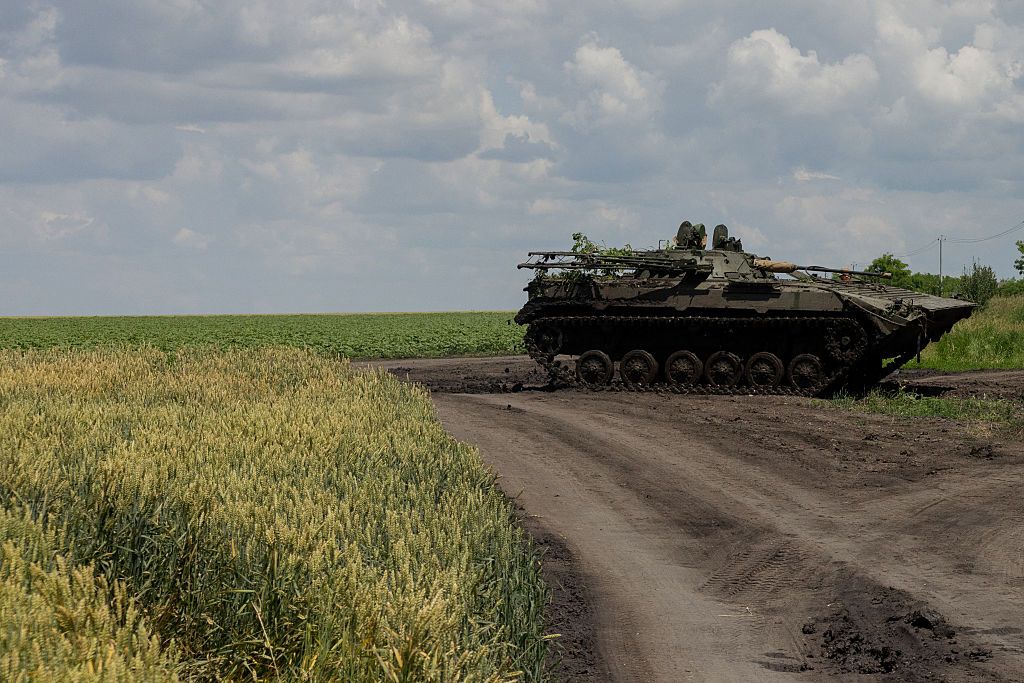
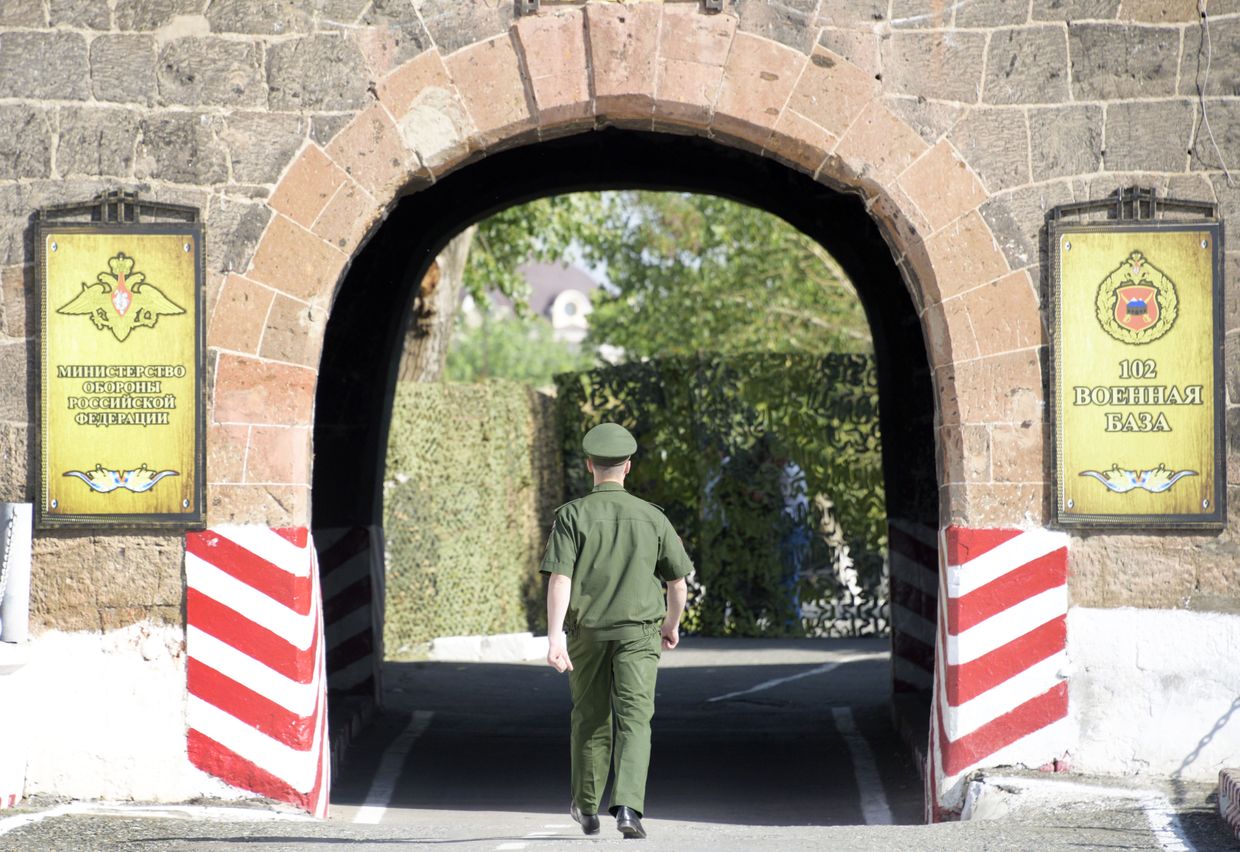
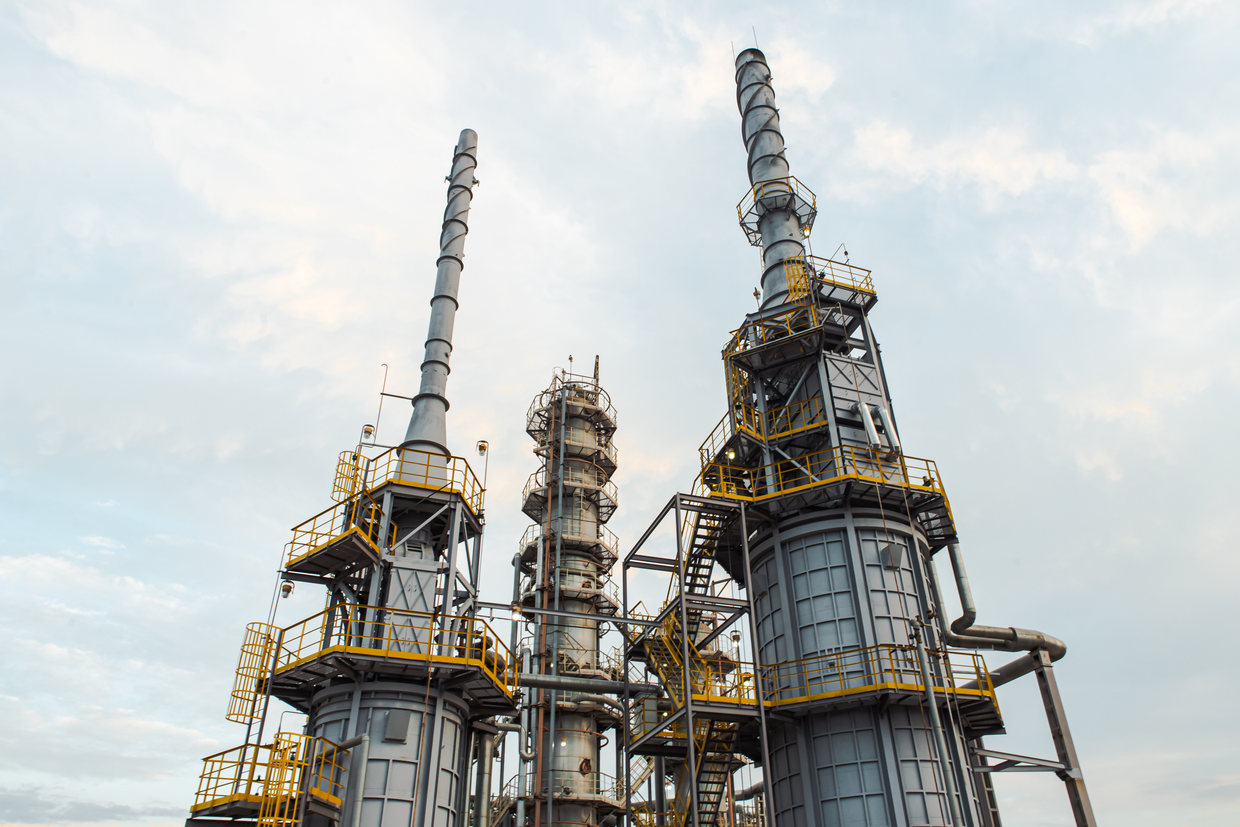
Austria has broken up a smuggling network feeding European technology into Russia's missile production. Austria's DSN counterintelligence service has exposed an international scheme that supplied high-tech industrial equipment to defense-industry enterprises linked to the Russian state corporation Rostec, circumventing EU sanctions, Austria's Interior Ministry reported.
The case is one strand of the vast evasion effort keeping Western parts in Russian weapons. Ukraine h
Austria has broken up a smuggling network feeding European technology into Russia's missile production. Austria's DSN counterintelligence service has exposed an international scheme that supplied high-tech industrial equipment to defense-industry enterprises linked to the Russian state corporation Rostec, circumventing EU sanctions, Austria's Interior Ministry reported.
The case is one strand of the vast evasion effort keeping Western parts in Russian weapons. Ukraine has documented that Russian missiles like the Iskander still contain hundreds of foreign components reaching Russia through third countries despite sanctions. The Austrian network is one of the channels that made that possible, routing European machinery to Russian arms makers through a web of front companies.
How the network worked
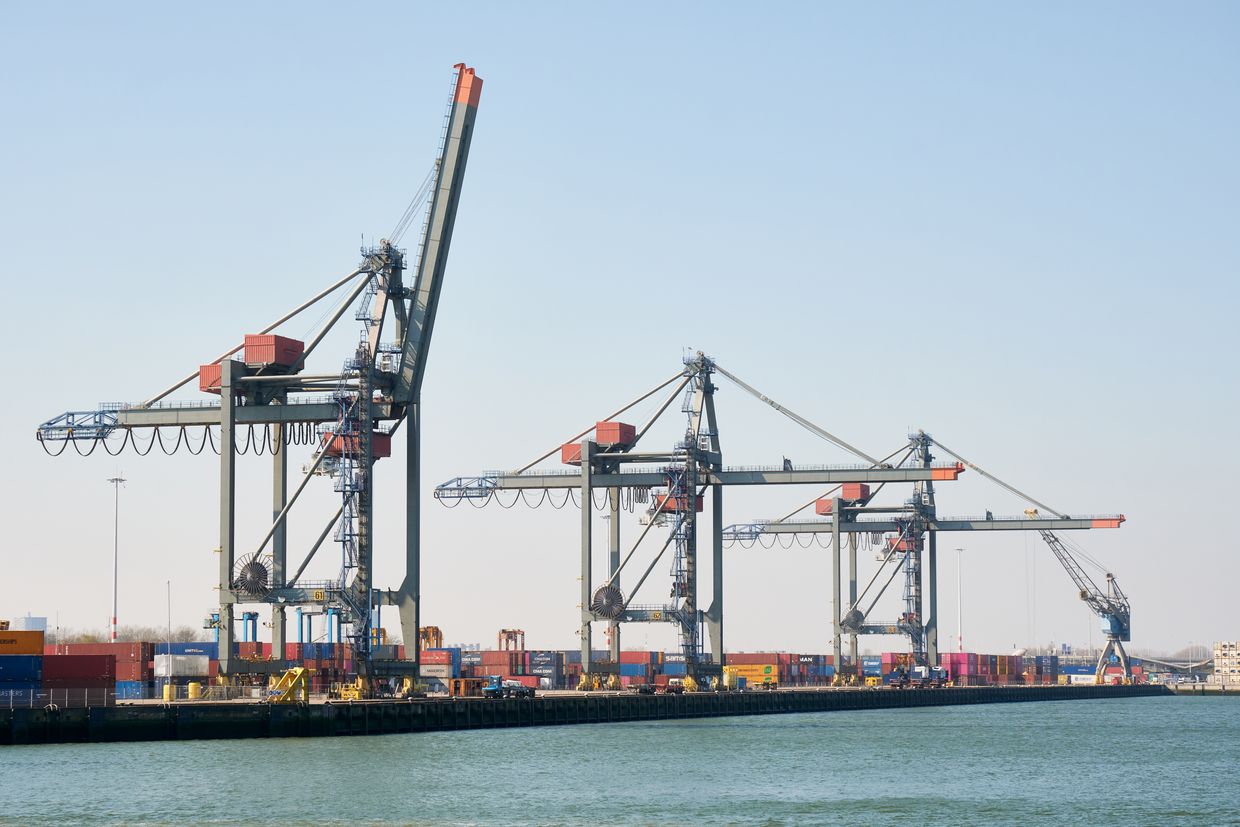
The smugglers hid the real destination behind a chain of countries. To conceal the supply routes, the suspects used a network of companies in Turkiye, the UAE, Hong Kong, Belarus, Kyrgyzstan, South Korea, Poland, and Lithuania, providing European manufacturers with forged end-user certificates claiming the goods would remain in third countries.
The equipment went to Russian weapons production. According to a preliminary investigation, it was used to make engines for cruise missiles and combat aircraft, among other military hardware, according to the ministry.
"It is unacceptable that high-precision European technologies find their way through roundabout paths into the production of cruise missiles and air-defense systems," Interior Ministry State Secretary Jörg Leichtfried said.
The scale and the arrests
The trade ran for years and moved millions. Purchases of industrial goods for Russian military users date back to 2019, and after sanctions tightened, the routes were redirected through third countries, primarily Hong Kong and Turkiye, with confirmed deliveries to Russian defense firms worth nearly $3.9 million since 2022.
The arrests followed searches. On 20 August 2025, police searched four sites and seized about 40 data carriers. On 13 May 2026, they detained a 28-year-old Belarusian citizen, a company director and co-owner, seizing sanctioned CNC machines and tools worth nearly $164,000. The suspect is in custody.
Part of a wider fight
DSN framed the bust as one battle in a continuous effort. The case shows the lengths to which international networks go to circumvent sanctions, DSN director Sylvia Mayer said.
The bust is a rare visible enforcement action against a problem Ukraine names constantly: that Russia's weapons still run on Western technology, reaching its factories through exactly this kind of third-country laundering. Each dismantled network closes one route, but demand keeps opening others.
On 9 August, Peru's foreign ministry officially reported that 459 Peruvians had been recruited into the Russian army. Of these soldiers, 11 have been killed, 114 are missing, and three have been captured by the Ukrainian army. Another 31 Peruvians were evacuated: three of them chose to stay in Europe, and the rest returned home.
As of 29 April 2026, Russia had drawn in at least 27,000 foreign nationals from more than 130 countries to take part in its war against Ukraine
On 9 August, Peru's foreign ministry officially reported that 459 Peruvians had been recruited into the Russian army. Of these soldiers, 11 have been killed, 114 are missing, and three have been captured by the Ukrainian army. Another 31 Peruvians were evacuated: three of them chose to stay in Europe, and the rest returned home.
As of 29 April 2026, Russia had drawn in at least 27,000 foreign nationals from more than 130 countries to take part in its war against Ukraine, the International Federation of Human Rights reports. The Peru case is part of Russia's systematic recruitment of foreigners into its military, often through deception. Some men were offered civilian jobs or roles far from the front, only to end up in the thick of the fighting.
Relatives of the recruited men held demonstrations in Peru
On 29 April 2026, relatives of men recruited into the Russian army demonstrated outside Peru's foreign ministry in Lima, urging the authorities to help bring their family members home, according to SwissInfo.
Relatives of Peruvians affected by Russia's war against Ukraine demand urgent repatriation. 2026. Photo: Carlos Félix/LR
On 30 April, the Russian embassy in Peru responded that it agreed some Peruvian men were taking part in the war on Russia's side, but said this was their own voluntary choice. La República, however, reports that before leaving for Russia, the men were made to sign papers in Russian.
On arrival, their documents were taken, after which they underwent brief military training and were ultimately sent to the front. According to media reports, most were former military and police personnel lured by promises of jobs as security guards or civilian specialists, with salaries of $2,600–4,000 a month and bonuses of up to $20,000.
A “rear position” — until it isn’t
First, recruiters promise foreigners high salaries, signing bonuses, and “rear” or civilian positions. Debt traps and threats of deportation are also used. They lure people even through video games and chats. Once in Russia, recruits are forced to sign contracts, after which their documents are confiscated to keep them at the front. The contracts are often written in Russian, a language the foreign recruit does not understand.
Instead of the promised “rear positions,” recruits are thrown into infantry “meat assaults” after just a few days or a week of training. Mercenaries are killed while carrying out missions, while the wounded are often left on the battlefield without evacuation. Some men go missing or flee. Russia treats foreign mercenaries as “expendable labor,” according to leaked recordings cited by Radio Free Europe/Radio Liberty.
This is not an isolated case
Facing losses that now outpace its own mobilization, Russia has turned to citizens of other countries to keep its ranks filled in its war against Ukraine.
Kenya has become one of the largest sources of people recruited through deception. At first, Nairobi believed the number was only a few hundred, but the scale proved much larger. Nairobi thought Russia had recruited around 200 Kenyan citizens, but a new report says the figure is over 1,000. The scheme relied on fake job and education offers, after which recruits had their documents confiscated to keep them on the front line. The European Parliament found that Russia confiscates African recruits' documents and sends them to the front line in Ukraine.
In Cuba, recruiters promised people lucrative jobs, only to lure them into a trap. A Cuban captured near Kupiansk said he joined Russia's war effort under threat of deportation. The scale of the recruitment has been enormous. Ukrainian intelligence estimates that around 20,000 Cuban mercenaries have fought on Russia's side against Ukraine.
Cuban nationals wearing Russian military uniforms. 2023. Screenshot from a video, via X/PStyle0ne1
The Philippines case shows what awaits the recruited at the end of this pipeline. Ukrainian military intelligence identified a Filipino named John Patrick among Russian soldiers killed in Donetsk Oblast. He was sent into a "meat assault" after just one week of training. He did not speak Russian and carried only a piece of paper with his unit number and his commander's name. After he was wounded, he was left to die in a tree line without evacuation, and Ukrainian intelligence warned that any work in Russia now carries a real risk of forced deployment into an assault unit. The deception relied on promises of high salaries, non-combat positions in the rear, and fast-tracked Russian citizenship, after which recruits were sent into infantry assaults.
An American volunteer who left Pennsylvania to fight for Ukraine believes the outcome here will shape the world for half a century. "Lighthouse", a soldier in the reconnaissance company of the 47th Separate Mechanized Brigade, came to Ukraine from Pennsylvania, the brigade shared.
Lighthouse is one of thousands of foreigners fighting for Ukraine. Since Ukraine created the International Legion in 2022, volunteers from more than 50 countries, including the US, Britain, an
An American volunteer who left Pennsylvania to fight for Ukraine believes the outcome here will shape the world for half a century. "Lighthouse", a soldier in the reconnaissance company of the 47th Separate Mechanized Brigade, came to Ukraine from Pennsylvania, the brigade shared.
Lighthouse is one of thousands of foreigners fighting for Ukraine. Since Ukraine created the International Legion in 2022, volunteers from more than 50 countries, including the US, Britain, and Canada, have joined its ranks, and Lighthouse, a scout from Pennsylvania, is one American who traced the war to its roots and decided to come.
What brought him to Ukraine
The full-scale war in 2022 unsettled him and prompted him to research its causes, which took him back to where the war began. He traced it to the Revolution of Dignity of 2013 and 2014, when Ukrainians drove out a pro-Russian president. Then, Russia responded by seizing Crimea and igniting the war in the east.
"I understood pretty quickly that Ukraine was in a position to be fighting the good fight, and that Russia was being Russia, basically," he said.
He did not leave on impulse. He got in shape, went to the gym, and saved money, but the hardest part was his marriage: putting aside enough that his wife would be secure while he was gone, and making sure she was mentally prepared and would feel supported. She understood his reasoning, he said, and told him, "I support you. I support what you're doing."
Why did Lighthouse choose the 47th?
He chose the brigade carefully. He researched many units and contacted several recruiters before choosing the 47th, which has attracted a substantial foreign contingent, including a mostly Colombian reconnaissance-and-strike group.
What settled his choice was the people. He was able to talk to the men in his squad before he even came, and they would call him every few days.
"Hey, man, how are you doing? Do you need any help figuring out your schedule, or what to bring?" Lighthouse recalled.
They became friends before he got there. Ukraine has felt like home since, he said, a gorgeous place whose people are welcoming and proud of everyone who fights for their country.
He sees the war as the world's fight
For Lighthouse, the stakes reach far beyond Ukraine.
"What happens here now affects the rest of the world and potentially the future for the next 50 years," he said, which is why it matters to him that Ukraine can remain a democracy and stand up to the aggression.
He is not the first American in the 47th to say so. In May, the brigade profiled "Forrest", a 28-year-old North Carolina construction worker who followed the war since 2014 before enlisting and told others, "If you want to fight, go to the 47th."
Russia can currently fire a simultaneous salvo of 77 ballistic missiles, and it aims to lift that ceiling to 200. Robert "Magyar" Brovdi, who commands Ukraine's Unmanned Systems Forces, told the Associated Press. He called the plan one of Ukraine's gravest weak points.
Kyiv's only reliable shield against ballistic missiles is the US-made Patriot, and its interceptor stocks are critically low. During mass barrages, dozens of warheads therefore slip through and reach their ta
Russia can currently fire a simultaneous salvo of 77 ballistic missiles, and it aims to lift that ceiling to 200. Robert "Magyar" Brovdi, who commands Ukraine's Unmanned Systems Forces, told the Associated Press. He called the plan one of Ukraine's gravest weak points.
Kyiv's only reliable shield against ballistic missiles is the US-made Patriot, and its interceptor stocks are critically low. During mass barrages, dozens of warheads therefore slip through and reach their targets. Only a handful of countries can build such interceptors, and all are short, defense analysts have warned. The AP, for its part, could not independently verify Brovdi's numbers.
Ballistic missiles remain the hardest to stop
That shortfall has already turned lethal. Intensified strikes made July the deadliest month for Ukrainian civilians since April 2022, the UN human-rights office in Ukraine documented. Air defenses downed just 29 of the 195 ballistic missiles Russia fired that month, roughly 15%. Another 40 fell short on their own. Yet the largest single-night launches recorded so far run to only a few dozen. That is well below the salvo of 77 that Brovdi describes, and a fraction of the 200 Moscow is reaching for.
"Even if they only manage half of that, it will all be flying at us." - Robert "Magyar" Brovdi, commander, Ukraine's Unmanned Systems Forces
Production running ahead of plan
His warning tracks Ukrainian intelligence. Russia's defense industry is overfulfilling its monthly targets, hitting 110% to 120% on the main missile types. So said Deputy Military Intelligence Chief Vadym Skibitskyi in an interview with RBC-Ukraine. He put July output for the Kh-101 cruise missile at 140% of plan, the Kalibr at 111%, and the Kh-35 at 200%. A pause in strikes, he judged, is unlikely.
The pivot to jet-powered drones
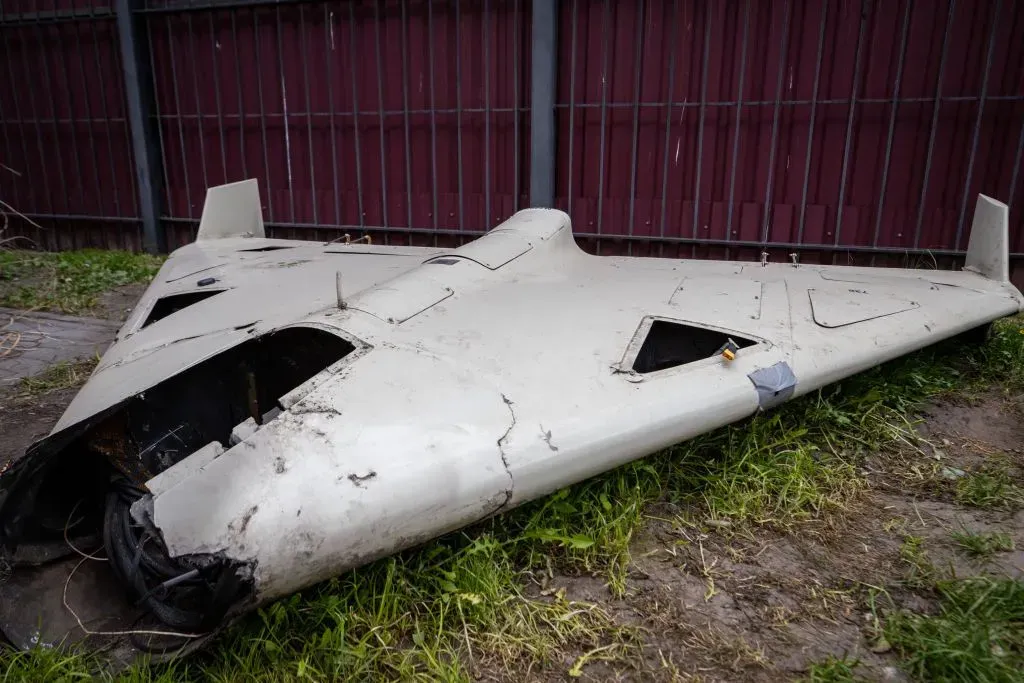
Moscow's factories are also retooling around drones. Russia plans to assemble 11,000 strike drones of various types in August 2026, Skibitskyi said. That mix spans the Geran-1 through Geran-5, the Harpia, and several Gerbera variants. Output dipped in July as the industry shifted toward the turbojet Geran-4 and Geran-5.
Those jet models fly faster and demand different interceptors or short-range air defense. They already made up half of one recent attack. The concentration of jet-powered Shaheds, meanwhile, has climbed 2.5 times in recent weeks, Brovdi added. Taken together, the assessments point one way: more missiles and faster drones, launched in larger waves, against defenses Ukraine is scrambling to rebuild.
Russian forces struck the Mayaki bridge on the M-15 highway on 9 August, the Institute for the Study of War reported. The strike severed a road link that ties southern Ukraine to Moldova and Romania. That Odesa–Reni route crosses the Dniester and feeds the Danube ports. Those ports have become Kyiv's main export outlet since Russian strikes crippled its Black Sea shipping.
Conflicting claims over the Mayaki bridge
Russian milbloggers reported the attack, though their
Russian forces struck the Mayaki bridge on the M-15 highway on 9 August, the Institute for the Study of War reported. The strike severed a road link that ties southern Ukraine to Moldova and Romania. That Odesa–Reni route crosses the Dniester and feeds the Danube ports. Those ports have become Kyiv's main export outlet since Russian strikes crippled its Black Sea shipping.
Conflicting claims over the Mayaki bridge
Russian milbloggers reported the attack, though their accounts diverged sharply. One claimed that Russian forces had destroyed the span. Others published footage purporting to show that it still stands. A local outlet serving nearby Izmail reported on 9 August that the strike damaged the crossing. Ukraine's State Border Guard Service separately confirmed that authorities briefly restricted traffic on the route. Moscow had already targeted the same structure in December 2025.
Why the land corridor matters
Russia likely hit the Mayaki bridge to choke Ukrainian grain exports, ISW assessed. Those exports now move through a land corridor that Kyiv has leaned on since strikes disrupted its maritime routes. Moscow has steadily intensified this campaign since July 2026. Navy Spokesperson Captain Third Rank Dmytro Pletenchuk offered one measure on 31 July. He said Russian strikes had damaged more than 20 ships near the Black Sea and sharply slowed cargo flows. Meanwhile, the country's main farmers union weighed in on 15 July. The Ukrainian Agri Council estimated that Russian attacks had cut about a third of Ukraine's grain-export capacity.
Minister of Agrarian Policy and Food Taras Vysotskyi has described the fallout. He said the strikes are forcing Kyiv to reroute grain and cargo through the Danube River. Russia used the same playbook in July 2023. Back then, then-Minister Mykola Solskyi reported that strikes destroyed 60,000 tons of grain at Chornomorsk port overnight on 19 July. Therefore, ISW concluded, Russia is likely shifting its strikes from the sea corridor to the land corridor. The aim, analysts wrote, is to block grain exports and weaken Ukraine's wider economy.
Russian forces are likely shifting their strikes from Ukraine's sea corridor to its land corridor to block grain exports and degrade the economy. — Institute for the Study of War
Türkiye floats a Black Sea moratorium
Turkish Foreign Minister Hakan Fidan raised a separate track on 9 August. He said Ankara had proposed a Russian–Ukrainian moratorium on strikes against merchant ships in the Black Sea. Both Moscow and Kyiv have received the offer, Fidan added, and Türkiye now awaits their response.
Drones struck several Russian oblasts overnight into 10 August. A probable strike hit a Nizhnekamsk refinery in the Republic of Tatarstan, while fires spread across occupied Crimea. Local Telegram channels and Ukrainian monitoring groups reported the attacks. Kyiv has not claimed them, and the damage stays unverified.
Thick smoke over the Nizhnekamsk refinery cluster
Residents of Nizhnekamsk reported explosions on the morning of 10 August. Footage online showed drone
Drones struck several Russian oblasts overnight into 10 August. A probable strike hit a Nizhnekamsk refinery in the Republic of Tatarstan, while fires spread across occupied Crimea. Local Telegram channels and Ukrainian monitoring groups reported the attacks. Kyiv has not claimed them, and the damage stays unverified.
Thick smoke over the Nizhnekamsk refinery cluster
Residents of Nizhnekamsk reported explosions on the morning of 10 August. Footage online showed drones crossing the city, with dense black smoke above one district, local channels said. Which Nizhnekamsk refinery took the hit stayed unclear. The city hosts two major plants — the TAIF-NK and TANECO complexes.
TAIF-NK processes 7.3 million tons of crude and 1 million tons of gas condensate a year. Its 49 products include AI-92 and AI-95 gasoline, diesel, and jet fuel. TANECO belongs to the Tatneft group. It ranks among Russia's largest and most advanced refineries. Its design capacity exceeds 16 million tons of crude a year.
Ukraine's Defense Forces struck both TANECO and TAIF-NK on 12 June, the General Staff confirmed. Ukrainian units hit the same cluster again in July.
Fires flare in occupied Crimea's Krasnoperekopsk
Explosions rocked Krasnoperekopsk — known in Ukrainian as Yany Kapu — overnight. Numerous fires burned by morning, the monitoring channel Crimean Wind reported. Around 7 blasts sounded between 2 and 3 a.m. Subscribers described a fire behind the railway station in the industrial area.
By the morning of 10 August, NASA's FIRMS satellite system flagged multiple heat signatures there, Crimean Wind said. The hotspots clustered in the town's southern industrial zone. Russian forces store and repair equipment in the area, the channel added.
Drones also crossed Sevastopol. Residents heard aircraft and gunfire near the Balaklava thermal power plant. The Russian-installed governor, Mikhail Razvozhaev, claimed 15 drones fell, mostly over the sea. He admitted, though, that falling debris ignited a forest fire near Inzhir beach and forced a campsite evacuation. A blast in Simferopol briefly cut power around 4 am before supply returned.
Moscow and Rostov cite downed drones
In the capital, Mayor Sergei Sobyanin said air defenses downed 13 drones approaching Moscow overnight. He gave no details on any consequences. Over Rostov Oblast, Governor Yuri Slyusar said more than 70 drones destroyed. Information on casualties and damage was still coming in, he said.
Both counts reflect Russian air-defense claims rather than independently confirmed strikes.
Overnight, Russia's aviation authority Rosaviatsia restricted takeoffs and landings at Begishevo airport in Nizhnekamsk. The curbs also covered 14 other airports, among them Kazan, Ufa, Samara, and Moscow's Domodedovo and Vnukovo.
The flag came down from a building in central Prishtina on 9 August, Mayor Përparim Rama said in a Facebook post, after President Volodymyr Zelenskyy remarked on Kosovo during his visit to Serbia. Rama said "the state of Kosovo must be respected."
"Our compassion and solidarity will always be on the side of peoples facing war, violence, and persecution," Rama wrote. "Because we, better than many others, know what it means to fight for freedom, dignity, and the right
The flag came down from a building in central Prishtina on 9 August, Mayor Përparim Rama said in a Facebook post, after President Volodymyr Zelenskyy remarked on Kosovo during his visit to Serbia. Rama said "the state of Kosovo must be respected."
"Our compassion and solidarity will always be on the side of peoples facing war, violence, and persecution," Rama wrote. "Because we, better than many others, know what it means to fight for freedom, dignity, and the right to exist as a state."
What Zelenskyy said in Belgrade
The exchange was reciprocal: Zelenskyy reaffirmed Ukraine's refusal to recognize Kosovo's unilateral declaration of independence, while Vučić reiterated Serbia's backing for Ukraine's territorial integrity, including Crimea.
At the 8 August joint news conference in Belgrade, Zelenskyy said Ukraine's position had not shifted. "Our position on what you said, about the unilateral declaration of Kosovo's independence, remains unchanged," he said. "We have always emphasized this, and Ukraine's policy has not changed. Likewise, we are grateful to our partners for respecting Ukraine's territorial integrity and sovereignty, including, of course, Crimea's belonging to Ukraine. This position of Serbia is also unchanged, including in the UN General Assembly."
Vučić's position
Vučić, in turn, tied his support for Ukraine's territorial integrity to Serbia's own stance on Kosovo. "We support the UN Charter, UN resolutions, and that means the territorial integrity of all UN members, which means the territorial integrity of Ukraine as well," he said. "Likewise, we are very grateful to Ukraine for supporting the territorial integrity of the Republic of Serbia. And as far as we are concerned, we will continue this principled policy. There are no 'buts' about this. This is being stated very clearly and firmly now."
Kosovo's recognition status
Kosovo is a partially recognized state on the Balkan Peninsula, in the Kosovo and Metohija region, with a population of about 1.7 million, according to Suspilne. Its capital and largest city is Prishtina. Kosovo is recognized by 22 of the European Union's 27 member states. Ukraine does not recognize Kosovo's independence.
A combat drone exploded near a village on Moldova's border with Ukraine on 9 August, sparking a grass fire but hurting no one, Moldovan police said. Investigators recovered fragments and will examine them to establish the drone's type and origin. It was one of two blasts the war pushed across Europe's borders in two days, with Bulgaria fielding a separate drone explosion and summoning Ukraine's ambassador.
Russia's mass strikes keep driving drones and missiles across Uk
A combat drone exploded near a village on Moldova's border with Ukraine on 9 August, sparking a grass fire but hurting no one, Moldovan police said. Investigators recovered fragments and will examine them to establish the drone's type and origin. It was one of two blasts the war pushed across Europe's borders in two days, with Bulgaria fielding a separate drone explosion and summoning Ukraine's ambassador.
Russia's mass strikes keep driving drones and missiles across Ukraine's borders into EU and NATO states, and Russian jamming can knock Ukraine's own drones off course into the same skies—so every crash starts with one question: whose weapon was it.
A drone down in a Moldovan field
The blast rang out around 13:20 near Crocmaz, in Moldova's Ștefan Vodă district in the southeast, and set dry grass alight, NewsMaker reported. The village lies on the Dniester, upstream of Ukraine's Dniester estuary.
The field near Crocmaz, in Moldova's Ștefan Vodă district, where a drone exploded and set dry grass alight, 9 August 2026. Photo: Consiliul Raional Ștefan Vodă/Facebook
Firefighters and patrols confirmed no civilians were hurt and no homes were damaged. Police found fragments that they preliminarily identified as parts of a combat drone. Those pieces will undergo a ballistic-technical examination to determine the drone's exact type, its affiliation, and how it fell. Crocmaz sits right on the Ukrainian border. The district council posted photos of the object and told residents to avoid the cordoned area and report any fragments to the 112 line.
Debris from a drone that exploded near Crocmaz in Moldova's Ștefan Vodă district, close to the Ukraine border, 9 August 2026. Photo: Consiliul Raional Ștefan Vodă/Facebook
The blast came amid an assault on Odesa
The drone fell hours after Russia hit Odesa with missiles and drones overnight on 9 August. Much of Moldova's eastern border runs along Odesa Oblast, so wreckage from the war often drifts across. Russian drones have crashed on Moldovan soil during such attacks before. Whether this one was Russian or something else is for the examination to show.
A parallel case in Bulgaria
Also today, Bulgaria's Foreign Ministry summoned Ukraine's ambassador, Olesia Ilashchuk, over a drone that exploded on 8 August near the Romanian border, by a Trans-Balkan gas pipeline compressor station, Bulgarian National Television reported. Its defense bloc said the drone was likely a Ukrainian decoy, with no sign it was launched on purpose.
Explore further
Russia’s drones violated the airspace of Moldova and Romania — one fell straight onto a civilian roof (MAP)
Ukrainian President Volodymyr Zelenskyy made his first official visit to Serbia, meeting Serbian President Aleksandar Vučić in Belgrade on 8 August 2026, according to Ukraine's Presidential Office. The two agreed to deepen trade and energy cooperation, and Serbia pledged fresh humanitarian aid and help rebuilding a war-hit Ukrainian city.
The visit drew attention because Serbia remains one of the few European states still close to Moscow. At the same time, Serbia is its
Ukrainian President Volodymyr Zelenskyy made his first official visit to Serbia, meeting Serbian President Aleksandar Vučić in Belgrade on 8 August 2026, according to Ukraine's Presidential Office. The two agreed to deepen trade and energy cooperation, and Serbia pledged fresh humanitarian aid and help rebuilding a war-hit Ukrainian city.
The visit drew attention because Serbia remains one of the few European states still close to Moscow. At the same time, Serbia is itself seeking EU membership and backs Ukraine with financial and humanitarian aid, though it provides no direct military support.
Much of the Western Balkans has spent years in the EU's waiting room, a gap Moscow has long worked to hold open through energy leverage and cultural ties. The visit comes amid Russia's ongoing full-scale invasion of Ukraine, while Moscow keeps trying to undermine support for Ukraine in Europe.
A first visit, and a message to two capitals
Zelenskyy arrived in Belgrade on Friday, 7 August, and the next day received an honor guard welcome, then met Vučić at the Presidential Palace. It was his first official trip to Serbia since he became president in 2019. Ukraine's First Lady had made her own first trip to Belgrade in May 2024.
Serbia is a candidate for accession to the EU, and so is Ukraine. Belgrade also keeps close ties with Moscow and still refuses to sanction it, relying on Russia for most of its energy. Thus the reception sent a signal to both Brussels and Moscow.
Vučić said Serbia upholds the UN Charter and the territorial integrity of every UN member, including Ukraine. At the joint news conference, Zelenskyy tied that to Crimea belonging to Ukraine, and he said Ukraine's stance against recognizing Kosovo's unilateral independence stays unchanged. Russia has occupied the Crimean peninsula since 2014.
Explore further
Serbia’s Vučić says Russian-owned Serbian refinery to fire up again mid-month
Aid for the winter and a city to rebuild
Zelenskyy thanked Serbia for a new humanitarian package in the medical and energy sectors, his office said. Belgrade offered to help rebuild one war-damaged Ukrainian city, which neither side named. The two leaders discussed the coming winter, when Ukraine's power system faces heavy Russian strikes. Serbia has sent Ukraine generators and financial support before.
Ukrainian President Volodymyr Zelenskyy (left) and Serbian President Aleksandar Vučić shake hands in Belgrade, 8 August 2026. Photo: president.gov.ua
The leaders discussed infrastructure, ports, railways, and food security, and Serbia showed interest in Ukraine's railway experience. They want to finalize a free-trade agreement between the two countries by the end of 2026. Trade reached about $346 million in the first half of 2026, after $442 million for all of last year, according to Zelenskyy's office. In the presidents' presence, Ukraine's food-safety service and Serbia's agriculture ministry signed a cooperation memorandum on animal health and food safety.
Explore further
Serbian President: Serbia accidentally supported European resolution on Ukraine at the UN
An EU path, and Vučić's doubts
Zelenskyy noted that Ukraine would welcome a faster EU path for Serbia. Vučić said Serbia backs Ukraine's European course and will not block it, but he doubted Serbia could join soon, "for many political reasons."
He said not everyone in the EU views membership for Ukraine or the Western Balkans positively.
"For us they'll find Croats, Bulgarians, Dutch, and for Ukraine they'll find someone else," he said, suggesting that for any candidate, some existing EU member can always be found to object to its accession.
Ukraine's drone forces burned a long-range Russian S-400 air-defense system on the Black Sea coast and knocked out more air defenses, radars, and cargo ships in a single overnight raid, Unmanned Systems Forces (SBS) commander Robert "Madyar" Brovdi said. One of the struck batteries guarded the stretch of coast in the area of Putin's reported seaside palace.
Each strike like this feeds a long Ukrainian campaign to take apart Russia's air defenses — partly to clear a pat
Ukraine's drone forces burned a long-range Russian S-400 air-defense system on the Black Sea coast and knocked out more air defenses, radars, and cargo ships in a single overnight raid, Unmanned Systems Forces (SBS) commander Robert "Madyar" Brovdi said. One of the struck batteries guarded the stretch of coast in the area of Putin's reported seaside palace.
Each strike like this feeds a long Ukrainian campaign to take apart Russia's air defenses — partly to clear a path for Ukraine's deeper drone and missile strikes, partly to destroy the launchers that rain ballistic missiles on Kyiv.
The battery that guarded Putin's coast
Overnight on 8–9 August, Ukraine's Unmanned Systems Forces struck the S-400 Triumf system at Gelendzhik, on Russia's Krasnodar Krai coast of the Black Sea. The 413th Reid Regiment carried out the strike, and the position burned for three hours beside seaside catacombs, Brovdi wrote. Brovdi said the battery had fired six missiles on the morning of 8 August, between 9:25 and 12:51.
Gelendzhik sits on the Black Sea headland that holds the palace complex, long reported as Putin's private residence.
Russia has turned the S-400 into a terror weapon against Kyiv, firing its ballistic 48N6DM missiles at the capital. Those missiles reach ground targets more than 200 km away. Bryansk Oblast borders Ukraine and is within reach of Kyiv. Gelendzhik lies far across the Black Sea, well beyond it, so its battery worked as air defense over the coast.
Explore further
Ukraine drones hit Crimea’s S-300/S-400 near Kerch—and knocked out power across four occupied territories overnight
The regiment that torched the Gelendzhik battery had hunted these launchers before. Overnight on 6 July, during a Russian mass strike on Ukraine, the 413th Reid operators found and destroyed an S-400 launcher in Bryansk Oblast, the unit said. That launcher was firing ballistic missiles at ground targets. The regiment called Bryansk a standard launch area for ballistic missiles aimed at Kyiv, and said the strike saved Ukrainian civilian lives.
Four more systems down inside Russia
Ukrainian drones destroyed four more Russian air-defense assets the same night, all on Russian soil, Brovdi said. Crews hit a Tor system in Rostov Oblast and a Pantsir-S1 point-defense system at Yeysk in Krasnodar Krai. They also struck two radar stations in Rostov Oblast, the Podlyot-K1 and the Kasta 2E2. The 1st Separate Center of the drone forces ran the inland strikes, the Unmanned Systems Forces reported.
Russian Pantsir-S1 (L) and Tor (R) air defense systems in the sights of Ukrainian drones in occupied Zaporizhzhia Oblast, 6 March 2026. Photo: Ukraine's Unmanned Systems Forces via Militanryi.
Three shadow-fleet ships hit at sea
At sea, the SBS drone pilots hit three vessels of Russia's shadow fleet in the Black Sea — one oil tanker and two dry-cargo ships. That fleet is the aging tankers and cargo ships that move Russian oil around Western sanctions. The 413th Reid Regiment and the 412th Nemesis Brigade carried out the strikes.
Ukraine's drones had already hit 12 more shadow-fleet ships across the Black and Azov seas earlier in August.
Ukraine has reached concrete agreements with the United States for monthly deliveries of interceptor missiles for its Patriot air defense systems, President Volodymyr Zelenskyy said at a joint press conference with Serbian President Aleksandar Vučić in Belgrade on 8 August.
The commitment does not close Ukraine's gap. Zelenskyy said the monthly volume remains insufficient and laid out a parallel effort to secure interceptors from Europe, the Middle East and further afie
Ukraine has reached concrete agreements with the United States for monthly deliveries of interceptor missiles for its Patriot air defense systems, President Volodymyr Zelenskyy said at a joint press conference with Serbian President Aleksandar Vučić in Belgrade on 8 August.
The commitment does not close Ukraine's gap. Zelenskyy said the monthly volume remains insufficient and laid out a parallel effort to secure interceptors from Europe, the Middle East and further afield, as US shipments have thinned this year.
The US as the primary supplier
Repelling ballistic missiles has been a problem since the start of the full-scale war, and the search for a solution begins with the country that builds the systems, Zelenskyy said.
"From the first days of the war in Ukraine there was nothing to repel ballistic missiles. This is very difficult work. In which directions can this problem be solved? Well, first of all, who has anti-ballistic missiles and systems? The manufacturer. That is the United States of America, first of all. Can they help? We are working. Will they allocate us missiles every month? Yes. We have agreements," he said.
Asked whether that supply met Ukraine's needs, he answered: "Are these missiles enough? No." He added that the monthly volumes of American missiles had decreased this year compared with 2025.
Where else Kyiv is looking
Patriot missiles are also held by European countries, Zelenskyy said, naming Germany and Poland as able to substantially strengthen Ukraine's air defense. Kyiv is also in talks with Norway, the Netherlands and Middle Eastern states.
South Korea and Japan could potentially help but do not currently hand over such systems, which Zelenskyy attributed to restrictions in their domestic legislation and constitutions. Ukraine is separately discussing air defense with Israel; the president said Ukraine is ready to buy but that no such option exists at present.
"Every day I speak with one European state or another and with Middle Eastern states so that Ukraine receives additional missiles outside the American package. We are simply at the level where all our institutions must work on this, not only the president. Everyone must work, otherwise there will not be enough missiles," he said.
The Belgrade remarks came a day after Zelenskyy arrived on his first official visit to Serbia.
Zelenskyy had bilateral meeting with Serbian President Aleksandar Vučić. Vucic voiced support for Ukraine's territorial integrity and its path to the European Union.
What esle Zelenskyy and Vučić discussed
The two presidents held talks that ran across the countries' European integration, trade and energy cooperation, a prospective free-trade zone, and diplomatic paths to ending Russia's war on Ukraine. Vučić had said ahead of the meeting that he would discuss both countries' route to EU membership, along with economic and energy cooperation and other opportunities
On the economy, Vučić said the sides had reviewed infrastructure projects and the involvement of Ukrainian companies in Serbia. On peace efforts, Zelenskyy said the leaders had discussed diplomatic instruments capable of bringing the war closer to an end.
Before the press conference, the sides held a ceremony to sign a memorandum on cooperation in animal health and food safety. The document was signed by Serbia's Minister of Agriculture, Forestry and Water Management Dragan Glamočić and Ukraine's ambassador to Serbia Oleksandr Lytvynenko.
Territorial integrity
Vučić framed Serbia's position as a matter of UN principle and tied it to Ukraine's reciprocal stance on Serbia.
"We support the UN Charter, UN resolutions, and this means the territorial integrity of all UN members, which means the territorial integrity of Ukraine as well. Likewise we are very grateful to Ukraine for supporting the territorial integrity of the Republic of Serbia. And as far as we are concerned, we will continue this principled policy. There are no 'buts' on this question. This is being said very clearly and resolutely now," Vučić said.
Support on the road to the EU
Vučić said Ukraine could always count on Belgrade's support in EU accession, and the two discussed both countries' European path during the meeting.
"We wish for Ukraine to open all negotiating clusters as quickly as possible, to close them as quickly as possible, because this is the wish of the Ukrainian people, of the Ukrainian leadership. And speaking of ourselves, we have not had and will not have any problems regarding this in the future. On the contrary, everything we can do to help Ukraine on its European path, we will do," Vučić said.
Trade at $321 million in six months
Vučić said trade between the two countries is growing rapidly: while it stood at $450 million for all of last year, it had already reached $321 million in the first six months of this year.
"The most important import item is iron ore from Ukraine. And I believe that cooperation in the sphere of agriculture, but also in other spheres of energy, everywhere trade turnover can be greater. We discussed projects in the sphere of infrastructure, involving Ukrainian companies on the territory of Serbia. I believe we can have serious and good results in the future," the Serbian president said.
Vučić said he hoped cooperation between the countries would become "significantly stronger and larger-scale" after the war ends. In future, he said, Serbia and Ukraine could jointly export certain goods and enter third-country markets, in particular in Africa and Asia.
"I think we will yet see agreements on such cooperation. Yesterday we had long discussions, today the discussions were really good. I am grateful to President Zelenskyy for the visit to Serbia. I hope we received you properly. And I want to believe that our meetings in the future will be incomparably more frequent than they were before," Vučić added.
A free-trade zone by the end of 2026
Zelenskyy said negotiations on creating a free-trade zone between Ukraine and Serbia are under way, and expressed hope the agreement could be concluded by the end of 2026.
"Our teams must work well to speed up the agreement on a free trade zone between Ukraine and Serbia. These negotiations are progressing, this is positive. And it would be good to prepare everything by the end of this year for concluding the agreement on free trade between Ukraine and Serbia," the Ukrainian president said.
Damaged energy grid and a Serbian humanitarian package
Zelenskyy described the state of Ukraine's infrastructure under Russian strikes.
"For the fifth year now we in Ukraine are forced to go through all these strikes. Russian strikes are aimed mostly at facilities that work precisely for the life of the people. We have virtually no undamaged power plants left. Many railway stations are destroyed, hospitals, universities, ordinary civilian enterprises. In a time of such a war we appreciate and are very grateful for all the support that Ukraine receives from other countries, from other peoples," Zelenskyy said.
He said Ukraine continues to expand all formats of cooperation with partners to give communities and people "more resilience, more capacity to hold out despite all the challenges of the war."
Zelenskyy said Serbia would provide Ukraine with a humanitarian aid package. "We are grateful that there will be a new package of humanitarian support from Serbia for Ukraine, in particular in the sphere of medicine, in the sphere of energy. This is very important for us," he said.
Diplomacy to end the war
Zelenskyy said the leaders had discussed diplomatic instruments that could bring the war closer to an end, and pointed to capitals with influence over the process.
"It is important that everywhere in the world they know what we want, and this is true, and this is a fact, we want a dignified peace, that every opportunity be used for the sake of peace, for the sake of guaranteed security. All available opportunities that exist in Washington, and in Beijing, in the capitals of Europe, our partners in the Middle East, in the Gulf, in all the capitals of the world that have influence over the relevant processes," Zelenskyy said.
A Russian strike on the village of Pukhivka in Kyiv Oblast's Brovary raion overnight into 8 August killed three members of one family: a three-year-old boy, his grandmother, and his grandfather. Four other people were wounded, President Volodymyr Zelenskyy said.
The boy's parents and his 15-year-old brother were among the injured, along with a neighbor who came to help the family and was hit in a second, follow-up strike. The attack came as Russia leans on the ballistic
A Russian strike on the village of Pukhivka in Kyiv Oblast's Brovary raion overnight into 8 August killed three members of one family: a three-year-old boy, his grandmother, and his grandfather. Four other people were wounded, President Volodymyr Zelenskyy said.
The boy's parents and his 15-year-old brother were among the injured, along with a neighbor who came to help the family and was hit in a second, follow-up strike. The attack came as Russia leans on the ballistic missiles Ukraine can least often intercept, and as Zelenskyy again pressed partners for the interceptors his air defenses are running short of.
A family killed in their home
Zelenskyy said the strike hit an ordinary residential building. Those wounded, among them the dead child's parents, were treated for thermal burns and shrapnel injuries.
The neighbor was hurt after coming to help the family, when a second Russian strike hit the same place — the double-tap tactic of following an initial strike with another timed to catch rescuers and responders. Russia used it in Kyiv a week earlier, when a follow-up strike killed a 20-year-old volunteer medic.
Six ballistic missiles on Kyiv
Overnight, Russia also struck civilian infrastructure in Kyiv with six ballistic missiles. One person was killed, their body found by rescuers during the cleanup, the Kyiv City Military Administration reported.
A widening gap, and a renewed appeal
Zelenskyy called on Ukraine's partners to tighten sanctions on Russia's ballistic-missile production and to supply more air defense systems and interceptors. The appeal lands against a defense Russia has spent the year outpacing: in July, a third of the missiles it fired — 126 — were ballistic, the type that gives the shortest warning and that Ukraine's systems, save for the Patriot, cannot reliably stop. In the last two large attacks, Ukraine downed two of 36 ballistic missiles, roughly one in twenty, for lack of Patriot interceptors. Russia builds around three ballistic missiles a day, by Ukrainian analysts' estimates, while Ukraine's interceptor stocks stay severely limited.
The same night, Russia also attacked Donetsk, Kharkiv, Sumy, Dnipropetrovsk, Zaporizhzhia, Odesa, Kherson, Mykolaiv, Chernihiv, and Poltava oblasts.
North Korea has pulled in as much as $22 billion in foreign earnings since Russia's full-scale invasion of Ukraine in 2022—nearly four times what it earned in the previous four years, and the most cash Kim Jong Un has commanded in his 15 years in power, Bloomberg Economics estimates.
That money is the bill for Russia's war, paid to the other side of the world. In exchange for the shells and soldiers keeping Moscow's offensive alive, Pyongyang has been handed the cash, f
North Korea has pulled in as much as $22 billion in foreign earnings since Russia's full-scale invasion of Ukraine in 2022—nearly four times what it earned in the previous four years, and the most cash Kim Jong Un has commanded in his 15 years in power, Bloomberg Economics estimates.
That money is the bill for Russia's war, paid to the other side of the world. In exchange for the shells and soldiers keeping Moscow's offensive alive, Pyongyang has been handed the cash, food, and military technology to turn itself from an isolated pariah into a nuclear power that no longer needs to negotiate with anyone. The war draining Russia has quietly built a second, stronger adversary.
Half of Russia's shells, and thousands of soldiers
By the end of 2025, North Korea was covering up to half of Russia's need for 122mm and 152mm artillery ammunition, Ukrainian intelligence estimates—a share Euromaidan Press has tracked since the shipments began in 2023. Pyongyang backed the shells with men: some 16,000 soldiers, for whom Russia paid roughly $2,000 a month each, plus extra for the dead, by Bloomberg's accounting.
The turning point came in 2022. Kim had spent the previous years humiliated—a failed summit with Donald Trump, a harvest failure that triggered hunger, a self-imposed Covid border closure that severed trade with China. In a 2020 national address, he wept while apologizing for the economy. Then Putin's stockpiles ran low, and North Korea's warehouses became a resource Kim could turn into hard currency.
Cash, food, and the technology to build better weapons
The dangerous part is what came back the other way. Russia handed over advanced military technology alongside the payments, and US Forces Korea has said the transfers let Pyongyang compress its weapons-development timelines. Moscow supplied air defenses including at least one Pantsir-class system—a transfer Euromaidan Press reported last year—and a Pantsir-M worth about $20 million now sits on one of North Korea's two new 5,000-tonne destroyers, the largest warships it has ever built. The two countries have also begun jointly producing attack drones.
Kim poured the windfall into a nuclear buildup that, Bloomberg reports, puts North Korea on a path to rival France's arsenal. The country's economy grew 3.5% in 2025, its third straight year of expansion, according to the Bank of Korea.
A windfall that outlasts the war
The boom does not depend on the war continuing. Over the past decade Kim assembled the world's most prolific army of crypto thieves: hacking groups tied to Pyongyang now account for more than 70% of global cryptocurrency thefts, up from about 30% in 2017, according to blockchain intelligence firm TRM Labs. The stolen funds are laundered mostly through Chinese organized-crime networks that take a cut in exchange for clean offshore accounts. "It's absurd to think North Korea now has access to that much money," said Nick Carlsen, a senior TRM investigator.
Kim is spreading his bets diplomatically, too, hosting officials from Singapore, Indonesia, Belarus, and Vietnam over the past year to loosen his reliance on Moscow.
The Kim once written off as an erratic recluse is emerging as the durable leader of a growing nuclear power—one with little reason left to bargain. "Pyongyang has proven its ability to adapt to persistent sanctions," said Jenny Town of the Stimson Center. "And as international law and norms are eroding, it has found camaraderie in its resistance."
Même le New York Times ressent les effets de la transformation des moteurs de recherche. Le quotidien américain reconnaît que les changements imposés par les grandes plateformes technologiques réduisent le nombre de visiteurs dirigés vers les sites d’information. Pour compenser cette baisse, le groupe accélère notamment ses investissements dans la vidéo. Au deuxième trimestre de […]
Même le New York Times ressent les effets de la transformation des moteurs de recherche. Le quotidien américain reconnaît que les changements imposés par les grandes plateformes technologiques réduisent le nombre de visiteurs dirigés vers les sites d’information. Pour compenser cette baisse, le groupe accélère notamment ses investissements dans la vidéo. Au deuxième trimestre de […]
[en]
Pour les personnes qui attendaient de me lire sans devoir déchiffrer mon écriture à la main, les transcriptions (merci l’IA, faites avec Claude, pas contrôlées – donc signalez-moi si vous voyez des bizarreries) ont été ajouté aux photos de mes pages de cahier.
Des mots sur un carnet à Paris [en]
01.07.2026
Billet manuscrit, Paris toujours, un 4 juillet [en]
04.07.2026
Making the Bees Walk in Line [en]
11.07.2026
Who Vibecoded This Upgrade? [en]
16.0
Pour les personnes qui attendaient de me lire sans devoir déchiffrer mon écriture à la main, les transcriptions (merci l’IA, faites avec Claude, pas contrôlées – donc signalez-moi si vous voyez des bizarreries) ont été ajouté aux photos de mes pages de cahier.
[en]
Je me demande si l’invasion de nos écrans par l’IA va redonner une place à l’écriture manuscrite.
Transcription IA non vérifiée (22.07.2026):
Paris, le 4.7.2026, 8h45
Ce cahier est immense. Je l’ai acheté pour écrire. J’ai un doute en écrivant la date, pourtant je ne devrais pas, c’est le 4, l’anniversaire de Delphine, mais je vérifie quand même. Ce n’est pas ça que j’avais prévu d’écrire. Mais je repense à elle, je repense à il y a un an. Je mange à midi avec une
Je me demande si l’invasion de nos écrans par l’IA va redonner une place à l’écriture manuscrite.
Transcription IA non vérifiée (22.07.2026):
Paris, le 4.7.2026, 8h45
Ce cahier est immense. Je l’ai acheté pour écrire. J’ai un doute en écrivant la date, pourtant je ne devrais pas, c’est le 4, l’anniversaire de Delphine, mais je vérifie quand même. Ce n’est pas ça que j’avais prévu d’écrire. Mais je repense à elle, je repense à il y a un an. Je mange à midi avec une de ses amies, que je n’aurais sans doute jamais connue si Delphine était encore là aujourd’hui pour fêter ses 42 ans. J’ai cherché sur Facebook, “Delphine anniversaire”, parce que j’ai un doute alors que je sais — c’est bien le 4, son anniversaire, c’est juste ? Je sais mais je vérifie quand même. Pas parce que c’est Delphine, parce que ma mémoire et ma vie sont faites de ces milliers de petites vérifications, chaque jour, tout le temps, avant l’accident aussi. Elles sont efficaces, mes vérifications, même moi je ne les remarquais généralement pas. Elles évitent oublis et erreurs.
J’écris moins bien que l’autre soir. Parce que c’est le matin ? Les lignes du cahier ? La fatigue ? J’ai dormi huit heures et j’émerge avec peine. Les mots sur une page sont plus visiblement ancrés dans un instant précis du temps que ceux sur un écran, plus facilement retravaillés, malaxés et transformés. Le temps de la production n’est pas différent de celui de l’impression.
Je pense à Delphine, il y a un an et un jour, seule dans sa voiture. La tristesse m’envahit en tombant sur un des nombreux avis de recherche qu’on avait lancés sur Facebook. Je me souviens la peur au ventre, les appels à la police, les échanges avec ceux et celles qui l’aimaient, chaque nouvelle personne amenant malgré elle plus de fermeté à la certitude que personne n’avait de nouvelles, que personne ne savait rien, que le pire était à craindre. L’angoisse, l’urgence, l’impuissance, se soutenir comme on pouvait, les maux de tête qui ne me quittaient plus, l’attente, l’espoir sous perfusion mais le cœur qui a déjà sombré…
L’incompréhension — alors, depuis, maintenant. Chacun tente de construire du sens comme il peut, ou supporte son absence, plus ou moins bien.
L’intensité extraordinaire, au sens premier, entre le 5 et le 12 juillet, entre la prise de conscience de sa disparition et son enterrement, le cauchemar de réaliser qu’elle avait laissé des instructions de suppression de son compte Facebook après son décès lorsque j’ai demandé sa mémorialisation, peine redoublée que ma santé ne me permette pas de garder le lien avec ceux et celles qui partageaient cette peine du départ abrupt de Delphine. Encore maintenant, j’aurais voulu, mais je ne peux pas, et ça me pèse, de ne pas être en mesure d’honorer sa vie et sa mémoire comme je le voudrais.
Ce n’est pas nouveau, mais c’est criant depuis mon accident : ma vie n’a pas la place pour tout ce que je voudrais. Voilà donc de quoi je voulais parler à ce cahier tout à l’heure quand j’ai commencé à écrire, avant qu’une date m’envoie sur un chemin de traverse.
“Les arbres ne poussent pas jusqu’au ciel”, métaphore évoquée dans la discussion d’un cas servant de support à ma formation sur l’épuisement professionnel. Évidemment qu’au-delà de ce que cette formation m’a apportée en tant qu’intervenante systémicienne, j’en ai aussi tiré plein d’idées enrichissantes sur le plan personnel. Entre une hyperactivité marquée qui m’a déjà amenée plus d’une fois à l’épuisement ou à ses portes, et une fatigabilité accrue durant cette trop longue période post-accident, ce n’est pas surprenant.
Ce n’est pas parce que quelque chose marche bien et a du succès qu’en faire toujours plus sera toujours mieux. Il y a des effets de seuil. L’entrepreneur qui développe encore et encore son projet finira un jour par ne plus réussir à suivre, même si jusqu’ici ça a toujours bien marché pour lui, de développer toujours encore de nouvelles idées. Et moi alors ?
Moi aussi, j’ai des idées, je lance des choses, je fais. Je n’aime pas l’idée que les arbres ne poussent pas jusqu’au ciel. Je pense qu’en optimisant on peut toujours plus que ce qu’on croit. J’adore Tetris. Quand la voiture semble pleine et qu’il faut encore y glisser un sac, j’y parviens. Idem avec la cave, la valise, le frigo, et l’agenda. Mais l’agenda est trompeur, car il ne dessine que le temps, pas “l’énergie”. Je sais depuis longtemps la nécessité de freiner, sans en être persuadée dans ma chair. Je vois ma fatigue comme un échec d’optimisation, pas l’atteinte d’un seuil.
L’accident a changé ça, et continue de le changer. Je ne vais pas retracer toutes les étapes ici, mais l’accident a l’avantage de balayer l’excuse du défaut d’optimisation.
Le problème avec les idées et les envies, pour moi, c’est que ça coûte en énergie de ne rien en faire. Mais j’ai mis le doigt sur une chose qui les amène : l’input. Tout ce qui rentre chez moi a tendance à générer une réponse multibranches. L’IA m’a mise sur la piste. J’ai pas mal bidouillé avec l’IA ces derniers mois (et aussi avant). Et ce qui m’a frappée, c’était la tendance qu’avait mon assistant IA, quand il mettait à jour un fichier (l’état d’avancement d’un projet, une idée à développer, une liste de modifications faites…) à toujours ajouter un peu plus de texte que la fois d’avant. Il a clairement tendance à être verbeux — si c’est moi qui le dis ! J’ai mis énormément d’énergie à essayer de corriger ce travers. J’ai donné plus d’instructions. Mais rien ne parvenait à réduire l’usine à gaz. C’est une défaillance de fond : un biais vers un peu plus de production, dans le doute. Mieux vaut en faire un peu plus, produire plus de mots. Et ce qui amène à cette production de mots, c’est mon input, mes prompts, ce que je fais entrer dans le système. Si je ne donne rien à manger à mon assistant IA, les fichiers cessent de se multiplier et de s’allonger.
Hier, sur LinkedIn, je vois passer des conseils pour prompter Fable, le dernier et plus puissant modèle de Claude : il faut lui en donner moins. Moins de détails, moins d’instruction. Si on construit nos instructions comme pour les anciens modèles, il sous-performe.
L’IA m’intéresse en tant qu’outil, bien sûr, mais aussi en tant que support de réflexion (possiblement modèle et métaphore) pour appréhender ce qu’on appelle le langage, l’intelligence, le sens, et même la vie. La façon dont nous observons et réagissons, en tant qu’humains, à une production “mécanique”, est fascinante et riche de considérations philosophiques.
L’IA nous amène dans un monde où produire du contenu est devenu plus facile qu’avant — tellement facile que la production n’est plus le facteur limitant, et que notre monde, qui n’est pas prévu pour y faire face, s’y noie.
Moi, ça ne me coûte rien de produire des idées. Mon cerveau est comme l’IA qui crache des mots dès qu’on appuie sur un bouton. En plus de ça, malgré (grâce à ?) mon TDAH, j’ai assez de facilité à en faire quelque chose de tangible, de ces idées. Je suis orientée vers l’action, le faire. Je pense à un truc, je suis prête à démarrer avec.
Tout ça m’a été très bénéfique au cours de ma vie, et l’est encore, dans plein de circonstances. Je me dis qu’il faudrait peut-être une prise en charge logo pour mes symptômes linguistiques, quelques semaines plus tard j’ai trouvé quelqu’un. J’ai eu une carrière entrepreneuriale et je fonctionne encore comme ça. Ma capacité à avoir des idées, à vouloir des choses, et à les réaliser : tout ça m’a amené beaucoup de succès et est très valorisé. Mais c’est aussi ce qui me fait souffrir car il y a non seulement une limite au nombre d’heures dans une journée et au nombre d’années dans une vie, mais aussi à la capacité de notre corps et de notre cerveau à travailler et à fournir des efforts. La route vers l’épuisement et la surcharge est toute tracée. Et dans un contexte comme le mien maintenant, où “l’énergie” est objectivement limitée, où je veux réellement me ménager pour récupérer, c’est extrêmement frustrant, au point d’être douloureux, d’être assaillie en permanence d’idées et d’envies “réalisables” mais impossibles. Alors oui : prendre du recul, accepter la frustration, tout ça c’est très bien. Mais ne pourrait-on pas freiner cette production spontanée et effrénée d’envies et d’idées ? Oui : en étant plus sélectif avec ce qui rentre, et fait leur terreau et leur engrais.
Savez-vous sur quelle plateforme la durée de vie du contenu est la plus longue? Nous allons répondre à toutes vos questions dans cet article!
— Permalien
Savez-vous sur quelle plateforme la durée de vie du contenu est la plus longue? Nous allons répondre à toutes vos questions dans cet article!
— Permalien
C’est danah boyd qui l’explique. « Lorsque les professionnels utilisaient le terme « médias sociaux » pour décrire les outils internet apparus ...
— Permalien
C’est danah boyd qui l’explique. « Lorsque les professionnels utilisaient le terme « médias sociaux » pour décrire les outils internet apparus ...
— Permalien
On May 3, an unusual procession moved through Washington DC. Several hundred people walked beneath the monuments of the American capital carrying portraits of Red Army soldiers. Children waved Soviet flags. A live orchestra played wartime songs at the World War II memorial. The Russian embassy had filed the permit; the DC Metropolitan Police provided an escort. Russian state media celebrated the event as proof that, with the return of Donald Trump, historical truth too had returned to America.
On May 3, an unusual procession moved through Washington DC. Several hundred people walked beneath the monuments of the American capital carrying portraits of Red Army soldiers. Children waved Soviet flags. A live orchestra played wartime songs at the World War II memorial. The Russian embassy had filed the permit; the DC Metropolitan Police provided an escort. Russian state media celebrated the event as proof that, with the return of Donald Trump, historical truth too had returned to America.
One organizer told Russian state television: “We love, respect Russia, honor the memory of our heroes.”
Similar marches took place in Paris, Amsterdam and Busan. In Berlin, authorities announced that Soviet flags, Russian symbols and military songs would once again be banned near Soviet war memorials during May 8 and 9 commemorations.
But in Moscow, Victory Day itself appeared haunted by fear.
For decades, May 9 has been Russia’s most sacred annual political ritual, binding victory, patriotism and state power into a single language. But this year, Kremlin spokesman Dmitry Peskov was reduced to announcing that the Immortal Regiment march in Moscow would continue only “in electronic format.”
The run up to this year’s Victory Day became the most anxious Moscow has experienced in recent memory. The Kremlin canceled the traditional procession in the Russian capital, moving it online. Military equipment was removed from the parade. Mobile internet access across Moscow was intermittently shut down in the days leading up to May 9. Spectator numbers in St. Petersburg were reportedly slashed from thousands to just a few hundred. The Victory Parade in Kaliningrad was canceled entirely. Russian media outlets published extraordinary reports about Vladimir Putin retreating deeper into protected bunkers amid fears of Ukrainian drone strikes and assassination attempts.
Russia’s Foreign Ministry even warned foreign governments to evacuate diplomats from Kyiv before May 9, threatening massive retaliation if Ukraine targeted the celebrations with drones.
And then came another extraordinary twist. Volodymyr Zelensky publicly “allowed” the parade to proceed. In a deliberately tongue-in-cheek decree issued after negotiations around a temporary ceasefire, the Ukrainian president formally excluded Red Square from Ukraine’s operational strike plans for the duration of the celebrations, even listing the exact geographic coordinates of the square itself.
Watching it all unfold, I kept wondering whether empires collapse more easily than the systems of feeling they create. The Soviet Union fell apart more than 30 years ago, but the architecture built around victory, sacrifice and historical grievance survived it, stretching across borders, diasporas and rival political projects. What began as Soviet myth-making about liberation has evolved into a transnational political language through which governments, activists, diasporas and rival ideological movements compete over legitimacy, victimhood and belonging.
Over the years, at Coda, in our Rewriting History current, we have tracked how the remembrance of World War II became central to Putin’s machinery of legitimacy and repression. Soon after he came to power, Russian public culture became saturated with stories of the Great Patriotic War. Watching Russian state television often felt as if the war had ended yesterday. New films, schoolbooks, drama series, speeches, parades and television specials turned victory into the emotional foundation of Putin’s Russia. Scholars of Russian memory politics have described how, under Putin, collective memory of the war became a tool for claiming legitimacy, discrediting opposition and presenting the Russian state as the eternal defender against fascism.
It resonated because it tapped into genuine emotion passed on for generations. It was never just propaganda. It rested on something real: the scale of Soviet loss and the private grief carried by millions of families.
The Immortal Regiment began in 2012 in the Siberian city of Tomsk as a local act of remembrance. Ordinary people walked through the streets carrying photographs of relatives who died in the war. By 2015, Putin was leading the Moscow procession himself, while state-backed organizations coordinated chapters in dozens of countries.But in Putin’s Russia, where victory had already become the central organizing myth of the state, the boundary between private mourning and political mythology dissolved.
The speed of that transformation still feels important to me. It says something about the way modern political systems absorb private emotion and fold it back into the language of the state.
The Kremlin framed these Victory Day rituals as a defense against what it called Western attempts to “rewrite history” by minimizing the Soviet role in defeating fascism or equating Stalinism with Nazism. Ukraine and many Eastern Europeans came to see the marches instead as vehicles for imperial nostalgia and wartime propaganda.
But the argument, it seems, is no longer only about what happened in the past. It is about who gets to turn memory and grief into political legitimacy in the present.
This year Germany found itself in the extraordinary position of having to ban Soviet flags and military songs near Soviet memorials, effectively regulating the symbolic language of antifascism itself. Historian Timothy Snyder once warned that “if fascists take over the mantle of antifascism, the memory of the Holocaust will itself be altered.” That is precisely the moral and historical dilemma Berlin has now forced into the open. What happens when the symbols of genuine antifascist sacrifice become inseparable from the imagery of an ongoing war? When the flags carried by the soldiers who liberated Auschwitz are also flown at embassy-organized rallies while Russian bombs fall on Kharkiv?
At Coda, we explored some of these tensions years ago, in our documentary “What To Do With Stalin,” which examined the strange afterlife of Stalin’s image across the former Soviet world. While filming in Georgia, we encountered arguments that now feel strikingly familiar: whether remembering Stalin represented patriotism or denial, historical pride or historical amnesia.
https://www.youtube.com/watch?v=NdfTH6rfe7E
Even then, it was obvious these battles were never really about the past.
Putin himself acknowledged as much during this year’s Victory Day speech, describing the war in Ukraine as a “just” continuation of the struggle against fascism and accusing the West of fueling confrontation with Russia “to this day.” Hours later, he suggested the war might finally be over. “I think that the matter is coming to an end,” he told reporters.
Victory Day 2026 may ultimately be remembered not for the military parade itself, but for revealing how unstable that memory system has become. Moscow performed triumph while fearing attack. Berlin restricted Soviet symbols in the name of democratic security. Washington hosted embassy-linked Soviet commemorations beneath American monuments.
I was ten years old when the Soviet Union collapsed. For those of us who grew up inside it, the end of the empire felt at once chaotic and exhilarating. Borders opened, old certainties disappeared and ideology lost its grip almost overnight. I still feel fortunate that, as a child, I witnessed an empire built on terror and repression collapse into history.
In the decades that followed, we watched Russia slowly turn the symbols and emotional reflexes of the Soviet system into instruments of political power once again. Victory Day became one of the most potent of these instruments: a ritual that fused together grief, patriotism, historical trauma and state legitimacy into a single, powerful sentiment.
Russia’s ambassador to Washington, Alexander Darchiev, praised what he described as the Trump administration’s dramatically changed attitude toward Victory Day commemorations. The holiday, he said, now played “an unequivocally positive role” in Russia-US relations. He pointed specifically to the marches held in the center of Washington, DC.
But the more I think about this year’s Victory Day, the less it feels like a story about Russia alone. When the Soviet Union collapsed, many of us assumed its emotional architecture would disappear with it. Instead, parts of it were patiently cultivated and repurposed for a new era by the men in charge of Putin’s Russia.
The emotional logic that once underpinned the Soviet system no longer belongs only to Russia and the shattered geography of its former empire. Grievances, historical trauma and rituals of belonging now shape political life all around the world. Digital networks and algorithmic systems did not create these emotional impulses, but they amplified them at a scale the Soviet state could only dream of. Perhaps that is the true afterlife of an empire: not the survival of its borders or ideology, but of the emotional systems it builds to organize fear, belonging and historical destiny.
Additional research by Masho Lomashvili and Irina Matchavariani
[en]
Même si je ne suis pas en train de vibe-coder à tour de bras, j’ai bien sauté dans le train côté IA. Depuis deux ans environ, je dis que ce que je ressens concernant l’importance et le potentiel de l’IA générative est quelque chose que je n’ai pas senti depuis ma découverte d’internet il y a 20-25 ans.
Et là mes amis, j’ai l’impression de m’être pris un train en pleine figure. Enfin, je le vois arriver depuis un moment, le train, mais là il est sur moi. Mon vieux pote Jens-Christian vie
Même si je ne suis pas en train de vibe-coder à tour de bras, j’ai bien sauté dans le train côté IA. Depuis deux ans environ, je dis que ce que je ressens concernant l’importance et le potentiel de l’IA générative est quelque chose que je n’ai pas senti depuis ma découverte d’internet il y a 20-25 ans.
Et là mes amis, j’ai l’impression de m’être pris un train en pleine figure. Enfin, je le vois arriver depuis un moment, le train, mais là il est sur moi. Mon vieux pote Jens-Christian vient de me montrer, en live (bon, par visio) à quoi ressemblait son assistant IA et l’infrastructure (PAI) qui le rendait possible. Je vais vous expliquer tout ça en français, ne vous en faites pas, mais sachez déjà qu’en gros, le fameux “assistant IA” qui est véritablement capable de nous aider à organiser nos vacances, choisir un menu pour ce soir, nous briefer pour préparer notre journée, garder le fil de nos multiples projets et évidemment, automatiser notre administratif récurrent, sans juste faire semblant qu’il en est capable – eh bien on y est.
OK. Maintenant j’explique pourquoi je suis en train de vous dire que l’ordinateur de Star Trek, c’est déjà aujourd’hui. Enfin avant, un petite digression préalable.
On le sait bien: ce qu’on appelle aujourd’hui “une IA”, c’est en fait un “LLM” (Large Language Model). C’est une intelligence artificielle (un type de programme) qui produit des mots. En très simplifié, c’est du texte prédictif dopé. Le LLM, il ne fait qu’une chose, à la base: il regarde le “contexte” (le texte déjà écrit) et fait une prédiction statistique sur le prochain mot. Et le prochain. Et le prochain. L’IA (le LLM) ne “sait” rien. C’est juste une machine à aligner des mots. Mais ce qui est dingue, c’est que cette machine est capable de produire du texte que l’on reconnaît comme “discours”, et qui nous donne le sentiment d’être en train de parler à une vraie personne. C’est le côté “chatbot” ou “interface conversationnelle”. Ça veut dire que pour faire faire des choses à une machine, aujourd’hui, on peut simplement lui expliquer avec nos mots – pas besoin de cliquer sur tel bouton, donner telle commande, utiliser un langage de programmation. On dit quelque chose, et quelque chose se passe.
Si vous avez déjà l’habitude de fréquenter Claude ou ChatGPT, vous savez comme ça va. On chatte avec, et on est tour à tour bluffé (quand ça marche) et désespéré (quand ça marche pas). On se casse vite le nez sur les limites du truc, il nous dit un truc qui est faux, et on se dit qu’il est bien con et que l’IA, ça ne marche pas si bien que ça. On pense aux rêves qu’on avait de pouvoir dire à notre IA “fais ma déclaration d’impôts” ou “planifie mon projet” (pourquoi pas “fais mon job”, pendant qu’on y est), ou plus modestement, “envoie les factures vétérinaires à l’assurance pour qu’ils remboursent”. L’IA nous promet monts et merveilles mais ne livre pas toujours – d’autant plus si on se contente de lui parler dans une conversation qui s’allonge à l’infini, qu’on ne comprend comment travailler avec la fenêtre de contexte, que les skills ça nous dépasse, qu’on ne maîtrise pas les subtilités du prompting et qu’on n’a pas encore fait le pas d’organiser nos interactions en projets ou d’essayer Cowork. On entend bien ceux qui développent des trucs incroyables à l’aide de l’IA, mais bon, on n’est pas tous développeurs, et franchement les résultats médiocres qu’on obtient nous laissent penser que c’est beaucoup de hype, toute cette histoire. On est d’accord?
Et là au milieu, je suis en train de vous dire (je vous promets j’ai pas fumé) qu’en fait oui, l’IA est bien capable de nous offrir cet “assistant digital” dont on rêve. Je crois franchement qu’on y est. Mais c’est pas “en chattant avec Claude”. Et il n’y a pas besoin non plus d’apprendre à programmer pour y arriver.
La clé, c’est cette infrastructure mentionnée en début d’article: PAI. C’est pas une “alternative” à Claude ou ChatGPT ou Gemini. C’est un système qui se construit dessus. Une collection d’instructions pour IA et de scripts (comme des mini-programmes) qui vont tourner sur l’ordinateur.
Comme dit plus haut, une IA ne “sait” rien. On peut lui donner une liste de tâches en début de conversation, en rajouter 3 nouvelles, parler de la pluie et du beau temps, et lui redemander les tâches 10 minutes plus tard, et il y a fort à parier qu’il y aura une erreur dans la liste. Qu’elle reconnaîtra de bonne grâce quand on la lui fera remarquer. Par contre, si au début de la conversation on lui demande de créer un fichier contenant cette liste, et que deux jours plus tard on lui demande nous lire la liste qui est sur le fichier, là, ça marche. Suivant quelle est votre expérience dans l’utilisation de l’IA, vous avez peut-être fait ce constat de vous-même: c’est vachement plus fiable de faire mettre des infos dans des fichiers, de faire écrire des scripts pour extraire de l’information d’un document ou d’un tableau de données. Et d’ailleurs, aujourd’hui, votre “Claude chatbot” le fera spontanément ou vous le proposera, suivant ce que vous lui demandez.
Donc: l’assistant IA de nos rêves, c’est pas “juste” une IA, c’est surtout des tas de scripts et des fichiers contenant des informations. Et bien sûr quand même une IA, pour interagir avec nous (la fameuse “interface conversationnelle”) et faire évoluer le système en fonction de nos besoins.
Vous êtes encore là? Soyons un peu concrets. PAI c’est donc un truc qu’on télécharge sur son ordi et qui une fois lancé, va premièrement installer ce dont il a besoin (y compris Claude Code si on ne l’a pas déjà). Ensuite, quand on le lance, il va nous prendre par la main (via l’interface conversationnelle, donc en discutant déjà avec l’IA) pour le configurer et démarrer avec. Oui, il faut taper un truc dans la ligne de commande, il y a un premier pas ou deux un peu geek, mais après, c’est “juste du blabla” comme on a l’habitude de faire normalement avec une IA.
Ce qui fait que PAI c’est pas “juste une IA”, c’est que c’est un système prévu pour créer ce dont vous avez besoin de votre assistant. On ne vous livre pas une voiture: on met à votre disposition tout ce qu’il faut pour concevoir et produire la voiture qui correspond exactement à vos besoins – les ingénieurs, les designers, les mécanos, l’usine de production, et aussi le chef de projet qui va vous prendre par la main pour vous aider à décrire la voiture dont vous avez besoin. PAI c’est ça.
L’infrastructure comprend un système et une structure pour stocker des infos de contexte vous concernant – pas juste la façon dont vous aimez que l’IA vous parle, mais aussi vos valeurs, vos domaines d’expertise, vos préoccupations et buts dans la vie. Et pas sous forme de laborieux champs texte à remplir. L’IA va vous interviewer, ou dans mon cas, avaler mon blog, et en tirer les informations pertinentes. Ou pas, si on veut pas. L’infrastructure comprend aussi des processus: en particulier, comment développer un système dont vous avez besoin.
Un exemple en guise de démo (on a fait ça en direct avec Jens-Christian et son assistant pendant notre visio): un truc dont je rêve, perso, ce serait un système qui est au courant de ce que j’ai dans mon frigo et mes armoires, de ce que j’aime manger et cuisiner, et qui puisse me dire “ah ben ce soir, tu pourrais te faire ceci ou cela”. Pour de vrai, c’est une grosse charge mentale chez moi ce genre de truc. Donc hop, on soumet cette idée à l’assistant. J’ai deux ou trois idées en plus: si je donne à l’assistant mes tickets de caisse de courses, il pourrait savoir ce que j’ai acheté comme nourriture. Et si je lui montre ce que je mange ou me cuisine, il pourrait en déduire ce que j’ai utilisé. Peut-être de temps en temps il faut lui faire une photo du frigo ou de l’armoire pour vérifier si son inventaire est à jour. Et il pourrait aussi avoir à dispo une collection de recettes que j’ai faites, et d’idées-repas (j’ai commencé à compiler ça, manuellement). On donne donc ces infos à l’assistant, et on observe. Honnêtement, c’est là que je me suis retrouvée sur le cul.
PAI comprend donc un processus, ou une méthode, pour approcher ce genre de demande: clarifier à quoi ressemblerait le système fini, puis, selon une logique similaire au “rétro-planning” (du reverse-engineering, en fait) il produit un concept, les différentes parties du système à créer, évalue de quelle façon les créer (scripts, IA, quels outils sont à disposition, parce que bien sûr il sait quels outils on a sur l’ordi et ce qu’on a l’habitude d’utiliser), à quoi ressemblerait une version minimale fonctionnelle du système (le “MVP”=minimum viable product du jargon dev/business), et (après feu vert bien entendu) produit un prototype. En dix minutes, on avait un prototype interactif à qui je pouvais demander quoi manger ce soir, après avoir rempli une liste bidon de ce qui était dans mon frigo – et surtout, un plan pour développer le reste du système.
Avant aujourd’hui, j’avais prévu d’écrire un article sur ce que j’étais en train de faire avec l’IA en ce moment. Je me suis mise à Cowork, et je suis en train de créer un système qui m’aide à garder le fil de mes multiples projets en cours. Pas juste à savoir où j’en étais et quelle était la prochaine chose à faire quand je reprends un dossier trois semaines après l’avoir laissé en plan, mais aussi à avoir une vue d’ensemble du “portfolio de projets”. Dans mon système, il y a un fichier dans lequel je note les unes derrières les autres toutes les idées qui me passent par la tête, et ensuite il y a un script (et un peu d’IA) qui avale ce fichier et qui dispatche chaque idée ou info dans une sorte de boîte de réception pour le projet en question.
Exemple (parce que c’est mieux les exemples). J’ai trois tonnes de fichiers d’archives pas mal en bordel sur deux disques durs externes. Ça prend beaucoup de place, et je sais qu’il y a du contenu dupliqué, mais pas où et lequel. Je suis donc en train d’utiliser Claude pour m’aider à faire ça de façon méthodique. Donc ça c’est un de mes projets avec Claude. Mettons que pendant qu’on est en train d’avancer dans ce projet, je me retrouve dans le dossier qui contient les sauvegardes des vidéos live que j’ai faites sur Facebook. Il y a celles des chats diabétiques, mais aussi des vidéos sur d’autres sujets et dont je voudrais faire un article dans le blog. Comme je suis en grande conversation avec Claude, je mentionne ça, et peut-être que j’évoque les 3-4 articles que j’ai en tête, pour qu’il en prenne note. Il va noter ça (parce que je lui ai donné des instructions dans ce sens à l’aide d’un skill) dans le fichier “de sortie” du projet, prêt à être importé dans le fichier d’entrée du projet “idées pour le blog”. Ou alors, je suis en train de faire à manger et une idée de génie pour l’aménagement de mon balcon me traverse le cerveau: je la note rapidement dans mon fichier central, sachant que Claude rangera cette info au bon endroit.
Donc créer ce genre de système, avec Cowork, c’est possible, mais je fais beaucoup manuellement. Je micro-manage beaucoup. Je dois être directive, parce que sinon Claude me dit “ouais ouais c’est bon je m’en charge, c’est super simple” et en fait… non.
Avec PAI, il y a déjà des instructions et des “compétences” (skills) dans l’infrastructure exprès pour que créer ce genre de système se fasse bien et simplement. C’est donc une boîte à outils, accessible via le chat, qui nous permet de “forger” le système dont nous avons besoin – créer l’assistant qui va simplifier les tâches à peu de valeur ajoutée de notre quotidien, ou celles qui sont difficiles pour nous, qui va nous permettre d’avoir plus d’énergie à disposition pour les choses qui comptent pour nous.
Je vais gentiment prendre congé de vous pour aujourd’hui, parce que ça devient un article-fleuve (qui plus est pas super bien structuré et clair peut-être) et que mon cerveau n’a plus beaucoup de batterie. On va en reparler quand je sauterai le pas (dès que j’ai un peu de temps à dispo) pour installer PAI chez moi.
Juste deux mots de prudence avant de clore:
Claude Code, Cowork, PAI: des outils puissants mais qui présentent également des risques côté sécurité. Ce n’est pas une bonne idée, aujourd’hui, de laisser votre IA contrôler votre navigateur web, de lui donner libre accès à vos fichiers ou à votre e-mail, surtout si vous ne comprenez pas bien les enjeux sécuritaires
faire tourner quelque chose comme PAI “coûte” en termes d’utilisation d’IA – tout comme ça coûte de faire produire des images par l’IA, des pages de code, de manipuler des fichiers sur un disque dur, de lire des PDFs de 500 pages… sur un plan gratuit, oubliez; même un plan à 20.-, c’est probablement bien chaud
Quelques liens (en vrac parce que je suis trop raide):
Les symptômes que vous décrivez — un doigt qui devient soudainement froid, jaune/blanc, engourdi et qui picote — sont caractéristiques d'un phénomène de Raynaud. Il s'agit d'une réaction excessive des petits vaisseaux sanguins au froid ou au stress, entraînant une interruption temporaire de la circulation sanguine (vasospasme).
— Permalien
Les symptômes que vous décrivez — un doigt qui devient soudainement froid, jaune/blanc, engourdi et qui picote — sont caractéristiques d'un phénomène de Raynaud. Il s'agit d'une réaction excessive des petits vaisseaux sanguins au froid ou au stress, entraînant une interruption temporaire de la circulation sanguine (vasospasme).
— Permalien
Dans son dernier livre, Anton Jäger, historien des idées politiques, tente de comprendre ce paradoxe : alors qu’il n’a jamais été aussi facile, grâce aux réseaux sociaux, de se mobiliser en masse, les mouvements sociaux ne semblent jamais arracher de vraies conquêtes. Comment la culture politique s’est-elle transformée ? Pourquoi nous sentons-nous aussi impuissants ?
— Permalien
Dans son dernier livre, Anton Jäger, historien des idées politiques, tente de comprendre ce paradoxe : alors qu’il n’a jamais été aussi facile, grâce aux réseaux sociaux, de se mobiliser en masse, les mouvements sociaux ne semblent jamais arracher de vraies conquêtes. Comment la culture politique s’est-elle transformée ? Pourquoi nous sentons-nous aussi impuissants ?
— Permalien
A funny thing happened on the day OpenAI announced it was shutting down Sora, its video generation app: Iran went all in on synthetic propaganda and very quickly started winning the global meme war. The timing is a coincidence, no doubt, but it is the kind of coincidence that illuminates.
Watching the explosive virality of the clips offers a powerful lesson in asymmetric media operations. They deploy cultural sophistication, an understanding of online communities and the enormously powerful
A funny thing happened on the day OpenAI announced it was shutting down Sora, its video generation app: Iran went all in on synthetic propaganda and very quickly started winning the global meme war. The timing is a coincidence, no doubt, but it is the kind of coincidence that illuminates.
Watching the explosive virality of the clips offers a powerful lesson in asymmetric media operations. They deploy cultural sophistication, an understanding of online communities and the enormously powerful creation tools made available by American tech companies, tools that give everyone on the internet access to a personal reality distortion field — drones, but for your feed.
On Wednesday, as Donald Trump was trying desperately to talk down the oil markets with hints of a deal, a stream of videos, carefully calibrated for U.S., regional and third country audiences rolled out on X via embassy accounts, Russia Today, and disaffected Maga influencers. The clips, by broad social media consensus, are good. Some lean heavily on the extremely online grammar of the U.S. right. Some remix Hollywood characters and likenesses in exactly the way that OpenAI’s now nixed billion-dollar deal with Disney was supposed to sanction. Others lean more heavily into Islamic iconography, featuring Donald Trump and Benjamin Netanyahu as worshippers of Baal, the foreign demon god who figures in both the Quran and the Hebrew Bible. The Lego movie is an especially rich resource, but so are TikTok formats, and the kind of idealized AI figures beloved of Trump administration meme makers. You can watch a few of them here.
Notably, faked war footage is far from the dominant format. All of these clips foreground and celebrate their own artificiality: some are sentimental, some triumphal, many are full of the gleeful adolescent wit of gamers on discord forums.
Researchers have long been warning that generative tools will undercut the authority of visual evidence, compounding and accelerating the damage created by slower, cruder forms of fakery: photoshop, selective editing, even gaming clips passed off as combat footage. Of course, we are already there, and have been for a while. Russia has been the paramount master of this game, in Ukraine and in its ongoing influence operations around the world. But others have learned quickly. Last year, when India and Pakistan were engaged in a brief aerial battle, social media bullshit overwhelmed and compromised traditional coverage. More recently, Israel’s obliteration of Gaza was accompanied by a sustained and comprehensive blizzard of visually compelling misinformation, propaganda, and official lies.
That continues. On March 28, Israel killed three journalists in a targeted strike in Southern Lebanon, claiming without evidence that one of them, Ali Shoaib, was a member of Hezbollah’s Radwan forces. They later distributed a photograph of him in military fatigues to reinforce the point, but explained to Fox news that in fact, they’d had to photoshop the uniform in because no such picture existed.
Meanwhile, in the Trump administration’s domestic war on immigrants and political opponents, we’ve seen a complete resetting of norms around the tone of official communication and any expectation that it is rooted in fact. Nowhere was that more evident than in the altered footage posted by the White House of the arrest of the prominent Minneapolis activist Nekima Levy Armstrong in January. In the video, shared by the official White House handle, a handcuffed Levy Armstrong is sobbing, her skin visibly darkened. In fact, she had faced arrest calmly.
Questioned by reporters about this blatant falsification, deputy White House communications director Kaelan Dorr responded: "Enforcement of the law will continue. The memes will continue.” Collapsing the distinction between a meme and the factual record with the aid of AI is the final step in this administration's insistence that its preferred narrative simply is reality.
The problem for the White House and its allies is that their choices in tech policy, official communication, and press freedom level the playing field for information war in ways that Tehran’s media strategists understand and they, for all their immersion in online worlds, do not.
Iranian propagandists know that the currency of visual information online has already been completely debased. They’ve dealt with it plenty, and no doubt practiced it themselves in regional battles for narrative dominance. Their insight is that as cheap and easy as it is to create and distribute fakes, returns on the effort of mobilizing what disinformation researchers call “coordinated inauthentic action” are diminishing. They still do it, but it isn’t where the action is.
Sam Altman, Elon Musk and Mark Zuckerberg have, in a very practical sense, wrought this moment in concert with Peter Thiel, Alex Karp, JD Vance and Donald Trump. At their urging, the U.S. has surrendered unrivaled dominance in scarce, expensive information and cultural assets in exchange for a political economy of media that widely distributes cheap, abundant ones.
Tech leaders and conservative politicians have worked consistently for a decade to deprecate the trustworthiness of American journalism and constrain its liberties. They have smeared its practitioners as “enemies of the people”; they have captured the commanding heights of the broadcast and culture industries through crony deals, and they have launched an assault on both press freedom and standards, two assets that once made American news outlets the envy of the world. Needless to say, the economic collapse of traditional media companies fostered by Google’s and Meta’s advertising duopoly only served to deepen the damage. Jeff Bezos’s Washington Post shuttered its Middle East bureaus just days before the war began.
Meanwhile, lying from agency podiums and the Oval Office, makes Karoline Leavitt barely distinguishable from Baghdad Bob, Iraq’s minister of information in 2003 whose surreal, truth-dodging press conferences during the U.S.-led invasion made him a global laughingstock. And the DOGEing of both the nominally independent Voice of America, as well as the state department’s Global Engagement Center leaves the administration with neither broadcast nor digital counter-propaganda assets.
When no one can be trusted with the actual truth, we are left with the AI equivalent of 19th-century editorial cartoons, produced at industrial scale and distributed globally. America has little advantage in that war, particularly when it is at a moral, political and legal nadir.
If anything, Iran, which combines repression with an enormously rich literary culture, film scene and advertising market brings serious capabilities to the fight.
Of course, the ebbing of information power was already under way during the first Trump administration, and during Joe Biden’s term in ways that are indissociable from broader democratic decline. The “trust and safety” architecture adopted by big platform companies was designed — implicitly if not always visibly — to conserve information authority, and ensure that it functioned in broadly pro-democratic ways.
After the disastrous failures of the Rohingya genocide — which rights groups and UN investigators blamed Facebook for facilitating — and the fears surrounding the manipulation of the U.S. electoral environment in 2016, there was a clear threat to the commercial and political health of Twitter, Facebook and YouTube. Tech companies, governments, researchers and human rights experts devised rules and norms for content moderation grounded in existing standards, tools for detecting coordinated inauthentic behavior, and a framework for crisis response.
The community of practitioners and institutions that sprung up to combat the flesh-eating virus attacking the body politic were working with bandaids in the battlefield hospital even before Covid, a coordinated attack from the right, and the second Trump victory hit them, but they succeeded in imposing some limits. That project now lies in ruins.
The Stanford Information Laboratory has been shut down. Trust and Safety teams at Meta and X have been disbanded. The national security arm of the project, centered around the State Department is gone, and private funding for countering misinformation has largely dried up.
Where are the hyperscalers, the AI titans, whose tools are being so effectively deployed, in all of this?
The trust and safety people who do work at OpenAI are dutifully putting out reports every few months. They are detailing how they foiled efforts to use ChatGPT for a Chinese influence campaign aimed at Sanae Takaichi, the Japanese prime minister, and exposing a Russian content mill feeding African newspapers. “Pro-tip for governments,” wrote Head of National Security policy Sasha Baker on LinkedIn of the February report. “Please don’t use our products to spread lies online.”
Governments, in the world of Sam Altman’s “democratic AI” do not include that of the United States. OpenAI has not mentioned a single U.S. ally — let alone the administration itself — in these reports.
OpenAI has hired multiple ex-Clinton, Obama and Biden officials, and in their work a weird, attenuated piece of the old national security approach to information integrity lives on, alongside the project of selling products to the Pentagon. The company’s leaders clearly treat these issues as a complement to messaging around Western AI, or a picayune adjunct to the bigger questions of AI risk, which are handled way up in the organizational stratosphere, as they are at Anthropic.
Perhaps the larger lesson is that you can’t really shut down Sora, or put AI-generated video back in its box. If you choose to prosecute an illegal war of choice after surrendering the hard-won high ground of a robust, democratic information environment, high tech weaponry will not offset the deficit. On the contrary, you will have compounded the risk of both tactical failure and strategic geopolitical defeat. When that happens, and in some ways it already has, those who made this war, and their enablers in Silicon Valley, will have only themselves to blame.
[en]
Pour les personnes dont le cerveau reste coincé sur la chaîne catastrophe Crans-Montana (TDAH ou pas): il faut décrocher. Dans cette vidéo j’explique pourquoi et ce qui peut vous aider à y réussir, concrètement. Sorry elle est un peu longue…
Je reproduis ci-dessous ce que j’ai publié sur Facebook:
Il faut absolument (j’insiste) décrocher. Il y a un risque réel de se traumatiser via l’exposition aux contenus autour de cette histoire.
Donc: priorité absolue, faire autre chose.
Il faut absolument (j’insiste) décrocher. Il y a un risque réel de se traumatiser via l’exposition aux contenus autour de cette histoire.
Donc: priorité absolue, faire autre chose. Regarder des films ou des séries. Faire un puzzle ou du nettoyage. Trouver quelqu’un qui va nous traîner dehors pour prendre l’air.
Considérez cette consigne comme une nécessité médicale, vraiment.
Prenez soins de vous et ne vous exposez pas de manière non nécessaire à des images traumatisantes. Protégez-vous, et protégez les enfants et adolescent·es sous votre responsabilité.
Les algorithmes liés aux #Reels (Insta, Facebook, Tiktok) sont susceptibles de vous inonder très rapidement de scènes tragiques et de témoignages terribles et poignants. Les algorithmes sont terriblement efficaces et il y a un risque réel de se laisser prendre dans une spirale de visionnage de contenu potentiellement traumatique #doomscrolling.
Ces vidéos, via des phénomènes d’empathie et d’engagement émotionnel, risquent de provoquer chez vous de la détresse, de l’anxiété, ou même des symptômes qui peuvent s’apparenter à ce qu’on observe suite à l’exposition à des événements traumatisants. Ces risques ont été documentés dans des études scientifiques.
Suivant la situation, on peut aussi essayer d’appeler le 143 (la main tendue) mais le mieux est vraiment, si on n’est pas directement impacté de mettre le paquet (pardon) pour se prendre par la peau des fesses afin de mettre son cerveau sur autre chose. « Mécaniquement », même si on n’a pas envie, même si on est bouleversé, même si on veut comprendre, même si on ne sait pas quoi faire de ses émotions.
Un tuyau: « arrêter » n’est pas une bonne instruction, en fait, il faut vraiment remplacer l’activité non souhaitable par une activité plus souhaitable et incompatible, comme en comportement animal.
Quelle est votre « activité plus souhaitable », même sans être motivé•e? C’est ça la chose à faire, peu importe ce que c’est, juste là. Une série, un puzzle ou une promenade c’est très bien. Et on lâche le tel et l’ordi car sur les réseaux, impossible d’y échapper pour le moment.
[en]
Après l’introduction d’hier (enfin à l’heure de publication, c’est avant-hier), venons-en au menu principal: une collection de podcasts en série limitée, type documentaire en x épisodes, surtout en anglais (parce qu’il y en a moins en français, tout simplement). A écouter, bien sûr. Je ne les ai pas mis dans un ordre particulier, juste comme ça vient.
Mon corps électriqueAprès un accident suite auquel il se retrouve tétraplégique, Arnaud prend part à une étude médicale dans l’espoir de
Après l’introduction d’hier (enfin à l’heure de publication, c’est avant-hier), venons-en au menu principal: une collection de podcasts en série limitée, type documentaire en x épisodes, surtout en anglais (parce qu’il y en a moins en français, tout simplement). A écouter, bien sûr. Je ne les ai pas mis dans un ordre particulier, juste comme ça vient.
Mon corps électrique Après un accident suite auquel il se retrouve tétraplégique, Arnaud prend part à une étude médicale dans l’espoir de retrouver un peu de mobilité dans son bras gauche. En même temps journaliste et sujet, il nous emmène avec lui au fil de sept épisodes pour nous questionner sur la médecine, le handicap, l’espoir, les limites, le deuil, le corps, la vie. (Voir aussi mon article Mais sérieux, le suivi psy?)
Soleil noir, autopsie d’une secte Si vous avez mon âge ou plus, vous vous souvenez de l’Ordre du Temple Solaire. Ce podcast revient sur cette tragique histoire, en détail, et ce faisant, montre à quel point tout un chacun peut se retrouver victime d’emprise. Glaçant et fascinant.
Précipice Sept épisodes. Sept vies qui basculent. On peut voir ce podcast somme un prélude stylistique à Mon corps électrique: l’épisode 7, c’est Arnaud.
No Easy Fix Trois épisodes sur le sans-abrisme, l’addiction, et la réalité du parcours pour sortir de la rue à San Francisco.
Scripts Ce podcast explore comment l’explication “physiologique” est devenue dominante aux USA pour la santé mentale, et ce que ça a eu comme impact sur le rapport qu’on a aux médicaments psychotropes. Egalement en trois épisodes.
The Missing Cryptoqueen Dans le genre True Crime qui n’a rien à envier à un triller fictionnel: douze épisodes d’enquête sur une crypto-arnaque à grand échelle menée par une charismatique entrepreneuse qui finit par se volatiliser.
S-Town J’ai écouté ce podcast il y a longtemps et je ne me souviens plus clairement du contenu. L’impression qu’il m’a fait, par contre, est bien clair. C’était prenant, intriguant, surprenant, et très bien raconté.
The Kids of Rutherford County Quelque part aux USA, on met en taule des gosses aussi jeunes que 8 ans pour des bagarres de cour de récréation. Comment est-ce qu’on en est arrivé à ça? Et qu’est-ce qu’il a fallu pour sortir de cette dystopie?
The Preventionist Amener son enfant à l’hôpital pour un commun accident domestique, une chute par exemple, et se retrouver non seulement accusé de maltraitance mais perdre la garde. Un cauchemar parental qui se répète année après année dans un coin de Pennsylvanie. Quand la protection de l’enfance finit par briser des familles innocentes et traumatiser ceux-là mêmes qu’elle est supposée protéger.
Un aparté, à ce stade: vous allez vous dire que je n’écoute que des trucs glauques et déprimants. C’est peut-être un peu vrai. Ce qui m’intéresse dans toutes ces histoires, c’est l’autopsie de systèmes qui dysfonctionnent. Comment les bonnes intentions créent-elles l’enfer institutionnalisé? Comment des personnes se retrouvent-elles prises dans des rôles où elles contribuent à rendre misérable la vie d’autrui? Que faut-il pour réparer nos systèmes défectueux, qu’ils soient politiques, médicaux, administratifs, sociaux, politiques, ou autre? Comment réussit-on (ou échoue-t-on) à réparer ce qui semble irrémédiablement cassé dans notre monde?
The Good Whale Vous vous souvenez de “Sauvez Willy”? Derrière le film qui a ému les coeurs, il y a la vraie histoire, nettement plus compliquée, de Keiko – l’orque que l’on voit dans le film. Dans le genre enfer pavé de bonnes intentions, on est pas mal.
The Cat Drug Black Market (partie II, partie III) La PIF est une maladie auparavant incurable chez le chat. C’est la maladie qui avait emporté Safran. Depuis quelques années, un traitement existe – efficace, mais disponible uniquement au marché noir. Des vétérinaires, mains liées par l’absence de traitement autorisé pour cette maladie sinon mortelle, se retrouvent à “suggérer” à leurs clients d’aller chercher de l’aide dans des groupes facebook. Ces trois épisodes retracent l’histoire de ce traitement, des communautés qui ont sauvé des milliers de chats, et de comment on s’est retrouvés dans cette situation abracadabrante.
Articles of Interest Une mini-série sur les vêtements que l’on porte. Autant les questions vestimentaires m’intéressent peu, autant j’ai trouvé ces épisodes fascinants. Ce n’est pas étonnant, puisque cette série vient de 99% Invisible, un podcast qui a le don de rendre passionnants des sujets qui de prime abord peuvent paraître bien fades. AoI est par la suite devenu un podcast à part entière.
Serial (saison 1) Le podcast qui a lancé le genre, en 2014. Du True Crime pur et dur: Adnan Syed est derrière les barreaux depuis l’âge de 17 ans, accusé d’avoir tué Hae Min Lee, sa camarade de classe et ex-copine. Il clame son innocence, certains le croient, d’autres pas. La journaliste Sarah Koenig découvre que l’histoire est nettement plus compliquée que ce qu’il y paraît de prime abord.
Et ici je m’interromps à nouveau. Serial a lancé le genre, et continué. J’ai cité ci-dessus S-Town, The Kids of Rutherford County, The Preventionist, The Good Whale – tout ça, c’est Serial. Mais je découvre en faisant ce listing que suite au rachat de Serial par le New York Times, tout un tas d’épisodes de saisons passées sont maintenant réservées aux abonnés. Pas cool. Du coup, je vais bricoler un peu pour vous.
The Trojan Horse Affair Le lien ci-dessus ne mène pas à la page officielle de ce podcast, mais au moins, il vous donne accès à tous les épisodes. Vous l’aurez deviné: une production Serial. On se rend cette fois à Birmingham, sur les traces d’un scandale qui a secoué l’Angleterre dix ans auparavant. Lettre anonyme, islamophobie et théorie du complot.
The Retrievals Aussi une production Serial. Deux saisons difficiles à écouter sur la non prise en compte de la douleur des femmes dans le milieu médical. La première nous plonge dans une clinique de PMA où durant des années, une infirmière piquait dans le fentanyl utilisé comme antidouleur pour les patientes durant les interventions – le remplaçant avec une solution physiologique. Vous imaginez les conséquences pour les patientes, mais peut-être pas à quel point le monde médical est construit pour ignorer une femme qui dit qu’elle a mal. La deuxième saison porte sur les césariennes, et est plus porteuse d’espoir, car elle nous raconte comment une personne a pu mettre en route une véritable prise de conscience à l’intérieur de sa profession et faire bouger des pratiques médicales désuètes.
Dolly Parton’s America En écoutant ce podcast, j’ai découvert la femme extraordinaire qu’est Dolly Parton. Je n’avais aucune idée. Et c’est possible que vous non plus.
Dead End: A New Jersey Political Murder Mystery Le podcast a pris son envol et changé de nom, mais la première saison se penche sur le meurtre des Sheridan et les machinations politiques qui y sont liées.
The Making of Musk En fait la 6e saison du podcast Understood, ces 4 épisodes nous racontent les origines biographiques et idéologiques d’Elon Musk. Eclairant.
The Disappearance of Nuseiba Hasan Comme le podcast précédent, celui-ci est également une saison d’un podcast plus large. La troisième saison de Conviction, précisément. C’est chez Spotify, donc quasi impossible de faire un lien propre vers la saison, d’où le lien ci-dessus sur le premier épisode. Une enquête sur la disparition d’une femme que sa famille signale… des années après sa disparition.
Tiny Huge Decisions Deux amis, Mohsin et Dalia. Ils sont les deux mariés. Elle a eu son premier enfant récemment. Lui souhaite également fonder une famille, avec son mari. Une discussion délicate, que l’on suit au fil des épisodes, où ils réfléchissent, ensemble et séparément, à une décision lourde de conséquences: va-t-elle lui proposer de porter son enfant? Ce podcast aborde avec finesse la question de la gestation pour autrui, mais pas que. Amitié, dialogue, religion, homosexualité, couple… la palette est large. Les protagonistes sont attachants, lucides, et courageux.
The Protocol Une reportage en six parties sur la façon dont on approche la question de la transidentité chez les jeunes, enfants et ados, partant d’un protocole hollandais dont on suit l’application et l’interprétation outre-Atlantique. Un traitement très nuancé d’un sujet qui a tendance à polariser.
Pour terminer, deux recommandations un poil à part. Will Be Wild, d’abord, une enquête sur la genèse et la préparation de l’assaut du Capitole du 6 janvier. Malheureusement, l’intégralité des épisodes n’est plus disponible sans abonnement payant. Ensuite, les mini-séries de On The Media, podcast que j’écoute depuis des années. Au fil du temps ils ont produit des mini-séries sur tout un tas de sujets, allant de la pauvreté à l’histoire de la radio conservatrice. Ils en valent tous la peine.
Voilà, je crois que vous avez de quoi vous occuper avec tout ça!
Ukraine has synchronized its sanctions against Russia with the last three packages of economic penalties imposed by the European Union, President Volodymyr Zelensky announced on July 8. "Three more packages of EU sanctions are fully effective in Ukraine," Zelensky said in his evening address. Earlier on July 8, the president announced a new round of sanctions, including restrictions on five Chinese-registered companies accused of supplying components found in Russian Shahed-type drones used to a
Ukraine has synchronized its sanctions against Russia with the last three packages of economic penalties imposed by the European Union, President Volodymyr Zelensky announced on July 8.
"Three more packages of EU sanctions are fully effective in Ukraine," Zelensky said in his evening address.
Earlier on July 8, the president announced a new round of sanctions, including restrictions on five Chinese-registered companies accused of supplying components found in Russian Shahed-type drones used to attack Ukraine.
Vladyslav Vlasiuk, Zelensky's sanctions commissioner, told reporters on July 8 that the latest decrees bring Ukrainian penalties in line with the EU's 15th, 16th, and 17th packages of sanctions against Russia.
The 15th package targets individuals from Russia, Belarus, and China, among other countries, according to Vlasiuk. It includes the Russian pilot Alexander Azarenkov, who was involved in the deadly attack on the Okhmatdyt children's hospital in Kyiv. Zelensky signed the sanctions decree on the one-year anniversary of the strike.
The 16th package includes individuals from Russia, China, Turkey, and other nations. It also targets the Voin Center, Russia's military-patriotic education organization operating in occupied Ukrainian territories, and Pivdennyi Flot LLC, which transports Russian oil via its "shadow fleet," Vlasiuk said.
The 17th package designates firms from Russia, China, Turkey, and other countries, including the gold-mining company Petropavlovsk and the Chinese company Skywalker Technology Co. Ltd, produce drone parts for Russia.
The EU is expected to approve its 18th package of sanctions against Russia later this week, after facing opposition from pro-Kremlin bloc members Slovakia and Hungary.
Ukraine has taken measures to coordinate sanctions with international partners in order to amplify pressure on Moscow. Zelensky on June 27 signed a decree to synchronize Ukraine's sanctions against Russia with those imposed by the EU and Group of Seven (G7).
The International Criminal Court (ICC) said on July 8 that it had issued arrest warrants for two senior Taliban leaders, accusing them of crimes against humanity and gender-based persecution following the group's takeover of Afghanistan in 2021. The move follows Russia's recognition of the Taliban as Afghanistan's legitimate government on July 3. Russia, which had previously designated the Taliban as a banned terrorist group, became the first country in the world to recognize it. In a statement,
The International Criminal Court (ICC) said on July 8 that it had issued arrest warrants for two senior Taliban leaders, accusing them of crimes against humanity and gender-based persecution following the group's takeover of Afghanistan in 2021.
The move follows Russia's recognition of the Taliban as Afghanistan's legitimate government on July 3. Russia, which had previously designated the Taliban as a banned terrorist group, became the first country in the world to recognize it.
In a statement, the ICC named Taliban supreme leader Haibatullah Akhundzada and Afghanistan's top judge Abdul Hakim Haqqani as suspects in a campaign of systematic oppression targeting women, girls, and others who do not conform to the group's rigid gender ideology.
The court said the alleged crimes took place across Afghanistan from the Taliban's return to power on August 15, 2021, and continued at least until Jan. 20, 2025. The suspects are believed to have played key roles in the enforcement of Taliban policies that led to "murder, imprisonment, torture, rape and enforced disappearance."
The persecution was not limited to women and girls, according to the ICC. The court said that men perceived as allies of women or opponents of Taliban ideology were also targeted.
The ICC emphasized that the Taliban implemented a state-led policy of repression that violated fundamental human rights and freedoms across the country.
Most of the international community has refused to formally recognize the Taliban regime due to its human rights abuses and failure to meet international standards.
Meanwhile, since Moscow's full-scale invasion of Ukraine in 2022 the Kremlin has deepened relationships with authoritarian regimes, including North Korea, Iran, and now the Taliban. Russia has expanded trade with Afghanistan and allowed Taliban officials to participate in Russian forums.
In December 2024, the Russian State Duma passed a law allowing certain groups, including the Taliban, to be removed from the country's list of banned terrorist organizations. The move paved the way for official recognition.
Putin has referred to the Taliban as "allies," and Lavrov has called them "sane people," despite the group's ongoing enforcement of strict Islamic law, including gender apartheid, public executions, and bans on women's education.
U.S. President Donald Trump said on July 8 he was "not happy" with Russian President Vladimir Putin. "We get a lot of bullsh*t thrown at us by Putin," he said at a cabinet meeting. "He's very nice all the time, but it turns out to be meaningless."Trump has vacillated for months between criticizing Putin and praising the Kremlin. So far, he has failed to increase military aid to Ukraine or sanction Russia despite Moscow's refusal to accept a ceasefire.During his election campaign, Trump repeated
U.S. President Donald Trump said on July 8 he was "not happy" with Russian President Vladimir Putin.
"We get a lot of bullsh*t thrown at us by Putin," he said at a cabinet meeting. "He's very nice all the time, but it turns out to be meaningless."
Trump has vacillated for months between criticizing Putin and praising the Kremlin. So far, he has failed to increase military aid to Ukraine or sanction Russia despite Moscow's refusal to accept a ceasefire.
During his election campaign, Trump repeatedly pledged to end the war in Ukraine within "24 hours." However, his efforts to broker a peace deal between Ukraine and Russia have seen no progress.
Trump also addressed U.S. legislation on sanctions, saying the Senate's Russia sanctions bill was "totally optional" for him to implement or terminate.
"I'm looking at it very strongly," Trump said.
The bill would impose 500% tariffs on imports from countries purchasing Russian oil, gas, uranium, and other products. It was introduced in April but has seen no progress since then.
Earlier, Trump signaled growing openness to tougher measures against Moscow, ABC News reported on June 29.
According to Senator Lindsey Graham, Trump privately told him it was "time to move" the Russia sanctions bill.
"I’m confident the president is ready for us to act," Graham said.
The Senate is expected to vote on the bill after Congress returns from a break in July.
"(Putin is) killing a lot of people — his soldiers and their soldiers mostly. And it's now up to 7,000 a week," Trump said on July 8, referring to Russia's battlefield losses.
In recent weeks, Trump has been critical of the Russian president. Following a phone call with Putin on July 3, Trump said he was "very disappointed," signaling growing frustration with the Kremlin.
When asked by a journalist on July 8 whether he would take action, Trump responded: "Wouldn't be telling you... We want to have a little surprise."
Trump also commented on the the current pause in weapons deliveries to Ukraine. He pointed to the previous transfer of advanced systems, including Javelin anti-tank missiles and Patriot air defense systems, calling them "the best equipment in the world."
His remarks come after the United States halted military aid shipments to Ukraine on July 2 amid an internal Pentagon review of stockpile capacity. The freeze coincided with a surge in Russian aerial attacks, leaving Ukraine increasingly vulnerable amid a shortage of U.S.-supplied air defense systems.
The U.S. halted weapons shipments to Ukraine amid a capability review, the White House and Pentagon previously confirmed, with Trump later denying the pause.
On July 7, the Pentagon said it would renew shipments, saying the additional defensive weapons were intended to help Ukraine protect itself while the U.S. works toward "a lasting peace."
Russia's crude oil shipments have dropped to their lowest level since February, as refinery processing outpaces production growth and trims available export volumes, Bloomberg reported on July 8.Russia has used its revenues from energy exports to finance the war in Ukraine.Seaborne crude flows averaged 3.12 million barrels a day over the four weeks to July 6, a 3% decline from the previous period ending June 29, according to tanker-tracking data compiled by Bloomberg. That's the lowest level rec
Russia's crude oil shipments have dropped to their lowest level since February, as refinery processing outpaces production growth and trims available export volumes, Bloomberg reported on July 8.
Russia has used its revenues from energy exports to finance the war in Ukraine.
Seaborne crude flows averaged 3.12 million barrels a day over the four weeks to July 6, a 3% decline from the previous period ending June 29, according to tanker-tracking data compiled by Bloomberg. That's the lowest level recorded since the four-week period ending Feb. 23.
The gross value of Moscow's oil exports rose by about $100 million, or 8%, to $1.36 billion for the week ending July 6, Bloomberg said. That increase was due to higher volume, although average export prices declined for a second consecutive week.
Most of Russia's oil continues to head to Asia. Shipments to the region averaged 2.73 million barrels per day, slightly lower than the previous month. Flows to Turkey fell to 370,000 barrels a day, and shipments to Syria held steady at 25,000 barrels a day.
The European Union is seeking to tighten sanctions on Russia. Ambassadors have yet to approve the EU's 18th sanctions package due to opposition from Hungary and Slovakia. The bloc failed to adopt the new package on June 27.
The new package includes restrictions targeting Russia's energy and banking sectors, as well as transactions linked to the Nord Stream gas pipeline.
Three men were found guilty on July 8 in connection with an arson attack on Ukraine-linked businesses in London, which British authorities say was orchestrated by Russia's Wagner mercenary group, Reuters reported.The alleged ringleader, Dylan Earl, 21, had already pleaded guilty to aggravated arson over the 2024 blaze targeting companies that were supplying Elon Musk's Starlink satellite equipment to Ukraine, according to Reuters. The systems are considered vital to Ukraine's communications and
Three men were found guilty on July 8 in connection with an arson attack on Ukraine-linked businesses in London, which British authorities say was orchestrated by Russia's Wagner mercenary group, Reuters reported.
The alleged ringleader, Dylan Earl, 21, had already pleaded guilty to aggravated arson over the 2024 blaze targeting companies that were supplying Elon Musk's Starlink satellite equipment to Ukraine, according to Reuters.
The systems are considered vital to Ukraine's communications and defense against Russia's ongoing invasion.
Earl also became the first person convicted under the U.K.'s National Security Act after admitting to a separate plot to attack a wine shop and restaurant in London’s upscale Mayfair district and to kidnap its owner, a prominent critic of Russian President Vladimir Putin.
Two others, Jake Reeves, 23, and Earl’s associate, also pleaded guilty to aggravated arson, with Reeves admitting to a charge under the National Security Act for receiving a material benefit from a foreign intelligence agency.
A jury at London's Old Bailey court convicted three additional men, Nii Kojo Mensah, 23, Jakeem Rose, 23, and Ugnius Asmena, 20, of aggravated arson. They had denied the charges. A fourth man, Paul English, 61, was acquitted.
Two other defendants, Ashton Evans, 20, and Dmitrijus Paulauskas, 23, were charged with failing to disclose knowledge of terrorist activity. Evans was convicted on one count and cleared of another. Paulauskas was acquitted of both charges and reportedly broke down in tears as the verdict was read.
Commander Dominic Murphy of the London Metropolitan Police reportedly said he was confident the Wagner Group and the Russian state were behind the attacks.
The U.K. has designated the Wagner Group as a terrorist organization.
Earl had exchanged hundreds of encrypted messages with a supposed Wagner handler using the alias "Privet Bot" on Telegram. According to reporting by the Organized Crime and Corruption Reporting Project (OCCRP), the account was previously advertised by Grey Zone, a Wagner-affiliated channel.
Prosecutors said Earl expressed interest in fighting for Wagner and was encouraged to recruit contacts from British soccer hooligan networks, Irish republican groups, and organized crime circles, Reuters reported. He and Evans also admitted to unrelated charges of dealing cocaine.
The Russian Embassy in London has denied any involvement in the warehouse attack and accused the British government of blaming Russia for domestic issues.
The Kremlin has consistently rejected accusations of sabotage and espionage, despite growing evidence and convictions tied to Russian-linked operations across Europe.
U.S. President Donald Trump has promised to send 10 Patriot interceptors to Ukraine - a smaller number than had been paused previously while en route to the country, Axios reported on July 8, citing its sources. Trump has also suggested that Germany sell one of its Patriot batteries to Ukraine, according to three sources cited by Axios. They said the U.S. and European allies would split the cost of the purchase.The discussion comes as Ukraine is calling upon its allies, particularly the United S
U.S. President Donald Trump has promised to send 10 Patriot interceptors to Ukraine - a smaller number than had been paused previously while en route to the country, Axios reported on July 8, citing its sources.
Trump has also suggested that Germany sell one of its Patriot batteries to Ukraine, according to three sources cited by Axios. They said the U.S. and European allies would split the cost of the purchase.
The discussion comes as Ukraine is calling upon its allies, particularly the United States, to support Ukrainian air defense by supplying "life-saving" Patriot systems and relevant missiles.
The Pentagon said on July 2 that some military assistance to Ukraine had been halted as the U.S. Defense Department conducts a review of foreign aid deliveries.
On July 7, the Pentagon said it would renew shipments, saying the additional defensive weapons were intended to help Ukraine protect itself while the U.S. works toward "a lasting peace."
Merz called Trump to request the release of the paused interceptors, according to Axios. During the call, Trump proposed that Germany sell one of its own Patriot batteries to Ukraine.
While no agreement has been reached, officials on both sides say negotiations are ongoing. German officials maintain that Berlin has already sent a higher share of its available Patriot systems to Ukraine than any other NATO country, including the U.S.
Russia has escalated its aerial campaign against Ukraine in recent weeks, launching large-scale missile and drone attacks that have killed and injured hundreds of civilians across multiple cities.
The suspension of U.S. arms deliveries, which include Patriots and precision-guided munitions, drew criticism from Kyiv. During a July 4 phone call with Ukrainian President Volodymyr Zelensky, Trump said he was not responsible for halting the aid, according to the Wall Street Journal.
He reportedly told Zelensky that a review of U.S. munitions stockpiles was initiated after last month's U.S. strikes on Iranian nuclear sites, but denied ordering a full pause in shipments.
NBC News reported that Defense Secretary Pete Hegseth halted the shipments unilaterally on July 2, despite internal Pentagon assessments that the move would not jeopardize U.S. military readiness.
Special Envoy Keith Kellogg and Ukrainian Defense Minister Rustem Umerov are set to meet in Rome later this week to discuss resuming the stalled military aid, Politico reported on July 7.
President Volodymyr Zelensky signed an order on July 8 imposing sanctions on five Chinese-registered companies accused of supplying components found in Russian Shahed-type drones used to attack Ukraine.The decree follows a statement by Ukraine's Security Service (SBU), which said it recovered Chinese-made parts from downed drones during a July 4 air assault on Kyiv.Sanctions were imposed on Central Asia Silk Road International Trade, Suzhou Ecod Precision Manufacturing, Shenzhen Royo Technology,
President Volodymyr Zelensky signed an order on July 8 imposing sanctions on five Chinese-registered companies accused of supplying components found in Russian Shahed-type drones used to attack Ukraine.
The decree follows a statement by Ukraine's Security Service (SBU), which said it recovered Chinese-made parts from downed drones during a July 4 air assault on Kyiv.
Sanctions were imposed on Central Asia Silk Road International Trade, Suzhou Ecod Precision Manufacturing, Shenzhen Royo Technology, Shenzhen Jinduobang Technology, and Ningbo BLIN Machinery.
The list was published on the Presidential Office's website alongside the official decision by Ukraine's National Security and Defense Council.
Russia's domestically produced drones based on Iran's Shahed-136 is a loitering munition extensively used by Russia to target Ukrainian cities, and is assembled with components sourced from around the world. Kyiv has warned that some of these parts continue to flow through countries that have not joined Western sanctions.
China has emerged as one of Moscow's key wartime partners, helping Russia circumvent sanctions and becoming the largest supplier of dual-use goods aiding its defense sector.
Vladyslav Vlasiuk, the Ukrainian president's commissioner for sanctions, told journalists on July 7 that Russia's growing ability to sustain weapons production is being driven by a flow of Chinese components and materials.
Zelensky has repeatedly accused China of backing Russia and providing technological and logistical support for its war effort. On May 29, he said Beijing had blocked the sale of drones to Ukraine while continuing to supply them to Russia.
Ukraine has already sanctioned several Chinese companies tied to Russia's war effort.
As Russian-Chinese relations deepen, Russian President Vladimir Putin is expected to visit China in September, where he is scheduled to meet with Chinese leader Xi Jinping.
Russian President Vladimir Putin signed a decree on July 7 permitting foreigners to serve in the Russian army during periods of mobilization, expanding military recruitment efforts.Putin's partial mobilization decree from Sept. 21, 2022, remains in force and has never been formally rescinded. Ending it would require a separate presidential decree specifying a termination date.Previously, it was allowed only during states of emergency or under martial law. Despite its full-scale invasion of Ukrai
Russian President Vladimir Putin signed a decree on July 7 permitting foreigners to serve in the Russian army during periods of mobilization, expanding military recruitment efforts.
Putin's partial mobilization decree from Sept. 21, 2022, remains in force and has never been formally rescinded. Ending it would require a separate presidential decree specifying a termination date.
Previously, it was allowed only during states of emergency or under martial law. Despite its full-scale invasion of Ukraine, Russia has avoided formally declaring martial law.
According to the document, the Kremlin is also permitting qualified specialists who have reached the age limit to sign contracts with Russia's Foreign Intelligence Service (SVR), Federal Security Service (FSB), or other state security agencies.
The changes aim to strengthen recruitment as Moscow tries to keep up the pace of troop replenishment without causing another wave of unpopular conscription. The Kremlin has heavily relied on financial incentives and aggressive campaigns to attract new volunteers.
Moscow currently recruits 30,000 to 40,000 individuals into its army each month, sources familiar with U.S. and EU intelligence told the Wall Street Journal.
On March 31, Putin authorized the spring conscription of 160,000 men — the country's largest call-up in 14 years. Though Russian officials claim conscripts are not sent to the front, human rights groups and relatives have reported that many are pressured into signing contracts.
In May, Russia's Investigative Committee Head Alexander Bastrykin said 20,000 naturalized migrants were sent to fight in Ukraine after failing to register for military service.
In the summer of 2024, Russian lawmakers passed a law allowing the revocation of citizenship for naturalized individuals who do not comply with military registration requirements.
Less than a month after his release from Russian captivity, 57-year-old soldier Valery Zelensky died of injuries sustained under torture, Ukrainian media outlet Suspilne reported on July 6.Zelensky had spent 39 months in Russian captivity. He was released as part of the landmark 1,000-for-1,000 prisoner deal on May 25. Just 22 days later, on June 16, his heart stopped. At the beginning of the full-scale invasion, his unit delivered weapons to Ukrainian forces in Mariupol, his daughter, Valeria Z
Less than a month after his release from Russian captivity, 57-year-old soldier Valery Zelensky died of injuries sustained under torture, Ukrainian media outlet Suspilne reported on July 6.
Zelensky had spent 39 months in Russian captivity. He was released as part of the landmark 1,000-for-1,000 prisoner deal on May 25. Just 22 days later, on June 16, his heart stopped.
At the beginning of the full-scale invasion, his unit delivered weapons to Ukrainian forces in Mariupol, his daughter, Valeria Zelenka, said.
"When the offensive began, they were told that volunteers were needed to go on the assault. Out of 40 (people), eight said, 'We're going.' My father was one of them," she added.
The family did not immediately find out that he had been taken prisoner for some time, and he was considered missing in action. During his years in captivity, Zelensky's family received only one letter. He had long appeared on prisoner exchange lists but did not return until this year.
"The torture was not just cruel, it was inhuman. But he endured it," his daughter told Suspilne.
"He told me, 'Daughter, I endured it because of Kyokushin (a style of karate). I have discipline, I'm tough. My body and muscles protected me.'"
Valeria said her father had been overjoyed to come home and meet his grandson for the first time. He also expressed a desire to learn Ukrainian after years of speaking Russian.
Doctors initially treated him for suspected pancreatic issues, but his condition quickly deteriorated. During surgery, they discovered his organs were severely damaged. He died in intensive care days later.
"My father told me, 'Three people died among us from torture. And when I was in a very bad state, I asked God: Please let me see the eyes of my beloved,'" his daughter said.
A medical report listed extensive injuries. He had a non-functioning shoulder and arm and showed signs of multiple organ failures.
"The first feeling is inexhaustible pain that your loved one is no longer here. He was simply tortured," Valeria said. "And there is relief that he no longer feels that torture."
Zelensky's return was part of a wider prisoner exchange agreed during a first round of direct talks between Ukrainian and Russian delegations in Istanbul.
The case is the latest in a number of Ukrainian soldiers' deaths after their return from Russian captivity, highlighting the effects of "widespread and systematic" torture of prisoners of war (POWs) in Russian prisons, reported by the U.N.
Serhii Dobrovolskyi, a Ukrainian soldier who had been in Russian captivity since 2023, died just a month after his release at the end of May as part of a 1000-for-1000 prisoner swap, an official from the soldier's home region announced on June 21.
In 2023, a high-ranking officer from the "Azov" brigade, Oleh Mudrak, died at 35 years old, months after his release from Russian captivity.
As a POW, he survived the Olenivka camp explosion and endured a dramatic weight loss in just 100 days, as seen in the photos published by Stanislav Aseyev, a Ukrainian writer and activist.
Dmytro Shapovalov, a 32-year-old defender of Ukraine who was exchanged in 2023 after over a year in Russian prisons, died on June 9, according to Suspilne.
Ukrainian prisoners of war (POWs) held in Russian captivity often face torture, abuse, and inhumane treatment, according to Ukrainian officials and human rights groups.
Many former POWs have reported beatings, starvation, and psychological pressure.
The exact number of Ukrainians currently held by Russia remains unknown. Kyiv continues to call for a full all-for-all exchange. Moscow has repeatedly rejected the offer.
In anticipation of a potential war with Russia, the port of Rotterdam in the Netherlands has begun reserving space for NATO ships carrying military cargo and is mapping out logistics routes for weapons transfers, the Financial Times reported on July 8.The decision comes as NATO allies increasingly warn of the risk of a large-scale war with Russia within five years. Rotterdam has previously handled weapons shipments, but this marks the first time that it will designate a special berth for militar
In anticipation of a potential war with Russia, the port of Rotterdam in the Netherlands has begun reserving space for NATO ships carrying military cargo and is mapping out logistics routes for weapons transfers, the Financial Times reported on July 8.
The decision comes as NATO allies increasingly warn of the risk of a large-scale war with Russia within five years. Rotterdam has previously handled weapons shipments, but this marks the first time that it will designate a special berth for military use.
Part of the container terminal will be repurposed to ensure the safe transfer of ammunition and other equipment between vessels. Military supply logistics will be coordinated with the port of Antwerp in neighboring Belgium.
"We see each other less and less as competitors," Boudewijn Siemons, Chief Executive of the Port of Rotterdam Authority, said, referring to the port of Antwerp.
"If large volumes of military goods would have to be shipped, we'd look to Antwerp or other ports to take over some capacity and the other way around."
Siemons added that not all terminals are equipped to handle military-grade cargo, making the logistical coordination crucial, particularly for shipments from the U.S., U.K., and Canada.
In May, the Dutch Defense Ministry confirmed that space would be allocated for military supplies at NATO's request. The move is part of broader efforts by European allies to reduce dependence on the U.S. for defense logistics.
Russia's military spending has surged amid its full-scale invasion of Ukraine. According to the International Institute for Strategic Studies, Moscow's 2024 defense budget rose by 42% in real terms, reaching $462 billion, surpassing the combined total of all European countries.
NATO Secretary General Mark Rutte said on July 5 that a Chinese military move against Taiwan could prompt Beijing to encourage Russia to open a second front against NATO states.
Rutte has repeatedly warned that Russia could rebuild its military capabilities fast enough to pose a direct threat to NATO territory, urging allied governments to act swiftly and decisively.
After failing to approve 18th package of sanctions against Russia due to opposition from Hungary and Slovakia, EU countries are expected to finalize an agreement this week, Ukrainian Deputy Prime Minister Olha Stefanishyna said on July 7.Since EU sanctions require unanimous approval, a single veto could prevent implementation. In late June, EU ambassadors did not approve the sanctions package because of objections from Budapest and Bratislava. "According to my information, European countries wil
After failing to approve 18th package of sanctions against Russia due to opposition from Hungary and Slovakia, EU countries are expected to finalize an agreement this week, Ukrainian Deputy Prime Minister Olha Stefanishyna said on July 7.
Since EU sanctions require unanimous approval, a single veto could prevent implementation. In late June, EU ambassadors did not approve the sanctions package because of objections from Budapest and Bratislava.
"According to my information, European countries will still reach an agreement this week on the 18th package of sanctions, together with Slovakia and Hungary," she told Ukrainian broadcaster ICTV.
The delay followed earlier signs of resistance from both governments, despite the package being introduced shortly after the previous round of sanctions took effect on May 20.
"It is noteworthy that during the previous period, when the decision on the 17th package was being made, Hungary did not vote for this decision until the last day," Stefanishyna said.
"There was even almost a day when these sanctions were not put into effect."
Unlike Hungarian Prime Minister Viktor Orban, who has consistently opposed sanctions and military aid for Ukraine, Slovakia has not previously attempted to block new EU measures.
Bratislava requested a delay in adopting the latest package until the bloc clarifies the financial implications of RePowerEU — an initiative to end reliance on Russian fossil fuels by 2030.
"Without radical political leadership in the European Union, it will be very difficult," Stefanishyna said, warning of future veto threats by individual member states.
The 18th package includes new restrictions targeting Russia's energy and banking sectors, as well as transactions linked to the Nord Stream pipeline project.
These measures are part of a broader European effort to tighten pressure on Moscow as it continues to reject calls for an unconditional ceasefire in Ukraine.
While the EU pushes forward with additional restrictions, the United States has not imposed new sanctions on Russia since President Donald Trump took office in January.
At least nine civilians were killed and 81 others injured in Russian attacks across Ukraine over the past 24 hours, regional authorities reported on July 8.Ukraine's Air Force said Russia launched 54 drones overnight, including Iranian-designed Shahed-type attack drones, and fired four S-300/400 guided missiles. Air defenses intercepted 34 drones, while another eight were likely used as radar-jamming decoys. Drones struck five locations across the country.The overnight assault was repelled using
At least nine civilians were killed and 81 others injured in Russian attacks across Ukraine over the past 24 hours, regional authorities reported on July 8.
Ukraine's Air Force said Russia launched 54 drones overnight, including Iranian-designed Shahed-type attack drones, and fired four S-300/400 guided missiles.
Air defenses intercepted 34 drones, while another eight were likely used as radar-jamming decoys. Drones struck five locations across the country.
The overnight assault was repelled using aircraft, electronic warfare, mobile fire groups, and missile defense systems, the military said.
In Kharkiv Oblast, one person was killed and 40 others were injured, including three children, as the city of Kharkiv and seven other settlements came under attack, Governor Oleh Syniehubov reported.
Russian strikes on Zaporizhzhia Oblast injured 20 people and damaged at least 64 houses and apartment buildings, Governor Ivan Fedorov said.
In Donetsk Oblast, three civilians were killed — two in Oleksiyevo-Druzhkivka and one in Novotroitske — and 10 more were injured, according to Governor Vadym Filashkin.
In Sumy Oblast, four people were killed and four more injured in Russian strikes, the local administration reported.
One person was killed and four others were injured in Kherson Oblast, where Russian forces hit residential areas and public infrastructure, damaging two apartment buildings and 17 houses, according to Governor Oleksandr Prokudin.
Three people were injured in Dnipropetrovsk Oblast, where Russian troops attacked with first-person-view (FPV) drones, Governor Serhii Lysak said.
The wave of attacks follows Russia's ongoing refusal to accept a ceasefire and comes amid rising use of drone and missile strikes against Ukraine's civilian infrastructure.
Ukraine's military intelligence (HUR) identified Russian Armed Forces Major Denis Sheynov as allegedly involved in the July 2024 missile strike on Kyiv's Okhmatdyt children's hospital, HUR reported on July 8.The strike, which killed two adults and injured at least 34 people, directly hit the country's largest pediatric medical center, where 627 children were receiving treatment at the time. According to HUR, Sheynov is the head of the special engineering service of the 121st Heavy Bomber Aviatio
Ukraine's military intelligence (HUR) identified Russian Armed Forces Major Denis Sheynov as allegedly involved in the July 2024 missile strike on Kyiv's Okhmatdyt children's hospital, HUR reported on July 8.
The strike, which killed two adults and injured at least 34 people, directly hit the country's largest pediatric medical center, where 627 children were receiving treatment at the time.
According to HUR, Sheynov is the head of the special engineering service of the 121st Heavy Bomber Aviation Regiment, part of Russia's 22nd Heavy Bomber Aviation Division, tasked with executing the strike.
Sheynov, born in Saratov on Jan. 30, 1978, was reportedly responsible for the technical preparation of the X-101 air-launched cruise missiles used in the attack.
He graduated from the Saratov Higher Military Command Engineering School Missile Forces, and previously served in Syria in 2018. Sheynov has been awarded several medals by the Russian government, including for participation in the Syrian war.
Ukrainian authorities previously charged Russian Lieutenant General Sergey Kobylash in absentia for ordering the strike, which was widely condemned internationally.
Kobylash gave the order at around 9:15 a.m., while the hospital was struck at 10:45 a.m.
Striletska Bay near Sevastopol, once a key base for Russian warships in occupied Crimea, is now nearly empty and used primarily for mooring tugboats and small patrol craft, the Atesh partisan group reported on July 8.According to the group, Russia now uses the bay mainly for maintenance work and rare anti-sabotage defense drills, having pulled most major vessels from the area. "Recently, the bay has been practically empty... The degradation of the occupation fleet in Sevastopol is becoming incre
Striletska Bay near Sevastopol, once a key base for Russian warships in occupied Crimea, is now nearly empty and used primarily for mooring tugboats and small patrol craft, the Atesh partisan group reported on July 8.
According to the group, Russia now uses the bay mainly for maintenance work and rare anti-sabotage defense drills, having pulled most major vessels from the area.
"Recently, the bay has been practically empty... The degradation of the occupation fleet in Sevastopol is becoming increasingly obvious. Striletska Bay, which previously housed a large number of combat vessels, is now idle." Atesh said.
The remaining combat units are periodically rotated and redeployed in an apparent effort to avoid detection by Ukrainian reconnaissance.
"Every object is under control — no ship will go unnoticed," Atesh said, adding that all ship movements are being tracked and shared with the Ukrainian Armed Forces.
Sevastopol has served as the base for Russia's Black Sea Fleet since the illegal annexation of Crimea in 2014. Repeated Ukrainian attacks using naval drones, missiles, and long-range drones have forced the Kremlin to reduce its naval presence in occupied Crimea.
Ukraine has destroyed several Russian vessels, including the Caesar Kunikov landing ship, the Sergei Kotov patrol ship, the Ivanovets missile corvette, and multiple high-speed landing crafts.
The shrinking Russian presence in Sevastopol comes as Ukraine steps up drone attacks against other Black Sea Fleet locations. On July 6, drones struck the fleet's facilities in Novorossiysk, Krasnodar Krai, a key port east of Crimea across the Kerch Strait.
Russia has lost 1,028,610 troops in Ukraine since the beginning of its full-scale invasion on Feb. 24, 2022, the General Staff of Ukraine's Armed Forces reported on July 8.The number includes 1,070 casualties that Russian forces suffered over the past day.According to the report, Russia has also lost 10,995 tanks, 22,967 armored fighting vehicles, 54,456 vehicles and fuel tanks, 30,034 artillery systems, 1,434 multiple launch rocket systems, 1,192 air defense systems, 421 airplanes, 340 helicopt
Russia has lost 1,028,610 troops in Ukraine since the beginning of its full-scale invasion on Feb. 24, 2022, the General Staff of Ukraine's Armed Forces reported on July 8.
The number includes 1,070 casualties that Russian forces suffered over the past day.
According to the report, Russia has also lost 10,995 tanks, 22,967 armored fighting vehicles, 54,456 vehicles and fuel tanks, 30,034 artillery systems, 1,434 multiple launch rocket systems, 1,192 air defense systems, 421 airplanes, 340 helicopters, 44,230 drones, 28 ships and boats, and one submarine.
The EU will introduce the "toughest sanctions... imposed (on Russia) in the last three years" in coordination with U.S. senators, French Foreign Minister Jean-Noel Barrot said in a television interview on July 7."(Russian President Vladimir) Putin is no longer advancing on the front and is now limited to shelling residential areas with drones and missiles. This is leading to numerous casualties among the civilian population. This must stop," Barrot said.U.S. Senator Lindsey Graham said on June 2
The EU will introduce the "toughest sanctions... imposed (on Russia) in the last three years" in coordination with U.S. senators, French Foreign Minister Jean-Noel Barrot said in a television interview on July 7.
"(Russian President Vladimir) Putin is no longer advancing on the front and is now limited to shelling residential areas with drones and missiles. This is leading to numerous casualties among the civilian population. This must stop," Barrot said.
U.S. Senator Lindsey Graham said on June 29 that U.S. President Donald Trump was ready for the Senate to vote on a bill to impose new sanctions on Russia. The Republican senator has repeatedly called for implementing additional sanctions against Moscow.
Barrot noted the EU is planning to impose the strongest sanctions against Russia that the bloc has introduced since 2022.
"This (war) cannot continue; it must stop. To achieve this, in coordination with American senators, Europe is preparing to introduce, based on French proposals, the toughest sanctions we have imposed in the last three years," he said.
"They will directly deplete the resources that allow Vladimir Putin to continue his war," Barrot added.
In the U.S., senators have been working on a sanctions bill, with Graham saying voting on a bill is expected to begin following the end of the July congressional break.
Graham, earlier on July 7, said he expects "the Senate will move the bipartisan Russian sanctions bill that will allow tariffs and sanctions to be placed on countries who prop up Putin’s war machine and do not help Ukraine."
The bill led by Graham has been in the works for several months as the White House has failed attempts to broker a peace deal between Ukraine and Russia.
"Ukraine has said yes to ceasefires and to any and all meeting requests while Putin continues to defy peace efforts. It is now time to put more tools in President Trump’s toolbox in order to end the war," he said.
Russia has relied on its partners, including Belarus, China, and Iran, for trade and to bypass Western sanctions meant to inhibit Moscow's ability to continue its war against Ukraine.
The United States will send "more weapons" to Ukraine amid intensified Russian strikes, U.S. President Donald Trump told reporters on July 7, adding that he is disappointed in Russian President Vladimir Putin."We're gonna send some more weapons we have to them, they have to be able to defend themselves, they're getting hit very hard now," Trump said alongside a U.S. and Israeli delegation at the White House.The U.S. halted weapons shipments to Ukraine amid a capability review, the White House an
The United States will send "more weapons" to Ukraine amid intensified Russian strikes, U.S. President Donald Trump told reporters on July 7, adding that he is disappointed in Russian President Vladimir Putin.
"We're gonna send some more weapons we have to them, they have to be able to defend themselves, they're getting hit very hard now," Trump said alongside a U.S. and Israeli delegation at the White House.
The U.S. halted weapons shipments to Ukraine amid a capability review, the White House and Pentagon previously confirmed, with Trump later denying the pause.
Trump previously said he was disappointed in Putin for not making progress to end Russia's war against Ukraine, following a phone call between the two leaders on July 3.
On July 7, Trump again said he was unhappy with Putin for failing to cooperate with U.S. efforts to end the war in Ukraine.
"It's a horrible thing, and I'm not happy with President Putin at all," Trump said. "I'm disappointed frankly that President Putin hasn't stopped."
He noted that the additional assistance the U.S. will supply to Ukraine will mainly consist of defense weapons amid increased Russian attacks.
"They're getting hit very hard. We're gonna have to send more weapons, your defensive weapons primarily, but they're getting hit very, very hard. So many people are dying in that mess," Trump said.
Later on July 7 the Pentagon released a statement confirming more weapons would be sent to Ukraine.
"At President Trump's direction, the Department of Defense is sending additional defensive weapons to Ukraine to ensure the Ukrainians can defend themselves while we work to secure a lasting peace and ensure the killing stops," it read.
"Our framework for POTUS to evaluate military shipments across the globe remains in effect and is integral to our America First defense priorities."
President Volodymyr Zelensky has previously said he and Trump discussed supplying Ukraine with additional Patriot missile systems following a phone call between the two on July 4.
Zelensky described his recent phone call with Trump as "the best conversation in all this time" in an evening address on July 5.
"Patriot (missiles) are key to protection from ballistic (missiles). We discussed several other important issues that our teams will work out in detail at meetings in the near future," he said.
Trump described his July 3 conversation with Putin as disappointing, saying that the call "didn't make any progress" in stopping Russia's war against Ukraine.
"I'm very disappointed with the conversation I had today with President Putin," Trump told journalists. "Because I don't think he's there. And I'm very disappointed. I don't think he's looking to stop this fighting."
Pentagon spokesperson Sean Parnell confirmed on July 2 that some military assistance to Ukraine has been halted as the U.S. Defense Department conducts a review of foreign aid deliveries.
"This capability review... is being conducted to ensure U.S. military aid aligns with our defense priorities... We see this as a common-sense, pragmatic step towards having a framework to evaluate what munitions are sent and where," Parnell said.
Despite the Pentagon announcement, Trump did not acknowledge a halt in U.S. weapons shipments to Ukraine.
"Why did you pause weapons shipments to Ukraine?" a reporter asked Trump as the U.S. president prepared to board Air Force One on July 3.
A former deputy chief of the Russian army's General Staff, Colonel General Khalil Arslanov, was sentenced to 17 years in prison on July 7 over a scheme involving the theft of over 1 billion roubles ($12.7 million) from Defense Ministry contracts, Russia's state-owned TASS news agency reported.A closed-door military court found Arslanov and others guilty of embezzling millions from state contracts with Voentelecom, a company providing telecommunications services to the Russian military. Arslanov
A former deputy chief of the Russian army's General Staff, Colonel General Khalil Arslanov, was sentenced to 17 years in prison on July 7 over a scheme involving the theft of over 1 billion roubles ($12.7 million) from Defense Ministry contracts, Russia's state-owned TASS news agency reported.
A closed-door military court found Arslanov and others guilty of embezzling millions from state contracts with Voentelecom, a company providing telecommunications services to the Russian military.
Arslanov was also convicted of extorting a 12 million rouble ($152,400) bribe from the head of a military communications company. Two co-defendants, Colonel Pavel Kutakhov and military pensioner Igor Yakovlev, received seven and six years in prison, respectively.
Arslanov, a former head of the Russian military's communications unit, served as deputy chief of the army's General Staff from 2013 until his removal in 2020 and was named a colonel general in 2017.
This high-profile conviction is the latest in a series of corruption scandals that have implicated top echelons of the Russian military establishment over the past year. Russia has significantly stepped up prosecutions of senior defense officials.
Just last week, on July 1, former Russian Deputy Defense Minister Timur Ivanov was sentenced to 13 years in a penal colony after being found guilty of corruption. It was the harshest verdict in a series of high-level military corruption cases until Arslanov's sentencing on July 7.
Authorities initially detained Ivanov in April 2024 on bribery allegations, later adding embezzlement charges in October. His trial, like Arslanov's, was held behind closed doors reportedly due to national security concerns.
Ivanov's co-defendant, Anton Filatov, a former logistics company executive, received a 12.5-year sentence.According to state media, the embezzled amount totaled 4.1 billion roubles ($48.8 million), primarily funneled through bank transfers to two foreign accounts. Ivanov pleaded not guilty.
The court stripped him of all state honors and ordered the confiscation of property, vehicles, and cash valued at 2.5 billion roubles, including a luxury apartment in central Moscow, a three-storey English-style mansion, and a high-end car collection featuring brands like Bentley and Aston Martin.
Russia's crude oil production in June fell below its agreed-upon OPEC+ target, according to individuals familiar with the data interviwed by Bloomberg. Russian producers reportedly pumped 9.022 million barrels per day last month, a figure 28,000 barrels per day below the required level, including compensation cuts. This marks the largest gap between Russia's output and its monthly quota this year, based on Bloomberg's calculations.Historically, Russia, which co-leads the OPEC+ alliance with Saud
Russia's crude oil production in June fell below its agreed-upon OPEC+ target, according to individuals familiar with the data interviwed by Bloomberg.
Russian producers reportedly pumped 9.022 million barrels per day last month, a figure 28,000 barrels per day below the required level, including compensation cuts. This marks the largest gap between Russia's output and its monthly quota this year, based on Bloomberg's calculations.
Historically, Russia, which co-leads the OPEC+ alliance with Saudi Arabia, has faced criticism for poor compliance with production quotas. However, the nation has shown improved adherence for most of 2025, often pumping below its required levels, according to analysis of Russian data. This increased focus on production discipline follows earlier critiques from Riyadh.
Under the terms of the OPEC+ agreement, Russia's daily production quota for June had increased by 78,000 barrels to 9.161 million barrels. However, Moscow had also committed to a 111,000 barrel-a-day compensation cut for the month, bringing its actual output target to 9.050 million barrels per day.
On July 5, eight OPEC+ nations collectively agreed to raise production by 548,000 barrels per day in August, aiming to capitalize on strong summer consumption. Analysts suggest these additional barrels may be quickly absorbed but could contribute to a crude surplus later in the year.
Independent verification of Russia's oil output data has become challenging since Moscow classified official figures after Western sanctions targeting the nation's energy industry following its full-scale invasion of Ukraine. Consequently, market watchers now largely rely on indicators such as seaborne exports and domestic refinery runs to track trends in Russia's oil production.
The United Kingdom has imposed new sanctions on Russian individuals and an organization involved in the use and transfer of chemical weapons in Ukraine, the British government announced on July 7.According to the updated sanctions list published on the U.K. government's official website, the new measures target Russia's Scientific Research Institute of Applied Chemistry, as well as Lieutenant General Alexei Rtishchev, head of Russia's Radiological, Chemical and Biological Defense Troops, and his
The United Kingdom has imposed new sanctions on Russian individuals and an organization involved in the use and transfer of chemical weapons in Ukraine, the British government announced on July 7.
According to the updated sanctions list published on the U.K. government's official website, the new measures target Russia's Scientific Research Institute of Applied Chemistry, as well as Lieutenant General Alexei Rtishchev, head of Russia's Radiological, Chemical and Biological Defense Troops, and his deputy, Andrei Marchenko.
The U.K. government said that both of them "have been responsible for, engaging in, providing support for, or promoting prohibited activity related to chemical weapons."
The Scientific Research Institute of Applied Chemistry was sanctioned for providing Russia's military with handheld chemical grenades, which have been used against Ukrainian Armed Forces.
The new British sanctions come amid growing international concern over Russia's escalating use of banned chemical agents in its war against Ukraine.
On July 4, the Netherlands Military Intelligence and Security Service (MIVD) reported that Russian troops are increasingly deploying chemical weapons— including chloropicrin, a highly toxic World War I-era agent, in the field.
The agents are reportedly dropped by drones to flush Ukrainian soldiers from trenches, leaving them exposed to further drone or artillery strikes. While Russia previously used tear gas, the confirmed use of chloropicrin, a substance banned under international law, is "absolutely unacceptable," Dutch Defense Minister Ruben Brekelmans said.
Ukrainian authorities say Russia has conducted more than 9,000 chemical attacks since the full-scale invasion began in 2022. At least three Ukrainian soldiers have reportedly died from direct exposure.
Russia’s growing ability to sustain weapons production despite Western sanctions is being driven by a flow of Chinese components and materials, Vladyslav Vlasiuk, the Ukrainian president’s commissioner for sanctions, told journalists on July 7.Vlasiuk’s statement comes as Russia escalates its drone and missile strikes on Ukraine, while the U.S. continues to hold back on imposing tougher sanctions against Moscow and foreign-made components are still being found in Russian weapons used in the atta
Russia’s growing ability to sustain weapons production despite Western sanctions is being driven by a flow of Chinese components and materials, Vladyslav Vlasiuk, the Ukrainian president’s commissioner for sanctions, told journalists on July 7.
Vlasiuk’s statement comes as Russia escalates its drone and missile strikes on Ukraine, while the U.S. continues to hold back on imposing tougher sanctions against Moscow and foreign-made components are still being found in Russian weapons used in the attacks.
Ukraine has previously documented that Chinese companies have contributed electronics and materials used in the production of these drones.
Just days earlier, after a large-scale Russian attack on July 4, Foreign Minister Andrii Sybiha shared on social media a photo of a component from a Shahed-136/Geran-2 combat drone discovered in Kyiv. According to Sybiha, the part was manufactured in China and delivered recently.
"The trend of China’s (role) is increasing," Vlasiuk told journalists.
He said that the presence of Chinese-made components and materials in Russian weapons is on the rise, adding that Beijing is expanding its technological capabilities and can now replicate some American technologies.
What an irony. Following tonight's massive Russian air attack on Ukraine, we discovered in Kyiv a component of a Russian-Iranian "Shahed-136"/"Geran-2" combat drone, which was made in China and supplied just recently.
When asked by Kyiv about the Chinese parts found in Russian weapons, Beijing responded by claiming that such support is "non-lethal," the president's commissioner for sanctions said.
Beijing remains one of Russia's key wartime partners, helping Moscow evade Western sanctions and emerging as the leading supplier of dual-use goods used by the Russian defense industry.
In April, President Volodymyr Zelensky said that China, alongside Iran and North Korea, is supplying weapons to Russia.
His remarks followed reports that Ukrainian soldiers had captured Chinese nationals fighting together with Russia's army in Donetsk Oblast. Later, Zelenskyrevealed that at least "several hundred" Chinese nationals are fighting on Russia's side in Ukraine.
Ukraine has already sanctioned several Chinese companies tied to Russia’s war effort.
The South China Morning Post reported that China's Foreign Minister Wang Yi reportedly told the EU's top diplomat Kaja Kallas on July 3 that the country cannot afford for Russia to lose the war in Ukraine amid fears Washington would shift focus towards Beijing.
Editor's note: This story was updated with the latest information from the Kharkiv Oblast Prosecutor's Office.Russian drones struck Ukrainian conscription offices in the cities of Kharkiv and Zaporizhzhia early on July 7, injuring at least three people in Kharkiv, while also damaging military infrastructure, Ukraine's Ground Forces said. At least one soldier was wounded in Zaporizhzhia. The attack comes as Russia increases its efforts to disrupt mobilization in Ukraine. "As a result of the attac
Editor's note: This story was updated with the latest information from the Kharkiv Oblast Prosecutor's Office.
Russian drones struck Ukrainian conscription offices in the cities of Kharkiv and Zaporizhzhia early on July 7, injuring at least three people in Kharkiv, while also damaging military infrastructure, Ukraine's Ground Forces said. At least one soldier was wounded in Zaporizhzhia.
The attack comes as Russia increases its efforts to disrupt mobilization in Ukraine.
"As a result of the attack, (Russian) drones hit the building of the Kharkiv conscription office and the surrounding area, as well as near the Zaporizhzhia conscription office," the Ground Forces said.
Two other districts of Kharkiv came under attack that same day, in which one woman was killed and over 80 people, including eight children, were reported injured or suffered shock in Kharkiv, according to the local prosecutor's office.
The strikes are the latest in what Ukrainian military officials describe as a deliberate Russian campaign to target enlistment infrastructure and undermine mobilization efforts.
On July 3, a deadly Russian strike on the central city of Poltava killed two people and injured 47 others. The attack caused a fire at the city's military conscription office and heavily damaged nearby civilian buildings, including civilian houses.
Speaking on national television after the Poltava attack, Ukraine's Ground Forces spokesperson Vitalii Sarantsev said Russia was intentionally striking enlistment centers to disrupt Ukraine's ability to replenish its Armed Forces.
"We will continue to strengthen our army, train our troops, and involve more people in defense to deliver a strong response to the enemy," Sarantsev said.
Major shutdowns at Russia's key airports on July 5–6 caused by Ukrainian drone attacks could cost Russian airlines around 20 billion rubles ($254 million), the pro-Kremlin outlet Kommersant reported on July 7, citing airline representatives and industry experts. Since the start of mass disruptions on July 5, a total of 485 flights were canceled, 88 were diverted to alternate airports, and another 1,900 were delayed across major hubs, according to Russia's aviation agency Rosaviatsiya.The drone a
Major shutdowns at Russia's key airports on July 5–6 caused by Ukrainian drone attacks could cost Russian airlines around 20 billion rubles ($254 million), the pro-Kremlin outlet Kommersant reported on July 7, citing airline representatives and industry experts.
Since the start of mass disruptions on July 5, a total of 485 flights were canceled, 88 were diverted to alternate airports, and another 1,900 were delayed across major hubs, according to Russia's aviation agency Rosaviatsiya.
The drone attacks prompted operational shutdowns that triggered widespread logistical and economic consequences. Over 94,000 passengers were housed in hotels, 43,000 refunds were processed, and hundreds of thousands of vouchers for food and drinks were issued.
The estimated financial toll includes direct airline losses from canceled Boeing 737-800 flights, which can run between 15 million and 23 million rubles ($190,000–$292,000) each depending on the route, as well as costs for delays, diversions, and passenger care.
Experts say the true cost could be far higher. Dmitry Datsykov of EXPO.UAV estimated tens of billions of rubles in additional indirect losses, including missed connections, taxi and hotel losses, and supply chain disruptions.
Ukraine has not publicly claimed responsibility for the disruptions but has acknowledged that its drone strategy aims to undermine Russian logistics and force the war's consequences closer to the Russian public.
The economic fallout comes amid growing scrutiny of Russia's transport sector. On July 7, President Vladimir Putin dismissed Transport Minister Roman Starovoit following the aviation chaos and a high-profile ammonia leak at the Ust-Luga port.
The Kremlin has increasingly struggled to protect critical infrastructure from Kyiv's deep-strike drone campaign, which in recent months has expanded to include refineries, radar plants, and now Russia's busiest airports.
Editor's note: This is a developing story and is being updated.Russia's former Transport Minister Roman Starovoit shot himself dead in Odintsovo following his dismissal by President Vladimir Putin on July 7, the pro-government newspaper Izvestia reported, citing unnamed sources.Starovoit's ouster came after nearly 500 flights were grounded at major Russian airports on July 5–6 due to security threats from Ukrainian drone attacks.The following day, an explosion aboard the Eco Wizard tanker at the
Editor's note: This is a developing story and is being updated.
Russia's former Transport Minister Roman Starovoit shot himself dead in Odintsovo following his dismissal by President Vladimir Putin on July 7, the pro-government newspaper Izvestia reported, citing unnamed sources.
Starovoit's ouster came after nearly 500 flights were grounded at major Russian airports on July 5–6 due to security threats from Ukrainian drone attacks.
The following day, an explosion aboard the Eco Wizard tanker at the Ust-Luga port in Leningrad Oblast triggered an ammonia leak, adding to the crisis engulfing Russia's transportation sector.
Starovoit, sanctioned by Ukraine and Western countries for his role in the war against Ukraine, had served as governor of Russia's Kursk Oblast before being appointed transport minister in May 2024.
According to Russian media, Starovoit's body was found near Moscow. Preliminary findings suggest that the suicide may be linked to a possible criminal case.
Media outlets report that the former minister shot himself using an honorary firearm he had received from the Interior Ministry in 2023.
According to media reports, former Kursk Oblast official Aleksei Smirnov, who had previously served as Starovoit's deputy, had provided testimony implicating Starovoit. Smirnov himself was arrested earlier on suspicion of embezzling 1 billion rubles (over $12 million) during the construction of defensive structures in the border region.
An investigation into the large-scale theft of state funds in Kursk Oblast is currently underway, with several of Starovoit's former deputies remaining under suspicion, including Smirnov, who briefly served as acting governor.
State-controlled RIA Novosti, citing Russia's Investigative Committee, reported that Starovoit's body was discovered inside his private vehicle with a gunshot wound. Investigative teams from Russia's Main Investigative Directorate are reportedly working at the scene to determine the exact circumstances. The primary theory under consideration is suicide.
The timing of the death remains unclear. Andrei Kartapolov, head of the State Duma Defense Committee, confirmed the death to RTVI, stating only that it occurred "quite some time ago," without elaborating further.
Long-range Ukrainian drones struck the Ilsky oil refinery in Russia's Krasnodar Krai on July 7, hitting one of the facility's technological workshops, a source in Ukraine's military intelligence (HUR) told the Kyiv Independent. Located roughly 500 kilometers (311 miles) from Ukrainian-controlled territory, the refinery is among the largest in southern Russia, producing over 6 million tons of fuel annually. It is involved in the reception, storage, and processing of hydrocarbons and distributes r
Long-range Ukrainian drones struck the Ilsky oil refinery in Russia's Krasnodar Krai on July 7, hitting one of the facility's technological workshops, a source in Ukraine's military intelligence (HUR) told the Kyiv Independent.
Located roughly 500 kilometers (311 miles) from Ukrainian-controlled territory, the refinery is among the largest in southern Russia, producing over 6 million tons of fuel annually.
It is involved in the reception, storage, and processing of hydrocarbons and distributes refined products via road and rail. The refinery is part of Russia's military-industrial complex and plays a direct role in supporting Moscow's war effort, the source said.
The Russian regional operational headquarters claimed that "drone debris" fell on the oil refinery.
The strike marks a renewed wave of Ukrainian attacks on Russian oil infrastructure, following a months-long pause since March. On July 1, Ukrainian drones struck the Saratovorgsintez oil refinery in Russia's Saratov Oblast.
Kyiv has targeted dozens of refineries, oil depots, and military-industrial sites since the start of Russia's full-scale invasion in 2022. Winter drone attacks forced at least four Russian refineries to temporarily shut down.
This is the second known strike on the Ilsky refinery. Ukrainian drones, operated by the Security Service (SBU) and Special Operations Forces (SSO), previously targeted the facility on Feb. 17, causing a fire.
Krasnodar Krai, a strategic region along Russia's Black Sea coast, has increasingly come under Ukrainian drone attacks as Kyiv extends the range of its strikes deep into Russian territory.

 Connexion


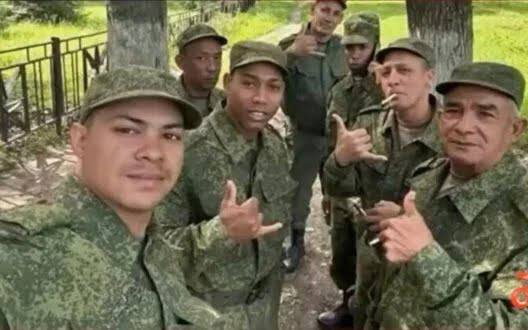


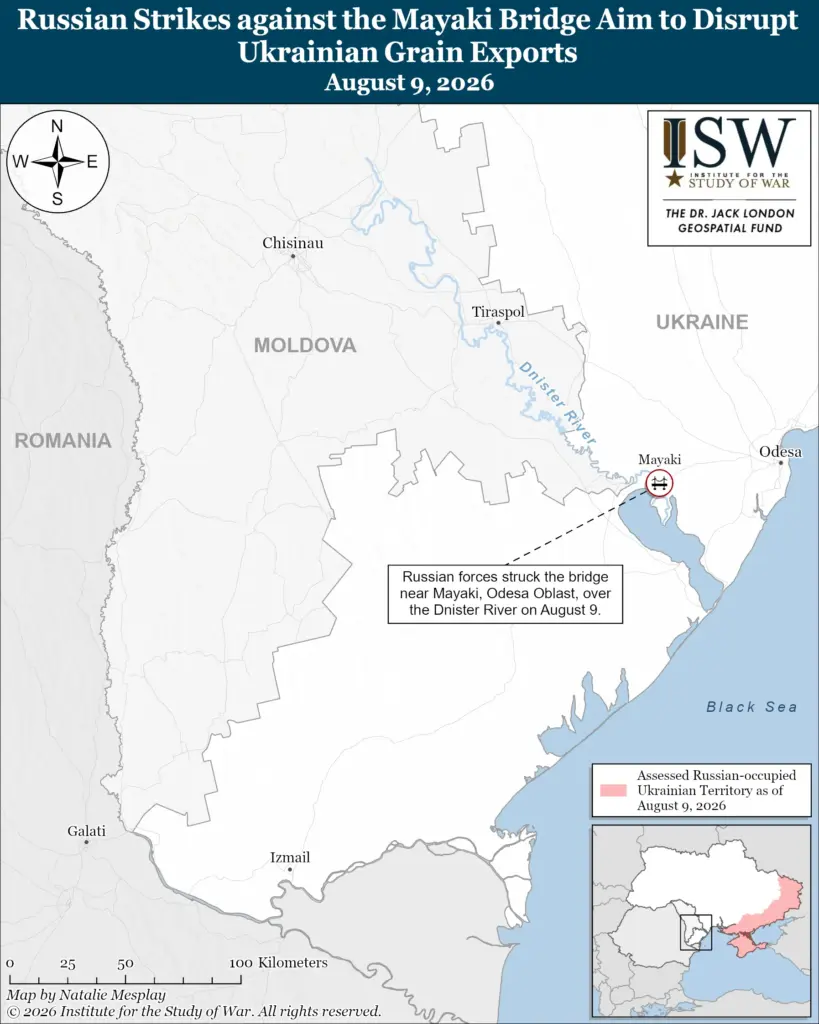
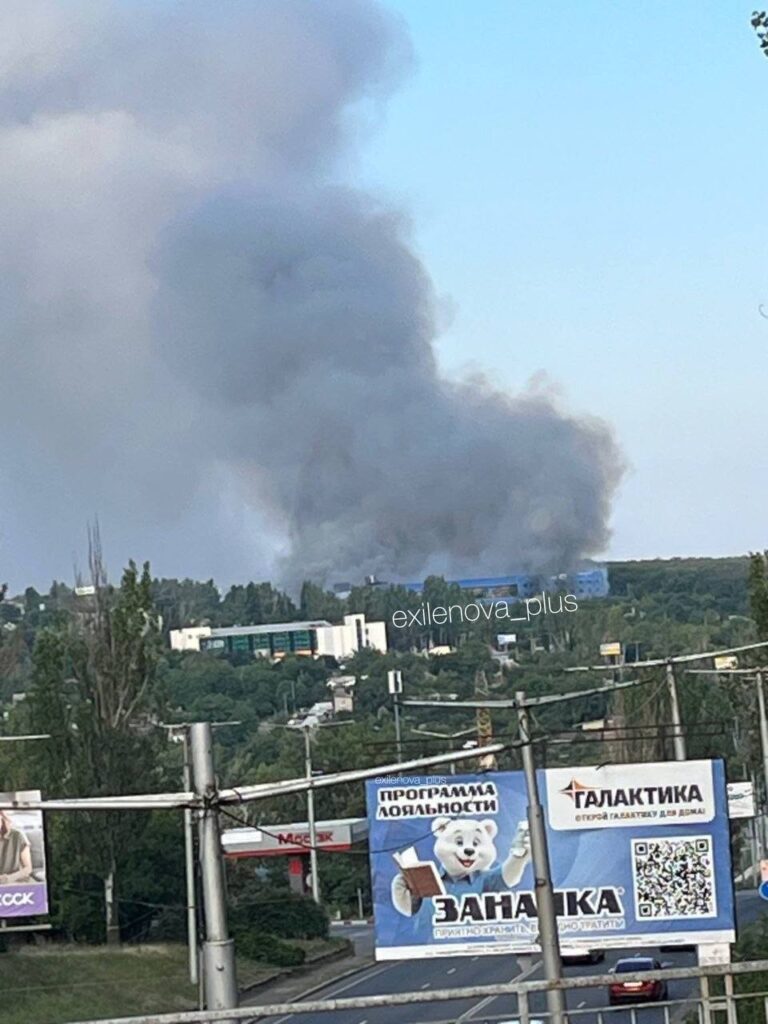

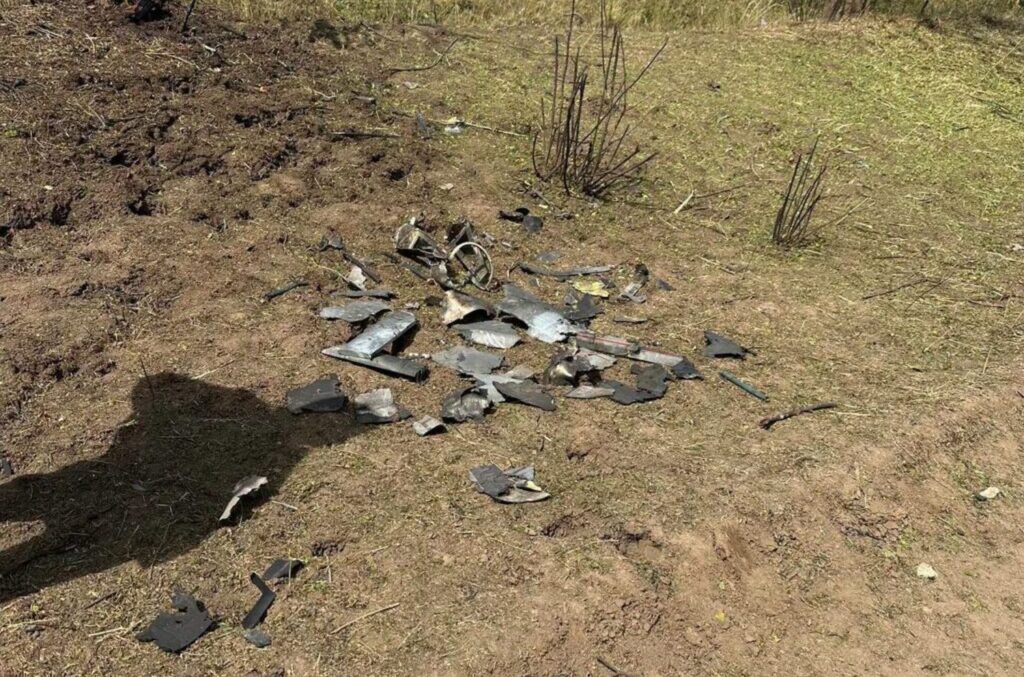

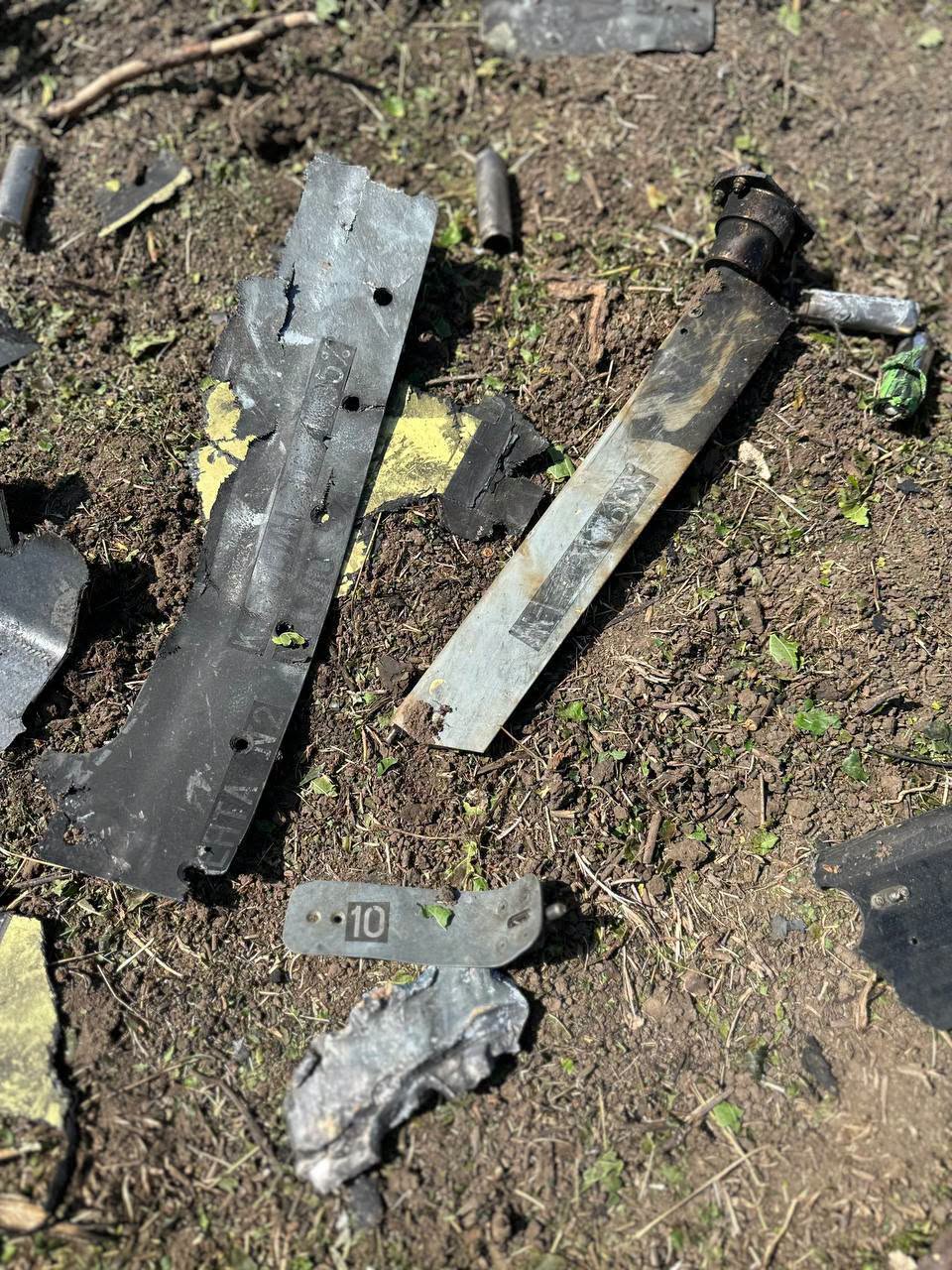
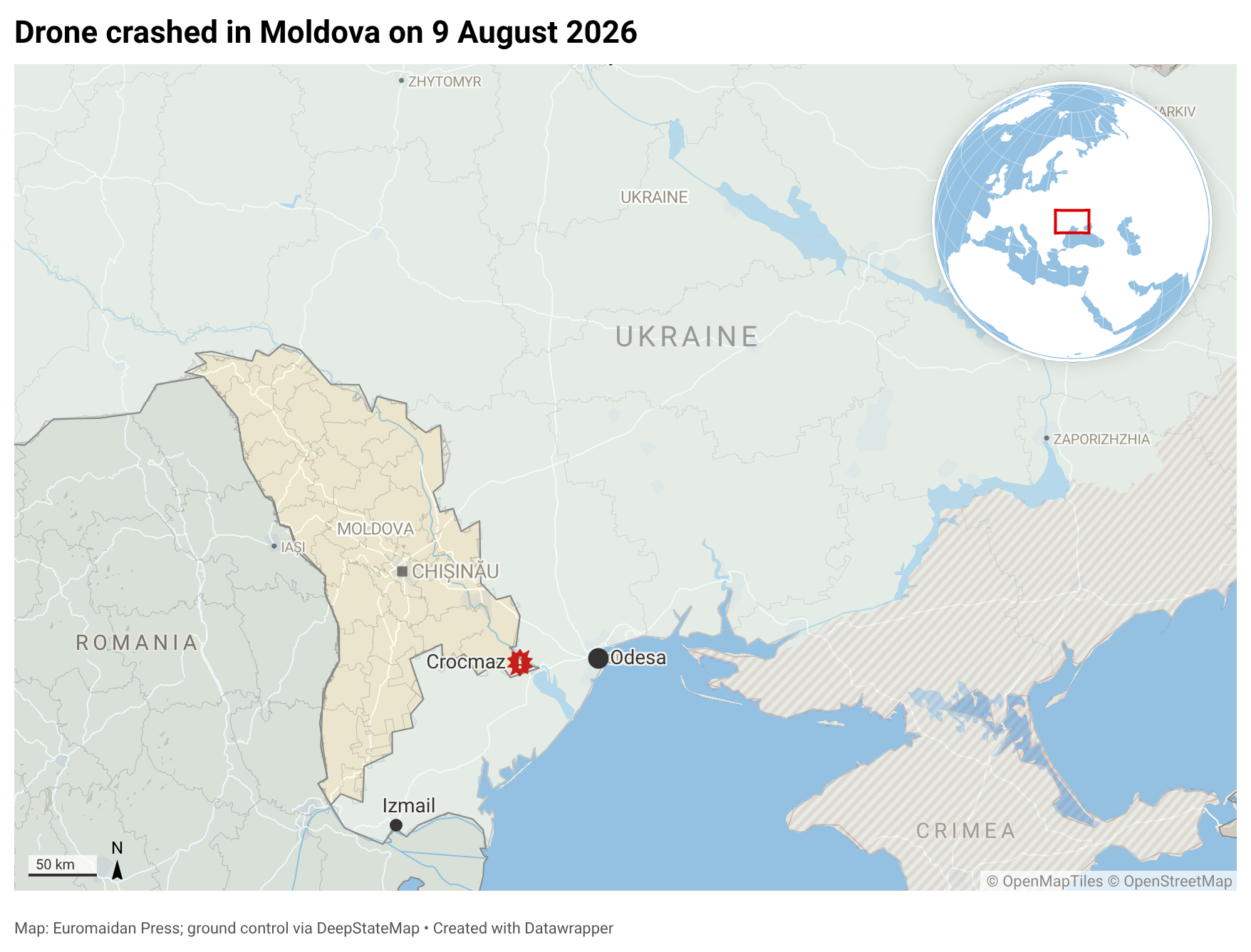
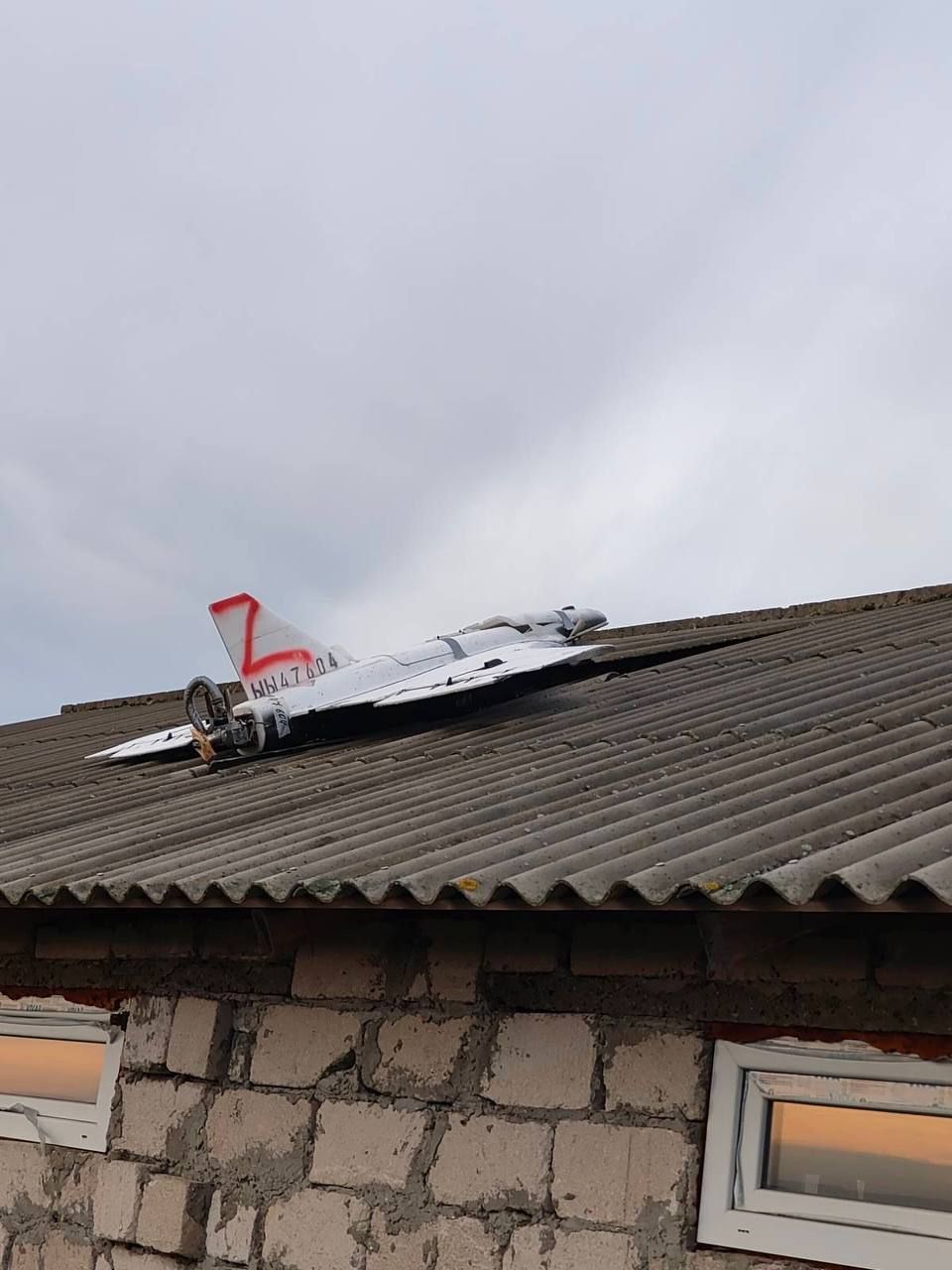
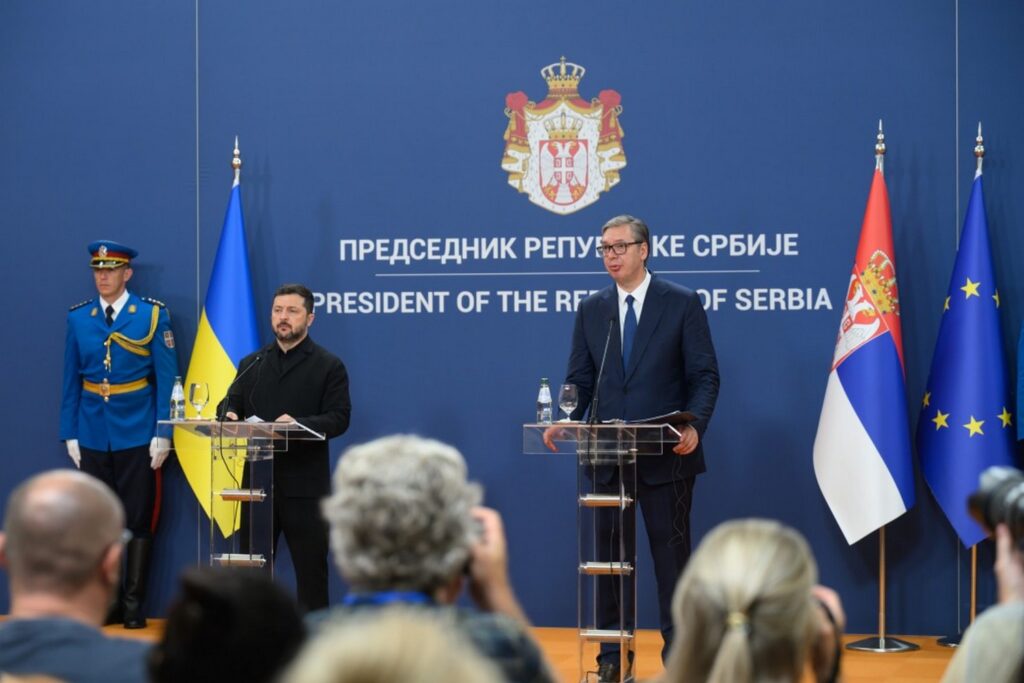

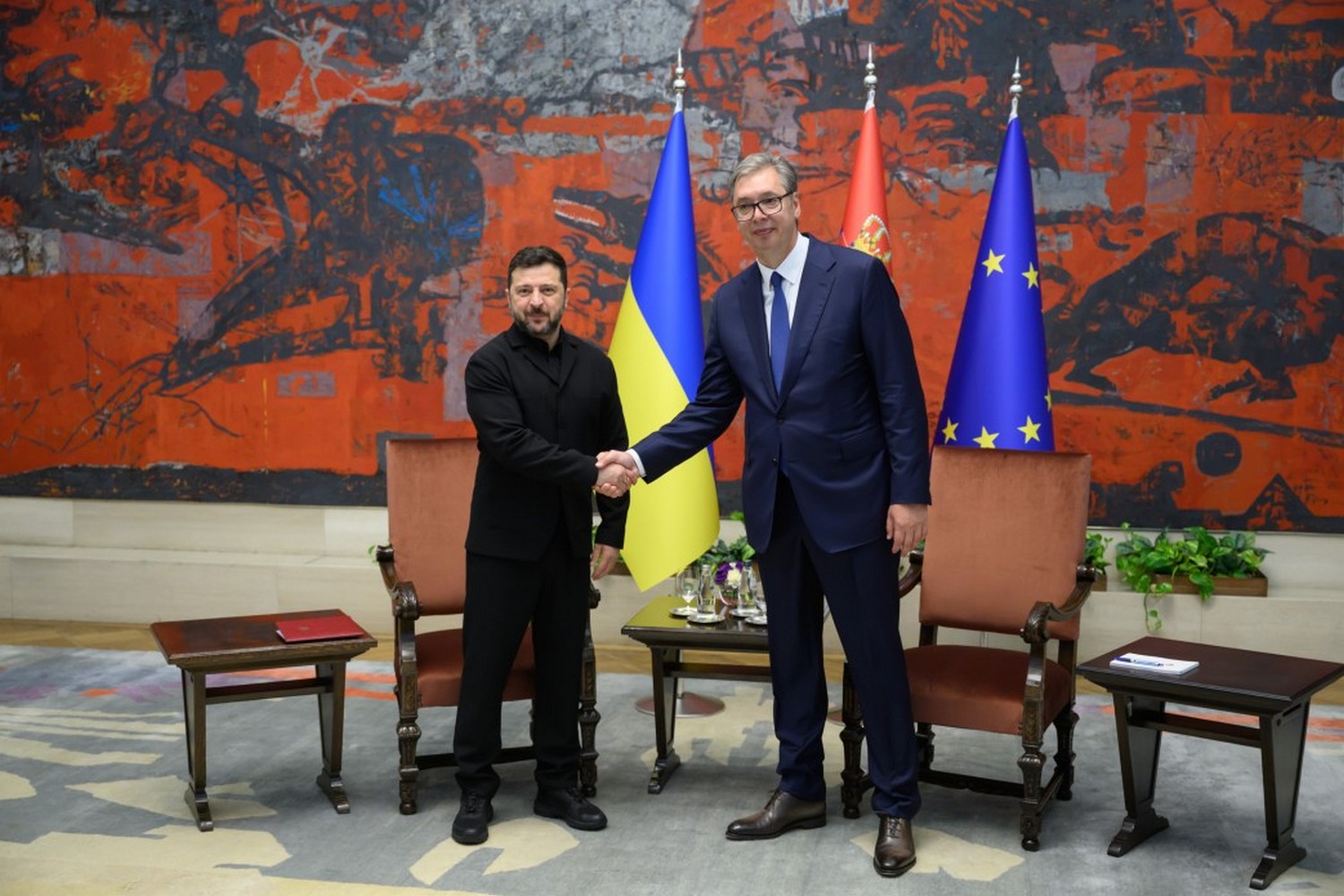
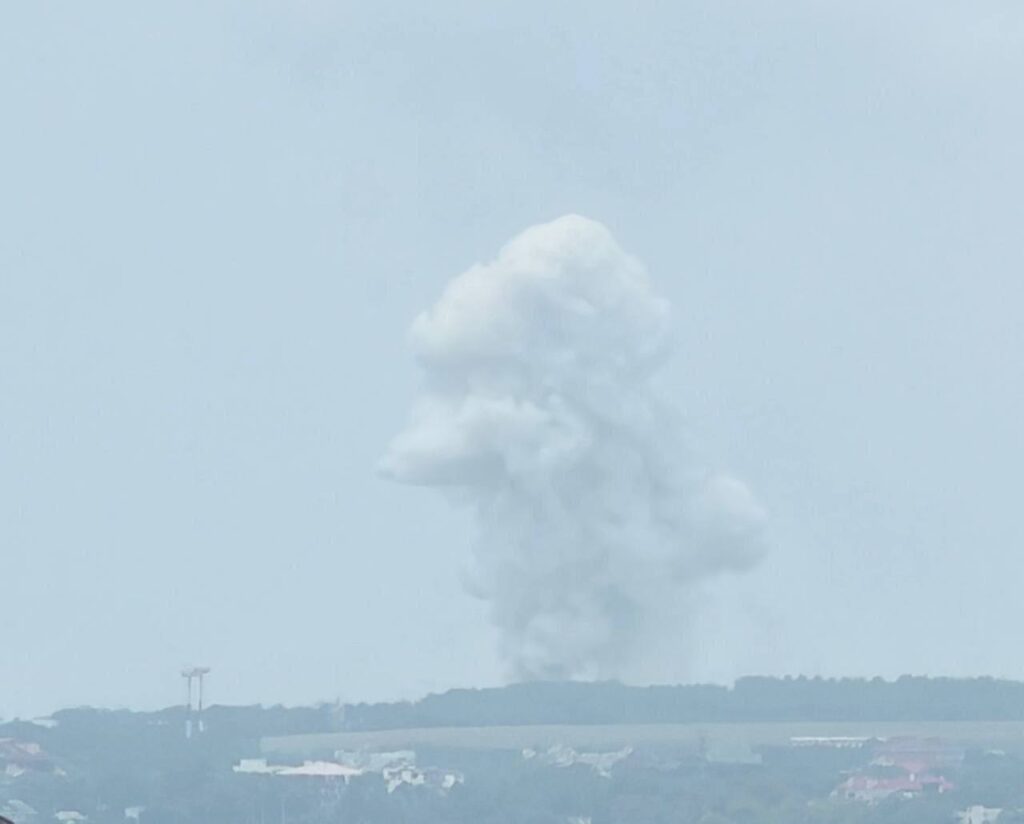
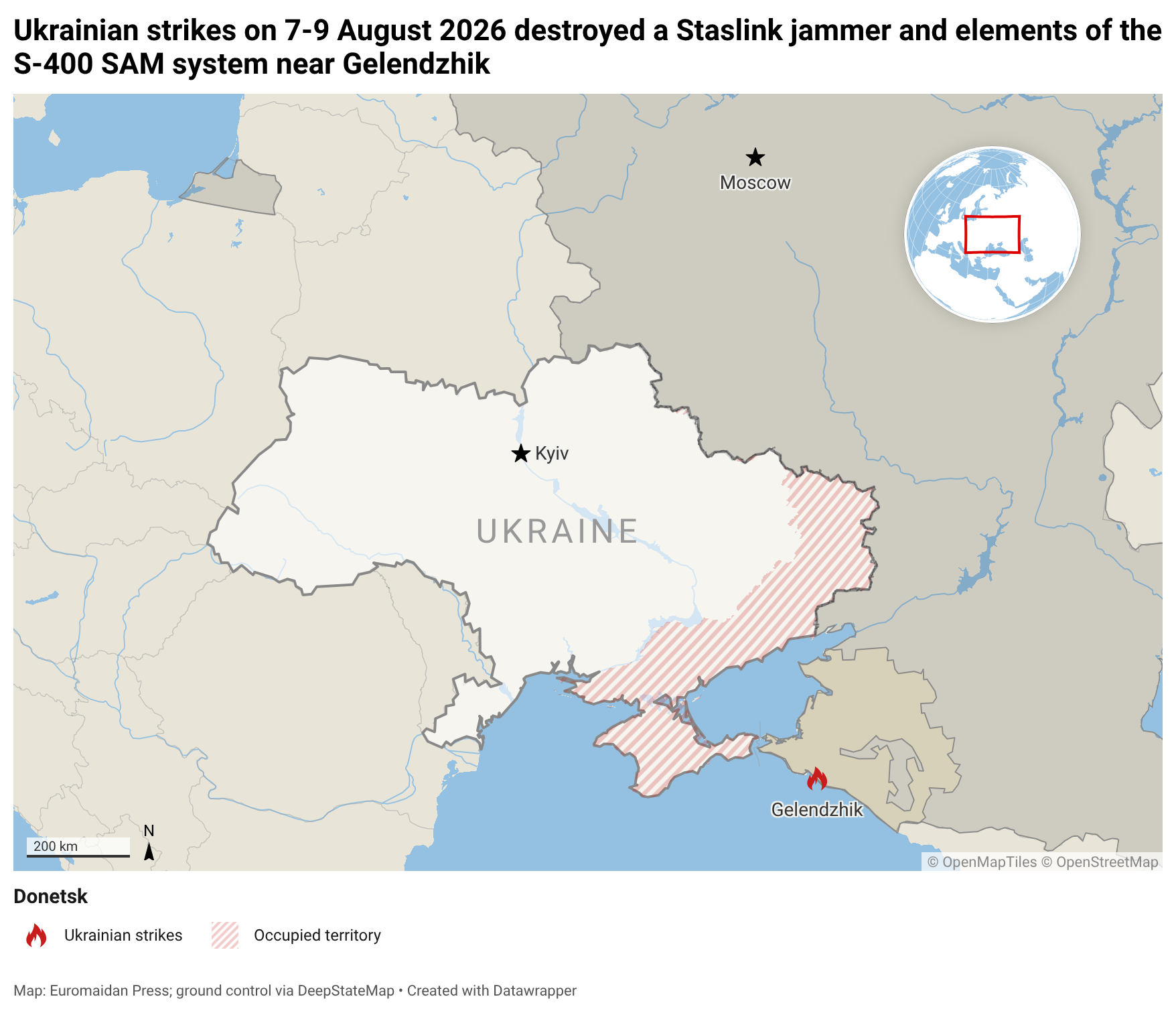

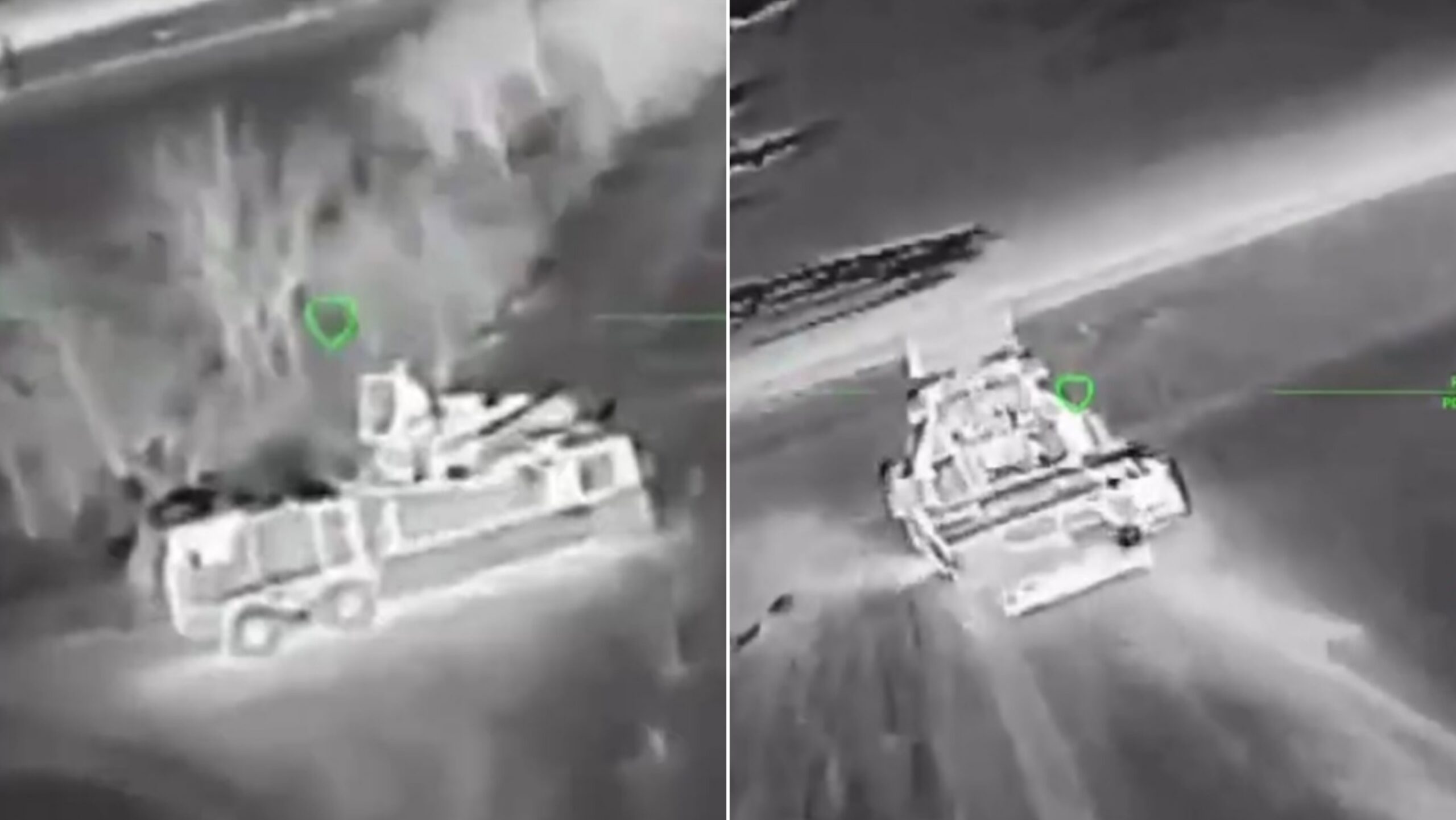
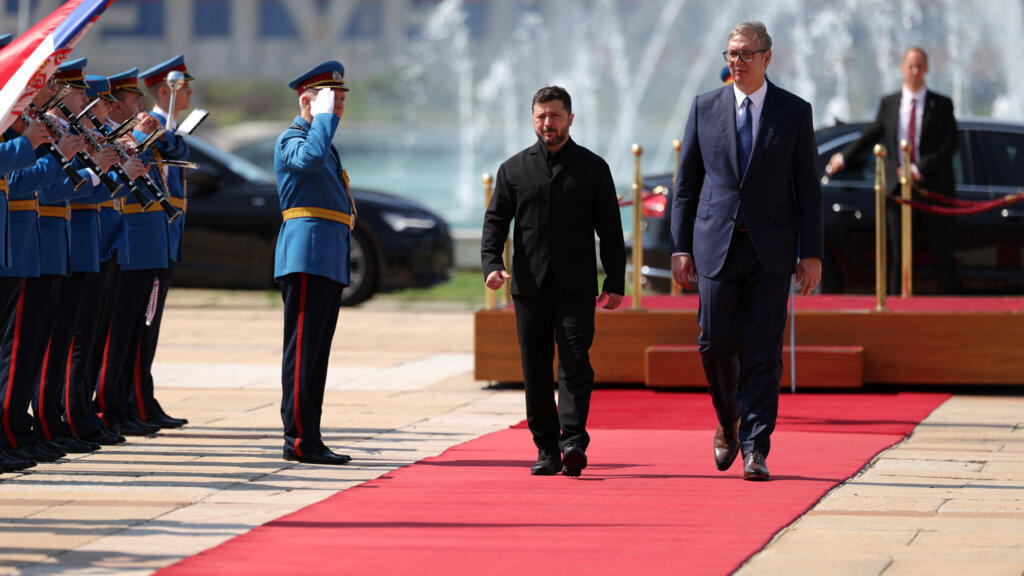
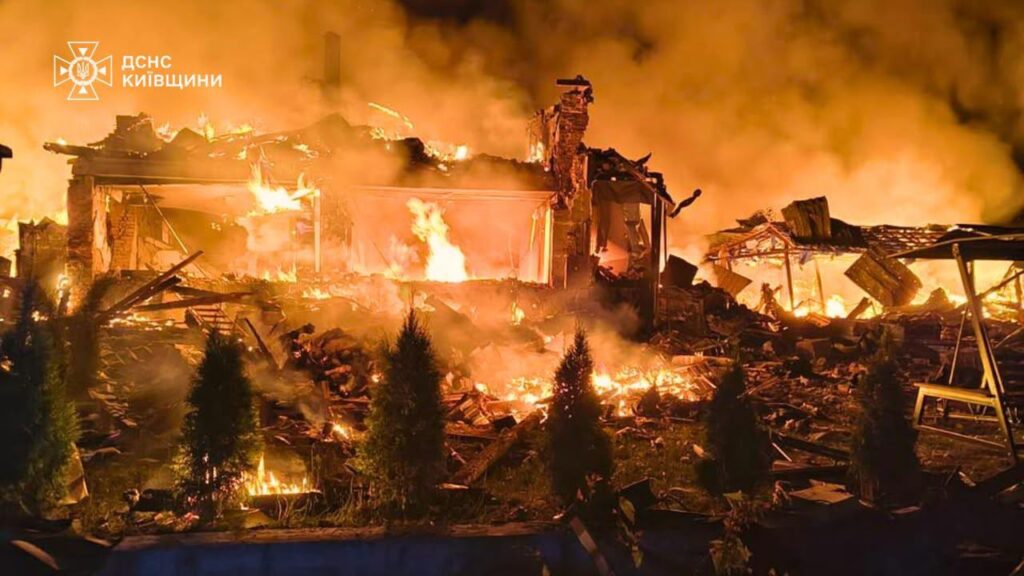
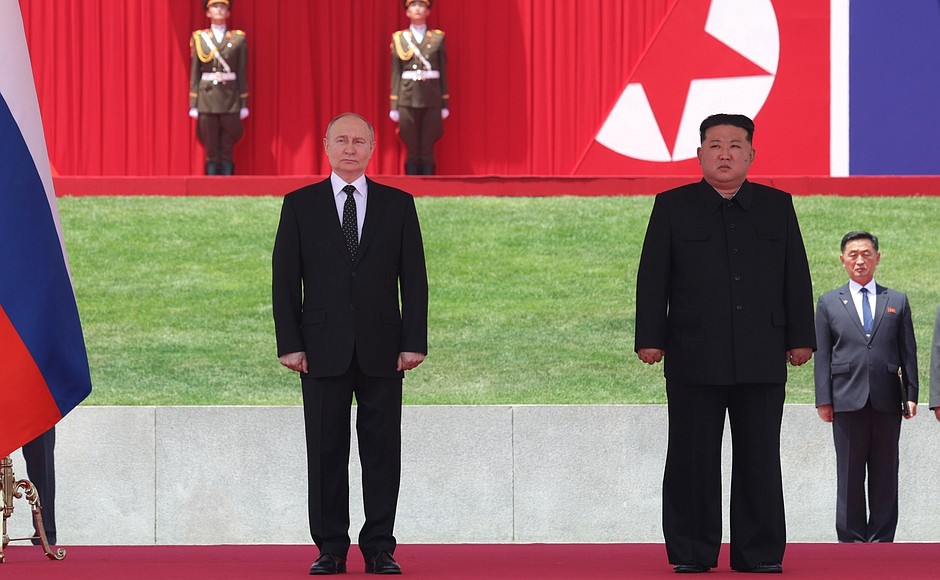

![Who Vibecoded This Upgrade? [en]](https://i0.wp.com/climbtothestars.org/wp-content/uploads/sites/8/2026/07/img_0240.jpg?fit=1200%2C900&ssl=1)
![Pas toujours dans les vieilles casseroles [en]](https://i0.wp.com/climbtothestars.org/wp-content/uploads/sites/8/2026/07/35c76ea9-d285-4f9f-bd2d-52ba55ca1fc8.jpg?fit=1200%2C899&ssl=1)