Connexion
Two Russian refineries burn – Orsk hit by drones 1,500 km out, Komsomolsk ablaze 6,500 km east
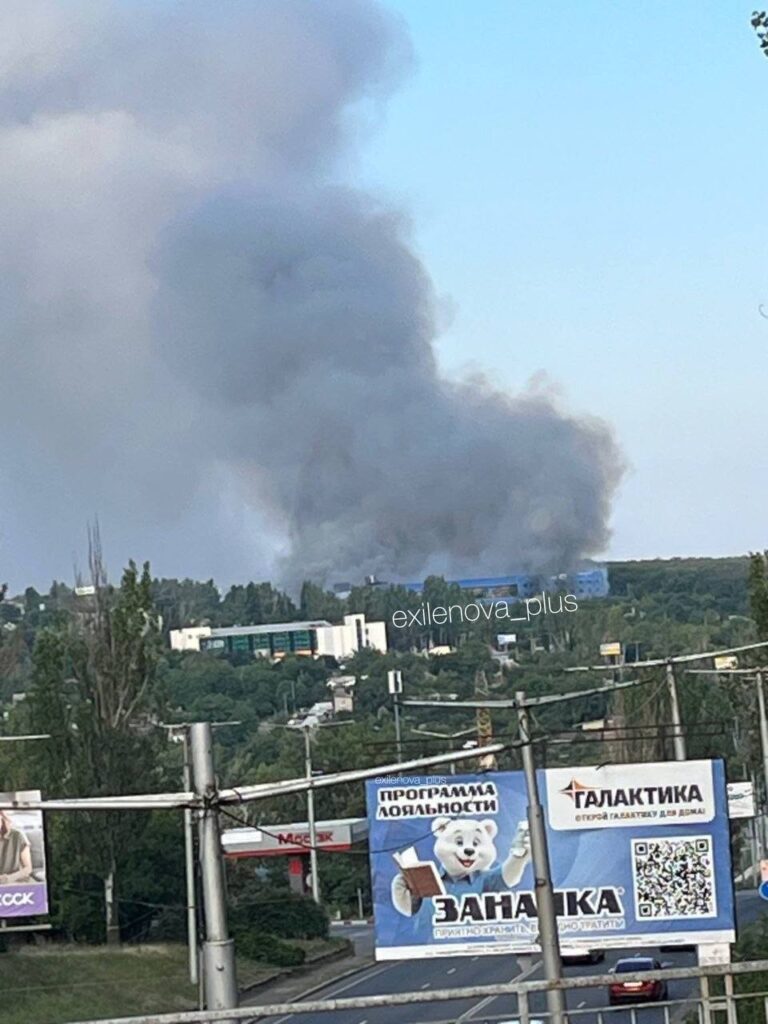
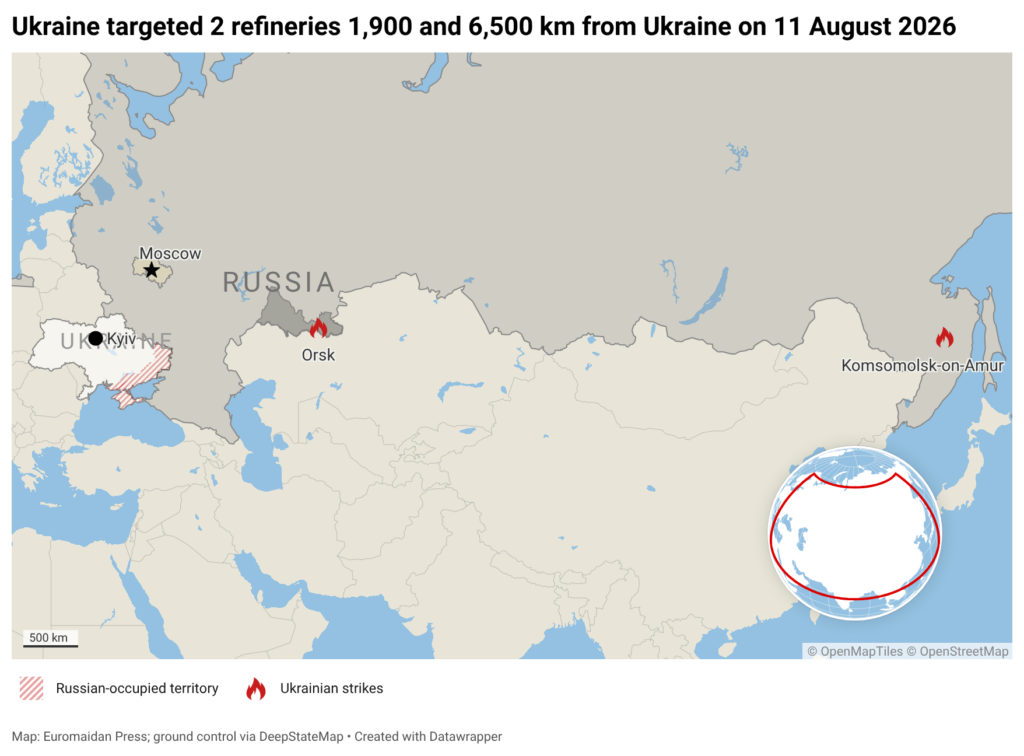
Two Russian oil refineries caught fire on 11 August, but the two incidents tell very different stories. In Orsk, in Orenburg Oblast, drones sparked a blaze that Ukrainian monitoring channels quickly linked to Kyiv's long-range campaign. Meanwhile, thousands of kilometers farther east, a Rosneft plant in Komsomolsk-on-Amur burned for reasons that remain unexplained.
A drone strike deep in Orenburg Oblast
Early on 11 August, residents of Orsk reported explosions near the Orsknefteorgsintez refinery, and a large fire soon followed. OSINT analysts at the Telegram channel Exilenova+ reported the strike. By their assessment, the drones flew more than 1,500 kilometers from Ukraine's border to reach Orsk. Preliminary findings pointed to damage at the plant's hydrocracking complex. Modernized in recent years, the unit can process 1.6 million tonnes a year.
Russian officials confirmed the attack, though they did not name the target at first. Orsk Mayor Artem Vorobyov urged residents to stay indoors and away from windows. Orenburg Governor Yevgeny Solntsev, meanwhile, activated the "Kovyor" (Carpet) airspace-safety plan across a 100-kilometer radius. Authorities also imposed temporary flight restrictions at the Orsk airport.
"The strike drones covered more than 1,500 kilometers from Ukraine's border to reach Orsk—among the deepest targets yet in the refinery campaign," Exilenova+, via OSINT monitoring
An unexplained blaze in the Far East
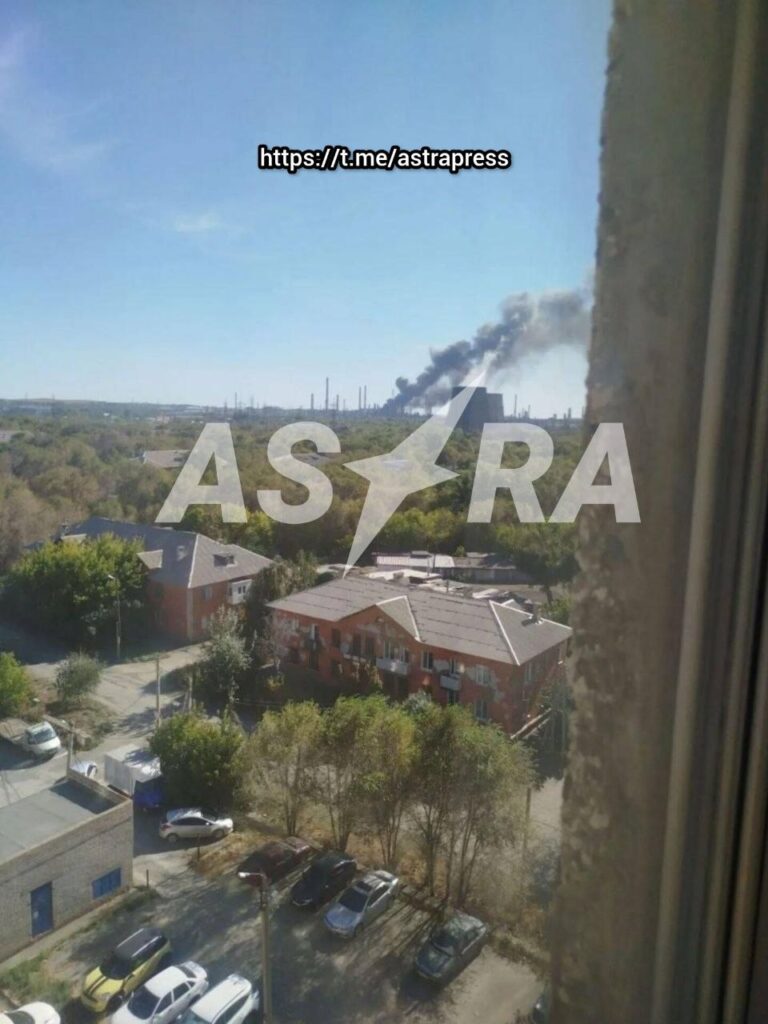
Far to the east, the picture is murkier. Around 11:00 local time, residents of Komsomolsk-on-Amur reported a fire near the city's refinery. ASTRA then geolocated the footage to Rosneft's RN-Komsomolsk plant. Notably, Ukrainian analysts cautioned that the fire does not appear to stem from a drone strike. After all, the site sits roughly 6,500 kilometers from Ukraine—far beyond the range of Kyiv's long-range drones. Coverage from the Kyiv Independent, meanwhile, flagged no clear cause.
The plant's press service reported no injuries, as relayed by Russian state agency TASS. Commissioned in 1942, the RN-Komsomolsk refinery has a design capacity of about 8 million tonnes of crude per year. In fact, it supplies more than 60% of the petroleum products across Russia's Far Eastern Federal District. Moreover, it produces gasoline, diesel, marine fuel, and other products for the region.
Ukraine's campaign against Russian oil refineries
The Orsk plant is no stranger to such strikes. Drones previously hit Orsknefteorgsintez on 3 October and 11 November 2025, and again on 29–30 April 2026. Since 2022, Ukraine has widened its deep-strike campaign against Russian oil refineries, fuel depots, and pipelines. Such targets power the Kremlin's army and bankroll the war through oil exports. Increasingly, Russian oil refineries have become the signature target of Ukraine's long-range war. Just the night before, on 10 August, Ukraine's General Staff confirmed a strike on the TANECO refinery in Tatarstan. A fire broke out there, too.
As of publication, Kyiv had not claimed the 11 August Orsk strike. Still, the timing fit a familiar pattern—a long-range campaign aimed at the fuel that keeps Russia's war machine moving.
Read also
-
Ukraine’s security service breaks up two schemes registering Starlink terminals for Russia
-
Russia’s education minister calls it “objective.” A new textbook teaches Ukrainian children that their occupied region is historically Russian
-
A $300 FPV downs a $20,000 bomber drone. Ukraine tests an EW shield for it