Vue normale

Putin calls Zelenskyy’s airspace warning “state terrorism” as shares in Russia’s national airline fall 5%

2 septembre 2026 à 05:17

Vladimir Putin stands behind a lectern during a press conference, with the RIA Novosti logo visible above him.

Russian President Vladimir Putin said Moscow would “find a way to respond” if civilian “tragedies” followed President Volodymyr Zelenskyy’s warning that Ukrainian drone operations were making Russian skies unsafe. Zelenskyy told foreign airlines and insurers that the “safe moments” in Russian airspace were over.

Zelenskyy’s warning seeks to extend the cost of Russia’s war beyond damaged military and energy facilities to airlines, insurers, and travelers. It does not mean Russian airspace is legally or completely closed. However, carriers that continue flying over Russia face higher costs from repeated airport shutdowns during drone alerts, as well as the danger that military activity in Russian airspace could endanger civilian aircraft.

Putin spoke after a 1 September Shanghai Cooperation Organization summit in Bishkek, where Russia and China coordinate regional security. Zelenskyy’s warning amounted to “a bid for state terrorism” if he had made it publicly, the Russian president said, adding that Russia does not negotiate with “terrorists.” Putin also said Russian forces were preparing massive strikes on Ukraine’s energy infrastructure.

In his evening video address, Zelenskyy said Ukraine did not threaten civilian aircraft but would keep striking Russian military targets and parts of the economy supporting the war. Ukraine’s Presidential Office head Kyrylo Budanov backed the decision, saying long-range weapons would systematically strike military targets in Russia while the invasion continued.

Ukrainian President Volodymyr Zelenskyy during his evening address, 1 September 2026. Screenshot from video: Zelenskyy
Explore further

“Russian airspace will effectively be closing”: Zelenskyy warns airlines Russian skies are no longer safe

Shares in Aeroflot, Russia’s national airline, fell to an intraday low of 30.36 rubles at about 20:40 Moscow time, down 5.11%, Meduza reported, citing Moscow Exchange data. The timing does not establish that Zelenskyy’s speech alone drove the decline.

Wall Street Journal correspondent Yaroslav Trofimov posted a chart of the decline on X, writing, “Aeroflot shares after Zelensky’s warning.”

Aeroflot shares after Zelensky’s warning. https://t.co/L7h2S99jqT pic.twitter.com/Q80gPfYWlo

— Yaroslav Trofimov (@yarotrof) September 1, 2026

European and US carriers already avoid Russian airspace, but airlines from China, Türkiye, the United Arab Emirates, and other Gulf states continue using it, Reuters reported. Aviation-risk firm Osprey Flight Solutions assessed that daily attacks deep inside Russia were nearly certain through 2026 and warned of possible misidentification.

Andrii Kovalenko, head of Ukraine’s Center for Countering Disinformation, said it was “strange” to hear terrorism accusations from “the leader of a terrorist organization masquerading as the Russian state.” Putin’s reaction showed Moscow feared pressure on its airspace, he argued.

Previous closures of Russian airspace due to Ukrainian attacks

Russian airports were repeatedly shut during Ukrainian drone alerts well before Zelenskyy’s warning. On 6 July 2025, Moscow airports canceled 171 flights while airports in five other cities suspended operations.

A 27 May attack closed airports serving Moscow and several other cities after Russia claimed it intercepted 99 drones. Another wave caused flight disruption and mobile internet outages around Moscow, while a 29 May alert again halted flights at Moscow airports.

More recently, Russian authorities restricted operations at Moscow airports during Ukrainian drone attacks, delaying more than 450 flights

“Russian airspace will effectively be closing”: Zelenskyy warns airlines Russian skies are no longer safe

1 septembre 2026 à 16:40

Ukrainian President Volodymyr Zelenskyy during his evening address, 1 September 2026. Screenshot from video: Zelenskyy

Ukrainian President Volodymyr Zelenskyy warned airlines, insurers, and other aviation stakeholders on 1 September that Russian airspace is becoming increasingly dangerous as Ukrainian drones operate deeper inside the country.

The warning comes as Ukraine has increasingly carried out long-range drone strikes deep inside Russia, targeting military, energy, industrial, and other infrastructure. Russian authorities have repeatedly reported temporary airport closures and flight disruptions during drone attacks as part of air defense measures.

“We want to warn every airline that uses Russian airspace, every insurer, and everyone who still uses Russia’s key airports: Russian airspace is becoming completely unsafe,” Zelenskyy said.

“Russian airspace will effectively be closing”

Zelenskyy said Ukraine does not intend to threaten civilian aviation or civilian aircraft, but warned that the growing presence of drones over Russia means airlines must account for the risks.

“We in Ukraine do not want innocent lives to be lost. That is why we are warning our partners: the safe days in Russia’s skies are over,” he said.

Zelenskyy accused Russian authorities of failing to properly inform airlines about the risks, saying they have not adequately communicated the growing danger posed by drones in Russian airspace.

“Although the Russian authorities are not properly informing people about this, Russian airspace will effectively be closing,” Zelenskyy said, arguing that Russia’s war against Ukraine is making its own airspace unsafe.

Zelenskyy warned that the growing scale of Ukrainian drone operations over Russia will have to be factored into aviation risks. “There will simply be drones in Russia’s skies on a scale that has to be taken into account,” he said.

He called on foreign ambassadors in Ukraine and Russia to relay the warning to their governments, and said Ukraine’s Foreign Ministry and other institutions would provide international organizations with information about the risks to Russian airspace.

“Drone-infested skies are no place for civilian aviation,” Zelenskyy said.

Ukraine closed its skies in 2022. Russia has kept flying

The warning highlights a stark difference between the two countries. Ukraine has kept its airspace closed to civilian aviation since Russia launched its full-scale invasion in February 2022. 

The risk is familiar to Ukraine. Russian forces have repeatedly attacked Ukrainian airports and aviation infrastructure during the full-scale invasion, making the continued operation of civilian aviation impossible.

Russia is also responsible for the 2014 downing of Malaysia Airlines Flight MH17 over occupied eastern Ukraine, which killed all 298 people aboard, showing the danger Russia’s military activities can pose to civilian aviation. 

Russia, meanwhile, has continued operating major airports and regular passenger flights despite Ukrainian drones increasingly reaching deep into its territory. EASA has warned that Russian air defenses responding to Ukrainian drone and missile attacks could pose risks to civilian aircraft, including through misidentification, particularly around major airports.

Russian airports increasingly disrupted by Ukrainian drones

Russian authorities have repeatedly restricted or suspended flights at Moscow and other airports during Ukrainian drone attacks. The disruptions have generally come as Russia activates air defenses against drones targeting military, energy, industrial, and logistics infrastructure.

Russia has also moved toward broader restrictions on civilian aviation. In June, Russia imposed new restrictions on light aircraft around Moscow and neighboring regions, while regular passenger and charter flights remained exempt.

The result is a growing disruption to Russian aviation even as Moscow continues to keep its main passenger airspace open: Ukrainian drones are not being used to target civilian aircraft, but their increasing presence is making normal aviation operations more difficult and forcing Russia to restrict or suspend flights during attacks.

Ukraine chooses three Western fighters to build its air force around. One of them can fly again from stretch of road in 15 to 20 minutes

29 août 2026 à 09:47

dassault says it’s ready send rafales ukraine — kyiv asks · post rafale fighter jet aviation da00044906_s french aircraft manufacturer has confirmed deliver jets requests le journal du dimanche reports

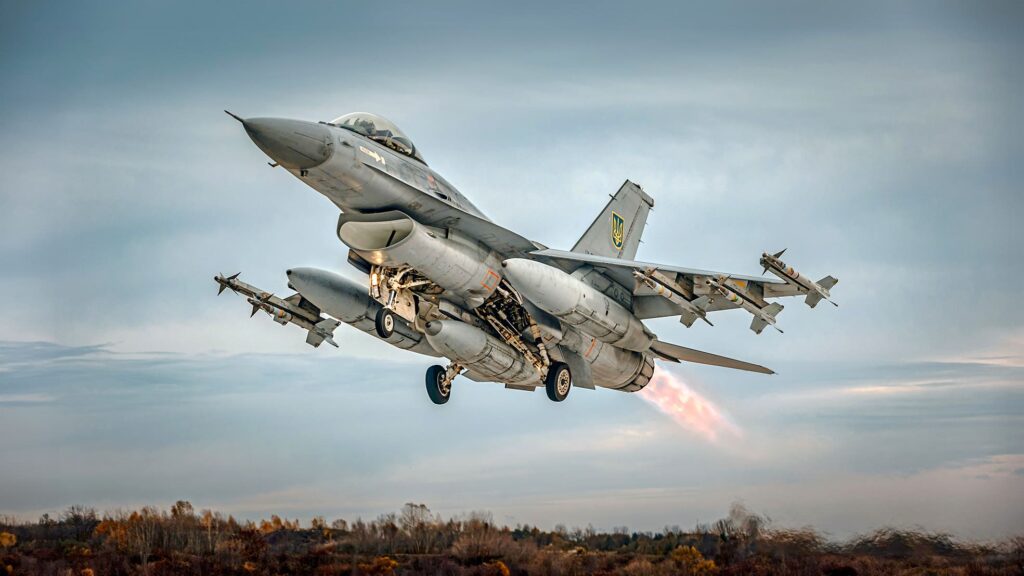
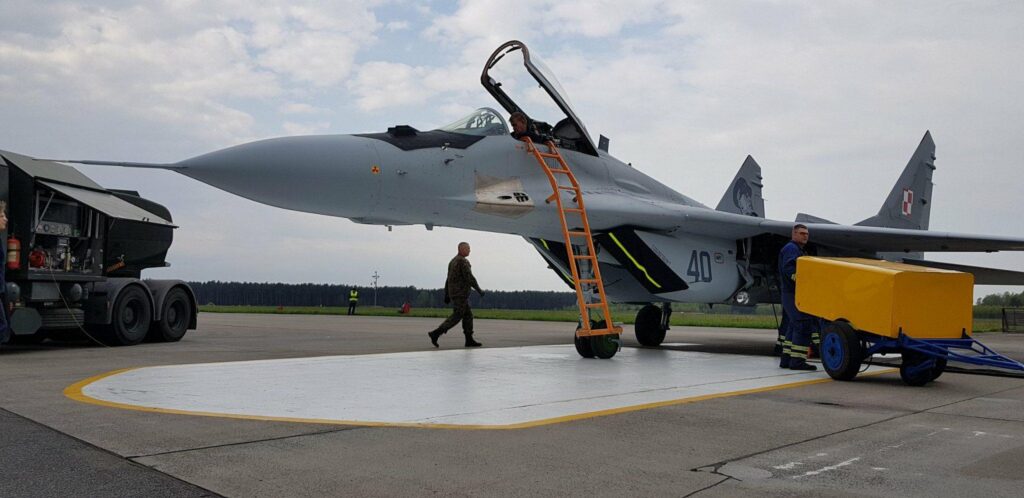
Ukraine has decided which Western fighters it will build its air force around. The Air Force settled on three platforms, the Swedish JAS 39 Gripen, the French Rafale, and the American F-16, aviation commander Colonel Oleksandr Diakiv said in a segment by the Air Force Command.

Ukraine entered the full-scale war flying Soviet-era jets and has spent three years assembling a Western fleet. F-16s arrived in 2024 and now fly combat missions. France has delivered Mirage 2000s, and Sweden has pledged to deliver Gripen. The choice narrows Ukraine's field to three types it can sustain, arm, and repair at war tempo.

The choice weighed more than performance

Ukraine assessed every platform that might suit it, Diakiv said, and concluded it could operate three with maximum effectiveness. The decision turned on aircraft and operating costs, weapons, logistics, parts availability, what Ukrainian infrastructure can support, and the speed of repairs and battle-damage recovery.

"We went through all the platforms that were possibly acceptable for us. And we came to the conclusion that Ukraine can use three platforms with maximum effectiveness," Diakiv explained.

The F-16 already operates in Ukraine, so the Air Force has both the aircraft and trained pilots, technicians, and specialists who know its quirks. That experience will speed the adoption of the other Western types, according to Diakiv.

The Gripen suits a country under fire

Also, Diakiv singled out the Gripen, a multirole fighter that can strike air and ground targets and carries Swedish and other European weapons. Its main advantage is that it demands little infrastructure.

The jet can operate from unprepared surfaces and stretches of road and requires minimal ground crew to prepare for another flight in 15 to 20 minutes, according to the commander.

The aircraft is only part of the system

Taking on a new platform is not a matter of handing over jets, Diakiv believes. Weapons, ground support, parts, logistics, and trained people all have to arrive together, and Ukrainian pilots, engineers, and logistics specialists are now training abroad.

"You can buy a plane, you can buy a missile, you can buy a bomb, but you cannot buy experience," Diakiv said.

That combat experience, according to the colonel, is increasingly shaping the aviation coalition, with allies helping Ukraine realize ideas drawn from its own fighting rather than only offering finished solutions.

  • ✇Euromaidan Press
  • Belgium lines up a “drone deal” to tap Ukraine’s war-tested know-how
    Ukraine and Belgium are drawing up a bilateral agreement to deepen cooperation on drones, President Volodymyr Zelenskyy said after meeting Belgian Foreign Minister Maxime Prévot in Kyiv on 18 August. The two also discussed strengthening Ukraine's air power and shielding it from Russian attacks. Cheap drones now decide much of the fighting, and Kyiv has turned years of learning to fly and defeat them into leverage—trading that edge for weapons and money with a lengthenin
     

Belgium lines up a “drone deal” to tap Ukraine’s war-tested know-how

20 août 2026 à 03:19

Volodymyr Zelenskyy, President of Ukraine, and Maxime Prévot, Belgium’s Deputy Prime Minister and Minister of Foreign Affairs, European Affairs, and Development Cooperation

Ukraine and Belgium are drawing up a bilateral agreement to deepen cooperation on drones, President Volodymyr Zelenskyy said after meeting Belgian Foreign Minister Maxime Prévot in Kyiv on 18 August. The two also discussed strengthening Ukraine's air power and shielding it from Russian attacks.

Cheap drones now decide much of the fighting, and Kyiv has turned years of learning to fly and defeat them into leverage—trading that edge for weapons and money with a lengthening line of Western partners.

A new deal takes shape

Teams on both sides are now writing the text of the Drone Deal and weighing possible dates to sign it, ArmyInform reported. Ukraine is ready to share its own expertise in unmanned systems with partners, Zelenskyy said.

Defense ran through the meeting, with both sides focused on strengthening Ukraine's combat aviation and defending its skies.

"I expect that we will be able to implement what we discussed, and there will be more protection from Russian strikes," Zelenskyy said.

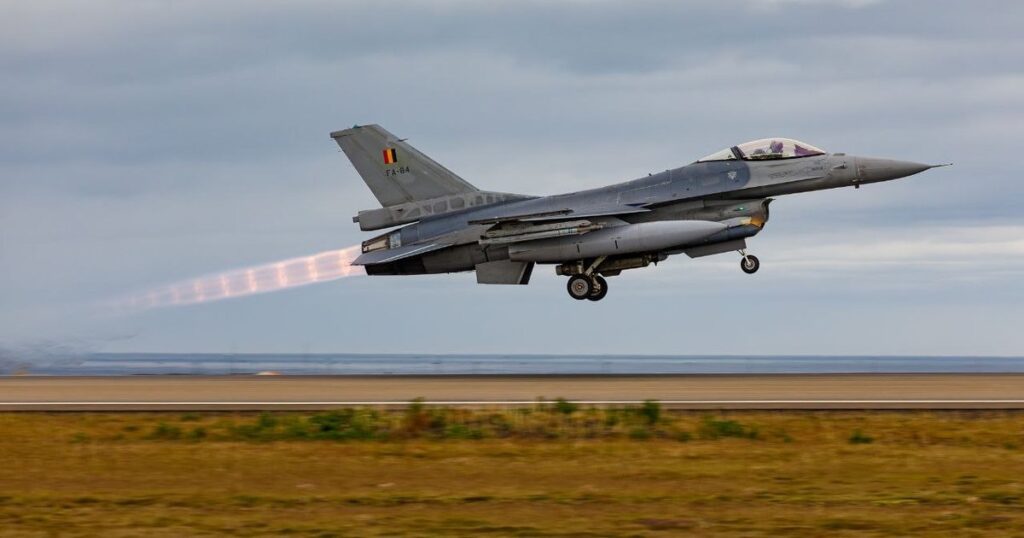
Belgium has promised 30 F-16 fighter jets—the largest F-16 pledge from any single country—though none have reached Ukraine yet, with deliveries tied to Belgium's own switch to newer aircraft.

For the first time, Ukrainian soldiers marched among the foreign troops in Brussels on 21 July 2026. Source: Freedom
Explore further

“First time”: Ukrainian troops joined Belgium’s National Day parade in Brussels

Belgium's deeper backing

Zelenskyy thanked Belgium for more than $1.28 billion in support this year, covering defense and civilian needs alike, and for backing Ukraine's move toward the European Union. The military share flows from a standing pledge: since 2025, Belgium has committed to at least $1.16 billion in defense aid a year.

A 2024 security pact locked in that relationship, making a small Western European country one of Ukraine's steadier partners. Belgian firms also service the F-16s Ukraine already flies, the jets delivered by other partners in the coalition.

28-year-old technician died dispersing helicopters to hide them from Russian strikes. Questions arise about what really happened

8 août 2026 à 06:17

woman dies kyiv basement baby killed russia attacks ukraine record 800+ drones helicopter extinguising fires after russian air attack overnight 7 2025 telegram/ihor klymenko 32581a6d-11b2-4cd8-bbc9-428c4e0207dc early hours launched one its

A young Ukrainian aviation technician has been killed in a helicopter crash on a combat mission. A military helicopter crashed during a combat flight mission in Kirovohrad Oblast on 31 July, the Smila City Council reports.

The crash claimed the life of a 28-year-old who serviced the aircraft that defends Ukraine's skies. Senior Lieutenant Yaroslav Demchevskyi, a 28-year-old onboard aviation technician of a helicopter flight in a helicopter squadron of a Ukrainian military unit, died when the helicopter fell.

He died on a mission to protect the aircraft

Demchevskyi was killed while carrying out a specific task. He died during a combat flight mission to disperse aviation equipment when the helicopter fell, according to the city council. The city honored his service.

"Yaroslav Demchevskyi died carrying out a combat flight mission to disperse aviation equipment as a result of the helicopter's fall. He defended the Ukrainian sky to the last," the Ukrainian authorities said.

The cause has not been disclosed

The circumstances of the crash remain unexplained. Neither the Ministry of Defense nor the Air Force has published data on the causes of the helicopter's crash in Kirovohrad Oblast.

Information about the incident became known only through the Smila City Council's official announcement about organizing the farewell ceremony for Demchevskyi. Without an official account from the military, the cause, whether a technical failure, an accident, or Russian action, is not established.

A loss recorded by a hometown

For now, the fullest account of Demchevskyi's death comes from the community that will bury him.

The dispersal mission that killed him is itself a mark of the war: aircraft must be constantly moved and hidden because Russia hunts them on the ground, and it was in that work, safeguarding the machines that defend the sky, that Demchevskyi lost his life. He was 28.

  • ✇The Kyiv Independent
  • Russian transport minister fired by Putin reportedly shoots himself dead
    Editor's note: This is a developing story and is being updated.Russia's former Transport Minister Roman Starovoit shot himself dead in Odintsovo following his dismissal by President Vladimir Putin on July 7, the pro-government newspaper Izvestia reported, citing unnamed sources.Starovoit's ouster came after nearly 500 flights were grounded at major Russian airports on July 5–6 due to security threats from Ukrainian drone attacks.The following day, an explosion aboard the Eco Wizard tanker at the
     

Russian transport minister fired by Putin reportedly shoots himself dead

7 juillet 2025 à 09:10
Russian transport minister fired by Putin reportedly shoots himself dead

Editor's note: This is a developing story and is being updated.

Russia's former Transport Minister Roman Starovoit shot himself dead in Odintsovo following his dismissal by President Vladimir Putin on July 7, the pro-government newspaper Izvestia reported, citing unnamed sources.

Starovoit's ouster came after nearly 500 flights were grounded at major Russian airports on July 5–6 due to security threats from Ukrainian drone attacks.

The following day, an explosion aboard the Eco Wizard tanker at the Ust-Luga port in Leningrad Oblast triggered an ammonia leak, adding to the crisis engulfing Russia's transportation sector.

Starovoit, sanctioned by Ukraine and Western countries for his role in the war against Ukraine, had served as governor of Russia's Kursk Oblast before being appointed transport minister in May 2024.

According to Russian media, Starovoit's body was found near Moscow. Preliminary findings suggest that the suicide may be linked to a possible criminal case.

Media outlets report that the former minister shot himself using an honorary firearm he had received from the Interior Ministry in 2023.

According to media reports, former Kursk Oblast official Aleksei Smirnov, who had previously served as Starovoit's deputy, had provided testimony implicating Starovoit. Smirnov himself was arrested earlier on suspicion of embezzling 1 billion rubles (over $12 million) during the construction of defensive structures in the border region.

An investigation into the large-scale theft of state funds in Kursk Oblast is currently underway, with several of Starovoit's former deputies remaining under suspicion, including Smirnov, who briefly served as acting governor.

State-controlled RIA Novosti, citing Russia's Investigative Committee, reported that Starovoit's body was discovered inside his private vehicle with a gunshot wound. Investigative teams from Russia's Main Investigative Directorate are reportedly working at the scene to determine the exact circumstances. The primary theory under consideration is suicide.

The timing of the death remains unclear. Andrei Kartapolov, head of the State Duma Defense Committee, confirmed the death to RTVI, stating only that it occurred "quite some time ago," without elaborating further.

Death of top Russian oil executive fuels fresh scrutiny of elite’s ‘window falls’
The unexplained death of a top Russian oil executive on July 4 is fueling renewed scrutiny over the rising number of high-profile Russian officials and businessmen who have died under mysterious circumstances, specifically, have fallen out of windows. Andrei Badalov, vice president of Transneft, Russia’s largest state-controlled pipeline transport company,
Russian transport minister fired by Putin reportedly shoots himself deadThe Kyiv IndependentTim Zadorozhnyy
Russian transport minister fired by Putin reportedly shoots himself dead
  • ✇The Kyiv Independent
  • After airport chaos, tanker blast, Putin fires Russian transport minister
    Russian President Vladimir Putin dismissed Transport Minister Roman Starovoit on July 7, following a series of high-profile disruptions to Russia's aviation and shipping sectors.The official decree was published on Russia's legal information portal. No reason was given, but Starovoit's departure comes after nearly 300 flights were grounded at major Russian airports on July 5–6 due to security threats from Ukrainian drone attacks.Adding to the turmoil, an explosion aboard the Eco Wizard tanker at
     

After airport chaos, tanker blast, Putin fires Russian transport minister

7 juillet 2025 à 03:45
After airport chaos, tanker blast, Putin fires Russian transport minister

Russian President Vladimir Putin dismissed Transport Minister Roman Starovoit on July 7, following a series of high-profile disruptions to Russia's aviation and shipping sectors.

The official decree was published on Russia's legal information portal. No reason was given, but Starovoit's departure comes after nearly 300 flights were grounded at major Russian airports on July 5–6 due to security threats from Ukrainian drone attacks.

Adding to the turmoil, an explosion aboard the Eco Wizard tanker at the Ust-Luga port in Leningrad Oblast caused an ammonia leak on July 6, prompting an emergency response.

Starovoit, sanctioned by Ukraine and Western countries for his role in the war against Ukraine, had served as governor of Russia's Kursk Oblast before being appointed transport minister in May 2024.

According to the Russian state-controlled newspaper Vedomosti, Deputy Transport Minister Andrei Nikitin, a former Novgorod Oblast governor, is a leading candidate to replace Starovoit.

On July 6, the Russian Federal Aviation Agency confirmed that 287 flights were delayed or canceled at Moscow's Sheremetyevo Airport, St. Petersburg's Pulkovo Airport, and Nizhny Novgorod's Strigino Airport due to safety concerns from drone activity.

Kyiv's drone campaign, which has increasingly disrupted civilian air travel in Russia, is part of Ukraine's broader strategy to undermine Russia's logistics far beyond the front line.

Russian authorities said the ammonia leak at Ust-Luga was "minor," but the pro-Kremlin Telegram channel, Baza, reported that an unexplained explosion preceded the incident.

The Eco Wizard tanker is believed to be part of Russia's "shadow fleet" — a network of vessels used to bypass international sanctions on Russian oil and chemical exports. Five tankers have been damaged by explosions at Russian ports since the start of 2025.

The Kremlin has not made a formal statement on the minister's dismissal.

Death of top Russian oil executive fuels fresh scrutiny of elite’s ‘window falls’
The unexplained death of a top Russian oil executive on July 4 is fueling renewed scrutiny over the rising number of high-profile Russian officials and businessmen who have died under mysterious circumstances, specifically, have fallen out of windows. Andrei Badalov, vice president of Transneft, Russia’s largest state-controlled pipeline transport company,
After airport chaos, tanker blast, Putin fires Russian transport ministerThe Kyiv IndependentTim Zadorozhnyy
After airport chaos, tanker blast, Putin fires Russian transport minister
  • ✇The Kyiv Independent
  • Russia reportedly redeploys bombers to Far East bases after Ukraine's Operation Spiderweb
    Russia has redeployed dozens of long-range bombers to more remote bases within the country, Russian independent media outlet Agentstvo reported on June 11, citing OSINT analyst AviVector.The relocation comes in the wake of Ukraine's Operation Spiderweb, the unprecedented mass drone strike on June 1 that targeted four Russian air bases deep inside the country.  The Security Service of Ukraine (SBU) said 117 drones were launched from hidden positions across Russia, damaging 41 aircraft, including
     

Russia reportedly redeploys bombers to Far East bases after Ukraine's Operation Spiderweb

12 juin 2025 à 10:28
Russia reportedly redeploys bombers to Far East bases after Ukraine's Operation Spiderweb

Russia has redeployed dozens of long-range bombers to more remote bases within the country, Russian independent media outlet Agentstvo reported on June 11, citing OSINT analyst AviVector.

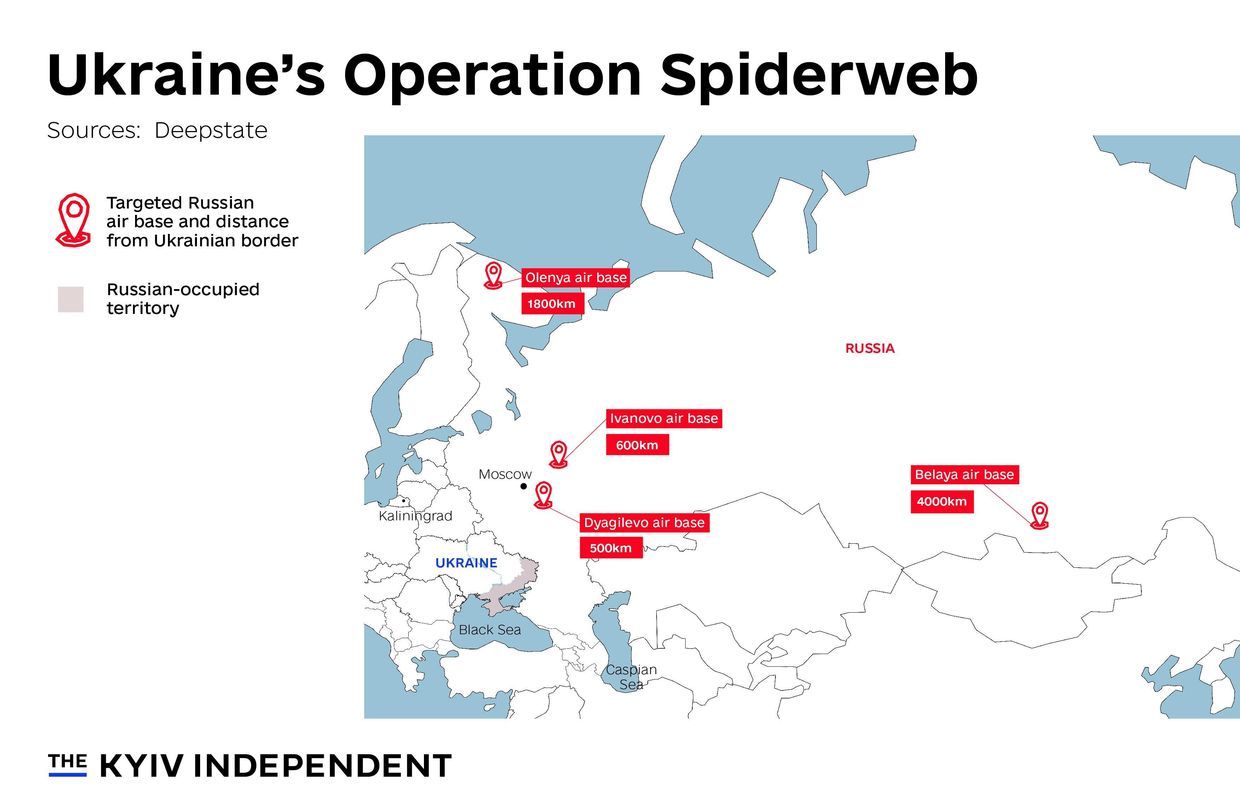
The relocation comes in the wake of Ukraine's Operation Spiderweb, the unprecedented mass drone strike on June 1 that targeted four Russian air bases deep inside the country.  

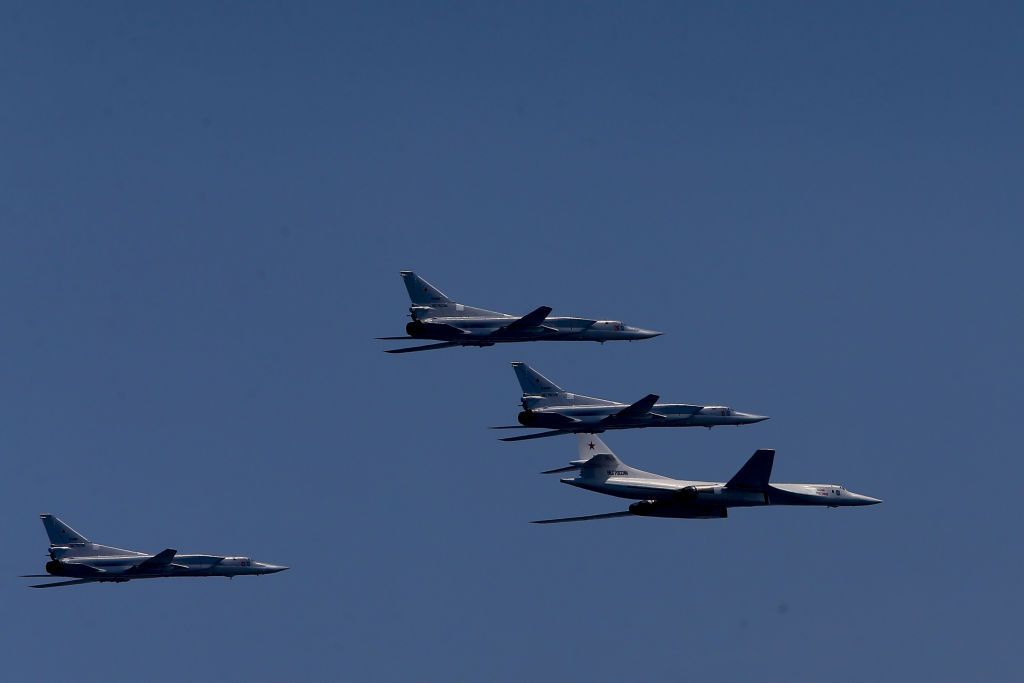
The Security Service of Ukraine (SBU) said 117 drones were launched from hidden positions across Russia, damaging 41 aircraft, including Tu-95, Tu-22M3, and Tu-160 bombers.

According to Agentstvo, all Tu-160 bombers have been evacuated from Belaya airfield in Irkutsk Oblast and Olenya airfield in Murmansk Oblast. Some were relocated to Anadyr in Chukotka, Yelizovo in Kamchatka, and Borisoglebskoye in Tatarstan.

Tu-22M3 and Tu-95MS bombers were also redeployed. Eleven Tu-22M3s and all Tu-95MS aircraft near Murmansk reportedly relocated to the Ukrainka airfield in Amur Oblast, Engels-2 in Saratov Oblast, Borisoglebskoye in Tatarstan, and Mozdok in North Ossetia.

Russia reportedly redeploys bombers to Far East bases after Ukraine's Operation Spiderweb
Ukraine's Operation Spiderweb. (Nizar al-Rifai/The Kyiv Independent))

The reported relocation of bombers is the latest sign that Ukraine's drone warfare is forcing the Kremlin to rethink its strategic posture, even far from the front lines.

Western analysts and military officials praised Ukraine's ingenuity in the Spiderweb operation. NATO Admiral Pierre Vandier called the mission a modern reinvention of the "Trojan Horse," demonstrating Ukraine's growing technical sophistication and deep-strike capability.

President Volodymyr Zelensky claimed that roughly half of the targeted aircraft are damaged beyond repair. Russia has acknowledged losses but insisted all damaged aircraft will be restored.

❌