Vue normale

This new drone stays aloft for more than day and resists jamming. Ukraine says it can now reach beyond the Urals

17 août 2026 à 10:22

Ukraine's Dovbush T40, a strategic drone that can stay aloft over a day. Source: The Ukrainian Defense Ministry

Ukraine has approved a drone built to reach the deepest parts of Russia. Ukraine's Defense Ministry has codified the domestic Dovbush T40 uncrewed aviation complex, a strategic-level drone for deep reconnaissance and precision strikes on distant Russian targets, the ministry announced.

The drone extends the reach of Ukraine's homegrown deep-strike arsenal to Siberia. With a wingspan of nearly 5 meters, the Dovbush T40 has enough range to hit targets beyond the Urals and in Russian Siberia.

What the drone does

The Dovbush T40 is a multi-role strategic aircraft. It is designed for deep reconnaissance, fire correction, and precision strikes on structures, equipment, and enemy personnel far from the line of contact.

Its endurance is the enabler. More than a day aloft gives it the range to reach targets, letting Ukraine threaten the deep-rear sites, from factories to airfields, that Russia has kept far from the front for safety.

Its advantages over similar drones

The drone offers several edges, the ministry said. It has ultra-low radar visibility, a high-performance engine with electronic fuel injection, and a choice of strike methods, either as a kamikaze drone or by dropping a munition.

It is built to work under jamming. The Dovbush T40 stands out for high resistance to electronic warfare, according to the Defense Ministry, the recurring requirement for any Ukrainian drone meant to fly deep into a contested electromagnetic environment.

It builds on combat-proven predecessors

The drone comes from a maker with a track record. It was built by a Ukrainian enterprise whose Dovbush T20 and Kotyhoroshko drones have operated on the battlefield since 2022 with some of the highest effectiveness ratings.

The T40 is an evolution of a proven system. The medium-range Dovbush T20, used for reconnaissance, real-time artillery correction, and pinpoint strikes, evolved through battlefield feedback into the longer-range, more powerful T40. It joins a fast-growing domestic fleet: since the start of 2026, Ukraine's Defense Ministry has codified 413 uncrewed systems, almost all of which are Ukrainian-made.

  • ✇Euromaidan Press
  • Ukraine’s first domestically built CBRN scout vehicle just replaced Soviet jeep with no armor at all
    Ukraine is retiring a Soviet chemical-scout vehicle in favor of one it built itself. Ukraine's National Guard has received the first Ukrainian radiation and chemical reconnaissance vehicles on the armored Tisa chassis, replacing the outdated Soviet UAZ-469RKh, National Guard commander Oleksandr Pivnenko announced. The vehicle is a step in Ukraine's shift from Soviet legacy equipment to its own modern designs. Developed to National Guard specifications for current battle
     

Ukraine’s first domestically built CBRN scout vehicle just replaced Soviet jeep with no armor at all

12 août 2026 à 00:45

The first Ukrainian radiation and chemical reconnaissance vehicles on the armored Tisa chassis. Source: Pivnenko

Ukraine is retiring a Soviet chemical-scout vehicle in favor of one it built itself. Ukraine's National Guard has received the first Ukrainian radiation and chemical reconnaissance vehicles on the armored Tisa chassis, replacing the outdated Soviet UAZ-469RKh, National Guard commander Oleksandr Pivnenko announced.

The vehicle is a step in Ukraine's shift from Soviet legacy equipment to its own modern designs. Developed to National Guard specifications for current battlefield conditions, the armored scout allows crews to survey and monitor contaminated zones without leaving the protected vehicle.

What the vehicle does

The vehicle carries radiation and chemical reconnaissance instruments, an automated system for collecting and processing information, a weather station, modern communications, and satellite navigation, all of which enable real-time data collection and transmission to assess a situation and make decisions faster.

The mission is early warning of invisible threats. The task of chemical, biological, radiological, and nuclear (CBRN) units is to detect radiation, chemical, and biological threats in time, determine the extent of contamination, and quickly pass the information to command.

"The safety of soldiers, the completion of combat tasks, and the protection of the civilian population depend on the speed and accuracy of this work," Pivnenko said.

The armored base is the upgrade

The Tisa chassis is what sets the new vehicle apart from its Soviet predecessor. The light-armored Tisa is built on the Toyota Land Cruiser 79 platform and meets the NATO STANAG 4569 protection standard, providing ballistic and mine protection that the open-topped UAZ never offered.

The vehicle is equipped for hard conditions. It carries night-vision systems and air ventilation and filtration systems, letting the crew work in contaminated or dangerous environments while staying protected. The filtration matters especially for a CBRN vehicle: it lets the crew operate inside a sealed, over-pressured cabin in exactly the toxic zones the vehicle is sent to scout.

“What happens here affects next 50 years”: why American left Pennsylvania to fight in Ukraine’s 47th Brigade

10 août 2026 à 11:32

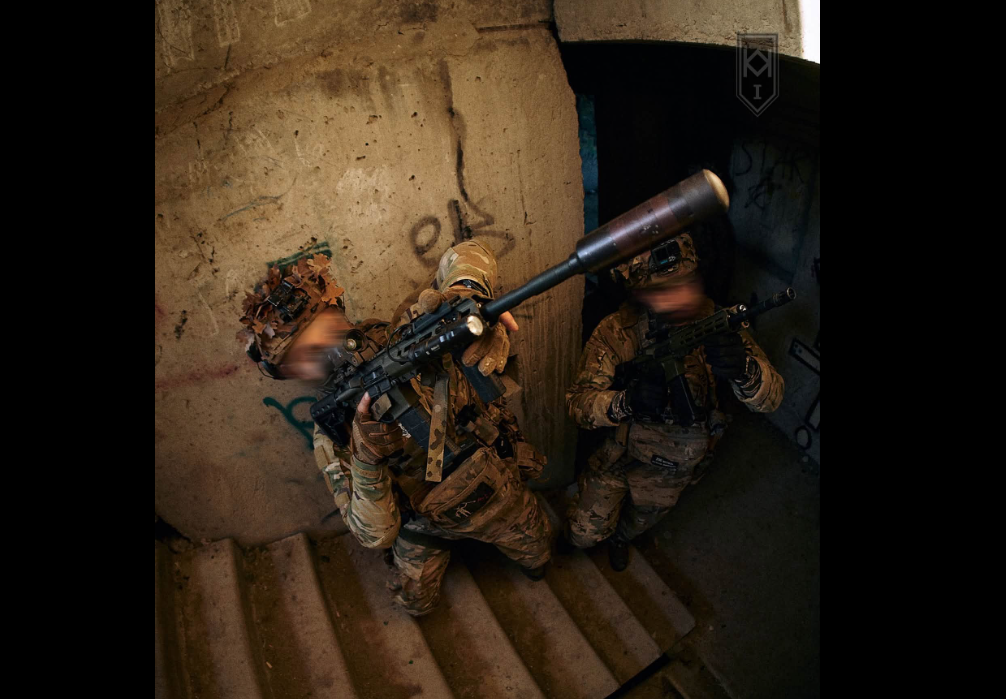
"Lighthouse", a soldier in the 47th Brigade's reconnaissance company. Source: Magura

An American volunteer who left Pennsylvania to fight for Ukraine believes the outcome here will shape the world for half a century. "Lighthouse", a soldier in the reconnaissance company of the 47th Separate Mechanized Brigade, came to Ukraine from Pennsylvania, the brigade shared.

Lighthouse is one of thousands of foreigners fighting for Ukraine. Since Ukraine created the International Legion in 2022, volunteers from more than 50 countries, including the US, Britain, and Canada, have joined its ranks, and Lighthouse, a scout from Pennsylvania, is one American who traced the war to its roots and decided to come.

What brought him to Ukraine

The full-scale war in 2022 unsettled him and prompted him to research its causes, which took him back to where the war began. He traced it to the Revolution of Dignity of 2013 and 2014, when Ukrainians drove out a pro-Russian president. Then, Russia responded by seizing Crimea and igniting the war in the east.

"I understood pretty quickly that Ukraine was in a position to be fighting the good fight, and that Russia was being Russia, basically," he said.

He did not leave on impulse. He got in shape, went to the gym, and saved money, but the hardest part was his marriage: putting aside enough that his wife would be secure while he was gone, and making sure she was mentally prepared and would feel supported. She understood his reasoning, he said, and told him, "I support you. I support what you're doing."

Why did Lighthouse choose the 47th?

He chose the brigade carefully. He researched many units and contacted several recruiters before choosing the 47th, which has attracted a substantial foreign contingent, including a mostly Colombian reconnaissance-and-strike group.

What settled his choice was the people. He was able to talk to the men in his squad before he even came, and they would call him every few days.

"Hey, man, how are you doing? Do you need any help figuring out your schedule, or what to bring?" Lighthouse recalled.

They became friends before he got there. Ukraine has felt like home since, he said, a gorgeous place whose people are welcoming and proud of everyone who fights for their country.

He sees the war as the world's fight

For Lighthouse, the stakes reach far beyond Ukraine.

"What happens here now affects the rest of the world and potentially the future for the next 50 years," he said, which is why it matters to him that Ukraine can remain a democracy and stand up to the aggression.

He is not the first American in the 47th to say so. In May, the brigade profiled "Forrest", a 28-year-old North Carolina construction worker who followed the war since 2014 before enlisting and told others, "If you want to fight, go to the 47th."

  • ✇Euromaidan Press
  • Russia parked a 5,000-kilometer jamming station in Crimea—Ukraine parked a drone on top of it
    Ukraine's military intelligence has destroyed one of Russia's electronic-warfare stations in temporarily occupied Crimea, the country's Defense Intelligence agency (HUR) said. Fighters caught the coastal complex on the peninsula and published video of the strike, the latest in a run of intelligence operations stripping Russia's sensors off Crimea. The station was built to listen in on and jam communications across a wide area, and none of that reach kept it alive. Occup
     

Russia parked a 5,000-kilometer jamming station in Crimea—Ukraine parked a drone on top of it

30 juillet 2026 à 04:50

russia parked 5000-kilometer jamming station crimea—ukraine drone top · post russian murmansk-bn electronic-warfare near cape fiolent occupied crimea targeted ukrainian strike overnight 26–27 2026 video ukraine's defense intelligence (hur) murmansk

Ukraine's military intelligence has destroyed one of Russia's electronic-warfare stations in temporarily occupied Crimea, the country's Defense Intelligence agency (HUR) said. Fighters caught the coastal complex on the peninsula and published video of the strike, the latest in a run of intelligence operations stripping Russia's sensors off Crimea. The station was built to listen in on and jam communications across a wide area, and none of that reach kept it alive.

Occupied Crimea is the anchor of Russia's position in the south, and Ukraine has spent 2026 trying to make holding it cost more than it is worth. Each sensor or surface-to-air missile launcher stripped from the peninsula clears a little more sky and sea for the next raid, and pushes the price of the occupation higher.

A jamming station that could not save itself

In the night of 26 to 27 July 2026, fighters from HUR's Department of Unmanned Systems found and destroyed the Russian Murmansk-BN electronic-warfare station near Cape Fiolent in occupied Crimea, HUR reported on Telegram, sharing footage of the hit.

The Murmansk-BN is a coastal complex that Russian forces use for radio reconnaissance, intercepting signals, and jamming shortwave communications, HUR said. Its range can reach up to 5,000 kilometers. A station meant to jam and silence an enemy's communications across that distance did nothing to detect the drone closing on it.

What the Murmansk-BN does

The Murmansk-BN is a strategic, long-range electronic-warfare system. Made by the Russian concern KRET, it entered service in 2014 and was first fielded in occupied Crimea, south of Sevastopol. It works in the high-frequency band, the shortwave range armies use for long-distance radio when other links fail.

Western analysts have documented the same system type suppressing high-frequency traffic over great distances. That is what makes each one Ukraine removes a hole in Russia's electronic cover rather than a small loss.

Days after an S-400, another Crimea kill

The jammer is the second high-value Russian system this unit has taken off the peninsula in days. Days ago, HUR's drone operators burned an S-400 Triumf launcher and its 96L6 radar in occupied Crimea, the long-range battery Russia leans on to shoot down aircraft and missiles.

Both hits fit a wider pattern. Ukraine's drone crews have struck close to 200 Russian air-defense assets in the first half of 2026, and over the unit's life have struck 76 radars and 31 electronic-warfare systems among a larger tally, thinning the cover Russia depends on over occupied territory.

  • ✇Euromaidan Press
  • Russia is massing for Dobropillia again using quad bikes and motorcycles, Ukraine’s National Guard says
    Russian forces on the Pokrovsk axis in eastern Ukraine are preparing to intensify their assaults toward the town of Dobropillia, Ukraine's National Guard 4th Rubizh Brigade reported. The brigade says the enemy keeps trying to break through the defense but fails to reach its goals, with Russian troops destroyed on the approaches and armored equipment lost during this week’s mechanized assault. This week Ukrainian forces broke up a large mechanized attack in the sector. F
     

Russia is massing for Dobropillia again using quad bikes and motorcycles, Ukraine’s National Guard says

26 juillet 2026 à 07:31

russia massing dobropillia again using quad bikes motorcycles ukraine's national guard says · post pokrovsk sector donetsk oblast 26 2026 russian-occupied areas direction assaults pushing north toward above ruins situation

Russian forces on the Pokrovsk axis in eastern Ukraine are preparing to intensify their assaults toward the town of Dobropillia, Ukraine's National Guard 4th Rubizh Brigade reported. The brigade says the enemy keeps trying to break through the defense but fails to reach its goals, with Russian troops destroyed on the approaches and armored equipment lost during this week’s mechanized assault. This week Ukrainian forces broke up a large mechanized attack in the sector.

For years, Russia has continued feeding assault groups into Ukrainian fire despite marginal gains, and Ukraine's drones and defenses keep converting those attacks into losses rather than ground.

Russia readies its next push toward Dobropillia

In the brigade's area of responsibility, Russian troops are getting ready to intensify offensive operations, the report says. They are running aerial reconnaissance and trying to clear mines from routes to move assault groups forward. Those groups lean on quad bikes—four-wheeled all-terrain vehicles—and motorcycles. This kind of transport will likely become one of the main ways the enemy tries to break the defense, the brigade said.

Russia has spent this stretch of the war trying to break out toward Dobropillia, a gateway to Kramatorsk and Sloviansk in the free northern Donbas. Its main aim on this axis remains reaching the town, which sits north of the ruins of Pokrovsk.

Destroyed Russian vehicles near the Donetsk Ring Road.
Explore further

Russia bet 50 vehicles that the drones would miss. The drones did not miss.

Assault groups keep dying at the approaches

Despite constant assault actions, the enemy cannot achieve its goals, the brigade said. Rubizh forces detect Russian troops and destroy them on the approaches to Ukrainian positions. Russia concentrates its effort here but cannot realize its intentions.

To slip past Ukrainian drones, Russia has largely traded massed armored assaults for small groups on bikes and on foot, though most are killed before reaching Ukrainian lines. Ukrainian drones have also hit a Russian vehicle column elsewhere in Donetsk Oblast, striking more than 50 vehicles near Malynivka.

A mechanized assault broken up this week

This week, the brigade's soldiers joined a fight against a large mechanized Russian attack. The 1st Azov Corps of the National Guard and adjacent units broke it up, the brigade said on Facebook. In the fighting, Rubizh troops destroyed one armored combat vehicle and an MTU-72 bridge-layer—a tank chassis built to drop bridges across obstacles for advancing forces. They also helped strike other Russian equipment.

Ukraine's military logged 258 combat clashes along the front over the past day, with the largest number of engagements on the Pokrovsk axis.

❌