Vue normale

A Russian drone knocked out an evacuation robot, so a Ukrainian commander drove into the kill zone in a pickup to save two wounded soldiers
17 août 2026 à 03:34

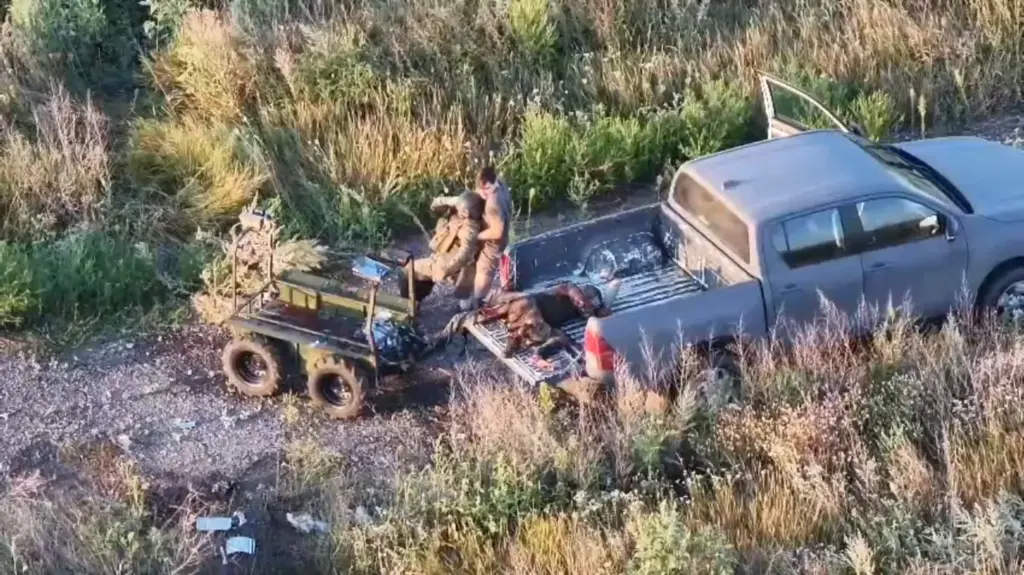
Vladyslav Polskyi carries out two wounded soldiers, August 2026. Screenshot from video: Joint Forces Group

A Russian drone knocked out the robot sent to evacuate two wounded Ukrainian assault troops. Their company commander went in himself. He drove into the kill zone in an unarmored pickup truck, without body armor, and carried them out.

The Joint Forces Group released the footage on 16 August 2026. It identified the commander as Vladyslav Polskyi of the 475th Separate Assault Regiment (Code 9.2).

The two soldiers had captured Russian positions and were pulling back when Russian Molniya drones hit them, the group said. Both were seriously wounded and could not move on their own. A ground robot was sent to pull them out. A second drone hit it, and it stopped in the open, leaving the men exposed.

A company commander just drove straight into drone fire to save his men with no body and no hesitation

Vladyslav Polskyi from an assault company of the 475th "Code 9.2" regiment saw that his soldiers were hit by Russia's "Molniya" drones, and a robotic evacuation platform sent… pic.twitter.com/ib6B6TbgQD

— Euromaidan Press (@EuromaidanPress) August 16, 2026

The group framed the rescue as the reason the regiment's soldiers take on the hardest assaults when others hold back: they know their commanders do not hide behind them, and will give everything to save every one of their men.

In June, Ukrainian ground robots ran nearly 17,000 supply and evacuation runs, taking on the exposed trips that used to get crews killed. Ukraine now fields some 25,000 combat robots. Their main limit, a presidential adviser says, is not hardware but staying connected under jamming, and a new Ukrainian antenna is meant to help. But no antenna stops what happened here. A drone hit the evacuation robot and knocked it out.

When the robot failed, the risk it was built to absorb fell back on the commander.
July was Ukraine’s deadliest month for civilians since 2022 — and Russia is scaling its ballistic missile salvos toward 200 at once

10 août 2026 à 09:05

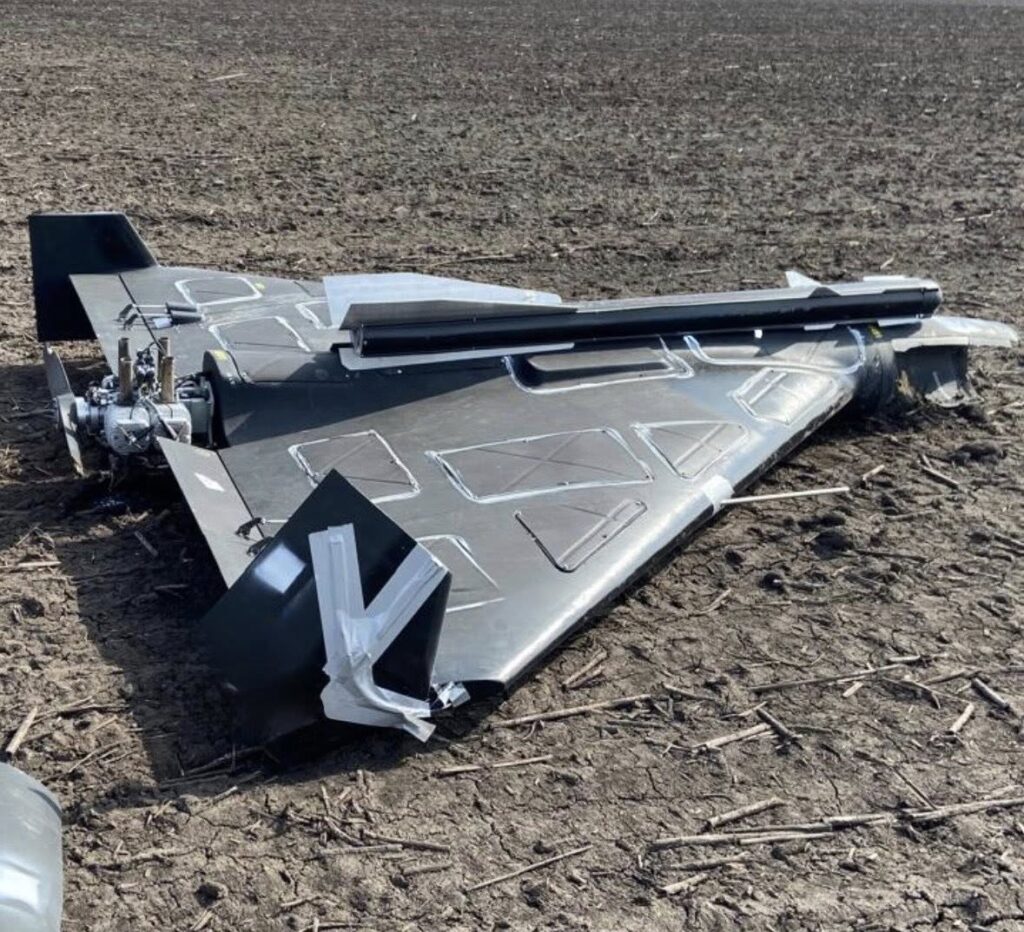
Shahed R-60 missile decoy Flash

Russia can currently fire a simultaneous salvo of 77 ballistic missiles, and it aims to lift that ceiling to 200. Robert "Magyar" Brovdi, who commands Ukraine's Unmanned Systems Forces, told the Associated Press. He called the plan one of Ukraine's gravest weak points.

Kyiv's only reliable shield against ballistic missiles is the US-made Patriot, and its interceptor stocks are critically low. During mass barrages, dozens of warheads therefore slip through and reach their targets. Only a handful of countries can build such interceptors, and all are short, defense analysts have warned. The AP, for its part, could not independently verify Brovdi's numbers.

Ballistic missiles remain the hardest to stop

That shortfall has already turned lethal. Intensified strikes made July the deadliest month for Ukrainian civilians since April 2022, the UN human-rights office in Ukraine documented. Air defenses downed just 29 of the 195 ballistic missiles Russia fired that month, roughly 15%. Another 40 fell short on their own. Yet the largest single-night launches recorded so far run to only a few dozen. That is well below the salvo of 77 that Brovdi describes, and a fraction of the 200 Moscow is reaching for.

"Even if they only manage half of that, it will all be flying at us."
- Robert "Magyar" Brovdi, commander, Ukraine's Unmanned Systems Forces

Production running ahead of plan

His warning tracks Ukrainian intelligence. Russia's defense industry is overfulfilling its monthly targets, hitting 110% to 120% on the main missile types. So said Deputy Military Intelligence Chief Vadym Skibitskyi in an interview with RBC-Ukraine. He put July output for the Kh-101 cruise missile at 140% of plan, the Kalibr at 111%, and the Kh-35 at 200%. A pause in strikes, he judged, is unlikely.

The pivot to jet-powered drones

Moscow's factories are also retooling around drones. Russia plans to assemble 11,000 strike drones of various types in August 2026, Skibitskyi said. That mix spans the Geran-1 through Geran-5, the Harpia, and several Gerbera variants. Output dipped in July as the industry shifted toward the turbojet Geran-4 and Geran-5.

Those jet models fly faster and demand different interceptors or short-range air defense. They already made up half of one recent attack. The concentration of jet-powered Shaheds, meanwhile, has climbed 2.5 times in recent weeks, Brovdi added. Taken together, the assessments point one way: more missiles and faster drones, launched in larger waves, against defenses Ukraine is scrambling to rebuild.

❌