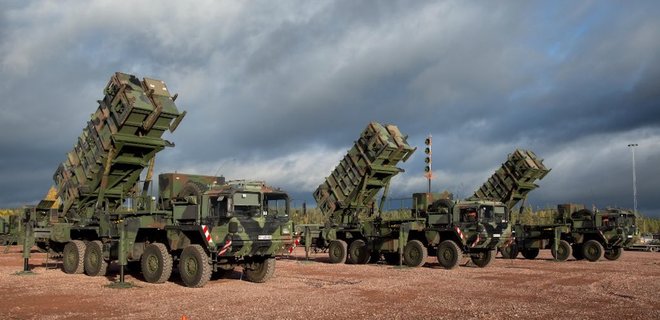
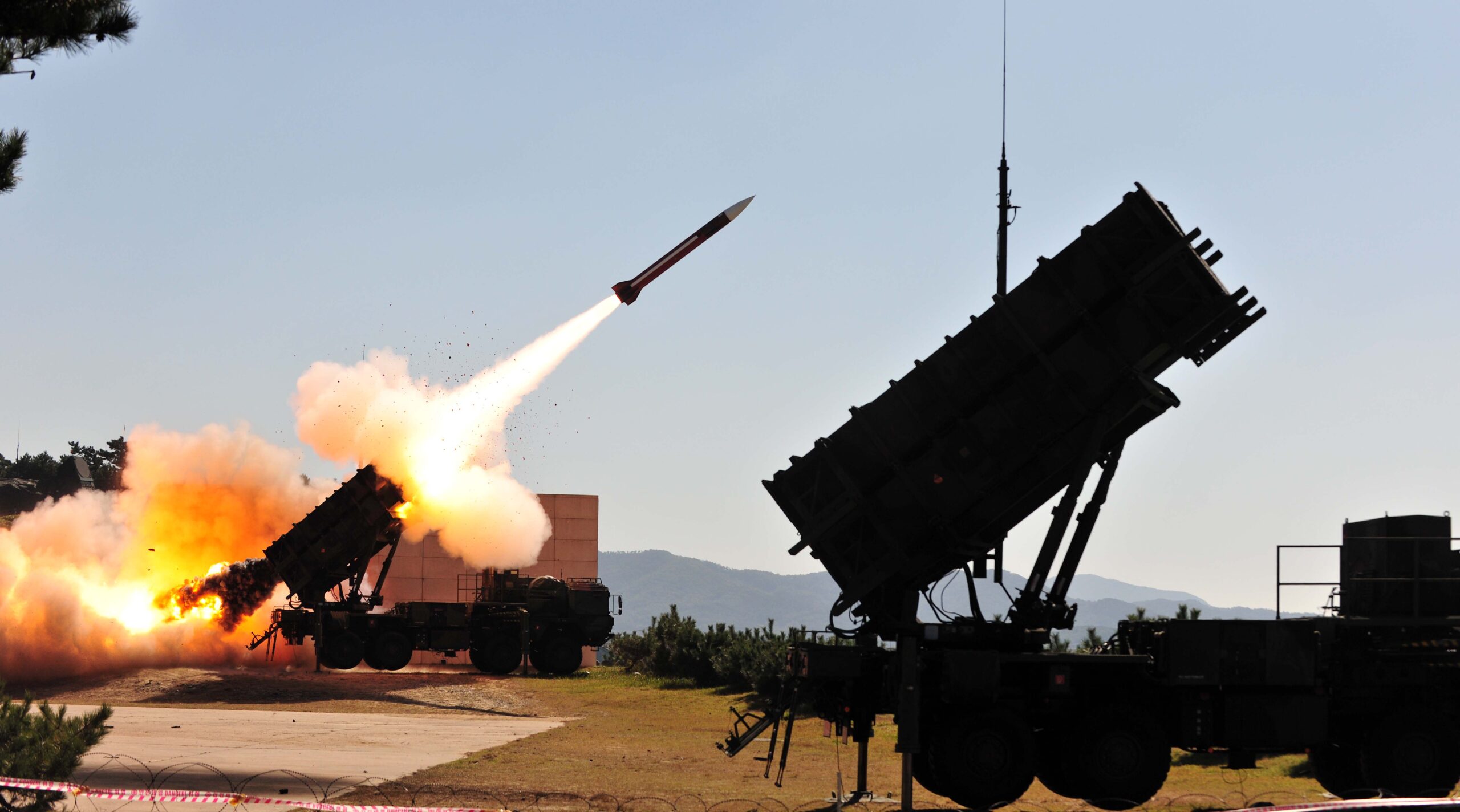
Spain will send Ukraine more Patriot interceptor missiles, Foreign Minister José Manuel Albares confirmed, according to Le Monde.
Patriot interceptors are among the few weapons Ukraine has that can stop Russian ballistic missiles. The specialized rounds are scarce worldwide, and manufacturer Raytheon cannot build them fast enough to meet demand. Each costs $3 million to $4 million.
Spain confirms the flow will grow
Albares spoke at an informal meeting of European
Spain will send Ukraine more Patriot interceptor missiles, Foreign Minister José Manuel Albares confirmed, according to Le Monde.
Patriot interceptors are among the few weapons Ukraine has that can stop Russian ballistic missiles. The specialized rounds are scarce worldwide, and manufacturer Raytheon cannot build them fast enough to meet demand. Each costs $3 million to $4 million.
Spain confirms the flow will grow
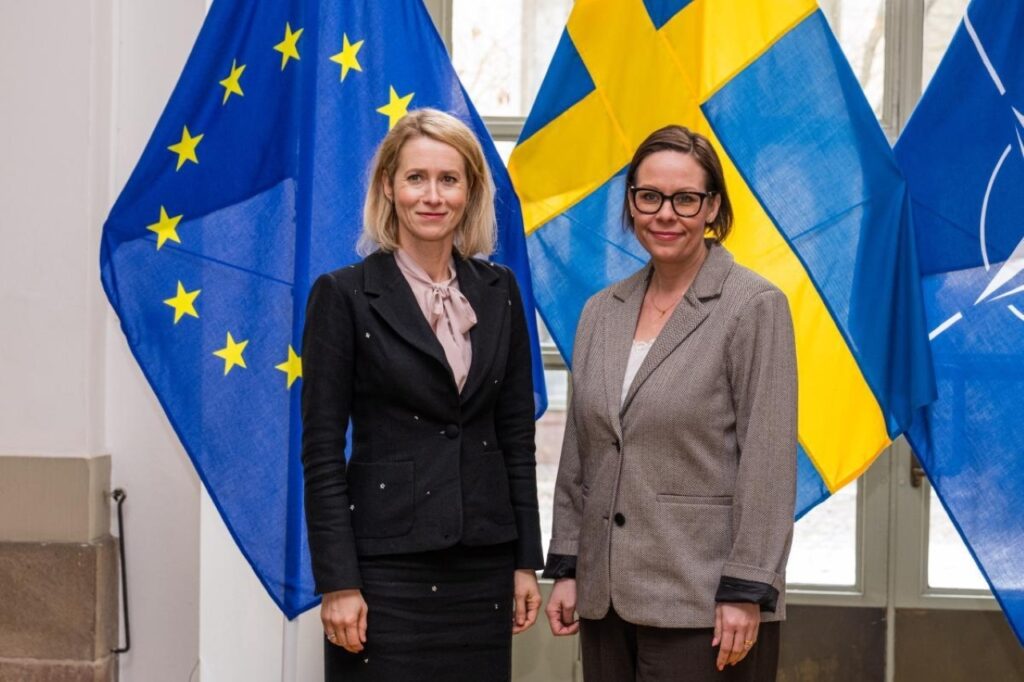
Albares spoke at an informal meeting of European Union foreign ministers in Ireland on 2 September. He reaffirmed Madrid's support as Kyiv pressed for more interceptors. "We have been doing this for a long time, and we will continue to do so," he said. He confirmed that Madrid is preparing a new batch. EU foreign policy chief Kaja Kallas said the bloc is also working with non-member states to lift Ukraine's air defenses.
Madrid and Kyiv meet in Wicklow
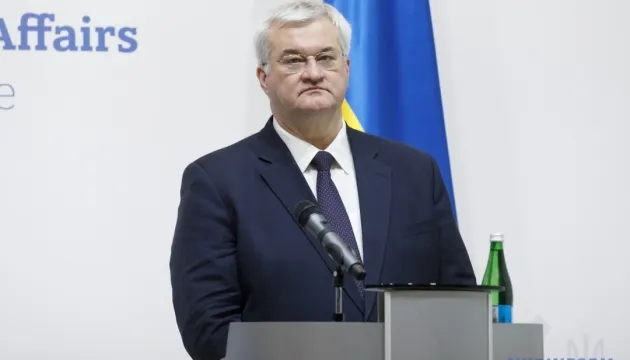
The confirmation followed talks with Ukrainian Foreign Minister Andrii Sybiha. They met on the sidelines of the same EU gathering, in Wicklow. Sybiha said he pressed Ukraine's urgent need to strengthen its air and ballistic missile defenses. He also thanked Spain for its solidarity. Albares reaffirmed Spain's role as a founding member of the Integrated Anti-Ballistic Missile Coalition, which ten countries launched in Paris on 13 July. The group aims to build a shared anti-ballistic capability, and its declaration calls the coalition purely defensive. Spanish military instructors are training Ukrainian technicians to maintain the systems.
What Spain has promised so far
Spain is not just giving—it is also buying. In December 2025, Madrid signed a $1.7 billion contract with US arms maker Raytheon for four new Patriot systems. It was Spain's largest Patriot order yet. The deal covers radars, launchers, command-and-control stations, and training. Spanish firm Sener builds the control system for the GEM-T interceptor those launchers fire. Spain is one of only a handful of European countries that operate Patriots.
What Spain has already sent
Spain has supplied Ukraine with Patriot missiles before. In March, Madrid pledged five older PAC-2 interceptors from an air-defense artillery regiment at Marines, near Valencia. Madrid has pledged €1 billion ($1.16 billion) in military aid for 2026. Ukraine has spent months urging partners to release interceptors from their stockpiles.
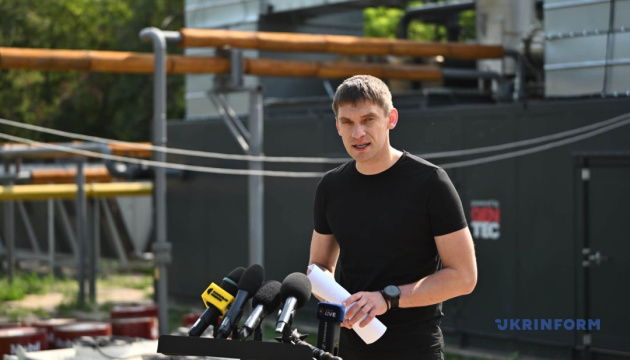
The Cabinet of Ministers has dismissed Serhii Sukhomlyn as head of the State Agency for Restoration and Infrastructure Development of Ukraine and appointed Ivan Fedorov to lead the agency.
The Cabinet of Ministers has dismissed Serhii Sukhomlyn as head of the State Agency for Restoration and Infrastructure Development of Ukraine and appointed Ivan Fedorov to lead the agency.
Germany will close Russia’s General Consulate in Bonn, terminate the agreement concerning the Russian House in Berlin, and tighten entry controls for Russian citizens. Foreign Minister Johann Wadephul announced this at a joint press conference with Interior Minister Alexander Dobrindt on 1 September, after German authorities formally attributed the attack at Leipzig/Halle Airport to Russia.
German investigators have identified two suspects allegedly linked to the operat
Germany will close Russia’s General Consulate in Bonn, terminate the agreement concerning the Russian House in Berlin, and tighten entry controls for Russian citizens. Foreign Minister Johann Wadephul announced this at a joint press conference with Interior Minister Alexander Dobrindt on 1 September, after German authorities formally attributed the attack at Leipzig/Halle Airport to Russia.
German investigators have identified two suspects allegedly linked to the operation: a Russian-born man with a Latvian passport and a Belarusian man with a Russian passport. This information was reported by Süddeutsche Zeitung. Investigators believe both have links to Russian state structures, according to the report.
Both men have already left Germany, complicating efforts to bring them to justice, Tagesschau reports. One of Berlin’s responses was the closure of Russia’s Consulate General in Bonn — the last Russian consulate general remaining in Germany.
Table of The Russian Consulate General in Bonn, Germany. Photo: Marc John/IMAGO
Germany tightens its Russia policy
Russia’s General Consulate in Bonn will close on 18 September, according to Wadephul. Germany will alsoseek additional EU sanctions against people linked to Russian hybrid attacks, increase pressure on Russia’s “shadow fleet,” and strengthen entry controls for Russian nationals.
He stated that since the beginning of "the unlawful war of aggression" against Ukraine, Germany's goal has been to bring the war to an end, restore the peace order in Europe, and return to a constructive relationship.
"However, this requires a minimum level of willingness on the Russian side. We must acknowledge that Russia shows no willingness to reach an accommodation,” Wadephul said.
Moscow rejected the accusations. Russian President Vladimir Putin called Germany’s response a “grave mistake,” TASS reports.
The investigation leads to two suspects
According to German investigators, the Belarusian suspect left DNA traces on one of the drones, inside a container containing explosives, and on an antenna found near the airport. The Russian-born suspect, who holds a Latvian passport, is believed to have coordinated and directed the operation, entered Germany through Berlin, and then traveled toward Saxony.
The Russian-born suspect left Germany two days before the attack, while the Belarusian suspect also left the country.
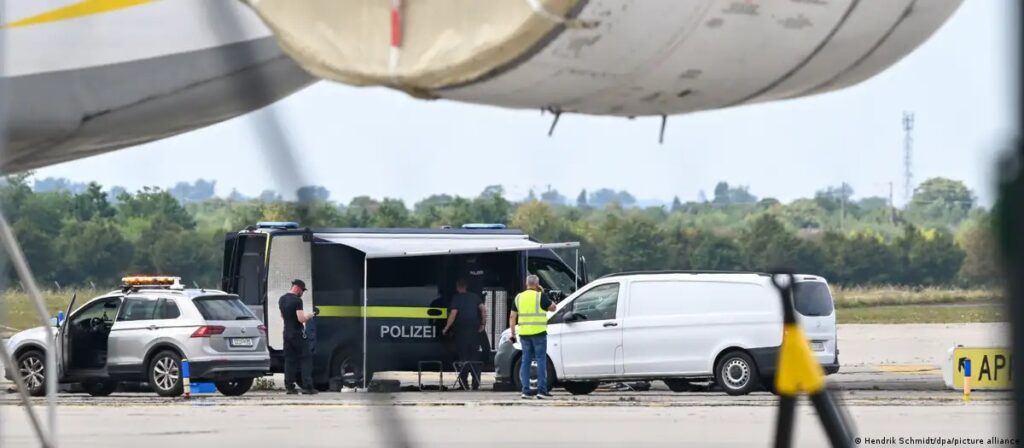
Drone found near a Ukrainian An-124 aircraft in Leipzig, Germany, on 5 August, 2026. Photo: screenshot from Bild video
What happened at Leipzig Airport
The diplomatic response stems from a sabotage attempt on 4 August, when a bomb-laden drone struck a Ukrainian An-124 cargo aircraft but failed to detonate. The drone, carrying explosives, remained unnoticed for about four hours before being discovered, while later analysis indicated it had been aimed at the aircraft near its fuel tanks.
La vidéo d’un cycliste ukrainien ciblé par un drone posté vendredi par l’armée russe puis dépubliée a suscité un vif émoi en ligne. Ce n’est pourtant pas la première fois que les opérateurs de drones…
— Permalien
La vidéo d’un cycliste ukrainien ciblé par un drone posté vendredi par l’armée russe puis dépubliée a suscité un vif émoi en ligne. Ce n’est pourtant pas la première fois que les opérateurs de drones…
— Permalien
Poland will recover hundreds of millions of euros from a shared European Union fund for weapons it handed to Ukraine, the defense outlet Militarnyi reported. The money had been frozen for two years and only started moving after a change of government in Hungary lifted a veto.
Europe's ability to keep weapons moving to Ukraine rests on members trusting they will be paid back for what they give away. When that cost-sharing seizes up, national governments face the full bil
Poland will recover hundreds of millions of euros from a shared European Union fund for weapons it handed to Ukraine, the defense outlet Militarnyi reported. The money had been frozen for two years and only started moving after a change of government in Hungary lifted a veto.
Europe's ability to keep weapons moving to Ukraine rests on members trusting they will be paid back for what they give away. When that cost-sharing seizes up, national governments face the full bill alone, and the case for the next donation gets harder. A single member's veto can jam that machinery for years.
The money starts flowing again
Poland will receive up to $500 million in 2027 from the European Peace Facility (EPF), an EU fund that reimburses member states for military aid to Ukraine. Deputy Defense Minister Paweł Zalewski told the Polish news agency PAP that the ceiling combines the $465 million now secured with a possible $12–35 million more, depending on which of the two payout options the European Commission picks. Warsaw had already collected $960 million earlier, bringing its total EU reimbursement to roughly $1.4 billion.
Explore further
190 or 580 Patriot missiles? What Ukraine’s EU-loan request could buy—and why Washington still decides
The reimbursements had stalled in 2024, when Hungary blocked a $7.7 billion tranche. Budapest dropped the veto in June 2026 after a new government took over, unfreezing the funds. The bloc is now steering part of the money toward joint arms purchases and its training mission for Ukraine, rather than just reimbursement.
Where Poland stands among donors
By Militarnyi's tally of Kiel Institute figures, total Polish aid has reached $6.8 billion, with $5.2 billion of that military. That ranks Poland 11th among donors by raw volume. When weighed against each country's economy, it ranks 9th, equal to 1.021% of Polish GDP, with the military share at 0.775%.
Explore further
A masked figure got into a Polish drone-parts plant—Poland now suspects a foreign spy service set the fire
What Warsaw handed over
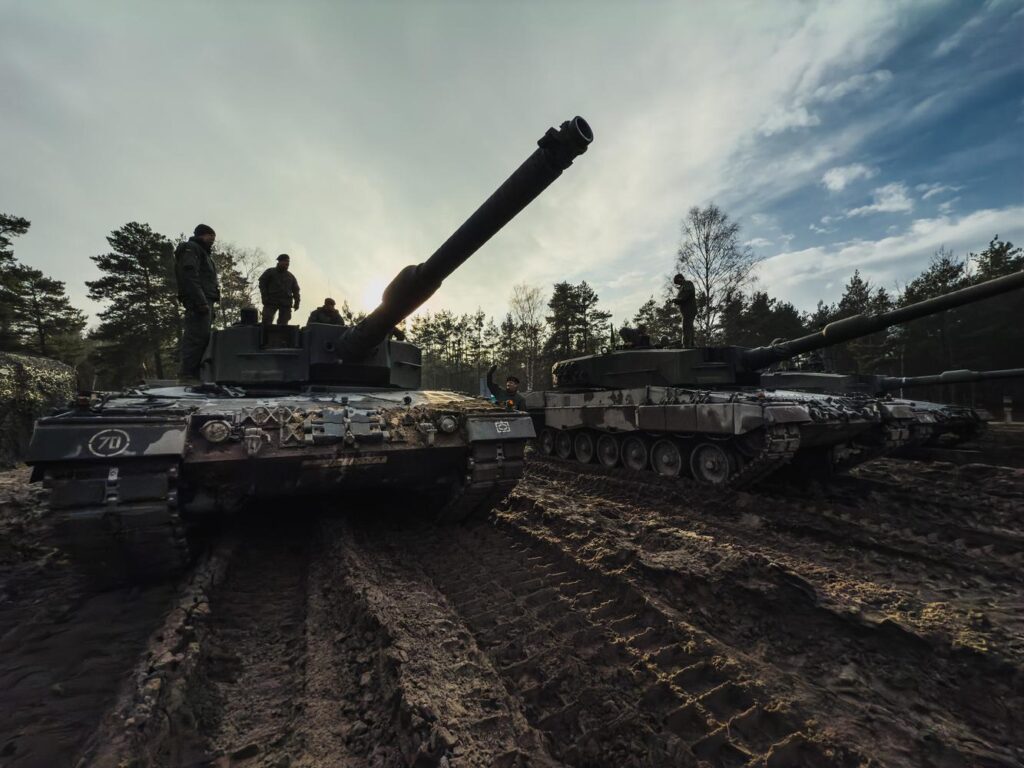
Poland has supplied ammunition and other weapons since early 2022, before the full-scale invasion, and has since handed over more than 350 tanks—14 Leopard 2A4, about 60 PT-91 Twardy, and roughly 280 Soviet-era T-72 variants. Warsaw also sent Krab self-propelled howitzers, Piorun shoulder-fired air-defense missiles, and Grad rocket launchers. Alongside Slovakia, it was among the first NATO states to send Ukraine fighter jets, delivering 14 MiG-29 jets and 10 Mi-24 attack helicopters between 2022 and 2024.
President Volodymyr Zelensky described the shootout on the streets of the Ukrainian capital as an “absolutely shameful event” and ordered an investigation.
President Volodymyr Zelensky described the shootout on the streets of the Ukrainian capital as an “absolutely shameful event” and ordered an investigation.
President Volodymyr Zelensky described the shootout on the streets of the Ukrainian capital as an “absolutely shameful event” and ordered an investigation.
President Volodymyr Zelensky described the shootout on the streets of the Ukrainian capital as an “absolutely shameful event” and ordered an investigation.
The European Union is discussing export support with Ukraine and its neighboring countries, including through so-called solidarity lanes, Agriculture Commissioner Christophe Hansen told Bloomberg on 2 September.
Strikes in the Black Sea have curtailed exports from both Ukraine and Russia, while low water limits how much grain vessels can carry on the Danube, Ukraine’s main fallback when sea traffic slows. Wheat and corn prices are at multiyear highs, and the Bloomberg A
The European Union is discussing export support with Ukraine and its neighboring countries, including through so-called solidarity lanes, Agriculture Commissioner Christophe Hansen told Bloomberg on 2 September.
Strikes in the Black Sea have curtailed exports from both Ukraine and Russia, while low water limits how much grain vessels can carry on the Danube, Ukraine’s main fallback when sea traffic slows. Wheat and corn prices are at multiyear highs, and the Bloomberg Agriculture Spot Index jumped by more than 13% in August, its sharpest monthly rise in over a decade. Hansen said the EU’s role as a major food exporter means drought-driven production losses could cause shortages elsewhere.
Created after Russia's full-scale invasion, the solidarity lanes carry Ukrainian exports by road, rail, and river through neighboring countries when Black Sea shipping is disrupted.
The European Commission is separately weighing relief for drought-hit EU farmers. Hansen urged governments to use flexibilities in the Common Agricultural Policy, the EU's farm-subsidy system, including exemptions for circumstances beyond farmers' control, emergency fertilizer aid, and earlier payments, but proposed no new measures in a letter seen by Bloomberg. EU agriculture ministers are due to discuss the drought in Ireland next week and in Brussels later in September.
Russian attacks squeeze Ukraine’s export routes
Low water is only one obstacle to Ukraine’s southern export routes. Russia has repeatedly attacked ports and transport links along the Danube and on Odesa Oblast’s Black Sea coast. Some Ukrainian farmers have sold wheat below production cost as port prices fell, leaving less money for the next sowing.
Romania detected more than 100 drones during seven attacks on Danube ports in mid-August, interim Romanian Defense Minister Radu Miruță said. Russia struck Izmail, Ukraine's largest Danube port, three times in August. The 29 August attack killed one person and destroyed five grain trucks, Odesa regional authorities said.
Ukraine and Moldova have pursued a rail corridor through Moldova to Constanța, Romania’s main Black Sea port, as an alternative. Moldova later halved transit tariffs through 31 December. Ukrainian officials estimate the corridor could handle around 10% of Ukraine's grain exports, Reuters reported.
Ukraine formally notified the International Civil Aviation Organization (ICAO) on 2 September that Russian airspace is unsafe for civilian flights because of increased military activity, Ukrainian Foreign Minister Andrii Sybiha said. The letter behind the notification asks the organization to urge its member states to stop civil flights over Russia altogether, ZN reported.
ICAO, the UN aviation agency, cannot close Russian airspace or order carriers to reroute. European
Ukraine formally notified the International Civil Aviation Organization (ICAO) on 2 September that Russian airspace is unsafe for civilian flights because of increased military activity, Ukrainian Foreign Minister Andrii Sybiha said. The letter behind the notification asks the organization to urge its member states to stop civil flights over Russia altogether, ZN reported.
ICAO, the UN aviation agency, cannot close Russian airspace or order carriers to reroute. European and US airlines already avoid Russia's airspace, while carriers from China, Türkiye, and the Gulf states have kept flying through it. Those remaining airlines must assess the safety of flying amid drone and air defense operations. Drone alerts during reported Ukrainian attacks have repeatedly shut Russian airports and delayed hundreds of flights.
The notification follows a 1 September warning by Ukrainian President Volodymyr Zelenskyy, who told airlines, insurers, and other aviation stakeholders that Russian skies were becoming unsafe as Ukrainian drones reached deeper into the country.
Zelenskyy said Ukraine's Foreign Ministry would pass information about the risks to international organizations. The letter to ICAO came from another office—Mykola Kalashnyk, Ukraine's minister for recovery, infrastructure, and transport, whose portfolio covers aviation.
Russian President Vladimir Putin said Zelenskyy's statement amounted to "a bid for state terrorism" and that Moscow would find a way to respond if civilian "tragedies" followed.
Sybiha urged airlines to avoid Russian airspace and said the notice was meant to prevent unintended incidents, arguing that Moscow was failing to disclose the dangers its war had created. He invoked Ukraine’s inherent right to self-defense under Article 51 of the UN Charter, the provision that recognizes states’ right to defend themselves against an armed attack. The foreign minister further stated that the war was “returning home to Russia.”
In its separate statement, ICAO warned of rising threats to civil aviation worldwide. It did not mention Russia, endorse Ukraine’s assessment, or say Kyiv’s notification had prompted it.
The UN aviation body identified long-range weapons, drones, navigation-signal interference, and advanced air-defense systems as growing dangers to civilian aircraft. It reiterated that international aviation law prohibits the use of weapons against them.
ICAO urged member states to assess airspace under their control, share threat intelligence quickly, and improve military-civilian coordination.
Russian airports were already facing repeated closures
Russian airspace has not been legally or completely closed. The disruption has instead taken the form of temporary restrictions at individual airports.
From 5–7 May 2026, restrictions during reported Ukrainian attacks delayed more than 450 flights at Moscow airports, while limits at Vnukovo remained in place for nearly 18 hours.
On 6 July 2025, Moscow's Sheremetyevo airport canceled 171 flights, while airports in five other cities suspended operations. During an earlier wave on 22 May 2025, Domodedovo halted flights four times in one day and Sheremetyevo three times, while Vnukovo and Zhukovsky also restricted operations.
Airports in Kaluga, Nizhny Novgorod, Saratov, and Tambov were temporarily closed during a 27 May attack in which Moscow claimed 99 drones were intercepted. Two days later, another alert delayed 20 arrivals and 14 departures at Vnukovo, pro-Kremlin Telegram channels claimed.
As the Trump administration refuses to end its war in Iran, it is steering into the storm, not out of itRussia hasn’t yet killed large numbers of Europeans outside Ukraine, but it’s getting closer. The night of 4-5 August, an airport bus driver discovered an armed drone lying near the tarmac of the Leipzig-Halle airport, which is a central hub of Europe’s logistical support to Ukraine’s war effort. A cargo jet, meanwhile, may have struck a second drone shortly after takeoff, forcing an abrupt la
As the Trump administration refuses to end its war in Iran, it is steering into the storm, not out of it
Russia hasn’t yet killed large numbers of Europeans outside Ukraine, but it’s getting closer. The night of 4-5 August, an airport bus driver discovered an armed drone lying near the tarmac of the Leipzig-Halle airport, which is a central hub of Europe’s logistical support to Ukraine’s war effort. A cargo jet, meanwhile, may have struck a second drone shortly after takeoff, forcing an abrupt landing, and investigators found a third drone laden with military explosives nearby.
In 2024, incendiary devices hidden in parcels ignited in DHL cargo at the same airport. Had these detonated in the air, a major air catastrophe and large-scale civilian casualties would have ensued, probably resulting in a broader war.
Each side is using missiles and drones to try to pound the other into giving up, breeding ceaseless human suffering. But there is no sign that either country’s determination will weaken.
Each side is using missiles and drones to try to pound the other into giving up, breeding ceaseless human suffering. But there is no sign that either country’s determination will weaken.
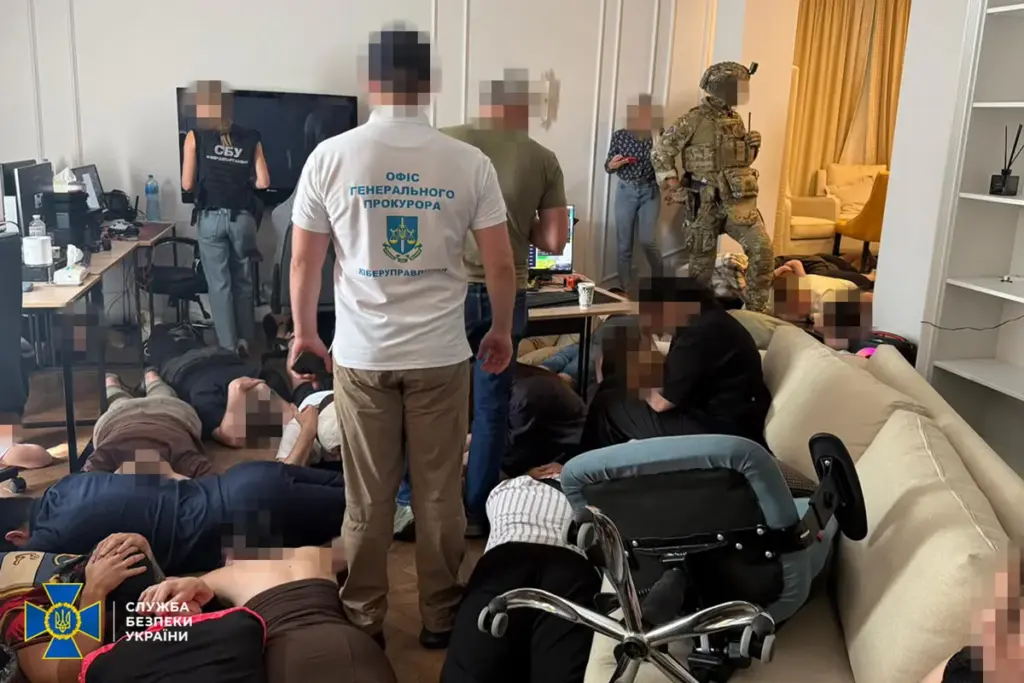
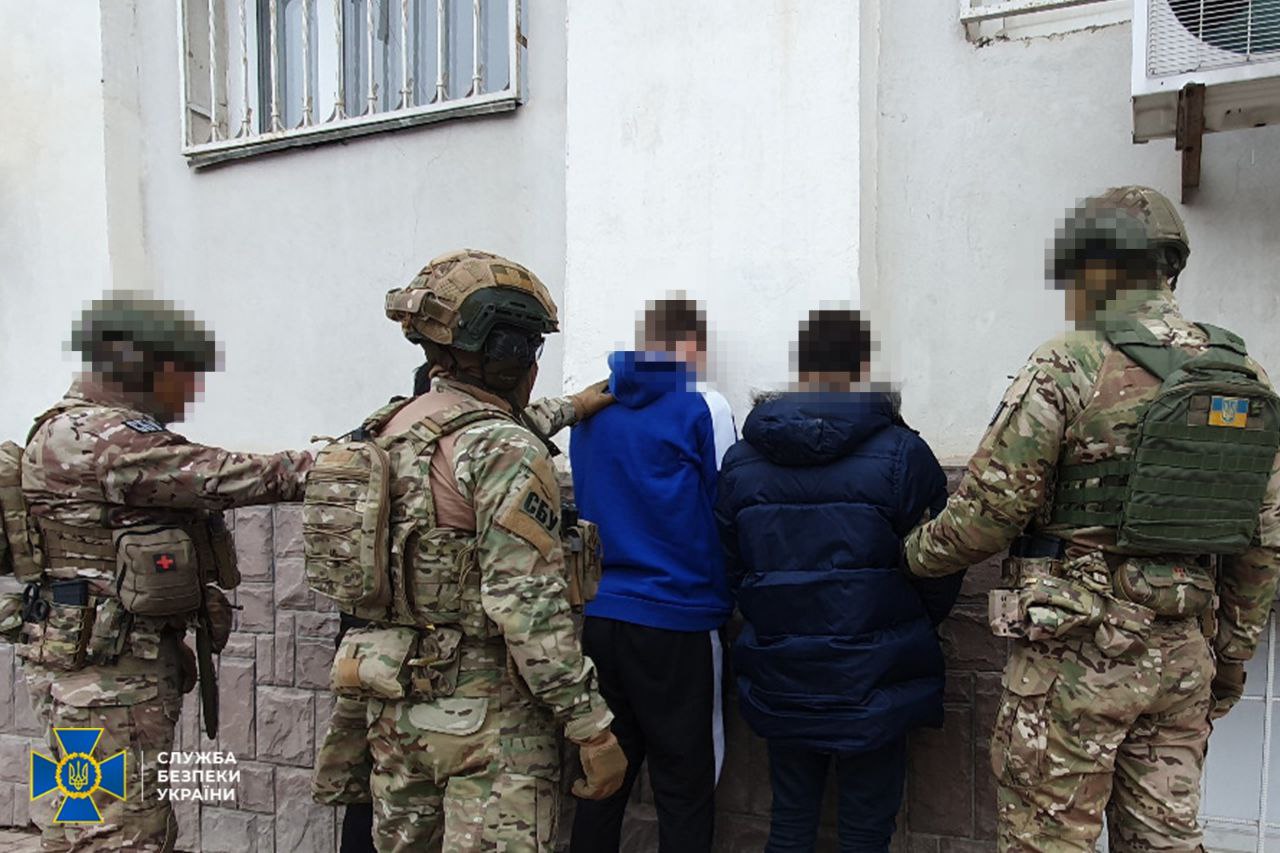
Ukraine’s Security Service (SBU) and National Police shut down a Kyiv-based network of several dozen people who allegedly used fake cryptocurrency investment platforms and malicious code to steal digital assets from citizens of EU countries, the SBU said on 1 September.
Investigators identified the alleged organizer as a 25-year-old Kyiv IT specialist, according to the SBU. The case reaches beyond Ukraine because the agency says the alleged victims were EU citizens. The
Ukraine’s Security Service (SBU) and National Police shut down a Kyiv-based network of several dozen people who allegedly used fake cryptocurrency investment platforms and malicious code to steal digital assets from citizens of EU countries, the SBU said on 1 September.
Investigators identified the alleged organizer as a 25-year-old Kyiv IT specialist, according to the SBU. The case reaches beyond Ukraine because the agency says the alleged victims were EU citizens. The agency said the network’s monthly turnover from funds obtained illegally could reach $1 million during its most lucrative periods.
The SBU said investigators had documented alleged crimes by every member of the group. However, its statement did not specify how long the network had operated, how many EU citizens were affected, which countries they lived in, or the total amount allegedly stolen.
The agency did not name any foreign law enforcement partners involved.
How the crypto ring operated
The alleged organizer of the crypto ring recruited other tech workers in the capital, the SBU said. Posing as cryptocurrency-platform representatives, they offered targets seemingly profitable ways to invest in digital assets.
The network found victims by posting about supposedly lucrative crypto projects in popular Telegram channels, then showed them fabricated trading results and fake profits to make the operation look legitimate, investigators said.
Engaged targets were sent a link to a counterfeit site that mimicked a real crypto service and were persuaded to connect their wallets and approve a transaction, the SBU said. The site carried malicious code called a “drainer” that, the agency said, let the operators withdraw the victims’ assets to addresses they controlled—emptying the wallets.
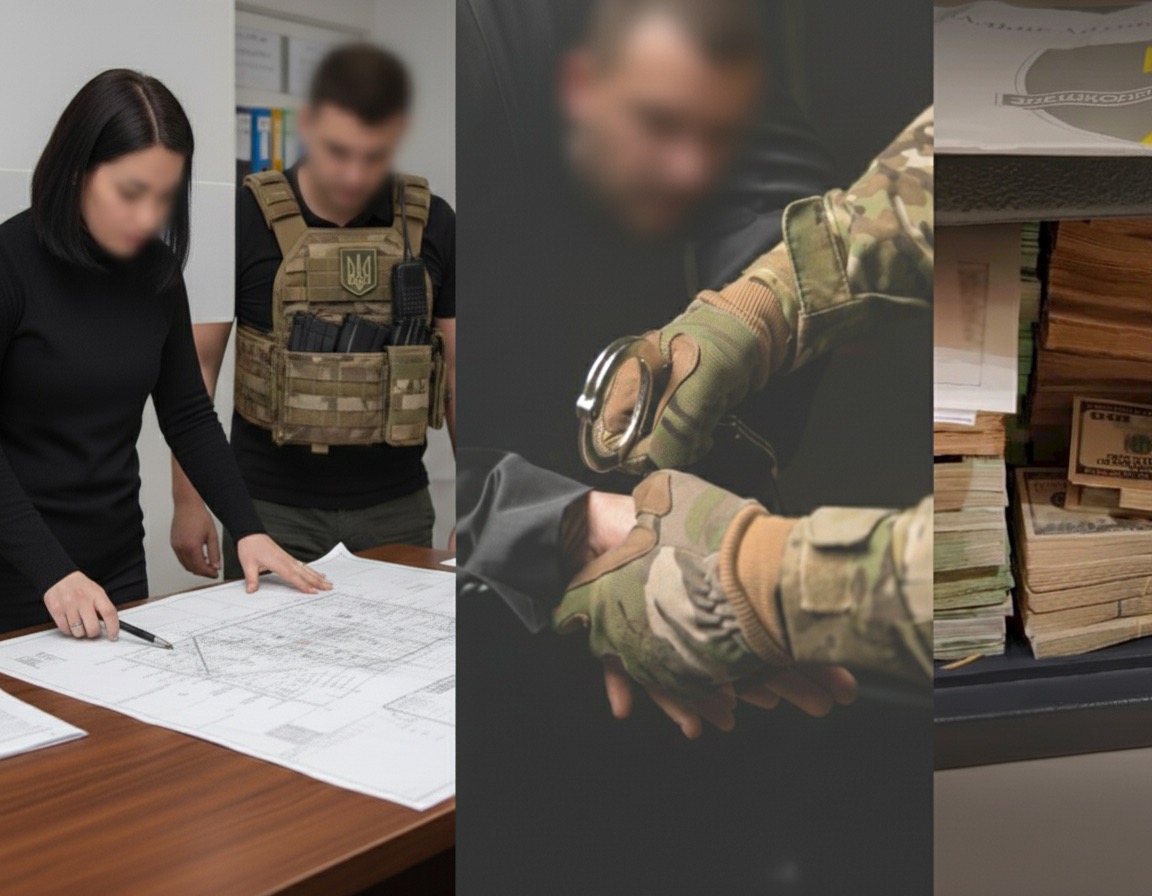
During 23 searches of the suspects’ offices and homes, officers seized phones, computers, money believed to be criminal proceeds, and 16 high-end cars, including Porsche, BMW, and Mercedes-Benz models, the SBU said.
Authorities were still deciding whether to serve notices of suspicion, while the investigation continued under the Prosecutor General’s Office, the SBU said. Those involved could face up to 12 years in prison with confiscation of property.
Ukraine’s role in combating cross-border cybercrime
Ukraine has previously joined with foreign agencies to pursue cross-border cyber threats. In April, the SBU said it worked with the FBI, EU law enforcement, and Polish counterintelligence to disrupt Russian military-intelligence spying through hacked routers. The operation blocked more than 100 servers and removed hundreds of routers in Ukraine from Russian control.
Ukraine’s General Staff confirmed that Ukrainian forces struck the Novatek-Ust-Luga production complex in Russia’s Leningrad Oblast on 1 September, saying the target was hit and a fire followed. The scale of the damage remains under assessment.
Russian authorities initially acknowledged damage and a fire but did not identify the facility. Ukraine’s military intelligence later named the Novatek complex as the target, and the General Staff has now confirmed the strike and
Ukraine’s General Staff confirmed that Ukrainian forces struck the Novatek-Ust-Luga production complex in Russia’s Leningrad Oblast on 1 September, saying the target was hit and a fire followed. The scale of the damage remains under assessment.
Russian authorities initially acknowledged damage and a fire but did not identify the facility. Ukraine’s military intelligence later named the Novatek complex as the target, and the General Staff has now confirmed the strike and said the facility supports Russia’s armed forces. It did not explain how, nor say whether, production was disrupted.
Ukraine’s military intelligence agency, HUR, was first to identify the target, saying on 1 September that its operators had struck the complex alongside Ukraine’s Defense Forces in a joint deep-strike operation. Key elements of the site’s oil-processing installation and other equipment were hit, and a large fire broke out, the agency said. The General Staff confirmed the strike the following day.
Video of the overnight attack on the port of Ust-Luga in Russia’s Leningrad region. pic.twitter.com/dXG5XTkhab
The Novatek complex at Ust-Luga separates stable gas condensate—a liquid produced during natural gas extraction—into fuel and petroleum components and handles their shipment through the Baltic port. Its design capacity exceeds six million tons a year, the General Staff said. The plant produces light and heavy naphtha, kerosene, a diesel fraction, and a marine-fuel component.
Explore further
Drone attack damages Russia’s Baltic oil port as drone crosses Latvia into Estonia
Ukraine has repeatedly targeted the Ust-Luga port
Before Ukraine named the target, Leningrad Oblast Governor Alexander Drozdenko acknowledged infrastructure damage and a fire at Ust-Luga on 1 September, but did not identify the specific facility. HUR subsequently named the Novatek complex as the target and reported damage to key equipment.
The operation continued Ukraine’s campaign against Ust-Luga’s energy and port infrastructure. Ukrainian agencies confirmed the first strike on Novatek’s complex overnight on 24–25 March. Drones returned on 31 March, setting fuel-storage tanks ablaze, damaging a pier and pumping equipment, and temporarily halting port operations, followed by another reported attack on 7 April. Ukrainian drones last hit the port on 14 August, marking the sixth such attack there in 2026.
Whether or not US president fits the definition of a Russian asset, his actions align closely with the Kremlin’s interests• Don’t get This Is Europe delivered to your inbox? Sign up hereCould Donald Trump be a Russian asset? The headline on a review in the Guardian of my new book Betrayal has provoked heated international debate. Written by the historian Lawrence Freedman, the piece generated thousands of comments from across Europe and beyond on social media. Many people responded with a single
Could Donald Trump be a Russian asset? The headline on a review in the Guardian of my new book Betrayal has provoked heated international debate. Written by the historian Lawrence Freedman, the piece generated thousands of comments from across Europe and beyond on social media. Many people responded with a single word: “Duh!”
Trump’s relationship with Vladimir Putin is the biggest mystery in international politics. In 2017 I wrote a book called Collusion, which set out Moscow’s operation to support and cultivate Trump, going back decades. The US president, of course, denies links with Russia. But in his second term, his behaviour towards Putin has been as weird and perplexing as during his first.
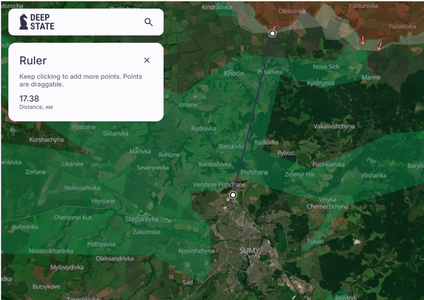
On 1 September, Russian President Vladimir Putin said during a conversation with journalists that Russian troops had 12 km left to reach Sumy. Censor.NET estimated from DeepState’s map that Russian forces were approximately 17 km from Sumy’s administrative boundary.
Russian military commanders have systematically exaggerated their gains on the battlefield. The Institute for the Study of War (ISW) describes such claims as part of a Kremlin information campaign aimed at c
On 1 September, Russian President Vladimir Putinsaid during a conversation with journalists that Russian troops had 12 km left to reach Sumy. Censor.NET estimated from DeepState’s map that Russian forces were approximately 17 km from Sumy’s administrative boundary.
Russian military commanders have systematically exaggerated their gains on the battlefield. The Institute for the Study of War (ISW) describes such claims as part of a Kremlin information campaign aimed at creating the impression of major Russian gains. In this case, the Russian president cited exaggerated gains that, compared with his previous claims, appear to be a setback.
What Putin said
“The ‘North’ group of forces continues to create a security belt along the Russian-Ukrainian border in the border areas of the Sumy region... There are 12 km left to Sumy, to the Sumy ring road,” Putin said during the press conference.
Censor.NET reported that Russian forces were about 17 km from Sumy without specifying the reference point, while Putin did not say which section of the city’s ring road his 12 km figure referred to.
Approximate visualization of Censor.NET’s reported 17 km distance from the DeepState frontline toward Sumy. Map: DeepState / Chart: Euromaidan Press
Putin previously gave a different distance
On 28 June, during an interview with Russian propagandist Pavel Zarubin, Putin said that Russian troops had “about 10.5 km” left to reach Sumy. At the time, he also explained the offensive as the creation of a “security zone” along Russia’s border.
Putin’s claimed distance to Sumy therefore increased by approximately 1.5 km in just over two months, contradicting the Kremlin’s portrayal of a continuing advance.
Other exaggerations
In July 2026, Putin claimed that Russian forces had “completely captured” Kostiantynivka. Ukraine’s General Staff rejected the claim, saying Ukrainian forces continued defensive operations in the city. ISW also said some videos of Russian flags being raised in Kostiantynivka were likely AI-altered.
On 2 December 2025, Putin claimed that Russian forces had captured Pokrovsk in Donetsk Oblast. ISW found no evidence confirming the city’s complete capture and assessed that its fall would not enable Moscow to achieve a significant breakthrough.
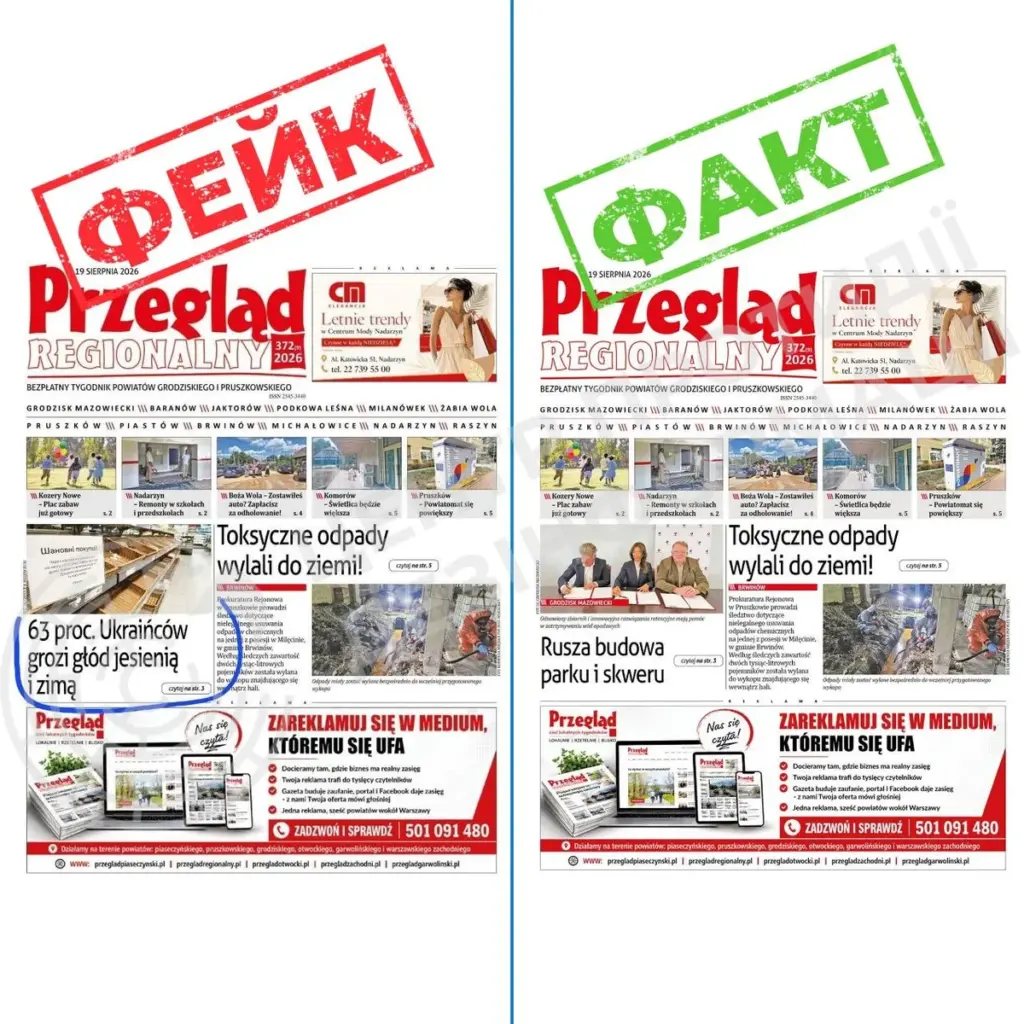
Russian propagandists used the Matryoshka disinformation network to circulate a digitally altered front page of the Polish regional weekly Przegląd Regionalny warning of a “hungry fall and winter” in Ukraine, the country’s Center for Countering Disinformation reported.
The fake turns genuine anxiety over Russian attacks on warehouses and food logistics into an unsupported prediction of mass starvation. The Center said Matryoshka routinely disguises fabricated material a
Russian propagandists used the Matryoshka disinformation network to circulate a digitally altered front page of the Polish regional weekly Przegląd Regionalny warning of a “hungry fall and winter” in Ukraine, the country’s Center for Countering Disinformation reported.
The fake turns genuine anxiety over Russian attacks on warehouses and food logistics into an unsupported prediction of mass starvation. The Center said Matryoshka routinely disguises fabricated material as reporting by established Western outlets, lending Russian narratives borrowed credibility while creating the impression that foreign media consider Ukraine’s situation hopeless.
The fabricated Przegląd Regionalny front page claimed Russian strikes would push 63% of Ukrainians to the brink of famine over a “hungry autumn and winter.” No such article ran—the real front page of that issue looked entirely different, and the circulated image was built using graphics-editing software, the Center said.
The image spread through Matryoshka, a network that dresses invented content in the mastheads of recognized Western outlets. In this case, the campaign was meant to frighten Ukrainians and weaken public confidence, according to the Center.
Although it impersonated a Polish outlet, the Center described Ukrainians—not Polish readers—as the campaign’s target: the Polish masthead supplied an apparently independent foreign voice for a Russian narrative.
The fake works because the disruption it points to is real. Russian attacks on warehouses and food logistics had destroyed up to 90% of Ukraine’s modern food storage capacity, and suppliers were moving stocks and changing delivery routes and storage methods in response, Agriculture Minister Taras Vysotskyisaid on 28 August 2026, according to Interfax-Ukraine.
Supermarket chain ATB has temporarily capped purchases of certain essential goods at 6 units of any single product per customer, citing both Russian strikes and resellers buying in bulk.
What the fake predicts, though, is not what officials expect. Presidential defense-technology adviser Serhii “Flash” Beskrestnov urged Ukrainians not to panic and said a systemic food shortage was not expected, ZN.UA reported.
How Russia spreads disinformation in Poland
Russia has repeatedly exploited Poland’s information space to turn political, economic, and security anxieties against Ukraine. Polish Deputy Prime Minister Krzysztof Gawkowskisaid Russian intelligence had offered Poles €3,000–€4,000 ($3,500–$4,600) to spread disinformation before the 2025 presidential election.
After Russian drones entered Poland that September, Prime Minister Donald Tusk said the Kremlin was using real fears and emotions to fuel anti-Ukrainian sentiment. False claims about Ukrainians living off Polish taxpayers have also fed hostility as bilateral relations frayed.
The head of the Moscow-based Russian Orthodox Church, Patriarch Kirill, personally consecrated Igor Pashentsev as bishop of Skadovsk and Oleshky after occupation authorities appointed him to lead the Skadovsk diocese, the Ukrainian outlet IPC-South reported, citing Russian sources.
The appointment advances the Russian church’s incorporation of occupied Ukrainian parishes into a Moscow-controlled structure created after Russia seized the area. Pashentsev will oversee chu
The head of the Moscow-based Russian Orthodox Church, Patriarch Kirill, personally consecrated Igor Pashentsev as bishop of Skadovsk and Oleshky after occupation authorities appointed him to lead the Skadovsk diocese, the Ukrainian outlet IPC-South reported, citing Russian sources.
The appointment advances the Russian church’s incorporation of occupied Ukrainian parishes into a Moscow-controlled structure created after Russia seized the area. Pashentsev will oversee churches across five occupied Kherson districts through a diocese IPC-South describes as operating illegally on Ukrainian territory.
Ukraine banned the Moscow-based Russian Orthodox Church from operating in the country in 2024 and established a court process for suspending Ukrainian religious groups that fail to sever Russian control. The measure targets Russian control, not Orthodox Christianity.
IPC-South says Pashentsev graduated from a Soviet military command school of chemical defense and served in the Soviet Defense Ministry’s 12th Main Directorate from 1981 to 1992. The Federation of American Scientists says the directorate stored, maintained, transported, and secured the Soviet Union's nuclear arsenal, but public records do not identify his duties there.
Ordained in 1993, Pashentsev completed the Moscow Theological Seminary in 1998, later led a Tambov diocesan office for relations with the armed forces and detention facilities, and served in the Barysh diocese. Known in the church as Joseph, he held the rank of archimandrite—a senior Orthodox monk—before his consecration.
During a Dormition liturgy—a major Orthodox feast honoring the Virgin Mary—Kirill gave Pashentsev an episcopal staff symbolizing a bishop’s authority and delivered instructions before his ministry began, Russian church accounts relayed by IPC-South said.
The Russian Orthodox Church created the Skadovsk diocese—a regional church administration—on 27 December 2023 after the occupation made it impossible for the existing Kherson diocese to oversee parishes on the Dnipro’s left bank. The new body incorporated parishes across the occupied Oleshky, Hola Prystan, Kalanchak, Skadovsk, and Chaplynka districts. IPC-South describes it as operating illegally on Ukrainian territory.
Russia weaponizes church control while suppressing other faiths
Pashentsev’s appointment is part of the Moscow Patriarchate’s wider effort to control religious life in occupied Ukraine. Religious communities that reject Kremlin authority face interrogations, threats, closures, and confiscation.
Ukraine’s Security Service has accused church structures of recruiting and training mercenaries for Russia’s military. The Institute for the Study of War, a US-based think tank, says occupation authorities also arbitrarily detain clergy and destroy places of worship while suppressing independent Ukrainian religious identity.
A field in Ukraine’s southern region of Mykolvaiv in August. Despite a strong growing season, attacks on Black Sea shipping routes have choked off exports.
Wolfgang Kubicki, chair of Germany’s pro-business liberal Free Democratic Party (FDP), proposed that Berlin summon Russia’s ambassador and use the prospect of Taurus missiles for Ukraine as leverage against further hybrid attacks during an appearance on German broadcaster ntv.
Kubicki’s proposal does not change German policy. The FDP has no seats in the Bundestag, Germany’s federal parliament, while Chancellor Friedrich Merz has ruled out supplying the missiles. However
Wolfgang Kubicki, chair of Germany’s pro-business liberal Free Democratic Party (FDP), proposed that Berlin summon Russia’s ambassador and use the prospect of Taurus missiles for Ukraine as leverage against further hybrid attacks during an appearance on German broadcaster ntv.
Kubicki’s proposal does not change German policy. The FDP has no seats in the Bundestag, Germany’s federal parliament, while Chancellor Friedrich Merz has ruled out supplying the missiles. However, it recasts military aid to Ukraine as a potential cost Moscow would face for hybrid attacks inside Germany. Berlin has since formally blamed Russia for the Leipzig/Halle operation that prompted his remarks.
Kubicki said “a reasonable person” would tell the ambassador that Germany had so far withheld Taurus missiles. If the hybrid threat continued, Berlin should do everything possible to ensure Ukraine received the weapons it needed to defend itself against Russia, he added.
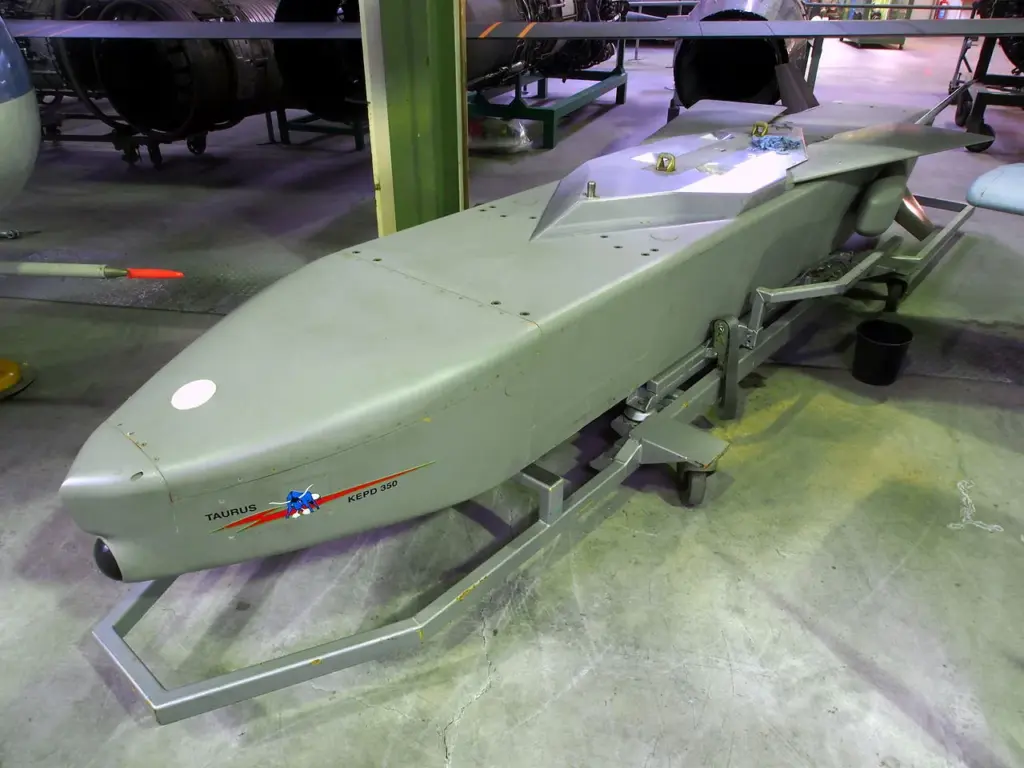
Taurus, the weapon Kubicki spoke about, is a German-Swedish cruise missile launched from military aircraft, with a range exceeding 500 kilometers. Ukraine has sought it for years to strike military targets far behind Russian lines.
Germany refused to supply Taurus missiles in 2025 while funding hundreds of Ukrainian-made long-range systems. Merz again ruled out a transfer in March, arguing that Ukrainian weapons were more effective.
Leipzig sharpens Germany’s hybrid-war debate
Germany formally blamed Russia on 1 September for the attempted drone attack at Leipzig/Halle Airport and said it would close the Russian consulate in Bonn and terminate the agreement under which the Russian House cultural center operates in Berlin, DW reported. Interior Minister Alexander Dobrindt cited evidence from German and allied intelligence services, as well as investigations across Europe. Russia has denied involvement.
The operation that prompted Kubicki’s warning involved an explosives-laden drone that struck the wing of a Ukrainian Antonov An-124 heavy cargo aircraft on the evening of 4 August but failed to detonate, Die Zeit reported. The airport handles civilian freight and NATO logistics, while Ukraine’s Antonov Airlines uses it as a base.
Investigators later found evidence that three drones were involved and discovered about 50 grams of suspected military explosive near the runways.
Russia is sending jet-powered drones against Ukrainian cities in growing numbers—no longer only the Iranian Shahed-238 it fields as the Geran-3, but the newer, faster Geran-4 and Geran-5. The fear everyone voices is their speed, but speed breaks the cheap layer, not the missiles.
Ukraine's expensive air-defense missiles already routinely shoot down cruise missiles, and to them, a fast drone is just one more target. The strain falls on the cheap layer instead—the interce
Russia is sending jet-powered drones against Ukrainian cities in growing numbers—no longer only the Iranian Shahed-238 it fields as the Geran-3, but the newer, faster Geran-4 and Geran-5. The fear everyone voices is their speed, but speed breaks the cheap layer, not the missiles.
Ukraine's expensive air-defense missiles already routinely shoot down cruise missiles, and to them, a fast drone is just one more target. The strain falls on the cheap layer instead—the interceptor drones Ukraine built to down thousands of Shaheds a month for a few thousand dollars each, a fraction of a missile's price.
Those were designed to catch slow drones, and against jet speed, they struggle. If that layer breaks, the cost of defending Ukraine's skies climbs—and the Defense Ministry has already started paying to keep it from breaking.
The shift is not marginal, and it continues to accelerate. Russia had sent more than 2,500 jet-powered Shaheds against Ukraine by 30 August, against roughly 1,500 in July, informal presidential adviser Serhii "Flash" Beskrestnov wrote—the drones, he noted, were launched practically straight from the factory. Russia fired roughly 1,400 jet-powered drones since the start of 2026 to June, and air defenses recorded about 180 in all of 2025, Colonel Oleksandr Zaruba of Ukraine's State Research Institute said.
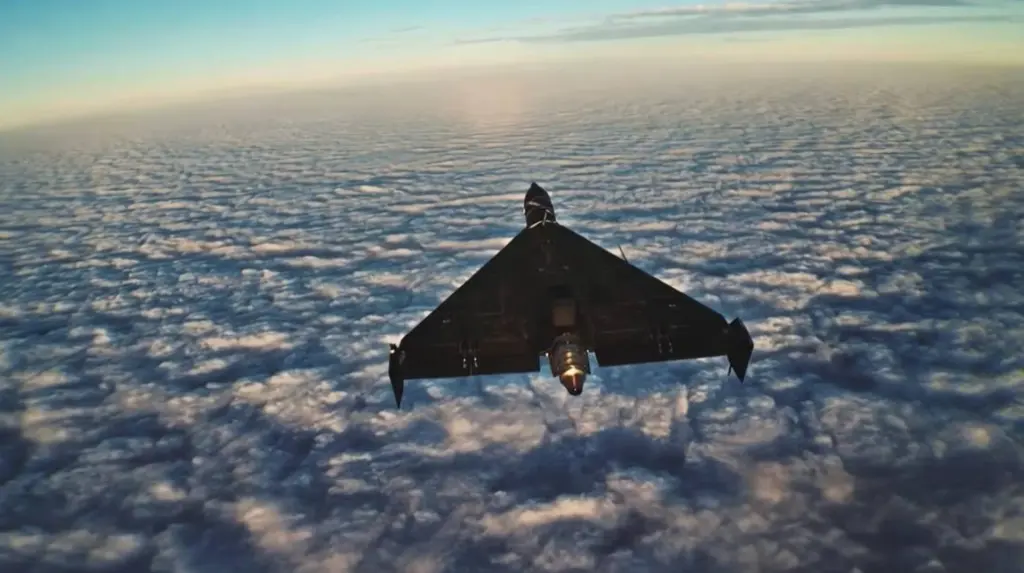
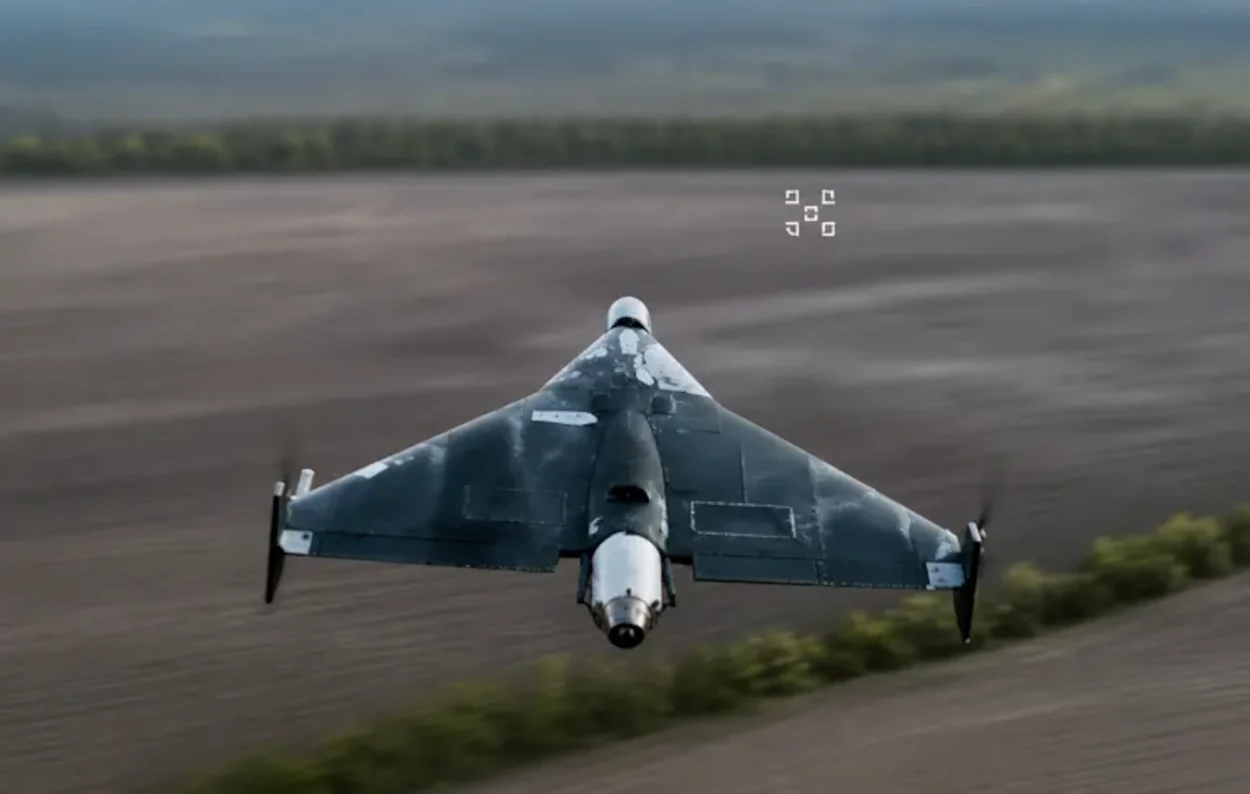
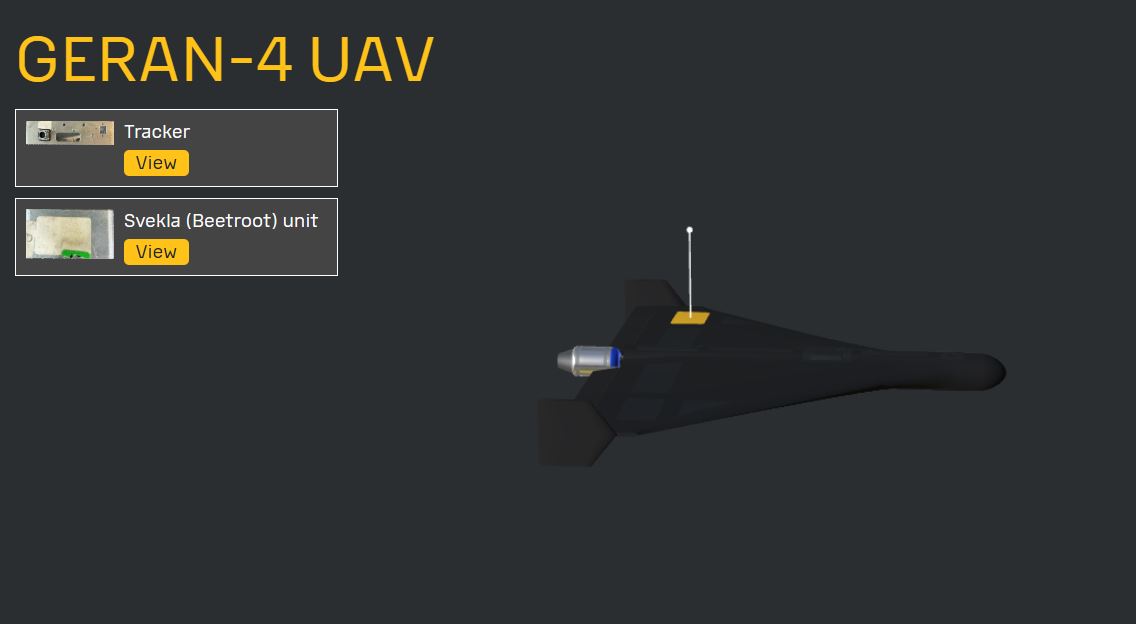
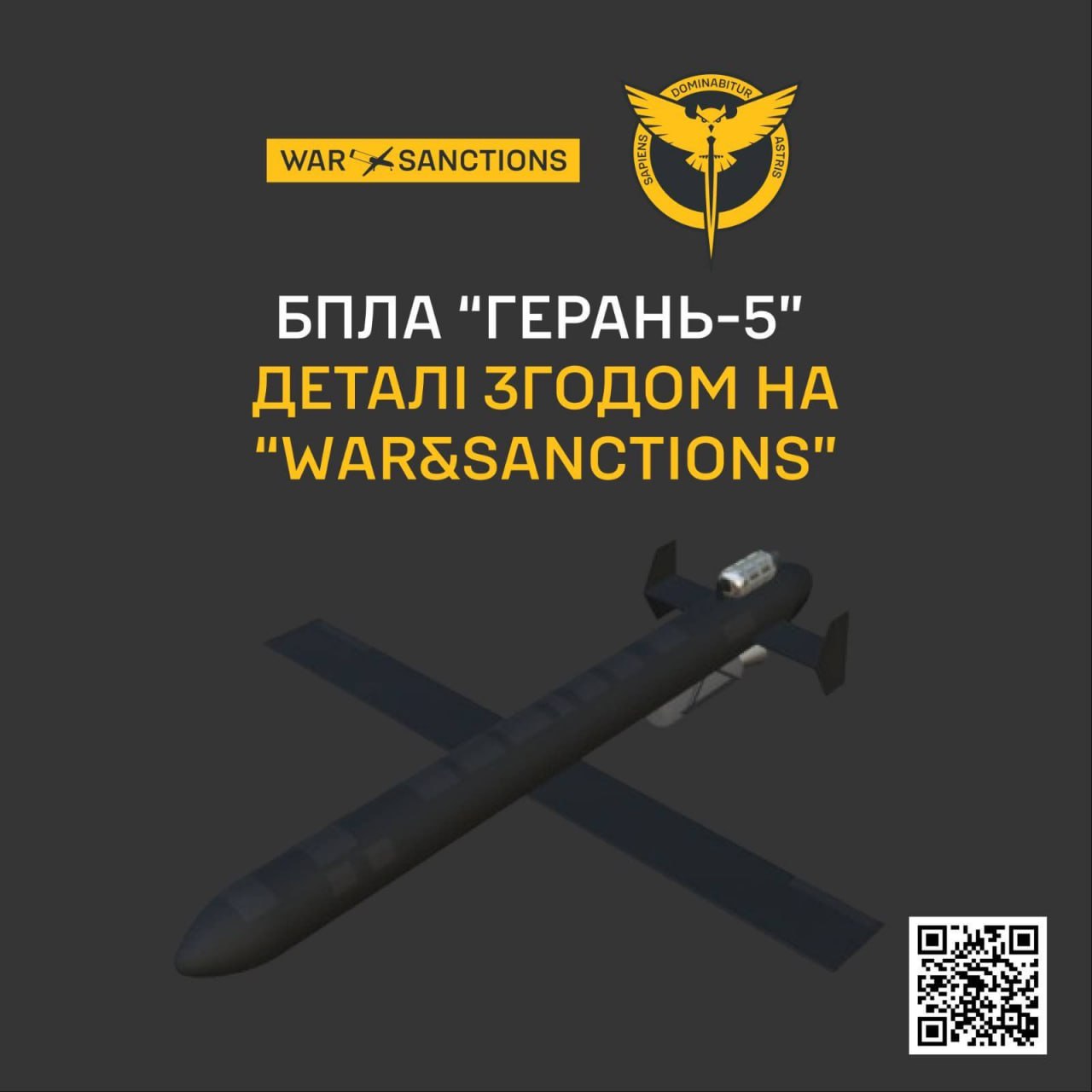
Geran-5 (above) and Geran-4 (below). Image: TurDef
A record month, and the weapon built to beat it
Ukrainian interceptor drones destroyed more than 33,000 Russian drones of all types in March 2026—roughly double the February total and a record for the cheapest layer of Ukraine's air defense, then-Defense Minister Mykhailo Fedorov said.
Russia sent Shaheds—cheap, propeller-driven, long-range, lumbering in at about 185 kilometers per hour (115 mph)—in mass raids meant to swamp Ukraine's defenses. Ukraine adapted, with mobile fire teams, electronic warfare, and layered engagement, then added interceptor drones that destroy incoming drones for a fraction of a surface-to-air missile's cost.
As Ukraine got better at catching propeller drones, Russia reached for speed—jet-powered versions that fly more than three times faster than the Shaheds Ukraine spent three years learning to intercept.
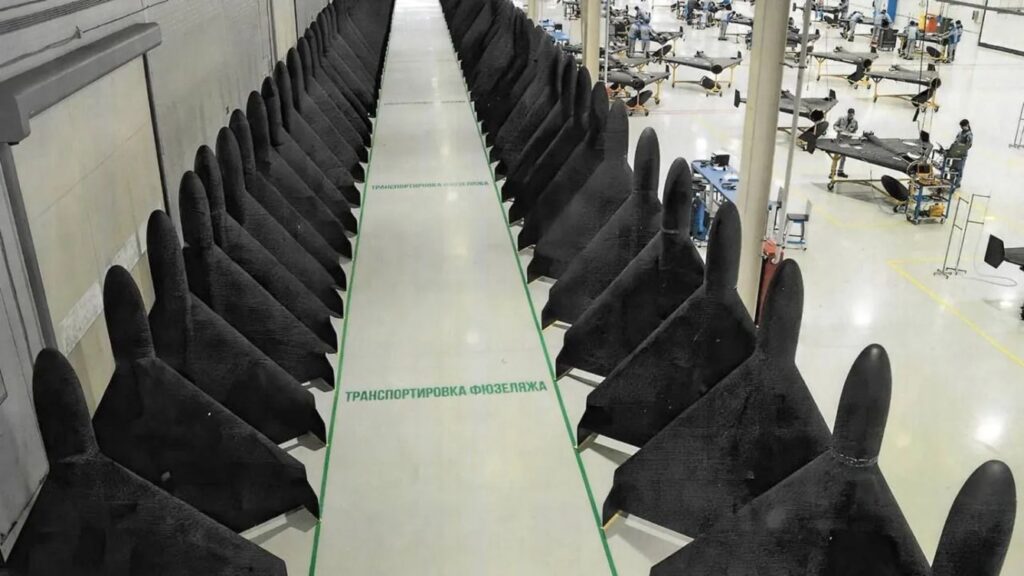
Iranian-designed Shahed-136 drone hulls at a Russian drone factory. Photo via TWZ
By August, Ukraine's military intelligence said Russia had stopped building the Geran-3 and shifted to the newer jets, producing roughly 3,000 of them a month.
Conventional air defense already handles this
The worry centers on velocity: a jet drone flies several times faster than a propeller-driven or electric one, reducing the time defenders have to detect, identify, and hit it. But the fear aims at the wrong place, said Oleksii Kolesnyk, director of the Ukrainian firm Reactive Drones.
"A jet-powered UAV is, in many ways, similar to a cruise missile. For conventional air defense, jet-powered drones are simply another aerial target," he told Euromaidan Press.
Ukraine's surface-to-air systems routinely intercept cruise missiles. A fast drone is standard work for them—though Zelenskyy said in late August that the jets are the hardest to intercept, and that combat aircraft now mainly protect against them.
The strain lands on the interceptor drones
An interceptor drone, unlike a ground-launched missile, has to chase its target down and ram it, which worked against slow Shaheds. Against something near cruise-missile speed, the geometry breaks.
The problem exists almost only for interceptor drones, Kolesnyk said—they were never designed for these speeds. At jet velocities, guidance, target tracking, and the final homing onto the target all hit technical ceilings, and faster interceptors alone will not fix it.
"New technical solutions will be needed," he said.
Interceptor drones are why Ukraine can answer mass raids without firing a missile worth hundreds of thousands of dollars at each incoming drone. Break that math, and the affordability of Ukraine's whole air defense shifts.
The Defense Ministry's answer
Through the defense-tech accelerator Brave1, Ukraine backed 12 technologies under the EU4UA Defence Tech grant program, offering up to €150,000 each for high-speed interceptors capable of reaching 450 kilometers per hour (about 280 mph) or more.
Explore further
Ukraine is testing four new drone interceptors as Russia floods its skies with faster Gerans
That push has since produced candidates. By late August, Ukraine had four interceptor systems built to run down the jets, all already in field testing, Defense Minister Yevhenii Khmara said, and the Alexa Spatium had entered service. Ukraine now wants to bring them up to standard and build them in the thousands.
Not a revolution, but an evolution with a long history
Colonel Oleksandr Saienko, a former Ukrainian brigade commander, rejected the idea that any of this is new.
"This is better described as an evolution of unmanned systems rather than a completely new stage of warfare," he said.
Jet drones long predate this war. "The first jet-powered UAVs appeared back in the 1970s," he said, pointing to Soviet reconnaissance drones beginning with the Tu-143 and continuing with the Tu-141 and Tu-243—platforms Ukraine itself later flew in the Donbas war and the full-scale invasion. What has changed is scale, and the problem the drones now solve: arriving before the defender can react.
Explore further
Ukrainian intelligence: Russia’s new jet-powered Geran-4 attack drone runs on Chinese turbojets
Saienko's warning points past the engine.
"The decisive advantage will not belong to whoever simply has a jet engine. It will belong to whoever integrates these platforms into an effective reconnaissance-strike system, protects them against electronic warfare, manufactures them at scale, and keeps costs manageable," he said.
His frame is the kill chain—detect, identify, decide, engage—and every gain in speed compresses that cycle. "If a target is flying at 500 to 700 kilometers per hour, even a delay of several dozen seconds may make interception impossible," he said, adding: "Radars must see sooner, command systems must classify automatically, and operators get less time—until automation becomes a requirement."
Why hasn't every drone gone jet-powered
Speed solves one problem and creates several. "They are simply another category of strike UAV," Kolesnyk said.
"One solution does not replace another."
Oleksii Kolesnyk, Reactive Drones.
Compact turbojets are expensive and hard to source for smaller drones. Bigger airframes have to be reinforced to take the loads and vibration, which adds weight and cost. Fuel burn climbs far above that of the electric or piston drones built for endurance, and higher speed leaves less room for navigation errors.
So, jet drones fill a niche rather than taking over the whole strike fleet. "They are most effective at ranges of roughly 200 to 600 kilometers," Kolesnyk said—fast strikes on high-value or time-sensitive targets, where getting there quickly matters more than flying cheaply or far.
Explore further
Russia unleashes its Geran-5 air defense killer on Ukraine, equipped with British Raspberry Pi microcomputer tracker
Ukraine didn't drop first-person-view (FPV) drones when fiber-optic ones arrived, and jam-resistant drones didn't replace the rest. Each capability added a layer rather than erasing the previous one. Saienko expects the same. "The emergence of jet aviation did not eliminate piston-engine aircraft. The same principle applies," he said. Cheap propeller drones are ideal for mass attacks, while jet platforms handle speed.
The next fight is over reaction time
Jet drones force defenders to decide faster, and that is the harder demand. A slow propeller drone is a wasteful target for an expensive missile. A cruise missile demands an instant answer. A jet drone sits in between—and an operator has to sort which weapon meets which target in seconds, while holding scarce interceptors back for the worst threats. Every misjudgment costs something.
"The challenge is no longer only interception—it is detecting, identifying, and assigning the target quickly enough," Saienko said.
Both experts reach the same conclusion from opposite ends: Kolesnyk through the technical limits of the interceptor drone, Saienko through the entire defensive network. Both land on automation—AI-driven target recognition, distributed sensors, and fast data sharing to shrink the gap between spotting a target and hitting it. The winner won't necessarily fly the fastest aircraft. It will process information faster than its opponent.
Over four days at the end of August, Russia fired about 800 jet drones at Ukraine, Ukraine's president said—a type most of Ukraine's cheap interceptors still cannot catch. And the problem won't stay Ukraine's alone. Drones from the same broad Shahed family have already strayed into NATO airspace and turned up in other wars. The interception race Ukraine is running now is one everyone will eventually run.
In a frontline Ukrainian city, parents don’t see schools built below ground as apocalyptic. Instead, they offer relief from worry about the threat of Russian strikes.
In a frontline Ukrainian city, parents don’t see schools built below ground as apocalyptic. Instead, they offer relief from worry about the threat of Russian strikes.
The first day of school at Sichovy Collegium in Zaporizhzhia, Ukraine, on Tuesday. The school operates from an underground space, built to allow children to continue learning safely amid the war.
Ukrainian president Volodymyr Zelenskyy marked the start of the academic year with children at a Kyiv Oblast school rebuilt after Russian forces destroyed it in 2022, before an air attack forced their first lessons into the shelter on 1 September 2026, the Kyiv Oblast Military Administration said.
Knowledge Day, Ukraine’s traditional start of the academic year, fell during the full-scale invasion for the fifth time. Russia’s war now determines whether children can learn
Ukrainian president Volodymyr Zelenskyy marked the start of the academic year with children at a Kyiv Oblast school rebuilt after Russian forces destroyed it in 2022, before an air attack forced their first lessons into the shelter on 1 September 2026, the Kyiv Oblast Military Administration said.
Knowledge Day, Ukraine’s traditional start of the academic year, fell during the full-scale invasion for the fifth time. Russia’s war now determines whether children can learn alongside their classmates: local security and shelter access govern classroom returns, while about 200,000 pupils near the front will remain fully remote.
Around three million pupils began the 2026–2027 academic year, including roughly 240,000 first-graders, 10% fewer than a year earlier, Member of Parliament Iryna Borzova of the Verkhovna Rada’s Committee on Youth and Sports told Ukrinform. Most will learn in person or through a blended format, but some 200,000 children near the front will study entirely online, she said.
More than 82% of school pupils and preschoolers can access shelters, Education Minister Andrii Butenko said. The government has allocated UAH 6 billion this year to expand access to shelters and other educational safety infrastructure.
Russian forces destroyed the school Zelenskyy visited in March 2022. It reopened only last autumn with a shelter and backup power, according to the Kyiv Oblast Military Administration.
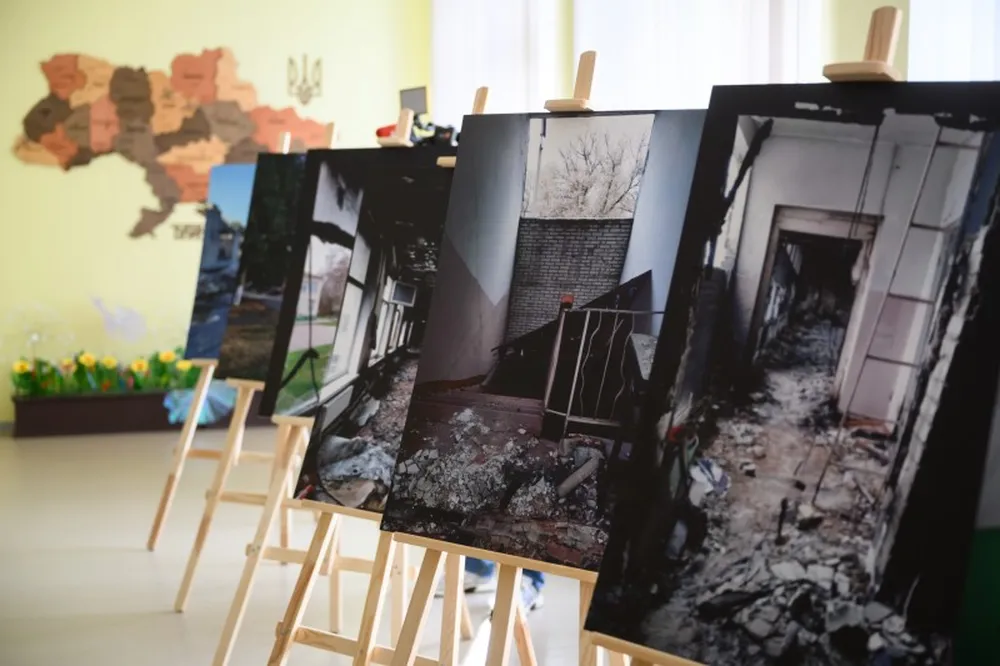
An exhibition shows damage inflicted when Russian forces destroyed the Kyiv Oblast school in March 2022. The school reopened in autumn 2025. Photo: Office of the President of Ukraine
Zelenskyy said Russia had spent the preceding two weeks attacking infrastructure partly to disrupt the start of the academic year.
Ahead of Knowledge Day, Kyiv Oblast Military Administration head Tymur Tkachenko advised schools in high-risk communities not to hold mass opening ceremonies. Each school was to decide whether to proceed based on the security situation in its community.
“First and foremost, there must be safety,” Tkachenko said. If a ceremony went ahead, he recommended holding it directly in a shelter where possible. For events outside shelters, attendance was not to exceed the capacity of the nearest protective facility, and schools were told to avoid large gatherings of pupils, parents, and staff.
How Russia’s invasion has devastated Ukrainian education
Ukraine’s 2026 Knowledge Day began after six consecutive days of Russian attacks on Kyiv and its surrounding region, culminating overnight in a massed missile and drone strike. Eight people were killed, and seven were injured, including three children, while civilian infrastructure was damaged across five Kyiv districts.
Russia’s invasion has turned school safety and reconstruction into central parts of Ukraine's education policy. By September 2024, more than 3,500 educational institutions had been damaged and nearly 400 destroyed, with the World Bank estimating that almost $14 billion would be needed to rebuild them.
Attacks on Ukraine’s energy system have also left classrooms without heat or electricity, forcing prolonged holidays and renewed distance learning.
Ukraine's Armed Forces are forming the 446th Separate Unmanned Systems Brigade, which is recruiting servicemembers while formation continues, MilitaryLand reported. The new unit joins a force that hit 32,485 Russian personnel over the summer alone, the Unmanned Systems Forces (SBS) reported on 1 September.
Ukraine is facing a shortage of military personnel, yet the Armed Forces are forming their second separate unmanned systems brigade this year. The force's command
Ukraine's Armed Forces are forming the 446th Separate Unmanned Systems Brigade, which is recruiting servicemembers while formation continues, MilitaryLand reported. The new unit joins a force that hit 32,485 Russian personnel over the summer alone, the Unmanned Systems Forces (SBS) reported on 1 September.
Ukraine is facing a shortage of military personnel, yet the Armed Forces are forming their second separate unmanned systems brigade this year. The force's commander wants unmanned systems covering the entire front at tactical, operational, and strategic depths.
What is known about the 446th Brigade
Military personnel from other units can apply for a transfer through Army+, according to MilitaryLand.
The first of the two was the 445th Separate Unmanned Systems Brigade Chata, whose formation became known in July. Both units are recruiting for posts running from operators of ground robots, FPV, bomber, and interceptor drones to psychological-support officers, analysts, and accountants, Militarnyi reported.
The deployment of such units is part of the Ukrainian Armed Forces' broader effort to increase the number of unmanned systems in the military. Ukrainian drones accounted for about 96% of Russian casualties in March—33,988 of roughly 35,000 killed or severely wounded—Zelenskyy said in April.
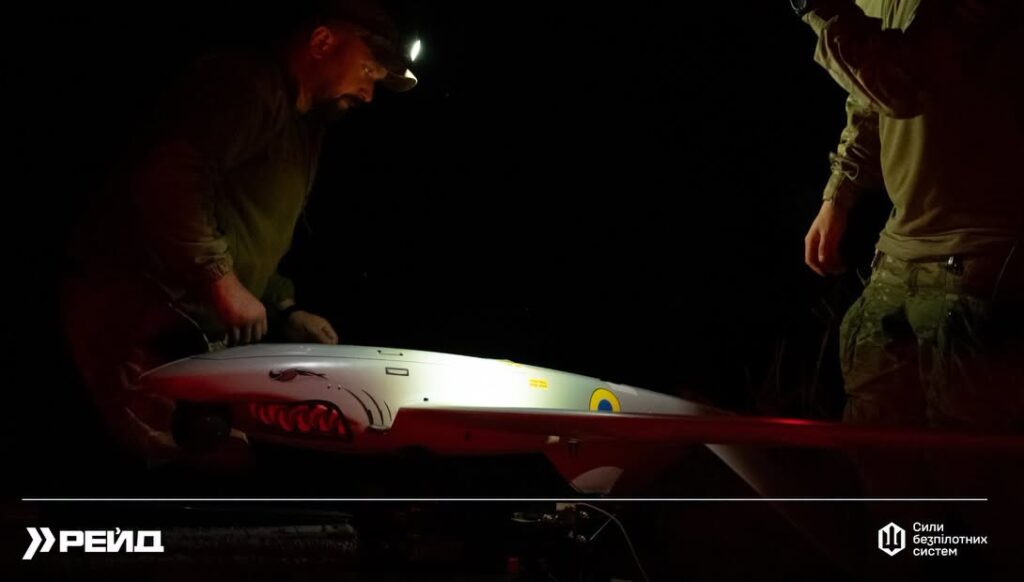
Drone operators of the 413th Separate Unmanned Systems Regiment Reid prepare a Shark reconnaissance drone for a sortie. Illustrative photo: Unmanned Systems Forces of Ukraine / Facebook
Why Ukraine is turning to drones
The expansion of unmanned systems brigades is part of a broader effort initiated by Robert Brovdi, callsign Madyar, to increase the role of the SBS within Ukraine's Defense Forces, Militarnyi notes.
Brovdi told Reuters in June that he wants to raise the drone forces from about 2.5% of Ukraine's armed forces to 5%, a goal he first stated publicly in September 2025. At that share, the drone units accounted for roughly a third of Russian losses over the previous 12 months, according to figures the force gave Reuters, which said it could not verify them independently.
Then Commander-in-Chief of the Armed Forces of Ukraine Oleksandr Syrskyi described unmanned systems as one of the key factors shaping modern warfare. Current Commander-in-Chief of the Armed Forces of Ukraine Mykhailo Drapatyi stated that one of his priorities is the development and scaling of the unmanned component.
Overall, the SBS struck 58,465 targets in August, its own tally for 1–31 August shows.
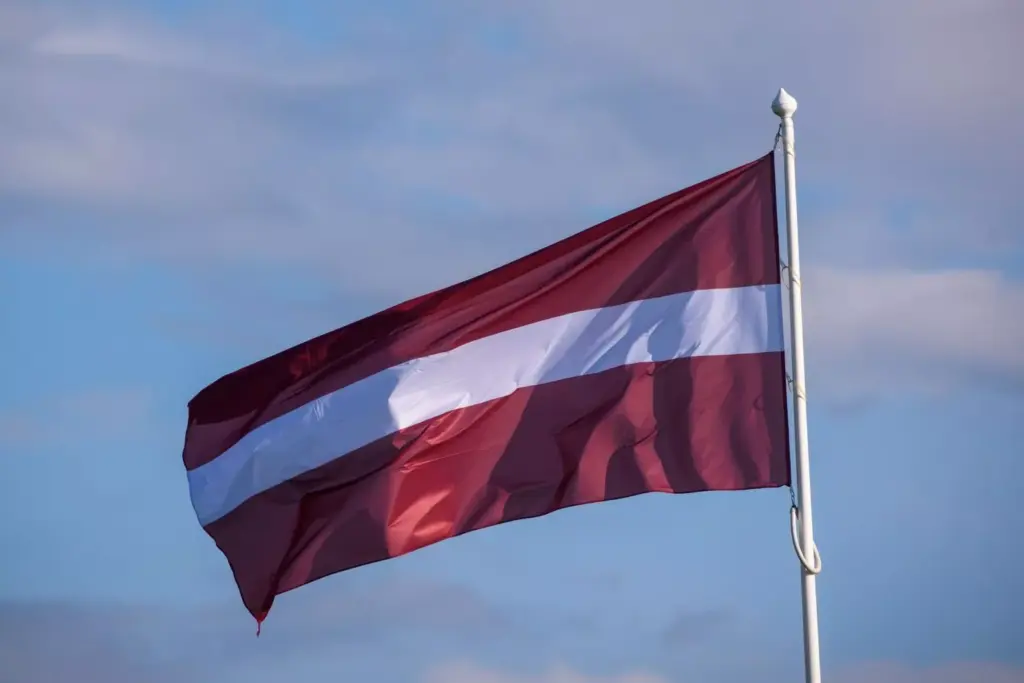
On 1 September 2026, Latvia banned imports of Russian- and Belarusian-made books, clothing, toys, and other consumer goods, including shipments routed through third countries, Latvian Public Media reported.
The restricted goods were worth approximately €12.5 million ($14.5 million) in 2025, or 6.5% of Latvia’s remaining imports from the two countries. Although modest economically, the measure goes beyond EU-wide sanctions and advances Riga’s effort to deny Moscow and Mi
On 1 September 2026, Latvia banned imports of Russian- and Belarusian-made books, clothing, toys, and other consumer goods, including shipments routed through third countries, Latvian Public Media reported.
The restricted goods were worth approximately €12.5 million ($14.5 million) in 2025, or 6.5% of Latvia’s remaining imports from the two countries. Although modest economically, the measure goes beyond EU-wide sanctions and advances Riga’s effort to deny Moscow and Minsk revenue during Russia’s war against Ukraine.
The restrictions cover the following:
Books, newspapers, and other printed material
Clothing, textiles, footwear, and headwear
Toys, games, and sporting equipment.
Latvia’s Cabinet approved the final product list on 25 August following a Foreign Ministry proposal, completing restrictions parliament authorized on 23 July.
The ban applies regardless of whether the products arrive directly or through another country. Russian- and Belarusian-made goods may still transit Latvia on their way to other EU markets, Meduza reported.
Food and beverages are not covered. The restrictions are scheduled to remain in force until 1 July 2027 and will be reviewed annually.
The Foreign Ministry said the measure is also intended to limit the entry of Russian propaganda material. The targeted products accounted for only 0.05% of Latvia’s total imports in 2025, according to Euronews.
How Latvia has been cutting off trade with Russia and Belarus
Latvia’s combined imports from Russia and Belarus have already fallen by 91%, from €2.13 billion ($2.47 billion) in 2022 to €193 million ($224 million) in 2025, according to Latvian Public Media. Much of that decline followed the country’s departure from Russian energy supplies and the Baltic states’ disconnection from the Russian and Belarusian electricity grids.
The latest prohibition blocks consumer goods that Brussels has not collectively banned.
Latvian Prime Minister Andris Kulbergs previously pledged to eliminate the country’s remaining commercial links with Russia and Belarus, although pharmaceutical exporters were expected to remain exempt.
In August, Latvia also resumed publishing a monthly register of businesses trading with either country, naming 171 companies. Inclusion on the list does not itself indicate a sanctions violation.
Russia's Zircon runs on two solid-propellant motors, a booster and a sustainer, Ukraine's military intelligence (HUR) said in a breakdown of the missile's structure and components. That leaves no room for the scramjet Moscow advertised, Defense Express wrote.
Russia presented Zircon as a hypersonic missile capable of penetrating modern air defenses. HUR says it instead uses solid-propellant motors, which Defense Express reads as demolishing Moscow's claims about a super
Russia's Zircon runs on two solid-propellant motors, a booster and a sustainer, Ukraine's military intelligence (HUR) said in a breakdown of the missile's structure and components. That leaves no room for the scramjet Moscow advertised, Defense Express wrote.
Russia presented Zircon as a hypersonic missile capable of penetrating modern air defenses. HUR says it instead uses solid-propellant motors, which Defense Express reads as demolishing Moscow's claims about a superweapon. The intelligence agency also listed an Altera programmable chip and a TriQuint amplifier among the missile's components, the same finding investigators keep making in Russian weapons.
HUR published an interactive 3D model of Zircon through its War&Sanctions database, the latest in a series on Russian ballistic weapons. The agency said the recorded maximum speed to date does not exceed Mach 6.8—about seven times the speed of sound—and that the missile does not hold it through the whole flight. Russia claims Mach 9 at some stages of flight. Zircon carries a roughly 120-kilogram warhead.
A 3D render of a 3M22 Zircon. Source: HUR, Ukraine's military intelligence agency
Defense Express reported that a 2010 contract with solid-fuel specialist NPO Iskra indicates that this propulsion system was planned from the earliest stages of Zircon's development.
Built for ships, moved onto a coastal launcher
Zircon is a Russian anti-ship missile developed for surface ships and nuclear-powered submarines. Russia later adapted it for Bastion-M coastal launchers amid difficulties operating its Black Sea Fleet, HUR said.
Ukrainian forensic experts first confirmed Russia had fired a Zircon at Kyiv in February 2024. Defense Express reported that Ukraine intercepted two more over the capital the following month. Russia has continued using Zircon against land targets: in February 2026, it launched four at Ukraine’s power grid, of which Ukrainian air defenses downed two.
What solid-fuel propulsion changes
Solid fuel does not make Zircon slow: Mach 6.8 is still hypersonic. A scramjet draws oxygen from the atmosphere to sustain hypersonic flight; Zircon instead flies on self-contained rocket motors. HUR calls it a ballistic missile rather than the hypersonic cruise missile Russia advertised, and notes its onboard computer is the type fitted to all Russian ballistic missiles. Defense Express says the trajectory may be aeroballistic and the motor possibly dual-pulse, given the range Russia wanted from a missile that had to fit a ship's launch silo.
Russian President Vladimir Putin claimed in 2019 that the missile could reach Mach 9 and travel 1,000 kilometers, up from earlier official figures of Mach 6 to 8 and 400 to 500 kilometers. A year earlier, the former head of its manufacturer said it flew on a jet engine, Defense Express said.
In February 2024, Kyiv's forensic institute concluded from the debris that the engine was air-breathing rather than solid-fuel, and Defense Express went further the following month, reporting from its own sources that Russia had built a working scramjet. The outlet has since appended a correction to that article, noting that HUR found a solid-fuel 3L2211 motor from NPO Iskra where the scramjet was supposed to be.
The US chips inside Zircon
HUR identified two components from US manufacturers inside Zircon: a programmable gate array from Altera, now part of Intel, and a TGA2704 amplifier from TriQuint Semiconductor, now Qorvo. It also mapped 70 companies involved in its production, along with their personnel and foreign manufacturing equipment.
The finding fits a wider pattern. Investigators have found Western electronics in Russia's UMPK glide-bomb kits and traced at least 28 foreign parts from 15 companies in the Kh-101 that struck Kyiv's Okhmatdyt children's hospital.
A 2026 examination found 62 US-made parts in an Iskander missile, while a Russian Geran drone combined a Soviet missile with Western electronics and a Chinese modem.
Alumina processed at a refinery in County Limerick may be feeding Russia’s war in Ukraine, an investigation suggested. There is little agreement on what to do about it.
Alumina processed at a refinery in County Limerick may be feeding Russia’s war in Ukraine, an investigation suggested. There is little agreement on what to do about it.
The appointment of Mykhailo Fedorov, a Ukrainian former defense minister, showed how other militaries are racing to adapt to battlefield changes accelerated by the war in Ukraine.
The appointment of Mykhailo Fedorov, a Ukrainian former defense minister, showed how other militaries are racing to adapt to battlefield changes accelerated by the war in Ukraine.
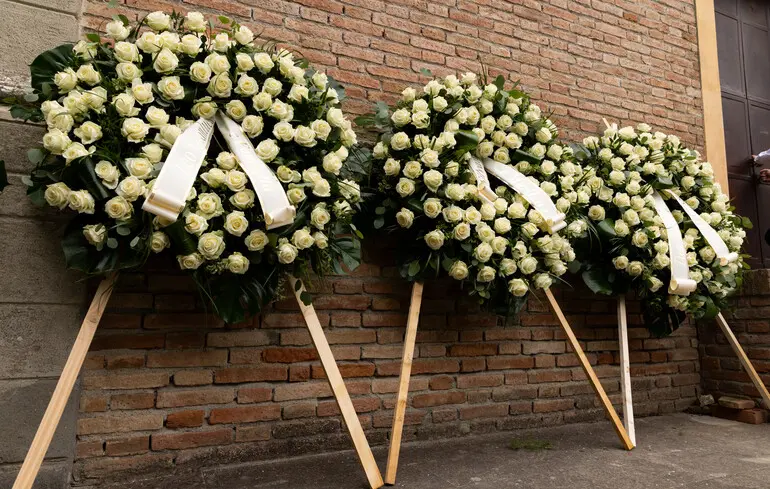
In Lithuania, a photograph of a company executive with a black mourning ribbon was placed next to funeral wreaths, and similar objects turned up near a Czech defense company, Delfi reported on 30 August. Law enforcement officials are investigating whether the two incidents are connected.
Russia is trying to obstruct the defense assistance that NATO countries provide to Ukraine. To this end, Russia uses various forms of intimidation: exerting political pressure, carr
In Lithuania, a photograph of a company executive with a black mourning ribbon was placed next to funeral wreaths, and similar objects turned up near a Czech defense company, Delfi reported on 30 August. Law enforcement officials are investigating whether the two incidents are connected.
Russia is trying to obstruct the defense assistance that NATO countries provide to Ukraine. To this end, Russia uses various forms of intimidation: exerting political pressure, carrying out cyberattacks, and recruiting people to conduct sabotage against foreign defense companies. Russia is suspected of using a new form of psychological pressure against the executives of companies that supply aid to Ukraine: through the use of elements symbolically associated with death.
Wreaths outside a Vilnius drone maker, and a suspect in custody
In Vilnius, funeral wreaths were left near the offices of RSI Europe, a company that manufactures unmanned systems and supplies Ukraine with FPV drones and remote detonation systems. Next to the wreaths, unknown individuals placed a photograph of company head Tomas Milašauskas, tied with a black mourning ribbon. Milašauskas is alive and well.
"We are not afraid. This is ordinary intimidation, a provocation, the usual methods of Russians' work. Our reaction is absolutely normal—we continue to work, we do not react and do not get distracted, because their goal is to distract our attention and direct it where it should not go," Milašauskas told LNK Žinios, as relayed by Delfi.
Milašauskas said that this was the first time RSI Europe had faced such a provocation. But the company had previously faced attempts to interfere with its operations, including cyberattacks.
A similar incident occurred in Czechia at almost the same time. Funeral wreaths also appeared near the offices of Czech defense group CSG, which makes ammunition and military equipment. A photograph of CSG executive director David Chour was placed nearby, Delfi reported.
Lithuanian police have already detained one suspect and launched a pre-trial investigation. National Crisis Management Centre head Vilmantas Vitkauskas said he believed the monitoring and the measures taken after earlier talks with defense firms made the detention possible. The detainee is a Ukrainian citizen, LNK's sources said. Preliminary information suggests that he may have been hired to deliver the wreaths, while the person who ordered them may have been a Belarusian citizen.
Funeral wreaths outside the office of RSI Europe, a drone manufacturer supplying Ukraine, in Vilnius, Lithuania, August 2026. Screenshot: LNK Žinios via Delfi
“This is probably only the beginning”
Lithuanian officials are treating the use of mourning symbols against defense companies as a possible provocation linked to Russian intelligence, after warning the sector to expect such attempts. Remigijus Motuzas, chairman of the Lithuanian parliament's Foreign Affairs Committee, said:
"I think that such cases may become more frequent—and they have already become more frequent. This is probably only the beginning," he said.
He said the warnings are serious enough to require particular vigilance, although security at infrastructure facilities in the country has already been strengthened.
The Lithuanian authorities are also paying particular attention to the fact that photographs and videos of the wreaths quickly spread on social media and Telegram channels following the incidents. Posts accompanying the material promoted claims that NATO is allegedly fighting Russia with Ukraine’s hands, while European companies assisting Kyiv are supposedly making money from the war. Lithuanian officials consider this information component characteristic of information operations by Russian intelligence services.
There is little sign that public exhaustion, economic headwinds or increased Ukrainian strikes are changing the Russian leader’s view that he will eventually achieve victory.
There is little sign that public exhaustion, economic headwinds or increased Ukrainian strikes are changing the Russian leader’s view that he will eventually achieve victory.
Russian attacks have destroyed about 90% of Ukraine’s modern facilities for storing goods, significantly disrupting the country’s retail logistics, Ukraine’s Agriculture Minister Taras Vysotskyi said on 28 August, according to Interfax-Ukraine.
Russia has increasingly targeted Ukraine’s civilian commercial and logistics infrastructure in recent weeks, striking warehouses, distribution centers, hypermarkets, postal terminals and other facilities that keep goods moving th
Russian attacks have destroyed about 90% of Ukraine’s modern facilities for storing goods, significantly disrupting the country’s retail logistics, Ukraine’s Agriculture Minister Taras Vysotskyi said on 28 August, according to Interfax-Ukraine.
Russia has increasingly targeted Ukraine’s civilian commercial and logistics infrastructure in recent weeks, striking warehouses, distribution centers, hypermarkets, postal terminals and other facilities that keep goods moving through the country. The campaign has damaged supply chains and forced businesses to find more expensive and vulnerable ways to store and deliver products.
Vysotskyi said the destruction does not pose a threat of famine, but warned that continued Russian attacks on logistics infrastructure could affect the range of products available in Ukrainian stores. Supermarkets in Kyiv have already seen widespread empty shelves in recent weeks.
Retailers forced to change how goods are delivered
The destruction of warehouses has forced retailers to change how they move products around the country, with deliveries increasingly being made “from the wheels” rather than through conventional storage and distribution facilities, Vysotskyi said.
Such logistics are more complicated and expensive, he said, while some companies have begun relocating their operations to other areas. Russian attacks, however, have also reached some of the relocated facilities.
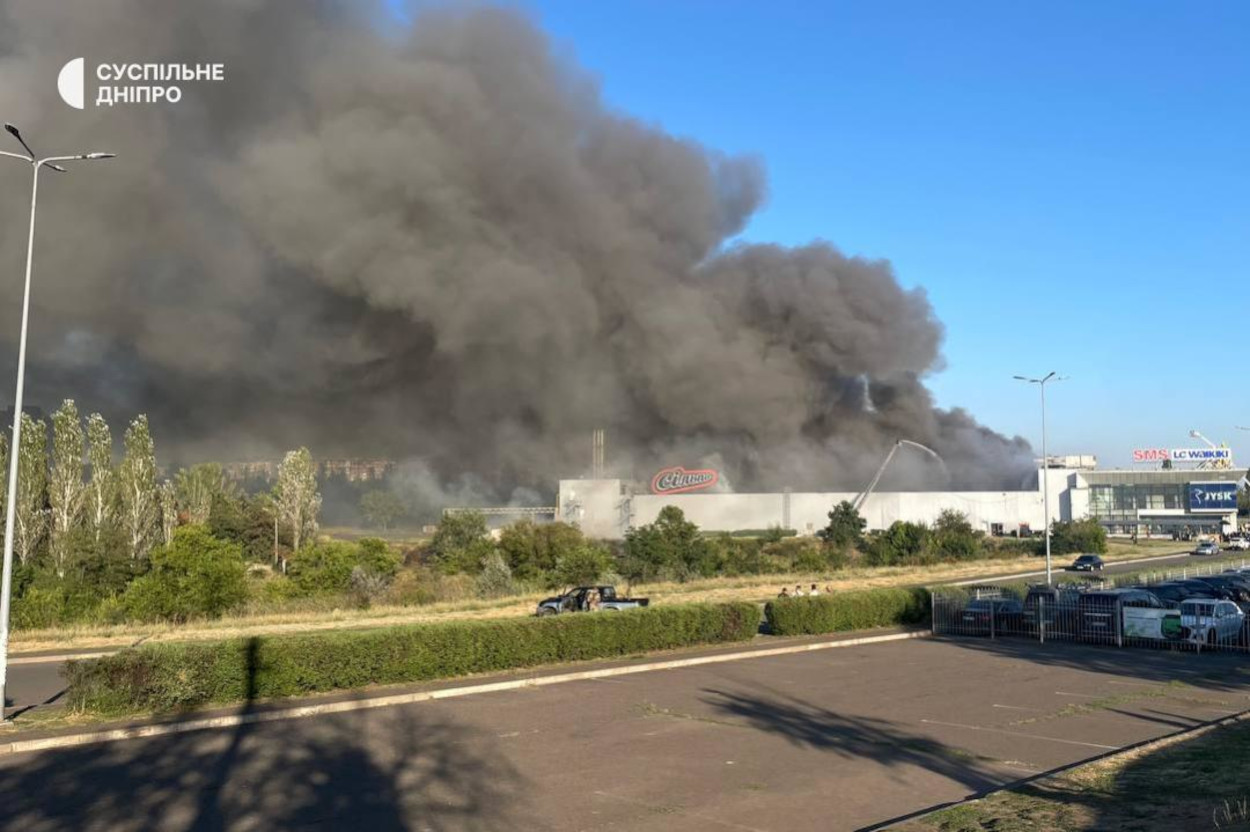
The comments come as Russia has increasingly targeted commercial and logistics infrastructure across Ukraine. In recent days, Russian drones have struck warehouses, hypermarkets, postal terminals and shopping centers, including in Kyiv, Kyiv Oblast, Kharkiv and Zaporizhzhia.
Explore further
Kyiv has been under attack for 2 days nonstop. Russia is targeting the capital’s civilian supply chains
No threat of famine, minister says
Despite the scale of the destruction, Vysotskyi stressed that Ukraine does not face a food shortage severe enough to threaten the population with famine.
The main impact is expected to be on logistics, availability and the range of goods offered in stores. With fewer storage facilities, retailers have less capacity to stock products and must rely more heavily on direct deliveries.
The shift can also increase costs because goods have to move more frequently and over potentially longer routes without the buffer provided by large distribution centers.
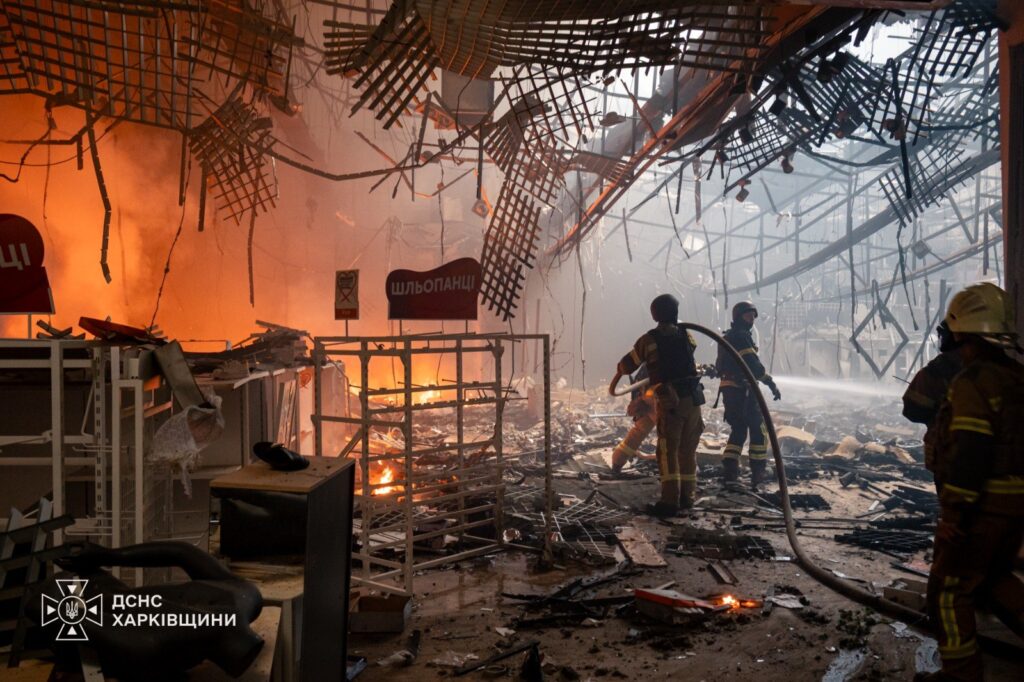
Emergency workers respond to a Russian strike on a shopping center in Kharkiv, Ukraine, on 28 August 2026. Photo: Ukraine’s State Emergency Service
Calls for risk-sharing after Russian strikes
Vysotskyi also called for a system to distribute the financial risks when Russian attacks destroy goods somewhere along the supply chain.
He said these losses currently fall within private contractual relationships between businesses, with the state not acting as an operator in the supply chain. In his view, the risks should be shared more fairly between companies involved in supplying and selling products.
He said such a system would not necessarily mean splitting losses equally. Different products have different margins, sales conditions and profitability, so the share of risk should depend on the specific product and terms of cooperation.
Russia’s attacks on storage and distribution infrastructure are therefore creating effects far beyond the facilities themselves. Damage to the supply chain can change what products reach stores, increase the cost of getting them there, and make Ukraine’s retail system more vulnerable to further strikes.
Russia has spent the past two days repeatedly attacking Kyiv and Kyiv Oblast with jet-powered drones, hitting commercial and logistics infrastructure and disrupting businesses and supply chains around the capital.
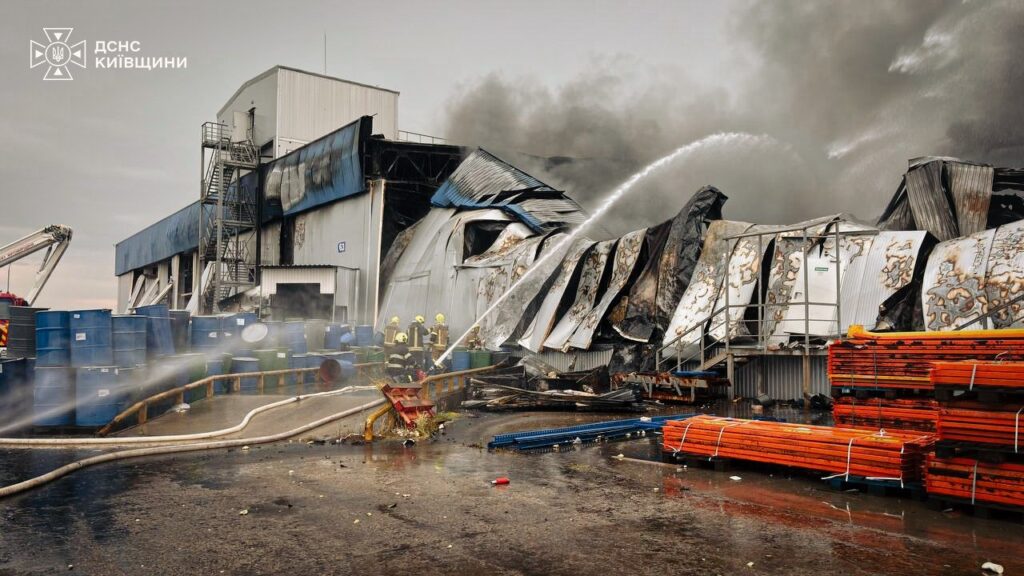
The attacks have struck civilian enterprises, food warehouses, hypermarkets, postal terminals, and warehouses storing books, according to Ukraine’s Interior Minister Ivan Vyhivskyi. Fires have broken out at multiple warehouse sites, while repeated strikes have
Russia has spent the past two days repeatedly attacking Kyiv and Kyiv Oblast with jet-powered drones, hitting commercial and logistics infrastructure and disrupting businesses and supply chains around the capital.
The attacks have struck civilian enterprises, food warehouses, hypermarkets, postal terminals, and warehouses storing books, according to Ukraine’s Interior Minister Ivan Vyhivskyi. Fires have broken out at multiple warehouse sites, while repeated strikes have forced emergency crews to repeatedly stop their work and seek shelter.
The attacks are also affecting the movement and storage of essential goods around Kyiv, with damage to food warehouses and other logistics facilities contributing to supply disruptions and shortages.
Russia expands its aerial campaign against Kyiv
The latest wave comes after Russia dramatically ramped up its use of ballistic missiles against Kyiv and other Ukrainian cities in recent months. Now, improved Russian jet-powered drones are being used to sustain repeated attacks on the capital and surrounding oblast.
Russian forces have been launching the jet-powered drones at Ukrainian regions almost continuously for the previous two days.
The pattern has left Kyiv and Kyiv Oblast under prolonged air raid alerts while putting emergency crews under the threat of repeated strikes.
In Kyiv alone, air raid alerts were issued 13 times on 27 August and lasted for more than 14 hours in total.
Across Ukraine, Russian attacks killed 16 people and injured another 50 during the day, Vyhivskyi said.
Kyiv Oblast has been among the hardest-hit areas. Ukraine’s State Emergency Service (DSNS) said on Friday morning the oblast had come under 38 Russian attacks since the first strike overnight on 27 August.
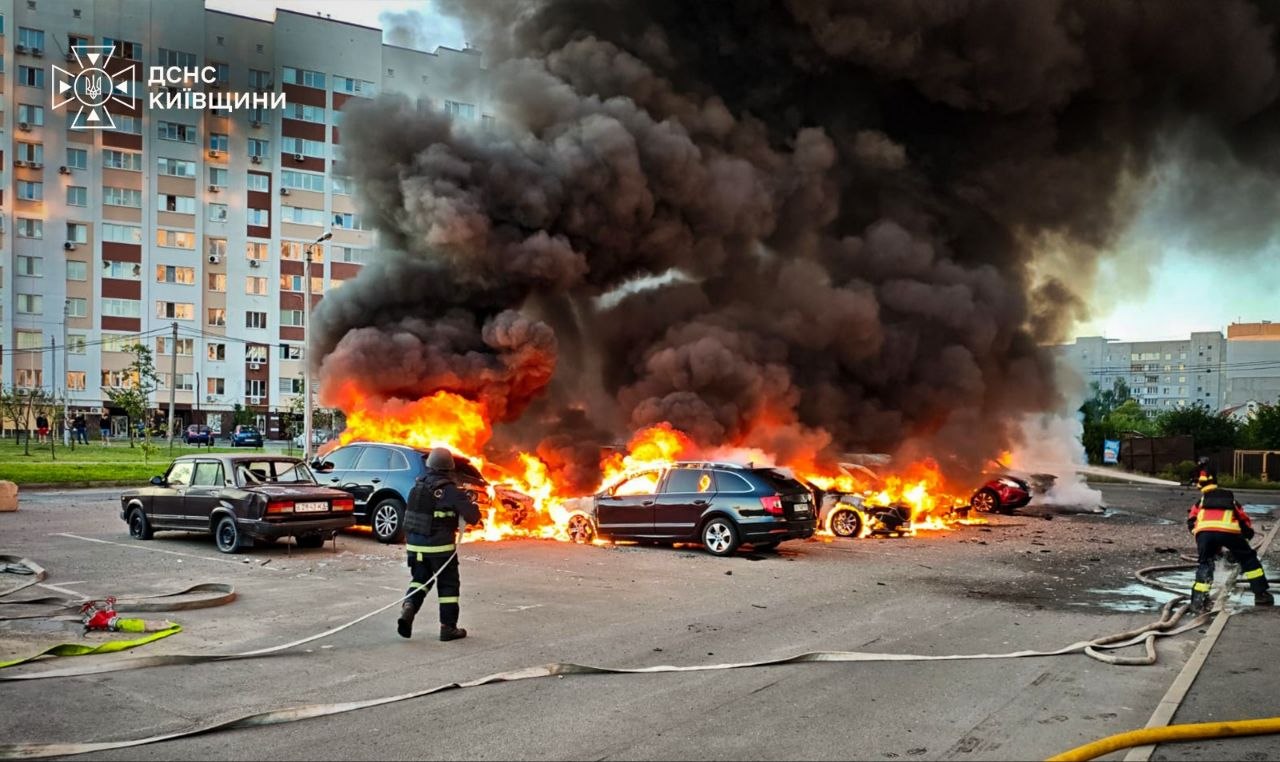
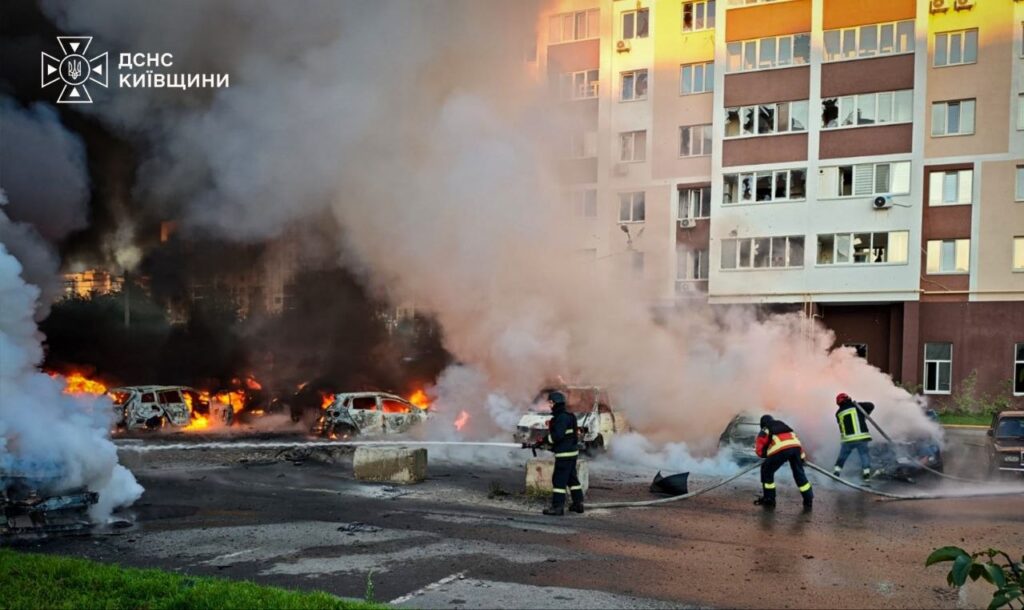
In Bucha district, firefighters worked at several locations where Russian drone strikes caused fires at warehouses and damaged vehicles.
At one site, a drone struck again while rescuers were working. After checking the area, emergency crews returned to the site and continued fighting the fire.
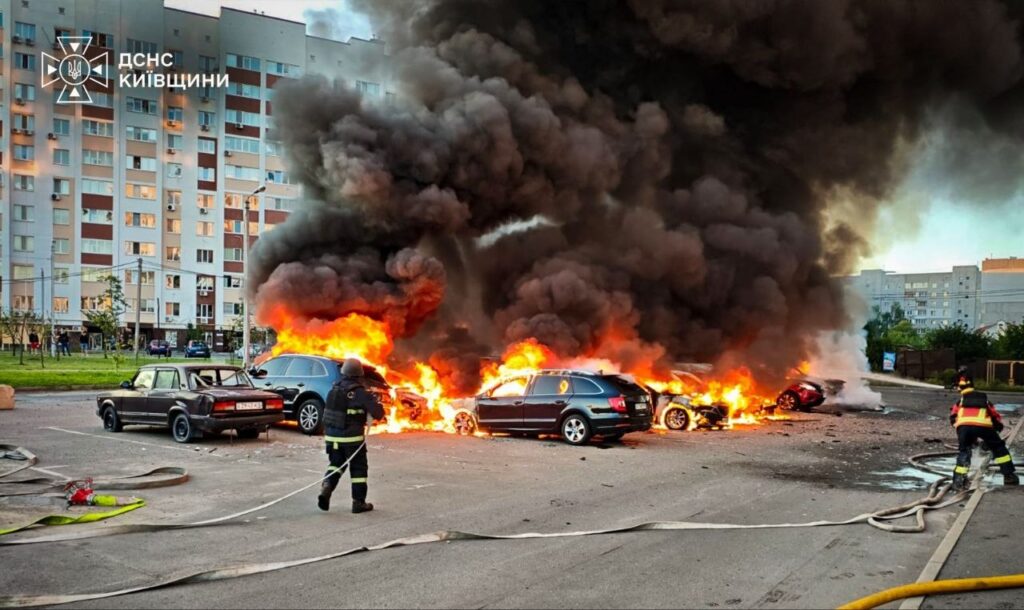
Firefighters also extinguished a fire involving 13 passenger cars. A nearby apartment building was damaged by the blast wave, which shattered windows.
At three locations, crews were still working to extinguish fires at warehouse buildings caused by the repeated attacks.
Aftermath of a Russian strike on Kyiv Oblast, 28 August 2026. Photo: Ukraine's State Emergency Service
Repeat strikes put rescuers at risk
The repeated attacks have made emergency operations particularly dangerous. Since rescuers began working, air raid alerts in the oblast had sounded 20 times as of Friday morning, according to the DSNS.
Firefighters have repeatedly been forced to stop their work and move to shelters or safe distances because of the threat of another strike, before returning to the fires once the danger passes.
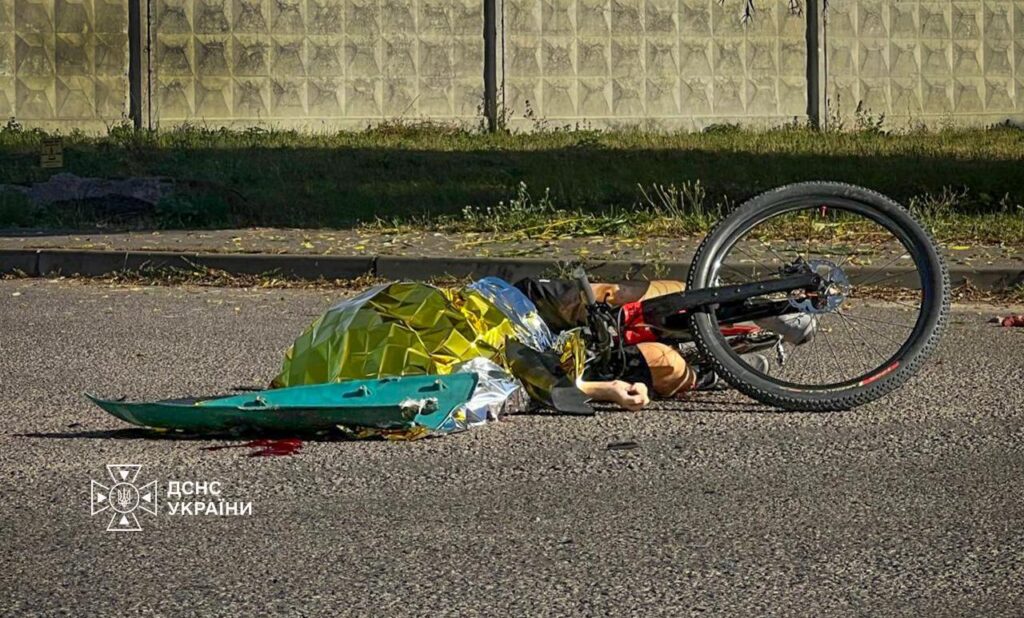
Vyhivskyi said one person was killed and others injured in Kyiv Oblast on the morning of 28 August after civilians remained near a site where crews were clearing the aftermath of an earlier strike despite the threat of another attack.
Russia’s latest attacks on Kyiv Oblast have repeatedly put emergency crews in danger, with firefighters forced to halt their work and move to safety as follow-up strikes hit the area.
Ukraine's State Emergency Service said that on 27 August, the oblast came under 28 additional… pic.twitter.com/cPdkj6Wxwa
The attacks on Kyiv and Kyiv Oblast are part of a broader recent pattern of Russian strikes on commercial infrastructure across Ukraine. In recent weeks, Russian drones have hit shopping centers, hypermarkets, warehouses, postal terminals and other civilian businesses.
In Kharkiv, a Russian jet-powered drone struck a closed shopping center in the city’s Kyivskyi district on 28 August, partially damaging the building and starting a fire among equipment and furniture. Firefighters extinguished the blaze despite the threat of repeat strikes. No casualties were reported.
Russia has struck another shopping center in Kharkiv with a jet-powered drone, hitting a closed commercial facility in the city’s Kyivskyi district.
The strike comes amid Russia’s intensified campaign against commercial sites across Ukraine, including shopping centers,… pic.twitter.com/KSj719sSKz
In Zaporizhzhia, another Russian drone strike injured five people and set a shopping center on fire. The blaze covered about 14,000 square meters, and firefighters had to repeatedly take shelter because of the threat of follow-up attacks.
A Russian drone strike on Zaporizhzhia injured five people and sparked a massive fire at a shopping center, with the blaze spreading across about 14,000 square meters.
The attack comes amid Russia’s intensified targeting of commercial and logistics sites across Ukraine,… pic.twitter.com/Iu5OyoGCGx
The strikes are adding pressure to Ukraine’s civilian supply and logistics networks, particularly around major population centers. Damage to food warehouses, retail facilities and logistics sites can disrupt the storage and movement of goods, contributing to shortages and delays for businesses and consumers.
Explore further
Russian drone strike on Kryvyi Rih shopping center kills 15, injures 130. Second attack targeted rescue workers 30 minutes later
Authorities warn civilians to stay away
Ukrainian authorities have urged residents to remain in shelters or other safe locations during air raid alerts and avoid areas where emergency crews are working.
The DSNS warned people not to approach sites where the aftermath of Russian strikes is being cleared, citing the continuing threat of repeat attacks.
Vyhivskyi also urged residents to treat every air raid alert as a signal to move to a shelter or other safe location, warning that no urgent task is worth risking a life.
Victim of a Russian strike on Kyiv Oblast, 28 August 2026. Photo: Ukraine's State Emergency Service
John Ratcliffe, the C.I.A. director, delivered an urgent message to Aleksandr V. Bortnikov, the head of Russia’s F.S.B. intelligence service this week in a secret visit to Moscow.
The Financial Times reported that Sweden, the Netherlands, Spain, and Poland are jointly urging the European Commission to restart work on using more than €200 billion ($233 billion) in frozen Russian central bank assets to fund Ukraine. Belgium blocked the proposal in December over legal and financial concerns.The Council says the EU’s €90 billion ($105 billion) loan covers two-thirds of Ukraine’s projected funding needs for 2026 and 2027. In the Financial Times,
The Financial Times reported that Sweden, the Netherlands, Spain, and Poland are jointly urging the European Commission to restart work on using more than €200 billion ($233 billion) in frozen Russian central bank assets to fund Ukraine. Belgium blocked the proposal in December over legal and financial concerns.
The Council says the EU’s €90 billion ($105 billion) loan covers two-thirds of Ukraine’s projected funding needs for 2026 and 2027. In the Financial Times,Swedish Foreign Minister Maria Malmer Stenergard called the loan a “manifestation of the EU’s commitment to support Ukraine,” but said it was “clearly not enough.”
A draft obtained by the Kyiv Independent is dated 27 August and asks EU foreign ministers to hold an initial discussion in Ireland on 1–2 September. Three EU diplomats told the outlet they expected it to be sent the same day.
EU rules already channel profits from frozen assets to Ukraine, primarily to help repay EU and G7 loans. The Commission proposedusing cash balances from the Russian holdings for a separate reparations loan, while leaving the assets frozen.
In February, Kaja Kallas acknowledged that EU officials had done no further work on the option since December. Separately, Ukrainians and their supporters rallied across dozens of countries from 22 to 24 August to demand that Europe use the assets.
Explore further
Ukrainians rally across dozens of countries to demand Europe use Russia’s frozen billions
Belgium’s objections remain unchanged. The government fears Russian legal retaliation and wider risks to financial markets because most of the assets are held in Belgium. No new proposal has resolved those concerns, and the coalition is asking the Commission for a progress report on possible legal and technical solutions.
Frontline Rolls, a documentary photography project by Ukrainian photographer Serhii Melnychenko, began in February 2025, when Serhii started sending disposable film cameras to soldiers serving in different areas of the front line. He asked them to document their daily lives, routines, and work.The project has since been published as a standalone photobook and adapted into an exhibition, with photographs, handwritten letters, and artifacts returned by the participants. In 2
Frontline Rolls, a documentary photography project by Ukrainian photographer Serhii Melnychenko, began in February 2025, when Serhii started sending disposable film cameras to soldiers serving in different areas of the front line. He asked them to document their daily lives, routines, and work.
The Ukraine War Archive calls Russia’s war against Ukraine the most documented war in history. Frontline Rolls records it from the soldiers’ own perspective through their photographs, letters, and chosen objects.
How Frontline Rolls began
Serhii spent nearly all of 2024 working on Along the Dnipro. Since he did not have time to travel to soldiers’ positions but wanted to document their experiences, he began looking for alternative ways. He asked himself one question:
“Do I really have to be there in person to document this?” Serhii writes in the foreword to the book, the project’s print format.
The book Frontline Rolls: Photos, Letters & Artifacts from Ukrainian Soldiers. Photo: Serhii Melnychenko
The answer was for the soldiers themselves to document their lives for a period of time. Serhii reached out to Fotovramci, which agreed to provide him with disposable film cameras free of charge.
The bags contain film cameras along with the exposed film. Photo: Serhii Melnychenko
The photographs that came back document the soldiers’ daily lives and the spaces in which they served.
Ukrainian service members inside a dugout, 2025. Photo: project participant Andrii “Dronchik”
Project participants also shared their stories in the book:
“I joined because I have to protect my family from the orcs. Before the full‐scale invasion I was an artist–designer, worked in advertising. Now a tank commander and reconnaissance pilot on a Mavic. In my free time I decorate shell‐casings and send them to volunteers for help,” says Oleksii, a soldier and participant in the project who goes by the call sign “Lapa.”
A Ukrainian serviceman works on equipment inside a military vehicle, 2025. Photo: project participant Oleksii “Lapa”A cat sits inside a Ukrainian military dugout, 2025. Photo: project participant Oleksii “Lapa”
“For almost 3½ years I have remained in my soul a civilian. This system is very alien to me. In it I suffer a lot, in particular due to the huge restrictions on freedom. But I am here so that my country remains free. And for my values and convictions I have already paid a considerable price. If I had the option to choose another path—I would still choose this one,” says Oleksii “Photographer,” a soldier and project participant.
Ukrainian service members travel in a vehicle fitted with military communications or electronic equipment, 2025. Photo: project participant Oleksii “Photographer”
“I don’t have a callsign, because everyone knows me as Holikov. In the military since November 2023. From the very start of the full‑scale invasion I volunteered, but with each trip to the front I felt that I was doing not enough and decided to join the ranks of the 109th Separate Brigade of Territorial Defence,” says Viktor Holikov.
Mourners attend the funeral of a fallen Ukrainian service member, surrounded by Ukrainian flags and wreaths, 2025. Photo: project participant Viktor HolikovBurned-out vehicles stand beside a damaged building after an attack, 2025. Photo: project participant Viktor Holikov
“In the army I... feel calmer. I have finally found a certain peace of mind during the full‐scale invasion, despite the difficulties. Partly I still feel that I’m doing not enough, but now it doesn’t haunt me like it used to,” says Kseniia, a servicewoman who goes by the call sign “Jane.”
A Ukrainian servicewoman poses among tall grass and flowers near a frontline position, 2025. Photo: project participant Kseniia “Jane”
“The army for me is, first of all, what is called brotherhood. It is hard to describe—you can only understand it by being inside,” says Danylo “Doc.”
Ukrainian service members rest in a wooded area near the front, 2025. Photo: project participant Danylo “Doc”Small blue figurines are attached to a Ukrainian service member’s body armor, 2025. Photo: project participant Danylo “Doc”
The artifacts tell their own stories
Participants returned handwritten letters and personal objects with the exposed film. Serhii describes the resulting collection as a record of “personal experiences, struggles, and memories.”
“I collected artifacts that will remain part of our nation’s history after victory, reminding us of these challenging times,” Serhii says in the book.
Decorated spent shell casings provided by project participant Oleksii “Lapa,” 2025. Photo: Serhii MelnychenkoA handwritten letter from Ukrainian service member “Dronchik,” describing life at the front and thanking supporters for their help, 2025. Photo: Serhii Melnychenko An FPV drone—a drone remotely controlled by an operator using a live video feed, 2025. Photo: Serhii Melnychenko A handwritten remembrance by Roman 'Fjord' says Andrii 'Kratos' was killed after his position came under a gas attack, 2025. Photo: Serhii MelnychenkoA rosary with a crucifix belonging to Andrii “VirtuoZ,” 2025. Photo: Serhii Melnychenko
The photographs were also presented in Copenhagen as part of The War They Live, an exhibition curated by The Kyiv Independent photo editor Irynka Hromotska together with Serhii. The project was also shown at the Athens Photo Festival in 2026. According to Serhii, the exhibition is also scheduled to open at Fotografiska Stockholm in October 2026.
The Frontline rolls exhibition, featuring photographs, letters, and personal artifacts from Ukrainian soldiers. Ukraine House in Denmark, Copenhagen, 2026. Photo: Serhii Melnychenko
“I sincerely hope that when the war ends, every participant in this project will be alive. Because each of them has become much more to me than just a contributor—they’ve become true friends,” Serhii concludes the foreword to the book.
On pense souvent la guerre comme un moment profondément transformateur, qui modifie les logique sociales et rebat les cartes, modifiant les statuts sociaux, introduisant de nouvelles pratiques et de nouvelles relations avec l’État. Bien sûr, cela est vrai à bien des égards. Il n’y a rien d’ordinaire à vivre sous les bombardements, à prendre les armes ou à se mobiliser pour combattre. Cependant, la sociologie des sociétés en guerre démontre que les comportements en temps de guerre sont fortem
On pense souvent la guerre comme un moment profondément transformateur, qui modifie les logique sociales et rebat les cartes, modifiant les statuts sociaux, introduisant de nouvelles pratiques et de nouvelles relations avec l’État. Bien sûr, cela est vrai à bien des égards. Il n’y a rien d’ordinaire à vivre sous les bombardements, à prendre les armes ou à se mobiliser pour combattre. Cependant, la sociologie des sociétés en guerre démontre que les comportements en temps de guerre sont fortement ancrés dans les dynamiques sociales en temps de paix. Les transformations en temps de guerre sont enracinées dans les expériences sociales, l’histoire et les valeurs préexistantes.
Les analystes s’appuient souvent sur des schémas binaires familiers lorsqu’ils comparent la Russie et l’Ukraine : autoritarisme contre démocratie, cercle restreint vieillissant autour de Poutine contre jeune leadership ukrainien, agression contre résistance, et répression contre mobilisation. Mon analyse adopte une perspective différente, en explorant trois dimensions clés qui façonnent l’évolution des deux sociétés : l’importance de l’adaptation en tant que compétence sociale fondamentale ; la relation des citoyens à l’État ; et l’évolution des perceptions de soi et de l’autre.
The Delta system pulls together battlefield data to identify targets, creating a miles-wide “kill zone.” The technology is credited with helping to cut Russian advances to a near standstill.
The Delta system pulls together battlefield data to identify targets, creating a miles-wide “kill zone.” The technology is credited with helping to cut Russian advances to a near standstill.
Officers from Ukraine’s First Separate Assault Regiment looking at live battlefield footage from drones, displayed through the Delta system, at a command bunker in eastern Ukraine in 2025.
A Ukrainian court sentenced three Russian agents to 15 years each for guiding Russian strikes on Donetsk Oblast, the Security Service of Ukraine (SBU) said on 26 August. Each had been recruited to mark Ukrainian military sites or civilian targets in the east, and counterintelligence exposed them between spring 2025 and March this year. The court found all three guilty of treason committed under martial law. The SBU did not name the court or say which specific strikes th
A Ukrainian court sentenced three Russian agents to 15 years each for guiding Russian strikes on Donetsk Oblast, the Security Service of Ukraine (SBU) said on 26 August. Each had been recruited to mark Ukrainian military sites or civilian targets in the east, and counterintelligence exposed them between spring 2025 and March this year. The court found all three guilty of treason committed under martial law. The SBU did not name the court or say which specific strikes the men enabled.
Russia has spent this war turning Ukrainian civilians into spotters for its bombs — reaching them through Telegram job and drug channels, forged official summonses, relatives in occupied areas, and promises of easy money — and the SBU has opened more than 3,800 treason investigations since 2022 as of February 2026, so any single verdict stands for a caseload far larger than what reaches the news.
The informer inside the armor repair base
One of the convicted men worked at a Defense Forces repair base, and the SBU detained him in the Kramatorsk sector in April 2025. Russian services noticed him through his brother, who lives in Russia and works for the Federal Security Service (FSB), the investigation established. Recruitment through relatives in Russia or the occupied territories is a method Ukrainian counterintelligence has documented before, including inside a marine brigade on the active front.
During his own shifts at the defense enterprise, he recorded the geolocations of repair shops used to restore heavy armored vehicles for Ukraine's Armed Forces. He tried to pass the photographs and building coordinates to his Russian handler through an anonymous chat in a messenger.
The Dobropillia man who aimed 1.5-ton bombs near Pokrovsk
The second man was an unemployed resident of Dobropillia and an agent of Russian military intelligence, which noticed him through anti-Ukrainian comments in Telegram channel chats, the SBU said. The agency's counterintelligence detained him near Pokrovsk in March this year. Investigators established that he directed 1.5-ton guided aerial bombs at fortified areas and at artillery positions that keep Russian assault groups under fire control on the Pokrovsk axis. Russian forces have leaned more heavily on heavy glide bombs across this stretch of front this year, hitting fortifications and reducing towns to rubble their infantry then uses as cover.
The Kostiantynivka resident who marked his own city
The third man, recruited by the FSB, lived in Kostiantynivka, and SBU military counterintelligence exposed him in August 2025, according to the report. He approached Russian services through pro-Kremlin Telegram channels and offered them his help.
He directed Russian guided aerial bombs and small first-person-view drones at the civilian infrastructure of the front-line city, according to the case materials. He also tracked the positions of Ukrainian drone units carrying out combat tasks on the Kramatorsk axis. Russian strikes on that axis have repeatedly hit residential blocks, with prosecutors opening war-crimes investigations.
Ukrainian courts have handed down the same 15-year term in comparable cases, including for a locomotive depot engineer who mapped Ukrainian positions around Lyman.
Ukraine has dismissed Mykola Hladyshenko as chair of the supervisory board of state-owned Sense Bank after NABU released recordings that it says show the bank was used to launder 150 million hryvnias ($3.3 million) to post bail for a former minister.The Cabinet’s 21 August decision ended Hladyshenko’s powers and appointed a state representative to the board to help restore a quorum. The Finance Ministry and National Bank of Ukraine (NBU) must now ensure the bank is properl
Ukraine has dismissed Mykola Hladyshenko as chair of the supervisory board of state-owned Sense Bank after NABU released recordings that it says show the bank was used to launder 150 million hryvnias ($3.3 million) to post bail for a former minister.
The Cabinet’s 21 August decision ended Hladyshenko’s powers and appointed a state representative to the board to help restore a quorum. The Finance Ministry and National Bank of Ukraine (NBU) must now ensure the bank is properly governed and prepare it for sale.
The material suggested that Hladyshenko’s withdrawal had been merely formal and that he continued influencing the bank.
New recordings changed the NBU’s assessment
The NBU’s 20 August decision followed a review opened in May, when recordings linked to the wider Mindich case raised questions about Hladyshenko’s independence. The regulator twice asked Ukraine’s anti-corruption agencies for evidence, but they could not release pretrial investigation materials. Hladyshenko stepped aside while the review continued.
NBU Governor Andrii Pyshnyi told Parliament that new public evidence changed the regulator’s assessment. The material suggested that Hladyshenko’s withdrawal had been merely formal and that he continued to influence the bank.
It also raised questions about the remaining board members’ oversight. That evidence emerged on 19 August as part of Operation “Forest Gump”.
The Mindich tapes are recordings from NABU’s investigation into an alleged $100 million kickback network at state nuclear operator Energoatom. They are named after businessman Tymur Mindich, a former business partner of President Volodymyr Zelenskyy.
The NBU also demanded that Sense Bank suspend Liudmyla Snihur, head of the bank’s financial and currency monitoring department, while it investigates possible interference with the bank’s operating systems. The government initiated suspension proceedings against the chair of the management board, Oleksii Stupak.
According to Ekonomichna Pravda’s account of the NABU materials, investigators allege that the group moved illicit cash through Sense Bank, companies under its control, and private individuals before using the money to post bail for former Energy and Justice Minister Herman Halushchenko, a suspect in the Mindich case.
Snihur allegedly helped create a temporary “window” during which transactions passed without the bank’s usual checks.
Sense Bank was already for sale
Ukraine nationalized Sense Bank, formerly Alfa-Bank Ukraine, in 2023 after sanctions barred its Russian-linked owners from controlling it.
German investigators now count three drones around the failed 4–5 August attack on a Ukrainian cargo plane at Leipzig airport, Tagesschau reported on 25 August. Officers found the third machine and a suspected military explosive in a field near the runways. Security circles assume Russian intelligence services helped plan the attempt, and Russia denies any role.
Russia has answered Western support for Ukraine with a campaign inside Europe that runs on arson, recruited a
German investigators now count three drones around the failed 4–5 August attack on a Ukrainian cargo plane at Leipzig airport, Tagesschau reported on 25 August. Officers found the third machine and a suspected military explosive in a field near the runways. Security circles assume Russian intelligence services helped plan the attempt, and Russia denies any role.
Russia has answered Western support for Ukraine with a campaign inside Europe that runs on arson, recruited agents, and plots against arms-industry figures. While attribution in this case stays at the level of assumption, a suspected move by Moscow's services from watching people to leaving explosives on a working apron widens what German authorities have to guard rather than merely monitor.
A third drone and about 50 grams of suspected hexogen
Investigators found the third drone on the early evening of 14 August in a field in Kabelsketal, security circles told NDR, WDR, and the newspaper Süddeutsche Zeitung (SZ). The area borders the airport's western edge in Saxony-Anhalt. Forensic technicians from Germany's Federal Criminal Police Office (BKA) arrived that day, and the next day they reportedly found a substance at the site. First assessments put it at about 50 grams of hexogen, a military explosive known internationally as RDX. The perpetrators may have had a far larger attack in mind than what has become public, according to Tagesschau.
The target was a Ukrainian plane
The drone found on the tarmac was meant to hit a Ukrainian Antonov cargo aircraft that moves military goods, according to the investigation cited by the public broadcasters NDR and WDR and SZ. The bomb never went off, because its detonator was apparently defective. The plane had been apparently loaded with ammunition the previous day. Leipzig/Halle carries military freight for the German armed forces and NATO allies, and Ukraine's Antonov Airlines uses it as a base, Euronews reported the same day.
Explore further
A bomb-laden drone hit a Ukrainian An-124 in Germany, then lay unnoticed for hours
The first drone turned up on the airport grounds at around 23:42 on 4 August. Shortly afterward, at about 00:03, a second drone reportedly collided with a cargo plane of the delivery company DHL. That aircraft had broken off its landing because the first find shut the airport, and it probably hit the drone at fence height at several hundred kilometers per hour. Neither that drone nor parts of it have turned up, NDR, WDR, and SZ reported. The German broadcasters placed the damage on the tail unit, while Bild gave a different account, putting the collision about six kilometers out with minor damage to the nose, Euronews said.
Camera footage analyzed after the attempt showed a quadcopter carrying Semtex plastic explosive fly into the wing of a parked An-124 Ruslan without detonating, and Washington assessed that the drone belonged to Russian intelligence. The same airport saw a parcel ignite in July 2024, before crews could load it onto a DHL cargo plane, in what security services treated as a suspected Moscow-linked arson plot.
State-protection officers at the BKA work under orders from Federal Prosecutor General Jens Rommel to establish how the attack was meant to run and who is responsible. Investigators are following several leads, among them recovered DNA. Germany ranks among Ukraine's biggest military backers, and its authorities suspect Russia of orchestrating many of the drone incidents as part of a campaign of sabotage, espionage, and disinformation, Euronews said.
The European Commission approved €6.1 billion ($7.12 billion) in new defense procurement for Ukraine on 24 August, covering air and missile defense systems, missiles, ammunition, and radars. European Commission President Ursula von der Leyen announced the decision as Ukraine marked its Independence Day.
Russia's intensifying missile campaign has outpaced what Ukraine's partners can supply, and Europe is now financing the systems its own industry can build while the scar
The European Commission approved €6.1 billion ($7.12 billion) in new defense procurement for Ukraine on 24 August, covering air and missile defense systems, missiles, ammunition, and radars. European Commission President Ursula von der Leyenannounced the decision as Ukraine marked its Independence Day.
Russia's intensifying missile campaign has outpaced what Ukraine's partners can supply, and Europe is now financing the systems its own industry can build while the scarcest interceptors stay in American hands.
How the €90 billion loan pays out
The funding is part of the EU's €90 billion ($105 billion) Ukraine Support Loan for 2026-27, with €60 billion allocated to defense and €30 billion for budgetary support. The new package comes on top of €16 billion in previously approved defense procurement. Reuters put the disbursed total at €8.35 billion.
On 30 June, the European Commission disbursed €3.9 billion as the first payment under a first tranche of around €6 billion dedicated to drone procurement. On 15 July, it disbursed €1.1 billion, and on 30 July another €3.47 billion for drones, missiles, air defense, and Gripen fighter jets. The Commission's own three defense-window payments add to €8.47 billion.
Most of the buying will be from EU defense companies, and the Commission said deliveries will mean drawing down stockpiles, reprioritizing orders, and raising production. Under the mechanism, Ukraine submits signed contracts with defense companies, and the Commission reviews them before releasing funds.
Interceptor deliveries are falling as strikes rise
Air defense is among Ukraine’s most urgent military needs as Russia steps up its aerial campaign. The European Commission said Ukraine faced 376 missile strikes in July alone.
Kyiv has repeatedly warned of shortages of interceptors, particularly for ballistic missiles. The shortfall traces to Washington: since the United States went to war with Iran, it faces its own Patriot shortage and has resisted releasing large numbers to Ukraine.
Ukrainian President Volodymyr Zelenskyy released figures ahead of the Independence Day meeting that show the scale: Ukraine received 675 Patriot interceptors in 2023 and 364 in 2025, while 264 are projected for 2026, against a request for at least 300 for the winter, according to Kyiv Post.
Allies gather in Kyiv with missiles on the table
The announcement coincided with a hybrid meeting of the Coalition of the Willing in Kyiv. British Prime Minister Andy Burnham, German Chancellor Friedrich Merz, and French President Emmanuel Macron co-chaired the meeting, with Macron joining by videoconference, the Élysée Palace said. European Council President António Costa also took part, and NATO was represented by Deputy Secretary General Radmila Šekerinska.
Britain agreed to let defense firm MBDA release classified information on UK components of the long-range SCALP missile so Ukraine and France can set up local assembly lines, the UK government said. The EU decision followed Norway's pledge on 23 August to provide Ukraine with about $9 billion in support in 2027, including military, humanitarian, and financial assistance. Nordic and Baltic leaders announced the pledge during a visit to Kyiv.
Prime Minister Andy Burnham of Britain on Monday at the tomb of the unknown soldier at Ukraine’s national military memorial cemetery in Hatne, southwest of Kyiv.

 Connexion