❌

Vue normale

  • ✇404 Media
  • FBI Hackers Say They Won’t Publish Massive Trove of FBI Employee Data
    The hackers behind the massive FBI breach told 404 Media on Monday they do not intend to publish the data.The breach, in which the hackers stole personal information on “all FBI employees and applicants” including physical addresses, job roles, names of spouses, and medical records, represents a significant national security and counterintelligence threat. Criminals in the same ecosystem as the hacking group, called ShinyHunters, have previously used hacked phone data to track and harass the
     

FBI Hackers Say They Won’t Publish Massive Trove of FBI Employee Data

28 septembre 2026 à 15:17
FBI Hackers Say They Won’t Publish Massive Trove of FBI Employee Data

The hackers behind the massive FBI breach told 404 Media on Monday they do not intend to publish the data.

The breach, in which the hackers stole personal information on “all FBI employees and applicants” including physical addresses, job roles, names of spouses, and medical records, represents a significant national security and counterintelligence threat. Criminals in the same ecosystem as the hacking group, called ShinyHunters, have previously used hacked phone data to track and harass the FBI agents investigating them. When 404 Media first broke news of the breach, the group sent the personal data of an agent and their spouse who they said was investigating the group.

  • ✇Euromaidan Press
  • Russia’s mass drone attacks on Ukraine have a goal—likely Ukraine’s capitulation by spring 2027, ISW says
    Russia is likely attempting to force Ukraine to capitulate by spring 2027 through a large-scale campaign of long-range strikes, the Institute for the Study of War (ISW) said in its 27 September report. Russian President Vladimir Putin's new theory of victory relies heavily on the mass use of jet-powered drones and ballistic missiles against Ukraine, the institute assesses. Russia keeps shifting to faster jet-powered drones that Ukraine's defenses struggle to stop, forcing it to spend sc
     

Russia’s mass drone attacks on Ukraine have a goal—likely Ukraine’s capitulation by spring 2027, ISW says

28 septembre 2026 à 14:40

kyiv strike

Russia is likely attempting to force Ukraine to capitulate by spring 2027 through a large-scale campaign of long-range strikes, the Institute for the Study of War (ISW) said in its 27 September report. Russian President Vladimir Putin's new theory of victory relies heavily on the mass use of jet-powered drones and ballistic missiles against Ukraine, the institute assesses.

Russia keeps shifting to faster jet-powered drones that Ukraine's defenses struggle to stop, forcing it to spend scarce missiles on them. Russia's use of jet-powered drones rose eightfold from June to August, with Moscow launching around 7,700 such drones since their initial deployment, Ukrainian Air Force spokesperson Yurii Ihnat said on 23 September. But Putin likely does not expect the campaign to last indefinitely, and he may hold off on a new mobilization until he sees whether the strikes work, ISW assesses.

Putin's modified theory of victory

Putin's modified theory of victory largely depends on Russia's ability to mass-launch cheap jet-powered Gerans that get through Ukrainian defenses often enough, the institute notes.

Even a Kremlin-linked Russian milblogger claimed on 27 September that the Russian strategy, which relies heavily on long-range strikes, is costly and cannot continue indefinitely, not least because Ukraine is hitting Russia harder too, according to the analysis.

At the same time, Putin stated on 25 September that Ukraine "must feel" Russia's "retaliatory" strikes. ISW assesses that this suggests he intends to intensify Russia's strike campaign in winter, as he has in previous winters.

The aftermath of the Russian attack on Kyiv, Ukraine, 27 December 2025. Photo: National Police

If Putin is counting on Ukraine to break and capitulate this winter, he may be ignoring what the campaign will cost Russia over time, the institute notes. This strategy also counts on Ukraine's shortage of Patriot interceptors against ballistic missiles, and on the country's power grid and other vital systems giving way under months of strikes.

Until that approach runs out, Putin is unlikely to back down on his demands or agree to real ceasefire talks, ISW assesses.

Ukrainian interceptors could disrupt Russia's plan

A Kremlin-linked Russian milblogger claimed on 27 September that Russian forces launched predominantly jet-powered Geran-5 drones at Odesa, Mykolaiv, and Kyiv during the night of 26–27 September. According to the blogger, Russia's diverse arsenal of strike weapons and Ukraine's shortage of air defense assets allow Russian forces to maintain the current pace of strikes and expand the range of targets, ISW writes in its analysis.

At the same time, Ukrainian President Volodymyr Zelenskyy said on 26 September that Ukraine's interception rate for jet-powered Shahed drones currently stands at 55%. Of more than 2,730 such drones Russia had launched in September by then, Ukrainian forces had downed or suppressed more than 1,500, he added.

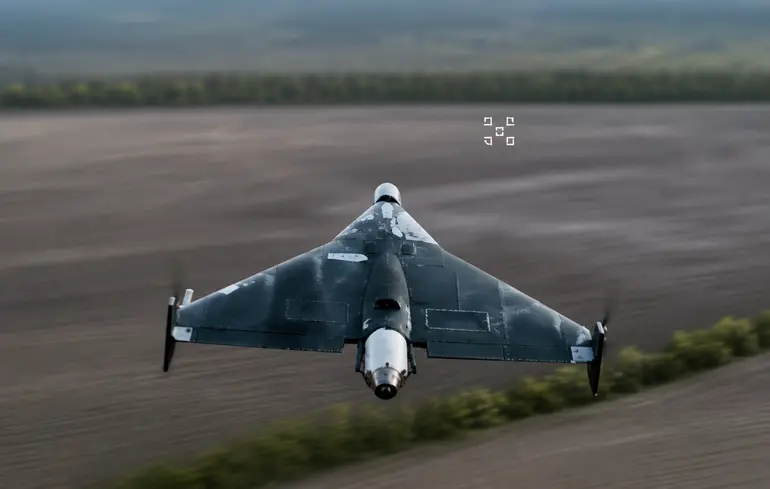
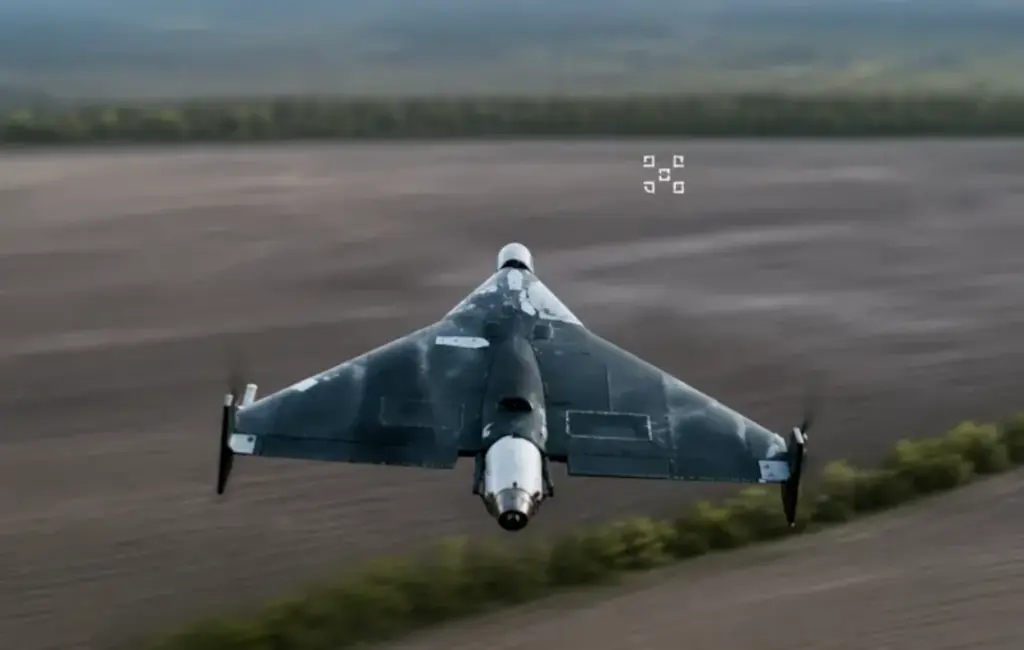
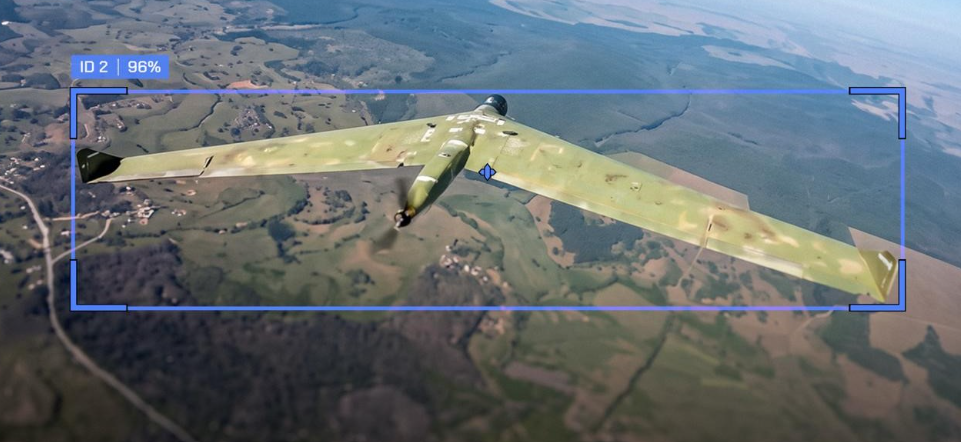
Geran-5 (Above) and Geran-4 (Below)
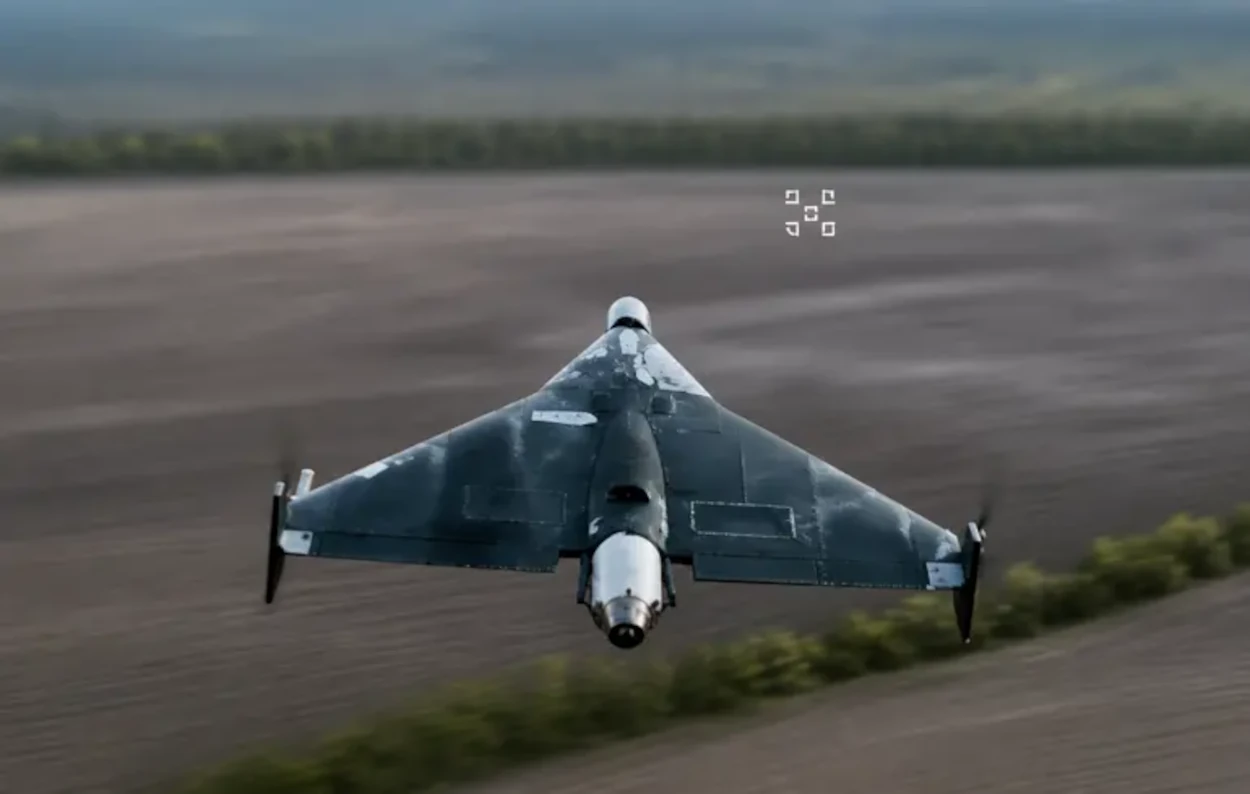
Jet-powered drones Geran-5 (above) and Geran-4 (below). Image: TurDef

Ukraine is testing interceptor drone prototypes in combat conditions, Ukrainian Presidential Office head Kyrylo Budanov told Novyny.LIVE on 27 September. The mass deployment of interceptors capable of shooting down jet-powered Gerans could begin within several months, he added. Ukrainian companies have already successfully tested several interceptor drones capable of intercepting Russian jet-powered drones in field conditions, the institute notes.

At the same time, it remains unclear whether Ukraine will be able to scale up its interceptor program quickly enough and achieve sufficient success to disrupt the intensification of Russia's campaign during the winter, ISW notes.

Why Putin may hold off on a new mobilization

Expanding Russia's arsenal of strike weapons is cheaper than carrying out a second mobilization economically, militarily, and socially, a Kremlin-linked Russian milblogger cited by the institute claimed.

Putin may put off large-scale forced mobilization until he sees whether the strikes deliver, ISW assesses, though his officials have been laying the groundwork for it despite Kremlin denials. Still, the need to replace Russia's enormous battlefield losses could push him to order such a mobilization as early as this fall, ISW notes, as Ukrainian and other sources have repeatedly reported he is preparing to do.

War is costing Ukraine $155 billion per year. With Western aid running late, Kyiv is freezing everything but army, pensions, and public wages

28 septembre 2026 à 13:50

russia hits kharkiv high-rise overnight injuring 43 people strikes central kyiv dnipro broad daylight · post rescuers destroyed floors apartment building hit ukraine 28 2026 synehubov5319173733626879672 news ukrainian reports

Ukraine's government plans to pay for its army, pensions, and public-sector wages first, and freeze the parks, fountains, and repaving. Prime Minister Serhii Koretskyi says his Cabinet reordered its spending priorities because part of the international aid it counted on has not arrived.

The war is costing the country at least $155 billion this year, Koretskyi stated earlier.

Defense and people come first

"We continue to take tough anti-crisis measures to ensure the most important thing, the needs of defense and our people," Koretskyi says.

The state will continue to pay for the army, pensions, social benefits, and the salaries of teachers, doctors, and other public-sector workers. Everything deemed non-critical is on hold: new construction, reconstruction, capital repairs, and tidying-up projects, among them parks, squares, fountains, and repaving.

"It is worth finally ceasing to spend money on non-priority things," he continues, promising the state will return to them later.

The aid runs late

On 27 September, Ukraine's prime minister stated that the shortfall in the defense budget's needs stands at $27 billion.

"The president, the government, and all branches of authority are working with partners to find mechanisms and sources to cover the remaining $20 billion," he stressed.

These funds are critically needed to supply the Defense Forces with drones, missiles, equipment, and other resources ahead of winter.

"The government, for its part, guarantees that by 15 October, all government decisions required to receive the international financial assistance promised by partners will be implemented," he stated.

Local budgets get the same call

Koretskyi extended the order downward, urging local councils to review their own budgets and cut spending that is not a priority now. The message across government is the same: pool what is available for the army and citizens, and leave the fountains and the rest for after the war.

Russia’s pipeline into Kupiansk is now its escape route—with kidnapped civilians as human shields, Ukraine says

28 septembre 2026 à 13:32

russia used gas pipeline sneak soldiers kupiansk now retreating troops marching civilians through other way human shield · post led suspected russian civilian clothes near kharkiv oblast 27 2026 1

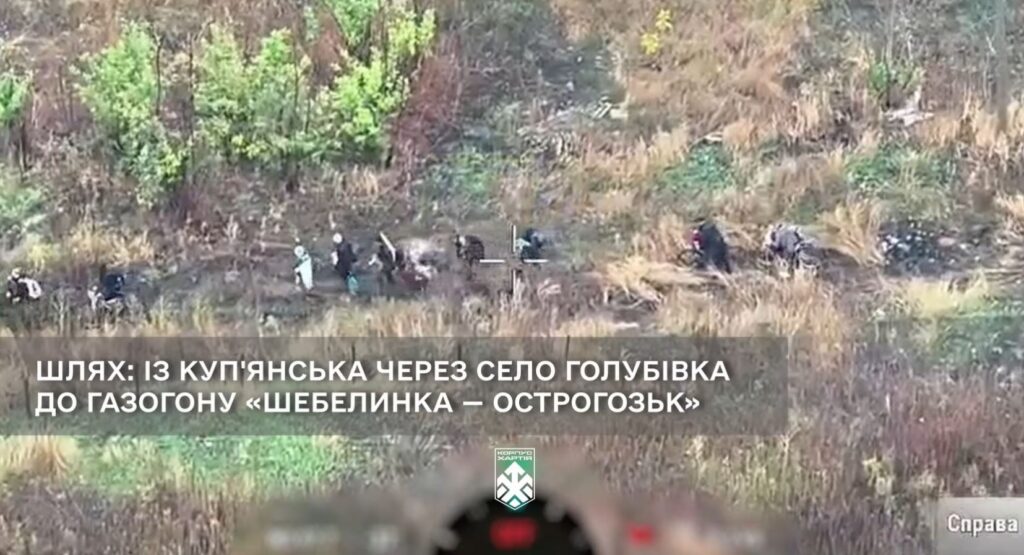
Russian troops retreating near Kupiansk abducted civilians, including children and elderly residents, and drove them into a gas pipeline to cover their withdrawal, the 2nd National Guard Corps Khartia said. The men of military age walking with them in civilian clothes were most likely Russian soldiers who had removed their uniforms, the corps added. Its reconnaissance drones filmed the group on 27 September. Ukrainian forces watched the column but did not open fire because of the civilians, ArmyInform reported.

Ukraine's military has accused Russia of using civilians as human shields in Kupiansk before. During its offensive, Russian troops also tried to enter the city through an inactive gas pipeline. Now, Khartia says, a pipe once used by Russian saboteurs is carrying abducted civilians toward occupied territory.

Nine people forced into the pipeline

Khartia filmed the group as the corps pressed its counteroffensive in the Kupiansk community in Kharkiv Oblast. The footage shows nine people: children, elderly residents, and a person on crutches. Men of military age in civilian clothing walk alongside them.

The group was led from Kupiansk through Holubivka village to the Shebelynka-Ostrohozhsk gas pipeline.

Civilians enter an opening in the ground near the Shebelynka-Ostrohozhsk gas pipeline near Kupiansk, Kharkiv Oblast, 27 September 2026. Screenshot: Khartia Corps

The footage shows them being led into the pipe, where they face a walk of about 10 km in darkness. The pipe exits in a forest, and the civilians will likely be taken to occupied territory.

"We documented this case. The materials will be handed over for a war crimes investigation," the corps said.

russia holds 2000 people hostage oleshky without food water—ukraine flew 4000 kg locals across dnipro · post drones carry packages starving residents russian-occupied kherson oblast 2026 lifting boxes ukraine news
Explore further

Russia holds 2,000 people hostage in Oleshky without food or water—Ukraine flew 4,000 kg of food to locals across the Dnipro

Ukrainian forces held fire—Russia counted on it

Ukrainian troops saw the group and did not open fire because children and elderly people were among them. Russia counted on exactly that, Khartia said.

The corps warned that Russian propaganda could present the footage as an "evacuation" or "rescue" of civilians, Militarnyi reported. Khartia calls it an abduction.

Khartia's counteroffensive near Kupiansk comes alongside other Ukrainian advances farther south. In northern Donetsk Oblast, the Third Army Corps' Operation Vivaldi has regained control of 125 km², including 50 km² previously under Russian occupation, and inflicted more than 3,000 Russian personnel losses, the corps said. The operation has effectively erased Russia's planned Lyman pincer. Near Kupiansk, Ukraine's defense forces continue pushing Russian forces toward the Oskil River, and the liberation of forests near Dvorichna and Zapadne has reduced the threat to the city.

After Russia hits Kyiv’s Academy of Sciences with jet-powered drone, the Kremlin says Ukraine must “pay a price”

28 septembre 2026 à 13:22

russia hits kharkiv high-rise overnight injuring 43 people strikes central kyiv dnipro broad daylight · post firefighter tackles blaze two-story house after russian drone attack ukraine 28 2026 zelenskyy news

Russia says it is punishing Ukraine, and it is not hiding it. Dmitry Peskov, Kremlin spokesperson, says Ukraine must "pay a price" for its actions in recent months and calls Russia's intensified strikes "part of this price," according to UNIAN, citing Russian media.

Russia rarely admits its strikes are meant to punish a country rather than hit military targets, but Peskov did just that, casting the wave of attacks on Ukraine, which have struck apartment blocks, trains, and this week Kyiv's Academy of Sciences, as a "price" Ukraine has to pay. In the Kremlin's telling, Ukraine is being punished for its own deep strikes inside Russia.

Moscow calls the strikes a 'price'

Asked how Ukraine's strikes had affected Russia's position on peace talks, Peskov says Ukraine "will have to pay a price for the actions that have taken place in recent months," adding, "This is what is happening now."

Russia, he says, must ensure "no one gets the idea to announce plans to inflict devastating strikes on it."

Kyiv's deep strikes draw the reprisal

The "actions" are Ukraine's strikes deep in the Russian rear, targeting its assets, helping it to fund the war. Russian President Vladimir Putin complained last week of a large Ukrainian drone attack on Moscow during Russia's parliamentary election and a June strike on St. Petersburg during an economic forum, Reuters reported.

Ukraine has also battered Russian refineries with long-range drones and missiles, cutting fuel output enough to spark shortages and force Moscow to curb exports and buy fuel abroad.

The price falls on civilians

What the Kremlin calls a price has fallen largely on Ukrainian civilians. Through September, Russian strikes have hit trains, data centers, gas stations, and educational institutions, and on 28 September, a drone set fire to the National Academy of Sciences in central Kyiv as people inside fled through the windows.

  • ✇Euromaidan Press
  • Ukraine makes local gains on Pokrovsk front despite sustained Russian attacks
    Ukraine's 40th Separate Marine Brigade cleared 5 square kilometers in the Pokrovsk direction, captured two Russian soldiers, and stopped Russian infiltration there, the brigade said on 27 September. Even small gains count on one of the most heavily contested fronts of Russia's war, where Russia has spent years and repeated offensives trying to push farther west. Ukrainian forces continue to carry out local operations there despite sustained Russian attacks. Operation Audit The bri
     

Ukraine makes local gains on Pokrovsk front despite sustained Russian attacks

28 septembre 2026 à 13:08

Service members of Ukraine's 40th Separate Marine Brigade during Operation Audit in the Pokrovsk direction.

Ukraine's 40th Separate Marine Brigade cleared 5 square kilometers in the Pokrovsk direction, captured two Russian soldiers, and stopped Russian infiltration there, the brigade said on 27 September.

Even small gains count on one of the most heavily contested fronts of Russia's war, where Russia has spent years and repeated offensives trying to push farther west. Ukrainian forces continue to carry out local operations there despite sustained Russian attacks.

Operation Audit

The brigade called the operation Audit and said its sniper company, reconnaissance company, and 1st Marine Battalion carried it out. The marines said they eliminated the remaining Russian troops identified in the cleared area. The brigade released video footage that it said documented the operation.

Pokrovsk front under sustained pressure

The Pokrovsk front has been among the most heavily attacked sectors for years. From 22 to 27 September, Ukraine's General Staff reported 20 to 29 Russian attacks there a day, peaking on 24 September, with Kostiantynivka the other main focus.

Russian troops infiltrate this front in small groups, sometimes one soldier at a time. The marines said the ones they found had been sent to hide in shelters and wait for the right moment to advance further. The operation halted that infiltration push in the sector, the brigade said.

Russia's long campaign for Pokrovsk

Russia launched its offensive toward Pokrovsk in February 2024, according to the Institute for the Study of War (ISW). Over a grinding campaign, Russian forces seized Pokrovsk and most of Myrnohrad, ISW assessed.

ISW assessed in February 2026 that Russia had failed to capitalize on the seizure of Pokrovsk and had been unable to make significant advances west of the city since December 2025. Russian forces had not even taken Hryshyne, a settlement just 2 kilometers northwest, ISW noted at the time.

  • ✇Euromaidan Press
  • A Ukrainian Hornet drone hit a Russian radar 120 km behind the front. It was likely a $100 million Nebo-M
    A Ukrainian Hornet drone struck a Russian radar system about 120 kilometers behind the front, Taras Myshak, senior communications officer of the 59th Separate Assault Brigade of Unmanned Systems, said on Suspilne on 28 September, ArmyInform reported. The brigade's Signum unmanned systems battalion carried out the strike about a week earlier, he added. Russia's air defenses depend on radars to see Ukrainian drones and missiles coming. Every radar it loses weakens that watch and gives the
     

A Ukrainian Hornet drone hit a Russian radar 120 km behind the front. It was likely a $100 million Nebo-M

28 septembre 2026 à 12:15

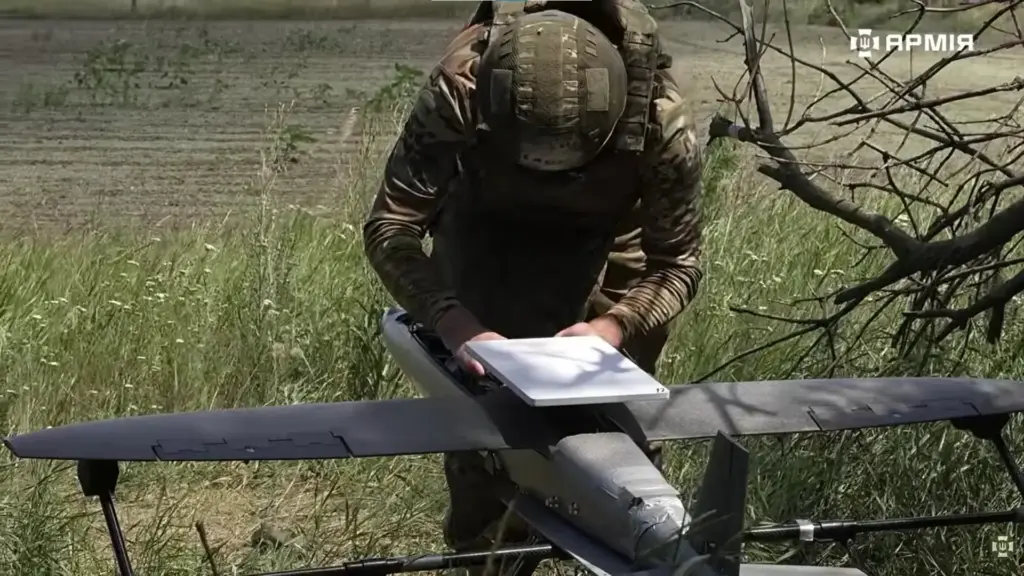
A pilot prepares the Hornet UAV for takeoff. Screenshot from Army Media video

A Ukrainian Hornet drone struck a Russian radar system about 120 kilometers behind the front, Taras Myshak, senior communications officer of the 59th Separate Assault Brigade of Unmanned Systems, said on Suspilne on 28 September, ArmyInform reported. The brigade's Signum unmanned systems battalion carried out the strike about a week earlier, he added.

Russia's air defenses depend on radars to see Ukrainian drones and missiles coming. Every radar it loses weakens that watch and gives the next Ukrainian strike a better chance of getting through.

According to Myshak, the target was a "quite expensive" Russian radar system.

A radar system is effectively the "eyes" of the Russian air defense system: it detects aerial targets, determines their coordinates, and transmits information to other elements of the system.

Russians continue probing Ukrainian defenses

Russian forces in the brigade's zone, roughly along the Donetsk Oblast border, continue to operate in small infantry groups and use infiltration tactics, Myshak says. At the same time, the Russians are trying to cut Ukrainian logistics, he adds, saying that the brigade is effectively holding the Russian army back from infiltrating into Dnipropetrovsk Oblast.

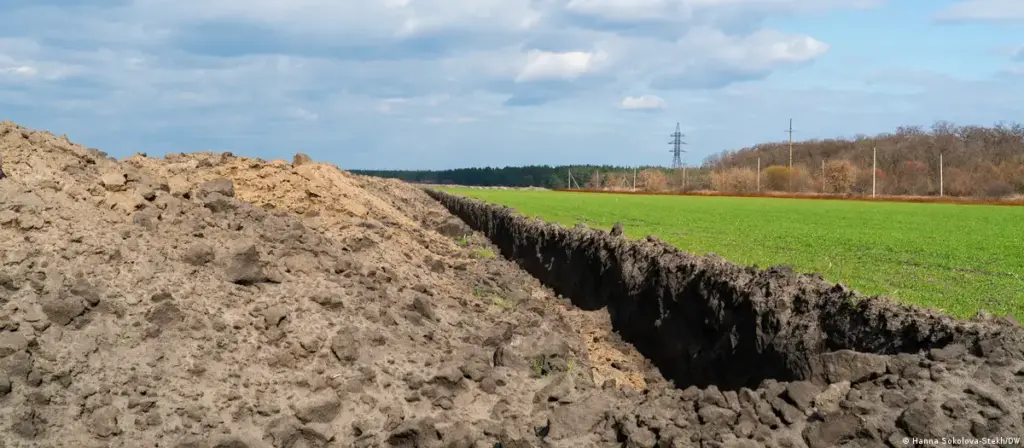
Defensive fortifications in Dnipropetrovsk Oblast, Ukraine. Illustrative photo: Hanna Sokolova-Stekh/DW

The Russians' main means in this sector remain drones and infantry, the serviceman says. The number of infantry has decreased somewhat compared with previous periods, but the pressure from the enemy has not stopped, he adds.

"Of course, they will try, they will constantly probe, so to speak, our defense with their infiltrations. And likewise with drones, of various ranges, working on logistics, making it impossible for us to enter positions, to deliver everything necessary to the positions, in order to make our defense impossible," Myshak emphasized.

At the same time, Ukrainian troops are trying not only to defend against these actions but also to deprive the Russians of radars, electronic warfare systems, and other equipment, the serviceman says. "We likewise don't let them relax," he said.

Russians tried to prevent the strike, but Ukrainian forces hit the target

This was likely the same strike that Ukrainian volunteer fundraiser Serhii Sternenko reported on his Telegram channel on 18 September. Operators of the Signum unit of the 59th Brigade, together with the First Separate Unmanned Systems Center, hit a Russian Nebo-M radar about 120 kilometers from the front line, he wrote.

The radar, which Sternenko valued at about $100 million, was damaged over two drone sorties, which also wounded two Russian servicemen, according to his post. During the operation, the Russians tried to jam the drone's video feed with electronic warfare, but the operators flew on using only flight data and their own experience, he added.

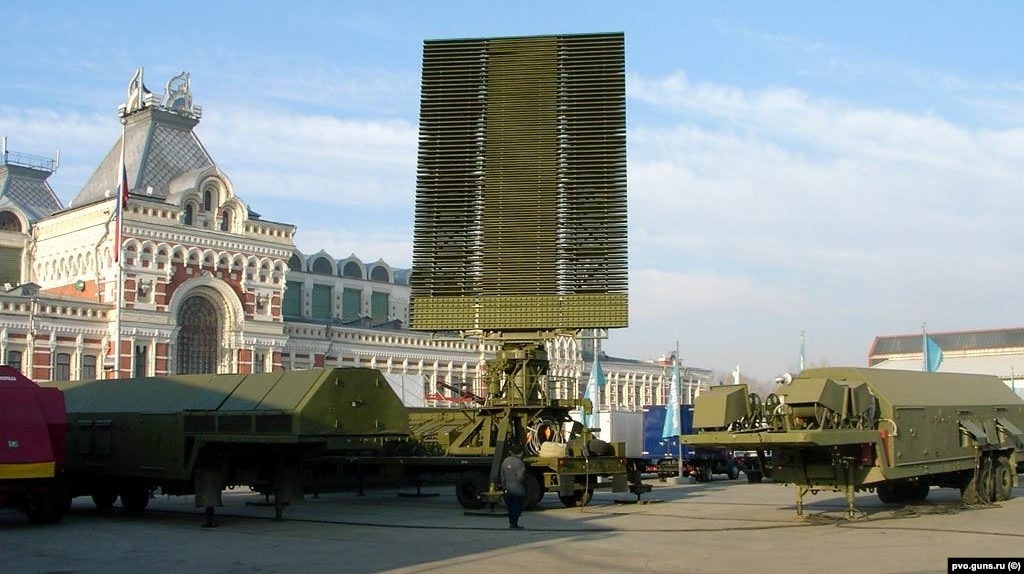
The unfolded Protivnik-GE radar station of the Nebo-M complex, with other components of the system folded nearby. Screenshot from pvo.guns.ru via RFE/RL

Ukraine systematically knocks out the "eyes" of Russian air defense

In October 2024, Ukraine's military said it had hit a Russian Nebo-M radar station with ATACMS ballistic missiles to blunt Moscow's ability to spot and shoot down aircraft and missiles, Reuters reported. The military estimated each such system at more than $100 million.

Ukraine is systematically increasing its use of medium-range strike drones, which can hit targets up to 200 kilometers deep inside enemy territory, the Ukrainian Defense Ministry reported in May this year. Russian air defenses and radars are among the main priorities of such operations, as their destruction weakens the system for detecting and intercepting aerial targets, the ministry said. Medium-class drones, including the FP-2, Hornet, and Bulava, play a critical role in such strikes, the ministry noted.

According to the General Staff of the Armed Forces of Ukraine, Ukrainian forces struck at least 25 major Russian air defense and radar systems during April, about 12 of which were radar systems, the Ukrainian Defense Ministry also wrote in May this year.

Russia is launching a faster Geran-5 at Ukraine that satellite jamming may no longer knock off course, a monitoring channel says

28 septembre 2026 à 11:26

russia reportedly adds ground-reading optics its geran-5—one more upgrade ukraine's interceptors have beat · post older geran-5 design left newer one right modified sections outlined collage militarnyi порівняння старої (ліворуч)

Russia has fielded a Geran-5 variant that can steer by images of the ground below without satellite navigation, the Ukrainian monitoring channel Polkovnyk GSh reported. A second Russian jet drone also filmed a strike on Kyiv live and relayed control signals to the drone that hit it, presidential adviser on defense technology Serhii Beskrestnov, known as Flash, said.

Russia's air war on Ukrainian cities has turned into a race of adaptations. As Ukraine got better at catching slow drones, Moscow made them fly faster, and now its jet drones also see for themselves and talk to each other.

A Geran-5 that reads the ground

The channel labels it the Geran-5 K5. Its DSMAC-type module corrects the drone's route by matching images of the ground below against stored references, like the one on Russia's Kh-101 cruise missile. The K5 also has a new fuselage, the channel said.

Because it flies faster than the Geran-4 and the standard Geran-5, it is often mistaken for Dan-T cruise missiles, the channel said. Official Ukrainian sources have not confirmed the K5 designation or the DSMAC-class system, Militarnyi noted.

The base Geran-5 carries a warhead of about 90 kg and cruises at 450–600 km/h, Ukraine's military intelligence (HUR) found in January. It relies on a jam-resistant Kometa-M12 satellite navigation system and a mesh modem. HUR's component list includes no terrain-matching optics.

A fire burns at a Nova Poshta fulfillment and sorting center in Sviatopetrivske, Kyiv Oblast, after a Russian drone strike on 28 August 2026. More than 60,000 books were destroyed in the attack. Photo: Readeat
Explore further

800 jet drones in four days: Russia is now firing type Ukraine’s interceptors cannot catch

One drone struck, another filmed and relayed

Russia published footage of its 25 September strike on the Inkom business center in Kyiv, which killed four people, Kyiv Mayor Vitali Klitschko said. The video was filmed from high above the target and fueled speculation about how it was shot. Beskrestnov dismissed the theories.

"Let me say right away: no secret satellites, no FPV from a Shahed, no Russian agents, no mysterious drones," Beskrestnov wrote.

Russia hit the building with a Geran-5, a jet-powered drone that functions as a small cruise missile. At the same time, a jet Shahed flew into Kyiv and circled the target at almost 3 km altitude, he said. It served as a mesh relay, passing radio signals to the Geran-5. It also filmed the attack and transmitted the video immediately. The Shahed then left Kyiv and destroyed a McDonald's warehouse.

Mesh networking lets Russian drones relay control signals through one another. Russia already flies its jet Shaheds under mesh control.

The Russian military is now capable of acquiring real-time, high-quality BDA of its strikes with Geran-type OWA-UAVs/cruise missiles in downtown Kyiv.

In the footage below, we can see the moment of a Russian strike with Geran-5 cruise missile on the "Inkom" business center… pic.twitter.com/mPx4Kf9tmH

— Status-6 (@Archer83Able) September 27, 2026

Status-6, an X account that monitors the war, reposted the Russian video and suggested a Gerbera-type drone had filmed it. Beskrestnov identifies the camera as the second jet Geran.

"This is certainly a complex Russian drone operation that requires precise calculations and coordination between pilots. I'm even sure they were sitting next to each other," he wrote.

New sensors across the Geran family

Russia's jet Shaheds sometimes switch off their engines before an attack and glide toward the target, Beskrestnov wrote. It is still unclear whether that is a malfunction or a deliberate move to approach slowly and precisely. In the same post, he showed a Geran-4 Seeker, a jet drone that hunts for targets with a front camera. It carries two mesh antennas on its tail, one pointing down and one up.

With colder weather, warm objects will become prey for Geran Seekers equipped with thermal cameras, Beskrestnov warned. He posted a thermal image of a locomotive that a Shahed operator filmed from 5–6 km away.

russia reportedly adds ground-reading optics its geran-5—one more upgrade ukraine's interceptors have beat · post wreckage what monitoring channel polkovnyk gsh identifies new geran-5 k5 russian jet drone functions small
Wreckage of what the monitoring channel Polkovnyk GSh identifies as the new Geran-5 K5, a Russian jet drone that functions as a small cruise missile. Photo: Telegram/Polkovnyk GSh

Ukraine catching up again

Ukraine's interceptors are catching just over half of Russia's jet drones. Beskrestnov confirmed on 19 September that a Ukrainian jet-powered interceptor works and has enough speed margin for different targets, calling it "functional, real, and ready for refinement." Separately, drone maker Wild Hornets says its STING interceptor is heading toward mass production after its first kills against jet Gerans.

Speed alone will not catch them, Beskrestnov argued earlier. Interceptors need machine vision to lock on and guide themselves in.

The threat is in the skies daily. On 28 September, a Russian jet drone hit the National Academy of Sciences in central Kyiv in the middle of the working day, killing a woman.

  • ✇404 Media
  • Humans Are Reading Copilot Prompts — And They're Horrified
    This piece contains references to eating disorders. If you or someone you know needs help, support is available.Human contractors hired to improve Microsoft’s Copilot AI chatbot are constantly bombarded with lewd or sexually explicit photo editing requests and images that users have uploaded, including upskirt photos or putting women into sexual positions. These contractors are then asked to review whether the generated image successfully fulfilled the prompt — such as, did the image generato
     

Humans Are Reading Copilot Prompts — And They're Horrified

28 septembre 2026 à 09:26
Humans Are Reading Copilot Prompts — And They're Horrified

This piece contains references to eating disorders. If you or someone you know needs help, support is available.

Human contractors hired to improve Microsoft’s Copilot AI chatbot are constantly bombarded with lewd or sexually explicit photo editing requests and images that users have uploaded, including upskirt photos or putting women into sexual positions. These contractors are then asked to review whether the generated image successfully fulfilled the prompt — such as, did the image generator make the woman’s AI-enlarged breasts big enough.

Russia hits a Kharkiv high-rise overnight, injuring 43 people, then kills four in daylight strikes on central Kyiv and Dnipro

28 septembre 2026 à 08:54

russia hits kharkiv high-rise overnight injuring 43 people strikes central kyiv dnipro broad daylight · post nine-story apartment building damaged russian strike saltivskyi district ukraine 28 2026 synehubov 5319173733626879671 news

A Russian strike on an apartment building in Kharkiv injured dozens of people, many of them children, early on 28 September, regional prosecutors reported. Through the rest of the day, Russian drones hit Kyiv, Dnipro, and other cities, killing civilians in several of them.

Russia has moved much of its aerial campaign to jet-powered drones that fly too fast for the cheap interceptors Ukraine built against older models. Every switch to a faster weapon reopens gaps in city defenses that Ukraine had only just begun to close.

Two floors partly destroyed in a Kharkiv apartment block

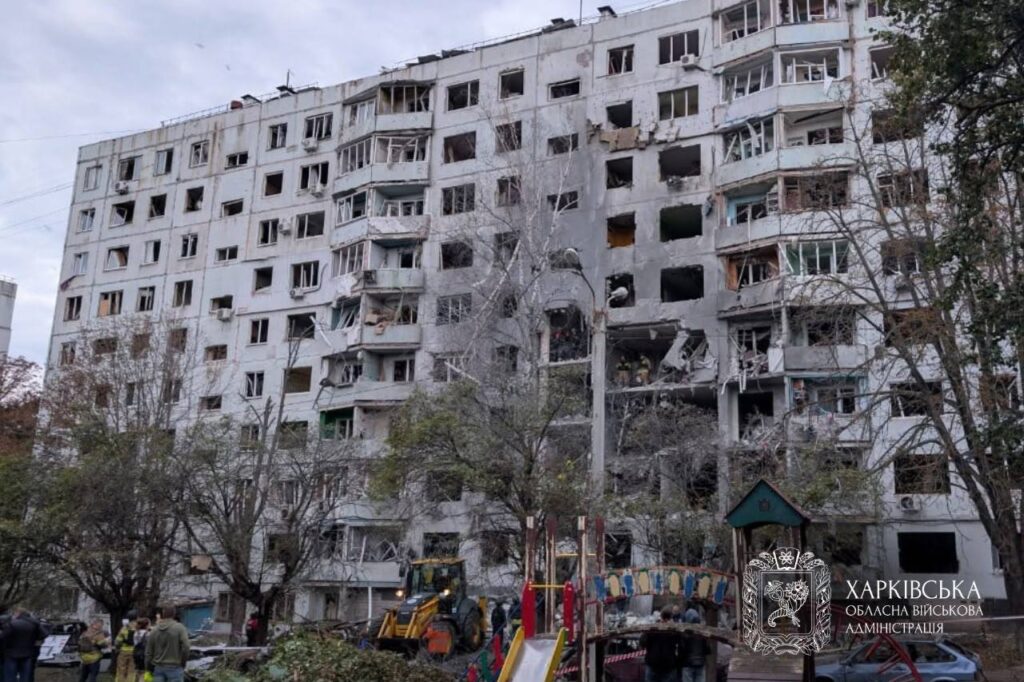
Russia hit a nine-story building in Kharkiv's Saltivskyi district around 04:00. By early afternoon, the count had risen to 43 injured, including 11 children, prosecutors said.

A man of 43 and a girl of 14 remain in hospital with blast wounds, and the others have moderate or light injuries, Kharkiv Oblast head Oleh Syniehubov said. Three children lived in the apartment that took the hit. Their father carried them out himself, and none of them was seriously hurt.

russia hits kharkiv high-rise overnight injuring 43 people strikes central kyiv dnipro broad daylight · post rescuers destroyed floors apartment building hit ukraine 28 2026 synehubov5319173733626879672 news ukrainian reports
Rescuers on the destroyed floors of an apartment building hit by Russia in Kharkiv, Ukraine, 28 September 2026. Photo: Kharkiv Oblast Military Administration

The strike hit the second floor and destroyed the ceiling between the third and fourth floors. Rescuers brought 32 people out of the building. Across the district, the attack damaged 18 apartment buildings and blew out more than 1,500 windows. More than 100 volunteers are helping city services seal them, Syniehubov added.

A resident who fled Kramatorsk a year and a half ago said her family never heard the blast itself.

"We didn't hear any explosion. Glass came pouring down, and a column of smoke stood there," Yuliia Baldzhy told Suspilne Kharkiv. "The children were sleeping in another room, and my husband and I barely squeezed through, grabbed them, and got out."

Yuliia Baldzhy, a resident of the damaged apartment building in the Saltivskyi district of Kharkiv, Ukraine, 28 September 2026. Photo: Suspilne Kharkiv

Kharkiv Mayor Ihor Terekhov said the city had not taken a hit "of this level" in some time. Officials are still establishing the weapon. Syniehubov named guided aerial bombs (KABs) and counted six of them over the oblast in the past day. Prosecutors named a UMPB-5, a Russian munition, as the preliminary version. Terekhov said the city was checking whether it was a KAB or a Banderol, a small cruise missile.

russia hits kharkiv high-rise overnight injuring 43 people strikes central kyiv dnipro broad daylight · post fire among wrecked structures after russian oblast ukraine 28 2026 synehubov 5319173733626879675 news ukrainian
Fire among wrecked structures after overnight Russian strikes in Kharkiv Oblast, Ukraine, 28 September 2026. Photo: Kharkiv Oblast Military Administration

Russia has hit Kharkiv high-rises with guided bombs before. In November 2024, one such strike injured 25 people, including an infant.

money engineering what stands between ukraine russia's fastest drones zelenskyy says · post russia’s new “geran-4 seeker” shahed variant geran-4 news ukrainian reports
Explore further

Combat shows speed alone can’t catch Russia’s jet-powered drones, despite eight Ukrainian makers’ assurances. So why can’t they stop them?

Kyiv hit through the night and into the day

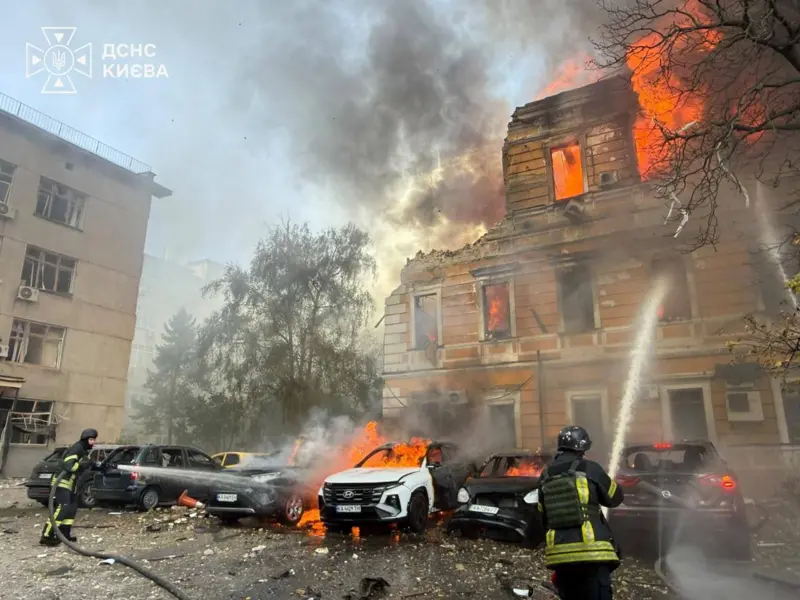
In the middle of the working day, a Russian jet drone struck the main building of the National Academy of Sciences in Kyiv's historic center. The attack killed a woman and injured five people, the Kyiv City Military Administration said. Three of them were hospitalized, Klitschko said. People climbed out of windows to escape the fire.

russia hits kharkiv high-rise overnight injuring 43 people strikes central kyiv dnipro broad daylight · post firefighters put out fires main building national academy sciences ukraine burning cars after russian
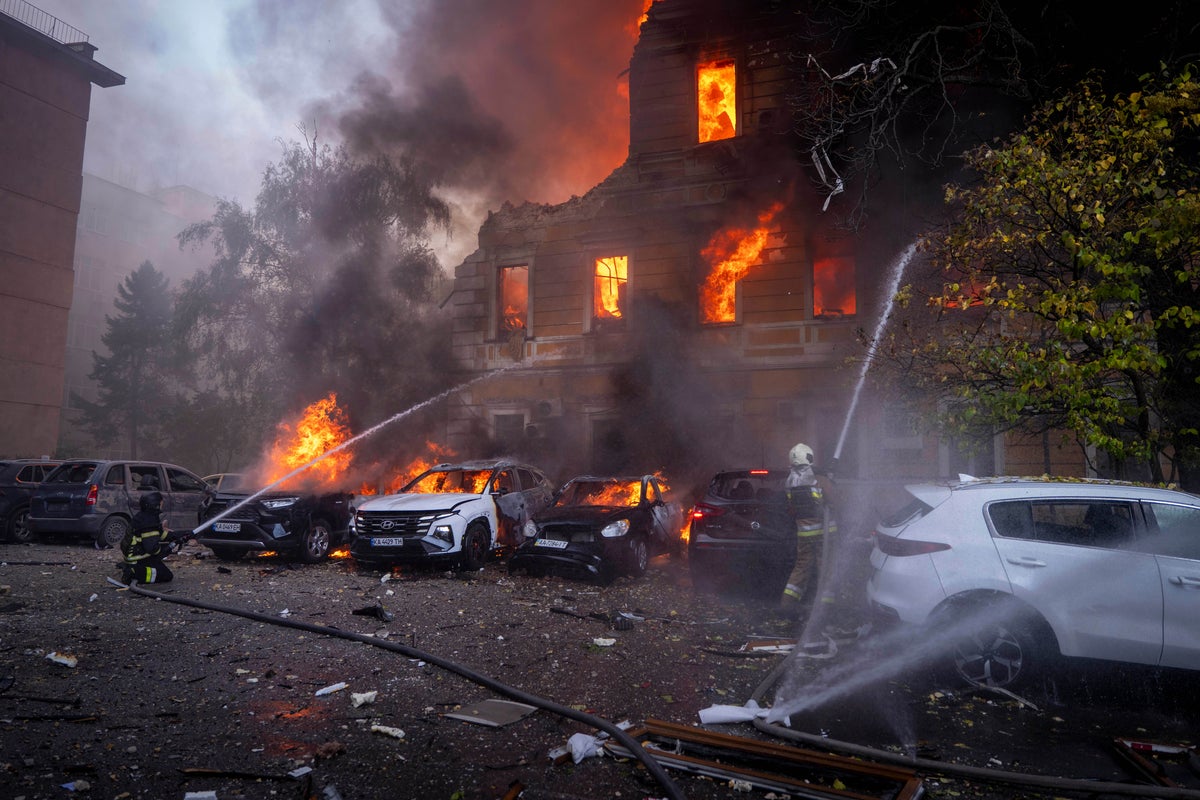
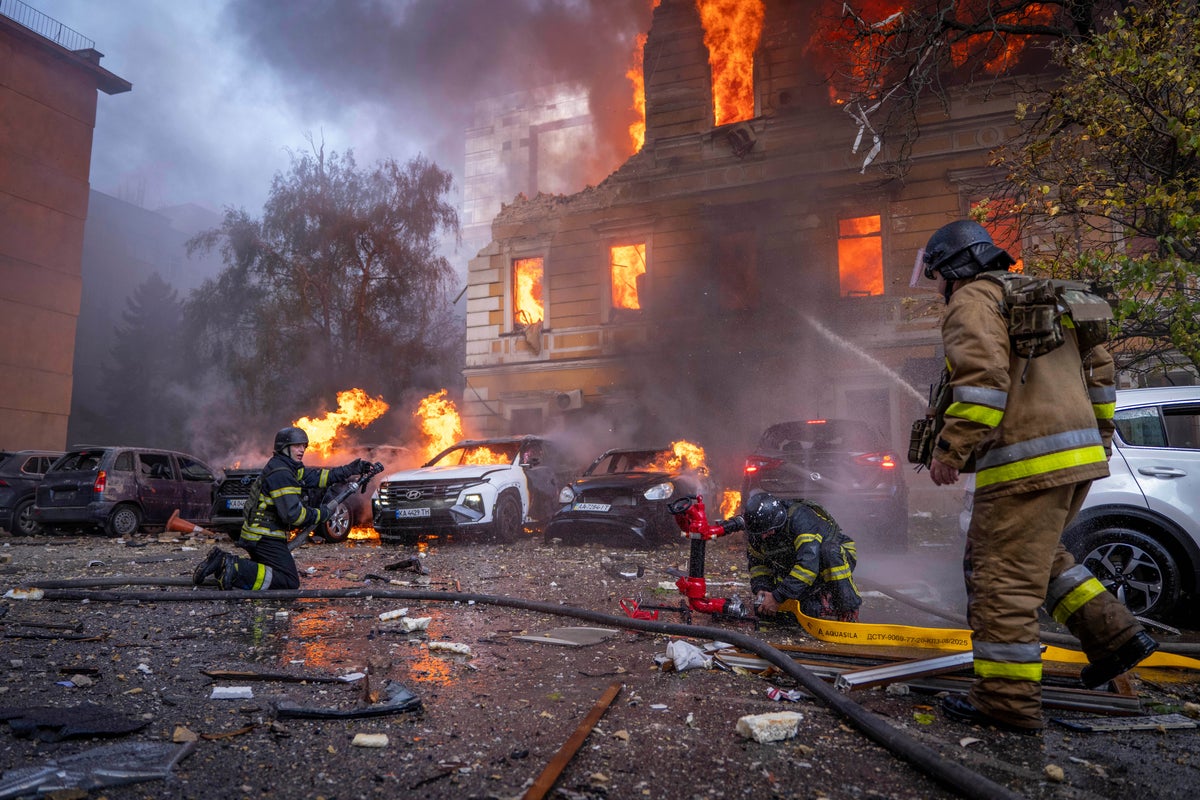
Firefighters put out fires at the main building of the National Academy of Sciences of Ukraine and at burning cars after a Russian drone strike in Kyiv, Ukraine, 28 September 2026. Photo: State Emergency Service of Kyiv

"Russia will definitely get a response to this," Ukrainian President Volodymyr Zelenskyy said.

Overnight and into the morning, Russian drones hit a gas station in Obolon, a café by a gas station, office buildings, and a 16-story residential building in Podil. The attacks injured three teenagers in Podil, Kyiv Mayor Vitali Klitschko said. A 17-year-old boy was hospitalized.

russia hits kharkiv high-rise overnight injuring 43 people strikes central kyiv dnipro broad daylight · post firefighter tackles blaze two-story house after russian drone attack ukraine 28 2026 zelenskyy news
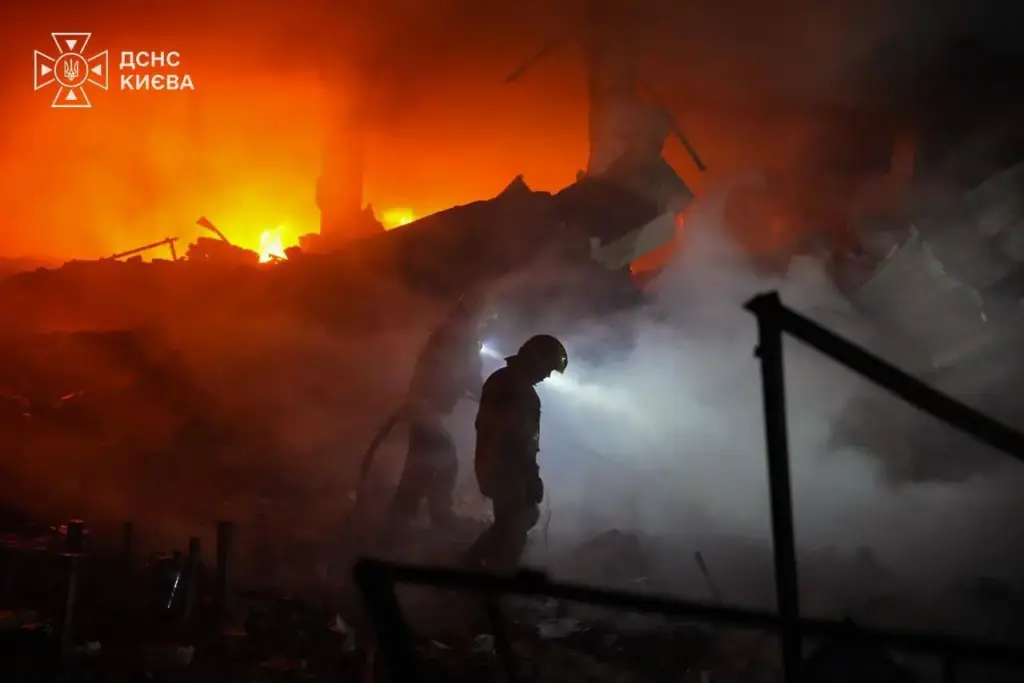
A firefighter tackles a blaze in a two-story house after a Russian drone attack in Kyiv, Ukraine, 28 September 2026. Photo: State Emergency Service of Kyiv

Nationwide, Russia launched 165 drones overnight, 79 of them jet-powered, the Air Force reported. Air defenses downed or suppressed 112, and hits were recorded at 14 locations.

The capital is now under attack daily. On 27 September, Russian strikes injured nine people in Kyiv, and Russia hit a Kyiv data center twice. That evening, a Russian drone struck the Stolychnyi market in Sofiivska Borshchahivka, just outside the city, and killed two people. Zelenskyy wrote that one of the two killed in Kyiv Oblast was a citizen of Azerbaijan.

Deaths in Dnipro and Synelnykove

Around 11:15, a Russian drone hit a business center in central Dnipro, killing three people. The number of injured rose to 15, Dnipropetrovsk Oblast head Oleksandr Hanzha said. Rescuers led 47 people out of the burning building, regional council head Mykola Lukashuk said.

"Nearby are residential buildings, a park, a library, offices, shops. The center of Dnipro. In the middle of the working day, hundreds of people are here," Hanzha wrote.

In Synelnykove, a Russian strike on a logistics company's branch killed one person. It injured three others, including a 15-year-old boy now in hospital in serious condition.

Overnight, Russian drones also hit infrastructure in the Vasylkivka community and a market in Nikopol.

Strikes across other regions

In Kharkiv Oblast on 27 September, a Russian FPV drone killed a 67-year-old driver in Shestakove, prosecutors said. A drone on fiber-optic control also killed a 41-year-old woman in a car in Velykyi Burluk and injured a 46-year-old man.

russia hits kharkiv high-rise overnight injuring 43 people strikes central kyiv dnipro broad daylight · post debris warehouse after russian strike odesa oblast ukraine 28 2026 руйнування на одещині після
Debris at a warehouse after an overnight Russian strike in Odesa Oblast, Ukraine, 28 September 2026. Photo: Odesa Oblast Military Administration

Explosions sounded in Poltava overnight. In Rivne Oblast, a Russian attack damaged a detached house without injuring anyone. In Odesa Oblast, Russia struck a warehouse, and an evening attack injured a man of 62 and a woman of 63. Zelenskyy also listed a Palau-flagged ship hit in Odesa Oblast and an ice cream plant damaged in Zhytomyr Oblast, in the same post.

“Reminiscent of 11 September at World Trade Center”: Russia strikes Ukraine’s century-old National Academy of Sciences in central Kyiv, people are climbing onto windows not to be buried alive

28 septembre 2026 à 07:49

A Russian drone struck the National Academy of Sciences of Ukraine in central Kyiv on 28 September. Image: Sternenko

Russia has struck the National Academy of Sciences of Ukraine (NAS) in Kyiv on the afternoon of Monday, 28 September. People inside the building are climbing out onto the windows to avoid being burned alive.

Since the start of the full-scale invasion, Russia has damaged more than 4,650 educational institutions in Ukraine. Another 423 educational institutions have been completely destroyed, Ukrainian Ombudsperson Dmytro Lubinets reports.

The Academy was founded in Kyiv on 27 November 1918. Its first president was the eminent, world-renowned scientist Volodymyr Vernadsky.

As of 1 January 2026, the total number of people working at the NAS of Ukraine was 23,982, including 13,003 researchers. Among them are 2,332 doctors of science and 6,435 candidates of science.

Volunteers say the world looks away

According to Telegram channel "Lachen Writes": "There are injured and dead as a result of Russia's strike on the National Academy of Sciences."

Meanwhile, military volunteer Serhii Sternenko, whose fund has purchased 291,502 FPV drones and helped the Ukrainian military shoot down 12,954+ aerial targets, commented on it this way: "Just hell."

"The world just watches this. Europe is lifting sanctions on Russian oligarchs. Trump asks Ukraine not to hit Russia's oil refineries. Unpunished evil will come for them too," he wrote.

The toll remains unclear

Another journalist, Andrii Tsaplienko, who posted a video showing people trying to save themselves, added his own comparison for the drone strike.

"Footage reminiscent of 11 September at the World Trade Center," he wrote.

Ukrainian President Volodymyr Zelenskyy says a rescue operation is underway: the fire is being extinguished, and people who may have been inside the building are being searched for. He adds that "there will definitely be a response to this from Russia."

"And every one of Ukraine's partners must see, from this terror and these strikes, that support for Ukraine is truly support for people's lives, support for the principle that terror must never and nowhere be normalized," he stresses.

Russia must answer for all of this and feel real consequences. Thank you to everyone who is helping Ukraine!

Ukraine hits railways of Bryansk, Russia’s launchpad for strikes on Kyiv: downed bridge and 28 derailed cars, region’s governor says

28 septembre 2026 à 07:13

ukraine's bulava drone can now hunt dark—one camera handles day night · post kamikaze “bulava” ukraine news ukrainian reports

Ukraine is carrying out strikes on Russia's railways, the acting governor of Bryansk Oblast says. Yegor Kovalchuk claims that Ukrainian drones collapsed part of a bridge and derailed dozens of rail cars across the region, in a post on Telegram.

Bryansk is the main launchpad for Russia's drone and ballistic strikes on Kyiv and on the Chernihiv and Sumy oblasts, and its lines likely carry supplies that feed those attacks. For nearly a month, Russian jet-powered drones have been striking Kyiv from the region.

Kovalchuk reports damage in three districts but adds that no one was hurt in those drone attacks.

The launchpad's railways take hits

On the Dyatkovo–Lyudinovo line, a drone attack brought down part of a bridge and derailed 10 cars, Kovalchuk says. In the Unecha district, 18 empty gondola cars derailed. In the Navlia district, a strike damaged the track without stopping trains.

Repairs will begin, he notes, once the National Guard has inspected the sites.

Russia's campaign dwarfs it

Ukraine's strikes on Bryansk are modest beside what Russia is doing to Ukraine's railways. In the first eight months of 2026, Ukraine's state operator logged more than 1,600 attacks on its rolling stock and infrastructure, Oleh Holovashchenko of Ukrzaliznytsia tells DW.

Russia has damaged more than 500 locomotives since the invasion, over half of them this year, and has increasingly hunted moving trains to sever the corridors that carry Ukraine's exports and supplies.

A drone finds a train near Poland

The campaign even reaches Ukraine's western edge. On 13 September, a Russian jet Geran struck the locomotive of a passenger train at the Yahodyn crossing in Volyn, two kilometers from the Polish border.

A dispatcher spotted the drone in time to evacuate the passengers, among them former CIA director David Petraeus, and a diplomatic train carrying former British prime minister Boris Johnson had left early.

  • ✇Euromaidan Press
  • Ukraine’s disclosure of secret North Korean POW transfer sparks South Korea’s demand for an apology
    Seoul called on Kyiv to explain and apologize for making public the transfer of two North Korean prisoners of war, saying Ukraine had broken an agreement to keep the move private and later denied that such an agreement existed, Reuters reported on 27 September. Seoul also said it was reviewing additional measures if necessary. The dispute puts new pressure on ties between Ukraine and South Korea as Seoul supports Kyiv while also dealing with growing military cooperation between Pyongyan
     

Ukraine’s disclosure of secret North Korean POW transfer sparks South Korea’s demand for an apology

28 septembre 2026 à 07:08

South Korean President Lee Jae-myung meets Ukrainian President Volodymyr Zelenskyy at the NATO summit in Ankara, 8 July 2026.

Seoul called on Kyiv to explain and apologize for making public the transfer of two North Korean prisoners of war, saying Ukraine had broken an agreement to keep the move private and later denied that such an agreement existed, Reuters reported on 27 September. Seoul also said it was reviewing additional measures if necessary.

The dispute puts new pressure on ties between Ukraine and South Korea as Seoul supports Kyiv while also dealing with growing military cooperation between Pyongyang and Moscow.

Seong Ghi-hong, senior presidential secretary for public relations, said Seoul "expresses strong regret over Ukraine's unilateral disclosure and its subsequent false announcement that there had not been a nondisclosure agreement," according to the Korea Herald.

Seoul said Ukraine had requested that the transfer remain confidential, citing fears of a backlash at home for passing up a chance to trade the two soldiers for Ukrainian prisoners held by Russia, though a presidential official called the handover humanitarian, not a prisoner exchange, the Korea JoongAng Daily reported. Seoul went along with the request to protect the soldiers and their families and for diplomatic and security reasons, Seong said, according to the Korea Herald.

Ukraine had denied that the two countries had agreed to keep the transfer private. Dmytro Lytvyn, an adviser to Ukrainian President Volodymyr Zelenskyy, replied to a critic on Facebook that "there was no agreement to remain silent" and that hiding the prisoners' destination "would also be wrong," the Korea JoongAng Daily reported.

How the dispute unfolded

Zelenskyy announced the transfer on 23 September during a speech at the UN General Assembly. He said Ukraine had recently sent two North Korean prisoners of war to South Korea. He also described one soldier's attempt to kill himself after realizing he would be captured and accused North Korean leader Kim Jong Un of using his soldiers "like currency," pointing to Pyongyang's improved ballistic missiles and drone capabilities as what it gets in return.

The next day, South Korean President Lee Jae-myung said the transfer should not have been disclosed and that the two sides had agreed to keep it private. A South Korean presidential official said Ukraine had told Seoul in advance that Zelenskyy might mention the transfer and Seoul had asked that the soldiers' destination not be disclosed, though it was unclear how he would phrase it, the Korea JoongAng Daily reported.

Who the two soldiers are

The two soldiers—Ri, 26, a reconnaissance sniper, and Baek, 21, a rifleman—were captured by Ukrainian forces in Russia's Kursk Oblast in January 2025, according to their interview with South Korea's Chosun Ilbo. Both had served in North Korea's Reconnaissance General Bureau and later asked to go to South Korea in media interviews and handwritten letters to defector groups.

The two countries' foreign ministers discussed the prisoners' status in March and June, reaching a shared understanding that the case should be resolved under international law and humanitarian principles, according to South Korea's Foreign Ministry. On 8 July, at the NATO summit in Ankara, Lee and Zelenskyy agreed to handle the case on humanitarian grounds while respecting the soldiers' wishes.

The two soldiers arrived in South Korea the weekend before Zelenskyy announced their transfer at the UN General Assembly, opposition lawmaker Yu Yong-weon said.

North Korea's role in Russia's war

North Korea began sending troops to support Russia's war in late 2024, with initial estimates putting the deployment at more than 10,000 soldiers. Many were sent to Russia's Kursk Oblast. The two countries signed a strategic partnership pact with a mutual defense clause in Pyongyang in June 2024.

Read also:

Ukraine outfoxes Russia near Donetsk’s fortress belt with Soviet BTR-60s rebuilt as kamikaze robots, storms a key hub and takes 250 Russian prisoners

28 septembre 2026 à 06:40

The image shows Russian prisoners of war on the Lyman direction. Source: The 3rd Army Corps

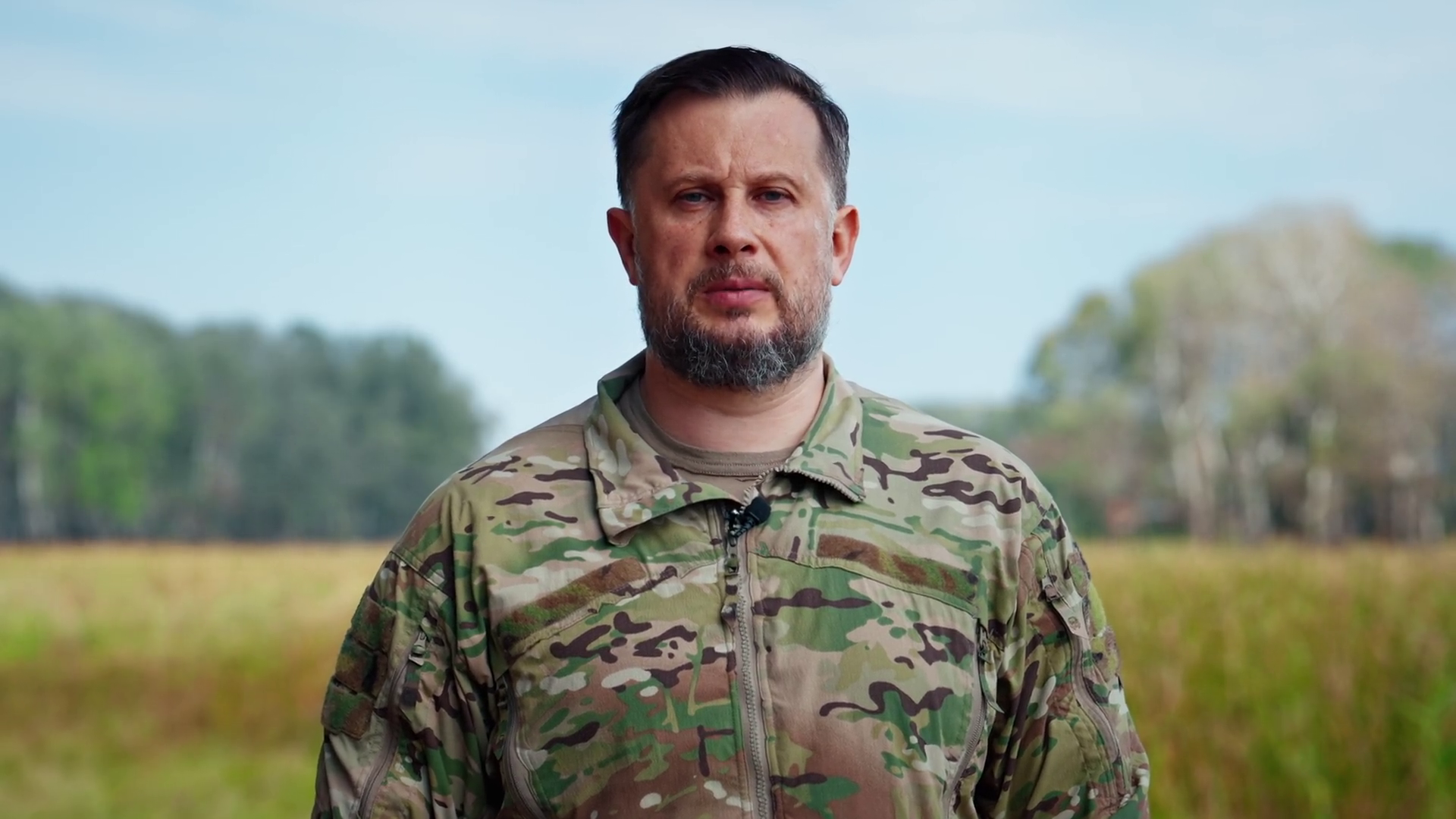
Ukraine's 3rd Army Corps has defeated Russia at the key settlement of Nove in Donetsk Oblast by pointing it the wrong way. Russia has poured its reserves into counterattacks on a feint axis and "slept through" the real strike, which took the important hub in the village and closed the decisive third season of the Vivaldi offensive, commander Andrii Biletskyi said.

Vivaldi is Ukraine's counteroffensive aimed at disrupting Russian forces' plans to encircle the fortress-belt cities in Donetsk Oblast from the north and south. Among them are Sloviansk, Kramatorsk, Druzhkivka, and Kostiantynivka. These cities have helped hold back Russian forces since 2014.

Over its first two "seasons," the 3rd Army Corps and attached units have retaken more than 125 square kilometers, half of it de-occupied outright, and inflicted more than 3,000 casualties on Russian forces.

The operation in Nove was its "third season," Biletskyi said, the turning point of the whole operation. The corps liberated Nove, Ridkodub, and Katerynivka and restored control of Karpivka and Novomykhailivka, adding 51 square kilometers, bringing the total liberated since the offensive began to 176. Ukrainian forces have taken 250 Russians captive.

The feint drew Russia's reserves

The victory, by Biletskyi's account, was won by deception.

"The enemy was convinced the main direction of the strike was Shandryholove–Zelena Dolyna," he revealed, and it burned its reserves counterattacking there.

He added that the Russians slept through the real strike, which was concentrated on taking Nove. The village was the prize, a key Russian hub on the bridgehead, ringed by heights that command the surrounding ground.

"Who controls the heights holds the initiative," Biletskyi said.

By spending its reserves on the wrong axis, he suggested, Russia had little left to hold Nove when the real assault arrived.

Old APCs crack the defense

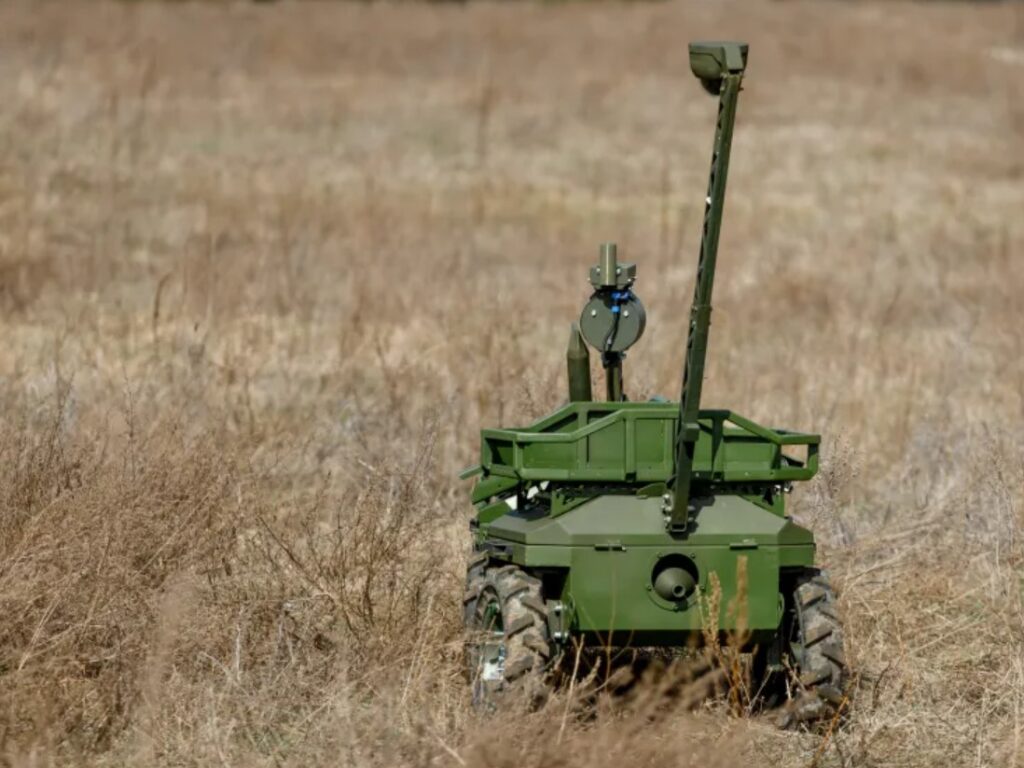
To break the strongest fortifications, the corps said, it used a homemade weapon: Soviet BTR-60 armored carriers converted into remote-controlled kamikaze robots, driven into Russia's toughest positions and detonated.

In 2024, the Ukrainian forces received another local upgrade of the post-Soviet BTR-60 wheeled armored personnel carrier. This time it was fitted with the BM-7 "Parus" turret, known from the BTR-4 "Bucephalus" The main armament consisted of a 30 mm ZTM-1 automatic cannon paired with a 7.62 mm KT-7.62 universal machine gun.

Additional armament might include a set of four anti-tank guided missile launchers mounted on the sides, or two launchers and a 30 mm KBA-117 automatic grenade launcher. As a result, this upgraded BTR-60 saw a significant improvement in firepower, although the vehicle still has very weak armor and less-than-optimal access to the troop compartment.

It was the latest of the corps' robotic improvisations in Vivaldi, which have included air-dropped ground drones and Bullspike grenade-launcher-armed UGVs. They are Bulgarian hand-held, rocket-propelled anti-tank grenade launchers based on the Soviet RPG-22, which the Bulgarian defense industry previously produced under license.

The corps has leaned on such machines throughout the operation to keep its infantry out of the deadliest fights.

Whole units surrender

As the defense broke down, Russians gave up in groups, including officers, pilots, and artillery soldiers, the corps said. The 3rd Assault Brigade carried much of the fighting, while the 3rd Border Guard Detachment, named for the fallen Colonel Yevhen Pikus, retook Ridkodub and dug in on the new line, with the 10th Mobile Border Guard Detachment "DOZOR" taking an active part in the assault.

Ukraine hits two fuel depots in Krasnodar Krai, southern Russia, in one night—both wholesale diesel and gasoline

28 septembre 2026 à 04:34

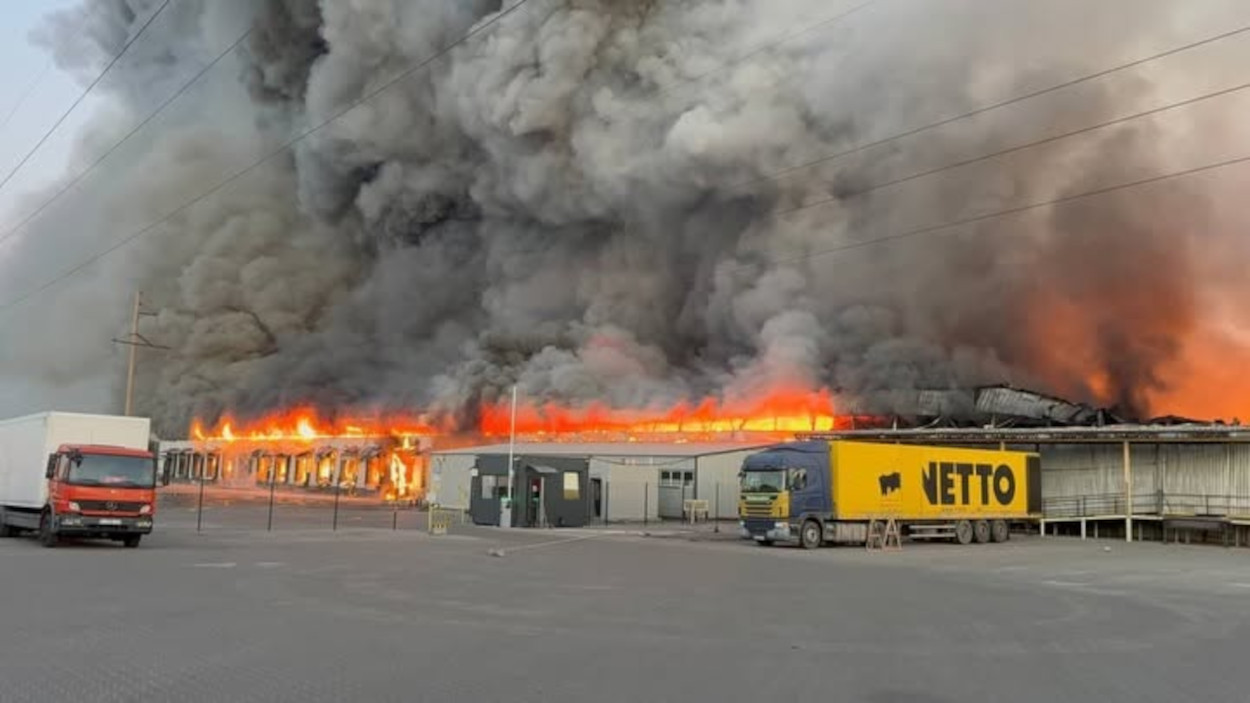
ukraine hits two fuel depots krasnodar krai one night—both wholesale diesel gasoline · post fire rising over depot pavlivska after overnight drone strike 28 2026 download news ukrainian reports

Ukrainian drones struck two fuel depots in Krasnodar Krai overnight on 28 September, setting both on fire, Militarnyi reported. The targets were the NFB-Pavlovskaya depot in Pavlovskaya and the Edelveys-95 depot near Novotitarovskaya, about 25 km from Krasnodar.

Ukraine's deep-strike drone campaign has knocked out a significant share of Russia's refining capacity over the past year, hitting refineries and the fuel depots that store and distribute their output. Washington is pressing Kyiv to ease targeting of Russian refineries while Ukraine pitches a possible energy truce between Ukraine and Russia that Moscow has rejected.

Residents heard six explosions near the railway

A drone alert was declared in the region at 23:43. Residents of Novotitarovskaya then reported drones overhead and at least six explosions near the railway, Russian news Telegram channel Astra reported. Fires broke out at both depots. NASA FIRMS satellite data confirmed both blazes by 04:24, Militarnyi reported, citing imagery published by Ukrainian Telegram channel Exilenova+.

More from Oil Depot in Novotitarovskaya pic.twitter.com/5LigJzW0WL

— Exilenova+ (@Exilenova_plus) September 28, 2026

What the depots store

NFB-Pavlovskaya handles cargo operations with petroleum products, including wholesale trade in motor fuel and petroleum storage, Militarnyi reported.

Edelveys-95 is a similar facility. It specializes in wholesale distribution of diesel fuel (Euro-5 standard) and gasoline (AI-92, AI-95, and AI-100), Astra reported. Its capacity is 4,500 cubic meters, and it has its own rail siding for receiving and shipping fuel. The company has been selling petroleum products for 30 years, buying directly from Russia's largest refineries, according to its website.

Ilsky refinery struck days earlier in the same region

The overnight strikes came two days after SBU drones struck the Ilsky oil refinery in the same region on 26 September, triggering fires near the ELOU-AVT unit and the tank farm. Ilsky is one of the largest refineries in Russia's Southern Federal District, with a design capacity of roughly 6.6 million tonnes of crude per year, and has been struck more than 18 times since the start of Russia's full-scale invasion.

Ukraine's sustained campaign against Russian fuel infrastructure has earlier pushed Russia's fuel shortages into Central Asia and forced Moscow to seek emergency refining deals abroad.

Russia holds 2,000 people hostage in Oleshky without food or water—Ukraine flew 4,000 kg of food to locals across the Dnipro

27 septembre 2026 à 11:46

russia holds 2000 people hostage oleshky without food water—ukraine flew 4000 kg locals across dnipro · post drones carry packages starving residents russian-occupied kherson oblast 2026 lifting boxes ukraine news

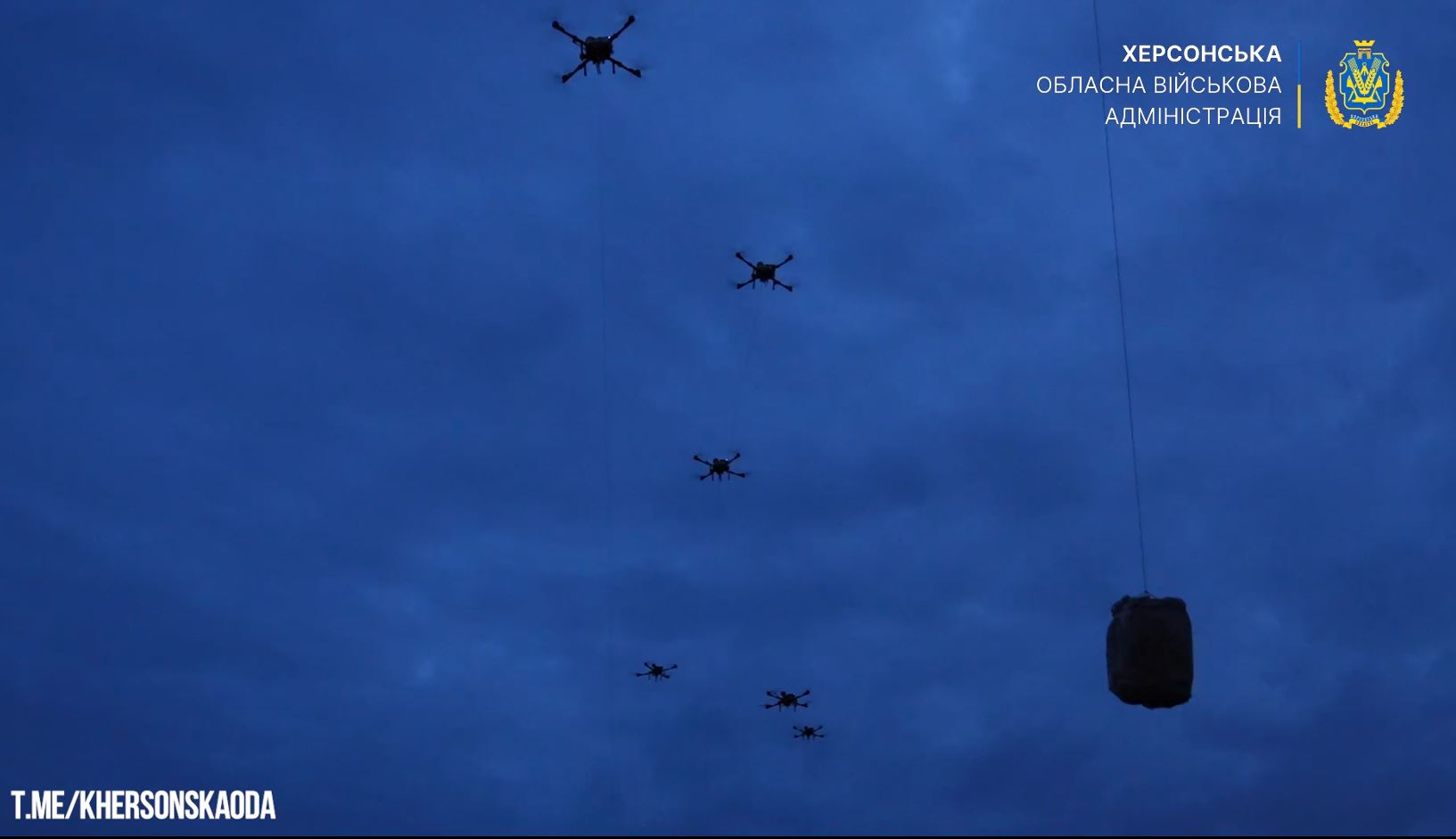
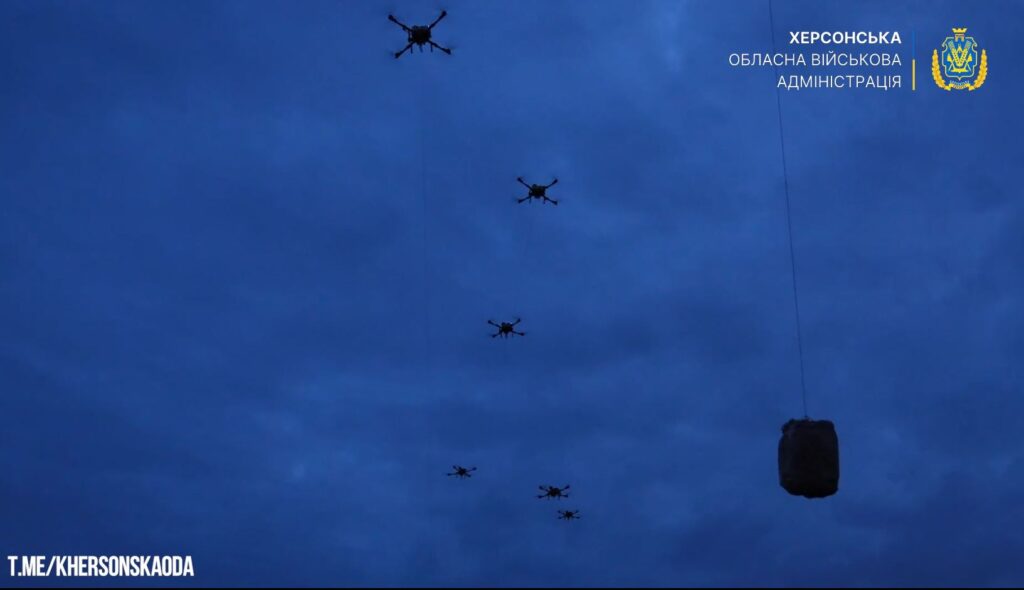
Ukrainian forces carried out one of the largest drone food delivery operations across the Dnipro to occupied Oleshky, dropping about 4,000 kg of supplies provided by partners at 100 locations across the city where people are trapped without food, electricity, or water, Kherson Oblast head Oleksandr Prokudin said on 27 September. Russian forces punish residents who receive aid—shooting down supply drones, confiscating packages, and beating people caught accepting food, he noted.

Oleshky—a city across the Dnipro from liberated Kherson—has been occupied since 2022. Russia sealed off the city in late 2025, and conditions worsened sharply in early 2026 as occupation forces cut off food supplies, prevented evacuation, and left the dead unburied. The drone flights are now the only humanitarian operation reaching the trapped population, making each sortie both a lifeline and a target for Russian forces that treat civilian starvation as a tool of control.

Multiple military units flew food across the Dnipro

Since March, Ukrainian forces have been systematically delivering food to Oleshky by drone in coordination with the 11th National Guard Brigade's Bolharychi unit and the 34th Separate Marine Brigade Borysfen, Prokudin said.

russia holds 2000 people hostage oleshky without food water—ukraine flew 4000 kg locals across dnipro · post ukrainian soldiers prepare packages drone delivery occupied 2026 preparing aid boxes ukraine news
Ukrainian soldiers prepare food packages for drone delivery to occupied Oleshky, September 2026. Screenshot: Kherson Oblast Military Administration via Telegram

The latest operation expanded the effort: the 30th Marine Corps, the Hrim tactical group, the 34th National Guard Regiment, and the 79th Border Detachment joined alongside the Borysfen brigade and the Bolharychi unit.

"Instead of loud statements, we chose the path of concrete action," Prokudin wrote.

russia holds 2000 people hostage oleshky without food water—ukraine flew 4000 kg locals across dnipro · post resident approaches package delivered drone russian-occupied kherson oblast 2026 local walks box still
Resident approaches a food package delivered by drone to Russian-occupied Oleshky, Kherson Oblast, September 2026. Screenshot: Kherson Oblast Military Administration via Telegram

The deliveries fly across the Dnipro and drop food packages at pre-selected locations across the occupied city.

Prokudin said about 2,000 people remain trapped in Oleshky, including nearly 50 children. Ukraine's ombudsman and international monitors have put the figure at up to 6,000, with about 200 children.

Explore further

“There is real hunger there”: Oleshky, occupied town in Ukraine’s Kherson Oblast, turned 942 this week. Behind Russian blockade, its people eat roadside grass

Russia shoots down supply drones and beats residents for receiving food

Russian forces try to disrupt the deliveries. Soldiers shoot down drones carrying food, confiscate or resell packages meant for children and elderly residents, and detain people caught receiving humanitarian aid, Prokudin said. Residents are thrown into basements and beaten.

"Deliberate blocking of aid and creation of famine among the civilian population are war crimes with no statute of limitations. Everyone involved in these actions will face inevitable accountability," Prokudin wrote.

Ukraine prepared an evacuation list, secured the ICRC's readiness, and coordinated a ceasefire on its side, but Russia has not confirmed its readiness to open a route, Ukraine's ombudsman said.

Ukraine delivered 4,000 kg of food by drone across the Dnipro to occupied Oleshky

About 2,000 people, including nearly 50 children, are trapped there. Russia shoots down supply drones and beats residents for receiving aid, Kherson Oblast head Prokudin said.

📹TG/Oleksandr… pic.twitter.com/5AsHemMvCV

— Euromaidan Press (@EuromaidanPress) September 27, 2026

Council of Europe Commissioner for Human Rights Michael O'Flaherty warned on 25 September that the humanitarian crisis in Oleshky is deteriorating rapidly. Civilians, including children, are trapped without food, medicines, medical care, running water, or electricity, and reports indicate a high risk of death, he said. Under international humanitarian law, Russia as the occupying power is obliged to provide the population with food and medical supplies, O'Flaherty noted, and called for an immediate local ceasefire, unimpeded humanitarian access, and safe evacuation of civilians.

New Vivaldi tactic: Ukraine’s ground robots, each carrying two Bullspike grenade launchers, attack Russian positions and then detonate inside their shelters

27 septembre 2026 à 10:43

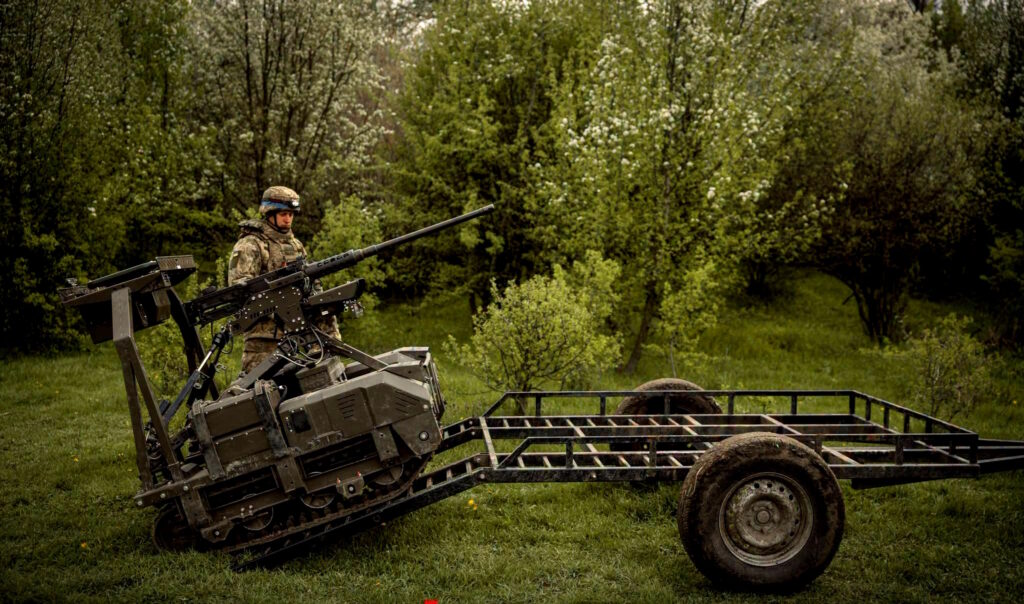
The image shows a Ukrainian soldier standing next to an unmanned ground robotic vehicle. Source: The General Staff

Ukraine has employed a new tactic during its major Operation Vivaldi in Donetsk Oblast. During the 3rd Army Corps' offensive, fighters from the world's first experimental unit of unmanned ground-strike vehicles, "NC13", have upgraded their kamikaze ground drones with grenade launchers.

Vivaldi is the counteroffensive the corps is running near Lyman in northern Donetsk Oblast. Over its first two "seasons," the 3rd Army Corps and attached units have retaken more than 125 square kilometers, half of it de-occupied outright, and inflicted more than 3,000 casualties on Russian forces.

Through this offensive operation, the 3rd Army Corps, commanded by Brigadier General Andrii Biletsky, disrupted Russian forces' plans to encircle the fortress-belt cities in Donetsk Oblast from the north and south. Among them are Sloviansk, Kramatorsk, Druzhkivka, and Kostiantynivka. These cities have helped hold back Russian forces since 2014.

From intensive training to the world-first operations

The NC13 unit has been through Bakhmut, Avdiivka, and other of the toughest sections of the front.

Among its achievements: the world's first robotic assault carried out without infantry involvement, resulting in the capture of two Russian soldiers, a sabotage operation in the enemy's rear — blowing up a crossing and disrupting an offensive — using UGVs alone, and Ukraine's first fully robotic defense of a position for 45 days without involving infantry.

"No one in the history of warfare has used this kind of tactic before," the soldiers commented on the offensive.

The defenders say that a lack of combat experience is no barrier to joining the unit. Every recruit goes through an intensive training course led by experienced instructors.

Grenade launchers were developed based on the Soviet RPG-22

During the operation, UGVs equipped with two Bullspike grenade launchers attacked Russian positions, then detonated directly inside their shelters. The occupiers believed they were being attacked by an entire assault group. In reality, they were being torn apart by robots from the 3rd Assault Corps.

Ukrainian troops armed ground robots with grenade launchers and sent them to storm Russian positions during Operation Vivaldi near Lyman

The robots fired into Russian shelters at close range, then detonated inside them
🎥 3rd Army Corps, NC13 Unit pic.twitter.com/rjekIYxPbA

— Euromaidan Press (@EuromaidanPress) September 27, 2026

"Yes, the UGVs carry out three tasks at once: they strike, they exert psychological pressure, and they clear the position. And most importantly, this happens without risk to our infantry," the force says.

The Bullspike grenade launchers were developed based on the Soviet RPG-22 anti-tank grenade launcher, which was previously manufactured under license by a Bulgarian defense company.

According to data from the manufacturer's website, the Bullspike RPG has a maximum aimed firing range of 350 meters, a direct-fire range of 150 meters, and armor penetration of 400 mm, Militarnyi reports.

The total weight of the launch unit, together with the 72.5 mm PG-22 grenade, is 3.4 kg. The length of the launcher is 780 mm.

The manufacturer states that the Bullspike-AT round is designed to destroy tanks, self-propelled artillery, and other armored vehicles, as well as to target enemy personnel located in bunkers, field fortifications, and urban-type brick fortifications.

The robots were controlled by operators from a safe shelter dozens of kilometers from the line of contact.

Earlier, for the first time in the world's history, the 3rd Army Corps dropped ground robots behind Russian lines from the air. The soldiers behind the mission say their heavy drones delivered kamikaze unmanned ground vehicles more than 10 kilometers into the Russian rear during the "second season" of Operation Vivaldi, letting Ukrainian troops flank them and clear another 40 square kilometers.

  • ✇Euromaidan Press
  • Swiss voters crush neutrality initiative that would have ended sanctions against Russia—70% say No
    Swiss voters overwhelmingly rejected a neutrality initiative that would have banned Switzerland from adopting sanctions against warring states and blocked cooperation with NATO, Swiss public broadcaster SRF reported. The measure failed by 70.2% to 29.8%, with zero cantons voting in favor. Russia's full-scale war against Ukraine has expanded beyond the battlefield into a campaign of sabotage, political influence, and pressure on European institutions. Every European country that has adop
     

Swiss voters crush neutrality initiative that would have ended sanctions against Russia—70% say No

27 septembre 2026 à 10:27

swiss voters crush neutrality initiative have ended sanctions against russia—69% say · post christoph blocher speaks svp event крістоф блохер фото des kantons zürich fb ukraine news ukrainian reports

Swiss voters overwhelmingly rejected a neutrality initiative that would have banned Switzerland from adopting sanctions against warring states and blocked cooperation with NATO, Swiss public broadcaster SRF reported. The measure failed by 70.2% to 29.8%, with zero cantons voting in favor.

Russia's full-scale war against Ukraine has expanded beyond the battlefield into a campaign of sabotage, political influence, and pressure on European institutions. Every European country that has adopted sanctions or cooperated militarily with Ukraine faces some variant of the same push—to weaken the sanctions regime and fracture the coalition. Russia expressed sympathy for the initiative—which backfired. Opponents warned the measure would benefit Moscow.

What the initiative would have done

The initiative, formally titled "Safeguard Swiss Neutrality," sought to enshrine neutrality as "permanent, armed, and comprehensive," bar cooperation with military alliances unless Switzerland was under direct attack, and ban economic sanctions against warring states—with only UN-mandated measures exempted.

Switzerland currently adopts sanctions autonomously and has largely followed EU sanctions against Russia since the full-scale invasion in 2022. The Swiss government's own explanatory materials stated the initiative would affect sanctions against Russia, SRF reported.

Blocher's Russian connection

Former Federal Council member Christoph Blocher, 85, launched the initiative in autumn 2022—six months into the full-scale war and the same year his daughter Magdalena Martullo-Blocher, who controls Ems-Chemie, decided the two Russian plants would stay. He led the campaign through the organization Pro Schweiz.

Ems-Chemie produces plastics, adhesives, sealants, and technical fibers. Two subsidiaries, operating under the Eftec brand, continued working in Russia after the full-scale invasion, Swiss magazine Republik reported earlier this month. Company and government documents contain strong indications that Eftec products may have been purchased by KamAZ, UAZ, GAZ, and AvtoVAZ—sanctioned companies tied to military vehicle production and financial support for Russian soldiers deploying to Ukraine. Ems-Chemie denies supplying them.

The Federal Council and Parliament both recommended rejection. In the National Council, 124 members voted against and 65 in favor. In the Council of States, the vote was 29 to 10 against.

politico fico first line orbán's disruptor crown — brussels has four more leaders worry about · post left right slovak pm robert czech andrej babiš bulgaria's rumen radev slovenia's former
Explore further

Politico: Fico is first in line for Orbán’s disruptor crown — but Brussels has four more leaders to worry about

Drones over Swiss military bases

Unidentified drones were spotted over Swiss military installations this year. In about 20% of sightings over military sites, authorities cannot identify who is responsible, army chief Benedikt Roos said earlier this month. Asked whether Switzerland is a target for Moscow, he said yes—the country holds critical infrastructure vital to Europe that anyone seeking to destabilize the continent could target.

Across Europe, pro-Russian forces continue to push back against sanctions. Germany's far-right AfD won 43.8% in the Saxony-Anhalt state election on 6 September—its strongest result ever, though every other party refuses coalition. In France, Marine Le Pen leads first-round polling for the 2027 presidential election at 36%. Slovakia's Robert Fico earlier demanded the EU lift Russian energy sanctions.

Russia has combined kinetic and political pressure across Europe—drone incursions into NATO airspace, arson at defense-linked sites, and sabotage of critical infrastructure—alongside support for political forces that oppose sanctions and military cooperation with Ukraine. Switzerland's own intelligence service assessed earlier this year that Russia is waging a long war against the West and escalating it.

  • ✇Euromaidan Press
  • Ukraine’s jet-drone kill rate just hit 55%. Russia’s answer: $12 billion to make more of them
    Ukraine's defense forces intercepted 55% of Russia's jet-propelled drones in September—more than 1,500 out of over 2,730 launched—Ukrainian President Volodymyr Zelenskyy said in his 26 September evening address. Russia's full-scale aerial campaign has shifted from propeller-driven Shaheds Ukraine learned to shoot down at over 90% to jet-propelled models that fly faster, resist jamming, and often slip past existing defenses. 55% and climbing Zelenskyy said military intelligence had
     

Ukraine’s jet-drone kill rate just hit 55%. Russia’s answer: $12 billion to make more of them

27 septembre 2026 à 09:15

ukraine's jet-drone kill rate just hit 55% russia's answer $12 billion make more · post geran-5 small cruise missile sights sting s interceptor drone герань-5 в прицилі дрона-перехоплювача стоп-кадр з

Ukraine's defense forces intercepted 55% of Russia's jet-propelled drones in September—more than 1,500 out of over 2,730 launched—Ukrainian President Volodymyr Zelenskyy said in his 26 September evening address.

Russia's full-scale aerial campaign has shifted from propeller-driven Shaheds Ukraine learned to shoot down at over 90% to jet-propelled models that fly faster, resist jamming, and often slip past existing defenses.

55% and climbing

Zelenskyy said military intelligence had briefed him on Russian weapons production—not just jet Shaheds but other technological systems. The documents detail what Moscow is preparing for next year: the volumes and the financing. "We are preparing our countermeasures, and for every line item there must be a Ukrainian answer," he said.

Several effective interceptor prototypes are already in combat.

"Interceptors have been identified that can become the main tool of our defense. Production, components—all of this we are scaling up. There will be an answer," Zelenskyy said.

The goal is to match the interception rate for regular propeller-driven Shaheds, which exceeds 90%. At 55%, the jet-drone rate is climbing but still leaves nearly half reaching their targets.

$12 billion for one category

Russia plans to spend $12 billion in 2027 on jet drones and loitering munitions alone, Zelenskyy said. "This concerns not only Ukraine and not only us," he added, warning that multiple intelligence agencies have information Russia wants to expand its war to other countries and regions.

He said this is why Ukraine is pushing for stronger sanctions and the Drone Deal format. Ukraine has signed 11 such agreements, the latest with Finland at the UN General Assembly this week, and is preparing a 12th with what Zelenskyy called "a strong country."

The warning came as Russia struck a Kyiv data center twice on the morning of 27 September, injuring three people including two children, Zelenskyy wrote. Overnight strikes killed three people in Zaporizhzhia Oblast and one man in Kyiv.

In total this week, Russia launched more than 2,200 strike drones, roughly 1,650 aerial bombs, and 38 missiles—a significant share of them ballistic—at Ukraine, he said.

russia steers its long-range drones ground towers—kyiv says hit one occupied crimea · post russia’s new “geran-4 seeker” shahed variant uses machine-vision ai targeting geran 4 ukraine news ukrainian reports
Explore further

A $50 computer just flew Russia’s newest jet drone into a Ukrainian grain ship—and jamming couldn’t stop it

Jet drones are now Russia's main aerial weapon

Russia's jet-propelled Geran-4 and Geran-5 drones have become the dominant threat in Russia's aerial campaign against Ukrainian cities. By August, production of jet Geran-4/5 models exceeded that of propeller-driven Geran-2s, according to Ukraine's military intelligence (HUR). Russian factories produce roughly 3,000 jet models per month alongside about 2,800 of the older type. The Geran-5 is technically a drone but functions as a small cruise missile—faster, harder to jam, and increasingly guided by AI and mesh networking that complicate interception.

Ukraine's answer has been interceptor drones—cheap, fast enough to chase a Geran, and guided by machine vision. A Ukrainian interceptor recently scored its first kills against jet Gerans and is heading into mass production, though a presidential adviser warned that speed alone cannot catch them—machine vision and automatic guidance decide the chase.

Ukraine destroys record 76 Russian air-defense systems this month, losses analyst says Russia “will never be able to restore”

26 septembre 2026 à 12:21

Russian Buk-M1 air defense system as seen by Ukrainian drone before strike. Screenshot from video: Robert "Magyar" Brovdi on Telegram

Ukraine has destroyed a record 76 Russian air-defense systems this month, and September is not over. The tally beats a record that had stood since July 2023 and reflects a systematic Ukrainian campaign to hunt down Russia's air defenses, opening the skies over occupied territory and inside Russia, the analyst Oleksandr Kovalenko said on Telegram.

Ukraine is methodically peeling apart Russia's layered air defense, and September has been its worst month yet: 76 systems destroyed, past the 73 lost in July 2023, by Kovalenko's count, with days still to go.

It is part of a campaign in which Ukrainian drones and special forces have hunted Russian radars and missile launchers across occupied territory and Crimea, and each one destroyed opens a corridor for the next strike.

The record falls with days to spare

Kovalenko credited Ukraine's Defense Forces' sustained hunt for Russian anti-air, which he said pays off twice: it clears the defenses that would otherwise stop Ukraine's strikes, making later attacks on occupied territory and on Russia itself more effective.

Each kill opens a corridor

Ukrainian drone and special-operations units have picked off Pantsir, Tor, Buk, and pieces of S-300 and S-400 systems across occupied territory and Crimea, sometimes several in a single night throughout 2026.

As Russia pulls its scarce long-range systems back to guard Moscow, fewer are left to cover occupied Ukraine, widening the openings for the next wave of Ukrainian strikes.

Russia cannot replace the losses

Over the full-scale war, Kovalenko said, Russia has lost more than 1,673 air-defense systems of every kind, from radars to surface-to-air missiles and self-propelled anti-aircraft guns.

That, he argued, is a level Moscow can no longer make good with a defense industry already stretched thin by the war.

"Such a quantity of equipment Russia will never be able to restore and compensate," he thinks.

He added that this means it would no longer be able to return to the pre-war level of closing the sky, neither technically nor technologically."

Asked if Ukraine would send troops to defend NATO, Zelenskyy offered something else: know-how to stop drones now reaching its neighbors

26 septembre 2026 à 12:03

Ukraine, the country under daily Russian attack, is offering to help defend others from it. President Volodymyr Zelenskyy says Ukraine will share its drone-defense experience with partners facing Russia's hybrid and drone attacks, NATO members and non-members alike, through its "Drone Deal" agreements, according to UNIAN.

Russia's hybrid and drone attacks are spreading past Ukraine, to Moldova, Germany, and Romania, and Kyiv is casting itself as the country that knows how to counter them.

Asked whether he would send Ukrainian troops to defend NATO members, Zelenskyy instead pointed to the drone agreements, bilateral pacts open to partners in or out of NATO, that pair weapons sales and joint production with the transfer of Ukraine's combat experience.

Ukraine had signed such deals with nine countries by early August and is negotiating more than a dozen others, becoming, as its officials put it, "a security provider for Europe."

The attacks spread past NATO

"Russia will continue hybrid attacks against various countries, and not only NATO members," Zelenskyy said, pointing to drone incursions over Moldova, which belongs to neither NATO nor the EU.

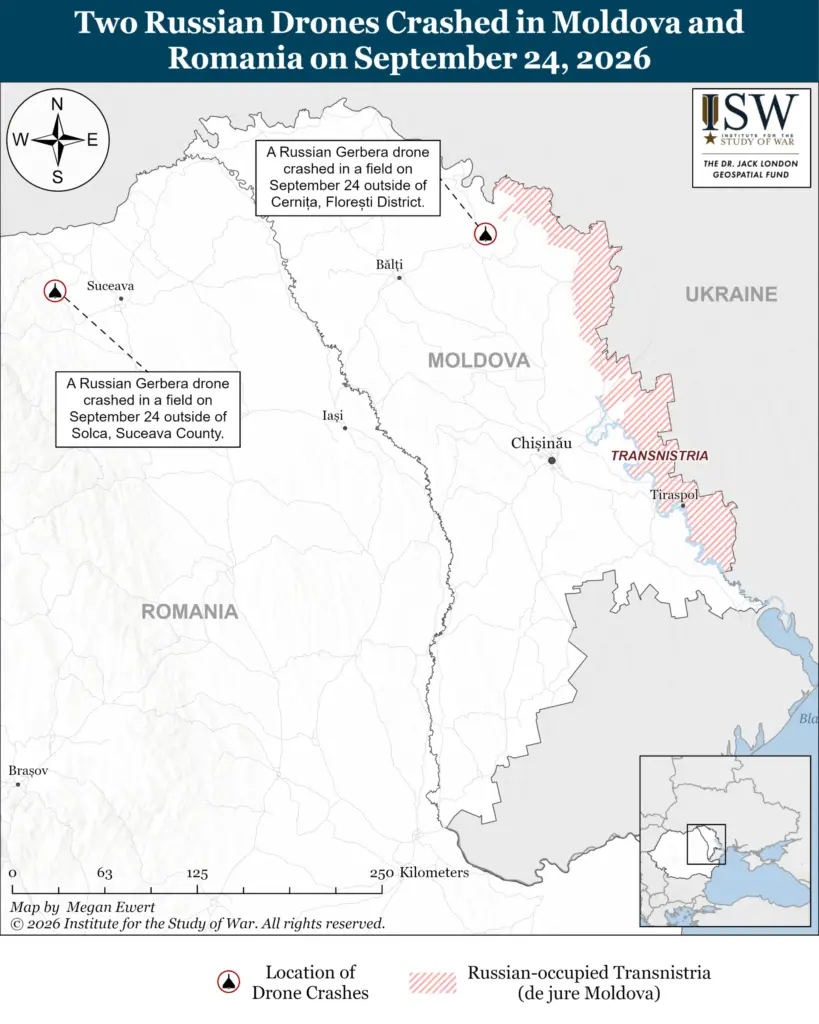
Those crossings have become routine: Moldova logged 39 Russian drone incursions in the first eight months of the year, and on 24 September, drones entered both Moldova and Romania as Poland scrambled fighters. Ukraine has offered help, Zelenskyy said, "above all to those countries that help us during the war."

The Drone Deal shares experience

The Drone Deal agreements cover the sale of drones and missiles and joint production, he added, "but also an exchange of experience."

He offered a precedent: "How we sent our specialists to the Middle East, how we helped protect critical infrastructure." Sharing how to defend against drones, he said, is "precisely part of this exchange."

Ukraine turns security provider

Zelenskyy did not answer the question on whether Ukraine would put troops into NATO countries under attack, steering instead to what Ukraine can already give, its hard-won experience of fighting the very weapons now reaching its neighbors' skies.

Combat shows speed alone can’t catch Russia’s jet-powered drones, despite eight Ukrainian makers’ assurances. So why can’t they stop them?

26 septembre 2026 à 11:48

money engineering what stands between ukraine russia's fastest drones zelenskyy says · post russia’s new “geran-4 seeker” shahed variant geran-4 news ukrainian reports

Last winter, eight Ukrainian companies told the defense minister that their interceptors were ready to knock Russia's jet-powered drones out of the sky. They were not. A fast-flying drone is the easy part of the design, while combat testing exposed what the interceptors lacked in key features to chase an evading jet-powered Geran, presidential adviser Serhii Beskrestnov, known as Flash, said in an interview with NV.

Ukraine's answer to Russia's fast, hard-to-stop jet drones was supposed to be cheap interceptors, and last winter, their makers said they had them. But a jet Geran flies 450 to 500 kilometers an hour, up from the Geran-3's 320, varies its speed to slip past defenses, and will dodge harder once interceptors appear.

Catching one takes maneuverability, machine-vision target-lock, and fuel to loiter and search, not just speed, Flash said. Ukraine's cheap interceptors have already downed about half of Russia's slower drones, but the jet-powered systems have stayed a step ahead.

Eight makers said "ready"

At a meeting last winter called by Mykhailo Fedorov, then-defense minister, all eight interceptor makers reported the same thing: "everything's ready, the solution exists, it flies, we tested it, speed is sufficient," Flash recalled.

The mistake, he said, was that no one checked on them week to week. There were also too few jet Gerans in the skies then to test against.

"On the range, they showed: it flies. That was the problem," explained Flash.

Speed is the easy part

The engines are not the obstacle, Flash continues, since they can be bought abroad, and neither is a plane that flies fast in a straight line. The hard part is a machine agile enough to chase a jet-powered Geran, which is far more maneuverable than the propeller kind and will start changing altitude and throwing evasive maneuvers once interceptors appear.

Because an operator's aim frays at such speeds, he said, the decisive pieces are automatic target capture by machine vision and automatic terminal guidance.

"Building a construction that just flies fast is the easiest part," he added.

Mass orders must wait

That is why Ukraine cannot simply order thousands to blanket the country, Flash said: it first needs a proven design that works for any crew, from Security Service specialists to territorial defense soldiers, and is simple to launch, operate, and maintain.

Once such a sample exists, he said, scaling up is only a question of money. Meanwhile, the work is moving: a Ukrainian interceptor recently notched its first kills against jet Gerans and is heading toward mass production.

Pentagon brings in Ukrainian jamming maker to do to its candidate drones what Russia does to Ukraine’s, and see which survives

26 septembre 2026 à 11:11

The testing of drones at Fort Carson in Colorado. Source: Unwave

A Ukrainian jamming-systems maker went to a US Army base to do to candidate drones what Russia does to Ukraine's: flood them with electronic warfare (EW) and see which survives. Unwave company has tested four of its EW systems at Fort Carson in Colorado as part of the Pentagon's Drone Dominance program and has been asked to continue supporting it.

The Pentagon is using Drone Dominance to choose the drones it will buy at scale, more than 200,000 by 2027, and it needs to know they work under jamming, the condition that decides most drone fights in Ukraine.

So it brought in a Ukrainian electronic-warfare maker to supply that jamming, turning Ukraine's hard-won counter-drone experience into the test bench for American hardware. It follows a pattern in which US defense efforts adopt Ukrainian battlefield models.

Ukraine brings the jamming

From 24 August to 2 September, Unwave's team worked at the base, running scenarios that pitted its jammers against drones tasked with protecting fixed positions, moving vehicles, and infrastructure.

The crews operated from three separate positionsat short and long range to compare how drones from different manufacturers held up.

"Our mission was to create conditions as close to the real battlefield as possible," the company said, adding that it judged the tasks successfully completed but could not detail the scenarios for security reasons.

In all, 14 drone makers and three electronic-warfare firms took part.

Four systems on show

Unwave brought four:

  • VIHA, which it calls Ukraine's first tactical-operational jammer for directed suppression of drones
  • BOOMBOX, built to shield troops and positions from FPV and drop-drones
  • SHATRO, for vehicles
  • CHOVEN-2, a multi-frequency amplifier for cars.

Its participation was organized by Revenant Technologies, a US firm that specializes in bringing combat-proven defense tech to the American market, and helped design the scenarios using its ties to Ukraine and frontline experience.

A foothold in the US market

For Unwave, the value is a door into the alliance's security architecture. The event showed the importance of Ukrainian, American, and European specialists testing together, the company said, and "such interaction will help integrate Ukrainian technologies into the security architecture of our allies."

  • ✇Euromaidan Press
  • Built by Ukrainian officers from real combat, DWAC course is now “NATO Selected”
    A drone-warfare course written by Ukrainian officers from real combat has earned NATO status. The English-language Drone Warfare Awareness Course, built on Ukraine's war experience, is now "NATO Selected" and has been taught to officers from more than 10 countries, the General Staff said. Ukraine's combat experience is flowing into NATO's classrooms, and the alliance is starting to treat Kyiv as a teacher rather than only a recipient. It follows a broader shift of Ukrainian lessons into
     

Built by Ukrainian officers from real combat, DWAC course is now “NATO Selected”

26 septembre 2026 à 08:50

A Ukrainian soldier with a ground robot. Source: The 12th Special Forces Brigade Azov

A drone-warfare course written by Ukrainian officers from real combat has earned NATO status. The English-language Drone Warfare Awareness Course, built on Ukraine's war experience, is now "NATO Selected" and has been taught to officers from more than 10 countries, the General Staff said.

Ukraine's combat experience is flowing into NATO's classrooms, and the alliance is starting to treat Kyiv as a teacher rather than only a recipient. It follows a broader shift of Ukrainian lessons into allied curricula.

Combat lessons become a course

The course came out of Ukraine's International Peacekeeping and Security Center, whose instructors at its "Partnership for Peace" training center wrote the syllabus, formally titled "Fundamentals of the Combat Use of Unmanned Systems", based on the Armed Forces' own experience.

In November 2025, the Ukrainian team presented it at a seminar in Sweden attended by NATO commanders and analysts.

The next year, it passed international trials with officers from more than a dozen countries and earned its NATO Selected mark, a recognition that it meets Alliance standards and can be offered to member-state officers, short of the full accreditation the center is still pursuing.

Sweden and Finland lend a hand

Two Nordic partners helped get it there. Sweden's SWEDINT began working with the center in 2024, teaching international methods for course development and preparing courses for accreditation.

Finland's FINCENT joined in 2025, sharing insights on building a military education system and assessing training needs. In the fall of 2026, delegations from both countries visited the center and signed plans for further joint work.

Ukraine teaches the Alliance

The course is one piece of a wider reversal. Ukrainian officers have trained Polish and German counterparts in drone and electronic warfare, and at the joint NATO-Ukraine center in Poland, they have set their battlefield practice against NATO doctrine, exposing where the Alliance's assumptions no longer fit in a modern war.

War’s next tech leap: Former Ukraine’s defense minister behind “Army of Drones” is now creating new “Army of Robots”

26 septembre 2026 à 08:33

The person who built Ukraine's "Army of Drones" is now building an "Army of Robots". Myhailo Fedorov, the former defense minister, has launched a private-sector push to robotize the war, wanting machines to take the deadliest jobs, evacuating the wounded, laying and clearing mines, and fighting, so soldiers come home, he wrote, announcing the effort at the IT Arena conference in Lviv.

The pitch rests on a track record. Fedorov's Army of Drones, launched in 2022, helped make drones the weapon behind more than 95 percent of Ukraine's battlefield hits. Over 700 makers now building them, and he is betting robotization is the next such leap.

Army of Robots is meant to be an ecosystem, not a company: investing in defense-tech firms, standing up R&D, testing with troops, and scaling fast, whatever works. Fedorov is running it from outside government, having left the defense ministry in July and started building a defense-tech company backed by Palantir chief Alex Karp.

Robots take the deadliest jobs

Fedorov's vision is a battlefield where machines go first. A sensor spots a threat, then a robot enters the danger zone, he says. Humanoid robots would carry ammunition and pull out the wounded, lay and clear minefields, scout, hold positions, and strike, taking the roles that today cost soldiers their lives. For now, it is a vision more than a fielded capability: Fedorov is describing where he wants the battlefield to go, not a robot force already in the fight.

The Army of Drones sets the model

The aim, Fedorov says, is to gather the best engineers, combat experience, and capital and point them at one goal: making robots fight instead of people. The obstacle is Russia, which he said has learned to quickly copy and scale military technology, so Ukraine must keep inventing the next cycle before the enemy does.

"Russia will stop only when we can break its backbone," he says, arguing that it will take Western capital, world-class engineers, and private initiative.

Russia’s air defenses can’t protect all its strategic sites once Ukraine’s ballistic missiles are ready, expert says

26 septembre 2026 à 08:16

Ukraine ballistic missile program

Russia's best defenses against ballistic missiles ring Moscow, leaving much of the rest of the country exposed to Ukraine's growing missile arsenal. That concentration is why Ukraine's homegrown ballistic missiles could cause Russia real trouble beyond the capital, even as Russia's air defenses show gaps elsewhere, expert Vadym Kushnikov says, Ukrainian Radio reports.

Russia has the systems to stop ballistic missiles, Kushnikov continues, but it has massed the best of them around Moscow: the S-500 "Prometey", with interceptors adapted from the A-135, the Soviet-era shield built to defend the capital from missiles.

Other regions, by his assessment, are left more open to Ukraine's massed and combined strikes. That matters now that Ukraine's own ballistic missile, such as the Sapsan, is entering combat.

The best defenses ring Moscow

"If you analyze the characteristics, Russia today has concentrated its most modern S-500 complexes, with 77N6-N and 77N6-N1 interceptors, in Moscow Oblast," Kushnikov says.

Elsewhere, he said, Russia is short of air-defense complexes, the S-400 among them, a shortfall he said is visible in satellite imagery.

Ukraine's ballistic program grows

Ukraine's deep-strike arsenal has been shifting from foreign-supplied systems to homegrown ones. Alongside its Neptune and Flamingo cruise missiles, it now fields the Sapsan, an Iskander-class ballistic missile with a range of about 500 kilometers, which President Volodymyr Zelenskyy confirmed was in combat late last year.

A domestic ballistic missile will let Ukraine strike deep inside Russia without waiting for a Western green light.

Production faces hard hurdles

Building them is the hard part. Ukraine's rocket-engineering tradition runs deep, Kushnikov suggests, but its production sites, mostly in the east, are direct targets of Russian strikes.

The missiles also depend on components that are difficult to make, chiefly solid-fuel rocket engines and the guidance that steers a warhead flying at five times the speed of sound along a ballistic arc.

"The combination of all these factors is exactly what our engineers have worked on for years, building the Ukrainian ballistic shield," he adds.

  • ✇Euromaidan Press
  • Ukrainian soldiers solve drone-delivery problem US military has chased for three decades
    Ukrainian soldiers have built a drone that carries a combat ground robot into battle and drops it where needed, a trick the US has pursued but never fielded. The Alter Ego battalion of the 93rd Mechanized Brigade has paired a bomber drone with a purpose-built robot, the Desantnyk, and took it from idea to combat in 10 days, the Brave1 defense cluster said. The system answers a problem that has long hobbled ground robots: getting them to the fight over mined, cratered terrain they cannot
     

Ukrainian soldiers solve drone-delivery problem US military has chased for three decades

25 septembre 2026 à 16:29

The purpose-built robot Desantnyk. Source: Brave1

Ukrainian soldiers have built a drone that carries a combat ground robot into battle and drops it where needed, a trick the US has pursued but never fielded. The Alter Ego battalion of the 93rd Mechanized Brigade has paired a bomber drone with a purpose-built robot, the Desantnyk, and took it from idea to combat in 10 days, the Brave1 defense cluster said.

The system answers a problem that has long hobbled ground robots: getting them to the fight over mined, cratered terrain they cannot cross on their own.

A drone carries the robot dozens of kilometers behind the lines and drops it precisely, in a pairing engineers call a "marsupial", one carrier delivering another. The US worked on such systems for more than 30 years, Brave1 said.

And it is not alone: the 3rd Army Corps has been air-dropping robots behind Russian lines in its Vivaldi offensive.

A drone carries the robot in

The Desantnyk is a compact wheeled platform. Alter Ego built a way to release it accurately from a heavy bomber drone, dropping it well beyond the range a ground robot could reach on its own. It lands deep in the enemy rear and drives on to its target. The point is to spare the robot the most dangerous, exposed leg of the journey.

Confirmed kills follow fast

According to Brave1, just 10 days passed from the idea to its first combat use, and the Desantnyk has already carried out confirmed strikes: the unit used it to destroy Russian shelters and troops. Only a handful of Ukrainian units have mastered the tactic so far.

Brave1 moves it to production

The defense cluster, a state platform for scaling battlefield inventions, said it took notice of the Desantnyk and helped the battalion find a manufacturer to move it from prototypes to serial production and out to other units.

  • ✇Euromaidan Press
  • A report says US intelligence warned France of Russian ship-launched drones. France denies it
    French President Emmanuel Macron said French services received no CIA warning about a possible Russian drone attack from Mediterranean merchant ships, pushing back on an El Mundo report that US intelligence had alerted France, Italy, and Spain, RTL reported. Macron’s denial comes amid drone attacks and sabotage cases that European governments have linked to Russia. France is preparing stronger defenses against that wider threat, even as Macron says its services received no specific CIA
     

A report says US intelligence warned France of Russian ship-launched drones. France denies it

25 septembre 2026 à 14:31

Emmanuel Macron, wearing a dark blue suit, walks past a black iron fence outside a dark brick building.

French President Emmanuel Macron said French services received no CIA warning about a possible Russian drone attack from Mediterranean merchant ships, pushing back on an El Mundo report that US intelligence had alerted France, Italy, and Spain, RTL reported.

Macron’s denial comes amid drone attacks and sabotage cases that European governments have linked to Russia. France is preparing stronger defenses against that wider threat, even as Macron says its services received no specific CIA warning. Italy’s defense minister has also cautioned against fueling alarm over an unconfirmed report.

Asked about the report during a televised interview on 24 September, Macron said: “The CIA did not inform French services of such an attack.” He said Russia was multiplying hostile and sometimes criminal acts against European countries. Covert acts such as sabotage and cyberattacks are often described as hybrid warfare. Asked whether France itself could be attacked, Macron answered yes.

Italian Defense Minister Guido Crosetto separately wrote on X that El Mundo’s alert “finds no confirmation.” He said it served no one to add “more fuel to the fire” at an already tense time.

The Spanish newspaper reported that the possible operation would use Gerbera drones, small Russian aircraft capable of carrying several kilograms of explosives. The drones would be hidden in shipping containers aboard merchant ships and launched toward targets along Europe’s southern coast. El Mundo cited a source close to Lithuania’s Defense Ministry, and analysts familiar with a CIA report said to have circulated among European foreign ministries. Euromaidan Press covered the account on 24 September. Bythe time of publication, neither Spain’s government nor the CIA had publicly addressed it.

Macron pointed to the failed attack at Leipzig/Halle Airport in eastern Germany in August. A drone carrying explosives was found near a Ukrainian cargo aircraft. German officials attributed the attempt to Russia. Macron said France had not experienced a comparable incident.

The wider hybrid warfare threat

Beyond the disputed Mediterranean alert, authorities have investigated other incidents throughout Europe as possible Russian sabotage.

Germany followed its accusation over Leipzig with diplomatic measures against Moscow. Berlin ordered Russia’s last consulate in Germany closed and ended an agreement permitting a Russian cultural center. German investigators also identified two suspects, including a Russian man they linked to military intelligence. Moscow denied involvement.

Poland’s justice and interior ministers said Russian intelligence ordered the May 2024 arson of Warsaw’s Marywilska 44 shopping center.

Finnish President Alexander Stubb said Russia would continue such attacks to frighten Ukraine’s allies into reducing support. He urged vigilance without overreacting, saying Finnish intelligence saw no imminent military threat.

Seventeen makers head to Michigan to test bomber drones for the Pentagon, and Ukrainian firms are back in field, some under US partners

25 septembre 2026 à 13:58

Ukrainian Nemesis heavy drone. Source: Militarnyi

Ukrainian drone makers are getting another shot at a Pentagon contract, this time for bomber drones. Seventeen companies, including Ukrainian firms and Western partners fielding Ukrainian designs, will test bomber drones at Camp Grayling in Michigan in October, the next stage of the Pentagon's Drone Dominance program, Defender Media reported.

The Phase 2.5 Bomber Qualifier is the latest round of the Pentagon's drive to buy combat-tested drones at scale, and Ukrainian makers are again in the field, some through US-registered partners, because Pentagon rules bar direct sales from foreign firms.

This time, the target is bombers, the drones that drop munitions on what is below them.

Seventeen makers head to Michigan

The contest runs at Camp Grayling, a Michigan training range, and organizers call it the hardest and fastest-paced stage of the program yet. Each company must bring at least six fully built systems.

The testing splits into two parts: a Bomber Qualifier, which the makers conduct themselves, and a Bomber Gauntlet run by US soldiers. Organizers have not published details of a third mission. Winners of the wider program earn Pentagon supply contracts.

Ukrainian bombers make the list

The invited firms include UFORCE USA Services, Grim Tech, Gurzuf Defence, UA Defense Tech, Skycutter, and UDD Tech Corp. Which models they will bring is not yet clear.

UFORCE is known for its Nemesis bombers. Grim Tech showed a light bomber, the Grim-18, at the MSPO defense expo in Poland this month, and Gurzuf builds heavy bombers, including the Ayudag-6, which recently set a Ukrainian payload record for multirotor drones at 130 kilograms.

A second try after a US sweep

In the program's last phase, the Pentagon picked five winners in each of two categories, and all were American, though a Ukrainian firm had reached the second round and, by industry accounts, Ukrainian designs were incorporated into some Western entries. For Ukraine's makers, the bomber round is another chance to turn battlefield-proven hardware into a US contract.

  • ✇Euromaidan Press
  • Ukraine’s new military AI does more than watch the battlefield—it helps commanders plan what comes next
    Ukraine is building an artificial intelligence system to analyze battlefield data, help commanders plan operations, and forecast Russia's possible moves, its Defense Ministry said. The system keeps the data it runs on behind a protected perimeter. The logic behind the project: Ukraine can already read the battlefield from drone footage and sensor feeds, but converting that picture into orders is the harder, still-human half where wars are decided. What SPECTR is built to do SPECTR
     

Ukraine’s new military AI does more than watch the battlefield—it helps commanders plan what comes next

25 septembre 2026 à 13:57

SPECTR.

Ukraine is building an artificial intelligence system to analyze battlefield data, help commanders plan operations, and forecast Russia's possible moves, its Defense Ministry said. The system keeps the data it runs on behind a protected perimeter.

The logic behind the project: Ukraine can already read the battlefield from drone footage and sensor feeds, but converting that picture into orders is the harder, still-human half where wars are decided.

What SPECTR is built to do

SPECTR comes from A1, the AI center inside Ukraine's Defense Ministry. Its head, Danylo Tsvok, said Ukraine holds a unique store of data on how this war is fought, and SPECTR is designed to help turn that into a real edge on the ground.

The system is built to analyze incoming information, spot patterns, draft recommendations for planning operations, and automate the routine work in headquarters. Troops would work with frontline information faster.

"Essentially, we are building an operating system for warfighting. It will help the military choose effective courses of action and predict the enemy’s possible moves," Tsvok said.

SPECTR will run inside systems the Defense Forces already use, and on local devices set aside for sensitive data.

The center behind an AI-driven army

The ministry set up A1 in March 2026 with backing from the UK government, aiming to turn AI into Ukraine's battlefield advantage and build an "AI-driven army." That effort runs along three tracks: faster, data-based decisions, AI built into weapons and less bureaucracy in the ranks. The center is working on three flagship projects. Some of its solutions are already being tested by units.

  • ✇Euromaidan Press
  • Ukraine is opening access to 5 million frames of real combat to 12 British weapons makers to train AI
    Ukraine is opening its battlefield data to British weapons makers so they can train their AI on a war no one else has fought. Up to 12 British defense companies will join Avengers Labs, Ukraine's platform for training AI models for drones and robots on real combat data, the Defense Ministry said. Ukraine's combat data is a resource no other military has access to. British firms get to build and test their AI on battlefield data they could not access elsewhere, while Ukraine gets their t
     

Ukraine is opening access to 5 million frames of real combat to 12 British weapons makers to train AI

25 septembre 2026 à 13:17

A Ukrainian drone is approaching a Russian target. Source: The Ukrainian Defense Ministry

Ukraine is opening its battlefield data to British weapons makers so they can train their AI on a war no one else has fought. Up to 12 British defense companies will join Avengers Labs, Ukraine's platform for training AI models for drones and robots on real combat data, the Defense Ministry said.

Ukraine's combat data is a resource no other military has access to. British firms get to build and test their AI on battlefield data they could not access elsewhere, while Ukraine gets their technology and joint development of AI for unmanned systems.

What is Avengers Labs?

More than 30 Ukrainian companies already use the Avengers Labs, and three of their systems have reached the battlefield. It is part of the AI push former Defense Minister Mykhailo Fedorov built around Ukraine's data.

The terms are built around control. The British companies can develop and test their own AI models within Avengers Labs, the ministry said, but the data remains within the platform's protected environment, with no way to download it or take it out. That lets Ukraine share the value of its war experience, the annotated record of real combat, without surrendering the record itself.

The platform was developed by the Center for Innovation and Development of Defense Technologies, the team that created the DELTA combat system. At the core of Avengers Labs is an annotated dataset of 5 million frames collected on the battlefield. Most of this material comes directly from the DELTA combat system and is continually supplemented with new data of practical value in combat conditions.

Britain trains for a real war

In March 2026, Ukraine announced the establishment of a system of military technology competence centers. The first in the network was intended to be the Defense AI Center "A1," which would focus on AI solutions.

The AI center is being launched with support from the UK. Its main tasks were planned to be:

analysis of combat data;

forecasting enemy actions;

development of autonomous systems;

new management/control tools

A separate center was said to have been established for each key direction of the war: drones, mid-range strike, deep strike, artillery, and others.

“Killing Ukraine’s internet would take nuclear or chemical weapons”—MiroHost founder whose data center Russia just destroyed

25 septembre 2026 à 12:18

kyiv strike

Russian drones and missiles struck Kyiv data centers over 23–24 September, knocking out internet and hosting providers. The Digital Transformation Ministry said about 100,000 subscribers lost service, NV Business reported.

Russia has widened its air campaign from power plants and warehouses to railways, fuel stations, and now digital infrastructure as it tries to grind down the country's ability to function before another war winter.

"You'd have to destroy 70-80% of Kyiv's buildings"

MiroHost founder and Internet Invest Group head Oleksandr Olshanskyi told NV Business the attack destroyed his own data center.

"Most critically important data and systems have been moved abroad or to the cloud," Olshanskyi said. "If an online store stops working, that's unpleasant but not a tragedy."

He called rumors about a full internet blackout or sharp service price hikes baseless.

"Destroying all internet in a simple way is impossible—you'd have to use nuclear or chemical weapons or destroy 70-80% of buildings in Kyiv," he said.

What Russia hit

The strikes damaged a Kyiv data center housing UTELS switching equipment on 23 September. Overnight into 24 September, Russia destroyed equipment of hosting provider CityHost.UA and the data center housing MiroHost. About 95% of MiroHost's clients operate outside Ukraine and were unaffected, he said. Russia also struck the Pavutyna network's data center. Crazy Network said a missile struck Kyiv's central traffic exchange hub, cutting service for its subscribers in Vinnytsia, Kyiv, and Khmelnytskyi Oblast.

Providers KIEVNET, Domonet, FAUST, and Etherlink also reported disruptions. Ukraine's telecom regulator NKEK said on 24 September that providers were completing emergency restoration, and Domonet estimated service would return by 21:00 that evening.

The 23 September strikes killed two people and injured more than 40, and hit a college building in Kyiv while students were on campus, Ukrainian Foreign Minister Andrii Sybiha wrote that evening. Russia targeted major Ukrainian data centers "seeking to disrupt the flow of information," he said. "This is critical civilian infrastructure that ensures people can access life-saving information. It is not a military target."

"More sanctions pressure, more missile interceptors are the only way to stop this terror," Sybiha wrote. "These attacks must not become the new normal."

Panic, not military gain

Olshanskyi said Russia uses these strikes to spread fear, not achieve lasting results.

"The enemy's goal is to cause damage, inflame panic, and heighten nervousness," he said.

His data center's destruction "will not affect the situation at the front in any way," he said.

They say Dobropillia is encircled, but they are actually 10+ km away: ISW publishes map disproving Russia’s claim

25 septembre 2026 à 10:10

A map showing the territories around Dobropillia that Russia claims to have captured (purple) and analysts’ assessment that Russian forces are 10.2 kilometers from the southeastern outskirts of Dobropillia. Map: Institute for the Study of War

The Institute for the Study of War (ISW) published a map in its analytical report on 24 September that contrasts the claimed Russian encirclement with the location of Russian forces as assessed by the experts. Based on the evidence observed by ISW, the nearest area where Russian forces are present is 10.2 kilometers from the southeastern outskirts of Dobropillia.

Russia has been spreading disinformation about its successes around Dobropillia as part of what ISW calls a cognitive warfare effort to portray Ukrainian defenses as on the verge of collapse. Russia's Defense Ministry published a map claiming the city was surrounded. ISW's own map challenges it. The Ukrainian military says the city remains under its control.

Russian Defense Ministry claims it is already destroying encircled Ukrainian troops in Dobropillia and moving further

Units of Russia's Center Grouping of Forces continue combat operations against encircled Ukrainian forces in the Dobropillia area of Donetsk Oblast while simultaneously advancing toward Oleksandrivka, the Russian Defense Ministry claimed. ISW analysts, meanwhile, said they have not observed evidence supporting Russia's claim that the city is encircled. They also noted that Ukrainian officials "directly refute" the claim.

A Russian map showing the complete encirclement of Dobropillia. ISW and the Ukrainian Armed Forces reject this claim. Map: Russian Defense Ministry

ISW observed evidence that Russian infiltrators, small groups, were operating east and northeast of Dobropillia on 19 and 20 September. The institute did not assess that these infiltrators had consolidated their positions.

Ukrainian forces maintain positions south and northeast of Dobropillia, military observer Kostiantyn Mashovets said on 20 September, according to ISW.

Russian forces have not made major gains in the Dobropillia direction, the chief of staff of an artillery reconnaissance battalion said on 22 September, according to the institute. On the same day, a Russian milblogger described the "alleged Russian encirclement of Dobropillia" as potentially meaning not the direct presence of infantry, but only the establishment of fire control over Ukrainian logistics, including roads west of Dobropillia and toward Sviatohorivka, according to ISW.

ISW noted that Russia's pervasive military culture of lying—what Russian milbloggers themselves call "beautiful reports"—has degraded the Defense Ministry's own ability to understand the battlefield and enabled inflated claims like the Dobropillia encirclement.

Russia uses this disinformation as a "diversion"

In its statement, the Russian Defense Ministry itself described Dobropillia as a "strongly fortified settlement" whose seizure would threaten key Ukrainian supply lines running from Dnipropetrovsk Oblast toward the Fortress Belt—the Sloviansk-Kramatorsk-Druzhkivka urban agglomeration.

Russia has recently renewed its attempts to break through toward Dobropillia.

Third Army Corps Commander Andrii Biletskyi said that Russian forces sought to bypass the fortified cities through Dobropillia and link up with troops advancing from north of Lyman, rather than launch a direct assault. ISW noted on 16 September that the Vivaldi operation disrupted Russia's two-pronged plan. In its 24 September report, ISW said Russia's claims about Dobropillia were partly intended to divert attention from Ukraine's elimination of the Russian salient north of Lyman, which has likely forced Russia's command to rethink its wider encirclement plans.

  • ✇Euromaidan Press
  • A bottle of flammable liquid in Poland, a nuclear option on a Russian wish-list—the hunt for Starlink widens
    A Russian academic and an ultranationalist media owner have drawn up a menu of ways to knock out Starlink, the satellite network keeping Ukraine's drones and troops online, the Ukrainian defense outlet Militarnyi reported. The ideas run from jamming to a nuclear blast in space, and come as Poland investigates a suspicious fire at a Starlink ground station serving Ukraine. Satellite internet is the nervous system of the drone war. Since a terminal cutoff early this year gutted Russian fr
     

A bottle of flammable liquid in Poland, a nuclear option on a Russian wish-list—the hunt for Starlink widens

25 septembre 2026 à 09:54

Starlink

A Russian academic and an ultranationalist media owner have drawn up a menu of ways to knock out Starlink, the satellite network keeping Ukraine's drones and troops online, the Ukrainian defense outlet Militarnyi reported. The ideas run from jamming to a nuclear blast in space, and come as Poland investigates a suspicious fire at a Starlink ground station serving Ukraine.

Satellite internet is the nervous system of the drone war. Since a terminal cutoff early this year gutted Russian frontline coordination, Moscow's search for a workaround has widened from the spectrum to orbit—and from the battlefield toward the infrastructure that keeps the network alive.

The scenarios

Sergei Glazyev of the Russian Academy of Sciences and Konstantin Malofeyev, founder of the Russian outlet Tsargrad, laid out the proposals. Glazyev's list runs from cutting communication cables on land and undersea to crippling data centers and downing reconnaissance and command aircraft, whatever their nationality. Without American and British spotters, planners, and analysts, he claims, Ukraine's army would go blind. Glazyev's core argument is that Starlink satellites are not geostationary—nothing hangs over Ukraine, so the entire constellation must be struck at once.

For electronic warfare, they push wider use of the Volna Kupol Garant, a roughly $1.5 million system that beams a signal to briefly deafen a passing Starlink satellite over what its developers claim is up to 20 km². Kinetic options follow—the A-235 Nudol and S-500 Prometheus interceptors—though they call spending one costly missile on one cheap satellite "insane extravagance." A third idea scatters metal pellets to spark what the authors call the Kessler effect—a debris cascade that would destroy everything at that altitude.

The bluntest proposal detonates a nuclear device in space, its pulse frying electronics on low-orbit satellites. The authors admit this would also wreck Russia's own Rassvet network, which orbits at a similar altitude. "We can no longer hit Musk's creation for free," they write, "but it's still the optimal option. The legal consequences are unimportant."

Video still from Bureau 1440's recent launch of 16 Rassvet satellites into low earth orbit
Explore further

Russia’s answer to Starlink was written off as a failure—its satellites are still climbing

A station burns in Poland

On 23 September, fire destroyed the distribution panel of a ground Starlink station in Wola Krobowska that feeds Poland and Ukraine. Poland's Deputy Prime Minister Krzysztof Gawkowski said sabotage could not be ruled out and that the pattern matched Russian services' modus operandi. A bottle of flammable liquid was found beside the burned distribution panel, according to sources cited by RMF24. Exatel, which the minister named as the station's operator, said it only subleases the land and transmits data there, and neither operates nor owns the infrastructure.

Russia strikes second civilian ship in Black Sea in six days, killing both captains to choke route that carries 90 percent of Ukraine’s farm exports

25 septembre 2026 à 09:45

cargo ship

Russia hit an Antigua and Barbuda-flagged cargo ship in the Black Sea on the night of 22–23 September, killing its Ukrainian captain, according to Ukraine's Sea Ports Authority.

Ukraine says Russia is targeting civilian vessels in the Black Sea to block the country's maritime exports—about 90% of its agricultural exports transit these routes. Ukraine could lose $1.5 to $3 billion in export revenue if the attacks continue, according to Foreign Policy. The latest strike came six days after a Russian drone struck a Tanzania-flagged vessel heading to a Ukrainian port, killing its captain and wounding three crew members, and days after London's marine insurance market expanded its high-risk reporting area to cover the entire Black Sea.

Rescuers evacuated crew despite fire and heavy smoke

The State Border Guard Service said its Maritime Guard dispatched patrol boats to the burning vessel and evacuated the 15 surviving crew members despite heavy smoke and the threat of renewed Russian attacks. The service identified the weapon as a Russian attack drone. The survivors were brought to the nearest safe port and examined by medical personnel.

The vessel had departed from a Ukrainian port, the Border Guard Service said. Oleg Kiper, head of Ukraine's Odesa Oblast, also reported the attack and said it occurred off the oblast's coast. Neither the ship's name, its cargo, nor its destination have been disclosed.

The Border Guard Service said its Maritime Guard evacuated the crew, while Ukraine's Sea Ports Authority said the Ukrainian Navy carried out the evacuation and extinguished the fire aboard the vessel.

"This is another terrorist act by the Russian Federation against civilian shipping," the authority said.

Attacks on civilian shipping have killed dozens of crew members in 2026

Russia has repeatedly struck civilian vessels in the Black Sea this year. A strike on a Turkish-owned bulk carrier off Odesa killed ten crew members in July. Russian drones killed a sailor and wounded five on two ships in June. On the same day as the latest attack, the EU called for a moratorium on strikes against Black Sea shipping.

Ukraine’s Mirage had killed a cruise missile on its first combat sortie. France just sent more of the missiles that reach 80 km

25 septembre 2026 à 09:42

Ukraine and France military chevrons

France delivered additional MICA air-to-air missiles and 30mm cannon ammunition for Ukraine's Mirage 2000 fighter jets, Militarnyi reported, citing France's Armed Forces Ministry.

Delivering an aircraft is one step, keeping it armed is another. France's weapons resupply reflects a shift from one-off hardware transfers to sustained combat support as Russia's aerial campaign against Ukrainian cities grinds on.

What MICA does

The MICA, developed by MBDA, comes in two versions: radar-guided (MICA RF) and infrared (MICA IR). It weighs about 112 kg, flies at Mach 4.9—nearly five times the speed of sound—and can engage targets 60 to 80 km away.

Ukraine's Mirages have also carried older Magic 2 missiles limited to roughly 20 km. MICAs were reportedly included with the original donation, but the supply may have been limited, which would explain why the Magic 2s stayed in use. MICA triples to quadruples that engagement window, letting pilots intercept cruise missiles far earlier in their flight path. The fresh delivery keeps Ukraine's small fleet supplied with the missiles that make these longer-range interceptions possible.

MiG-29 with R-27s and R-73s.
Explore further

Ukraine is running short of its best missiles for hunting Russia’s jet drones. Now MiG-29s are firing 1970s weapons

Cheap shells for cheap drones

The 30mm ammunition feeds the Mirage's two built-in DEFA 554 cannons, which fire at a selectable rate of 1,200 or 1,800 rounds per minute. A pilot who uses the gun on a Shahed drone saves a MICA for a target that actually needs one.

Ukraine's F-16 operations follow a similar logic: pilots use their 20mm Vulcan cannons alongside AIM-9 and AIM-120 missiles, though Zelenskyy called the missile option expensive—used when nothing else can reach a jet drone, because "a human life is more important."

A Ukrainian Mirage 2000 shot down a Russian Kh-101 cruise missile during its very first combat mission, on 7 March 2025. France has delivered about a dozen modified Mirage 2000-5F jets since February 2025, and the fleet is still growing.

ISW connects drone crashes in Moldova and Romania, a Starlink fire in Poland, and a Berlin airport shutdown into one Russian pattern

25 septembre 2026 à 09:11

Three gray, triangular-wing drones sit on camouflage netting in a grassy field.

Several recent incidents across Europe were conducted by Russia or are likely attributable to Russia, ISW assessed in its 24 September report, though authorities have not officially linked the Polish and German incidents to Moscow.

Russia's full-scale war against Ukraine has expanded into a parallel campaign of provocations against European defense and logistical infrastructure. The Kremlin is using drones, arson, and undersea cable sabotage to degrade Europe's will and ability to support Ukraine, while deliberately intensifying the frequency of airspace violations to erode the boundary between hybrid and kinetic war.

Drones over Moldova and Romania

Four Russian drones flew over Bukovyna and targeted an energy facility and border crossings with Moldova and Romania, Chernivtsi Oblast Military Administration head Ruslan Osypenko reported. Ukrainian forces shot down three. The fourth flew toward Suceava County in northeastern Romania.

isw drone incursions sabotage intelligence warnings across europe coincidences—they russian operations · post two gerbera crash sites moldova romania 24 2026 two-russian-drones-crashed-in-moldova-and-romania-on-september-24-2026-scaled ukraine news ukrainian reports
ISW map showing two Russian Gerbera drone crash sites in Moldova and Romania on 24 September 2026. Map: ISW

A drone crashed in Cernița, Florești district, Moldova—preliminarily identified as a Russian Gerbera type, the first such device found in the country. It carried an onboard camera, hit a tree, and exploded, Moldovan police said. Romania's Defense Ministry reported a second aerial vehicle entered Romanian airspace for four minutes and crashed near Solca in the same border region; geolocated footage confirmed it was also a Gerbera, ISW noted. Poland evacuated the Hrubieszów and Dorohusk border crossings for 30 minutes, Prime Minister Donald Tusk said. Three countries were put on alert by a single night of Russian strikes.

"Intentional and accidental Russian drone incursions into NATO and Moldovan airspaces are likely part of the Kremlin's efforts to normalize airspace violations by intensifying their frequency," ISW assessed.

Sabotage in Poland and Germany

A fire engulfed the power system and backup generator at a Starlink ground station in Wola Krobowska, central Poland, on the evening of 23 September. Deputy Prime Minister Krzysztof Gawkowski confirmed it was sabotage aimed at cutting internet access, including for Ukraine's military. Authorities have not identified who was responsible, but the act aligns with Russia's "new" doctrine of attacks, Gawkowski said. The station is now operating normally.

German authorities suspended operations at Berlin-Brandenburg airport for 45 minutes the same evening after staff reported a drone sighting, Die Zeit reported. Federal police could not confirm it. ISW assessed both incidents fit Russia's wider pattern of sabotage against European defense assets, though neither has been officially attributed to Russia.

Scattered debris and a scorched patch of ground in a cornfield beneath a cloudy sky.
Explore further

Russian attack puts three countries on alert as drones enter Moldova and Romania

Western intelligence warnings

A Lithuanian Defense Ministry source reported on 23 September that Russia could launch Gerbera drones from a shipping container in the Mediterranean against Spain, France, and Italy. Danish Defense Intelligence assessed on 24 September that Russia will intensify its hybrid war in coming months, including destructive cyber attacks and sabotage carrying a high risk of casualties, and that there is a low but growing risk of a limited Russian military attack on a NATO border state. It sees no indications of an outright invasion. The CIA reportedly warned Poland that Russia may sabotage underwater cables to disrupt its banking system, according to Newsweek Polska journalists.

NATO tracked and confronted Russian submersibles rehearsing deployment of a new cable-disabling weapon near Svalbard in spring 2026—no cables were damaged, but the operation demonstrated Moscow's intent, Reuters reported. Shadow fleet vessels likely served as drone-launch platforms for incursions into NATO airspace, ISW noted.

"The increasing frequency of such warnings suggests that Western intelligence agencies are picking up indicators that the Kremlin is looking to diversify its platforms and means for conducting attacks against NATO and European states and is considering conducting such attacks," ISW assessed.

ISW said it has not yet seen evidence that Russia has conducted the attacks the warnings describe.

Denmark's assessment—that a limited Russian military strike on a NATO border state could come in the coming months—suggests the boundary between hybrid provocations and military action is narrower than European policy has assumed. ISW's synthesis reframes what governments have treated as separate incidents into one campaign.

"Intentional and accidental Russian drone incursions into NATO and Moldovan airspaces are likely part of the Kremlin's efforts to normalize airspace violations by intensifying their frequency," ISW assessed.
"The increasing frequency of such warnings suggests that Western intelligence agencies are picking up indicators that the Kremlin is looking to diversify its platforms and means for conducting attacks against NATO and European states and is considering conducting such attacks," ISW assessed.
  • ✇Euromaidan Press
  • Zelenskyy says Ukraine has agreed on a new Patriot interceptor package—won’t say with whom
    Ukrainian President Volodymyr Zelenskyy announced that Ukraine has agreed on a new package of Patriot interceptor missiles with an unnamed partner, Suspilne reported. He made the announcement on 24 September during a meeting with the Ukrainian community in the United States. Zelenskyy did not reveal the partner's identity, the quantity, or the delivery timeline. Russia's aerial campaign against Ukrainian cities is heading into its most dangerous winter yet, with ballistic strikes on hos
     

Zelenskyy says Ukraine has agreed on a new Patriot interceptor package—won’t say with whom

25 septembre 2026 à 04:45

brussels cleared ukraine spend eu loan money american patriot missiles get through upcoming winter russian attacks · post pac-2 missile launch yonhap пуск ракети illlustrative militarnyi news ukrainian reports

Ukrainian President Volodymyr Zelenskyy announced that Ukraine has agreed on a new package of Patriot interceptor missiles with an unnamed partner, Suspilne reported. He made the announcement on 24 September during a meeting with the Ukrainian community in the United States. Zelenskyy did not reveal the partner's identity, the quantity, or the delivery timeline.

Russia's aerial campaign against Ukrainian cities is heading into its most dangerous winter yet, with ballistic strikes on hospitals, power stations, and residential buildings pushing monthly civilian casualties to their highest level since the war's opening weeks. The gap between the interceptors Ukraine needs and what allies have so far committed has become a central factor in both the defense of Ukrainian cities and the diplomatic standoff.

What Zelenskyy said

Zelenskyy made the announcement during a broader address to the diaspora about diplomacy, the peace effort, and cooperation with US President Donald Trump's team.

"We agreed today—I won't say with whom—on a package of [interceptor] missiles for Patriot systems. This is an important decision," Ukrainian President Volodymyr Zelenskyy told the Ukrainian diaspora in New York.

He gave no further details. Zelenskyy said ending the war was the most important question facing Ukraine and awarded decorations to community members who had contributed to the country's defense.

Before the New York trip, the interceptor question had been raised with several partners. After meeting Trump on 22 September, Zelenskyy said he had asked Washington for a winter package of Patriot interceptors. That same week, he pitched Japan's Prime Minister Sanae Takaichi on air-defense cooperation, noting that Mitsubishi Heavy Industries runs the only plant outside the US licensed to assemble PAC-3 missiles. Suspilne noted the issue had also been discussed with other partners Zelenskyy did not name.

Intercepting more, but not enough

On 24 September, air defenses intercepted 60% of the ballistic missiles Russia fired at Kyiv—a figure the president called significant.

"It was 60%—not 10% and not zero. And this year we had moments when it was zero. Not because someone lacks experience, but because someone lacks missiles," Zelenskyy told journalists in New York.

Since 12 August, Ukraine's Air Force has stopped publishing detailed figures on how many missiles Russia launches, reporting only what it downs—which makes Zelenskyy's percentage a rare public benchmark. By that count, Russia has fired at least 794 ballistic missiles at Ukraine since January, about 43% of all missiles used this year, with July's 174 the monthly high.

The overnight attack

Hours after Zelenskyy spoke in New York, Russia launched 295 drones at Ukraine overnight on 24–25 September. In Odesa, Russian drones killed two people—a 40-year-old woman and a 51-year-old man—and injured two others. In Kyiv, Shaheds struck high-rises in Solomianskyi district, and strikes across the broader region killed a 14-year-old boy.

1000 patriot missiles arrive too late winter so ukraine asked ramstein arms coalition open its warehouses · post ukraine's defense minister yevhenii khmara right commander-in-chief major general mykhailo drapatyi meeting
Explore further

1,000 Patriot missiles arrive too late for this winter, so Ukraine asked the Ramstein arms coalition to open its warehouses

Romania scrambled jets as drones drifted toward its airspace. A woman was injured in Dnipropetrovsk Oblast, and the morning brought further Russian strikes on Zaporizhzhia and Poltava, injuring two more people.

The interceptor crisis

Zelenskyy's announcement lands in the middle of a worsening shortage. In August, he told CNN that Ukraine held roughly 1% of American Patriot stocks and that 5% would get Kyiv through the winter. ISW assessed the same month that the interceptor shortage was one reason Russia saw no incentive to negotiate.

The EU has moved to fill the gap. Brussels cleared Ukraine to spend loan money on Patriot missiles and later released €6.1 billion ($7.1 billion) for interceptors and drones. But Ukraine's air force commander warned that newly ordered missiles would arrive too late for this winter and asked the Ramstein coalition to open existing stockpiles.

At least one partner has now moved from discussion to commitment. The quantity and delivery date remain unknown, and Russia produces ballistic missiles faster than Ukraine's allies have so far been willing to part with the interceptors that stop them.

"We agreed today—I won't say with whom—on a package of [interceptor] missiles for Patriot systems. This is an important decision," Ukrainian President Volodymyr Zelenskyy told the Ukrainian diaspora in New York.
"It was 60%—not 10% and not zero. And this year we had moments when it was zero. Not because someone lacks experience, but because someone lacks missiles," Zelenskyy told journalists in New York.
  • ✇Euromaidan Press
  • For the 17th or 18th time, Putin promised to take Donetsk “in a few months” – Zelenskyy
    Russian President Vladimir Putin has again told US officials that Russia can capture Ukraine’s Donetsk Oblast within several months, according to Ukrainian President Volodymyr Zelenskyy. Speaking to the UN General Assembly on 24 September, Zelenskyy said this was the latest in a long series of similar promises as Russia has spent nearly five years trying to seize the region. He said Putin has made such promises 17 or 18 times, repeatedly pushing the deadline further back. He contrast
     

For the 17th or 18th time, Putin promised to take Donetsk “in a few months” – Zelenskyy

24 septembre 2026 à 15:36

Ukrainian President Volodymyr Zelenskyy speaks during the UN General Assembly in New York on 24 September 2026. Photo: Ukrainian President's Office

Russian President Vladimir Putin has again told US officials that Russia can capture Ukraine’s Donetsk Oblast within several months, according to Ukrainian President Volodymyr Zelenskyy.

Speaking to the UN General Assembly on 24 September, Zelenskyy said this was the latest in a long series of similar promises as Russia has spent nearly five years trying to seize the region. He said Putin has made such promises 17 or 18 times, repeatedly pushing the deadline further back.

He contrasted those promises with Russia’s heavy battlefield losses and relatively limited territorial gains.

Russia has paid a huge price for its Donetsk offensive

Zelenskyy said Russian forces suffered 248,964 troops killed or severely wounded between January and August 2026.

He said Russia had captured only slightly more than 1,000 square kilometers of Ukrainian territory this year, while Ukraine had already liberated a significant portion of those gains.

Zelenskyy presented the figures as the human cost of Putin’s continued attempt to seize Donetsk, arguing that Russia is paying an enormous price for relatively limited territorial gains.

“Always the same: ‘Just a few more months,’” Zelenskyy said, adding that Putin would again fail to meet his latest deadline.

The Russian offensive is also facing a recent setback in northern Donetsk. Ukraine launched Operation Vivaldi in September to clear Russian infiltrators and retake ground near Lyman, disrupting Russia’s plan to encircle the fortified cities of the Donetsk “Fortress Belt.”

Ukrainian forces have reported retaking several settlements and clearing up to 125 square kilometers in the operation, although the full scope of the offensive remains undisclosed.

Ukraine's Third Army Corps commander Brigadier General Andrii Biletskyi announcing new developments in "Operation Vivaldi," 20 September 2026. Screenshot from video: Ukraine's Third Army Corps
Explore further

Ukraine retakes ground in a region Russia has fought for years to capture. “Vivaldi” is only getting started but is already “one of the most important victories for Ukraine in 2026”

Zelenskyy also warned that Russia’s ambitions extend beyond Donetsk. After saying Putin would again fail to capture the region, he said Russia would continue seeking other Ukrainian cities, naming Odesa, Kharkiv and Dnipro, while also pointing to Russian pressure on Moldova and threats toward Poland and the Baltic states.

Russia continues to pour missiles and drones into Ukraine

The battlefield campaign has been accompanied by a sustained Russian long-range attack campaign against Ukrainian cities and infrastructure.

Since the beginning of 2026, Russia has launched more than 2,100 missiles against Ukraine, including more than 950 ballistic missiles, according to Zelenskyy.

Ballistic missiles are particularly difficult for Ukraine to counter because it has a limited supply of interceptors capable of engaging them. Russia’s heavy use of ballistic weapons is therefore contributing directly to civilian deaths and infrastructure destruction.

Over the first eight months of the year, Russia also used 63,000 attack drones of various types, Zelenskyy said. More than 7,700 were jet-powered Geran drones, which he described as particularly destructive and dangerous.

The newer jet-powered drones are faster and more advanced than earlier Shahed-type models, making them harder to intercept and adding to the pressure on Ukraine’s air defenses as Russia attacks cities and infrastructure.

Zelenskyy said Russia was using the drones continuously to disrupt economic activity and normal life in Ukrainian cities, including by making it harder for children to attend school.

The figures show the scale of the Russian campaign beyond the front line. Alongside its ground offensive, Russia is using sustained missile and drone strikes to kill civilians, destroy infrastructure, and exhaust Ukraine’s air-defense resources.

North Korean troops add to Russia’s war effort

Zelenskyy also highlighted North Korea’s direct involvement in Russia’s war, saying its troops have suffered heavy losses while gaining battlefield experience alongside Russian forces.

He said North Korea’s military capabilities were also benefiting from its cooperation with Russia, pointing to improvements in its ballistic missiles and drone capabilities.

Ukraine recently transferred two North Korean prisoners of war to South Korea. Zelenskyy said capturing the soldiers alive had been difficult and described one prisoner’s attempt to take his own life after realizing he was about to be captured.

He said the soldiers had been conditioned to believe they had to die rather than surrender.

“Do you really want to give such a force more time to learn how to fight?” Zelenskyy asked.

Zelenskyy calls for de-escalation before winter

Zelenskyy separately warned that Russia could again target Ukraine’s energy and heating infrastructure this winter.

Russia has already intensified attacks on Ukraine’s energy system ahead of the cold season.

Russia has also explicitly threatened to “freeze” Ukraine this winter, with its Defense Ministry linking the threat to attacks on Ukrainian infrastructure. The country spent much of the previous winter dealing with the consequences of Russian strikes on power and heating infrastructure, including blackouts and disruptions to heat supplies.

Zelenskyy said Ukraine expects the coming winter to be difficult but warned that if Russia continues attacking Ukraine’s energy and heating systems, Ukraine will make the winter painful for Russia as well.

He called for steps toward de-escalation before winter, saying that diplomacy and military strength were both needed to end the war.

  • ✇Euromaidan Press
  • Russia spreads false encirclement claims from Dobropillia to Kharkiv — ISW
    Within 24 hours of claiming Ukrainian troops were surrounded near Dobropillia, Russia’s Defense Ministry and pro-war channels expanded the narrative to several supposed encirclements in northern Kharkiv Oblast. Evidence supports none of that, the Institute for the Study of War (ISW) has said. The claims come as Ukrainian forces make gains in several frontline sectors, according to ISW. Near Dobropillia, Russian bloggers described the ability to fire on supply roads rather than troops su
     

Russia spreads false encirclement claims from Dobropillia to Kharkiv — ISW

24 septembre 2026 à 14:43

Two masked soldiers in camouflage crouch in a narrow trench. The soldier in front holds a rifle and wears a Russian flag patch.

Within 24 hours of claiming Ukrainian troops were surrounded near Dobropillia, Russia’s Defense Ministry and pro-war channels expanded the narrative to several supposed encirclements in northern Kharkiv Oblast. Evidence supports none of that, the Institute for the Study of War (ISW) has said.

The claims come as Ukrainian forces make gains in several frontline sectors, according to ISW. Near Dobropillia, Russian bloggers described the ability to fire on supply roads rather than troops surrounding the town. At the same time, Ukrainian forces said they had prevented Russia from physically cutting the routes.

Russia’s Defense Ministry claimed its forces had captured Krasnyi Yar and Potykhonove northeast of Kharkiv. Pro-war bloggers then claimed Russian troops threatened to trap Ukrainian units near Riznykove and had already surrounded others near Rublene. One asserted that roughly 1,500 Ukrainian soldiers were encircled across 460 square kilometers.

ISW found no evidence for those claims. A Ukrainian brigade spokesperson said Russian forces were still shelling settlements they claimed to hold and described positions in the area as heavily intermingled, with no clear front line.

Around Dobropillia, the Kremlin-linked Rybar channel claimed Russian troops were infiltrating toward nearby settlements and making tactical gains south of the town. It did not claim Russian forces had secured those settlements or show an encirclement on its map, ISW noted.

Another Russian blogger said neither side currently had the forces needed to establish and sustain a genuine encirclement.

Russia’s push toward Dobropillia continues

Russia’s Defense Ministry had claimed on 22 September that its troops surrounded Dobropillia, a transport hub on the approach to Ukraine’s fortified cities in Donetsk Oblast.

ISW found no evidence for that claim and linked its timing to the UN General Assembly and Ukraine’s recent battlefield gains. A Ukrainian officer said Russian troops had made no major advances near the town.

Russian assaults continue despite that setback. A Ukrainian staff sergeant reported a sharp increase in the number of small groups trying to reach Dobropillia. On 23 September, Ukraine’s 1st Azov Corps said its forces had prevented Russian troops from physically cutting supply routes toward Dobropillia and Druzhkivka.

  • ✇Euromaidan Press
  • Russian-linked software sold to US government as CEO allegedly hid Russian control – two now arrested
    The US has arrested the CEO of Virginia-based digital forensics company Oxygen Forensics and a Russian national over allegations that they concealed the company’s Russian ownership and the fact that its software was developed in Russia while selling it to US government agencies, according to the US Justice Department. The case highlights a potential route through which Russian-linked networks could seek access to sensitive US institutions: concealing Russian ownership and influence behi
     

Russian-linked software sold to US government as CEO allegedly hid Russian control – two now arrested

24 septembre 2026 à 14:20

A tablet with cybersecurity forensics software from Oxygen Forensics. Photo via Militarnyi

The US has arrested the CEO of Virginia-based digital forensics company Oxygen Forensics and a Russian national over allegations that they concealed the company’s Russian ownership and the fact that its software was developed in Russia while selling it to US government agencies, according to the US Justice Department.

The case highlights a potential route through which Russian-linked networks could seek access to sensitive US institutions: concealing Russian ownership and influence behind seemingly legitimate American companies.

Lee Reiber, 55, and Oleg Sergeyevich Davydov, 52, are charged with conspiracy to commit wire fraud. The US Justice Department alleges that five Russian nationals, including Davydov, owned and controlled Oxygen Forensics through a Cyprus-based holding company, while its software was developed by a team in Russia.

Software sold to US government agencies

According to the criminal complaint, Oxygen Forensics presented itself to US agencies as an independent American company with no foreign ownership or control.

The company sold digital forensic software used to recover and analyze data from electronic devices to the US Department of War and three Department of Homeland Security components: the Secret Service’s National Computer Forensics Institute, Homeland Security Investigations, and the DHS Office of Inspector General.

The National Computer Forensics Institute awarded Oxygen Forensics a five-year contract in September 2024. The award file included a certification from Reiber stating that the company had no immediate or highest-level owner, according to the affidavit.
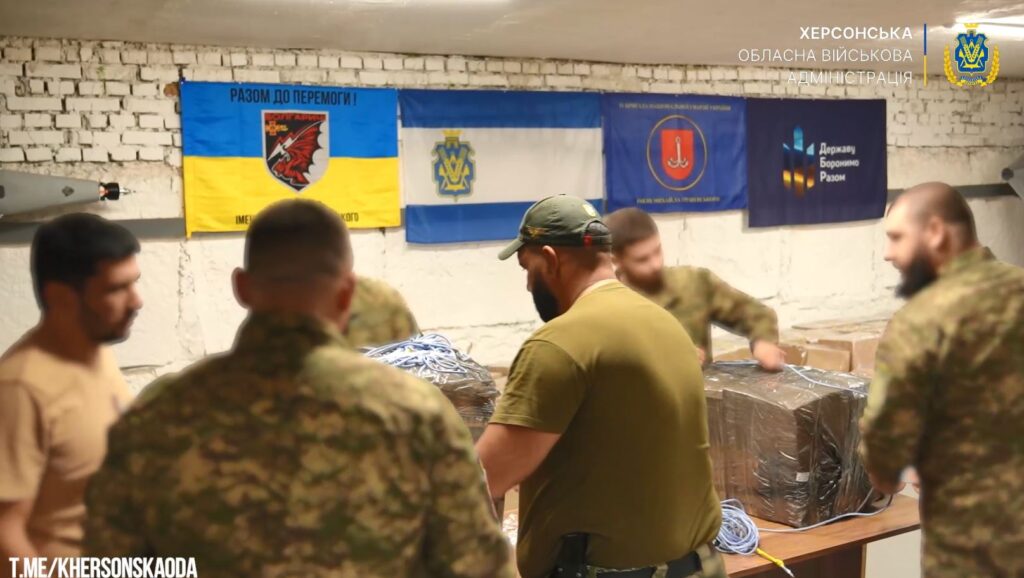
The Justice Department alleges that this was false. The Russian owners allegedly continued to make significant company decisions, set Reiber’s compensation, control payments and retain signatory authority over bank accounts after their names were removed from public corporate filings.

Russian software development allegedly concealed

The complaint says the same five Russian nationals also owned a Russian company founded by Davydov in 2000, previously known as Oxygen Software and now called MKO Systems.

According to the affidavit, the Russian company developed the software used by Oxygen Forensics, with developers working in Russia under Davydov’s direction. MKO Systems also sold its software in Russia under different product names to customers that reportedly included the Federal Security Service (FSB), the Russian Investigative Committee and the Russian Ministry of Internal Affairs.

After the US expanded sanctions against Russia in 2022 following Russia’s full-scale invasion of Ukraine, the Russian owners allegedly agreed with Reiber to conceal both the company’s ownership and its Russian development operations.
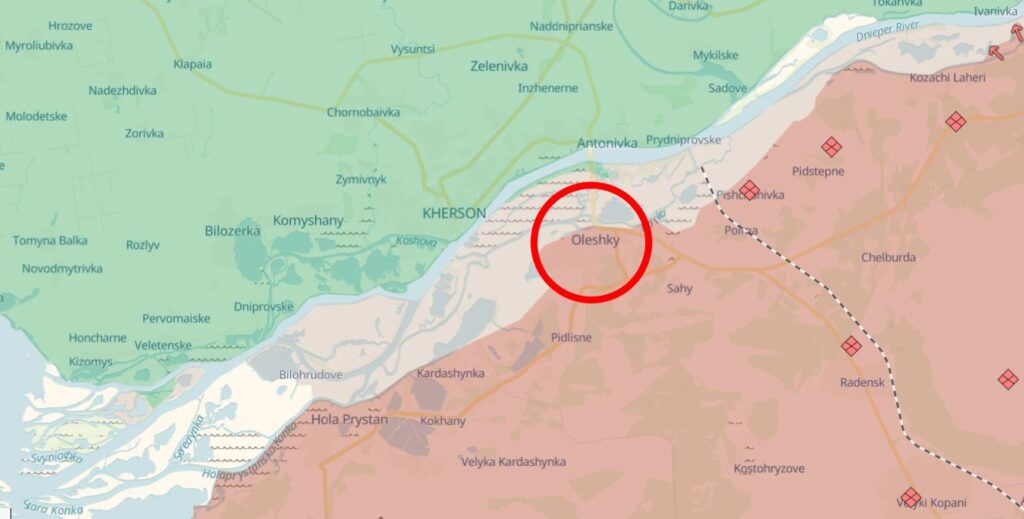
Reiber was installed as CEO, president and chairman in March 2022, while the Russian owners were removed from the company’s public filings, according to the Justice Department.

The complaint alleges that the arrangement did not end the Russian owners’ control. One of them was later appointed to the company’s board using a Turkish identity, according to the affidavit.

OSINT investigators had traced Russian software links

Militarnyi separately reported that OSINT investigators from InformNapalm had previously traced corporate and technological links between Oxygen Forensics and Russia’s Oxygen Software, now known as MKO Systems.

According to Militarnyi, the Russian company’s products were supplied to Russian security and law-enforcement agencies, including the FSB and Ministry of Internal Affairs. The investigation traced a common corporate and technological origin between the Russian and US software ecosystems.

CEO allegedly denied Russian involvement

The Justice Department says Reiber repeatedly certified to US authorities that the company had no foreign ownership or control.

In March 2026, he allegedly told DHS personnel that no Russian was involved in developing Oxygen Forensics’ software and that no one in Russia had access to its development environment. Days later, he published a statement saying the company had no development presence in any restricted jurisdiction.

The complaint alleges that the software was in fact written and managed by a team in Russia, using a cloud environment administered by one of the Russian owners.

The affidavit also describes a November 2023 exchange in which Reiber allegedly told the Russian owners that public reporting about the company’s Russian connections could jeopardize a pending US government contract.

Arrests and seizures

Reiber was arrested in Idaho on 20 September and released on bond after appearing in federal court. Davydov was arrested the same day at London Heathrow Airport before boarding a flight to Istanbul. The US says it will seek his extradition.

Separately, a federal judge authorized the seizure of Oxygen Forensics’ corporate bank accounts, around 57 domains and other cyber infrastructure allegedly used in the scheme. The domains and related infrastructure were seized on 20 September.

The case is being investigated by the US Department of Commerce’s Bureau of Industry and Security, with assistance from the Department of War Office of Inspector General’s Defense Criminal Investigative Service.

Each could face up to 20 years in federal prison if convicted.

  • ✇Euromaidan Press
  • Ukraine put robots where its soldiers used to die clearing mines—and lost none
    Ukraine's Third Army Corps says it became the first military unit in the world to use ground robots for mine clearance inside a live offensive, sending the machines ahead of its infantry into the deadliest sectors to keep soldiers out of the line of fire, Censor.NET reported. The corps built the capability from nothing during its Operation Vivaldi counteroffensive in Donetsk Oblast. Keeping soldiers alive has become the organizing principle of how Ukraine fights, and handing the jobs mo
     

Ukraine put robots where its soldiers used to die clearing mines—and lost none

24 septembre 2026 à 14:04

One of Ukraine's fiber optic-controlled UGVs.

Ukraine's Third Army Corps says it became the first military unit in the world to use ground robots for mine clearance inside a live offensive, sending the machines ahead of its infantry into the deadliest sectors to keep soldiers out of the line of fire, Censor.NET reported. The corps built the capability from nothing during its Operation Vivaldi counteroffensive in Donetsk Oblast.

Keeping soldiers alive has become the organizing principle of how Ukraine fights, and handing the jobs most likely to kill them to ground robots is how an army that refuses to treat its people as expendable defends the line.

Robots cleared 30 km of routes in two nights

On the Shandryholove axis, the robots cleared 30 kilometers of routes in two nights—work that two companies of sappers would have needed a full week to finish. The corps reported no losses among its sappers there. Announcing the operation's second phase, corps commander Brigadier General Andrii Biletskyi said protecting personnel drives how his troops plan and fight:

"People often ask, but what about our losses? My answer: we minimize them by every possible means. In assault operations, drones and ground robots always move ahead of the infantry," he said.

Robots clear most of the mines and mine Russian routes in return

The corps says it built the system from scratch and scaled it from a single squad up to the entire corps, arguing that manual clearing would be impossible across open terrain swept by fire. Ground robots now lift roughly 60% of the anti-personnel mines in its area of responsibility. They also work in reverse, remotely mining Russian advance routes—one crew can lay up to 200 meters a day, cutting off enemy reserves. The same machines carry frontline logistics, evacuating the wounded and hauling in provisions and equipment.

Operation Vivaldi continues in Donetsk Oblast, where the corps recently air-dropped robots behind Russian lines. Its advance has disrupted Russia's plan to encircle the fortified belt of Donetsk cities. In the second phase, the Third Army Corps liberated Shandryholove and Derylove and took full control of Drobysheve. Across the operation's first two phases, it has retaken 125 square kilometers.

  • ✇404 Media
  • This ‘World of Warcraft: Forever’ Mod Blocks All Interactions With Asmongold Fans
    The beta for the hotly anticipated World of Warcraft: Forever has been marred by fans of the streamer Asmongold who have filled the game’s public spaces with spam and slurs. To fix the issue, a player named Solastro created a mod called OlympusMute that hides any chats from players associated with Asmongold’s multiple associated guilds and fandom. Funnily enough, Solastro told 404 Media he used to be a big Asmongold fan too.
     

This ‘World of Warcraft: Forever’ Mod Blocks All Interactions With Asmongold Fans

24 septembre 2026 à 13:46
This ‘World of Warcraft: Forever’ Mod Blocks All Interactions With Asmongold Fans

The beta for the hotly anticipated World of Warcraft: Forever has been marred by fans of the streamer Asmongold who have filled the game’s public spaces with spam and slurs. To fix the issue, a player named Solastro created a mod called OlympusMute that hides any chats from players associated with Asmongold’s multiple associated guilds and fandom. Funnily enough, Solastro told 404 Media he used to be a big Asmongold fan too.

❌