❌

Vue normale

  • ✇Euromaidan Press
  • Ukraine put robots where its soldiers used to die clearing mines—and lost none
    Ukraine's Third Army Corps says it became the first military unit in the world to use ground robots for mine clearance inside a live offensive, sending the machines ahead of its infantry into the deadliest sectors to keep soldiers out of the line of fire, Censor.NET reported. The corps built the capability from nothing during its Operation Vivaldi counteroffensive in Donetsk Oblast. Keeping soldiers alive has become the organizing principle of how Ukraine fights, and handing the jobs mo
     

Ukraine put robots where its soldiers used to die clearing mines—and lost none

24 septembre 2026 à 14:04

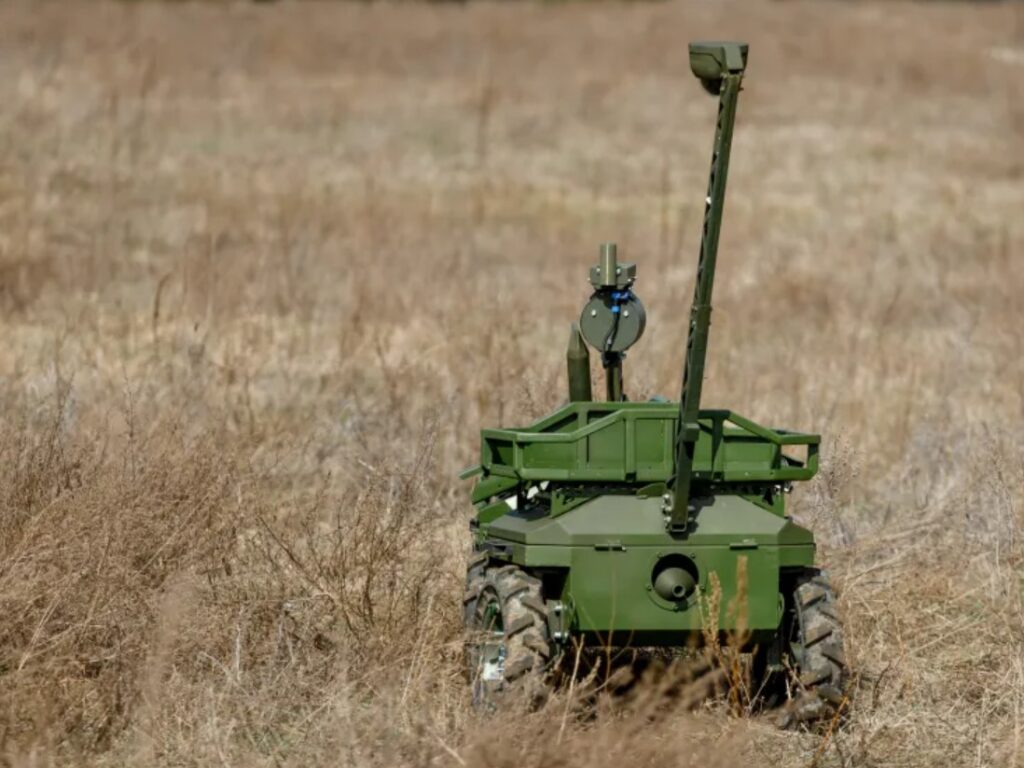
One of Ukraine's fiber optic-controlled UGVs.

Ukraine's Third Army Corps says it became the first military unit in the world to use ground robots for mine clearance inside a live offensive, sending the machines ahead of its infantry into the deadliest sectors to keep soldiers out of the line of fire, Censor.NET reported. The corps built the capability from nothing during its Operation Vivaldi counteroffensive in Donetsk Oblast.

Keeping soldiers alive has become the organizing principle of how Ukraine fights, and handing the jobs most likely to kill them to ground robots is how an army that refuses to treat its people as expendable defends the line.

Robots cleared 30 km of routes in two nights

On the Shandryholove axis, the robots cleared 30 kilometers of routes in two nights—work that two companies of sappers would have needed a full week to finish. The corps reported no losses among its sappers there. Announcing the operation's second phase, corps commander Brigadier General Andrii Biletskyi said protecting personnel drives how his troops plan and fight:

"People often ask, but what about our losses? My answer: we minimize them by every possible means. In assault operations, drones and ground robots always move ahead of the infantry," he said.

Robots clear most of the mines and mine Russian routes in return

The corps says it built the system from scratch and scaled it from a single squad up to the entire corps, arguing that manual clearing would be impossible across open terrain swept by fire. Ground robots now lift roughly 60% of the anti-personnel mines in its area of responsibility. They also work in reverse, remotely mining Russian advance routes—one crew can lay up to 200 meters a day, cutting off enemy reserves. The same machines carry frontline logistics, evacuating the wounded and hauling in provisions and equipment.

Operation Vivaldi continues in Donetsk Oblast, where the corps recently air-dropped robots behind Russian lines. Its advance has disrupted Russia's plan to encircle the fortified belt of Donetsk cities. In the second phase, the Third Army Corps liberated Shandryholove and Derylove and took full control of Drobysheve. Across the operation's first two phases, it has retaken 125 square kilometers.

Ukraine’s Donetsk counteroffensive wins not by force but by stealth: it gathers troops under Russian nose and seizes two villages before they react

22 septembre 2026 à 13:30

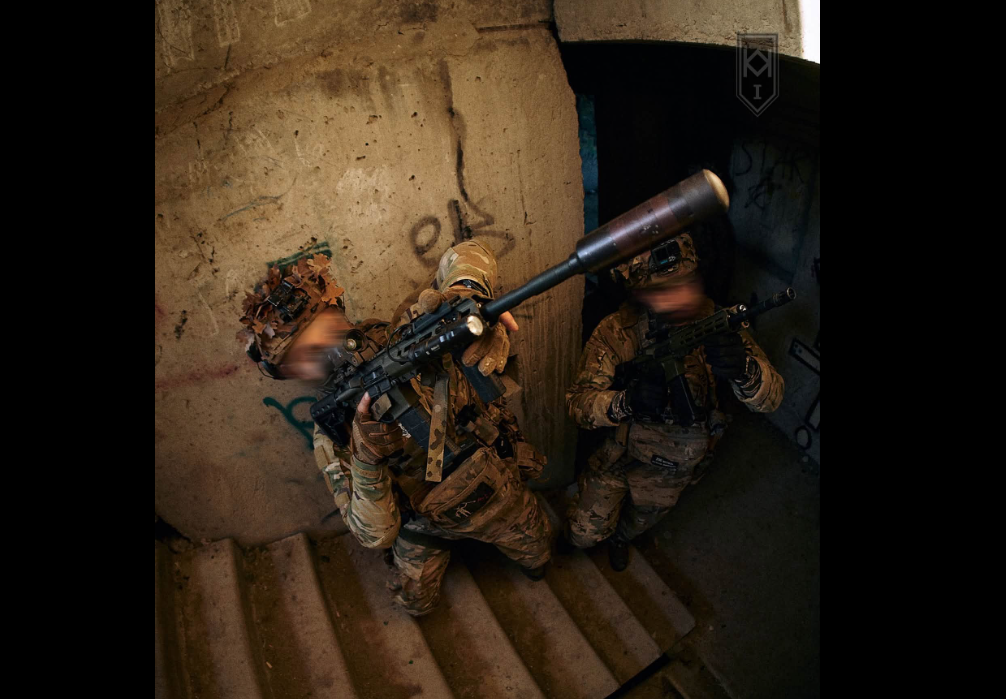
Ukrainian soldiers. Source: The Third Separate Assault Brigade of the Ukrainian Ground Forces

Ukrainian troops gathered for an assault on two Russian-held villages, and the Russians never saw them coming. A captain of the 60th Mechanized Brigade, with the callsign Akhmet, says the concealed buildup near Derylove and Drobysheve was what allowed his units to take the villages once Operation Vivaldi began, Suspilne reports.

The account fills in how Vivaldi actually takes ground: not by overwhelming force but by concealment, timing, and technology. Only the first phase of the "Operation Vivaldi" counteroffensive, which the Third Army Corps is running near Lyman in northern Donetsk Oblast, has cleared 75 square kilometers of Russian infiltrators and liberated another 10 square kilometers of territory.

Concealment set up the assault

The brigade's task was to free Derylove and take control of Drobysheve. The key, Akhmet says, was accumulating forces as covertly as possible in Drobysheve and on the outskirts of Derylove, so the units could begin exactly on schedule.

The Russians, he believes, failed to spot the buildup because Ukraine had done its reconnaissance well during the planning and preparation. Constant coordination with neighboring units, sharing information, and lending help mattered too. The point was to keep the movement and massing hidden until the appointed hour, so nothing tipped the Russians off before the assault opened.

The captain coordinates the fight

As a battle captain, Akhmet oversaw the tasks set by brigade command and the work of several strands at once: reconnaissance, drones, electronic warfare, and air defense.

"We determine where the enemy sits, we inflict fire damage on Russian soldiers, and we cover our groups on the ground," he said.

The job was to find the Russians, strike them, and shield the assault teams as they moved up.

Timing cleared the infantry's path

The brigade also located where Russian drones were taking off and hit those launch points at set times, to keep enemy operators from scouting and firing on the Ukrainian troops working below. Getting the timing right was the whole point, Akhmet explains, so the infantry could move to its positions and reach cover without being caught in the open.

The two villages were a piece of a larger aim: the Institute for the Study of War has assessed that Vivaldi disrupted Russia's plan to encircle the fortified belt of Donetsk cities.

❌