
 Connexion
ISW connects drone crashes in Moldova and Romania, a Starlink fire in Poland, and a Berlin airport shutdown into one Russian pattern
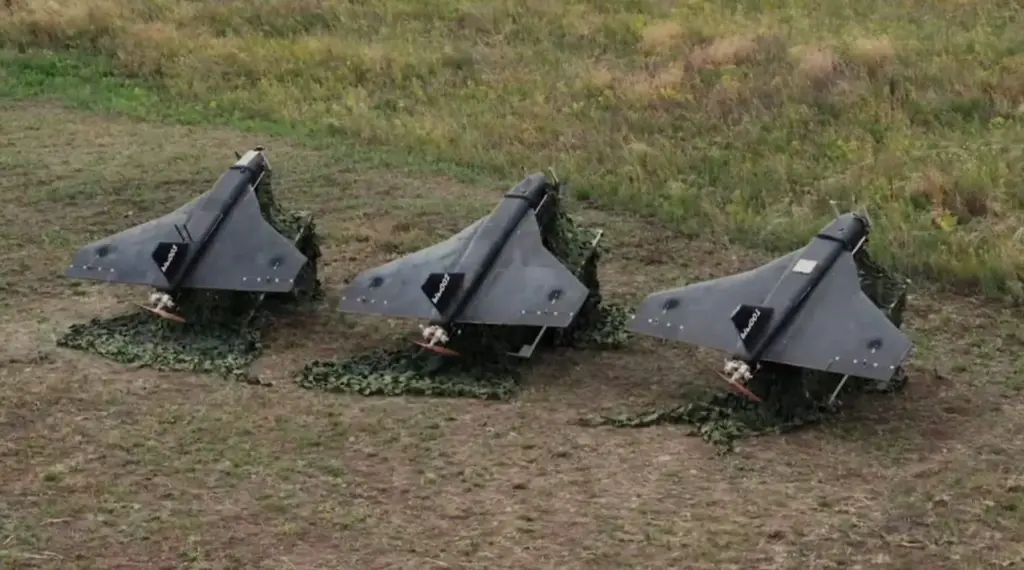
Several recent incidents across Europe were conducted by Russia or are likely attributable to Russia, ISW assessed in its 24 September report, though authorities have not officially linked the Polish and German incidents to Moscow.
Russia's full-scale war against Ukraine has expanded into a parallel campaign of provocations against European defense and logistical infrastructure. The Kremlin is using drones, arson, and undersea cable sabotage to degrade Europe's will and ability to support Ukraine, while deliberately intensifying the frequency of airspace violations to erode the boundary between hybrid and kinetic war.
Drones over Moldova and Romania
Four Russian drones flew over Bukovyna and targeted an energy facility and border crossings with Moldova and Romania, Chernivtsi Oblast Military Administration head Ruslan Osypenko reported. Ukrainian forces shot down three. The fourth flew toward Suceava County in northeastern Romania.
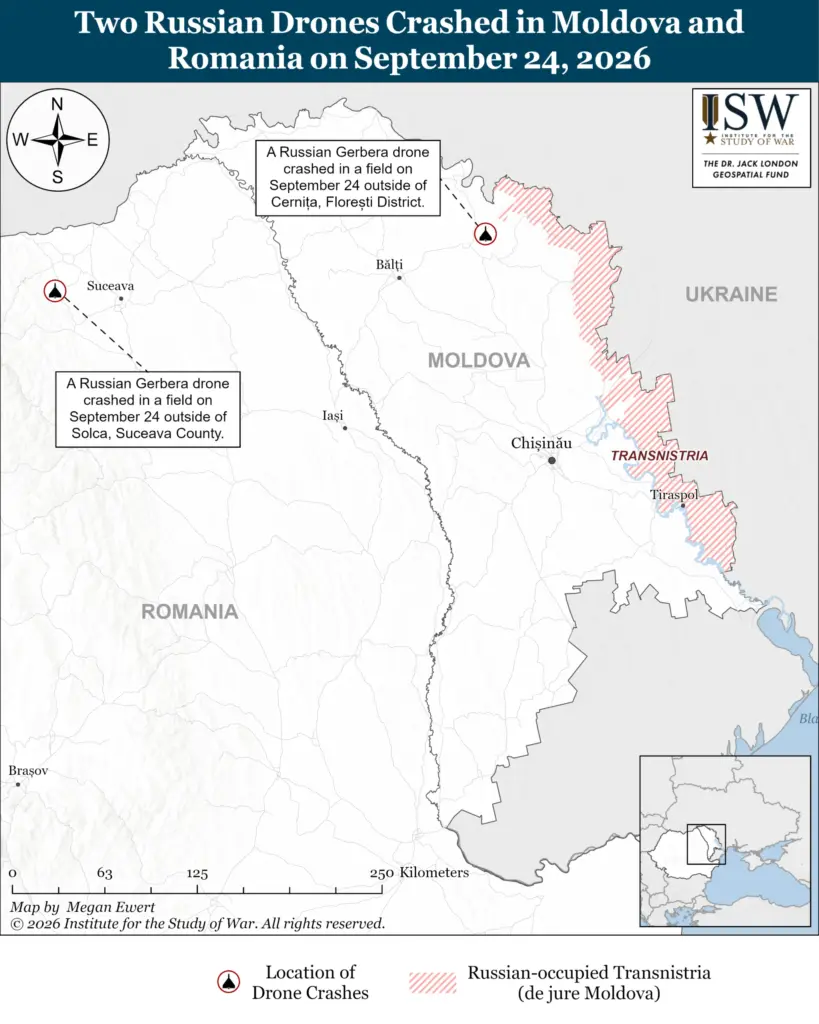
A drone crashed in Cernița, Florești district, Moldova—preliminarily identified as a Russian Gerbera type, the first such device found in the country. It carried an onboard camera, hit a tree, and exploded, Moldovan police said. Romania's Defense Ministry reported a second aerial vehicle entered Romanian airspace for four minutes and crashed near Solca in the same border region; geolocated footage confirmed it was also a Gerbera, ISW noted. Poland evacuated the Hrubieszów and Dorohusk border crossings for 30 minutes, Prime Minister Donald Tusk said. Three countries were put on alert by a single night of Russian strikes.
"Intentional and accidental Russian drone incursions into NATO and Moldovan airspaces are likely part of the Kremlin's efforts to normalize airspace violations by intensifying their frequency," ISW assessed.
Sabotage in Poland and Germany
A fire engulfed the power system and backup generator at a Starlink ground station in Wola Krobowska, central Poland, on the evening of 23 September. Deputy Prime Minister Krzysztof Gawkowski confirmed it was sabotage aimed at cutting internet access, including for Ukraine's military. Authorities have not identified who was responsible, but the act aligns with Russia's "new" doctrine of attacks, Gawkowski said. The station is now operating normally.
German authorities suspended operations at Berlin-Brandenburg airport for 45 minutes the same evening after staff reported a drone sighting, Die Zeit reported. Federal police could not confirm it. ISW assessed both incidents fit Russia's wider pattern of sabotage against European defense assets, though neither has been officially attributed to Russia.

Western intelligence warnings
A Lithuanian Defense Ministry source reported on 23 September that Russia could launch Gerbera drones from a shipping container in the Mediterranean against Spain, France, and Italy. Danish Defense Intelligence assessed on 24 September that Russia will intensify its hybrid war in coming months, including destructive cyber attacks and sabotage carrying a high risk of casualties, and that there is a low but growing risk of a limited Russian military attack on a NATO border state. It sees no indications of an outright invasion. The CIA reportedly warned Poland that Russia may sabotage underwater cables to disrupt its banking system, according to Newsweek Polska journalists.
NATO tracked and confronted Russian submersibles rehearsing deployment of a new cable-disabling weapon near Svalbard in spring 2026—no cables were damaged, but the operation demonstrated Moscow's intent, Reuters reported. Shadow fleet vessels likely served as drone-launch platforms for incursions into NATO airspace, ISW noted.
"The increasing frequency of such warnings suggests that Western intelligence agencies are picking up indicators that the Kremlin is looking to diversify its platforms and means for conducting attacks against NATO and European states and is considering conducting such attacks," ISW assessed.
ISW said it has not yet seen evidence that Russia has conducted the attacks the warnings describe.
Denmark's assessment—that a limited Russian military strike on a NATO border state could come in the coming months—suggests the boundary between hybrid provocations and military action is narrower than European policy has assumed. ISW's synthesis reframes what governments have treated as separate incidents into one campaign.
Read also
-
Russia may target southern Europe with drones launched from merchant ships—El Mundo
-
Russia could launch limited attacks on NATO in coming months, escalating hybrid warfare without being ready for full-scale conflict, Denmark warns
-
German prosecutors charge Ukrainian and Latvian with “agent activity for sabotage purposes”
"Intentional and accidental Russian drone incursions into NATO and Moldovan airspaces are likely part of the Kremlin's efforts to normalize airspace violations by intensifying their frequency," ISW assessed.
"The increasing frequency of such warnings suggests that Western intelligence agencies are picking up indicators that the Kremlin is looking to diversify its platforms and means for conducting attacks against NATO and European states and is considering conducting such attacks," ISW assessed.
