With a second term, Hakainde Hichilema must navigate relations with the Trump administration, which has sought greater access to the copper-rich nation’s natural resources.
With a second term, Hakainde Hichilema must navigate relations with the Trump administration, which has sought greater access to the copper-rich nation’s natural resources.
The armed group, based in Yemen and backed by Iran, said it had launched missiles near the vital maritime trade route, in a conflict that shows no sign of abating.
The armed group, based in Yemen and backed by Iran, said it had launched missiles near the vital maritime trade route, in a conflict that shows no sign of abating.
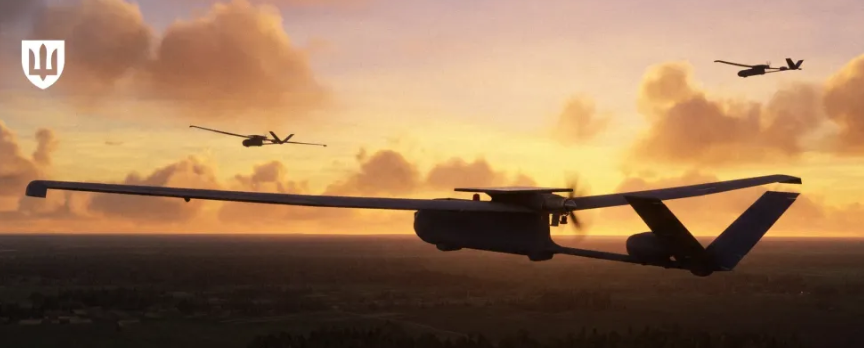
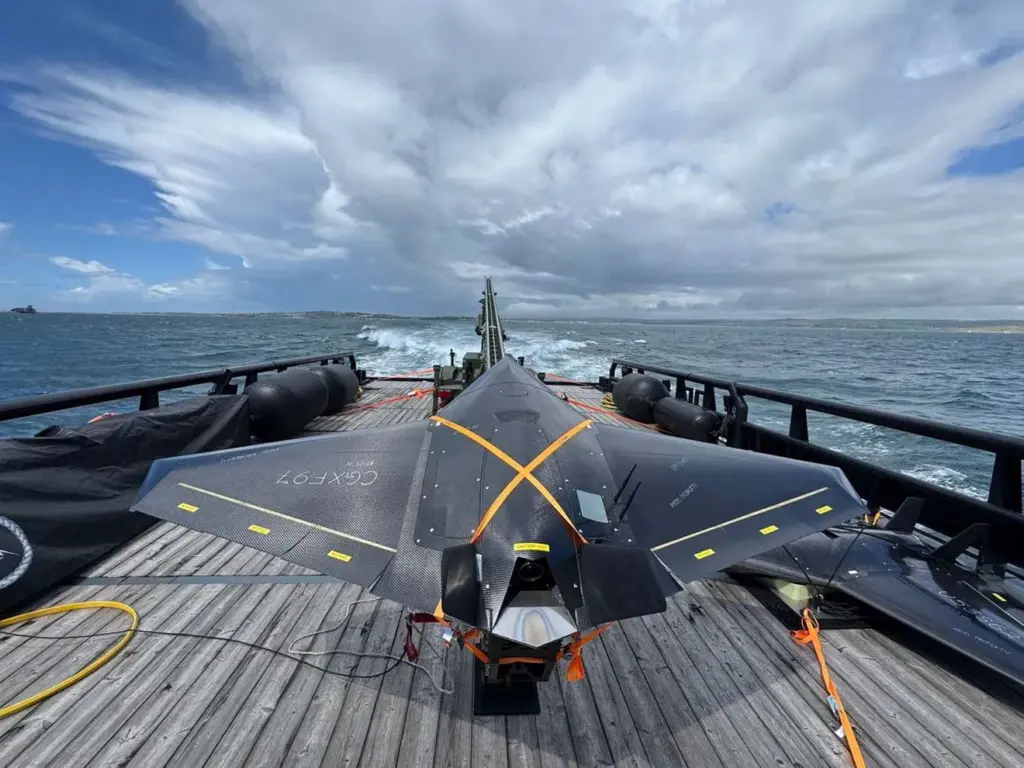
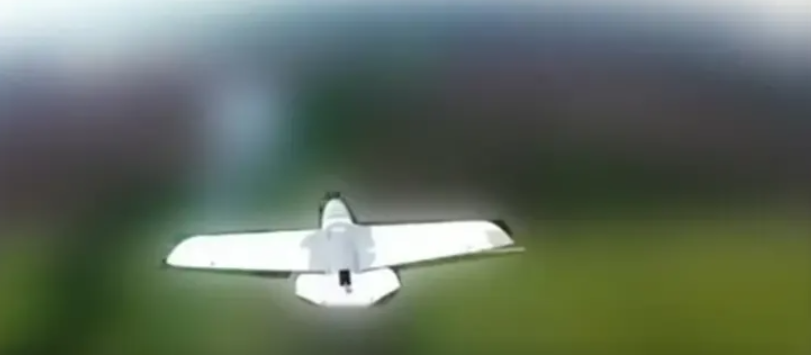
Ukraine has approved a drone built to reach the deepest parts of Russia. Ukraine's Defense Ministry has codified the domestic Dovbush T40 uncrewed aviation complex, a strategic-level drone for deep reconnaissance and precision strikes on distant Russian targets, the ministry announced.
The drone extends the reach of Ukraine's homegrown deep-strike arsenal to Siberia. With a wingspan of nearly 5 meters, the Dovbush T40 has enough range to hit targets beyond the Urals and
Ukraine has approved a drone built to reach the deepest parts of Russia. Ukraine's Defense Ministry has codified the domestic Dovbush T40 uncrewed aviation complex, a strategic-level drone for deep reconnaissance and precision strikes on distant Russian targets, the ministry announced.
The drone extends the reach of Ukraine's homegrown deep-strike arsenal to Siberia. With a wingspan of nearly 5 meters, the Dovbush T40 has enough range to hit targets beyond the Urals and in Russian Siberia.
What the drone does
The Dovbush T40 is a multi-role strategic aircraft. It is designed for deep reconnaissance, fire correction, and precision strikes on structures, equipment, and enemy personnel far from the line of contact.
Its endurance is the enabler. More than a day aloft gives it the range to reach targets, letting Ukraine threaten the deep-rear sites, from factories to airfields, that Russia has kept far from the front for safety.
Its advantages over similar drones
The drone offers several edges, the ministry said. It has ultra-low radar visibility, a high-performance engine with electronic fuel injection, and a choice of strike methods, either as a kamikaze drone or by dropping a munition.
It is built to work under jamming. The Dovbush T40 stands out for high resistance to electronic warfare, according to the Defense Ministry, the recurring requirement for any Ukrainian drone meant to fly deep into a contested electromagnetic environment.
It builds on combat-proven predecessors
The drone comes from a maker with a track record. It was built by a Ukrainian enterprise whose Dovbush T20 and Kotyhoroshko drones have operated on the battlefield since 2022 with some of the highest effectiveness ratings.
The T40 is an evolution of a proven system. The medium-range Dovbush T20, used for reconnaissance, real-time artillery correction, and pinpoint strikes, evolved through battlefield feedback into the longer-range, more powerful T40. It joins a fast-growing domestic fleet: since the start of 2026, Ukraine's Defense Ministry has codified 413 uncrewed systems, almost all of which are Ukrainian-made.
Slovak company STV Machinery has produced the first two prototype hulls for the BMP-1 infantry fighting vehicle after a 36-year break in production. The plant in Dubnica nad Váhom began developing an updated design in 2024, and a contract with an unnamed foreign customer was signed in late 2025, with serial production scheduled for 2026 to 2027.
The Slovak outlet Future Army reported this on 15 August, citing STV Group's director of special projects, Pavel Be
Slovak company STV Machinery has produced the first two prototype hulls for the BMP-1 infantry fighting vehicle after a 36-year break in production. The plant in Dubnica nad Váhom began developing an updated design in 2024, and a contract with an unnamed foreign customer was signed in late 2025, with serial production scheduled for 2026 to 2027.
The Slovak outlet Future Army reported this on 15 August, citing STV Group's director of special projects, Pavel Beran. He said one prototype is being used to test final assembly and the integration of weapons systems, while the second is undergoing physical and stress testing. The company will not disclose the customer's identity, citing security and business-ethics considerations.
Ukraine has a substantial need for armoured vehicles. Its forces already use and modernise the BMP-1, and cooperation with Western manufacturers could help replenish the fleet faster. In 2024, for example, Ukraine and Germany's Rheinmetall agreed to produce the Lynx IFV and to expand defence cooperation.
Digitised BMP-1 project. Photo: STV Machinery
The Slovak plant has returned to BMP-1 production
According to Militarnyi, the new hulls remain outwardly similar to the Soviet BMP-1 design but have been reworked to more modern requirements. STV Machinery revised the design to meet NATO standards for ergonomics and materials, and strengthened the armour using more modern materials.
Future vehicles will offer a choice of powerplant, with Western-made engines among the options. STV Machinery, the Slovak firm, will produce the hulls and other components, after which its Czech sister company STV Group will carry out full assembly and testing.
The exact size of the order is not yet known, though earlier reports suggested production could eventually reach up to 100 hulls a year.
The company has not named the customer. Defense Express suggested as early as December 2025 that it could be Ukraine. One scenario the outlet floated was the supply of hulls or turretless vehicles, which would allow other combat modules to be fitted.
Production of the BMP-1 hull by the Slovak company STV Machinery. 2025. Photo: STV Machinery
Why Slovakia is building the BMP-1 again
The Dubnica nad Váhom plant previously built licensed versions of the BMP-1, known locally as the BVP-1. Serial production there ran until 1989, after which the plant went more than three decades without making new hulls for the vehicle. The site is the same, but the manufacturer is not: the original vehicles came off the ZŤS Dubnica nad Váhom line in the Czechoslovak era, while today's hulls are made by STV Machinery.
At the same time, the BMP-1 remains a vehicle of the 1960s. Even a modernised hull does not change the platform's fundamental limitations, particularly its level of protection. So if Ukraine really is behind the order, it is likely more a way to rapidly increase the number of armoured vehicles than a long-term replacement for modern Western IFVs, Defense Express noted in 2025.
Also Defense Express stressed that the customer's identity remains only speculation, adding that the buyer could turn out to be another country that operates or once operated the BMP-1, and that firmer detail will have to wait for the company.
Russia has built or expanded at least 10 drone bases along its borders with Ukraine and Belarus, creating launch capacity for newer jet-powered attack drones, the most powerful of which could reach Warsaw, The Telegraph reported on 16 August 2026.
The network expands Russia’s capacity for mass drone attacks on Ukraine, while some sites could later threaten NATO. The findings come as Russia is also expanding bases and other military infrastructure along NATO’s northern a
Russia has built or expanded at least 10 drone bases along its borders with Ukraine and Belarus, creating launch capacity for newer jet-powered attack drones, the most powerful of which could reach Warsaw, The Telegraph reported on 16 August 2026.
The network expands Russia’s capacity for mass drone attacks on Ukraine, while some sites could later threaten NATO. The findings come as Russia is also expanding bases and other military infrastructure along NATO’s northern and Baltic borders. The Telegraph found no evidence that Moscow is planning such an attack.
Seven of the 10 sites were used during recent bombardments of Kyiv, tracking data cited by The Telegraph showed. Using leaked documents, satellite imagery, and DroneSec's analysis, the newspaper identified at least 59 launch rails—tracks that launch fixed-wing drones without runways.
Around 20 appeared long enough for Russia’s latest long-range models, while one base could reportedly store over 1,000 drones.
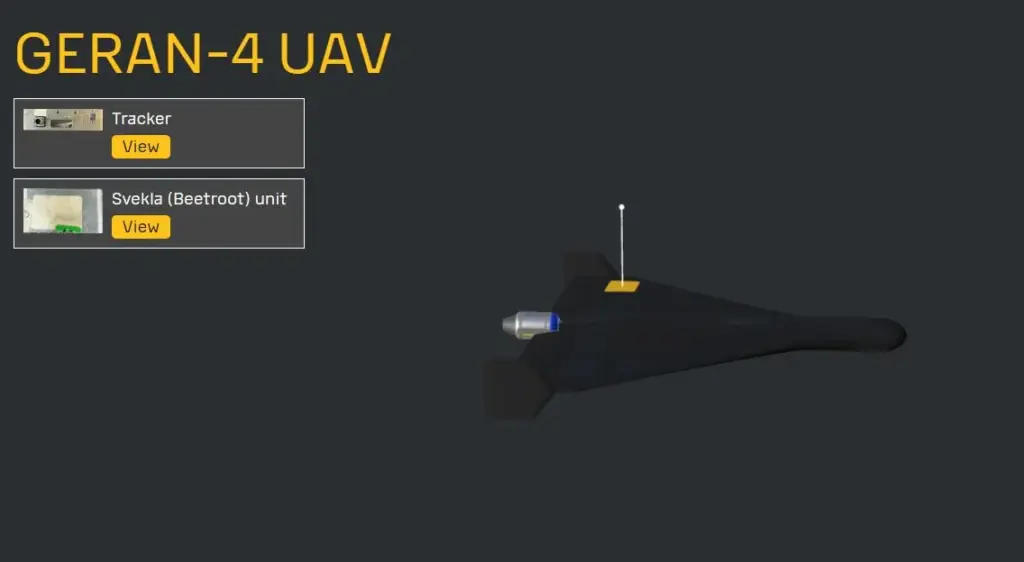
Leaked Ukrainian documents cited by The Telegraph say the jet-powered Geran-4 and Geran-5 can carry 90-kilogram warheads. However, Ukrainian military intelligence puts the Geran-4’s range at up to 450 kilometers, while the larger Geran-5 has a stated range of up to 1,000 kilometers — enough to reach Warsaw from several of the new sites.
DroneSec founder Mike Monnik said expanded launch capacity and harder-to-intercept technology together increase pressure on Ukrainian air defenses.
Russia builds military infrastructure along NATO’s northern flank
Russia is also expanding military infrastructure elsewhere along NATO’s borders. A Nordic-Baltic investigation identified new or expanded infrastructure from Norway to Kaliningrad, with potential capacity for up to 115,000 personnel.
Satellite imagery showed new barracks, ammunition warehouses, and expanded bases near NATO’s northern and Baltic members.
The Institute for the Study of War, a US-based think tank, assessed that the construction likely supports future Russian operations against NATO rather than an imminent attack. Most Russian combat power remains committed to Ukraine, it said.
Other drone hubs support rapid Russian attacks
Russia has already built comparable hubs for attacks on Ukraine. Satellite imagery analyzed by the open-source intelligence group Strategic Aviation of Russia showed 10 additional launchers under construction at Tsymbulova in Oryol Oblast, following the start of work on 22 April 2026.
At occupied Donetsk Airport, the group identified enlarged launch pads, roads to a Geran and Gerbera drone warehouse, and the apparent construction of another storage building.
Ukraine’s Security Service (SBU) said it struck Shahed storage and launch sites at Primorsko-Akhtarsk on 2 August 2025. Ukraine’s Unmanned Systems Forces commander Robert "Madyar" Brovdi reported hitting drone logistics, warhead-storage, and preparation facilities at Donetsk Airport on 30 December 2025.
486 Africans recruited into Russia’s armed forces are dead, while Ukraine is holding 35 citizens from 17 African countries as prisoners of war, Ukraine’s Ministry of Foreign Affairs (MFA) told Ukrainian public broadcaster Suspilne in findings published on 16 August 2026. Its overall tally rose only slightly from May, climbing from 2,965 recruits from 36 countries to at least 2,982 from 37.
Russia’s recruitment in Africa is part of a broader effort to enlist foreigners f
486 Africans recruited into Russia’s armed forces are dead, while Ukraine is holding 35 citizens from 17 African countries as prisoners of war, Ukraine’s Ministry of Foreign Affairs (MFA) told Ukrainian public broadcaster Suspilne in findings published on 16 August 2026. Its overall tally rose only slightly from May, climbing from 2,965 recruits from 36 countries to at least 2,982 from 37.
Russia’s recruitment in Africa is part of a broader effort to enlist foreigners for its war. A joint human-rights investigation found that Russia had recruited at least 27,000 people from more than 130 countries since 2022. The system helps Moscow replenish its forces while shifting battlefield risk onto foreigners, many of whom are drawn in by financial pressure, deception, or coercion.
The largest groups of recruits came from Kenya, Egypt, Cameroon, Ghana, Nigeria, Uganda, Algeria, and Mali, the ministry told Suspilne.
Russia’s wider recruitment pipeline in Africa
Russian security services use a “broad arsenal of manipulative methods,” the Ukrainian MFA said. Recruiters promise civilian jobs, education, high salaries, Russian citizenship, or migration benefits. In many cases, foreigners must sign Russian-language military contracts under threat of deportation or imprisonment.
The FIDH–Truth Hounds–KIBHR report found recruiters using social media and intermediaries to advertise civilian jobs. Of 16 foreign POWs interviewed, 13 said they had been promised they would not fight. Most reached combat positions within weeks.
The human toll on African recruits
Kenyan engineer Francis told journalist Dmytro Karpenko, who interviews prisoners captured while fighting for Russia, that he thought he had accepted a security job. In Russia, he received a military uniform instead. After two weeks of training, he reached the front and was captured.
Ukraine’s response to Russia's recruitment campaign
Ukraine’s diplomatic missions regularly inform African officials about the recruitment of their citizens and run awareness campaigns, according to the ministry.
The MFA and Ukraine’s POW Coordination Headquarters also launched Stop Russian Recruiters, a website that explains recruitment methods, shares victims’ accounts, advises people at risk and their families, and accepts reports about recruiters.
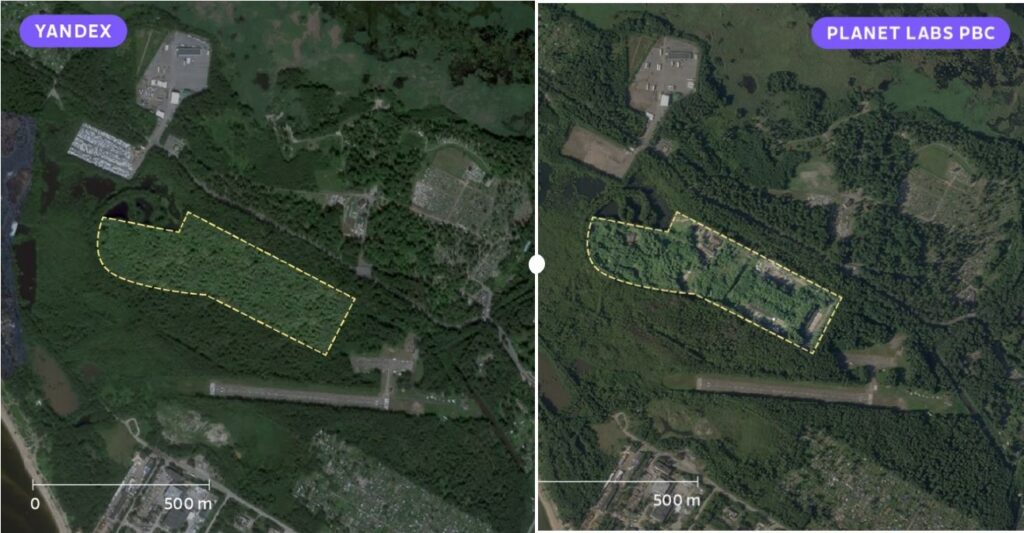
Russia's most-used mapping service has digitally hidden a military missile site near Finland by copying a fake forest over it on satellite imagery, Finnish public broadcaster Yle reported. Western map services still show the same position, and a Finnish military analyst called the concealment careless and self-defeating. The clumsy edit points to Moscow's growing fear of Ukrainian drones.
Ukraine's drones now reach thousands of kilometers into Russia, striking refin
Russia's most-used mapping service has digitally hidden a military missile site near Finland by copying a fake forest over it on satellite imagery, Finnish public broadcaster Yle reported. Western map services still show the same position, and a Finnish military analyst called the concealment careless and self-defeating. The clumsy edit points to Moscow's growing fear of Ukrainian drones.
Ukraine's drones now reach thousands of kilometers into Russia, striking refineries, defense plants, and naval yards once thought safe. That expanding reach has upended Moscow's sense of a protected rear across the war.
What Yandex tried to erase
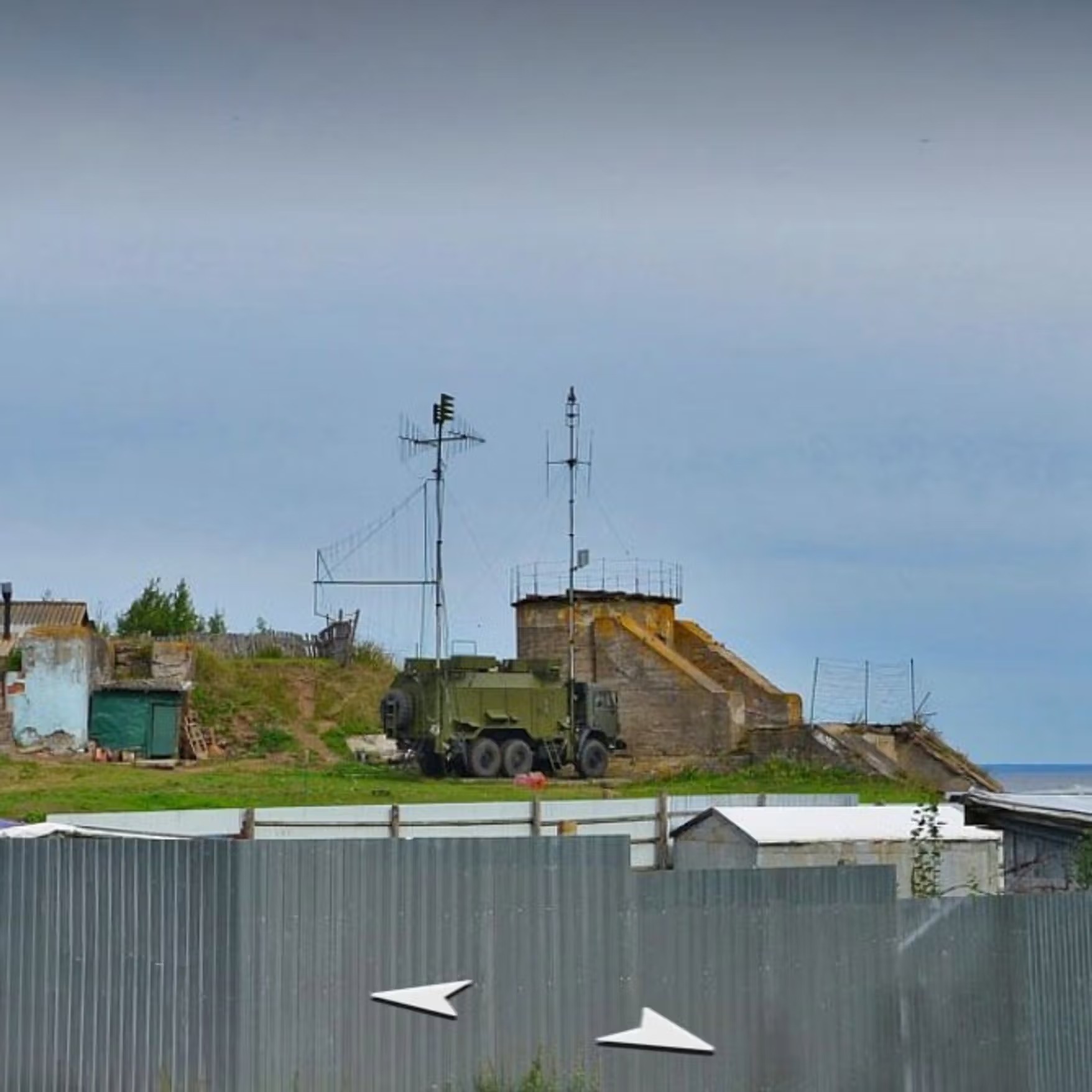
The concealed site sits beside the Kronstadt naval base, on Kotlin Island off St. Petersburg in the Gulf of Finland. Editing software copied trees from another image and laid them over the missile position. Until now, Russia mostly blurred sensitive locations rather than deleting them, but this edit tries to hide the target's existence outright. The same battery still appears on Google, Apple, and Microsoft satellite maps. In the covered zone, Russia has previously kept Bastion anti-ship missiles and their radar and reconnaissance systems.
A screenshot from Yandex's map service showing an electronic warfare base near Kronstadt. Photo: Yandex
A cover-up that gives itself away
Marko Eklund, a military expert and former Finnish intelligence officer, called the secrecy pointless. Western and Ukrainian analysts read their own satellite images, not Yandex, so the edit protects nothing in practice. He believes an administrative order drove it, and that the work was done sloppily. Anyone who knows what to look for can spot the seams and repeating patterns.
Explore further
Kronstadt, Russia’s major naval Base after Black Sea Fleet losses, gets hit by Ukrainian drones (VIDEO)
A pattern set by Ukraine's drones
Russia's map cover-ups have tracked Ukraine's deep strikes. A Moscow court ordered Yandex to mask an oil refinery in Ryazan in 2024 after repeated Ukrainian strikes, and a Nordic-Baltic investigation later counted 119 blurred sites near Russia's northwestern border. Blurring shows up at once, while cloned forest hides the tampering itself.
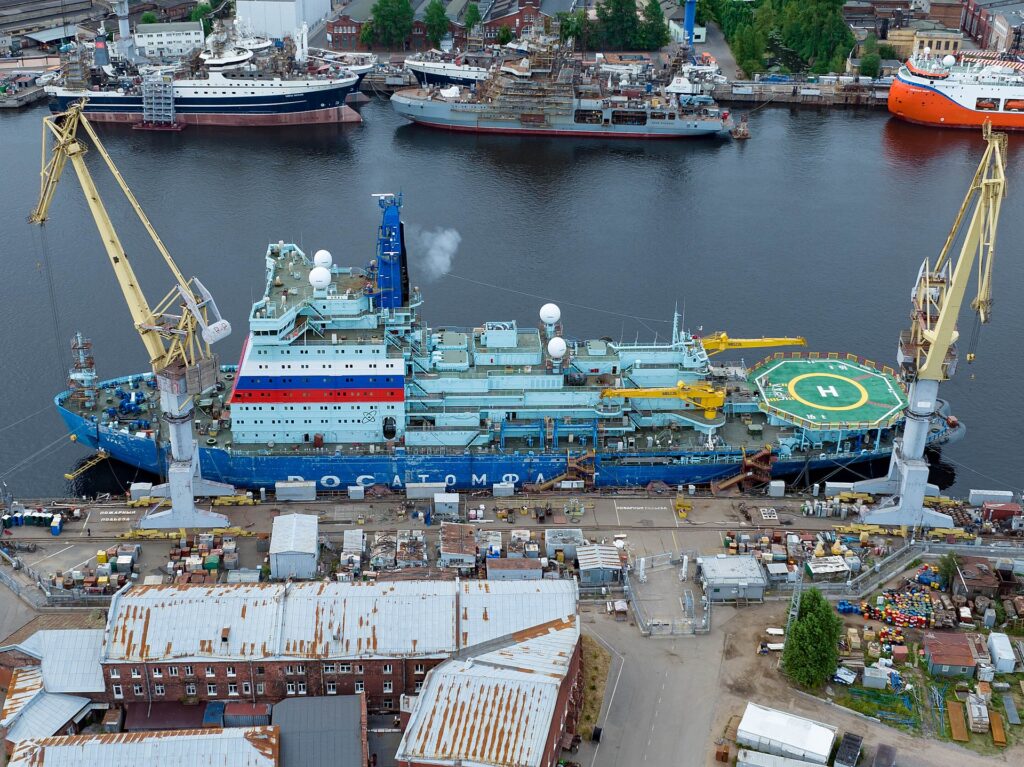
Kronstadt gives Russia one of its main Baltic Fleet bases, and Ukraine's drones have already reached it. In early June, they set a Russian missile corvette ablaze in dry dock there.
Mon Carnet, le podcast · Farah RK : politique, réseaux sociaux, médias et citoyens À l’approche de l’élection présidentielle française de 2027, une transformation s’accélère dans le paysage médiatique. Les responsables politiques ne s’adressent plus uniquement aux grandes chaînes de télévision, aux radios et aux journaux. Ils doivent désormais composer avec une nouvelle génération de […]
Mon Carnet, le podcast · Farah RK : politique, réseaux sociaux, médias et citoyens À l’approche de l’élection présidentielle française de 2027, une transformation s’accélère dans le paysage médiatique. Les responsables politiques ne s’adressent plus uniquement aux grandes chaînes de télévision, aux radios et aux journaux. Ils doivent désormais composer avec une nouvelle génération de […]
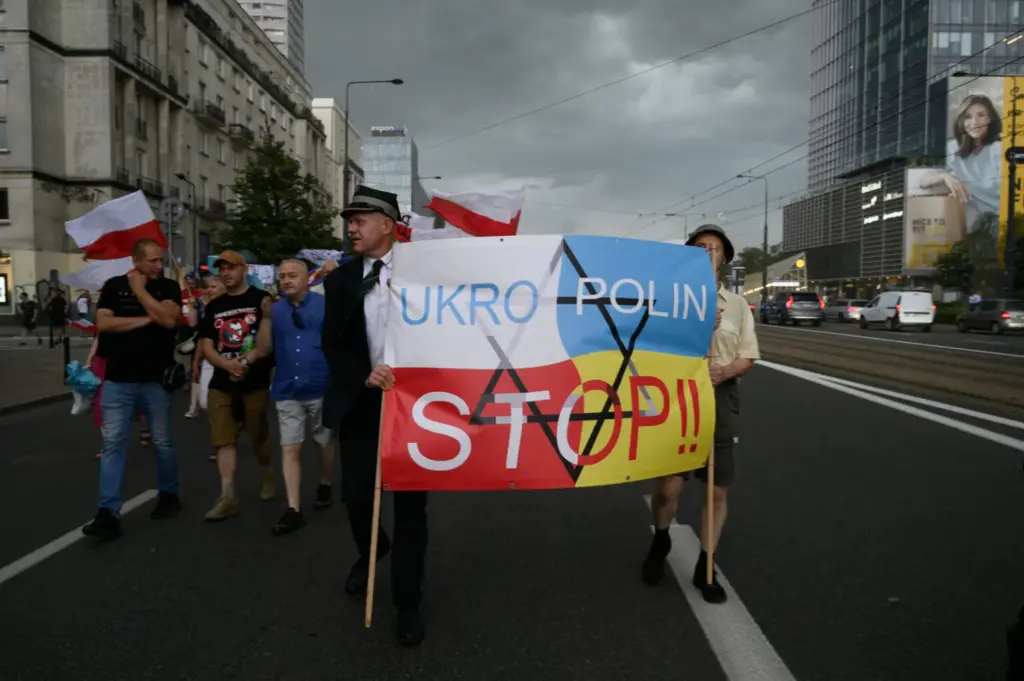
Two adults allegedly attacked a 14-year-old Ukrainian girl and her 12-year-old brother after hearing them speak Ukrainian, Ukraine’s Consulate General in Gdańsk said. The attack occurred on 14 August 2026 in a park near a railway station in Bydgoszcz, north-central Poland.
The case comes amid a documented rise in anti-Ukrainian violence in Poland, with recent attacks reported throughout the country. Recent incidents include attacks on Ukrainians in Poznań and Wrocław, a
Two adults allegedly attacked a 14-year-old Ukrainian girl and her 12-year-old brother after hearing them speak Ukrainian, Ukraine’s Consulate General in Gdańsk said. The attack occurred on 14 August 2026 in a park near a railway station in Bydgoszcz, north-central Poland.
The case comes amid a documented rise in anti-Ukrainian violence in Poland, with recent attacks reported throughout the country. Recent incidents include attacks on Ukrainians in Poznań and Wrocław, as well as on people mistaken for Ukrainians or defending them. Police data obtained by the Polish newspaper Rzeczpospolita showed 180 hate-crime reports involving Ukrainian citizens in the first half of 2026, over 30% more than a year earlier.
The pair, a man and woman with a small dog, shouted obscenities and made nationality-based threats, the consulate said.
“They twisted a child’s arm, broke a toy drone, and threw fragments at the boy,” the Ukrainian consulate said, adding that the fragments scratched him.
The consulate said a complaint had been filed, police were searching for the pair, and the children were physically safe but severely stressed. It urged witnesses to contact the police. Polish police had not commented by the time of publication.
Other attacks on Ukrainians in Poland
The attack on the children came amid a string of assaults on Ukrainians across Polish cities.
Shortly after midnight on 13 August 2026, an intoxicated woman insulted two Ukrainian men, spat at one, and struck one of them outside a restaurant in Poznań, according to Polish media. Police detained her and another woman the following day.
In July, three men allegedly beat a young Ukrainian couple in Wrocław after first asking whether they were Ukrainian. Police detained two suspects and continued searching for the third.
That month, a man in Łódź attacked a passerby he supposedly mistook for a Ukrainian, breaking his nose and jaw. Three men also reportedly beat a 60-year-old Pole who intervened when they harassed a Ukrainian teenager on a Poznań tram.
The deepening Polish-Ukrainian rift and decline in relations
The attacks coincide with a broader decline in Polish-Ukrainian relations. Polish support for accepting Ukrainian refugees fell from 94% in March 2022 to 48% by early 2026, while politicians increasingly use Ukraine as a wedge issue.
Much of the fallout stems from disputes over the Volhynia massacres—the 1943–44 mass killings of Polish civilians by the Ukrainian Insurgent Army (UPA) and Polish retaliatory violence against Ukrainian civilians.
The dispute escalated after President Volodymyr Zelenskyy signed a 26 May decree granting a Ukrainian special forces unit the honorary title “Heroes of the UPA.” Polish President Karol Nawrocki responded on 19 June by stripping Zelenskyy of the Order of the White Eagle, Poland's highest state honor.
Ukrainian forces have used British drones to attack targets inside Russia for the first time, adding two UK-built systems to Kyiv’s arsenal, The Sunday Times reported on 15 August, citing Ukrainian military sources. The newspaper explicitly identified oil refineries in Volgograd and Yaroslavl among the targets struck during the previous six months.
Ukraine still relies mainly on domestically produced drones. But the British systems give Kyiv cheaper weapons that can be
Ukrainian forces have used British drones to attack targets inside Russia for the first time, adding two UK-built systems to Kyiv’s arsenal, The Sunday Timesreported on 15 August, citing Ukrainian military sources. The newspaper explicitly identified oil refineries in Volgograd and Yaroslavl among the targets struck during the previous six months.
Ukraine still relies mainly on domestically produced drones. But the British systems give Kyiv cheaper weapons that can be replenished and launched in volume. They help sustain Kyiv's attacks on Russian oil, logistics, and military targets without running down limited stocks of Western long-range missiles.
The Sunday Times called this a new phase in UK–Ukraine military cooperation. A senior British defense source said the deployments showed London was “not nervous anymore” about Russian pressure.
What British support adds to Ukraine’s homegrown drone force
Britain has supplied Ukraine with two systems with very different ranges. The Nyan, a jet-powered one-way attack drone made by BAE Systems subsidiary Callen-Lenz, can travel more than 150 miles. The second is catapult-launched and has a range above 600 miles; The Sunday Times withheld its manufacturer’s name on security grounds.
Long-range drones typically cost £50,000 to £100,000, compared with more than £750,000 to replace a Storm Shadow missile, the newspaper said. They can also be stockpiled and launched in swarms, helping Ukraine strain Russian air defenses without exhausting finite missile stocks.
The drones extend wider British support. In June, the UK announced funding for 150,000 Ukrainian-produced drones by the end of 2026. Ukrainian forces have also deployed British Rapid Ranger systems against Russian Shaheds and used UK-supplied Storm Shadows inside Russia, protecting Ukraine at home while widening its options across the border.
Ukraine’s deep-strike campaign reaches 52 Russian regions
Across Ukraine’s overall campaign, The Sunday Times reported almost 700 successful deep strikes between January and June. They reached 52 Russian regions and caused more than £35 billion (about $47.3 billion) in economic damage.
A senior Ukrainian military source said the British systems were proving successful. “When we launch them, we always say Slava Ukraini and God save the King,” the source told The Sunday Times.
Former UK Air Marshal Greg Bagwell predicted Moscow would “sabre rattle” and potentially declare British factories legitimate targets. Other defense sources warned of intensified cyberattacks or espionage against the UK.
The Russian leader’s first visit to the disputed Kuril islands has exposed how far ties between Moscow and Tokyo have deteriorated, and why Japan has grown increasingly assertive in expanding its military capabilities. Namita Singh writes
The Russian leader’s first visit to the disputed Kuril islands has exposed how far ties between Moscow and Tokyo have deteriorated, and why Japan has grown increasingly assertive in expanding its military capabilities. Namita Singh writes
Artem Murdid, his mother and his girlfriend are accused of terrorism. They say they did nothing wrong.
Artem Murdid during a trip with friends to a beach on the Sea of Azov in the Zaporizhzhia region in 2019. He says he was tortured into confessing to Russian terrorism charges.
A shooting at a U.S. Consulate has thrust a neighborhood with a troubled past into the center of an emerging criminal phenomenon: young guns for hire as gig workers in the underworld economy.
A shooting at a U.S. Consulate has thrust a neighborhood with a troubled past into the center of an emerging criminal phenomenon: young guns for hire as gig workers in the underworld economy.
Bou Meng, who was imprisoned at the notorious Khmer Rouge interrogation and torture facility Tuol Sleng, in 2009 at the prison, which became a genocide museum.
Ukraine condemns Russia for jailing people on fabricated terrorism charges. Yet, its own security services keep sending Kremlin opponents back to Moscow, human rights defender Borys Zakharov said in an interview with Ukrainian outlet Texty.org.ua.
The handovers are not a relic of a friendlier past. They slowed after Russia's full-scale invasion in 2022, then resumed; the transfers now run through third countries, Zakharov says, and at least one has ridden the prisoner s
Ukraine condemns Russia for jailing people on fabricated terrorism charges. Yet, its own security services keep sending Kremlin opponents back to Moscow, human rights defender Borys Zakharov said in an interview with Ukrainian outlet Texty.org.ua.
The handovers are not a relic of a friendlier past. They slowed after Russia's full-scale invasion in 2022, then resumed; the transfers now run through third countries, Zakharov says, and at least one has ridden the prisoner swaps that bring Ukraine's captured soldiers home. Ukraine is returning the exact people who bet their lives on it; at the moment, it presents itself to the world as the rule-of-law side of this war.
A double standard, few in Kyiv discuss
Zakharov directs the charitable foundation Human and Law, which defends people fleeing authoritarian states. Russia prosecutes captured Ukrainians on invented terrorism charges, and Kyiv rightly calls it a sham. But when Chechens, Ingush, and other North Caucasians ask Ukraine for protection, officials sometimes brand them criminals and send them back—men who often fled two brutal Chechen wars and the crackdowns after them, and some of whom later fought Russia in volunteer units.
"We say: yes, they are criminals. We hand them over to Russia to die," Zakharov said.
International law forbids this. The principle of non-refoulement bars any state from returning a person to a country where they face death, persecution, or torture. Zakharov says Ukraine's migration authorities often skip that risk assessment entirely.
The cases the West never heard about
Take Timur Tumgoev, an Ingush volunteer fighter whom Ukraine extradited in September 2018. A Russian court sentenced him to 18 years on terrorism charges, his defenders call fabricated. Zakharov says he was tortured so badly that he can barely move.
Timur Tumgoev. Photo: North Caucasus Service
Others escaped by luck. Ukraine nearly removed Zelimkhan Belkharoev, a wrestler, in 2016 despite an emergency order from the European Court of Human Rights, Zakharov says; a deputy justice minister intervened in time. Adam Osmayev, a Chechen battalion commander whose wife Amina Okueva was killed in a 2017 assassination attempt, was saved the same way years earlier.
Why did it not stop after 2022
The war did not end the handovers—it rerouted them. Direct extraditions paused; the transfers now run through Belarus, Moldova, and Turkiye, Zakharov says.
Explore further
Russia hunted civilians by drone in Kherson. Victims are suing the US firm they say helped connect the attackers
Zakharov says Zaur Shogentsukov, a Kabardian who crossed from Belarus to join Ukraine's forces, allegedly failed a polygraph test with the Security Service of Ukraine (SBU) and was pushed back into Belarus under a readmission deal. His tortured body later came back to his family in Nalchik, he says.
Alexey Gerasimov, a student from Russia's Chuvash region who reportedly backed his homeland's independence, slipped into Ukraine in 2024 to join the Sibir Battalion, a unit of Russian volunteers. He ended up in one of the large prisoner exchanges that followed the May 2025 Istanbul talks, and Ukraine delivered him to Russia, where he now faces terrorism charges—the independent Russian outlet Verstka reported in an investigation carried by Novaya Gazeta Europe.
Explore further
Russia stops war only for one reason — and Ukrainians feel betrayed that Europe won’t act on it: Human rights expert names it
The most recent case is still unfolding. Aslan Khakimov, a Russian engineer who fled the Federal Security Service (FSB) in 2015 and spent years building robots for Ukraine's army, has sat in a migration facility since April 2026, accused of financing terrorism and facing deportation.
The most recent case is still unfolding. Aslan Khakimov, a Russian engineer who fled the Federal Security Service (FSB) in 2015 and spent years building ground robotic systems for Ukraine's army, entered on forged documents and lived for a decade under a false identity, Ruslan Puptaiev—the illegal stay Ukraine's migration service cites for the deportation order it issued in April 2026. Russia has separately convicted him in absentia of terrorism, a charge his defenders call fabricated. His supporters argue that returning him would be a death sentence.
Ukraine's services frame these as wartime security decisions, and infiltration is a genuine risk. But non-refoulement admits no wartime exception: even a proven spy is not a country's to send to his death.
The money question
Zakharov offers a blunter explanation for at least some cases: money. In the Tumgoev handover, he says, the man's family was quietly invited to outbid Moscow—to top the sum Russian handlers allegedly pay SBU officers for each person delivered.
"Totalitarian regimes spare no money persecuting their opponents," he said.
Ukraine's security service has not confirmed his account, and the allegation rests solely on his testimony.
Russia, for its part, has already shown its games in these exchanges, at times swapping in people with no link to the war. As Kyiv negotiates ever-larger exchanges to free its own soldiers, the same machinery can carry the Russians and Caucasians who fought for Ukraine the other way — a propaganda gift to Moscow and a warning to the next would-be defector that Ukraine's protection may not hold. For a state that anchors its whole cause in the rule of law, that is a debt that keeps compounding.
The Sierra Madre, a Philippine naval ship, in the South China Sea in 2023. Last month, a Chinese Coast Guard vessel began circling the ship and confronted Philippine service members.
More than 100 drones were detected near Romania over the past 96 hours, with NATO fighter jets scrambled seven times in response to the increased aerial activity, Romanian Defense Minister Radu Miruță said, according to Antena 3 CNN.
The figures come as Romania faces a growing number of drone incidents linked to Russia’s war against Ukraine. Romanian forces have recently shifted from monitoring and escorting drones to actively destroying those that enter Romanian airspa
More than 100 drones were detected near Romania over the past 96 hours, with NATO fighter jets scrambled seven times in response to the increased aerial activity, Romanian Defense Minister Radu Miruță said, according to Antena 3 CNN.
The figures come as Romania faces a growing number of drone incidents linked to Russia’s war against Ukraine. Romanian forces have recently shifted from monitoring and escorting drones to actively destroying those that enter Romanian airspace, while NATO aircraft are increasingly being called on to respond to aerial threats along the alliance’s eastern flank.
NATO aircraft repeatedly activated
According to Miruță, Romanian authorities detected more than 100 drones in the vicinity of Romanian territory during the four-day period. NATO fighter jets participating in air-policing missions were activated seven times.
Miruță did not report how many of the detected drones entered Romanian airspace, nor how many were identified as Russian or Ukrainian.
Miruță said most of the drones were destroyed by Ukrainian air defenses outside Romania, but close enough for their debris to reach Romanian shores.
“[Russia’s war in Ukraine] is a real war, with real consequences. That is why we are taking every measure we can to limit the indirect consequences that are also being felt here,” Miruță wrote on Facebook.
The report comes shortly after Romania destroyed two Russian Gerbera-type drones that were found drifting in the Black Sea near the Neptun Deep offshore gas project on 11 August. Romanian military divers carried out controlled detonations after Ukraine confirmed the drones were not Ukrainian.
Romania has begun shooting down drones
The latest figures follow a significant change in Romania’s response to drone incursions.
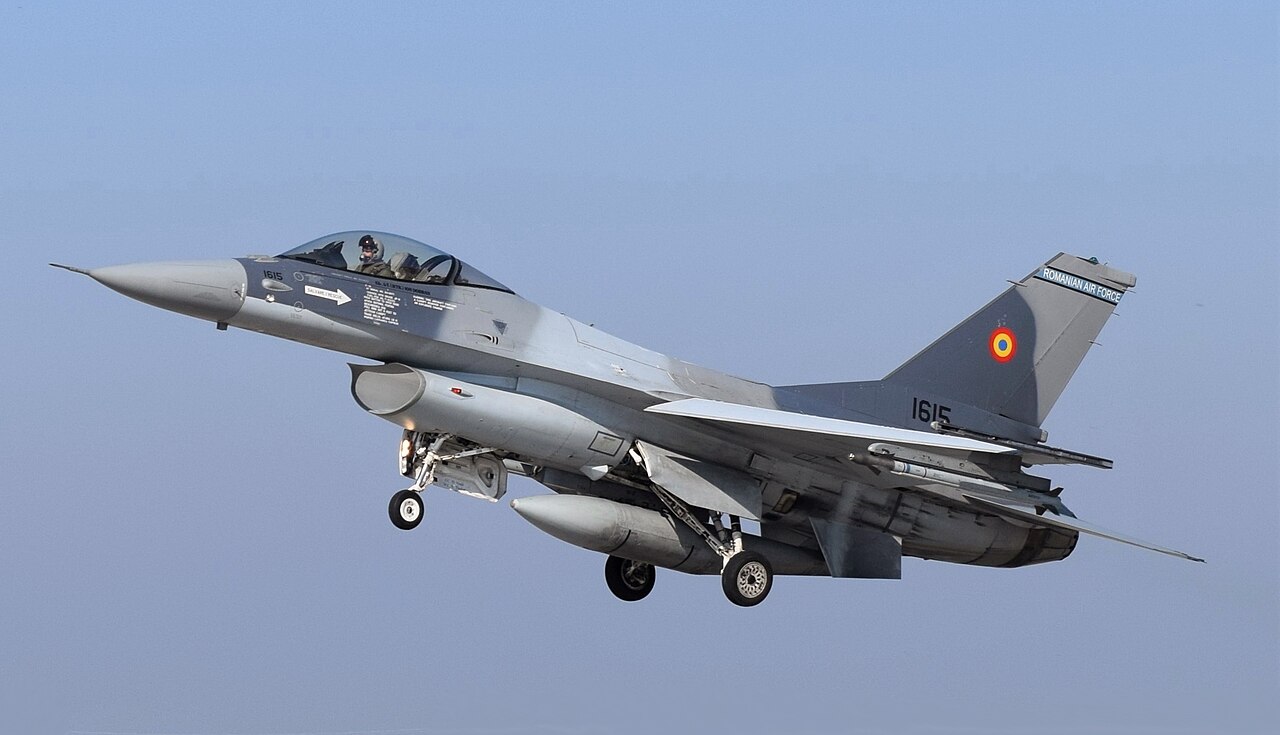
In late July, Romanian F-16s shot down three drones over Romanian territory and territorial waters in three consecutive days. One of the drones was identified as a Russian Shahed-type attack drone, while investigations were conducted into the others.
The July incidents marked a shift from Romania’s previous approach of tracking or escorting drones that crossed into its airspace during Russian attacks on Ukraine. Four of the five drones shot down in EU and NATO countries at that point had been neutralized by Romanian military pilots, according to Miruță.
Romanian President Nicușor Dan called the repeated violations of Romanian airspace “inadmissible and intolerable” and Bucharest prepared a diplomatic protest to Moscow after one of the downed drones was identified as Russian.
Explore further
Romania knocks a third Russian drone from its sky in 72 hours
Drone war reaches beyond Ukraine
Romania has repeatedly dealt with drones crossing its border during Russian attacks on Ukrainian territory, particularly in the vicinity of Ukrainian ports on the Danube and the Black Sea.
In June, a Ukrainian sea drone that had lost control, which Kyiv attributed to Russian electronic warfare, exploded near an oil terminal in the Romanian port of Constanța. No one was injured, but more than 1,000 people were evacuated from the area as a precaution.
The incidents have also extended beyond Romania. On 14 August, NATO fighter jets shot down a foreign drone after it entered Latvian airspace. Latvia said the drone had entered its airspace as a result of Russian electronic warfare activity.
The repeated incidents have made drone activity around NATO’s eastern border an increasingly regular consequence of Russia’s war against Ukraine.
Russia’s Federal Security Service (FSB) plans to abolish special border zones along several boundaries with Ukrainian territories occupied by Russia, according to draft orders reviewed by the Russian outlet Agentstvo.
The proposed changes would remove restrictions that currently treat movement between Russia and occupied parts of Ukraine much like crossing an international border. The FSB says the move follows Russia’s claimed incorporation of the occupied Ukrainian ter
Russia’s Federal Security Service (FSB) plans to abolish special border zones along several boundaries with Ukrainian territories occupied by Russia, according to draft orders reviewed by the Russian outlet Agentstvo.
The proposed changes would remove restrictions that currently treat movement between Russia and occupied parts of Ukraine much like crossing an international border. The FSB says the move follows Russia’s claimed incorporation of the occupied Ukrainian territories into Russia.
FSB seeks to remove border zones
The draft orders, as reported by Ukrainska Pravda, would invalidate previous FSB orders establishing border zones along the boundaries between Russia’s Rostov and Voronezh oblasts and the occupied territories of Ukraine.
A similar change is planned for occupied Crimea, where the current border zone along the boundary with occupied Kherson Oblast would be abolished.
The existing rules effectively impose additional controls on people entering and leaving the occupied territories, making movement subject to procedures similar to those used at Russia’s state border.
In the draft orders, the FSB justifies the changes by referring to the alleged “admission into the Russian Federation” of the occupied parts of Donetsk, Luhansk, and Kherson oblasts.
Russia illegally claimed to annex those territories, along with Zaporizhzhia Oblast, in September 2022. The move has been rejected by Ukraine and the international community, and Russia does not control all of the territory it claims to have annexed.
Border zone would remain around Crimea's islands
The FSB proposal would not completely eliminate the border zone in occupied Crimea.
A restricted zone would remain “within the boundaries of the Black Sea islands belonging to the Russian Federation,” according to the draft. The FSB’s regional directorate would determine where and when people could enter the zone and would install warning signs.
The proposed changes would remove the existing border zones along Russia’s boundaries with occupied Ukrainian territories, while retaining a border zone around certain Black Sea islands in occupied Crimea.
Russia treats occupied territory as part of its territory
The planned changes reflect Moscow’s effort to incorporate occupied Ukrainian territories into Russia’s administrative and legal system.
In September 2022, Russian President Vladimir Putin signed so-called “accession treaties” claiming to incorporate Donetsk, Luhansk, Kherson, and Zaporizhzhia oblasts into Russia. Russia’s parliament subsequently approved the claims.
The treaties purported to define the boundaries of the annexed territories according to the borders they had on the day Russia claimed to admit them into the Russian Federation, despite Russia not controlling the entirety of those regions.
Russia previously used similar measures to formalize its control over occupied Crimea after illegally annexing the peninsula in 2014.
Andrés Manuel López Beltrán, a former president’s son, lashed out at the Trump administration after he said it canceled his visa, another flashpoint in the tense U.S.-Mexico relationship.
Andrés Manuel López Beltrán, a former president’s son, lashed out at the Trump administration after he said it canceled his visa, another flashpoint in the tense U.S.-Mexico relationship.
Andrés Manuel López Beltrán is the son of Mexico’s former president Andrés Manuel López Obrador, who is still a key leader of Morena, Mexico’s dominant political party.
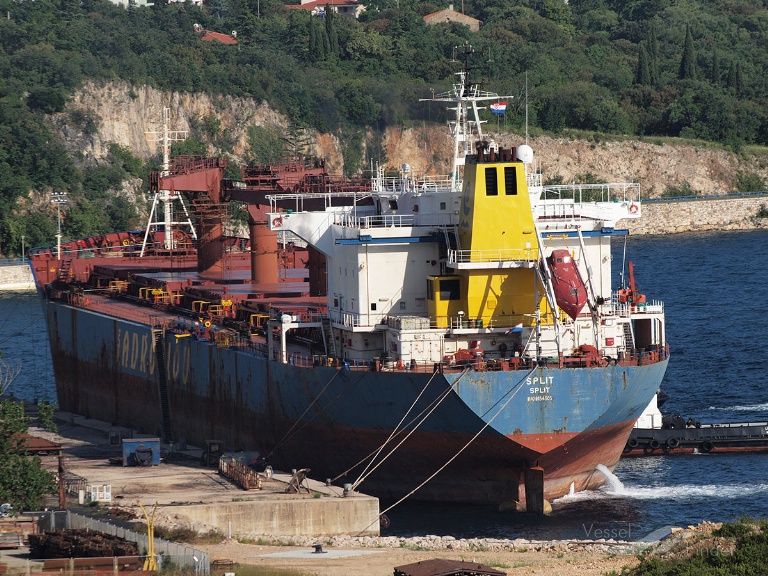
On 14 August, Ukraine's Military Intelligence (HUR) published data on 26 vessels via its War&Sanctions portal, noting that 18 ships face no sanctions from any of Ukraine's partner countries.
The agency said the ships carry Russian oil, liquefied natural gas (LNG), or agricultural products from occupied Ukraine. Euromaidan Press could not independently verify HUR’s vessel records.
Russia relies on maritime trade both to fund its war through energy exports and to s
On 14 August, Ukraine's Military Intelligence (HUR) published data on 26 vessels via its War&Sanctions portal, noting that 18 ships face no sanctions from any of Ukraine's partner countries.
The agency said the ships carry Russian oil, liquefied natural gas (LNG), or agricultural products from occupied Ukraine. Euromaidan Press could not independently verify HUR’s vessel records.
Russia relies on maritime trade both to fund its war through energy exports and to sell crops taken from occupied Ukraine. Kyiv began building a dedicated system against Russia’s shadow grain fleet in April, modeled on its oil-fleet campaign. A US bill introduced this week would also target vessels, owners, insurers, and ports involved in sanctions evasion. HUR’s new list shows how many ships remain outside those restrictions.
Russia’s grain shadow fleet
HUR divided the 26 vessels into three groups:
oil tankers serving Lukoil, Rosneft, Surgutneftegas, Novatek, Tatneft, and Gazprom;
dry-cargo ships using the occupied ports of Berdiansk, Sevastopol, Kerch, and Feodosia;
LNG carriers moving gas from the sanctioned SAAM FSU floating storage unit, which holds LNG from the sanctioned Arctic LNG 2 project.
HUR highlighted three of the 18 vessels that are not facing partner sanctions. The bulk carrier LAMAR S repeatedly loaded wheat at the Avlita terminal in occupied Sevastopol in 2026 for delivery abroad, including to Syria, the agency said.
NAYA FALCON carried baking soda and granulated wheat bran from occupied Sevastopol to Egypt and Cyprus, HUR said. The agency linked the oil tanker GREGAL to UAE-based Cymare Navigation FZC, which it described as affiliated with Sovcomflot, Russia’s state-controlled shipping company.
Russia steals grain while striking Ukraine’s exports
Crops taken from occupied land are sold abroad as Russian produce, while Russia's attacks leave Ukraine’s legitimate harvest with fewer routes to market.
Ukraine’s Foreign Intelligence Service said Russia sold more than 2 million tons of grain from occupied Ukraine as Russian produce in 2025. The agency said ship-to-ship transfers at Kavkaz helped conceal its origin.
Meanwhile, Russian attacks have squeezed Ukraine’s legitimate grain trade. Strikes on civilian ships brought the Black Sea corridor to a near standstill during the July harvest peak. Ten people died when Russian missiles hit the grain-laden Golden Leo on 19 July.
HUR called on Ukraine and its partners to synchronize sanctions and detain vessels that violate restrictions. It said the measures could curb Russia’s maritime logistics and war funding.
France’s Constitutional Council said that the ban was too wide-ranging, and did not take into account the age, maturity or family situation of children.
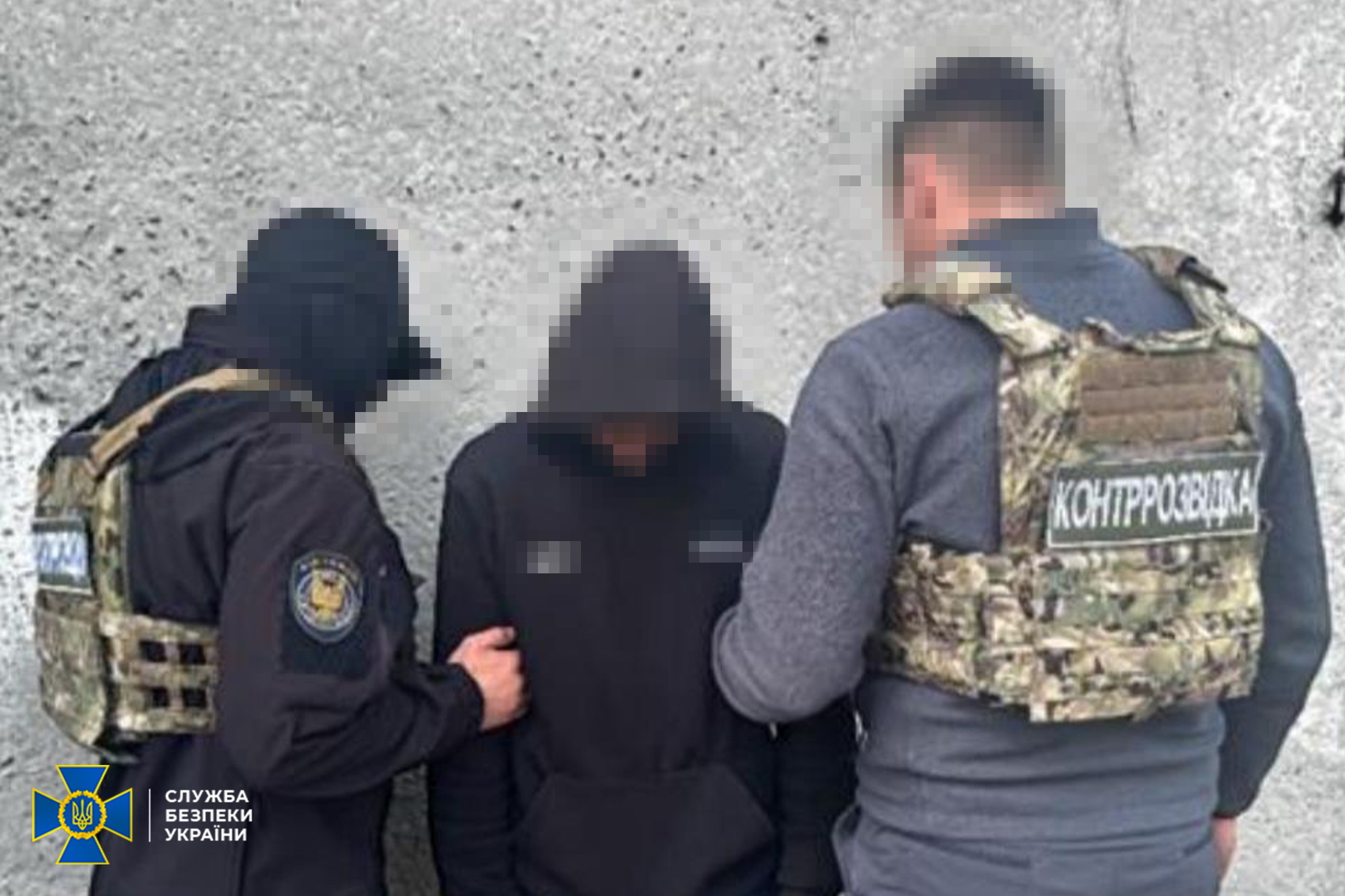
A Kyiv court has sentenced an unemployed man to 15 years in prison with confiscation of his property for carrying out arson attacks on behalf of Russian intelligence, Ukraine's Security Service (SBU) said on 13 August. The man was recruited while looking for "easy money" on Telegram channels and carried out two arson attacks in Kyiv before fleeing to Odesa, the SBU reported.
Russian intelligence increasingly recruits Ukrainians through Telegram for arson and sabotag
A Kyiv court has sentenced an unemployed man to 15 years in prison with confiscation of his property for carrying out arson attacks on behalf of Russian intelligence, Ukraine's Security Service (SBU) said on 13 August. The man was recruited while looking for "easy money" on Telegram channels and carried out two arson attacks in Kyiv before fleeing to Odesa, the SBU reported.
Russian intelligence increasingly recruits Ukrainians through Telegram for arson and sabotage. It targets people seeking quick money and treats them as disposable operatives, paying small sums for a single task and discarding them once they are caught.
The Russian agent carried out two arson attacks
According to the SBU, the man first set fire to a relay cabinet belonging to a railway signaling system. Russia intended the attack to disrupt freight logistics, including supplies to areas near the front.
The agent later burned a volunteer’s SUV used to deliver humanitarian aid and evacuate civilians from areas affected by Russia’s war. He carried out the attacks at night, using a flammable mixture and filming each incident on his smartphone before sending the footage to his Russian handler.
The SBU arrested him in Odesa in July 2025, where he had attempted to hide after carrying out the attacks. Investigators seized his phone, which contained evidence of his cooperation with Russia.
A court found him guilty on two counts — sabotage committed under martial law, and intentional destruction of property by arson — both carried out as part of a group acting on prior conspiracy. He was sentenced to 15 years in prison with confiscation of his property.
Explore further
From “easy money” to murder: Russia escalates recruitment of Ukrainians for terrorist attacks inside Ukraine, police warn
Easy money, hard time: other Telegram recruits jailed too
The case follows several similar convictions. In a May case, an agent received 15 years for burning a railway relay cabinet near a Dnipro station in an attempt to disrupt frontline logistics. The SBU said the unemployed local, recruited through Telegram, filmed the arson and reported it to his handler, then was caught before he could carry out a planned series of attacks on the city's critical infrastructure.
In June 2026, another agent was sentenced to 15 years for preparing to burn an electrical substation in Kropyvnytskyi.
In July, SBU investigators reported that a GRU agent in Zaporizhzhia received 15 years for preparing explosives for Russian-organized attacks.
Russia dismissed the idea of a Black Sea ceasefire on 14 August, Reuters reported, a day after the agency disclosed that Ukraine had proposed a mutual halt to attacks on civilian targets there.
Russian Foreign Ministry spokesperson Maria Zakharova said Moscow saw no grounds for measures that would give Kyiv a temporary reprieve.
Russia’s dismissal comes after its strikes drove shipowners from Odesa as Ukraine’s wheat harvest peaked. More than 90% of Ukraine’s farm e
Russia dismissed the idea of a Black Sea ceasefire on 14 August, Reuters reported, a day after the agency disclosed that Ukraine had proposed a mutual halt to attacks on civilian targets there.
Russian Foreign Ministry spokesperson Maria Zakharova said Moscow saw no grounds for measures that would give Kyiv a temporary reprieve.
Russia’s dismissal comes after its strikes drove shipowners from Odesa as Ukraine’s wheat harvest peaked. More than 90% of Ukraine’s farm exports leave through three deepwater Odesa ports. Reuters reported that Ukraine’s 12 August operation at Novorossiysk targeted a naval base and warships, although nearby grain terminals also suspended operations.
Russian forces, by contrast, have repeatedly struck foreign-flagged ships and Ukrainian port infrastructure. The disruption is stranding Ukrainian crops and raising concerns over global food supplies.
Zakharova accused Ukraine of deliberately destabilizing civilian shipping but did not mention Russia’s attacks, Reuters said. She was responding to Turkish Foreign Minister Hakan Fidan, who said Ankara had proposed a Black Sea moratorium to both sides.
Zakharova also said Moscow had received no formal proposal from Türkiye and ruled out reviving the 2022–23 Black Sea grain deal, calling it one-sided.
Ukraine’s harvest has nowhere to go
Reuters said Ukraine’s grain exports had fallen 76% year on year so far in August. Ukraine’s Agriculture Ministry projects agricultural exports could nearly halve, from 64.4 million to 29.6 million tonnes. It expects silos to fill by October as grain backs up.
World Grain, citing the US Department of Agriculture’s Foreign Agricultural Service, reported that corn exports could fall 39% and wheat exports 26%. The US agency expects unsold corn stocks to rise more than tenfold.
The ministry has asked the EU for €220 million to subsidize farm loans and help producers finance autumn sowing. Reuters separatelyreported, citing unnamed sources in both countries, that Kyiv and Chisinau were discussing a rail route to Romania’s Constanța port. Kyiv estimates it could carry only 10% of Ukrainian grain exports.
Explore further
Ukraine and Moldova discuss rail corridor for grain amid Russian Black Sea attacks
Russia turns ports into targets
After Russia refused to extend the UN- and Türkiye-brokered grain deal in 2023, Ukraine opened its own maritime corridor. It remained operational until this summer’s escalation.
Russian forces repeatedly struck foreign-flagged vessels in July. On 19 July, Russian missiles hit the Guinea-Bissau-flagged, Turkish-owned Golden Leo as it left Odesa carrying corn. The attack killed 10 people, Ukraine’s Navy and Sea Ports Authority said. Ag Bull Trading reported that the attacks brought the corridor to its first full stop since it opened in August 2023.
Russia’s dismissal leaves Ukraine’s corridor officially open while Russian attacks continue to drive shipowners away.
In Moldova, Moscow paid Orthodox priests, conducted a vote-buying scheme and set up training camps on election interference — all in an effort to derail the Western-leaning government.
In Moldova, Moscow paid Orthodox priests, conducted a vote-buying scheme and set up training camps on election interference — all in an effort to derail the Western-leaning government.
Police officers in Chisinau, the Moldovan capital, watching protesters gather outside the electoral commission after the polls closed for parliamentary elections in 2025.
A NATO fighter patrolling Baltic airspace shot down a drone over Latvia early Friday, the Latvian Armed Forces said, in the second Baltic-region drone incursion this week.
The interception happened over Balvi Municipality, near Latvia's borders with Belarus and Russia. Latvian officials said the drone entered the country's airspace after being knocked off course by Russian electronic warfare systems — not as a deliberate strike on Latvian territory. Russia has regularly
A NATO fighter patrolling Baltic airspace shot down a drone over Latvia early Friday, the Latvian Armed Forces said, in the second Baltic-region drone incursion this week.
The interception happened over Balvi Municipality, near Latvia's borders with Belarus and Russia. Latvian officials said the drone entered the country's airspace after being knocked off course by Russian electronic warfare systems — not as a deliberate strike on Latvian territory. Russia has regularly bombarded Ukraine's Baltic-facing neighbors with stray drones since intensifying its own long-range strike campaign, and on 12 August, Romania detonated two Russian drones that washed up near its Black Sea gas field.
Latvian forces reported an "airspace threat" in four districts bordering Belarus and Russia shortly after 04:00, and announced the drone's destruction roughly 30 minutes later. Ieva Bērziņa, a representative of Latvia's Joint Armed Forces Staff, said the crash site had been located but its exact position was not being disclosed, and that debris may be scattered over a wide area because the drone was shot down at high altitude.
The incident coincided with a large-scale drone attack on Russian targets in Leningrad Oblast overnight.
This is not the first time drones have crossed into the Baltic states during Russian strikes on its own territory. In May, a drone that entered from Russia damaged fuel tanks at an oil depot in Rēzekne, about 40 kilometers from the border. Ukrainian Foreign Minister Andrii Sybiha said in March that Russia was deliberately steering Ukrainian drones toward Baltic airspace using electronic warfare, adding that Moscow later uses the resulting incidents in information operations targeting the region.
Latvia is weighing the purchase of Brazilian-made A-29 Super Tucano light attack aircraft for counter-drone missions, funded through more than €1 billion the government has earmarked for stronger air defense.
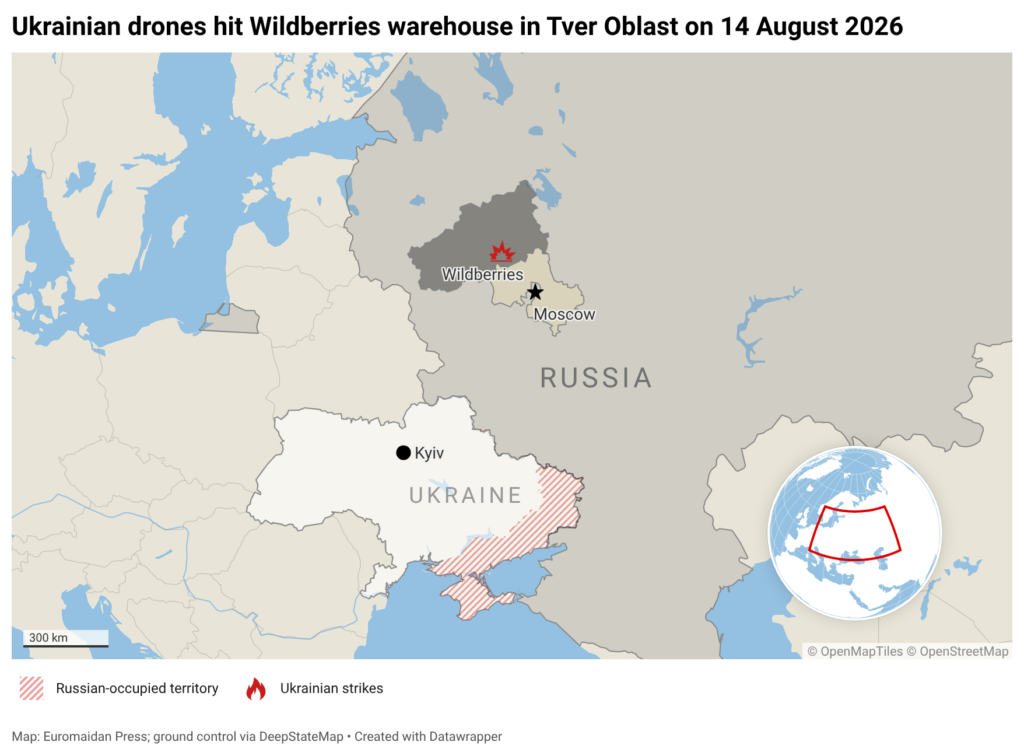
Ukrainian drones struck a Wildberries logistics warehouse in Russia's Tver Oblast overnight into 14 August, damaging a wall for the third time in two weeks, regional governor Vitaly Korolev said. No one was hurt, and Wildberries said the goods stored there survived.
The Emmaus facility, built on a roughly 77,000-square-meter footprint about 150 km from Moscow, has become a fixture in a Ukrainian long-range drone campaign against Wildberries, Russia's largest online reta
Ukrainian drones struck a Wildberries logistics warehouse in Russia's Tver Oblast overnight into 14 August, damaging a wall for the third time in two weeks, regional governor Vitaly Korolev said. No one was hurt, and Wildberries said the goods stored there survived.
The Emmaus facility, built on a roughly 77,000-square-meter footprint about 150 km from Moscow, has become a fixture in a Ukrainian long-range drone campaign against Wildberries, Russia's largest online retailer, now in its fifth week. Since 18 July, Ukraine has hit more than 20 of the company's logistics sites, according to Russian outlet Agentstvo, part of a declared operation President Volodymyr Zelenskyy announced on 25 June to pressure the Kremlin toward ending the war.
What happened in Tver
Korolev said drone debris damaged the wall of the Wildberries warehouse building in the Kalininsky district overnight, and that the resulting smoke was "promptly extinguished." No warehouse staff were injured, he said. Wildberries confirmed "minor damage" to the logistics complex and said the fire's aftermath was "promptly eliminated," adding that "the goods were not affected."
It is the third reported strike on a Wildberries facility in the Emmaus area in under two weeks. Drones first hit the site on 4 August, damaging a wall, and returned on 6 August, damaging the facade — though Tver governor Korolev did not confirm at the time whether the two strikes hit the same building. Ukrainian monitoring channel Supernova+ has said the repeated, inconclusive strikes mean Ukrainian forces are likely to keep coming back until the hub is disabled.
A campaign built on repetition, not precision
The Tver hub is a minor player in a campaign that has concentrated on Wildberries' largest distribution centers — Koledino outside Moscow, Khryastovo in Vladimir Oblast, Oleksin in Tula Oblast — each spanning well over 100,000 square meters and each hit with enough force to halt operations for days. By contrast, all three Tver strikes have caused only minor structural damage with no confirmed disruption to the warehouse's operations.
That gap matters for how the campaign is read. Euromaidan Press has reported that Ukraine has concentrated its drones on roughly two dozen hubs that move most of Wildberries' goods, while hundreds of smaller depots — Tver likely among them — remain largely untouched or only lightly damaged. Measured against the whole network, the physical loss looks modest; measured against the major hubs Ukraine has targeted, more than half are out of action.
The financial pressure has outpaced the physical damage. Wildberries has been scouting storage space in Kazakhstan beyond the reach of Ukrainian drones, and the Kremlin has been weighing state loans to keep the company solvent, at a point when Russia's federal deficit had already outrun the full-year shortfall the Treasury had budgeted. Ukrainian officials and Estonian military intelligence say Wildberries' warehouses store and move military-linked goods, including body armor and drone parts sold on the platform — a claim Wildberries denies.
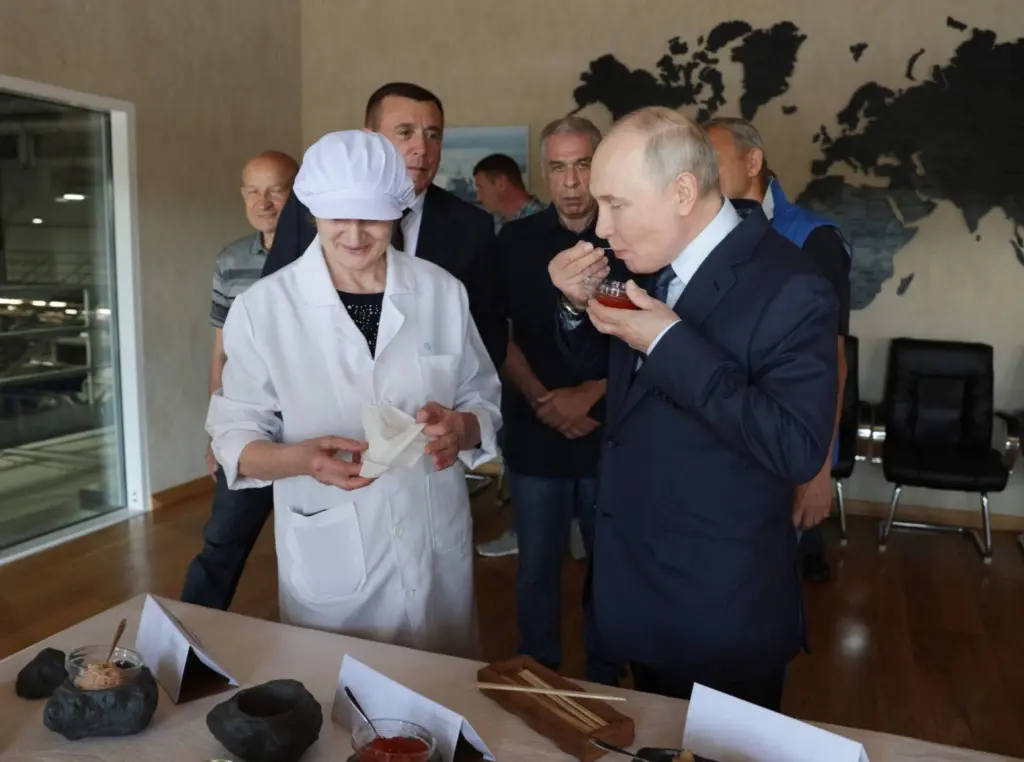
Japan is considering new sanctions on Russia after President Vladimir Putin made his first visit to the disputed Kuril Islands on 13 August, a senior Japanese Foreign Ministry official told reporters, according to Kyodo News.
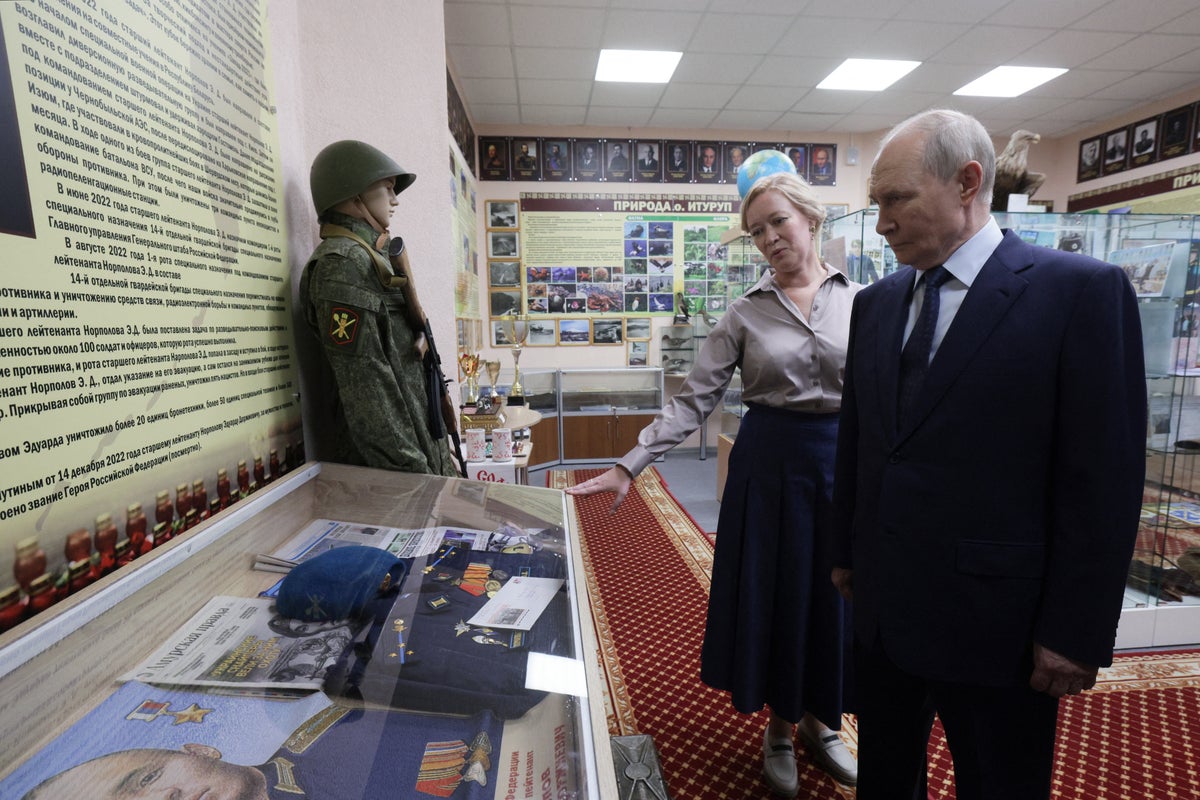
Putin traveled to Iturup — Etorofu in Japanese — the largest of the four Russian-held islands Japan claims as its own, days after overseeing Russian Pacific Fleet exercises in the Far East. It is the first time a Russian president or prime minister
Japan is considering new sanctions on Russia after President Vladimir Putin made his first visit to the disputed Kuril Islands on 13 August, a senior Japanese Foreign Ministry official told reporters, according to Kyodo News.
Putin traveled to Iturup — Etorofu in Japanese — the largest of the four Russian-held islands Japan claims as its own, days after overseeing Russian Pacific Fleet exercises in the Far East. It is the first time a Russian president or prime minister has set foot on the islands. Tokyo summoned Russia's ambassador and lodged a formal protest, calling the visit "totally unacceptable." Prime Minister Sanae Takaichi said the islands are "an inherent part of Japanese territory both historically and under international law."
The Institute for the Study of War assesses that the Kremlin is likely using the visit to deter Japan from adopting a more assertive defense posture, and to discourage EU seizures of Russian shadow-fleet vessels — tying a Pacific island dispute directly to the pressure campaign around Russia's war on Ukraine.
An 80-year-old dispute, reopened on Tokyo's clock
Russia and Japan have never signed a peace treaty ending World War II, entirely because of the Kurils. The Soviet Union seized the four southernmost islands — Iturup, Kunashir, Shikotan, and the Habomai islets — in the war's final weeks, expelling the Japanese residents. Japan calls them the Northern Territories and has never dropped the claim.
Putin's visit lands as Tokyo's posture toward Moscow hardens. Japan's 2026 Defense White Paper, published earlier this month, named Russia as one of the country's principal threats — a paper Putin criticized directly on Wednesday, saying the islands became Russian territory "as a result of World War II" and accusing Japan of imposing "unprovoked sanctions" over what he called the "Ukraine conflict."
The timing cuts against the diplomatic track Tokyo pursued for years. Under former Prime Minister Shinzo Abe, Takaichi's political mentor, Japan met Putin 27 times seeking a peace treaty, and in 2018 the two sides agreed to accelerate talks on a 1956 declaration that would have returned Shikotan and the Habomai islets after a treaty was signed. Russia's full-scale invasion of Ukraine froze those talks in 2022, and Putin's visit closes even the pretense that they might resume soon.
Ukraine has already staked out a position in the dispute: Kyiv's parliament in 2022 recognized the islands as Japanese territory, and President Zelenskyy signed a decree affirming Japan's sovereignty over its "Northern territories" — a reciprocal gesture in the broader alignment between Kyiv and Tokyo against Moscow.
What Japan is weighing
A Foreign Ministry official said only that Tokyo is "considering what step to take going forward," with an additional sanctions package under consideration. No specifics on scope or target have been announced.
The precedent for a symbolic response exists: in 2010, then-President Dmitry Medvedev became the first Russian head of state to visit the islands, traveling to Kunashir — a visit that also drew formal protest without derailing bilateral contact entirely. Putin's visit as president is a harder marker, arriving alongside Russia's sustained war footing rather than a peacetime dispute.
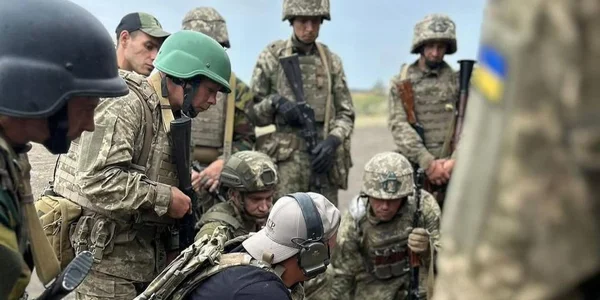
Ukraine’s 425th Separate Assault Regiment Skelia is moving under the operational command of the 1st National Guard Corps Azov, as the Ukrainian military works to consolidate scattered Skelia units under a single command and eventually deploy them on the same section of the front.
The move comes amid scrutiny of Skelia following an investigation into dozens of non-combat deaths among its recruits and ongoing criminal proceedings over alleged abuse. It also forms part of
Ukraine’s 425th Separate Assault Regiment Skelia is moving under the operational command of the 1st National Guard Corps Azov, as the Ukrainian military works to consolidate scattered Skelia units under a single command and eventually deploy them on the same section of the front.
The move comes amid scrutiny of Skelia following an investigation into dozens of non-combat deaths among its recruits and ongoing criminal proceedings over alleged abuse. It also forms part of broader reforms being carried out by newly appointed Commander-in-Chief Mykhailo Drapatyi, who made the decision to place Skelia under Azov’s operational command, according to the regiment.
Oleksii Bratushchak, head of communications for the Skelia regiment, announced the change on 13 August on the YouTube channel “Butusov Plus”. He stressed that Skelia is not becoming part of Azov’s organizational structure. The arrangement concerns operational command, meaning Azov will direct the regiment’s combat employment.
Skelia’s scattered units are being brought together
Bratushchak said Skelia is currently carrying out combat orders under Azov Corps command, although not all of its units have yet been transferred.
The regiment’s units have been spread across several areas and operating under different higher commands. The plan is to gradually bring them together so they can operate on the same part of the front.
Part of Skelia will move to the Dobropillia direction, where Azov Corps is deployed. Other elements remain on their current assignments for now, including the Pokrovsk, Kharkiv, and Kostiantynivka directions.
Bratushchak said Skelia’s command has already met with Azov and established cooperation. He described the decision as one made by Drapatyi and said the regiment views it positively.
The move follows personnel changes that began earlier in August. On 7 August, Ukrainska Pravda reported that Skelia had begun transferring soldiers to around 10 other units, citing sources in the regiment and Ukraine’s Defense Forces.
The regiment confirmed that personnel were being reassigned on orders from higher command, while stressing that its units remained at their positions and continued carrying out combat tasks. The number of troops being transferred was not disclosed.
The move is part of Drapatyi’s ongoing reforms of Ukraine’s armed forces following his appointment as commander-in-chief. In July, the General Staff launched an audit of how personnel are distributed among brigades, regiments, and corps, reflecting Drapatyi’s focus on addressing imbalances in how Ukraine’s forces are manned.
Explore further
Ukraine’s army has some brigades starved of soldiers and others overstaffed. New commander is now auditing why
Skelia remains a separate regiment under Azov’s operational command
The change does not dissolve Skelia or turn it into an Azov unit. The regiment remains a separate military formation, while Azov Corps takes operational control over its forces for combat tasks.
Ukraine has been reorganizing its ground forces around corps-level commands, intended to give commanders greater control over multiple brigades and regiments operating in the same area.
Azov itself is now the core of Ukraine’s 1st National Guard Corps, commanded by Brigadier General Denys Prokopenko, known by his call sign “Redis.” The corps has been operating in the Donetsk region as part of Ukraine’s effort to consolidate forces and command structures on the battlefield.
The backdrop: deaths and abuse allegations inside Skelia
The reorganization comes less than two months after a major investigation into conditions inside Skelia’s training system triggered criminal and institutional investigations.
Babel’s investigation published in June documented 25 non-combat deaths among Skelia recruits between late 2025 and spring 2026, including cases where forensic findings raised questions about reported causes of death. Ukraine’s State Bureau of Investigations opened a criminal case, and Skelia’s commander was suspended pending the investigation.
Skelia confirmed that 25 of the 26 deaths cited in the investigation had occurred but disputed some of the reported circumstances. The regiment has denied that abuse was systemic.
Explore further
Ukraine opened a criminal case over 25 non-combat deaths at its largest assault regiment. Serving soldier’s response was to call reporter “media killer”
The investigation has since produced further legal action. Two Skelia servicemen were placed in pretrial detention in July over allegations of illegally detaining and beating fellow soldiers.
On 11 August, Ukrainian lawmaker Oleksandr Fediyenko said, citing National Police data, that 103 criminal proceedings had been opened in 2026 over non-combat deaths in the regiment, with three people charged and one case sent to court.
The new operational arrangement does not itself indicate a change in the status of those investigations. Skelia’s communications office has said personnel transfers and organizational decisions are matters for higher military command and part of the management of Ukraine’s armed forces during wartime.
Topos Azteca, a Mexican volunteer rescue group that works worldwide and helped after the Sept. 11 attacks, arrived in Colombia after searching for survivors in Venezuela.
Topos Azteca, a Mexican volunteer rescue group that works worldwide and helped after the Sept. 11 attacks, arrived in Colombia after searching for survivors in Venezuela.
A court found Christopher Alan Saunders, the former bishop of Broome, guilty of sexually abusing two men, the Australian Broadcasting Corporation reported.
A court found Christopher Alan Saunders, the former bishop of Broome, guilty of sexually abusing two men, the Australian Broadcasting Corporation reported.
Russia may expand hybrid attacks against Poland and the Baltic states, including infrastructure sabotage or false-flag attacks, Bloomberg reported on 12 August, citing an unnamed European intelligence official.
The warnings come amid concern that Moscow wants to intimidate Ukraine’s supporters. The CIA warning follows Russian threats, incursions, alleged sabotage plots, and disinformation against Poland and the Baltic states. Most Western military aid reaches Ukraine t
Russia may expand hybrid attacks against Poland and the Baltic states, including infrastructure sabotage or false-flag attacks, Bloomberg reported on 12 August, citing an unnamed European intelligence official.
The warnings come amid concern that Moscow wants to intimidate Ukraine’s supporters. The CIA warning follows Russian threats, incursions, alleged sabotage plots, and disinformation against Poland and the Baltic states. Most Western military aid reaches Ukraine through Poland, while the Baltic states rank among Kyiv’s strongest supporters. Sabotage of transport, energy, or communications can slow aid delivery and test NATO while hiding Russia’s role.
Separately, a European government official told Bloomberg that the CIA had warned countries in the region of a possible future Russian attack. The CIA declined to comment.
The same official said Russia might instead be creating the impression of an impending attack to sow fear as part of an information operation. The official saw no signs that Moscow was preparing a conventional attack or invasion.
Moscow tests NATO’s eastern flank
Poland and Lithuania had already raised similar concerns. In July, Poland said it had credible intelligence that Russia was planning new provocations. Lithuania later warned that Moscow might rebuild captured Ukrainian drones for false-flag strikes on critical infrastructure.
In September 2025, between 19 and 23 Russian drones entered Polish airspace, shutting down airports and damaging buildings. Poland closed four airports as NATO aircraft responded.
Meanwhile, five people are on trial in Lithuania over attacks allegedly organized for Russian military intelligence in 2024, Bloomberg reported. Lithuania has reinforced infrastructure sites and deployed troops since June.
These warnings and incidents place the CIA alert within a wider pattern of pressure on NATO’s eastern flank and Ukraine’s supporters.
How Russia strikes without starting a war
Bloomberg cited several recent unexplained drone incidents in Germany alongside the CIA warning. Citing Die Zeit, Euromaidan Press reported that an explosive-laden drone struck the wing of a parked Ukrainian An-124 at Leipzig-Halle airport and failed to detonate. A US Defense Department official in Europe told CNN that Washington assessed the drone belonged to Russian intelligence.
Bloomberg also reported that a cargo plane hit an unidentified object and that drones appeared over a military base the following day. It did not connect either incident to Russia.
More broadly, Russian hybrid operations have grown sharply since the full-scale invasion. CSIS found that attacks in Europe tripled from 2023 to 2024, after quadrupling the previous year. Separately, the US Helsinki Commission mapped nearly 150 operations in NATO territory attributed to or suspected of Russia between February 2022 and November 2024.
Retired Lt. Gen. Ben Hodges told Euromaidan Press in February that attacks on ports, railways, and cables can probe routes needed for NATO reinforcements. Their deniability raises the political cost of responding.
By hiding its role, Moscow can disrupt support for Ukraine and test NATO without openly starting a war.
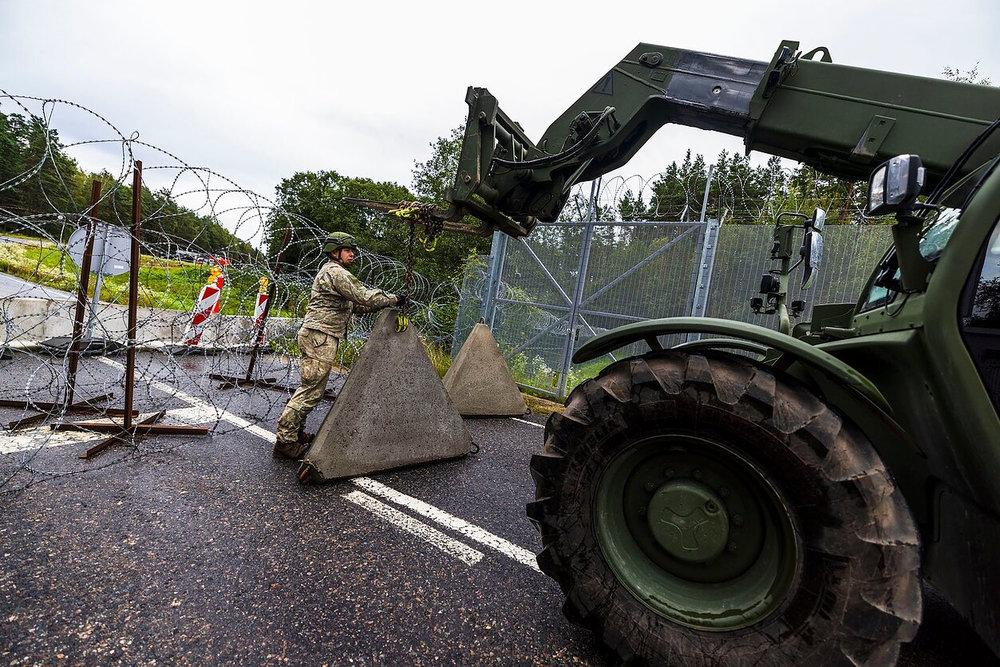
Lithuania's government approved an expanded plan on 12 August to fortify its borders with Russia and Belarus against a possible attack, LRT reports. Lithuania, a Baltic state and NATO member, sits wedged between Russia's Kaliningrad exclave and Belarus. The decision opens a new counter-mobility belt reaching inland from the border, a 20-meter strip that widens to 150 meters where the army marks out areas for operations.
The buildout answers a fear that has gripped the B
Lithuania's government approved an expanded plan on 12 August to fortify its borders with Russia and Belarus against a possible attack, LRT reports. Lithuania, a Baltic state and NATO member, sits wedged between Russia's Kaliningrad exclave and Belarus. The decision opens a new counter-mobility belt reaching inland from the border, a 20-meter strip that widens to 150 meters where the army marks out areas for operations.
The buildout answers a fear that has gripped the Baltics since Russia's full-scale invasion of Ukraine in 2022: that a Russia left unchecked in Ukraine could turn on them next. Western intelligence agencies have warned for years that Moscow could eventually threaten NATO itself, and former CIA director David Petraeus has singled out Lithuania as the likeliest first target, pinned between Kaliningrad and Belarus and sitting beside the Suwałki Gap, the thin land corridor that is NATO's only overland route to the Baltic states.
The decision raises the number of engineering parks, storage depots for obstacles like concrete blocks and roadblocks, from 27 to 50, and gives that work until the end of 2028, more than three years past the original April 2025 target. The state rail company LTG Infra is to store the equipment. The changes could cost an extra €50 million ($58 million) from the State Defense Fund between 2026 and 2030.
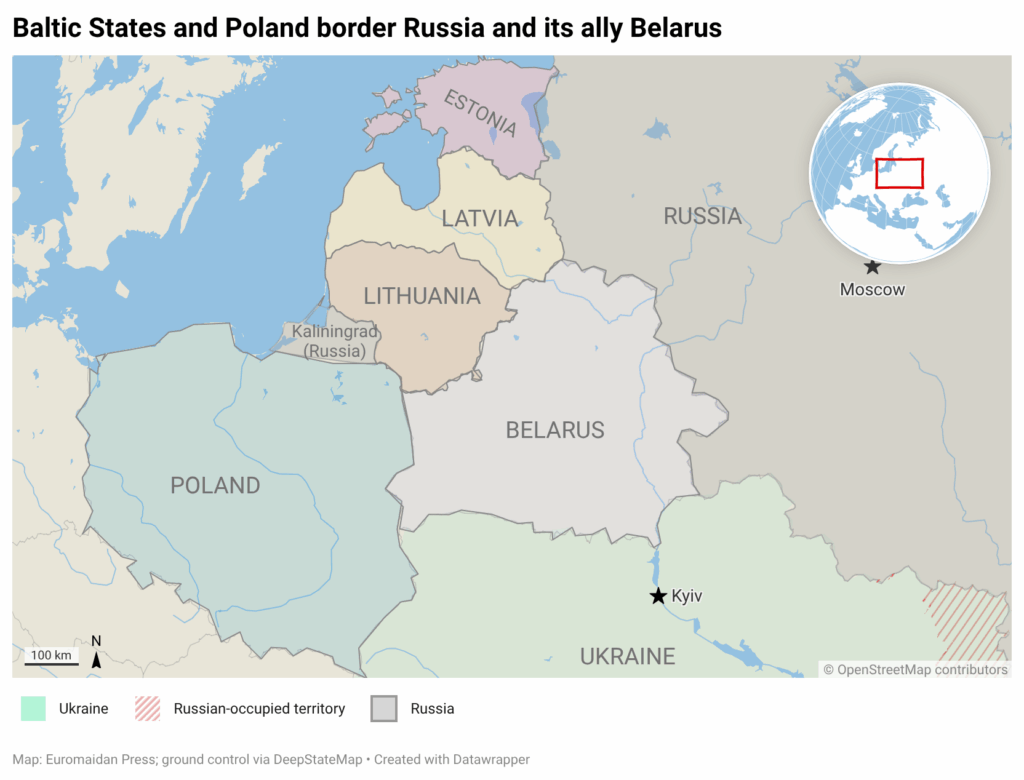
The Baltic region. Map: Euromaidan Press
Of the Baltic states and Poland fortifying their eastern borders, Lithuania is the most at risk yet the least fortified, according to a satellite review by open-source analyst Clément Molin, even as Belarus keeps testing that border with engineered migrant crossings. The plan is Lithuania's share of the Baltic Defense Line, the joint barrier it launched in 2024 with Latvia and Estonia, alongside Poland's parallel East Shield.
The design comes straight from Ukraine. Lithuania began building counter-mobility parks in 2023, drawing on Russia's war against Ukraine, and much of what it is now putting into the ground, the swamps, ditches, and obstacle fields, was tested first on Ukrainian battlefields, where mud, water, and simple barriers have repeatedly stalled armored advances.
The restored swamps should make some ground impassable to heavy military vehicles within a few years, the Defense Ministry says, with that work due by the end of 2030. Plans for defensive ditches and streams in the Marijampolė municipality were dropped, and the ministry found better sites in the Vilkaviškis and Šakiai districts. Deadlines for obstacles on roads and bridge approaches, and for fitting bridges with holders for explosives, were also moved to the end of 2028.
"Military counter-mobility is an important part of Lithuania's defence preparedness," Deputy Defense Minister Tomas Mikelkevičius said. "We seek to make the best possible use of Lithuania's terrain and engineering measures to impede an adversary's movement if necessary and create more favorable conditions for our armed forces to operate."
Lithuania approved its first counter-mobility plan in July 2024. The plan's original 2024 estimate put the full system at around €600 million ($690 million) over the decade.
Russia's pressure on the Baltic borders
The buildout lands amid steady friction along NATO's eastern edge. Latvia has absorbed the bulk of the migrant crossings funneled from Belarus, and this week found its first used smuggling tunnel under the border. Estonia has switched on the first sensors of a planned drone wall along its Russian frontier and is reallocating €500 million ($575 million) toward air defense and long-range strike. Russia, for its part, has shut seven rail crossings with Latvia, Estonia, and Finland without explanation.
The fortification drive is a bet on time. Estonia's military chief has set a two-year clock, warning Russia could be combat-ready again by 2027, and ISW analysts assessed in May that Moscow was manufacturing pretexts for aggression against the Baltics. Poland's parallel East Shield, meanwhile, has gone up far slower than promised, leaving the region's defenses still thin where the threat is judged greatest.
Prime Minister Sanae Takaichi of Japan has been a public critic of Mr. Putin, who has denounced her country’s sanctions against Russia over the Ukraine war.
Prime Minister Sanae Takaichi of Japan has been a public critic of Mr. Putin, who has denounced her country’s sanctions against Russia over the Ukraine war.
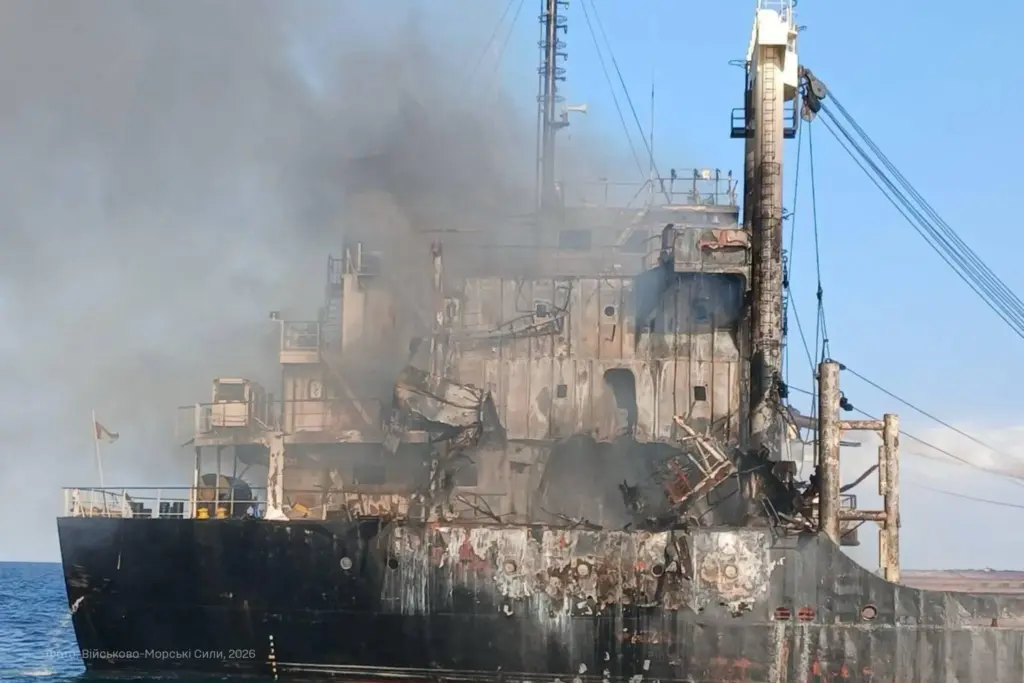
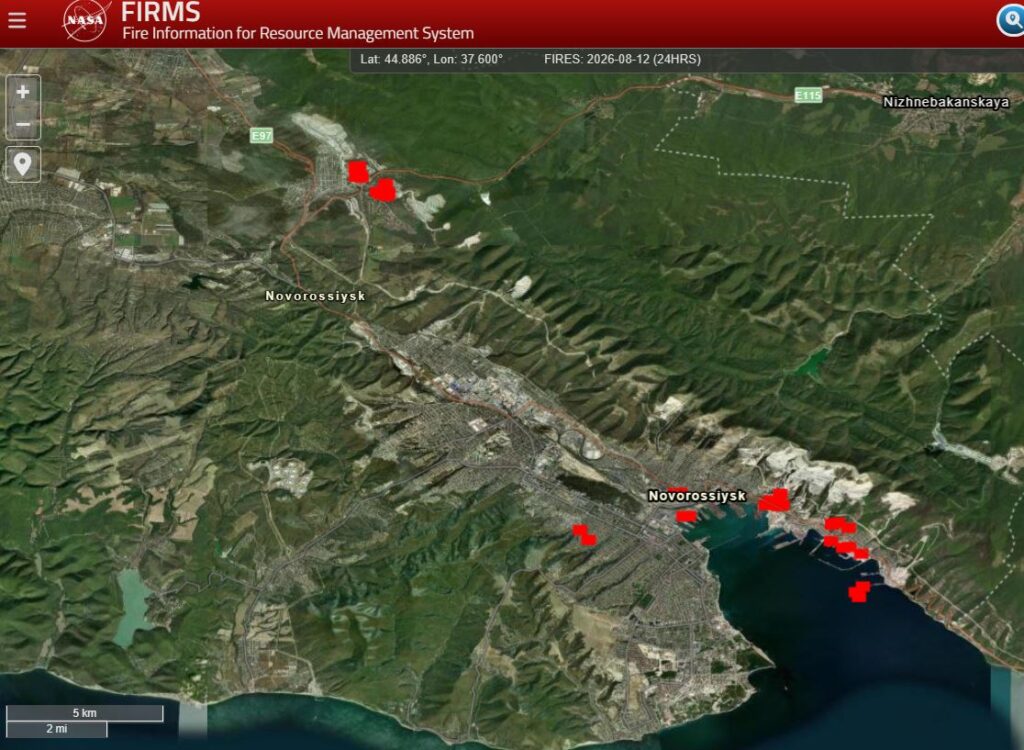
Ukraine struck the Novorossiysk naval base in Russia's Krasnodar Krai overnight on 12 August, and for the first time coordinated more than 15 different strike systems in a single operation, President Volodymyr Zelenskyy said. The package combined Palianytsia jet drones, Neptune anti-ship missiles and naval drones, hitting warships, air defenses and oil infrastructure at the Black Sea Fleet's main base.
Novorossiysk is the refuge Russia's fleet fled to after Ukrainian dr
Ukraine struck the Novorossiysk naval base in Russia's Krasnodar Krai overnight on 12 August, and for the first time coordinated more than 15 different strike systems in a single operation, President Volodymyr Zelenskyy said. The package combined Palianytsia jet drones, Neptune anti-ship missiles and naval drones, hitting warships, air defenses and oil infrastructure at the Black Sea Fleet's main base.
Novorossiysk is the refuge Russia's fleet fled to after Ukrainian drones and missiles pushed it out of occupied Crimea. Reaching its warships there with a mixed salvo — and getting through air defenses that bystander footage showed firing heavily — is the operational read the strike carries, more than any single ship damaged.
The systems and the targets
Zelenskyy named more than a dozen systems that worked together for the first time, from the Palianytsia and Peklo drones to the long-range Neptune and a set of naval drones. He thanked weapons developers for the added reach, framing the coordination itself as the milestone rather than the results.
The Security Service of Ukraine (SBU) confirmed hits on two Kalibr-carrying frigates, the Admiral Essen and Admiral Makarov, and the patrol ship Vasily Bykov. The same strike hit an S-300 radar, a firing position on one of the port's piers, the Sheskharis oil terminal and three of the harbor's berths — a target list wider than the ships alone.
How many ships
The three Ukrainian accounts agree on the two frigates but not on the full tally. The General Staff counted four warships, adding a Buyan-M missile ship to the SBU's three. Zelenskyy separately cited a large landing ship and a corvette among the vessels hit.
Independent analysts who reviewed satellite imagery told The Maritime Executive the damage did not appear catastrophic, with no ships visibly burning or sinking. Ukraine's General Staff said the assessment is still under way.
The fleet's shrinking refuge
The strike extends a campaign that has driven Russia's fleet eastward without Ukraine fielding a navy of its own. Having lost safe basing in Sevastopol, Russia moved its ships more than 300 kilometers from the front — far from Ukraine, but no longer out of reach.
The operation's footprint reached past the base. Russian authorities in Novorossiysk declared a state of emergency and cut water to the port city, and the strike on the Sheskharis oil terminal hit infrastructure that helps fund the war. Zelenskyy said Ukraine would keep striking such targets, and that Russia alone can end the war it started.
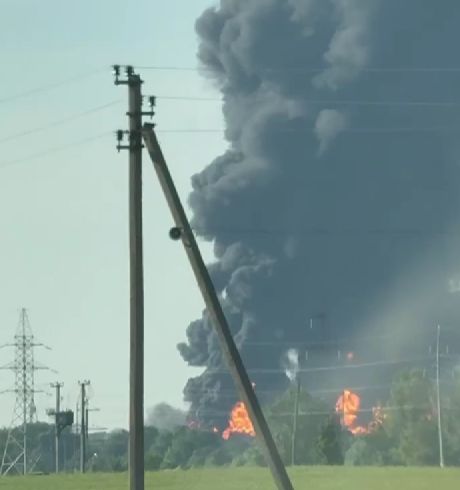
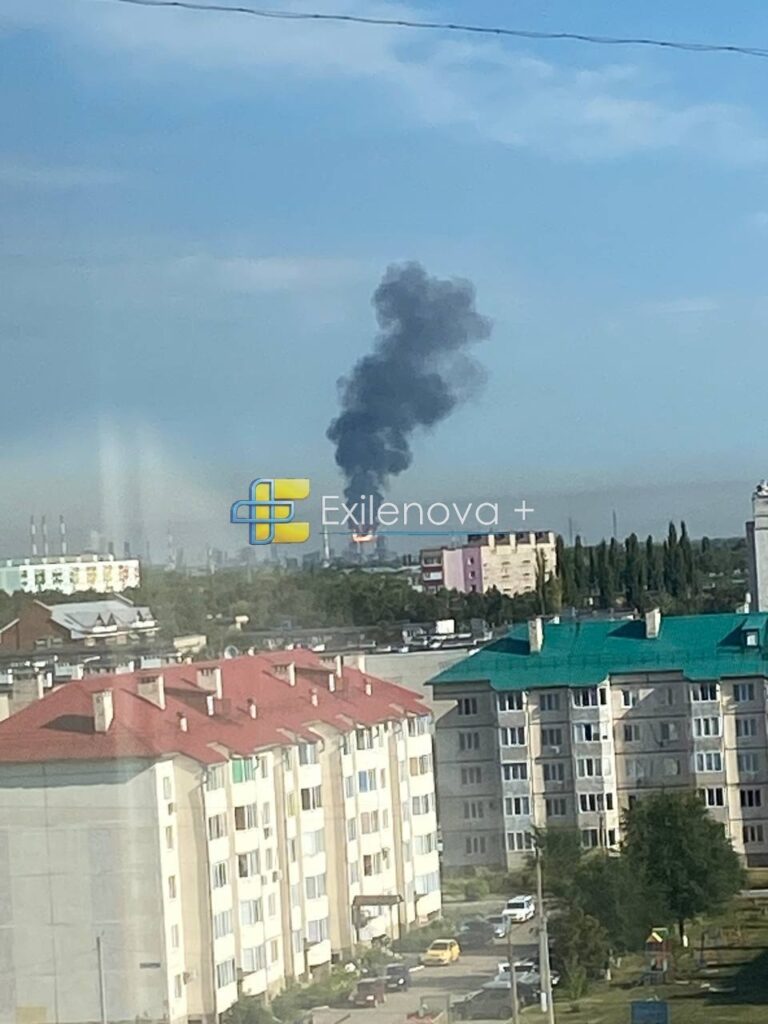
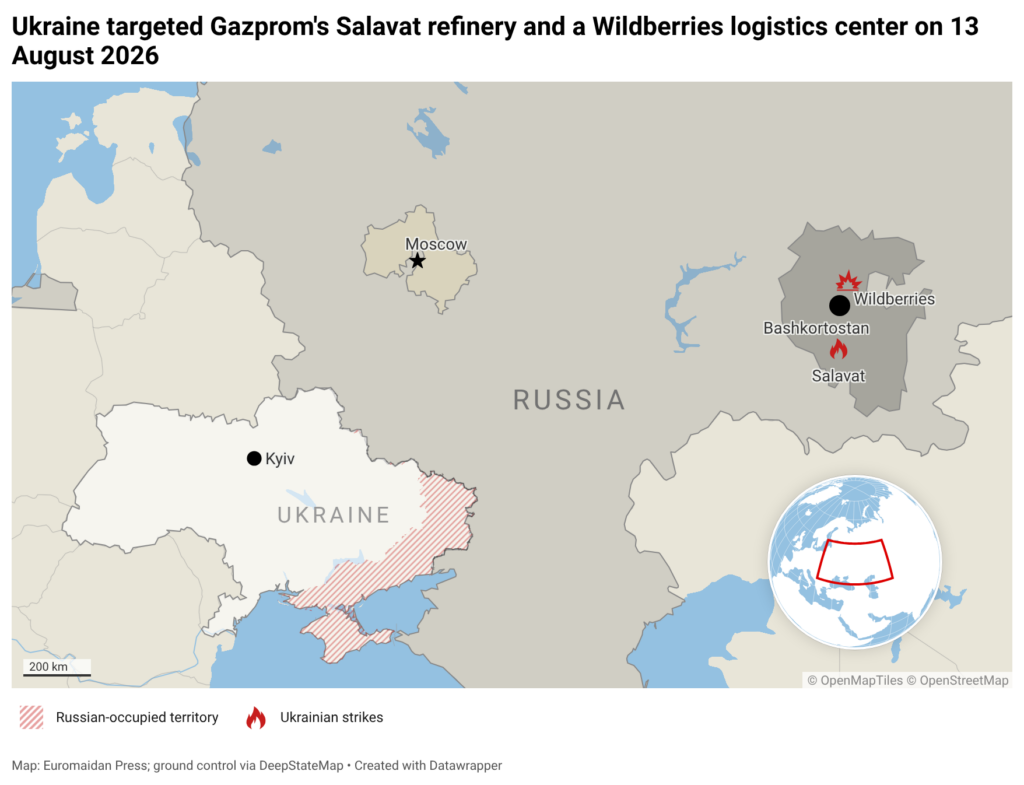
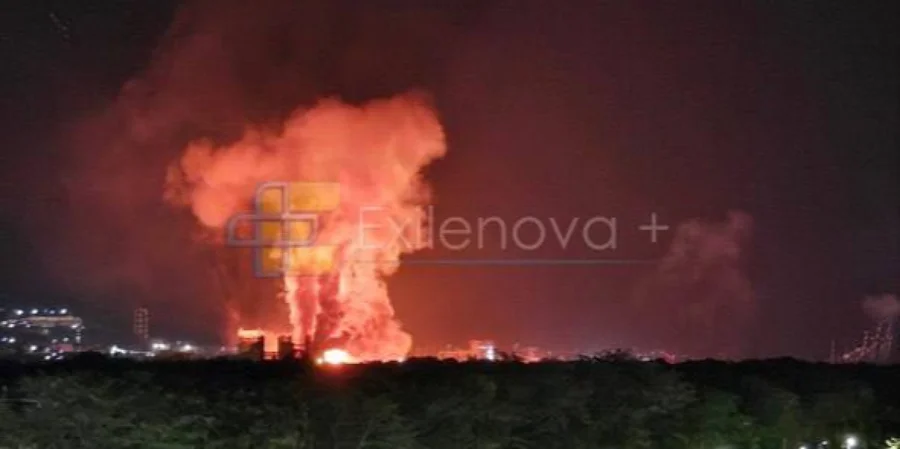
Ukrainian drones struck the Gazprom Neftekhim Salavat oil-refining and petrochemical complex in Russia's Bashkortostan on the morning of 13 August, setting off a fire — the second strike on one of Russia's largest refineries in a month.
The repeat hit lands as Ukraine's deep-strike campaign forces Russian refining to its lowest level since 2002 and pushes fuel shortages back into at least 16 regions, where drivers again face queues and sales limits at filling stations.
Ukrainian drones struck the Gazprom Neftekhim Salavat oil-refining and petrochemical complex in Russia's Bashkortostan on the morning of 13 August, setting off a fire — the second strike on one of Russia's largest refineries in a month.
The repeat hit lands as Ukraine's deep-strike campaign forces Russian refining to its lowest level since 2002 and pushes fuel shortages back into at least 16 regions, where drivers again face queues and sales limits at filling stations. Striking the same plants faster than Moscow can repair them is the point — each return resets the clock on units that take weeks or months to rebuild.
What happened
Bashkortostan's head, Radiy Khabirov, confirmed that debris from a downed drone fell in Salavat's industrial zone and sparked a blaze, which he called a "terrorist attack." Ukrainian monitoring channels Exilenova+ and Supernova identified the target as the Gazprom Neftekhim Salavat plant, and residents reported a column of black smoke over the site. Ukraine's military had not commented on the strike.
The complex is one of Russia's largest refining and petrochemical sites. It processed about 7.2 million tons of crude in 2024 — roughly 2.7% of Russia's total refining — and turns out gasoline, diesel, jet fuel, ammonia, and more, according to Reuters, citing industry sources.
Ukrainian drones struck the same plant on 14 July, damaging two primary distillation units and halting operations; industry sources told Reuters the repairs could take weeks to months. Open-source data cited by Radio Svoboda places Russia's only heptyl rocket-fuel producer, the Salavat Chemical Plant, inside the same industrial perimeter, though there is no confirmation it was hit.
A campaign that keeps resetting repairs
Since early August, at least four refineries have stopped processing after Ukrainian strikes, including plants in Orenburg, Tyumen, Saratov, and Volgograd oblasts. Across 2026, attacks have interrupted work at no fewer than 26 refineries, seven of them still offline at the end of July, according to S&P Global.
Russian refining has fallen to about 3.6 million barrels a day, the lowest since 2002, per EA Analytics — the trigger for the fuel crisis now resurfacing. Shortages had eased by late July, but by mid-August residents of at least 16 regions were again reporting queues and sales restrictions, with Ai-92 and Ai-95 grades pulled from some Gazprom and Lukoil stations.
Attack on warehouse Wildberries
Drones also struck a Wildberries logistics center under construction in Bashkortostan's Chishminsky district, according to the monitoring channel Astra.
Wildberries is Russia's largest online retailer. The hub—about 187,000 square meters—has been under construction since 2024 on the grounds of the "Center of Agrotechnologies" agropark.
President Trump’s Air Force One subterfuge pales in comparison to the secrecy surrounding Russia’s president, whose fixation on security has reached new heights in recent years.
President Trump’s Air Force One subterfuge pales in comparison to the secrecy surrounding Russia’s president, whose fixation on security has reached new heights in recent years.
A Russian state media photo of President Vladimir Putin in his office in the Kremlin last month. The secrecy around Mr. Putin’s movements means journalists have resorted to tracking his activity by assessing the wilting of the plants in his office.
Latvia has discovered its first known border tunnel used to enter the country illegally from Belarus, the country’s State Border Guard said on 11 August. Officers intercepted 15 people who had crossed through the underground passage and returned them to Belarus.
Latvia, Lithuania, and Poland accuse Belarus and Russia of directing migrants toward their borders to retaliate for EU sanctions and strain countries supporting Ukraine. Minsk and Moscow deny orchestrating the c
Latvia has discovered its first known border tunnel used to enter the country illegally from Belarus, the country’s State Border Guard said on 11 August. Officers intercepted 15 people who had crossed through the underground passage and returned them to Belarus.
Latvia, Lithuania, and Poland accuse Belarus and Russia of directing migrants toward their borders to retaliate for EU sanctions and strain countries supporting Ukraine. Minsk and Moscow deny orchestrating the crossings. Tunnels found in Lithuania and Latvia show organizers adapting to fortified borders, requiring Baltic governments to deploy more personnel and surveillance technology.
The tunnel was about 10 meters from Latvia's fence
Border guards found the group on 10 August in Skrudaliena parish, in Latvia’s southeastern Augšdaugava municipality, and briefed the public on the discovery the following day. The operation involved the State Police, a Lithuanian border-service dog handler, and a rapid-response unit, the Latvian Border Guard said.
While reconstructing the group’s route, officers found the passage near the Silene border post, about 10 meters from Latvia’s fence. The agency said it had received intelligence that a tunnel might be under construction, but had previously found no sign of a breach there.
Riga answered on 11 August 2026 by launching Operation Vilkatis, or “Werewolf,” scheduled to run through the end of August. The government says the operation will improve intelligence-sharing among border guards, police, the military, and security services. It will also expand aerial surveillance and target networks that transport and shelter migrants after they cross.
Explore further
The Belarusian tunnel to the EU was almost done. Then Lithuania drilled a hole in exactly the wrong place—for the diggers
Latvia faced 87% of all crossing attempts along the EU-Belarus border by mid-July 2026
Belarus has weaponized migration since 2021, when EU governments accused Alyaksandr Lukashenka’s regime of bringing people from the Middle East and Africa to the bloc’s frontier in retaliation for sanctions. Belarus denied orchestrating the crisis.
Latvia reported more direct evidence in January 2026. Documents and phones taken from detained migrants linked Belarusian military and border personnel to organized crossings, according to Latvia’s armed forces and Border Guard.
By 13 July, Latvia had recorded 7,791 attempts over 111 consecutive days, 87% of all attempts along the EU-Belarus border by then. Lithuania later found an unfinished tunnel dug from Belarus. Latvia’s tunnel, unlike the unfinished Lithuanian passage, had already been used.
Ukraine's first-person-view (FPV) drones are not being displaced by newer unmanned systems, a Ukrainian officer told Ukrinform. They remain a central tool for precision strikes, while Ukrainian forces claim a separate advantage in larger bomber drones.
Unmanned systems have become a defining weapon of Russia's war against Ukraine, and both sides race to out-innovate each other, a contest in which a cheap UAV can down a platform costing dozens of times more.
FPVs re
Ukraine's first-person-view (FPV) drones are not being displaced by newer unmanned systems, a Ukrainian officer told Ukrinform. They remain a central tool for precision strikes, while Ukrainian forces claim a separate advantage in larger bomber drones.
Unmanned systems have become a defining weapon of Russia's war against Ukraine, and both sides race to out-innovate each other, a contest in which a cheap UAV can down a platform costing dozens of times more.
FPVs remain central
"Since FPVs appeared in service, they have become a leading means of precision engagement. This trend will continue," said Captain Anton Bobrovskyi, who commands a company training unmanned-systems specialists at the 199th Training Center of the Air Assault Forces.
Bobrovskyi conceded that Russia also uses drones effectively and that Ukraine learns from it, but said Ukraine keeps a lead in one category: bomber drones.
Explore further
Ukrainian drone that downed Russia’s rarest spy UAV just bagged its anti-drone interceptor too
Ukraine's bomber-drone advantage
Russian forces fear Ukrainian bomber drones, according to Bobrovskyi. He said Ukraine outmatches Russia many times over in such systems, and that Russian troops who encounter one often do not know what to do with it.
The distinction matters because bomber drones work differently from single-use FPVs. Rather than flying into a target and exploding, larger bomber drones carry and release munitions, then fly on. Euromaidan Press has documented the growing role of these systems, including reusable platforms capable of returning to base after dropping their payloads. Developers have also adapted them to fly through Russian electronic warfare, with upgraded Vampire drones built to resist jamming.
Explore further
Sea drones, jet drones, and Neptune missiles hit one Russian port in a single night
Bobrovskyi said Ukraine's advantage does not mean Russia lacks comparable technology. Instead, he argued that Ukrainian forces and society initiated many of the current battlefield drone trends and have kept the initiative in using them.
Each new drone class draws a countermeasure, so the side that keeps iterating fastest holds the battlefield initiative. How long Ukraine's bomber-drone edge lasts will depend on its ability to keep protecting and upgrading those platforms.
Ukraine’s sustained drone strikes on Russian refineries have reversed the country’s position as a net fuel exporter. Moscow now imports gasoline from as far as India and Morocco while rushing crude oil through the Arctic to reach Asian buyers it can no longer supply with finished fuel. The flows are scaling up—and running on the same sanctioned, EU-listed tankers.The reversal is tightening global fuel markets. Russia runs the world’s third-largest refining industry, and th
Ukraine’s sustained drone strikes on Russian refineries have reversed the country’s position as a net fuel exporter. Moscow now imports gasoline from as far as India and Morocco while rushing crude oil through the Arctic to reach Asian buyers it can no longer supply with finished fuel. The flows are scaling up—and running on the same sanctioned, EU-listed tankers.
The reversal is tightening global fuel markets. Russia runs the world’s third-largest refining industry, and the combined disruptions have acted to squeeze supply worldwide, with Moscow banning exports of both gasoline and diesel to keep its own pumps supplied.
With refining at a 24-year low, Russia is exporting crude through the Arctic while importing refined fuel from India.
Russian refining falls to its lowest since 2002
Ukrainian drone strikes have driven Russian crude processing to 3.6 million barrels a day in July—its lowest level since 2002 and roughly a third below the seasonal norm, according to EA Analytics data cited by Bloomberg.
Explore further
Ukraine’s drones force oil-giant Russia to import gasoline—now from Morocco
Ukraine hit at least 24 of Russia’s 34 largest refineries in some 50 strikes, with five more struck last week and at least two this week. With refining at a 24-year low, Russia is exporting crude through the Arctic while importing refined fuel from India.
Fuel shortages and rationing now affect about 50 million people—a third of Russia’s population. Moscow is subsidizing both the damaged refineries and the imported fuel replacing their output.
A jetty serving the Utrenneye (Salmanovskoye) field extends into Ob Bay in Russia’s Far North. The port is along the Northern Sea Route, which Russia is increasingly using to ship crude to Asia. Photo: SlavaGol/Wikimedia Commons, CC BY-SA 4.0
Sanctioned tankers take crude toward the North Pole
Seven tankers carrying about six million barrels of crude were heading to Asia through the Northern Sea Route as of 11 August. That volume already amounts to nearly half the approximately 13 million barrels the route carried during the entire 2025 season.
The route cuts two weeks off the voyage to China compared with the Suez Canal, and ice conditions are relatively mild this year, one trader told Reuters.
But speed is only part of the surge. Tankers on the Arctic route bypass European waters, where enforcement has led to inspections and detentions of sanctioned vessels, and Ukraine’s strikes on Black Sea shipping and the Iran–US standoff at Hormuz have narrowed the alternatives.
Vessel-tracking data show the convoy following a route north of the Severnaya Zemlya archipelago rather than through the traditional and more southern Vilkitsky Strait—putting sanctioned oil tankers within 500 nautical miles of the North Pole. Maritime experts said commercial traffic at this scale has never operated that far north.
The Rosneft-controlled Nayara Energy refinery at Vadinar, Gujarat, India. Photo: AgarwalSimran / Wikimedia Commons, CC BY-SA 4.0
Russian crude returns home as Indian gasoline
In the opposite direction, gasoline refined from Russian crude at Nayara Energy’s Vadinar refinery in western India is flowing back to Russia through a chain of ship-to-ship handoffs at Egypt’s Damietta Port. At least three cargoes have cycled through the hub since June. The first reached Russia on 5 August.
Bloomberg’s tracking data show the tanker Cyclone loaded 42,000 tons of gasoline at Vadinar on 18 June, transferred the cargo to the Oman-flagged Garnet off Damietta on 6 July, and the Garnet reached Russia in early August. Two more tankers, Varg and Photon, followed the same route in July, with Photon’s cargo handed to the Russian-flagged Talisman on 28–29 July.
All these vessels are under EU sanctions. Garnet and Talisman are also under US sanctions.
Nayara’s refinery, which processes 400,000 barrels a day, is 49% owned by Rosneft. EU sanctions in July 2025 drove away its non-Russian crude suppliers, so the plant switched to processing only Russian oil and now buys and sells through traders—which is how its gasoline reaches Russia without a direct India-to-Russia sale, as Euromaidan Press reported.
The expected September launch of Rosneft’s Vostok Oil project could push more crude through the Northern Sea Route, traders told Reuters. NSR crude shipments fell 4% in 2025. This year’s opening weeks have already matched half the full-season total.

 Connexion