Connexion
Ukraine is now sending its tanks into battle with drone escorts: they can drive into a Russian kill zone and come back alive

- The 475th Assault Regiment found a new way to protect its tanks from Russian drones
- It surrounded its up-armored tanks with drones of its own
- During a recent counter-infiltration mission, two 475th Assault Regiment tanks were shepherded into battle by three different drone types
Russian infiltrators have been slipping into villages and towns along Ukraine's northeastern border with Russia, likely aiming to draw Ukrainian troops away from the bigger fights farther south around the cities of Sloviansk and Kramatorsk.
Desperate to clear out the infiltrators without dedicating too many precious infantry to the task, the Ukrainian 475th Assault Regiment formed a unique team: two heavily up-armored tanks plus three different types of drone. The drones scouted ahead of the tanks and protected them as they trundled through Russia's own drone kill zone on their way to a point-blank clash with Russian troops.
In this mission, the blend of mechanized and unmanned forces worked: the tanks accomplished their mission and survived to fight another day. If the tank-drone pairing keeps working, expect it to become more common all along the 1,200-km gray zone as Ukraine struggles with a deepening shortage of manpower.
Two Ukrainian turtle tanks of Code 9.2 of the 475 Assault Regiment assault Russian position in Vilkhuvatka, Kharkiv Oblast@GeoConfirmed @UAControlMap
— Bielitz (@Bielitzling) September 30, 2026
50.187782, 37.508585
src: https://t.co/ItVhiR0hrW pic.twitter.com/4KlQZaYt0T
It's unclear what kinds of tanks the 475th Assault Regiment operates. It is clear how the regiment protects the tanks from ever-present Russian drones. The unit wraps the tanks in metal cages and then welds hundreds of metal spines on the cages. The spines trigger incoming explosive drones at a safe distance from the tank's hull. The cage supports the spines and catches any drones the spines may miss.
We call these kinds of tanks "hedgehog tanks." The Russians developed the hedgehog application but, seeing that it worked, deflecting potentially dozens of drones at a time, the Ukrainians copied it.
Hedgehog helpers
But even the best-protected hedgehog tank might struggle to get through the enemy's kill zone when that kill zone may include bomber and one-way attack drones in the air and loitering ambush drones waiting on the ground as well as mines and other threats.
Sometimes the best defense against a drone is another drone, and the 475th Assault Regiment put that truism into practice. To shepherd those two hedgehog tanks into battle with Russian infiltrators in the village of Vilkhuvatka, in Kharkiv Oblast 9 km from the border with Russia, the regiment deployed a Vampire heavy bomber drone, at least one explosive first-person-view (FPV) quadcopter, and at least one surveillance quadcopter.

The surveillance drones could scout ahead. The bomber drone could blast mines and loitering ambush drones. The FPVs could intercept incoming enemy FPVs. The layered protection was effective. As evident in the 475th Assault Regiment's video depicting the two-tank counter-assault, the tanks took multiple hits from Russian drones and mines, but not enough hits to slow them down.
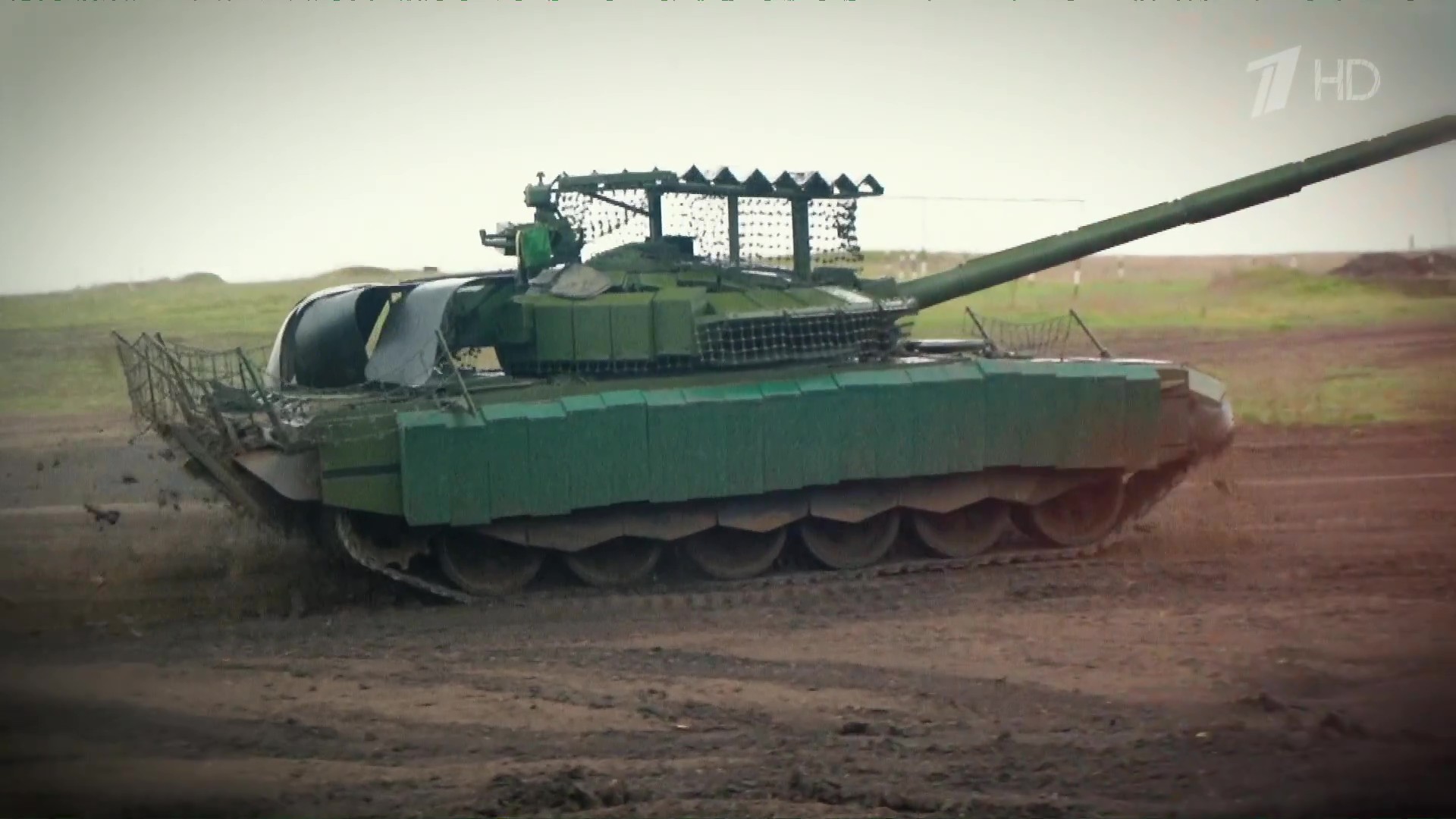
Both tanks reached an intersection inside Vilkhuvatka, fired their cannons at nearby Russian infiltrators, and then withdrew.
It should come as no surprise that the 475th Assault Regiment is pioneering mixed formations of drones and tanks. The regiment recently partnered with the 1st Assault Regiment to develop new "multi-domain" tactics combining ground, air, and cyber forces. "We came to the conclusion that fighting in only one domain makes no sense," said "Perun," the 1st Assault Regiment commander. "We'd simply lose because the enemy would bring another domain into play."
The key takeaway is that, despite the serious threat that drones and mines pose to tanks in the fifth year of Russia's wider war on Ukraine, tanks can still fight, win, and survive—if they have plenty of support from the same kinds of drones that, in enemy hands, vex them along every kilometer of disputed terrain. The tank isn't dead yet. It just needs a little help.