❌

Vue normale

  • ✇US news | The Guardian
  • Pennsylvania shooter who killed eight was a grandfather, says slain child’s dad
    Father of toddler killed in Erie mass shooting says reported gunman never seemed distressed or out of the ordinaryThe man who killed eight people, before turning the gun on himself, in a mass shooting in a home in Erie, Pennsylvania, on Friday was a grandfather who had not shown signs that he was capable of such violence, according to people who knew the shooter.A man whose toddler was among those killed said on Sunday that the man never seemed distressed or out of the ordinary, the Associated P
     

Pennsylvania shooter who killed eight was a grandfather, says slain child’s dad

11 octobre 2026 à 19:48

Father of toddler killed in Erie mass shooting says reported gunman never seemed distressed or out of the ordinary

The man who killed eight people, before turning the gun on himself, in a mass shooting in a home in Erie, Pennsylvania, on Friday was a grandfather who had not shown signs that he was capable of such violence, according to people who knew the shooter.

A man whose toddler was among those killed said on Sunday that the man never seemed distressed or out of the ordinary, the Associated Press reports.

Continue reading...

© Photograph: Ted Shaffrey/AP

© Photograph: Ted Shaffrey/AP

© Photograph: Ted Shaffrey/AP

Drones now cause about 96% of Russia’s battlefield losses. Ukraine’s drone force says it has hit more than 100,000 Russian troops this year alone

11 octobre 2026 à 15:57

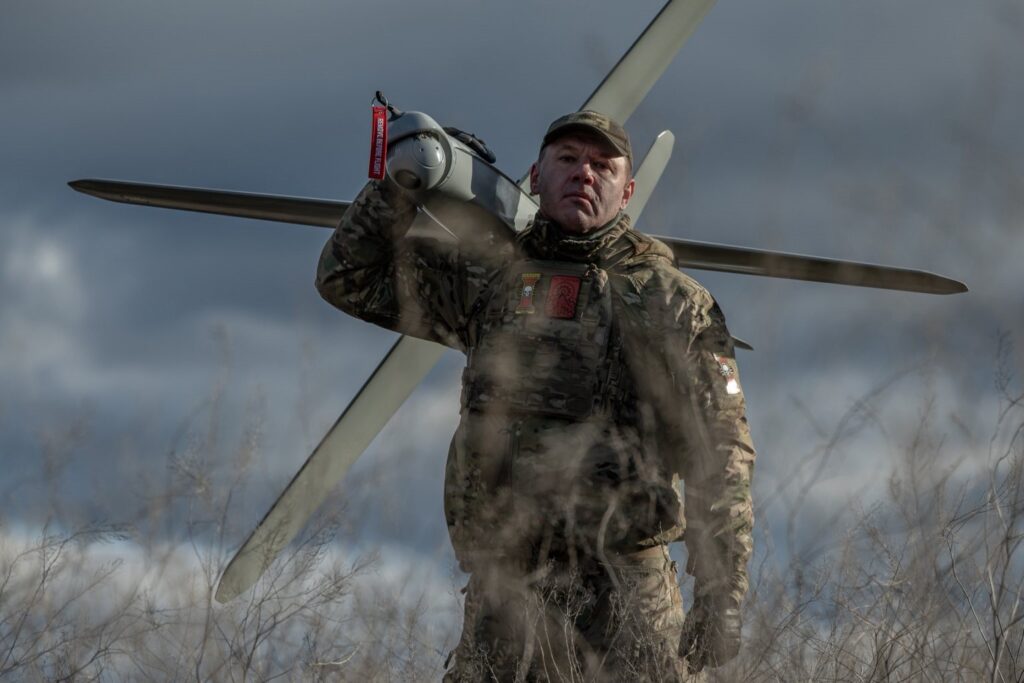
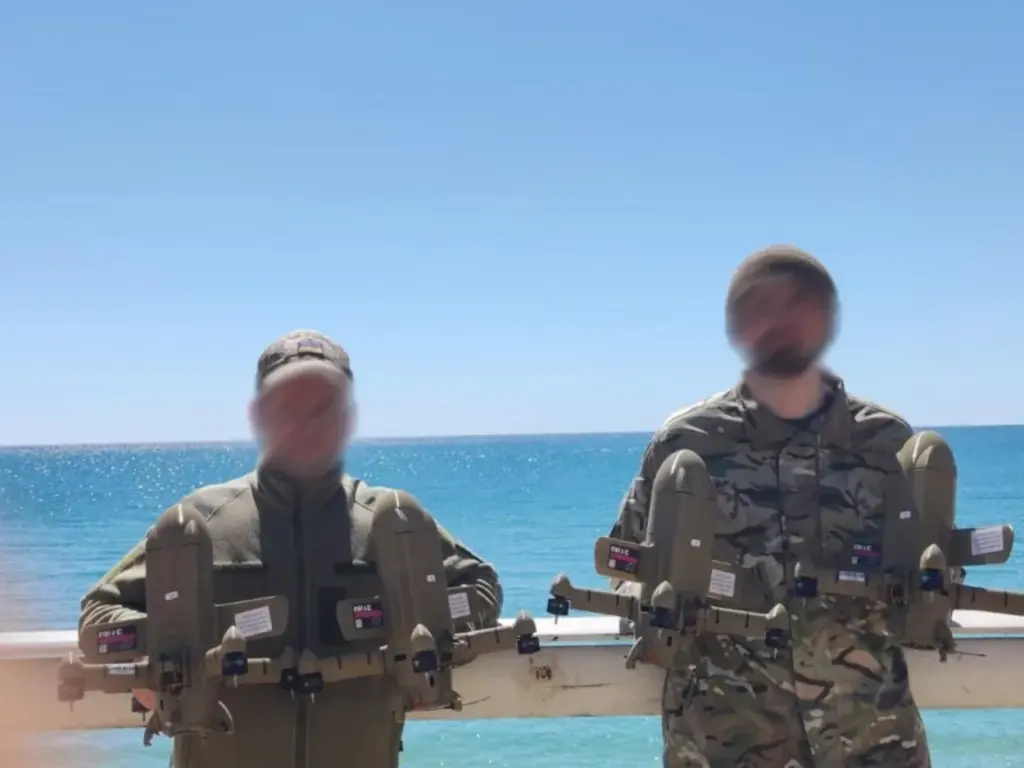
A Ukrainian soldier of the Unmanned Systems Forces with a drone. Photo: Ukraine’s Unmanned Systems Forces

Units of Ukraine’s Unmanned Systems Forces have killed or wounded more than 100,000 Russian troops since the start of 2026. That is more than 150,000 since the force was created on 11 June 2025, the force said on Telegram.

Drones have become the deadliest weapon of this war, accounting for about 96% of Russia’s battlefield casualties earlier this year. These hits are verified on video in the military’s Delta system, which is how the force counts only the losses its own pilots confirm.

“Behind these figures is the daily combat work of our soldiers, thousands of sorties, precise strikes, and the constant improvement of unmanned technologies,” Ukraine’s Unmanned Systems Forces said.

Each strike reduces Russia's combat potential and reflects the coordinated work of the force’s units, it added.

A toll that keeps climbing

Overall, drone branches of the Ukrainian Army had carried out more than 1 million verified strikes on enemy targets since January, killing or seriously wounding about 193,500 Russian troops, Ukraine’s Defense Ministry reported in July.

Those strikes roughly doubled over the first half of the year, from about 105,800 in January to more than 200,000 in June, the ministry noted.

Meanwhile, Commander of the separate Ukrainian Unmanned Systems Forces Robert “Madiar” Brovdi says the numbers are still growing. In the first five days of October, the force’s pilots killed or wounded 2,699 Russian soldiers, 39.7 percent more than in the same period of September.

He tied the rising number to Russia's assaults in Donbas, as the offensives for the fortress-belt cities that have been Ukraine's protection against full region's occupation since 2014, were ongoing.

Why the drone branch matters

The force fields are the cheap, fast weapons that now do most of the killing on the front. Interceptor and strike drones let Ukraine hit troops, logistics, and command posts while keeping its own soldiers farther from the fight.

Fears that Ukraine will lose Starlink are back after Musk backed Trump against Zelenskyy. Adviser says profit makes cutoff unlikely

11 octobre 2026 à 15:10

SpaceX will not cut Ukraine off from Starlink satellite communications, Serhii “Flash” Beskrestnov, presidential adviser on defense technology, says. The reason is that the company could lose a large share of its revenue.

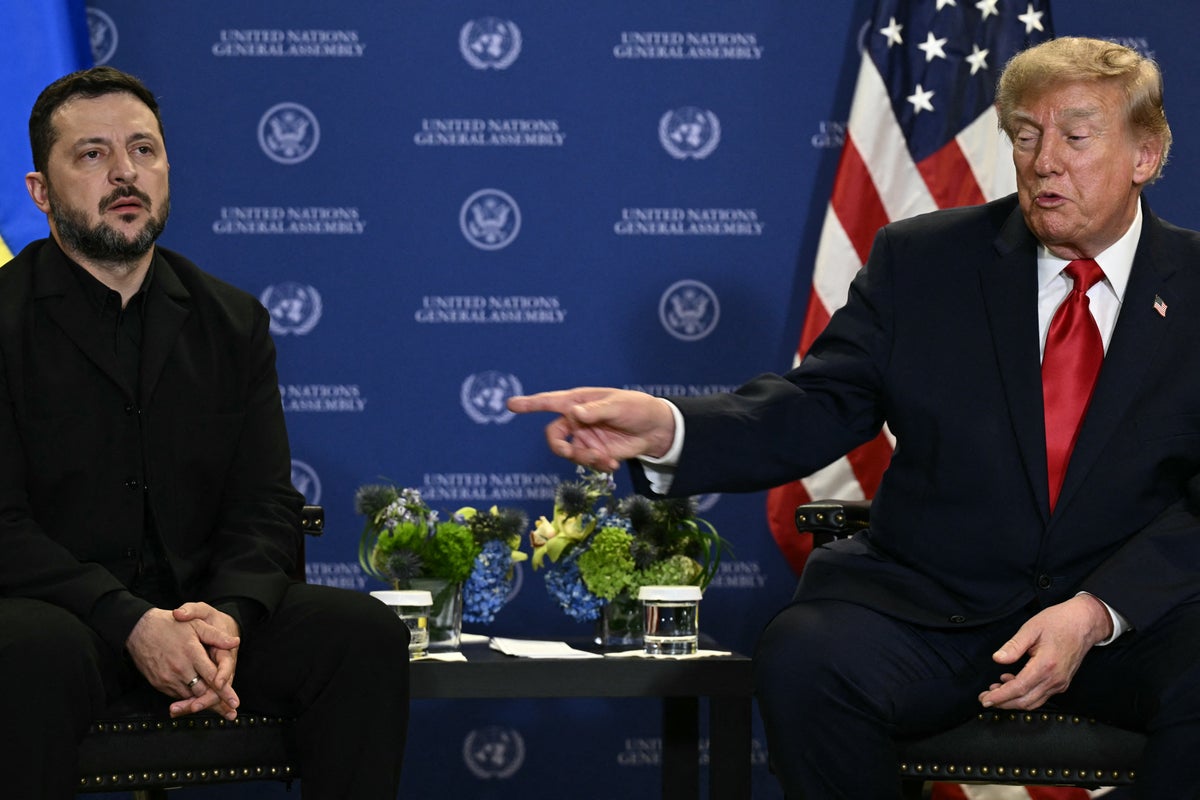
Ukraine’s troops and drones lean heavily on Starlink, a network Kyiv neither owns nor controls, and Elon Musk has used that control against it before. The latest shutdown fears spread after Elon Musk supported US President Donald Trump's criticism of Ukrainian President Volodymyr Zelenskyy.

    “Not a year goes by without it coming up again: ‘They’ll cut off our Starlink.’ The enemy’s Telegram channels fuel these rumors. We have good and stable partner relations with SpaceX,” Flash writes.

    Musk is first of all a businessman, and Ukraine brings SpaceX significant profit, so he is sure no one will switch Starlink off in Ukraine, Flash said. Unexpected moves are possible, he added, but of a different kind, such as turning Starlink on for Russia inside its own territory.

    The rumors come amid real US pressure

    The fears did not appear in a vacuum. After Trump allowed Russian diesel back to US markets, talk spread of "sanctions" on Ukraine if it keeps hitting the Russian refineries that fund Moscow, with the Financial Times reporting, citing European officials, that Trump’s administration has threatened to halt the mechanism for buying US weapons for Ukraine, known as PURL.

    Axios has also reported, citing a Ukrainian and an American official, that Washington has threatened to stop sharing intelligence with Ukraine if it continues striking Russian refineries.

    Ukraine is building a backup

    The scare feeds a longer effort to reduce dependence. Ukraine is working on a satellite system of its own, something similar to Starlink but beyond Musk’s control, President Volodymyr Zelenskyy said on 4 October.

    The timing is the reason, he said: some states will share the technology with Russia late this year or early next, and the Chinese are among them. Moscow is already fielding its own Starlink-style constellation, Rassvet, though for now it reaches Ukraine only in brief passes.

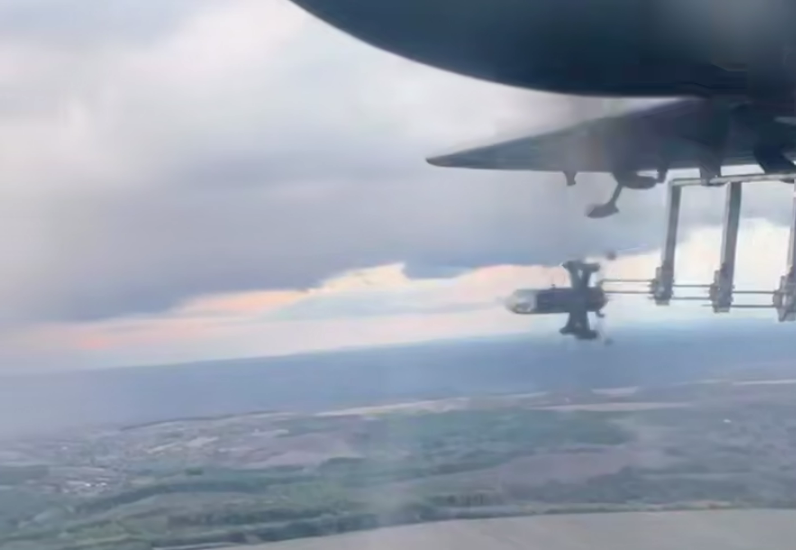
    Russia is building jet drones that fly 800 kilometers per hour, and Ukraine says it is already working on how to stop next generation

    11 octobre 2026 à 14:42

    ukraine recovers russia's undamaged geran-3 jet kamikaze drone carrying camera live-link equipment (video) · post russian jet-powered lying cornfield after being recovered intact 16 2025 реактивний дрон-камікадзе герань-3 вересня року

    Aviation is one of the most effective ways to counter Russia’s jet-powered drones. Its effectiveness continues to grow due to pilots’ skill and better coordination, Defense Minister Yevhenii Khmara says, Glavcom reports.

    Russia’s jet-powered Gerans fly several times faster than the propeller Shaheds Ukraine learned to shoot down, and they remain the main challenge for its air defense. Ukraine downs more than 90% of the slow drones but only about 55% of the jet ones.

    “Due to them, our aviation now uses fewer munitions per aerial target. We plan to improve this further,” Khmara states.

    Air defense works as a layered system because no single type of weapon is enough, he explains. The layers run from surface-to-air and shoulder-fired missiles to turrets, electronic warfare, interceptor-drone crews, and small-scale air defense, topped by aircraft including Mirage and F-16 jets.

    Scaling what works against jet drones

    Ukraine already has combat results against the jet drones, Khmara notes. In one engagement, five Bars interceptors destroyed five aerial targets, a 100% hit rate in that case, and the task now is to raise the overall destruction rate and quickly scale the solutions that prove themselves.

    Heavy-caliber turrets are adding to that. Their number in service already runs into the hundreds, he adds.

    “This direction is being scaled, and systems with greater range are being worked on. In parallel, surface-to-air and shoulder-fired missile systems are also proving effective,” he says.

    Preparing for the next generation

    Ukraine is also looking past today’s threats, the minister stresses. The ministry is working to supply interceptor drones, aviation and its munitions, missile and artillery systems, turrets and electronic warfare gear, and to plan several steps ahead with enough stock in reserve.

    “We also know what solutions Russia is developing, which concern jet drones with a speed of 800 kilometers per hour. We are working on finding countermeasures to the next generation of threats,” Khmara says.

    Producers have been tasked with offering proposals and prototypes, he concludes.

    • ✇US news | The Guardian
    • Trump and Rubio weigh firing Kimberly Guilfoyle after reports of improper conduct
      Senior official says president and US secretary of state are ‘extremely pissed off’ by conduct of US envoy to GreeceDonald Trump and Marco Rubio, the secretary of state, are considering firing US ambassador to Greece Kimberly Guilfoyle after a series of reports alleging she has engaged in improper and possibly illegal conduct before and during her tenure in Athens.A senior US official said Sunday that Trump and Rubio are “extremely pissed off” by Guilfoyle’s reported conduct and would likely dec
       

    Trump and Rubio weigh firing Kimberly Guilfoyle after reports of improper conduct

    11 octobre 2026 à 14:34

    Senior official says president and US secretary of state are ‘extremely pissed off’ by conduct of US envoy to Greece

    Donald Trump and Marco Rubio, the secretary of state, are considering firing US ambassador to Greece Kimberly Guilfoyle after a series of reports alleging she has engaged in improper and possibly illegal conduct before and during her tenure in Athens.

    A senior US official said Sunday that Trump and Rubio are “extremely pissed off” by Guilfoyle’s reported conduct and would likely decide on what action to take this week after Monday’s federal holiday.

    Continue reading...

    © Photograph: Mark Schiefelbein/AFP/Getty Images

    © Photograph: Mark Schiefelbein/AFP/Getty Images

    © Photograph: Mark Schiefelbein/AFP/Getty Images

    • ✇US news | The Guardian
    • Abdul El-Sayed: Democrats must ‘win by massive numbers’ to fend off Trump election denial
      Democratic Senate candidate’s remarks come as Trump has long baselessly claimed his 2020 election loss was stolenDemocrats must “win by massive numbers” during November’s federal midterm elections because Donald Trump and his Republican allies are bound to try to sow doubt about the integrity of the results, Democratic Senate candidate Abdul El-Sayed of Michigan said on Sunday.El-Sayed’s comments on NBC’s Meet the Press came with the Democrats favored to win control of the House of Representativ
       

    Abdul El-Sayed: Democrats must ‘win by massive numbers’ to fend off Trump election denial

    11 octobre 2026 à 13:23

    Democratic Senate candidate’s remarks come as Trump has long baselessly claimed his 2020 election loss was stolen

    Democrats must “win by massive numbers” during November’s federal midterm elections because Donald Trump and his Republican allies are bound to try to sow doubt about the integrity of the results, Democratic Senate candidate Abdul El-Sayed of Michigan said on Sunday.

    El-Sayed’s comments on NBC’s Meet the Press came with the Democrats favored to win control of the House of Representatives during the 3 November midterms – and polls show that the party could also win Senate seats in states that traditionally elect Republicans and gain a majority there, too.

    Continue reading...

    © Photograph: Chip Somodevilla/Getty Images

    © Photograph: Chip Somodevilla/Getty Images

    © Photograph: Chip Somodevilla/Getty Images

    Hours after Trump declared an energy ceasefire, Russia hit Kharkiv power plant, one of 200-plus strikes on Ukraine’s grid this week, Zelenskyy says

    11 octobre 2026 à 13:21

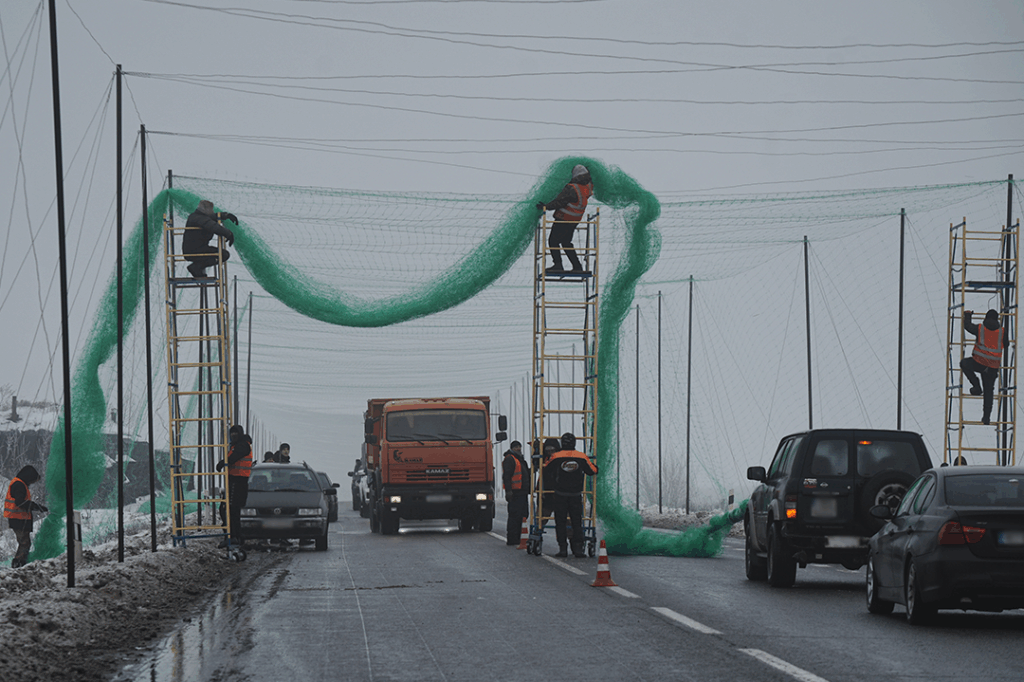
    fishing nets used mediterranean millennia — now italy wants turn drone shields over ukrainian cities · post workers install anti-drone ring road northern outskirts kharkiv 2026 6ea9c925f4eb5b85 italy's senate has

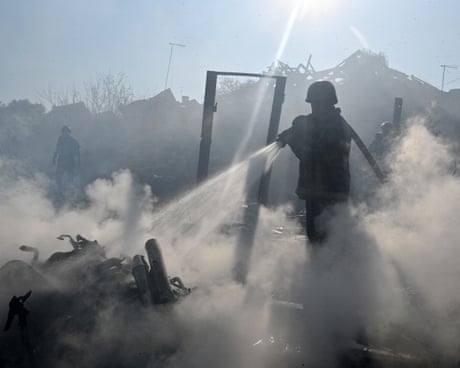
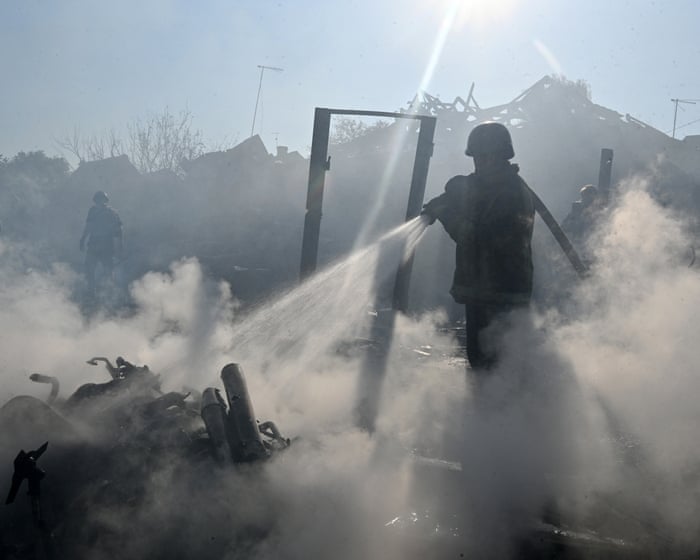
    Russia hit the CHP-5 thermal plant in Kharkiv on the evening of 11 October. It came hours after US President Donald Trump announced an energy ceasefire between Ukraine and Russia, President Volodymyr Zelenskyy said in his nightly address.

    Trump had announced the energy truce earlier that day, though Kyiv reported no part in any such deal, as well as Moscow. Yet in this one week, Russia carried out more than 200 strikes on Ukraine’s power generation and transmission and 17 on its gas and oil sites, killing more than 150 people and wounding more than 700, according to Zelenskyy.

    “All day today, there were Russian Shaheds in the sky. There are Shaheds in the sky now, too. There were strikes by aerial bombs. There were strikes on our energy. Just now there was a strike on CHP-5 in Kharkiv,” Zelenskyy states.

    Ukraine welcomes the agreement Trump announced and is ready to stop striking Russian energy if Russia does the same. For that to mean anything, he stresses, it has to become part of reality.

    A one-word answer from Moscow

    Ukraine has offered many de-escalation steps, Zelenskyy notes, but Russian ruler Vladimir Putin met them all with the same refusal. He voices hope that the Russian leader would finally tell the US, Ukraine, and the world something other than killing and deception, something that leads to a real and dignified peace.

    Ukraine wants peace, and the question is whether Russia does. The Armed Forces have received all the relevant orders to defend the country, he confirms.

    Allies line up fresh support

    Zelenskyy says he also spoke with members of the US Congress and, the day before with the UK prime minister, French President Emmanuel Macron, and Norway’s prime minister, all of whom offered help.

    Ukraine is also working with the EU on financing for its defense and budget stability, and preparing new steps on European integration.

    • ✇Euromaidan Press
    • Ukraine ordered 54% more FPV attack drones this year than in all of 2025, and deliveries jumped almost fourfold
      Ukraine’s Defense Procurement Agency has contracted about 5.5 times as many drones of various types in recent months as in the same period of 2025. It is roughly 300% more over the year as a whole, the Defense Ministry said. Drones are the weapons this war runs on, from short-range strikes to hits deep inside Russia, and Ukraine has raced to build and buy more of them while sparing its troops. The agency contracted for about $8 billion worth of drones in the first half of 2026 alone, do
       

    Ukraine ordered 54% more FPV attack drones this year than in all of 2025, and deliveries jumped almost fourfold

    11 octobre 2026 à 13:00

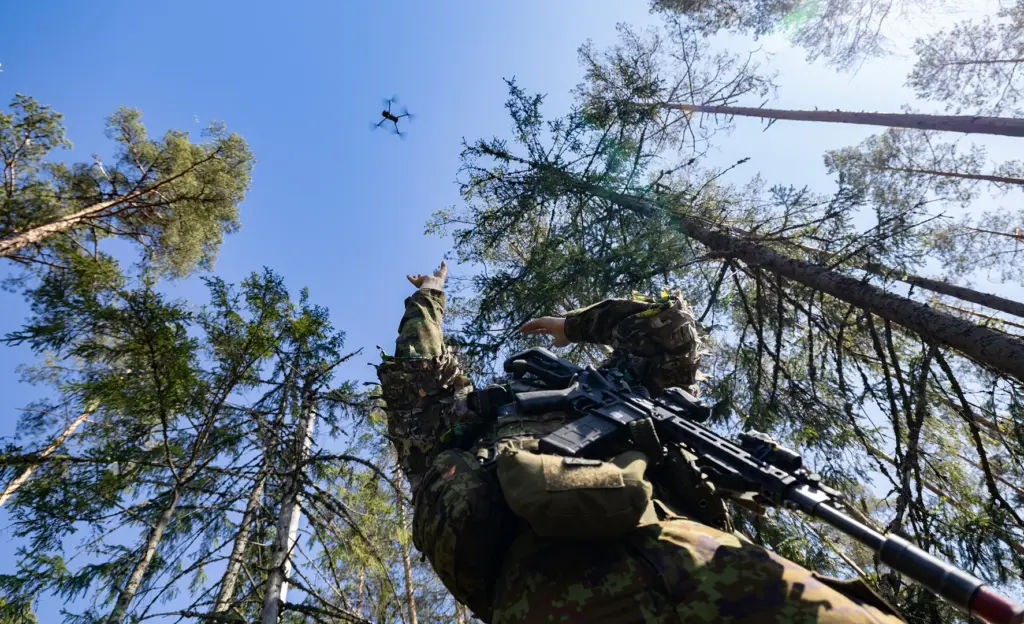
    Estonian and Ukrainian soldiers fly drones together during Exercise Hedgehog 2025 in Estonia, where Ukrainian operators were credited with knocking out two battalions in a simulated engagement. Photo: vbl/OR-7 Ardi Hallismaa/ERR

    Ukraine’s Defense Procurement Agency has contracted about 5.5 times as many drones of various types in recent months as in the same period of 2025. It is roughly 300% more over the year as a whole, the Defense Ministry said.

    Drones are the weapons this war runs on, from short-range strikes to hits deep inside Russia, and Ukraine has raced to build and buy more of them while sparing its troops. The agency contracted for about $8 billion worth of drones in the first half of 2026 alone, double the amount for the same period last year.

    The ministry wants to arm the force at every level, Defense Minister Yevhenii Khmara stresses. Deep-strike drones hit targets far inside Russia, while middle-strike drones kill enemy drone crews and burn logistics and command posts, lowering the risk to Ukrainian soldiers.

    “Technology and having enough of these systems raise combat effectiveness and at the same time reduce the risks for our soldiers,” Khmara said.

    FPV drones lead the surge

    The sharpest growth is in FPV drones, the cheap first-person-view quadcopters that do much of the killing on the front. Contracting for them in 2026 already exceeds the total for all of 2025 by 54%, and deliveries have risen almost 3.7 times, the ministry notes.

    International support and the scaling of Ukraine’s own defense industry made the jump possible, Khmara adds. Much of the buying now runs through the DOT-Chain Defense marketplace, where units select what they need, and the agency handles contracts and logistics, cutting the average delivery time for in-stock items to 9 days.

    Making supply predictable

    The ministry is trying to make deliveries steadier, Khmara explains. It is aligning the front’s needs, purchase planning, and the production capacity of the Ukrainian industry, making supply more predictable.

    Predictable contracting lets manufacturers build their production lines step by step, plan logistics and order components in advance, he says. The ministry frames the push as a larger order book for the domestic industry and a way to scale the solutions that work in combat.

    Ukraine wants to draft 15 of every 100 workers at its weapons plants. Arms makers say this could slow guns soldiers need

    11 octobre 2026 à 12:48

    uk build pilot batch octopus interceptor drones under joint project ukraine · post ukrainian drone display near field 2025 militarnyi news reports

    Ukraine wants to build more weapons at home while making it easier to draft the people who build them. Kyiv has proposed cutting the draft-exemption quota for defense-industry enterprises from 100% of their workers to 85%, while the Ukrainian Council of Arms Manufacturers says the limit should stay at the previous level for qualifying critical plants.

    The change would strip the draft shield from 15% of the workers at plants the Defense Ministry has deemed critical to the economy. Those are the people who set production volumes, delivery dates, and new designs, the council argues, so losing them would hit output just as Ukraine pushes to make more of its own weapons.

    The draft resolution has already been sent to the Cabinet of Ministers for approval.

    “We consider that the proposed reduction of the limit does not account for the staffing needs of defense production,” the council says.

    A workforce that takes years to build

    Ukraine’s defense industry is still growing, with new plants, expanding capacity, and new technologies, the council adds. Raising the share of Ukrainian-made weapons in the forces, localizing components, and cutting reliance on imports all require more specialists, not fewer.

    These teams are built over the years, the manufacturers add. Companies invest in finding and training people who master specific technologies and production processes, and keeping them is what lets firms plan expansion and take on new commitments to the military.

    Uncertainty at the worst moment

    Cutting the exemption limit would add uncertainty, just as the state expects producers to raise output. The fallout could affect both manufacturers and military units awaiting their weapons.

    The council urges the Economy Ministry to drop the cut to 85%and asks the Defense Ministry and the Cabinet to maintain exemptions of up to 100% for qualifying defense workers. It offers to share data on the industry’s staffing needs and help assess how the change would affect defense orders.

    The reservation rules must reflect the growth of the defense industry and Ukraine’s need for more of its own weapons, it concludes.

    The Guardian view on the US, Russia and the international criminal court: Trump’s assault on the rule of law intensifies | Editorial

    Par : Editorial
    11 octobre 2026 à 12:25

    A fuel deal with Vladimir Putin, and sanctions against the legal institution, ram home the president’s belief that might is right

    On Friday, Donald Trump drove home his belief that might is right and the rule of law is an obstacle rather than an essential foundation stone of international order. First came the escalated assault on the international criminal court (ICC), sanctioning the body itself. Then he announced a deal with Russia to buy diesel.

    The US has long chafed at the notion of being bound by the rule of law that it espoused publicly. That hypocrisy now appears as a lesser vice. The president has declared that “my own morality” is all that constrains him. His brazen flouting of the law, embrace of dictators and rhetorical attacks all undermine global standards.

    Do you have an opinion on the issues raised in this article? If you would like to submit a response of up to 300 words by email to be considered for publication in our letters section, please click here.

    Continue reading...

    © Photograph: Daryna Naumova/EPA

    © Photograph: Daryna Naumova/EPA

    © Photograph: Daryna Naumova/EPA

    Trump declares immediate energy ceasefire between Russia and Ukraine. Zelenskyy says it was news to him, but Ukraine’s ready

    11 octobre 2026 à 11:29

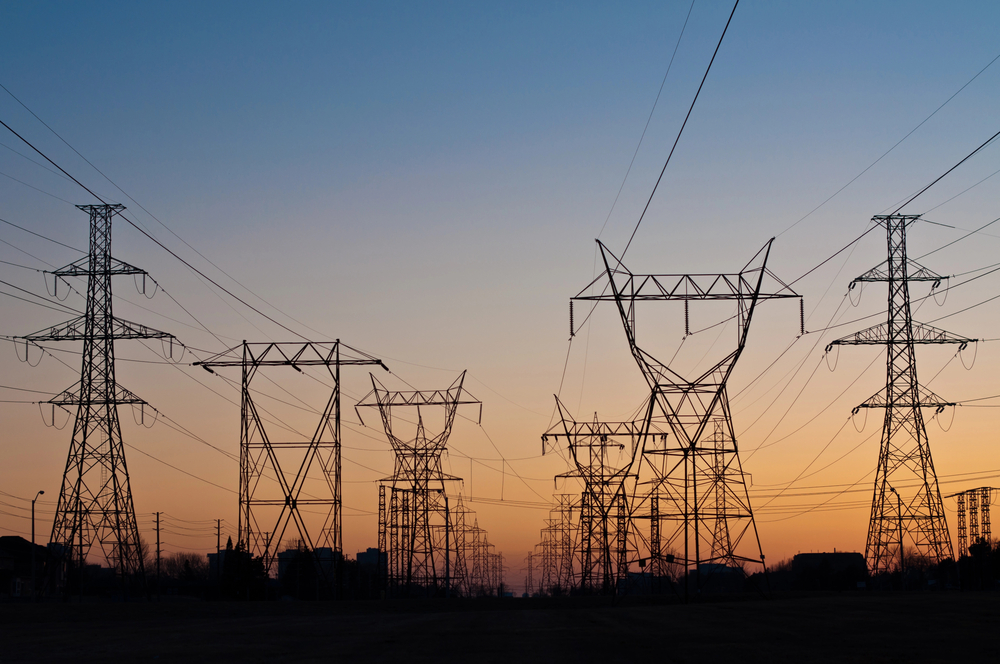
    Nordic energy infrastructure power grid transmission towers silhouetted against sunset sky

    US President Donald Trump has announced an immediate energy ceasefire in the war between Russia and Ukraine, saying both sides agreed to stop striking each other’s energy facilities, in a post on Truth Social. Ukraine, however, knew nothing about the deal.

    Russia has spent the war hitting Ukraine's power plants, refineries, and grids, while Ukraine answered with strikes on its refineries and plants that produce missiles. If confirmed, a halt before winter would be a major break. Yet about seven minutes before Trump’s announcement, Russia struck at Kyiv’s thermal plant, cutting power to several districts of the capital at once.

    “Effective immediately, there is an ENERGY CEASEFIRE in the War between Russia and Ukraine. Both parties have agreed. Do not break it!” Trump wrote.

    News for Zelenskyy

    President Volodymyr Zelenskyy told Axios the announcement “was news" for him. But if Russians agree to an energy ceasefire, Ukraine will agree, he added. Moscow gave no immediate confirmation.

    The announcement follows days of friction over energy. Washington has just eased sanctions on Russian diesel and pressed Kyiv to stop hitting Russian refineries, while Russian strikes killed more than 80 Ukrainian civilians in two days.

    A truce no one in Kyiv confirmed

    Zelenskyy had already signaled Ukraine’s terms. He said on Sunday that Kyiv was ready to stop striking Russian refineries if Moscow halted its attacks on Ukrainian energy, so the condition was on the table before Trump spoke, not settled by him.

    If Trump negotiated it with Putin, then he should say when the ceasefire begins, Zelenskyy added, underlining that Ukraine had not been party to any such agreement.

    Ukrainians greet it with doubt

    The reaction in Kyiv was wary. Trump already declared an energy ceasefire once, and Putin broke it within five minutes, said Andrii Kovalenko, former head of Ukraine’s Center for Countering Disinformation, asking whether Trump was now “announcing it to himself.”

    Meanwhile, lawmaker Yaroslav Zhelezniak called for an explanation, warning that Trump’s “energy ceasefire” might mean Ukraine stops hitting Russian refineries and tankers while Russia merely promises not to strike Ukrainian oil tankers it would struggle to find in the first place.

    Zelenskyy signals surprise at Trump claim of Russia-Ukraine ‘energy ceasefire’ but would back it if Moscow does – as it happened

    11 octobre 2026 à 14:36

    Ukraine’s president reportedly says Kyiv would accept a deal if Moscow does after US president posts announcement with no detail on social media

    The president of the EU Commission, Ursula von der Leyen, has expressed her “full support for President Zelenskyy” amid calls for a ceasefire.

    In a telephone call with the Ukrainian leader, von der Leyen posted on X that she “fully supported the call of President Zelenskyy for a ceasefire that would protect global food supplies and energy infrastructure in Ukraine and Russia.

    “Ukraine supports the ceasefire, and it’s important for Russia to support it as well. We are awaiting details from the American side. From our Ukrainian side, there is always FULL support for de-escalation steps, protection of lives, and the necessary decisions to end the war and ensure lasting peace.”

    Continue reading...

    © Photograph: Sergey Bobok/AFP/Getty Images

    © Photograph: Sergey Bobok/AFP/Getty Images

    © Photograph: Sergey Bobok/AFP/Getty Images

    Norwegian nonprofit commits $1 million for interceptor drones to protect Ukraine’s Black Sea ports from Russian drones

    11 octobre 2026 à 10:57

    Interceptor drones funded by Norwegian nonprofit Fritt Ukraina to Ukrainian forces to help counter Russian attack drones near the Black Sea ports. Photo: Fritt Ukraina / Come Back Alive

    Norwegian nonprofit Fritt Ukraina is allocating NOK 10 million (about $1 million) to strengthen air defenses around Chornomorsk, a key Ukrainian port on the Black Sea, the organization announced on 9 October.

    Russian attacks on port infrastructure and civilian vessels are threatening Ukraine’s maritime trade and agricultural exports, putting pressure on a vital source of revenue for the country and disrupting shipments of food to international markets.

    The funding will support Ukrainian State Border Guard Service and Armed Forces units defending the region against Russian attack drones. It is being delivered through Dronefall, a project run by the Ukrainian Come Back Alive Foundation, which equips military units with interceptor drones and the equipment needed to operate them.

    Fritt Ukraina, whose name means “Free Ukraine,” is a Norwegian nonprofit organization that supports Ukraine’s defense against Russia’s full-scale invasion. The donation is part of its Odins Ravner 2.0 fundraising campaign, which provides military assistance to Ukrainian forces.

    Interceptor drones and equipment to protect port infrastructure

    The support includes STING, Blyskavka and P1-SUN interceptor drones, alongside ground control stations, communications equipment, generators, charging stations, laptops, tablets and vehicles, according to the organization.

    The interceptor drones are already operational, according to Fritt Ukraina. The equipment helps Ukrainian personnel detect and intercept Russian attack drones, while vehicles allow crews to move quickly and operate from different positions.

    Fritt Ukraina Secretary General Natalia Golis said effective air defense requires more than interceptor drones alone. Communications systems, reliable power supplies and mobility are also essential to ensure units can use their equipment effectively.

    The organization is supporting Dronefall for the third consecutive year and has become the Come Back Alive Foundation’s largest foreign partner. The latest donation was matched by a donor affiliated with the Ukrainian foundation.

    STING interceptor drones funded by Norwegian nonprofit Fritt Ukraina to Ukrainian forces to help counter Russian attack drones near the Black Sea ports. Photo: Fritt Ukraina / Come Back Alive
    STING interceptor drones funded by Norwegian nonprofit Fritt Ukraina to Ukrainian forces to help counter Russian attack drones near the Black Sea ports. Photo: Fritt Ukraina / Come Back Alive

    Russian attacks threaten Ukraine’s maritime exports

    More than 90% of Ukraine’s agricultural products, including grain and vegetable oils, are exported through three ports in southern Odesa Oblast. Russian attacks have targeted port infrastructure and civilian vessels, increasing security risks for commercial shipping and driving up freight and insurance costs.

    Since the start of Russia’s full-scale invasion in February 2022, more than 1,000 Ukrainian port facilities and over 200 civilian vessels have been damaged or partially destroyed, Fritt Ukraina reports. The disruption threatens Ukrainian export revenue and international food supplies.

    “The attacks on Ukraine’s ports do not only undermine the country’s defense capabilities. They also threaten a vital part of its economy and its ability to export food to the rest of the world,” Golis said.

    Grain pours from a combine harvester into a trailer during harvest in Ukraine.
    Explore further

    Russia’s Odesa strikes halve Ukraine’s grain export forecast

    Dronefall aims to expand Ukraine’s ability to intercept Russian drones using dedicated interceptor aircraft and supporting equipment. According to Fritt Ukraina, participating units have destroyed more than 53,000 Russian drones, accounting for approximately one in five unmanned aerial vehicles entering Ukrainian airspace.

    The NOK 10 million contribution is part of Fritt Ukraina’s broader Odins Ravner 2.0 campaign, which provides more than NOK 60 million in support to Ukrainian forces.

    • ✇US news | The Guardian
    • ICE agent strikes man with vehicle during pursuit in Texas, officials say
      Parra-Hernandez suffered a broken leg and taken to a hospital after being hit by car during an ICE operationAn Immigration and Customs Enforcement (ICE) agent driving a vehicle struck a man on Saturday while trying to pursue him and someone else in the Houston area, according to authorities.The federal agency had been trying to pull over and arrest Jose Mendoza-Cervantes in north-west Harris county, Texas, when he and the victim, Miguel Parra-Hernandez, exited the vehicle, officials said. Contin
       

    ICE agent strikes man with vehicle during pursuit in Texas, officials say

    11 octobre 2026 à 10:54

    Parra-Hernandez suffered a broken leg and taken to a hospital after being hit by car during an ICE operation

    An Immigration and Customs Enforcement (ICE) agent driving a vehicle struck a man on Saturday while trying to pursue him and someone else in the Houston area, according to authorities.

    The federal agency had been trying to pull over and arrest Jose Mendoza-Cervantes in north-west Harris county, Texas, when he and the victim, Miguel Parra-Hernandez, exited the vehicle, officials said.

    Continue reading...

    © Photograph: Olga Fedorova/EPA

    © Photograph: Olga Fedorova/EPA

    © Photograph: Olga Fedorova/EPA

    • ✇US news | The Guardian
    • Trump urges John Fetterman to switch parties: ‘I’d love to see him as a Republican’
      Comments were among the most direct overtures by Trump to woo Democratic senator into his Republican partyDonald Trump on Saturday openly encouraged Democratic US senator John Fetterman to switch parties and become a Republican just weeks before the federal midterm elections could reshape control of Congress.“I’d love to see him as a Republican,” the presidents told reporters at Joint Base Andrews as he returned to Washington DC from a rally in Tennessee. “He does better as a Republican than he
       

    Trump urges John Fetterman to switch parties: ‘I’d love to see him as a Republican’

    11 octobre 2026 à 09:25

    Comments were among the most direct overtures by Trump to woo Democratic senator into his Republican party

    Donald Trump on Saturday openly encouraged Democratic US senator John Fetterman to switch parties and become a Republican just weeks before the federal midterm elections could reshape control of Congress.

    “I’d love to see him as a Republican,” the presidents told reporters at Joint Base Andrews as he returned to Washington DC from a rally in Tennessee. “He does better as a Republican than he does as a Democrat.”

    Guardian staff contributed reporting

    Continue reading...

    © Photograph: Kylie Cooper/Reuters

    © Photograph: Kylie Cooper/Reuters

    © Photograph: Kylie Cooper/Reuters

    Russia equips Geran attack drones with image-based navigation using Google map imagery, reducing reliance on satellite navigation that Ukraine can jam, defense adviser warns

    11 octobre 2026 à 09:01

    Ukrainian defense technology adviser Serhii “Flash” Beskrestnov works near the front line monitoring Russian drone signals. Photo: Serhii “Flash” Beskrestnov

    Russia is developing new navigation systems for attack drones and missiles that could make its strikes against Ukrainian cities harder to stop, as Moscow adapts its weapons to counter Ukrainian electronic warfare defenses, Ukrainian defense technology adviser Serhii “Flash” Beskrestnov said.

    The shift poses an additional challenge for Ukraine as Russia continues to attack cities and critical infrastructure with drones and missiles. Systems that can navigate without relying on satellite signals may be harder to disrupt electronically, increasing the importance of other defenses, including interception and physical destruction of incoming weapons.

    Image-based navigation could make Russian strike drones harder to jam

    Beskrestnov, an adviser to the Ukrainian president on defense technology development, said image-based navigation systems would see wider use in 2027, including in medium- and long-range strike drones and inexpensive cruise missiles.

    The technology allows drones to navigate by comparing images captured by an onboard camera with stored photographs of the terrain. Even basic navigation can use publicly available satellite or ground imagery from services such as Google, Beskrestnov said.

    Unlike satellite navigation, which can be disrupted by electronic warfare, image-based navigation relies on visual recognition of the terrain. This makes drones using the technology more resistant to jamming and could allow them to continue toward their targets even when satellite navigation signals are unavailable.

    Russia already uses image-based navigation on attack drones

    Beskrestnov said Russian forces were already using the technology on several types of unmanned aircraft, including Molniya, V2U, and Lancet drones.

    He also reported that similar systems had recently been identified on the Russian Geran-4 and Geran-5 attack drones, using a flight controller called Susanin.

    The Geran series includes Russian attack drones used in strikes against Ukrainian cities and infrastructure. The introduction of image-based navigation could make some variants more difficult for Ukrainian forces to counter using electronic warfare.

    Russia adapts its weapons to Ukrainian defenses

    The development reflects Russia’s broader effort to adapt its weapons as Ukraine improves its air defenses and electronic warfare capabilities. By reducing reliance on satellite navigation signals, Russian drones can become less vulnerable to one of Ukraine’s key methods of disrupting incoming attacks.

    Beskrestnov warned that image-based navigation would expand beyond individual drone models, with broader adoption expected next year across different categories of strike weapons.

    Once considered “taboo,” Russian assassination plots against European defense executives are escalating as its hybrid warfare grows bolder, intelligence agencies warn – FT

    11 octobre 2026 à 08:21

    Russia is expanding efforts to target European defense industry leaders as part of a broader campaign of sabotage and hybrid operations aimed at weakening support for Ukraine, the Financial Times reported on 11 October, citing officials from five European intelligence agencies.

    The warnings come amid a wider increase in Russia-linked sabotage and other covert operations targeting European defense companies and critical infrastructure. Moscow is expanding its so-called hybrid warfare campaign against European countries as they continue to support Ukraine, using covert networks, intimidation, and suspected sabotage to undermine security and deter further assistance to Kyiv.

    The FT reported that assassinations of civilian targets in Europe, once considered "taboo" even within Russian intelligence services, are becoming an increasingly prominent part of the Kremlin’s plans.

    Russian operatives target defense industry leaders

    European intelligence officials told the FT that Russian operatives are targeting chief executives and senior employees at defense companies, including smaller firms manufacturing drones and drone components. 

    The campaign comes as Russia seeks to undermine European backing for Ukraine amid a battlefield stalemate and mounting pressure on the Russian economy.

    The warnings have prompted defense companies to strengthen security around senior executives. Some have increased personal protection, while others have relocated production sites in response to suspected Russian threats, according to the FT.

    Germany's domestic intelligence service, the BfV, has stepped up contact with employees and management at German defense companies and recommended that some use privately contracted close-protection teams, an agency official told the newspaper.

    BfV chief Sinan Selen warned German lawmakers that Russia was deliberately planning acts of violence against individuals through state or state-controlled actors. He said the operations were evolving in their targets, methods, and use of organized crime networks.

    Russia adapts its methods to carry out attacks

    According to the intelligence officials cited by the FT, Russia's military intelligence agency, the GRU, has adapted its methods by working more closely with criminal groups and dividing surveillance, logistics, planning, and execution among different operatives.

    Officials said some plots had been disrupted, while other cases involved surveillance of targets at home and at work.

    The campaign's intended effect extends beyond any individual attack. One European intelligence official told the FT that the threat is psychological, designed to make people reconsider doing business with Ukraine.

    Although some Russian operations remain amateurish and have been detected early, the resulting uncertainty forces companies to devote more resources to security. Smaller firms, which may have fewer resources to protect their personnel and facilities, could be particularly vulnerable.

    Plot against Rheinmetall CEO raised alarm in 2024

    European defense executives have been on heightened alert since 2024, when US and German intelligence agencies uncovered a Russian plot against Rheinmetall CEO Armin Papperger, a prominent advocate of supplying weapons to Ukraine.

    Papperger has said he now receives round-the-clock protection from private security personnel and police.

    The FT reported that European intelligence agencies now view threats against defense industry leaders as part of a broader effort to disrupt the production and supply of weapons to Ukraine, rather than isolated plots against individual executives.

    • ✇US news | The Guardian
    • US maternity wards face wave of closures as Medicaid cuts kick in
      Trump’s ‘big, beautiful bill’ spending cuts will be fully felt next year, but hospitals are already feeling the squeezeMaternity wards across the United States are facing a wave of closures as cuts to federal Medicaid funding take effect, experts have warned.According to analysis by the non-profit Protect Our Care, 52 maternity wards have closed since the HR1 bill was announced in July 2025, with a further eight having announced their upcoming closure. Continue reading...
       

    US maternity wards face wave of closures as Medicaid cuts kick in

    11 octobre 2026 à 08:00

    Trump’s ‘big, beautiful bill’ spending cuts will be fully felt next year, but hospitals are already feeling the squeeze

    Maternity wards across the United States are facing a wave of closures as cuts to federal Medicaid funding take effect, experts have warned.

    According to analysis by the non-profit Protect Our Care, 52 maternity wards have closed since the HR1 bill was announced in July 2025, with a further eight having announced their upcoming closure.

    Continue reading...

    © Photograph: Tasos Katopodis/Getty Images for SEIU

    © Photograph: Tasos Katopodis/Getty Images for SEIU

    © Photograph: Tasos Katopodis/Getty Images for SEIU

    • ✇US news | The Guardian
    • Fixated on AI, the world has forgotten what is staring it in the face: nuclear annihilation | Simon Tisdall
      This is no scoffing matter. The accelerating proliferation of advanced nuclear weapons is bringing ‘end times’ closer by the dayHumankind has fearfully and sometimes joyfully anticipated the end of the world ever since it began. The Bible’s Book of Revelation speaks of “end times”, a period of tribulation, war, famine, plague, floods and environmental catastrophe that may seem a less absurd prospect today than perhaps it once did. Islam, too, posits a fateful day of judgment or day of reckoning.
       

    Fixated on AI, the world has forgotten what is staring it in the face: nuclear annihilation | Simon Tisdall

    11 octobre 2026 à 05:00

    This is no scoffing matter. The accelerating proliferation of advanced nuclear weapons is bringing ‘end times’ closer by the day

    Humankind has fearfully and sometimes joyfully anticipated the end of the world ever since it began. The Bible’s Book of Revelation speaks of “end times”, a period of tribulation, war, famine, plague, floods and environmental catastrophe that may seem a less absurd prospect today than perhaps it once did. Islam, too, posits a fateful day of judgment or day of reckoning. Christian evangelicals believe that, in the final rapture, a chosen few – the righteous or the “elect” – will be saved while sinners burn. It’s a minority view. Matthew’s gospel predicts most people will defy, ignore or ridicule warnings of imminent Armageddon. Peter, another of Jesus’s disciples, agreed: “In the last days, scoffers will come, scoffing and following their own evil desires.” Yet such worldly scepticism does not mean a universal cataclysm is less likely. It may make it more probable.

    Donald Trump’s blanket denials of the dangers ostensibly posed by artificial intelligence, whose uncontrolled development is seen by some as the latest harbinger of apocalypse, could be interpreted as fulfilling Peter’s prophecy. This US president, the nearest thing the world has to a one-man doomsday machine, is a great one for scoffing and evil desires. In Robert Harris’s 2019 novel, The Second Sleep, a worried scientist lists half a dozen ways the world might end. They include devastating climate change, pandemic disease, a giant asteroid collision with Earth, or some other overwhelming calamity. Few heed the fictional scientist’s fears. In the event, what destroys him and almost everybody else is a disturbingly plausible cyber crash – a global digital and internet meltdown.

    Simon Tisdall is a Guardian foreign affairs commentator

    Continue reading...

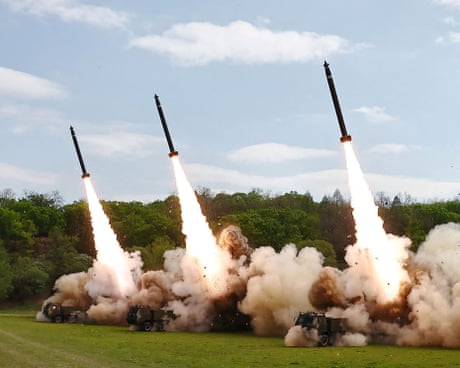
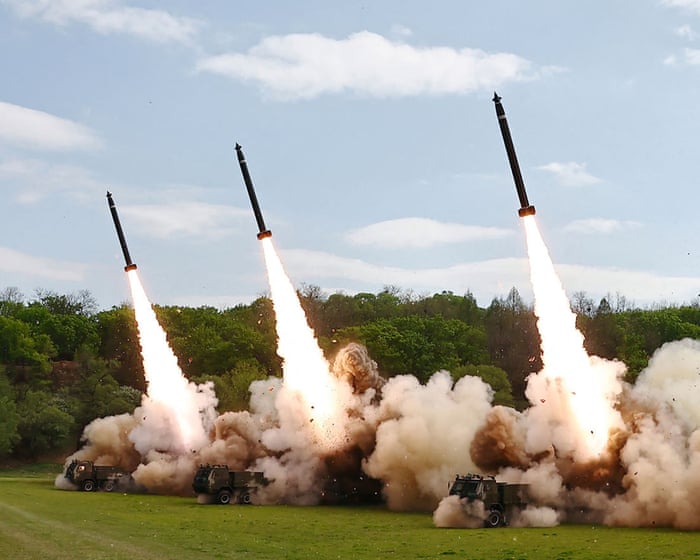
    © Photograph: KCNA VIA KNS/AFP/Getty Images

    © Photograph: KCNA VIA KNS/AFP/Getty Images

    © Photograph: KCNA VIA KNS/AFP/Getty Images

    Ukraine, long keeping its weapons at home, now lets 18 arms makers export, approving over 90% of more than 400 applications

    10 octobre 2026 à 18:48

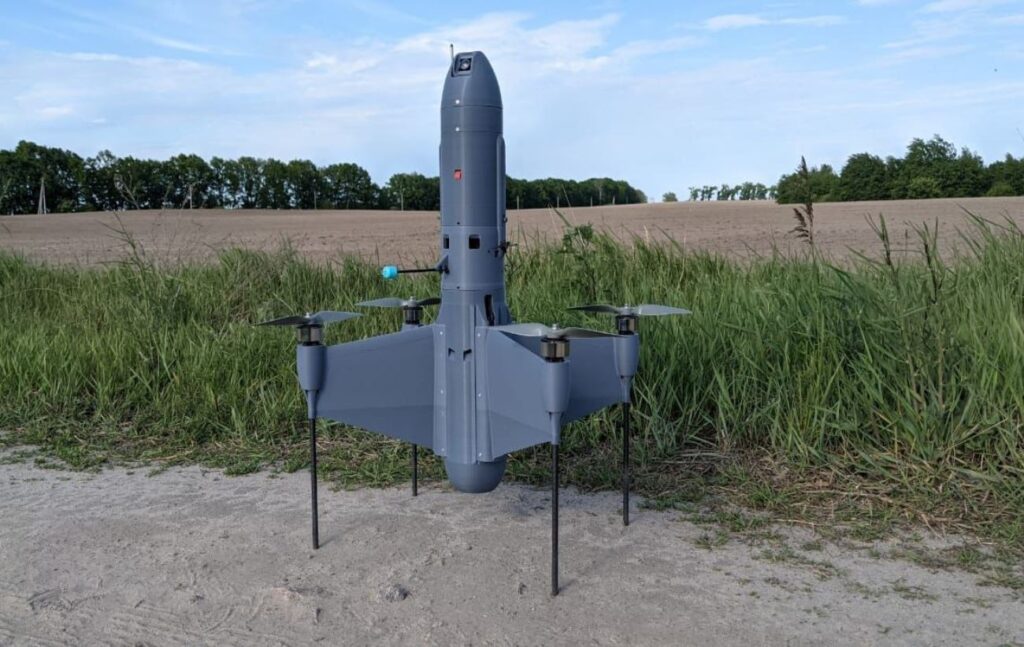
    P1-SUN An-28 Shahed interceptor

    Ukraine, which long kept its weapons at home, is now clearing its arms makers to sell abroad. Its Commission on Export Control has granted 18 Ukrainian companies permission to send their finished weapons abroad and has processed more than 400 export applications, with over 90% approved, the National Security and Defense Council says, citing commission head Davyd Aloian.

    Ukraine now produces far more weapons than it can afford, with defense production growing from about $1 billion a year at the start of the invasion to a projected $55 billion in 2026.

    The exports are reportedly conducted under the Drone Deals framework that President Volodymyr Zelenskyy unveiled in April, which allows controlled sales of surplus weapons to partner countries while the Defense Ministry and General Staff retain first claim to everything the front needs. Some categories already run up to 50% beyond what Ukraine can use or finance.

    From a stalled commission to 18 approvals

    The commission’s work had been halting. It resumed in February after an eight-month freeze and issued the first permits then, and its updated membership has been working since, Aloian notes.

    Building partnerships abroad

    Aloian framed the goal as scaling Ukrainian technology rather than one-off deals. The state wants domestic producers to expand abroad while partners get working solutions, he says, and is open to dialogue with the defense industry to fix problems as they arise.

    Earlier, an industry group that represents more than 400 companies warned in September that the mechanism was choking. A new 20-to-30% fee on export permits priced Ukrainian goods out of the market, it said, and a joint-production program had stalled with hundreds of foreign bids pending.

    Euromaidan Press cannot verify whether the Commission on Export Control has taken the issue into consideration.

    The council recently met a UK Defense Ministry delegation to discuss closer cooperation, including a Drone Deal, an anti-ballistic coalition, and joint production, Aloian adds. Reaching foreign markets enables producers to attract new orders and investment, scale up, and build long-term partnerships.

    EU imports record 12.18 million tons of Russian Arctic LNG in nine months, 9.5% more than year earlier — research group

    10 octobre 2026 à 18:32

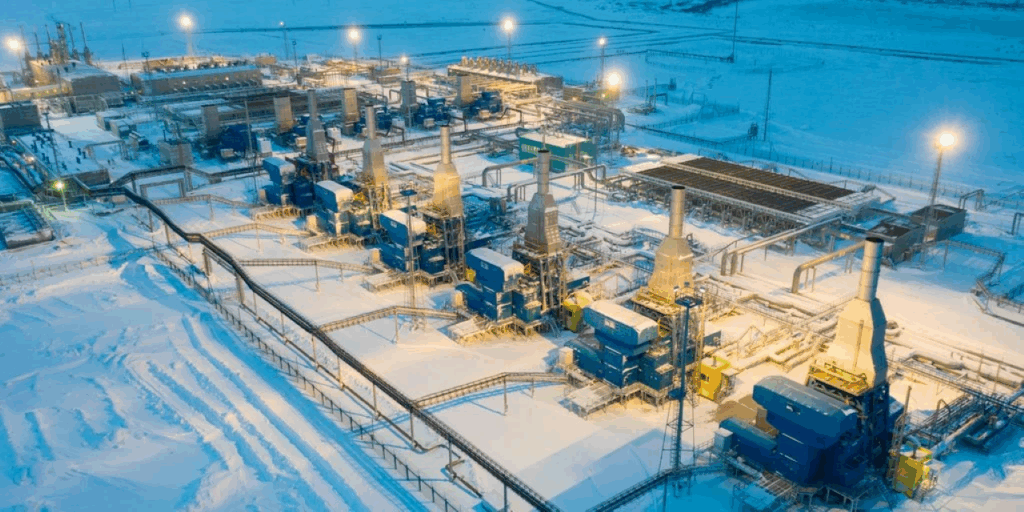
    yamburg gas field in the yamalo-nenets ao in russia

    Europe keeps buying record amounts of Russian gas even as it plans to punish its war machine against Ukraine. The EU ports took in a record 12.18 million tons of Russian liquefied natural gas from January to September, 9.5% more than in the same period of 2025, according to a study by the German group Urgewald based on Kpler tracking data.

    Europe spent about 7.88 billion euros on that Russian gas in nine months, revenue that helps fund a war Russia wages with daily missile and drone strikes on Ukrainian cities. The flow continues even as the EU prepares its largest-ever package of sanctions against Russia’s military industry.

    The gas comes from Russia’s Yamal project, which sent 167 cargoes to EU ports over the nine months, roughly one every 1.6 days. Europe took 85% of the project’s recorded deliveries by volume, remaining by far its biggest market, Urgewald reports.

    Europe’s share grew even as Yamal’s worldwide deliveries fell 1.3%, so the EU absorbed a larger slice of Russia’s Arctic output. In September alone, EU ports received 792,440 tons worth an estimated 818 million euros, nearly three-quarters of it going to France.

    Washington could pull the plug by 18 October

    The imports run up against a looming US decision. The Trump administration has until 18 October to complete its first review under the Lindsey Graham sanctions act, signed into law on 18 September, which allows Washington to sanction this gas trade at any time, the group notes.

    However, after the US allowed Russian diesel to enter the US and global market, the decision will likely remain stalled.

    Originally, the law covered Yamal’s leadership, foreign vessels that knowingly carried Russian LNG, and foreign ports that serviced US-sanctioned ships. Yamal depends on specialized Arc7 ice-class tankers and on nearby European ports where they can unload and quickly return, so closing that route would make the Arctic trade far harder to sustain.

    Europe’s own ban is still months away

    The EU’s measures so far have barely dented the trade. A ban on short-term LNG contracts took effect in April and has had no visible effect, while the full import ban under long-term contracts only starts on 1 January 2027, Urgewald says.

    Every month of largely uninterrupted trade means more revenue for Russia while Ukraine suffers daily attacks, sanction campaigner Sebastian Rötters says. The next EU package should close the remaining loopholes, above all those keeping the Arc7 tanker fleet running.

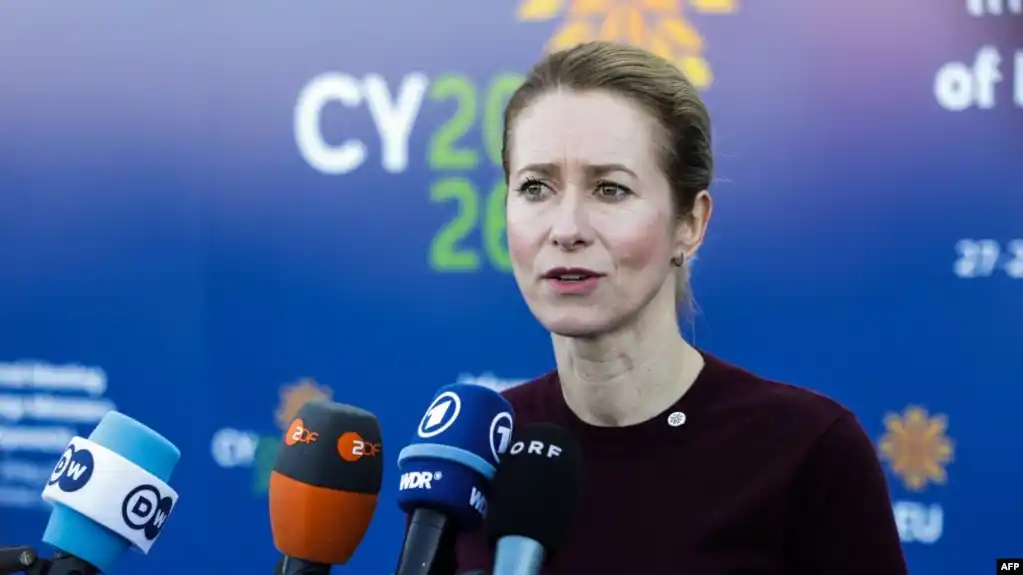
    Deals with dictators lead to hell: Estonia’s PM urges Europe to help Ukraine destroy Russia’s refineries after Washington eased sanctions on diesel

    10 octobre 2026 à 18:06

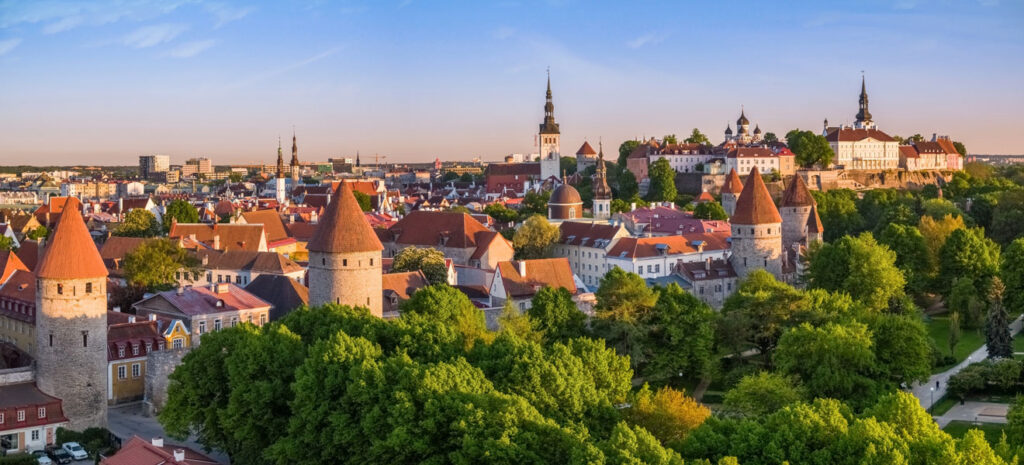
    estonian capital allocates € 200000 ukrainian cities development view tallinn estonia tallinnee city introduces program supporting municipalities aid expertise sharing eu integration initiatives estonia's launched new cooperation support 2025 city's

    Estonia’s answer to the US-Russia diesel agreement: deals with dictators lead to hell. Prime Minister Kristen Michal wants the European Council to discuss giving Ukraine more aid so it can destroy Russia’s oil refineries, after sharply criticizing the US decision to strike a diesel deal with Russia, ERR reports.

    Washington has eased sanctions on Russian diesel, a move Ukraine says funds a war that has killed more than 80 Ukrainian civilians in two days. Estonia’s answer is to go the opposite way and help Ukraine hit the source of that fuel, the refineries, harder.

    "It is worth discussing in Estonia and at the European Council next week whether we can quickly contribute more to Ukraine so they can blast Russia's oil refineries to smithereens," Michal says.

    He casts the US deal as a historic error. Innocent people are being killed for gas and fuel money, Michal warns, saying that the promised fuel may never arrive. For years, the US urged allies to drop Russian fuel, and Estonia did, so cutting Moscow’s revenue must continue, not reverse, he adds.

    Mihkelson: Russia's strategic goals remain unchanged

    Meanwhile, Marko Mihkelson, chair of the Riigikogu Foreign Affairs Committee, says that Russia's strategic objectives remain the same as they were before: to rebuild its empire, beginning with the subjugation of Ukraine, and to dismantle the Euro-Atlantic system of collective defense.

    "That is why European allies still have only one way to prevent this war of aggression from spreading: to do everything possible to ensure that Russia’s strategic objectives fail and that the imperial wars launched by the Kremlin end in defeat," he says.

    This clear strategic objective should also serve US interests, he continues, adding that "Russia’s long-standing ambition, pursued in concert with China and Iran, to undermine America’s global leadership is entering a decisive phase."

    Australia keeps Russian fuel out even as US opens its market: “We do not want Vladimir Putin to benefit from this war in Middle East”

    10 octobre 2026 à 17:31

    The image shows the Sydney Opera House. Credit: UkrInform

    Australia has no need to buy fuel from Russia, despite US President Donald Trump’s move to bring Russian diesel back to world markets. Climate Change and Energy Minister Chris Bowen says that imports from Russia will remain banned to ensure the country does not benefit from its invasion of Ukraine, Bloomberg reports.

    Trump has agreed with Russia's President Vladimir Putin to release Russian diesel onto global markets, a move Ukraine says funds a war that has killed more than 80 Ukrainian civilians in two days.

    “We don’t need or want Russian fuel in Australia. We do not want Vladimir Putin to benefit from this war in the Middle East. What the United States does is a matter for them, but we won’t be changing our approach,” Bowen said.

    The deal Australia is turning down

    Trump announced on 9 October a series of cargoes beginning this month totaling about 13.5 million barrels of Russian diesel. The release upends years of sanctions, as the White House looks for ways to tame soaring fuel prices before the US midterm elections.

    Bowen draws a clear line between that approach and Australia’s. What the US does is its own affair, he stresses, but Canberra will maintain its arrangements with trading partners to keep Russian fuel out of the market.

    Enough fuel to hold the line

    Australia can hold out without Russian supply, Bowen argues. The country has 43 days’ worth of petrol, two days more than a week earlier, and 31 days’ worth of diesel, one day less, he notes.

    He adds that Australia stays in close contact with domestic refiners to keep them running at full capacity. The stance lets Canberra wait out high prices rather than buy fuel that would send money to Moscow.

    Australia’s fuel costs have stayed high since the war between the US and Iran disrupted shipping through the Strait of Hormuz, the route that normally carries about a fifth of the world’s oil and gas.

    • ✇Euromaidan Press
    • Washington makes it official: US Treasury license clears sale and import of Russian diesel blocked by sanctions
      Washington has put its sanctions on Russian diesel on hold. The US Treasury has authorized the sale, delivery, offloading, and import of Russian-origin diesel fuel, effectively suspending sanctions on that trade until 7 April 2027, the Office of Foreign Assets Control (OFAC) said on its website on 9 October. The waiver lets Russian diesel back onto world markets and, Ukraine argues, hands Moscow fresh revenue for its war, which has killed more than 80 Ukrainian civilians in two days. Un
       

    Washington makes it official: US Treasury license clears sale and import of Russian diesel blocked by sanctions

    10 octobre 2026 à 15:48

    lukoil’s norsi refinery in kstovo, nizhny novgorod oblast

    Washington has put its sanctions on Russian diesel on hold. The US Treasury has authorized the sale, delivery, offloading, and import of Russian-origin diesel fuel, effectively suspending sanctions on that trade until 7 April 2027, the Office of Foreign Assets Control (OFAC) said on its website on 9 October.

    The waiver lets Russian diesel back onto world markets and, Ukraine argues, hands Moscow fresh revenue for its war, which has killed more than 80 Ukrainian civilians in two days. Until now, it was unclear whether Washington would roll back the sanctions it imposed on Russia in 2022.

    OFAC has issued the measure as General License 135, signed by the office’s director, Bradley Smith, according to the report. It authorizes transactions in Russian-origin diesel that sanctions would otherwise block.

    The license sets one limit. It does not permit any debits from accounts at US financial institutions held by Russia’s central bank, its National Wealth Fund, or its finance ministry, the document says.

    Trump’s promise of cheaper fuel

    On 9 October, US President Donald Trump wrote on Truth Social that Russia would immediately supply more than 300,000 tons of diesel, then 500,000 tons in November, and another million tons right after.

    Moscow would later send the US up to 3 million more tons, depending on the state of Russia’s refineries, Trump added, framing the deal as a way to bring down energy prices.

    Why the volumes fall short

    Analysts say the amounts are too small to move prices much. Together, the first tranches would cover about a day and a half of US demand, while US diesel use alone runs near 16 million tons a month. Experts read the move as politics ahead of an election rather than a real shift in the market, pointing out that Trump cited volumes in tons, which look larger than the barrels traders track.

    The deal drew fury in Kyiv, and President Volodymyr Zelenskyy called it a weak decision by strong partners. The EU is moving the other way, with ambassadors approving the bloc’s largest sanctions package against Russia’s war machine, due for final adoption on 12 October.

    While Washington eases up on Russia, Europe hits back harder: EU plans to pass its largest sanctions package on Russia’s war machine in two days

    10 octobre 2026 à 14:10

    kaja-kallas--

    Europe will not loosen its pressure on Russia after the US-Russia diesel deal, EU Foreign Policy chief Kaja Kallas says. She has announced that EU foreign ministers will approve the bloc’s largest set of sanctions against Russia’s war machine since the full-scale invasion on 12 October.

    Washington has just eased the pressure on Russia, letting Russian diesel back onto world markets and handing Moscow more money to wage war. This comes as Russian strikes have killed more than 80 Ukrainian civilians in two days, 22 of them on Russian President Vladimir Putin's birthday on 7 October.

    Moreover, Russia has stepped up its hybrid attacks against Europe, both EU Member States and NATO Allies. It is now the time to tighten sanctions, not loosen them, Kallas says.

    “Suspending sanctions on Russian diesel provides Moscow with more revenues to wage war. This is not the time to ease pressure on Russia, and Europe won’t,” she claims.

    A split with Washington

    On 9 October, Trump claimed he had agreed with Putin to put more than 300,000 tons of Russian diesel on world markets immediately.

    President Volodymyr Zelenskyy called the deal a weak decision by strong partners, arguing that Russia turns oil-product revenue into weapons against Ukraine's civilians, according to the BBC.

    The package aims at the missile chain

    On 7 October, EU ambassadors approved the 22nd package of sanctions, with about 1,700 listings, Ukrainian President’s Commissioner for Sanctions Policy Vladyslav Vlasiuk notes. It is expected to be formally approved on 12 October.

    This package contains the largest number of sanctions targeting Russia’s defence industry. Of these, 60% were drawn from Ukrainian decrees and proposals. The package includes measures targeting machine tools, Lancet drones, ballistic weapons, and related technologies.

    “The core of the package is Russia’s missile programme and electronic components: electronics, capacitors, resistors, and semiconductors. It also covers electronic warfare, shipbuilding, and explosives,” Vlasiuk says.

    It took just a few weeks from Ukraine's decision to the European one.

    "But we are already working on further measures, including sectoral sanctions targeting energy, the defense industry, finance, and trade,” he stated.

    • ✇Euromaidan Press
    • Trump’s Russian diesel deal, which drew fury in Ukraine, is unlikely to lower prices, experts say
      US President Donald Trump said on 9 October that he had agreed with Russian leader Vladimir Putin to bring Russian diesel to world markets to lower energy prices. However, energy analysts say the deal, which drew fury in Ukraine, is unlikely to lower diesel prices meaningfully, CNN reports. Trump wrote on social media that Putin would “immediately supply” more than 300,000 tons of diesel, with another 500,000 tons in November. Together, those volumes would cover about a day and a half o
       

    Trump’s Russian diesel deal, which drew fury in Ukraine, is unlikely to lower prices, experts say

    10 octobre 2026 à 13:16

    The White House in Washington DC, USA. Illustrative image: Wikimedia Commons.

    US President Donald Trump said on 9 October that he had agreed with Russian leader Vladimir Putin to bring Russian diesel to world markets to lower energy prices. However, energy analysts say the deal, which drew fury in Ukraine, is unlikely to lower diesel prices meaningfully, CNN reports.

    Trump wrote on social media that Putin would “immediately supply” more than 300,000 tons of diesel, with another 500,000 tons in November. Together, those volumes would cover about a day and a half of US demand, according to the US Energy Information Administration.

    Meanwhile, former head of the Center for Countering Disinformation Andrii Kovalenko says that US diesel consumption alone is about 16 million tons per month, and global consumption is roughly 120 million tons.

    The US experts read the move as politics more than a market shift. Trump spoke in tons rather than barrels because the figure looks bigger to an ordinary observer, said Dan Pickering, founder of Pickering Energy Partners, calling it “more politics than a game changer.”

    Doubts Russia can even deliver

    Former US officials question whether Putin holds the diesel Trump described, as Ukrainian strikes strain Russia’s refineries. A former senior State Department official says it hardly matters whether the fuel arrives, because Putin “has already achieved the result he wants,” with Trump believing he has a pre-election card that could move markets.

    Even if the fuel flows, it would be a temporary measure. Gregory Brew of Eurasia Group says that he suspects Putin expects Ukraine to halt its strikes on Russian refineries in return, and that he cannot imagine Zelenskyy agreeing.

    A win for Putin without conditions

    For Putin, the gain is plain, Kovalenko says: he pushes for sanctions relief and for no new US sanctions, all without any demand to end the war in Ukraine.

    "Trump’s bet was more on the news itself, driving prices down somewhat, because, in reality, figures like these shouldn’t bring prices down," Kovalеnkо believes.

    He adds that Trump will "make a big fuss about diesel ahead of the elections, nothing more," and that the average American is unlikely to feel any lasting effect.”

    Earlier, Ukrainian President Volodymyr Zelenskyy warned that allowing Russia to sell petroleum products abroad without securing a lasting de-escalation agreement would help finance Moscow's war against Ukraine.

    He criticized the decision, calling it "a birthday gift for Putin," per Axios.

    The next day after the announcement, Russia launched six bombs on Zaporizhzhia, killing 17 people.

    Ukraine shares its fortification know-how with Estonia’s new defense minister, weeks after 70-million-euro shells scandal felled his predecessor

    10 octobre 2026 à 12:43

    Ukrainian Defense Minister Yevhenii Khmara, during a meeting with Estonian Defense Minister Martin Herem in Kyiv, on 10 October 2026. Source: Ukraine's Defense Ministry.

    Ukraine is offering Estonia something no ally can buy off the shelf: how to fortify against Russia, learned under fire. Ukraine’s Defense Ministry announced, following a meeting between Defense Minister Yevhenii Khmara and his Estonian counterpart, Martin Herem, that Kyiv and Tallinn plan to develop joint defense projects, share data, and establish joint ventures.

    Both sides agreed to strengthen their defense cooperation in a declaration signed in June, according to the President’s Office. The partnership is gaining momentum as German intelligence warns that Russia may be preparing military action against the Baltic states, Welt reported.

    At the talks, the two sides went over the battlefield situation, Ukraine’s priority needs, and practical steps to deepen the partnership, the ministry said.

    Ukraine’s war experience, packed for export

    Ukraine’s experience of modern war was a central theme of the meeting, and it can already help Estonia strengthen its own defense against new threats, the ministry reports. During the visit, the Ukrainian delegation walked the Estonian representatives through its work on modern fortifications, including underground shelters.

    “Ukraine is scaling up fortification solutions based on real war experience. We already know how to build defenses and adapt them to new threats. I am sure this expertise will be useful to Estonia,” Khmara said.

    A debt of thanks to a steady backer

    Khmara thanked Estonia for its consistent help, singling out its decision to give 0.25% of GDP each year to support Ukraine. He also noted Estonia’s leading role in the IT coalition, a group of states that helps build Ukraine’s military communications and cyber capabilities, as well as its active work with other partners.

    The meeting was one of Herem’s first with Kyiv as defense minister. A former commander of Estonia’s armed forces, he took the post on 16 September after Hanno Pevkur resigned over a 70-million-euro procurement scandal involving artillery shells meant for Ukraine, Euronews reported.

    The minister confirmed Ukraine is ready to deepen practical defense cooperation with Estonia and to work on joint solutions that strengthen the security of both countries.

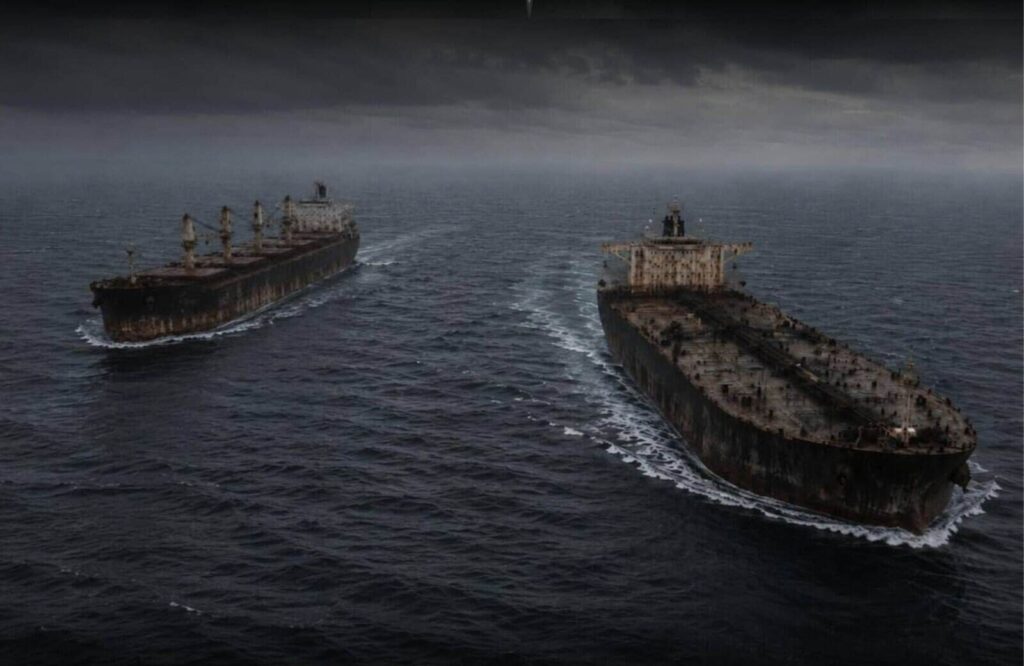
    Russia quietly grows fleet that funds its war: one shell firm in Marshall Islands buys two gas tankers from Chinese and Greek owners

    10 octobre 2026 à 11:11

    Two weathered cargo ships sail across a dark sea beneath heavy storm clouds.

    Ukraine has published data on 20 vessels that carry Russian oil and liquefied natural gas or refuel the sanctioned fleet, parts of the logistics network the Kremlin uses to fund its war, Ukraine's Defense Intelligence reports. All 20 are under British or Ukrainian sanctions, and only one faces US restrictions.

    Russia’s shadow fleet runs on roughly 500 aging ships of uncertain ownership that dodge sanctions and keep oil money flowing. That seaborne oil trade is worth more than 80 billion euros a year.

    The headline vessel is the Russian ship Portovyy, an LNG carrier and floating gas store owned by the sanctioned Gazprom since 2021, according to the agency. On 15 August 2026, it left the Gulf of Finland with Russian LNG for the first time since November 2021, sailing the Northern Sea Route to the Chinese port of Beihai to unload.

    Portovyy is now at the Zhoushan Huafeng Shipyard in China, which has been set as the site for its maintenance, intelligence says, an example of the foreign yards Kyiv wants closed to the sanctioned fleet.

    Russia buys up gas carriers through shells

    Two more gas carriers show how Moscow expanded the fleet in spring 2026 through front companies, intelligence said. The Avacha, once owned by China’s Jovo Energy, was bought by the little-known Tudor Maritime of the Marshall Islands, took the Russian flag in June, and now ships gas from the Arctic LNG 2 project to Beihai.

    The Chaivo, formerly owned by Greece’s Maran Gas Maritime, was also bought by Tudor Maritime and moved under the Russian flag in July. Now it carries cargo to Beihai from a floating gas storage facility off Kamchatka, intelligence says.

    A call to close the loopholes

    Intelligence urged partners to act together: tighten control over sales of commercially owned ships, block servicing of the sanctioned fleet at foreign yards, and cut off the energy revenue that Russia turns into weapons against civilians.

    Russia is building ice-class ships at home and, at the same time, widening its shadow fleet through offshore networks. The UK Foreign Office made the same point on 1 October, saying Moscow is assembling a new shadow fleet to keep its gas revenues flowing.

    Five Russian bombs kill 17 in Ukraine’s Zaporizhzhia next day after Trump lets Russia ship first 300,000 tonnes of its diesel

    10 octobre 2026 à 10:42

    The aftermath of a Russian strike on Zaporizhzhia on 10 October 2026. Source: Ukraine's National Police

    A Russian air strike with guided bombs on the southeastern city of Zaporizhzhia has killed at least 17 people, including three children, according to Ukraine’s State Emergency Service. Ukrainian President Volodymyr Zelenskyy has tied the attack to a US decision to let Russian diesel reach world markets without demanding Moscow halt its strikes on Ukraine first.

    On 9 October, President Donald Trump said that Russia would immediately supply more than 300,000 tonnes of diesel fuel to the US and global markets, a further 500,000 tonnes during November, and 1 million tonnes immediately thereafter. The move has already drawn criticism from US lawmakers in both parties.

    “Today, Russia expressed its gratitude for the lifting of sanctions on diesel exports by dropping five guided aerial bombs on residential buildings in Zaporizhzhia,” Zelenskyy wrote on Telegram.

    Zelenskyy vows to keep hitting refineries

    These figures were accurate at the time the post was written. Later, the State Emergency Service reported that the death toll had risen by two. Meanwhile, Zelenskyy stated that Ukraine would not stop striking oil refineries that bring additional revenues for the Kremlin, which spends them on the war.

    “There will be responses to Russian attacks. Thank you to everyone who is helping,” Zelenskyy concluded.

    According to Zelenskyy, two of the injured are in critical condition, and doctors are fighting to save their lives. Information is also being verified regarding another 12 people who may have been at the strike site.

    “Thirteen of our regions came under attack overnight. Residential buildings, infrastructure, and railway facilities have been damaged,” the Ukrainian leader said.

    More pressure on Kremlin

    Zelenskyy stressed that the latest Russian strikes further demonstrate the need to increase pressure on Russia. In his view, easing restrictions is interpreted by the aggressor as a signal that it can continue the war and attack Ukrainian cities.

    “This night provided yet another confirmation that Russia interprets any easing of pressure as a signal that it can supposedly continue fighting and that it can supposedly drop bombs on cities,” he emphasized.

    He also noted that Ukraine’s long-range strike capabilities are inflicting such losses on Russia and stressed that Ukraine would respond to Russian attacks.

    • ✇US news | The Guardian
    • The Jane Doe in the Cornell seven case is getting threats | Arwa Mahdawi
      Every time a story about a woman being raped becomes headline news, the same pattern repeats without failIf she really was raped, why didn’t she speak up earlier? Why did she get drunk? Why was she wearing such a short skirt? Why did she walk home by herself?God, it’s exhausting, isn’t it? Every time a story about a woman being raped becomes headline news, the same pattern repeats without fail. People accuse the woman of asking for it. They question her motives; they scrutinize her looks; they a
       

    The Jane Doe in the Cornell seven case is getting threats | Arwa Mahdawi

    10 octobre 2026 à 09:00

    Every time a story about a woman being raped becomes headline news, the same pattern repeats without fail

    If she really was raped, why didn’t she speak up earlier? Why did she get drunk? Why was she wearing such a short skirt? Why did she walk home by herself?

    God, it’s exhausting, isn’t it? Every time a story about a woman being raped becomes headline news, the same pattern repeats without fail. People accuse the woman of asking for it. They question her motives; they scrutinize her looks; they attack her character. And without fail, she is punished for speaking up.

    Continue reading...

    © Photograph: David Ryder/Reuters

    © Photograph: David Ryder/Reuters

    © Photograph: David Ryder/Reuters

    Memory for 100,000 killed by Nazis: Germany recognizes special responsibility to Ukraine and links it to support against Russia’s war

    10 octobre 2026 à 05:48

    german budget committee seeks approval € 3 bn ukraine aid parliament bundestag berlin westportal01 dbt/zumbansen parliament's has requested finance minister joerg kukies approve additional billion euros ($313 billion) military reports

    The German Bundestag has made a historic decision, officially recognizing Germany’s special responsibility to Ukraine for the crimes of Nazism. On 9 October, it adopted two resolutions ahead of the 85th anniversary of the Babyn Yar massacre and linked that responsibility to Germany’s current help for Ukraine amid Russian aggression, Oleksii Makeiev, Ukraine’s ambassador to Berlin, says.

    Babyn Yar in Kyiv became one of Europe’s largest sites of the mass murder of Jews during the Holocaust, where more than 100,000 people were killed over two years of Nazi occupation. Germany now casts a debt from that war as a moral duty to help defend Kyiv against Russia today.

    Both motions stress the importance of researching Nazi crimes in Ukraine and preserving the memory of their victims. One came from the governing CDU/CSU and SPD parties, the other from the opposition Greens, a rare alignment of coalition and opposition on a single theme.

    “The situation is unique: two motions on this subject were approved at once, from the coalition and the opposition. By the usual parliamentary logic, that should not happen,” Makeiev says.

    A debt turned into support for Kyiv

    The coalition motion backs research and documentation of Nazi crimes in Ukraine and closer work among German, Ukrainian, and other European archives and memorial institutions. It also calls for countering antisemitism, racism, and historical revisionism, and for continued political, economic, financial, humanitarian, and military support for Ukraine.

    Makeiev says he felt a sense of deja vu watching the debate from the visitors’ gallery.

    “I was in that same gallery in the fall of 2022. I saw how German democratic parliamentary groups can demonstrate unity on what matters most. At that time, the Bundestag recognized the Holodomor of 1932–1933 as genocide,” he adds.

    A clause on the deported children

    A separate point of the resolution concerns Ukrainian children and teenagers who Russia has illegally taken from Ukraine. The document calls for efforts to return about 20,000 of them to their parents or relatives, folding the issue into Germany’s wider policy toward Ukraine.

    The director of the Babyn Yar National Historical and Memorial Preserve, Rosa Tapanova, considers the Bundestag’s decision an important step toward re-examining the shared history of Ukraine and Germany and overcoming distortions of historical memory propagated for decades by the Soviet authorities and now being exploited by Russia.

    “The Bundestag’s decision marked an important step toward Germany’s recognition of its historical responsibility toward Ukraine," she says.

    The Bundestag’s decision and the participation of German representatives in commemorative events underscore the importance of continued Ukrainian-German dialogue. For the Babyn Yar National Historical and Memorial Preserve, this work encompasses historical research, the documentation of testimonies, educational and memorial projects, and international cooperation.

    Investigators say prosecutors shielded scam call centers. Their office has now fired eight people and is checking how its ex-chief left Ukraine

    9 octobre 2026 à 16:08

    Acting Prosecutor General Anton Kovalskyi.

    Ukraine’s prosecution service has dismissed eight people named in connection with an anti-corruption probe into the alleged protection of scam call centers, acting Prosecutor General Anton Kovalskyi reported. His office is also running internal checks on several officials linked to the case. A separate probe covers the trip abroad of his predecessor, who left Ukraine in September.

    Ukraine’s main prosecution service is auditing itself while the country’s anti-corruption agencies investigate an alleged scheme run from inside it. The National Anti-Corruption Bureau (NABU) and the Specialized Anti-Corruption Prosecutor’s Office (SAPO) allege that a PGO official set up a criminal organization in mid-2025. They say it drew in serving prosecution employees and unofficial associates, took bribes for leaving scam call centers alone, and laundered the proceeds. The investigation is called Operation Carthage.

    A probe from the outside, an audit from the inside

    Ukraine’s main prosecution service is auditing itself while the country’s anti-corruption agencies investigate an alleged scheme run from inside it. The National Anti-Corruption Bureau (NABU) and the Specialized Anti-Corruption Prosecutor’s Office (SAPO) allege that an official of the Prosecutor General’s Office (PGO) set up a criminal organization in mid-2025. They say it drew in serving prosecution employees and unofficial associates. The group allegedly took bribes for leaving scam call centers alone and then laundered the proceeds. The case is known as Operation Carthage, Espreso reported.

    Dismissals and polygraph tests

    Seven of the eight dismissed people worked at the PGO, Kovalskyi said. Separately, four people were removed from administrative posts, including the heads of the IT department and the cybercrime directorate. Kovalskyi said 24 prosecutors took polygraph tests. The results went to a commission running an internal investigation. He wrote that trust in the prosecution service would be restored not through announcements of change but through consistent, balanced decisions and concrete results.

    Ruslan Kravchenko speaks beside a large Ukrainian flag at a housing-rehabilitation event in Irpin in June 2023.
    Explore further

    Zelenskyy suspends prosecutor general who charged the bureau probing his own office

    The internal probe concerning former Prosecutor General Ruslan Kravchenko covers his trip abroad. Investigators are checking whether he followed established procedure and how the business trip was organized. Kravchenko left Ukraine in an official car on the night of 13–14 September, Ukrainska Pravda reported, citing law enforcement sources. He explained his departure as an official trip to Lithuania.

    On 14 September, Kravchenko announced he had signed a notice of suspicion against NABU director Semen Kryvonos. That evening, his own office said Kryvonos had never been properly served and that the register entries were cancelled.

    On 15 September, lawmakers backed Kravchenko’s resignation 317–0. Two days later, President Volodymyr Zelenskyy assigned Kovalskyi the duties of prosecutor general by decree. Before that, Kovalskyi headed the Khmelnytskyi Oblast Prosecutor’s Office.

    Two Carthage figures under internal review

    The PGO completed an internal investigation into Aidyn Khudiiev, a former deputy department head, Kovalskyi said. Its findings will go to the Qualification and Disciplinary Commission of Prosecutors, and the PGO abolished his post. SAPO prosecutor Mykola Karas told a court hearing that detectives seized $50,000 at Khudiiev’s workplace during the Carthage searches.

    Ruslan Kravchenko, former Prosecutor General of Ukraine. Facebook
    Explore further

    Ukraine’s chief prosecutor fled. Politicians still choose the man who can prosecute them.

    The PGO is also investigating Serhii Kropyva, former deputy head of its international cooperation department. NABU detained him on 4 September, the first day of the operation. The internal probe looks at whether he used his powers for private interests and interfered in other prosecutors’ work. The PGO’s General Inspectorate has filed a disciplinary complaint against him with the same commission, and his post was also abolished.

    Trump says Russia agreed to supply millions of tons of diesel to US and global markets as he blames Ukraine for fuel price hikes driven by Iran war

    9 octobre 2026 à 15:45

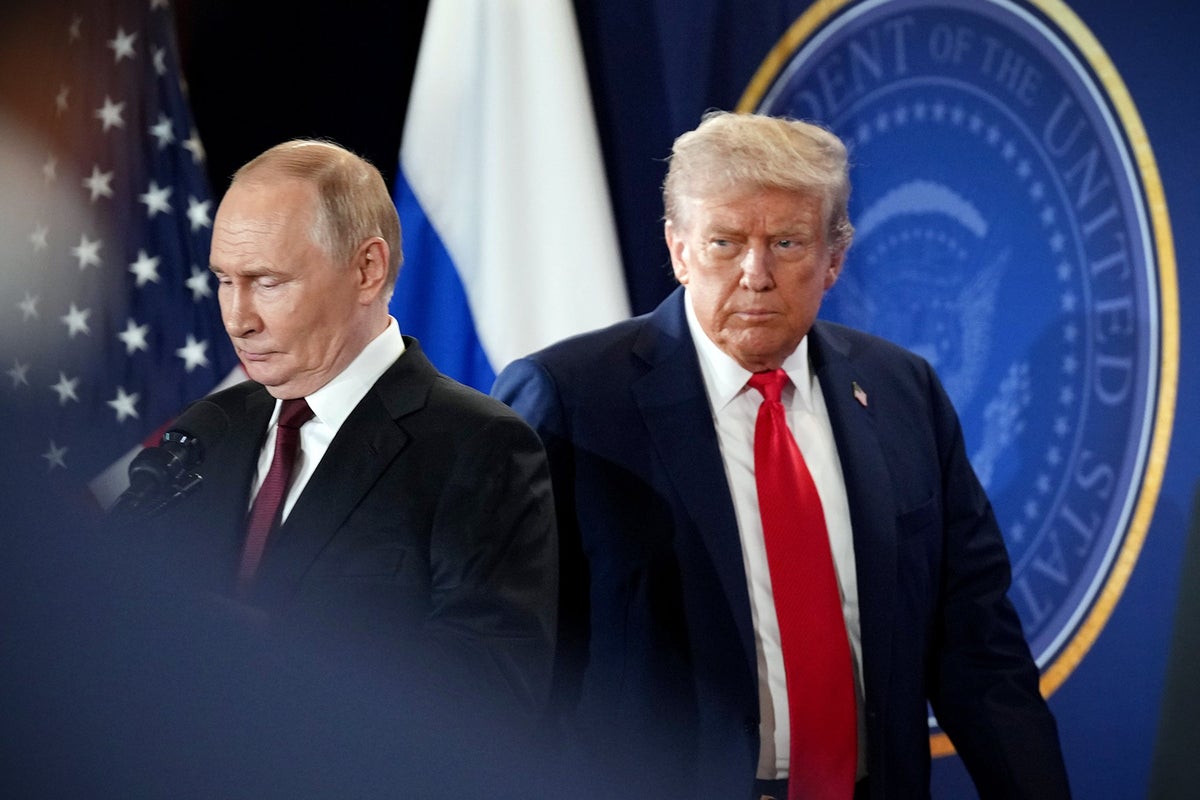
    Trump Putin meeting in Alaska

    US President Donald Trump announced a deal with Russian President Vladimir Putin for Moscow to supply millions of tons of diesel fuel to American and global markets. 

    The announcement would give Russia a major opportunity to sell fuel abroad at a time when Ukraine is targeting its oil industry to deprive Moscow of revenue and disrupt the resources sustaining its invasion. The US president has increasingly called for Ukraine to halt strikes on Russian oil infrastructure in recent weeks, blaming Ukraine for high fuel prices in the US.

    Trump’s push for Kyiv to halt those attacks, alongside his effort to secure Russian fuel supplies, risks undermining Ukraine’s campaign to put economic pressure on the Kremlin while the US seeks to contain the fallout from its war with Iran.

    Trump promises millions of tons of diesel from Russia

    In a 9 October post on Truth Social, Trump said Russia would immediately supply more than 300,000 tons of diesel, followed by another 500,000 tons in November and 1 million tons shortly afterward. He also announced a possible additional delivery of 3 million tons, conditional on the state of Russian refineries.

    “Diesel Prices for Americans and, indeed, the World, will be COMING DOWN, IN RECORD NUMBERS, AND FAST!” Trump wrote, describing lower fuel prices as a top priority for American farmers, ranchers, and truckers.

    Trump's announcement did not explain how the promised volumes would be reconciled with the condition of Russian refineries amid ongoing Ukrainian strikes, which he cited as a factor determining the timing of later deliveries.

    Trump has pressed Ukraine to stop targeting Russian refineries

    The announcement comes after Trump repeatedly blamed Ukrainian strikes on Russian oil infrastructure for worsening global diesel shortages and driving up fuel prices.

    Ukraine has continued targeting Russian oil facilities as part of its campaign to undermine Moscow's war economy. Ukrainian strikes have damaged refining capacity, contributed to fuel shortages inside Russia, and forced Moscow to restrict fuel exports. 

    Kyiv has argued that the attacks put pressure on Russia's ability to finance and sustain its war against Ukraine.

    Iran war drives fuel prices higher, not Ukraine

    The rise in US fuel prices stems largely from the US-Israeli war with Iran and its disruption of global energy supplies, according to Reuters. The conflict has disrupted shipping through the Strait of Hormuz, a strategic waterway through which roughly one-fifth of the world's oil supplies normally pass, pushing energy prices higher. 

    Trump has nevertheless blamed Ukraine's refinery strikes for rising fuel costs while pressing Kyiv to halt them.

    Ukraine's attacks on Russian oil infrastructure are intended to weaken Moscow's war economy. By contrast, the disruption to global energy shipments stems largely from the conflict with Iran. 

    Zelenskyy warns Russian diesel deal would fund further attacks on Ukraine

    Ukrainian President Volodymyr Zelenskyy warned later on 9 October that allowing Russia to sell petroleum products abroad without securing a lasting de-escalation agreement would help finance Moscow's war against Ukraine.

    “Allowing Russia to sell petroleum products is an investment in a war that must be ended, not prolonged,” Zelenskyy said, responding to Trump's announcement of a proposed Russian diesel supply deal.

    Zelenskyy said Ukraine's strikes on Russian oil refineries and other oil facilities were a response to Russia's years-long campaign against Ukrainian energy infrastructure. He offered a reciprocal arrangement under which Ukraine would stop striking Russian refineries if Russia stopped destroying Ukrainian energy facilities, saying the United States had sufficient leverage to secure such an agreement.

    “Ukraine will not burn Russian oil refining facilities if Russia does not destroy our energy infrastructure,” Zelenskyy said.

    He also urged Washington to maintain pressure on Moscow, including sanctions under the proposed Graham legislation, and to continue supporting Ukraine's defense. Zelenskyy argued that easing sanctions without a clear, sustained de-escalation agreement would signal weakness and give Russia more time and resources to continue the war.

    “Gifts to Putin will not bring peace,” Zelenskyy said, warning that Russia would respond to diesel supplies with further terror and attacks. He called on the United States to pursue a reciprocal de-escalation agreement and press Russia to stop its attacks on Ukrainian energy infrastructure.

    • ✇Euromaidan Press
    • Head of Russian military propaganda network to be expelled from Montenegro over suspected anti-EU operation

      Montenegro has ordered the expulsion of Mikhail Zvynchuk, head of the pro-Kremlin military information network Rybar, and four other Russian citizens over national security concerns following a security operation targeting suspected Russian hybrid influence activities, Vijesti reported on 9 October. Zvynchuk is the founder and head of Rybar, a prominent Russian military-focused information network known for its Telegram channels covering Russia's war against Ukraine. The network promote


       

    Head of Russian military propaganda network to be expelled from Montenegro over suspected anti-EU operation

    9 octobre 2026 à 15:08

    Mikhail Zvynchuk, head of the pro-Kremlin military information network Rybar. Screenshot: RuTube via Novaya Gazeta Europe

    Montenegro has ordered the expulsion of Mikhail Zvynchuk, head of the pro-Kremlin military information network Rybar, and four other Russian citizens over national security concerns following a security operation targeting suspected Russian hybrid influence activities, Vijesti reported on 9 October.

    Zvynchuk is the founder and head of Rybar, a prominent Russian military-focused information network known for its Telegram channels covering Russia's war against Ukraine. The network promotes pro-Kremlin narratives and has been associated with Russian propaganda and influence operations.

    Montenegrin police announced on 9 October that the five Russians had their residence rights revoked and were ordered to leave the country on national and internal security grounds. 

    Montenegro investigates suspected Russian hybrid activity

    The operation involved Montenegro's police and National Security Agency (ANB), which seized drones, high-resolution recording equipment, cameras, and several mobile phones for further examination, according to Vijesti.

    According to Montenegrin authorities, the five had arrived in the country less than two days before the operation. The investigation is being conducted with support from international partners.

    Montenegrin police identified the five Russian citizens as Zvynchuk, his wife Valeria Zvynchuk, Sergei Belous, Pavel Lekatorchuk, and Kira Doroshenko. Authorities said the case had been referred to prosecutors in Podgorica and Kotor.

    The European Union has sanctioned Zvynchuk over activities that undermine or threaten Ukraine's territorial integrity, sovereignty, and independence. He has also been sanctioned by the United Kingdom, Switzerland, Australia, and Ukraine, according to Vijesti.

    Suspected influence operation targeting EU integration

    Vijesti reported, citing security sources, that Montenegrin authorities suspected the group of planning a documentary intended to undermine public support for the country's European integration.

    According to the outlet, the planned material would portray Montenegro's expected alignment of its visa policy with EU standards as a politically imposed measure that threatens tourism, economic stability, and national interests.

    Security services had monitored the group's arrival before carrying out the operation in Risan, in the Bay of Kotor area, Vijesti reported. The equipment seized from the group will undergo expert analysis to establish its intended purpose and use in Montenegro.

    Medvedev threatens imprisoning “European and American idiots” for prisoner exchanges

    Former Russian President Dmitry Medvedev responded to the operation by suggesting Moscow might need to expand its pool of prisoners to exchange for Europeans and Americans to secure Zvynchuk's return.

    “We will probably have to replenish our pool of prisoners for exchange with European and American idiots,” Medvedev said, according to Vijesti.

    Montenegro, a NATO member and EU candidate, has aligned itself with EU sanctions against Russia following Moscow's full-scale invasion of Ukraine in 2022. The expulsion comes amid broader European concerns over Russian intelligence activity, propaganda, and other forms of hybrid interference. 

    Air-raid sirens cost Kyiv’s weapons makers 61.8 working hours in month, nearly eight days, yet their contract deadlines stay fixed, two groups say

    9 octobre 2026 à 14:49

    Air-raid sirens are quietly stealing the hours Ukraine needs to build its weapons. The alerts ate up 61.8 hours of the standard work schedule in Kyiv between 27 August and 29 September, almost eight working days in a little over a month, yet weapons makers still face unchanged contract deadlines, the Ukrainian Gunmakers Council and the League of Defense Enterprises of Ukraine say.

    In September 2026, Economy Minister Oleksandr Kravchenko said that every hour of air-raid alerts costs Ukraine’s economy about $45 million as businesses halt and workers shelter. For arms makers, those lost hours collide with fixed delivery dates and the penalties that follow if they slip.

    The council’s figure covers Kyiv alone, and each plant loses more depending on its location, schedule, and processes, the groups said. On top of the siren time comes the wait to shut equipment down safely, move workers to shelter, and restart once the all-clear sounds.

    A missed deadline carries a daily fine, and after 30 days, an extra 7 percent penalty. Money meant for components and the next orders goes instead to penalties and court disputes.

    A rule that ignores the sirens

    The contract date stays fixed unless the customer agrees to move it, the groups said. That leaves producers paying for stoppages they do not control, while the weapons still have to ship.

    The Gunmakers Council has drafted changes to Cabinet Resolution No. 1275 to establish a single method for confirming real downtime from alerts and its effect on each contract’s deadline, it said. A customer could check alert times against official data and verify stoppages and restarts against a plant’s own production records, with each request judged on a case-by-case basis.

    Waiting on the ministry

    The groups say they have repeatedly raised the issue with the Defense Ministry and sent official letters proposing changes, and they are urging the ministry and the Defense Procurement Agency to act without delay.

    They want a defined list of supporting documents, a deadline for reviewing requests, and rules for applying the mechanism to contracts that have already been signed. Until a decision comes, enterprises keep losing production time, and the risk of delay grows, the groups say.

    Ukrainian producer that neutralized more than 7,000 drones over 100 square kilometers in year, plays enemy in Pentagon contest, and gets invitation to continue

    9 octobre 2026 à 14:38

    The C2 KUPOL platform. Source: Phantom Defense

    A Ukrainian company has played the enemy in a Pentagon drone contest, and the US liked what it saw. Phantom Defense, a Ukrainian defense-tech firm, was one of three companies whose systems built the counter-drone environment for Gauntlet II, the second stage of the US military’s Drone Dominance program, and has been invited to take part further, Defender Media reports.

    Drone Dominance is the Pentagon’s four-phase effort to field cheap attack drones fast, a roughly $1 billion program to buy more than 200,000 low-cost attack drones by 2027. Phantom Defense brought a system that was already proven at home, where in one city it neutralized more than 7,000 enemy drones over an area of more than 100 square kilometers in a year, the company says.

    Rather than enter a drone of its own, Phantom Defense supplied the resistance that the American drones had to fly through. Its setup paired the Specter PRO, L, X, and XL jammers with the Streamhunter video-interception tool and a command-and-control layer that detected and classified targets, coordinated the countermeasures, and confirmed the kills. The jammers suppressed drones and held up in heat and rain, it adds.

    The arrangement lets American developers fly their drones under live electronic attack rather than calm conditions, recreating a battlefield where a drone’s performance swings with the jamming around it, according to the company.

    One map to run the whole fight

    At the center sits Phantom Defense’s C2 system, Kupol, which integrates separate tools into a single ecosystem on a shared map. It lets crews run electronic warfare remotely, without driving out to a position, and ties in sensors, interceptor drones, and turrets, the company says.

    Kupol reads the terrain and a drone database to propose the best way to take down a target, then logs each mission automatically so its recommendations sharpen over time.

    The high-power Specter PRO station, built to shield positions, critical infrastructure, and cities, serves as the hardware anchor.

    An invitation, not yet a contract

    Previously, Ukraine’s battle-tested drone makers also took part in Drone Dominance. However, they didn’t succeed in it, though some of their technology competed under Western partners. The program bars direct purchases from Ukrainian firms, which must set up a US legal entity to bid.

    • ✇US news | The Guardian
    • ICE officer shoots man in New York City – video
      A ICE officer shot and injured a man in New York during an enforcement operation, federal officials said. The man was conscious and hospitalized, authorities said, and the shooting quickly sparked angry protests from local residents and elected officials in the neighborhood. Early reports indicated that agents had surrounded the man and a five-year-old child in his car on a busy street before firing multiple rounds, the city’s mayor, Zohran Mamdani, said in a statement. Continue reading...
       

    ICE officer shoots man in New York City – video

    9 octobre 2026 à 14:25

    A ICE officer shot and injured a man in New York during an enforcement operation, federal officials said. The man was conscious and hospitalized, authorities said, and the shooting quickly sparked angry protests from local residents and elected officials in the neighborhood. Early reports indicated that agents had surrounded the man and a five-year-old child in his car on a busy street before firing multiple rounds, the city’s mayor, Zohran Mamdani, said in a statement.

    Continue reading...

    © Photograph: Reuters

    © Photograph: Reuters

    © Photograph: Reuters

    Ukrainian journalists say Austria detained them “like terrorists”: prosecutor says suspicion unsubstantiated

    9 octobre 2026 à 13:45

    tkach

    Austrian police detained Ukrainian investigative journalist Mykhailo Tkach and cameraman Yaroslav Bondarenko in Vienna yesterday, on 8 October. Both were later released, but the circumstances of their detention remain unclear, and the prosecutor’s office said suspicion against them had not been substantiated so far.

    The detention lasted more than 12 hours, the first time Tkach had been held that long while on a reporting assignment abroad. The case unfolded alongside a separate Austrian espionage investigation involving two men suspected of working for Ukraine’s military intelligence. Authorities have not said whether the cases are connected.

    Tkach describes detention

    In a video published by Ukrainska Pravda, Tkach said seven people wearing masks and carrying weapons approached their car at a traffic light about 3–5 kilometers from central Vienna, broke its windows, and pointed weapons at them.

    He said the people did not identify themselves or explain their actions. The journalists were pulled from the car, forced face down onto the road, searched, and had their hands taped behind their backs, according to Tkach. He said he initially thought they were being kidnapped because he did not see identification or have time to notice police markings. He realized they were police only after seeing police vehicles.

    “As I felt it, they detained us like terrorists,” Tkach said.

    He added that people shouted and pointed weapons, and there was no communication. He said one person put a knee on his neck and shouted at him to be quiet. He also saw glass from the broken window fly into Bondarenko’s face.

    In a second report, Ukrainska Pravda said Tkach’s account of a document presented to him listed three allegations: espionage in the interests of Ukrainian military intelligence, participation in a criminal organization, and, as far as he remembered, causing harm to Austria. He said investigators did not explain the evidence behind the allegations.

    Vienna prosecutor’s office spokesperson Nina Bussek told the Austrian Press Agency (APA) that suspicion against the two journalists had arisen during other investigations but had not been substantiated. She said it currently appeared that the suspicion was not holding up. Austrian officials have not publicly addressed Tkach’s account of the force used.

    Diplomatic response and calls for an investigation

    Tkach and Bondarenko were in Vienna on an assignment to find Ruslan Kravchenko, Ukraine’s former prosecutor general, Ukrainska Pravda reported. Kravchenko was dismissed on 15 September amid an investigation by Ukraine’s National Anti-Corruption Bureau and Specialized Anti-Corruption Prosecutor’s Office into alleged protection of fraudulent call centers. He denied involvement. Der Standard reported that it remained unclear whether the journalists’ detention was connected to their reporting on him.

    Ukraine’s Foreign Ministry spokesperson Heorhii Tykhyi confirmed Tkach’s release and said the Ukrainian consul had requested access to him, according to NV. Musaieva said Bondarenko had been injured and hospitalized.

    A statement signed by Ukrainian media and civil society organizations, including Euromaidan Press, called for an immediate, transparent, and independent investigation of law enforcement’s actions. The signatories also demanded an independent review of the force used, the return of seized equipment, and necessary medical and legal assistance.

    Separate espionage investigation

    Austrian Interior Minister Gerhard Karner confirmed the arrests of four Ukrainians, according to ORF. The two men detained on 5 October were placed in pretrial detention until 21 October on suspicion of secret intelligence activity against Austria. APA reported that they were suspected employees of Ukraine’s military intelligence service. Both deny the allegations.

    Ukraine suffered 10 times fewer casualties than Russia in Vivaldi counteroffensive, veteran says. Ukraine’s innovations in drone and ground robot tactics are changing frontline warfare

    9 octobre 2026 à 12:10

    Ukraine's Third Army Corps commander Brigadier General Andrii Biletskyi announcing "Operation Vivaldi," 15 September 2026. Screenshot from video: Ukraine's Third Army Corps

    Ukrainian assault troops suffered more than 10 times fewer casualties than Russian forces during Operation Vivaldi, a Ukrainian military veteran said on 9 October, describing the ratio as unprecedented and highlighting Ukraine’s improved ability to protect its soldiers during offensive operations.

    The counteroffensive has been a significant Ukrainian success, reclaiming territory in northern Donetsk Oblast and disrupting Russia’s plans to advance toward Sloviansk and Kramatorsk. The reported casualty ratio points shows Ukraine’s ability to make offensive gains while reducing the human cost of assaulting fortified positions.

    Yevhen Dykyi made the remarks in an interview with Radio NV, saying the results showed how Ukrainian forces had learned to limit losses while attacking defended Russian positions.

    Protecting troops during offensive operations

    Dykyi said the casualty ratio was one of the operation’s most important outcomes.

    He said that Ukrainian assault troops suffered more than 10 times fewer casualties than Russian forces during the counteroffensive.

    “That speaks volumes. We have learned how to protect our people, and that is extraordinarily vital,” he added.

    Operation Vivaldi disrupted Russia’s advance in Donetsk

    The Third Army Corps launched Vivaldi in mid-September in northern Donetsk Oblast, near Lyman, where Russian forces had spent months trying to advance toward Ukraine’s fortified cities of Sloviansk and Kramatorsk.

    The operation aimed to clear Russian troops from positions north of Lyman and disrupt Moscow’s plans to encircle the remaining Ukrainian-held parts of Donetsk Oblast. Ukraine’s Third Army Corps announced the counteroffensive on 15 September, initially reporting that its forces had cleared Russian infiltrators from several settlements and liberated Serednie.

    By 30 September, Ukraine had regained 176 square kilometers of territory during the operation, according to figures cited by the Ukrainian presidential office. Ukrainian authorities also reported that their forces had captured around 250 Russian soldiers and inflicted more than 5,000 Russian casualties, including killed and wounded. 

    The counteroffensive also disrupted Russia’s effort to advance behind Ukraine’s fortified defensive line. By threatening Russian positions north of Lyman, Ukrainian forces complicated Moscow’s plans to encircle the Sloviansk-Kramatorsk area rather than attack its defenses head-on.

    Unmanned systems help limit casualties

    A key feature of Vivaldi has been the use of unmanned systems to attack fortified Russian positions before Ukrainian infantry moves in. Ukrainian forces deployed ground robots carrying grenade launchers to fire into Russian shelters, while explosive ground vehicles were used to destroy bunkers and strongpoints.

    In one reported tactic, heavy drones delivered kamikaze ground robots more than 10 kilometers behind Russian lines, allowing Ukrainian operators to attack positions without exposing infantry to direct fire.

    For the first time, Ukraine has dropped ground robots behind Russian lines from the air amid the Operation Vivaldi, protecting Ukraine's fortress cities in Donetsk Oblast. Source: The scheme by the 3rd Army Corps
    Explore further

    Ukraine is saving Donetsk Oblast with world’s first-of-its-kind operation: Vivaldi counteroffensive drops robots directly from heavy bombers 10 kilometers behind Russian lines

    • ✇US news | The Guardian
    • Gulf coast residents prepare ahead of Hurricane Isaias landfall – video
      Boarding up windows and filling sandbags and fuel tanks are part of routine hurricane preparation for residents of the Gulf coast. Isaias strengthened into a category 3 hurricane on Friday morning as it barreled toward the US Gulf coast, and states of emergency have been declared in Alabama, Florida and Mississippi. Isaias is forecast to make landfall on Friday night, somewhere along the Alabama-Florida line, with surging seas up to 7ft (2.1 meters) and waves as high as 30ftHurricane Isaias barr
       

    Gulf coast residents prepare ahead of Hurricane Isaias landfall – video

    9 octobre 2026 à 12:10

    Boarding up windows and filling sandbags and fuel tanks are part of routine hurricane preparation for residents of the Gulf coast. Isaias strengthened into a category 3 hurricane on Friday morning as it barreled toward the US Gulf coast, and states of emergency have been declared in Alabama, Florida and Mississippi. Isaias is forecast to make landfall on Friday night, somewhere along the Alabama-Florida line, with surging seas up to 7ft (2.1 meters) and waves as high as 30ft

    Continue reading...

    © Photograph: AP

    © Photograph: AP

    © Photograph: AP

    • ✇US news | The Guardian
    • Trump establishes committee to investigate Fed governor Lisa Cook
      US president renews his efforts to oust Cook despite supreme court ruling that her firing was unconstitutionalDonald Trump announced on Friday that he is establishing a committee to investigate Lisa Cook, the US Federal Reserve governor, over allegations that she committed mortgage fraud, renewing his efforts to oust her despite a June supreme court ruling that her earlier firing was unconstitutional.Trump said a committee will consult with justice department officials to decide whether there is
       

    Trump establishes committee to investigate Fed governor Lisa Cook

    9 octobre 2026 à 12:02

    US president renews his efforts to oust Cook despite supreme court ruling that her firing was unconstitutional

    Donald Trump announced on Friday that he is establishing a committee to investigate Lisa Cook, the US Federal Reserve governor, over allegations that she committed mortgage fraud, renewing his efforts to oust her despite a June supreme court ruling that her earlier firing was unconstitutional.

    Trump said a committee will consult with justice department officials to decide whether there is “cause” for her removal. The White House will hold an in-person hearing on 5 November to consider the allegations against Cook, which will be closed to the public but transcribed and published. Cook will be able to submit a written statement to present her own evidence and will be subject to examination from White House and her own legal counsel.

    Continue reading...

    © Photograph: Mark Schiefelbein/AP

    © Photograph: Mark Schiefelbein/AP

    © Photograph: Mark Schiefelbein/AP

    Eggs cost nearly 20 times US prices in occupied Oleshky, where Ukraine’s ombudsman says people die of hunger every day

    9 octobre 2026 à 09:45

    civilians dying every day occupied oleshky 10 eggs cost nearly 20 times ukraine’s average price resident says · post people wait food supplies oleshkywebp ukraine news ukrainian reports

    People in Russian-occupied Oleshky, a town in southern Ukraine, are running out of food and medicine and have no way out, a local resident told RBC-Ukraine. Ukraine's human rights ombudsman told the outlet that civilians there are dying of hunger every day.

    The part of Kherson Oblast across the Dnipro River has been under Russian occupation since 2022, with civilians facing food and medicine shortages and restrictions on leaving. The UN Human Rights Monitoring Mission in Ukraine has documented deteriorating conditions in Oleshky and neighboring Hola Prystan. There has been no practical breakthrough toward an organized evacuation, though 358 people who need help to leave Oleshky and nearby settlements have been verified. About 2,000 people remain in Oleshky, Kherson Oblast head Oleksandr Prokudin estimated.

    The resident, who spoke anonymously, said food is extremely scarce, and residents are waiting for a humanitarian corridor to leave. The local market offers mostly vegetables and fruit, such as tomatoes, cucumbers, zucchini, pears, and apples. Russia made its ruble the only legal currency in occupied Kherson Oblast from 1 January 2023, pushing out the Ukrainian hryvnia. Prices at the market start at 500 rubles (about $6), and "if you're lucky, 10 eggs can be bought for 3,000 rubles" (about $36), the resident said. That is about $3.60 an egg, nearly 20 times the US average of about $0.19, or $2.27 a dozen in August, US government data show.

    Aerial view of Russian-occupied Oleshky, in Ukraine's Kherson Oblast. Photo via ArmyInform
    Explore further

    Russian troops enter homes and threaten starving Oleshky residents for food and alcohol, officials say

    Ukraine's human rights ombudsman, Dmytro Lubinets, told RBC-Ukraine that civilians in the occupied area were dying every day.

    "There is a humanitarian catastrophe there. Ukrainian civilians die there every day because they lack even basic food and water. There have been no medicines there for a long time. According to our information, there is simply hunger there," he said.

    Practically no medicines

    The resident said there were practically no medicines available. Expired drugs were being sold at about 100 rubles (about $1.20) a pill. His father has Parkinson's syndrome and has been concussed twice. The resident said he was forced to reduce his father's dose by 25% so the supply would last at least until the new year.

    Oleshky, Kherson Oblast, has been under Russian occupation since 2022, following Russia’s capture of the city during the initial phase of its full-scale invasion of Ukraine. Photo: Dmyto Lubinets
    Explore further

    Thousands are starving in occupied Oleshky. People have no food, no way out, and Russian forces bomb incoming aid

    The resident's apartment had burned down, and his house remained damaged. His family had made the house livable and was living there, he said. His wife had lost more than 40 kilograms while the family relied on vegetables and fruit.

    Beyond Oleshky: villages with no transport or aid

    Four villages in the Hola Prystan community—Kokhany, Kardashynka, Velyka Kardashynka, and Mala Kardashynka—are effectively blocked, according to the Skhid-SOS fund. The fund told RBC-Ukraine that no transport reaches the villages and no humanitarian aid has been delivered for a prolonged period, although it is difficult to get more information from the villages. Residents are forced to walk or cycle to other settlements to find food, despite the risks of mines and drone strikes.

    Civilians used as a buffer

    Lubinets also said Russian troops were using civilians as a buffer and as protection against the Ukrainian military, RBC-Ukraine reported. Because Ukrainian citizens remain in Oleshky, Ukraine cannot conduct active combat operations there, he said—which, in his view, allows Russia to hold civilians effectively as hostages on the front line.

    Food arrives by drone, but how much reaches residents is unclear

    Ukraine has delivered food to Oleshky by drone since March, Prokudin said. Nearly 400 parcels weighing almost 4 tons reached their drop-off points on the night of 4 October, Interior Minister Ivan Vyhivskyi said. How much of the food stays with residents is unclear. Prokudin has said Russian forces shoot down supply drones, confiscate or resell the packages, and detain and beat residents who receive them.

    After a previous delivery, Tetiana Hasanenko, head of the Oleshky City Military Administration, said that Russian troops take drone-dropped food and accuse those who receive it of cooperating with Ukraine, and that some residents got several packages while others got none.

    Ukraine uses up Europe’s yearly supply of thermal sensors in about five months, so two Ukrainian firms will build their own plants in the West

    9 octobre 2026 à 09:23

    ukraine uses up europe’s yearly supply thermal sensors about five months so two ukrainian firms build own plants west · post imaging camera made company odd systems mounted drone manufactured

    Two Ukrainian defense-tech firms, The Fourth Law and Odd Systems, have joined forces to mass-produce thermal imaging sensors in Europe and the US, The Fourth Law told Militarnyi. The goal is to wean Western militaries off foreign suppliers, chiefly China, for the core part of every thermal camera.

    Amid Russia's daily attacks, Ukrainian drone makers have been shifting production to allied countries. Linza and Zoom drones are now built in Germany, and another top manufacturer has taken its technology to Canada and Finland. Sensor plants would move a core component west, not just finished drones.

    A Western answer to Chinese sensors

    The project, called Project Foundation, will build long-wave infrared sensors, known as microbolometers. These chips register heat, so a camera can pick out a person or vehicle at night or through smoke. The aim, The Fourth Law said, is to "ensure the sovereignty of Western countries in the field of thermal imaging technology."

    Plants in Europe and the US from 2027

    The project will run two sites, First Foundation in Europe and Second Foundation in the US, from a headquarters in Eindhoven, a Dutch semiconductor hub. Mass production is due to start in 2027. Within three years, the partners want to quadruple Europe's output of these sensors and double America's.

    Why Europe's supply isn't enough

    Ukraine's front line burns through sensors faster than Europe can make them. "Europe currently produces less than 500,000 such sensors per year, while Ukraine consumes this amount in about five months," Odd Systems co-founder Yaroslav Azhniuk said in February, when he first announced plans for a plant able to make one million sensors a year. European sensors cost about five times as much as Chinese ones and are hard to buy at all, because Europeans need them too, he added.

    Factories working for Ukraine abroad have already become sabotage targets. In March, an arson attack in Pardubice, Czechia, destroyed nearly all the production capacity of a plant making drones and thermal sights for Ukraine's army. Czech investigators are looking into a possible Russian trail behind the attack.

    ❌