Vue normale

  • ✇Euromaidan Press
  • More than 100 drones detected near Romania in four days, NATO jets scrambled seven times
    More than 100 drones were detected near Romania over the past 96 hours, with NATO fighter jets scrambled seven times in response to the increased aerial activity, Romanian Defense Minister Radu Miruță said, according to Antena 3 CNN. The figures come as Romania faces a growing number of drone incidents linked to Russia’s war against Ukraine. Romanian forces have recently shifted from monitoring and escorting drones to actively destroying those that enter Romanian airspa
     

More than 100 drones detected near Romania in four days, NATO jets scrambled seven times

14 août 2026 à 16:42

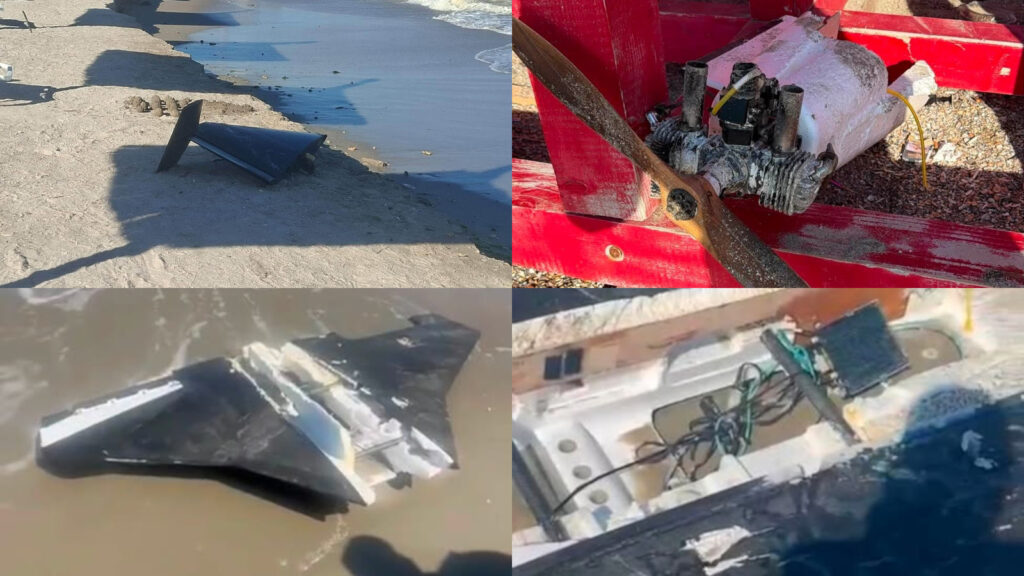
Drone debris washed ashore in Romania after Russian attacks on Ukraine, 13-14 August 2026. Photos: Radu Miruță

More than 100 drones were detected near Romania over the past 96 hours, with NATO fighter jets scrambled seven times in response to the increased aerial activity, Romanian Defense Minister Radu Miruță said, according to Antena 3 CNN.

The figures come as Romania faces a growing number of drone incidents linked to Russia’s war against Ukraine. Romanian forces have recently shifted from monitoring and escorting drones to actively destroying those that enter Romanian airspace, while NATO aircraft are increasingly being called on to respond to aerial threats along the alliance’s eastern flank.

NATO aircraft repeatedly activated

According to Miruță, Romanian authorities detected more than 100 drones in the vicinity of Romanian territory during the four-day period. NATO fighter jets participating in air-policing missions were activated seven times.

Miruță did not report how many of the detected drones entered Romanian airspace, nor how many were identified as Russian or Ukrainian.

Miruță said most of the drones were destroyed by Ukrainian air defenses outside Romania, but close enough for their debris to reach Romanian shores.

“[Russia’s war in Ukraine] is a real war, with real consequences. That is why we are taking every measure we can to limit the indirect consequences that are also being felt here,” Miruță wrote on Facebook.

The report comes shortly after Romania destroyed two Russian Gerbera-type drones that were found drifting in the Black Sea near the Neptun Deep offshore gas project on 11 August. Romanian military divers carried out controlled detonations after Ukraine confirmed the drones were not Ukrainian.

Romania has begun shooting down drones

The latest figures follow a significant change in Romania’s response to drone incursions.

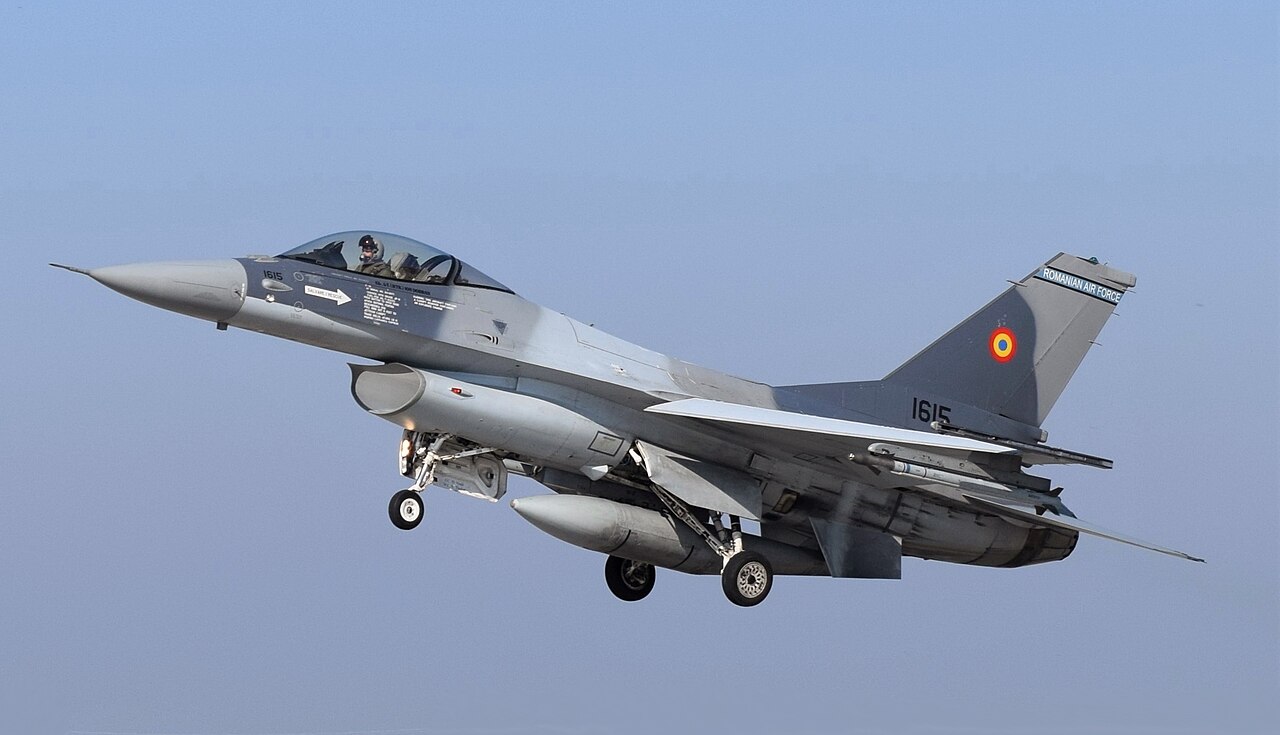
In late July, Romanian F-16s shot down three drones over Romanian territory and territorial waters in three consecutive days. One of the drones was identified as a Russian Shahed-type attack drone, while investigations were conducted into the others.

The July incidents marked a shift from Romania’s previous approach of tracking or escorting drones that crossed into its airspace during Russian attacks on Ukraine. Four of the five drones shot down in EU and NATO countries at that point had been neutralized by Romanian military pilots, according to Miruță.

Romanian President Nicușor Dan called the repeated violations of Romanian airspace “inadmissible and intolerable” and Bucharest prepared a diplomatic protest to Moscow after one of the downed drones was identified as Russian.
romania knocks third drone its sky 72 hours · post romanian air force f-16 fighting falcon fighter jet lands borcea base 2023 dvidshubnet romanian_f-16_fighting_falcon_lands_at_borcea_air_base_romania ukraine news ukrainian reports
Explore further

Romania knocks a third Russian drone from its sky in 72 hours

Drone war reaches beyond Ukraine

Romania has repeatedly dealt with drones crossing its border during Russian attacks on Ukrainian territory, particularly in the vicinity of Ukrainian ports on the Danube and the Black Sea.

In June, a Ukrainian sea drone that had lost control, which Kyiv attributed to Russian electronic warfare, exploded near an oil terminal in the Romanian port of Constanța. No one was injured, but more than 1,000 people were evacuated from the area as a precaution.

The incidents have also extended beyond Romania. On 14 August, NATO fighter jets shot down a foreign drone after it entered Latvian airspace. Latvia said the drone had entered its airspace as a result of Russian electronic warfare activity.

The repeated incidents have made drone activity around NATO’s eastern border an increasingly regular consequence of Russia’s war against Ukraine.

  • ✇Euromaidan Press
  • Russia plans to remove border zones separating Russia from occupied Ukrainian territories
    Russia’s Federal Security Service (FSB) plans to abolish special border zones along several boundaries with Ukrainian territories occupied by Russia, according to draft orders reviewed by the Russian outlet Agentstvo. The proposed changes would remove restrictions that currently treat movement between Russia and occupied parts of Ukraine much like crossing an international border. The FSB says the move follows Russia’s claimed incorporation of the occupied Ukrainian ter
     

Russia plans to remove border zones separating Russia from occupied Ukrainian territories

14 août 2026 à 15:58

Map of Ukraine, with Russian-occupied territory marked in red, 14 August 2026. Map: DeepState

Russia’s Federal Security Service (FSB) plans to abolish special border zones along several boundaries with Ukrainian territories occupied by Russia, according to draft orders reviewed by the Russian outlet Agentstvo.

The proposed changes would remove restrictions that currently treat movement between Russia and occupied parts of Ukraine much like crossing an international border. The FSB says the move follows Russia’s claimed incorporation of the occupied Ukrainian territories into Russia.

FSB seeks to remove border zones

The draft orders, as reported by Ukrainska Pravda, would invalidate previous FSB orders establishing border zones along the boundaries between Russia’s Rostov and Voronezh oblasts and the occupied territories of Ukraine.

A similar change is planned for occupied Crimea, where the current border zone along the boundary with occupied Kherson Oblast would be abolished.

The existing rules effectively impose additional controls on people entering and leaving the occupied territories, making movement subject to procedures similar to those used at Russia’s state border.

In the draft orders, the FSB justifies the changes by referring to the alleged “admission into the Russian Federation” of the occupied parts of Donetsk, Luhansk, and Kherson oblasts.

Russia illegally claimed to annex those territories, along with Zaporizhzhia Oblast, in September 2022. The move has been rejected by Ukraine and the international community, and Russia does not control all of the territory it claims to have annexed.

Border zone would remain around Crimea's islands

The FSB proposal would not completely eliminate the border zone in occupied Crimea.

A restricted zone would remain “within the boundaries of the Black Sea islands belonging to the Russian Federation,” according to the draft. The FSB’s regional directorate would determine where and when people could enter the zone and would install warning signs.

The proposed changes would remove the existing border zones along Russia’s boundaries with occupied Ukrainian territories, while retaining a border zone around certain Black Sea islands in occupied Crimea.

Russia treats occupied territory as part of its territory

The planned changes reflect Moscow’s effort to incorporate occupied Ukrainian territories into Russia’s administrative and legal system.

In September 2022, Russian President Vladimir Putin signed so-called “accession treaties” claiming to incorporate Donetsk, Luhansk, Kherson, and Zaporizhzhia oblasts into Russia. Russia’s parliament subsequently approved the claims.

The treaties purported to define the boundaries of the annexed territories according to the borders they had on the day Russia claimed to admit them into the Russian Federation, despite Russia not controlling the entirety of those regions.

Russia previously used similar measures to formalize its control over occupied Crimea after illegally annexing the peninsula in 2014.

A Russian soldier kept a Ukrainian woman in a basement and raped her for two months – Ukrainian court sentences him to 12 years

14 août 2026 à 14:17

A Russian soldier was sentenced to 12 years for repeatedly raping a Ukrainian civilian woman in occupied Donetsk Oblast. Ukraine's Prosecutor General’s Office

A Ukrainian court has sentenced a Russian soldier to 12 years in prison for repeatedly raping a 57-year-old civilian woman for about two months in an occupied village in Donetsk Oblast, Ukraine’s Prosecutor General’s Office said on 14 August.

Ukrainian authorities and international monitors have documented hundreds of cases of conflict-related sexual violence by Russian forces in Ukraine, while warning that the true number is likely higher because many cases go unreported, particularly in occupied territories.

Woman was trapped with Russian soldiers

The 50-year-old Russian serviceman entered a village in the Pokrovsk district in September 2025 as part of a small infantry group, according to prosecutors. He and two other Russian soldiers occupied the basement of a private home where two local civilians were sheltering from Russian attacks.

During one of the attacks, the civilian man was killed. The woman was then left in the basement with the three armed Russian soldiers.

In early October, one of the soldiers began sexually assaulting her. The court found that the abuse became systematic and continued for about two months.

The soldier threatened to kill the woman if she refused. Two other Russian servicemen were present during this period, while the woman was effectively unable to leave the basement or protect herself.

The abuse ended in December, when Ukrainian forces captured the Russian soldier during fighting. The woman was freed.

Convicted Russian soldier had spent 32 years in prison

The convicted man is a resident of Russia’s Sverdlovsk Oblast who had spent a total of 32 years in prison for robbery and armed robbery before joining the Russian military.

He signed a contract with the Russian army while serving his sentence and was later deployed as a rifleman with the 114th Separate Motor Rifle Brigade of Russia’s 51st Combined Arms Army.

The defendant denied committing the crime in court. Prosecutors presented evidence that the court found sufficient to establish his guilt in the cruel treatment of a civilian.

He was sentenced to 12 years in prison, the maximum punishment under the provision of Ukraine’s Criminal Code used in the case.

Sexual violence as a weapon of Russia’s war

Ukraine’s Prosecutor General’s Office had recorded 401 cases of sexual violence against civilians allegedly committed by Russian military personnel since the start of the full-scale invasion as of June 2026.

The victims included 250 women and 151 men, including 23 girls and one boy.

Donetsk Oblast had the second-highest number of documented cases, with 92, behind Kherson Oblast’s 124. Ukrainian prosecutors had sent 64 indictments involving 81 people to court, while Ukrainian courts had issued 19 verdicts against 26 individuals. All those convicted received prison sentences.

The documented figures do not capture the full scale of the abuse. The Prosecutor General’s Office has noted that the actual number may be higher because these are cases victims have been able to report.

  • ✇Euromaidan Press
  • Ukraine: 18 of 26 Russian oil and stolen-grain ships face no sanctions
    On 14 August, Ukraine's Military Intelligence (HUR) published data on 26 vessels via its War&Sanctions portal, noting that 18 ships face no sanctions from any of Ukraine's partner countries. The agency said the ships carry Russian oil, liquefied natural gas (LNG), or agricultural products from occupied Ukraine. Euromaidan Press could not independently verify HUR’s vessel records. Russia relies on maritime trade both to fund its war through energy exports and to s
     

Ukraine: 18 of 26 Russian oil and stolen-grain ships face no sanctions

14 août 2026 à 12:40

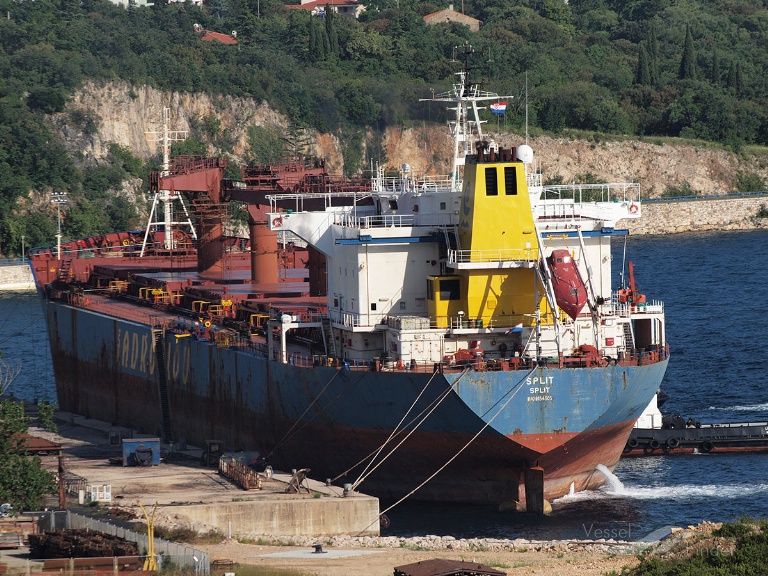
The bulk carrier now named LAMAR S, with SPLIT painted on its stern, moored beside a concrete quay near a wooded coastline.

On 14 August, Ukraine's Military Intelligence (HUR) published data on 26 vessels via its War&Sanctions portal, noting that 18 ships face no sanctions from any of Ukraine's partner countries.

The agency said the ships carry Russian oil, liquefied natural gas (LNG), or agricultural products from occupied Ukraine. Euromaidan Press could not independently verify HUR’s vessel records.

Russia relies on maritime trade both to fund its war through energy exports and to sell crops taken from occupied Ukraine. Kyiv began building a dedicated system against Russia’s shadow grain fleet in April, modeled on its oil-fleet campaign. A US bill introduced this week would also target vessels, owners, insurers, and ports involved in sanctions evasion. HUR’s new list shows how many ships remain outside those restrictions.

Russia’s grain shadow fleet

HUR divided the 26 vessels into three groups:

  • oil tankers serving Lukoil, Rosneft, Surgutneftegas, Novatek, Tatneft, and Gazprom;
  • dry-cargo ships using the occupied ports of Berdiansk, Sevastopol, Kerch, and Feodosia;
  • LNG carriers moving gas from the sanctioned SAAM FSU floating storage unit, which holds LNG from the sanctioned Arctic LNG 2 project.

HUR highlighted three of the 18 vessels that are not facing partner sanctions. The bulk carrier LAMAR S repeatedly loaded wheat at the Avlita terminal in occupied Sevastopol in 2026 for delivery abroad, including to Syria, the agency said.

NAYA FALCON carried baking soda and granulated wheat bran from occupied Sevastopol to Egypt and Cyprus, HUR said. The agency linked the oil tanker GREGAL to UAE-based Cymare Navigation FZC, which it described as affiliated with Sovcomflot, Russia’s state-controlled shipping company.

Russia steals grain while striking Ukraine’s exports

Crops taken from occupied land are sold abroad as Russian produce, while Russia's attacks leave Ukraine’s legitimate harvest with fewer routes to market.

Ukraine’s Foreign Intelligence Service said Russia sold more than 2 million tons of grain from occupied Ukraine as Russian produce in 2025. The agency said ship-to-ship transfers at Kavkaz helped conceal its origin.

Meanwhile, Russian attacks have squeezed Ukraine’s legitimate grain trade. Strikes on civilian ships brought the Black Sea corridor to a near standstill during the July harvest peak. Ten people died when Russian missiles hit the grain-laden Golden Leo on 19 July.

HUR called on Ukraine and its partners to synchronize sanctions and detain vessels that violate restrictions. It said the measures could curb Russia’s maritime logistics and war funding.

“Responsibility is inevitable”: Zelenskyy warns Russian collaborators in occupied territories after explosion kills defector

14 août 2026 à 12:13

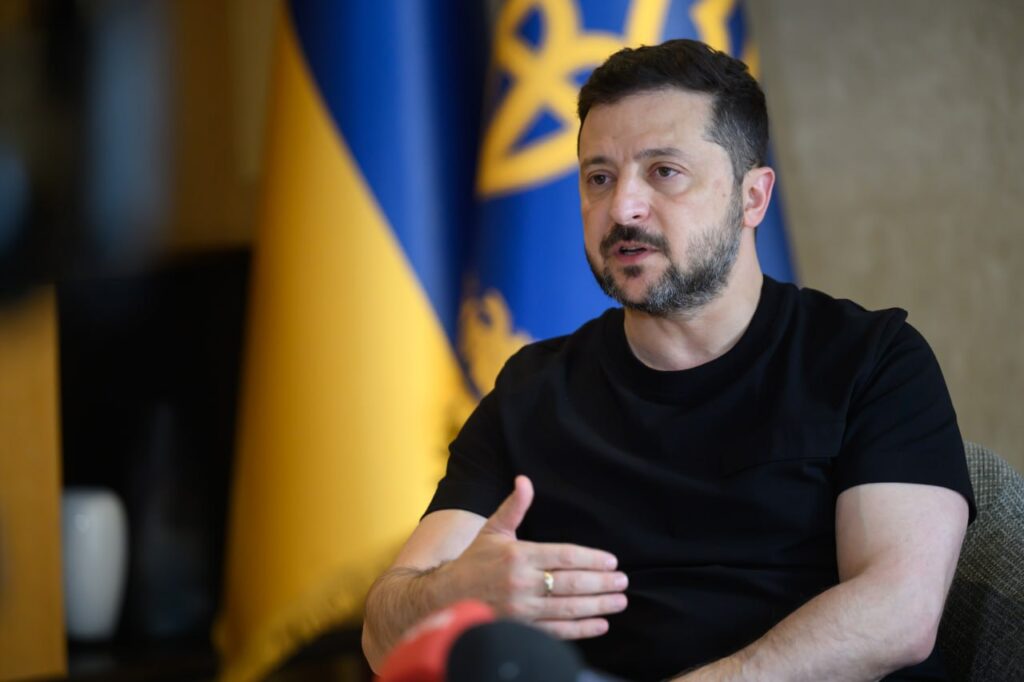
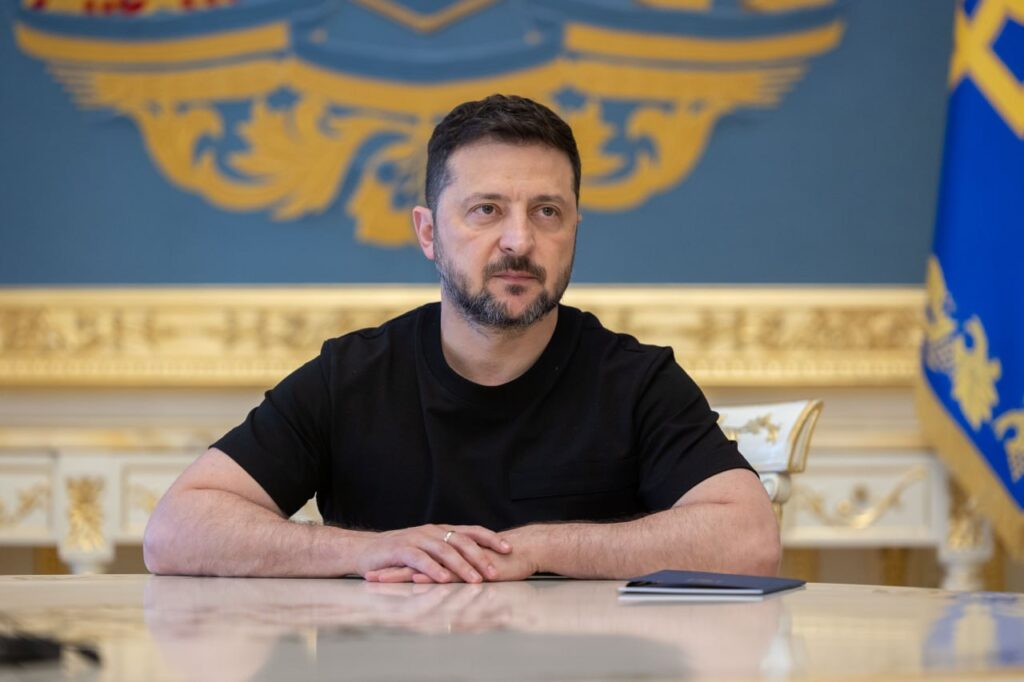
Ukrainian President Volodymyr Zelenskyy, 8 August 2026. Photo: Zelenskyy on Telegram

Ukrainian President Volodymyr Zelenskyy said Ukrainian special services are conducting targeted operations against collaborators in Russian-occupied territories who assist Russia’s attacks against Ukraine and Ukrainians.

Speaking after a meeting of Ukraine’s top military leadership on 14 August, Zelenskyy said he received a separate briefing from Ukraine’s special services on the progress of these operations.

He specifically mentioned occupied Sevastopol, where Ukrainian officials have previously accused local collaborators of supporting Russia’s military operations.

“Responsibility for collaborators is inevitable,” Zelenskyy said.

Operations target those helping Russia

Zelenskyy did not identify the individuals targeted or provide operational details, saying only that the special services had reported on the implementation of “targeted operations” against collaborators in occupied territories.

He said the targets include people who participate in Russian attacks against Ukraine and Ukrainians.

The comments signal that Ukraine is continuing to pursue individuals in occupied territory who assist Russian forces, including through intelligence, military support, or other forms of cooperation.

Sevastopol explosion on 13 August

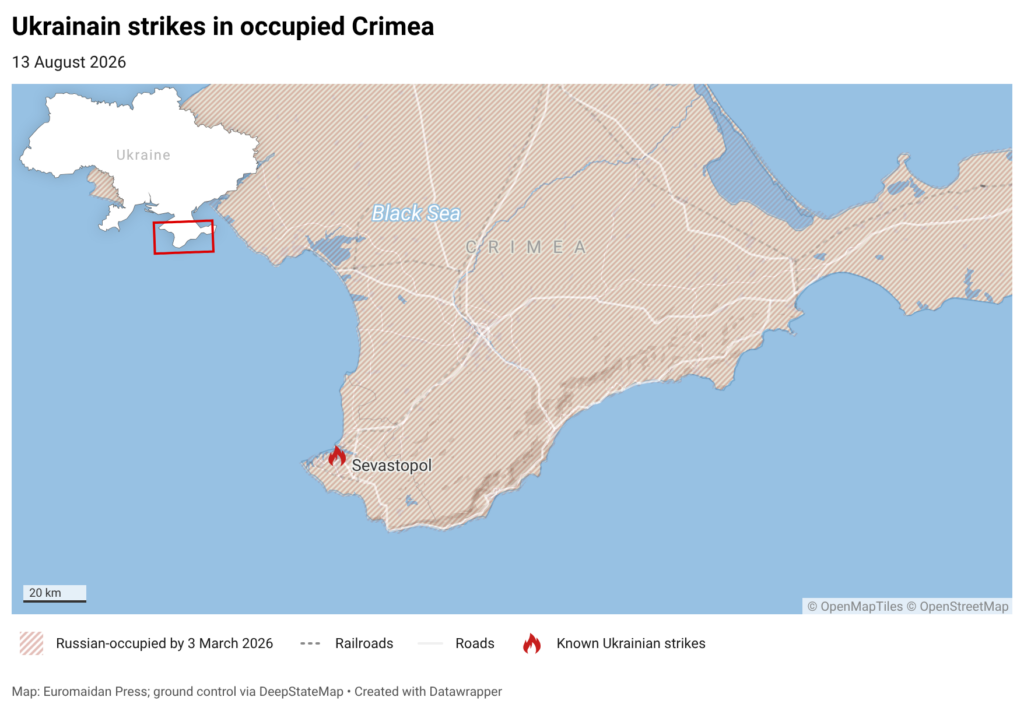
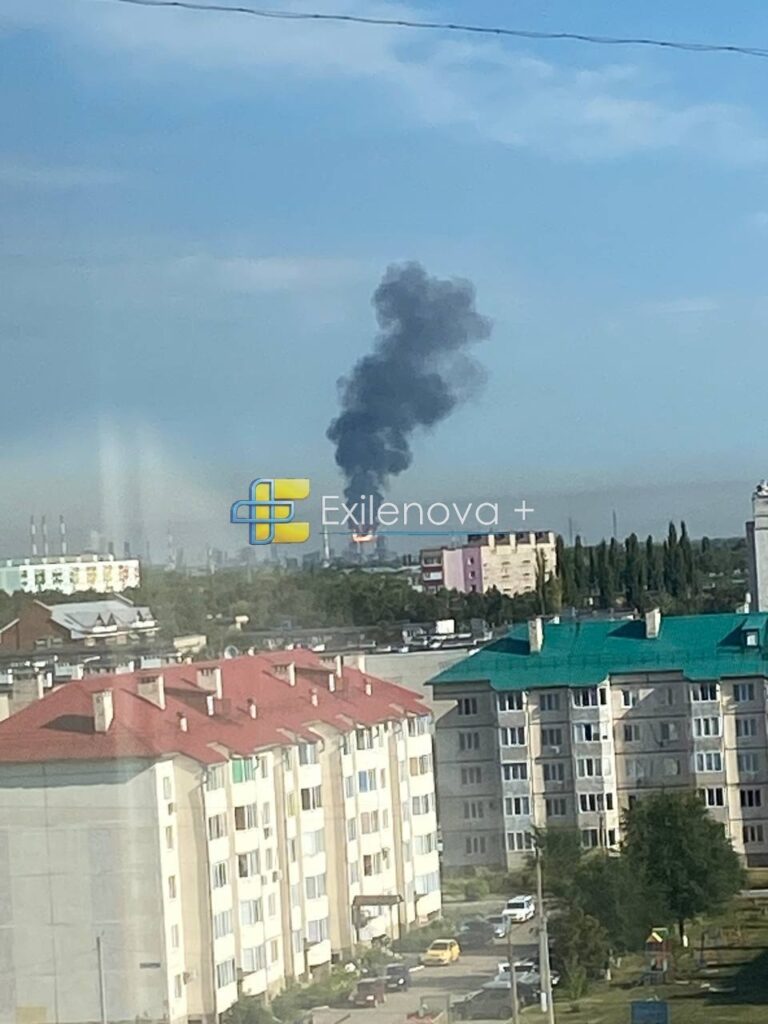
The statement comes shortly after an explosion in occupied Sevastopol on 13 August killed a Russian military officer.

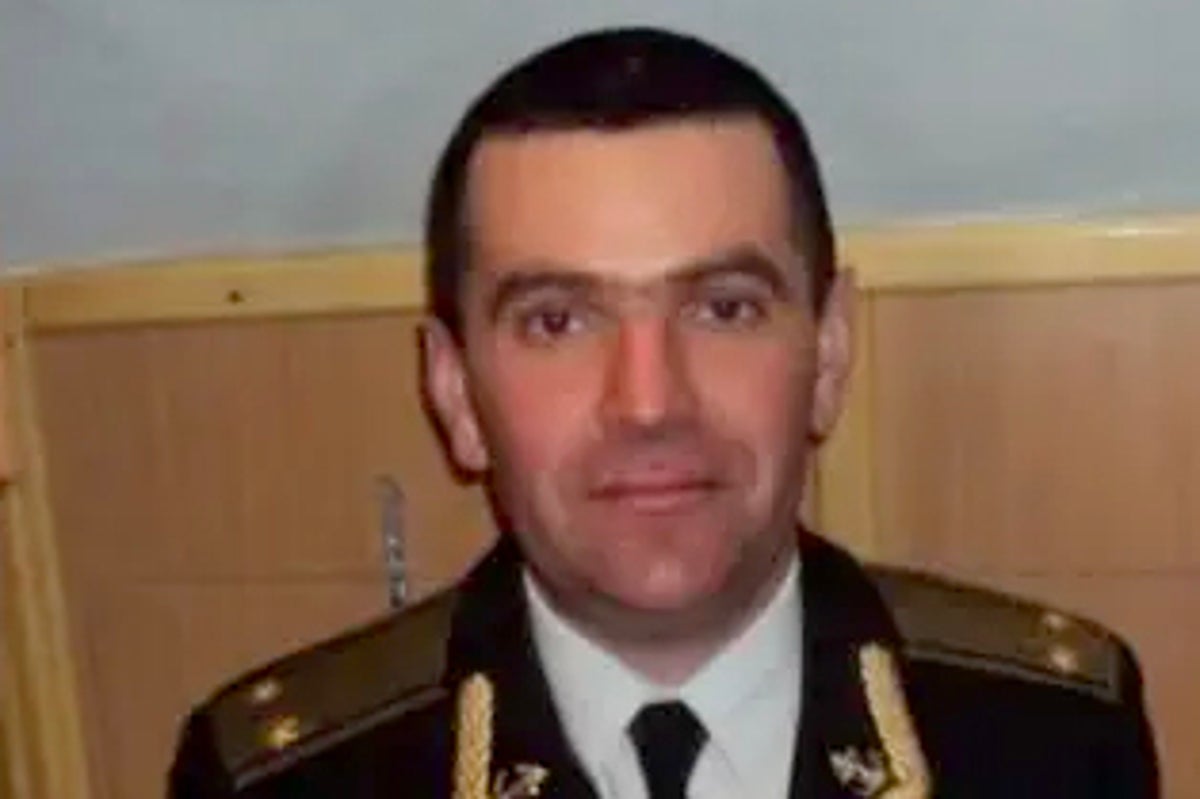
Russian and Ukrainian sources have circulated claims that the victim was Robert Shageyev, reportedly a former Ukrainian Navy officer who joined Russia after the occupation of Crimea and later served in Russia’s Black Sea Fleet. 

His identity and the circumstances of the explosion have not been officially confirmed by Ukrainian authorities.

Russian sources had suggested Ukrainian involvement in the incident, but Ukraine has not publicly claimed responsibility.

Sevastopol
Explore further

Man killed in explosion in occupied Sevastopol, Russian sources report

Ukraine prepares for Russia’s next moves

The discussion of operations against collaborators was part of a broader meeting focused on Ukraine’s military preparations for the coming months.

Zelenskyy said the main issue was securing funding for Ukraine’s defense and security forces through the fall and winter. Officials identified funding gaps and additional requirements for expanding production of advanced weapons.

Among the priorities are faster production of Ukrainian strike weapons and new defensive systems, including jet-powered interceptor drones designed to counter Russian aerial threats.

Ukrainian intelligence also provided updated information about Russia’s plans, according to Zelenskyy. He said Ukraine is preparing countermeasures, including asymmetric responses.

The meeting also covered the effectiveness of Ukraine’s long-range and medium-range sanctions against Russia. Zelenskyy said the existing sanctions plan is being implemented and that priorities are being adjusted to ensure Ukraine has the capabilities needed to achieve its objectives.

A stray goat named Borka has become the Spartan Brigade’s mascot after 18 months on the front lines in Donetsk Oblast

14 août 2026 à 11:28

stray goat named Borka

Borka arrived as a kid about a year and a half ago, carried in by one of the men and left at the door of the unit's house in Donetsk Oblast, the battalion's chief sergeant, who uses the callsign Sheva, told ArmyInform, the Ukrainian defense ministry's information agency. Someone suggested keeping him, someone else joked about meat, and no one followed through. He has stayed ever since, through several redeployments and near-daily Russian drone activity. On one occasion, a Russian FPV drone exploded near the position. The soldiers relocated in a hurry, then realized they had left Borka behind and went back for him, Sheva recalled.

Borka is one of many animals Ukrainian troops have taken in and pulled out of front-line areas during Russia's war against Ukraine. Sheva casts the care as a deliberate contrast. "They are our lesser brethren. We are responsible for those we have tamed. We are not like the Russians," he said, adding that comrades have evacuated dogs, cats, and once even a cow from wrecked settlements.

stray goat named Borka
Photo: Daria Moskalets / ArmyInform.

Sheva, who volunteered with friends at the start of Russia's full-scale invasion and has fought on the Zaporizhzhia, Kharkiv, and Donetsk fronts, says Borka is no easy houseguest. Whoever feeds him is his favorite, and whoever is late feeding him, Sheva included, risks a headbutt. He once snapped his tether and walked straight into the house where the soldiers were resting, to their general shock. To burn off his energy, the unit built him a training station out of a stump with an old helmet hung on it, and in winter they put up a small insulated shelter that he keeps demolishing, and they keep repairing. They trade chocolate bars for hay and straw, and tell his story to people who then pitch in with food.

The plan is, eventually, to find Borka a permanent home in good hands. "No one is going to send Borka for meat," Sheva said. On the front, he added, any small distraction has value: a cat purring on your lap settles you, and Borka does something different. "He's the kind of guy who keeps us all on our toes."

  • ✇Euromaidan Press
  • Captured Akhmat fighter says he chose Ukraine and a drone guided him away from Russia’s ranks
    A former fighter from the Akhmat forces, armed formations loyal to Chechnya’s Kremlin-backed ruler Ramzan Kadyrov, said he wants to fight for Ukraine after nearly a year in captivity. Identified only as Magomed, he gave his account to Dmytro Karpenko, a Ukrainian journalist and blogger known for interviewing Russian prisoners of war, in a video published on 9 August 2026. Militarnyi, a Ukrainian military news outlet, reported on the interview on 13 August. Magomed’s
     

Captured Akhmat fighter says he chose Ukraine and a drone guided him away from Russia’s ranks

14 août 2026 à 10:55

Former Akhmat fighter Magomed, center, speaks with journalist Dmytro Karpenko, left, and another man during a video interview.

A former fighter from the Akhmat forces, armed formations loyal to Chechnya’s Kremlin-backed ruler Ramzan Kadyrov, said he wants to fight for Ukraine after nearly a year in captivity.

Identified only as Magomed, he gave his account to Dmytro Karpenko, a Ukrainian journalist and blogger known for interviewing Russian prisoners of war, in a video published on 9 August 2026. Militarnyi, a Ukrainian military news outlet, reported on the interview on 13 August.

Magomed’s reported crossing reflects a divide that has placed Chechen fighters on both sides of Russia’s war. Since 2014, Kadyrov-loyal formations have fought for Moscow, while anti-Kremlin Chechens seeking independence from Russia have supported Kyiv.

Magomed’s account traces one fighter’s claimed passage from the first camp toward the second after Russians allegedly killed his brother. His account has not been independently verified.

The Chechen fighter said he had served near Svitlodarsk, Bakhmut, and Horlivka, including evacuating soldiers’ bodies.

Magomed also claimed two Chechens had crossed before him, prompting Russian commanders to check fighters’ phones and tighten surveillance.

According to Magomed, he later followed a Ukrainian drone toward Ukrainian positions with other Chechens. Ukrainian troops dropped medicine, water, and a radio to guide them. A Russian FPV drone attacked during the crossing and killed one Chechen, he alleged.

Ukrainian forces received the survivors and handed Magomed to the police brigade "Liut". His captivity began on 29 August 2025. Magomed also alleged that Russians killed his brother and called the death an epileptic seizure. Magomed said that drove him to fight Russia.

Militarnyi reported that Magomed had joined the International Legion, which is run by Ukraine's military intelligence. However, Karpenko’s video description says he wants to join the legion. Neither source explained the discrepancy.

What is Akhmat?

Akhmat, the unit Magomed belonged to, provides Russia with frontline troops and rear-area security. UK intelligence estimated in 2024 that around 9,000 personnel served in pro-Russian Chechen units in Ukraine.

Kadyrov’s reach has also expanded during the war. A later investigation found that his armed network had grown to 20 units across Russia’s military and security structures.

The Akhmat group's influence may extend beyond military operations. In January 2026, ATESH, a Ukrainian-Crimean Tatar partisan group, said Moscow planned to hand occupied Mariupol to Akhmat as a reward for Chechen leaders’ loyalty. The resistance organization claimed that arriving Chechen forces sought control of the city’s resources and industry.

Chechens also fight for Ukraine

On the other side, Chechens seeking an independent Ichkeria (the indigenous Chechen name for Chechnya) have fought for Ukraine since 2014.

In April 2026, Ukrainian intelligence said Shamanbat, a Ukrainian special unit that includes Free Ichkeria fighters, helped conduct drone and artillery strikes on Akhmat positions. The agency claimed the operation killed dozens of Akhmat personnel and wounded about 80.

  • ✇404 Media
  • Meta Patents AI Glasses to Use Facial Recognition to Identify People, Make Highlight Reels of Your Dinner Party
    Meta has filed a patent for its AI smartglasses that uses facial recognition to automatically detect who is in the frame, creates a video clip whenever one of those people does something — like picking an item up or walking around — and then generates a highlight reel of what just happened, according to a copy of the patent published Thursday. One example given is the system capturing highlights from a dinner party and then serving those up to the user.The patent gives new, granular insight i
     

Meta Patents AI Glasses to Use Facial Recognition to Identify People, Make Highlight Reels of Your Dinner Party

14 août 2026 à 10:17
Meta Patents AI Glasses to Use Facial Recognition to Identify People, Make Highlight Reels of Your Dinner Party

Meta has filed a patent for its AI smartglasses that uses facial recognition to automatically detect who is in the frame, creates a video clip whenever one of those people does something — like picking an item up or walking around — and then generates a highlight reel of what just happened, according to a copy of the patent published Thursday. One example given is the system capturing highlights from a dinner party and then serving those up to the user.

The patent gives new, granular insight into what Meta may be planning around its highly controversial push into facial recognition in combination with its AI glasses, which have already been widely lauded as “pervert glasses.” 

💡
Do you work at Meta and know anything else about these glasses? I would love to hear from you. Using a non-work device, you can message me securely on Signal at joseph.404 or send me an email at joseph@404media.co.
  • ✇Euromaidan Press
  • Military training from age 15: Belarus splits 10th-graders into drone pilots and battlefield medics
    Starting in September, Belarusian 10th-graders will be split by gender for new practical training: boys will take a 10-hour drone-piloting course, girls an expanded tactical medicine block, Deputy Education Minister Alyaksandr Kadlubai said, according to BelTA. The changes fall under the "pre-conscription and medical training" classes already taught in Belarusian schools. The update fits a broader pattern of militarizing education in Belarus since the 2020 protests and
     

Military training from age 15: Belarus splits 10th-graders into drone pilots and battlefield medics

14 août 2026 à 10:16

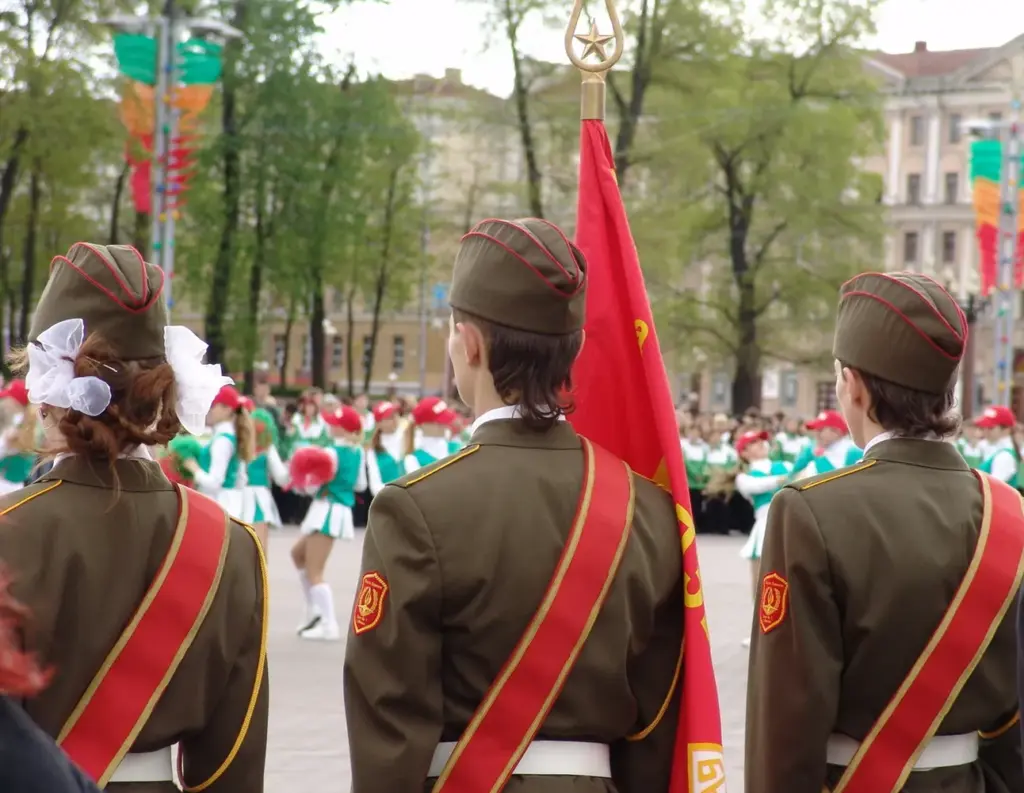
military training age 15 belarus splits 10th-graders drone pilots battlefield medics · post girls soviet flags pioneers parade 2007 flickr/ilya kuzniatsou ukraine news ukrainian reports

Starting in September, Belarusian 10th-graders will be split by gender for new practical training: boys will take a 10-hour drone-piloting course, girls an expanded tactical medicine block, Deputy Education Minister Alyaksandr Kadlubai said, according to BelTA. The changes fall under the "pre-conscription and medical training" classes already taught in Belarusian schools.

The update fits a broader pattern of militarizing education in Belarus since the 2020 protests and Alyaksandr Lukashenka's subsequent crackdown. Military-patriotic clubs, formalized under a 2022 presidential decree, have spread through Belarusian schools, sending children as young as elementary school age through weapons training and field exercises. This year, Radio Svoboda says that 10-day military field camps have become mandatory for 10th-graders, and kindergartens have opened groups with a military-patriotic focus.

Kadlubai singled out cooperation with a Minsk-based military unit, No. 5448, home to a police brigade of the interior troops, saying the ministry aims to "scale this experience across the whole of Belarus."

"We've strengthened the practical component," Kadlubai said. "We've shifted the balance toward practical classes and increased their volume."

While Belarus drills its own children, Russia indoctrinates Ukraine's

Belarus is not a neutral bystander to Russia's war. Alyaksandr Lukashenka's government let Russian forces stage the February 2022 invasion from Belarusian soil, and Kyiv says it keeps expanding the logistics routes, training grounds, and artillery positions Russia could use for future operations.

And what its ally teaches at home, Russia imposes by force on Ukrainian children under occupation. From 1 September 2026, occupation authorities roll out a curriculum built around loyalty to the Russian state — a compulsory Russian "identity" subject, a split-off military-training course, and behavior graded from the second grade as "exemplary," "acceptable," or "unacceptable." It already reaches more than 582,000 children in nearly 2,000 schools.

  • ✇Euromaidan Press
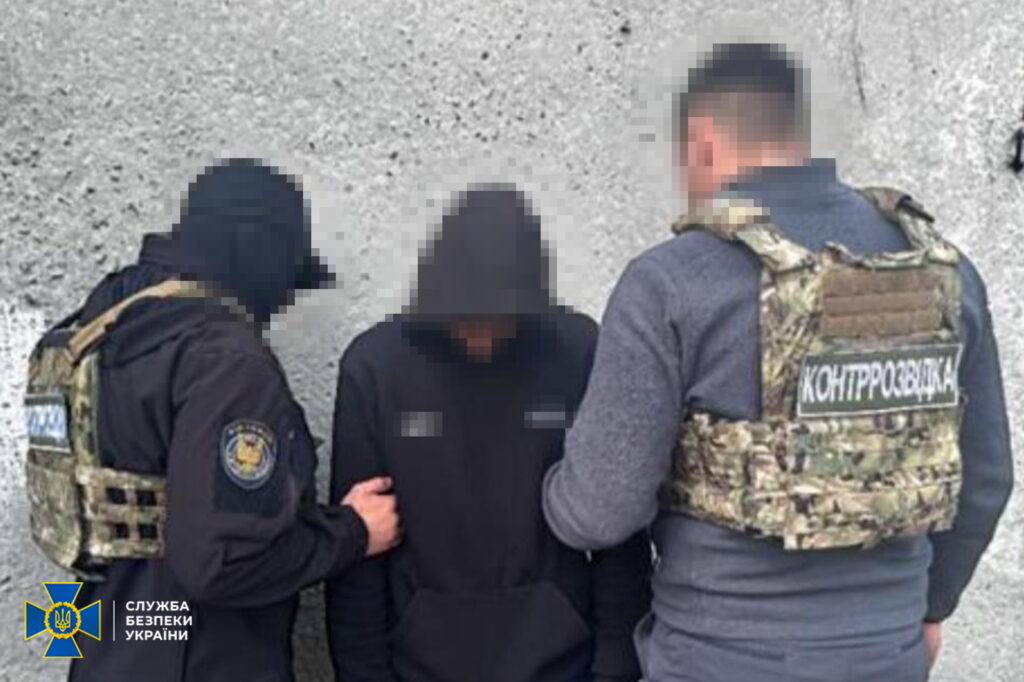
  • Russian agent who set fires in Kyiv receives 15-year prison sentence
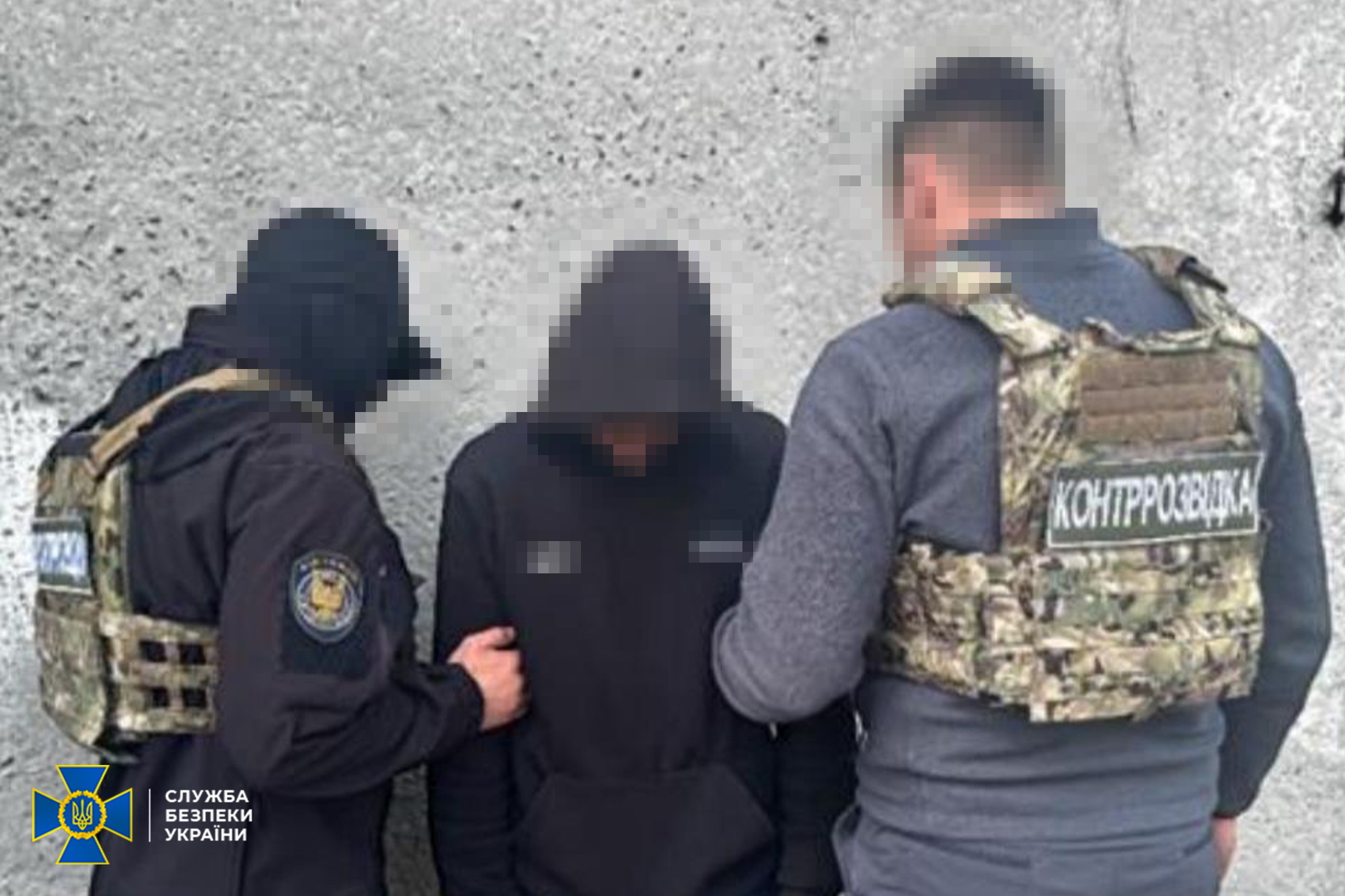
    A Kyiv court has sentenced an unemployed man to 15 years in prison with confiscation of his property for carrying out arson attacks on behalf of Russian intelligence, Ukraine's Security Service (SBU) said on 13 August. The man was recruited while looking for "easy money" on Telegram channels and carried out two arson attacks in Kyiv before fleeing to Odesa, the SBU reported. Russian intelligence increasingly recruits Ukrainians through Telegram for arson and sabotag
     

Russian agent who set fires in Kyiv receives 15-year prison sentence

14 août 2026 à 09:54

Illustrative photo. Source: Depositphotos

A Kyiv court has sentenced an unemployed man to 15 years in prison with confiscation of his property for carrying out arson attacks on behalf of Russian intelligence, Ukraine's Security Service (SBU) said on 13 August. The man was recruited while looking for "easy money" on Telegram channels and carried out two arson attacks in Kyiv before fleeing to Odesa, the SBU reported.

Russian intelligence increasingly recruits Ukrainians through Telegram for arson and sabotage. It targets people seeking quick money and treats them as disposable operatives, paying small sums for a single task and discarding them once they are caught.

The Russian agent carried out two arson attacks

According to the SBU, the man first set fire to a relay cabinet belonging to a railway signaling system. Russia intended the attack to disrupt freight logistics, including supplies to areas near the front.

The agent later burned a volunteer’s SUV used to deliver humanitarian aid and evacuate civilians from areas affected by Russia’s war. He carried out the attacks at night, using a flammable mixture and filming each incident on his smartphone before sending the footage to his Russian handler.

The SBU arrested him in Odesa in July 2025, where he had attempted to hide after carrying out the attacks. Investigators seized his phone, which contained evidence of his cooperation with Russia.

A court found him guilty on two counts — sabotage committed under martial law, and intentional destruction of property by arson — both carried out as part of a group acting on prior conspiracy. He was sentenced to 15 years in prison with confiscation of his property.

ukraine detains six suspected russian agents including teen arsonist one russian-paid detained sbu fsb saboteur arrested says suspects were recruited telegram ordered target railway military infrastructure 22 security service (sbu)
Explore further

From “easy money” to murder: Russia escalates recruitment of Ukrainians for terrorist attacks inside Ukraine, police warn

Easy money, hard time: other Telegram recruits jailed too

The case follows several similar convictions. In a May case, an agent received 15 years for burning a railway relay cabinet near a Dnipro station in an attempt to disrupt frontline logistics. The SBU said the unemployed local, recruited through Telegram, filmed the arson and reported it to his handler, then was caught before he could carry out a planned series of attacks on the city's critical infrastructure.

In June 2026, another agent was sentenced to 15 years for preparing to burn an electrical substation in Kropyvnytskyi.

In July, SBU investigators reported that a GRU agent in Zaporizhzhia received 15 years for preparing explosives for Russian-organized attacks.

  • ✇404 Media
  • Man Arrested in Texas For Cussing at a County Meeting
    Police arrested a man in Texas early Wednesday morning for saying “bullshit” at a public city meeting a week earlier.Police in Fort Worth, Texas pulled over local radio host and political activist EJ Carrion just outside of his home and arrested him for "tumultuous behavior” related to a Commissioner's Court meeting on August 4, according to a copy of the arrest report obtained by 404 Media. Video of the alleged crime on YouTube showed Carrion saying the word “bullshit” while talking about po
     

Man Arrested in Texas For Cussing at a County Meeting

14 août 2026 à 09:20
Man Arrested in Texas For Cussing at a County Meeting

Police arrested a man in Texas early Wednesday morning for saying “bullshit” at a public city meeting a week earlier.

Police in Fort Worth, Texas pulled over local radio host and political activist EJ Carrion just outside of his home and arrested him for "tumultuous behavior” related to a Commissioner's Court meeting on August 4, according to a copy of the arrest report obtained by 404 Media. Video of the alleged crime on YouTube showed Carrion saying the word “bullshit” while talking about polling center reductions during the meeting before walking away from the microphone.

Carrion told NBC DFW that he had been out with friends late Tuesday night and came home around 3 AM on Wednesday morning. He pulled into his cul-de-sac when the cops pulled him over for not using a turn signal. They told Carrion they had a warrant for his arrest.

According to an arrest report obtained by 404 Media, Carrion is charged with two counts of disrupting a meeting or procession, a misdemeanor in the state of Texas. “On or about the 4th day of August 2026, in the county of Tarrant, state of Texas, [Carrion] did intentionally hinder an official proceeding [...] by noise or violent or tumultuous behavior,” the record said.

Tarrant County is the home of the city of Fort Worth, where. Carrion and other residents have been fighting a long battle with city officials over a plan to reduce the number of polling places by almost 50 percent ahead of the November midterms. During the last election, the city had 316 polling places. The county’s election administrator wants to cut that to 176.

Carrion is a local celebrity — a podcast host, political activist, and EdTech entrepreneur — who has used his platform to speak out against the plan. He’s attended many public meetings of the Tarrant County Commissioners and spoken against the proposed polling plan several times.

“You said you were all about cooling the temperature and yet you vote for this extremist bullshit,” Carrion said. “All of you are bullshit.” Carrion then turned around and walked away from the mic.

“Remove him immediately from the room,” Tarrant County judge Tim O’Hare said.

“I’m walking out, small man,” Carrion shouted over his shoulder as he walked away.

“You are disrupting the meeting, we are now in recess,” O’Hare said. This exchange was, apparently, what caused Tarrant County to issue a warrant for Carrion’s arrest.

Things did not calm down after Carrion left. Thirty minutes after his comments, a woman took the mic and criticized how the meetings worked. “People are removed for clapping. People are removed for speaking out. People are treated like a disruption instead of the reason this government exists,” she said. “You keep telling us not to ‘California my Texas’ while in reality you keep Russia my Texas. You three boys from the GOP—”

“Alright, hang on, that’s it,” O’Hare cut her off. “We’re going to clear the chambers now.” Off camera, someone called something out to O’Hare.

“Take that one, remove him from the building,” O’Hare said, pointing off camera.

An hour after that, the chamber cleared, O’Hare ordered the arrest of another speaker for touching the microphone. Former Texas State representative Lon Burnham spoke out against the polling plan and the Commission. “For the last couple of years now all we have seen is total disrespect for the public,” he said. A previous speaker had been removed for touching the microphone and Burnam picked it up during his own speech.

“Set the microphone down, Mr. Burnam,” O’Hare said. “I’ve asked you to set the microphone down. Please remove him.” The judge placed the meeting in recess again and Tarrant county officers physically dragged Burnam out of the chambers and charged him with two counts of public disruption — the same charges faced by Carrion.

O’Hare is an elected official who presides over the Tarrant County Commission with four other elected representatives. Commissioner Roderick Miles Jr. questioned Carrion’s arrest in a public statement on his Facebook page. “I am deeply disturbed by the circumstances surrounding the arrest of Efrin ‘EJ’ Carrion earlier this morning,” Miles Jr. said in the statement.

“Government must exercise extraordinary restraint when speech at a public meeting leads to involvement with the criminal justice system. Residents should never have to wonder whether speaking forcefully to their elected officials could result in a warrant, an arrest, or an encounter with law enforcement,” he said. “Because once that fear takes hold, the damage reaches far beyond one person.”

Miles Jr. called on his fellow commissioners to make the Commissioners Court a place where residents could feel safe to speak their mind. “There must be a line the government does not cross,” he said. “The authority entrusted to us does not belong to us. It belongs to the people [...] this must stop. And I will not be silent when the public trust, the safety of our residents, and their rights to be heard are at stake.”

Carrion’s arrest is the latest in a growing trend around the country. People are angry at their local politicians — often about surveillance cameras and data center contracts — and have been showing up at public hearings in huge numbers to tell them. In February, cops in Oklahoma arrested a farmer for speaking a little too long during a data center meeting. In July, police arrested a person in Kansas for clapping during the public comments portion of a data center meeting.

Carrion and the Fort Worth Police Department did not return 404 Media’s request for a comment.

  • ✇Euromaidan Press
  • Russia’s state statisticians report the growth Putin demanded—economists doubt it will hold
    Russia's economy grew 1.3% in the second quarter of 2026, the state news agency TASS reported on 12 August, citing preliminary estimates from the state statistics agency Rosstat — a figure that, if accurate, would end a slump that had opened the year with the country's first quarterly contraction since 2023. And it comes from a state agency months after Putin dressed down his economic team in April and demanded "concrete measures" to restore growth — the print then beat
     

Russia’s state statisticians report the growth Putin demanded—economists doubt it will hold

14 août 2026 à 08:20

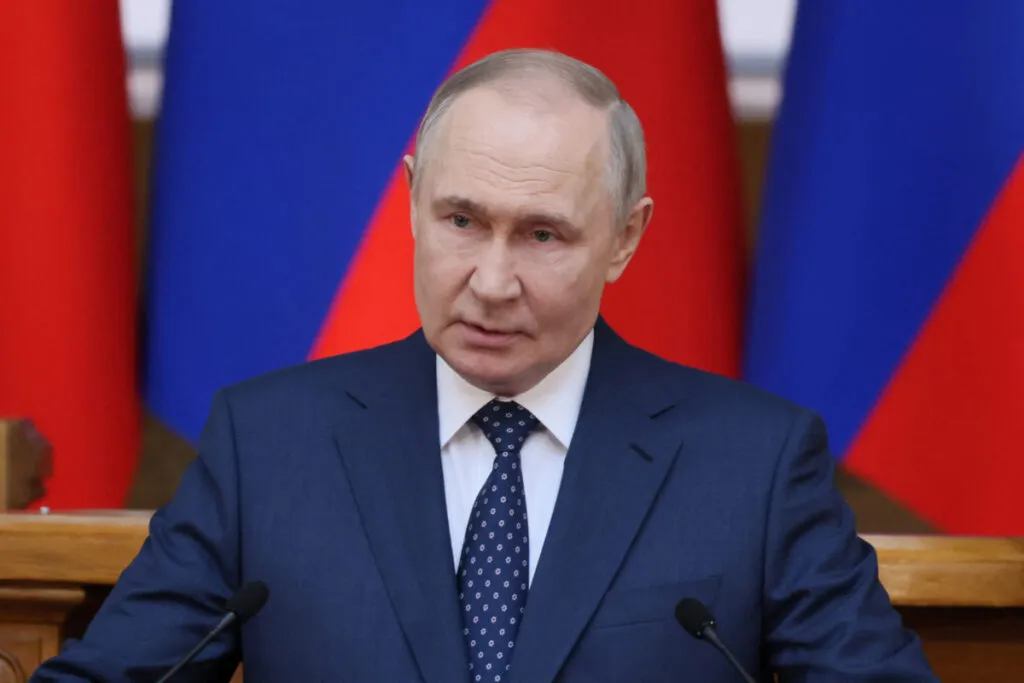
Russian President Vladimir Putin delivers a speech during а meeting of the Federal Assembly's Council of Legislators in Saint Petersburg, Russia April 28, 2025. Sputnik/Mikhail Metzel/Pool via REUTERS ATTENTION EDITORS - THIS IMAGE WAS PROVIDED BY A THIRD PARTY.

Russia's economy grew 1.3% in the second quarter of 2026, the state news agency TASS reported on 12 August, citing preliminary estimates from the state statistics agency Rosstat — a figure that, if accurate, would end a slump that had opened the year with the country's first quarterly contraction since 2023.

And it comes from a state agency months after Putin dressed down his economic team in April and demanded "concrete measures" to restore growth — the print then beat the government's own economists in exactly the direction he wanted.

The quarter may have brought a real if shallow rebound, or the state's statisticians may have produced the figure the president wanted. Either way it matters, because Russia's economy is what pays for its war, and its strength sets the ceiling on how long the Kremlin can keep fighting.

Barely growing all year

Even taken straight, the rebound is thinner than it looks. The first quarter had closed 0.2% down, and across the whole first half of the year output rose just 0.6%, half of last year's pace and close to seven times slower than the wartime boom of 2023 and 2024. The quarterly figure jumped. The underlying trend barely moved.

The weakness had been building for over a year. War spending drove the 2023–24 boom and overheated the economy; to curb the resulting inflation, the central bank raised its key rate to 21%, choking lending and investment. It has cut rates since, to 14% in July, but money is still tight and inflation is rising again as Ukrainian strikes push up fuel prices.

Growth the war paid for

As The Moscow Times set out, reviewing the data and the economists reading it, most of the quarter's growth rested on one-off factors: more working days than a year earlier, a temporary oil-revenue spike during the Iran war, and a budget that lifted spending 16%, a third of it on the army and weapons. The split underneath is the tell.

Military plants kept raising output; civilian industry kept shrinking, down 3.2% from a year earlier by the Center for Macroeconomic Analysis and Short-Term Forecasting (CMASF), a Russian forecasting institute, according to its estimate.

Rosstat also billed the quarter as its strongest in six, and said it had beaten the forecasts of both the economy ministry, which had projected 0.9%, and the central bank, which saw 0.8%.

Few expect it to last

Russia will "remain in a state of stagnation" for the foreseeable future, said Liam Peach of Capital Economics, citing high interest rates and the fuel crisis.

Ukraine's long-range drones are adding to the strain. Their strikes have cut Russian oil refining to its lowest level in more than two decades, draining fuel supply and pushing prices up at home, and forcing Moscow, an oil giant, to import gasoline from as far as Morocco.

  • ✇Euromaidan Press
  • Russia drops eight FAB-250 bombs on Kramatorsk, killing one and injuring 18
    Russia's glide-bomb strike on Kramatorsk killed one person and wounded 18, the head of the Donetsk Oblast Military Administration, Vadym Filashkin, reported on the morning of 14 August. The Donetsk Oblast Prosecutor's Office has opened a war-crimes investigation into the attack. Russian forces dropped eight FAB-250 aerial bombs fitted with universal glide and correction modules (UMPK) on the city on the evening of 13 August, hitting residential areas including apart
     

Russia drops eight FAB-250 bombs on Kramatorsk, killing one and injuring 18

14 août 2026 à 07:36

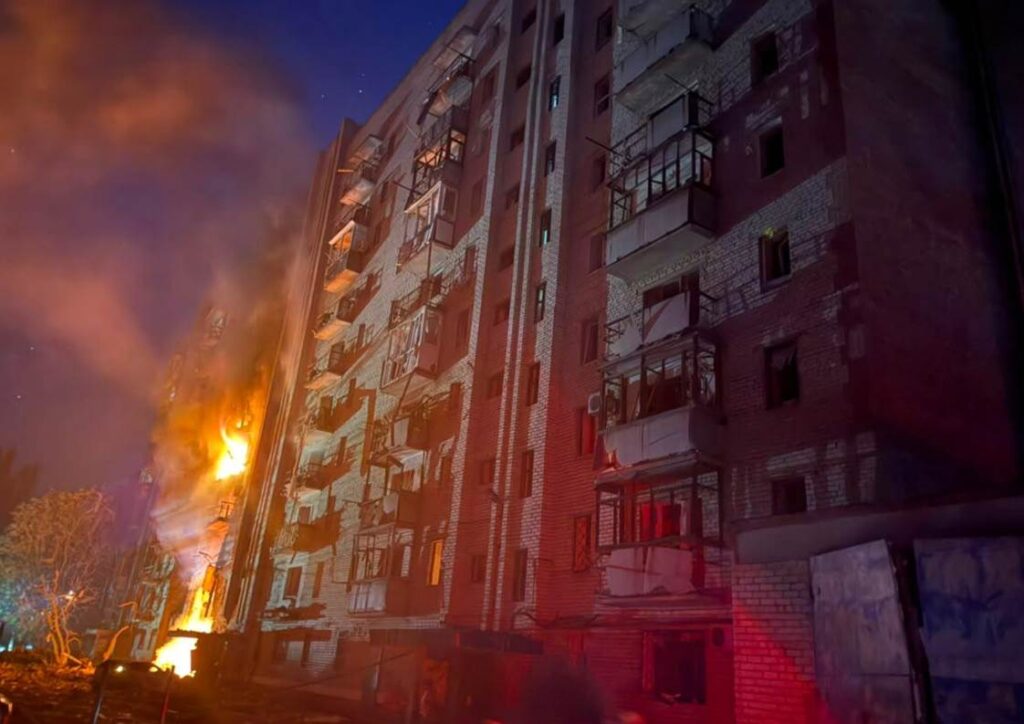
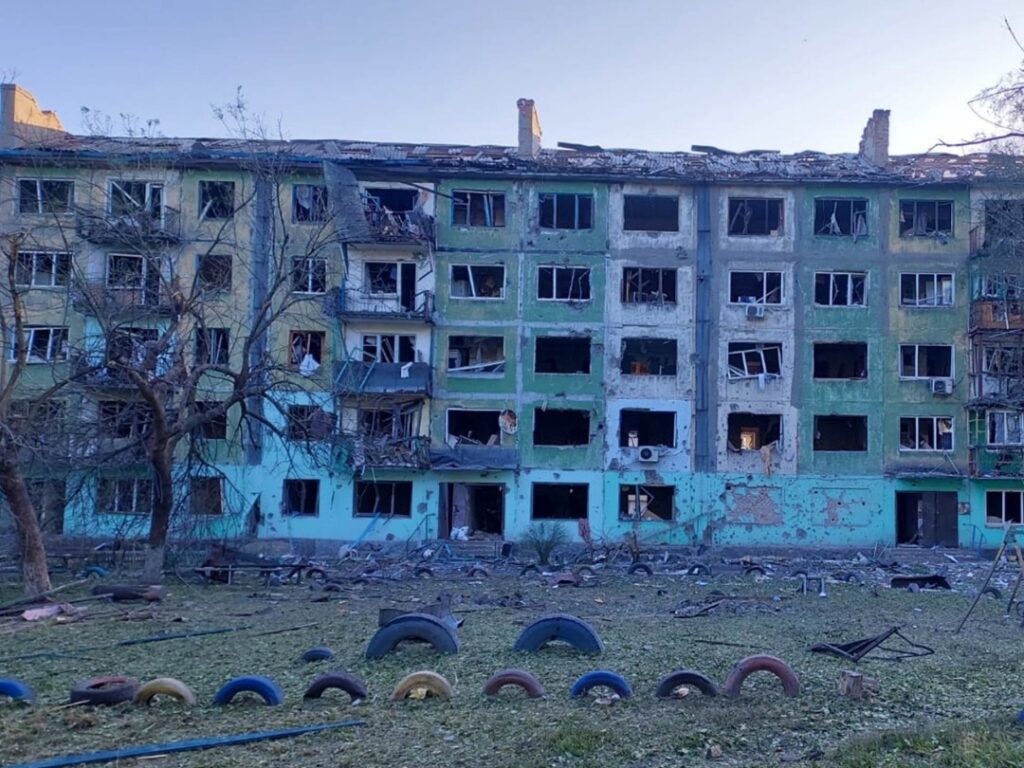
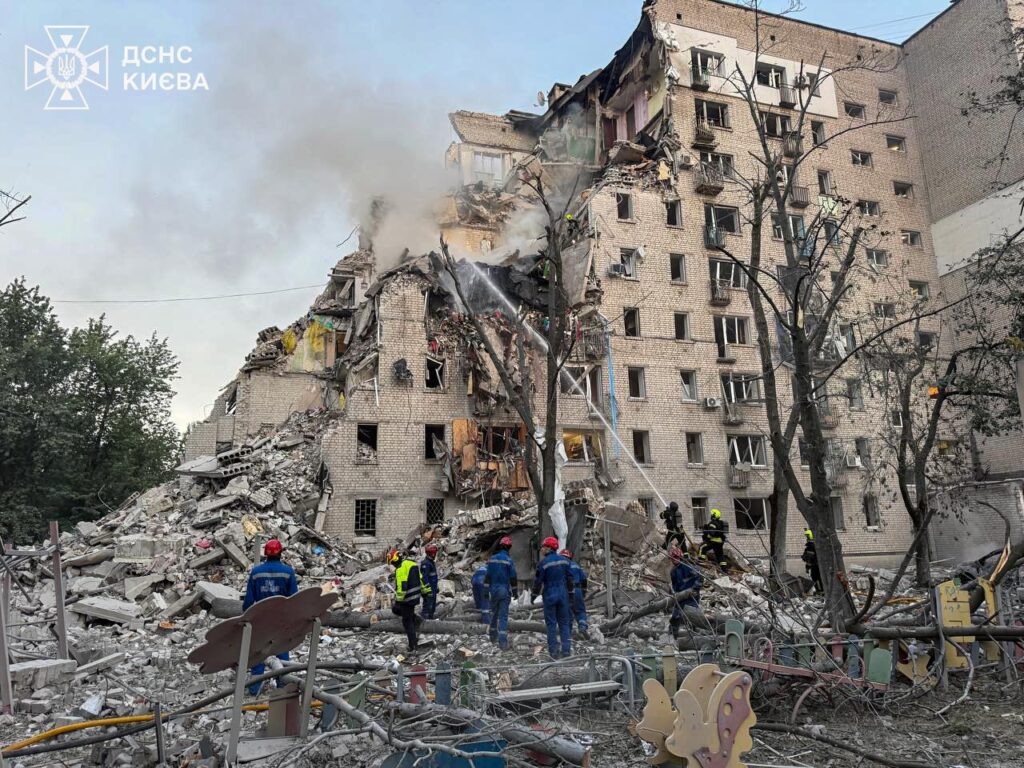
An apartment building hit in a Russian strike on Kostiantynivka on the evening of 13 August, 2026. Photo: Donetsk Region Prosecutor's Office

Russia's glide-bomb strike on Kramatorsk killed one person and wounded 18, the head of the Donetsk Oblast Military Administration, Vadym Filashkin, reported on the morning of 14 August. The Donetsk Oblast Prosecutor's Office has opened a war-crimes investigation into the attack.

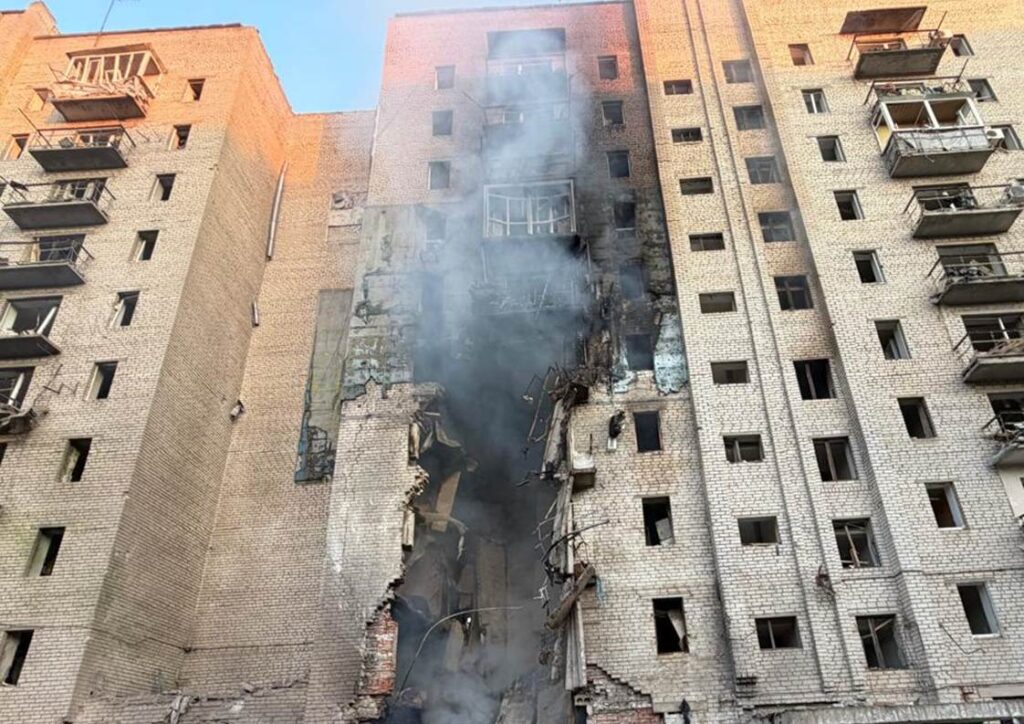
Russian forces dropped eight FAB-250 aerial bombs fitted with universal glide and correction modules (UMPK) on the city on the evening of 13 August, hitting residential areas including apartment buildings, the prosecutor's office reported. An apartment building and a car were damaged. Filashkin said the strikes also hit the nearby settlement of Bilenke.

The strike on the residential area was another instance of Russian forces using guided aerial munitions against civilian areas. Under international humanitarian law, civilian objects may not be deliberately targeted.

The toll rose overnight. Filashkin first reported at least one killed and 15 wounded on the evening of 13 August. By the next morning, the prosecutor's office had documented 17 of the wounded — seven men and 10 women aged between 47 and 85 — with blast and traumatic brain injuries, shrapnel wounds, cuts to the head, arms and legs, and abrasions and bruises. Filashkin's later update put the number of wounded at 18.

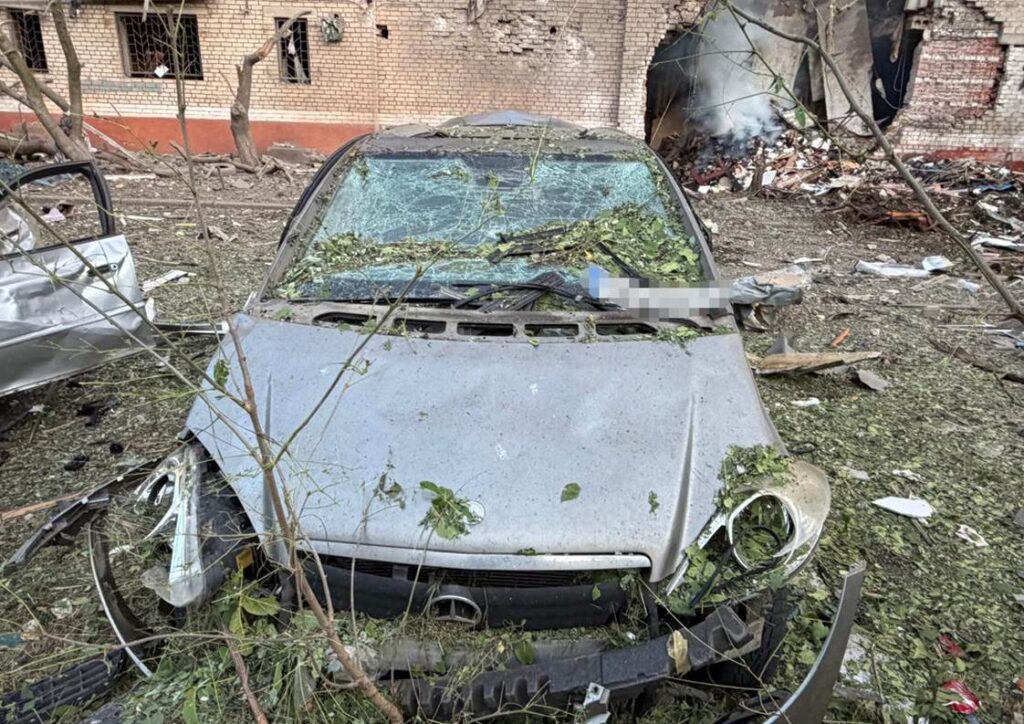
An apartment building hit in a Russian strike on Kramatorsk on the evening of 13 August, 2026. Photo: Donetsk Region Prosecutor's Office

"Russia again turned an ordinary evening in the city into deadly danger. This is not an accident or a mistake — this is how the enemy wages war against our people," Filashkin said.

Deliberately directing attacks against civilian objects may constitute a war crime under international humanitarian law. The prosecutor's office has opened a pre-trial investigation under Part 2 of Article 438 of Ukraine's Criminal Code.

"In total, over the past day, Russians shelled populated areas of Donetsk Oblast 37 times. 624 people, including 90 children, have been evacuated from the front line," Filashkin reports.

A car hit in a Russian strike on Kramatorsk on the evening of 13 August, 2026. Photo: Donetsk Region Prosecutor's Office

Repeated pattern of glide-bomb strikes on Donetsk Oblast

Russian forces regularly use FAB-250 bombs equipped with UMPK to strike populated areas in Donetsk Oblast and other frontline regions.

On 11 August 2025, Russian aircraft dropped FAB-250 bombs equipped with UMPK on a residential quarter in Bilozerske, Donetsk Oblast. Two civilians were killed, a 43-year-old man and a 34-year-old woman, while seven others were injured, including a 16-year-old boy. Eight apartment buildings and six vehicles were damaged. A pre-trial investigation was opened under Part 2 of Article 438 of Ukraine's Criminal Code.

An apartment building hit in a Russian strike on Bilozerske on 11 August, 2025. Photo: Donetsk Region Prosecutor's Office

On 18 September 2025, Russian forces struck civilians with a FAB-250 bomb equipped with UMPK in Kostiantynivka, Donetsk Oblast. Five residents aged between 62 and 74 were killed; three men and two women were outside at the time of the strike. The facades of four apartment buildings were damaged.

On 25 June 2026, Russian forces dropped three FAB-250 bombs equipped with UMPK on Druzhkivka, Donetsk Oblast. A 56-year-old woman was killed, and four others were injured: a 68-year-old man and three women aged 51, 58, and 67, sustaining blast injuries and shrapnel wounds.

  • ✇Euromaidan Press
  • Reuters: Russia dismisses Black Sea ceasefire idea after Ukraine’s offer
    Russia dismissed the idea of a Black Sea ceasefire on 14 August, Reuters reported, a day after the agency disclosed that Ukraine had proposed a mutual halt to attacks on civilian targets there. Russian Foreign Ministry spokesperson Maria Zakharova said Moscow saw no grounds for measures that would give Kyiv a temporary reprieve. Russia’s dismissal comes after its strikes drove shipowners from Odesa as Ukraine’s wheat harvest peaked. More than 90% of Ukraine’s farm e
     

Reuters: Russia dismisses Black Sea ceasefire idea after Ukraine’s offer

14 août 2026 à 07:35

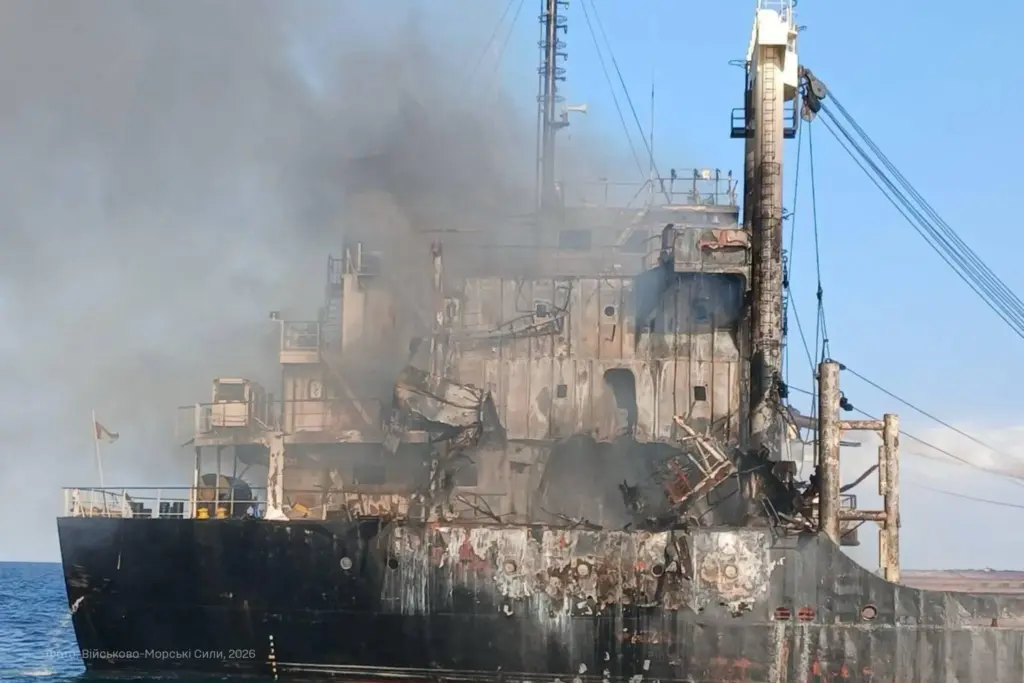
Smoke rises from the burned and heavily damaged superstructure of the Golden Leo cargo ship at sea.

Russia dismissed the idea of a Black Sea ceasefire on 14 August, Reuters reported, a day after the agency disclosed that Ukraine had proposed a mutual halt to attacks on civilian targets there.

Russian Foreign Ministry spokesperson Maria Zakharova said Moscow saw no grounds for measures that would give Kyiv a temporary reprieve.

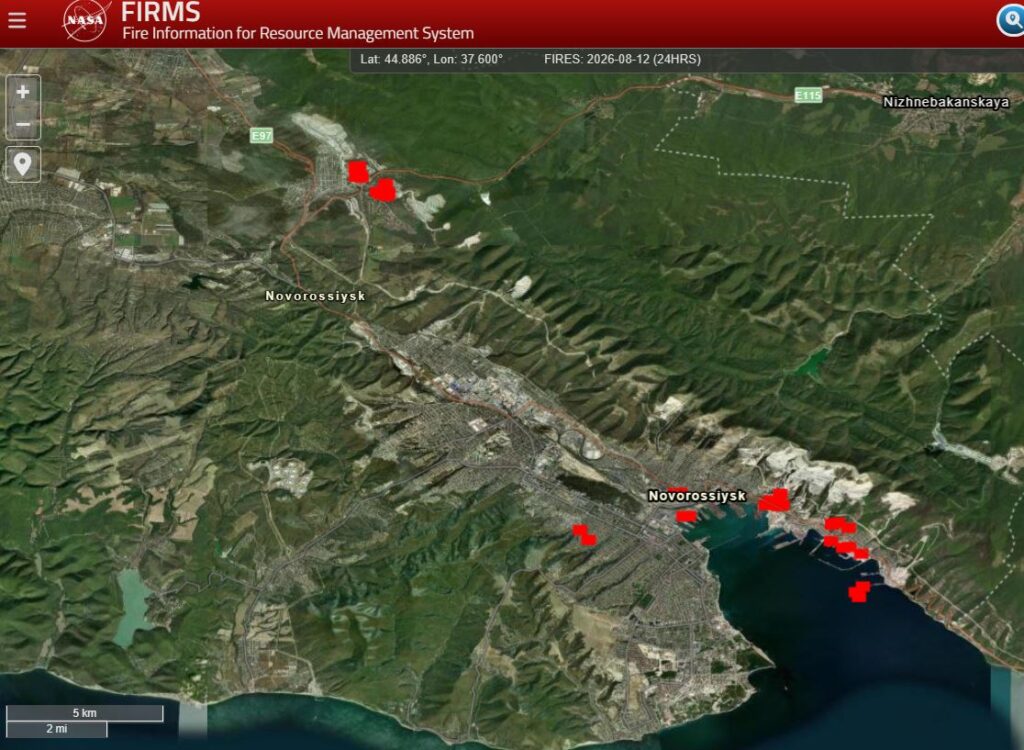
Russia’s dismissal comes after its strikes drove shipowners from Odesa as Ukraine’s wheat harvest peaked. More than 90% of Ukraine’s farm exports leave through three deepwater Odesa ports. Reuters reported that Ukraine’s 12 August operation at Novorossiysk targeted a naval base and warships, although nearby grain terminals also suspended operations.

Russian forces, by contrast, have repeatedly struck foreign-flagged ships and Ukrainian port infrastructure. The disruption is stranding Ukrainian crops and raising concerns over global food supplies.

Zakharova accused Ukraine of deliberately destabilizing civilian shipping but did not mention Russia’s attacks, Reuters said. She was responding to Turkish Foreign Minister Hakan Fidan, who said Ankara had proposed a Black Sea moratorium to both sides.

Zakharova also said Moscow had received no formal proposal from Türkiye and ruled out reviving the 2022–23 Black Sea grain deal, calling it one-sided.

Ukraine’s harvest has nowhere to go

Reuters said Ukraine’s grain exports had fallen 76% year on year so far in August. Ukraine’s Agriculture Ministry projects agricultural exports could nearly halve, from 64.4 million to 29.6 million tonnes. It expects silos to fill by October as grain backs up.

World Grain, citing the US Department of Agriculture’s Foreign Agricultural Service, reported that corn exports could fall 39% and wheat exports 26%. The US agency expects unsold corn stocks to rise more than tenfold.

The ministry has asked the EU for €220 million to subsidize farm loans and help producers finance autumn sowing. Reuters separately reported, citing unnamed sources in both countries, that Kyiv and Chisinau were discussing a rail route to Romania’s Constanța port. Kyiv estimates it could carry only 10% of Ukrainian grain exports.

Ukrainian grain
Explore further

Ukraine and Moldova discuss rail corridor for grain amid Russian Black Sea attacks

Russia turns ports into targets

After Russia refused to extend the UN- and Türkiye-brokered grain deal in 2023, Ukraine opened its own maritime corridor. It remained operational until this summer’s escalation.

Russian forces repeatedly struck foreign-flagged vessels in July. On 19 July, Russian missiles hit the Guinea-Bissau-flagged, Turkish-owned Golden Leo as it left Odesa carrying corn. The attack killed 10 people, Ukraine’s Navy and Sea Ports Authority said. Ag Bull Trading reported that the attacks brought the corridor to its first full stop since it opened in August 2023.

Russia’s dismissal leaves Ukraine’s corridor officially open while Russian attacks continue to drive shipowners away.

  • ✇Euromaidan Press
  • Armor can barely reach Ukraine’s front now—so robots drive and soldiers walk
    Drones have pushed armored vehicles off the roads to Ukraine's front line, a Ukrainian brigade commander told RBC-Ukraine. Denys Perch, who commands the 107th Territorial Defense Brigade, says the drone-saturated belt has grown so deep that pickups no longer reach forward positions. The one enemy weapon his jammers can't touch is the fiber-optic drone. The war has become a contest over who can pull people off the battlefield fastest, as cheap drones make any human movem
     

Armor can barely reach Ukraine’s front now—so robots drive and soldiers walk
14 août 2026 à 07:02

A Russian tank destroyed in Kharkiv Oblast, Ukraine

Drones have pushed armored vehicles off the roads to Ukraine's front line, a Ukrainian brigade commander told RBC-Ukraine. Denys Perch, who commands the 107th Territorial Defense Brigade, says the drone-saturated belt has grown so deep that pickups no longer reach forward positions. The one enemy weapon his jammers can't touch is the fiber-optic drone.

The war has become a contest over who can pull people off the battlefield fastest, as cheap drones make any human movement near the front a target. Ukraine keeps out-inventing Russia at the front, but Russia copies each advance and floods the line with it at state scale.

When armor becomes the target

Until recently, armored vehicles still drove supplies to logistics hubs near the front. That is now almost impossible. Perch says that when a large, armored machine appears, Russian forces treat it as a prize target and swarm it with dozens of drones and munitions. Perch would sooner park his armor than seat soldiers inside it.
A Ravlyk UGV from Ukrainian Unmanned Technologies displayed at Eurosatory 2026, here mounting twin anti-tank launchers from Ukroboronprom. (Photo: Ukrainian Unmanned Technologies)
Explore further

This Ukrainian UGV, beloved by Ukrainian intel, is now winning over NATO countries and global defense giants

A kill zone that keeps widening

On the busiest sectors, Perch says, the kill zone—the drone-ruled strip around the contact line—now runs 15 to 20 kilometers deep. Some positions take three days to reach on foot. Where troops once drove most of the way and walked the last stretch, they now walk it all.

Robots take the drive

Under Perch, the brigade climbed, by his account, from around 22nd to third among Ukraine's Territorial Defense forces on the military's strike-results leaderboard, the home-guard units now fighting on the front. Ground robots—unmanned ground vehicles (UGVs)—do the work that armor cannot. They haul supplies and evacuate the wounded, though the robot often can't be brought back. His brigade runs over 1,500 logistics missions a month by heavy bomber drones alone, and still more by first-person-view (FPV) drones and robots. Russia hunts those bombers, he says, with interceptors that scramble the moment they hear one take off, so his crews mix high and low flight to slip past. Perch expects robots to move from supply runs into combat, hitting Russian troops in their rear.

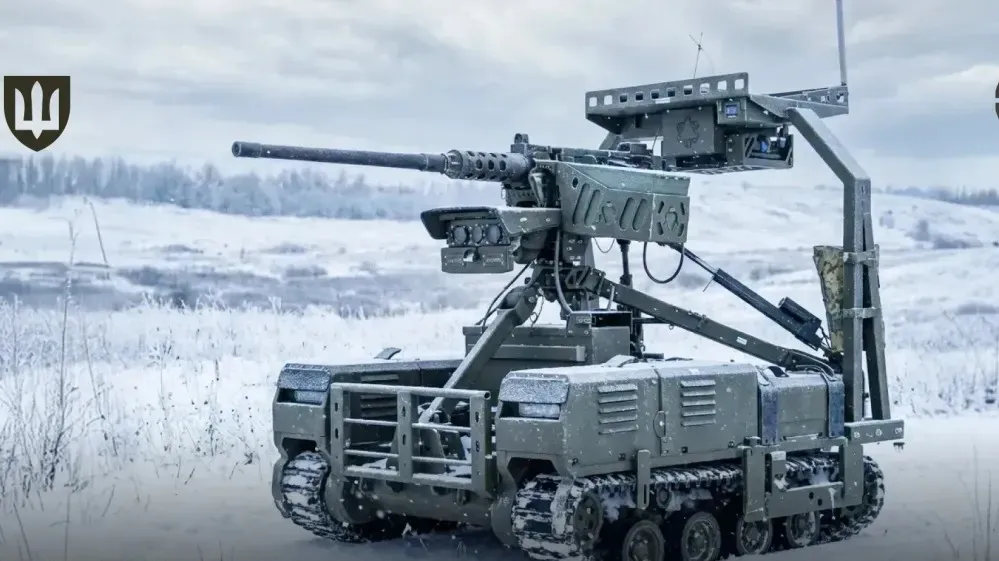
A ground robotic system. The Ukrainian Defense Ministry
Explore further

Ukraine wants robots doing 100% of frontline logistics. In June, they ran nearly 17,000 supply and evacuation runs

The drone his jammers can't touch

Both armies now field fiber-optic drones—machines guided by a hair-thin glass thread instead of radio. No signal means nothing to jam. Ukraine learned to block radio and digital drones, cutting their controls and video, Perch said. The glass-fiber ones his electronic warfare cannot reach, because there is no radio link to attack. His brigade still has no counter to them, Perch said, and he wants a technical fix that stops them.

  • ✇Euromaidan Press
  • Russia allegedly sent a hitman after a US-Ukrainian citizen in Warsaw. Poland caught the suspect
    Polish Prime Minister Donald Tusk said authorities had detained a Russian citizen recruited by Moscow to kill a man in Warsaw. The target holds US and Ukrainian passports, the Associated Press (AP) reported on 13 August. Tusk said Polish security services stopped the alleged attack “at the last minute.”  Since 2022, AP has mapped about 200 acts of sabotage, arson, and disruption across Europe that officials have linked to Russia. European governments say the campaign ai
     

Russia allegedly sent a hitman after a US-Ukrainian citizen in Warsaw. Poland caught the suspect

14 août 2026 à 06:40

Ukrainian President Volodymyr Zelenskyy walks beside Polish Prime Minister Donald Tusk in an ornate government building.

Polish Prime Minister Donald Tusk said authorities had detained a Russian citizen recruited by Moscow to kill a man in Warsaw. The target holds US and Ukrainian passports, the Associated Press (AP) reported on 13 August. Tusk said Polish security services stopped the alleged attack “at the last minute.” 

Since 2022, AP has mapped about 200 acts of sabotage, arson, and disruption across Europe that officials have linked to Russia. European governments say the campaign aims to intimidate Ukraine’s supporters and disrupt military aid, while Ukrainian authorities report similar recruitment tactics inside Ukraine.

The suspect was detained on 7 August and remanded for three months, Warsaw police said. Tomasz Siemoniak, the minister overseeing Poland’s intelligence services, said the operation involved US services.

PM Tusk called it the first Russian-ordered attempt of its kind against a US citizen in another NATO country. He said the target was “inconvenient to the Putin regime,” without explaining why.

In their bulletin, Reuters reported that Russia’s Warsaw embassy did not immediately respond to a request for comment. Moscow denies conducting a sabotage campaign in Europe.

Russia has already gone after a German arms CEO and critics of the Kremlin

European authorities had already reported plots against arms-industry figures supplying Ukraine. CNN reported in 2024 that US and German services foiled a plot against Rheinmetall chief Armin Papperger. 

Former Bellingcat investigator Christo Grozev said an intelligence insider told him he was on Russia’s kill list. He also warned Putin critic Garry Kasparov that a Russian agent trained in assassination had infiltrated exile groups to approach him.

Russia has also been accused of targeting Kremlin opponents abroad. In June, Kremlin critic Robert Kuzovkov was shot dead in Poland. Tusk said the killing resembled a political assassination, but Warsaw has not attributed it to Russia.

Russia uses disposable agents, not career spies

The alleged recruitment in Warsaw resembles tactics reported elsewhere in Europe. German investigators identified a former Ukrainian bricklayer and an untrained Romanian woman as the suspected operatives surveilling Stefan Thumann, head of Bavarian drone maker Donaustahl. German intelligence later classified the case as a suspected planned assassination.

Ukrainian authorities have reported similar recruitment at home. The SBU said an FSB-directed foreign pair killed Colonel Ivan Voronych in Kyiv in July 2025. Both suspects later died in a shootout with law enforcement.

Ukrainian police say Russian recruitment can escalate from surveillance and simple deliveries to arson, terrorism, and murder. Since the start of 2026, police and the SBU have registered 31 terrorist attacks and prevented another 14.

  • ✇Euromaidan Press
  • Russia’s defense ministry threatens to “freeze” Ukraine this winter
    Russia's defense ministry posted photographs of attack drones in flight on its Telegram channel, captioned "like snow on your head," and told Ukrainians that "in winter, you'll get a freeze." The ministry attached the threat to its own earlier claim of strikes on Ukrainian port infrastructure and vessels. The post puts in writing what Russia has done to Ukrainian civilians through every winter of the full-scale war: strike the power and heating grid to leave homes cold
     

Russia’s defense ministry threatens to “freeze” Ukraine this winter

14 août 2026 à 05:35

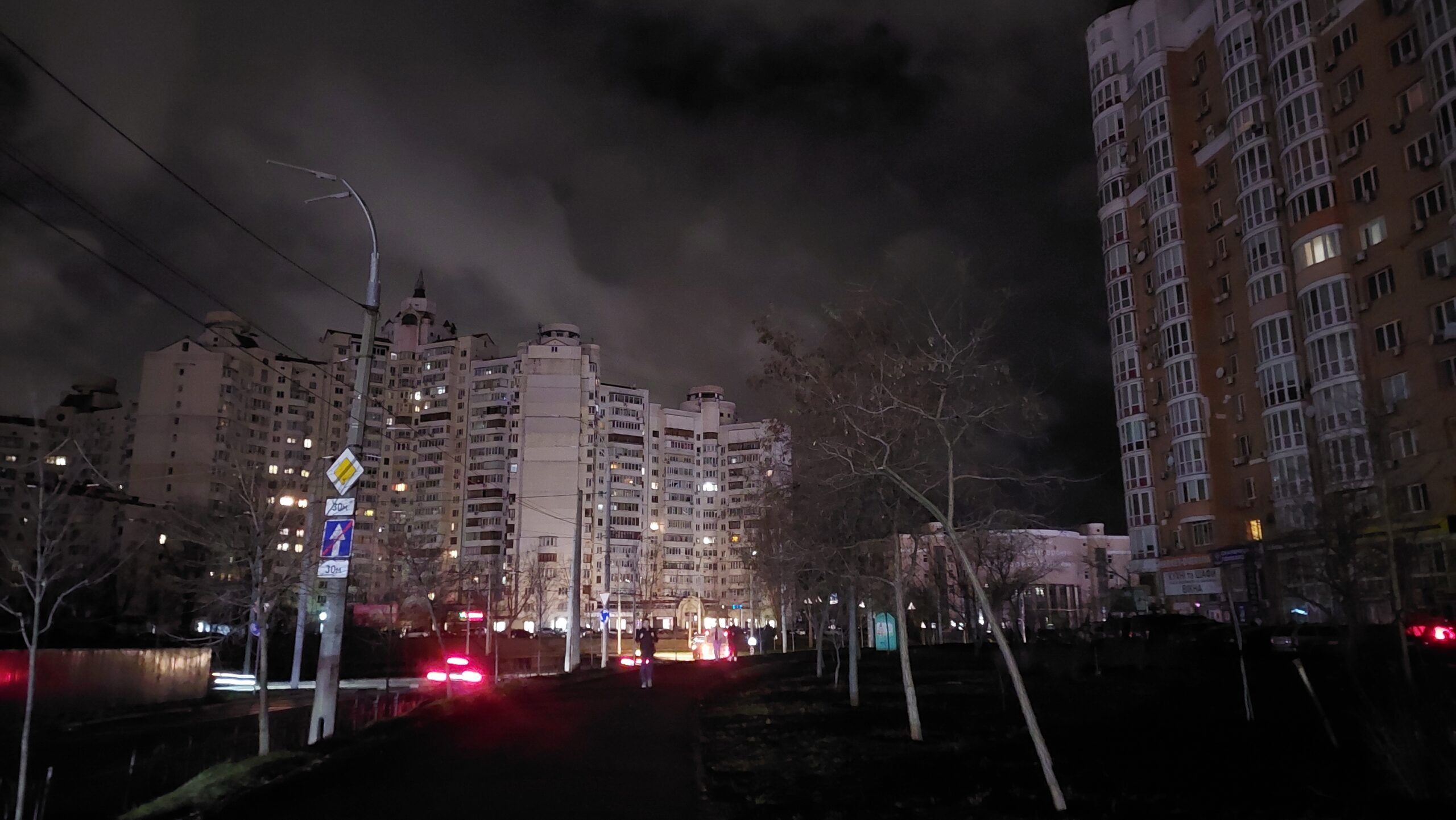
Orange State Emergency Service heated tents illuminated at night in front of Kyiv apartment buildings, some windows lit while others remain dark during blackouts

Russia's defense ministry posted photographs of attack drones in flight on its Telegram channel, captioned "like snow on your head," and told Ukrainians that "in winter, you'll get a freeze." The ministry attached the threat to its own earlier claim of strikes on Ukrainian port infrastructure and vessels.

The post puts in writing what Russia has done to Ukrainian civilians through every winter of the full-scale war: strike the power and heating grid to leave homes cold and dark. What is new is not the tactic but the candor — a ministry that usually insists it hits only military targets openly advertising the coming assault on the systems that keep civilians warm. And the taunt lands as Ukraine heads into the season more exposed than at any point in the war: President Volodymyr Zelenskyy told CNN this week that the country holds about 1% of the Patriot interceptors it needs to get through winter.

The winter campaign Russia is advertising

Since late 2022, Russia has systematically struck Ukraine's electricity, gas, and heating infrastructure, causing rolling blackouts and cutting heat and water during freezing weather. Ukrainian officials have repeatedly called the campaign "energy terrorism," and grid operators say the strikes have shifted toward knocking out entire energy districts rather than staging single mass barrages. This summer Russia widened the target set again: on 13 August a Russian drone set port infrastructure alight in Odesa Oblast and damaged a civilian vessel at a Mykolaiv port, the national rail operator and regional officials reported — the same kind of strike the ministry's post was boasting about.

Ukraine enters winter short of the weapon that stops ballistic missiles

The threat is heavier because Ukraine cannot reliably stop the missiles that would carry it out. Zelenskyy told CNN that selling Kyiv 5% of current US Patriot stocks would carry it through winter and 10% would let it "destroy all the Russians' ballistic missiles" — but that he holds 1%. On 5 August, Russia fired 28 ballistic and anti-ship missiles at Kyiv and Ukraine intercepted none, killing 17 people. July was the deadliest month for Ukrainian civilians since April 2022, according to the UN.

Europe is scrambling to add generation before the cold sets in. Finland said on 13 August it would fund a €28.5 million ($33.2 million) power plant project for Ukraine, one of several efforts to keep the lights on when the strikes resume. Ukrainian officials have warned that the coming winter could be more difficult than any before it.

  • ✇Euromaidan Press
  • Poland was ready to scrap these MiG-29s. Bulgaria’s interest just revived the Ukraine deal.
    Bulgaria's interest in buying Poland's retiring MiG-29s has pushed Warsaw and Kyiv closer to finalizing their long-stalled swap, Polish officials say. Poland and Ukraine are in the final stage of negotiating a deal to transfer Poland's aging MiG-29 fighter jets to Ukraine in exchange for drones and Ukrainian drone-warfare know-how, with the jets potentially shipping within weeks, Polish outlet Wirtualna Polska reported, citing sources in the Polish Armed Forces and Defe
     

Poland was ready to scrap these MiG-29s. Bulgaria’s interest just revived the Ukraine deal.

14 août 2026 à 05:21

ukrainian mig-29mu1 levels key russian-used bridge near pokrovsk pinpoint strike (video) · post mig-29 tail number 57 “white” 114th tactical aviation brigade flight 2014 military pages militarnyi arhfine-foto-myg-29-bortovyj-nomer-57-bilyj-114-brygada-taktychnoyi-aviatsiyi-2014-rik-foto-ukrainian-military-pages ukraine news

Bulgaria's interest in buying Poland's retiring MiG-29s has pushed Warsaw and Kyiv closer to finalizing their long-stalled swap, Polish officials say.

Poland and Ukraine are in the final stage of negotiating a deal to transfer Poland's aging MiG-29 fighter jets to Ukraine in exchange for drones and Ukrainian drone-warfare know-how, with the jets potentially shipping within weeks, Polish outlet Wirtualna Polska reported, citing sources in the Polish Armed Forces and Defense Ministry. The report follows months of on-and-off talks that Poland's own officials have repeatedly declared both close to done and dead.

Polish Deputy Defense Minister Cezary Tomczyk said on Polsat News that Bulgaria's competing interest in the jets has "livened up" Warsaw's discussions with Kyiv. Bulgaria has told Poland that if Ukraine will not commit, Sofia would buy the jets itself, Tomczyk said.

"I hope it will be soon," Tomczyk said when asked when Poland intends to sign the agreement with Ukraine. He said Poland has laid out the technologies and know-how it wants from Ukraine in return, calling the exchange in both countries' interest. "Today I cannot say with 100% certainty that this matter will be finalized, but we hope so."

According to Wirtualna Polska, the deal covers Soviet-era jets Poland's air force is retiring as it phases in Western aircraft, in exchange for a large batch of Ukrainian drones of various types and the transfer of Ukrainian combat know-how. The outlet reports Poland wants data on strike-drone communications links, control principles, footage of strikes on targets, and physical samples of the hardware itself.

Poland's Defense Ministry has said the process picked up pace after Rustem Umerov took over as head of Ukraine's Foreign Intelligence Service, with President Volodymyr Zelenskyy tasking him with negotiating drone agreements. A source involved in the talks told Wirtualna Polska that Ukrainian drone maker Fire Point has offered to supply Poland with 1,500 long-range drones, plus a matching batch if war breaks out — an offer the source said Poland regards cautiously, since a company citing force majeure in wartime could leave Warsaw without the hardware it was promised.

A deal that has collapsed and revived for a year

Poland and Ukraine signed a bilateral security agreement in July 2024 that raised the prospect of transferring a squadron of at least 14 Polish MiG-29s. By early 2026, Warsaw had narrowed the offer to six to eight jets. In June, Poland froze the transfer, with Deputy Defense Minister Tomczyk citing Ukraine's refusal to share its drone and counter-drone technology. Talks restarted in July after Kyiv sent Warsaw a letter with concrete proposals, and by 31 July, Poland said Ukraine had returned with a specific list of drones it would hand over — a proposal Poland's ministry was still reviewing.

Poland's ambassador to Ukraine, Vasyl Bodnar, told Ukrainska Pravda's Yevropeiska Pravda that dialogue continues but that several obstacles still stand in the way of the transfer.

Why this matters

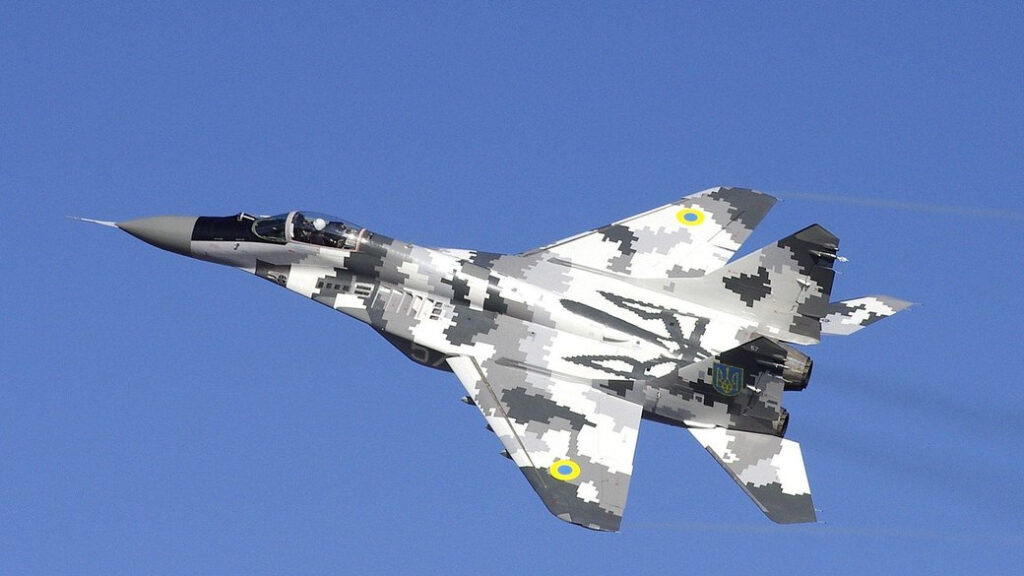
The MiG-29 remains a core part of Ukraine's air force even as it shifts to F-16s, Mirages, and incoming Gripens — Ukrainian pilots already fly the Soviet-era jets and have adapted them to carry Western precision weapons, so a new batch could enter service without the delays a Western aircraft transition requires. Poland's own hesitation reflects the same trade-off every one of its allies faces: what it gives up in hardware, it wants back in the operational knowledge Ukraine has built fighting Russia's drone war for four years — knowledge with no equivalent on any NATO training ground.

  • ✇Euromaidan Press
  • They find a sword, we find a shield: Ukrainian soldier on why drones will never replace infantry
    Serafim Hordiienko enlisted at 19 in 2022, fought as a mortarman near the front line, then moved into drone warfare as it grew central to Russia's war on Ukraine. In an interview with RBC-Ukraine, he pushed back on the idea that unmanned systems are phasing out infantry, arguing the two perform separate functions neither can absorb. The debate is live inside Ukraine's own military. Ukraine's Third Army Corps has said it plans to replace roughly 30% of its infantry with
     

They find a sword, we find a shield: Ukrainian soldier on why drones will never replace infantry

14 août 2026 à 04:58

Ukrainian soldiers
Serafim Hordiienko enlisted at 19 in 2022, fought as a mortarman near the front line, then moved into drone warfare as it grew central to Russia's war on Ukraine. In an interview with RBC-Ukraine, he pushed back on the idea that unmanned systems are phasing out infantry, arguing the two perform separate functions neither can absorb.

The debate is live inside Ukraine's own military. Ukraine's Third Army Corps has said it plans to replace roughly 30% of its infantry with ground robotic systems by the end of 2026, and other officers have called full infantry replacement an eventual goal. Hordiienko's account, shaped by his own shift from rifle-and-mortar combat to drone operations, argues against that trajectory ever completing — infantry holds ground; drones strike and surveil; neither substitutes for the other.

"Different functions of war"

Hordiienko compared infantry and drones to two halves of a single system rather than competing tools. Infantry cannot operate without supporting fire and reconnaissance, he said, and drones — while efficient at surveillance and strikes — cannot hold territory the way ground troops can. If war is still fought over front lines and captured ground, he argued, only infantry can perform that function; drones deliver cost-effective damage but do not occupy space.

He traced Ukraine's drone advantage not to hardware alone but to the system around it — production, battlefield communication, and rapid adaptation to frontline needs. Ukrainian manufacturers he named, including Skyeton, Ukrspetssystems, DeviRO, and Firepoint, built reconnaissance and strike capabilities under resource shortages that Russia's more centralized, state-linked defense industry did not face in the same way, he said.

The end of romanticized war

Hordiienko dates a turning point in how Ukrainian soldiers relate to the war to the 2023 Zaporizhzhia counteroffensive. Before it, he said, volunteers who joined in 2022 operated in an emotionally charged, maximalist mode — young men competing to reach combat before the war, as they assumed, ended quickly. After the counteroffensive stalled, he said, that gave way to a more systematic, mechanized phase he calls "a war of military machines."

He illustrated the shift with a sword-and-shield framework: each side develops a new method of attack, the other adapts a defense, and the balance resets every few months. The side that adapts and scales fastest gains the advantage, he said — a dynamic he sees as running through the drone war specifically.

Hordiienko enlisted through an unusual path. He and three other volunteers, all under 21 and already carrying combat experience from the war's opening months, could not sign standard military contracts because of their age. They were enlisted only after Ukraine's then-commander-in-chief, Valerii Zaluzhnyi, issued a personal order on their behalf.

What newer recruits are owed

Speaking about troops mobilized later in the war — arriving without the volunteer surge's initial urgency — Hordiienko said commanders now owe recruits honesty rather than appeals to abstract duty. He described his approach as a direct exchange: a commander sets out the conditions of service, and the soldier meets specific obligations in return, with consequences if either side breaks that arrangement. Motivation, in his account, rests less on invoking "fighting for Ukraine" and more on concrete terms of service, fair treatment, and — where the national cause doesn't land for a given recruit — the practical case that military service builds expertise, particularly in drone and other technical specialties, that carries into civilian life.

  • ✇Euromaidan Press
  • NATO fighter, one drone, one district: a jammed intercept lands over Latvia
    A NATO fighter patrolling Baltic airspace shot down a drone over Latvia early Friday, the Latvian Armed Forces said, in the second Baltic-region drone incursion this week. The interception happened over Balvi Municipality, near Latvia's borders with Belarus and Russia. Latvian officials said the drone entered the country's airspace after being knocked off course by Russian electronic warfare systems — not as a deliberate strike on Latvian territory. Russia has regularly
     

NATO fighter, one drone, one district: a jammed intercept lands over Latvia

14 août 2026 à 04:43

nato jets over baltics get authority shoot down objects pose threat · post russian fighter fly near airspace off latvia's baltic coast seen during interception op 2025 rnqv has upgraded

A NATO fighter patrolling Baltic airspace shot down a drone over Latvia early Friday, the Latvian Armed Forces said, in the second Baltic-region drone incursion this week.

The interception happened over Balvi Municipality, near Latvia's borders with Belarus and Russia. Latvian officials said the drone entered the country's airspace after being knocked off course by Russian electronic warfare systems — not as a deliberate strike on Latvian territory. Russia has regularly bombarded Ukraine's Baltic-facing neighbors with stray drones since intensifying its own long-range strike campaign, and on 12 August, Romania detonated two Russian drones that washed up near its Black Sea gas field.

Latvian forces reported an "airspace threat" in four districts bordering Belarus and Russia shortly after 04:00, and announced the drone's destruction roughly 30 minutes later. Ieva Bērziņa, a representative of Latvia's Joint Armed Forces Staff, said the crash site had been located but its exact position was not being disclosed, and that debris may be scattered over a wide area because the drone was shot down at high altitude.

The incident coincided with a large-scale drone attack on Russian targets in Leningrad Oblast overnight.

This is not the first time drones have crossed into the Baltic states during Russian strikes on its own territory. In May, a drone that entered from Russia damaged fuel tanks at an oil depot in Rēzekne, about 40 kilometers from the border. Ukrainian Foreign Minister Andrii Sybiha said in March that Russia was deliberately steering Ukrainian drones toward Baltic airspace using electronic warfare, adding that Moscow later uses the resulting incidents in information operations targeting the region.

Latvia is weighing the purchase of Brazilian-made A-29 Super Tucano light attack aircraft for counter-drone missions, funded through more than €1 billion the government has earmarked for stronger air defense.

  • ✇Euromaidan Press
  • 745 km² recaptured in Ukraine’s eight-month Oleksandrivka counteroffensive, Kyiv says
    President of Ukraine Volodymyr Zelenskyy announced the results on 12 August after a briefing from Commander-in-Chief Mykhailo Drapatyi, Chief of the General Staff Ihor Skybiuk, and Airborne Assault Forces Commander Oleh Apostol. Kyiv says the operation recaptured 745 km² and 26 villages across Dnipropetrovsk, Donetsk, and Zaporizhzhia oblasts. The Airborne Assault Forces and attached units carried it out. The goal was to stop Russian forces from advancing further and pu
     

745 km² recaptured in Ukraine’s eight-month Oleksandrivka counteroffensive, Kyiv says

14 août 2026 à 04:40

745 km² recaptured ukraine's eight-month oleksandrivka counteroffensive kyiv says · post 2026 institute study war aei's critical threats project russo-ukrainian-war-august-12-2026 ukraine news ukrainian reports

President of Ukraine Volodymyr Zelenskyy announced the results on 12 August after a briefing from Commander-in-Chief Mykhailo Drapatyi, Chief of the General Staff Ihor Skybiuk, and Airborne Assault Forces Commander Oleh Apostol.

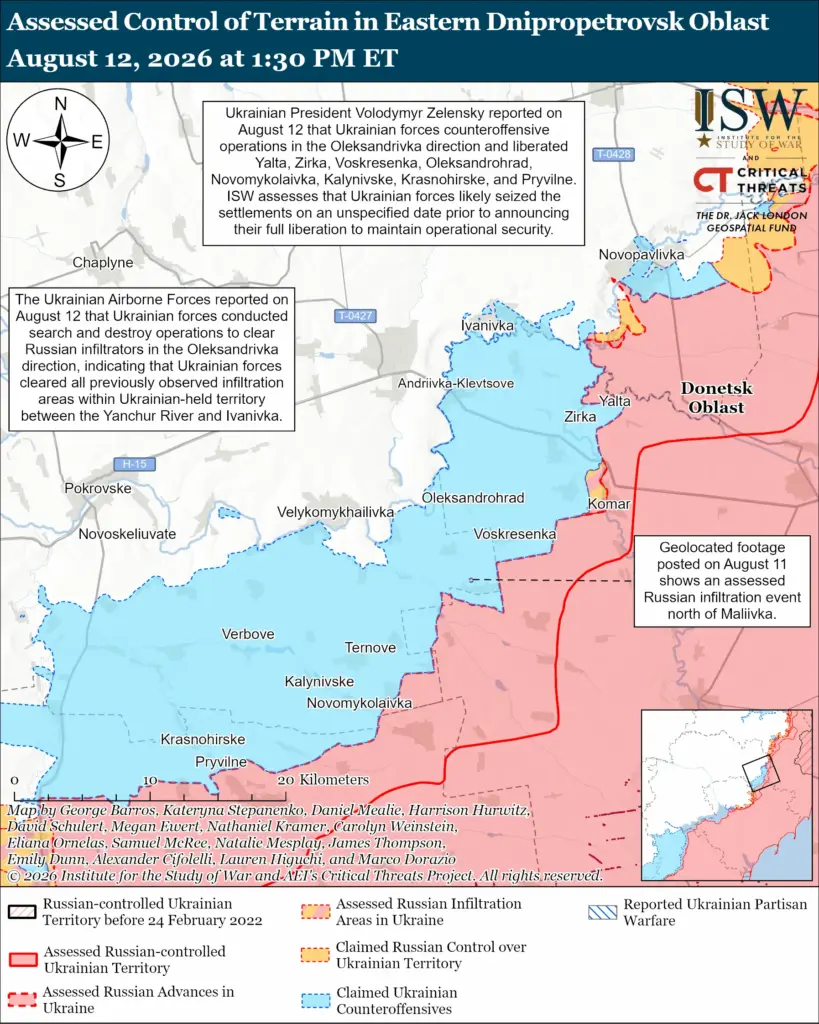
Kyiv says the operation recaptured 745 km² and 26 villages across Dnipropetrovsk, Donetsk, and Zaporizhzhia oblasts. The Airborne Assault Forces and attached units carried it out. The goal was to stop Russian forces from advancing further and push them beyond the administrative border of Dnipropetrovsk Oblast. The President's Office put Russian losses at at least 9,550 killed and over 6,600 wounded. Ukrainian forces are continuing to build on the gains. The operation also added to Ukraine's prisoner exchange pool.

Since its 2023 counteroffensive stalled, Ukraine has mostly defended while Russia grinds forward, making any sustained Ukrainian advance rare. With Western aid uncertain and its own troops stretched, Ukraine rarely gets to trade defense for offense on its own land.

A reversal Russia paid for across the front

Ukraine has spent most of the past year on the defensive. The Oleksandrivka counteroffensive broke that pattern. For over six months, Ukrainian forces pushed forward rather than holding ground, and they did it in Ukraine's own Dnipropetrovsk Oblast, not on Russian territory.

The operation also hurt Russia elsewhere. Every unit Moscow sent to defend in the Oleksandrivka direction was a unit it could not use to attack other parts of the front, the US-based think tank ISW assessed. Russian recruitment is declining, which makes that tradeoff harder to absorb.

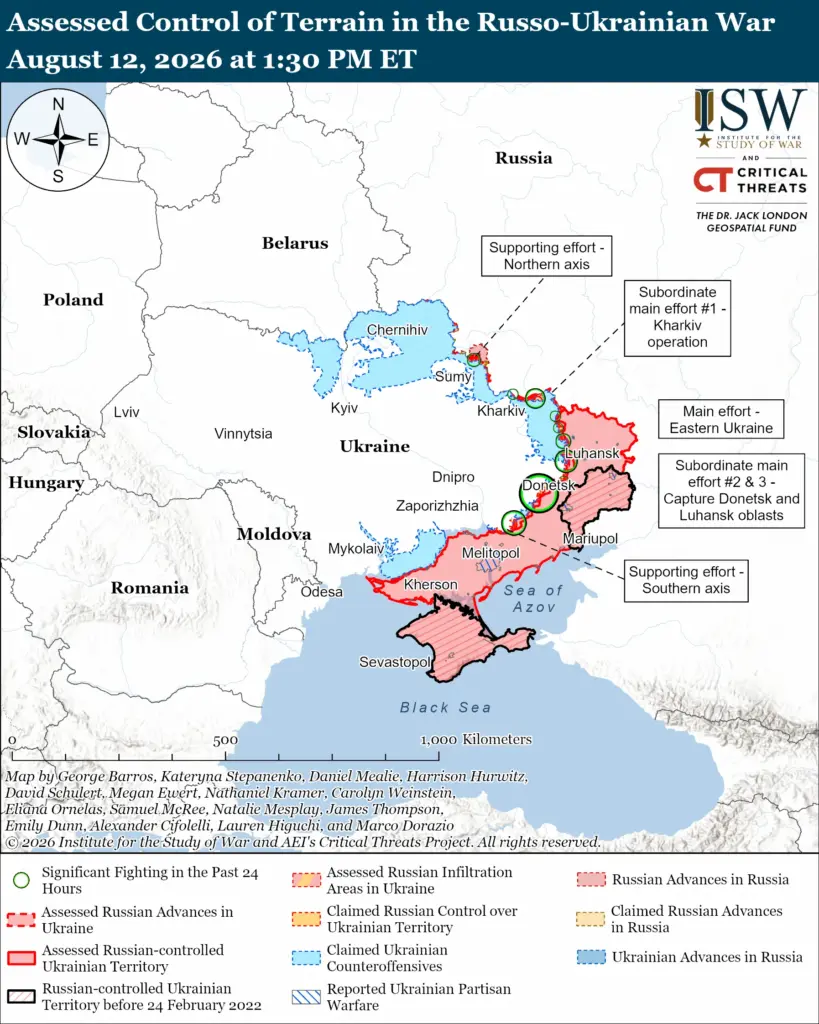
The numbers across the whole frontline tell the same story. Between late January and 12 August, Russian forces seized roughly 383 km² but lost about 234 km², according to ISW. The net Russian gain was far smaller than in previous seasons.

assessed control
Map: 2026 Institute for the Study of War and AEI's Critical Threats Project

How Ukraine clawed the ground back

The counteroffensive began on 29 January, according to ISW. Texty reported it ran in two stages: January to May and May to August. It was one of two mutually reinforcing Ukrainian drives in the Oleksandrivka and Huliaipole directions. Both aimed to push Russia from Dnipropetrovsk Oblast and disrupt preparations for Russia's 2026 offensive.

Kyiv says the following 26 villages were liberated: Tolstoi, Novokhatske, Hrushivske, Zirka, Zelenyi Hai, Piddubne, Myrne, Tsehelne, Pryvillia, Zlahoda, Krasnohirske, Pryvilne, Novohryhorivka, Stepove, Kalynivske, Berezove, Novomykolaivka, Voskresenka, Oleksandrohrad, Yalta, Rybne, Maliivka, Sichneve, Ternove, Novoheorhiivka, and Zaporizke. The settlements span all three oblasts.

Where Kyiv's map and ISW's diverge

ISW described the results as evidence that Ukrainian forces can still carry out significant tactical advances and bring back limited mechanized maneuver on parts of the frontline.

It assessed that the success was likely the result of several factors working together: better Ukrainian operational planning, a campaign to suppress and destroy Russian air defenses, deeper strikes against Russian supply lines, Ukraine's advantage in tactical drones, and the 01 February Starlink cutoff that hit Russian forces in Ukraine.

Geolocated footage from 11 August showed Ukrainian forces holding positions southeast of Ternuvate and Vozdvyzhivka. Russian sources had claimed advances in those areas. ISW assessed those claims were likely largely exaggerated.

ISW's own mapping recorded roughly 627 km² of Ukrainian gains across the Oleksandrivka and northern Huliaipole directions combined. Even that two-direction total falls below Kyiv's 745 km² for the Oleksandrivka direction alone. ISW noted its conservative methodology likely underestimates Ukrainian advances.

The Airborne Assault Forces Command added that some flag-raisings over liberated villages were done at a "safe distance" from actual positions for operational security. This suggests forces had moved beyond the settlements they publicly named.

  • ✇Euromaidan Press
  • 437 killed, over 2,600 injured: Ukraine’s deadliest month for civilians since 2022, UN says
    At least 437 civilians were killed and 2,610 injured across Ukraine in July, the highest monthly death toll since May 2022, according to the UN Human Rights Monitoring Mission in Ukraine (HRMMU), which published the figures on 12 August. The toll was 30% higher than June and 70% higher than July 2025. The deadliest single attack came on 2 July, when Russia launched 74 missiles and nearly 500 long-range drones at Ukraine, mainly targeting Kyiv. Ukrainian air defenses dow
     

437 killed, over 2,600 injured: Ukraine’s deadliest month for civilians since 2022, UN says

14 août 2026 à 04:27

kyiv attack

At least 437 civilians were killed and 2,610 injured across Ukraine in July, the highest monthly death toll since May 2022, according to the UN Human Rights Monitoring Mission in Ukraine (HRMMU), which published the figures on 12 August. The toll was 30% higher than June and 70% higher than July 2025.

The deadliest single attack came on 2 July, when Russia launched 74 missiles and nearly 500 long-range drones at Ukraine, mainly targeting Kyiv. Ukrainian air defenses downed 524 of 570 aerial targets, but the 46 that got through — including 25 ballistic missiles — killed 30 people and destroyed a nine-story apartment block in the capital's Darnytskyi district. Russia fired at least 429 missiles at Ukraine over the course of the month, more than double June's total.

A trend that keeps getting worse

"Every month this year the number of killed and injured civilians has increased," HRMMU head Danielle Bell said. "That trend accelerated sharply in July. The number of civilian casualties in July was the highest we documented in a single month since March 2022."

Child casualties also hit a new high: 17 killed and 166 injured, the worst toll since April 2022. Over the first seven months of 2026, HRMMU verified 12,477 civilian casualties — 1,839 killed and 10,638 injured — a 44% increase over the same period in 2025 and more than double the 2024 figure.

Long-range weapons still the top killer, but glide bombs surged

Long-range missiles and drones caused 38% of all July casualties (183 killed, 967 injured), most of them far from the front line in cities. Casualties from aerial glide-bomb strikes jumped 143% compared with June — from 45 killed and 308 injured to 105 killed and 753 injured — making glide bombs the second-leading cause of civilian harm. Short-range drones near the front line killed 111 people and injured 710, the highest monthly toll from that weapon since 24 February 2022.

Kyiv, Kherson, Zaporizhzhia, and Sumy took the heaviest losses among the 14 regions where casualties were recorded. HRMMU also verified 25 killed and 50 injured in Russian-occupied territory, cautioning that shrinking access to information there means the real toll is likely far higher.

Attacks on Black Sea shipping and port infrastructure in Odesa and Mykolaiv oblasts also intensified, with at least 39 strikes — 20 of them on vessels — killing 19 port and crew personnel and wounding 25.

Since the full-scale invasion began on 24 February 2022, the UN has verified at least 16,874 civilians killed and 51,173 injured.

  • ✇Euromaidan Press
  • Ukrainian drones hit Wildberries warehouse in Tver for the third time in two weeks
    Ukrainian drones struck a Wildberries logistics warehouse in Russia's Tver Oblast overnight into 14 August, damaging a wall for the third time in two weeks, regional governor Vitaly Korolev said. No one was hurt, and Wildberries said the goods stored there survived. The Emmaus facility, built on a roughly 77,000-square-meter footprint about 150 km from Moscow, has become a fixture in a Ukrainian long-range drone campaign against Wildberries, Russia's largest online reta
     

Ukrainian drones hit Wildberries warehouse in Tver for the third time in two weeks

14 août 2026 à 04:21

Ukrainian drones struck a Wildberries logistics warehouse in Russia's Tver Oblast overnight into 14 August, damaging a wall for the third time in two weeks, regional governor Vitaly Korolev said. No one was hurt, and Wildberries said the goods stored there survived.

The Emmaus facility, built on a roughly 77,000-square-meter footprint about 150 km from Moscow, has become a fixture in a Ukrainian long-range drone campaign against Wildberries, Russia's largest online retailer, now in its fifth week. Since 18 July, Ukraine has hit more than 20 of the company's logistics sites, according to Russian outlet Agentstvo, part of a declared operation President Volodymyr Zelenskyy announced on 25 June to pressure the Kremlin toward ending the war.

What happened in Tver

Korolev said drone debris damaged the wall of the Wildberries warehouse building in the Kalininsky district overnight, and that the resulting smoke was "promptly extinguished." No warehouse staff were injured, he said. Wildberries confirmed "minor damage" to the logistics complex and said the fire's aftermath was "promptly eliminated," adding that "the goods were not affected."

It is the third reported strike on a Wildberries facility in the Emmaus area in under two weeks. Drones first hit the site on 4 August, damaging a wall, and returned on 6 August, damaging the facade — though Tver governor Korolev did not confirm at the time whether the two strikes hit the same building. Ukrainian monitoring channel Supernova+ has said the repeated, inconclusive strikes mean Ukrainian forces are likely to keep coming back until the hub is disabled.

A campaign built on repetition, not precision

The Tver hub is a minor player in a campaign that has concentrated on Wildberries' largest distribution centers — Koledino outside Moscow, Khryastovo in Vladimir Oblast, Oleksin in Tula Oblast — each spanning well over 100,000 square meters and each hit with enough force to halt operations for days. By contrast, all three Tver strikes have caused only minor structural damage with no confirmed disruption to the warehouse's operations.

That gap matters for how the campaign is read. Euromaidan Press has reported that Ukraine has concentrated its drones on roughly two dozen hubs that move most of Wildberries' goods, while hundreds of smaller depots — Tver likely among them — remain largely untouched or only lightly damaged. Measured against the whole network, the physical loss looks modest; measured against the major hubs Ukraine has targeted, more than half are out of action.

The financial pressure has outpaced the physical damage. Wildberries has been scouting storage space in Kazakhstan beyond the reach of Ukrainian drones, and the Kremlin has been weighing state loans to keep the company solvent, at a point when Russia's federal deficit had already outrun the full-year shortfall the Treasury had budgeted. Ukrainian officials and Estonian military intelligence say Wildberries' warehouses store and move military-linked goods, including body armor and drone parts sold on the platform — a claim Wildberries denies.

  • ✇Euromaidan Press
  • NASA shows Crimea as Russian on a map during its eclipse broadcast
    On the evening of 12 August 2026, NASA displayed a map on which Crimea was marked as Russian. It happened during the live broadcast of a total solar eclipse: on the graphic, the peninsula was separated from mainland Ukraine by a border line and presented as part of Russia. Crimea is a Ukrainian region that Russia occupied after its illegal annexation in 2014. Ukraine and the overwhelming majority of the world's states do not recognize that annexation, and no cartog
     

NASA shows Crimea as Russian on a map during its eclipse broadcast

14 août 2026 à 04:01

During the eclipse broadcast, NASA depicted Crimea as Russian on 12 August 2026. Photo: Screenshot from NASA's broadcast

On the evening of 12 August 2026, NASA displayed a map on which Crimea was marked as Russian. It happened during the live broadcast of a total solar eclipse: on the graphic, the peninsula was separated from mainland Ukraine by a border line and presented as part of Russia.

Crimea is a Ukrainian region that Russia occupied after its illegal annexation in 2014. Ukraine and the overwhelming majority of the world's states do not recognize that annexation, and no cartographic error changes the peninsula's status under international law. Each uncorrected map treats as ordinary what international law still calls an illegal occupation.

What happened during the broadcast

The US agency streamed the total eclipse, whose path crossed Greenland, Iceland, and Spain, live to a global audience. The error appeared on one of the visibility maps NASA showed during the broadcast: on it, Russia's border was drawn along the land boundary between mainland Ukraine and the peninsula, creating the impression that Crimea belongs to Russia.

Additional images from the August 12 Solar Eclipse are on our Flickr feed. Check them out! A few more frames may be added later too. 📷 https://t.co/CwbEoWw3Eq pic.twitter.com/mZRukcYnZd

— NASA HQ PHOTO (@nasahqphoto) August 12, 2026

Not the only case

In December 2024, FIFA eventually apologized for a map it displayed during the qualifying draw for the 2026 World Cup that left occupied Crimea outside Ukraine's borders. The graphic was meant to show pairs of teams that cannot be drawn against each other for geopolitical reasons, among them Spain and Gibraltar, Kosovo and Serbia, and Ukraine and Belarus. It marked out Ukraine but drew the country without the peninsula. Ukraine's Foreign Ministry spokesman Heorhii Tykhyi objected, Kyiv called the omission an unacceptable error, and football's world governing body pulled the image.

On 24 September 2024, the British broadcaster Sky News published an investigation into a scheme for supplying sanctioned goods to Russia through third countries, Georgia among them. The report was accompanied by three maps of vehicle-transport routes into Russia, on each of which Crimea was marked as Russian territory, Detector Media reports. The maps have since been edited, and Crimea is now marked as part of Ukraine.

The Polish broadcaster TVN showed a map of Ukraine on which occupied Crimea was marked in a separate color during the entertainment show The Floor. The episode aired on Polish television, and the broadcaster published its video on its website in 2025.

Map of Ukraine without Crimea aired on Polish TV channel TVN during The Floor. Photo: Screenshot from the TVN website

Behind Putin's sacred Crimea stood Sevastopol's airfields

Explaining the annexation, Putin spoke not of the military but of sacred things. In his December 2014 address to the Federal Assembly, he called Crimea a place of "enormous civilizational and sacral significance," comparing the peninsula to the Temple Mount in Jerusalem. Europe rejected that mythology: just ten days after the sham referendum, the UN General Assembly passed Resolution 68/262 by a vote of 100 to 11 and declared the annexation illegal.

Putin arrived in annexed Sevastopol, where he took part in a ceremony marking the launch of the Balaklava Thermal Power Plant. 18 March 2019. Photo: TASS

But behind Moscow's "spiritual" rhetoric lay a different purpose for Crimea. Sevastopol, its airfields, and its logistics turned the peninsula into a springboard for the 2022 invasion, and it is largely for this reason that Ukraine's forces are now focused on striking Crimea. Robert "Madyar" Brovdi, commander of the Unmanned Systems Forces on 10 August said that the strikes are the first phase of a campaign meant to render the peninsula unusable for Russian troops.

"Crimea is one of the key conceptual pillars on the path to ending the war," Madyar told the Associated Press.

  • ✇Euromaidan Press
  • Ukrainian drones hit Russia’s Ust-Luga oil port for the 6th time this year
    Ukrainian drones struck Russia's Ust-Luga port overnight on 14 August, sparking a fire at the Baltic Sea terminal — the sixth attack on the facility since March, according to Russian and Ukrainian reporting. Leningrad Oblast Governor Alexander Drozdenko said air defenses shot down 51 drones over the region and that "damage was recorded" at the port, with a fire breaking out and firefighters responding. By morning he raised the regional tally to 54 drones destroyed. Mosc
     

Ukrainian drones hit Russia’s Ust-Luga oil port for the 6th time this year

14 août 2026 à 03:58

leningrad

Ukrainian drones struck Russia's Ust-Luga port overnight on 14 August, sparking a fire at the Baltic Sea terminal — the sixth attack on the facility since March, according to Russian and Ukrainian reporting.

Leningrad Oblast Governor Alexander Drozdenko said air defenses shot down 51 drones over the region and that "damage was recorded" at the port, with a fire breaking out and firefighters responding. By morning he raised the regional tally to 54 drones destroyed. Moscow Mayor Sergei Sobyanin separately claimed 10 drones downed approaching the Russian capital overnight, with no casualties reported in either city. Drozdenko did not specify which facility inside the sprawling port complex was hit or the scale of the damage.

Ust-Luga is Russia's largest Baltic Sea port and, as of January 2026, handled nearly half — 47.4% — of the Baltic basin's total cargo turnover, according to industry data cited by Censor.NET. Its oil terminals ship crude and refined products, including naphtha, fuel oil, and jet fuel, and serve as the endpoint of the Baltic Pipeline System-II.

Sixth strike since March

Ukrainian forces have hit Ust-Luga repeatedly through 2026. The first major strike came overnight on 24–25 March, when long-range drones hit the NOVATEK gas condensate complex; Euromaidan Press reported the SBU and Special Operations Forces both claimed the operation. Follow-up strikes hit the port again on 27 and 29 March, and a fourth wave on 31 March damaged a mazut storage tank and two NOVATEK fuel tanks, according to Euromaidan Press's own coverage. A fifth strike reached the wider St. Petersburg port area on 3–4 July.

Drone strikes on Ust-Luga forced the terminal to cut oil-export operations by roughly half in September, Reuters reported at the time, dropping throughput to about 350,000 barrels per day after Ukraine also struck the Unecha pumping station that feeds the port.

Wednesday's strike came two days after Ukrainian drones hit Russia's Sheskharis terminal at Novorossiysk on the Black Sea — the country's largest oil-export hub after Primorsk and Ust-Luga — and follows a late-July strike on the Caspian Pipeline Consortium terminal, also on the Black Sea. Combined, Ust-Luga and Primorsk normally move about 40% of Russia's seaborne oil exports, according to Reuters figures cited by The Moscow Times.

  • ✇Euromaidan Press
  • Ukraine’s drones crushed a US armored brigade in a war game in Germany
    Ukrainian drone operators overwhelmed US Army troops at a training exercise in Germany this year, the Wall Street Journal reported. The drill showed how far American forces still trail on the cheap front-line drones that dominate Russia's war on Ukraine, despite billions in Pentagon spending. Drones now decide who moves and who dies along Ukraine's front, and Western armies are scrambling to master a way of fighting Kyiv rewrote under fire—some even copying its tool
     

Ukraine’s drones crushed a US armored brigade in a war game in Germany

14 août 2026 à 03:50

British defense firm to maintain UK-donated artillery in Ukraine under new deal

Ukrainian drone operators overwhelmed US Army troops at a training exercise in Germany this year, the Wall Street Journal reported. The drill showed how far American forces still trail on the cheap front-line drones that dominate Russia's war on Ukraine, despite billions in Pentagon spending.

Drones now decide who moves and who dies along Ukraine's front, and Western armies are scrambling to master a way of fighting Kyiv rewrote under fire—some even copying its tools and procurement wholesale.

The dust gave them away

The exercise, Combined Resolve, ran in April and May. Around 3,500 US personnel, mostly from the 3rd Armored Brigade Combat Team, tried to seize a position defended by an opposing force reinforced with Ukrainian drone troops of the 412th Regiment of Unmanned Systems Forces, or Nemesis. The Ukrainian operators "eliminated" the attacking armored brigade, US officials briefed on the drill told the Journal.

Heavy vehicles kicked up dust that reconnaissance drones caught at once. Explosive-dropping and first-person-view drones, flown straight into their targets, did the rest. Kills came so fast that US vehicles had to be "re-spawned" as fresh units to keep the drill running, a US official told the Journal.

Ukrainian soldiers from the 12th Special Forces Brigade "Azov". Source: Azov
Explore further

For first time, NATO ally built its entire military exercises around Ukrainian Azov Brigade lessons

Years of fighting Russia made the difference

Ukrainian crews have fought Russia for nearly four and a half years, repairing and adapting drones on the move, while US operators have never had to fix and arm them under fire, one person present told the Journal. Midway through, the Ukrainians switched sides and coached the Americans on attacking with drones. Eliot Cohen of the Center for Strategic and International Studies said mastering drones is now vital for the US military, and that so far it has not.

Not everyone agrees on why. Some US officers say drones dominate only because the front barely moves, and that maneuver warfare would revive the tank, the Journal noted. Ukraine's former commander-in-chief, Valerii Zaluzhnyi, argues drones have frozen maneuver for now, the reason the eastern front barely shifts.

Not the first Western army to lose

It keeps happening. Ukrainian drone teams beat British, Estonian, and other NATO troops, including Americans, at a Baltic exercise in May 2025, and outdid Swedish-led NATO forces this spring, the Journal reported. Back in 2023, a US officer training Ukrainians realized the lesson ran the other way.

What Washington is doing about it

The Trump administration, despite friction with Kyiv, has been reaching out to Ukraine, the Journal reported. It is testing Ukrainian drones it may buy, and used counter-drone tools proven in this war to defend its troops against Iran's drones. Defense Secretary Pete Hegseth said in May that he was sending more Americans to study drone warfare in Ukraine. By Washington's own reckoning, no US maker can match Ukraine's combat-forged drones.

  • ✇Euromaidan Press
  • Japan weighs sanctions after Putin’s first visit to disputed Kuril Islands
    Japan is considering new sanctions on Russia after President Vladimir Putin made his first visit to the disputed Kuril Islands on 13 August, a senior Japanese Foreign Ministry official told reporters, according to Kyodo News. Putin traveled to Iturup — Etorofu in Japanese — the largest of the four Russian-held islands Japan claims as its own, days after overseeing Russian Pacific Fleet exercises in the Far East. It is the first time a Russian president or prime minister
     

Japan weighs sanctions after Putin’s first visit to disputed Kuril Islands

14 août 2026 à 03:30

Vladimir Putin visits Etorofu island,

Japan is considering new sanctions on Russia after President Vladimir Putin made his first visit to the disputed Kuril Islands on 13 August, a senior Japanese Foreign Ministry official told reporters, according to Kyodo News.

Putin traveled to Iturup — Etorofu in Japanese — the largest of the four Russian-held islands Japan claims as its own, days after overseeing Russian Pacific Fleet exercises in the Far East. It is the first time a Russian president or prime minister has set foot on the islands. Tokyo summoned Russia's ambassador and lodged a formal protest, calling the visit "totally unacceptable." Prime Minister Sanae Takaichi said the islands are "an inherent part of Japanese territory both historically and under international law."

The Institute for the Study of War assesses that the Kremlin is likely using the visit to deter Japan from adopting a more assertive defense posture, and to discourage EU seizures of Russian shadow-fleet vessels — tying a Pacific island dispute directly to the pressure campaign around Russia's war on Ukraine.

An 80-year-old dispute, reopened on Tokyo's clock

Russia and Japan have never signed a peace treaty ending World War II, entirely because of the Kurils. The Soviet Union seized the four southernmost islands — Iturup, Kunashir, Shikotan, and the Habomai islets — in the war's final weeks, expelling the Japanese residents. Japan calls them the Northern Territories and has never dropped the claim.

Putin's visit lands as Tokyo's posture toward Moscow hardens. Japan's 2026 Defense White Paper, published earlier this month, named Russia as one of the country's principal threats — a paper Putin criticized directly on Wednesday, saying the islands became Russian territory "as a result of World War II" and accusing Japan of imposing "unprovoked sanctions" over what he called the "Ukraine conflict."

The timing cuts against the diplomatic track Tokyo pursued for years. Under former Prime Minister Shinzo Abe, Takaichi's political mentor, Japan met Putin 27 times seeking a peace treaty, and in 2018 the two sides agreed to accelerate talks on a 1956 declaration that would have returned Shikotan and the Habomai islets after a treaty was signed. Russia's full-scale invasion of Ukraine froze those talks in 2022, and Putin's visit closes even the pretense that they might resume soon.

Ukraine has already staked out a position in the dispute: Kyiv's parliament in 2022 recognized the islands as Japanese territory, and President Zelenskyy signed a decree affirming Japan's sovereignty over its "Northern territories" — a reciprocal gesture in the broader alignment between Kyiv and Tokyo against Moscow.

What Japan is weighing

A Foreign Ministry official said only that Tokyo is "considering what step to take going forward," with an additional sanctions package under consideration. No specifics on scope or target have been announced.

The precedent for a symbolic response exists: in 2010, then-President Dmitry Medvedev became the first Russian head of state to visit the islands, traveling to Kunashir — a visit that also drew formal protest without derailing bilateral contact entirely. Putin's visit as president is a harder marker, arriving alongside Russia's sustained war footing rather than a peacetime dispute.

  • ✇Euromaidan Press
  • Ukraine puts controversial Skelia regiment under Azov command as Drapatyi pushes military reforms
    Ukraine’s 425th Separate Assault Regiment Skelia is moving under the operational command of the 1st National Guard Corps Azov, as the Ukrainian military works to consolidate scattered Skelia units under a single command and eventually deploy them on the same section of the front. The move comes amid scrutiny of Skelia following an investigation into dozens of non-combat deaths among its recruits and ongoing criminal proceedings over alleged abuse. It also forms part of
     

Ukraine puts controversial Skelia regiment under Azov command as Drapatyi pushes military reforms

13 août 2026 à 16:10

Soldiers of Ukraine’s 425th Separate Assault Regiment Skelia. Photo: Skelia

Ukraine’s 425th Separate Assault Regiment Skelia is moving under the operational command of the 1st National Guard Corps Azov, as the Ukrainian military works to consolidate scattered Skelia units under a single command and eventually deploy them on the same section of the front.

The move comes amid scrutiny of Skelia following an investigation into dozens of non-combat deaths among its recruits and ongoing criminal proceedings over alleged abuse. It also forms part of broader reforms being carried out by newly appointed Commander-in-Chief Mykhailo Drapatyi, who made the decision to place Skelia under Azov’s operational command, according to the regiment.

Oleksii Bratushchak, head of communications for the Skelia regiment, announced the change on 13 August on the YouTube channel “Butusov Plus”. He stressed that Skelia is not becoming part of Azov’s organizational structure. The arrangement concerns operational command, meaning Azov will direct the regiment’s combat employment.

Skelia’s scattered units are being brought together

Bratushchak said Skelia is currently carrying out combat orders under Azov Corps command, although not all of its units have yet been transferred.
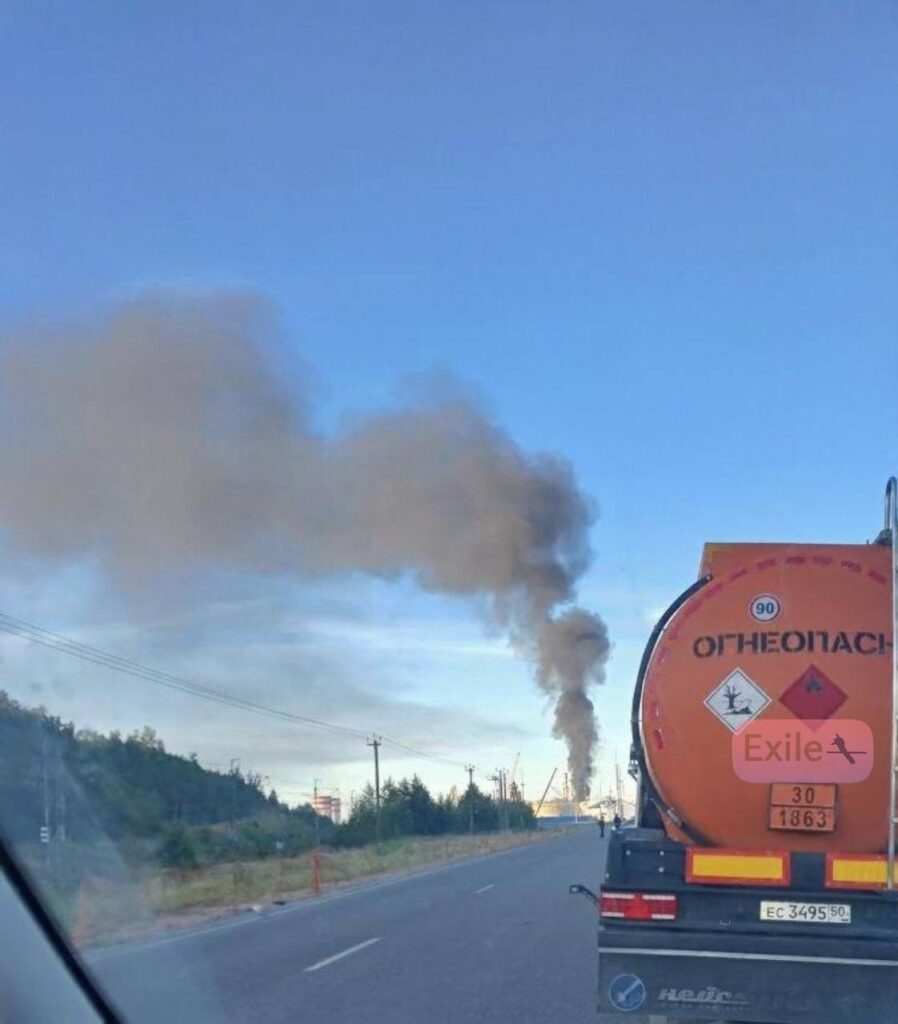
The regiment’s units have been spread across several areas and operating under different higher commands. The plan is to gradually bring them together so they can operate on the same part of the front.

Part of Skelia will move to the Dobropillia direction, where Azov Corps is deployed. Other elements remain on their current assignments for now, including the Pokrovsk, Kharkiv, and Kostiantynivka directions.

Bratushchak said Skelia’s command has already met with Azov and established cooperation. He described the decision as one made by Drapatyi and said the regiment views it positively.

The move follows personnel changes that began earlier in August. On 7 August, Ukrainska Pravda reported that Skelia had begun transferring soldiers to around 10 other units, citing sources in the regiment and Ukraine’s Defense Forces. 
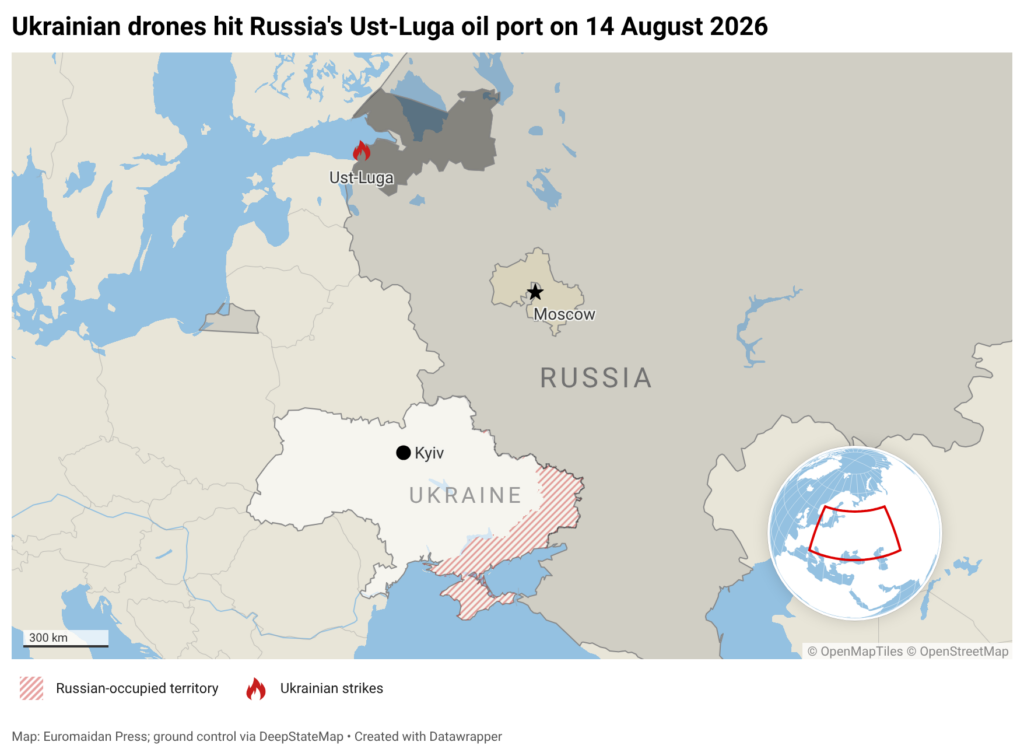
The regiment confirmed that personnel were being reassigned on orders from higher command, while stressing that its units remained at their positions and continued carrying out combat tasks. The number of troops being transferred was not disclosed.

The move is part of Drapatyi’s ongoing reforms of Ukraine’s armed forces following his appointment as commander-in-chief. In July, the General Staff launched an audit of how personnel are distributed among brigades, regiments, and corps, reflecting Drapatyi’s focus on addressing imbalances in how Ukraine’s forces are manned.

A Ukrainian soldier. Source: The 8th Special Purpose Regiment of the Special Operations Forces named after Prince Iziaslav Mstyslavych
Explore further

Ukraine’s army has some brigades starved of soldiers and others overstaffed. New commander is now auditing why

Skelia remains a separate regiment under Azov’s operational command

The change does not dissolve Skelia or turn it into an Azov unit. The regiment remains a separate military formation, while Azov Corps takes operational control over its forces for combat tasks.

Ukraine has been reorganizing its ground forces around corps-level commands, intended to give commanders greater control over multiple brigades and regiments operating in the same area.

Azov itself is now the core of Ukraine’s 1st National Guard Corps, commanded by Brigadier General Denys Prokopenko, known by his call sign “Redis.” The corps has been operating in the Donetsk region as part of Ukraine’s effort to consolidate forces and command structures on the battlefield.

The backdrop: deaths and abuse allegations inside Skelia

The reorganization comes less than two months after a major investigation into conditions inside Skelia’s training system triggered criminal and institutional investigations.

Babel’s investigation published in June documented 25 non-combat deaths among Skelia recruits between late 2025 and spring 2026, including cases where forensic findings raised questions about reported causes of death. Ukraine’s State Bureau of Investigations opened a criminal case, and Skelia’s commander was suspended pending the investigation.

Skelia confirmed that 25 of the 26 deaths cited in the investigation had occurred but disputed some of the reported circumstances. The regiment has denied that abuse was systemic.

Training in the Skelia regiment.
Explore further

Ukraine opened a criminal case over 25 non-combat deaths at its largest assault regiment. Serving soldier’s response was to call reporter “media killer”

The investigation has since produced further legal action. Two Skelia servicemen were placed in pretrial detention in July over allegations of illegally detaining and beating fellow soldiers. 

On 11 August, Ukrainian lawmaker Oleksandr Fediyenko said, citing National Police data, that 103 criminal proceedings had been opened in 2026 over non-combat deaths in the regiment, with three people charged and one case sent to court.

The new operational arrangement does not itself indicate a change in the status of those investigations. Skelia’s communications office has said personnel transfers and organizational decisions are matters for higher military command and part of the management of Ukraine’s armed forces during wartime.

From “easy money” to murder: Russia escalates recruitment of Ukrainians for terrorist attacks inside Ukraine, police warn

13 août 2026 à 15:09

ukraine detains six suspected russian agents including teen arsonist one russian-paid detained sbu fsb saboteur arrested says suspects were recruited telegram ordered target railway military infrastructure 22 security service (sbu)

Russian security services are increasingly recruiting Ukrainians to carry out sabotage, terrorist attacks, and killings, with police reporting a sharp rise in attacks linked to such recruitment since 2024, according to independent Ukrainian outlet Babel.

Since the start of 2026, Ukraine’s National Police and Security Service have registered 31 terrorist attacks, 80% of which have been solved, while another 14 were prevented during preparation.

Authorities have also registered 11 cases of military personnel being poisoned that are being investigated for links to Russian recruitment.

From simple tasks to terrorism

Andrii Niebytov, deputy head of the National Police and chief of criminal police, said Russian recruitment became systematic in early 2024, Babel reported.

Russian handlers typically approach people through Telegram channels and chats where users seek work, easy money, or drugs. The first assignment may appear harmless: photographing a location, passing information, moving a package, or delivering an item.

The tasks can then escalate into property damage, arson, terrorist attacks, and killings. Police say handlers can gradually involve recruits in more serious crimes before using threats or blackmail to keep them under control.

The increase is reflected in police figures. Russian operatives used Ukrainian recruits to carry out nine terrorist attacks in 2024, according to data cited by Babel. The figure rose to 61 in 2025, including 27 attacks that police stopped during preparation. Authorities solved 52 terrorist cases that year.

Military personnel targeted through poisoning

One increasingly dangerous part of the recruitment campaign involves attempts to target Ukrainian service members.

Police have registered 11 poisoning cases since the beginning of 2026 in which investigators are examining or have established links to Russian recruitment, Babel reported.

In some cases, Russian handlers have used young women to establish contact with soldiers, arrange meetings, or deliver poisoned items.

In late July, police detained a 20-year-old woman in Poltava who is suspected of poisoning two soldiers with drugs allegedly provided to her by mail.

In Rivne, investigators are examining the death of a soldier allegedly poisoned by a minor girl with a drug mixed with alcohol. The Russian handler reportedly installed tracking software on the girl’s phone and remotely monitored her actions.

A toolkit built around vulnerability

Russian operatives use different entry points depending on the target. Some recruits are drawn in by promises of easy money or drugs, while others are manipulated through personal relationships or threatened with supposed criminal prosecution.

One scheme involves fraudulent call centers operating in Russian-occupied Ukrainian territories. Callers impersonate Security Service of Ukraine officials and accuse targets of offenses such as buying Russian-made goods or financing Russia.

Police are investigating 449 fraud cases involving this scheme. But according to Babel, the same tactic is now also being used for recruitment.

After intimidating targets, callers send fake summonses, notices of suspicion, or other documents through messaging apps. They then offer to help the person avoid prosecution in exchange for carrying out criminal assignments.

SBU officers detained two suspects accused of illegally registering 76 Starlink satellite internet terminals for Russian forces, according to Ukraine's Security Service. Photo: SBU
Explore further

Ukraine arrests two alleged Russian agents in Kyiv accused of activating Starlink terminals to support Russian missile and drone strikes

Children used as disposable operatives

Russian handlers have also targeted minors, who can be easier to manipulate and may be used as intermediaries or perpetrators.

The National Police said 260 children have independently contacted authorities after being approached by Russian recruiters, according to Babel. Their reports helped prevent terrorist attacks in which minors were allegedly intended to be used as perpetrators.

Police say Russian intelligence services are constantly changing their methods, while the basic pattern remains consistent: identify a vulnerability, offer or impose an initial task, and gradually draw the recruit into more serious criminal activity.

Ukrainian authorities are urging people approached with suspicious offers or assignments to stop contact and report the recruitment attempt immediately.

  • ✇Euromaidan Press
  • Finland backs €28.5 million power plant project as Ukraine braces for Russia’s next winter energy assault
    Finland will provide €28.5 million ($33.2 million) to support new power generation in Ukraine, with Finnish company Wärtsilä selected to supply the equipment, Finland’s Ministry of Foreign Affairs said on 13 August. Ukraine’s power system has been repeatedly damaged by Russian attacks, leaving the country facing each winter with reduced generation capacity and a heightened risk of electricity and heating disruptions. Strengthening distributed generation is therefore a k
     

Finland backs €28.5 million power plant project as Ukraine braces for Russia’s next winter energy assault

13 août 2026 à 14:04

The Darnytska Combined Heat and Power Plant in Kyiv sustained critical damage from a Russian strike on 3 February 2026. Photo: Vitali Klitschko

Finland will provide €28.5 million ($33.2 million) to support new power generation in Ukraine, with Finnish company Wärtsilä selected to supply the equipment, Finland’s Ministry of Foreign Affairs said on 13 August.

Ukraine’s power system has been repeatedly damaged by Russian attacks, leaving the country facing each winter with reduced generation capacity and a heightened risk of electricity and heating disruptions. Strengthening distributed generation is therefore a key part of keeping essential services running when further strikes hit the energy grid, as they are expected to do ahead of the 2026-27 winter season.

The total value of the power plant technology is €46.5 million, with Ukraine covering the remaining cost. The plants will be manufactured in Vaasa, Finland, with the Ministry saying it will support Finnish jobs and exports while adding generation capacity to Ukraine’s war-damaged energy system.

Power generation for Ukraine’s winter

Ukraine’s state energy company Ukrnafta is purchasing the power plants to strengthen electricity production, with the need particularly acute ahead of another winter under Russian attacks.

“Reliable energy production is vital, particularly in winter months, when Russian strikes on energy infrastructure have made day-to-day life in Ukraine difficult,” Finland’s Ministry of Foreign Affairs said.

Russia has repeatedly targeted Ukraine’s electricity generation, transmission, gas, and heating infrastructure since the full-scale invasion. The attacks have caused widespread blackouts and damaged or destroyed large parts of Ukraine’s generation capacity.

Previous winters have shown the consequences. Russian strikes have repeatedly caused rolling blackouts, while damage to heating infrastructure has threatened access to heat and water during freezing weather.

During blackouts, apartment blocks in Kyiv are mostly dark, with scattered lights from apartments with battery-powered sources. Generators power businesses on the ground floor. Street lights are largely off.
Explore further

Behind the black windows: How Kyiv survives a winter in the dark

Ukrainian officials have warned that the coming winter could be more difficult than previous ones, as Russia is expected to again target Ukraine’s energy, heating, and water infrastructure. Russia has already intensified attacks on Ukrainian civilians and civilian infrastructure this summer, raising concerns that the campaign against essential services could escalate further during the winter months.

Finnish technology heads to Ukraine

Wärtsilä Finland Oy will manufacture the power plants in Vaasa.

Finnish Foreign Trade and Development Minister Ville Tavio said the project combines support for Ukraine with Finland’s energy-sector expertise.

“Finland has world class energy sector expertise that can benefit Ukraine’s reconstruction efforts,” Tavio said. “I am pleased that Finnish technology and Finnish workers are playing a part in strengthening the security of Ukraine’s energy supply.”

How Finland is financing the project

The €28.5 million Finnish contribution comes through the Finland–Ukraine Investment Facility, which supports public investments in Ukraine using Finnish technology, expertise, and services.

Finland’s funding will cover the interest costs and capital of the investment loan Ukraine will take out for the project. Finnish export credit agency Finnvera is providing a 100% export guarantee for the loan.

The project combines immediate energy support for Ukraine with Finnish financing, technology, and manufacturing capacity.

Ukraine asks the EU for €220 million to unlock €4 billion in farm loans as Russia’s port strikes choke exports

13 août 2026 à 12:10

A green combine harvester cuts wheat beneath a blue, partly cloudy sky.

Ukraine and international partners agreed to work urgently on a mechanism for up to €4 billion ($4.6 billion) in farm loans, Ukrinform reported on 13 August. The plan would use a proposed €220 million ($253 million) EU grant, the Agriculture Ministry said.

Ukraine rebuilt its maritime trade after pushing Russia’s fleet away from its coast. By 2025, its Black Sea route carried about 92% of the country’s grain and oilseed exports. Russia is now striking the Odesa ports sustaining that recovery. The ministry says the attacks have closed three deep-water ports. Ukraine planned to export 64.4 million tons of agricultural products in 2026/27, but now says shipments may reach only 29.6 million tons. The proposed loan mechanism is meant to cover that cash shortfall before next year’s sowing.

EU and Norwegian diplomats joined the meeting with representatives of the World Bank and the UN Food and Agriculture Organization.

The participants agreed to develop the plan through the Ukraine Facility and EU guarantee institutions. They aim to do so in the coming weeks, before fall storage use peaks. The grant has not yet been approved.

Odesa attacks send Kyiv toward Baltic ports

The loan plan comes as Russia’s attacks force Ukraine to seek new export routes.

Russia initially blockaded Ukraine’s ports after launching its full-scale invasion. Ukraine later restored a sea corridor after forcing much of Russia’s Black Sea Fleet away. Moscow then shifted pressure to missiles and drones, hitting Ukrainian ports 90 times in 2025 and intensifying attacks this summer.

A Russian strike killed 10 people aboard the grain-carrying Golden Leo on 19 July. Three days later, no ship passed through the corridor.

Kyiv is now considering the Polish Baltic ports of Gdańsk, Gdynia, Szczecin, and Świnoujście. Yet the ministry estimates that all alternative routes may eventually carry only 2.9 million tons a month. Ukraine’s monthly target was 5.4 million tons.

Farm loans target next year’s sowing

The €220 million would not go directly to growers. It would subsidize interest and partly cover banks’ lending risks, including by expanding Ukraine’s “5-7-9%” affordable-loan program.

The ministry wants the support to generate €4 billion in farm loans at annual rates no higher than 10%. It calculates that every euro of grant money could mobilize more than €18 in lending.

Ukraine has also temporarily adjusted minimum export price coefficients to offset higher logistics costs, meeting participants noted. Without grain sales, farmers struggle to pay wages and land rents or buy fuel and fertilizer. By November, Ukraine's storage shortfall could reach 11 million tons of crops, with more than €10.8 billion ($12.4 billion) tied up in unsold stocks.

  • ✇Euromaidan Press
  • Blackout and a blinded radar: Ukraine hits Russian military infrastructure across Crimea and beyond
    Ukraine’s Defense Forces struck a Russian Nebo-U long-range radar in occupied Sevastopol and several other military targets in Russia and occupied Ukrainian territories during a series of overnight attacks on 13 August, the General Staff of Ukraine’s Armed Forces reported. The strikes are part of Ukraine’s broader “Middle-Strike” campaign, which targets Russian military infrastructure beyond the immediate front line. Nebo-U radar hit in Sevastopol The most signifi
     

Blackout and a blinded radar: Ukraine hits Russian military infrastructure across Crimea and beyond

13 août 2026 à 12:06

Russian Nebo-U radar station. Photo: Russian media

Ukraine’s Defense Forces struck a Russian Nebo-U long-range radar in occupied Sevastopol and several other military targets in Russia and occupied Ukrainian territories during a series of overnight attacks on 13 August, the General Staff of Ukraine’s Armed Forces reported.

The strikes are part of Ukraine’s broader “Middle-Strike” campaign, which targets Russian military infrastructure beyond the immediate front line.

Nebo-U radar hit in Sevastopol

The most significant overnight target was a Russian Nebo-U radar station in Sevastopol, occupied Crimea.

The Nebo-U is a Russian long-range, three-coordinate radar operating in the meter wavelength range. It is designed to detect and track airborne targets, including aircraft, cruise missiles, and ballistic missiles.

The General Staff said disabling the radar weakens Russia’s ability to detect and track incoming aircraft, cruise missiles, and ballistic missiles, potentially making it harder for Russian forces to detect future Ukrainian strikes and giving Ukrainian weapons a better chance of reaching their targets.

The Nebo-U is estimated to cost around $100 million, making it a high-value Russian surveillance system.

The radar strike supposedly came during a broader Ukrainian drone attack on Sevastopol that also damaged energy infrastructure, according to Russian occupation authorities. The attack caused a citywide blackout before power was later restored through a temporary setup. Ukrainian drones also reportedly targeted the Balaklava power plant, one of Crimea’s two main power stations.

Earlier strikes hit Crimean military infrastructure

The General Staff also reported strikes on Russian military infrastructure in occupied Crimea on 12 August, including a control tower at the Saky airfield.

Ukrainian forces also struck a communications relay near Chornomorske used to control Russian Geran and Gerbera strike drones, according to the General Staff. It said the strikes weaken Russia’s ability to operate the military airfield and control its attack drones.

Russian logistics and supply sites targeted

Ukrainian forces also struck a Russian drone control center near Myrne in occupied Zaporizhzhia Oblast, a fuel and lubricants depot near Dovzhansk in occupied Luhansk Oblast, and an ammunition depot near Novyi Hai in occupied Zaporizhzhia Oblast.

Another strike hit a Russian logistics and equipment depot near Kalanchak in occupied Kherson Oblast.

The General Staff said these strikes disrupt Russian logistics and reduce the military’s ability to accumulate and use ammunition, equipment, and personnel.

Strike reported inside Russia

Ukraine also reported striking a Russian personnel concentration area near Butyrky in Russia’s Belgorod Oblast.

The General Staff did not provide details on the weapons used, the scale of damage, or possible casualties at the individual sites.

The latest report is part of Ukraine’s continued campaign to strike Russian military infrastructure beyond the battlefield. The “Middle-Strike” concept focuses on targets that support Russia’s ability to conduct and sustain combat operations, including command, logistics, air defense, and other military facilities.

The General Staff said Ukrainian forces continue to carry out strikes against key Russian military targets.

  • ✇Euromaidan Press
  • One tower linked two Russian regiments near Kharkiv border. Ukrainian partisans say they disabled it 
    On 13 August, the Ukrainian-Crimean Tatar partisan movement ATESH said its agents had disabled a communications tower near Pylna in northern Kharkiv Oblast. The group said the damage disrupted links between two Russian motor rifle regiments near the border. Pylna lies on the Russian border and was among the villages seized when Moscow opened the northern Kharkiv front in May 2024. The claimed tower attack is part of a wider Ukrainian resistance effort behind Russian li
     

One tower linked two Russian regiments near Kharkiv border. Ukrainian partisans say they disabled it 

13 août 2026 à 12:00

Close-up of equipment at the base of a communications tower behind a metal fence in a wooded area.

On 13 August, the Ukrainian-Crimean Tatar partisan movement ATESH said its agents had disabled a communications tower near Pylna in northern Kharkiv Oblast. The group said the damage disrupted links between two Russian motor rifle regiments near the border.

Pylna lies on the Russian border and was among the villages seized when Moscow opened the northern Kharkiv front in May 2024. The claimed tower attack is part of a wider Ukrainian resistance effort behind Russian lines. Moscow's forces still depend on infrastructure in occupied territory to communicate, move supplies, and hold the line. Ukraine’s underground fighters exploit that dependence from within, targeting communications, transport, and fuel supplies to create problems for Russian units at the front.

ATESH said the tower carried data between Russian command posts and coordinated units in the area. The movement said its loss disrupted command channels and delayed border-zone mobile groups. It did not say how agents disabled the tower or how long the interruption would last.

The partisans stated that the communications between Russia’s 345th and 380th motor rifle regiments were hit hardest. The regiments operate in neighboring sectors and rely on stable links for joint action and rapid responses, according to the group. ATESH claimed their offensive tempo and ability to support each other had fallen.

Neither the claimed ATESH sabotage nor its reported effects have been independently verified.

ATESH attacks on Russian supply lines

The tower claim follows ATESH’s 10 August account of sabotaging an electric locomotive near Voronezh. The group said it carried military supplies toward the Kupiansk front in Kharkiv Oblast. In June, ATESH also said agents damaged power and rail equipment near Russia’s Novomoskovsk Azot plant, whose output feeds explosives production.

ATESH has also reported intelligence work inside Russian forces. In July, the group said an agent reported a Ukrainian strike on five military fuel trucks in occupied Luhansk. Together, the claims describe a campaign against transport, fuel, and communications behind the front.

Ukrainian resistance works behind the front

The claimed tower operation is one part of the Ukrainian resistance behind Russian lines. Underground networks also gather intelligence and sustain civil defiance. 

A Euromaidan Press investigation documented groups planting explosives, tracking Russian positions, distributing leaflets, and painting Ukrainian symbols despite the threat of imprisonment and torture.

ATESH says its network includes Ukrainians, Crimean Tatars, anti-war Russians, and sources inside Russia’s military and occupation administrations. Its claims are often impossible to verify independently. Taken together, they portray a campaign to make Russia’s rear less secure while other groups preserve Ukrainian identity under occupation.

  • ✇Euromaidan Press
  • Poland and the Baltics risk Russian sabotage for backing Ukraine, Bloomberg says
    Russia may expand hybrid attacks against Poland and the Baltic states, including infrastructure sabotage or false-flag attacks, Bloomberg reported on 12 August, citing an unnamed European intelligence official.  The warnings come amid concern that Moscow wants to intimidate Ukraine’s supporters. The CIA warning follows Russian threats, incursions, alleged sabotage plots, and disinformation against Poland and the Baltic states. Most Western military aid reaches Ukraine t
     

Poland and the Baltics risk Russian sabotage for backing Ukraine, Bloomberg says

13 août 2026 à 09:29

Lithuanian soldier installs concrete barriers and razor wire across a road during a civil defense exercise.

Russia may expand hybrid attacks against Poland and the Baltic states, including infrastructure sabotage or false-flag attacks, Bloomberg reported on 12 August, citing an unnamed European intelligence official. 

The warnings come amid concern that Moscow wants to intimidate Ukraine’s supporters. The CIA warning follows Russian threats, incursions, alleged sabotage plots, and disinformation against Poland and the Baltic states. Most Western military aid reaches Ukraine through Poland, while the Baltic states rank among Kyiv’s strongest supporters. Sabotage of transport, energy, or communications can slow aid delivery and test NATO while hiding Russia’s role.

Separately, a European government official told Bloomberg that the CIA had warned countries in the region of a possible future Russian attack. The CIA declined to comment.

The same official said Russia might instead be creating the impression of an impending attack to sow fear as part of an information operation. The official saw no signs that Moscow was preparing a conventional attack or invasion.

Moscow tests NATO’s eastern flank

Poland and Lithuania had already raised similar concerns. In July, Poland said it had credible intelligence that Russia was planning new provocations. Lithuania later warned that Moscow might rebuild captured Ukrainian drones for false-flag strikes on critical infrastructure.

In September 2025, between 19 and 23 Russian drones entered Polish airspace, shutting down airports and damaging buildings. Poland closed four airports as NATO aircraft responded.

Meanwhile, five people are on trial in Lithuania over attacks allegedly organized for Russian military intelligence in 2024, Bloomberg reported. Lithuania has reinforced infrastructure sites and deployed troops since June.

These warnings and incidents place the CIA alert within a wider pattern of pressure on NATO’s eastern flank and Ukraine’s supporters. 

How Russia strikes without starting a war

Bloomberg cited several recent unexplained drone incidents in Germany alongside the CIA warning. Citing Die Zeit, Euromaidan Press reported that an explosive-laden drone struck the wing of a parked Ukrainian An-124 at Leipzig-Halle airport and failed to detonate. A US Defense Department official in Europe told CNN that Washington assessed the drone belonged to Russian intelligence. 

Bloomberg also reported that a cargo plane hit an unidentified object and that drones appeared over a military base the following day. It did not connect either incident to Russia.

More broadly, Russian hybrid operations have grown sharply since the full-scale invasion. CSIS found that attacks in Europe tripled from 2023 to 2024, after quadrupling the previous year. Separately, the US Helsinki Commission mapped nearly 150 operations in NATO territory attributed to or suspected of Russia between February 2022 and November 2024.

Retired Lt. Gen. Ben Hodges told Euromaidan Press in February that attacks on ports, railways, and cables can probe routes needed for NATO reinforcements. Their deniability raises the political cost of responding.

By hiding its role, Moscow can disrupt support for Ukraine and test NATO without openly starting a war. 

  • ✇404 Media
  • Medical Startup Selling Prescription Kit for Nuclear Disaster
    A telehealth startup is selling $345 emergency kits packed with medicine that it claims could help people survive nuclear disasters.Amble Health’s “Oh Sh*T Kit” comes with iodine tablets, Prussian blue pills for removing radioactive cesium and thallium, and anti-nausea medication ondansetron, or Zofran. “If the unthinkable happens, whether from an accident, disaster, or other radiological event, having the right medications on hand can make a critical difference in the earliest hours. Because
     

Medical Startup Selling Prescription Kit for Nuclear Disaster

13 août 2026 à 09:18
Medical Startup Selling Prescription Kit for Nuclear Disaster

A telehealth startup is selling $345 emergency kits packed with medicine that it claims could help people survive nuclear disasters.

Amble Health’s “Oh Sh*T Kit” comes with iodine tablets, Prussian blue pills for removing radioactive cesium and thallium, and anti-nausea medication ondansetron, or Zofran. “If the unthinkable happens, whether from an accident, disaster, or other radiological event, having the right medications on hand can make a critical difference in the earliest hours. Because when radiation is involved panic is optional, but preparation isn’t,” the company’s website says. You’ll need a prescription to order it; Amble also does telehealth appointments with licensed healthcare providers who can issue prescriptions.

The fear of a radiological disaster isn’t unfounded. After decades of declining nuclear weapons stockpiles, America is building more and new kinds of nuclear weapons. The Trump administration’s nuclear deal with Saudi Arabia includes a provision to allow it to enrich its own uranium and, possibly, a path towards a nuclear bomb for the Middle Eastern Kingdom. Russia is modernizing its nuclear arsenal and field testing new types of nuclear-capable missiles in Ukraine.

If nuclear war doesn’t get you then a power plant meltdown might. The Trump administration has rewritten and outright cut safety regulations around the construction of nuclear power plants. Tech companies are investing billions in new and untested forms of nuclear power generation. Microsoft and others are using AI systems to speed through the lengthy safety processes.

According to Amble, the “Oh Sh*T Kit” is “primarily focused” on people exposed to radiation as part of their jobs, not the next nuclear war. “Millions of workers across medicine, construction, mining, shipping, agriculture, and power generation are routinely exposed to these hazards,” an Amble spokesperson told 404 Media.

“We created this kit to give people an actionable, reliable solution so they have peace of mind and know exactly what to do when the unexpected happens,” the spokesperson added. “Our clinicians (especially in a post pandemic world) identified a growing request-need-concern from their patients having medication available in a situation of emergency when a pharmacy would otherwise be unavailable.”

‘If you have been exposed to enough radiation that you are vomiting [...] you’re already in a lot of trouble.’

Should the worst happen, Amble’s “Oh Shi*t Kit” has promised to help for just $345. But experts told 404 Media that the kits might not actually be all that useful if you’re buying it for prepper reasons.

Amble is an online platform that “connects patients to licensed healthcare professionals in all 50 states, 100% online,” according to a description on its website. The site’s frontage advertises it as a place where people can get prescriptions for weight-loss drugs like GLP-1s and “anti-aging” drugs like NAD+ and Sermorelin.

It was founded by Joey Stiver, an entrepreneur with a felony conviction and a desire to “democratize healthcare,” according to his personal website. According to Stiver, he got a double-tear in his shoulder when he was 18 and didn’t want to have invasive surgery so he bought “healing peptides” online. He liked the product so much he began to sell medical items himself in an “illicit industry” which landed him a federal indictment and felony conviction. Now he’s a telehealth mogul. 

GLP-1s are Amble’s big draw, but it also offers a number of “kits” for basic medical emergencies like a “Cold & Immunity Kit” that comes with a run of prescription antibiotics like Amoxicillin and Azithromycin. The “Oh Sh*T Kit” is part of this line of products. Alex Wellerstein, a nuclear war historian and professor at the Stevens Institute of Technology, told 404 Media that the “Oh Sh*T Kit” is “a ripoff at $345. Doomsday grifting at its best.” Iodine tablets, potentially the most useful part of the package, are available cheaply without a prescription. A bottle of 60 pills will run you around $13 at a GNC.

“Iodine tablets can be of some benefit if taken directly after some kind of release of fresh fission products (whether a nuclear power plant accident or a nuclear detonation),” Wellerstein said. “They max out the thyroid’s iodine levels and prevent it from greedily up-taking environmental iodine, which means [the thyroid] won’t grab any I-131 that has been produced by nuclear fission.”

I-131 is one of the principal radioactive substances present in the fallout that follows a nuclear disaster. It has a short half life and can wreak havoc on the body. “It is not the only fission product of worry, of course, it is just one that is particularly easy to avoid by taking potassium iodide [...] and a pernicious one as it is so quickly taken up by the body (and also, in turn, excreted relatively quickly, so you have the extra bonus of having radioactive sweat and excrement),” Wellerstein said. Potassium iodide is a medical compound made from iodine.

Medical-grade Prussian blue is a prescription substance that binds to heavy metals like cesium and thallium. According to the CDC, the medicine traps the heavy metals in the intestine and keeps them from being absorbed in the body until the afflicted can shit them out. “[Cesium] has a much longer half-life than I-131 (30 years), and is in the ‘worrisome chronic carcinogen’ category rather than the ‘will give you radiation poisoning’ that I-131 is in,” Wellerstein said. “I suspect it is the sort of thing that would be administered by a doctor, not taken by an individual, assuming there are doctors around after said ‘radiological event.’ It is not something that one should take without knowing exactly what dosages are required, I gather.”

Zofran will keep you from throwing up, but that will be cold comfort. It’s possible that in the aftermath of a nuclear disaster, there are things in your stomach that your body does not want to absorb. “If you have been exposed to enough radiation that you are vomiting (e.g., suffering from some form of acute radiation syndrome), you’re already in a lot of trouble,” Wellerestein said. “Anyway, that would be symptom management, a different category. It has its own possible adverse health effects.”

If you’re worried about nuclear disasters, you can do worse than buying some iodine tablets online. “I think the risk/reward tradeoff for potassium iodide is not terrible for people who worry about being exposed to radiological hazards,” Wellerstein said. “Which is to say, the risk of it happening is pretty low, and it is very cheap when bought on its own and not from grifters, and so if it brings you peace of mind to keep some around, I see no harm in that.” The rest, however, is probably not worth the money.

A 12-year-old dies in occupied Kherson Oblast where no hospital or ambulance is left, Ukrainian official says

13 août 2026 à 07:34

Residents, many elderly and carrying shopping trolleys, gather outdoors in occupied Oleshky, Kherson Oblast.

A 12-year-old with a high fever died without medical care in Russian-occupied Kherson Oblast, Hola Prystan official in exile Svitlana Linnyk told Ukrinform on 13 August 2026.

No medicine or medical worker was available locally, and the child’s mother could not reach an ambulance pickup point, she said.

The child's reported death comes amid a wider humanitarian crisis in Russian-occupied Kherson Oblast. UN and OSCE monitors found drone attacks, mines, and movement restrictions obstructing medical aid and evacuations around Oleshky and Hola Prystan, two occupied communities across the Dnipro from Kherson city. About 6,000 civilians, including 200 children, remained in and around the two communities as of May. Similar medical shortages span occupied Ukraine, while access to free medicines has been tied to having a Russian passport.

The Hola Prystan community where the child died has no operating hospital or rural medical post, Linnyk said. Only two pharmacies remain: one in the city of Hola Prystan and another in the nearby village of Nova Zburivka. Both are selling their remaining supplies.

The nearest hospital is in Skadovsk, an occupied Black Sea port about 60 kilometers by road from Hola Prystan. Nova Zburivka’s ambulance has not operated since 2025. 

Russian occupation authorities have distributed no humanitarian aid for at least eight months to villages surrounding Hola Prystan, or for over a year in the city itself, Linnyk said. 

Linnyk said a Moscow Patriarchate priest occasionally brought supplies but gave them only to Russian passport holders. This reflects a broader pattern of tying basic services in occupied Ukraine to accepting Russian citizenship.

Ukrainian children face a medical system stripped bare 

The medical dangers surrounding the 12-year-old’s death are not confined to Hola Prystan.

In April 2025, Ukraine’s National Resistance Center reported that occupation officials were administering vaccines to children under six in Luhansk Oblast. It described the vaccines as uncertified and of unknown origin.

That November, the Center said a Russian inspection found Crimea’s main children’s hospital lacked breathing bags and cardiac monitors. It said infant mortality on the occupied peninsula had risen 9% over the previous year.

Aid comes with a Russian passport

Hola Prystan is not the only occupied community where access to care has depended on Russian citizenship.

In 2023, Russian-installed officials in occupied Zaporizhzhia Oblast threatened to deny medical care to residents without Russian passports. A 2025 Kremlin policy later tied free medicines for chronic illnesses to Russian citizenship.

Ukraine’s Health Ministry reported in July 2024 that Russian forces had destroyed 214 medical facilities. It said the full toll remained unknown because authorities had limited access to occupied territories. 

  • ✇Euromaidan Press
  • Tree lines out, swamps in—Lithuania rethinks how to stop Russian armor at the border
    Lithuania's government approved an expanded plan on 12 August to fortify its borders with Russia and Belarus against a possible attack, LRT reports. Lithuania, a Baltic state and NATO member, sits wedged between Russia's Kaliningrad exclave and Belarus. The decision opens a new counter-mobility belt reaching inland from the border, a 20-meter strip that widens to 150 meters where the army marks out areas for operations. The buildout answers a fear that has gripped the B
     

Tree lines out, swamps in—Lithuania rethinks how to stop Russian armor at the border

13 août 2026 à 07:20

745 km² recaptured ukraine's eight-month oleksandrivka counteroffensive kyiv says · post lithuania's border belarus 2016 commons/petr magera lithuania-belarus state 2021 ukraine news ukrainian reports


Lithuania's government approved an expanded plan on 12 August to fortify its borders with Russia and Belarus against a possible attack, LRT reports. Lithuania, a Baltic state and NATO member, sits wedged between Russia's Kaliningrad exclave and Belarus. The decision opens a new counter-mobility belt reaching inland from the border, a 20-meter strip that widens to 150 meters where the army marks out areas for operations.

The buildout answers a fear that has gripped the Baltics since Russia's full-scale invasion of Ukraine in 2022: that a Russia left unchecked in Ukraine could turn on them next. Western intelligence agencies have warned for years that Moscow could eventually threaten NATO itself, and former CIA director David Petraeus has singled out Lithuania as the likeliest first target, pinned between Kaliningrad and Belarus and sitting beside the Suwałki Gap, the thin land corridor that is NATO's only overland route to the Baltic states.

The decision raises the number of engineering parks, storage depots for obstacles like concrete blocks and roadblocks, from 27 to 50, and gives that work until the end of 2028, more than three years past the original April 2025 target. The state rail company LTG Infra is to store the equipment. The changes could cost an extra €50 million ($58 million) from the State Defense Fund between 2026 and 2030.

baltic- states
The Baltic region. Map: Euromaidan Press

Of the Baltic states and Poland fortifying their eastern borders, Lithuania is the most at risk yet the least fortified, according to a satellite review by open-source analyst Clément Molin, even as Belarus keeps testing that border with engineered migrant crossings. The plan is Lithuania's share of the Baltic Defense Line, the joint barrier it launched in 2024 with Latvia and Estonia, alongside Poland's parallel East Shield.

The design comes straight from Ukraine. Lithuania began building counter-mobility parks in 2023, drawing on Russia's war against Ukraine, and much of what it is now putting into the ground, the swamps, ditches, and obstacle fields, was tested first on Ukrainian battlefields, where mud, water, and simple barriers have repeatedly stalled armored advances.

The restored swamps should make some ground impassable to heavy military vehicles within a few years, the Defense Ministry says, with that work due by the end of 2030. Plans for defensive ditches and streams in the Marijampolė municipality were dropped, and the ministry found better sites in the Vilkaviškis and Šakiai districts. Deadlines for obstacles on roads and bridge approaches, and for fitting bridges with holders for explosives, were also moved to the end of 2028.

"Military counter-mobility is an important part of Lithuania's defence preparedness," Deputy Defense Minister Tomas Mikelkevičius said. "We seek to make the best possible use of Lithuania's terrain and engineering measures to impede an adversary's movement if necessary and create more favorable conditions for our armed forces to operate."

Lithuania approved its first counter-mobility plan in July 2024. The plan's original 2024 estimate put the full system at around €600 million ($690 million) over the decade.

Russia's pressure on the Baltic borders

The buildout lands amid steady friction along NATO's eastern edge. Latvia has absorbed the bulk of the migrant crossings funneled from Belarus, and this week found its first used smuggling tunnel under the border. Estonia has switched on the first sensors of a planned drone wall along its Russian frontier and is reallocating €500 million ($575 million) toward air defense and long-range strike. Russia, for its part, has shut seven rail crossings with Latvia, Estonia, and Finland without explanation.

The fortification drive is a bet on time. Estonia's military chief has set a two-year clock, warning Russia could be combat-ready again by 2027, and ISW analysts assessed in May that Moscow was manufacturing pretexts for aggression against the Baltics. Poland's parallel East Shield, meanwhile, has gone up far slower than promised, leaving the region's defenses still thin where the threat is judged greatest.

  • ✇Euromaidan Press
  • Ukraine brings home 261 bodies in latest repatriation, as Russia claims the dead are Ukrainian soldiers
    The Coordination Headquarters for the Treatment of Prisoners of War said the remains arrived on 13 August, and that investigators will now work to establish the identities. Ukraine recovered the 261 bodies as part of repatriation measures carried out with Russia, the Coordination Headquarters reported. Russia claims the dead are Ukrainian servicemen, but law enforcement investigators and forensic experts will conduct the identification before any confirmation. The re
     

Ukraine brings home 261 bodies in latest repatriation, as Russia claims the dead are Ukrainian soldiers

13 août 2026 à 06:49

Repatriation of the bodies of fallen Ukrainians

The Coordination Headquarters for the Treatment of Prisoners of War said the remains arrived on 13 August, and that investigators will now work to establish the identities.

Ukraine recovered the 261 bodies as part of repatriation measures carried out with Russia, the Coordination Headquarters reported. Russia claims the dead are Ukrainian servicemen, but law enforcement investigators and forensic experts will conduct the identification before any confirmation.

The return of the dead remains one of the few channels that still functions between Kyiv and Moscow during Russia's war against Ukraine. Each handover lets families of the missing bury their relatives, and it again relied on the International Committee of the Red Cross, which helped coordinate the exchange.

Ukraine's Interior Ministry, the Security Service of Ukraine, the Armed Forces, the Office of the Parliament Commissioner for Human Rights, the State Emergency Service, and the Secretariat of the Commissioner for Missing Persons under Special Circumstances all took part, the Coordination Headquarters said. Units of the Armed Forces transported the remains and passed them to police and to medical examiners under the Health Ministry for identification.

Previous exchanges

The handover is the latest in a long series of transfers Russia has carried out during its war against Ukraine, and in each case it has claimed the dead were Ukrainian servicemen or citizens, an account Ukrainian forensic experts verify independently. The exchanges have followed the Istanbul agreements that Kyiv and Moscow reached on 2 June 2025. Over the course of that June, Russia returned 6,057 bodies, and on 17 July 2025 it handed over another 1,000. Further transfers of 1,000 followed on 19 August, 18 September, 23 October, and 20 November 2025, before Russia returned 1,003 bodies on 19 December. The exchanges continued into 2026 with 1,000 bodies on 26 February and another 1,000 on 9 April, after which the totals fell to 522 on 18 June and 501 on 16 July, ahead of the 261 returned on 13 August.

Taken together, the transfers have returned thousands of the dead since mid 2025, which makes the repatriation of remains one of the most consistent forms of contact that still survives between Kyiv and Moscow.

  • ✇Euromaidan Press
  • Man killed in explosion in occupied Sevastopol, Russian sources report
    A man was killed in an explosion in occupied Sevastopol on the morning of 13 August, according to the Russian outlet ASTRA and the local Telegram channel Emergency/Sevastopol. The man's identity has not been officially confirmed, but Russian and Ukrainian Telegram channels are circulating claims that he is Robert Shahieiev, deputy commander of the 4th separate submarine brigade of Russia's Black Sea Fleet — a former Ukrainian Navy officer who sided with Russia after the
     

Man killed in explosion in occupied Sevastopol, Russian sources report

13 août 2026 à 06:31

Sevastopol

A man was killed in an explosion in occupied Sevastopol on the morning of 13 August, according to the Russian outlet ASTRA and the local Telegram channel Emergency/Sevastopol.

The man's identity has not been officially confirmed, but Russian and Ukrainian Telegram channels are circulating claims that he is Robert Shahieiev, deputy commander of the 4th separate submarine brigade of Russia's Black Sea Fleet — a former Ukrainian Navy officer who sided with Russia after the occupation of Crimea.

What happened

According to preliminary information from Russian sources, the man was walking down a set of stairs with a friend when the explosion occurred. He died of his injuries at the scene. The device is believed to have been planted in a trash bin next to a bench, per preliminary reports cited by Ukrainska Pravda.

The Russian Telegram channel "Baza" reported that the blast took place in a park behind a residential block on Stoletovsky Avenue and that forensic investigators were working at the scene. The channel said local residents were being urged to stay alert and avoid approaching suspicious objects.

Some witnesses initially believed a drone had struck a nearby building because of how loud the blast was, according to accounts circulating on Telegram.

Unverified claim about a suspect

The pro-Kremlin channel Mash claimed a woman carrying a backpack may have been involved, alleging she stood between two residential buildings — numbers 28 and 30 — and watched the man before the explosion. Ukrainska Pravda noted this claim has not been confirmed.

No source has provided official confirmation of the victim's identity or a motive for the attack.

Poland would rather the next Russian missile be downed over Ukraine than over its soil. It may send Kyiv more Patriots

13 août 2026 à 06:18

poland patriot

Poland will decide within days whether to send Ukraine another batch of Patriot interceptor missiles, Deputy Defense Minister Magdalena Sobkowiak-Czarnecka said in a radio interview RMF24. Any transfer, she said, has to be judged first against Poland's own security.

A Russian strike on NATO soil is now moving Warsaw where months of Ukrainian appeals had not. Sobkowiak-Czarnecka said Defense Minister Władysław Kosiniak-Kamysz leans toward sending more interceptors after a Russian missile crashed inside Poland on 30 July, and that he would rather one be shot down over Ukraine than reach Polish soil.

Tusk had signaled at the end of July that Warsaw would soon weigh sending more Patriots. Sobkowiak-Czarnecka's remarks are the first to put a timeline on that decision.

Warsaw had been split for weeks over whether giving up the missiles was the right call. She set that argument aside, saying only that a decision is a matter of the coming days.

A second handover from a thin stock

This would not be the first transfer. In the spring, Poland quietly gave Ukraine five PAC-3 MSE interceptors — the missiles a Patriot battery uses to stop ballistic threats — a move confirmed only in July, when the defense ministry declassified its aid records and Prime Minister Donald Tusk put the number at five.

The disclosure drew sharp criticism at home. Opposition figures noted that the PAC-3 is the only interceptor Poland holds capable of downing Russia's Iskander ballistic missiles — the same class of weapon now crossing into Polish airspace.

Why the interceptors are so scarce

PAC-3 interceptors are among the hardest munitions in NATO to spare. The United States builds them at a rate that does not cover its own needs, and only a handful of alliance members operate them at all.

Ukraine has been pressing for them for months. In early July, after one of the largest air attacks of the war, Kyiv appealed to nearly 40 countries to release Patriot missiles from existing stocks, warning that its air defenses cannot stop Russia's ballistic missiles without them.

Poland holds roughly 200 of the interceptors, by Ukrainian estimates — its own shield against the missiles now reaching its border. Kosiniak-Kamysz's reasoning turns that overlap into the case for giving some away: better the interceptor meets the missile over Ukraine than over Poland.

The transfer would come with Polish-Ukrainian relations at their lowest point in years. In May, Volodymyr Zelenskyy granted a special forces unit the honorary title "Heroes of the UPA" — the wartime insurgent army Poland blames for the Volhynia massacres of the 1940s, which Warsaw recognizes as genocide. Polish President Karol Nawrocki responded in June by stripping Zelenskyy of the Order of the White Eagle, the country's highest honor; three former Ukrainian presidents returned their own in solidarity, and Nawrocki has since tied Ukraine's path into the EU to the unresolved history. Yet the friction runs mostly at the presidential level. The aid decisions sit with the Tusk government, and it has kept the weapons — and now, in all likelihood, the interceptors — moving to Kyiv regardless.

Russia pulled its fleet back to Novorossiysk to keep it safe. Ukraine hit it there with 15 kinds of weapons at once

13 août 2026 à 06:06

sea drones jet neptune missiles hit one russian port single night · post nasa firms shows fires detected around novorossiysk 12 2026 ukraine news ukrainian reports

Ukraine struck the Novorossiysk naval base in Russia's Krasnodar Krai overnight on 12 August, and for the first time coordinated more than 15 different strike systems in a single operation, President Volodymyr Zelenskyy said. The package combined Palianytsia jet drones, Neptune anti-ship missiles and naval drones, hitting warships, air defenses and oil infrastructure at the Black Sea Fleet's main base.

Novorossiysk is the refuge Russia's fleet fled to after Ukrainian drones and missiles pushed it out of occupied Crimea. Reaching its warships there with a mixed salvo — and getting through air defenses that bystander footage showed firing heavily — is the operational read the strike carries, more than any single ship damaged.

The systems and the targets

Zelenskyy named more than a dozen systems that worked together for the first time, from the Palianytsia and Peklo drones to the long-range Neptune and a set of naval drones. He thanked weapons developers for the added reach, framing the coordination itself as the milestone rather than the results.

The Security Service of Ukraine (SBU) confirmed hits on two Kalibr-carrying frigates, the Admiral Essen and Admiral Makarov, and the patrol ship Vasily Bykov. The same strike hit an S-300 radar, a firing position on one of the port's piers, the Sheskharis oil terminal and three of the harbor's berths — a target list wider than the ships alone.

How many ships

The three Ukrainian accounts agree on the two frigates but not on the full tally. The General Staff counted four warships, adding a Buyan-M missile ship to the SBU's three. Zelenskyy separately cited a large landing ship and a corvette among the vessels hit.

Independent analysts who reviewed satellite imagery told The Maritime Executive the damage did not appear catastrophic, with no ships visibly burning or sinking. Ukraine's General Staff said the assessment is still under way.

The fleet's shrinking refuge

The strike extends a campaign that has driven Russia's fleet eastward without Ukraine fielding a navy of its own. Having lost safe basing in Sevastopol, Russia moved its ships more than 300 kilometers from the front — far from Ukraine, but no longer out of reach.

The operation's footprint reached past the base. Russian authorities in Novorossiysk declared a state of emergency and cut water to the port city, and the strike on the Sheskharis oil terminal hit infrastructure that helps fund the war. Zelenskyy said Ukraine would keep striking such targets, and that Russia alone can end the war it started.

5% of US Patriot stocks gets Ukraine through winter, 10% ends the ballistic threat — and Zelenskyy has just 1%, he tells CNN

13 août 2026 à 05:37

Ukrainian President Volodymyr Zelenskyy, 7 July 2026. Photo: Zelenskyy / Telegram

Ukraine holds only about a tenth of the Patriot interceptor missiles it needs from the United States to stop Russia's surging ballistic strikes, President Volodymyr Zelenskyy told CNN. Selling Kyiv 5% of the current US stockpile would carry the country through winter, he said, and 10% would let it "destroy all the Russians' ballistic missiles" — but he holds 1%.

The plea puts a number on a shortage that has run through Ukraine's diplomacy all summer and left its cities increasingly exposed. It is the concrete cost of near-empty interceptor stocks: on 5 August, Russia fired 28 ballistic and anti-ship missiles at Kyiv and Ukraine intercepted none of them, killing 17 people, and four days earlier launched 27 ballistic missiles with only one stopped. July was the deadliest month for Ukrainian civilians since April 2022, according to the UN.

The arithmetic of a losing race

"This year we have two and a half times less interceptors than we had in 2025," Zelenskyy said, while "Russia has two times more ballistic missiles per month than they had before."

The interceptor that most reliably stops those missiles, the US-made Patriot's PAC-3, is scarce worldwide: the war between the United States and Iran drained stocks as American and Gulf forces spent dozens against Iranian missiles and drones, and the shortage has fallen hardest on Ukraine.

The bottleneck is structural, not budgetary. Only five or six countries build interceptors capable of stopping ballistic missiles, the US makes around 600 Patriots a year, and orders are placed years in advance — so money alone cannot close the gap before winter, defense expert Marc DeVore told Euromaidan Press in June.

A home-built Patriot, still uncertain

Zelenskyy said doubts remain over whether US President Donald Trump's apparent offer to let Ukraine manufacture its own Patriot interceptors will materialize. At the NATO summit in Ankara, Trump said he would license Ukraine to build the missiles, then days later said he was unsure; the Patriot makers have since sent officials to Kyiv, without result so far. "I hope that I will get it," Zelenskyy said, calling it "one of the biggest [challenges] I had from the very beginning of this war."

He described daily, largely private deal-making to close the gap: "million phone calls ... I try to exchange something to missiles ... I do some things which I can't even share. It doesn't mean that it's outside of the law. But I can't speak about it."

Putin, the Donbas, and the next war

On the stalled peace process, Zelenskyy said Kyiv had put new proposals to the Trump administration and needed "more involvement of the American side," adding that Vladimir Putin "doesn't want to stop this war now and (there's) not enough pressure on him now." He rejected ceding the rest of the Donbas that Putin seeks, arguing security guarantees matter more: "Why he will not come again ... to occupy us?"

He confirmed a recent call with Vice President JD Vance but declined to say whether Vance had asked Ukraine to halt strikes on a Russian Black Sea oil port that were hurting US firms and threatening a spike in global energy prices, as the Financial Times reported. Zelenskyy also endorsed Western assessments that Putin could widen the war toward a smaller NATO state, likely in the Baltics: "He wants quick victory ... occupy or destroy or control."

  • ✇Euromaidan Press
  • Ukrainian drones black out occupied Sevastopol and hit the Balaklava power plant
    A large-scale Ukrainian drone attack cut electricity across occupied Sevastopol overnight on 13 August, with power later restored on a temporary scheme after strikes damaged the city's energy infrastructure, the Russian-installed head of the city wrote on his Telegram channel. The blackout is the latest blow in Ukraine's months-long campaign to isolate occupied Crimea by degrading the fuel, power, and transport networks Russia relies on to hold the peninsula. Sevastopol
     

Ukrainian drones black out occupied Sevastopol and hit the Balaklava power plant

13 août 2026 à 05:20

A large-scale Ukrainian drone attack cut electricity across occupied Sevastopol overnight on 13 August, with power later restored on a temporary scheme after strikes damaged the city's energy infrastructure, the Russian-installed head of the city wrote on his Telegram channel.

The blackout is the latest blow in Ukraine's months-long campaign to isolate occupied Crimea by degrading the fuel, power, and transport networks Russia relies on to hold the peninsula. Sevastopol — the former main base of Russia's Black Sea Fleet — has lost power repeatedly since early June, when Ukraine sharply escalated strikes on Crimean energy sites.

What was hit

Drones headed toward the Balaklava thermal power plant, one of the peninsula's two main power stations, while mobile fire groups worked over Sevastopol, the monitoring channel Crimean Wind reported. Witnesses described an explosion and the loss of electricity across the city.

A fire also broke out at a large water-supply facility near the village of Shturmove, south of Sevastopol, around the time of the strike on Balaklava, the same channel said. The cause has not been established. The site houses the city's No. 3 hydro unit, which supplies Sevastopol's water.

Elsewhere on the peninsula, gunfire was reported near the Tavriiska thermal power plant, and Russian air defense operated near the Gvardiiske airfield.

A grid already rationing power

Russia closed the Crimean Bridge to road traffic during the attack, the crossing's occupation-run information channel reported.

The outage lands on a grid already under strain. Sevastopol last went fully dark on 27 July, and in July the occupation authorities imposed a rolling blackout schedule that left residents with about six hours of electricity a day. Since early June, Ukrainian strikes have repeatedly cut power across Crimea, with some districts dark for a week or more, alongside disruptions to water and mobile coverage.

The isolation campaign

Ukrainian officials have described the strikes as stages of a plan to cut occupied Crimea off from mainland Russia. Beyond power plants, Ukraine has hit the fuel tankers supplying the peninsula, the bridges and rail links feeding it, and Russian vessels — leaving Crimea rationing petrol and, at times, short of food.

Ukraine's military had not publicly claimed the 13 August strike as of publication.

  • ✇Euromaidan Press
  • Ukraine strikes Gazprom’s Salavat refinery again as Russia’s fuel shortages return in 16 regions
    Ukrainian drones struck the Gazprom Neftekhim Salavat oil-refining and petrochemical complex in Russia's Bashkortostan on the morning of 13 August, setting off a fire — the second strike on one of Russia's largest refineries in a month. The repeat hit lands as Ukraine's deep-strike campaign forces Russian refining to its lowest level since 2002 and pushes fuel shortages back into at least 16 regions, where drivers again face queues and sales limits at filling stations.
     

Ukraine strikes Gazprom’s Salavat refinery again as Russia’s fuel shortages return in 16 regions

13 août 2026 à 04:15

Gazprom Neftekhim Salavat

Ukrainian drones struck the Gazprom Neftekhim Salavat oil-refining and petrochemical complex in Russia's Bashkortostan on the morning of 13 August, setting off a fire — the second strike on one of Russia's largest refineries in a month.

The repeat hit lands as Ukraine's deep-strike campaign forces Russian refining to its lowest level since 2002 and pushes fuel shortages back into at least 16 regions, where drivers again face queues and sales limits at filling stations. Striking the same plants faster than Moscow can repair them is the point — each return resets the clock on units that take weeks or months to rebuild.

What happened

Bashkortostan's head, Radiy Khabirov, confirmed that debris from a downed drone fell in Salavat's industrial zone and sparked a blaze, which he called a "terrorist attack." Ukrainian monitoring channels Exilenova+ and Supernova identified the target as the Gazprom Neftekhim Salavat plant, and residents reported a column of black smoke over the site. Ukraine's military had not commented on the strike.

The complex is one of Russia's largest refining and petrochemical sites. It processed about 7.2 million tons of crude in 2024 — roughly 2.7% of Russia's total refining — and turns out gasoline, diesel, jet fuel, ammonia, and more, according to Reuters, citing industry sources.

Ukrainian drones struck the same plant on 14 July, damaging two primary distillation units and halting operations; industry sources told Reuters the repairs could take weeks to months. Open-source data cited by Radio Svoboda places Russia's only heptyl rocket-fuel producer, the Salavat Chemical Plant, inside the same industrial perimeter, though there is no confirmation it was hit.

A campaign that keeps resetting repairs

Since early August, at least four refineries have stopped processing after Ukrainian strikes, including plants in Orenburg, Tyumen, Saratov, and Volgograd oblasts. Across 2026, attacks have interrupted work at no fewer than 26 refineries, seven of them still offline at the end of July, according to S&P Global.

Russian refining has fallen to about 3.6 million barrels a day, the lowest since 2002, per EA Analytics — the trigger for the fuel crisis now resurfacing. Shortages had eased by late July, but by mid-August residents of at least 16 regions were again reporting queues and sales restrictions, with Ai-92 and Ai-95 grades pulled from some Gazprom and Lukoil stations.

Attack on warehouse Wildberries

Drones also struck a Wildberries logistics center under construction in Bashkortostan's Chishminsky district, according to the monitoring channel Astra.

Wildberries is Russia's largest online retailer. The hub—about 187,000 square meters—has been under construction since 2024 on the grounds of the "Center of Agrotechnologies" agropark.

  • ✇Euromaidan Press
  • Two railway workers killed: a Russian jet drone hit their train’s locomotive in Odesa Oblast
    A Russian jet-powered Shahed drone struck the locomotive of a passenger train in Odesa Oblast on the morning of 13 August, killing the driver and his assistant, Ukraine's national rail operator Ukrzaliznytsia reported. The train was carrying 340 passengers on the Odesa–Dnipro route. Russia has spent 2026 methodically dismantling the network that keeps Ukraine supplied, destroying or damaging more than 200 locomotives in the first half of the year alone, as Euromaidan Pr
     

Two railway workers killed: a Russian jet drone hit their train’s locomotive in Odesa Oblast

13 août 2026 à 03:54

locomotive, Odesa Oblast

A Russian jet-powered Shahed drone struck the locomotive of a passenger train in Odesa Oblast on the morning of 13 August, killing the driver and his assistant, Ukraine's national rail operator Ukrzaliznytsia reported. The train was carrying 340 passengers on the Odesa–Dnipro route.

Russia has spent 2026 methodically dismantling the network that keeps Ukraine supplied, destroying or damaging more than 200 locomotives in the first half of the year alone, as Euromaidan Press documented. The crew kept the train moving toward a station so passengers could get out; all 340 evacuated without injury, and were driven on to Odesa by bus.

Overnight drone barrage

Ukraine's Air Force shot down 111 of the 133 Shahed drones Russia launched overnight, it said. Part of Izmail lost power after the attack, and a strike set port infrastructure alight in Odesa Oblast.

A drone damaged a civilian vessel at a Mykolaiv Oblast port. In Chernihiv Oblast, Russia hit two raions, damaging homes and knocking out a filling station; a child was treated for shock.

Kherson and Kharkiv

Two men were killed and a three-year-old injured in a strike on Kherson's Korabelnyi district, according to reports. A separate airstrike on the city's central district injured a 63-year-old man, local officials reported.

In Kharkiv Oblast, a Russian strike killed a 36-year-old woman in Tsyrkuny. Three more people were wounded when Russia hit the center of a village elsewhere in the oblast.

Zaporizhzhia and the northeast

Over the previous day, Russia killed one person and injured three in Zaporizhzhia Oblast, striking 52 settlements 962 times with airstrikes, drones, and artillery, regional head Ivan Fedorov said. Seven people were injured across Sumy Oblast, where Russia shelled 19 settlements, the regional administration reported.

  • ✇Euromaidan Press
  • 115 days in a forest Russia has tried to seize since 2022—one border guard’s stand
    By the State Border Guard Service of Ukraine's account, Mykhailo, one of its soldiers, deployed to the forest in October 2024 with the rapid-response border commandant unit Shkval and held off Russian assaults while fortifying the ground under constant drone attack. Holding a position like that on a static, drone-saturated front takes endurance as much as firepower. A unit has to supply itself, down to digging its own water under fire. The Serebryanskyi forest, on the b
     

115 days in a forest Russia has tried to seize since 2022—one border guard’s stand

13 août 2026 à 03:37

ukrainian-soldier-well

By the State Border Guard Service of Ukraine's account, Mykhailo, one of its soldiers, deployed to the forest in October 2024 with the rapid-response border commandant unit Shkval and held off Russian assaults while fortifying the ground under constant drone attack.

Holding a position like that on a static, drone-saturated front takes endurance as much as firepower. A unit has to supply itself, down to digging its own water under fire. The Serebryanskyi forest, on the border of Luhansk and Donetsk oblasts, has been contested since 2022. Euromaidan Press has previously reported on Ukrainian storming operations in the forest and on Azov's account of driving Russian forces from some positions there in 2024.

Serebryansky-forest
Map: Euromaidan Press; ground control via DeepStateMap • Created with Datawrapper

Mykhailo worked abroad in construction after his studies, then signed a contract with the State Border Guard Service in 2020. He served first at the Nismychi unit, then at Belz, where he worked as a district inspector, before the October 2024 rotation with Shkval put him on the positions for 115 days.

"Logistics were not easy. Drones delivered the food, and we also had to supply the positions with water. So we even dug our own well, to have our own water and to be able to bring in more food," Mykhailo recalled.

Serebrianskyi forest, Luhansk region, Ukraine
Serebrianskyi forest, Luhansk region, Ukraine. Photo: State Environmental Inspectorate in Luhansk region

He returns repeatedly to the men around him. When his own endurance ran out, he said, it was his brothers-in-arms who kept him in place.

"Your brothers-in-arms motivate you. When I said I couldn't take it anymore, they said: 'Sit tight. Together to the end.' And so we all sat there together to the end," he said.

Mykhailo is motivated by his family, which he considers his greatest incentive to defend Ukraine.

Two Kalibr-carrying frigates, a missile ship, a patrol vessel: Ukraine hit four Russian warships in one night at Novorossiysk

12 août 2026 à 16:38

'Admiral Makarov' in 2020

Ukraine reached the port where Russia's Black Sea Fleet took shelter and hit four of its warships. On the night of 12 August 2026, in a joint operation, Ukraine's Defense Forces struck the naval base at Novorossiysk in Russia's Krasnodar Krai, the General Staff reported.

Novorossiysk became Russia's main Black Sea naval base after Ukrainian strikes and sea drones drove the fleet out of occupied Sevastopol in Crimea, so reaching its warships there strikes at the refuge that was supposed to be safe.

The ships that were hit

The four vessels are among the fleet's more capable surface combatants. The two Project 11356 frigates, Admiral Makarov and Admiral Essen, are among the newest and most important surface ships Russia has kept in the Black Sea, both capable of launching Kalibr cruise missiles at Ukraine.

The Buyan-M is another Kalibr shooter. The Project 21631 small missile ship carries the same cruise missiles Russia fires at Ukrainian cities, and the Vasily Bykov is a patrol ship of the class Ukraine has struck before, so the strike damaged both major missile-carrying combatants and a patrol vessel in one night.

The overall damage at the base is still being assessed.

The fleet has no safe harbor left

The strike extends a campaign that has steadily pushed Russia's fleet eastward and out of action. Ukraine drove the Black Sea Fleet from Sevastopol without a navy of its own, using drones and missiles, forcing Russia to pull its ships back to Novorossiysk, farther from Ukraine but not out of reach.

This means that Russia holds no waters it can use and now no harbor where its ships are safe. Ukraine's Defense Forces said they consistently reduce Russia's capacity to continue its armed aggression, and damaging four warships at their fallback base is the naval form of that pressure.

❌