Cull of animals that eat native shrubs, causing spread of fast-igniting grasses, to go ahead despite fierce oppositionLocals and tourists have long fawned over Catalina Island’s mule deer population. For nearly a century, the ungulates have roamed the land’s waterfronts and woodlands, so comfortable around humans that it is not uncommon to spot deer roaming downtown Avalon.But that sight will soon disappear, after a judge this week paved the way for the island’s conservancy to kill nearly all th
Cull of animals that eat native shrubs, causing spread of fast-igniting grasses, to go ahead despite fierce opposition
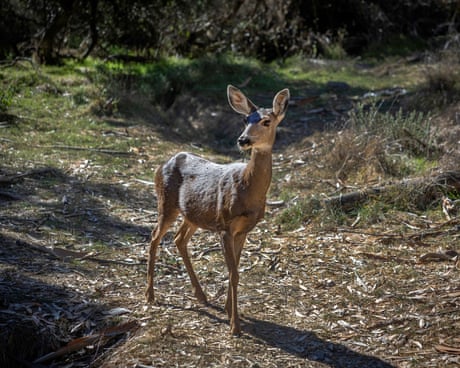
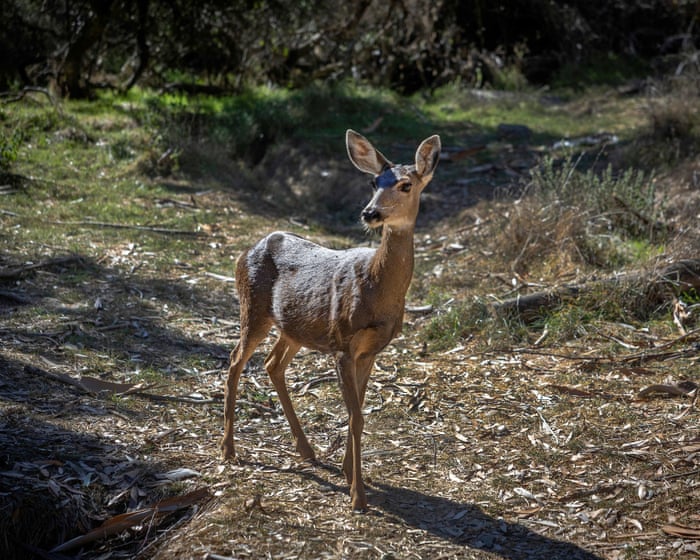
Locals and tourists have long fawned over Catalina Island’s mule deer population. For nearly a century, the ungulates have roamed the land’s waterfronts and woodlands, so comfortable around humans that it is not uncommon to spot deer roaming downtown Avalon.
But that sight will soon disappear, after a judge this week paved the way for the island’s conservancy to kill nearly all the island’s 2,000 deer.
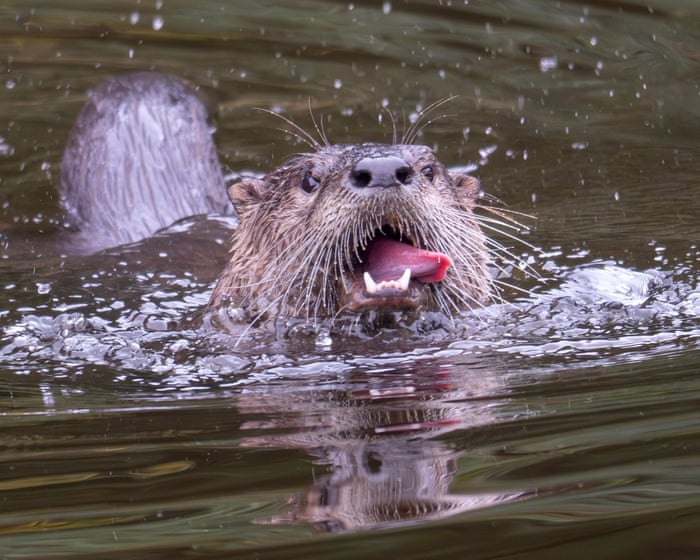
Woman from Reno was swimming near Hidden beach when river otter attacked her, Tahoe’s second incident in a monthA swimmer at Lake Tahoe in Nevada was bitten by a river otter and needed to get 38 stitches for her wounds as well as rabies shots, local media have reported.Lynnette Bellin from Reno was swimming near Hidden beach on the Nevada side of the popular tourist attraction on Sunday when she was attacked by the creature. Continue reading...
Woman from Reno was swimming near Hidden beach when river otter attacked her, Tahoe’s second incident in a month
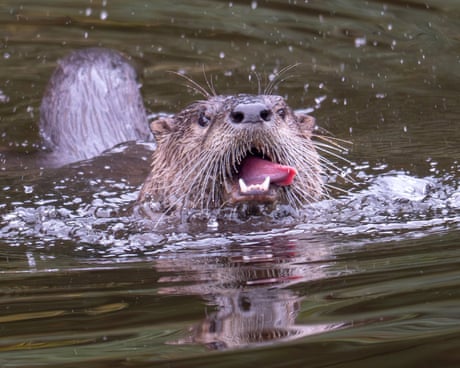
A swimmer at Lake Tahoe in Nevada was bitten by a river otter and needed to get 38 stitches for her wounds as well as rabies shots, local media have reported.
Lynnette Bellin from Reno was swimming near Hidden beach on the Nevada side of the popular tourist attraction on Sunday when she was attacked by the creature.
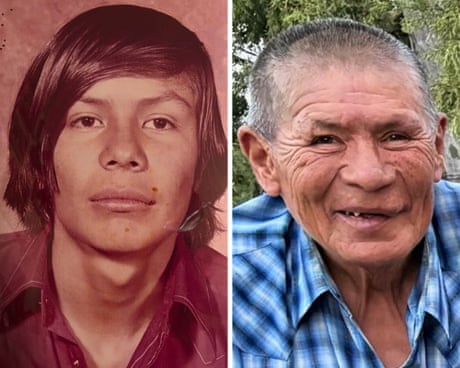
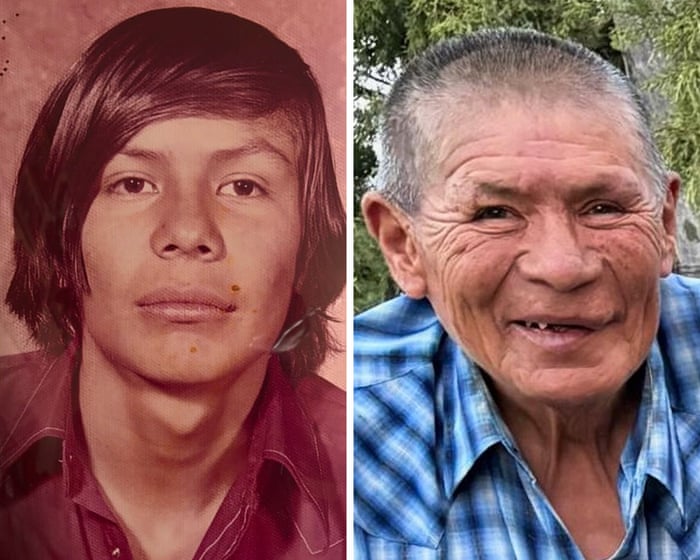
Relatives of Benjamin Halona remember his career as wildlife firefighter and his zeal for selling tamalesRelatives of a New Mexico man who was fatally mauled by a bear inside his home recently say they are choosing to remember his firefighting career and zeal for peddling tamales rather than his rare, brutal manner of death.As Benjamin Halona’s sister, Gloria Halona, and her daughter, Samantha Vandever, put it, that is the least he deserved after the quiet dignity that he showed becoming a widow
Relatives of Benjamin Halona remember his career as wildlife firefighter and his zeal for selling tamales
Relatives of a New Mexico man who was fatally mauled by a bear inside his home recently say they are choosing to remember his firefighting career and zeal for peddling tamales rather than his rare, brutal manner of death.
As Benjamin Halona’s sister, Gloria Halona, and her daughter, Samantha Vandever, put it, that is the least he deserved after the quiet dignity that he showed becoming a widower in February and subsequently grappling with health problems that required him to use a walker and a wheelchair to move around.
Experts say more bears are wandering into human's homes and shops in search of food, due to drought-driven food shortages across the US west Continue reading...
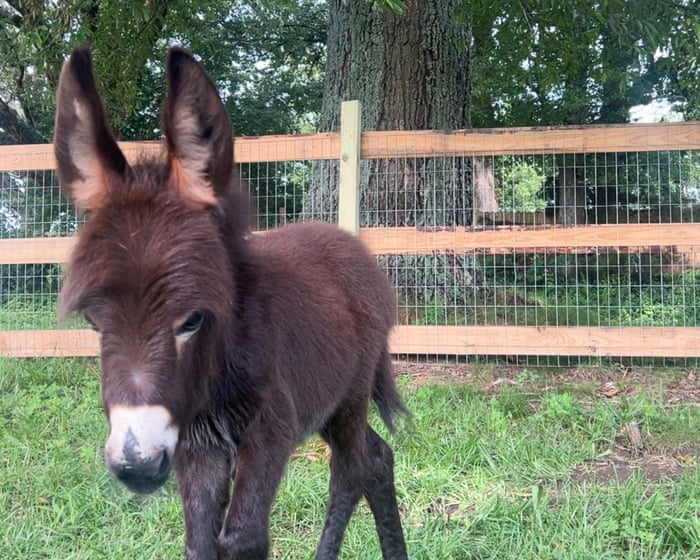
Donkey named HeeHaw was shot and killed as authorities reportedly looked on property in search of a missing personA police officer in the US state of Georgia was placed on leave after a family’s pet baby donkey was shot and killed during an early-morning search on their property.The animal’s owner, Hannah Israel, said officers were at her pasture without notification or permission at about 12.45am on Sunday, reportedly looking for a missing person when they encountered the small male donkey name
Donkey named HeeHaw was shot and killed as authorities reportedly looked on property in search of a missing person
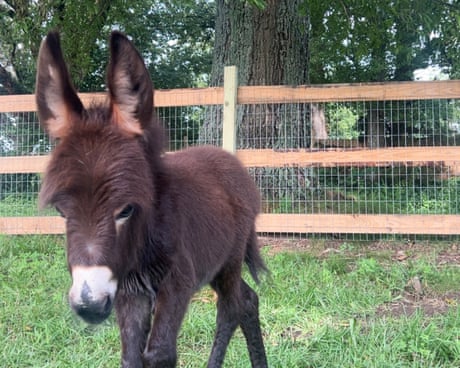
A police officer in the US state of Georgia was placed on leave after a family’s pet baby donkey was shot and killed during an early-morning search on their property.
The animal’s owner, Hannah Israel, said officers were at her pasture without notification or permission at about 12.45am on Sunday, reportedly looking for a missing person when they encountered the small male donkey named HeeHaw.
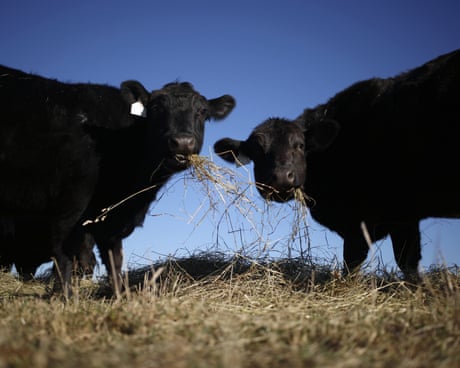
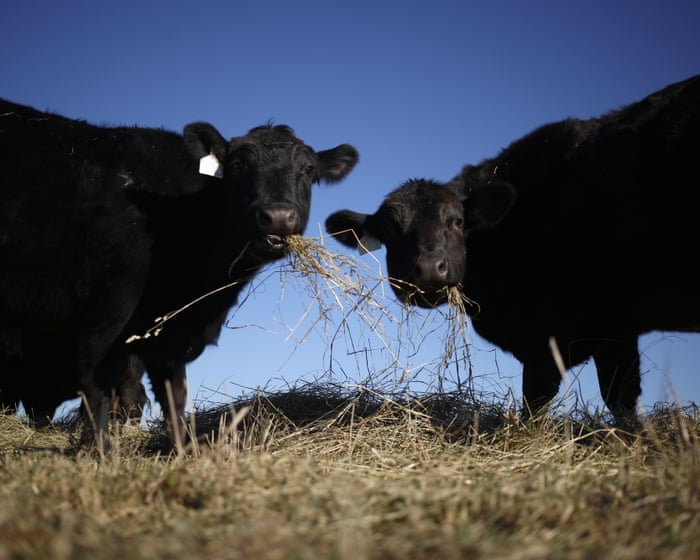
President faces criticism over plan to import up to 300,000 metric tons of foreign beef without charging higher tariffsDonald Trump has pledged to allow cattle ranchers and farmers to process their own food amid a backlash from the US agricultural sector over his decision to pause US tariffs on foreign beef.The US president has been sharply criticized, including from members of his own party, since announcing the US will temporarily import up to 300,000 metric tons of foreign beef without chargi
President faces criticism over plan to import up to 300,000 metric tons of foreign beef without charging higher tariffs
Donald Trump has pledged to allow cattle ranchers and farmers to process their own food amid a backlash from the US agricultural sector over his decision to pause US tariffs on foreign beef.
The US president has been sharply criticized, including from members of his own party, since announcing the US will temporarily import up to 300,000 metric tons of foreign beef without charging higher tariffs in an effort to bring down prices.
State to offer up to 5,000 trappers chance to snare reptiles whose numbers have risen to 3m from fewer than 100,000The first recreational alligator hunt in Louisiana in more than half a century is about to commence in the swamps of that state, with up to 5,000 hopeful trappers facing strict rules in order to snare a reptile.The state’s fish and wildlife commission banned alligator hunting in 1962 to allow the species to recover after decades of unregulated killings for meat and hides dropped num
State to offer up to 5,000 trappers chance to snare reptiles whose numbers have risen to 3m from fewer than 100,000
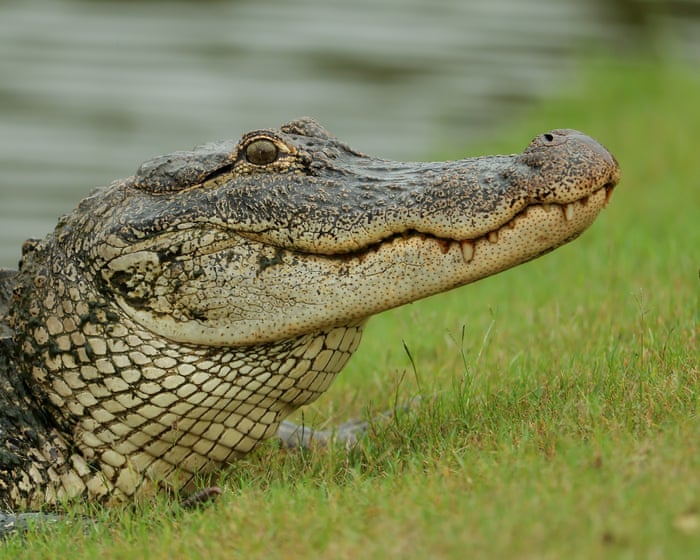
The first recreational alligator hunt in Louisiana in more than half a century is about to commence in the swamps of that state, with up to 5,000 hopeful trappers facing strict rules in order to snare a reptile.
The state’s fish and wildlife commission banned alligator hunting in 1962 to allow the species to recover after decades of unregulated killings for meat and hides dropped numbers there to below 100,000.
Decision to rescind ‘roadless rule’ opens more than 45m acres of national forests to roads, drilling and loggingMore than 400 endangered animal and plant species could face accelerated extinction after the Donald Trump administration’s decision to rescind a rule that has protected old-growth forests for more than two decades.According to a new report from the Center for Biological Diversity, the rollback of the Bill Clinton-era “roadless rule” could put 7.4m acres (3m hectares) of endangered-spe
Decision to rescind ‘roadless rule’ opens more than 45m acres of national forests to roads, drilling and logging
More than 400 endangered animal and plant species could face accelerated extinction after the Donald Trump administration’s decision to rescind a rule that has protected old-growth forests for more than two decades.
According to a new report from the Center for Biological Diversity, the rollback of the Bill Clinton-era “roadless rule” could put 7.4m acres (3m hectares) of endangered-species habitat and nearly 1,800 miles (2,900km) of protected rivers and streams at risk, while opening more than 45m acres of national forests to roads, drilling and logging.
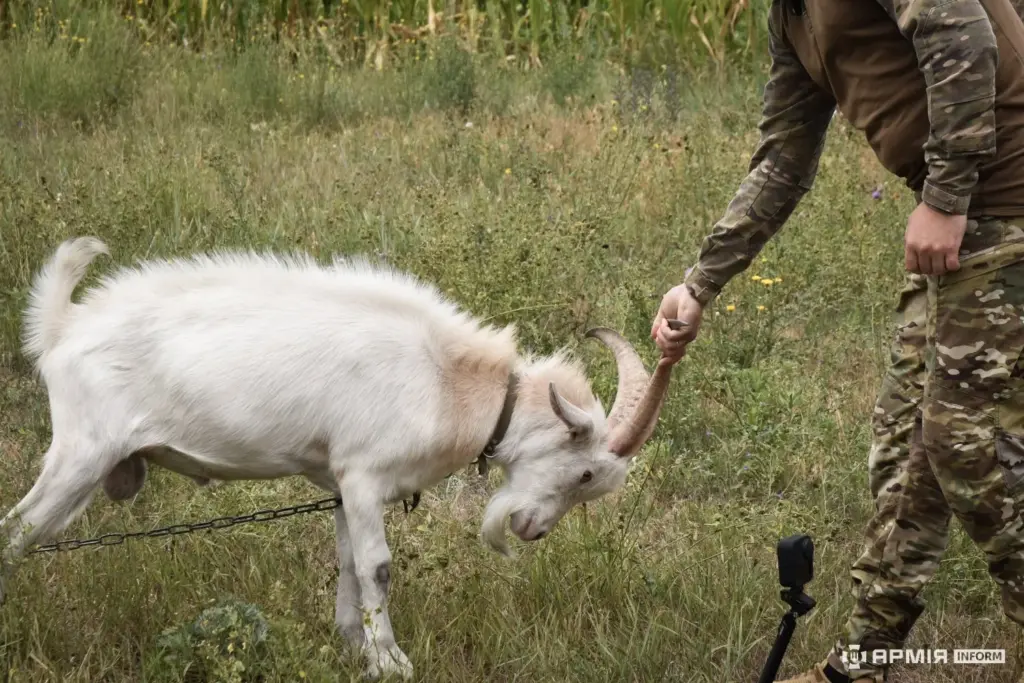
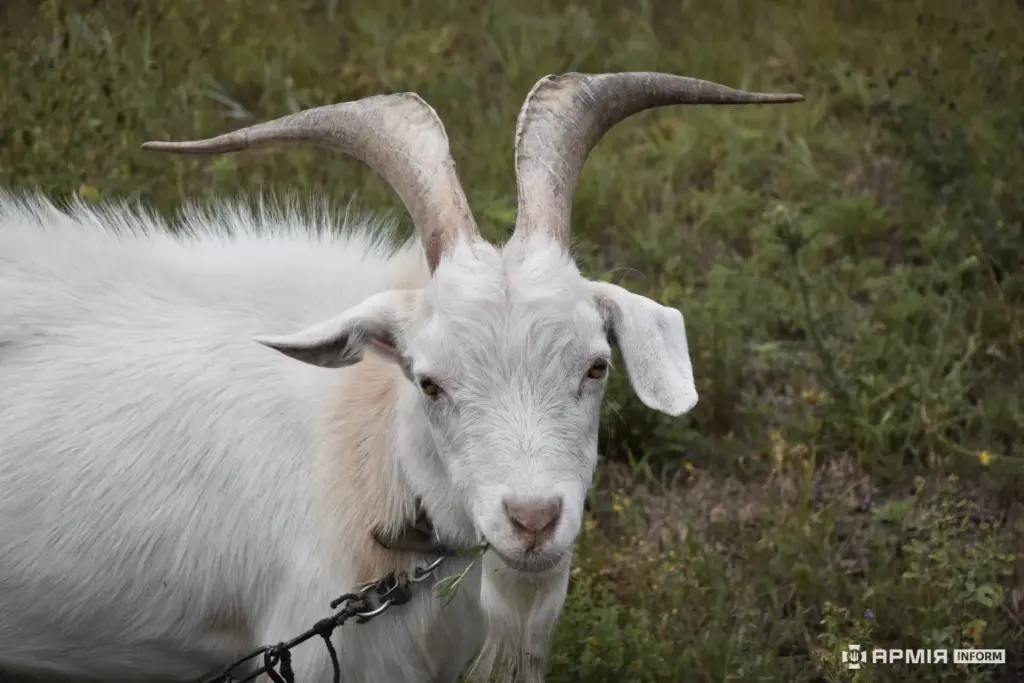
Borka arrived as a kid about a year and a half ago, carried in by one of the men and left at the door of the unit's house in Donetsk Oblast, the battalion's chief sergeant, who uses the callsign Sheva, told ArmyInform, the Ukrainian defense ministry's information agency. Someone suggested keeping him, someone else joked about meat, and no one followed through. He has stayed ever since, through several redeployments and near-daily Russian drone activity. On one occasion, a
Borka arrived as a kid about a year and a half ago, carried in by one of the men and left at the door of the unit's house in Donetsk Oblast, the battalion's chief sergeant, who uses the callsign Sheva, told ArmyInform, the Ukrainian defense ministry's information agency. Someone suggested keeping him, someone else joked about meat, and no one followed through. He has stayed ever since, through several redeployments and near-daily Russian drone activity. On one occasion, a Russian FPV drone exploded near the position. The soldiers relocated in a hurry, then realized they had left Borka behind and went back for him, Sheva recalled.
Borka is one of many animals Ukrainian troops have taken in and pulled out of front-line areas during Russia's war against Ukraine. Sheva casts the care as a deliberate contrast. "They are our lesser brethren. We are responsible for those we have tamed. We are not like the Russians," he said, adding that comrades have evacuated dogs, cats, and once even a cow from wrecked settlements.
Photo: Daria Moskalets / ArmyInform.
Sheva, who volunteered with friends at the start of Russia's full-scale invasion and has fought on the Zaporizhzhia, Kharkiv, and Donetsk fronts, says Borka is no easy houseguest. Whoever feeds him is his favorite, and whoever is late feeding him, Sheva included, risks a headbutt. He once snapped his tether and walked straight into the house where the soldiers were resting, to their general shock. To burn off his energy, the unit built him a training station out of a stump with an old helmet hung on it, and in winter they put up a small insulated shelter that he keeps demolishing, and they keep repairing. They trade chocolate bars for hay and straw, and tell his story to people who then pitch in with food.
The plan is, eventually, to find Borka a permanent home in good hands. "No one is going to send Borka for meat," Sheva said. On the front, he added, any small distraction has value: a cat purring on your lap settles you, and Borka does something different. "He's the kind of guy who keeps us all on our toes."
[en]
Je sais qu’il y a des tas de gens qui font le choix de ne pas stériliser leur chatte “pour avoir des petits”, et qui peut-être ne comprennent pas l’énervement des gens branchés “protection animale” face à ça. Si on est responsable, qu’on soigne bien les chatons, qu’on leur trouve de bons foyers, où est le problème?
Le problème c’est qu’une chatte qui fait des petits, ce n’est pas quelque chose qu’il suffit de considérer de façon isolée. En effet, pour cette chatte-là et ces chatons-là,
Je sais qu’il y a des tas de gens qui font le choix de ne pas stériliser leur chatte “pour avoir des petits”, et qui peut-être ne comprennent pas l’énervement des gens branchés “protection animale” face à ça. Si on est responsable, qu’on soigne bien les chatons, qu’on leur trouve de bons foyers, où est le problème?
Le problème c’est qu’une chatte qui fait des petits, ce n’est pas quelque chose qu’il suffit de considérer de façon isolée. En effet, pour cette chatte-là et ces chatons-là, peut-être que tout va bien.
Mais il faut regarder plus loin que le bout de son nez. Il faut regarder l’écosystème entier auquel prend part la personne qui choisit de faire reproduire sa chatte.
Déjà, il y a le fait qu’il y a des chats errants en Suisse, même si on ne le voit pas tant que ça. Ces chats, souvent, ils étaient à quelqu’un. Juju, il est né dans une famille et il a appartenu à des gens, avant de se retrouver dehors livré à lui-même. Je le sais car si ce n’était pas le cas, il n’aurait pas les bases de sociabilité avec l’humain qu’il démontre tous les jours. Oscar, même histoire. Donc ces chats, ce sont des chats non identifiés qui pour une raison ou une autre, se sont retrouvés à la rue.
J’aimerais insister sur le fait que je ne crois pas que la majorité des chats “abandonnés”, comme on dit, ait été activement et sciemment “mis dehors”. Il y a tellement d’explications: la chute de la fenêtre et le chat qui file et qu’on ne retrouve jamais. Le chat d’intérieur qui fuit par la porte et qu’on ne retrouve jamais. Le chat qui vient de déménager, qui sort trop tôt, et s’installe ailleurs, et qu’on ne retrouve jamais. Le chat pas castré assez tôt (tant Oscar que Juju n’étaient pas castrés) et qui file courir la minette loin, loin de chez lui, et au final ne revient pas, car les minettes en chaleur sont ailleurs. Le chat vagabond qu’on nourrit “comme ça” et qui finit par préférer rester dans le coin plutôt que chez lui – mais c’est pas “notre” chat, alors il devient “le chat de personne”. Je pourrais continuer.
Il y a des chats errants. Il y a des chats en refuge. Des chats qui passent longtemps en refuge (Tounsi y est resté un an avant que je l’adopte, et c’est n’est pas une durée incroyable). Et détrompez-vous: chaque année, il y a des chatons qui peinent à trouver un foyer, parce que passée la fenêtre très courte du “chaton mignon”, eh bien les gens n’en veulent plus, et aussi parce que les refuges et les associations qui placent des chatons ou chats sont peut-être plus regardants que des particuliers qui ont “fait des petits”. Vous savez pourquoi j’ai gardé Juju? Parce qu’au bout de 2 semaines, je voyais son potentiel, ses besoins en matière d’espace de vie, et aussi le travail et les compétences qui allaient être nécessaires pour le resocialiser et lui permettre de surmonter sa peur après des années dehors, et que la conclusion c’était que ce serait moins de travail pour moi de le faire moi-même que de trouver un foyer qui coche les cases.
Tous cas chats, ils viennent de quelque part. Certes, il y a des minettes “ensauvagées” (qui elles aussi, étaient peut-être à quelqu’un, à la base) qui mettent bas dehors, donnant naissance à des petits qui ne seront pas socialisés, pas castrés, pas stérilisés, pas vaccinés, donc un grand nombre mourront (et pas paisiblement) et dont le reste occupe à plein temps les bénévoles des associations qui bossent nuit et jour pour, justement, réduire la quantité de mort miséreuse dans nos champs, nos haies et nos chantiers.
Donc, quand on fait porter sa chatte, on fait “sa part” pour contribuer à surcharger cet écosystème déjà en souffrance. Plus de chatons faciles à adopter, pour des gens qui du coup n’adopteront pas un chat (jeune ou vieux) qui n’est pas né exprès. Plus de chatons à adopter, pas identifiés pour beaucoup, probablement pas stérilisés (parce que ce serait cool de faire une portée à la minette, c’est mignon les chatons), qui peut-être se “perdront” et iront grossir les rangs des “chats abandonnés”.
On fait aussi “sa part” pour alimenter une norme sociale: que c’est OK voire normal de faire porter sa chatte, que la stérilisation c’est pas si important, ça fait des chatons mignons, que franchement les associations et SPA qui font payer (non mais vous vous rendez compte?!) quand on veut adopter un chaton, vraiment, c’est abuser, parce que ma voisine elle les donne, elle.
Voilà pourquoi des fois, on manque de patience avec les gens qui ne voient que les adorables et craquants petits chatons auxquels donnera naissance leur gentille minette.
[en]
Je voulais écrire hier. Hier, deux semaines après la mort d’Oscar. Le choc a passé. Je suis de retour au travail – avec difficulté la semaine dernière, on verra ce que raconte celle-ci. Il reste le manque. Il me manque. Je commence tout juste à entrer parfois dans mon appartement sans ressentir très fort la présence de son absence. J’ouvre la porte et le vide me saute à la figure. Ça diminue un peu, mais c’est encore là.
Le pire c’est le soir. Oscar, il m’attendait sur le lit. Je me cou
Je voulais écrire hier. Hier, deux semaines après la mort d’Oscar. Le choc a passé. Je suis de retour au travail – avec difficulté la semaine dernière, on verra ce que raconte celle-ci. Il reste le manque. Il me manque. Je commence tout juste à entrer parfois dans mon appartement sans ressentir très fort la présence de son absence. J’ouvre la porte et le vide me saute à la figure. Ça diminue un peu, mais c’est encore là.
Le pire c’est le soir. Oscar, il m’attendait sur le lit. Je me couchais, il s’installait contre moi. Avant Oscar, il y avait Quintus. Et Tounsi, moins longtemps. Avant, Bagha. La chose la plus étrange dans cette période de deuil c’est que le cri intérieur de ma peine disait souvent “Bagha” au lieu de “Oscar”, surtout les premiers jours. Pourquoi? La mort de Bagha, c’est tellement loin. Il y en a eu tant d’autres depuis.
Oscar, il a gagné mon coeur en étant lui, évidemment, mais aussi au début parce qu’il me rappelait Bagha. Un grand matou tigré et blanc, bien dans ses coussinets, qui ne se laisse pas démonter par la vie. Aussi, après la mort de Bagha, je me suis retrouvée “sans chat chez moi“, comme aujourd’hui. Voilà peut-être d’où vient cet écho.
Quelque part dans ma tête, j’ai “home is where the cat is”. C’est une de mes définitions du chez-soi. J’aimais rentrer chez moi, être chez moi, aussi parce que c’est là qu’est le chat (ou les chats). Et donc c’est tristounet, ici. C’est vide. Il n’y a plus que moi et les plantes. Il ne se passe rien en-dehors de moi. Un jour, Juju passera du temps ici, mais pas encore. Donc en attendant, c’est juste moi.
Au-delà de l’attachement que j’avais pour Oscar, il y avait le rôle structurant que jouait sa présence dans mon quotidien. Une structure lourde parfois, mais qui avait aussi beaucoup de positif, d’autant plus dans un contexte post-accident où mon fonctionnement exécutif galère encore plus qu’avant et où je ne travaille encore qu’à temps partiel, en télétravail la plupart du temps. Les ancrages externes des horaires des soins, des habitudes du chat, et même de l’impulsion d’aller voir comment il va: tout ça est loin. C’est une vraie perte de repères.
Le pire, c’est le soir, je disais. Ma gestion du temps nage la brasse, ma sensation du temps la brasse coulée. Dans une période où le sommeil est critique à ma convalescence, je n’arrive plus à tenir le rythme que je souhaite. Je me retrouve à me coucher à 2h, à 3h du matin. Je suis lente, désorganisée, coordonner les actions diverses d’une étape du quotidien me demande beaucoup plus d’efforts qu’il y a un mois. C’est normal. Un deuil, même sans commotion dessous, ça entraine des perturbations cognitives. Je le sais, je ne m’en alarme pas, je puise dans ce que j’ai comme patience avec moi-même et ce long processus de récupération. Mais c’est galère.
Le soir. En plus, une fois au lit, une fois qu’il s’agit d’éteindre, d’arrêter l’activité continue de la journée dans laquelle je me réfugie un peu malgré moi, qui ne me fait pas forcément du bien au fond mais qui soulage sur le moment, il ne reste plus que l’absence d’Oscar, qui une fois installé, retenait mon bras de sa patte si j’essayais de le bouger. Et je suis triste, et je n’aime pas me sentir triste, et donc j’ai encore moins envie d’aller me coucher. Tout ça, en plus du fait qu’aller dormir, ça signifie être demain matin, un nouveau jour où je vais me lever et où Oscar ne sera toujours pas là.
Le courage me fait défaut. Pas juste parce que ça fait mal, d’avoir le courage de sentir ce qu’il y a à sentir, mais aussi parce que ça fait plus d’un an que je fais des efforts, que j’en ai marre et que j’en suis fatiguée. Certes, on fait toujours des efforts dans la vie, ça fait partie de la vie. Mais ceux qu’on doit fournir quand un problème de santé bouleverse durablement notre vie, ce ne sont pas ceux de la vie de tous les jours. Alors j’ai moins de courage pour ce deuil que si je n’avais pas eu d’accident. C’est comme ça. On fait ce qu’on peut avec ce qu’on a quand on l’a.
Je voulais écrire hier, je me suis laissée prendre dans d’autres choses, sans trop me battre. Aujourd’hui, j’ai failli aussi. J’ai travaillé. Mon cerveau est fatigué. J’ai fait une sieste, au salon, sur mon canapé, sans Oscar, parce que demain je travaille et que je sais maintenant que même si la journée semble bien se passer, si j’ai fait pas mal bosser mon cerveau, ce n’est pas dit que demain ça aille. Donc repos. J’apprends à être proactive. C’est dur, moi qui aime faire, faire, faire. Qui avant mon accident étais déjà frustrée de tout ce que je n’avais pas le temps ou l’énergie de faire. Qu’est-ce que j’étais ingrate avec la vie!
Sieste, un exercice difficile pour moi. J’ai réussi, là, assez je trouve. Puis je me lève. Cerveau fatigué, coeur désoeuvré. Regarder ma série? J’aimerais éviter de repartir dans une longue séance de bricolage de mon assistant IA. J’ai beaucoup fait ça, ces dernières semaines. C’est prenant en tant que tel, c’est pas idéal pour mon cerveau (même si c’est pas la cata, j’ai vraiment appris à repérer quand je ralentis et ne pas lutter contre ça), et ça m’a donné du répit au milieu de ma peine. C’est un délicat équilibre, qui rappelle celui de ma convalescence: le bon équilibre entre activité et repos; le bon équilibre entre sentir et souffler. Là, ça fait un moment que je sens que je dois reprendre le temps de sentir. Il y a très longtemps, j’ai compris que quand je me voyais en train de chercher à échapper à quelque chose que je sentais, c’était signe qu’il fallait justement prendre le temps de le sentir. Et pour moi, un truc qui marche bien, c’est écrire. Dans ma cuisine, tout à l’heure, alors que je dérivais vers le frigo à la recherche un peu floue de quelque chose qui me réconforterait, j’ai bien reconnu le goût de cette volonté d’échapper.
Alors j’ai ouvert mon ordinateur et j’ai commencé à écrire.
C’est pas le pied, donc. C’est pas le pied parce qu’Oscar est mort et qu’il me manque. J’ai des moments où monte cette envie déchirante de faire machine arrière, de ne pas décider qu’il est temps, de faire autrement, d’attendre encore. Je la connais bien, cette envie, et je sais qu’elle ne dit rien de ma décision, juste de ma peine. Un exercice vain et désespéré de la pensée pour avoir moins mal. Oscar me manque sur le balcon, au salon, dans ma chambre à coucher et à l’eclau. Il me manque dans le jardin où on avait pris l’habitude de faire quelques sorties. Il me manque le matin à 8h et le soir à 20h à l’heure des médicaments et des injections, et aussi à 16h et le plus tard possible avant de dormir, l’heure des anti-épileptiques qu’il léchait mélangés à une friandise dans une petite coupelle.
C’est pas le pied parce que mes journées ont perdu leur structure, et une partie de mon espace aussi. Parce que mon cerveau vient de se prendre l’équivalent émotionnel d’un nouveau choc à la tête, et qu’il rame.
Et pour couronner le tout, c’est pas le pied parce que dans la nuit de mercredi à jeudi, à 2h30 du matin, mon cerveau diminué a pensé qu’un aller-retour au salon pouvait se faire dans le noir, en étant prudente de contourner l’immense photophore en verre que j’avais déplacé au milieu du chemin pour tenir un place une lame de parquet que je venais de recoller, et a ensuite promptement effacé le photophore de la carte pour le trajet du retour, 20 secondes plus tard. Croche-pattes, photophore en miettes, un pied brièvement reposé au milieu des briques de verre pour reprendre l’équilibre, un gros morceau de verre planté dans le pied, une coupure nette et profonde de 8mm qui pisse le sang, un pansement compressif improvisé avec un mouchoir sale et une chaussette qui trainait par là (merci en passant au 30 ans de judo, tout ça sur un pied), et un week-end de l’Ascension en béquilles. Tout fait sens, franchement.
Le pied n’a rien de grave et guérit bien, j’espère être en mesure de marcher un peu dans le quartier d’ici quelques jours. Oscar est toujours mort, et mon cerveau bat toujours de l’aile. L’eclau n’est pas rangé comme je l’aurais voulu – pas commode en béquilles ou à cloche-pied. Je suis allée voir les iris à Vuillerens, quand même, en béquilles et en bonne compagnie, sous la pluie.
J’essaie de reprendre le contrôle de mon sommeil. J’essaie de trouver le courage de ralentir, mais quand je vois comme je me sens maintenant, je comprends pourquoi c’est si dur. J’aimerais qu’Oscar soit là. Lui faire un massage d’oreille. Poser ma tête sur sa poitrine – a sa consternation sûrement, mais tant pis.
[en]
So here we are, another cat blog post written through tears. Oscar had three seizures this last week. Sunday 2am, Thursday 7.30am, Saturday 2am. Before that, we had two weeks without seizures, following a small one on the 12th, a kind of aftershock from the one on the 7th, that signalled another clear “beginning to the end”. We’d increased medication a month and a half before that following breakthrough seizures, and although the side-effects were important enough that they prompted us to
So here we are, another cat blog post written through tears. Oscar had three seizures this last week. Sunday 2am, Thursday 7.30am, Saturday 2am. Before that, we had two weeks without seizures, following a small one on the 12th, a kind of aftershock from the one on the 7th, that signalled another clear “beginning to the end”. We’d increased medication a month and a half before that following breakthrough seizures, and although the side-effects were important enough that they prompted us to decide we wouldn’t increase medication any further and make end-of-care plans, it did mean we got all that extra time, seizure-free.
But this is the end. The seizures are not going to stop or “get better”. We don’t know precisely what’s causing them but given his age and their presentation, it’s likely it’s a brain tumour, or some other brain lesion. He’s a very old man. We don’t know how old he is, because he’s a rescue, but it’s quite clear he’s very old. Eighteen, 19, 20? Even if it’s “just 17”, that’s already very old. He has old eyes, a string of old cat illnesses. He’s been through a lot and I know I’ve taken very good care of him.
If it weren’t for the seizures, he’d continue living his old man life: lots of napping, some ear-rubs, a stroll in the garden every now and again, telling Juju he’s the boss (as well as other cats if he spots them on a garden-walk), and keeping up with his little habits: this bed in the morning, that bed in the afternoon, take a little sun on the balcony, go down to the coworking space, meds 4 times a day, a rotation of wet food, trips to the litter-box, and sleeping in the crook of my arm at night.
But there are the seizures, and it’s not fair to him at this frequency. The one he had two days ago lasted a good three minutes, I got it on the surveillance camera. I don’t know about the two others, but the previous big ones were a minute. Three minutes is a long time for a grand mal seizure. He loses consciousness, he pees himself, he seizes, and then he’s out of it for hours – disoriented, uncomfortable. Then he’s OK again, like now, napping on the balcony. But that’s a lot of discomfort and hours of being unwell on top of a base quality of life that, even if it’s still acceptable, is clearly diminished. And the seizures will get worse. The more you seize, the worse it gets. The seizures breaking through the medication and increasing in intensity and frequency also indicate the underlying issue is progressing. Some of you may be wondering: no, brain surgery isn’t an option for an old cat like him, he wouldn’t survive it, and even if he did, he wouldn’t manage to recover. Even putting him under general anesthesia for an MRI is not an option.
This is the end, my friend.
When Quintus died, he was much more diminished than Oscar is. Quintus was fading away. Oscar is fighting every inch of the way. He has three legs, arthritis, and neurological issues in addition to the meds that make him wobbly. But he still wants. Wants to go out, wants to hit Juju, wants to go downstairs, wants this, wants that. He is still going ahead.
I find it really hard to be putting a cat to sleep who still has so much fight and apparent will to live in him. Of course, one mustn’t anthropomorphise. Living beings keep on going as long as they’re not suffering so much that they just want the suffering to go away. Oscar doesn’t care about his life the way I do. He doesn’t know about death, he doesn’t make plans for tomorrow or next month. He doesn’t wonder if his life is worth living or not. He just is.
It’s different for me. Since Quintus had his first pancreatitis in 2016, I’ve been living with cat death hanging over me. Tounsi and Erica died rather unexpectedly. But Quintus was already becoming old back then. We weren’t sure he’d make it. He did. In 2017 he became ill with diabetes, and it seemed like that would be it. He recovered, but from then on it was pretty clear we were living on borrowed time. Each year, I’d hope he’d make it to his next birthday, without daring to count on it. He slowly declined, year after year. Oscar joined us in 2019, already old and diabetic. Quintus died in 2020, and I almost lost Oscar in 2021. Borrowed time for him too since then. Of course, through all that borrowed time, there were stable periods – both for Quintus and Oscar. But you know it’s just a reprieve.
Caring for old sick cats also means daily medications, vet visits, and elderly-proofing the home. So much in my flat is “designed for Oscar”. There are kitty-stairs everywhere. Two feeding stations. The huge litter-box. The beddings. And since the seizures started in November, rectangular absorbent pads under each of them. When you need to give injections 12 hours apart, or anti-seizure medication 8 hours apart, that constrains your personal schedule. Being absent requires either making concessions with the treatment (which I have done at times for the insulin injections when he was doing well) or finding people to take over (which I’ve also done regularly). Then there’s the fact that having an old pet who might die pretty much any time kind of dampens the desire to be away.
Once Oscar is gone, which might be today, or sometime in the next few days, most probably, a whole lot of “stable” things my life revolves around will be gone too. No more medication schedules. Put away the kitty stairs and beddings and the feeding stations and the litter box. Sure, Juju will be coming to the flat in time (he doesn’t right now), but he won’t need all this. A bowl of water, a blanket or a small bed somewhere, but maybe even not that — he tends to prefer sleeping rough. His death will not just break my heart, as all deaths do, it will also break my living environment and my daily routines.
Then there are the vets. Oscar has had regular vet visits for years now – every four weeks, then every three weeks. His veterinary osteopath also comes by every month — she used to come for Quintus already back in the day. Juju might need some more osteo sessions, but he definitely won’t be going to the vet much. Travel is a major source of stress for him, and I have another vet who does home visits come for him. So here are two people, whom I really like and have been seing regularly for years, who will drop out of my life when Oscar dies. I won’t just be losing him, but them too. So, sure, you can drop in at the vet practice once in a while with a cake or some cookies, but it’s not like you can sit and have a cup of tea with your ex-vet every couple of months. I get it. It’s a professional relationship. But it’s a human relationship too, and I’m really sad about that too.
There will be relief of course, and freedom. But a lot of loss.
When I look at Oscar right now sleeping next to me on the pillow like he often does, it feels unreal. Life is perfectly normal in this instant, and it’s going to be upended, and I don’t yet know when, but I’m going to be making that decision soon with the vet. It feels like the moment before you tell somebody you’re breaking up with them, when they didn’t see it coming. It feels like being on the 10-metre platform and having to decide when to jump.
Edit: his vet called back. She’ll be coming Monday 5pm. I’m so grateful she can come for this – and so devastated too. Edit again, 17:15: I don’t think we’ll last till Monday. He had another seizure a couple of hours ago. Am in contact with vet to see how we manage things. Edit after vet call: organising it for tomorrow afternoon, 2-3pm or so.
I’m going to miss him. I feel so sad. I wish there was a way around this. But there isn’t. We all die. Everybody dies. Our pets die before we do, pretty much every time. Some part of me wishes he looked more like he was dying – but on the other hand, I don’t wish him to feel crummier than necessary for whatever time he has left. It’s clearly better for him this way, even if it’s harder for me.
As I finish writing this, he’s coming to rub his face on the corner of my screen, before heading down his kitty stairs to grab a bite – and then get on with his old-cat-day.
[en]
Le 3 février 2025, je rentre du judo et je descends récupérer Oscar à l’eclau. Il aime rester installé sur la plate-forme devant la chatière condamnée: bonne vue sur le jardin, et effluves de l’extérieur.
En arrivant, je suis surprise par un matou gris et blanc de l’autre côté de la vitre. Je le surprends aussi. Il a pas l’air commode: oreilles aplaties, balafré, bajoues de compét’ – et il souffle. “Toi, t’es pas castré, ça c’est sûr!”
J’ai le réflexe de prendre une pho
Le 3 février 2025, je rentre du judo et je descends récupérer Oscar à l’eclau. Il aime rester installé sur la plate-forme devant la chatière condamnée: bonne vue sur le jardin, et effluves de l’extérieur.
En arrivant, je suis surprise par un matou gris et blanc de l’autre côté de la vitre. Je le surprends aussi. Il a pas l’air commode: oreilles aplaties, balafré, bajoues de compét’ – et il souffle. “Toi, t’es pas castré, ça c’est sûr!”
J’ai le réflexe de prendre une photo, je récupère Oscar, je laisse quelques croquettes de l’autre côté de la chatière et je braque la caméra de surveillance dessus. Le lendemain, je verrai qu’il a mangé les croquettes.
Les chats errants n’ont pas une belle vie, contrairement à ce que voudrait faire croire le mythe populaire de la liberté et de “la nature“. Les bonnes âmes qui mettent une gamelle dehors ont bonne conscience et sont tout attendries, mais la réalité est une vie de bagarres, de dangers, de kilomètres parcourus poussés par leurs hormones, un risque de maladies plus élevé et évidemment, pas de soins médicaux. Non, il n’y a pas de soins médicaux dans la nature, c’est vrai, et le résultat c’est de la souffrance, encore de la souffrance, des vies qui se terminent misérablement dans les buissons, oui, dans la souffrance.
Il y a quelques années, j’avais tenter d’attirer un des matous errants du quartier, les oreilles déformées par la gale, le pas boiteux vu son âge avançant, pour le castrer. J’ai échoué. Je ne sais pas ce qu’il est devenu. Sans doute mort dans un coin.
Donc quand j’ai vu Juju, j’ai passé à l’action. Quand j’ai vu qu’il revenait, j’ai lancé l’opération “rendez-vous croquettes sur le rebord de la fenêtre”.
J’ai vérifié s’il était pucé, j’ai mis des affiches dans le quartier, j’ai mis des annonces sur internet. J’ai vu que je pouvais le toucher, même s’il avait peur. Une voisine aussi. J’ai préparer le terrain pour qu’on puisse le castrer quand je l’attrapais – vétérinaire, WCs aménagés pour pouvoir l’y enfermer quelques heures le cas échéant. Quand tout était prêt, j’ai attendu que l’opportunité se présente.
Elle s’est présentée le mercredi 26 février 2025, vers midi et demie. Dire que ça s’est bien passé serait mentir. J’ai pu le saisir mais au moment de l’approcher de la cage de transport, il a commencé à se débattre comme un beau diable. Je ne sais pas combien de temps ça a duré, mais j’ai tenu bon et lui aussi. La fenêtre était ouverte, je savais que si je le lâchais, il y avait toutes les chances que l’opportunité ne se représente plus. Lui luttait pour sa vie. A un moment il a failli m’échapper et je l’ai rattrapé par une patte. Il m’a mordue. J’ai réussi à fermer la fenêtre avec le pied et je l’ai laissé filer dans l’espace coworking.
Par chance, il s’était planqué quelque part d’accessible et était plus paralysé de peur que bête sauvage. Après avoir pansé mes doigts, je l’ai attrapé et mis dans les WC. La suite a été moins aventureuse: un peu d’aide pour le choper avec une couverture et mettre le tout dans la grosse grosse cage de transport que j’avais achetée pour les trajets Lausanne-chalet avec Oscar, direction véto, récupération, convalescence, apprivoisement.
Direction véto.Après le véto.
Je n’avais pas prévu de le garder. Mon projet était de le remettre dehors, avec abri et gamelle à puce (j’en avais profité pour le faire pucer). J’avais prévu de le relâcher. Une personne de l’immeuble était peut-être intéressée à tenter de l’adopter. On ferait les choses en douceur.
Mais vu comment s’était passée sa capture, je me suis dit qu’il valait mieux le garder quelques jours dedans avant de le laisser filer. Pas dit qu’il revienne, après avoir eu la peur de sa vie. En plus, c’était quand même mieux pour lui après l’intervention.
On me demande régulièrement pourquoi “Julius”. Avant sa capture, j’avais vaguement réfléchi à un nom temporaire pour lui. Oscar était mon premier chat à avoir un “nom d’humain”, et ça m’a un peu inspirée. Je voulais un nom qui colle pour un matou barreur et un peu patibulaire. Victor? Julius? Je n’y ai pas beaucoup pensé, je ne cherchais pas vraiment de nom, j’avais juste pris quelques secondes pour envisager des possibilités, puis je n’y ai plus repensé. En le récupérant chez le vétérinaire, l’assistante me demande “quel nom mettre sur le dossier”. Je suis prise de court, je me souviens de “Julius”, je me dis “bah, s’il est sympa on pourra dire Juju”. Autant vous dire que “Julius” est inusité, même ça reste son “vrai nom”.
Mon projet initial de le remettre dehors a été mis au rebut dès le premier soir. Juju était terré au fond de sa cage de transport, n’en était pas sorti. J’ai tenté une caresse. Sous ma main, j’ai vu se fermer ses yeux, sa posture se détendre, et sa tête se poser. J’ai gratté un peu sous le cou, et il a tendu le menton pour en profiter. Cet instant-là, j’ai décidé que je n’allais pas prendre le risque de le remettre dehors, et qu’il valait la peine de tenter de le resocialiser pour adoption. Surtout que j’avais quelqu’un sur les rangs. Je me suis dit qu’un chat qui se détendait sous les caresses d’une main inconnue après la journée qu’il avait eue, il avait du potentiel.
La tentative d’adoption n’a pas fonctionné. Juju est un nocturne — et aussi, ce que je n’avais pas réalisé à l’époque, il y avait certainement une minette en chaleur dehors, ce qui expliquait les bagarres terribles qui avaient déchiré nos nuits de février, et simplement, la présence de Juju, qui normalement ne venait pas par ici. Le jour, il restait planqué, craintif, prudent. La nuit, l’appel de l’extérieur et probablement des hormones l’amenait à miauler, miauler, miauler, miauler. De plus, après des années d’errance, il y avait quand même pas mal à reconstruire pour qu’il surmonte sa crainte de l’humain. C’est un gros investissement et mine de rien, ça nécessite des compétences en matière de comportement qui ne sont pas toujours simples à acquérir sur le tas.
Je l’ai récupéré, en bas dans ma salle de réunion, ou au moins, s’il passait la nuit à miauler, même si ce n’était pas rigolo pour lui, il n’empêchait personne de dormir.
Je ne prévoyais pas de le garder. J’avais Oscar, et j’avais décidé que tant qu’Oscar était là, je ne prendrais pas de deuxième chat. J’avais aussi décidé qu’après Oscar, je m’octroierais une “pause chat“, après avoir enchaîné des années de soins pour deux très vieux chats. J’ai donc commencé à réfléchir au profil de la maison d’accueil ou de l’adoptant qu’il lui faudrait. Et je suis arrivée à la conclusion, dans un contexte où choisir l’option la moins lourde pour moi était un critère important, que partir du principe que je gardais Juju serait paradoxalement beaucoup plus simple à gérer que de lui chercher un foyer à la hauteur de ses besoins.
Cette décision prise et sa garde organisée, je suis partie au chalet le 17 mars avec Oscar pour profiter de mes vacances tant attendues, les premières depuis bien trop longtemps… Mais ça, c’est une autre histoire !
Juju s’est super bien bien adapté. C’est un chat super câlin, super tolérant, qui aime les caresses et les genoux. Il ronronne bien. Il est plutôt bonne pâte. Il me fait penser à Quintus, côté tempérament. Un peu plus craintif. Mais il apprend à faire confiance si on prend le temps de lui montrer qu’il n’a rien à craindre. Ses oreilles aplaties, c’est leur position naturelle. Elles doivent avoir été implantées bizarrement. Comme dit une copine “il est en mode avion”. Elle l’a aussi surnommé “le chavion”.
Il continue à courir le quartier chaque nuit, parfois jusqu’à Prilly Centre et même en-dessous, parfois juste autour du pâté d’immeubles. Son tracker m’a montré que son coeur de territoire n’était certainement pas ici, mais plus au sud. Avec le temps, il va moins par là-bas, et reste plus proche d’ici. Il n’aime pas les trajets en voiture, pas du tout. Il est plutôt chill avec les autres chats, pas dans le genre “je suis le roi” comme Oscar (qui le poursuit sans merci quand il en a l’occasion… Juju a appris qu’il suffisait de s’éloigner un peu vu la vitesse de déplacement de papy), mais si on vient le chercher dans son espace vital, il le défendra. J’ai déjà perdu le compte des abcès et mises sous antibios.
Seule ombre au tableau: il s’est bien enrobé. C’est un euphémisme. J’ai honte, vraiment. Comme dit sa véto “au moins vous êtes pas dans le déni, c’est déjà ça!” Comme je n’ai pas envie d’avoir un nouveau chat diabétique tout de suite (et aussi parce que le diabète n’est pas la seule menace qui pèse sur le chat obèse), on va prendre ça en main plus sérieusement. Il a déjà des croquettes Metabolic, mais cela ne semble pas tout à fait suffisant. Pour marquer le coup, ce matin je lui ai appris à monter sur la balance (merci les Churu).
[en]
Between November 3rd and last Thursday, Oscar has had three epileptic seizures – maybe four. Whatever the underlying cause is, it’s not good. He’s an old cat with many ailments, hanging on to a life still good enough.
You need to read The Cat Who Woke Me Up (thanks, Doc). It’s beautiful in so many ways. It makes me wish I were able to write about the truth of the world like that.
I haven’t got around to sharing even a tenth of all that I have understood over the nine long months si
Between November 3rd and last Thursday, Oscar has had three epileptic seizures – maybe four. Whatever the underlying cause is, it’s not good. He’s an old cat with many ailments, hanging on to a life still good enough.
You need to read The Cat Who Woke Me Up (thanks, Doc). It’s beautiful in so many ways. It makes me wish I were able to write about the truth of the world like that.
I haven’t got around to sharing even a tenth of all that I have understood over the nine long months since my accident. But somewhere in there, there is writing. And there is dealing with emotions. And grief. It is our struggle as humans, inevitably, to be faced with emotions. They colour our life. Maybe helping each other, being there for one another, all has to do with emotions. Maybe it all comes down to that. Emotions as the truth of life.
Christmas is approaching, and my old cat is inching closer to the end. It could be next month, it could be next week, it could be next summer. Though honestly, I think the likelihood of the latter is slim. Winter is not good for my cats. Both Bagha and Quintus died in the time before Christmas. Tounsi just after. Erica a few months later. I’m not superstitious and I don’t believe in anything. These days are just not filled with happy feline memories. And it’s a fact that winter, like the heatwaves of the summer, is not gentle on frail, ageing bodies.
I’m struggling with my brain right now. It’s not good either, in a different way. Obviously, I keep overestimating how much “available brain” (I don’t like “energy”) I have. As soon as things get better and more normal, I end up overdoing it, without realising, and then crashing again.
I underestimated the impact my programme for Friday and Saturday would have (and forgot to factor in some wiggle room for “unknowns”, which definitely made themselves known). Saturday evening I was completely exhausted. This means: headache, buzzing brain, making mistakes with numbers, struggling to put my thoughts clearly into sentences, more misunderstandings or lost threads when listening to others, and the odd word eluding me. Oh, and leaving my keys in the door (but that was Saturday noon already).
Sunday was headache, mostly rest, a friend over for tea, cancelling a videocall with another. Today had less headache, felt quite better, but after two hours Christmas shopping this afternoon my brain is filled with pounding rain and lightening and I gave up on heading out again for the second shopping trip I had planned. Christmas preparation is going to be much more challenging than expected. I look at the coming week and can’t see when I’m going to get the downtime to recover. It’s not good, and I don’t know what to do about it. That, of course, is part of the problem.
Next Monday, I’m going to the chalet. I don’t know what state my brain or my cat will be in. There are loud bells ringing telling me it would be more reasonable not to go. There are equally loud bells telling me that I haven’t been to the chalet in a year, that I desperately need a holiday, and that I want to go back skiing because this year has already been so dreadfully frustrating for me that I just can’t bear to give up on yet another plan.
I have had to get better at letting go of things. It doesn’t mean I’m good at it. And as I am still on the road to improvement, I logically should need to let go of less and less as time goes on. I keep thinking I can relax a bit, inch closer to my “normal life”, but I keep overshooting and being all the more frustrated: because I’m disappointed, with the double whammy that when my brain is fried, managing my emotions is more difficult.
I remember, in the first hours after my accident – or maybe days? – wondering through the fog of my concussion if this accident would leave a lasting mark on my life. Would it have big consequences. Would there be a before and after. Would it change me. Would a split second on a ski slope change the trajectory of a life. It made me even more acutely aware that some split seconds end lives – I was already very much aware of this, but knowing in your mind and feeling in your body are two different things.
My recovery is not just managing my tiredness and cognitive load to remain in the sweet zone of “enough activity but not too much” that supports healing and regaining function. It’s also grappling with Big Questions regarding the meaning of life, what’s important and less important, truly understanding that my ressources are finite, not just when I’m recovering from an accident, but always, and that I want to be mindful of how I use the time and energy of this one life I’m given. It’s figuring out what I want to do and dealing with the existential anxiety of my mortality, determining how much place I give to others and to myself.
I want to write about all this. If there is meaning, to me, it lies in making our time alive a little easier for each other. And though there is no better learning than through our own lived experience, sometimes the stories of others can resonate. Sometimes we find keys in the lives or insights of others. I want to write, and it’s terribly frustrating (that word again) to not have the availability to do it in a timely manner.
I hope Oscar doesn’t die too soon. It’s hard enough and sad enough as is. Of course I won’t want to have to deal with his death. But I accept I will have to. I would just like to be in a better place (cognitively) when it happens. 2025 has brought enough grief, and the last handful of years more than their fair share.
[en]
This is often the question. In typical ADHD style, my difficulty getting started on something is only surpassed by my difficulty stopping something once it’s started. So, 9pm on Sunday night, tired tired tired, can I grab my keyboard and give you some news without still being up at midnight?
I challenge myself.
Mid-October, I went back to work part-time. Three half-days a week. It went OK but I was way more tired than I expected. Tired in general. Overwhelmed by trying to manage my
This is often the question. In typical ADHD style, my difficulty getting started on something is only surpassed by my difficulty stopping something once it’s started. So, 9pm on Sunday night, tired tired tired, can I grab my keyboard and give you some news without still being up at midnight?
I challenge myself.
Mid-October, I went back to work part-time. Three half-days a week. It went OK but I was way more tired than I expected. Tired in general. Overwhelmed by trying to manage my weeks, that these three little half-days seemed to fill to the brim. It’s much better now and I feel ready for more. I haven’t had cognitive overload headaches for a while now, or at least, so few that I don’t remember them.
Months ago, I started using the Apple Journal app, because I was having such a hard time recalling what I had done in previous days, recent or less recent. Writing a few quick notes down at the end of the day has helped me keep some sort of grasp on all those days that have disappeared into the weird months of 2025. Recently, I’ve switched to Day One, trying it out as an alternative to Apple Journal. My Facebook suspension has made me cautious about locking data or content into hard-to-export-from apps or services.
I’ve also started learning Bridge. Maths and statistics, strategy and communication, fun! It’s an investment for my old days, but already enjoyable. I’ll write more about it in time. If you want to get started, Funbridge actually has tutorials that can take you by the hand for the first steps. Start with MiniBridge.
My very old cat Oscar is having a series of health issues. I treasure each good day I have with him, because I don’t know how many are left. The first part of the year saw a complete deregulation of his diabetes, which had been a smooth ride to manage until then. He was getting dehydrated, blood glucose going up and down like a yoyo, and slow but steady weight loss. We went through a long period of subcutaneous fluids, which helped a lot.
In September he came down with a really bad pancreatitis flare-up. I nearly lost him. An oesophageal feeding tube saved him. It sounds like a dramatic intervention, but it’s actually quite minor surgery, well-tolerated, and a life-saver. The main issue with pancreatitis is that the cat stops eating. Being able to feed by tube solves that problem, removes stress for everybody, allows proper administration of medication, fluids and calories. I had a short trip planned during that period, and thankfully a friend came over to cat-sit and take over nursing duties. I can’t thank her enough.
Since the pancreatitis he had been doing really good. He didn’t put all the weight he lost back on, but enough that it’s not a disaster. And his three old arthritic legs are happy for any 100g they don’t have to carry. I have been letting him out in the garden, closely supervised, of course, and he really enjoys it. It makes me happy too, to be able to give him access to enrichment and stimulation that an exclusively indoor life didn’t provide. It always made me a bit sad, especially as I knew he had lived most of his life outdoors. But he was too old and handicapped to risk it, and until recently, too mobile for me to supervise him in the garden here (he did get to go out at the chalet – different environment with less risks). The photo is of him on one of our recent outings.
Two weeks ago, though, he had an epileptic seizure. Out of nowhere. I moved my surveillance cameras around and kept an eye on him. He had a second one ten days later, just this Wednesday night. We put him on anticonvulsants Thursday evening, but it’s tricky dealing with the sedation side-effects, particularly on an elderly cat who is already mobility-challenged and wobbly at the best of times.
He still wants a lot of things (like me, hehe). He wants to go downstairs, he wants to climb in my lap, he wants to go outside, he wants to go on the sofa, he wants to teach Juju a lesson (Juju, by the way, is doing fine, but definitely overweight – I’m hoping his new diet will work out, because I’m not enthusiastic about preparing myself another diabetic cat).
So we’re still figuring things out, and crossing fingers that Oscar will be able to tolerate the medication and that he won’t have another seizure too soon. But it’s not good news, in any case. I’m sad and worried, which is normal, but that doesn’t make it comfortable. And also, apprehensive, because 2025 has come with more than its fair share of trials, and I’m aware that there is a high risk of Oscar dying in the coming months. And honestly, I don’t need that, just as I’m getting back on my feet. There’s never a good time for dead cats, but some are shittier than others. He might hang in there, of course, but he’s old enough and his health is such a fragile equilibrium that I would not bet on him being still around this time next year. He could still be here for months or more, of course, but he could also go downhill fast pretty much anytime. Loving and caring for an old animal is living with the certainty of grief to come, but the uncertainty of timing. I am very much reminded of Quintus’s last years.
I’ve never liked October-November. It’s dark, and damp, and not winter yet. It’s the in-between season. And this year, I had neither hiking, nor skiing, nor really sailing season. I did go out on the lake a handful of times, thanks to my dad who took me along. But it’s very frustrating and weird for me to have “lost” this year like that. It feels a bit like the first Covid year, you know, where we all felt there was a year missing in our lives. Only here, it’s just for me.
I’m way better but not “back to normal” yet. I have to put more effort into just “managing life”. And compared to before my accident, I’m much more careful about pushing myself. I used to push myself all the time. Now, when I feel tired, I go “oh, wait, I’m tired, how can I adjust my expectations for what I was hoping to do during the coming hours”.
A few weeks back I teamed up with a friend who also felt the need to get on top of her weekly planning, and we touch base once a week to go through our schedules. It’s been extremely helpful and is in no small part responsible for my not feeling overwhelmed by my life anymore. I’ve been knocking down admin tasks lately, blogging more, and even making some headway in much-needed tidying up and deep cleaning.
On the online side of things, I am sitting on my hands, because there are a few topics I really really want to dive into, but I know I cannot afford the time and bandwidth right now. It’s extremely frustrating. One of these topics is how to collate the things I share on the socials into daily blogs posts (I think I wrote about it in part 3 of Rebooting The Blogosphere). I think about it pretty much every day, because I share stuff on the socials and regret that I don’t have a simple way to round up the day’s shares here in WordPress to whip up a quick post with links and comments and some passing thoughts. There is a bunch of things I want to fix on the blog, too, but that will also have to wait. At least I’m writing.
I now finally have a Discourse instance up and running on a server (thanks Oliver!) and I am impatient to start configuring it and playing with it to start preparing for the migration of the “Diabète Félin” community I manage. It’s not for tomorrow, but I’d love to at least get something moving before the end of the year. I’m super enthusiastic about Discourse, maybe I should write a post about it.
But not tonight.
I’ve been writing my “quick blog post” for nearly an hour, my eyes are still tired and my brain is still foggy, so I’ll wrap things up here, go and pick up my old drugged up cat, play a deal or two on Funbridge, jot a few notes down in Day One, and read my book a bit before I collapse.
Sleep is what transports you to the next day. And the next day here is Monday.

 Connexion





 !
!

