Sanchez was charged over Indianapolis confrontation
Former NFL quarterback and Fox Sports analyst Mark Sanchez has reached an agreement in principle with the truck driver who stabbed him during an altercation last October, according to the Athletic.
Sanchez was stabbed and pepper sprayed by Perry Tole, who was 69 at the time, during the incident in Indianapolis, where the former New York Jets star was due to cover an NFL game between the Colts and Las Vegas Raiders. Prosecutors said Tole used pepper spray and a knife to defend himself after Sanchez attempted to enter his truck during an argument over a parking spot.
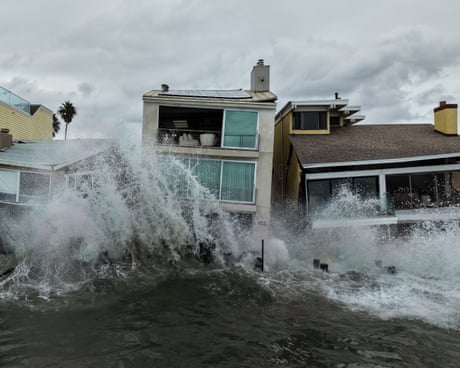
Boardwalk destroyed in Long Beach and homes damaged, while Baja California in Mexico and Las Vegas also affected
Southern California coastal communities are picking up the pieces after a weekend of extreme weather brought flooding that overtook city streets and intense waves battered beachside homes.
The remnants of Tropical Storm Rachel hit Mexico’s Baja California over the weekend as well as southern California and Las Vegas. While meteorologists noted that Rachel weakened into a post-tropical cyclone as it approached California, it still left a trail of destruction.
The main security service said it had detained a reporter for the Hokkaido Shimbun newspaper in Russia’s far east, where he had been reporting on military recruitment.
Ukraine wants the EU to force Moscow into a ceasefire with frozen Russian assets, trade and transit embargoes, maritime bans, and entry bans, Ukrainian Foreign Minister Andrii Sybiha wrote on X after the EU Foreign Affairs Council in Luxembourg on 12 October 2026. He also welcomed new EU sanctions listings adopted that day and progress in Ukraine’s EU accession talks.
Kyiv has spent this month laying out truce formats it would accept while awaiting Russia’s position on talks, and the levers it is pressing the EU to use include frozen Russian assets that EU leaders failed to agree on tapping last December.
The pressure Kyiv wants from the EU
Sybiha called it “devastating pressure.” He also wants Russian combatants and their families barred from the EU, maximum visa restrictions, and Russia’s isolation in culture and sports.
I was pleased to attend the EU Foreign Affairs Council today.
It is time for Europe to define its strong role. Our future and our security are in our hands.
Now is the time for real European pressure on Moscow. Not half-measures, but devastating pressure: frozen assets, trade… pic.twitter.com/AnI8h6HXbs
His post named three types of ceasefire—energy, food security, and a full ceasefire—without saying whether Kyiv would accept them separately. Earlier this month, he told journalists Ukraine was ready for an energy and Black Sea ceasefire “but only in such a combination.”
New sanctions listings and two more accession clusters
The minister welcomed the EU’s 12 October adoption of new sanctions listings against Russia—the largest single expansion of the bloc’s blacklist. EU ambassadors agreed on the 1,646 names on 7 October. They include 1,569 tied to Russia’s military industry and 77 to its so-called State Duma elections. The listings are separate from the EU’s 22nd sanctions package, which the EU has yet to adopt.
He also welcomed the EU’s “green light” for opening two more clusters in Ukraine’s EU accession talks: Internal Market, and Competitiveness and Inclusive Growth. The formal opening was scheduled for an intergovernmental conference on 13 October.
Front-line briefing and aid requests
Sybiha said he briefed European colleagues on the front-line situation, Russia’s plans, and ways to deprive it of its advantages, and that he passed partners specific requests for aid. He reaffirmed Ukraine’s commitment to reforms.
Russian meddling probably didn’t affect the referendum result – but the Kremlin’s motives for wanting to undermine the EU still matter
Russian territorial aggression against Ukraine didn’t feature much in the Brexit referendum campaign. It made headlines briefly when Boris Johnson blamed Moscow’s 2014 annexation of Crimea on the European Union.
According to the Vote Leave frontman, Vladimir Putin’s land grab was a consequence of Brussels making foreign policy “on the hoof” and having “pretensions to running a defence policy”.
Russia has reaped a diesel deal and an increase in U.S. pressure on Ukraine as President Trump’s political needs align with his longstanding inclinations toward Russia.
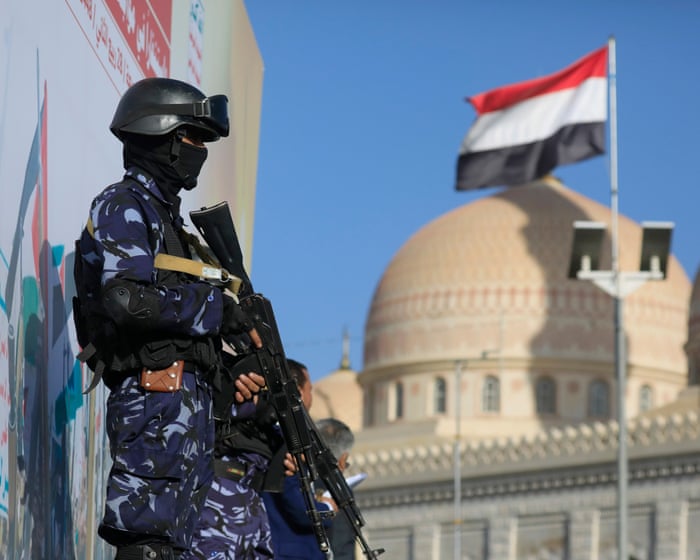
The attack came after the Yemeni militia warned it would attack the headquarters of Aramco. The Saudi-led coalition said it was targeting Houthi capabilities.
Ukrainian forces hit 12 large Russian refineries in September, Ukraine’s Ministry of Defense said, according to ArmyInform on 12 October. The farthest on the ministry’s list, Lukoil’s refinery in Perm, lies about 1,500 kilometers from Ukraine’s border. Since Trump's 11 October announcement, Euromaidan Press has found no reports of new Ukrainian refinery strikes in the official and unofficial Ukrainian and Russian sources it monitors.
A refinery-for-refinery pause would limit Ukraine’s ability to disrupt Russia’s oil industry while leaving Moscow free to keep attacking Ukraine’s energy system, giving Russia an advantage in a war where both sides use energy infrastructure as a target. The issue has become urgent since Trump announced an “energy ceasefire” on 11 October, after which Ukraine reported holding off strikes on Russian energy facilities while Zelenskyy said Russia attacked several Ukrainian energy sites.
The campaign continued into October. Ukraine’s General Staff said Ukrainian forces struck the Samara oil pumping station overnight into 10 October, the third attack on the station that month, according to Radio Svoboda.
Ukraine held off, Russia hit six energy sites
Zelenskyy said Ukraine had refrained from striking Russian energy facilities overnight on 11–12 October following Trump's announcement. Monitoring channels and official Russian sources did not report any new refinery strikes on 13 October.
“Last night, we did not attack any energy facilities on the territory of Russia because President Trump said that there would be an energy ceasefire,” Ukrainian President Volodymyr Zelenskyy said.
He added that Ukraine does not announce its next operational steps. Zelenskyy said Russia attacked six Ukrainian energy facilities on 12 October alone, according to Radio Svoboda.
Refineries first, power plants possibly later
A White House official told Axios that the proposal would begin with both sides halting attacks on oil refineries, with a possible agreement covering power plants to follow. Axios reported that Russia had not accepted a ceasefire.
The Institute for the Study of War (ISW) said the proposal, as described, would give Russia a major concession without offering Ukraine anything in return: Russia has scores of operating refineries, while Ukraine has one. ISW also said the proposal would allow Russia to continue its winter strikes on Ukrainian power stations.
Latest fatality is unvaccinated woman, 39, with ‘underlying conditions’ but CDC still lists only two deaths nationwide
A sixth death has been announced in Pennsylvania’s measles outbreak, as new figures show cases in the state have risen above 1,100.
The most recent fatality was reported in Franklin county on Monday in a statement posted to Facebook by its coroner. The victim was identified as a 39-year-old female who “had several underlying conditions, including a past diagnosis of measles with treatment”.
Asked about apparent U.S. threats to cut off intelligence sharing with Kyiv, which can warn of Russian aerial attacks, President Trump said information continued to flow.
The head of Britain’s domestic security agency accused Tehran and Moscow of escalating their hybrid campaigns in the U.K., and called Iran-led attacks on Jewish communities “sickening.”
À compter du 20 octobre, les Canadiens pourront s’abonner directement à CNN sans avoir à passer par un câblodistributeur. La chaîne américaine d’information lancera son service numérique All Access au Canada et au Royaume-Uni, une première expansion internationale pour cette offre déjà disponible aux États-Unis. Pour 7,99 dollars canadiens par mois, les abonnés auront accès […]
Amid worries about children’s relationship to tech, the solution is often spending more time talking openly with each other
We have become obsessed with the idea that screens are destroying human connection.
The evidence seems to be everywhere. Each week headlines warn of teenagers addicted to phones, a lonelinessepidemic and the dangersof AI. The release of The Social Reckoning leads us to ask, “How bad were those guys at Meta?” and then ultimately wonder, “How bad am I if I still use Instagram?” In our day-to-day, we observe workers eating lunch alone while scrolling and friends choosing online games over offline gatherings.
Ukrainian drones have helped push Russia into its worst fuel crisis since the Soviet Union fell, The Washington Post (WaPo) reported on 11 October.
Diesel is where this war reaches American drivers. US President Donald Trump blames rising diesel prices mostly on Russia’s war in Ukraine, while experts blame mainly the US war with Iran. Some of his allies now accuse Kyiv of trying to sway the US midterms.
Drones go for the first stage of refining
The Washington Post looked at dozens of strikes between 1 April and 31 August. Three refinery experts then examined satellite images of 54 strikes with visible damage. In over half, the damage seems to be to the desalting and distillation units, known by the Russian acronym ELOU-AVT. These units clean the crude of water and salt, then split it into separate compounds, the first steps toward gasoline and diesel. More than a third appear to have hit secondary units, which turn those compounds into jet fuel, gasoline, and liquefied petroleum gas.
From April through August, drones struck two-thirds or more of the 36 big Russian refineries that S&P Global Energy tracks, a strike every third day. Some took as many as five hits. On 16 June, drones set the Moscow refinery’s distillation towers on fire. That strike and a second one days later kept the plant offline into September, WaPo reported, citing data firm Kpler. Ukraine targeted the refinery again on 20 September.
Explore further
Trump’s Russian diesel deal, which drew fury in Ukraine, is unlikely to lower prices, experts say
“We don’t need to hit the entire plant,” a Ukrainian drone battalion commander with the call sign Tango told The Washington Post. Ukraine knows where to strike so that a refinery stops and stays down, he said. His unit, Ukraine’s 1st Separate Center of Unmanned Systems, runs long-range strikes deep inside Russia.
Sanctions slow the repairs
The EU banned exports of oil-refining equipment to Russia the day after the 2022 invasion, and the US followed days later. WaPo reported that the bans cover the distillation and secondary processing units Ukraine keeps hitting. The bans make spare parts hard to get, Alexander Kolyandr of Eurasia Group told the paper, and the strikes come faster than repairs.
Since last year, Ukraine has doubled the size of each wave, decoys included, a person involved in the strike campaign told WaPo. The decoys are unarmed and draw Russian fire, wasting air-defense ammunition, WaPo explained. Without them, the person said, Ukraine would simply lose expensive systems. András Rácz of the German Council on Foreign Relations told WaPo that even if only 2–3% of drones get through, the damage is significant.
Shocked by the U.S. agreement with Russia, which Ukraine has called “a gift” to President Putin, officials in Europe have coalesced around a cautious diplomatic message.
Rising demand for copper has fueled interest in Bougainville’s Panguna mine, which has been shut for four decades. Yet some fear a rush to reopen risks a return to violence.
Workers clearing debris within a former processing plant as part of preparations to reopen the Panguna copper and gold mine.
The police identified the 42-year-old man who died at Six Flags Over Georgia on Monday. The company said it was temporarily closing multiple rides in the U.S. and Canada as a precaution.
Six Flags says nine rollercoasters across six amusement parks temporarily closed after reported fatal incident on Goliath ride in Georgia
Theme park company Six Flags temporarily closed nine rollercoasters across six amusement parks on Monday after one person died and several others were injured in an incident involving a coaster in Georgia.
A spokesperson for the park said they closed similar attractions across their parks “out of an abundance of caution” after the incident at Six Flags Over Georgia, about 15 miles (24km) north-west of Atlanta.
Ukraine’s Defense Intelligence (HUR) released information on the components of Russia’s Kinzhal air-launched ballistic missile and the companies involved in its production, according to a statement dated 12 October.
Russia has used Kinzhal missiles to strike targets across Ukraine since the start of its full-scale invasion. However, 22 of the 58 companies in Russia’s Kinzhal production network are not subject to sanctions, the intelligence agency noted.
Kinzhal missile: design, components, and production changes
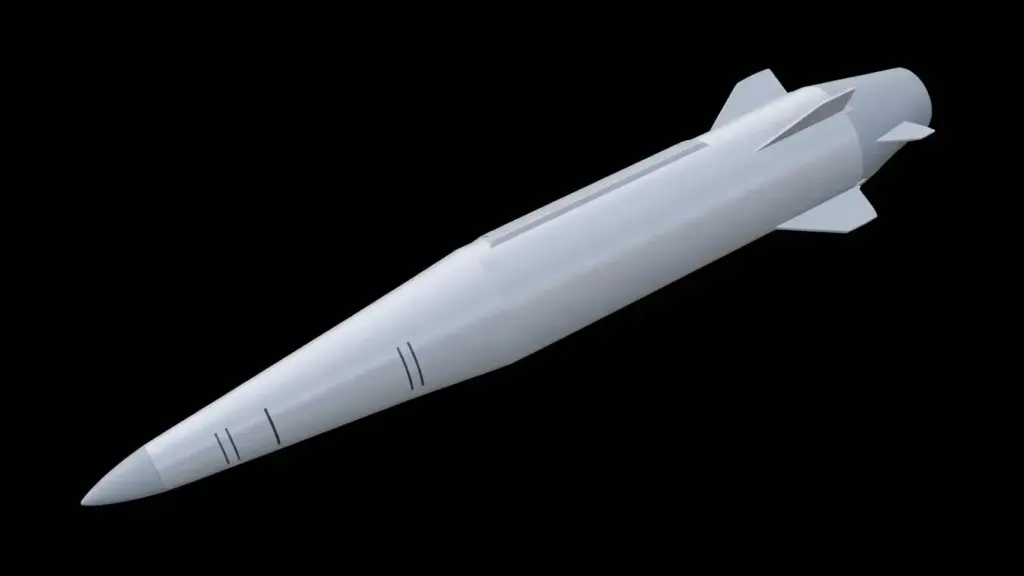
Ukraine’s Defense Intelligence has published an interactive 3D model of the Russian Kinzhal missile on its War&Sanctions portal.
The 9-S-7760 missile, known as the Kh-47M2 Kinzhal, uses solid fuel and has a single stage. This means the missile does not consist of multiple stages that separate sequentially during flight. About 90% of its components are identical to those used in the 9M723 ballistic missile of the Iskander-M system, HUR noted.
The Kinzhal is equipped with a radar homing seeker, an active jamming station, and a decoy deployment system, according to the statement. The homing seeker helps the missile determine the direction to its target, while decoys are designed to make interception by air defense systems more difficult.
The missile can carry one of two types of warheads: a penetrating high-explosive warhead or a nuclear warhead. Russia is also developing a version with a high-explosive fragmentation warhead that strikes targets through an explosion and fragments. HUR believes this development may be linked to problems with the missile’s accuracy.
In 2026, Russia significantly reduced its state procurement order for Kinzhal missiles and redirected some production resources, components, and raw materials towards manufacturing Iskander-M missiles, HUR noted. Another reason is the limited number of MiG-31I and MiG-31K aircraft used to launch Kinzhal missiles, the intelligence agency reported.
Ukraine intercepts Kinzhal missiles, but has limited resources to do so
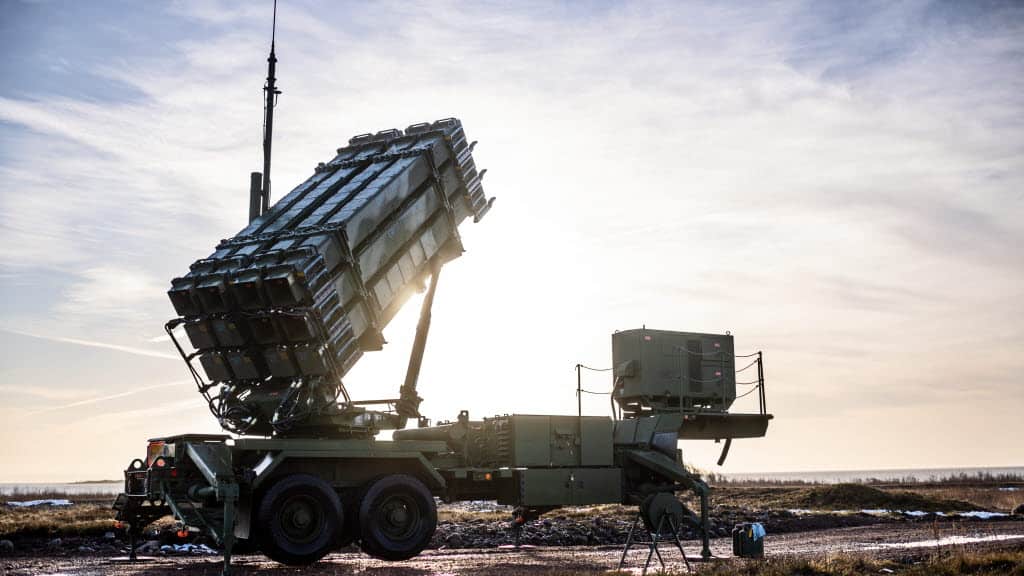
Despite their high speed, Russian Kinzhal missiles can be intercepted using US-made Patriot surface-to-air missile systems. In particular, PAC-3 interceptor missiles are designed to destroy ballistic targets and can be used against threats such as the Kinzhal and Zircon, Ukraine’s Ministry of Defense reported.
Ukraine is seeking additional Patriot interceptor missiles to defend against Russian ballistic attacks during the winter.
The Patriot PAC-3 surface-to-air missile system. Photo: Swedish Ministry of Defense
Most of the approximately 1,000 missiles Kyiv has contracted for are not expected to arrive for several years, prompting Ukraine to ask its allies to supply missiles from their existing stockpiles, Defense News reported on 12 October 2026.
Sanctions loopholes allow Russia to obtain foreign components for Kinzhal missiles
Russia continues to use foreign components in missile production despite sanctions. For instance, the US-made Texas Instruments processors were found again in a newer version of the Kinzhal missile, Ukrainian presidential commissioner for sanctions policy Vladyslav Vlasiuk said in September, Interfax reported. According to him, foreign electronics continue to reach Russia through various supply channels.
Earlier, Ukraine had provided its partners with information on more than 100 Russian companies involved in ballistic missile production and urged them to impose sanctions on those entities, according to the President's Office.
On 12 October, the EU Council imposed sanctions on 1,569 individuals and entities linked to Russia’s military-industrial complex, including 826 Russian companies and 743 company CEOs.
President Trump’s surprise decision to suspend sanctions on Russian diesel fuel stunned Ukrainian and European officials, who were meeting with U.S. envoys at an exclusive golf club near Miami.
With the Russians intensifying sabotage, arson and cyberattacks against European nations supporting Ukraine, NATO divulged a blueprint, in case of war, to deter the Kremlin.
The raucous demonstrations by opposition groups on Monday followed days of an effective lockdown and mass detentions of young protesters by security forces.
The Saudi authorities said they were fending off drone and missile attacks after a weekend of confrontation with the Houthi militia in Yemen, whose patrons Iran offered to mediate.
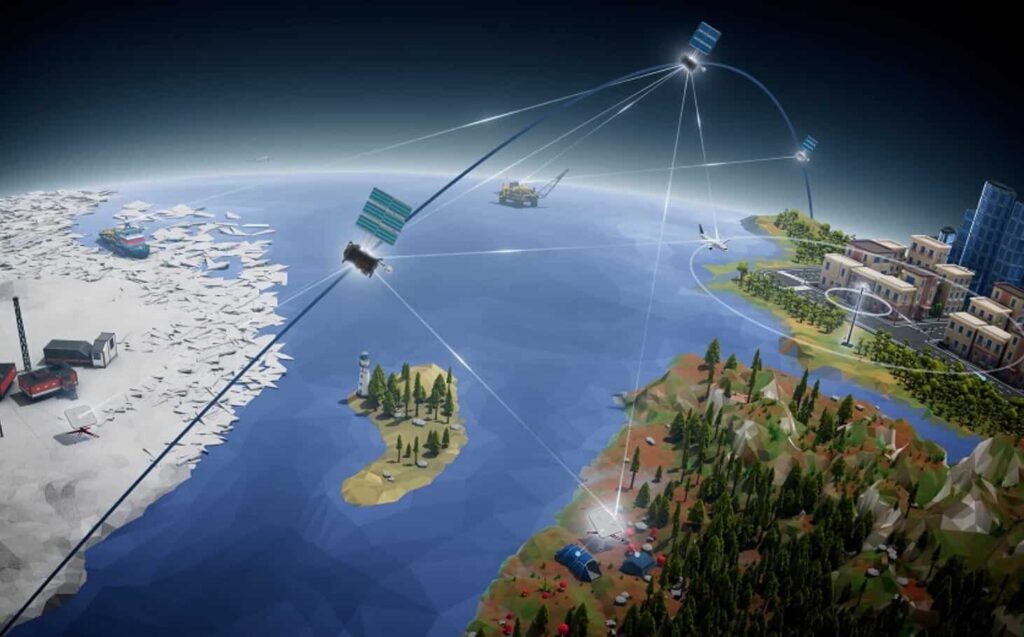
Russia is building a satellite network that could soon put all of Europe within its reach. The “Rassvet” satellite system is an extraordinary threat, first to Ukraine and then to the rest of Europe, Oleksandr Danyliuk, the head of the private European aerospace and defense technology company Destinus, said at the Warsaw Security Forum, according to Ukrinform.
Rassvet is Russia’s answer to Starlink, a low-orbit satellite network built by Bureau 1440 to give Moscow’s forces communications that no one else can switch off. European states must invest more quickly in cheap, effective, mass-produced systems to counter it.
“They will be able to navigate to any point in Europe without problems. This needs to be stopped,” said Danyluik, a former Ukrainian finance minister, said.
Cheap systems, made at scale
Danyliuk’s prescription is already being used on Ukraine’s front. Europe should invest in inexpensive, effective systems that can be mass-produced, he argues, the same approach Ukraine uses, and that Russia also turns against it.
“This gap needs to be filled as quickly as possible,” he said.
He urged allies not to overlook threats that might look secondary today, pointing to Rassvet as exactly that kind of slow-building danger.
Appearing strong is not enough to deter Russia, Danyliuk argued, because Moscow can gauge how ready European states actually are.
Ukraine races to catch up
Both sides are now scrambling to own the satellite link rather than rent it. Ukraine is building a satellite system of its own, similar to Starlink but beyond any single company’s control, President Volodymyr Zelenskyy said on 4 October.
He argued Kyiv should be free to turn Starlink on Russian military targets, warning that China and other states will share comparable satellite technology with Moscow within months.
By Ukrainian estimates, Russia still needs five to eight years to complete Rassvet, which so far reaches Ukraine only in brief passes. That window is the time Danyliuk says Europe must use.
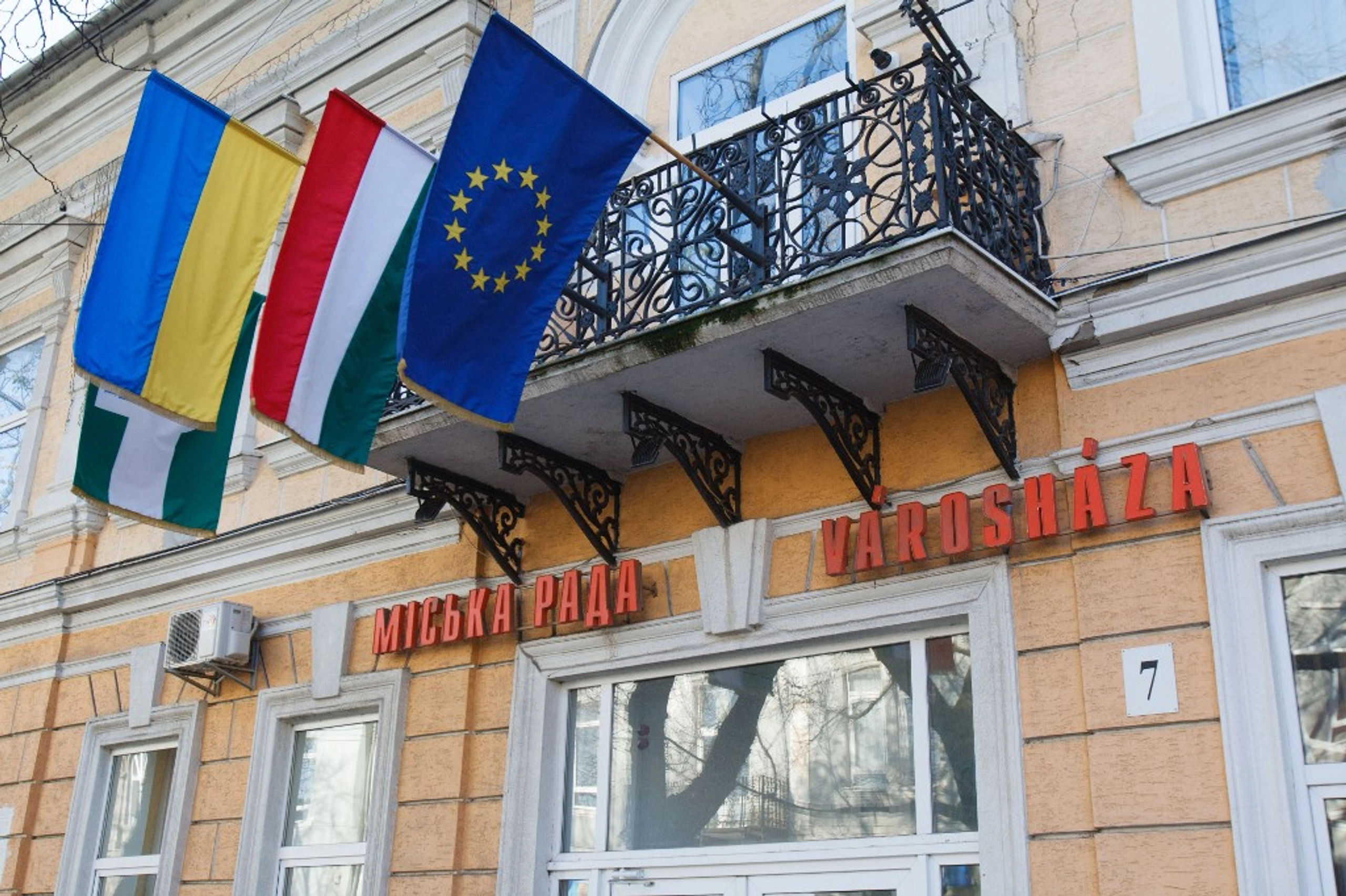
Kyiv just cleared the important roadblock for Budapest, which stood between Kyiv and EU membership talks. Ukraine’s parliament has passed a bill on schooling in minority languages, meant to finally lift Hungary’s block on the country’s path toward EU membership, with 266 of the 450 lawmakers voting in favor, UNIAN reports.
Hungary has been the lone EU member blocking the opening of four of Ukraine’s negotiating clusters, stages of the membership process, over how Kyiv treats the Hungarian minority in Ukraine's Zakarpattia region. Roughly 80,000 ethnic Hungarians live in it, and Budapest had tied Ukraine’s entire EU course to their language rights.
Lawmakers have instructed the parliament’s speaker to sign the law without delay and send it to President Volodymyr Zelenskyy.
What the law changes in schools
The bill keeps Ukrainian as the main language of education, but guarantees classes in minority languages where they exist. Minorities may study in the official languages of EU member states alongside Ukrainian, and pupils may use their language in other forms of communication on school grounds.
A school can gain the status of a national-minority institution if more than half of its pupils study in that minority language, provided that language is an official EU language. Parents of at least two-thirds of a minority class can also ask the school to expand the list of subjects taught in Ukrainian.
The dispute dates back years
Ukraine’s 2017 education law and 2019 language law narrowed minority-language schooling and required more Ukrainian in secondary grades, which then-Hungarian leader Viktor Orban treated as an attack on the Hungarians of Zakarpattia, blocking Kyiv’s NATO and EU steps for years, EUalive reports. Kyiv’s position was that the laws applied to all minorities and excluded Russian.
Hungary’s newer government, in office since spring 2026, inherited the veto. Budapest lifted it on the first cluster, which the EU opened in June, Ukraine’s first since gaining candidate status in 2022, but made the rest conditional on this law.
With the bill passed, Hungary is set to allow the EU to open two more clusters, on the internal market and competitiveness, at a Council meeting in Luxembourg on 13 October. Kyiv aims to open all its clusters by year’s end.
The EU adopted its largest-ever round of sanctions listings on 12 October, targeting the suppliers behind Russia’s war industry, the Council of the EU announced. The bloc acted as Russia keeps killing Ukrainian civilians every day, while US President Donald Trump eases sanctions on Russian diesel.
Russia’s planned winter campaign against Ukraine’s infrastructure depends on arms factories fed by a web of component suppliers and on oil revenue that still flows despite Ukraine’s refinery strikes, so every supplier cut off from that web raises the cost of waging it. As Washington eases off, Europe’s own pressure has a gap: its ports still take record volumes of Russian Arctic gas, and a full ban on long-term contracts starts only in 2027.
Missile suppliers top the list
More than half of the new listings hit the supply chain for ballistic missiles that Russia “uses to kill Ukrainian civilians every day,” EU foreign policy chief Kaja Kallas said in the statement. Russian attacks killed more than 150 people in the past week, Ukrainian President Volodymyr Zelenskyy said on 11 October.
The list names 826 Russian companies, mid-level firms the Council calls the “core” of Russia’s arms industry, with at least €20 billion in yearly turnover, and 743 people who run them. They make parts for missiles, drones, and military aircraft, from semiconductors and radars to explosives and navigation systems. Their assets are frozen, EU firms may not finance them, and the executives may not enter the EU.
Foreign ministers ratified a deal EU envoys reached on 7 October. Ukraine’s sanctions commissioner Vladyslav Vlasiuk said 60% of the listings came from Ukrainian proposals.
Ministers reject the diesel deal
EU foreign ministers in Luxembourg vowed to keep the sanctions despite Trump’s diesel deal with Russian President Vladimir Putin, Euronews reported. Kallas addressed Washington directly as she arrived.
“The US is our biggest ally, but our message is clear: if we want to end this war, the only way we can do this is (by) putting more pressure on Russia,” Kallas said.
Irish Foreign Minister Helen McEntee called the deal “concerning,” and Lithuanian Foreign Minister Kęstutis Budrys said it was “not the European way.” Kallas warned that an energy truce covering only refineries would favor Russia, since Ukraine has one refinery and Russia “plenty.”
Trump announced the diesel deal on 9 October, and the US Treasury waived sanctions on Russian diesel until April 2027. Zelenskyy said the EU would provide about €3 billion more in military aid this week.
Washington presses Kyiv
Trump expects Ukraine to stop hitting Russian refineries under his proposed energy ceasefire, a White House official told Axios. Zelenskyy said Kyiv would halt such strikes if Moscow did the same. On 10 October, Trump told reporters it was time for Ukraine to get a new president. Germany’s foreign minister, Britain’s defense secretary, and a senior lawmaker from Chancellor Friedrich Merz’s party backed Zelenskyy, while the Kremlin sided with Trump.
Zelenskyy offered to hold elections after a 60-day ceasefire, and Kallas said elections are impossible while the war goes on. The Institute for the Study of War assessed that Russia exploits Ukraine’s legal ban on wartime elections to drag out the war.
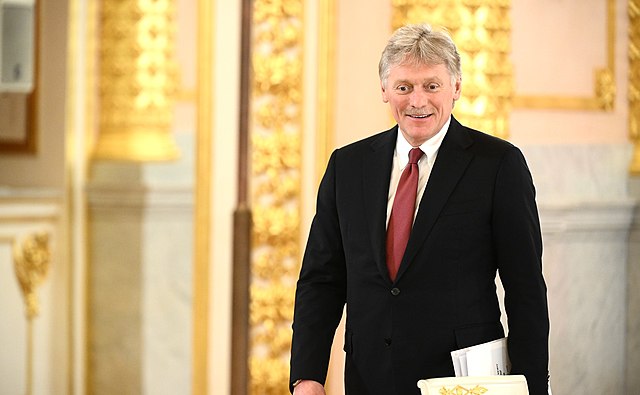
Russia offers Ukraine a single day without strikes for its elections. Russian leader Vladimir Putin is ready to order a halt to strikes on Ukraine only on the day of a presidential election, if Kyiv decides to hold one, Kremlin spokesperson Dmitry Peskov says, Russian state agency TASS reported.
The offer answers Ukraine’s call for a real pause: on 11 October, President Volodymyr Zelenskyy stated Ukraine could hold elections if Putin agreed to a full ceasefire of at least 60 days, ABC News reported. Against the backdrop of Russian strikes that killed more than 150 Ukrainian civilians in a single week, Moscow counters with a one-day truce confined to voting day.
“...If they really want to hold elections in Kyiv, the president of Russia, the supreme commander-in-chief, will be ready to give the order not to strike Ukraine on election day. Specifically on election day,” Peskov said.
His statements followed US President Donald Trump’s call on 10 October for Ukraine to choose a new president, saying a change of leadership could help reach peace with Russia, according to Suspilne.
Trump also criticized Ukrainian strikes on Russian oil refineries amid his new agreements to supply a low volume of diesel into the US.
Moscow rejects the 60-day pause
Peskov has outright dismissed the longer truce. Ukraine needs 60 days not to hold elections but to heal its wounds and continue the war, he argues.
He has claimed Russia had been willing to resume peace talks after Russia’s own State Duma elections, but accused Ukraine of launching massive strikes on Moscow to disrupt that vote. Peskov has gone further, claiming Ukraine shelled polling stations and killed several members of district election commissions in the Russian-occupied regions it calls its own.
What Peskov left out
The accusations are Russia’s and remain unverified. Peskov offered no evidence for the claims about polling stations or election officials, which echo long-running Kremlin talking points.
He also made no mention of Russia’s own strikes on Ukrainian civilian targets over the same period, including attacks on energy sites and residential buildings.
The ordinary security camera watching a street or a parking lot has quietly become a weapon of war. Ukraine’s Security Service has identified about 40,000 surveillance cameras since Russia’s 2022 invasion that Russian forces and spy agencies could have used to snoop, find targets and correct strikes, and has protected, reoriented or blocked them, The Wall Street Journal reported.
The discovered threat reaches well beyond Ukraine: Dutch intelligence warned in July that Russian state actors are systematically hacking cameras across Europe to track arms deliveries to Ukraine and the whereabouts of Ukrainian troops.
AI makes it faster
About 1.2 billion internet-connected cameras now watch the world, in doorbells, traffic lights, and baby monitors, and almost any of them can be hacked, the journalists found.
In Ukraine, the danger is lethal. In 2024, Russian hackers took over residential webcams in Kyiv, including one that a condominium association had installed, to find targets and adjust missile strikes on the capital, Ukraine's Security Service says.
Spying on Europe’s edge
Evidence of European reach keeps surfacing. Cybersecurity firm CloudSEK has recently uncovered an exposed server it suspects belongs to a Russian-speaking hacker, containing hundreds of webcam images of Ukrainian defense, government, energy, and communications sites, as well as scenes of daily life.
Many of the images came from locations near Ukraine’s border with NATO member Romania, CloudSEK says.
The Dutch warning and the server point the same way: cameras far from the front line are feeding Russia data on how the West arms Ukraine.
Ukraine turns the lens back on Russia
Ukraine also uses the same tactic inside the occupied territory. The international hacker group Team OneFist took control of a camera in Sevastopol, in occupied Crimea, and used it to watch Russian ships, submarines, and helicopters, spotting a previously unknown air base that Ukraine later struck, damaging planes and air defenses.
Team OneFist also reached cameras on the Kerch Strait Bridge, learning that Russia had installed motion sensors beneath the bridge to guard against waterborne attacks. Penetrating a well-placed camera gets analysts closer to targets at less risk than any secret agent.
Ukraine’s drone strikes on Russian tech giant Yandex thinned out social media bots, Ukrainian President Volodymyr Zelenskyy said on 12 October. Network data do show Yandex’s automated traffic collapsing after the strikes. Disinformation researchers say that traffic is search crawling, not trolls. A Ukrainian social media monitor told Euromaidan Press its own data show no clear drop in bot activity either.
Russian influence operations are a live threat to European votes. In August, the Matryoshka network fabricated news clips aimed at Sweden’s general election. German and French authorities flagged the same network targeting Germany’s local votes and French presidential hopeful Gabriel Attal. A way to switch such networks off would hand allies a new tool, which is why the claim needs testing.
The president’s claim
Addressing the Warsaw Security Forum by video link, Zelenskyy said that once Ukraine began answering Russia’s operation against Ukrainian data centers and its strikes reached Yandex, many social media platforms suddenly became a little easier to breathe on.
Many people noticed less hatred, discord, and provocation because there were fewer bots, he said. It was quite clear where those bots came from, he noted. Their disappearance once Yandex went down proves again that Europe is not the source of the problems, he added.
Lithuanian Prime Minister Mindaugas Sinkevičius said at the same forum that allies should ask Zelenskyy to strike more data centers in Russia, answering a question on how to protect their elections from interference.
Three data centers in four days
Drones first hit Yandex’s data center in Sasovo, Ryazan Oblast, on 8 October. Yandex said it shut the site down completely. The next day, a strike on its Kaluga site completely disabled several modules, the company said. Yandex calls Kaluga its largest data center, Russian science outlet T-Invariant noted.
Ukrainian drone maker Fire Point said its FP-1 long-range drones carried out that strike.
After the first strike, on Sasovo, a source at Yandex summed up the mood for The Bell: “Things are rotten. We keep working.”
Overnight on 11 October, drones hit the third site, in Vladimir. Yandex said it fully halted that data center too. Vladimir Oblast Governor Aleksandr Avdeev acknowledged an attack on “infrastructure” near the city. It started a fire and cut power to two substations serving 5,000 residents, he claimed.
Automated web requests from Yandex’s network fell to 0.4% of their two-week peak after the third strike, Cloudflare Radar data showed, Cybernews reported. That chart counts automated requests to websites, mostly from Yandex’s own search crawlers. It does not count social media posts.
The chart “has nothing to do with social media,” the Russian opposition analysis group Antibot4navalny wrote.
To those implying that Kremlin-controlled social media bot/troll farms became silent after Ukraine hit a Yandex data center, posting this CloudFare chart ( radar.cloudflare.com/bots/as13238 ):Hate to disappoint you all
Russia’s overall bot traffic last week looked much like any other week. Yandex’s own figure began recovering on Sunday. Covert troll farms usually hide behind residential proxies, hacked devices, virtual private networks (VPNs), and Western cloud providers, the outlet added.
What Ukrainian social media shows so far
Yevhen Luzan tracks Ukrainian social media sentiment as an analyst at the Ukrainian nonprofit CAT-UA. Its daily reviews sample about 500 random posts. On 11 October, that sample showed an unusually small share of posts criticizing Ukraine’s authorities, he told Euromaidan Press. Accounts showing signs of bot activity made up only a few tenths of a percent of that criticism. That is within the margin of error.
The same day, though, US President Donald Trump’s deal for Russian diesel supplies dominated Ukrainian feeds. Luzan said a rally-around-the-flag effect could explain the shift, as outrage at Washington crowded out domestic stories.
“To state it definitively and draw a cause-and-effect link from this correlation would be too bold,” he said.
Across the wider pool of about 10,000 daily mentions, CAT-UA sees no significant drop in posting activity in recent days. The curve shows only the usual rises and dips around the start and end of the week, Luzan said.
“For now, even a hypothetical drop in bot farm activity dissolves entirely in the natural fluctuations of the information space,” he said.
How a crawler chart became a bot story
The claim that Russian social media bots fell by half is unproven and built on a misread chart, disinformation analyst Joohn Choe concluded in a fact-check. It traces back to an 8 October post by security researcher Jeremiah Fowler. That post said Russian bot traffic had dropped to 49%. On 11 October, radio reporter Jamie Dupree spread it on X. Tom’s Hardware then ran it under a headline calling the crawler traffic “Russian disinformation bot traffic,” wording it has since changed.
According to Cloudflare Data Explorer the amount of russian bot traffic has dropped to 49% after Ukraine struck a yandex data center. Could this disrupt the midterm elections in the US? pic.twitter.com/SRtMyjaV22
— Jeremiah Fowler Security Researcher (@yoda69) October 8, 2026
Ukrainian military analyst Tatarigami claimed that Texas separatist accounts with identical “Veteran, Christian, Father, MAGA” bios had gone quiet. He said Quebec separatists and Polish anti-EU accounts went quiet alongside them.
Polish military analyst Jarosław Wolski claimed that AfD’s online support fell 56%, posting a chart without naming its source. Another X user said “Polish” bots had vanished.
Zderusyfikowany internet (ukraińskie trafienia w centra Yandexa) nagle objawia cuda w socjalach: poparcie dla AfD w socjalmediach spadło o 56%. Mniej "polskich" kont szczujących na Ukraińców, mniej "ukraińskich" szczujących na Polaków, poparcie w sieci dla MAGA gwałtownie spadło… pic.twitter.com/zi4rwqNR9I
Russia and four allies began five-day military drills in Belarus on 12 October, the Russia-led Collective Security Treaty Organization (CSTO) said. The troops are rehearsing peacekeeping and a biological-threat response. Minsk insists the drills target no one, while Belarus’s army chief calls them deterrence against hostile states.
Russian troops crossed Belarus to advance on Kyiv in 2022, and it now hosts Russian units with Oreshnik missiles and equipment guiding attack drones into Ukraine. Every foreign deployment there worries Kyiv and neighboring NATO members, which blame Minsk and Moscow for border pressure.
Riot police and drone crews in a “peacekeeping” drill
Belarus, Kazakhstan, Kyrgyzstan, Russia, and Tajikistan brought more than 1,500 troops and over 300 weapons and vehicles, including about 80 drones, The Moscow Times reported, citing the bloc. Armenia, the sixth member, is not among them. The peacekeeping drill runs in Vitsebsk Oblast, bordering Latvia and Lithuania, with Belarusian riot police and internal troops joining, the bloc’s command said.
Explore further
Up to 60 railcars: Belarus wires a border base to take in military trains
Russia sent motorized rifle, reconnaissance, electronic warfare, and drone units from its Central Military District, the CSTO said. Russia, this year’s chair, prioritized peacekeeping readiness and the joint biological protection and medical unit, a bloc general said.
Belarus’s military insisted the drills are planned, yet its army chief called them “one of the measures of strategic deterrence against aggressively minded states” and claimed the West is “effectively preparing for a new hot war.”
Pressure on Belarus’s neighbors
In Latvia, armed, masked escorts from Belarus tried to force migrants across this month, the military said, and raiders stole border cameras hours later. Estonia’s police and border guard chief warned migration pressure could jump before winter, as Russia eases entry from countries like Ethiopia and Belarus passes migrants on to the EU. Lithuania posted up to 100 soldiers on its border with Russia’s Kaliningrad, and in September NATO’s Italian jets downed a drone that crossed in from Belarus. On 9 October, Minsk summoned Ukraine’s envoy over an alleged drone strike on a Belarusian truck in Russia, and Kyiv rejected the “absurd accusations” of “an accomplice in the crime of aggression against Ukraine.”
Belarus keeps its army on alert
In September, Belarusian armor drilled near the Suwałki Gap, NATO’s land link to the Baltic states, and Lukashenka said the whole army would be checked, up to mobilization. On 12 October, he ordered a snap check of a 6th Separate Guards Mechanized Brigade battalion, state news agency BelTA reported. European spy agencies also warn of more Russian assassination plots against defense executives.
Ukraine’s intelligence still rates the threat from Belarus as low, but each new contingent, missile unit, and airborne brigade there widens what Kyiv and NATO’s eastern flank must watch.
Children’s Health Defense and RFK Jr publicly dispute recent measles deaths to ‘distract’ from damage caused and question vaccines, experts say
The six-year-old girl at the children’s hospital in Lubbock, Texas, burned with fever and struggled to breathe. Doctors soon put her on a ventilator, snaking a thick tube down the child’s throat so a machine could breathe for her; they placed IVs to rehydrate her tiny body and they prescribed antibiotics for any bacterial infections that may have taken hold in the weeks she had spent at home battling measles.
But it was too late. Within a day of being ventilated, the child went into shock, her blood pressure crashed and she went into cardiac arrest. She could not be resuscitated. Her family, and the nation, mourned: she was the first child to die of measles in the US in a decade.
The Saudi authorities said they were fending off drone and missile attacks after a weekend of confrontation with the Houthi militia in Yemen, whose patrons Iran offered to mediate.
Gwinnett county is home to many immigrants and other newcomers, and how it votes could be decisive for Congress
Johanna Park might just be an ambassador for Gwinnett county, Georgia, one of the 10 most ethnically diverse counties in the United States.
Park owns Cafe Amico at Suwanee Town Center, one of her three Italian coffee shops in the area just north of Atlanta. She was born in Korea and lived much of her life in Argentina and Peru. She’s been in Gwinnett for more than 20 years, part of an early wave of Korean immigration that’s built Korean American car dealerships, banks, insurance agencies, supermarkets and restaurants like her own. It’s also a population that’s increasing in influence and not just numbers.
Ukrainian leader says he was surprised by Trump’s ‘energy ceasefire’ announcement, posted as Russian drones hit Kyiv
Volodymyr Zelenskyy has vowed to respond to Russia’s continuing attacks on the Ukrainian power grid as European leaders rally around Kyiv amid a feud with Donald Trump over Ukraine’s strikes on oil refineries.
Speaking to a gathering of European security officials in Warsaw on Monday, the Ukrainian president said Kyiv would retaliate if strikes on its power grid continued: “If Russia does not agree to an energy ceasefire this winter, we will respond.”
Ukrainian strikes hit a site housing Russian troops in Khrustalnyi, a city in Russian-occupied Luhansk Oblast, overnight on 12 October, according to local reports. Satellite fire data recorded blazes at a former motor depot there, in an area Russia once used as a logistics base for its offensive in the region.
Russia keeps attacking in Ukraine’s Donetsk Oblast and strikes Ukrainian cities and power plants every day. Its offensive depends on troops, ammunition, and fuel moved through occupied Ukraine, so strikes there reach the supply chain behind the front.
Fires at a former motor depot in occupied Khrustalnyi
Ukrainian forces launched heavy strikes around Khrustalnyi in eastern Ukraine overnight, the Ukrainian monitoring channel Exilenova+ reported. It counted three separate fires and one large blaze, and said local residents reported a hit on a site where Russian troops were based. Ukraine’s military had not officially commented on the strike by the publication time of this article on 12 October.
Ukraine’s Defense Forces are carrying out massive strikes in the area of occupied Khrustalnyi in Luhansk Oblast. Three separate fire hotspots and a large-scale blaze have been reported.
NASA’s Fire Information for Resource Management System (FIRMS), which tracks active fires by satellite, shows blazes at a former motor transport enterprise and an industrial zone in Khrustalnyi, Ukrainian military outlet Militarnyi reported. Three fire hotspots appeared there at 01:10 and spread by 02:07, the outlet said.
Fire hotspots recorded by NASA’s FIRMS system near a former motor transport enterprise in occupied Khrustalnyi, Luhansk Oblast, Ukraine, 12 October 2026. Map: NASA FIRMS/Militarnyi
Ukraine also hit the site on 16 June 2022, striking an ammunition depot there, and local residents then heard secondary detonations, Militarnyi said. The site served as an important logistics base for Russia’s 2nd Army Corps in its offensive on Sievierodonetsk and Lysychansk, two cities in Luhansk Oblast, the outlet added.
Khrustalnyi in Russian-occupied Luhansk Oblast, Ukraine, where local reports said Ukrainian strikes hit a Russian troop site on 12 October 2026. Map: Euromaidan Press/DeepStateMap
Explosions at a Crimean airfield Russia used to launch drones overnight
Drones attacked occupied Crimea from the evening of 11 October into the night, and Russian air defenses, including mobile fire groups, fired across the peninsula, Krym.Realii, Radio Liberty’s Crimea service, reported. Explosions sounded in Simferopol, Feodosiia, and Yevpatoriia, among other places, the Crimean monitoring Telegram channel Crimean Wind said, according to the outlet.
Subscribers told the channel about a series of explosions and a glow at Russia’s Hvardiiske military airfield in Simferopol district as air defenses fired. Krym.Realii said neither Ukraine’s nor Russia’s military had commented and that it could not verify the reports independently.
Explore further
Ukraine says it struck a Bastion in Crimea, the launcher Russia pairs Zircon and Oniks missiles on
Overnight, Russia also launched attack drones at Ukraine from several directions, including Hvardiiske in occupied Crimea, Ukraine’s Air Force reported.
Ukraine’s General Staff said in August that a 3 August strike on the Hvardiiske airfield destroyed nine aviation fuel tanks and damaged two aircraft hangars.
Ukraine keeps hitting Russian rear areas in occupied territory
On 10 and 11 October alone, the General Staff reported hitting a Russian repair base and supply depots in occupied Luhansk Oblast, along with Russian troop concentrations near Lysychansk and two other towns there.
Ukraine has also kept up its campaign of so-called middle strikes, drone attacks on Russian supply lines in occupied territory beyond the front. French mapper Clément Molin counted 770 confirmed drone hits on Russian trucks in September, up from 630 in August, with the strikes concentrated on supply routes running through occupied southern Ukraine into Crimea.
Strikes on troop sites and airfields far behind the front leave Russia fewer safe places in occupied territory to house troops and launch drones, adding to the battlefield losses Ukraine’s drones already inflict.
Quite a few parents aren’t convinced social media and AI are safe, and have been adapting accordingly
When it comes to their kids, many parents don’t trust tech companies any more.
Social media companies have spent the better part of the last decade arguing that their platforms are safe for teens, but quite a few parents aren’t convinced. They, along with a growing number of regulators, have increasingly accused companies like Meta of designing products that are addictive to younger users.
The remains of the theater in Mariupol, eastern Ukraine, in April 2022, in a photograph taken when the area was under pro-Russian control. The Russian airstrike on the building killed hundreds of civilians.
Our reporter, John Branch, joined a team installing cameras in the Sierra Nevada for detecting wildfires. Artificial intelligence is used to sift through images from the network, helping firefighters identify and respond to early to signs of wildfires.
Emirati investigators said the co-pilot accused of attacking a captain on a flight to Israel drifted toward extremism during his time as a student in Australia.
Emirati investigators said the co-pilot accused of attacking a captain on a flight to Israel drifted toward extremism during his time as a student in Australia.
The latest attack by Houthi rebels on Saudi Arabia may prove to be more calamitous for the region than the world imagines
On Saturday, Houthi rebels launched a shocking and deadly attack on Saudi Arabia’s capital city, Riyadh. At the time of writing, the missile strike on King Khalid international airport has killed at least 13 people and left 300 injured, marking a significant turn in a regional conflagration that is only getting more intense. It was the single most deadly attack on any Gulf country since the US and Israel launched their war on Iran in February. In Saudi Arabia, a country that is unaccustomed to such fatalities, the death toll is bewilderingly high and likely to prompt a bloody response.
Over the past year, the Gulf has entered a new era of instability that is not temporary and cannot be reversed. This may feel like an overstatement – casualties have been relatively low, after all, compared with Gaza and Iran – but the gradual erosion of peace and security in places such as Saudi Arabia, Qatar and the UAE has changed the region more dramatically than its leaders would like to acknowledge.
Father of toddler killed in Erie mass shooting says reported gunman never seemed distressed or out of the ordinary
The man who killed eight people, before turning the gun on himself, in a mass shooting in a home in Erie, Pennsylvania, on Friday was a grandfather who had not shown signs that he was capable of such violence, according to people who knew the shooter.
A man whose toddler was among those killed said on Sunday that the man never seemed distressed or out of the ordinary, the Associated Press reports.

 Connexion













 (@andrii_sybiha)