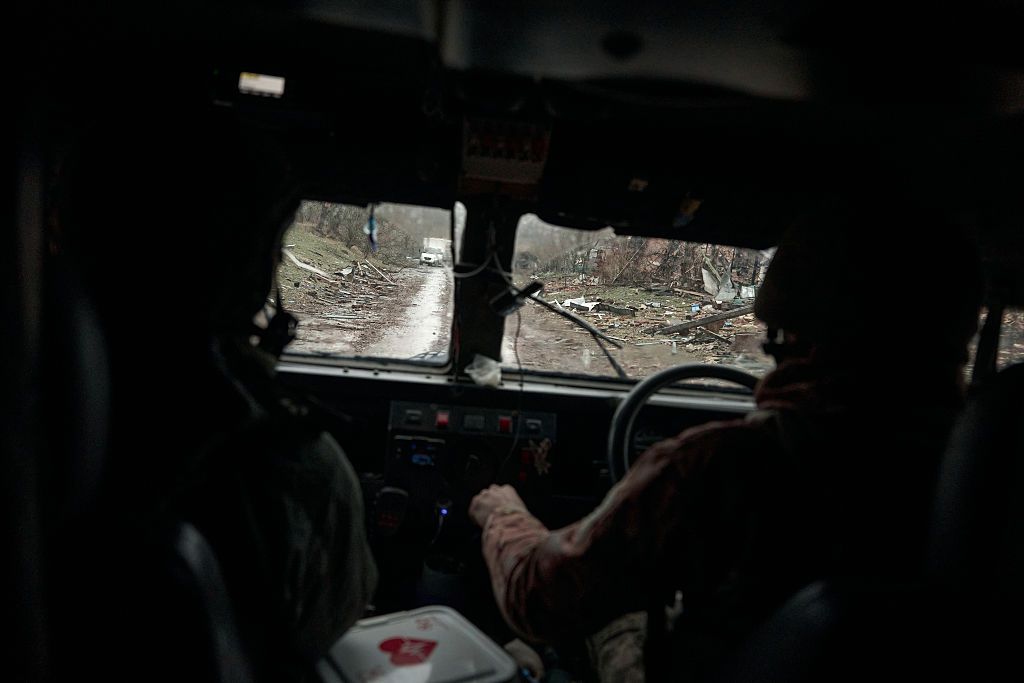
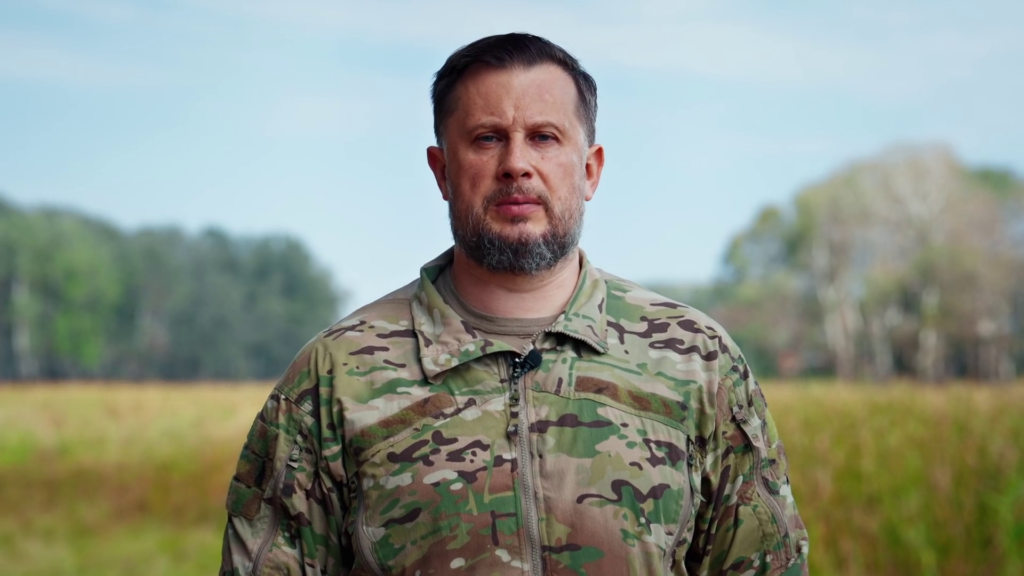
Ukraine has completed its Operation Vivaldi, aimed at protecting its fortress belt cities of Donetsk Oblast, which helped Kyiv preserve the region from Russian occupation for 12 years. Brigadier General Andrii Biletskyi, the commander of the Third Army Corps behind the operation, has reported that the fourth phase secured 101 km² of territory. Among the latest achievements is the liberation of three settlements—Zelena Dolyna, Lypove, and Kolodiazi.
The operation's main objective was to
Ukraine has completed its Operation Vivaldi, aimed at protecting its fortress belt cities of Donetsk Oblast, which helped Kyiv preserve the region from Russian occupation for 12 years. Brigadier General Andrii Biletskyi, the commander of the Third Army Corps behind the operation, has reported that the fourth phase secured 101 km² of territory. Among the latest achievements is the liberation of three settlements—Zelena Dolyna, Lypove, and Kolodiazi.
The operation's main objective was to move Ukrainian troops into more advantageous defensive positions, Biletskyi said in the first days after the operation was made public. Vivaldi has now summed up the results of all four phases: Ukraine has established full control over 16 settlements, liberated 277 km² of territory, and inflicted 8,000 casualties on Russian forces.
Ukraine worked against Russia's deadline
During Operation Vivaldi, Ukrainian forces have prevented Russian troops from outflanking the Sloviansk-Kramatorsk agglomeration and cutting the Kharkiv–Sloviansk highway, a key supply route for Ukraine’s forces in Donbas, Biletskyi says.
“We thwarted the offensive of the Zapad grouping and forced it to redeploy some units of the 1st Tank Army, which eased pressure on Kupiansk-Vuzlovyi,” Biletskyi announces.
Previously, the Institute for the Study of War noted that Russian President Vladimir Putin was confident that Russian forces would be able to seize the entire Donetsk Oblast by the end of 2026 — the Kremlin’s latest deadline for achieving this goal.
Ukraine’s military was on a mission to prevent this.
Season one: clearing russian infiltration groups
On 15 September 2026, Ukraine’s Third Army Corps announced Operation Vivaldi in northern Donetsk Oblast. During the first phase, Ukrainian troops cleared Russian groups from 75 km² of territory and liberated another 10 km².
The Third Army Corps said it had struck Russian supply routes and fuel infrastructure, prompting Russia to relocate its fuel and lubricant reserves to Voronezh Oblast. According to the corps, Russian forces lost around 1,500 troops, more than 12,000 drones, and hundreds of pieces of equipment.
Season two: liberation of Shandryholove and Derylove
On 20 September, the Third Army Corps reported the liberation of Shandryholove and Derylove and the establishment of full control over Drobysheve.
During the second season, Russian forces lost another 800 troops, bringing their total losses across the first two seasons to more than 3,000, according to the corps.
During the first two seasons of the operation, Ukrainian troops and attached units regained control of 125 km² of territory, including 50 km² that had been fully liberated.
Soldiers of Ukraine’s Third Army Corps. Source: Ukraine’s Third Army Corps
The first phase of Vivaldi involved eliminating Russian groups that had infiltrated Ukrainian positions, explained the commander of a battalion in the 125th Brigade, callsign Darwin, per ArmyInform. After clearing those groups, the Defense Forces moved on to the operation’s second phase, using reconnaissance drones to detect Russian forces, he added.
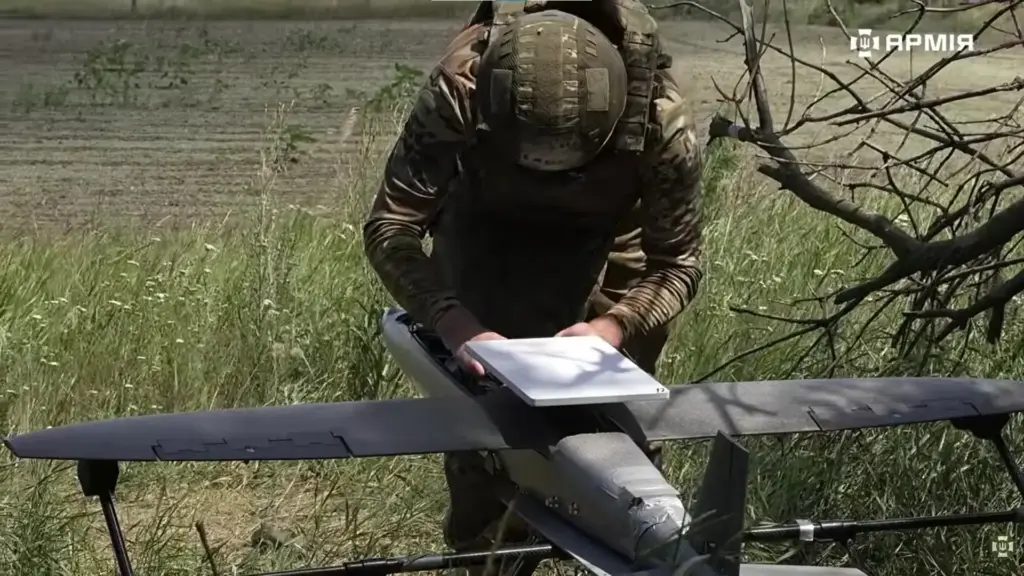
For this, Ukraine used UAVs and ground robotic systems.
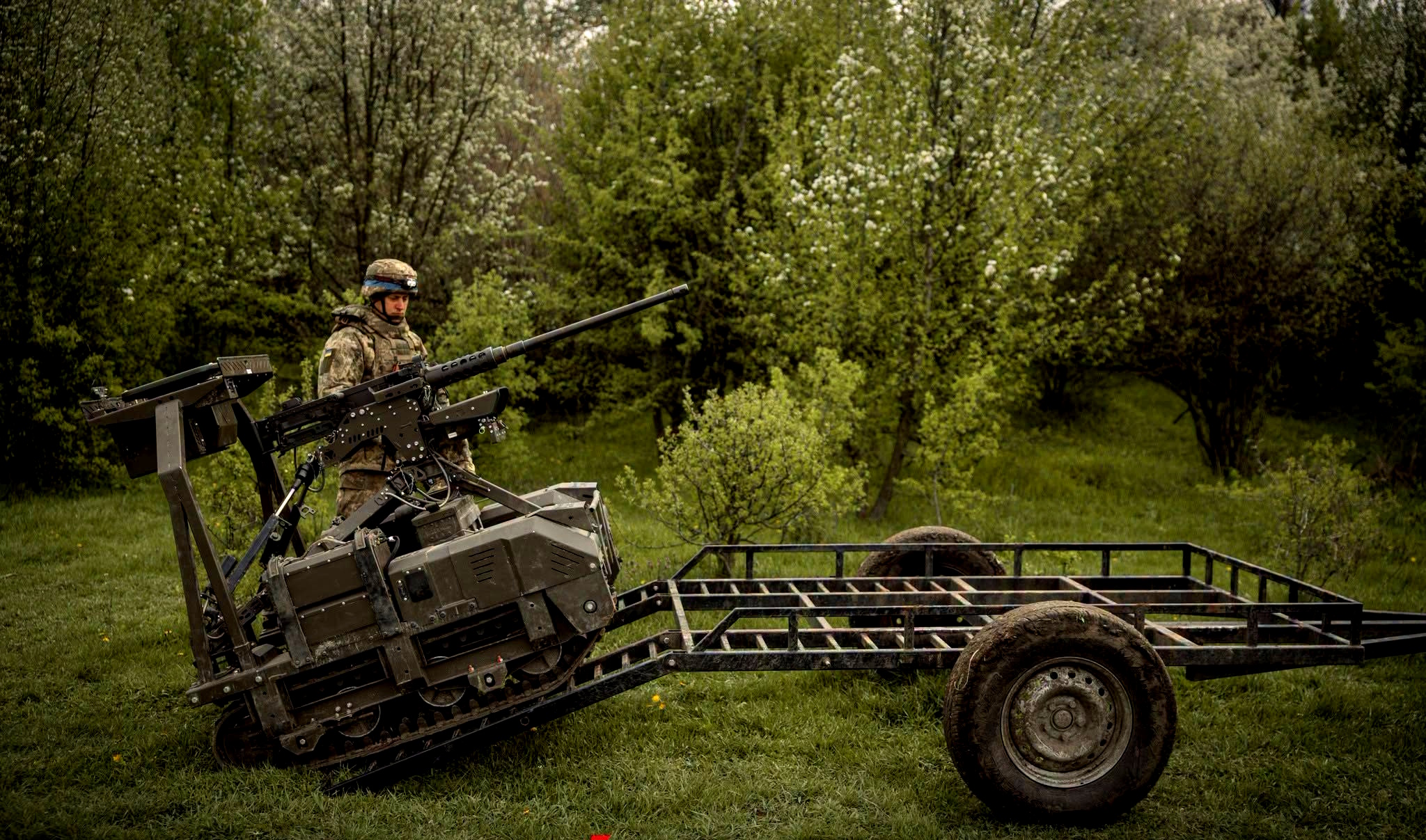
“The Third Army Corps was the first in the world to begin deploying ground robotic systems by air. Our heavy bombers deliver kamikaze ground robotic systems more than 10 kilometers behind enemy lines,” Biletskyi noted.
Season three: advances near Novе and Ridkodub
On 28 September, the Third Army Corps reported the liberation of Nove, Ridkodub, and Katerynivka and the restoration of control over Karpivka and Novomykhailivka. Ukrainian forces regained another 51 km² of territory, bringing the total area liberated since the start of the offensive to 176 km². Russian forces lost around 2,000 troops, and more than 250 were taken prisoner, the corps said in its summary of the operation’s third phase.
Settlements Ukraine's 3rd Army Corps says it liberated during Operation Vivaldi north of Lyman, Donetsk Oblast, Ukraine, as of 28 September 2026. Map: ISW
“The Russians were convinced that the main axis of attack was Shandryholove–Zelena Dolyna. This led it to squander its reserves in counterattacks along that very axis. The Russians slept through the actual strike, which was focused on capturing Nove,” Biletskyi said.
Operation Vivaldi aimed to disrupt Russia’s plans in Donetsk Oblast
The need for Operation Vivaldi arose amid Russian attempts to encircle Ukraine’s fortified belt in Donetsk Oblast. Ukrainian forces conducted preparatory efforts aimed at degrading Russia’s offensive capabilities, including strikes on Russian drone operators, the Institute for the Study of War reported on 9 October.
Ukrainian counterattacks in the Lyman direction and east of Sloviansk and Kramatorsk were intended to complicate Russian efforts to seize the fortified belt in Donetsk Oblast, the report noted.
The corps advanced gradually, reclaiming small areas instead of attempting a large-scale breakthrough.
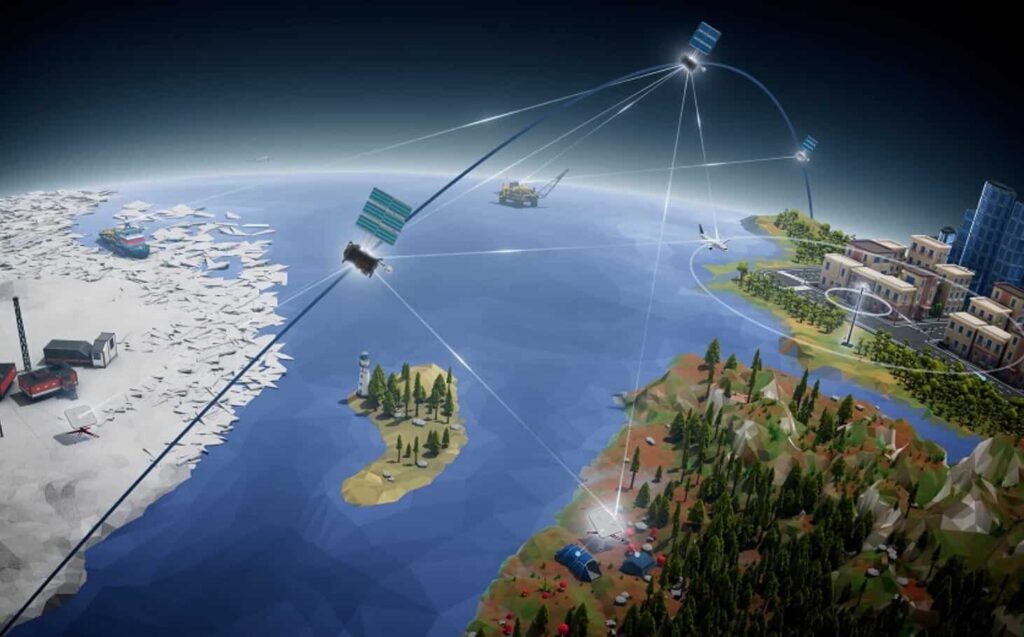
Russia is building a satellite network that could soon put all of Europe within its reach. The “Rassvet” satellite system is an extraordinary threat, first to Ukraine and then to the rest of Europe, Oleksandr Danyliuk, the head of the private European aerospace and defense technology company Destinus, said at the Warsaw Security Forum, according to Ukrinform.
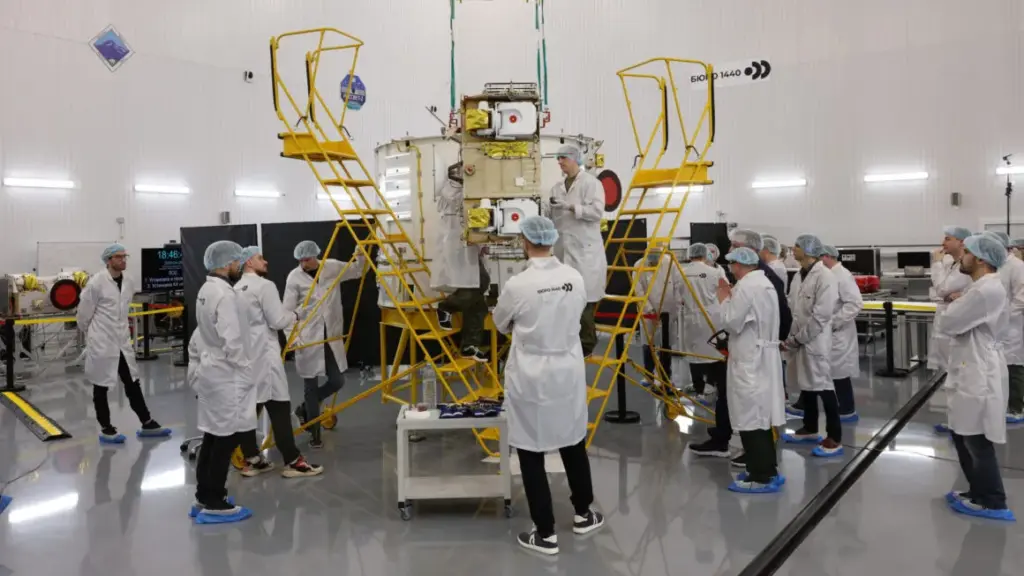
Rassvet is Russia’s answer to Starlink, a low-orbit satellite network built by Bureau 1440 to give Moscow’s forces communications
Russia is building a satellite network that could soon put all of Europe within its reach. The “Rassvet” satellite system is an extraordinary threat, first to Ukraine and then to the rest of Europe, Oleksandr Danyliuk, the head of the private European aerospace and defense technology company Destinus, said at the Warsaw Security Forum, according to Ukrinform.
Rassvet is Russia’s answer to Starlink, a low-orbit satellite network built by Bureau 1440 to give Moscow’s forces communications that no one else can switch off. European states must invest more quickly in cheap, effective, mass-produced systems to counter it.
“They will be able to navigate to any point in Europe without problems. This needs to be stopped,” said Danyluik, a former Ukrainian finance minister, said.
Cheap systems, made at scale
Danyliuk’s prescription is already being used on Ukraine’s front. Europe should invest in inexpensive, effective systems that can be mass-produced, he argues, the same approach Ukraine uses, and that Russia also turns against it.
“This gap needs to be filled as quickly as possible,” he said.
He urged allies not to overlook threats that might look secondary today, pointing to Rassvet as exactly that kind of slow-building danger.
Appearing strong is not enough to deter Russia, Danyliuk argued, because Moscow can gauge how ready European states actually are.
Ukraine races to catch up
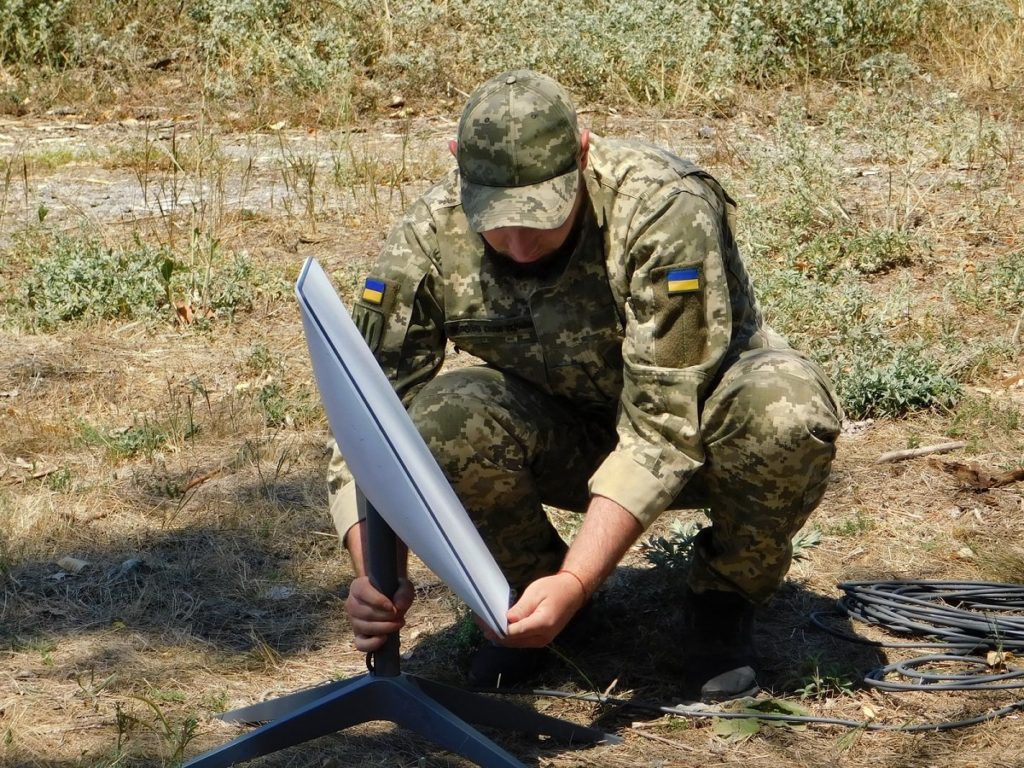
Both sides are now scrambling to own the satellite link rather than rent it. Ukraine is building a satellite system of its own, similar to Starlink but beyond any single company’s control, President Volodymyr Zelenskyy said on 4 October.
He argued Kyiv should be free to turn Starlink on Russian military targets, warning that China and other states will share comparable satellite technology with Moscow within months.
By Ukrainian estimates, Russia still needs five to eight years to complete Rassvet, which so far reaches Ukraine only in brief passes. That window is the time Danyliuk says Europe must use.
Aviation is one of the most effective ways to counter Russia’s jet-powered drones. Its effectiveness continues to grow due to pilots’ skill and better coordination, Defense Minister Yevhenii Khmara says, Glavcom reports.
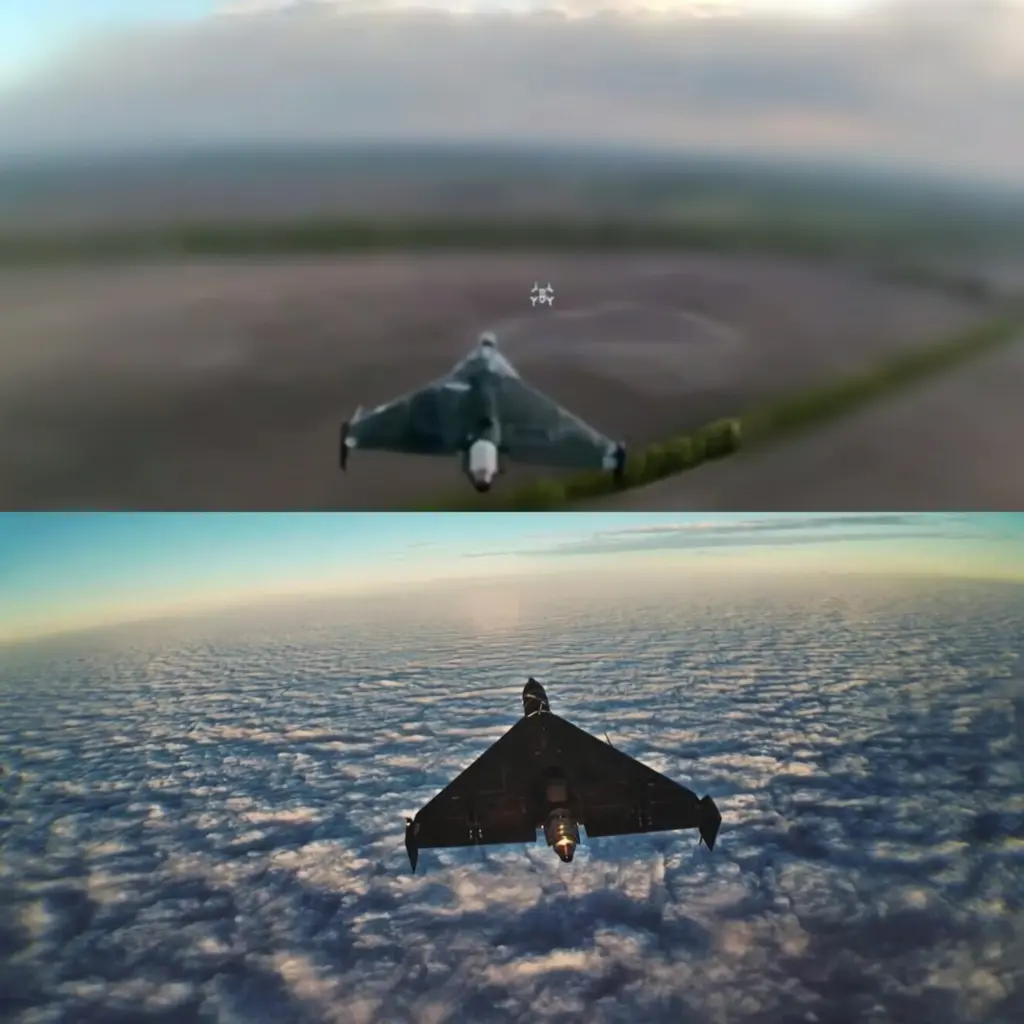
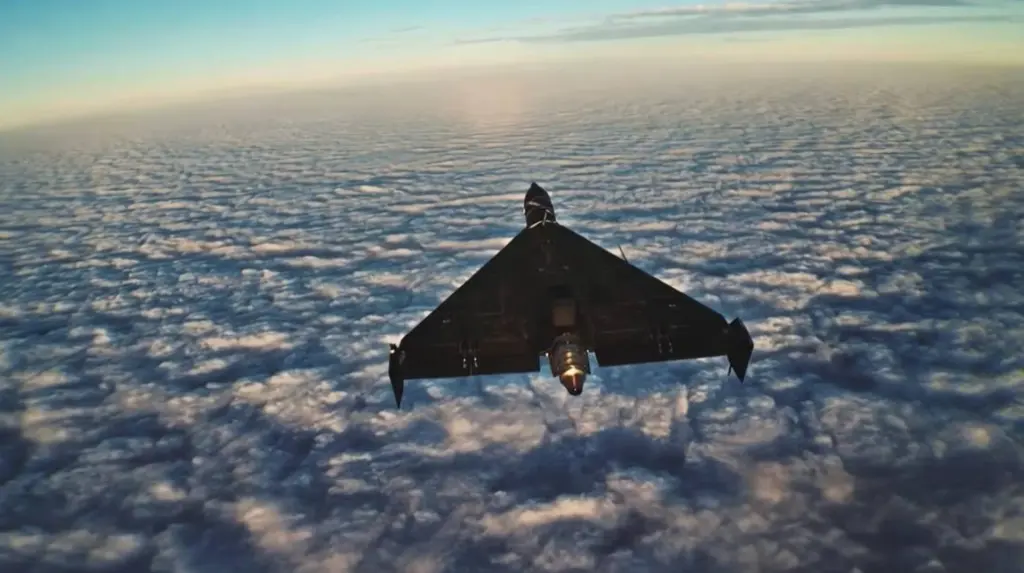
Russia’s jet-powered Gerans fly several times faster than the propeller Shaheds Ukraine learned to shoot down, and they remain the main challenge for its air defense. Ukraine downs more than 90% of the slow drones but only about 55% of the jet ones.
“Due to them, ou
Aviation is one of the most effective ways to counter Russia’s jet-powered drones. Its effectiveness continues to grow due to pilots’ skill and better coordination, Defense Minister Yevhenii Khmara says, Glavcom reports.
Russia’s jet-powered Gerans fly several times faster than the propeller Shaheds Ukraine learned to shoot down, and they remain the main challenge for its air defense. Ukraine downs more than 90% of the slow drones but only about 55% of the jet ones.
“Due to them, our aviation now uses fewer munitions per aerial target. We plan to improve this further,” Khmara states.
Air defense works as a layered system because no single type of weapon is enough, he explains. The layers run from surface-to-air and shoulder-fired missiles to turrets, electronic warfare, interceptor-drone crews, and small-scale air defense, topped by aircraft including Mirage and F-16 jets.
Scaling what works against jet drones
Ukraine already has combat results against the jet drones, Khmara notes. In one engagement, five Bars interceptors destroyed five aerial targets, a 100% hit rate in that case, and the task now is to raise the overall destruction rate and quickly scale the solutions that prove themselves.
Heavy-caliber turrets are adding to that. Their number in service already runs into the hundreds, he adds.
“This direction is being scaled, and systems with greater range are being worked on. In parallel, surface-to-air and shoulder-fired missile systems are also proving effective,” he says.
Preparing for the next generation
Ukraine is also looking past today’s threats, the minister stresses. The ministry is working to supply interceptor drones, aviation and its munitions, missile and artillery systems, turrets and electronic warfare gear, and to plan several steps ahead with enough stock in reserve.
“We also know what solutions Russia is developing, which concern jet drones with a speed of 800 kilometers per hour. We are working on finding countermeasures to the next generation of threats,” Khmara says.
Producers have been tasked with offering proposals and prototypes, he concludes.
Russia is developing new navigation systems for attack drones and missiles that could make its strikes against Ukrainian cities harder to stop, as Moscow adapts its weapons to counter Ukrainian electronic warfare defenses, Ukrainian defense technology adviser Serhii “Flash” Beskrestnov said.
The shift poses an additional challenge for Ukraine as Russia continues to attack cities and critical infrastructure with drones and missiles. Systems that can navigate without relying on satellite
Russia is developing new navigation systems for attack drones and missiles that could make its strikes against Ukrainian cities harder to stop, as Moscow adapts its weapons to counter Ukrainian electronic warfare defenses, Ukrainian defense technology adviser Serhii “Flash” Beskrestnov said.
The shift poses an additional challenge for Ukraine as Russia continues to attack cities and critical infrastructure with drones and missiles. Systems that can navigate without relying on satellite signals may be harder to disrupt electronically, increasing the importance of other defenses, including interception and physical destruction of incoming weapons.
Image-based navigation could make Russian strike drones harder to jam
Beskrestnov, an adviser to the Ukrainian president on defense technology development, said image-based navigation systems would see wider use in 2027, including in medium- and long-range strike drones and inexpensive cruise missiles.
The technology allows drones to navigate by comparing images captured by an onboard camera with stored photographs of the terrain. Even basic navigation can use publicly available satellite or ground imagery from services such as Google, Beskrestnov said.
Unlike satellite navigation, which can be disrupted by electronic warfare, image-based navigation relies on visual recognition of the terrain. This makes drones using the technology more resistant to jamming and could allow them to continue toward their targets even when satellite navigation signals are unavailable.
Russia already uses image-based navigation on attack drones
Beskrestnov said Russian forces were already using the technology on several types of unmanned aircraft, including Molniya, V2U, and Lancet drones.
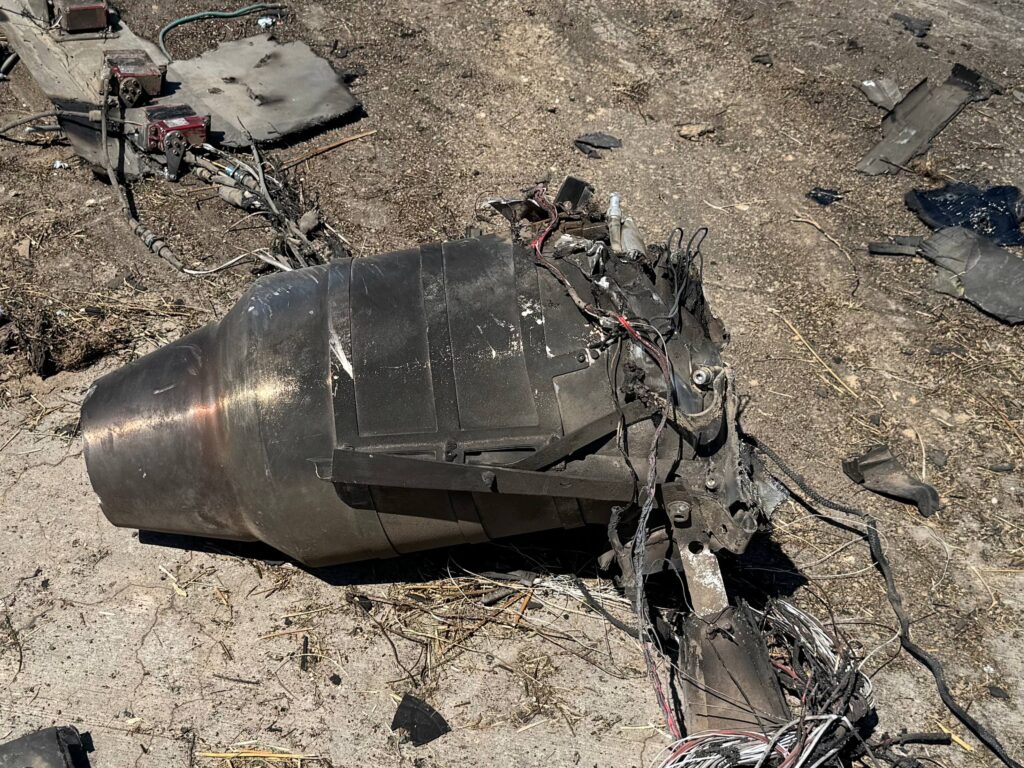
He also reported that similar systems had recently been identified on the Russian Geran-4 and Geran-5 attack drones, using a flight controller called Susanin.
The Geran series includes Russian attack drones used in strikes against Ukrainian cities and infrastructure. The introduction of image-based navigation could make some variants more difficult for Ukrainian forces to counter using electronic warfare.
Russia adapts its weapons to Ukrainian defenses
The development reflects Russia’s broader effort to adapt its weapons as Ukraine improves its air defenses and electronic warfare capabilities. By reducing reliance on satellite navigation signals, Russian drones can become less vulnerable to one of Ukraine’s key methods of disrupting incoming attacks.
Beskrestnov warned that image-based navigation would expand beyond individual drone models, with broader adoption expected next year across different categories of strike weapons.
A Ukrainian company has played the enemy in a Pentagon drone contest, and the US liked what it saw. Phantom Defense, a Ukrainian defense-tech firm, was one of three companies whose systems built the counter-drone environment for Gauntlet II, the second stage of the US military’s Drone Dominance program, and has been invited to take part further, Defender Media reports.
Drone Dominance is the Pentagon’s four-phase effort to field cheap attack drones fast, a roughly $1 billion program to
A Ukrainian company has played the enemy in a Pentagon drone contest, and the US liked what it saw. Phantom Defense, a Ukrainian defense-tech firm, was one of three companies whose systems built the counter-drone environment for Gauntlet II, the second stage of the US military’s Drone Dominance program, and has been invited to take part further, Defender Media reports.
Drone Dominance is the Pentagon’s four-phase effort to field cheap attack drones fast, a roughly $1 billion program to buy more than 200,000 low-cost attack drones by 2027. Phantom Defense brought a system that was already proven at home, where in one city it neutralized more than 7,000 enemy drones over an area of more than 100 square kilometers in a year, the company says.
Rather than enter a drone of its own, Phantom Defense supplied the resistance that the American drones had to fly through. Its setup paired the Specter PRO, L, X, and XL jammers with the Streamhunter video-interception tool and a command-and-control layer that detected and classified targets, coordinated the countermeasures, and confirmed the kills. The jammers suppressed drones and held up in heat and rain, it adds.
The arrangement lets American developers fly their drones under live electronic attack rather than calm conditions, recreating a battlefield where a drone’s performance swings with the jamming around it, according to the company.
One map to run the whole fight
At the center sits Phantom Defense’s C2 system, Kupol, which integrates separate tools into a single ecosystem on a shared map. It lets crews run electronic warfare remotely, without driving out to a position, and ties in sensors, interceptor drones, and turrets, the company says.
Kupol reads the terrain and a drone database to propose the best way to take down a target, then logs each mission automatically so its recommendations sharpen over time.
The high-power Specter PRO station, built to shield positions, critical infrastructure, and cities, serves as the hardware anchor.
An invitation, not yet a contract
Previously, Ukraine’s battle-tested drone makers also took part in Drone Dominance. However, they didn’t succeed in it, though some of their technology competed under Western partners. The program bars direct purchases from Ukrainian firms, which must set up a US legal entity to bid.
Russia keeps upgrading its jet-powered drones, and Ukraine's electronic warfare is racing to keep up. Kyiv has set extra tasks for its military and manufacturers to scale up the most effective electronic warfare approaches, President Volodymyr Zelenskyy said after a meeting of the Supreme Commander-in-Chief's Staff on electronic warfare and infrastructure protection.
Russia keeps modifying its jet-powered Shaheds to beat each new Ukrainian defense, and Ukraine's answers have to keep pac
Russia keeps upgrading its jet-powered drones, and Ukraine's electronic warfare is racing to keep up. Kyiv has set extra tasks for its military and manufacturers to scale up the most effective electronic warfare approaches, President Volodymyr Zelenskyy said after a meeting of the Supreme Commander-in-Chief's Staff on electronic warfare and infrastructure protection.
Russia keeps modifying its jet-powered Shaheds to beat each new Ukrainian defense, and Ukraine's answers have to keep pace. The race is tight: from 1 to 26 September, air defenses downed only 55 percent of the 2,730 new jet-powered drones, against 90% of the slower ones.
Hidden relays blunt Kyiv's jammers
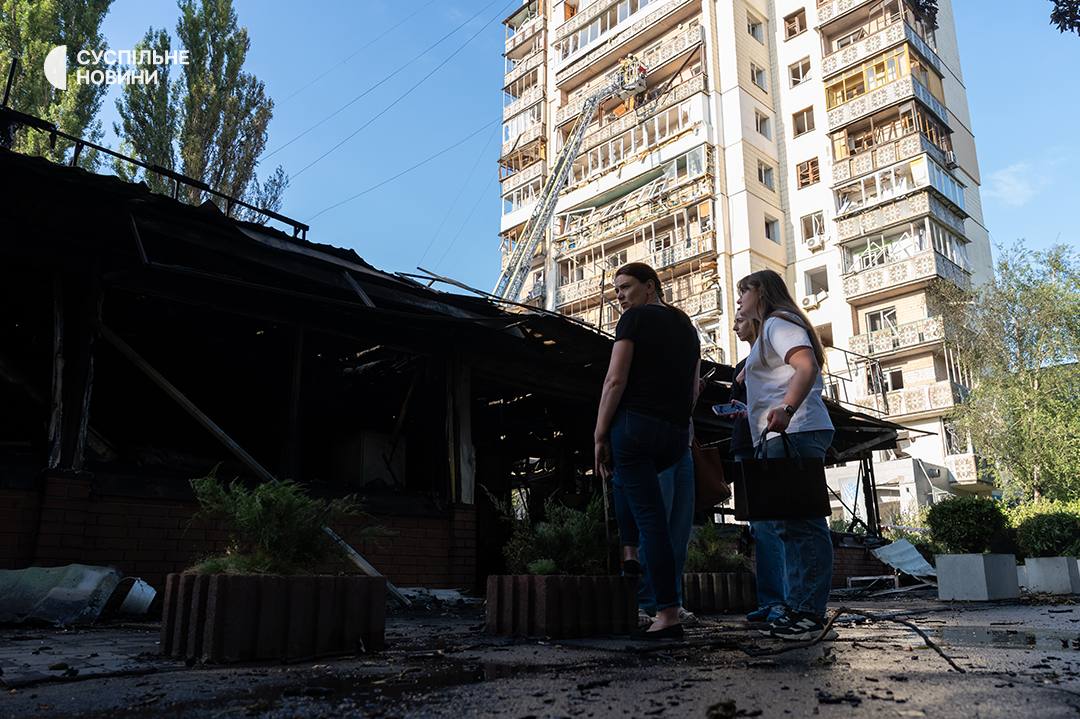
Jamming has to improve because Russia keeps finding new ways around it. On 3 October, presidential adviser Serhii "Flash" Beskrestnov said someone had installed Russian MESH radio repeaters in Kyiv, a short control channel that guides Shahed drones onto their targets. As long as they are there, he said, closing the city with electronic warfare will not be effective.
"As long as online control of drones exists, not only the bridges but the air defense assets will be under threat," Flash stressed.
Sanctions aim at the supply chain
Beyond the jamming task, the Staff turned to where Russia gets the parts for those drones. Defense Intelligence reported on Russia's technological priorities for this year and next, and on supplies of critical components and equipment for its weapons production, Zelenskyy said.
New sanctions packages will follow, with Defense Intelligence due to send proposals to the Ukrainian government and the National Security and Defense Council, and Ukraine is working to align its sanctions with partners' jurisdictions.
The Staff also set the main tasks for supplying Ukrainian forces with long-range drones next year.
"The main criterion is that we must be able to respond in kind to Russian strikes," Zelenskyy emphasized.
Those parts, and the drones built from them, keep changing
In August, Intelligence Deputy Chief Vadym Skibitskyi said Russia remained fully dependent on Chinese turbojets for the Geran-4 and Geran-5, each costing about $35,000 to $40,000.
However, two months later, Ukraine reported the Geran-4 had received a locally built engine and a new optical navigation system. Kyiv has to stay attuned to changes to keep pace with the technology race, and so far, it is still trying to catch up rather than get ahead.
A Ukrainian firm is testing a jammer light enough to ride on a heavy bomber drone and shield it from the enemy FPVs that hunt it. Aura-Ukraine has begun final tests of the system, called Aura 3K mini, the Dignitas Fund, a charity developing it with the manufacturer, Oboronka reports.
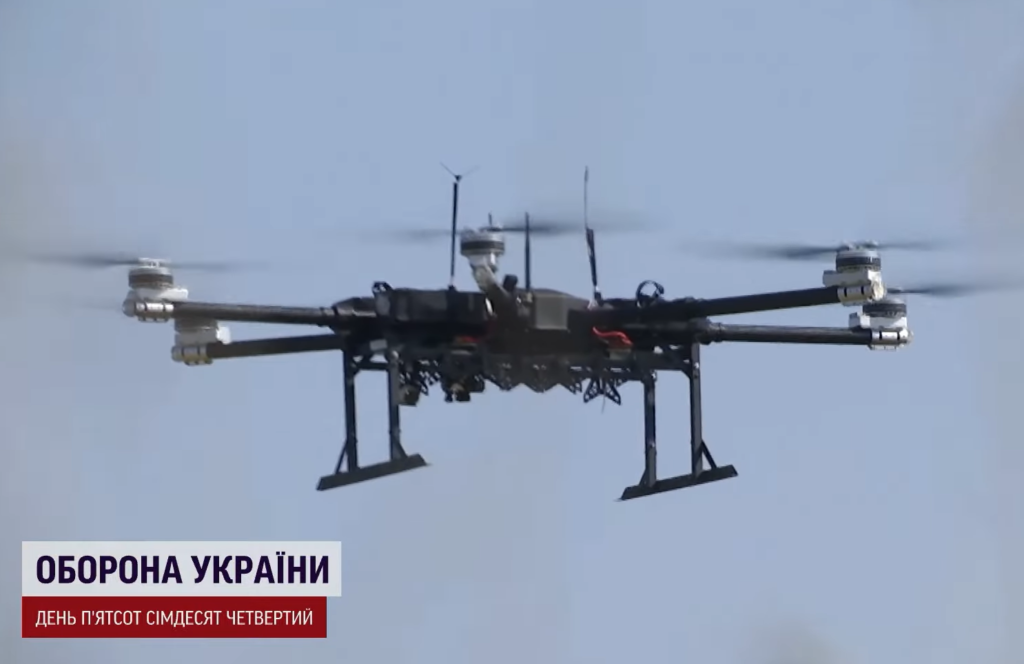
The bombers it is built to protect have become some of Ukraine's most valued drones. In the Donetsk operation last month, heavy bombers dropped kamikaze ground robots more than 10 kilometers behind Russian
A Ukrainian firm is testing a jammer light enough to ride on a heavy bomber drone and shield it from the enemy FPVs that hunt it. Aura-Ukraine has begun final tests of the system, called Aura 3K mini, the Dignitas Fund, a charity developing it with the manufacturer, Oboronka reports.
The bombers it is built to protect have become some of Ukraine's most valued drones. In the Donetsk operation last month, heavy bombers dropped kamikaze ground robots more than 10 kilometers behind Russian lines. The same weapon has been fitted with guided bombs that strike at long range with high precision.
At the same time, heavy bombers are large, making them prime targets for Russia. Keeping them in the air, and out of enemy hands, is the point of the new shield.
Two jammers cover 360 degrees
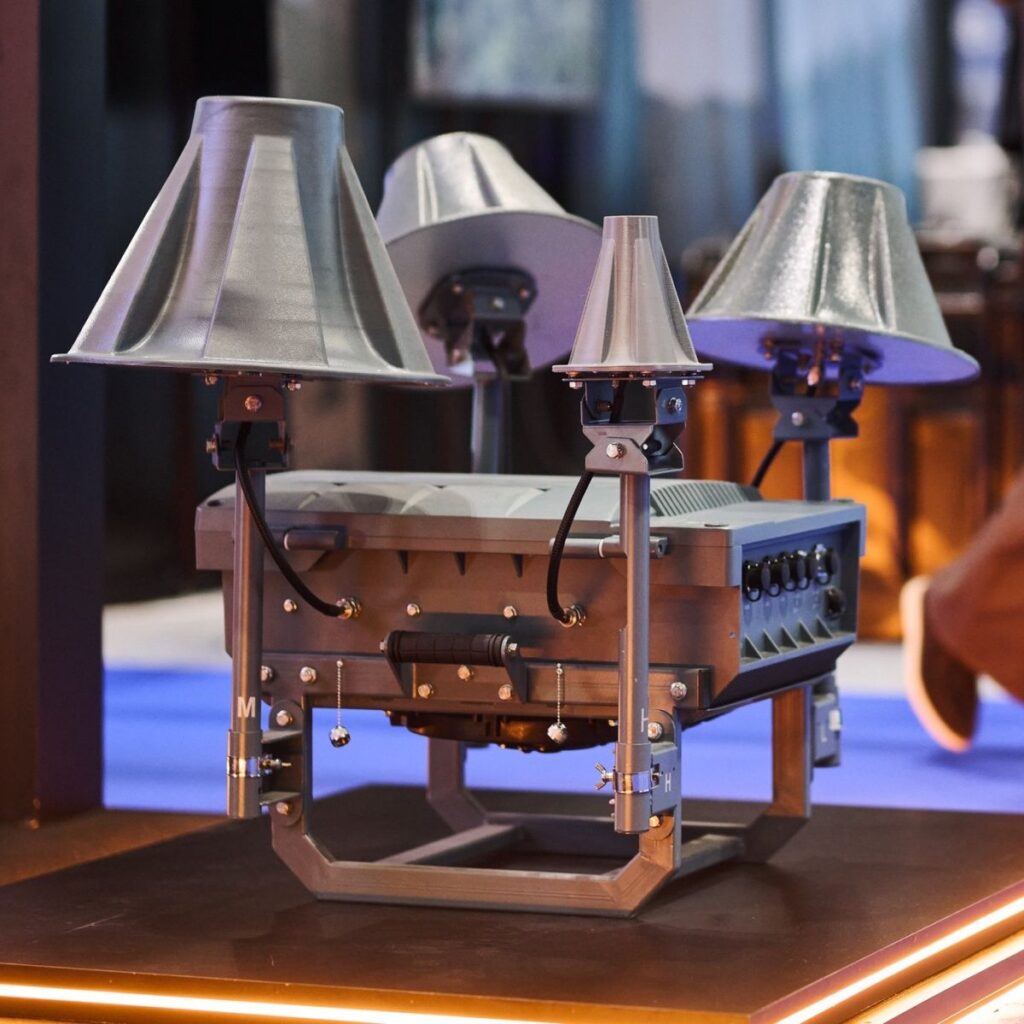
Aura 3K mini wraps the drone in a spherical, 360-degree cover using two broadband jammers, the fund says. Two emitters, not one, close the blind angles a single jammer would leave.
They work across the 2.1 to 2.8 GHz band, enough to disrupt FPV drones without cutting the bomber's own Starlink link. The whole device weighs about 2.4 kilograms.
"Radiation-pattern tests start on the front line in the coming days," the fund's press service says, and if they succeed, the system is set for serial production.
The fund moves to automate it
The next step is to make the jammer smarter, the fund says. It wants an auto-on function that fires only when a threat is detected, so the bomber does not give away its position with constant emission.
The team also plans to adapt Aura 3K mini to Vampire-type bombers, the heavy night drones that Russian troops nickname "Baba Yaga". That would widen the shield's reach across more of Ukraine's bomber fleet.
Russia hunts the Baba Yaga
The nickname points to a fairytale Slavic witch who flies by night. The real thing has been hard for Russia to counter: in 2024, a Ukrainian night bomber was often impossible to jam and, by one account, could be destroyed only with a flamethrower. By 2025, Russia was offering its soldiers 10 days' leave for capturing a Baba Yaga it could not build itself.
A few hidden transmitters may be sitting somewhere in Kyiv, switching on just long enough to steer Russian drones onto their targets. Presidential adviser Serhii Beskrestnov, known as Flash, says one to three concealed enemy repeaters may be operating in the capital, giving Russia a brief online channel to guide jet-powered Gerans onto precise targets.
He calls the devices MESH repeaters, compact modems that relay a short control signal to a Geran at the moment of attack, a channel Ukra
A few hidden transmitters may be sitting somewhere in Kyiv, switching on just long enough to steer Russian drones onto their targets. Presidential adviser Serhii Beskrestnov, known as Flash, says one to three concealed enemy repeaters may be operating in the capital, giving Russia a brief online channel to guide jet-powered Gerans onto precise targets.
He calls the devices MESH repeaters, compact modems that relay a short control signal to a Geran at the moment of attack, a channel Ukraine has been testing electronic warfare against for months. As long as they operate, he warns, sealing the city with jammers will not work.
Flash makes the case
"I now insist that the enemy's MESH radio repeaters are being switched on in Kyiv, providing a temporary, short-term control channel for jet-powered Gerans to adjust strikes," Flash says.
He keeps the number low: "Maybe 1 to 3. Such repeaters are hard to find, but we have to search." As evidence, he points to the guided strike on the headquarters of Ukraine's Security Service. A Russian agent, he said then, likely switched on a MESH relay within five kilometers of the target for the length of the attack.
The wreckage shows no other hidden link, he adds: "No LTE, no Rassvet, no alien quantum modems."
Jamming alone won't shield Kyiv
The stakes, in his telling, run past the bridges.
"As long as online control of the drones exists, not only the bridges but the air-defense assets on them will be under threat," Flash explains, noting that a Gepard anti-aircraft gun on a bridge crossed by tens of thousands a day cannot be hidden.
Without a stable channel right up to the impact point, he argues, a drone cannot strike a bridge pier or cable precisely. He leaves room for doubt, ending, "Let me be wrong about the repeaters." Yet in the whole war, he adds, he has "never once been wrong" in his technical reads of the enemy.
Ukraine is stitching together a layered answer to Russia's faster, jet-powered Shahed drones, leaning on electronic jamming, fighter jets, and a new class of homegrown interceptors, RBC-Ukraine reported. Each tool has limits, and the new interceptors still bring down only the occasional jet drone. The bottleneck now is money and factory output, not ideas.
Russia is pouring faster jet-powered drones into the air war as winter nears, a campaign Western analysts say is meant to wear Ukrain
Ukraine is stitching together a layered answer to Russia's faster, jet-powered Shahed drones, leaning on electronic jamming, fighter jets, and a new class of homegrown interceptors, RBC-Ukraine reported. Each tool has limits, and the new interceptors still bring down only the occasional jet drone. The bottleneck now is money and factory output, not ideas.
Russia is pouring faster jet-powered drones into the air war as winter nears, a campaign Western analysts say is meant to wear Ukraine's defenses down—and holding those skies now turns on which side can keep out-producing the other's cheap weapons.
Fighter jets help, but they run on imported rounds
Electronic jamming can work against some of the drones, and Ukraine is also sending combat aircraft up after them. But aviation has a catch: the jets need air-to-air missiles and cannon rounds, and for the F-16 and Mirage those are imported and not always in stock. Flying over Kyiv adds danger to the civilians below and to the pilots, so Ukraine would rather catch the drones out on the approaches.
New interceptors are landing hits—just not enough
The newest piece is a wave of Ukrainian interceptor drones built to chase the jet versions, which fly three times faster than the propeller Shaheds. Ukrainian crews have been downing the jet Gerans in a recent run: on 19 September, presidential adviser Serhii Beskrestnov, known as Flash, confirmed one Geran-5 shot down, and in late September, operators of the National Guard's Separate Artillery Brigade brought down a Geran-4 with the Bullet interceptor made by General Cherry, the first Geran-4 that drone has downed, Ukraine's National Association of Defense Industries said. Ukrainian President Volodymyr Zelenskyy said several prototypes have proven themselves in combat.
Explore further
Russia is now wiring its attack drones into one network in flight, so a single drone can scout, strike, and relay for the rest
Across all methods, Ukraine now intercepts about 57% of the jet drones Russia launches, Zelenskyy said on 28 September—a rate that has climbed but still trails the 90%-plus it manages against slower Shaheds. Kills by the new interceptors specifically remain isolated. In August, Air Force spokesperson Yurii Ihnat said jet drones can make up as much as two-thirds of the drones in some raids—though not every time. One promising route is reworking Ukraine's own long-range strike drones into interceptors. Kyiv is in talks with partners over the money; on 28 September, Ukraine's Defense Minister Yevhenii Khmara asked the EU to help finance the interceptors so enough reach the front quickly.
Hitting the launch sites and jamming the controls
Ukrainian forces strike the Russian airfields the jet drones launch from, RBC-Ukraine's sources said, though the raids have not forced Russia to abandon the attacks. On 20 August, military intelligence hit drone storage and launch sites at Primorsko-Akhtarsk, one of the launch bases RBC names, and at occupied Donetsk airfield. Ukraine also keeps going after the Belarusian relay towers Russia strings into a mesh network to steer the drones in, RBC's sources said.
Ukraine is about to tell Washington exactly which Russian targets it wants punished under America's new sanctions law, the Associated Press reported. A senior Ukrainian diplomat said Kyiv will hand the Trump administration and Congress a wish list of companies, ships, and people this week—and at the top are the firms supplying parts for Russia's answer to Starlink.
The law requires Washington to act but lets the president waive the sanctions if he certifies that doing so serves US natio
Ukraine is about to tell Washington exactly which Russian targets it wants punished under America's new sanctions law, the Associated Press reported. A senior Ukrainian diplomat said Kyiv will hand the Trump administration and Congress a wish list of companies, ships, and people this week—and at the top are the firms supplying parts for Russia's answer to Starlink.
The law requires Washington to act but lets the president waive the sanctions if he certifies that doing so serves US national interests, and the first choice falls due in weeks. For Ukraine, a measure that names no targets changes nothing on the ground—which is why the fight now is over whose names make the list before the clock runs out.
A list topped by Russia's Starlink clone
Denys Sienik, chargé d'affaires at Ukraine's embassy in Washington, said the priority is a group of Russian firms making components for Rassvet, Moscow's homegrown satellite network, which Russia hopes to complete by the end of the year—though its own officials have put the start of service in 2027. Bureau 1440, the firm building Rassvet, is not itself on US sanctions lists, but its parent company, ICS Holding, is under US blocking sanctions, according to Militarnyi. The suppliers feeding the network parts are not sanctioned, and those are the ones Kyiv wants added to the list.
Russia sped up the project after Ukraine and SpaceX cut off the Starlink terminals its troops had used without authorization at the front. If Russia completes the constellation, Sienik said, it could strike Ukraine at will with real-time information—a danger he warned would bite hardest this winter. "If these entities are not sanctioned, it will actually make this program possible for Russia and that will be a game-changer," he told reporters, Reuters reported. Kyiv wants access to Starlink inside Russia, too, so it can strike targets there.
Euromaidan Press has reported how such a network would change the battlefield: the satellites transmit in high-frequency bands that are hard to jam, and a relay overhead would feed drones and missiles fresh coordinates mid-flight, letting them fly low under air defenses that struggle to see them.
Oil tankers and attacks on US firms
Ukraine is pushing for tougher action against Russia's shadow fleet, too—the aging tankers that sell its oil around Western restrictions—and is asking the administration and American industry to publicly condemn Russian attacks on US companies' operations inside Ukraine, Sienik said.
The deadline Washington is now facing
The requests arrive as the administration faces an 18 October deadline to decide which Russian entities, if any, to sanction under the Lindsey O. Graham Sanctioning Russia and Iran Act, which US President Donald Trump signed into law on 18 September. The law directs the White House to impose tariffs on Russia's biggest oil buyers and to block its banks, officials, and tankers—but lets the president waive those measures, which is why Kyiv is lobbying for the toughest list it can get.
Russia is wiring its long-range attack drones together by a mesh network in flight and buying pricier, higher-resolution cameras for them, Ukraine's Air Force reported on 29 September. Its spokesperson said one drone could serve as a scout, strike drone, and relay for the rest, which is why they often fly one behind another over long distances. Chains of them keep crossing near the Belarus border, UkrInform reports.
For Ukraine, the danger in each such upgrade is arithmetic: the more R
Russia is wiring its long-range attack drones together by a mesh network in flight and buying pricier, higher-resolution cameras for them, Ukraine's Air Force reported on 29 September. Its spokesperson said one drone could serve as a scout, strike drone, and relay for the rest, which is why they often fly one behind another over long distances. Chains of them keep crossing near the Belarus border, UkrInform reports.
For Ukraine, the danger in each such upgrade is arithmetic: the more Russia networks cheap, once-disposable drones and pushes its control links away from the front, the harder they become to jam or shoot down, and the more of them reach the cities they are aimed at.
Sharper, pricier eyes
Ihnat said on a national broadcast that Russia is sourcing higher-quality materials and raising the resolution of its drone cameras. The cameras it buys are increasingly expensive and higher-quality, he said, which lets its operators study the ground in fine detail and use each drone for a specific purpose.
On a mesh network, he said, the drones talk to each other and hand the control signal back toward the operator, so no single link has to carry it alone.
Explore further
Russia is mapping everyday targets across Kyiv, from trolleybus depots to Zhuliany airport, top monitoring channel says, ahead of next ballistic strike
Chains along the Belarus border
Asked about relays operating out of Belarus and about Russia's guidance of jet-powered Shaheds, the exploding drones it fires in swarms, Ihnat said Moscow had already claimed its satellite network was ready. He confirmed mesh networks are in use and said their use was quite dangerous. Ukraine has no information yet on whether Russia is using towers, he said.
It often sees drones crossing long distances in chains along the Ukrainian-Belarusian border, so nothing can be ruled out, but intelligence would have to confirm whether such relays exist. Asked whether Russia is preparing a fresh ballistic strike, he said intelligence would warn when extra vigilance is needed.
Explore further
Russia deploys missile brigade to Belarus as fears grow over new threat to Kyiv
Ukraine's countermeasures
Ihnat has also said Russia launched more attack drones in September than in August, counting 3,177 jet-powered drones so far this month against 2,850 in August. To knock them down, Ukraine leans mainly on tactical aviation, including F-16 fighters, and on ground-based air defense when missiles are available, he said, with shoulder-fired man-portable air-defense systems (MANPADS) working well against jet drones inside their range. He said Ukraine needs more missiles for both Patriot systems and ground-based launchers, plus faster domestic solutions it can scale up.
The company that actually assembles Russia's homegrown answer to Starlink has been left off every Western sanctions list, a US research group and a Ukrainian anti-corruption watchdog separately told Euromaidan Press this month.
Both landed on the same gap—the manufacturer, Bureau 1440, and its leaders remain untouched by the West, even though Kyiv has already placed the firm on Ukraine's own sanctions list. They differ on how much a Western designation would achieve, not on where the op
The company that actually assembles Russia's homegrown answer to Starlink has been left off every Western sanctions list, a US research group and a Ukrainian anti-corruption watchdog separately told Euromaidan Press this month.
Both landed on the same gap—the manufacturer, Bureau 1440, and its leaders remain untouched by the West, even though Kyiv has already placed the firm on Ukraine's own sanctions list. They differ on how much a Western designation would achieve, not on where the opening is.
The company no Western government has sanctioned
Rassvet is Russia's low-Earth-orbit satellite constellation, built by the private firm Bureau 1440 to give Moscow's troops communications independent of SpaceX. Bureau 1440 launched its first 16 satellites in March 2026, building the network after SpaceX cut off the Russian units' unauthorized Starlink access. C4ADS, a US-based research organization, confirmed to Euromaidan Press that Bureau 1440 and its leadership sit outside every Western sanctions regime, and called designating the manufacturer the single most visible and effective step available.
Viktoriia Vyshnivska, a senior analyst at the Independent Anti-Corruption Commission (NAKO), a Ukrainian watchdog, was more measured. "We shouldn't expect a magical effect," she said, but sanctions would make the Western boards and components Bureau 1440 depends on harder and costlier to source. Many of those goods are already banned under EU export controls, she noted—yet the manufacturer itself remains off the lists.
The EU named the network but not the firm
The EU has already moved once. Its 21st sanctions package, adopted on 23 July, targeted the Rassvet network but stopped short of the manufacturer, leaving Bureau 1440 and its chief executive off the lists. On 28 August, Ukrainian Foreign Minister Andrii Sybiha said Kyiv had sent a formal note to the UN's telecom agency requesting that Ukraine be excluded from Rassvet's coverage. Days later, he urged EU ministers to sanction the project. Ukraine gave partners a list of nine entities tied to it, Militarnyi reported, citing sources.
For years Ukraine could find, jam, or knock out the communication links Russian forces leaned on. Rassvet may be the first it cannot. Vyshnivska put the useful window to slow it at about a year. Russia, by Ukrainian calculations, needs five to eight years to see it through.
Euromaidan Press examined how Russia built Rassvet, and how far it still has to go.
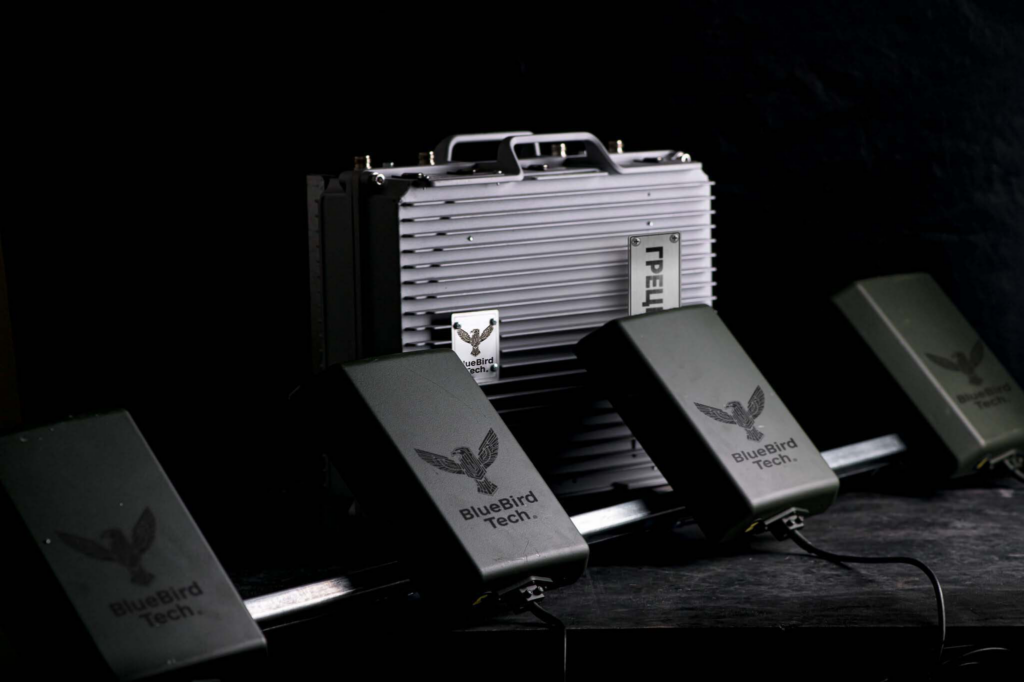
Ukrainian defense-tech firm BlueBird Tech has begun renting out its Hrets electronic-warfare jammers by the day, in what it calls Ukraine's first such service, the company said on 29 September 2026. Electronic-warfare gear—the devices that scramble the radio links attack drones rely on—is normally bought outright, renting lets a user take a system for a single mission or test it before committing.
The pull is a war where cheap first-person-view (FPV) drones have made portable jamming a
Ukrainian defense-tech firm BlueBird Tech has begun renting out its Hrets electronic-warfare jammers by the day, in what it calls Ukraine's first such service, the company said on 29 September 2026. Electronic-warfare gear—the devices that scramble the radio links attack drones rely on—is normally bought outright, renting lets a user take a system for a single mission or test it before committing.
The pull is a war where cheap first-person-view (FPV) drones have made portable jamming a routine need, one many users face only for a stint.
How renting works
After paperwork and a deposit equal to the device's full price, the system is handed over, and that handover counts as day one. Each day's rent is then drawn from the deposit, return the system working and undamaged and the renter gets back what is left. Keep it long enough that the fees add up to the full price, and the jammer passes to the renter automatically. Renting is open to individuals, companies, charities, and volunteer groups.
Three models, and what each one jams
The Hrets XL is a modular FPV jammer built from two to 10 working modules, priced case by case. The vehicle-mounted Hrets 4MC is an anti-drop system that jams DJI Mavic-type quadcopters—the drones Russian forces use to drop munitions—for about $56 a day. The lightweight Hrets 4M jams FPV drones at a stated 70 to 400 meters for about $67 a day. One Ukrainian firm has even packed detection, decoding, and jamming of an FPV signal into a single device.
Ukraine likely neutralized Russia's drone defenses north of Lyman before sending armor into the third phase of its Vivaldi counteroffensive, the Institute for the Study of War (ISW) assessed. An intermediate-range strike campaign against Russian logistics and electronic warfare paved the way, the think tank said.
Drones have made this front so deadly that armor now mostly fights from kilometers back. That is what makes Ukraine's armored push onto fortified positions near Lyman stand out
Ukraine likely neutralized Russia's drone defenses north of Lyman before sending armor into the third phase of its Vivaldi counteroffensive, the Institute for the Study of War (ISW) assessed. An intermediate-range strike campaign against Russian logistics and electronic warfare paved the way, the think tank said.
Drones have made this front so deadly that armor now mostly fights from kilometers back. That is what makes Ukraine's armored push onto fortified positions near Lyman stand out. Russia has already shifted its effort south toward Sloviansk after losing the Lyman pincer.
Armor reached Russian bunkers without drawing drone strikes
To break the strongest Russian fortifications, Ukraine used old Soviet BTR-60 armored personnel carriers rebuilt as remote-controlled explosive vehicles, the 3rd Army Corps says.
Ukrainian forces drove them up to heavy Russian fortifications without coming under Russian drone strikes, ISW noted. The think tank said this indicates Ukraine neutralized or otherwise negated Russia's drone defenses in the area.
Explore further
New Vivaldi tactic: Ukraine’s ground robots, each carrying two Bullspike grenade launchers, attack Russian positions and then detonate inside their shelters
Strikes on fuel starved Russia's jammers
Ukraine achieved tactical drone overmatch through extensive shaping operations and an intermediate-range strike campaign, ISW said. Those strikes targeted the Russian drones and electronic warfare (EW) systems that would otherwise have hunted the advancing vehicles.
The 3rd Army Corps reported on 17 September that strikes on Russian logistics in occupied Luhansk Oblast had degraded Russian fuel supplies to the front, ISW wrote that day. The corps said that strained Russia's ability to use drones and EW against Ukrainian drones. EW systems consume a lot of power, and Russian troops run them on diesel generators, ISW explained.
Deputy corps commander Maksym Zhorin credited strict information silence and a "Protective Drone" system of EW assets, according to the same assessment. He said it helped neutralize around 20,000 Russian drones. The corps had earlier described mapping Russian command posts and striking them to sow panic.
Explore further
Ukraine’s Vivaldi counteroffensive near Lyman just got help from behind Russian lines: partisans say they cut rail supply to three Russian regiments, no explosion needed
Five settlements and 2,000 Russian losses
The corps liberated Nove, Ridkodub, and Katerynivka and restored control over Karpivka and Novomykhailivka, it said on 28 September. The phase added 51 km², bringing the total since the offensive began to 176 km².
Russian losses reached 2,000 personnel, and more than 250 Russians were taken prisoner, according to the corps. Corps commander Andrii Biletskyi said a feint from Shandryholove toward Zelena Dolyna drew Russian reserves away from the real target, Nove.
The first two phases had reportedly cleared more than 125 km² north of Lyman.
A Ukrainian Hornet drone struck a Russian radar system about 120 kilometers behind the front, Taras Myshak, senior communications officer of the 59th Separate Assault Brigade of Unmanned Systems, said on Suspilne on 28 September, ArmyInform reported. The brigade's Signum unmanned systems battalion carried out the strike about a week earlier, he added.
Russia's air defenses depend on radars to see Ukrainian drones and missiles coming. Every radar it loses weakens that watch and gives the
A Ukrainian Hornet drone struck a Russian radar system about 120 kilometers behind the front, Taras Myshak, senior communications officer of the 59th Separate Assault Brigade of Unmanned Systems, said on Suspilne on 28 September, ArmyInform reported. The brigade's Signum unmanned systems battalion carried out the strike about a week earlier, he added.
Russia's air defenses depend on radars to see Ukrainian drones and missiles coming. Every radar it loses weakens that watch and gives the next Ukrainian strike a better chance of getting through.
According to Myshak, the target was a "quite expensive" Russian radar system.
A radar system is effectively the "eyes" of the Russian air defense system: it detects aerial targets, determines their coordinates, and transmits information to other elements of the system.
Russians continue probing Ukrainian defenses
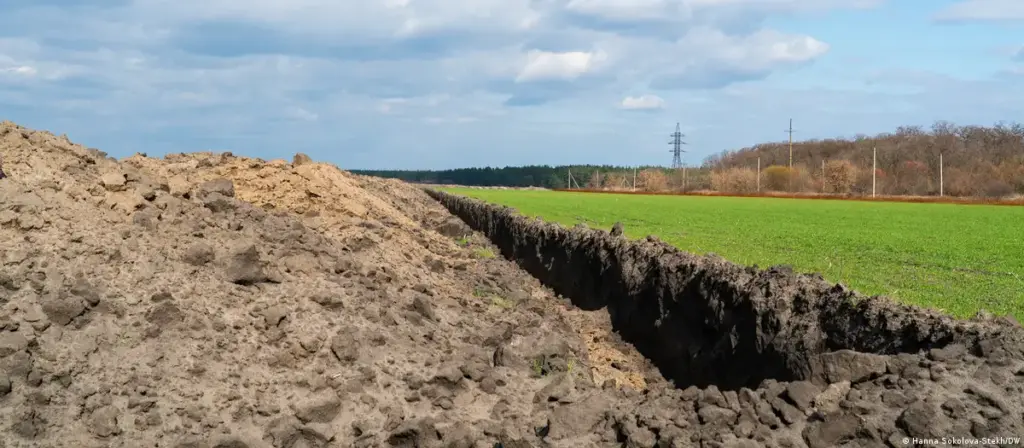
Russian forces in the brigade's zone, roughly along the Donetsk Oblast border, continue to operate in small infantry groups and use infiltration tactics, Myshak says. At the same time, the Russians are trying to cut Ukrainian logistics, he adds, saying that the brigade is effectively holding the Russian army back from infiltrating into Dnipropetrovsk Oblast.
Defensive fortifications in Dnipropetrovsk Oblast, Ukraine. Illustrative photo: Hanna Sokolova-Stekh/DW
The Russians' main means in this sector remain drones and infantry, the serviceman says. The number of infantry has decreased somewhat compared with previous periods, but the pressure from the enemy has not stopped, he adds.
"Of course, they will try, they will constantly probe, so to speak, our defense with their infiltrations. And likewise with drones, of various ranges, working on logistics, making it impossible for us to enter positions, to deliver everything necessary to the positions, in order to make our defense impossible," Myshak emphasized.
At the same time, Ukrainian troops are trying not only to defend against these actions but also to deprive the Russians of radars, electronic warfare systems, and other equipment, the serviceman says. "We likewise don't let them relax," he said.
Russians tried to prevent the strike, but Ukrainian forces hit the target
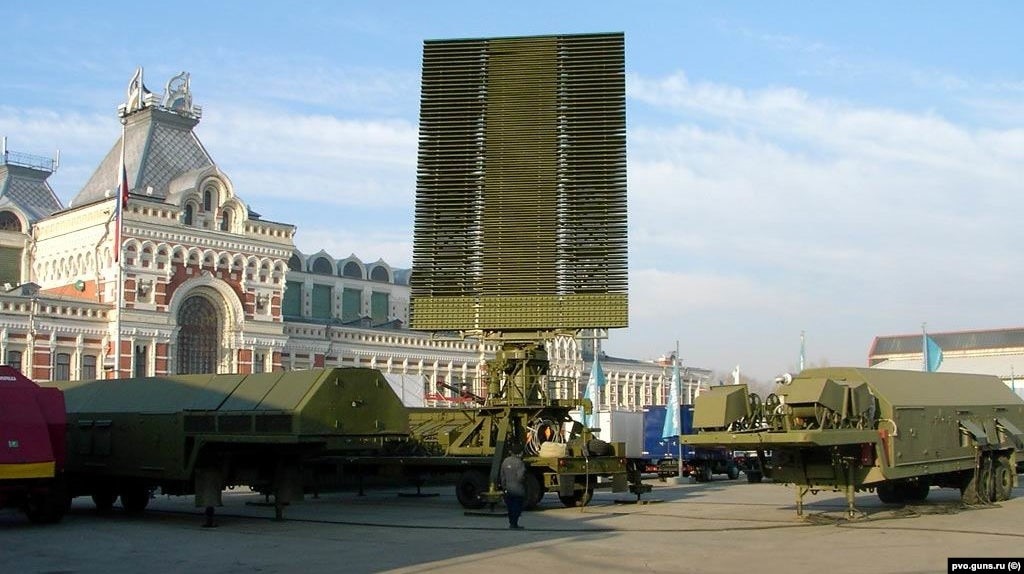
This was likely the same strike that Ukrainian volunteer fundraiser Serhii Sternenko reported on his Telegram channel on 18 September. Operators of the Signum unit of the 59th Brigade, together with the First Separate Unmanned Systems Center, hit a Russian Nebo-M radar about 120 kilometers from the front line, he wrote.
The radar, which Sternenko valued at about $100 million, was damaged over two drone sorties, which also wounded two Russian servicemen, according to his post. During the operation, the Russians tried to jam the drone's video feed with electronic warfare, but the operators flew on using only flight data and their own experience, he added.
The unfolded Protivnik-GE radar station of the Nebo-M complex, with other components of the system folded nearby. Screenshot from pvo.guns.ru via RFE/RL
Ukraine systematically knocks out the "eyes" of Russian air defense
In October 2024, Ukraine's military said it had hit a Russian Nebo-M radar station with ATACMS ballistic missiles to blunt Moscow's ability to spot and shoot down aircraft and missiles, Reuters reported. The military estimated each such system at more than $100 million.
Ukraine is systematically increasing its use of medium-range strike drones, which can hit targets up to 200 kilometers deep inside enemy territory, the Ukrainian Defense Ministry reported in May this year. Russian air defenses and radars are among the main priorities of such operations, as their destruction weakens the system for detecting and intercepting aerial targets, the ministry said. Medium-class drones, including the FP-2, Hornet, and Bulava, play a critical role in such strikes, the ministry noted.
According to the General Staff of the Armed Forces of Ukraine, Ukrainian forces struck at least 25 major Russian air defense and radar systems during April, about 12 of which were radar systems, the Ukrainian Defense Ministry also wrote in May this year.
Russia's low-Earth-orbit satellite constellation Rassvet went from a few minutes of connectivity over Ukraine to two stable windows lasting more than an hour each in just five months. The system was built by the Russian private company Bureau 1440 as Moscow's answer to Starlink.
As of now, it is nowhere near matching SpaceX's 10,000-satellite network—but the gap between what Russia has now and what it needs is closing, and the tools that could slow it down mostly sit unused. When Ukrai
Russia's low-Earth-orbit satellite constellation Rassvet went from a few minutes of connectivity over Ukraine to two stable windows lasting more than an hour each in just five months. The system was built by the Russian private company Bureau 1440 as Moscow's answer to Starlink.
As of now, it is nowhere near matching SpaceX's 10,000-satellite network—but the gap between what Russia has now and what it needs is closing, and the tools that could slow it down mostly sit unused. When Ukraine and SpaceX bricked Russian-obtained Starlink terminals earlier this year, Russian assaults froze across the front—proof that cutting satellite command-and-control links matters more than disrupting guidance. Russia is now building its own links. The most consequential tool that could slow that down is Western sanctions against Bureau 1440 itself.
Four years of Western sanctions have failed to cut Russia off from the foreign components its missile and drone factories rely on: parts manufactured after sanctions were imposed still reach Russian assembly lines within months. Rassvet is a new version of the same problem. The system is still being built and relies on imported components whose exact origin is disputed—some experts point to American and European parts reaching Russia through sanctions-evasion networks, others say the core hardware is built from off-the-shelf Chinese components. Its manufacturer remains unsanctioned by any Western government, while some of the infrastructure needed to expand production has already been struck by Ukraine.
Six minutes in March, two hours by August
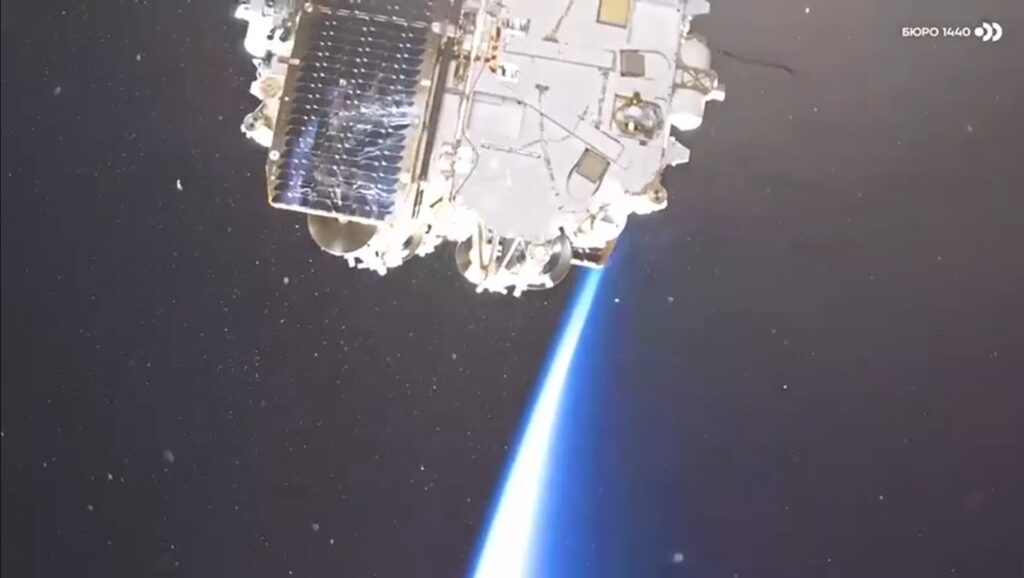
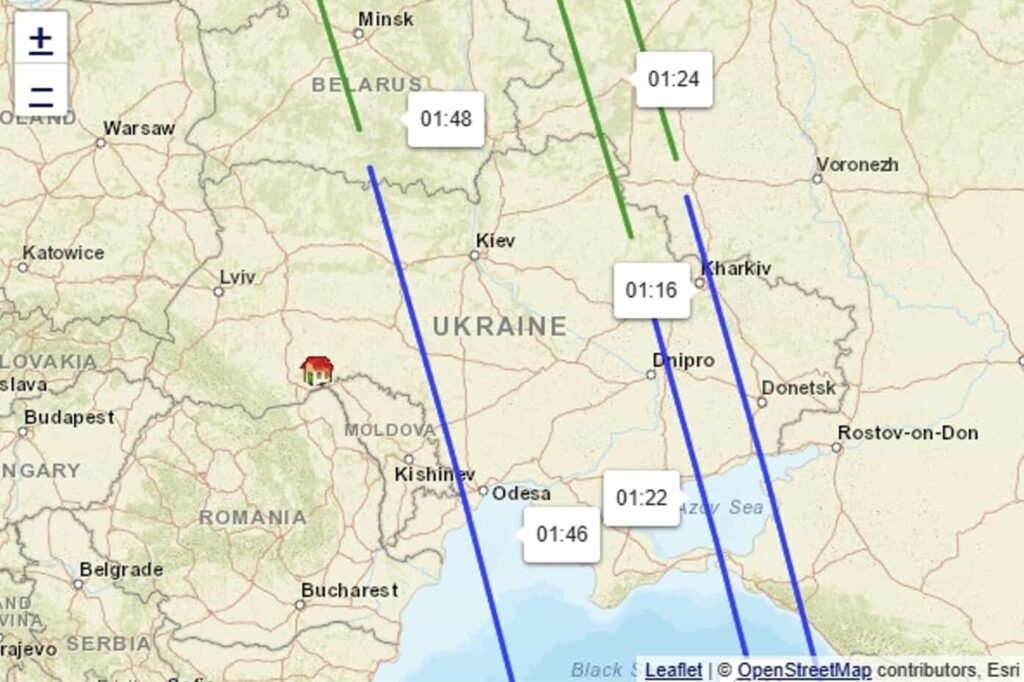
In March 2026, Bureau 1440 launched its first operational batch of 16 Rassvet satellites from Plesetsk Cosmodrome. Each pass over Ukraine created a window of six to 10 minutes, Serhii Beskrestnov, callsign Flash, a Ukrainian presidential adviser on defense technology, estimated at the time.
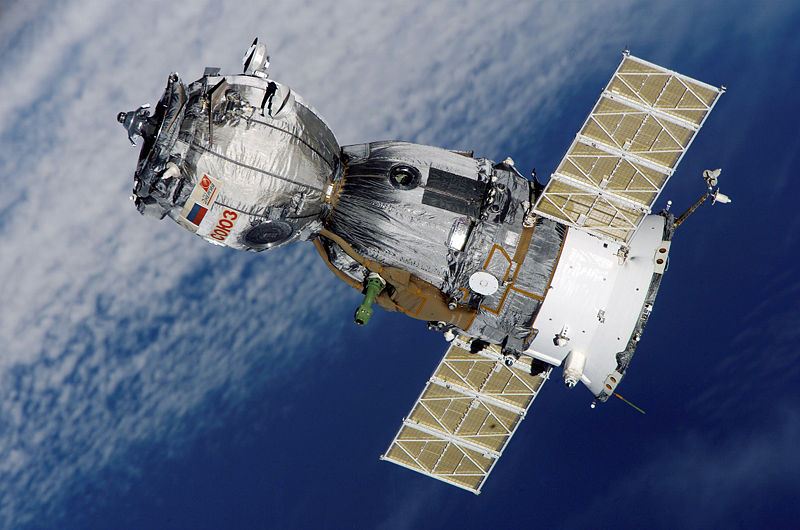
By late August, the picture had changed. Tracking data from N2YO showed four passes a day and two stable communication windows lasting more than an hour each. Satellite communications expert Volodymyr Stepanets said that 12 of the 16 satellites from the first batch had reached their operational altitude of 550 km, three were still ascending, and one had burned up—likely due to a manufacturing defect. A second batch of 16 went into orbit in July, though those satellites struggled to reach their target altitude and some may reenter the atmosphere.
Bureau 1440 shows footage of separation of 16 Rassvet satellites from Soyuz's third stage pic.twitter.com/jhe2krZ1kA
The second batch may be climbing faster than the first did at the same stage. Still, Russia is far from the 200–250 satellites Beskrestnov considers necessary for stable, round-the-clock coverage, and the altitude of roughly 550 km is still short of the roughly 800 km the constellation is designed to reach.
What Rassvet would change on the battlefield
Russia is unlikely to have any civilian use in mind for these communication windows. The satellites transmit in the Ka and Ku bands—high-frequency signals that are difficult to jam and difficult to detect.
Radio frequency spectrum and satellite frequency bands, including Ka and Ku bands used by Russia's Rassvet constellation. Source: Bliley Technologies
Right now, Ukraine's electronic warfare can push Russian drones offline: a Shahed flying low through a jammed zone loses its link and drifts off course. A satellite relay overhead would change that. The drone holds its course, receives updated coordinates mid-flight, stays below radar, and strikes. The constellation could do this for long-range strike and naval drones alike—letting them operate through electronic warfare at very low altitudes, where Ukraine's air defenses struggle to see them.
Bureau 1440 has also developed user terminals small enough to fit on Geran-type attack drones and cruise missiles. Gerans have struck Ukrainian territory, including Kyiv and Kyiv Oblast, almost continuously over the past month. A terminal on a Geran would turn a one-way munition into a weapon that can be redirected after launch. Unlike the Starlink terminals Ukraine relies on, which are geographically restricted, Russian terminals are expected to face no such limits—the same terminal that connects a Geran over Kyiv Oblast would work over Berlin or Paris.
A pass of the Russian Rassvet satellites over Ukraine scheduled for 21 April 2026. Source: www.n2yo.com
The sanctions lever—and the gap in it
Rassvet's parent company, IKS Holding, is one of Russia's largest hardware and software developers. The US sanctioned the holding, its then-owner Anton Cherepennikov, and the subsidiaries Kryptonit and KNS Group on 24 February 2023. Cherepennikov died under unexplained circumstances, but the company keeps operating.
Ukraine's Foreign Intelligence Service (SZRU) says the holding serves as a personnel reserve for the Federal Security Service (FSB). The first deputy CEO of IKS Holding is Boris Korolyov, son of FSB First Deputy Director Sergei Korolyov, according to the SZRU. He took the post at 27 in 2023, after Cherepennikov's death.
More importantly, though, is the company that actually builds the satellites—Bureau 1440—and its leadership. Ukraine has placed the company on its own sanctions list, but Kyiv's unilateral designations carry limited trade enforcement power, because these people and this company are absent from Western lists. At Euromaidan Press's request, the US-based research organization C4ADS confirmed that Bureau 1440 and its leadership sit outside every Western sanctions regime, and called designating the manufacturer the single most visible and effective step available.
From the Ukrainian side, Viktoriia Vyshnivska, a senior analyst at the Independent Anti-Corruption Commission (NAKO), told Euromaidan Press that sanctions on Bureau 1440 are not a magic button—but they are not pointless, either. Because Bureau 1440 uses Western equipment, designating the company would directly affect trade in those boards and components, she said. Any Western manufacturer that kept doing business with the company would also risk investigation and legal consequences.
Given the reach of Russia's sanctions-evasion networks and its close ties with China in joint production and technology sharing.
"We shouldn't expect a magical effect," Vyshnivska said.
But sanctions would make direct trade impossible and raise the cost and difficulty of sourcing Western components.
Even if the useful window is short, making supplies more expensive and harder to find is the point.
Many of the goods Bureau 1440 uses are already banned from sale to Russia under EU export controls, Vyshnivska noted. Yet Bureau 1440 itself is still absent from the sanctions lists. Her recommendation: Bureau 1440, its current owners, its parent company, the key related entities and individuals, and its main suppliers should all be designated.
Illustration of the Russian Rassvet satellites by Bureau 1440
Diplomacy: Ukraine goes to the ITU
Beyond that, Ukraine is trying to act on its own on several fronts.
The first is diplomacy. On 28 August, Ukrainian Foreign Minister Andrii Sybiha said Ukraine had sent a formal note to the International Telecommunication Union (ITU), the UN agency that coordinates radio frequencies, demanding that Ukrainian territory be excluded from Rassvet's service areas across all frequency bands. The system's use over Ukraine "has nothing to do with civilian purposes," he wrote on X.
Today, we officially addressed the International Telecommunications Union @ITU requesting an exclusion of Ukraine’s national territory from the declared service areas of all beams of the Russian military satellite system 'Rassvet' satellite networks in all frequency bands.
Days later, at a meeting of EU foreign ministers in Ireland, Sybiha handed partners a list of nine legal entities linked to the project and urged them to impose sanctions.
The EU had already moved once: its 21st sanctions package, adopted on 23 July, targeted the Rassvet network. But the main gap is not closed, and that round stopped short of the manufacturer, leaving Bureau 1440 and its chief executive off the lists.
Hitting the supply chain with weapons
Another lever is direct strikes. In mid-August, Ukrainian-made Flamingo cruise missiles struck an industrial zone in Samara that houses the Progress Rocket Space Center—the only plant in Russia that serially assembles the Soyuz-2.1b rockets used to launch Rassvet into orbit. Satellite imagery published by the Ukrainian Telegram channel Exilenova+ showed a collapsed roof section 85 meters long and 35 meters wide over Building 106A, the hall where crews wire the rockets' control systems and cabling. The channel reported two missile hits on that hall.
The aftermath of a strike by two FP-5 Flamingo cruise missiles on the Progress Rocket and Space Center. Photo: t.me/exilenova_plus
If the hall was destroyed, production could stop entirely, and switching to other Russian launch vehicles would take significantly longer and add complexity. Drones also attempted to strike Plesetsk Cosmodrome, from which both 2026 batches were launched.
Both targets—the factory that builds the rockets and the site that launches them—are needed if Russia is to expand Rassvet production.
The timeline: 5.5 to eight years, if nothing changes
Russia plans to expand the constellation to 292 satellites by the end of 2027, Deputy Chief of Ukraine's Defense Intelligence (HUR) Vadym Skibitskyi said. Moscow's longer-term goal is 924 satellites by 2035.
Explore further
After SpaceX cuts off Starlink access, Russia launches first 16 satellites of its own “Rassvet” alternative
With 32 satellites already launched in two batches, 260 more are needed. At 16 satellites per launch, that requires roughly 17 launches. At a four-month interval between launches, deploying them would take roughly 5.5 years even if every launch succeeded and every satellite reached its target orbit. That most likely won't fully work out: one satellite from the first batch is already lost, two from the second batch may be lost as well, and none of them has yet reached the required altitude.
Russia also depends on the scarce Soyuz-2.1b rocket. The rocket has averaged only six to eight launches per year since 2022—most committed to GLONASS navigation satellites, ISS resupply, and military payloads—limiting Russia to a theoretical maximum of roughly two Rassvet-dedicated launches per year, or 128 Rassvet satellites over four years at that rate.
There is still time to shut this project down or slow it. Vyshnivska put the useful window to slow Rassvet at about a year. Russia, by Ukrainian calculations, needs five to eight years to see it through.
A Ukrainian jamming-systems maker went to a US Army base to do to candidate drones what Russia does to Ukraine's: flood them with electronic warfare (EW) and see which survives. Unwave company has tested four of its EW systems at Fort Carson in Colorado as part of the Pentagon's Drone Dominance program and has been asked to continue supporting it.
The Pentagon is using Drone Dominance to choose the drones it will buy at scale, more than 200,000 by 2027, and it needs to know they work u
A Ukrainian jamming-systems maker went to a US Army base to do to candidate drones what Russia does to Ukraine's: flood them with electronic warfare (EW) and see which survives. Unwave company has tested four of its EW systems at Fort Carson in Colorado as part of the Pentagon's Drone Dominance program and has been asked to continue supporting it.
The Pentagon is using Drone Dominance to choose the drones it will buy at scale, more than 200,000 by 2027, and it needs to know they work under jamming, the condition that decides most drone fights in Ukraine.
So it brought in a Ukrainian electronic-warfare maker to supply that jamming, turning Ukraine's hard-won counter-drone experience into the test bench for American hardware. It follows a pattern in which US defense efforts adopt Ukrainian battlefield models.
Ukraine brings the jamming
From 24 August to 2 September, Unwave's team worked at the base, running scenarios that pitted its jammers against drones tasked with protecting fixed positions, moving vehicles, and infrastructure.
The crews operated from three separate positionsat short and long range to compare how drones from different manufacturers held up.
"Our mission was to create conditions as close to the real battlefield as possible," the company said, adding that it judged the tasks successfully completed but could not detail the scenarios for security reasons.
In all, 14 drone makers and three electronic-warfare firms took part.
Four systems on show
Unwave brought four:
VIHA, which it calls Ukraine's first tactical-operational jammer for directed suppression of drones
BOOMBOX, built to shield troops and positions from FPV and drop-drones
SHATRO, for vehicles
CHOVEN-2, a multi-frequency amplifier for cars.
Its participation was organized by Revenant Technologies, a US firm that specializes in bringing combat-proven defense tech to the American market, and helped design the scenarios using its ties to Ukraine and frontline experience.
A foothold in the US market
For Unwave, the value is a door into the alliance's security architecture. The event showed the importance of Ukrainian, American, and European specialists testing together, the company said, and "such interaction will help integrate Ukrainian technologies into the security architecture of our allies."
A Russian academic and an ultranationalist media owner have drawn up a menu of ways to knock out Starlink, the satellite network keeping Ukraine's drones and troops online, the Ukrainian defense outlet Militarnyi reported. The ideas run from jamming to a nuclear blast in space, and come as Poland investigates a suspicious fire at a Starlink ground station serving Ukraine.
Satellite internet is the nervous system of the drone war. Since a terminal cutoff early this year gutted Russian fr
A Russian academic and an ultranationalist media owner have drawn up a menu of ways to knock out Starlink, the satellite network keeping Ukraine's drones and troops online, the Ukrainian defense outlet Militarnyi reported. The ideas run from jamming to a nuclear blast in space, and come as Poland investigates a suspicious fire at a Starlink ground station serving Ukraine.
Satellite internet is the nervous system of the drone war. Since a terminal cutoff early this year gutted Russian frontline coordination, Moscow's search for a workaround has widened from the spectrum to orbit—and from the battlefield toward the infrastructure that keeps the network alive.
The scenarios
Sergei Glazyev of the Russian Academy of Sciences and Konstantin Malofeyev, founder of the Russian outlet Tsargrad, laid out the proposals. Glazyev's list runs from cutting communication cables on land and undersea to crippling data centers and downing reconnaissance and command aircraft, whatever their nationality. Without American and British spotters, planners, and analysts, he claims, Ukraine's army would go blind. Glazyev's core argument is that Starlink satellites are not geostationary—nothing hangs over Ukraine, so the entire constellation must be struck at once.
For electronic warfare, they push wider use of the Volna Kupol Garant, a roughly $1.5 million system that beams a signal to briefly deafen a passing Starlink satellite over what its developers claim is up to 20 km². Kinetic options follow—the A-235 Nudol and S-500 Prometheus interceptors—though they call spending one costly missile on one cheap satellite "insane extravagance." A third idea scatters metal pellets to spark what the authors call the Kessler effect—a debris cascade that would destroy everything at that altitude.
The bluntest proposal detonates a nuclear device in space, its pulse frying electronics on low-orbit satellites. The authors admit this would also wreck Russia's own Rassvet network, which orbits at a similar altitude. "We can no longer hit Musk's creation for free," they write, "but it's still the optimal option. The legal consequences are unimportant."
Explore further
Russia’s answer to Starlink was written off as a failure—its satellites are still climbing
A station burns in Poland
On 23 September, fire destroyed the distribution panel of a ground Starlink station in Wola Krobowska that feeds Poland and Ukraine. Poland's Deputy Prime Minister Krzysztof Gawkowski said sabotage could not be ruled out and that the pattern matched Russian services' modus operandi. A bottle of flammable liquid was found beside the burned distribution panel, according to sources cited by RMF24. Exatel, which the minister named as the station's operator, said it only subleases the land and transmits data there, and neither operates nor owns the infrastructure.
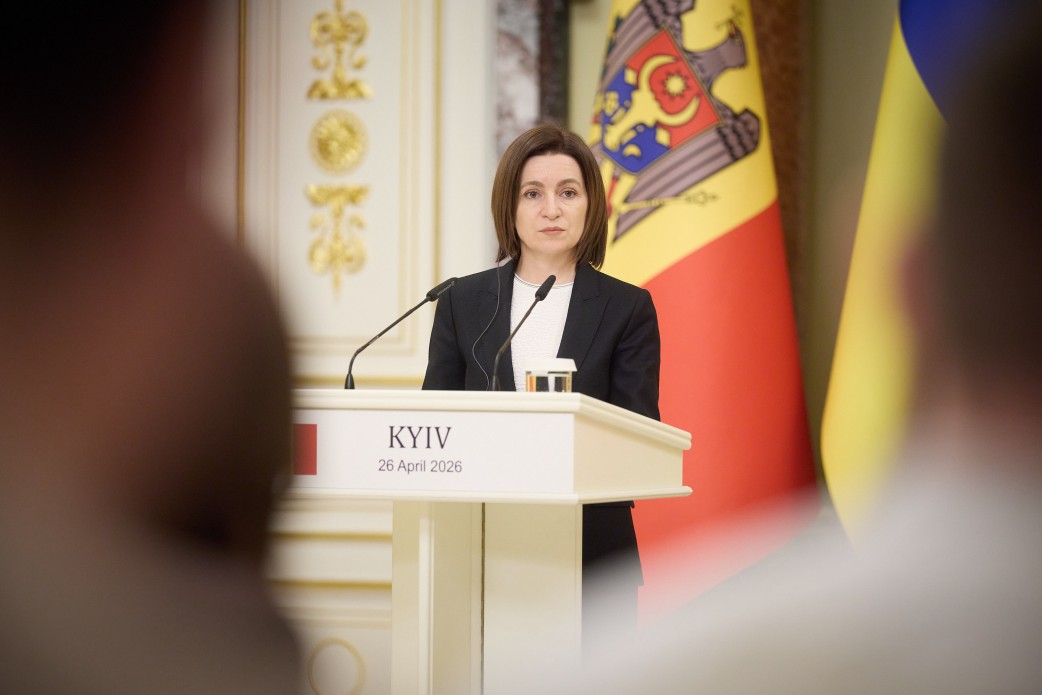
Russian drones have entered Moldovan airspace 39 times since the start of 2026, against 17 in all of last year, President Maia Sandu said after a meeting of the country's National Security Council, Liga reported. Moldova's military can defend individual sites and little more, and Sandu said the country has to speed up building air defenses it spent three decades without. The council also ordered better protection for the energy facilities the country runs on, drones included.
Russia's d
Russian drones have entered Moldovan airspace 39 times since the start of 2026, against 17 in all of last year, President Maia Sandu said after a meeting of the country's National Security Council, Liga reported. Moldova's military can defend individual sites and little more, and Sandu said the country has to speed up building air defenses it spent three decades without. The council also ordered better protection for the energy facilities the country runs on, drones included.
Russia's drone war has outgrown Ukraine's borders, and the countries around it answer with what they have: Poland scrambles jets and extends sirens along its eastern edge, Italian fighters under NATO command downed a Geran over Lithuania, Romanian F-16s shot down three drones over the Danube delta in a single 72 hours. Moldova is the one state in that arc with no alliance behind it and no interceptors of its own, so nothing over its territory stops a drone or costs Russia anything for sending it, which is how a violation hardens into a routine.
What Moldova has to shoot with
Moldovan forces hold portable anti-aircraft missiles, anti-aircraft machine guns, and electronic warfare equipment, Sandu said. Their capabilities are mostly limited to protecting individual pieces of critical infrastructure. Three decades of ignoring air defense will not be paid off in five, she said, and Moldova is working with partners to speed the process up.
The military is now working to extend the range its air defenses cover. Moldova received €120 million from the EU to buy a medium-range system, and it is looking with international partners for more modern and cheaper ways to bring drones down.
Chișinău is also deepening cooperation with countries in the region to receive and pass on threat data faster. Interception is the part Moldova cannot yet do: Romania has shot down drones that reached it after crossing Moldovan territory, while Moldova mostly records them.
Explore further
Moldova is investing in air defense against the Russian drones crossing from Ukraine—Romania shoots down the ones that reach it
A month of incidents
The pace has picked up this month. A drone tracked over Moldova on 8 September held up seven flights, among them Volodymyr Zelenskyy's plane as it took off for King Harald V's funeral in Norway.
Three days later, Moldova temporarily withdrew its staff from three border crossings on Ukrainian territory because of the threat of Russian strikes, after Russia hit at least five of Ukraine's western crossings since late August.
On the morning of 18 September, a loud explosion went off near Chișinău and police found drone wreckage at the site. In August, a blast near the village of Talmaza marked the country's third airspace breach in nine days.
Warning the public is the other gap
Moldova is still building the system that would tell people a drone is overhead. MD-Alert needs more time to implement and is costed at €5 million, Sandu said, and until it works the government will use whatever notification mechanisms it already has.
The council that produced the drone count was convened on energy, and its decisions ran from gas reserves and fuel stocks to cyber vulnerabilities. Among them, Sandu wrote, were measures to better protect the facilities the country's energy supply depends on from hostile action, including the danger of drones.
Russia's newest military satellites keep stalling short of orbit, and Ukraine's top technology adviser says that is exactly why no one should relax. Serhii Beskrestnov, the presidential adviser on defense technology known as Flash, warns that once Russia completes its "Rassvet" satellite network, Moscow could steer its Gerans and missiles from space, and that Ukraine has to build the jamming to stop it before that day comes.
A working Rassvet would hand Russia a permanent link to its lo
Russia's newest military satellites keep stalling short of orbit, and Ukraine's top technology adviser says that is exactly why no one should relax. Serhii Beskrestnov, the presidential adviser on defense technology known as Flash, warns that once Russia completes its "Rassvet" satellite network, Moscow could steer its Gerans and missiles from space, and that Ukraine has to build the jamming to stop it before that day comes.
A working Rassvet would hand Russia a permanent link to its long-range weapons, letting it control drones and missiles online through satellites, what Flash calls "a small catastrophe."
Russia is nowhere near that yet: it has launched around 32 satellites but needs 200 to 250 for stable, round-the-clock coverage, and its most recent batch stalled in low orbit. Flash's point is that the reprieve is temporary.
"Russia is a space power," he wrote, and one heavy Angara rocket could loft much of the constellation in a single launch once its engines are fixed.
Ukraine has tried to choke the program at its source, striking a Russian space-rocket plant in mid-August and reaching for the Plesetsk cosmodrome days later, though the effort has only slowed it.
The MESH failure sets the warning
His alarm rests on a mistake, he says, Ukraine already made. For a year, he wrote, no one in the armed forces systematically worked on countering the MESH radio networks Russia uses to fly its jet Gerans, and no one shielded the capital with electronic warfare, even as the enemy openly built out the technology.
Breaking what he called a lifelong rule against criticizing colleagues, he "thanked" the former commander-in-chief and his electronic-warfare chief for the lapse, he wrote a bit earlier.
The result, he said, is that Russian Geran-5 are now striking under MESH control while Ukrainian specialists scramble to catch up.
The jamming must come first
With Rassvet, Flash argues, Ukraine cannot afford the same delay. The counter-system must not only be designed but actually fielded before the constellation is up, with the country's key infrastructure shielded by the time Russia's satellites reach orbit.
"This electronic warfare must ALREADY have closed all key infrastructure sites," he wrote.
Building it, he cautioned, will be neither fast nor cheap.
A Ukrainian-made radio repeater survived 10 Russian drone and bomb strikes and a building collapse, and kept transmitting from under the rubble. The HIMERA B1, used by border guards on a telecom tower in Kharkiv Oblast, held its communications link through FPV drones and guided bombs, the manufacturer said.
On what Ukraine's soldiers call the most heavily jammed battlefield in the world, keeping a radio link alive is one of the hardest problems there is, and a cheap, rugged device that
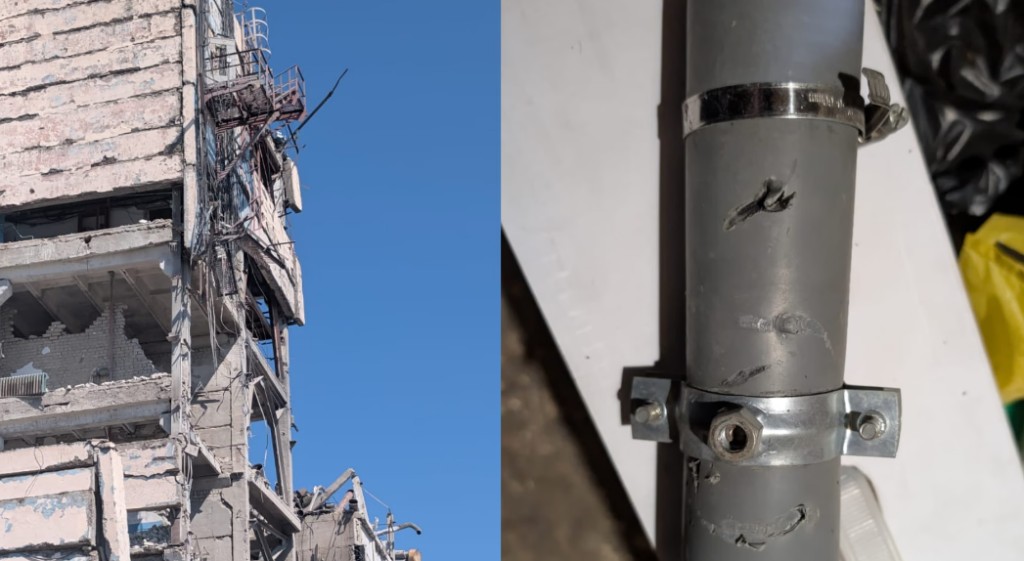
A Ukrainian-made radio repeater survived 10 Russian drone and bomb strikes and a building collapse, and kept transmitting from under the rubble. The HIMERA B1, used by border guards on a telecom tower in Kharkiv Oblast, held its communications link through FPV drones and guided bombs, the manufacturer said.
On what Ukraine's soldiers call the most heavily jammed battlefield in the world, keeping a radio link alive is one of the hardest problems there is, and a cheap, rugged device that outlasts direct hits is a real advantage.
The B1 in Kharkiv Oblast worked in tandem with a second one 10.5 kilometers away, each covering roughly 5 kilometers, until it took 10 strikes. The account is the maker's, HIMERA, but it fits the company's story: a Kyiv firm whose encrypted, frequency-hopping radios were built to survive Russian electronic warfare.
The relay outlasts 10 strikes
The B1 is an autonomous repeater, a box that extends the range of a mesh radio network. This one sat on a telecom tower used by the 1st Border Guard Detachment. During one attack, its power system was destroyed, HIMERA said.
Later strikes partly collapsed the building, and the repeater fell and was buried under debris, yet it kept working.
"Even after that, the repeater remained operational and continued to stay connected," the company said.
Soldiers went in and pulled it from the rubble precisely because it was still transmitting.
The signal beats the jamming
The device is built for a battlefield where Russia listens for radio traffic and uses it to aim, so a poorly protected link can give away a unit's position. HIMERA's radios use AES-256 encryption and pseudo-random frequency-hopping to make a signal hard to intercept, locate, or jam.
A volunteer's frustration built the firm
HIMERA grew out of the front's own shortcomings. One of its co-founders volunteered with the territorial defense in Kyiv Oblast early in the full-scale war and ran into a critical shortage of reliable tactical communications, the company said.
The idea was to build something hard to detect, resistant to jamming, simple to use, and cheap enough to mass-produce, using encryption and frequency-hopping that make a signal difficult to find or suppress.
Within months, the company said, the idea became a team and the team a product, one now fielded widely enough that its repeaters are sometimes dropped into forward positions by drone.
The Security Service of Ukraine (SBU) has arrested two individuals in Kyiv accused of attempting to extort $200,000 from a European defense company, potentially jeopardizing the delivery of electronic warfare (EW) systems to Ukraine's military, the SBU reported on June 14.The suspects allegedly demanded the payment in exchange for facilitating the successful testing and adoption of five radio electronic warfare systems provided to Ukraine at no cost, according to statements released by the SBU a
The Security Service of Ukraine (SBU) has arrested two individuals in Kyiv accused of attempting to extort $200,000 from a European defense company, potentially jeopardizing the delivery of electronic warfare (EW) systems to Ukraine's military, the SBU reported on June 14.
The suspects allegedly demanded the payment in exchange for facilitating the successful testing and adoption of five radio electronic warfare systems provided to Ukraine at no cost, according to statements released by the SBU and the Prosecutor General's Office.
The devices, supplied by a private foreign manufacturer, were financed by Ukraine's international partners. The producer had already delivered five systems to Ukraine, with additional contracts possible if the equipment performed well in combat conditions, the SBU said.
According to investigators, the suspects falsely claimed to have influence within Ukraine's Defense Ministry and promised to use their connections to ensure positive evaluations of the equipment.
"Under the guise of having contacts within the ministry, the men demanded $200,000 from the company in exchange for ensuring no obstacles during official trials of the equipment," the Prosecutor General's Office said in a statement.
Both men have been formally charged under Ukraine's Criminal Code for alleged obstruction of the Armed Forces and receiving unlawful benefits through influence peddling. The charges carry a possible sentence of up to eight years in prison and asset confiscation.
The arrests were made as part of a broader investigation led by the SBU and conducted under the procedural oversight of the Specialized Defense Prosecutor's Office. Authorities say the investigation is ongoing to identify all individuals involved.
Ukraine continues to rely heavily on international military assistance as it defends against Russia's full-scale invasion, now in its fourth year. Ukraine uses EW systems during Russian attacks on its cities and on the front line.
Kyiv and its Western partners launched an electronic warfare coalition in April, which consists of 11 countries and comes on top of other eight Western coalitions to support Ukraine. Other similar initiatives include an artillery coalition, a fighter jet coalition, and a demining coalition, organized within the framework of the Ramsteinformat.

 Connexion





 (@afec7032)
 (@andrii_sybiha)