Vue normale

Ukraine spent year ignoring one Russian drone-control tech, and now Geran-5 flies on it. President’s adviser warns next one, from space, is worse

21 septembre 2026 à 14:47

Satellites are the new frontline in space and strategy. Photo: Depositphotos

Russia's newest military satellites keep stalling short of orbit, and Ukraine's top technology adviser says that is exactly why no one should relax. Serhii Beskrestnov, the presidential adviser on defense technology known as Flash, warns that once Russia completes its "Rassvet" satellite network, Moscow could steer its Gerans and missiles from space, and that Ukraine has to build the jamming to stop it before that day comes.

A working Rassvet would hand Russia a permanent link to its long-range weapons, letting it control drones and missiles online through satellites, what Flash calls "a small catastrophe."

Russia is nowhere near that yet: it has launched around 32 satellites but needs 200 to 250 for stable, round-the-clock coverage, and its most recent batch stalled in low orbit. Flash's point is that the reprieve is temporary.

"Russia is a space power," he wrote, and one heavy Angara rocket could loft much of the constellation in a single launch once its engines are fixed.

Ukraine has tried to choke the program at its source, striking a Russian space-rocket plant in mid-August and reaching for the Plesetsk cosmodrome days later, though the effort has only slowed it.

The MESH failure sets the warning

His alarm rests on a mistake, he says, Ukraine already made. For a year, he wrote, no one in the armed forces systematically worked on countering the MESH radio networks Russia uses to fly its jet Gerans, and no one shielded the capital with electronic warfare, even as the enemy openly built out the technology.

Breaking what he called a lifelong rule against criticizing colleagues, he "thanked" the former commander-in-chief and his electronic-warfare chief for the lapse, he wrote a bit earlier.

The result, he said, is that Russian Geran-5 are now striking under MESH control while Ukrainian specialists scramble to catch up.

The jamming must come first

With Rassvet, Flash argues, Ukraine cannot afford the same delay. The counter-system must not only be designed but actually fielded before the constellation is up, with the country's key infrastructure shielded by the time Russia's satellites reach orbit.

"This electronic warfare must ALREADY have closed all key infrastructure sites," he wrote.

Building it, he cautioned, will be neither fast nor cheap.

Russia is working to modernize its weapons on every front. This month, its drones are expected to carry 20-element anti-jam antennas to outpace Ukraine’s jamming

12 septembre 2026 à 11:12

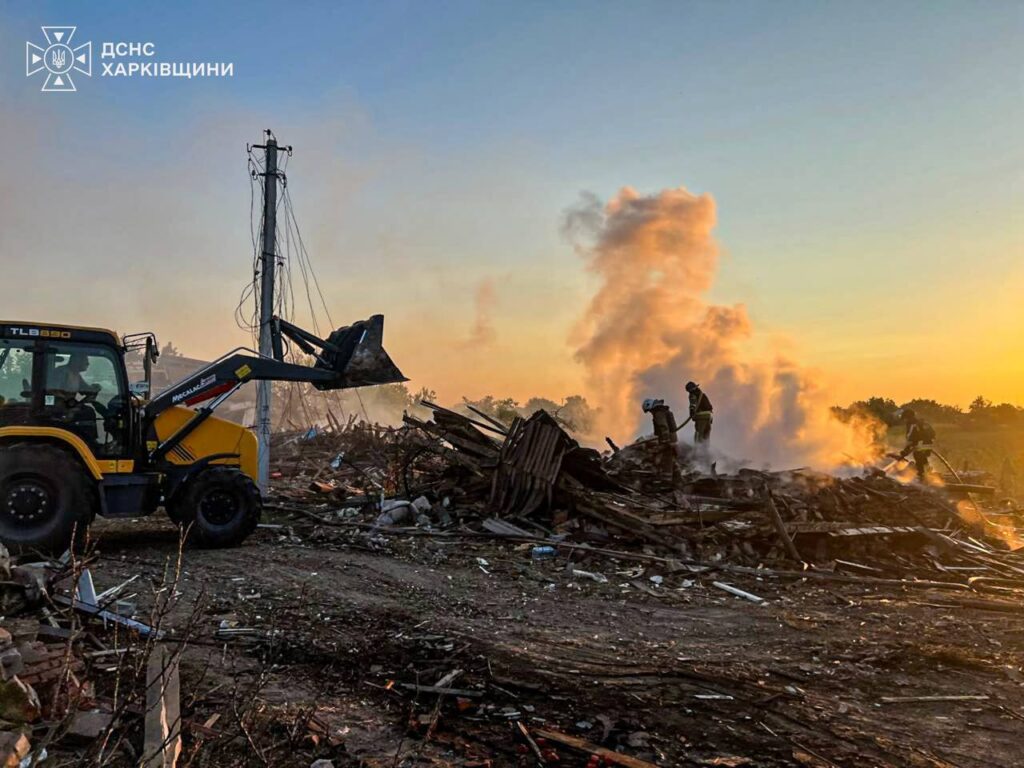
Emergency workers respond to the aftermath of a Russian drone attack in Lebiazhe, Kharkiv Oblast, Ukraine, 21 August 2026. Photo: Ukraine’s State Emergency Service

Russia is working methodically to modernize its attack drones on every possible front. This month, its drones are expected to carry 20-element anti-jam antennas in place of the 16-element ones, harder for Ukrainian electronic warfare to defeat, Serhii "Flash" Beskrestnov, President Volodymyr Zelenskyy's defense-technology adviser, said.

Russia's knack for scaling and upgrading its weapons is something Ukrainian experts keep flagging. Serhii Bratchuk, spokesperson for the Ukrainian Volunteer Army, recently put it bluntly, "Credit to the Russians. They know how to scale." Meanwhile, military analyst Oleksandr Kovalenko of the Information Resistance group has argued that Russia plans its terror campaigns years out and adapts almost monthly, a foresight Ukraine has struggled to match.

The antenna work is another example, and it will not stop at 20 elements: the main supplier, VNIIR "Progress", plans 24-element arrays in 2027, and Chinese firms are mounting similar efforts, shipping multi-element antennas to Russia disguised as farm equipment.

Autonomous drones need GPS jamming

Not every jet drone that reaches Kyiv is flown by a live operator, Beskrestnov said. A large share runs on ordinary satellite navigation, and a few weeks ago, Russia upgraded the drones' inertial navigation, the backup that holds a course when the satellite signal drops.

The distinction changes how Ukraine fights back. A drone under live control can be stopped by jamming its communication link, the mobile or satellite internet the operator uses, which cuts the operator off. A drone flying on its own has no such link to jam. There, Ukraine has to jam the GPS or GLONASS signals the drone relies on.

Cruise missiles share the weakness

The same logic applies to Russia's newer cruise weapons. The Banderol and the Dan-T, which Russia is betting on, carry no operator link at all, only satellite and inertial navigation, Beskrestnov said.

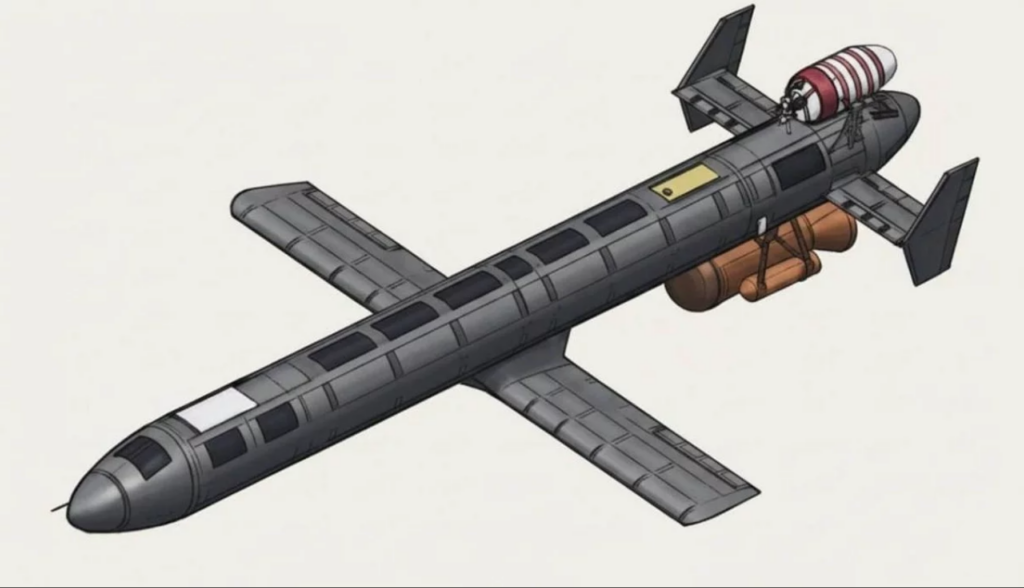
The Dan-T is a strange case: it began as the Dan-M, a jet-powered target drone that Russia's Sokol bureau built in the early 1990s to mimic US Tomahawk cruise missiles for air-defense practice, now fitted with a warhead and fired at Ukrainian cities.

Because these weapons navigate rather than being flown, Ukrainian electronic warfare is one of the few tools that can throw them off course, even as Russia races to harden the navigation they depend on.

Russia is switching its cheap Molniya strike drones to digital video. When the change is complete, Ukraine’s analog detectors go blind, Flash warns

9 septembre 2026 à 17:49

Russia drone carrier FPV

Russia is fitting its cheap Molniya strike drones with digital video, a quiet upgrade that threatens to blind the detectors Ukrainian troops rely on to spot drones coming. Digital transmission is turning up on more and more Molniyas and will eventually replace analog altogether, making today's portable detectors useless against them, President Zelenskyy's defense-technology adviser Serhii "Flash" Beskrestnov told UNIAN.

Front-line soldiers depend on cheap detectors that pick up a drone's analog video signal, buying the seconds of warning that let them take cover. Digital video is invisible to that gear.

The Molniya is the drone Ukraine can least afford to lose track of, a $300 plywood aircraft that Russia already churns out in numbers and keeps re-engineering to slip past detection. Beskrestnov's point is that Ukraine has to answer the change before the switch is complete, not after.

Digital video slips past the detectors

"Digital video transmission is increasingly found on Molniyas," Beskrestnov said, urging Ukraine to prepare for a future in which its current gear is useless against them.

The fix, he continued, is to build digital-video detection into interception systems now, before the switch is complete. Such a system would not show what the drone sees, but it would flag the signal and point to its source.

"We will not see the image, but we will see the presence and determine the bearing, warning the user of the threat," he explained.

A $300 drone keeps outrunning detection

The Molniya is among the cheapest weapons Russia fields: an aircraft-shaped kamikaze drone built from plywood, foam, and off-the-shelf Chinese electronics, making it easy to mass-produce and upgrade. Russia launches up to 10 of them a day in the Zaporizhzhia direction alone.

It has already moved its Molniyas onto video frequencies of 4.1 to 4.5 gigahertz that most detectors barely register, and has begun fielding an autonomous, AI-guided version that flies with no radio link for a detector to catch at all.

Ukraine is racing to close the gap

Ukraine has lagged on this exact tool. It only fielded its first portable, mass-produced drone detector in July, while Russian soldiers had long carried a Chinese-made device that identifies drone types.

Each fix Ukraine builds risks being overtaken by the next cheap change Russia bolts onto a drone that costs less than a smartphone.

“Everyone is absolutely livid”: Expert says Russian agent may have activated MESH relay within 5 km of attack on Security Service, enraging Ukraine and Europe

5 septembre 2026 à 07:27

Smoke seen from the damaged SBU headquarters building on Volodymyrska Street in central Kyiv following a Russian drone strike on 4 September, 2026. Screenshot from video: Suspilne

On the afternoon of 4 September, a Russian drone struck the building of Ukraine's Security Service in Kyiv, flying straight at the office of the acting chief, Oleksandr Poklad. One source close to the security services was blunt about the mood afterward, telling LIGA.net that everyone was "not just furious — everyone is absolutely livid."

It was a rare direct hit on a top government building — the first time the SBU headquarters had been struck in the four-and-a-half-year war. The central building stands on Volodymyrska Street opposite St. Sophia's Cathedral, a UNESCO World Heritage site.

Poklad was unharmed, and President Volodymyr Zelenskyy said he had ordered a response that mirrors the attack.

Beskrestnov: a planned operation, guided from the ground

Serhii "Flash" Beskrestnov, President Zelenskyy's adviser on defense technologies, argued the strike was too precise to be a stray hit.

"My personal opinion: the Geran was controlled and guided online through a MESH radio relay with internet access, which a Russian agent switched on somewhere nearby — within five kilometers — for a short period during the attack," he wrote.

Such a relay is small, about the size of half a school backpack, he said. He added that no other jet-powered Gerans were in the air over Kyiv at the moment of the strike, which, in his view, rules out the drone being flown along a relay chain reaching back into Russia and points instead to local control.

Europe calls it a major escalation

Katarína Mathernová, head of the EU Delegation to Ukraine, said the drone hit near where she and her colleagues live and work, and her Kyiv staff again had to leave their desks for shelter. Under her post, former EU Ambassador to Ukraine José Manuel Pinto Teixeira called Russia a terror state.

"Time for Ukrainian drones visiting the center of Moscow," he said.

Estonian Foreign Minister Margus Tsahkna said Russian drones had struck "the very heart of Kyiv," and pressed for tighter sanctions and deeper isolation of Moscow.

"The Kremlin’s objective remains unchanged: inflict maximum carnage, sow terror, and trample every norm of international law," he said.

Russia straps two small attack drones to wings of its long-range Gerans and releases them deep inside Ukraine. It rarely works, Flash says

3 septembre 2026 à 10:26

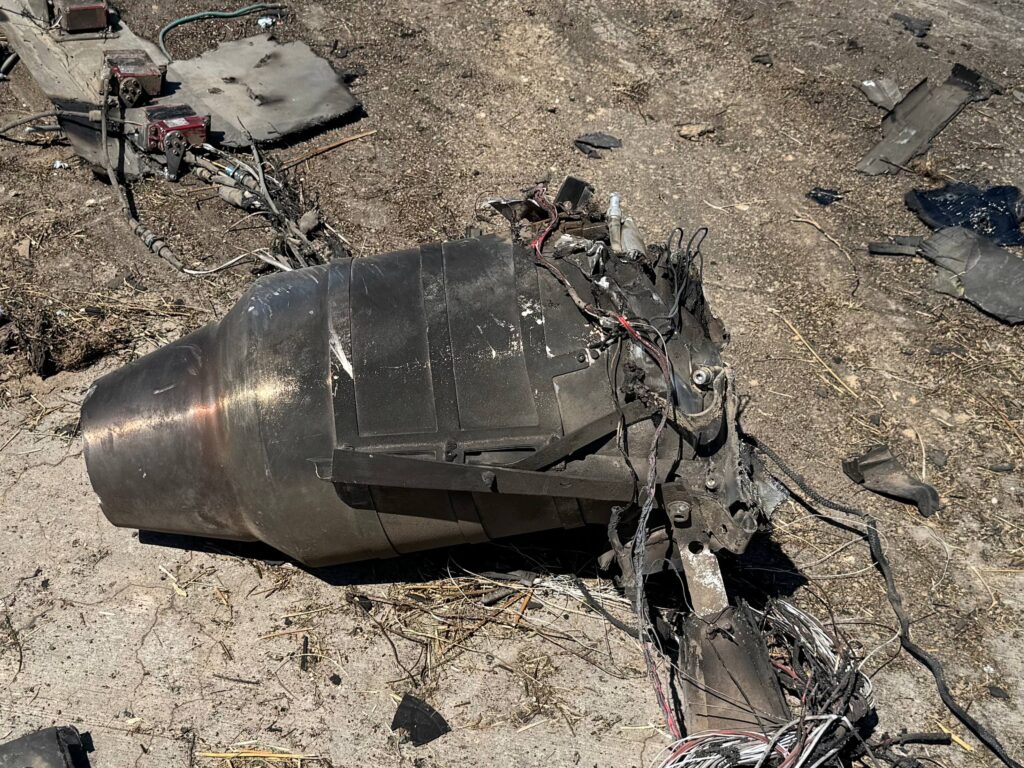
The image shows a fragment of a Russian drone Geran-4 in Kyiv Oblast. Source: Serhii "Flash" Beskrestnov

Russia has been bolting small FPV attack drones to the wings of its long-range Gerans and releasing them deep inside Ukraine, far behind the front. The tactic may now have reached Kyiv Oblast, where an FPV drone was recently recorded, though it is not confirmed that a Geran delivered it, Serhii "Flash" Beskrestnov, the president's adviser on defense technologies, told UNIAN. A Geran drop is one of the versions being weighed.

A Geran (the Russian-built version of Iran's Shahed-136) can fly hundreds of kilometers, so bolting short-range FPVs to its wings carries them far past the front line before release. Russia has done the same with its Molniya and Gerbera drones, and in May Euromaidan Press reported FPVs delivered this way, turning up dozens of kilometers from the border, on the ground, and even on the roofs of apartment buildings.

A year-old experiment, still rare

"The Russians have been running these experiments for a while. They attach two FPVs above the wings and drop them," Beskrestnov said.

He last recorded the tactic a week ago in Konotop, in Sumy Oblast, where Russian forces held two such drones on a carrier's wings and released them.

Until now, he added, it had shown up only on conventional Gerans. Holding an FPV on a jet-powered Geran is far harder because the speed is too high for a clean release, "but technologically it's entirely possible," Beskrestnov believes.

Ukrainian air defenders have brought at least one carrier down: in March, the Darknode anti-Shahed unit destroyed a Geran carrying two wing-mounted FPVs over Ukrainian airspace before it could release them, Militarnyi reported.

Low yield, mostly a scare tactic

Russia uses the tactic sparingly, and by its own measure, it does not work well.

"If you look at the number of successful strikes they've had with these FPVs, it's small," Beskrestnov explained, because controlling a drone dropped this way is difficult.

The FPVs carry no large warhead, and the launches often serve mainly to terrorize civilians, he said.

The dropped drones are usually flown over ordinary mobile networks rather than through a relay mounted on the carrier.

"There's an ordinary SIM card, and they control the FPV through it," Beskrestnov said, adding that Ukraine has been recording the practice on and off for about a year.

  • ✇Euromaidan Press
  • Russia now hunts Kyiv by daylight too, Flash explains why
    Russia has started launching its strike drones during the day, not only after dark. The reason is the new jet-powered Geran drones, which fire groups cannot take down, so for Russia there is no longer any difference between attacking by day or by night, Serhii "Flash" Beskrestnov, President Zelenskyy's adviser on defense technologies, told Glavcom. The near-hourly daytime raids are the new face of a campaign that culminated on 1 September, Knowledge Day, when Russia hit
     

Russia now hunts Kyiv by daylight too, Flash explains why

3 septembre 2026 à 06:07

geran-5

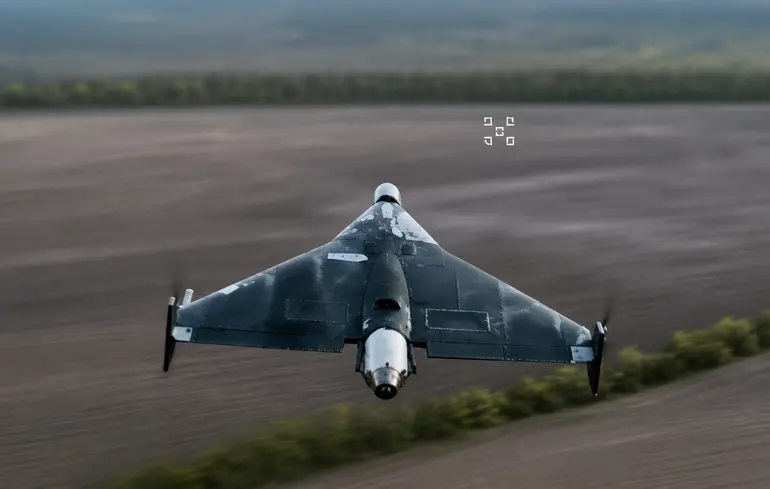
Russia has started launching its strike drones during the day, not only after dark. The reason is the new jet-powered Geran drones, which fire groups cannot take down, so for Russia there is no longer any difference between attacking by day or by night, Serhii "Flash" Beskrestnov, President Zelenskyy's adviser on defense technologies, told Glavcom.

The near-hourly daytime raids are the new face of a campaign that culminated on 1 September, Knowledge Day, when Russia hit Kyiv and its region with ballistic missiles and jet-powered drones and killed 12 people. That strike culminated a six-day assault on the capital that began on 27 August, two days after CIA Director John Ratcliffe arrived in Moscow. However, even after that, the attack continued. Sirens now sound across Kyiv and the surrounding oblast roughly once an hour, around the clock.

Why the shift to daylight

The daytime raids carry an added economic and psychological weight, he said. The threat of strikes forces shops and businesses to open and close unpredictably, snarls transport, and can halt rail service.

"They understand perfectly well that daytime attacks hurt the population and business," Beskrestnov said, adding that the state railway Ukrzaliznytsia is paralyzed.

Keeping the defenders on their feet

A further aim is to hold Ukraine's air defense in a permanent state of readiness, Beskrestnov said. Round-the-clock attacks mean radar stations and generators must run without pause.

"Radar stations and generators run constantly, and that also puts a strain on our troops," he added.

Kyiv remains a Russian prime target because it carries symbolic as well as military weight, as the capital houses the government, business, and warehouses, and a strike there would resonate far more than terrorizing a small town.

Russian forces first concentrated on districts nearer the drones' launch corridors — Kyiv's Left Bank, and the Brovary and Boryspil raions — before switching to the other bank to hunt for targets. As the cold season approaches, he expects Russia to intensify strikes on the energy infrastructure it has so far spared.

Fix for Ukraine’s interceptors is radar seeker head, and American firm is selling one for $4,000, says president’s tech adviser

28 août 2026 à 16:45

russia steers its long-range drones ground towers—kyiv says hit one occupied crimea · post russia’s new “geran-4 seeker” shahed variant uses machine-vision ai targeting geran 4 ukraine news ukrainian reports

Ukraine's drone interceptors work until the weather turns. On 28 July, Presidential advisor Serhii "Flash" Beskrestnov wrote that fog and cloud in fall, winter, and spring can leave an interceptor pilot unable to see more than a dozen meters, and that success rates fall as soon as winter begins, a problem that is especially severe over the sea.

Cheap interceptor drones have become one of Ukraine's main answers to Shahed saturation. But nearly every system shares the flaw Beskrestnov names: it depends on a pilot or camera seeing the target. Ukrainian and foreign teams are all racing toward the same fix, an onboard seeker head.

The method started simple

The earliest approach was primitive but cheap and effective, Beskrestnov said. A pilot flies the interceptor to the right point using the radar network, then finds the target by eye, chases it, and attacks.

Russia answered not only with jet Shaheds but with onboard electronic warfare, evasion systems, in-flight maneuvers, and rear-facing cameras to watch the sky behind, he explained. Ukraine replied with machine-vision target capture and guidance.

Bad weather remains unsolved

None of that fixes visibility, Beskrestnov wrote, and the problem hits both ordinary and jet interceptors. The way out, he argued, is an autonomous seeker head, acoustic, thermal, or radar, mounted on the interceptor itself.

A radar seeker is the ideal, in his view, because it opens the door to a fully autonomous system with no human in the loop: the network sees the target, launches the nearest interceptor, guides it by tactical radar, and the seeker locks on for the kill.

A US firm has put a price on it

Building a radar small enough for an interceptor has proven hard, and teams in Ukraine and abroad are working on it, Beskrestnov said, adding that he would not discuss the Ukrainian efforts because the subject is sensitive.

He pointed to the American company Archimedes, which he said announced a radar days ago, operating at 24 gigahertz with a 25-by-14-degree field of view and a one-kilometer lock-on range, shown in a promotional video mounted on several Ukrainian interceptors, at about $4,000 per unit. Whether it works remains to be seen, he added, given how hard the problem is.

Ukraine’s new commander-in-chief has been picking technical chiefs. Adviser who knows them says he is putting most competent people

26 août 2026 à 14:26

Presidential adviser on defense technology development Serhii "Flash" Beskrestnov at the test range of new electronic warfare means against jet-powered Shaheds. Source: Serhii "Flash" Beskrestnov

Serhii "Flash" Beskrestnov, advisor to the president on the development of defense technologies, has highly praised the recent personnel changes in the new Ukrainian commander-in-chief's staff. He says that Mykhailo Drapatyi is appointing the most competent people available to the Armed Forces' technical directions, adding that "after many years of war, he knows most of the army's technical specialists."

The endorsement comes from Beskrestnov, an adviser to former Ukrainian Defense Minister Mykhailo Fedorov, considered the most effective in Ukraine's history. After the dismissal, he became a non-staff adviser to President Volodymyr Zelenskyy.

The technology war moves weekly

Beskrestnov rates the new appointees on temperament as much as expertise.

"The main thing is that these new heads are energetic, modern, and good communicators," he wrote.

In a war of technologies, everything changes literally every week, and "we have to react to all the enemy's challenges just as fast. Analyze, forecast, respond, and act a step ahead of the enemy," he added.

Drapatyi arrived in the same reshuffle

Zelenskyy named Drapatyi commander-in-chief on 21 July, replacing Oleksandr Syrskyi, and said in the same address that he had offered Fedorov a leadership position bringing together Ukraine's technological capabilities.

Fedorov's removal drew street protests across Ukraine. Drapatyi commands the General Staff rather than the ministry, so the appointments Beskrestnov praises sit outside the structure he left behind.

Change will be slow, he expects

"I believe big positive changes are ahead of us, but this will not happen fast, because a great deal has to change," Beskrestnov said.

He did not name any of the new appointees or their posts.

Earlier, Beskrestnov disclosed Russia's new tactics in its drones. According to him, while Ukraine's cheap interceptor drones have been knocking Russia's nightly attackers out of the sky, Russia has now bolted a jammer onto some of its own drones to blind them.

  • ✇Euromaidan Press
  • Russia’s attack drones now jam the cheap interceptors sent to kill them
    Ukraine's cheap interceptor drones have been knocking Russia's nightly attackers out of the sky, so Russia has now bolted a jammer onto some of its own drones to blind them, according to Serhii "Flash" Beskrestnov, an adviser to Ukraine's President on defense technology. He examined the system, found in drone wreckage, and mapped how it strikes back at the interceptor sent to hunt it. Russia batters Ukrainian cities with long-range drones most nights, and Ukraine has le
     

Russia’s attack drones now jam the cheap interceptors sent to kill them

25 août 2026 à 12:39

Electronic warfare equipment from Shahed drones.

Ukraine's cheap interceptor drones have been knocking Russia's nightly attackers out of the sky, so Russia has now bolted a jammer onto some of its own drones to blind them, according to Serhii "Flash" Beskrestnov, an adviser to Ukraine's President on defense technology. He examined the system, found in drone wreckage, and mapped how it strikes back at the interceptor sent to hunt it.

Russia batters Ukrainian cities with long-range drones most nights, and Ukraine has leaned on a cheap shield—drones costing a few thousand dollars—instead of burning through far pricier missiles. Anything that dulls that shield pushes the cost of defending the sky back up.

A jammer that waits for the interceptor

The unit rides on a Geran, Russia's version of the Iranian Shahed one-way drone. It listens for the video signal an approaching Ukrainian interceptor beams back to its pilot. Its receiver reads the interceptor's working frequency, then orders a transmitter to bury that same channel in noise, Beskrestnov found.

A Ukrainian Hornet drone spots another Hornet. Photo: Ukraine's 1st Azov Corps
Explore further

How Ukraine uses AI to guide long-range drone strikes through electronic warfare and deep into Russian-controlled rear areas

By his first estimate, the jammer's signal runs about five times stronger than the interceptor's video link—enough to wipe the picture and any chance of steering the drone onto its target.

Seconds decide it

In Beskrestnov's account, the system detected a test transmitter and switched on jamming after about three seconds, and the feed cut out. The device stays nearly idle until a hunter comes close, then jumps to full power to smother the signal. It targets the ordinary analog video band around 5.8 gigahertz that many cheap interceptors still use.

Possible answers, include interceptors with terminal-guidance homing for the final stretch of flight, digital communication links, or transmitters set to non-standard frequencies.

“two targets ammo one drone” how ukrainian drone crew hunts russian transport behind front line · post arti schultz daria moskalets/ armiyainform ukraine news reports
Explore further

“Two targets and ammo with one drone”: How a Ukrainian drone crew hunts Russian transport behind the front line

An old problem for Russia's drones

Russia has tried again and again to keep its one-way drones alive against Ukraine's defenses, including wiring jammers into some Shaheds earlier this year. Spending weight and power to protect a drone from a far cheaper interceptor shows how well those cheap drones work.

❌