Les camions et voitures pourront désormais l’emprunter pour circuler entre Windsor, en Ontario, et Détroit, au Michigan.
Le pont, de 2,5 km, est doté de:
6 voies de circulation
16 voies de péage
Une voie pour piétons et cyclistes ouvrira le 5 août.
Le pont doit son nom à Gordie Howe, un célèbre joueur canadien de l’équipe de hockey des Red Wings de Détroit.
La cérémonie d’inauguration du pont, vendredi, était uniquement canadienne.
La semaine dernière, à la suite de l’imposition de nouveaux tarifs américains, le gouvernement fédéral avait annulé une cérémonie conjointe avec les États-Unis.
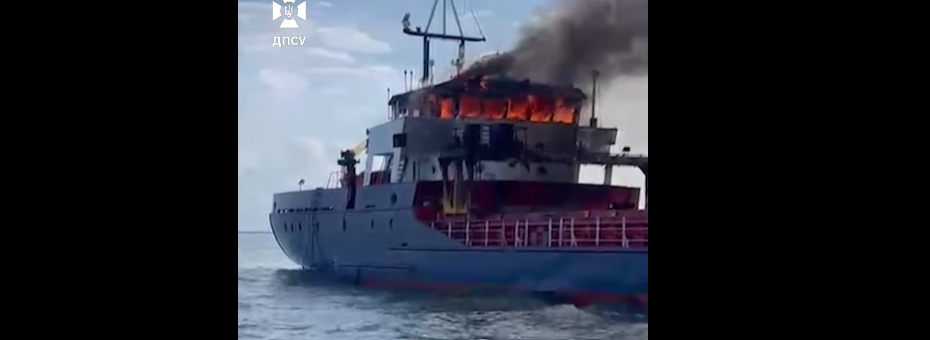
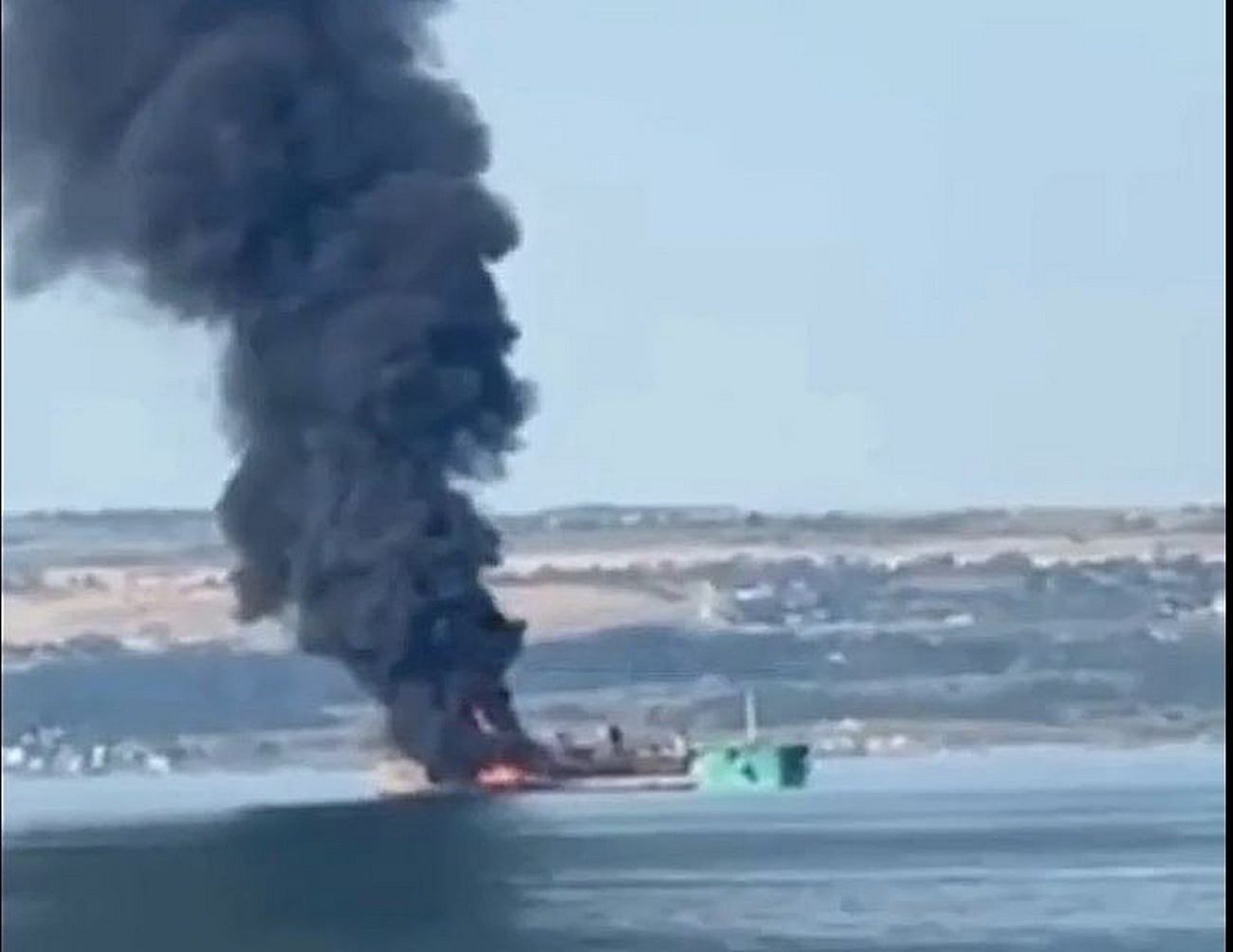
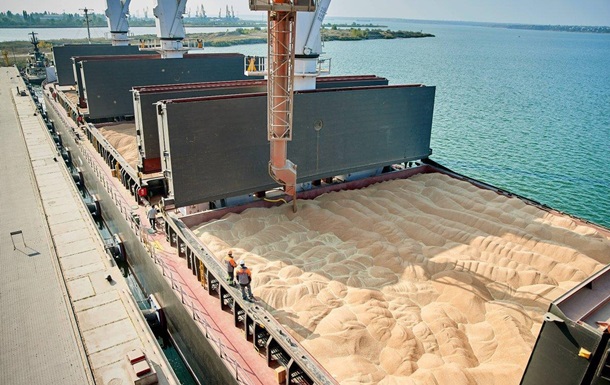
Russia hit a civilian grain ship, waited, and hit it again. A Russian Shahed drone struck a Palau-flagged vessel carrying corn twice as it left a port in Odesa Oblast, setting it on fire, Ukraine's Minister for Restoration, Infrastructure and Transport Mykola Kalashnyk said. Two sailors are missing, and seven crew members and a Ukrainian pilot were rescued.
The double strike on a grain carrier is the maritime edge of Russia's campaign against Ukraine's food exports. The ship was carrying almost 2,800 tons of corn when it was hit as it left the port, and after the strikes, a fire broke out on board.
The State Border Guard Service, which carried out the rescue, reported that the vessel was leaving the mouth of the Danube bound from a Ukrainian port to Greece with nine crew and a pilot aboard when the Shahed hit it, then struck again, the second blast causing a large fire.
This is a deliberate attack on the civilian shipping that carries Ukrainian grain to world markets, and it fits a Russian campaign that has made ports and merchant ships a target through July.
"Russia continues deliberate attacks on civilian shipping and Ukraine's port infrastructure," Kalashnyk said.
The rescue pulled eight from a burning ship
The border guards' maritime security units rescued eight people after the double drone strike, the State Border Guard Service said. The sailors reacted quickly to the distress signal and evacuated eight from the burning vessel, all delivered to safety, with medics monitoring their condition.
The search continues for two crew members who went into the water after the first blast. The two accounts differ slightly on the totals, as they do in the first hours after any strike: Kalashnyk cited seven crew plus a Ukrainian pilot rescued, while the border guards counted eight evacuated. Both agree that two sailors are missing and a search-and-rescue operation is underway. What is confirmed is that a civilian grain ship was struck twice, caught fire, and lost two of its crew to the sea.
The strike is the maritime front of the grain war
The attack extends a campaign that has hammered Ukraine's grain export capacity through July.
From 11 to 15 July, Russian strikes hit three Greater Odesa ports and the merchant ships anchored there, cutting the region's grain-export capacity by roughly a third, according to Reuters. Odesa's ports carry more than 90% of Ukraine's agricultural exports.
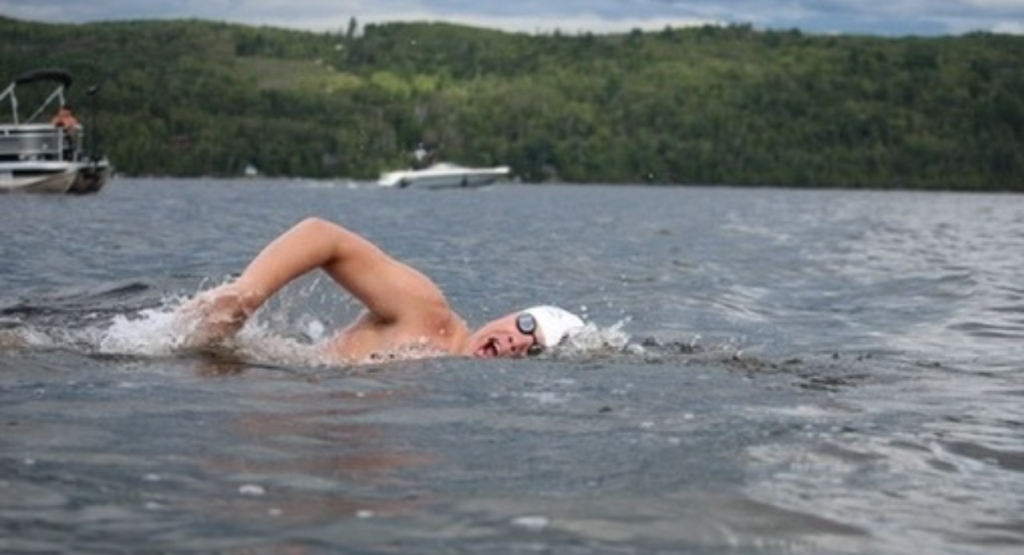
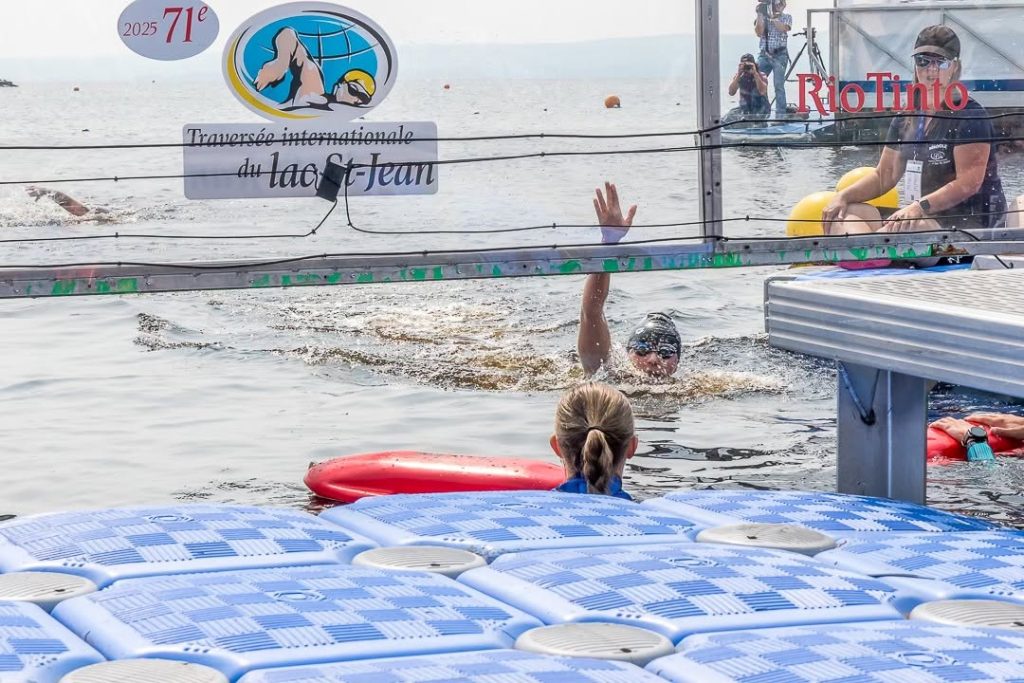
Le Rimouskois Mathis Bourbonnais a finalement déclaré forfait en vue de la 72e Traversée internationale du lac Saint‑Jean.
L’ex-membre du Club de natation les Dauphins a souffert d’un virus, quelques heures avant de prendre le départ de l’épreuve d’endurance de 32 kilomètres, disputée ce samedi entre Péribonka et Roberval.
En 2026, la traversée réunissait 24 nageurs de partout à travers le monde.
À 21 ans, Bourbonnais aura certainement la chance de se reprendre.
Taiwan is stepping up plans to secure fuel and other vital imports as Chinese government ships practice moves that could one day be used in a blockade.
Le Rimouskois Mathis Bourbonnais fait partie des 24 athlètes inscrits, ce samedi 25 juillet, à la 72e Traversée internationale du lac Saint‑Jean.
La compétition réunira des nageurs de 11 pays pour affronter les 32 kilomètres séparant Péribonka et Roberval.
En moyenne, la Traversée internationale du lac-Saint-Jean attire autour de 25 athlètes, dont certains des plus titrés au monde, notamment le Bulgare Petar Stoychev, vainqueur à 11 reprises entre 2001 et 2011.
Parmi les inscrits cette année, Bourbonnais prendra le départ samedi à 8 h.
« C’est un peu stressant et excitant en même temps. C’est un gros événement, très impressionnant, surtout avec les athlètes qui viennent de partout dans le monde. Il y a 11 pays représentés. C’est très gros comme événement ici au Québec », explique-t-il.
Préparation physique et mentale
L’arrivée d’un nageur lors de la Traversée internationale du lac Saint-Jean, en 2025. (Photo courtoisie)
Habitué aux longues distances, Mathis Bourbonnais s’appuie sur ses expériences antérieures, dont une traversée de 38 km au lac Témiscouata en août 2023. « Avec mes dernières traversées, je suis déjà habitué face à ce genre d’épreuve. »
Sa préparation physique s’est concentrée sur le volume d’entraînement. « C’est vraiment juste beaucoup d’entraînement, beaucoup de millage. J’ai fait un test au Témiscouata avec 16 kilomètres parcourus » indique l’athlète rimouskois.
Il précise ne pas avoir eu de préparation particulière à effectuer pour la température de l’eau. « Je suis très résistant au froid », précise le nageur de 21 ans.
Inscription de dernière minute
Son inscription n’était pas prévue au départ « Ça a été vraiment dernière minute. Ce n’était pas du tout prévu dans mon été. »
Un ancien gagnant de la Traversée internationale du lac Saint-Jean, Robert Lachance, avec qui Mathis Bourbonnais s’entrainait, l’a convaincu de faire le grand saut.
« Il a mentionné directement aux organisateurs que j’avais fait quatre fois le Marathon de la relève, soit une épreuve de 10 kilomètres présentée la veille de la traversée. Ils ont ensuite communiqué avec moi pour m’inviter officiellement. J’ai pris un petit moment pour y réfléchir, parce que ce n’était pas planifié, mais je me suis dit : pourquoi pas, je vais m’inscrire », raconte-t-il.
Bourbonnais ne se fixe aucun objectif pour l’épreuve de samedi. Il envisage toutefois un retour plus structuré à l’entraînement par la suite. « J’aimerais recommencer plus sérieusement cette année pour probablement réessayer de refaire la traversée l’été prochain. »
La 27e édition du festival Fort Causap, Au Royaume du Saumon, se déroulera jusqu’au dimanche 26 juillet, au parc Lapointe de Causapscal.
Par Véronique Bossé- Initiative de journalisme local- L’Avant-Poste
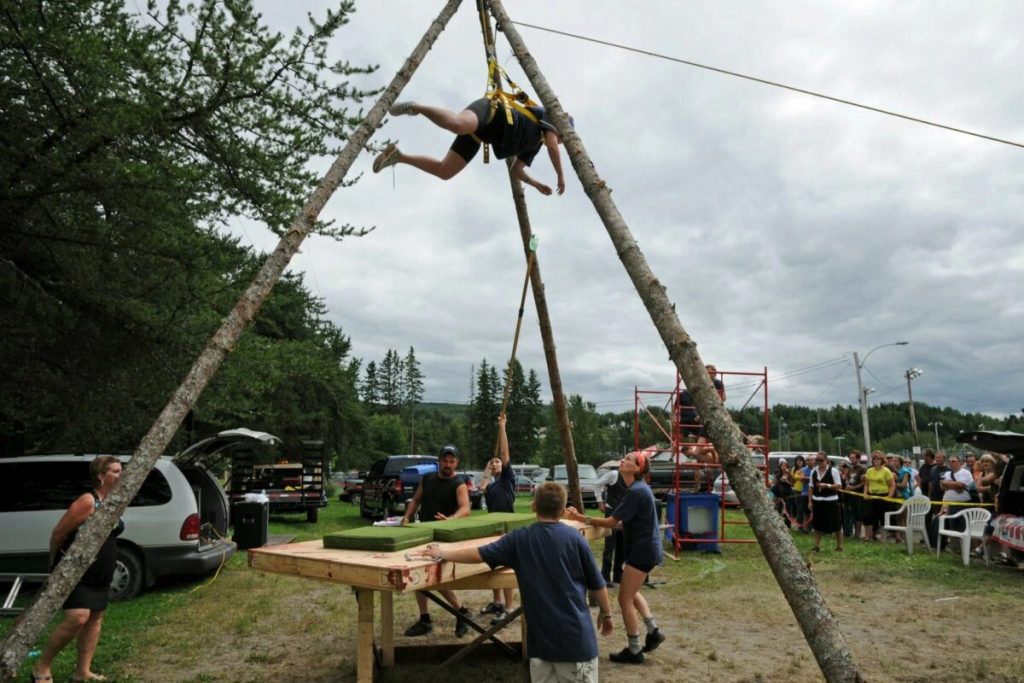
Au cours de l’événement, 24 équipes s’affronteront lors d’épreuves à l’image de Fort Boyard. Ces épreuves, qui sont physiques, intellectuelles ou les deux, sont créées à 100 % par des bénévoles.
« Il y a une douzaine d’épreuves par demi-journée. Le samedi matin compte 12 épreuves, où 12 équipes vont s’affronter. L’après-midi, même chose. Par la suite, je pense que ce sont les 14 meilleures équipes qui s’assurent une place pour le dimanche, qui compte alors 14 épreuves. Donc, à tour de rôle, les épreuves prennent entre 15 et 20 minutes chacune », expliquait la présidente de l’événement, Jessie Pilote, en entrevue avec L’Avant-Poste le mois dernier.
Les trois premières équipes et celle avec le meilleur esprit d’équipe obtiennent leur laissez-passer pour l’édition suivante.
En plus d’avoir deux équipes de plus qu’à l’habitude en 2026, le comité organisateur ajoute un premier tirage 50/50 à sa programmation. Le tirage prendra fin le dimanche 26 juillet à 23 h 55 et le gagnant sera dévoilé le lendemain. La moitié du montant accumulé servira à soutenir le festival.
Programmation
La soirée rock, avec entrée payante, se tiendra le jeudi dès 20 h avec Hair Nation, suivi de AlcoholicA à 22 h. Le vendredi soir fera place au country. L’entrée payante permettra d’assister au spectacle de Francis Degrandpré à 21 h, puis au spectacle de Phil Lauzon (Bearded édition) à 23 h.
Le samedi, l’accès au site est gratuit de 7 h à 18 h. Des activités familiales prendront place pendant la journée, en même temps que les épreuves. Le dévoilement des équipes finalistes aura lieu lors de la soirée festive, pour laquelle l’entrée est payante. Le dévoilement sera suivi du spectacle de Classe Moyenne à 21 h et du spectacle d’Alter Ego à 23 h.
Le dimanche sera semblable au samedi : l’accès au site sera gratuit de 7 h à 18 h et des activités familiales prendront également place dans la journée. Le début des épreuves des équipes finalistes se fera à 12 h 30.
La soirée de clôture, avec entrée payante, commencera à 20 h avec le dévoilement des équipes gagnantes. Le spectacle de Lendemain de veille, à 20 h 30, viendra conclure le tout.
Tous les détails de la programmation sont disponibles en ligne, sur la page Facebook Fort Causap, Au Royaume du Saumon.
Maude Charron vise une troisième médaille d’or consécutive aux Jeux du Commonwealth, disputés du 23 juillet au 2 août à Glasgow, en Écosse, après ses victoires de 2018 et de 2022.
L’haltérophile rimouskoise était montée sur la plus haute marche du podium à Gold Coast, en Australie, il y a huit ans, où elle avait établi un record des Jeux à l’épaulé-jeté en soulevant 122 kg.
En 2022, à Birmingham, en Angleterre, Charron a remporté une deuxième médaille d’or consécutive en établissant trois nouveaux records des Jeux chez les 64 kg : 101 kg à l’arraché, 130 kg à l’épaulé-jeté et un total de 231 kg.
« Ça me prend une motivation pour aller vers de troisièmes Jeux. Ça semble simple quand on est rendus là-bas, mais le chemin est très, très, très difficile. Je ne ferme pas la porte, je n’ouvre pas la porte », avait-elle confié à notre collègue Félix Ledoux, de Radio-Canada, en août dernier, lors des Championnats d’haltérophilie du Commonwealth.
À cette occasion, Charron a dominé l’épreuve des 63 kg en totalisant 230 kg, loin devant ses plus proches rivales, tout en établissant la meilleure performance de l’histoire de cette catégorie lors de ces championnats.
Championne olympique chez les 64 kg aux Jeux de Tokyo, en 2021, elle est remontée sur le podium à Paris, en 2024, en remportant la médaille d’argent dans la catégorie des 59 kg.
Les nageurs des Dauphins de Rimouski ont remporté six médailles et fracassé cinq records de club lors du Grand Prix du Québec, une compétition en piscine extérieure disputée du 14 au 17 juillet au parc Jean-Drapeau, à Montréal.
Anaé Cassista a signé les meilleures performances rimouskoises chez les moins de 13 ans en remportant la médaille d’argent au 100 mètres brasse ainsi que les médailles de bronze au 200 mètres brasse et au 200 mètres quatre nages.
La jeune athlète s’est qualifiée pour les finales des sept épreuves auxquelles elle était inscrite. Cassista en a également profité pour établir un nouveau record des Dauphins au 100 mètres brasse grâce à un temps de 1:17.16.
Hugo Brouillet a décroché deux médailles de bronze au 50 mètres et au 100 mètres brasse chez les 16-17 ans. Il a également battu les records de l’Est-du-Québec et des Dauphins au 100 mètres brasse avec un chrono de 1:05,49.
Les athlètes des Dauphins de Rimouski présents au Grand Prix de Montréal. (Photo courtoisie)
Chez les 18 ans et plus, Emma Ducharme a remporté l’épreuve du 50 mètres dos. Elle a aussi établi de nouveaux records de l’Est-du-Québec et des Dauphins au 50 mètres papillon en réalisant un temps de 28,30 s.
Au total, 359 athlètes représentant 57 clubs du Canada et un club des États-Unis ont participé au Grand Prix du Québec, dont huit nageurs des Dauphins de Rimouski.
Wheat in Chicago is at a two-year high, and southern Russia is bringing in its best harvest in years—yet Russian farmers are heading into the season earning less, not more.
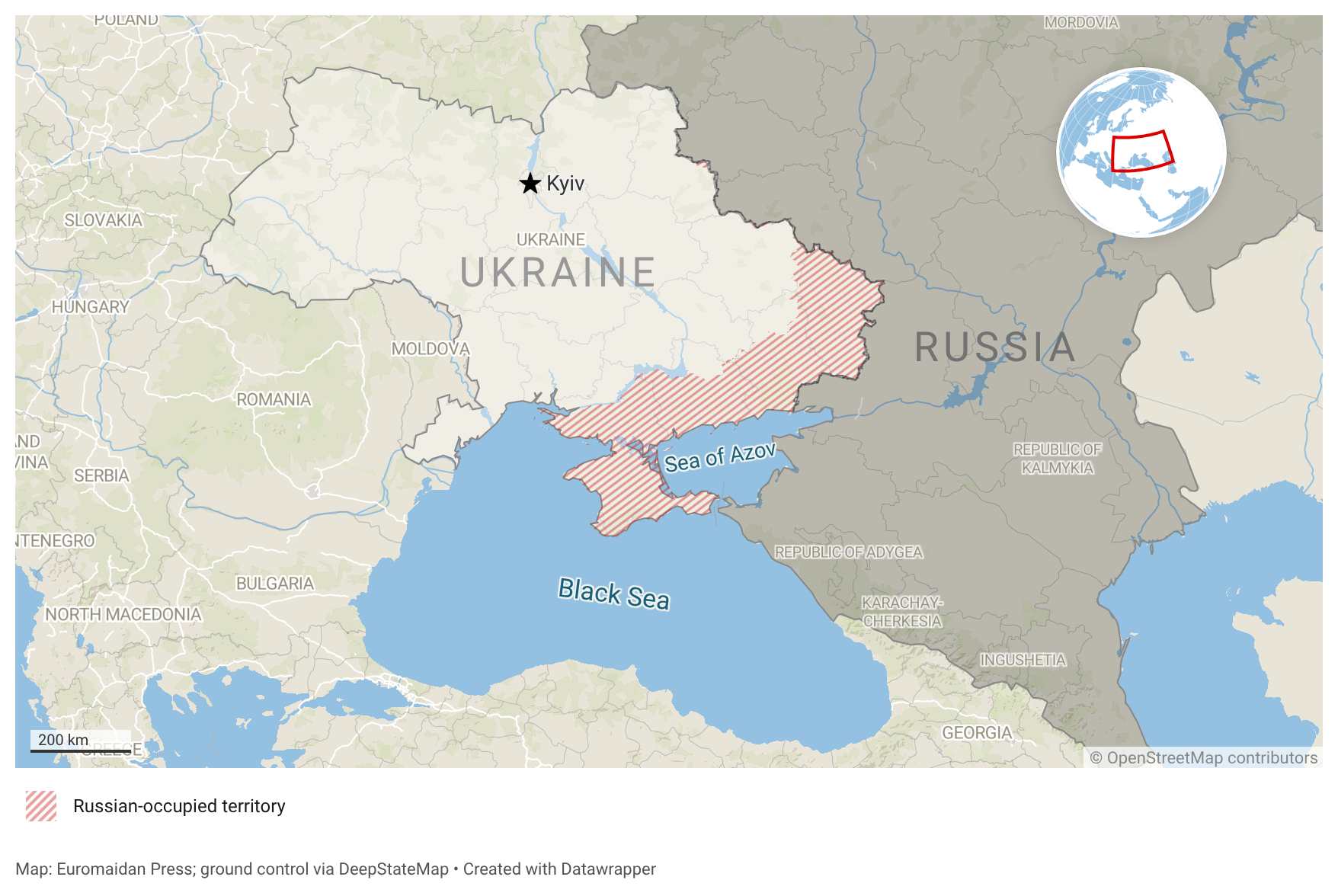
Ukraine’s drone campaign in the Sea of Azov closed the Kerch Strait to shipping on 10 July, trapping the route that carries a quarter of Russia’s grain and sunflower-oil exports. Export duties and soaring logistics skim what still moves, and the grain piling up in full elevators is crushing prices at home while the world price climbs out of reach.
Russia is now heading for its weakest July wheat exports in nine years.
“Farmers should be receiving payment for half or all of their wheat harvest and putting that money back into circulation. But there is no one to sell to.”
Ural-Don agricultural holding president Alexander Yaroshenko
The weakest July in nine years
Russia may export 1.5 million tons of wheat this July—half its five-year average for the month and the lowest July volume since 2017, the SovEcon analytical center forecast on 20 July, its second cut in a week after analysts had already reduced July estimates by 13–20%, Kommersant reported.
The IKAR agricultural institute expects under two million tons. Both name the same main cause: navigation limits through the Kerch Strait, beyond which a quarter of Russia’s grain and sunflower-oil exports ship, according to SovEcon, with weak demand from Egypt and Türkiye adding pressure.
Russia shut the strait on 10 July after Ukrainian drones struck vessels across the Sea of Azov, including tankers—a closure Moscow imposed on itself because the water had become too dangerous to cross.
Explore further
Russia halts Don-Azov Channel shipping, closes Kerch Strait after Ukrainian tanker strikes
The backlog is already physical: grain exports down the Don River—27% of Russia’s grain exports last season—have stopped entirely, elevators at the Don ports are full, and agreed export contracts are collapsing because cargo cannot ship, industry figures told the Rostov business outlet Gorod N.
“Active trading should be picking up right now. Farmers should be receiving payment for half or all of their wheat harvest and putting that money back into circulation. But there is no one to sell to,” Ural-Don agricultural holding president Alexander Yaroshenko told the outlet.
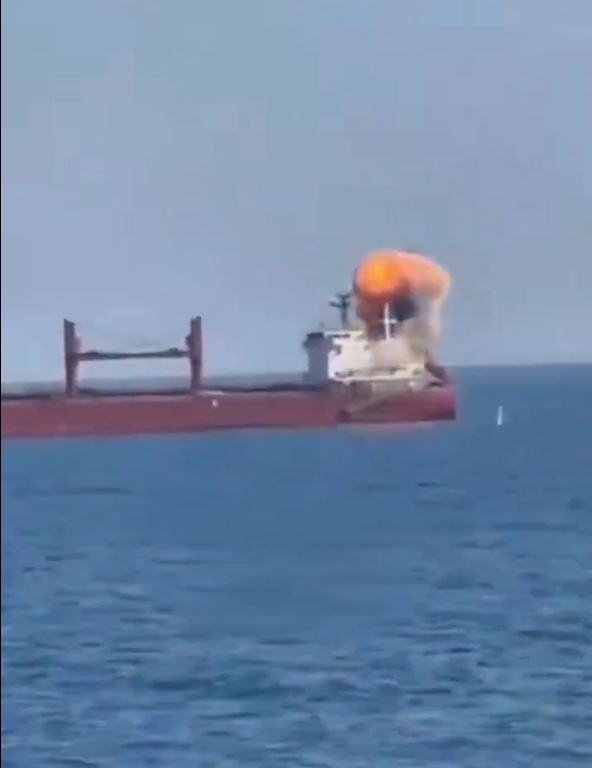
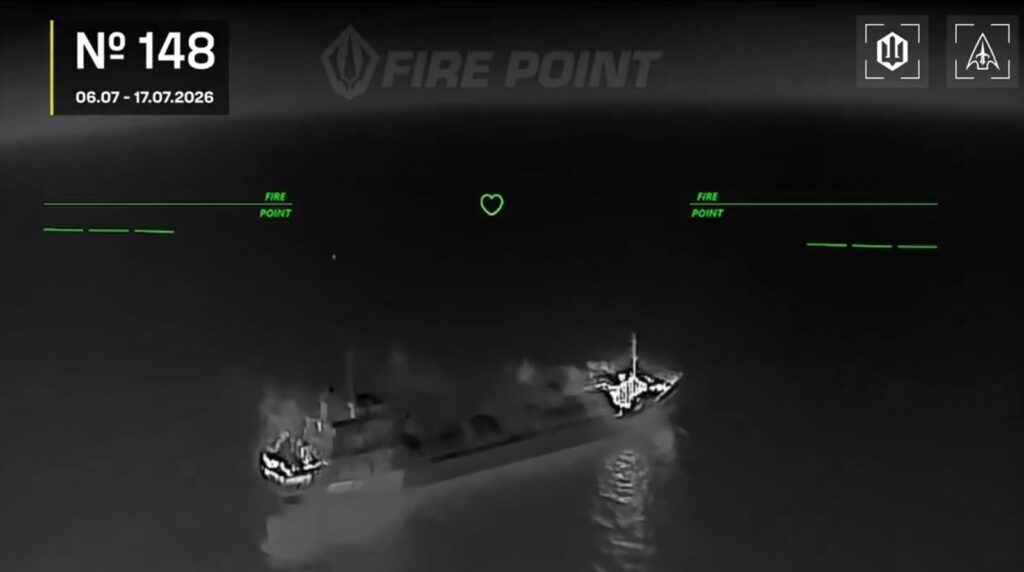
A drone strikes one of Russia's shadow-fleet bulk carriers in the Black Sea, recorded from another ship, on 17 July 2026. Screenshot from video: Exilenova+
The price rally Russia cannot collect
September wheat in Chicago gained more than 10% in a week, touching two-year highs, while Paris wheat hit a 17-month high, SovEcon director Andrei Sizov noted. “The market is starting to understand this is not the typical short-lived Black Sea rally,” the Financial Times quoted him as saying—this time, export estimates for both Russia and Ukraine may be cut substantially.
The Ukrainian half of that warning is already happening. Russia struck back at Ukraine’s grain gateways the same week: massed attacks on Chornomorsk on 10–12 July forced Kernel, Ukraine’s largest grain exporter, to halt terminal operations, with about 45,000 tons of wheat and 9,000 tons of sunflower oil lost or damaged—leaving Ukraine’s deep-water grain exports with almost nowhere to go.
Explore further
Russia’s port strikes leave Ukraine’s grain with almost nowhere else to go
Both of the Black Sea’s grain suppliers are choked at once—the reason, in Sizov’s reading, is that the market has stopped treating this as a passing rally.
The tension raises world prices, and the money goes to Russia’s competitors. Russian farmers are fenced off from their own rally twice—a floating export duty skims the price above them, and logistics costs climb as grain hunts for other routes. Ruble prices will stay under strong pressure, Sizov wrote on Telegram.
Why rerouting does not save the season
Russia’s deep-water ports beyond the strait can ship 4–4.5 million tons of grain a month—enough for July, but at the season’s peak in August through October, Russia normally ships 5–6.5 million tons a month, Sizov calculates on Telegram.
The industry agrees from the ground: the Black Sea ports cannot physically handle southern Russia’s seasonal volumes, and the railways to them were not built for it, Yaroshenko told Gorod N—while a grain trader told the same outlet that rerouting would jam rail approaches to Novorossiysk for months. The shallow Azov ports are not a convenience; they are the margin between Russia’s export capacity and its harvest.
And this year, the domestic market has more grain than usual to absorb. SovEcon expects the southern crop—grown in exactly the regions that ship through Azov—to rise 17.2% from last year. The best harvest is arriving in the provinces with the most blocked ports.
The long clock
The squeeze works through margins. Falling farm profitability is already cutting sowing—wheat area this year is the lowest since 2014, Forbes reported—and Sizov expects the trend to worsen in 2027.
The market is pricing the decay in real time: Rodnye Polya, once Russia’s largest grain exporter, was sold this month for 11.7 billion rubles ($150 million) to a little-known holding company, and terminal incomes will decline as the grain market’s export potential shrinks, Sizov told Kommersant.
Put together, the mechanism runs in one direction. Blocked ports overfill the domestic market; the surplus crushes the prices farmers live on; falling margins cut next year’s sowing; smaller harvests shrink the exports that made Russia the world’s top wheat supplier. The world, meanwhile, is already paying two-year-high prices to buy its wheat elsewhere—and the longer this runs, the more of Russia’s market share moves to the competitors the rally is enriching.
Russia struck a foreign-flagged civilian bulk carrier with cruise missiles as it left Odesa loaded with grain, killing much of its crew, Ukraine's Navy said. Fire broke out aboard the ship, and a search-and-rescue operation ran through the night to reach survivors. Ukrainian officials condemned the strike as another deliberate attack on unarmed civilian shipping.
Moscow can no longer blockade Ukraine's Black Sea ports, so it bombs the ships and terminals that keep the export route open — a campaign that squeezes Ukraine's single largest source of hard currency and puts the foreign crews sailing the corridor in the line of fire. This comes amid Ukraine's campaign against Russian shipping in the Black and Azov seas.
Three cruise missiles hit the ship as it sailed out
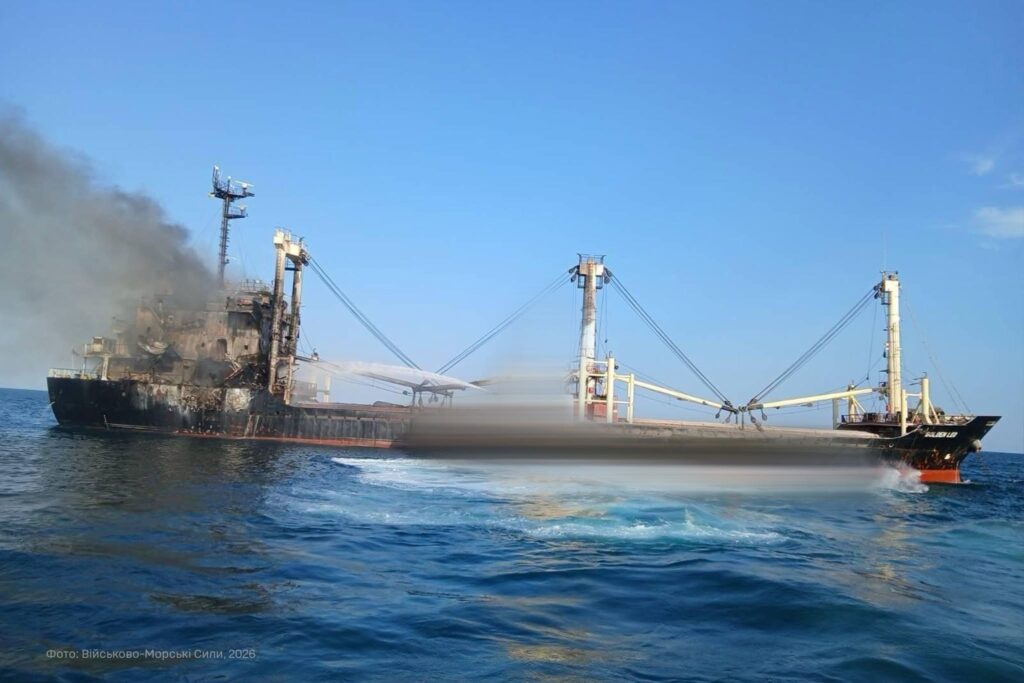
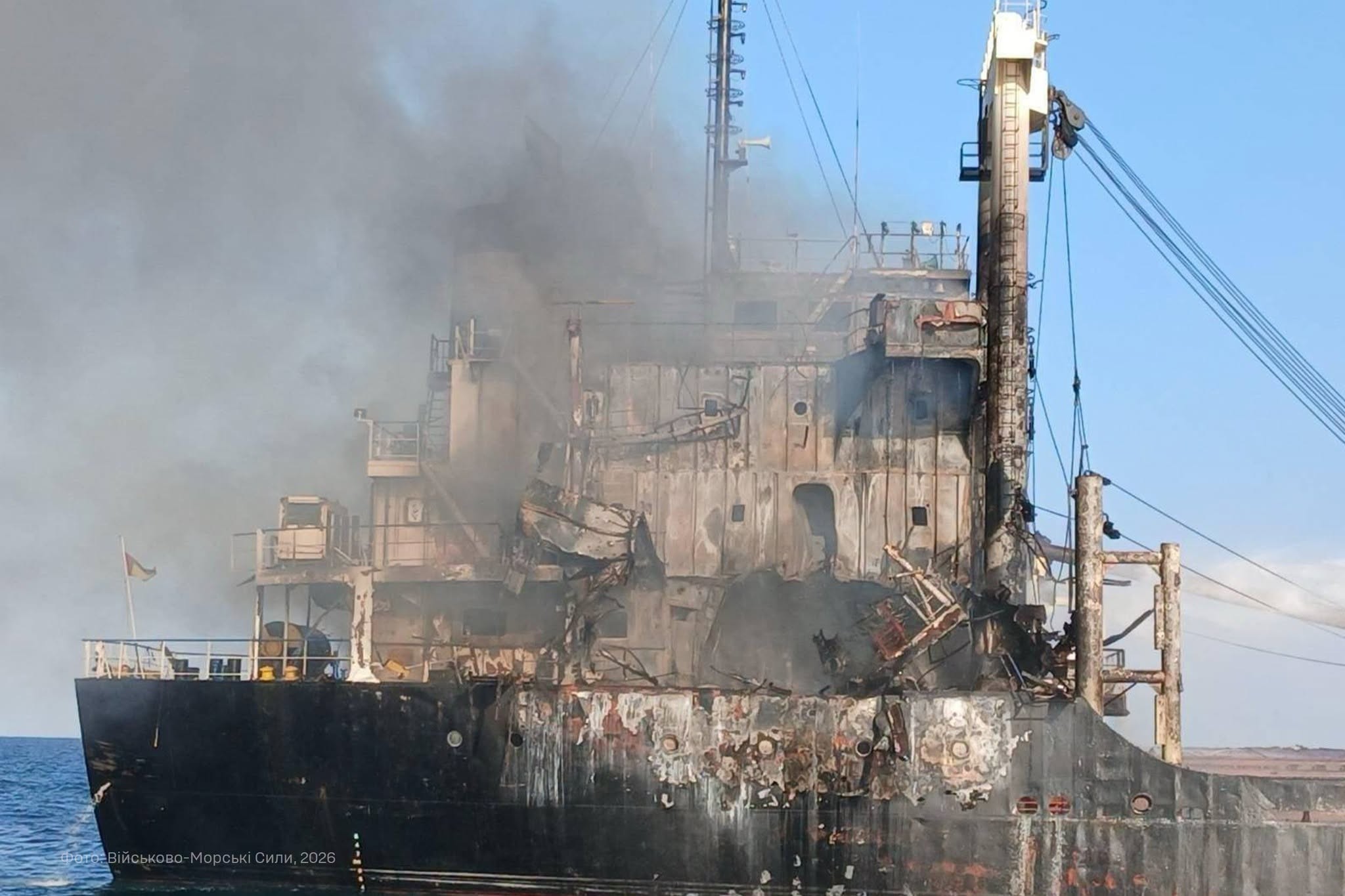
Russian forces fired three Kh-59/Kh-69 cruise missiles at the GOLDEN LEO, a Guinea-Bissau-flagged bulk carrier owned by a Turkish company, as it moved out of the combat zone with a cargo of corn on 19 July, Ukraine's Navy reported. The strike hit the starboard side of the superstructure, and a fire broke out on board.
The burned, smoking superstructure of the GOLDEN LEO after the Russian missile strike, in the Black Sea off Odesa, 19 July 2026. Photo: Ukraine's Navy
The missiles came in from the sea. Ukraine's Air Force warned of Russian missiles approaching Odesa and Chornomorsk from the Black Sea in the late afternoon, minutes before explosions were heard in the city. The ship took serious damage but did not sink, the Odesa outlet Dumska showed in photos from the scene, as tugs and rescue crews fought to keep it afloat.
The toll climbed to 10 overnight, including a Ukrainian sea pilot
The death toll rose through the night. The Ukrainian Sea Ports Authority (USPA) said10 people were killed, among them a Ukrainian sea pilot from its Delta-Pilot branch, and that eight crew members were rescued and brought ashore. A sea pilot boards a vessel to guide it safely in and out of port through difficult or dangerous waters.
Eighteen people were on board: crew members from Syria and India, along with the Ukrainian pilot. Eight of the rescued were taken to an Odesa hospital, two of them injured. By Monday, the USPA said the fire aboard the ship had been contained.
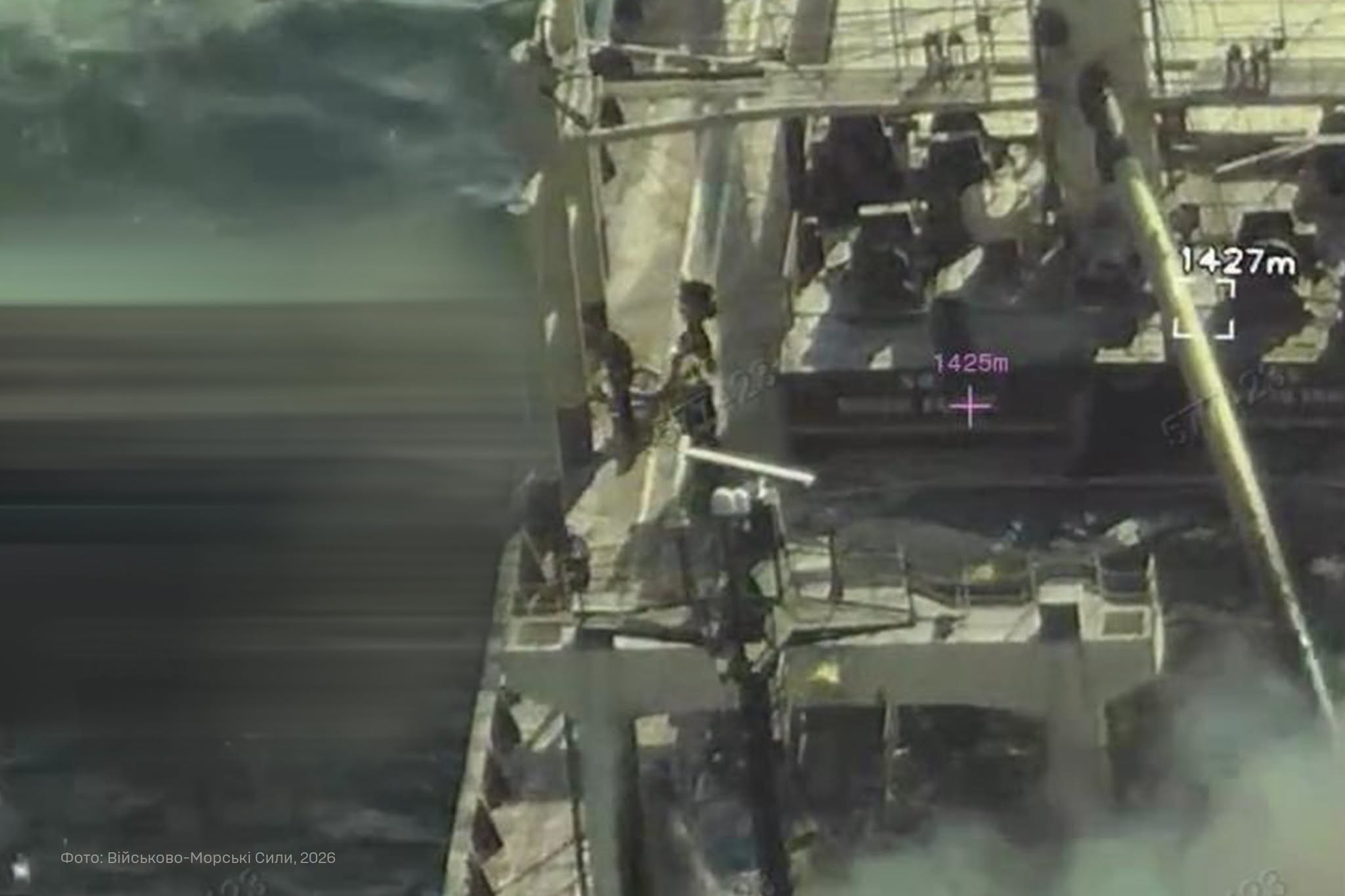
A frame from Navy footage shows the deck of the civilian bulk carrier GOLDEN LEO, struck by Russian missiles in the Black Sea off Odesa on 19 July 2026. Photo: Ukraine's Navy
Ukraine calls it terror against civilian shipping
The Navy says the strike was an act of terror and a violation of the laws of war.
"This is another deliberate Russian strike on an unarmed civilian vessel under a foreign flag that posed no military threat," it said. "The attack is an act of terror against peaceful shipping and a gross violation of international humanitarian law."
Prime Minister Serhii Koretskyi instructed the Foreign Ministry to immediately inform the states whose citizens were affected and Ukraine's international partners. The government and military command are separately preparing measures meant to strengthen the safety of shipping and shield civilian vessels and sailors from Russian attacks.
The strike lands in a month when Russia has been hammering the Odesa ports that carry the overwhelming share of Ukraine's farm exports. Russian forces have repeatedly gone after foreign-flagged ships moving through the maritime corridor, and used Geran-4 drones against grain carriers at Chornomorsk earlier in July.
Explore further
Russia hit two grain-loaded ships under Palau and Barbados flags in Odesa port overnight — grain bunker and administrative buildings also damaged
La cinquième édition du Tournoi provincial de baseball junior AA de Rimouski a couronné les Carnavals de la Capitale nationale comme équipe championne, dimanche soir, au Stade du Complexe sportif Guillaume-Leblanc.
Pour les Carnavals, il s’agit d’un copier-coller de leur performance de 2025 quand ils avaient remporté la finale par la marque de 19-6 sur les Monarques des Seigneuries de Lévis.
En finale cette année, ils ont vaincu le Baseball I.D de Rimouski par la marque de 17-3. C’est la troisième fois en cinq ans que l’équipe hôtesse s’incline en finale.
En après-midi en demi-finale, la formation rimouskoise est revenue de l’arrière pour l’emporter 7-6 face au Laurier de Victoriaville. Jakob Tremblay enregistre la victoire en relève. Nolan Dubé s’est signalé avec trois points produits.
Bilan
Dame nature n’a pas été très collaboratrice avec le tournoi. La pluie, qui a commencé à tomber samedi en fin d’après-midi, a rendu la vie difficile aux équipes participantes et au président du tournoi, Luc Jobin. Ce dernier avait joué de prudence, samedi, devançant le premier des quatre matchs de 10 h à 09 h, tout en diminuant le temps de pause entre les parties, afin de maximiser les chances de compléter la journée avant la pluie. Il a gagné son pari.
Dimanche, la première demi-finale a été repoussée de deux heures et les parties ont été diminuées à six manches, si bien que le tournoi a pu se terminer dans des conditions acceptables … ou presque, considérant l’état du terrain détrempé.
« Un bilan satisfaisant, malgré la température. On a dû faire faire quelques pirouettes dans le calendrier, mais les gens ont beaucoup apprécié qu’on puisse se réorganiser. Sur le plan des communications, on a quand même été assez sur le coup », a commenté Luc Jobin.
Son tournoi, le seul au niveau junior AA au Québec, a maintenant cinq ans. « La formule va demeurer. J’ai regardé divers scénarios et ça ne fonctionnerait pas. En même temps, les gens ne se plaignent pas. Ils aiment la formule actuelle, on va la conserver », assure-t-il.
En 2027, le tournoi se tiendra les 16-17-18 juillet.
À compter de demain, les ressortissants étrangers qui auront séjourné en République démocratique du Congo au cours des 21 derniers jours ne pourront plus entrer au Canada.
Cette interdiction ne s’applique pas aux citoyens canadiens ni aux résidents permanents.
Les Canadiens et résidents qui ont récemment séjourné en République démocratique du Congo, en Ouganda et au Soudan du Sud continueront:
d’être évalués à leur arrivée au Canada;
de s’isoler pendant 21 jours.
Depuis le début de l’épidémie, mi-mai, le virus a fait près de 800 morts, essentiellement en République démocratique du Congo.
La cinquième édition du Tournoi provincial de baseball junior AA de Rimouski couronnera son équipe championne, dimanche, au Stade du Complexe sportif Guillaume-Leblanc.Le Baseball I.D est l’une des quatre équipes restantes.
Par contre, les prévisions de la météo ne sont guère réjouissantes. En théorie, les demi-finales doivent se jouer à 10 h et 13 h.
« La première demi-finale sera fort probablement repoussée à midi. Une décision sera prise entre 8 h et 9 h », mentionne Luc Jobin qui a joué de prudence, samedi, devançant le premier des quatre matchs de 10 h à 09 h, tout en diminuant le temps de pause entre les parties, afin de maximiser les chances de compléter la journée avant la pluie. Il a gagné son pari.
MISE À JOUR À 09 H : la première demi-finale se jouera à midi et la seconde (impliquant le Baseball I.D) à 14 h 30. La finale suivra à 17 h.
La première demi-finale opposera les Carnavals de la Capitale nationale aux Seigneurs élites junior AA de Lanaudière. Suivra, l’affrontement entre le Baseball I.D de Rimouski et le Laurier de Victoriaville.
Les deux demi-finales pourraient être ramenées de sept à six manches afin de présenter la finale en début de soirée.
C’est la victoire pour le Baseball I.D, samedi après-midi (Photo : Alain Tremblay)
La formation rimouskoise a accédé à la demi-finale en vertu d’une belle victoire de 2-0 sur les Monarques de Lévis-Lotbinière, samedi. Olivier Proulx a offert une très solide performance au monticule avec un match complet, n’accordant que cinq coups sûrs, aucun but sur balles avec sept retraits sur des prises. Il a eu besoin de 96 lancers, dont 70 prises, et a profité d’une défensive très efficace.
Alexandre Bérubé a fait produire le premier point de son équipe sur un optionnel, le second étant marqué sur le même jeu à la suite d’une erreur.
Vendredi, le Baseball I.D avait disposé de Saint-Pascal par la marque de 14-2.
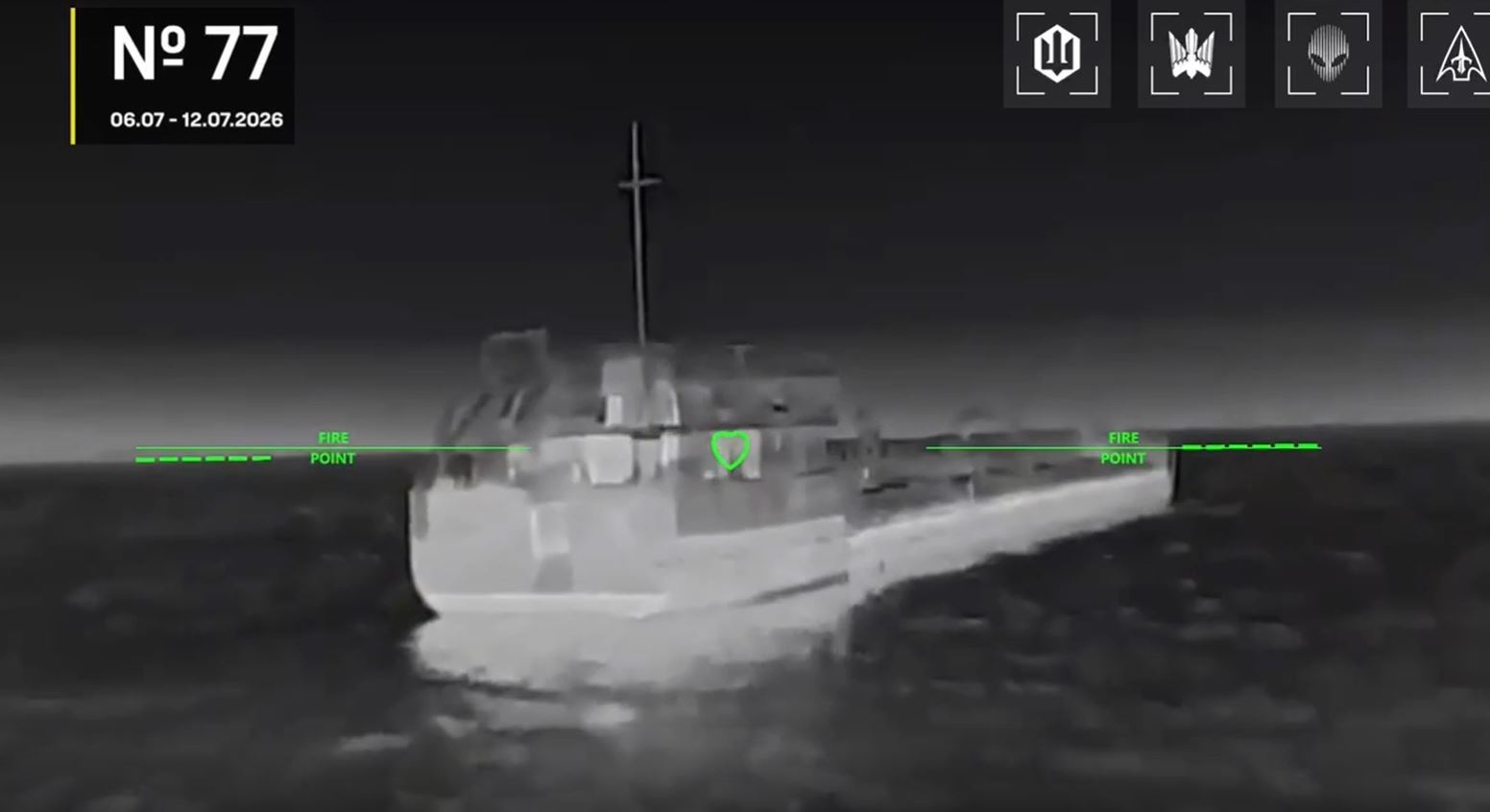
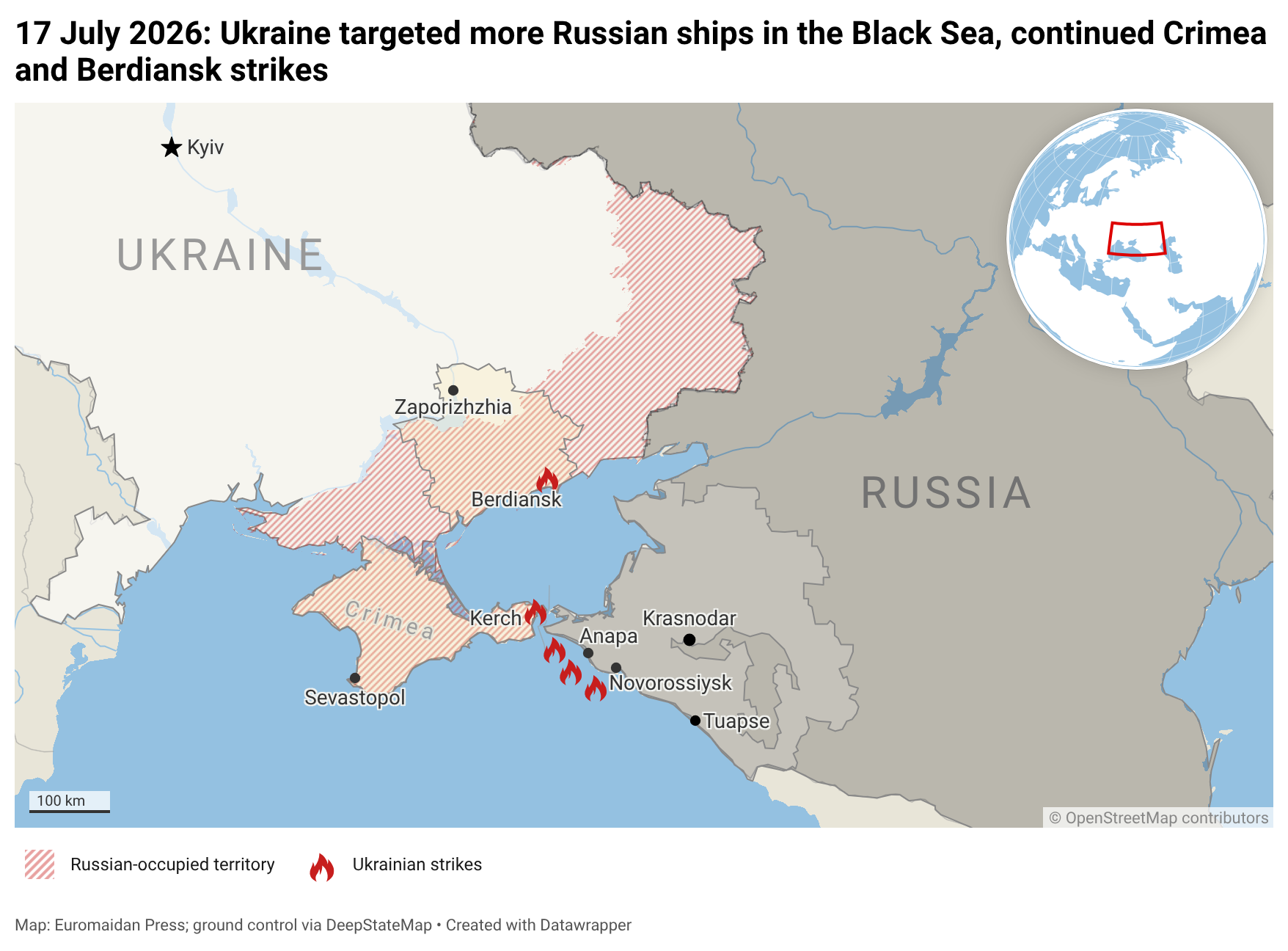
Ukraine's drones widened their assault on Russia's sanctions-dodging shadow fleet overnight on 17 July, hitting 12 more vessels in the Black Sea, according to Unmanned Systems Forces commander Robert "Madyar" Brovdi. The same night, drones struck occupied Kerch and Berdiansk, and satellites logged fires at Crimea's main rail hub as the campaign to cut the peninsula off from Russia pressed on.
Oil is the financial engine of Russia's war, and through 2026, Ukraine has turned cheap drones into a blockade of that revenue at both ends—the refineries that turn crude into cash and the tankers that move it—while tightening the noose around occupied Crimea. Each vessel struck forces Moscow to defend a maritime supply chain it once treated as low-risk, and each fire at Kerch's rail yard narrows the routes left to feed the peninsula—raising the cost of holding Crimea even as no single strike decides the war.
Twelve more ships in a single night
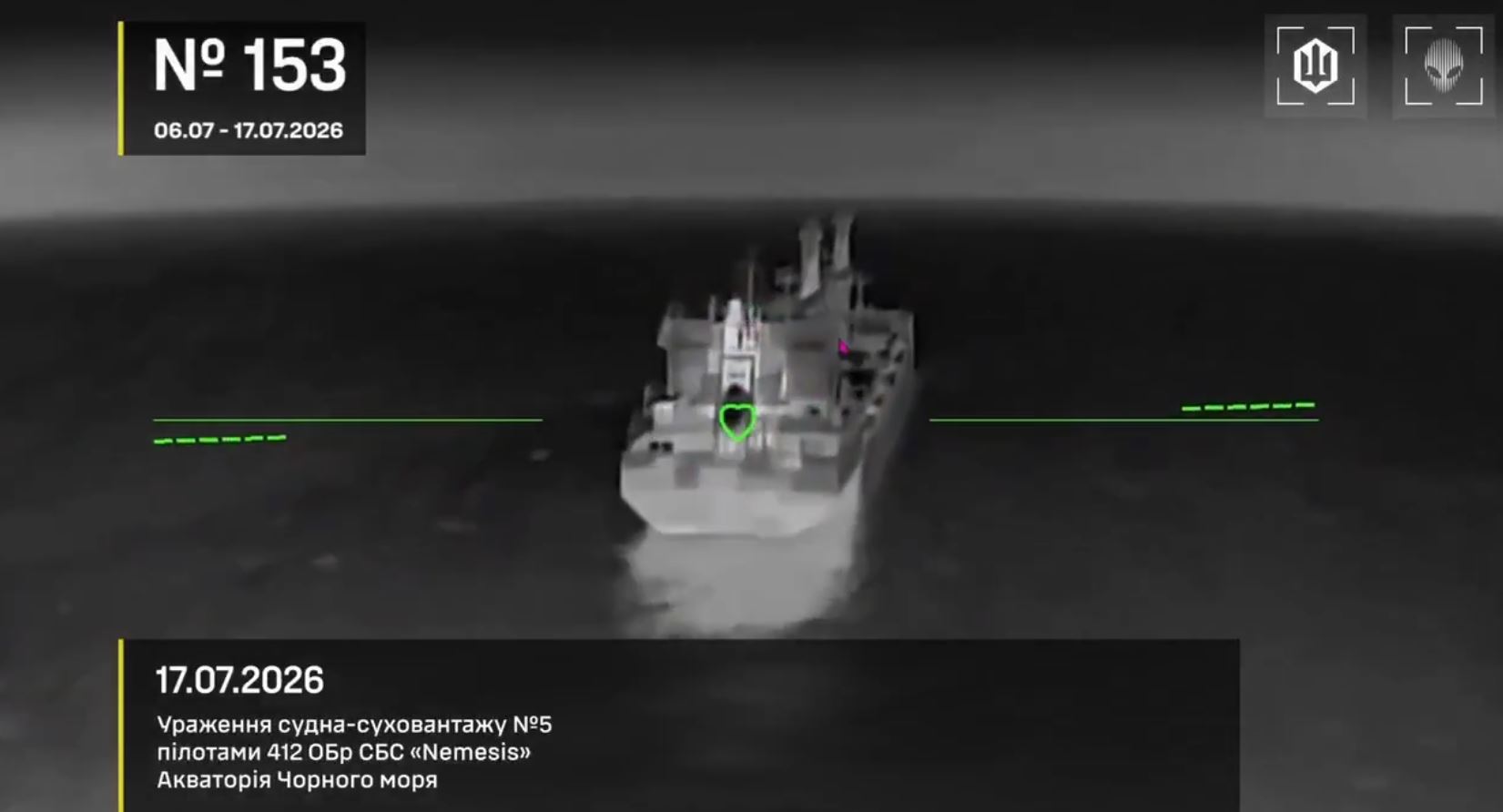
Brovdi saidhis operators hit nine dry-cargo ships, one tanker, one gas carrier, and one tug in the Black Sea. The strikes ran under the codename MoLoChKa, a Ukrainian term for dairy products.
Ukraine hit 12 more Russian shadow-fleet ships in the Black Sea—the 12-day total is now 159
Ukraine's Unmanned Systems Forces (SBS) struck 12 more vessels of Russia's sanctions-dodging shadow fleet in the Black Sea on 17 July, commander Robert "Madyar" Brovdi said. The day's… pic.twitter.com/N1GBbK0VWe
He put the 6–17 July total at 159 vessels of Russia's shadow fleet across both seas. Of those, 117 were hit in the Sea of Azov and 42 in the Black Sea.
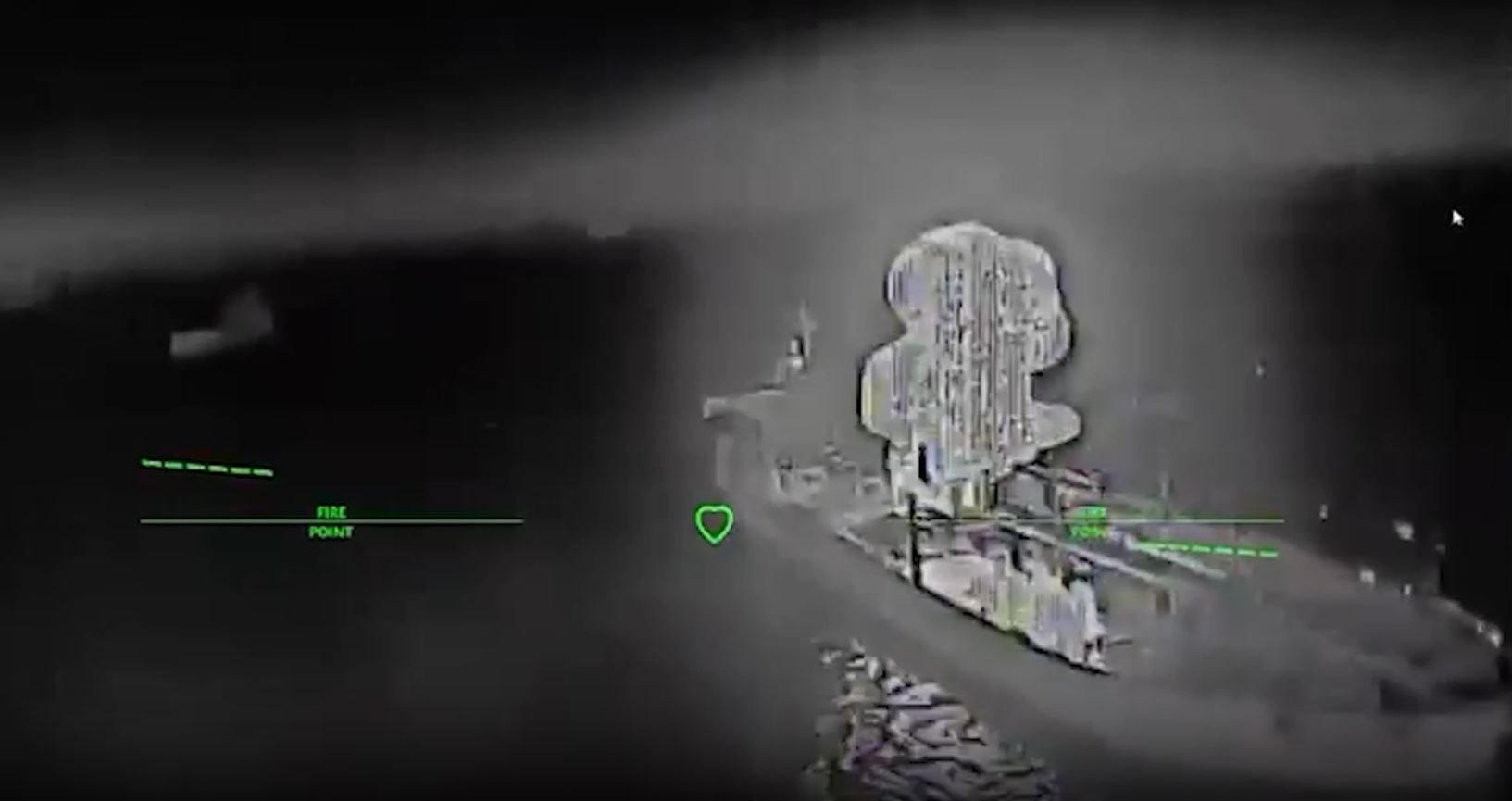
A Ukrainian drone closes on a Russian dry-cargo ship, logged as the 153rd vessel hit, during Unmanned Systems Forces strikes in the Black Sea overnight on 17 July 2026. Screenshot from video: Robert "Madyar" BrovdiA drone strikes one of Russia's shadow-fleet bulk carriers in the Black Sea, recorded from another ship, on 17 July 2026. Screenshot from video: Exilenova+
Brovdi vowed the operation would run without end. Moscow will fall, he wrote, promising Ukraine would "feed and rebuild" Crimea once the peninsula is retaken.
The campaign earlier targeted the small feeder tankers that carry Russian oil down the Volga-Don Canal and across the Azov Sea to waiting export ships, now, in the Black Sea, it switched to larger ocean-going tankers and bulk carriers. In the Black Sea, the 17 July haul ran mostly to dry-cargo ships.
A fireball on the horizon caught by a CCTV camera on an occupied Crimea or from Russia's black Sea coast beach during overnight drone strikes on 17 July 2026. Screenshot: Supernova+
A day earlier, the Security Service of Ukraine's Mamai sea drones struck two shadow-fleet crude tankers in the same waters. The wider drive has already pushed the fight out of the Azov shallows and into the open Black Sea.
While the ships burned at sea, drones hit occupied Crimea from about 21:40 until morning, the monitoring Telegram channel Krymsky Veter reported. Residents heard explosions in at least Kerch, Simferopol, Feodosia, and Yevpatoria.
By morning, OSINT channels recorded a cluster of fires at Kerch's railway station, near the Crimean Bridge, and NASA FIRMS satellite data confirmed a blaze in the area, the monitoring channel Exilenova+ said. Early reports pointed to burning warehouses, rail wagons on the tracks, and possibly the Kerch oil depot and the Kerchenska electrical substation, though none of that was confirmed.
Monitoring channels also logged a fire near Shchebetivka, by the Koktebel substation, after drones reportedly struck a pumping station and the 110/35/6 kV facility there.
Crimea's supply lines under strain
The Kerch rail yard has grown critically overloaded as Ukrainian strikes hammer the peninsula's rail network. Two days earlier, occupation authorities in the northern city of Dzhankoi restricted mobile service to 16 hours a day amid power disruptions.
Reports of drone attacks and explosions continued throughout the night in Kerch. NASA FIRMS detected a fire near the Kerch railway station. pic.twitter.com/gydmLBgnwS
In occupied Berdiansk, Zaporizhzhia Oblast, Ukrainian strike drones hit energy infrastructure, sparking a fire, Exilenova+ said in a separate overnight report, sharing a video of the resulting fire.
A very toasty Russian-occupied Berdyansk airfield post Ukrainian ATACMS strike last night.
Cette somme s’ajoute aux 6 milliards $ déjà annoncés par le gouvernement Carney dans son énoncé économique de printemps pour recruter, former et embaucher jusqu’à 100 000 nouveaux travailleurs spécialisés.
Pour y parvenir, il compte notamment bonifier la rémunération des apprentis.
Le gouvernement fédéral souhaite entamer prochainement des discussions avec les provinces afin de conclure des accords de financement.
Christine Fréchette avait fait savoir en avril dernier au ministre fédéral des finances:
que la formation des travailleurs continuerait d’être gérée par le Québec;
qu’elle s’attendait à ce que les fonds fédéraux lui soient transférés.
Le Rimouskois, Charles-Éric Maltais, a pris part à la Classique Claude-Raymond, un événement annuel qui regroupe les 84 meilleurs joueurs de baseball de 14 ans et moins du Québec.
C’est en fin de semaine dernière qu’il a vécu cette expérience en présence de monsieur Raymond, 89 ans, une légende du baseball québécois qui a connu une très belle carrière dans les ligues majeures. Il a notamment participé au match des étoiles de 1966 à Houston, il y a 60 ans !
C’est d’ailleurs lui qui a présenté, individuellement, les joueurs des équipes participantes lors de l’ouverture officielle le vendredi soir.
Charles-Éric Maltais dans le chandail des Riverains du Bas-Saint-Laurent, secteur Est. (Photo : ABMR)
« J’ai été choisi après avoir participé à un camp d’évaluation de quatre heures à Québec. On a été évalué sur nos lancers, notre coup de bâton et notre défensive. Par la suite, les évaluateurs sont venus me voir jouer deux ou trois parties pour faire la sélection finale », explique-t-il en entrevue avec Le Soir.
L’expérience est unique pour les participants qui obtiennent un encadrement de première qualité dans un très bel environnement au Stade Richard-Lafontaine de Saint-Jean-sur-Richelieu. La Classique en était à une 11e édition.
« C’était vraiment le fun. Ça m’a permis de voir d’autres joueurs que je ne connaissais pas et qui sont parmi les meilleurs. Il y a moins d’erreurs, c’est davantage une bonne qualité de jeu », poursuit celui qui occupe la position de voltigeur de centre ou celle de voltigeur de gauche.
Charles-Éric Maltais avec Jean-Guy Dionne et, à gauche, son père Bruno. Le petit-fils de M. Dionne, Jordan Laurin, jouait pour l’équipe des Gris qui a remporté la Classique. Il réside à Laval. (Photo courtoisie)
Charles-Éric évoluait pour l’équipe des Rouge qui a gagné une de ses quatre parties durant le tournoi. « Il y avait six équipes. On a perdu en quart-de-finale contre les Vert qui ont perdu en finale. »
Il est un produit de l’Association du baseball mineur avec qui il a commencé en bas âge dans le Rallye Cap. Cette saison, il évolue avec les Riverains 15U AA, du secteur Est à Rimouski, dans la Ligue de la région de Québec.
La cinquième édition du Tournoi provincial de baseball junior AA de Rimouski se tient en fin de semaine au Stade du Complexe sportif Guillaume-Leblanc.
Comme par les années passées, huit équipes seront de la partie, deux du Bas-Saint-Laurent, deux de la région de Québec, les autres venant de Repentigny, de Victoriaville, de Richelieu-Yamaska et des Laurentides,.
Calendrier vendredi
10 h Baseball ID de Rimouski vs RDL Hyundai de Saint-Pascal
13 h 30 Monarques de Lévis-Lotbinière vs Carnavals blanc de la Capitale nationale
17 h Laurier de Victoriaville vs Seigneurs élites de Repentigny
20 h 30 Patriotes des Laurentides vs Guerriers de Richelieu Yamaska
Si le Baseball ID gagne vendredi, son deuxième match se jouera samedi à 13 h 30. En cas de défaite vendredi, ce sera à 10 h 30.
Bien implanté
« Encore une fois, les équipes s’arrachaient les places. Le tournoi va bien et répond à un besoin. Après cinq ans, on est bien implanté. Les installations et le fait de le présenter durant les Terrasses urbaines représentent un beau combo. Ça tombe durant une bonne période. Je m’attends à du jeu relevé. Richelieu-Yamaska et Laurentides sont dans les meilleures de leur ligue », explique le président de l’événement, Luc Jobin.
Ce dernier, qui est également président de Baseball Bas-Saint-Laurent, mijote aussi un autre projet.
« Je suis en discussion avec Baseball Québec. Est-ce qu’on ne pourrait pas faire une finale entre les deux ligues junior AA dans la province qui serait un espèce de Final Four quelque part en septembre dans la région de Québec ? Ça pourrait être quelque chose d’intéressant. »
Trois champions de la région
Les trois premières éditions du tournoi ont vu à chaque fois deux équipes du Bas-Saint-Laurent croiser le fer en finale.
En 2022 et 2023, Trois-Pistoles a remporté le championnat contre Rimouski alors qu’en 2024, la formation des Basques s’est inclinée 7-6 contre celle du Kamouraska.
L’an dernier, deux équipes de l’extérieur étaient du match ultime : les Carnavals 1 de la Capitale nationale ont alors remporté la finale par la marque de 19-6 sur les Monarques des Seigneuries de Lévis.
Les demi-finales seront disputées dimanche à 10 h et 13 h alors que la finale suivra à 16 h 30
À noter que l’accès au stade sera gratuit tout au long de la fin de semaine et qu’un service de cantine sera offert.
Les nageurs du Club de natation Les Dauphins de Rimouski, Maxim Bélanger, Hugo Brouillet et Emma Ducharme, ont participé, du 5 au 9 juillet, aux essais canadiensqui se tenaient au Parc olympique de Montréal.
Hugo Brouillet était qualifié à cinq épreuves. Il a participé à une finale chez les juniors au 50 mètres brasse et a terminé au 9e rang. Le Rimouskois s’est également classé 21e au 100 mètres brasse et dans le top 30 au 50 mètres libre, au 50 mètres papillon ainsi qu’à l’épreuve de 200 mètres quatre nages individuel.
De son côté, Emma Ducharme était qualifiée au 50 mètres dos. Elle a participé à la finale B et a terminé au 14e rang de l’épreuve.
Finalement, Maxim Bélanger s’est classée au 50 mètres et au 100 mètres brasse. Elle a terminé 25e et 34e rang à ces deux épreuves.
La compétition regroupait 704 athlètes de partout au pays qui tentaient de se tailler une place sur l’équipe canadienne pour participer aux Jeux pan-pacifiques.
Huit nageurs des Dauphins sont présentement au parc Jean Drapeaux à Montréal pour le Grand Prix du Québec qui se tient jusqu’au 17 juillet.
Between 92% and 95% of Ukraine’s export grain reaches the ports by rail. The deepwater terminals that once stockpiled up to seven million tons a month can now hold four to five—a gap of about 2.5 million tons a month that the Danube barges, the trucks, and the western rail crossings together cannot come close to filling, wrote Bohdan Kostetskyi, operating partner at the trade and analysis firm Barva Invest.
Türkiye raised its transit fee by about 15% on 1 July, and Ukrzaliznytsia has proposed a 30% rail increase from 1 August.
The country’s main farmers’ union now estimates Ukraine has lost about a third of its capacity to export grain by sea, as reported by Reuters. More than 90% of its farm exports move through three ports in Odesa Oblast, and the country had forecast around 43 million tons for the 2026/27 season, which began in July, compared with 37 million last year.
The squeeze is set to tighten on schedule: Türkiye raised its transit fee by about 15% on 1 July, and Ukrzaliznytsia has proposed a 30% rail increase from 1 August that would add $5 to $6 per ton.
Explore further
Russia can’t blockade Ukraine’s grain ports, so it bombs them—exports could drop a third
The shock reaches world markets
World wheat markets reacted immediately. Euronext wheat jumped 7% on 15 July to €231.75 ($265) a ton, its highest since February 2025. The move ran both ways: Ukraine has been hitting Russia’s own Black Sea shipping, striking more than 100 vessels in the Sea of Azov and choking a route that carries roughly a quarter of Russian grain exports.
Shipowners have begun refusing to enter Ukrainian ports, citing force majeure.
Major traders have now suspended purchases for delivery to deepwater terminals, and shipowners have begun refusing to enter Ukrainian ports, citing force majeure, Barva Invest’s Kostetskyi said. Four of Ukraine’s 13 large export terminals had stopped buying, industry sources told Reuters.
Kernel, the country’s largest grain exporter, halted operations at its Chornomorsk terminals after strikes on 10–12 July, with around 45,000 tons of wheat and 9,000 tons of sunflower oil lost or damaged, the company reported. Deputy Economy Minister Taras Vysotskyi said the state will do what it can to keep exports at or above last year’s level.
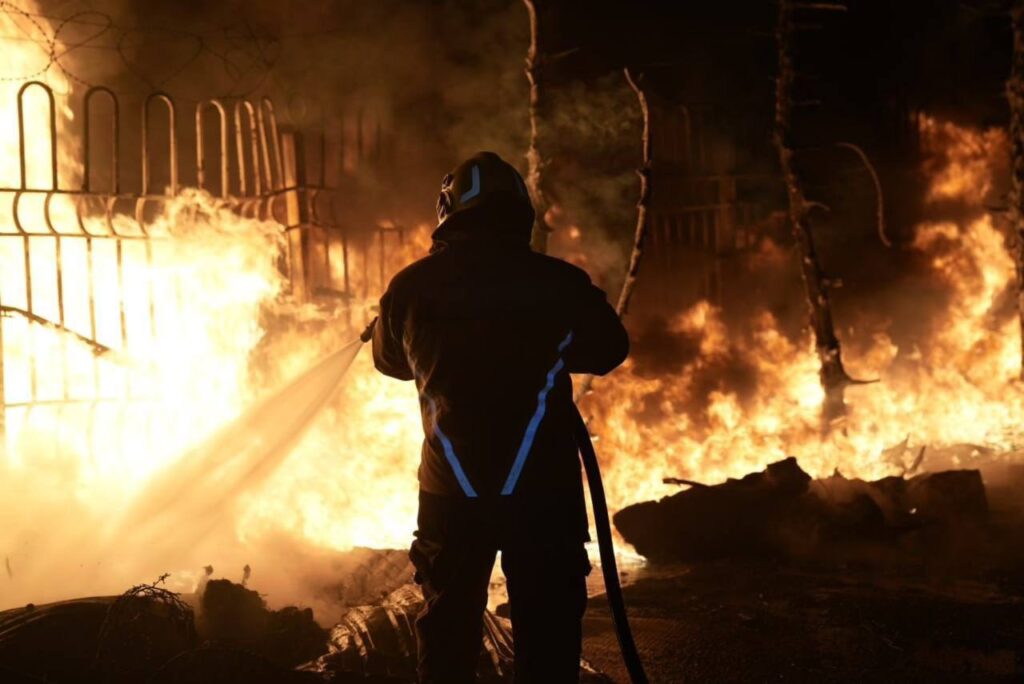
A rescuer extinguishes a fire at port infrastructure in Odesa Oblast after Russian drone strikes overnight on 2-3 May 2026. Credit: Oleh Kiper/Telegram
No way around the rail line
By Kostetskyi’s figures, the land alternatives cannot take up the slack. River exports through the Danube ports run about 100,000 tons a month, truck exports roughly the same, and rail to the western border crossings tops out at 300,000 to 400,000 tons—set against the 2.5 million tons of monthly capacity the ports have lost, a trickle.
The zone where trucking can compete with rail has narrowed to about 200 km from the ports.
They are also getting harder to feed: the zone where trucking can compete with rail has narrowed to about 200 km from the ports, so even a rail tariff rise that might, in theory, widen the delivery radius runs into trucking costs too high to close the gap.
Falling prices hit farmers
The damage travels straight to the farm gate. With deepwater buyers gone, purchase prices have fallen within days—rapeseed bids at crushing plants dropped about 1,000 hryvnia per ton (about $24) over the week, and Kernel cut its terminal bids about 200 hryvnia per ton (about $5) in a single day, trade outlet Latifundist reported.
The share of the big bulk carriers that haul grain to Asia has fallen to about 20%, down from 40% to 45% in earlier years.
Every hryvnia off the price lands on producers who, the All-Ukrainian Agrarian Council warns, are being pushed toward running out of working capital for the next sowing campaign. The council, which represents more than 1,400 small and mid-sized producers, has backed port operators in asking the government and foreign partners to widen war-risk insurance and compensation.
War-risk premiums are already built into the sea leg—freight from Constanța to Alexandria runs about $5 per ton cheaper than from Odesa, and the share of the big bulk carriers that haul grain to Asia has fallen to about 20%, down from 40% to 45% in earlier years. Türkiye’s higher transit fee and the proposed rail hike would pile several more dollars per ton onto grain that is already struggling to reach a ship.
The rail line still carries almost everything.
Kostetskyi does not expect a full, prolonged shutdown of maritime exports, reading the current strikes as a fixed campaign window rather than a permanent blockade. But the constraint he describes does not lift when the strikes pause. The rail line still carries almost everything, the ports still handle less than they did, and the routes meant as a fallback were never built for this.
Ukraine's Security Service (SBU) struck two sanctioned Russian oil tankers with naval drones in the Black Sea, the SBU said. The vessels belong to the shadow fleet Moscow uses to sell crude around Western sanctions, and Russian aircraft tried and failed to stop the attack.
Oil exports remain the biggest source of cash for Russia's war, and Ukraine has spent 2026 attacking that revenue, where Western measures have left the money moving. Ukraine keeps targeting Russian oil refineries, oil pipelines, depots, export terminals, and tankers. Forcing Moscow to defend its own oil exports at sea makes every shipment slower and costlier, compounding a fuel crisis already reshaping daily life inside Russia.
Two tankers, one sanctions-busting job
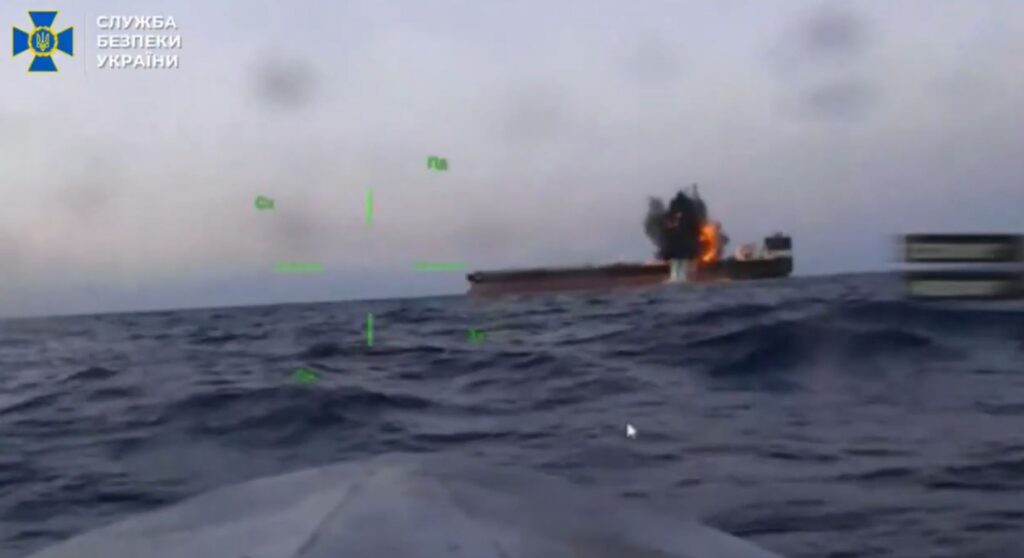
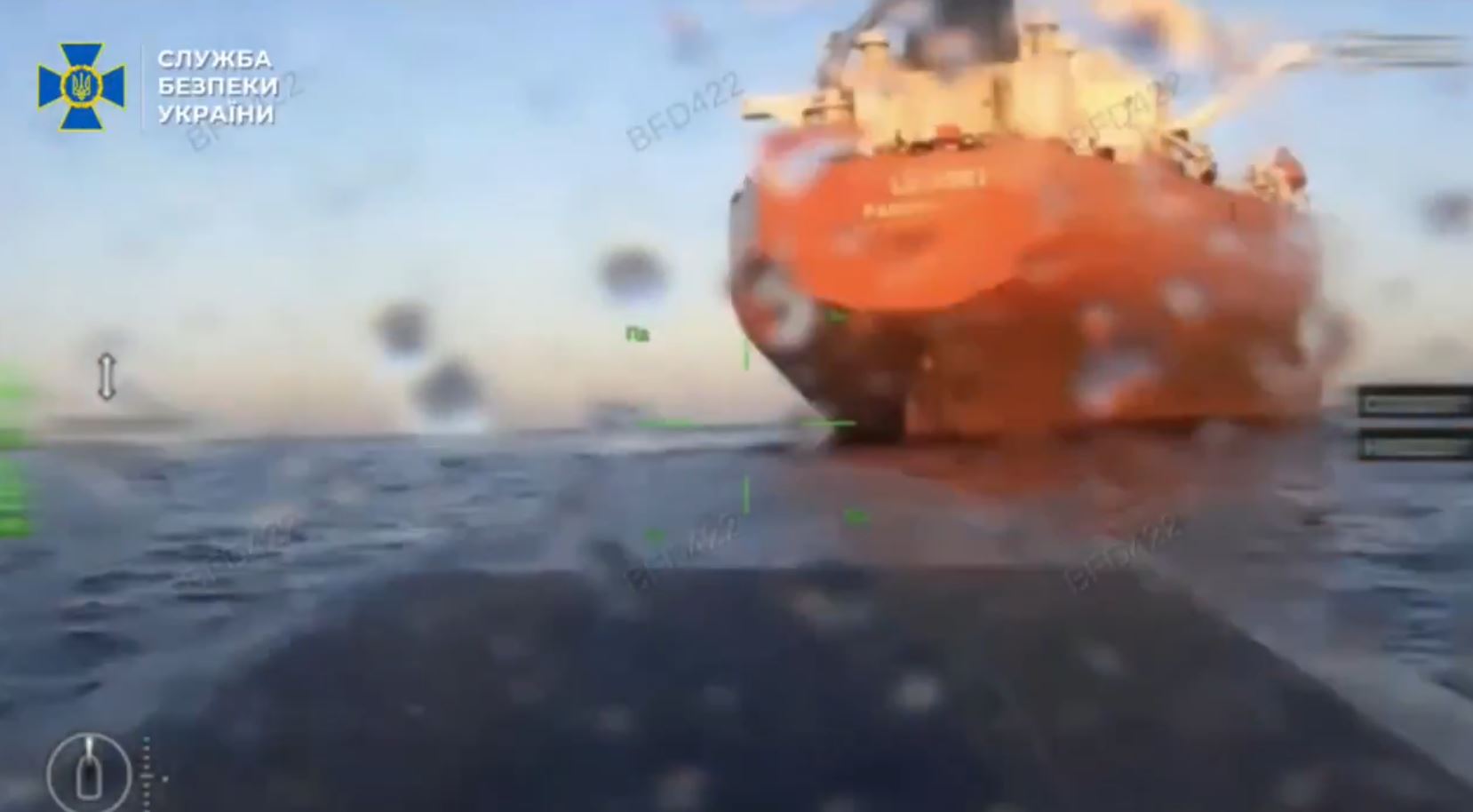
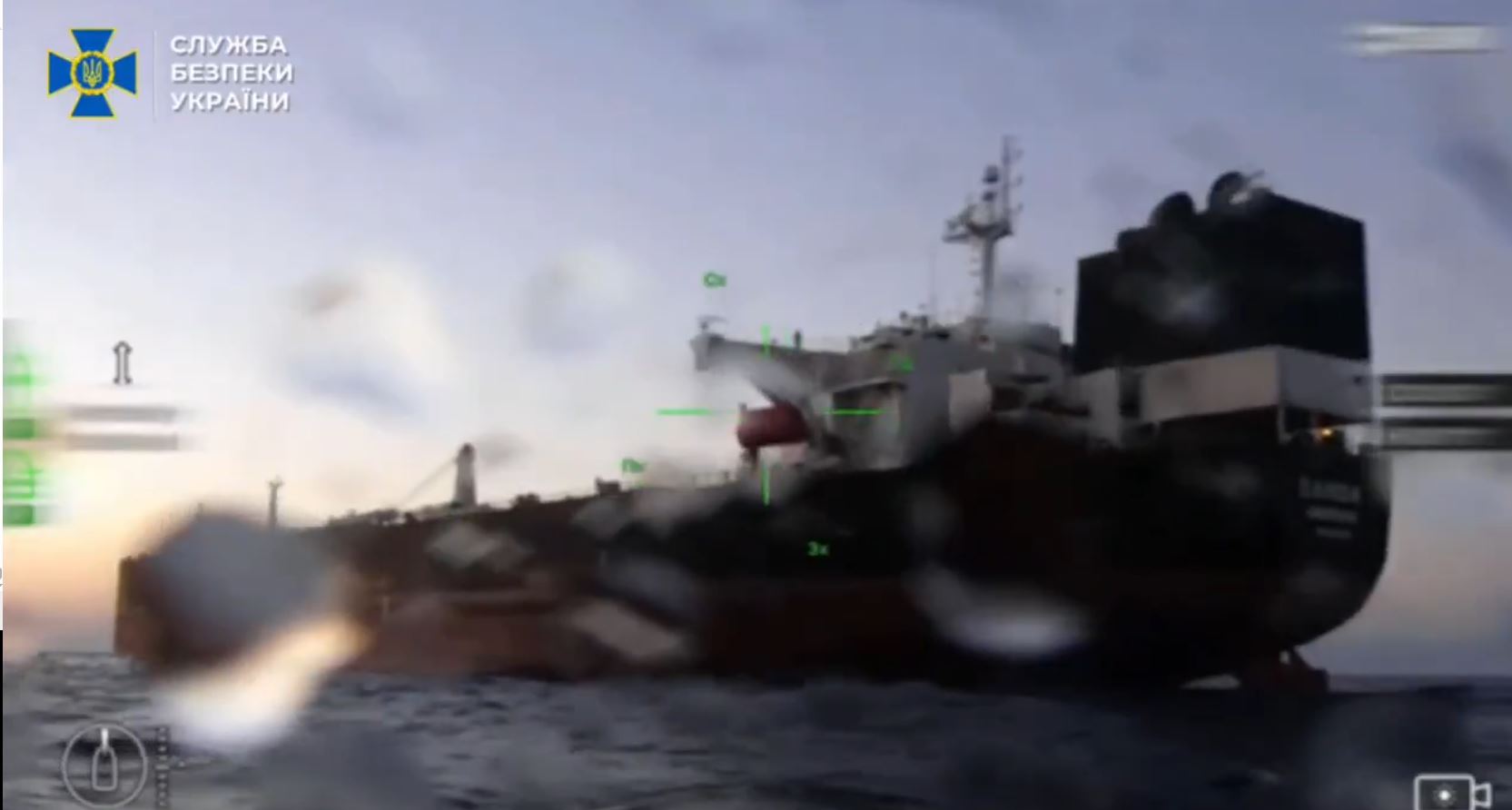
The SBU, working with the Navy, hit the ocean-going tankers Louise 1 and Banda — both under Ukrainian sanctions — with Mamai naval drones.
An SBU naval drone closes on the stern of the Russian shadow-fleet tanker Louise 1 in the Black Sea, 16 July 2026. Screenshot from SBU video
Louise 1 had moved Russian crude through the G7 and EU embargo, loading at Baltic and Black Sea ports with its transponder switched off. In 2026 alone, it carried nearly 3 million tons of Russian Urals crude, the SBU said.
The sanctioned Russian tanker Banda in the sight of an SBU naval drone before the strike in the Black Sea, 16 July 2026. Screenshot from SBU video
Banda had run Russian crude out of four ports: Ust-Luga, Kerch, Novorossiysk, and Nakhodka.
Ukraine's SBU hits two shadow-fleet tankers in the Black Sea
The Security Service of Ukraine and Navy struck the sanctioned tankers Louise 1 and Banda with Mamai sea drones, the SBU said. The Louise 1 alone moved nearly 3 mn tons of Russian crude in 2026.
The service calls each shadow-fleet tanker a legitimate target and a working part of Russia's war machine. Every strike, it says, cuts the oil money paying for the invasion.
A week earlier, the SBU's Sea Baby drone hit the sanctioned tanker Blue in Ukraine's waters off occupied Yalta. Ukraine has spent 2026 turning cheap drones into kinetic sanctions on Russia's tanker fleet. Sea Baby drones have wrecked shadow-fleet tankers across the Black Sea since late 2025.
The air campaign running alongside it
The naval strikes run in parallel with an aerial-drone campaign by the Unmanned Systems Forces (SBS). On 16 July, SBS operators struck 11 more shadow-fleet vessels — five oil tankers, a gas carrier, three dry-cargo ships, and two tugs.
Ukraine's drones hit 11 more shadow-fleet ships in a single day, pushing the 10-day total to 147
Ukraine's Unmanned Systems Forces (SBS) struck 11 vessels of Russia's sanctions-dodging shadow fleet on 16 July, commander Robert "Madyar" Brovdi said. The day's haul, in the Black… pic.twitter.com/4iZPIjoT2B
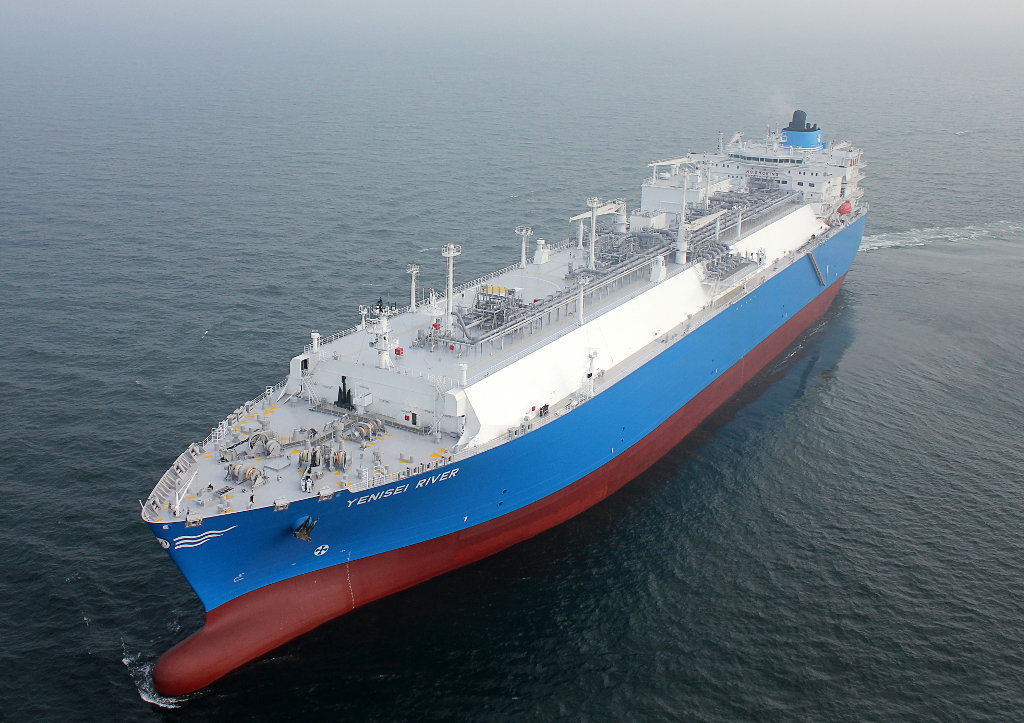
Greece is blocking the European Union's newest round of sanctions on Russian gas to shield a single shipping company, the Financial Times reported. The objection has stalled the bloc's 21st sanctions package for a week and forced an emergency extension of the cap on Russian oil prices. At the center sits one Greek tycoon and a fleet of tankers built for Russia's Arctic.
As Russia's full-scale war grinds on, the money that funds it still moves by sea, and the tangle of Western-owned vessels wired into that trade keeps blunting the sanctions meant to cut it off.
The company at the center
Athens is protecting Dynagas after its ambassador warned the sanctions would "ruin" the company owned by Greek shipowner George Prokopiou. Greece's ambassador to the EU told fellow envoys on Wednesday that the planned measures, which would ban transporting Russian LNG to third countries, would "ruin" the firm, two people briefed on his remarks said. Two others confirmed he had named Dynagas as the reason Greece could not back the package.
The company operates 27 gas tankers, according to maritime data portal Equasis. A third of them are Arc7 vessels, ice-hardened ships built to handle the frozen waters near the Yamal plant on Russia's northern coast. Only 15 such carriers keep Yamal's exports running year-round, and European companies control most of them, an arrangement that leaves Russia's Arctic gas trade exposed to any Western move against the ships.
Dynagas has moved more than 10 million tons of Russian LNG since the start of 2025, the FT calculated using data from analytics firm Kpler, identifying 11 of its ships that completed 144 voyages in that time.
Explore further
Europe can legally quit Russian LNG today. It keeps choosing not to.
A veto that freezes the whole package
The EU's 21st sanctions package needs unanimous support, so one refusal is enough to hold it. Greece's objection has left the rest of the package stalled, freezing planned measures against additional Russian banks, crypto platforms, and defense-industry firms. The package also carries a mechanism to lower the ceiling above which companies may legally buy and transport Russian crude.
The bloc's previous round added 46 shadow-fleet tankers to its blacklist, bringing the total past 630 ships.
Prokopiou controls Dynagas alongside Dynacom, whose Russian-crude trade has brought in $915 million over three years — the biggest such haul of any Greek shipowner. When the US-Israel war with Iran erupted, Dynacom was among the earliest operators willing to run tankers through the Strait of Hormuz.
Le nouveau pont, qui relie Windsor, en Ontario, à Détroit, au Michigan, doit ouvrir le 27 juillet.
Le gouvernement américain a récemment posé des exigences financières.
Après négociation, le Canada, qui a entièrement payé la construction, partagera pendant 15 ans avec les États-Unis le profit net d’exploitation du pont à péage.
Mark Carney a précisé à CTV News que ce profit serait calculé après déduction de la dette pour la construction, et serait donc minime.
Or, selon l’interprétation de Washington rapportée par l’agence Bloomberg, ni les intérêts de la dette ni l’amortissement ne seraient déduits du profit partagé.
Deux athlètes du Club d’escrime Les Pirates de l’Est, Céline Guillemart et Misha Blanchet ont pris part au Critérium Mondial des Vétérans qui se tenait à Paris, du 4 au 6 juillet.
Guillemart s’est classée en 5e position à l’épée après avoir été en deuxième place après la ronde de classement. Elle a terminé à seulement une touche du podium.
De son côté, Blanchet a défendu sa place dans plusieurs beaux combats. Selon le Club d’escrime, il s’agit pour lui d’une expérience de plus pour lui qui marque une progression continuelle et ce périple à l’international des deux escrimeurs de la région permet de faire rayonner les Pirates.
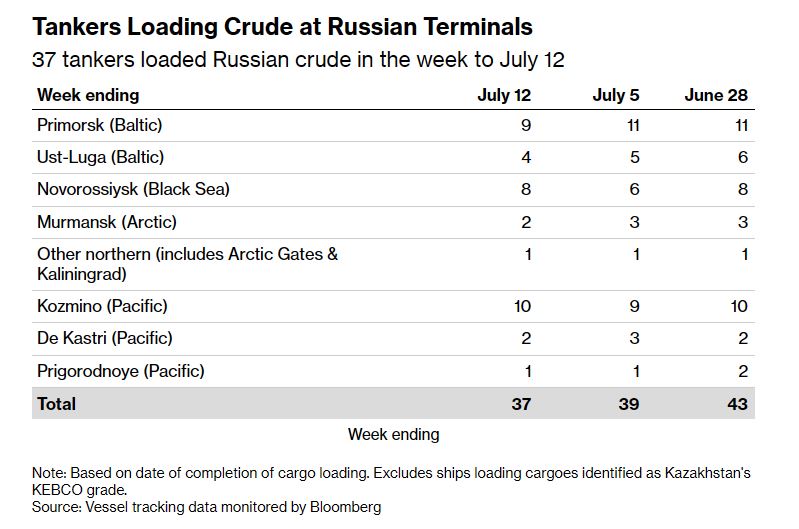
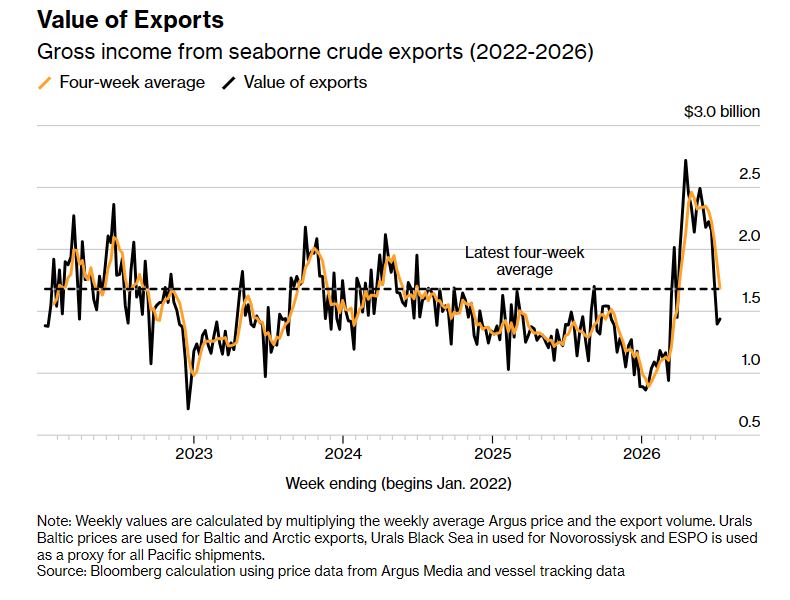
Ukraine's strikes on Russian refineries are pushing Moscow to export crude it can no longer process at home, Bloomberg reported. Buyers are not taking it fast enough, so Russian oil is piling up on tankers at sea. The value of those exports keeps sliding, and tanker loadings dipped in the week to 12 July.
Sanctions were supposed to choke the money, yet Russia keeps its crude moving on a sprawling fleet of tankers bound for Asia — the very chain Kyiv now works to break. The near-term damage is to price, not volume, but cheaper barrels, slower sales, and a fresh US sanctions push could deepen the squeeze on the revenue that pays for the war.
Ukraine's refinery strikes are forcing crude onto the water
Ukraine has stepped up its strikes on Russia's refineries. Yesterday, it hit the Gazprom Neftekhim Salavat plant far inside Russia, and the Afipsky facility near the Black Sea. The wave of attacks has driven Russian refining runs to their lowest in more than 21 years this month. That deepens a domestic fuel crunch and squeezes the global market. With less crude to process at home, Moscow is likely diverting more into exports as its own production falls. Russia pumped 8.93 million barrels a day in June — about 830,000 below the level it promised the OPEC+ producer group.
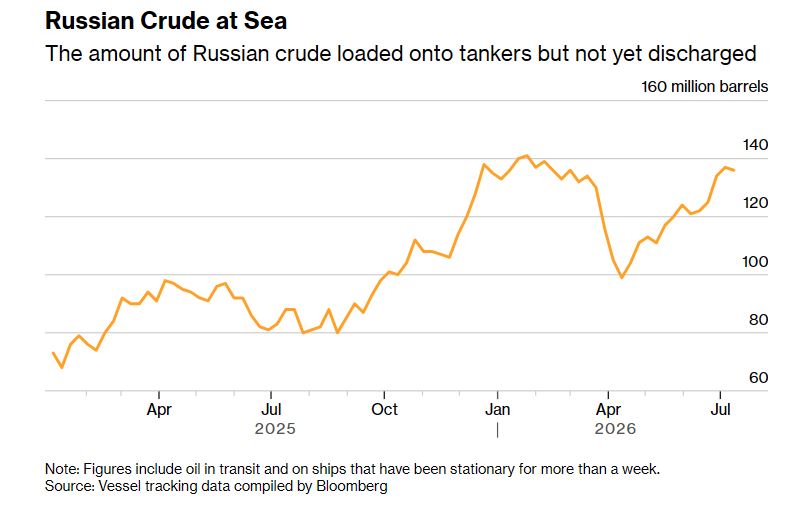
Soaring exports are not being matched by deliveries. So Russian crude is stacking up on tankers, loaded but not yet discharged, Bloomberg wrote. The total has climbed back near its start-of-2026 highs — about 135 million barrels by Sunday.
Russian crude loaded onto tankers but not yet discharged, 2025–2026. Chart: Bloomberg vessel-tracking data
Cargoes are building up near Egypt in the Mediterranean and east of Singapore. Five Urals tankers are anchored off Egypt, and another five have halted near Singapore, a gathering point for shadow-fleet ships hauling sanctioned oil. A growing share of the oil at sea is on vessels that seem to be sitting idle rather than sailing.
Tankers loading crude at Russian terminals by port, for the weeks ending 12 July, 5 July, and 28 June 2026. Chart: Bloomberg vessel-tracking data
Fewer tankers, and less money for the same oil
Russia shipped 3.98 million barrels of crude a day in the week to 12 July, down from 4.08 million. Year-to-date volumes remain above every annual average since 2022, yet the four-week export value fell $200 million to $1.68 billion a week. Urals prices have nearly halved since mid-April.
Gross weekly income from Russia's seaborne crude exports, 2022–2026, with the latest four-week average. Chart: Bloomberg calculation using Argus Media price data and vessel-tracking data
Russia sent 4 million barrels of oil a day toward Asia. Only about half was openly bound for India and China, while 1.9 million barrels a day remained undeclared, likely until tankers crossed the Arabian Sea. Türkiye took 160,000 barrels a day, and Syria 40,000.
Ukraine's aerial attack drones opened a new front against Russia's sanctions-dodging shadow fleet, striking 20 vessels in the Black Sea in a single night, the Unmanned Systems Forces (SBS) reported. The raid launched the Black Sea phase of a campaign that had until now played out in the Sea of Azov, and it pushed the 10-day tally well past a hundred ships.
Oil is Russia's war chest, and through 2026, Ukraine has turned cheap drones into a blockade of that revenue at both ends — the tankers that move the oil and the refineries that turn it into cash. Extending the hunt from the shallow Azov feeder run to the deep-water Black Sea export anchorages widens the pressure on one of Moscow's biggest export earners and tightens the drone ring around occupied Crimea's fuel supply.
The Black Sea cluster opens
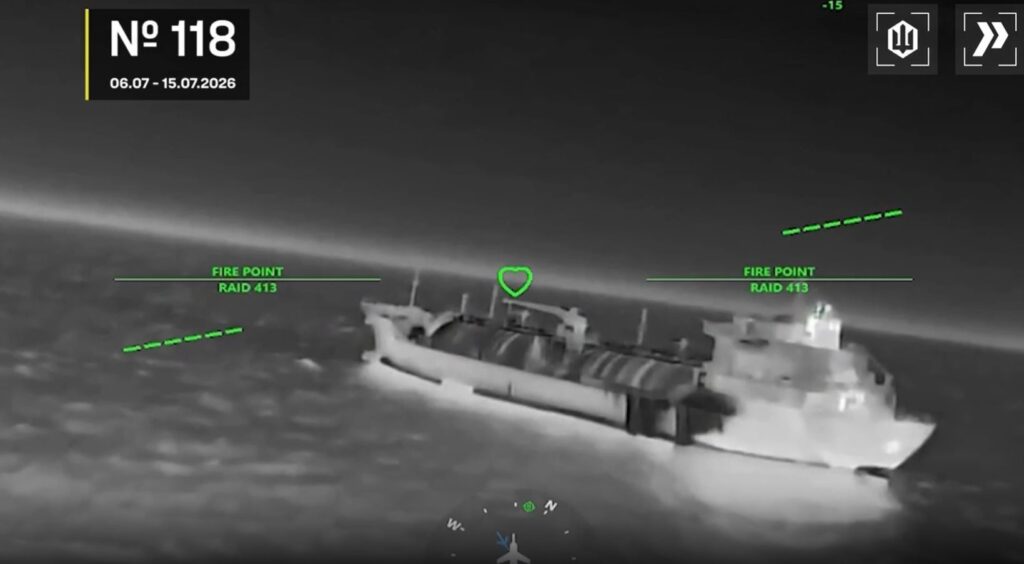
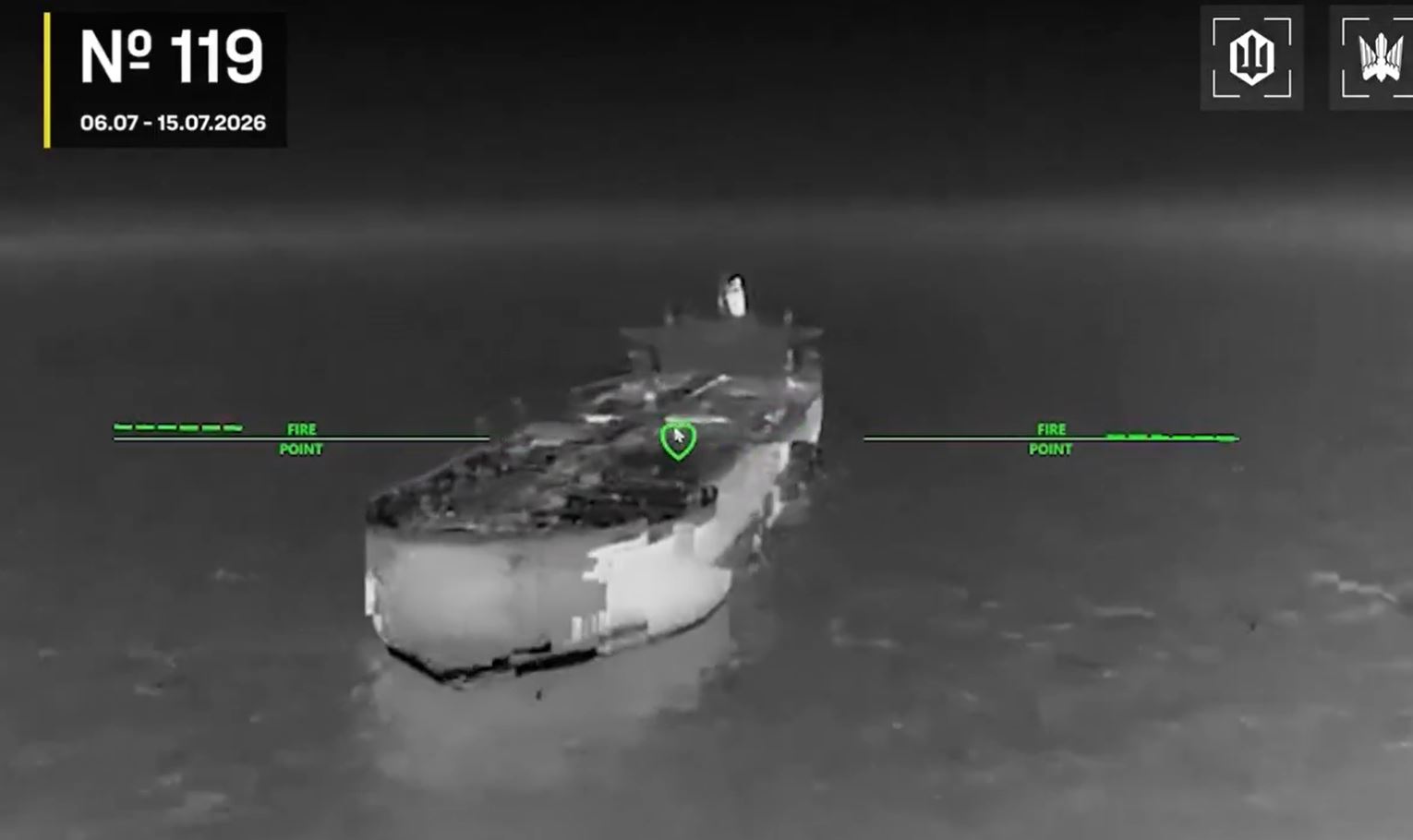
Overnight on 15 July, SBS operators struck 17 oil tankers, two gas carriers, and one tug in Black Sea waters. Six drone units ran the raid together: the 9th "Kairos" Battalion of the 414th "Magyar's Birds" Brigade, the 1st Separate Center, the 20th "K-2" Brigade, the 412th "Nemesis" Brigade, the 427th "Rarog" Brigade, and the 413th "Raid" Regiment.
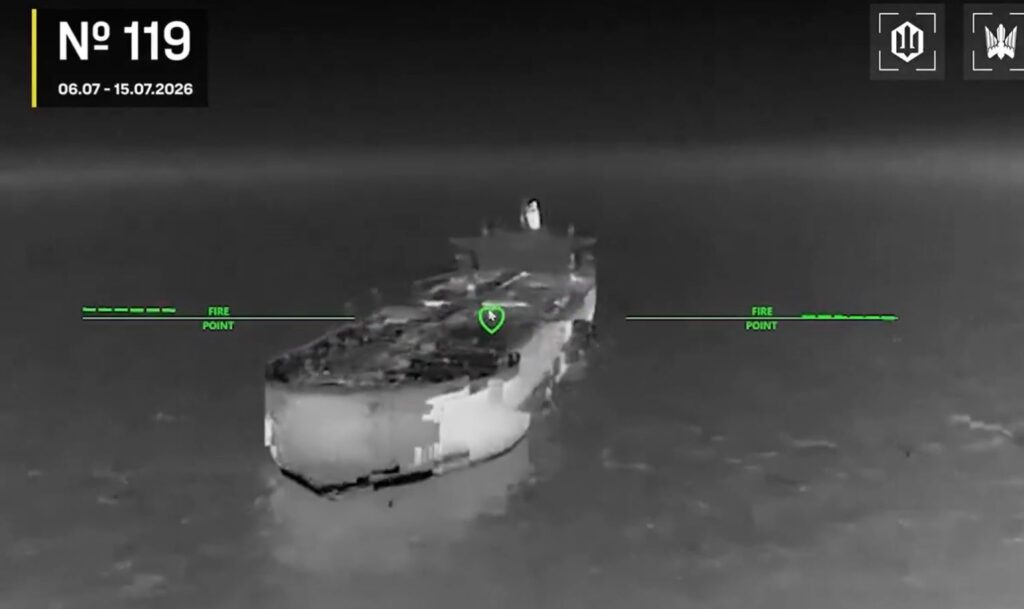
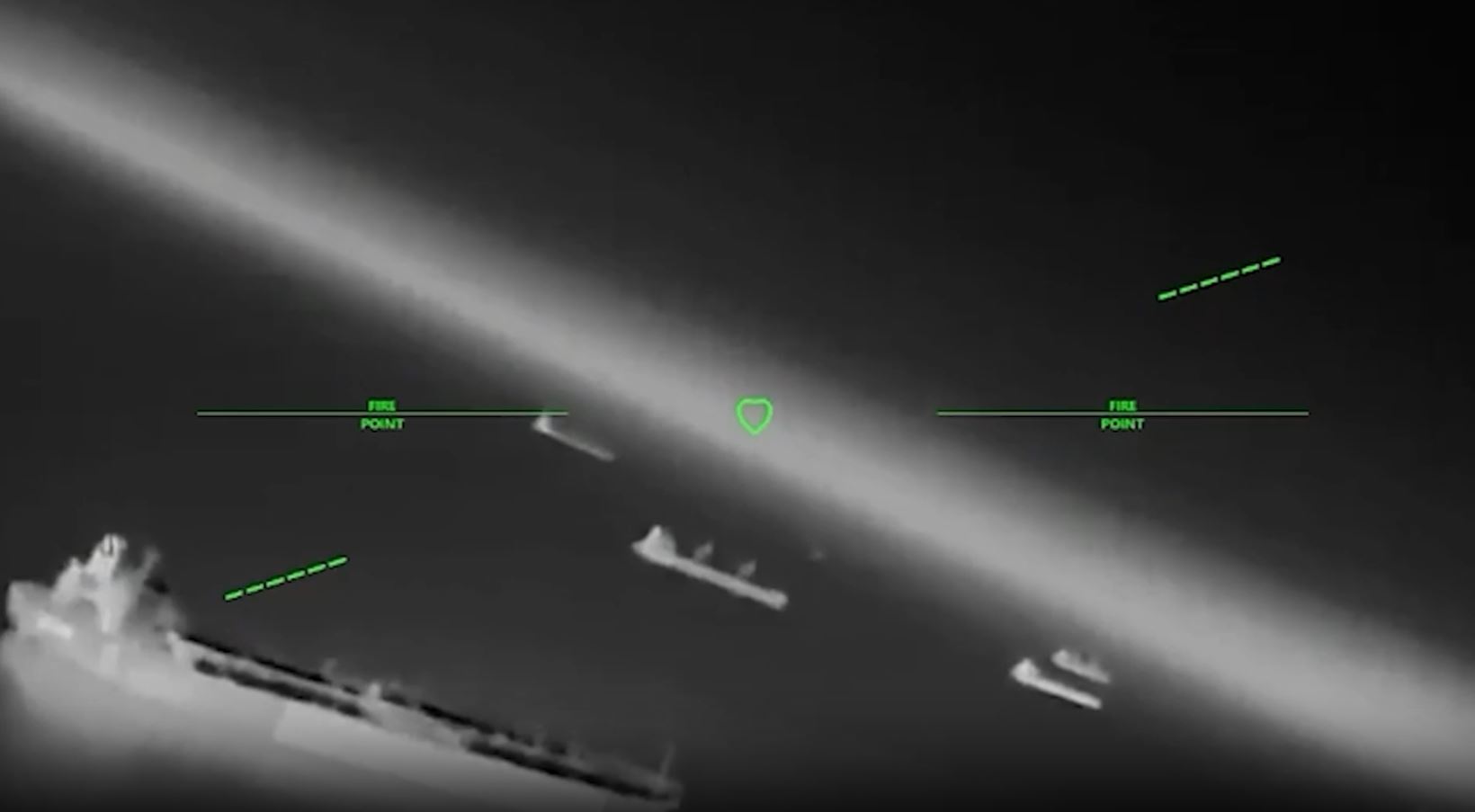
A Russian oil tanker in the thermal sight of a Ukrainian drone during strikes in the Black Sea, marked as the 119th vessel hit in the 6–15 July 2026 operation. Screenshot from SBS video
The two gas carriers fell to Nemesis and Raid operators. The 1st Separate Center took the tug.
A Russian tug in the thermal sight of a Ukrainian drone during strikes in the Black Sea, marked as the 136th vessel hit in the 6–15 July 2026 operation. Screenshot from SBS video
The timing was deliberate. SBS commander Robert "Madyar" Brovdi wrote that the Black Sea cluster of operation MoLoChKa ("Dairy") opened on 15 July, the Day of Ukrainian Statehood. He framed the night as a scoreline: 20 to nil.
Ukrainian drones switch to the Black Sea: 20 first tankers hit
Drone Forces Commander Robert Brovdi says the tally of ships hit in the Black Sea and the Sea of Azov now stands at 136.
The Black Sea haul adds to a running total that has climbed fast. From 6 to 15 July, Ukraine's drones struck 136 vessels of Russia's shadow fleet across both seas.
Of those, 116 went down in the Sea of Azov between 6 and 14 July, as an earlier daily count tracked. The 20 Black Sea kills on 15 July carried the campaign west into deeper, wider water.
The Black Sea vessels seen in the SBS video are ocean-going ships, far larger than the flat-bottomed river couriers Ukraine has been burning along the Azov feeder route. The footage from the FP-1 or FP-2 attack drones shows the operators aiming mostly for the deck structures rather than the bridges, with follow-up drones filming the fires that spread after the first strikes.
The shadow fleet exists to slip past international sanctions, move Russian oil and oil products, and funnel the proceeds into Moscow's budget for the war on Ukraine. Systematically hitting it breaks the enemy's logistics chains and jams the shadow maritime infrastructure, SBS said.
The operation's stated goal is steady disruption of Russian logistics and the money behind them. Disabling tankers, cargo ships, and support vessels complicates oil exports and limits Russia's ability to fuel its troops and the occupation force in Crimea.
Poland will not lift its ban on Ukrainian agricultural imports for now, Deputy Agriculture Minister Adam Nowak announced in Brussels, Polskie Radio reported. The refusal keeps one of three national embargoes in place as the new EU-Ukraine trade agreement approaches. For Kyiv, access to European markets remains a strategic source of wartime export revenue.
Ukraine's road into the EU keeps running through member states' domestic politics, where farm lobbies and historical disputes can weigh more than signed treaties.
Warsaw sees no way to move first
Warsaw justifies the ban by the need to protect their farmers' interests. Nowak stated:
"We see no possibility of lifting this ban unilaterally. It would deal a blow to the Polish food market and thus bring losses for consumers. Ukraine received access to European markets without complying with all the standards, while Polish farmers are obliged to meet them. This is the only way to stabilize the situation on the Polish market," he claimed.
The Deputy Minister called the current moment especially difficult ahead of the harvest. Grain prices remain very low, he claimed, while farmers struggle to find storage.
Explore further
Poland armed Ukraine with Patriot missiles. Its president’s camp called it “treason”
Three embargoes against one trade deal
The new trade agreement between the EU and Ukraine takes effect from November, according to Polskie Radio. In theory, all unilateral trade restrictions must then disappear. Poland, however, keeps its own embargo, and Slovakia and Hungary do the same.
For Ukraine, European market access carries strategic weight, not just economic value. The agrarian sector depends heavily on exports, and foreign-currency revenue from agricultural deliveries grew by more than 9% in the first months of 2026. Ukraine produces far more than its internal market can absorb. Export restrictions, therefore, hit the sector's stability directly, along with the foreign-currency inflows the state budget relies on.
The embargo stance lands amid a wider chill between Warsaw and Kyiv. Poland's right-wing anti-Ukrainian president, Karol Nawrocki, is pushing a legal ban on the UPA flag while relations remain strained by the artificially inflated memory dispute over the 1943–1945 Volhynia tragedy.
In 2023–2024, Polish farmers and truckers repeatedly blocked border crossings in both directions, at times spilling Ukrainian grain from trucks and railcars.
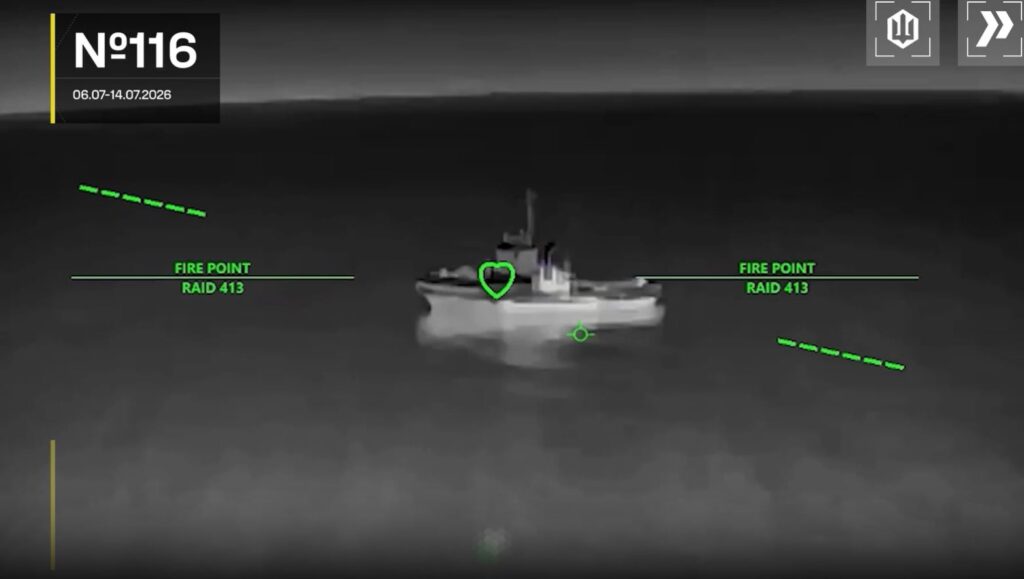
Ukraine's drone operators struck 11 more Russian vessels in the Sea of Azov overnight on 14 July, bringing a nine-day total to 116, the Unmanned Systems Forces (SBS) said. SBS commander Robert "Madyar" Brovdi laid out what the campaign is for. The strikes paralyze the courier tanker fleet that moves Russian oil to export and fuel to occupied Crimea.
Oil revenue pays for Russia's invasion, and Ukrainian deep-strike drones keep reaching the refineries that turn that oil into fuel and cash, hitting two more overnight, with one of them sitting 1,300 km from the war zone. Every burned courier and tug pushes more of Crimea's supply onto roads and rails already under drone fire, tightening the squeeze that Kyiv describes as turning the peninsula into an island.
One night's haul: five tankers, five dry cargo ships, one tug
The overnight strikes hit five tankers, five dry cargo ships, and one tug, all in the Azov Sea. Operators of the 1st Separate Center, the 413th Separate Regiment Raid, and the 20th Separate Brigade K-2 struck the tankers and cargo ships. The 413th regiment hit the tug.
Ukraine strikes 11 more Russian ships in the Sea of Azov over the past 24 hours
The week-long operation's current total sits at 116 ships now.
The operation, now at its ninth day, carries the name MoLoChKa, a Ukrainian term for dairy products. Both Brovdi and the SBS shared thermal video of the strikes.
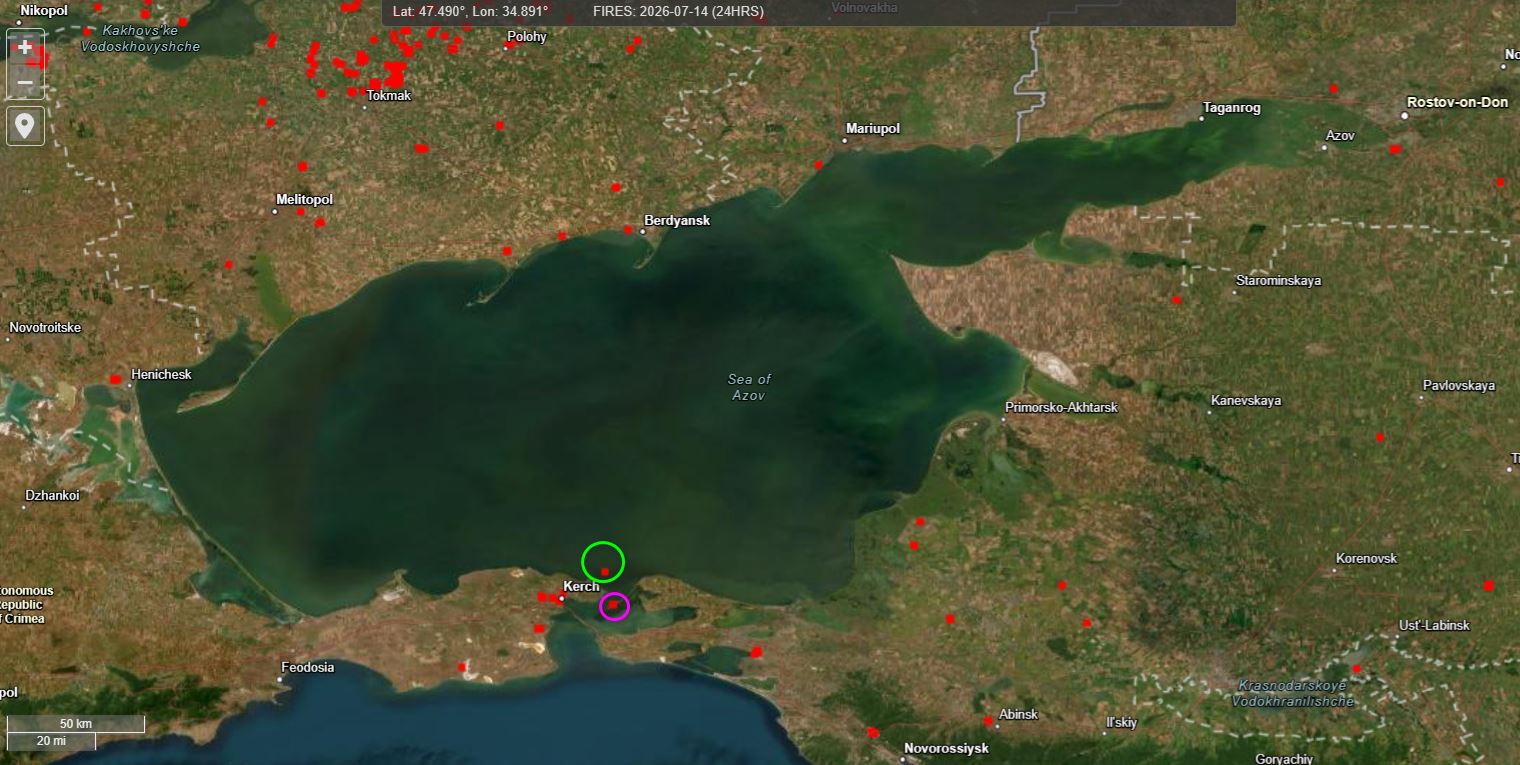
NASA FIRMS satellite data again shows fires at the anchorage north of occupied Kerch — the same spot that burned on 12 July and 13 July — plus at Russia's Port Kavkaz across the strait.
The July tally stood at 91 vessels by 12 July. A day later, strikes on 15 more ships spread across the whole Azov Sea.
Explore further
Ukraine hits 15 Russian vessels as drone blockade of Crimea spreads across Azov Sea
Why the drones don't sink the ships
Brovdi said his operators strike the vessels without sinking them, turning them into ghosts drifting across the sea.
"The shadow fleet is wasting away, but it must disappear as a species," he wrote.
He promised to record a video explaining the operation in detail.
Euromaidan Press earlier suggested why the drone operators target the ships' controls instead of trying to sink them: this still knocks out the ships, doesn't carry environmental harm, and prompts Russia to send tugs to tow them away — adding the tugs to the target list.
Explore further
One Russian ship every 112 minutes for a week: Ukraine hits 14 more vessels as total tally nears 100
The courier-tanker bottleneck
The campaign's core target is Russia's feeder fleet, Brovdi explained. These are small and medium flat-bottomed tankers, 140 meters long with 7,000 tons deadweight. They carry oil from Russian river transshipment bases down the Volga-Don Canal and across the Azov Sea. Russia's large export tankers sit too deep to enter those shallow terminals. They load at anchor in the Black Sea instead, each taking the volume of 12–15 courier runs. Paralyzing the couriers, therefore, effectively blocks the export of Russian oil at its source, Brovdi said. His drones also burn the tugs that tow struck tankers across the sea.
Several Russian vessels at once in the thermal sight of a Ukrainian drone over the Sea of Azov, 13–14 July 2026. Screenshot from video: Unmanned Systems Forces
The same squeeze limits gasoline deliveries to Crimea through the shallow neck of the Azov Sea. That leaves road and rail cisterns as Russia's main and very dangerous option, since Ukrainian drones keep both under fire control.
The moment a Ukrainian drone strike hits a Russian tanker in the Sea of Azov, thermal footage, overnight on 14 July 2026. Screenshot from video: Unmanned Systems Forces
SBS: the target is Russia's war logistics and war money
Despite international sanctions, Russia keeps exporting oil through its shadow fleet and spends the revenue on the war against Ukraine, the SBS noted. The operation's goal is the consistent disruption of the enemy's logistics chain. Disabling tankers, dry cargo carriers, and auxiliary vessels complicates oil exports and limits maritime transport. It also cuts Russia's ability to fuel its troops and the occupation grouping in Crimea.
Le Club de soccer Fury a remporté cinq titres lors du 26e Tournoi national de soccer de Rimouski qui se tenait, du 10 au 12 juillet, principalement au Complexe sportif Guillaume-Leblanc.
En U10F D1, le Fury #4 a remporté la finale contre le Fury #3 et le Fury # 5 a vaincu La Pocatière par la marque de 4 à 1 lors de la finale D2. Les équipes rimouskoises sont également championnes en U10M D1 alors que le Fury #5 a battu Matane en finale et en D2 grâce à une victoire du Fury #2 contre Trois-Pistoles. Le Fury #1 l’a emporté par la marque de 2 à 1 contre le Fury #2 en finale du U12F D1.
L’équipe Fury #3 du club de soccer rimouskois est finaliste dans le U12F D2. Elle s’est inclinée contre l’équipe de la Baie-des-Chaleurs en tirs de barrage lors de la finale.
Les équipes Fury #4 et Baie-des-Chaleurs s’affrontent en U12 féminin. (Photo Le Soir.ca-Annie Levasseur)
Amqui (U10M D3), Bas-Richelieu (U12M D1), Rivière-du-Loup (U12M D2), Trois-Pistoles (U12M D3 et U15M D2), Baie-des-Chaleurs (U14F), Restigouche (U15M D1), Dégelis (U18M) et Rocher-Percé (U18F) sont les autres vainqueurs de la compétition.
92 équipes
Le Tournoi national de soccer de Rimouski accueillait 92 équipes sur les différents terrains de la ville. Organisé par le Club Fury, en collaboration avec l’Association régionale de soccer de l’Est-du-Québec, l’événement a mis en scène plus de 200 matchs dans les catégories U10 à U18. Des centaines de jeunes de 8 à 18 ans se sont affrontés.
Des équipes du Bas-Saint-Laurent, de la Gaspésie, d’un peu partout au Québec, dont le Grand Montréal, et du Nouveau-Brunswick étaient présentes.
L’Association de baseball mineur de Rimouski a présenté la 11e édition de son tournoi provincial 13U en fin de semaine. Les Expos de Lanaudière Nord (A) et les Ambassadeurs de Lévis (B) sont les champions de leur division respective.
En finale de la classe A, les Expos ont disposé des Patriotes de Noroit par la marque de 15-7. En demi-finale, les Expos avaient défait les Riverains 2 de Haute Saint-Charles Centre par 7-2 pendant que les Patriotes venaient à bout des Titans 2 de Chaudière Ouest par 13-12.
Dans la classe B, les Ambassadeurs ont disposé des Cardinals de Beauport par la marque de 10-5. En demi-finale, ils avaient eu le meilleur sur les Cardinals de Beauce Centre 1 par 6-2. Pour sa part, Beauport avait mérité sa place en finale en l’emportant par la marque de 14-4 contre les Bombardiers de L’Ancienne-Lorette / Val Bélair.
Les Ambassadeurs 1 de Lévis sont champions de la classe B (Photo Alain Tremblay)
Tout comme les autres formations de la région, les deux équipes de l’ABMR n’ont pas passé la ronde préliminaire. Les Élans rouge, en classe B, ont gagné leur premier match contre Kamouraska avant de s’incliner dans les deux suivants. Pour leur part, les Élans bleu ont perdu leurs trois parties dans la classe A.
Les Patriotes 1 de Noroit sont finalistes de la classe A (Photo Alain Tremblay)
Le tournoi s’est tenu sous une température chaude et ensoleillée. La présidente du tournoi, Anik Dumas, et son équipe ont géré un événement qui s’est déroulé rondement.
« Encore une fois, le tournoi a été très apprécié par les équipes de l’extérieur. Il n’y a pas eu de retard et rien de majeur à régler. La température a été idéale. On peut parler d’un beau succès », explique-t-elle.
Les Cardinals de Beauport sont finalistes de la classe B (Photo Alain Tremblay)
« Année après année, on reçoit à peu près les mêmes associations et on a un bon calibre de jeu. Il y a bien quelques parties à haut pointage, mais pas trop », ajoute-t-elle.
Du AA dans le tournoi ?
Si les 24 équipes représentent le nombre idéal d’équipes participantes, l’option d’ajouter la classe AA demeure sur la table à dessin. Des enjeux logistiques et de bénévoles font en sorte de rendre prudente, la présidente ainsi que son comité.
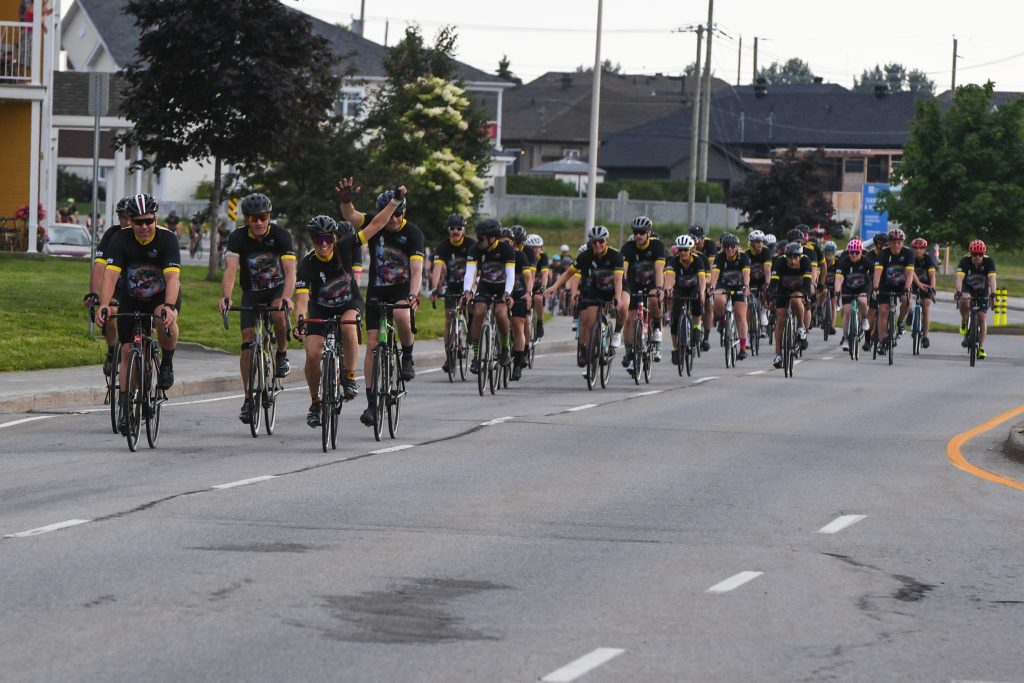
Divisés en 21 pelotons, les cyclistes sont escortés par des véhicules. L’équipe de Compas Signalisation inc. assure la circulation et la sécurité tout au long du trajet, cette année. Ils vont parcourir l’un ou l’autre des parcours de 250 km et de 315 km en deux jours.
Le comité organisateur de l’événement, présenté par la Fondation Jack Herbert, demande aux automobilistes de redoubler de prudence à l’approche des participants.
Lors de la première journée, les cyclistes se rendront à Rivière-du-Loup. Le lendemain, ils partiront à 8 h pour entreprendre leur périple vers Rimouski. Des arrêts sont prévus à L’Isle-Verte en avant-midi, au parc du Mont Saint-Mathieu pour le dîner et à l’église Sacré-Cœur à Rimouski pour la pause de l’après-midi. L’arrivée de tous les cyclistes à Rimouski se fera au Colisée Financière Sun Life.
La population invitée à participer à l’arrivée
Les organisateurs souhaitent offrir une arrivée mémorable aux participants afin de souligner le défi qu’ils ont surmonté au nom des personnes touchées par le cancer.
Dimanche, entre 17 h et 18 h, la population est invitée à prendre part à cette vague d’amour au Colisée.
Les personnes intéressées peuvent aussi contribuer au succès du 28e Défi Vélo Plein Air en versant un don directement à l’un des cyclistes participants ou en visitant le site defivelopleinair.org.
Le 26e Tournoi national de soccer de Rimouski commence ce vendredi soir, sur les différents terrains de la ville.Le Club Fury est représenté par 21 formations dans les différentes catégories.
L’événement est organisé par le club rimouskois, en collaboration avec l’Association régionale de soccer de l’Est-du-Québec. Plus de 200 matchs seront disputés par 92 équipes dans les catégories U9 à U18.
Jusqu’à dimanche, des centaines de jeunes de 8 à 18 ans s’affronteront sur les terrains du Complexe sportif Guillaume-Leblanc ainsi que ceux des centres communautaires de Saint-Pie X, de Terrasses Arthur-Buies, du Complexe sportif Valois-Doucet du Bic, du Pavillon multifonctionnel de Pointe-au-Père, de l’Université du Québec à Rimouski (UQAR) et de l’école Saint-Jean.
(Photo journallesoir.ca- Olivier Therriault)
Des équipes du Bas-Saint-Laurent, de la Gaspésie, d’un peu partout au Québec, dont le Grand Montréal, et du Nouveau-Brunswick seront présentes.
Le coup d’envoi du tournoi a été donné à 18 h, vendredi. Les matchs éliminatoires se tiendront à partir de dimanche matin avant la présentation des finales en après-midi.
Le parc du Mont-Saint-Mathieu a procédé, ce vendredi matin, à l’inauguration officielle de son centre de vélo de montagne qui a déjà attiré plus de 1 400 personnes en six jours depuis son ouverture, dont plus de la moitié provenant de l’extérieur de la région.
« Nous avons reçu des gens des grands centres comme Québec et Montréal, mais aussi des personnes du Nouveau-Brunswick et de la Nouvelle-Écosse. Cela génère de l’économie dans la région. Nous sommes devenus un leader dans l’Est du Canada pour le vélo de montagne. Les commentaires des cyclistes sont très positifs », rapporte la directrice générale du parc, Annie Couture.
« Quelle belle journée ! On célèbre plusieurs années d’efforts. Nous voulons devenir un centre de référence provincial pour la pratique du vélo de montagne. En septembre, nous allons accueillir une manche de la Coupe du Québec de descente », déclare le président du conseil d’administration du parc, Steve Sénéchal.
« Cet événement sera une occasion importante de faire connaître le site. Le centre de vélo de montagne contribue à consolider nos emplois, en plus de générer des retombées économiques importantes pour les nuitées, les commerces, les restaurants, les services et les attraits de la région », ajoute-t-il.
Six pistes de descente
Le nouveau centre comprend six pistes de descente, une piste de remontée et trois zones d’habileté totalisant 13,5 km. Le site propose une expérience complète adaptée autant aux débutants et aux familles qu’aux experts.
La directrice générale du Parc du Mont-Saint-Mathieu, Annie Couture. (Photo Le Soir.ca-Alexandre D’Astous)
« La phase deux est déjà sur la planche à dessin pour augmenter le nombre de pistes et la phase trois vise le style cross-country. Nous avons travaillé fort pour réaliser la phase un et attacher le financement nécessaire de 1,8 M$. Nous allons poursuivre », assure Mme Couture.
Beaucoup de travail
L’inauguration est l’aboutissement de plusieurs années de travail. L’objectif initial était de diversifier les activités du parc et de lui permettre de devenir une destination quatre saisons.
« Les montagnes doivent maintenant opérer quatre saisons et pas seulement l’hiver pour le ski. Le vélo de montagne est en forte croissance au Québec et le Mont-Saint-Mathieu figure avantageusement dans le développement de cette activité. Grâce à des infrastructures comme celle-ci, le Bas-Saint-Laurent n’est plus seulement une destination de passage, mais une destination de choix au bénéfice de nos communautés », commente la ministre du Tourisme et députée de Rivière-du-Loup-Témiscouata-Les Basques, Amélie Dionne.
« C’est tout un défi que vous avez relevé. Il illustre bien la vision que nous avons au Bas-Saint-Laurent pour un tourisme quatre saisons. Le vélo de montagne, avec le Mont-Saint-Mathieu comme vaisseau amiral, devint une nouvelle offre touristique dans la région », affirme le directeur général de Tourisme Bas-Saint-Laurent, Pierre Lévesque.
Une belle réalisation
« La première fois que j’ai entendu parler de vélo de montagne au Mont-Saint-Mathieu, c’était en pleine pandémie, en 2020. C’était assez audacieux. Les gens y ont cru et aujourd’hui on peut célébrer cette belle réalisation. Nous sommes maintenant une région touristique d’envergure », lance le député bloquiste de Rimouski–La Matapédia, incluant La Mitis, Les Basques et la Neigette, Maxime Blanchette-Joncas.
La Caisse Desjardins des Basques a contribué pour 200 000 $ au projet. « C’est rare que l’on fasse d’aussi grosses contributions. Nous sommes fiers de contribuer au développement économique, social et communautaire de notre territoire », souligne la directrice de l’établissement, Roxanne B. Desjardins.
Louis‑Olivier St‑Pierre, du Club de golf Les Saules de Rimouski, a remporté le Championnat provincial junior de Golf Québec dans la catégorie juvénile (15-16 ans). La compétition se tenait au Club Lac‑Saint‑Jean, à Saint-Gédéon, du 6 au 9 juillet.
Le Rimouskois de 16 ans a été surpris de repartir avec les grands honneurs. Il s’est également classé au cinquième rang chez les juniors (18 ans et moins).
« Je savais que ma partie était bonne, mais pas au point de gagner. Je ne m’attendais pas à ça parce qu’il y a vraiment beaucoup d’autres bons joueurs juniors », explique-t-il.
Parmi les quatre journées de compétition, la deuxième ronde a été la plus difficile pour le golfeur qui a conclu la compétition avec des pointages de 73, 74, 72 et de 70 en ronde finale.
Louis-Olivier St-Pierre avec le trophée de Golf Québec. (Photo courtoisie)
« Il faisait vraiment chaud, et l’emplacement des drapeaux était plus compliqué. C’était la coupure. Après cette journée-là, ils voulaient vraiment garder les meilleurs. Quand il y a des chaleurs comme ça, il faut bien manger et bien s’hydrater. Mon père était là pour m’aider. »
Attitude positive
Louis‑Olivier St-Pierre estime que sa constante évolution repose surtout sur sa maturité mentale et son attitude positive.
« Avant, je me mettais beaucoup de pression avant chacun de mes coups. J’arrive maintenant à accepter les moins bons et à me dire que le prochain sera le plus important. Je pense que ça m’aide à mieux jouer », indique l’adolescent qui précise que cette approche plus sereine lui permet de mieux composer avec les situations difficiles.
Cette victoire au Championnat provincial junior lui ouvre maintenant la porte vers un nouveau défi. Il prendra part, prochainement, à un premier championnat amateur.
« Ça va être mon premier tournoi avec les adultes. Je ne sais pas trop à quoi m’attendre, mais j’aimerais jouer mon meilleur golf comme je l’ai fait au provincial. »
St-Pierre vise également faire mieux que l’an dernier au Championnat canadien junior. Il avait alors été retranché après les deux premières rondes avec un résultat de +11, à quatre coups de la coupure.
« Ça avait un petit peu moins bien été, mais j’ai gagné de l’expérience. Jouer des rondes en bas de 74, ça serait un bon objectif pour moi cette année. »
Golf universitaire
Au-delà de la saison estivale, Louis‑Olivier St-Pierre a un rêve, celui de jouer au golf à l’université.
« Que ce soit à Annecy, aux États-Unis ou au Québec avec l’Université Laval ou l’Université de Montréal, il y a plusieurs belles options. C’est vraiment ça qui m’incite à travailler fort pour amener mon jeu à un autre niveau », dit-il.
La vérificatrice générale de l’Ontario avait rapporté en mai que la formation des conducteurs de camions lourds était défaillante dans cette province.
Or, jusqu’à présent, lorsqu’un conducteur ontarien de véhicule lourd déménageait au Québec, le transfert de son permis se faisait automatiquement.
La Société de l’assurance automobile du Québec exigera désormais que les camionneurs qui ont obtenu leur permis en Ontario et qui conduisent depuis moins de deux ans réussissent les examens pratiques du Québec.
Les conducteurs qui échouent aux examens deux fois devront suivre une formation obligatoire.
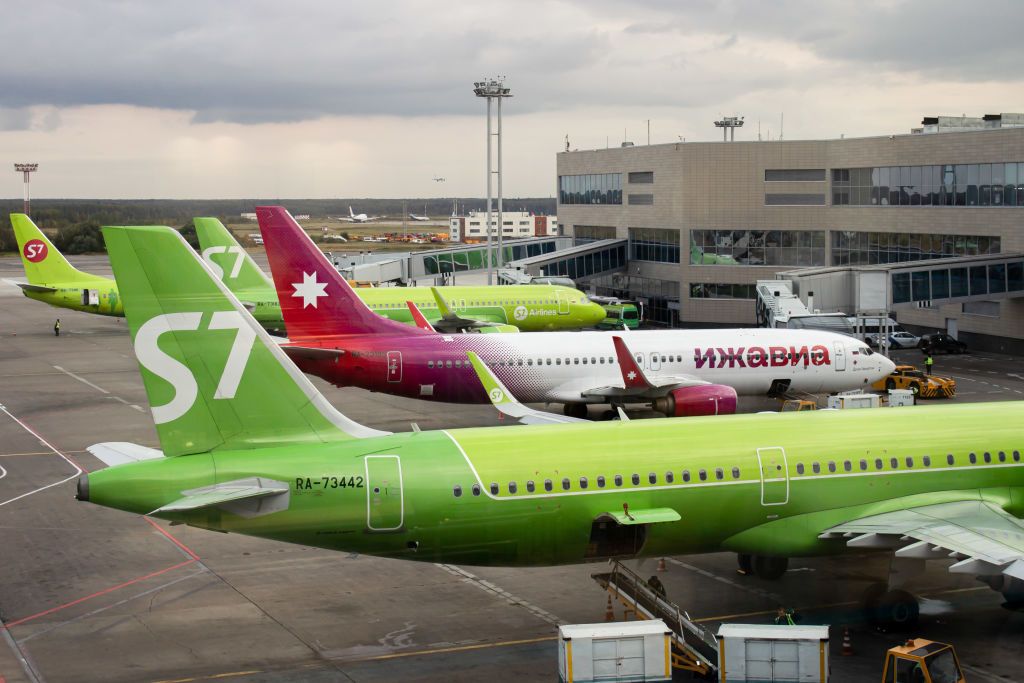
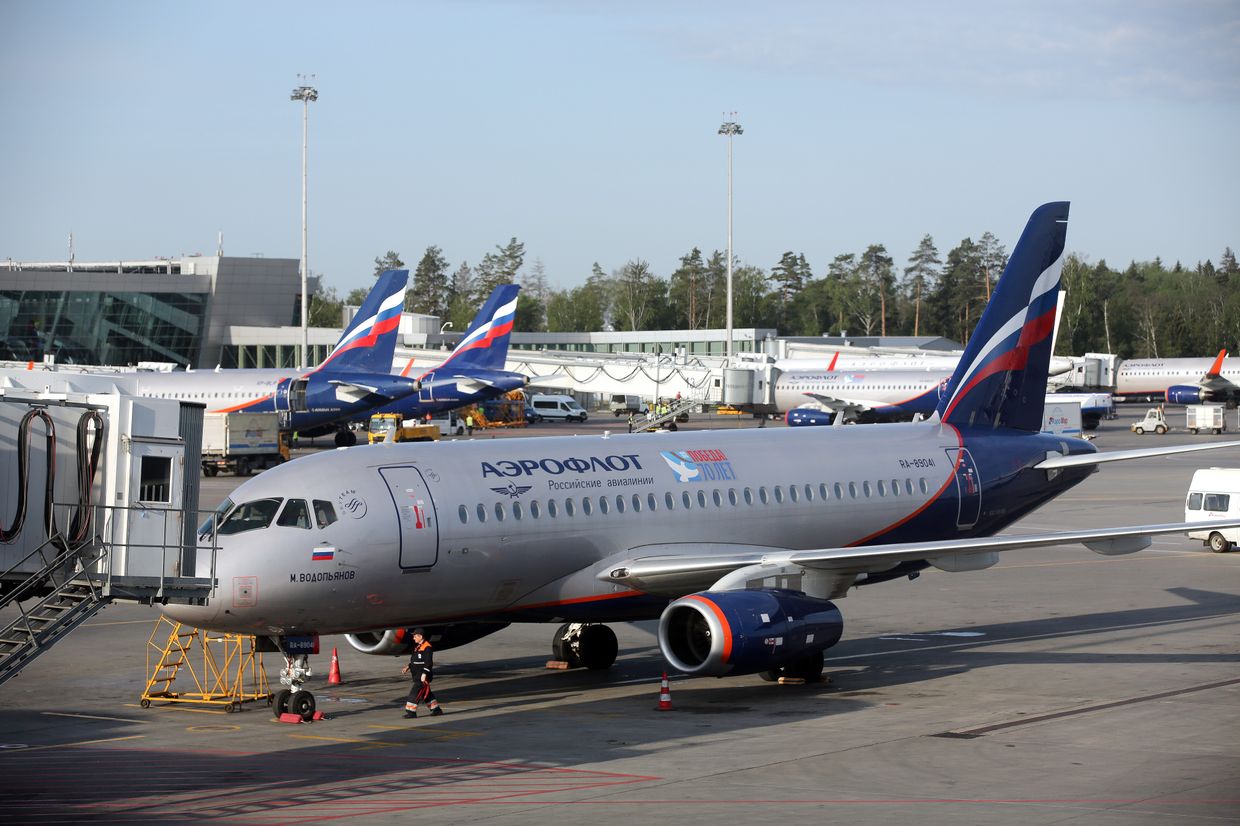
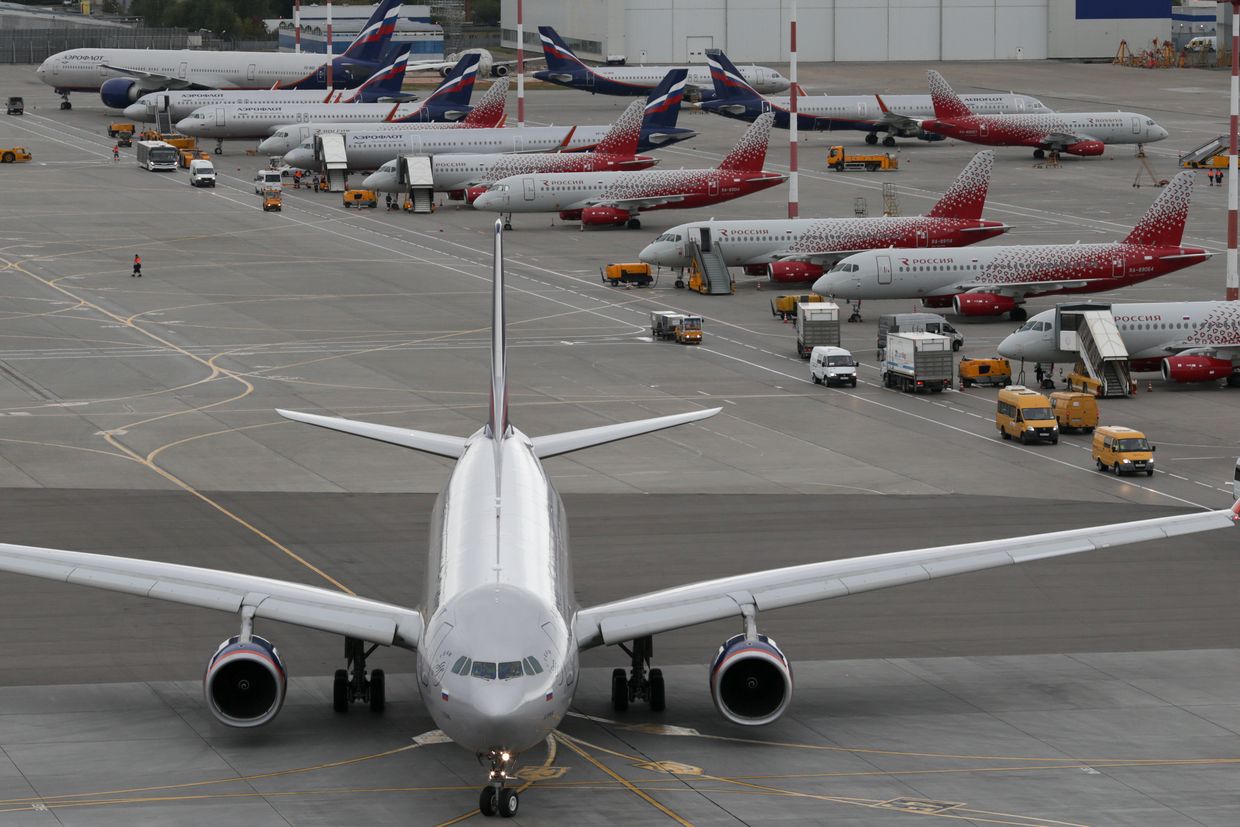
Major shutdowns at Russia's key airports on July 5–6 caused by Ukrainian drone attacks could cost Russian airlines around 20 billion rubles ($254 million), the pro-Kremlin outlet Kommersant reported on July 7, citing airline representatives and industry experts.
Since the start of mass disruptions on July 5, a total of 485 flights were canceled, 88 were diverted to alternate airports, and another 1,900 were delayed across major hubs, according to Russia's aviation agency Rosaviatsiya.
The drone attacks prompted operational shutdowns that triggered widespread logistical and economic consequences. Over 94,000 passengers were housed in hotels, 43,000 refunds were processed, and hundreds of thousands of vouchers for food and drinks were issued.
The estimated financial toll includes direct airline losses from canceled Boeing 737-800 flights, which can run between 15 million and 23 million rubles ($190,000–$292,000) each depending on the route, as well as costs for delays, diversions, and passenger care.
Experts say the true cost could be far higher. Dmitry Datsykov of EXPO.UAV estimated tens of billions of rubles in additional indirect losses, including missed connections, taxi and hotel losses, and supply chain disruptions.
Ukraine has not publicly claimed responsibility for the disruptions but has acknowledged that its drone strategy aims to undermine Russian logistics and force the war's consequences closer to the Russian public.
The economic fallout comes amid growing scrutiny of Russia's transport sector. On July 7, President Vladimir Putin dismissed Transport Minister Roman Starovoit following the aviation chaos and a high-profile ammonia leak at the Ust-Luga port.
The Kremlin has increasingly struggled to protect critical infrastructure from Kyiv's deep-strike drone campaign, which in recent months has expanded to include refineries, radar plants, and now Russia's busiest airports.
Russia's largest airports experienced hours-long flight delays and cancellations on July 5, as authorities imposed temporary restrictions due to a reported threat of Ukrainian drone attacks, the pro-Kremlin Telegram channel Shot reported.
Ukraine hasn't commented on the report. Kyiv's drone campaign, which has increasingly disrupted civilian air travel in Russia, is part of Ukraine's broader strategy to undermine Russia's logistics far beyond the front line.
Some passengers in Russia reported waiting more than 10 hours on July 5 as their flights were being delayed, according to Shot.
Departures at Moscow's Sheremetyevo Airport were halted for several hours, delaying over 20 flights. At St. Petersburg's Pulkovo Airport, roughly 50 flights were delayed and more than 20 canceled.
Leningrad Oblast Governor Alexander Drozdenko said that two drones were shot down south of St. Petersburg, prompting a temporary suspension of operations at Pulkovo Airport.
The disruptions followed a wave of Ukrainian drone attacks overnight, which targeted military and industrial infrastructure in at least six Russian regions.
The Russian Defense Ministry said it intercepted 42 drones within three hours, mainly over the Belgorod, Bryansk, and Kursk oblasts near the Ukrainian border.
Novaya Gazeta Europe reported in May that at least 217 temporary airport closures have occurred across Russia since Jan. 1 due to drone threats, more than in 2023 and 2024 combined.
A similar wave of strikes ahead of Russia's Victory Day in May led to massive delays, affecting an estimated 60,000 travelers.

 Connexion





















 SBU
SBU