The Russian government has submitted a draft federal budget for 2027–2029 to the State Duma, Meduza reported on 30 September, citing TASS. In all three years, Russia's expenditures will exceed its revenues, the outlet noted.
Russia's finances have been eroding since it launched its full-scale invasion of Ukraine. To keep paying for the war, the Kremlin has drained its reserves, borrowed more, and pushed tax burdens onto residents and businesses, while the wider economy stalls.
The government listed social obligations, including aid to those who fought in its war against Ukraine and their families, along with defense needs among the budget's priorities, while its press release left out the planned cuts to social spending and the rise in military spending, Meduza noted, citing The Bell.
Spending will exceed revenue by about 2% of GDP a year
Russia's federal budget for 2027 sets spending at 48.8 trillion rubles ($585 billion) and revenue at 43.3 trillion ($519 billion), the Russian government stated, leaving a deficit of 5.5 trillion rubles ($66 billion). It claimed the draft is "balanced" and that healthcare spending will rise compared with 2026.
Deficits of 5.1 trillion rubles ($61 billion) in 2028 and 5.3 trillion ($64 billion) in 2029 are also planned, about 2% of GDP a year, Meduza noted.
This year's deficit is now set to reach a record 7.345 trillion rubles ($88 billion), nearly double the previous forecast of 3.785 trillion ($45 billion), The Moscow Times reported on 1 October. To help close the gap, Moscow plans an array of tax hikes for 2027–2029 to fund military spending. Already by May, its four-month deficit had run 50% above what it had planned for the whole year.
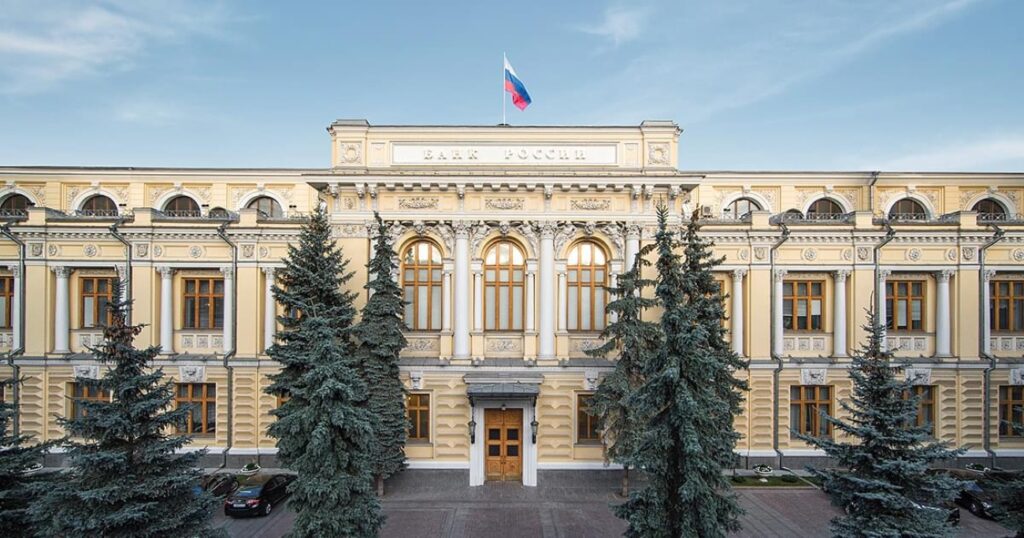
Head office of the Central Bank of the Russian Federation in Moscow. Photo: Central Bank of Russia
Even as the deficit widens, Russia plans its highest defense spending since the full-scale invasion began: 17.1 trillion rubles ($202.58 billion) in 2027, 27% more than the 13.5 trillion originally planned.
Only 2.3 trillion rubles ($28 billion) of that sum is itemized in public documents, and 34.9% of all 2027 spending will be classified, the highest share in at least 12 years, exiled outlet Vyorstka reported. The Duma is expected to hold the first of three readings on 29 October, the date proposed by Budget Committee chairman Andrei Makarov, Interfax reported.
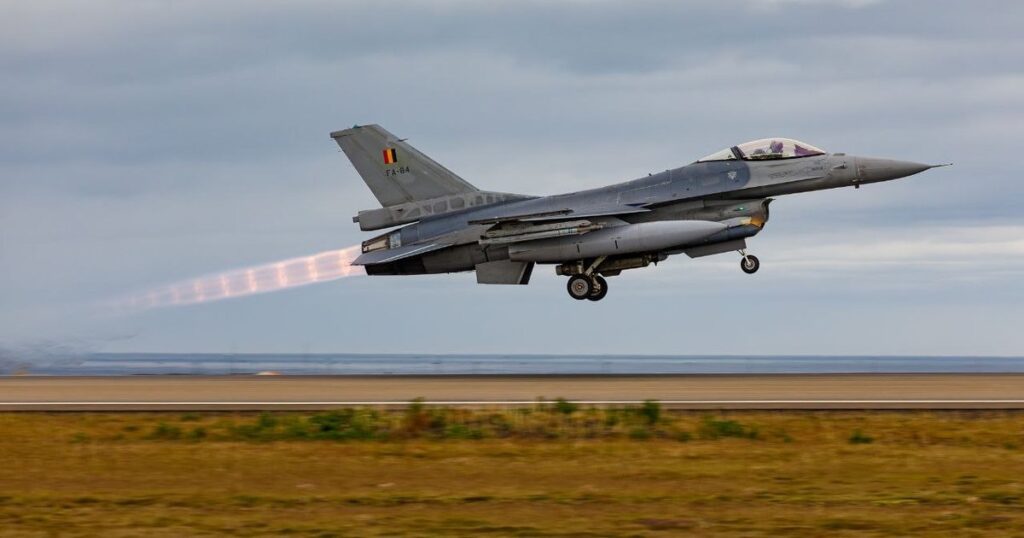
Less than 50% of the F-16 fighter jets delivered to Ukraine may be operational, Defense Express reports, citing a Wall Street Journal (WSJ) editorial published on 29 September. On the same day, Ukrainian President Volodymyr Zelenskyy said that Belgium would deliver three F-16 fighter jets this year.
F-16s are used extensively to intercept Russian cruise missiles and drones. As the number of Russian attacks has increased, these aircraft have become particularly important for Ukraine. However, the jets Ukraine receives are old, and keeping them flying takes regular maintenance, extra work, and hard-to-find parts.
Routine inspections are taking as long as 40 weeks in Belgium, retired US Navy Rear Admiral Mark Montgomery told the WSJ.
The maintenance process for these aircraft for Ukraine is lengthy
A likely reason for the problem is the lengthy maintenance process handled by Belgian company Sabena Aerospace Engineering, according to the WSJ, whose questions the company declined to answer. This process, according to Defense Express's estimates, takes 6–20 times longer than maintenance in the United States, which usually takes between 2 and 6 weeks. Ukraine uses the services of the Belgian company, meaning its F-16s are not being serviced quickly enough.
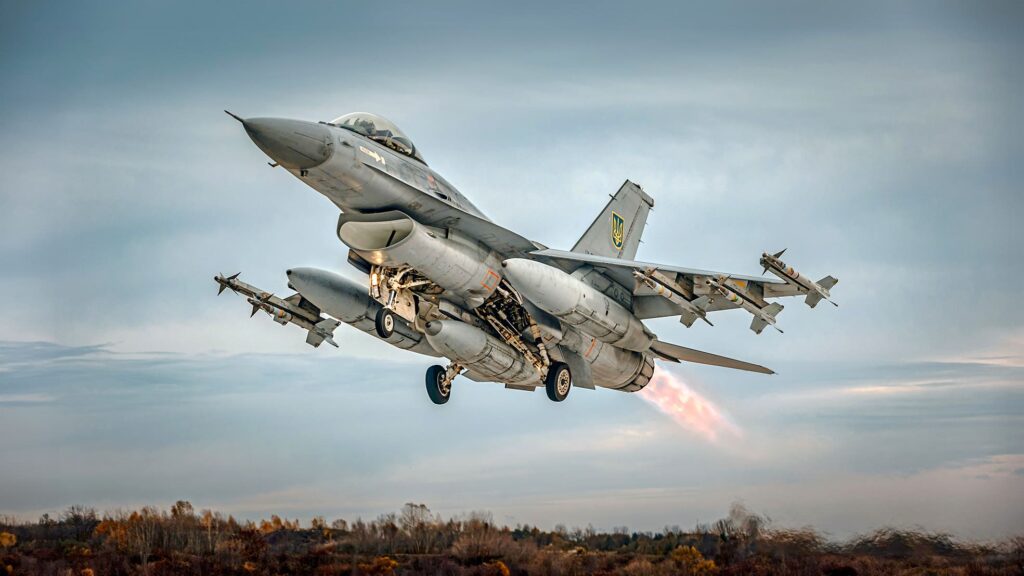
Ukrainian F-16 armed with SDB bombs and AIM-120 and AIM-9 missiles. Photo via Militarnyi
Delivering three additional fighter jets will not significantly help the Ukrainian military until the issue with aircraft maintenance times is resolved, Defense Express notes. The lengthy turnaround may be caused by a large maintenance backlog at the company, limited capacity, or logistical constraints, and older jets may need extra work and scarcer parts.
The delivery is part of an earlier commitment. Belgium plans to provide seven fighter jets this year: three for operational use and four for spare parts, Belgian Defense Minister Theo Francken said in June.
"I'll propose to the government to send all our F-16s to Ukraine in the coming years. It depends on having the F-35s in place because, of course, we have DCA [dual-capable aircraft] capacity. We have our role in the nuclear doctrine of NATO," Francken said.
Belgium has pledged its entire F-16 fleet of 53 aircraft as F-35s replace them, according to Defense Express.
F-16s in Ukraine have already shot down several thousand Russian aerial targets
F-16s operated by Ukrainian pilots have shot down more than 3,150 aerial targets. These include 666 cruise missiles and around 2,500 drones of various types. The aircraft have also carried out more than 650 strikes against Russian ground targets, Lieutenant General Anatolii Kryvonozhko, Commander of the Ukrainian Air Force, said during a meeting between a Ukrainian Air Force delegation and representatives of Lockheed Martin on 29 September.
At the meeting, Conor McGuire, Lockheed Martin's head of F-16 capability development, highly praised the combat use and operation of F-16s by Ukrainian pilots and the entire ground aviation personnel. He also expressed his intention to help Ukrainians enhance the capabilities of the existing platform, the statement said.
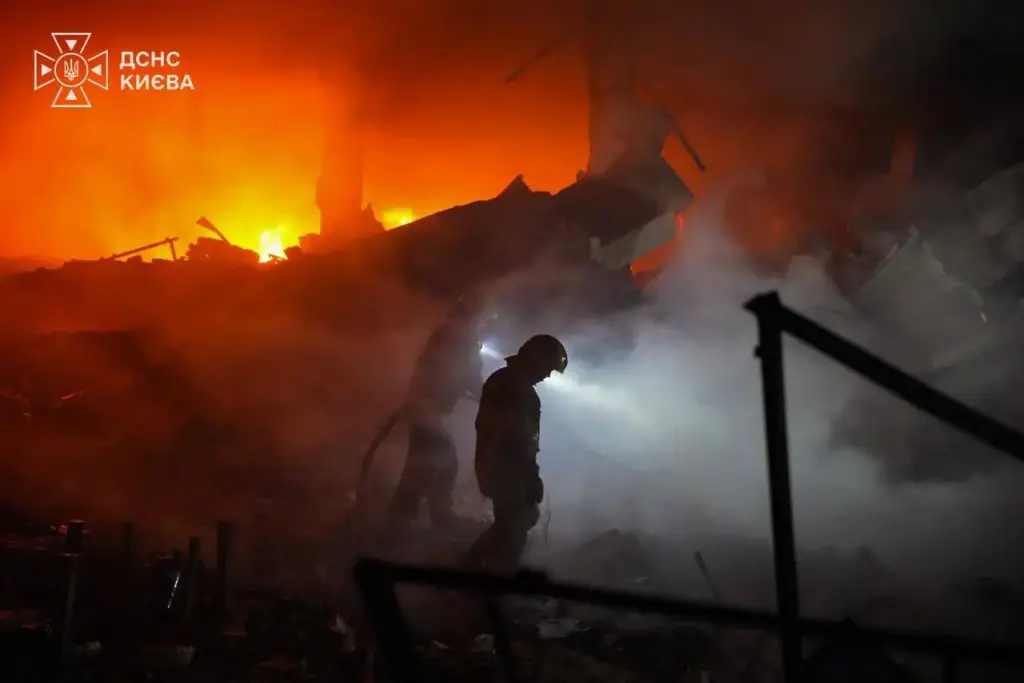
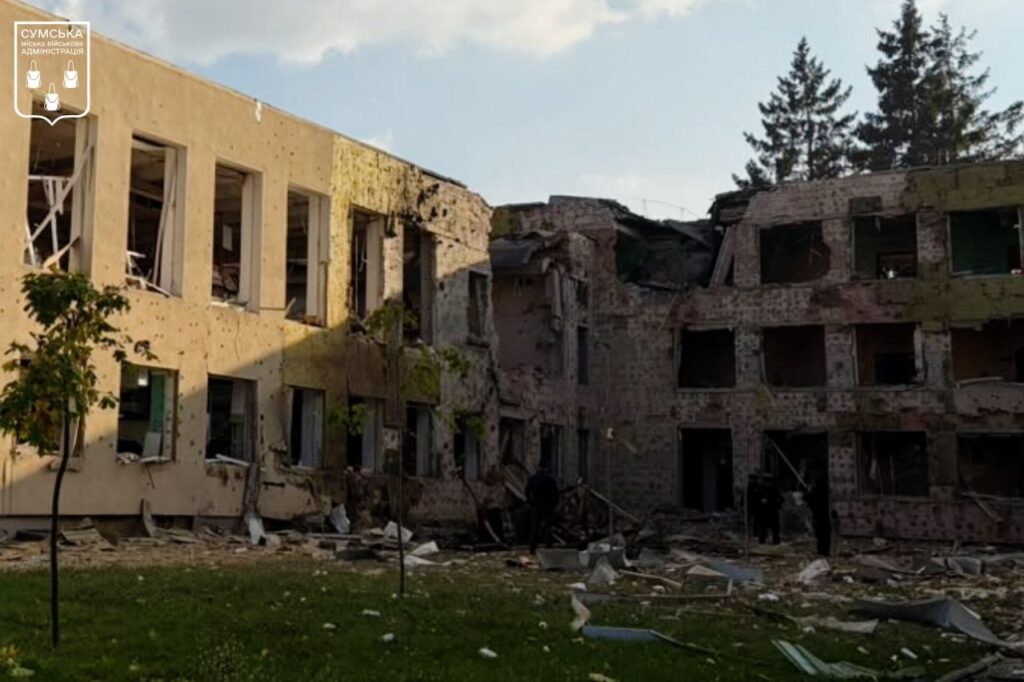
The Russian army deliberately struck a school in Sumy with a 250-kilogram aerial bomb while students—children in grades 1–4—were there, Serhii Kryvosheienko, head of the Sumy City Military Administration, reported on 29 September. The strike was one of a series of mass attacks on Ukrainian territory over the past 24 hours.
Across Ukraine, children now begin the school year in bomb shelters, because Russian missiles, drones, and glide bombs keep hitting schools, hospitals, and homes far from the front. The first eight months of 2026 brought more civilian casualties than all of last year, the UN says, and places where children gather are part of that toll.
Kryvosheienko said the Russians aimed the bomb at the school on purpose.
"With no pity or compassion whatsoever, they strike at children? There is nothing human in the enemy! He is not fighting on the battlefield—he is destroying a nation," Kryvosheienko said.
About 40 students were in the school's shelter at the time, a school employee told Suspilne correspondents. Preliminary reports indicate the children were not injured, Suspilne said.
Ukrainian President Volodymyr Zelenskyy confirmed the strike on the school.
"Four KABs struck the city center, right at the school building, where classes were underway. Thank you to the teachers and the school administration: the children and teachers were in the shelter, a total of 100 people were evacuated in time," he wrote.
Two people were killed in Sumy, and children are among those injured
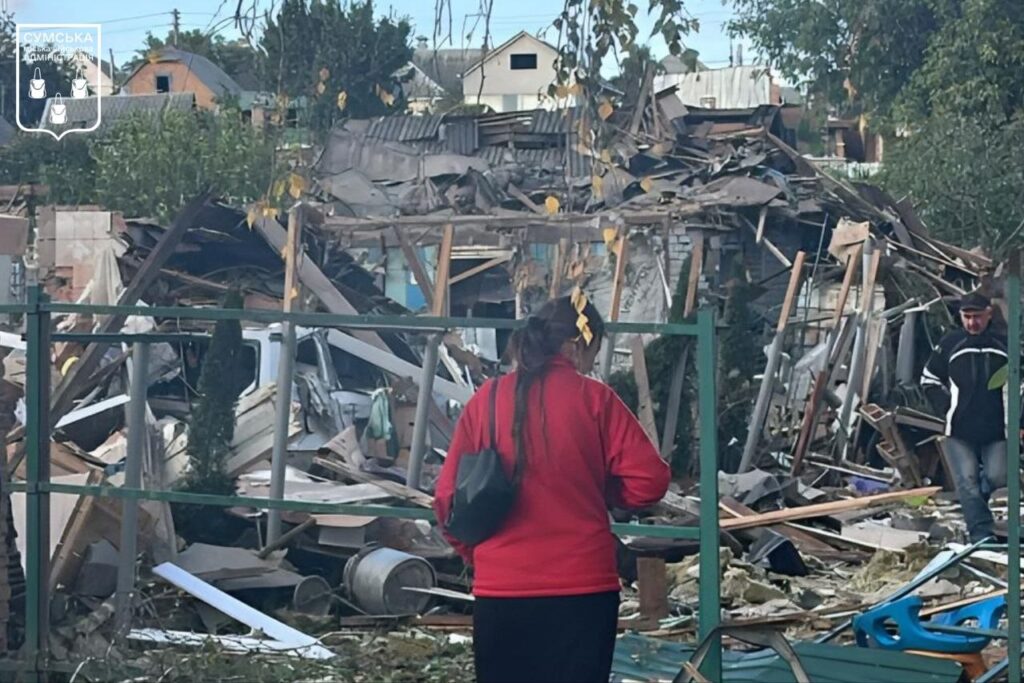
Over the past 24 hours, Russian forces carried out more than 60 strikes on 25 population centers in 13 territorial communities of Sumy Oblast, the Sumy Regional Military Administration reported. Two people were killed and 15 others were injured, including two children, according to the administration's figures for each community. Over the course of the day, the oblast was under an air-raid alert for 22 hours and two minutes.
In particular, a 74-year-old man and a 70-year-old woman were killed in the Sumy community as a result of strikes by guided aerial bombs (KABs), the report said. Four people were injured and three people sustained trauma as a result of the Russian attack, including a one-year-old girl. A six-year-old girl was also injured, while a 49-year-old man sustained injuries in a UAV attack.
Aftermath of the Russian attack on Sumy Oblast, Ukraine, 29 September 2026. Photo: Sumy City Military Administration
Over the past 24 hours, the Russians attacked Mykolaiv Oblast with Shahed/Gerbera-type attack UAVs, killing a 56-year-old man, the Mykolaiv Regional State Administration reported. The attack destroyed one detached house, damaged two others and four outbuildings, and caused fires, according to the report.
An 8-year-old girl and an 85-year-old woman suffered acute stress reactions as a result of Russian shelling
Russian forces attacked Kharkiv and 10 population centers in Kharkiv Oblast, according to Oleh Syniehubov, head of the Kharkiv Regional Military Administration. Two people were hurt, both with acute stress reactions.
In Kharkiv, an 8-year-old girl suffered an acute stress reaction, as did an 85-year-old woman in the village of Ohurtsivka, Syniehubov reported.
The Russians used various types of weapons against Kharkiv Oblast: one guided aerial bomb (KAB), one multiple rocket launcher system (MLRS), five Molniya-type UAVs, seven FPV drones, and eight UAVs whose type is still being determined, according to the report.
In Kharkiv, Russian shelling damaged the windows of an apartment building, two cars, a private house, and the roof of a shopping center. A car was also damaged in the village of Myronivka, and three cars in the village of Mali Fesky.
A car damaged in the Russian attack on Kharkiv Oblast, Ukraine, 29 September 2026. Photo: Kharkiv Regional Military Administration
The Russians also injured six residents of Donetsk Oblast: three people in Bilbasivka, one person in Sloviansk, one person in Shabelkivka, and one person in Druzhkivka, Donetsk Regional State Administration head Vadym Filashkin reported on his social media.
Over the past day, 18 population centers in Kherson Oblast came under Russian airstrikes, drone attacks, and artillery shelling, leaving five people injured, says Oleksandr Prokudin, head of the Kherson Regional Military Administration. He adds that Russian forces targeted critical and social infrastructure as well as residential areas, damaging two detached houses in particular.
Russian forces carried out 686 strikes on Zaporizhzhia Oblast
Over the past 24 hours, the Russians carried out 686 strikes on 51 population centers in Zaporizhzhia Oblast, but no civilians were injured, co-chair of the Zaporizhzhia Regional Defense Council Ivan Fedorov reported, adding that:
Russian forces carried out 22 airstrikes on 18 population centers.
530 UAVs of various modifications, predominantly FPV drones, attacked 37 population centers.
Five MLRS strikes were recorded against Orikhiv, Novoandriivka, and Kosivtseve.
129 artillery strikes hit 19 population centers.
44 reports were received concerning damage to infrastructure, homes, and vehicles.
A house damaged in the Russian attack on Zaporizhzhia, Ukraine, 29 September 2026. Photo: Zaporizhzhia Regional Defense Council
Seven facilities in Zhytomyr Oblast were damaged during the evening and overnight hours leading into 30 September, says Vitalii Bunechko, head of the Zhytomyr Regional Military Administration. Food and processing industry enterprises as well as energy facilities came under Russian attack. Four cars also burned as a result of the attack, Bunechko added.
The Russian army attacked three districts of Dnipropetrovsk Oblast with UAVs, Dnipropetrovsk Regional Military Administration head Oleksandr Hanzha wrote on social media. The attacks damaged infrastructure, and a fire broke out in one of the communities, he said, adding that there were no casualties.
Air defense forces neutralized three Russian UAVs over Cherkasy Oblast, with no casualties, Ihor Taburets, head of the Cherkasy Regional Military Administration, reported. However, the fall of an enemy target caused a fire at an infrastructure facility, which was quickly extinguished, he added.
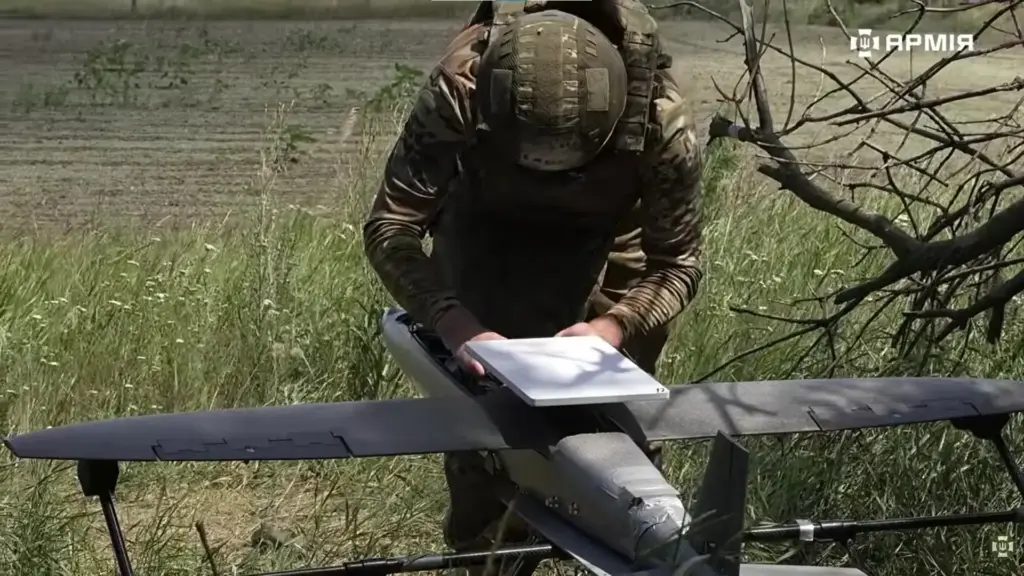
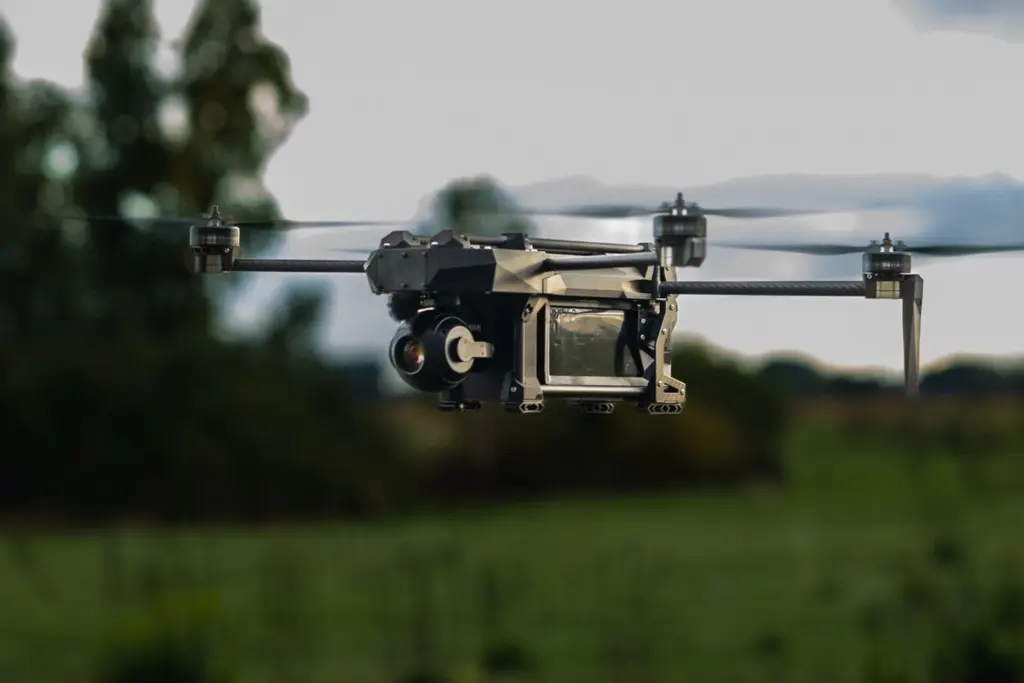
Ukrainian company Vyriy Industries is bringing a new tactical reconnaissance drone, Slavic, to the market, Oboronka reports, citing information from the manufacturer. The control system of the new drone will be familiar to DJI Mavic operators, the company also said.
Mavic has long been one of the main reconnaissance tools used by Ukrainian forces, with Ukraine relying heavily on supplies of these drones from abroad. After Ukrainian President Volodymyr Zelenskyy said China had stopped selling drones to Ukraine, the country began seeking alternatives. Slavic is one of these domestic alternatives, designed not only to replace Mavic but also to adapt its capabilities to current battlefield conditions, allowing reconnaissance crews to operate farther from the line of contact and reducing risks to personnel.
Slavic has a tactical range of up to 30 kilometers without GPS
Slavic can remain airborne for up to 1.5 hours because it is equipped with a 40,000 mAh solid-state battery, the media outlet notes. The drone has a tactical range of up to 30 kilometers, the report says.
Illustration showing the positions of the Slavic pilot (left) and Mavic pilot (farther to the right), as well as the drones’ flight ranges relative to enemy positions (shown in red). Illustration: Vyriy Industries
The aircraft can operate without GPS, as Slavic uses optical positioning for navigation. The pilot can also select a less congested channel and operate more effectively in difficult terrain because the communications system operates across a wide range of channels.
The manufacturer notes that for surveillance, Slavic is equipped with a daytime 2K digital camera mounted on a three-axis stabilized gimbal, with 10x optical and 30x hybrid zoom.
Part of the drone with the camera. Photo: Vyriy Industries
The system is supplied as a ready-to-use package “out of the box,” with all the equipment needed for operation without additional field modifications.
The drone is designed to keep crews farther from the front line
The company said its new drone has successfully completed initial combat trials with seven units of the Ukrainian Defense Forces and is preparing for scale-up, the media outlet notes.
“The war has changed, and so have the working conditions for crews. The kill zone has expanded, while available commercial drones have a limited tactical range. The main task now is to provide the military with a specialized platform that can fly longer and farther, so crews can operate farther from the line of contact. This is exactly why we began developing Slavic,” said Oleksii Babenko, founder and CEO of Vyriy Industries.
At the same time, the team is working on new Slavic configurations, including testing thermal imaging modules for nighttime reconnaissance. The manufacturer is also preparing the platform for scaled-up production and deliveries to the Ukrainian Defense Forces, the company told the media.
“Frankensteins” and Ukrainian-made drones are among the options for replacing scarce Mavics
The Ukrainian military had widely used Chinese DJI Mavic 3 drones, including to adjust artillery fire, monitor infantry positions and conduct surveillance, prompting Ukraine to seek ways to replace the shortage. More than five alternatives to the Chinese drone had already been developed in Ukraine, the Ministry of Strategic Industries of Ukraine confirmed to RBC-Ukraine in July 2025.
DJI Mavic 3 in use by a Ukrainian servicemember. Photo: Ministry of Defense of Ukraine
There are also other options for replacing them. The main work in military units is being done with “Frankensteins,” drones assembled from two or three damaged aircraft, Mavic UAV pilot instructor “Dobryi” said in an interview with Militarnyi in July this year. At the same time, such drones are less reliable than new ones, he added.
A Russian drone struck near the Yahodyn border crossing on the Ukrainian-Polish border, the Ukrainian Border Service and the Polish Armed Forces Operational Command reported on 28 September. Geolocated footage of the attack shows the jet-powered Geran-5 striking near the facility. Following the incident, Poland is reviewing its air security measures.
Russia systematically strikes Ukraine’s border crossings to complicate logistics. Russian strikes near the Ukrainian-Polish border have increased over the past month. Yahodyn is one of the largest border crossings with Poland, on a route leading, among other destinations, to Warsaw, and has repeatedly been used by senior foreign officials visiting Ukraine.
The blast wave damaged the checkpoint building at the terminal entrance, Ivan Romaniuk, head of the Volyn Regional Military Administration, reported on 28 September. It was a jet-powered drone, but there was “preliminarily no direct hit” on the border crossing, BBC Ukraine reported, citing its own sources in the State Border Guard Service of Ukraine.
Russian drone strikes near Yahodyn
On the afternoon of 28 September, Poland reported the involvement of Polish military aviation because of Russian drone attacks against Ukraine. That day, it was also reported that the airports in Rzeszów and Lublin suspended operations.
Jacek Horyszewski, a spokesperson for the Polish Armed Forces Operational Command, said on TVN24 that a Russian drone had struck near the Yahodyn border crossing in Volyn Oblast on the border with Poland.
Romaniuk confirmed the attack in the village of Starovoitove, Kovel district, Volyn Oblast, where the Yahodyn international border crossing is located.
“There have been no reports of injuries or fatalities,” he said.
Videos that appeared online show the drone falling in a forest near people and border infrastructure.
Момент удару «Герані-5» поблизу КПП «Ягодин», – місцеві канали.
BBC з посиланням на ДПСУ пише, що реактивний дрон вдарив неподалік кордону з Польщею: «Влучання у пункт пропуску «Ягодин» попередньо, не було». pic.twitter.com/VNq7QMy2Ly
The Russians carry out such attacks on Ukraine’s western regions using repeaters on Belarusian territory that amplify signals for Shahed- and Gerbera-type drones, BBC Ukraine reported, citing State Border Guard Service data.
Detonation of a Russian Geran-5 drone at the YAGODIN BORDER CORSSING, Ukraine. The explosion occurred ~1km from Polish territory.
Poland is already considering changes to its air security rules after the incident
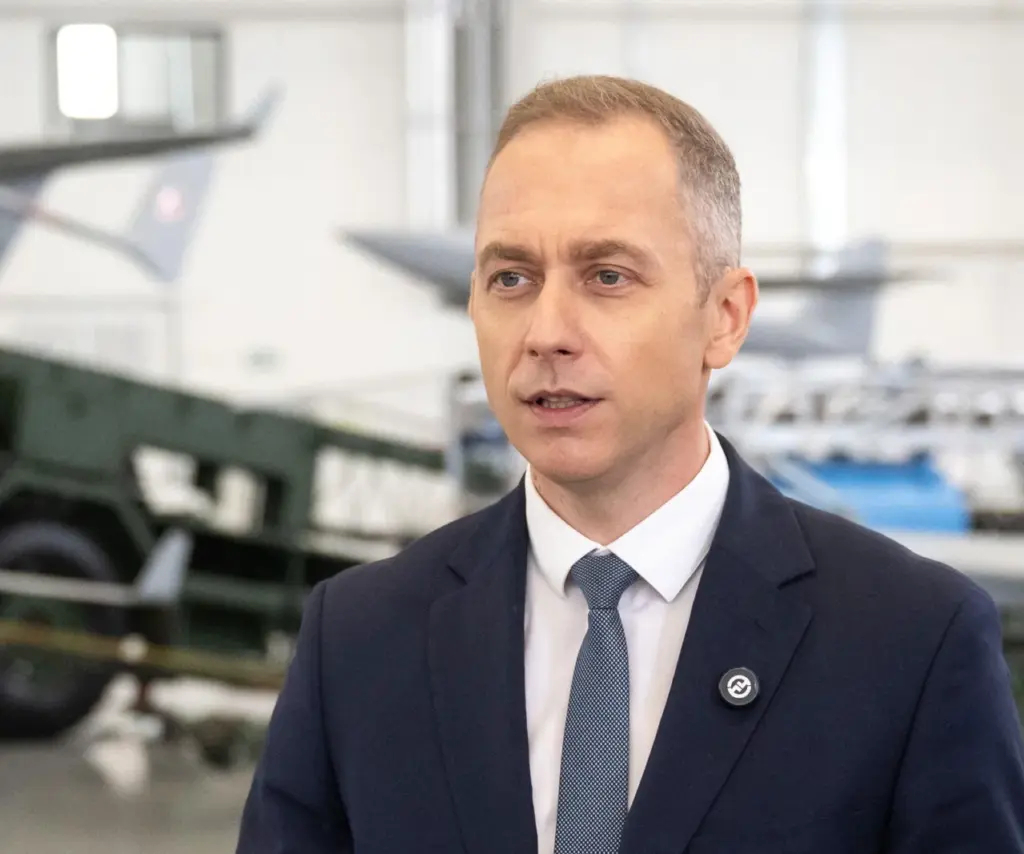
The same day, Polish Deputy Defense Minister Cezary Tomczyk said Poland will change its engagement rules "in the coming days." Currently, helicopter and fighter jet pilots can use weapons only after visually identifying a target: the aircraft must approach the object and determine what it is. After the rules are changed, however, a pilot or operational commander will be able to make a decision to engage based solely on radar data.
Cezary Tomczyk. Photo: Paweł Skraba / Super Express
“It is notable that Polish authorities have taken this step as NATO states attempt to find an adequate response to Russian drones nearing or entering their airspace from Ukraine, often leaving NATO air defense insufficient time to identify and target such threats before they have entered allied airspace,” the Institute for the Study of War noted in its 28 September report.
Recent strikes near the Polish border
On 10 September, Polish Prime Minister Donald Tusk said that Poland had prevented a threat to one of its border crossings with Ukraine overnight and expected its border crossings to be attacked as Moscow targets trade routes in an attempt to economically weaken Kyiv. He made the statement after drones struck a border crossing between Ukraine and Moldova on the previous day, killing two people.
On 13 September, Russian forces struck the locomotive of a passenger train two kilometers from the Polish border and hit a gas station near the Yahodyn international border crossing on the Ukrainian-Polish border.
На Волині внаслідок атаки РФ пошкоджено АЗС біля ПП «Ягодин» на кордоні з Польщею - речниця Волинської митниці Валентина Черниш.
Також на кордоні із Польщею рашисти атакували залізничну інфраструктуру - відео. pic.twitter.com/3XLc3B4FFw
The drone attack forced passengers on a train from Ukraine to leave the carriages for safety. Those evacuated included Boris Johnson, security advisers to European governments, German Bundestag lawmakers, diplomats, and academics.
After the Russian attacks, Poland deployed military units on the border with Ukraine and strengthened infrastructure near the border crossings, Polish Defense Minister Władysław Kosiniak-Kamysz said on 15 September.
On 17 September, Russian forces struck near the Yahodyn border crossing with a jet-powered drone.
Russia is likely attempting to force Ukraine to capitulate by spring 2027 through a large-scale campaign of long-range strikes, the Institute for the Study of War (ISW) said in its 27 September report. Russian President Vladimir Putin's new theory of victory relies heavily on the mass use of jet-powered drones and ballistic missiles against Ukraine, the institute assesses.
Russia keeps shifting to faster jet-powered drones that Ukraine's defenses struggle to stop, forcing it to spend scarce missiles on them. Russia's use of jet-powered drones rose eightfold from June to August, with Moscow launching around 7,700 such drones since their initial deployment, Ukrainian Air Force spokesperson Yurii Ihnat said on 23 September. But Putin likely does not expect the campaign to last indefinitely, and he may hold off on a new mobilization until he sees whether the strikes work, ISW assesses.
Putin's modified theory of victory
Putin's modified theory of victory largely depends on Russia's ability to mass-launch cheap jet-powered Gerans that get through Ukrainian defenses often enough, the institute notes.
Even a Kremlin-linked Russian milblogger claimed on 27 September that the Russian strategy, which relies heavily on long-range strikes, is costly and cannot continue indefinitely, not least because Ukraine is hitting Russia harder too, according to the analysis.
At the same time, Putin stated on 25 September that Ukraine "must feel" Russia's "retaliatory" strikes. ISW assesses that this suggests he intends to intensify Russia's strike campaign in winter, as he has in previous winters.
The aftermath of the Russian attack on Kyiv, Ukraine, 27 December 2025. Photo: National Police
If Putin is counting on Ukraine to break and capitulate this winter, he may be ignoring what the campaign will cost Russia over time, the institute notes. This strategy also counts on Ukraine's shortage of Patriot interceptors against ballistic missiles, and on the country's power grid and other vital systems giving way under months of strikes.
Until that approach runs out, Putin is unlikely to back down on his demands or agree to real ceasefire talks, ISW assesses.
Ukrainian interceptors could disrupt Russia's plan
A Kremlin-linked Russian milblogger claimed on 27 September that Russian forces launched predominantly jet-powered Geran-5 drones at Odesa, Mykolaiv, and Kyiv during the night of 26–27 September. According to the blogger, Russia's diverse arsenal of strike weapons and Ukraine's shortage of air defense assets allow Russian forces to maintain the current pace of strikes and expand the range of targets, ISW writes in its analysis.
At the same time, Ukrainian President Volodymyr Zelenskyy said on 26 September that Ukraine's interception rate for jet-powered Shahed drones currently stands at 55%. Of more than 2,730 such drones Russia had launched in September by then, Ukrainian forces had downed or suppressed more than 1,500, he added.
Jet-powered drones Geran-5 (above) and Geran-4 (below). Image: TurDef
Ukraine is testing interceptor drone prototypes in combat conditions, Ukrainian Presidential Office head Kyrylo Budanov told Novyny.LIVE on 27 September. The mass deployment of interceptors capable of shooting down jet-powered Gerans could begin within several months, he added. Ukrainian companies have already successfully tested several interceptor drones capable of intercepting Russian jet-powered drones in field conditions, the institute notes.
At the same time, it remains unclear whether Ukraine will be able to scale up its interceptor program quickly enough and achieve sufficient success to disrupt the intensification of Russia's campaign during the winter, ISW notes.
Why Putin may hold off on a new mobilization
Expanding Russia's arsenal of strike weapons is cheaper than carrying out a second mobilization economically, militarily, and socially, a Kremlin-linked Russian milblogger cited by the institute claimed.
Putin may put off large-scale forced mobilization until he sees whether the strikes deliver, ISW assesses, though his officials have been laying the groundwork for it despite Kremlin denials. Still, the need to replace Russia's enormous battlefield losses could push him to order such a mobilization as early as this fall, ISW notes, as Ukrainian and other sources have repeatedly reported he is preparing to do.
A Ukrainian Hornet drone struck a Russian radar system about 120 kilometers behind the front, Taras Myshak, senior communications officer of the 59th Separate Assault Brigade of Unmanned Systems, said on Suspilne on 28 September, ArmyInform reported. The brigade's Signum unmanned systems battalion carried out the strike about a week earlier, he added.
Russia's air defenses depend on radars to see Ukrainian drones and missiles coming. Every radar it loses weakens that watch and gives the next Ukrainian strike a better chance of getting through.
According to Myshak, the target was a "quite expensive" Russian radar system.
A radar system is effectively the "eyes" of the Russian air defense system: it detects aerial targets, determines their coordinates, and transmits information to other elements of the system.
Russians continue probing Ukrainian defenses
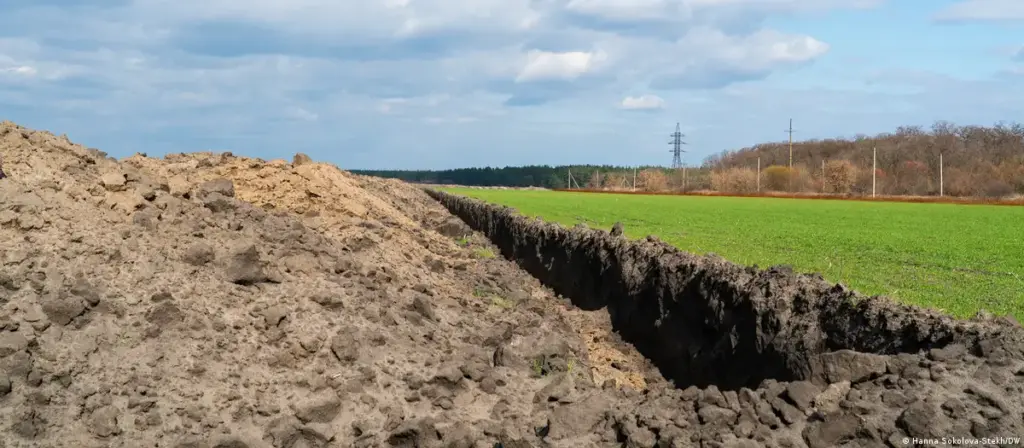
Russian forces in the brigade's zone, roughly along the Donetsk Oblast border, continue to operate in small infantry groups and use infiltration tactics, Myshak says. At the same time, the Russians are trying to cut Ukrainian logistics, he adds, saying that the brigade is effectively holding the Russian army back from infiltrating into Dnipropetrovsk Oblast.
Defensive fortifications in Dnipropetrovsk Oblast, Ukraine. Illustrative photo: Hanna Sokolova-Stekh/DW
The Russians' main means in this sector remain drones and infantry, the serviceman says. The number of infantry has decreased somewhat compared with previous periods, but the pressure from the enemy has not stopped, he adds.
"Of course, they will try, they will constantly probe, so to speak, our defense with their infiltrations. And likewise with drones, of various ranges, working on logistics, making it impossible for us to enter positions, to deliver everything necessary to the positions, in order to make our defense impossible," Myshak emphasized.
At the same time, Ukrainian troops are trying not only to defend against these actions but also to deprive the Russians of radars, electronic warfare systems, and other equipment, the serviceman says. "We likewise don't let them relax," he said.
Russians tried to prevent the strike, but Ukrainian forces hit the target
This was likely the same strike that Ukrainian volunteer fundraiser Serhii Sternenko reported on his Telegram channel on 18 September. Operators of the Signum unit of the 59th Brigade, together with the First Separate Unmanned Systems Center, hit a Russian Nebo-M radar about 120 kilometers from the front line, he wrote.
The radar, which Sternenko valued at about $100 million, was damaged over two drone sorties, which also wounded two Russian servicemen, according to his post. During the operation, the Russians tried to jam the drone's video feed with electronic warfare, but the operators flew on using only flight data and their own experience, he added.
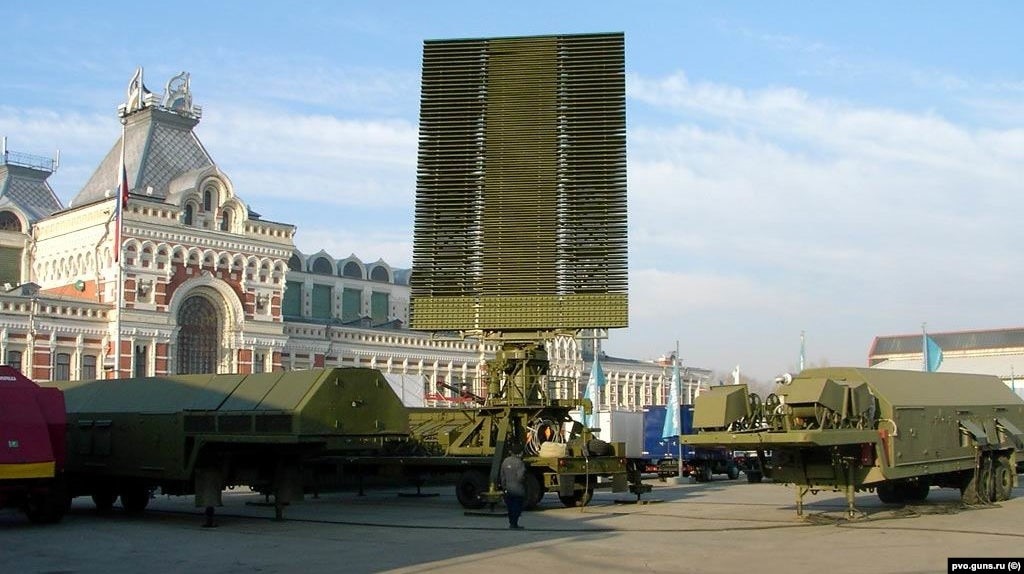
The unfolded Protivnik-GE radar station of the Nebo-M complex, with other components of the system folded nearby. Screenshot from pvo.guns.ru via RFE/RL
Ukraine systematically knocks out the "eyes" of Russian air defense
In October 2024, Ukraine's military said it had hit a Russian Nebo-M radar station with ATACMS ballistic missiles to blunt Moscow's ability to spot and shoot down aircraft and missiles, Reuters reported. The military estimated each such system at more than $100 million.
Ukraine is systematically increasing its use of medium-range strike drones, which can hit targets up to 200 kilometers deep inside enemy territory, the Ukrainian Defense Ministry reported in May this year. Russian air defenses and radars are among the main priorities of such operations, as their destruction weakens the system for detecting and intercepting aerial targets, the ministry said. Medium-class drones, including the FP-2, Hornet, and Bulava, play a critical role in such strikes, the ministry noted.
According to the General Staff of the Armed Forces of Ukraine, Ukrainian forces struck at least 25 major Russian air defense and radar systems during April, about 12 of which were radar systems, the Ukrainian Defense Ministry also wrote in May this year.
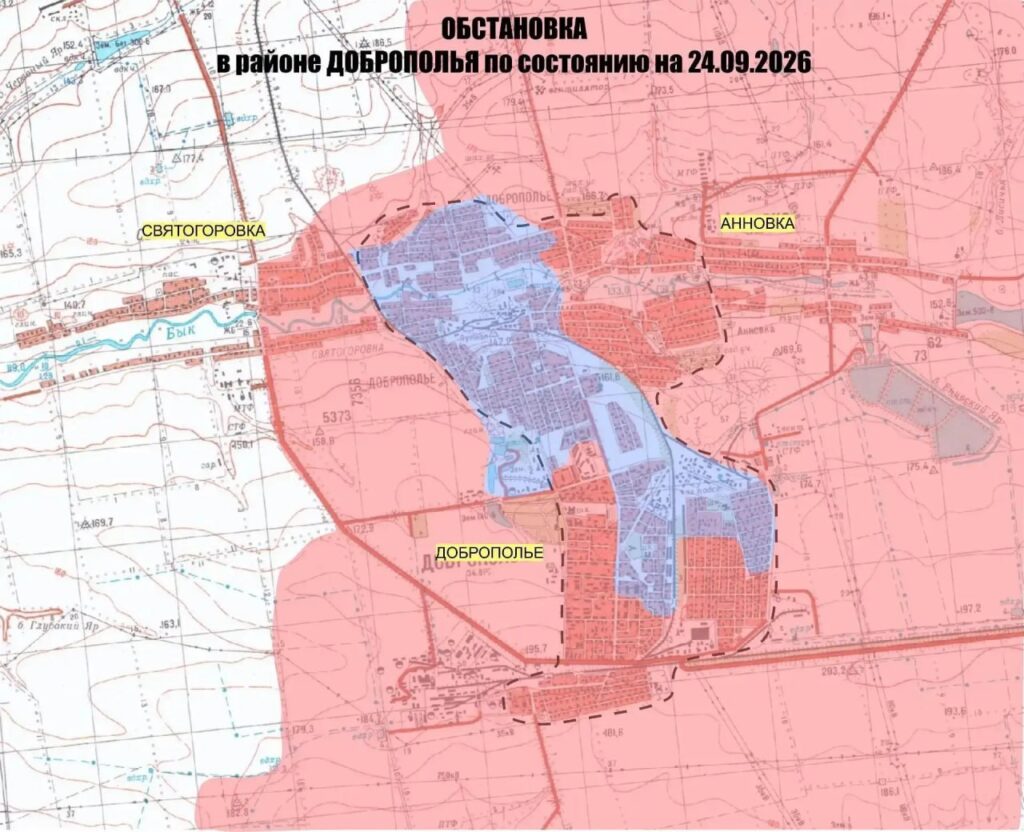
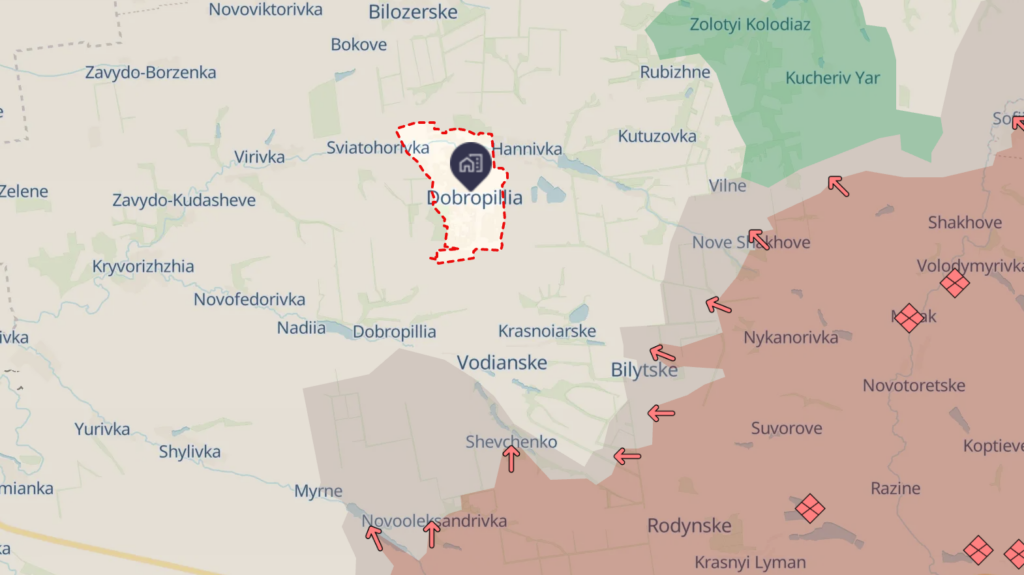
The Institute for the Study of War (ISW) published a map in its analytical report on 24 September that contrasts the claimed Russian encirclement with the location of Russian forces as assessed by the experts. Based on the evidence observed by ISW, the nearest area where Russian forces are present is 10.2 kilometers from the southeastern outskirts of Dobropillia.
Russia has been spreading disinformation about its successes around Dobropillia as part of what ISW calls a cognitive warfare effort to portray Ukrainian defenses as on the verge of collapse. Russia's Defense Ministry published a map claiming the city was surrounded. ISW's own map challenges it. The Ukrainian military says the city remains under its control.
Russian Defense Ministry claims it is already destroying encircled Ukrainian troops in Dobropillia and moving further
Units of Russia's Center Grouping of Forces continue combat operations against encircled Ukrainian forces in the Dobropillia area of Donetsk Oblast while simultaneously advancing toward Oleksandrivka, the Russian Defense Ministry claimed. ISW analysts, meanwhile, said they have not observed evidence supporting Russia's claim that the city is encircled. They also noted that Ukrainian officials "directly refute" the claim.
A Russian map showing the complete encirclement of Dobropillia. ISW and the Ukrainian Armed Forces reject this claim. Map: Russian Defense Ministry
ISW observed evidence that Russian infiltrators, small groups, were operating east and northeast of Dobropillia on 19 and 20 September. The institute did not assess that these infiltrators had consolidated their positions.
Ukrainian forces maintain positions south and northeast of Dobropillia, military observer Kostiantyn Mashovets said on 20 September, according to ISW.
Russian forces have not made major gains in the Dobropillia direction, the chief of staff of an artillery reconnaissance battalion said on 22 September, according to the institute. On the same day, a Russian milblogger described the "alleged Russian encirclement of Dobropillia" as potentially meaning not the direct presence of infantry, but only the establishment of fire control over Ukrainian logistics, including roads west of Dobropillia and toward Sviatohorivka, according to ISW.
ISW noted that Russia's pervasive military culture of lying—what Russian milbloggers themselves call "beautiful reports"—has degraded the Defense Ministry's own ability to understand the battlefield and enabled inflated claims like the Dobropillia encirclement.
Russia uses this disinformation as a "diversion"
In its statement, the Russian Defense Ministry itself described Dobropillia as a "strongly fortified settlement" whose seizure would threaten key Ukrainian supply lines running from Dnipropetrovsk Oblast toward the Fortress Belt—the Sloviansk-Kramatorsk-Druzhkivka urban agglomeration.
Russia has recently renewed its attempts to break through toward Dobropillia.
Third Army Corps Commander Andrii Biletskyi said that Russian forces sought to bypass the fortified cities through Dobropillia and link up with troops advancing from north of Lyman, rather than launch a direct assault. ISW noted on 16 September that the Vivaldi operation disrupted Russia's two-pronged plan. In its 24 September report, ISW said Russia's claims about Dobropillia were partly intended to divert attention from Ukraine's elimination of the Russian salient north of Lyman, which has likely forced Russia's command to rethink its wider encirclement plans.
Russia is trying to "scare Europe" through hybrid attacks so that it provides less support to Ukraine, but Moscow has neither an interest in nor the capability to escalate to a full-scale military confrontation with NATO, Finnish President Alexander Stubb told Politico on 21 September during an interview on the sidelines of the UN General Assembly—even as other European leaders warn that Russian strikes on NATO territory could come within months.
Ukraine critically needs Western support as Russia's full-scale invasion continues. NATO's PURL program has provided about 75% of all Patriot battery missiles and 90% of the missiles used in other air defense systems since its launch last summer, according to NATO Secretary General Mark Rutte on 3 February. Some countries are also hubs for defense companies that produce weapons for Ukraine. Russia is trying to pressure such countries, including through hybrid attacks. Polish Prime Minister Donald Tusk and the head of the Czech security service have warned that Russia could strike NATO territory within months. The Finnish president says his own intelligence sees activity but no imminent military threat, and calls it an "overreaction" when intelligence services tell their neighbors they are next for a Russian invasion.
Finnish intelligence sees Russian activity but no imminent military threat, Stubb says
Stubb calls claims by some intelligence services that Europe is next for a Russian invasion an "overreaction" and says he sees no evidence of this.
"We think we have to be vigilant and awake. But, you know, we have the longest border in NATO with Russia, it's half the border. In our intelligence we see that there is activity but no imminent military threat right now," Stubb added.
He says Russia will continue hybrid attacks, so Europe must be prepared and support Ukraine
Europe should prepare for Russia's "continued hybrid and sabotage attacks," but should not "overreact" to them, as Russia wants to scare its allies so that they slow down their support for Ukraine, the Finnish president said.
"And any time we overreact to a hybrid attack, they have actually won the battle in that particular way," Stubb told Politico.
Europe should remain "cool, calm and collected" during such Russian intimidation, the Finnish president said.
Germany's recent decision to officially hold Russia responsible for an attempted drone attack in Leipzig is "exactly what you need to do," Stubb said.
"You need to point the finger and say, we know what you're doing, and these are the consequences," he added.
Drone found near a Ukrainian An-124 aircraft in Leipzig, Germany, on 5 August, 2026. Photo: screenshot from Bild video
A pro-Kremlin group, Global Citizens Against War 1984, issued an ultimatum to Latvia, Poland, and Portugal to stop supplying weapons to Ukraine by 7 October, threatening to disrupt defense companies in those countries.
Warnings from Warsaw and Prague paint a different picture
Russia could carry out "accidental" drone or missile strikes against NATO countries supporting Ukraine in an attempt to weaken the Alliance's integrity and persuade members that Article 5 is more theoretical than practical, Polish Prime Minister Donald Tusk said in parliament on 17 September, citing NATO, Ukrainian, and Polish intelligence assessments.
"There is a real risk that drones or other types of missiles could enter the territory of one or several NATO countries on the eastern flank," Tusk said.
The head of the Czech security service warned separately that Russia could undertake a limited incursion, false-flag provocations, and a massive influence campaign in a matter of months rather than years.
Poland will provide another aid package to Ukraine, which will include, among other things, “what Ukraine needs right now,” Deputy Minister of National Defense Stanisław Wziątek said, reports Polskie Radio. He said the package would include missiles for F-16 fighter jets, which the Ukrainian military uses to shoot down Russian drones.
Ukraine is critically short of missiles for F-16 fighter jets, which shoot down Russian UAVs. Recently, it was reported that pilots sometimes took off without missiles, using only the aircraft’s built-in M61A1 Vulcan cannon, which is dangerous for civilians. Poland’s newly promised aid will include these missiles for Ukraine.
Among other things, Poland will provide aviation equipment, the report said. Media reports added that the aid package may be worth around €50 million.
Ammunition for F-16s and possible aviation equipment
“Our aid is in the process of being prepared. Everything will happen in a moment. I cannot say what it contains, I can only say that it is what Ukraine needs right now. This includes basic ammunition. These are the ones mounted on F-16s to shoot down Russian drones,” Wziątek said.
AIM-9 and AIM-120 are air-to-air missiles that the Ukrainian Armed Forces use with F-16s to fight Russian aviation, Militarnyi says. The outlet adds that last year Ukrainian F-16s were spotted with APKWS II missiles, which are effective against drones. As for the aforementioned aviation equipment, Poland may provide decommissioned MiG-29 fighter jets or drones, the media outlet suggests.
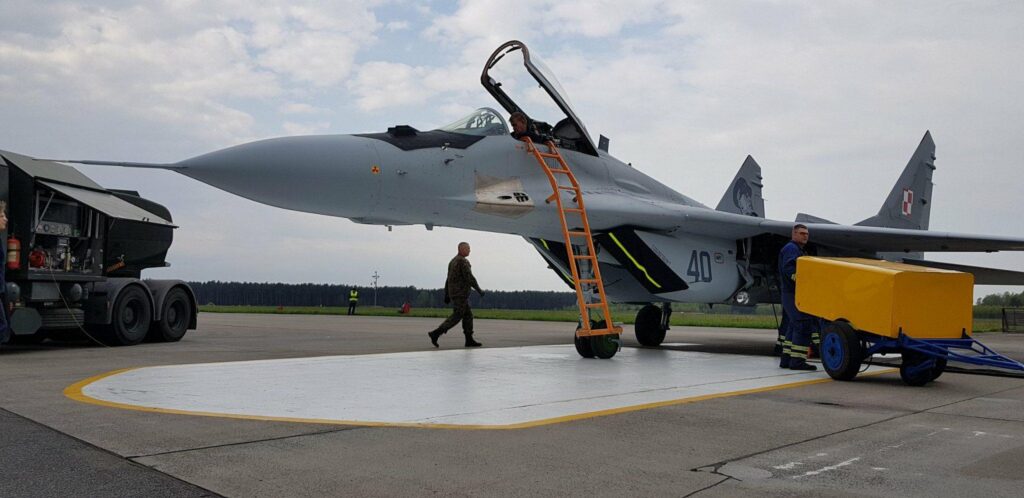
A MiG-29 fighter jet of Poland's Air Force. Photo: WZL-2 via Facebook
The MiG-29 does not use the same scarce stocks of AIM-9 and AIM-120 missiles.
Missile shortage is not new
In July 2025, America abruptly suspended arms supplies to Ukraine, affecting some types of weapons. Among them were more than 90 US-made AIM air-to-air missiles that were in Poland and on their way to Ukraine, but were withdrawn by the US, according to a Wall Street Journal article. Since then, Ukraine has received Western aid for air defense systems, but missiles have remained among the items in short supply.
Ukraine faced a severe shortage of F-16 missiles from late November to mid-December, according to Reuters. One source said Ukraine had "nothing to put on its jets for almost a month."
While F-16s likely rank first by number in the Ukrainian Armed Forces, the Soviet-made MiG-29 ranks second, Euromaidan Press. Ukraine had enough R-73 missiles for this fighter, but when the Ukrainian Armed Forces also began using them for ground-based launchers after 9M33 missiles for Soviet Osa air defense systems ran out, the rate of consumption increased sharply.
Ukrainian forces were observed resuming the use of older missiles that had been considered obsolete. There is an alternative: using the fighter’s cannon. However, this practice is dangerous.
A large-scale police operation is underway after a drone of unknown origin crashed 1 kilometer from a Bundeswehr base, German media outlet Bild reported on 15 September.
Drones have repeatedly flown over German military bases, and German prosecutors are already treating one August find near Ukraine-bound cargo as attempted sabotage. Germany's military counterintelligence has tied repeated sabotage on German soil to Russia, with high probability. Neither the owner nor the origin of this drone is known. Russia has denied involvement in earlier incidents, some of which Germany has officially attributed to it.
Discovery near airbase triggers large-scale search
Parts of the drone were found east of Lake Steinhude, the media outlet said. The crash site is one kilometer from the Bundeswehr's Wunstorf air base in Lower Saxony, the German military confirmed to the outlet. The drone crashed in an open, uninhabited area, the state criminal police office said. After the debris was discovered, authorities launched a large-scale search operation in the area to find additional parts of the UAV, according to Bild.
Investigators do not yet know who owns the drone
The search continues, and the state criminal police office says there are so far no indications of a danger to the public. Investigators learned about the discovery on Monday and want to analyze any other drone parts they find to determine its origin, the media outlet reported. Only then could more be said about the circumstances of the crash, it added.
Explore further
Germany will close Russia’s Bonn consulate after attributing Leipzig Airport drone attack to Moscow
Drones have been spotted over Bundeswehr bases many times
Since the beginning of the full-scale invasion, the number of reports of drone sightings has "increased significantly" and become "more consistent," a spokesperson for the Bundeswehr Operations Command told RedaktionsNetzwerk Deutschland (RND) in August.
"Overall, several hundred suspected drone overflights have been reported in the area of the German Armed Forces in recent years," the command spokesperson told RND.
What came before this crash
Germany is the busiest front in Russia's covert campaign in Europe. A Semtex-laden drone turned up beside a Ukrainian cargo plane at Leipzig/Halle airport in August, and investigators this month named a Russian intelligence operative and a Belarusian petty criminal. Berlin blamed Moscow and ordered Russia's Bonn consulate closed.
Two Bulgarians were arrested over a September arson at a Munich building site between two defense-tech headquarters, a day after two attempts to sabotage the power grid that Germany has not attributed. Germany suspects a planned assassination of a Bavarian drone maker's boss, watched by agents hired for single jobs.
Explore further
The throwaway agents Moscow sent after a Bavarian drone boss arming Ukraine—and how Germany stopped them
Not every strand leads to Moscow. German military counterintelligence this week attributed part of the drone activity over Bundeswehr sites to Chinese intelligence.
Elsewhere the tempo holds: Polish prosecutors have opened more than a hundred espionage cases in 20 months, and in the Netherlands a former commander of US Army forces in Europe said Russian saboteurs attacked the rail network and tried to kill him, which Dutch Railways said they knew nothing about.
Russian forces have stepped up their attempts to break through toward Dobropillia in recent weeks, staff sergeant Dmytro Davydenko of the Svoboda Battalion headquarters said on the Suspilne Studio broadcast on 14 September.
Dobropillia is an important transportation hub in northern Donetsk Oblast, with a key road connecting it to Kramatorsk. Russian forces are using every possible factor, including weather conditions, to seize Dobropillia as part of their efforts to capture the entire Donetsk Oblast.
He noted that Russian forces may be taking advantage of the “greenery” to move as many troops as possible closer to the settlement and then enter Dobropillia when the weather deteriorates, potentially leading to urban combat.
The actions may be part of a tactic Russia has used before, but Ukraine has taken it into account
“Right now, there is a huge increase in the number of mobile groups moving in this direction. Sometimes we simply cannot keep up with engaging those we detect because there is a very large number of movements advancing in all directions right now,” Dmytro said.
Russian forces may use poor weather conditions to attempt something similar to what they did in Pokrovsk, when they tried to bring in a large number of troops using mechanized columns, the staff sergeant said. He added that the Ukrainian military had “drawn certain conclusions” and created obstacles for Russian forces along the routes to Dobropillia: the roads have either been destroyed, mined, or blocked.
The city of Dobropillia in Donetsk Oblast and Russian forces advancing toward it on the DeepState analytical project's map on 14 September 2026. Screenshot from the DeepState map
The number of assault troops has increased, but Russia faces limitations
Russia can increase the number of troops in the area, but its capabilities are limited, Davydenko said. He explained that one drone operator cannot simultaneously support 20–30 assault groups on different axes, so an increase in the number of Russian troops is unlikely to result in a “critical onslaught.”
“To bring in an even larger number of fighters, I don’t know how well they will manage that, because there is the factor of the physical ability to bring this number of people to the staging point and then lead this large number of people along the route,” Davydenko said.
The Kremlin revives its push toward Dobropillia
Russia prioritized offensive operations toward Pokrovsk and Dobropillia to encircle Ukraine’s fortress belt in Donetsk Oblast from the southwest, but the timeline for such an encirclement is “extremely unrealistic,” the Institute for the Study of War (ISW) said in its 7 August report.
The fortress belt consists of four fortified cities that have formed the backbone of Ukraine’s defense in Donetsk Oblast since 2022: Kostiantynivka, Druzhkivka, Kramatorsk, and Sloviansk. Dobropillia sits at its southwestern corner.
The city initially became a target of Russian strikes as Russian forces advanced toward Pokrovsk, and later became a target for capture. On 11 August 2025, Russian forces managed to approach Dobropillia and cut the Dobropillia–Kramatorsk highway in the opening days of their offensive. Ukrainian forces later reported that they had encircled and eliminated these troops.
In spring and summer 2026, Russia would “almost certainly” attempt to repeat its success in Dobropillia, predicted Francis Farrell for the Kyiv Independent. That is what happened. On 26 July, reports emerged that Russia was once again massing around Dobropillia, using quad bikes and motorcycles, following the same infiltration pattern as in 2025.
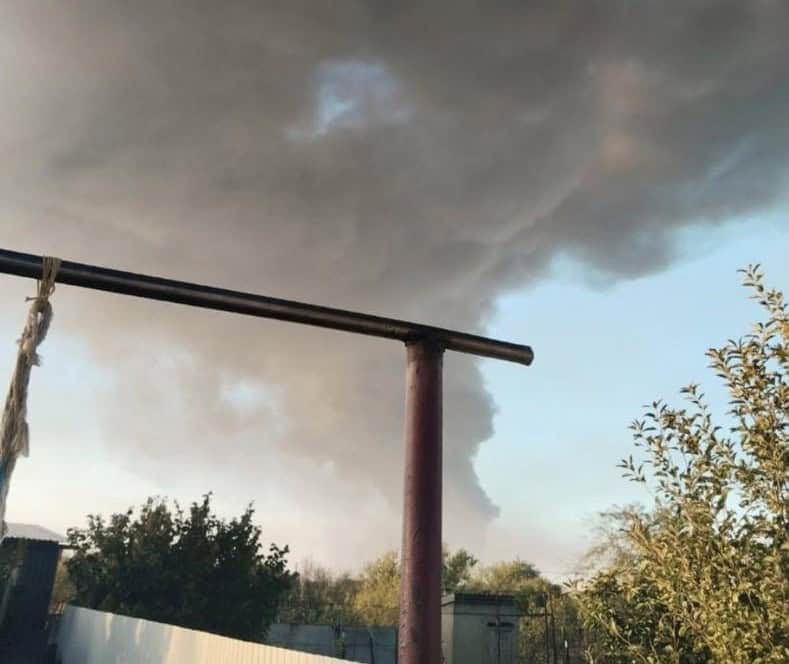
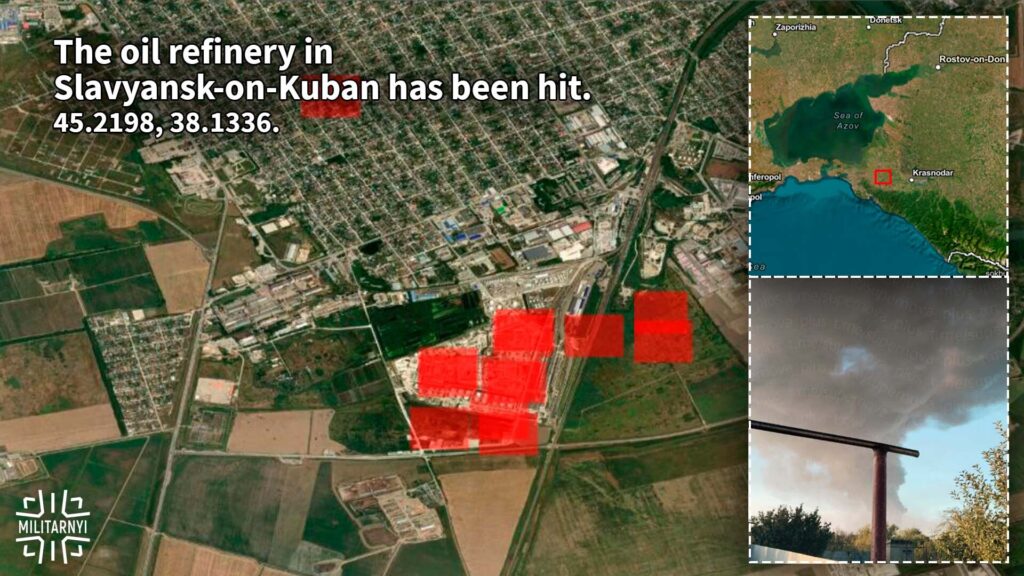
An oil refinery in Slavyansk-on-Kuban in southern Russia was attacked overnight on 13 September, Astra reported. By morning, residents began posting videos showing smoke over the refinery and nearby areas. That same morning, Ukraine’s Defense Intelligence (HUR) reported that Ukrainian drones had struck the Slavyansk-EKO refinery.
Ukrainian strikes on Russian oil refineries have become systematic, aimed in part at reducing the Russian military’s access to fuel, which is critical for waging the war. Ukrainian forces have been striking strategic facilities located hundreds of kilometers from the front line.
The design capacity of Slavyansk-EKO is approximately 5.2 million tonnes per year, though actual volumes are lower by about one to two million tonnes, Militarnyi reports.
Thick smoke visible for dozens of kilometers
The Ukrainian strike hit a key oil-processing unit and the facility’s oil storage tank farm, which “fuels the criminal war against Ukraine,” HUR reported.
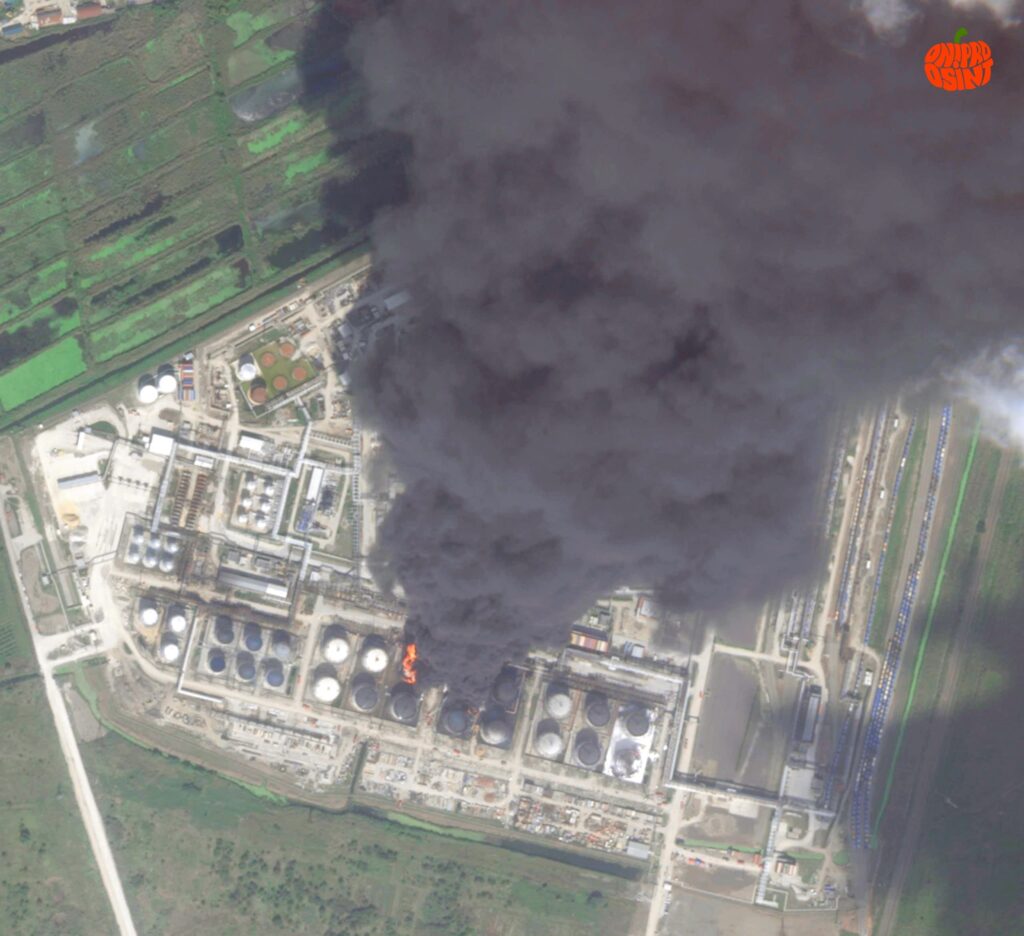
Two oil storage tanks were destroyed in the strike, according to photos published by Dnipro Osint. Militarnyi noted that the photos also show damage to neighboring tanks.
Satellite imagery of the Slavyansk oil refinery after a nighttime UAV attack on 13 September. Part of the refinery is obscured by thick smoke from a fire in the tank farm, Krasnodar Krai, Russia. Photo: Dnipro Osint
The strike reportedly hit the area containing the facility’s largest storage tanks. The refinery operates using purchased or tolling crude oil because it does not have its own crude oil production base.
Fire broke out at the oil refinery in Slavyansk-on-Kuban following an attack by Ukrainian drones on September 13, 2026. Analysis by Militarnyi, with an Esri map and NASA FIRMS data
The refinery has been targeted before
Slavyansk-EKO is one of the largest independent oil refineries in southern Russia. The facility is located in Slavyansk-on-Kuban, about 69 kilometers northwest of Krasnodar.
Ukraine’s General Staff said that the refinery is “part of the energy rear of the Russian Federation and involved in supplying the armed forces of the aggressor.”
Before the 13 September strike, Ukrainian drones had struck the refinery at least four times, starting in 2024:
27 April 2024 — a Ukrainian drone attack damaged the Slavyansk refinery, after which a fire broke out at the facility.
19 May 2024 — SBU drones attacked the Slavyansk refinery, after which the facility suspended operations.
26 January 2026 — Ukrainian Defense Forces struck infrastructure at the Slavyansk-EKO refinery. According to preliminary data, elements of the primary oil refining unit were damaged.
Five months later, on 28 June, Ukraine struck the Slavyansk refinery again, causing a large fire at the facility. EP noted that the refinery supplies fuel, including to occupied Crimea.
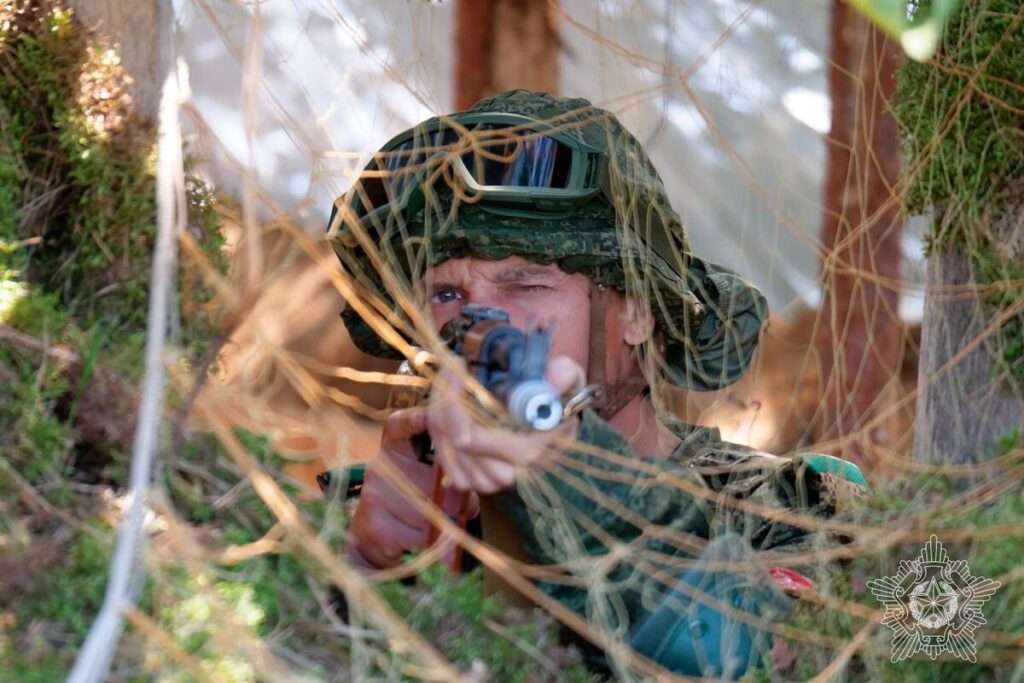
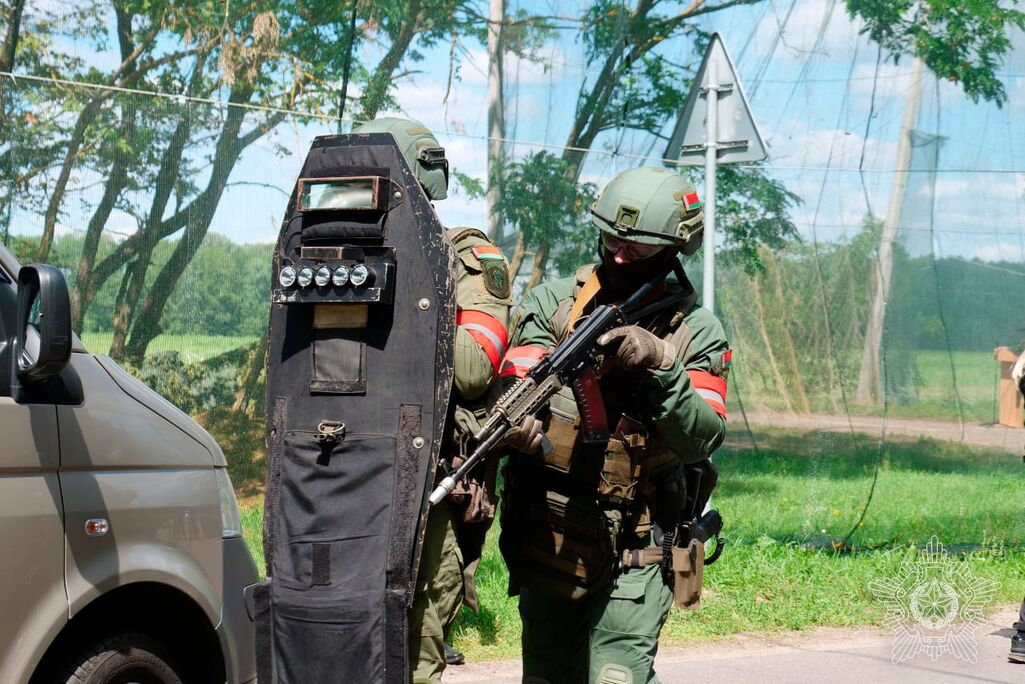
Belarus' Defense Ministry said a command-staff exercise will run from 14 to 16 September in the Cherven and Berezino districts of Minsk Oblast. It closes a reservist training camp that began there on 25 August, part of a wider round that also took in the Vawkavysk district of Hrodna Oblast from 26 August, the ministry announced.
Under Alyaksandr Lukashenka's rule, Belarus remains Russia's closest ally in the war against Ukraine, supplying weapons, intelligence, and industrial capacity while Moscow fights. That alliance is what makes drills inside Belarus a question for its neighbors: Russia may again use Belarus to launch an attack on Ukraine or a NATO member state.
The Belarusian army is "preparing for war so that there will be no war," Belarusian ruler Lukashenka said during a visit to a military training ground in Brest Oblast on 11 September. He said the whole armed forces would be checked, up to mobilization, with some units deployed to wartime norms, while denying any intention to attack, since Belarus could not win a war against its neighbors.
Belarus prepares reservists for military missions
The exercise is meant to sharpen officers' command of subordinate territorial defense forces and drill personnel in coordinated action, and the deputy chairman of the Minsk oblast executive committee will lead it.
"Particular attention will be paid to the interaction of territorial troops with internal affairs bodies, internal troops, as well as people's militia units in the protection of important facilities, ensuring martial law and fighting enemy sabotage groups," the ministry said.
The people's militia is a volunteer reserve, and the internal troops are the Interior Ministry's own armed formations rather than part of the army.
Belarusian reservists take part in military exercises during a training camp for territorial defense command staff in Malaryta District, Brest Oblast, Belarus, in July 2026. Photo: Belarusian Defense Ministry / Telegram
Minsk steps up territorial defense training as Lithuania launches military drills
Since late March 2026, Belarus' Defense Ministry has announced at least 11 events involving territorial troops, Poland-based Belarusian broadcaster Belsat reported. Most of them were training camps, but command-and-staff exercises and drills were also held, the media outlet said.
Uladzimir Zhyhar, a representative of BELPOL, an association of former Belarusian security officers opposing Lukashenka's regime, highlighted in comments to Belsat the exercises conducted for Belarus' Interior Ministry. The Interior Ministry is preparing to suppress internal protests, while the Defense Ministry wants to conduct exercises that would, among other things, practice responding to saboteurs entering Belarus and breaches of the state border, he said.
"Why can this happen? BELPOL representatives have repeatedly said that there is currently no threat from either NATO countries or Ukraine to Belarus. Therefore, something must change around the country as a whole," Zhyhar said, adding: "And that change would bring both possible destabilization inside Belarus, meaning a threat to the regime, and the likelihood of a breach of the state border."
One scenario he sees is Belarus being drawn into a war against Ukraine or NATO countries, which would prompt a response. The skills currently being practiced by the Defense Ministry and Interior Ministry could then be needed, the expert said.
On 14 September, military exercises began in 12 municipalities in Lithuania and run until 18 September, LRT reported. The NATO member shares a 679-kilometer border with Belarus, and its troops are training to act together against military threats of various kinds, using drones, boats, and weapons.
Belarus has been militarizing steadily since 2022, holding exercises almost without pause, including joint drills with Russian forces.
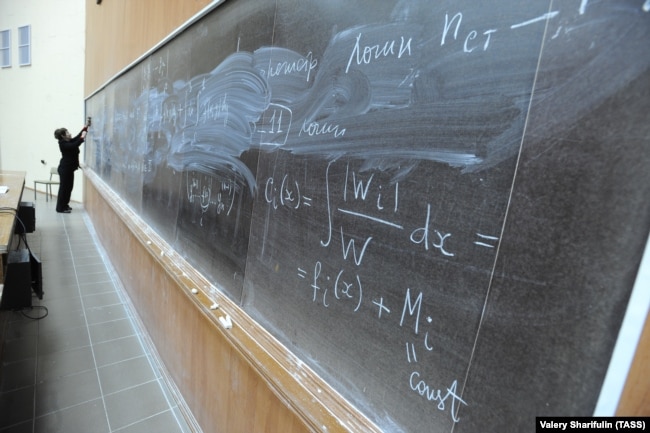
RFE/RL's investigative project Sistema examined hundreds of Russian-Iranian scientific papers published over the past decade and identified links between Russian universities and Iran's defense industry.
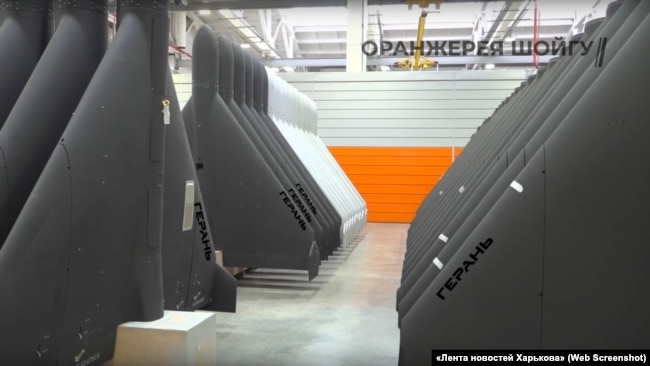
Russia has been invading Ukraine since 2014 and has pounded its cities nightly since 2022 with Shaheds, the Iranian-designed attack drones it turns out by the thousand. And now Russian universities are where some of Iran's military engineers learn their trade, before returning to institutions tied to Iran's army and Revolutionary Guards.
At St Petersburg's ITMO University, Iranian co-authored papers almost equaled German ones in number in 2025, although Germany had been a key partner before Russia's full-scale invasion of Ukraine, Sistema's count shows.
Russian adaptations of Iranian Shahed-type drones. Photo: Lenta Novostei Kharkova / Web Screenshot
Academic ties with a military edge
For almost four decades, Russia has trained Iranian engineers in fields including aircraft manufacturing, missile development, satellite navigation, and nuclear technology, Sistema reported. Almost 10,000 Iranian students were enrolled at Russian universities in 2025, 42% more than two years earlier, according to Russia's science ministry. Medicine remains the most popular field.
In some cases, the training goes beyond ordinary academic exchange. In 2018, Iranian students from the Moscow Aviation Institute (MAI) interned at Vympel, a Russian manufacturer of missile weapons, alongside other foreign students, Sistema reported.
The investigation also examined the career of Ali Mohammad Amoui, who completed postgraduate study in gas turbine engines in 2000 at the MATI technological university in Moscow, later absorbed into MAI. From 2017 to 2022, he served as deputy director general for trade and international relations of Farsco Aviation MRO Center, whose shareholders, according to Iranian corporate records cited by the investigation, include Iran's Aviation Industries Organization, part of the country's Defense Ministry, and the sanctioned airline Mahan Air. Farsco presents itself as a civilian maintenance business.
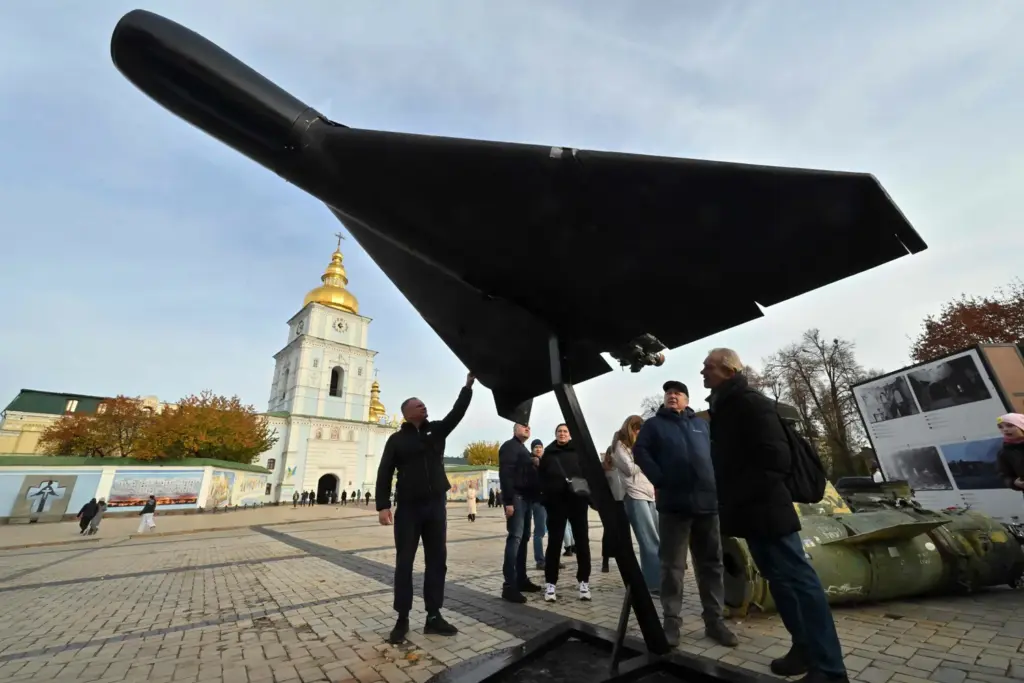
People look at an Iranian-designed Shahed 136, (Geranium-2) drone of Russian Army at an open-air exhibition of destroyed Russian equipment near Saint Michael's Golden-Domed Cathedral in Kyiv on November 2, 2025, amid the Russian invasion of Ukraine. Photo by Sergei SUPINSKY / AFP/Eastnews
Amoui co-authored research with MAI scientists on protective coatings for turbine blades and the strengthening of titanium components in aircraft engines. He also listed Iran's Malek Ashtar University of Technology, which answers to the Iranian Defense Ministry, as his workplace.
Another area of cooperation is satellite navigation and electronic warfare. Iranian professor Mohammad-Reza Mousavi, who edits a journal published by Iran's naval academy, researched GPS spoofing and worked with specialists at Samara University in 2016.
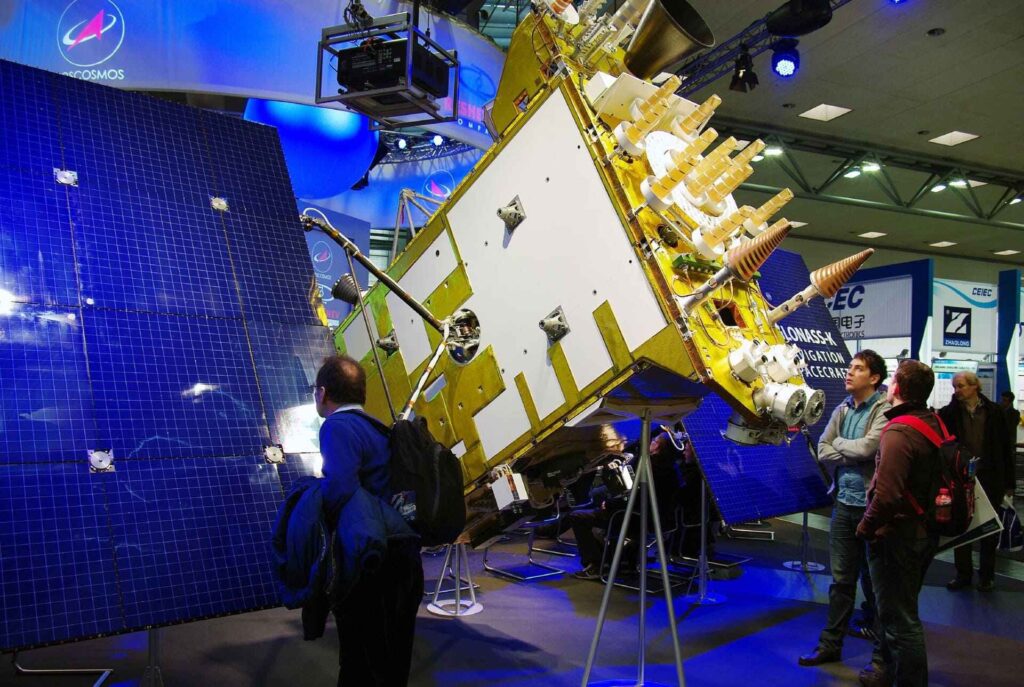
His PhD student Amir Tabatabaei also studied in Samara and worked on GLONASS, Sistema reported. It added that the two developed a method to detect fake GPS signals and published their research in a journal of the Russian defense concern Elektropribor, which develops navigation systems for the Russian Navy.
GLONASS-K navigation satellite model at CeBIT 2011. Photo: Jürgen Treutler
Russia and Iran share scientific interests in nuclear physics
Some of this work is dual-use, with civilian and military applications alike. Sistema describes Iranian Mohammad Hosseinpour Khanmiri, who studied methods for measuring uranium and thorium isotopes at St Petersburg State University. By 2022, he had applied a method he had developed with a Russian scientist to ore from Iran’s Saghand deposit. He later listed the Atomic Energy Organization of Iran as his workplace.
His co-authors also had links to Iran’s nuclear program, the investigation reports. Mohammad Outokesh, who studied the operation of gas centrifuges, co-authored a paper with Javad Karimi-Sabet, a deputy head of the Atomic Energy Organization of Iran. Iran's then president, Mahmoud Ahmadinejad, commended Karimi-Sabet in 2006 for his work on nuclear equipment at Natanz, including a new generation of centrifuges. The US and European countries later imposed sanctions on Karimi-Sabet.
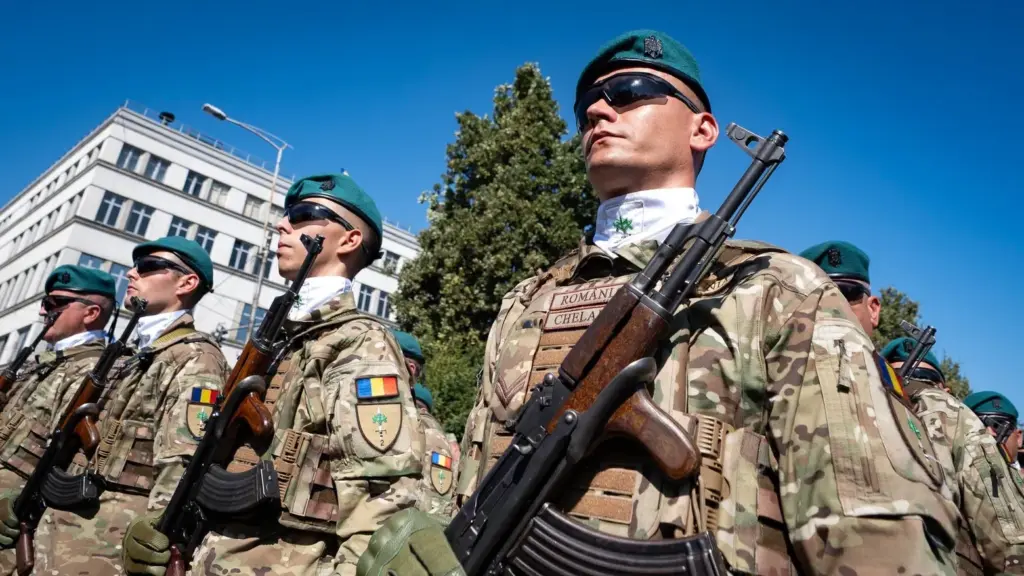
Romania’s presidential administration denied rumors circulating online that the country would send military personnel to the front in Ukraine. It called such claims “an alarmist manipulation.” Up to 20 officers are expected to join the command structure of the multinational support force, which is based in France and the United Kingdom, according to the statement.
Russia’s war against Ukraine is affecting Black Sea region states, including Romania, the Romanian presidential administration said on 9 September. Consequently, the country is taking measures to protect, first and foremost, its own citizens, the statement said. Romania is bolstering its defense capabilities against the backdrop of Russian drone airspace violations.
Why is Romania sending these military personnel?
“Romania's top priority is protecting and defending our citizens, which is why our country participates in all international formats that help achieve this major security objective,” the presidential administration explained.
It cited the Coalition of the Willing for Ukraine as one such format, which was established to provide Ukraine with a system of political and legal guarantees after a ceasefire agreement is reached. The administration said that the coalition’s work would provide guarantees of peace and stability for the entire Black Sea region.
The administration highlighted the Operational Command for the Multinational Force in Support of Ukraine, which has been operating since 2025 and which Romania plans to join. For this purpose, the president asked parliament to approve the participation of up to 20 military personnel. They will work at the headquarters and in subordinate command structures.
Bucharest stressed that these military personnel will not take part in combat operations on Ukrainian territory and that Romania will not send its combat troops to Ukraine.
Romania has supported Ukraine for years
Romania is an EU member and has supported Ukraine since the start of the full-scale invasion. The country is also ready to become a transit hub for Western peacekeeping forces, then-Romanian President Ilie Bolojan said last year. He said that supporting Ukraine is also necessary for the security of Romanian citizens.
"Our consultations confirmed Romania's principled readiness to continue supporting Ukraine. It is not just about helping a victim of aggression—an essential issue—but also about protecting our own security. If Russia's current course continues, and given this region's history, Ukraine may only be the first target," Bolojan warned.
In December of the same year, Romania allocated €50 million for Ukraine’s defense through the US-led PURL initiative. The initiative aims to purchase US weapons for Ukraine, with allies providing the funds while NATO handles the logistics.
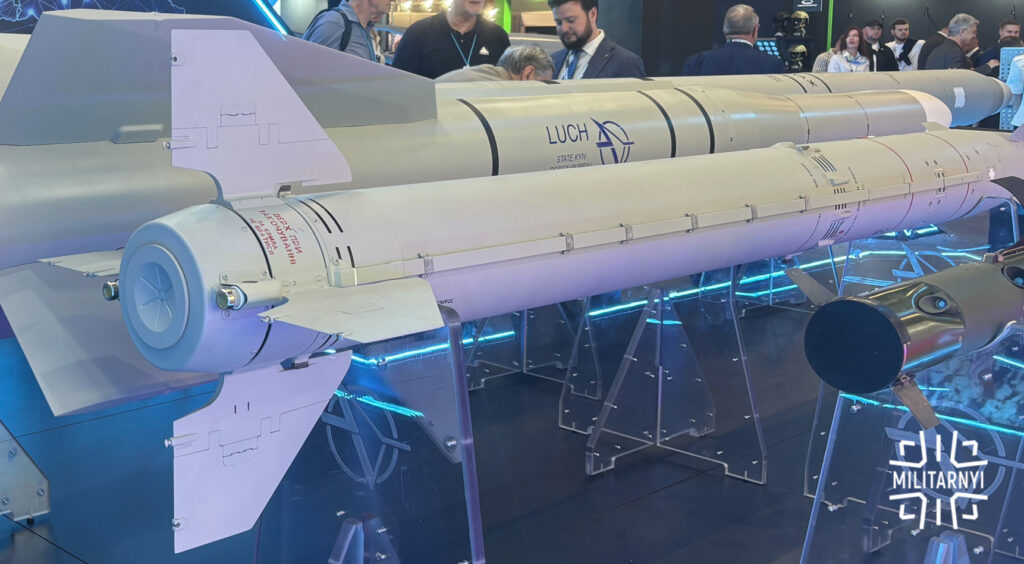
At the MSPO 2026 arms exhibition in Poland, the Luch Design Bureau, part of the state conglomerate Ukroboronprom, presented the RK-19 surface-to-air missile for the Soviet-made Osa air defense systems and disclosed its specifications for the first time, Defense Express reports.
The Osa-AKM forms the backbone of Ukraine's remaining Soviet Osa fleet, and it is the missiles rather than the launchers that are running out, so a Ukrainian-built interceptor lets those launchers keep engaging jet drones and cruise missiles as the Soviet stock runs down.
Its maker's materials describe the RK-19 as designed to intercept subsonic and supersonic targets "at medium range," Defense Express reports. The missile uses radio-command guidance and proximity detonation and carries a 14.3-kg high-explosive fragmentation warhead.
The missile is similar to the original, but slightly faster
On its main specifications, the RK-19 is similar to the standard missile used by the Osa-AKM, although its maximum speed is somewhat higher, Defense Express notes. Both engage targets at ranges of up to 10 km and altitudes of up to 5 km.
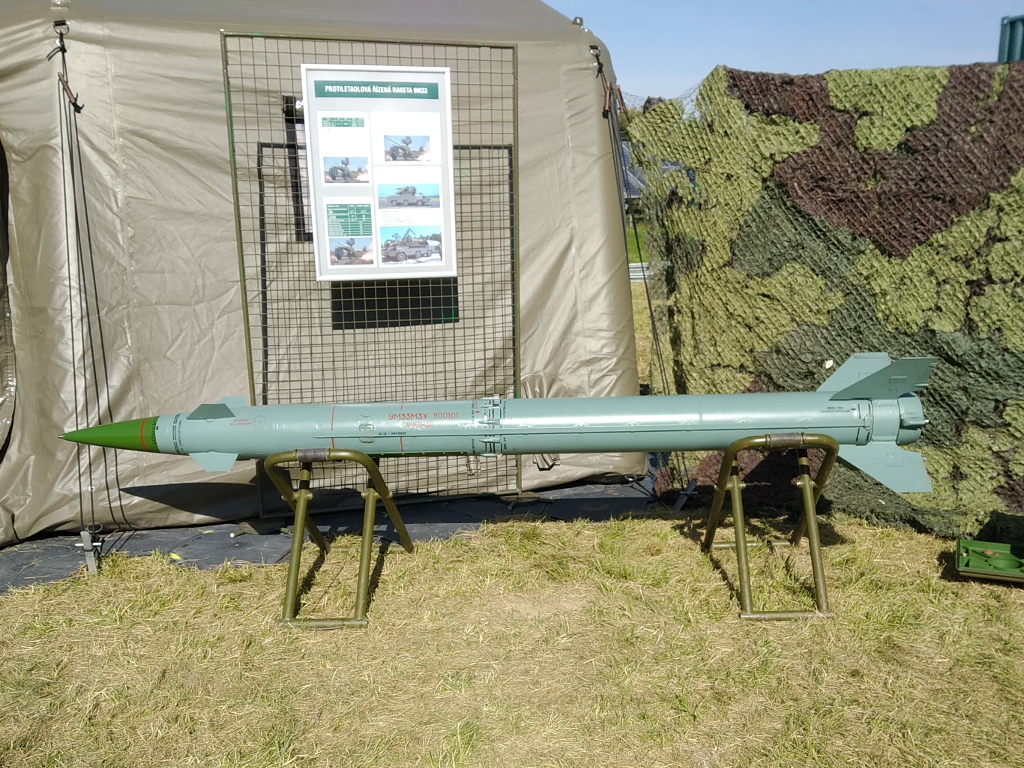
However, their speeds differ: the upgraded missile reaches 600 m/s, while the standard 9M33M3 reaches 500 m/s. Their weights also differ: the transport-launch container with the new missile weighs 163 kg, compared with 157 kg for the standard missile, the outlet reports.
A 9M33M3U instructional missile for the Osa-AKM system on display at NATO Days in Ostrava, Czechia, in 2019. Photo: Wikimedia Commons
Domestic missile keeps Osa launchers firing at jet drones
The RK-19 will allow the older air defense systems to continue protecting Ukrainian skies and intercepting aerodynamic targets, including jet-powered drones and cruise missiles such as the Banderol, according to Defense Express. The price of the Ukrainian surface-to-air missile for the Osa systems and its production volumes have not yet been disclosed.
The Osa systems were effective through 2022 and into 2023, destroying a significant number of Russian drones and cruise missiles, Militarnyi notes. However, the stock of standard missiles for the Osa systems later began to run out, significantly reducing the intensity of their use, the outlet reports.
With interceptors limited, Ukraine's Armed Forces had to use older missiles for the Osa systems, which had poorer specifications, and integrated short-range air-to-air missiles such as the R-73. That route carried its own drawbacks: reduced range, and reliance on the missile's own seeker, Defense Express reports.
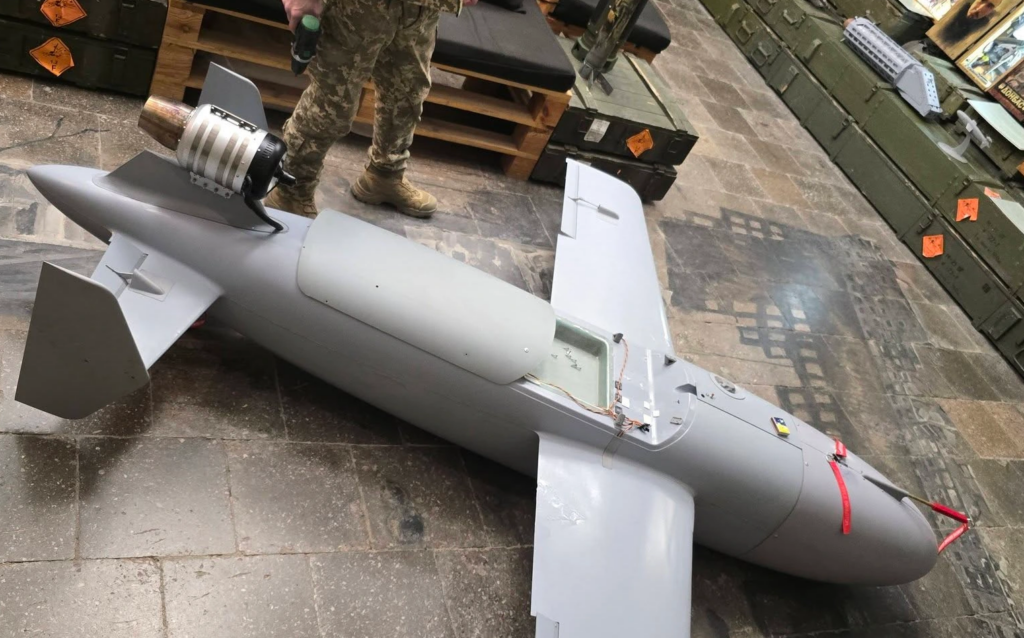
Ukraine has developed its own jet-powered drone, as the arms race is pushing Kyiv to produce answers to Russia's new fast Banderol and Geran-3 drones. Ukraine's “Bars” missile-drones currently consist of more than 74% Ukrainian-made components, but their turbojet engines are still imported, the developer of the “Bars” missile-drones said in an interview with RBC-Ukraine on 7 September.
The “Bars” jet-powered drone can carry out strikes at a range of up to 1,000 km, and the team plans to increase its range in the future, the developer said in the interview. To speed up and increase production of such drones for the Ukrainian army, the team is trying to make the jet-powered drone consist of as many domestically produced parts as possible. This will remove the limitation on how many such jet-powered drones Ukraine can produce and deploy in response to Russia’s use of similar drones against Ukrainian cities.
“Without exaggeration, we source them from all over the world,” the Bars developer said in the interview about the imported engines.
The UAV strikes the Russian army both in occupied territories and deep inside Russia
The developer calls Bars a missile-drone: it resembles a missile because it has a jet engine, and a drone because it can be controlled by a pilot.
The basic characteristics of Bars include a warhead weighing up to 60 kilograms, a range of up to 1,000 kilometers, and a speed of more than 700 kilometers per hour, the developer added. He also explained that the UAV’s system is a modular platform that allows the drone to be used “in different planes.”
“Our basic modularity allowed ‘Bars’ to receive three main categories of use: DeepStrike, ‘middle-strike,’ and ‘front-strike,’” the developer said in the interview.
He also said that there have been more than 40 “engineering officially” modifications and iterations of the UAV alone.
“Bars” jet-powered drone. Photo: Museum of the Russian-Ukrainian War
A Bars production facility is already in Europe and will begin operating in early September
The first batch of Bars drones is planned to be delivered as early as 10 October, according to the interview.
“As of today, the only limitation to scaling up the production of ‘Bars’ is the so-called ‘bottleneck,’ and it is not so much the volumes as the delivery times of turbojet engines,” the developer said.
It was previously reported that Ukraine and Germany had signed an agreement on the joint production of Bars drones. Ukrainian Foreign Minister Andrii Sybiha said this on 8 July 2026. He said that at the first stage of the project, Germany would finance the production, while all manufactured UAVs would be transferred to the Armed Forces of Ukraine.
Germany will close Russia’s General Consulate in Bonn, terminate the agreement concerning the Russian House in Berlin, and tighten entry controls for Russian citizens. Foreign Minister Johann Wadephul announced this at a joint press conference with Interior Minister Alexander Dobrindt on 1 September, after German authorities formally attributed the attack at Leipzig/Halle Airport to Russia.
German investigators have identified two suspects allegedly linked to the operation: a Russian-born man with a Latvian passport and a Belarusian man with a Russian passport. This information was reported by Süddeutsche Zeitung. Investigators believe both have links to Russian state structures, according to the report.
Both men have already left Germany, complicating efforts to bring them to justice, Tagesschau reports. One of Berlin’s responses was the closure of Russia’s Consulate General in Bonn — the last Russian consulate general remaining in Germany.
Table of The Russian Consulate General in Bonn, Germany. Photo: Marc John/IMAGO
Germany tightens its Russia policy
Russia’s General Consulate in Bonn will close on 18 September, according to Wadephul. Germany will alsoseek additional EU sanctions against people linked to Russian hybrid attacks, increase pressure on Russia’s “shadow fleet,” and strengthen entry controls for Russian nationals.
He stated that since the beginning of "the unlawful war of aggression" against Ukraine, Germany's goal has been to bring the war to an end, restore the peace order in Europe, and return to a constructive relationship.
"However, this requires a minimum level of willingness on the Russian side. We must acknowledge that Russia shows no willingness to reach an accommodation,” Wadephul said.
Moscow rejected the accusations. Russian President Vladimir Putin called Germany’s response a “grave mistake,” TASS reports.
The investigation leads to two suspects
According to German investigators, the Belarusian suspect left DNA traces on one of the drones, inside a container containing explosives, and on an antenna found near the airport. The Russian-born suspect, who holds a Latvian passport, is believed to have coordinated and directed the operation, entered Germany through Berlin, and then traveled toward Saxony.
The Russian-born suspect left Germany two days before the attack, while the Belarusian suspect also left the country.
Drone found near a Ukrainian An-124 aircraft in Leipzig, Germany, on 5 August, 2026. Photo: screenshot from Bild video
What happened at Leipzig Airport
The diplomatic response stems from a sabotage attempt on 4 August, when a bomb-laden drone struck a Ukrainian An-124 cargo aircraft but failed to detonate. The drone, carrying explosives, remained unnoticed for about four hours before being discovered, while later analysis indicated it had been aimed at the aircraft near its fuel tanks.
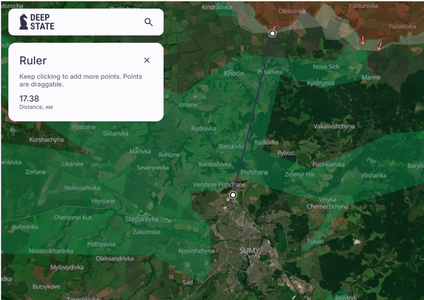
On 1 September, Russian President Vladimir Putinsaid during a conversation with journalists that Russian troops had 12 km left to reach Sumy. Censor.NET estimated from DeepState’s map that Russian forces were approximately 17 km from Sumy’s administrative boundary.
Russian military commanders have systematically exaggerated their gains on the battlefield. The Institute for the Study of War (ISW) describes such claims as part of a Kremlin information campaign aimed at creating the impression of major Russian gains. In this case, the Russian president cited exaggerated gains that, compared with his previous claims, appear to be a setback.
What Putin said
“The ‘North’ group of forces continues to create a security belt along the Russian-Ukrainian border in the border areas of the Sumy region... There are 12 km left to Sumy, to the Sumy ring road,” Putin said during the press conference.
Censor.NET reported that Russian forces were about 17 km from Sumy without specifying the reference point, while Putin did not say which section of the city’s ring road his 12 km figure referred to.
Approximate visualization of Censor.NET’s reported 17 km distance from the DeepState frontline toward Sumy. Map: DeepState / Chart: Euromaidan Press
Putin previously gave a different distance
On 28 June, during an interview with Russian propagandist Pavel Zarubin, Putin said that Russian troops had “about 10.5 km” left to reach Sumy. At the time, he also explained the offensive as the creation of a “security zone” along Russia’s border.
Putin’s claimed distance to Sumy therefore increased by approximately 1.5 km in just over two months, contradicting the Kremlin’s portrayal of a continuing advance.
Other exaggerations
In July 2026, Putin claimed that Russian forces had “completely captured” Kostiantynivka. Ukraine’s General Staff rejected the claim, saying Ukrainian forces continued defensive operations in the city. ISW also said some videos of Russian flags being raised in Kostiantynivka were likely AI-altered.
On 2 December 2025, Putin claimed that Russian forces had captured Pokrovsk in Donetsk Oblast. ISW found no evidence confirming the city’s complete capture and assessed that its fall would not enable Moscow to achieve a significant breakthrough.

 Connexion






 Момент удару «Герані-5» поблизу КПП «Ягодин», – місцеві канали.