Abdul El-Sayed Joins Jesse Watters of Fox News for Some Light Verbal Combat

© Nick Hagen for The New York Times


© Nick Hagen for The New York Times


© Meridith Kohut for The New York Times

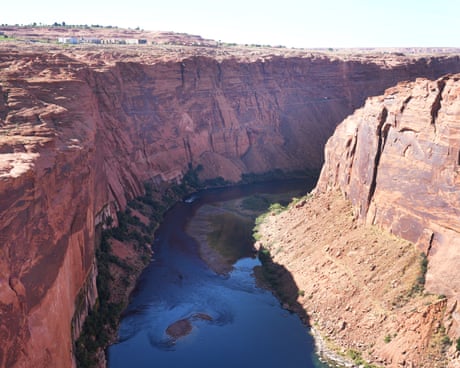
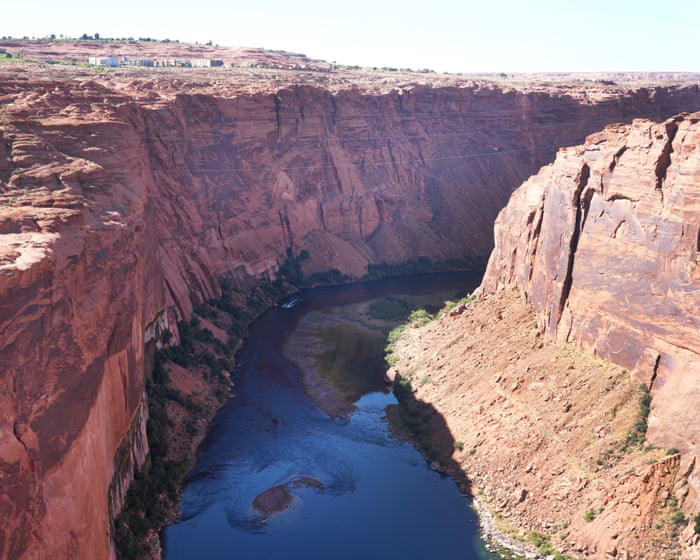
In Trump administration’s plan, California, Arizona and Nevada face about a 20% cut to water supply over two years
Nevada filed a federal lawsuit on Monday challenging the Trump administration’s new plan for the imperiled Colorado River, launching what could become the first of many court battles over the waterway that supplies 40 million people, dozens of tribes and 5.5m acres of farm land across the American west.
The federal plan, issued Friday, cut roughly 20% from the water supplied to lower basin states – Nevada, Arizona and California – over the next two years, with a potential for harsher cutbacks in the future, based on conditions.
Continue reading...
© Photograph: George Frey/Getty Images

© Photograph: George Frey/Getty Images

© Photograph: George Frey/Getty Images

Man, 68, was left searching for help in 116F weather after his car became stuck in mud along remote park road
A French tourist recently died in Death Valley national park after a car mishap left him stranded in 116F (47C) weather.
The visitor, identified as 68-year-old Pierre Michel Formosa, was traveling with another French man along the park’s remote West Side Road when their vehicle became stuck in mud near Queen of Sheba Mine Road.
Continue reading...
© Photograph: AaronP/Bauer-Griffin/GC Images

© Photograph: AaronP/Bauer-Griffin/GC Images

© Photograph: AaronP/Bauer-Griffin/GC Images

Arbitrator determined the Post improperly fired Karen Attiah, a union-protected employee, over social media posts
An independent arbitrator has ordered the Washington Post to rehire the high-profile opinion columnist Karen Attiah, abruptly fired by the news organization last September over comments she made on social media about Charlie Kirk, the then recently killed conservative activist.
On Monday, an arbitrator ruled that the Post had violated her rights as a union-protected employee and ordered the newspaper to reinstate her and compensate her for lost wages.
Continue reading...
© Photograph: Julia Reinhart/Getty Images

© Photograph: Julia Reinhart/Getty Images

© Photograph: Julia Reinhart/Getty Images

The newspaper often uses the word to describe elections with progressive contenders, implying a previous whole destroyed by the left
“El-Sayed and Stevens Project Party Unity After Divisive Race,” announced the New York Times on 5 August, the day the progressive Abdul El-Sayed beat out his centrist Democratic rival, Haley Stevens, in the Michigan senatorial primary. “Divisive” is now the Times’s favorite attack word, deployed repeatedly to disparage and try to undermine the astonishing recent advances by progressive candidates.
Four days after that first story, the Times again landed “divisive” under “Obama and El-Sayed Discuss Unity After Ugly Michigan Primary.” El-Sayed, it asserted, had “narrowly prevailed in a divisive primary after campaigning on a progressive and anti-establishment platform”.
Continue reading...
© Photograph: Paul Sancya/AP

© Photograph: Paul Sancya/AP

© Photograph: Paul Sancya/AP


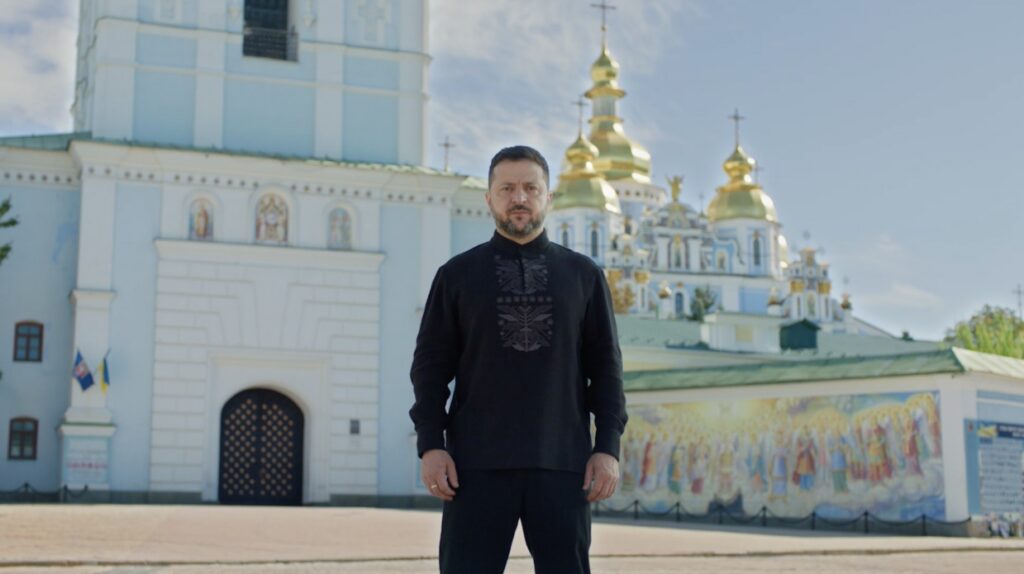
Ukraine celebrated 35 years of independence on 24 August, and Ukrainian President Volodymyr Zelenskyy marked the day with an address listing what the invasion has cost Russia, published by the President's Office. He said Putin is mortal and out of time to understand Ukraine, and said Ukraine will not hand over Donbas or save the Kremlin half a million soldiers. He also asked partners for sanctions and weapons strong enough to force an end to the war.
Russia has been invading Ukraine since 2014 and fighting a full-scale war on it since 2022, and Ukraine now supplies a growing share of the missiles and drones it fights back with, while the air defense shielding its cities still hangs on decisions taken in Washington and European capitals—which is what makes a holiday speech a statement of what Kyiv will not trade and what it needs built or delivered next.
President Zelenskyy turned from his own citizens to Russia partway through the speech.
"You wanted to take all our Ukraine, all our land; instead, you lost your oil refineries, your fleet, your profits, your entire generation that you sent into the meat grinder," he said.
A country that wanted Ukraine erased from the map, he added, is now absent from the international agenda of the future civilization.
For five years now, Russia has tried to exhaust and break Ukrainians — cutting light and heat, destroying homes, Kyiv Mayor Klitschko said on Ukraine's 35th Independence Day
— Euromaidan Press (@EuromaidanPress) August 24, 2026
"The aggressor failed to understand one fundamental thing: above all else, Ukrainians love freedom," he… pic.twitter.com/NvVVKSKIK1
He set Moscow's self-image against its filling stations.
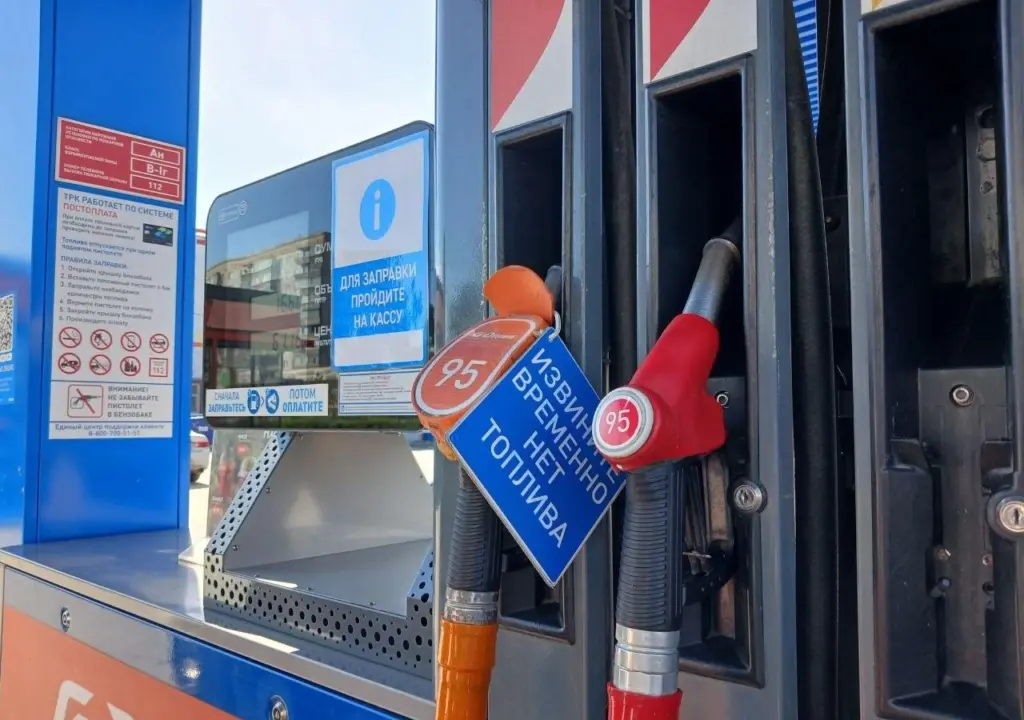
"For 27 years, the head of Russia has talked about greatness, while Russia is standing in lines for gasoline," Zelenskyy said.
Moscow and St. Petersburg brought back gasoline rationing this month, and Rosneft capped fills at every station in the country.
On the Russian leader he was blunt.
"Putin hopes that we are tired. But we know that he is mortal," he said, adding that Putin never understood Ukraine and now will not have the time to.
Before the holiday, Russian ballistic missiles hit Kyiv and its main airport hub twice in 24 hours. A solution to Russian ballistic terror must be found, Zelenskyy said, and that gamble must not pay off.
Russia does not want peace, it wants mobilization, the president said. Ukraine will not let Moscow seize the initiative or convince Europe that surrendering Donbas ends the war. Russia keeps pushing back the dates for taking all of Donetsk Oblast and will keep pushing them back, he said.
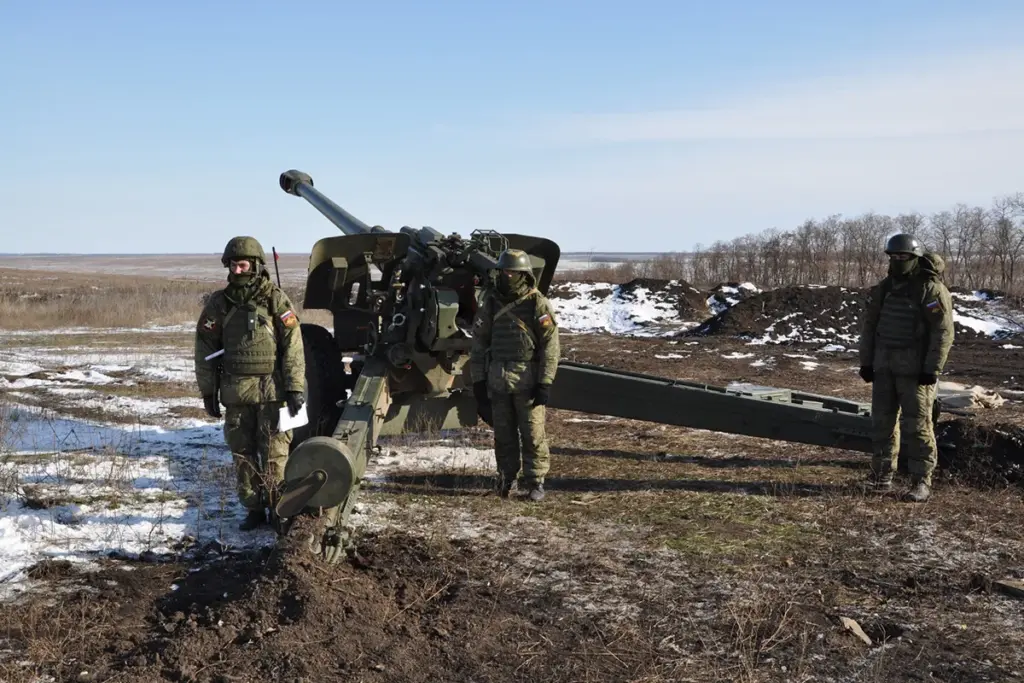
The president called Ukraine's defense industry a giant that forges independence around the clock, and demanded more from it. Mid-range strikes cut Russian logistics and long-range weapons cut Russian profits, he said, listing Moscow, Tuapse, Tula, Ryazan, Olenya, and Omsk among the places already hit.
Ukraine's home-built Flamingo cruise missiles should stop being a rare species and arrive en masse: "They must 'winter' in Russia," Zelenskyy noted.
Previously, Flamingos have hit defense plants more than 1,000 km from the border, though they still appear in strikes in small numbers.
Ukraine is not asking anyone to fight for it, the president said — only for everything needed to stop the war before Putin starts the next one. He wants sanctions that make Russians howl and Moscow at a negotiating table, and said Washington has lost its illusions about Russian intentions. Europe must be Europe, he said: united, ambitious, brave.
"China should no longer remain silent," he added, saying Beijing must cool the ardor of someone who puts on a sailor's uniform and cap and talks about a nuclear strike—a description that fits Putin.


© Reuters


© Nicole Tung for The New York Times


© Pool photo by Henry Nicholls


© Nicole Tung for The New York Times


© Nicole Tung for The New York Times


© Daniel Cole/Reuters


© Abriansyah Liberto/Reuters


© Alex Kent/The New York Times


© Alex Kent/The New York Times


© Andrej Isakovic/Agence France-Presse — Getty Images


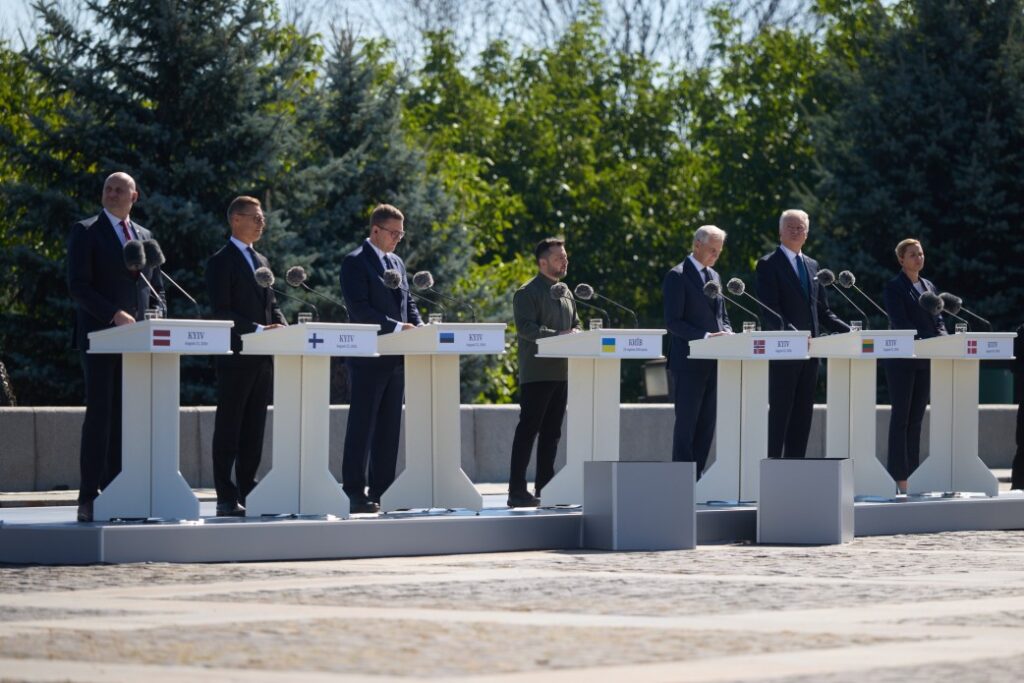
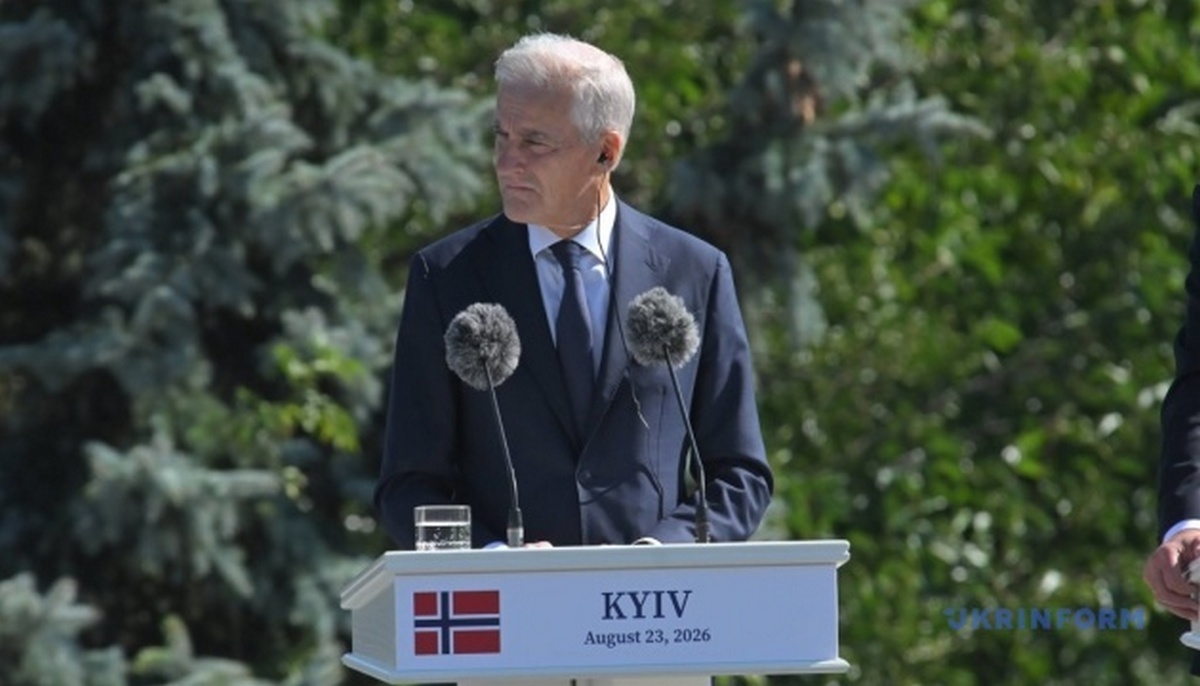
On 23 August, Norwegian Prime Minister Jonas Gahr Støre said Norway will keep Ukraine aid unchanged in 2027, Ukrinform reported. He spoke during Ukraine’s State Flag Day ceremony in Kyiv, attended by six Nordic-Baltic leaders. Ukrainian President Volodymyr Zelenskyy thanked them and tied the flag to Ukraine’s resistance against Russia’s war.
Norway's PM Støre put Norway’s 2027 assistance at about $9 billion, the same level as this year. It will cover military, humanitarian, and financial support.
“In 2027, we will maintain aid at the same level as this year—approximately $9 billion,” Støre said.
He said every party in Norway’s Parliament supports continued aid. Støre also said the package would follow Ukrainian priorities. He noted that supporting and rebuilding Ukraine is not just aid but an investment in Europe's own security.

Støre said Norway and Ukraine were due to sign a strategic partnership declaration later on 23 August. He said it would put cooperation on a long-term footing and benefit both countries.
On Kyiv's Poshtova Square, the little bronze boys who founded the city got dressed up for the holidays.
— Euromaidan Press (@EuromaidanPress) August 23, 2026
For National Flag Day and Independence Day, the sculptures known as "Kids, founders of Kyiv" were given new outfits—embroidered shirts and costumes sewn by the artist's wife,… pic.twitter.com/uy3kL0KUde
Ukraine marked State Flag Day on 23 August, one day before Independence Day. In his address, President Zelenskyy pointed to the historic Independence Flag displayed at the ceremony. Ukrainians carried that flag into Parliament after restoring independence on 24 August 1991.
Zelenskyy said Ukrainians had preserved their blue-and-yellow symbol through 70 years of Soviet rule. He then connected it directly to Russia’s invasions.
“In 2014 and in February 2022, Russia attacked to take away this flag, our symbols, our freedom and independence,” Zelenskyy said.
He also thanked the Nordic-Baltic leaders standing alongside him. The visitors came from Denmark, Estonia, Finland, Latvia, Lithuania, and Norway.
Ukraine marks the 35th anniversary of restoring its independence tomorrow, on 24 August.
Ahead of our Independence Day, we feel we are not alone. Our allies are with us.
— Andrii Sybiha
Today in the morning, I was pleased to welcome leaders of Denmark, Estonia, Finland, Latvia, Lithuania, Norway, alongside other high representatives, at the Kyiv Railway Station.
They will hold… pic.twitter.com/NmPgIVH1g3(@andrii_sybiha) August 23, 2026
The 2026 Nansen Program covers Norwegian support for Ukraine’s military and civilian needs.


© Ettore Chiereguini/Associated Press


© Lisi Niesner/Reuters


© Laura Stevens for The New York Times


© Rashide Frias/Agence France-Presse — Getty Images


© Maciek Nabrdalik for The New York Times


© Wade Payne/Associated Press


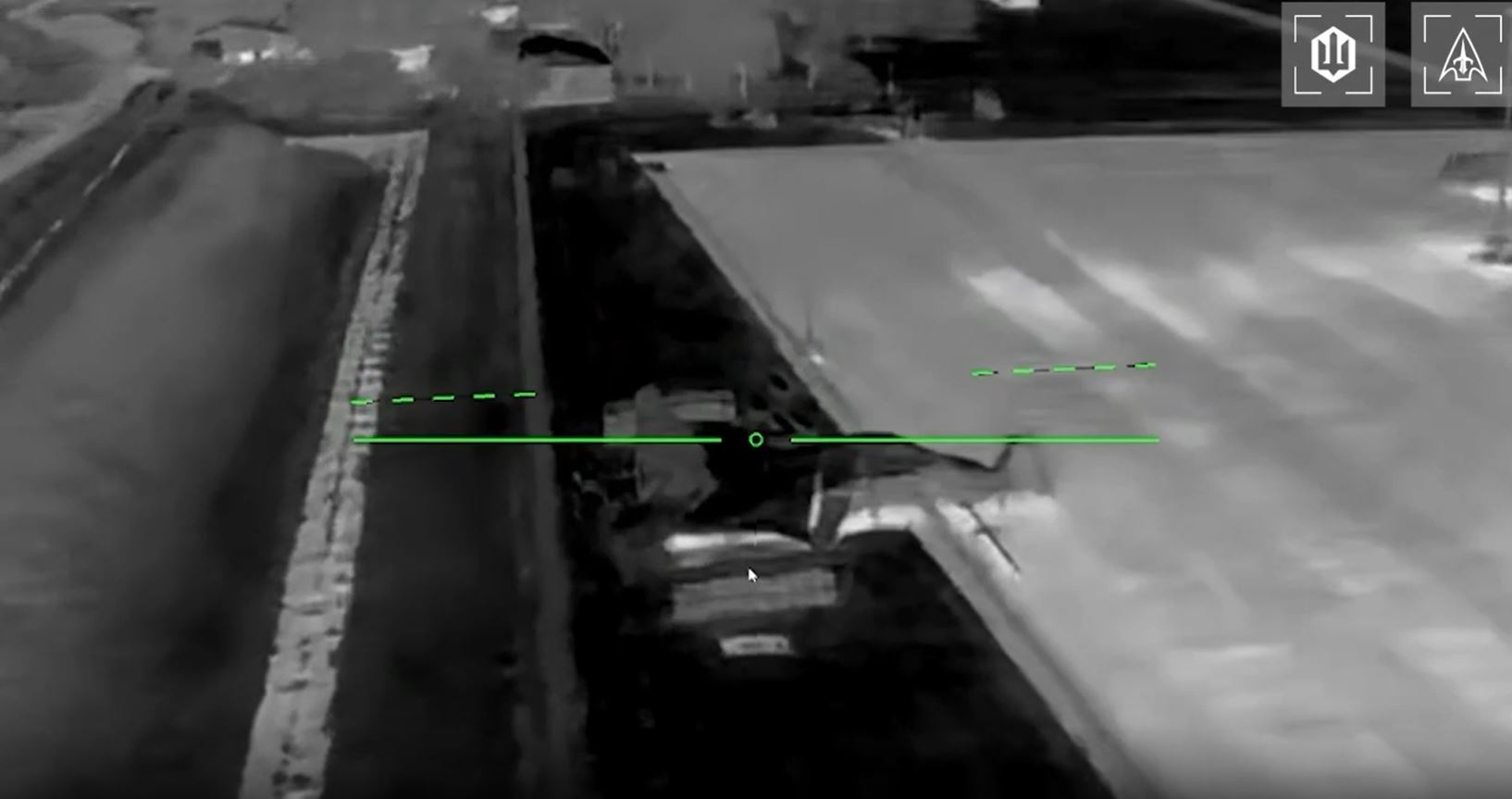
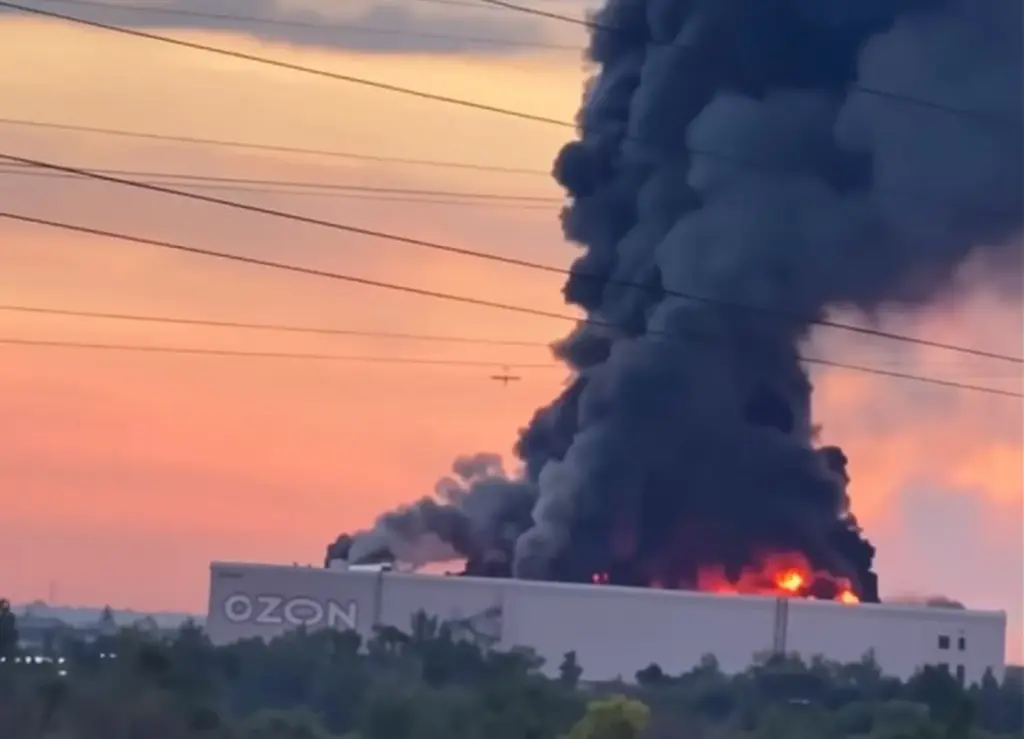
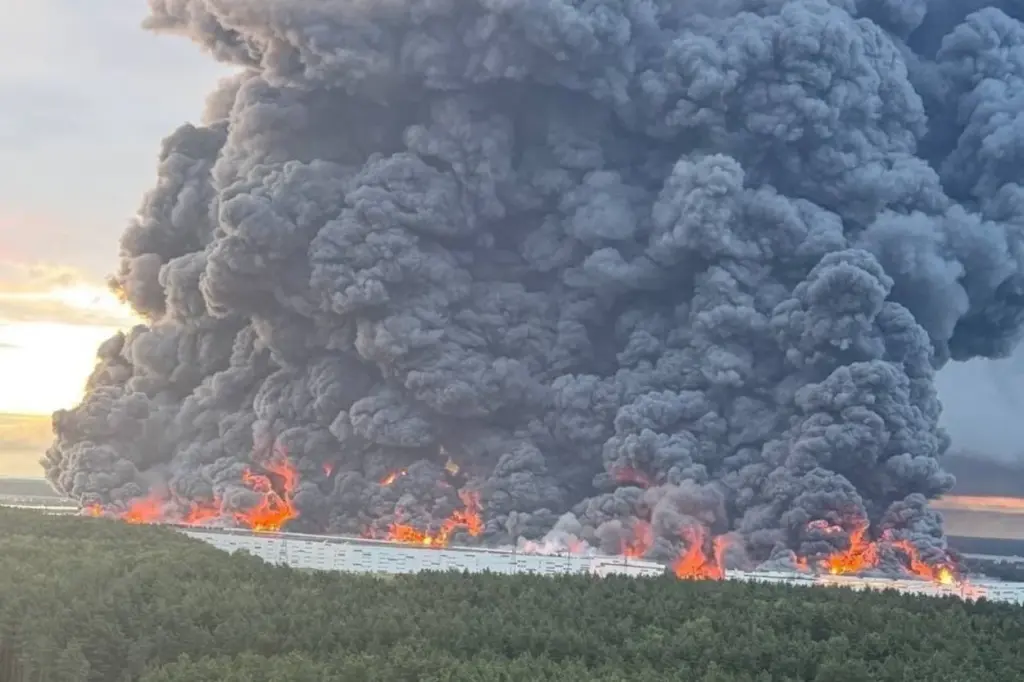
Ukrainian FP-1 drones struck an Ozon warehouse in Chapayevsk, Russia’s Samara Oblast, overnight on 22 August 2026, manufacturer Fire Point said.
The attack on the Chapayevsk facility expands Ukraine’s warehouse campaign from Wildberries, Russia’s largest online marketplace, to its second-largest rival, Ozon. Ukraine has repeatedly targeted Russia's major e-commerce distribution hubs to disrupt commercial logistics that Kyiv says help sustain Moscow’s war.
Ozon said the attack injured people and prompted the evacuation of more than 500 employees.
The strike was the first confirmed Ukrainian attack to damage and set fire to an Ozon warehouse, Reuters reported. A drone alert forced Ozon to evacuate a facility in Tatarstan on 31 July, but the building was undamaged and later reopened.
Fire Point said the facility is one of Ozon’s largest warehouses in Volga Oblast, storing goods and processing more than 215,000 orders for delivery each day.
Ozon and Wildberries—Russia’s two largest online marketplaces—and their smaller rivals collectively sell goods and services worth the equivalent of 8.5% of Russia’s GDP and employ 4 million people, Reuters reported in July.
Ozon suspended operations indefinitely and stopped accepting seller deliveries, the company said. As a result, shipments are being redirected to other facilities, while affected orders will either be fulfilled elsewhere or canceled and refunded.
Several people were receiving medical treatment, Samara Oblast Governor Vyacheslav Fedorishchev claimed. Neither he nor Ozon specified how many people were injured, and the extent of the damage remains unclear.
Ukrainian drones had previously concentrated on Wildberries, Russia’s largest online retailer. Since 18 July, Ukraine has struck at least two dozen Wildberries warehouses, Reuters reported.
Ukrainian officials have alleged that Wildberries warehouses move military-linked goods, including drone components. The Kremlin has denied that the company supplies Russian forces. Fire Point made no corresponding claim about the Ozon warehouse.

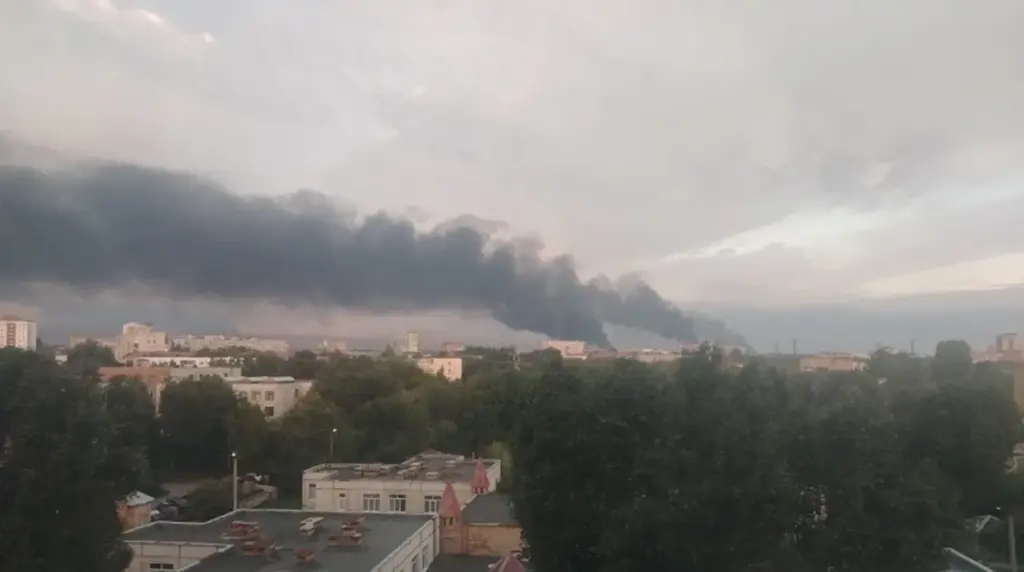
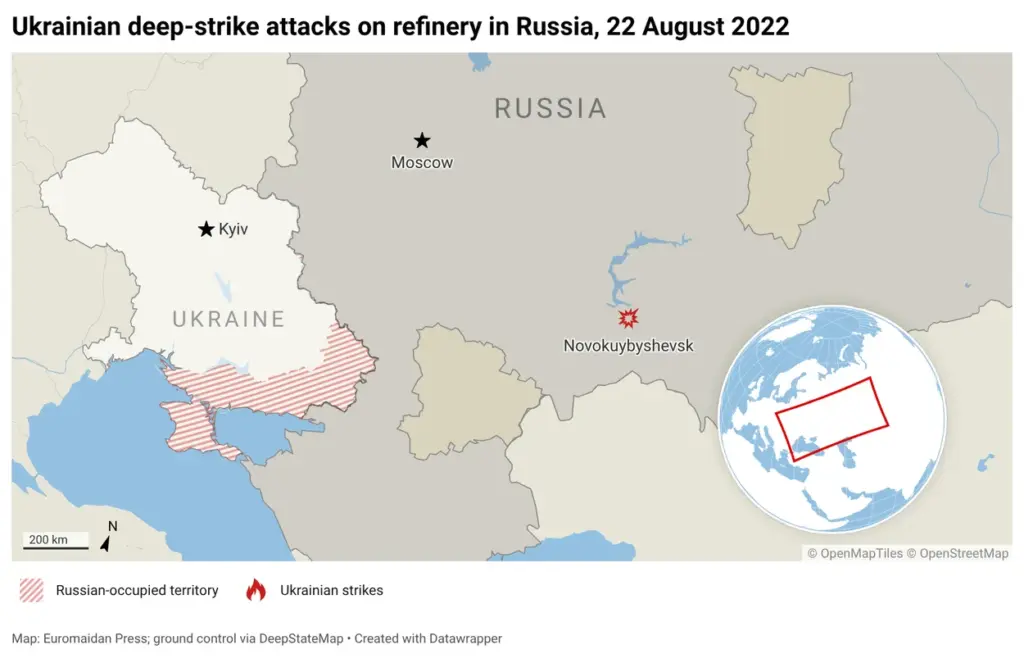
Ukraine’s military said the same overnight wave also hit the Novokuibyshevsk refinery in Samara Oblast and caused a fire.
Russian and occupation officials claimed that the broader wave caused civilian deaths and injuries in Yeysk, Belgorod, Bryansk, and Russian-occupied Luhansk.


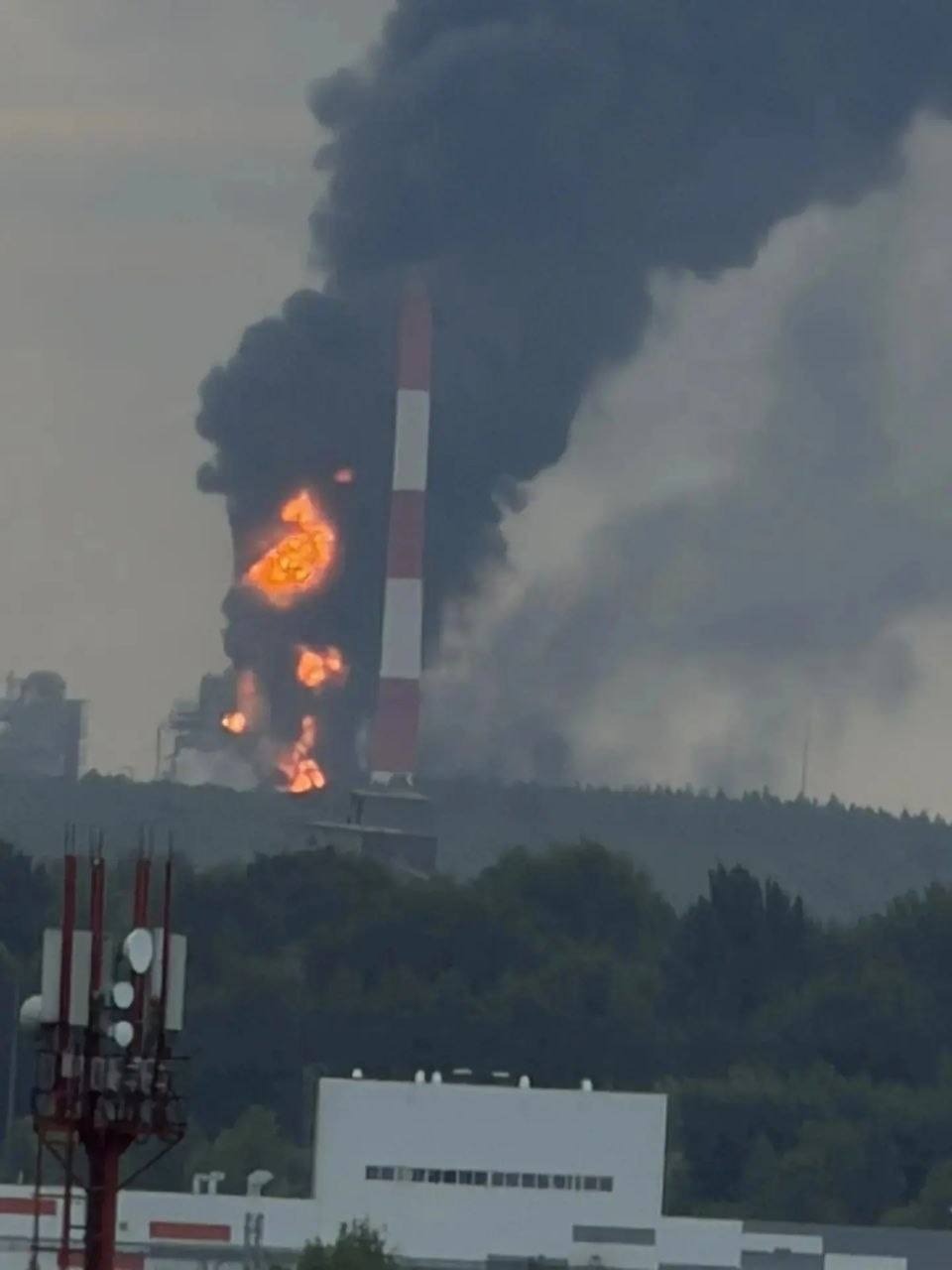
Ukrainian forces struck production facilities at the Novokuybyshevsk oil refinery in Russia’s Samara Oblast overnight on 22 August, sparking a fire at the Rosneft-owned plant, Ukraine’s General Staff said. The extent of the damage remains under assessment.
Ukraine has repeatedly targeted Russia’s oil refineries to restrict military fuel supplies and reduce the energy revenues supporting Moscow’s war. The latest strike came as gasoline rationing returned to Moscow and St. Petersburg, and Rosneft capped nationwide purchases. Militarnyi described the plant as one of Russia’s 10 largest refineries.
The Rosneft-owned refinery can process about 8.8 million metric tons of crude annually and produces more than 20 petroleum products, including aviation fuel and diesel, Ukraine’s General Staff said.
Fire Point said FP-1 long-range drones were used to strike the refinery.

The same overnight wave also hit an Ozon logistics center in Chapayevsk, where people were injured, and work was halted, Reuters reported, citing the company.
Novokuybyshevsk Oil Refinery last night and now. pic.twitter.com/aZmL7M8wBe
— Exilenova+ (@Exilenova_plus) August 22, 2026
Neither the damage to the refinery nor any interruption to production has been independently confirmed.
The strike came one day after Ukraine confirmed hitting Lukoil’s Perm refinery, approximately 1,530 kilometers from Ukraine’s northern border. That attack also caused a fire, according to the General Staff.
At least four Russian refineries went offline during August amid continuing Ukrainian attacks.
By mid-August, filling stations in at least 12 Russian regions were experiencing hours-long lines. Some areas had reintroduced purchase limits or rationing based on license-plate numbers, according to the same report.
Gasoline limits had also been reinstated in Moscow and St. Petersburg, while Rosneft had capped sales at 30 liters per vehicle across its nationwide filling-station network. Diesel purchases remained unrestricted.


Russia has struck Kyiv and its suburbs with ballistic missiles for a second consecutive day, killing civilians. Meanwhile, Ukraine lacks enough interceptors to stop them because deliveries from the US have halted.
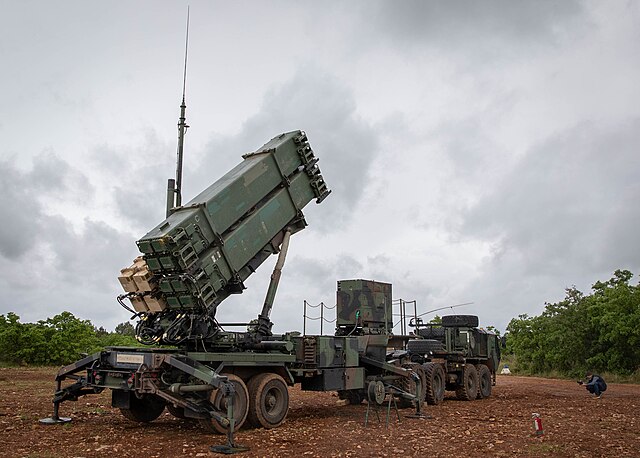
The strikes land at a moment when Ukraine's ability to shoot ballistic missiles down has been cut off at the source. Ukraine intercepts ballistic missiles mainly with US-made Patriot systems. During the recent Oval Office meeting, President Donald Trump declined President Volodymyr Zelenskyy's request for hundreds of additional Patriot interceptors, according to the Financial Times.
At the same time, when Ukraine sought to destroy Russia's ballistic launchers on Russian territory, US billionaire Elon Musk did not allow Ukraine to use Starlink to guide strikes on those launchers, The Atlantic reported. Ukraine can neither shoot the missiles down at the rate it needs nor freely strike the launchers that fire them.
The overnight attack hit Ukraine's railway. On the night of 22 August, a Russian ballistic missile struck a railway enterprise in Kyiv's Darnytsia area, killing a Ukrzaliznytsia worker, the railway's board chairman Oleksandr Pertsovskyi said.
He described a strike timed to the threat.
"In Darnytsia, ballistic strikes hit one of the railway enterprises, at the same moment as, or even a second before, the ballistic threat appeared. One of our workers, a foreman, was killed on the spot. The rest we managed to evacuate quickly after the first strike," Pertsovskyi reported.
Russia launched about six ballistic missiles, with launches recorded from three directions, Kursk, Bryansk, and Millerovo, according to monitoring channels.
Russia struck again in daylight. In the morning, six to eight ballistic missiles attacked the Boryspil area in the Kyiv agglomeration, likely with cluster warheads, according to monitoring channels. Boryspil city is home to the Boryspil International Airport, Ukraine’s main and largest international passenger airport.
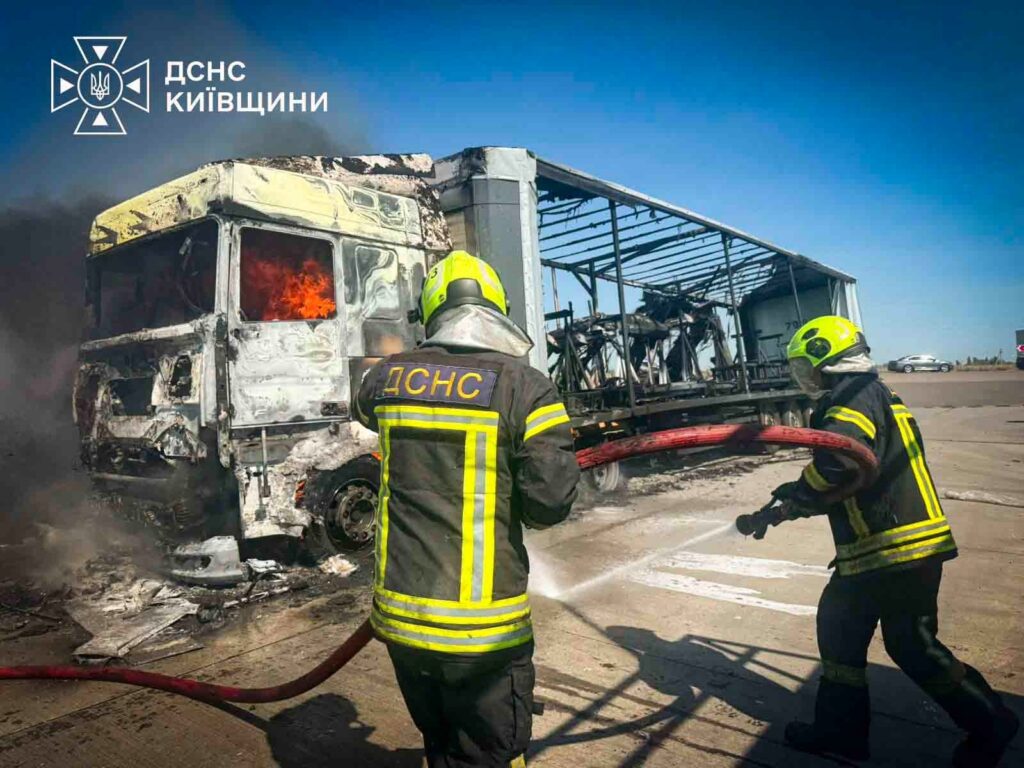
The strike killed civilians and hit infrastructure. Two civilians, a man and a woman, were killed, and the number of wounded rose to eight, including a child, with the daytime strike hitting a truck parking lot along with warehouses, a fuel station, a private household, and vehicles. Two trucks caught fire, and a blaze spread across 700 square meters of open ground, the State Emergency Service (DSNS) said.
The attacks landed two days before Ukraine marks its Independence Day. The Security Service (SBU) has already urged citizens to be especially vigilant before and during the 24 August holiday because of the threat of attacks, warning that in wartime, Russia may use mass events for strikes, provocations, sabotage, cyberattacks, and other crimes.
The service has also warned against recruitment. It reminded Ukrainians not to publish photos or videos of military objects, critical infrastructure, checkpoints, or air-defense systems, nor to share information on the consequences of strikes or the movement of Ukrainian forces.
Russian special services may try to recruit Ukrainians to prepare attacks and sabotage, the SBU said, urging anyone offered money for arson, property damage, planting unknown objects, or collecting information on military sites to report it immediately.


© Dylan Martinez/Reuters


© Mindaugas Kulbis/Associated Press


© Ajit Solanki/Associated Press


© Jeff Chiu/Associated Press


© Mark Godfrey/Associated Press


© Eduardo Verdugo/Associated Press


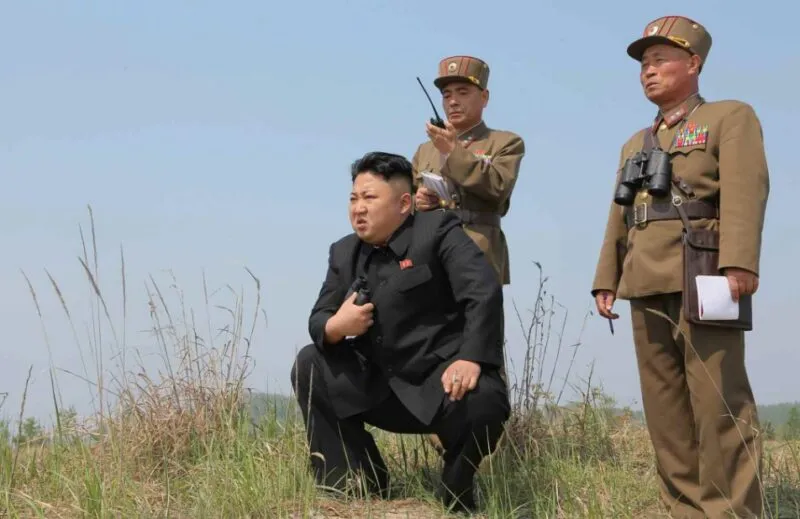
Russia is deploying six launchers for North Korean ballistic missiles in Voronezh Oblast, the Institute for the Study of War (ISW) reported on 20 August. The assessment cited Ukraine’s military intelligence agency (HUR).
Russia has already used North Korean missiles in deadly strikes across Ukraine, and Pyongyang is supplying more of them. From Voronezh Oblast, the weapons could threaten Kyiv and six other regions, adding to the ballistic arsenal Moscow can use in mass attacks intended to overwhelm Ukrainian air defenses.
The North Korean missiles could reach Kyiv, Sumy, Kharkiv, Chernihiv, Poltava, Dnipropetrovsk, and Zaporizhzhia oblasts, ISW said.
The unit may eventually field 120 missiles. HUR said North Korea had transferred around 50 KN-23, KN-24, and upgraded KN-30 ballistic missiles to Russia by July.
The KN-30 can carry a 2,500-kilogram warhead, though ISW has seen no evidence of Russia using it against Ukraine. Other North Korean missiles have larger warheads than Russia’s Iskander-M but are less accurate, Ukrainian military expert Anatolii Khrapchynskyi said.
Those missiles could join Russia’s combined attacks. ISW expects Moscow to stockpile ballistic and cruise missiles for several days before launching large barrages intended to overwhelm Ukraine’s air defenses.
ISW pointed to the 19–20 August attack as the latest example of that pattern. The barrage lasted nearly nine hours and killed at least 15 people in Kyiv. Ukraine’s Air Force said it intercepted most drones and cruise missiles, but no longer routinely reports how many ballistic missiles Russia launches or Ukraine intercepts.
Preliminary evidence indicated that Russia used a North Korean ballistic missile in a 30 July strike on Radushne, Dnipropetrovsk Oblast, that killed five members of one family.
On 10 August, a North Korean missile killed seven Zaporizhstal steelworkers and injured 21 others in Zaporizhzhia, Ukrainian officials said. The workers were heading to a shelter when the missile struck.
Ballistic missiles travel at high speed and leave civilians little time to seek cover. They are also harder to intercept than drones or cruise missiles, while Ukraine has limited supplies of the Patriot interceptors used against them.


© Matthew Jacobs/Agence France-Presse — Getty Images


© Monika Pronczuk/Associated Press


© Gianluigi Guercia/Agence France-Presse — Getty Images


© Associated Press


Russian UN Ambassador Vasily Nebenzya denied reports that Moscow could launch another mass mobilization after September’s parliamentary elections, saying none was planned or expected “as far as I know,” The Moscow Times reported
Russia has avoided another draft since its 2022 mobilization triggered protests and an exodus, relying instead on contract soldiers. Ukraine says those recruits no longer replace battlefield losses, and Moscow may mobilize several hundred thousand people after the elections. That could replenish its forces and support new offensives, although Ukrainian intelligence sees no preparations now.
Nebenzya’s remarks followed a question about more than 20,000 people crossing Russia’s Verkhny Lars border checkpoint into Georgia in one day amid fears of post-election mobilization, Meduza reported.
His comments extend a series of Russian denials. Deputy Security Council Chairman Dmitry Medvedev dismissed reports of another mobilization as “nonsense” in late July. The State Duma’s defense committee said a mass compulsory call-up was not under consideration because the army was recruiting contract soldiers, The Moscow Times reported.
Russia has avoided another mass draft since its September 2022 mobilization triggered protests and an exodus. Officials had also denied that mobilization was planned shortly before President Vladimir Putin announced it, Meduza noted.
Moscow is separately seeking penalties for people and companies that ignore mobilization and military-supply orders issued by regional authorities. The bill would not itself order a new call-up.
The government submitted it to the State Duma, the lower house of Russia’s parliament, on 20 August, The Moscow Times reported. Companies could face fines of up to 1 million rubles or suspension for up to 90 days.
Russian law already punishes such defiance in areas under martial law but imposes no nationwide penalty elsewhere in Russia, according to the bill. Its authors said a “significant number” of violations had been recorded.
President Volodymyr Zelenskyy said on 11 August, citing Ukrainian military intelligence, that Russia planned to mobilize several hundred thousand people after the elections and roughly the same number in 2027.
HUR, Ukraine’s military intelligence agency, later assessed that a post-election mobilization could enable Russia to build a strike force for a northern offensive by February 2027. Its deputy chief, Vadym Skibitskyi, stressed, however, that the agency currently sees no evidence that such preparations have begun.


© Bernd Von Jutrczenka/DPA, via Associated Press


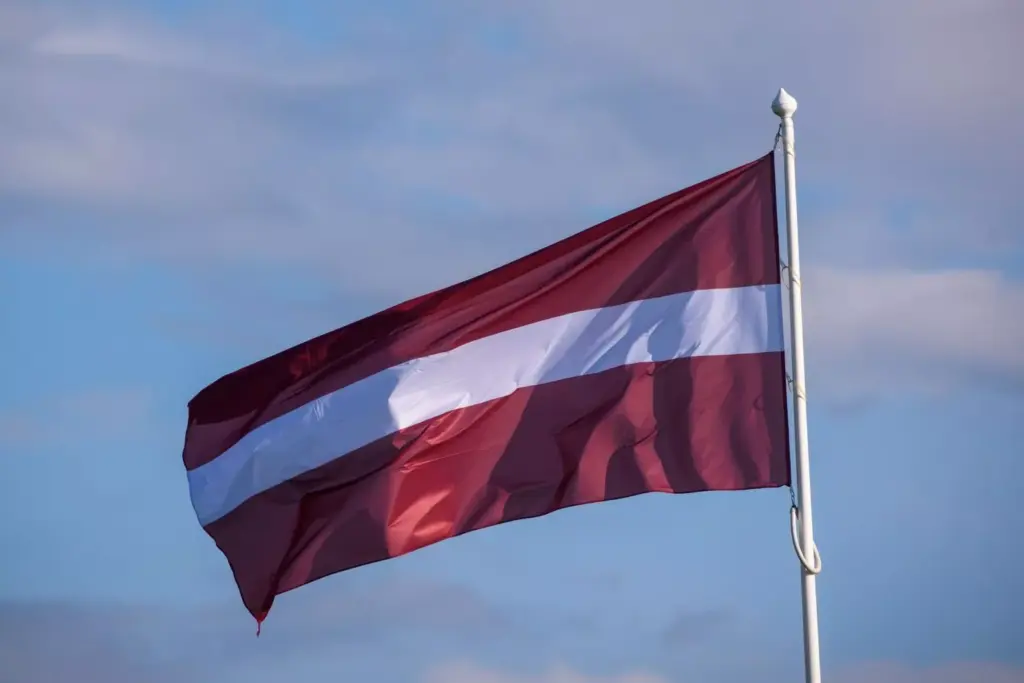
Latvia has resumed publishing monthly lists of locally registered companies trading goods with Russia or Belarus after a nearly three-year pause, public broadcaster LSM reported on 20 August 2026.
Prime Minister Andris Kulbergs has pledged to sever its remaining economic ties with Russia and Belarus, but substantial trade remains legal because EU sanctions are not a full embargo. The monthly register makes that commerce visible by identifying the companies involved.
The Central Statistical Bureau, Latvia's national statistics agency, published the names of 171 companies for July. A subsequent analysis by Latvian news agency LETA found that more than two-thirds operated in logistics, food and agriculture, or medicine.
The disclosure is, in effect, a form of naming and shaming. Yet the statistics bureau stopped publishing a similar list in autumn 2023 because names without transaction details could not support objective conclusions. The register is not a sanctions blacklist, and inclusion does not indicate a sanctions violation.
Under an amendment adopted on 18 June 2026, Latvia’s tax authority must send the data to the statistics bureau each month. The change also lifted tax-confidentiality rules that had kept company names private, LSM reported.
The explanatory note accompanying the law said disclosure was intended to support Ukraine. The amendment's authors argued that Latvian companies should not contribute to Russian and Belarusian state revenues while Russia’s invasion continues, according to LSM.
The Prime Minister said in June that Latvia must sever its remaining economic ties with Russia and Belarus. However, he indicated that pharmaceutical exporters would likely be exempted on national-security grounds.
Latvia’s exports to Russia and Belarus each fell only about 7% in 2025, while imports from Russia plunged by more than two-thirds, according to official data cited by Euromaidan Press.
The EU renewed its economic sanctions on Russia through July 2027, preserving restrictions on trade, finance, and energy, as well as on goods and technology with both civilian and military uses, Euromaidan Press reported in June.
The Council of the EU says its trade restrictions exclude health, pharmaceutical, food, and agricultural products to avoid harming Russian civilians. Those exclusions allow EU companies to continue lawful trade with Russia even while other parts of its economy remain under sanctions over the invasion of Ukraine.


Australian police have charged a 27-year-old Russian-Australian man with foreign interference after alleging he joined Ukraine's armed forces to obtain military information for Russian intelligence, the ABC reported.
Russia has repeatedly sought to obtain information about Ukraine's military through espionage and intelligence operations as it continues its full-scale invasion. The alleged operation also shows how Moscow can use individuals in third countries to gain access to Ukrainian military information and attempt to pass it to Russian intelligence.
The Australian Federal Police (AFP) arrested Vladimir Teslov on 20 August in Sumner, a suburb of Brisbane. He appeared in Brisbane Magistrates Court on 21 August, where his case was adjourned until 2 October, according to the ABC.
According to the AFP, Teslov traveled to Russia in October 2024 and underwent military-style training before returning to Australia in December.
Teslov allegedly maintained contact after his return with individuals he believed were connected to Russian intelligence services, the AFP said in a press release.
Police allege he traveled to Ukraine in May 2025 and joined the Ukrainian Armed Forces, where he gained access to information about Ukrainian military personnel, units, and locations.
The AFP alleges Teslov subsequently provided, or attempted to provide, information obtained in Ukraine to people he believed were acting on behalf of Russian intelligence.
The agency said he sought to collect and communicate information about Ukrainian military personnel, locations, and operations for the benefit of Russia.
AFP Commissioner Krissy Barrett said the alleged activity could have endangered Ukrainian troops.
“It is alleged that this conduct created a risk to the safety and security of Ukrainian military personnel,” Barrett said, according to ABC.
The allegations have not been tested in court.
Australia has been a major supporter of Ukraine since Russia launched its full-scale invasion in February 2022, providing about A$1.8 billion in military, economic, and humanitarian assistance.
The AFP said its Counter Foreign Interference Task Force began Operation Woodcreeper in June 2026, following an extensive investigation by Australia's domestic intelligence agency, ASIO.
Australian authorities carried out searches at five properties in Queensland on 20 and 21 August, according to the AFP press release. Police seized electronic devices and other items relevant to the investigation, which will undergo forensic examination.
The AFP said further arrests are possible.
Barrett said there was no indication that Teslov posed a threat to Australia itself, although investigators allege parts of the activity took place both in Australia and overseas.
The foreign interference charge carries a maximum penalty of 20 years in prison.
The Russian Embassy in Canberra told ABC it learned of the case through media reports and had not received an official notification from Australian authorities or Teslov. It said it was using available channels to establish the circumstances of the case.
Australian authorities have previously warned of Russian intelligence activity in the country.
ABC noted a separate case involving Russian-born Australian citizens Kira and Igor Korolev, who were arrested in 2024 and accused of attempting to gather and send sensitive information to Russia. Their charges were upgraded to conspiracy to commit espionage in June.
In 2022, Australian Security Intelligence Organisation (ASIO) Director-General Mike Burgess said the agency had disrupted a “hive of spies” from an unnamed country seeking to recruit Australians and obtain sensitive information. Multiple media reports later identified Russia as the country involved, although ASIO has not publicly confirmed this.
Last month, the Australian Signals Directorate and nearly two dozen international partner agencies warned that Russian-linked hackers were targeting Australian defense, communications, energy, and financial sectors.


Russia’s summer fuel crisis is back for a second wave, driven by Ukrainian strikes on its oil refineries. This time, it has forced rationing back into both Moscow and St. Petersburg and pushed its largest oil producer to cap gasoline nationwide.
St. Petersburg drivers ran into limits again on 20 August, when several major oil companies restricted sales across the city, Bumaga first reported. Gazprom Neft reinstated a 60-liter-per-receipt cap it had lifted on 4 August and blocked customers from filling more than one canister.
Tatneft capped AI-95 and AI-92 at 50 liters. Many Gazprom Neft stations carried no AI-95 at all, its own station map showed. “Gazprom and Lukoil are dropping dead,” one driver wrote in a local chat.
The limits followed Moscow’s by a day. There, Gazprom Neft cut sales to 40 liters per car, and AI-95 turned up at a single Neftmagistral station, The Moscow Times reported. Rosneft went furthest, capping gasoline at 30 liters per car at every one of its stations across Russia, with no limit on diesel. In June, the same network was still letting drivers take up to 90 liters a fill.
By mid-August, gas stations in at least 12 regions were again seeing hours-long lines, Meduza’s regional roundup found, citing a count by the outlet 7×7. Lipetsk Oblast brought back odd-even rationing by license plate on 13 August and held fills to 30 liters, a step Governor Igor Artamonov announced; Sochi’s authorities asked residents and tourists to leave their cars at home.
Ukraine has spent months hitting the plants to choke off both the fuel Russia’s army runs on and the oil revenue that funds its war. At least four refineries went offline in August alone.
Officials say supply is holding. Energy Minister Sergei Tsivilyov said on 18 August that fuel remains available, even as he acknowledged the lines. Gasoline averaged 76.04 rubles a liter ($0.89) on 10 August, off a July peak that ran nearly 20% above where the year began.


President Volodymyr Zelenskyy allowed preparations for an AI-guided drone campaign against Moscow-area airports, The Atlantic reported on 20 August, citing two anonymous sources with direct knowledge of the proposal.
The reported plan sought to keep civilian flights grounded long enough to pressure Russia’s elite. Had it proceeded, it would have moved Ukraine toward large-scale autonomous strikes, raising questions under the laws of war about attacks without human confirmation. The Atlantic's disclosure follows months of reported Ukrainian attacks that repeatedly forced Moscow-area airport closures and sent increasingly large drone swarms toward the capital.
Code-named M&Ms, the operation called for as many as 1,000 drones to fly toward Moscow-area airports each night and overwhelm Russian air defenses, one source said.
Onboard cameras would compare live views with preloaded maps and target images. They would also allow the drones to strike without pilot confirmation and to navigate without a remote-control link that is vulnerable to Russian electronic jamming, the sources said.
One source said prolonged airport closures were intended to pressure Kremlin-linked elites and push Vladimir Putin toward negotiations.
The plan was presented to Zelenskyy during the winter of 2025–26, The Atlantic reported. Preparations stopped after Zelenskyy dismissed Defense Minister Mykhailo Fedorov, whom The Atlantic described as the operation’s mastermind, in July, both sources said. One source said another team could revive the project within about three months.
Both sources said Zelenskyy allowed preparations despite concerns that a drone could hit a civilian airliner. Planners proposed warning airlines, according to one source.
A Zelenskyy spokesperson declined to comment. Another unnamed presidential office official called the report “total nonsense,” saying Ukraine lacked long-range weapons reliable enough to strike the airports without posing undue risks to civilians.
The alleged M&Ms operation never launched, but other reported Ukrainian drone attacks repeatedly disrupted Moscow’s airports.
From 5 to 7 May 2026, restrictions imposed amid reported Ukrainian drone attacks delayed more than 450 flights at Moscow airports. Limits at Vnukovo remained in place for nearly 18 hours, EP reported, citing the independent Russian investigative outlet Agentstvo.
Earlier this week, Russian authorities claimed that 620 drones flew toward Moscow in one night, EP reported. The Atlantic placed Russia’s nationwide interception claim for that night at 791 drones. Ukraine’s military did not claim the attack.


Finland is investigating a suspected violation of its airspace by a Russian aircraft over the Gulf of Finland, its Defense Ministry said. Authorities have not identified the aircraft or said whether the crossing was deliberate, and the country's border guard has opened an inquiry. The case adds Finland to a growing list of NATO states reporting Russian intrusions along the alliance's frontiers.
A Russian aircraft is suspected of violating Finnish airspace in the western Gulf of Finland on the afternoon of 20 August, Defense Minister Antti Häkkänen said. He said the country treats every such case seriously and that an inquiry is running.
"Every suspected territorial violation is taken seriously. An investigation is underway," Häkkänen said.
The ministry statement did not name the aircraft. The Border Guard later identified it as a Russian Il-20 reconnaissance plane, Finnish broadcaster Yle reported, saying the suspected crossing lasted about three minutes and reached some 4.7 nautical miles into Finnish airspace at its deepest. It said it would release more as the inquiry advances.
The suspected crossing follows two earlier Finnish cases this year. Finland suspected Russian military aircraft of entering its airspace in May, off Porkkala while one avoided a thunderstorm, and again in June, summoning Russia's chargé d'affaires over the two incidents.
Other members of the alliance keep logging similar incidents. Romania has destroyed a sea drone and recovered aerial-drone debris on its soil, and Russian drones have struck near Moldova's border with Ukraine. Kyiv has also accused Russia of steering Ukrainian drones toward Finland and the Baltic States through electronic warfare.
Finland joined NATO in 2023 and has since rearmed sharply, ending a domestic ban on nuclear weapons as part of a wider defense shift. It has stepped up support for Ukraine, most recently backing a power-plant project before Russia's winter energy campaign. Helsinki has also argued it is too early to negotiate with Moscow while the war continues.


© Cassandra Vinograd/The New York Times


© Lynne Sladky/Associated Press


© Kenny Holston/The New York Times


© Heather Diehl/Getty Images


© Roger Kisby for The New York Times