With a narrow presidential election looming, President Luiz Inácio Lula da Silva and his allies claim Meta is trying to give his right-wing rival an advantage.
With a narrow presidential election looming, President Luiz Inácio Lula da Silva and his allies claim Meta is trying to give his right-wing rival an advantage.
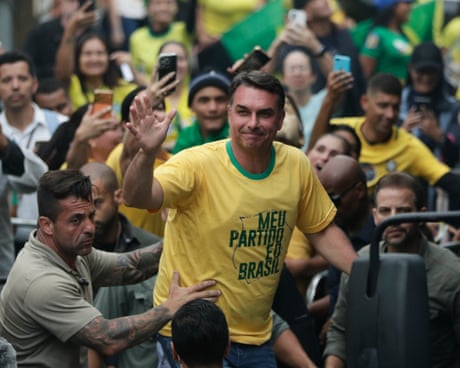
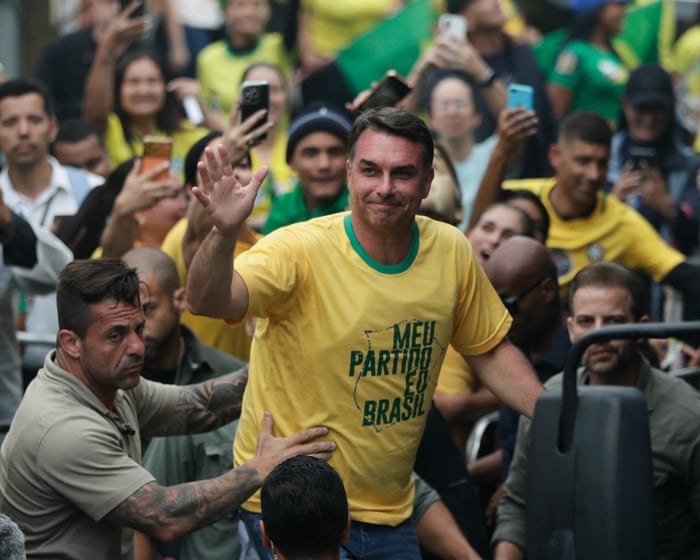
Flávio Bolsonaro, now the favorite to win Brazil’s presidency, would give President Trump a critical new ally in Latin America, particularly on security.
Flávio Bolsonaro, now the favorite to win Brazil’s presidency, would give President Trump a critical new ally in Latin America, particularly on security.
An effigy of President Trump carrying a depiction of an incarcerated President Luiz Inácio Lula da Silva during a rally in São Paulo last month in support of Flávio Bolsonaro, the right-wing opposition candidate.
Flávio Bolsonaro’s first round lead leaves President Luiz Inácio Lula da Silva three weeks to find the votes to stop Brazil’s, and Latin America’s, rightward shift.
Flávio Bolsonaro’s first round lead leaves President Luiz Inácio Lula da Silva three weeks to find the votes to stop Brazil’s, and Latin America’s, rightward shift.
Flávio Bolsonaro’s first round lead leaves President Luiz Inácio Lula da Silva three weeks to find the votes to stop Brazil’s, and Latin America’s, rightward shift.
Flávio Bolsonaro’s first round lead leaves President Luiz Inácio Lula da Silva three weeks to find the votes to stop Brazil’s, and Latin America’s, rightward shift.
Neither President Luiz Inácio Lula da Silva nor Flávio Bolsonaro, the son of a former president, won the first round, but Mr. Bolsonaro took more votes.
Neither President Luiz Inácio Lula da Silva nor Flávio Bolsonaro, the son of a former president, won the first round, but Mr. Bolsonaro took more votes.
The US president has taken credit for far-right victories across Latin America, but those wins have had more to do with fears of gang crime than his meddlingDonald Trump has enjoyed very few foreign policy victories since returning to power. From failed wars to failed peace processes, his second term in office has been marked by one costly blunder on the world stage after another. In Latin America, though, the US president has a different story to tell.His administration’s national security stra
The US president has taken credit for far-right victories across Latin America, but those wins have had more to do with fears of gang crime than his meddling
Donald Trump has enjoyed very few foreign policy victories since returning to power. From failed wars to failed peace processes, his second term in office has been marked by one costly blunder on the world stage after another. In Latin America, though, the US president has a different story to tell.
His administration’s national security strategy outlined how the US wanted to “restore American preeminence in the Western Hemisphere”. It was a brazen document, laying out how his government would interfere in the political life of countries it considered part of its sphere of influence, rewarding governments and movements that are “broadly aligned with our principles and strategy”.
Luiz Inácio Lula da Silva, the leftist incumbent, and Flávio Bolsonaro, the right-wing challenger, face off in a race that could define the future of Latin America.
Luiz Inácio Lula da Silva, the leftist incumbent, and Flávio Bolsonaro, the right-wing challenger, face off in a race that could define the future of Latin America.
Economies in Latin America and Europe rely on American diesel. Stopping exports could tip some countries into recession, hurting trade with the United States.
Economies in Latin America and Europe rely on American diesel. Stopping exports could tip some countries into recession, hurting trade with the United States.
A storefront offering personal loans in Niteroi, Brazil. Brazil is grappling with widespread household indebtedness, fueled by a combination of easy credit, the rapid expansion of legal and illegal online betting, and instant digital payments that have made borrowing, gambling and spending faster and easier.
On April 24, Brazil’s competition authority, the Administrative Council for Economic Defense (CADE) announced it was opening an investigation to assess whether Google’s use of news content amounted to unfair competition practices against the Brazilian press. The announcement was welcomed by civil society organizations that have tried to push regulation to limit the reckless power of Big Tech for years. Ajor, Brazil’s Digital News Association, said that “a balanced relationship between digital pl
On April 24, Brazil’s competition authority, the Administrative Council for Economic Defense (CADE) announced it was opening an investigation to assess whether Google’s use of news content amounted to unfair competition practices against the Brazilian press. The announcement was welcomed by civil society organizations that have tried to push regulation to limit the reckless power of Big Tech for years. Ajor, Brazil’s Digital News Association, said that “a balanced relationship between digital platforms and journalism organizations is fundamental to the flourishing of journalism committed to the public interest. By ensuring a fair competitive environment, Cade directly advances that goal.”
In spirit and intent, CADE’s investigation into Google is similar to legislation in Australia that recognized that value is being extracted from news publishers without proportionate recompense. In Brazil, the case has been debated since 2019, but the adoption of AI Overviews helped alter the perspective of Brazilian judges. The overviews are artificially generated summaries that synthesize information from several sources and appear at the top of Google Search results. They “raise potentially more concerns,” ruled Judge Camila Cabral Pires Alves, “as they may more profoundly alter the economic function of the interface and expand the ability to retain attention within the platform's own environment.”
CADE will now investigate whether Google should be sanctioned for “alleged abusive exploitation of a dominant position, in light of the technological evolution of the conduct.” While there is perhaps a greater global appetite to regulate the impacts of AI – even the Trump administration has recently acknowledged that some oversight may be necessary – the CADE judges have been under considerable pressure from Big Tech executives to stop investigations into how their control of the market harms Brazilian businesses.
For those of us who have reported on Big Tech, this aggressive lobbying is not surprising. Companies like Google, Meta, Twitter, TikTok, Amazon, and Microsoft have long attempted to interfere in any decision or legislation that can harm their interests in Latin America. According to a joint investigation by journalists across 13 countries, Big Tech lobbyists got away with convincing legislators in Colombia to weaken a rule meant to protect children’s mental health and prevent enforcement of privacy regulations in Ecuador. It took a team of over 40 journalists from 13 countries to uncover this while reporting on the ‘Big Tech Lobby’ in the continent and across the world.
Threats by the U.S. government to retaliate against any country or international entity that sought to regulate Big Tech added another layer to an already complicated and uneven relationship with Silicon Valley. “Digital Taxes, Digital Services Legislation, and Digital Markets Regulations are all designed to harm, or discriminate against, American Technology,” wrote Donald Trump on social media. “Show respect to America and our amazing Tech Companies or consider the consequences!” During the past year, Trump’s envoys have forced dozens of governments around the world to dilute or even shelve regulation in exchange for lifting tariffs.
In “Big Tech’s Invisible Hands,” which I coordinated alongside Maria Teresa Ronderos, from CLIP (Centro Latinoamericano de Investigación Periodistica), journalists mapped a total of 75 executives that were part of “public policy” or “government relations” teams in Brazil. Tech companies utilized a “revolving door” in which public sector employees could go straight into highly paid jobs leveraging their contacts and influence. Doors opened more easily. Invitations to hangouts and events were more likely to be accepted.
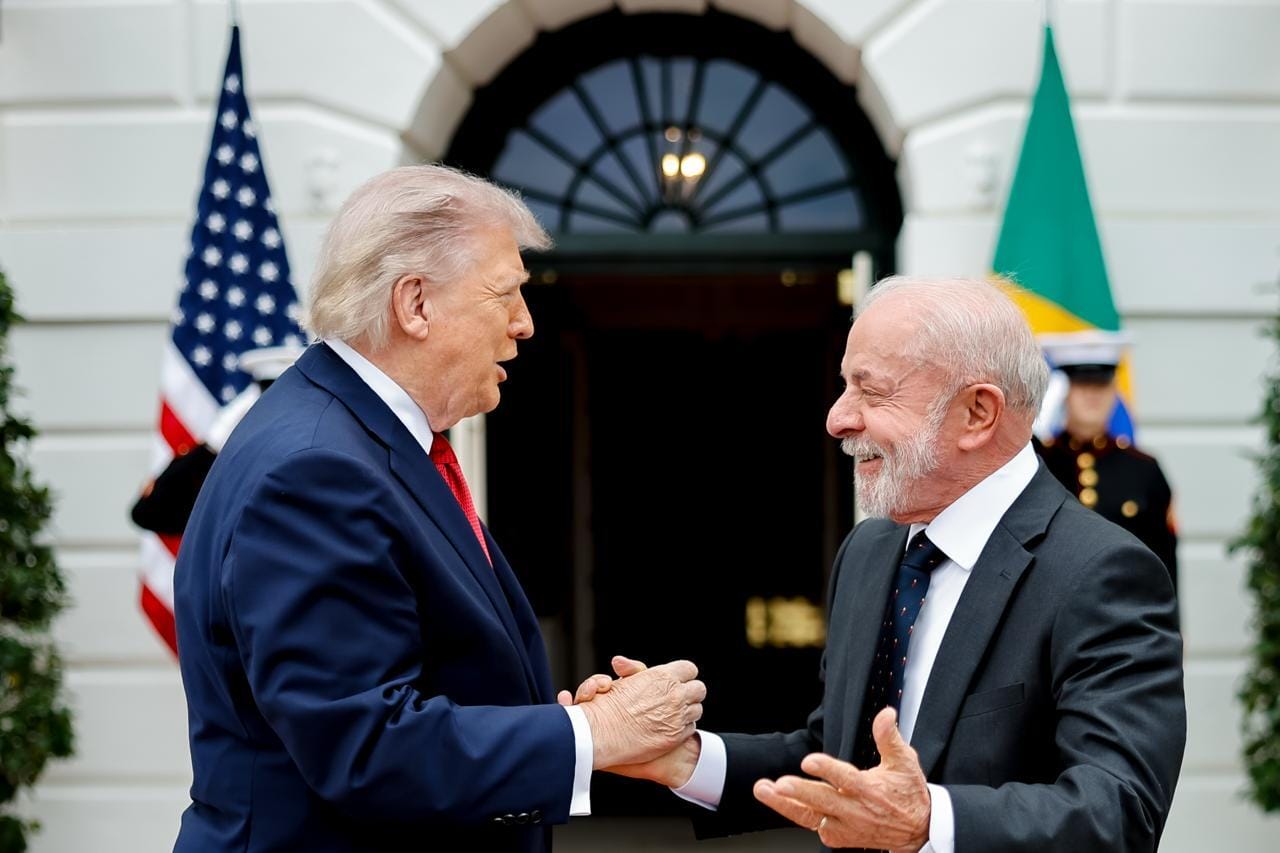
Brazilian President Luiz Inacio Lula da Silva meets with U.S. President Donald Trump at the White House on May 7, 2026. Brazilian Government / Ricardo Stuckert / Handout/Anadolu via Getty Images.
Lobbying in Brazil is dialed up to eleven. The country has 163 million internet users, with over 150 million on WhatsApp, and over 120 million on YouTube, Instagram and Facebook. With AI, Brazil is a similarly large, influential market. Portuguese is the sixth most widely-spoken language in the world, with 70% of speakers based in Brazil. Which means that, if an LLM has been trained in this language, it probably used content created by millions of Brazilians going about their business of making friends, debating politics and football online. It’s not just about journalists; we are all unpaid labor for Big Tech.
In the words of Arthur Lira, the Speaker in Brazil’s Congress who filed a criminal complaint against Big Tech executives in 2023, companies adopted a variety of tactics “to shut down democratic debate and intimidate lawmakers” and defeat any attempt at using legislation to force accountability. Google, he said, used its search homepage, used by over 85% of Brazilians, to spread fear that proposed laws would “make the internet worse” or “make it harder to know what is true or false on the internet.” A report by the Federal University of Rio de Janeiro found that Google invested in ads on its own platform so extensively that it tweaked the search, prominently featuring the word “censorship” in connection to the Brazilian bill. Google also hired Michael Temer, a lawyer and former President of Brazil, to influence lawmakers and Supreme Court Justices. Of course, it was not Google alone. Meta executives, for instance, even argued that proposed legislation in Brazil could lead to the Bible being censored.
But Brazilian lawmakers, the Supreme Court, and civil society have persisted. On August 28, 2025, the “Felca Law” was approved, after a video by the influencer Felca denounced the exploitation and exposure of children on social media. The law establishes that digital platforms must take measures like verifying user age, implementing parental controls, and preventing children's exposure to adult content, gambling, and pornography. They must create reporting channels and may face fines of up to 10% of their annual revenue in Brazil.
Brazil’s president Luiz Inácio Lula da Silva and Donald Trump have had a testy relationship, in part because of Lula’s criticism of Big Tech. In February, at the AI Impact Summit in New Delhi, Lula called for global governance of AI, warning: “When few control the algorithms, it is not innovation, but domination. Regulating the so-called Big Tech companies is linked to the imperative of safeguarding human rights in the digital sphere, promoting information integrity, and protecting our countries’ creative industries.”
By sticking to his guns, Lula may now be seeing the tide turn. He was in the White House on May 7, and though neither he nor Trump took questions, both appeared encouraged by the meeting. “Very dynamic,” was how Trump described Lula, while Lula said he was “very, very satisfied” with how the talks went. With a general election in Brazil approaching in October, Lula will be sensitive to how the White House, as it has done in other elections, and Big Tech might offer vocal support for right wing candidates.
But his willingness to stand up to Big Tech is popular with voters. A recent poll found that 78% of Brazilians want to see tech companies being held responsible for the content they publish. Another poll found that 55% of Brazilians defend regulating Big Tech, with 43.9% against it.
And as scams, fake news, and AI slop dominate ever larger swathes of all our digital space, in Brazil, as in much of the rest of the world, the entire experience of the internet is becoming more unappealing. Big Tech, with the assistance of the U.S. government, may be succeeding in slowing down the pace of regulation and watering down the content of that regulation, but in the long run its victories might be pyrrhic. People have had enough and their governments might be forced to listen.
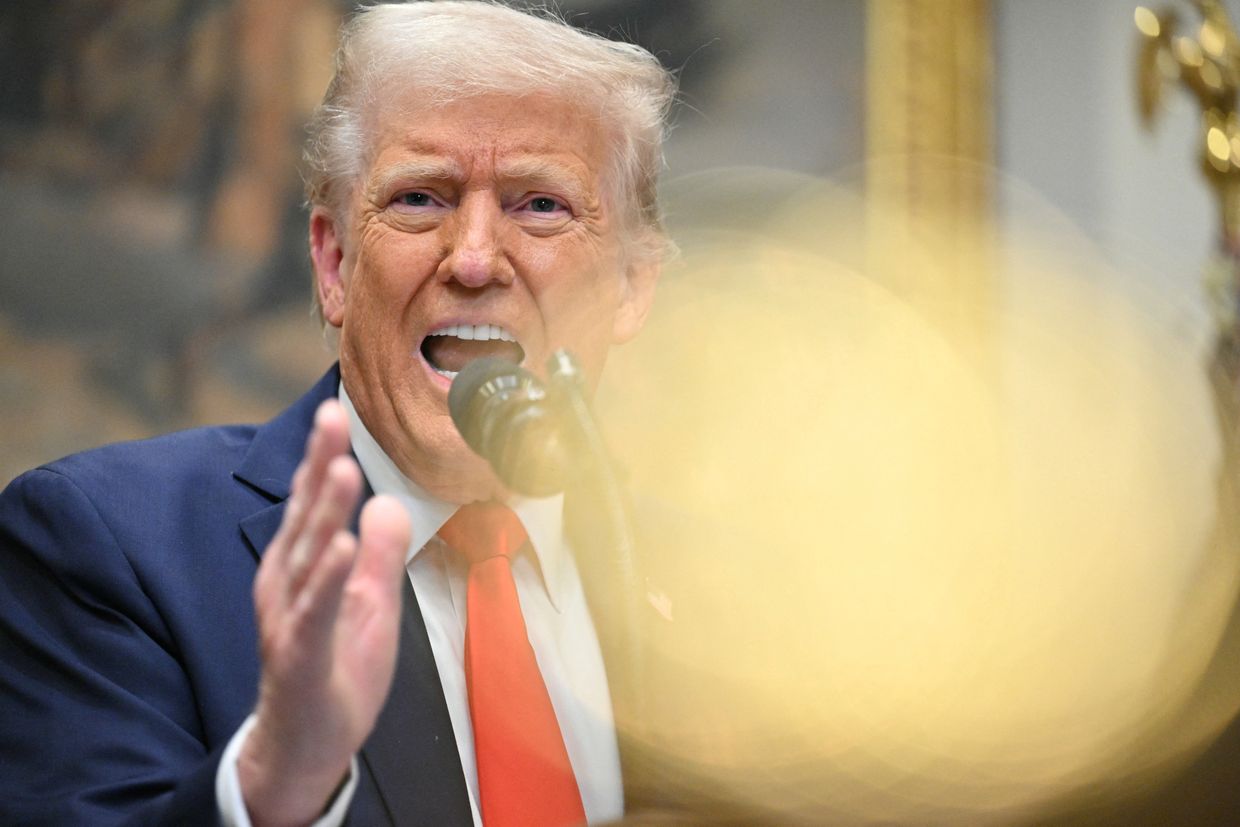
U.S. President Donald Trump said on July 6 that his administration will impose an additional 10% tariff on countries aligning themselves with what he described as the BRICS group's "anti-American policy.""There will be no exceptions to this policy," Trump wrote on the social network Truth Social.The announcement coincided with the BRICS summit in Brazil, where member states, including Russia, China, and India, adopted a declaration condemning strikes on Iran and Israel's operations in Gaza. The
U.S. President Donald Trump said on July 6 that his administration will impose an additional 10% tariff on countries aligning themselves with what he described as the BRICS group's "anti-American policy."
"There will be no exceptions to this policy," Trump wrote on the social network Truth Social.
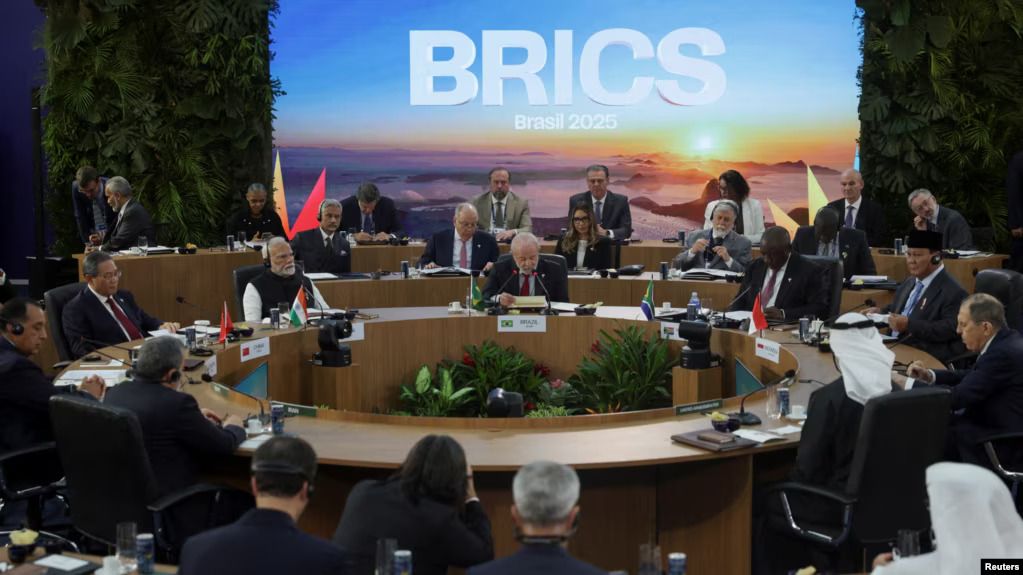
The announcement coincided with the BRICS summit in Brazil, where member states, including Russia, China, and India, adopted a declaration condemning strikes on Iran and Israel's operations in Gaza.
The document did not explicitly name the U.S. but criticized actions perceived as destabilizing. On June 21, the country carried out strikes on three major Iranian nuclear sites: Fordow, Natanz, and Isfahan.
Trump's latest trade threat escalates tensions with the BRICS group, which has increasingly sought to reduce dependence on the U.S. dollar and shift toward a multipolar world order.
Kirill Dmitriev, head of Russia's sovereign wealth fund, described the summit as the start of a new "Global South" era, highlighting the group's aim to reshape the global order.
Though Russian President Vladimir Putin said in October 2024 that there are no immediate plans to create a BRICS currency, he highlighted the group's goal of financial sovereignty.
In January, Trump warned of 100% tariffs on BRICS members if they attempt to adopt a new or existing currency to replace the U.S. dollar in international trade.
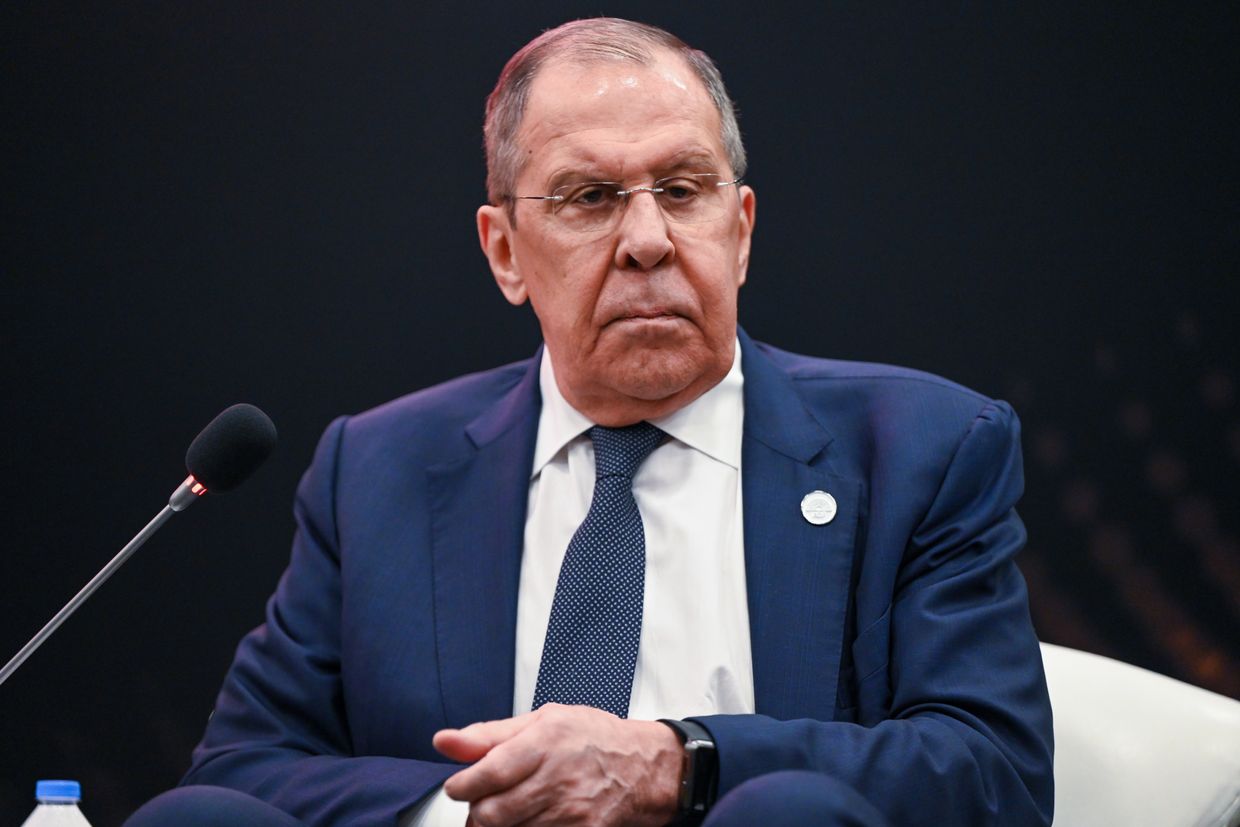
Russian Foreign Minister Sergey Lavrov attended the BRICS summit in person, while Putin participated via video due to an outstanding International Criminal Court (ICC) warrant. Brazil, the summit's host, is an ICC member and obligated to arrest Putin if he enters the country.
The declaration also condemned incidents on Russian railway infrastructure and called for a negotiated settlement in the war against Ukraine. However, it avoided urging Russia to halt its full-scale invasion.
BRICS expanded in 2024, admitting Egypt, Ethiopia, Iran, and the United Arab Emirates as new members. In October 2024, Putin hosted a BRICS forum in Kazan, attended by 36 world leaders.
BRICS summit participants condemned recent attacks on Russia’s railway infrastructure, according to a joint declaration on July 6 from Rio de Janeiro."We condemn in the strongest possible terms the attacks on bridges and railway infrastructure deliberately targeting civilians in the Bryansk, Kursk and Voronezh regions of the Russian Federation on May 31, and June 1 and 5 2025, which resulted in the deaths of several civilians, including children," the document says.Bryansk, Kursk, and Voronezh o
BRICS summit participants condemned recent attacks on Russia’s railway infrastructure, according to a joint declaration on July 6 from Rio de Janeiro.
"We condemn in the strongest possible terms the attacks on bridges and railway infrastructure deliberately targeting civilians in the Bryansk, Kursk and Voronezh regions of the Russian Federation on May 31, and June 1 and 5 2025, which resulted in the deaths of several civilians, including children," the document says.
Bryansk, Kursk, and Voronezh oblasts are all located near Ukraine’s northeastern border and have played a central role in Russia’s war effort, serving as key logistical hubs and launch sites for missile and drone attacks on Ukrainian cities–often targeting civilian infrastructure and causing casualties.
In their declaration, BRICS leaders also called for a negotiated peace agreement between Russia and Ukraine.
“We recall our national positions concerning the conflict in Ukraine as expressed in the appropriate forum, including the UN Security Council and the UN General Assembly,” the document said. “We expect that current efforts will lead to a sustainable peace settlement.”
The statement comes a few days after a phone call between U.S. President Donald Trump and Russian President Vladimir Putin on July 3, in which Putin said "Russia will continue to pursue its goals" in the war against Ukraine, Kremlin aide Yury Ushakov said.
Russian Foreign Minister Sergey Lavrov attended the summit in person, while Russian President Vladimir Putin participated via video link.
Brazil is a member of the ICC and a signatory to the Rome Statute, meaning it is obliged to arrest Putin if he enters the country.
The ICC issued a warrant for the Russian leader's arrest in March 2023 over the illegal deportation of Ukrainian children during Russia's full-scale invasion of Ukraine.
The BRICS declaration also condemned recent U.S. and Israeli airstrikes on Iranian nuclear facilities as violations of international law and criticized the presence of foreign forces in Syria and Gaza, calling for Israeli withdrawal from Syrian territory.
BRICS, originally composed of Brazil, Russia, India, China, and South Africa, has expanded in recent years to include Iran, Egypt, the UAE, Ethiopia, and Indonesia.
Russian President Vladimir Putin has decided not to attend the upcoming BRICS summit in Brazil due to an arrest warrant issued by the International Criminal Court (ICC), Russian president's foreign policy aide Yuriy Ushakov said on June 25."This is related to certain difficulties in the context of the ICC’s demands, as you know, and precisely in this context, the Brazilian government was unable to take a clear position that would allow our president to participate in this meeting," Ushakov said.
Russian President Vladimir Putin has decided not to attend the upcoming BRICS summit in Brazil due to an arrest warrant issued by the International Criminal Court (ICC), Russian president's foreign policy aide Yuriy Ushakov said on June 25.
"This is related to certain difficulties in the context of the ICC’s demands, as you know, and precisely in this context, the Brazilian government was unable to take a clear position that would allow our president to participate in this meeting," Ushakov said.
Brazil is a member of the ICC and a signatory to the Rome Statute, meaning it is obliged to arrest Putin if he enters the country.
The BRICS summit, which is scheduled to take place on July 6–7, will be attended by Russian Foreign Minister Sergey Lavrov, according to Ushakov. Putin is expected to participate remotely via video.
BRICS, composed of Russia, China, India, Brazil, and other nations, is a group of emerging economies often portrayed as a counterweight to the Western-led world.
The ICC issued a warrant for the Russian leader's arrest in March 2023 over the illegal deportation of Ukrainian children during Russia's full-scale invasion of Ukraine.
In November 2024, Putin skipped the G20 summit in Brazil and sent Lavrov instead.
Earlier in June, Moscow said that Putin had received an official invitation to attend the G20 summit in South Africa, another ICC member state. The event is scheduled to take place in Johannesburg from Nov. 22 to 23.
In September 2024, Putin made a rare visit to Mongolia, which is also a signatory of the ICC, prompting criticism over the non-enforcement of the warrant.

 Connexion